Aproaching Nirvana on one Leg

I’m inclined to take the risk of being totally boring now and tell a little story about our brief visits to the Angkor Temples and Palaces. I’m sure that everyone has seen a doco or read a book about these amazing places, but until I got there, I didn’t really understand the scope and scale of them. They are quite impressive.

As we are ahead of schedule and coping well with all the variations in alterations that we are encountering, we take ‘off’ another morning and hire a tuk tuk to take us to the temples that are just half an hour away. These are some of the most famous temples in the world. I’m told that Angkor Wat is the largest in the world? It is one of the most important world heritage sites.We set off early, as we want to be home before the afternoon heat sets in.

There has recently been a steep increase in the cost of the temple visitors passes. It costs us about $170 for the two passes. Our driver knows what most people want to see and the best way to approach it and in which order. He’s used to it. We trust him. There are a lot of temples around Siem Reap, not just the famous ones like Angkor Wat. Over the three trips that we make, we venture to the West, North and East from Siem Reap.

Of course we go to Angkor Wat first, everybody does, and I must say that it is a very impressive place. Actually, it’s a Palace and not a temple. It’s huge! The experience was a bit spoilt though by people like me being there. I’m spoiling it for others too. There are just too many people to be able to see things without being nudged or shoved. It proves quite hard to get a photo of some of the carvings that are situated in passageways. I’m a pain in the arse to someone else who is trying to do the same thing. Luckily as we arrived early. We beat the rush, but it soon starts to fill up.

In the busiest areas, they have laid down timber walk ways and wooden stairs to protect the ancient stone from being worn away by people like me! I rather like the polished wooden boards. As the morning wears on, more and more people arrive, It’s so crowded, there is an hour wait to go to the upper temple. Instead, we decide to leave. This proves to be a very good decision. As the other temples are not so crowded and busy. We will return on another day.

IMG_5922  IMG_5987IMG_5993 

Even though there are a lot of people here, patience is rewarded. But there is always one person who unexpectedly steps into the frame!


The next temple that we visit is Angkor Thom.. There are a lot fewer people even though it is a lot later in the day. I think that I like this temple a lot more. I’m quite taken with all the buddhas faces.


We move on to other temples near by. In places the tress have taken root. There was once a building under this tree. It’s now inside it. These trees are well rooted and it’s not just the trees!


In the early morning there are fewer people around, so some of the local inhabitants make use of the privacy, but there is always some paparazzi around.


Visiting a buddhist temple can lead one to some deep introspection. Like “Does my arse look big in this temple” while ascending the stairway to heaven.

There is quite a lot of reconstruction and repair work being done on parts of all the temples. Some more substantial, well-financed and better executed than others!


All the walls are covered in carvings. There are a loads of them on all the temples. Far too many to take in, in three 5 hour visits.


I’m here contemplating buddhist teachings and right there in front of me is the salient reminder that no matter how hard we strive, we are still shackled by our desires! This important message from the deity does not escape my attention.


Maybe I’m going about this the wrong way? Maybe I should be approaching Nirvana on one leg?


The sculptures show us how. Now, if Janine and I just practice in our spare time. Maybe…?

Changing the World, One Kiln at a Time, or 3

Nina and I have come to Cambodia as volunteers to help a potter here with her kiln. She is a single mum with kids and could use a bit of help. There are many things that we could do and ways that we could volunteer, but we have been asked to come by someone with local knowledge, who knows the situation here and also knows my particular skill set. I have been working on this private program for some years now. Restoring pottery equipment for someone who then sends it all over to Cambodia as donations to potters workshops. Now the time has come to put our feet on the ground and get more involved.

We are not working under any particular program or an NGO. We have come at our own expense as a private aid gesture to hopefully, pass on some low tech solutions that will be acceptable and that may prove to be incorporated into the local knowledge base long-term?

This potter, Paruth, has had some help previously from another Australian potter, Bronwyn Kemp, about 8 or 9 years ago. Bronwyn came over here and helped build a small gas-fired kiln from what was, more or less, scrap iron and fence wire. She did an amazing job and the kiln has been worked to death since then, sometime being fired twice a day. However, time and work take their toll, and this fantastic little kiln has had its day and is in need of some restoration and repair. The floor has collapsed, so the potters simple solution was to build up a pile of small local red bricks under the kiln to support the old floor. Fantastic! A really creative solution that solved the problem. However the roof has also collapsed in as well and will need a total rebuild.

We have organised, through another Australian, Ian Brookes, to get some kiln building materials delivered to the site in advance of our visit, so that we can get a lot done during our two-week visit. From the photos sent to me previously, I thought that this little kiln had potential to be rebuilt. However, as a safety precaution, we are also planning to build a new and slightly more robust kiln that will have the potential to last 25 years?

I sent scale drawings with dimensions of the metal work that would need to be ordered in and welded prior to our arrival, but this turned out to be too difficult for the local steel worker to manage. So we abandoned the attempt to get the steel work done in advance and just concentrated on getting the necessary materials all collected together, so that when we arrived, we could be most productive.

As it turned out, the metal work that was done prior to our arrival wasn’t done very accurately, as our welder wasn’t particularly literate or numerate. The kiln frame was the wrong size and constructed at 90o to the plan. However, with so much already invested in the construction and with so little time. I sat down and resigned the kiln concept to fit what had been done already and luckily. I was able to make a suitable plan that could accommodate everything that we had without too much loss of function or efficiency.

So the new kiln will be a bit shorter than planned and a little bit tighter in width, but it should be OK. Ian Brookes had sourced some zinc metal primer paint in advance of our visit, so we were able to prime and rust proof the mild steel kiln frame before lining it. This should make it last a lot longer.

We had also arranged to have two sheets of Stainless steel delivered in advance so that we could make a kiln cladding that would last as long as the primed frame. Funnily, stainless steel is actually quite easy to get in Cambodia, as many things are made out of it these days. Our welding man is only 100 metres up the street from the pottery and he is very proficient with TIG welding stainless steel balustrades and safety grills.

It takes us 3 days to get the kiln frame welded up. A door made and hinged onto it, then painted and panelled in stainless. I have worked it out, so that there will be just enough stainless steel sheeting left over, so that I can put a new roof and floor in the old kiln as well. If we have enough time?

IMG_5909 IMG_5911 IMG_5914

IMG_5918 IMG_6021

There doesn’t seem to be any concept of OH and S here. The welder works without any of the usual safety gear that I use at home. Not even shoes, just thongs. His only concession to some sort of safety is to wear sunglasses when welding. He will be deaf and blind in 10 years. I give him my ear plugs and get Paruth to explain to him that it is important to preserve what he still has. She tells me he doesn’t care. When I return the next day, I can see that my ear plugs are thrown in the dust pile. I say that I will leave all my safety gear that I have brought with me and donate it to him. She says not to bother, he isn’t interested. he will just throw them away. I feel bad about this, but can’t see what else I can do to help him learn more about his safety and health. I’ve sown the seed. I won’t be here to keep reminding him.

Once the kiln is finished, quite late in the evening, the welder man delivers it by walking it down the road on its castors in the evening traffic. The next few days are taken up with lining the kiln. It’s a very hot, sticky, sweaty job in the 40o heat and 80% humidity. I drink a lot of water. Janine and Paruth help all the way through the procedure. Paruth makes notes and takes loads of pictures, should she ever need to make repairs herself in the future.

IMG_6040 IMG_6061 IMG_6091

The kiln will need a spy hole and bung, so I decide to make one on-site from the local clay, opened up and made more thermally shock resistant by wedging in a huge amount of rice husks and a lot of sandy clay that has been sieved out of the normal throwing clay that they use here. This will make the clay more open structured and porous.

I make a couple of examples using an improvised tapered profile tool to set the constant taper for both the inner and outer form. Then I teach Paruth how to do it. She makes another 3 sets. So now we have spy holes and bungs for both kilns and a few spares. But most importantly, Paruth now has the knowledge and skills to make any number of them that may be required into the future.  Teach a man to fish!

IMG_6115IMG_6120 IMG_6116 IMG_6146 IMG_6147

By the end of the first week, the new kiln is done and I turn my attention to revamping the old kiln. It needs to be stripped down and cleaned, then the new stainless steel panels need to be installed in the floor and roof, and finally the lining restored. As most of the

ceramic fibre is still intact. I decide that the best option is to just install new 1400oC hot face lining over the older damaged lining. However, I install 3 new layers of floor and roof to complete the job.

IMG_6140 IMG_6289DSC02485 (1)

I wouldn’t normally use ceramic fibre for the floor. I’d prefer to finish the floor with a layer of  light weight insulating refractory bricks for long-term durability. Unfortunately, the insulating bricks that I ordered turn out to be wrongly labeled and when we open the pack, we find that they are very heavy and dense 70% alumina fire bricks! These are not suitable for this kind of kiln. So another change of plan, You have to be flexible and work with what you have. I decide to make the floor entirely out of fibre and lay an old kiln shelf down to support the props. It’ll work fine and be lighter and a bit more fuel-efficient.

IMG_6124 DSC02489

I suggest that as we have 3 spare days left. I’d like to see the temples, but I can also fit in time to build them a wood fired pizza oven. This turns out to be the most popular suggestion that I have made on the entire trip! We cobble together a few bricks and a sheet old roofing iron to make an arch form-work. The oven is almost completed in one day but needs a second day to finish it off, as it is getting too dark to see properly as I try to chisel the final key stone bricks into shape to complete the arch.

We cover the bricks with a layer of rice husks and the sandy clay to act as some sort of insulation layer, then light it up and start to pre-heat it.

IMG_6314 IMG_6432 IMG_6438

IMG_6447 IMG_6460 IMG_6469

IMG_6518

We pre-heat the oven with old dried coconut husks, which is the cheapest, readily available fuel around here, and end the day with a pizza dinner. Everybody seems more excited about having Pizza for dinner than they are about the two new kilns! Everyone is here, the kids, the helpers, Paruth, the welder and Janine and I. We make 7 pizzas during the evening.
We experiment with what we can find in the local market. We make Cambodian pizzas. My favourite is pineapple, mango and banana with a sprinkling of palm sugar as a desert pizza.

Tonlè Sap

We are in Cambodia to help a local potter here up in the North of the country. Situated outside of Siem Reap on the way to the Tonle Sap lake.

The lake is right down to just 1 metre depth now, as it is the dry season here. The Tonle Sap lake is filled to 10 metres depth during the wet season, as water from the Meekong river floods into it. The Tonle Sap river flows backwards for a few months as the lake fills. Once it has reached capacity, the excess water then flows further down the Meekong and out to the sea.
The Tonle Sap lake supports about 90,000 people throughout the year, but many, many more during the wet season. Everyone here lives from fishing on the lake. We are situated just 20 minutes from the lake, so take one morning ‘off’ from our work with the potter to visit the lake in the cool of the morning. We are here right in the middle of the hot season. Its sweltering heat with very high humidity. We are finding it quite taxing on our energy levels.
We hire a local tuk tuk driver to take us to the lake, he is also our interpreter as well.
IMG_6322 IMG_6324
IMG_6336 IMG_6355
DSC02536  DSC02533
5 Minutes out along the road to the lake, I notice that the local creek gets a bit wider, and then a lot deeper and the roadside houses that were once at ground level are suddenly up on wooed stilts. This is the very edge of the high water mark, when the lake swells from its current 2,700 sq kms up to 16,000 sq. kms. It occupies 20% of the country’s land mass at high water and creates umpteen thousands of extra seasonal jobs. At its zenith, it is the largest freshwater lake in Asia and the third largest freshwater lake in the world.
The back yards of the these riparian households are currently rice paddies as it is now semi-dry. During the wet season though, these farmers, will transform themselves into fishermen, as the back of the house will be at water level.
DSC02522 IMG_6364
As we get closer to the lake, the houses here appear to be floating on their long spindly wooden legs. These are permanent dwellings, but there are also any number of tiny one-room shanty dwellings that are built each year, to take advantage of the exposed dry land for farming small crops. I can imagine that the soil here is reasonably fertile, as it gets topped up with a layer of fresh silt each wet season. These little houses are then pulled down before the inundation and moved to higher ground, where they are stored until next dry season. It’s such a lot of work, but everyone must eek out a living wherever they can.
Once we get to the waters edge, we park the tuk tuk and transfer to a small boat to venture out onto the lake to visit the floating villages. These are permanent villages that literally float on the water and rise and fall with the natural level of the water, as all the houses are built on pontoons, constructed from what-ever is cheap and will float. The used 200 litre diesel fuel drums used to bring fuel to the lakes edge have a second life, as they make great ‘floats’ under the raft-like houses.
IMG_6378 IMG_6376
IMG_6373 DSC02496
The people who live on this lake must travel to the edge of the lake whenever they have sufficient fish to sell. They trade their catch for things that they cannot make for them selves, such as diesel oil and rice. It’s a very poor, hand to mouth existance.

5 days in a perfect world

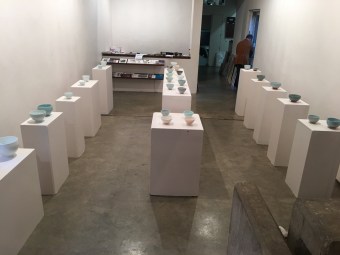
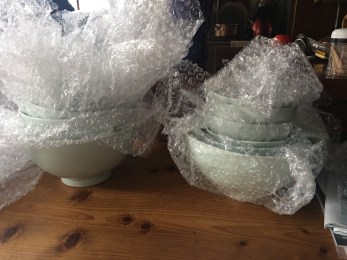
I fly in from China with my cargo of porcelain bowls safely stowed in my hand luggage. A dozen good reasons to feel happy.

I have one day to do 3 loads of washing and pack up the car with camping gear. We have season tickets to the National Folk Festival in Canberra. It is held over the 5 days of Easter each year. They bill it as 5 days in a perfect world. And this is true, but not for the reasons that they think! I’ll return to this later.

We enjoy the music, the food, the people, catching up with friends. It’s all good. We get to catch 3 different concerts with Heath Cullen, always good, but this year, 3 times better.IMG_1785

I also catch up with Mal Webb a really ‘out there’ performer working at the edge of what is possible with mouth percussion, 12 instruments and a loop machine!

A really great week.

We return home and work the washing machine to the max. I have a kiln to collect from the galvanisers. I welded it before leaving for China. It’s been ‘hot dipped’ now, and ready to collect. I have a week to fettle, clean, etch, prime, and top coat it before Janine and I fly out to Cambodia, at the end of the week, where we are volunteering for a couple of weeks.

To say that there is a lot a poverty here is such an understatement. Almost everyone is dirt poor. There is so much ingenuity here to ‘make do’. I’m so impressed with these people’s resilience in the face of grinding poverty.

If I ever hear another Australian winge  about how hard their life is……

We live in a perfect world. We are so lucky. We just don’t know how lucky we are.

A little time away working in a third world country really grounds you.

While the kiln cools

While I wait for my kiln to cool I have a day to look around. I am travelling with my friend Len Smith and our guide/translator Chen. We decide to take the few kilometre walk down town to the new Tao Xi Chuan Ceramic Centre. This was just in the early reconstruction stage 2 years ago, when I was last here. It is now open and looking very up market indeed. There were apparently 10 major government owned fine porcelain factories in Jindezhen before the economic reconstruction. There are now none, but this one has a new lease of life as an arts precinct. Now renamed as “Ceramic Art Avenue”.

IMG_5499 IMG_5578

IMG_5579 IMG_5583

All the old factories have been cleaned out made into retail spaces, small workshops and cafes. The old kiln cars are re-purposed into planter boxes. It’s all very swish and up-market.

Later we catch the No 18 bus out to the Royal China Works. There is an excellent museum and a display centre where we watch the workers paint blue-on-white and poly-chrome enamels. The level of craftsmanship is astounding. Len was here earlier in the week for a meeting while I was head down and butt up throwing and turning. He tells me that he saw this same lady starting the drafting out of this vase. Now at the end of the week she is half way through it.

IMG_5623 IMG_5624 IMG_5625 IMG_5628

Next we watch a bloke spend 5 mins painting 2cm of one colour of one part of a border decoration! The lines so steady, so fine and so consistent. Then the lady who is applying on glaze enamel, slowly but surely in-filling the original blue-on-white pattern.

Next we visit the throwing room to see a virtuoso thrower turn 60 kilos of clay into half of a 2 part pot. He has spent the morning making 20 bases and now close to 5 pm he is making the last of the 20 top sections. he rattles them off every 5 mins.

It is a 2 man job to centre the 60 kgs and then open it up and throw it out into the open vase form.

IMG_5645IMG_5649 IMG_5651 IMG_5654

They go at it with astonishing efficiency. The wedger has the next series of 15 kg lumps ready as the last pot is carried out the back to the drying area and the new pot is on its way.

IMG_5655

If I didn’t already feel a bit amateurish I surely do now.

45 seconds in the life of China

We have just watched an amazingly skillful potter make upwards of 700 pots in a day without seeming to put any effort into it, and without getting any clay splatter on himself either. Amazing!

This potter fills the workshop shelving to capacity in one day, then moves on to another workshop. He’s a professional thrower. Everyone here is a specialist. I explain to my guide and translator, Chen, that I do everything myself. He is amazed when I tell him that I do everything myself from digging the clay(stone), crushing and grinding it, to making the fire bricks for my kiln by hand. He just can’t get his head around it. Why don’t I just employ a specialist to do the boring bits? I tell him that it isn’t like that in Australia. There aren’t any specialists to call on.

Two days later we are back in the same workshop to see the ‘turner’ at work. He has arrived now that the pots are firmed up to trim the bases. He works in tandem with the ‘thrower’, following on behind him with a 2 day gap. They work together but never meet. Always separated by the drying period. The thrower has thrown 3/4 of a tonne of clay into these flower pots on this occasion. The turner guy has to trim them up into shape, removing the excess clay from the base and correcting the form if necessary around the rim and foot. He gets through 10 double-ended turning tools each day. Wearing them down to a level of bluntness where they no longer work efficiently enough and slow him down. He travels with a bag full of them.

I ask the turner guy through my friend and interpreter, Chen, how all this works out. The turner removes about a 1/4 of the weight of the pot. The bases are thick when thrown off the hump. The thrower doesn’t use a wire. It slows him down too much. He just twists the pot off the hump with a flick of his fingers, leaving a very thick base. The turner has to remove all of this. It takes the turner almost twice as long to turn the bases, as it takes the thrower to make the pot. However, the turner gets paid almost twice as much. The thrower gets 1.5 rmb. per pot. That’s 30 cents. The turner gets 2.5 rmb per pot. That’s 50 cents. The turner will be here for almost 2 days to clear the shelves.

It works out that these highly skilled guys are earning about Au$200 each day. That’s really good money in China. But their job-life expectancy is very low. They burn out fast. I ask politely through Chen, how long will he be doing this? 10 years is enough. It’s far too boring to do it for very long! What will he do next? He is saving money to start his own business. This is only a means to an end. A better future awaits him somewhere.

I ask what he does at night i.e. does he have a hobby or other interests? No! He just watches television while he sharpens all his blunt tools ready for the next day. I ask why he doesn’t use tungsten tipped tools? He replies that he doesn’t understand the question. After some probing, it transpires that he hasn’t even heard of such a thing. Everyone here uses these cheap, locally made, mild steel, black-smithed turning tools. They are cheap and readily available and easily sharpened with a hand file. They also go blunt very fast. He is used to spending a few hours each night filing them sharp.

IMG_5261
IMG_5265


I notice that he uses a rubber glove and the cut-off fingers of a rubber glove on the other hand to stop the abrasion of the clay from wearing out the skin on his hands, just the same as I do. However, I only use the rubber finger stall on one finger

I ask him what he thinks about all the dry clay dust floating off the turnings. Why isn’t he wearing a mask? He is generating a small mountain of dust all around himself. I can’t even see the wheel, as all the turnings are piled up and flowing down and away in a cascade of dust. He doesn’t understand this question either. I explain, through Chen, that clay dust causes lung disease if inhaled over a long period of time. He replies that he has never heard of this theory. Neither has Chen. I leave it there. I have sown the seed.

When these pots are bone dry the glazer will turn up and spray the glaze on them. That will take a couple of days. Finally they will be passed on to the decorating girl. She seems to work 7 days a week and hand paints each one. She does about 100 per day. It’s a never ending job. The thrower will be back next week, as soon as the shelves are emptied. This team seem to keep half a dozen potteries busy.

On the way home I can’t help but photograph the amazing wiring that is in use here. As the holder of a limited electrical licence, I’m quite in awe. I love the dual function of clothes line and high voltage wiring.

IMG_5586
IMG_5585
IMG_5602
IMG_5295

China is an amazing place. I’ve been thinking about these amazing potter specialists here. As I place my own few pots out in the laneway, in the sun to dry. I’m thinking, one pot every 45 seconds! I reflect that I have been here for 2 weeks and so far only managed to make forty-five pots that are second grade. That’s 45  2nds! I live in hope.

From the Jaded Economy to the Jade Empire

I’m safely returned from my most recent sojourn in China. I was there to experience the amazing porcelain stone that they have there. This is an amazing rock! When milled up into a fine paste and wetted down. It releases its clay and mica content into solution in a water suspended state. This ‘slip’ can then be processed into clay body as we know it. These days, this slip is stiffened up to plastic form in a filter press and then pugged and bagged. But it was only 12 years ago when I was here that I saw it being pounded and crushed by water driven wooden hammers, then blunged by hand and stiffened on drying beds. Things have changed a lot in a decade. Everything is mechanised now.

The finest grade of white translucent porcelain is now the best that it has ever been. I was able to spend a few weeks throwing and turning this remarkable ultra fine, extra white, clay body called Gao Bai Neantu. This clay is now so good, it’s a real eye opener. Twelve years ago, this mica-based, clay-like, material was good, but difficult to work with. Now the plasticity is so much better, while the degree of fine cracks is much lower. I’ve been lucky enough to see and experience it go through all of these amazing changes and improvements on my various visits over that time.
However, the same can’t be said for the air quality. The pollution is still just as bad as it has ever been, with some days when the visibility was down it just a couple of kilometres, the sun came up all orange and we are not in a big city, but out in the country side. I found it difficult to breath on a couple of days and was constantly coughing.
IMG_5103 (1)  IMG_5109 (1)
We get to watch a bloke who throws 700 pots a day. And he does it without getting any clay on himself. He wears plastic shopping bags tired around his shoes, ad the design of the potters wheel means that his feet are in the slops tray. Otherwise he is immaculate. We time him at 45 seconds per pot. It’s not really believable unless you see it happen in front of you. We saw him at 5.00 pm. at the end of his day, when he was tired and at this slowest and wearing whatever splashes of clay had landed on him throughout his busy day! Which was none!
IMG_5183 (1) IMG_5185 (1)
I stamp my work made here with the ‘Made in Jingdezhen’ workshop stamp. I’m renting studio space in the ‘Fragrant Garden Studio’. Everyone is so very helpful and accomodating. Its an amazing experience. I’m a lucky man.
IMG_5455 (1)
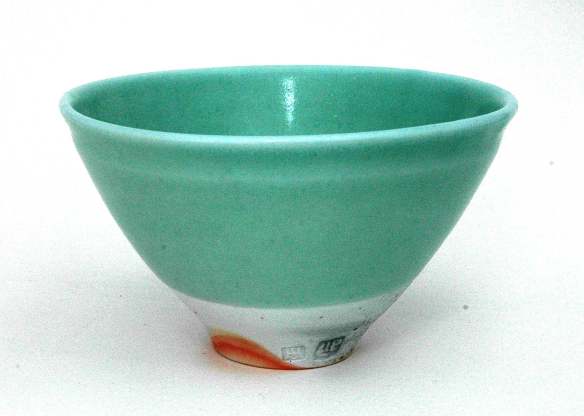
Among other things that I accomplish while I’m here, collecting samples of porcelain stone and visiting clay makers and processing sites. I get to make 45 or so porcelain bowls. 12 of which make it to a first class finish from the stoneware kiln. I stash them into my back pack, wrapped in bubble wrap and carry them as carry-on luggage.
I’m here representing the old ‘running dogs’ of capitalism. but I find that the young puppies of Communist inspired capitalism are no longer penned in and are now set free. Everyone is busy and hoping to get rich. There is so much energy here and so much enthusiasm. I can’t see anything stopping them. The puppies are out. They are inquisitive and they are starting to wander. Meet the new running dogs.
 IMG_5615 (1) IMG_5431 (1)
Amazingly, on the return trip. I get allocated a seat on the plane in the middle row of 4. where I am the only passenger. I get to sleep laying down across all 4 seats all night!
I said that I was lucky!
It helps that I was the very last person to book onto the flight, really late, just before they closed the gate. I get there with just 9 minutes to spare. I’m left with 3 spare seats beside me.
IMG_5675 (1)


Best wishes from the tired old bitch of capitalism, fat, bloated and complacent, snuggled up by the fire and giving the occasional half-hearted bark at the passing new running dogs.

Porcelain, blah, blah, blah!

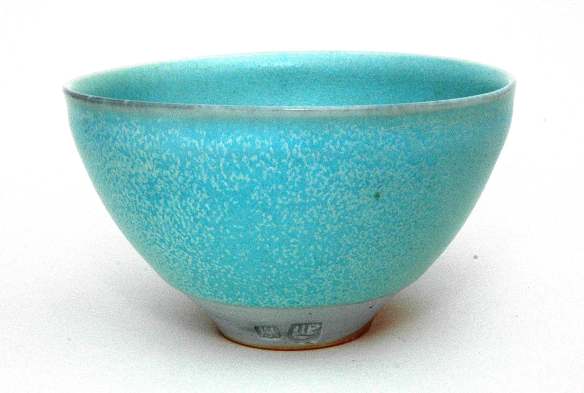
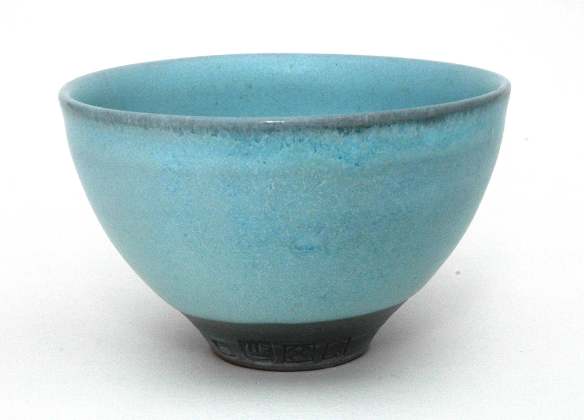
Not all porcelain is white.

The countryside around Mittagong is one of the few places where native porcelain stone occurs. 15 years ago, I discovered porcelain stone and it has enabled me to develop my wood fired porcelain and proto-porcelains made from this native rock. They aren’t the most translucent or the whitest of porcelains. But they are mine. I’m not pretending that just because I dig the stuff up, it makes for good pots. Good pots are made by good potters, by skill, judgement, intuition and innate ability, coupled with loads of practice. The ‘stuff’ doesn’t necessarily come into it. I’m not a good potter, but I enjoy what I do, and sometimes I think that I’m getting better, as some of my pots turn out to be quite lovely. But only some. There is still a lot of luck involved.

During the development of this work it became obvious to me that if I wanted this ground-up rock to have any sort of plasticity. It would need to be aged for several years. I set about doing this in ernest, over a decade ago.

This work is my attempt to produce a local product. Something that has all-but disappeared from Australian and other first-world economies in recent years. This work, with all its limitations and faults, and all its local character, can be described using the French word, ‘terroir’ that expresses some of this unique quality of ‘locality’.

The search for a personal aesthetic based on the essence of my locality and life experience is also the search for the essence of the potter. This is such an unpopular and old-fashioned concept, but I believe that this work grows out of the fact that I have lived and worked here for over 40 years. I’ve walked a lot of this country. I’m assuming that this is not an issue for most other potters, but it is for me. I exist and work, intimately connected to this place where I live.

I am a ceramic lacavore, I have chosen to limit myself to the 50 km palette of materials. I grow a lot of my own wood. I make the fire bricks for my kiln by hand, from local refractory white bauxite. My glazes are made from the porcelain stone or other local igneous rocks, shales, gravels and ashes, all crushed, processed and milled in my workshop inefficiently, in small batches often by hand, in a workshop built by my partner Janine and myself from mud bricks that we made from local clay. We also grow all our own green food in our extensive vegetable gardens and orchards.

It couldn’t be more wholesome, corny, or sickeningly idyllic. Homespun, organic and self-reliant as it all is, it is not for everyone, in fact, it’s most likely not for anyone these days. The sixties are over! But it suits me, someone who still believes in romance, passion and ideals. I’m firmly rooted in the  truth, i.e. (pre)post-truth era!

Many potters these days love to use the international, trans-global, ultra-white, concoctions of porcelains. These ‘international roast’ of clay bodies. They are very good! So white! But a lot of the work starts to look a bit the same for it. One local show of porcelain was apparently described as just so much ‘blah, blah, blah!’ recently, I wasn’t there, but I think that I know what one of those ‘blah’s might mean. One gallery director said that any work that values the material that it is made from or the method of its making can never be considered as Art.

Fair enough, I call myself ‘potter’, not artist, just a person revelling in the innate qualities of my own unique, wood fired, local porcelain stone. The wood firing draws out some unusual and interesting surfaces, not normally identified as those of porcelain. So what is porcelain anyway? Seeing that it is concerned with material ‘stuff’, it can’t be Art. The Orientals would have us think that it is all about the sound, what one hears when a porcelain bowl is struck. So, therefore its all about glaze fit. I don’t mind a bit of crazing, in fact I quite like it. So my work doesn’t always ‘ring’. One definition involves light shining through the thin sections. So that’s translucency. However, most people would think of the supreme whiteness, but porcelain isn’t always white, mine certainly isn’t. My pots don’t always ring and they don’t always show light through either. So my work only contains a bit of ‘blah’! Maybe it’s not porcelain?

I’ve come to the conclusion that I don’t really know what defines porcelain. What I do know is, that whatever it is that I’m crafting here in my pottery through old fashioned techniques and lots of attention to detail, but mostly a lot of time. It ends up having some lovely qualities that I can’t seem to achieve any other way.

It’s mine, it’s local, it’s ethically sourced, it’s low carbon, it’s pretty much unique to here and I love it. Blah, blah, blah, blah, blah!

What else do I need to know?

DSC_0006 copy (1) DSC_0038_01 copy 2 (1)

DSC_0048 copy 2 (1) DSC_0056_01 copy (1)

Environmental fellowship

We have had a Danish potter staying with us for the past month. He won the Environmental Ceramics Fellowship for for 2016, but for both of us it was just too difficult to complete it last year, so we postponed to this year.

He is a potter from Denmark who is interested in sustainability and new ways of exploring how to make a living in this new digital age. He has his own web presence in Denmark where he markets Potters wheels, kilns and clay bodies, as well as making his own work. He is a digital native. Whereas, I am, on the other hand, a dig-it-all-native. Making everything myself from the ground up – and that is what he is here to learn.

We crushed porcelain stone in the big jaw crusher to make single-stone porcelain body. We made clay tests to investigate unknown clays. We worked in the gardens and orchards. Ate all our own produce. Cooked up some wonderful meals. Lauge is a great cook, so that helped. We went on a geology excursion to look at some of the local stone deposits. Harvested the shiraz grape crop and made dark grape juice from the grapes.

IMG_4683 IMG_4684.jpg

All in all, the month flew by and it all went too fast, leaving so many things un-explored. A month just isn’t enough time to experience everything that we do here.

Janine and I are planning to do some volunteer aid work overseas soon. So we are working towards this by making clay tests out of the local clay that has been posted over to us to process. Our Guest lends a hand in everything that we do.

IMG_4764  IMG_4766

We decide to go exploring and looking at a few rocks for making glazes. Then, to complete the true ‘Australian’ experience, we take him to the local micro-brewery and have a meat pie with tomato sauce, accompanied by a tray of the brewery’s sample beers for lunch. Fantastic! I haven’t eaten a meat pie since I was a kid, so it was an experience for me too!

 IMG_5065 (1)IMG_5068

IMG_5006 (1)

You have to look closely at the image of the analcime basanite deposit above to focus on the small figure in the foreground.

We cook and eat what is in season in the garden this autumn equinox. An autumn garden risotto, a fresh garden salad of shaved beetroot, cucumber, raddish, quince. Served with wasabi rocket, lettuce, beetroot tops, chilli and crunchy pan-roasted almonds.

IMG_4977 (1) IMG_5076

We also make an alternate version of okonomiaki, using some very firm, third pick, red cabbage, our own home grown eggs, garlic, chilli and shiso. Everything from the garden. Red cabbage is too slow to cook straight off as a cabbage pancake. So I pre-cook the cabbage to soften it down before I blend in the pancake mix and all the other ingredients. It’s not really a traditional Japanese okonomiaki. It’s an improvised Aussie OKA-nomiaka. Served with mayonnaise and Japanese okonomi sauce. Topped with bonito flakes and some Japanese pickled ginger.

IMG_5072 (1) IMG_5074 (1)

We finish the meal with fresh figs and soft white cheese. We do this desert a lot at this time of year while the figs are coming on. We try it with all manner of different soft cheeses. Boconcini isn’t the best, but you don’t know these things until you try them out. We’ve tried it with blue cheese, fetta and soft white goats cheese which was best.

IMG_5073

Lauge helps me finish off the internal fittings for the 8 little dalek kilns. These are now  almost all delivered, leaving space for me to start welding up my 2nd kiln job of the year. There is just enough room to get both jobs in the factory at the same time, but it takes a little bit of planning and maneuvering to get everything into the tight space.

Now the shed is almost empty, with the big new frame gone off to be galvanised and all the little ones gone to good homes:)

IMG_4999 (1) IMG_4998 (1)

IMG_4997 (1)

Writers Week

Janine and I managed to get all our work done and we spent last week at Writers Week. As always it was a thoroughly engaging time. So many great stories and discussions. 84 sessions to choose from, so many topics and so many books, so many writers. We find ourselves entertained, inspired, engaged, and challenged.

A thoroughly rewarding week out of the workshop and into the realm of ideas.

This year there was a lot of discussion about the death of the book, it cropped up again and again in different forms and forums, but that was the steady undercurrent this year. I’m not too worried. I believe that the book will survive in all its various forms for a long time to come. I’m sure that it will see me out.

I’m not digital native, so I still like to handle the thing in itself, to feel the weight, the smell and the texture of paper and ink. but then again, I’m very old-fashioned. I stubbornly insist on writing letters on nice paper with ink and a fountain pen. Sure its old-fashioned and out-dated, but so is making pots out of clay! Plastic replaced ceramics last century for all intents and purposes, but pots still persist as an art form and a better quality product. So that is how I see the book. Invoices have all graduated to electronic form, as have cheques and banking. Email has replaced most letters and fair enough. Electronic books are OK, but not for me. Not just yet anyway.

The book as an art form will persist for a very long time. I even attended a session on ‘The Book’. I even bought the book on ‘The Book’! and it’s a beautiful thing, as I also have his earlier book on some lesser known typographic characters.

IMG_4973 IMG_4974

You can just imagine the Sumerians saying,  “I don’t get these Egyptians, I can’t see papyrus catching on. I just love the smell of clay, and the texture and weight of a good clay tablet!