27 kilns in 27 days. vol 2.

Vol. 2. The Long Quan Celadons

We take the bullet train out of Shanghai for the three and a half hours trip heading South West. We arrive at Lishui station and wait for a cab. There isn’t much at the station and the crowd that we arrived with soon disperse, but are soon replaced with another hoard of people from the next train. They all swirl past us, coming through in waves every 10 mins. There are just so many bullet trains passing through here with astounding regularly. It’s hard to believe. This is a very popular service. It must be on the way to somewhere more important, because this place isn’t anywhere in particular, that I’m aware of. But with 1.4 billion people needing to get around, even if only a small fraction of them live and work around here, it is keeping this service very well patronised. 10 years ago there were very few of these super-fast trains in China. 20 years ago there were none.
These days you can get to near almost anywhere quickly using this service, but mostly on the eastern side of the country. The government has produced a miracle in building this high speed rail system so extensively and quickly. Half of it is bored through the mountains in tunnels and the other half is suspended on concrete pillars above the valleys. It’s a masterpiece of engineering and it appears to run like clockwork. We comment on how Australia takes 5 years to make a 3 km road tunnel across Sydney. While the Chinese are building 3km of high speed rail infrastructure per day here.

Here in Lishui, we are about an hours car journey from our destination, as we wait for our car to pick us up. We try the local station food. This is just OK, not what I would usually want to eat, but I’m in a foreign country, so it goes down a treat.Anyway, there is only one choice. It’s a bowl of monosodium glutamate clear soup, with some fried tofu skin, 2 very small dumplings, a couple of dreadfully, scarily, luminously, bright pink ‘sausage’. I use that descriptor very loosely, and this is brought to life with some really great, bright red, slices of HOT, I mean very hot, chilli. A few drops of oil, some pepper and a lot of salt. It’s fantastic! I love it, but I try not to think about what was in the bright pink, extruded, sausage-like objects. I’ll never know. But when in Lishui, eat like a Lishuan! It was delishuious.

Our car arrives and drives at a little bit scary high speed to get us to our hotel for the night. We settle in and have a dinner of stirred vegetables. Soya beans and onion, mushrooms, fried tofu, steamed and then stir fried green beans, something brown that I don’t recognise, either in shape or in taste, which is quite bland and finally some little, green, mild chilis. something more akin to a small capsicum. It’s all delicious. but there is a lot of it, so I pass on the steamed rice and the soup.

The next day we are off to see the local Longquan Museum of celadon history. Longquan was a centre for the production of Celadon wares for several hundred years, from about the mid 900’s, through to almost 1600 – and it still is an important producer of high quality ceramic Art wares based around celadon.

Apart from Celadon, they also have some Guan ware and something that looks suspiciously like Ru ware, but can’t be, because Ru ware was only made in the Northern Song Dynasty. We’ve been tipped off, we have some local information, about an important new archaeological site. We spend our time dutifully taking in as much as we can in the Museum. But more importantly for me, there is the recently excavated archaeological site. I want to get some understanding of the early celadon manufacturing in these surrounding valleys. I have my pet theories, the possibility of seeing this site takes preference for me over other possible things to see and do while we are here.

The site is a half hour drive out into the country side. We wind our way out into the hills away from the fertile valleys. This is all very familiar to me. Even though I have never been here before. It is the same story. I can see it all unfolding. It has the ‘look’ that I recognise. These fertile valleys were colonised for food production first and pottery came later. The potters had to make do with the hilly surrounds where food production wasn’t a premium.

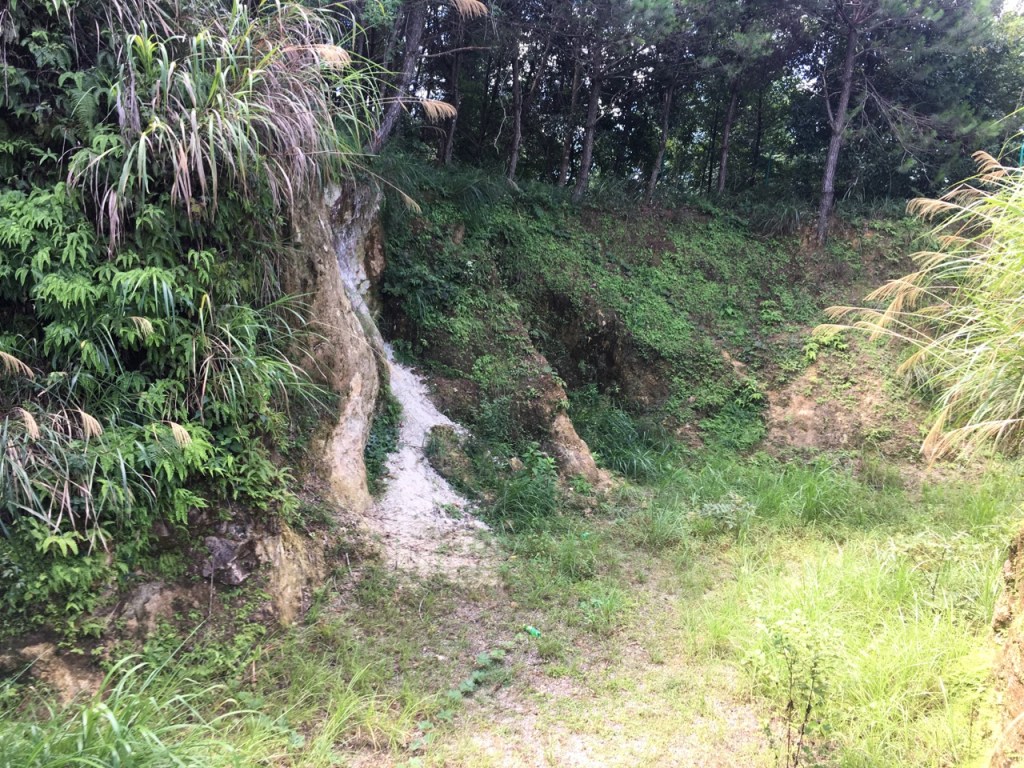
This is the same story or scene in so many other places where I have been researching in China, Japan and Korea. It also just happens that there are useful minerals to be found exposed in the wash-away edges of the streams up in the hills. This liminal country is very rich in feldspathic material I can see that from the car window. I’ve seen it all before. I call out to stop the car at one point. I say “We must be getting close now”! I can see out of my window, that we are passing a deposit of kaolinised porcelain stone. This is the local geology writ large in the road cutting. I recognise it from all the other deposits that I have studied over my lifetime of fossicking for porcelain stone and glaze rocks.

A pale vein of kaolinised feldspathic mineral, exposed in the road cutting.

If this is the local geology, of course someone would have been inquisitive enough at some point in time over the very long history of human occupation of these vallieys, to just pop a bit of that paler stuff into the existing pottery kiln where they were making earthenware and then later, stoneware, until finally they made porcelain. But it was only because the ‘stuff’ was here and available on site. No sericite and kaolin, no discovery of porcelain. It’s that simple.

The story is much the same where ever it happened in several different sites in a few different countries. If the suitable material was there, exposed near the surface, then it happened. If you are a potter, or several generations of potters. You can’t not make it!

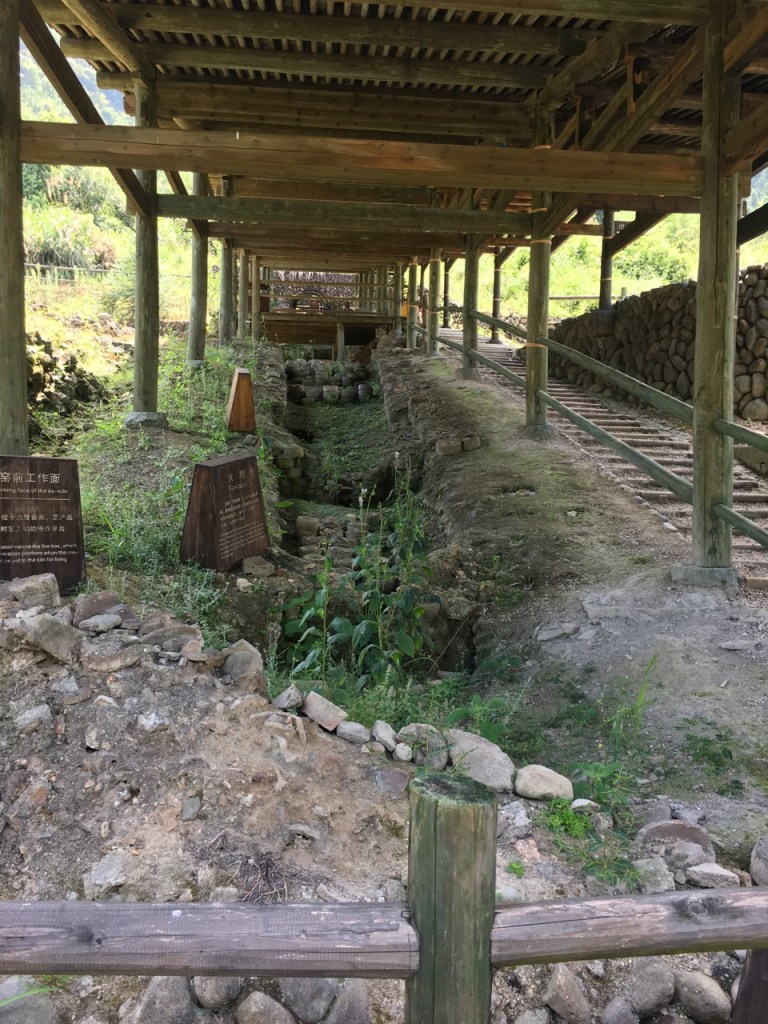
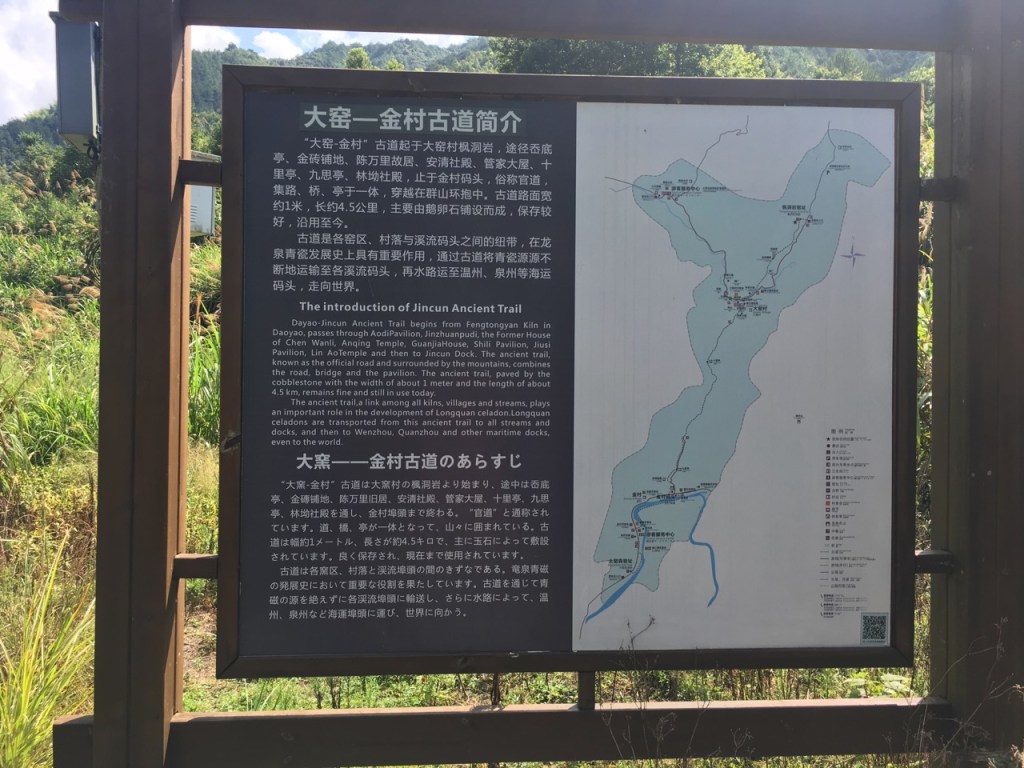
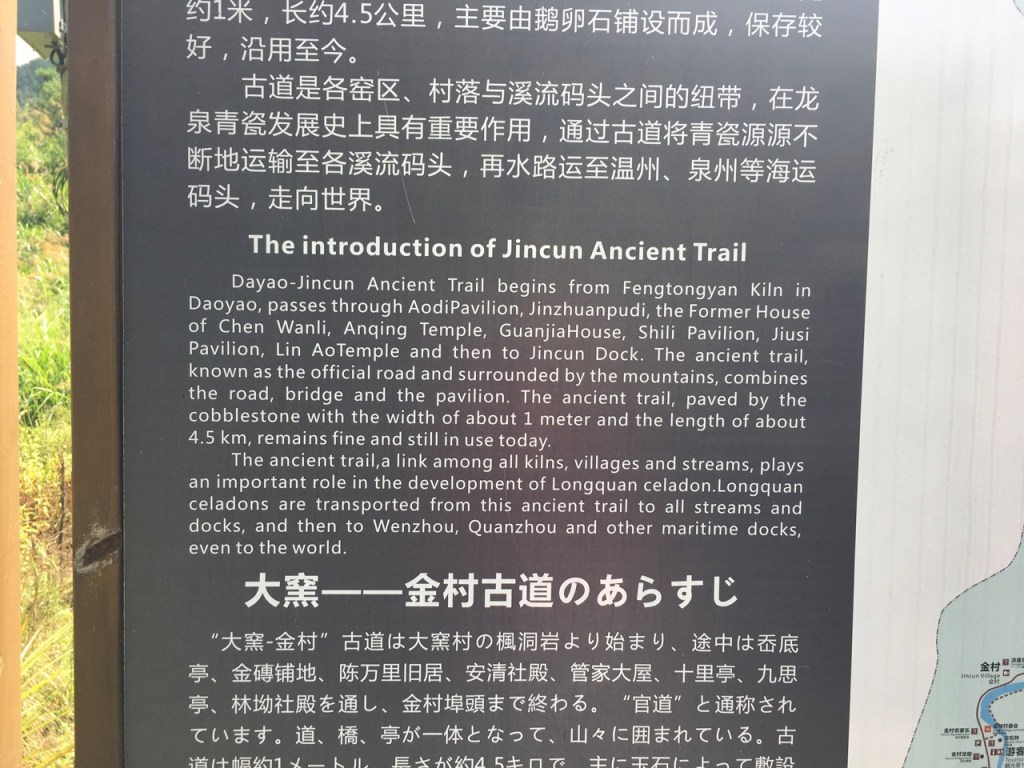
We drive on, eventually reaching the dig site. All digging has now been completed and written up. There is a sign that tells all – but it is mostly in Chinese script and I can only decipher a bit of it using my phones translation app. But this is of little or no consequence, as the signage has a small section of English translation. How very thoughtful! Anyway, I’ve been in this situation before, and I know what I’m looking for and what I’m looking at in the most general sense. I can see what I need to see. As we wander the site for an hour, even making our way down to the small runnel of a stream at the bottom of the hill. There are even a few bits of broken shards in the water, all ground and polished into rounded edges of pale green celadon and off-white/grey-olive, guan-like glazes.

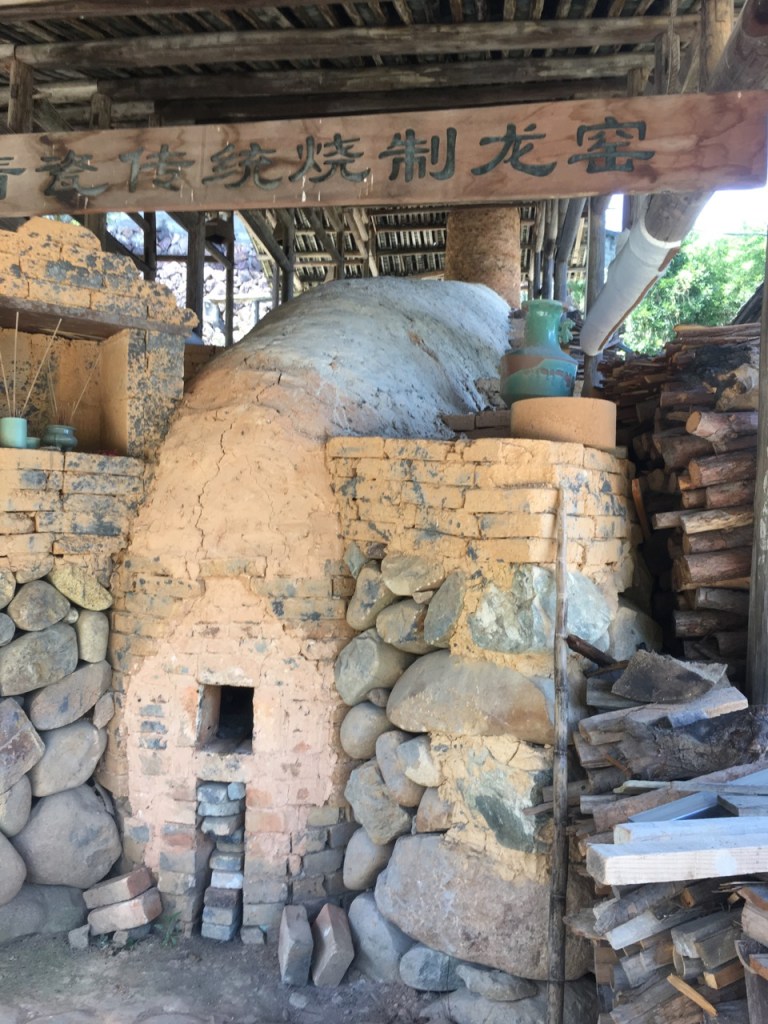
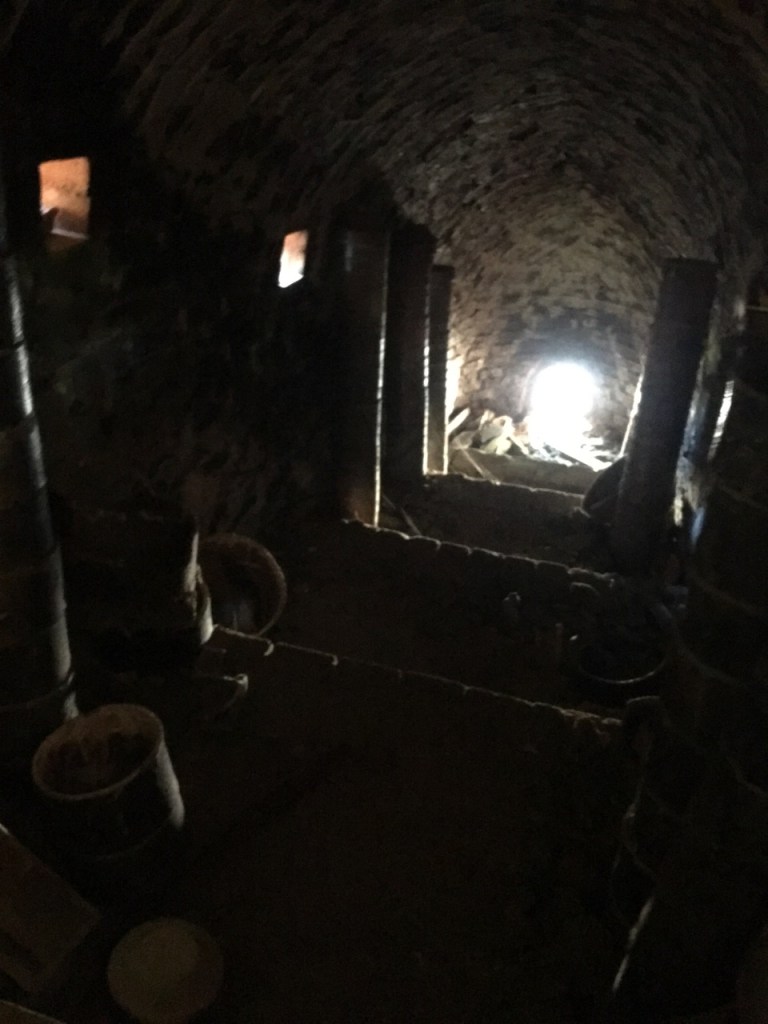
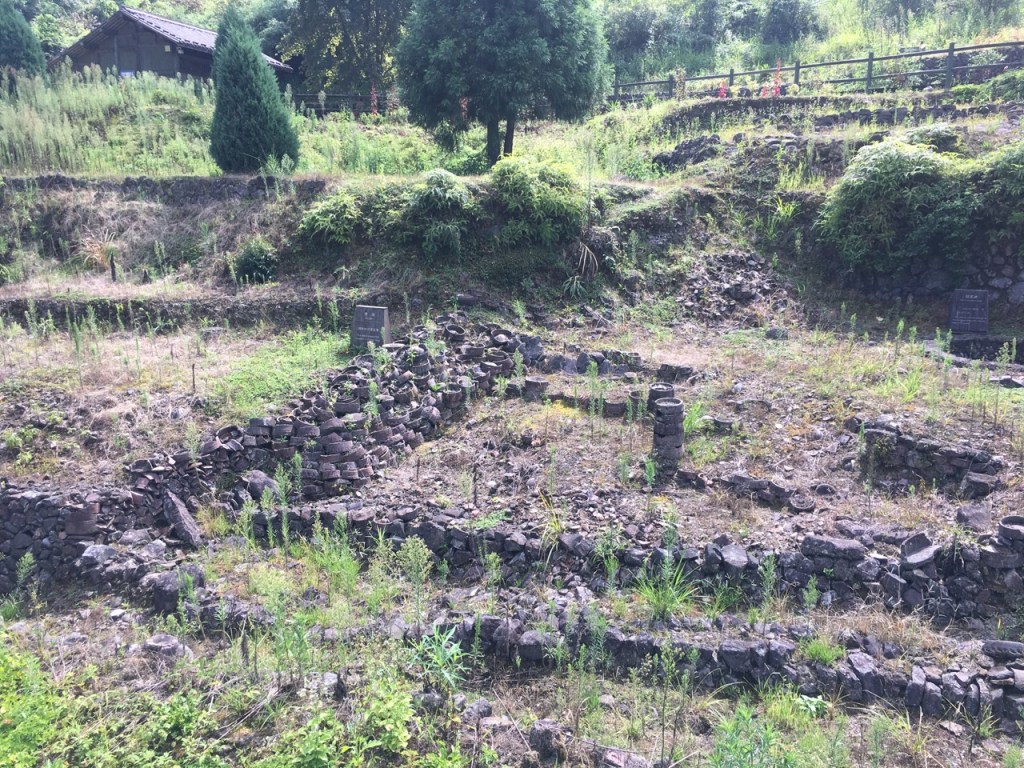
The story board tells us that along this stream was once a well-worn track along the banks that is mentioned in old documents. The finished ceramic work was carried out of this valley along here. We make our way back up to the kiln site. It’s a long tunnel kiln – or was. Only the base is left now. This site dates from 1000 to 1300. There are several layers of occupation/development on the site. The kiln has been partially excavated to reveal at least 3 layers of different kilns on the site over time. This site is called “Fengdongyan” and is 4.5 kms up stream from the small village of Daoyao. Daoyao village is where there would have been other potteries at that time. This higher and more remote pottery site was an ‘official’ government sponsored site. So it must have been important. Or so the info board tells me.

To extend my earlier proposition of the thesis that potters migrated up into suitable nearby valleys, Actually, I believe that they were pushed out by the farmers. I propose that the potters were originally farmers, who grew crops and made pots part time. Pots made from mineral rich clays from the valley floor. Something akin to red earthenware, fired in bonfires, or simple up-draught kilns made from mud, straw and shards. Over eons of time the space on the fertile valley floor became too precious for pottery making and firing. The potters who had by now become specialists, were relocated off the fertile valley floor and the now well developed paddy fields and their sophisticated watering systems.

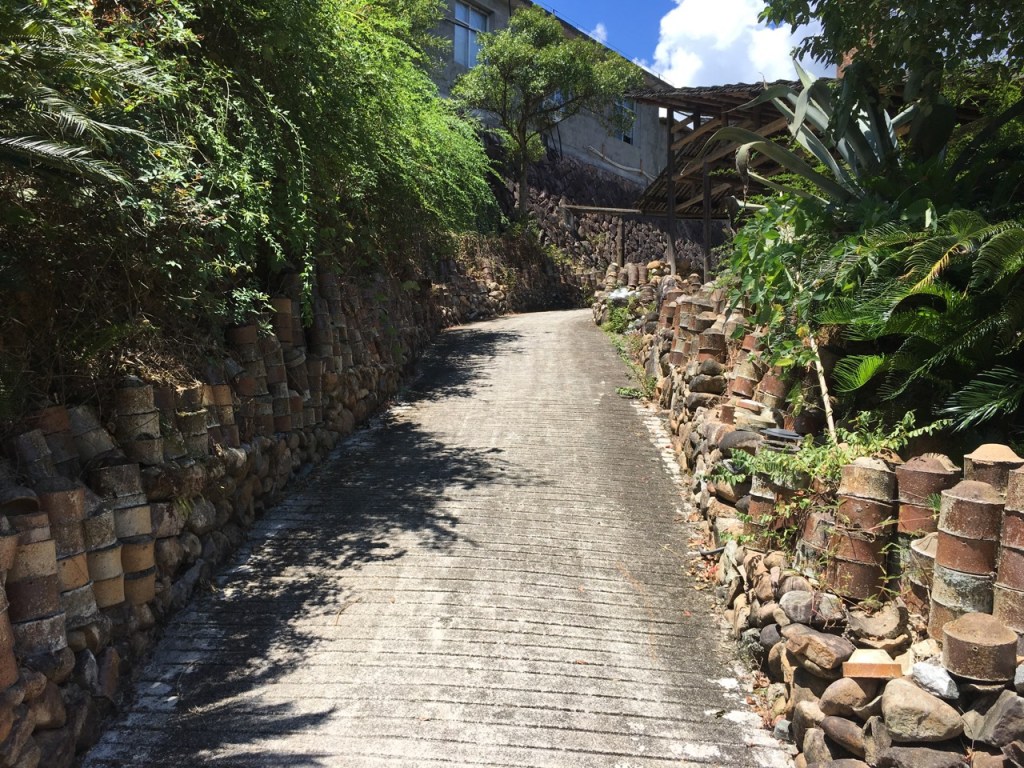
the stepped tracing of the steep slope of the pottery site.

The potters now finding themselves on higher sloping ground, built their up-draught kilns into the sides of the slopes, becoming more like cross-draught kilns. This resulted in them achieving higher temperatures much quicker and with ease. The clays that they were close to on the slopes and valleys were better drained with certain fluxing minerals leached out. The clays became less fuseable, lower in iron and more refractory, needing the higher temperatures that were now possible, so paler stoneware bodies were evolved. etc, etc. Eventually semi cross-draught, down-draught tunnel kilns were developed because of their greater fuel efficiency and ease of achieving the higher temperatures. The rest is history!

When sites with porcelain stone were located nearby, in these valleys, it is impossible for me not too believe that someone like me, an inquisitive potter, could have resisted trying out this new white material. It needed a bit more work to get the kiln to mature it, it needed to go in the hottest spot, but it was possible, and therefore, at some point in time, it happened. The same porcelain stone body used for making the pots, could be mixed with limestone or wood ash and this now became a proto-celadon glaze that could be raw glazed, it’s that easy! It could be done, so it was done, it’s still being done! You only need 2 materials. Later, saggers were developed/employed to maximise packing and firing efficiency, but also to keep a lot of the wood ash off the beautifully refined glazes. Of course it didn’t happen over night, it took centuries. So much experimentation by generations of potters, each adding just a little refinement to the overall knowledge. That’s my thesis. I believe it. What is missing here is a clay supply. Why, this place so far up the valley?

When we were finished looking at this early Long Quan celadon site, we made our way back up the hill to the road, and on the other side of the road was a short track, that I hadn’t noticed previously, this led to an ancient mine site of very friable, crumbly weathered porcelain stone material. So this is why these potters migrated up here, 4.5 kilometres up this valley, away from the village, into this more remote spot, between 600 to 900 years ago. Now it’s obvious to me. They came here, all this way, simply because this is where the best material was to be found in its easiest, most workable form. No crushing required, just washing/blungeing, settling and stiffening. It all makes perfect sense to me. I’m dying to step off the walkway and go in and steal a little sample for analysis, but I resist the temptation. I’d put money on this stuff being a mix of sericite and silica, perhaps with a small amount of kaolinite or something similar. But I’ll never know!

In a way, I don’t need to. I already know. It’s just like every other site in a general sense. This place would fit very well into my book of ‘5 Stones’, except that I’ve already finished writing it. Every one of the 11 sites I studied in the 5 different countries, all fitted the pattern in some way, and every sample that I collected and and had analysed, with only one exception, contained sericite mica! That exception is Mittagong, where I live, where the mineralogy is similar but the mica is in the form of illite not sericite.

The mine site is quite extensive, it goes in two directions. I might imagine that they simply followed the softest, most plastic, easily dug material. I can see 300 years of potters endeavour, scratching out this hole here. It all makes so much sense to me.

I’m feeling really chuffed. This has been a really rewarding day. Even if nothing else happens on this trip. It has already been completely worthwhile for me.

Flanders Poppies

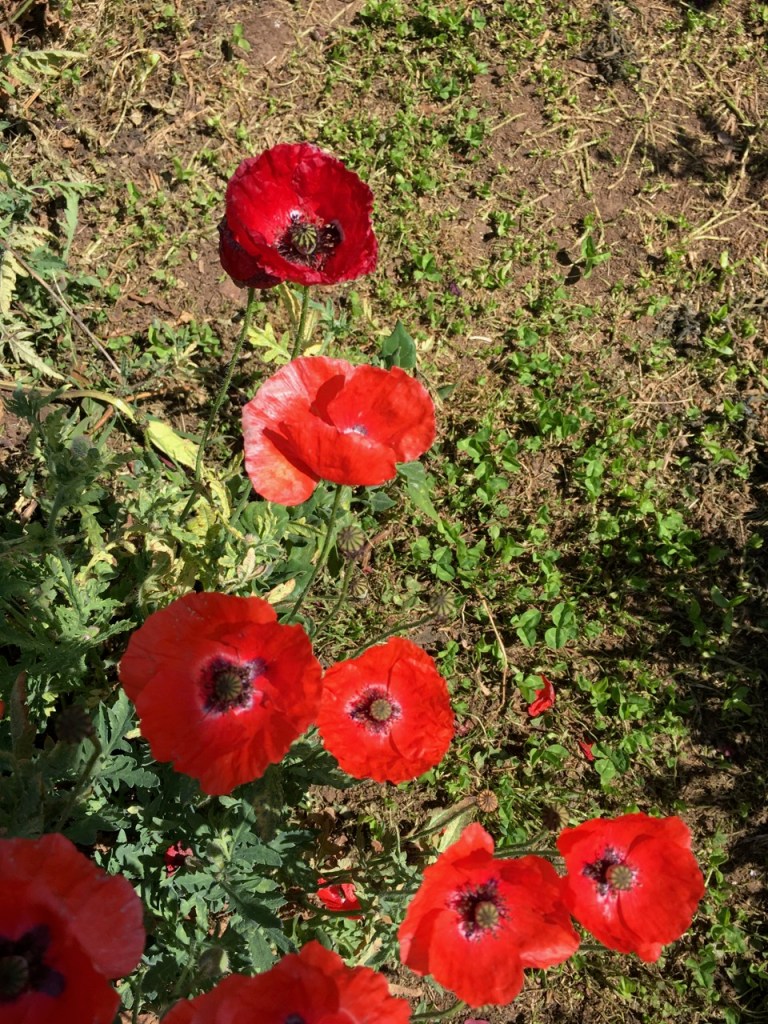
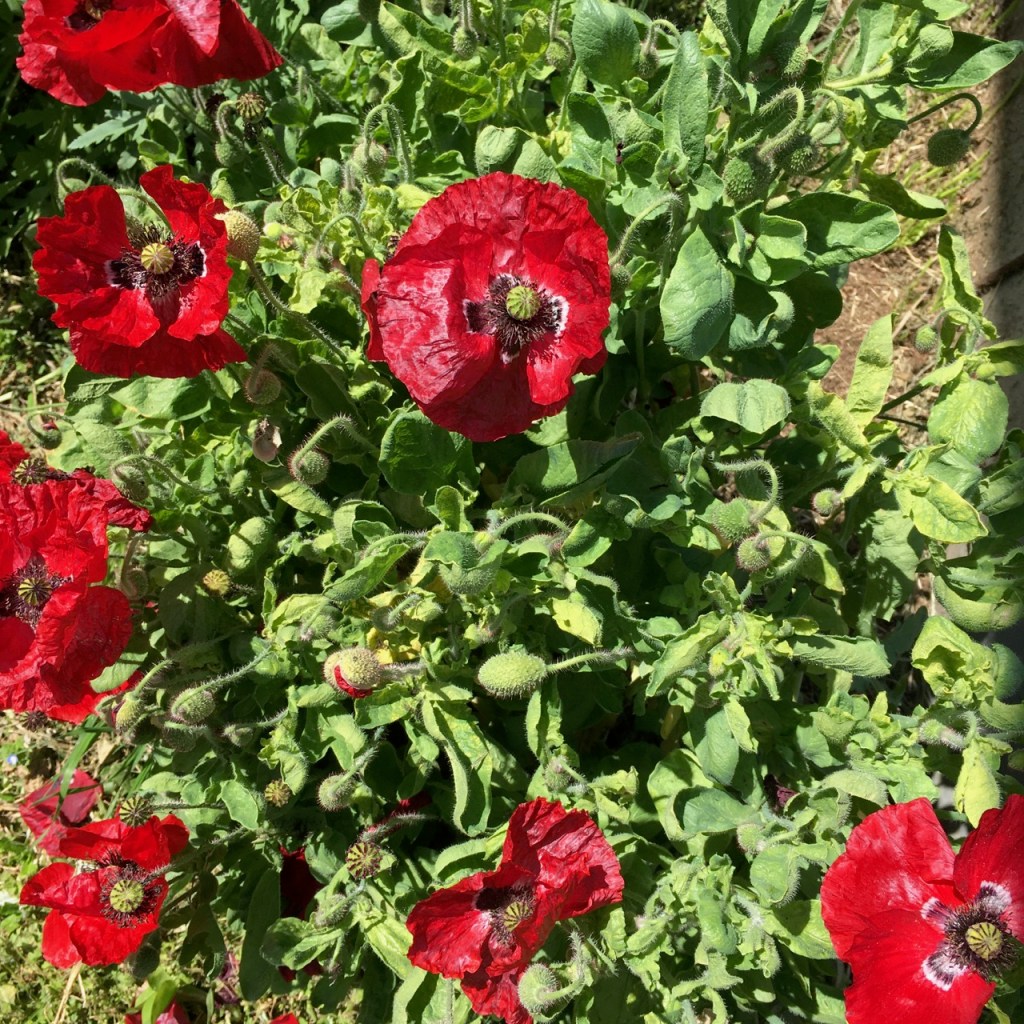
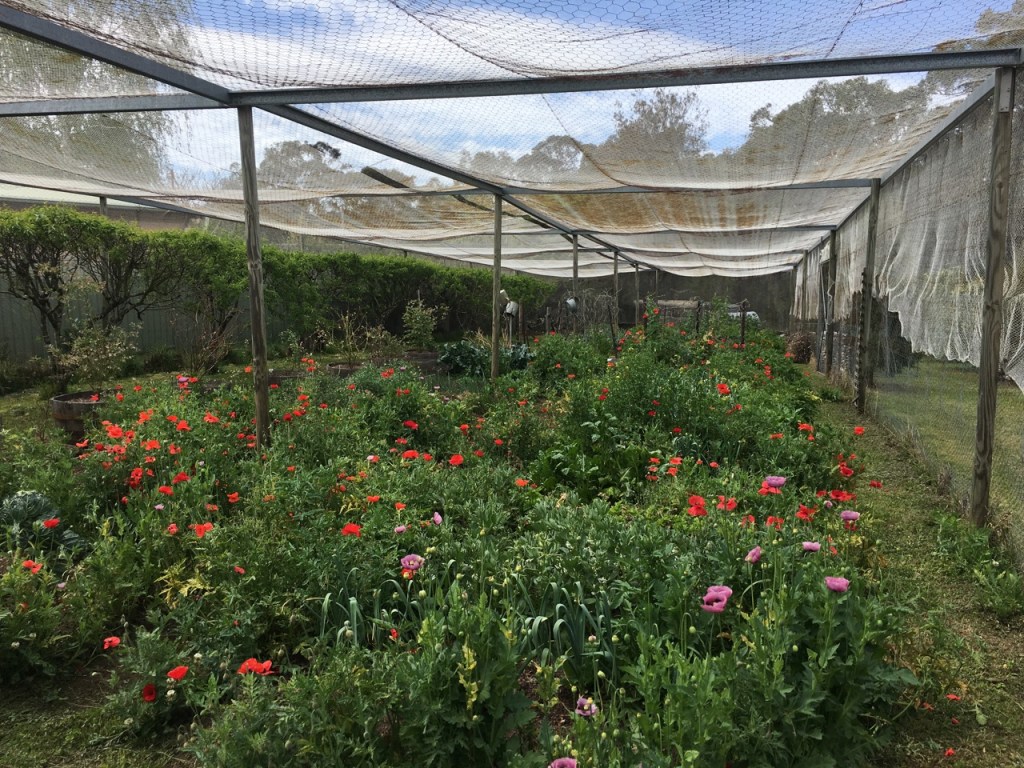
We are in peak Poppy season now with a lovely display of colour throughout the garden. Over the years I have selected only the single petaled variety, removing the doubles as they appear, I let the doubles flower, but remove the seed heads before they ripen.

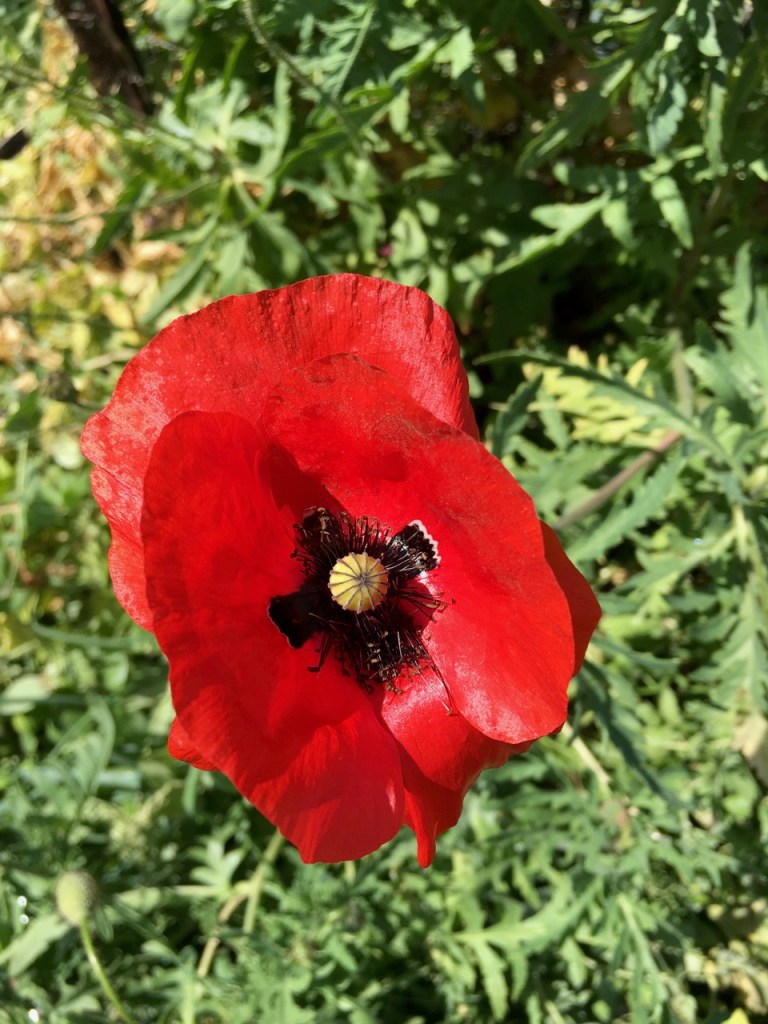
There are hundreds of poppy varieties, but I really love the single intense red variety. Particularly the one with the black centre. I’m not so keen on the white centred variety of the same flower, so I have slowly removed that one as well. I just love the contrast of the black with the bright red.

These wild flowers just suit themselves where they grow, but they love to come up where the soil has been disturbed, ie, dug over, just like in a garden bed. They will come up in the orchard and sometimes in the lawn too, but all the wild life around here love them just as much as I do and they get eaten off pretty quickly. I doubt that there is any opium in the young leaves of the seedlings, but the locals seem to love them. The don’t stand a chance if they are not fenced. They must seem like junk food or cake to a kangaroo. They seek them out and selectively nibble them down to the ground.

I have selected a few slightly different shades of red over time, from pale orange red to dark claret crimson, but I love the fire engine red the most.

Some yers back I scattered a few poppy seeds around, down in the vineyard among the rows of cabinet sauvignon. I had this romantic idea of there being rows of grapes and an understory of crimson red flowers. Something like you might see in an impressionist painting. Well that was a very nice idyl on my part. Dream on Walter!.

They grew quite well in there as it was a fenced off area to keep all the locals out. The rabbits, wallabies, kangaroos, and wombats. They all like to graze on tender grape vine shoots and tendrils. The fence worked, but there was some thing that I hadn’t counted on. Wood ducks! The wild wood ducks figured out that they could fly in, swooping down low and land length wise in-between the rows of vines, just like a landing strip. They spent the day in there. Grazing on the poppies in the morning, and then lay about chatting amongst them selves for the rest of the day. After that first year, and my cunning plan was discovered by the ducks. I never got another poppy from the vineyard. Such is life!

These days the local wildlife cleans up any attempt to grow poppies out in the open areas of lawn. Poppies only thrive inside the protective surrounds of the aesthetic environment of the garden with its totally netted protective cover. A bit like artists in the larger society!

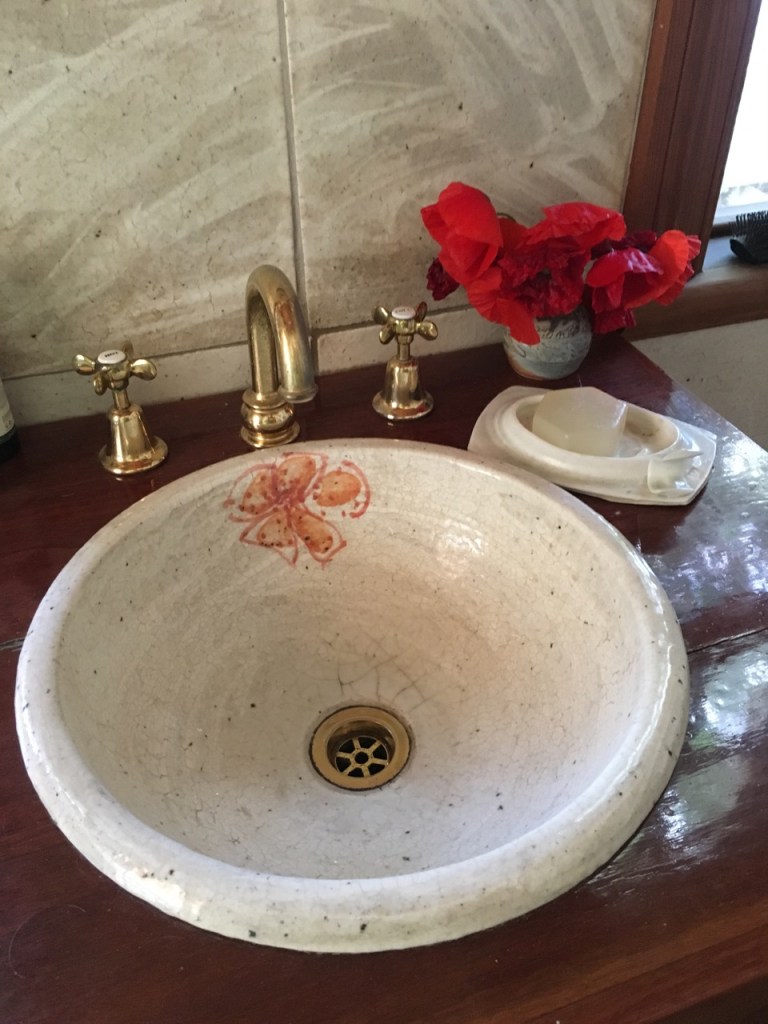
I enjoy my little hobby of supporting and protecting this delicate and vulnerable species. It’s a bit like being a patron of the arts. We have so many poppy flowers at the moment that Janine picks a few each day and puts them in a vase in the kitchen and bathroom. The only survive for a day and start dropping petals by the evening. They are looking pretty drowsy by the next day and comatose in the evening. Luckily we have a lot of them just now and we can afford to replace them each alternative day.

My own little memento mori! Life is short and can be brutal. Enjoy the beauty while you can.

Last Truffle of the Season

It’s so wonderful to be home again. I love being away somewhere exotic, learning something new and having experiences that lead me to make synaptic connections that I hope will lead to new ideas.

I really like to be back in my own kitchen too. I was very happy eating steamed and stir fried vegetables with offal every meal while in China. I cook a lot of steamed and stir fried veggies my self. I do tend to go a bit light on the intestines though, most, if not all of the time. Actually totally all of the time.

I’m back just in time to get the last truffle of the season. It was harvested while I was in China. My son Geordie kept it for me while I was away. He had it in his fridge for a week, safely stashed in a sealed container with 4 eggs on a bed of rice.

The weather has warmed up a lot this last week. I’m pretty sure that the last frost has gone. We have planted out a lot of summer veggies in the open in the garden. If I had been at home, I would have got some early seedlings planted out under my portable shrink-wrapped closhes a few weeks earlier.

We shared the truffle with Geordie, half each. It is a real beauty, so aromatic! A wonderfull, deep, earthy, sensuous, almost hormonal fragrance.

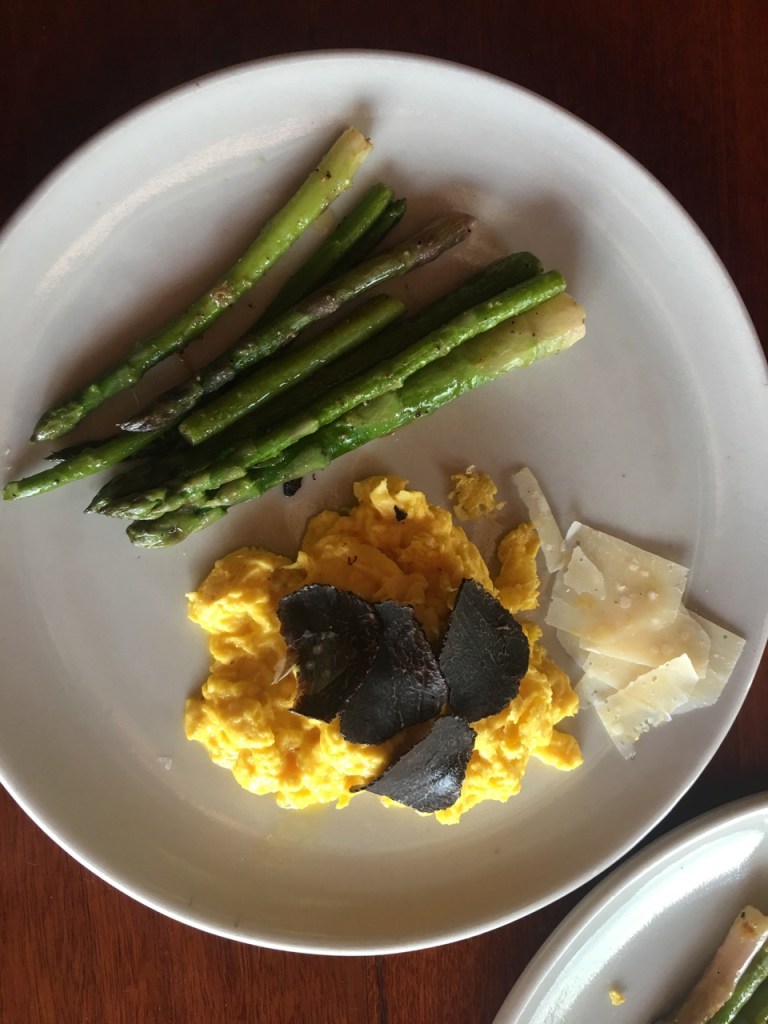
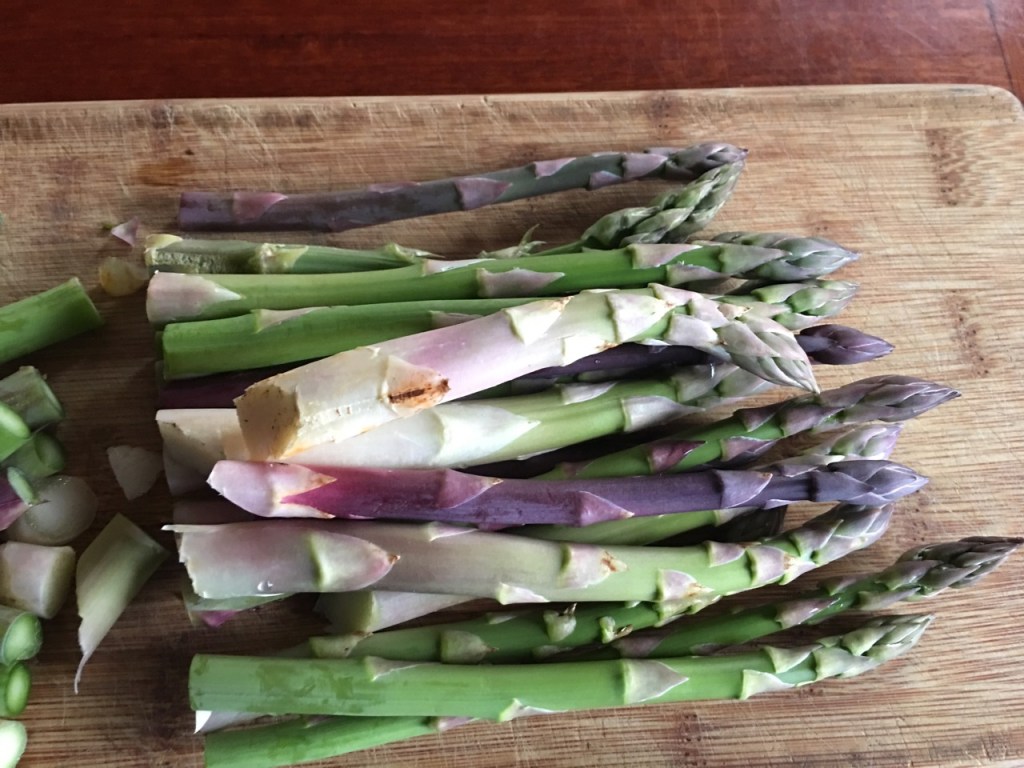
We decided to make scrambled eggs with shaved truffle and some garden fresh asparagus. Perfect!

I steamed the asparagus for a couple of minutes, quckiy drained and sautéed in a bit of butter with course ground salt and fresh ground pepper. Pretty yummy by itself, but totally excellent in combination with the truffled eggs.

I served it with a few shavings of piquant pecorino for balance.

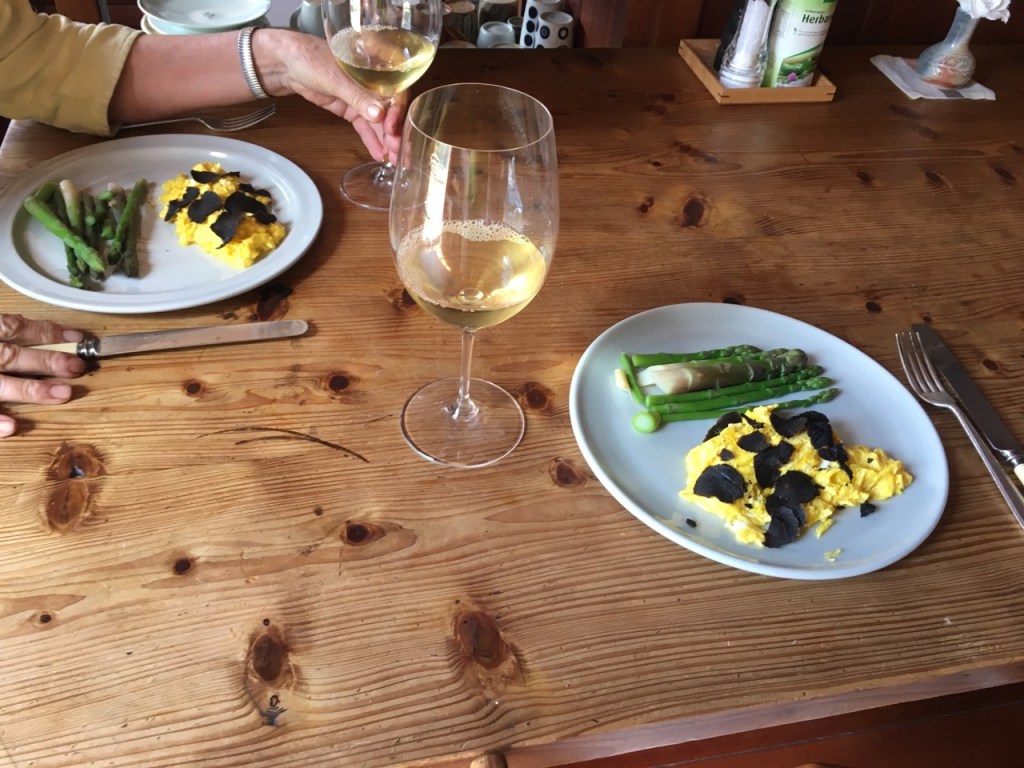
I’m so glad to be back in the kitchen! The truffle was so big that we were able to get another meal out of it and have a repeat the next day for lunch. This time with a small glass of very fragrant and complex, wooded chardonnay.

It’s a hard life. But someone has to live it. I quite like being retired!

Clean air in Shanghai

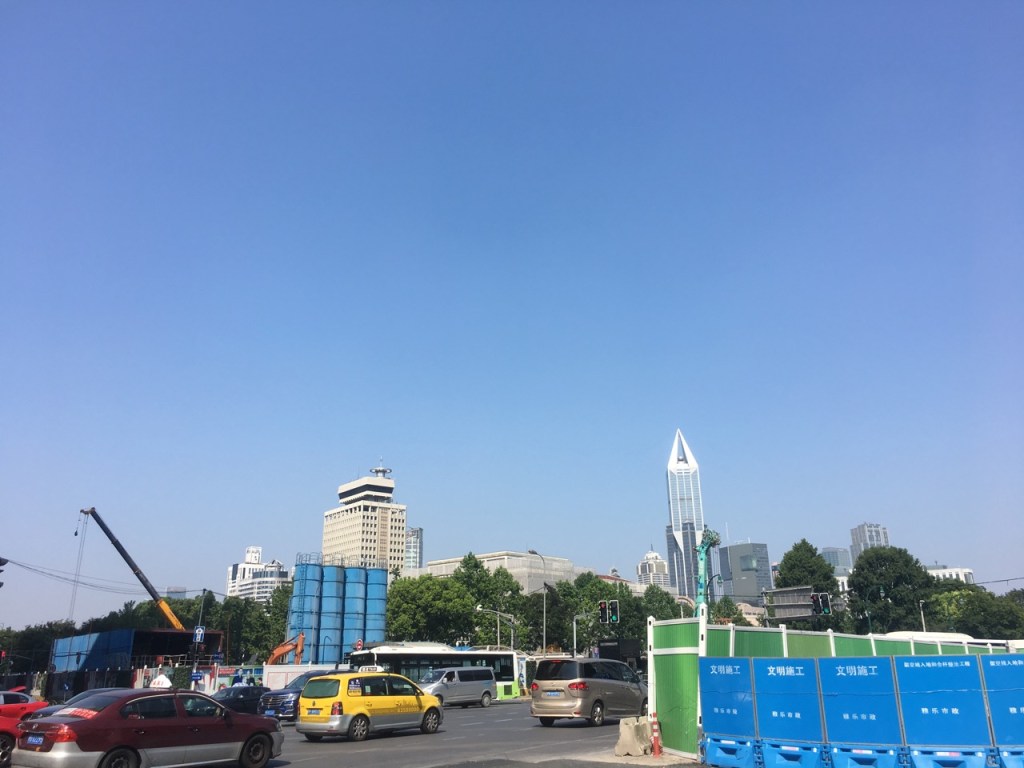
I’m recently back from China. It’s my 4th trip there in 15 years. I’m always amazed. Each time for different reasons.This time I was amazed how clean the air was. We had only 3 days of smog during the month. On previous trips in had some days where I found it hard to breath. Maybe their efforts to clean up their environment are working? But I don’t travel regularly enough to know. It just could be good luck?

This is Shanghai where we arrived and spent a day in the museum. We were there at the Museum before the doors opened and stayed inside looking at everything until they asked us to leave when they closed the doors.The Museum was a very popular destination it seems, as there were already a 1000 people in the queue to get in when we arrived early. Everything beautifully organised with people queueing in a very orderly fashion, in the zig,zag, hurdles, just as you get in airports to keep it all neat and orderly. As it was 38oC the Museum had placed water misting fans at various places along the queueing system to help keep us cool. There were also a few industrious folk selling very cold water in bottles from ice filled ‘eskyies’.
The Museum had erected shade covers all along the lines of waiting patrons. It was all most impressive.

The Museum was great. It’s a good collection, of course I was especially interested in the ceramics, which didn’t disappoint. I won’t bore you with too many images, suffice to say that there was too much to see and 7 hours wasn’t enough, but was too long, in the way that we get when we spend a long time in Museums. We get museum blindness, so after 2 or 3 hours we have to find the coffee shop. Which doesn’t exist in China, not even in Shanghai with all its international flavour and influences. So I spent a month without real coffee, or any coffee at all. No big deal. There was a product by that name, but it wasn’t coffee!I got used to weak green tea. Quite different from the Japanese super strong, slightly slippery, alkaline tasting, high caffeine, sen cha. The Chinese green leaf tea is mild by comparison. We got through the day with just 2 art-blindness, sit-down, recovery breaks.

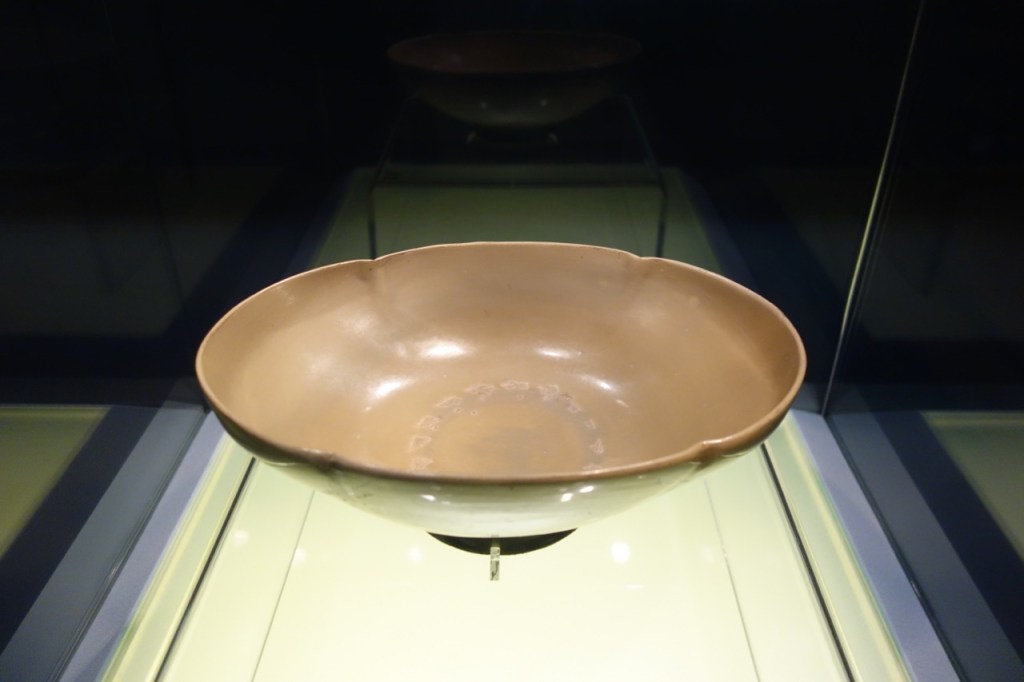
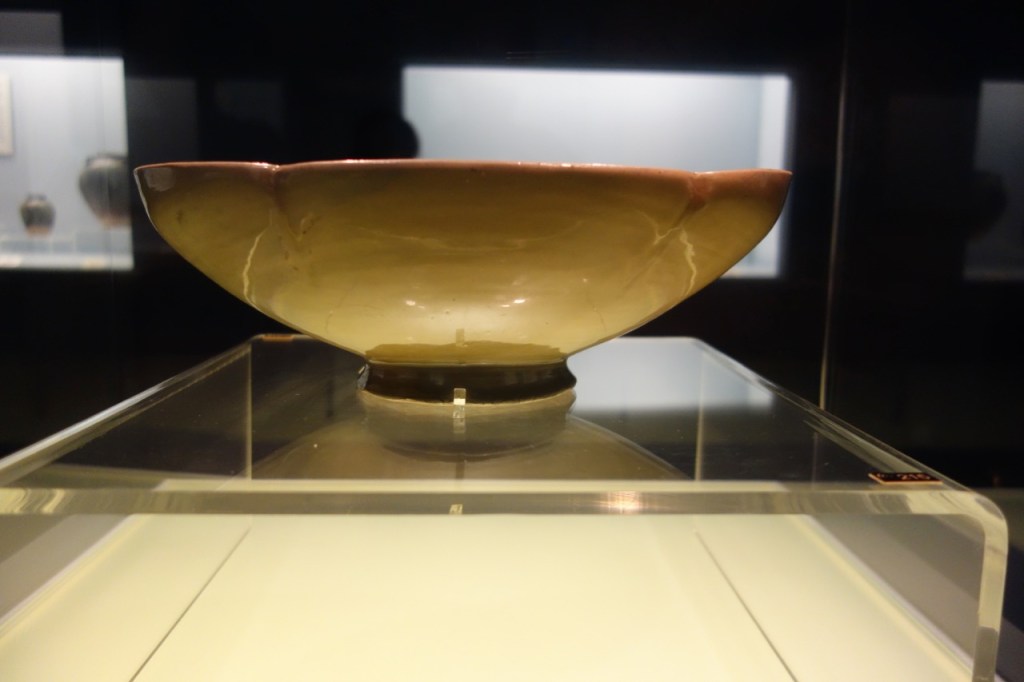
This was a nice pot!

This begonia? bowl looked to me to be every bit like a simple microcline or possibly a plagioclase felspar and water, kind of pink blushed shino glaze. I wouldn’t have called it a celadon, but hey. What would I know? It appeared to be very low in calcium with no hint of green about it.Colour me confused. It was a really gorgeous pot!
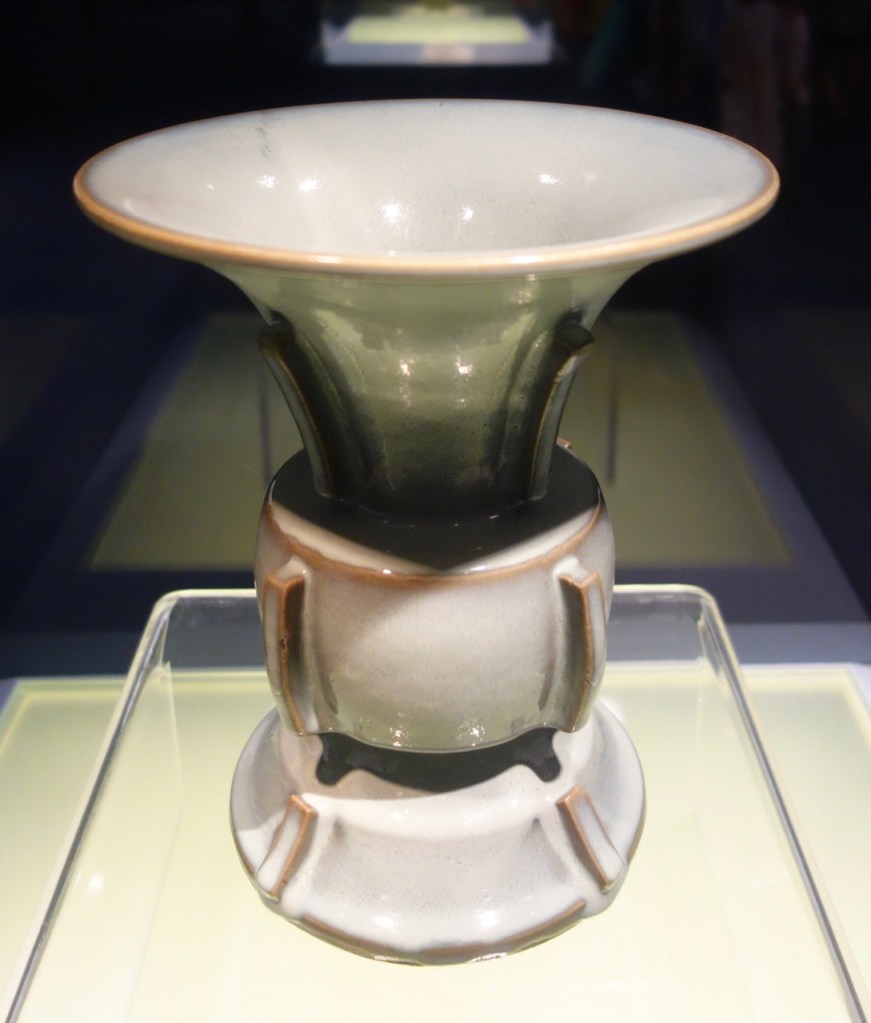
This was a very nice opalescent glazed object. Interesting use of both ‘zun’ and ‘jun’ in the English translation of the Chinese?

It had a lovely depth to the milky opalescence. I’d have a guess at there being 1or 2% phosphorous in there somewhere, as bone ash, with the rest being 2/3 , or 3/4 felspar and another 1/3rd , or 1/4 ash? Somewhere between 2:1 and 4:1.


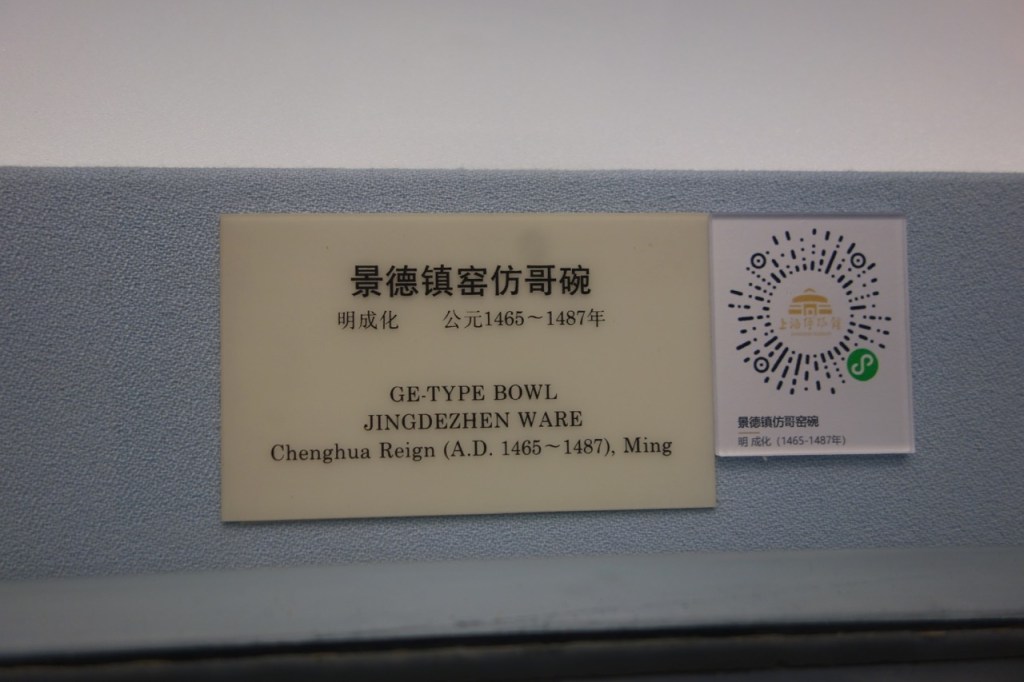
This Guan bowl was also very nice. Pity about the images through smudgy fingerprinted glass.

This is a superb pot. I really like guan ware. No! I love them! They really hit my Ge Spot. I’m an old guy and I have an old guys tastes. As always, I am principally interested in all the oldest pots. I start to loose interest at about the Ming. Maybe that is when my blood sugars start to run low:)

So that’s it. I won’t bore you with any more. That’s 7 hours and 1000 images condensed into a 5 minute read, and 12 images.
I didn’t go to spend too much time in Shanghai. It just happened to be where the airport was on this trip. I haven’t been there before, other than in transit. My real interest was in getting out into the country side to visit the smaller pottery towns and villages. Our next stop was to check out some celadon wares.

Back home to Spring in the garden

I’ve been away for a while travelling and researching in China. It was a very interesting trip and I will have some stories and images to write about here in the next few days and weeks, as soon as I can get around to it. I have been very busy these last few days, since returning home, doing a number of things. All of which needed doing all at once as soon as I was back.

We had some terrible storms and gales while I was away, so there were a couple of days welding the chain saw, wheel barrow and rake, getting the driveway clear and the various fallen limbs off the fences etc.

We had one really big she-oak snap in half and fall, but not quite to the ground, so it was left hanging precariously until I got home. A definite no-go zone for all and sundry, until I could get in there and cut it down to make it safe. Janine and I then cut it up into fire wood sized small pieces to clear the space again. A big job and I’m always relieved when events like this are resolved without damage to property or me while I’m in there and under the branches cutting the wedge out to encourage it to fall into a safe place.

It all went well, but it makes me realise that I’m getting a bit older now and I have think these things through property before I start. It’s probably called risk analysis or some other clever name these days, but it’s what I have always done. Pace it out, measure the space, asses the weight and any bias in the load on the trunk. I want to do this safely.

Sometimes I put a 13mm. steel cable around the tree and winch it over in the right direction using my slow and steady ‘come-along’ hand winch. This tree wasn’t so tall any more, so I just used the tractor to winch it along with a suitably heave load chain. Needless to say, that with a wedge cut out, a slice in the rear and the tractor pulling it along, it fell precisely in the right spot.

I insist on working alone when I’m doing dangerous jobs like this. Any other person on the site is one more risk. The chickens always come running when they hear the chainsaw start up, so luckily for me and particularly for them, they didn’t get to where I was working before I had it felled.

So now all that heavy work is doneAll the wood cut and stacked in the wood shed, it is time to give the vegetable garden a bit of a work over with plantings of spring vegetables, seeds and seedlings to get it all ready for the summer. The soil temperature is almost up to 15oC, so a good time to get started. The asparagus is up and we have had a few meals already. That’s a good sign that spring has sprung.

I have been pulling out wheelbarrow loads of red ‘Flanders’ poppies. The come up wild, like weeds everywhere that the soil is disturbed. I love them, they are so delicate, beautiful and very short lived. Each flower wilts the day it is picked. They are only good for one day in a vase. However, they come up absolutely anywhere and everywhere that I have gardened or worked the soil the previous year. Of course that usually means in the garden beds. We like them so much that we usually have a lot of them overwintering in the fallow beds.

Well, the time has come to thin them out. I remove them from each part of the garden as I need the space to plant out the new vegetables. I leave as many as I can along the edges and in the paths. They will flower all through the spring into early summer and set seed in the autumn to replenish themselves again for next year.

Beauty and frugal practicality in balence. The cycle will go on, as long as we’re here to keep tilling the soil and creating that fertile environment.

Making the Most of Winter

It’s another blowy, blustering cool day, with a wind that is bringing down a few branches. Luckily, it was quite still yesterday evening, so we decided to burn off our pile of garden, orchard and vineyard prunings. We manage to assemble quite a pile of these prunings during the autumn pruning period. We pile them up to dry out for a couple of months and then burn off the pile at the end of winter, just before the spring fire bans come into force. In the past we have waited for a cool damp night after rain, but it just hasn’t rained at all for months, so the pile just sat there. 
Last night was forecast to be damp with the possibility of a slight shower. That was good enough, After dinner we went down to the burn pile site, next to the Pantryfield garden and lit it up. It was a very slow quiet burn that took 3 hours to get through all the sticks, twigs and branches. By 11 pm it was just a pile of white ash and a few glowing embers. It’s a good feeling to get the fire hazard out of the way before summer, otherwise it would have to sit there for another 8 months. Fortunately it started to rain ever so gently later in the night, just half a mm. in the rain gauge this morning, but enough to settle it all down.


 Today a fierce, gusty wind has settled in, so we are back inside, after doing all our jobs, collecting fire wood and stacking it inside ready for tonights fires, watering the small seedlings and cleaning up. Now the sun is fully up, we drove the car down to the high amperage charging station down by the kiln factory. The kiln shed has 3 phase power installed, so we placed the fast charger down there, as there is no electricity in the car port. The kiln shed roof also has 6kW of solar panels on its roof, so direct access to the solar power for charging the car and firing the kiln.
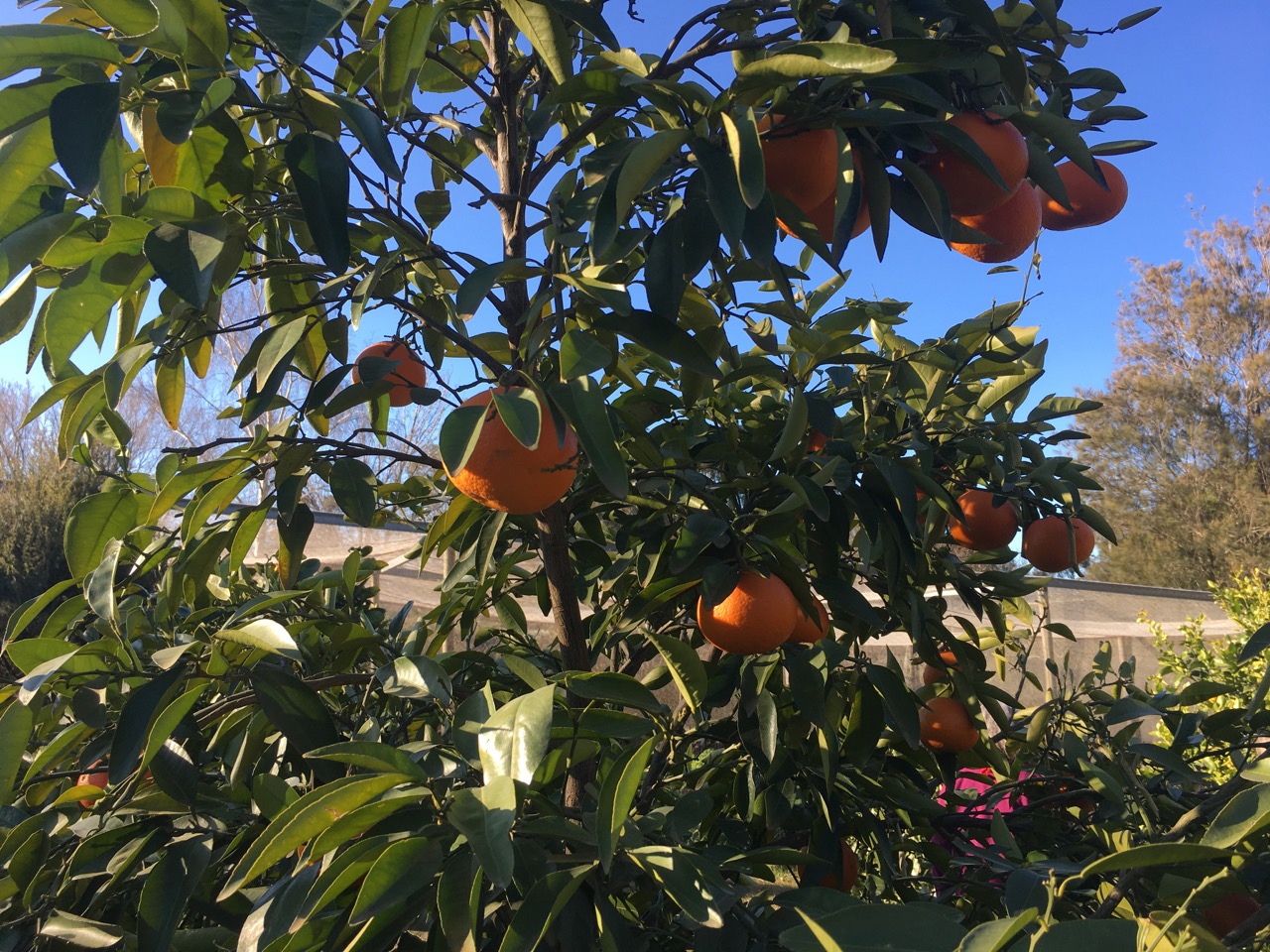
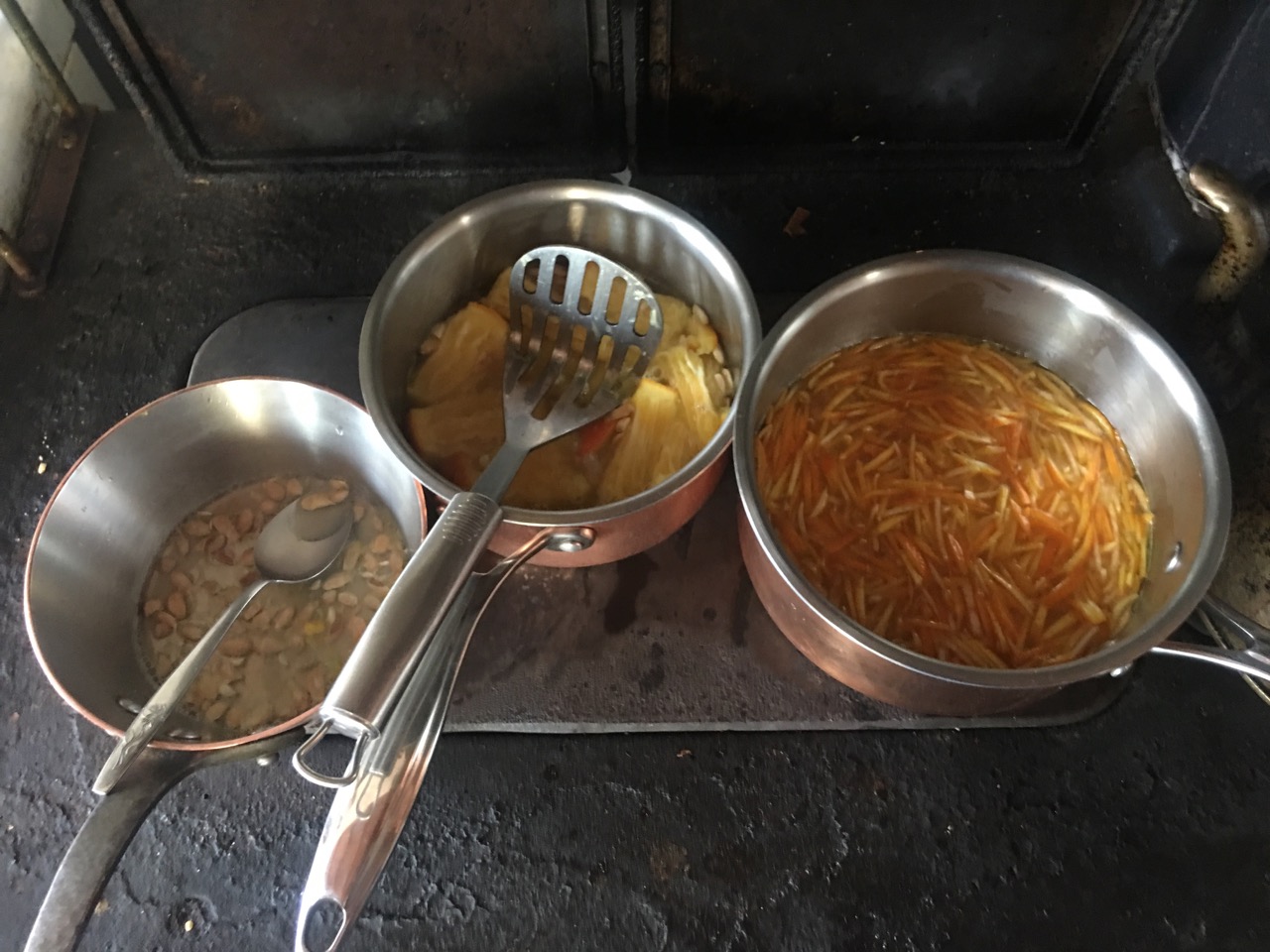
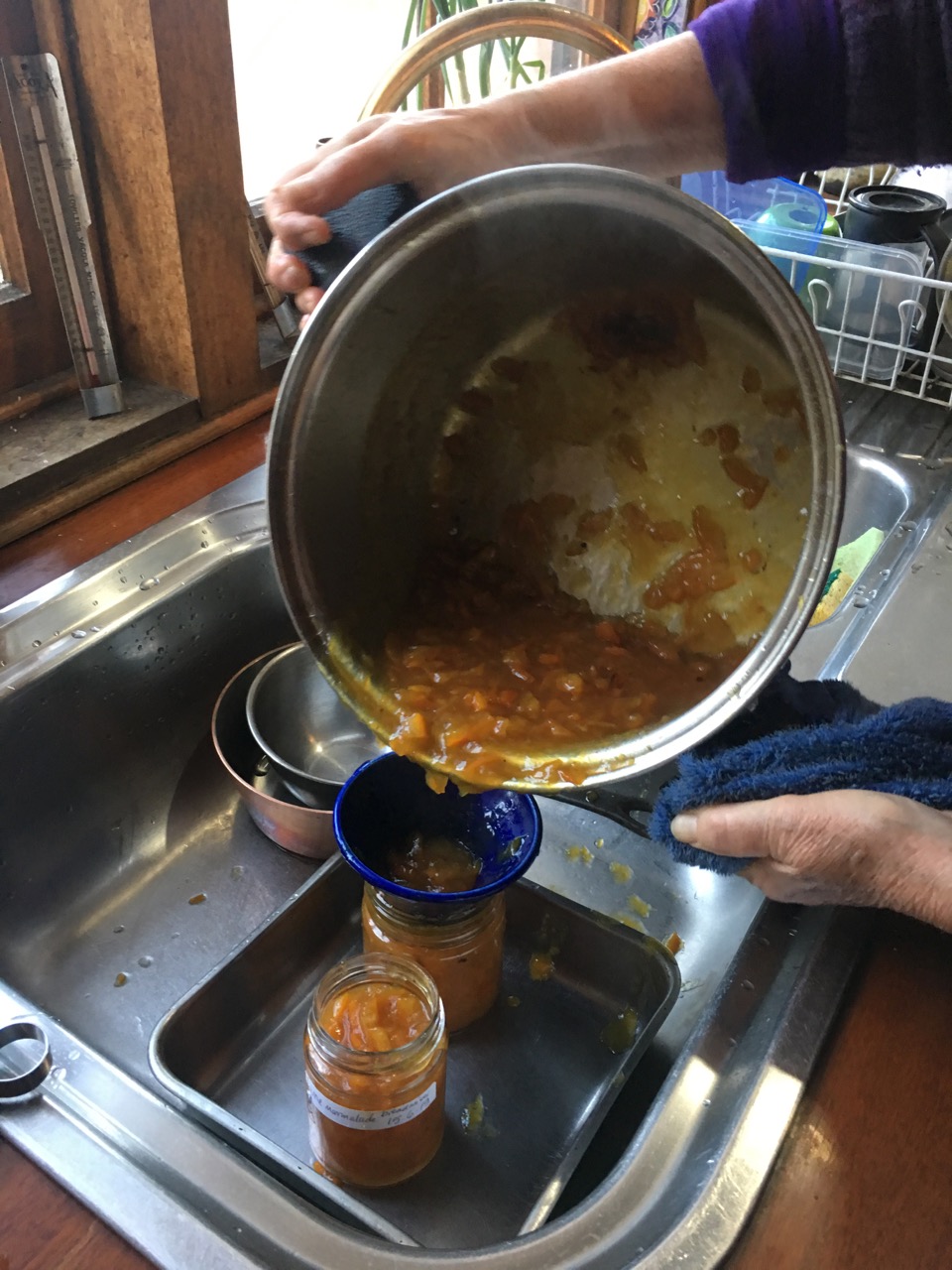
As we’re inside, we decide to deal with kitchen duties. We held our second marmalade making workshop at the weekend, so there are numerous small jars of marmalade to be washed and dried , then labeled and stored away in the pantry. We made 3 batches, each slightly different, but all of them centred on Seville oranges, of which we have a beautiful crop this year. Hard to fathom, as we are currently in a drought. But we have been watering the citrus grove regularly.


Each large boiler, makes between 7 to 10 jars of marmalade, depending on the size of the jars. Our very good friends Toni and Chris turned up and the afternoon eventually wound it’s way into evening and dinner.


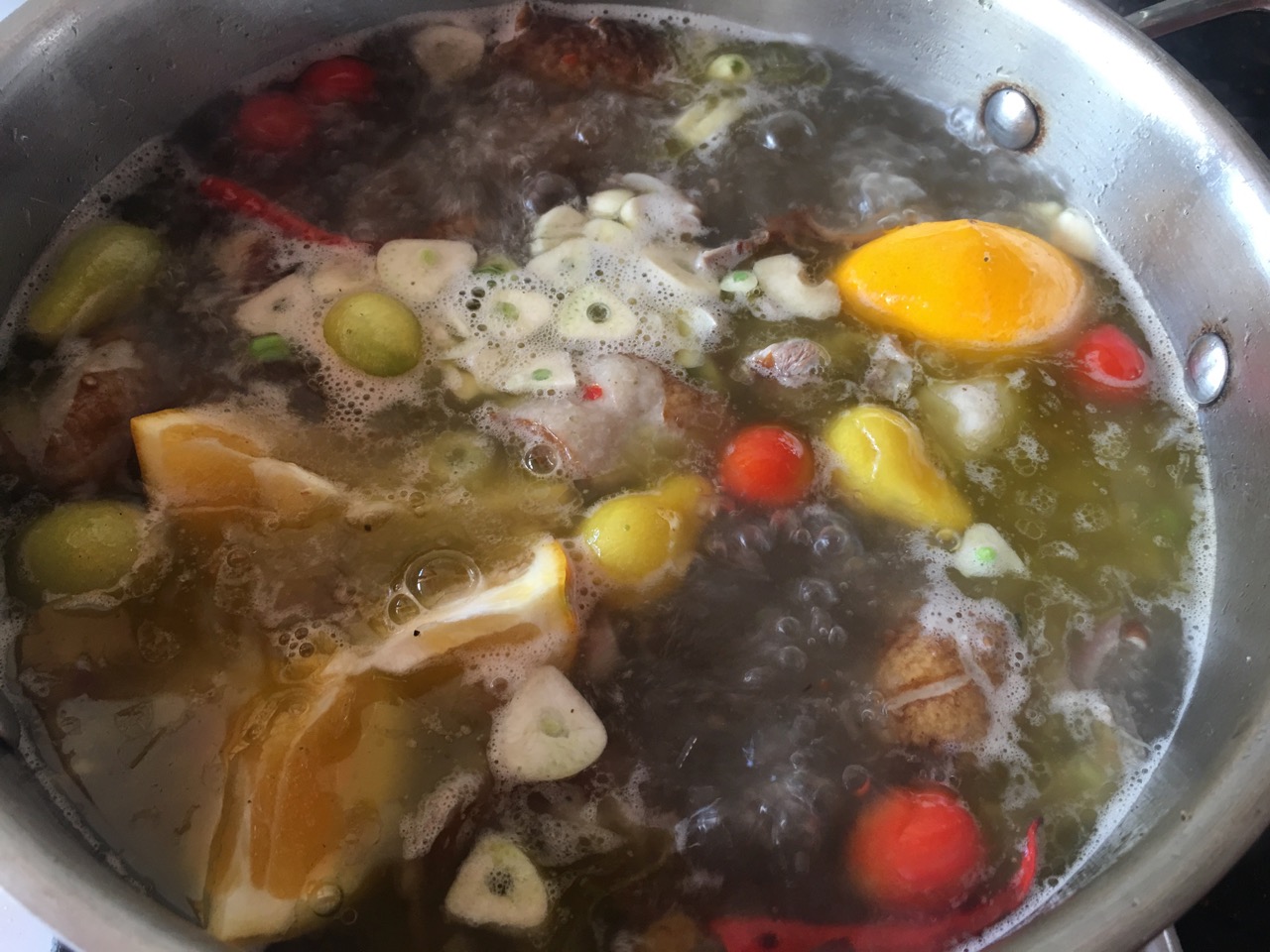
The other job on the kitchen list is to make a stock out of the bones left over from a duck that we have in the fridge. I start by browning some onion in olive oil, then garlic and water. Our organic garden garlic is getting close to the end now as the winter peters-out. What we have left is stored, hung up, outside on the back verandah in long plaits. This is starting to sprout now, but it still gives us the good garlic flavour. The new crop of garlic is filling out in the garden, but is still 3 months away from maturity.


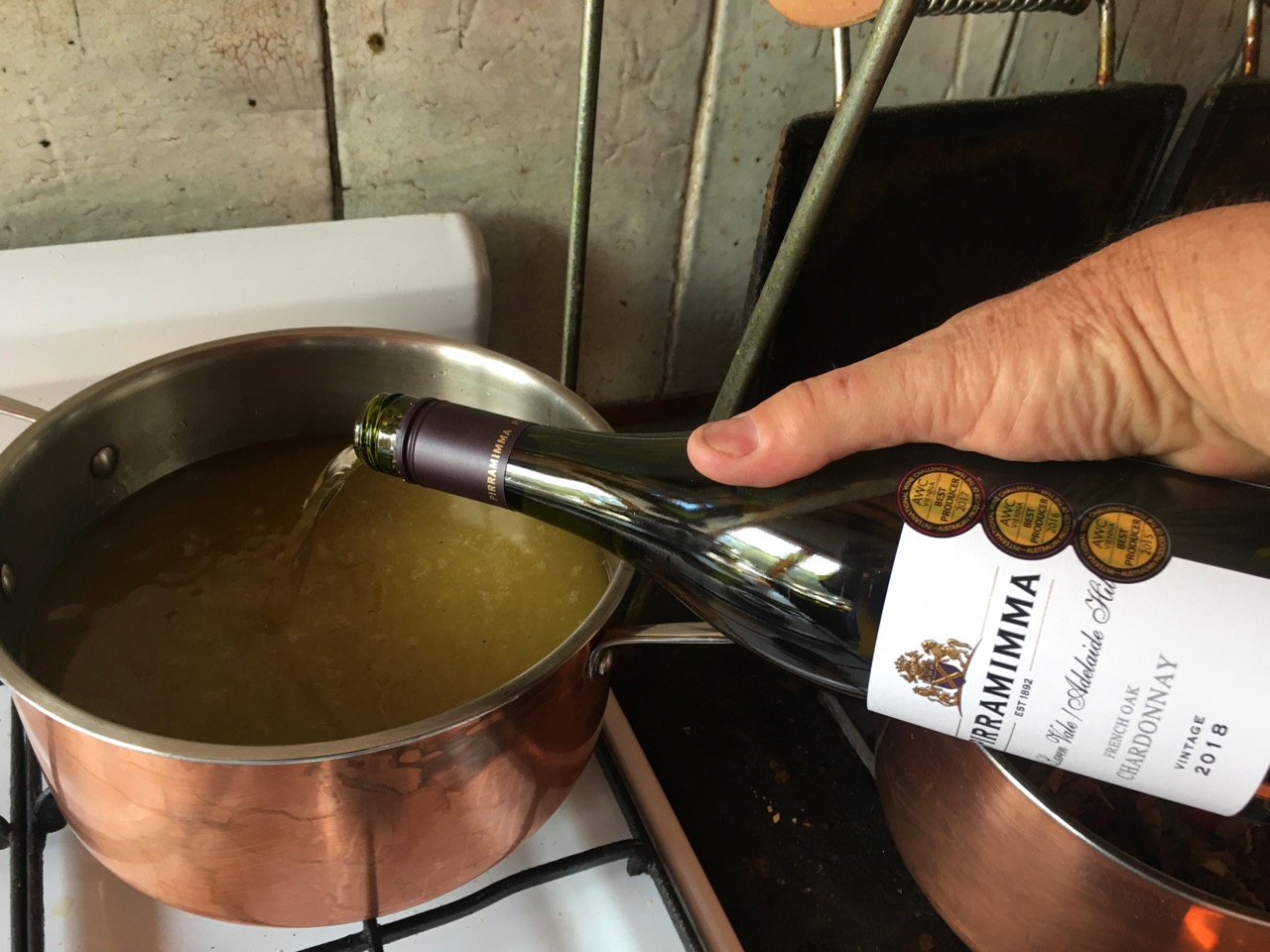
I add water, the bones, a lemon, chillies, the very last of our late season tomatoes that we picked 6 weeks ago when they were still a bit green, as the bushes had been burnt off by the frost, and some pepper. After simmering for an hour, I pass it thorough a sieve to separate the bones and mirepoix from the stock. I add a bottle of ‘fume’ wine and return the clear stock to the stove to reduce. It happens in among all the other jobs, slowly and steadily, filling the kitchen with a warm, delicious fragrance that is so welcoming on a cold windy day.
 Domestic jobs can be really engaging and fulfilling sometimes. This is one of those times.You’ll notice that I don’t write too much about cleaning the grease trap!
Our enigmatic friend Annabelle Sloujé sent me this image that she saw somewhere, after I wrote about making a beef bone stock last week.
Best wishes from Steve who is making the most of winter – while it lasts.

A sudden cold spell

We have just emerged from a sudden cold spell. We were glad to find a few jobs to do inside for a while until the cold winds blew themselves out. Our good friend Annabelle Sloujé lives a little bit farther south of here and a lot higher up, she had a low of -9oC, I’m glad we live here in Camelot where it doesn’t get so cold. My friends in Korea report a range of -35 to + 38oC. They probably think that I’m a wimp for talking about a winters day of -1 oC. They possibly think that -1 is quite warm, in comparison.

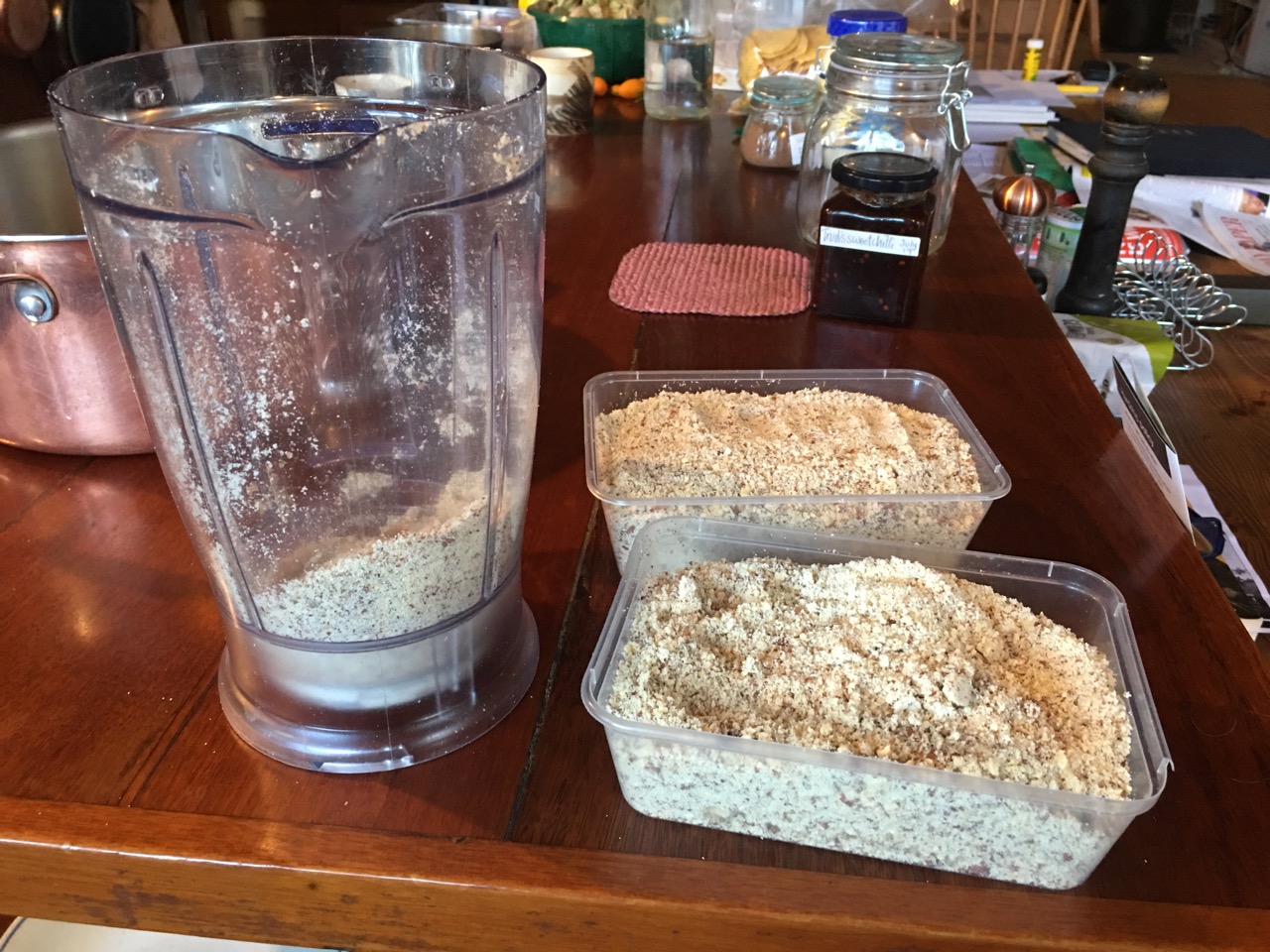
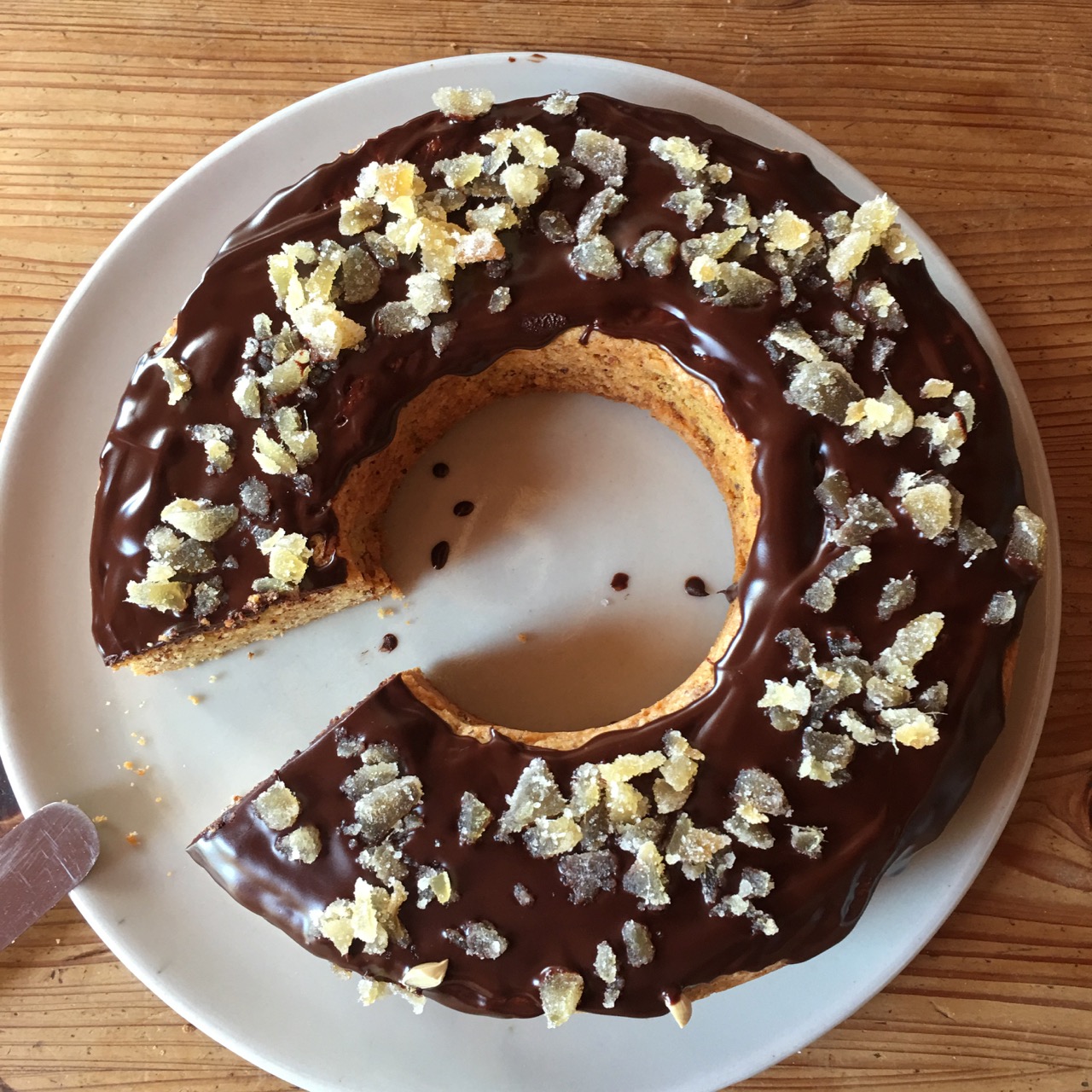
However cold or hot it is, we found things to do out of the wind. I shelled nuts and Janine made a cake from the last of last years hazelnuts that she milled into flour. It’s one of those recipes with reduced flour and usually almond meal. The Lovely down loaded it from the internet, but as we didin’t have any almonds left to shell, she used all hazelnut meal instead. All recipes are just a guide. Living where we do, we have learnt to compromise and use what we have rather than drive for an hour to get something specific. We save all our jobs and shopping list for that weekly trip.

Glazed with melted 85% dark chocolate and a few chunks of chopped crystallised ginger. It was just right for cold weather and didn’t last too long.

For my part, I made a beef marrow bone and vegetable stock over a couple of nights, using the free heat from the wood fired kitchen stove after we cooked dinner.

I make stock like this a few times each year, especially during the colder months when the stove is always on. I have come accustomed to always having our own personal, giant, frozen stock cube in the freezer. We don’t own a dedicated freezer, so we only freeze what can’t be preserved by other means like vacuum sealing ‘Vacola’ jars. The special conditions required for safe preserving in vacuum jars is that the food must be boiled in the jar to seal it, so that counts out pesto. Also, it is best if the food is naturally acidic like fruits and vegetables like tomatoes. Meat can be preserved this way, but it is recommended that the vacuum sealing be done twice to make sure that it is perfectly safe. A bit of a bother.

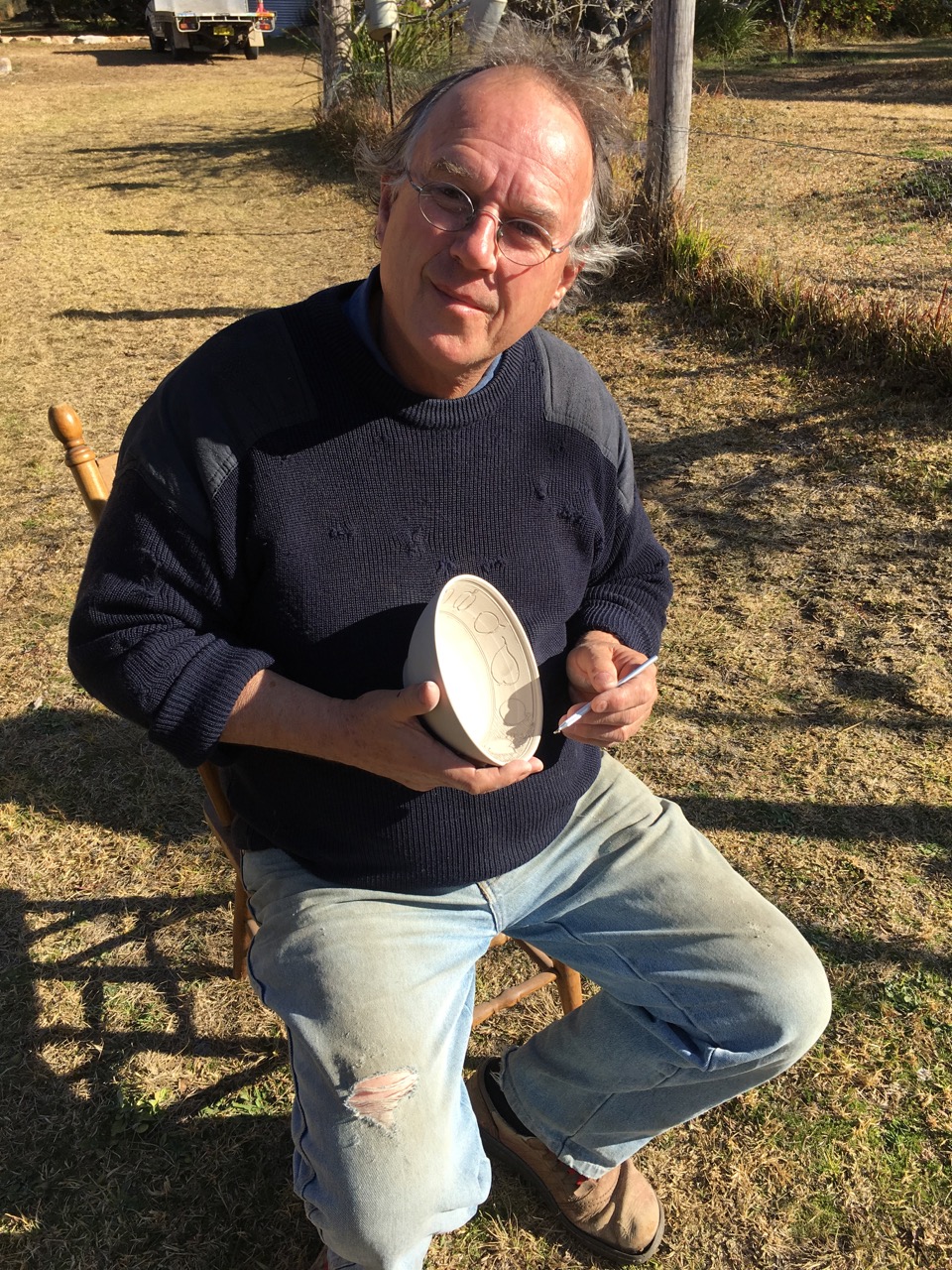
After the cold spell blew itself out, we have had a few glorious cloudless sunny days with no wind. I took the opportunity to move my chair out into the sun and get a little vitamin D and finish decorating my last few pots doing scraffitto, carving into the surface with a sharp tool. This will show the pooling character of my local granite blue celadon style glaze when fired in the reduced solar fired electric kiln.

Spring is almost here

When the poppies arrive, spring is almost here!We still have 2 weeks before spring is officially here, but we have been enjoying a nice steady display of the red Flanders poppies for a few weeks now. The night time frosts are still continuing, but the poppies don’t seem to mind.

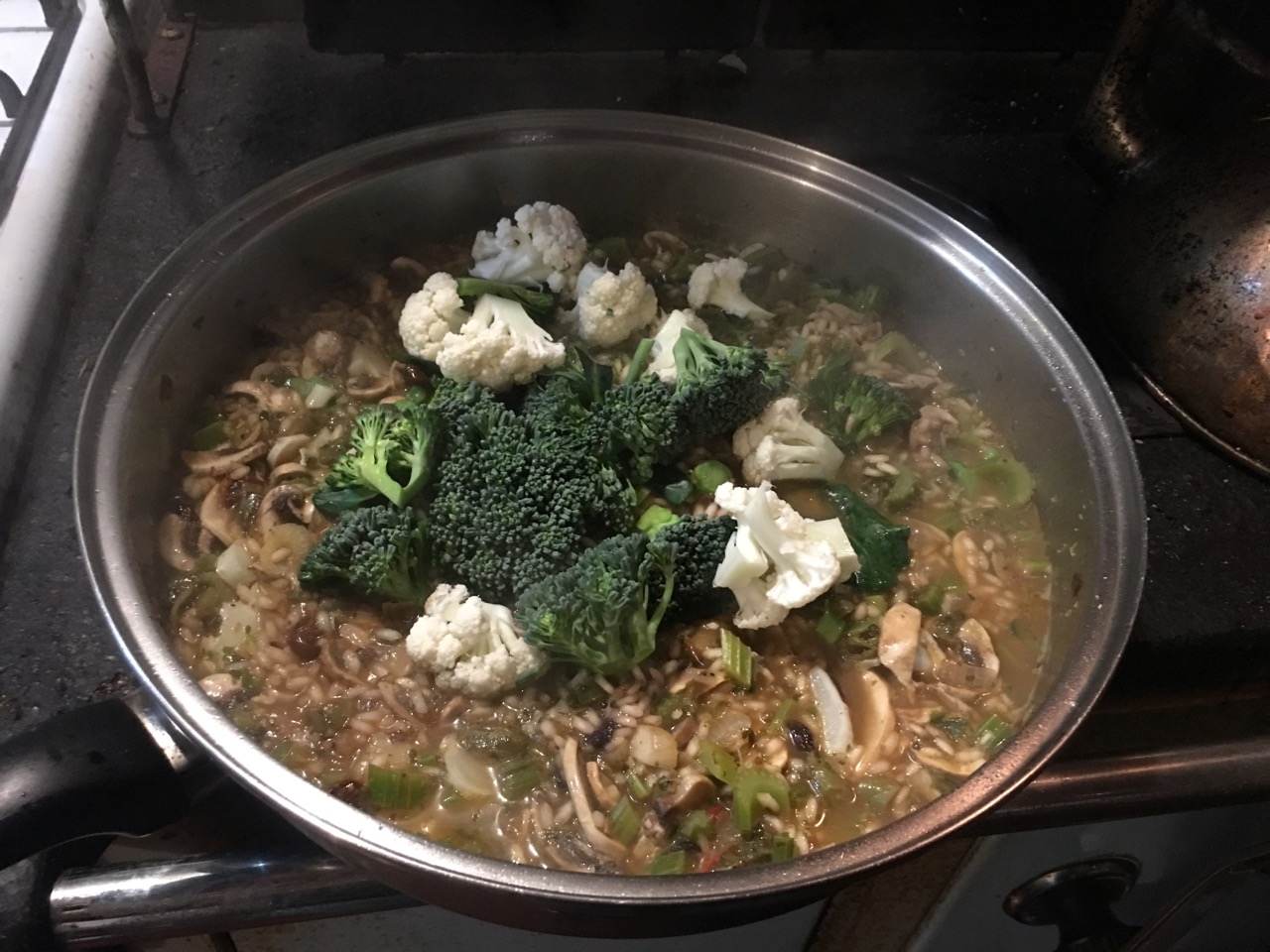
They brighten the kitchen breakfast table. The shaft of early morning light illuminates their semi-translucent fragility. They only last such a short time in the vase, but they make us happy while they are here.As it is still winter, we have been enjoying all the varied brassicas that are maturing in the garden. We picked a gigantic cauliflower and had to think up a variety of ways of eating it. Fresh picked, we like it best cut into small florets and dipped in a little mayonnaise and eaten raw. We also add it to stir fry and risottos, but the classic has to be cauliflower au gratin. I have to make it at least once each winter. 
I melt a little bit of butter and add in some flour, for us, that happens to be wholemeal. I make a roux using approximately equal parts of each, but I only cook it to thicken it, I don’t want it to colour up, so I only cook it off on a gentle heat and soon add some milk a little at a time. The first few drops instantly thickens it to a stiff paste. I have to work at dissolving the first few drops of milk into the mucilage, as it is adsorbed, and the mixture loosens, I continue to add the milk slowly while stirring to avoid lumps. I only want a pale sauce for the gratin. I think that it looks most appropriate with the pale cauliflower.

I’m a lazy cook, I don’t have any bread crumbs and I’m not about to start making some, and I certainly won’t ever be buying any ready-mades, so as soon as it comes to a slow, gentle bubbling boil, I add in my steamed cauliflower and I stir in a little grated cheese, with a little more added on top, and the whole lot then goes under the grill.

It’s a lovely warming veggie winter dinner.
We have been in to have dinner at our sons restaurant, Bistro Sociale in Bowral,  <http://www.bistrosociale.com.au>

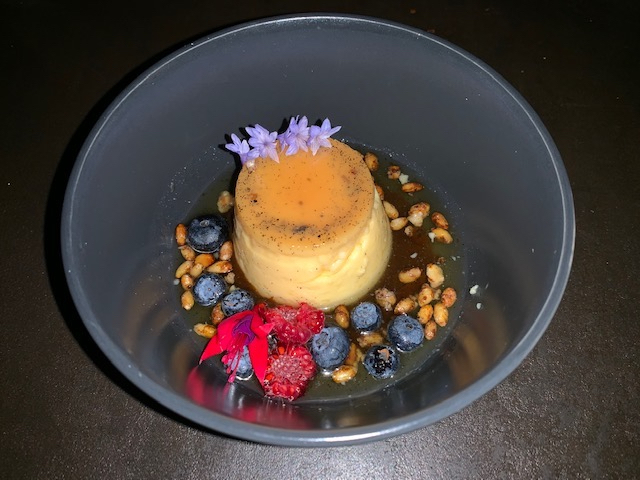
Always a lovely time, good, interesting food and not too expensive. We almost never eat out in restaurants, but we make an exception for our son. He made a beautiful desert for Janine and our friend Annabelle Sloujé.
A prune creme brûlée with fruits and flowers.


Geordie managed to get me a fresh black French truffle recently. The weather has been so dry here. We are in drought, and this has affected the truffle harvest this year. It turns out that the Southern Highlands is a very good place to grow truffles, but not in a drought. Our own truffle trees have not shown any inclination to produce a truffle as yet, but we live in hope. Maybe in the future, if it ever rains?

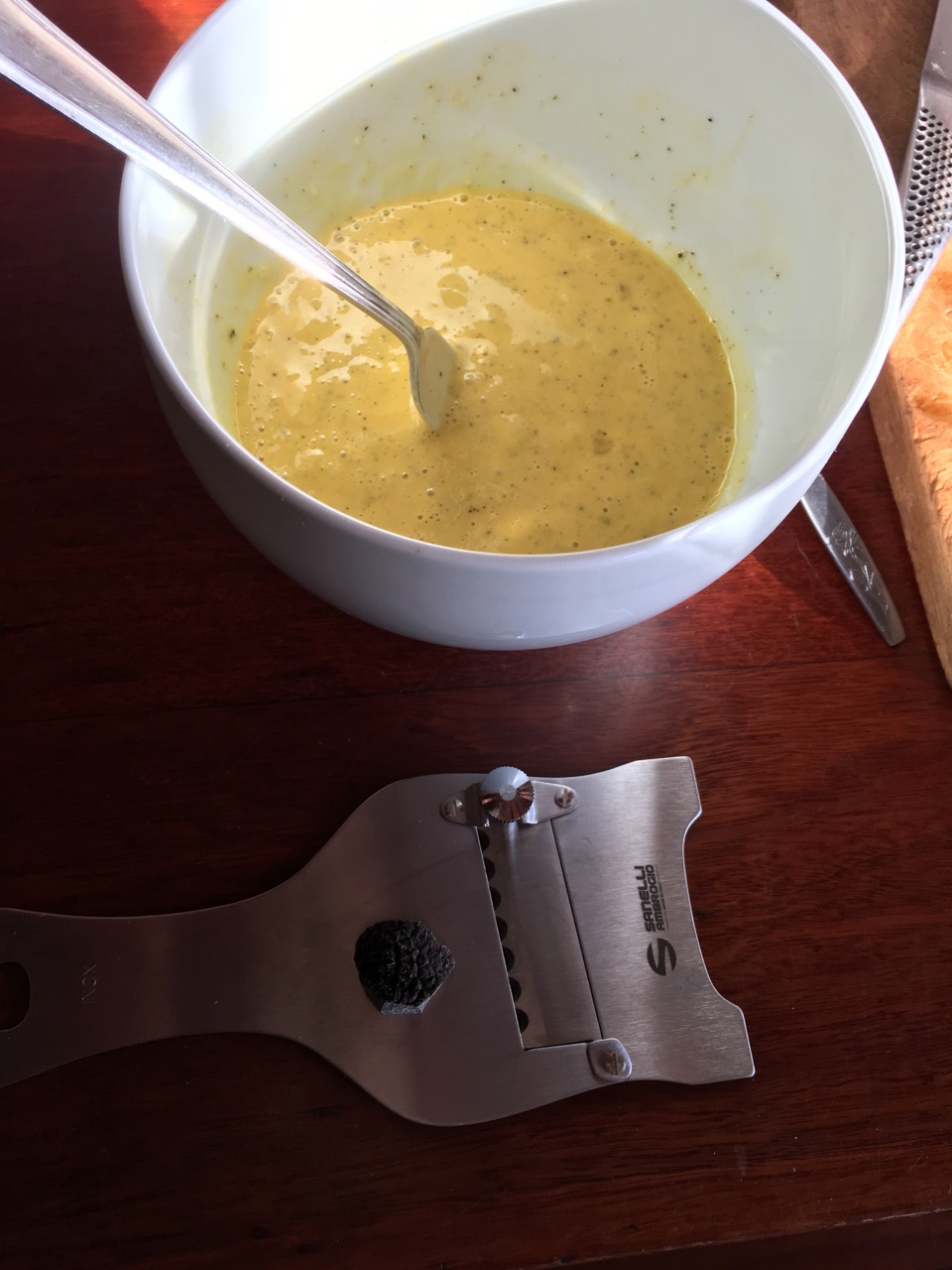
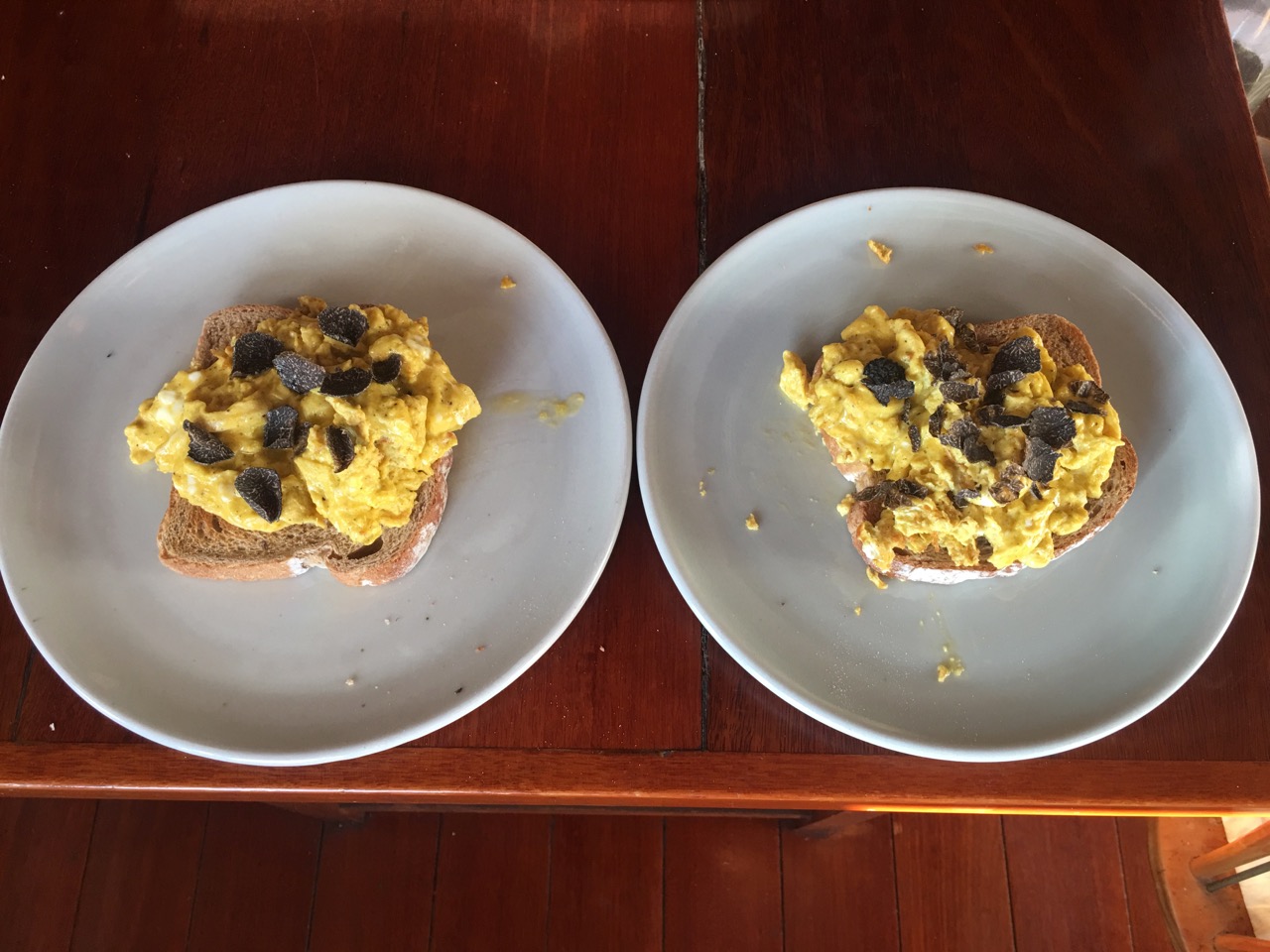
We managed to get just one small truffle. Since Ted retired and sold his truffiere, we have been cut off from our supply. Geordie has contacts though! So we had truffled eggs for breakfast. You can’t be mean with a truffle. They may be expensive at $1.40 per gram, but it’s best not to think about the cost and just inhale deeply and enjoy. We made scrambled eggs with a little cream whipped in and some fresh grated pepper, and then grated the whole truffle over the top. No point in rationing it out over several meals, such that you never really get the full flavour experience. Just go for it and enjoy it to the max. You only live once.

We have had absolutely no mushrooms come up in our garden this winter. It is just so dry. There is still just enough time, if it rained in the next couple of weeks, we could get lucky.


After storing the truffle in the fridge for a few days with the eggs and rice. We used the rice to make a risotto for dinner. It’s amazing that when I opened the container and poured the rice into the big pan to roast it a little before adding the wine. There was a very noticeable smell of French truffle wafting up to me. Beautiful! It became a winter vegetable risotto.


I added a bottle of our preserved, concentrated, summer tomato, sugo as well. It really fills out the flavour like no other vegetable can.


We are lighting both the wood fired stove in the kitchen and the fire in the lounge room to keep the place moderately warm at night. As the kitchen stove also heats our hot water tank in the winter, it is a necessity. But most importantly, its carbon neutral, as we collect all our kitchen stove wood fuel off our own land, from our own forrest. However, it’s also a beautiful way to cook.

The Winter Garden

The garden can look a bit barren at this time of year, but there is still plenty to eat. We have all the brassicas doing very well with the frosty nights. Cabbages, cauliflowers, Brussels sprouts, broccoli and kohlrabi all bountiful and gorgeous. We also have leeks and celery, and we have just finished off the last of the autumn/winter crop of carrots. 

Of course we always have spring onions and lettuces for salads when the days are suitably sunny and warm, as is often the case these days in the global emergency. Winters as we knew them in the 70’s are over. No more snow and many fewer frosts that are much milder in intensity. Fruit trees are flowering now just past mid winter and not in spring. Everything has advanced about 4 to 6 weeks earlier over our 43 years here.

peaches

almonds

blue berries

At this time of year, the days are getting longer and the soil temperature is just starting to warm up a little with the soil just starting to hit 10oC. The asparagus is responding to this minuscule change and starting to sprout. We have our first couple of spears poking their heads up.

Although the beds look barren under their winter mulch, there is the beginnings of spring growth.

There may be some benefits to a warmer climate, but the down side for us is the prolonged drought, with only one significant rain event of 30mm over winter. We are preparing our selves for a long dry and very hot summer with July breaking many records for the hottest winter month. This past July being the 3rd hottest July ever recorded.
On the positive side, there are lots of people starting to wake from their media/Murdoch induced stupor, and starting to take action. I am seeing a lot more positive articles in journals indicating creative, affirmative thinking.

Vegan Wood Firing

It is a beautiful clear, sunny day here today. The air is cold and a little fragrant. I’m not too sure what with, but it is crisp and refreshing. We have been up to Sydney and back for the opening of the wood fired show, at Kerrie Lowe Gallery, where we have our work on show.

This is a small white tenmoku bowl with a lovely soft ash deposit on the fire face, showing grey some carbon inclusion on the body and rim.

A very delicate and beautiful object.


These are two of janine’s blossom vases. These two vessels are inspired by Korean ‘Moon’ jars. On this occasion, Janine has incised a sgrafitto, carved band illustrating the phases of the moon, as a way of linking these beautiful pots back to the origin of their inspiration in Korean, where we have spent a bit of time recently doing our research.

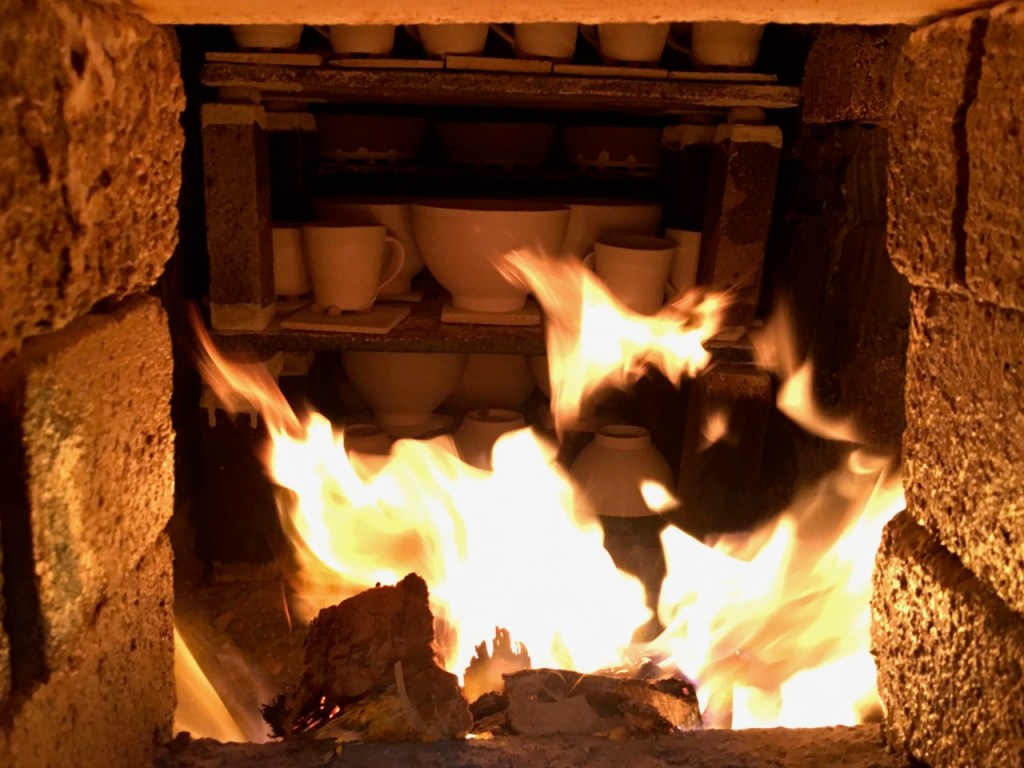
These pots were fired in just 4 hours in our small portable wood fired kiln. This little kiln is so environmentally friendly that I call this type of firing ‘Vegan Wood firing!

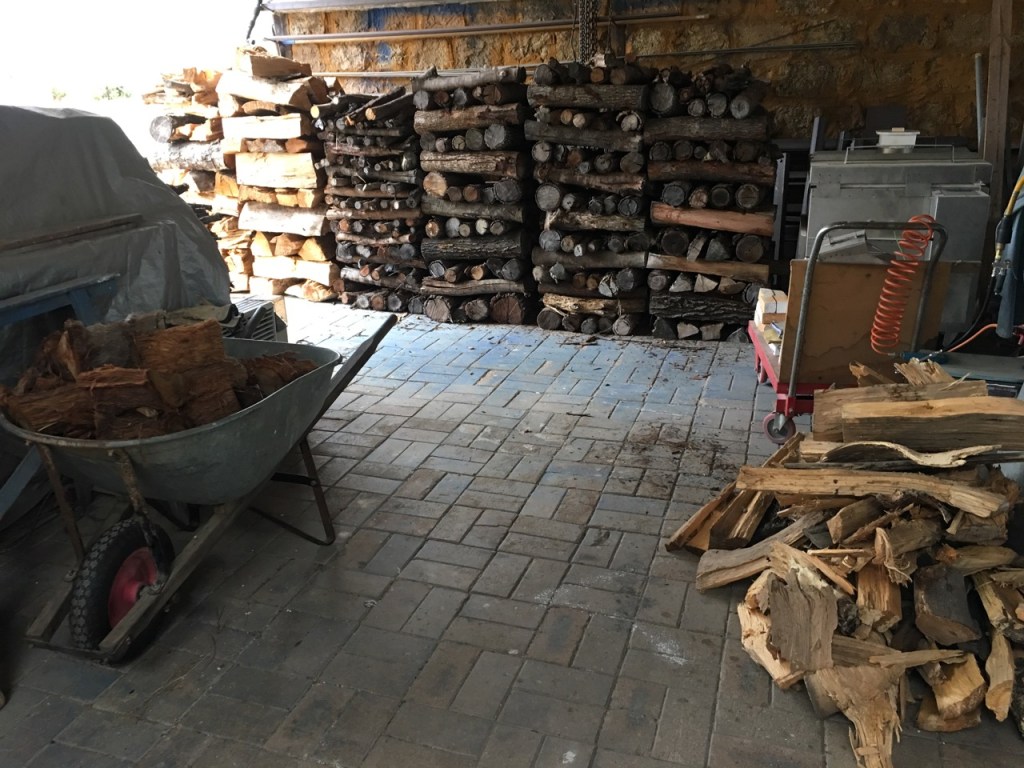
All the fuel for this kiln is collected from wind falls in our paddocks. Large old eucalypt trees are constantly dropping dead branches. We have to go around collecting these dead branches to keep the ground clear so that we can mow the dead grass. We have to mow, because in summer, high dead grass is a severe fire hazard. So part of out land management plan is to keep the ground around our house clear of fire hazards, as we live in a very bush fire prone area.

IMG_6127

Having picked up all these dead branches, it seems irresponsible not to use them productively. By firing our wood kiln with wind falls, we are not hurting the trees in any way. No tress were harmed in the making of these pots. Hence ‘Vegan Wood Firing’. As we only use what the tree has rejected and finished with. It is also worth noting that some of the carbon that we collected from the atmosphere through the trees that we have grown here over the past 40 or so years is now encased chemically in our pots, making it securely trapped, more or less forever. So we are doing our bit to reduce the carbon load in the atmosphere. Carbon sequestration and removal on a personal scale.

We each do what we can.