Open Studio Weekends 2025

We are in the final preparation for the Southern Highlands Open Studios Arts Trail. We will be open on the first two weekends of November. We will also be part of the Australian Ceramics Assn Open Studios event at the same time.

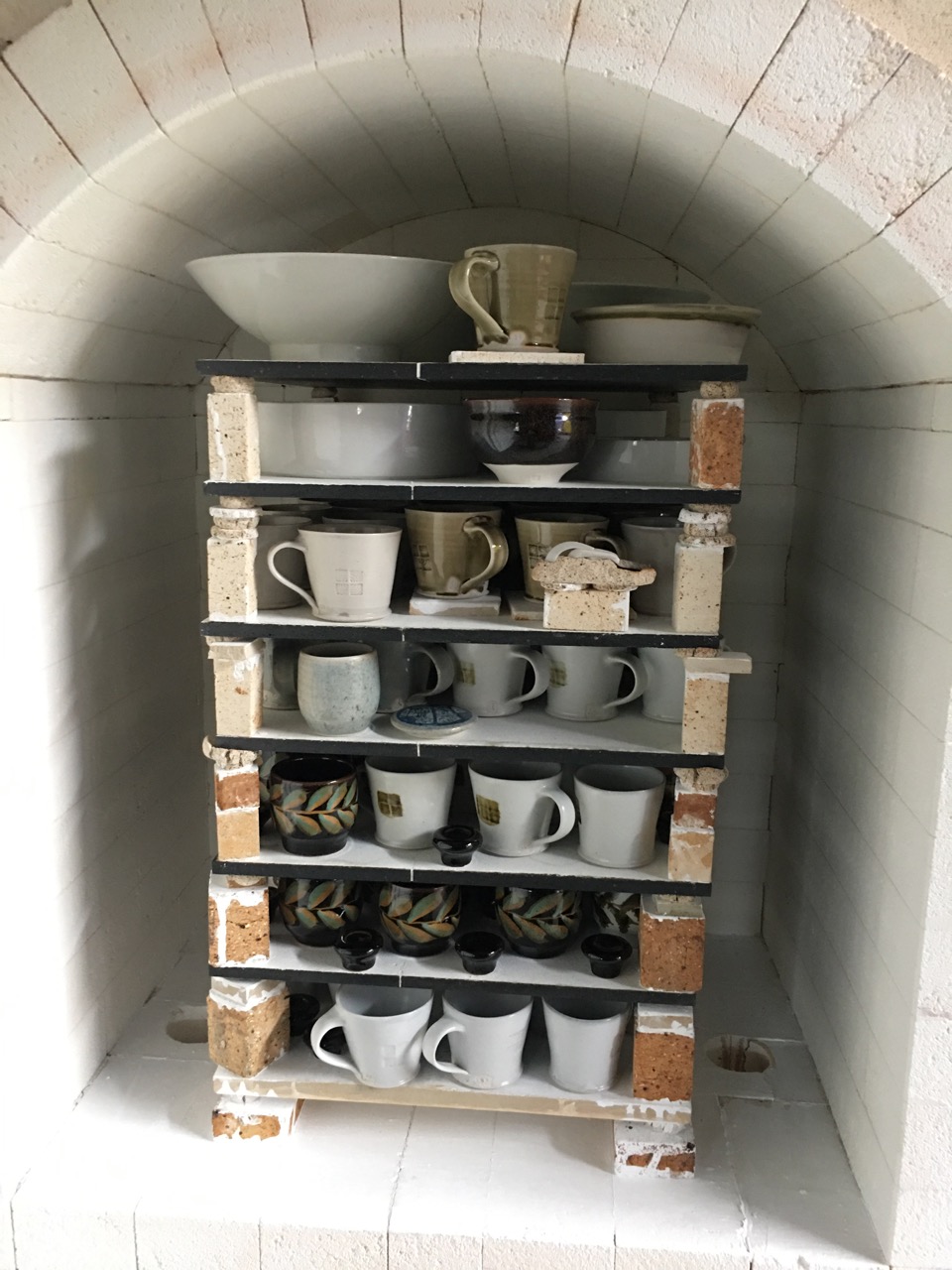
We are doing the last few firings now and spending a bit of time fettling and polishing all the glazed pots. This last week I have been cleaning and grinding the pots form my last Wood kiln firing. From now on it will be too hot, dry and therefore dangerous to fire the wood fired kiln until next autumn. All of our firings from now on will only be in the electric kiln fired using our 100% self generated solar energy, mostly from our PV panels but with a little bit of back up from our lithium batteries. In this way we can fire on a combination of todays sunshine and some of yesterdays stored sunshine as well. 

When the battery is full and we are not firing the kilns. I charge up the electric cars. No point in selling it to the grid for next to nothing if I can use it in some way myself. Once both the cars are charged, I charge up the ride on mower and the power tools etc.

This week I have been doing a bit of ‘kintsugi’ repair on a few wood fired pots that got a little damage in the kiln, a couple of them ‘kissed’ in the firing. One was knocked over by a stray log during stoking, and another got so much wood ash deposit on the fire face that it ran down and stuck it to its wadding. All the usual little mishaps that befall pots in the ‘Zone of Death’. That part of the setting at the very front of the wood fired kiln chamber where the most beautiful pots are created, but are also most vulnerable to damage. I am capable of make some very spectacular shards!

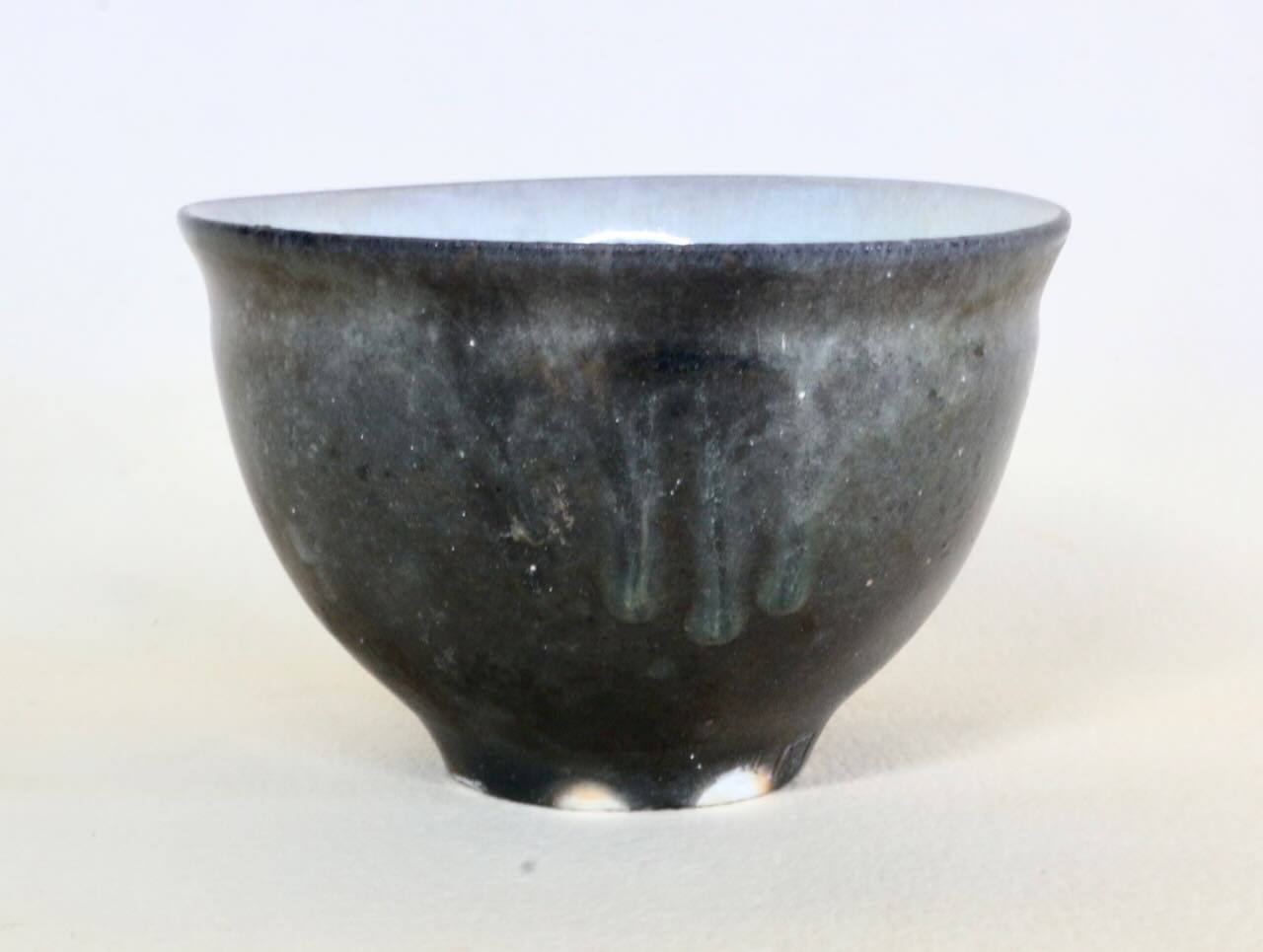
I love it when the translucent white porcelain gets so heavily reduced that it turns black with carbon inclusion. This contrasts so well with the delicate pale, but intense blue of the limpid blue celadon. Alas, fine thin porcelain doesn’t enjoy the intense conditions in the front of the kiln and often dunts (cracks). I’m most happy when I can get a good piece out of the firing whole and in good condition. However, such pots are rare.

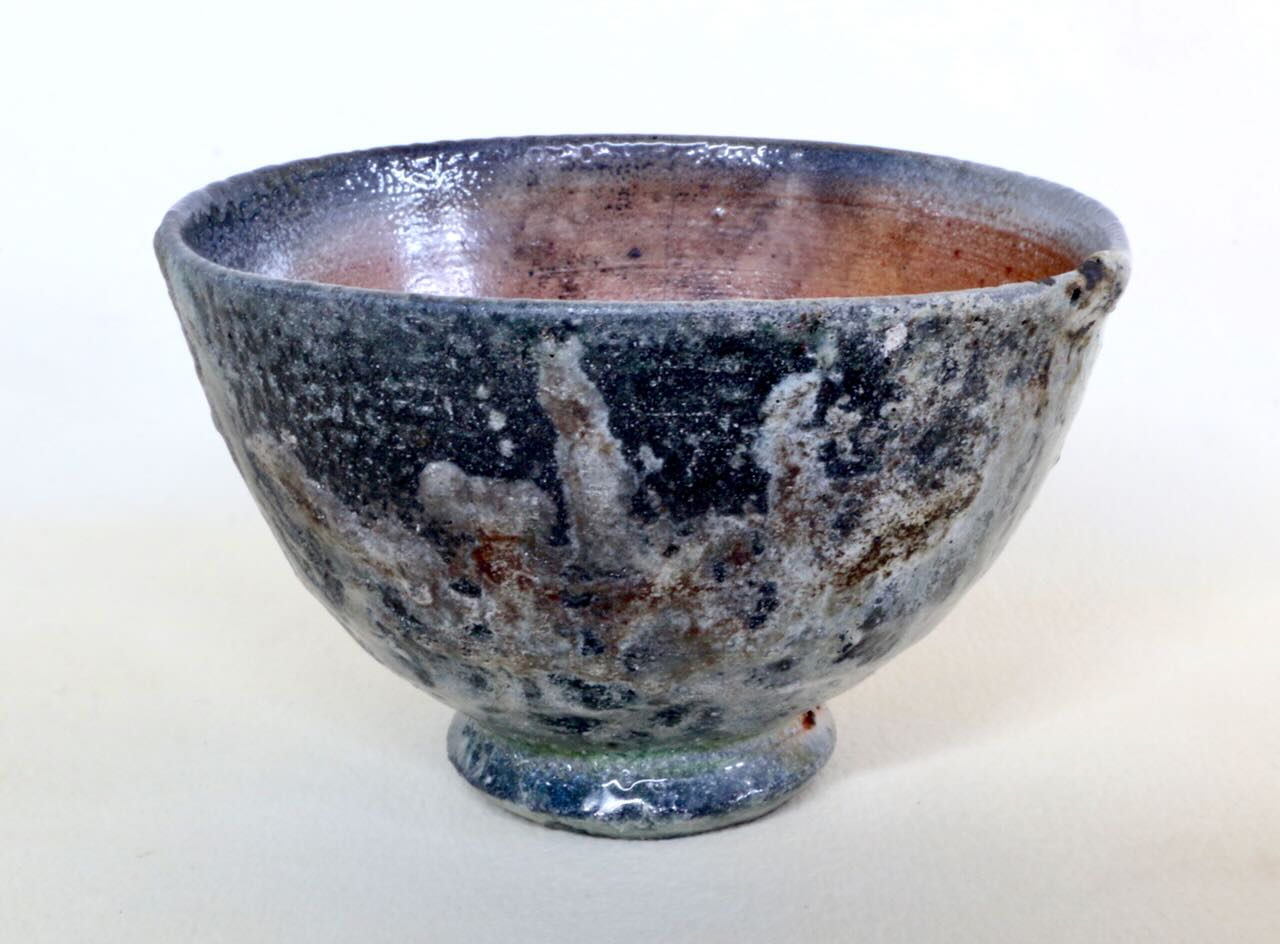
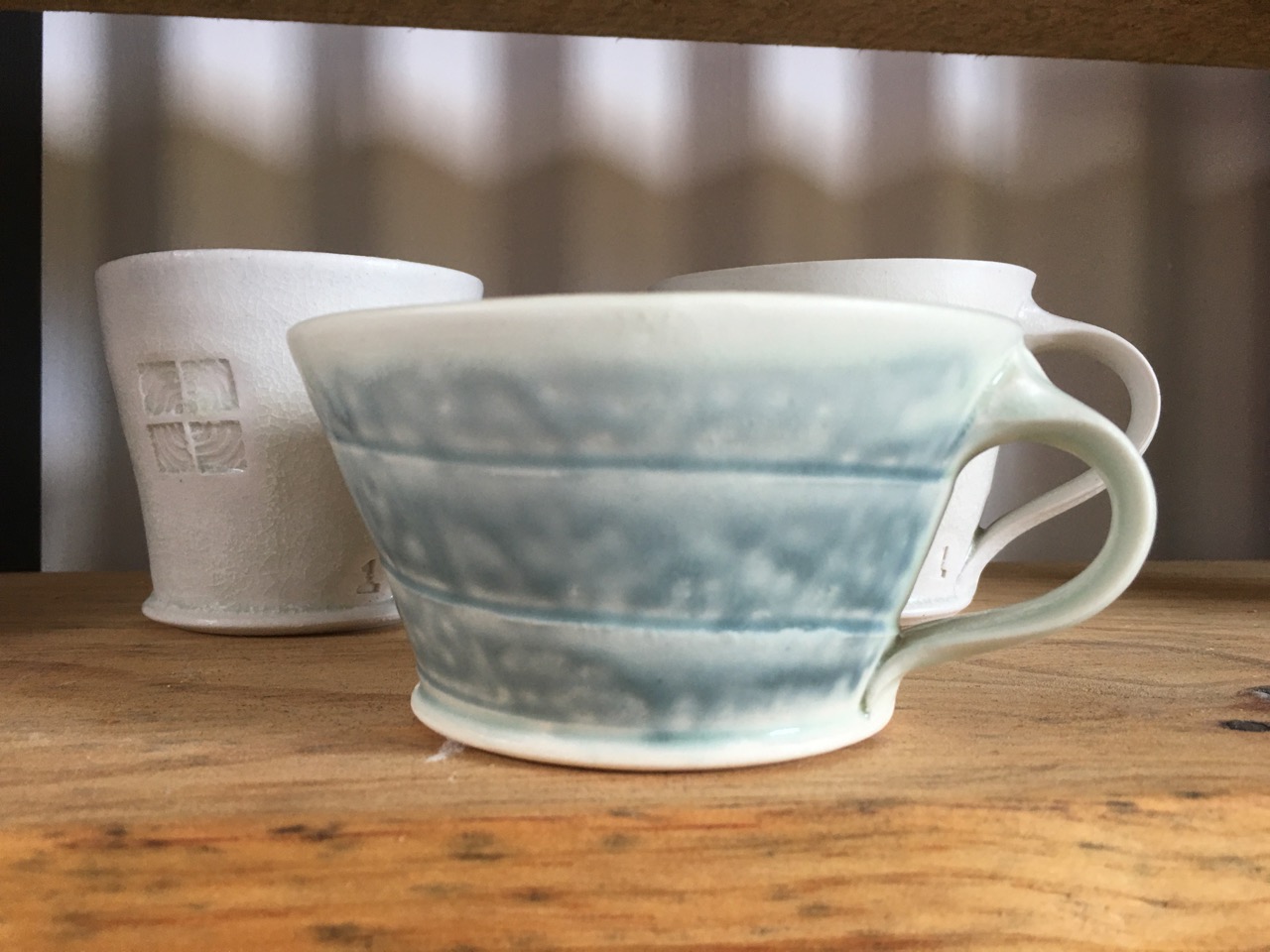
In the piece above. It looks as if you can see my finger prints where I have dipped a glaze, but in fact, these white marks are the fine white porcelain body showing through where the little balls of wadding were placed around the foot to keep it up off the kiln shelf during firing. The naturally deposit ash glaze on the front of the pot had started run, but luckily, it hasn’t glued the bowl to the shelf. Really good porcelain pots are a rarity from this part of the kiln.

‘Kintsugi’ gold leaf repair is a way of restoring a beautiful, but slightly damaged pot back to full radiance. I think that if a good pot is damaged in the fire that made it so lovely in the first instance, then it’s worth giving it a bit of love and TLC to make it even more beautiful.  I lavish a lot of effort, skill and time into retrieving them from the scrap bench and repairing these sensitive and beautiful items, bringing them back to life. Some times gluing a broken or chipped piece back together, and at other times actually rebuilding a bit of the surface that is missing. In this way I bring them back to life and give them an honourable new existence. They are even more precious then, than they were if they had come from the kiln undamaged. I am recognising their potential beauty and honouring it. In this slow, patient application of time and effort they become more special to me.
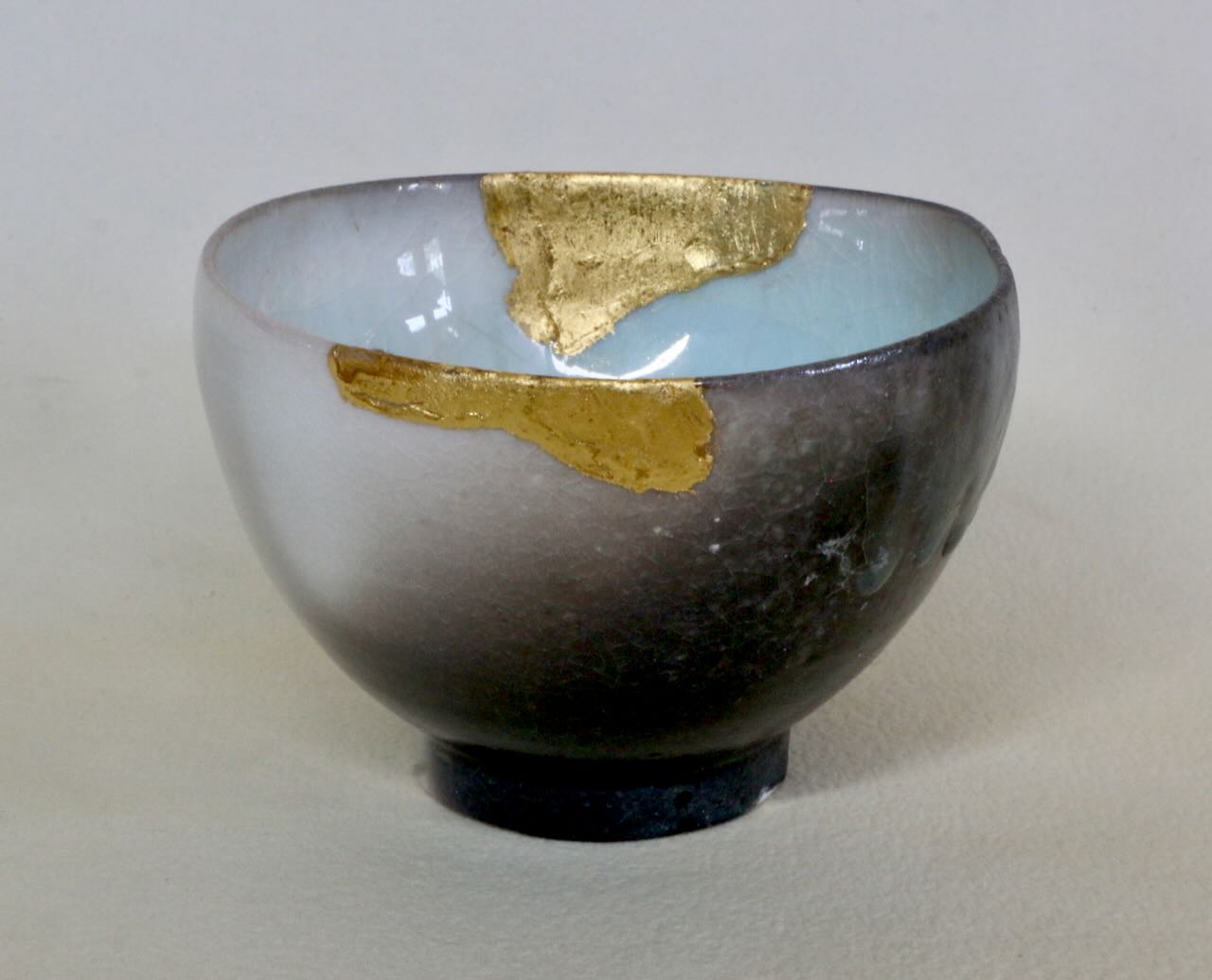
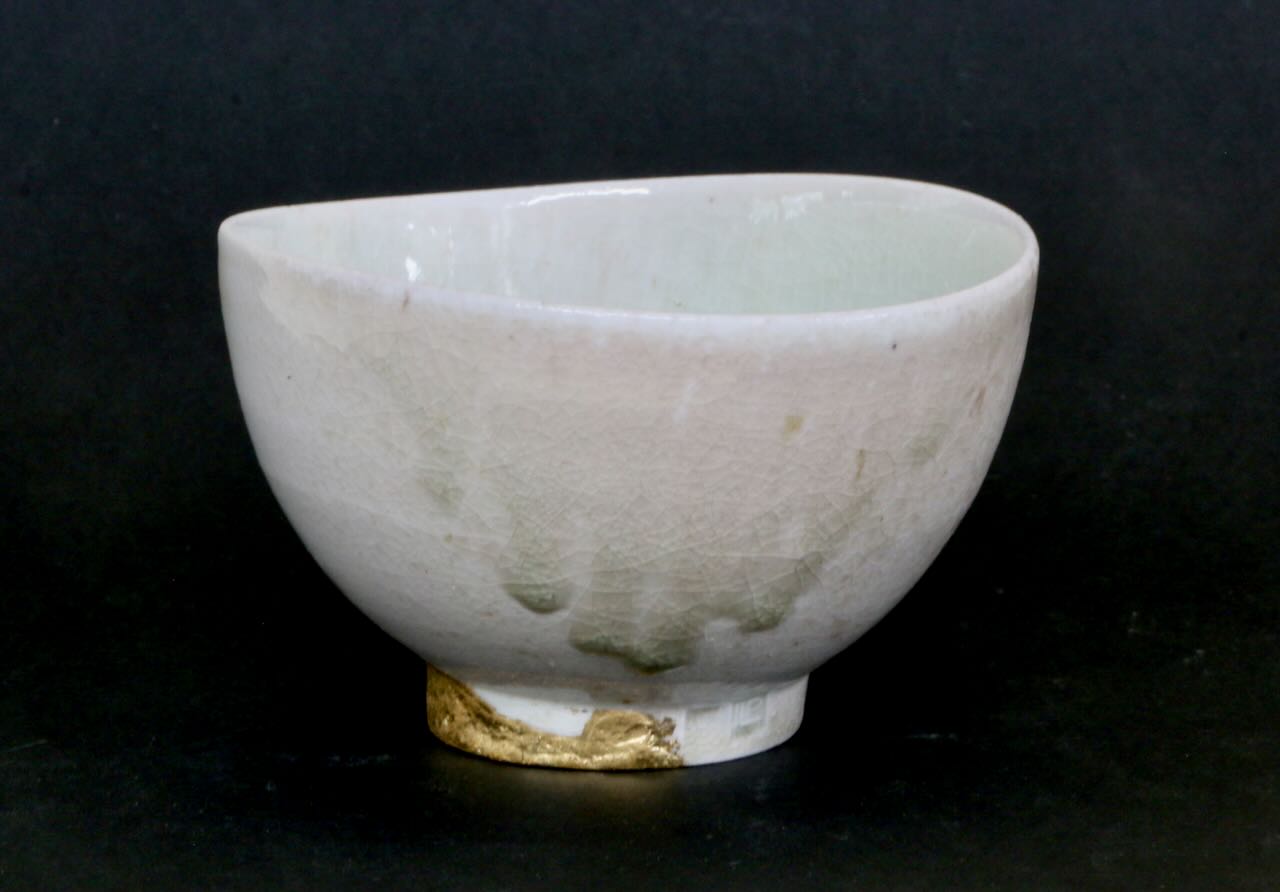
These porcelain bowls are absolutely white, but one of them have such a high degree of carbon fused into their surface during the reduction cycle, that it appears to be black. But when you look inside the bowl, it is glazed with a delicate blue celadon. I love this dramatic contrast of black and pale blue! The white bowl above has so much ash glaze built up on the fire face of the bowl that the ash began to run down and glue the bowl to the kiln shelf, running down over the wadding and making a fluid pool of ash glaze on the shelf. Tragically, I broke part of the foot off trying to extricate it from the glassy mess. I built up the missing part of the foot, back to its original form with the kintsugi technique and finishing it with 24 karat gold. All three of these bowls above, are very translucent. 

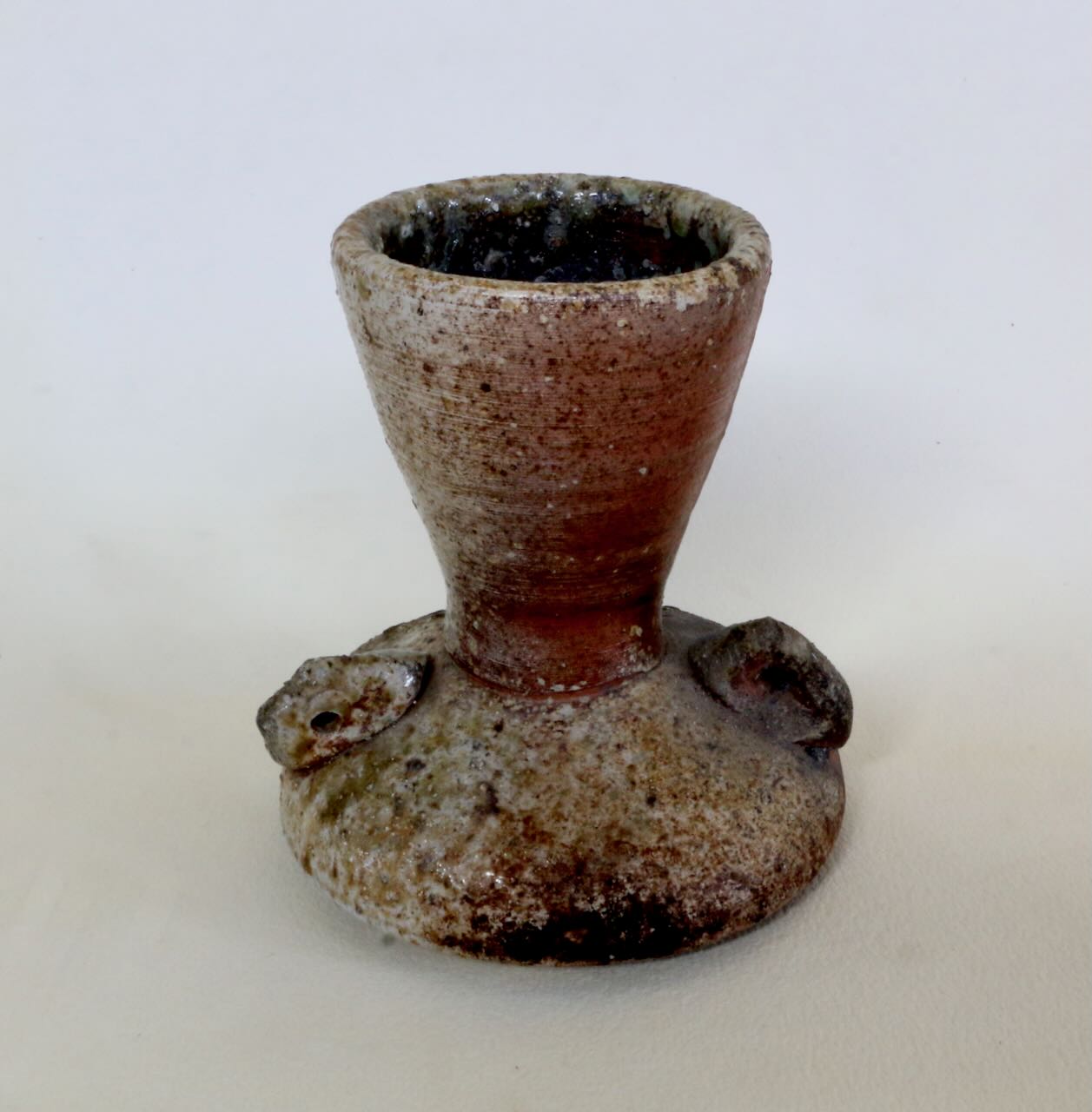
Besides the translucent, white porcelain which I have reduced to matt black with carbon inclusion. (my way of permanently removing carbon from the atmosphere. Permanent carbon sequestration!) Besides these delicate porcelain bowls, I have also been firing some more robust stoneware bodies that I have made. These bodies have a much better survival rate in the ‘Zone of Death’, but still get the occasional chips or ‘kiss’ marking that need some delicate attention.

Each of these ‘rougher’ pieces has their own particular charm and character. I like them all equally.

I hope to see you at some time over the first two weekends in November. You can check them out for yourself.

Southern Highlands Arts Trail, 2025

The Southern Highlands Arts Trail for 2025 kicks off in just 3 weeks. We will be open on the first two weekends in November 1st & 2nd, then the 8th & 9th of November.

We will be open all days from 10 til 4pm, but are happy to open on any day during the 2 week period if you let us know that you are coming. We live here. We’ll be here every day working in the pottery or gardens.

We are recently returned from Western Australia, where we were taking part in the Australian Ceramics Triennial. I was there to present a paper on how to reduce carbon pollution from our (potters) kiln chimneys. I’ve spent a couple of years researching, building and testing a scrubber for the top of my kiln chimney, to minimise the release of PM2.5 carbon particles, that are a result of the combustion of carbon fuels.

We decided that if we were to travel so far for this event, then apart from purchasing carbon credit off-sets for the flights, we should make the most of our time away and go down to Margaret River and have a look around, and possibly taste some wines. So we did.

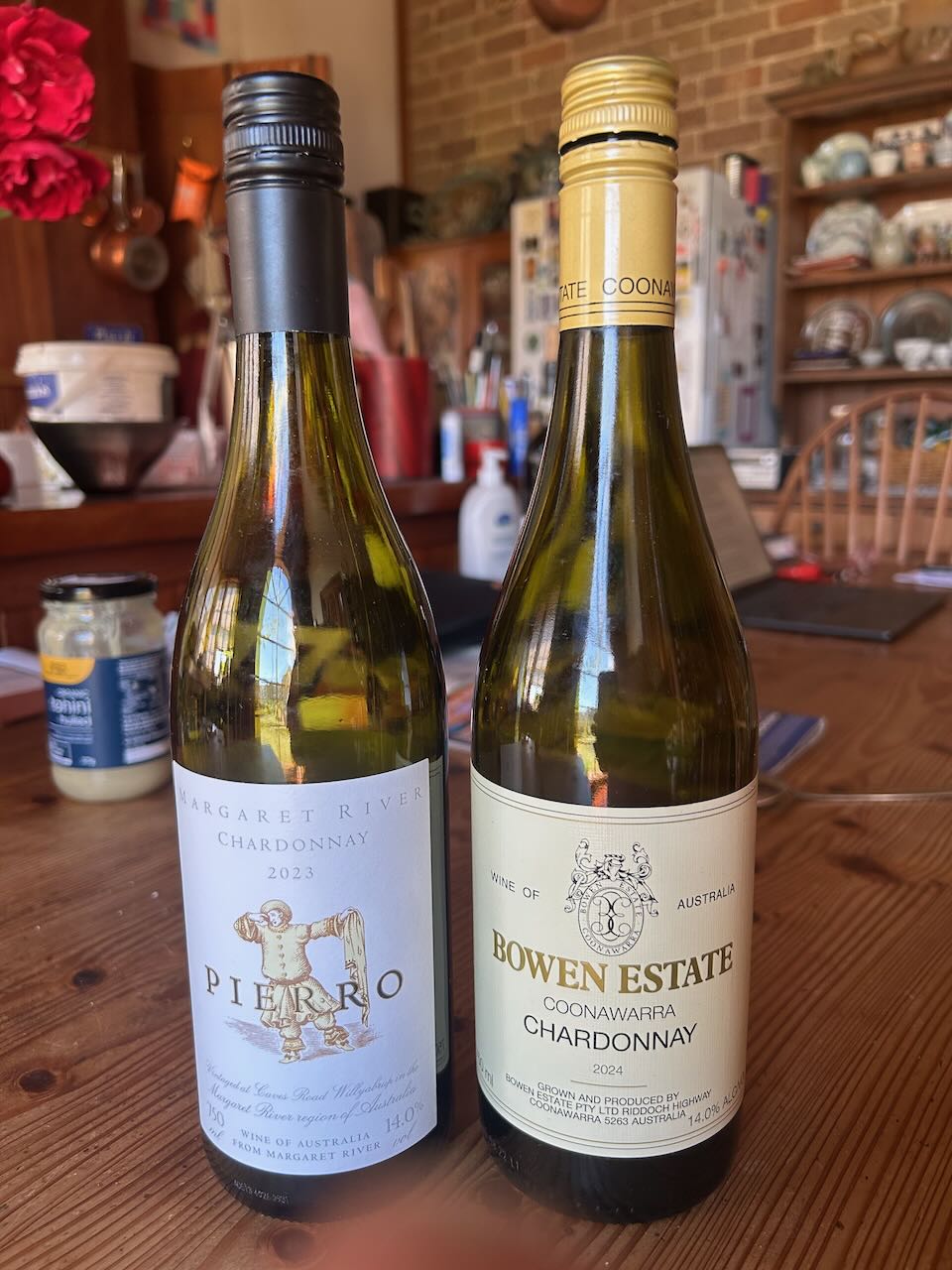
I discovered the best chardonnay that I have ever tasted in my life. The Chardonnay from ‘Pierro’ vineyard in Margret River. Really deep, dry, rich, fragrant, and lasting flavour. Only a slight hint of sweetness. Highly recommended for a tasting if you are ever down there. $117 per bottle, but even $5 just to taste it! A once in a life time experience. 

I’m perfectly ready to accept that there are better chardonnays out there. I see them for sale in posh catalogues, costing even more, but I’ll never know, as I never buy wines anywhere near $100 per bottle – til now. I really enjoyed it. But that was it. Never again. As I said. A once in a lifetime experience. So glad that I called in. I’d never heard of them previously. A small producer, unirrigated, crop-thinned, hand picked, wild yeast, a year in small French oak sitting on lees. Perfect!

My favourite chardonnay up until now, and will continue to be, into the future, is Bowen Estate Chardonnay from the Coonawarra. Beautifully dry, well balanced, classic chardonnay fragrance, lingering finish, and a lot more approachable and affordable at $25. But still kept only for special meals and occasions.

While there we watched the sun set over the ocean in the West. Saw lots of wild flowers and visited two excellent museums. It was a full trip.

At the conference, we saw and heard a lot of presentations and demonstrations. A few duds, some really excellent. Something for everyone and every taste and interest. In fact, so much going on that it was impossible to see and hear everything, as there was always too much to choose from and some programming conflicts of my choices, meant that I missed a few things while watching others. Not a bad thing.

I really enjoyed watching, Ruth Ju-Shih Li, intermittently, over 3 days, create an amazing porcelain hand built sculpture as a performance and then dissolve it back into sludge with water.

I had to think long and hard before I decided to commit the crime of flying to the other side of Australia. Such a lot of carbon debt! I did however choose to buy carbon off-set credits to make some gesture towards minimising the damage. I support ‘Green Fleet’ for this purpose. I’m not advocating or recommending this organisation. This is not an advert. I don’t do that. But if you are unfamiliar with the concept of purchasing carbon credits to off-set some of your personal global warming damage. Maybe you could do an internet search and see what is involved.

In the end I did decide to go to Fremantle, as I was offered the chance to speak about my research on minimising the PM 2.5 carbon particulates from kiln chimneys. Something no one else is prosecuting at the current time. It doesn’t appear on anybody’s radar currently, but there is a mass of information to be found if you look. Most of it quite disturbing. In some ways, presenting this lecture is in itself an act of promoting carbon minimisation. I also offered to present a second paper to the conference on the use of solar power with battery back-up as a low carbon means of firing ceramics, but it was politely declined. No real interest within the committee it seems.

Oh Boy! I read in the news today… (Thank you John Lennon.) About the current average cost to each household in Australia for their energy bill. It currently stands at $5,800 pa. Janine and I have made an effort to minimise our energy bills. Particularly our carbon related energy consumption. We run a low energy household, and have had solar power installed since 2007. We haven’t paid an electricity bill since then. Since the big fire in 2019, everything that we had to replace was carefully considered and was always electric. So now we only spend $400 a year to put petrol in our plug-in hybrid car, and $150 a year to buy petrol for the mower, chainsaws and fire fighting pumps. Thats just 10% of the national average. I’m proud of that. 

In Fremantle, we stayed with someone who told me that when his two daughters were still at home, he was paying $350 per day for electricity! there was a swimming pool involved I understand.

When we put solar on our roof, we essentially paid our lifetime electricity bills all at once in advance. We didn’t choose to do it to save money. We were very concerned about the future with global heating and the next few generations. As it turned out, we have saved a small fortune, going on current national average power bills..

I recently saw in a supermarket advertising magazine/brochure, that you can now buy a 10 kW battery and 6.5 kW of Solar PV for $7,000. Or even better, 20kw battery with 6.5kw of PV for $8500.

That is so incredibly cheap! 

Caution! if something is too good to be true…..

But certainly worth looking into. Please exercise due diligence. 

I am not recommending this product. I have no allegiance to this supermarket and I am not in receipt of any payment or commission for mentioning it. I don’t do that. I just think that it might be worth a very severe, and deep investigation, because it just might be OK. 

Don’t waste your money. Ask around, search out reviews and customer experiences. get yourself informed. I’m a bit sceptical about the price. However, it just might be a good deal?

Back home our garden is flourishing, as our lovely neighbour Tina has been watering things on the hot and dry windy days. So many plants have burst into flower in our absence, as they were just buds when we left.

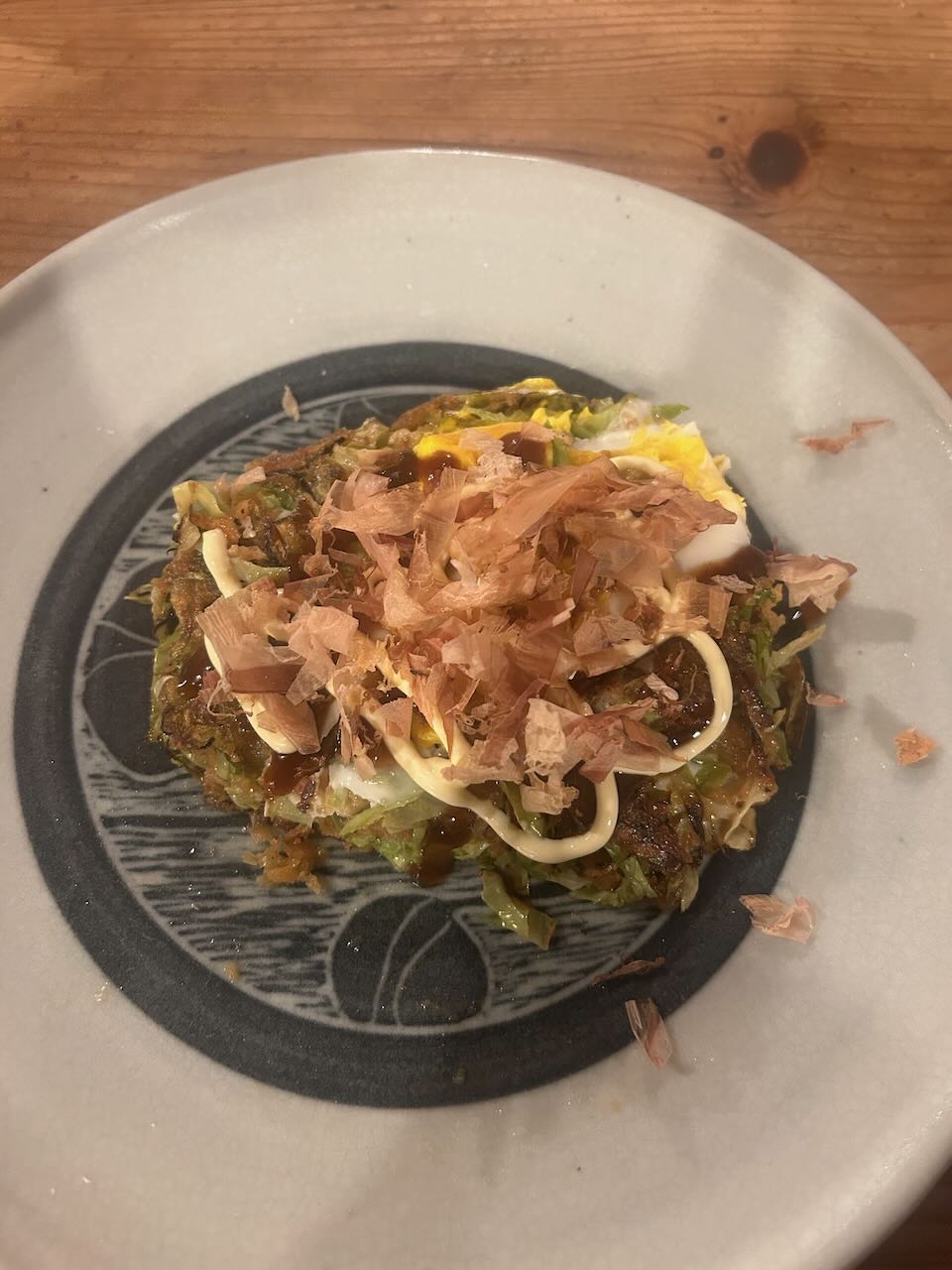
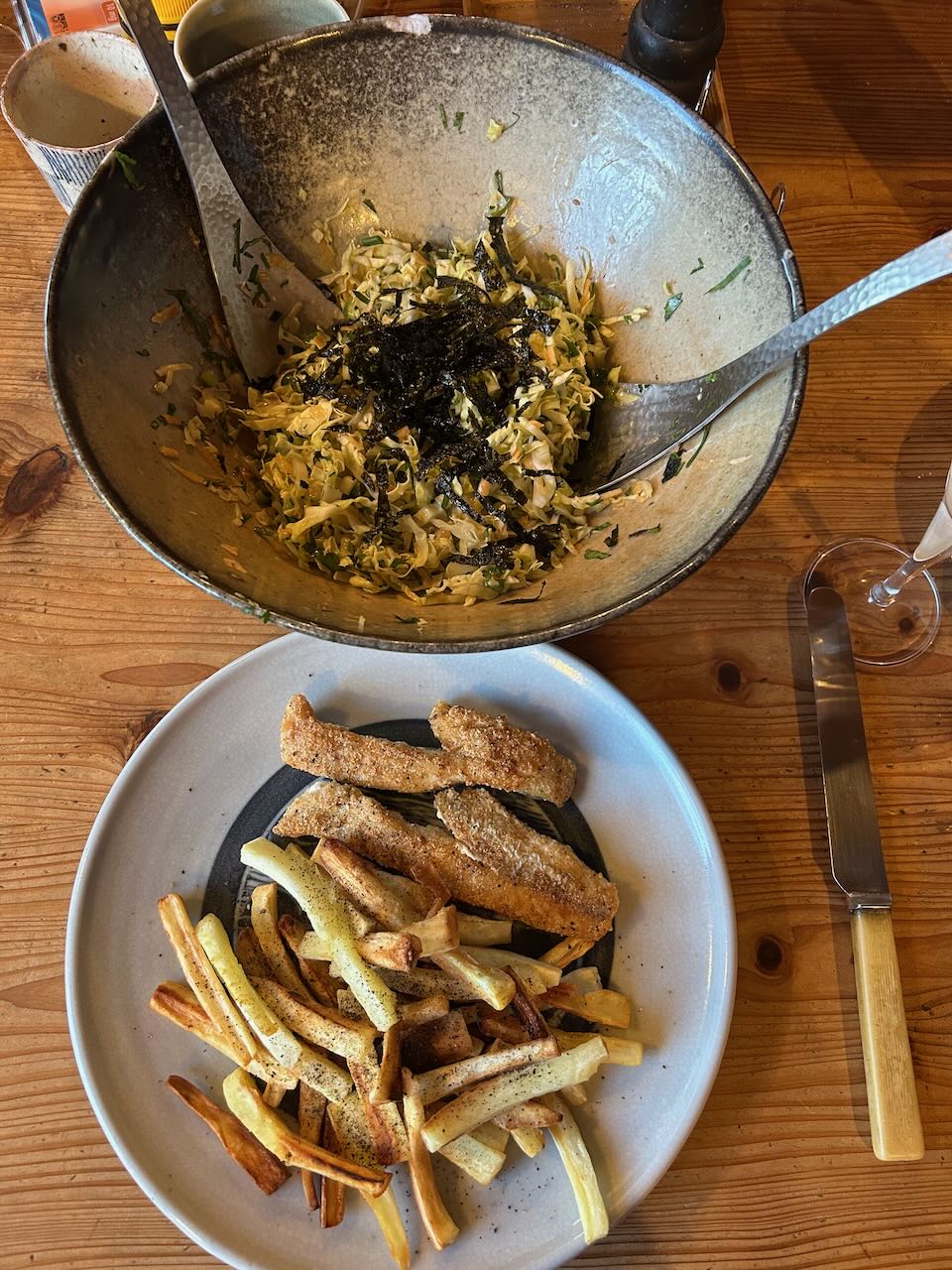
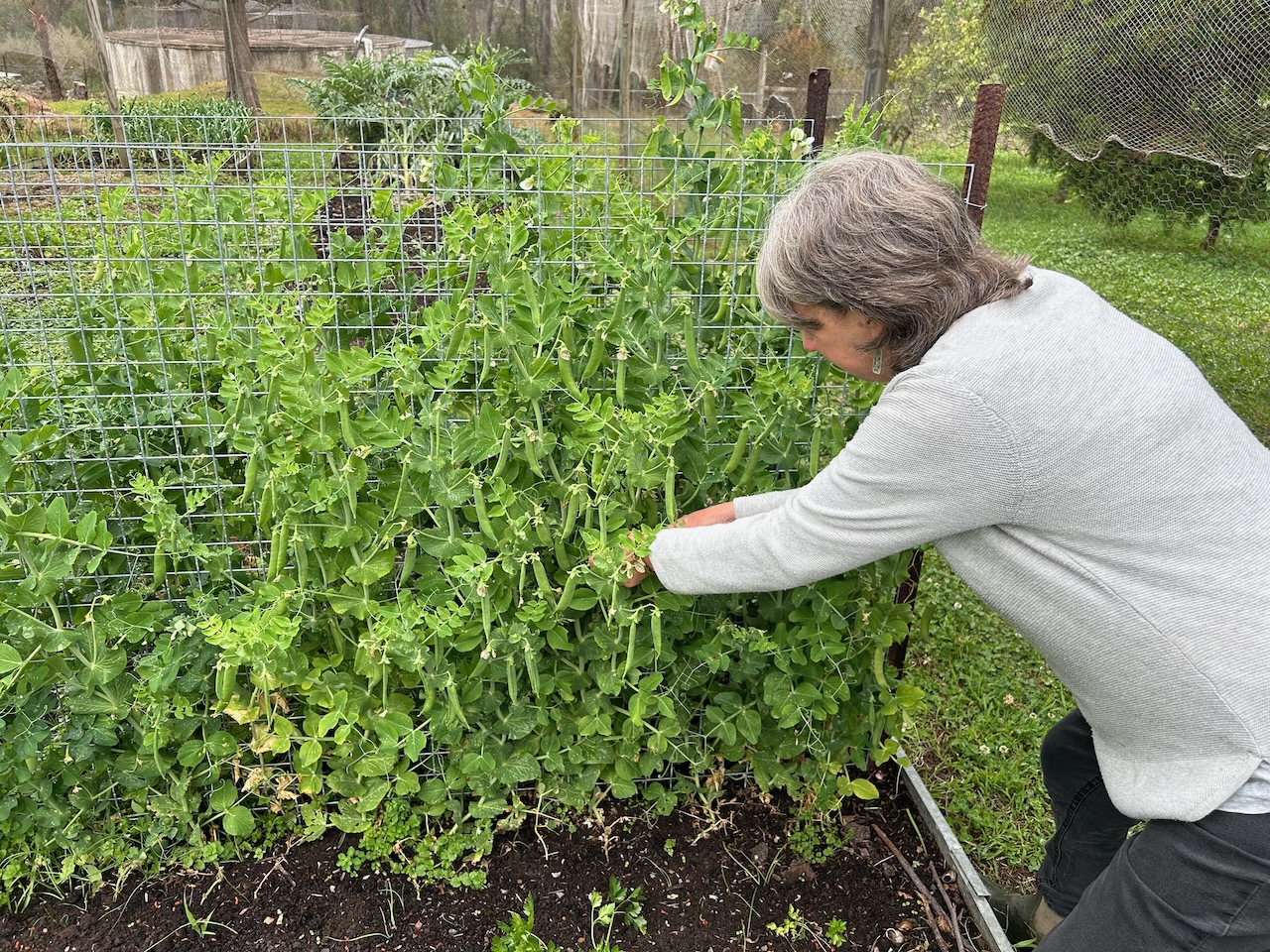
The veggie garden is still very productive. Fish and parsnip chips with a Japanese inspired cabbage salad. Oka-nomiyaki, an Australian version of Japanese cabbage pancake. Baked mixed vegetables etc.

Rock Glaze Workshop

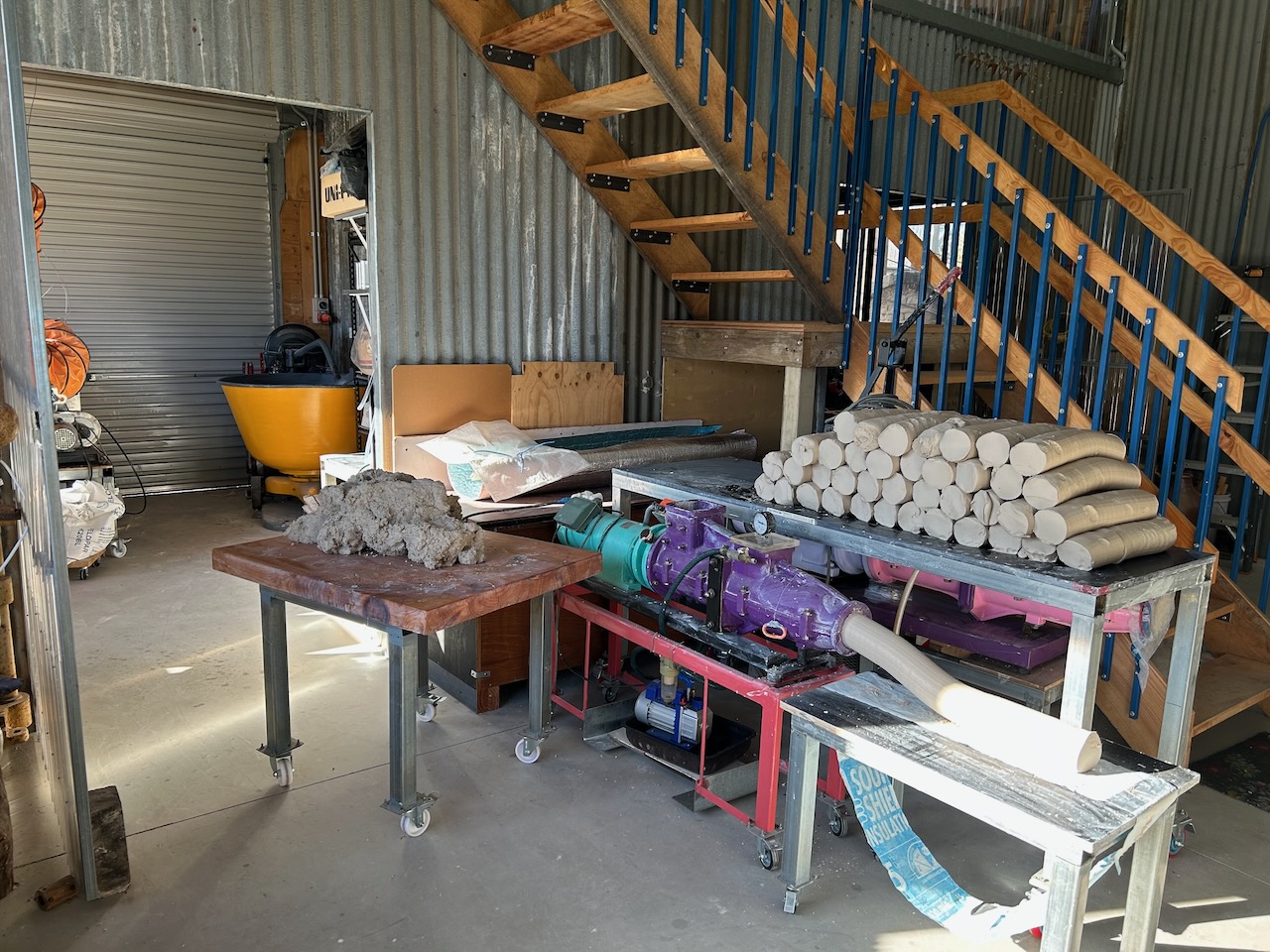
Last week I was busy making clay for the fast approaching, up-coming weekend workshops. I made half a tonne of special clay body with a bit of extra grit, adding some more ‘tooth’ to the usual reliable body that I make up for us. 

It took me two days. I can make up a quarter of a tonne of clay each day from scratch, pug it twice to ensure even mixing, then re-pugged through the Venco Vacuum pug mill and finally bagged and stacked. Along with sorting materials, weighing out, mixing, pugging and finally cleaning up, I have to have a day off in-between to catch up and to avoid over-doing it. Suddenly a week has gone by, but now it’s all done and ready for the next couple of workshops. We are pretty self reliant in the pottery here. Using our own electricity, our own rain water, using all the machinery and equipment that I have either made, re-purposed or re-built after the fire. I’m fairly proud of this minor achievement of self-sufficiency. 

This week we have been very busy with all sorts of little jobs. We ate the last of our late season tomatoes. Surely this must be the last of the late crop. I’m not expecting the last 3 green toms to ripen very well, so these half dozen little self sown gems will probably be it. And very nice too. We cant expect to see another ripe tomato here until just before Xmas if all goes well with the spring planting for next summer’s crop. This must be some sort of record for us, eating home grown red ripe tomatoes for the garden in the last week of July.

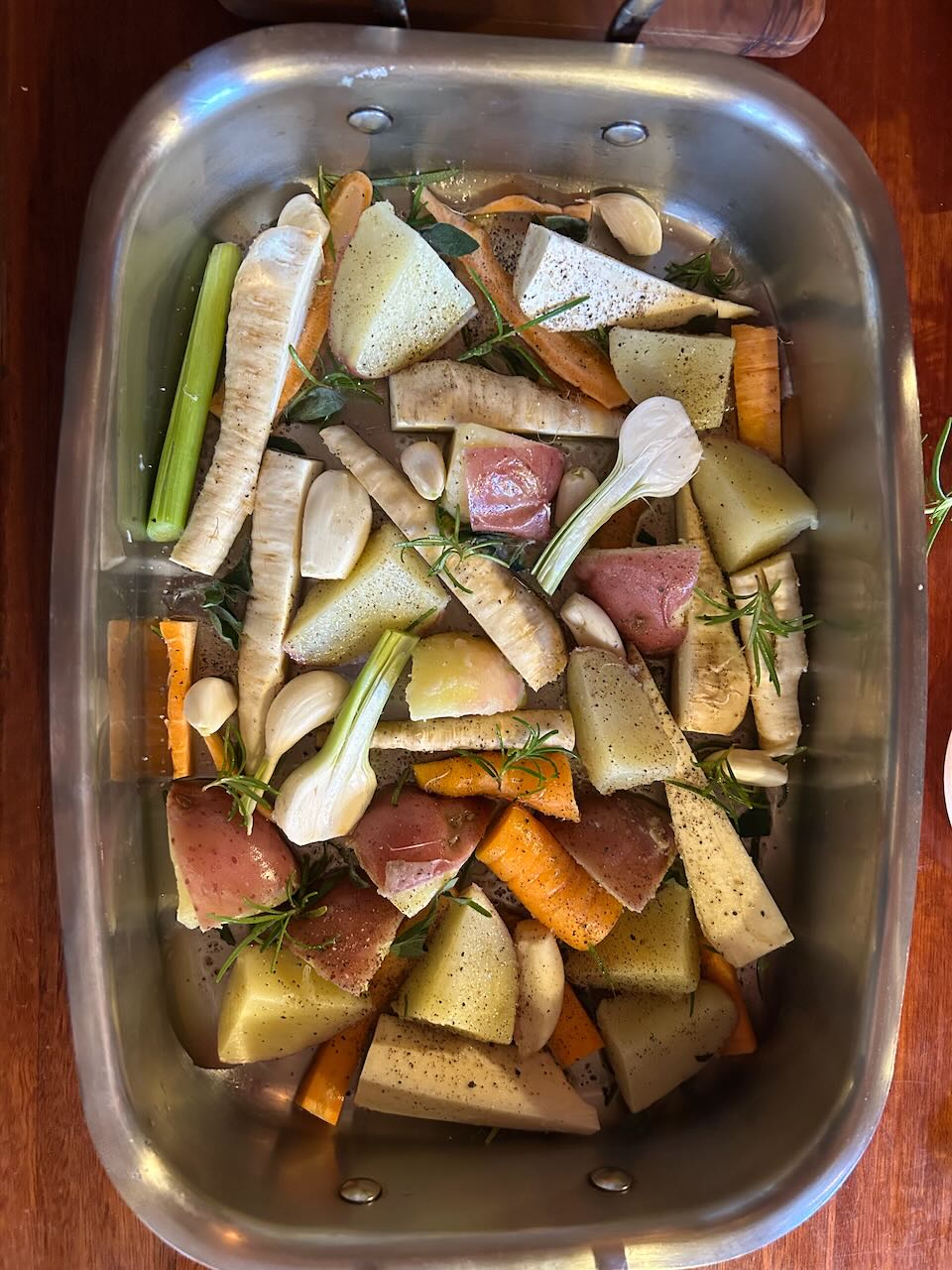
What we are getting a lot of from the garden are cauliflowers, broccoli and Brussels sprouts, all the usual winter fare. last night I harvested the first pick of parsnips for our baked veggie dinner. Cauliflowers, broccoli, Brussels sprouts, parsnips, potato, pumpkin and onion, baked in the oven and then dressed in a cheesy béchamel source. A lovely, warming, winters dinner.

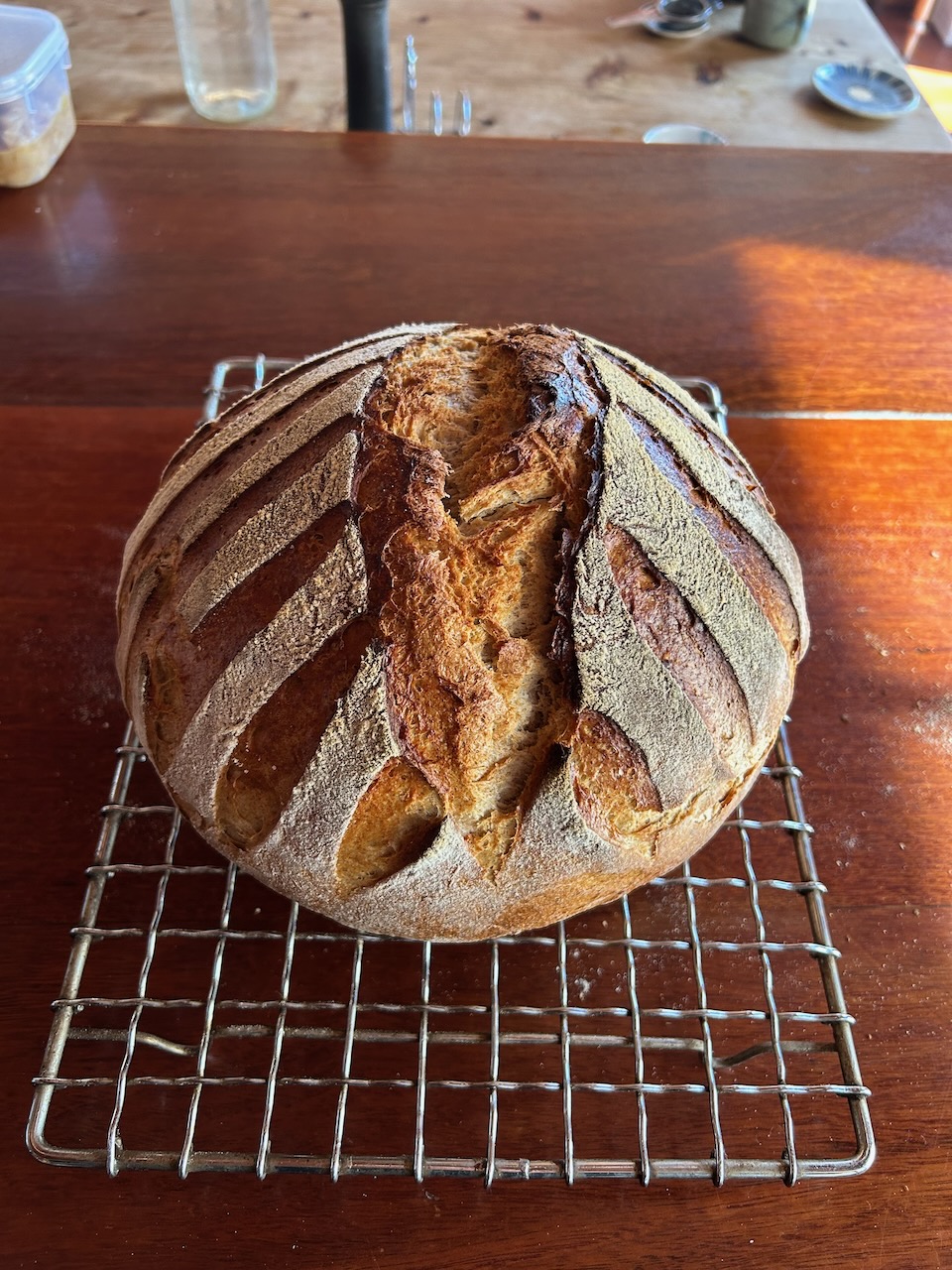
This weeks loaf of rye bread was the usual beauty. All crusty and solid dense rye inside. I use 50% of wheat flour as well so as the get it to rise, as there is very little gluten in rye flour, but it has fantastic flavour. I’m using locally grown and milled organic stone ground flours from the wheat belt of NSW. All grown, harvested and milled on site on the family farm.

This week we also hosted a weekend workshop, but held mid-week, Tuesday to Thursday for a student from FNQ. I had offered a glaze workshop last year, but only got 3 replies, and only one who paid. so it was cancelled. Not enough to make it worthwhile to run it. One potter enquired as to when the next one would be offered. I told her that it wouldn’t. Then she asked how much it would cost for me to do a private one-on-one workshop. She applied for a grant, was successful and so she was here this week. A year later than originally offered.  

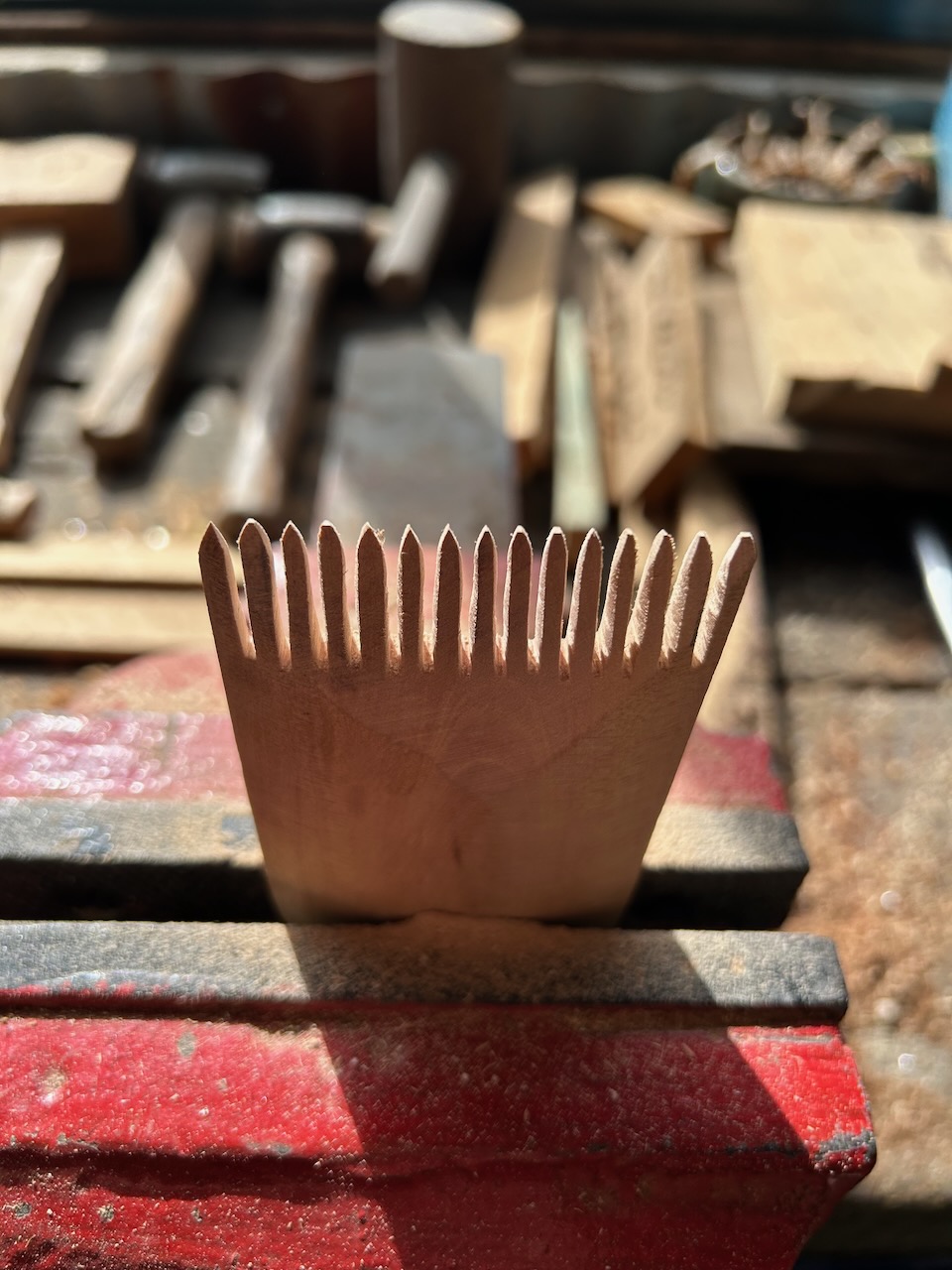
I spent Tuesday morning waiting for her to arrive from Queensland sieving wood ashes from the various fires, stoves, burn piles and kiln fireboxes, ready for use in our testing. I still had a little time, before she arrived, so decided to make a wooden pottery tool. At the last throwing workshop, my good friend Len Smith left behind a wooden comb that turned up in the throwing water. I really liked it and had got used to using it. It’s very comfortable in the hand and very useful. I really like it and was sad to have to give it back when Len next visited for the recent wood firing a week or so back. I decided to make one for myself, so I set to it and in half an hour I had one made. Not as good as Len’s, but I think that it is workable. and most importantly, it’s home made onsite from scrap wood. Not as good as the bought one perhaps, but individual, personal and much more meaningful. It still needs a little bit more sanding and finishing, then some vegetable oil, and it’s ready to go.

When my student arrived from the airport, we had lunch and spent the afternoon doing a geology tour of the Southern Highlands, collecting samples and talking geology, analysis and geological maps on the short drives in-between sites. Day two was spent crushing and milling our samples in the morning and then making glaze tests in the afternoon. We finished the weighing out in the late afternoon, having completed 13 test tiles, half for oxidation and half destined for reduction firing. We packed both the electric kiln and small gas kiln with our test tiles before dinner. The solar electric kiln was fired over night used the days stored sunlight energy from our battery, while we fired the small portable gas kiln during the evening into the night, a 3 hour reduction firing from 6 till 9.00PM.

Day three morning was spent unpacking the kilns, debriefing on the results, and then a theory class on glaze technology, choice of materials, Segar Formula and loads of other relevant related glaze topics. We finished on que at lunch time, in time for her return to the airport for her flight home. A fully packed, midweek-weekend, intensive crash course in geology, rock glazes and using collected ‘wild’ local materials. Ashes, gravels, arkose, clays and rocks, all alchemically metamorphosed from road side dirt into shiny glazes. 

Arts Trail – Open Studio 2024

We will be part of the Southern Highlands Arts Trail – Open Studios on the 2nd, 3rd and 4th weekends in November.

I’m back from my work in Korea and I hit the ground running. All the seeds and seedlings that I planted in late August, just before I left for Korea, were all burnt off in the severe frost event that swept through here in early September. However, all the over-wintering vegetables like peas, broad beans, asparagus and the brassicas are all thriving. So that is what we are eating at every meal these days. 


Because we only eat what we grow, our diet tends to go in long stretches of similar meals, we vary the actual mix for variety but I’ll be glad when the first of the summer crops comes on. That is always zucchini, they are so fast out of the starting blocks, along with radishes. 

However, I know that I’ll be glad to see the last of the ratatouille based summer meals and we can taste that first cauliflower again as the seasons come around. I think that it is a universal human failing to want what you don’t have. No matter how many cabbages I grow, I still hanker for a banana or a pine apple every now and then.

At the moment, I am just loving the smell of the tomato foliage as I brush past it when weeding. The smell of tomato leaves offers such promise of fresh salads and the long hot days of summer to come. 

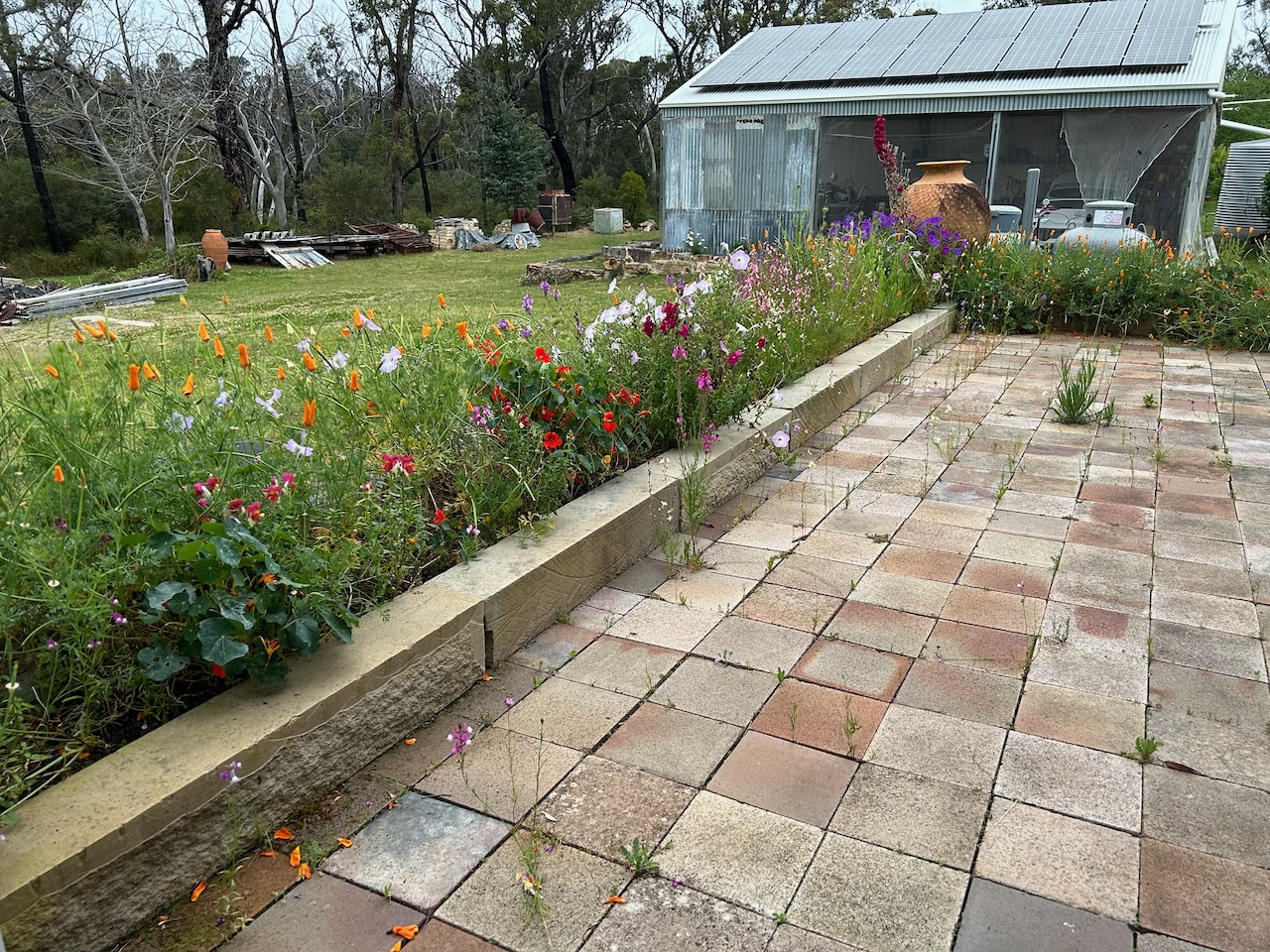
The more established spring flowers in the flower beds around the pottery were not affected by the frost, and have gone on to bloom there little buds off. Its very cheerful and uplifting to look out the studio window and see a vista of spring blooms.

After the frost. Janine went out and bought some more early seedlings to get a bit of a head start for the summer garden, and now that I’m back, I spent all of my first few days planting seeds, weeding, mulching and mowing to get the place ready for the Open Studios Arts Trail, that is being held on ther last 3 weekwnds of November. But also to guarantee our summer food supply security.IMG_0869.jpegIMG_0871.jpegIMG_0872.jpeg

Janine transplanted some wild self-sown spinach seedlings, but they didn’t all take. I filled in the gaps inbetween with some extra seeds. The vegetable garden is looking good again with all the red poppies in flower now. The bees are going full speed ahead. Their little yellow saddle bags are full and bulgeing with pollen.

We already had a lot of pots made for the open studio sale before I left for Korea, but there was also a lot of bisque ware that I had prepared for a wood kiln firing, but I just couldn’t fit it in before I had to leave. So now that I’m back I have glazed all that work and packed the wood kiln.

13 hours to 1300. I think that I have finally found to best way to burn my pre-burnt and charred dead forest of kiln fuel timber.

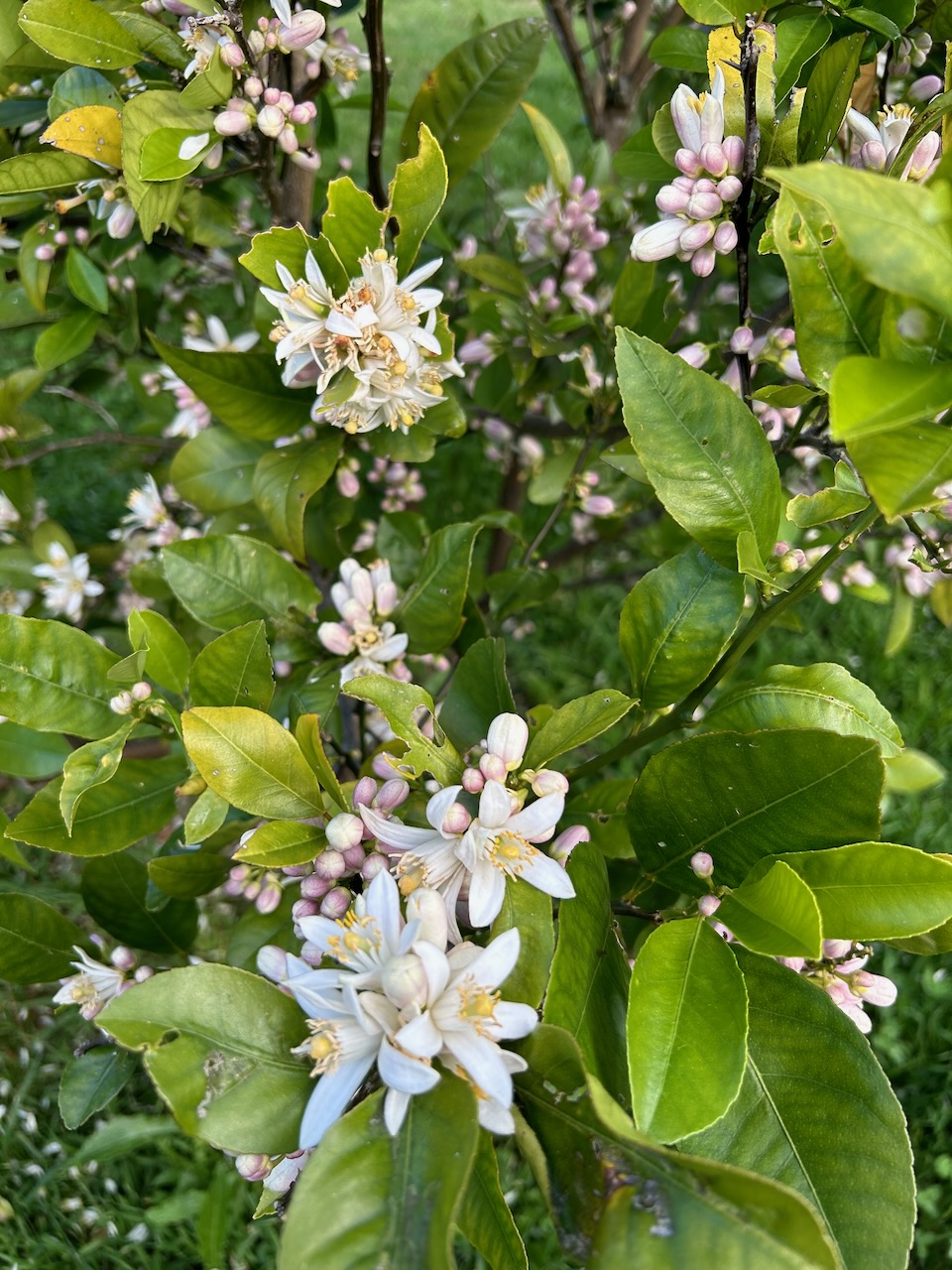
The citrus grove is in full bloom and you can smell the fragrance of the citrus flowers from the pottery, if the wind is in the right direction. 

We will be open for three weekends in November, 9th/10th and 16th/17th. for the Southern Highlands Arts Trail then the ACA Open Studios, Ceramics Arts Trail that is happening Nationally on the 4th weekend of the 23rd and 24th of Nov. 

Keep us in mind and call in if you can. We have some lovely work to show you.

Finally, a use for red mud?

I saw this podcast link in ’Nature’ magazine today. Nature is a science journal that reports on various issues relative and important to scientific research.

I have subscribed to various science journals during my life. I prefer to read about scientific research than the trivia of day to day politics and its meaningless point scoring.

It reminded me of a research project that I did at the National Art School, way back in the 1970’s. 

I was contacted by a guy from an aluminium mining company, who explained that new environmental laws were going to cost the company a lot of mullah to comply with.

He explained that the main by-product of aluminium processing is red mud. The red mud is essentially red iron oxide and some other clay-like minerals that are extracted from the bauxite to gain the aluminium oxide. Bauxite ore is an almost equal mixture of iron and aluminium with some aluminosilicates related to clay.

It occurs widely as little red spheres. It is deadly to walk on, as it rolls around freely like ball bearings. I have found loads of small deposits of bauxite all around my shire here while I have been doing my own ceramic material research. The parent mineral is everyday clayey soil, which when exposed to tropical weathering conditions of very wet weather and high temperatures, can have almost everything leached out of it. Every mineral and element that can be dissolved in water, gets leached out over time and is evaporated up wards through the soil profile, and washed away, so all the alkalis, alkali earths and silica are removed, leaving largely iron and alumina. 

The process of extracting the alumina leaves the iron deposited as a slurry it in huge lakes or dams. These never fully dry out properly to become solid and stable. The company wanted to know if I could find a productive use for this semi dried slurry cake?

I couldn’t. It was too high in iron to make any sort of useful glaze and had absolutely no plasticity, to make it into any kind of interesting form. The best solution I could find was to mix it with a little bit of clay and silica, then fire it in a heavy reduction atmosphere to turn the refractory iron oxide into an active flux that would bind all of the other impurities with the clay and silica to form a solid black block.

I suggested that the company might build a brickworks on the site and start producing black bricks. The guy scoffed at my idea, asked if I was joking and I never heard from them again. No payment was even forthcoming. Thus ended my early flirtation with big business.

Now 40 years on there might just be a solution in the pipeline? Not a big deal in the scheme of things, but every little bit of progress counts towards a better, cleaner future. Only the first 10 minutes of the podcast is about green steel production.

Podcast: toxic red mud into ‘green’ steelToxic waste from aluminium production can be turned into iron, a key ingredient in the production of steel. There is an estimated 4 billion tonnes of ‘red mud’ in landfills worldwide. “It is actually a big problem,” sustainable-metallurgy researcher Isnaldi Souza Filhotells the Nature Podcast, “because red mud is associated with pollution, contamination of soil and contamination of water.” The method developed by Souza and his colleagues uses hydrogen plasma instead of fossil fuels to extract iron from the red mud, which could help to reduce carbon emissions from steel production.Nature Podcast | 24 min listen
Reference: Nature p
aper
Subscribe to the Nature Podcast on Apple PodcastsGoogle Podcasts or Spotify, or use the RSS feed.

There were two other interesting science based items that have stuck in my mind from the last year of Royal Society meetings. Just in case you are unsure about ‘The Royal Society’, it’s not a monarchist support group, or Charlie’s cheer squad. In fact it is a society to promote science.

Wikipedia tells us;

 “The society fulfils a number of roles: promoting science and its benefits, recognising excellence in science, supporting outstanding science, providing scientific advice for policy, education and public engagement and fostering international and global co-operation. Founded on 28 November 1660, it was granted a royal charter by King Charles II as The Royal Society and is the oldest continuously existing scientific academy in the world.[2] 

I have been honoured to be invited to give two lectures to the Southern Highlands branch of the Society in the last decade.

At one meeting last year, we had a lecture from the redoubtable Ken McKracken, about long term climate effects caused by sun spots and other celestial effects. The essence of the talk that I took away was this. There are very powerful long term effects on the earths climate that have various cycles, from one year to decades, to centuries, up to 20,000 years. One in particular runs over approximately 30 years, and evidence was presented from earth core samples that showed pollen and other markers that there is a general oscillation from above average to below average rain fall, alternating over this 30 year cycle. The upshot being, we have just finished a 30 year dryer cycle and are entering the next 30 year wetter cycle. I was a touch sceptical, but as this year was meant to be the return of El Nino and a hotter dryer period according to the BOM. It certainly started off that way. Hot and dry, so much so that i stopped work on other projects and spent time finishing off the bush fire protection system o nthe barn and pottery. However, since then all we have had is wet, wet, wet. Maybe I’m inclined to take more interest and will follow this thread of thought over the next few years.

Of course, I am fully aware of Aristotle’s warning that one swallow does not a summer make.

Then, just this morning I see this article in The Guardian, discussing the possible breakdown of the current El Nino before the end of the year and the return of yet another La Nina event next year.

Watch this space, as they say.

Another interesting talk at the Royal Society came from a scientist involved in nuclear fusion research. We have been told that a break-through in nuclear fusion is just 20 years away, and we have been told this repeatedly for the past 60 years. In this lecture we learnt that it might be up to 100 years away, so that was refreshingly new. He explained that when the break-through comes it will very likely involve the development of hundreds of small fusion reactors, rather than one big one, largely because the reactors will only run for a few days or weeks, and then need to be shut down to be rebuilt over years. So a lot of reactors will be needed to keep a steady supply. Most interestingly to me, was his statement that because the fusion process releases such unimaginably large amounts of energy so quickly. It won’t all be able to be used in real time, so there will need to be a lot of research put in to develop very large scale batteries to store it and release it steadily over time. 

Keeping in mind that fusion research has already cost, and will cost multi billions, trillions and gazillions of dollars more. It crossed my simple mind that wouldn’t it be better to just abandon the most expensive part – which is the fusion research, and just go straight to the more useful and affordable battery research, as we already have very cheap solar and wind forms of electricity generation?

Oh! and the last point he mentioned was that because current fusion research indicates that these reactors need a steady supply of radioactive tritium gas to make the fusion process work, then the reactors become highly radioactive, just like todays ordinary fission reactors. So a very long and costly process to repair and rebuild them each time they are shut down. Ignore rightwing shock jocks and their politician cronies telling us that fusion power is clean and avoids the radioactive concerns associated with todays fission reactors!

I can’t see it ever happening, not in 20 or even 100 years, but as I won’t see either of these time frames come to fruition, it won’t be a concern for me. I can see a place for big battery research though.

I said above that there would be no recipes. BUT…

Just to show that even Greenies can lie just as well as any politician, here is a recipe for zucchini fritters from the garden!

We all have so many of these lovely, productive fruits at this time of year, its hard to keep up with them at times. One reliable stand-by is zucchini fritters.

We were invited to go to a friend’s 60th birthday party in the Village Hall at the weekend. We decided to take along our contribution in the form of these fritters

Have about equal amounts of zucchinis and potatoes, although you can eliminate or minimise the potato if you want to reduce your carbs.udo If you do you’ll ned to add some other form of plasticiser to bind it all together – a little flour perhaps?

As these were not for home consumption to be served directly to the dinner plate, Where it would be OK to be a bit fragile and crumbly, but needed to be a little more robust, Janine used equal proportions. 

Grate the zucchinis and place in a bowl, take out one handful at a time a squeeze all the moisture out of the pulp and place in the mixing bowl.

Pre-boil the potatoes and mash them, add to the zucchini. Season to taste as you prefer, salt, pepper, chilli flakes, sesame seeds, finely chopped cornichons, parsley and or sweet basil?

Make the mixture into small balls and roll in polenta, this gives a nice crunchy texture to the coating after pan frying in a little sesame oil or olive oil.

They are delicious. A lovely summer treat.

Winters End – The Last Truffle of the Season

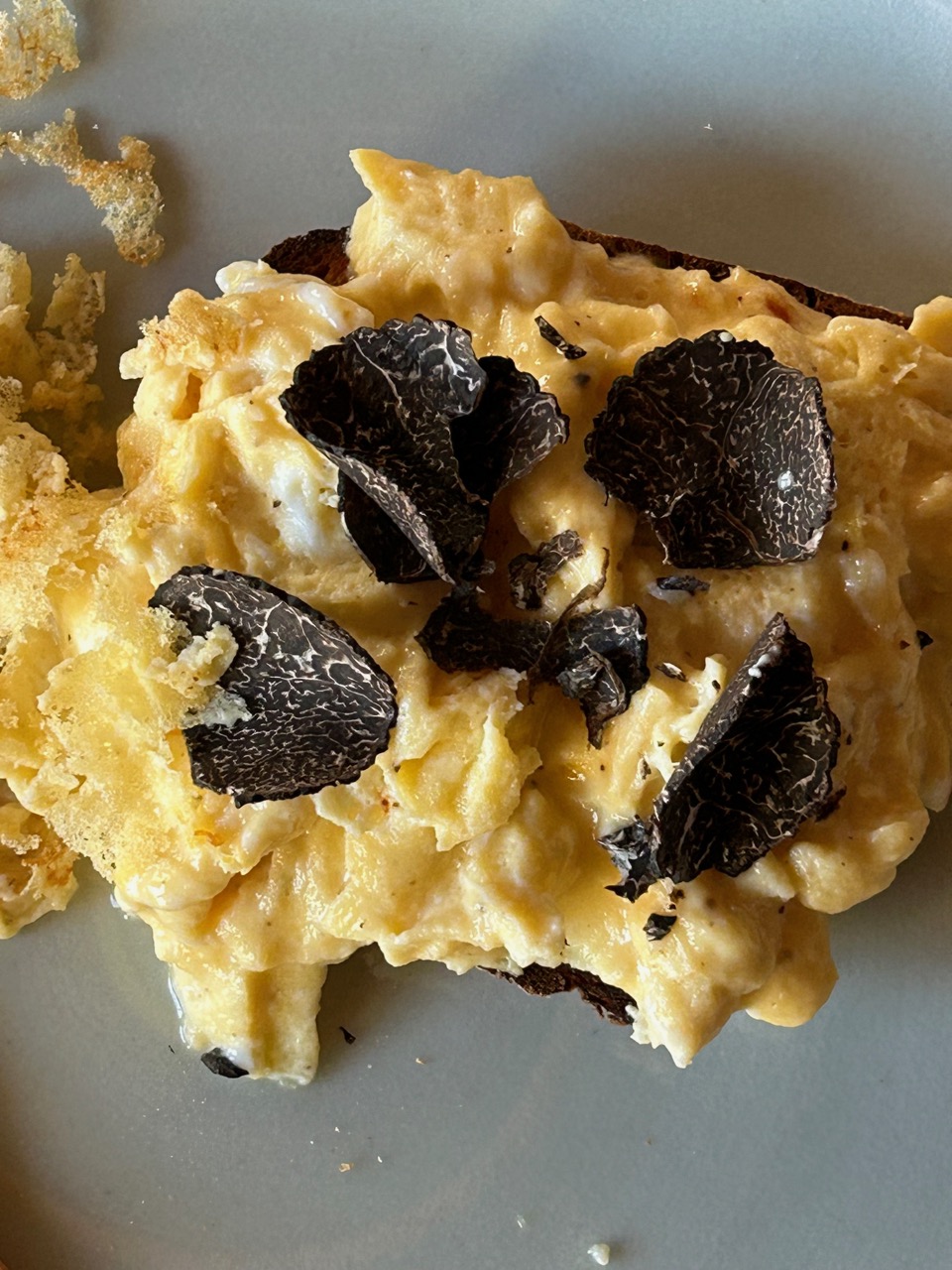
Today we finished off the last truffle of the season. It was romantic, mysterious, fragrant, exotic and delectable. It really elevates the humble scrambled egg into something special without taking anything away, just adding loads of romance and aroma. The warmth of the freshly cooked eggs releases so many aromatic oils and esters from the tiny black fungus. It fills my nostrils as I bend over doing the shaving. It’s a good thing that we only get to eat these delicious little morsels in the winter months, otherwise we may become somewhat blasé about it all. As it is, they are still a very special seasonal treat, If somewhat expensive. We can only afford to live this decadent gourmet lifestyle on our frugal budget because we have a son in the industry.

We are also probably making our last batch of marmalade too, as we have picked most of the Seville oranges now and eaten nearly all of the other citrus fruit. Although this is the beginning of spring, it is also the end of winter in another way, so it’s the end of the winter crops like citrus. We try and live with the seasons, so that’s it for the big citrus splurge in our diet. 

It is one of the blessings of living in the Southern Highlands, that we have 4 distinct seasons. For instance, this morning we had another frost. This might possibly be our last really cold morning, but you never know with the climate emergency developing as it is, anything could happen.

I peel off the thin yellow layer of the skin without taking too much of the pith. I want the pith off!  With my pile of curly peels, I end up with what can only be called ‘bitter and twisted’ .

Janine removes the pith and cuts up the juicy centre to add to the pan. The first pan is on for 30 mins. before we get the 2nd pan on the stove and the difference in colour is dramatic, it  gets richer and deeper as it cooks. We try to use as little sugar as possible, while not making it too bitter and acidic, we also need enough sugar to make it ’set’. It takes about an hour of steady simmer to get it to thicken sufficiently. It’s worth all the effort, it tastes delicious, with just the right consistency. Seville oranges aren’t all that nice on their own. They are OK, but they really come into their own when it comes to making marmalade.

The stone fruit orchard is growing up well. This is its 3rd year and the trees are starting to look a lot more settled and established, with thicker trunks. I have been pruning them into open vase shapes where possible, but some of them have a very narrow vertical habit. They are all grafted onto ‘dwarf’ rootstocks, so they are keeping to a compact size. Most of them are now about 1.5 to 1.8 metres high, with an expected total height of 2.5 metres eventually. But I am well aware that plants can’t read their own labels! So there are bound to be variations.

We had a really great 1st Weekend workshop in the new pottery. It worked very well. The new studio is a great space to teach in. The light is good and the layout works ergonomically for 10 people, 8 students and 2 teachers. After everyone left I got stuck in and started making more pots for myself. The Open Studios, Arts Trail is coming up at the end of the year, so I need to get back to work making pots for that. I started back at it by making 30 straight sided mugs.
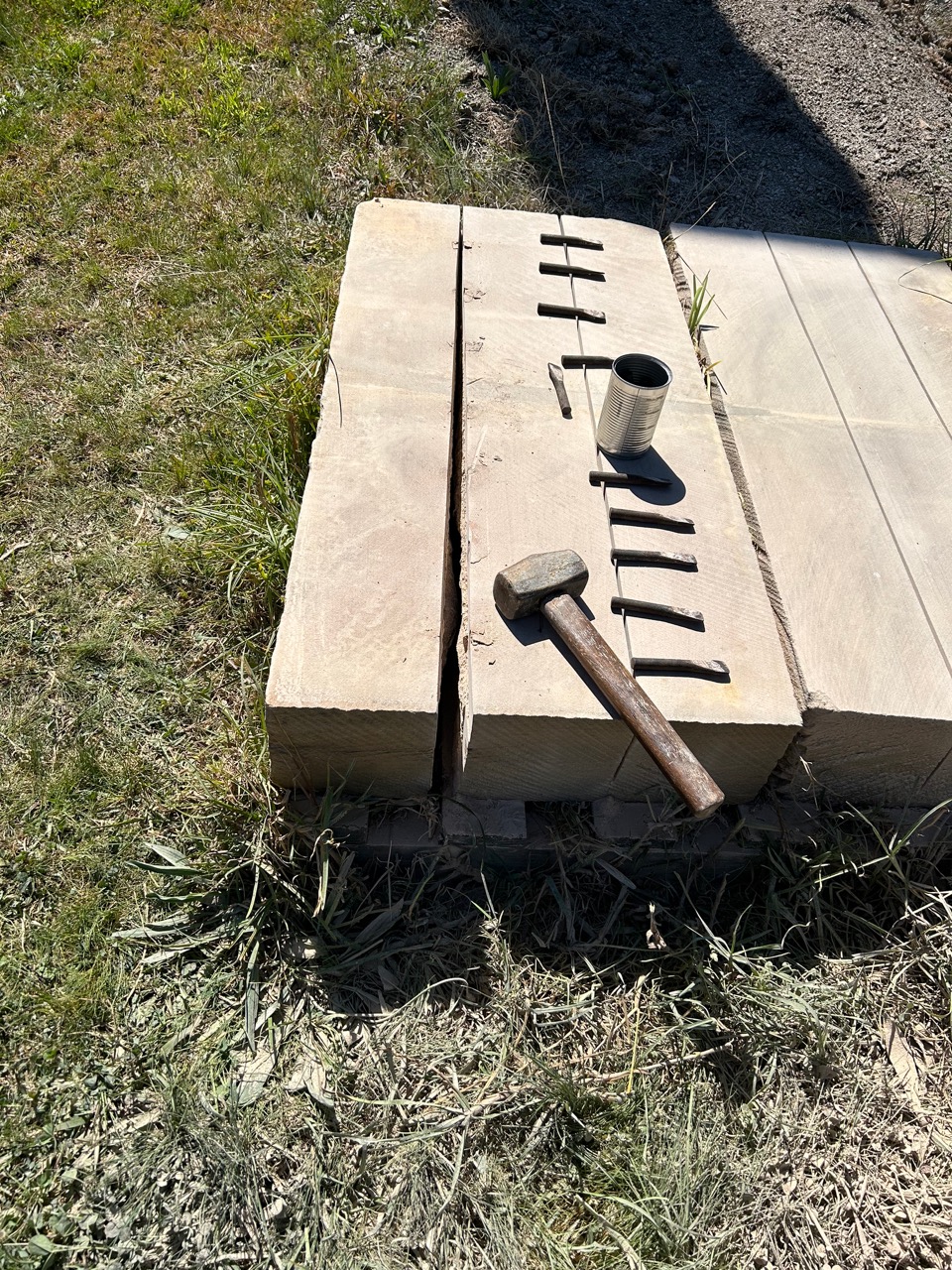
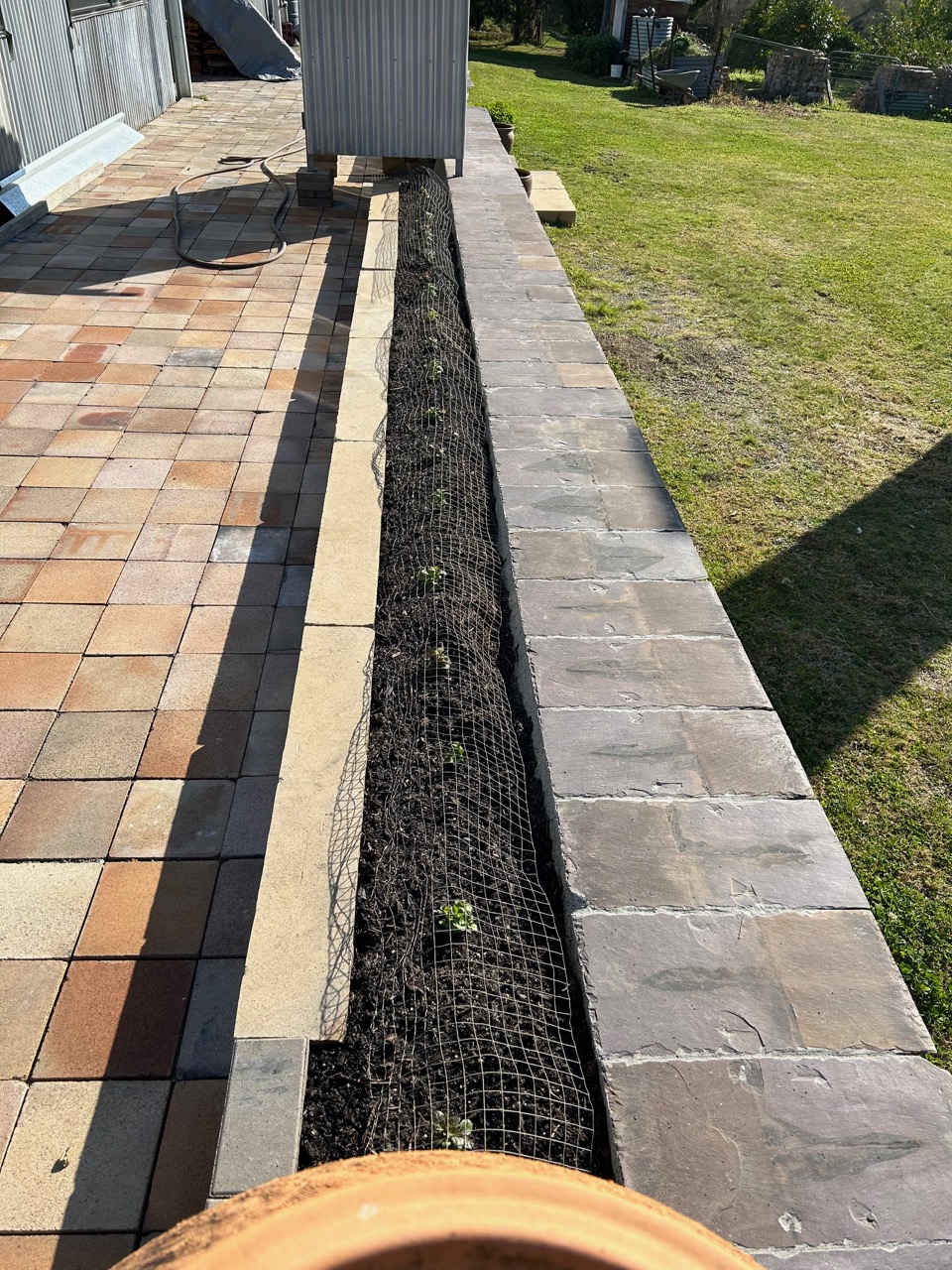
I spent a few days since the recent weekend workshop, in the afternoons, in my spare time, splitting and dressing sandstone blocks, to make some garden bed edging along the recently finished slate capping on the big sandstone retaining wall around the new pottery. It’s just another one of those jobs that has been in the offing and waiting for the ‘right’ time. I chose this ‘right’ time from what is left of my other time! Once the little wall was in place I shoveled in a load of top soil and planted seeds and a few seedlings to make the edging look a bit more settled and finished. I sprinkled in a packet of English Cottage Garden seed mix for good measure and 30 caper seeds, one every 600mm. Capers need an elevated, well drained, sun baked, dry, harsh environment to thrive. They take 2 years to establish, then persist for many more as long as they are cut back and pruned hard in the winter to stimulate good growth in the spring and summer, as flowers and fruit are produced on the new years growth. The elevated and exposed wall seemed like a pretty good place to try them out. I have read in a few books that they thrive on top of stone walls in the Med’s dry summers. I have no expectations, but if something comes of it, I’ll be pleased. If not, then I’ll chalk it down to another one of life’s enriching experiences. The stones look nice anyway, regardless of whether the plants grow or not!

After the soil was shoveled into the new beds, Edna the chicken, who had been helping me all day, came along and decided to help me some more by scratching a lot of it out again. I had to make some impromptu wire covers to protect the small seedlings from being excavated!

I’m happy with the result. 3 days work and $50 bucks goes a long way. I’m hoping that it will look greener in time for the November Arts Trail, Open Studios event.

Open Studio Sale

Janine and I had a very good Open Studio Weekend Sale. 

We are part of an artist collective organised by a local lady called Erin Adams, she came up with the idea of the ‘Pop-Up’ Open Studios artists collective and herded all of us cats into a cohesive group. A tremendous job of work on her part, and we are very grateful to her for her organising ability.

Over this long weekend, we had over 30 visitors each day, for the 3 days, and almost everyone bought a pot, so we were chuffed.

The weather leading up to the weekend was awful. Freezing temperatures and blowing a gale. We had power outages, with trees blown down over power lines, for 2 days beforehand.

I was starting to think that no one will turn up. Nobody would want to brave all this weather to come out here.

As it turned out. Lots of people came out to Balmoral Village to see us. Most of the ‘Open Studios’ are located in and around the towns of Mittagong and Bowral here in the Southern Highlands. It is a well recognised tourist destination for people from Sydney, and it is easy to flit around and visit all of those local studios about town, without having to spend much time driving between them. You are also in close proximity to cafes, restaurants and coffee shops. 

As we are 25 km out of town, it’s a half hour drive to get out here and the same to get back again. So we appreciate the effort that the locals put in to get out here. However, what was amazing was the number of people who drove down from Sydney to come and visit us. About 2/3 of our visitors were from the greater Sydney area. So Thank You very much to all of you who made the long drive of 2+ hours or so each way.

Luckily, we had our friends Susan and Dave here for a few days to help us clean up, set up, and then help us with selling and wrapping for the first couple of days. It made the job go so much easier. Thank you Susan and Dave! 

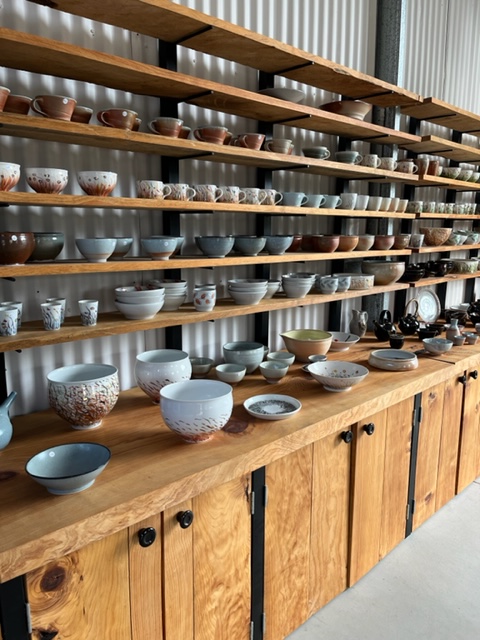
I had made a batch of Tea Pots for the sale and sold most of them. I like making tea pots, they are an interesting challenge. You need to make all the different parts in the correct proportions to fit together in a unified design, but they also need to perform their function properly once fired.

The shelves are greatly depleted now. I love making pots, so its great to have space to make more things.

In the past couple of weeks, I developed a new high calcium porcelain glaze that has a lovely ‘streaking’ quality. I works well with a thin, soft pigment wash.

The pigment highlights the texture of the glaze. It also feels very soft and buttery to the touch.

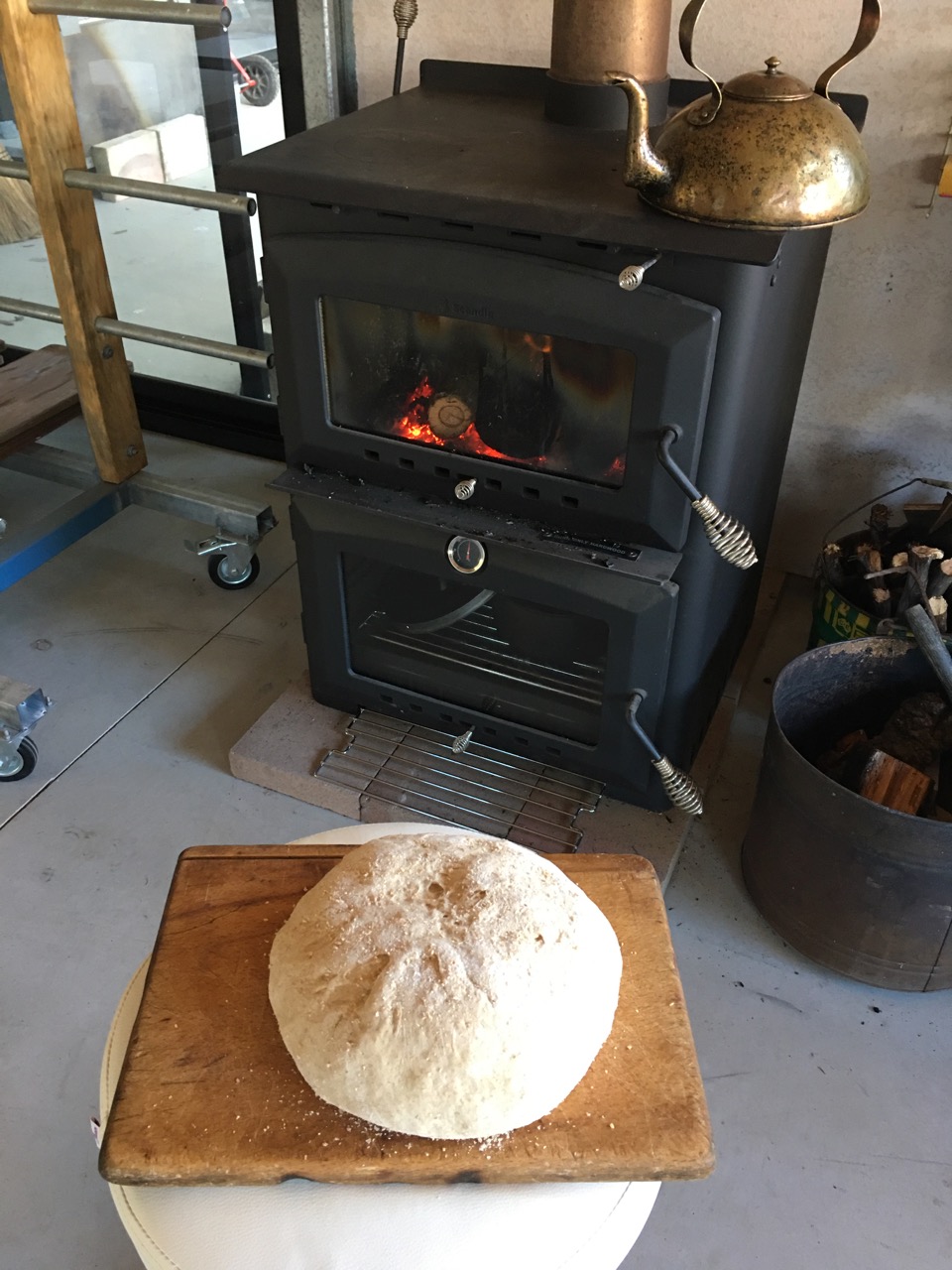
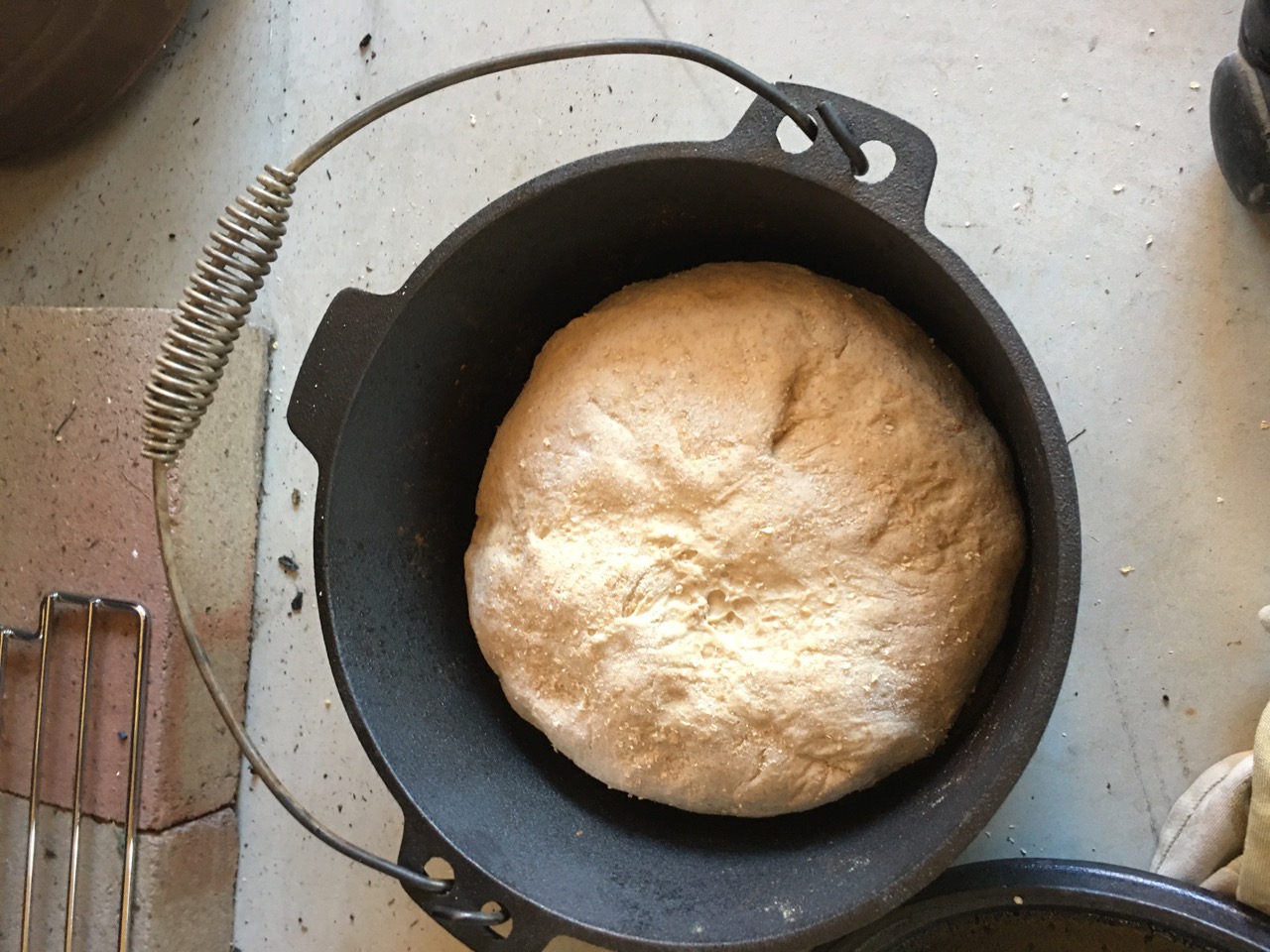
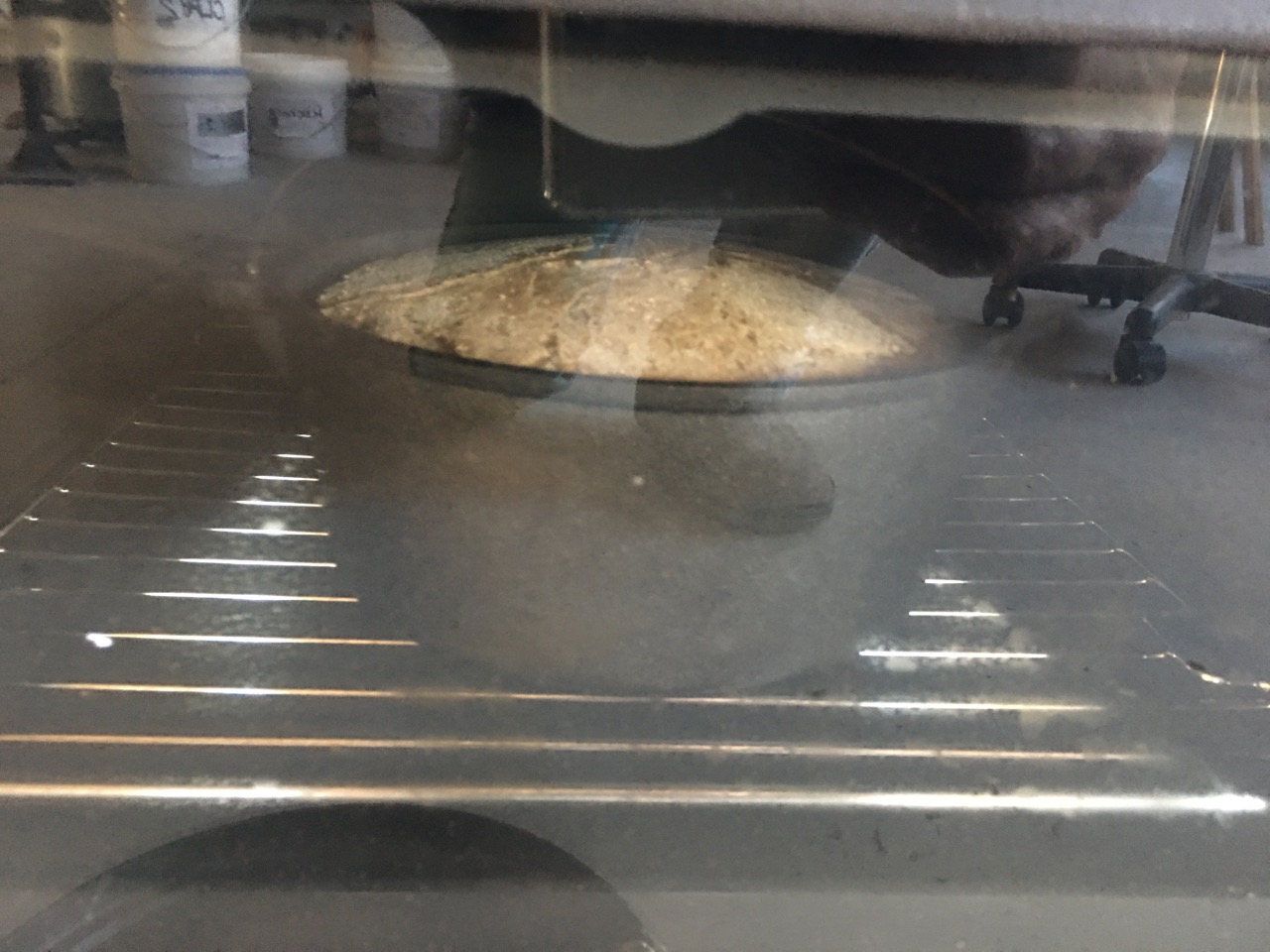
In the days leading up to the Open Studio, I baked a loaf of bread in the pottery wood fired oven and although it took longer than it would have in the house oven, it turned out very well. This new oven has its own personality and will take a few goes to get used to.

I prepared the dough in the house as usual, and then put it in a cast iron pot in the pottery oven.

I also made a couple of panforte cakes for the open weekend, to share with visitors. Panforte translates from the Italian as ‘strong bread’. It is a small, solid, flat loaf of sweet bread, filled with dried fruits and held together with some honey and flavoured with a few spices like cinnamon and cloves. The recipe was listed here in an earlier blog. Search ‘panforte’ on the home page search box.

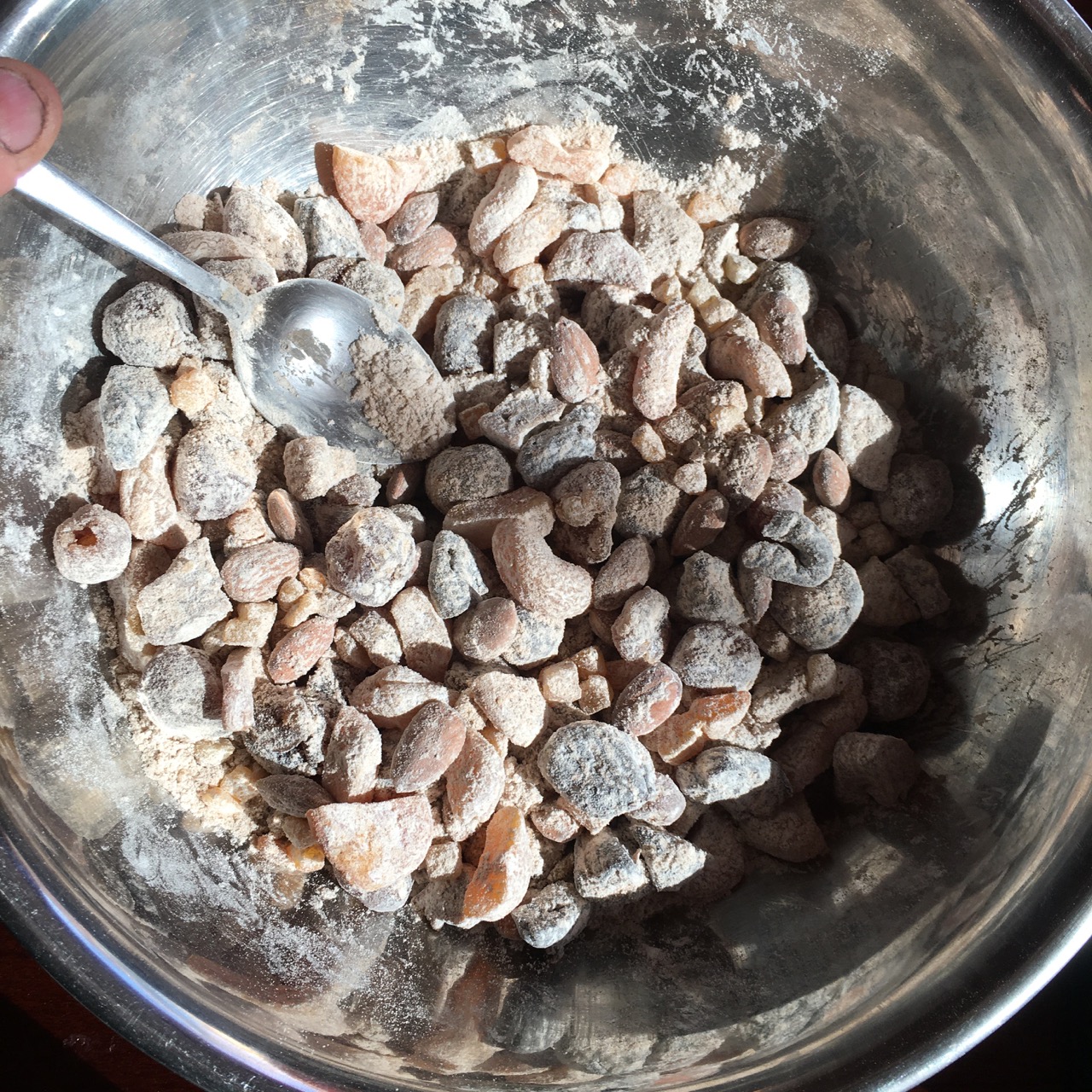
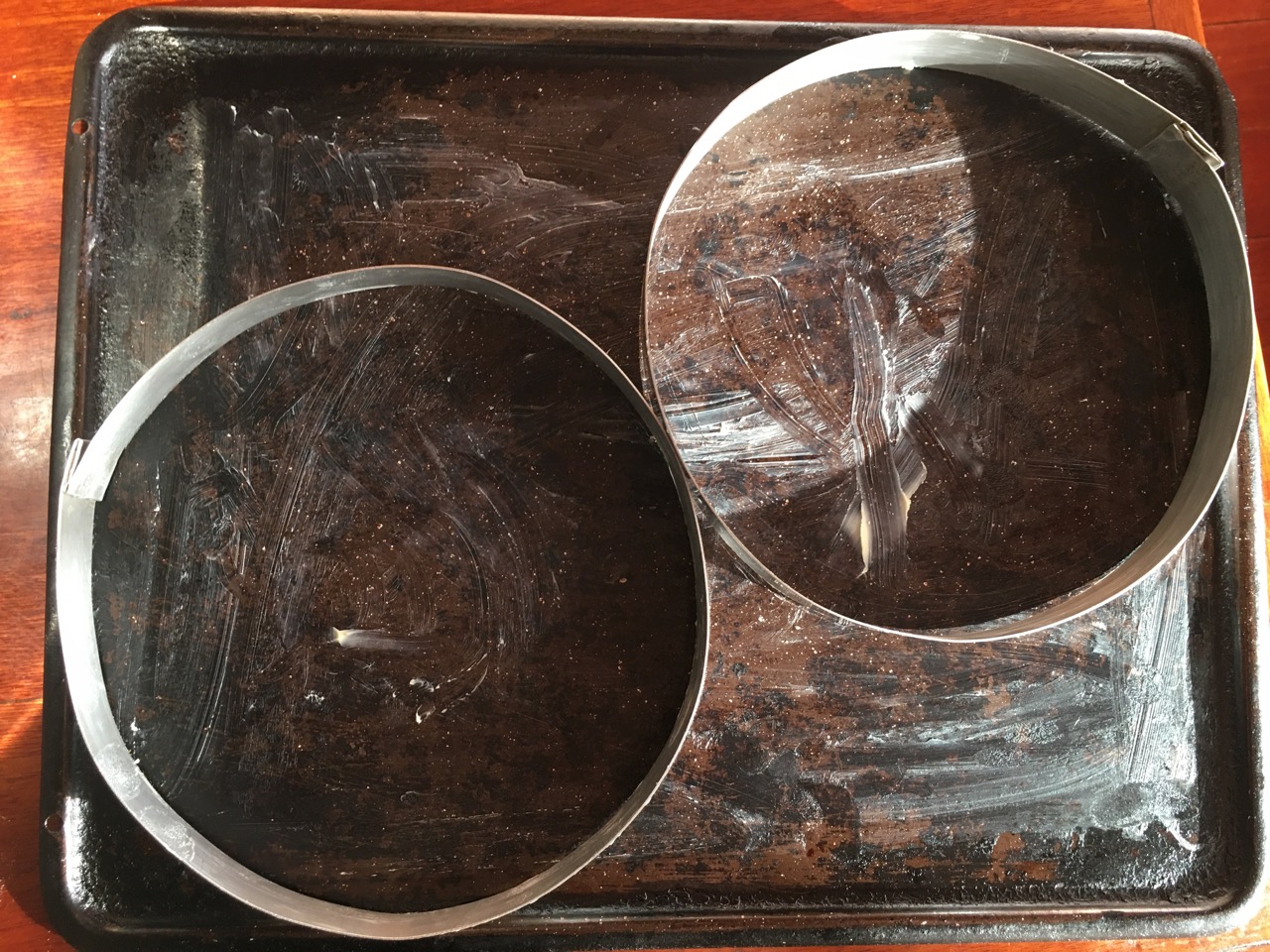
The dried fruits are measured out and mixed with the flour, before adding the honey water and spooned into my homemade stainless panforte rings on a buttered baking tray.

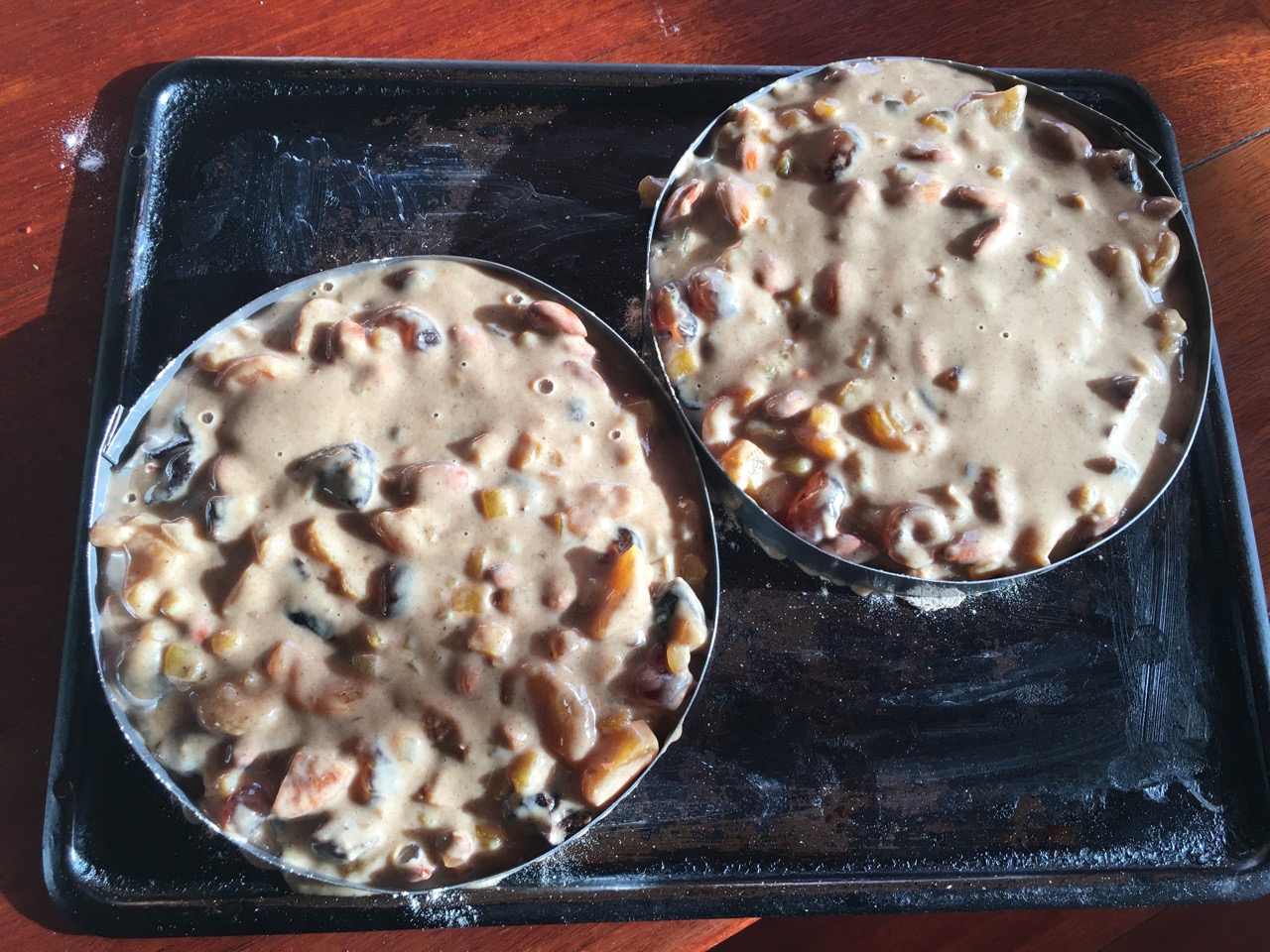
Spoon the mixture into the rings and press it down to fill them well, then bake at 180oC for 40/45 mins.

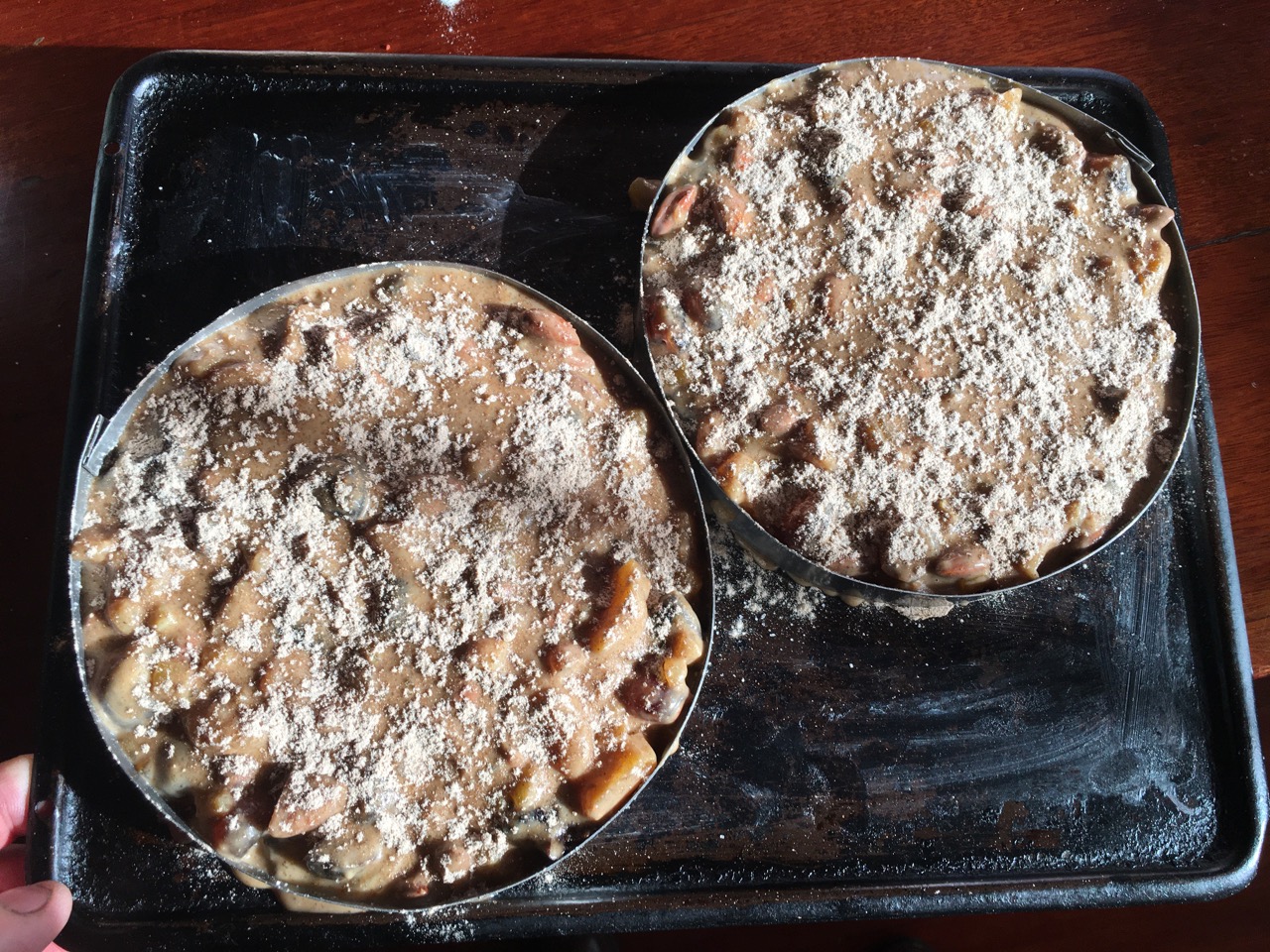
When the cakes come out of the oven, I sprinkle on a mixture of castor sugar, cinnamon and flour as a decoration. Served in thin slices, they go very well with tea or coffee.

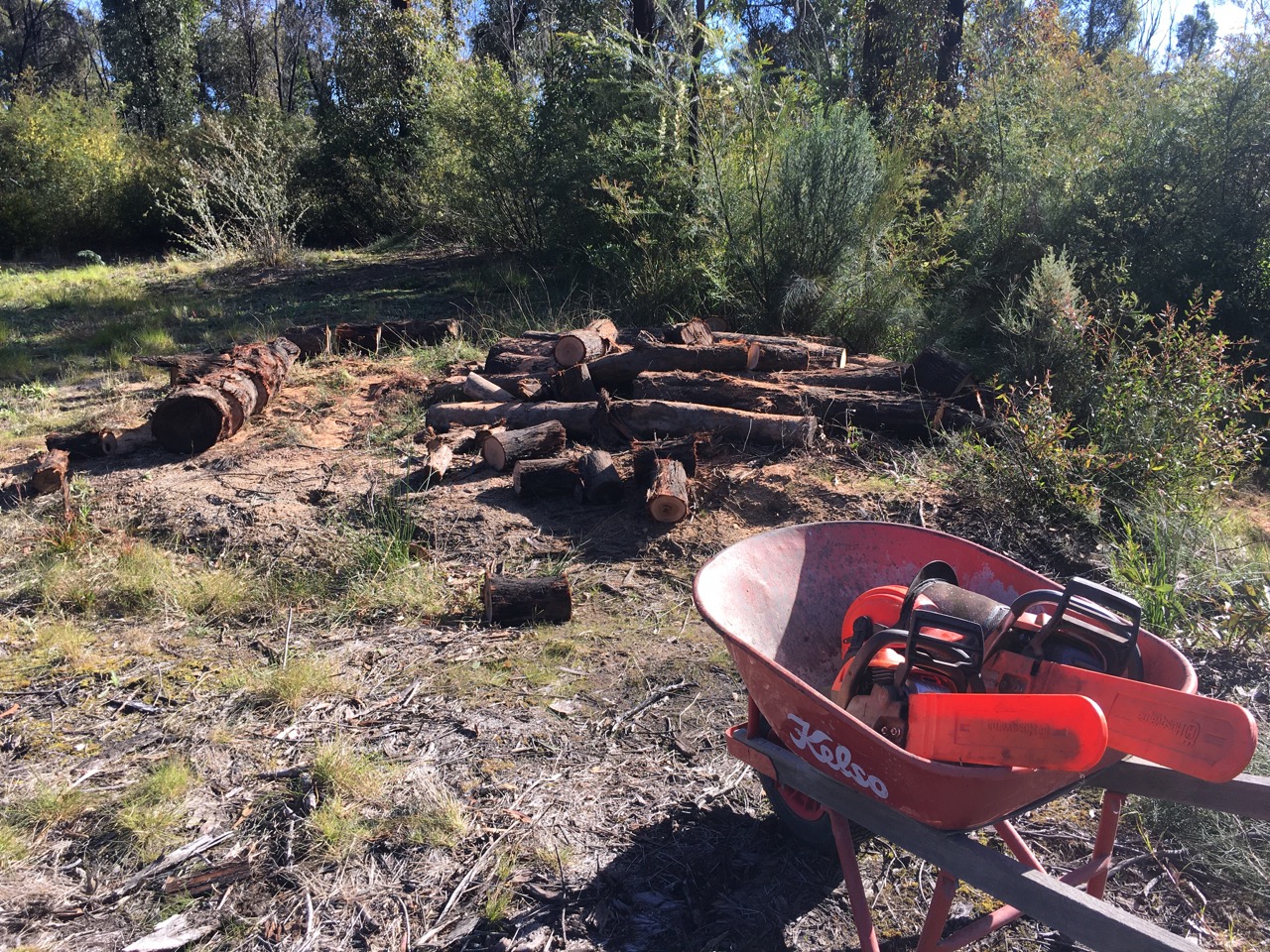
Now that the Sale is over, it’s back to work. Our first job is to chain saw logs to refill the wood shed with fuel. 

We have been so busy potting to get everything ready, we burnt a lot of wood in the house and studio stoves, to keep us warm during this very cold start to winter. We burnt so much wood, that we started to run low in the wood shed.

So today was wood chopping day. Out with the chain saws, the wheel barrow and the mini tractor.

We have no shortage of dead trees after the fire, but they need to be chain-sawn into short lengths and then carted to the wood shed where they are split and stacked, ready for use.

A good days work and ready for the next job. This is self reliance. Nothing lasts, nothing is perfect and nothing is ever finished.

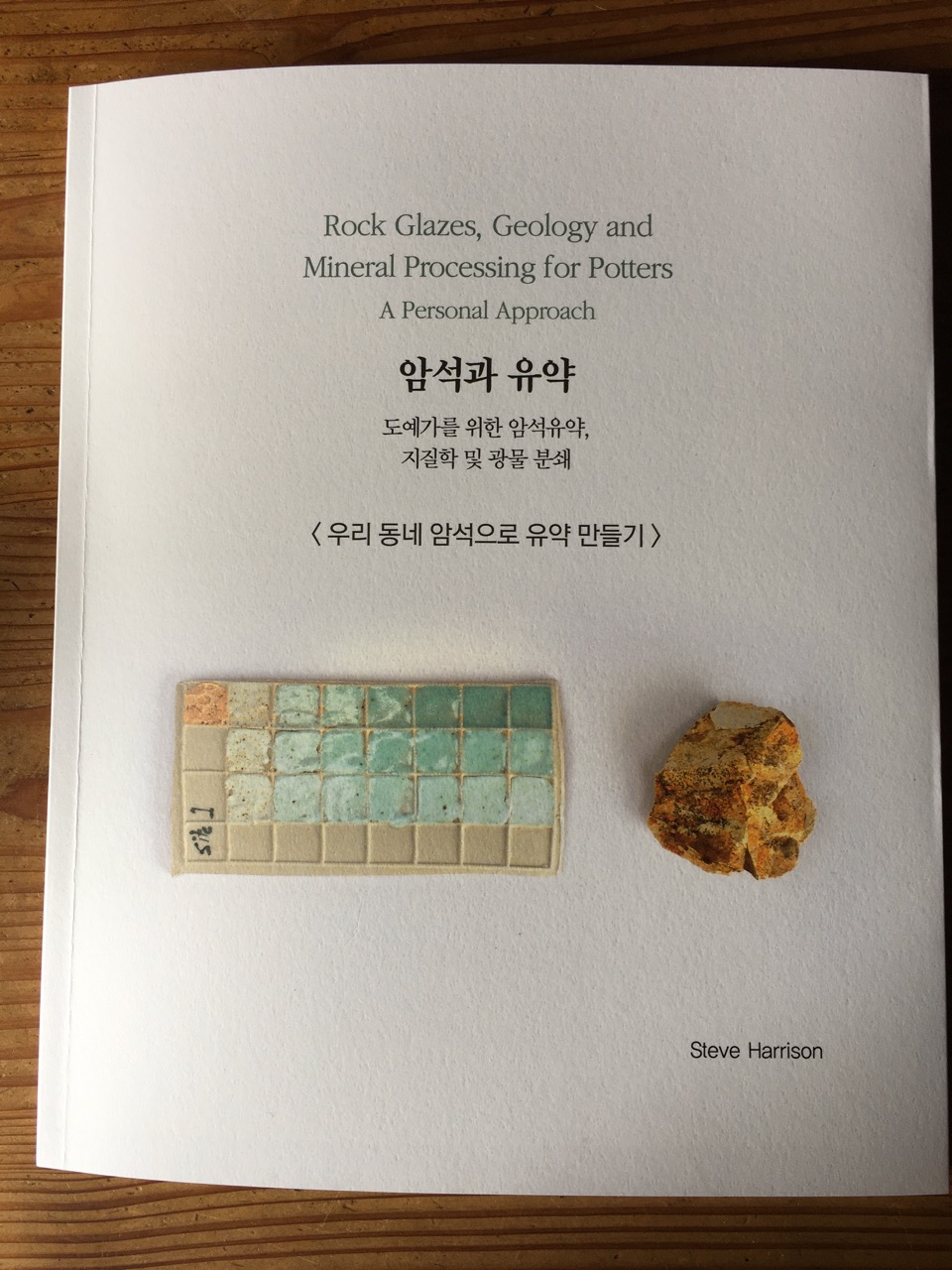
My 11th book published

This week I received a box in the mail from Korea. It contained copies of my latest book translated into Korean.

I was such a poor student of English at school. I’m somewhat surprised that I have become a published author of multiple books in 3 languages!

Even my English teacher from High School was surprised, to the extent that when I met him 10 years after leaving school, at a reunion, he didn’t believe me when I told him.

I don’t blame him.

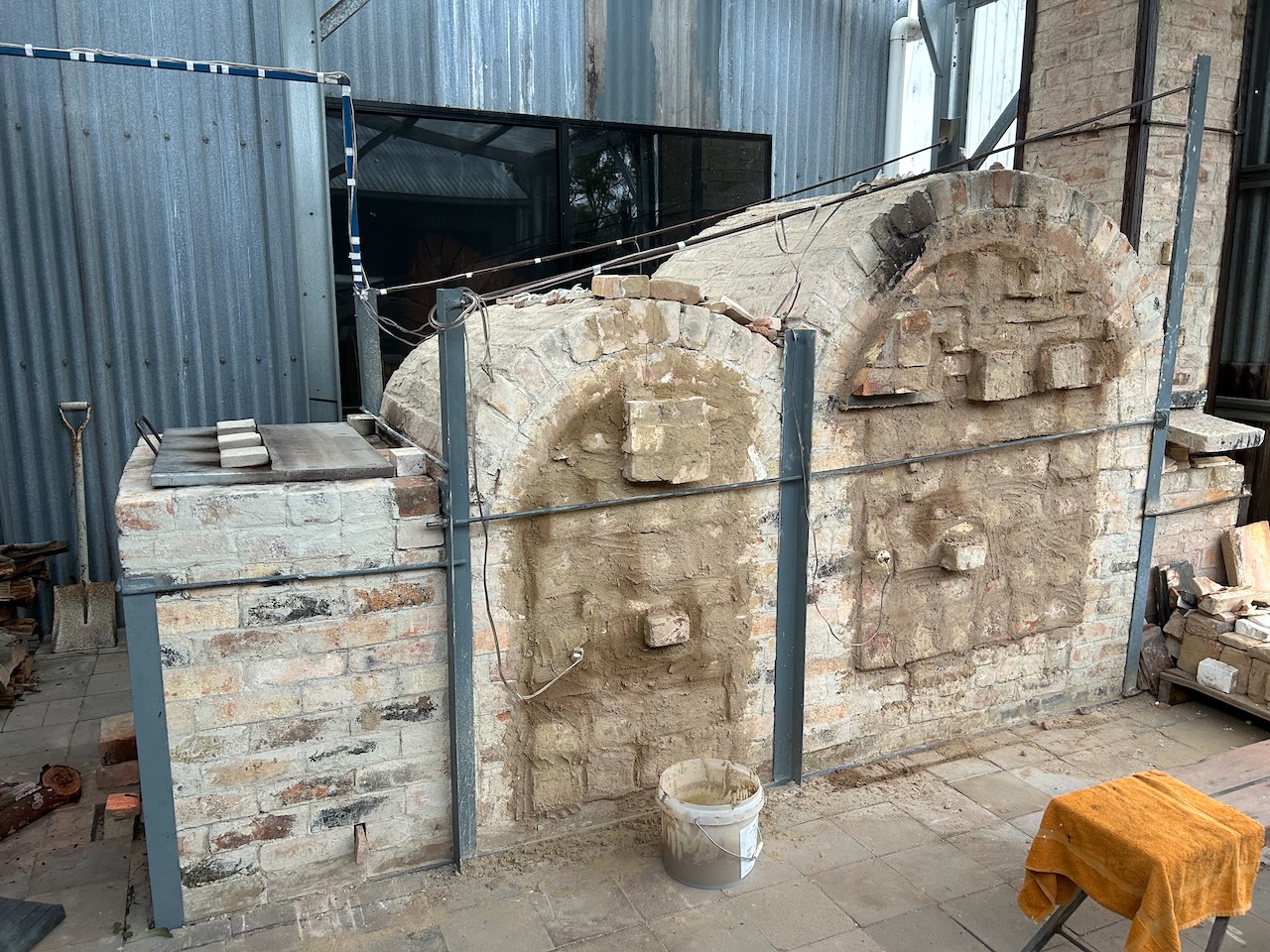
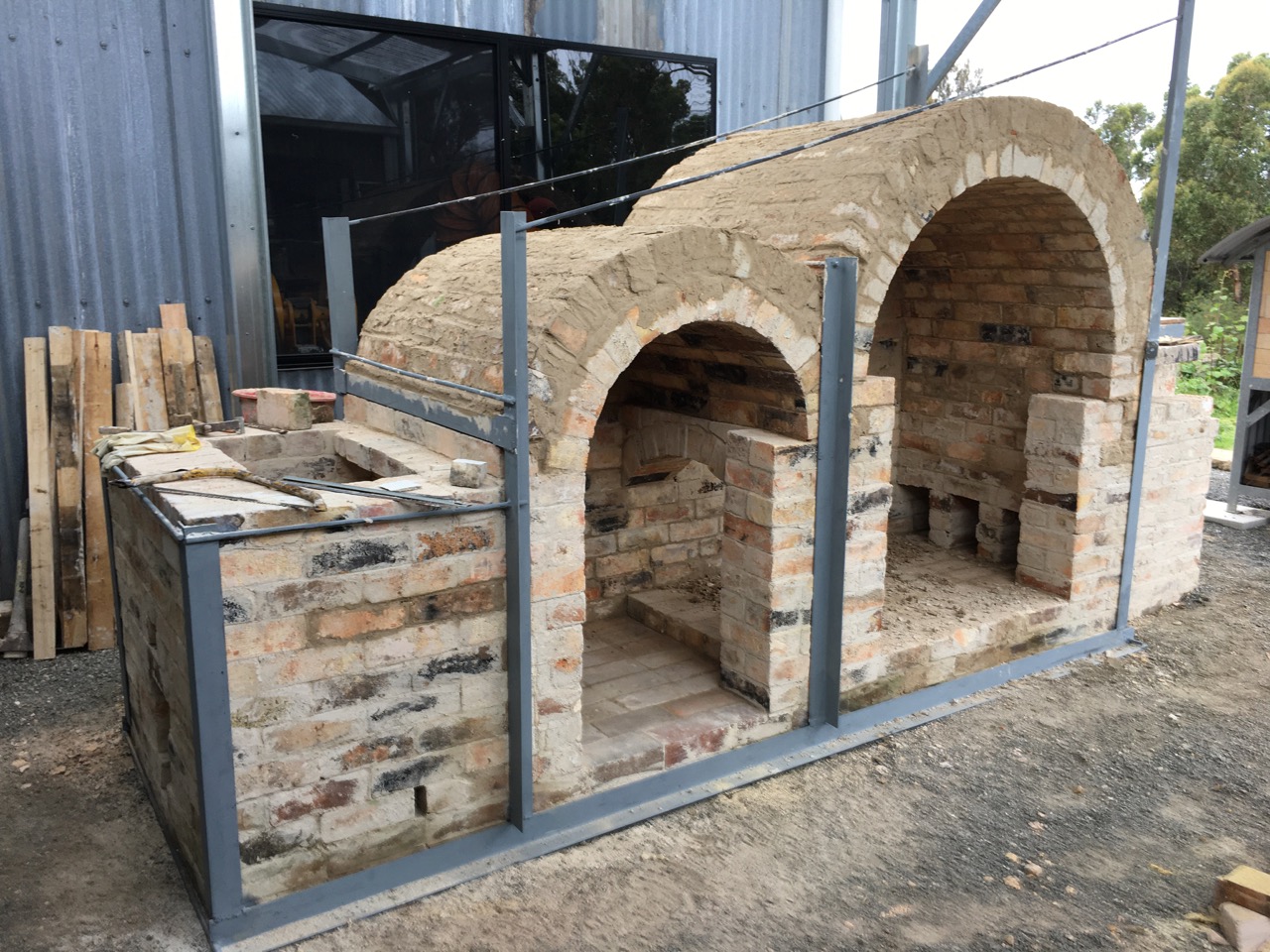
My work building our wood fired kiln continues. This last week I have finished the chamber arches with Janine’s help. 

Adding their second layer of insulation bricks and welding on the steel bracing.

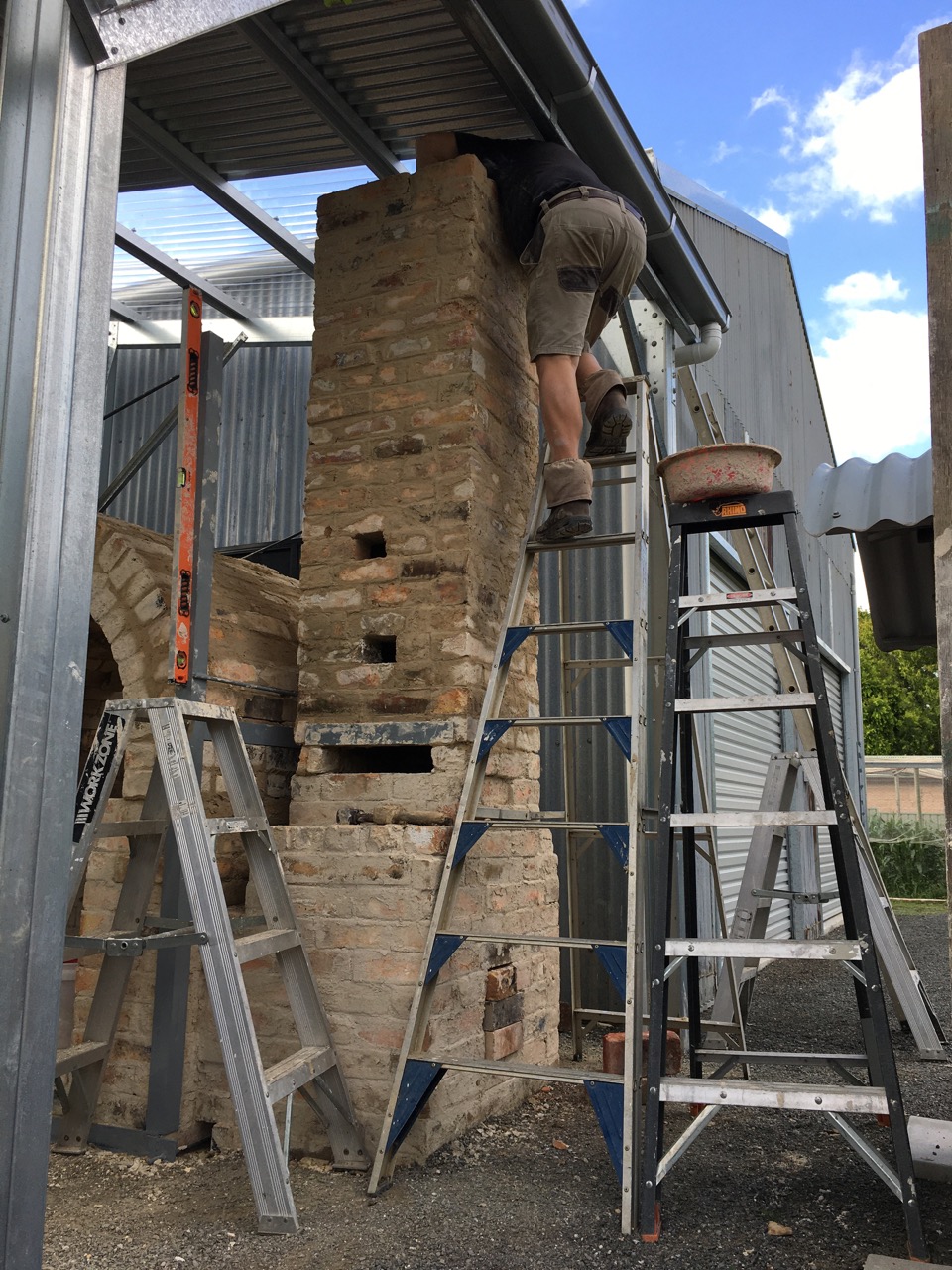
I also started work on the chimney with the help of my good friend Warren on the weekend.

The chimney is almost at the height that I can’t build anymore courses until I cut a hole in the roof to allow it to go through. 

This will involve fabricating some specialised pieces of galvanised sheet metal ‘flashing’, custom fitted to the brick courses just above the tin roof to keep the rain out.

I hope to complete the chimney this week. More ladder work! 

I have declared myself an honorary 59 year old for the past week to allow me to keep climbing ladders 🙂

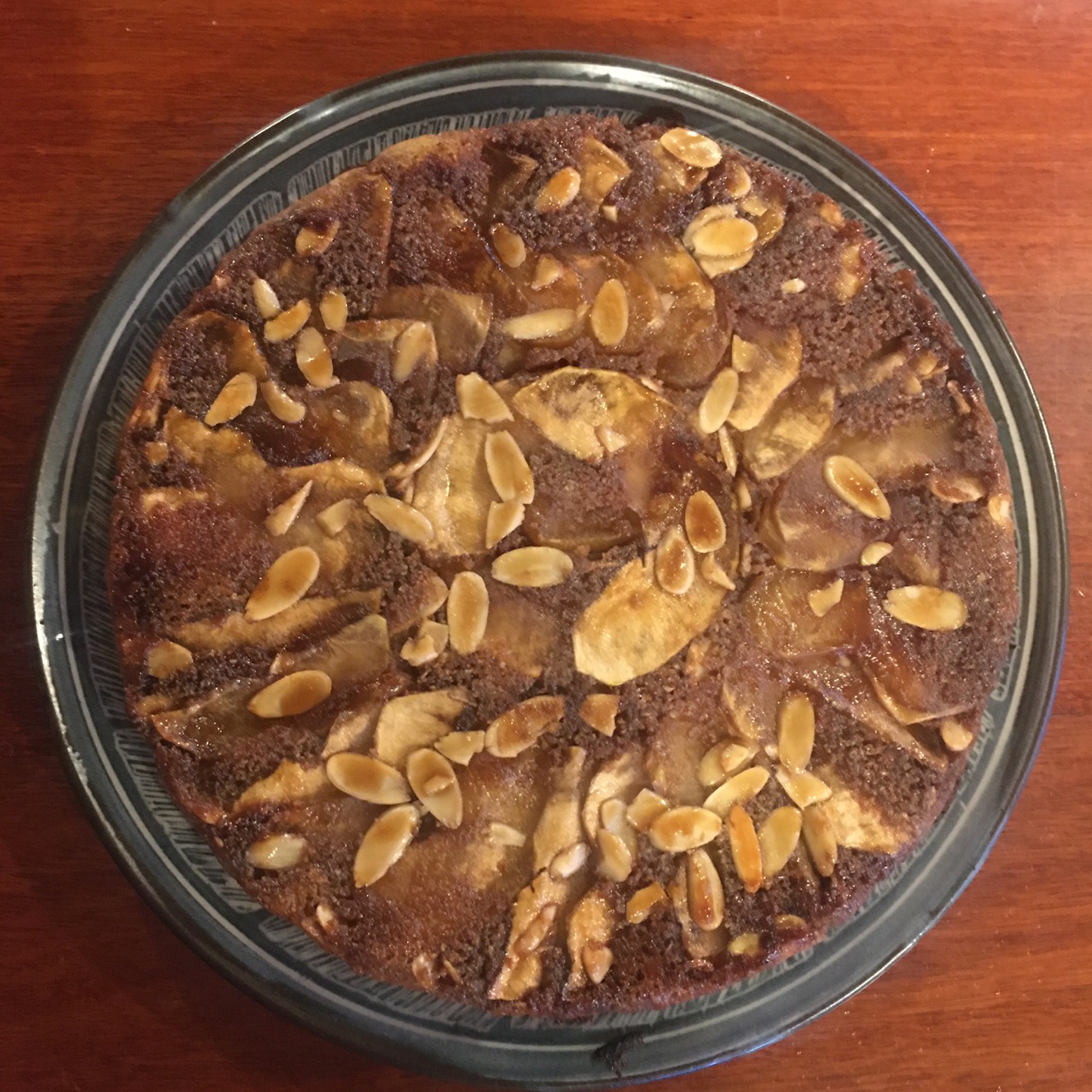
We have now picked nearly all the apples and I cooked another apple and almond flan tartin for our weekend guests. 

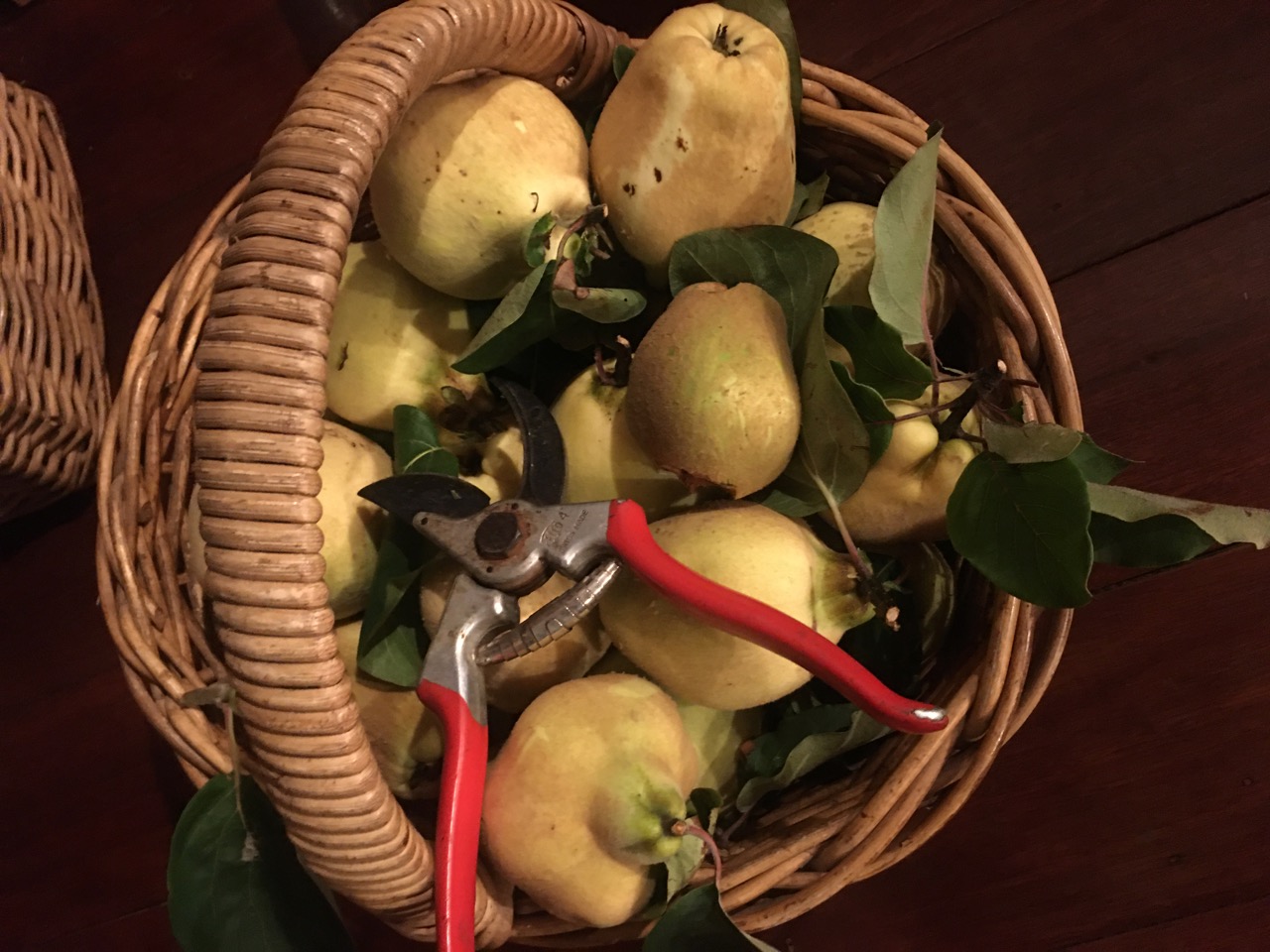
I also made the first batch of baked quinces, as the birds had decided that it was time to start eating them, dropping a lot of them onto the ground with just a few holes pecked into them.

They need to be dealt with pronto, or the damage soon spreads and they go bad quickly. I wouldn’t mind so much if they ate the whole thing, but they just peck a hole into the fruit to get to the seeds inside. If the fruit drops, they just watch it fall and start on another. At least the rabbits eat some of the fallen fruit. Quince fed rabbit sounds pretty good!

I wash the fluff off the skin, then peel and core, chop into 4 pieces for small fruit, or 8 pieces for the larger ones. I simmer them for 20 mins in a sugar syrup of 120 grams of sugar per litre of water. This syrup is less than half strength of the recipe ! Use enough water to cover the volume of fruit. Add a few cloves, star anise, a cinnamon stick, and half a small bottle of maple syrup. Once softened a little, transfer to a large baking dish and bake for 2 hours in a low oven at 160oC until nearly all the liquid has evaporated. Remove the aromatics and bottle in sterile jars while hot from the oven. I think that they are ready when they start to catch just a little on the tips and have turned a beautiful reddy/orange colour.

The fragrance is spectacular and the taste is amazing. Can be eaten just like this, or can be enhanced a little with the addition of some pouring cream, plain yoghurt or ice cream.

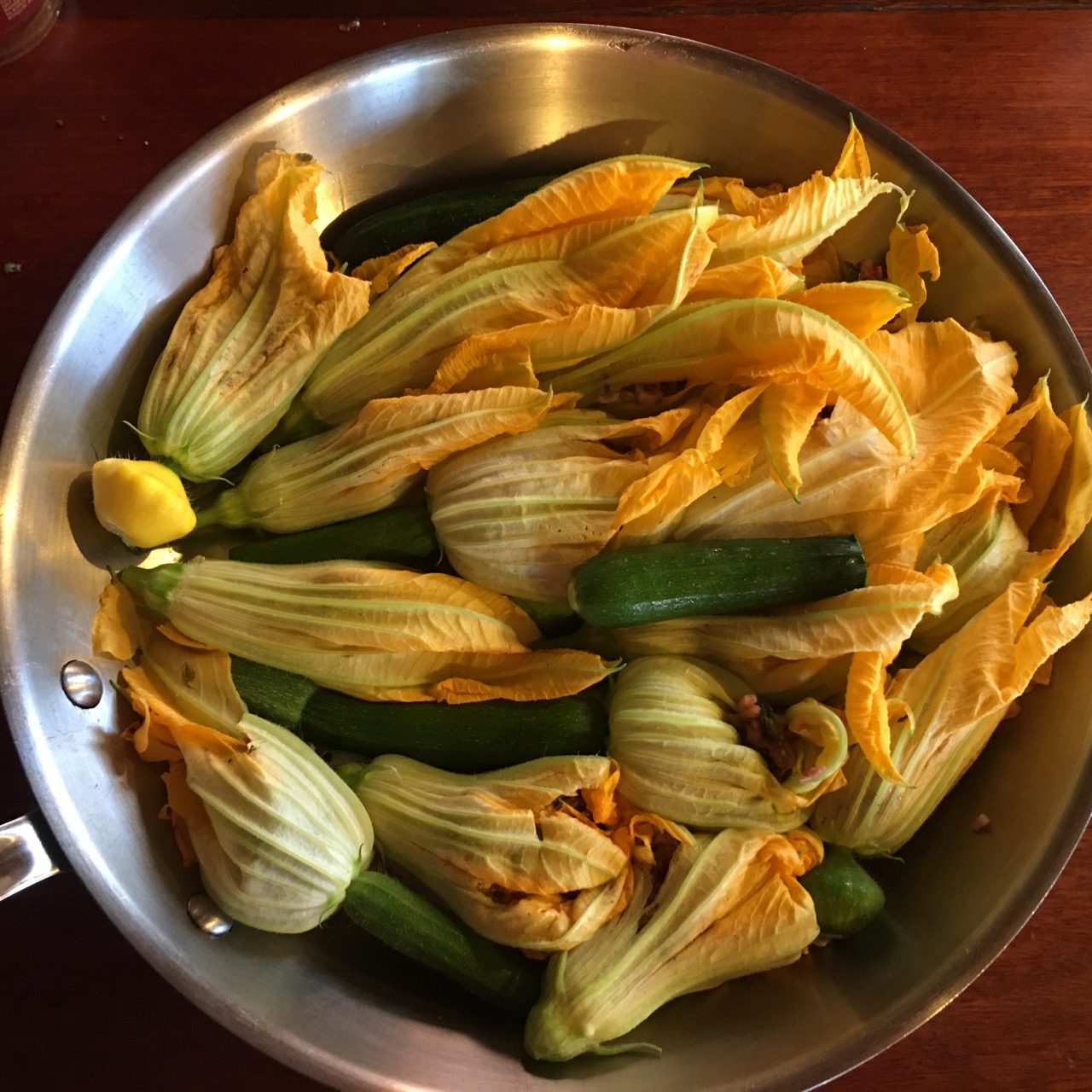
I also managed to find just enough zucchini and squash flowers, both male and female to make up the numbers, so that I could make stuffed zucchini flowers for dinner. I wasn’t expecting to find so many suitable flowers this late in the season, so wasn’t prepared with suitable quantities of cottage or other suitable cheeses. Instead I used a tub of left over risotto from the fridge. extended with some boiled lentils and a few olives. It made up the distance.

This last week also brought a little bit of excitement into our dull, plodding, Post Modern Peasant lives. The State Government Funded green waste clean-up program commenced, for all the dead and damaged trees in people yards that were created by the 2019 Black Summer catastrophic bush fires here in the Southern Highlands.

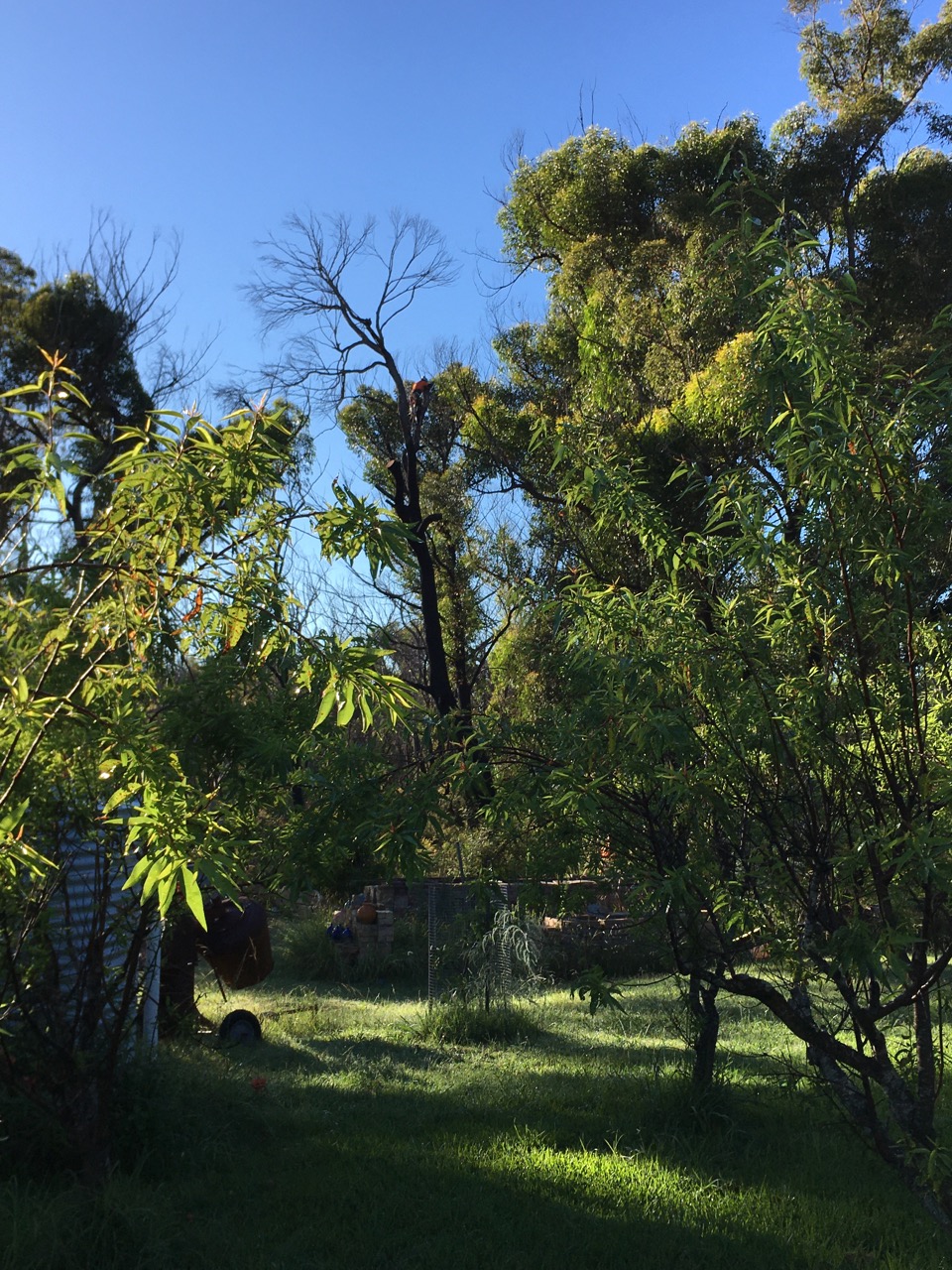
We had a team of half a dozen blokes here for two days, lopping, topping and chopping dead trees. Some were completely removed and the stumps ground out, but most were pruned back to make safe habitat trees for wild life.

They shortened and made safe 15 trees and took down 3 or 4 smaller ones in the immediate vicinity of our back yard orchards, where we work and mow.

The purpose of the exercise is to get most of the smaller dead branches down out of the canopy so that it is safe to walk around underneath them in our garden. We had already dealt with the most pressing and difficult problem trees in our front garden 2 years ago at our own expense. I wasn’t prepared to survive the fire and then be killed by a falling branch.

It’s only taken 26 months for the State Government to implement this emergency safety solution into place. I wonder how long it takes them when they take their time 🙂

We still have 3 acres, or one and a bit hectares of dead forrest that is continually dropping dead branches. We just don’t go there, and if I have to, I wear a hard hat. 

It’ll be unsafe for the next couple of decades as the dead branches slowly rot and fall. But what can you do? It’ll cost many thousands of dollars to get them all pruned safely.

We’ll just have to live with it.

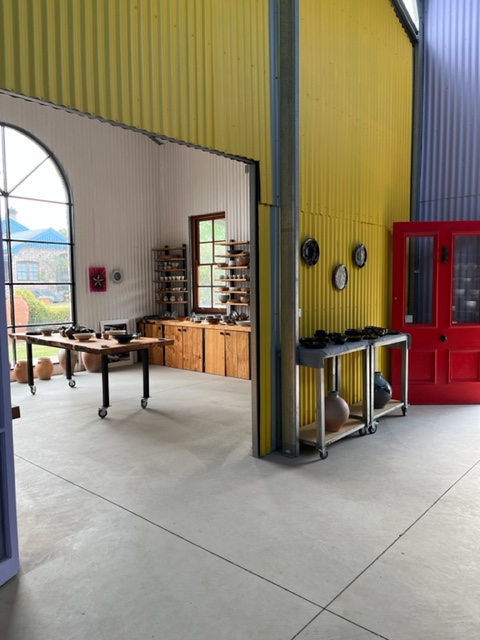
Open Studio Weekends

We have just had our first Open Studio weekend. It was good. Not too busy, just right. We had an influx on Saturday morning with half a dozen cars in the first hour. We even had a queue at the wrapping table for a short time. but after that it settled down to just one car after another until lunch time and then a long spell of quiet. In the afternoon we had several more visitors spread out more or less evenly until just after 3pm when it stopped.

We were lucky that there was a big function on at Sturt Workshops in Mittagong all day Saturday, so we picked up a few car loads of visitors that called in here on the way past, coming from Sydney and going to Sturt.

We have had only 4 stoneware glaze firings in the 3rd hand gas kiln that I bought back after 26 years out in the wild. It’s now back in captivity and working well.

Sunday was quieter, but still good. We had the same lull in the middle of the day but a much quieter afternoon. It was a great start to this 4th pottery iteration after loosing the first 3 to fires, we have been a lot more cautious about what sort of garden and just how much foliage we can accept near our house and workshop. As this new 4th pottery is almost entirely made of steel, it is a lot less flammable. Steel building can still be ruined by intense fire – they bend and collapse in intense heat. So that is why we have decided to build this new studio in the middle of our block well away from any bush. I have already plumbed the building with fire fighting sprinkler lines. Although as it is so wet they year. I haven’t got around to fitting the sprinklers yet.

I decided to spend those couple of days in the pottery making work for the sale. Everything in it’s own time.

We almost sold out of Janines painted unomi beakers and inlaid lidded boxes, as well as my breakfast bowls.

So on Monday morning we were both back on the wheel making new stock for the up-coming December Open Studio weekends as we have elected to be part of the Southern Highlands ‘Pop-up’ Artists Open Studios on the first two weekends on December, – 4th and 5th, then the 11th and 12th.

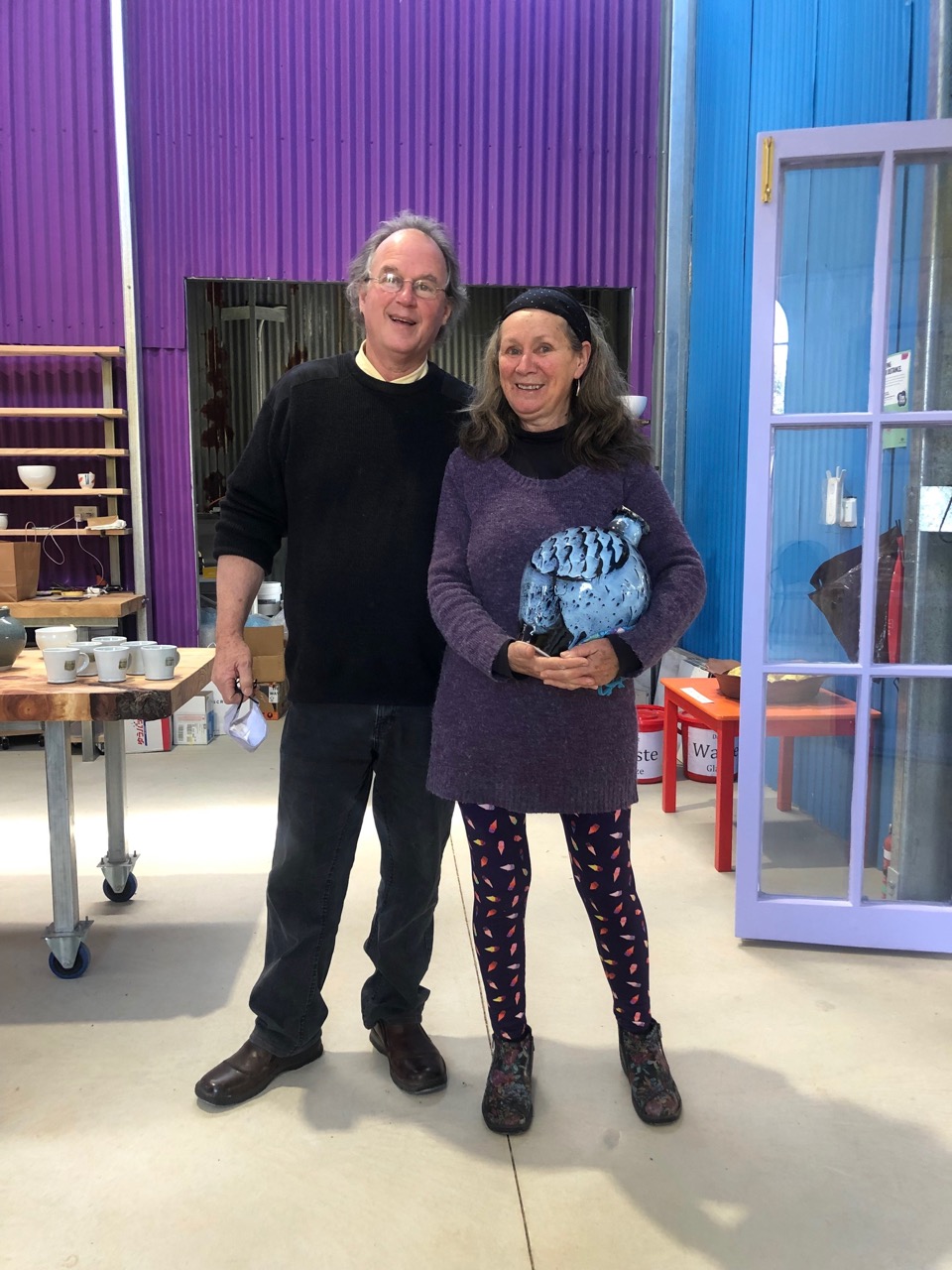
This image of us by Eva Czernis-Ryl. Thank you Eva.