We are in the final preparation for the Southern Highlands Open Studios Arts Trail. We will be open on the first two weekends of November. We will also be part of the Australian Ceramics Assn Open Studios event at the same time.
We are doing the last few firings now and spending a bit of time fettling and polishing all the glazed pots. This last week I have been cleaning and grinding the pots form my last Wood kiln firing. From now on it will be too hot, dry and therefore dangerous to fire the wood fired kiln until next autumn. All of our firings from now on will only be in the electric kiln fired using our 100% self generated solar energy, mostly from our PV panels but with a little bit of back up from our lithium batteries. In this way we can fire on a combination of todays sunshine and some of yesterdays stored sunshine as well.
When the battery is full and we are not firing the kilns. I charge up the electric cars. No point in selling it to the grid for next to nothing if I can use it in some way myself. Once both the cars are charged, I charge up the ride on mower and the power tools etc.
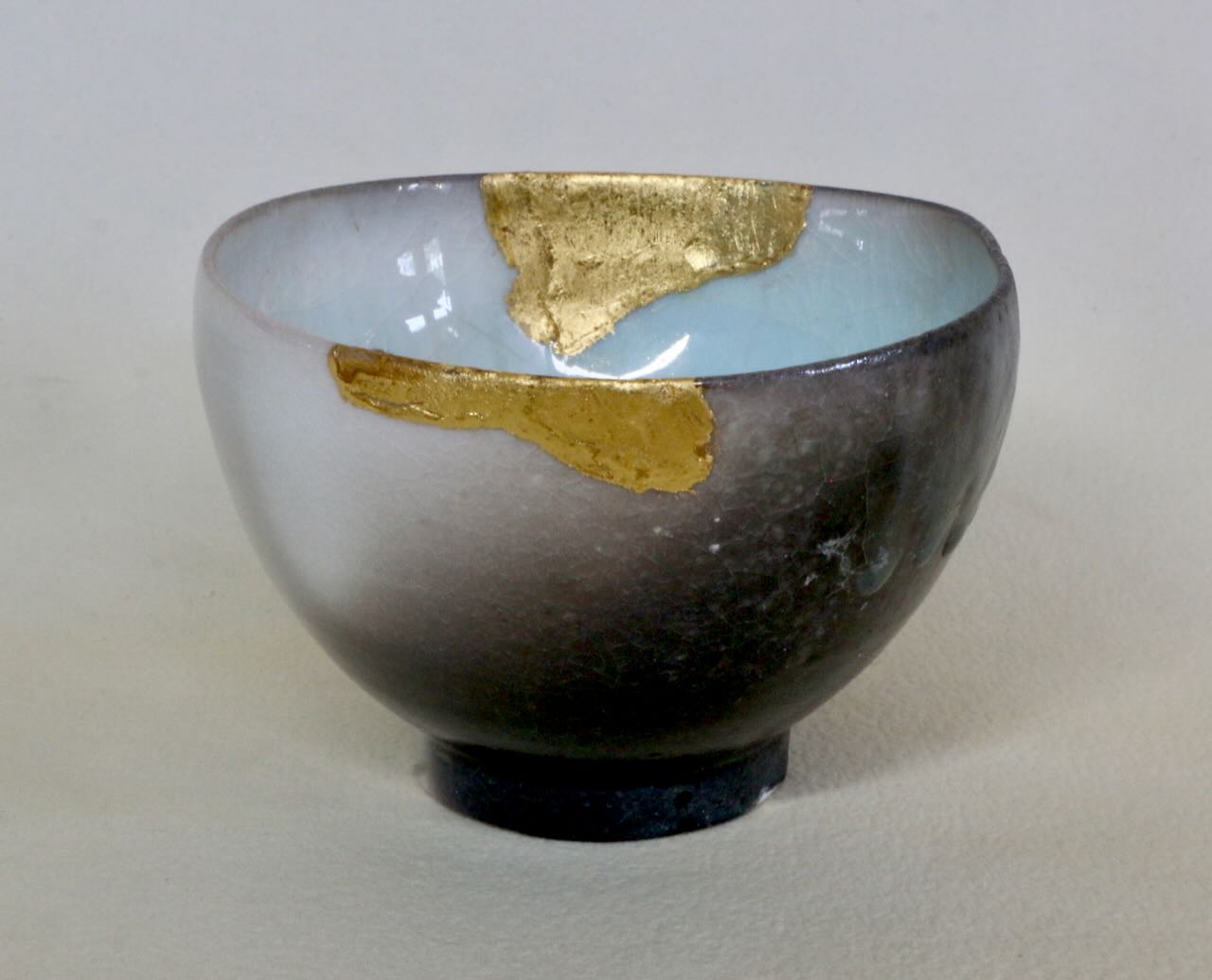
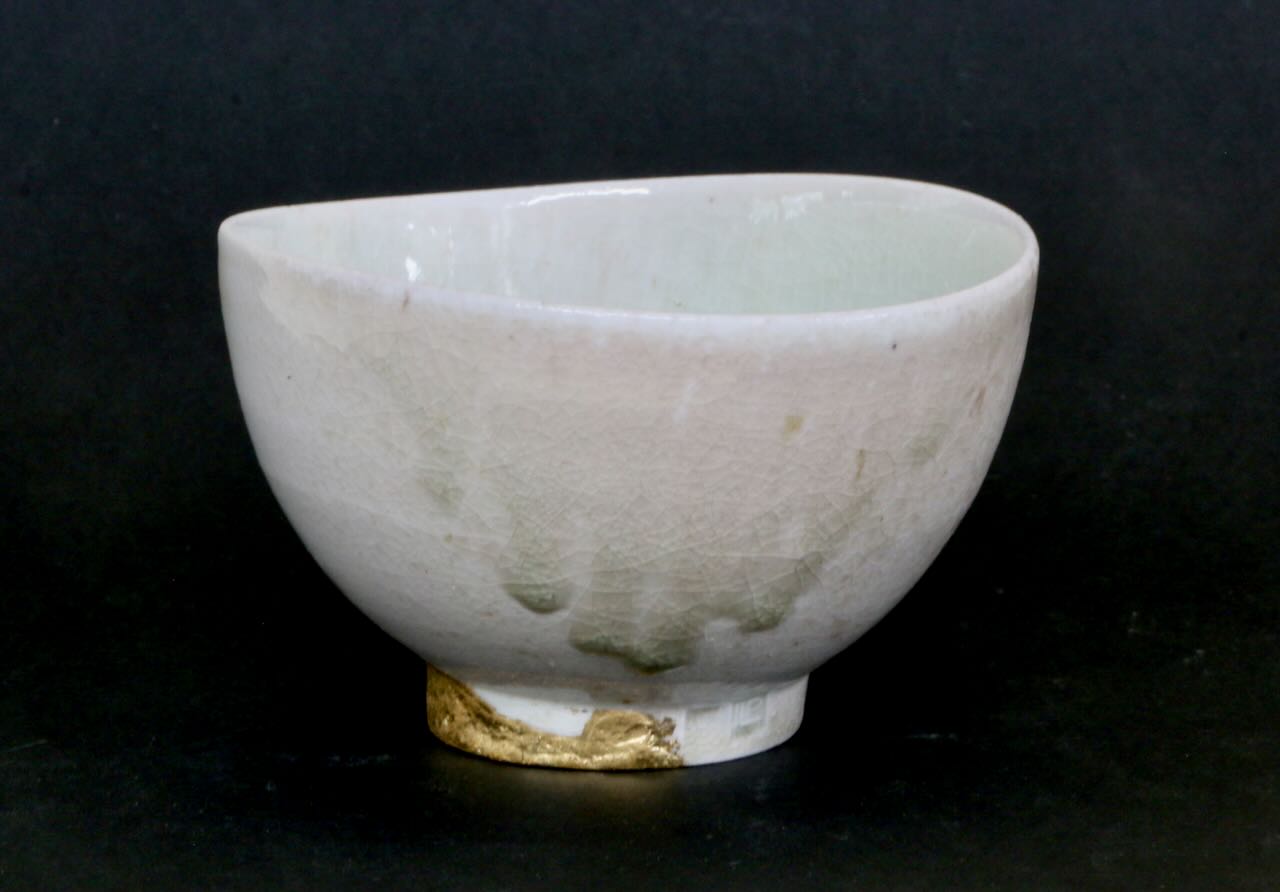
This week I have been doing a bit of ‘kintsugi’ repair on a few wood fired pots that got a little damage in the kiln, a couple of them ‘kissed’ in the firing. One was knocked over by a stray log during stoking, and another got so much wood ash deposit on the fire face that it ran down and stuck it to its wadding. All the usual little mishaps that befall pots in the ‘Zone of Death’. That part of the setting at the very front of the wood fired kiln chamber where the most beautiful pots are created, but are also most vulnerable to damage. I am capable of make some very spectacular shards!
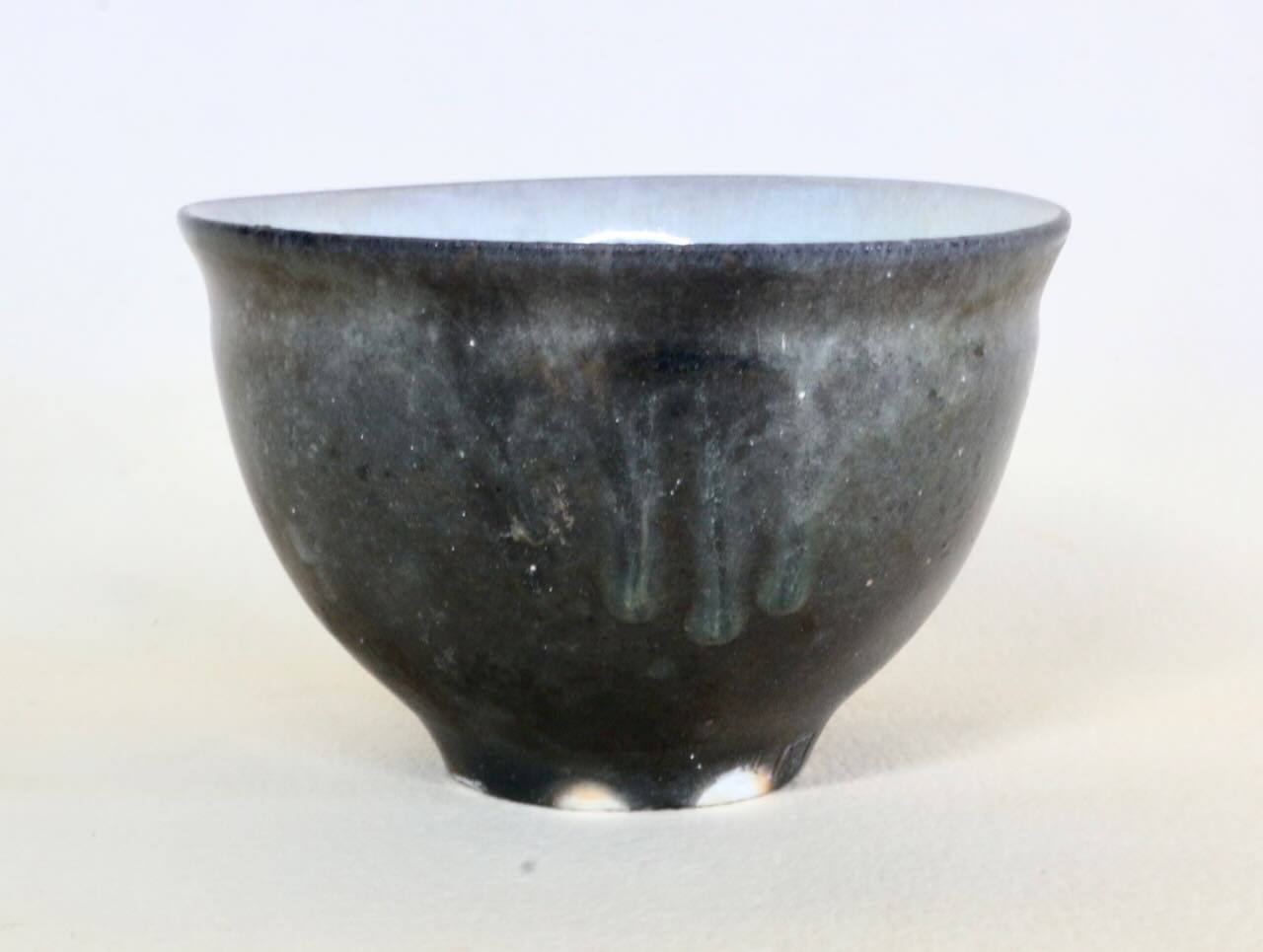
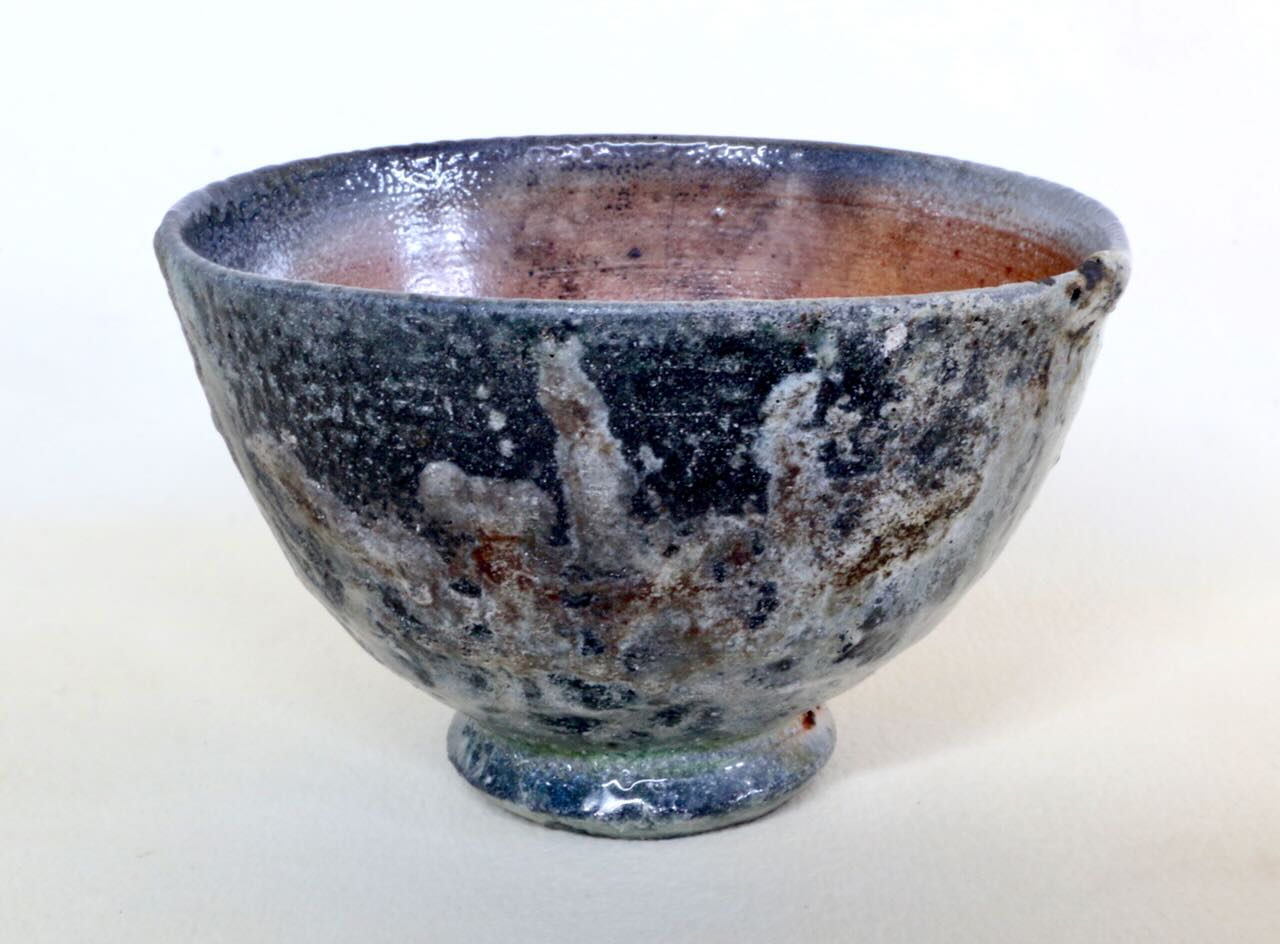
I love it when the translucent white porcelain gets so heavily reduced that it turns black with carbon inclusion. This contrasts so well with the delicate pale, but intense blue of the limpid blue celadon. Alas, fine thin porcelain doesn’t enjoy the intense conditions in the front of the kiln and often dunts (cracks). I’m most happy when I can get a good piece out of the firing whole and in good condition. However, such pots are rare.
In the piece above. It looks as if you can see my finger prints where I have dipped a glaze, but in fact, these white marks are the fine white porcelain body showing through where the little balls of wadding were placed around the foot to keep it up off the kiln shelf during firing. The naturally deposit ash glaze on the front of the pot had started run, but luckily, it hasn’t glued the bowl to the shelf. Really good porcelain pots are a rarity from this part of the kiln.
‘Kintsugi’ gold leaf repair is a way of restoring a beautiful, but slightly damaged pot back to full radiance. I think that if a good pot is damaged in the fire that made it so lovely in the first instance, then it’s worth giving it a bit of love and TLC to make it even more beautiful. I lavish a lot of effort, skill and time into retrieving them from the scrap bench and repairing these sensitive and beautiful items, bringing them back to life. Some times gluing a broken or chipped piece back together, and at other times actually rebuilding a bit of the surface that is missing. In this way I bring them back to life and give them an honourable new existence. They are even more precious then, than they were if they had come from the kiln undamaged. I am recognising their potential beauty and honouring it. In this slow, patient application of time and effort they become more special to me.
These porcelain bowls are absolutely white, but one of them have such a high degree of carbon fused into their surface during the reduction cycle, that it appears to be black. But when you look inside the bowl, it is glazed with a delicate blue celadon. I love this dramatic contrast of black and pale blue! The white bowl above has so much ash glaze built up on the fire face of the bowl that the ash began to run down and glue the bowl to the kiln shelf, running down over the wadding and making a fluid pool of ash glaze on the shelf. Tragically, I broke part of the foot off trying to extricate it from the glassy mess. I built up the missing part of the foot, back to its original form with the kintsugi technique and finishing it with 24 karat gold. All three of these bowls above, are very translucent.
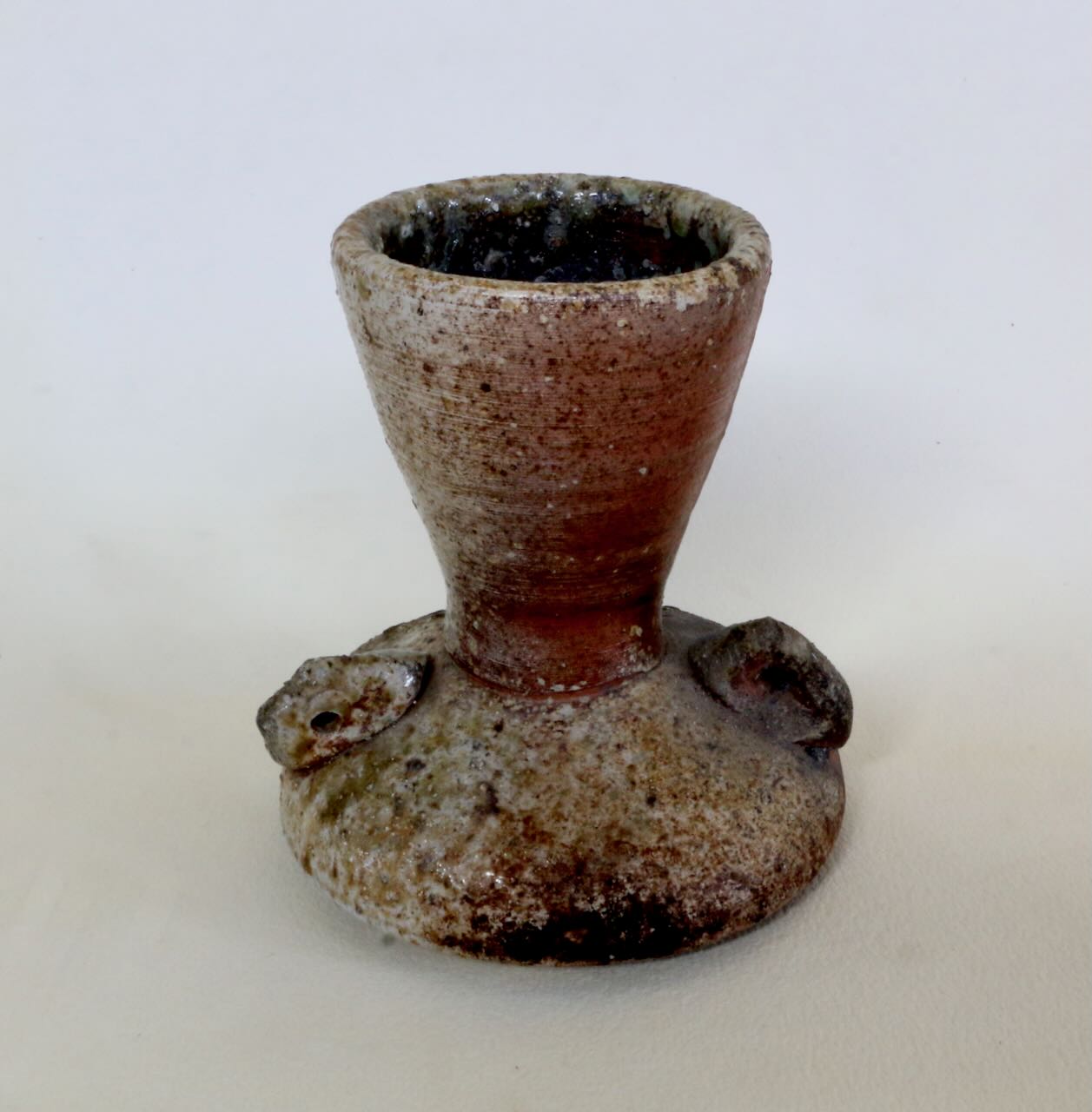
Besides the translucent, white porcelain which I have reduced to matt black with carbon inclusion. (my way of permanently removing carbon from the atmosphere. Permanent carbon sequestration!) Besides these delicate porcelain bowls, I have also been firing some more robust stoneware bodies that I have made. These bodies have a much better survival rate in the ‘Zone of Death’, but still get the occasional chips or ‘kiss’ marking that need some delicate attention.
Each of these ‘rougher’ pieces has their own particular charm and character. I like them all equally.
I hope to see you at some time over the first two weekends in November. You can check them out for yourself.
The Southern Highlands Arts Trail for 2025 kicks off in just 3 weeks. We will be open on the first two weekends in November 1st & 2nd, then the 8th & 9th of November.
We will be open all days from 10 til 4pm, but are happy to open on any day during the 2 week period if you let us know that you are coming. We live here. We’ll be here every day working in the pottery or gardens.
We are recently returned from Western Australia, where we were taking part in the Australian Ceramics Triennial. I was there to present a paper on how to reduce carbon pollution from our (potters) kiln chimneys. I’ve spent a couple of years researching, building and testing a scrubber for the top of my kiln chimney, to minimise the release of PM2.5 carbon particles, that are a result of the combustion of carbon fuels.
We decided that if we were to travel so far for this event, then apart from purchasing carbon credit off-sets for the flights, we should make the most of our time away and go down to Margaret River and have a look around, and possibly taste some wines. So we did.
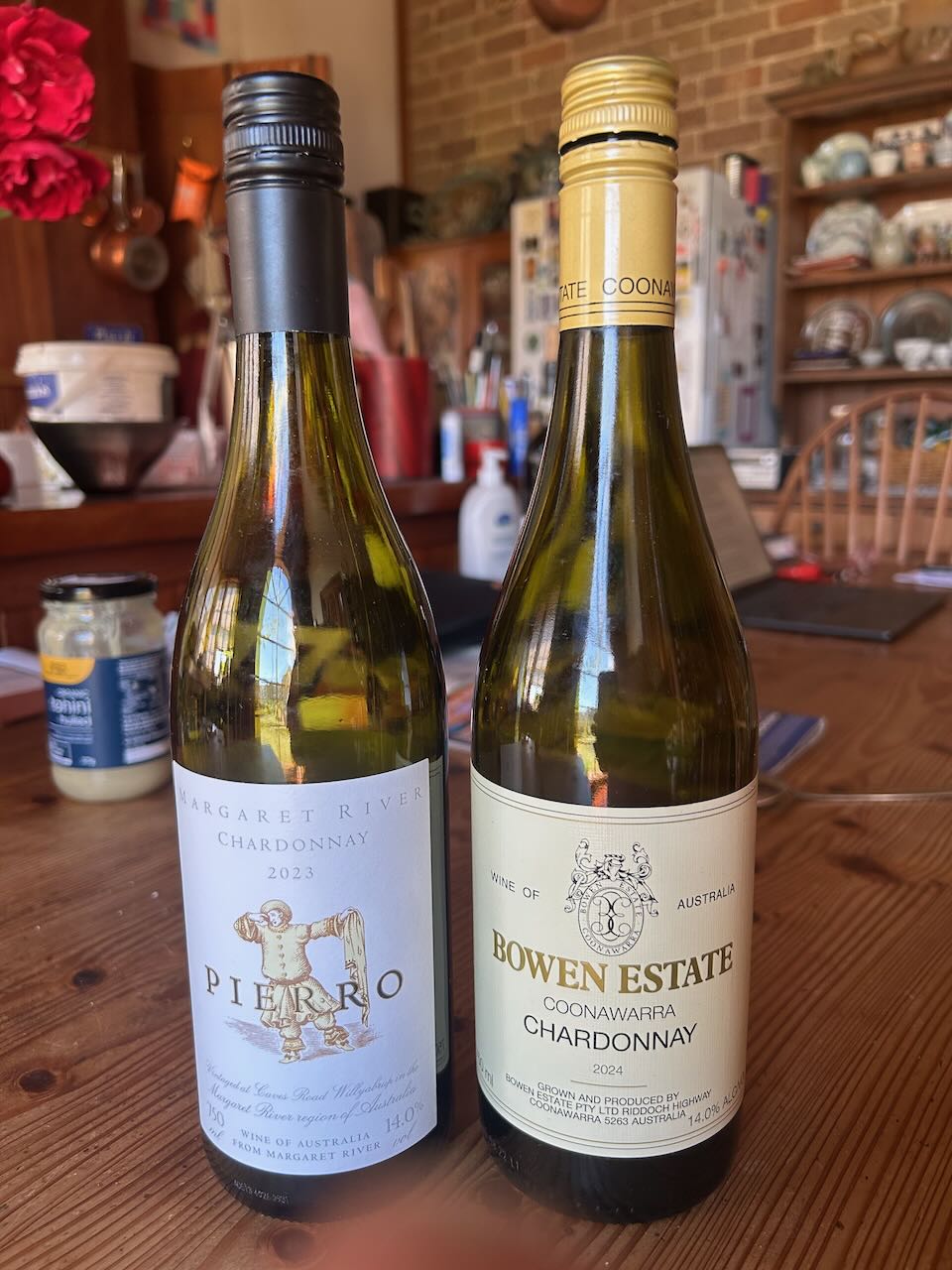
I discovered the best chardonnay that I have ever tasted in my life. The Chardonnay from ‘Pierro’ vineyard in Margret River. Really deep, dry, rich, fragrant, and lasting flavour. Only a slight hint of sweetness. Highly recommended for a tasting if you are ever down there. $117 per bottle, but even $5 just to taste it! A once in a life time experience.
I’m perfectly ready to accept that there are better chardonnays out there. I see them for sale in posh catalogues, costing even more, but I’ll never know, as I never buy wines anywhere near $100 per bottle – til now. I really enjoyed it. But that was it. Never again. As I said. A once in a lifetime experience. So glad that I called in. I’d never heard of them previously. A small producer, unirrigated, crop-thinned, hand picked, wild yeast, a year in small French oak sitting on lees. Perfect!
My favourite chardonnay up until now, and will continue to be, into the future, is Bowen Estate Chardonnay from the Coonawarra. Beautifully dry, well balanced, classic chardonnay fragrance, lingering finish, and a lot more approachable and affordable at $25. But still kept only for special meals and occasions.
While there we watched the sun set over the ocean in the West. Saw lots of wild flowers and visited two excellent museums. It was a full trip.
At the conference, we saw and heard a lot of presentations and demonstrations. A few duds, some really excellent. Something for everyone and every taste and interest. In fact, so much going on that it was impossible to see and hear everything, as there was always too much to choose from and some programming conflicts of my choices, meant that I missed a few things while watching others. Not a bad thing.
I really enjoyed watching, Ruth Ju-Shih Li, intermittently, over 3 days, create an amazing porcelain hand built sculpture as a performance and then dissolve it back into sludge with water.
I had to think long and hard before I decided to commit the crime of flying to the other side of Australia. Such a lot of carbon debt! I did however choose to buy carbon off-set credits to make some gesture towards minimising the damage. I support ‘Green Fleet’ for this purpose. I’m not advocating or recommending this organisation. This is not an advert. I don’t do that. But if you are unfamiliar with the concept of purchasing carbon credits to off-set some of your personal global warming damage. Maybe you could do an internet search and see what is involved.
In the end I did decide to go to Fremantle, as I was offered the chance to speak about my research on minimising the PM 2.5 carbon particulates from kiln chimneys. Something no one else is prosecuting at the current time. It doesn’t appear on anybody’s radar currently, but there is a mass of information to be found if you look. Most of it quite disturbing. In some ways, presenting this lecture is in itself an act of promoting carbon minimisation. I also offered to present a second paper to the conference on the use of solar power with battery back-up as a low carbon means of firing ceramics, but it was politely declined. No real interest within the committee it seems.
Oh Boy! I read in the news today… (Thank you John Lennon.) About the current average cost to each household in Australia for their energy bill. It currently stands at $5,800 pa. Janine and I have made an effort to minimise our energy bills. Particularly our carbon related energy consumption. We run a low energy household, and have had solar power installed since 2007. We haven’t paid an electricity bill since then. Since the big fire in 2019, everything that we had to replace was carefully considered and was always electric. So now we only spend $400 a year to put petrol in our plug-in hybrid car, and $150 a year to buy petrol for the mower, chainsaws and fire fighting pumps. Thats just 10% of the national average. I’m proud of that.
In Fremantle, we stayed with someone who told me that when his two daughters were still at home, he was paying $350 per day for electricity! there was a swimming pool involved I understand.
When we put solar on our roof, we essentially paid our lifetime electricity bills all at once in advance. We didn’t choose to do it to save money. We were very concerned about the future with global heating and the next few generations. As it turned out, we have saved a small fortune, going on current national average power bills..
I recently saw in a supermarket advertising magazine/brochure, that you can now buy a 10 kW battery and 6.5 kW of Solar PV for $7,000. Or even better, 20kw battery with 6.5kw of PV for $8500.
That is so incredibly cheap!
Caution! if something is too good to be true…..
But certainly worth looking into. Please exercise due diligence.
I am not recommending this product. I have no allegiance to this supermarket and I am not in receipt of any payment or commission for mentioning it. I don’t do that. I just think that it might be worth a very severe, and deep investigation, because it just might be OK.
Don’t waste your money. Ask around, search out reviews and customer experiences. get yourself informed. I’m a bit sceptical about the price. However, it just might be a good deal?
Back home our garden is flourishing, as our lovely neighbour Tina has been watering things on the hot and dry windy days. So many plants have burst into flower in our absence, as they were just buds when we left.
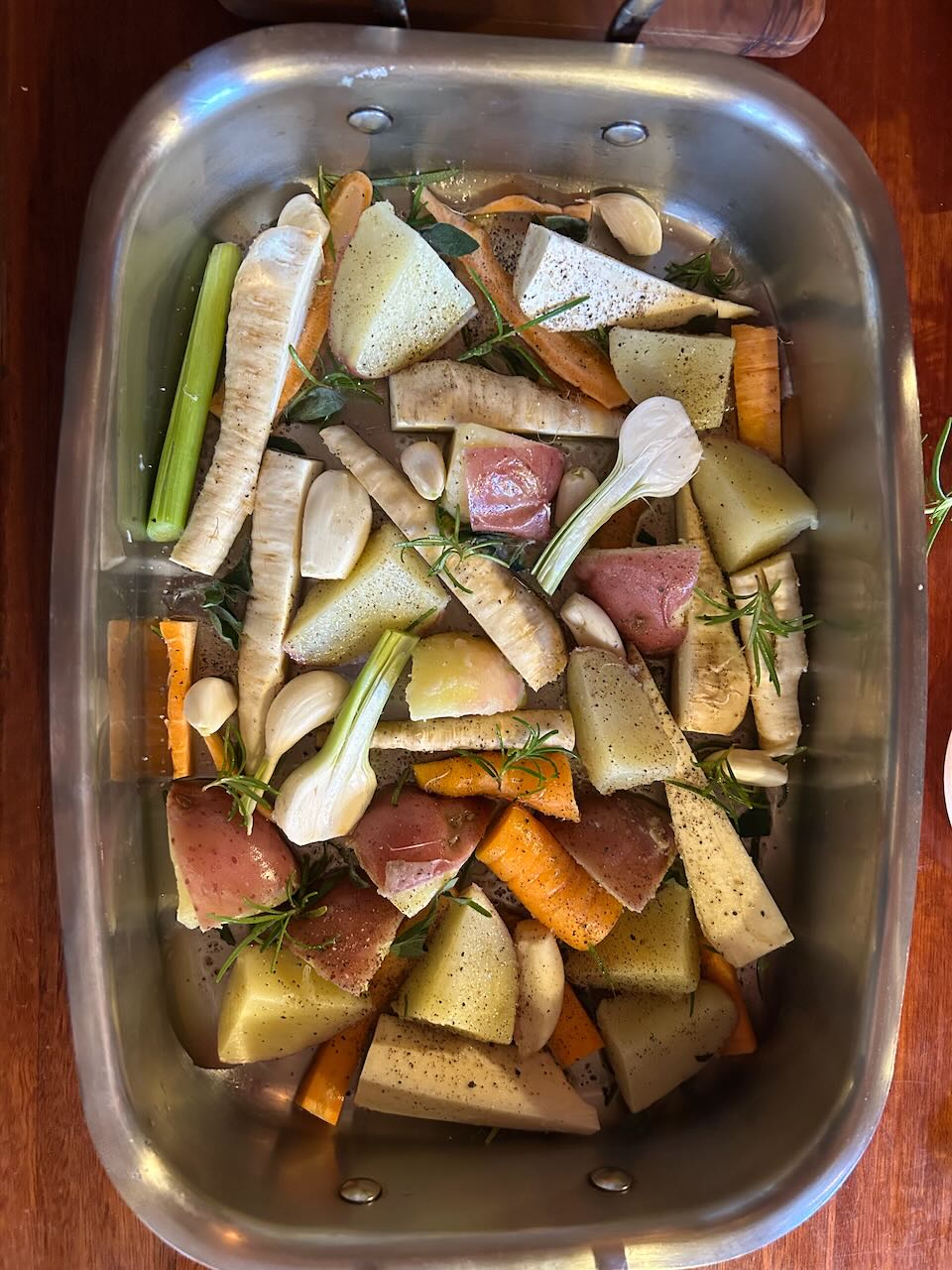
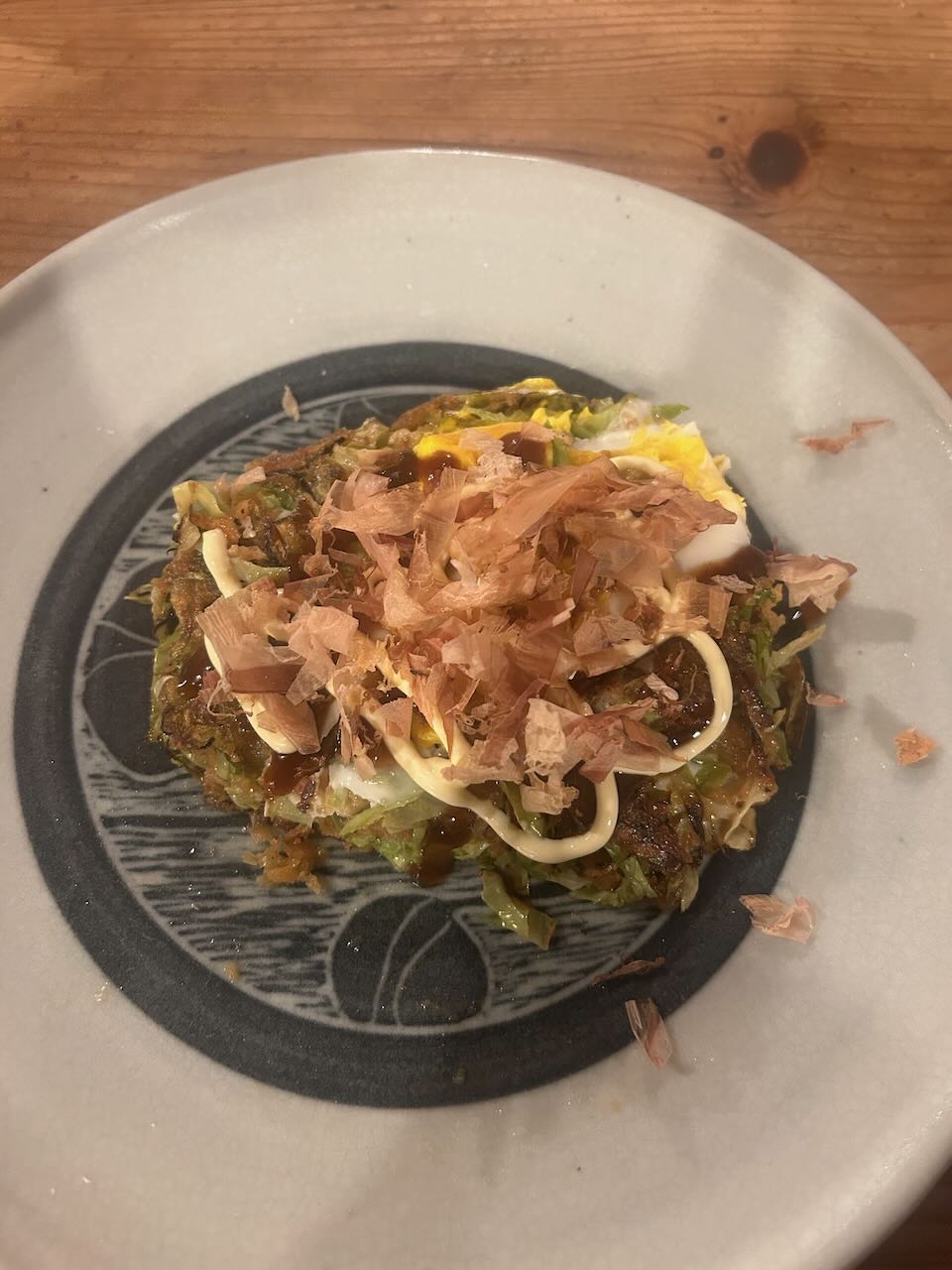
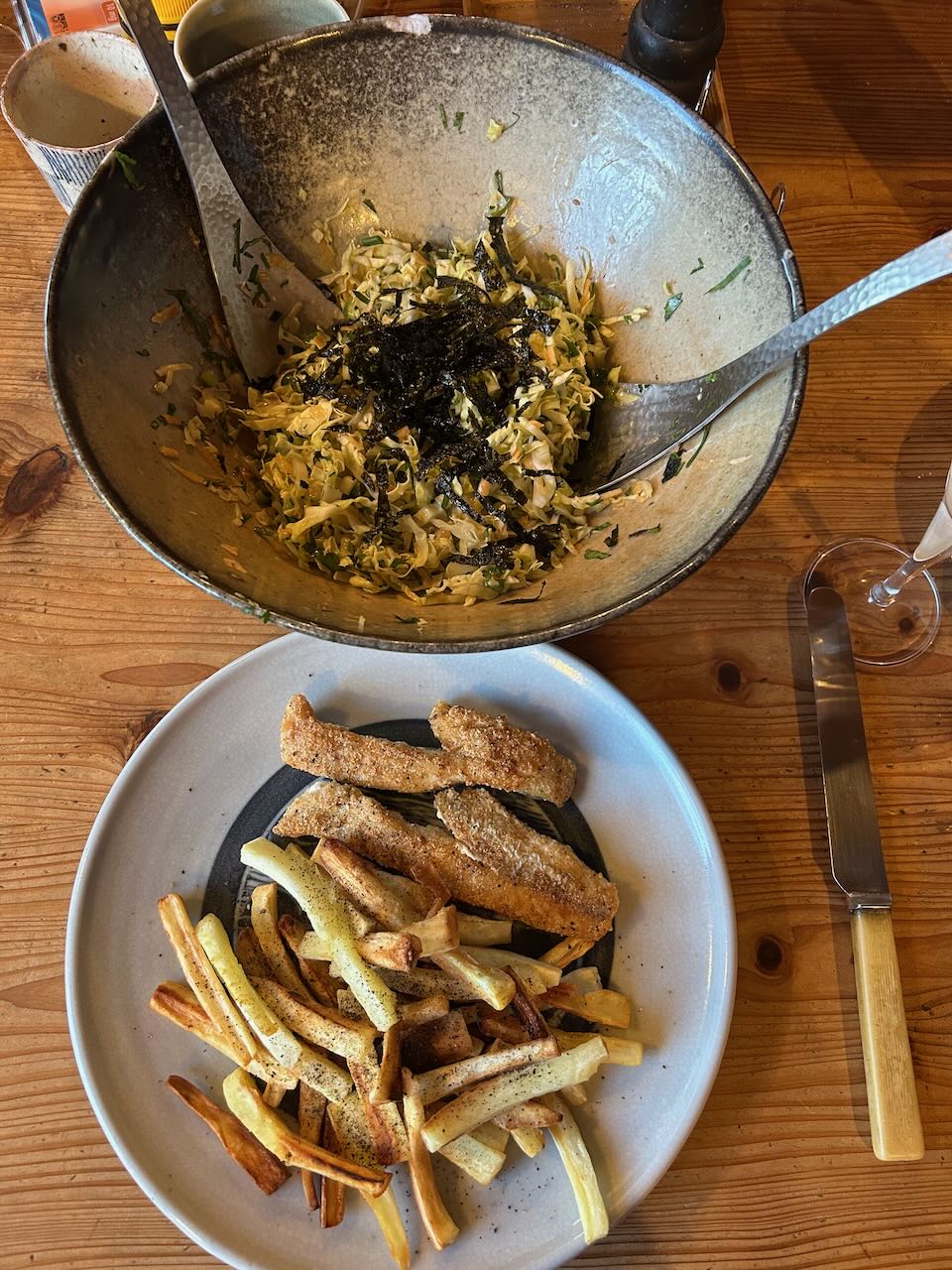
The veggie garden is still very productive. Fish and parsnip chips with a Japanese inspired cabbage salad. Oka-nomiyaki, an Australian version of Japanese cabbage pancake. Baked mixed vegetables etc.
We have had our Hyundai ‘Ioniq’, plug-in electric hybrid car for 6 years now and it has all been a good experience, even better actually, A great experience!
This car has exceeded our expectations. We have settled into a routine with it now. We can drive anywhere locally on the battery, doing our local shopping and social visits very comfortably. If we need to go further afield, no problem, the petrol engine will bring us home.
We always charge at home from our solar PV panels. We have never been to a charging station. We have taken it on longer trips up the Queensland twice and down to Canberra several times. For these trips, we rely on the petrol engine. However, these trips are seldom done and are the exception.
For those interested in facts and figures. My log book tells me that by January 2025, we had traveled 64,000kms and spent a total of $1,860 on fuel. That’s about 34 kms to the dollar, or if petrol is $1.80 per litre, then we are getting about 61 kms to the litre. NOT 6 but 61! Most of that fuel was purchased on those long trips.
We are in the habit of putting $20 to $30 dollars worth of fuel in the car about 4 times a year. When we first purchased it. I filled the tank on the way home, as per normal practice with a new car. Big mistake! It took us almost a year to use up that fuel. It was sitting there going stale in the tank for most of the time. Stale fuel can be a big problem, so we have not done that since, unless we are planning a long trip.
When fully fueled up with a full battery and a full tank. The fuel/trip computer tells me that we can go 1,150 kms!
The Ioniq, is a medium sized car, but is the biggest car that we have ever owned. It’s vast and comfortable compared to the little 3 cylinder Japanese 900 CC Daihatsu, Charade and Sirion, cars that we have had previously. These were very fuel efficient, very tiny, very nippy and could find a tiny parking space anywhere. I like the driving feel of the small cars, but I love driving the Hyundai. It’s so smooth, quiet and comfortable.
We have had no issues with it. Although, maybe just one, when rats are some part of the electrical wiring system. It cost us $600 to find the fault and get it repaired. Not too bad in the scheme of things, as the mechanic told us that several cars that he had looked at and quoted on recently were written off because of the cost of repair from rats eating the wiring loom. We were lucky!
Since then, I have begun opening the bonnet as soon as we get home, and fitting a bright LED light in the engine compartment, fitted with a 24 hour timer, so that is switches on at dusk and off at dawn, all automatically. That makes the engine compartment an unpleasant place to be for a rat. It also allows engine heat to dissipate readily, making it even less hospitable.
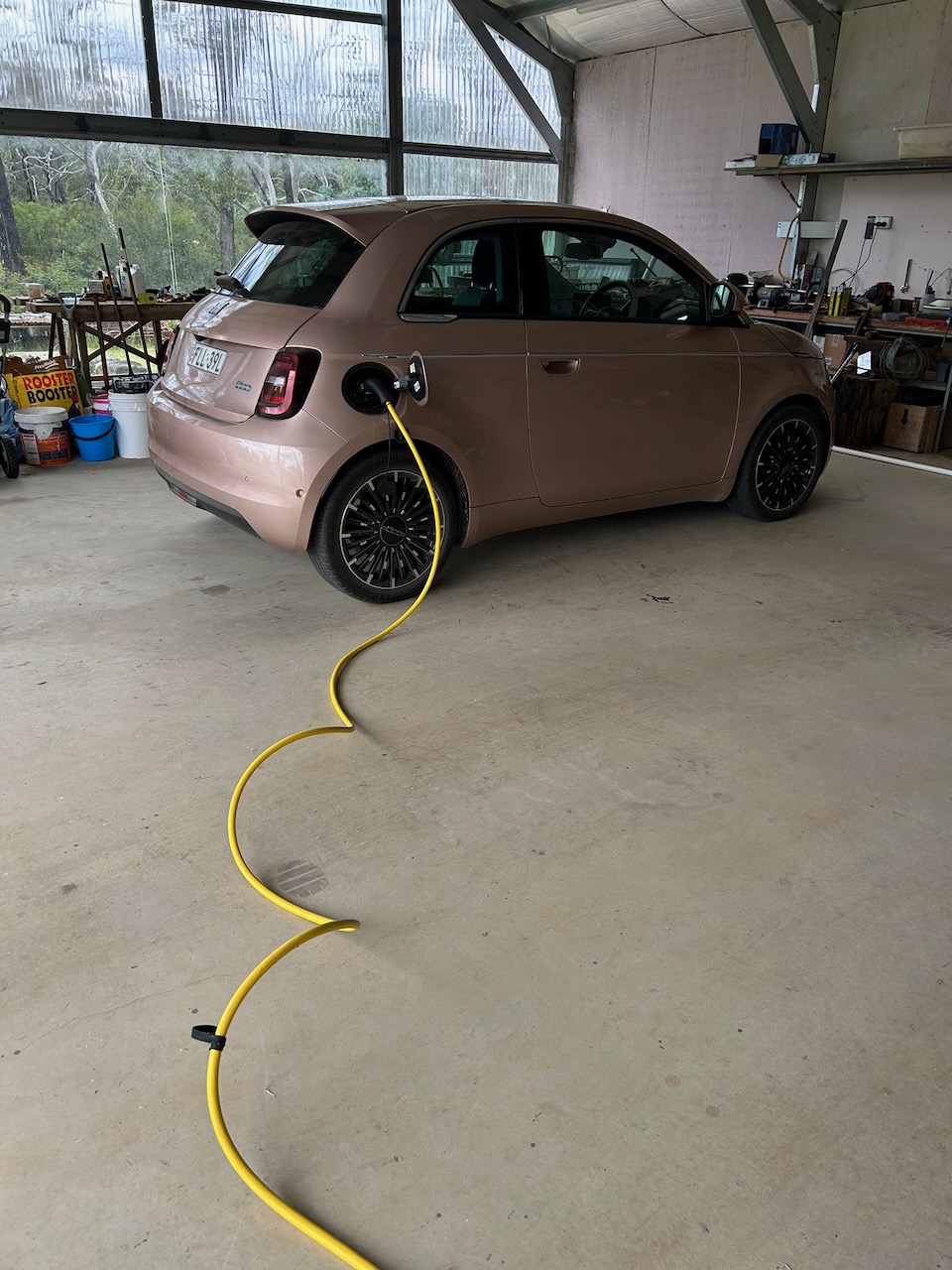
I love my plug-in electric car, so much so, that in December I bought a new fully electric Fiat 500e ‘bambino’. That classic little Italian car from the movies. First produced post-war, in the 50’s, and has been in production right through until today. In various models. This brand new electric version is incredibly cute. It can go 300kms on a full charge, which is enough to drive to Sydney and back.
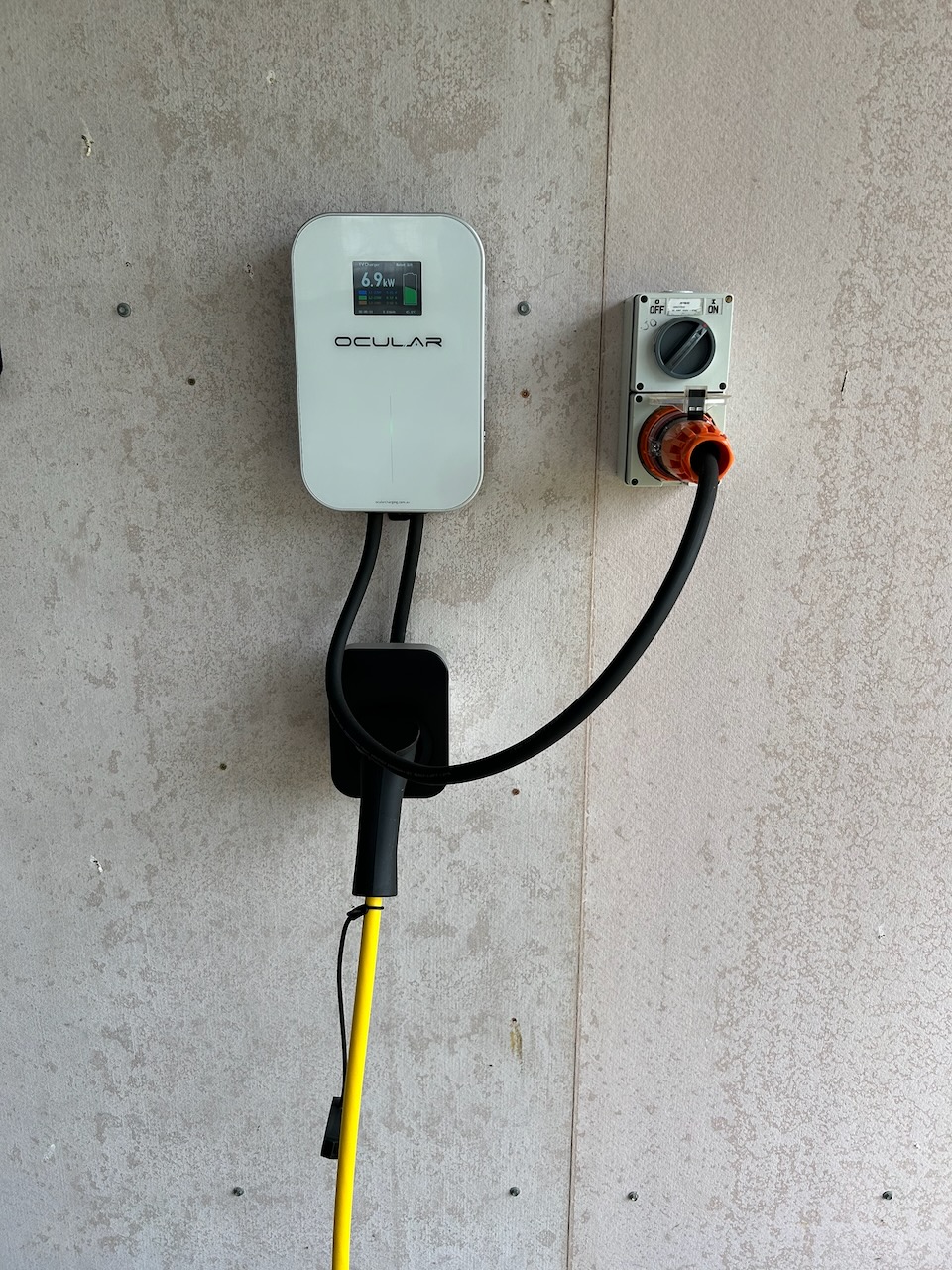
I installed a new 3 phase, 40 amp, charger for it, It just plugs into the already existing 3 phase power socket on the wall in the carport. So I can charge it at home on sunshine. It takes from 3 to 4 hours from empty to fully charge. We can do this overnight from our home ‘powerwall’ batteries, using yesterdays sunshine, or during the day directly from the sun. However, I usually top it up any time there is plenty of sun that we are not getting very much money for when we sell to the grid.
The Fiat only seats 2 realistically, although it has a back seat and 4 seat belts, the back seat is only for child sized passengers. I’ve put the back seats down to double the boot space. So now it’s a two door, two seater hatch.
Its incredibly powerful. The torque is amazing, and can pin you back in your seat. But this is normal for all electric cars. They have loads of torque! It’s the classic small, nippy car that I have always loved to drive, but now I drive on sunshine!
So now, after a couple of months of ownership, I can say that it is fantastic, and does everything that we need to do. However, if I had to do a thousand kilometre drive to Melbourne or Queensland for some reason, I’d take the Hyundai for the long haul comfort and leg room.
We are very pleased to be a fully solar powered household. We can run the House, Pottery, Kilns and 2 cars on our solar. I even got a $350 cheque from the electricity company last week, for all our unused excess. This will reduce in Winter, but so far, we have never paid an electricity bill since 2006/7, when we installed the first solar PV panels.
Even when the fire burnt down our pottery in 2019. With our first PV installation gone, we were without solar for 3 quarters of billing periods. However, we had such a good unclaimed credit on our bill at the time, that we were able to go that whole time just using up our credit. We had new solar panels installed before the end of the year, and we were back on deck before the credit ran out.
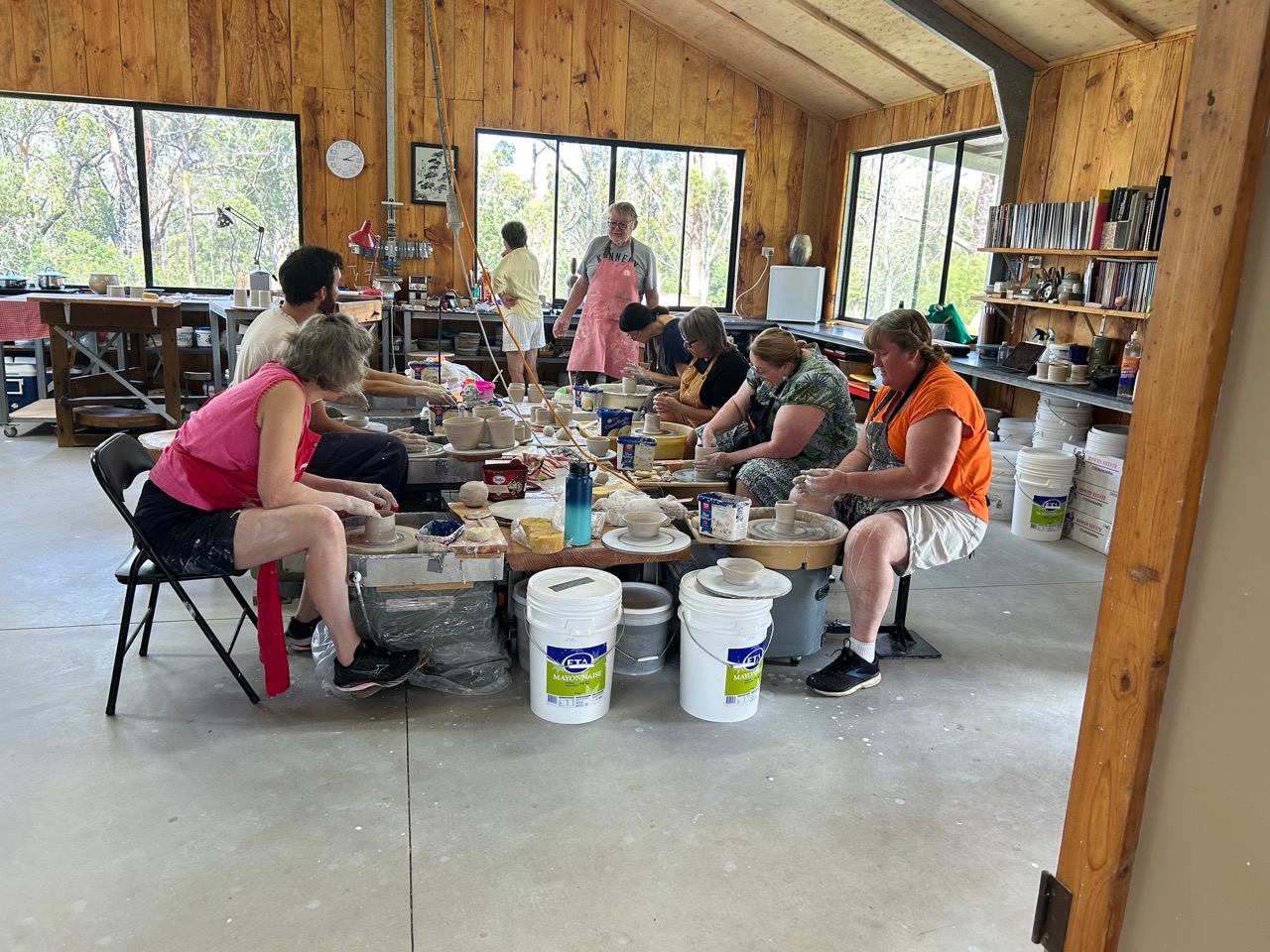
We have just completed another weekend workshop. This time a throwing class. I advertised one and filled two weekends, so we will back in the studio again with the 2nd group next weekend for the 2nd one.
Everyone seemed to enjoy them selves and got something out of it. We had Len Smith here with us for the weekend to have 3 tutors for the 8 students. Len has so much teaching experience, it’s great for the students to have a third point of view. He’s also great company.
I spent the week pugging clay and prepping the throwing room, and during the time in-between, I kept on with my sgraffito decoration, and got a solar powered, stoneware glaze firing done.
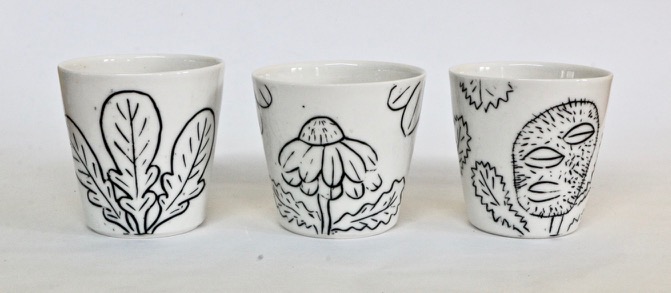
These red and black cups are experiments in a combination of Sgraffito and inlay.
Just black slip inlay on these cups.
Just sgraffito on this bowl
In the evenings, I made another batch of tomato passata. I have now run out of our re-cycled ‘pop top’ jars and so I have started to use the old ‘Fowler’s’ vacuum jars with clip top lids. I made a 7 litre boiler full, and reduced it down to 5 litres, enough to fill 7 of our No.27 Fowler’s jars. I have no idea how Fowlers came up with their numbering system, but as they are so old, I suspect that it represents fluid ounces?
I Googled it and 27 imperial fluid ounces = 770 mls. So that sounds like it ought to be right.
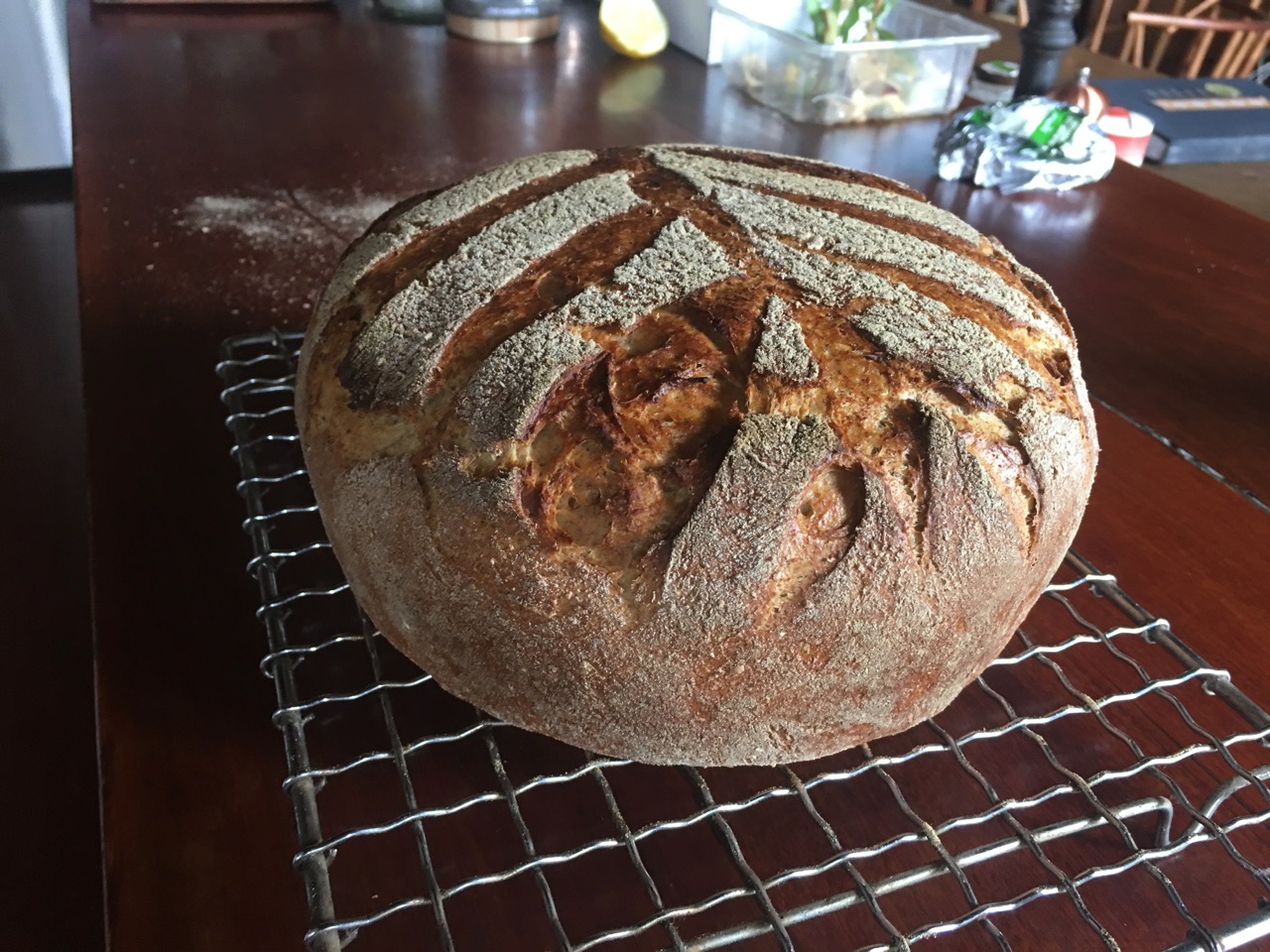
I also made this weeks loaf of rye bread.
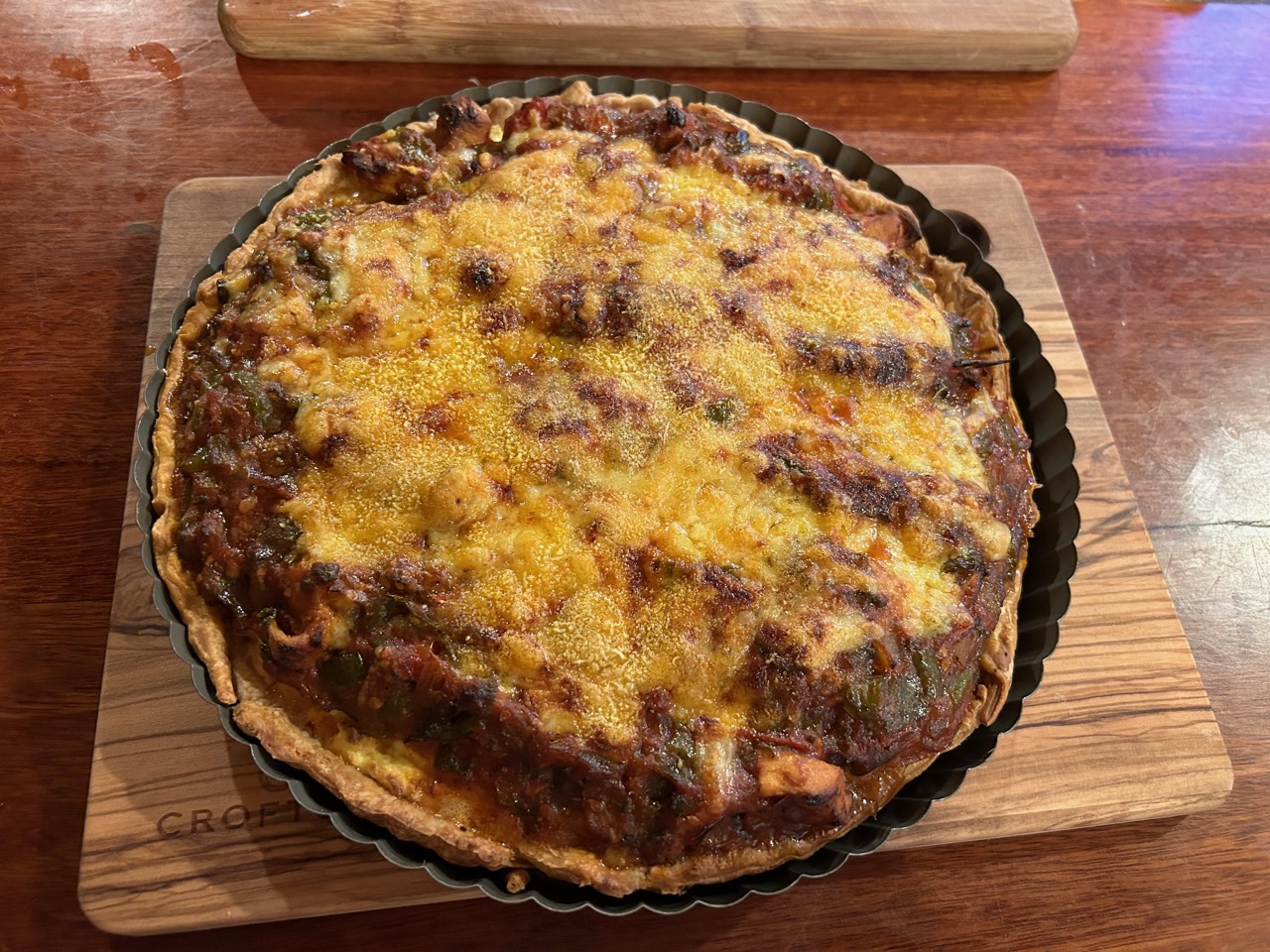
For the workshop lunch, I made a flan or tart with a baked cottage cheese base and a ratatouille topping. That didn’t last very long.
The coming week will be more of the same as we repeat it all over again.
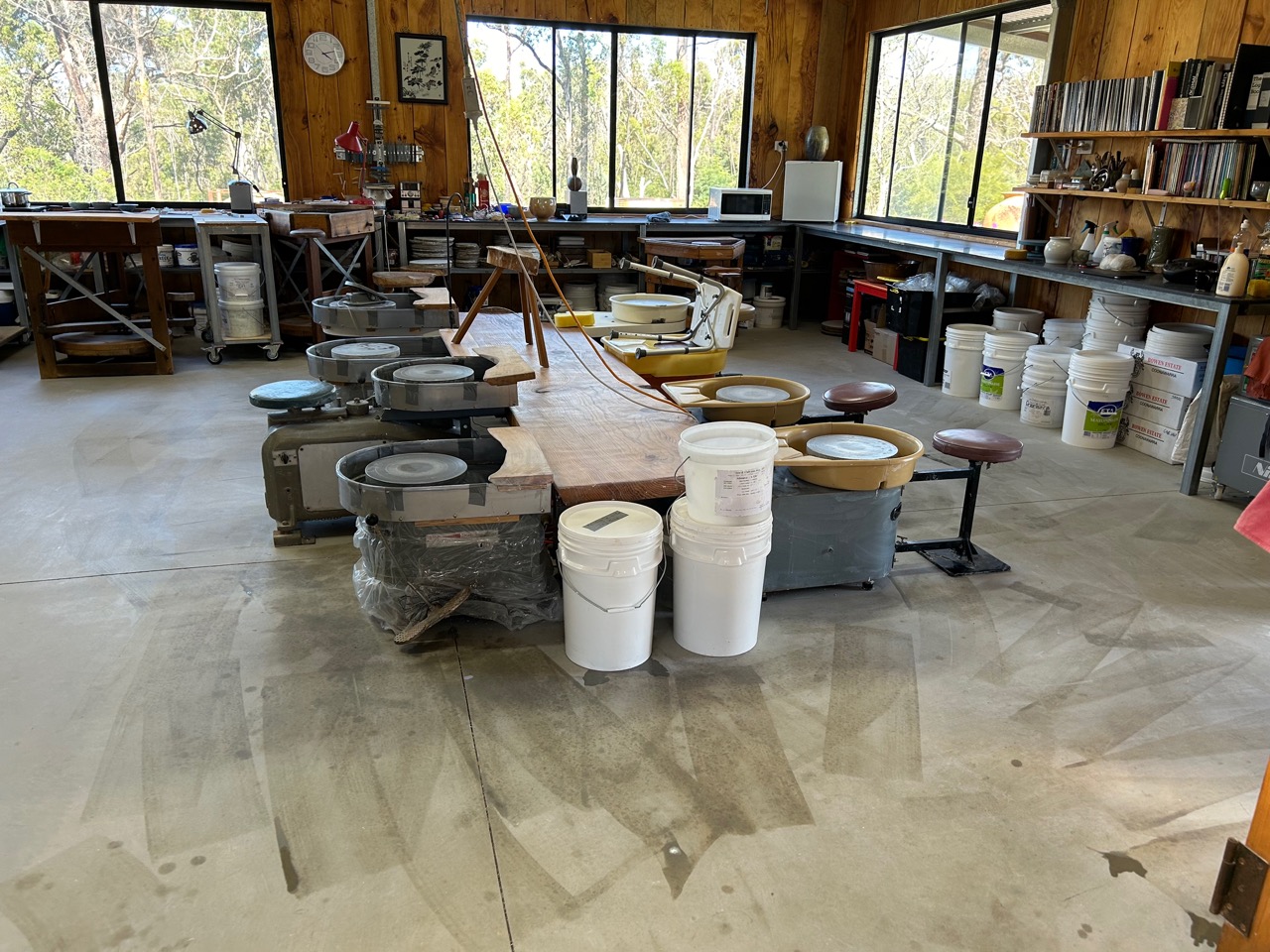
The workshop is all cleaned and mopped and ready to go.
The workshop looks beautiful tonight in the glow of the pink sunset.
In our attempt to reduce our carbon footprint to as low as possible without having to reduce ourselves to living in a cave. We want to engage with the modern world, but only to the extent that we can cope with. For instance, we have virtually no presence on social media.
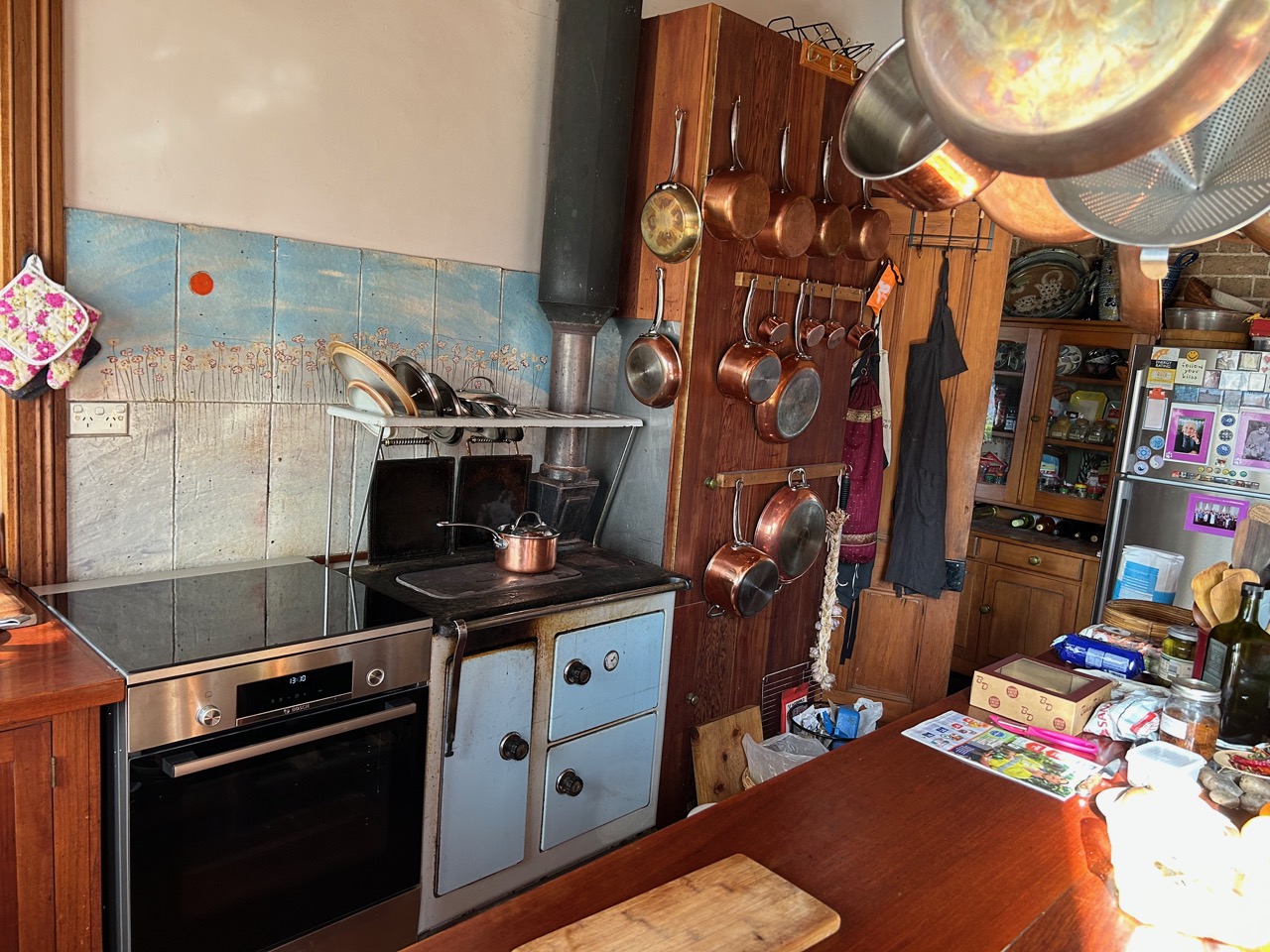
As our latest attempt to get out of the fossil fuel industry web of complex energy solutions. We have recently purchased an electric stove, so the old LP gas stove has been retired to the pottery for the odd occasion when I have to cook for a lot of people over there.
The new stove now completes our conversion to a fully PV powered solar electric home. It’s a good feeling to cook on sunshine, either fresh off the roof during the day, or stored in our battery for use at night. The pottery kilns are either solar electric or wood fired using trees from our own forest. Our car is run almost exclusively on PV sunshine, and now the house is fully electric. However, we have retained the wood fired slow combustion kitchen range, as it heats the hot water for the house in winter when there is not so much less sunshine for the solar hot water panels. It cooks all the winter meals, and warms the house to boot. In summer when the temperature is too hot to want to light the fuel stove, that’s when the electric range comes into play.
The stove has a conventional electric oven, but it has a modern induction cook top, coupled with the right induction compatible metal based copper pans it is lightning quick to heat up and cooks beautifully. There will be a bit of a learning curve for us to digest the 50 pages of instructions.
Digital cooking is a new concept for us. We end up pressing a lot of buttons with our digits to make it work.
The new stove sits very comfortably alongside the very old steampunk wood stove that we bought 2nd hand 45 years ago.
So far I’ve experimented with baking a loaf of rye bread, couldn’t tell the difference.
A pan forte cake, witch was just as delicious as it always was in the old stove, no change there, just cleaner air in the house and no fossil carbon released.
I also tried winter vegetable quiche. All good with no problems. I’m happy.
We are almost half way through autumn now, the Indian summer is over and the weather has turned cooler. No more 30 degree days. This past week has been steadily in the 20’s and with rain or showers almost every day. However there are bright sunny patches in between. I’ve been working my way through the big pots that I threw to begin this throwing session, bisque firing them in the electric kiln using only pure sunshine. The recent addition of extra solar PV panels last year, bringing us up to 17 kW total and the addition of the 2nd battery, means that we are able to fire without any withdrawal from the grid. I can even fire both electric kilns to bisque at the same time, or just one kiln to stoneware. This is a great sense of independence.
With the price of gas having gone up from $1.75 a litre last year to $2.50 this year with no additional increase in the production cost. It’s just profit gouging and it’s a complete rip off.
So I’m very proud to be able to fire my kilns with my own sunshine. And drive my car off it as well! It’s amazing that there is enough to go around, but we still export our excess on the days when we are not firing. We even manage to export a little in the early stages of the firing.
This is from our most recent electricity bill. Our daily usage is down to 0.76 kWh per day. Down from 1.64 kWh per day the previous year. When we were doing more firings.
The average Australian 2 person household like ours is using 17.6 kWh per day. So, it seems that all our efforts to tread gently in the world are paying off. We run a very efficient, low energy house hold.
Some time later this year, or maybe next, We will be getting rid of our old LP gas kitchen stove. That is our last big investment in our conversion to fully solar electric living. I’m waiting for induction cookers to become more widely available and hopefully a lot cheaper. I have already installed a twin induction cooktop in the pottery. It was only $350. Very affordable.
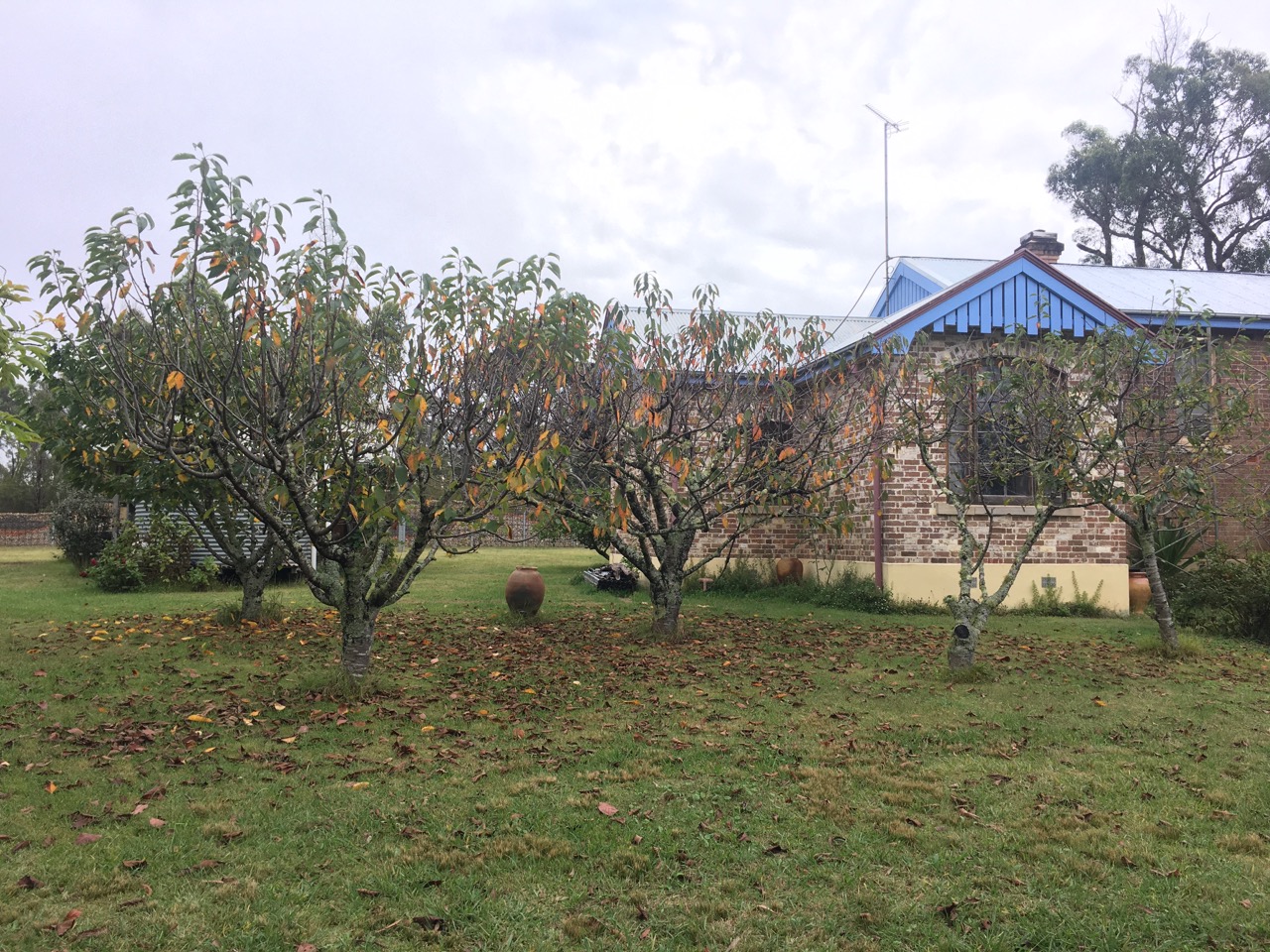
A sign that autumn is well under way here is the change in the Cherry trees, as they shut down and prepare for winter. They are early to fruit in spring, and correspondingly, the first to loose their leaves in the autumn. Our bedroom looks out on to the Chekov orchard. We currently have a carpet of yellow leaves out side our window, that is slowly turning brown.
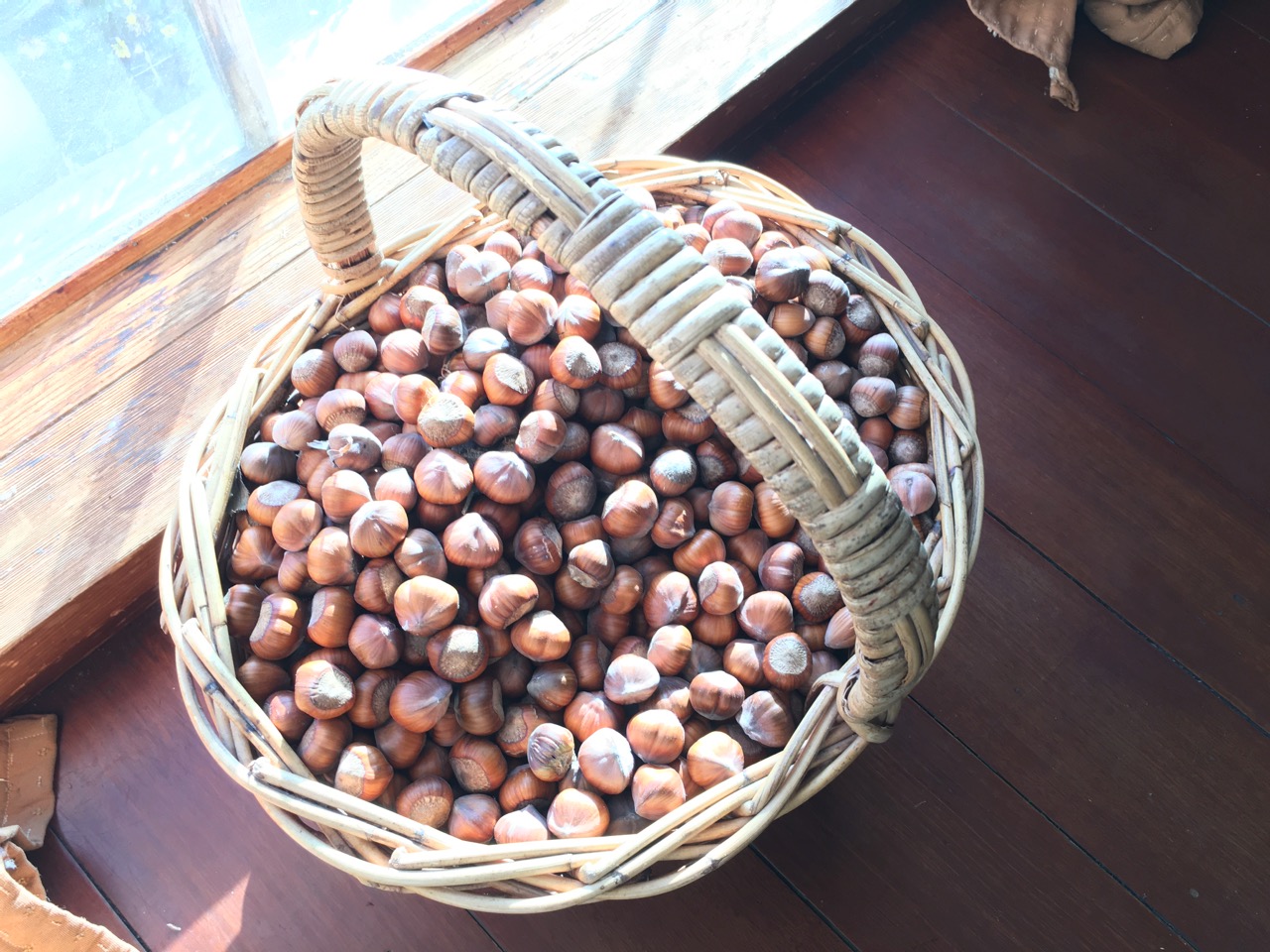
Janine has been collecting more hazel nuts. So far she has picked up 3 baskets full, and there are still more to come. First, she shells them, then checks them for nuts, by bouncing them on the table. If they bounce, they are empty and are discarded. Not worth the energy to crack them to find them empty. The full shells are then cracked open and the nuts are dried in the sunny window for a while. Later she roasts them in a pan on the stove to bring out that superb hazelnut flavour. It’s an ongoing job that is spread over a couple of months. Fitted in here and there whenever the time allows. Most often in front of the idiot box — if there is anything at all worth wasting time on, which is an increasingly rare event
The hazels have already started flowering again. The male ‘catkin’ flowers are out now. I often wonder why? As the female flowers don’t come out until the trees are dormant and have lost all their leaves. The female flowers are quite insignificant and very hard to see, just a pin head sized red dot. They don’t attract any pollinators at all and are wind pollinated, so we have planned out our hazel nuttery of a dozen trees, in such a way as all the best pollinator varieties are up-wind of the predominant winter gales that blow the male pollen down among all the waiting and fecund female flowers.
This is the Hazel nuttery and I am the Nutter. Two of these hazels were bought with an inoculation of French Black truffle spores. So we have some vague hope of truffles in the future — maybe? I planted a dozen different truffle inoculated trees of various types and they all got burnt to the ground in the fire. Only 3 trees re-shot from their root stocks. As truffles are a fungus that lives underground. I’m hopeful that the spores are still active and will one day produce a little surprise for us. But I’m not holding my breath.
In the pottery, I have been making smaller pots that are quicker to dry, so that they will all be ready for a wood kiln firing after Easter. I’m not sure if my skin is getting thinner and less robust with age, or these recent clay body experiments are just more aggressive, but I’ve found that I’m wearing away the skin on my finger tips so much more readily than I used to when I’m turning.
I used to only wear rubber ‘finger stalls’ when turning rather dryish hard stone porcelain bodies. Now I find that I have to wear them all the time when turning.
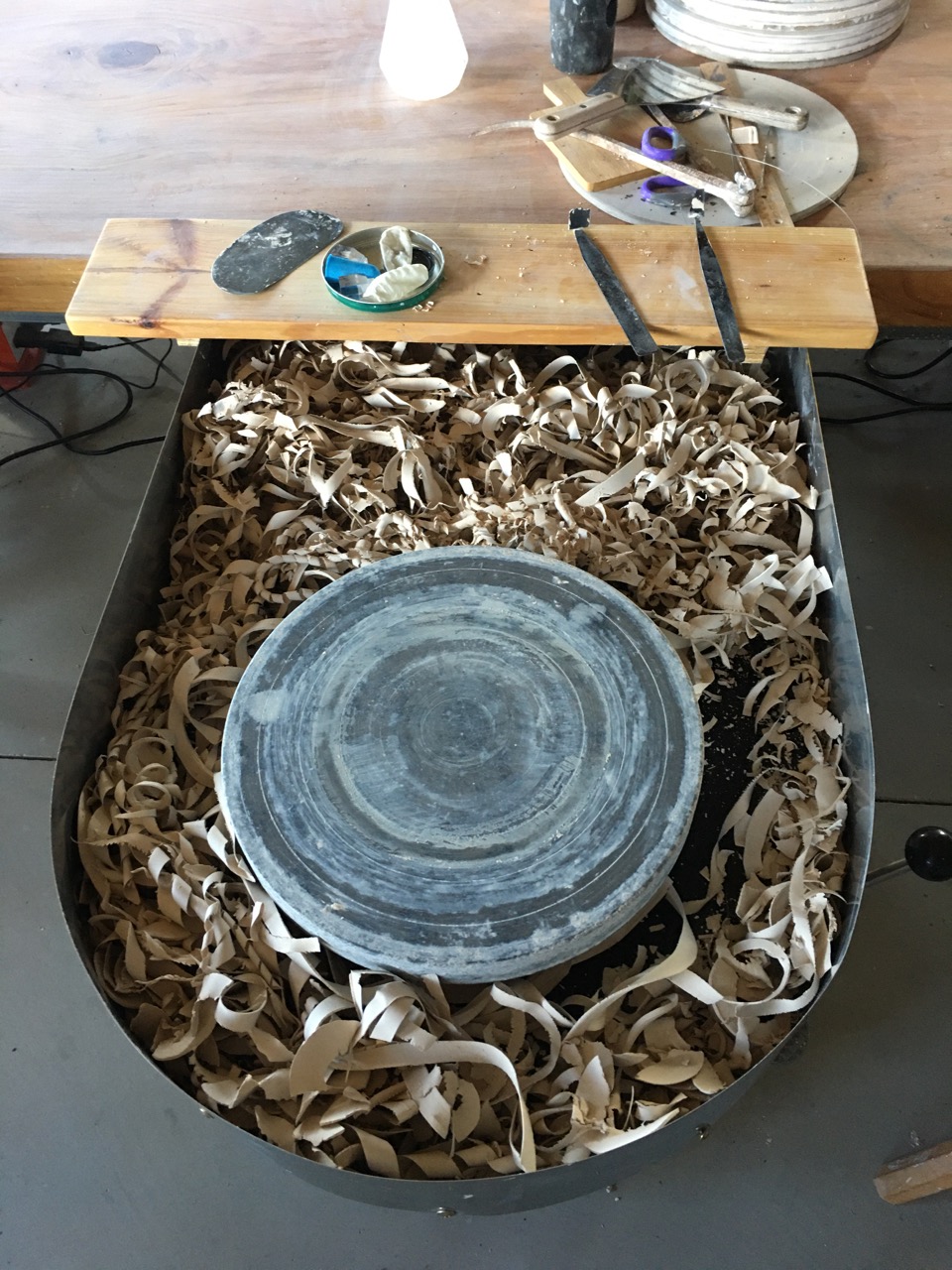
I’m really pleased with my home made larger format wheel trays that I built for the shimpo wheels. I can turn for an hour without filling them up. They hold 50 bowls worth of turnings.
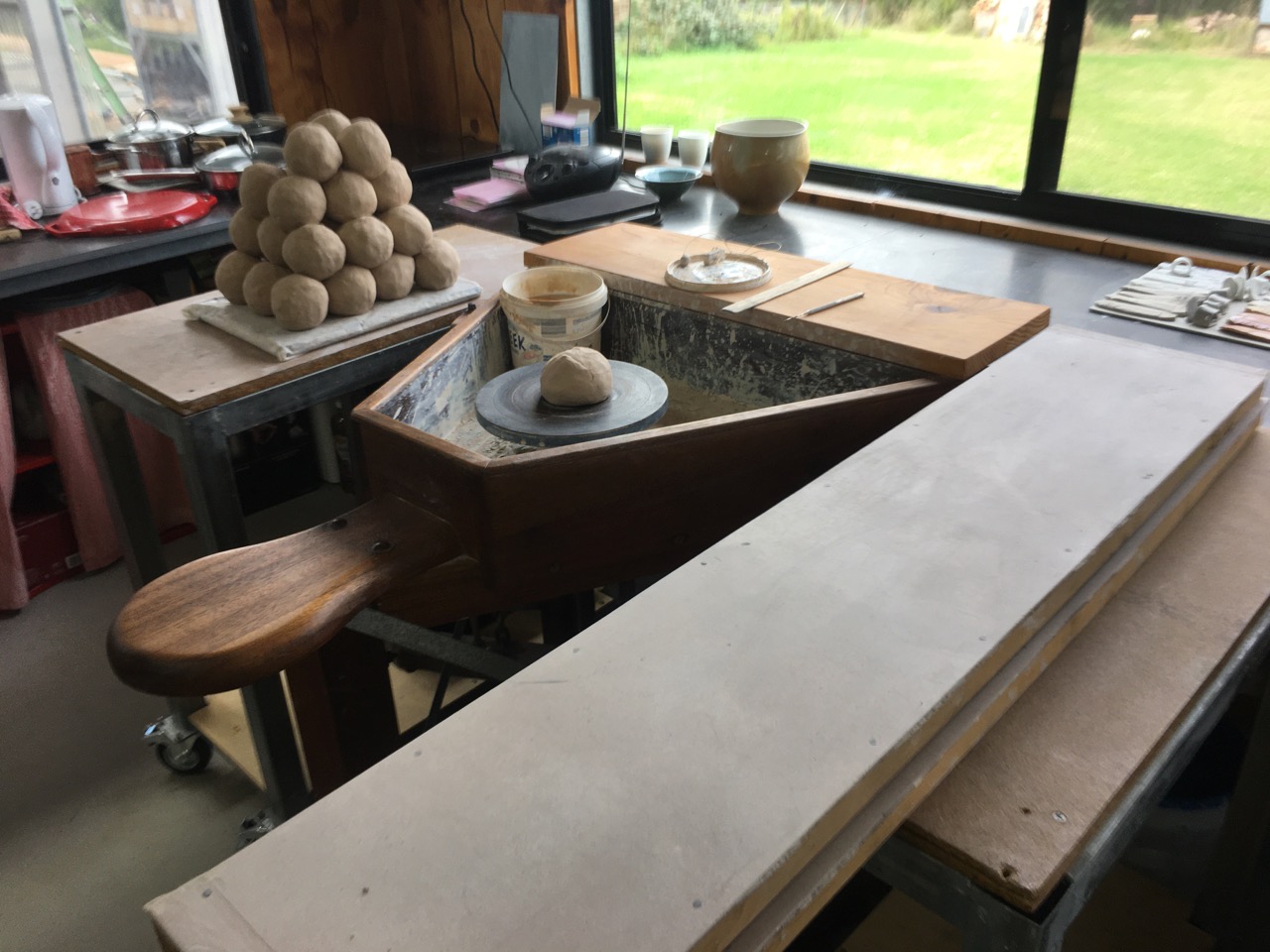
I have also been throwing on my kick wheel as well. It has a decent sized tray. I made 50 bowls on it yesterday. I started with a dry tray and ended with an almost dry tray. I have learnt to throw with a minimal amount of water. Just a few drips and splashes make their way off the wheel head.
Our local council is offering a bulky rubbish clean-up day this week. So the village has been dragging out it’s unwanted lumpy rubbish on to the side of the road to be taken away. Furniture, mattresses, electrical appliances, etc., it’s all piled up in clumps out in the street.
We have nothing to put out, But I make a point of riding my bike along the street to get a good look at everything that there is out there for the taking.
I went back with my truck and picked up 3 wheel barrows. One had a flat tyre and ruined wheel bearings. I pumped up the tyre and it held air over night, that was good, so I bought a pair of wheel barrow bearings for $6 each and in 15 mins, I have a perfect wheel barrow ready for work.
The 2nd one had a broken tray, but everything else was good, so off with the tray and back on the clean-up pile. A new replacement tray is $59, so I ordered one. The 3rd one is old and has been used for concrete, but works well. No issues there. Good to go.
Three wheel barrows for $70.
Reuse, repair, re-purpose and re-cycle. I’m happy.
For those people who attended the recent Zoom ‘Earth Friendly Kiln Firing’ webinar and want to learn a little bit more about what we do, here are a few links that you can follow up on this blog.
You can type in the following key words into the search box in the top right hand corner and there are posts and articles that you can read.
Small portable wood firing kiln
Slower, Smaller, Quieter. Towards A Local Terroir Based Life and Aesthetic
Over the past week, since the first Open Studio weekend, I have managed to do a bit of catching up in the veggie garden, mostly watering and weeding.
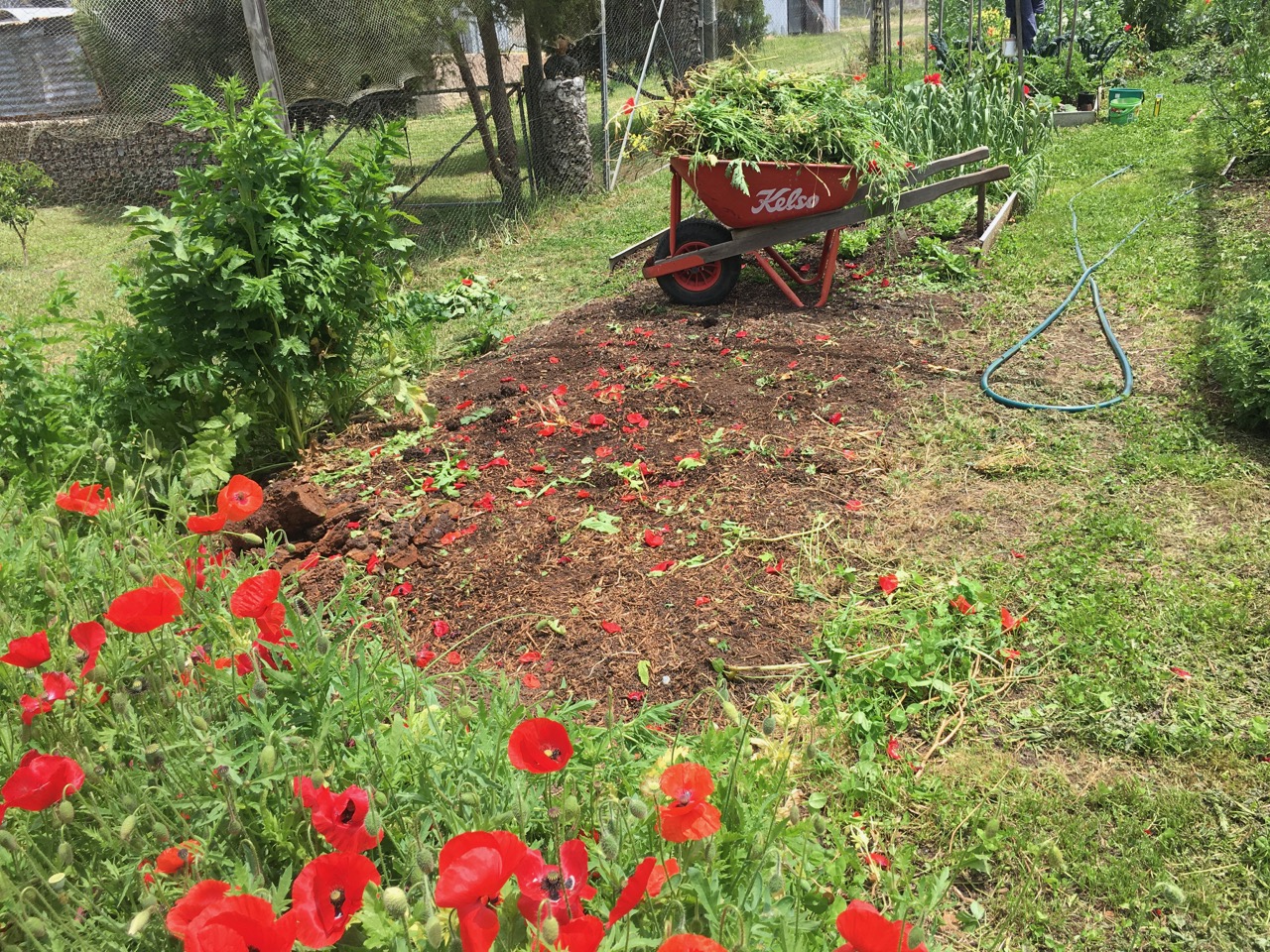
I pulled out half of the ‘Flanders’ Poppies. They are really beautiful. I love them to bits, such a great explosion of bright colour. They self sow every year and fill every space where I don’t weed them out. I need the space now to plant out more summer vegetables, so out they go. Well, half of them. I still want to keep the rest as long as possible.
The French beans are all up and doing well. I have no idea where I found the time to plant these during the hectic work load that we had up to the opening of the studio sales?
Half the poppies are gone to the compost heap to make space.
In their place there are now sweet basil, tomatoes and spinach, Further back, there are cucumbers and pumpkins.
I took a little bit of time out from gardening and weeding this week to glaze the last of the bisqued pots and get a stoneware firing done in the bigger electric kiln, fired entirely on solar energy from our new PV panels and battery. The results are good, just a few more lovely pots to refill the gaps in the gallery shelves from last weeks sales.
We are open this weekend each day from 10 till 4 – ish. on Saturday and Sunday , and also for the rest of the summer by appointment. Please ring or email first to make sure that we will be home.
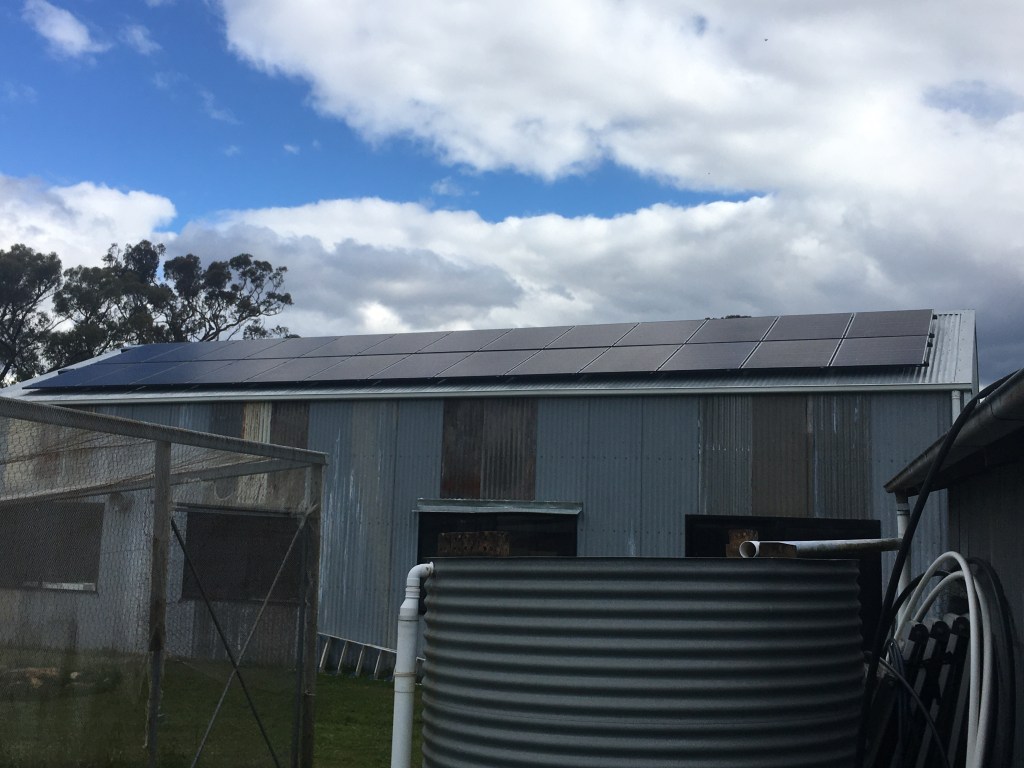
This week we installed another 10.5 kW of solar PV on the roof of the big shed. This roof is 16 metres long and faces due north at an angle of 22 degrees. Pretty much perfect for good solar PV generation.
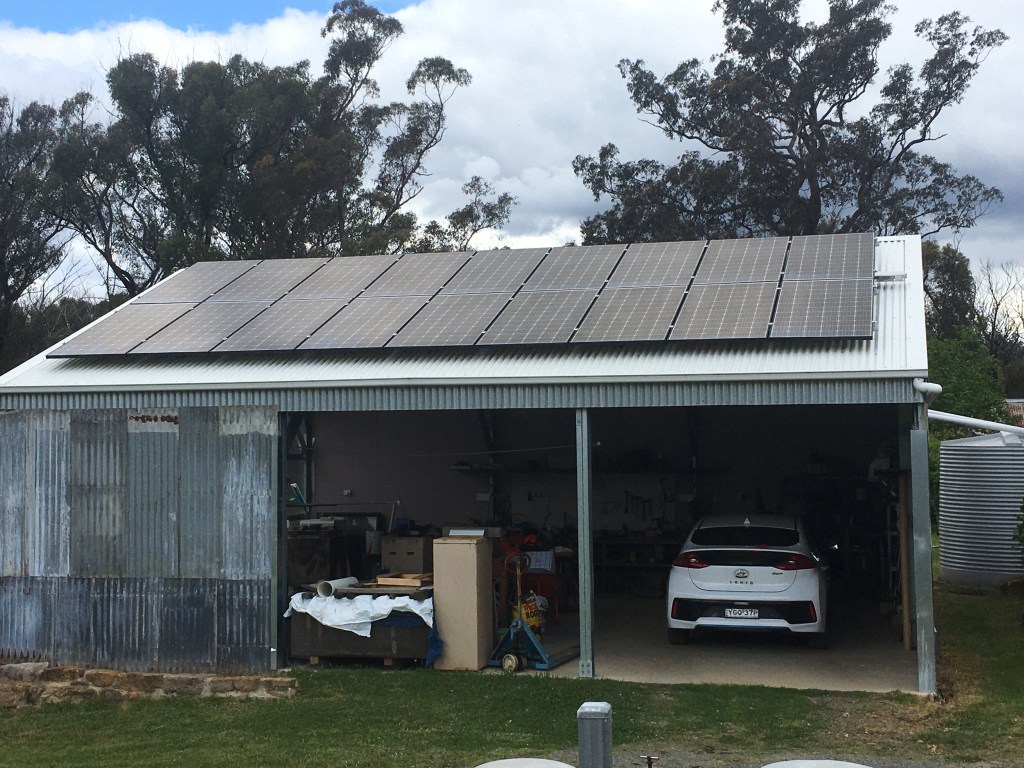
We already have 6kW of existing PV on the garage roof , installed soon after the fire to get us started again.
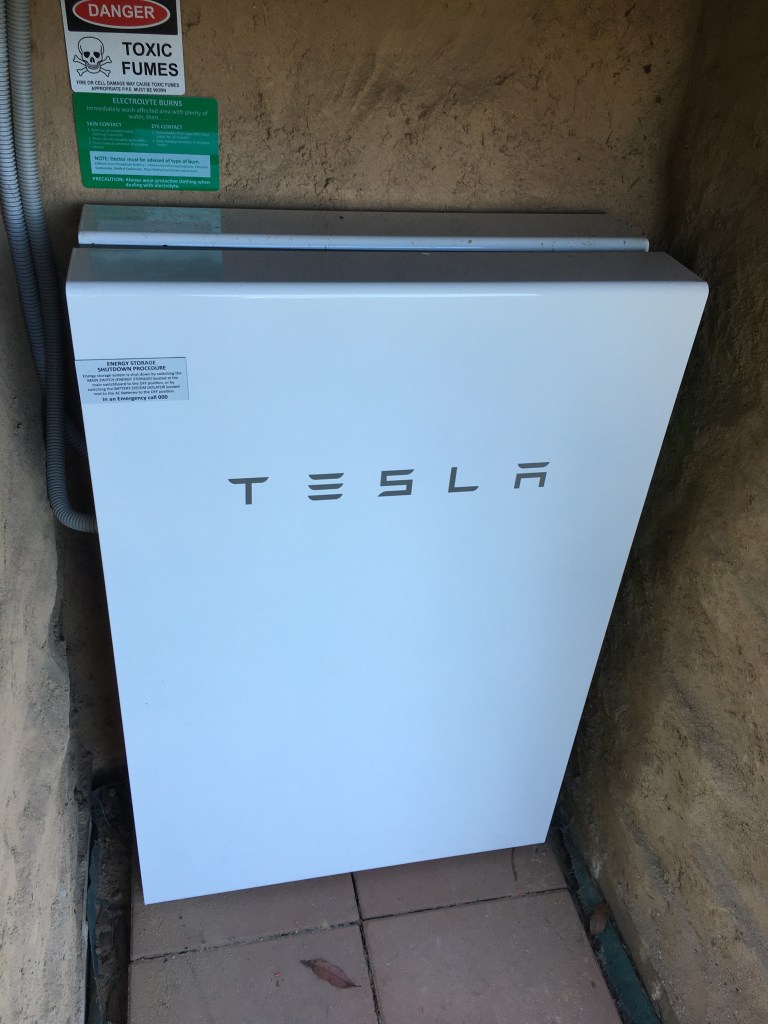
While we were at it we also decided to add a 2nd Tesla PowerWall battery, as we were offered it at a very good price.
This extra capacity now allows us to fire the new(2nd hand) bigger electric kiln off our own stored and active solar PV.
As time and finances allow, we are slowly and steadily moving to extricate ourselves from the fossil fuel economy. From now on we can do all our firing on either our own solar electricity or wood from our own little bit of burnt out native forest.
Because I only go to the petrol station once every 3 or 4 months to put a small amount of petrol in the plug-in electric hybrid car. I always forget where the switch is, to open the petrol cap cover.
In our old petrol powered car, I used to go the garage and get petrol almost every week, so I knew where the lever was. It was on the floor next to the drivers seat.
Now, because this car is so different — all electric everything. I have to remember to look for the special button to do the job.
Previously, I was only putting $20 in to last 3 months, but with the recent outbreak of war in Ukraine, the petrol company has been forced into ‘Putin’ the price up.
I put $30 in this time. I’ll see how long it lasts. This is only the 3rd time I’ve been to the petrol station this year. It remains a quaint and unusual event for me.
This electric car is beautiful to drive. So silent, but with heaps of torque. All you hear is some faint tyre noise, depending on the road surface. On the newer, smooth road surfaces, it is silent.
I’m pleased to be able to drive home and plug it in to the solar panels for a re-charge. If the sun isn’t shining, we still plug it in, and charge it off our Tesla battery. In this way we can use yesterdays stored-up sunshine.
I’m very pleased to say that even during winter, with shorter days and a lot of rain so far this year, we are still over 95% self powered. We can run our house, charge our car, plus run the pottery and even fire the small electric kiln on our 6 kW of solar PV.
So far this year, we have paid just $75 for electricity from the grid, and this was our first power bill in 16 years since we installed the first 3 kW of PV panels. This bill was largely due to the fact that the feed-in tariff has been reduced to just 7 cents per kW/hr this year, while the cost of green electricity has increased. The feed-in tariff won’t be going up any time soon, if ever. So we have to cut our cloth accordingly. Up until recently, we were getting 20 cents per kW/hr for our electricity, and getting the best part of $1,000 per year in rebates.
However, because I have been doing a lot of regular firings in our electric kiln, we have therefore used a lot more electricity than we normally would. This is becauseI have been working on my Show at the Sturt Gallery. It has taken a lot of research and testing to get this new body of work completed. I haven’t made pots like this before. I haven’t decorated my work with brushwork like this before, I haven’t used most of these clay bodies before and I haven’t fired this wood kiln before. Almost everything is new and therefore un-tried. It was a lot of work to get it all together in time, involving a massive amount of glaze and body testing and test firings. Hence the large power bill. So this is why it is so rewarding to realise that we were able to cover over 95% of it with our own self-generated power.
All this testing also has another more important purpose. I need to make the specially commissioned work as my part of The Willoughby Bequest for The PowerHouse Museum. My original idea all went up in the flames, so I have had to find a new approach, and this new work is my way into that place.
The show at Sturt gallery has been well received. It’s been open for a week now and they have sold 17 out of the 23 pieces. So that is a very good result and I’m very happy with that. I’m very happy with the work and I think that it stands up well. It expresses both my angst and trauma, but also the terrible beauty and energy of intense fire.
We have passed the shortest day, but the weather is still getting colder, as it does. There always seems to be a bit of a lag from the shortest day to the depth of winter. The reverse is also true for the longest day and the hottest weather. So it is now time to do the winter pruning of all the grape vines and deciduous fruit trees.
This was always such a big job in the past with all our stone fruit trees being over 40 years old. They had grown quite massive. Now, post fire, and all new dwarf fruit trees planted in the new orchard, it will not be such a big job, as the trees are still quite small and should remain that way. No more ladder work for pruning.
The first, earliest, peach tree has suddenly broken into flower. This is a strong reminder that I need to get on with it, stop lazing around, and get all that pruning done.
All this cold weather, frosty nights and chilly mornings has inclined me to make a few curries. They are a good comfort food, warming and filling, without being too bad for you. Veggie curries are great, I have been trying to use mostly what we have growing in the garden, which at this time of year must include broccoli, cabbage and even a few Brussel sprouts. I even managed to used most of our own spices.
This Asian influenced meal had the last 9 small tomatoes from the garden, our garlic, chilli, lime leaves, curry leaves, coriander and the last two small capsicums. All from the garden. I had bought a few pieces of fresh ginger, galangal and turmeric from the green grocer because we cant grow these plants in our garden here, even in summer. We had 3 curries over the week. Each one was slightly different, from Thai to Indian. Curry seems to be more warming than other meals.
Maybe it’s all that chilli?
On Sunday I was up before dawn and drove up to the North side of Sydney, a few hours drive away. Up to Oxford Falls. A place where I used to live. I grew up and went to school there. I used to live at number 41 Oxford Falls Road. This time I went to the far opposite end of that long road to collect some old and rusted galvanised iron roofing so that I can rebuild my wood fired kiln’s wood shed and finally create a new and hopefully permanent home for the rebuilt big hydraulic wood splitter.
It was a really lovely sky at dawn with the horizon turning from grey to pink for those precious few minutes.
I had been given a tin roof off an old chicken farm shed. I was told about it a couple of years ago, when we were casting about looking for old re-cycled roofing iron to use as cladding on our new pottery shed. I wanted to use all old, grey, weathered and slightly rusty re-cycled gal sheeting on this new building to make it look more in keeping with all the other old buildings on our site. Our home is the Old School building from 1893 and we also have the old railway station built in 1881. I managed to save both of these buildings from the fire. We wanted to keep the heritage look and feel of the place and a brand new shiny corrugated iron pottery shed would stand out like dogs balls, I managed to find just enough old, weathered roofing to complete the job while I was still waiting for the roof to be taken off the Chicken shed in Oxford Falls.
That roof was finally replaced this year. Too late for me to use in the new pottery, but just in time for me to use to re-build the dedicated wood shed for all the large billets of timber that are required to be split, stacked and dried for use in the wood fired kiln. I’m quite fond of the old heritage buildings and their ‘settled-into-the-environment’ look, so it is appropriate for me to build the new wood shed out of old and slightly rusted stuff.
When I drove into Oxford Falls Road, the road I grew up on, but where I left to find my own way in life in 1972. I found some old memories flooding back. I remembered that we used to walk down the road a few miles to get to the creek at the bottom of the hill and go yabbying. A yabby is a fresh water crayfish. This time, instead of turning to go up the hill to where my parents old house was. I turned the opposite way and crossed over the ford just above the falls and went West.
I hadn’t been here since I was in my teens and used to drive the family truck down here with my grand father, to collect chicken manure from his friends egg farm. My Granddad was a very committed organic gardener, health food devotee, and a strict vegetarian. He brought my mother up that way, and she me. In fact, my grand parents lived behind our house. The two houses back to back, on different streets but with a common back yard joining them. This back yard was huge, as land sizes were very generous in those post (WW II), war days. That shared back yard was dedicated in the most part to a huge vegetable garden and a few fruit trees. And, of course two massive compost heaps.
It was a regular chore to go with granddad and shovel chicken manure from the deep litter floor of the chook sheds when there was a change over of birds and the various sheds were empty for a short while. We had to take it in turns either holding the bag open or digging the manure and wood shaving mixture into the hessian bags, then lugging them out and up onto the truck. I shared this job with my older brother for a few years until he eventually left home and I was old enough the get my drivers licence and took over the driving. Old man Rigby, who owned the farm and my granddad were great friends. They were about the same age and shared the same interest in ‘health foods’, as they were called back then. Old Mr Rigby baked his own bread. As did my grand mother and she taught my mum. She then taught me. I still make most of our bread, as well as grow my own organic vegetables. Family traditions are passed down in this way. Give me the boy till he is 7!
Well, you can image my surprise, when I turned into the driveway of the site to collect the old roofing iron to find that it all seemed strangely familiar. I recognised the old shed with the hand split stone walls. It all came flooding back. I’ve been here before. Almost everything is different now, but the old shed is the same, just more dilapidated, but I remember that Old Mr Rigby lived in there. The first room served as his kitchen and his office, it’s now the pottery studio. The remaining bigger part of the old shed was his machinery shed. It’s now got one of my wood fired kiln designs in there. Who could possibly imagine that !
I remember sitting in that room waiting while Mr Rigby and my Grand Father chatted on about compost and other organic gardening stuff. I was bored. I wanted to get going, so that I could go to the beach. I didn’t take sufficient interest in their healthy organic gardening and wholemeal bread baking chat. My Granddad was probably thinking…
You must be logged in to post a comment.