More rain and tasting cider

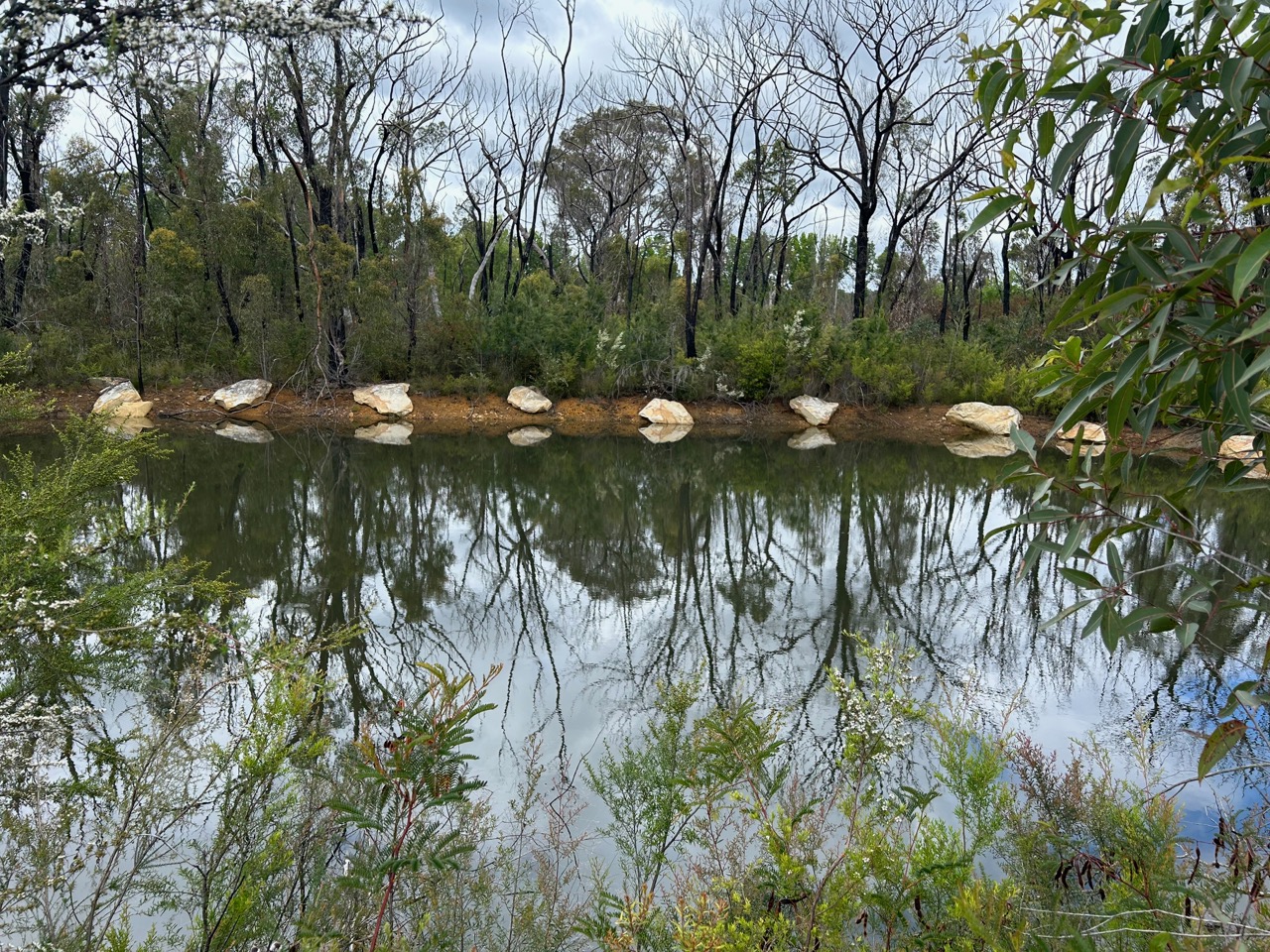
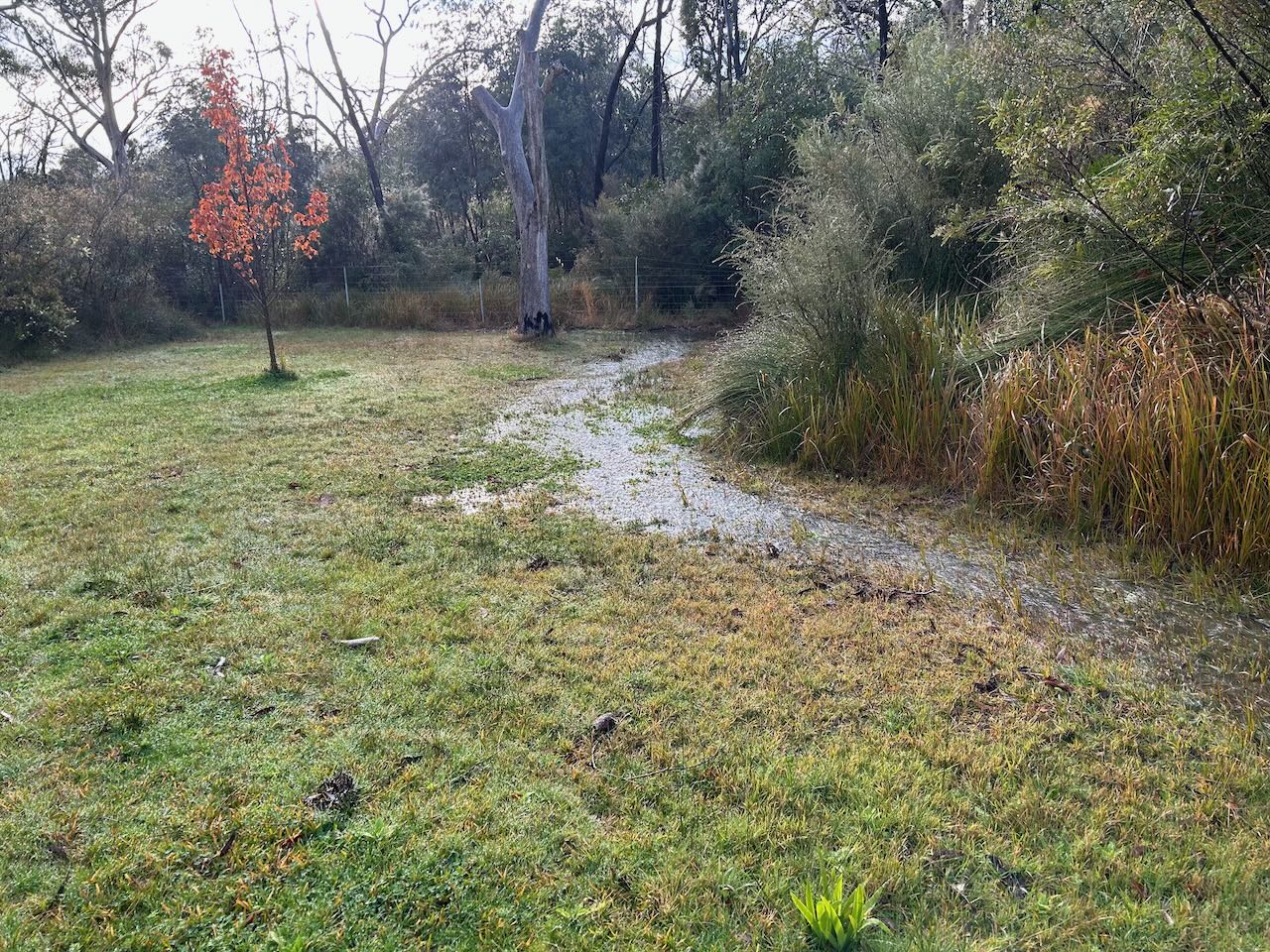
It’s been raining again quite heavily. We now have 4 different little streams flowing across our land, where the dams overflow, and the front lawn is under 25mm of water, like a slow moving shallow lake gently flowing across our kitchen vista.

We had 65mm of rain at one point. I thought about what to do for a while and came to the conclusion that it was probably best if I decided to do all those glaze tests that I had been meaning to do for a while. I certainly didn’t want to do any outside work. So I spent a day rolling out slabs and pressing out grid-tiles from my standard plaster grid-tile mould. This ensures that all my test tiles are the same size and shape, so that I can compare them at any time with tests made years before if needed. Tragically, I lost 3,000 glaze tests in the fire, so I’m starting again.
Weighing out glaze tests can be quite boring, especially when it goes on for days. However, it keeps me gainfully employed in the warm and dry pottery studio. I put on a CD while I work. It takes more than the length of a CD to fill one test tile with the infinitesimally small gradations of ingredients in the logical progression of the recipe. Each tile is 8 x 4 squares = 32 weighings and recordings.That’s 288 tests made in this sitting. Enough!
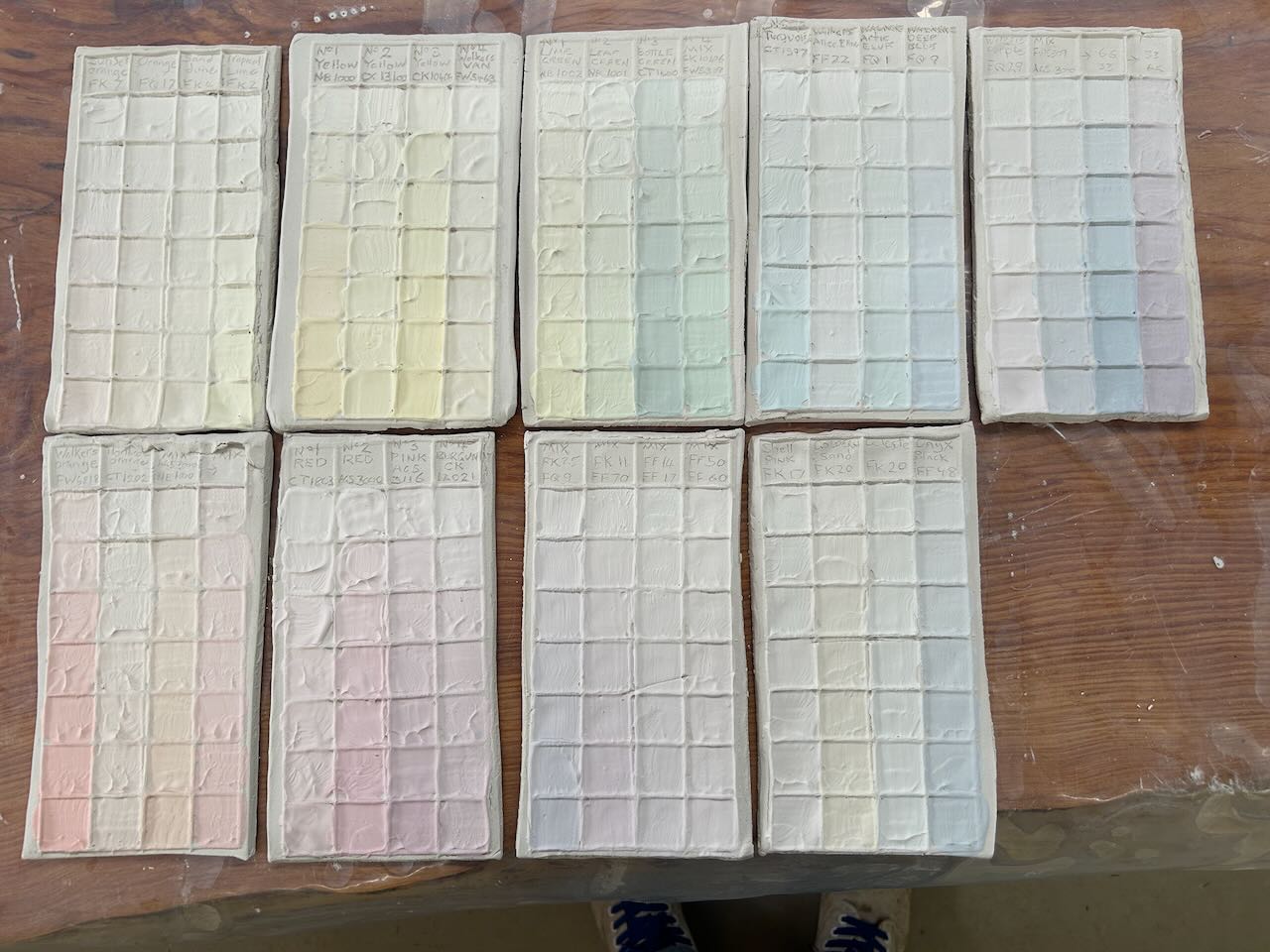
When I was doing my PhD, I did every test in triplicate, so that I could fine them in oxidation, then reduction and also in the wood fired kiln. As each kiln gives its own variation to the test. Having done that very thorough exploration, I’m over it and these days I only make the one series of tests, and fire them  in the kiln that I think will deliver what I’m looking for.

It fills 10 pages of my glaze note book this time around. I have to keep detailed records of what I do and why I’m thinking that it might be a good idea. Sometimes, it takes so long to get the firings done at the temperature that I’m imaging will be best and in the atmosphere that I want, and in the kiln that will give me those ideal conditions, so that If I don’t write everything down in detail, then I can forget what I was thinking and why I went to all the trouble. Hopefully, it will help me to understand both the results and more about myself in a few weeks time, when they are all fired, and I can decode the results! 

Each tiles takes about one hour to complete. After two days of this, I’m pleased to do the last one – for the time being

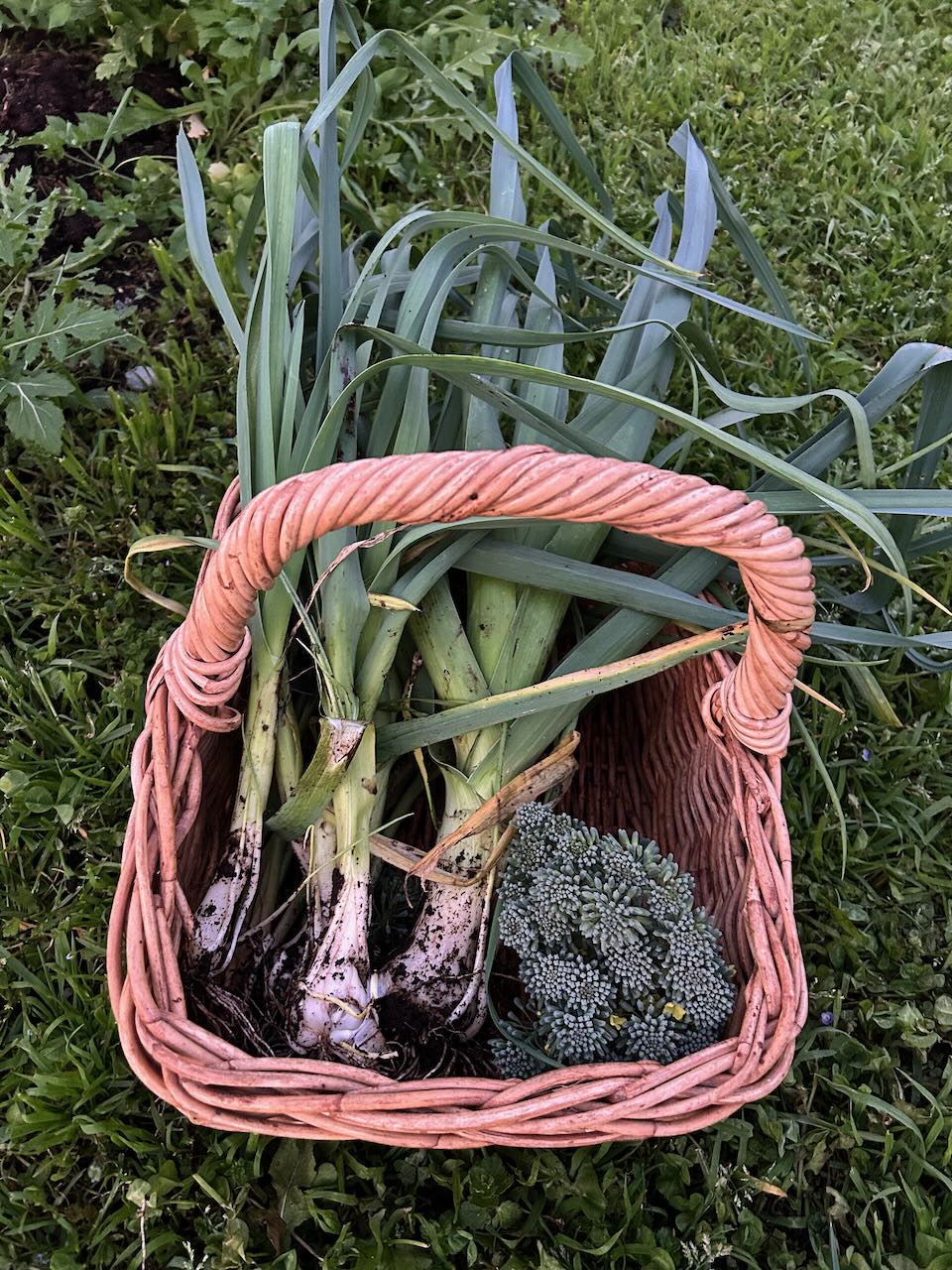
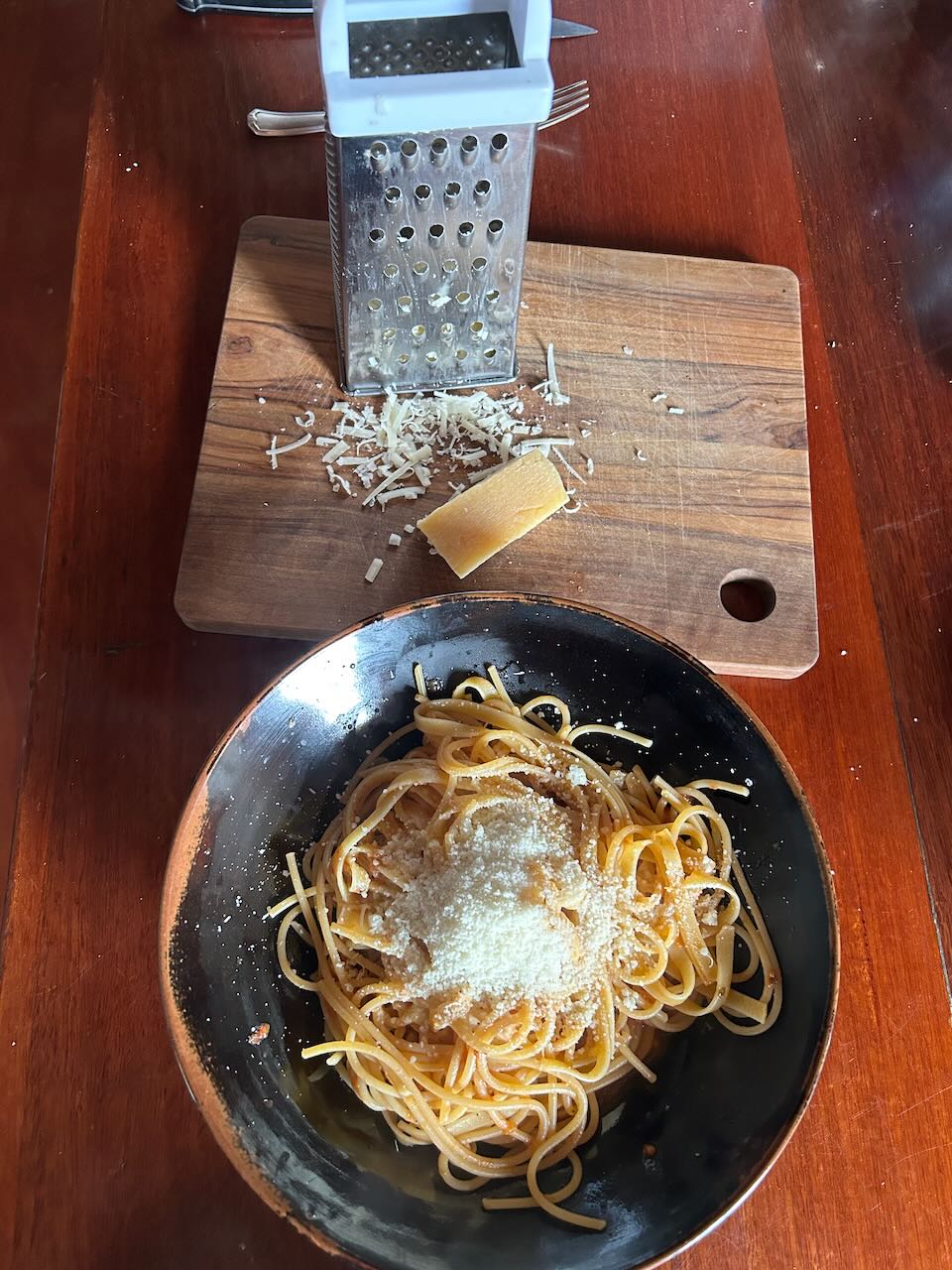
When there comes a break in the rain, I get out and pick vegetables for dinner. This time is leaks, broccoli, Brussel sprouts and carrots. I’m planning baked veggies with a mustard infused béchamel source for dinner. I make a quick and warming lunch of pasta. I tried to steal the spaghetti from the supermarket, but the female security guard saw me and I couldn’t get pasta!

🙂
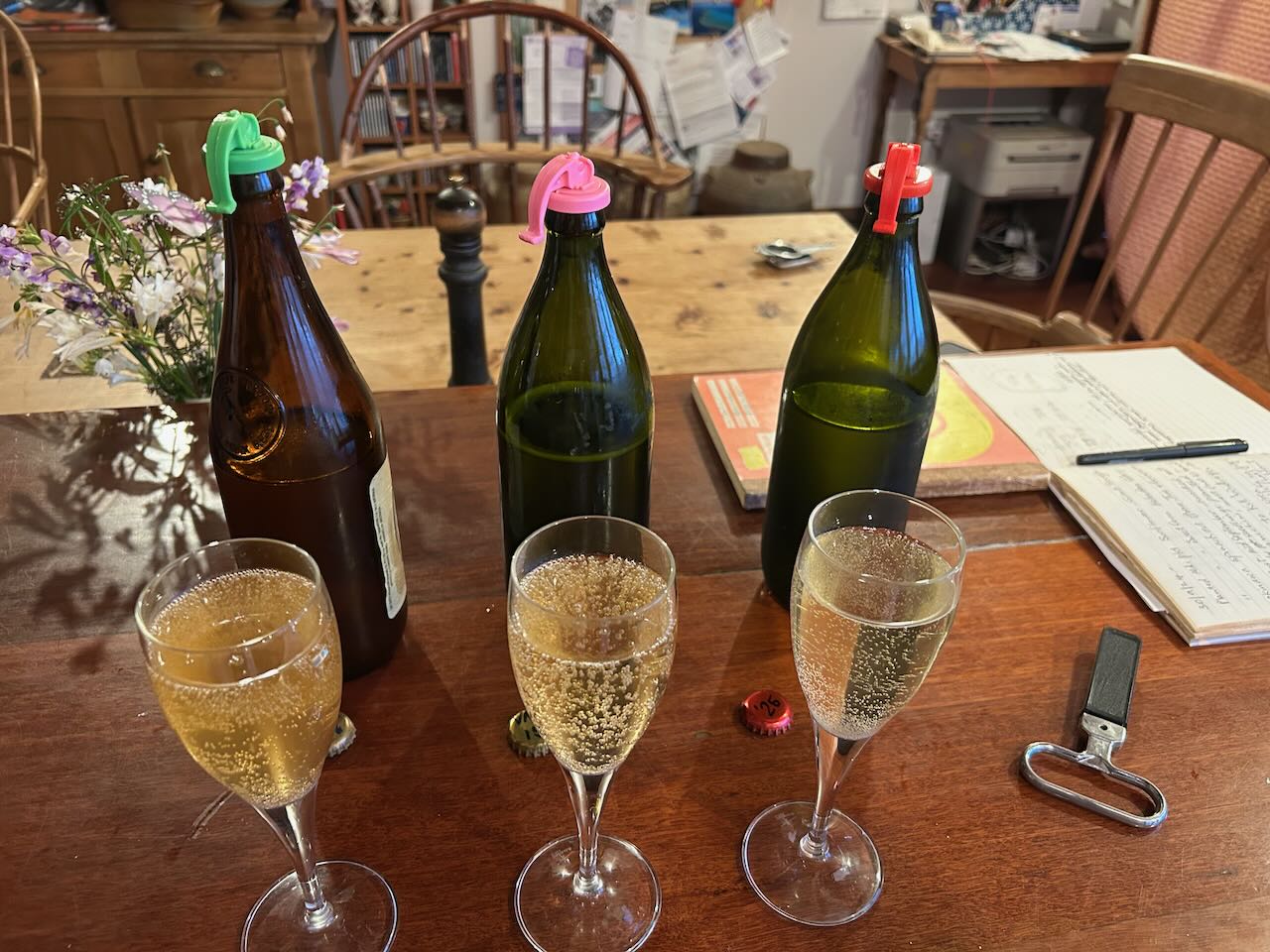
We decided to try is years cider with dinner. We made this batch of cider back on the 11th of February and bottled it on the 11th of April. So now it has had 4 months to settle down. It will be good to see how it has turned out.

See my blog post; ‘Autumns rewards,  Posted on 11/04/2025 

Janine thought that we should do a vertical tasting of the last 3 vintages. What a good idea! 

As we still have a few bottles of the 2012 vintage. This was the last vintage from the aged 40 year old apple trees in the previous orchard. From 2012 onwards there was a severe drought, so intense that we didn’t get to harvest any apples from 2012 through until the fire in 2019. So no cider was made. In 2015, our friend Val had a good crop of apples on her trees in ‘Lagan’, 2 hours drive, south of here, so she drove up a couple of washing baskets full of her apples. We were able to make a small batch of cider from those apples. We re-planted a new orchard in 2020 with different varieties of apples.

We opened 3 bottles to see and compare the difference. The older 2012 vintage was still very lively with good spritz, but a darker colour from its age, more akin to a beer in colour. It has a medium nose of sultry notes and a good firm cider flavour, just as we are used to. Completely dry on the finish. The 2015 from Val’s apples is medium in colour and flavour, and similar to above.

The 2025 is very pale with floral notes, a delicate palette and a dry finish, however, not very effervescent, because, as it is the first vintage from all the new apple trees in the new orchard, all planted since the fire, and this being the first year that we had a decent crop. I made the decision to cut the amount of sugar added at bottling, to ensure that there wasn’t too much pressure in the bottles. I don’t want to experience any exploding bottles. 

We make a completely ’natural’ cider here from our organic orchard apples. Nothing added at all except yeast. I have always used Moet and Chandon champagne yeast, as it has alway worked well for us. Back in the 70’s, you couldn’t buy cider yeast here in Australia, so i chose champagne yeast, as it is closest to what we wanted to make – a sparkling cider. These days I can buy any number of cider yeasts form the brewers supplies shop, but I stick with what works. 

I always leave the cider in the fermenter for 2 months to make sure that it has completely fermented out all the available sugars and is ‘dry’. Over the past 4 decades, I learnt to add one spoonful of white sugar to each bottle at bottling. This is the standard champagne bottling technique. This is to allow it to re-ferment, just enough to make a sparkling cider. Because these are all new trees and therefore an unknown fruit. I played it safe, and only added half a spoonful of sugar at this first bottling. So this batch has only a gentle spritz, but this is better than too much. 

After this test run, next year I’ll be brave enough to add the full amount of sugar.
I’ve never been brave enough to go with the wild ferment of naturally present yeasts that are on the skins of the fruit. When we had a small vineyard of 100 cabernet and 30 shiraz vines. I tried making one vintage of a macerated, whole bunch ferment. The wild yeast that was dominant on the skins at that time was very vigorous and resulted in a rather unpleasant distasteful wine. I didn’t like it at all and threw the whole lot out. So I lost a whole vintage. it’s nothing to do with money. It’s all about the investment of time and effort, and the expectation that there will be something interesting and delicious at the end, even if the amount is very small. For instance, we only make 30 to 36 bottle of cider each year, just enough to fill one fermenter. It’s enough.

Nothing is perfect, nothing is ever finished and nothing lasts. Good cider doesn’t.
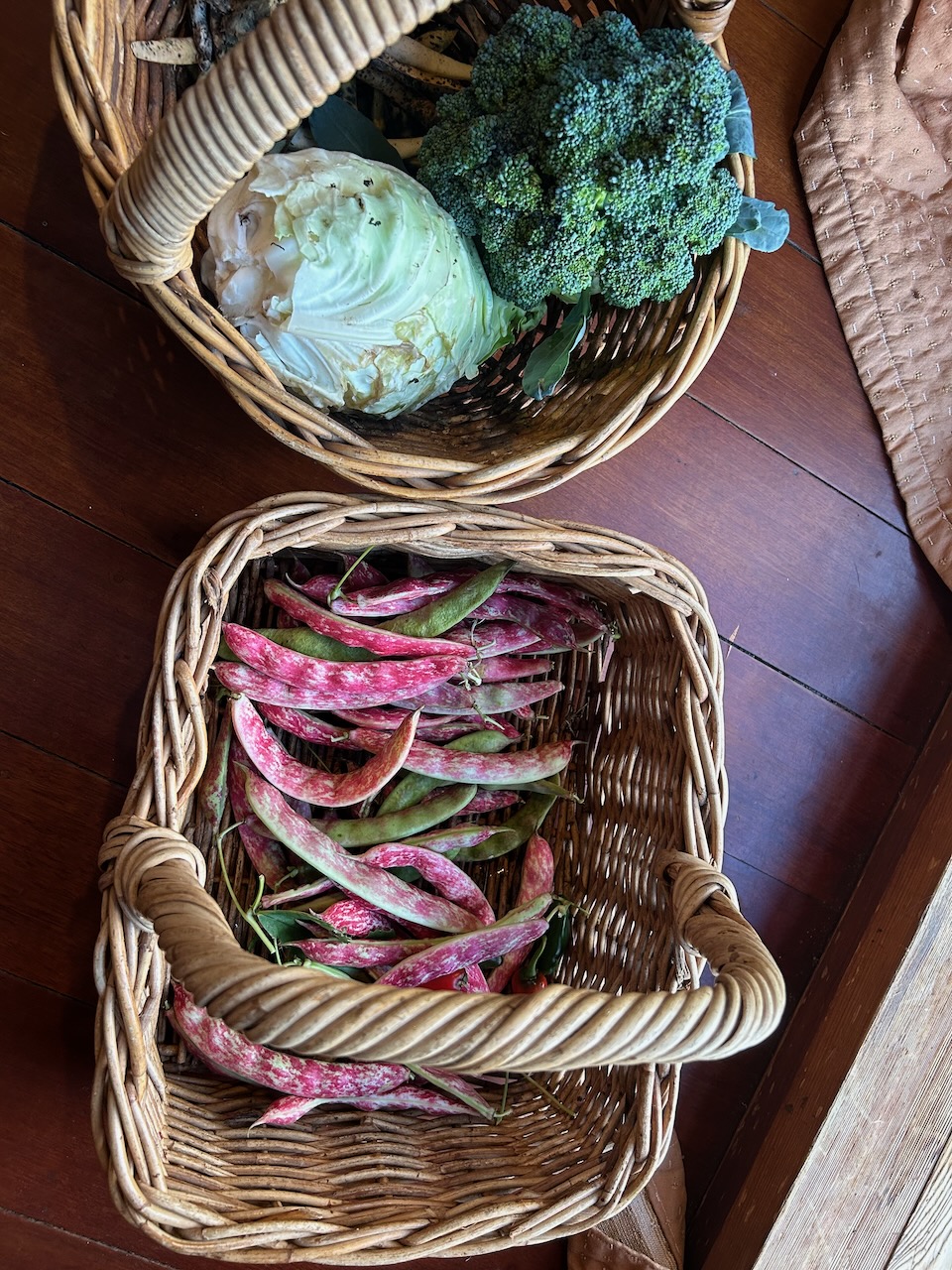
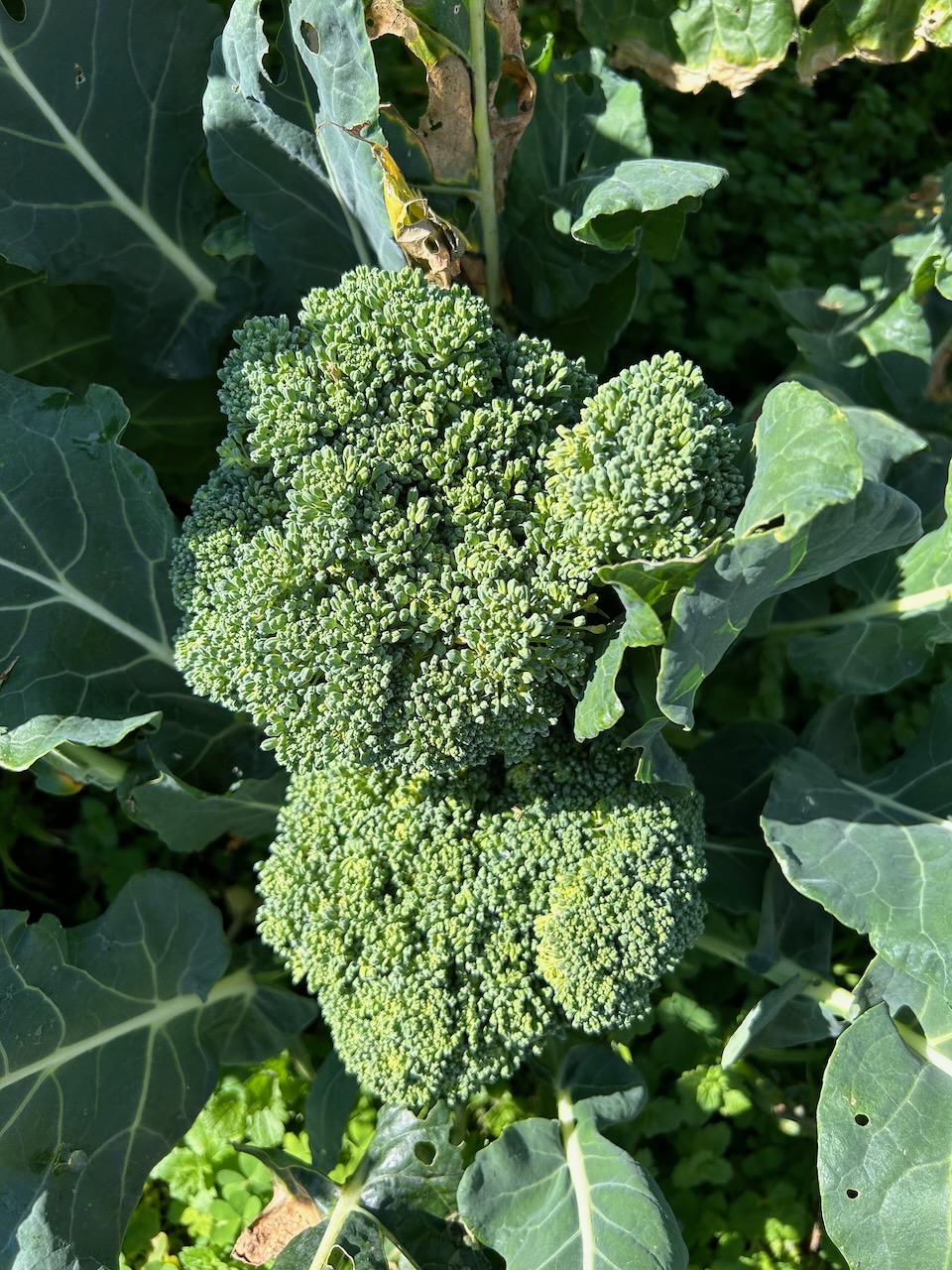
First cabbage of the cool season.

We have just harvested the first cabbage and first broccoli of the autumn. I planted a range of brassica seeds on boxing day. The first batch were all dug out by the blackbirds, so when I re-planted the 2nd sowing, some time later. I also covered the bed with bird netting to stop a repeat of the blackbirds scratching out the seeds. Blackbirds don’t want the seeds, they just like to scratch into freshly worked and composted soil looking for worms. This little hiccup set me back a few weeks, so our first cabbage is a bit late arriving.

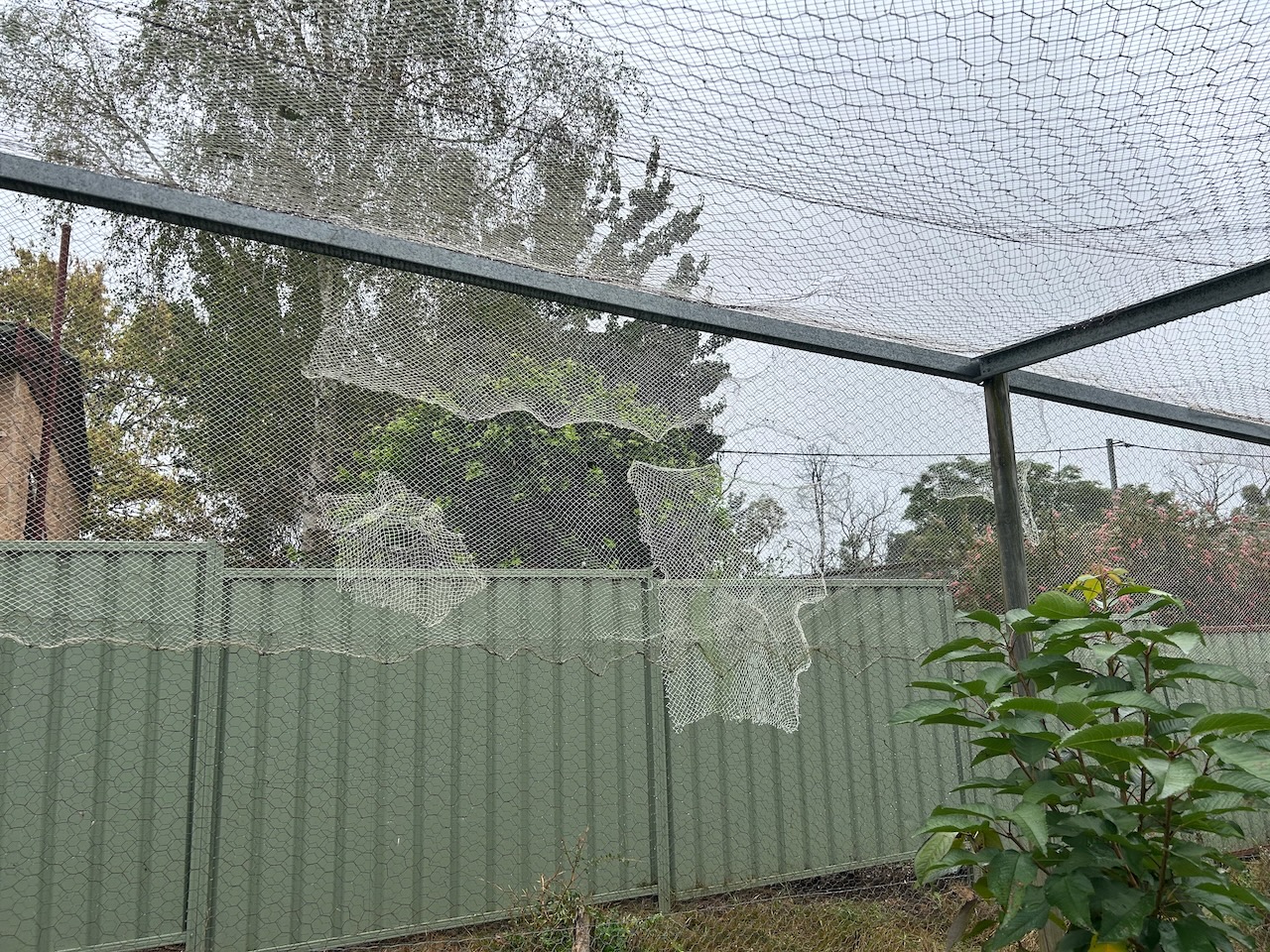
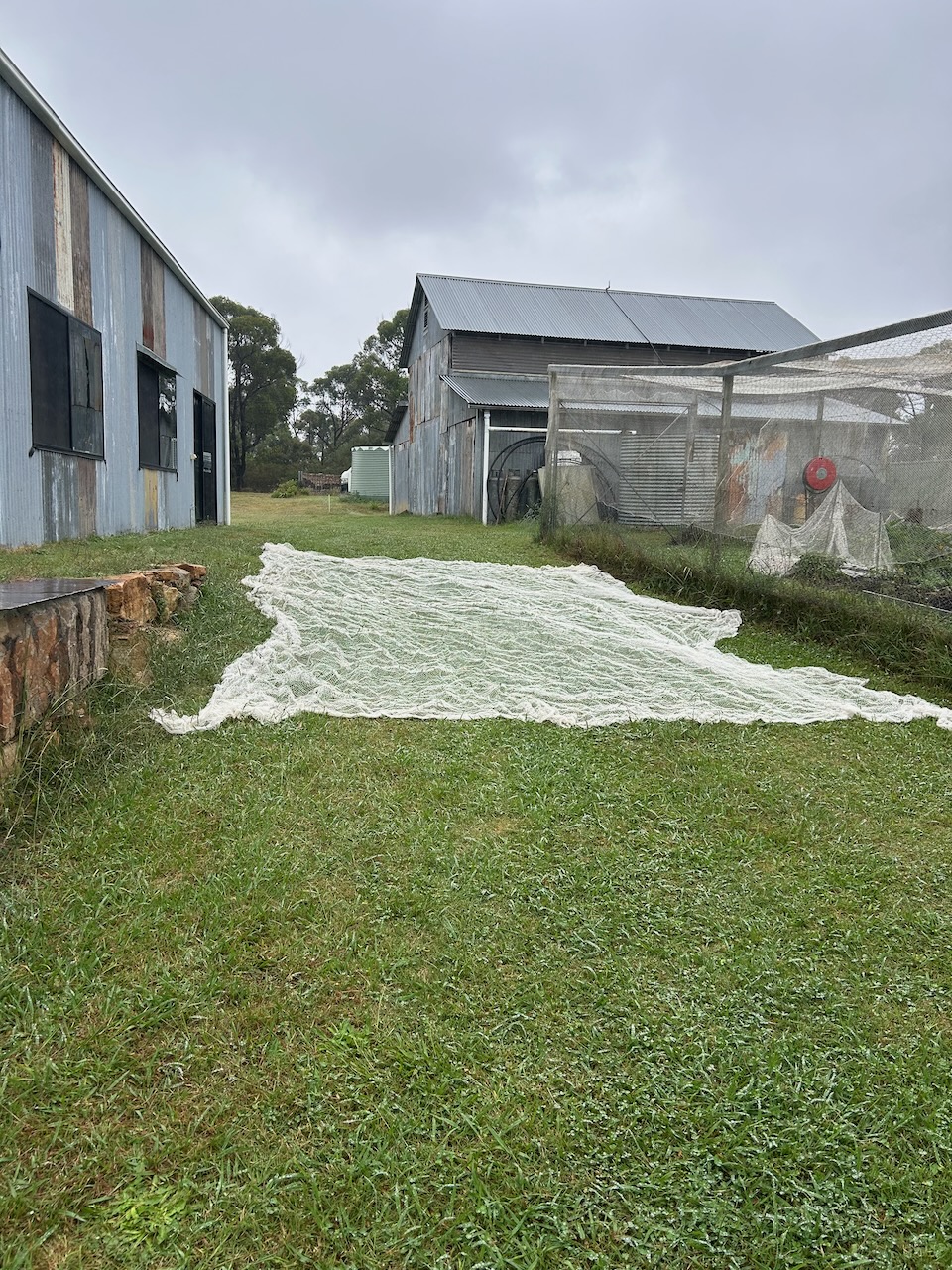
I have now repaired all the melted sections of the plastic netting over the vegetable garden. Almost total replacement at both ends that were worst hit by the fire, then applying patches to the large holes in the other walls, and finally stitching together the small 50mm to 100mm holes that are scattered all over the enclosure walls and roof. I purchased a commercial size roll of 100metres by 10 metres of netting over 30 years ago to cover the vineyard at harvest time. The netting that is over the veggie garden now is all that is left over from that time. It had a 10 years warranty against going brittle with the ultra violet light. So I’m very pleased that it has lasted so long. However, it is getting very brittle and the galvanised steel netting is all rusted through in places. So a total rebuild is in order, but I’m not too sure that I can manage that big a job these days, or if it would even be wise to attempt it at my age, having just turned 73, I shouldn’t be up and down ladders for days on end.

I made an Australian version of oka-nomiyaki pancake. Of course it is not really an okonomiyaki, as I don’t have mountain-potato starch, or almost any other authentic Japanese ingredients, but I do the best that I can with what I have. The super-fresh garden ripe cabbage makes it really fresh, crisp and delicious. The broccoli goes into a veggie stir fry along with all the other garden delights of the current season and some tofu for protein. Vegetable gardening, which mostly involves a lot of weeding, mowing and watering, suddenly becomes so worthwhile when you are harvesting such beautiful produce each afternoon, freshly picked ready for dinner. Our food has carbon metres, not miles!

I have also planted another 4 different varieties of seed garlic in the garden, just to see if any of therm are well adapted to grow here in the future.

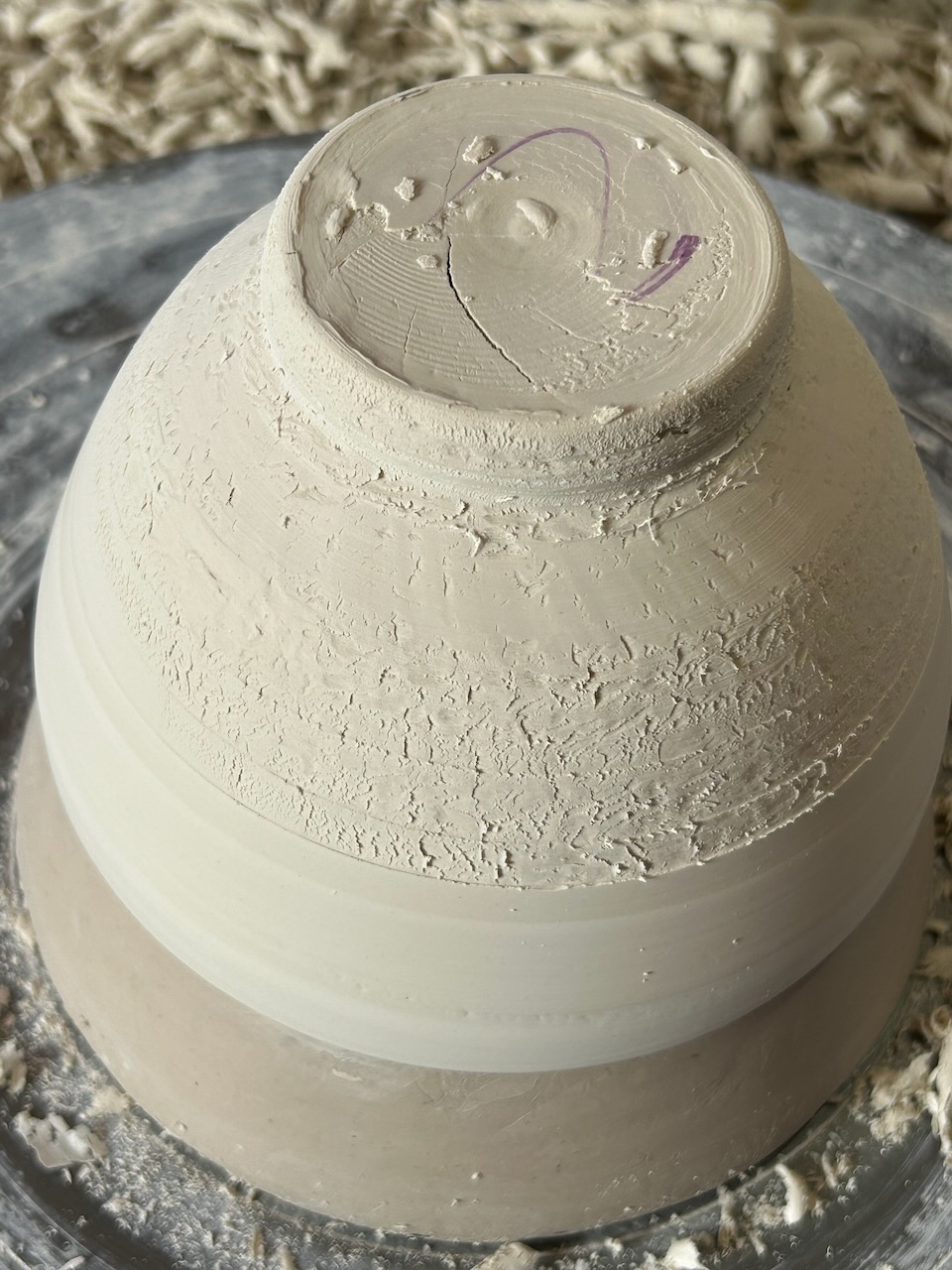
In the pottery, I have been throwing some sericite porcelain stone bodies. This stuff is so short that I have to make the wall bases thick to hold the form up. That then means a lot of turning to get the pot thinner again. This weird stuff tears and rips as the turning tool cuts into it – unless it is turned quite firm and almost dry. But then there is the dust to contend with, so I like to do it while it is still a bit damp, but then it chips a lot. It becomes a two stage process. Roughing out the mass of extra thickness, drying some more, then final turning. I get to do a lot of slaking and re-cycling of turnings.
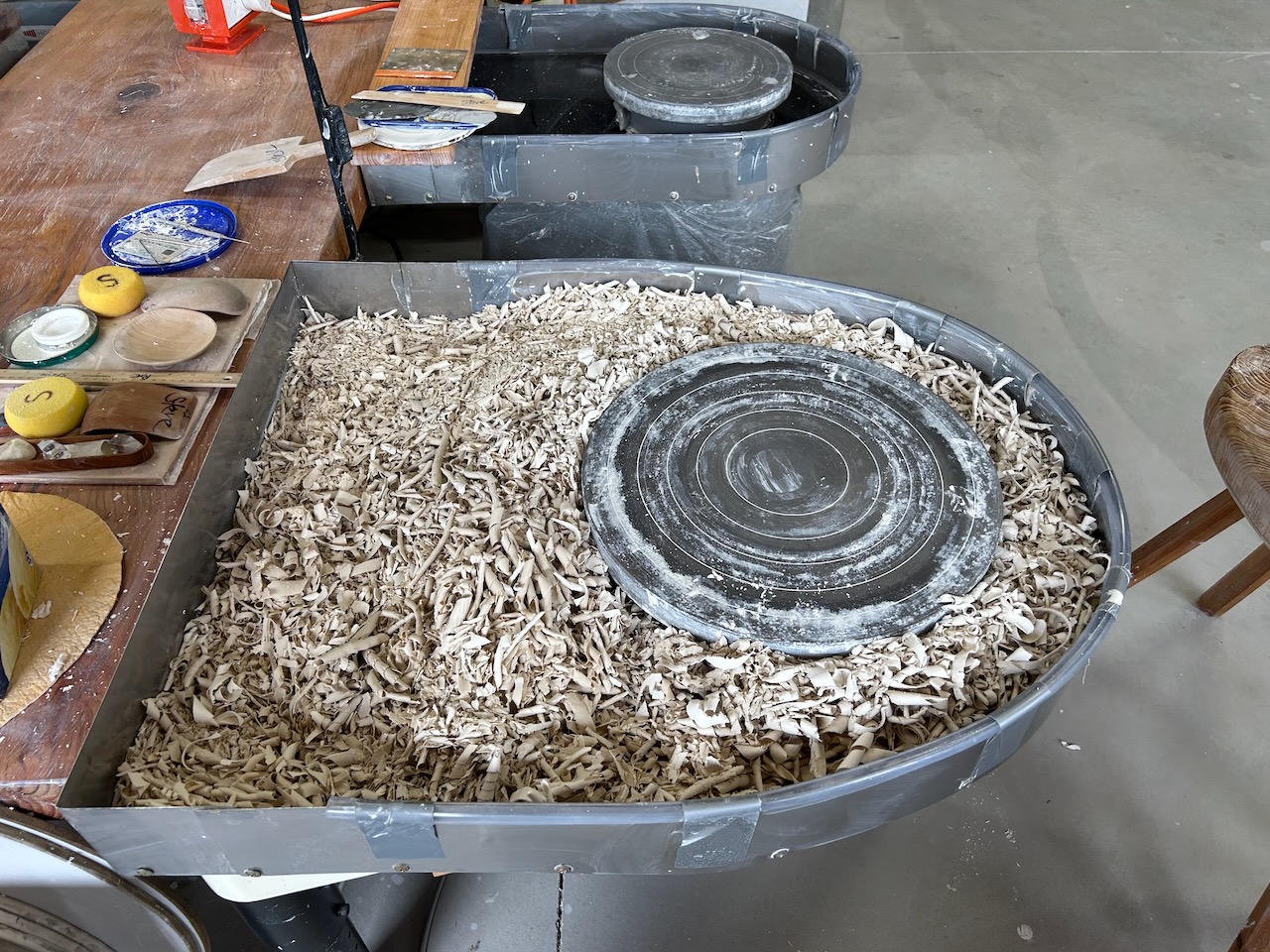
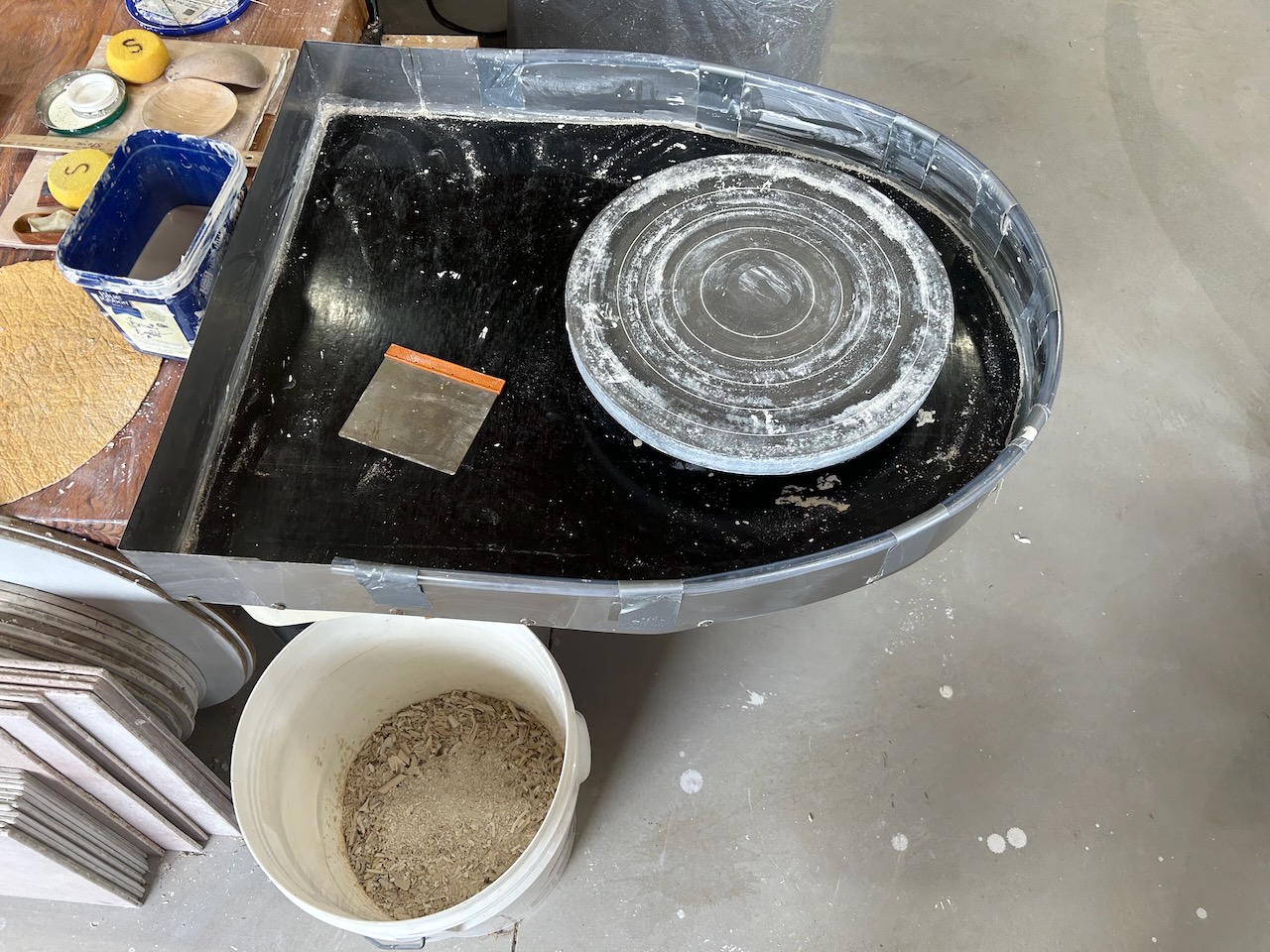
I have built an extra-large tray for my shimpo, but with this porcelain, I still fill it very quickly. This image is of the trimmings from just 15 small 150mm. bowls.

It all goes into the mixer pug and is recycled, ready for throwing again the next day, although leaving it to age a little bit and ‘recover’ would be even better, but because I use a dozen different mixtures and recipes, it is easy to loose track, with too many small packs of different clays hanging around. So I prefer to use up each batch all in one go as soon as possible.

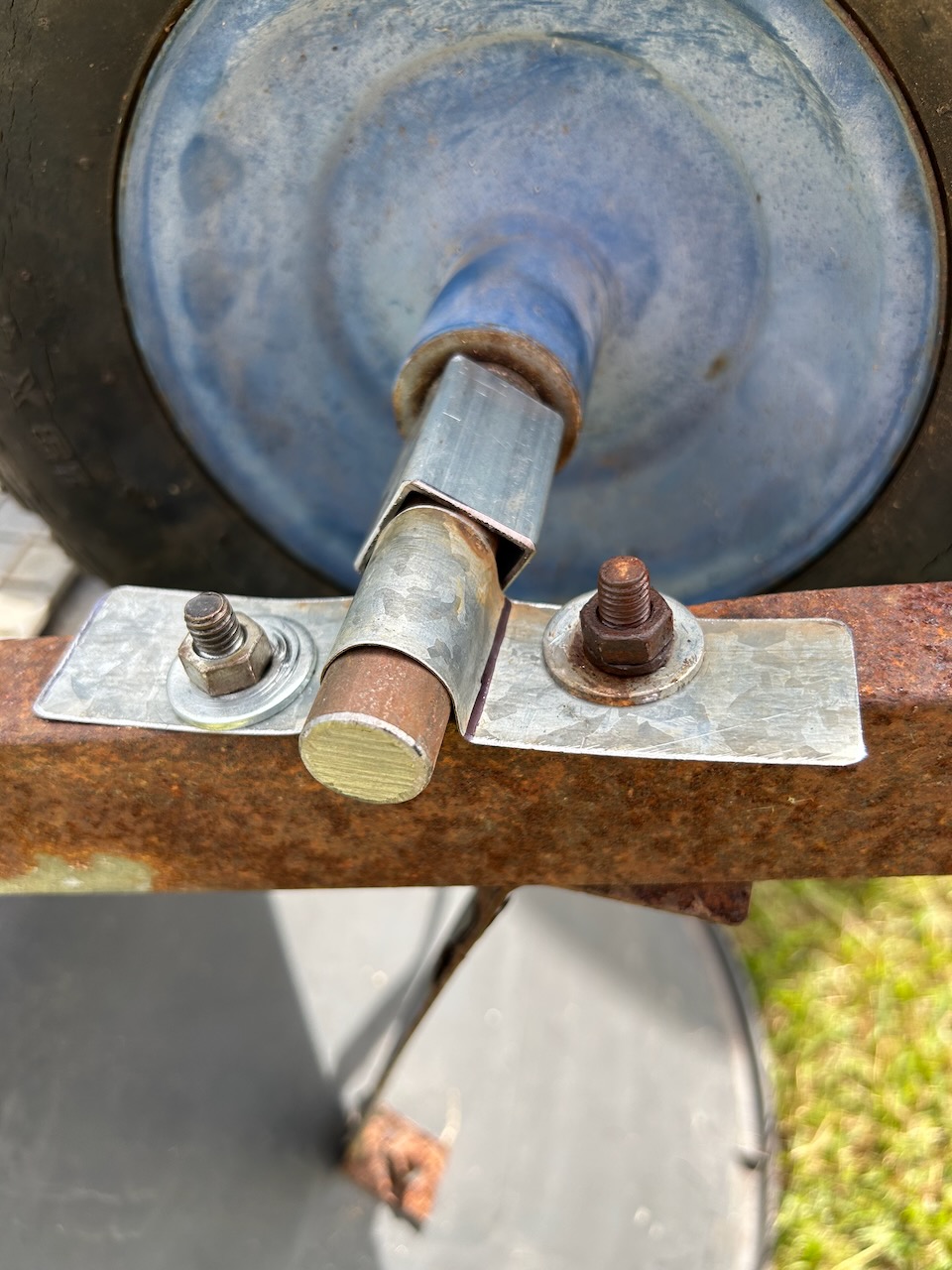
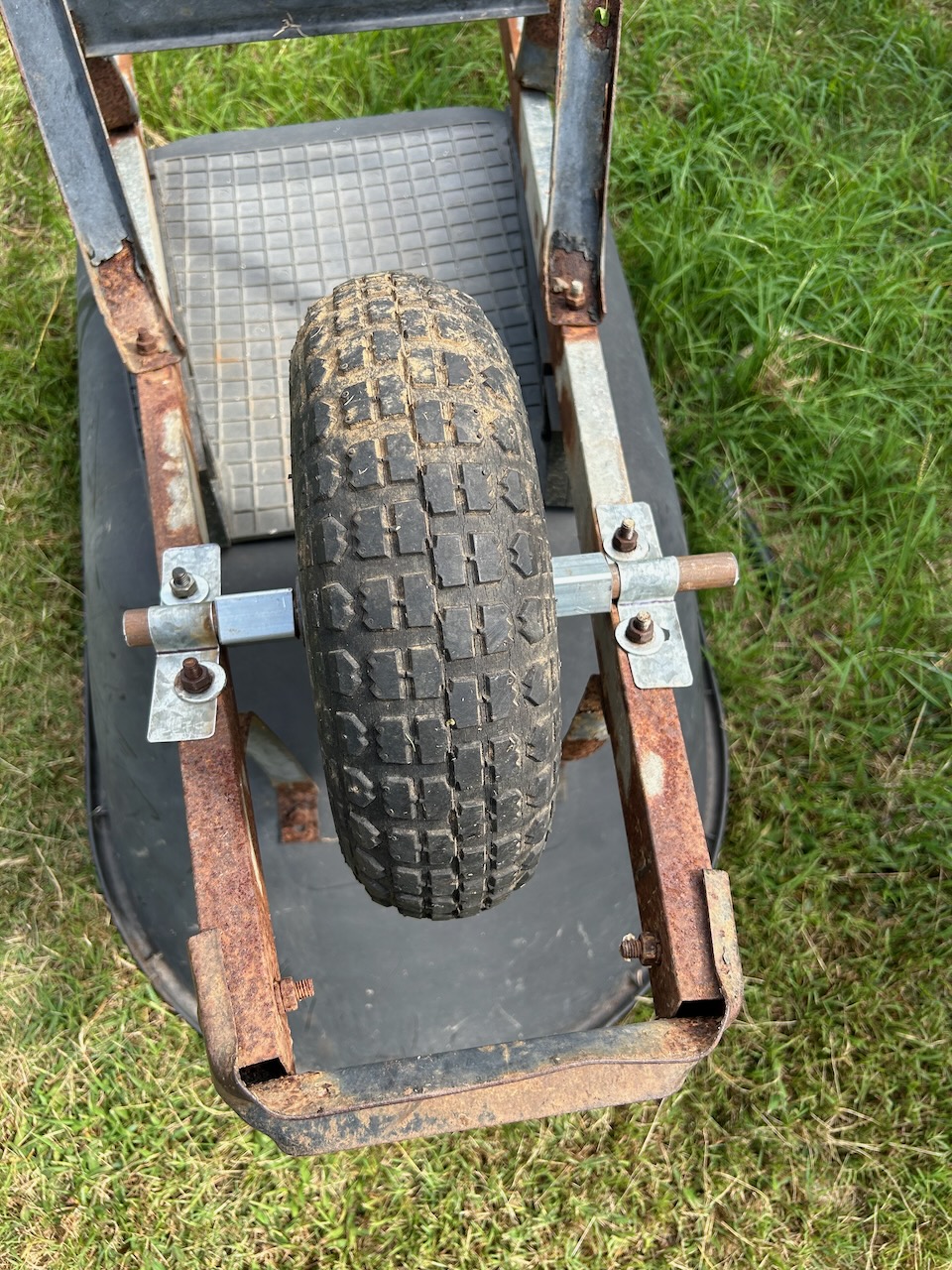
The tyre on the old wheel barrow went flat last week. I took it to the tyre place to get a patch or a new inner tube, but they told me that the tyre wasn’t worth working on and I’d need a new tyre and a new inner tube – at a cost of $78! As the old metal rim is quite rusty, I decided that I might just as well buy a whole new wheel unit from the big hardware chain for $32! But then I remembered that I had a complete wheel off a buggered trolly that I picked up off the side of the road on council clean-up day. It is 25mm smaller in dia. but still holds air pressure well, so I had to change the shaft size and make some new brackets to hold it on, out of scrap tin plate. 20 mins later we are all back in business and good to go. It’s not perfect, but it works. Recycle, reuse, repurpose!

The Japanese have a word ‘Mottainai’ – too good to waste!

A botched up job that will keep all of this useful material out of the waste stream and land fill for another decade. I actually picked this whole wheel barrow up off the side of the road in the village some years ago on Council clean-up day, when the owner decided that it was just junk, because the tyre was flat. I took it home and just pumped it up. It worked! And has been working hard here for all those years of reprieve since then – and now still continues to be useful. Waste averted, Mottainai!

Nothing is ever finished, nothing is perfect and nothing lasts.

Autumn is here

It’s March and autumn is supposed to be here, but it has been delayed by Global Heating! We are having some of the hottest recorded days for this time of year. We are used to the long ‘Indian Summer’ season transition, but this is the heat that we used to expect in the middle of summer.

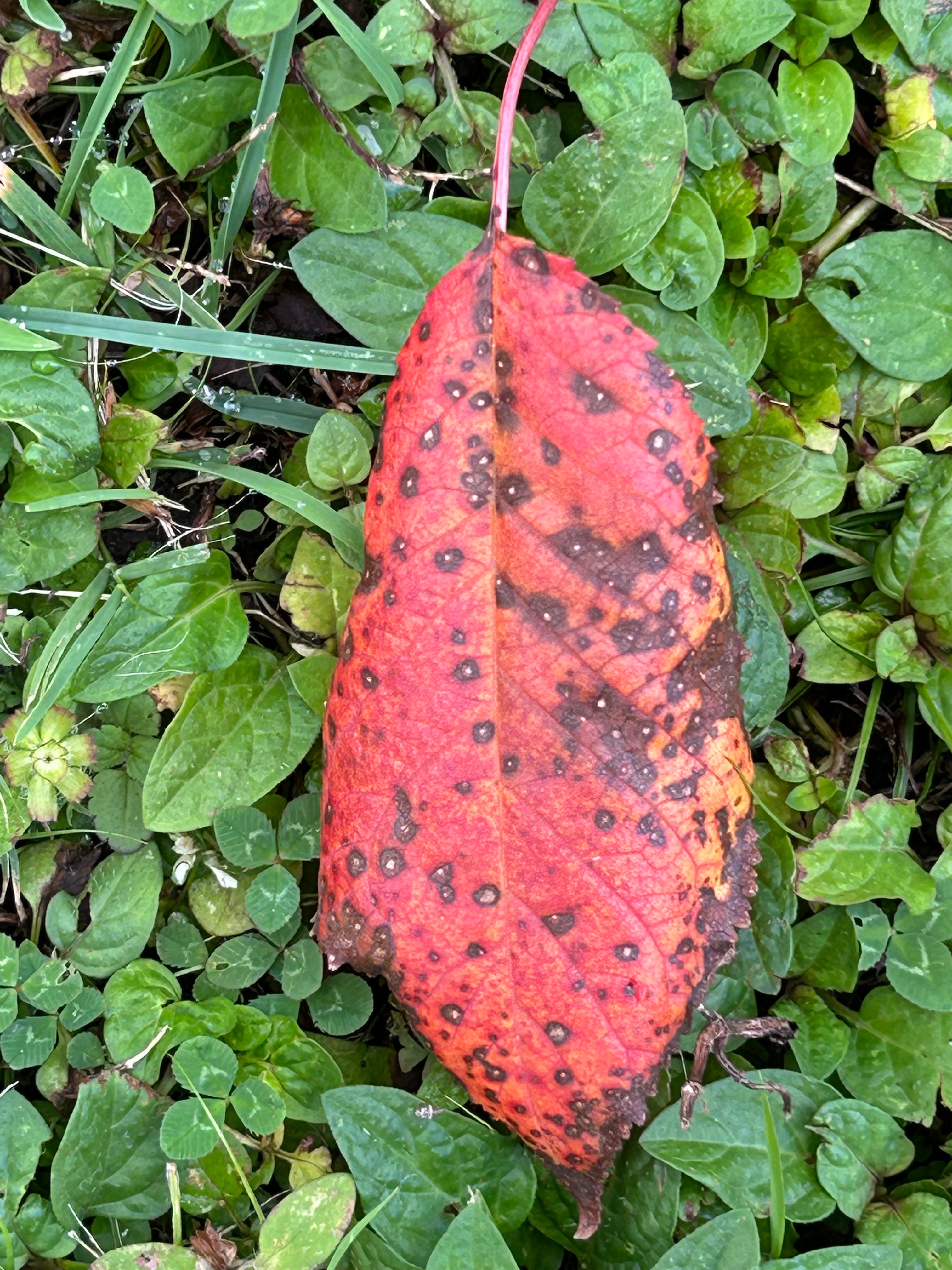
The cherry trees have lost all their leaves. They are the first to bud-up in the spring and the first to drop their leaves in Autumn.

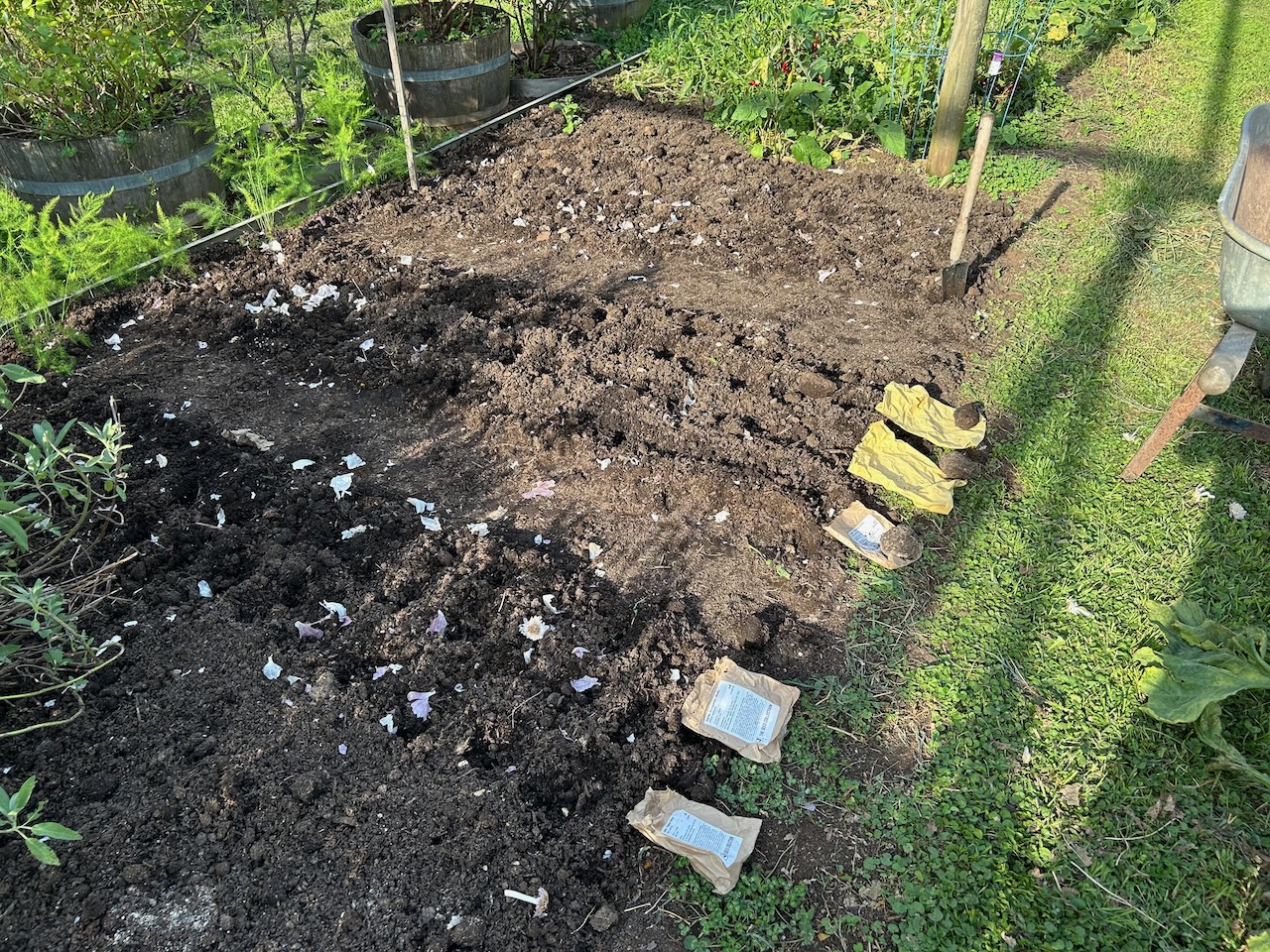
March is the month to plant garlic. The small cloves that we missed picking 6 months ago have shot up in the places where we left them invisibly underground. Their tender, slim, green aromatic shoots are a very good sign that it’s time for garlic to grow again. They have decided!  I planted 5 rows of our own, best-of-crop, home-grown garlic, the largest knobs from last year. 

I planted about 15 cloves to a row, that’s about 70 plants, if they all do well. I left a gap, for a place to stand while weeding the crop as will be necessary several times over the next 6 months. 

Then I planted 4 rows of commercially grown varieties of seed garlic. This year I’m growing ‘Rojo de Castro’ ‘Dynamite’ and ‘Spanish Roja’. Just to see if they will do well or even better than what we already have.

I left another walking gap for weeding and watering, then another 3 more rows of other bought seed garlic varieties. ‘Dunganski’, and ‘Festival’. Our very good friend Anne, organised a bulk purchase for a few of us in the ‘seed-savers’ group. I’m always interested in trying something new. Thank you Anne!

I always plant the best of last years harvest, whatever variety(ies) that is, very often a mix of what grows best here over the decades. All self selected, simply by growing well with large easy to peel large cloves. These new varieties all have a red, or pinkish hue, simply because I like the look of them when hung up in the kitchen drying and waiting to be used.

Whatever does well and grows best will be added to our localised crop for the following season. Life goes on. All the same as before, but with small changes and additions and hopefully improvements.

In the pottery I have been collecting, crushing and ball milling a few new local rocks for testing as glaze material.

As soon as the heat subsides, I’ll be firing the small portable wood fired kiln, filled with test bodies and glazes, to prepare for the firing of the big wood kiln over the winter months.

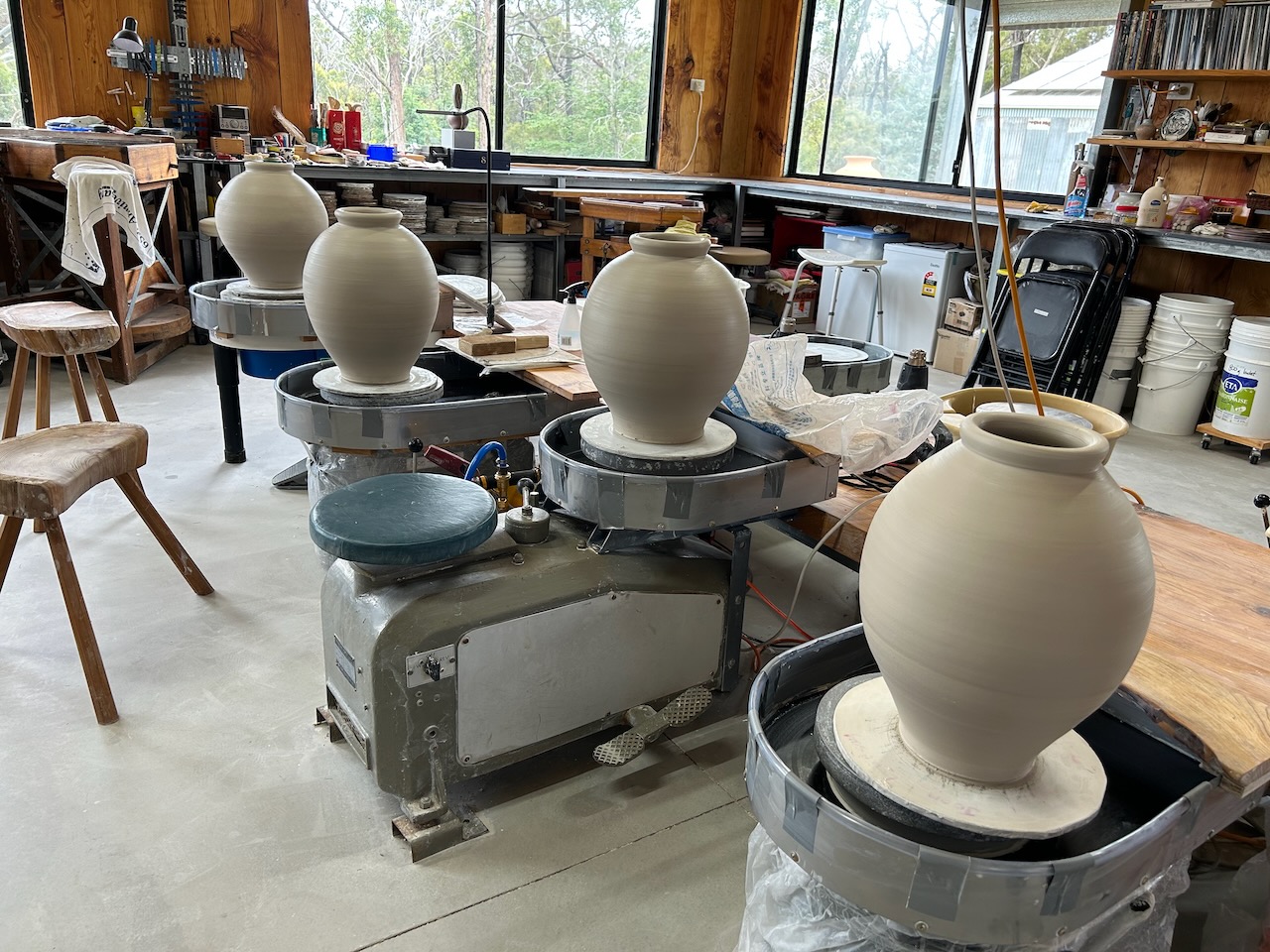
After the ‘big-pot’ throwing Summer Schools that we held here over January and February. I had about 80 kgs of the special course grained/textured clay left over. So I decided, rather than store it away somewhere, I would be better off to use it up making a few big jars for myself. I have always liked the traditional Korean ‘Moon Jars’, so I decided to have a go at making a few Korean inspired big round jars. They are NOT Moon jars, but my interpretation of the big, round, pale glazed form.

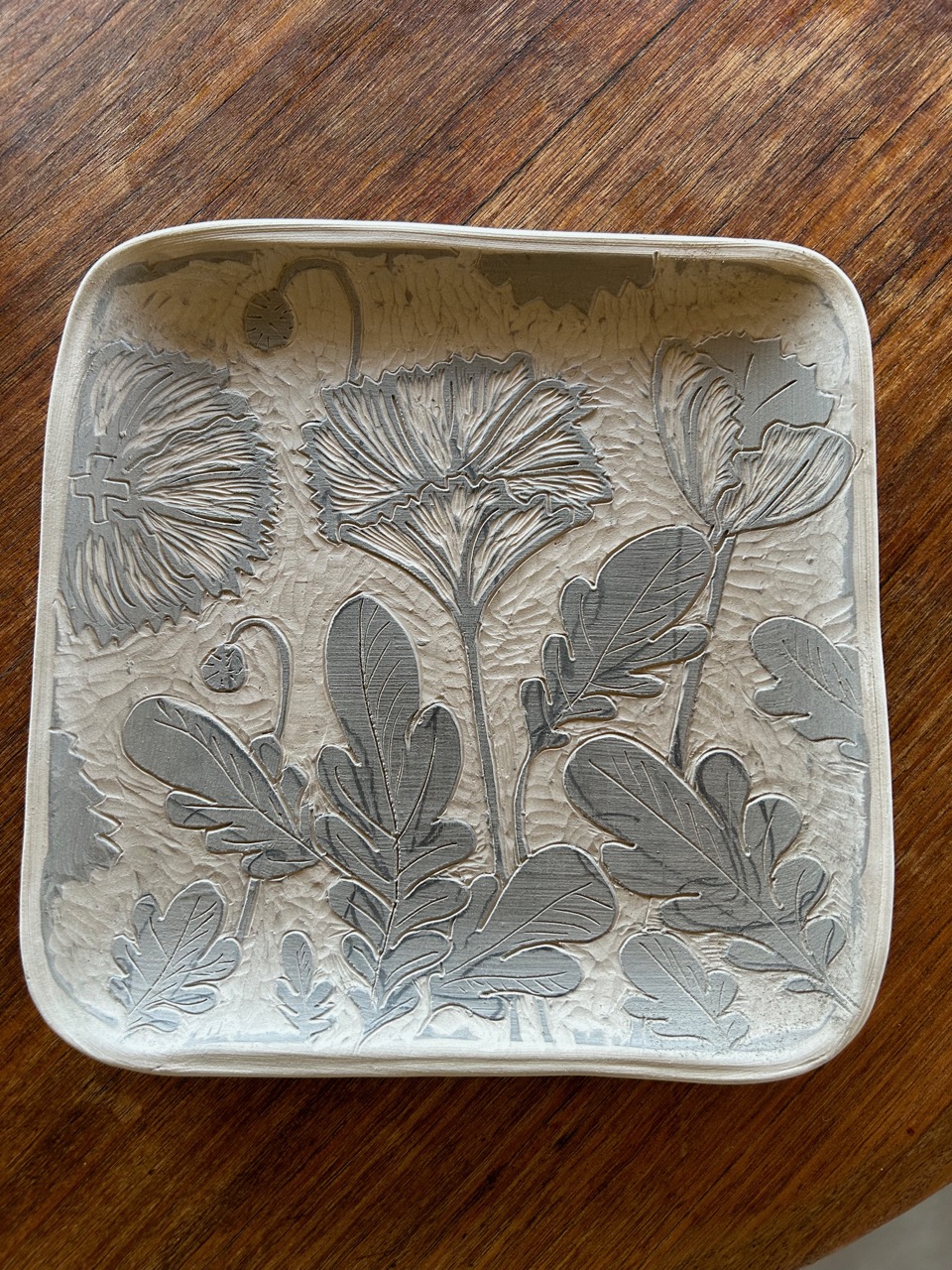
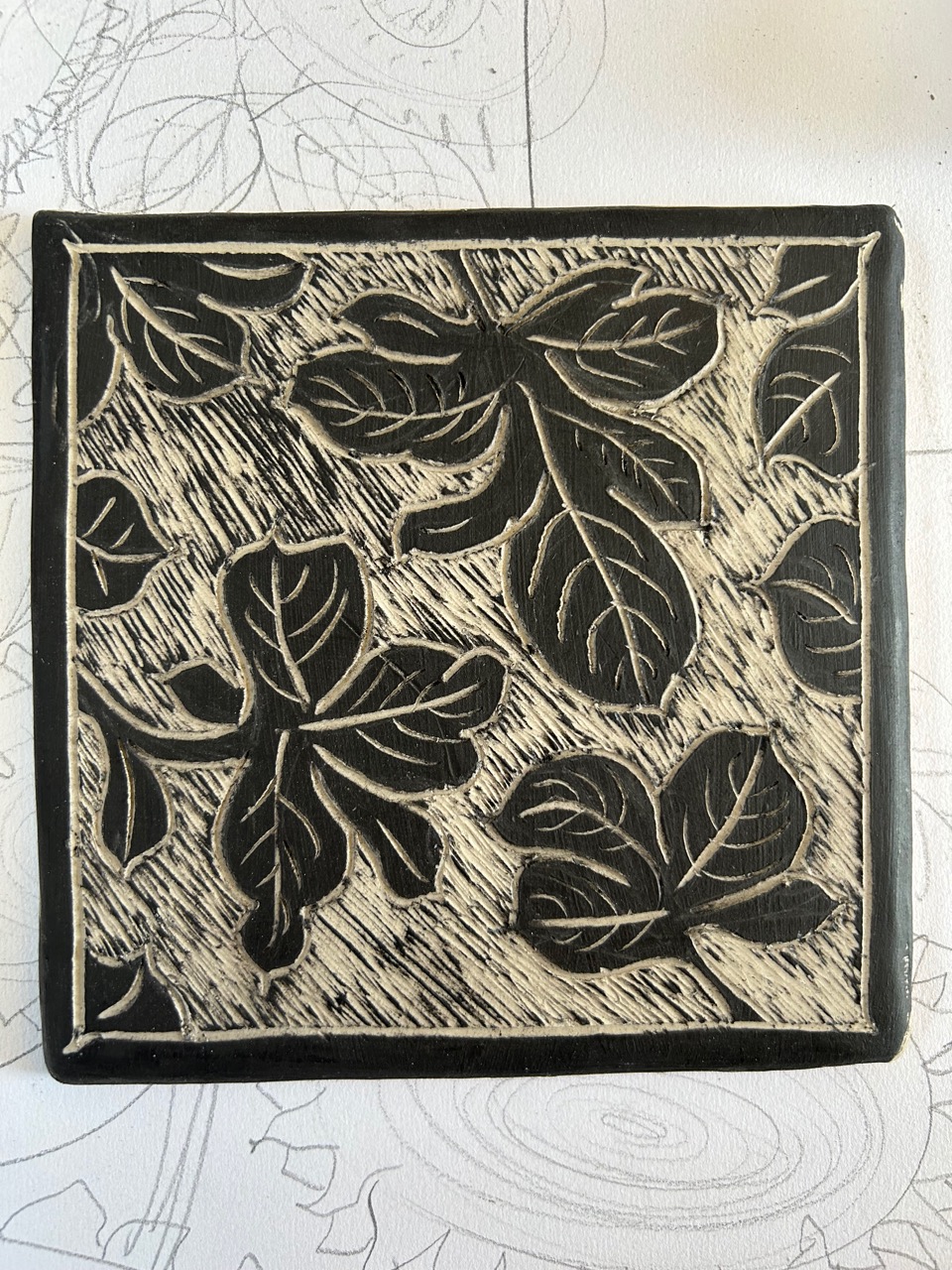
Janine decorated some of them for me using her carved/sgraffito through slip technique.

I have continued planting brassicas since Xmas day, when I planted the first seeds. I have planted 8 to 10 plants of mixed types each month to ensure a continuing crop of cauliflowers, broccoli, cabbage, Brussel sprouts and kohlrabi through out the autumn/winter.

I noticed today that the first broccoli head is forming on one of the first plantings.

I have to grow them under protective netting for the first few weeks to a month, to stop the black birds and bowerbirds from digging them out and eating the tops off them. The vegetable garden was completely covered in a mix of galvanised and plastic netting. But in the catastrophic bush fires of 2019 the heat of the fire melted the plastic netting on the west and east faces. All the birds were burnt in that fire, so there was no immediate need to repair the netting. EVERYTHING else was so much more important, like rebuilding. 

Now the birds are recovering and breeding up in numbers, coming back into our area. They have figured out that they can squeeze in through the gaps in the melted areas. So I have booked a friend to come and help me next week to get up on our tall step ladders and re-cover the burnt out sections with new netting. A big job that in the past I would have thought nothing of doing by myself with the occasional helping hand from Janine in the difficult areas, pushing up from underneath with a broom to get an even cover. Luckily, a very nice couple donated a huge amount of plastic bird netting from their farm, when they took down their orchard cover and moved into a smaller holding. We are very happy to use this re-cycled netting, both galvanised and plastic. Nothing wasted. Recycle, re-use, re-purpose.I may be old and stupid, but still just smart enough to know that I don’t want to do this job all by myself anymore. It’s just one of those endless series of jobs that we have to tackle everyday to keep on living here in this self-reliant, low-carbon, organic, minimal consumerist muddle.

Nothing is ever finished, nothing is perfect and nothing lasts!

It’s almost autumn, Time to make cider.

Todays big job is to harvest all the remaining apples and pears, then juice them all and make a big batch of cider/perry. Then it will be back onto the tomatoes and passata.

There will be sure to be a lot of weeding needed after all this rain clears and the heat returns.

We haven’t been able to make cider for over a decade now, as there was the terrible drought culminating in the 2019 bush fires that took our pottery, yard, gardens, fences and orchard trees. We replanted a new orchard in 2020 and this is the first year that we have had sufficient fruit on the new young trees to be able to make a batch of cider. 

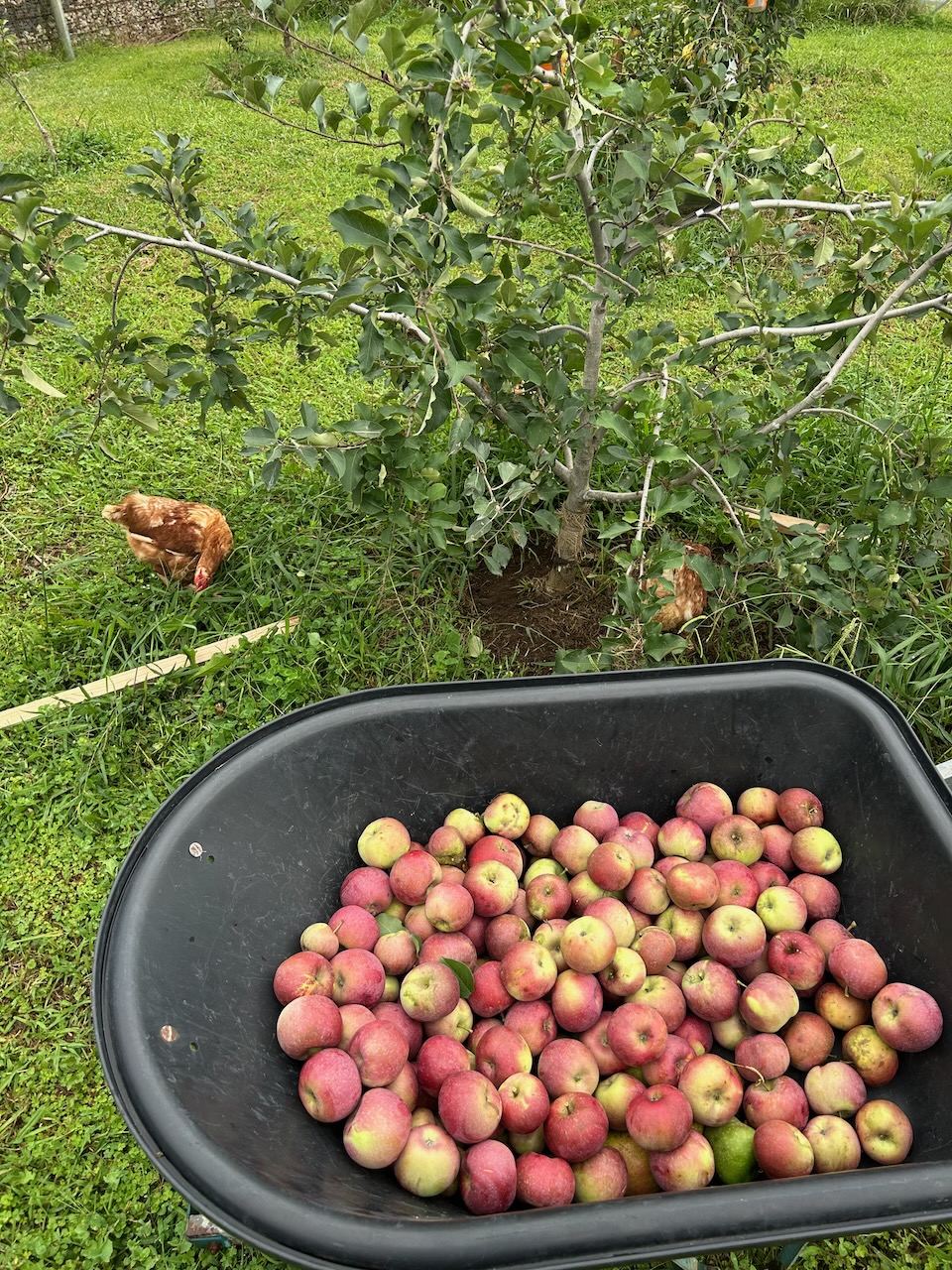
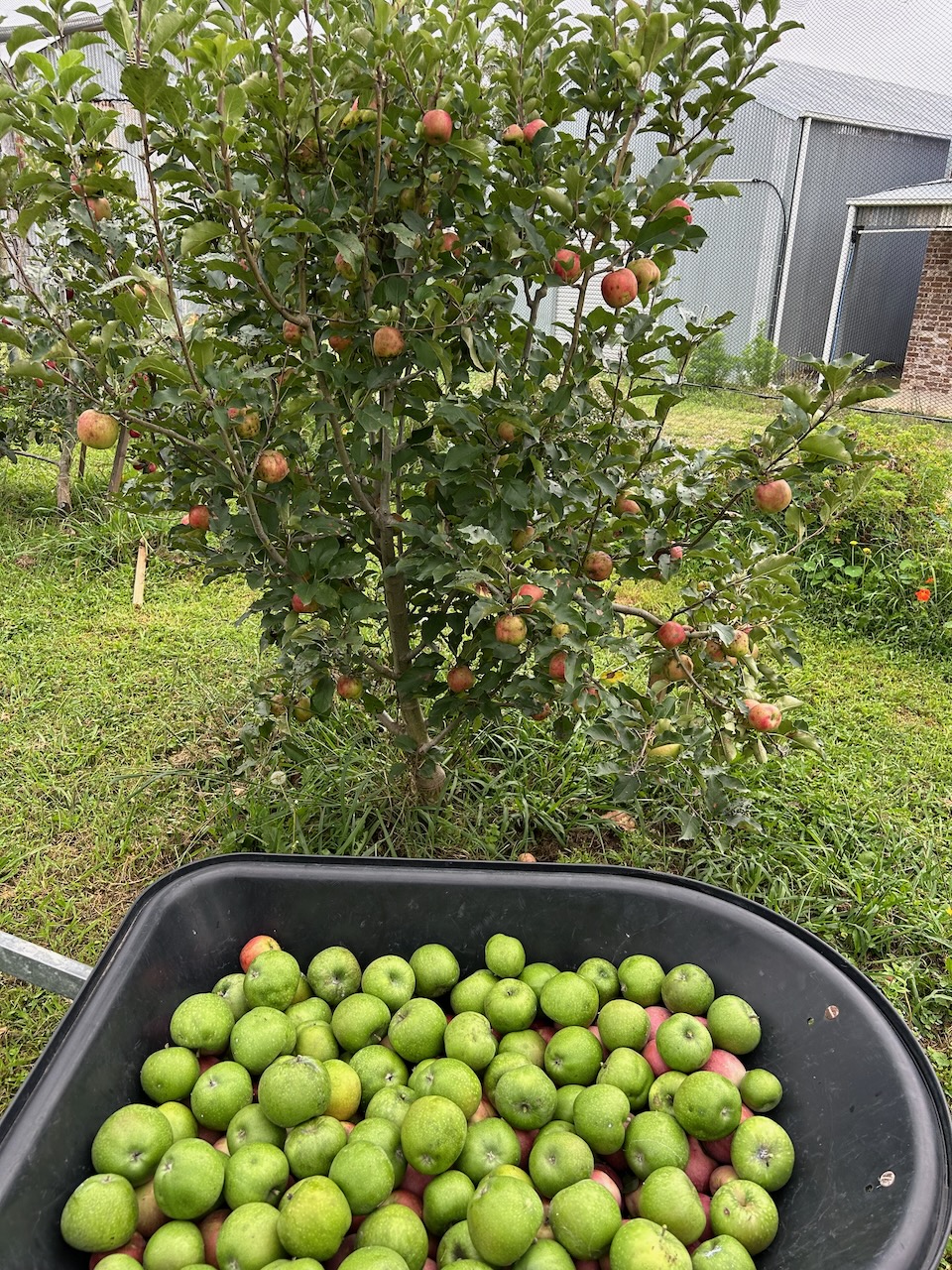
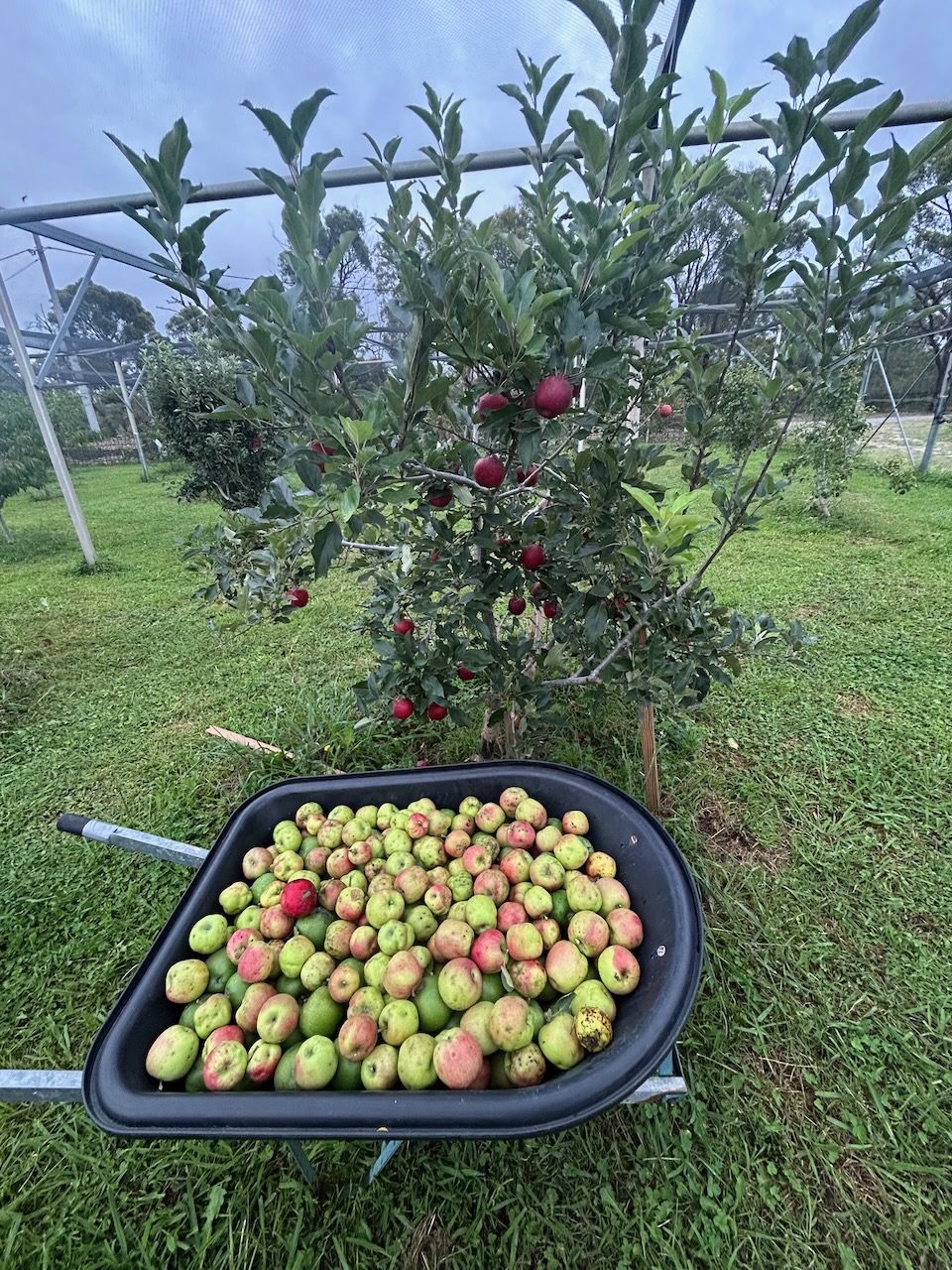
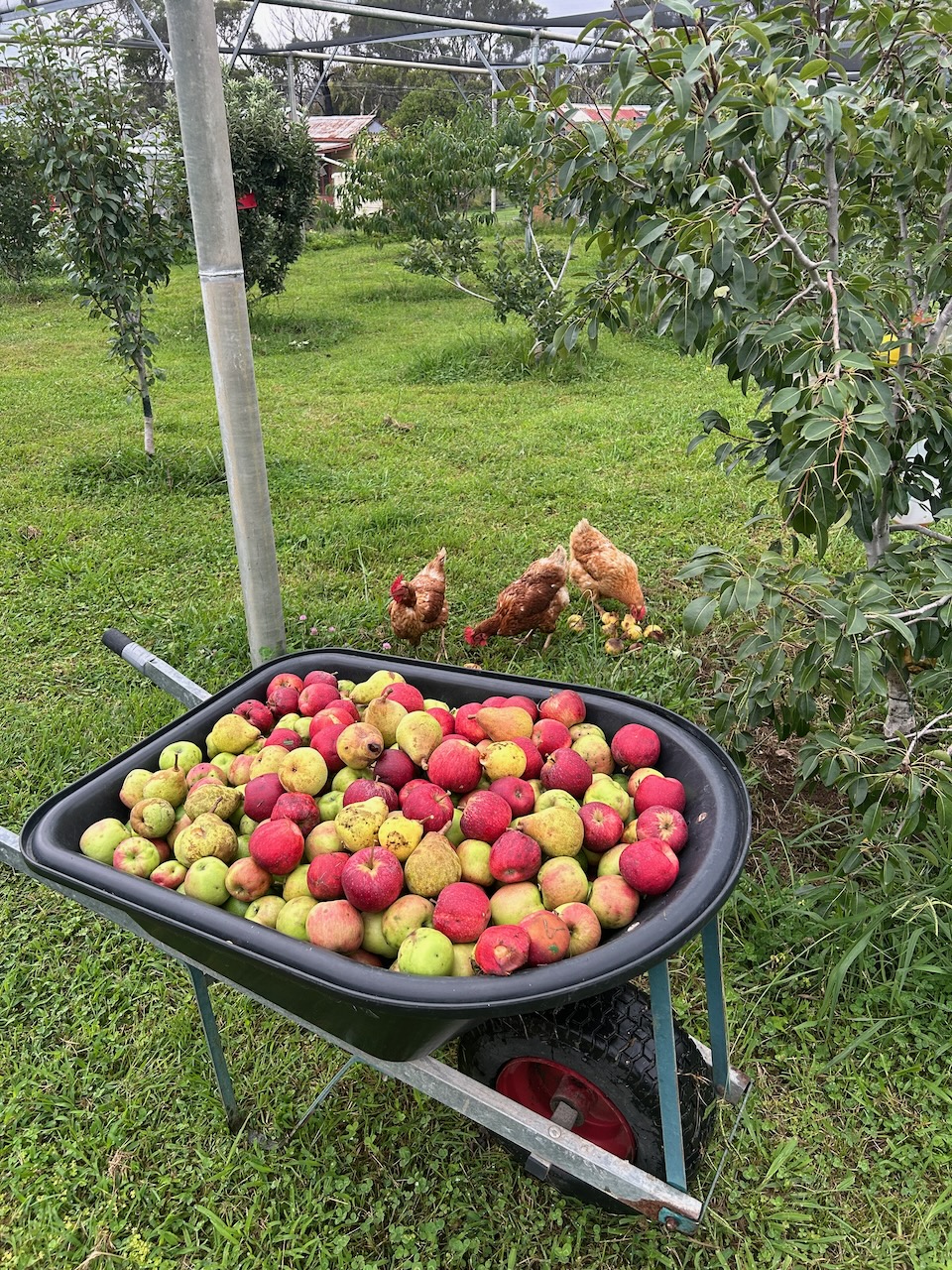
This morning, I managed to get out there into the orchard and strip the trees of all the remaining fruit and get it indoors before the rain started. I used the wheel barrow as my basket on wheels. a good measure of fruit volume. 

We are due for a whole week of rain – if the forecast can be believed. It usually rains less here than is forecast on most occasions, but it will still be a wet week by all accounts.

So today was excellent for inside jobs like washing and juicing apples and fermenting cider. It took us all day to process all the apples and juice them, then get the fermentation started.

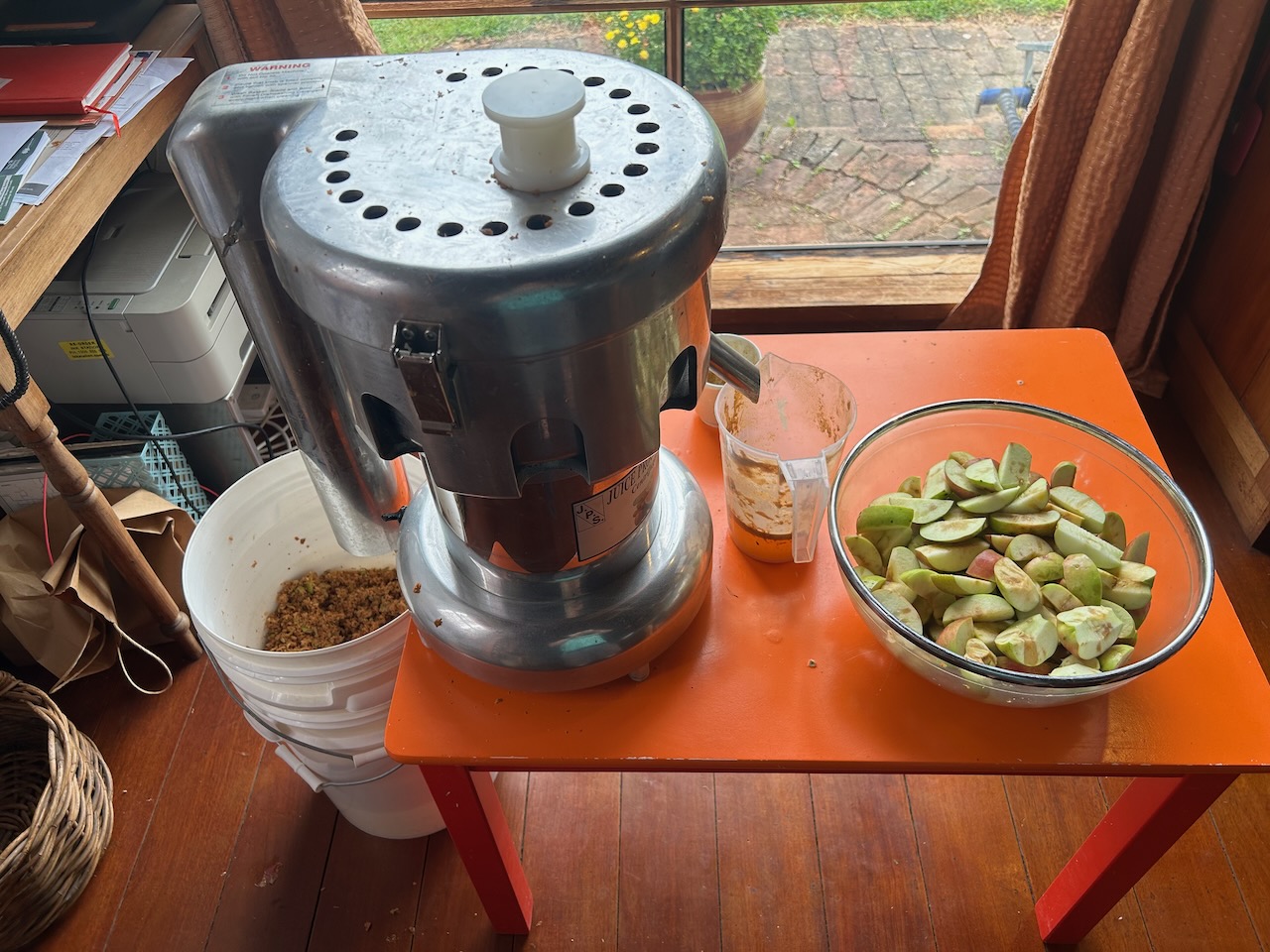
We have a really big, heavy duty, industrial grade, juice extractor. The sort of machine that you need if you are going to be juicing apples for 8 hours straight. Before we bought this one many years ago, we burnt out 3 small domestic sized ones. 

While extracting the juice, we filled 30 litres of pulp into buckets for the worm farm and compost. The juice is now in the fermentor. We can leave it for a week at least now while we get on with other jobs around the garden and pottery.

We managed to slip in a small bisque firing in the solar fired electric kiln while we were making cider. That’s one very nice thing about electric kilns, they fire automatically on a pre-programmed schedule. This allows us to get on with other jobs, like making cider, recycling clay slip/slop/slurry, pugging recycled clay, doing a bit of kintsugi? Possibly even start throwing those new ‘test’ clay bodies that I have had ageing since November? 

And of course there is always weeding.

Summer jobs and cooking up some delicious fun

Those first two big-pot throwing summer schools took all of our time and effort to start the year. Since we finished them, a couple of weeks ago, we have had time ‘off’, playing catch-up in the garden and orchards. 

We have been mowing, watering and harvesting, for the past two weeks. We have been dealing with that harvest since then, picking fruit, bottling tomatoes, making passata, roasting pumpkin cubes, bottling pears and making pear and apple juice, then picking and drying prunes. 

Diced pumpkin cubes, roasted with olive oil, garlic, salt and pepper.

Everything comes on in earnest in January. There is a lot to deal with all at once, so we are eating very well. I really look forward to that first ripe pear. Just like I do that first ripe tomato of the season. The kitchen is a busy place every day. We spaced out the gap between the two pairs of workshops to give us time to do all this ’self-sufficiency’ work. I had also booked in a couple of other jobs that were needing to be done. So our two  weeks off, has really been ‘full-on’!

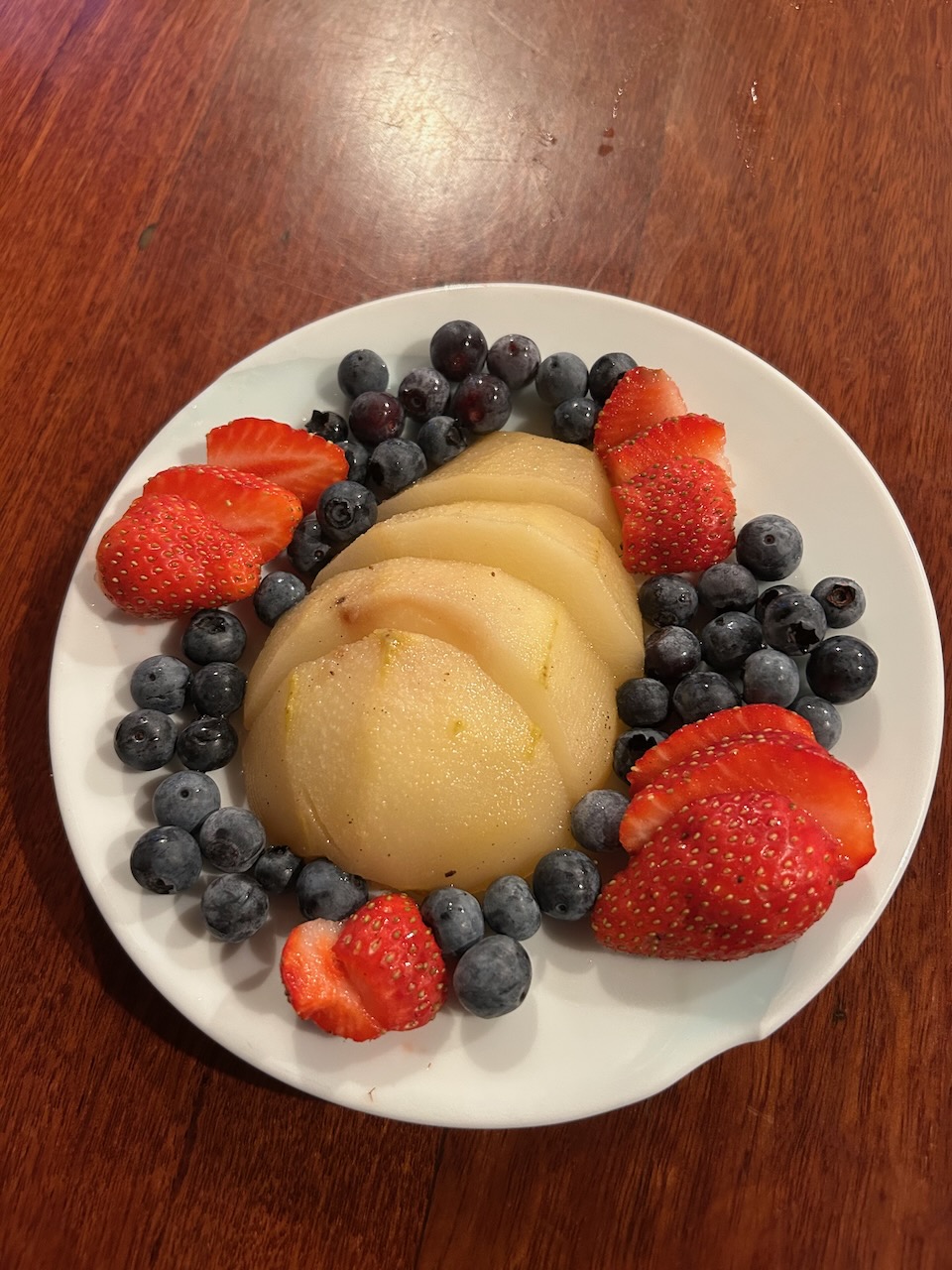
Pears poached in a little white wine, cinnamon and sugar, served with fresh picked passionfruit and a little ice cream. These are the tangible benefits of self-reliant living and gardening. 50 years in the planning, execution and nurturing. 5 minutes in the eating.

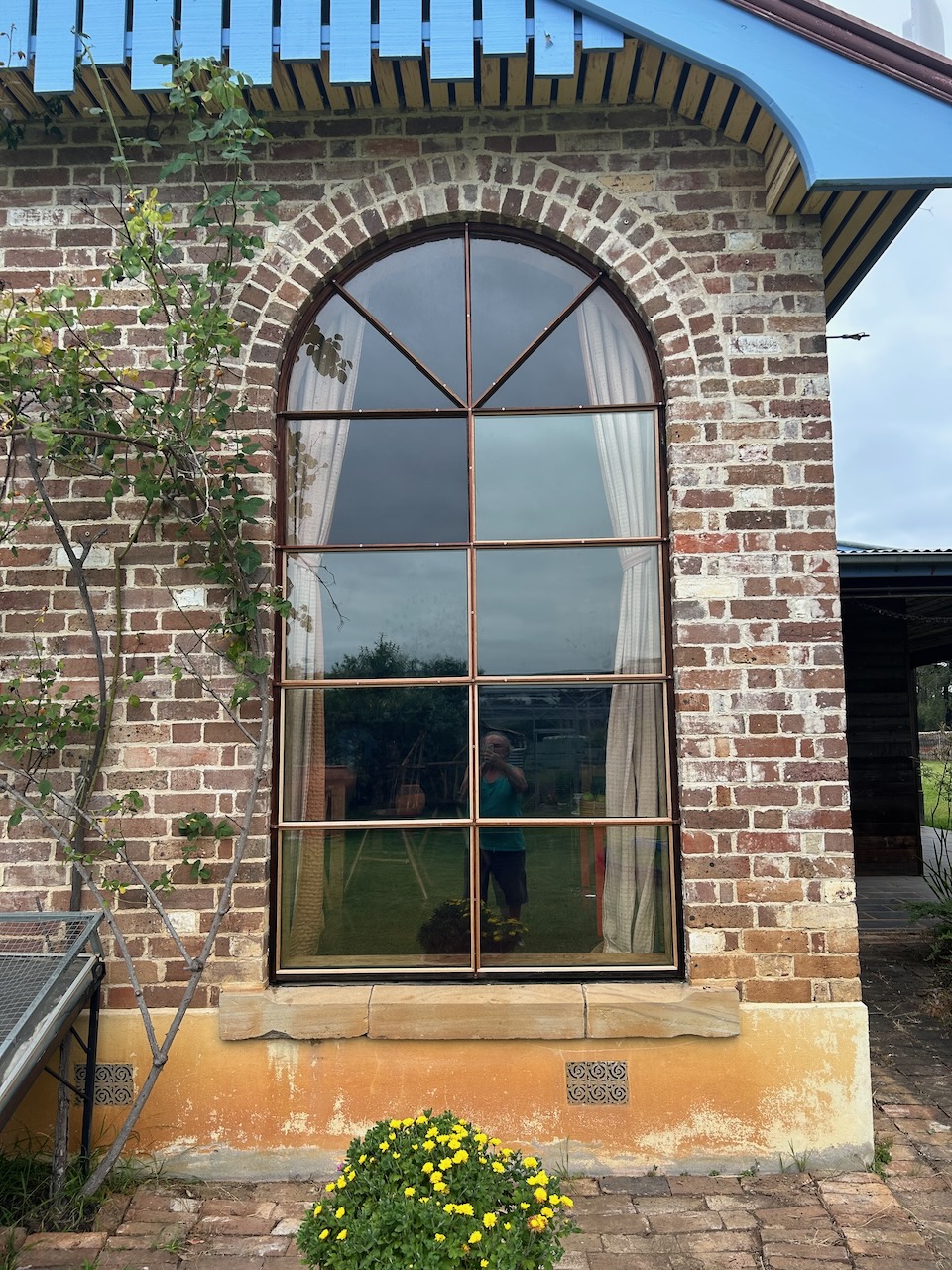
I ordered some double glazed, argon filled, metal coated, low energy, toughened, window panes to replace the 3mm. plain glass that is in our big arch window in the house. That fancy energy efficient glass arrived just before Xmas. The big window has been working well, letting light in, but keeping the rain out for almost 40 years, since I built it, and glazed it myself all those years ago. At the time, I tried to find double glazed glass for it, but to no avail. I also tried to buy special ‘stick-on’ glass coating mentioned by Amery Lovins, when he was here giving a lecture tour back then. But no one seemed to be aware of any such product here in Australia, not even ‘3M’ who I was told made it.

So we just lived with it as it was, eventually adding a huge sheet of thin perspex to the inside to create a semi-sealed air gap, but although that did work to some extent. There was room for improvement, and the unsealed gap always fogged up in wet weather, causing the wooden sill to get very wet and start to rot on the surface, so something had to be done.

Luckily, there is now a factory in town, that makes these fancy window panes. There was a one month wait while they were made to order. Back in December, I spent time rebuilding the structure of the glazing bars to make them deeper in preparation. We have managed to install 7 of the new double glazed panes so far. 5 to go. Interestingly, I have spent over $200 just on special window glazing silicon and wooden glazing beading to complete the job.

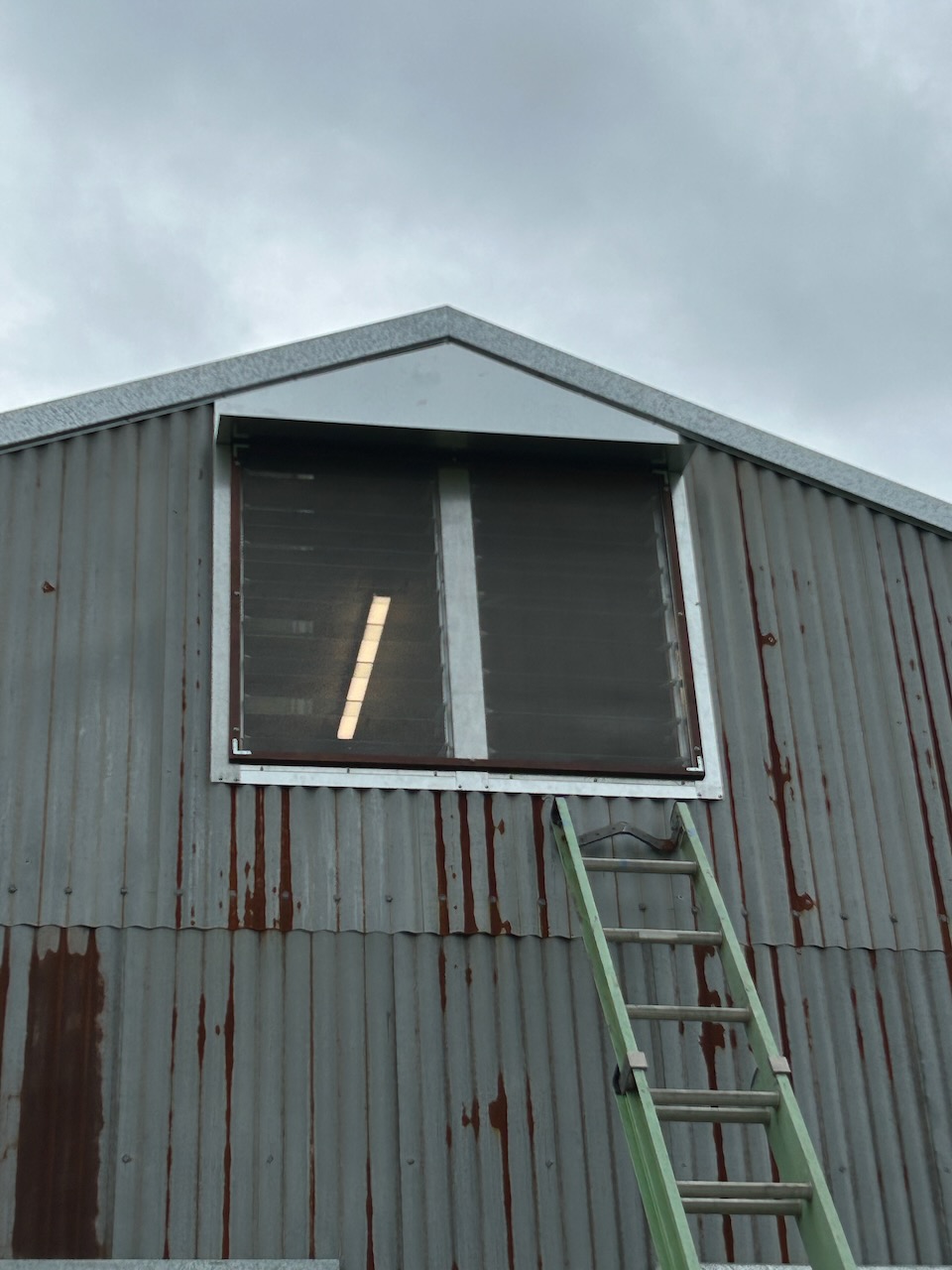
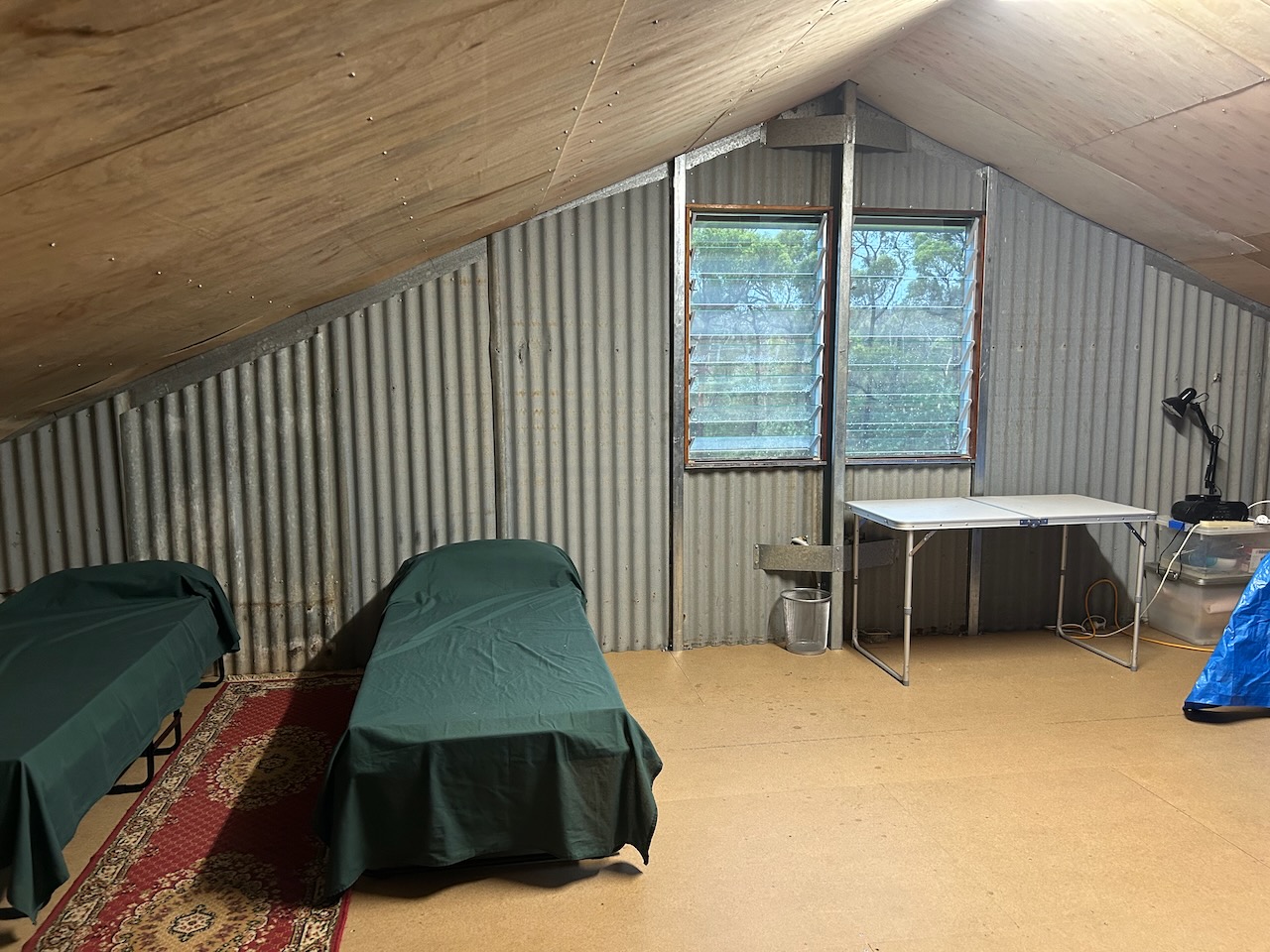
I booked a few days of help from my friend Andy, who is a local architect and environmentally conscientious builder. A rare breed! He has been very kind in offering us loads of assistance since the fire. He also offers good council and advice on environmental/building matters. I asked Andy to help me install two louvre windows up  in the big pottery shed loft. I bought some louvre mechanisms and the ground glass panes online, then I built a couple of hard wood window frames to mount them in. I also made all the custom flashings to go around them. Andy did all the outside ladder work on the day, cutting the hole in the wall and we installed them without too much trouble. It gives plenty of ventilation up there to take the heat out of the loft, but also brings in so much light and the view is good too.

We haven’t quite finished setting it up again yet, but it has been transformed into a lovely, light and airy, comfortable place now.

I have to ‘fix’ a kiln for a friend, even though I am retired, this is a special favour, then it will be back into the workshop for the next two summer schools. I’m looking forward to getting back into making pots for myself again. I have a few batches of experimental clay bodies that have been ageing for some months now. I’m keen to try them out. Especially to see how they will look in the wood fired kiln.

Summer is here

Summer has arrived. and we are ready for all those lazy, hazy, long, hot, relaxing day and balmy evenings with a G&T on the lawn.

But first.

We have to deal with the fruit flies and possible bush fires, but dealing with them is interrupted by the rain.

We have had sudden down pours and thunderstorms, followed by a week of wet weather. It’s a bit like the 70’s, when we used to get sudden summer storms that only lasted an hour, but dropped an inch of rain. That’s 25mm these days! Then it would go back to being hot and humid again, but it gave us sufficient water in the dam to get through the summer with water for the garden, orchards and possibly for fire fighting.

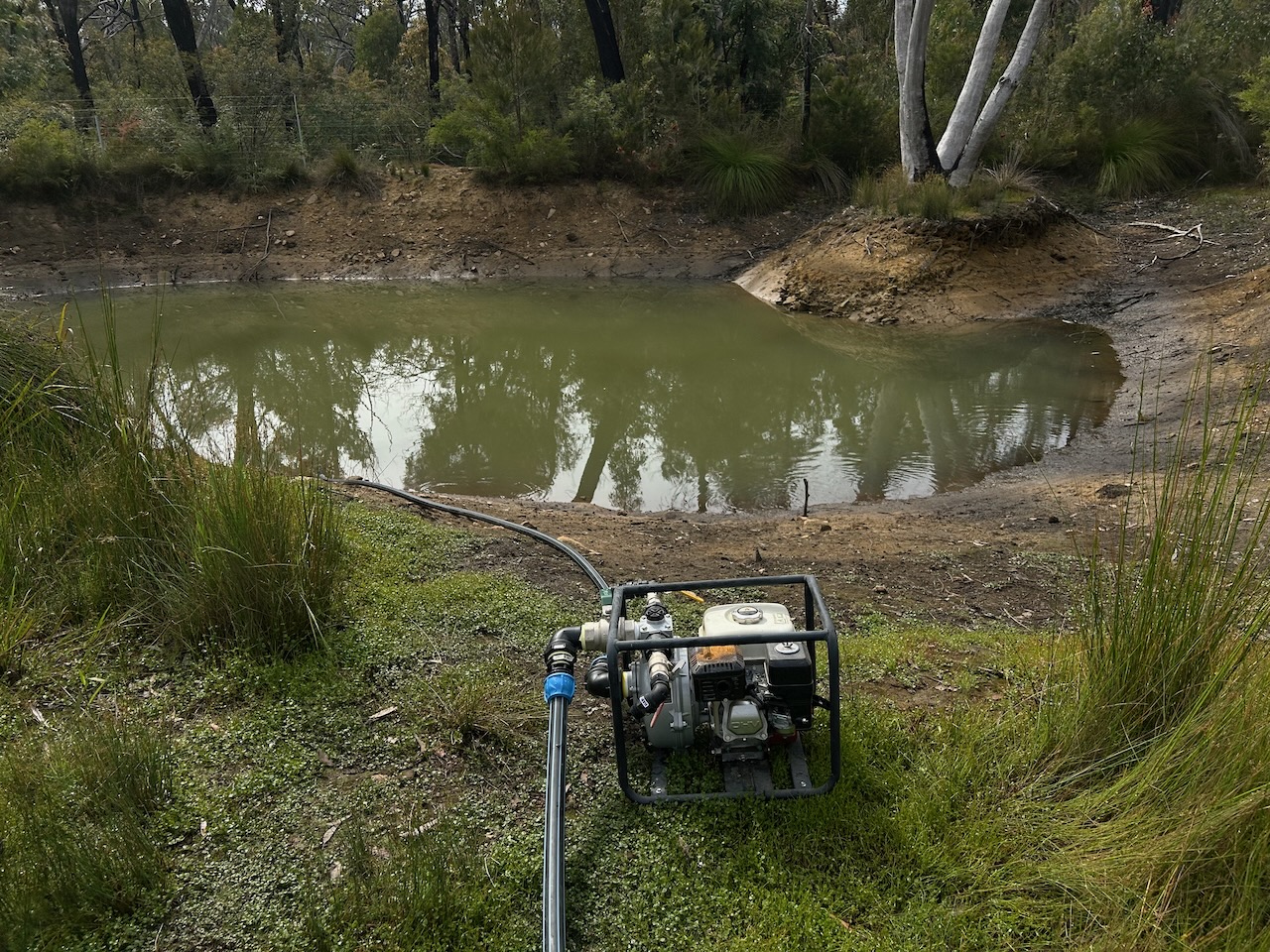
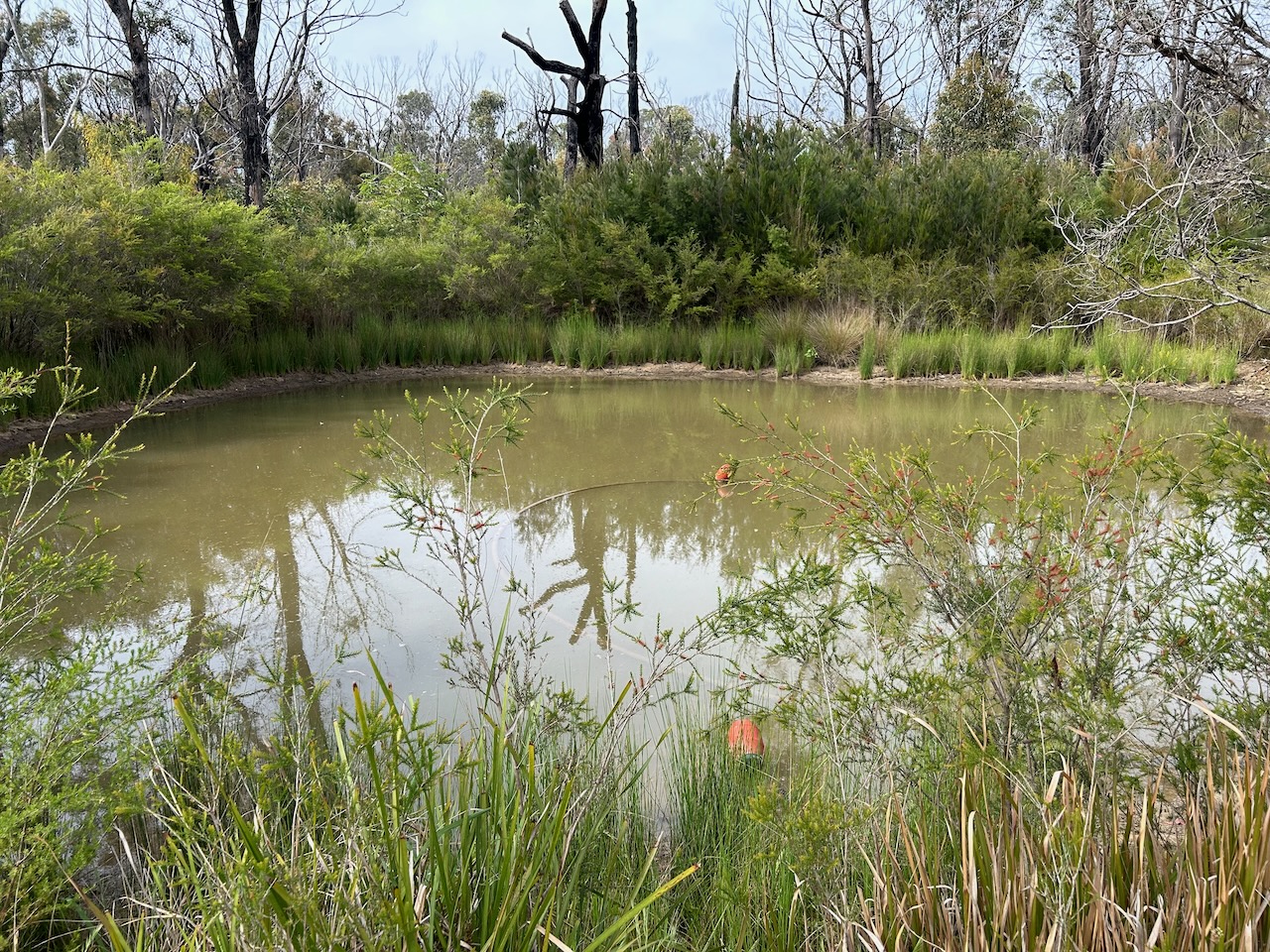
Before this last week of wet, the little top dam had dropped down to just 600mm of water in a little puddle in the centre. Not Good! As we have been pumping water out of it every day for watering the vegetable garden and one day a week in rotation on each of the orchards. Luckily, there was still water in the bottom 2 of the 4 dams that we had built in a ‘key-line’ system across our land, so as to harvest and store as much of the rain fall as possible. 

I get a little bit edgy when the top dam is almost empty like this at the start of summer. We may need 50,000 litres of water in a hurry if a bush fire breaks out near us. I like to be prepared. So I have already gone around and started up and tested all the petrol fire fighting pumps to make sure that they are in good condition and working well. Particularly that they start on the first or second pull of the starter cord. There is no time to be messing around with an engine that won’t start in an emergency.

I use 1 of our 4 different petrol driven fire fighting pumps to pump the water up from the lower dam, up to the little top dam closest to the house. The pump is built in a carrying frame and is not too heavy, so I can lift it into the wheel barrow and walk it down to the dam bank, then drag the lengths of plastic piping into place. It’s all set up with the various fittings already attached to the ends of the pipe. I keep the pipes sealed at both ends with screw-on caps, so that small animals and ants don’t build nests in there during the long periods of non-usage over winter.

The little top dam is closest to the house and was the first dam that we got built back in 1976. It has the solar powered electric pump on it that we use for most of our watering and irrigation. I have kept the long lengths of 50mm dia polythene pipe that I bought after the fire to do this transfer. This is the 2nd time that I have used it.

This works well and gives us plenty of water for the next couple of months of summer. But then, before I can congratulate myself. I rains for 5 days and on one of those days, it rains hard enough for the water to flow down the street and into the culvert drain and into the dam, topping it up just a little bit more. It makes me feel more relaxed about our capacity to cope here when there is water in the dam.

With the heat of summer comes the fruit, and with the fruit comes the fruit fly. Nearly all the the new dwarf fruit trees in the stone-fruit orchard have a crop on them this year. We have gone around and tip pruned all the trees. This summer-pruning keeps the trees in good shape as they grow and develop. We also pick off a lot of the small developing crop to reduce the load on the branches, as a really heavy crop can snap the branches due to the weight of the fruit. There are only two of use here, so we don’t want or need a heavy crop. I fill two wheel barrow loads of small fruit and prunings. 

I have been spraying the trees every two weeks or so since October, – when it isn’t raining, with organic approved sprays for both fruit fly and codling moth. I missed a couple of months while I was away working in Korea, but got back to it when I returned. However, the recent rains have played havoc with my ability to spray, as these are all water based organic sprays, they simply wash off in the rain. They aren’t cheap either at $25 to $35 per packet, which yields 4 to 5 sprays.

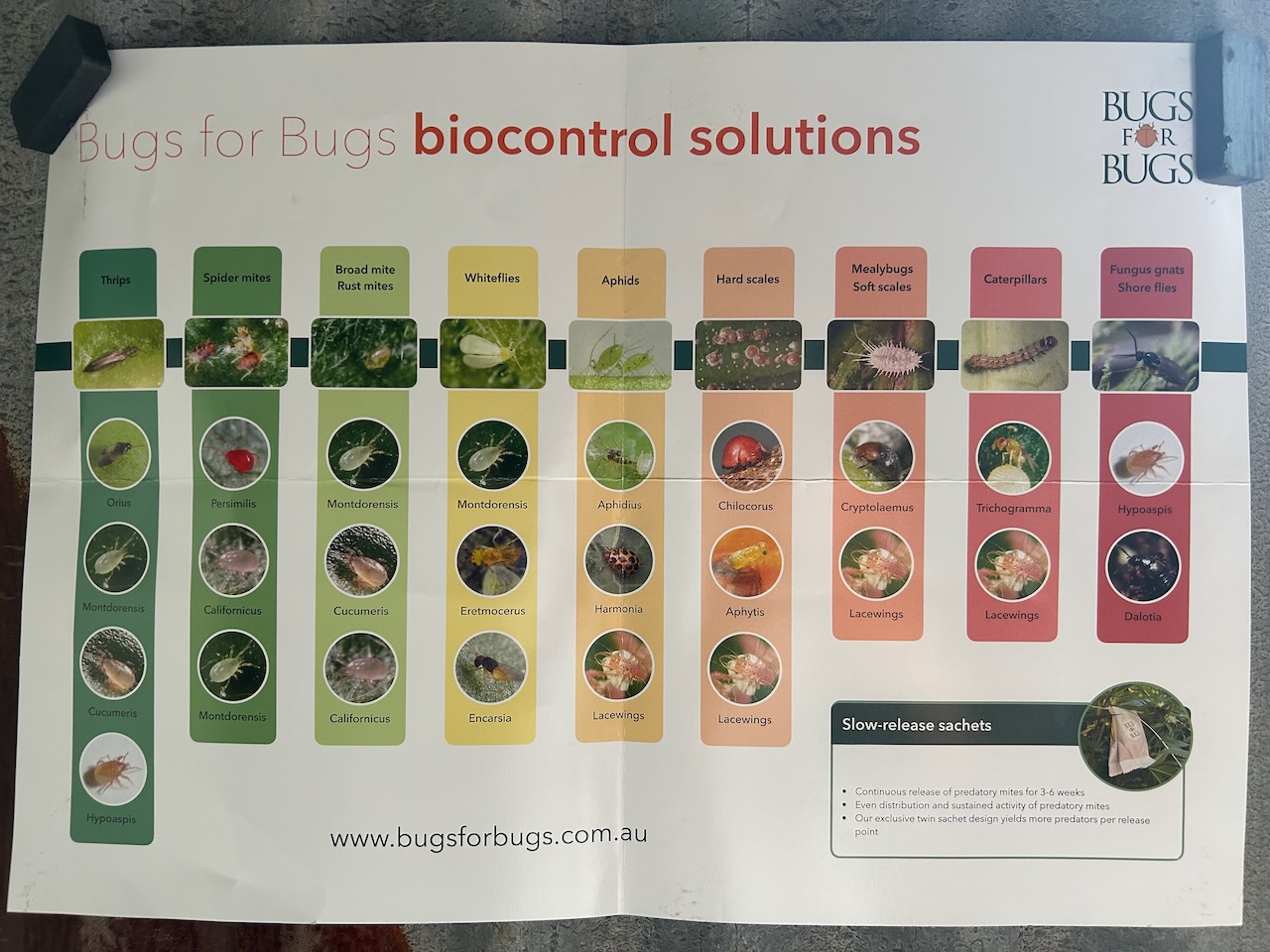
I have also infected the apples, pears and quinces with parasitic wasps eggs of ’trichogramma’ wasps. These are bred to hatch out and predate the codling moth and other caterpillars. I haven’t used them before, so have no idea how effective they are.

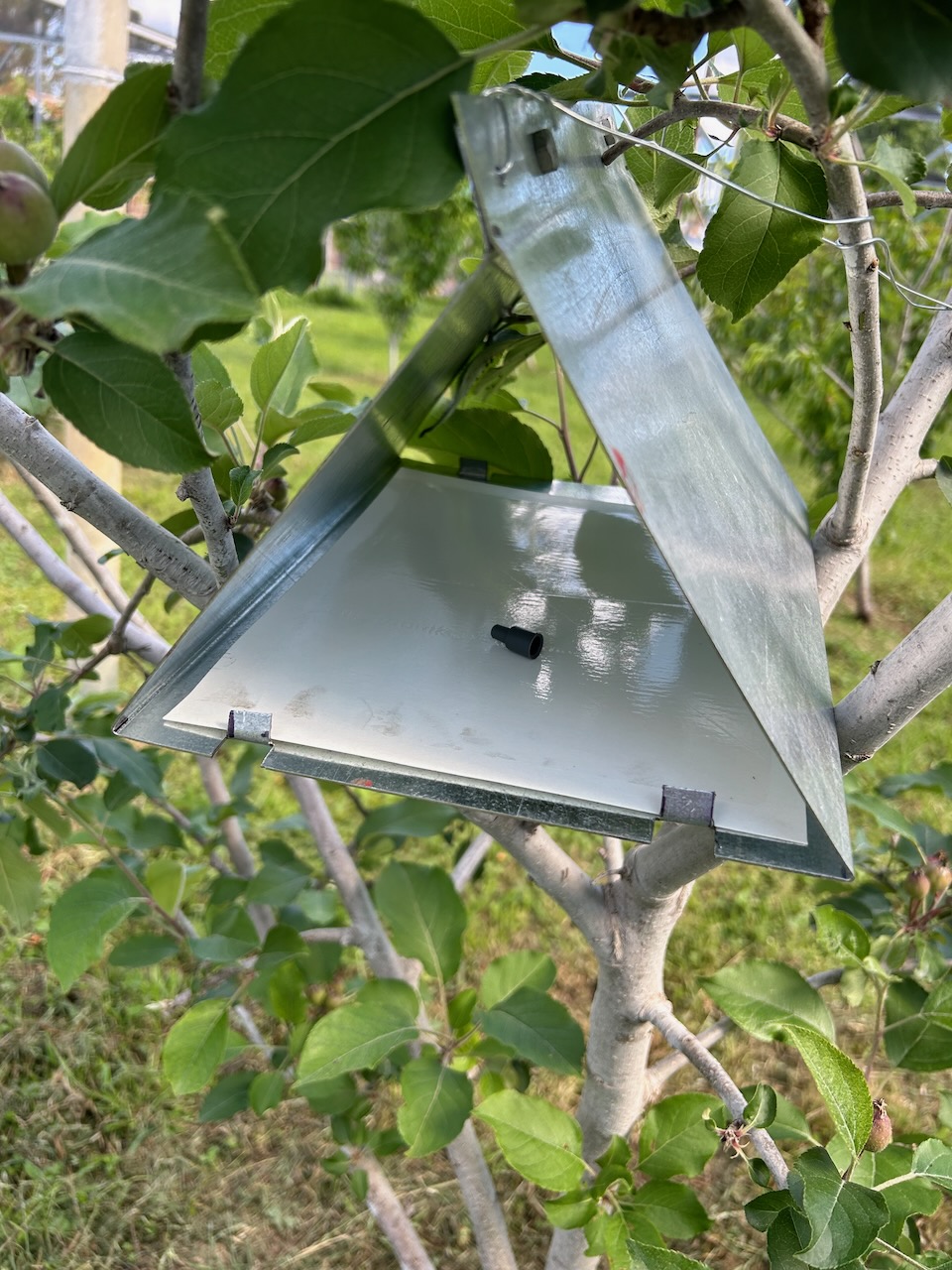
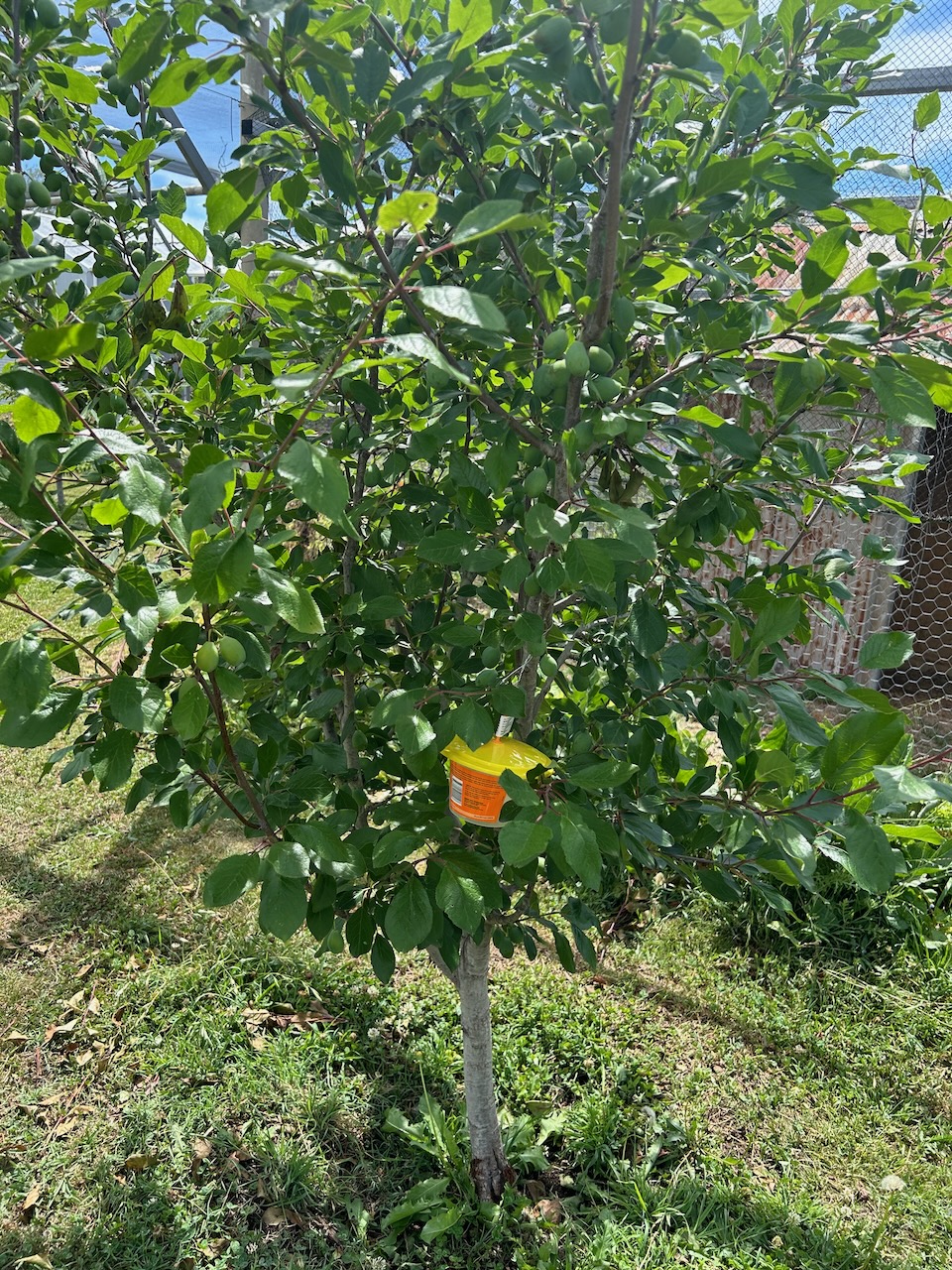
I also built a few steel triangular housings for codling moth pheromone lures. These work by attracting the codling moths with the scent and then catching them on sticky paper inside the lure. These are working. I can see half a dozen little coding moths inside the lure stuck to the sticky paper. I’ve also been tying hessian bandages around the tree trunks, but so far I’m yet to find a caterpillar in there. This definitely hasn’t worked so far. I also added a ring of sticky bandage around the trunks as well. This also hasn’t yielded any results – so far. My last approach has been to hang empty milk bottles in the trees with cut-out windows, and spreading ‘Spinosad’ fruit fly attractant jelly inside. I use it inside the milk bottles to stop it being washed off in the rain.

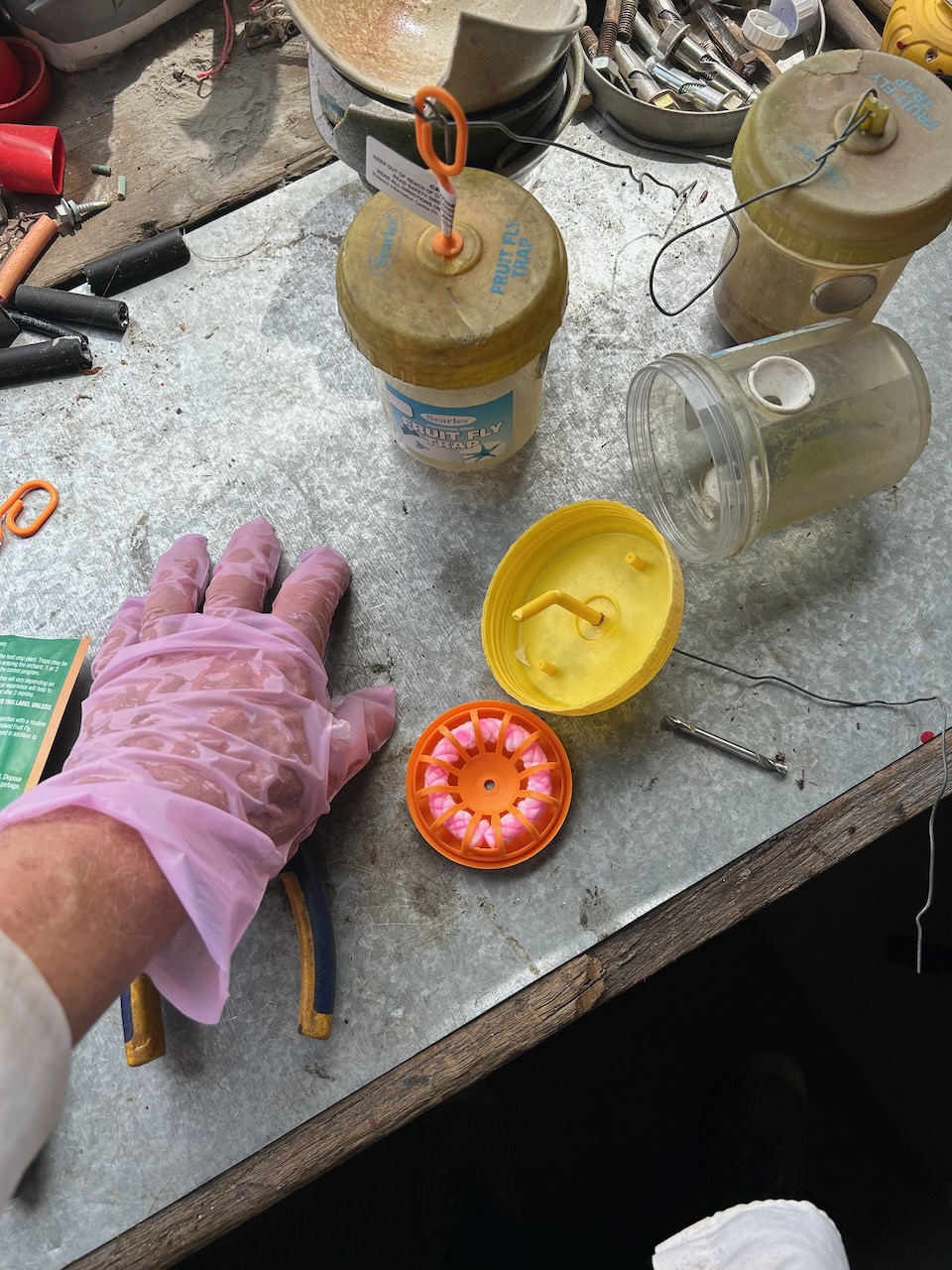
Lastly, I re-filled the old ‘DakPot’ style female fruit fly lures with new hormone baits. When I emptied the old ones at the end of winter, there were 50 or so dead fruit flys in each of them. So this does work. It doesn’t stop the female fruit flys from stinging the fruit, but it reduces the numbers of flies by eliminating a lot of the males out of the system.

We still have fruit fly problems, but I presume that it has been significantly reduced by my efforts. Well, I have to tell myself that don’t I?

Otherwise, why am I wasting my time like this with all these organic techniques, when I could so easily just spray the whole orchard with dieldrin or some other horrific poison? All the fruit for sale in the big supermarkets is sprayed with chemicals. S what are my options? Buy poisoned fruit, or try and grow clean, organic fruit? We are trying to live a pesticide free, low-key, creative, organic, carbon constrained, Post-modern peasant lifestyle. Everything costs more and takes longer and needs constant attention, but we are committed to living it.

Nothing is ever finished, nothing is perfect and nothing lasts.

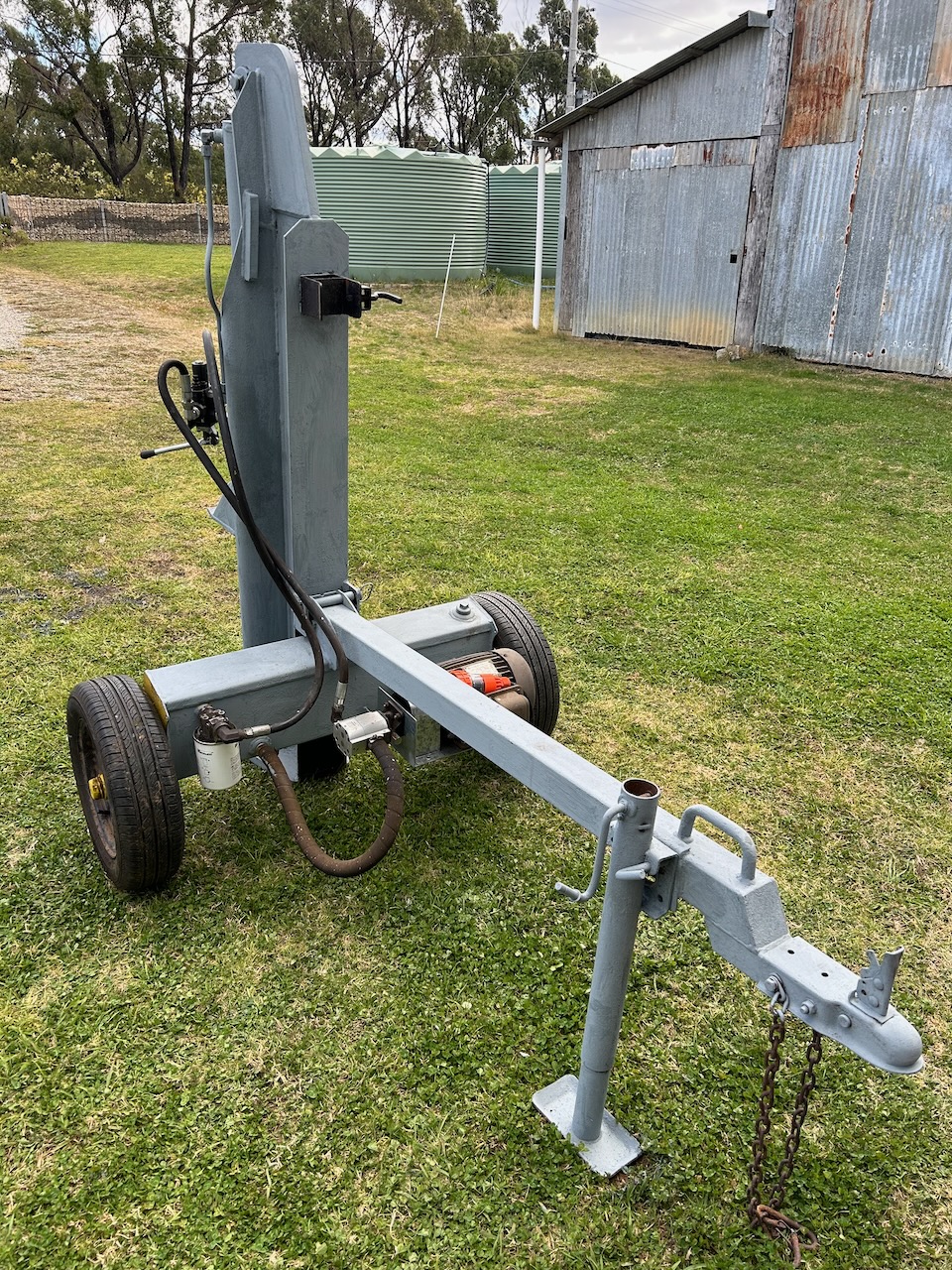
Our re-built old wood splitter

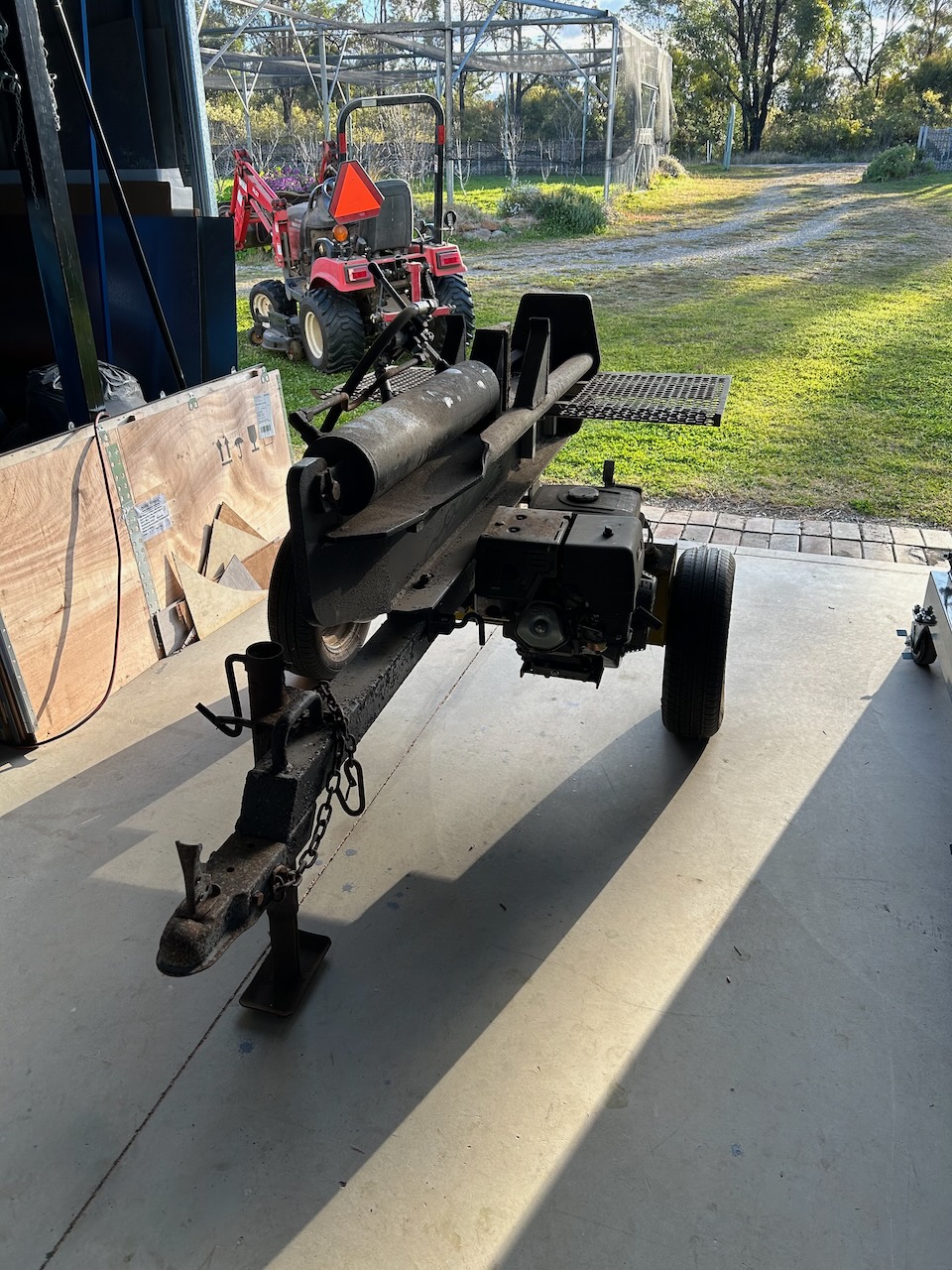
This last few of weeks, We have been teaching weekend workshops each weekend. Working in the garden and orchards in between time, but in particular, I have been re-building and restoring my formally beautiful hydraulic wood splitter. This machine was brand new and only used twice before the 2019 catastrophic bush fire. Our Lazarus wood splitter in the Phoenix Pottery Workshop. I need to get it going again, for our wood firing weekend workshop.

It used to look like this. All new and shiny.

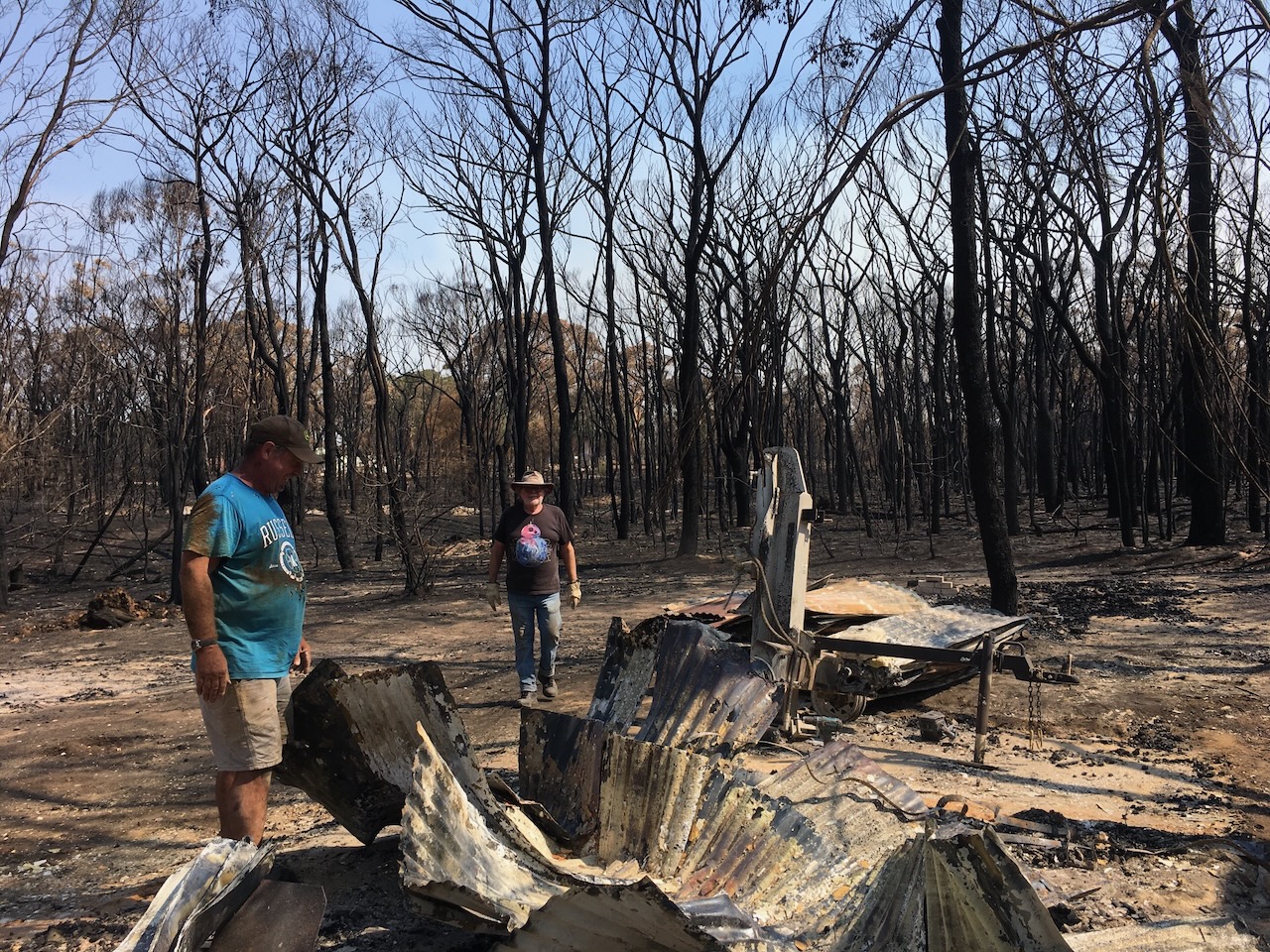
Then after the inferno it looked like this!  Just the RSJ column of the splitter standing in a clearing in the burnt out forest, that used to be our kiln wood shed.

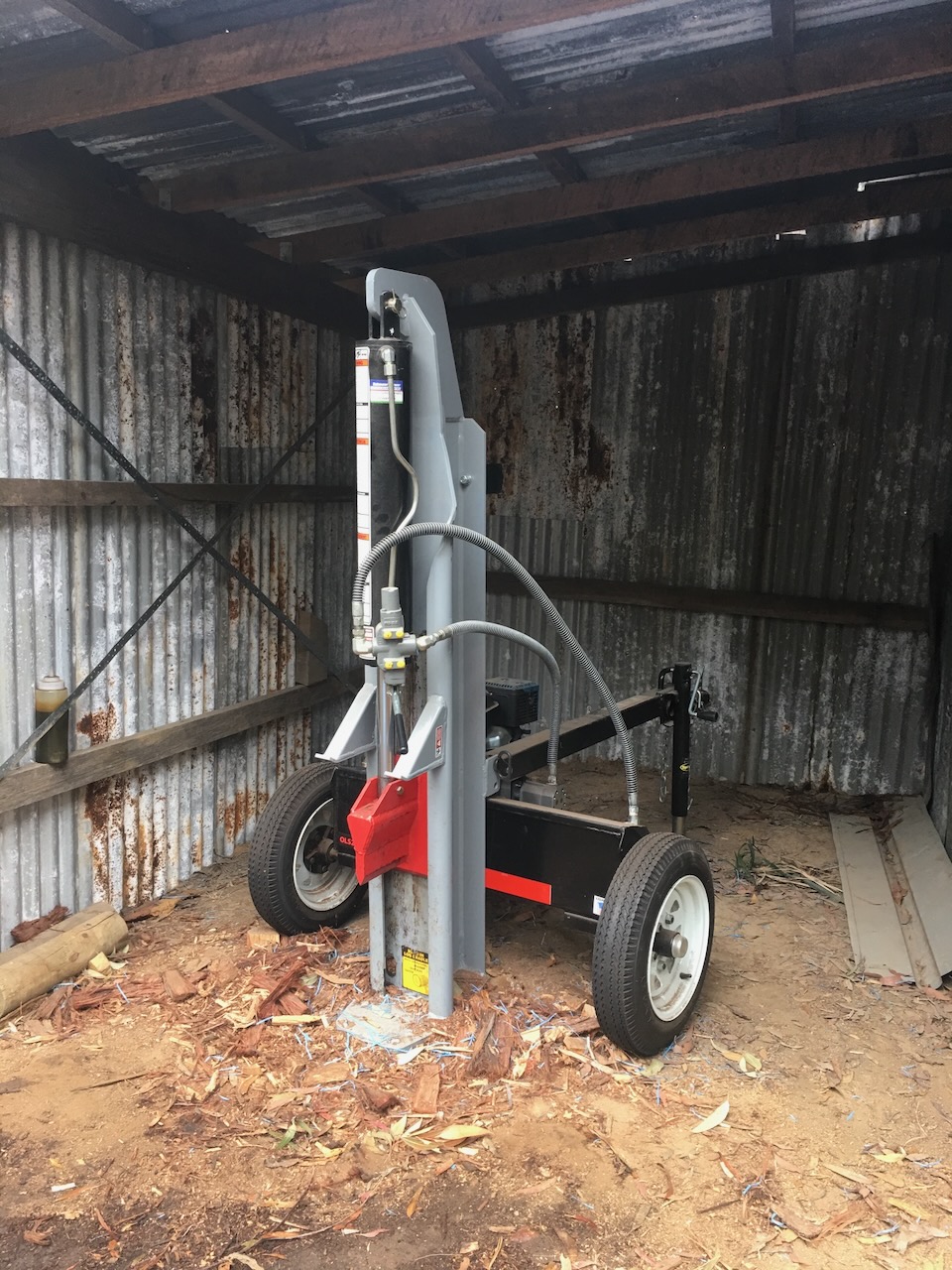
Today, with a lot of effort by my friend Ross, who rebuilt the hydraulic ram and other bits for me, it looked like this.

The 2nd hand tyres went flat every week and continually needed pumping up. I finally took them off and got inner tubes put in them. 

I replaced the burnt-out hydraulic control lever. This is the gadget that makes the ram move up and down. 

Then I turned up an adaptor unit on my metal lathe, made from some old aluminium irrigation pipe off cuts that I used for the new orchard netting frame. They were roughly cut to over-size with the angle grinder, then machined to exact tolerances. Finally I re-worked an old 3 HP electric motor that Ross gave me, making an improvised power adaptor/converter.

The last job was to give it a coat of zinc primer paint.

It is now functional again and running on sunshine, instead of petrol. So much better for everyone.

A damaged, but reliable, solid and still working, thing of beauty.

A self portrait! – without perhaps, so much beauty!

Repair, reuse, recycle.

The solstice is almost here

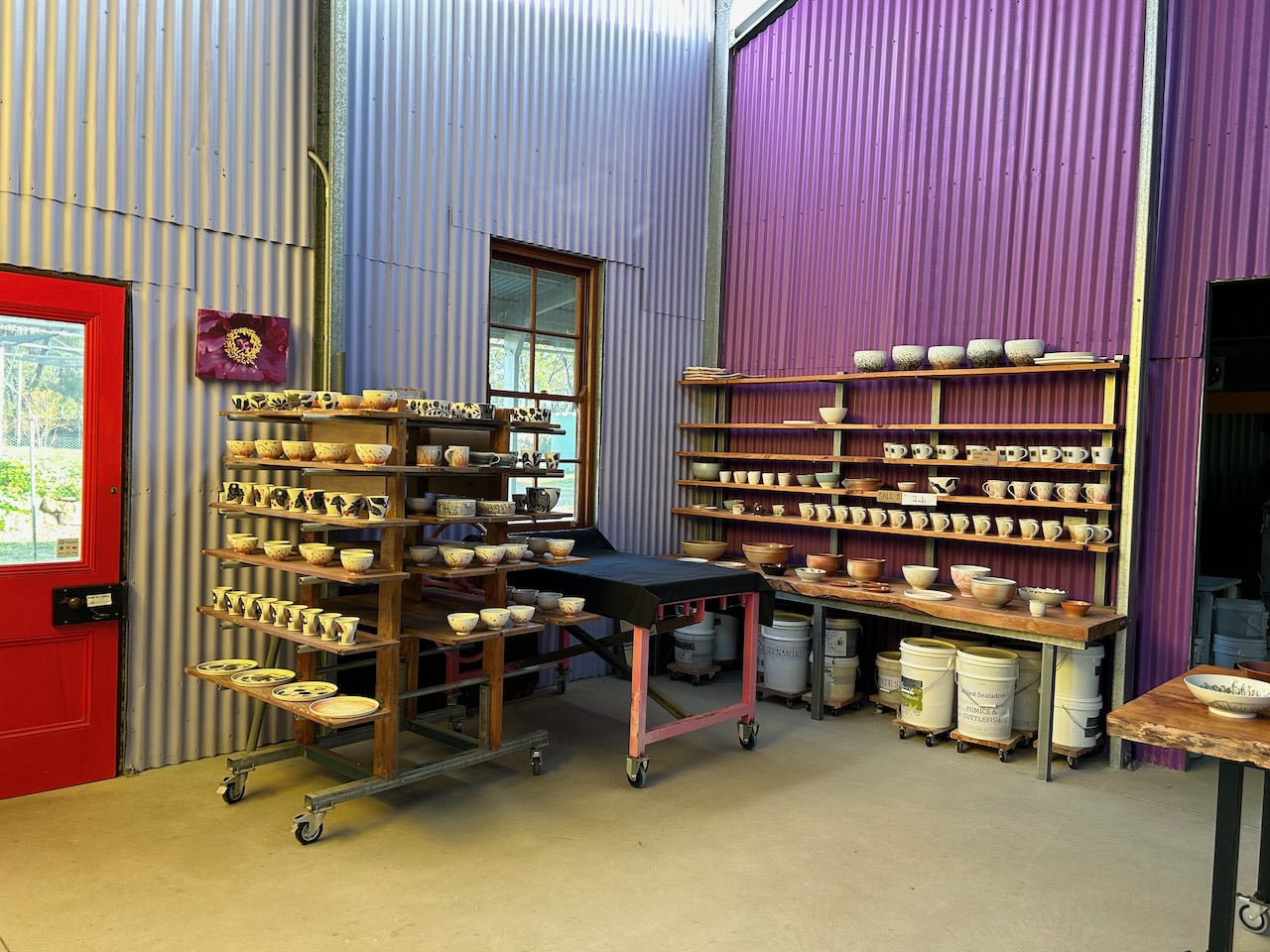
The pottery studio was all cleaned up and all the shelves were full for the recent Long Weekend Open Studio Arts Trail.

We are enjoying beautiful crisp and cold days here nowThe days are so much shorter and the nights correspondingly long. I light the fire in the lounge room almost every night. So that brings on the regular job of collecting, cutting, stacking and splitting fire wood. I use about one wheelbarrow of wood every two days. so I soon get through a pile. We are not short of wood. The catastrophic bush fire here 5 years ago killed hundreds of trees in our forest. The hard part is the dangerous job of felling them and then chain-sawing them up into suitable lengths. Fortunately, I have a good pile of sawn logs in hand and ready to split.

The overnight temperatures are getting down to 1 degree, tomorrow night is forecast to be zero oC but we are not getting regular hard frosts yet. In the 70’s when we came here, we used to get solid frosts starting in May and lasting 3 or 4 months. Those days are long gone, and with the crisis of global heating running rampant, I doubt that we shall see them again. It amazing to me that I still talk to a few die hards that seem to think that global heating is a media plot.

The disappearance of frosts here and the very early fruiting of our berry canes, up to 4 weeks earlier than they did in the 70’s are very obvious examples that we live with. The news that its the hottest year ever recorded. That record being broken year on year, the break-up of the ice sheets and the disappearance of the glaciers, yet one major party wants to withdraw from the Paris accord, presumably because they think that there are enough climate sceptic voters out there that will vote for the ‘fake news’ agenda?  I wonder how bad it has to get before the penny drops?

I have done everything that I can think of, and can afford to do, to reduce my carbon footprint. It’s a huge undertaking to change your life around, but as I am a greenie, and always have been, I was brought up that way, long before the Greens were even thought of. I have been aware of the difficulty of addressing climate and environmental degradation for decades, so I started making the changes needed in my life slowly but surely over time. Replacing old worn out appliances one by one as they died. We started with a front loading washing machine that used much less water and power. I did my research and got one that didn’t need a heater, so we could use our own solar hot water. (most washing machines only have one cold water inlet hose.)

Next, in 1983 we replaced our 21 year old old VW beetle with a small 3 cylinder, 1 litre engine car. Very fuel efficient. We now have an electric car. In fact we have now replaced almost every petrol driven item in our life. Car, lawn mowers, chain saws, water pumps. The only petrol driven things that I can’t easily replace are the fire fighting pumps. They still need to be fuel driven to get the reliable independent high-power needed in an emergency. We have 17kW of Solar panels and 2 Tesla batteries. This is sufficient to run everything that we own including our 2 electric kilns and to charge the car.

It has taken 40 years to make these changes slowly, incrementally and painlessly. It would be wasteful to trash a functioning appliance with all its embedded energy while it still had life in it. If something isn’t completely worn out, it can at least be sold 2nd hand to someone who needs it, to keep it working and producing effectively until it is actually dead. One of the things that we have worn out is the hydraulic wood splitter. However, I took a chance and replaced the dead 5 HP petrol engine, after 10 years of hard work, with a single phase 3 HP electric motor – on a long extension cord. People said that it couldn’t be done. It wouldn’t have enough grunt. That was 20 years ago and that little single phase motor is still going strong, working well, and running on sunshine instead of petrol!

Where as a 4 stroke petrol engine has only one power stroke out of 4 revolutions. An electric motor has constant torque every revolution, so 3 Hp of electric motor is equal to 5 HP of petrol driven HP, or so it seems.

The garden is still feeding me with all the usual winter veggies. 

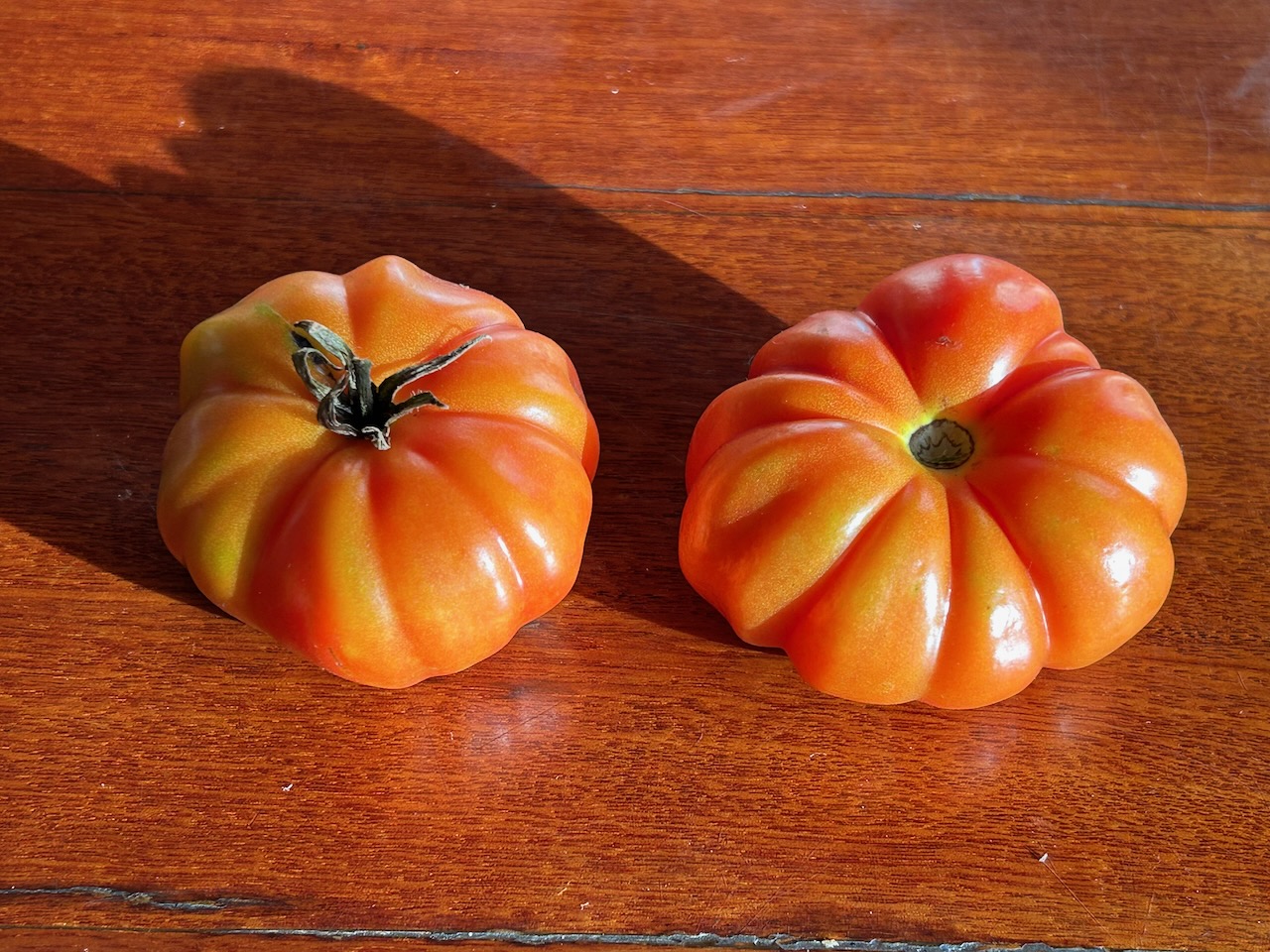
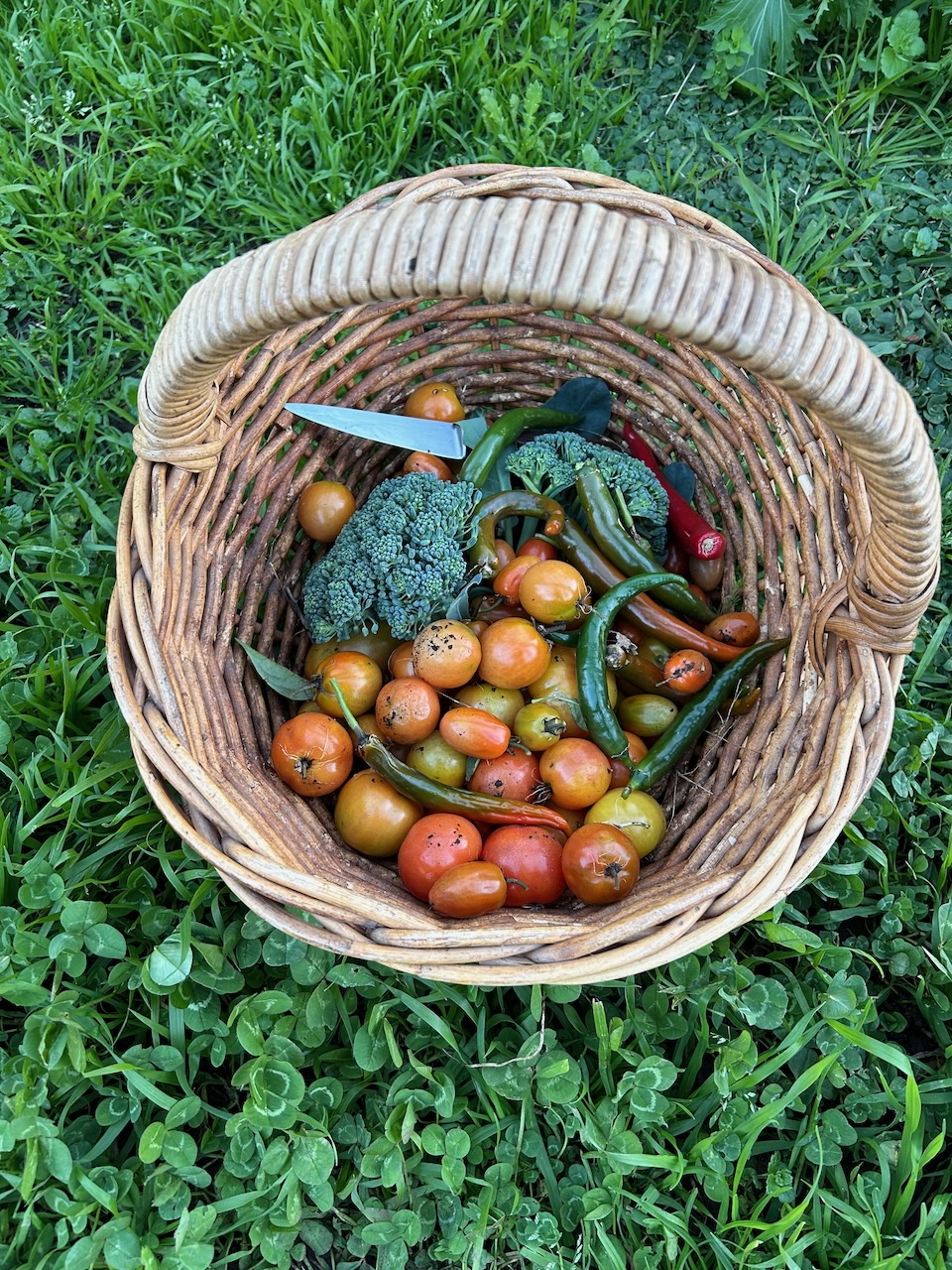
I have even just picked, what may be the last harvest of tomatoes. But I’ve learnt to expect a few more ripe red tomatoes in amongst the thicket of weeds and herbs where self sown plants do well in the cold weather, avoiding the extreme chill. I don’t always see the fruit until it turns red, but they keep turning up, just as they have done in years past.  I have also picked some of the last hot chillies and dried them to be cut up into fine fragments to add a pinch of heat to winter dishes in the coming months.

These cold short days remind me that is time to do the fruit tree pruning and spraying lime sulphur to deter leaf curl and shot hole fungus. some of the earliest fruit trees are already producing fruiting buds and the earliest blue berry bushes are already in flower, while others still have leaves on and are not yet deciduous.

Blueberry flowers in mid June.

Because I decided to live this ‘real’ hands-on life – as opposed to a virtual reality version of life. I am kept busy all the time with a series of activities that all need doing, one after the other, all through the year. Life has its cycles. I see them coming around ever quicker as I age. Tempus fujit indeed. 

The garlic that I planted back in March is up and doing well, but is in need of its 3rd weeding session. Garlic doesn’t tolerate competition, so if I don’t keep the weeds under control, it wont prosper. I’m very fond of garlic. I eat a lot of it, so I need to grow a lot of it to keep up. I can’t bend down to do the weeding for hours at a time, so I just do the job in small bursts, a bit at a time, every few days.

I’ve just dug over another part of the vegetable garden and planted the 3rd batch of brassicas. I have to keep popping in a few more of each type of brassica every so often to ensure a steady supply of winter greens. I read recently that brassicas have a long cultivated history, going back to the Greeks and Romans.

I grow my own food, I built my own house, I learnt to repair my own laptop, washing machine, lawn mower, and other appliances. I have always serviced my vehicles. These are gentle but radical acts of rebellion and defiance of a wasteful system that is designed to keep us all in debt and is filling the world with polluting waste dumps of superseded consumer items, filthy air, polluted water and an overheating climate. We all need to do better.

And then the rains came.

We have been going through a very dry time recently, with the onset of the summer heat and reports confirming that we are entering another el-nino period.

All a bit glum really, but then the rains finally came. We had about 150mm. that’s about 6 inches in the old money. I had recently spent a few days pumping water from one almost empty dam up to another, slowly accumulating what was left of our water in the 4 dams, all eventually up to the one small dam near the house, where we have both a high pressure, petrol driven, fire fighting pump, and a small electric pump that is mostly used for watering the garden.

I managed to get that little dam about 1/4 to 1/3rd full. not a bad effort. That would have been just enough to see us through the first half of summer.

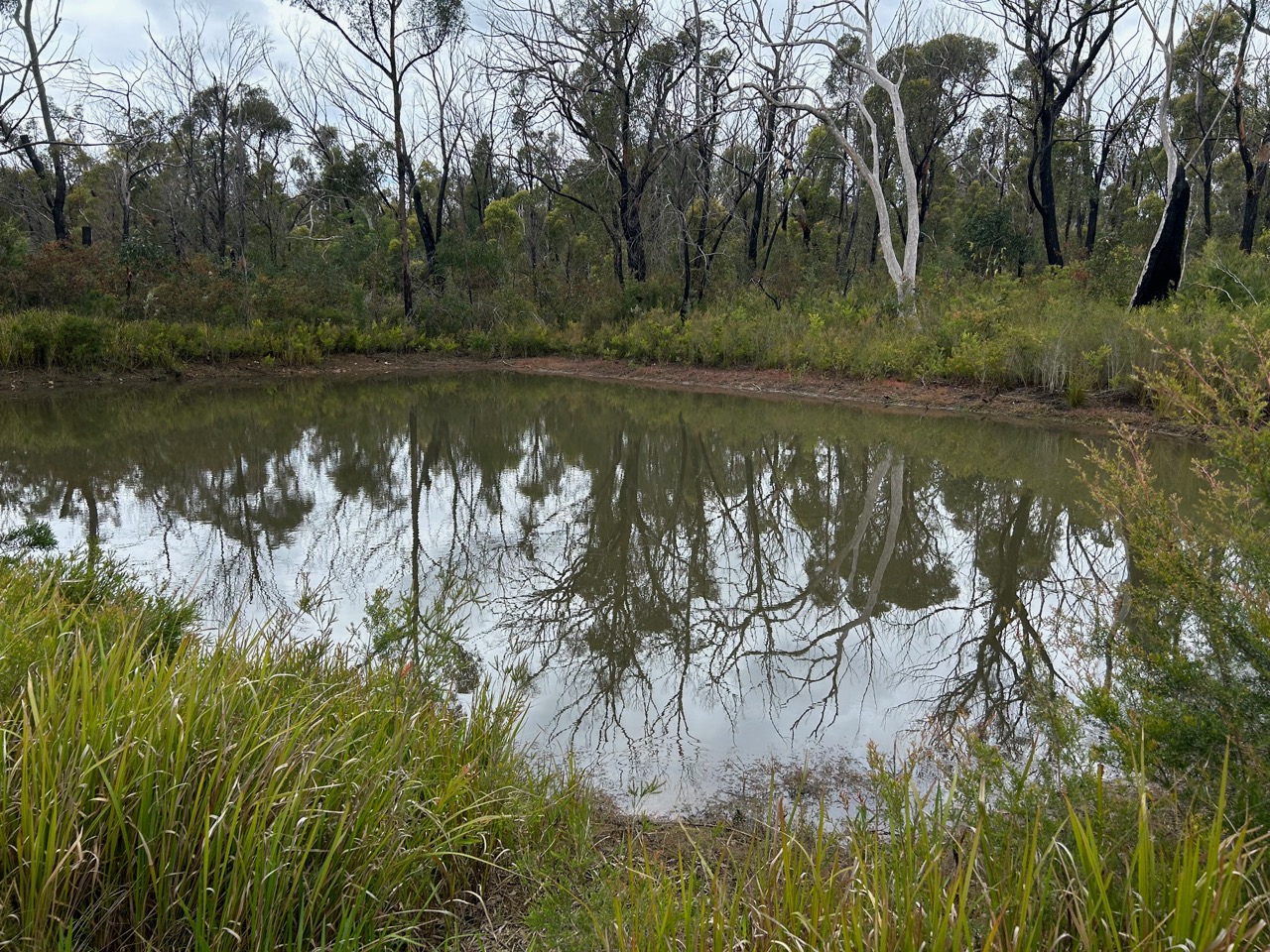
Before the rains.

After the rain.

But now, since the down pour, we have 4 dams all about 3/4 full. The little house dam that started from 1/3rd full, over flowed down into the next dam in the series. A lot of that water I pushed up hill 2 weeks ago flowed back. A waste of a couple of gallons of petrol. I still buy petrol for the pumps, the chain saws, the mowers and diesel for the tractor. So we are not fully weaned off the dirty oil economy. I worked out recently that I spend a little bit more money on the fuel for the mowers and chain saws, than I do putting petrol in our Plug-in hybrid car, simply because we make sure that we keep the car fully charged off our solar panels, so we rarely ever need to put petrol in it. About $30 every 3 months, where as I spend about $100 twice a year filling up the fuel drums for the garden appliances.

We have recently bought a solar charged electric push mower, plus a whipper-snipper thingy, and a solar charged electric chain saw. So I expect that my visits to the petrol station will decrease accordingly. I still need diesel for the tractor and petrol for the ride on mower.

Since the weekend workshops of the last two weekends, Janine and I have spent a good part of each day during the week in the pottery consolidating our sgraffito skills and developing a few new designs, to include in our next batch of work. I would have liked to spend more time in the pottery, being creative and self absorbed. Once you start to draw and decorate the surface, the time just flashes past and it gets late so early. We  have to stop to do the watering. There will be more time tomorrow to get a bit more done. There is always enough time for everything. We just have to learn to allocate out time and and as we age to allocate our limited energy. 

There is so much to do around the garden and orchards. We have had to start watering by hand again since the rains stopped and the temperature has been going up – just touching on 40 degrees today. Even hotter in the west. Hand watering all the gardens and orchard trees. It takes us both over an hour to do a quick once-over, just to keep everything alive. It takes a lot longer to give specific beds a really good soak while we are at it.

We could probably buy vegetables much cheaper from one of the rip-off, price gouging supermarkets. But they wouldn’t so clean, fresh, healthy, organic and immediately delivered straight from the garden and onto the plate. There is something so very, even intensely, powerful in growing your own food. Not just the self reliance of it, but the intimate nature of the activity. It grounds me here in this place. I’m intimately here and now on this ground. This has become my little all-encompassing environment. My statement of belonging. I’ve sculptured this place into being as what is is now. It’s peaceful, abundant, pretty, and very functional as a home art space and garden.

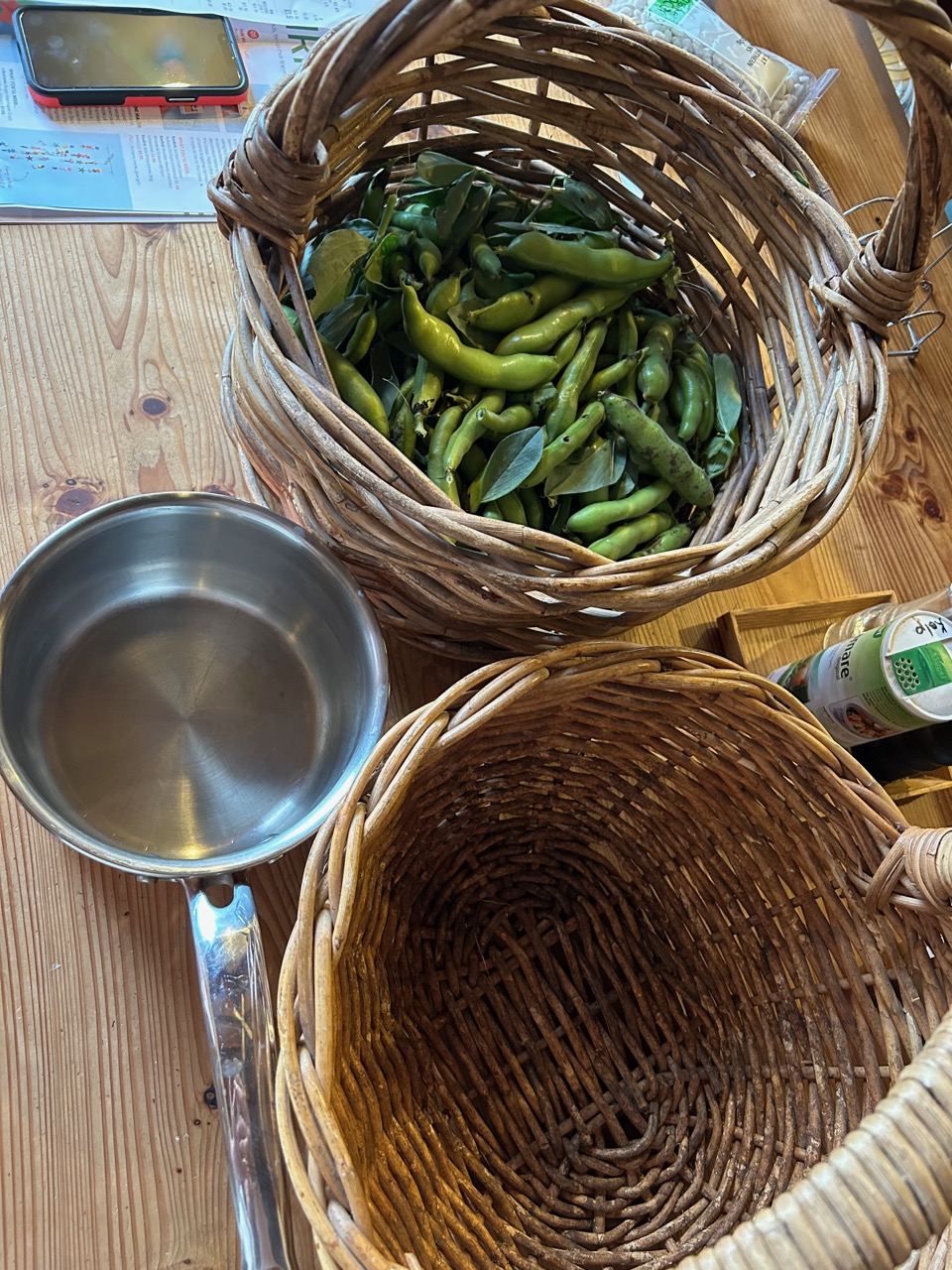
We are just coming to the end of ‘the hungry gap’. That time of the year when most of the winter food in the garden is coming to an end, but the new spring planted summer crops haven’t started producing yet. We have been eating the last of our carrots, beetroots and cabbages, and have just picked the last of the broad beans along with the first of the new season zucchinis. Tomatoes have set on the bushes, but are still very green. It is always a challenge to get one ripe red tomato before Xmas. 

maybe not this year, due to our being away and not getting that head start early on at the end of winter, or the first weeks of spring.

One very nice treat for this time of the year is the summer fruit crop. We are harvesting strawberries, blue berries, peaches, nectarines and plums. That equals fruit salad for breakfast for the next month.

I love the summer garden, but I don’t like the 40 degree days, or the potential for bush fires that are always in the realm of possibility when the wind picks up from the west.

Everything is relative

We are having a short break from the pottery studio for a week to work around the garden, before the next few weeks of weekend workshops. It’s the last week of spring and we are only now getting the time and energy to plant out the summer garden. It will be a smaller garden this summer, as we are forecast to be heading into a long dry ‘el nino’ period. The previous one lasted some years and culminated in a severe drought with bush fires.

We spent the last summer of el nino drought watering our vegetables and garden plants from our rain water tanks, as all the dams had dried up. Luckily for us, we had invested in two huge storage tanks 20 years ago, when I was working and had the money to invest in our future water security. People mocked us, but we have never had to buy water in our life. We are attempting to be self reliant in as much as we can. Rain water and solar electricity are at the top of the list.

Last drought, we emptied one of the very large 125,000 litre water tanks and were half way through the other when the rains returned. Luckily, we didn’t have to buy water. Some people that we used to know years ago, had planted out an extravagant and sophisticated English garden told us that they were spending $300 per week back then, buying water to keep their garden alive and thriving. Three large truck loads of water were delivered and pumped into their tanks each weekend. It was the wrong kind of garden for this area, at this time. They also got a 100 metre deep bore drilled to get access to some underground water, but it dried up, and had to be evacuated, all the pumps and piping had to be hauled out with a crane and hole re-drilled down another 20 metres, to find a more permanent source of water, which then turned out to be iron bearing and needed to be oxidised and treated before it could be used on plants.

We learnt from this and decided to live a more simple and frugal existence, more in keeping with the natural environment. Every part of modern life does damage to the environment. Our aim is to keep that damage to a minimum where we can.

We have been enjoying the very early fruits from the garden as our breakfast fruit salad, Cherries, blue berries and strawberries. They are all growing under cover in the vegetable garden enclosure, safe from birds, so we get them all. Except for what the snails eat.

We had a good crop of mulberries this year and I was able to get my share despite the birds taking everything that they could. It’s the first fruit to come on out there in the orchard, so the birds are very hungry after the winter. They are also looking to feed their new babies hatching out in the spring time. This year we shared the crop. I was able to make 3 mulberry pies over the couple of weeks while the crop lasted. Being a huge tree, we have no way of netting it, so we share. The youngberries come on next and because they are a bunch of canes , and not too high we can net them to get most of the fruit. The birds are resourceful and learn how to land on the netting, pushing it down and then pecking the fruit through the net.

We also netted the apricot tree, as it has a reasonable crop of fruit coming on. Who knows how the rains will turn out? If there is no natural water from the sky, the dams won’t be enough. We have netted it just in case anyway. You never know what might happen. What we do know is, no net = no fruit. So we net.

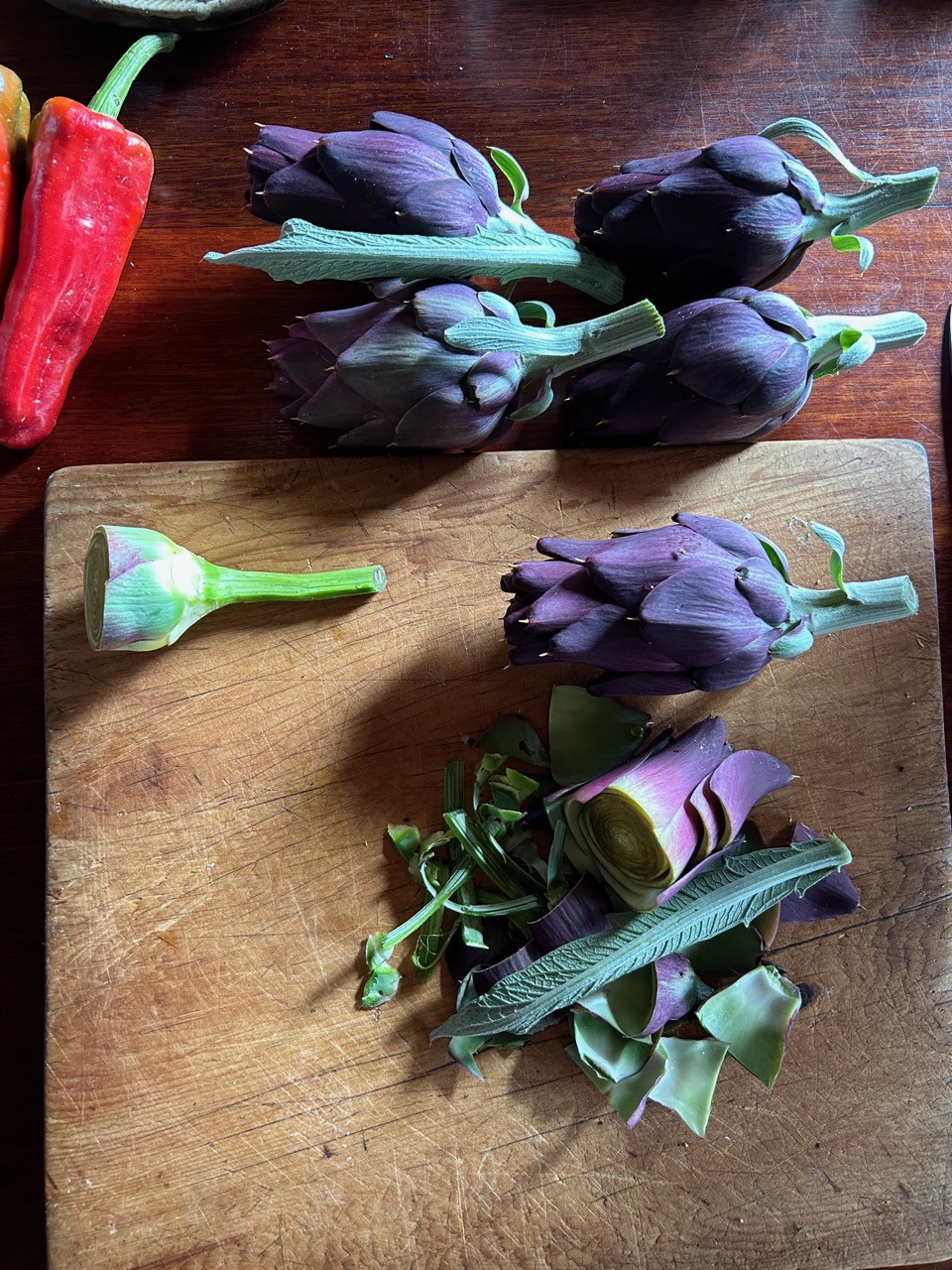
We have finished the last of the globe artichokes. The purple variety are the last to mature. They are a lovely seasonal treat. This year we have been having them on pasta for a slow lunch.

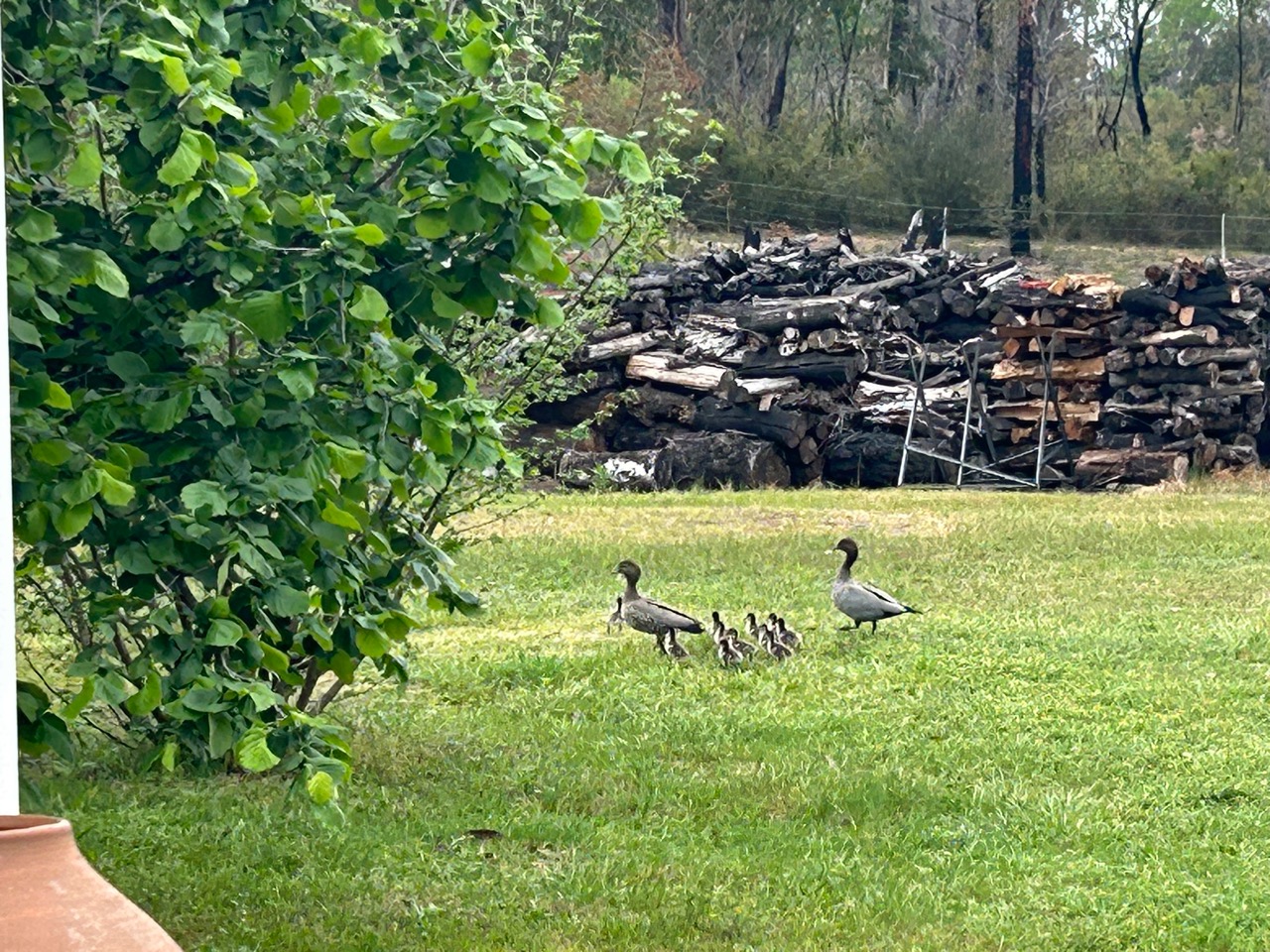
Spring also brings a return of the wood ducks. This season so far, we have had 3 hatchings. They start of with a dozen littlies and day by day the number decline. I assume that they are taken by bigger birds, although I haven’t seem one taken. They are very timid and wary by nature, so we keep out of their way while they have young. Choosing to walk the long way around if we encounter them in the garden or orchards. I think that they are probably lucky to get 2 or 3 to maturity by the end of spring. We have learnt from experience that if you don’t make eye contact, they are less likely to run or fly away. They will stay and keep a very close eye on you but not move. As soon as you turn your head to look at them, then they take off.

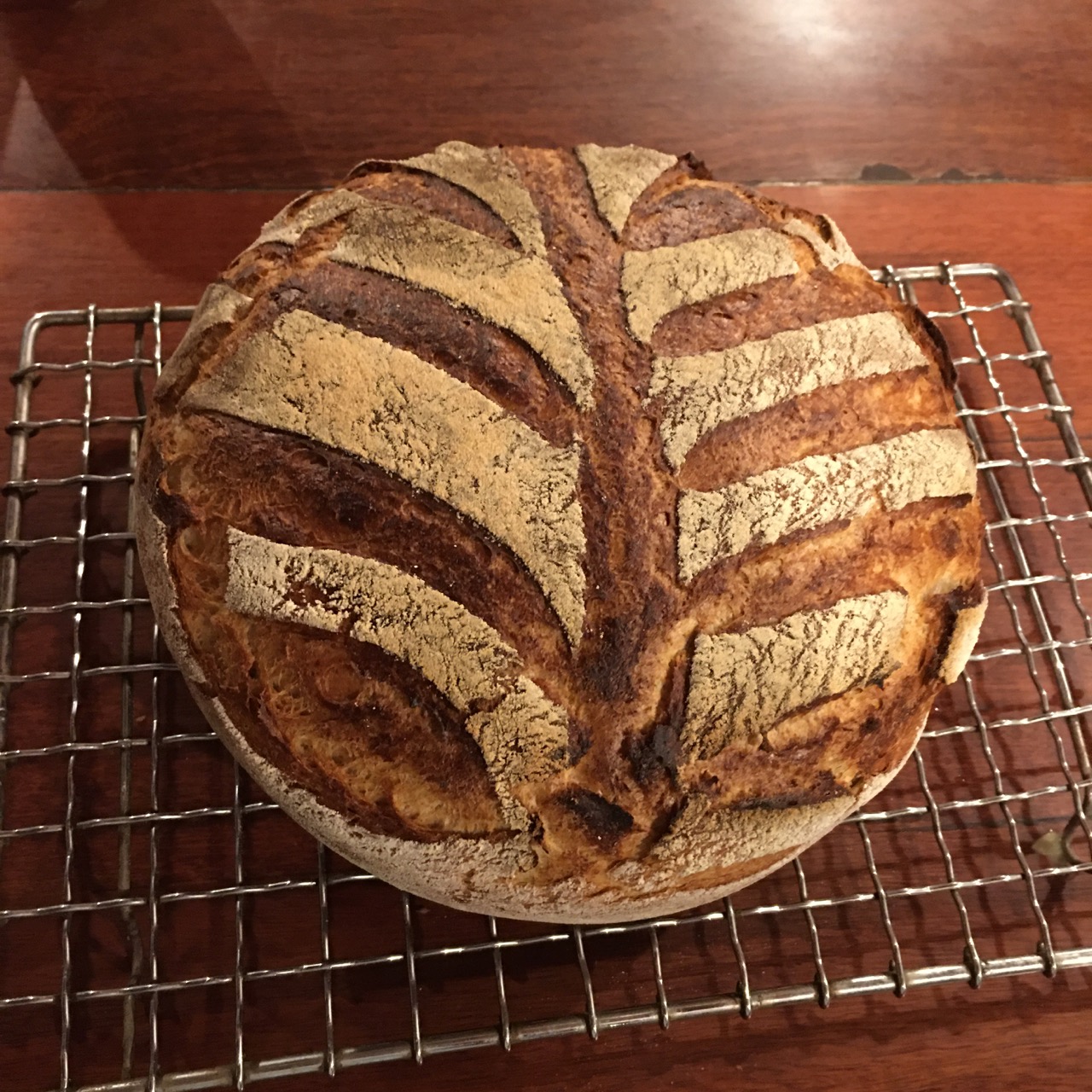
I’m still baking my bread each week. It’s a 50/50 blend of wholemeal and rye. It works out well for me, the way that I have developed it. To save time and make it an easy proposition, I sort of cheat. Sort of! But not really. I use a bread making machine to mix the dough on the ‘dough-only’ setting. It takes 1 1/2 hours to mix, prove, knock down and rise the dough. Then it switches off. I turn up and knock it down one last time and pop it in a cast iron, ‘Dutch-oven’ baking pan and bake it in the oven for 20 mins at 240oC with the lid on, then another 20 mins with the lid off. It works for me.  I can be outside working while the dough is being nurtured and pampered in the machine. We are on to our 3rd bread machine. They last about 10 to 12 years before they burn out, or wear out the bearing. At one loaf a week for 10 years, that’s a 500 loaf life span.

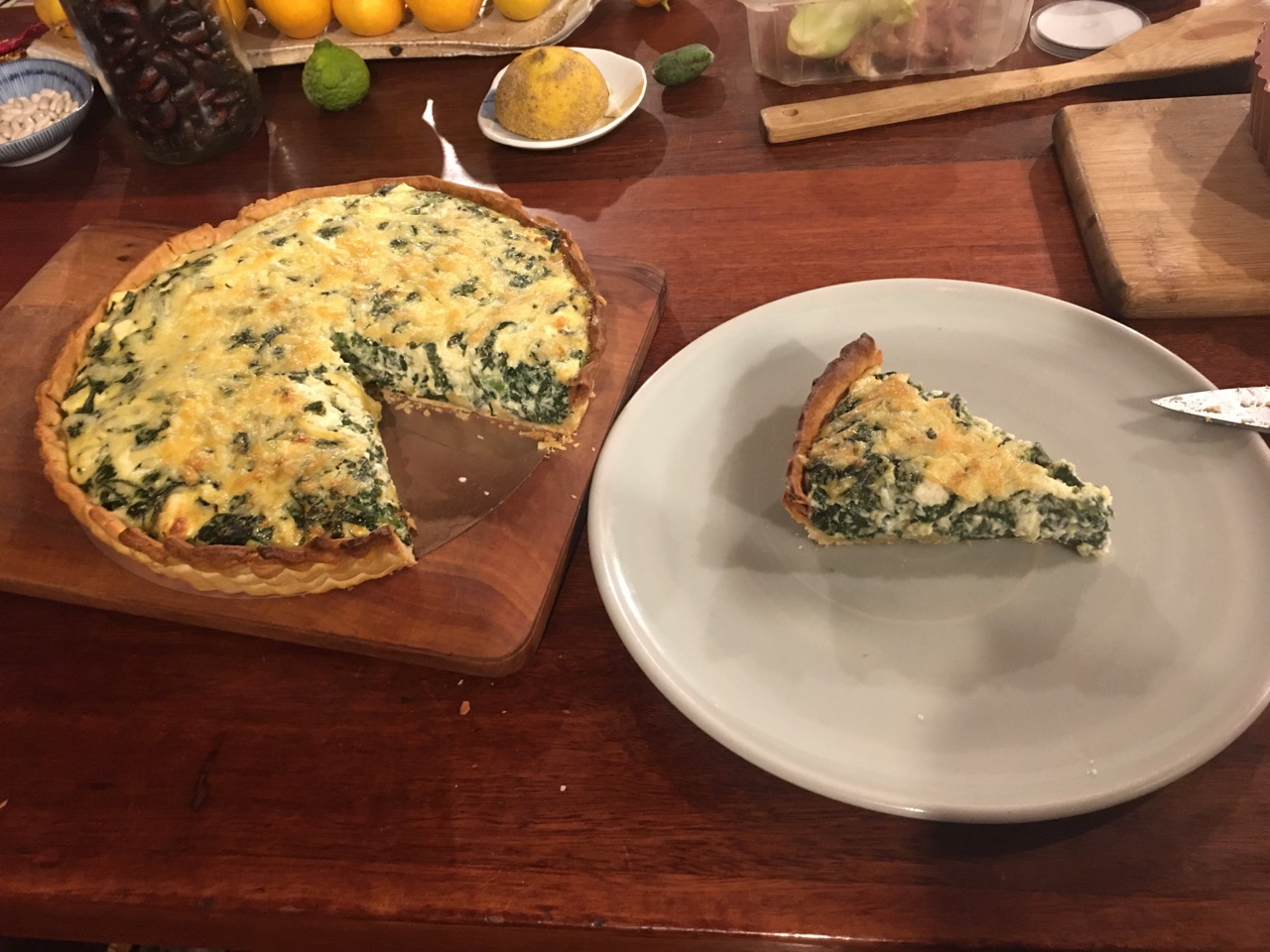
We picked the last of the spinach. Just tiny leaves from the spinach trees, as they bolt skywards heading to seed. I made the last spinach pie for a while. I will need to plant some more. I should have them in the ground by now, but life was too busy to do it all. I have just put in the seed this weekend.

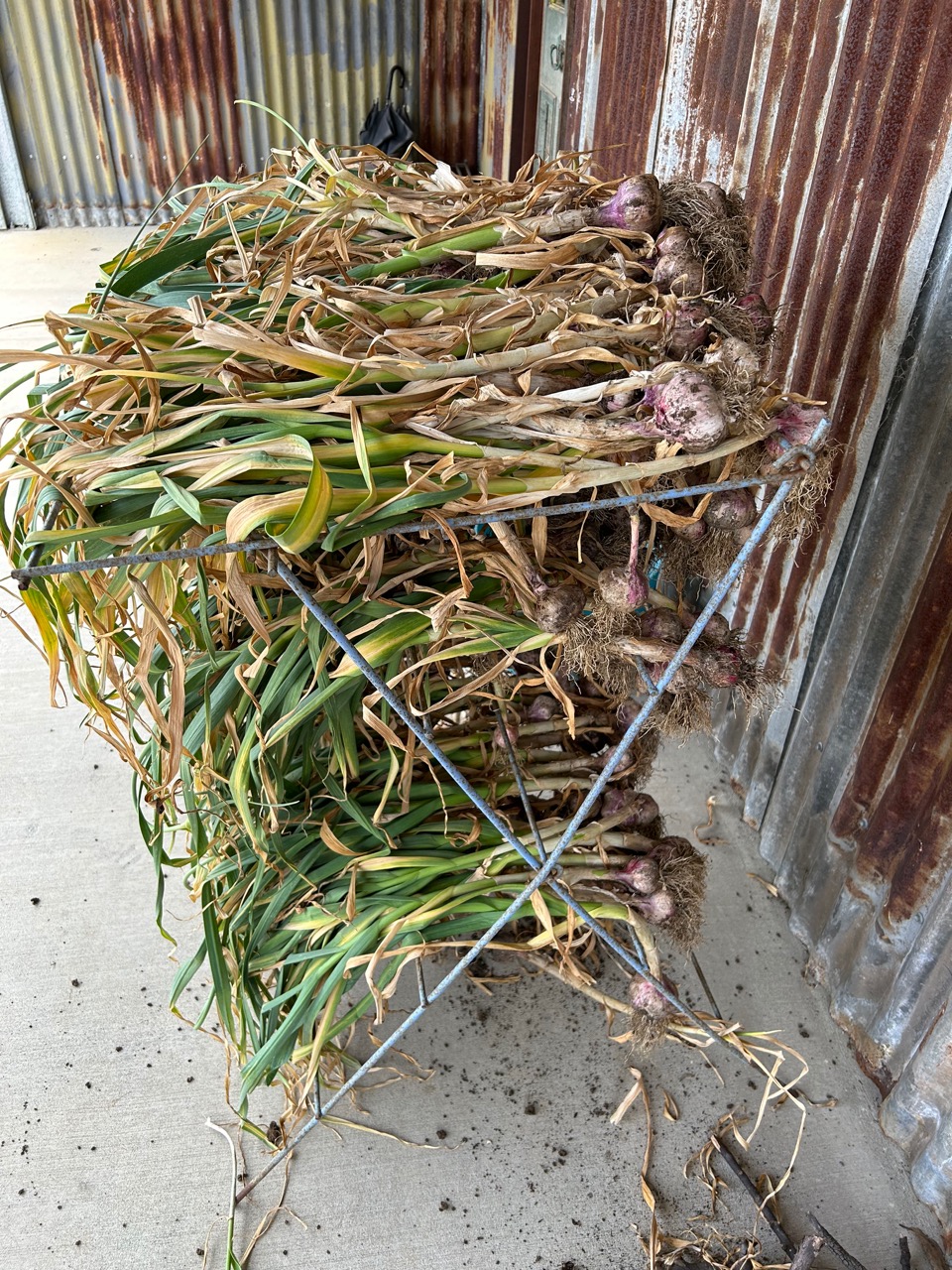
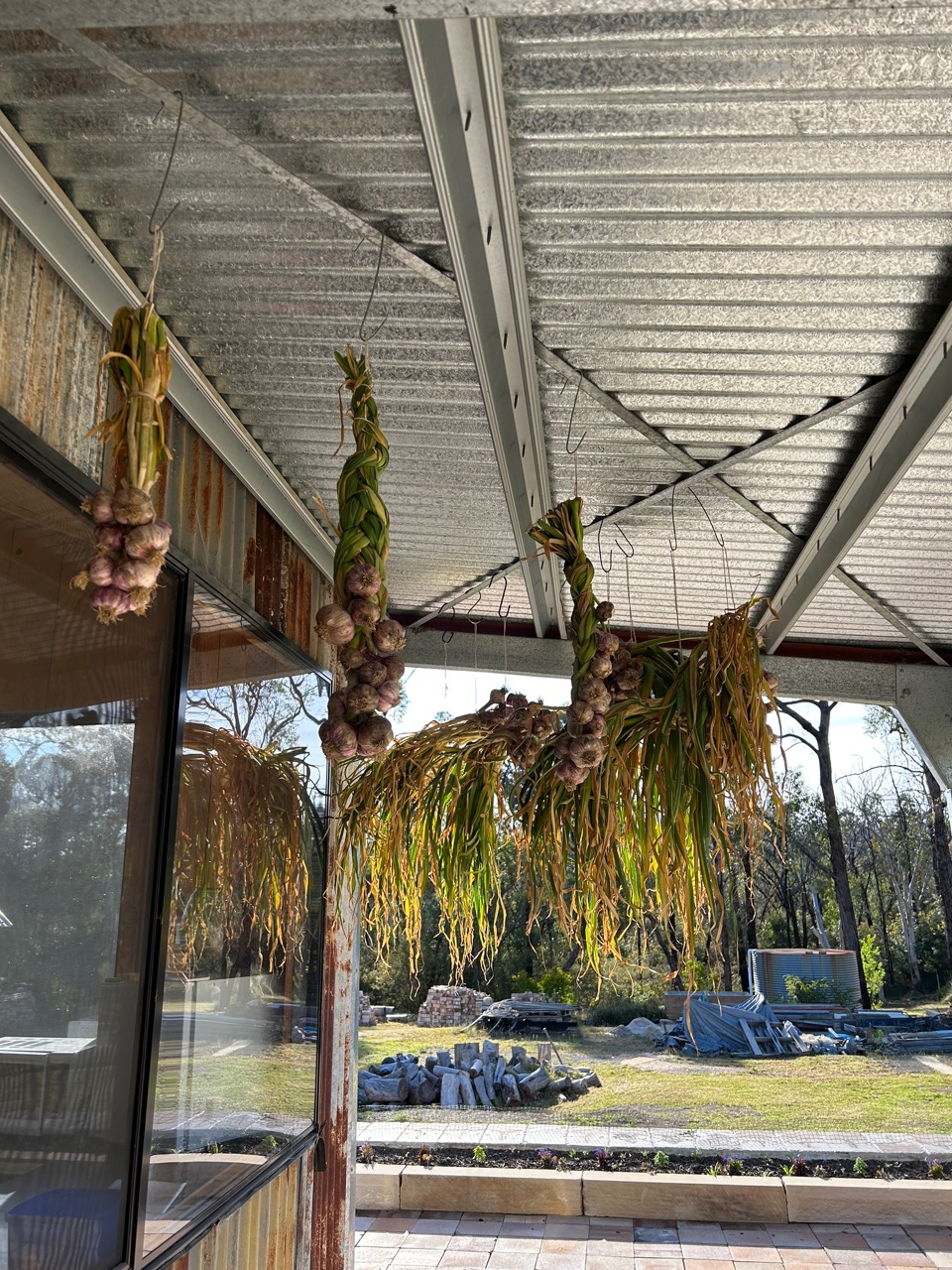
Janine has found the time to plait this years small garlic crop, just half a dozen plaits and a big bowl full of tiny knobs that are too much trouble to plait. Those small garlic knobs sit in their bowl on the kitchen work bench are used first. The biggest and best are kept for replanting in March. Its a very small crop and wont last us through the year. But can’t complain, at least we have some.

I catch myself thinking that things could be better. More or better sized garlic, more regular rain. But things are really pretty perfect for us. I have to remind myself that I’m not in Palestine or Ukraine being bombed. Be happy with what you have.