Boiling and boiler-making

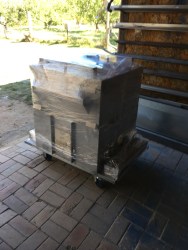
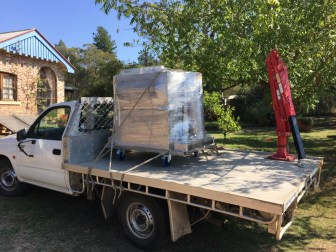
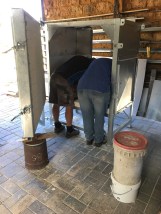
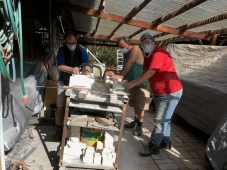
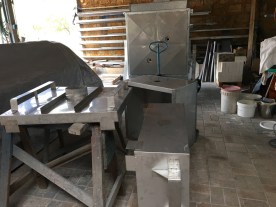
The first batch of new little wood fired dual/fuel kilns takes shape in my workshop. I could say ‘rolls off the assembly line’, but I’d be telling a lie. My kiln shed is only just big enough for 8 of these little gems at one time and there is definitely no assembly line, just a kind of organised chaos as all the parts get made individually and then assembled. I have 9 kilns ordered this time round. I can’t fit them all in comfortably, or even uncomfortably, so I decide to split the work into two parts. The 6 large and then 3 small units.

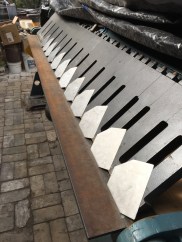
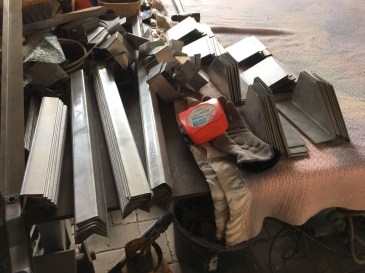
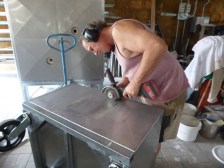
I spend an extraordinary amount of time making all the fiddly parts that go into handles and locating lugs etc. I spend 3 days on these parts, even with a bit of help from my lovely Swiss intern Catherine assisting. There are 100 lugs to be manufactured for just one small part of the first 6 kilns. Each part needs to be filed on all 4 sides and also have the corners filed down and rounded for safety, then a safely edge folded over to make it extra safe. In all there are about 1,000 individual actions that need to be performed on these tiny bits, just make one small part that no-one even realises is there.
That is until it is not there!
After three days of this monotony, I need a day in the garden!
IMG_0578 IMG_0582 IMG_0584
IMG_0609
While all this industry is going on, there is still gardening to be done to continue the flow of food from the garden in 3 months time. The equinox is the time to plant garlic, as well as leeks, brocoli, cabbage and Kale. Cauliflowers and Brussel sprouts were already planted in January. Today I am planting radish seeds to make sure of a continuous supply of salad next month. The lettuce seeds are already up and thriving.
The 2nd planting of corn is all over and we are onto the 3rd crop now. The few small 2nd cobs on the old corn plants are rather small, but I pick them and dry them in the sunny kitchen window to dry them out. when they are fully dried, I’ll mill them up into polenta for winter comfort food.
IMG_0602 IMG_0612
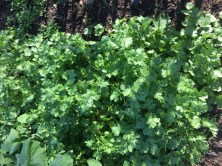
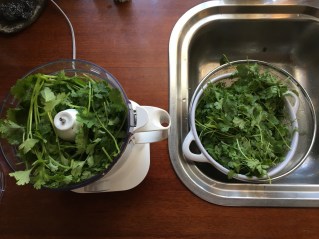
Today, I also harvested half of the coriander crop, as it is at peak leaf just now. This is the seed from the summer planting, which was the seed from the spring planting etc. I decided to make a coriander based green chilli paste.
Recipe;
A bucket of fresh picked coriander leaves
A hand full of green onions
4 long green chillis (hot)
The juice of one each, lemon and lime
Some salt to taste, I keep this to the minimum, but without it the full flavour profile insn’t realised.
Salt is evil stuff, it hardens your arteries and causes hypertension. It is added in far too greater quantities than is really needed to every processed convenience food. We all get way too much of it without even realising it! It’s up there with sugar as a harmfull ingrediant, simply because we eat too much of it.
We don’t buy any junk food, and hardly ever buy much processed foods, but it is still very wise to limit the intake of salt. As a result we don’t have high blood pressure. I think that the two are related.
Still, a tiny pinch of salt goes really well with just a few particular foods like; tomatoes, eggs, curries, pickles and this coriander paste.
IMG_0605 IMG_0607 IMG_0608
I manage to fill 2 plastic tubs with the concoction. It’s tangy, spicy, hot and very aromatic. 3/4 of it goes into the freezer in this way, so that it will keep for the rest of the year, as needed. The rest goes into the fridge for immediate use.
Items like pesto and coriander paste are not cooked, so can’t be sterilised with heat to preserve them. We don’t own a freezer, so we have to limit what we choose to freeze. This raw paste, pesto, bone marrow stock concentrate and a couple of meals, cooked in excess at the time to be frozen for emergency meals.
The last of the summer beetroot crop needs to be dealt with before it bolts, so I give them a fast roiling simmer for a few minutes to boil them and soften them a little and then drained and straight into hot bottles from the oven with preserving vinegar. i.e. cider vinegar with a spoon full of sugar plus a 1/2 of salt and brought to the boil with a few spices like, cloves, cinnamon, star anise, pepper corns, bay leaves, chillis and mustard seeds. Such a mix is variable and is different with every batch, as it takes my fancy. Pour the mix over the sliced beets and cap straight away while almost too hot to touch. They vacuum seal as they cool.
IMG_0594 IMG_0595
Best wishes from Steve the industrious, well-preserved, boiler and boiler-maker.

Firing on Sunshine

We have had our new Tesla battery for a couple of weeks now and we have just done our first electric kiln firing on sunshine.

We have had 3 kW of solar PV panels on our kiln shed roof for over a decade now, but we have only recently managed to get our hands on a new PowerWall 2 lithium battery, after being on the Tesla waiting list for over a year. The battery is working perfectly, just as we imagined, and now allows us to run our house and pottery almost totally independent off the grid. We had decided to stay connected to the grid however, as we generate far more solar electricity than we use ourselves most of the time, and up until recently we got a very handsome rebate payment for the power that we sold.

Now that the generous rebate program has ended, it is much better for us to store our daytime solar electricity excess and use it ourselves at night, instead of paying the premium cost of buying back ‘green’ power from the grid at night.

Of course we don’t have to buy ‘green’ power. We just choose to, because we made a decision 13 years ago to remove ourselves from the coal economy. Which we have done. We are of the belief that global warming is real and that it is man-made. Burning coal to make electricity is a very big part of the problem, and green power is going to be part of the solution. It’s affordable, it’s here now and it’s the future. In addition to going solar, we have also declined to use concrete slabs in our building construction and we choose to drive the smallest fuel-efficient car that we could afford.

When we put the first Australian made solar panels on our roof 11 years ago, we didn’t do it to make money. We did it for ethical reasons. However, as it turns out, we paid off the panels and made a slight profit over the decade, because we were paid one or two thousand dollars a year for the power we sold to the grid, but we also didn’t have an electricity bill for that decade. A saving of many more thousands of dollars. These original PV panels still have another 15 years of full productive life in them, before their output starts to decline. I’ll be long dead before they stop working. We recently added another 3kW of PV at the same time as the battery. As I intend to buy a fully electric car as soon as they become available at an affordable/reasonable price.

So now with everything in place, we have just completed our first electric kiln firing using our own solar power, firing through the day on sunshine up until just after lunchtime and then into the afternoon on a mix of solar and battery, then ending in the evening mostly on the battery power. Yes, it works. You can fire on sunlight. The future has arrived!

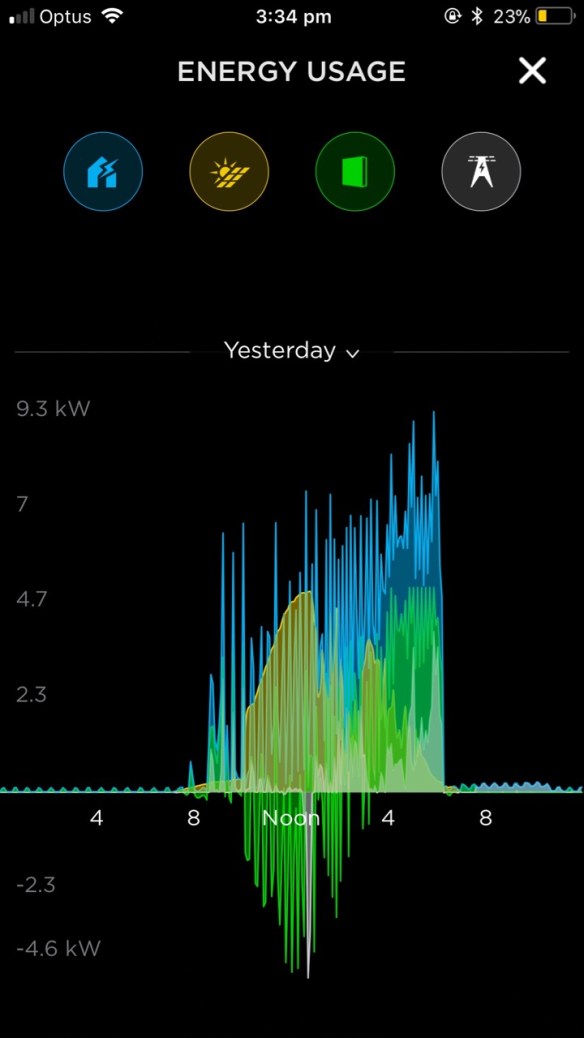
Below you can see a graphic of our power usage though the day.
IMG_0522

The high blue spikes are the electric kiln switching on and off. The golden-yellow hump in the middle, above the line is the solar panel output from the roof. The green areas below the line is the battery being charged up from the solar PV panels in the morning and corresponds perfectly with the yellow solar area above the line, up until noon. The solar panels are both firing the kiln and charging the battery up to noon.

After 12 noon, there was some cloud that came over and the solar output dropped down. By about 3 pm. the PV panels no longer generated sufficient power to both fire the kiln and charge the battery. After 3pm the clouds cleared and solar output increased again and fired the kiln with the assistance of the battery. From 4 pm onwards, the battery fired the kiln with assistance from the solar. Solar production ceased at about 6.30 and the firing finished at about this time also, more or less solely on battery power.

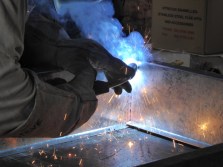
The small zigzag ripple on the base line is the household usage, mostly this comprises the fridge compressor switching on and off. I should also point out that I was also working in the kiln factory throughout the day and using some very heavy 3 phase sheet metal machinery, welders and plasma cutter. This is included in the blue spikes. The lower line of blue spike peaks is the kiln alone, and the higher level of blue spikes is the kiln and the heavy electrically powered machinery working at the same time.

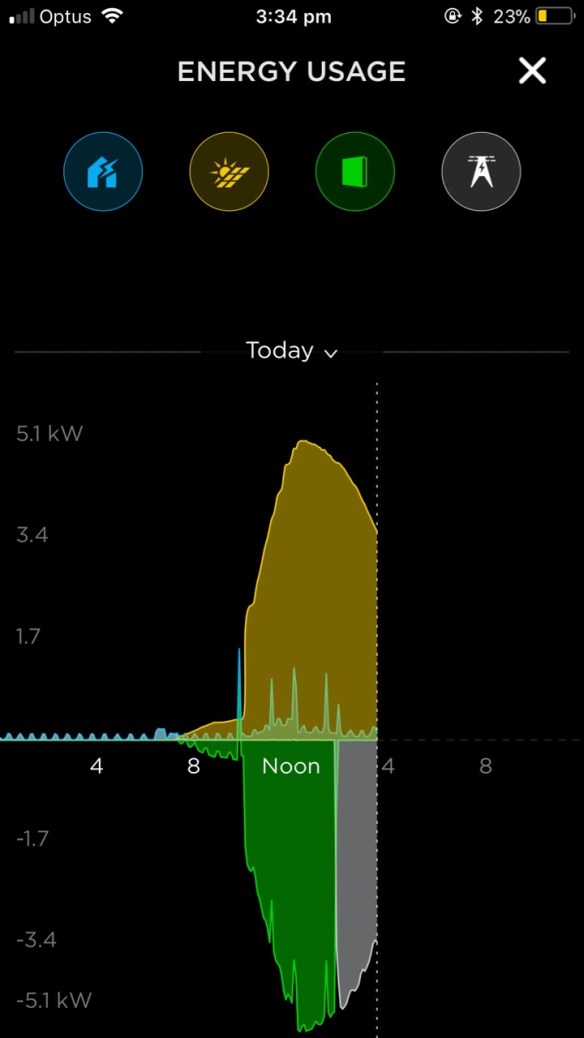
The following day, the PV panels charged the battery back up to full power again by about 1.30pm. Solar output is shown in yellow. The battery shown in green is being charged below the line. Once the battery is fully charged, the solar output is then switched to sell back into the grid for the rest of the day. Shown in white below the line. Household usage is shown in Blue above the line. You can see that we run a very energy-efficient household. The blue spikes represent the toaster and jug in the morning, then the washing machine and then me using the heavy 3 phase welders, and sheet metal machines intermittently in the kiln factory through the day.

By way of explanation, I downloaded this screen shot at 3.30 pm, so that is why the graph suddenly stops.
 

IMG_0521

From this brief explanation I hope that I have illustrated that it is possible to live a ‘normal’ life, carry on working and fire an electric kiln, all from a solar array and a lithium battery.

Food for thought?

Some technical details;

The battery is a Tesla Powerwall 2 lithium-ion battery with a 15 kWh rating.

The solar array is 6 kW. Made up of 3kW of 11-year-old BP solar panels made in Sydney, and 3kW of new ‘Tindo’ solar panels made in Adelaide. In both cases, we paid a premium to purchase Australian made panels to support Australian industries and Australian jobs. If there had been a comparable Australian battery. I would have bought that instead.

The Tesla Powerwall 2 lithium-ion battery is 15 kW/h rating. Made in the USA. The closest Australian contender was ‘ZPower’  also from Adelaide, but at almost 3 time the cost, it was out of our price range. All these things will change quickly and dramatically over the next few years. Watch this space. You can be sure that whatever will replace our battery at the end of its life in 15 to 20 years time, hasn’t even been thought of yet, never mind being built!

The kiln is one that I made myself. It is a half metre cube 500mm. x 500mm. x 500mm.  constructed out of light weight RI bricks.


latest little wood fired kilns

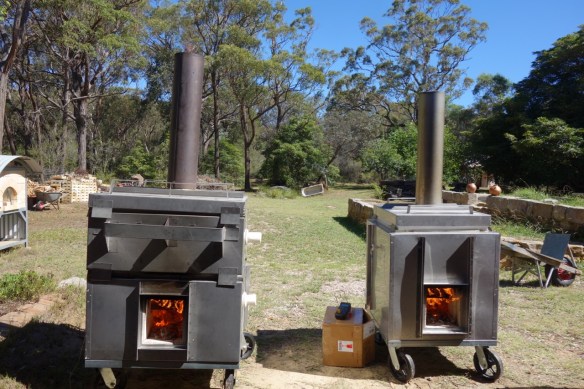
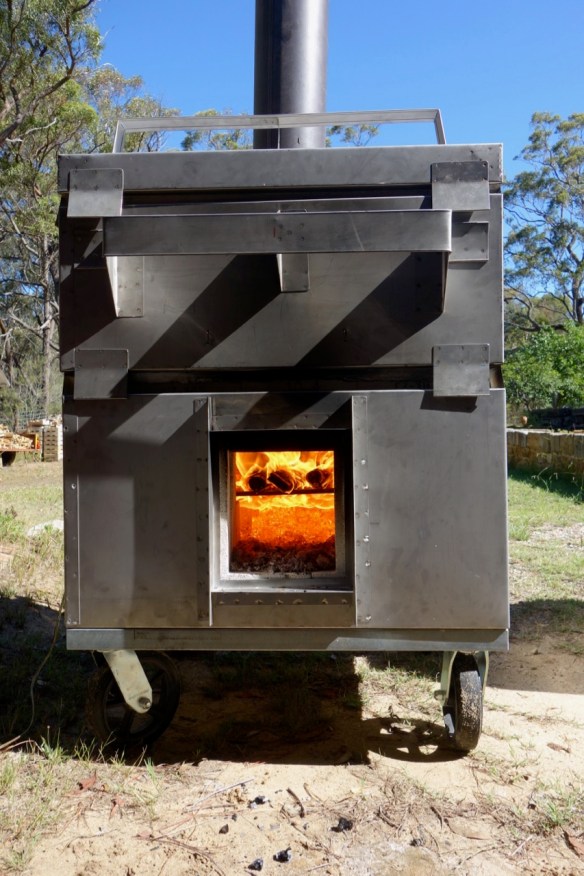
I have just finished and fired the latest little wood fired kiln prototypes.

DSC02915

These two new kilns are a slight improvement on last years model. The big difference is the increased volume. The big kiln is built in 2 parts. This new bigger kiln is 50% larger than the older model. When fired with gas burners, the 2 part design allows the top to be taken off and the lid placed on the lower section. The lower section can then be fired with gas burners and it can be used as a small test kiln. Alternatively, the top section can be replaced and it can be fired as a small production kiln.

In wood fired mode, it must be fired together, as the bottom section is the fire box and the top section is the chamber.

DSC02922

DSC02924

I’m very pleased with them. The bigger kiln got to stoneware, cone 10 down in reduction in just 2 1/2 hours. If I can fire it this fast, then it can be slowed down and fired as slow as you like, with plenty of power in reserve.

I’m taking orders for this kiln now.

Summer Intern

This time last year we had a summer intern called Lauge from Denmark. He was terrific. A great cook and so helpful with everything that we had to do. He wanted to experience all the environmentally sustainable ceramics activities that we engage with here, from vegetable gardening through to rock crushing and making clays as well as kiln building and rock glazes.

This year we have Catherine and her husband HansPeter from Switzerland. We spend 5 weeks together and get a lot done. She particularly wants to learn  all about my kiln building techniques. She helps me build 3 different kilns over the summer break. We work on finishing kiln number 301 and then we build 2 new prototypes for the portable, dual fuel, little wood fired kilns.

IMG_0057 P1110848

IMG_0052 P1110937

These smaller monocoque framed little kilns are so much easier to move around and line. It’s such a pleasant experience compared to having to rotate the bigger heavy kilns.

IMG_0081 P1110950

IMG_0097

As well as ceramics, Catherine is a trained blacksmith in Switzerland. The combination of a few metal working skills along with ceramics is an advantage in this ceramic kiln building workshop.

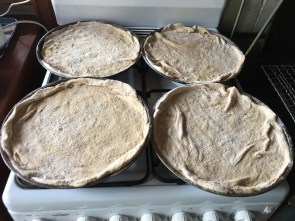
Roasted capsicums and home made pizza for the musicians

We have hosted the local musicians in our home after the monthly ‘session’ in the village hall. I decide to make pizzas.

I roast a few red capsicums and peel them after sweating them off in a plastic bag for 20 mins. Then peel them and dress them with a little oil and vinegar.

IMG_9985 IMG_9986

IMG_9990 IMG_9991

IMG_9992 IMG_9989.jpg

P1110365 (1)

As the weather continues to be very hot. We are invited to our neighbours home for the afternoon/evening for a swim in the pool and a BBQ. Such is summer. We are very lucky to have such generous neighbours.

P1110382 P1110383

After all this fun and good times, it’s back to work in the kiln factory. I still have to finish one order from last year and then I have 10 kilns ordered for this new year. I’m actually trying to cut down and retire from so much kiln work but these are orders and they mean guaranteed income.

P1110457 P1110460

P1110845

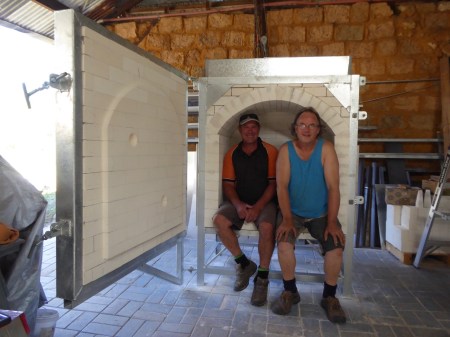
This is kiln number 301 and hopefully my last of the big heavy ones. My amazing and highly skilled friend Warren and I pose for a final photo in this last kiln. From now on I will be concentrating on the small light-weight portable dual fuel wood fired kilns.

IMG_0073


Some Jobs are a Lot Quicker with Helpers

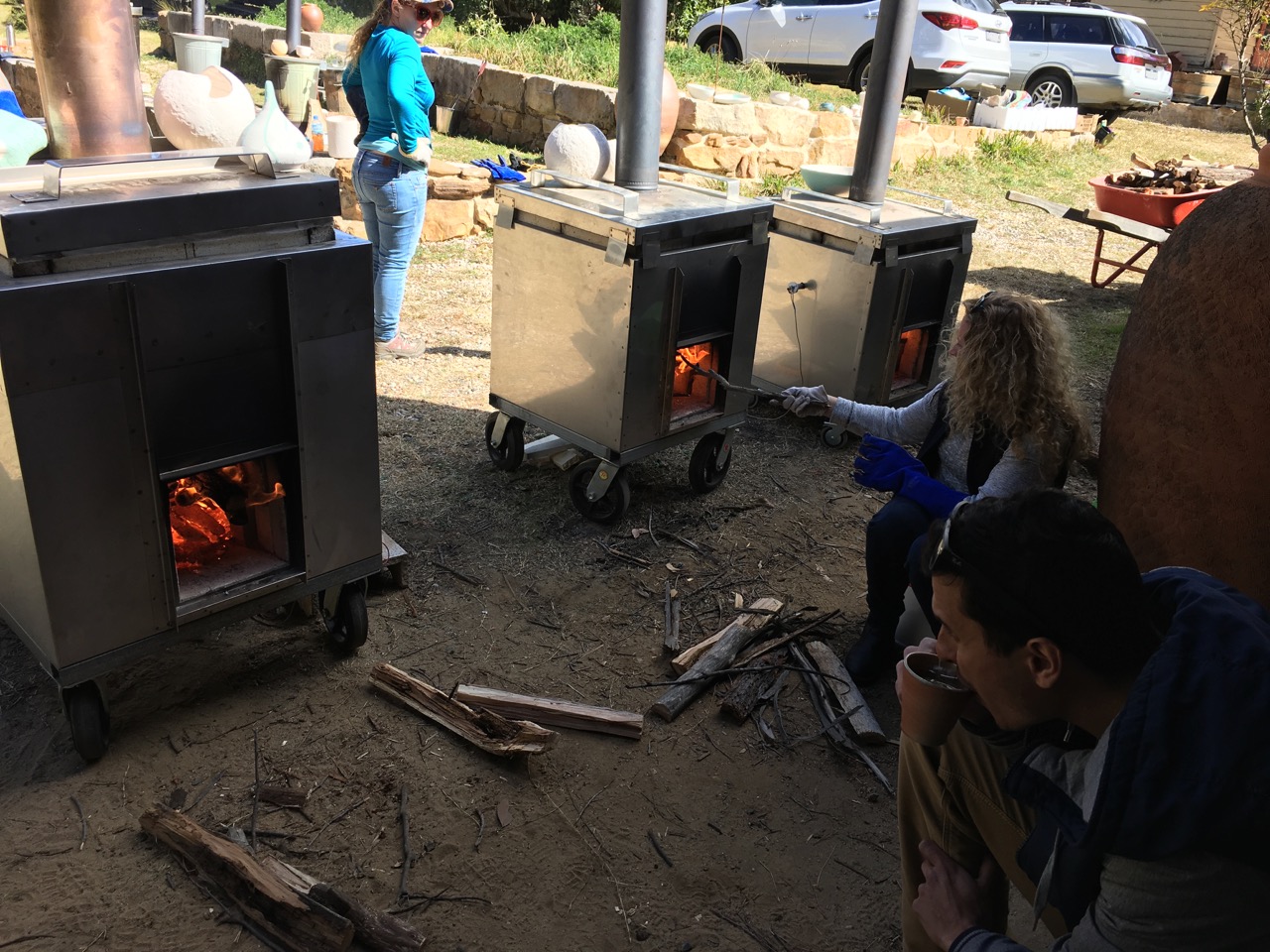
We have had our last wood firing workshop for the year, as the summer fire bans are now in place. The kiln was packed and fired and marshmallows were roasted to get us through the cold night. There was a cracking good frost over night too.

IMG_7928 IMG_7931.jpg

IMG_7934

It was a very good firing with excellent results. After the unpacking of the kiln, many of the potters stayed on for a working bee to help us to split wood for the next firing.

IMG_8003

It was a fantastic experience to be amongst bright friendly young people who have a lot of energy. In just a few hours we managed to fill the wood shed. This is the first time that t he wood shed has been completely filled to capacity. It a good feeling, but more-so because we were part of the team all working hard to complete an objective.

IMG_8004 IMG_8005.jpg

The chicken had a field day eating all the bugs that were exposed from under the bark of the logs. I’ve never seen them collapse and have to sit and rest in amongst all the hectic activity of wood splitters and chainsaws, because they had eaten too much and were completely full.

IMG_8048

IMG_8102

Kiln Number 300, gone to the galvanisers

My 300th kiln is all welded and has gone to the galvanisers. The workshop is now empty and ready for the next few weekend wood firing workshops. This last weekend we had our 7th workshop for this winter/spring season. Only 4 more to go and then its all over for this year. Janine and I are fully occupied collecting, cutting and splitting wood during the week to keep up the wood fuel supply. With 6 kilns going all day, we get through the work pretty quickly, as well as the wood.

IMG_7820 IMG_7827

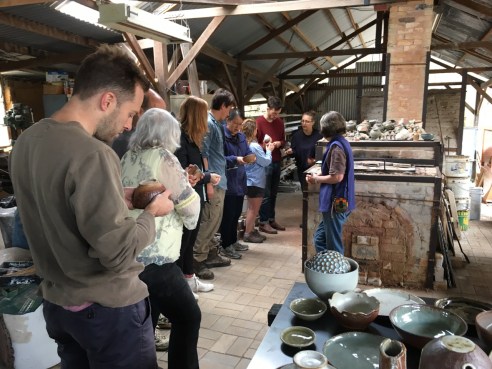
We glaze, pack and fire continuously all day. With each firing, our participants become more familiar with the glazes and the process. Today we have a majority of students who have not done a raku firing before and who have never fired a kiln by themselves before, not to mention that these are very hands-on wood fired kilns. It’s a steep learning curve, but we take it one step at a time and it all goes smoothly and some really beautiful work get made.

IMG_7838 (1) IMG_7840

IMG_7415

These two pieces made by Jude Keogh from Orange. Photo by Janine


Winter Weekend Workshop, Wood-fired Raku

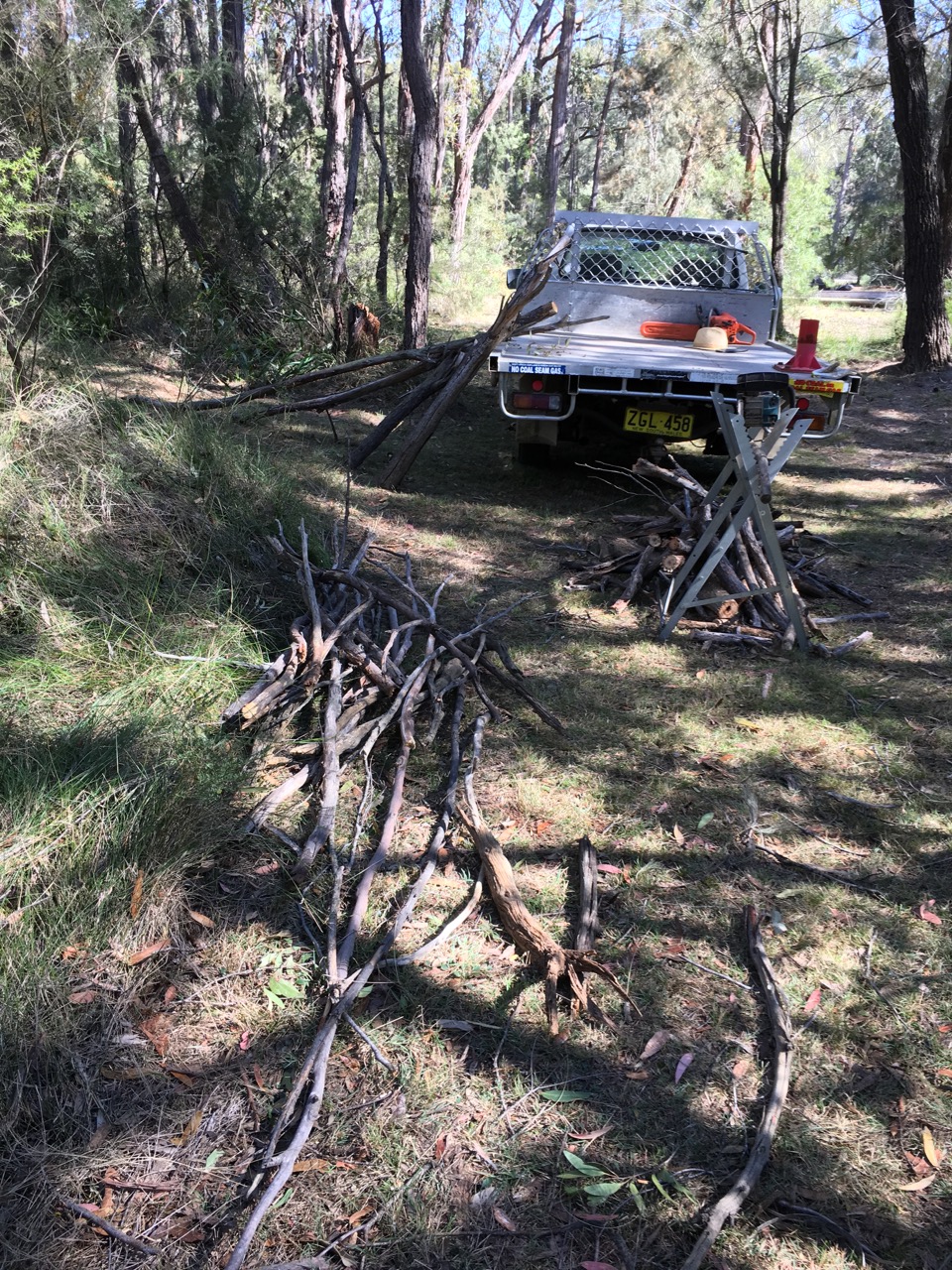
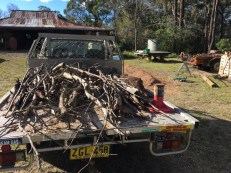
We are smack in the middle of the winter weekend wood firing workshops. 5 down and 5 to go. We have to take the truck down into the bushy part of our land and collect a load of small dead dry branches for the next raku firing workshop. We get through a truck load in one day with 6 wood fired kilns going all day. Collecting all of our own fuel from our own land like this is just one more aspect of our attempt at self-reliance. It’s time consuming, but fit, active, healthy work, and it helps to keep the forest in good condition.


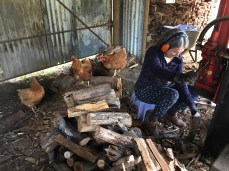
Amazingly, the chickens know the sound of the chainsaw and within minutes they appear, having covered the 100 metres across the block from the garden area where they spend most of their time, through the cherry orchard, the hazelnut grove, past the dam and the wood shed and they find us down the lane. The are motivated by food. They know that the chainsaw means termites, centipedes, under-bark beetles and cockroaches. We aren’t that happy to see them arrive here in this more remote part of our land. It means that they now know that this place exists and that they can roam here at other times. They learn their boundaries by following us. They don’t go where we don’t go. This place is the wild-wood for them and they will be very vulnerable to the fox if they come here alone.


We set about dragging the dead branches out of the forest. Once we have a good pile to get started with. Janine keeps on delivering more sticks and branches to me in the track. The closest place where I can reverse to truck to. I set up the saw horse and start to cut the branches into smaller sized pieces, suitable for use in the little Stefan Jakob style bin kilns. The chickens have no fear, they love to get in right under the saw to catch the falling bugs. I have to persuade them to look elsewhere in a rotten tree stump to excavate for termites. It works for a while but they are soon back in my wood pile, under my feet. They have decided that they love sugar ants and their larvae, that are falling out of some of the hollow rotten logs.

When we have loaded the truck, the chickens don’t want to leave this new exciting site that they hadn’t previously known about. We have to go back and entice them to follow us to safer ground, closer to the house. They wouldn’t last too long out in the bush.

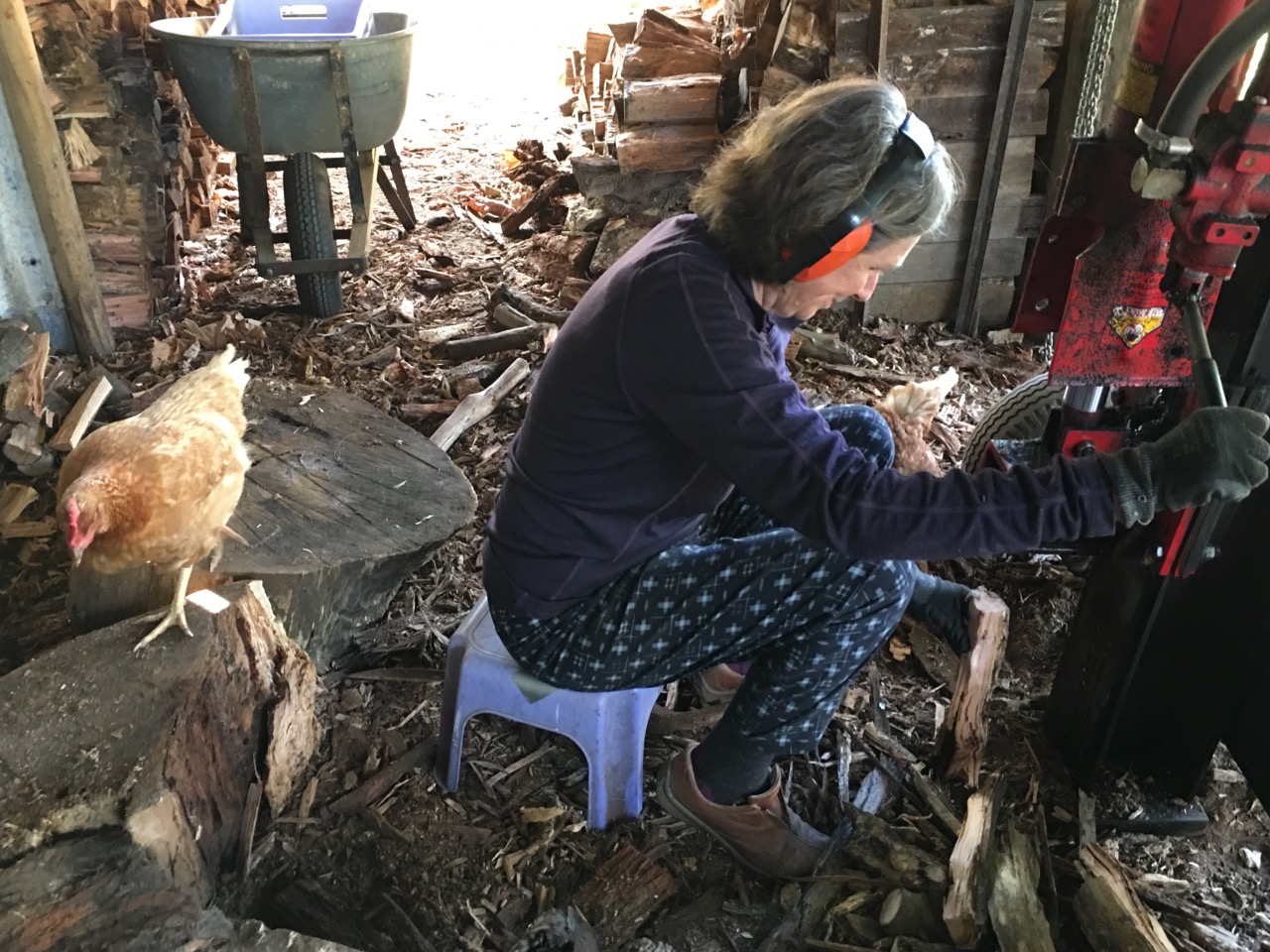
We need to drive the truck up to the wood shed so that we can split the thicker section logs down to thin pieces suitable for the small fireboxes on these little kilns. As soon as the splitter engine starts up, they soon appear, ready to ‘help’ Janine with the wood splitting.

 IMG_7589

I sharpen and service the chain saws, while Janine and her ‘helpers’ finish splitting the last of the wood.

The workshop is a success as they always are. Everyone getting a chance to fire their own work in their own kiln, usually working together in pairs or small groups.


The day ends with a little shower of rain, that sends us under cover for a few minutes, but it soon clears to a light sprinkle and we are all back out there cleaning up and washing the finished pots, raking the saw dust looking for lost pieces or little parts that have broken off.

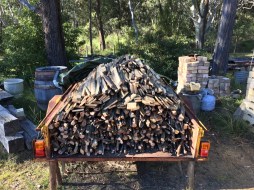
At the end of the day, the truck is empty and there are just 6 pieces of wood left in the wheel barrow.

A good day.

Weekend Woodfiring Workshop

Winter brings on the season of wood firing workshops. We can fire our wood fired kilns almost all year round. With the only exception being the days of total fire bans in summer. We cope with this restriction, by packing the kiln as soon as the work is ready to fire and then we sit and wait until the fire restrictions are lifted, usually after a patch of rain. The pots can sit in the kiln comfortably for any length of time, as long as the kiln is sealed, so that no little animals can get in. We haven’t had  to wait long, a few weeks at most.

However, we can’t run a workshop kiln firing schedule on this basis. If we book in dates to run a wood firing weekend, then it has to go ahead as planned. Everybody has made their plans around the dates and is relying on it. We can’t cancel at the last-minute due to a fire ban. Our solution is to only book dates that are outside the likely fireban season.

We have had 3 weekend firing workshops over the past month since I returned from my last research trip to Korea. We were lucky to be blessed with fine weather most of the time. We are getting cold frosty nights, but many of the days are wind-free and warm in the sunshine.

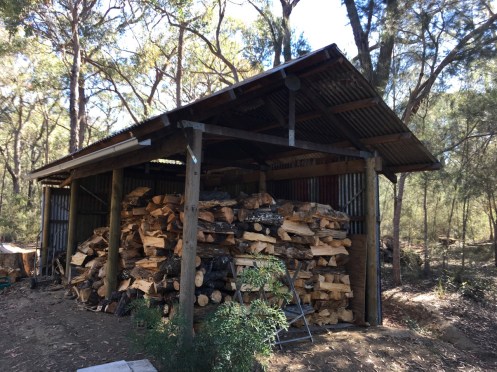
We spend most of the week in-between each workshop in preparation, cleaning up and transforming the space into a safe, functional firing environment. We also spend a lot of time collecting and preparing the wood. We use mostly dead wind-fall branches from our eucalyptus forest around the house and dams. throughout the year, these branches fall to the ground and need to be collected up and stacked, out-of-the-way, so as to keep the ground clear for mowing through the hot months for bushfire protection. This stack then needs to be sorted and cut or broken-up to a suitable length. The smallest twigs go to kindling and the first part of the firing. Thicker pieces up to 50 or 60 mm. dia. are used as-is for the main part of the firing, and anything larger is cut to length with the chain saw and taken up to the wood shed and split into suitable thickness, then returned to the kiln site. It all takes time, but the chickens help. They just love to be at the centre of the action.

We tell ourselves that all this exercise it is probably good for us 🙂

IMG_7279 IMG_7291

IMG_7281

Throughout the year I get fire bricks, stainless steel sheets and all sorts of other material delivered here on Pallets. Some of them. The ones with beautiful straight-grained wood, get dismantled and used for building things. It takes quite a bit of effort to dismantle a modern pallet. They are assembled with gang nailed corners and hot glued nails from the nail gun. I spend a fair amount of time priseing them apart and de-nailing them to save the wood in good re-usable condition. A successful pallet re-cycling session gives me a great sense of achievement – and usually a sore back and shoulders from all the bending, lifting, stretching, levering and hammering. But it’s worth it. I hate to see good wood wasted. It’s just another small step towards self-reliance, through making do, recycling and making the most of what we’ve got.

IMG_7283 IMG_7305

As we have 11 workshops booked in for this winter. We will need a lot more wood, than has fallen from the trees around the house over the summer. Janine has been making expeditions out into the ‘wild woods’ farthest from the house to drag back dead limbs to add to our stock. For this firing I also called in to visit the local mower shop. He gets a lot of his machinery delivered on Pallets and he has to pay to take them to the tip/recycling centre, So they are happy for me to remove them for them.

IMG_7306

One of these pallets is a monster. It has bearers with a cross-section of 200 x 100 mm. and beautiful solid decking of 25 x 150 or 200. All beautifully straight-grained and knot free. I made an effort to keep it all as pristine as possible. It’s so nice that I think that I may be able to make a beautiful chair out of it for the house. There are of course also a lot of ugly pallets. These are easy to deal with, because all I do is chainsaw off the ends of each side and the pallet falls apart into perfectly usable thin lengths of fire wood.

The students turn up knowing nothing of all this. The wood is ready and stacked in the trailer on-site. The kilns are all prepared and the glazes are out on the table. The days events proceed calmly and in an orderly fashion. Every thing happens as planned and the sun is warm in the middle of the day. Everyone seems happy.

IMG_7324

The result of all this effort on everyones part is some beautiful pots.

A Rainy Day in Bangsan

I wake up and its raining, not too heavy, but I can hear it on the roof and dripping from the overflowing gutters. I walk to the workshop in a light drizzly mist. I spend the day turning my bowls. It’s perfect slow drying weather.

Mr Jung is the man who runs the Bangsan/Yang gu Porcelain Museum and Research Centre. He is extremely open-minded and has a very inclusive policy of engaging with outsiders, so as to make The Research Centre relevant, lively, contemporary and internationally recognised. This is exactly what I have experienced here. I must say that while I have been here there has been a steady stream of local, interstate and foreign visitors coming through the place. The level of creative work that is being produced by the research students is excellent.

I get all my pots roughed out and almost finished. They will need just one more thinning out when they are almost dry – but not quite bone dry.

I have a little time before closing, so I go to the Museum gallery and display area, to look at some of their stock and browse some of the literature. There isn’t anything there in English, but there is a thick, hard-cover book on the archaeology of the Yang gu/Bangsan area. I browse through it looking at the pictures. It looks pretty interesting. Shame that there is no English translation. Then it crosses my mind that there is. I have it in my pocket. I use ‘word lens’ on my phone. I select the app and hover the phone over the required Korean text and it magically appears in English on the screen in real-time as I move it along. I make my way through the first part of the book, looking at and reading the captions of the pictures. That way, I get another free thousand words, sans effort!

IMG_6955

It looks like there might be something in there worth taking in. The book is just too big, too heavy and a bit expensive to buy and take home, or post. I want to save my weight limit for my pots. I just photograph some of the more interesting pages and decide to read them later.

It’s time to go, but the weather has turned pretty nasty with thunder and lightning. I rug up in a plastic bag poncho and open my umbrella, but I fear that the wind will destroy it, before I reach my digs. On the way home, I stop to try and capture the lovely image of the rain buffeting the rice seedlings.  I have 2 goes at it, the second being a short video. But I fear for the safety of my umbrella and my phone, so stop at that.

Later in the evening, when I have time back in my room. I down-load the Korean language images to my lap top and read them back off the screen in English using my phone language translation app. It’s a slow way to read a book in another language, but I muddle through, as I have lots of time in the evenings. It even surprises ME! as being one of the weirdest things that I have ever done to get research information!

DSC02743

The next morning the weather is all clear again and I see that the river is running brown with silt washed down off the higher fields, possibly even silt washed down from North Korea over the border. I don’t know how far the catchment of this river extends into the North. There are a couple of hardy blokes fishing with a net, down by the stepping stone crossing. I stop and watch them for a while, but they don’t seem to catch anything. The technique that

IMG_7090 IMG_7086

they are using seems to be for one man to stir up the stones and sediment on the bottom and try to dislodge something into the flow and then the other man tries to catch it in their net. It doesn’t seem to be working. Perhaps they are fishing for some sort of shell fish or yabbie/crustacean?

IMG_6910 IMG_6982

My bowls are finished now and ready for the bisque kiln tomorrow. I have ordered a stamp that says ‘Yang gu’ in Korean text, and have marked all my work with this and my own personal seal. I ordered it through the mail order service of the amazing Miss Kang, who arranged everything for me and had it ready for me when I arrived at her house on the way here.

Tomorrow comes soon enough. I see the kiln packed during the day and started firing last thing before we all leave for the evening.  The next day, after cleaning up my work space, I go over to the kiln room to see how the firing is progressing? I assume that it was set to steam all the pots dry overnight and will be firing properly now, possibly reaching temperature in the afternoon?

IMG_7004

When I get over there, they are already unpacking the kiln! it has fired up and cooled down over night! I’m staggered. How is this possible? It doesn’t fit in with all my other pottery experience, where we molly-coddle the pots through the difficult trauma of the firing process, taking it quite slowly, making sure that we don’t blow anything up by going too fast or causing cracks. I guess that they do this all the time and they know what their clay will take. The kiln is electric fired and has a computer ramp controller, so it fires exactly the way that they have set it to. By the feel of the bisque, I’m guessing that it was only fired to 800 or 900oC.

I can only assume that because everything was dry before packing the firing could proceed quickly. It is summer here and very warm days and nights. And all the pots are made of powdered stone and not sticky plastic clay, so they can breath quite easily. Any way, most things come out OK. I have 5 out of my 40 or so with minor cracks, most inflicted before packing, by me I think. One has a crack around the edge of the foot, which I haven’t seen in my work before and another has a tiny hair line crack in the centre of the foot, underneath. This is a remnant clay shrinkage/drying problem.

I’m happy. I have 36 pot to be going on with. I said at the beginning that I would like to get 12 good pieces to take home if I can. Looks like I’m on track at the moment, but never count your chickens!

I spend the day glazing and fettling. I go over them 3 times to get them as smooth and dribble free as possible. The glaze looks to be a mixture of porcelain stone and possibly limestone?  I also feel that there might be some wood ash in there too? I think this because it has a definite grey cast to it and micro tiny black flecks that I some times see coming through my 60 or 80# mesh screen when I sieve our ash. The glaze seems to be very thin, so I dip them twice. It also helps to get a more even coating.

IMG_6967

When they are dry, my pots go over to the gas kiln shed for glaze firing. The packing seems to take all day on and off, with so many other things happening throughout the day. It’s all packed by 6.00 and ready for firing.  The gas kiln is fired manually, so it will have to wait until tomorrow to be fired through the day. It’s about an 11 hour firing to cone 7 or 1230/1240oC. in reduction. They use a digital pyrometer and draw trials to measure the temperature and heat work. They told me that they fire too cone 7, but they don’t use cones here?

IMG_7006 IMG_7010 IMG_7050

This facility has a comprehensive range of very good equipment and the staff are really hard-working, efficient and friendly. I couldn’t have found a more fertile and supportive place to study.

best wishes from Steve in Bangsan, Korea.