A Nice Firing

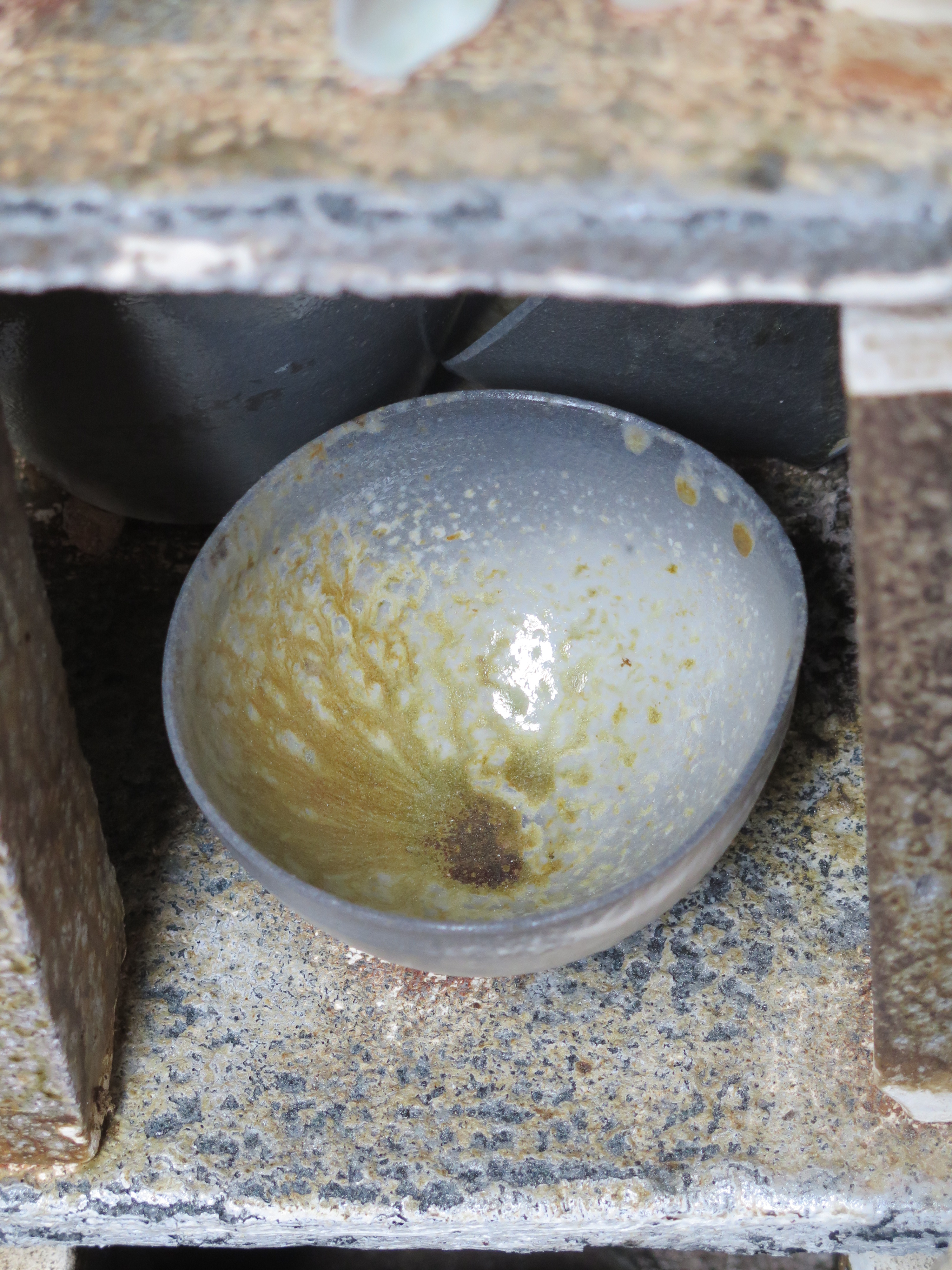
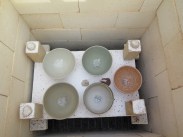
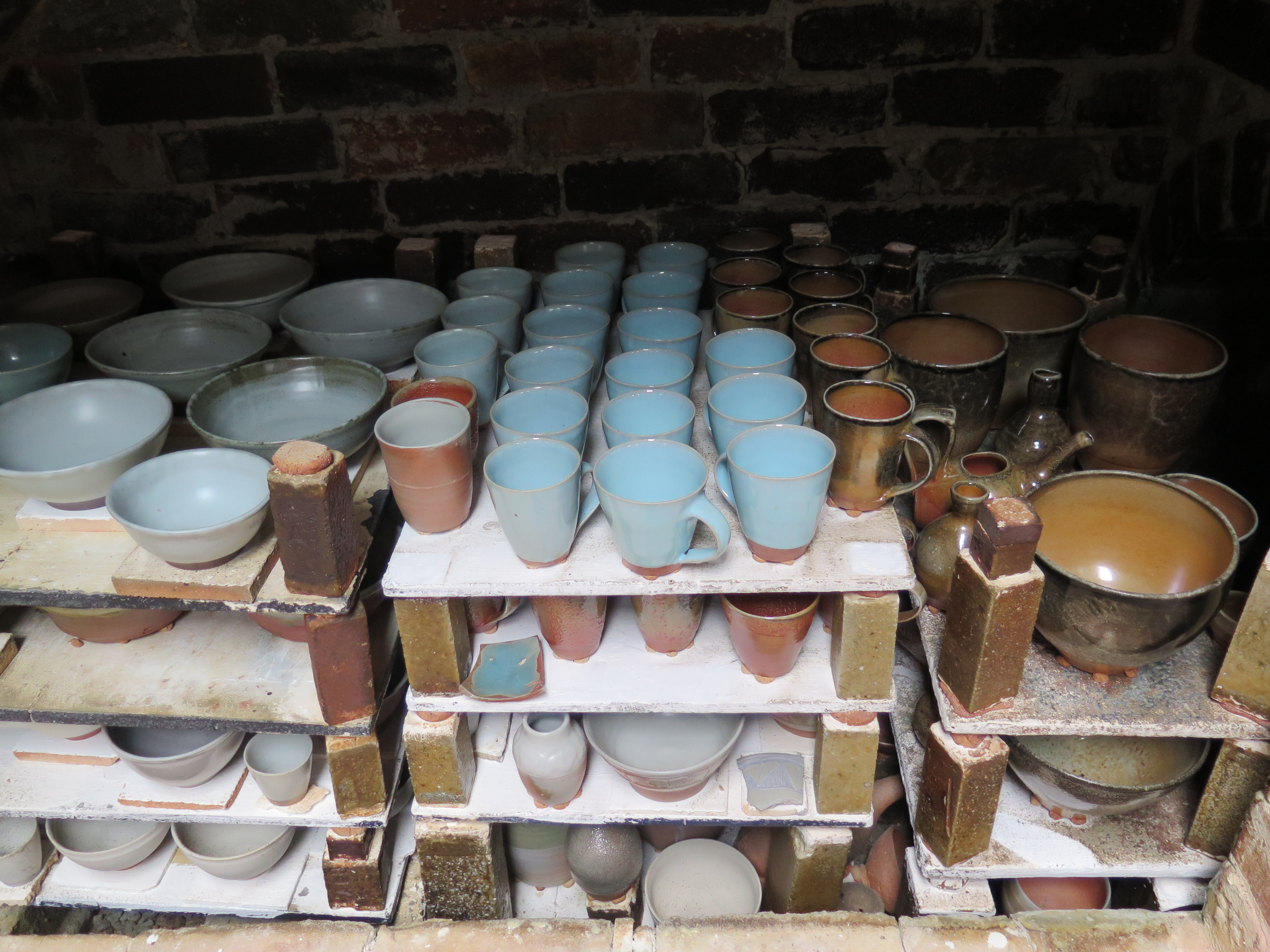
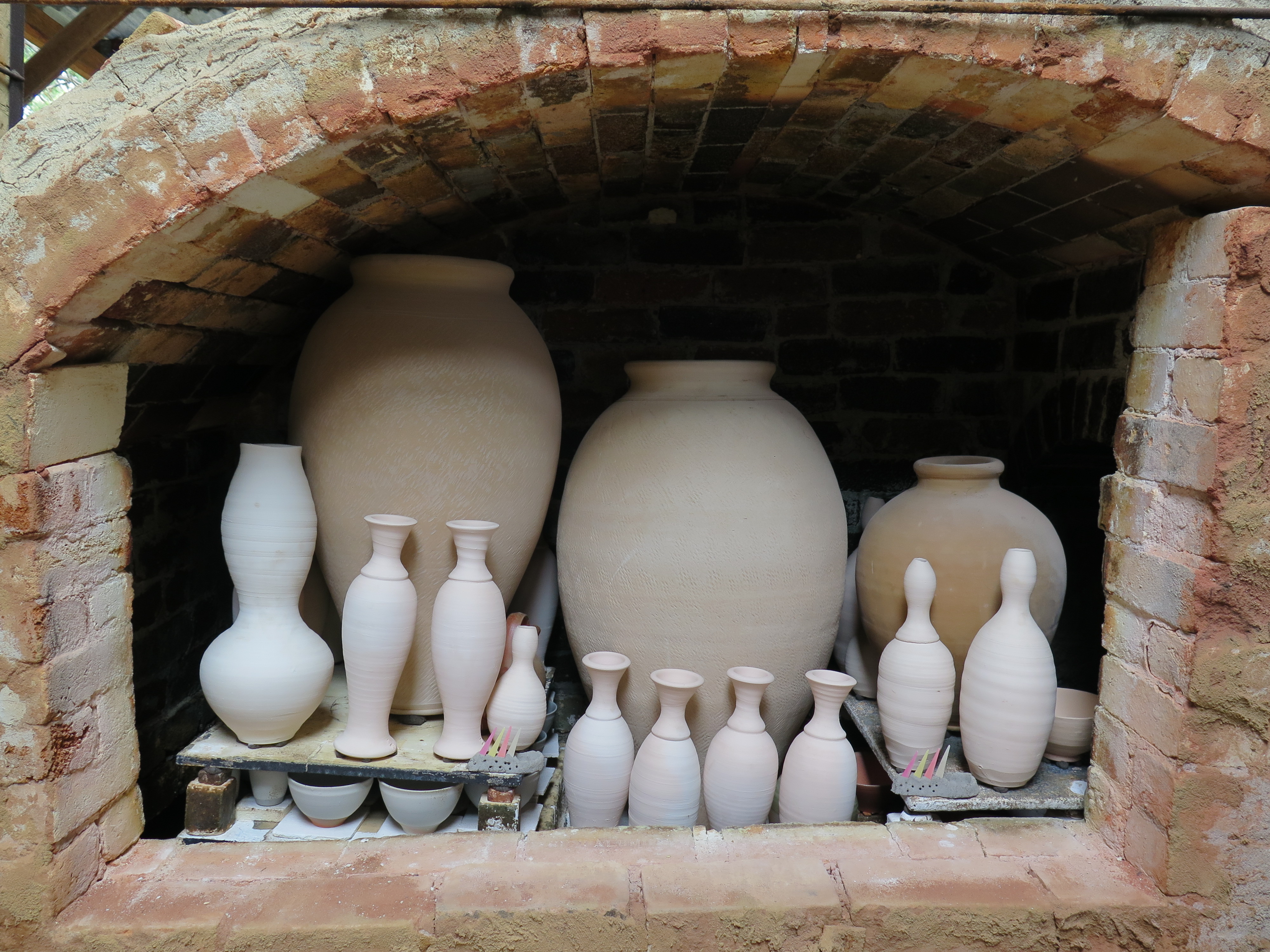
We have just unpacked our latest firing with mixed results. The wood for this firing burnt well and got us to temperature in 12 hours with a good, constant reduction, but it produced a mass of  very slow burning embers, so even with all the mouse holes open we ended up with a load of embers which buried the potential ‘gems’ of the firebox area beneath their cloistering bed and smothered the jewels of the firing that should have come from the exciting ‘zone of death’, This area, close to the ember pit can produce some excellent dramatic qualities, but instead, on this occasion, all the potential jewels did not reach their full potential. They all survived intact, but as blackened bisque instead of shining gems. The jewels of the kiln are now more like Swarovski than De Beers.

IMG_2769IMG_2772

The back of the kiln was a little under-fired, so there are a few pots from there that just need a little more heat. They can be reheated, ‘microwaved to perfection’ in our little wood kiln, the next time we get it out for a spin. The rest of the setting was very good – by our standards. There are half-dozen really nice pots, nearly all of which were Janine’s. But I have some small bowls that are good enough to show at Watters Gallery, so I’m happy.
So, a good firing. We are so lucky!
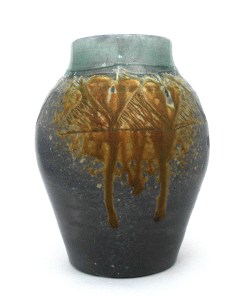
Two of Janine’s vases
DSC_0046_01 copyDSC_0045_01 copy
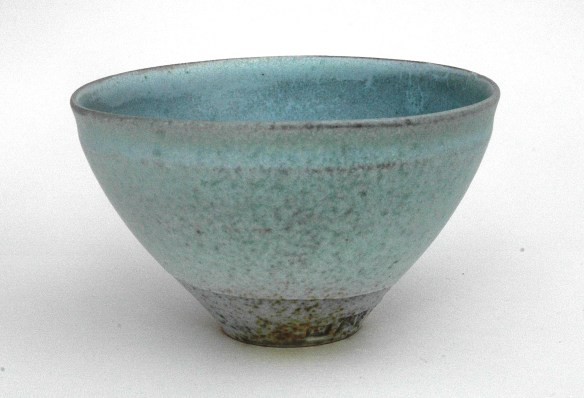
Three of my new bai-tunze paste little bowls with limpid porcelain glaze and subtle wood ash deposit and bright body flashing.
DSC_0013_01 DSC_0015_01 DSC_0023_01
After the firing, I picked, washed and sliced open 300 small tomatoes and dried them for use later in the year. These things are so delicious, that I end up eating a few handfuls of them as soon as they emerge from the oven. It’s a slow patient process using the lowest possible heat that the oven is capable of. I turn it down manually, so that it only just remains alight. It takes all day turning and rotating them often with the oven fan on.
IMG_2764IMG_2765
 IMG_2766
6 trays of little tomatoes, cut in half, butterfly-style, all tries out and shrinks into just 3 litre tubs of sweet, sharp, crunchy, sour and very delicious dried tomatoes.
I make a vegetable stir fry for dinner. Garlic and chilli with capsicum, celery, carrot, beetroot and aubergine. A little block of frozen marrow bone stock from the freezer and a little fish and oyster sauce.
IMG_2761IMG_2760IMG_2762
Best wishes from the 2 well-fed, lucky potters

Free Fuel

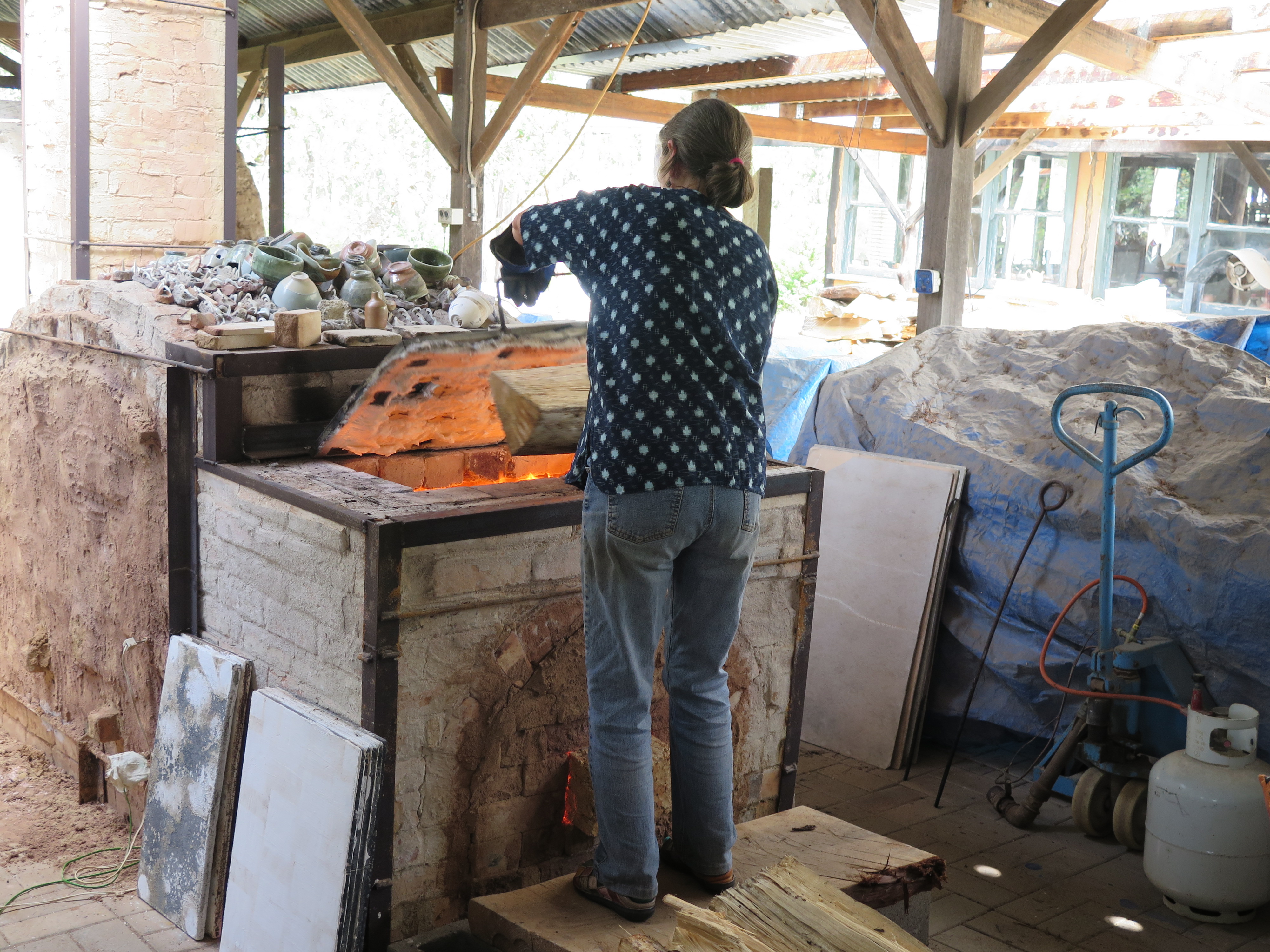
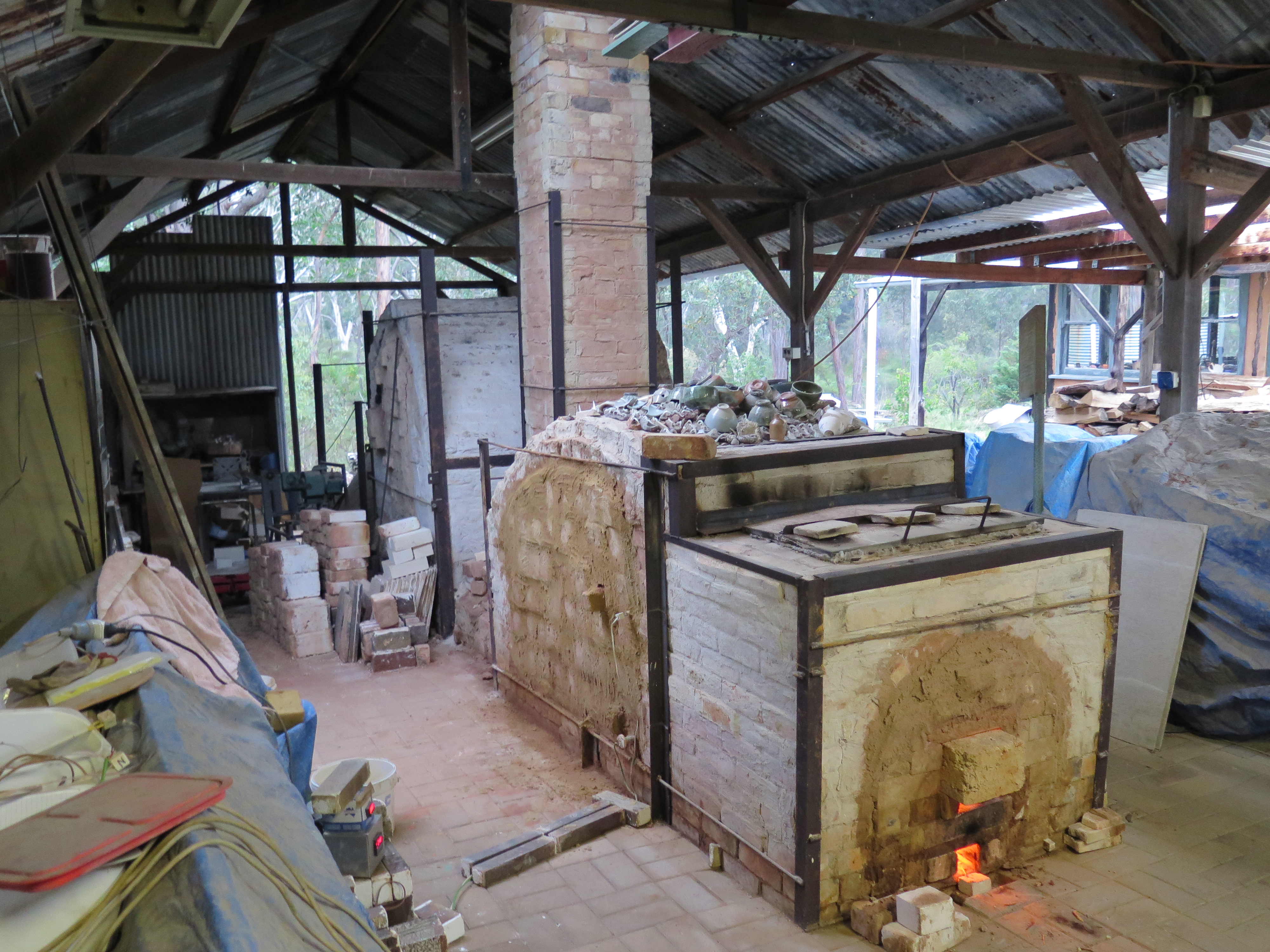
It’s dark and quiet. I’m here alone in the very late night, or very early morning. I’m in the kiln shed firing our wood fired kiln. It’s not 5 am yet and I’ve started our 8th wood firing for this year. We can’t start our firings too soon in the year, as there is a fire ban in place until the end of March or sometimes April, depending on the year and the state of the forest and the immediate past rainfall. I have fired our kilns during the summer in years gone by. But only after a good fall of rain, when the fire danger is reduced to low/medium risk. When the bushland all around is wet, there is no chance of my kiln starting a fire. If I want to fire over the summer period. I pack the kiln and seal it up, then wait for rain. It can take a month or more, but I can’t take any risks when there is a fire danger.
IMG_2741 IMG_2743 IMG_2747
We are firing the mid-sized kiln of 1.25 cu. m. We don’t fire the big kiln anymore. At 4.6 cu. m. it is just too big for us now and the amount of pottery sales that we can make these days. We have found that it is better for us to fire the this kiln more often and get all our tests through in reasonable time so that I can continue my research into my local raw materials, especially the development of my single stone porcelain bodies and glazes. Now that we have a reliable small wood kiln that can fire our tests in at any time, it just takes 3 hours, this will make our testing and research regime a lot easier.  As the night marches on relentlessly into the early dawn, the birds start carolling, mostly magpies by the sound of it. They just love the dawn and make a big fuss about it. Dawn seems to be some time after 5 am when it is still quite dark, and before 6 am, when I can switch off the light and make entries into the kiln log without needing the light on. The birds are carolling madly now as it gets lighter in the eastern sky. It’s a tremendously beautiful sound, so gentle and lulling. It’s like some pure form of happiness made audible. It’s infectious. I feel happy! Why are they so infectiously happy? Are they celebrating the fact that they are still alive and not eaten during the night by some predator?
IMG_2756 IMG_2757
IMG_2759
In this unique firing, I’m burning a type of timber that I don’t know anything about. I’ve been given a dead tree by the local tree-lopper guy. I don’t know what sort of tree it is, as it has no leaves or bark, but I know that it is not something that I have come across before. This is nothing unusual, because there are thousands of different tree species and as a rule, I only burn the local trees from around here. Mostly trees that Janine and I have grown here on our 7 acres of highland sclerophyll forest over the years. However, because I’ve lived in this little hamlet here for over 40 years. I have met a lot of people and they know that I have a wood fired kiln, so every now and then someone turns up with an offer of free wood for the kiln, just to get rid of it and not have to pay the dumping fee at the local council recycling centre, which is also located at the other end of the shire and 45 minutes drive away and is quite a drive. We are located at the opposite end of the shire from the recycling centre.
What I do know about this dead tree is that it is interesting. It is quite light in weight like a soft wood such as pine, but it has a strange twisted, interlocking grain like a hard wood such as a eucalypt. It turns out to be quite hard to split, even using the hydraulic splitter. It’s quite a tough wood. I’m hoping that it will burn well. But this is not knowable in advance until I actually get it into the fire box and see what happens over time. I have a lot of wood already cut, split and stacked ready for firing. I have several stacks, each about enough for a firing. I have stringybark, paperbark, ironbark and she oak all ready and prepared as well as a firings worth of radiata pine, from a load of trees brought here by a local contractor who was asked to clear a building block to make a house site. I naively said “yes. Bring the trees here, sure, I’ll take them”!
It turned out to be 8 truck loads in his 8 tonne truck. He had more, but I just ran out of space to dump it safely. He kindly sawed off the root ball, de-limbed them all and cut them to the 6 metre length of his tipper tray so that they would stack and carry efficiently. I have no way to know if each load was the full 8 tonnes or not, but it surely was a very large pile of logs by the time the last load was dumped here. It took up all of my wood storage space and then some. I could hardly move the ute and wood splitter around. I simply had to start at the far end and whittle away at the pile until I could make a space large enough to turn around in. Then I worked my way cutting and splitting all the way up one side to clear the driveway, back up to the road. I have been working my way through this huge 1/4 acre pile of trees for a while now and there is still a big pile of logs left to work through.
DSC01083 DSC01079
These logs are free fuel. Something not to be sneezed at in these days of increasing energy prices, but only free as long as you already have a spare 1/4 acre of forest clearing, a couple of chain saws, a tractor to drag the piles apart safely, a hydraulic wood splitter and a ute to transport the cut wood around, and then a wood shed to keep it all dry once it is cut and split to be stored and seasoned, then, ultimately I can burn it for “free”!
This firing has a lot of tests in it, as all my firings do. If I don’t have time to make some new tests and follow-up on new ideas. I feel like there is something wrong, something missing. After a lifetime of potting. It’s 48 years now since I got to throw my first pot on the potters wheel and was hooked. Any firing without tests in it is an empty firing. It’s the test pieces. The promise of something new revealed, that makes the unpacking extra special and not just plain mechanical work. It is the stimulus of expectation that makes the difference. I know that I should be aware of my all too human failing of expectation, just observe it and let it pass, but it just hangs around until I see those tests.  As it often turns out, they are not very special, but every once in a while there is something interesting that makes it all so much more rewarding and worth while. It’s probably something like a kind of addiction. Hanging out for that next hit of pleasure, that next intellectual/aesthetic indulgence. It can just be a test ring or a shard. The object itself isn’t all that important, it’s the internal machinations and the thought processes that it provokes.
I have 10 new body pastes in this firing, but so as to keep it all under control. I am using all my reliable and well-tested rock glazes on them. Glazes that have proved to be suitably stable and beautiful. I can’t afford to use unknown bodies with unknown glazes on them. That would be asking for trouble. I have set up a system where I am testing each of the 10 new porcelain body recipes with each of my 10 rock glazes. Each new clay recipe/variation glazed with 10 well-known glazes. A hundred bowls in all. This should reveal something. I don’t know quite what yet, but I’m keen to find out. Even if there is nothing special or ’showable’ it’ll still be something to cross off as not worthwhile, so then I can work on something completely different. I suspect though, that there will be something in there. I just don’t know which one. This firing hopefully will reveal the best, or most likely contender for further refinement.
I’d like eventually, to be able to make something that is both meaningful and beautiful — on a shoestring
All will be revealed in a few days.
This is the life of a frugal self-reliant potter. Nothing is ever finished, nothing is perfect, nothing lasts.
Its just like a good salad!
IMG_2416
Best wishes
Steve

The Last Beta Firing? Success at iteration 7

Janine has just completed the 7th firing and design iteration of the little wood fired kiln. It worked well and there are now no more obvious and glaring changes that need to be made to the design. Of course there are a lot of little issues that will need to be tweaked over the coming months. But I can’t see anything that will require a major rebuild. I think that this design as it stands now is a good one. – Until I think of something better!

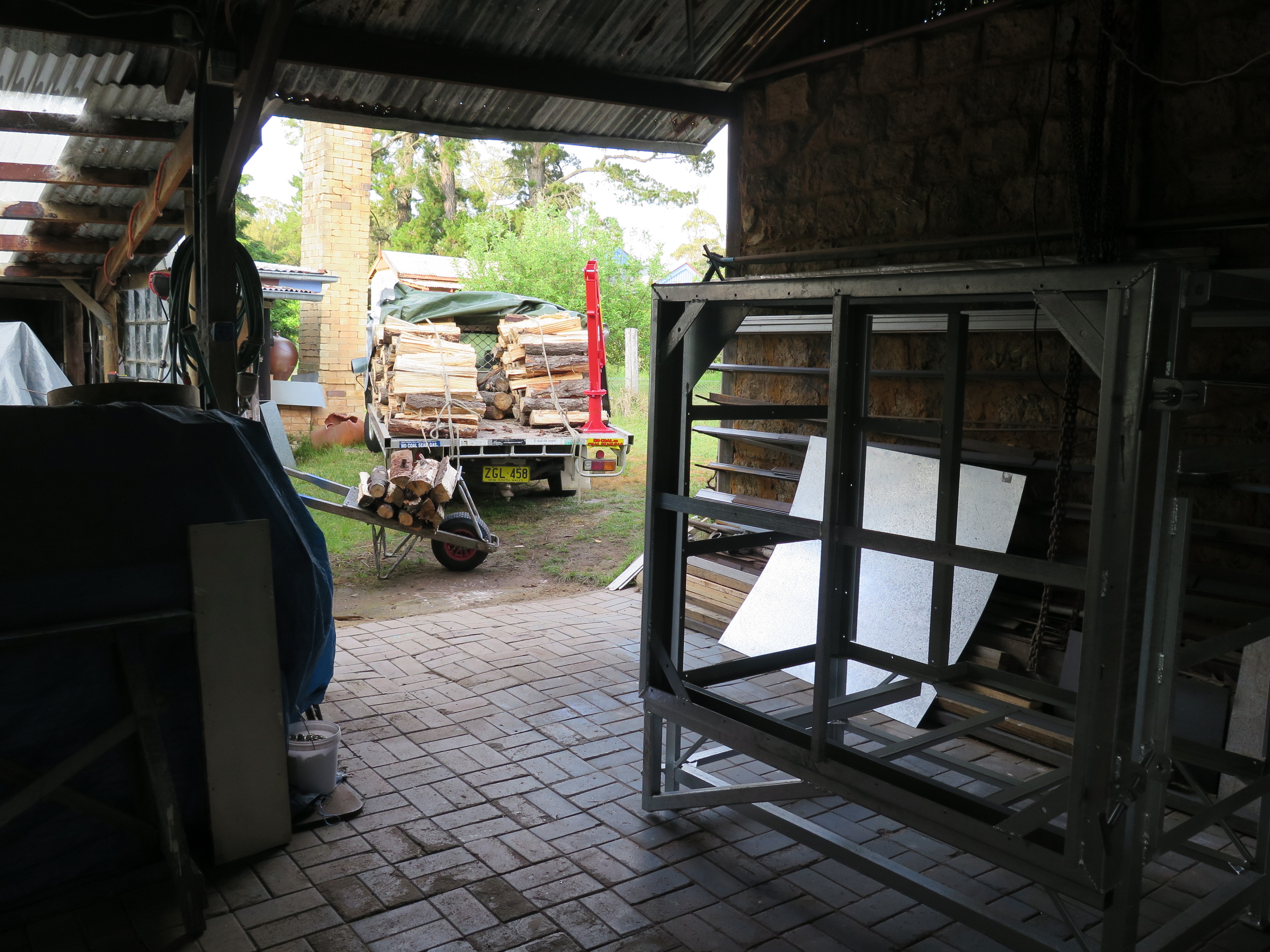
The verandah of the pottery now has a collection of these little prototypes all parked there out of the weather. They all work well enough at lower temps, so I will use them for our raku firing weekend workshops. The image shows a very full wheel barrow of wood, enough for two or more firings to stoneware.
The design that I have ended up with is now ready for a limited production run.
This last firing of Janine’s was more or less perfect. Except that we managed to crack a kiln shelf. Janine had a lot of flat ware, so I retrieved a kiln shelf from the rack that hadn’t been fired for over 20 years. I think that the shock of a fast firing and possibly moisture absorbtion that couldn’t escape fast enough was the problem, as this hasn’t happened before. I would usually like to season a new kiln shelf more gentle. Perhaps by rubbing in salt and pepper with a little olive oil might work next time?:) By lunch time we’re famished. Because I managed to catch up with the fresh fish man, we have ultra-fresh sashimi grade tuna. So its sashimi for lunch.
IMG_2609
I also make fresh pippies in white wine, chilli and saffron sauce for dinner. What more could you want to celebrate a successful firing day. Followed by a fresh salad from the garden. We have a local grower of saffron now, so we support them.
IMG_2583
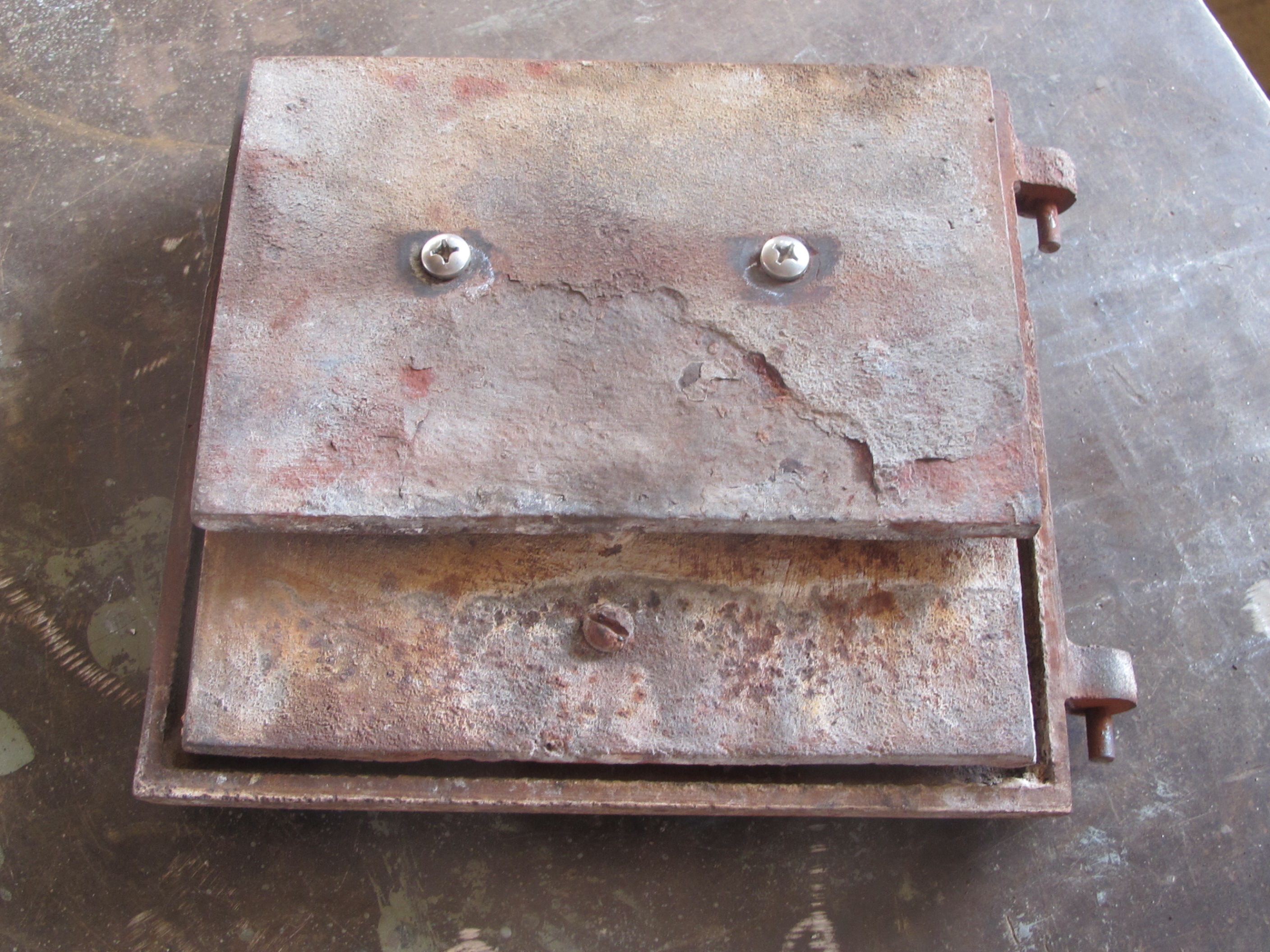
I have been making a new batch of spy holes for my kiln factory. I throw them on the wheel, very slowly, out of a very coarse mix of crushed high alumina grog and a small amount of kaolin to bind it. The mix is so aggressive that my hands are starting to hurt after just one pot-board full. This mix really takes your skin off. But that’s OK. 20 or so will last me for another year. If I wanted to make any more I’d have to wear gloves. I’ve heard some potters claim that they throw till their fingers bleed, but I’m not that stupid. I know when to stop.
I fire the spy holes in the little wood kiln. This little wonder fires cone 8 on the bottom shelf, cone 9 in the middle and cone 10 at the top. A perfectly useable working stoneware temperature range. Certainly OK for a 3 to 3 1/2 hour firing schedule. My bowls turn out well too. Some nice, soft, pastel glazes.
I’m really pleased that everything has come to a clear resolution at this time. As for the next couple of months. I’m fully booked on other projects and I wont have any time to play with this little kiln for a while. In the evening we de-seed chillies for drying in the kitchen window, along with beans and corn, destined for drying and grinding for polenta. I also finish drying some tomatoes in the oven. Once dried in this way they have the potential to keep almost indefinitely, but they never do. They are so yummy that I eat them like lollies. They never last the year. It’s great to add a handful into winter stocks. They add that certain piquant, sharp sweetness to sauces or a ragu.
This is just another day in the mixed household of self-reliance.
Best wishes from Mr. Beta and Ms Better

Small portable stoneware wood fired kiln. cont.

We have just fired the 5th incarnation of our little, portable, stoneware capable, wood fired kiln. It fired very well, again easily in 3 hours. It just cruises along at its own pace. 1 hr to 1000 oC and then 2 hrs to 2 1/2 hrs in reduction to stoneware cone 10 over.

This variation was to test out the new chimney arrangement and that worked perfectly, some much better than the previous one. I am very happy with that. Another problem solved!

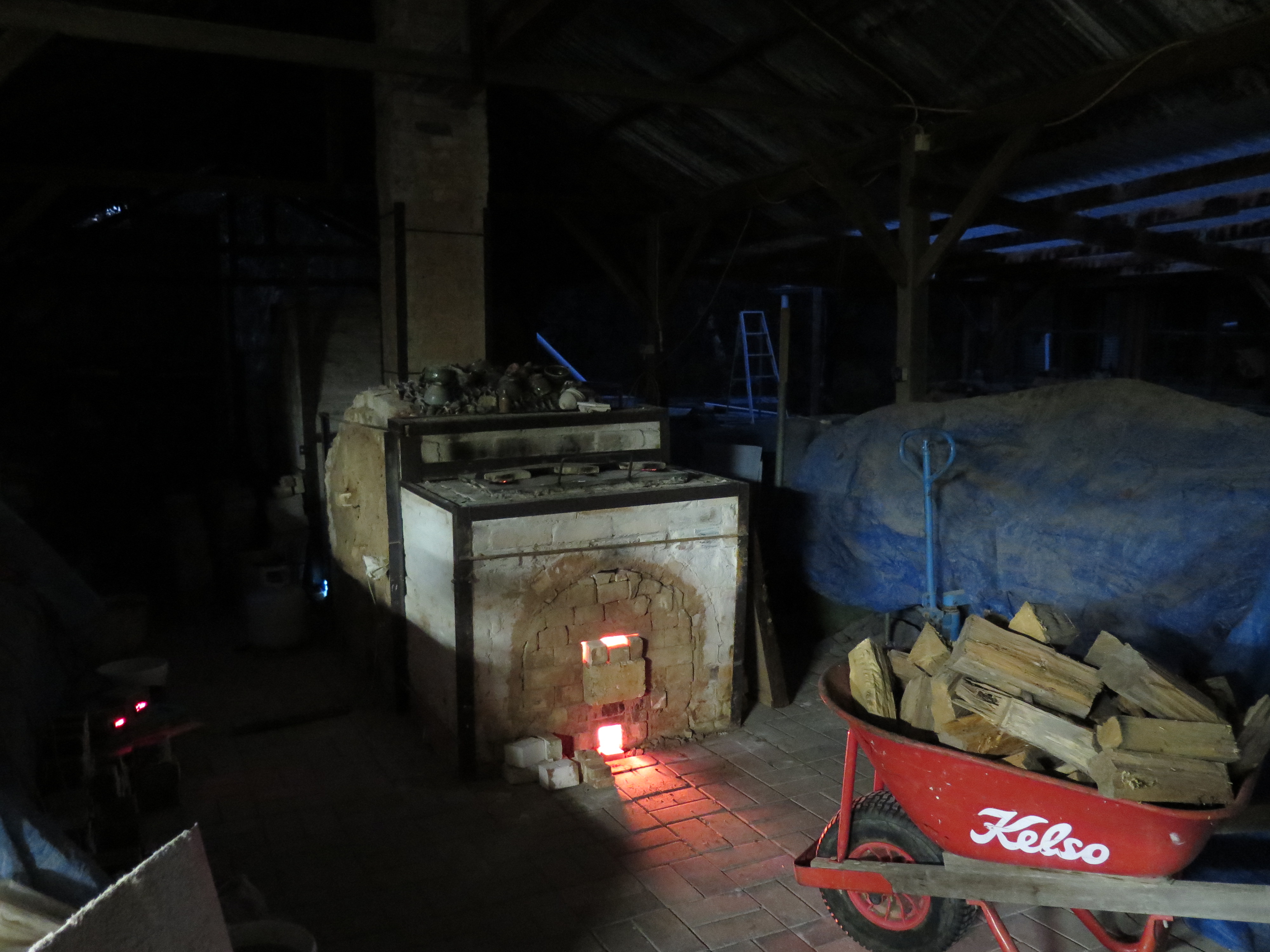
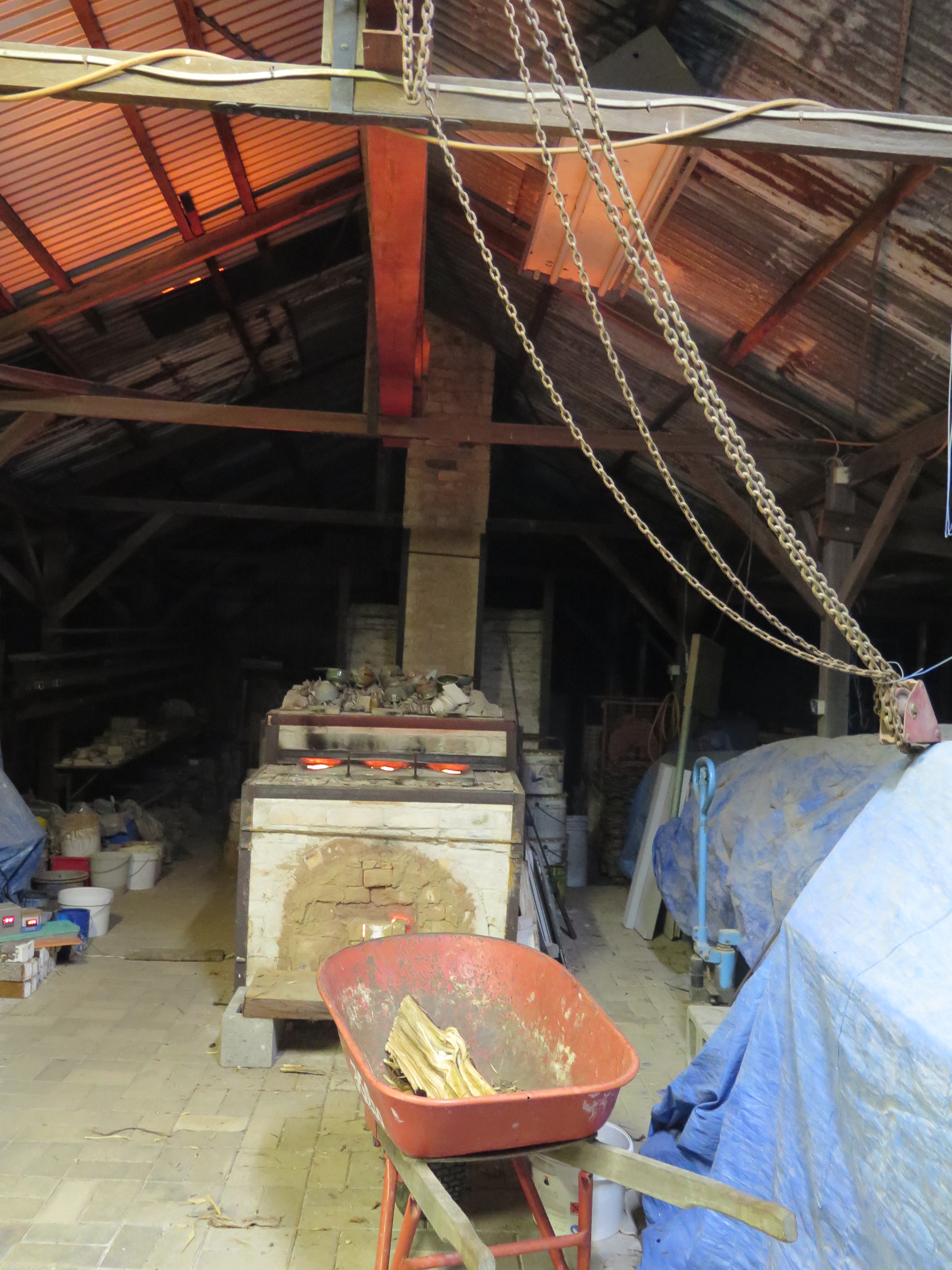
The hard-working firing team, going at it flat out. Half way through the wood stack in the barrow. Going for the big final effort, no holes barred! Go for it ladies!

IMG_2604

I have it adjusted now so that as the temperature reaches 1000 oC. The kiln automatically goes into reduction. I don’t have to use a damper to make this happen. The kiln continues to rise steadily over the next two hours without having to alter any settings in the firebox. It’s lovely.

However, I notice slight difference in the fired surfaces around the setting, so I conceive of another experiment to try and even out this anomaly. I have everything that I need in stock in the spare parts shelf in the pottery, so no need to go out and buy anything. I spend the morning cutting, grinding and painting all the new bits and the kiln is primed and ready to fire again. I need to glaze some more work for this firing, so there will be a days delay while they dry out. This will be variation/refinement firing number 6.

I’ve learnt from bitter experience that if I fire fast with freshly applied glazes. I can blow them off the pot on the underneath side. All my bodies and glazes are currently made here onsite from locally collected and processed rocks, shales and ashes. Everything is made onsite and it takes a month of Sundays to get it all organised, dried, crushed and milled and then bagged ready for inclusion in the glazes. These are weighed out and then sometimes re-milled. and at other times, just passed through a very fine sieve to extract any small detritus that was caught in a gap around the lid of the ball mill and didn’t get fully ground. Glazes with no clay in them are notoriously delicate and friable to handle once dry and very prone to just falling off from the underneath side of pots. Of course i use a little bentonite to help stabilise them and shrink them on as well as creating a little bit of dry strength, but I have found that I can only add 1 or 2 % before it starts to change some of the glazes.

Tragically, as always seems to happen. I found yet one more issue with this configuration that needs a little more thought. During this last firing, I notice that I could improve the kiln shelf and stainless steel grating arrangement. So it’s back to the drawing board, or in this case, the work bench and I make a new set of one-piece ceramic supports that I hope will work a lot better. I pull the kiln to pieces and start again from scratch, right back to floor level and create a new setting design.

Maybe this will be the last of the beta firings?

We will fire again today with a load of Janine’s work in it this time. As she has a load glazed and dried ready to go.

Always so much more to learn.

New Small Wood Fired Kiln

The first of the figs are ripe and we savour it. It is just perfect, sweet and juicy. We wouldn’t have got it or any others if The Lovely Hardworking One, hadn’t been out there early and netted the branch a few weeks ago. If we don’t net the fruit trees or the most laden branches, the birds take everything.

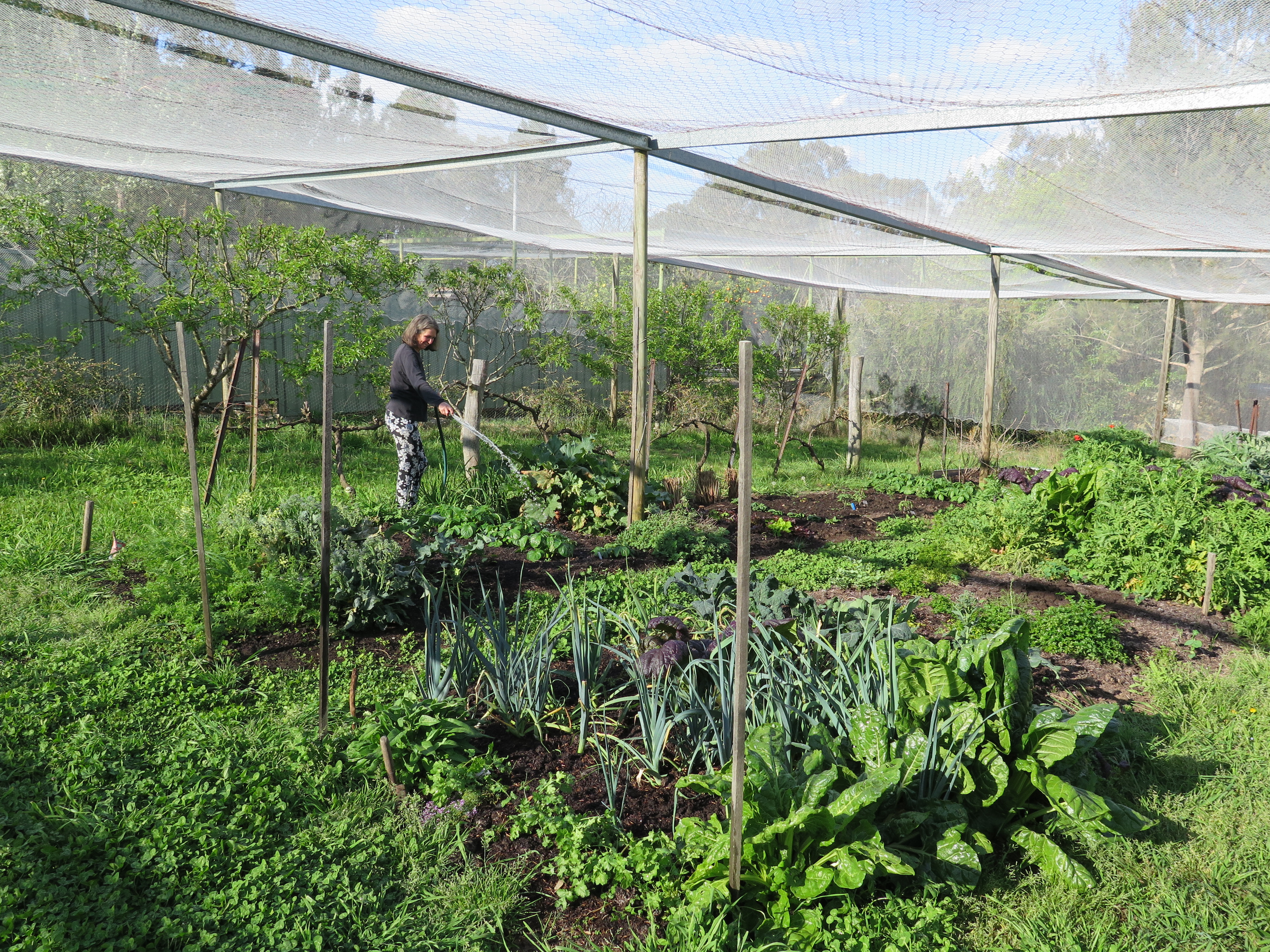
There weren’t any fruit eating birds here in this bushy area when we arrived, but 40 years on and an enormous amount of work later, we have built 4 dams for a secure key-line water supply and open grassy areas between the orchards, with areas of understory native shrubbery. We left all the really big established trees and without knowing it, we created a perfect habitat for all sorts of native bird life, from the very small finches, through to bowerbirds and magpies. There is even a very large white owl, that we haven’t managed to see close-up, so we can’t identify it. It has taken frogs off the kitchen window at night, right in front of our eyes, but moves so quickly and so totally silently that it strikes and removes its prey, without actually touching the glass and is them gone is a flash of pale wings, before we can adjust our eyes to the scene. I’m constantly amazed at how clever our birds are at fossicking out a living from our little property. So the fruit trees have to be enclosed to protect some of the fruit for us. The vegetable garden is now totally enclosed in small (35mm.) hex gal wire and very fine nylon mesh. This keeps out most of the birds that we don’t want in there. Those are the fruit and veg eaters, but allows the little finches in to feed on bugs. It seems to work OK for us now, but has taken a lot of trial and error to work it all out – mostly error.

IMG_1913

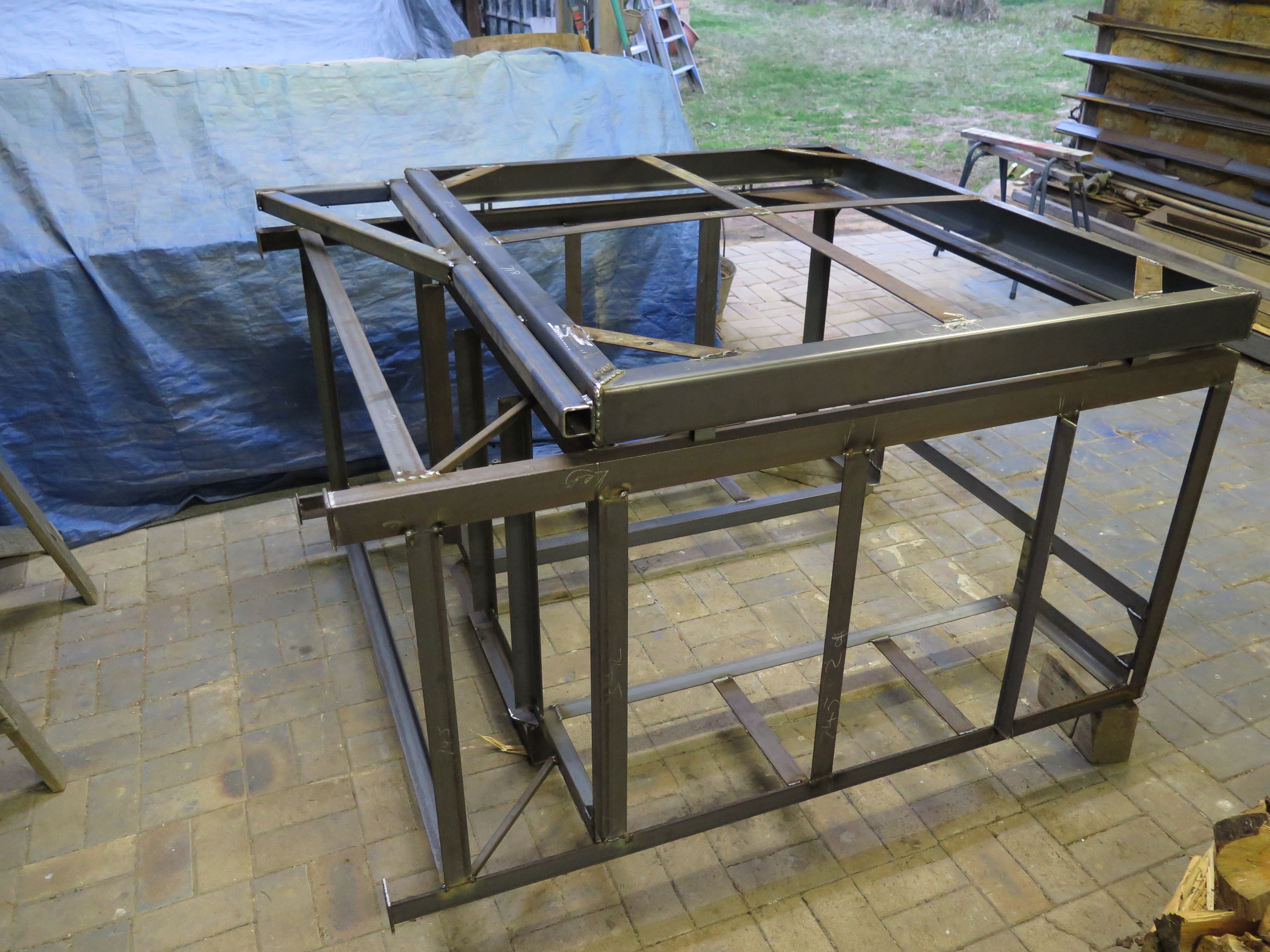
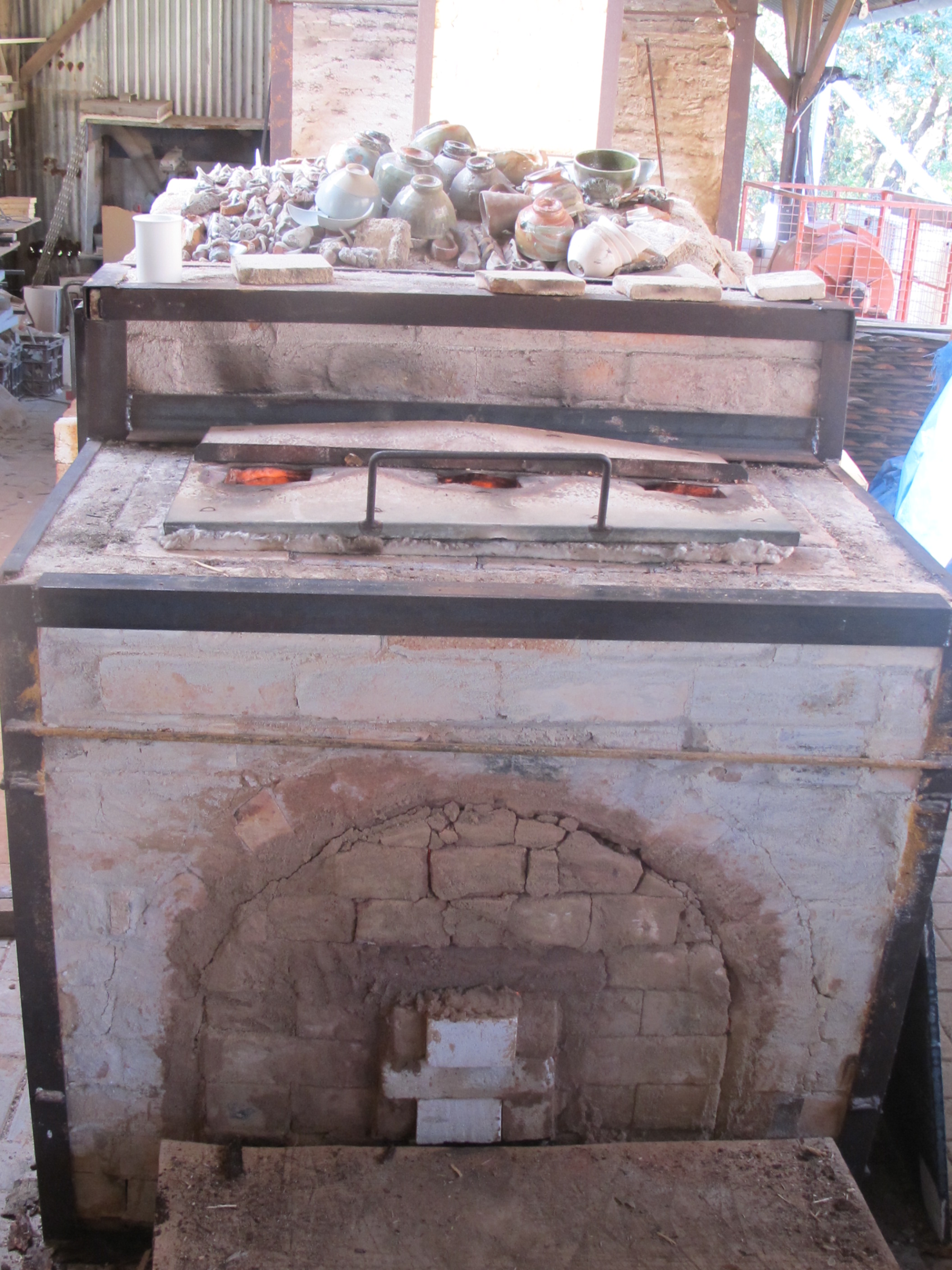
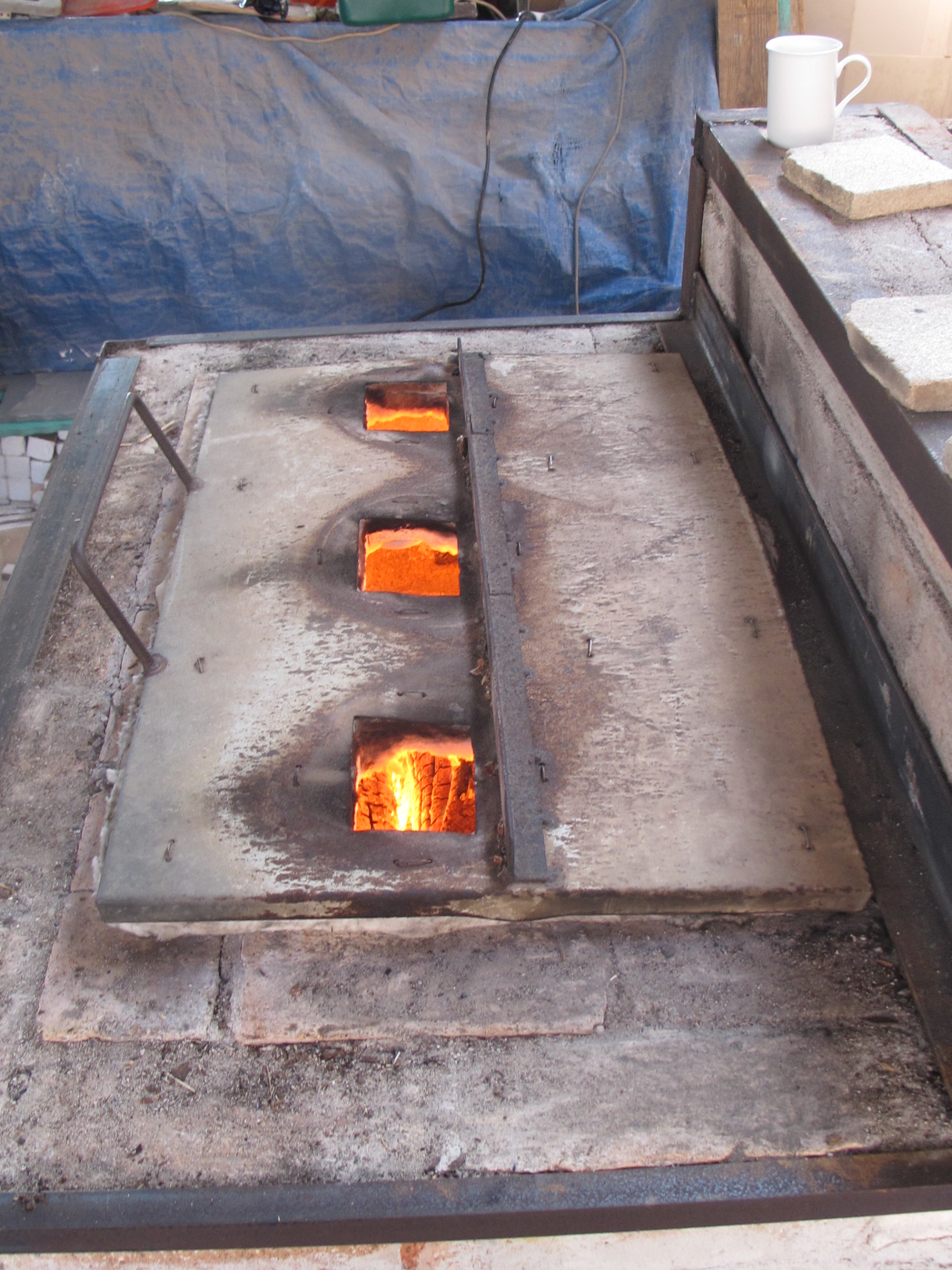
I have spent a little time over the summer break building another version of my portable stoneware wood fired kiln. These kilns are a direct response to seeing and working with Stefan Jakob’s ‘Ikea’ garbage bin raku kilns. Such a fun idea! And they work really well too, but only at the lower temperatures used for raku. It made me think about if it would be possible to make a reliable stoneware version of this kiln. Not in an Ikea bin, but in a custom made stainless steel monocoque box frame. The answer that I have been developing over the last half dozen years in my spare time is Yes!

This one solves all the problems identified in the last version, that although it could get to stoneware, some of its components weren’t likely to have a long life. I abandoned the ceramic fibre lining, as it doesn’t last for extended periods of time at very high temperatures where there is a lot of wood ash. The fibre turns glassy and peels off, like glaze shelling off, exposing new fibre, which then dissolves, the ash glaze slowly eats its way through the lining in this way.

We first experimented with a ceramic fibre lined stoneware wood fired kiln back in the late 70’s and early 80’s (see Handbook for Australian Potters P289-291.) In that kiln I used the new material at that time called ‘saffil’ board, that was mostly composed of alumina fibre. A 10 mm. hot face lining of this material lasted 30 stoneware firings before it was eaten away in the hottest part. These new little kilns use light weight refractory insulating bricks as the lining.

I couldn’t allow myself to recommend or to sell anything that wasn’t up to scratch and capable of delivering a long working life, so the development has continued, designing out the apparent flaws as they made them selves known. So now the design is a little closer to completion. I have designed version 5, so I hope that after that is built and fired a few times, everything will be settled down and we will have a very long lived and reliable small portable kiln. I think that we could say that we are now moving from prototype to beta testing stage. Perhap there will be something that we can sell to other potters with like minds. Just like we do with the more substantial gas and electric kilns that we build here – only much cheaper.

The improvements in version 4 meant that we could fire it up to 1,000oC in one hour. This part of the firing could easily go very much faster, but we have cracked kiln shelves in the past by going too fast below red heat. We then took the firing from 1000 to 1280 in another hour, finally soaking at 1280oC to 1300oC for the last hour until cone 10 was over. We got very good reduction colour in the glazes in that time frame. I was amazed what a couple of extra hours could achieve, in terms of quality. After all it’s not all about intense speed. We can already do that. This is more about getting very good quality results with a minimum of expenditure of effort and fuel.

I spent a few days working out how to create this little wonder of a kiln, to enlarge it to use a 12” x 18”  (300mm. x 460mm.) kiln shelf in the setting, and still be able to cut the frame out of one sheet of Stainless steel with no or minimal wastage.

I’m sure that there are a number of potters who are with me and like minded in this regard, potters who are thinking just the same as me. How can I achieve lovely wood fired results without firing for days and creating loads of smokey pollution. I think that this sort of little fun kiln will be very good for potters with an interest in wood firing, but without the large work flow required to fill a larger anagama kiln, or a suitabe place where so much smoke can be created day after day. This little kiln is definately not smoke free, but the smoke is minimal.

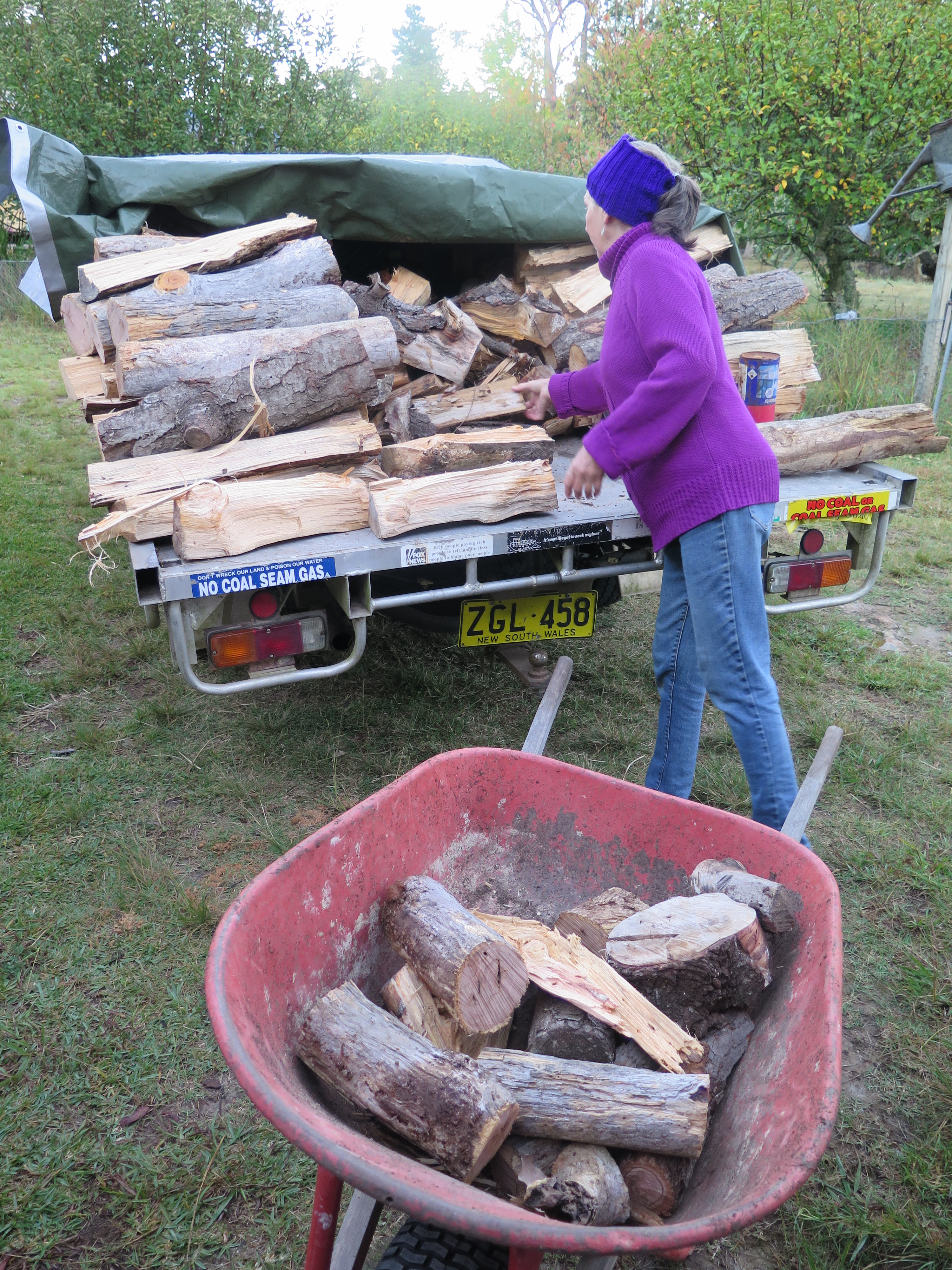
As it turned out, this was a very relaxed and easy firing using dead brushwood and small, dead, fallen branches as fuel. There are always loads of eucalypt paddock falls all around our property from season to season. We collected 3 wheel barrow loads, one of kindling twigs and another two barrow loads of small thin branches, up to 50 mm in dia. We ended up using only 2 of them. We will fire it again for a little longer next time, slowing it down a little so that we can not only get the good reduction colour in the glazes but also some surface flashing in the bodies as well. I’m intrigued, what is the minimum length of firing time required to be able to get some pleasing wood fired effects on the surface of our pots?

When we fired up my pots in the first kiln, up to stoneware in just 1 hr. in reduction in the earliest version of this kiln, there was little reduction effect showing in the glazes. The pots looked pasty and palid, as if oxydised, but were in fact very pale grey, so they were reduced. It seemed that 30 minutes of reduction wasn’t enough to get a good response from the clay and glaze chemistry. This time, at 3 hrs. The results have shown very good reduced glaze colour effects, but only a very limited flashing colour on the exposed clay bodies. The work is starting to show some pink flash on the porcelain clay bodies with this slightly longer firing time, so we are getting close now. At least there is something there. The difference between one hour and 3 hours is dramatic. Perhaps the next firing of 4 or 5 hrs to S/W will do the trick and give results that I am better pleased with?

I want every thing now! I just don’t have the time to be able to do it all.

best wishes

from the multi-tasking S&J

Two Wood Firings in One Week

Two Wood Kiln Firings in One Week

I have decided that I can fit in one extra firing before the Southern Highlands Arts Festival – Arts Trail, Open Studios weekends on the 7th & 8th of November, then again on the 14th & 15th.

The kiln is unpacked and repacked while it is still warm.

IMG_1016IMG_1034

IMG_1037IMG_1040

IMG_1045

For some unexplainable reason, I wake up just after 3 am in the morning. Or is it still very late at night? I’m not too sure, but I’m wide awake, so I get up and walk down to the pottery workshop in the dark. It is quite overcast tonight/this morning, as there are no stars to be seen up in the blackness where the sky ought to be.

IMG_1215

It’s so pitch black and very quiet, it seems a shame to make any noise at all. I decide to only put one light on and work in the soft ambiance and stillness. I make the kindling fire from the scraps of wood that fractured off from the bigger logs as I was splitting them yesterday. I spent most of the day yesterday in cutting, splitting and then, with Janine’s help, stacking it. We stacked half of it onto the truck. A very full load without sides on the tray. I drove it down to the kiln shed, covered it with a tarp against the possibility of rain overnight.

IMG_1208IMG_1211

IMG_1223

I cut all the straight log wood into hob lengths, avoiding the branched bits. These, I cut around and leave aside for splitting into small short pieces for use at the beginning of the firing, when I start the fire on-the-floor of the firebox. This first stage of the firing gently heats the pots up from cold, but also serves to build up a pile of embers in the base of the firebox which is necessary to ignite the big logs later on in the firing process.

Every part of the tree is used. I don’t like to use branched bits for the longer hob wood, as it doesn’t split easily or well, often coming apart into horrid, sprawling, jagged pieces that are difficult shapes to stack and stoke, so I have developed a technique of spacing my chain saw cuts to get the maximum number of full length ‘hob’ wood pieces from the straight grained sections of the log and a smaller number of knotty, branched bits left in-between for use as floor wood lumps. I usually walk along the log with my metal measuring stick and mark off all the cuts with a red wax crayon. This takes a little time, but makes the cutting and sizing much faster and more accurate overall.

IMG_1214IMG_1225IMG_1232

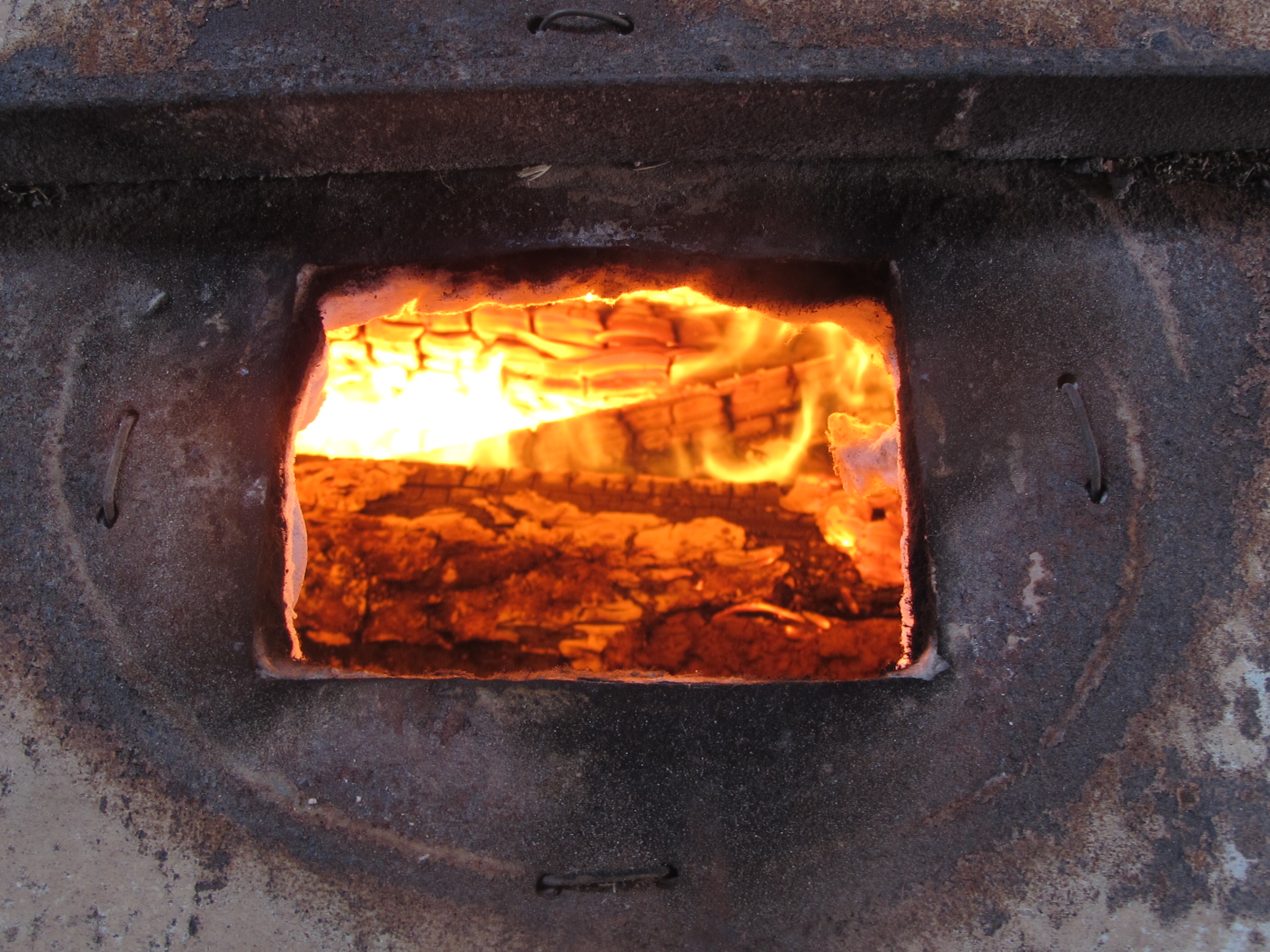
The kindling fire starts well and develops slowly into a full firebox of burning chunks, after 3 hours, there is enough ember built up in the lower part of the fire box, (‘the ash-pit’) on the floor, to support the fire starting off on the hobs, in the upper part of the firebox (‘on the hobs’). The long, thick pieces of wood introduced onto the ‘hobs’ from the top of the firebox, are held suspended by the brick ‘hobs’ just above the burning embers in the ash pit, placed here, they soon catch alight and start to burn fiercely. This takes the firing to another level, where the wood burns cleanly and thoroughly, allowing the temperature to rise evenly and steadily, up until it is time to begin reduction at about 1000oC.

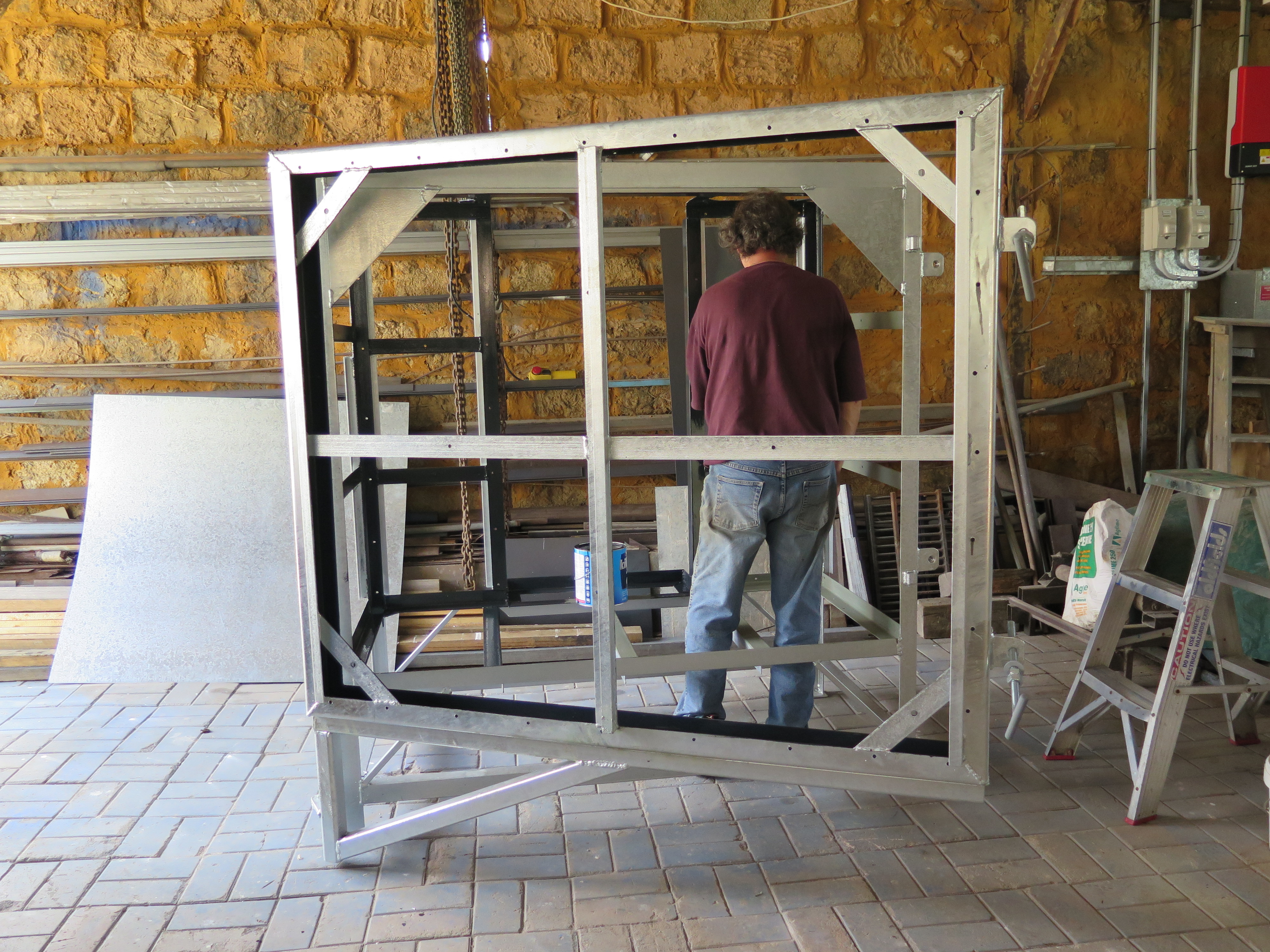
After cutting and stacking the kiln wood yesterday, I spent the rest of the afternoon in grinding, fettling, filing, acid-etching, washing and baking the newly galvanised kiln frame for Sturt Workshops prior to etch-priming. This is all mindless dull work that I have done a hundred times before, if not more and a good time to allow my mind to settle and watch itself wander, constantly returning to the hand/arm action of simple brushing. Paint on, Paint off. I don’t need to be in a buddhist temple in Kyoto to practice mindfulness. Any place will do, but it helps to be able to make the time for it and it alone.

IMG_1222IMG_1227

IMG_1228

Although it is very early in the morning, I’m keeping myself occupied in fiddling with the very small fire in the fire box. I need to watch it carefully, as at this stage it can easily go out if it is left for any

period of time unattended. As I sit and carefully place each new small piece of wood on the pyre, I suddenly realise that it is starting to rain. No wonder that there were no stars in the sky. This is no problem for me, as I took the precaution to cover the wood outside on the truck last night. I’m using freshly split pine, which although being felled two years ago, is still damp inside when split from the log. I don’t want it to get any wetter until the firing is up to 1000oc. or more, then it won’t matter if   the wood is wet and may even be of some use in creating the ‘reduction’ atmosphere in the kiln, which changes the colour of the clay bodies and glazes. Such is the odd nature of burning wood in a potter’s kiln. Pottery may seem superficially to be a simple craft activity, but there is a whole world of science, chemistry and associated technologies that need to be learnt, assimilated and internalised, so that you can then work intuitively and creatively in the medium.

In this firing I have 3 large jars and then a lot of bottles, with a few shelves of smaller domestic pots underneath. This firing isn’t very efficiently packed, but there is no easy way to get these big round jars into a more-or-less square box of a kiln chamber. That is just the way it is, so I do the best that I can with what I have to work with.

IMG_1049_1

I have done this so many times, that I have judged the amount of wood needed, down to the the last half wheel barrow load. The firing proceeds smoothly and evenly right up to top temperature of 1300oC or cone 10 flat, in 16 hours. Because I started so early this morning, there is time for a hot shower and a relaxed dinner back up in the house, even a bottle of wine to celebrate. This is civilised kiln firing. Perhaps even Laid back ?

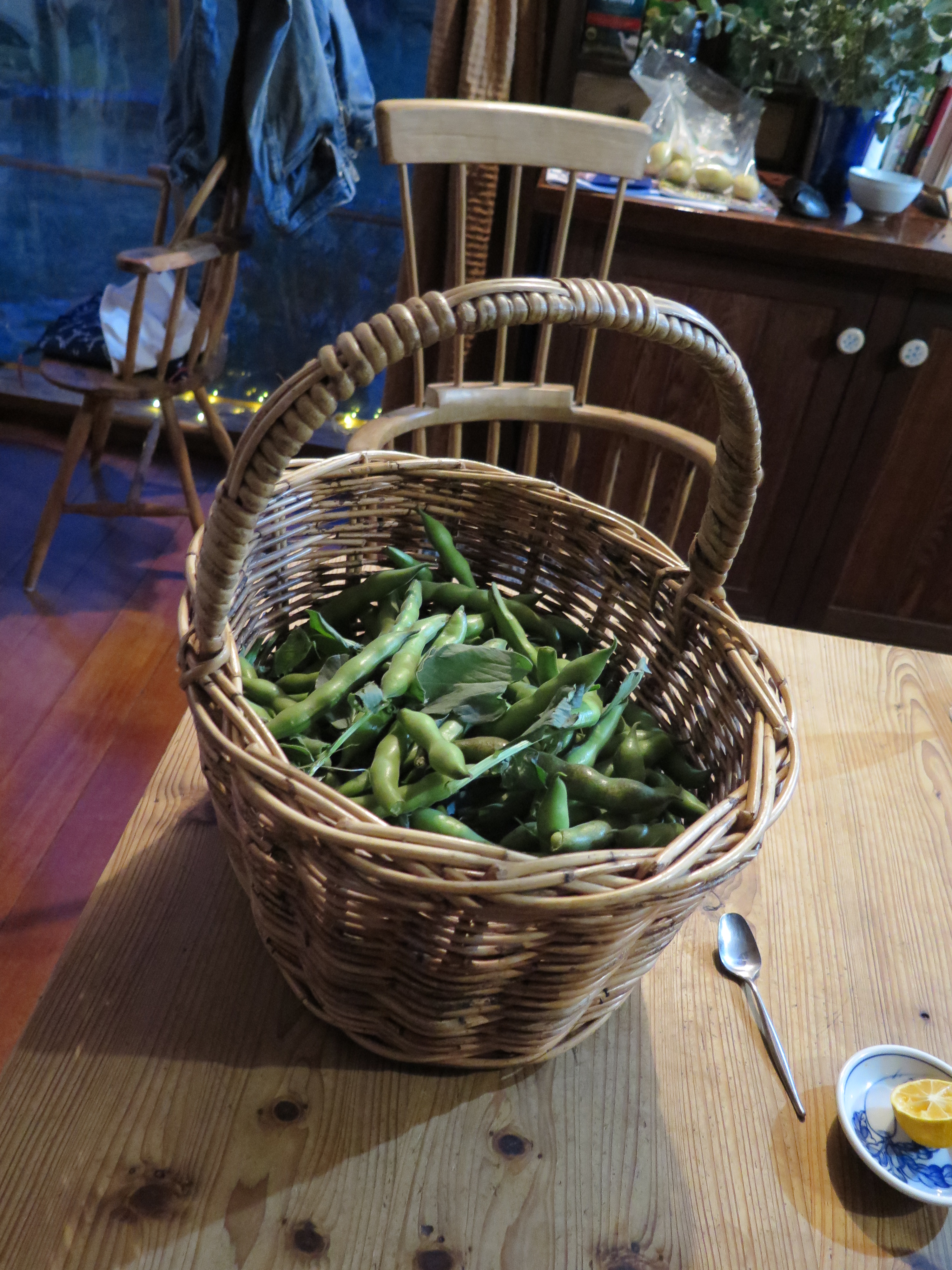
We bake a whole snapper for dinner with some freshly picked broad beans from the garden. The are perfect just now. Sweet and juicy without any starchiness at all, just the way that I love them. This is the 2nd pick and there will probably another couple before they get too big. The first few beans are eaten raw as an entre, perfect with a glass of chilled white wine. We bake a few potatoes, sweet potato, red onions and some pumpkin. Our garden feeds us very well!

IMG_1237IMG_1239

IMG_1240IMG_1241

I bake the fish with some mushrooms and slices of lemon and serve it dressed with a sauce of melted butter with finely chopped anchovies, capers and green olives.

It’s a tough life, but some one has to have a go at it.

Tomorrow I will start to grind, sort and clean all the pots from the last firing, spend a bit more time in the garden and add another coat of paint to the kiln frame waiting in the factory.

Never a dull moment!

fond regards from the multi-tasking Steve and Janine

Hitting the Ground Running

I’m just back from Japan, It’s been a great trip. I’ve been away since late August. I’m back just in time to discover that my friend and mentor, Allan Parkes has just died. Such an interesting and creative person.

For the first time, I decided to rent some studio space in Japan and make some work there. It was very good. I hope that I’ve learned something while I’ve been away, but one never knows. Only time will tell. I tend to take things in and let them blend and simmer for a while, then hope that something will percolate back out again in some dilute form that will enhance and extend what I already do with what I know. If nothing useful emerges, then there is nothing lost, as I really enjoyed my time there. As I alway do. I have a strong affinity for Japan, the people, the food, the creative endeavours of all those people that I have met and/or whose work I have seen in the Galleries.

IMG_1005IMG_1013IMG_1011

I had one day to unpack and do my washing, then straight in to the pottery and kiln factory. I have a large kiln ordered, so it’s straight into welding mode. I have to earn some money. I weld up the steel frame and get it off to the galvanisers in just 4 days. While the kiln is away. I get stuck into glazing all the bisque fired pots that I left here in the pottery, before I went to Japan. So it’s glazing, decorating and kiln packing. Then wood stacking, kiln shelf grinding, cleaning and washing. Finally the kiln is packed and ready to fire.

IMG_1187

It’s 5 o’clock in the morning and the early bird chorus is just starting. I’m down in the kiln shed firing the kiln, I like to get an early start for my firings. For some very intimate psychological/physiological reason that I don’t really understand, I seem to like to get an early start, when it’s dark and quiet and I have the whole world to myself. Well, almost. There is of course the odd rooster in the distance and the bird song. The birds seem to start calling to each other even before I’m aware that that there is any change in the light levels, but they are so much more sensitive to the natural world than I am. We have all learnt to live in an un-natural modified environment with electric lights, refrigeration, supermarkets, air con, and flat screens. I eschew most of this for the frugal comfort of home grown vegetables and a wood fire for warmth and cooking. Of course I do have electric lights and a fridge. I’m not a ludite, but I’m trying to keep my life as simple as I can, while still engaging with the modern world.

IMG_1190

Half an hour later, I can start to see a slight lightening of the sky and instead of it being jet black, it starts to have a very pale light grey to bluish tinge to it. I’m sure that if I had to live without any modern ‘conveniences’, that I’d soon adapt to my circumstances and start to see the dawns approach, just like the birds. But at this stage I’m happy in my hybrid world, sitting on the edge of my small hamlet, with access to everything that a modern first world economy has to offer only half an hour away and I’m also happy to live here quietly and ignore most of it.

Electricity is great. We make all of our own. In fact we make about 3 times more than we use, and sell the excess 2/3rds into the grid for money. Having fresh drinking water on tap is also a great thing. We catch all our own rain water from our roof and store it for later use. Hot water on tap has to be the greatest luxury ever invented. I consider it the basic standard of civilisation. If you have hot water, you probably have peace and stability. We make our own hot water from a combination of solar panels and a boiler fitted into the back of our wood fired kitchen stove. We also own a fridge, a small one, but we don’t own a freezer, even though we have a large kitchen garden and could find a use for one. We thought about it and decided against it, as it uses too much electricity. We always have something fresh to pick and eat from the garden. We eat what is in season in the garden, what we have over, we vacuum preserve it in ‘Vacola’ jars and store it away in the pantry.

IMG_1000IMG_1001IMG_1129IMG_1130IMG_1167
I’m perfectly aware that the way we live is both very hard work and a great luxury. We are in control of most aspects of our life and that is our greatest luxury. However, Just like everyone else living in a capitalist economy, we have to earn money to pay the bills that constantly accrue. Such things as Council rates, insurance, registration, taxes etc. There are lots of once-off bills that occur throughout the year, but add up to be our major expenses over-all. As we don’t have conventional jobs, cash flow can sometimes be a problem, but we manage by living quite frugally. Luckily, most of the things in life that we aspire to can’t be bought for cash, but are earned through hard graft and personal effort.

IMG_1194

This wood firing will be the last that we can fit in before the Southern Highlands Arts Festival Open Studio Weekends, that are slated for the first two weekends in November. It gives us a couple of weeks to unpack the kiln and then fettle and grind all the pots. With any luck, we should have just enough time to unpack the kiln,  then clean up the studio ready for the opening.

Best wishes from Steve who is glad to be back home again and hitting the ground running

Snow for the Last Firing Workshop of the Season

It freezing!

The wind has a minus zero wild chill factor and It’s quite hard to get warm. All the wood is wet, even in the wood shed where it has been stored for some weeks, but it just isn’t drying out because of the constant rain. It snowed over night and closed the highway. The busses aren’t running because the highway is blocked. We used to get snow like this, only briefly, every winter back in the seventies when we first came here to the Southern Highlands, but due to global warming, we haven’t had snow for a few years now. So we are unprepared. I have to resort to going down to the kiln shed and stealing some of the dry kiln wood to get the fire started this morning. It’s a day for staying inside until the weather clears a bit, or the sun comes out. We had an inch of rain before the snow. So everything is a bit boggy out there. I was planning on planting out the onion sets, maybe later in the day? It’s well past time to plant out the onions. They should have been planted out last month, 3 or 4 weeks ago. I was brought up to believe that onions should be planted on the shortest day, (20th June), and harvested on the longest, Xmas day. Or there a-bouts. It’s always worked out well enough for us to follow that rule and it’s easy to remember.

The professional advice I have is that there are many types of onions and they can be planted out at different times. I’m sure that this is absolutely correct, but I just don’t have the time to work it all out. Hunter River Brown and Spanish Red are my onions of choice. Plus of course, spring onions and leeks at any time of year. Everything gets planted out now as soon as I can get the time to do it, as close as possible to the mid year solstice in this case. It could explain why we have such variable results with everything that we grow – especially onions. We just don’t put enough effort in. Lazy buggers that we are. We once had a moon planting calendar, to tell us the best time to plant or transplant seedlings. I doubt that it makes any difference, maybe it does? I just don’t know. Because I don’t know, I can’t say that it does or doesn’t make any difference. I could never tell. The sceptic in me doubts it. I couldn’t always get out there on a Tuesday afternoon after 2.00pm to do the particular planting of specific root crops, to catch to most beneficial window for them. I was lucky to get out there some time in the same week, or even the closest month, as is the case now with these onions. I plant when I can find the time. What seems to me to be more important to success in growing vegetables, is keeping up the constant weeding and in dry times, the watering, often twice a day at the height of summer.

We have just finished our last firing workshop for this firing season and are waiting for the kiln to cool. Everything seemed to go well and so perhaps we can anticipate a good result for all the hard-working participants. I hope that the results are good for them. They work so hard to bring it all together. I want it to be rewarding for them. I try my best to deliver for them. But nothing in life is certain.

We started the firing within 10 minutes of the usual time, after finishing packing on the Saturday afternoon and finished the firing within half an hour of our usual time on Sunday afternoon. Pretty much like clockwork. Not so surprising when you think that this is the 22nd firing of this kiln, in this configuration, and fired in this way. It’s only a small kin, so we seem to be getting to know it quite well now.

Everyone who wants to, gets to have a go at stoking the wood into the firebox during their shift. We work to give everyone a safe, enjoyable, entertaining, educational and productive experience. We do all that we can think of to achieve this. We must be doing some things right, as a few students decide to enroll in double workshops and  others have re-enroll the following year. We could do better, but we only have just so much time and energy to put into it.
I try to deliver.

IMG_1390IMG_1412

IMG_1397 IMG_1427

  IMG_1399

Although I have never eaten marshmallows, they seem to appear at most of the firings and are quite popular as the preferred sugar-hit, towards the end of the firing, after a long night shift.
IMG_1428IMG_1431

IMG_1432  IMG_1433

all above images by Jay Warwar

During the firing, I was caught on Davin’s phone, wearing my welding jacket and helmet, looking a bit like Ned Kelly.

Stand and deliver!
I try to deliver.

IMG_2657Image courtesy of Davin Turner

Last night we went to the Royal Society meeting and listened to Dr. Brian Keating Executive Director of CSIRO’s Agriculture, Food and Health Sector.

“The Federal Government has finally released it’s long awaited plan for Australian agricultural competitiveness White Paper 4th July 2015. In this paper the government notes that Northern Australia is a bio-security risk hot spot, facing different risks from other parts of Australia, due to it’s proximity to other countries and its tropical environment which is more receptive to certain pests, diseases and weeds.”

 “Dr Keating’s Sector is responsible for science based solutions to major global challenges such as;

– Food security and the need to increase agricultural productivity in a sustainable way.

– Strong and sustainable industries and economics in rural areas.

– Biosecurity for agriculture including threat of Zoonotic diseases.

– links between food and Health”

(intro from the Royal Soc. briefing note)

In his talk he spent some time outling some of the issues to do with food security. Australia benefitted from the green revolution of the 60’s and 70’s, and we are tracking well to be food secure into the near future, possibly up to the 2050 mid-century period, going on past efforts and statistics. However, there are many variables and bio-security risks, global warming, unpredictable volcanic activity affecting sunlight levels, prolonged draught or el nino, all could change this very rapidly. Apparently we only store about 90 days worth of food in Australia and this is average for the Advanced Western Economies. This has worked well for wealthy nations in the past, as there was always somewhere with an excess and we have a AAA credit rating, so now, because of globalization, we can buy in what we need from whoever is prepared to sell. However, This may not always be the case. In recent decades, apparently, we have gone from a net exporter of food to a net importer. A lot of this is to do with persistent drought in different parts of the country.

The Federal government has also cut spending on plant research, development and breeding. In fact, there have been cuts in many branches of the CSIRO, so we may not always be able to stay ahead of all the pests and diseases, that are consistently developing resistant strains.

We are already using all the arable land that is available and is irigatable. Clearing more forested land will only add to global warming by releasing more CO2 and all the really good, fertile land has already been cleared, so what remains is marginal.

He presented it all quite matter-a-fact, but I fould it quite chilling!

Apparently there a very few sustainable wild caught fisheries left in the world. The future lies in aquaculture, but this causes tremendous polution problems with the local environments where it is implemented. Its also a very inefficient way of producing protein, with several kilos of small fish caught and minced to feed the bigger fish in the pens. Much of this penned fish stock is now being fed on wheat products to provide the protein, but this doesn’t really give the correct balance, so the fish produced don’t have the precious omega 3 oils. The answer from the CSIRO is a GM wheat that contains the omega 3s inserted into it’s genome. The ‘feed-lot’ fish flesh can also be a bit grey, so an orange dye can be added to overcome this.

Oh Dear!

I find it all a bit distressing, but this is the new reality. No one else in the audience seems to be too bothered. They’ve heard it all before. They are all older, or retired scientists and academics. They are on top of all this, they are familiar with these issues and see it from their own particular specialty’s perspective. All grey haired or balding and nodding in agreement. We just look on, we are some of the youngest ones there and we are into our 60’s!

I’d better forget the cold, squally weather outside with a touch of sleet on the wind, that is blowing off the snow, stop winging, and get out there and plant those onion sets. I want to be as self-reliant in food as I can be. This isn’t even cold compared to some countries.
Time to get real and get on with it.
Self-reliance isn’t about comfort. I need to deliver those onions in the summer.
Best wishes from the (as-yet) non, GM-modified Steve and his hard-working organic girl.

Back to the Wheel

My hand is sufficiently healed now for me to return to throwing on the potters wheel. My finger is still numb at the end, but otherwise I’m all OK and I feel that I can throw again OK. That’s my opinion, others watching me might differ. I’ve never been a ‘power thrower’ or aspired to be a virtuoso on the wheel. I am sufficiently capable and skilled to be able to make the ideas that are in my head come to life. I’ve done my several thousands of hours of practise over the past 48 years, so I’m OK with what I attempt to do.

It’s a funny feeling, starting wedging again after a month off. It’s like a ‘getting to know you’ all over again, kind of feeling.

IMG_0859

I can’t wait to get back into it now that we have done our last wood firing weekend workshop. We can have our kiln back now and start to plan for our own firings. Wedging up the clay and making these first pots is the start. I used to think that I could do both. Run these workshops and make a few pots as well. Last year we managed to sneak a firing of our own in, in-between the set firings with the workshop groups. However, it seems to take all our energy to just clean and maintain the kiln as well as cut, split and stack all the wood required for the firings, plus keeping part of the pottery set up as a kitchen. There isn’t any time left to be able to pack, fire and unpack the kiln with our own work in the 5 days in-between each of the other firings, as well as cutting and splitting our own wood for our firing as well. It all proved too much work for me and I just couldn’t manage to do it all. We have done 11 weekends in 13 weeks. I’m glad that we can have some space to make and fire our own work now.

On a brighter note there was an exhibition review of the ‘Turn, turn, turn’ exhibition at the NAS Gallery in Sydney. One of the six shows that I have work in currently. It is amazing that an exhibition of ceramics has been given any space at all in a major Sydney newspaper. It is even more amazing that the reviewer, Christopher Allen was given almost two pages to do the job. I can’t remember a ceramics show getting any oxygen at all in a major newspaper in Sydney for the past twenty years, so I was particularly thrilled to find that my own work got two paragraphs at the end of the review. I don’t know how this has all come about, but I appreciate it enormously, as it will most likely be the only time in my life that this will happen, as ceramics isn’t highly valued in critical circles in Australia.
It’s amazing to me that when it happened, I was part of it.
I am grateful!
Christopher Allen wrote;
“…Steve Harrison represents the culmination of the art of the potter in the East Asian traditions. His deceptively simple and yet refined and serene vessels are the product of the humble, meditative practice of the potters art and reflect, indeed his own choice of a life in harmony with his aesthetic ideals. 
These are works that ostensibly seek only to serve the craft and subsume them selves to its formal demands, which make no attempt to claim our attention with brash or sensational effects, and yet which silently draw us to them by the force and conviction of their integrity.”
Christopher Allen, ‘Wheels of Creation’, Weekend Australian, Review, Visual Arts, P10/11. July 11/12 2015.
Best wishes
Steve

Nothing is Ever Finished

We have just finished another firing with a group of enthusiastic potters. The weather is glorious and warm in the sun, with no wind, so a good night for a frost. The firing went very well, even a little bit quick, so we will wait to see what the results are next week.

IMG_0794IMG_0791 IMG_0792IMG_0790 IMG_0793IMG_0798

The night before the firing and just after I had written that Nothing lasts, nothing is ever finished and nothing is perfect. The heat shield on the door of the wood fired kitchen stove fell off at the end of dinner. The bolts holding it on had rusted away. I was stuck for just one second with a 2kg piece of red hot steel plate coming free and having to deal with it unexpectedly. Trying to stop it landing on the wooden floor of the kitchen. Fortunately, I installed a piece of thick copper sheet onto the floor in front of the stove, just in case any red hot embers might cascade out of the fire box on some occasion. This has hardly ever happened, but does occasionally. I’m glad that I saved up and did it when I did, thirty years ago, because I probably couldn’t afford to buy such a sheet of copper now. The copper looks great, has lasted well and on this occasion, might just have saved the house from burning down. I man-handle the glowing lump of red hot metal outside and into the ash bucket using the ember shovel.

IMG_0771IMG_0772

IMG_0777

IMG_0778In the morning, before everyone arrives for the next workshop. I’m up early and down in the workshop drilling out the corroded screws and re-tapping the threads to suit the stainless steel bolts that I keep in stock for kiln building purposes. It takes me about 45 mins to clean it up, dissemble it and then figure out what I should do to cobble it all back together again. The old bolt holes are well corroded and packed with swollen, rusted bolty remains. I find that it is next to impossible to reconstruct it as it was, without moving up from 3/8 whitworth  to 10 mm. metric bolts, which I don’t have in stock. I decide to drill right through and use a longer, but thinner bolt. this works well and should last another 20 years. Probably longer than the remaining life of the rest of the stove. I get the door back on the stove just as the first of our guests arrive.

IMG_0781

Small progress, problem solved for the time being. It isn’t perfect, it won’t last, it isn’t finished.

Next!

Fond regards from the imperfect Steve the stove bodger