Weekend Woodfiring Workshop

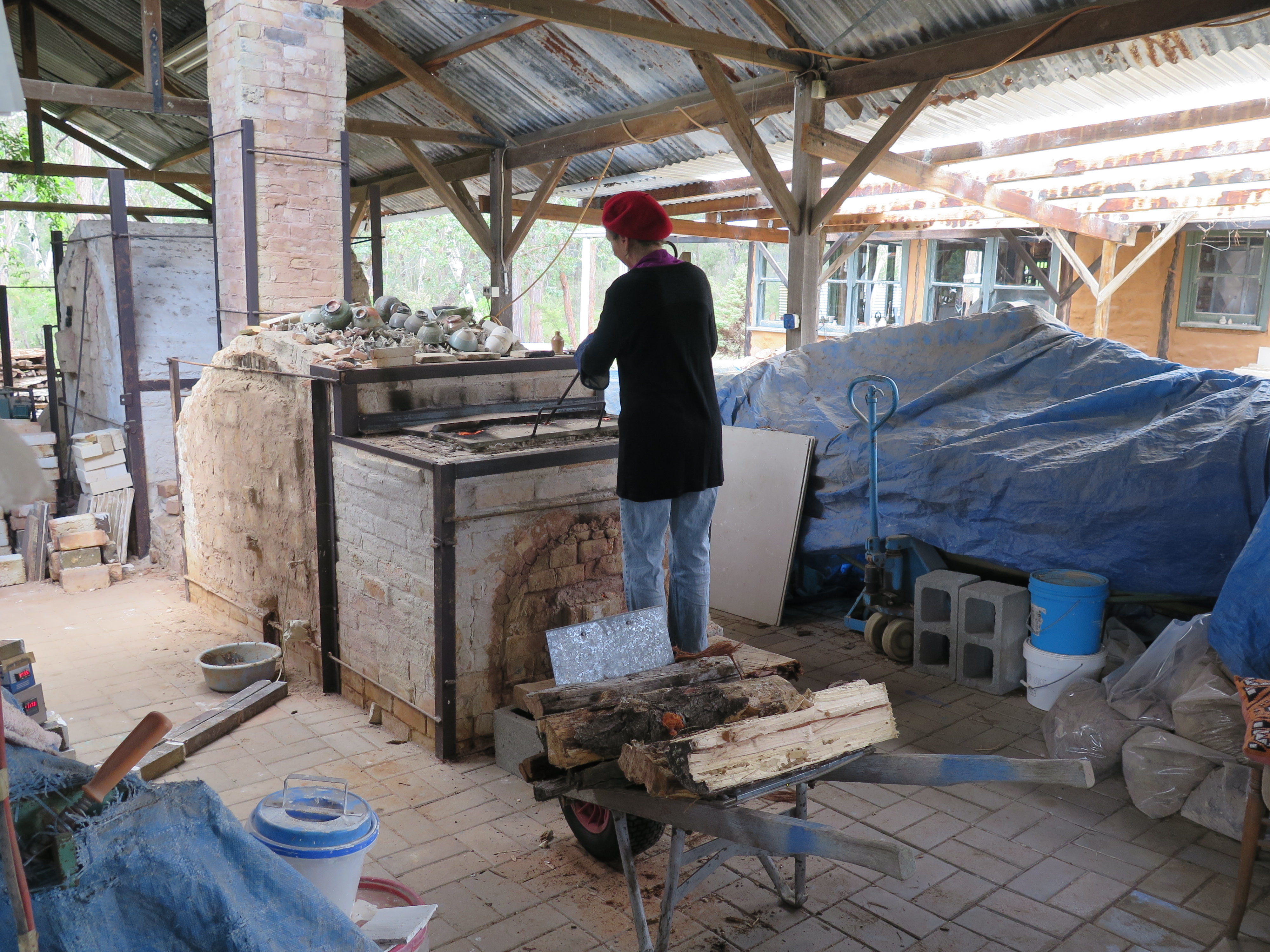
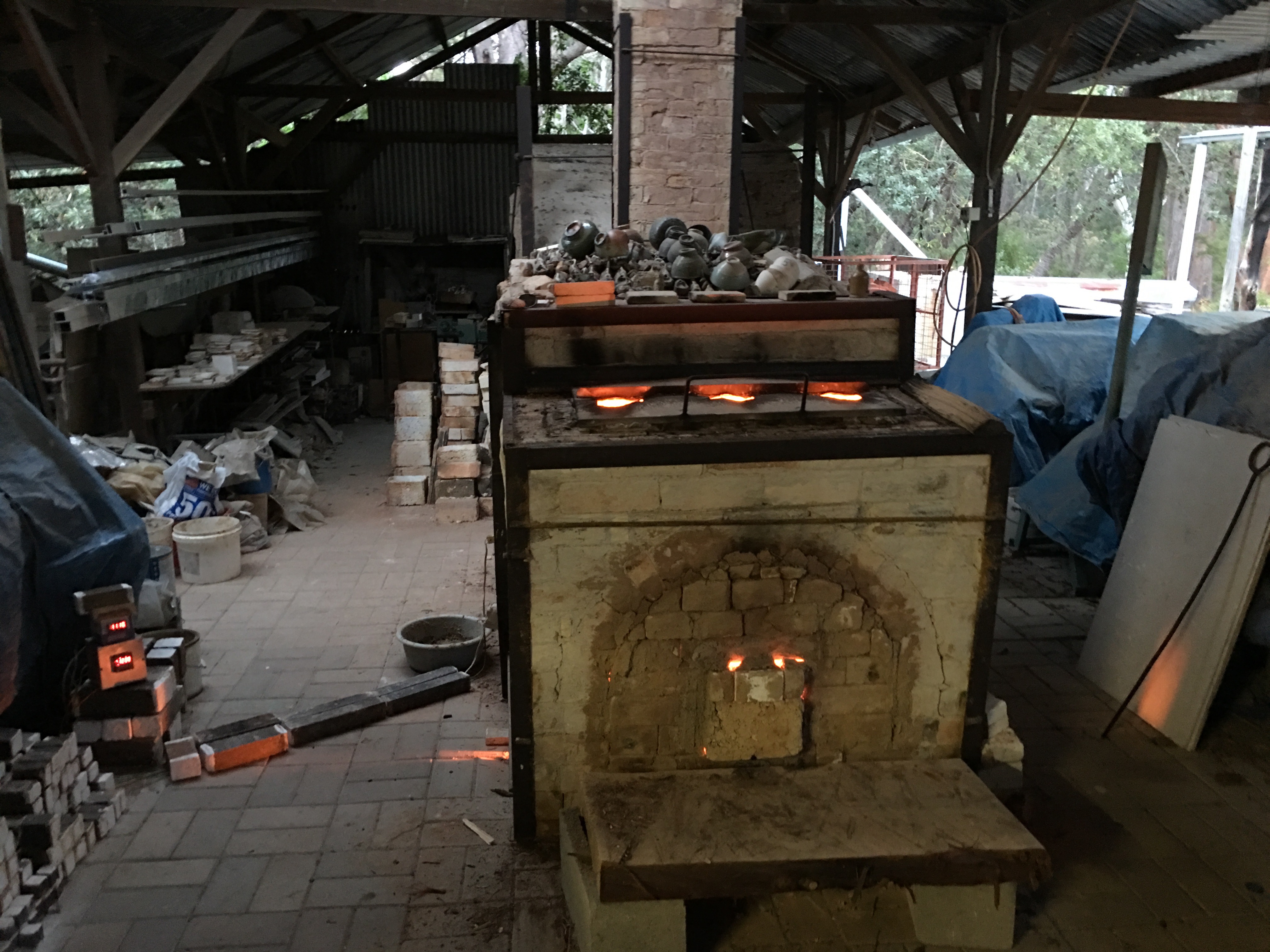
Winter brings on the season of wood firing workshops. We can fire our wood fired kilns almost all year round. With the only exception being the days of total fire bans in summer. We cope with this restriction, by packing the kiln as soon as the work is ready to fire and then we sit and wait until the fire restrictions are lifted, usually after a patch of rain. The pots can sit in the kiln comfortably for any length of time, as long as the kiln is sealed, so that no little animals can get in. We haven’t had  to wait long, a few weeks at most.

However, we can’t run a workshop kiln firing schedule on this basis. If we book in dates to run a wood firing weekend, then it has to go ahead as planned. Everybody has made their plans around the dates and is relying on it. We can’t cancel at the last-minute due to a fire ban. Our solution is to only book dates that are outside the likely fireban season.

We have had 3 weekend firing workshops over the past month since I returned from my last research trip to Korea. We were lucky to be blessed with fine weather most of the time. We are getting cold frosty nights, but many of the days are wind-free and warm in the sunshine.

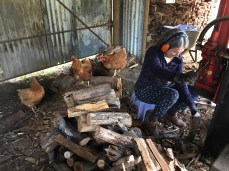
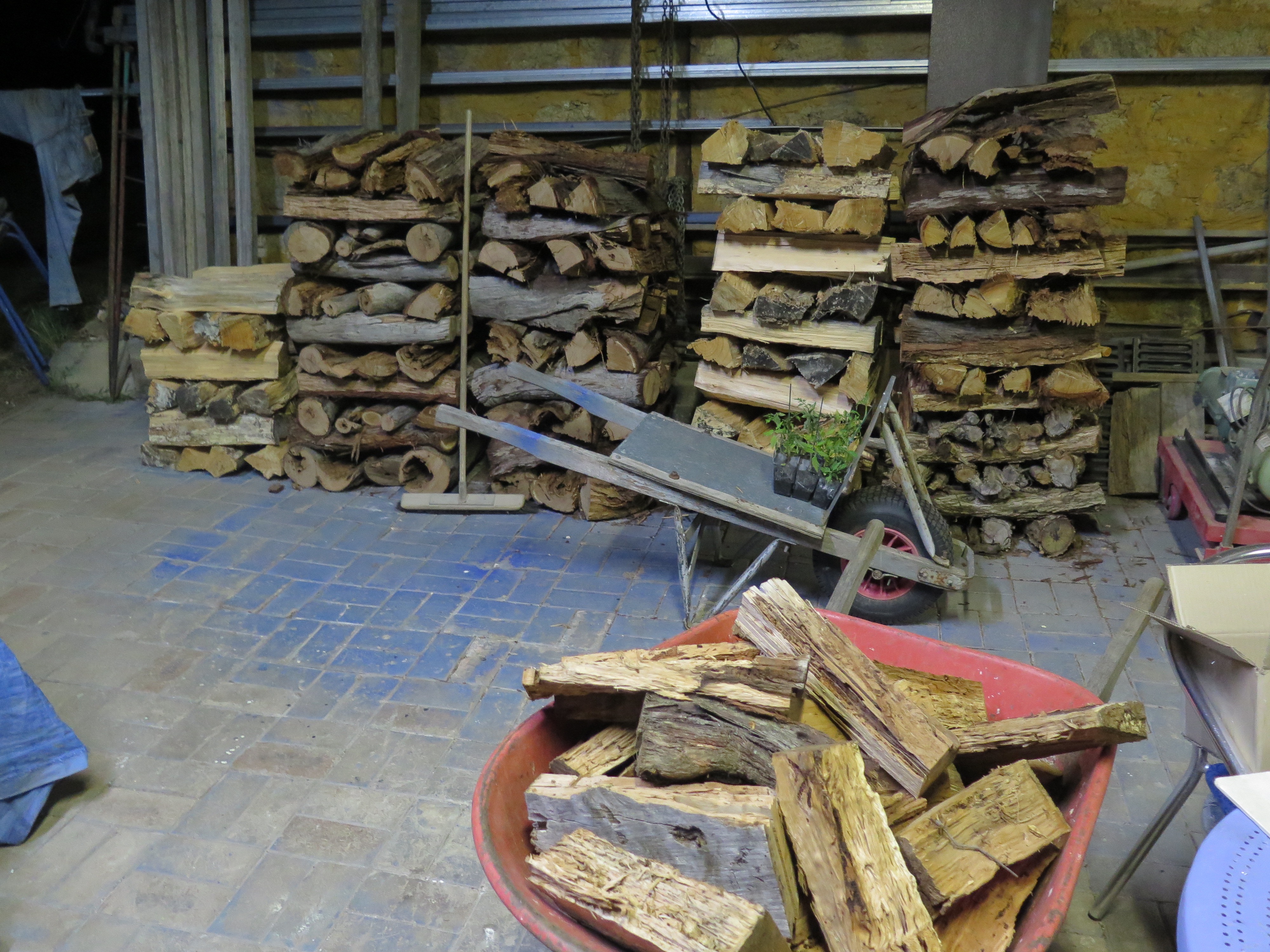
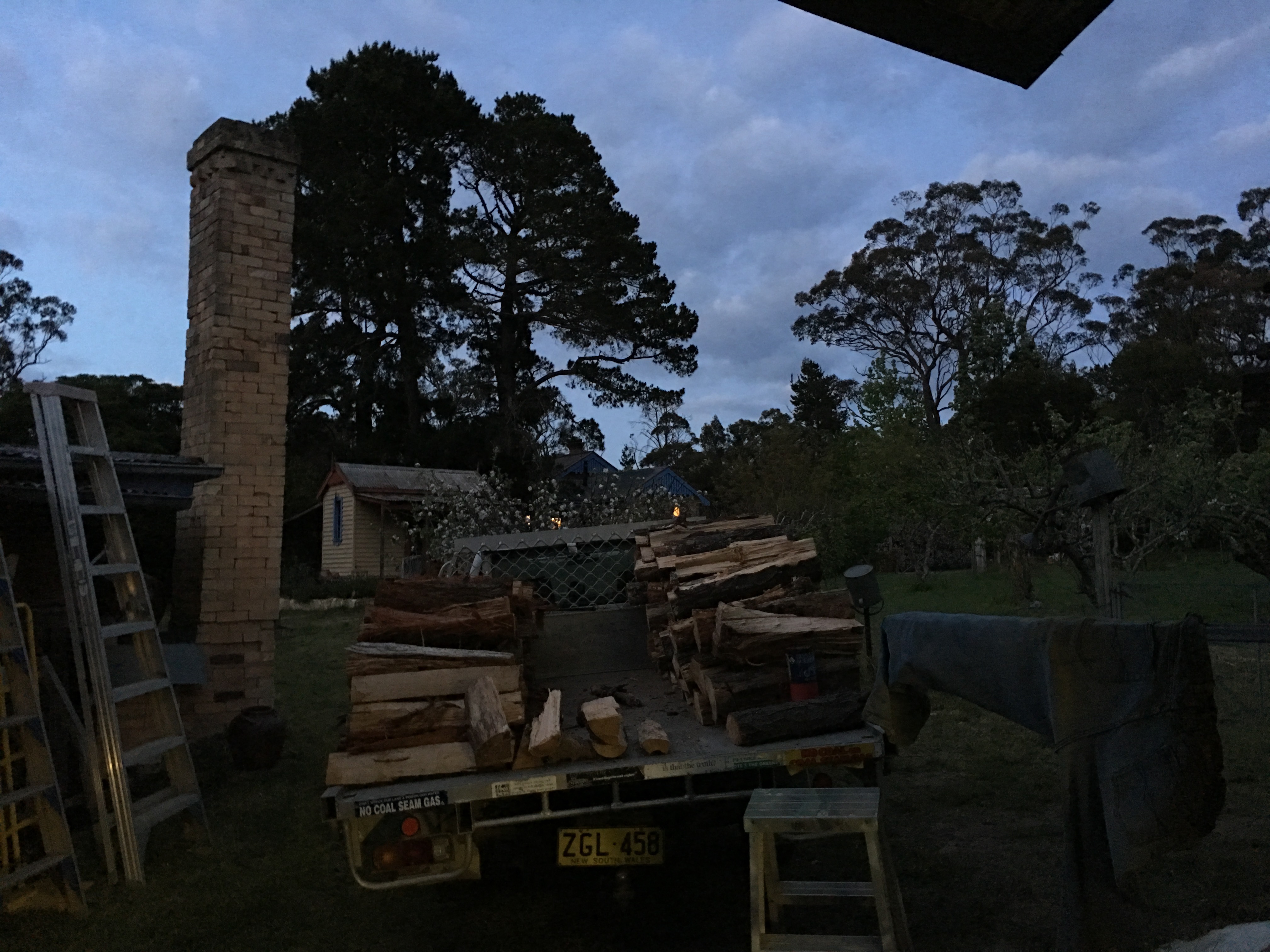
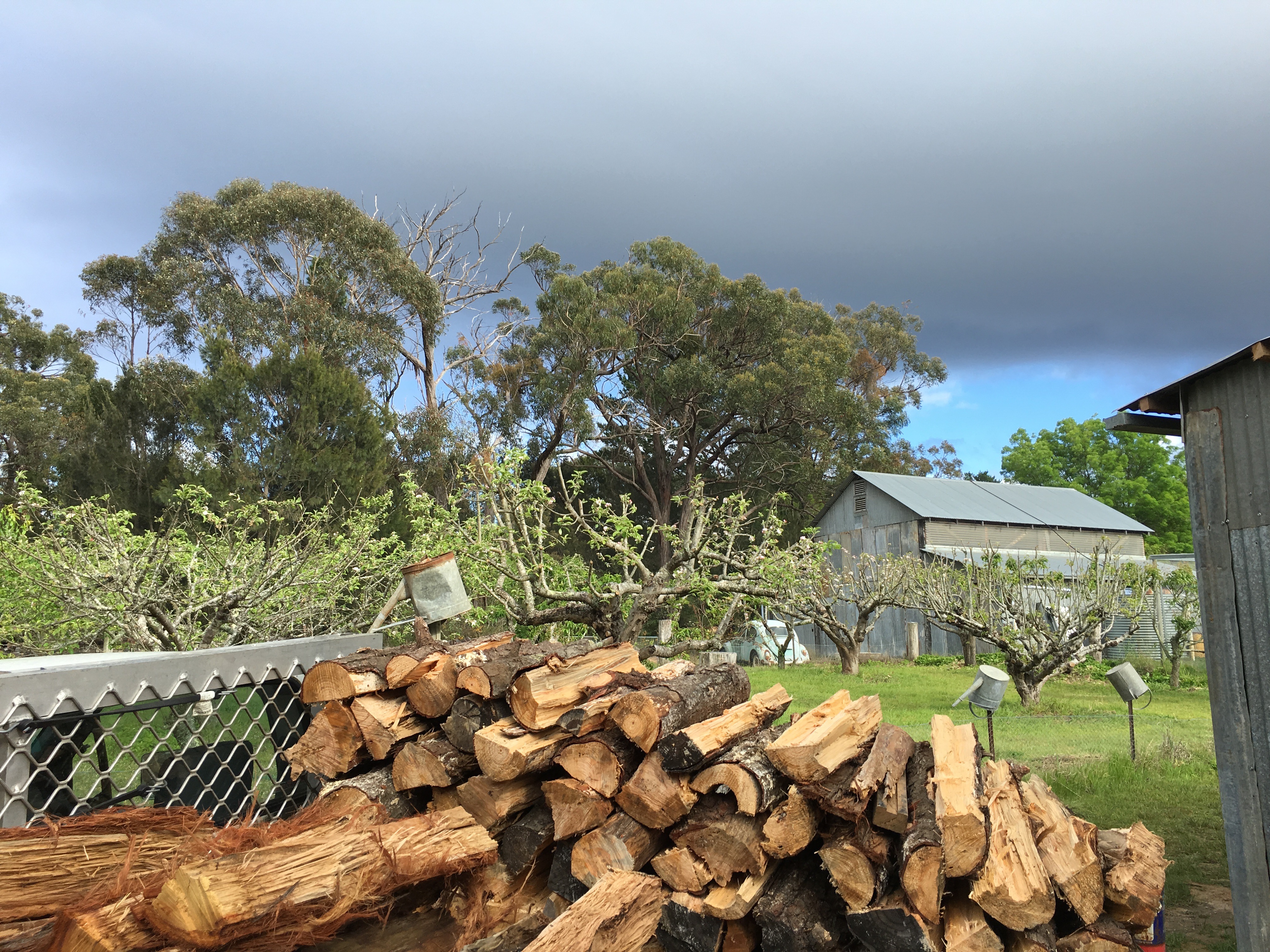
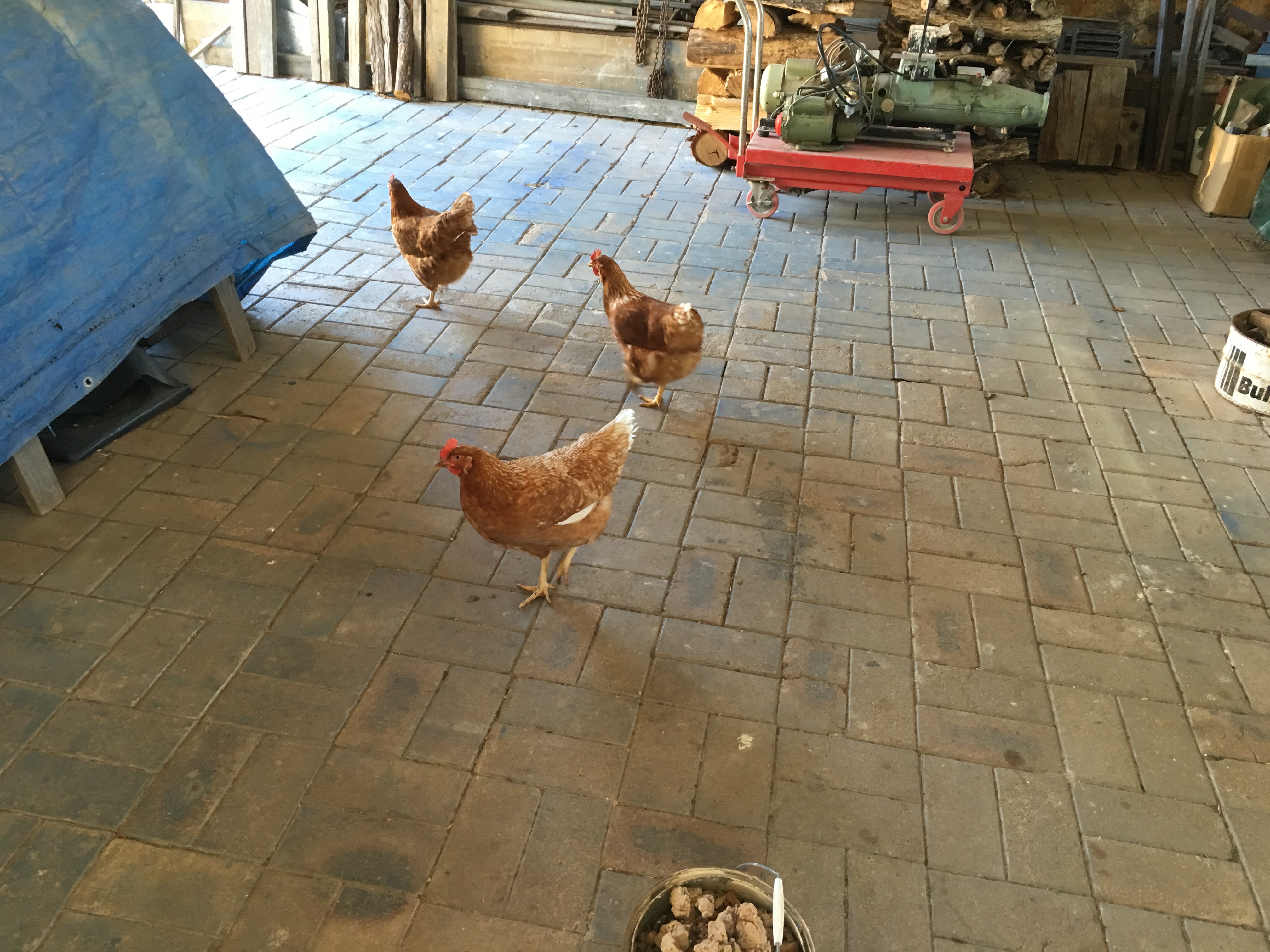
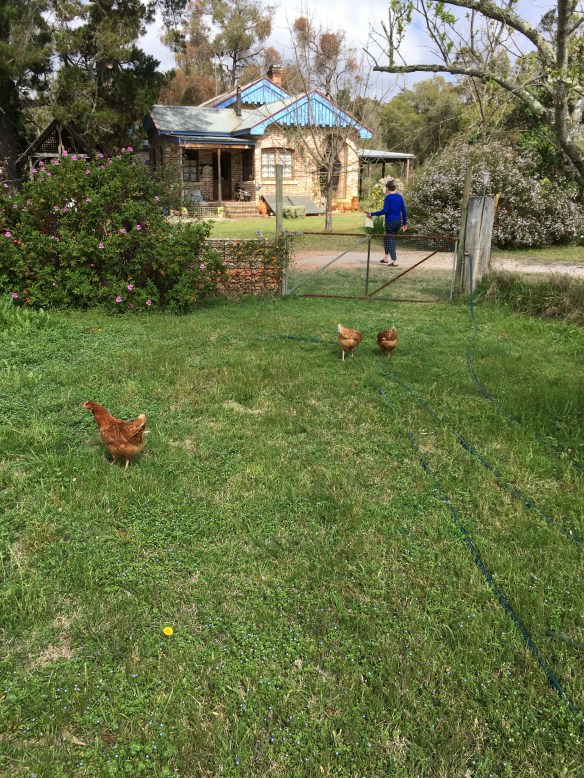
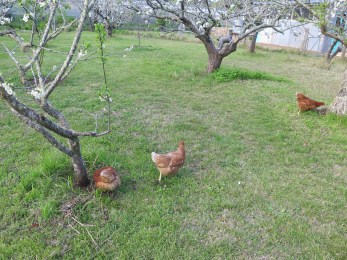
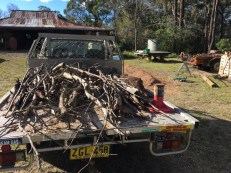
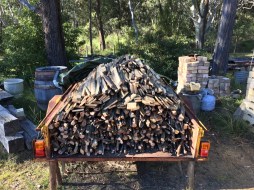
We spend most of the week in-between each workshop in preparation, cleaning up and transforming the space into a safe, functional firing environment. We also spend a lot of time collecting and preparing the wood. We use mostly dead wind-fall branches from our eucalyptus forest around the house and dams. throughout the year, these branches fall to the ground and need to be collected up and stacked, out-of-the-way, so as to keep the ground clear for mowing through the hot months for bushfire protection. This stack then needs to be sorted and cut or broken-up to a suitable length. The smallest twigs go to kindling and the first part of the firing. Thicker pieces up to 50 or 60 mm. dia. are used as-is for the main part of the firing, and anything larger is cut to length with the chain saw and taken up to the wood shed and split into suitable thickness, then returned to the kiln site. It all takes time, but the chickens help. They just love to be at the centre of the action.

We tell ourselves that all this exercise it is probably good for us 🙂
IMG_7279 IMG_7291

IMG_7281

Throughout the year I get fire bricks, stainless steel sheets and all sorts of other material delivered here on Pallets. Some of them. The ones with beautiful straight-grained wood, get dismantled and used for building things. It takes quite a bit of effort to dismantle a modern pallet. They are assembled with gang nailed corners and hot glued nails from the nail gun. I spend a fair amount of time priseing them apart and de-nailing them to save the wood in good re-usable condition. A successful pallet re-cycling session gives me a great sense of achievement – and usually a sore back and shoulders from all the bending, lifting, stretching, levering and hammering. But it’s worth it. I hate to see good wood wasted. It’s just another small step towards self-reliance, through making do, recycling and making the most of what we’ve got.

IMG_7283 IMG_7305

As we have 11 workshops booked in for this winter. We will need a lot more wood, than has fallen from the trees around the house over the summer. Janine has been making expeditions out into the ‘wild woods’ farthest from the house to drag back dead limbs to add to our stock. For this firing I also called in to visit the local mower shop. He gets a lot of his machinery delivered on Pallets and he has to pay to take them to the tip/recycling centre, So they are happy for me to remove them for them.

IMG_7306

One of these pallets is a monster. It has bearers with a cross-section of 200 x 100 mm. and beautiful solid decking of 25 x 150 or 200. All beautifully straight-grained and knot free. I made an effort to keep it all as pristine as possible. It’s so nice that I think that I may be able to make a beautiful chair out of it for the house. There are of course also a lot of ugly pallets. These are easy to deal with, because all I do is chainsaw off the ends of each side and the pallet falls apart into perfectly usable thin lengths of fire wood.

The students turn up knowing nothing of all this. The wood is ready and stacked in the trailer on-site. The kilns are all prepared and the glazes are out on the table. The days events proceed calmly and in an orderly fashion. Every thing happens as planned and the sun is warm in the middle of the day. Everyone seems happy.

IMG_7324

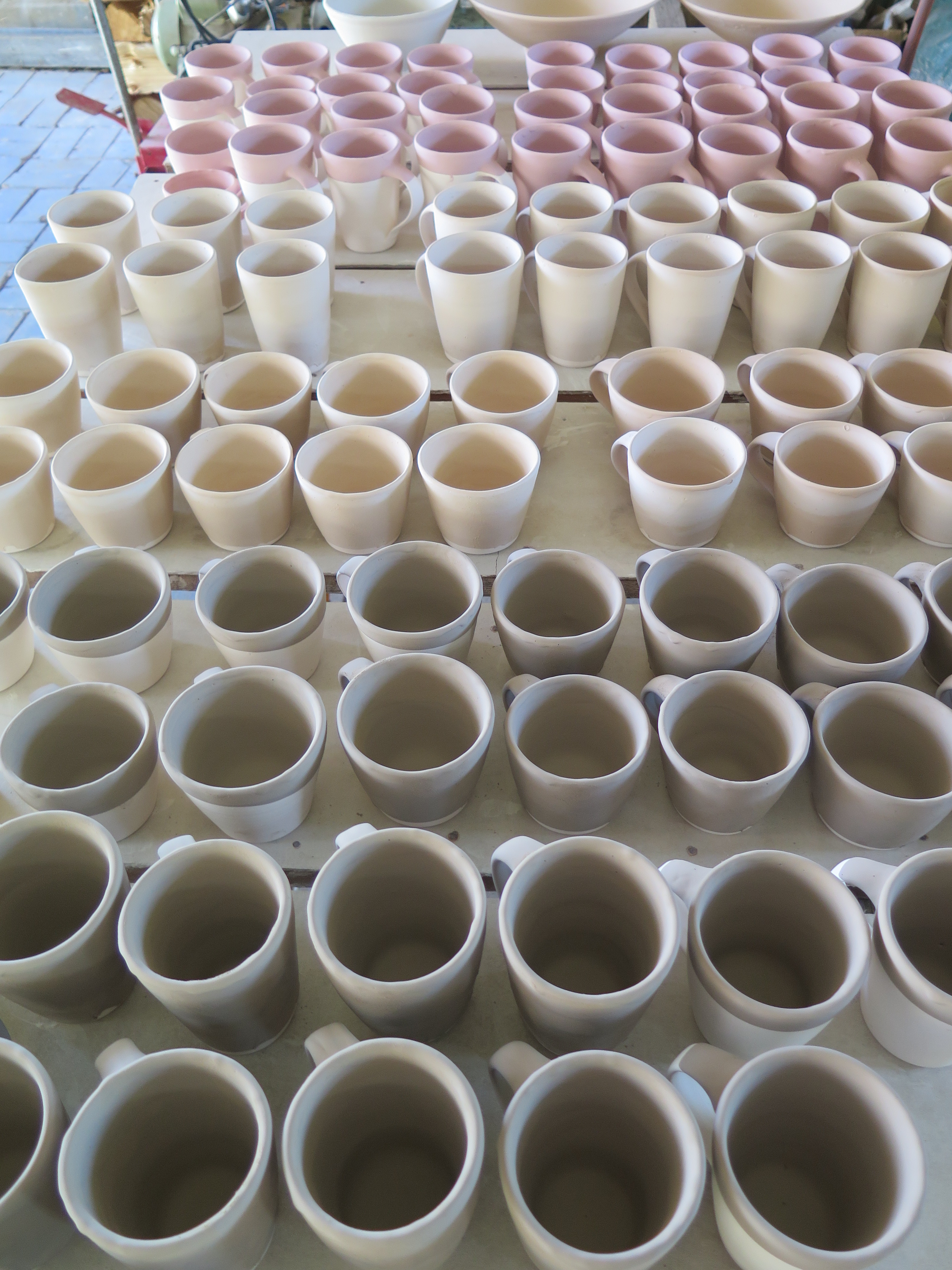
The result of all this effort on everyones part is some beautiful pots.

A Rainy Day in Bangsan

I wake up and its raining, not too heavy, but I can hear it on the roof and dripping from the overflowing gutters. I walk to the workshop in a light drizzly mist. I spend the day turning my bowls. It’s perfect slow drying weather.

Mr Jung is the man who runs the Bangsan/Yang gu Porcelain Museum and Research Centre. He is extremely open-minded and has a very inclusive policy of engaging with outsiders, so as to make The Research Centre relevant, lively, contemporary and internationally recognised. This is exactly what I have experienced here. I must say that while I have been here there has been a steady stream of local, interstate and foreign visitors coming through the place. The level of creative work that is being produced by the research students is excellent.

I get all my pots roughed out and almost finished. They will need just one more thinning out when they are almost dry – but not quite bone dry.

I have a little time before closing, so I go to the Museum gallery and display area, to look at some of their stock and browse some of the literature. There isn’t anything there in English, but there is a thick, hard-cover book on the archaeology of the Yang gu/Bangsan area. I browse through it looking at the pictures. It looks pretty interesting. Shame that there is no English translation. Then it crosses my mind that there is. I have it in my pocket. I use ‘word lens’ on my phone. I select the app and hover the phone over the required Korean text and it magically appears in English on the screen in real-time as I move it along. I make my way through the first part of the book, looking at and reading the captions of the pictures. That way, I get another free thousand words, sans effort!

IMG_6955

It looks like there might be something in there worth taking in. The book is just too big, too heavy and a bit expensive to buy and take home, or post. I want to save my weight limit for my pots. I just photograph some of the more interesting pages and decide to read them later.

It’s time to go, but the weather has turned pretty nasty with thunder and lightning. I rug up in a plastic bag poncho and open my umbrella, but I fear that the wind will destroy it, before I reach my digs. On the way home, I stop to try and capture the lovely image of the rain buffeting the rice seedlings.  I have 2 goes at it, the second being a short video. But I fear for the safety of my umbrella and my phone, so stop at that.

Later in the evening, when I have time back in my room. I down-load the Korean language images to my lap top and read them back off the screen in English using my phone language translation app. It’s a slow way to read a book in another language, but I muddle through, as I have lots of time in the evenings. It even surprises ME! as being one of the weirdest things that I have ever done to get research information!

DSC02743

The next morning the weather is all clear again and I see that the river is running brown with silt washed down off the higher fields, possibly even silt washed down from North Korea over the border. I don’t know how far the catchment of this river extends into the North. There are a couple of hardy blokes fishing with a net, down by the stepping stone crossing. I stop and watch them for a while, but they don’t seem to catch anything. The technique that

IMG_7090 IMG_7086

they are using seems to be for one man to stir up the stones and sediment on the bottom and try to dislodge something into the flow and then the other man tries to catch it in their net. It doesn’t seem to be working. Perhaps they are fishing for some sort of shell fish or yabbie/crustacean?

IMG_6910 IMG_6982

My bowls are finished now and ready for the bisque kiln tomorrow. I have ordered a stamp that says ‘Yang gu’ in Korean text, and have marked all my work with this and my own personal seal. I ordered it through the mail order service of the amazing Miss Kang, who arranged everything for me and had it ready for me when I arrived at her house on the way here.

Tomorrow comes soon enough. I see the kiln packed during the day and started firing last thing before we all leave for the evening.  The next day, after cleaning up my work space, I go over to the kiln room to see how the firing is progressing? I assume that it was set to steam all the pots dry overnight and will be firing properly now, possibly reaching temperature in the afternoon?

IMG_7004

When I get over there, they are already unpacking the kiln! it has fired up and cooled down over night! I’m staggered. How is this possible? It doesn’t fit in with all my other pottery experience, where we molly-coddle the pots through the difficult trauma of the firing process, taking it quite slowly, making sure that we don’t blow anything up by going too fast or causing cracks. I guess that they do this all the time and they know what their clay will take. The kiln is electric fired and has a computer ramp controller, so it fires exactly the way that they have set it to. By the feel of the bisque, I’m guessing that it was only fired to 800 or 900oC.

I can only assume that because everything was dry before packing the firing could proceed quickly. It is summer here and very warm days and nights. And all the pots are made of powdered stone and not sticky plastic clay, so they can breath quite easily. Any way, most things come out OK. I have 5 out of my 40 or so with minor cracks, most inflicted before packing, by me I think. One has a crack around the edge of the foot, which I haven’t seen in my work before and another has a tiny hair line crack in the centre of the foot, underneath. This is a remnant clay shrinkage/drying problem.

I’m happy. I have 36 pot to be going on with. I said at the beginning that I would like to get 12 good pieces to take home if I can. Looks like I’m on track at the moment, but never count your chickens!

I spend the day glazing and fettling. I go over them 3 times to get them as smooth and dribble free as possible. The glaze looks to be a mixture of porcelain stone and possibly limestone?  I also feel that there might be some wood ash in there too? I think this because it has a definite grey cast to it and micro tiny black flecks that I some times see coming through my 60 or 80# mesh screen when I sieve our ash. The glaze seems to be very thin, so I dip them twice. It also helps to get a more even coating.

IMG_6967

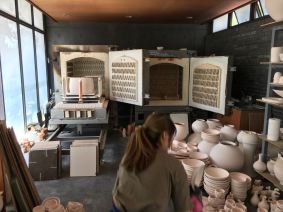
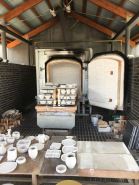
When they are dry, my pots go over to the gas kiln shed for glaze firing. The packing seems to take all day on and off, with so many other things happening throughout the day. It’s all packed by 6.00 and ready for firing.  The gas kiln is fired manually, so it will have to wait until tomorrow to be fired through the day. It’s about an 11 hour firing to cone 7 or 1230/1240oC. in reduction. They use a digital pyrometer and draw trials to measure the temperature and heat work. They told me that they fire too cone 7, but they don’t use cones here?

IMG_7006 IMG_7010 IMG_7050

This facility has a comprehensive range of very good equipment and the staff are really hard-working, efficient and friendly. I couldn’t have found a more fertile and supportive place to study.

best wishes from Steve in Bangsan, Korea.

Open Studio

The Southern highlands Arts Festival is upon us, and so are the Open Studio Weekends  are starting this next weekend of the 5th and 6th of November and followed on the next weekend of the 12th and 13th.
img_3780Two firings in 7 days
We have the kiln unpacked and re-packed and ready to fire in 5 days. This is only possible because I had all the pots made and bisque fired before I left to go to do my research in Korea. All we have to do now is glaze them and make sure that they are well dried before packing them into the kiln. I have learnt from experience that if I pack my thick felspathic glazes wet. They can just fall off from the outside of the pots. Especially from the underside of bowls.
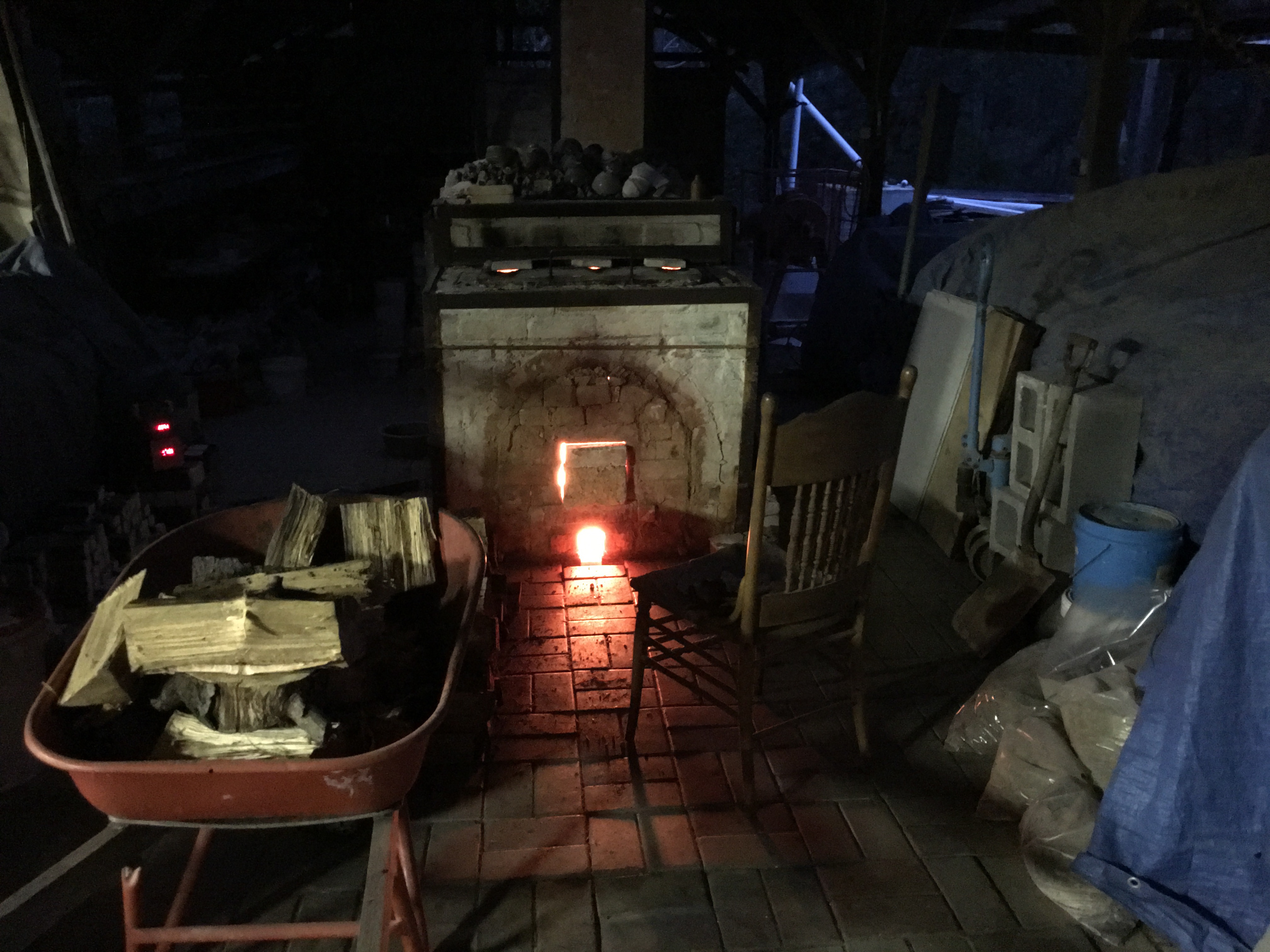
It has been too hot and dry to fire for the past 2 days, so today has been forecast to be overcast and showery. I wake at 4.00am, just like clockwork. I amaze myself that  I can do this, but it just happens. I read an article in ‘NewScientist’ magazine recently about our brains ability to track time accurately, even when supposedly asleep. The article maintained that only part of our brain sleeps. A lot of it stays well awake, and is a very good time-keeper. I know this as a fact for me and my brain, but I can’t speak for others. I thought that I had taught myself to do this as an art student. Waking up every two hours to turn up the gas pressure on the kiln. I could wake up just a minute or two before the alarm went off. I didn’t like the alarm, so I taught myself to pre-empt it by a minute or so to avoid its harsh reality. Apparently, I’m not at all special. Loads of people can do this with no effort. It’s apparently quite normal. Ho-hum! There goes my last claim to be able to do something ‘special’.
We have the wood all cut and dried, up in the wood shed, we have all the pots bisque fired and stacked in the pottery. All the stones have been ground up and powdered. All the ashes have been dry sieved and bagged. All the glazes are made up and tested. Nothing can go wrong now!
img_4435
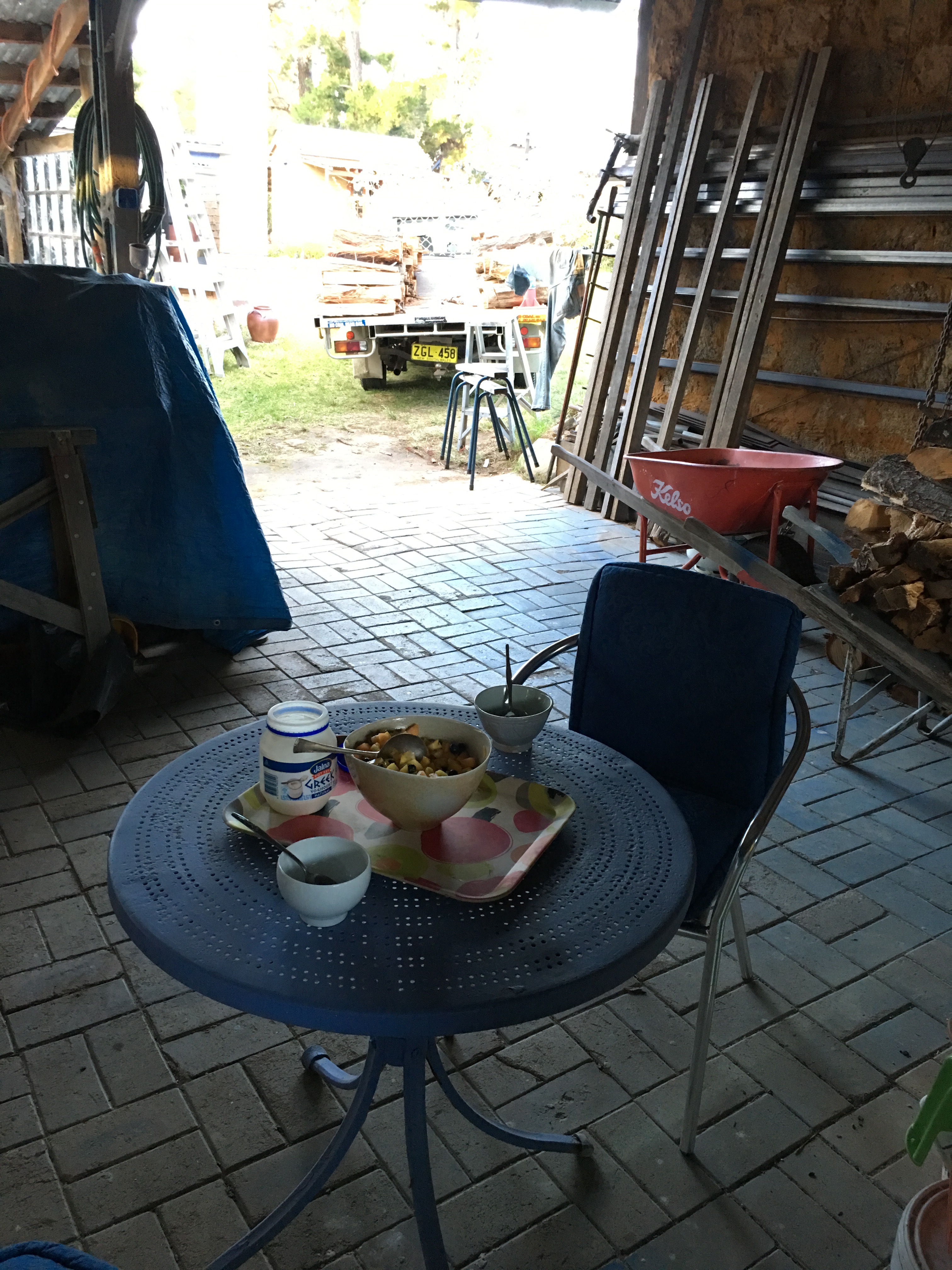
 The firing proceeds well, very well. Just as it ought to after 48 years of learning. Starting in the quiet at 4.00 am and firing through into the night. I like the quiet of the very early morning. I can get a few minor things done while I’m confined here, once the kindling stage is over and I start to put big logs into the main firebox. I can steal a few minutes at a time to clean up my work bench and grind the bottoms of the pots that we just unpacked from the last firing. The Lovely  wakes up with the light and brings me down some breakfast and a pot of freshly plunged coffee. We have fruit salad and marmalade from the pantry to put on our toast. It’s a nice quiet time together.
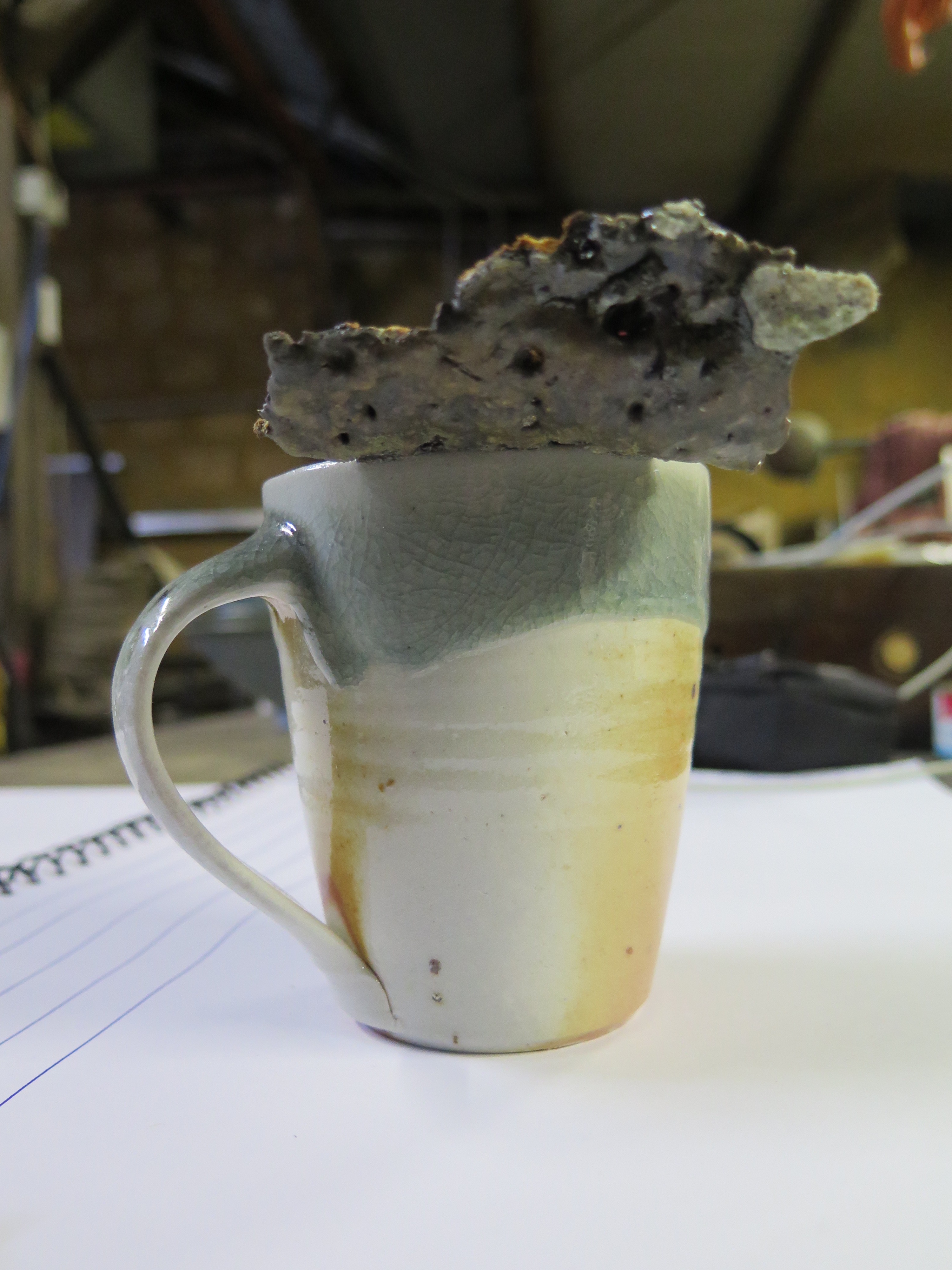
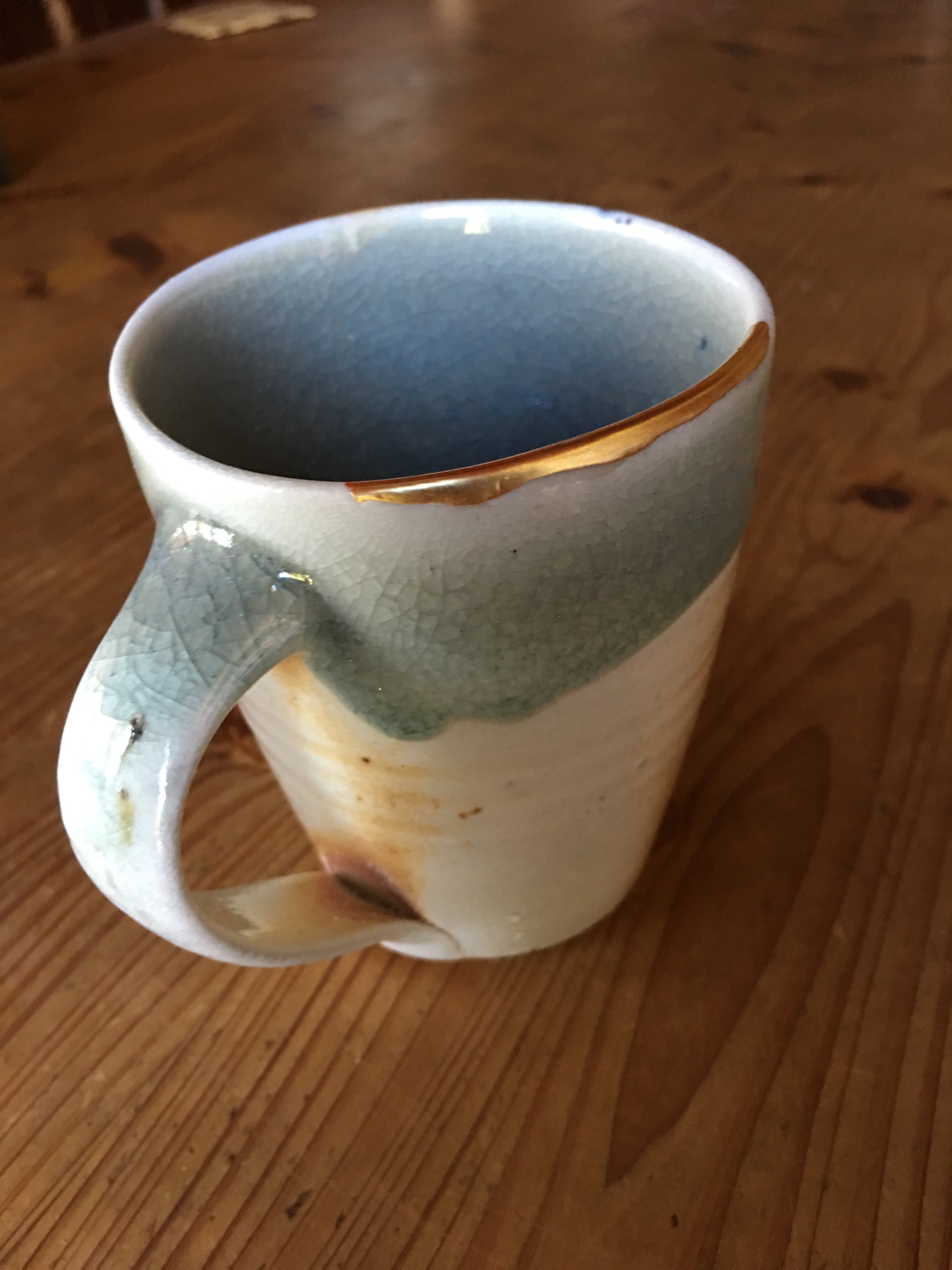
In the middle of the day I’m well into the reduction cycle and using quite large, heavy logs, that can burn for 40 to 50 mins. This gives me time to do other jobs that demand a bit more attention. I decide to repair the coffee cup from the last firing that caught a falling piece of kiln brick. I spend a bit of time on it, grinding and polishing the brick fragment away to nothing, then polishing the remnants of the glazed rim back to a fine finish. I decide that since I’ve spent so much time on it. I will keep it for myself to use in the kitchen. I decide to do some Japanese inspired ‘kintsugi’ repair on it. Janine takes over while I concentrate.
img_4440  img_4436img_4437
I rebuild the surface back to its original profile and then finish it with some 24 carat gold. This of course takes me several days, just a few minutes at a time, whenever I can fit it in. I do a batch of ‘less-than-perfect’ pots from the last firing. They all turn out OK. They are still ‘2nds’, but seconds that have been shown a bit of attention and care. Their ‘flawed’ surfaces turned to a thing of beauty, with some time, love and respect. Just as we do for each other. We shine when we are loved. These pots now glow in a simple honest way.
img_3798 img_3797
img_3799
For some reason, I can’t help but think of dentistry!


Best wishes
Steve

Winsome, Loose Some

We have unpacked the latest firing and it was largely good, some of it is quite good. A bit of it is very good, but as always there is the odd disaster.  I sport a winsome smile.

One single disaster was completely my fault. I made up a batch of glaze that has always been straight forward. Porcelain stone and limestone. I got distracted when someone called in and It seems that I forgot to add the limestone, so I have a bowl with what is essentially a coating of porcelain body. Not attractive.
The walls of my kiln are slowly dissolving with the build-up of wood ash. But not bad for 60 firings for home-made lightweight insulating refractories made from local bauxite!
Another casualty this firing was a piece of wall that spalled off and landed on the lip of one of my cups. I may be able to recover it with some judicious grinding and polishing. However, I ask myself if it really is worth half an hours work to make a 2nd grade mug worth $10 out of this ruin? It is quite pretty though. I may decide to spend a bit of time working on it and keep it for myself in the studio. This ‘mishap’ is not my fault, except in that I chose to build my kiln out of my own inferior, local, hand-made, fire bricks
img_3730  img_3728
I usually test all new batches of glaze that we mix up, before using them on-mass. I did just this last week to test all the new batches of domestic ware glazes that we were about to use to glaze all the pots for the next firing, destined for the Southern Highlands Open Studios weekend sales. I fired the little portable wood fired kiln with test pieces and small bowls. They all worked perfectly and melted well. The colours that i get in a 2 1/2 hour firing in reduction to stoneware, cone 10, are not as clear and intense as what we get in the bigger kiln firing for 16 hours and with a much slower cooling. However the difference is only really marginal and the faster firing is just fine for domestic ware.
I photographed both sets of tests and there isn’t a whole lot of difference. There is better reduction, especially for carbon sequestration glazes, in the longer sustained reduction firing, and the granite and pegmatite celadons are richer. Funnily, the ching-bai porcelain glaze, on the right, looks pretty indistinguishable!
The tragic, sand-paper-like porcelain-stone glaze, sans limestone, was made up after this test firing, as an afterthought, so missed out on being test fired.
img_3741 img_3558
We have just re-packed the kiln to fire again. This firing will have what I hope will be a new opalescent jun ash glaze. Here’s hoping! Ash is always so variable. We have to test each batch of ash and find the differences from the last batch, then alter the recipe accordingly. What is sometimes a blue opalescent glaze can quickly become a yellow crystalline glaze or a white matt. It changes from ‘nuka’ white through to transparent green glass with minor variations  of ingredients. It always requires felspar and silica to be added. Luckily, porcelain stone is largely composed of felspar and silica. I love it so much when it works!
There is something so rewarding about using the ash from the fire that cooked our dinner to make our glazes! There is something so truly organic and particularly rounded about the concept of waste-not/want-not, and self-reliance about this. Glazes like this are firmly embedded in my sense of place and my sense of self-in-place.
I couldn’t want for more – except perhaps a more reliable and richer opalescent blue?
img_3779 img_3775 img_3768
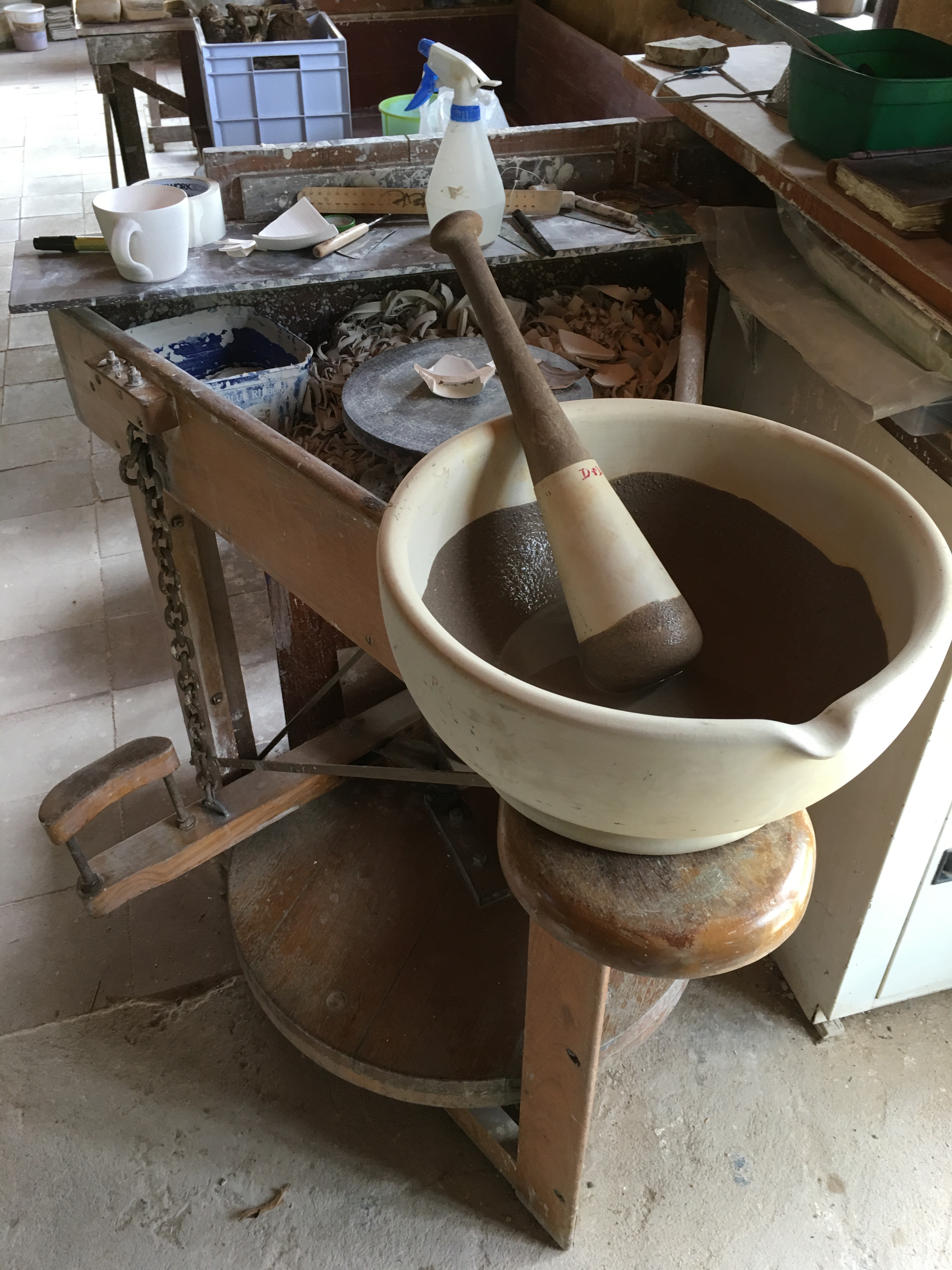
I pass the glaze through a fine sieve and although we have already dry sieved the ash beforehand, there is always a lot of material that refuses to pass through the fine screen. I scrape it off the mesh and put it in the large mortar and pestle. I give it a good few minutes hand grinding, until it doesn’t sound or feel gritty anymore. I know from past experience that it still will not all go through, but a lot of it will. I was lucky to see this 450 mm dia mortar and pestle in a junk shop and snapped it up. It’s a beauty! It dwarfs my Leach kick wheel.
img_3732  img_3733
The kiln is bricked-up and ready to fire now. The weather is a bit warm and dry, so we decide to post-pone the firing until Thursday when a shower or two and some damp weather is forecast. This will be a much safer day to fire.
Ashes to ashes and lust to lust
Steve and Janine

Be Prepared

I realise that I’m awake and I’m not going to get back to sleep. It’s 4.00 am and we are all ready to fire the kiln today. I usually wake up at about this time on firing days. It’s a habit that I have got into. I like to start early. I love the quiet of the early morning. It’s beautiful. There is a very special time. Just a half hour, when the birds start to wake up and so does the sun in response to their chippering and calling. They have very fine senses. They are awake and calling when it is still dark. I can’t tell the difference with my old worn out eyes. but they know and call out to tell each other. They summon the sun.

img_4394 img_4386
 img_4406 img_4408
We packed the kiln yesterday and bricked up the door with our home-made fire brick blocks. It’s a big door for easy access for packing, so we needed some large blocks to speed up the door bricking-up process. Making our own firebrick is just one of the many things that we do to live this life of self-reliance. The sun was loosing its heat as drove up to the wood yard and loaded the truck with both pine and stringybark logs. We are all finished before the evening dusk falls. The truck sits in the dark and is slowly revealed this early morning as the sun comes around the curve and slowly illuminates the house and orchard in the distance.
img_3687 img_3690
 img_3689 img_3686
We have a new wood shed now, so all the pine is stacked and ready to load, dry and seasoned. Such luxury! it’s only taken us 40 years to get this small convenience built. There is always so much to do. We have lists! Even lists of lists. But ultimately, it’s a case of the squeaky wheel getting the oil. But now the time is here for a kiln wood, wood shed and it’s a beauty. We’ve had a wood shed for the house wood, particularly for the kitchen stove timber. We couldn’t function here in this self-reliant way without one. That was a very squeaky wheel and got built after only 10 years here. This masterpiece of re-cycling cost next to nothing, being made out of the old wooden tank stand and old roofing iron that we were given. It’s only taken us 40 years to get around to it!
img_3708  img_3713
We are officially into the bushfire season now, so there are fire restrictions in place. Luckily for us today, it is overcast and there are showers forecast. It has just started to rain gently, but just a brief shower. I don’t even bother to cover the pine on the truck. Last night I called the fire captain to tell him that we were going to fire the kiln. It’s a polite notification. We have been here 40 years doing this with no problems so far. That is largely because we are very careful. During the spring, we pack the kiln and wait for a suitable day to fire. A day like this is excellent. Cool, overcast and with this brief shower of rain, it couldn’t be better for firing. The safest of conditions. If it were very hot and windy, we wouldn’t light the kiln. We’d just pack it and leave it full and wait for a break in the weather.
img_4415 img_3693
img_3692 img_4416
img_4418 img_3670
When Janine gets up, she brings me breakfast by the kiln. We eat all our meals during the day down in the kiln shed. We get a visit from the chooks, who call in to see what going on. We fire through into the night. It’s a civilised, steady, easy firing process. With all the wood already cut, split and seasoned in advance. This prepared wood that we are burning, is work that we did months ago in preparation for this moment. To make our lives easier now. We make decisions and make preparations for the future in this way so that we can keep on working, and living this life into our older years.
img_3694 img_3695 img_3701
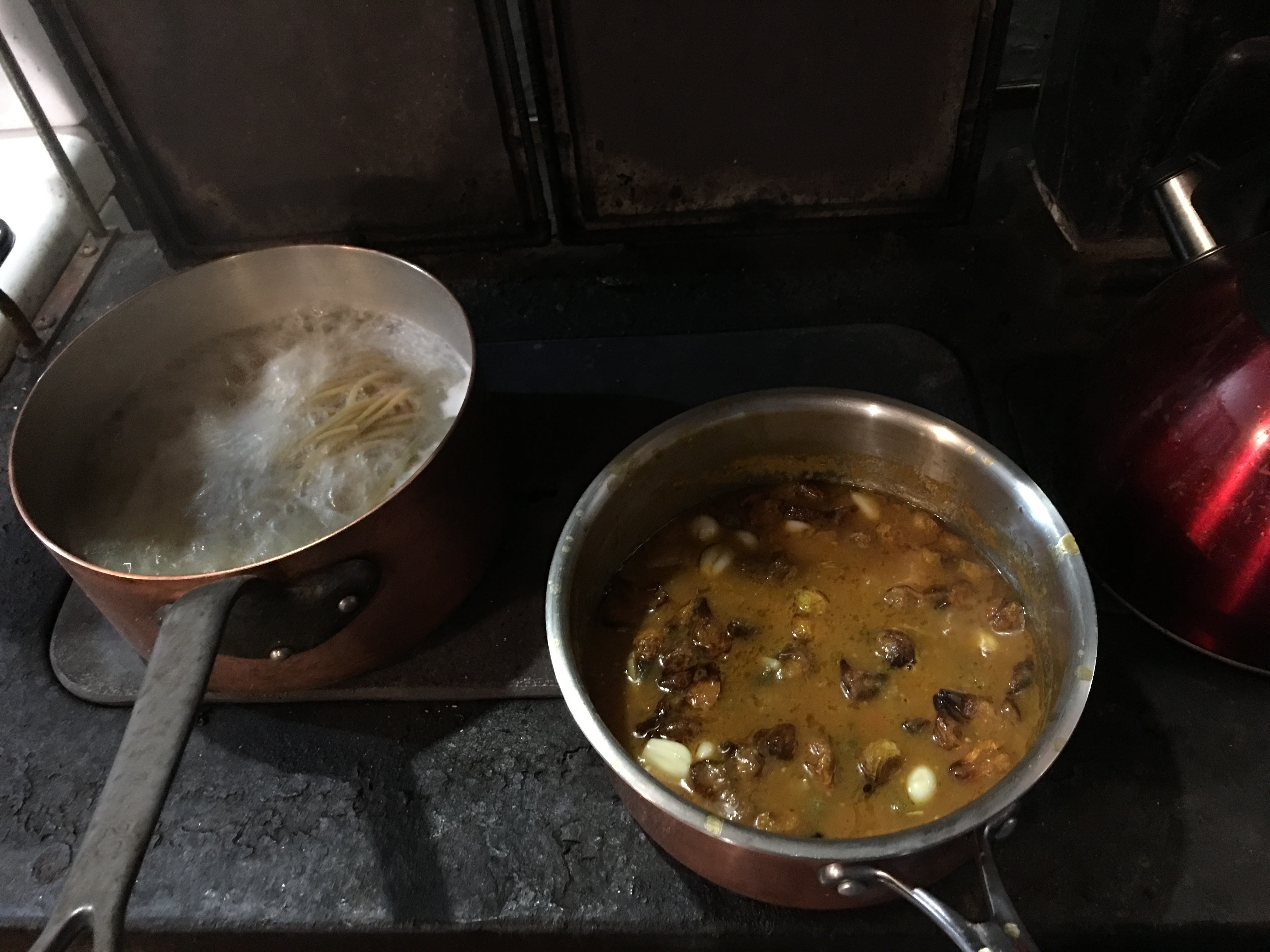
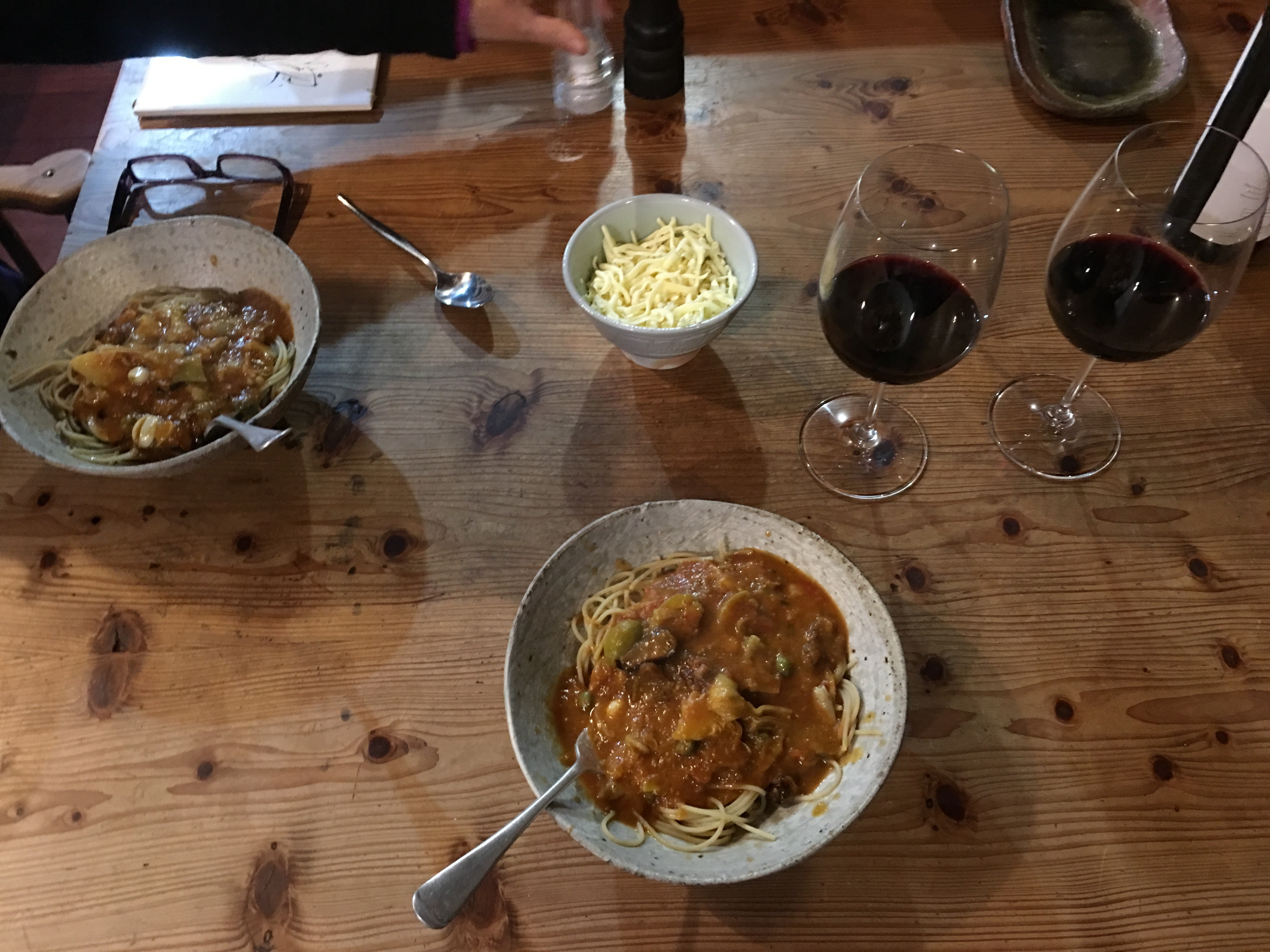
We finish the firing at night, on the same day that we started. Packing and firing the kiln is an intense couple of days. We celebrate the end of the firing with a bottle of bubbly. I cook pasta for dinner. It’s quick and simple, using all our own home-grown ingredients, preserved tomato pasta sauce, our own garlic, our dried tomatoes and dried mushrooms. It’s just like our firing, everything prepared in advance to make this moment of creation easier.
img_3703 img_3704
img_3707
Best wishes
from the well prepared Steve and Janine, working towards the up-coming Southern Highlands Arts Trail, Open Studio weekends. We will be open on the first two weekends of November.

Hit The Ground Running

It’s always good to be home and re-united with my 4 girls.

img_3472 img_4361

I have a lot to do. Jobs that have built up while I’ve been away. I hit the ground running. We have 3 weekend workshop booked in for wood firings over the next 3 weekends. We have a lot of bisque-ware ready to be glazed for the Southern Highlands Arts Trail Open Studio Weekends that are coming up, but we can’t get access to our wood kiln until we finish all the workshops.

The effort that we put in to preparation pays off, as all the weekends go smoothly and everyone leaves with something nice to make all the effort worthwhile. And we are lucky with the weather too. It blows a gale all week, and then it settles down and we have a glorious weekend of still, sunny days.

We fire the big wood kiln overnight through the weekend, taking shifts of 4 hours and overlapping each change of personal by 2 hours, so that there is always some continuity. The nights are cold and we huddle near the firebox for warmth. This is a downdraught ‘Bourry’ style firebox, so there isn’t very much to do most of the time.

img_3512 img_3526

If we stoke with big pieces of hardwood. It might take up to one hour for those logs to burn down sufficiently to allow another stoke. The kiln climbs slowly in an even, steady, reducing atmosphere.

The next weekend we have a low temperature wood firing workshop. We have half a dozen small wood fired kilns that we use throughout the day. We have 10 participants, who each bring 5 or 6 pots to fire, depending on size. We get through them all in the day, along with half a dozen wheel-barrow loads of wood.

img_3563

When the day is over, we pack away all the little kilns, except for one. I leave it out and pack it with my glaze tests for all the new batches of glazes that have made up for the next big wood firing. It will have a lot of work in there for the  ArtsTrail Open Studios Weekends. I want to make sure that I haven’t made any mistakes or poor assumptions, when making-up these glazes.

I pack the kiln in the morning and start to fire straight away. I push it along, as I have other things to do this afternoon. This little beauty breaks all previous records and cruises up the cone 10 in just 2 1/2 hours in reduction. The results are really quite good. Everything is well melted. There is no flashing in such a short firing. Nor is there very intense reduction colour, but all the colours are there – only paler than I would expect from a longer wood firing. I’m finished by lunchtime and can get on with other things.

img_3550 img_3554

img_3555 img_3557

img_3558

I even surprise my self! I didn’t know that this sort of speed was possible for a stoneware firing, and with so little effort.

img_4310 img_4373

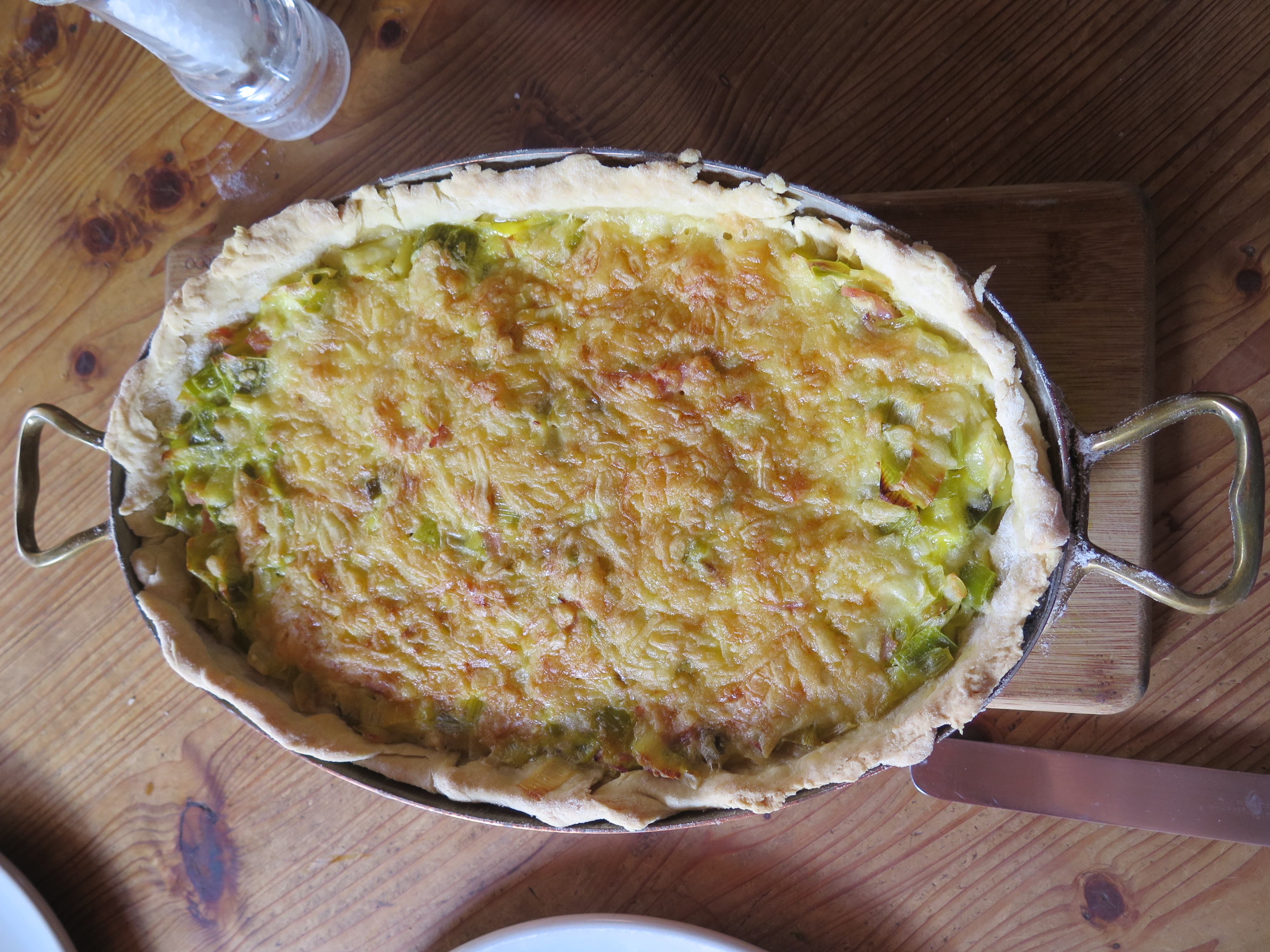
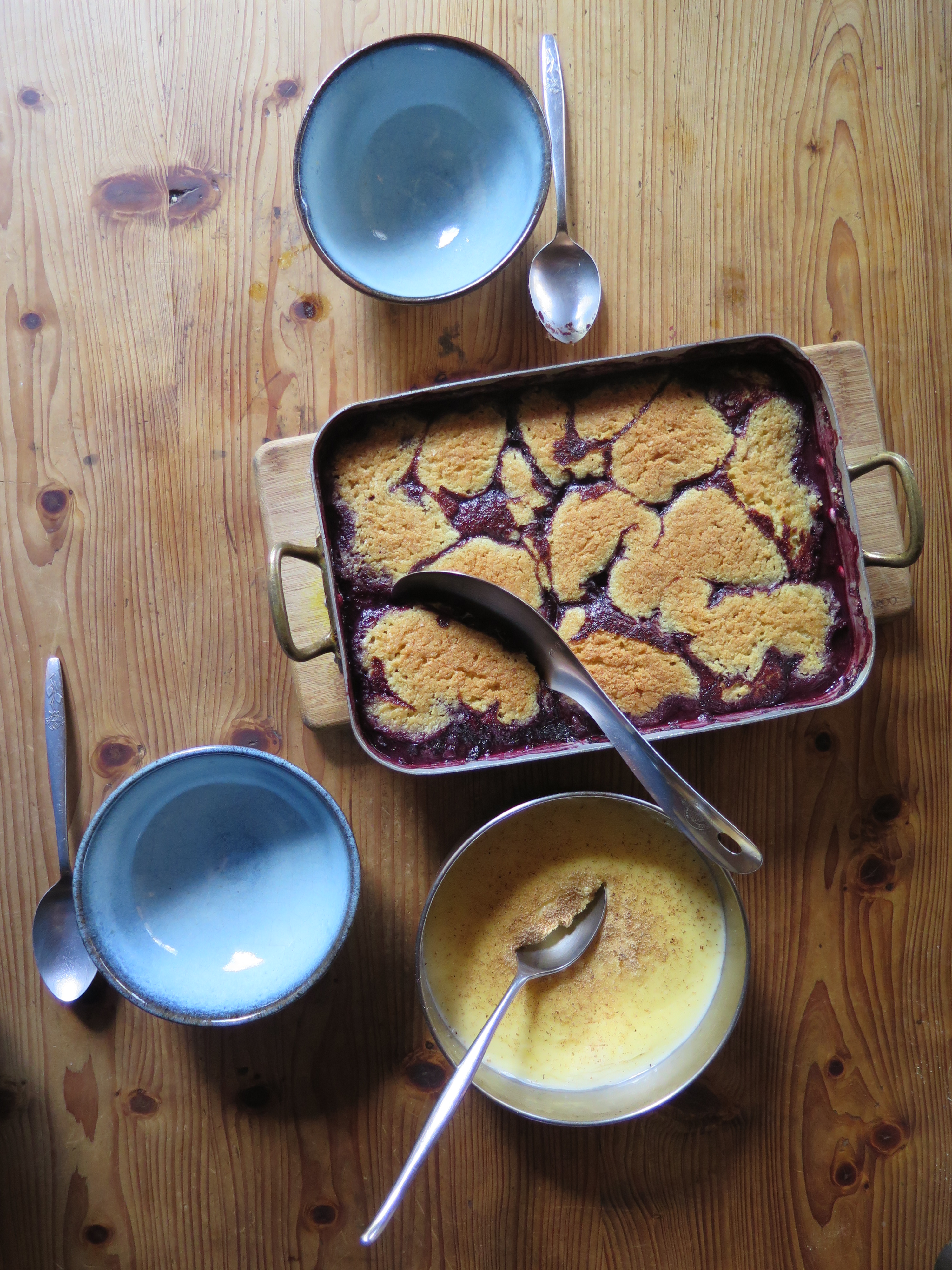
The garden is producing well, with Nina in charge in my absence, she decides to have the evening baking and makes a couple of lovely dishes. A leek pie with a little bit of sour cream and a wholemeal crust, topped with some grated tasty cheese, which is amazing, followed with a berry pie with a baked sponge topping. Served with Edmonds custard. Yum! It’s an economical, warming, dinner on a cold evening. All this garden produce is a fitting reward for all the hours of weeding and watering. However, we don’t do it to save money, but to enjoy wholesome, unpolluted, fresh food.

img_4347 img_4355

Over the years, we have made decisions that have allowed us to be in control of much of our lives, but nothing is perfect, nothing is finished and nothing lasts!

Enjoy the moment.

Low temp wood-fire w/shop

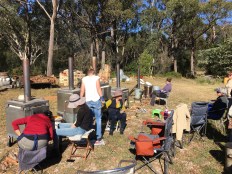
We are all prepared for the first of our winter wood firing workshops. The early morning sun shines obliquely across the site. Everything is ready. We have spent the weeks beforehand preparing the wood, the kilns and the glazes.

IMG_2354 IMG_2356

Yesterday, we had our friend Susan down here for some last minute help with prep. While I was handing out HTV cards for The Greens and the local polling booth. Janine and Susan had their own test firing of their own work. A bit of quiet time to have some fun together, but also a chance to test all the new glaze batches to make sure that everything will run as smoothly as possible on the day.

IMG_2372 IMG_2376

The day goes smoothly, A credit to Janine and Susan, for all the hard work and preparation that they have put in. Everyone seems happy and they are kept busy with glazing and firing all day. The kilns perform well and work starts to accumulate in the saw dust trench.

IMG_2391 IMG_2387

The firings proceed all throughout the day, as once the kilns are hot. They can be unloaded, reloaded and re-fired easily all day.

Glazing, firing, unloading and reloading, smoking and more glazing and refiring. It’s a busy day.

IMG_2358 IMG_2378

IMG_2383

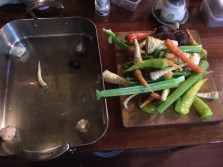
The day ends with a lot of happy potters going home with boxes of glazed pots. We clean up and put everything away again. I go to the garden and pick arms full of veggies. This will be our dinner tonight. Baked vegetables with a small piece of steamed fish.

IMG_2393 IMG_2396

IMG_2402

We light the fires and settle down in front of the idiot box with a glass of red wine to hear some analysis of the election turmoil.

Interesting times!

The Solstice Approaches

Here we are almost at the solstice. It’s dark until late in the morning and dark early in the evening. A few months ago, I booked one of my best friends, Warren, to come and help me do a lot of work. Now, the appointed weekend is here and it is pissing down. We can’t change the dates, we are both fully committed in other work for months ahead. We have to do it now – in this weather! We had the flood last week and have almost finished clearing up from that heavy rain and now it is raining again, almost constant drizzle to annoy us while we work.

Warren has come to help me build a wood shed for the kiln wood. We have a small shed for the house wood for the kitchen stove and heater, but the kiln wood is so much bigger and there is a lot of it when we do the weekend workshops. So, we have needed another woodshed for some years now. Last year was terrible for us. So stressful, as it always seemed to rain the week before the firing and we spent the year trying to work with wet wood. Sometimes I could store the wood in the kiln shed/factory. But if I was building a kiln in there at the time as well, there just wasn’t room for both. So, the wood was out in the rain. We tried tarping it, but there was loads of condensation under the tarp in the prolonged wet weather and sometimes it would blow off in the really heavy storms.

IMG_3874 IMG_3886

So, we’re building a dedicated shed to store the long lengths of bourry box hob wood. At least that is the plan. The rain comes down in waves, so its jackets on for a while and then we start to steam inside them as we work hard, digging holes and ramming in the poles, lifting beams and climbing ladders, so then it’s jackets off until the rain comes back again. We are cold and damp by the end of the weekend, all our clothes are saturated with either sweat or rain. We finish off the shed by screwing the wall sheets on the outside, while the rain trickles off the new roof down our necks. We just happen to be working directly below the drip line. Who designed this thing?

IMG_3888  IMG_3913

To make it worse, by the end of the weekend, with us two tramping about in the rain, all the ground is mushed up into a slippery slide quagmire. We find it hard to keep our balance towards the end. We finally finish in the dark, using the LED focussed torch beam on the battery drills to find the correct places for the last few screws.

IMG_3915

It’s lovely to be able to strip off and have a steaming hot shower heated with our own firewood and the wood fired kitchen stove. We change into a clean set of dry clothes. It’s such a luxury, I’m so lucky to live here. I’m suddenly thinking of Syrian refugees transmigrating across Europe from one country to another. displaced by war and nobody wants them. They have no hot showers or warm house. I really am so lucky to be here.  The Lovely has got the fires going and the house is toasty and warm. We enjoy an amazing bowl of Janine’s warming ossobuco and a glass of red wine. We are all ready for an early bed.

IMG_3892

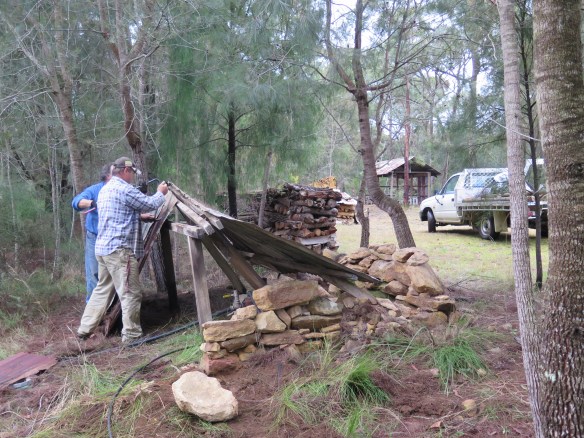
The next day it’s the pump house on the dam bank. It has been there keeping the rain off the old electric pump for 40 years now. I built it out of scrap everything on a zero budget in 1976 when we first arrived here with few prospects and no money, with a double mortgage to support. I built that first shed out of scrounged material. It was rough as guts, just designed to last a short while until I could get around to building a ‘proper’ one. It’s finally falling over and the posts have rotted off at ground level and the dry stone wall is slowly pushing it over with the unbalanced weight of the moving stones. We demolish it in a few minutes and find that the eucalupt hard wood timbers from above ground, are still in excellent condition, even though they were salvaged 2nd hand 40 years ago. So is the roofing iron for that matter. It was worn out and rusty, and dumped at the local tip back in 1976, where there was no supervision at the dump. I saw it there abandoned, all bent and rusty looking. It went onto the roof the next week and has been there ever since. It’s still all bent and buggered, but no more rusty than it was and is still OK for re-use.

IMG_3896

I check out what we have to work with and everything is in good nik, except the hard wood poles in the ground that have rotted off, broken and are falling over. I get 4 poles that  have been re-cycled from grape-vine trellises. We remake the old shed just as it was, but just a bit higher, using the taller poles. I need to put walls on this little shed, to keep the  rain off the electric pump, but that can wait. I put a plastic tarp over it for now. It may end up lasting another 40 years? Temporary things have a habit of doing that around here.

We discover through necessity, that it is OK to use electric power tools in the rain if you put them inside a plastic bag, with just the chuck sticking out. It works really well.

IMG_3903 IMG_3901

The next job is the  verandah on the kiln shed to store the kiln wood when I have both a planned firing weekend and a new kiln job on the go in the kiln shed. There isn’t really room for both very comfortably. So we add an extension to the shed very quickly in just one day using what we have. A lot of 2nd hand timber and roofing iron. The common denominator for all the sheds is new poles in the ground. This time around I’m using ‘green treated’ poles to deter the white ants and the damp soil rot. Almost everything else is recycled. I have even found a bucket of pre-loved roofing screws, that I have salvaged from somewhere. It was so long ago, that I can’t even remember collecting, sorting and cleaning them. But there they are in my salvaged screws and bolts section of the shed, just waiting  to be called on for a second life.

IMG_3916

I have no idea how much it would cost to pay to have all this work done. Obviously, quite a lot. Even the cost of materials would be excessive, never mind the labour cost. I’ve made all my own galvanised steel plate ‘triple-grip’ hardware fasteners. I have all the machines in the kiln factory sitting waiting to be used. We knock out a few hundred of these home-made brackets and then get to work framing the sheds. Everything is held together with roofing ‘TEK’ screws and these steel brackets. It makes for a very quick and seriously strong series of joints.

All of the 100mm. x 75mm. (4×3″) hardwood timber used in the roof trusses was salvaged from the old pottery tank stand. It stood out in the weather for over 30 years with a 13,500 litre (3,000 gallon) galvanised water tank on it, until the tank rusted out. Now it has been de-nailed and cleaned up and has found a new lease of life as roof trusses. I’m amazed how good the local hardwood from Mr. Blatch’s Mittagong saw mill was. It just doesn’t rot. I’ve bought hardwood since, obtained from down the coast, that only lasted 4 years out in the weather, before it rotted. It was largely sap wood. Very disappointing. I re-cycle all the large size 2.4m. x 1.2 m. (8′ x 4′) pallets that the stainless steel sheeting used in the kiln factory comes on. I use this wood for all the knee braces inside. It’s a very valuable resource, and much too good to burn.

IMG_3917

We clad each of these three sheds with recycled galvanised iron that we have been given or scrounged over the years. I never turn down a pile of old roofing iron if it is offered. You never know when you might need it. Today we do need it and we manage to work our way through half of our reserve stack. It’s a great feeling to make very good use of someone else’s cast-offs. Giving them a new useful life, forestalling waste and avoiding earning a lot of extra money to buy these otherwise very expensive building products. I’m so pleased to be able to live this thrifty life of re-imagined waste.

Recycled wood, recycled roofing iron, recycled bolts and screws. It’s a triumph of frugality and re-purposing. I’m very proud of it all. These new old sheds have some of that hard to describe special quality of wabi/sabi. The old, lonely, quiet, rusty, well used, weathered quality of use and nostalgia.

A shiny new, zincalume clad, metal framed, mecano-set-style, farm shed, just wouldn’t do here. It wouldn’t fit in. I love the patina of age of these re-cycled building materials and constructing my sheds so that they have this special ‘weathered’ quality is important to me. They look just right in this setting that we are creating here.

I’m tired now. Actually, I’m a bit wabi/sabi myself – I’m old, well-used, rusted out and weathered, but otherwise very pleased.

Now for a big sleep.

The simple pleasure of a dull job

It’s that time of year again. I need to make some more wadding for packing the kilns. Making wadding isn’t fun. It isn’t even interesting really. If truth be told, it’s a rather dull job. It just has to be done. So, to make it as bearable as possible, I make it up in a monster size batch, so that the pain is all in one go and then there is the relief of knowing that it won’t need to be done again for another year.

Wadding is used to seperate the pots from the kiln shelves and the kiln props from the kiln shelves. It has to be refractory and remain crumbly and friable after being fired to stoneware temperatures, so that it can be removed easily, even allowing for the deposition of the fluxing effect of wood ash during the firing.

I make it up in big batches of 120 to 150 kilos. Every wood-firer has their own ‘secret’ recipe. I don’t have any secrets. They’re all up here on this blog. Some potters use various mixtures of silica and clay, but I don’t want to use fine silica dust anywhere if  I can help it, because of the risks of silicosis. Others use alumina powder and clay, which is very refractory, but expensive and in my opinion it is overkill. There is too much of an embedded energy debt tied up in aluminium and alumina processing. It takes massive quantities of electricity to extract aluminium from bauxite, most of which comes from burning coal, so it is rather unethical to use alumina powder, unless it is absolutely necessary. We use a small amount in shelf wash, but it amounts to just a kilo a year. I can live with that.  The other thing that I really dislike about alumina in wadding is that unless you are particularly careful, you end up putting stark white finger prints on the pots that are being packed after handling the wadding. You really have to wash your hands after every time you touch the stuff.

IMG_3862

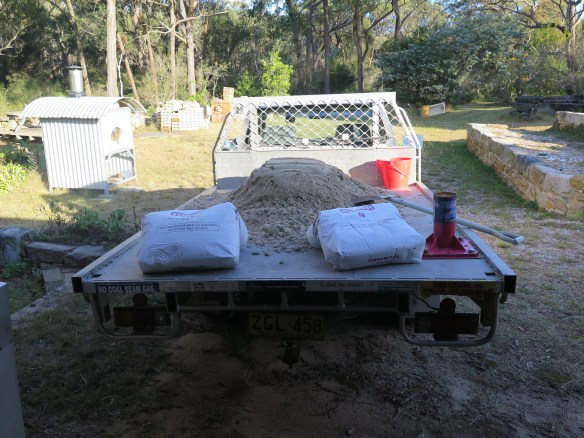
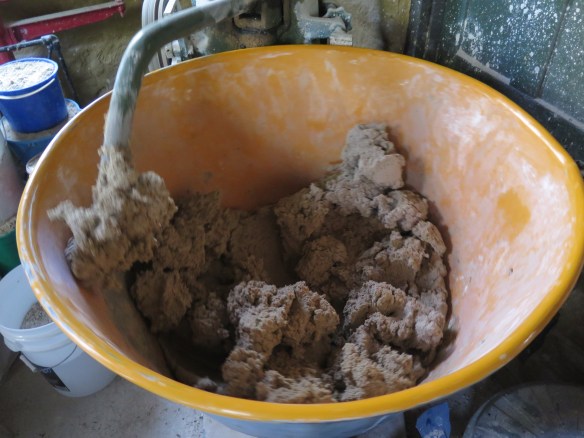
I have decided to make this batch of wadding out of ‘fat’ sand. Fat sand is also called ‘bush sand’,  ‘brickies sand’ or ‘bush loam’. It’s a coarse quartz sand with a fair amount of clay in it. It also contains some limonite or hydrated iron oxide, so it looks a bit yellowish. I mix this with some powdered kaolin. This is a great use for powdered kaolin. I don’t use a lot of it, but is is very useful for this purpose. I mix it in the ratio of one 25kg bag of kaolin to 4.5 buckets of damp washed sand and one bucket of water. When I can get clean saw dust I also add two buckets of saw dust, but this is getting harder to find these days. The last time I visited the local timber yard, they had been cutting some synthetic wood products that were a rich canary yellow. This stuff looked like it was loaded with resin glue. I thought that it might be particularly toxic if it were burnt in the kiln as wadding. So I didn’t collect any.  So, this batch of wadding is just going to be sand and clay.

IMG_3867

Adding saw dust is great for wadding that use on new pots that are once fired, as it can leave an interesting charcoal grey to black shadow mark. It doesn’t work on bisque, only once fired work.

When it is freshly made wadding like this is rather short or non-plastic, being so sandy, but after ageing for a few months it develops quite good plasticity and after a year or so, the last few bags are plastic enough to throw with. Not that you would want to, but I think that it might be possible. I’m down to my last bag of the old batch now and it is very easily worked into coils and small balls. This new batch will have a month or two before I need to use it.

IMG_3870

I make it up in a couple of batches in the dough mixer and then bag it up into 15 kg packs and store it away.

Security is a years supply of wadding.  Now, when I look down on my stash of wadding I get the simple pleasure of knowing that I won’t have to do this job again for another 12 months. It’s a nice feeling!

fond regards from the well wadded potter.


Traveling South to Kyushu

We say a temporary good-bye to Kyoto with its cherry blossoms all finishing up. Mostly on the ground. Its raked gravel gardens and Maiko make-over girls. We’ll be back, we always seem t find an excuse to return here.

IMG_5751 IMG_5752 IMG_5798 IMG_5810

We take the long train ride south to Kyushu. We leave Kyoto, and after a while the concrete high-rise scenery starts to diminish slightly and is replaced with low-rise. After a very long while we realise that the buildings are far less common and there is farm land starting to appear. It’s not that there isn’t any farmland near the bigger cities. There is a small, very small, plot of rice being farmed only 1 kilometre from Kyoto’s main central station. Amazing!

As we rumble on, we pass through farming districts and extensive fields of golden crops already for harvest with their heads golden of bearded barley ripening in the sun. I can’t imagine that harvest time for these crops is very far off.

IMG_3254 IMG_3256

We also see farmers out in the flooded fields with their mini tractors and rotary hoes, working up the inundated mud, presumably preparing the silt for the coming planting of the rice crop. Ploughing now, if you can call this ploughing, is to kill off the weeds and any competition for the young rice seedlings that will be planted soon.

When I was last here 6 months ago, they were smack in the middle of rice harvest in the autumn. We arrive in the far south in Kyushu, not too far from Kumamoto, about an hour away. Everything here is OK, different strata or geological sequence? We only had a level 2 shake up here. So the kilns are still standing and all the pots are still on their shelves.

It’s all foggy, rainy and damp when we arrive and the hills are coated in a beautiful mist.

Our first visit here is to a place near Karatsu on the North West coast. We visit an old pottery studio that has existed in this little secluded valley for a couple of hundred years. The old lady tells us that her family have always been potters here since the arrival of the Korean potters 400 years ago. The war Lord Toyotomi Hideyoshi launched 2 failed invasions of Korea in 1592 and 98. Each time he captured and brought back prisoners of war. Some of whom were potters. One in particular found and developed the first porcelain pottery in Japan in 1616. Exactly four hundred years ago this week.

She is a sweet old thing and at 83, has seen a bit of life. Her son is now the resident potter here. She tells us that there were once 300 houses in this valley, most of them making pottery and farming rice and vegetables. Now there are only 5 houses here and only one potter.

They are in the middle of packing the kiln when we arrive. It’s a well-loved old nobori-gama wood fired, 3 chambered climbing kiln.

IMG_3271 IMG_3272

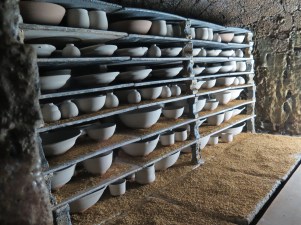
They pack the pots on rice husks to stop them sticking to the kiln shelf during firing, as rice husk is composed mostly of silica, which is refractory. It also creates a shiny ‘flash’ of colour on the exposed clay at the foot of the pots.

IMG_3273 IMG_3270

Later, we travel home to Arita via the ‘Hitakata’ ancient kiln site. This little valley once had a number of korean potter families working and farming here. But they are all gone now and only the archaeology remains. This site has been fenced off now to stop looters from stripping the site of old artefacts.

IMG_3267

IMG_3268 IMG_3265

It was one of the first Korean kilns built here way back in the late 1500’s. It is set in a beautiful forested glade with a small but fast flowing stream nearby. Quite idyllic! This kiln was built without the use of fire bricks. It was constructed out of rammed earth. The local soil here doesn’t look particularly refractory, so it probably had a short life and needed to be rebuilt often.

I can’t read the Japanese on the information board, but the illustration shows 9 steps or doorways into the tunnel-like chamber. My teacher back in 1973, the Japanese potter Shiga shigeo, to whom I was apprenticed,  trained near Kyoto after the war and his teacher,  Saburo Saito had a 3 chambered climbing kiln, all made from rammed local refractory clay and home-made bricks. I was told that the fire-box needed rebuilding after every firing and the first chamber arch was likewise re-built after every 2nd or 3rd firing. This was the traditional way back them and is still used by some potters even today, if they are keen on reproducing the old effects.

Janine and I made all of our own fire bricks to build our wood fired kiln. The current kiln has had twenty firings and is still going strong. However the time will come when it needs to be pulled down and rebuilt.

Such is the way of the world.

Nothing is ever finished, nothing is perfect, and nothing lasts!

Fond regards from Steve and Janine in the shaky isle of Kyushu.