Damn those Omega 3’s

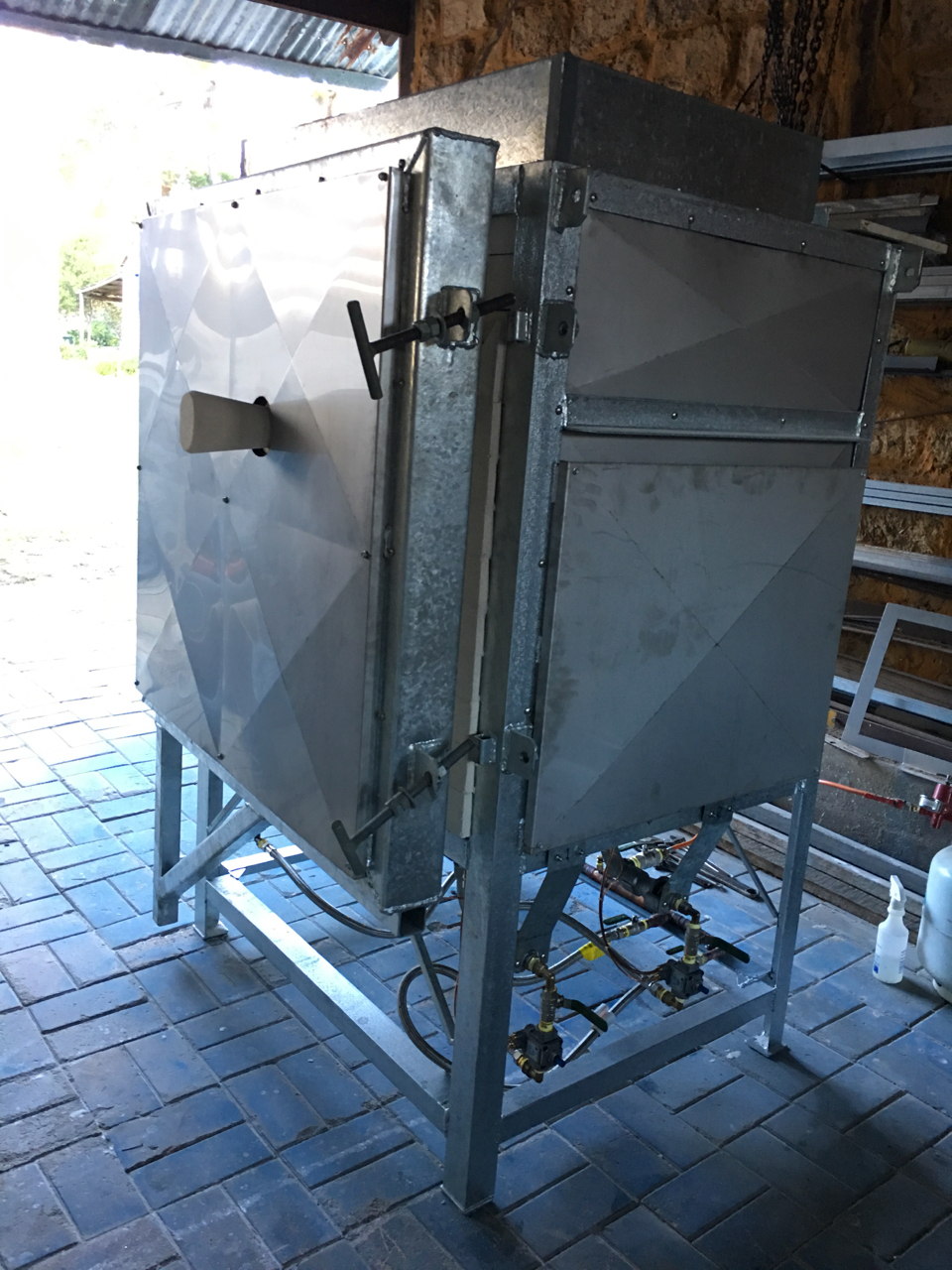
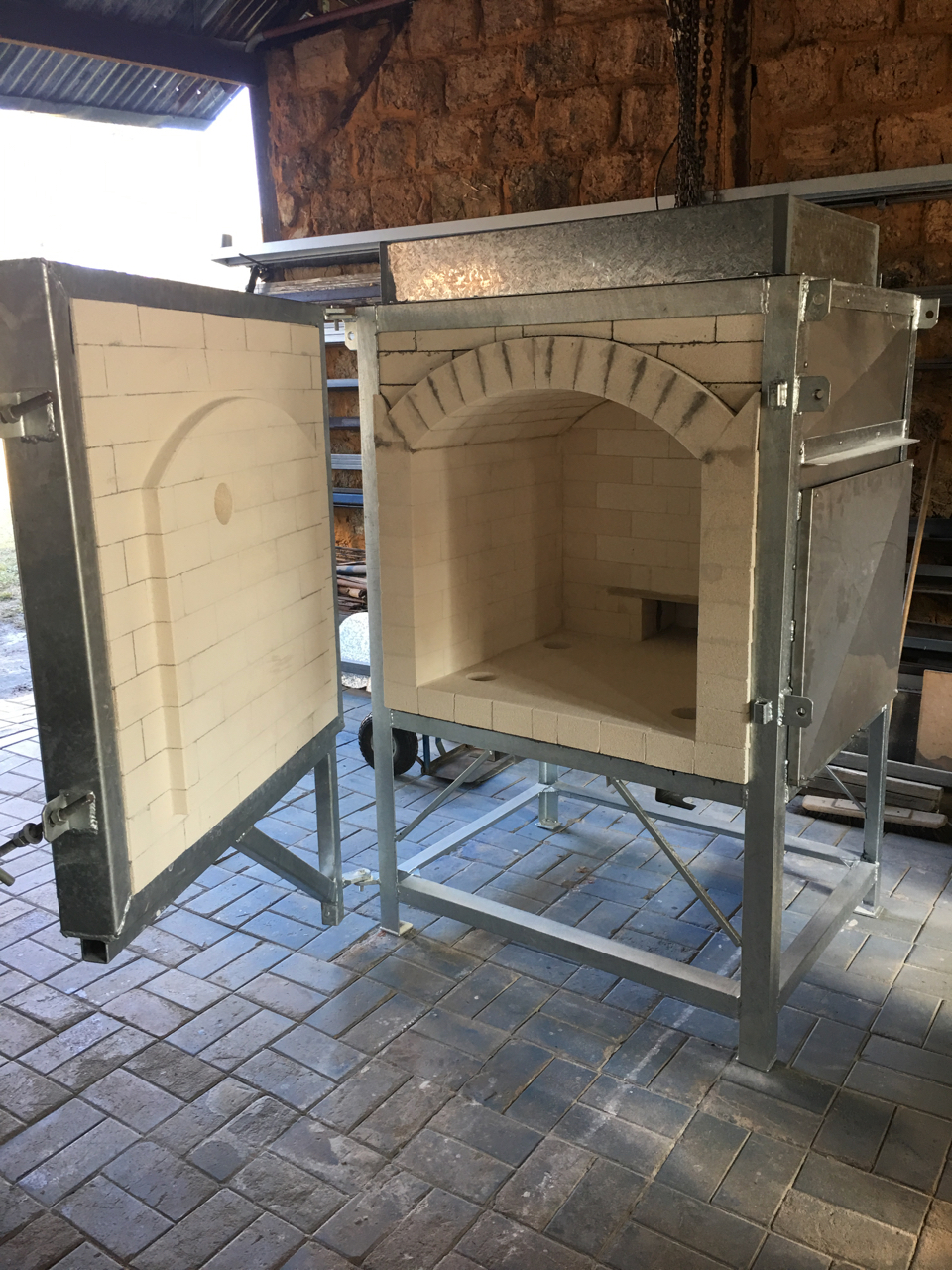
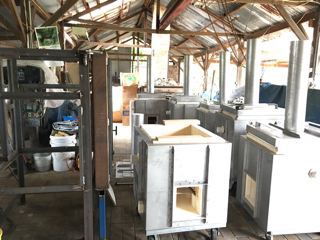
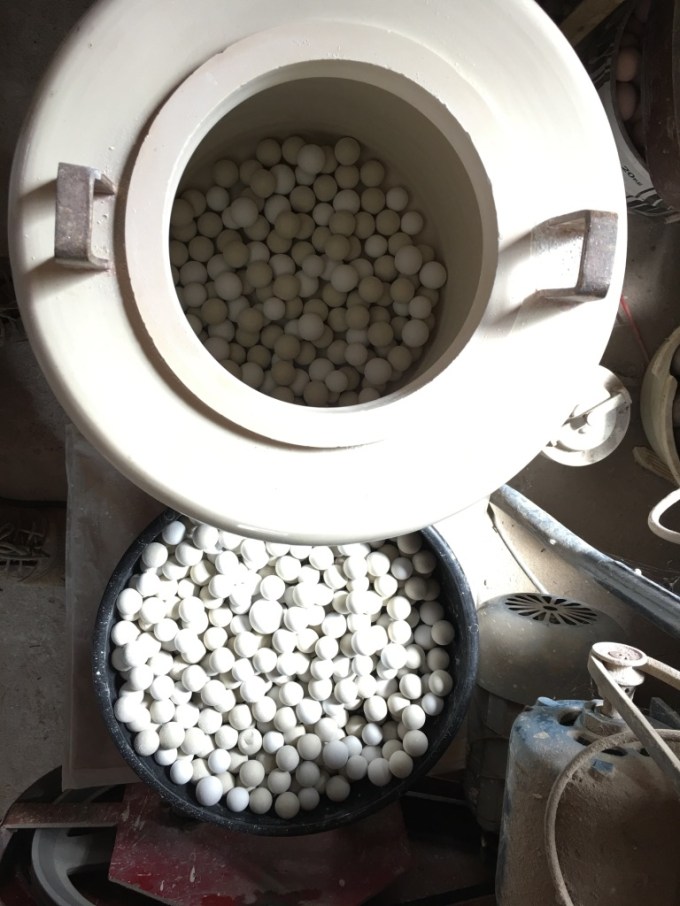
I have just finished my latest kiln. It’s a thing of beauty and will be someones joy, if not forever, then for probably somewhere around 30 years. All of my earlier kilns. The ones that I continue to know the whereabouts of, are still performing well after this length of time and a bit more.


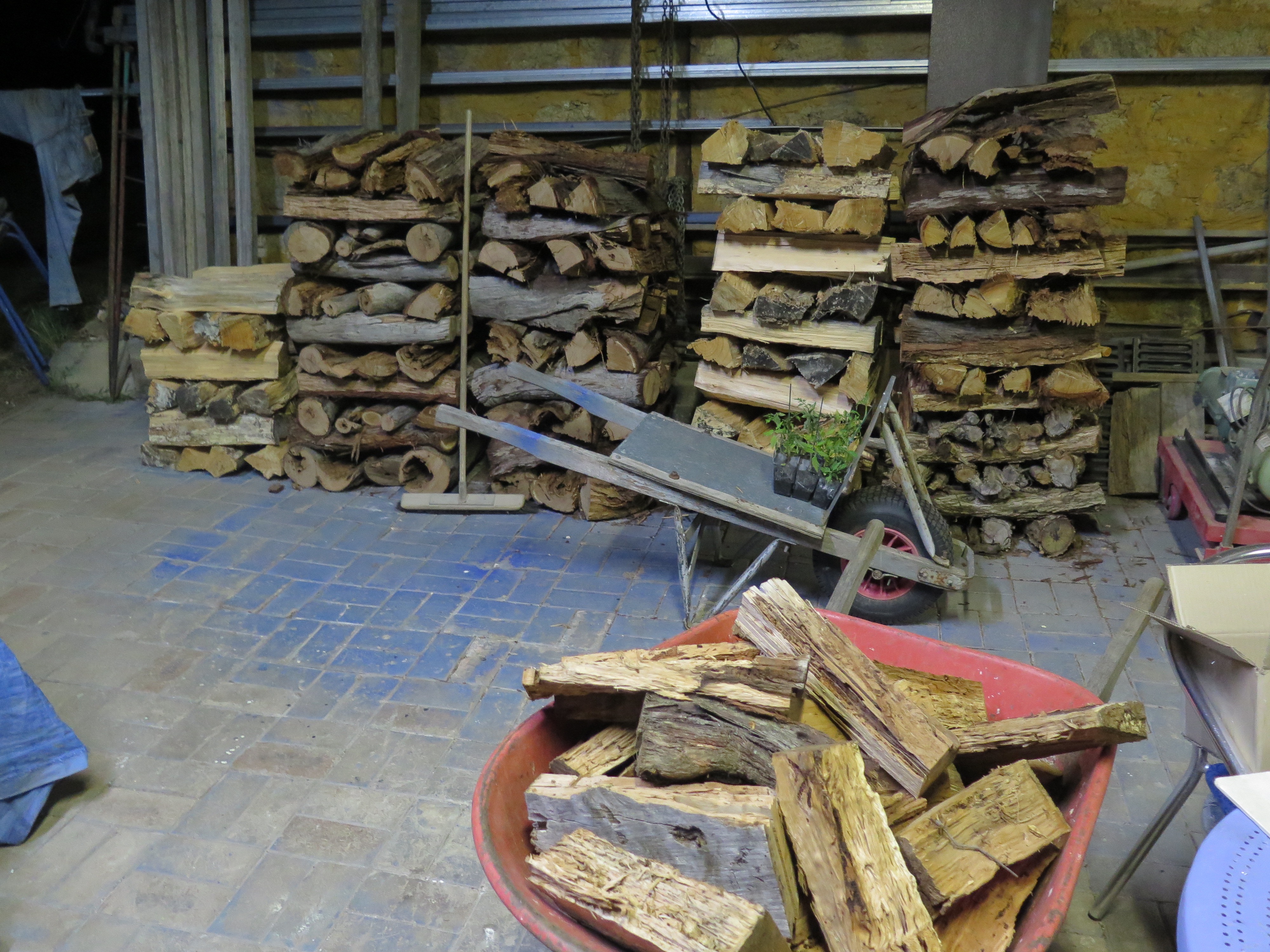
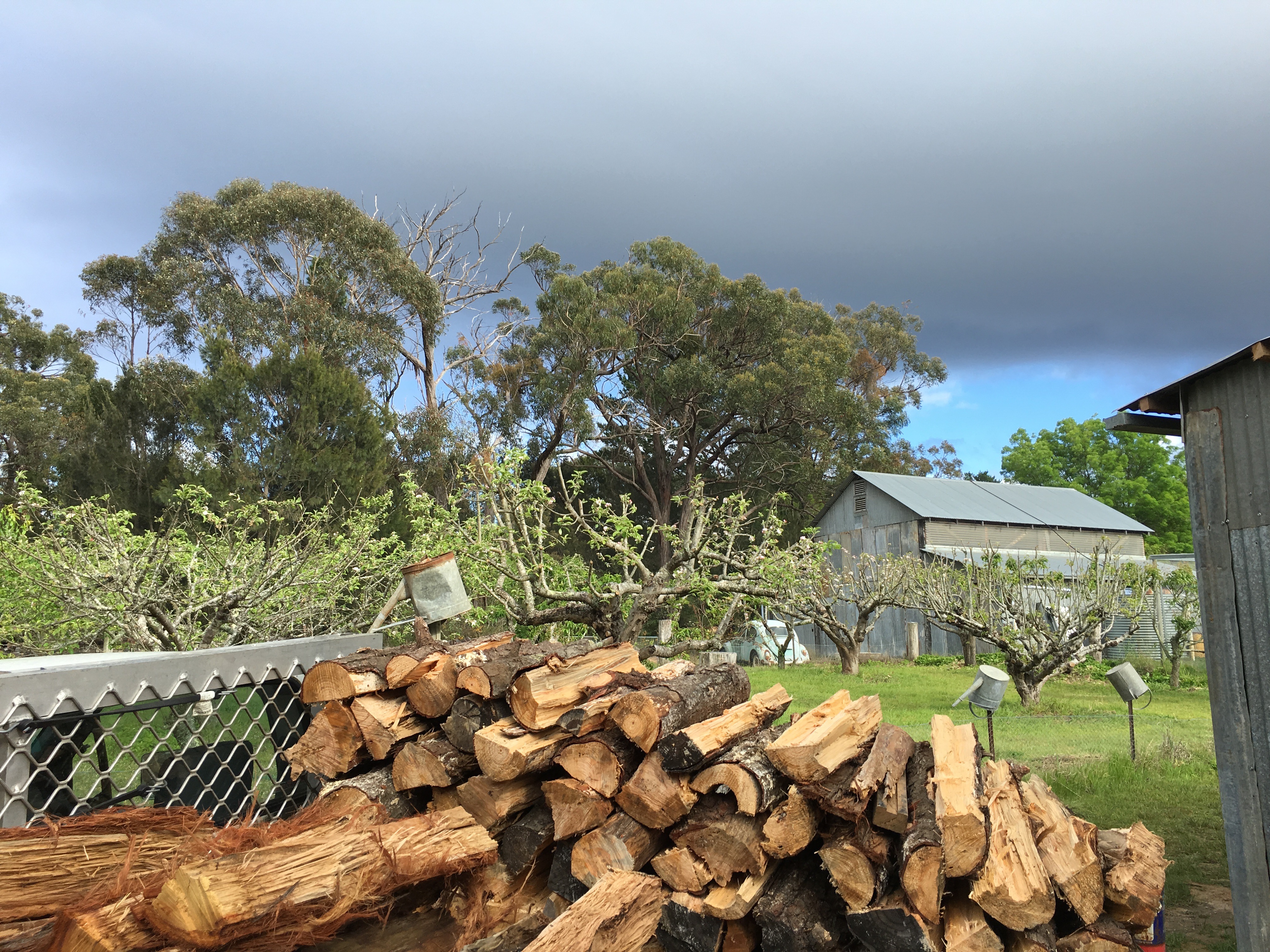
We have been working on the winter fire wood supply. I help Janine to move a few loads of big round blocks of wood from the wood pile yard into the wood shed for splitting to keep up the winter wood supply.

Just when you least expect it, the worst thing happens. I just manage to trap my little finger in-between a big block of hard wood and the steel frame of the lifter. Bang! my little finger on my left hand is crushed. I flick off the leather glove and blood is flowing freely from the end. I think that I’ve lost the nail. It’s one of those events that is so painful that I can’t speak. I just head for the house. I’m nauseous and a bit dizzy. It really hurts now. I wash it under the sink in flowing cold water to make sure that it is clean of any debris or foreign matter. I had a glove on, so it ought to be pretty free of grit. I wash it in disinfectant and put a bandage on it, but it won’t stop bleeding. It keeps on seeping through.

I’m feeling a bit weird. I need to lay down.


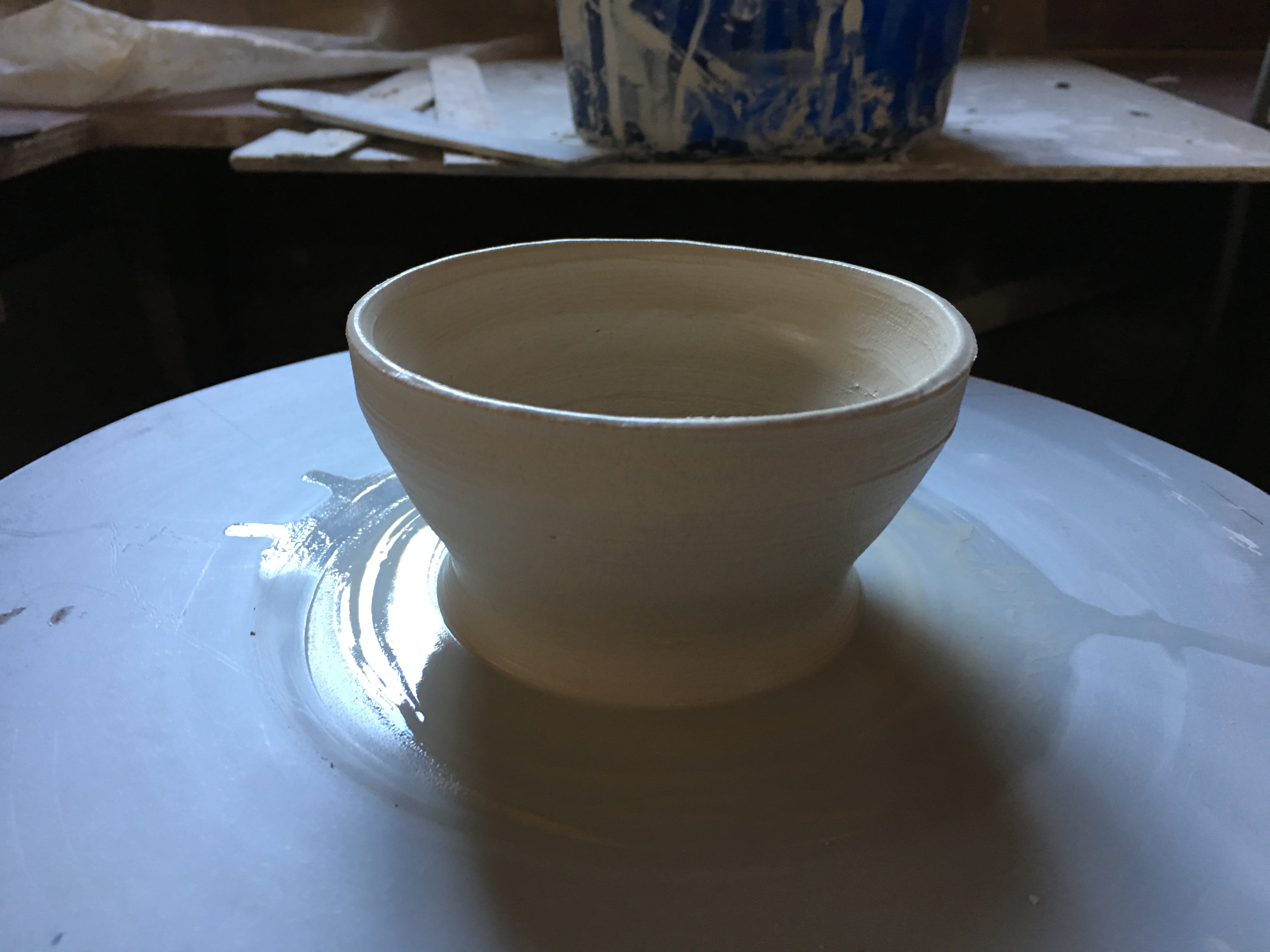
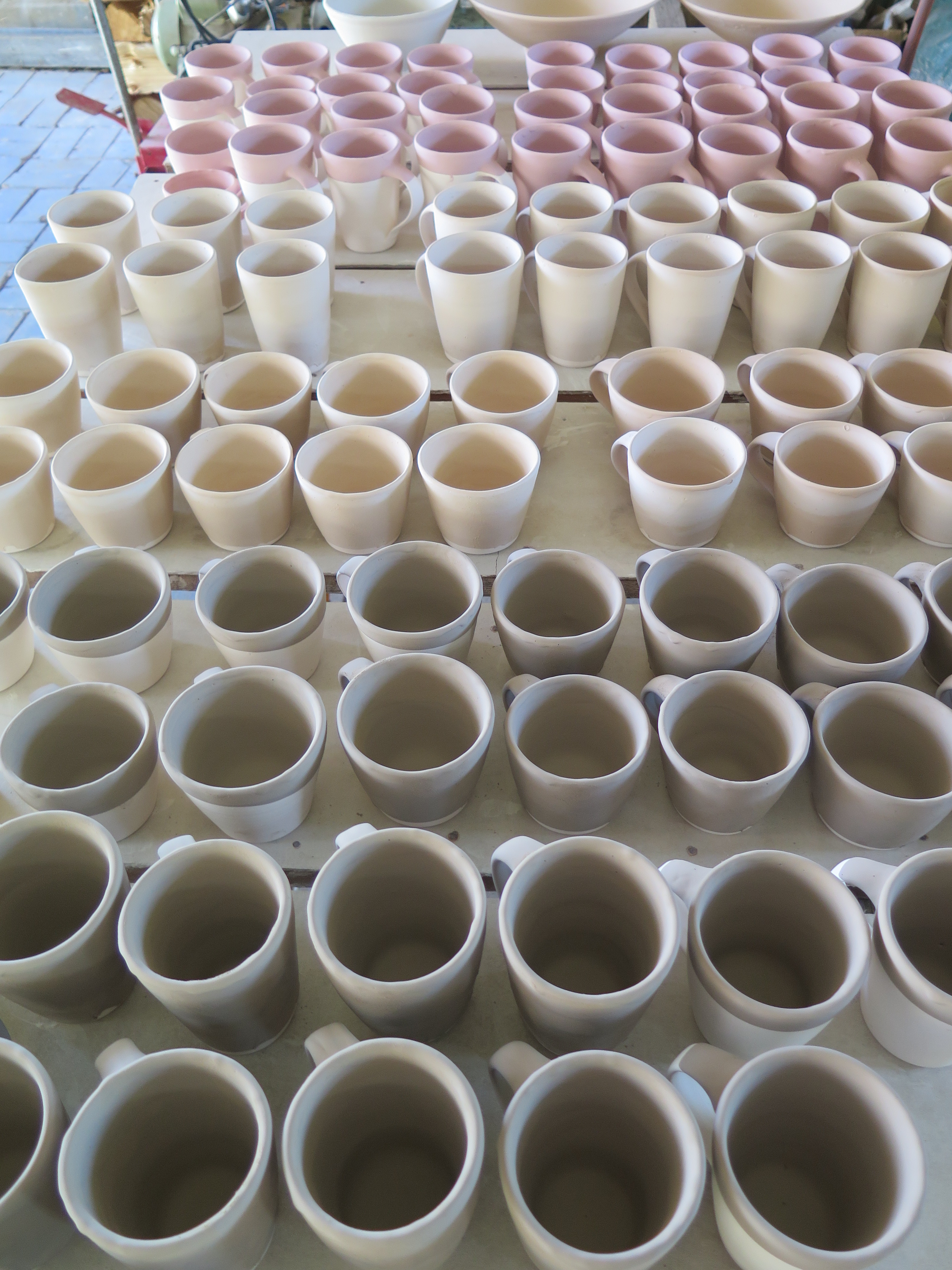
Luckily, I had just finished turning the last of my recent batch of sericite porcelain stone pots. The shelves are full and I can pack a bisque tomorrow with the driest pieces. Luckily they are not very heavy, so I can do it one-handed.

I have a night of fitful sleep, as I keep waking up when ever I touch anything with that hand. In the morning I change the dressing and it is still bleeding. It hasn’t clotted yet. Damn all that oily fish!. Fortunately, it stops by the afternoon, that’s 24 hrs! It’s not aching now either. It only hurts now when I touch it. So I’m starting to feel a lot more confident about it.

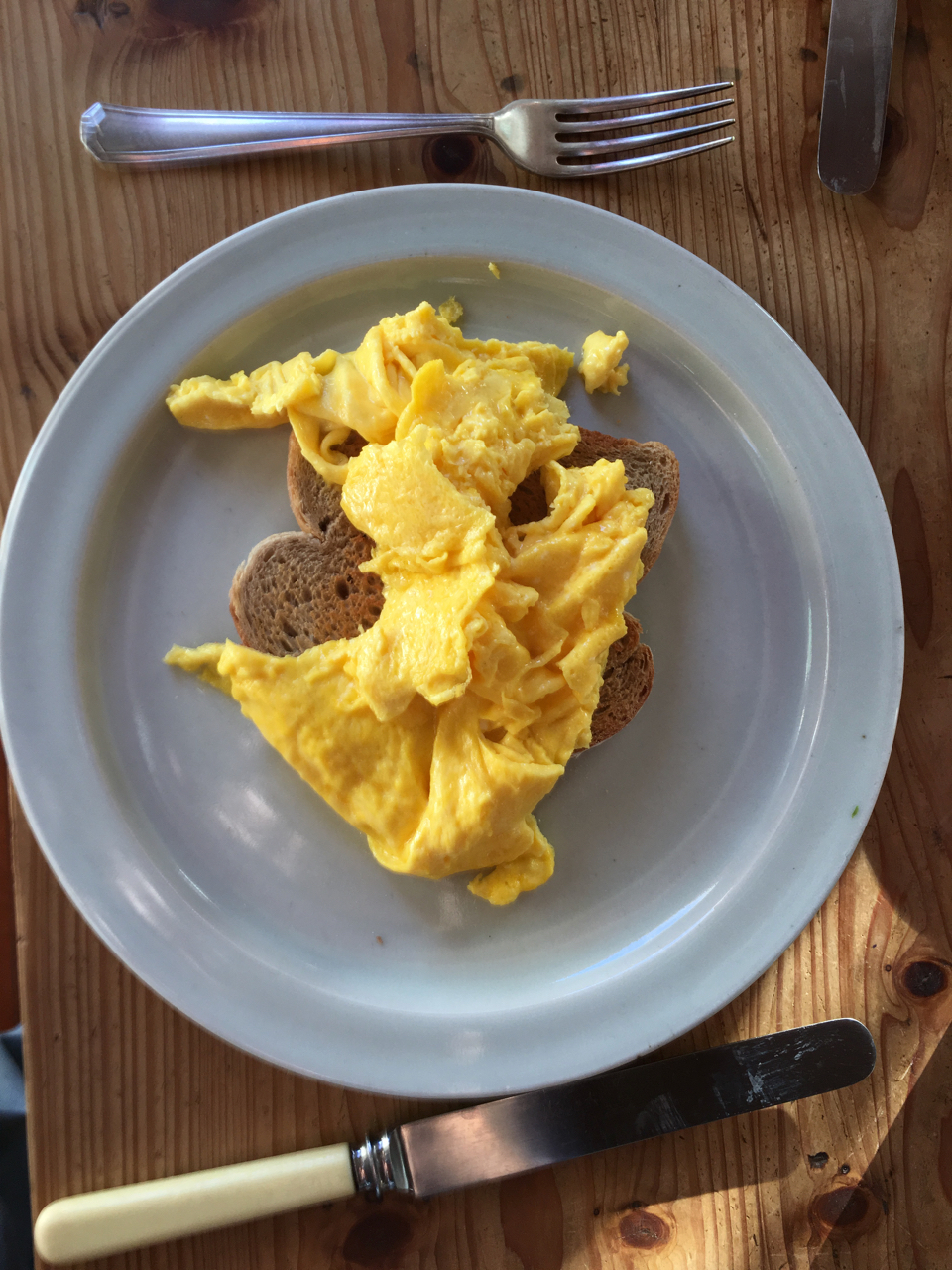
Janine makes a super-nice omelette with our eggs to cheer me up. They are so amazingly rich and yellow.

Welcome home

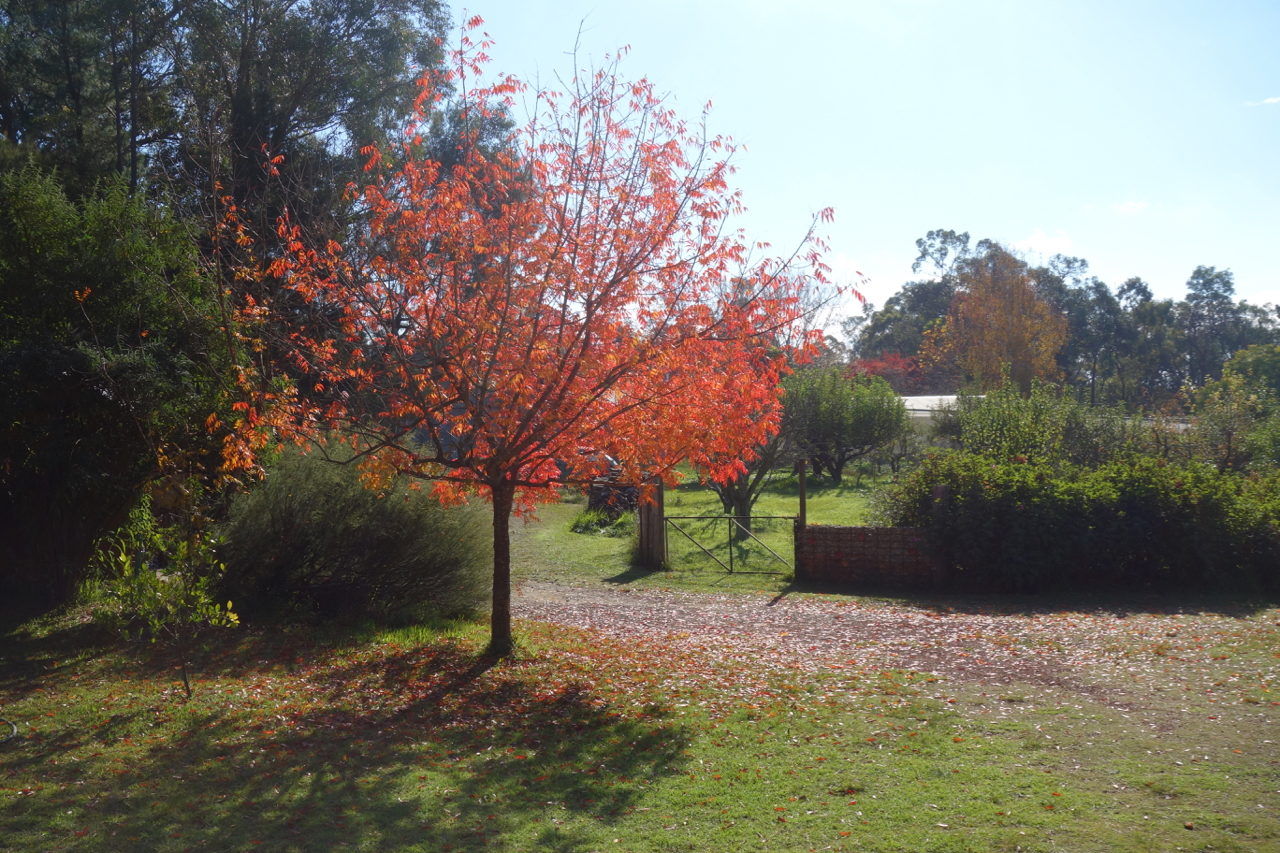
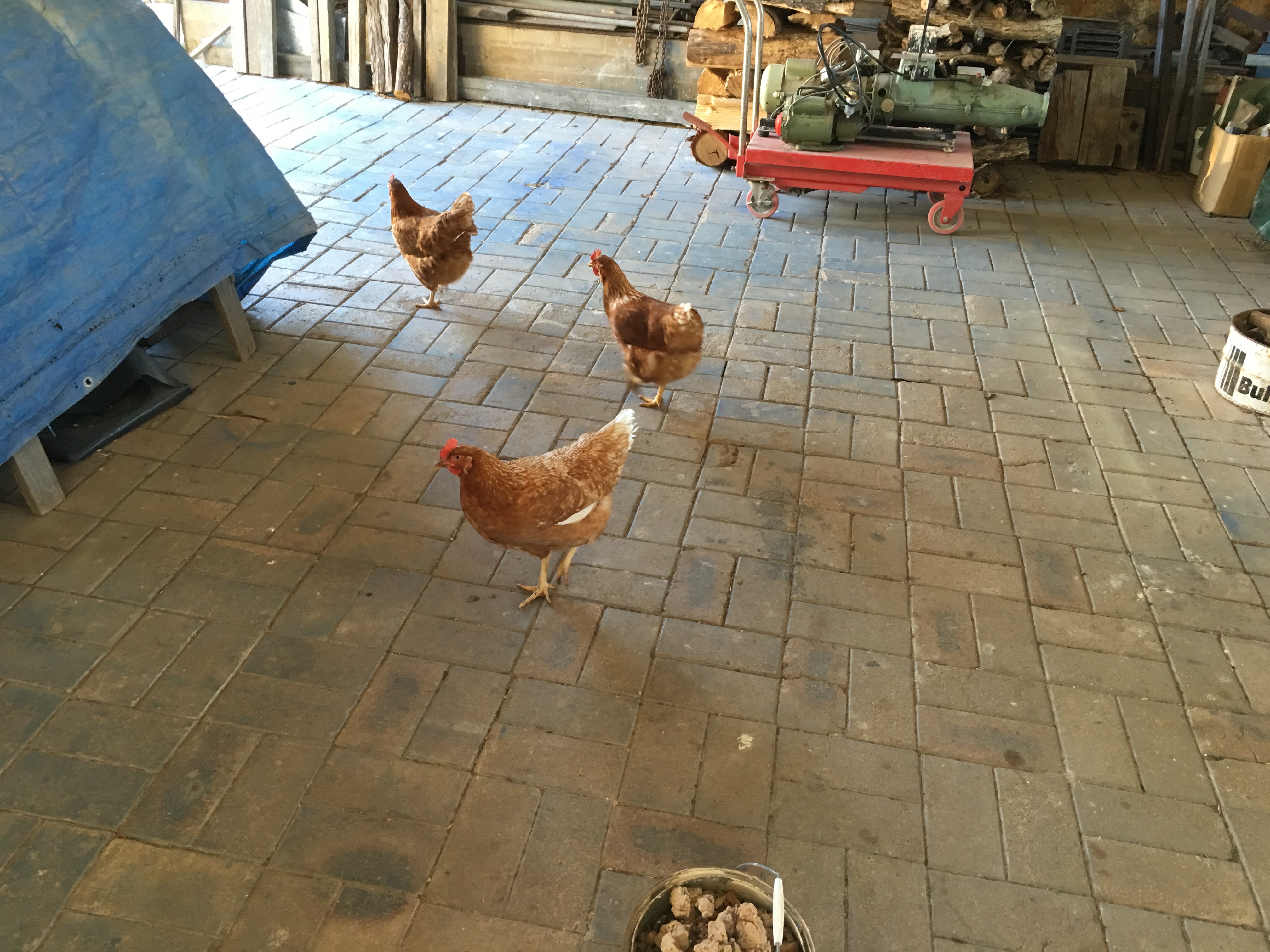
We arrive back home at the end of Autumn. The pistachio tree has turned red in our absence and the liquid ambers are loosing their leaves. We head straight to the chook house to see how the girls have been faring without us. Perfectly well it appears. They have changed their allegiance to Annabelle Slugette, because she has been living here, working in the pottery and feeding them treats for the past few weeks. Hens live for food! I know that it is only cupboard love, but I do feel a little bit abandoned. I’ll need to find them a few snails or other special treats to win their hearts ( and stomachs) back.


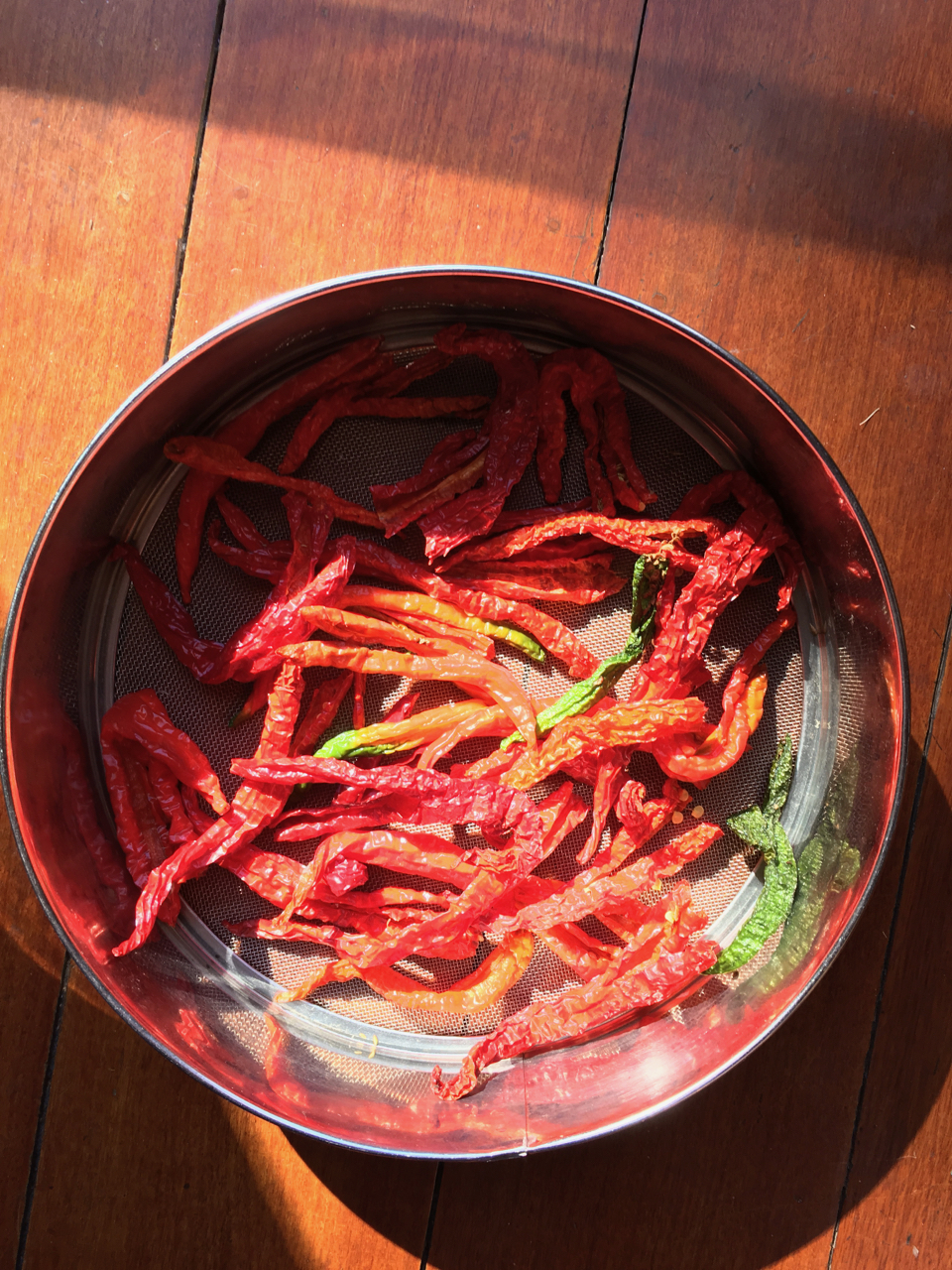
We head to the garden to see what there is for dinner. We find our selves in that special period of the year when there are just a few summer vegetables hanging on, while the winter crops are just starting, so we pick the last zucchini and the first cauliflower. There are only a couple of weeks when you can eat this combination of garden produce. The chillis have ripened a lot more while we have been away, so we pick some and dry them.


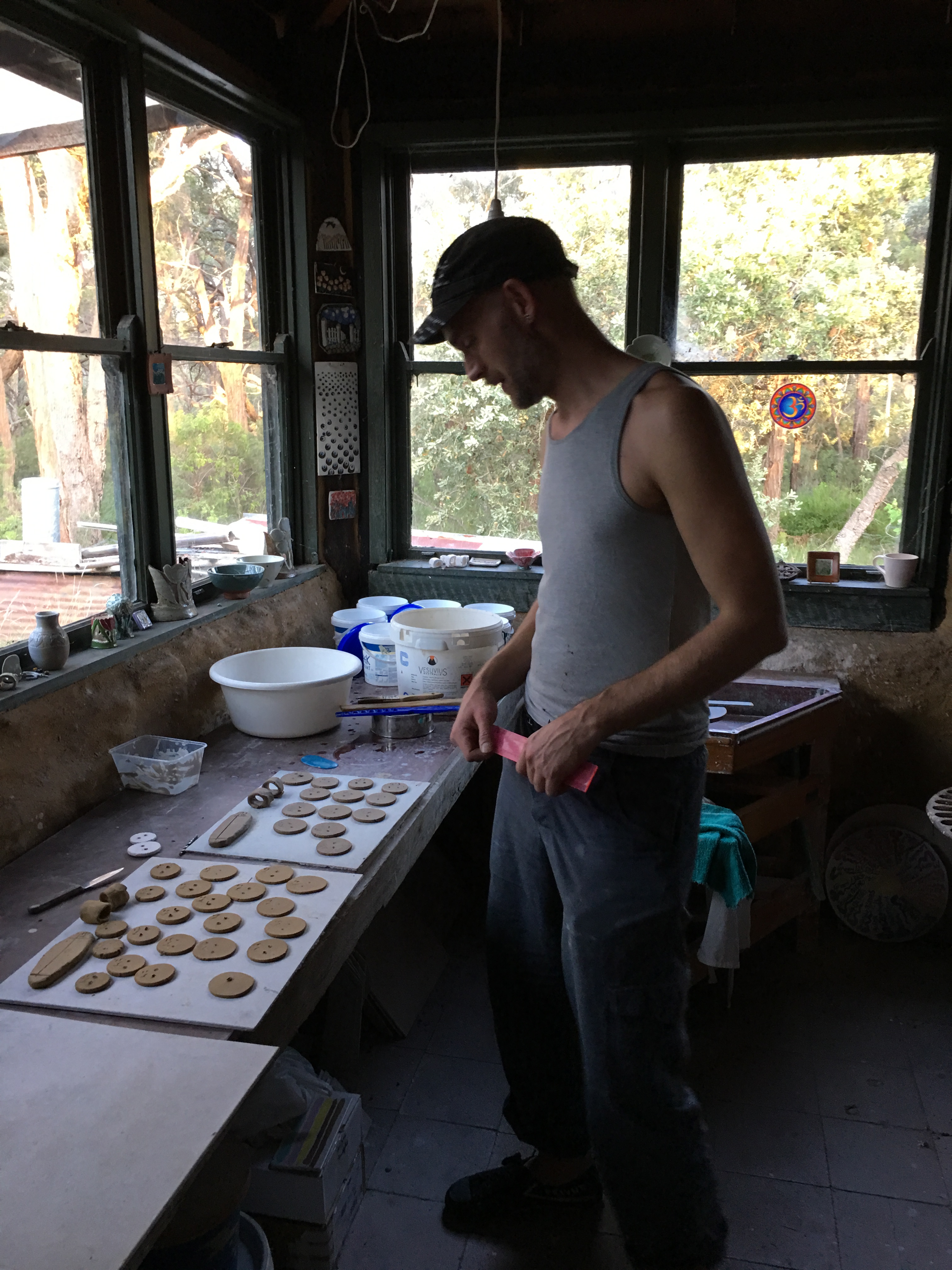
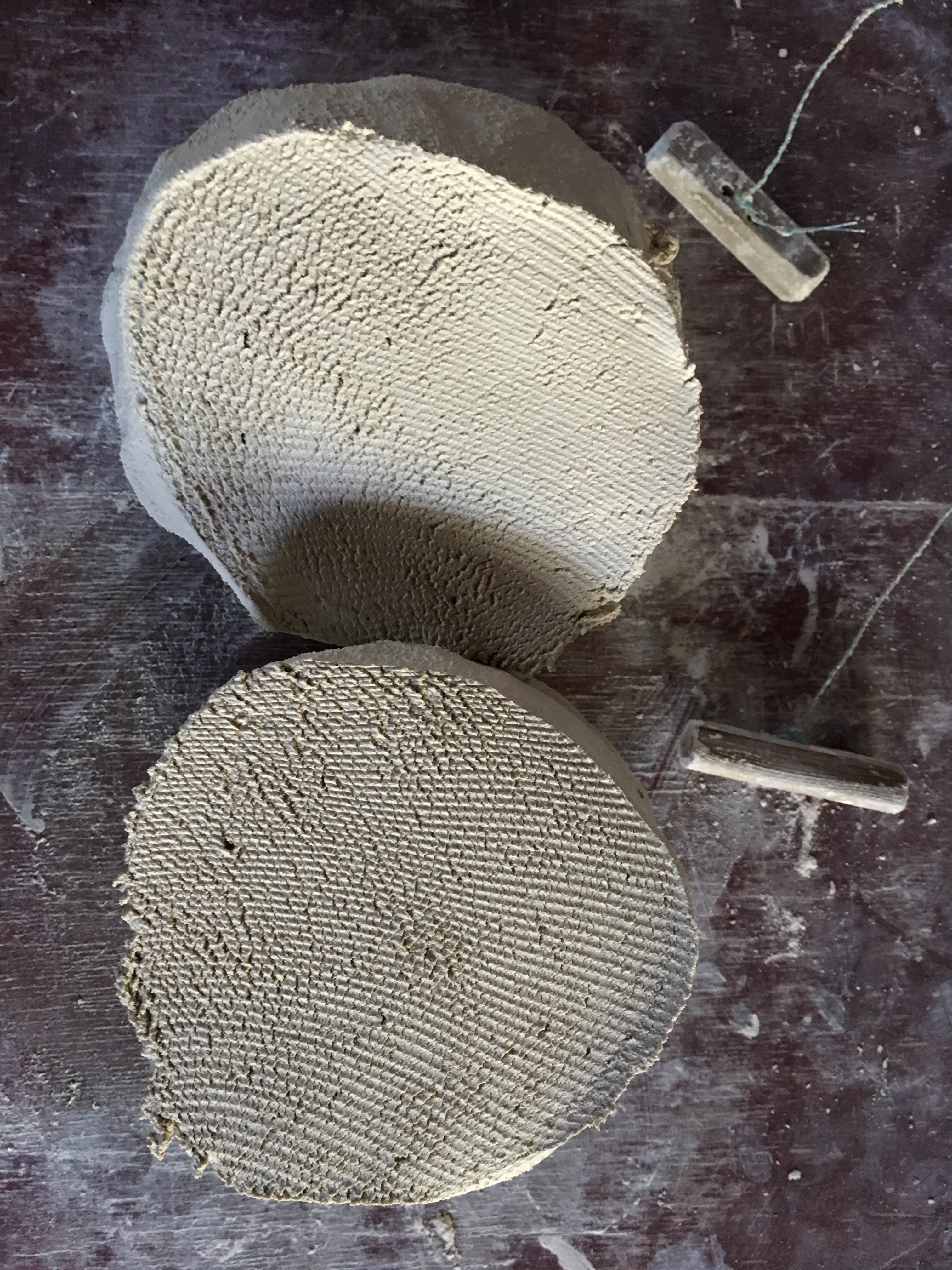
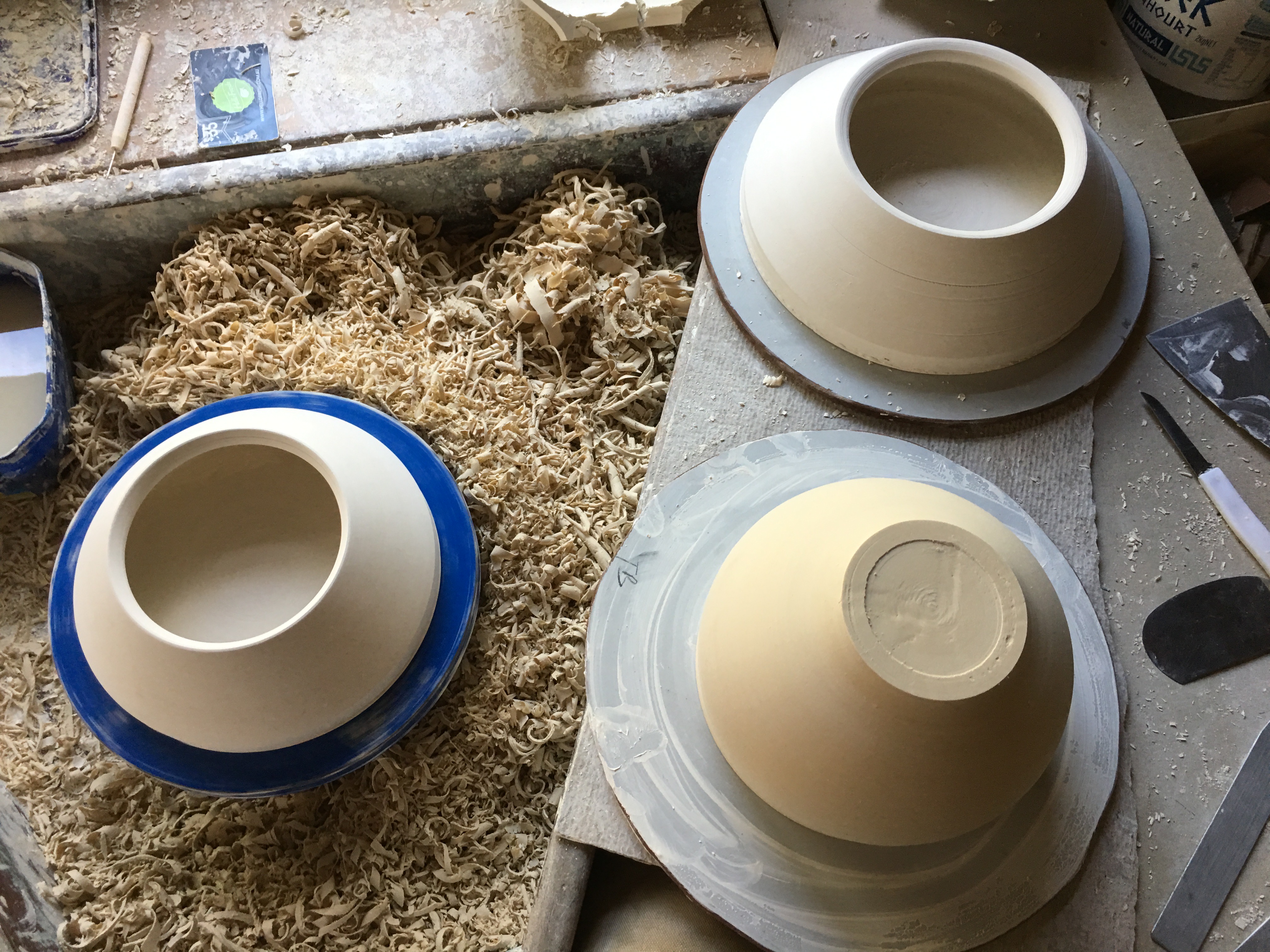
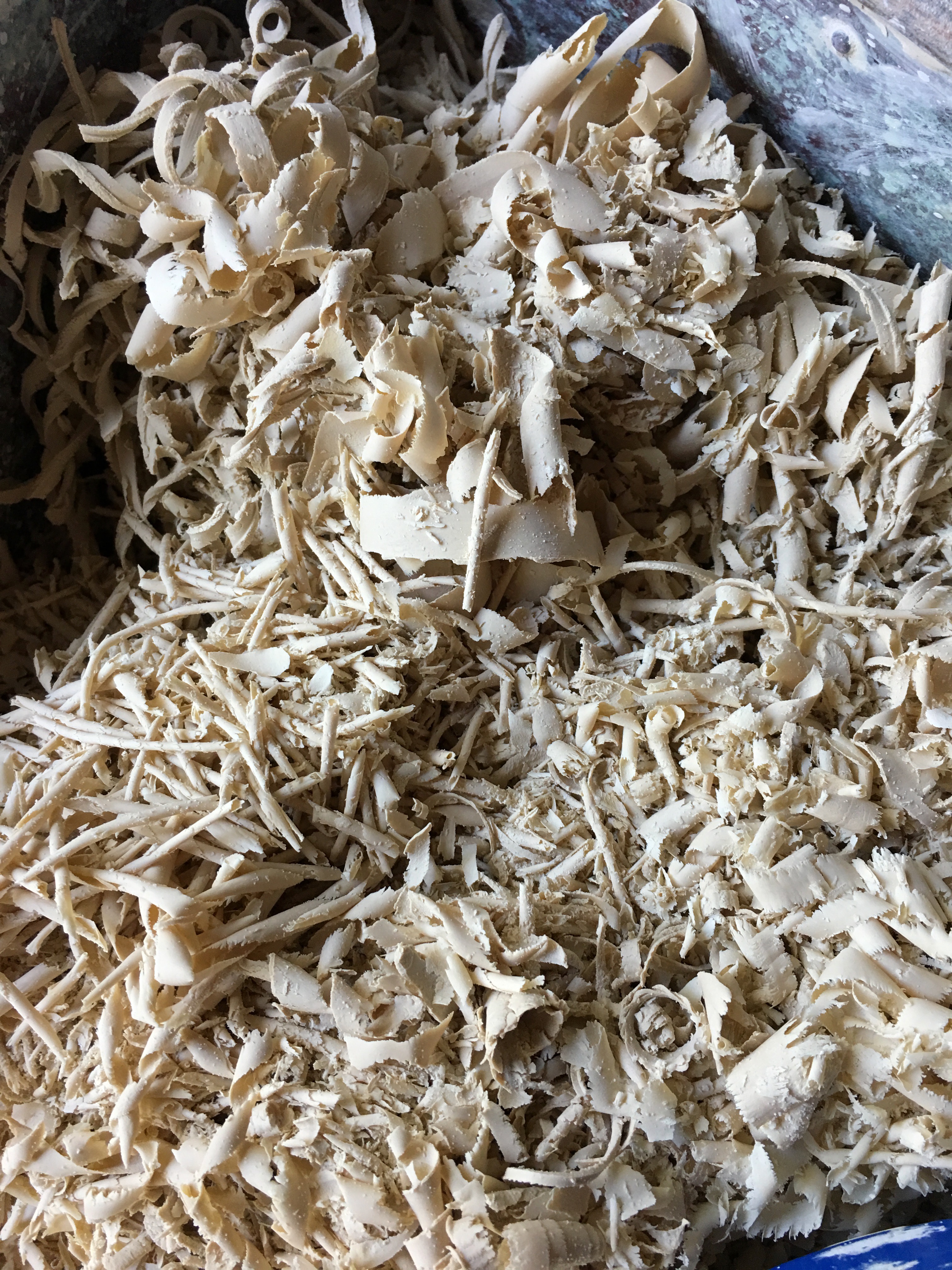
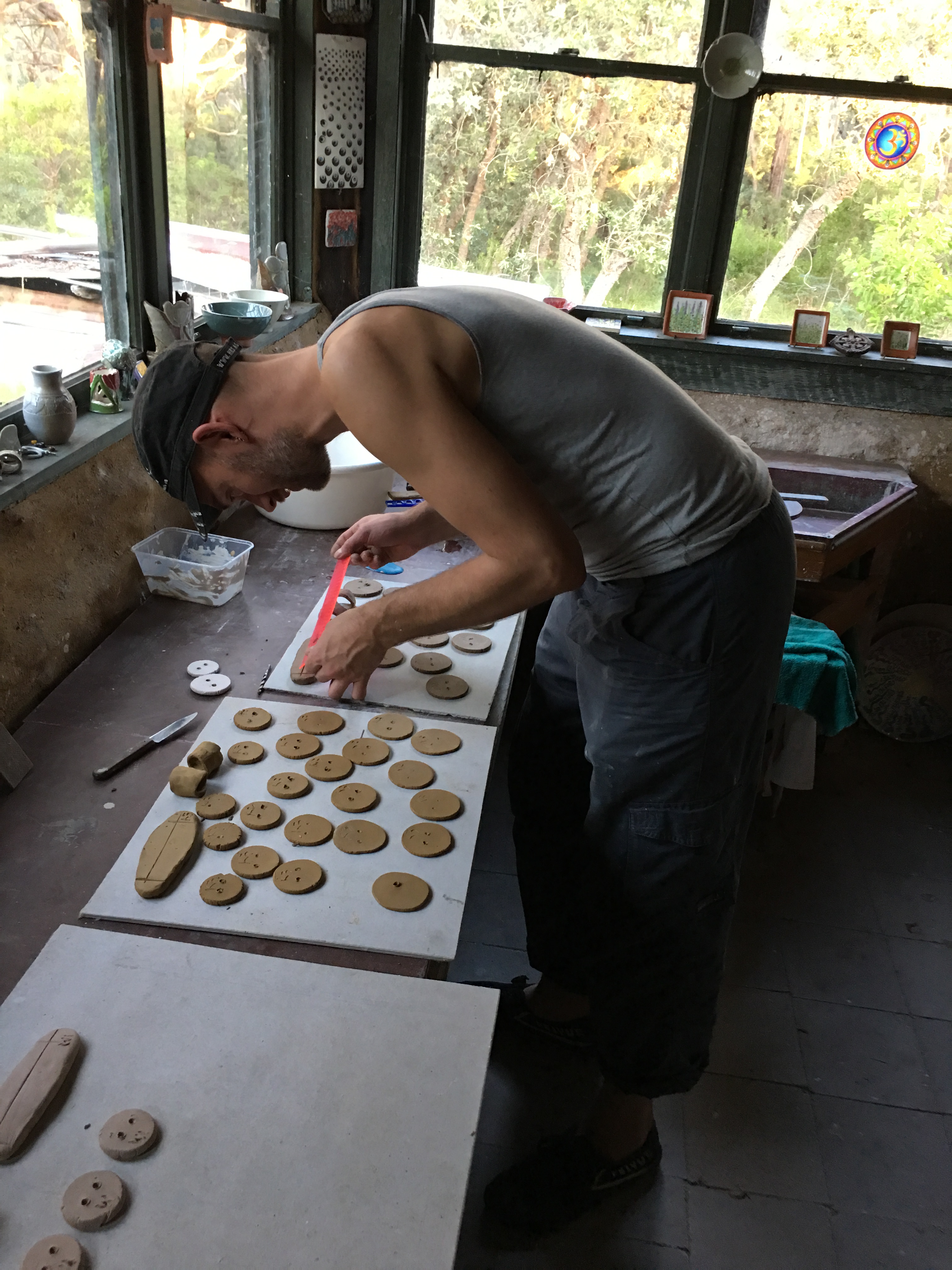
The next day I’m back at work in the pottery. I have  to slake down all my turnings that have dried out while I’ve been away. Clay slakes down so much faster when it is bone dry. I have lots of small batches to deal with. I have been working on my collected samples of porcelain stones from all around the world and I have to keep all the turnings from each batch of pots made from each special rock completely separate and well-marked, so that I don’t get mixed up or confused about which is which. I have 10 buckets marked with masking tape and felt fen, so as to keep it all under control.

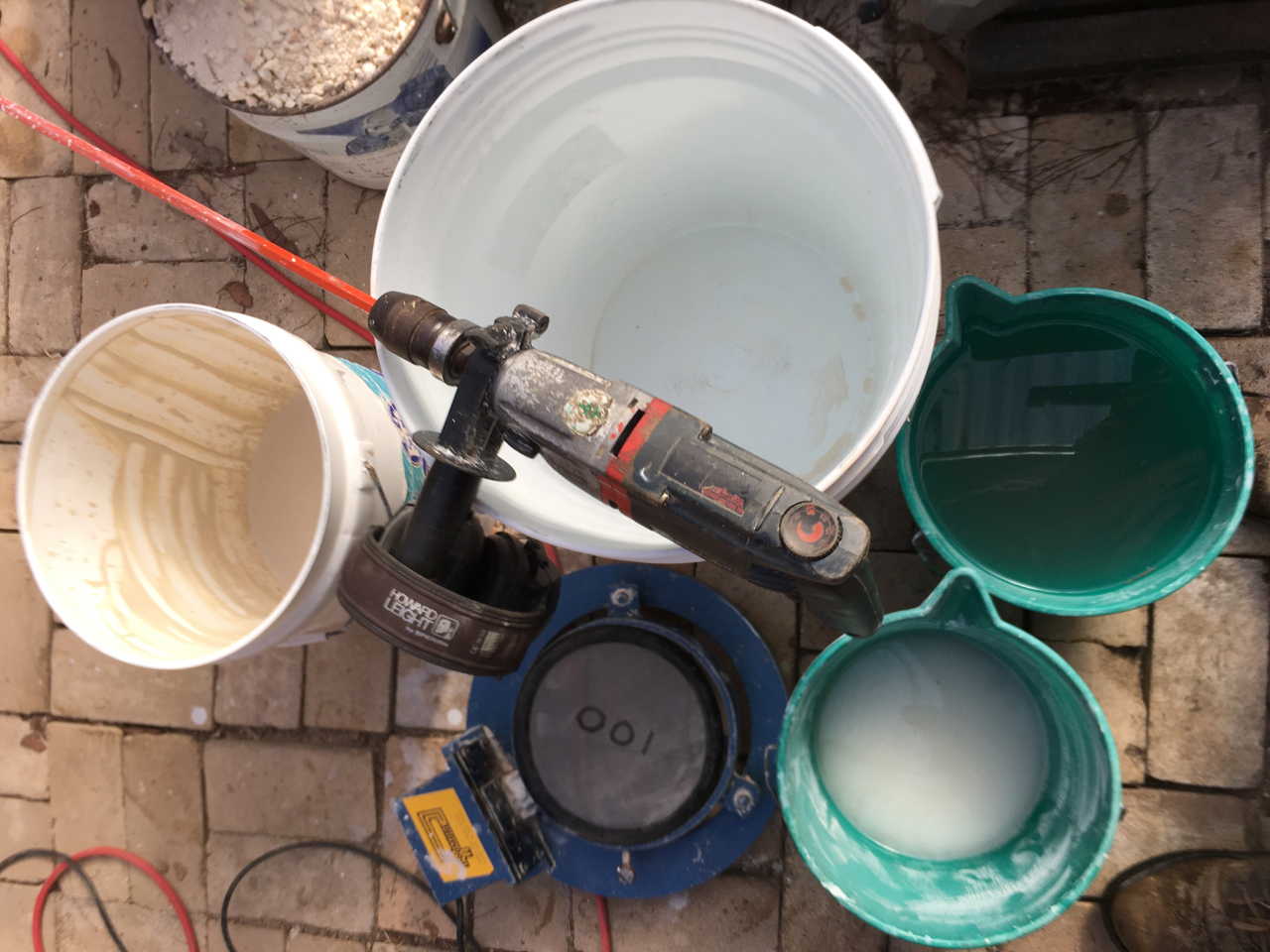
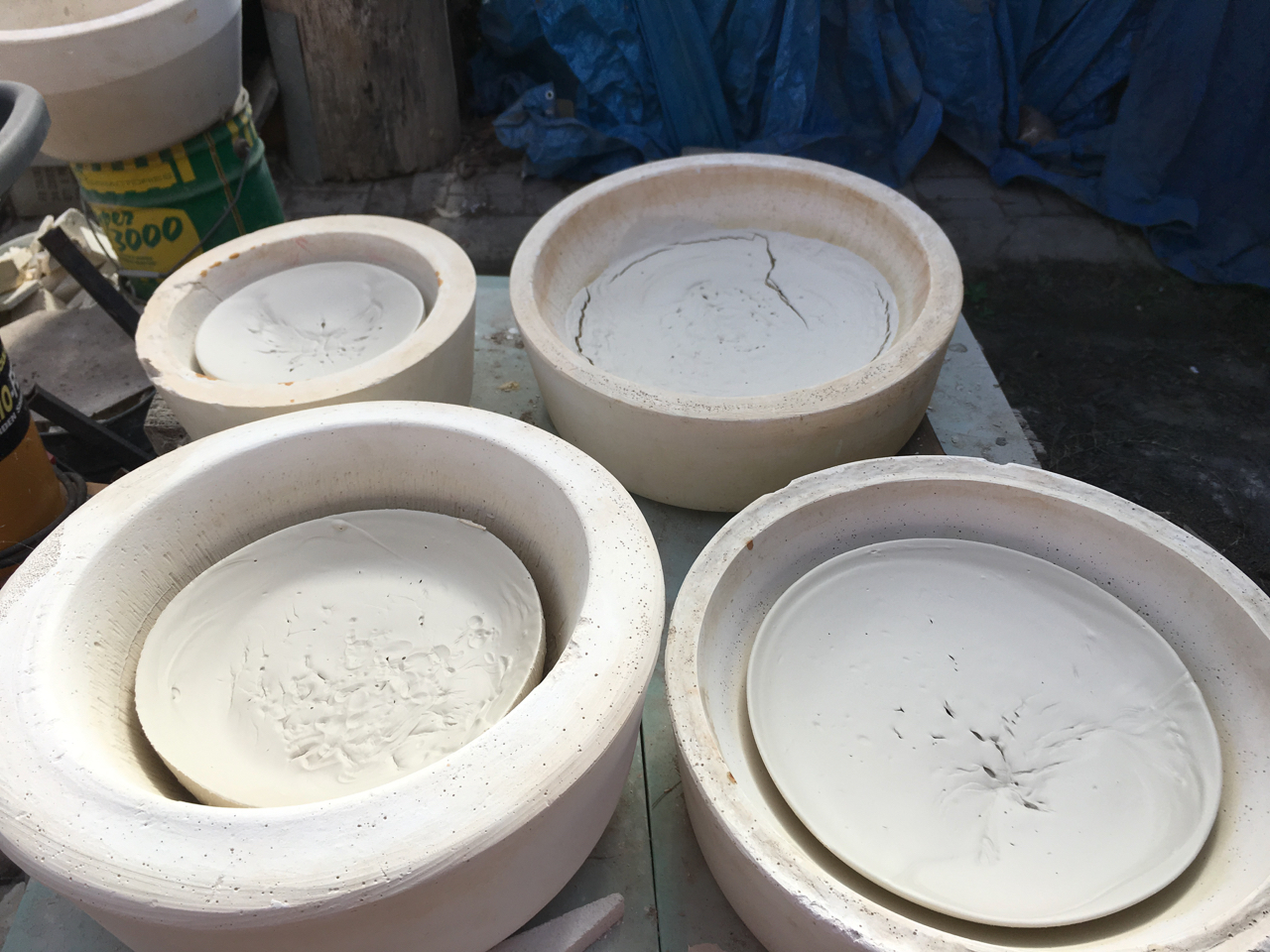
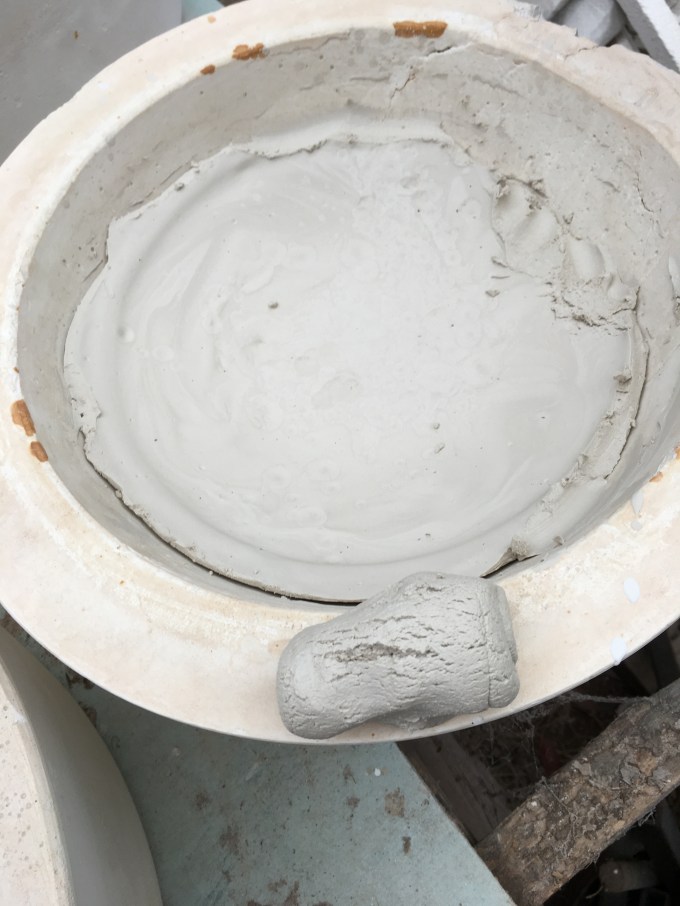
I start with the first 5 batches. I slake, blunge and sieve them all through a 100# mesh screen, then flocculate them and decant the excess water, it takes a while to get its all done. Eventually, they make it out onto the plaster drying tubs that I use for small batches of re-cycling like this..


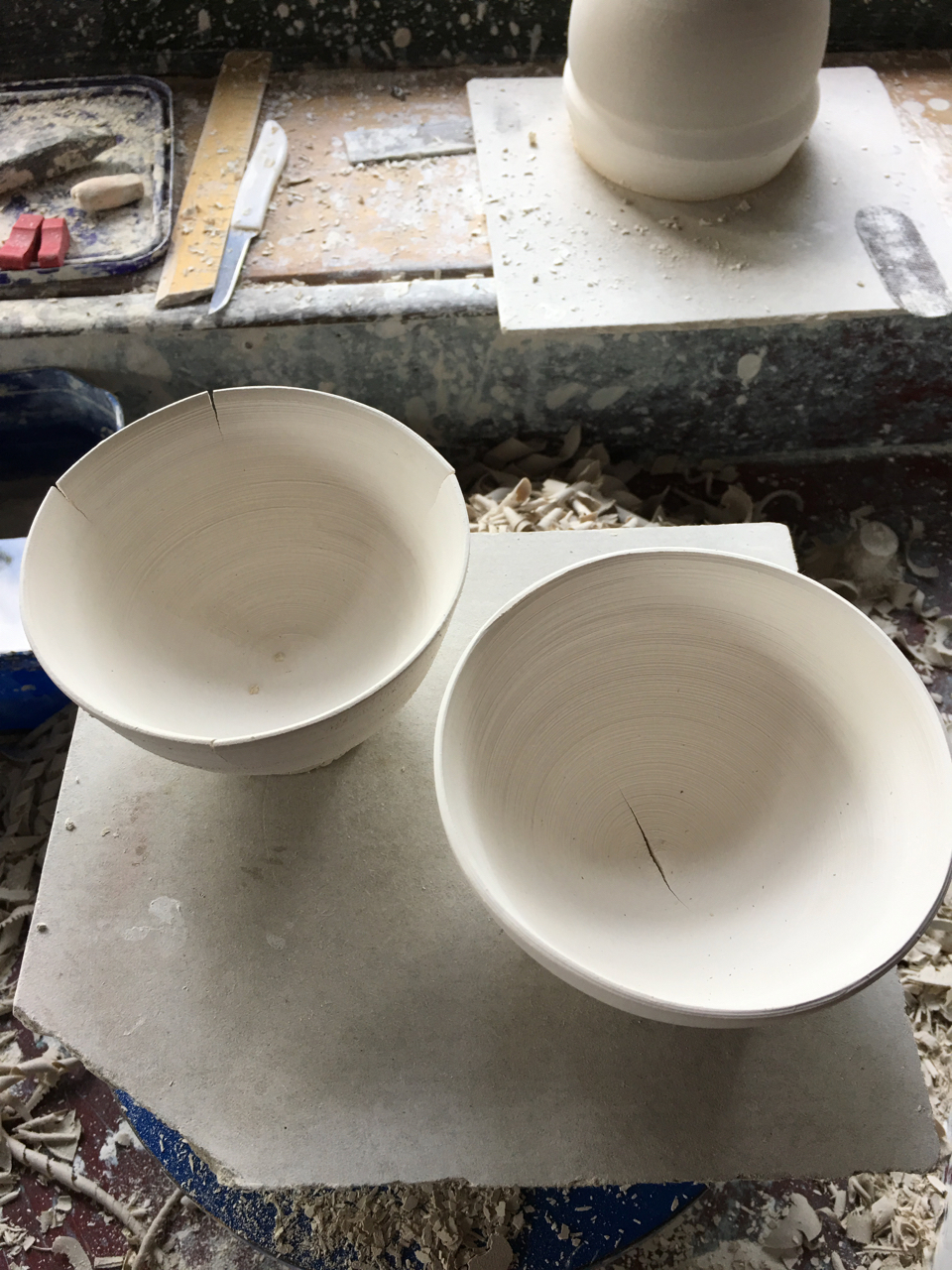
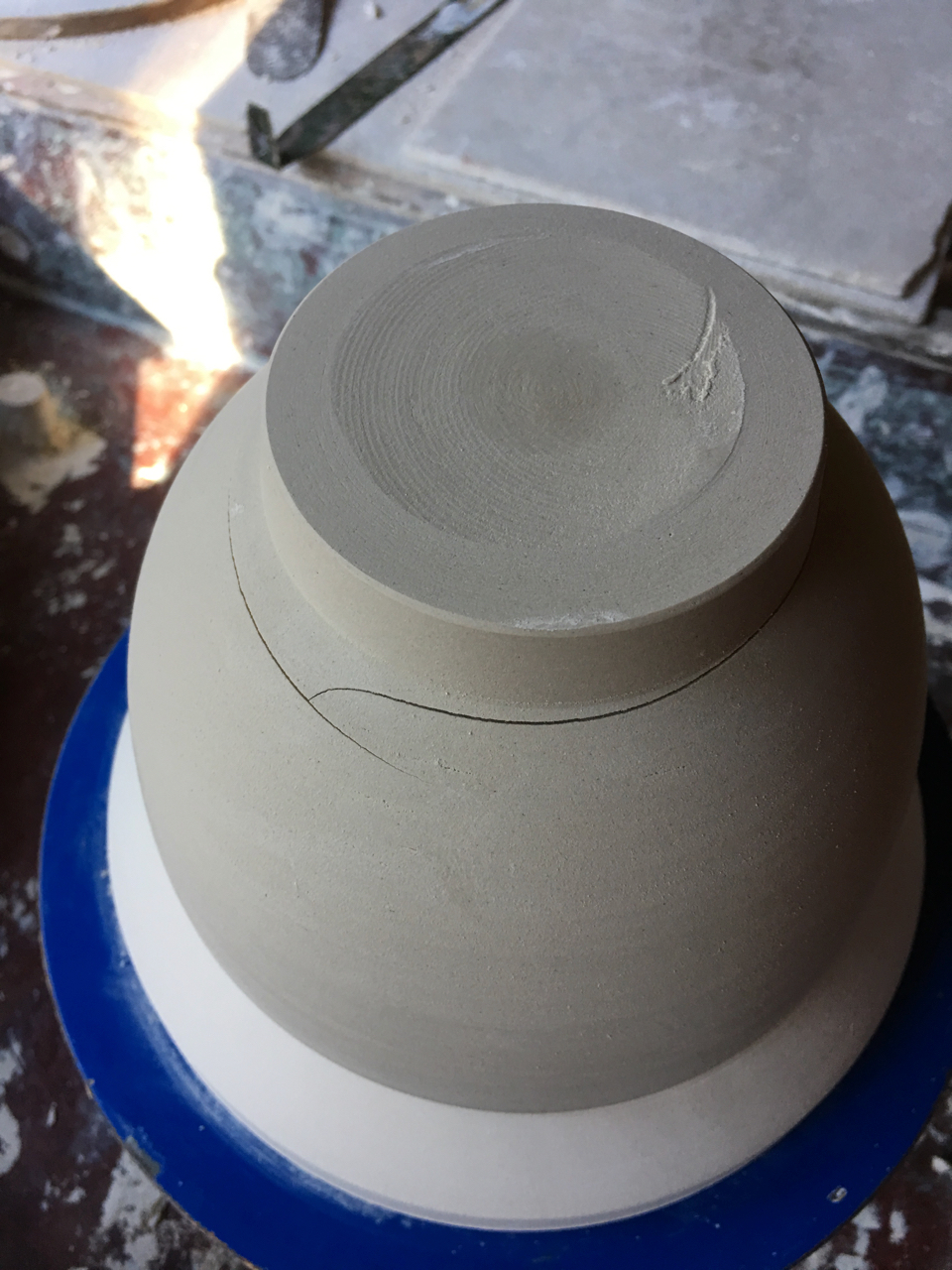
I’m not just dealing only with turnings here. Many of my pots don’t even get to the turning stage. These ultra-fine, ground stone bodies, with virtually no real ‘clay’ content, based solely on mica and quartz, with just a little illitic material. Consequently, they have no dry strength. They sometimes just split as soon as they are placed on the chuck, some don’t even get to the chuck, as they split during drying. Other decide to part company with themselves after the first turning at the ‘roughing out’ stage.


Some others tear themselves apart after the second trimming. Only a few make it to the final turning and bisque kiln. The only good thing about pots cracking during drying, is that at least I can re-work the material and have another go at making something that might survive to the kiln. What happens in the glaze kiln is another matter. I’ll find that out for these samples soon enough!


45 seconds in the life of China

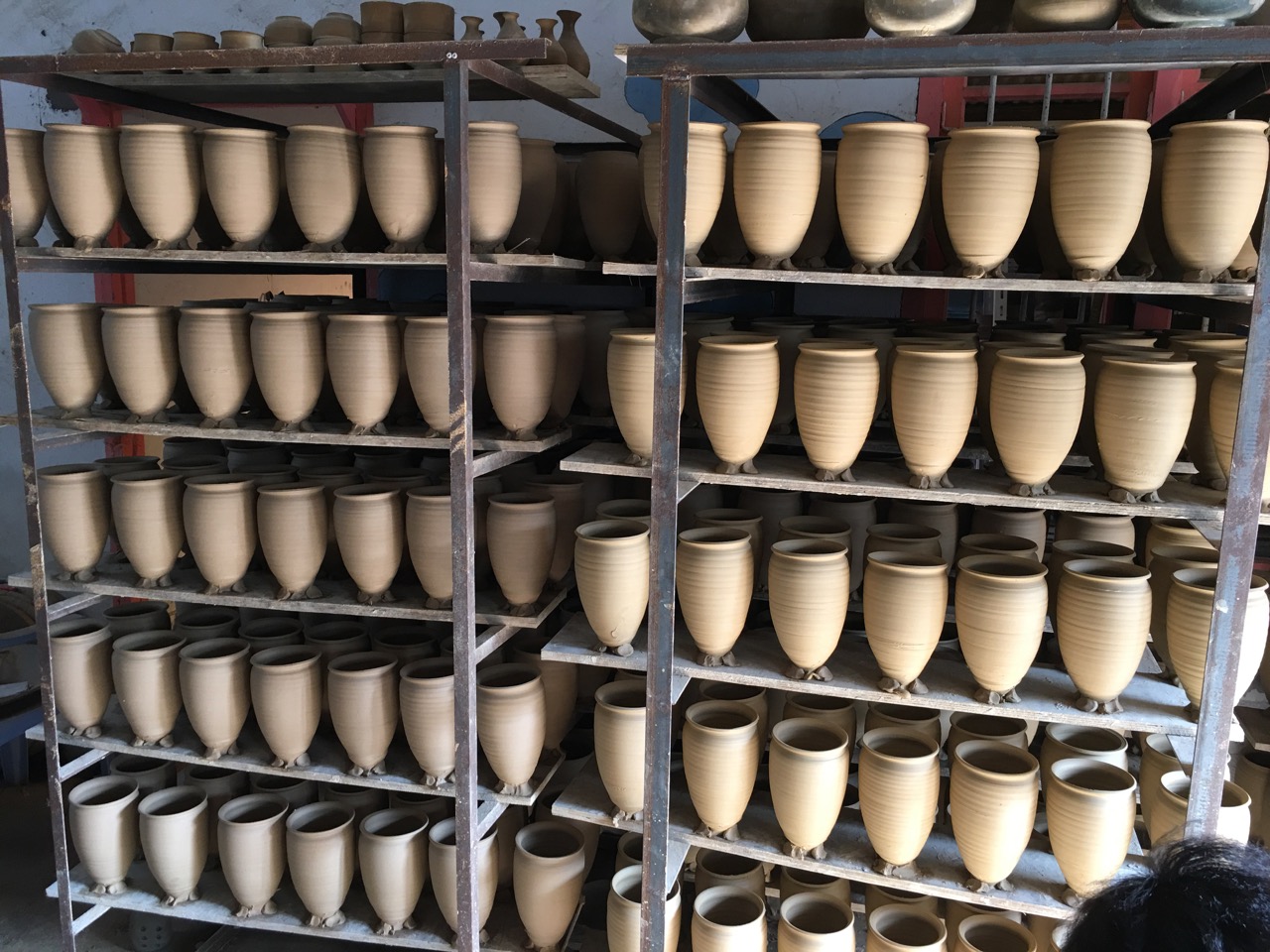
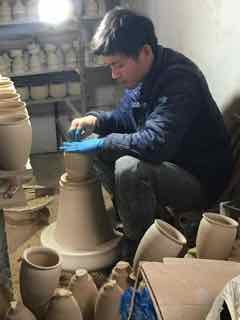
We have just watched an amazingly skillful potter make upwards of 700 pots in a day without seeming to put any effort into it, and without getting any clay splatter on himself either. Amazing!

This potter fills the workshop shelving to capacity in one day, then moves on to another workshop. He’s a professional thrower. Everyone here is a specialist. I explain to my guide and translator, Chen, that I do everything myself. He is amazed when I tell him that I do everything myself from digging the clay(stone), crushing and grinding it, to making the fire bricks for my kiln by hand. He just can’t get his head around it. Why don’t I just employ a specialist to do the boring bits? I tell him that it isn’t like that in Australia. There aren’t any specialists to call on.

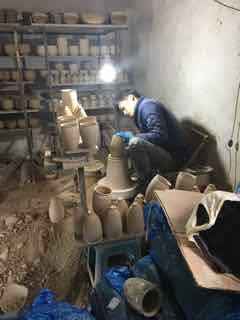
Two days later we are back in the same workshop to see the ‘turner’ at work. He has arrived now that the pots are firmed up to trim the bases. He works in tandem with the ‘thrower’, following on behind him with a 2 day gap. They work together but never meet. Always separated by the drying period. The thrower has thrown 3/4 of a tonne of clay into these flower pots on this occasion. The turner guy has to trim them up into shape, removing the excess clay from the base and correcting the form if necessary around the rim and foot. He gets through 10 double-ended turning tools each day. Wearing them down to a level of bluntness where they no longer work efficiently enough and slow him down. He travels with a bag full of them.

I ask the turner guy through my friend and interpreter, Chen, how all this works out. The turner removes about a 1/4 of the weight of the pot. The bases are thick when thrown off the hump. The thrower doesn’t use a wire. It slows him down too much. He just twists the pot off the hump with a flick of his fingers, leaving a very thick base. The turner has to remove all of this. It takes the turner almost twice as long to turn the bases, as it takes the thrower to make the pot. However, the turner gets paid almost twice as much. The thrower gets 1.5 rmb. per pot. That’s 30 cents. The turner gets 2.5 rmb per pot. That’s 50 cents. The turner will be here for almost 2 days to clear the shelves.

It works out that these highly skilled guys are earning about Au$200 each day. That’s really good money in China. But their job-life expectancy is very low. They burn out fast. I ask politely through Chen, how long will he be doing this? 10 years is enough. It’s far too boring to do it for very long! What will he do next? He is saving money to start his own business. This is only a means to an end. A better future awaits him somewhere.

I ask what he does at night i.e. does he have a hobby or other interests? No! He just watches television while he sharpens all his blunt tools ready for the next day. I ask why he doesn’t use tungsten tipped tools? He replies that he doesn’t understand the question. After some probing, it transpires that he hasn’t even heard of such a thing. Everyone here uses these cheap, locally made, mild steel, black-smithed turning tools. They are cheap and readily available and easily sharpened with a hand file. They also go blunt very fast. He is used to spending a few hours each night filing them sharp.

IMG_5261
IMG_5265


I notice that he uses a rubber glove and the cut-off fingers of a rubber glove on the other hand to stop the abrasion of the clay from wearing out the skin on his hands, just the same as I do. However, I only use the rubber finger stall on one finger

I ask him what he thinks about all the dry clay dust floating off the turnings. Why isn’t he wearing a mask? He is generating a small mountain of dust all around himself. I can’t even see the wheel, as all the turnings are piled up and flowing down and away in a cascade of dust. He doesn’t understand this question either. I explain, through Chen, that clay dust causes lung disease if inhaled over a long period of time. He replies that he has never heard of this theory. Neither has Chen. I leave it there. I have sown the seed.

When these pots are bone dry the glazer will turn up and spray the glaze on them. That will take a couple of days. Finally they will be passed on to the decorating girl. She seems to work 7 days a week and hand paints each one. She does about 100 per day. It’s a never ending job. The thrower will be back next week, as soon as the shelves are emptied. This team seem to keep half a dozen potteries busy.

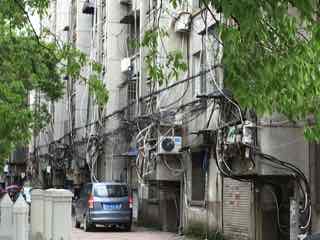
On the way home I can’t help but photograph the amazing wiring that is in use here. As the holder of a limited electrical licence, I’m quite in awe. I love the dual function of clothes line and high voltage wiring.

IMG_5586
IMG_5585
IMG_5602
IMG_5295

China is an amazing place. I’ve been thinking about these amazing potter specialists here. As I place my own few pots out in the laneway, in the sun to dry. I’m thinking, one pot every 45 seconds! I reflect that I have been here for 2 weeks and so far only managed to make forty-five pots that are second grade. That’s 45  2nds! I live in hope.

Environmental fellowship

We have had a Danish potter staying with us for the past month. He won the Environmental Ceramics Fellowship for for 2016, but for both of us it was just too difficult to complete it last year, so we postponed to this year.

He is a potter from Denmark who is interested in sustainability and new ways of exploring how to make a living in this new digital age. He has his own web presence in Denmark where he markets Potters wheels, kilns and clay bodies, as well as making his own work. He is a digital native. Whereas, I am, on the other hand, a dig-it-all-native. Making everything myself from the ground up – and that is what he is here to learn.

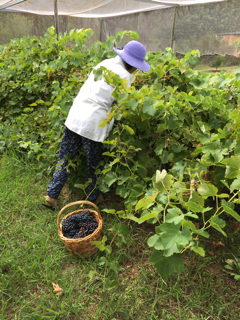
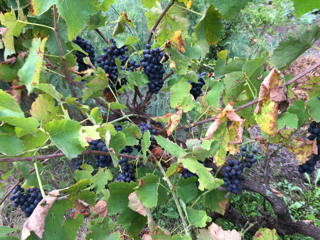
We crushed porcelain stone in the big jaw crusher to make single-stone porcelain body. We made clay tests to investigate unknown clays. We worked in the gardens and orchards. Ate all our own produce. Cooked up some wonderful meals. Lauge is a great cook, so that helped. We went on a geology excursion to look at some of the local stone deposits. Harvested the shiraz grape crop and made dark grape juice from the grapes.

IMG_4683 IMG_4684.jpg

All in all, the month flew by and it all went too fast, leaving so many things un-explored. A month just isn’t enough time to experience everything that we do here.

Janine and I are planning to do some volunteer aid work overseas soon. So we are working towards this by making clay tests out of the local clay that has been posted over to us to process. Our Guest lends a hand in everything that we do.

IMG_4764  IMG_4766

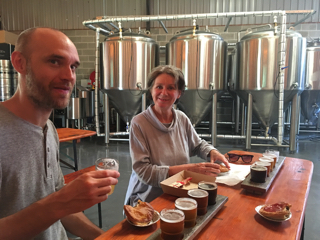
We decide to go exploring and looking at a few rocks for making glazes. Then, to complete the true ‘Australian’ experience, we take him to the local micro-brewery and have a meat pie with tomato sauce, accompanied by a tray of the brewery’s sample beers for lunch. Fantastic! I haven’t eaten a meat pie since I was a kid, so it was an experience for me too!

 IMG_5065 (1)IMG_5068

IMG_5006 (1)

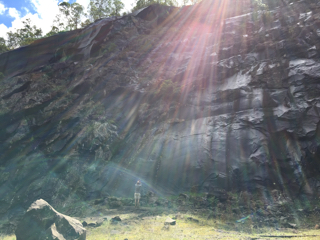
You have to look closely at the image of the analcime basanite deposit above to focus on the small figure in the foreground.

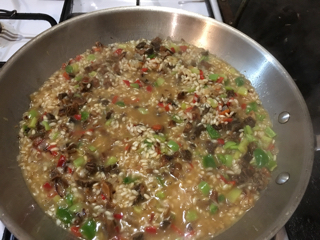
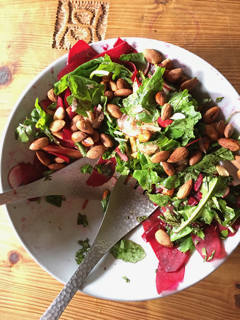
We cook and eat what is in season in the garden this autumn equinox. An autumn garden risotto, a fresh garden salad of shaved beetroot, cucumber, raddish, quince. Served with wasabi rocket, lettuce, beetroot tops, chilli and crunchy pan-roasted almonds.

IMG_4977 (1) IMG_5076

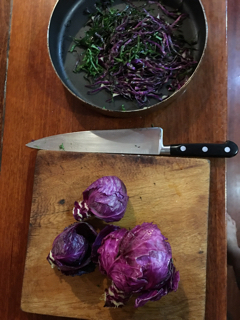
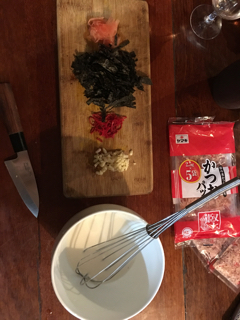
We also make an alternate version of okonomiaki, using some very firm, third pick, red cabbage, our own home grown eggs, garlic, chilli and shiso. Everything from the garden. Red cabbage is too slow to cook straight off as a cabbage pancake. So I pre-cook the cabbage to soften it down before I blend in the pancake mix and all the other ingredients. It’s not really a traditional Japanese okonomiaki. It’s an improvised Aussie OKA-nomiaka. Served with mayonnaise and Japanese okonomi sauce. Topped with bonito flakes and some Japanese pickled ginger.

IMG_5072 (1) IMG_5074 (1)

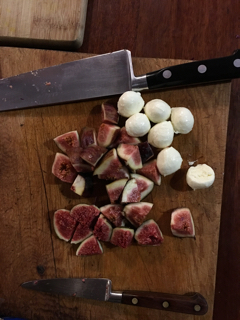
We finish the meal with fresh figs and soft white cheese. We do this desert a lot at this time of year while the figs are coming on. We try it with all manner of different soft cheeses. Boconcini isn’t the best, but you don’t know these things until you try them out. We’ve tried it with blue cheese, fetta and soft white goats cheese which was best.

IMG_5073

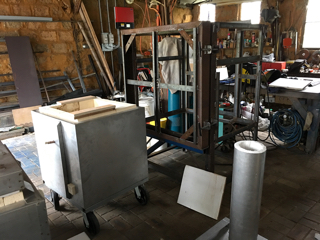
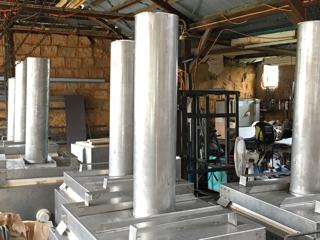
Lauge helps me finish off the internal fittings for the 8 little dalek kilns. These are now  almost all delivered, leaving space for me to start welding up my 2nd kiln job of the year. There is just enough room to get both jobs in the factory at the same time, but it takes a little bit of planning and maneuvering to get everything into the tight space.

Now the shed is almost empty, with the big new frame gone off to be galvanised and all the little ones gone to good homes:)

IMG_4999 (1) IMG_4998 (1)

IMG_4997 (1)

Between a Rock and a Hard Paste

We have been sweltering here in 40 oC heat for a couple of weeks now. We were very fortunate to be blessed with 3 days of rain in the middle. It saved a lot of our plants from just shrivelling up. Fortunately, we don’t have any bush fires near here this time. However, I did start up the fire fighting water pump and sprayed water through the sprinkler system that I have installed on all the building here, in this case, on the pottery tin roof. I used it on the worst couple of days, to cool it down a little. It is good to run the pump every now and again to keep it in good working condition and cycle the fuel through the carburettor to make sure that it doesn’t ‘gum’ up.

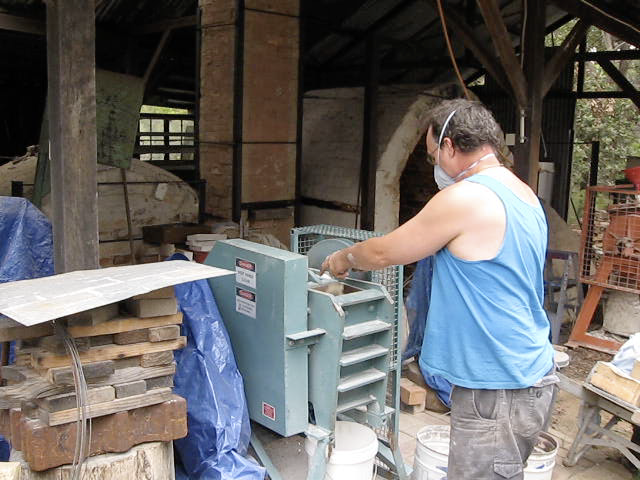
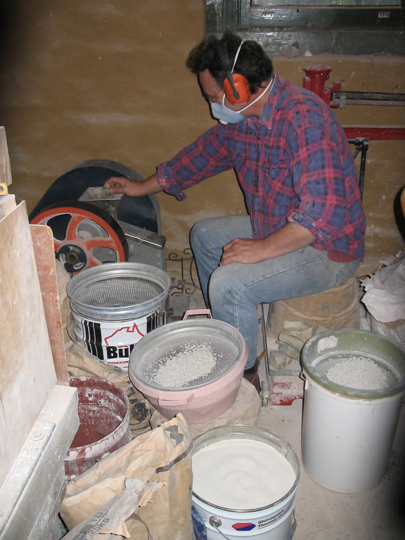
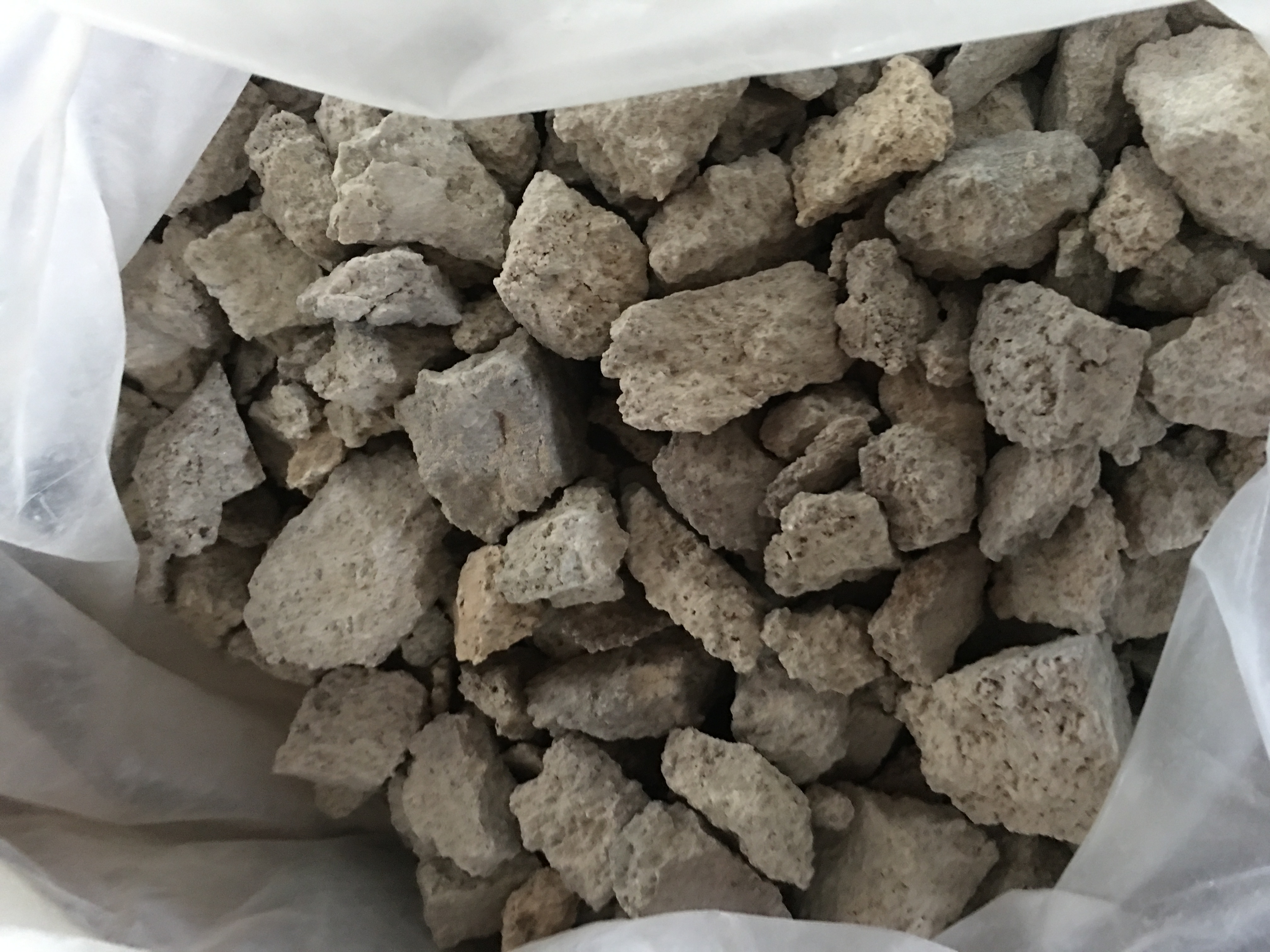
I’ve been making use of the hot weather to crush and grind my collected porcelain stones. They have to be put through the big jaw crusher first, then the small crusher, then sieved to remove any over sized pieces and these are put back through the crusher again. Once it’s all of a suitable size, it goes into the ball mill to be ground down to a very fine paste.

pastedgraphic-4 pastedgraphic-3

unadjustednonraw_thumb_2b3a

Once it’s out of the mill. I let it settle and flocculate for a few days and then remove any excess water from the top and it goes into a plaster basin to dry out until it is firm – sort of plastic. Except that it never really gets to be fully plastic. This is because it is just ground up rock dust and not clay. It does have a very small percentage of clay in the stone due to weathering of the minerals, but it is not a lot. It really takes years for this stuff to become workable in any normal sense of the word as potters might understand it.

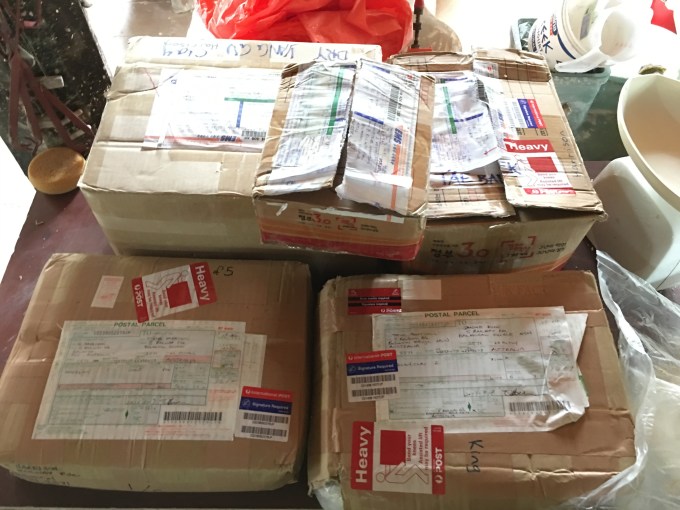
If I were making bulk clay for stock, I’d be using the big ball mill and pour out the slip onto the drying bed on filter cloth. Once firm, I’d lay it down for several years in a cool dark place, but I don’t have that luxury on this occasion. I have posted these stones back from overseas on my recent trip. there are only just a few kilos of each sample, so the batches are quite small. Just enough to make a few pots out of each. I’d like to have more mineral to work with, but it costs about $100 to post a few kilos of stones back from places like Cornwall, Korea, China and Japan. So I have to work within my budget, as many countries have abandoned sea mail postage and the only option is now air mail. On one occasion, I was offered a cheaper option of ‘slow’ air mail. It made me wonder how the plane stayed up in the air if it was flying slowly?

img_4656 img_4657

As these bodies are not aged, they respond to being worked something like ‘halva’! it just snaps if you bend it. It has to be coaxed along very slowly and gently, sort of seduced into changing shape.  I can’t even cut it in any normal way with a wire, it just tears! I can’t throw anything large out of this stuff, but I don’t need to. I only need a few excellent fired examples of the stuff to include in my exhibition at Watters Gallery in August, called ‘5 Stones’. This will be an exhibition of single-porcelain from all around the world, from the five places where single-stone porcelain was independently discovered and developed.

img_4662 img_4664
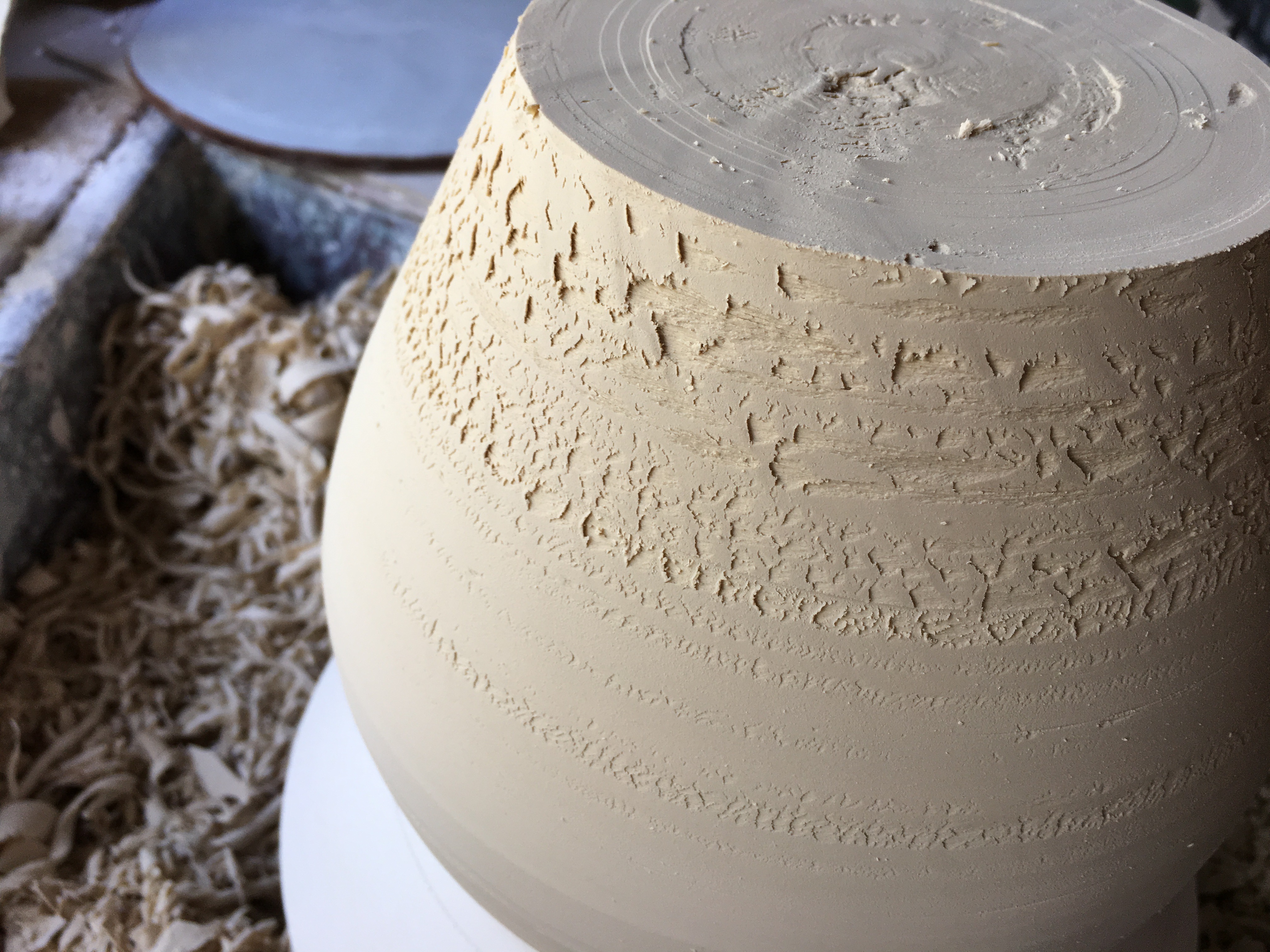
When it comes time to trim the shapes into some sort of elegant form. The paste just tears and chips, instead of turning off in fine strips. The pot has to be very firm and almost bone dry to turn to a fine finish. However, I do need to remove some of the bulk of the weight from the base to get it to dry without cracking, so some leather hard trimming is necessary, and what a mess it looks to begin with! But it does clean up OK when it is dryer. I do struggle with some of these rock-paste porcelain bodies. I’d be a much better potter if I could spend all my time working with this stuff, but I have to do other things, like building kilns, to make a living. No complaints! I have a wonderfully creative, independent life. I’m very lucky. But I do suffer from the feeling that I could always do better. Nothing is ever finished, nothing is perfect and nothing lasts! This is reality.
img_4660 img_4658
img_4661 img_4659
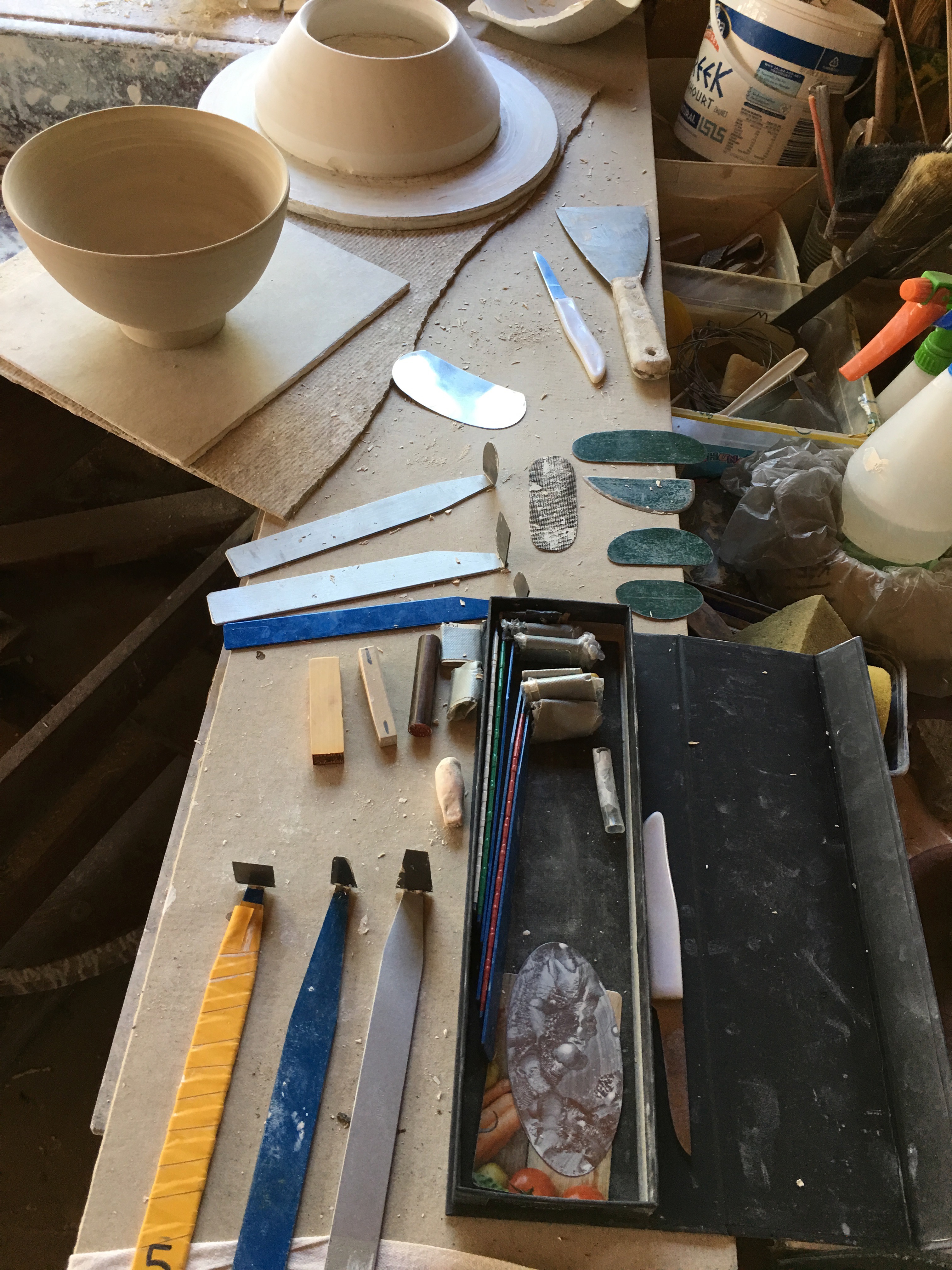
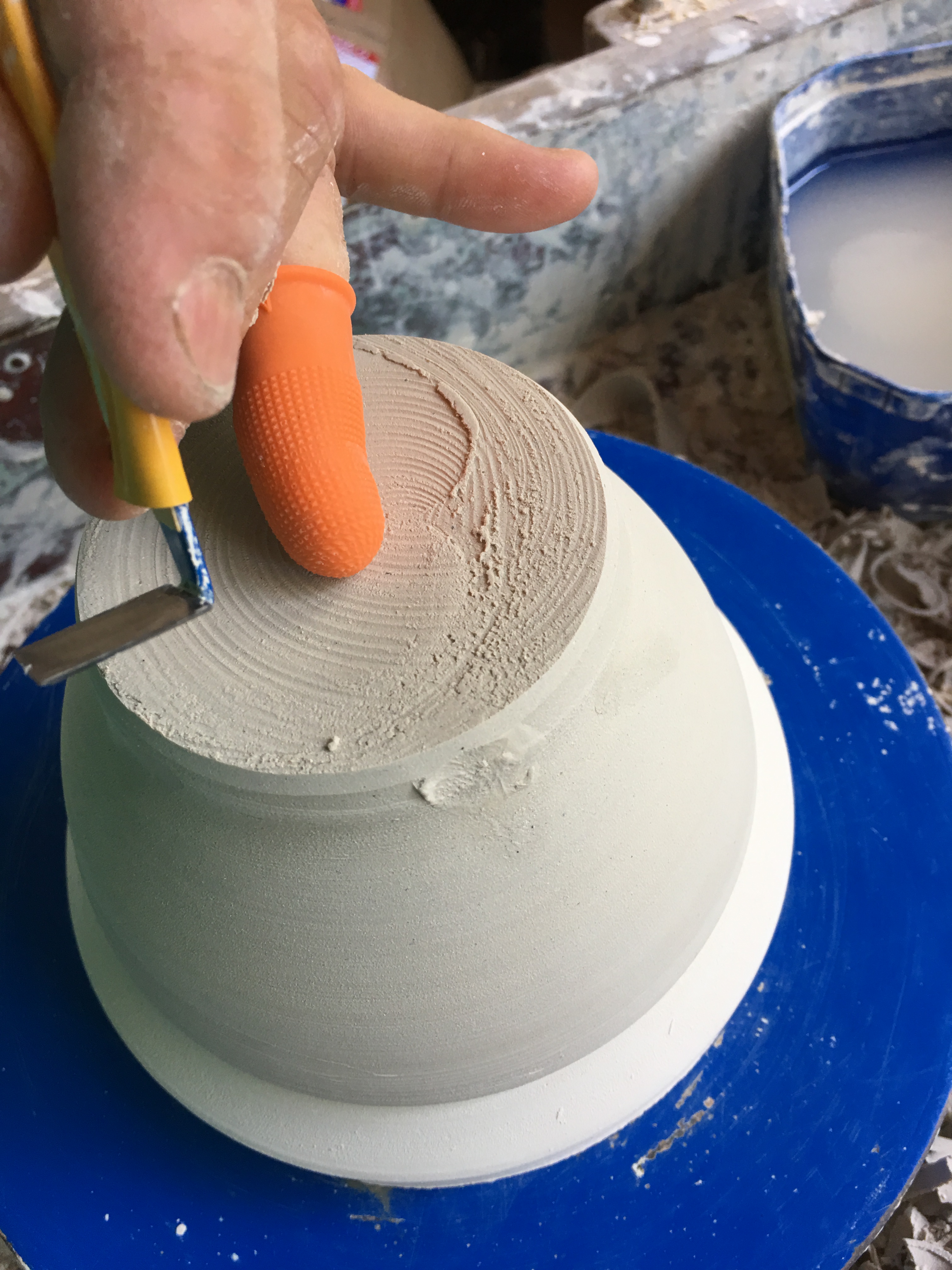
These dry rock dust bodies are so aggressive and abrasive, they make normal turning tools go blunt after just one pots is turned. I have to use tungsten carbide tipped tools to withstand the grinding effect on the cutting edge. The ‘clay’ is really just rock dust paste, so it is very abrasive to my fingers too! I have had to start wearing rubber finger stalls to protect my finger tips. Otherwise the ‘clay’ grinds off the skin from my fingers and they wear through and start to bleed.
img_4670
I’ve spent the past 15 years researching these places and going there, making contact with individuals and working in-situ, where that is still possible and also posting home the raw stones to be processed here in my workshop then fired in my kiln. This will produce a very different look and feel from the work made on-site.
I have written a book about my travels and porcelain experiences during this research. I have 90,000 words written, with just two more chapters left to write. It will be around 150/160 pages, in full colour, soft cover. I hope to have it for sale for under $50
It will be launched at the opening of my show at Watters Gallery in August.

Of Passata and Porcelain

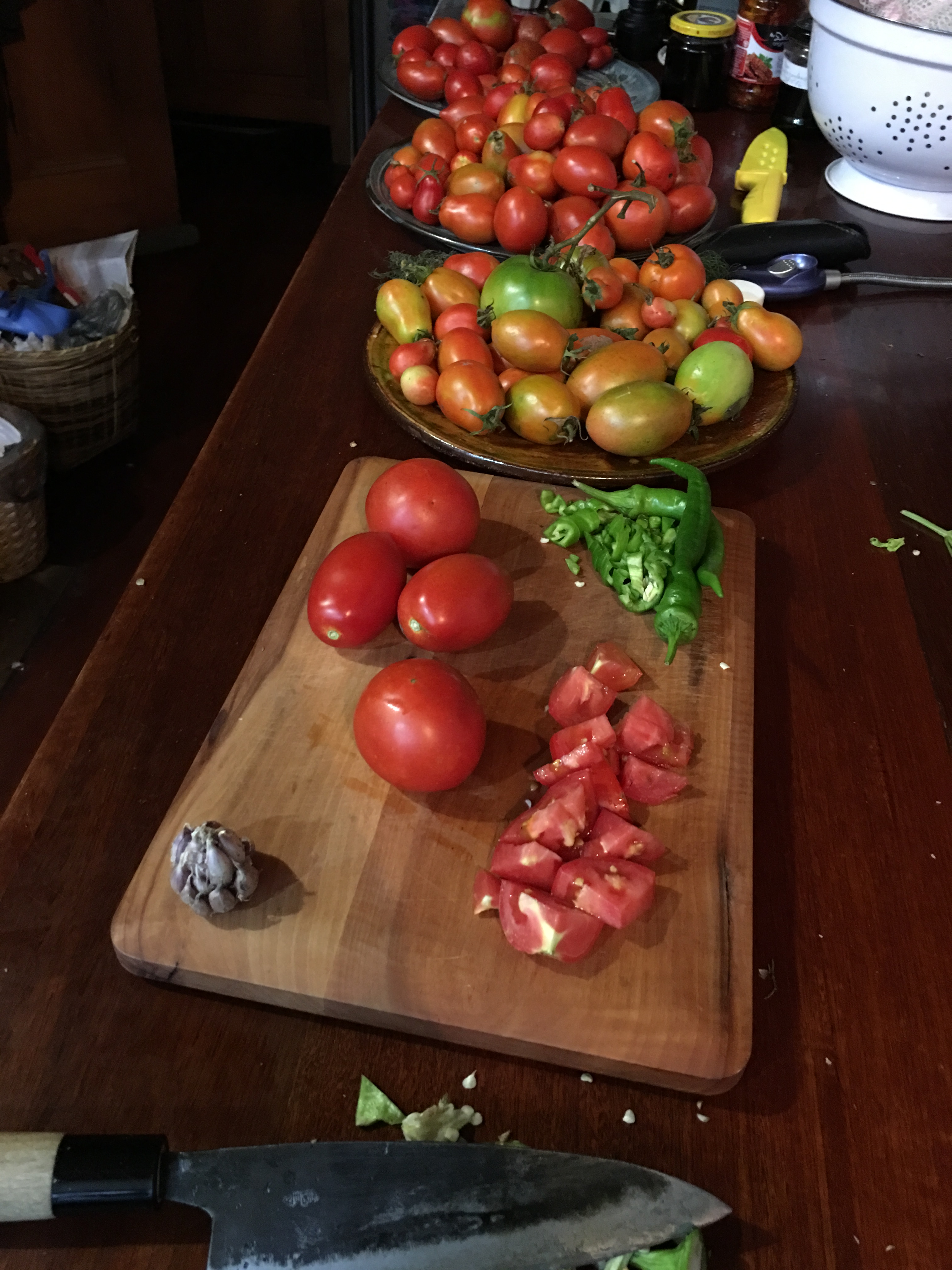
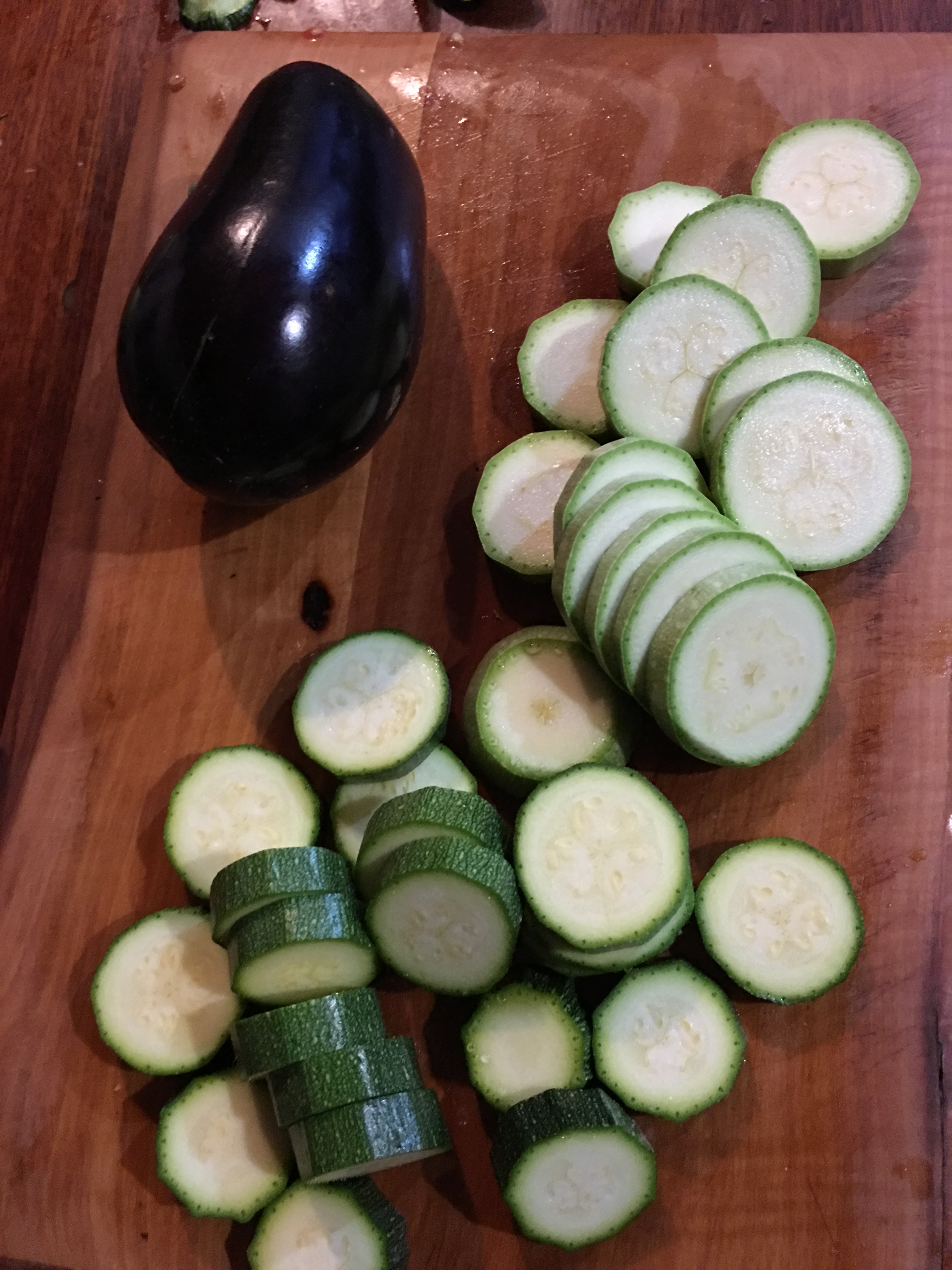
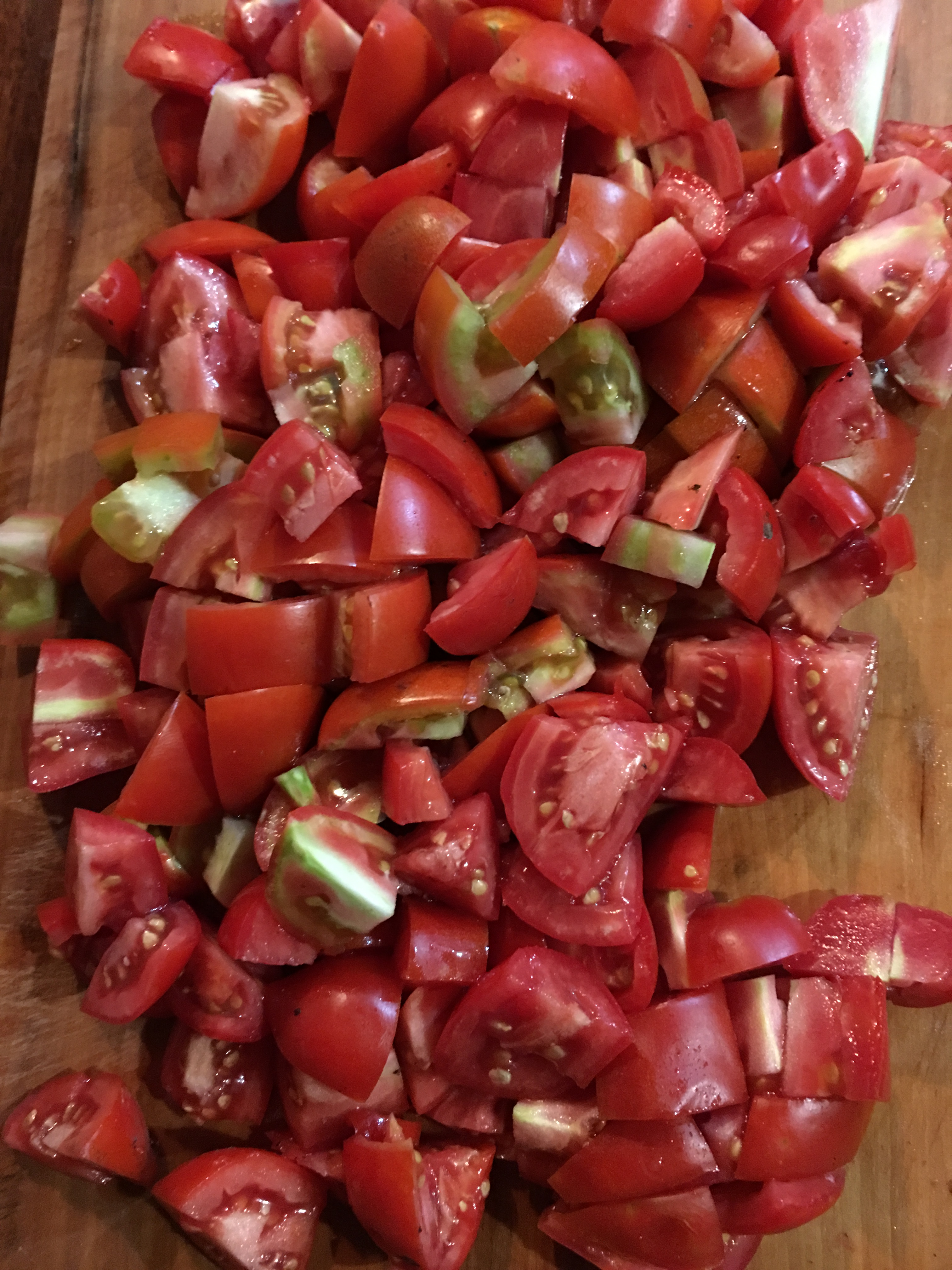
The summertime heat brings on the tomatoes, zucchini, chillis, aubergines and sweet basil. They love this hot weather, as long as they get the water that they need. This means I have to start making passata sauce. We are now harvesting more than we can eat each day. This is just the start. At the moment we have to harvest the tomatoes each day in the small numbers that are ripening. It has taken a week to build up sufficient quantity to fill the boiler. This is the first batch of passata. Soon it will build up to 2 batches a week. I will continue to make this sort of tomato sauce right through the summer and into the autumn.

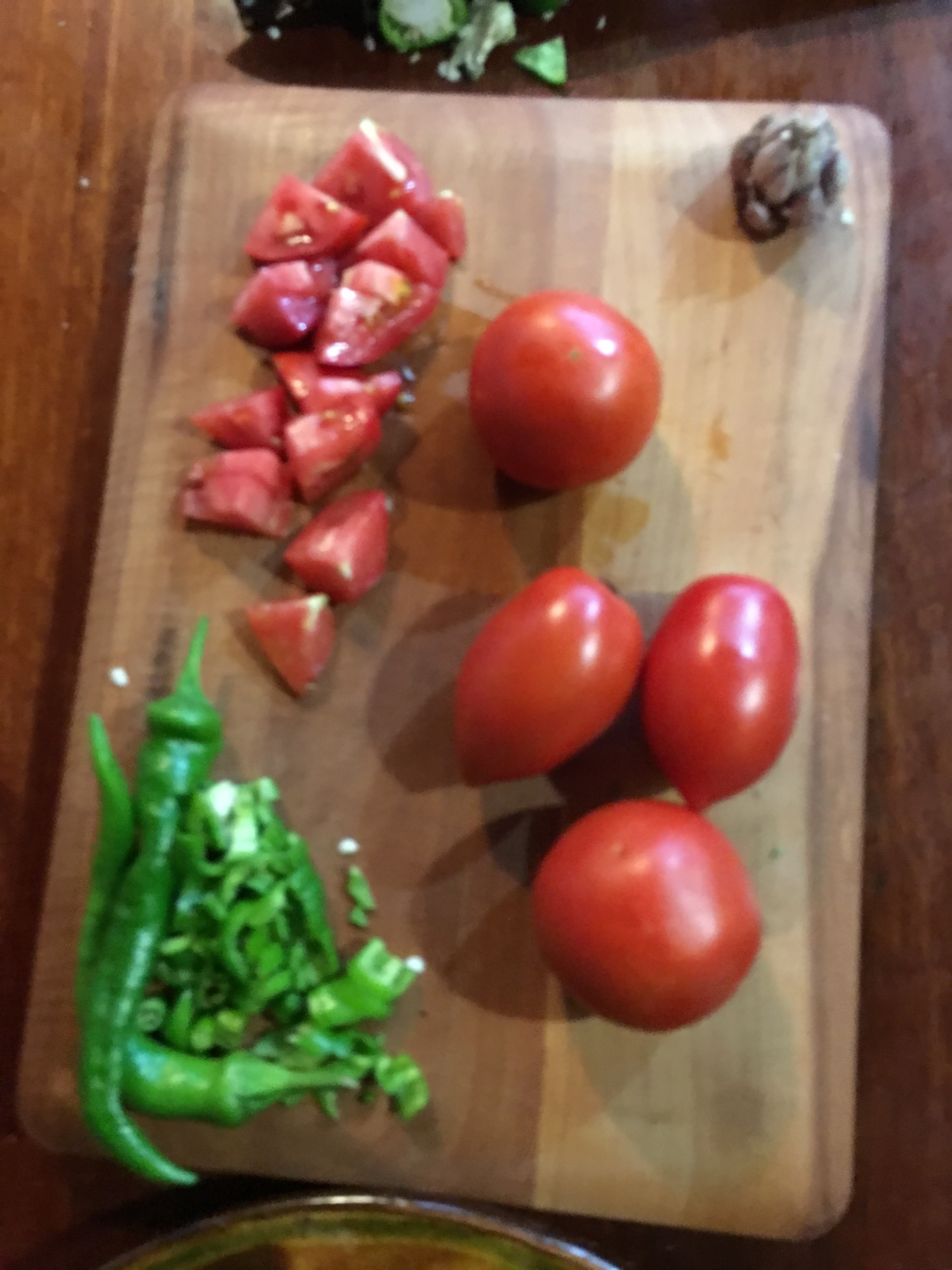
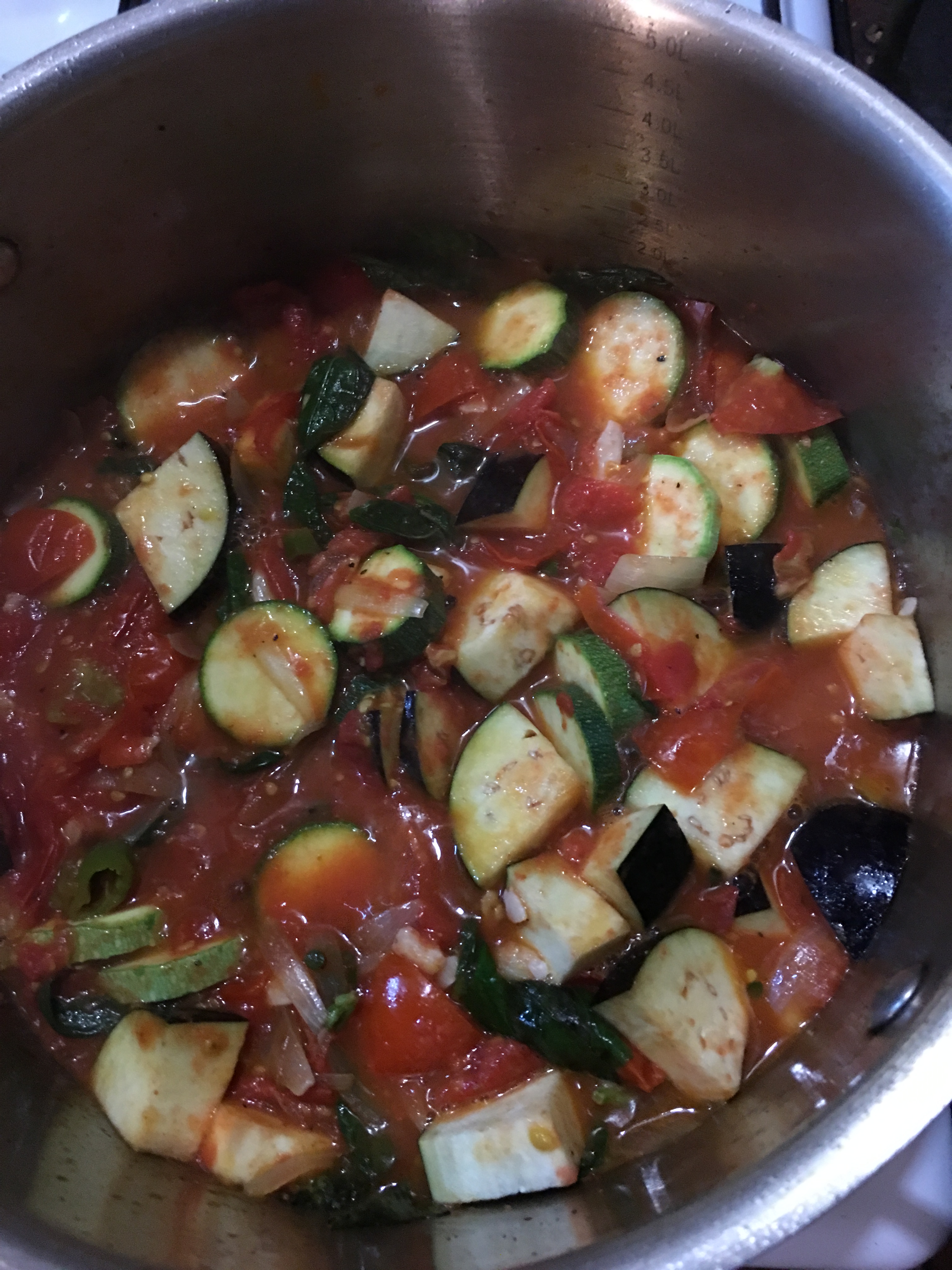
Tonight I’m making a small batch to start with for our dinner, so I’m including a lot of zucchinis and aubergines as well. This will be a sort of variation on the ratatouille theme. All these vegetables grow together, they ripen together and they taste so good together.

img_4528 img_4529 img_4533img_4534 img_4535

I bring it all to the boil and simmer it for a few minutes, just enough to soften the zucchinis and egg plant chunks, then scoop out a bowl full each for dinner. It’s summer on a plate!

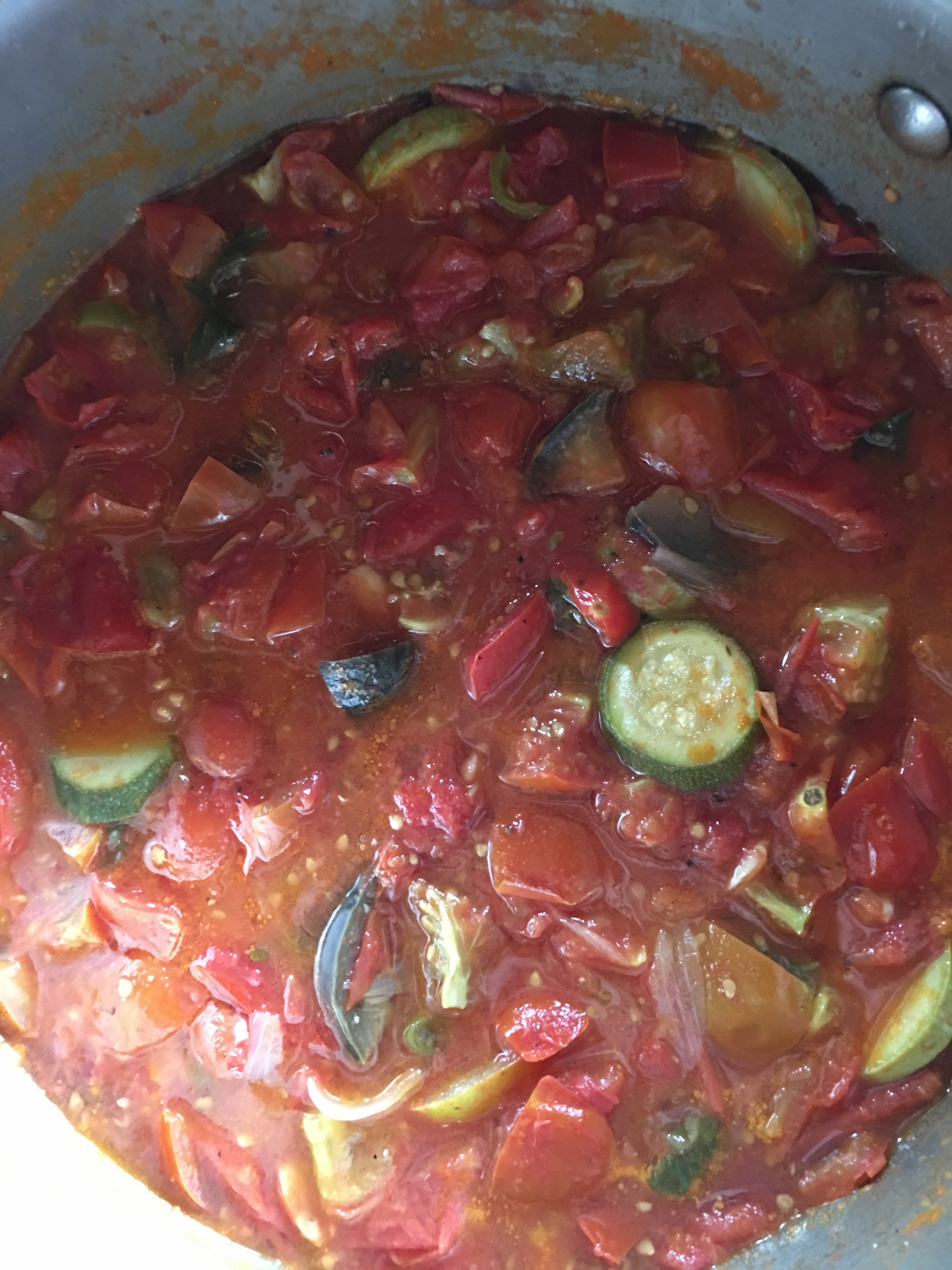
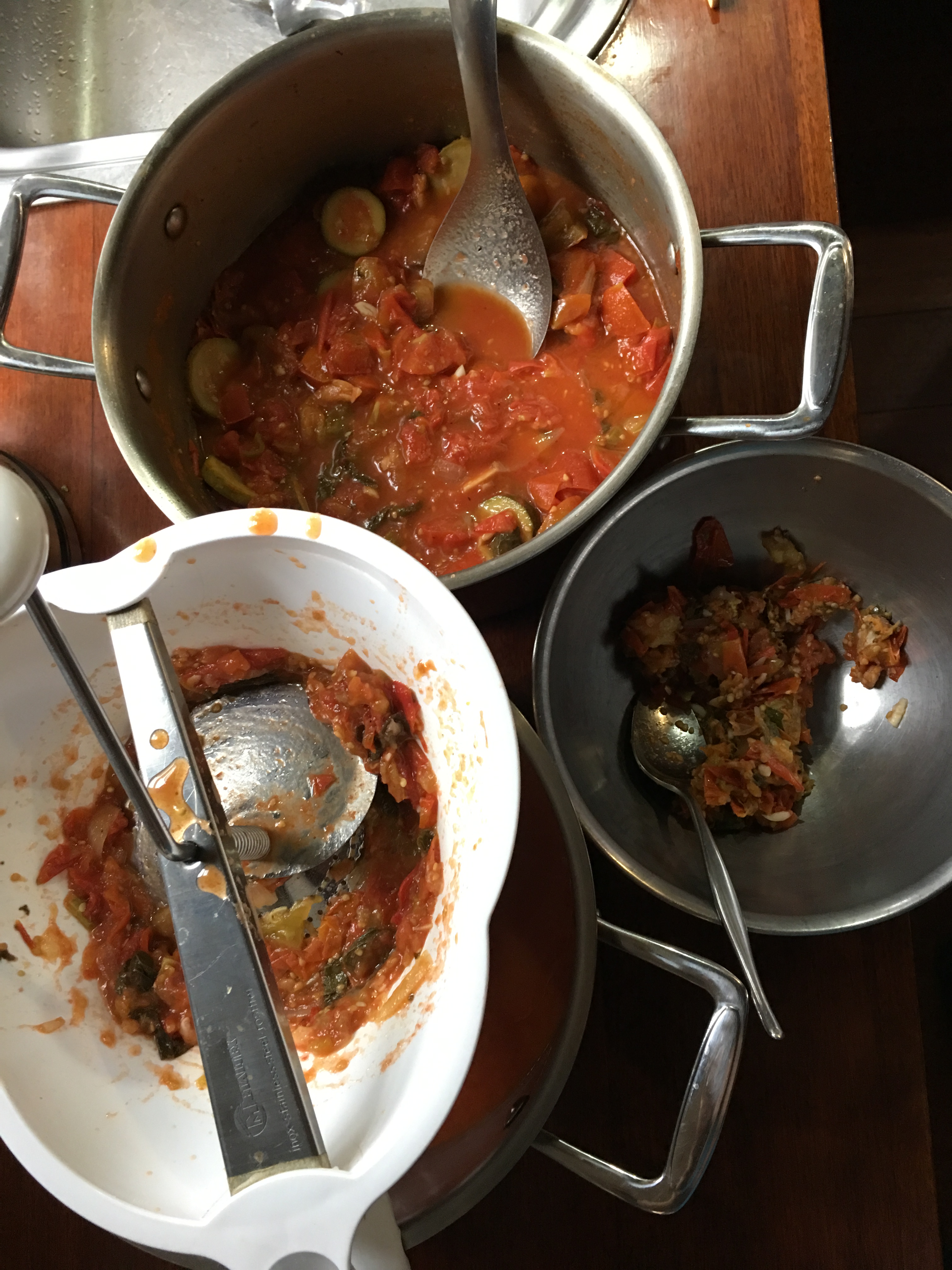
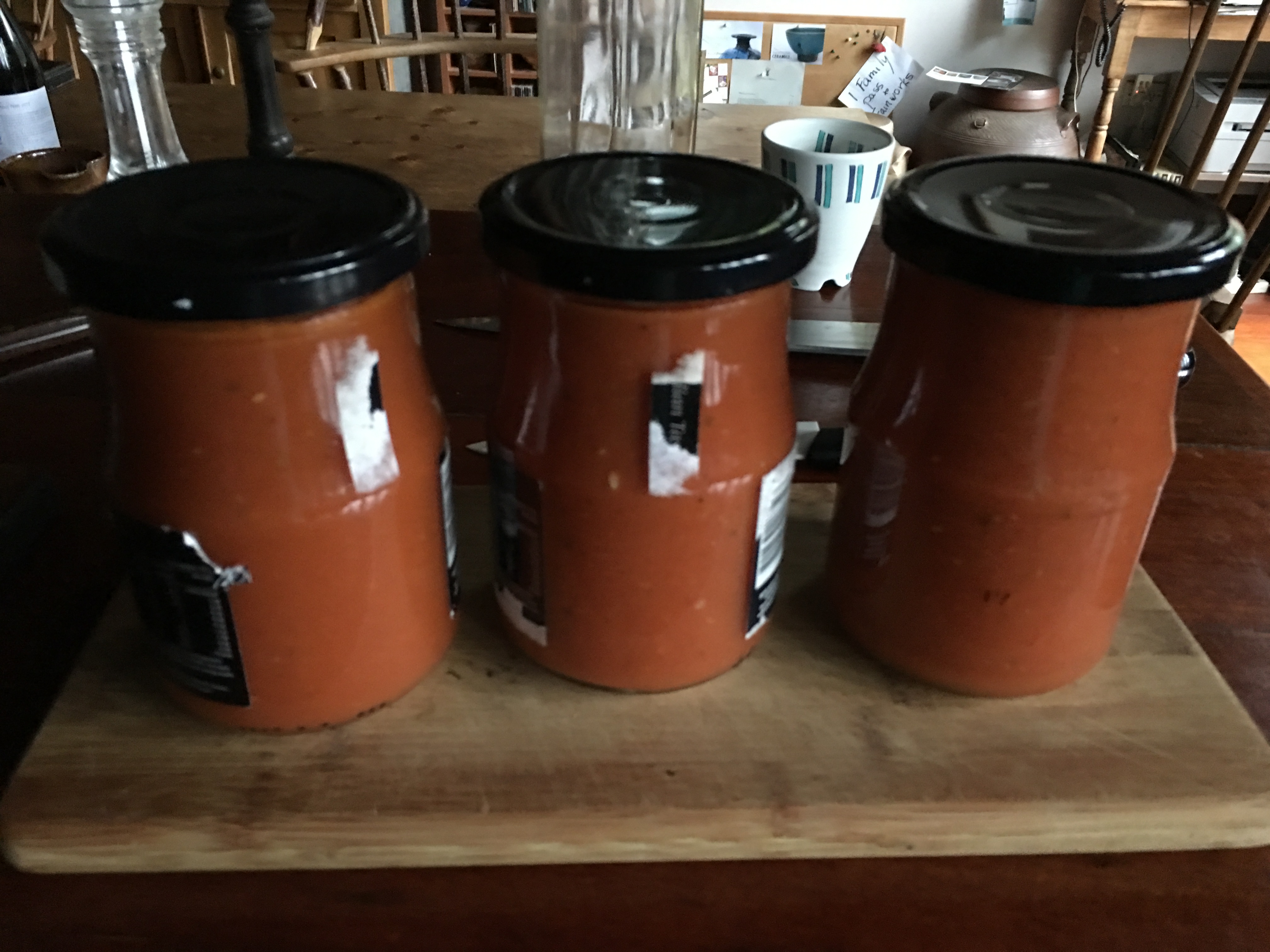
After dinner, I add in all of the other chopped tomatoes and cook it down into a sauce. After it cools I put it all through the mouli sieve to remove all the seeds and skins, then reheat and seal in pre-heated jars to keep for the winter.

img_4531 img_4538 img_4539

The other thing that I like to do in this summer heat is to make porcelain from my collected stones. They are so hard that I need to put them through the rock crusher first thing to reduce them down to grit, then I can sieve the grit and re-process the larger pieces to get it all to pass through a 3 mm screen, then into the ball mill to be reduced to ultra fine grade.

 From this I can make glazes and/or more throwing body, as required.

img_4444


The Art of Embracing Damage

We live in an age of instant access to information and news, except that it’s all mostly bad. I’ve stopped watching the news. It’s all too depressing. I don’t want to be ‘connected’ to this. I want my interactions to be quiet, peaceful and positive. I want to choose a constructive, creative, engagement with my environment and the people around me.

I have spent my life developing a philosophy of minimal consumption and self-reliance. I believe in not buying anything that I don’t need and not throwing anything away that isn’t fully worn out. This has been part of an exploration of how it might be possible to live frugally and gently in a faster, noisier and bigger world of seemingly senseless and excessive consumerism.

My Partner Janine King and I work in isolation, making only what pleases us. This is not good business practice, but we don’t think of ourselves as being in business. We are trying to live an independent creative life, that is sensitive to our surroundings, gentle on the earth, low-carbon and low-impact on others around us. We are attempting to live this life of small monetary rewards, but high satisfaction and so far it seems to be working out OK for us.

I work with the raw materials that I can find around me in my immediate locality and then research and test them, to attempt to discover what interesting qualities they exhibit and then try to make original ‘location-specific’ works from them. I find this approach most fascinating and very rewarding. I have discovered a single-stone native porcelain, and developed a body from it that is very beautiful, especially when wood fired. I have also found and developed a single-stone, washed basalt gravel, blackware body that is gorgeous. These two special materials are the result of a lifetimes research. Not much to show for a life, but I continue to create these Senseless Acts of Beauty, because it pleases me. I am under no illusions. I know that I could not have lived this quality of life without Janine as my partner to help me achieve it, but most importantly, we have been very lucky to have lived this simple, artistic life in Australia, where there has been no civil unrest.

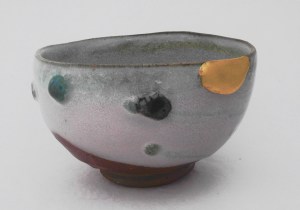
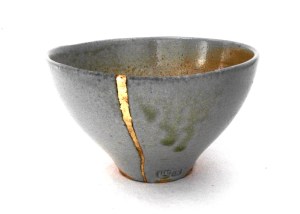
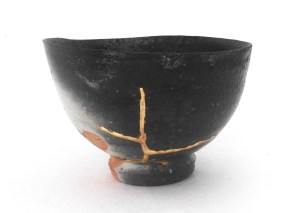
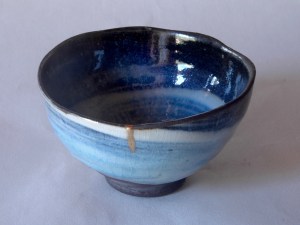
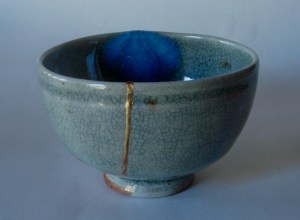
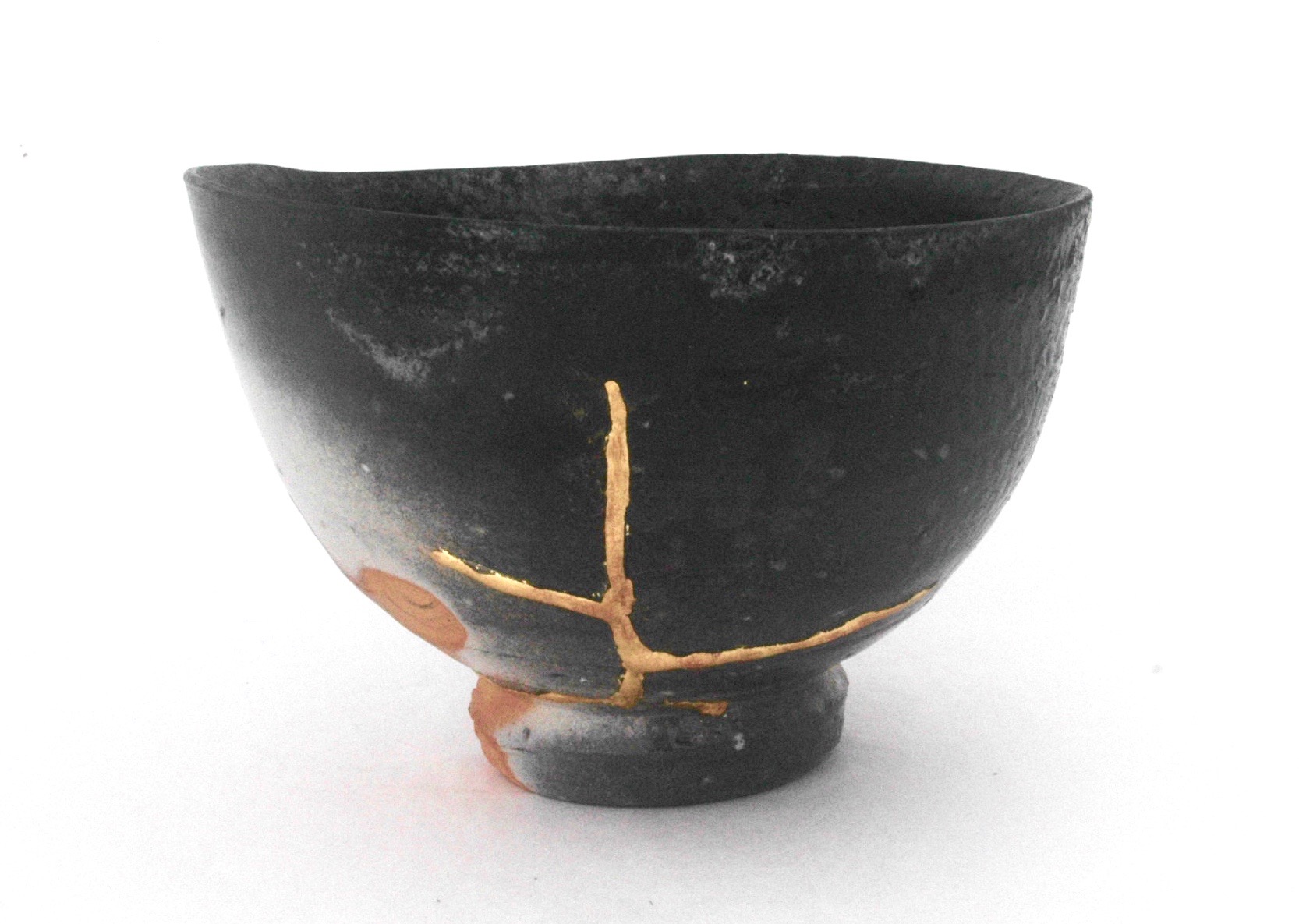
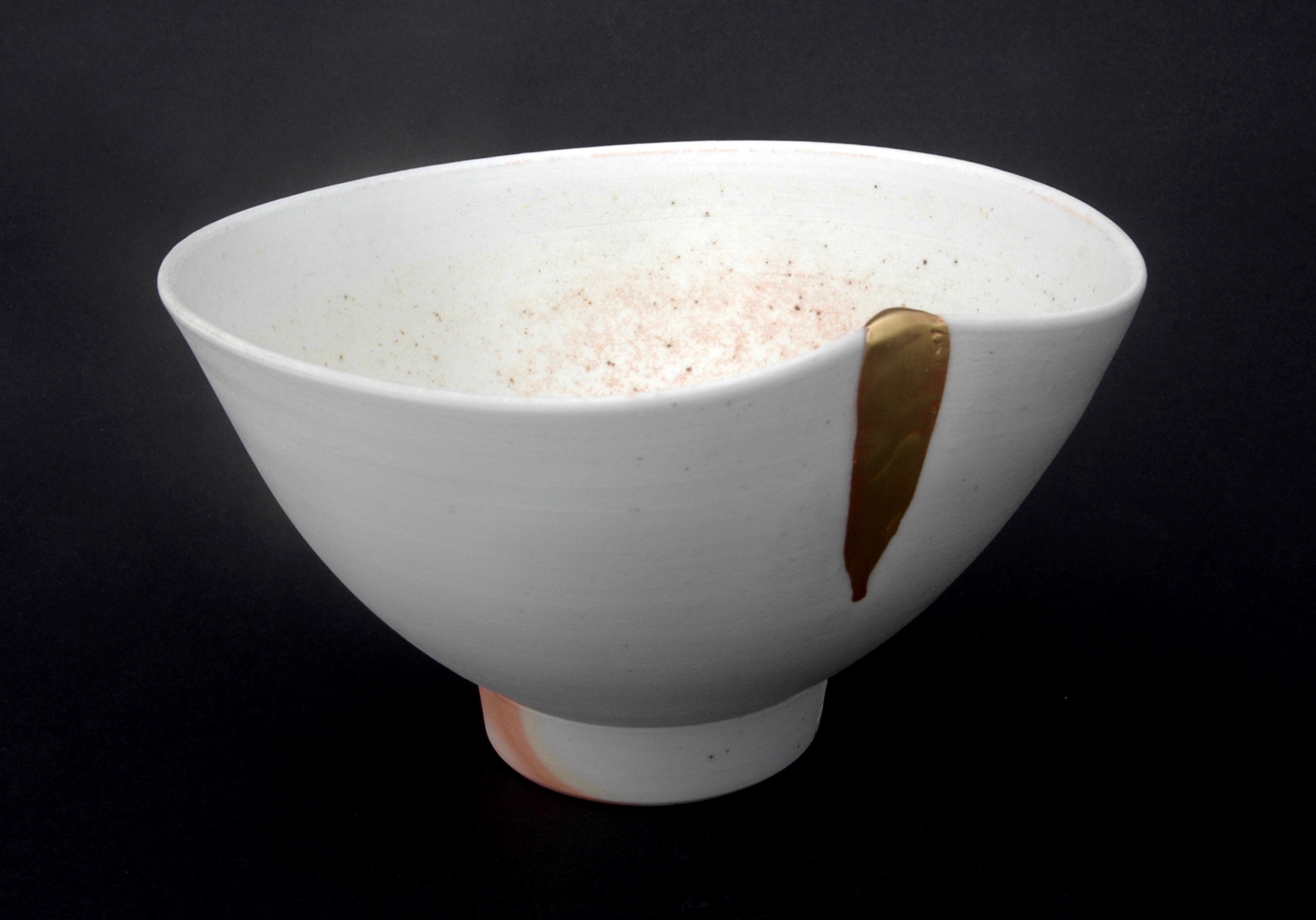
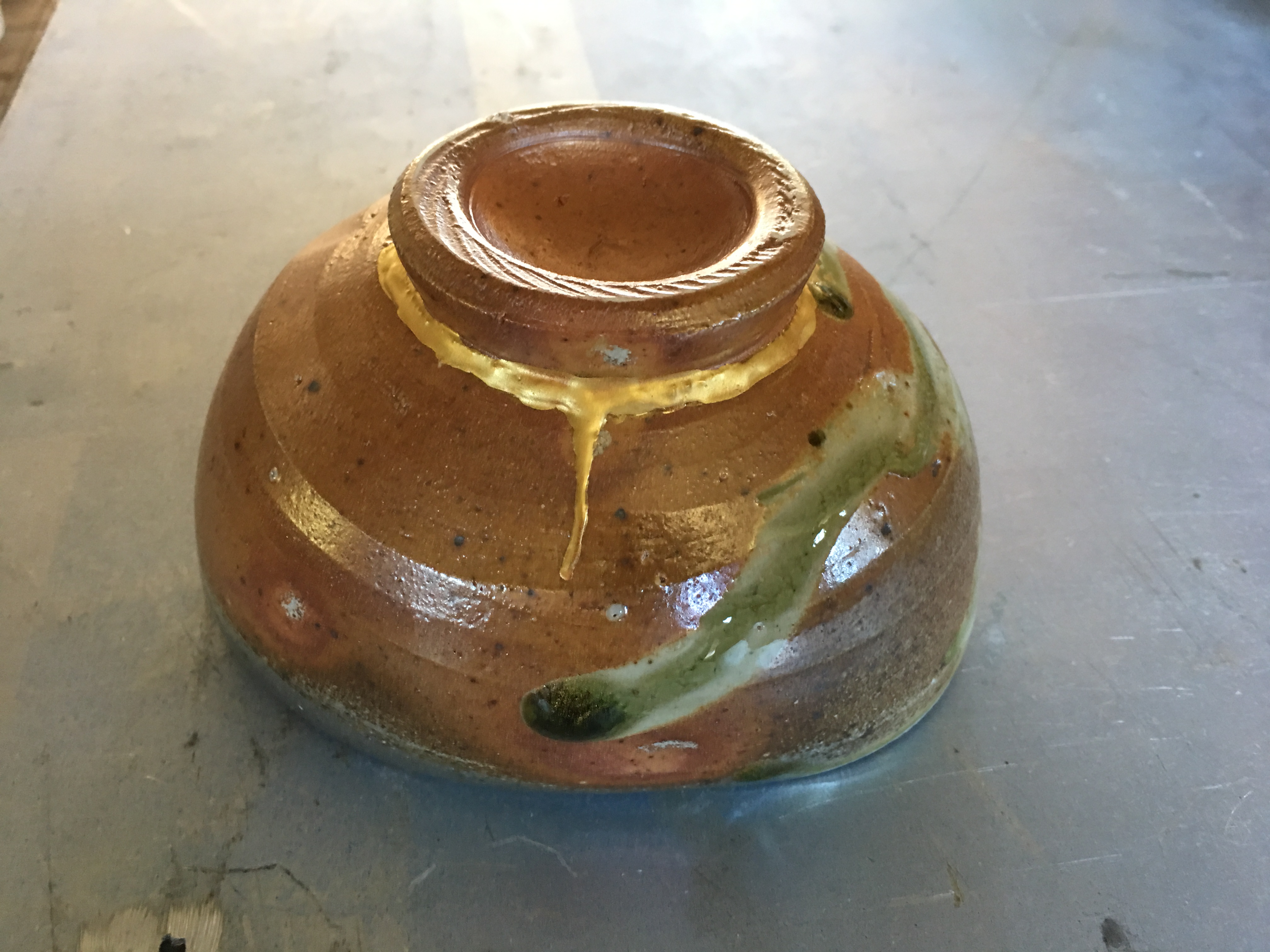
It has been my intension during my career to make simple, elegant, and hopefully beautiful bowls. These bowls have been significantly influenced by Japanese and Chinese aesthetics as well as the  Japanese culture of tea and Zen Buddhism  I’m not a Buddhist. But some of the thinking around Zen practice has influenced my quest to live a simple, non-consumerist, low-carbon life. When I was studying the origins of single-stone porcelain in Japan recently. I did a course in Kintsugi. The Japanese art of repairing broken pottery with lacquer and pure gold. I have started to repair some of my more interesting failures using this technique.

Kintsugi embodies three Buddhist concepts and makes them tangible. The first is ‘wabi-sabi’. Realising that something that is flawed and imperfect can still be extraordinarily beautiful  The second is ‘mushin’, the concept of non-attachment and acceptance of change. Nothing is perfect, nothing lasts and nothing is ever finished. The last is ‘mono no aware’, a certain wistfulness at the impermanence of things. We are only here for such a short time together. Our transience is a reality of our life. Embrace the moment as it is.

I feel that when I repair a beautiful pot that is broken, damaged or otherwise ‘non-perfect’ in a Western, conservative sense, I make it all the more beautiful. Spending time recovering and enhancing something that is otherwise lost, is a sign of great respect for that object. It fits well with my philosophy of minimal-consumption, self-reliance and making things last as long as possible.

Because kintsugi has been called the art of embracing damage, it occurred to me that these, recovered bowls might be a suitable and beautiful metaphor for recovery from conflict. Hence my offering them for inclusion in this up-coming end-of-year show at Watters Gallery called ‘war’.

I have very few ambitions in life. When I was young I decided that I would live in the country and to grow my own food, to make a creative life of some sort, build my own house, and live a self-reliant life. I have more-or-less fulfilled all of these modest ambitions.  My lasting ambition is to make things that are meaningful, simple and modest. I go about this work of creating random acts of beauty without any regard to the effect that it may have on others. I am selfish, but not thoughtless.

Our indigenous peoples have a long tradition of respectful collecting, gathering and hunting. I feel that my small experiments interacting with the natural world, collecting stones to grind up to make my pots are compatible as a contemporary continuation/interpretation of this ancient practice. It respects place and biota. It’s 40 years since I moved to this small Village in the Southern Highlands south of Sydney. I’m pretty self-contained here. I don’t want for a lot, so I have everything that I need and I am grateful for that.

My bowls are small, simple gestures. They appear to be empty, but are in fact full of good wishes and calm, thoughtful intent.

The exhibition ‘War’ at Watters Gallery opens on Wednesday 23rd of November.

dsc_0001 dsc_0008

dsc_0021 dsc_0024

dsc_0027 dsc_0030

dsc_0036 dsc_0041

Open Studio Sale

I’m up at the crack of dawn. I told myself to wake up at the first sign of light at the window last night . I realise that I’m awake and look to the window and there is the light starting to show through the edges of the curtain. I’m up and showered, dressed and out in the car just on 6 am. I want  to get all the pottery open-day signs up at the village and along the road. I start on the main road, just opposite the level crossing into the village. I’m not attempting to snag any unsuspecting passing weekend travellers out here in the middle of no-where. People who are on a mission to somewhere else. No! That takes more signs than this and more warning time. If I were aiming to get the attention of random passing weekender traffic, I’d start the signs way back at the previous village, kilometres back, and put up several signs all along the way. Warning that there are only 5kms to go to the pottery, then 3 and 2 and 1. Then Finally, turn here for pottery at the crossing. But not today.
We are open as part of the Southern Highlands Arts Festival, Open Studios, Arts Trail. There has been plenty of advertising in all the usual forms. So today I am only aiming to direct the people who are looking for us using the excellent fold out map that has been widely distributed  both in hard copy and electronically. This is a case of courtesy directions. I still have a lot to do today. We are never really completely ready for these things. There is always so much to do, we could easily go on for weeks cleaning up. We live in a kind of organised chaos, where we plan lots of things and make lists. We even make lists of the lists. But then something happens and we have to change plans to fix the problem. Everything else slips off the list until this urgent thing, whatever it is, gets done. We kind of lurch from crisis to crisis in a semi-ordered fashion.
img_3821  img_3820
img_3818
We are still sorting the last few boxes of pots and final pricing when the first of the early visitors arrive. I still have a few pots that need to have their bases ground, a few more things to sort out. I flip a piece of filter cloth over the pile of boxes and welcome our guests. The weekend has started. We are busy all day with only a couple of short breaks when there is no one in the pottery. A time to try and snatch some lunch, but then another car arrives. We manage to get to eat our lunch in stages, taking turns. It’s pretty constantly busy. Last year was our best year ever on the Arts Trail. It was the tenth year. This 11th year is shaping up pretty well so far. I notice that the ‘kintsugi’ pots repaired with gold are pretty popular. Possibly because they are the same price and all the others, even though they sport a bit of bling. They are repaired ‘2nds’ after-all, Pots that have been repaired and upgraded or enhanced back to a 1st grade status through a lot of time, effort and skill. Plus the addition of real 24 carat gold! So it’s hard to charge more for them, even though they represent a lot of extra work.
img_3813
img_3836 img_3849
img_3850
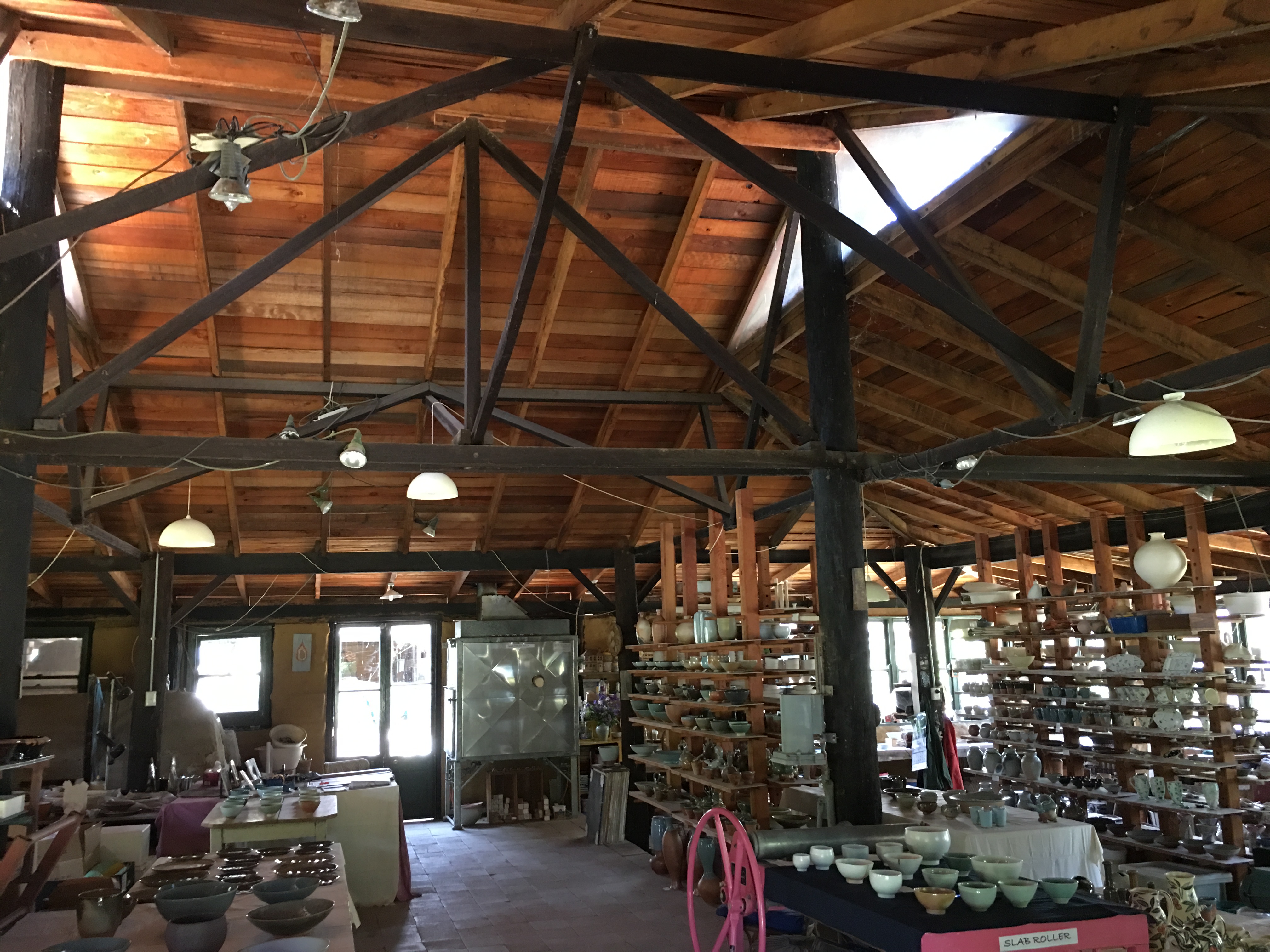
I’ve noticed over the years that my better pieces, which tend to be more expensive, don’t sell very well from here at the studio. This is how galleries earn their living. It’s their job to know people with fine taste and specific knowledge about certain works. Some of these aesthetes are also well healed, so can afford to have developed fine taste. Others go without food to pay for their art ‘habit’. It takes all kinds. So this pottery open studio sale is just that. A chance to get to look inside a working potters studio and see what we make and how we do it. I spend a bit of time throughout the day showing visitors around the workshop and kiln shed. Explaining the processes that we use and how it differs from the norm. I have a serried rank of rock crushers and grinders, culminating in a large ball mill and drying bed area. This is necessary, because all my exhibition work is made, not from clay, like all other potters, but from ground up stones, gravels and ashes that I collect locally and process on site here. Added to this that all our work is wood fired. It gives the work a particular look and feel.
What we make isn’t unique, but it does have a particular character.
After all, they are just bowls, cups and plates!

Open Studio

The Southern highlands Arts Festival is upon us, and so are the Open Studio Weekends  are starting this next weekend of the 5th and 6th of November and followed on the next weekend of the 12th and 13th.
img_3780Two firings in 7 days
We have the kiln unpacked and re-packed and ready to fire in 5 days. This is only possible because I had all the pots made and bisque fired before I left to go to do my research in Korea. All we have to do now is glaze them and make sure that they are well dried before packing them into the kiln. I have learnt from experience that if I pack my thick felspathic glazes wet. They can just fall off from the outside of the pots. Especially from the underside of bowls.
It has been too hot and dry to fire for the past 2 days, so today has been forecast to be overcast and showery. I wake at 4.00am, just like clockwork. I amaze myself that  I can do this, but it just happens. I read an article in ‘NewScientist’ magazine recently about our brains ability to track time accurately, even when supposedly asleep. The article maintained that only part of our brain sleeps. A lot of it stays well awake, and is a very good time-keeper. I know this as a fact for me and my brain, but I can’t speak for others. I thought that I had taught myself to do this as an art student. Waking up every two hours to turn up the gas pressure on the kiln. I could wake up just a minute or two before the alarm went off. I didn’t like the alarm, so I taught myself to pre-empt it by a minute or so to avoid its harsh reality. Apparently, I’m not at all special. Loads of people can do this with no effort. It’s apparently quite normal. Ho-hum! There goes my last claim to be able to do something ‘special’.
We have the wood all cut and dried, up in the wood shed, we have all the pots bisque fired and stacked in the pottery. All the stones have been ground up and powdered. All the ashes have been dry sieved and bagged. All the glazes are made up and tested. Nothing can go wrong now!
img_4435
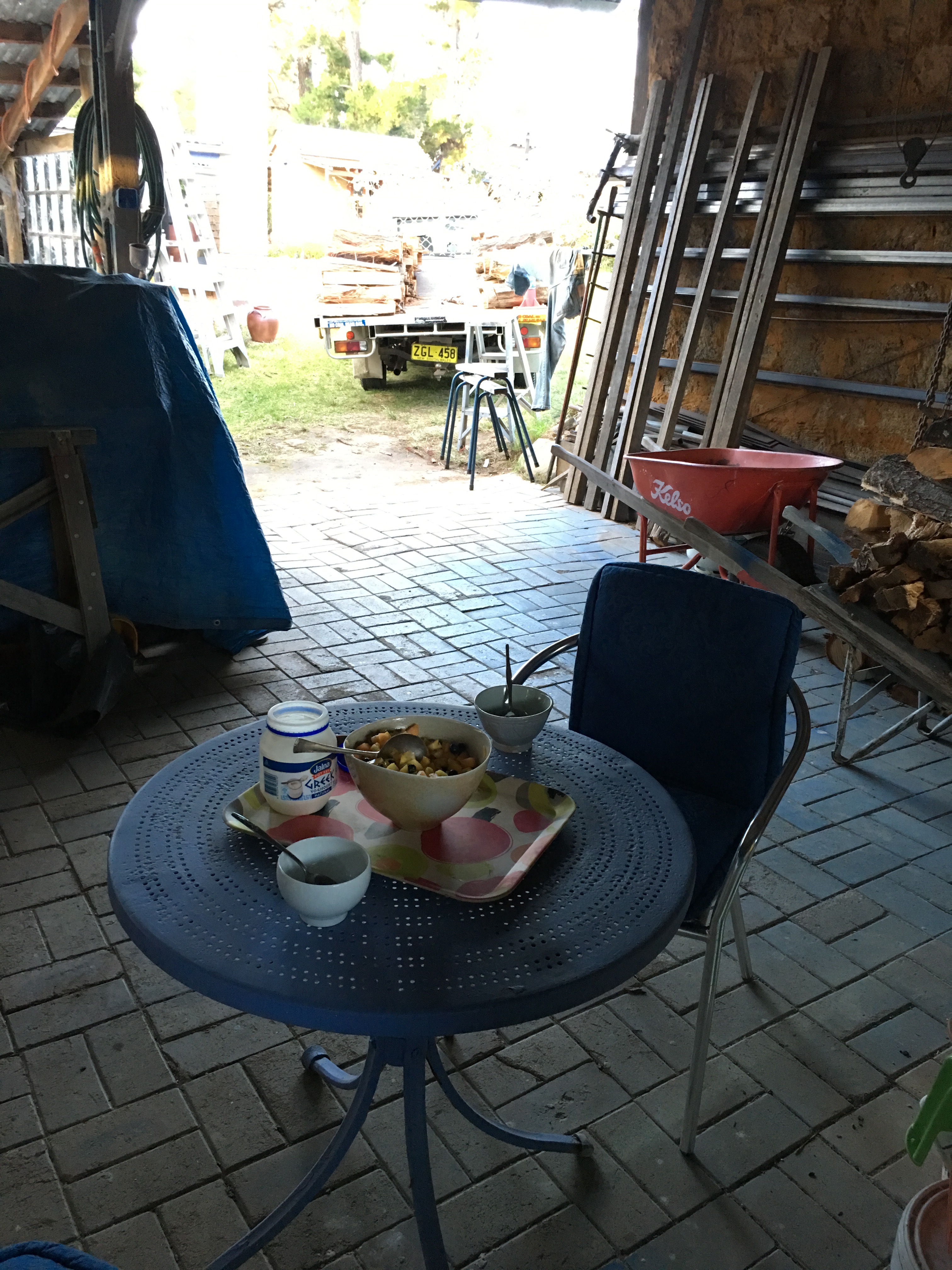
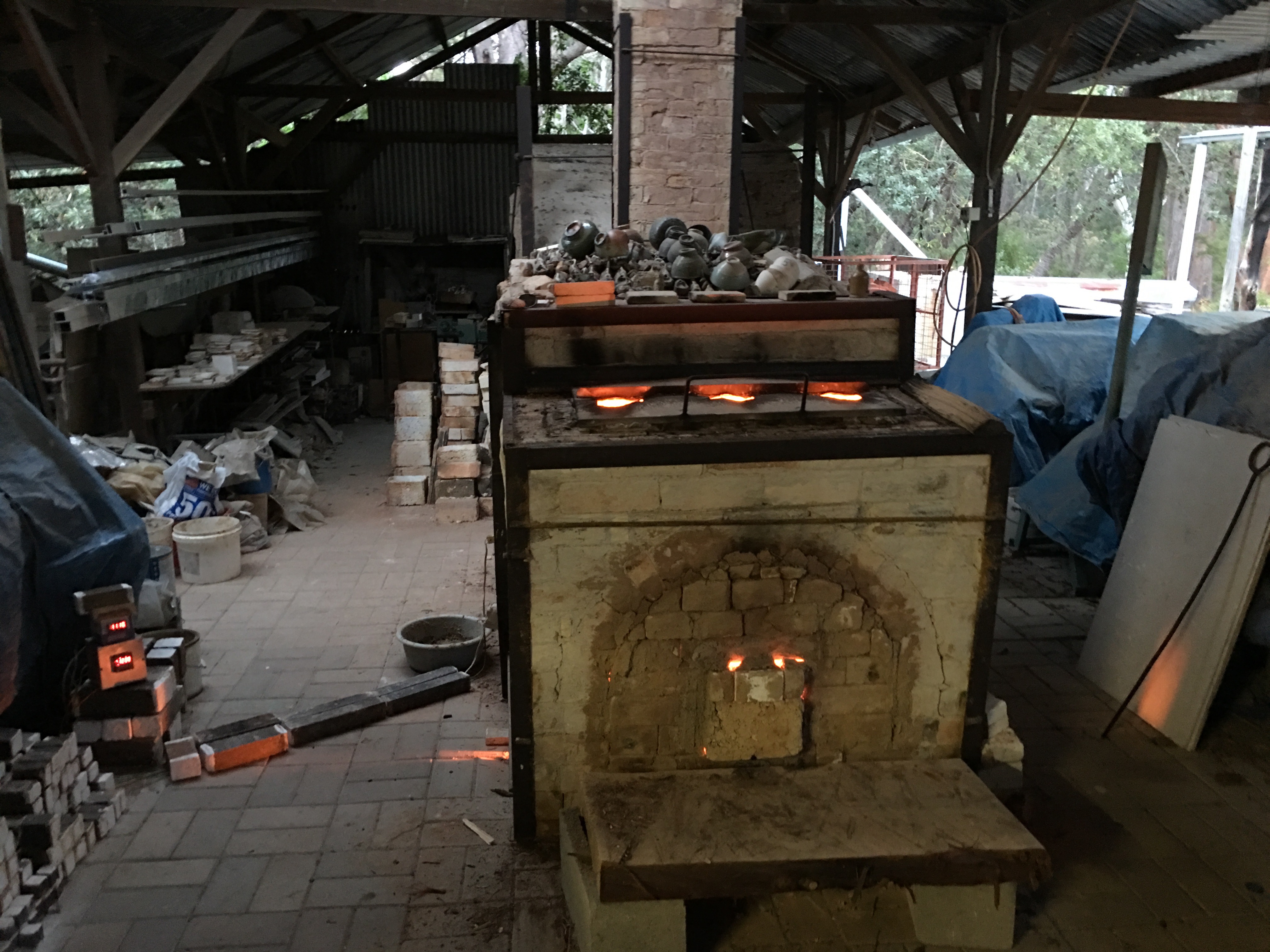
 The firing proceeds well, very well. Just as it ought to after 48 years of learning. Starting in the quiet at 4.00 am and firing through into the night. I like the quiet of the very early morning. I can get a few minor things done while I’m confined here, once the kindling stage is over and I start to put big logs into the main firebox. I can steal a few minutes at a time to clean up my work bench and grind the bottoms of the pots that we just unpacked from the last firing. The Lovely  wakes up with the light and brings me down some breakfast and a pot of freshly plunged coffee. We have fruit salad and marmalade from the pantry to put on our toast. It’s a nice quiet time together.
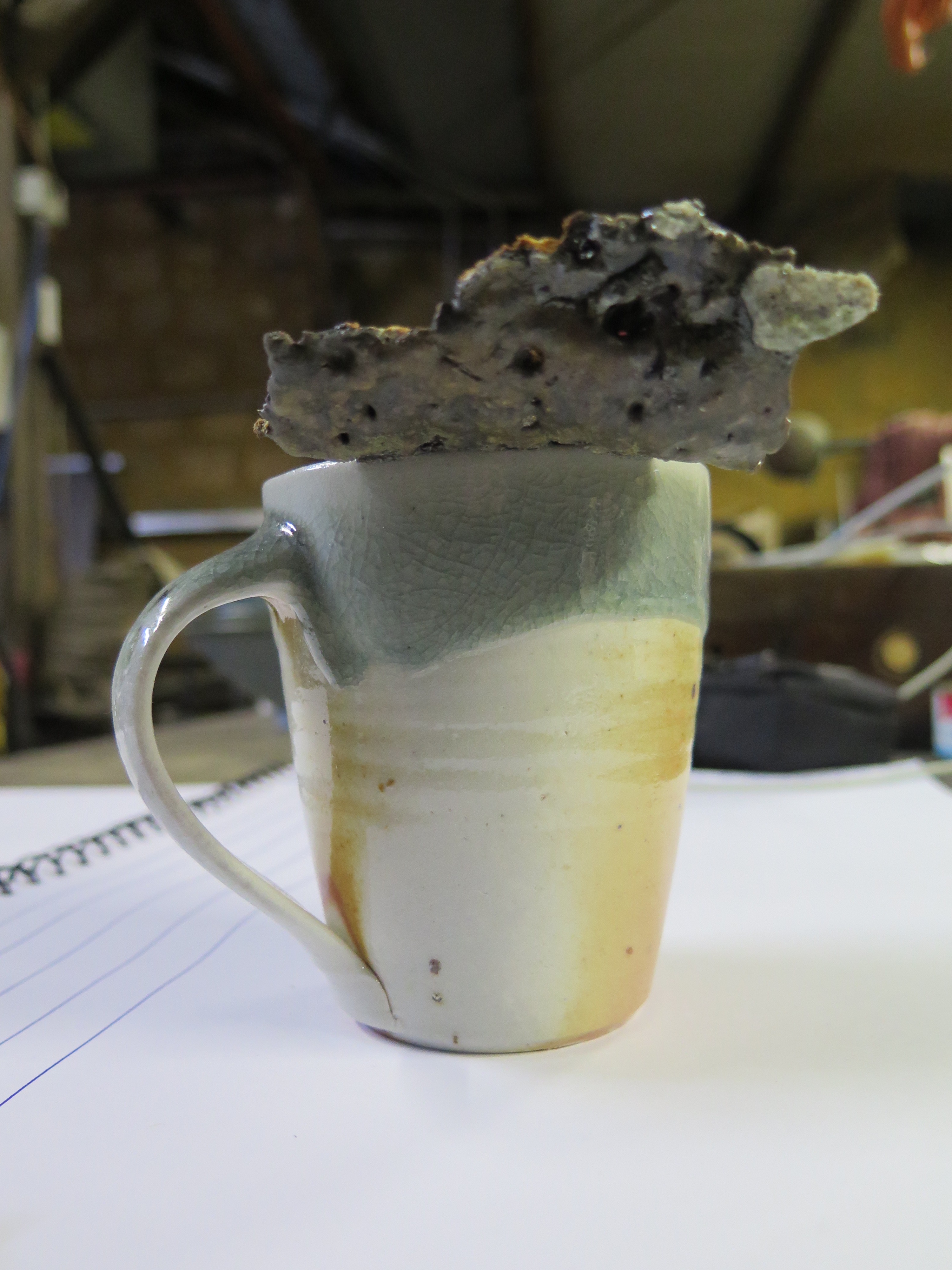
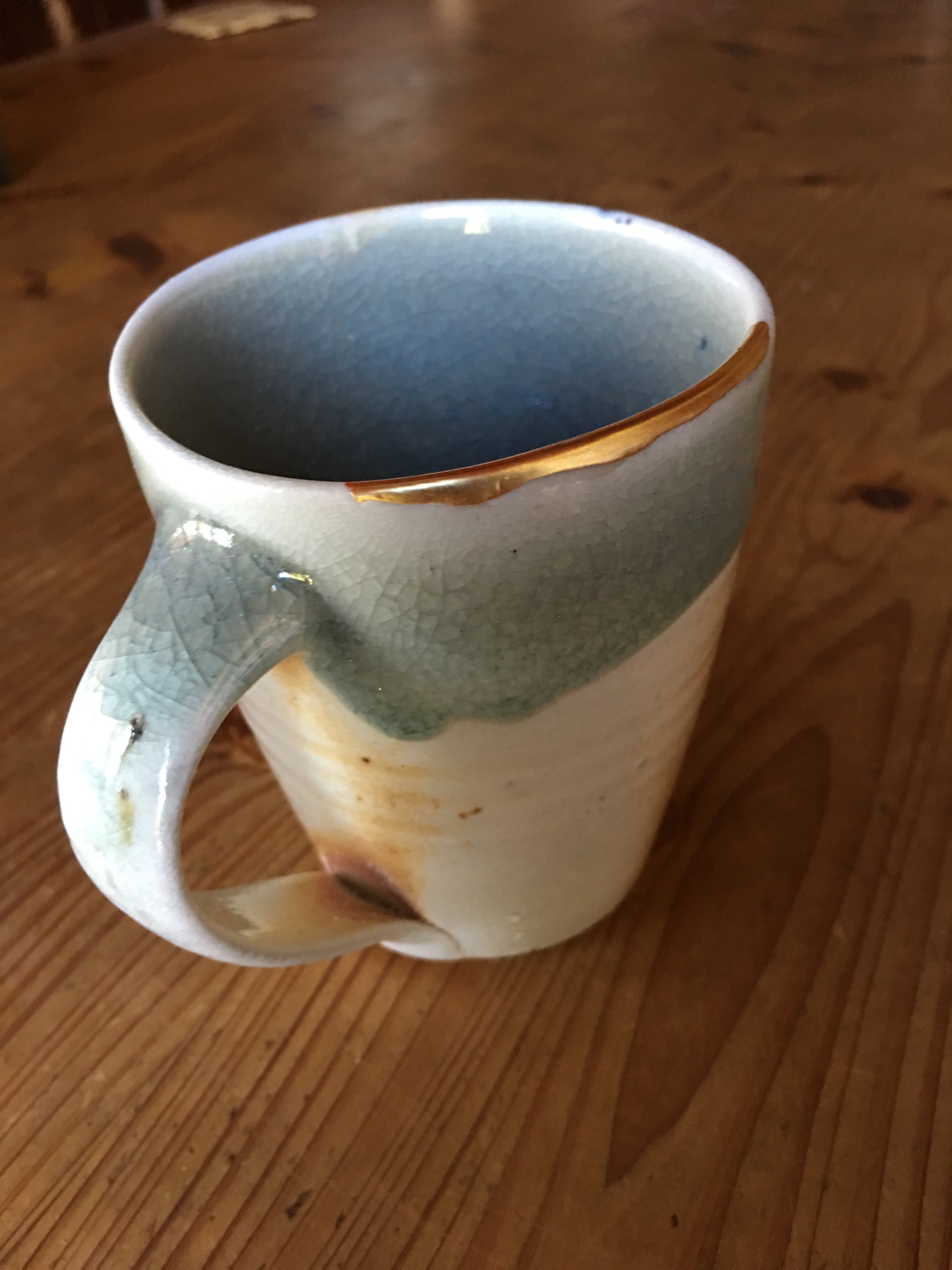
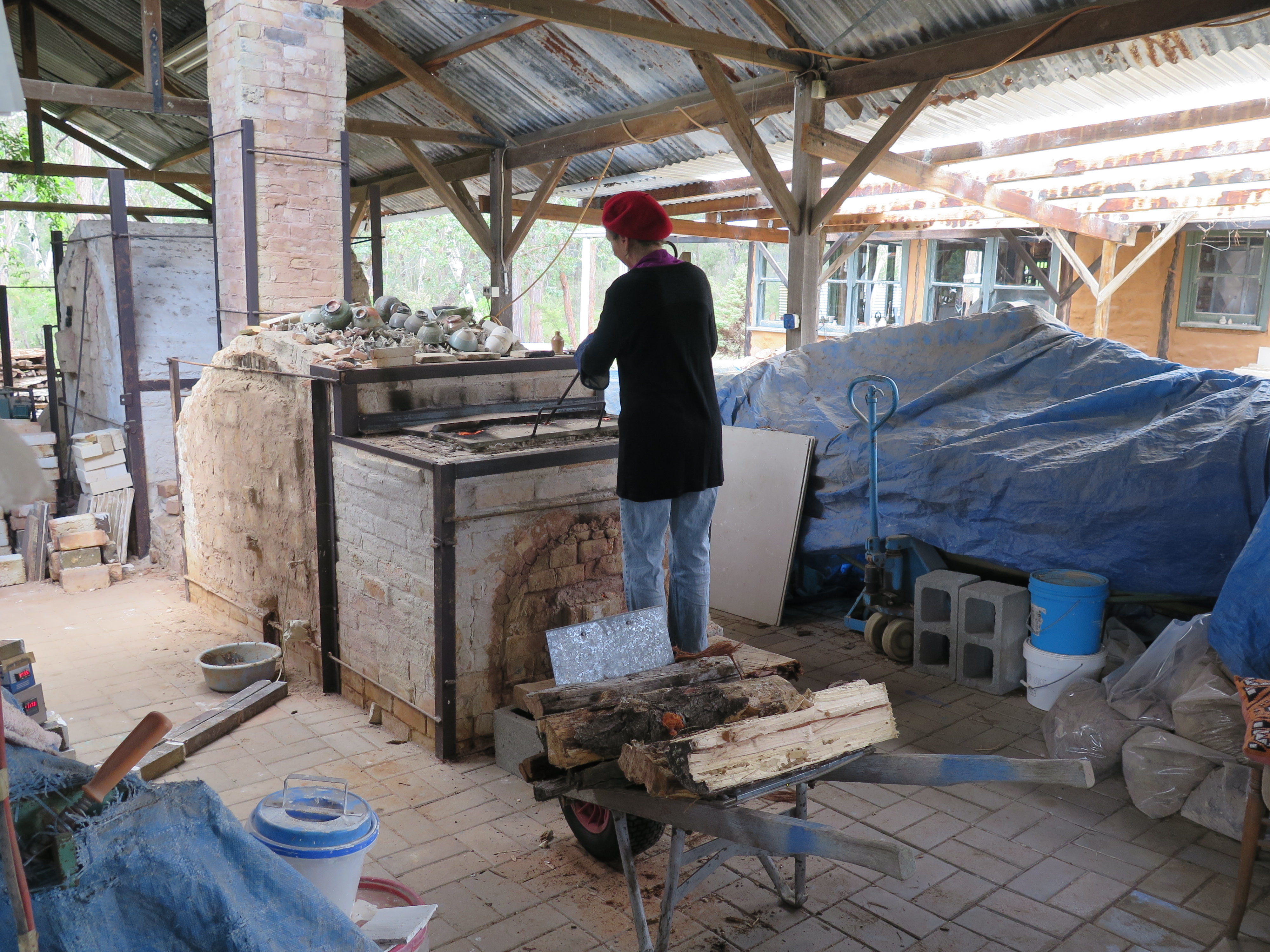
In the middle of the day I’m well into the reduction cycle and using quite large, heavy logs, that can burn for 40 to 50 mins. This gives me time to do other jobs that demand a bit more attention. I decide to repair the coffee cup from the last firing that caught a falling piece of kiln brick. I spend a bit of time on it, grinding and polishing the brick fragment away to nothing, then polishing the remnants of the glazed rim back to a fine finish. I decide that since I’ve spent so much time on it. I will keep it for myself to use in the kitchen. I decide to do some Japanese inspired ‘kintsugi’ repair on it. Janine takes over while I concentrate.
img_4440  img_4436img_4437
I rebuild the surface back to its original profile and then finish it with some 24 carat gold. This of course takes me several days, just a few minutes at a time, whenever I can fit it in. I do a batch of ‘less-than-perfect’ pots from the last firing. They all turn out OK. They are still ‘2nds’, but seconds that have been shown a bit of attention and care. Their ‘flawed’ surfaces turned to a thing of beauty, with some time, love and respect. Just as we do for each other. We shine when we are loved. These pots now glow in a simple honest way.
img_3798 img_3797
img_3799
For some reason, I can’t help but think of dentistry!


Best wishes
Steve

Be Prepared

I realise that I’m awake and I’m not going to get back to sleep. It’s 4.00 am and we are all ready to fire the kiln today. I usually wake up at about this time on firing days. It’s a habit that I have got into. I like to start early. I love the quiet of the early morning. It’s beautiful. There is a very special time. Just a half hour, when the birds start to wake up and so does the sun in response to their chippering and calling. They have very fine senses. They are awake and calling when it is still dark. I can’t tell the difference with my old worn out eyes. but they know and call out to tell each other. They summon the sun.

img_4394 img_4386
 img_4406 img_4408
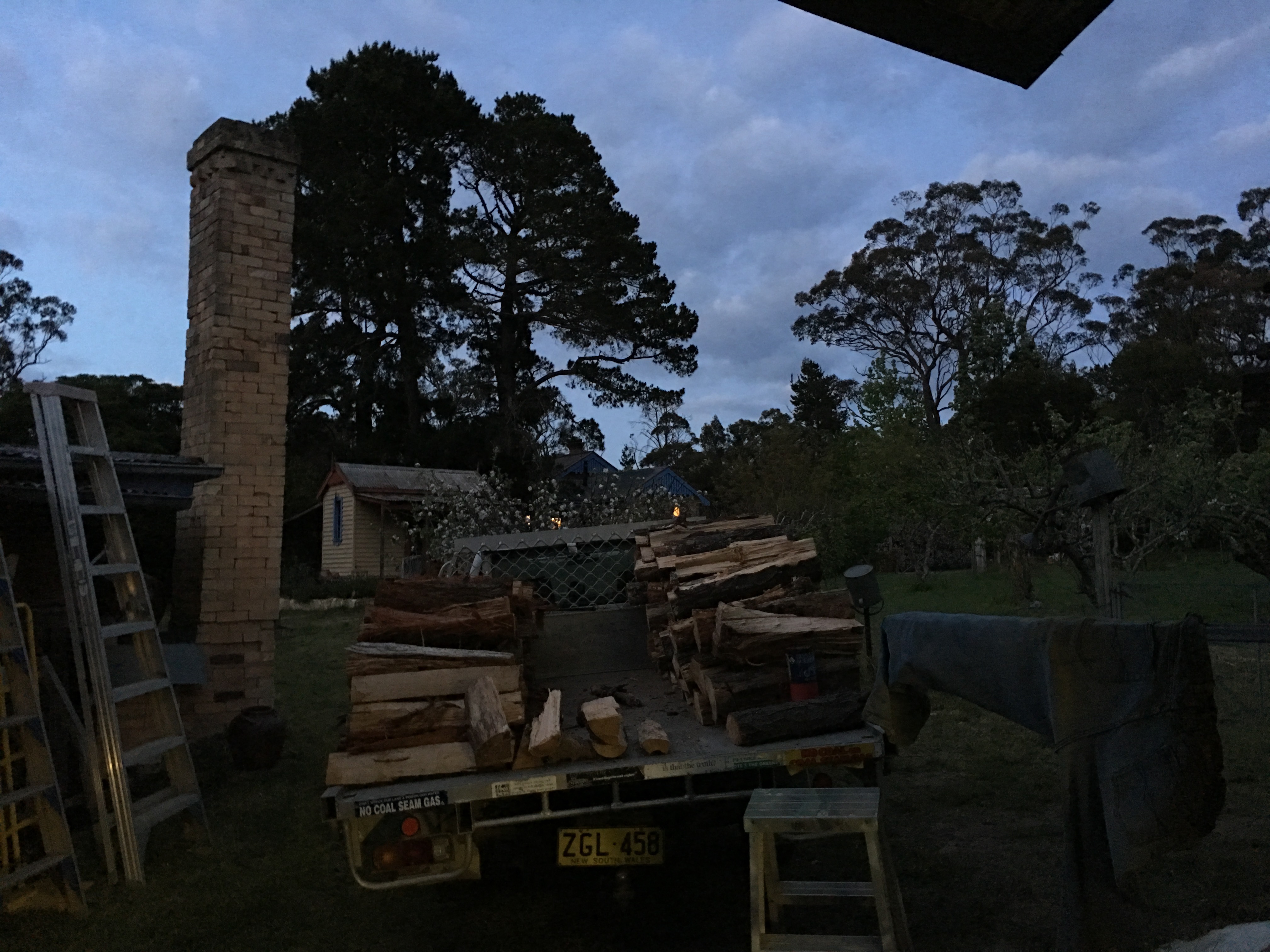
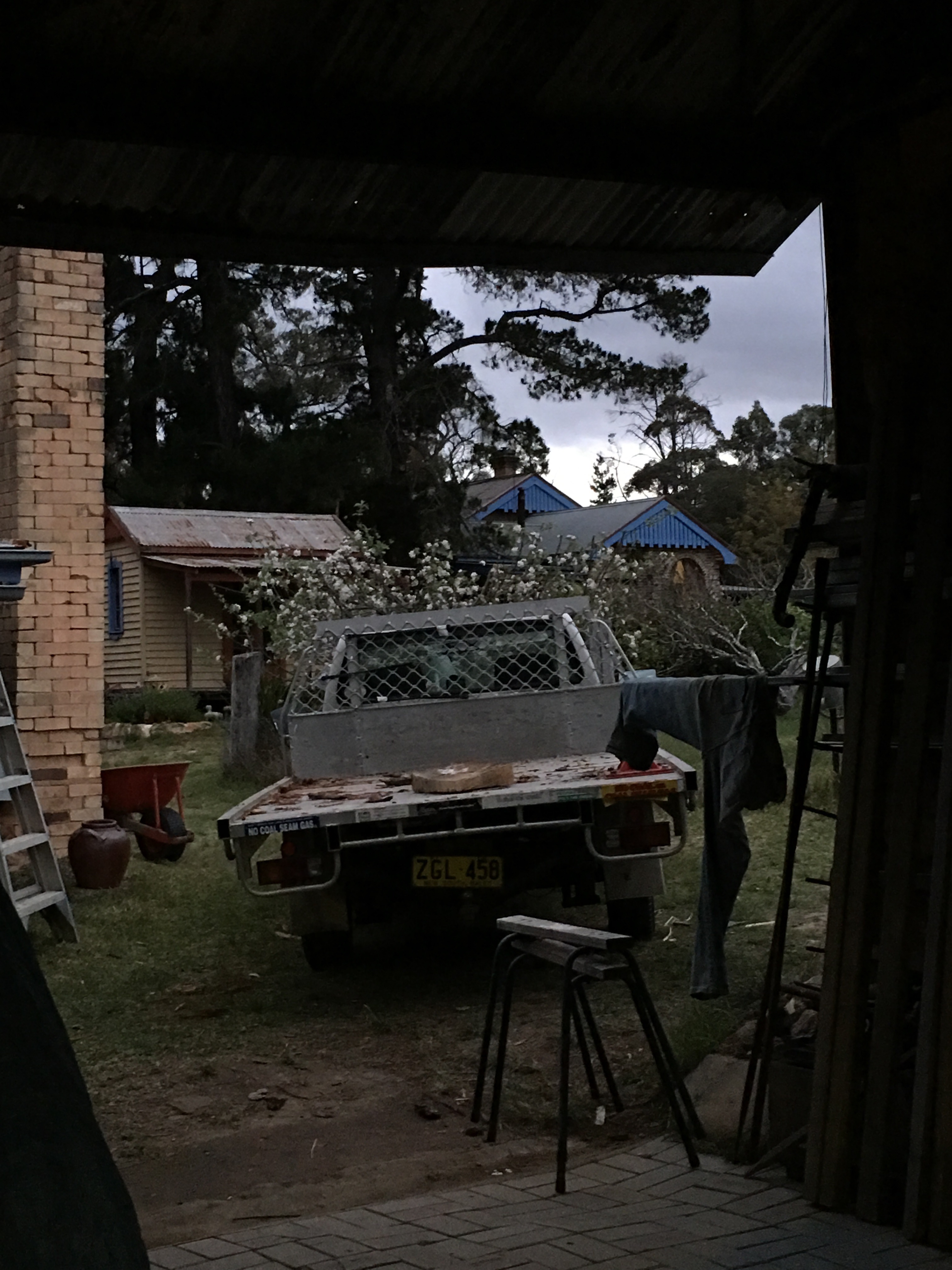
We packed the kiln yesterday and bricked up the door with our home-made fire brick blocks. It’s a big door for easy access for packing, so we needed some large blocks to speed up the door bricking-up process. Making our own firebrick is just one of the many things that we do to live this life of self-reliance. The sun was loosing its heat as drove up to the wood yard and loaded the truck with both pine and stringybark logs. We are all finished before the evening dusk falls. The truck sits in the dark and is slowly revealed this early morning as the sun comes around the curve and slowly illuminates the house and orchard in the distance.
img_3687 img_3690
 img_3689 img_3686
We have a new wood shed now, so all the pine is stacked and ready to load, dry and seasoned. Such luxury! it’s only taken us 40 years to get this small convenience built. There is always so much to do. We have lists! Even lists of lists. But ultimately, it’s a case of the squeaky wheel getting the oil. But now the time is here for a kiln wood, wood shed and it’s a beauty. We’ve had a wood shed for the house wood, particularly for the kitchen stove timber. We couldn’t function here in this self-reliant way without one. That was a very squeaky wheel and got built after only 10 years here. This masterpiece of re-cycling cost next to nothing, being made out of the old wooden tank stand and old roofing iron that we were given. It’s only taken us 40 years to get around to it!
img_3708  img_3713
We are officially into the bushfire season now, so there are fire restrictions in place. Luckily for us today, it is overcast and there are showers forecast. It has just started to rain gently, but just a brief shower. I don’t even bother to cover the pine on the truck. Last night I called the fire captain to tell him that we were going to fire the kiln. It’s a polite notification. We have been here 40 years doing this with no problems so far. That is largely because we are very careful. During the spring, we pack the kiln and wait for a suitable day to fire. A day like this is excellent. Cool, overcast and with this brief shower of rain, it couldn’t be better for firing. The safest of conditions. If it were very hot and windy, we wouldn’t light the kiln. We’d just pack it and leave it full and wait for a break in the weather.

img_4415 img_3693
img_3692 img_4416
img_4418 img_3670
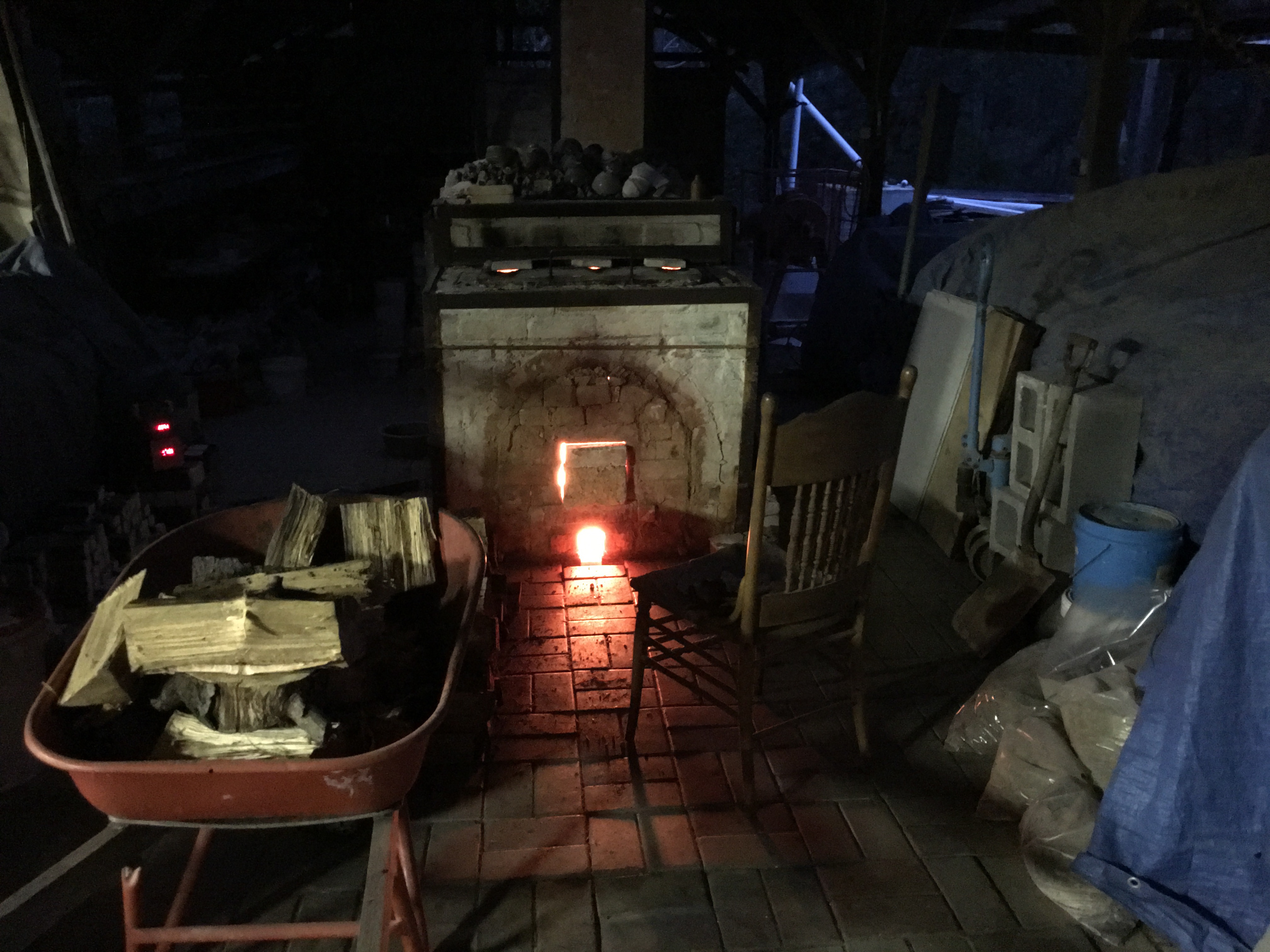
When Janine gets up, she brings me breakfast by the kiln. We eat all our meals during the day down in the kiln shed. We get a visit from the chooks, who call in to see what going on. We fire through into the night. It’s a civilised, steady, easy firing process. With all the wood already cut, split and seasoned in advance. This prepared wood that we are burning, is work that we did months ago in preparation for this moment. To make our lives easier now. We make decisions and make preparations for the future in this way so that we can keep on working, and living this life into our older years.
img_3694 img_3695 img_3701
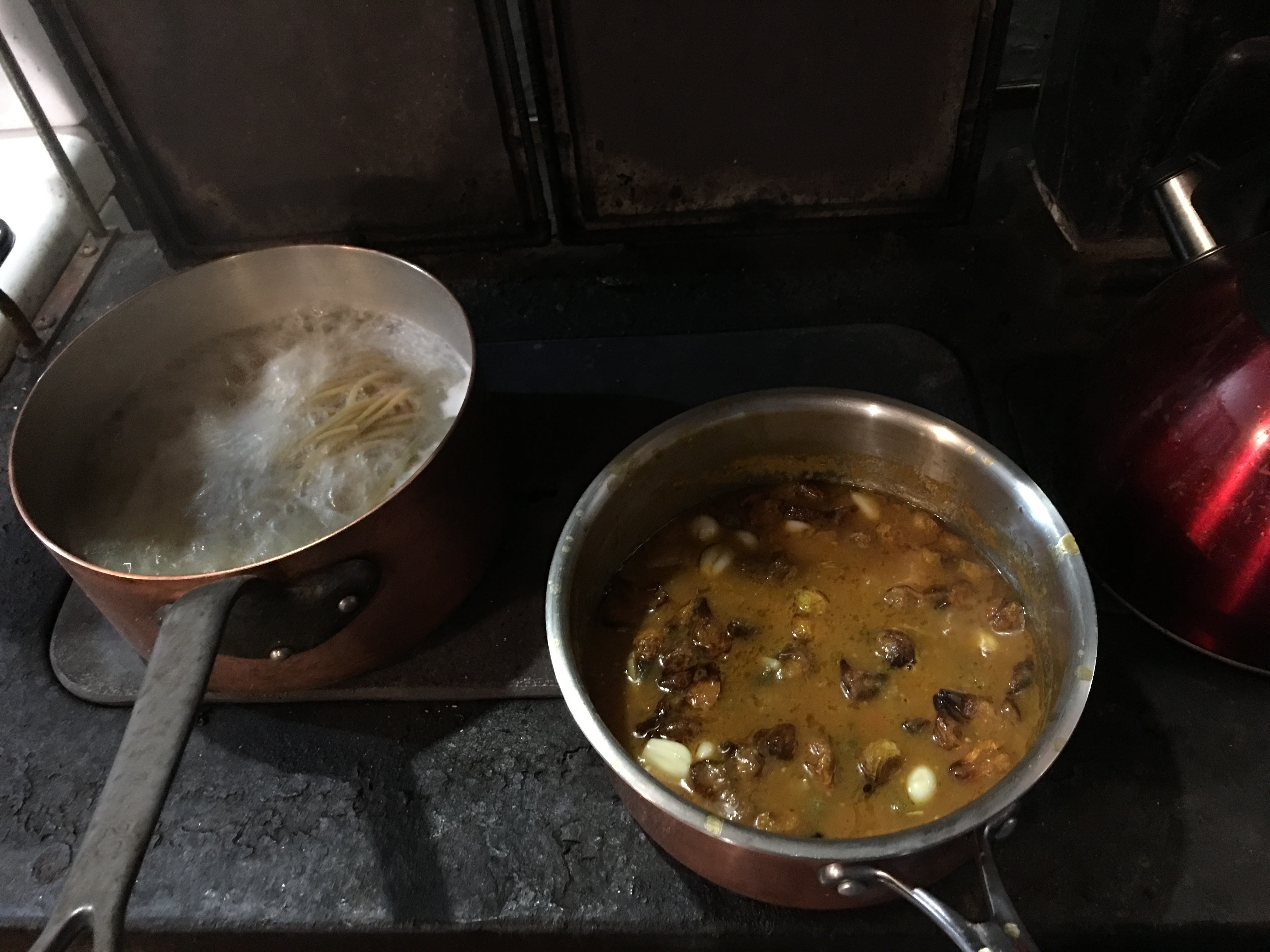
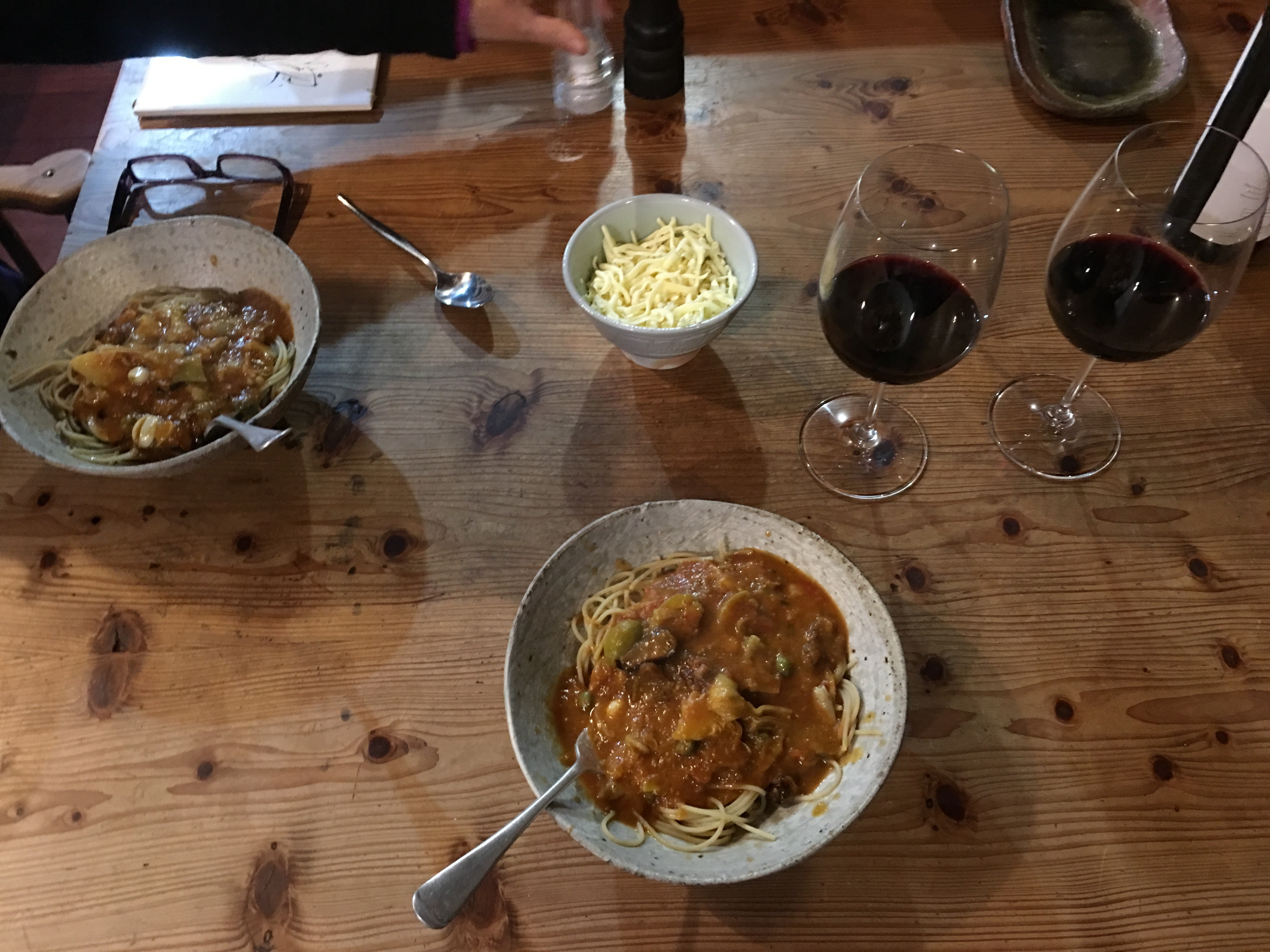
We finish the firing at night, on the same day that we started. Packing and firing the kiln is an intense couple of days. We celebrate the end of the firing with a bottle of bubbly. I cook pasta for dinner. It’s quick and simple, using all our own home-grown ingredients, preserved tomato pasta sauce, our own garlic, our dried tomatoes and dried mushrooms. It’s just like our firing, everything prepared in advance to make this moment of creation easier.
img_3703 img_3704
img_3707
Best wishes
from the well prepared Steve and Janine, working towards the up-coming Southern Highlands Arts Trail, Open Studio weekends. We will be open on the first two weekends of November.