A well constructed arch is a beautiful thing

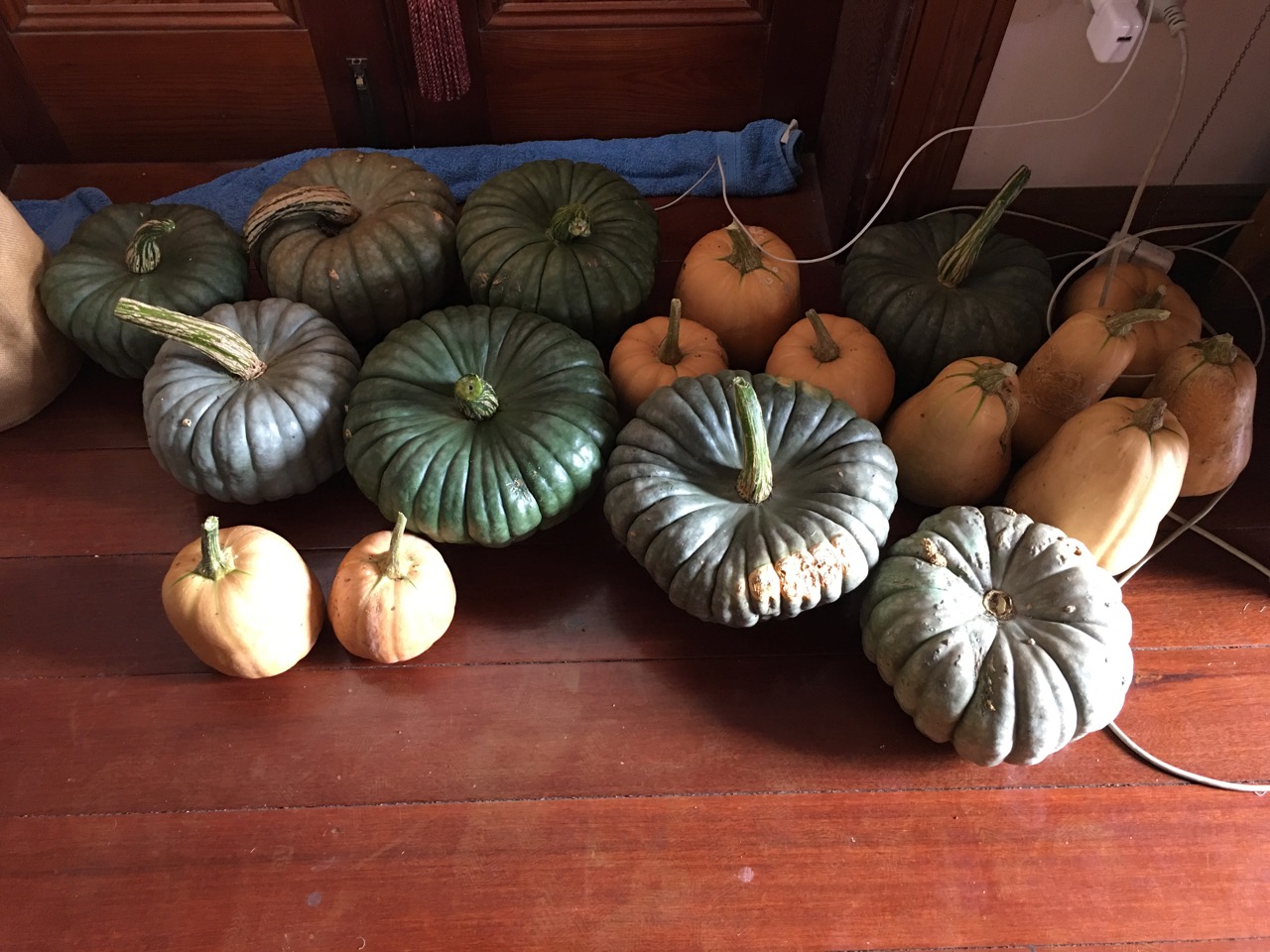
When the weekend comes around, we spend time playing catch-up. There are so many jobs that don’t get proper attention during the week, just a cursory glance. I get stuck in and pick tomatoes, Zucchinis, pumpkins, etc.

Janine has been doing all the garden harvesting during the week while I’m flat out being builders labourer to our wonderful, sensitive and highly skilled, couple of brick layers.

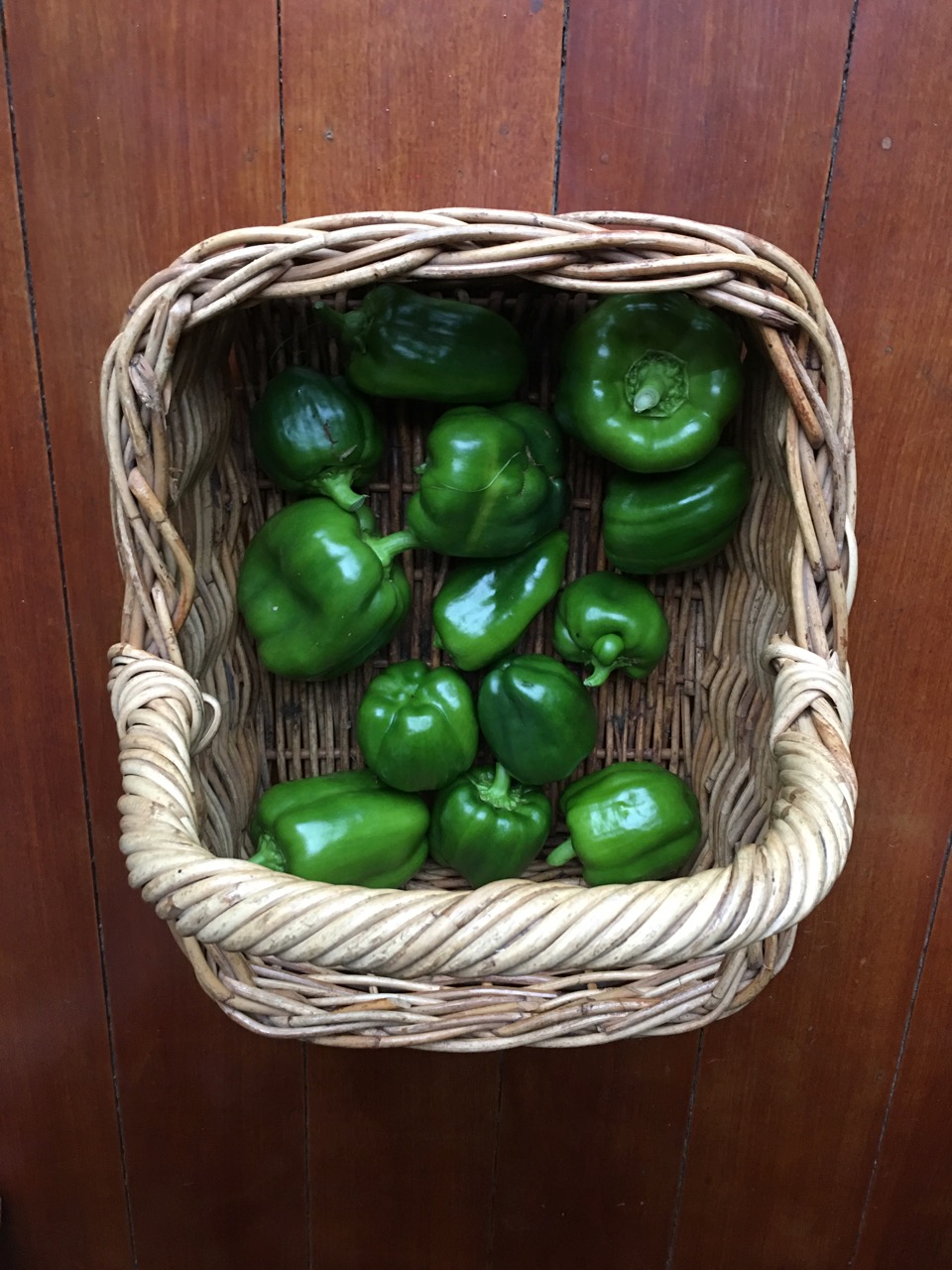
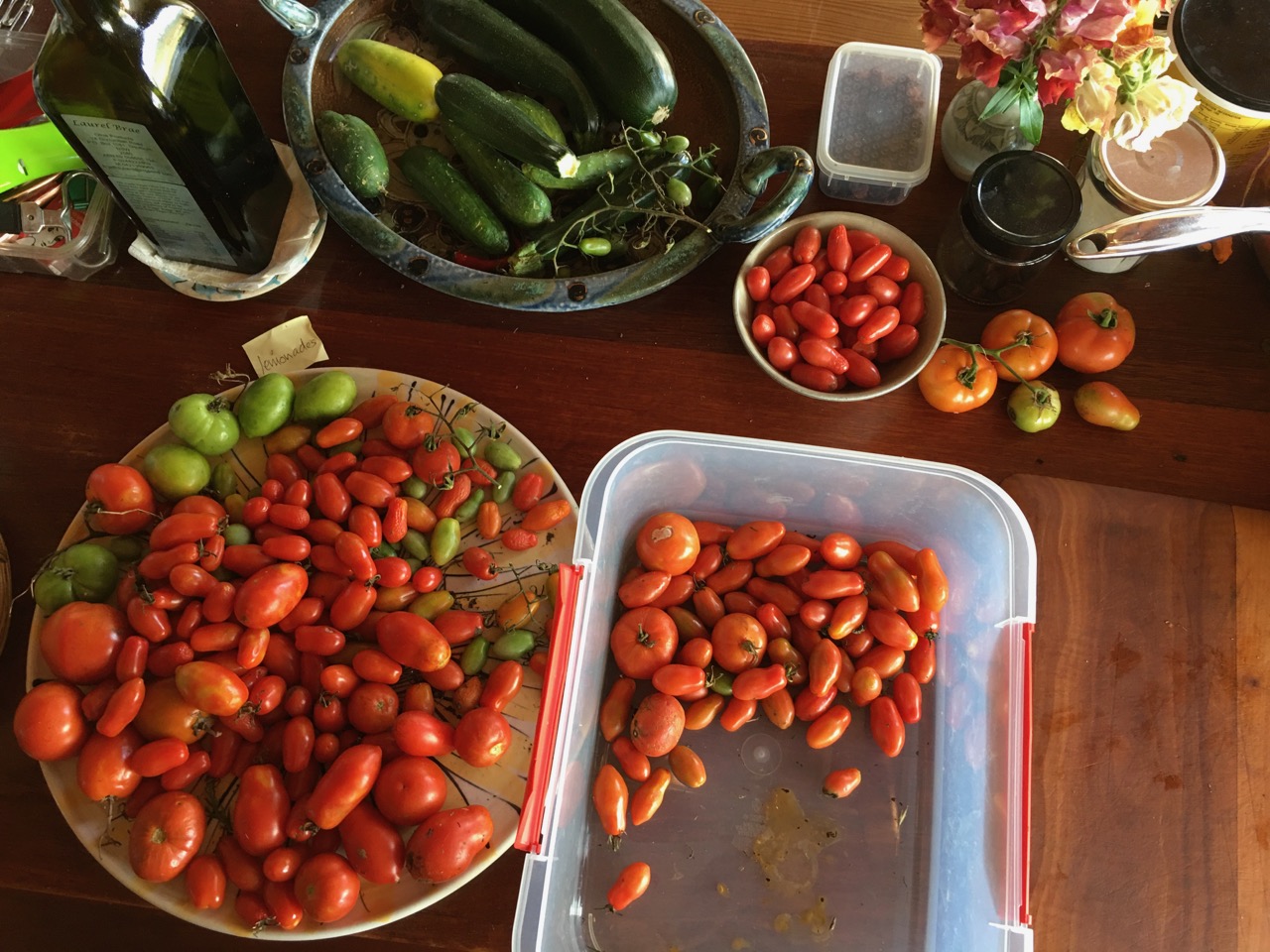
Saturday is the time for washing, sorting and chopping all the sub-prime tomatoes. The best ones are put aside for the weeks lunch time salads. All the rest are chopped up and boiled down into passata, starting with frying brown onions in good olive oil, then adding a knob of peeled and chopped garlic. This batch, I’m adding lots of capsicums and chilli, as well as the usual bay leaves, a sprig of thyme, some sage leaves, and loads of sweet basil. The sweet basil is trying to go to seed just now, so I have to continuously pay attention to pick off the flowering heads, with a couple of leaves. Back in the kitchen, I strip all the useful leaves from the somewhat woody stalks and florets. I eventually get about 3 hands full of leaves and my hands smell divine for an hour.
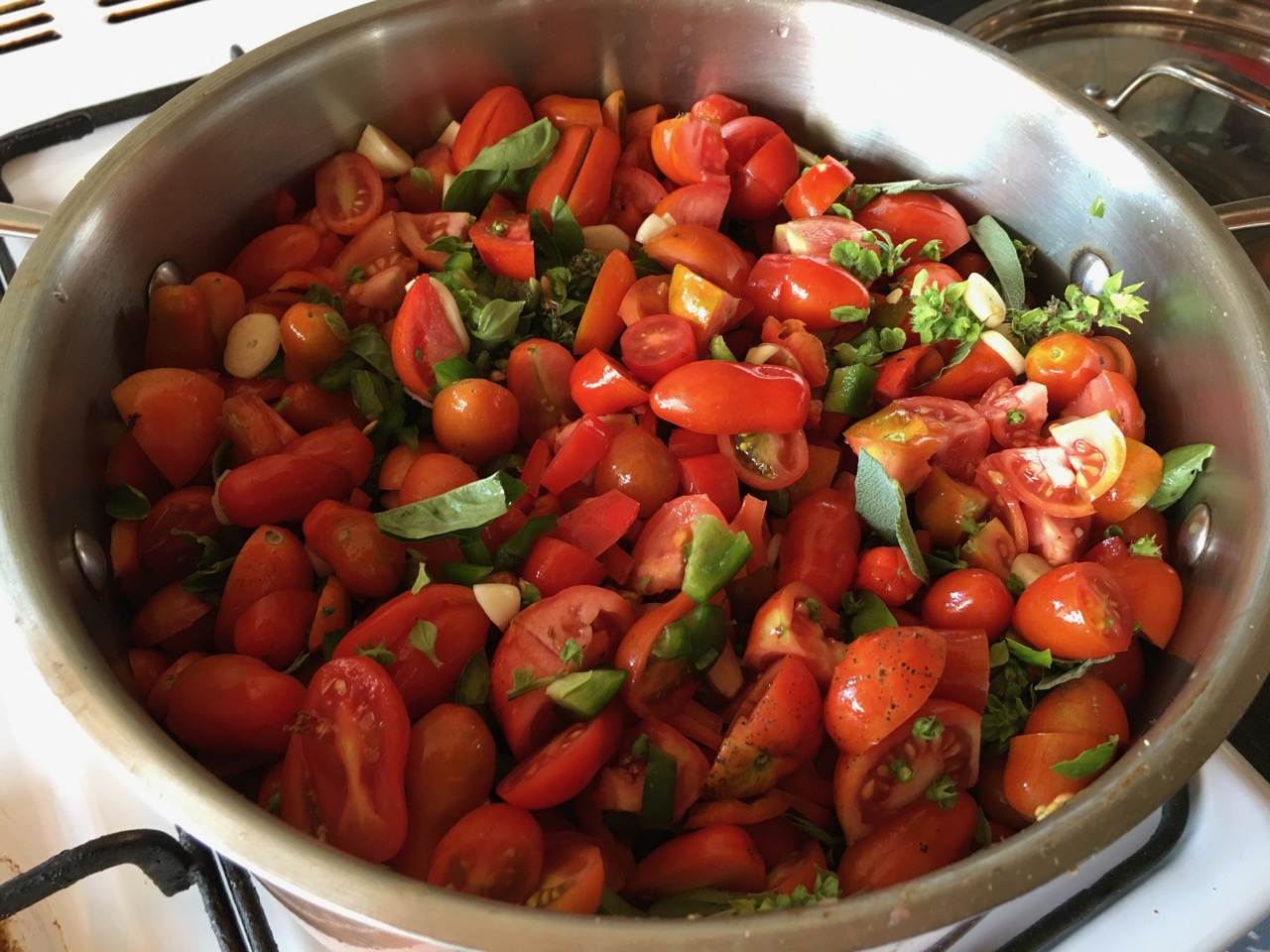
I usually bring the chopped fruit to the boil and then continue for an hour longer on a low simmer. Once the vegetables and herbs are well and truely reduced to pulp, I put the pan aside and let it cool. Later, I come back to it and pass the boiled pulp through a moulii sieve to extract most of the stalks, herbs, seeds and skins. I choose not to use the very fine screen in the moulii. I usually use the medium screen. This lets a few tomatoes seeds through, but it also passes some of the herbage. I like the rougher texture. It somehow feels more honest and real.

This time, I also add 2 teaspoons of salt to the pan, just for that little extra savoury hit. I generally avoid salt in my cooking, but tomatoes and eggs, both really comer alive with just a little of the poison. I do this because salt is in everything that you buy, and in excess, it isn’t good for you. As nearly all processed foods are loaded with the stuff. I think that it’s best to keep my consumption of self-inflicted salt as low as possible. The result of this self-imposed restriction, is that Janine and I both have blood pressure that is at the lower end of normal. 110 over 60.

The resultant puree is again brought to the boil to reduce it by about 1/3 and then bottled. My 5 litres of original chopped fruit, is reduced to 2.75 litres of tomato sugo or passata.

This stuff is magic. It’s so hard to describe a combination of aroma and taste, but trust me it is amazing. This ritual of making tomato sauce every summer is the closest that I come to having a religion.

We chopped up one of our big greenish grey, glaucous ‘Queensland Blue’ pumpkins and Janine made pumpkin soup that will last for a day or two. Even feeding our two brickies.

We have been supporting our brick laying brothers by mixing lime mortar, stacking bricks up onto the high scaffold, passing up queen closers and snap headers to them and generally being helpful and supportive in whatever inept way that we can, whilst staying mostly out of their way. It can be a bit dangerous working below a scaffold, with occasion objects falling down at times. The odd trowel, but mostly brick spalls.

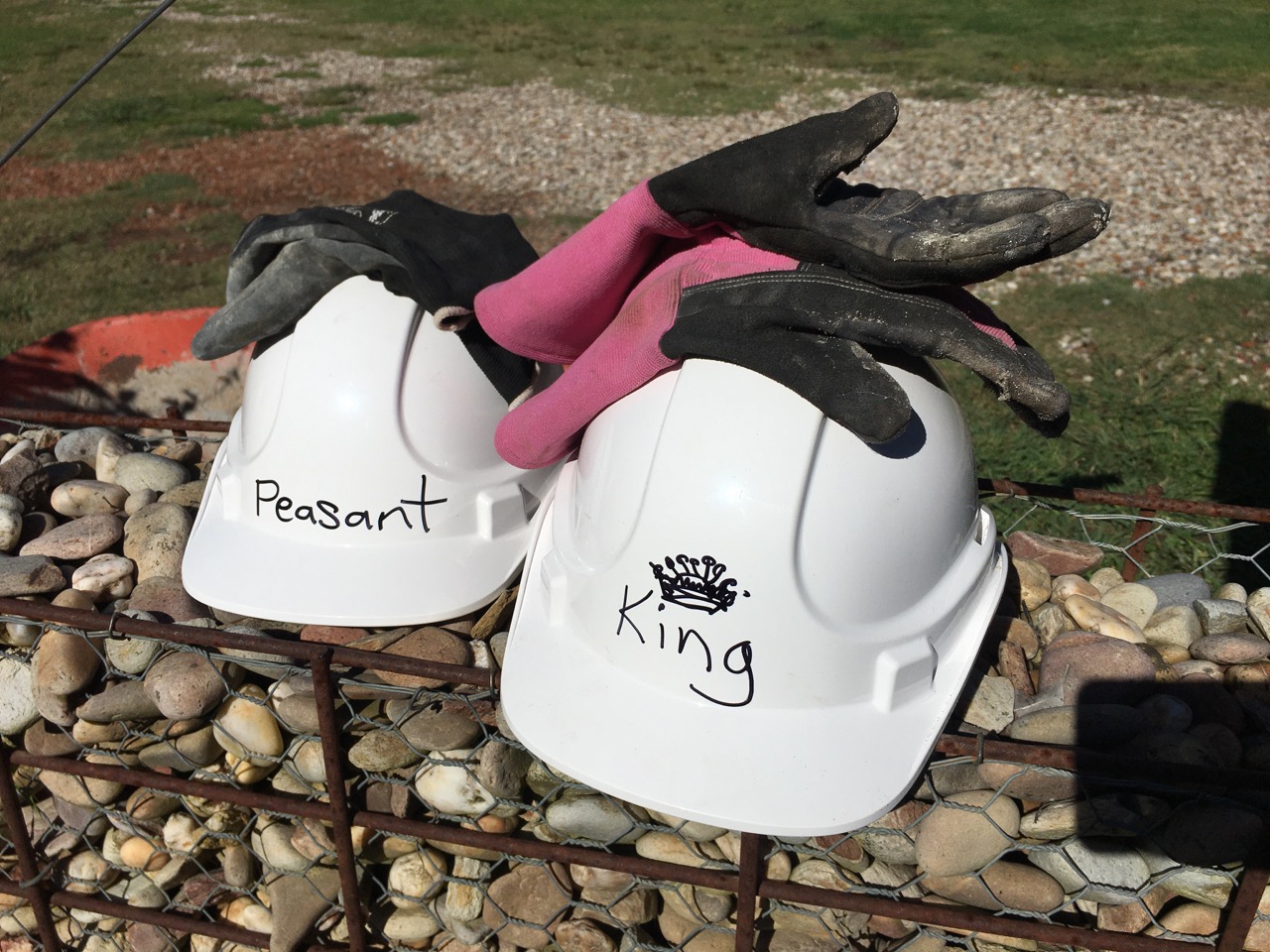
I had to go into town and buy us two safety helmets to keep us safe. Appropriately identified as belonging to the King and Peasant.
The work on the southern facade progresses this week with the home-made double story scaffold including safety rail. The arch is now completed, fitting the two keystones that close the archs. A ‘keystone’ is the last brick that fits in the arch, joining both sides of the span securely. The key stone is no more important than any other brick in the arch, every brick is equally important, it’s just the last one to be placed. Once the arch is secure, the wall is closed over the top, requiring me to cut a few special tapered ‘wedge’ bricks to bring the coursed brickwork back to level over the arch.

A well constructed arch is a beautiful thing. I built over 300 kilns over the course of my kiln building career. With the assistance of my good friend Warren, who was my right hand man for over 25 years, we prided ourselves in creating perfect arches in our brick lined pottery kilns. I know the whereabouts of some of these early kilns, and they are still working well after a very long life of untold firings over 30 years and more.

A well constructed arch is a beautiful thing!

We have spent two days on it and there is still the best part of a day to go the get the gable facade complete. It will require another small centre section of extra scaffold to allow the ridge to be reached comfortably and safely.
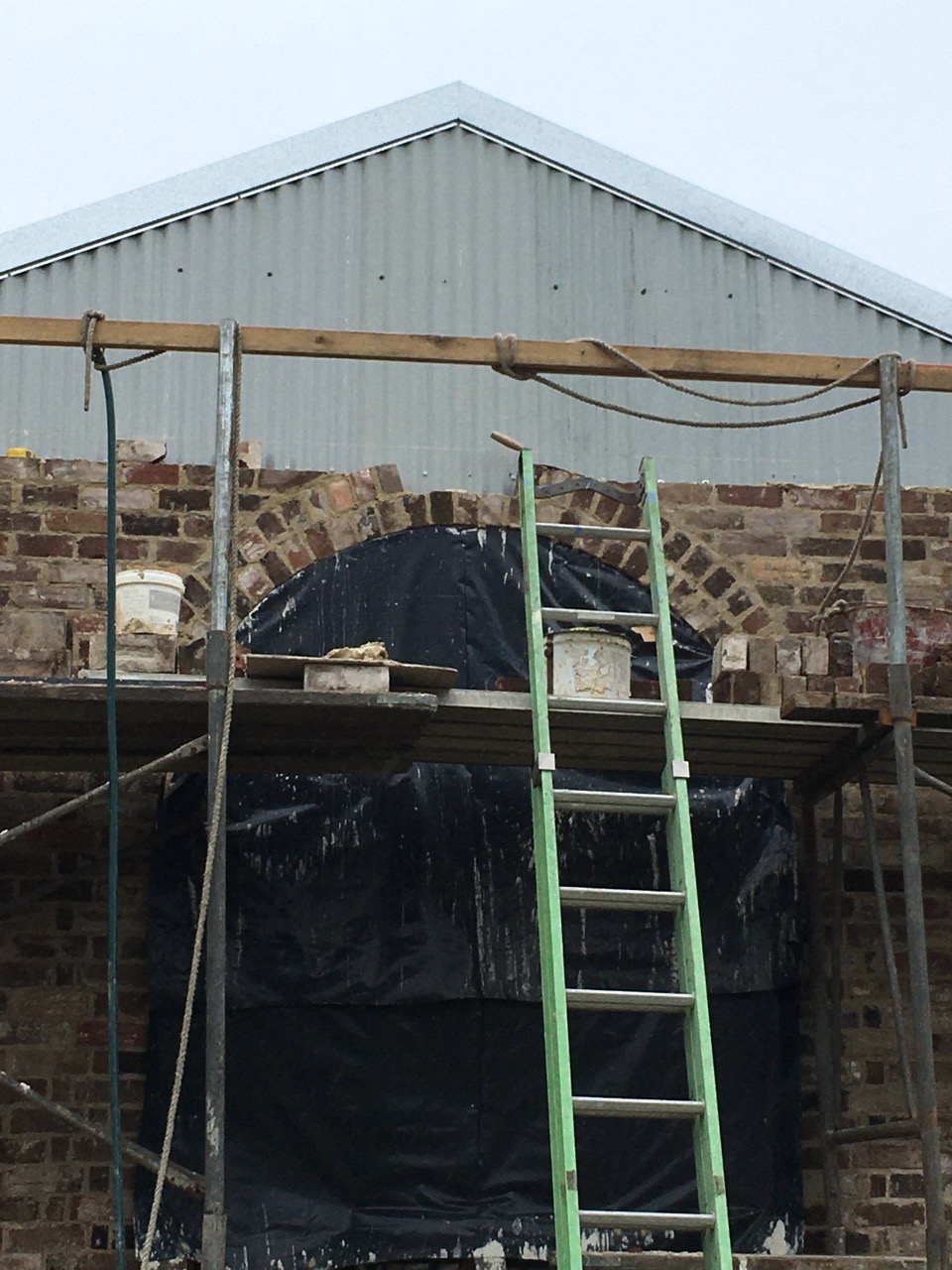
As the rain has started to set in, and is forecast for the remainder of the week, we finish the day by wrapping the new brickwork with its soft, freshly laid, mortar joints and covering it with black plastic to stop the rain from washing the joints out over night. If we are lucky, the rain will be very light or hold off for another day so that we can get the wall finished.

If the rain persists, we will be working under the verandah area and try to finish off the front wall around the door and windows instead.

The Old Feed Mill striped bare

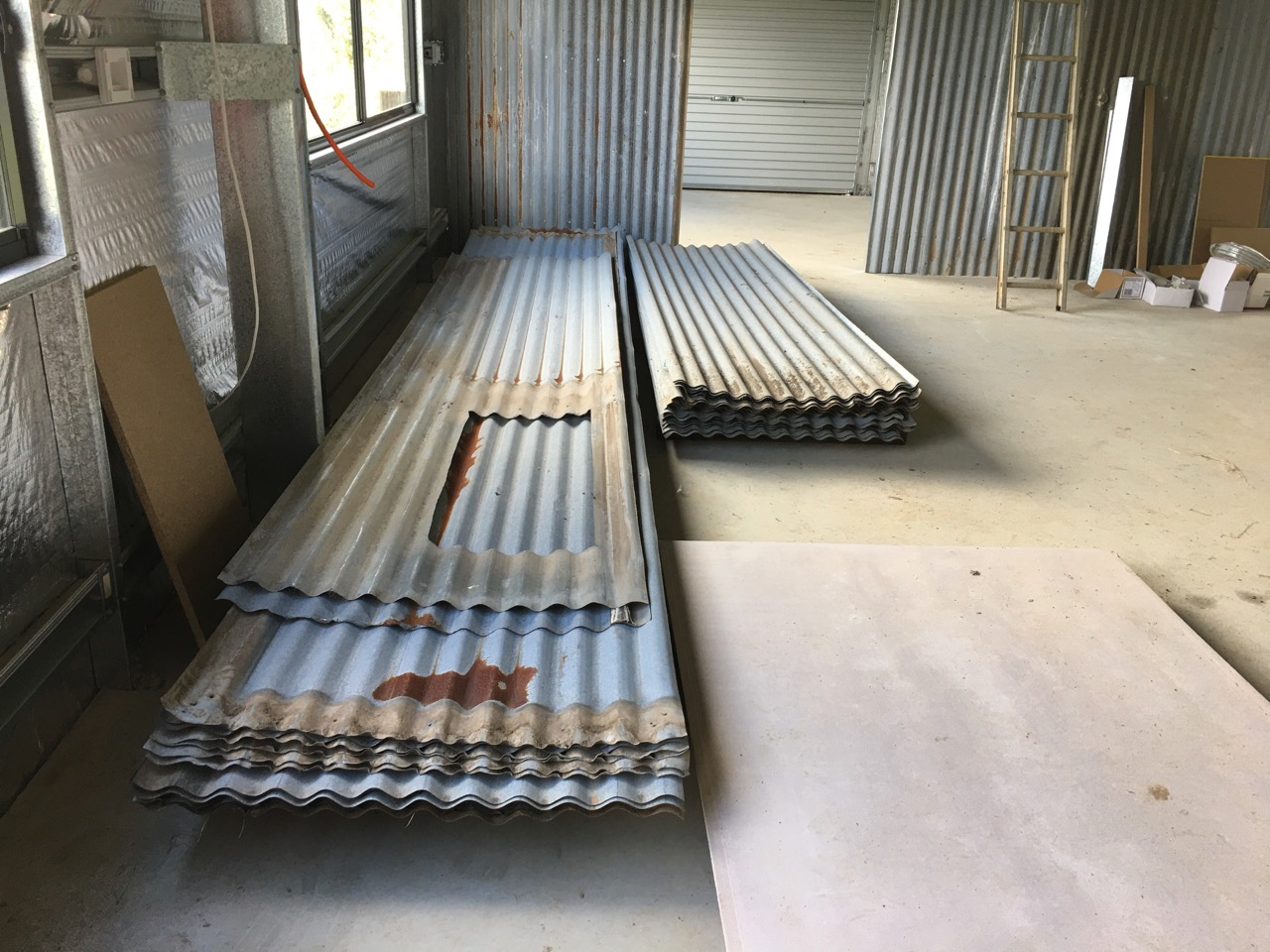
I returned to the old feed mill today to finish stripping all of the old grey weathered galvanised iron sheeting off the sheds. I was joined by my son Geordie and we finished the job of taking the walls off in intermittent rain. I’m so glad that Andy and I took the roof off yesterday when it was mostly dry. I wouldn’t have gone up there today. Far too slippery in the wet.

We loaded the truck with another full load that flattened the springs. Another good tonne of steel. This load was mostly all the long 5.3 metre long sheets. Altogether we collected over 150 sheets of old corrugated iron, totalling over 530 linear metres of roofing.

Not too bad for 2 days work! I shudder to think what this would cost new. of course I couldn’t be buying any of it new! I’d find something different to scrounge and re-cycle, or up-cycle, as it’s so trendy to say these days.

I’m very lucky to find such lovely old weathered, matt grey and slightly rusty material. It’s just what I really like. Most of these sheets will line the walls of my metal working workshop, which is over 4 metres tall, just right. Some of the other rooms will benefit also with the kiln room and the gallery getting a wall or two also. I’ll have to wait and see how far it all goes, as there are always losses in cutting the sheets to fit the size of spaces required.
It’s important to me to use these old recycled materials in this new shed. It would look awful if it was all shiny and ‘off-the-shelf’ new. This shed needs the sabi wabi feeling that this weathered old iron will give it. It needs softening and ageing in this way to make it ‘fit’ in this creative and sustainable environment that we envisage for ourselves here in our new post-fire future.
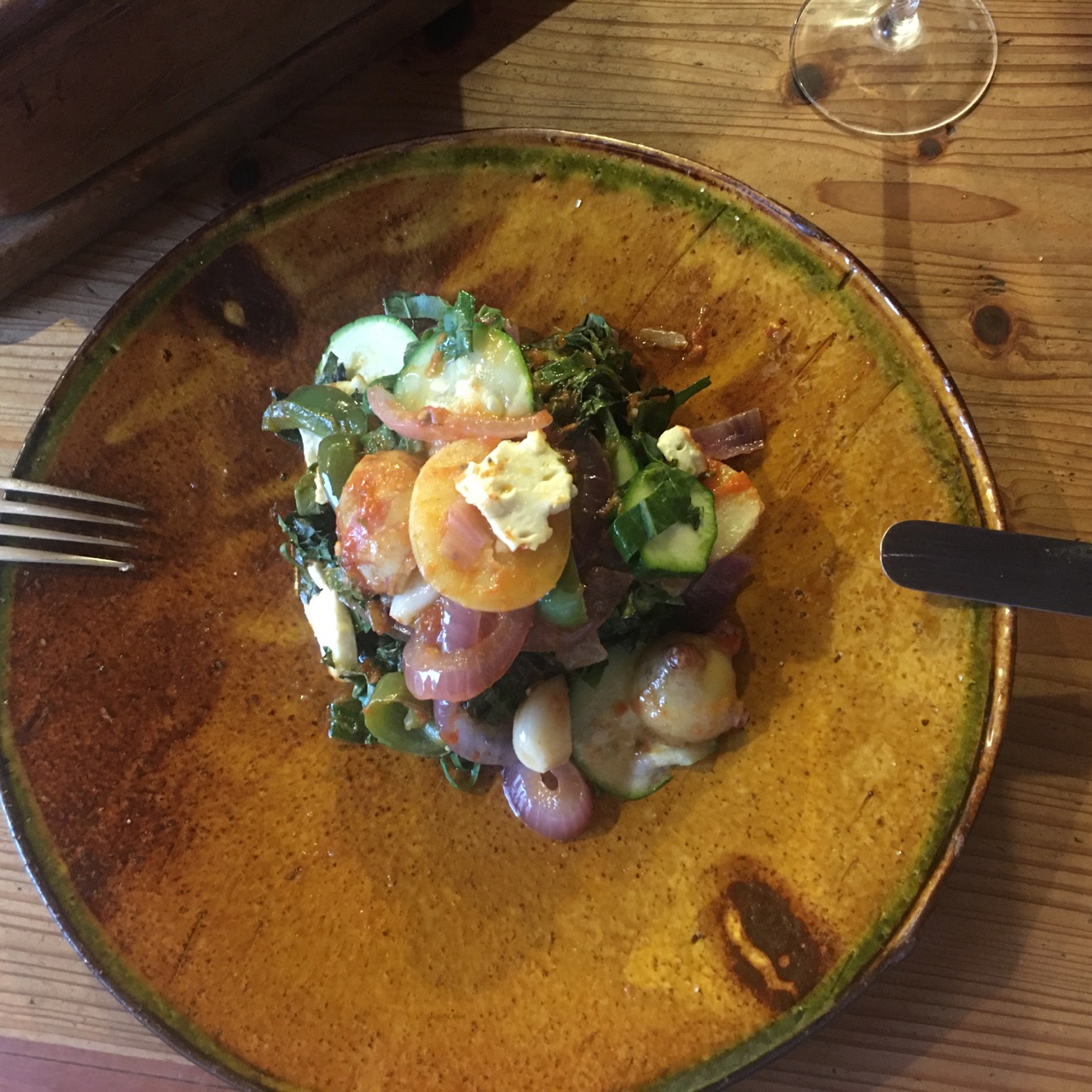
In the evening Janine makes a fabulous dinner of garden veg with a little bit of feta. She was watching A TV show about cheese making and the presenter explained that this was a local recipe from Greece. She thought that it sounded interesting, so wrote down what she remembered after the show. So there is immediately a little bit of interpretation and creative adjustment going on. Whatever was originally intended doesn’t really matter, as this works aa treat.

Spinach, capsicum, zucchini, onion, garlic, and potato slices baked in the oven in a tomato passata sauce. We just happen to have all these ingredients in the garden and a bottle of home made passata in the fridge just now. The only thing that is purchased is the feta cheese.

It was totally yummy, and absolutely local with the exception of the feta cheese, mostly zero kilometres of carbon debt, just 30 metres of travel carbon debt, expended on foot.

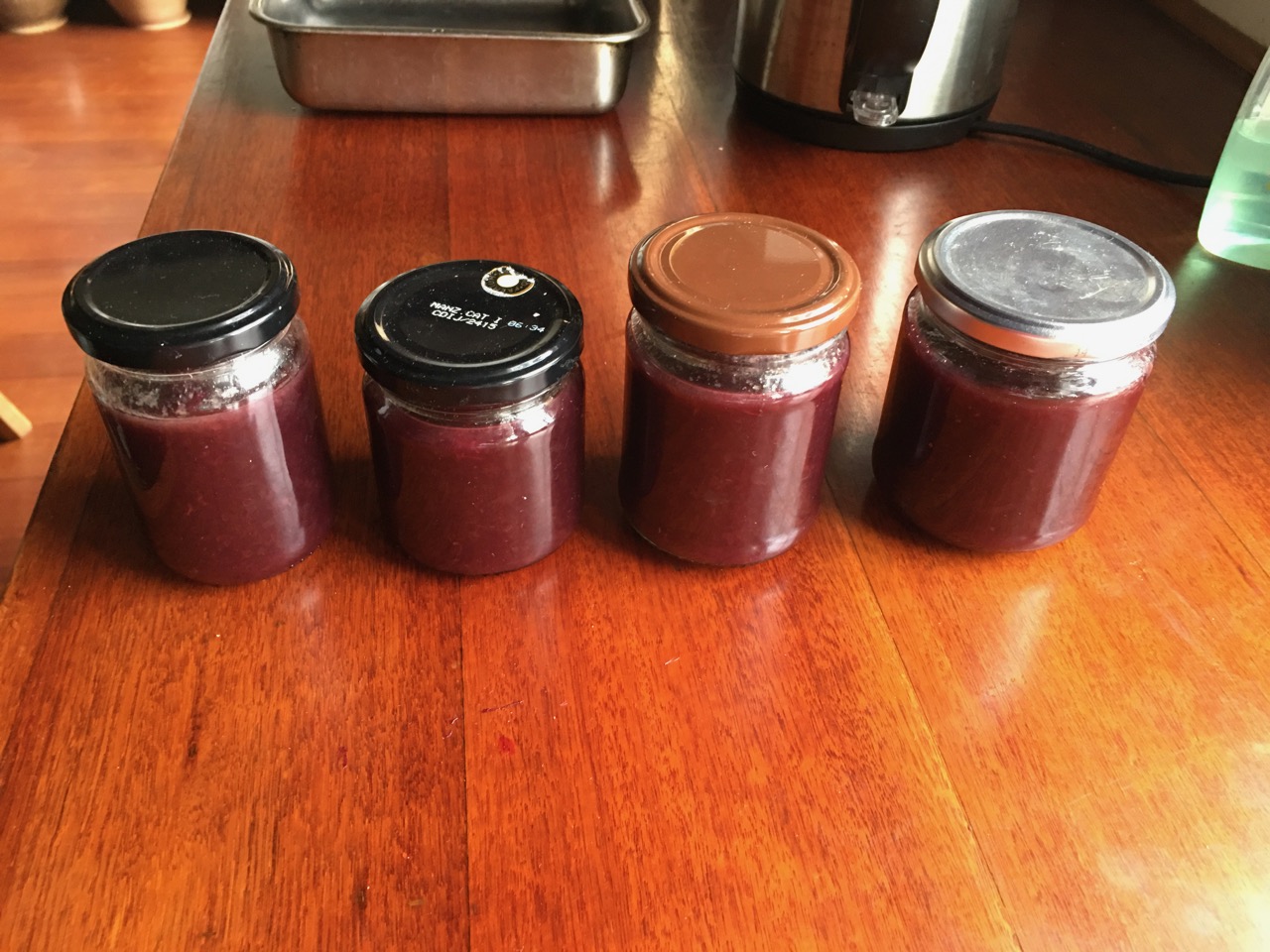
Janine also made red grape jelly jam.

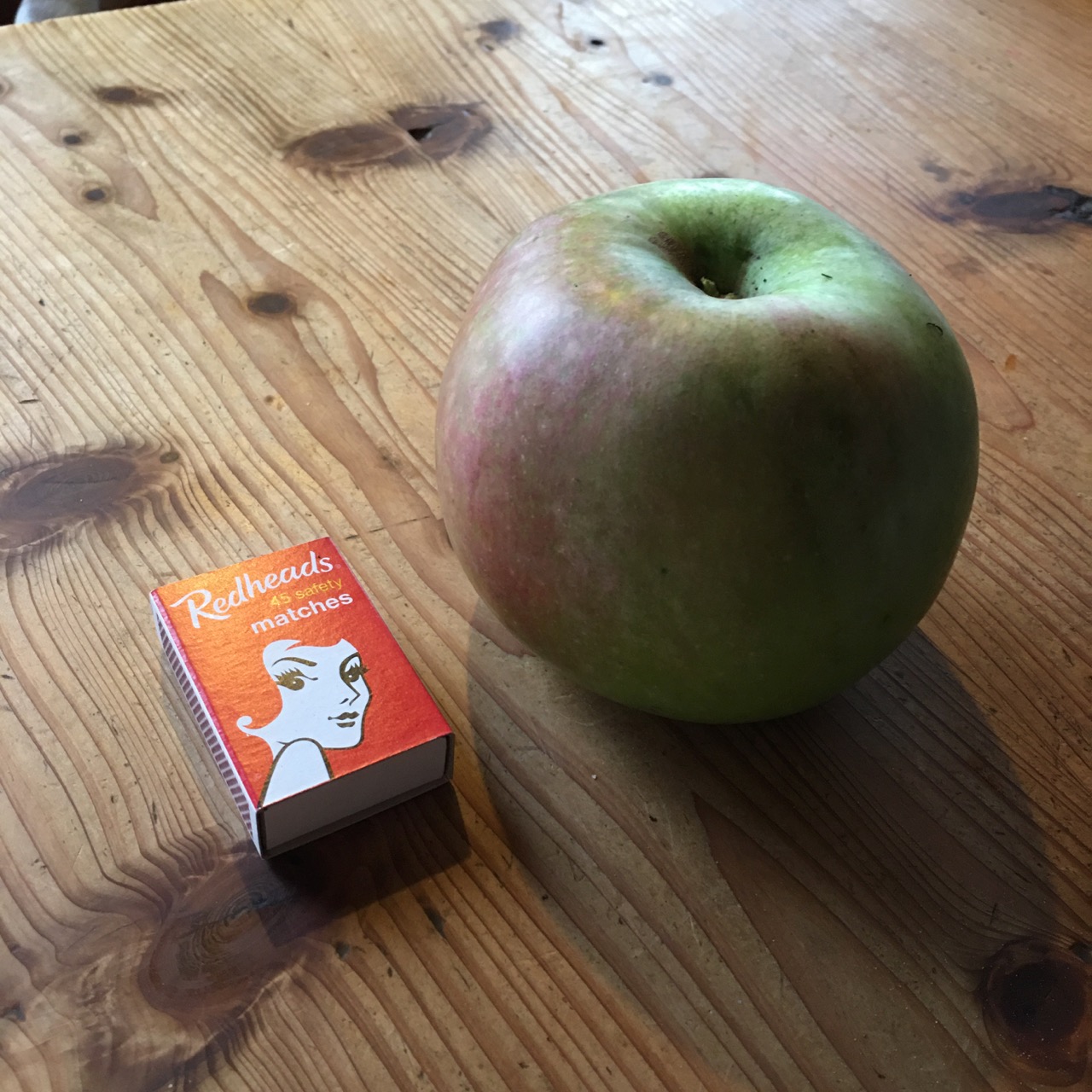
And we picked our first apple from the the new trees in the new orchard. It’s a beauty!

A busy day of getting on with all this self reliance stuff.

Like Father McKenzie

Finally, a post that isn’t about building!We have been working hard every day. We work outside until dusk, but that isn’t the end of the day. We have to deal with the days produce from the garden. 


Summer is always such a busy time, but this year it’s so much busier with all the building work taking up so much time. Janine has put in nearly all of the garden harvesting work this last few months, as I have been up the ladder, on the roof, or in the ground digging trenches.
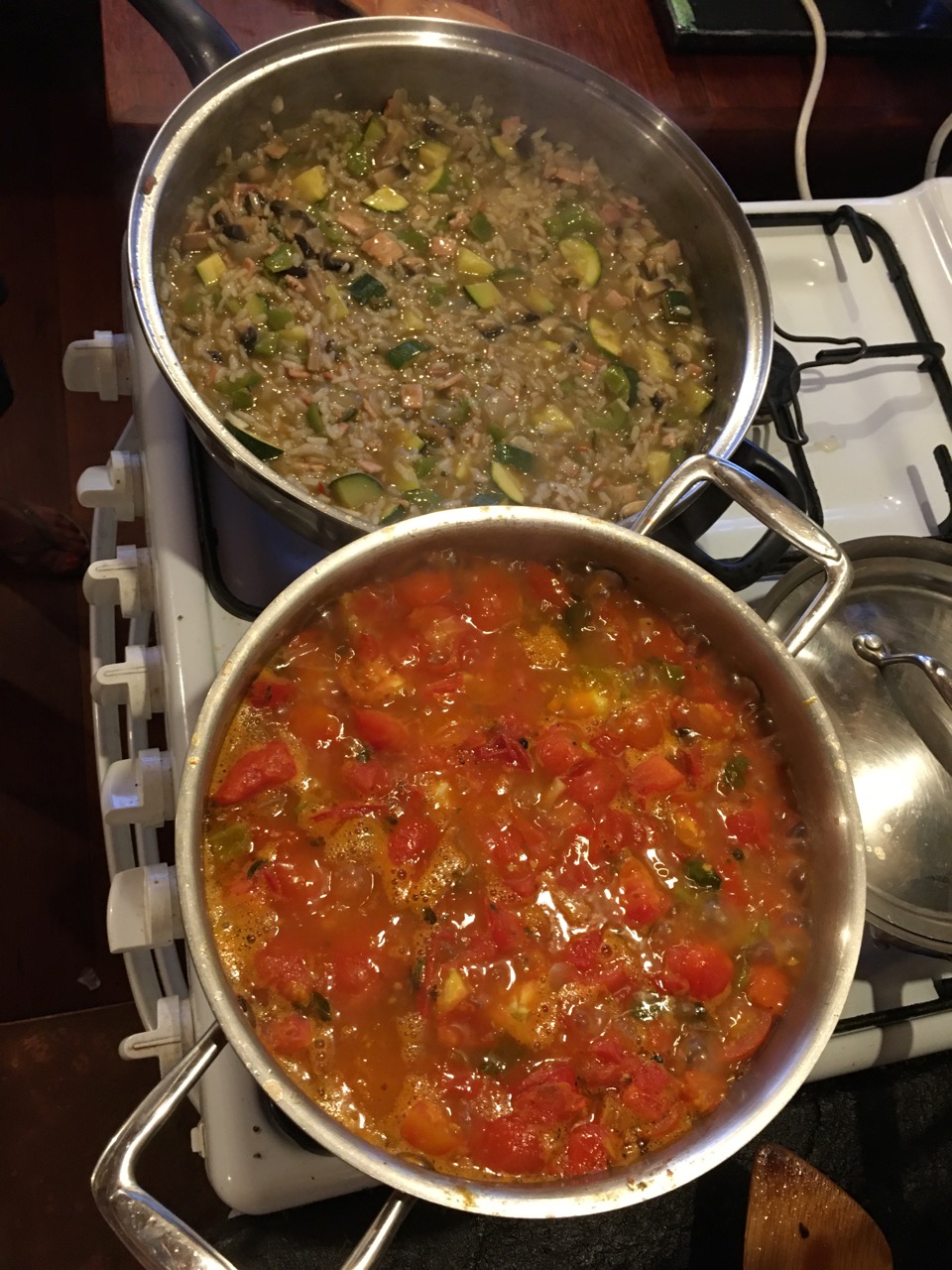
The tomatoes keep on coming, so before we cook dinner, we slice and dice the red globes and simmer them down to pulp, while we prepare dinner. The following night I push the pulp through the moulii and then re-cook and simmer the passata down to half it’s volume, concentrating the flavour, before bottling it while it is still hot.


I start by browning onions in olive oil with pepper corns and chilli, then as the sauce pan fills, I add in the herbs and bay leaves.
When the pan can’t take any more it is left to simmer all the aromatic sauce down to pulp, so that it will pass through the moulii easier.


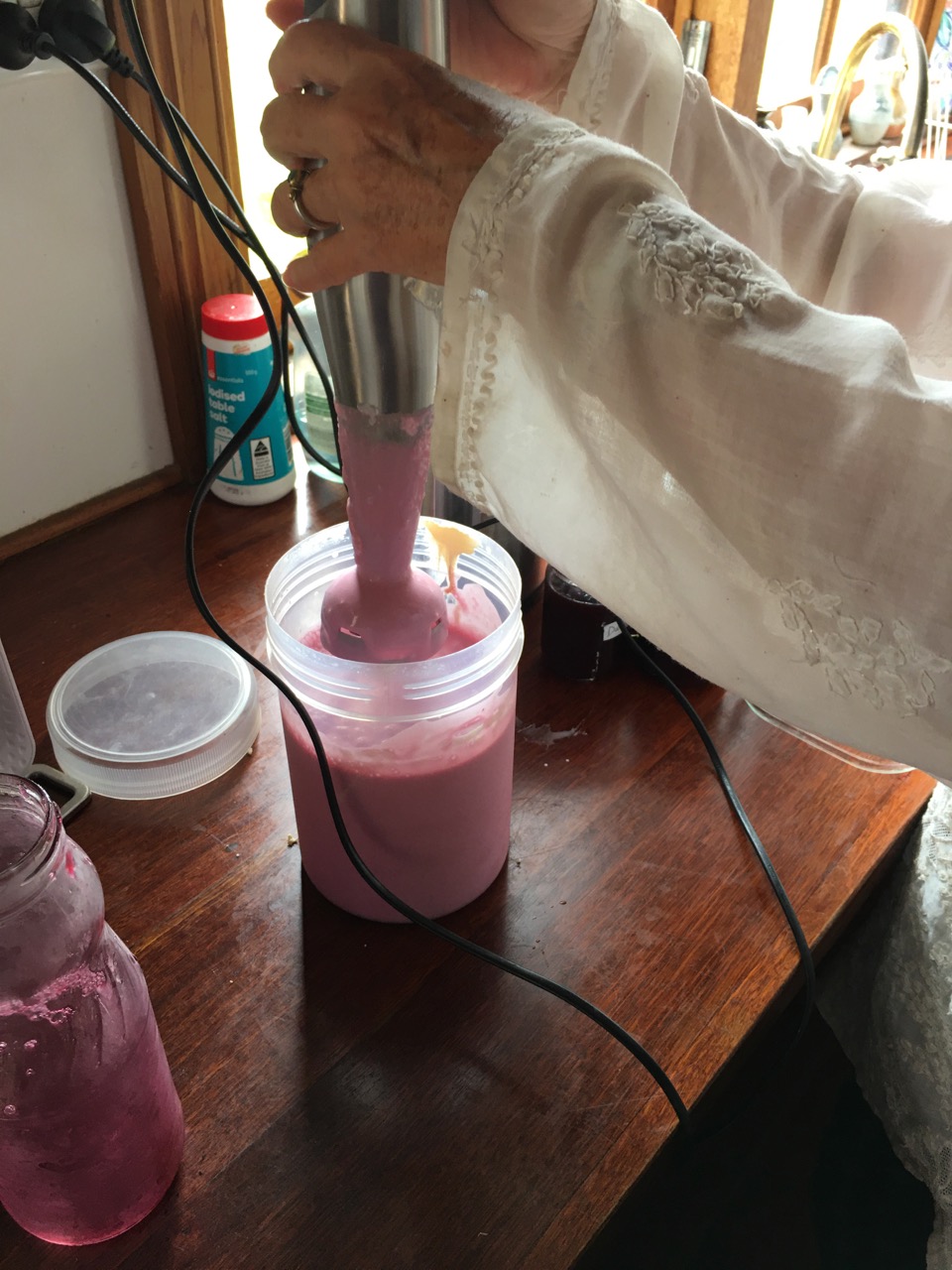
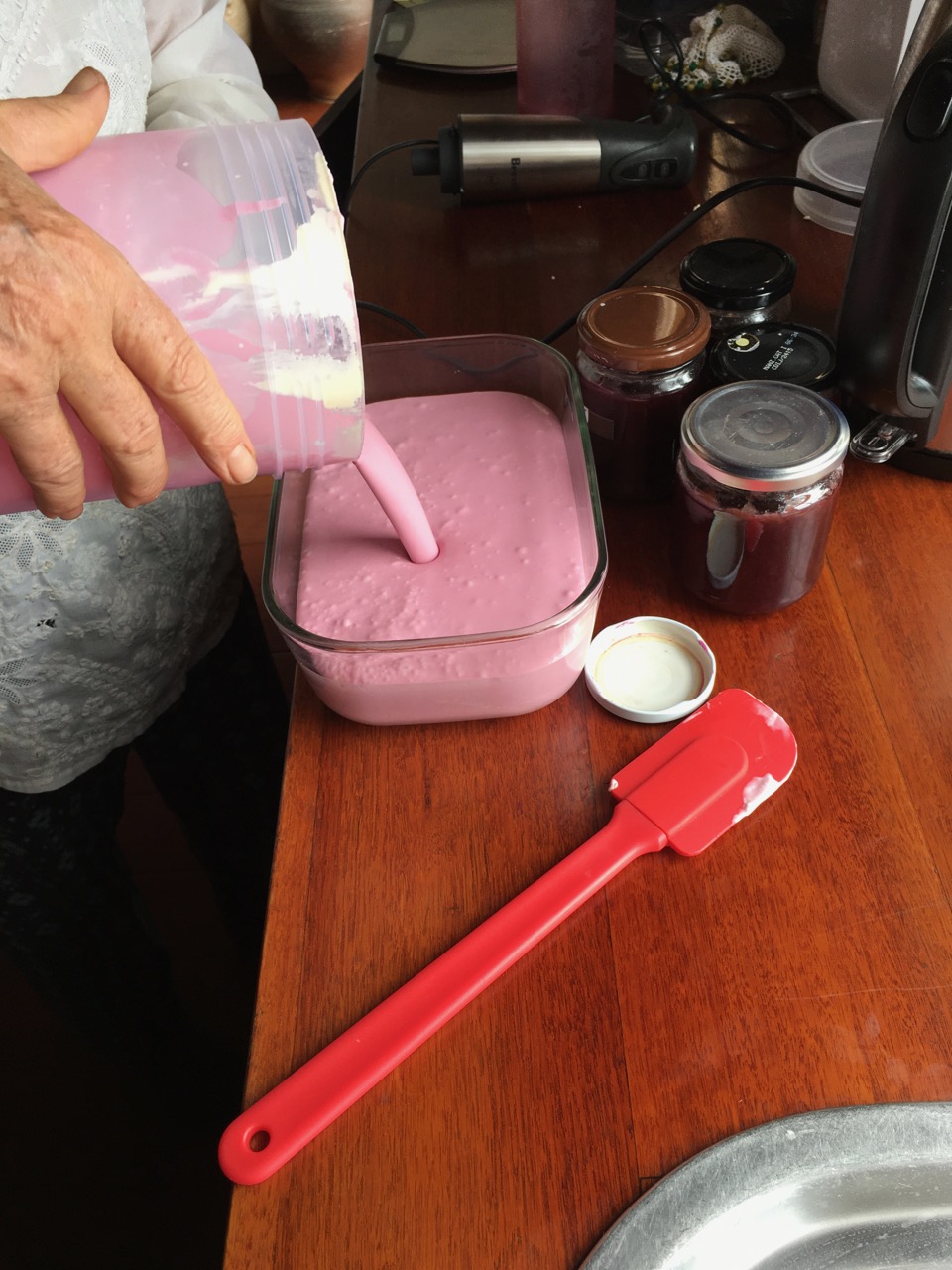
The grapes have started, so we are making regular batches of grape juice, grape jelly and red grape ice cream. As the citrus trees are still producing, Janine also made batches of juice from navels and sevilles, using some of that juice to make a seville orange ice cream.


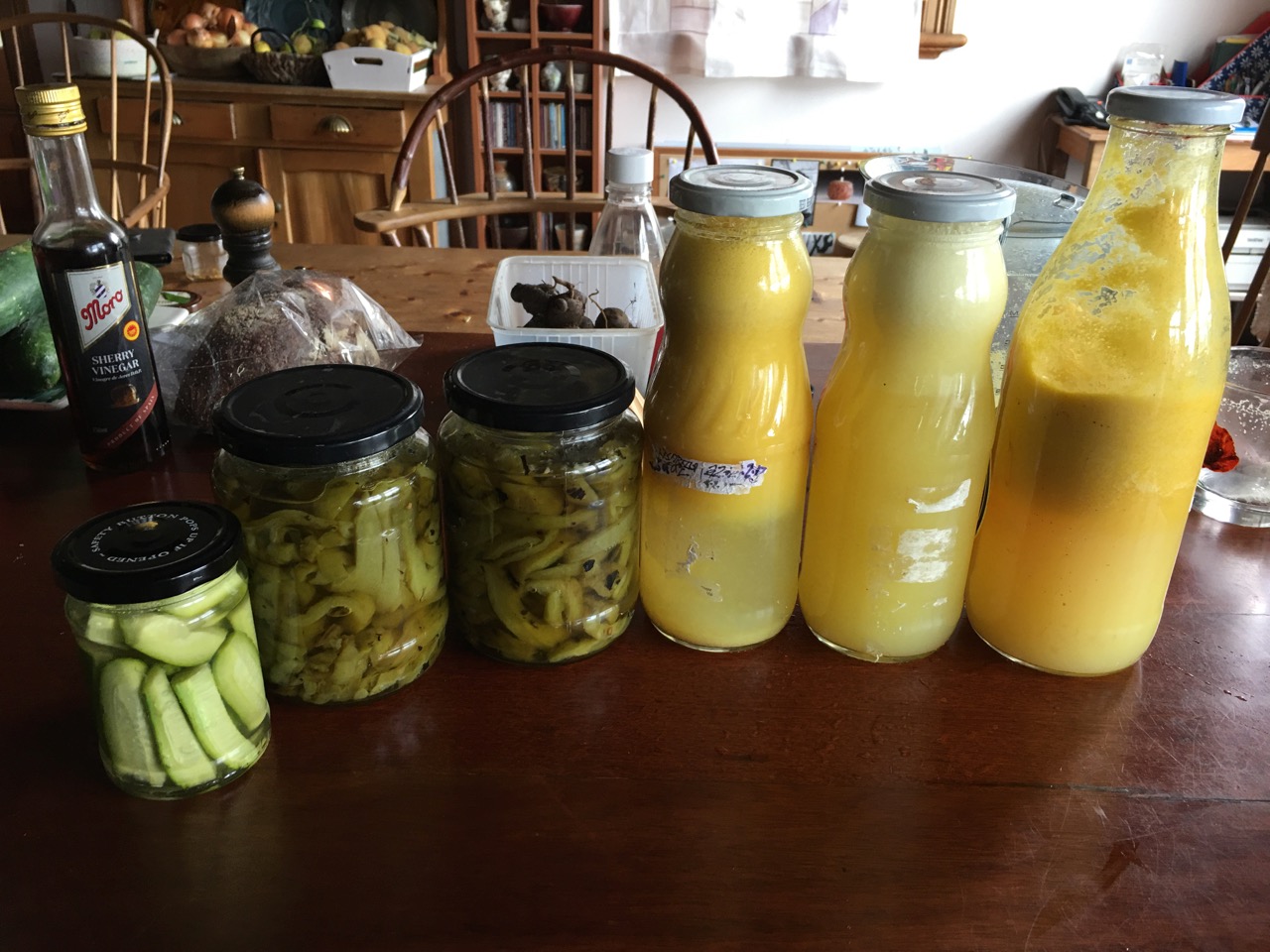
Geordie called in, so he helped us roast and bottle peppers in oil, cucumbers in saline, while Janine made orange juice.Then stuffed capsicums for dinner, with marmalade for breakfast.


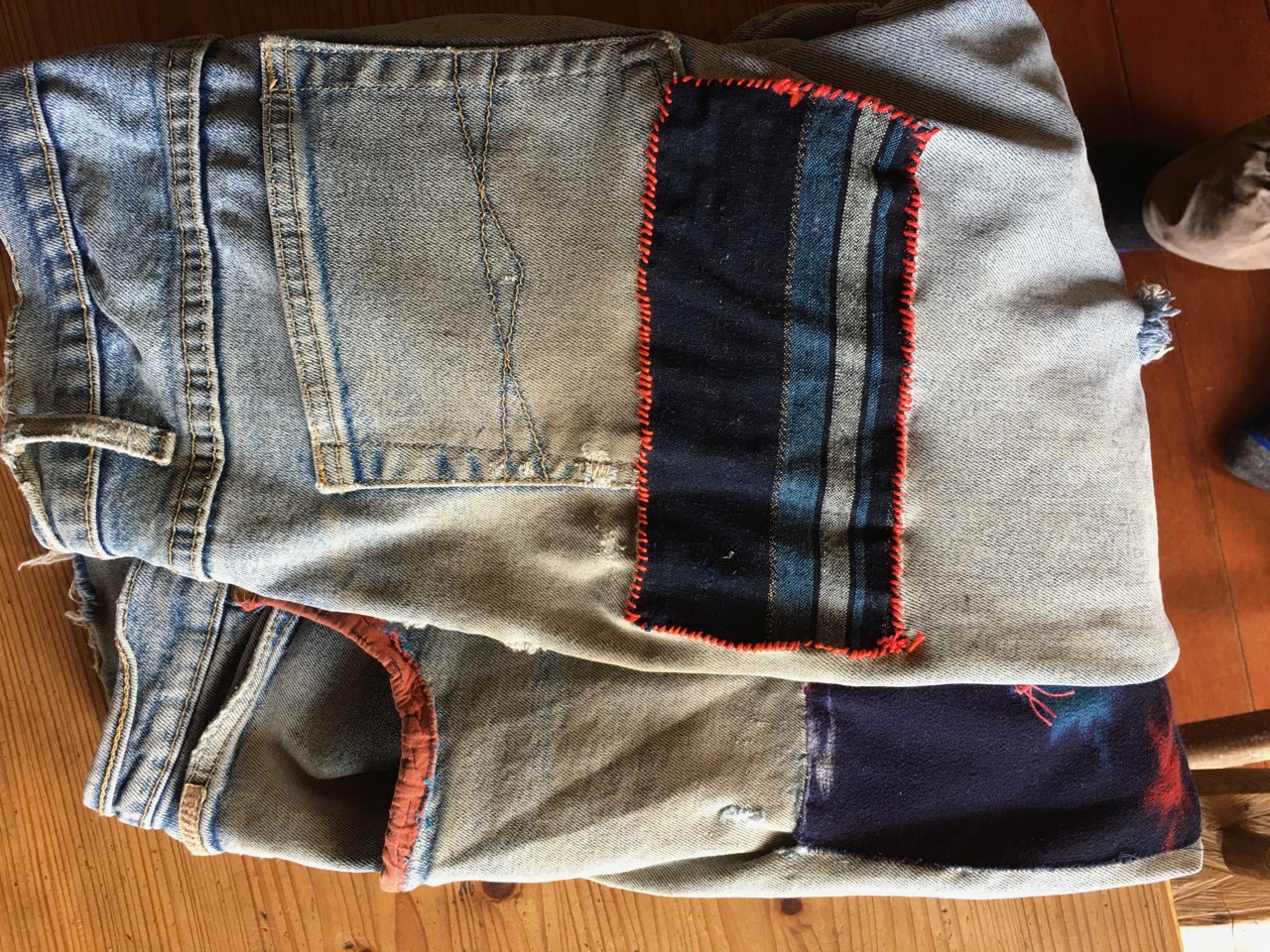
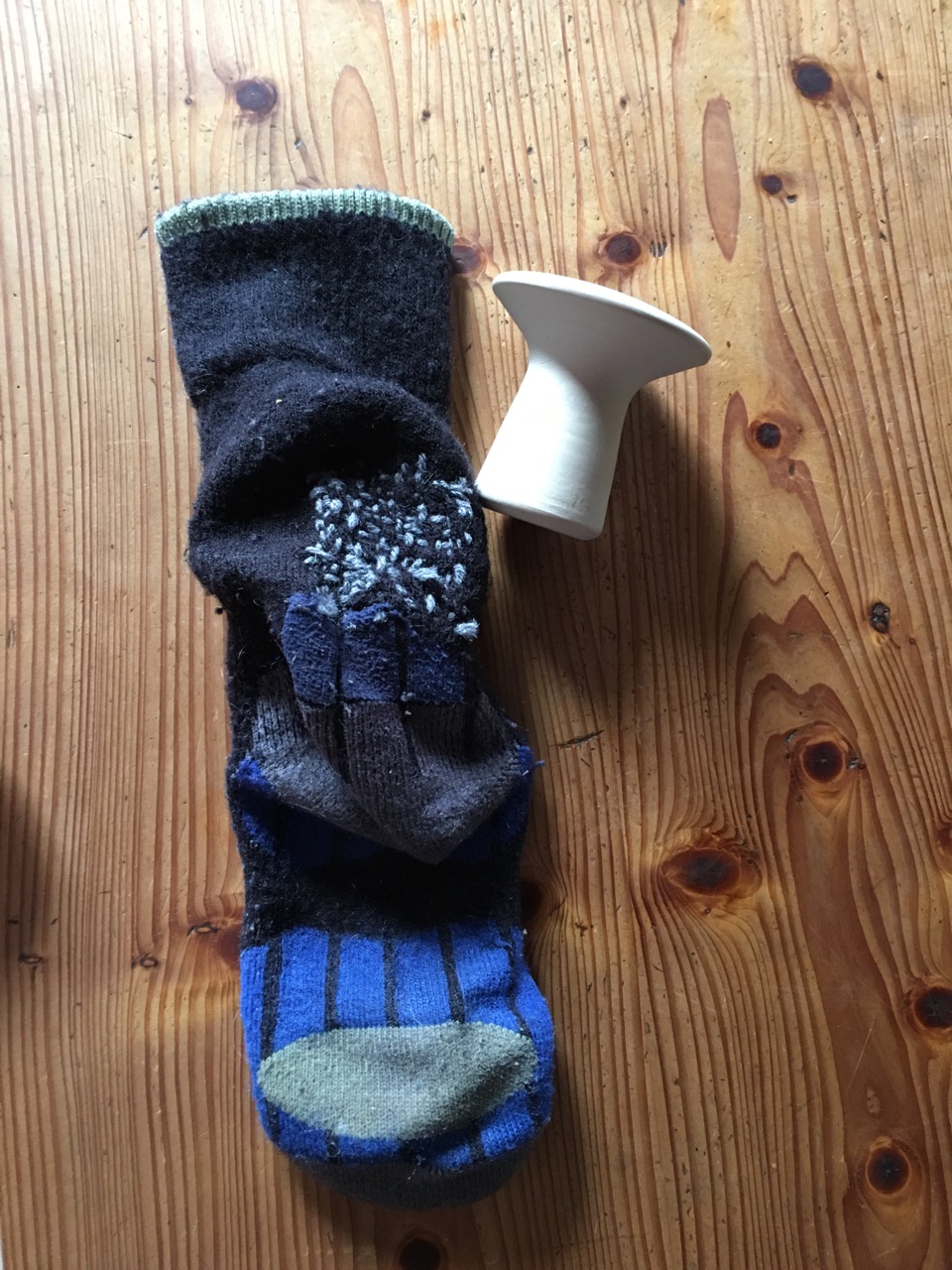
If there is nothing on the idiot box, which is most nights. I sit and do a few repairs to my worn out clothes. I added another patch to the arse of my old jeans, as they slowly fade away into a threadbare riot of tears and patches. Finally I sit quietly and darn the holes in my woollen socks. Janine made a lovely porcelain darning mushroom a few years ago. It works a treat. I do these repairs to save waste, prolong use and preserve the embedded energy in the items. I don’t like to throw anything out until it is really beyond repair, but like Paul McCartney’s Father McKenzie. Nobody cares!

But I do!

It’s all part of this busy self-reliant life.

Clay water/grey water

On Wednesday afternoon, my neighbour Mitch called in with his excavator after he had finished work on another job.I had asked him to come when he could just a couple of days earlier.
We needed a seepage trench for the pottery sink to be dug 10 metres long and at least 600mm wide and 600 mm. deep. This will be for clay water/grey water seepage.I felt that as the weather is getting hotter and I’m wearing down. I copped out and got the trench dug. But it is money well spent.  Mitch dug the trench in just 10 minutes. It would have taken me all day – and then some.  3.5 cu.m. of crushed stone gravel is about 7 tonnes of material.

Yesterday I was in town, as I had a favour to repay and then I was off to Moss Vale to the plumbing supplies to buy all the parts for the seepage trench. 
Today, with everything in stock, we lined the seepage trench and built the stop ends/access/inspection ports, then filled 5 of the 7 tonnes back in again. A big day in the hot sun. We still have a couple of tonnes left over to deal with. 


I’m so glad to see the end of that job. It was over 30 oC here today while we did all this digging. After we finished all the earth works, we watered the garden and I picked all the days garden produce.


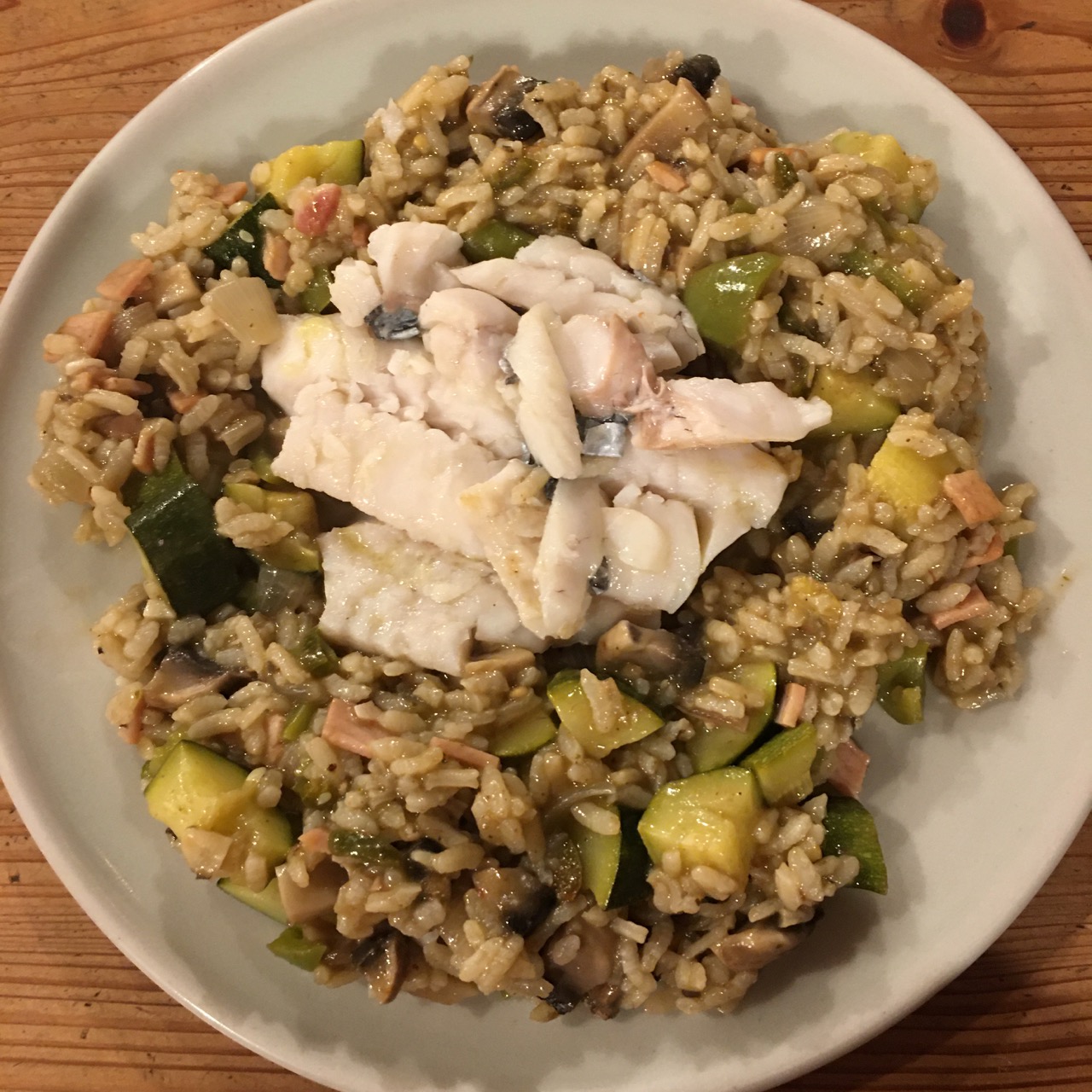
I picked tomatos, zuchinnis, capsicum, cucumbers, chillis and artichokes. This will be dinner. Janine cooked a vegetable risotto for dinner, while I made a big 5 litre stock pot full of tomato passata. We had our risotto with a small piece of fish, fresh off the south coast fish truck yesterday.

It’s a good life if you don’t weaken!

Seasonal Dining, Stuffed Zucchinis

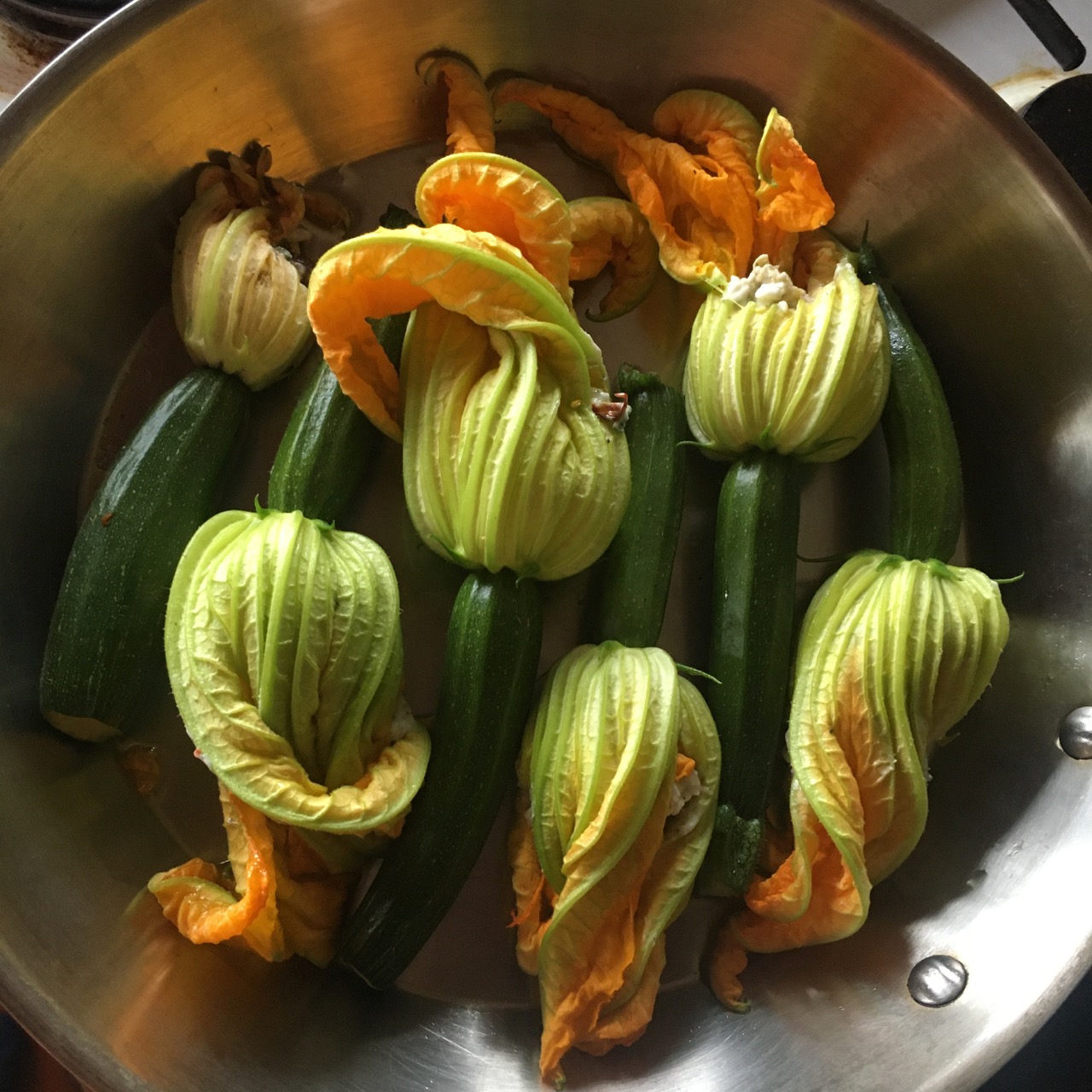
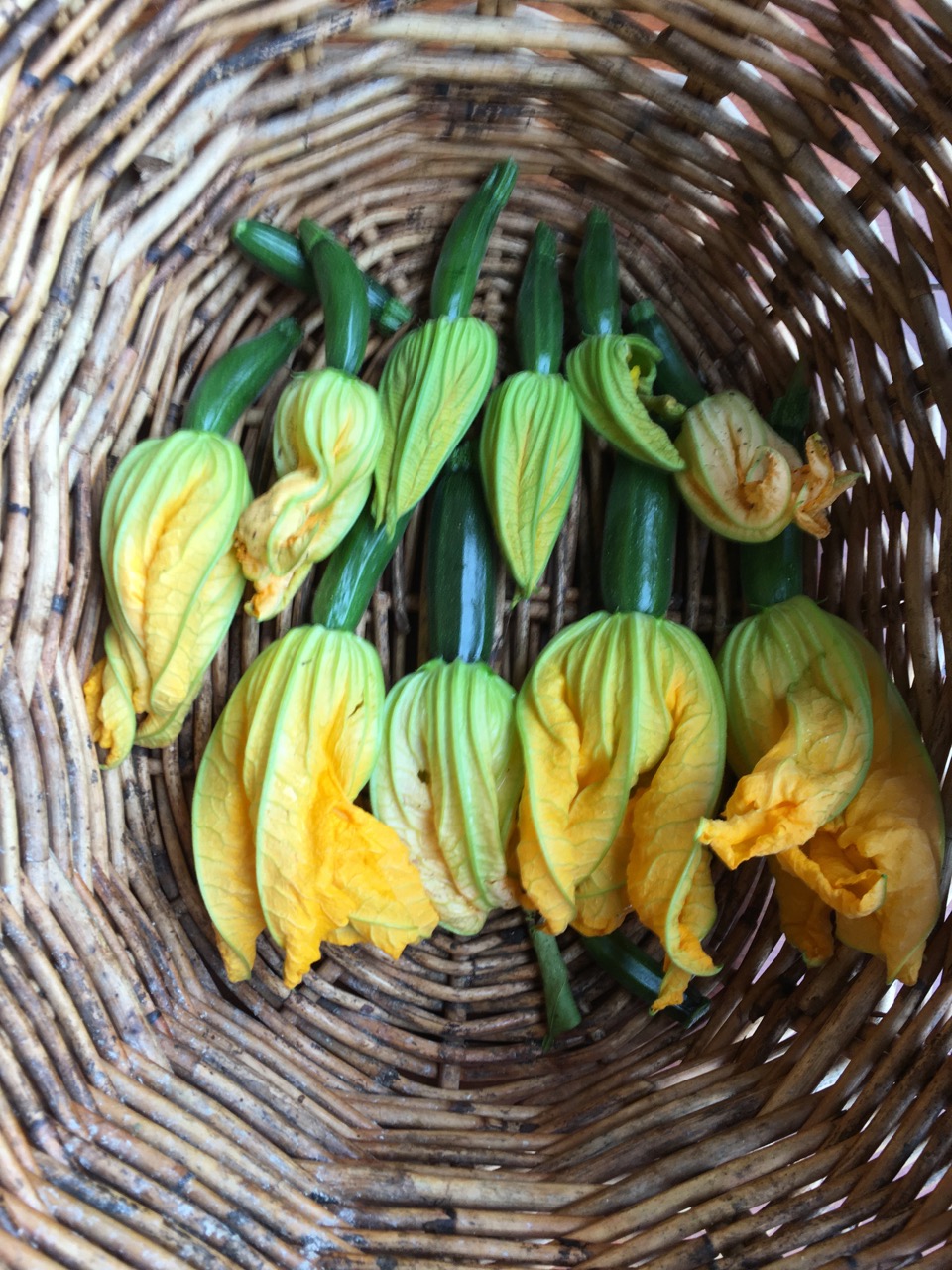
Now that the new crop of zucchinis is starting to produce in earnest, we are able to pick half a dozen small, day old, or even just hours old, flowers with small fruit attached every morning. So we are enjoying the experience of stuffed zucchinis every second day.

Of course we don’t have to pick them so young, but there are so many in this very fertile early period, that we don’t want them to get any bigger, or we won’t be able to eat them all.

We have 7 plants. That’s too many, but when you plant the seeds, you just don’t know how many are going to germinate, and then of those how many will survive the onslaught of the snails and slugs, to grow to maturity and fertility. This year every plant seems to have grown well, with a few others lagging behind as late germinators which are still coming up.

I’ll have to do a cull. But in the mean time, we have plenty of zucchinis to stuff for lunches or light suppers.

These flowers were picked later in the day and have been fertilised, so the flowers have closed up, and if left on the plant the flower will drop off as the fruit grows.

On the other hand, these flowers were picked first thing in the morning and are still wide open. In this form they are much easier to fill with the cheesy stuffing.

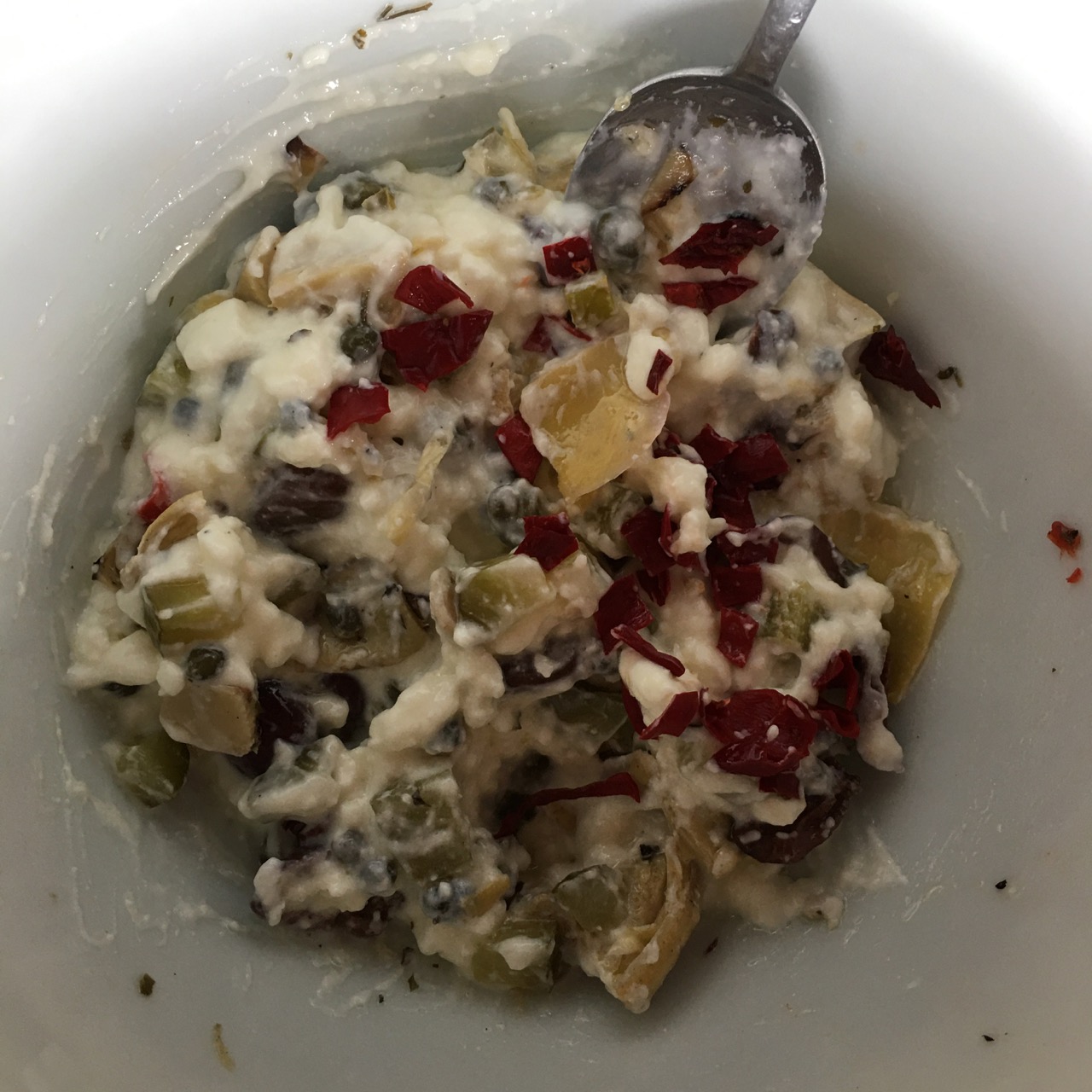
So what’s in the stuffing? I like to mix cottage cheese or ricotta with any or all of the following; chopped garlic, chopped olives, chopped up dried tomatoes, preserved artichoke hearts, split and diced into smaller bits, capers, a diced chilli and perhaps even some finely diced chorizo. I also sometimes add sage or thyme leaves, even preserved capsicum section. What ever you have in the fridge or pantry. Give it a good stir and spoon it into the flowers. Squeeze them closed onto the stuffing and place in a wide pan with a little olive oil and a dash of white wine. cover and steam them for 6 minutes.

This results in the zucchinis being just cooked, sort of firm snappy fresh, but heated through. The filling will have cooked together into an homogenous mass inside the flower, which will have wilted completely. I don’t use salt. There is quite enough in the preserved veggies, but a grind of pepper is nice.

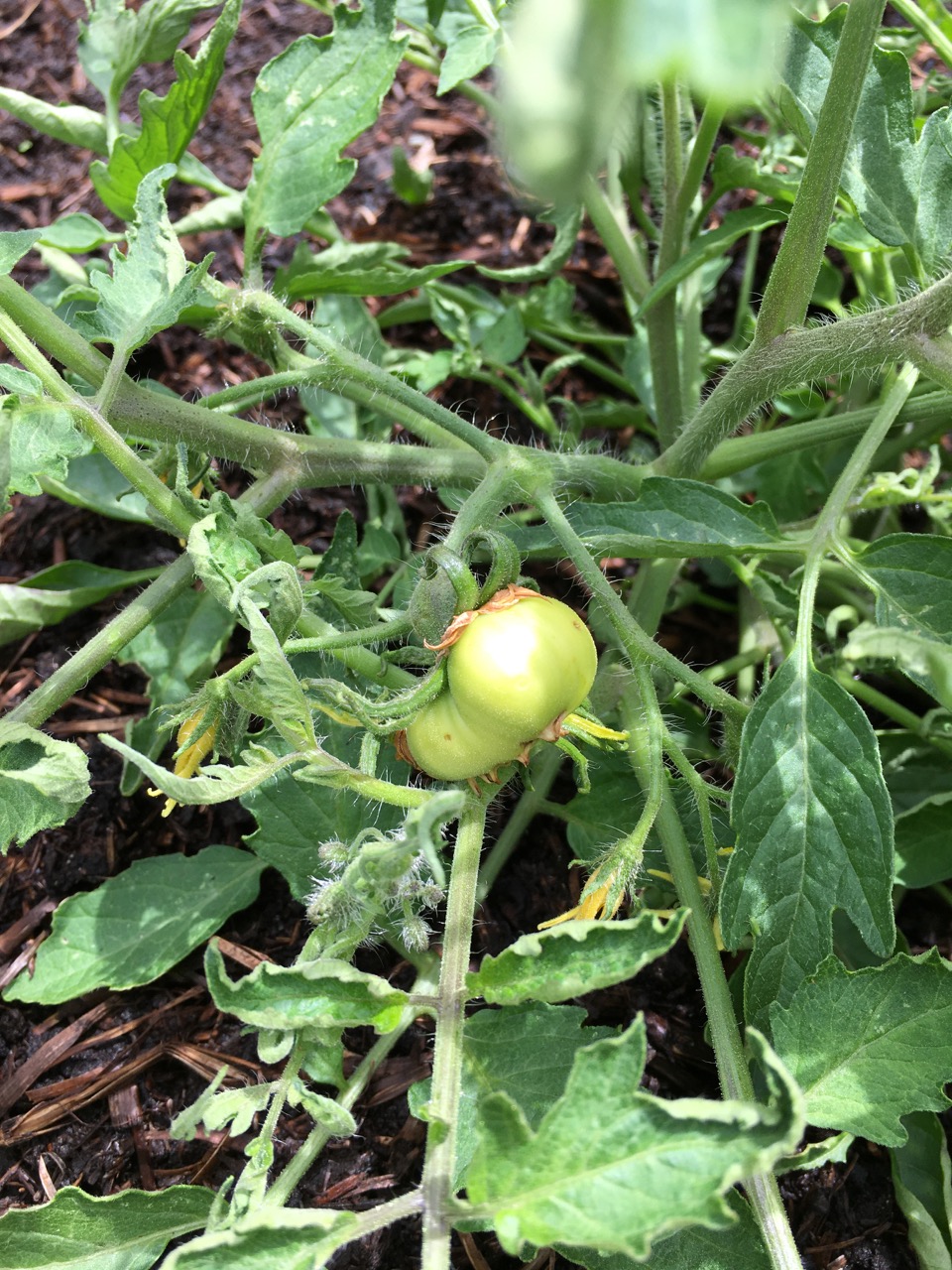
You know when summer is about to arrive when the zucchinis are coming on. They are the first of the plantings that we made in the garden mid way through September to start to produce. Zucchinis are the first summer veggies to produce fruit. The tomatoes are still small and green. The capsicums still haven’t flowered yet, nor have the aubergines. But the nights are getting shorter and the days hotter. I just brushed past the tomatoes plants yesterday, and the aroma of tomato foliage was so strong and promising. I can hardly wait.

I can eat these every other day for a week, but them I hit the wall and I don’t want to see another zucchini for a while. That’s when it’s time to slice them longways and BBQ them. Then there is always cut into rounds and steamed with a few sprigs of mint. Or grated and mixed with a little grated potato and an egg to make zucchini fritters.

By the end of summer, we’ll be sick of them and hanging out for some Brussels sprouts! you know that it’s autumn when we start to think about zucchini bread and zucchini cake! Just to use them up!

This is seasonal dining

Eating Seasonally – fresh spring eggs and asparagus

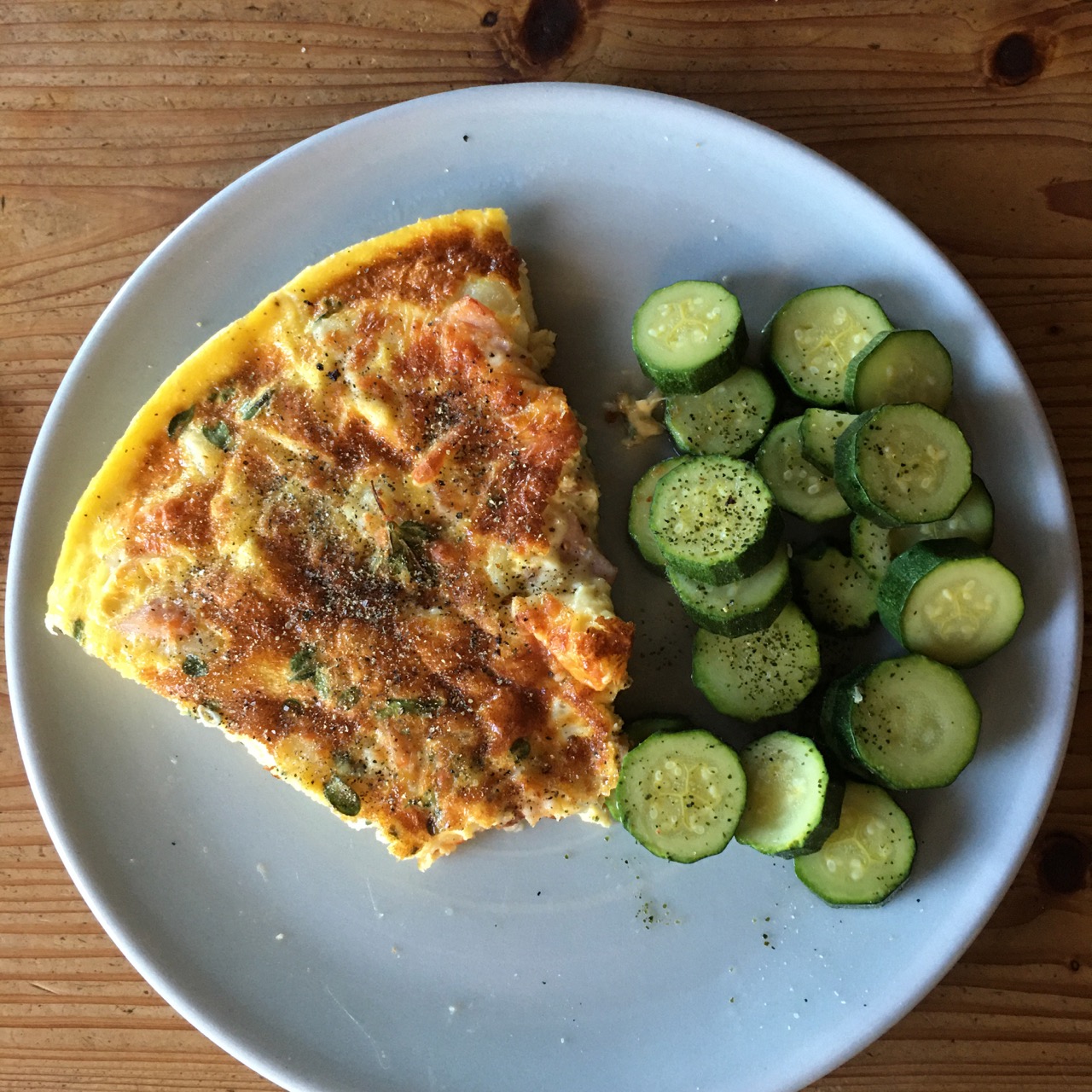
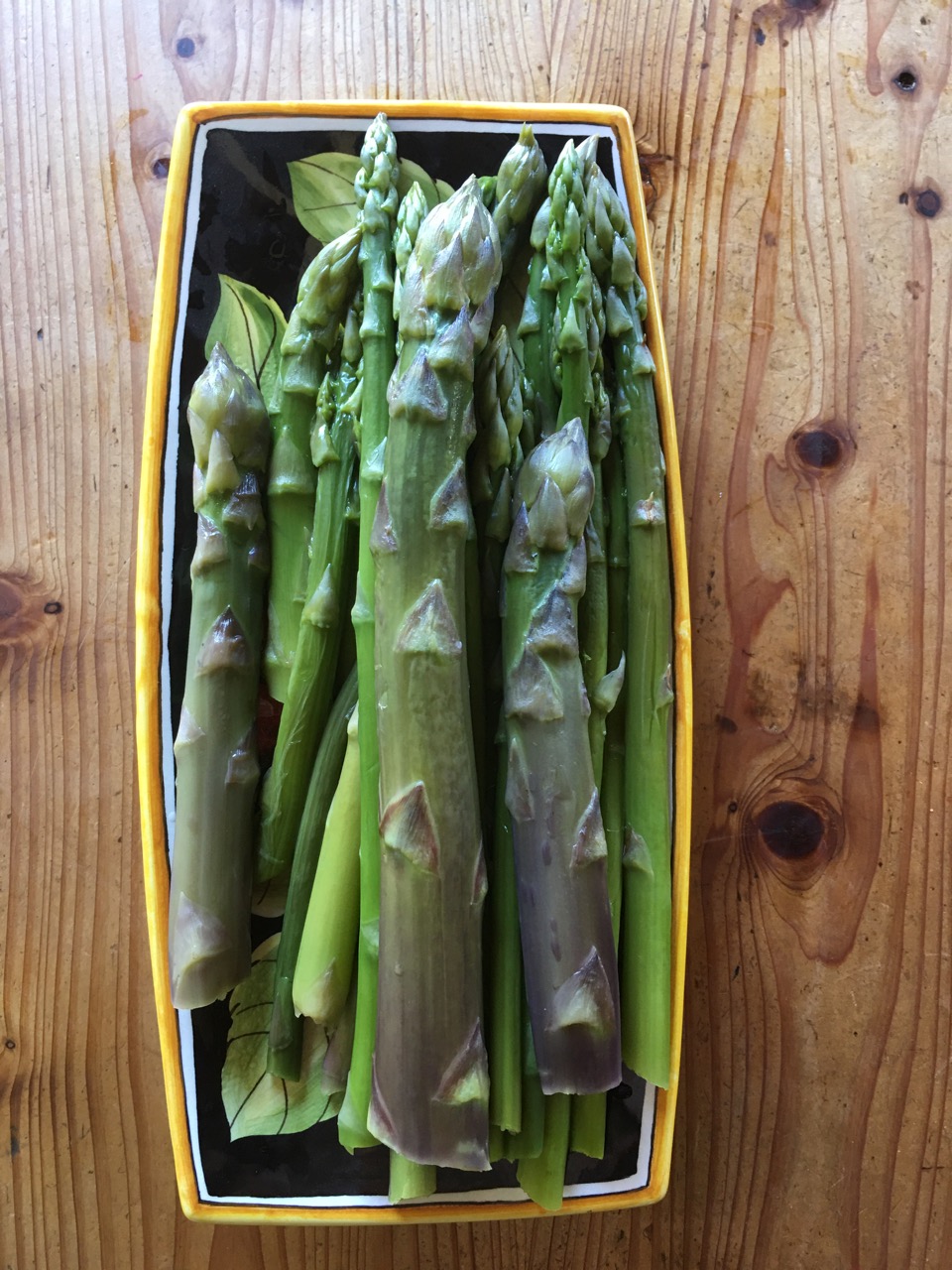
Our new chooks, Edna and Gladys, have been laying an egg a day for us this last week, so tonight we are ejoying a garden frittata with steamed zuchinis. At lunch we enjoyed a garden salad with steamed asparagus.


The best lunch isn’t perfect, The best lunch doesn’t last forever, but the best lunch is never finished.

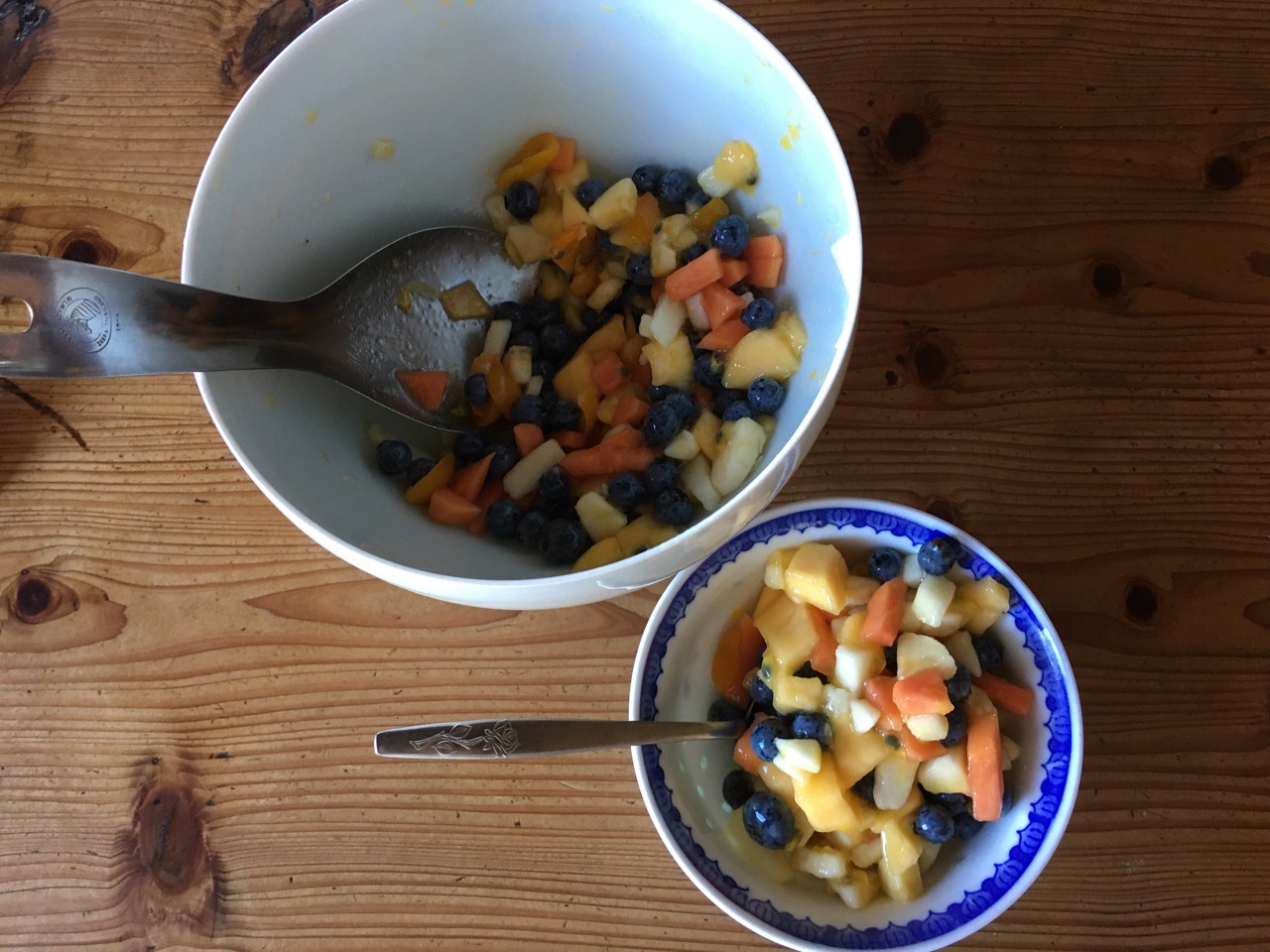
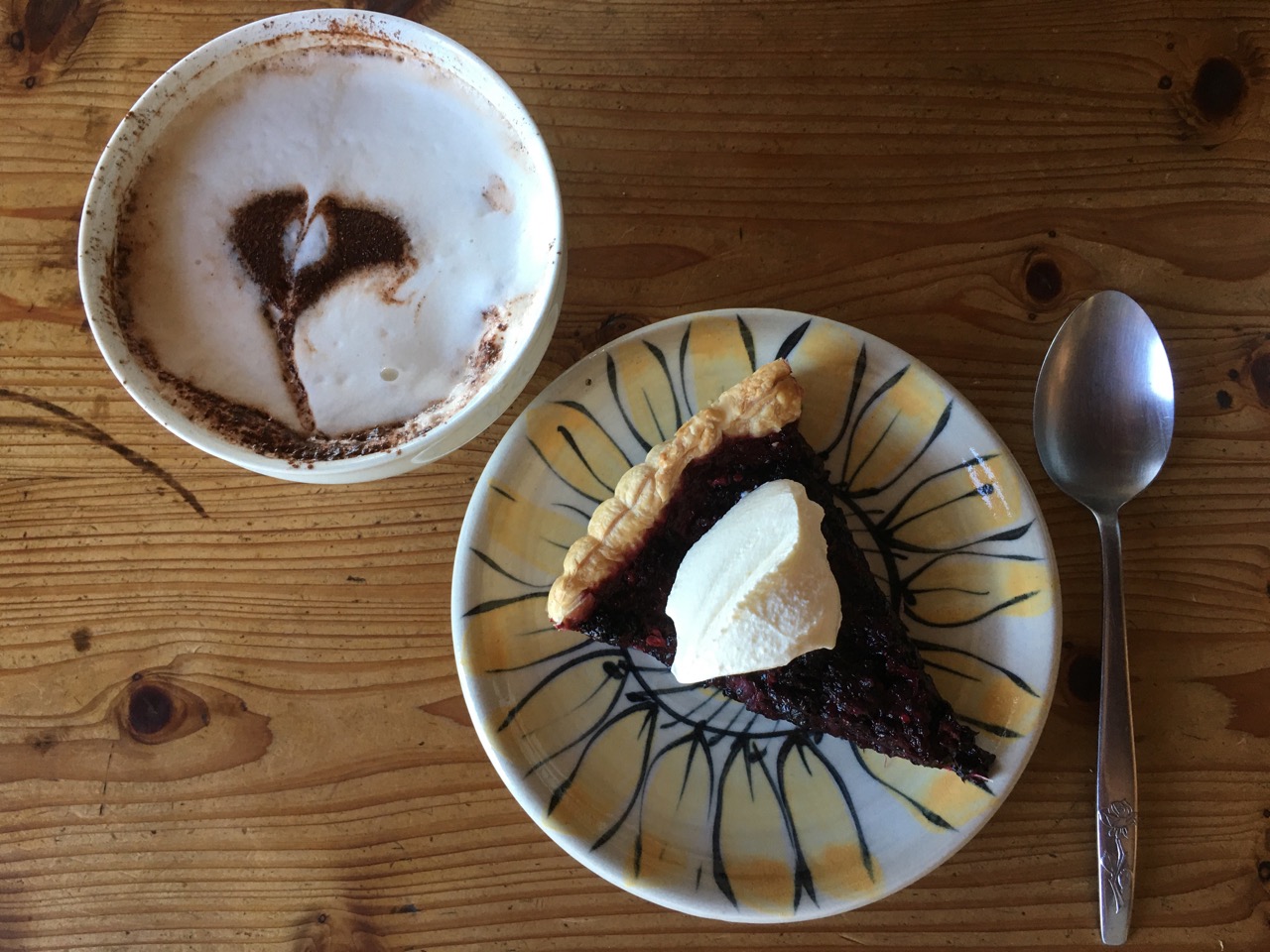
However, Breakfast is always good, especially when it is fruit salad followed by coffee and mulberry tart.

Its a tough life, but someone has to live it.

Mulberry tart. vol 5

The mulberries are still holding up against the marauding birds. I guess that this is because there are so few of them that have survived the catastrophic bush fires. We have 2 bower birds and friarbird in the tree fairly constantly, The crop has been very good because of the rains, so There is still some to go around.

I made my 5th attempt at the mulberry tart. I’m getting better at it and faster now with practice.

I’ve abandoned the lattice top, but added ‘lemonade’ lemon juice and zest to the recipe.

I’ve settled into a reliable recipe of

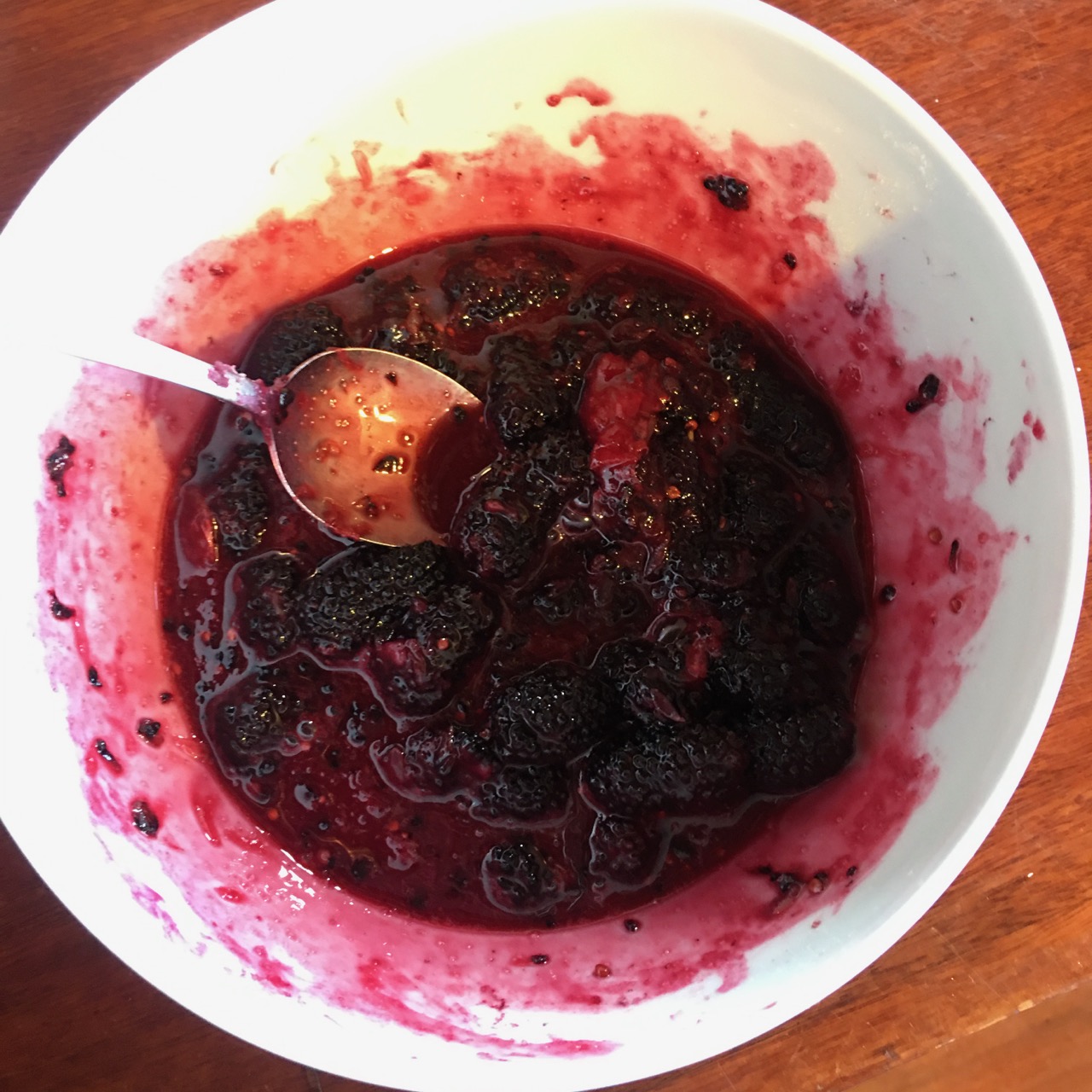
500g de-stemmed mulberries

140g sugar

40g plain flour

A shake of cinnamon powder and a dash of vanilla essence.

Juice and pulp of half a large lemon or all of a small one, plus grated zest, also juice of one small ‘lemonade’ lemon and zest of the skin.

Mix all these together in a mixing bowl. Blind bake the crust, add filling, and bake for 25 mins at 180oC. It seems to be fairly reliable. And delicious!

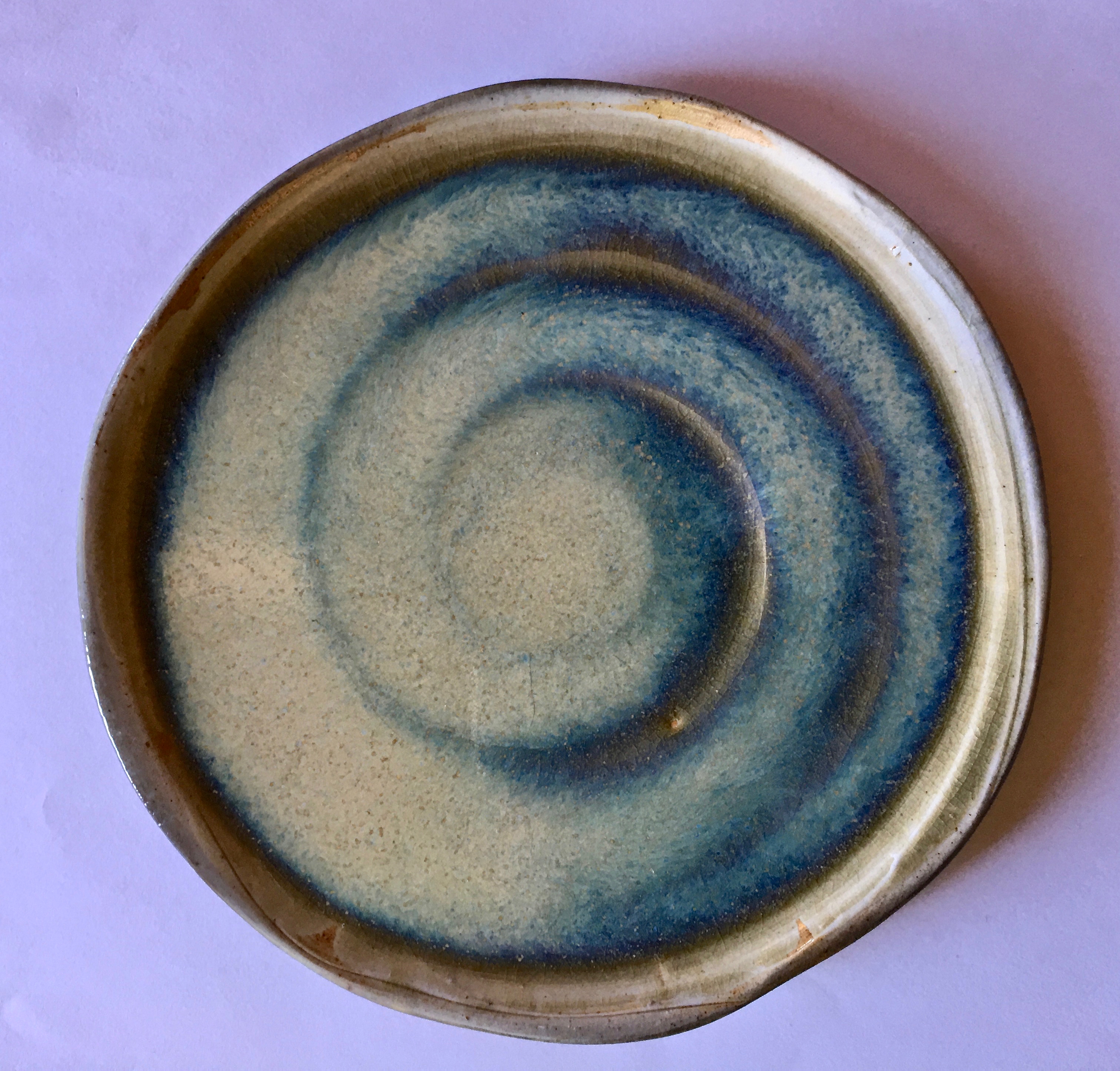
Serve on a beautiful hand made, ash glazed, wood fired platter.

First Zucchinis of the Season

Zucchinis come on so quickly. I planted all the new summer vegetables together at the one time back on 12th of September, then six weeks later, we had or first pick of new season fruit on the 22nd of Oct.

All the other summer vegetables are still growing a frame work of structure but not even flowering just yet, However, the earliest tomatoes are just starting to flower, but they are still a long way of having edible fruit. Due to Global Heating, in the last few years, we have been able to pick our first few ripe tomatoes just be fore Xmas.

I decided to pick the small fruit with the flowers still on and stuff the flowers with cottage cheese seasoned with a few chopped olives, capers and an anchovie. I fried them in a little olive oil for a minute or 3 and then added a little white wine and put the lid on to steam them for a further couple of minutes. The delicate flowers collapse around the seasoned cheese stuffing, while the fruit remains firm, but heated through. The flavour is very delicate and the texture matches perfectly. Our first of many such meals this season.

If I were Italian, I’d probably batter them and deep fry them, or in Paris they might cook them with a lot more butter. But I’m me, so I don’t use any salt, except that in the olives and anchovie, and I only use olive oil and then only a dash of that. This is meant to be healthy, fresh, organic, nurishing food. But not boring.
I’d actually love to be writing about building the pottery, and better still about making and firing pots, but alas, all this rain has put back the builders start date another few weeks. I’m starting to be resigned to the fact that we won’t be making anything meaningful in the pottery till this time next year. Disapointing, but it is what it is.

Nothing is perfect etc.

Another try at Mulberry Pie

We enjoyed yesterdays mulberry pie so much that I decided to have another go at it. That first one didn’t last 24 hours. Between desert, breakfast and morning tea, the two of us managed to polish it off.

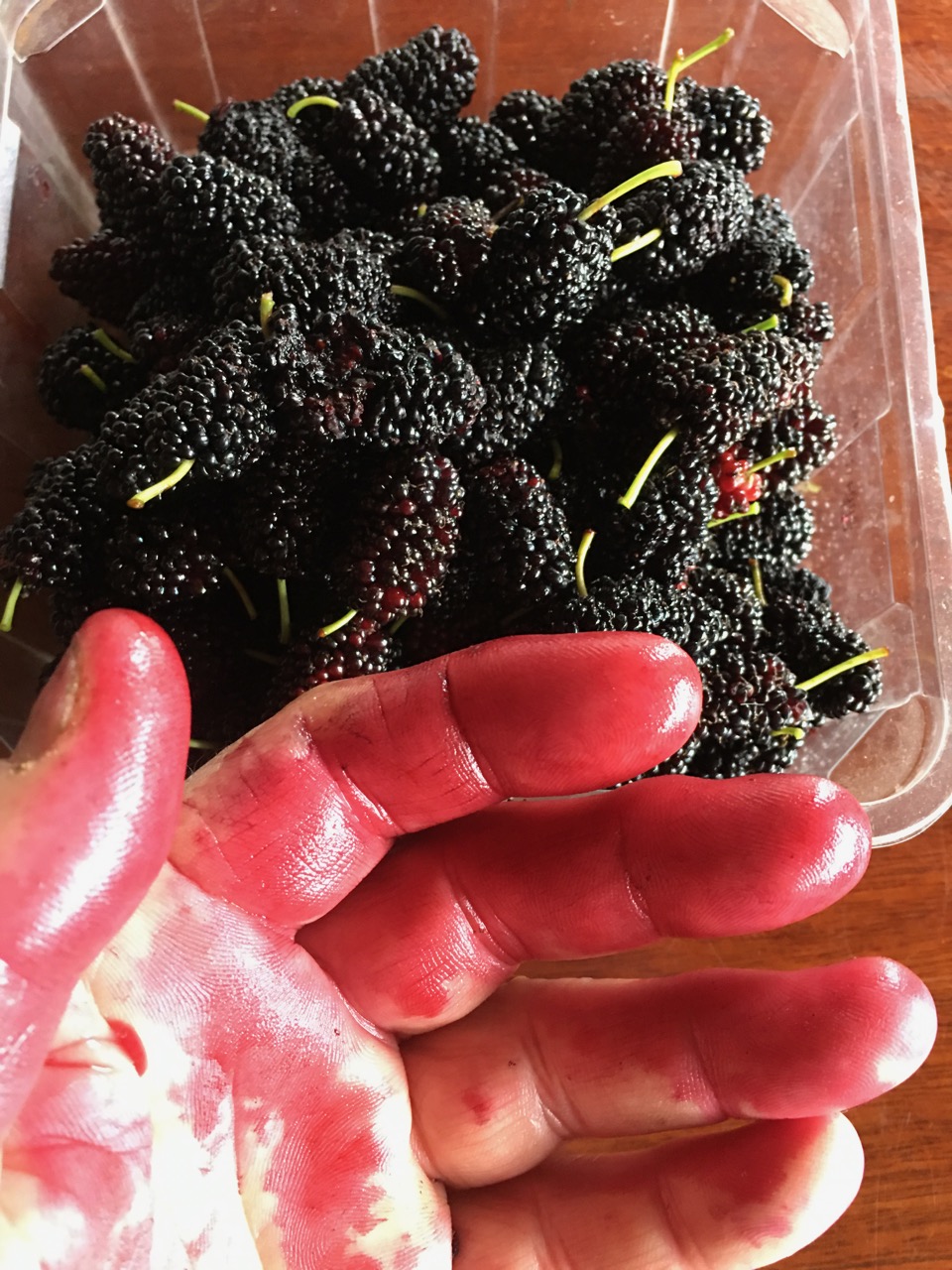
My Lady McBeth like, red stained fingers after picking.

Just in case your interested, de-stemming takes about 25 minutes per kilo of berries, or part thereof.

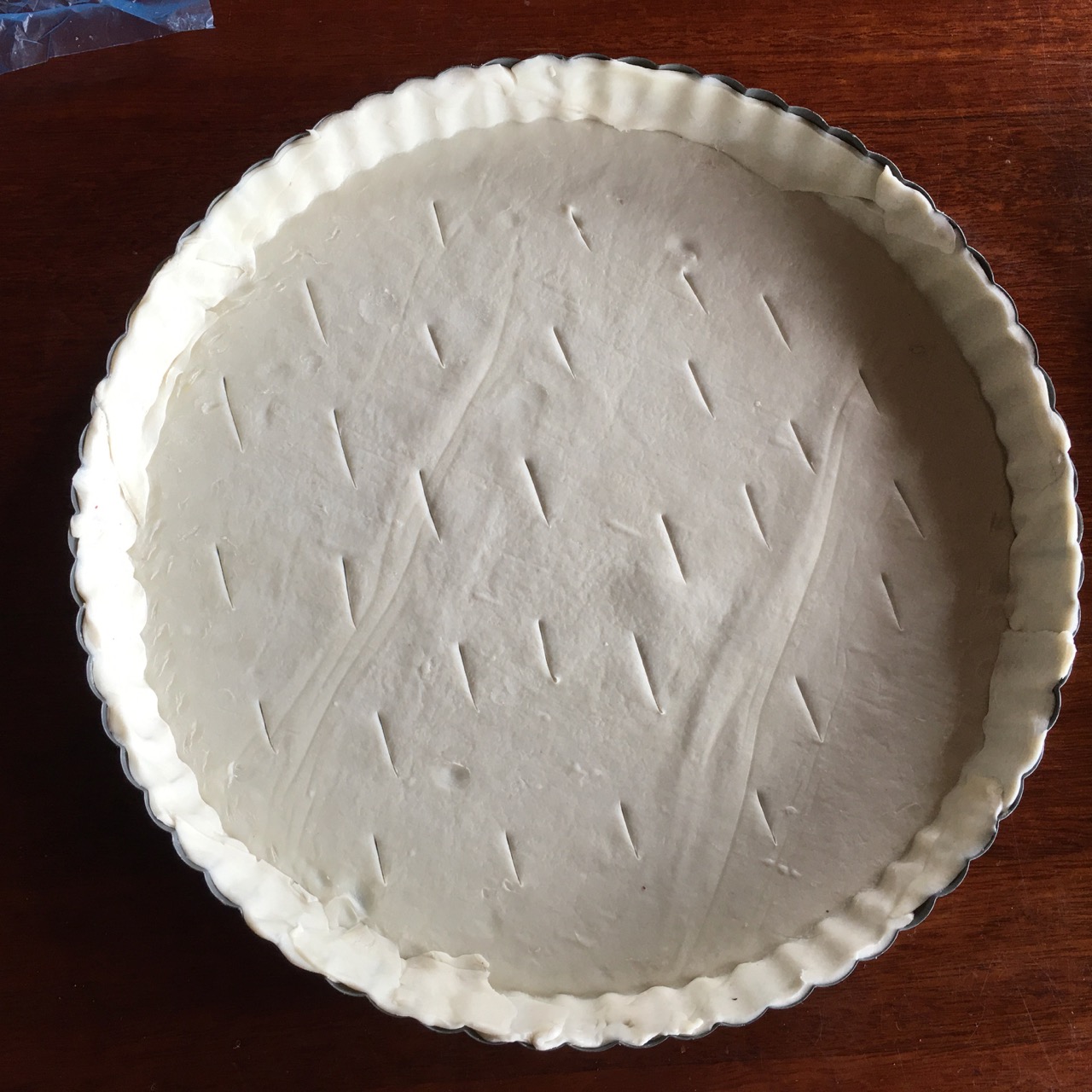
Prick the base, before lining with paper and blind baking.

For this pie, I experimented with 100 grams of sugar to 500 grams of fruit. I kept all the other ingredients the same. That’s just 1/5th of the amount of sugar to fruit and it still tasted sweet enough for me.

But maybe that’s just me? Anyway, it’s the ratio that I will use in the future. We had a special guest visiting today, so I had to give it another try for him, for afternoon tea.

I didn’t hear any complaints.

Living with the seasons – mulberry pie.

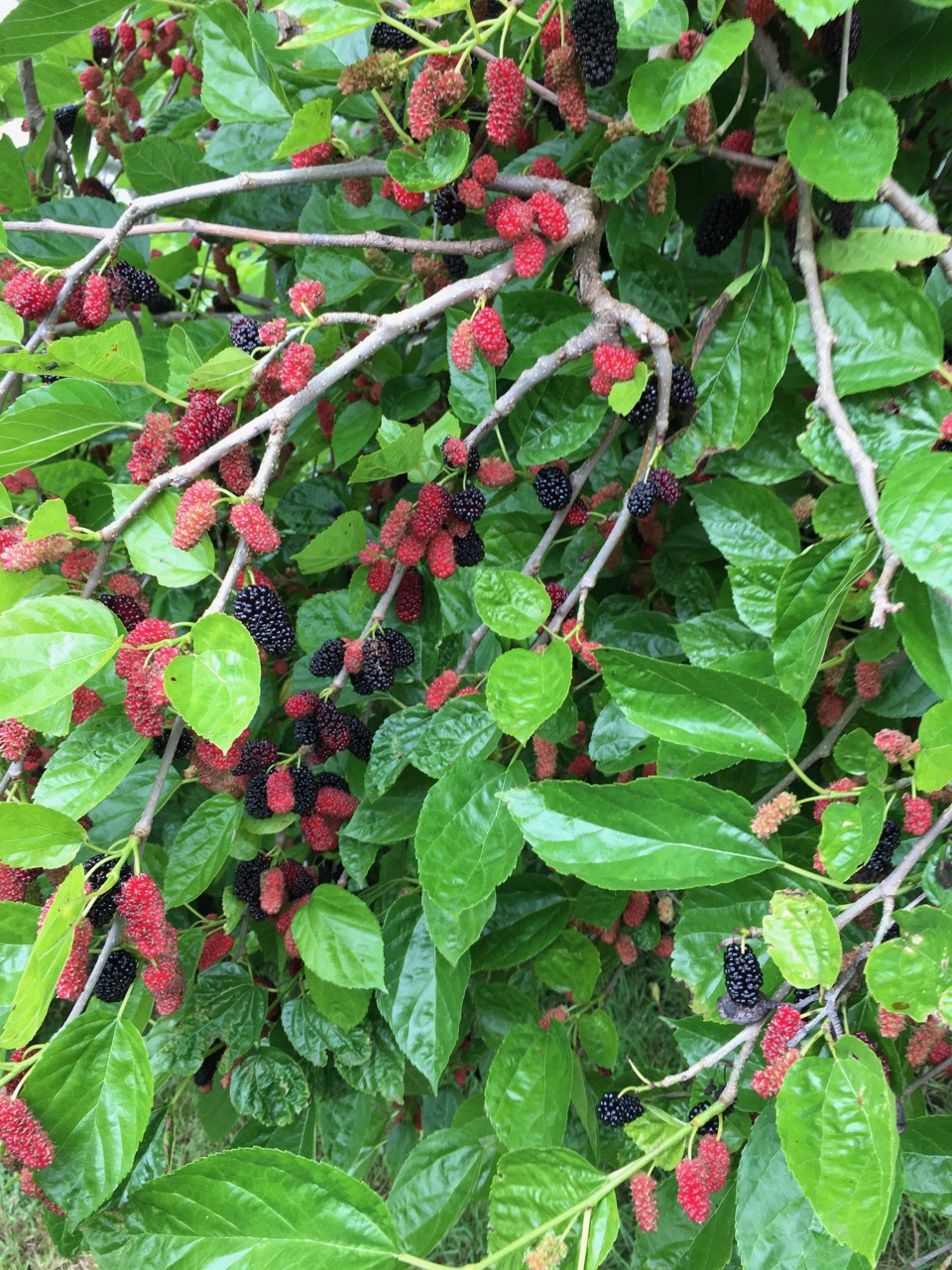
In keeping with my philosophy of self reliance, we eat as much as we can from our own property, using whatever there is in the garden. This week the mulberries are on. The season will last a month and the birds will get the bigger share of the crop. We have a bowerbird that survived the fire somehow and a new arrival of a wattle bird. They spend the day in the foliage cackling, croaking, clicking and chirping. It must be beautiful for them in there with such abundance.

When we moved here in 1976, kookaburras were the only birds around. As we slowly developed the place digging dams for water storage, mowing the weeds to create some lawn and planting native shrubs all around the edges. We created a small paradise. Over the following years we had thousands of smaller birds move it to colonise the ‘new’ territory. It made it very hard to harvest any fruit from the newly developing orchard. It sort of proved the old saying ‘If you build it they will come’. The fire cleaned out all the shrub dwelling passerines, as they went to low dense cover to hide. This part of the forest burnt fast and fierce. However, we have started to see some migration of the smaller insect eaters back into the garden from territory farther afield.

We currently have 2 nascent populations of just a few individuals of superb wrens and fire tails. They are very busy nesting in the 4 remaining established native hypericifolia shrubs in our garden. These small trees were part of a much larger, longer hedge and somehow survived the catastrophe. Which is good for the small birds. I hope that they have a good breeding season and that their numbers recover quickly. We have been having some nice rain lately, so it could be a good summer for them.
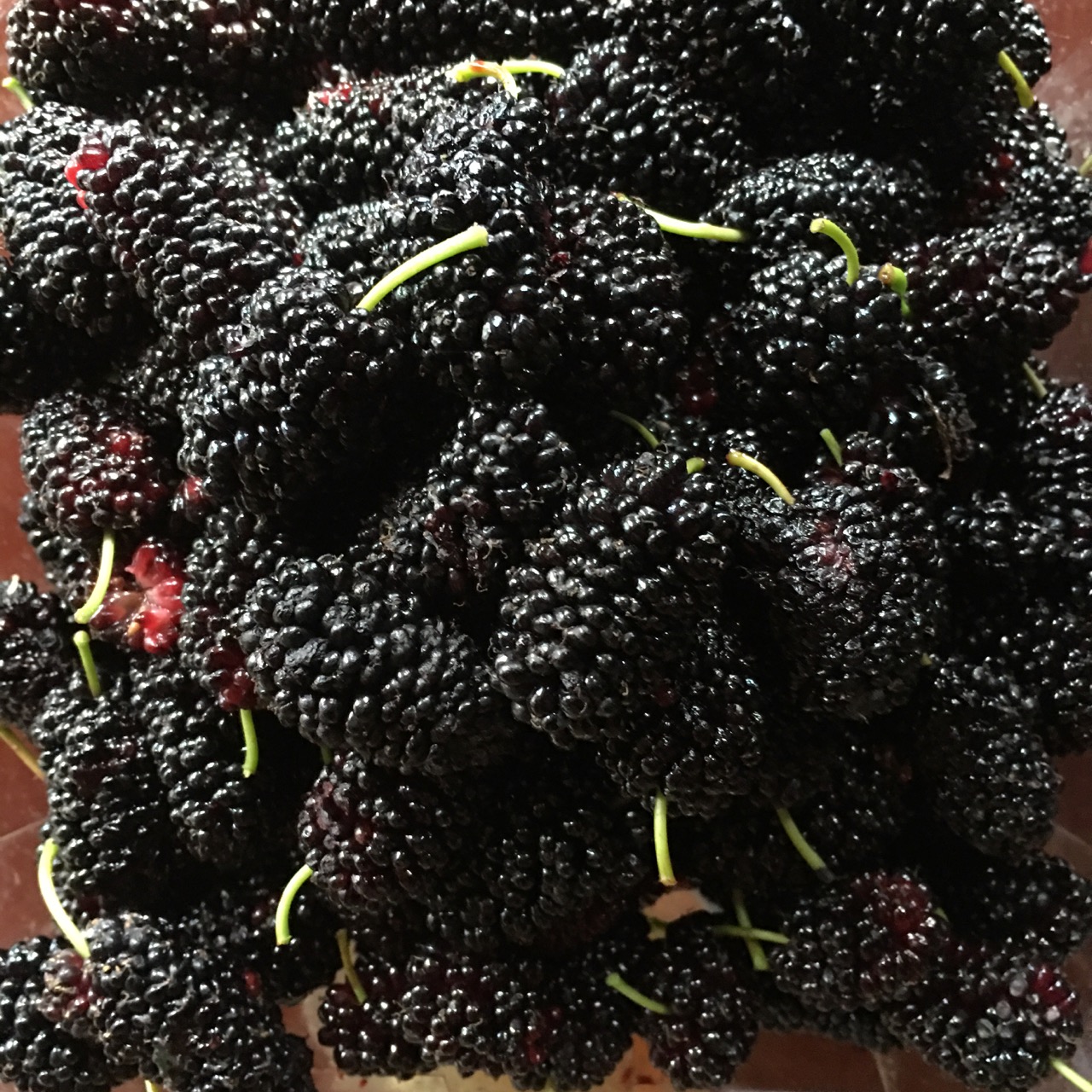
Back in the noisey mulberry tree, it only takes a few minutes to pick a bowl full of plump, ripe fruit at this stage with so many ripe berries to choose from, but picking isn’t the slow part. What takes time is snipping off the hard little stalks. These stalks are very firm and spoil the mouth feel of the soft, luscious and sweet, juicy fruit. You don’t have to de-stem, but the resultant pie is so much nicer without the annoying little hard stalks getting stuck in your teeth.


I use a recipe that I got off the internet. I like it because it’s so easy. However I have adapted it to suit myself. Most puddings and cake recipes I read seem to me to have way too much sugar in them. I don’t have much of a sweet tooth, so I halve the quantity of sugar in most recipes, to no noticeable ill effect. Fruit recipes often call for equal parts of sugar and fruit, or half the weight of fruit as sugar. I have reduced this to a 1/4. Then I also add a squeeze of lemon or grated zest to give a little bit of tartness to cut through the bland sweetness.

I’m too lazy to make my own pastry, I’m always busy, so it’s amazing that I can make time to cook anything from scratch. So I buy frozen pastry packs in a dozen sheets at a time and they last half the year. Clearly, I don’t make a lot of pies. It’s not that I’m keen on home made fancy deserts, it’s more to do with the fact that I hate to see waste, and I can’t eat all the fruit raw!

In the early years here , we used to bottle the mulberries and vacuum seal them in ‘Fowler’ jars. but as soon as the youngberries were planted and came in to full production, we forgot about the mulberries, as the youngberries are just so much better in every way. So these days we eat the mulberries for a couple of weeks until the youngberries come on, then we leave the rest of the mulberries to the birds. We have to net the youngberries to keep the birds off, other wise we wouldn’t get hardly any.

Once the mulberries are de-stemmed, I mix 400g of the berries with 100g of sugar in a bowl. Add 3 tablespoons (approx.) of flour, the juice of 1 small or 1/2 of a large lemon, I also add in the pulp off the glass juicer. A squeeze of vanilla essence and a dusting of cinnamon powder.

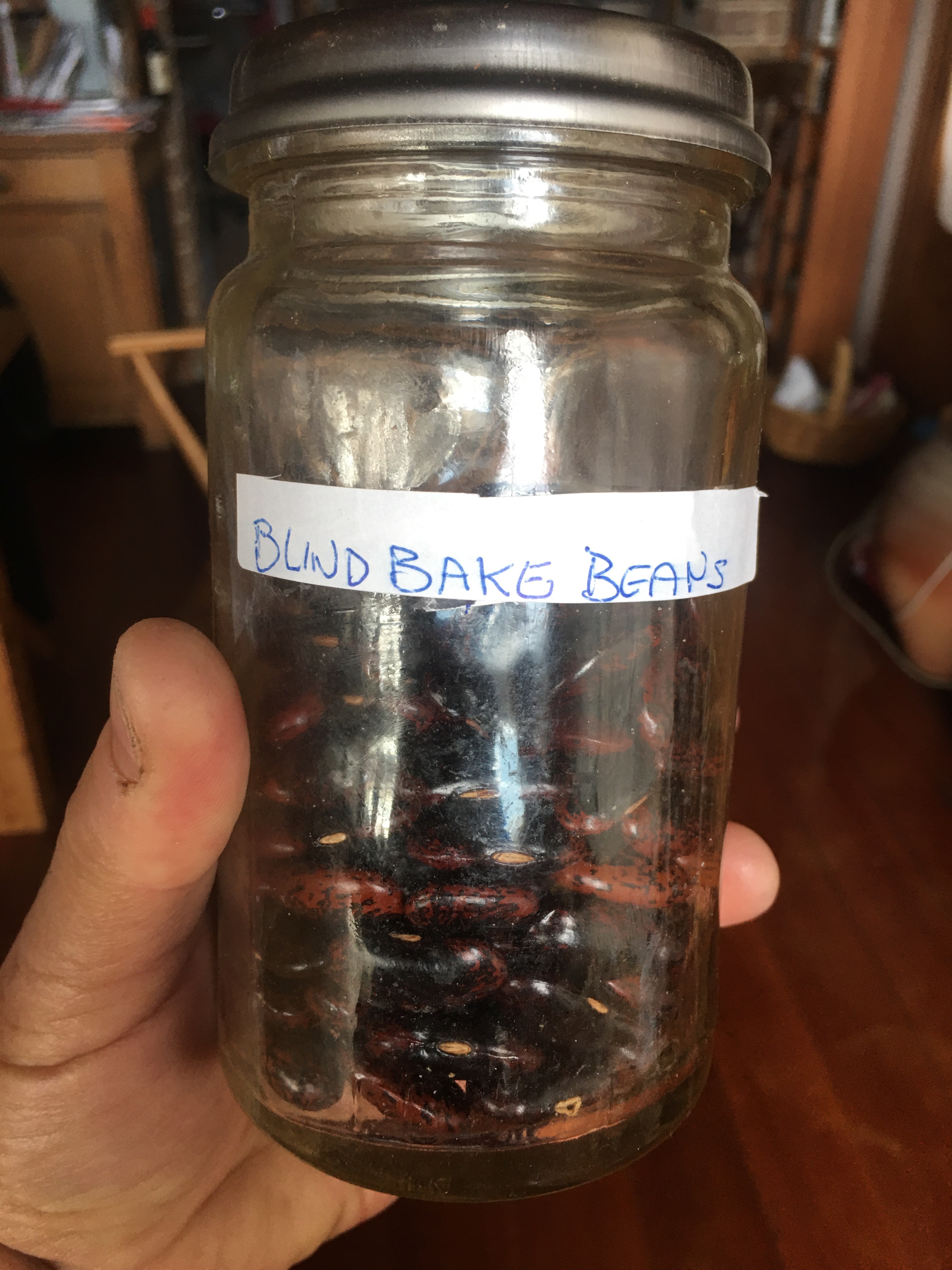
I pre bake the base @ 180oC for 15 mins filled with a glass jar full of dried, home grown, baking beans that I keep in the pantry for exactly this purpose.

Hint – Put crumpled up, non-waxed, plain lunch wrap paper in the pie first, so that the beans don’t stick to the ‘pricked’ pastry base during cooking. Remove the beans and paper and continue cooking for another 5 mins until golden. If the base lifts up, just press it down again after it cools a bit, don’t burn your fingers.
Pour all the ingredients into the pie crust and if you have some left over pastry, lay a few  strips over the top as decoration, or you can lay another whole sheet over the top and prick holes in it to let the steam out. Bake @180 for about 15 to 20 mins, or until it looks done.


The smell of this pie when it emerges from the oven fills the room. It is enough to melt the Heart of the Knave and induce him to steal. My mother always said that the way to a mans heart was through his stomach! So, as I live with The King, and don’t want to be ‘beaten full score’, I surrender the tart to my King and we enjoy it en-concorde. 

A nice seasonal desert, or afternoon tea. To be savoured and enjoyed in late spring, and then anticipated for the rest of the year.