Who’d have thought, ethical shopping was so difficult and gardening was so dangerous?

I missed most of the free-for-all shit-fight that is Xmas shopping this year. 

The week before Xmas, Wednesday or Thursday  Janine and I were pruning some extravagant growth from the shiraz vines, to make it easier to weed the garden beds. Nothing happened!
3 days later, on Sunday morning, I woke with tightness across my chest, head ache and achy bones. We had been to the Village Xmas party the night before, so I thought ‘COVID’!

Rat test all clear, next day worse, 2nd RAT test, all clear again. Next day no better, so went into town to get a PCR test, as RAT tests aren’t all that reliable. The local duty doc says “probably flu!” The next day, PCR returns all clear, for Covid, RSV and Flu. So it’s something else? About this time the back of my arm began to ache, so I show’d Janine, and she said Ouch! That looks terrible. I’d been out driving and noticed that the sun on my driving arm made it hurt.


So then I’m thinking that it’s all about some sort of chemical burn from an unknown toxin of animal or vegetable origin? (I eliminated mineral.) First thoughts were venom, but spiders, scorpions, snakes all leave puncture marks and the initial strike is painful. I felt nothing.

So, my next thoughts were plant sap. I know that the thick white sap from figs and some weeds, like dandelion can cause skin burns, but these grape vine tendrils were 1.2  metres up off the ground, away from all weeds. 

The scratch pattern suggests scraping across something.
At first I was at a loss to think of ‘what’ and ‘how’, but pretty sure that it was some sort of contact dermatitis from a toxic plant sap?I’ve been pruning grape vines for 40 years and never experienced anything like this before.
Now 2 weeks on its settled down and is no longer so red and angry looking, and the clear pustules have gone. My GP comes back to work on the 2nd, so I have an appointment with him then. But it’s left me living with the symptoms of flu or COVID, even though it isn’t that. I have achy joints, electric blue razor sharp headache, and feeling pretty tired most of the time.

Of course, I googled it and the best match I could find was ‘Rhus tox tree’, but we don’t have one of those in our place. 

However, I think that I’ve finally got it sorted out.

As I read on, I discovered that some of our edible garden vegetables are capable of irritating skin and causing ‘phytophotodermatitis’. It’s a special combination of first getting in contact with the offending sap, then getting strong sun exposure after that. If the plants have any ‘furocoumarins’ then the skin becomes very sensitive to sunburn. Hence phyto-photo-dermatitis. Once burnt, there is no treatment, you just have to sit it out – in the shade!

The most common garden plants that contain furocoumarins are the ‘Apiaceae’ family represented by parsley, celery and parsnip. Who’d have thought? The other family is ‘Rutaceae’, containing rue and citrus plants. In fact, one of the names for this phytophotodermatitis is ‘Margarita burn’, from sucking on limes in the hot sun! I kid you not! Some people can get burnt from the lime juice on their skin in full sun.


Who could have imagined that my lovely vegetable garden, normally such a safe place of creativity and enjoyment, would turn out to be so toxic to me?
So it finally all fell into place. I was pruning the side of the vines alongside the veggie garden beds. Janine worked on the other, more open, north side. I got a few scratches on my arm from the short stubs of the pruned vines, just enough to rough up the skin a bit, but no pain. No reason to take any notice. I carried out the prunings up the row, then on the return trip down the row, in the opposite direction, to cut more, I had to walk past the seeding heads of a bed of parsnips and parsley, exactly at the same height as my shoulder and its receptive skin. No reason to take any notice. Apparently there is a wild parsnip that is known to be very toxic, but even domestic parsnips still carry some furocoumarins.

The perfect storm comes about when; It’s hot and I work in a singlet, arms and shoulders exposed, I get a few light scratches from dead vine stubs  Nothing worthy of noticing. Brush against garden parsnip flowering heads. No reaction then either. BUT!

Wait 2 days, then and go out driving in bright sunshine, in the middle of the day, exposing my right side driving arm to full sun. That is when my arm started to hurt for no apparent reason. None of the critical events were obviously linked, so few clues to go on. But now that I have educated my self on this issue, 

I’ll be wearing long sleeves when working near parsley, parsnips and celery in the future.

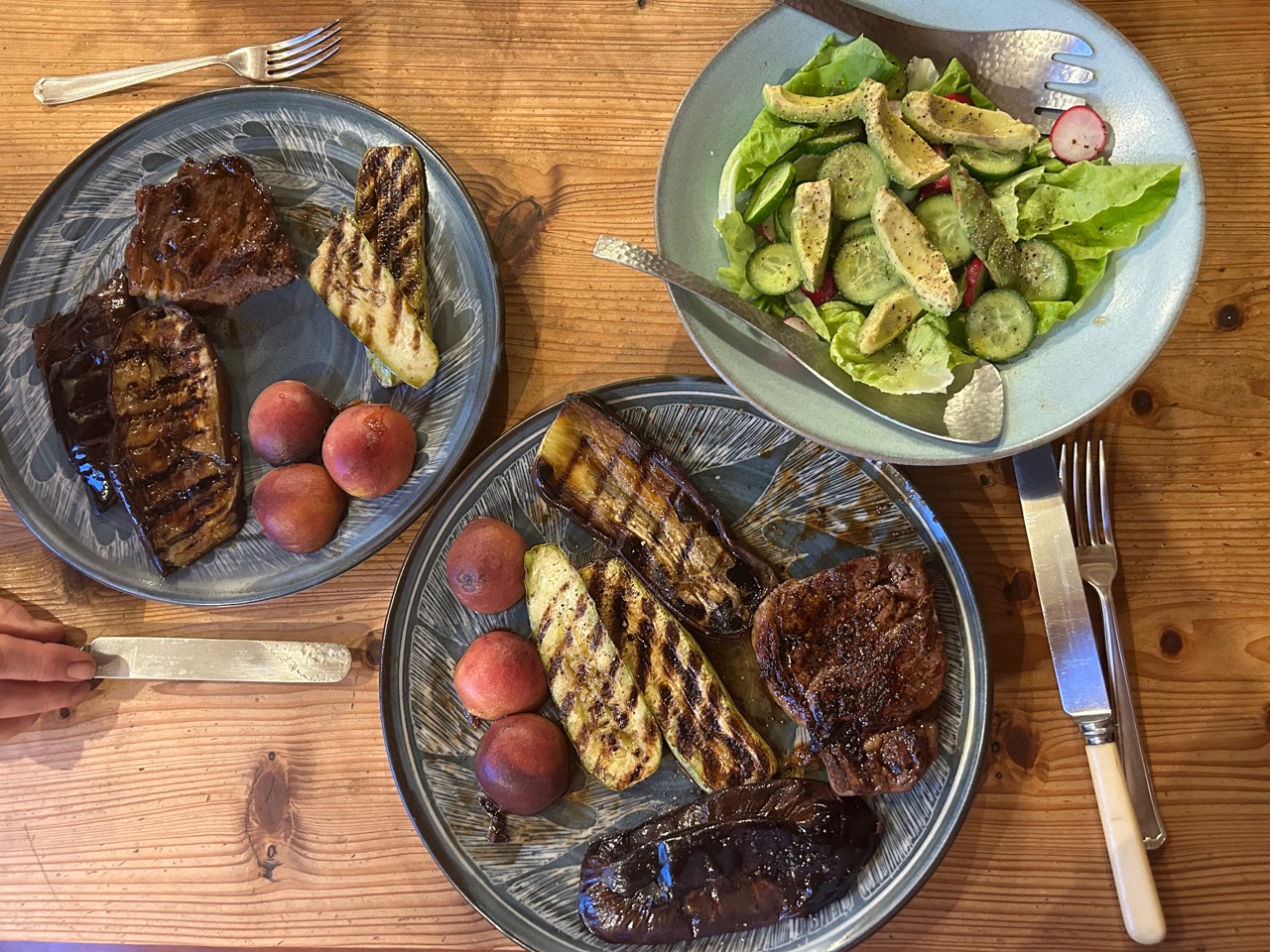
Having spent a week in bed, with the symptoms of what I first imagined were the same as covid, but with sun burn on one arm, it’s been a very quiet one for me. The big solstice day fell just at the end of the week, so I was able to take part in our beautiful family Xmas lunch of baked garden vegetables in a honey soy dressing, with a garden/orchard salad of red plums with cucumber, capsicum, tomato, red onion and parsley.  All really delicious, cooked on sunshine and no animals were hurt in this meal.

We’re trying hard to keep it all simple, but somehow, Xmas has morphed into a time of extravagant excess for so many. Loads of junk changes hands, some of it doesn’t even last the day and is destined to go straight to landfill. We don’t want to add to the miss-treatment/torture of caged animals, nor wrap/package things needlessly. I sound like a real killjoy, but I’m not. I want to give time and love and caring conversation instead of ‘things’. Stuff doesn’t really fill any emotional gap in any stocking. I’m not being mean spirited either. I give the equivalent amount of money to a charity instead. I just want to do as little damage to the earth as is possible while still living a ‘normal’ 1st world life style, although mine is a strange, green influenced, non-consumerist, carbon constrained, hybrid 1st world life style.

I’m sure we’ve all been at the supermarket and thought, well, I could just pop these last few things in the basket and be out of here. But I don’t want to buy my mushroom or meat in a shrink-wrapped plastic packet. It’s unnecessary, wasteful and environmentally damaging. The only option then is to to check out, go to the other shop in town and buy the meat un-packaged from the butcher, and the mushrooms un-packaged in a loose fill paper bag from the grocer. It’s easy enough to do, but takes loads of energy and is quite time consuming. It also means driving further and finding a parking space 3 times! If I were driving on petrol, it would be a waste of fuel. 

I am no saint. I often fail my own test. but when I am on my own, feeling OK and on top of things, I find myself doing the rounds of 3 supermarkets, the butcher and the green grocer.  I go with a list for each one. I don’t look left or right. If I can’t find the item or anyone to ask, I leave without it. They loose. I don’t really need all that much anyway. Most of what I buy is discretional/peripheral. However I do like to make a rendezvous with the fish truck that comes up from the coast each week. That is our main source of protein. Most of the rest of our food comes from our garden.

It’s not unusual for me to go to only 2 isles in a big supermarket. I make a ‘Bee-line’. Go for what I came for. I refuse to be distracted. I leave. I have no respect for the price gouging, profit-at-all-costs, main-street-wrecking, rip-off tactics of the big 2 supermarkets. I only go there for one or two products that I can’t find anywhere else. I’d be happy not to go there at all. However, I’m only human and essentially lazy, just like most people. I really have to push myself to shop as little and as ethically as possible. It’s just that I was brought up to think ‘green’ about all my life choices. Environmentalism is very deeply embedded in my psyche. I can’t help myself.

Trying to shop ethically is hard, time-consuming and ultimately very unrewarding. because no matter what you buy, there is that feeling that I could have done better, or, maybe I shouldn’t have bought it at all.

Life is strange, there are no instructions, no right answers (left answers may be less damaging?) and life is a constant source of learning by failure and experience! I’m doing the most that I can with the least that I have. It’s the journey. Who’d have thought that shopping was hard and gardening was dangerous!

Nothing is ever finished, Nothing is perfect, and Nothing lasts.

Summer fruit harvest with pork and beans.

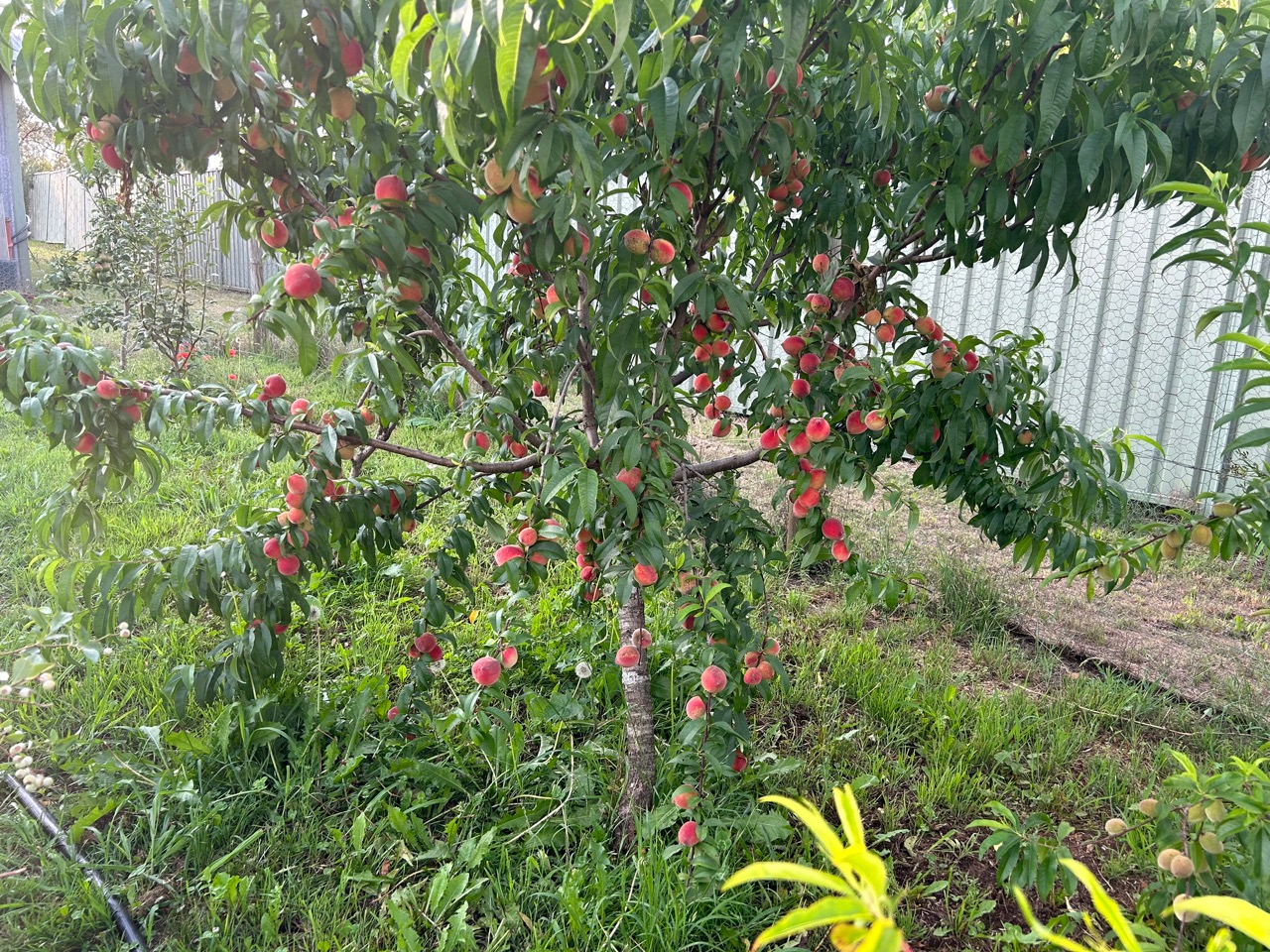
December brings on the summer and the stone fruit harvest. We have all of the newly planted, now 4 years old. stone fruit trees in the new post fire orchard coming into fruit. We chose to plant all dwarf rootstock, low chill, hot weather tolerant, varieties. They are doing really well and everyone of them has fruit on them this year. Some of them set fruit from year one, but as this isn’t good for the health of the tree, I picked all the fruit off, bar one piece, just get a taste of what was to come. Fruit trees do better if they are left to grow on for a few years and put all their energies into developing a sound, strong branch structure and deep root system. As their first 3 years were all very wet here with the la nina event coinciding with their planting, They grew very well indeed and we hardly had to water them very often.

So now we have a surfeit of peaches and nectarines, on these pretty little bundles of red and green. All the fruit needs to be eaten now or very soon, so we have fruit salad for breakfast. 

BBQ’d peaches and or nectarines with dinner, and stewed fruit for desert. There is always a pressing problem with the fruit fly. I was a bit slow in getting all the fruit fly trap and lures re-charged with refreshed baits this year, so there is a bit of fly in the fruit. We cut this out and cook it up to kill the wrigglers. The rest of the otherwise undamaged fruit is stewed for breakfast or desert. 

This old fly trap has about 100 dead male fruit flies in the bottom from the early spring flourishing. I empty them out and replace the old bleached white bait with a new bright pink one. We have about 14 of these traps of various ages. I bought a few new ones each year, as the orchard grew. now I just buy refills for the bait.

You can tell their ages by the bleached out colour of their lids.

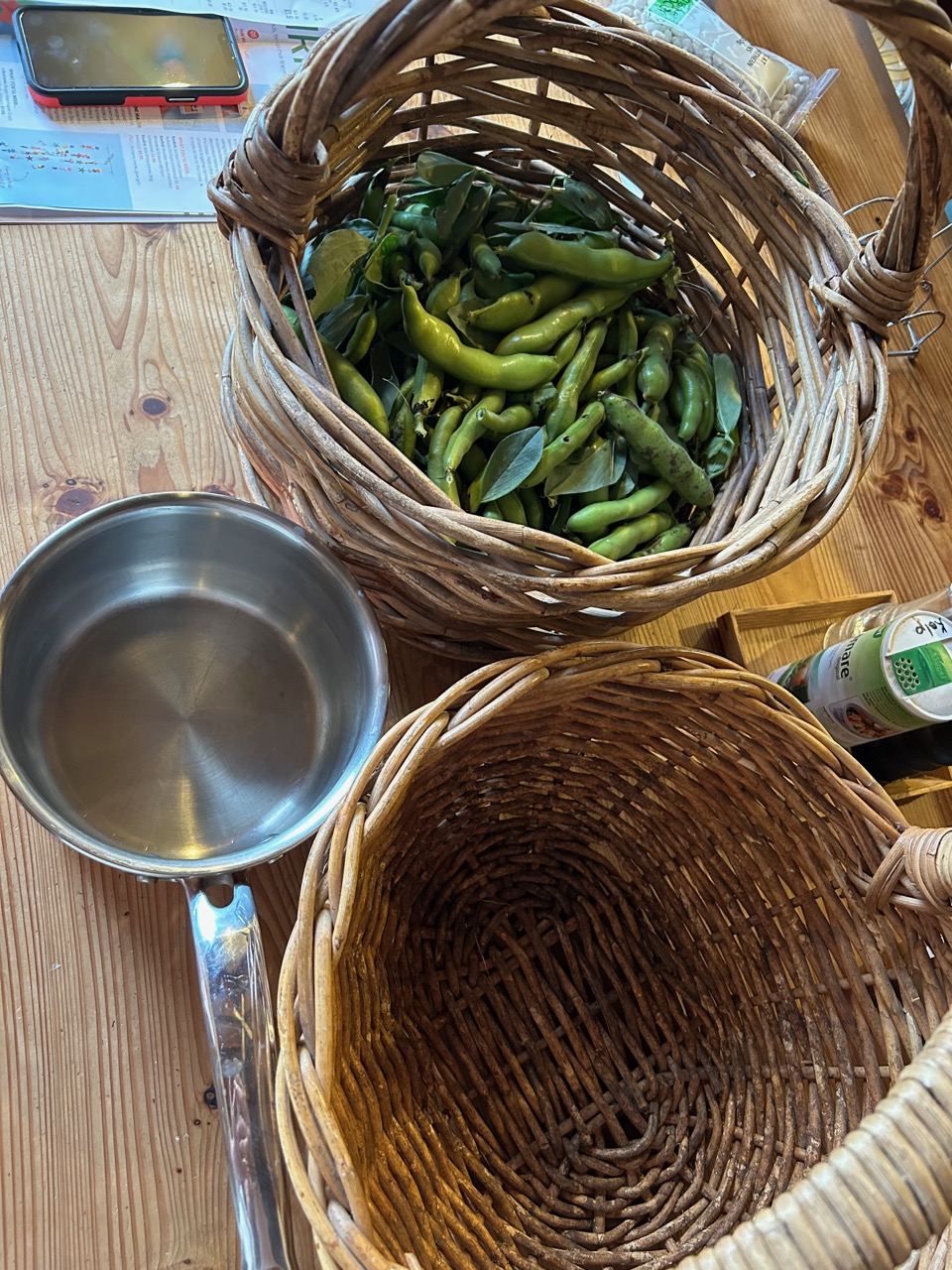
We picked the very last of the broad beans. I thought that I had picked them all last week, but I only had a boy-look. Janine went back through the crop and found another meal for us. I decided to cook that very old favourite of pork and beans. So called favourite of the cowboys on the trail in the old west. I first became aware of this combination watching old black and white western cow boy movies as a kid. I had no idea what it all meant, but it did cross my mind briefly – very briefly. Why were they eating pig when they were herding cattle?

Why weren’t they herding pigs if that is what they wanted to eat? Fortunately, my nascent and emerging tiny brain managed to accept and cope with this difficult dilemma, and moved on. 

Now fast forward to my early interest in cooking and coming across the wonderful Italian recipe of chorizo, beans and tomatoes, obviously with extra chilli and garlic, it goes without saying. It’s become one of our springtime/hungry gap favourites. The beans are usually all dried from last summer, as is the bottle of reduced tomato sugo or passata. As we don’t have our own pig, just chickens. I use what we have in the fridge. At this time, we only have some bacon, so that is what I use. With the shops being a good 50 km round trip away, we don’t drive there frivolously. So bacon it is.

Home grown beans, home grown sweet basil, home grown garlic and home made passata from home grown tomatoes. WARNING! A pig was harmed in the making of this meal.

Desert is fresh picked cling stone yellow fleshed peaches soused with a dash of amoretto half an hour before. Perfection!

These days I’m up in the early mornings from 5.30 and work outside until the sun gets too hot, possibly around 9.00am. Sometimes I am out in the garden working, or more recently. I have been updating our fire fighting capacity with extra sprinklers on the walls of the pottery, barn and big work shed. I have installed the ‘spare’ fire fighting pump that  I used to transfer water from dam to dam.

It is now more or less permanently in place to protect the pottery and barn with a high pressure water sprinkler system. This system used to be powered by an electric pump, I found out at my expense that electric pumps are useless in an emergency, even though I have solar power and a battery, when the fire came and burnt the pottery, it shorted out the power to the barn and only then did it catch fire.

So now everything is dual powered. We have electric pumps for hand watering the garden beds and running the roof cooling sprinkler on top of the roof. But for fighting is completely petrol driven and independent. Because you cant let petrol engines sit idle. They need to be started and run regularly. I have every thing in a dual system now, so that I can start up the fire pump when we are both want to water the garden and orchard trees at the same time. The fire pump handle that duel drain on its reserves of power with no problem, whereas the one horsepower electric pump struggles.

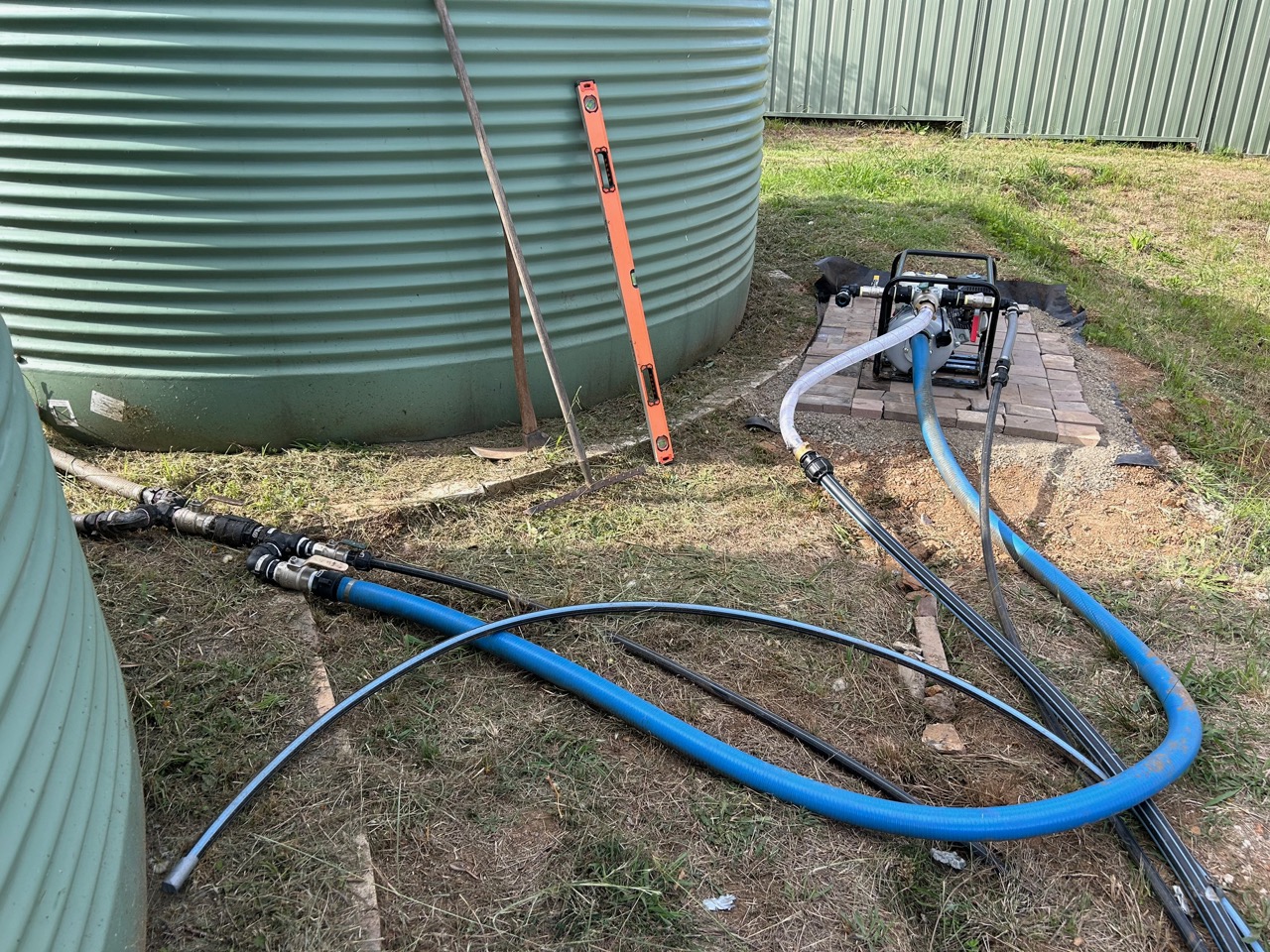
Inspired by all the talk of the Roselle spaghetti junction new motorway tunnel. I installed my own water fed spaghetti junction.

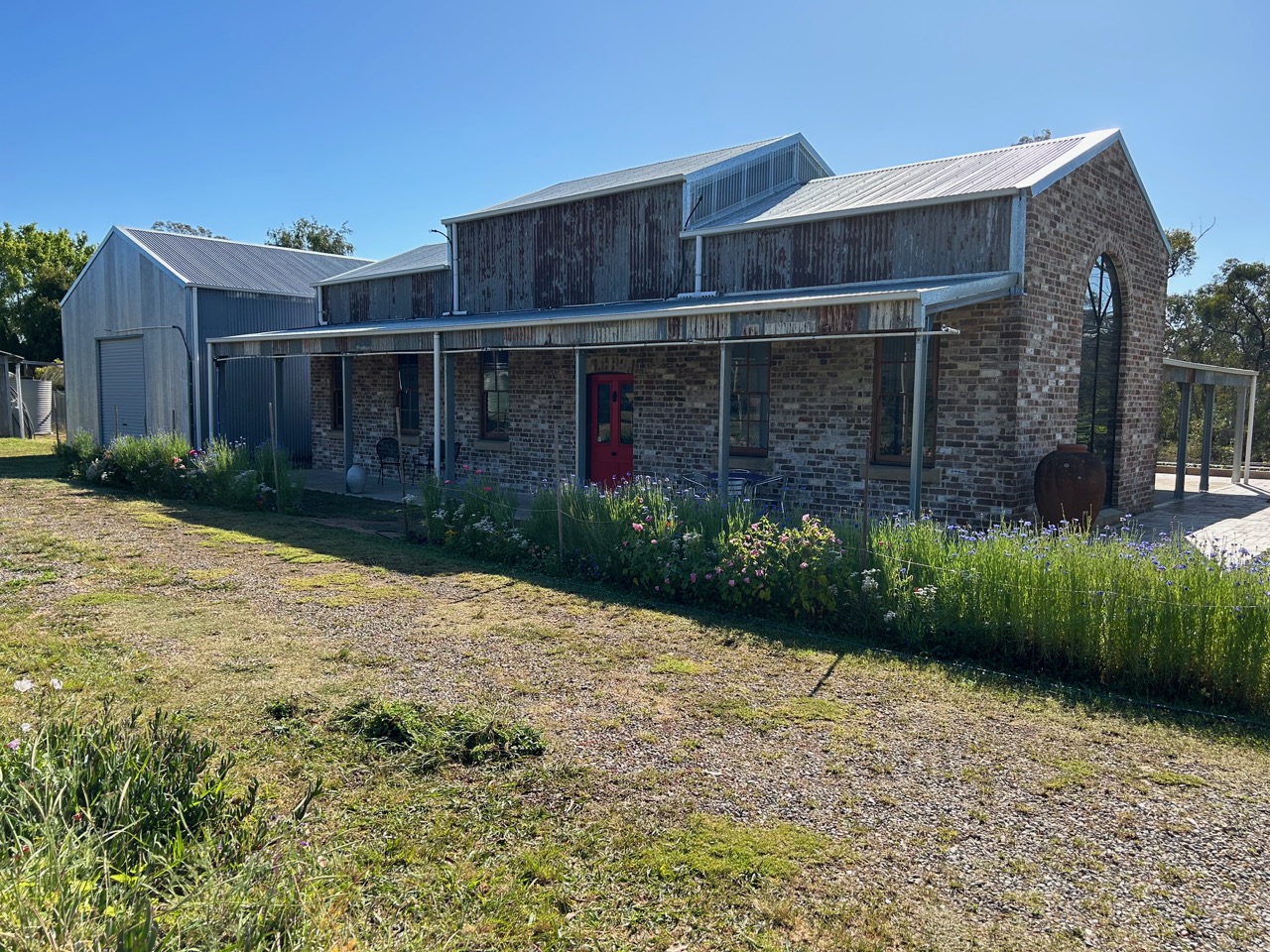
Situated directly behind, and close coupled to, the two 25,000 litre water tanks, it should be safe from fire there? Only time will tell. If you look hard at the image of the pottery shed, you will see the water misting out of the wall sprinklers along the verandah and up on the roof.

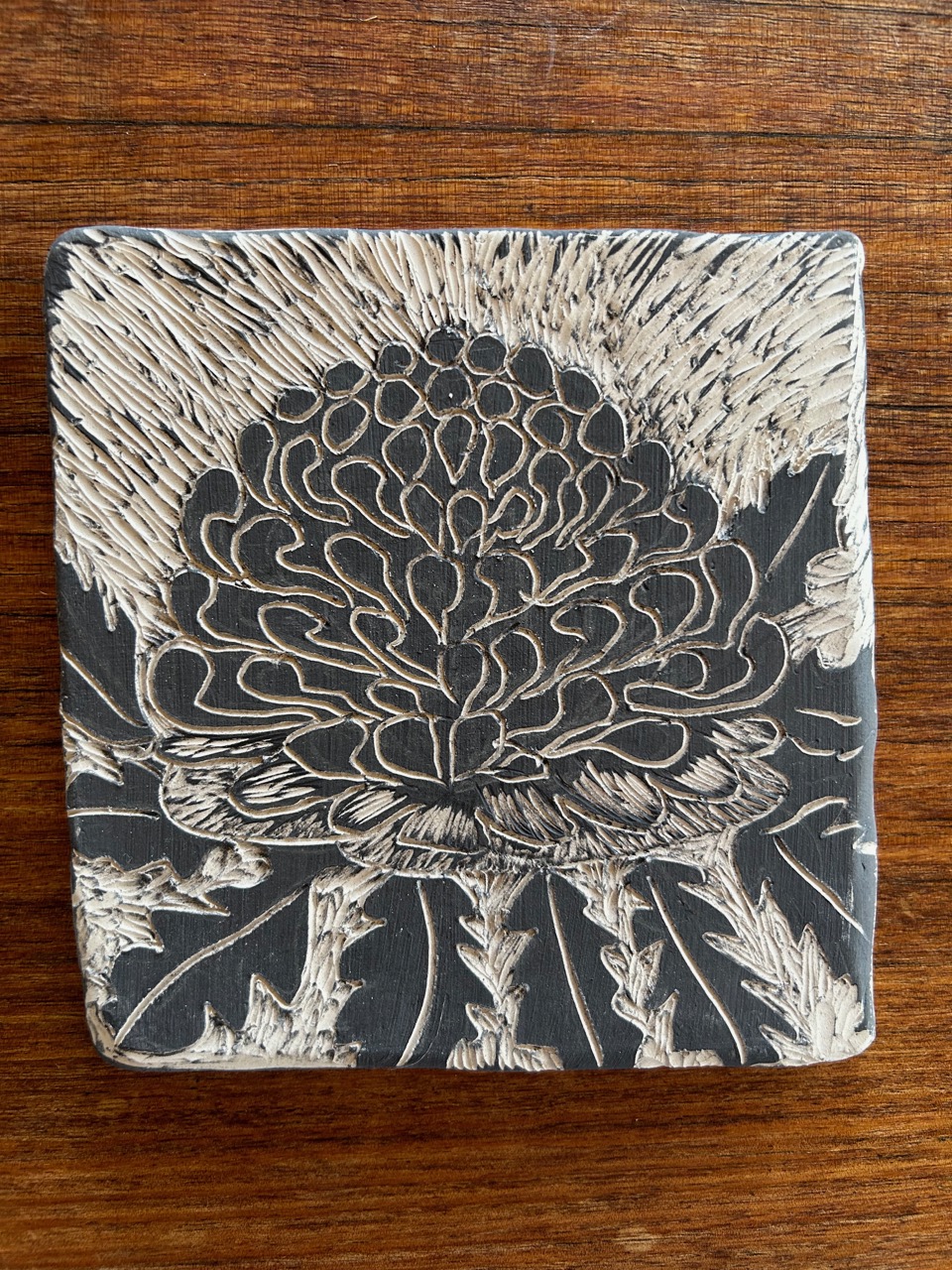
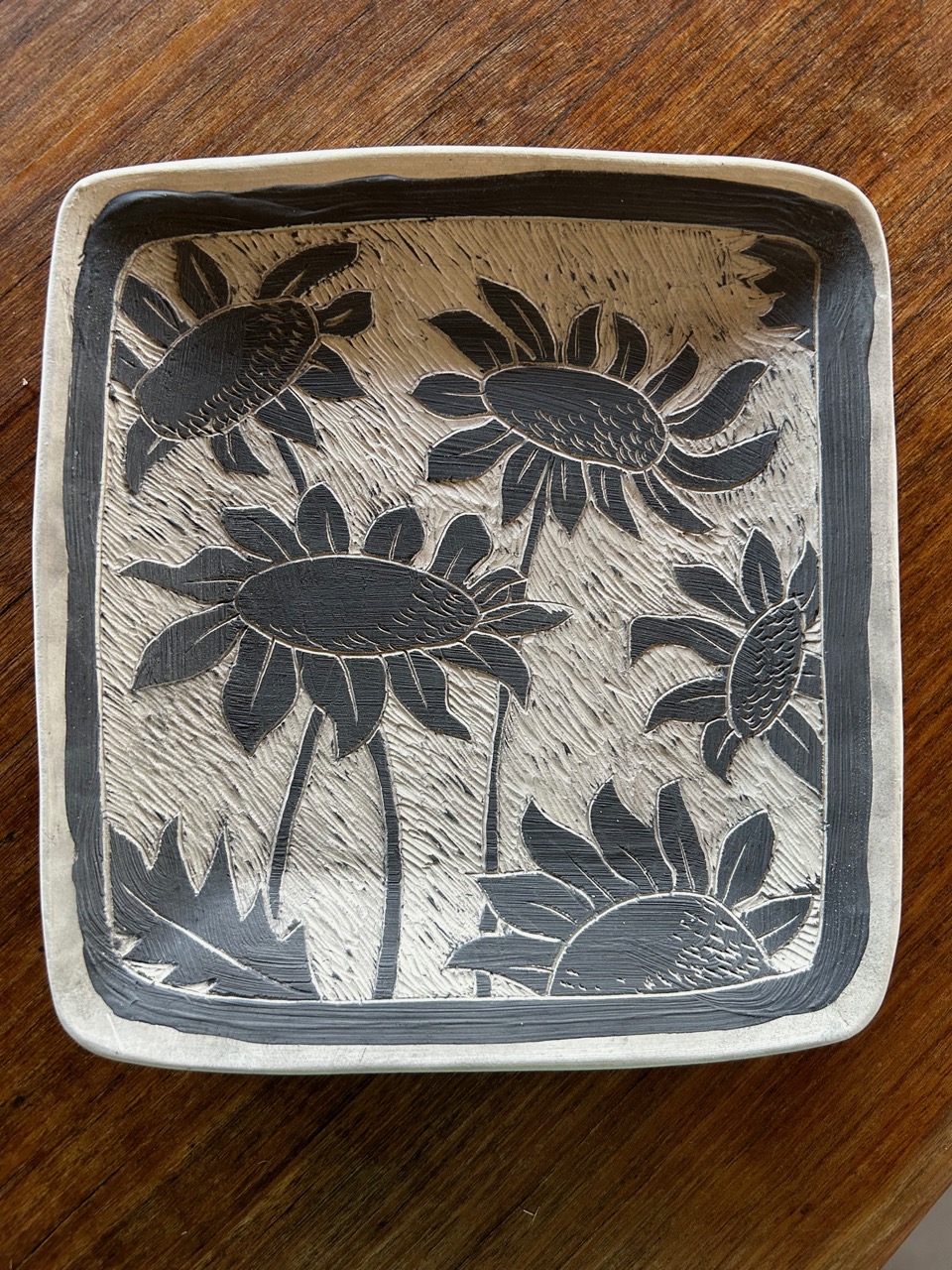
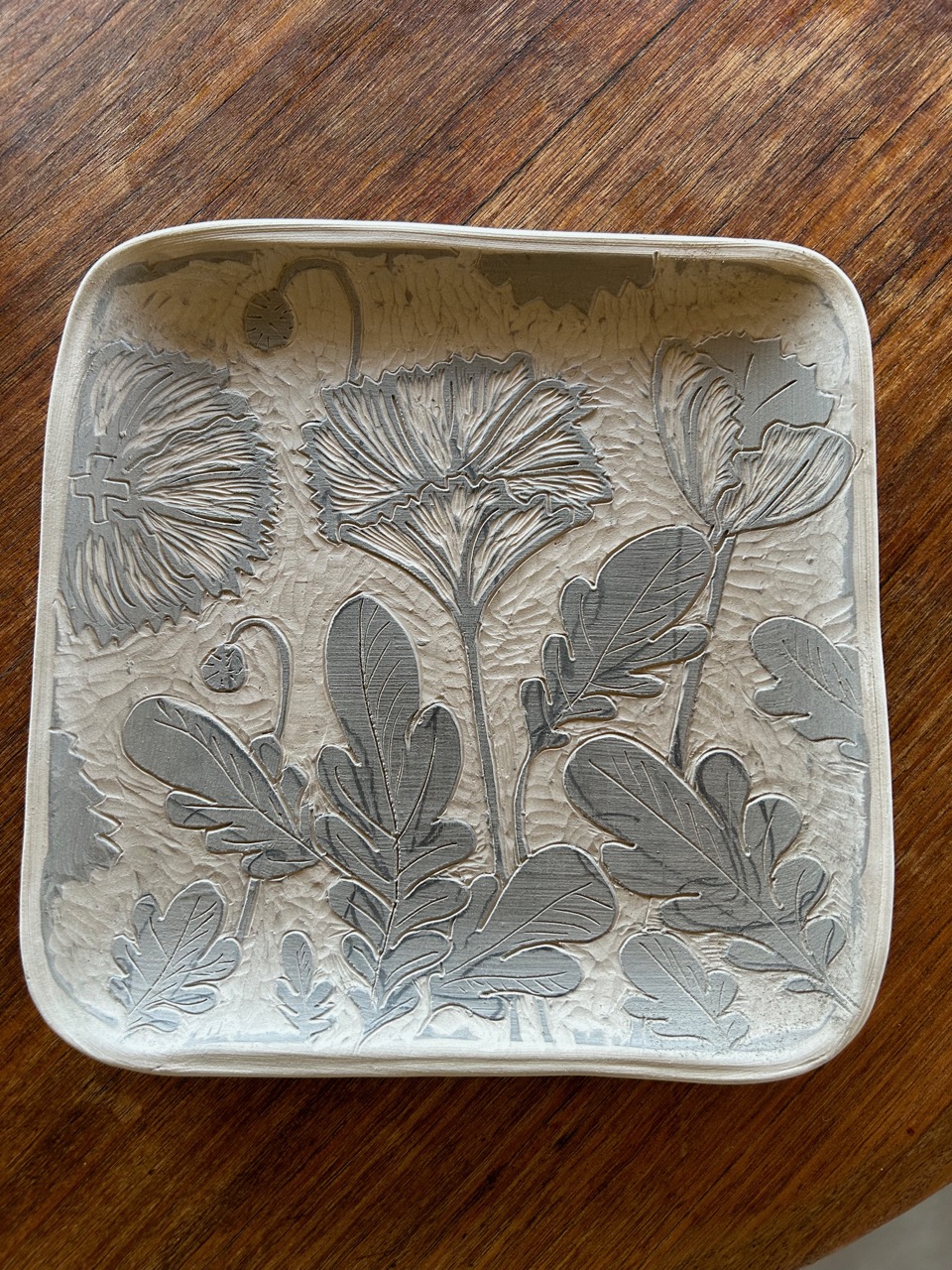
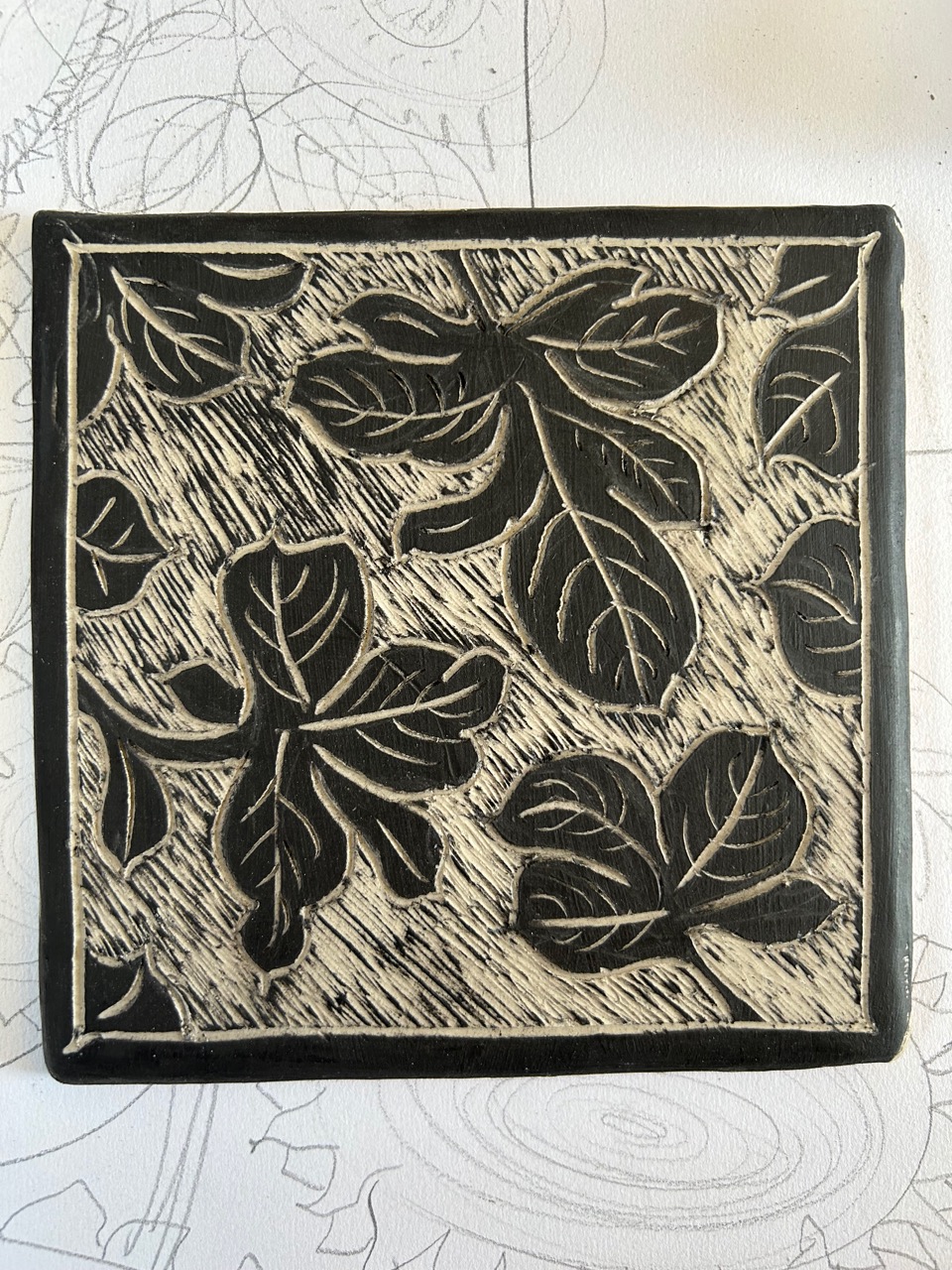
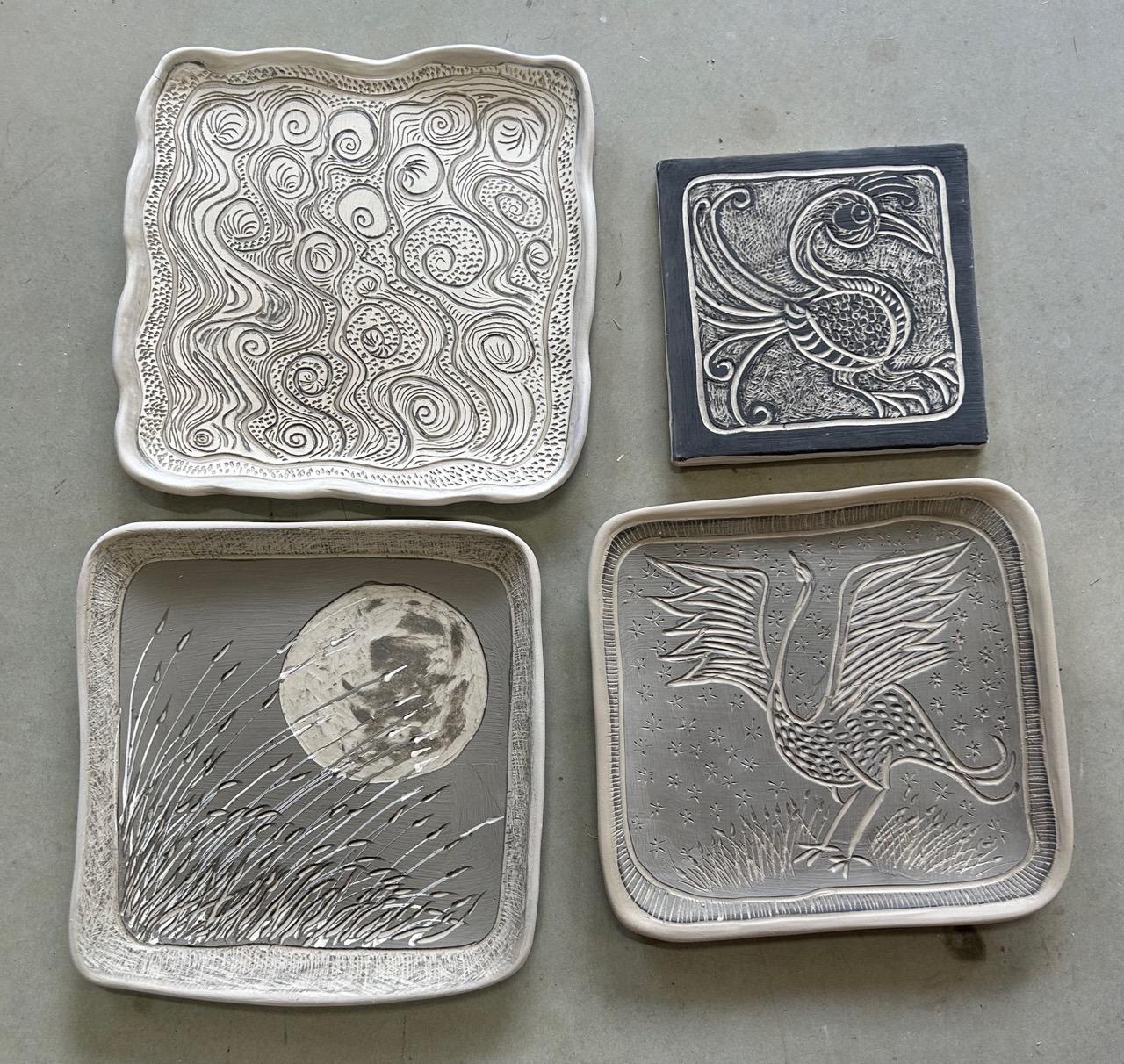
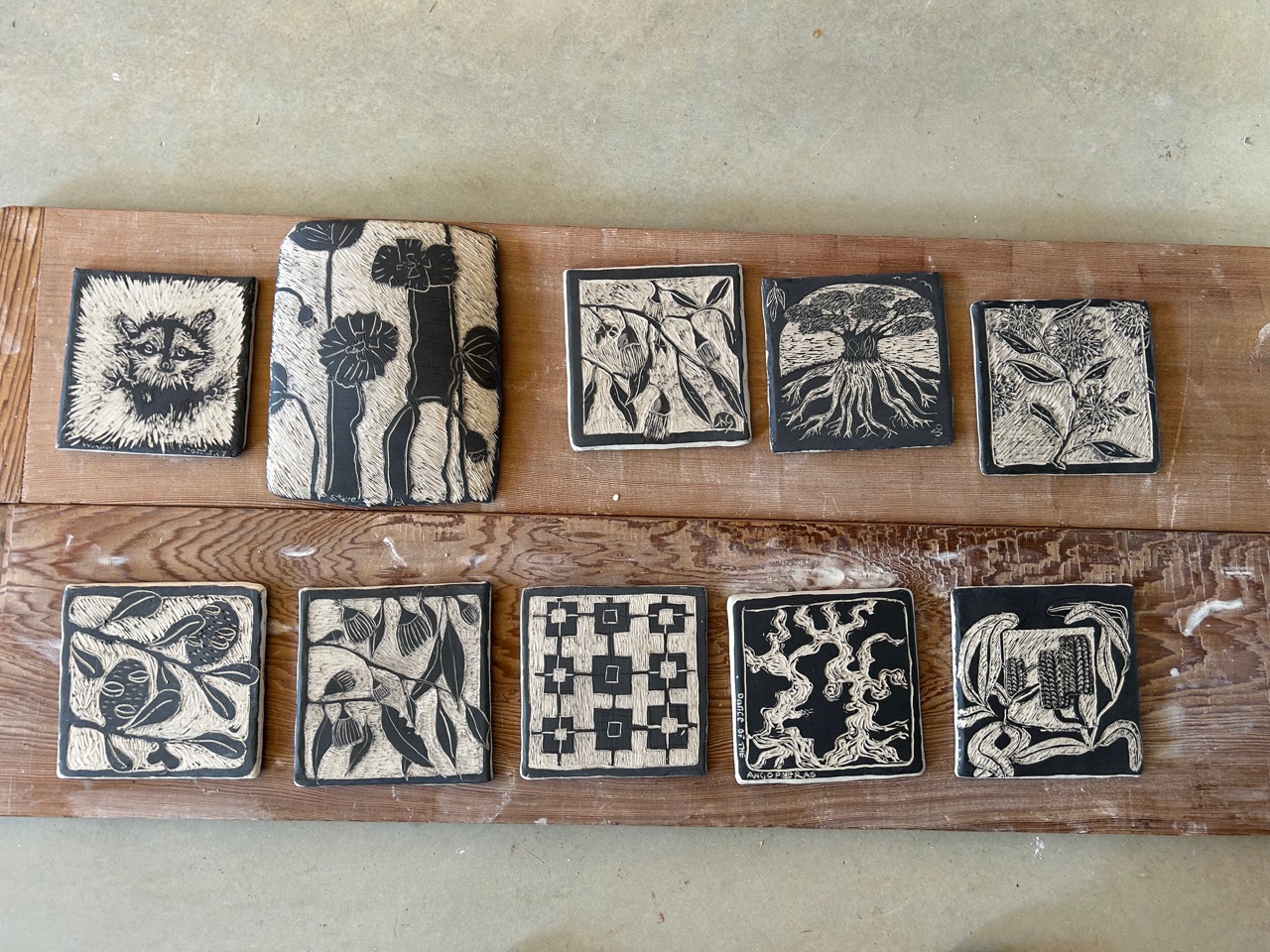
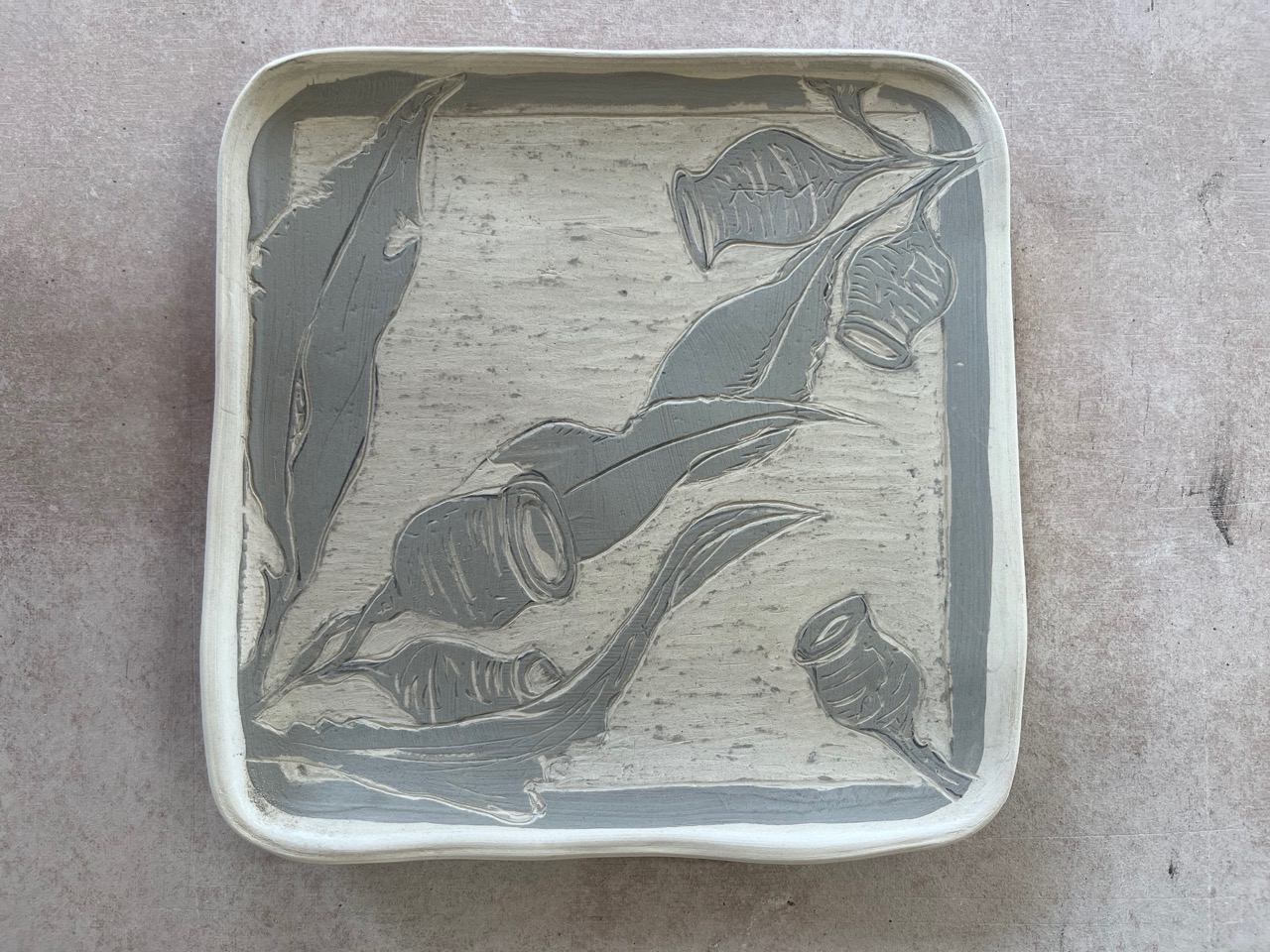
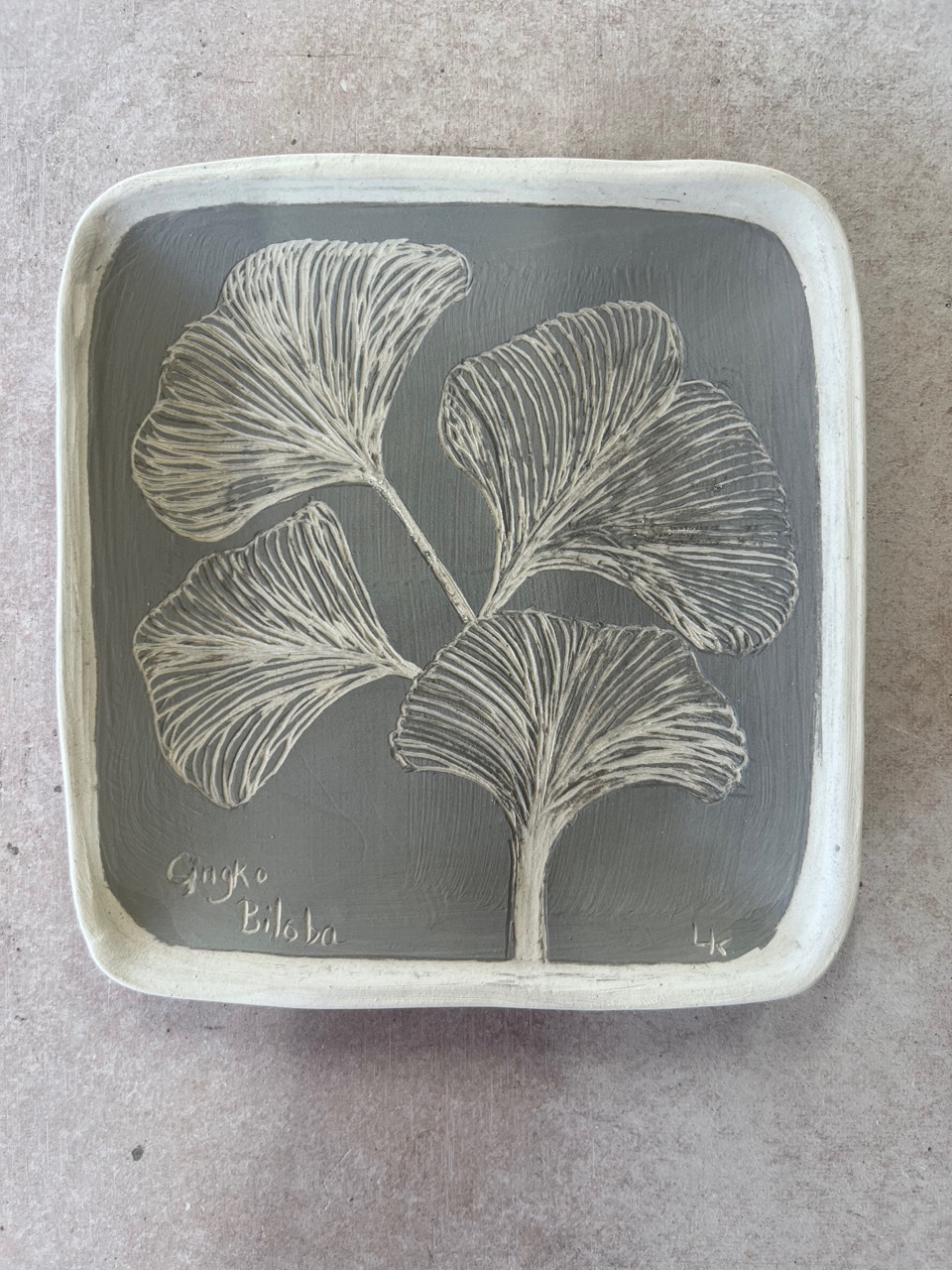
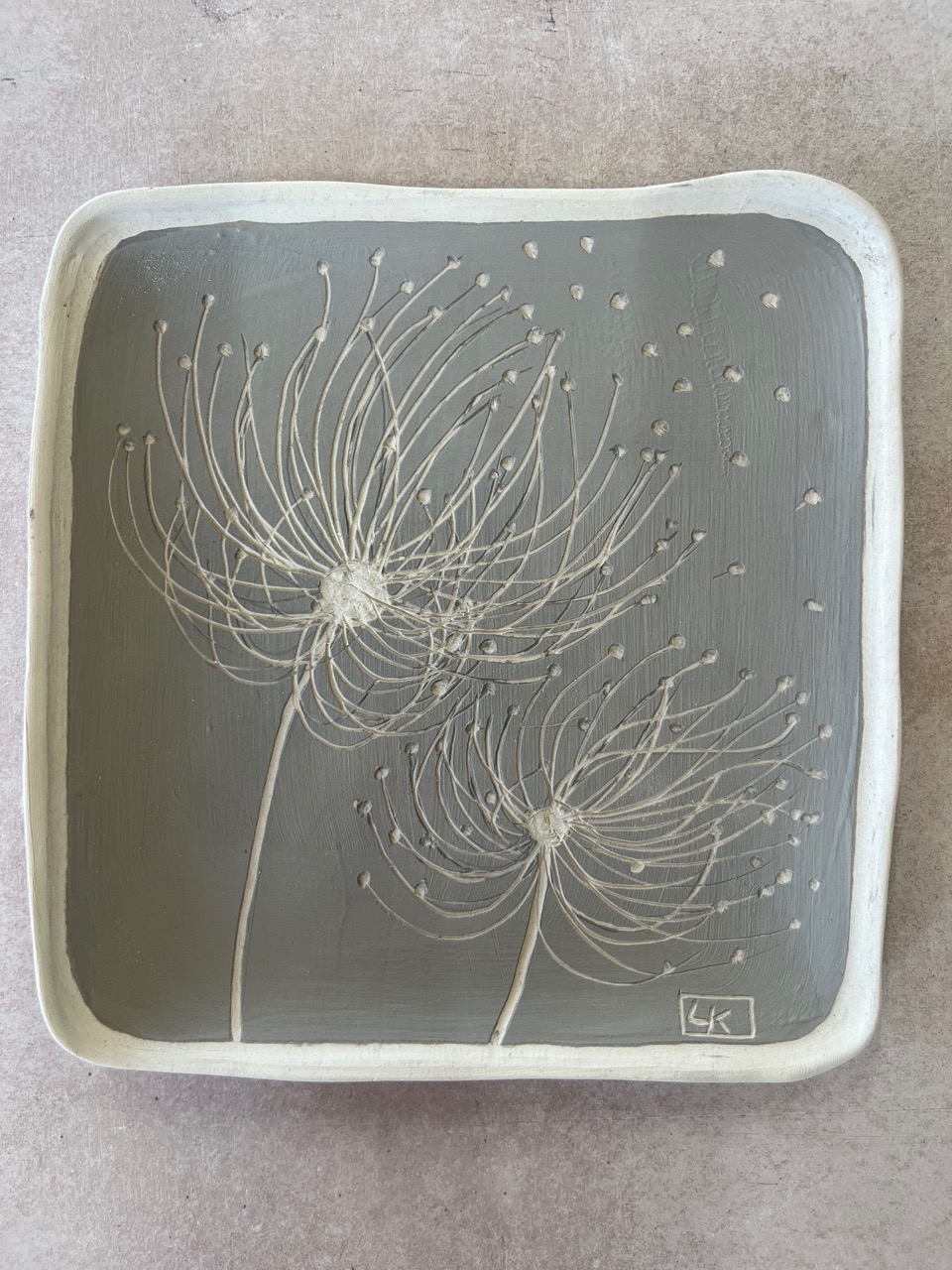
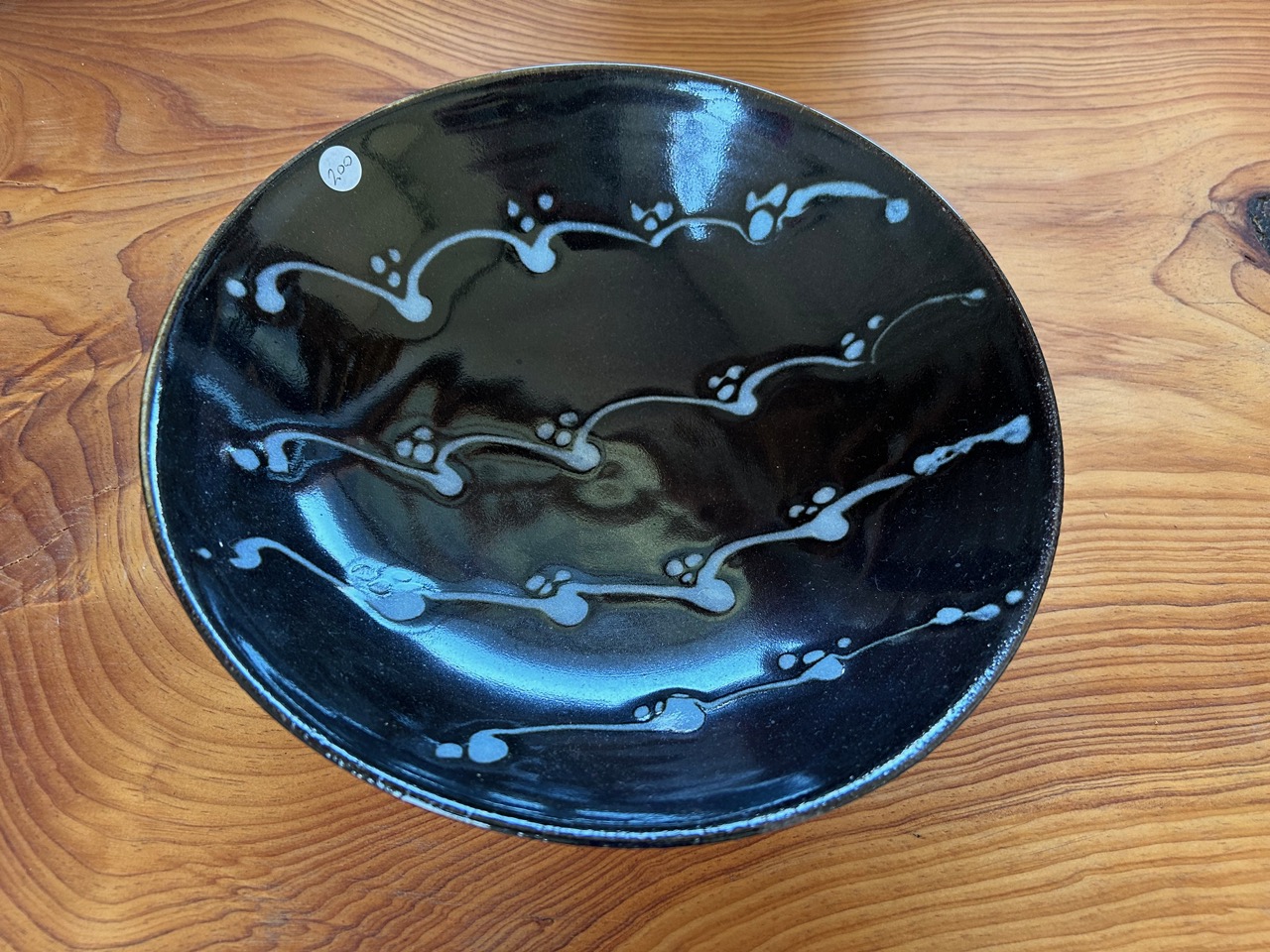
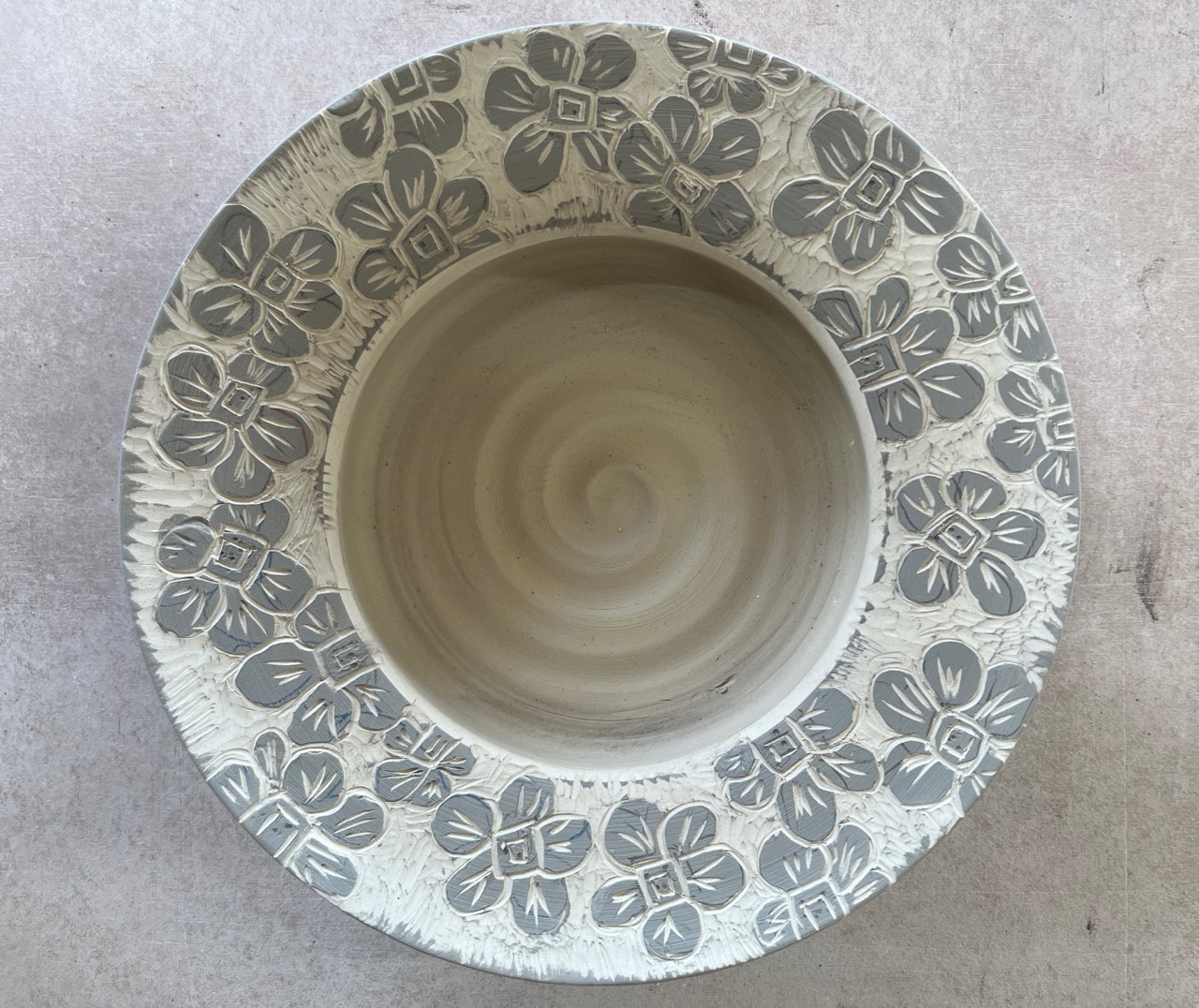
I’ve been spending the hottest part of the day inside working on the ongoing sgraffito project. I’ve finally run out of pre-slipped, press moulded dished and tiles. I’ll have to get on the wheel again soon and make more shapes to decorate.

Inspiration keeps on blossoming

And then the rains came.

We have been going through a very dry time recently, with the onset of the summer heat and reports confirming that we are entering another el-nino period.

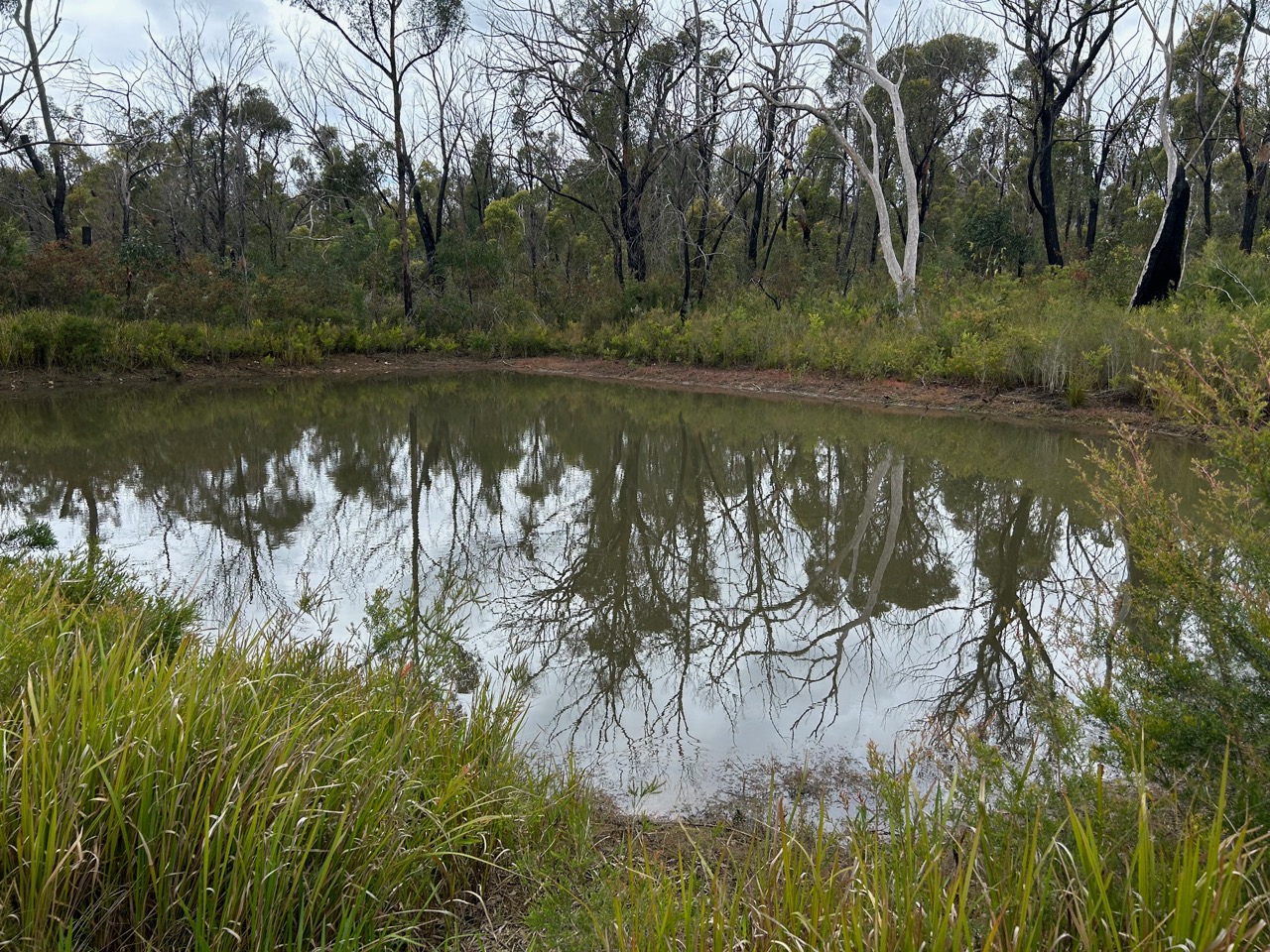
All a bit glum really, but then the rains finally came. We had about 150mm. that’s about 6 inches in the old money. I had recently spent a few days pumping water from one almost empty dam up to another, slowly accumulating what was left of our water in the 4 dams, all eventually up to the one small dam near the house, where we have both a high pressure, petrol driven, fire fighting pump, and a small electric pump that is mostly used for watering the garden.

I managed to get that little dam about 1/4 to 1/3rd full. not a bad effort. That would have been just enough to see us through the first half of summer.

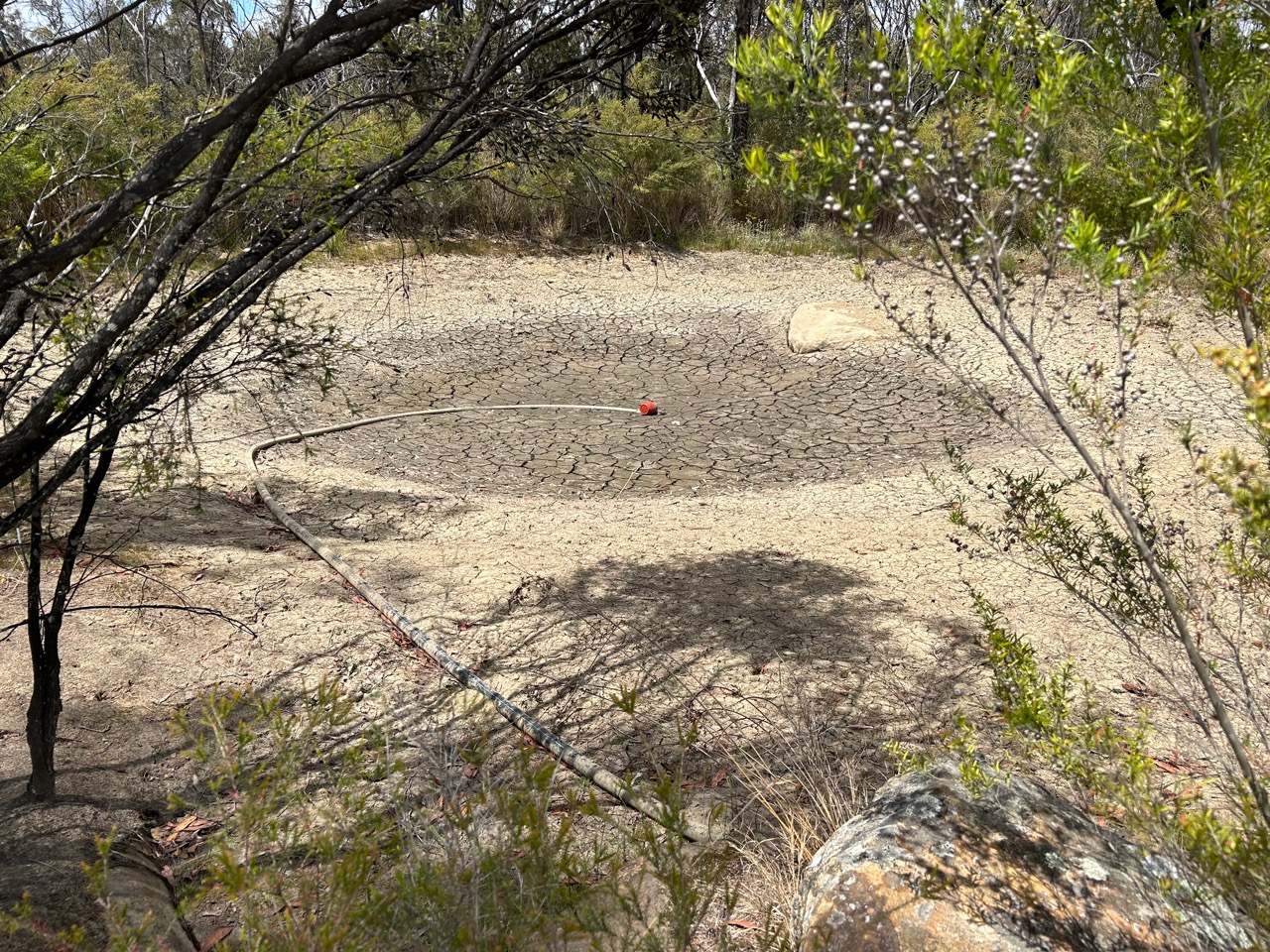
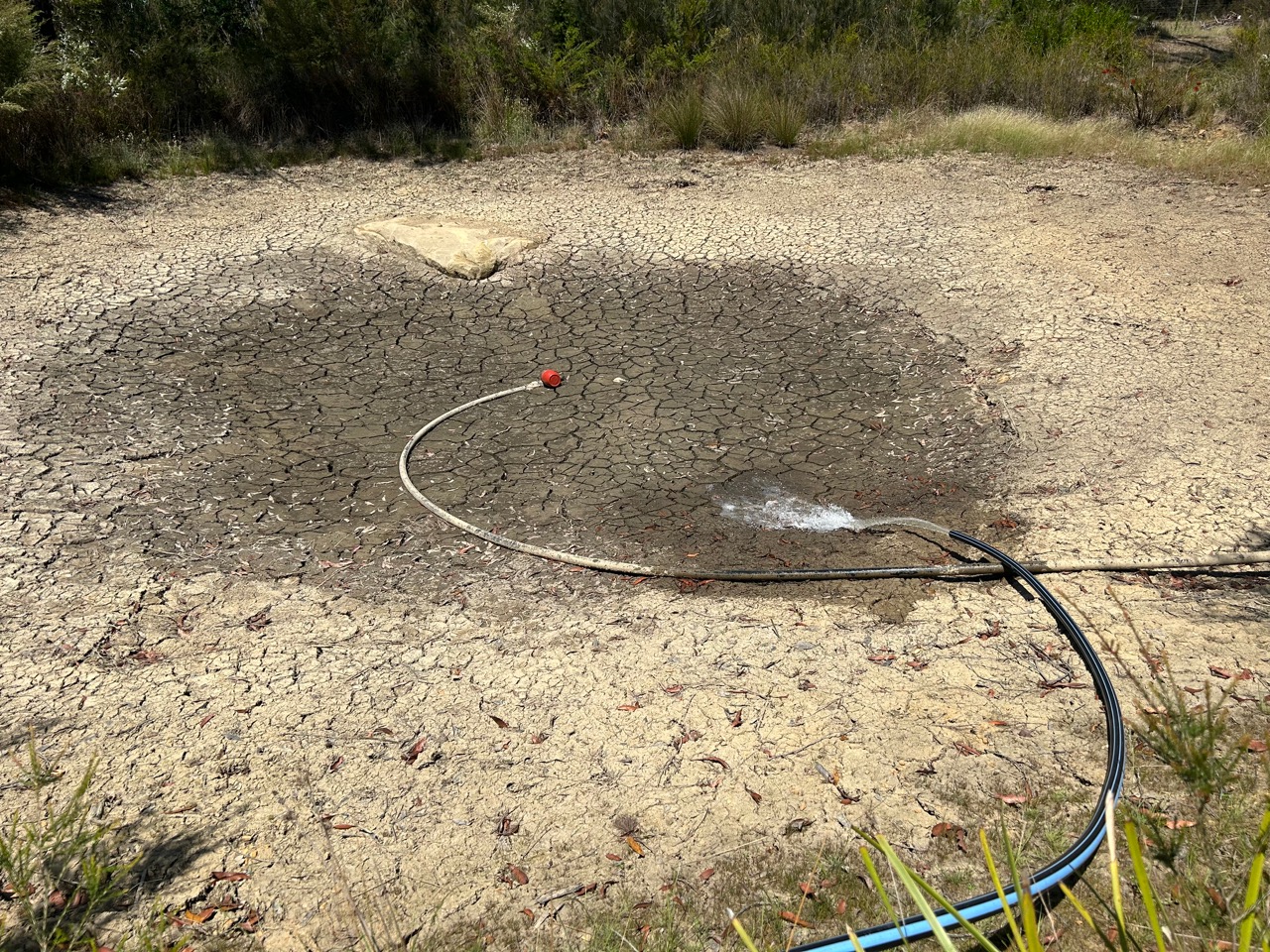
Before the rains.

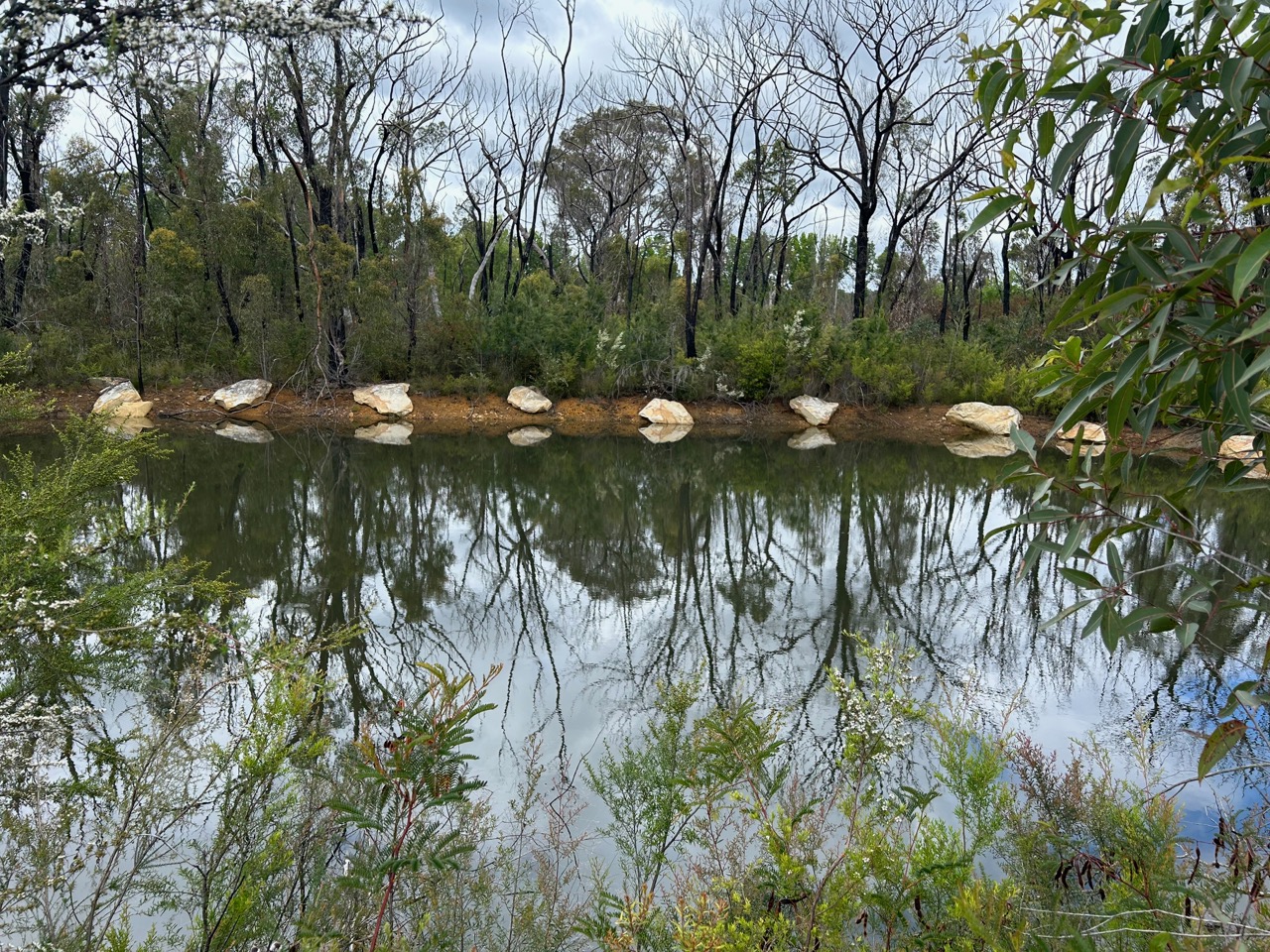
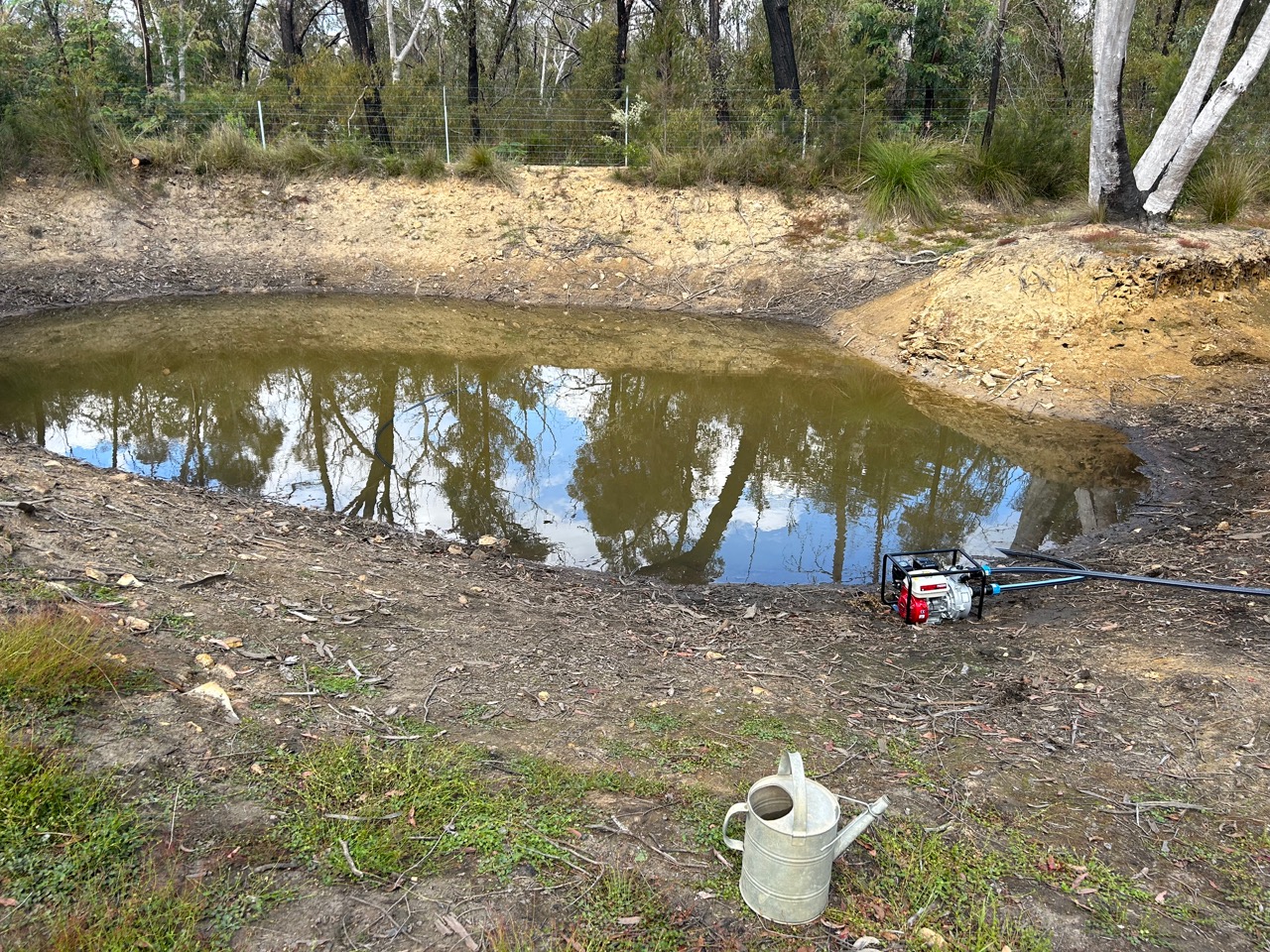
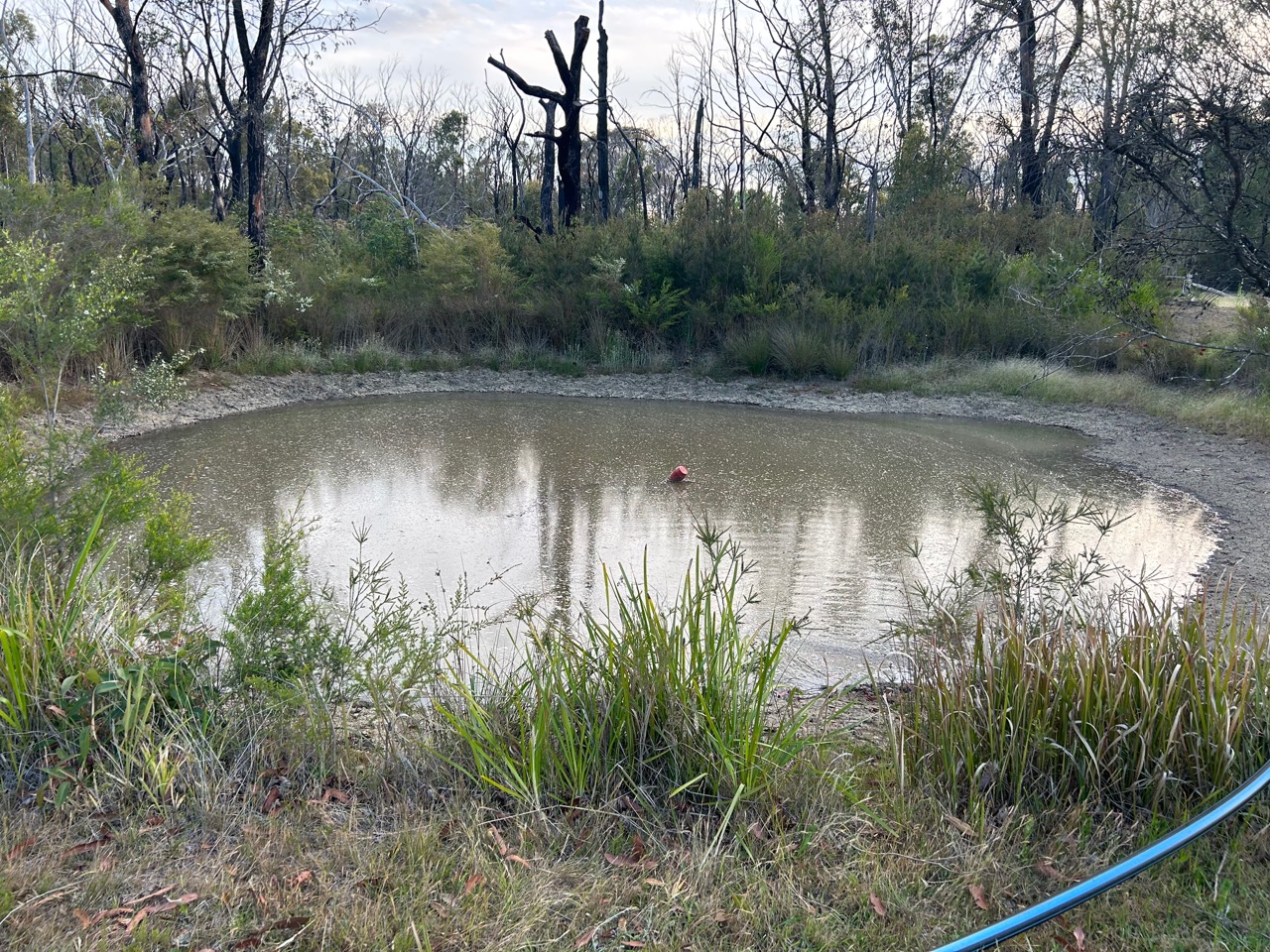
After the rain.

But now, since the down pour, we have 4 dams all about 3/4 full. The little house dam that started from 1/3rd full, over flowed down into the next dam in the series. A lot of that water I pushed up hill 2 weeks ago flowed back. A waste of a couple of gallons of petrol. I still buy petrol for the pumps, the chain saws, the mowers and diesel for the tractor. So we are not fully weaned off the dirty oil economy. I worked out recently that I spend a little bit more money on the fuel for the mowers and chain saws, than I do putting petrol in our Plug-in hybrid car, simply because we make sure that we keep the car fully charged off our solar panels, so we rarely ever need to put petrol in it. About $30 every 3 months, where as I spend about $100 twice a year filling up the fuel drums for the garden appliances.

We have recently bought a solar charged electric push mower, plus a whipper-snipper thingy, and a solar charged electric chain saw. So I expect that my visits to the petrol station will decrease accordingly. I still need diesel for the tractor and petrol for the ride on mower.

Since the weekend workshops of the last two weekends, Janine and I have spent a good part of each day during the week in the pottery consolidating our sgraffito skills and developing a few new designs, to include in our next batch of work. I would have liked to spend more time in the pottery, being creative and self absorbed. Once you start to draw and decorate the surface, the time just flashes past and it gets late so early. We  have to stop to do the watering. There will be more time tomorrow to get a bit more done. There is always enough time for everything. We just have to learn to allocate out time and and as we age to allocate our limited energy. 

There is so much to do around the garden and orchards. We have had to start watering by hand again since the rains stopped and the temperature has been going up – just touching on 40 degrees today. Even hotter in the west. Hand watering all the gardens and orchard trees. It takes us both over an hour to do a quick once-over, just to keep everything alive. It takes a lot longer to give specific beds a really good soak while we are at it.

We could probably buy vegetables much cheaper from one of the rip-off, price gouging supermarkets. But they wouldn’t so clean, fresh, healthy, organic and immediately delivered straight from the garden and onto the plate. There is something so very, even intensely, powerful in growing your own food. Not just the self reliance of it, but the intimate nature of the activity. It grounds me here in this place. I’m intimately here and now on this ground. This has become my little all-encompassing environment. My statement of belonging. I’ve sculptured this place into being as what is is now. It’s peaceful, abundant, pretty, and very functional as a home art space and garden.

We are just coming to the end of ‘the hungry gap’. That time of the year when most of the winter food in the garden is coming to an end, but the new spring planted summer crops haven’t started producing yet. We have been eating the last of our carrots, beetroots and cabbages, and have just picked the last of the broad beans along with the first of the new season zucchinis. Tomatoes have set on the bushes, but are still very green. It is always a challenge to get one ripe red tomato before Xmas. 

maybe not this year, due to our being away and not getting that head start early on at the end of winter, or the first weeks of spring.

One very nice treat for this time of the year is the summer fruit crop. We are harvesting strawberries, blue berries, peaches, nectarines and plums. That equals fruit salad for breakfast for the next month.

I love the summer garden, but I don’t like the 40 degree days, or the potential for bush fires that are always in the realm of possibility when the wind picks up from the west.

We only just scratched the surface

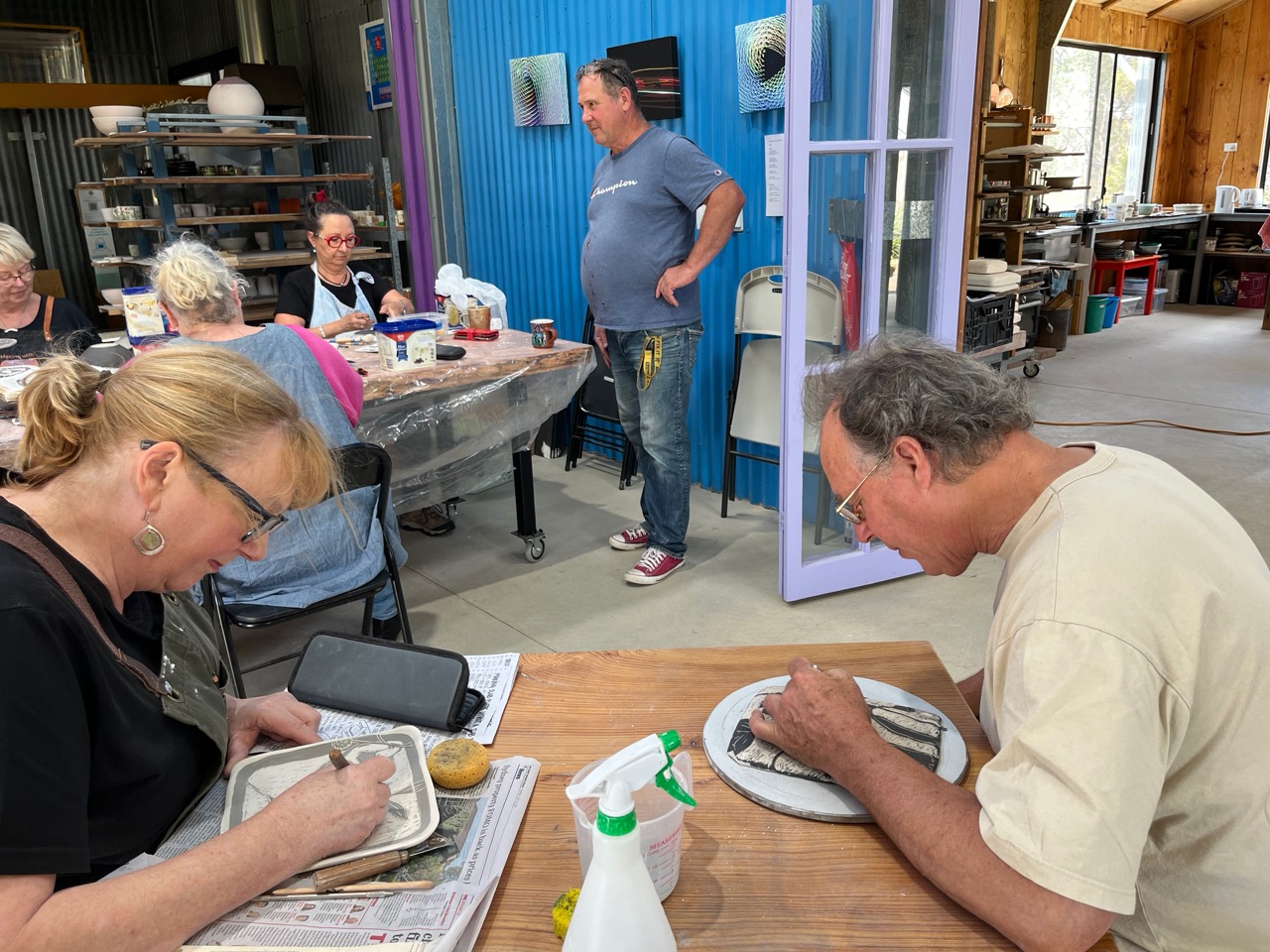
We have just completed the second weekend workshop based around the decorating technique of sgraffito.

We had the same teaching team here as last week. We had so many enrolments in that first workshop, that we were able to book out the next weekend as well.

The workshop was led by Warren Hogden who has been using this technique very effectively, and so beautifully and expressively for some time. He was accompanied by Janine who also decorates her work using this technique. We had Len Smith here who assisted those who who wanted to concentrate on throwing rather than slab work. My role was the teachers assistant or TA. I kneading the clay, made up balls of clay ready for throwing, I also made, dried and slipped the dozen 150mm. sq. tiles in advance for the first experimental project of the day, and I also made a dozen 250mm sq. press-moulded dishes for the participants to try out their designs on, on the larger and slightly curved edges. Each of the students made a couple of flat ware dishes early on, so that they would be stiffened and ready for decorating on the 2nd day. 

The first day was quite busy with so much to get done, but on the second day, the workshop took on very quiet atmosphere with everyone deeply engaged in their creative ideas and scratching decoration. For this workshop, we interpret the term sgraffito to mean applying a dark slip over a pale clay and then scratching back through the dark layer to reveal the contrasting paler body underneath. I made up a batch of our standard white stoneware clay body for these workshops, and we really got through a lot of clay with the clay box almost empty by the end of the 2nd weekend. I’ll have to get off my lazy butt and make another 3 batches of clay to get it ageing ready for next series of workshops, early next year. I make up 3 x 125kg batches of clay through the dough mixer and vacuum pug mills and mix in the recycled throwing slip from the last batch. This makes up to around 400kgs of plastic clay and takes me all day to weigh, mix and pug once through the mill, then half a day the next day to re-pug, blend, bag and store back in the clay box.

Sgraffito means scratch in Italian. It is a very old Italian technique of decorating a wall using two layers of contrasting plaster, then scratching back though the top layer to reveal the contrasting colour beneath. Used to create bas-relief sculptured surface on Wealthy peoples grand palazzi. It is used by potters to create a flat, 2D graphic decorative design as decoration on pots and tiles.

I looked it up in the Oxford Dictionary, It tells me that it was first used in English in 1730 as ‘sgrafit’ to describe black and white painting. Then in 1862 as ‘sgraffiato’ which meant to scratch. By 1900 it was used in North Devon potteries to describe incised wares.

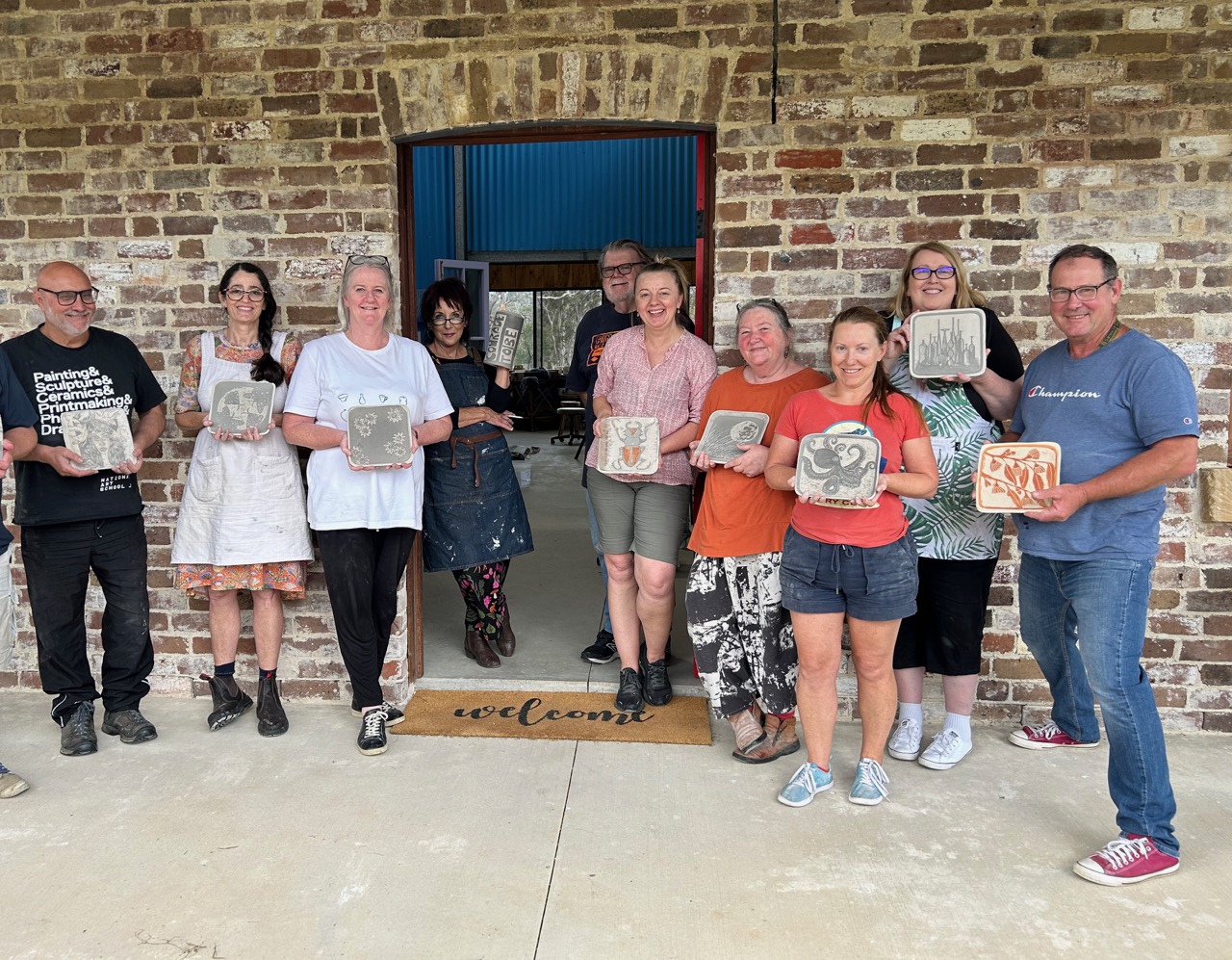
Everybody did a lot of scratching over the weekend, decorating at least one tile and 2 slab dishes. Janine also demonstrated two layer a two layer decorating, using 2 different slips on over the other, allowing a 3 tone image. Warren demo’d using terra sigillata with sgraffito and a combination of the two slips, black and terra sigillata together with a scratched through design. All in all, a lot to take in in one go!

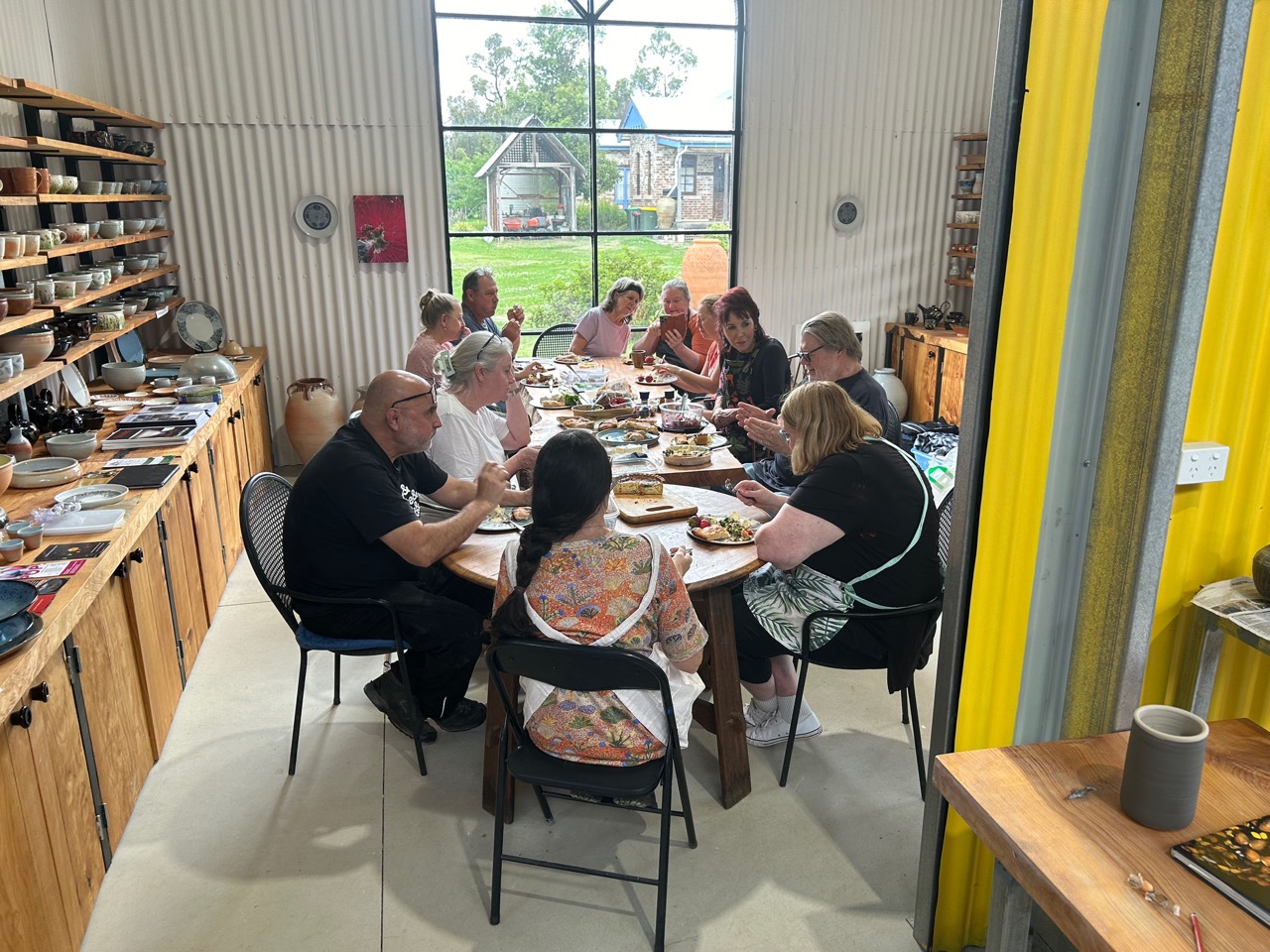
Everyone contributed to a sumptuous lunch each day with so much lovely food appearing on the long table in the gallery each lunch time. A big thank you to everyone who came along and made it all happen and for it to be such a rewarding experience for us all.

There is so much to learn, We only just scratched the surface!

First Weekend Workshop on Sgraffito

We have just completed our first ‘Make and Scratch’ sgraffito weekend workshop.

We had 8 lovely creative potters here being tutored in the dark arts of scratching into black slip over white stoneware. The studio was all prepped and ready.

Although it turned out to be cool and rainy on the first day. The studio proved to be a bright, airy, well lit and comfortable place to work for the 8 students and 4 teachers.

As this was our first ‘commercial’ weekend workshop. we were experimenting with the layout and the format. 

It turned out that there was plenty of space for the dozen of us to move about freely.

We converted the gallery room into our dining room and opened the french doors between the throwing room and the hand building room to get good a good flow of people between the two rooms.

It think that it worked out quite well and everyone seemed very happy with the out come.

Warren Hogden demonstrated his slab making technique and press-moulding a slab dish. He brought along a dozen plaster moulds for everyone to use, to make a 250mm sq. dish to work on the next day, after they had stiffened.

The first days project after the demonstrations of technique, was a 6 inch square tile.  I had prepared a dozen of these in advance, dried, stiffened and coated in black slip, then stored in the damp cupboard in perfect condition, ready for everyone to try out their design ideas, with no feeling that it was precious, as I had made plenty of spares.

 photos by Janine King

After lunch, Janine demonstrated her techniques of slip work and sgraffito on thrown dishes and plates, including the use of the slip trailer for adding fine detail.

The 2nd days projects were either a thrown piece or a slab dishes, or both. After dinner Warren and I returned to the studio to fettle and slip the students slab dishes, as they were a little bit slow to dry because of the damp weather. We wanted them to be in the best possible condition for the next days work, so that everyone could be as productive as possible.

Day two turned out balmy, with a warm breeze, and everyone arrived early and got stuck into their decorating, to get the most out of their day.

With lots of sun and a warm breeze, I got all the thrown wares outside into the sun and they were stiffened and leather hard by morning tea time.

 Photos by Janine King

We enjoyed a sumptuous lunch each day, where everybody brought something to share. At the end of the workshop, everybody had several plate, tiles, dishes, or thrown items decorated with amazing graphic designs, showing lively line work and textured details.

 Photo by Len Smith

Everyone seemed to enjoy themselves and were all very productive.

Everything is relative

We are having a short break from the pottery studio for a week to work around the garden, before the next few weeks of weekend workshops. It’s the last week of spring and we are only now getting the time and energy to plant out the summer garden. It will be a smaller garden this summer, as we are forecast to be heading into a long dry ‘el nino’ period. The previous one lasted some years and culminated in a severe drought with bush fires.

We spent the last summer of el nino drought watering our vegetables and garden plants from our rain water tanks, as all the dams had dried up. Luckily for us, we had invested in two huge storage tanks 20 years ago, when I was working and had the money to invest in our future water security. People mocked us, but we have never had to buy water in our life. We are attempting to be self reliant in as much as we can. Rain water and solar electricity are at the top of the list.

Last drought, we emptied one of the very large 125,000 litre water tanks and were half way through the other when the rains returned. Luckily, we didn’t have to buy water. Some people that we used to know years ago, had planted out an extravagant and sophisticated English garden told us that they were spending $300 per week back then, buying water to keep their garden alive and thriving. Three large truck loads of water were delivered and pumped into their tanks each weekend. It was the wrong kind of garden for this area, at this time. They also got a 100 metre deep bore drilled to get access to some underground water, but it dried up, and had to be evacuated, all the pumps and piping had to be hauled out with a crane and hole re-drilled down another 20 metres, to find a more permanent source of water, which then turned out to be iron bearing and needed to be oxidised and treated before it could be used on plants.

We learnt from this and decided to live a more simple and frugal existence, more in keeping with the natural environment. Every part of modern life does damage to the environment. Our aim is to keep that damage to a minimum where we can.

We have been enjoying the very early fruits from the garden as our breakfast fruit salad, Cherries, blue berries and strawberries. They are all growing under cover in the vegetable garden enclosure, safe from birds, so we get them all. Except for what the snails eat.

We had a good crop of mulberries this year and I was able to get my share despite the birds taking everything that they could. It’s the first fruit to come on out there in the orchard, so the birds are very hungry after the winter. They are also looking to feed their new babies hatching out in the spring time. This year we shared the crop. I was able to make 3 mulberry pies over the couple of weeks while the crop lasted. Being a huge tree, we have no way of netting it, so we share. The youngberries come on next and because they are a bunch of canes , and not too high we can net them to get most of the fruit. The birds are resourceful and learn how to land on the netting, pushing it down and then pecking the fruit through the net.

We also netted the apricot tree, as it has a reasonable crop of fruit coming on. Who knows how the rains will turn out? If there is no natural water from the sky, the dams won’t be enough. We have netted it just in case anyway. You never know what might happen. What we do know is, no net = no fruit. So we net.

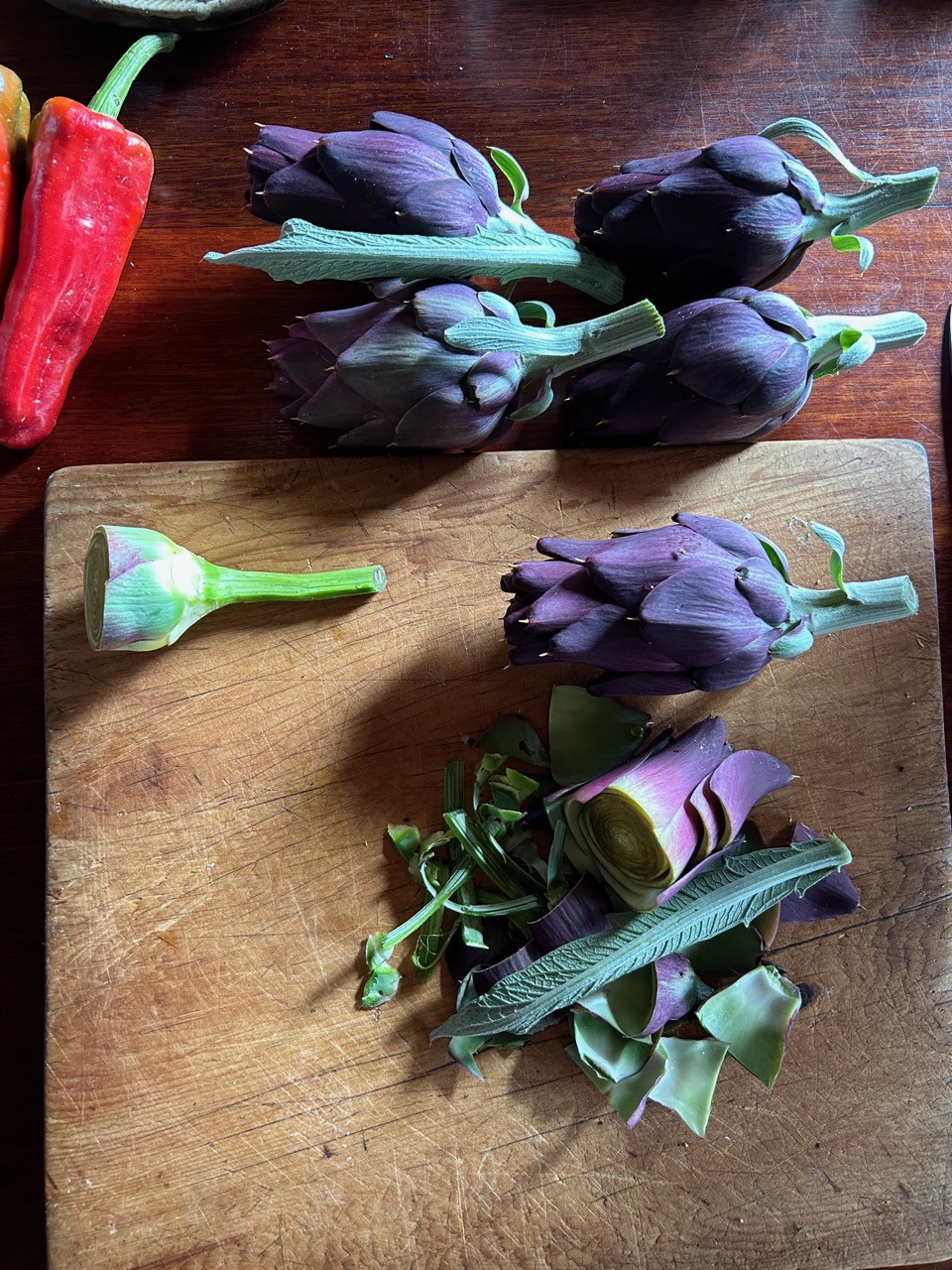
We have finished the last of the globe artichokes. The purple variety are the last to mature. They are a lovely seasonal treat. This year we have been having them on pasta for a slow lunch.

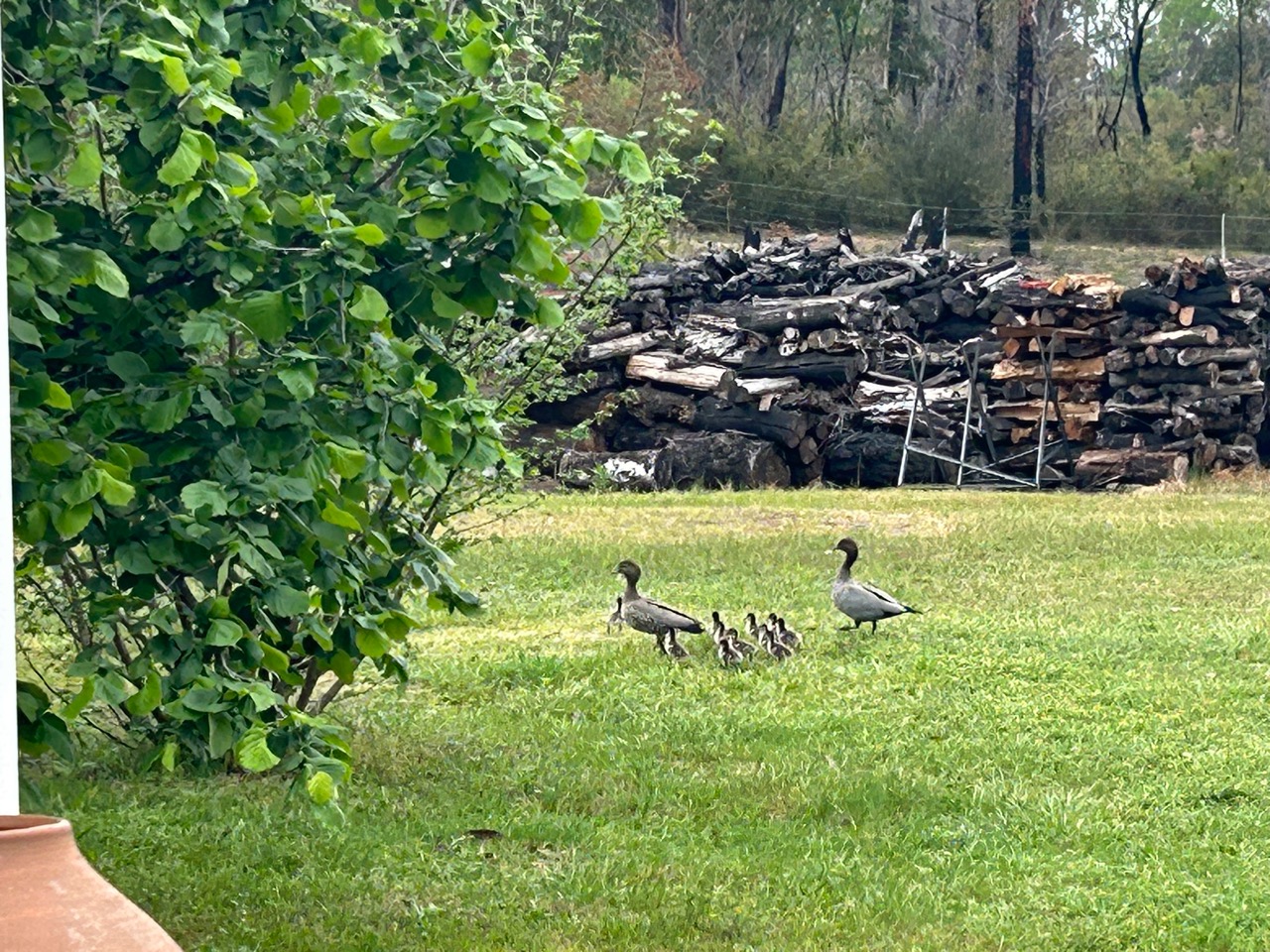
Spring also brings a return of the wood ducks. This season so far, we have had 3 hatchings. They start of with a dozen littlies and day by day the number decline. I assume that they are taken by bigger birds, although I haven’t seem one taken. They are very timid and wary by nature, so we keep out of their way while they have young. Choosing to walk the long way around if we encounter them in the garden or orchards. I think that they are probably lucky to get 2 or 3 to maturity by the end of spring. We have learnt from experience that if you don’t make eye contact, they are less likely to run or fly away. They will stay and keep a very close eye on you but not move. As soon as you turn your head to look at them, then they take off.

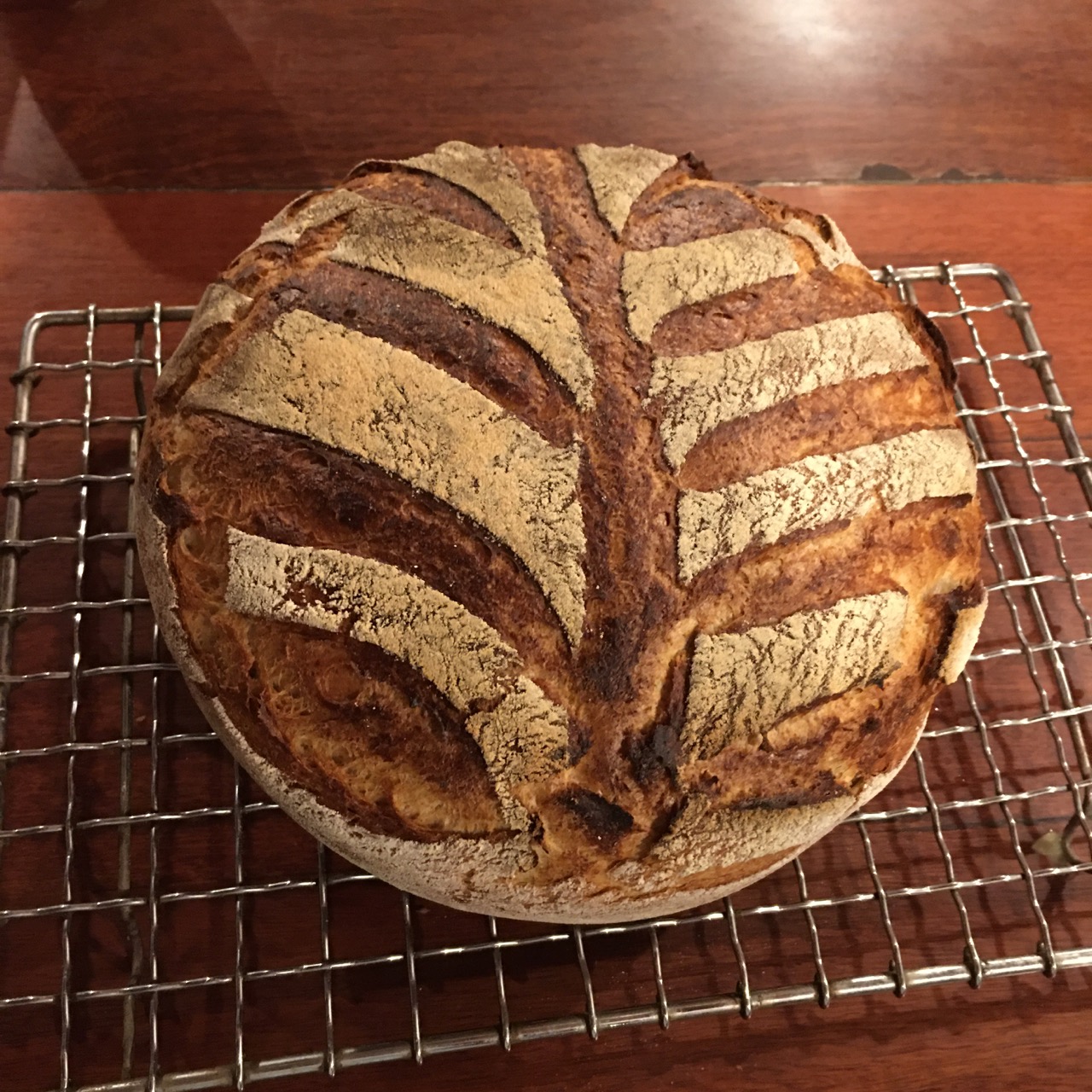
I’m still baking my bread each week. It’s a 50/50 blend of wholemeal and rye. It works out well for me, the way that I have developed it. To save time and make it an easy proposition, I sort of cheat. Sort of! But not really. I use a bread making machine to mix the dough on the ‘dough-only’ setting. It takes 1 1/2 hours to mix, prove, knock down and rise the dough. Then it switches off. I turn up and knock it down one last time and pop it in a cast iron, ‘Dutch-oven’ baking pan and bake it in the oven for 20 mins at 240oC with the lid on, then another 20 mins with the lid off. It works for me.  I can be outside working while the dough is being nurtured and pampered in the machine. We are on to our 3rd bread machine. They last about 10 to 12 years before they burn out, or wear out the bearing. At one loaf a week for 10 years, that’s a 500 loaf life span.

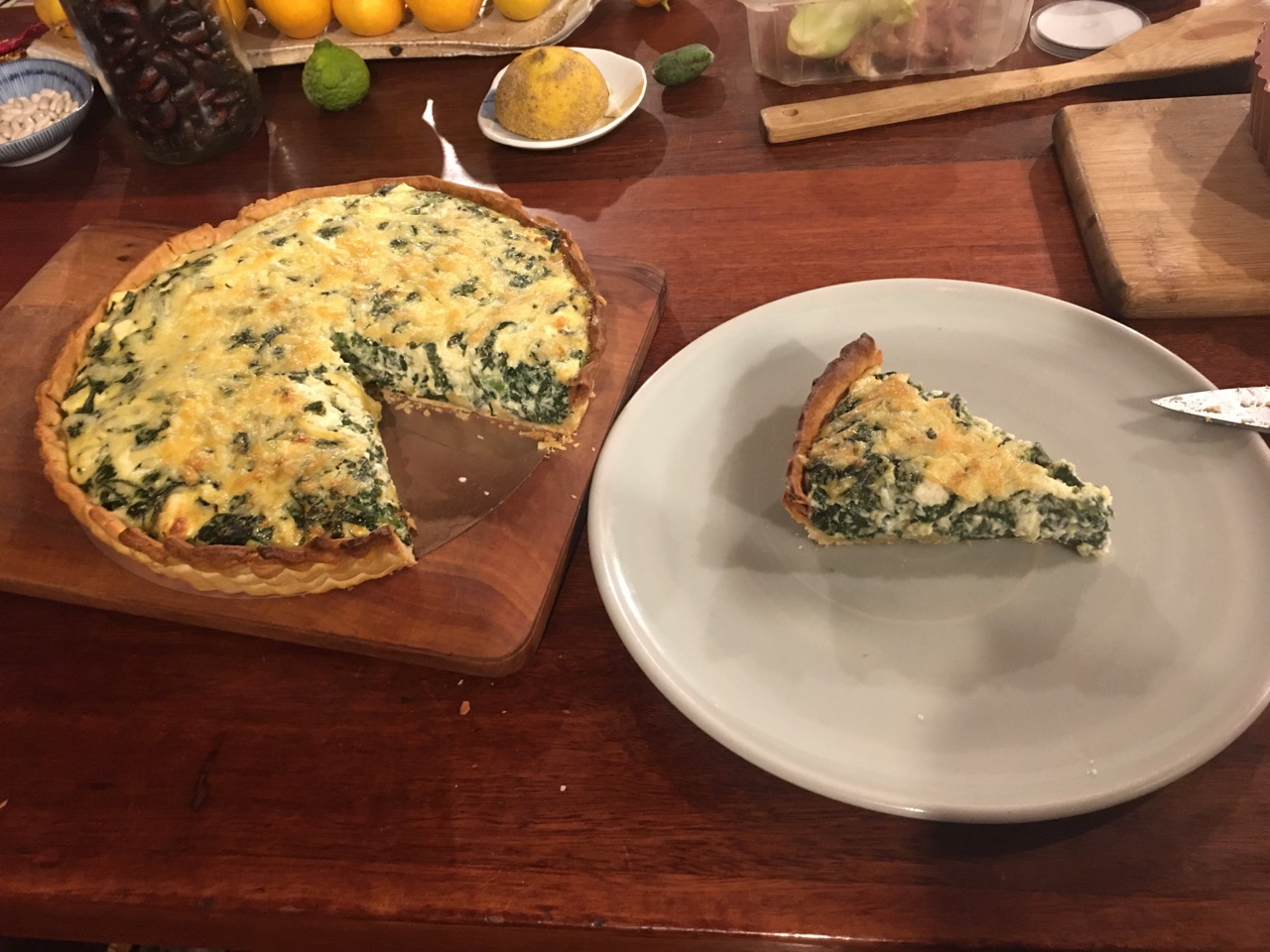
We picked the last of the spinach. Just tiny leaves from the spinach trees, as they bolt skywards heading to seed. I made the last spinach pie for a while. I will need to plant some more. I should have them in the ground by now, but life was too busy to do it all. I have just put in the seed this weekend.

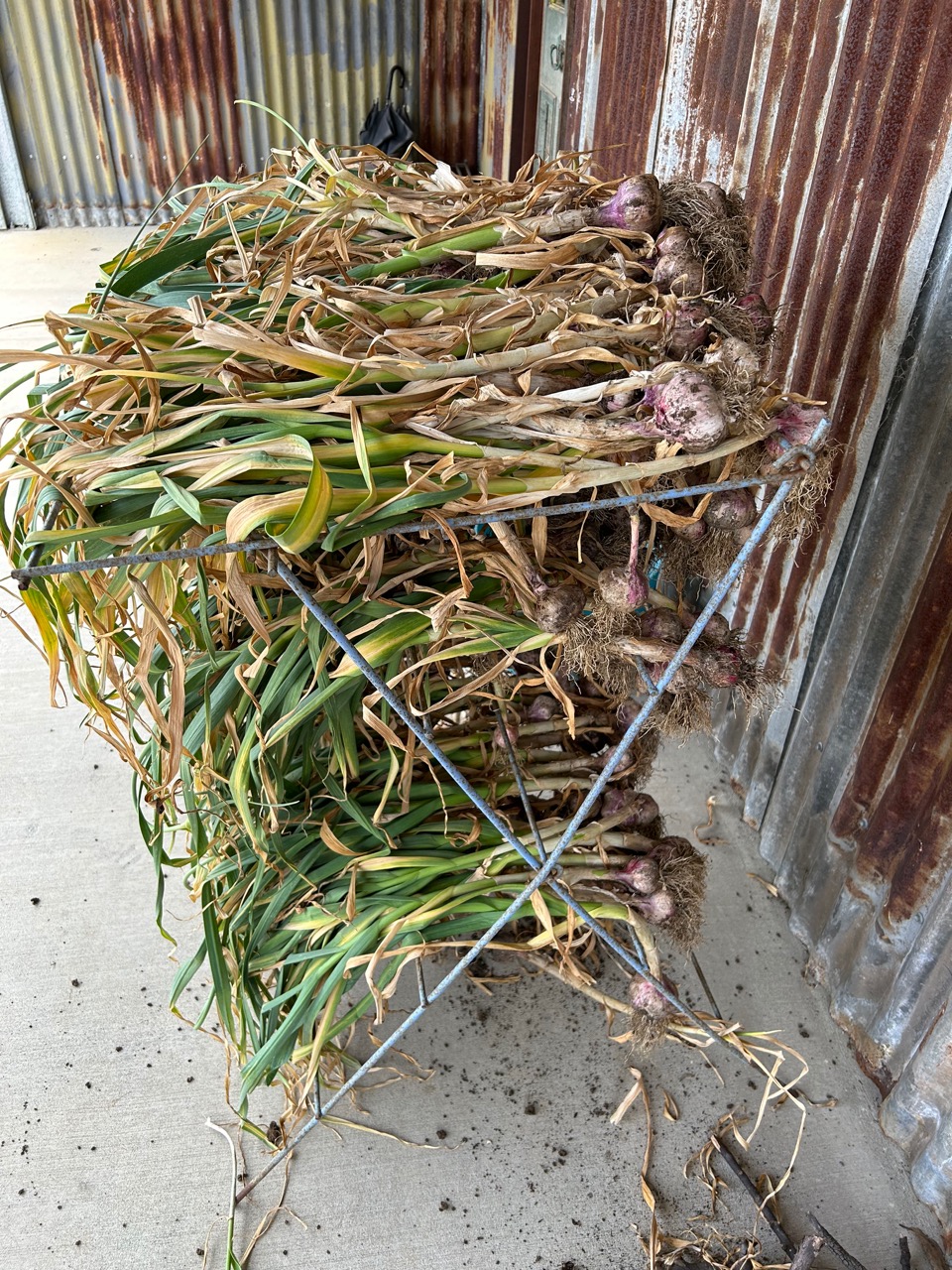
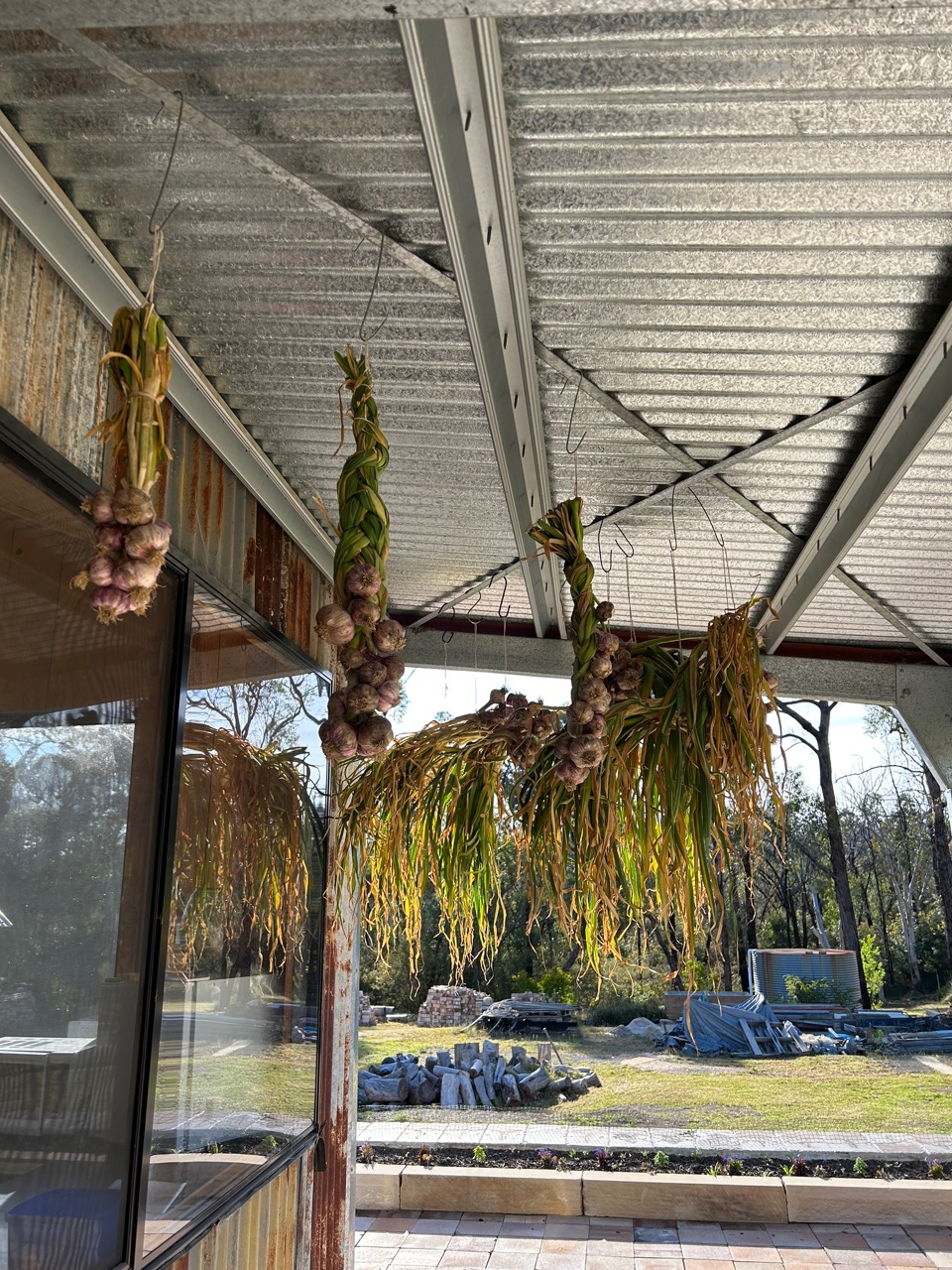
Janine has found the time to plait this years small garlic crop, just half a dozen plaits and a big bowl full of tiny knobs that are too much trouble to plait. Those small garlic knobs sit in their bowl on the kitchen work bench are used first. The biggest and best are kept for replanting in March. Its a very small crop and wont last us through the year. But can’t complain, at least we have some.

I catch myself thinking that things could be better. More or better sized garlic, more regular rain. But things are really pretty perfect for us. I have to remind myself that I’m not in Palestine or Ukraine being bombed. Be happy with what you have.

1st Jingdezhen Porcelain Workshop now full

Our first Jingdezhen White Porcelain Weekend Workshop filled up over night, in just a few hours!

We will offer a 2nd workshop on the following weekend of the 20th/21st of April, so if you are interested in learning the techniques of hard paste sericite porcelain, this is your chance. Sorry, This 2nd workshop is also now full!

I only have enough 8 year old aged sericite porcelain to run this course twice. Then that’s it.

This is special white porcelain was imported from China. It is made from 100% Sericite porcelain stone. We will spend the weekend practicing the special techniques of throwing and turning this unique hard paste Chinese porcelain. Intermediate to advanced level. This special batch of white Jingdezhen sericite porcelain has been ageing in my clay store for 8 years and is in superb condition. It is several levels above anything that might be bought currently. Aged porcelain just isn’t available on the market. This is a unique opportunity for the right person. 2 days, 10 till 4pm, $250 + $100 material fee. 8 places only. You get 15 kgs of this special porcelain body to use and take home any unused excess.

This image taken of my bowl by Lauge Brixvold

Two throwing workshops announced for early 2024

We will be offering 2 throwing workshops in March and April 2024.

On the 2nd weekend in March, the 9th/10th of March, we will be offering a beginners/intermediate throwing on the potters wheel Weekend Workshop. For the beginner, or lapsed potter who wants to improve their skills.  If you have a keen interest in ceramics, but have not learnt how to throw on the potter wheel yet. This workshop just might be a way forward for you to indulge your hobby, or improve your nascent skills if you are a beginner on the potters wheel. 2 days, 10 till 4pm, $250. 8 wheels, two teachers.

On the 2nd weekend in April, 13th/14th April. We will be offering an advanced throwing workshop We will spend the weekend learning to throw Jingdezhen Porcelain. This is special white porcelain imported from China. It is made from 100% Sericite porcelain stone. We will spend the weekend practicing the special techniques of throwing and turning this unique hard paste Chinese porcelain. Intermediate to advanced level. This special batch of white Jingdezhen sericite porcelain has been ageing in my clay store for 8 years and is in superb condition. It is several levels above anything that might be bought currently. Aged porcelain just isn’t available on the market. This is a unique opportunity for the right person. 2 days, 10 till 4pm,  $250 + $100 material fee. 8 places only. You get 15 kgs of this special porcelain body to use and take home any unused excess.

There will be a Stoneware wood firing workshop to follow on in the winter time. No date set as yet.

Open Studio Sale This Weekend

The shelves have been re-stocked. The Pan Forte cake is mixed and is ready to bake. The coffee is freshly ground. 

We are ready for the 2nd Open Studio Sale Weekend starting tomorrow. What could possibly go wrong? Hopefully nothing, as we had 22mm of rain yesterday which has freshened up the garden and topped up the water tanks. 

Today started with a heavy mist from yesterdays rain. Regrettably, the rain wasn’t strong enough to flood the gutters and pour down the dirt road and flow into our dam. Most of it soaked in, but that is also very good for the garden and all our fruit trees, some of which had started to drop fruit in the prolonged dry spell. The lawn had turned brown and started to ’crunch’ underfoot it was so dry. However, it is amazing what a little rain will do. What was left of the burnt off grass has turned to a flush of green again over night. One blessing is that as it is only millimetres high, it doesn’t need mowing. There is always a bright side. The welcome rain has watered the english cottage garden flowers along the front of the pottery, so everything is looking bright and perky.

All the shelves are full and the gallery is looking good.

Call in and see us over the weekend if you are in the area. Stop for some cake and coffee if you have time, we’d love to catch up.

The veggie garden has been woefully neglected recently. It still feeds us well from our previous plantings, but because we were away for a lot of August and September. It was pointless planting any seeds in such dry weather, and then not being here to water and nurture them. So we missed out on our spring planting this year. I would normally have started seeds off in mid to late August, and then planted out in late September while keeping an eye on the frosts and possibly using our portable home made closh system of wire and shrink-wrap frames. However, as we have been so busy since our return, I have only just found time to work in the garden again. i found time in-between pumping water uphill to weed out and replant a few beds. 

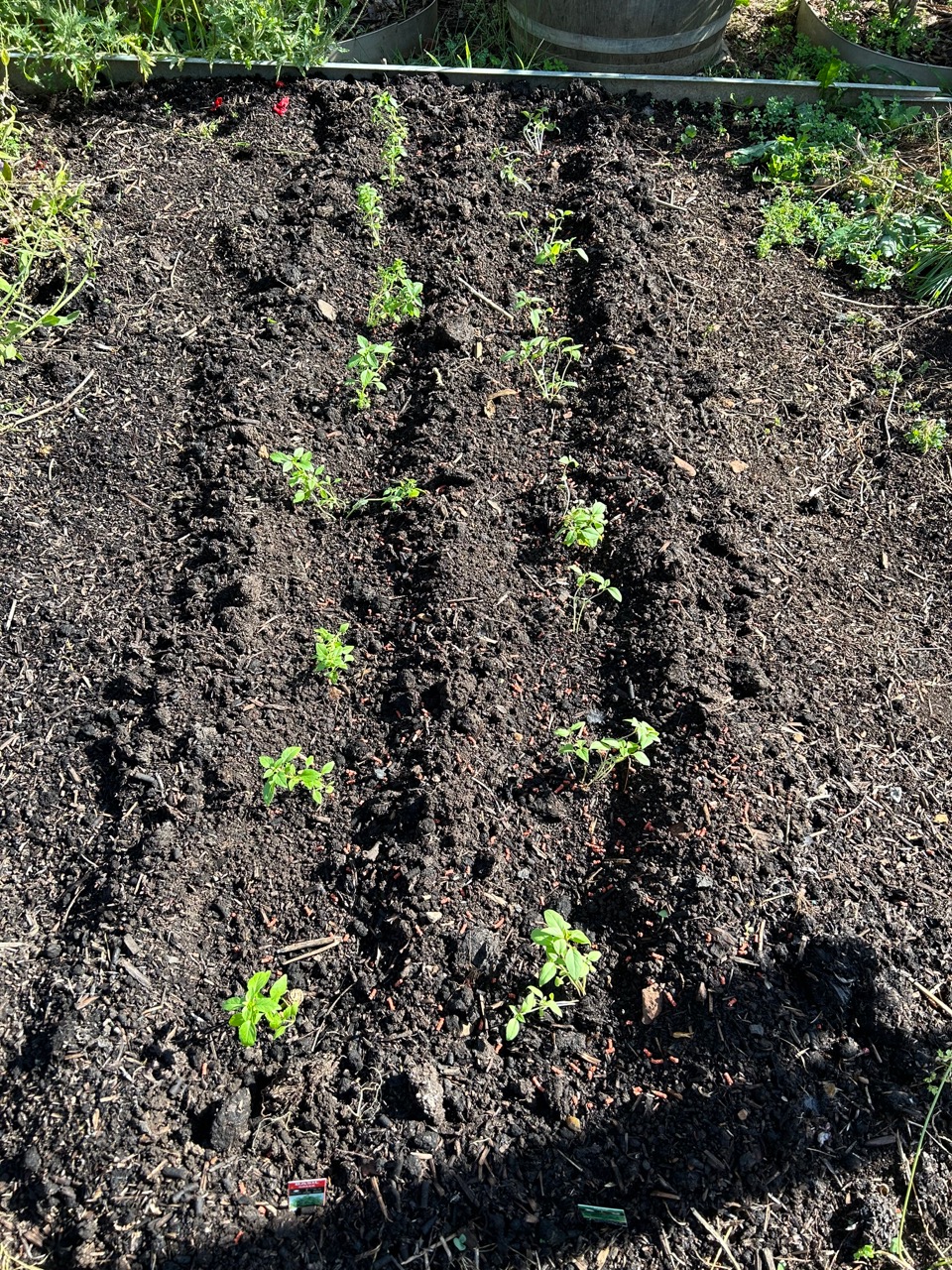
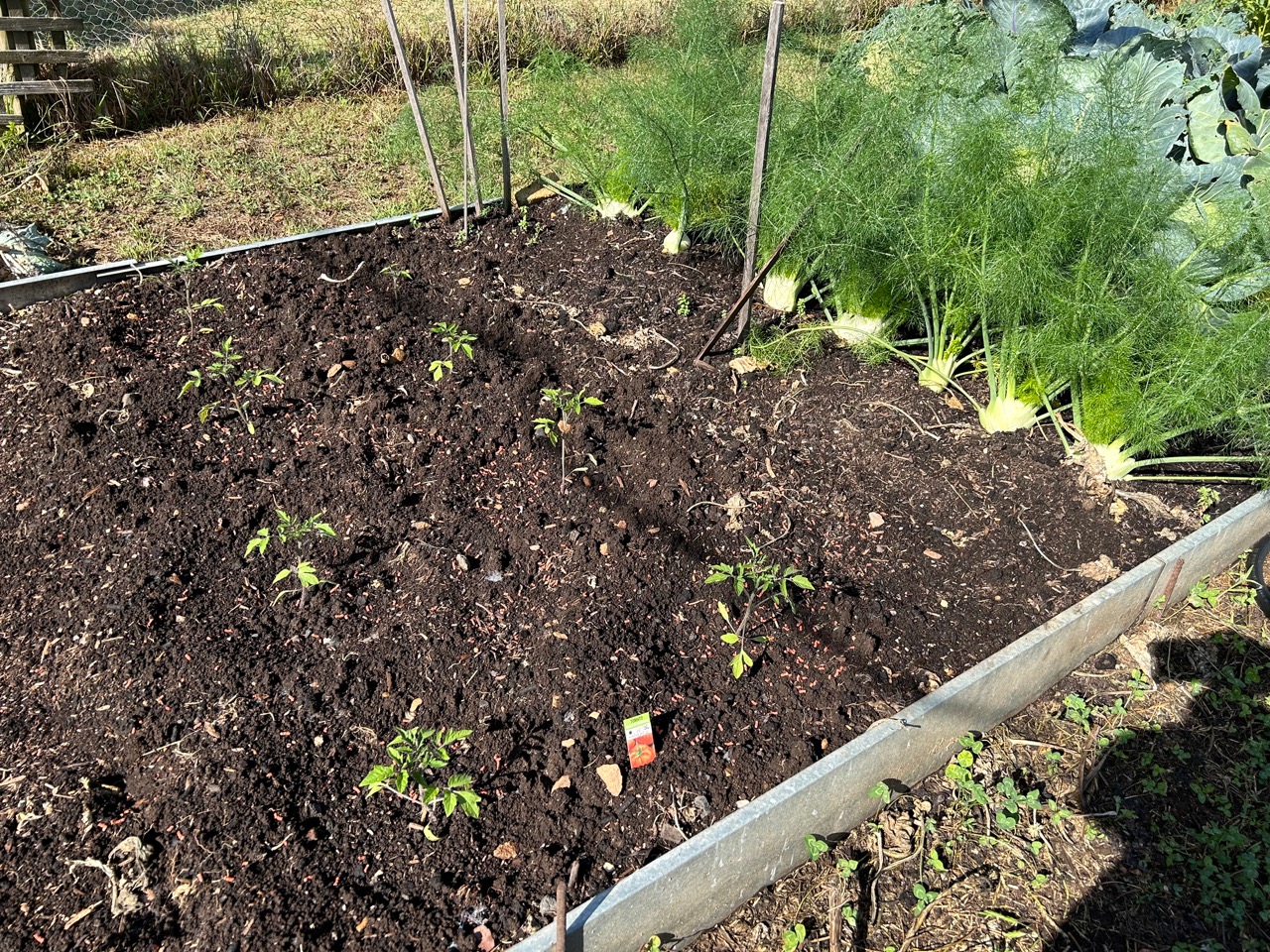
I have had to resort to buying seedlings in punnets this year, so as to get some advanced tomatoes in the ground, along with zucchini, egg plants and lettuce. I also planted out seeds of the same for a follow up planting in December. It will be a smaller vegetable garden this summer. But you can’t do everything.

Buying punnets is a bit of a come-down, but I’m only human and needs as needs must. My own home grown seedlings are on their way.

Nothing is ever finished, nothing is perfect, and nothing lasts. Enjoy the moment.
Bush Fire Water Management

The first Open Studio Weekend is over. One more to go! 

We had a very slow day on the Saturday, as it was raining hard on both sides of us in Picton and Bowral. So visitors were reluctant to leave home, and few and far between. We had just a few brave people venture out. One visitor from Picton had gone to an Open Garden event, but it was so miserable in the pouring rain, that she gave up and decided to come and visit us for some indoor, dry and warm, entertainment.

The Sunday Open Studio was much better, quiet in the morning, but it picked up after lunch and we were almost busy dealing with a steady flow of visitors in the afternoon. We hope for better weather and more visitors next weekend. However, if it is going to rain, I’d prefer it to pour down, flood the gutters and stream down into the dam.

Of course, as usual, it didn’t rain here at all, just a few light passing showers throughout the day. Our top dam, the one closest to the house, that rely on for irrigation and fire fighting water is bone dry. The foot valve for the pump is sitting high and dry on top of the caked and cracked mud. This dam still had a very small amount of water in it when we left for our time away in New Caledonia and then Brisbane. However, we got a call from our lovely neighbour one day to tell us that she had tried to water the garden for us, but no water was coming out of the hose. I knew knew why. I expected it to run out and dry up at any moment. but there was nothing that I could do at a distance.

Starting on the Monday morning, with the news of so many houses burnt down in the north of the state in the terrible bush fire there. I wasted no time in preparing ourselves for the next bushfire – whenever it happens. Maybe sooner than later? With the bushfire season now upon us in earnest. I was straight into action working on all those jobs that I had put off during the recent three wet years.

We have 4 dams, built in a key-line system. I moved the high pressure, petrol driven, fire fighting pump, down into the bottom dam, which is nearly empty, but still has some water in it, right at the bottom. I built a jerry-rig, improvised system of poly pipe lines to convey the water from this little bottom dam, up to the larger, middle dam. A day of running the pump moved most of the water up the hill to the next dam. I left just 300 mm of water in the bottom of that dam for the yabbies, to keep them safe over summer. If it does dry out completely, they will bury them selves in the mud.

From the bottom dam, up to the middle dam. This larger middle dam also has next to nothing in it, just 300mm deep in the middle, but every drop counts in summer. Especially when a bush fire is in the offing.

Neither the bottom dam or the middle dam, has a functioning pump on them at the moment, so moving all the available water up to the top dam, where I have both petrol and electric pumps installed gives me access to whatever water is left to us over the hot dry summer for fire fighting. Also, concentrating all our water in one place minimises the losses from evaporation. 

Once the bottom dam was more or less empty. I carried the petrol pump up and into the middle dam, re-arranged all my Heath Robinson, improvised piping and began pumping from the middle up to the top dam. I’ve been on my very own personal, localised, ‘Snowy Hydo 2′ project here for two days now and all the water hasn’t been relocated yet. It’s a slow job, moving thousands of litres of water, up hill through a 40mm dia pipe. I hope to finish it off tomorrow.

From the middle dam up to the top dam.

The little top dam is now half full with all the accumulated water from the other dams, it will keep us safe into January. Then?

While all this was going on. I was also working on the new fire fighting sprinkler system along the verandah and roof of the new pottery building, and also rebuilding the burnt out sprinkler system on the barn. It worked perfectly during the fire, and saved the barn for burning, but when the power failed and the electric pump stopped, the plastic pipe system melted. I will be installing a petrol driven, high pressure, fire fighting pump in this system when I’ve finished pumping all the dam water uphill.

The roof and wall sprinklers all rebuilt and up and running again now.

Nothing is perfect. Nothing is ever finished, and nothing lasts.

However, I feel safer knowing that I have water in the system available to use to fight the next fire, 

and a reasonably functional system in place that I hope will be able to cope with whatever nature throws at us

I make sure that I use the fire pumps often over the summer months to irrigate the garden and orchards. 
In this way, I always know that the pumps are in reliable working order, then if one of them gives some trouble with the irrigation, I can step in and fix it well before there is any emergency, when there is no time for fixing things. Everything must work perfectly and immediately.
Since the last fire 4 years ago, I have installed 45,000 litres of tanks in front of the Barn, dedicated to the fire pump for the pottery and barn system. I have also installed 30,000 litres of new water storage tanks on the old Railway Station and car port with its own fire pump.

We are much better prepared now than we were 4 years ago. This is self reliance!