Mark my words, the days of digital are numbered!

I spent a day and a bit fixing my crashed hard drive. Luckily I had a back-up drive. In fact I have two. Double redundancy. This has happened to me once before when I wasn’t so well prepared and at that time I did loose a bit of past data, because I hadn’t manually backed up for a few weeks.
I managed to rebuild my hard drive this time, using digital chewing gum and analogue string. It’s all a bit bodgey, so I have ordered a new drive and will swap it over when it comes.
The very next day the laser printer died. I’m not too surprised, it is 15 years old and gets through 4 toners a year with all the printing of the books. I rang up a laser repair bloke and he just laughed at me and hung up. At the next one I left a message and he never did ring back. The next call was more informative, he politely explained to me that at a $100 call-out fee and a minimum $45 service repair quote fee I could get 3 new printers including a new toner and drum in each, so why was I bothering?
I’m a bit appalled at first, but I guess that it is 15 years old, and that’s a long time in digital evolution. I’m lucky that the man down at the toner refill shop in our town still carries the stuff I need to put in them.
Still, I don’t like to throw out anything that isn’t fully worn out. I have another go at the old printer, blowing it out with compressed air and washing the paper lifting roller fingers with metho to make it sticky again, but to no avail. Although the paper handling parts are shot, I work out that I can pull out  the paper tray and manually feed one sheet at a time into the mechanism and it will print it, before it goes into jam up mode with the second sheet.  If I pull out the toner unit and the paper tray and then re-insert them, it clears the blockage signal. It will then take another sheet. I battle on from page 69 through to page 119 to finish one copy of Australian Wood Firing. Every ten to fifteen sheets or so, it starts to print out garbled garbage all over the page instead of text. I have to shut down the soft ware and re-boot, switch of the printer and re-start it. It does work, but I just can’t bear it.
I admit defeat. I’ve wasted 3 hours. It’s an ancient Brother printer, I google to find the model closest to this one that is currently available, and lo!  There is one available for sale in Mittagong, so close. I call in and buy it the next time I’m down the street. $79 which is 50 dollars cheaper than buying the toner and drum separately. The machine is therefore free and they are paying me the equivalent of $50 to take it out of the shop. If I was not the person that I am, I could consider just buying a brand new printer each month instead of buying toner refills. It would be cheaper. What a stupid world we have created for ourselves! So mindlessly wasteful.
Anyway, I just can’t bring myself to think like that.  I can’t do it. All that embedded energy, all that perfectly good stuff going to land fill.
I really hate built-in obsolescence.
Does trouble really come in three’s?
Well, No. Not digitally, surely it would be one’s and zero’s. So three’s would have to be 010101 in some sort of binary digital speak similar to this. In actual fact it is 0011, but that doesn’t look very funny, unless you are a mathematician. Most of us aren’t. And mathematicians aren’t know for their humour.
So Yes, trouble does come in 010101’s
I get it home to find that the new printer doesn’t have driver software that goes back 14 years to the age of our old computer. The system software is so old that it isn’t supported anymore.
Snookered!
I’ll have to update the operating system on the old desk top computer. It can be done apparently, you just down-load it from the cloud. Yeah sure. This computer is so old that it doesn’t even have a modem in it!
It’ll just take more time. Until then I will run everything off my laptop. We had already decided that we would not replace the desk top computer, once we got used to owning a laptop that does everything that the old desktop did, only better, faster and more conveniently. The old desk top computer doesn’t know it yet, but its digital days are numbered.
As the orders for my books keep coming in and I’m the person most amazed by this. I need to have a reliable working system to get them printed. I have been toying with stripping all the text to ASCI format and converting it to html for conversion to Apple iPad book format or Amazon Kindle format. In this way I can sell them digitally through the cloud. I can’t imagine that it is too much work to get that done, but then I still have the problem of the hundreds of images that are embedded in the text at the moment. They can’t be included in the Kindle format, so I will have to set up a data base and make the images available for down load to registered customers. It’s all starting to sound like a lot of work now, and not the kind of work that I enjoy.  I certainly can’t afford to pay to have it done professionally, so that is why I’m still printing and binding books one day a month on the kitchen table.
I don’t like the idea of cutting down trees and shipping them here as paper, then me shipping that paper back across the globe to my customers in the US, Canada, UK and Europe. I do choose recycled paper to print on, but I’m noticing that it is getting quite hard to find these days. Instead, they are selling ‘certified green’ paper. It smells of bullshit to me. I was never really confident that 100% recycled paper really was, but what can you do? I choose the best from a bad bunch of options.
My sincere thanks to Len Smith, who is always a trove of good advice and amazing information about computers. I couldn’t do it without you Len!
Thanks!

I’m sure that you’ve heard enough about our grubby financial dealings, private teaching classes and our digital detours. 

The other thing that happens in our kitchen is the cooking of all the green food from our garden.

We have been making some nice meals from our garden, dealing with our excesses, using up some of our many capsicums at this time of year, I have been roasting them and pickling them. They are delicious.

Even better after a day or so of ageing in the jar.

IMG_3517IMG_3668

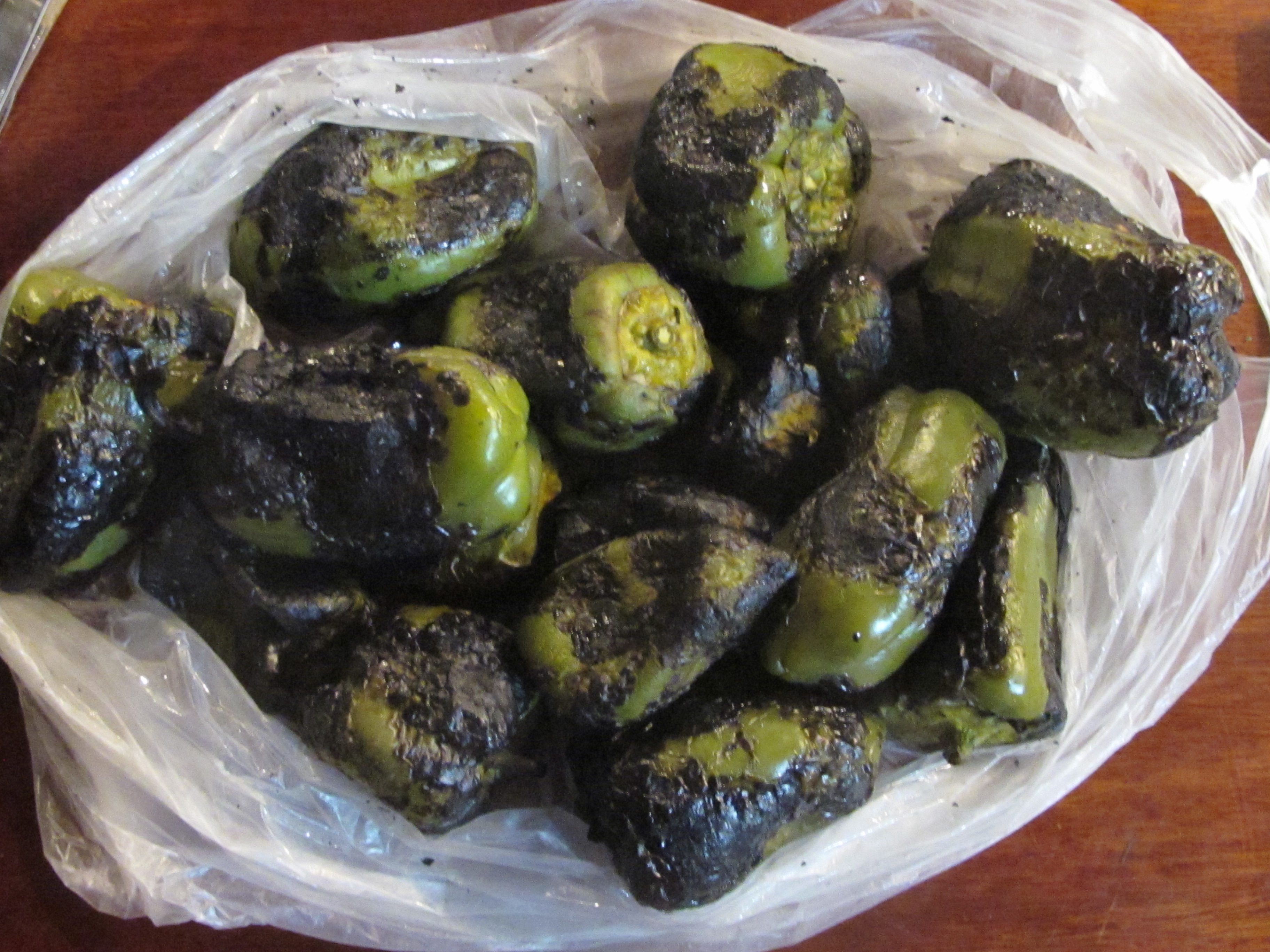
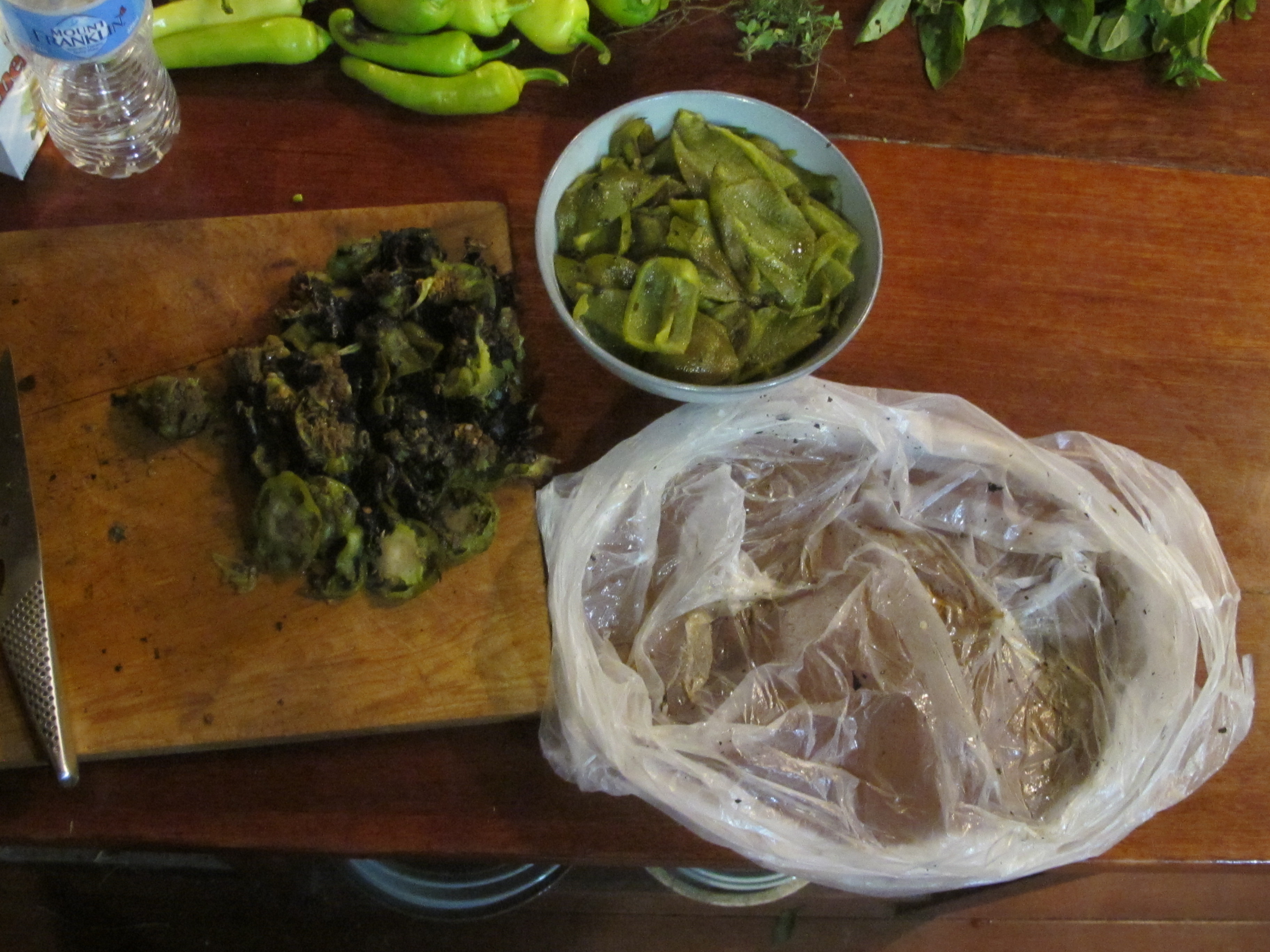
Roasting green caps over the burner flame on the stove top and after roasting the caps are placed in a plastic bag to sweat for twenty minutes
 IMG_3670

After sweating, the charred coating is scraped off and they are sliced into strips, placed in a bowl and covered in oil and vinegar dressing. I served them at the wood firing workshop and they disappeared very quickly.
It’s time to make more stock for general use. I enjoy taking stock and making stock. It’s very cheap to make and adds loads of flavour to all sorts of meals through the week.
IMG_3696

IMG_3697
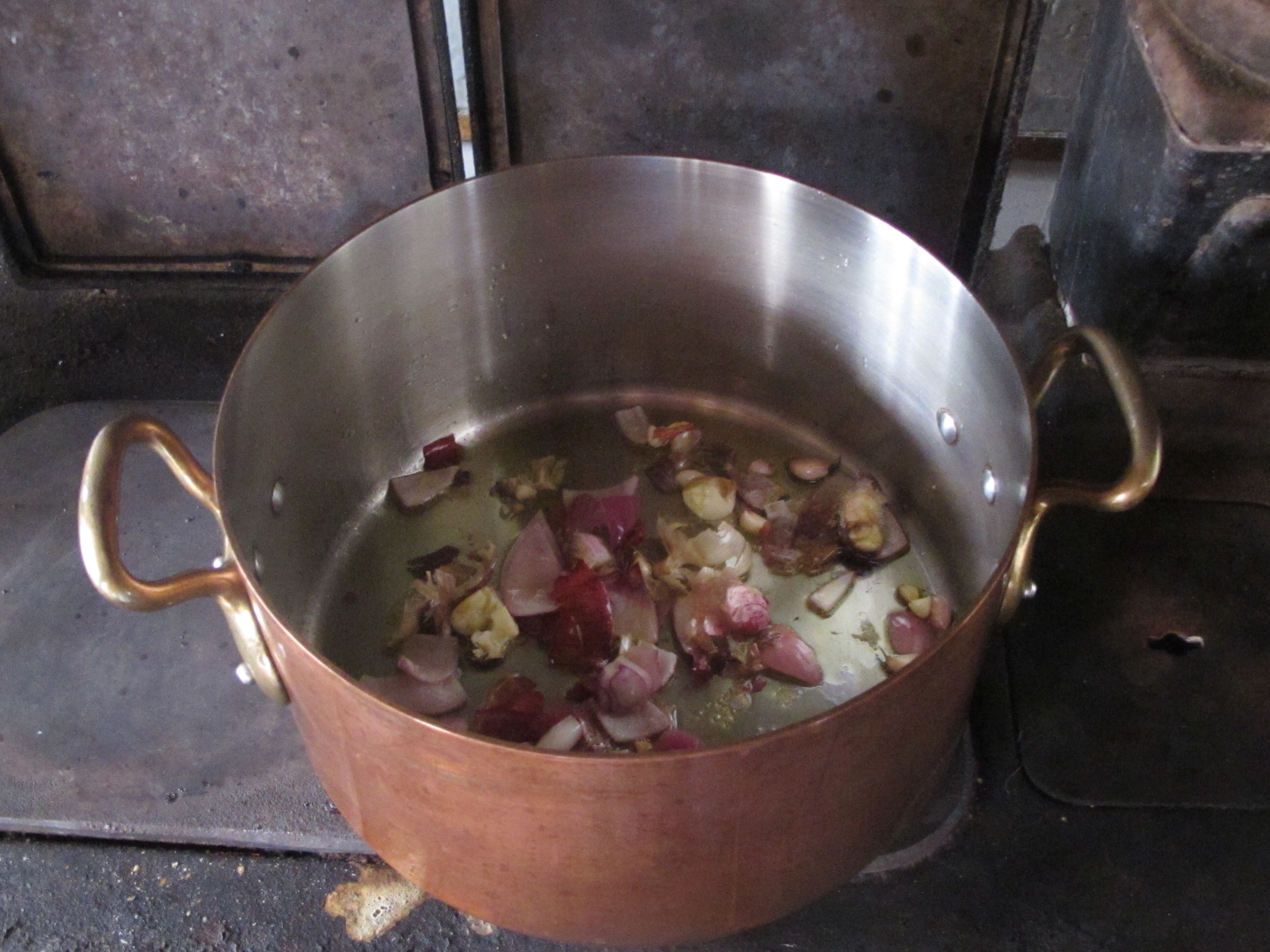
Browning onions and garlic in olive oil and then using what is at hand in the garden to make the mirepoix.
IMG_3700IMG_3701

roasting cheap stock bones from the butcher $3.50 worth

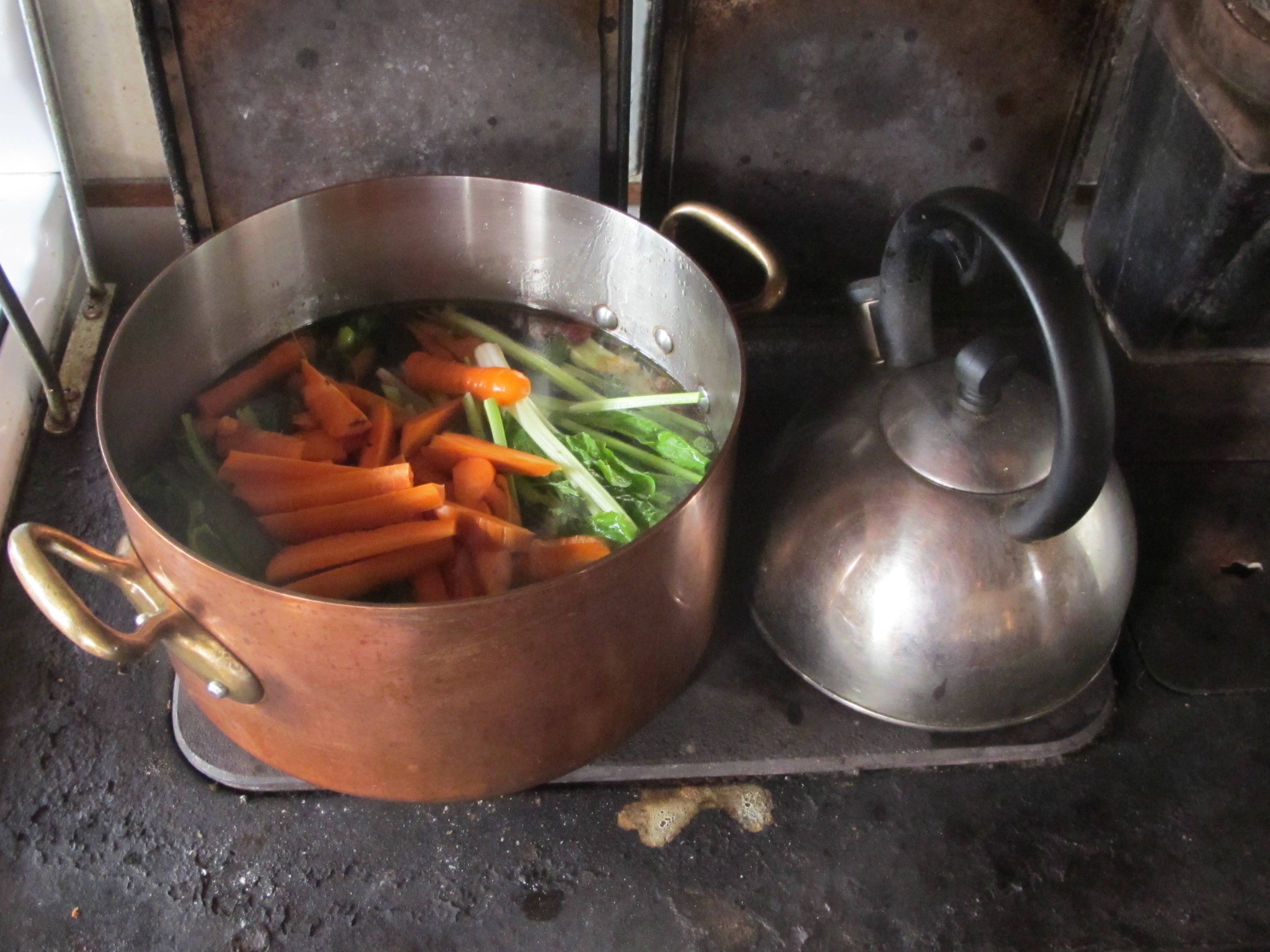
Once roasted the bones and veggies are all boiled down together. The bones and veggies are then removed and the liquor reduced and a bottle of good local red wine from Sally’s Corner Wines in Sutton Forest is added and reduced further.
IMG_3729

Once reduced down to 1 litre, the gel is placed into 2 containers, one frozen for later and one in the fridge for this week.

It’s a fabulous thing to do that is so rewarding and it cost next to nothing and doesn’t have any preservatives or any salt.
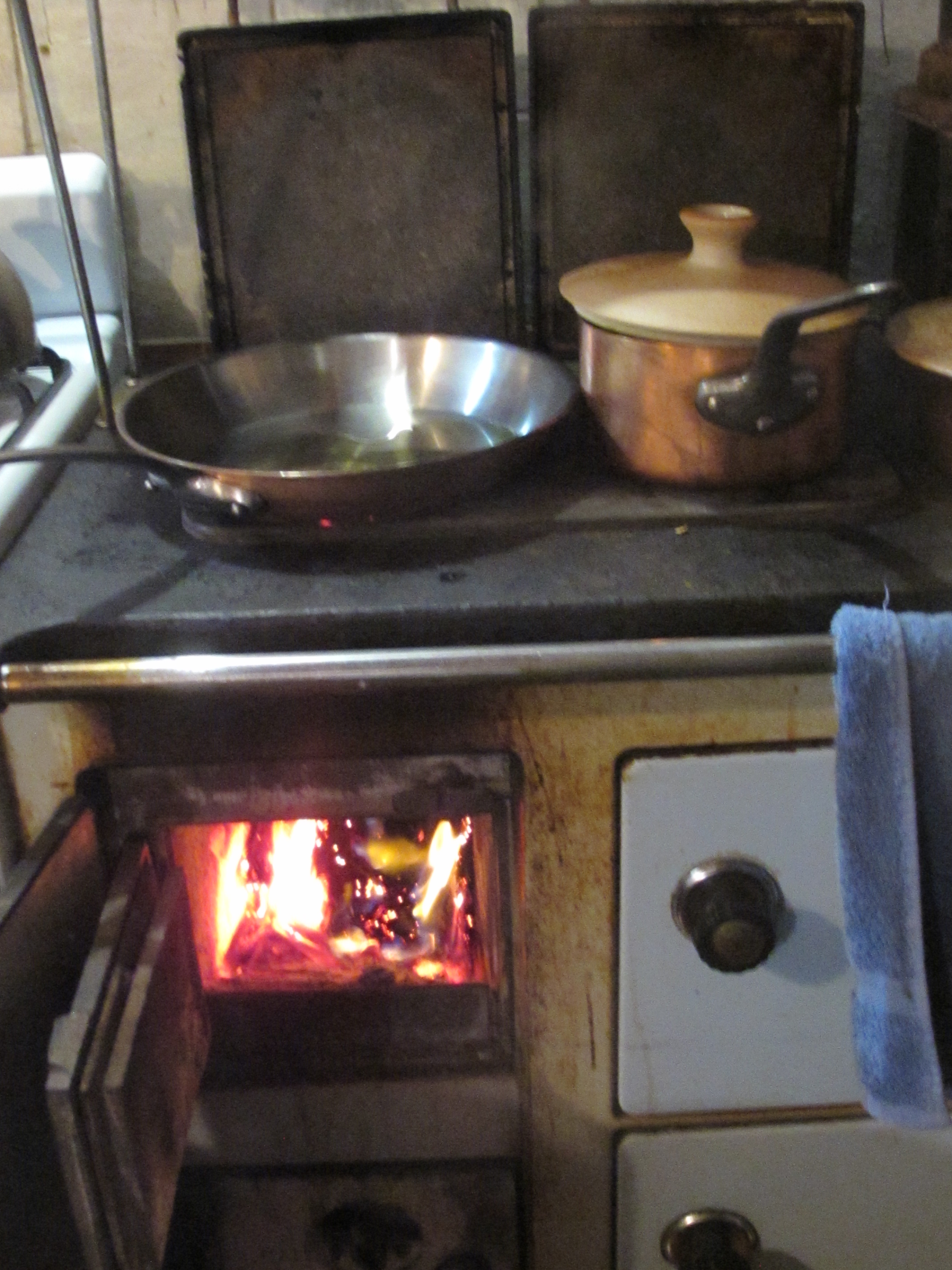
It helps us survive and eat well on a limited budget, but most of all it is all made here in the kitchen using as much of our own produce as possible and cooked using the heat from the wood that we grew ourselves, in our own forest and burnt in the kitchen wood fired stove.
IMG_3810
This stove was bought almost 40 years ago, 2nd hand, and is still going strong, heating our hot water , heating the house and cooking our dinner.
IMG_3738
As winter and the cooler weather approaches, we have an excess of lemons. I
Shave off the very thin layer of zest from 25 lemons. It takes about an hour to do it well without disturbing the white pith. I want the zest to make limoncello, a lemon flavoured liquor. All the zest is added to a bottle of Vodka and left to soak for a month. After draining and filtering, it is mixed with sugar/water syrup and is delicious.
We now have 25 skinned lemons to deal with and I don’t want to waste them
IMG_3741IMG_3742
IMG_3746IMG_3748
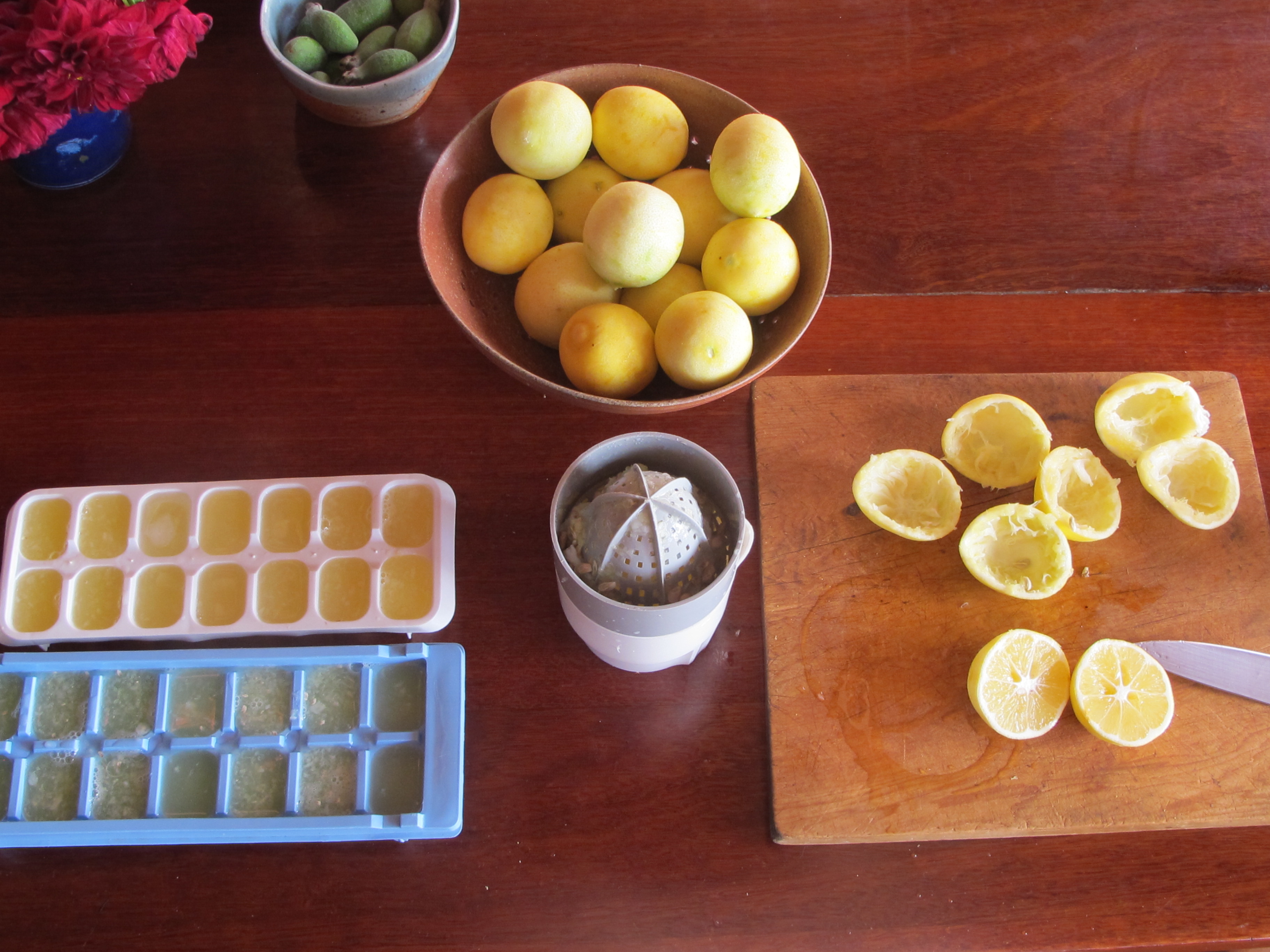
I decide to use half of them for juice to make a lot of lemon juice ice cubes for the freezer. 3 trays should do it. The remaining half of the juice is made into a lemon drink cordial.
Sweet and sharp, it is really thirst quenching and I did it all with my own digits.
Digitally yours,
I am Number 4, you are Number 2
or should that be 0100 and 0010?



Teaching from Home

A letter from the garden, pottery and kitchen.


It’s late April and passing into May, we are very busy as usual. Every month is busy of course. But autumn is a time of the extended Indian summer for the last of the tomatoes, capsicums, egg plants and zucchinis. There is still a lot to pick until the cold nights bring it all to an end. In years gone by, we would be starting to have frost by now, but with global warming, they don’t come as soon as they used to and are not as severe. This warmer climate means that we will be experiencing a lot more bugs in the garden, as the frosts won’t burn them off like they used to.


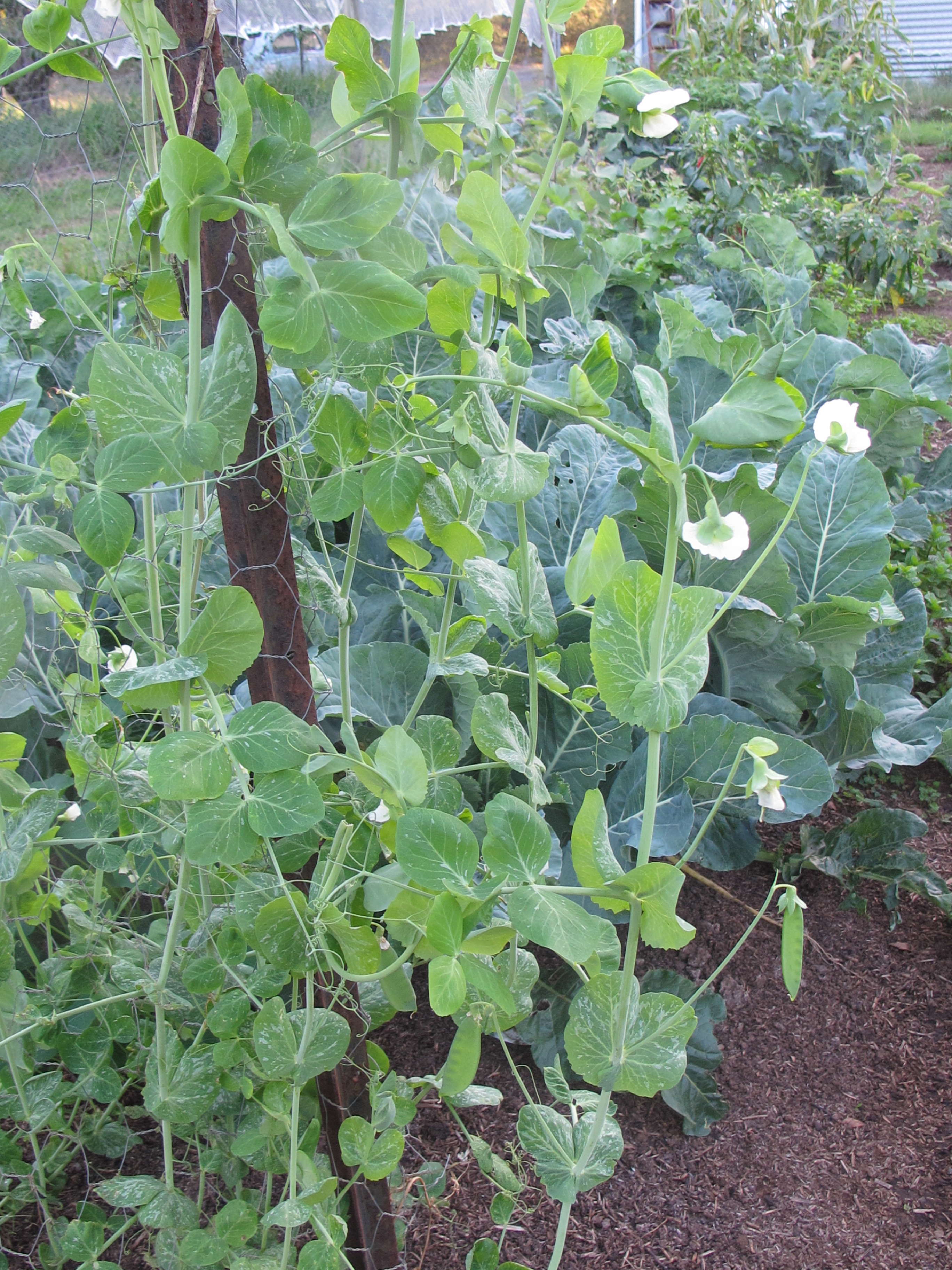
Autumn is well and truly here. We are now starting to eat the peas that we planted a month or two ago. We’re also starting to eat the earliest broccoli, along with carrots and spinach, all coming along nicely. We have harvested the last of the beans, to dry for the winter soups.

IMG_3603 IMG_3565


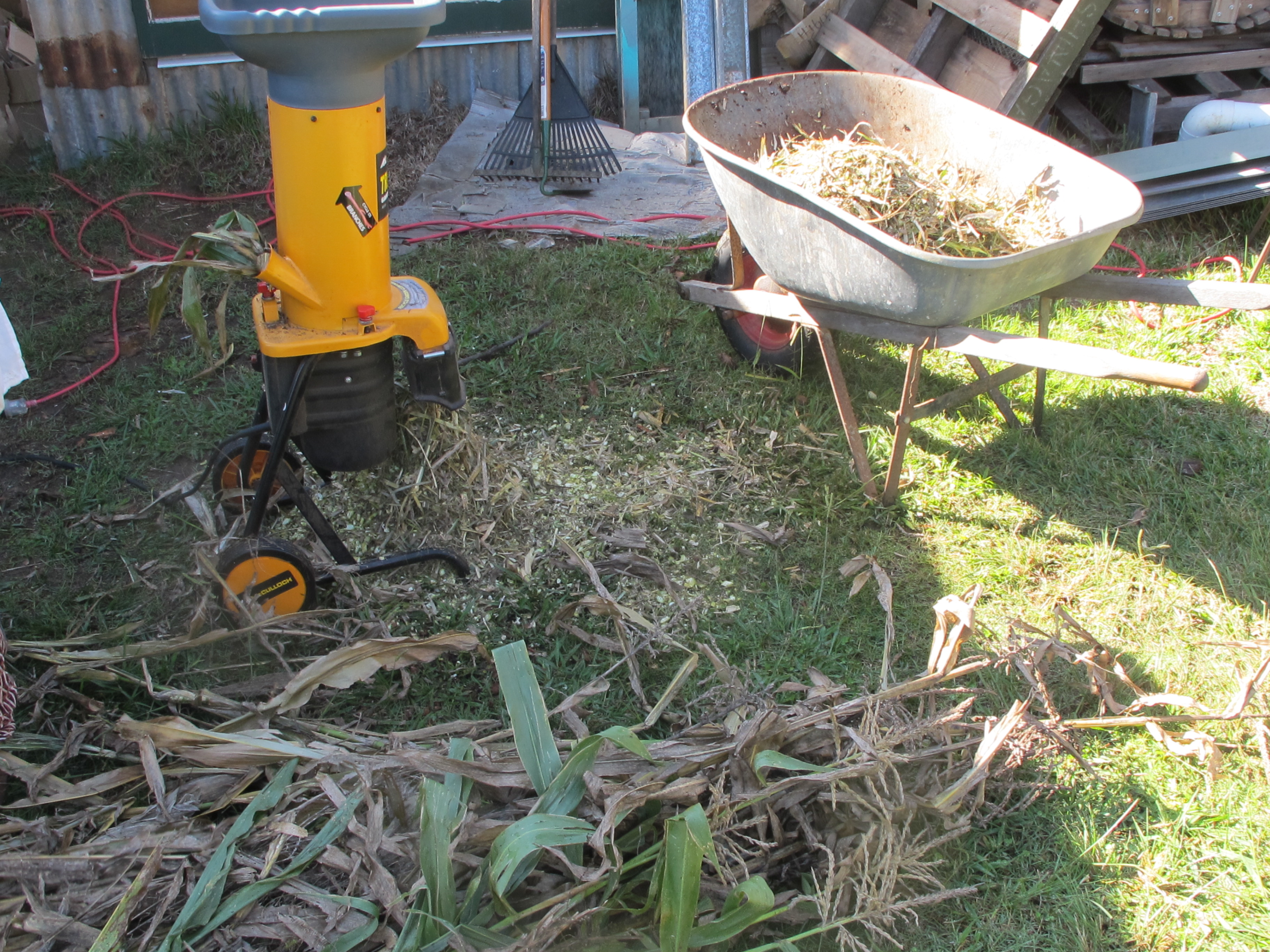
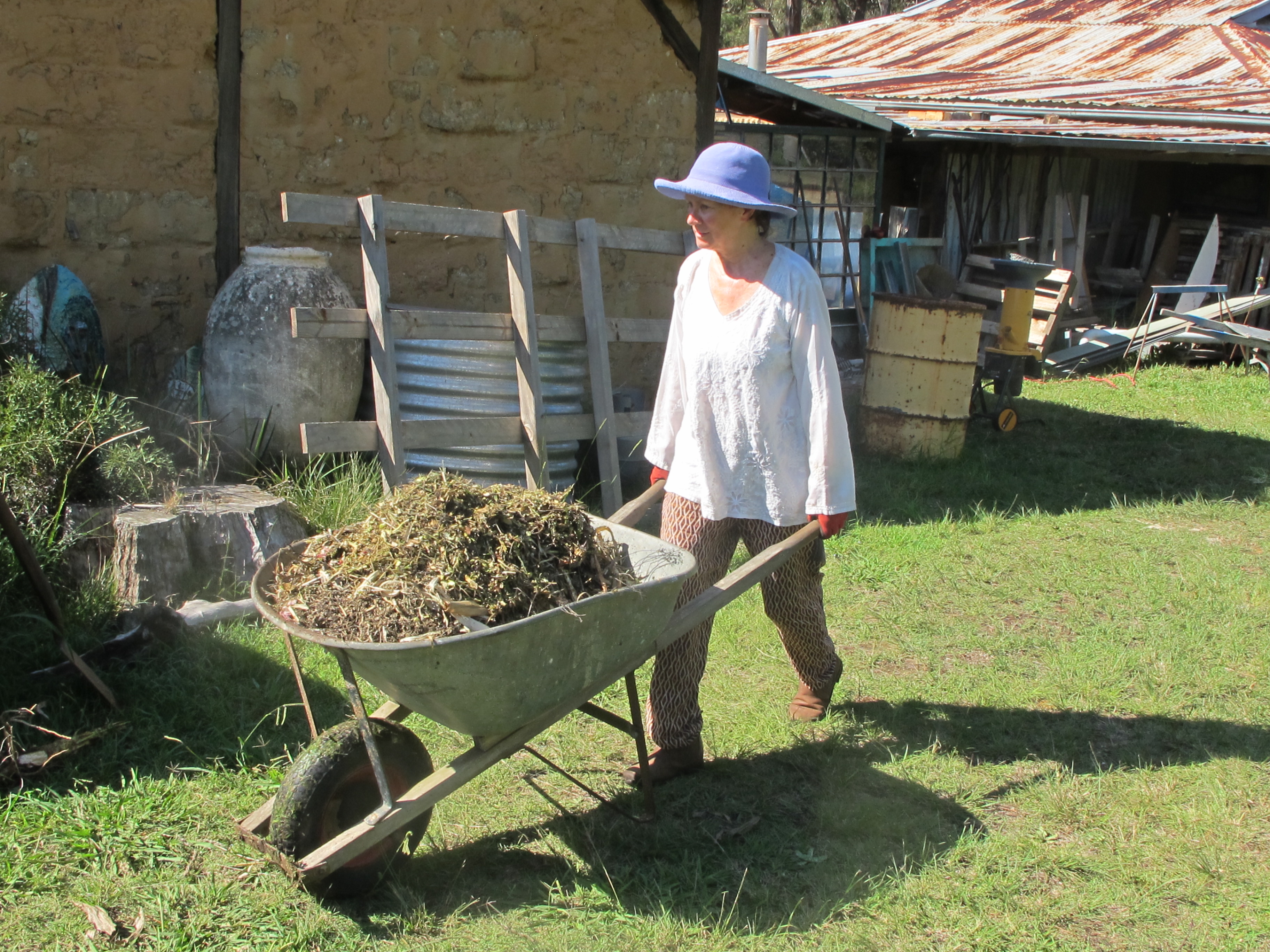
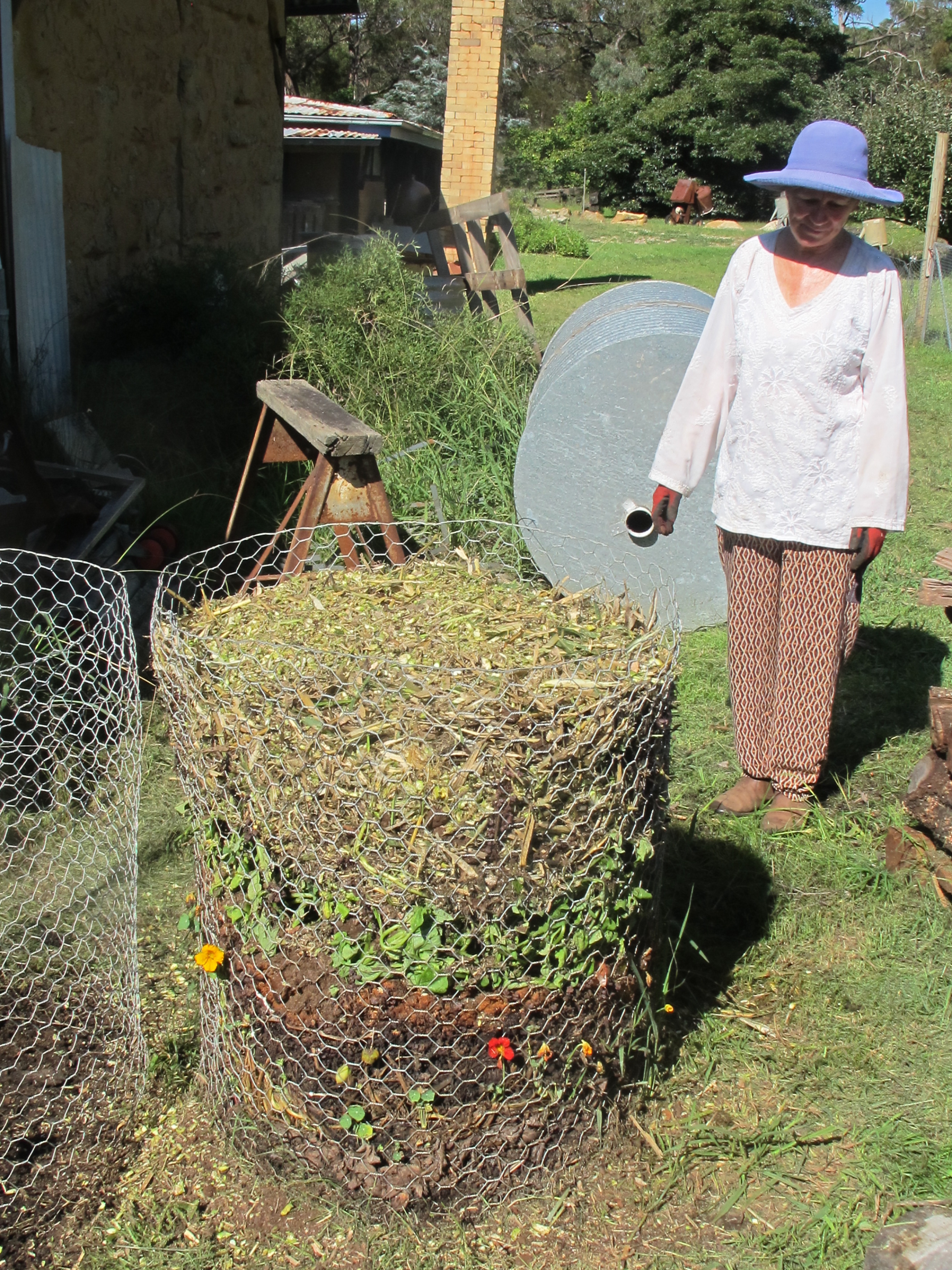
The lovely and I  have been making compost for the garden, for the winter mulch. Shredding up all the old corn stalks and other past-their-best veggies and weeds. It all goes int the compost ring with a little manure, the mixture of dried leaves, shredded stalks and soft wet weeds seems to get fermenting pretty rapidly and drops to half its volume in a few weeks. I know that we ought to break up the pile, mix it all up and re-instate it all back into the wire bin to get it fully rotted really fast. But this is real life and we just don’t have the time. It all seems to rot down well enough without the extra effort.

IMG_3544IMG_3549

IMG_3553

IMG_3554


IMG_3530

IMG_3529


IMG_3528

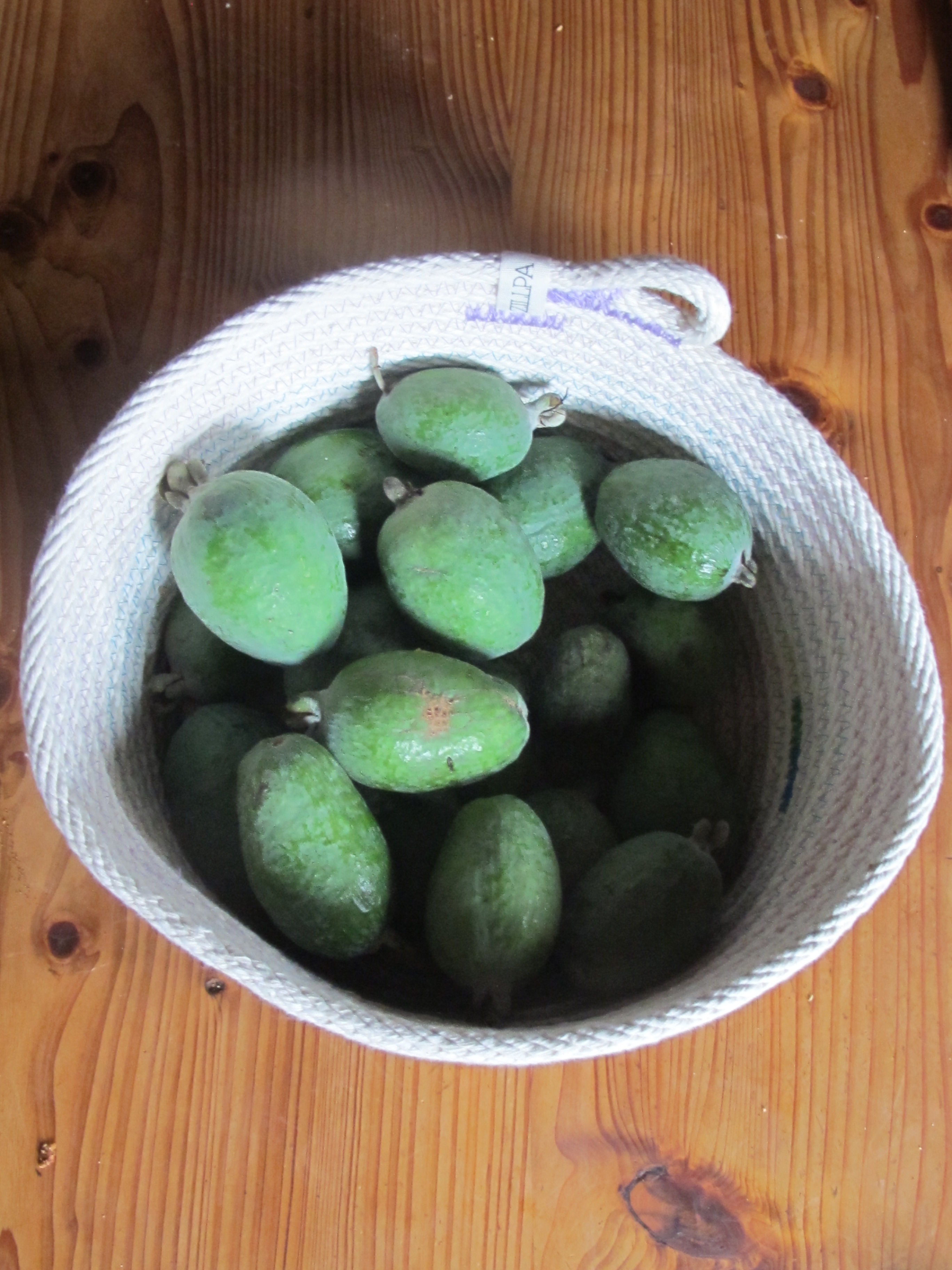
We’ve also been collecting the pine mushrooms, the saffron-milk-caps, from under the pine trees, for our risotto . They appear with the warm weather after the rain. We have also been harvesting feijoas for our breakfast fruit. They are full-on ripe at  this time of year. And starting to fall from the tree.  As we have far too many at this time of year to eat them all fresh every day. The Lovely has started to use them to make a very nice, moist feijoa fruit cake.


This is very moist and tangy. Lovely with morning coffee. It’s a great way to use up lots of feijoas when they are in season.

Here is The Lovely’s recipe.

Feijoa, date (or pear, or prunes) and ginger loaf

Ingredients

▪   1 cup feijoas, peeled and diced

▪   150g dates, though since Janine is not a fan of dates, I used chopped dried pears the first time, prunes the second time and a mix of the two the third time.

▪   100g crystallised ginger, chopped

▪   250mls boiling water

▪   150g brown sugar

▪   50g butter

▪   1 egg, beaten

▪   1 teaspoon vanilla extract

▪   270g flour

▪   1 tablespoon ginger

▪   1 tablespoon baking powder

▪   1 tsp baking soda

Method
1. Pre-heat the oven to 180°C for baking and grease a loaf tin.

2. Place the feijoa, dates, ginger, water, butter and sugar into a saucepan and bring to the boil. Lower the heat and simmer for 5 minutes. Remove from the heat and cool.

3. Sift together the flour, ginger, baking powder and soda and add to the fruit mixture once cooled along with the egg and vanilla. Do not over mix (this mixture is quite thick).

4. Spoon the mixture into the greased tin and bake for 45 minutes or until a skewer comes out clean


IMG_3561

Basically it’s a variation on the old boiled fruit cake recipe and It’s really nice.


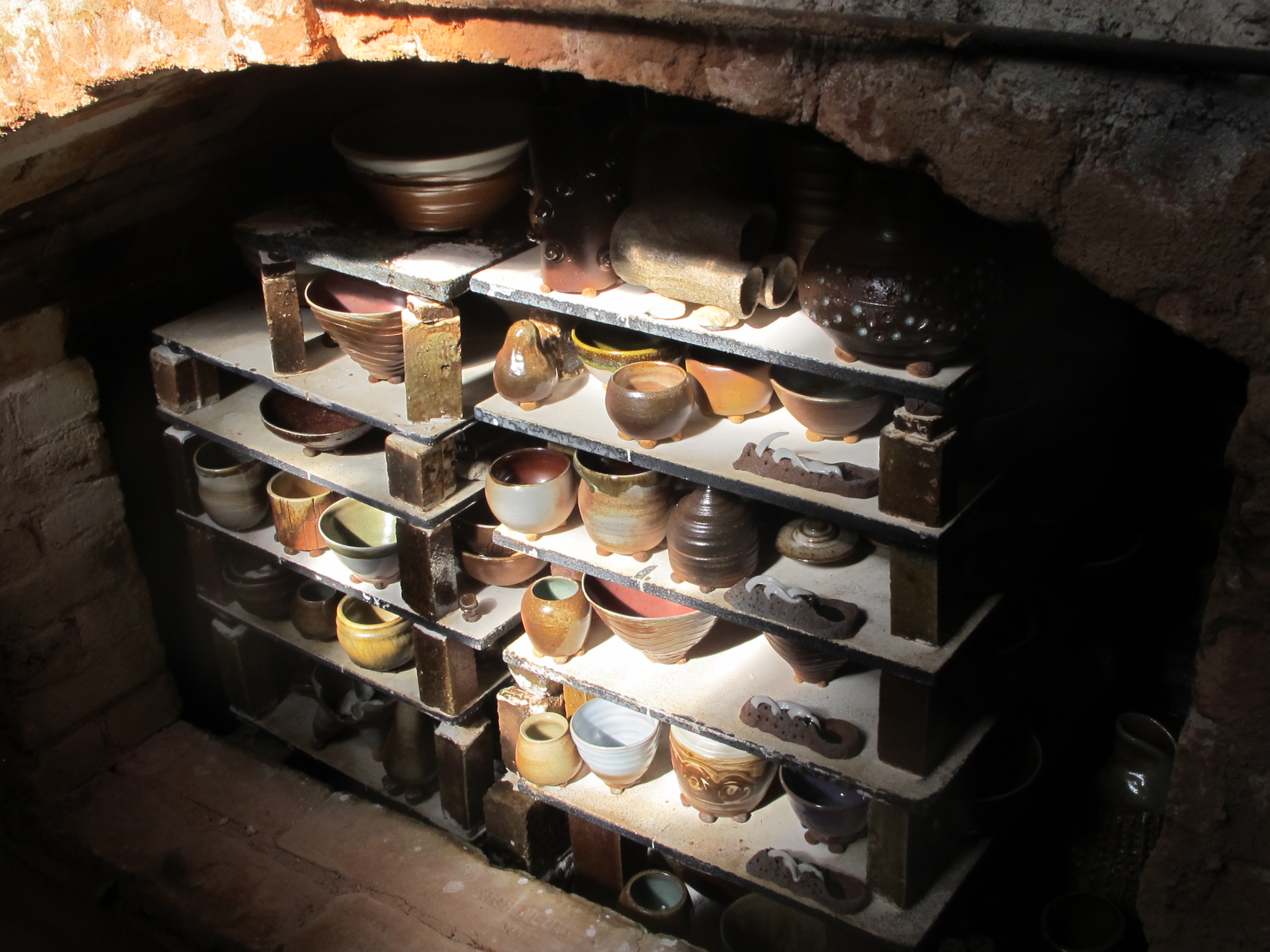
We have decided to take on some private teaching of weekend workshops lately, as a way to bolster our ever decreasing income. We have been having groups of 10 pottery students come here to pack and fire the wood kiln. Both workshops  that we have proposed so far have been immediately, fully booked out, so we will offer a few more in the coming months. The students come on Saturday morning, pitch their tents, then we start to pack the kiln, this goes on all afternoon, until it’s full and then we start the firing in the evening. We fire straight through the night in shifts and finish on the Sunday afternoon/evening. The firing varies between 16 and 20 hours. Everyone seems to enjoy it and the pots come out pretty well, with nice wood flashing and some delicate ash deposit. It seems that everyone is happy, and so therefore so are we.

We have 2 more booked for the autumn/winter, with the possibility of a third to come.

Teaching from home will be our alternate income source since the casual/part-time teaching we had at the art schools has dried up with their sudden closure by the conservative government.


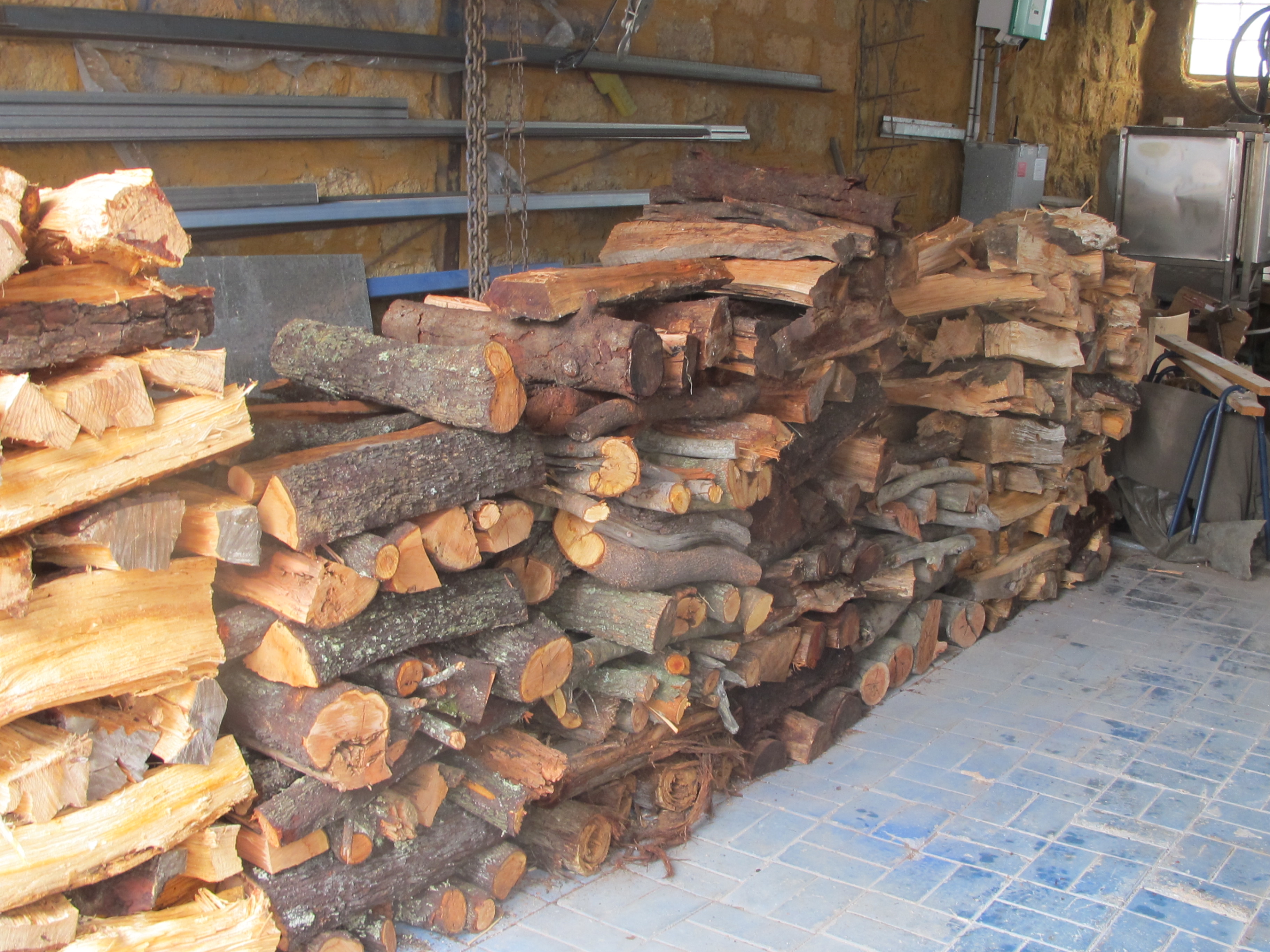
The first few days of the week are taken up with the cutting, splitting and stacking of the wood for the kiln. I have to fill the end wall of the shed with cut and split seasoned wood. It sounds easy to say quickly, but all this work begins a year or two earlier, when we collect the trees and start to season them, so that they will be dry and ready in time for the firing when it comes a year or two hence. Everything has to be thought through, to keep a flow of milled and blunged clay, rock glaze powders and wood fuel continuously in the pipeline so that there won’t be any shortfall.

We have recently been given 8 truck loads of pine trees from the clearing of a house block in a nearby village. I don’t know how much wood this is, possibly 6 to 8 tonnes per load x 8 loads = about 50 tonnes? It will dry out when seasoned to half of this weight. Whatever it is, it will be enough wood to fire the kiln for another 3 years or so. Pine isn’t my favourite timber, but it’s OK and it is much better for us to burn it productively in the kiln and save other fuel, than to see it burnt off in a huge pile. Pine trees are considered weeds in this shire and are recommended for removal to be replaced with native species.

IMG_3654

IMG_3652


IMG_3644

IMG_3648

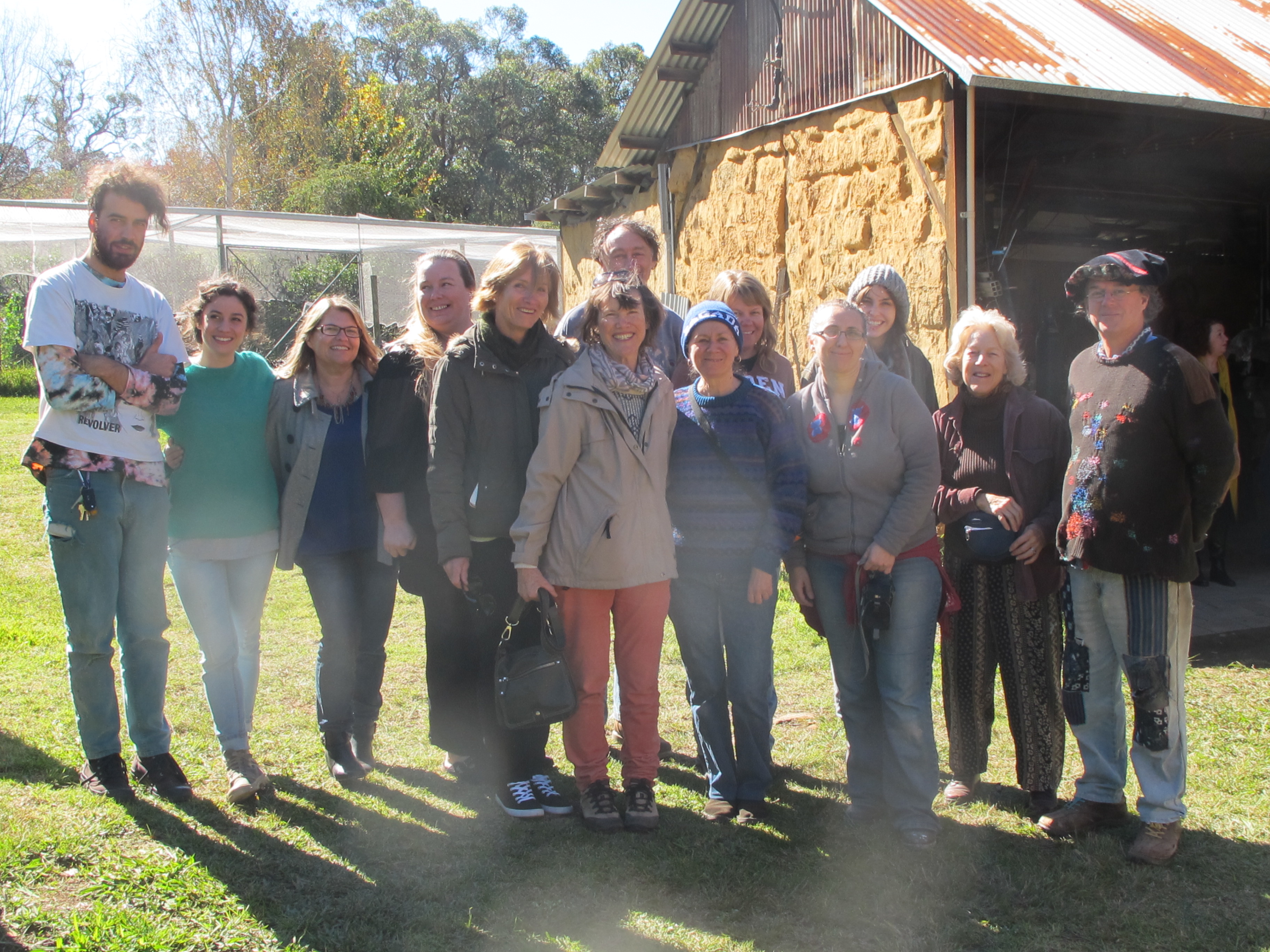
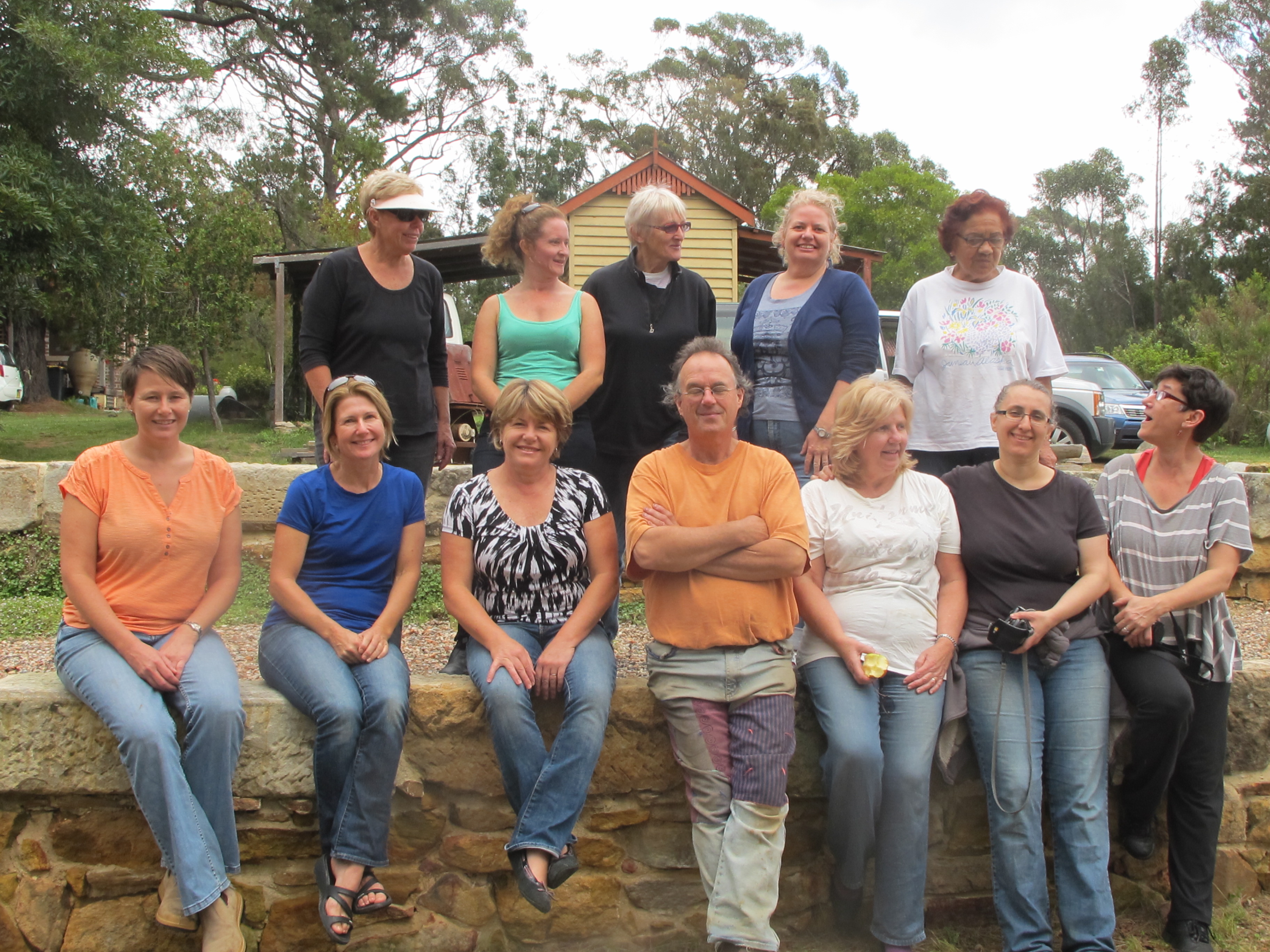
The next thing that you know, our back yard becomes a camping ground with tents of all descriptions and camper vans all around. What a lovely bunch of potters. We have a great time and the firing goes well, the results are great and we make a lot of new friends. There is too much food, as everyone seems to have brought enough for everyone else as well. There is lots of laughter and good will all around. It’s a great vibe!

IMG_3570 IMG_3574

IMG_3680 IMG_3681

IMG_3672

Janine will be offering some low temperature firing workshops in the coming weeks as well. Taking small groups through the whole process of packing and firing a small wood kiln to low temperatures in one day.

Teaching a few workshops from home might be the way that we subsidise our income for the coming few years? There are so few opportunities for modern students to fill in all the enormous gaps that are left in the new ‘free-enterprise’ model of ceramic education. Workshops like these might be one of the ways that professional expertise can be transferred from us to the new generation of potters.

When ceramic training was handled by Technical and Further Education. There was full syllabus including the technical subjects of Glaze technology and kiln firing. The new privately run par-time classes that have replaced them are only a few hours of practical instruction with no structured instruction that follows a full syllabus. The result is an incomplete experience. This probably suits most of the clientele, but for those wanting more…… We will be back to the 50’s and 60’s, where, if you wanted to learn something more fully and completely, you had to go to an artist and work with and for them, most likely as a volunteer. I got my early start with Des Howard at the Argyle art Centre and Nicholas Lidstone at the Berrima Pottery as a volunteer. Later, I worked for Mike Pridmore as a paid labourer. Good times! However, I soon realised that if I wanted to learn all the technology that I realised that I was going to need to be an independent and self-reliant potter, then I would need to go to Art School and later to do an apprenticeship.

This journey worked for me. I was lucky. I think that it is a lot harder now to access all that I was able to get involved in. For a start, life is tougher and far more mercenary. Rents are higher and the cost of living seems to be greater.

IMG_3755IMG_3686

packing the students glazed pots into the kiln.       The fired pots ready to unpack


IMG_3765IMG_3584

So we are starting to teach from home. I don’t think that all this is quite as mercenary as it might seem at first glance. Sure we are interested in earning some money, but we are also providing a service that is not all that easy to access in any other place. Certainly not in a place as interesting, sustainable and carbon aware as this with access to our organic gardens and orchards as a backdrop.


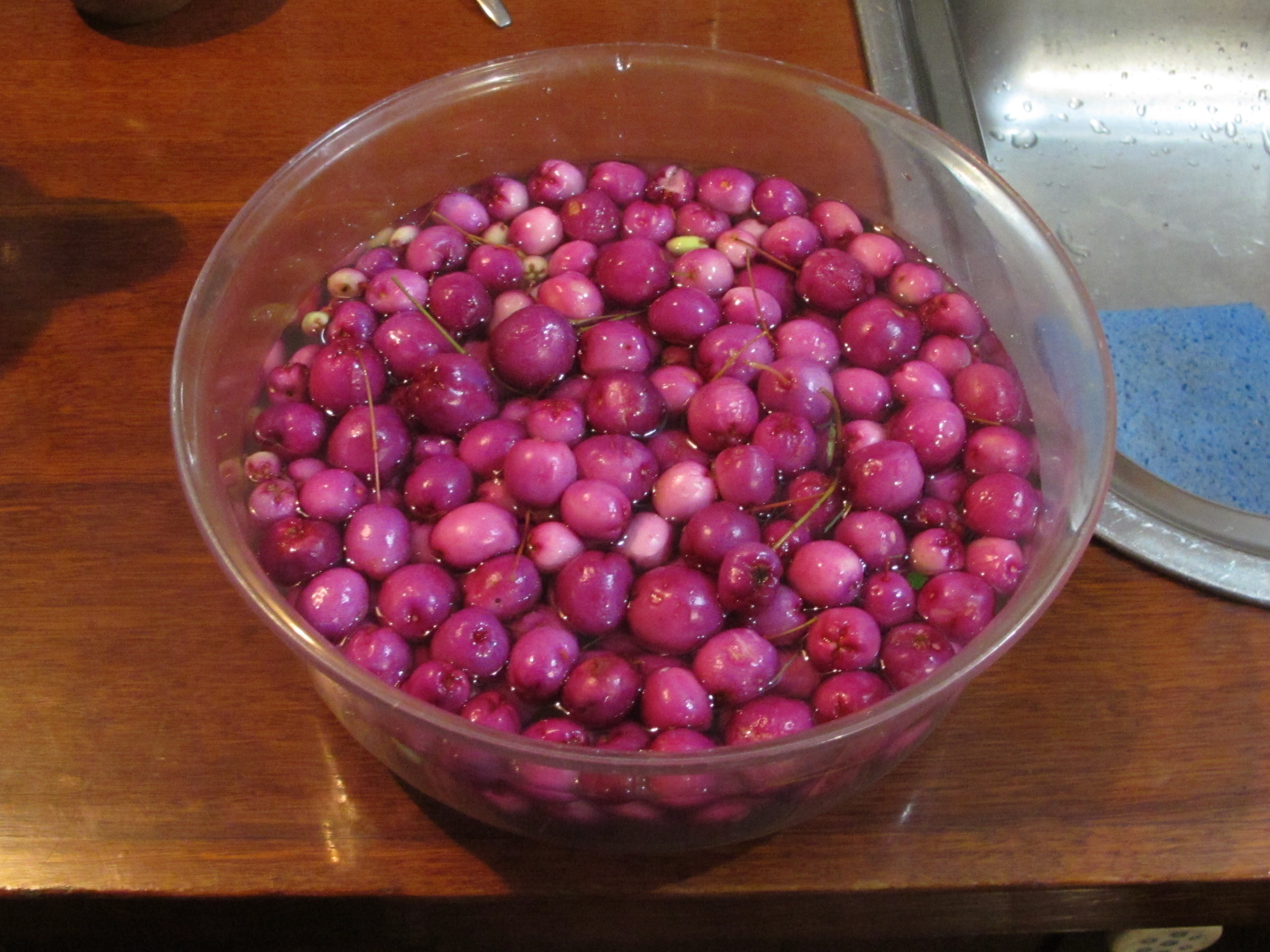
In the gap between the two workshops, the Lillipillis berries are getting ripe in the garden, the birds are very keen on them and we have to be quick to get some of them as well.

We keep a keen eye on them every day as they ripen, and as soon as the birds become active, then we have to get the ladder out and get up there and start to pick, otherwise, there will be none left in a day or two. The tree is 6 or 7 metres high, so I can’t reach them all. I collect all that I can reach from the ladder and leave all the rest at the top for the birds.

We manage to get them picked between episodes of wood gathering, sorting, cutting, splitting and stacking for the next firing.

IMG_3589 IMG_3590

IMG_3769IMG_3770IMG_3594

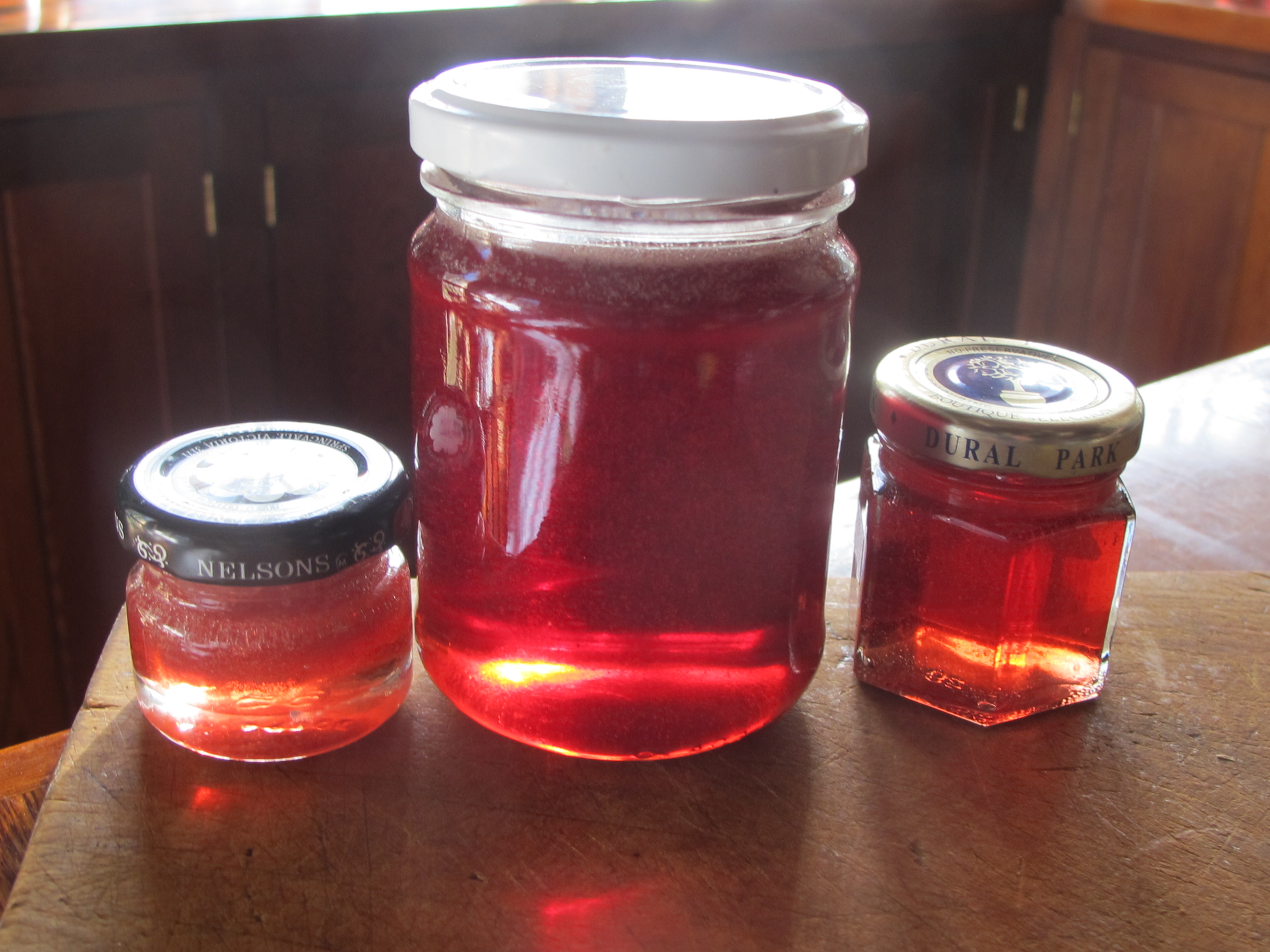
The Lovely makes a few jars of Lillipilli jelly for later on in the season, but we start to eat one of them straight away, it’s just so nice, and all from our garden.This is the result of our two partial days work, picking, washing, boiling, straining, adding sugar and reboiling, then dripping the strained jelly. What wonderful colour and flavour, and from an Australian native fruit as well.

We are so lucky!


Our red-meat meal for this month, was lamb shanks. Browned in olive oil, onions and garlic, then simmered gently in one whole bottle of local red wine – merlot, and two large  table-spoons full of marrow bone jelly stock. (see earlier email) Simmered down to 1/3rd its volume over an hour or so makes the most delicious and intense sauce and served with garden vegetables.

IMG_3782IMG_3783


IMG_3784

It’s hard to believe that anything this simple and effortless could be this delicious.


With love from Mammon, the pantry-raider and garden mercenary


Zen and the Art of Maintenance – Theres a catch to it

Nothing lasts forever. Nothing is ever finished, Nothing is perfect.

I’m very aware of how nothing lasts. I seem to be spending a lot of my time these days in repairing and replacing things that I’ve done before, now I’m doing them again. The only trouble is that it’s so long since I did it last time that I can’t always remember how I did it and I have to re-learn or re-invent what I once knew and have since forgotten. Use it or loose it they say. I’m learning all over again how true that is.


When I built my current pottery workshop in 1883 after the old one was burnt down in a fire, I was shown how to make beautiful corners in the galvanised iron guttering by the local plumber. He was a good man, very careful and caring. He took me under his wing as it were and was prepared to spend a bit of time on me. I worked for him as a labourer when I first came here in 1975/6. I had no income, until I could build a pottery and kiln. He gave me occasional work when he needed  help on larger jobs. He was already 60 at this time and I was just 23. He saw some potential in me and mentored me. So when our work shop burnt down he offered to help in the way that he could by showing me the tricks of the trade of old fashioned roof plumbing, flashing and guttering.


That was 30 years ago now and all that old guttering is worn out, repeatedly patched and repaired, now rusted through and has stopped catching the rain water that we need to exist here in the bush.

It’s a big building and I need to do all of it. It’s 60 metres all around and I have to stretch my memory back to remember what we did back then. As I take the old corners apart carefully, It all starts to come back to me.


Joe never bought any pre-fabbed parts like corners or stop ends. He fabricated everything from the full lengths of gutting sections as needed. It was very impressive to see him cut and fold the guttering section, bend them and make everything fit together into a perfect 90o corner with all the correct overlaps and reinforcing gussets, all just sliding into place. Little tabs sticking out in just the right places to allow secure reinforcing of the joints, just exactly where they needed to be. All this done free hand, without any measurements of marking out. He’d done it so many times during his life, he could do it in his sleep. He was a true master of his trade. I was so impressed watching him work.


After a while of working with him, I could see the patterns in his methods, the sequences that were involved. At one point I could see the next step that was coming and had the right tool ready, so that before Joe could ask for it, I slid the tool forward into his hand at just the right moment before the words left his lips. He turned around and just gave a glance back at me. A small smile. Said nothing, and kept on working. That was all that was needed. We worked well together from that moment on.


I’m struggling to remember all the little subtleties in the making of a gutter corner in the middle of a long run of gutter section. The lengths are 6 metres long and a little bit unwieldy up on a ladder by your self in the wind. I measure from the last joint, allow an over-lap of 250mm. for a slip joint and cut my long section half way through with the tin snips. I make what I think is the right shapes and fold it around. It is almost right, but not quite. The next one will be better. I manage to man-handle the huge unwieldy ‘L’ shaped thing up the ladder and rest it on the roof. It takes some effort to slide it into it’s final position. Joe made it look so easy. I have to do it a little different from last time because in 1983 all the joints were soldered into place. These days it’s all silicon. I didn’t like the idea of having lead solder in my gutters catching drinking water, but even less keen on silicon rubber and plastic down pipes sealed with acetone.


I spend two days doing all this work and now the roof is resealed and catching drinking water again. I’m sore and tired, having used all sorts of mussels that I don’t usually use doing all that ladder work. Janine’s nephew calls in for a visit and is very polite about my roof work. He’s a builder and tells me that no-one makes so much effort in their joints these days. What I’ve done is so old fashioned. He also lets slip that it cost $100 per metre for gutting these days. I’ve just saved myself $6,000 of money that I didn’t have to earn to pay a plumber to do all that work. It’s cost me about $700 in parts. So I suddenly feel a lot better. I like these aches and pains.


Now it’s the lawn mower, the lawn mower that has given us such reliable service for the past 22 years is suddenly all wobbly in the steering. I check it out and find that the front axle is actually made of pressed metal and has fatigued away and started to split and tear in half on one side. A closer inspection reveals that the other side has splits and cracks in it as well. I decide that I will have a go at making a new one to replace it.


One of the first mowers that we had was an old ride-on mower that we were given for $50 by neighbours who decided to sell it when they sold their house to move into a smaller place in another village. They wouldn’t need it on the smaller block. The local mower shop had offered them only $50 for it, but only if they delivered it to them. They asked me to deliver it for them, as I had a trailer which would fit it. I asked them why they would accept only $50 for a valuable ride-on mower? They told me that they had previously been Sir Russell Drysdale’s caretakers up on the Central Coast. He had bought the ride-on for them to use to mow his lawns. When they left to come here 7 years later. He gave it to them and said that as Ron was the only person who could start it and keep it running properly, he should keep it and Sir Russell would get a new one for the new caretaker. Now 7 years later, they are down-sizing and moving onto a small suburban block.


Ron said that as he hadn’t paid anything for it. It was unethical for him to profit from his former boss’s generosity!

I said that I would be prepared to pay him the $50 and just deliver it to my home and keep it to use myself, as we had 4 acres and didn’t have a working mower. He was thrilled that it would go to a good home directly and to someone that he knew and liked. So we got a 15 year old adolescent, difficult, temperamental, fickle, changeable, unreliable and often intermittent working mower.

I don’t know if it was true that only Ron could work it reliably every-time. I doubt it. The problem was that the old Briggs engine was ‘cooked,’ It blew clouds of smoke out the exhaust and took a lot of pulls on the cord before it would begin to ‘kick,’ and then only weakly. Once it did start, it only had enough power to run on the level. It had enough power to actually ‘mow’ while it was going down hill, but it didn’t have enough power to actually carry my trifling weight up hill and mow at the same time, so I could get off and push it up hill while it mowed, or stay on and turn off the mower function so that it could cary me up hill, where I could re-engage the mower and mow another down hill strip, etc.


After a couple of years of this it couldn’t mow and carry my weight at the same time, even down hill! Something had to be done. I looked around and finally found a Honda motor that would suit the fittings on this old mower and wasn’t too expensive. The sales man said that it was identical to the old Briggs motor. Same mounting bolt diameter and spacing, same shaft size. So I bought it.

It didn’t fit!

What he didn’t tell me was that it was an overhead valve motor, while the Briggs was a side valve. This made the new motor 100mm wider.

I had to cut the mower in half and add 100mm. to the length of the chassis and weld it back together again, just to allow the extra space for the longer motor to fit into its housing.

Amazingly, it actually worked!

I was the most surprised of all.

You know, that mower might have been Sir Russell Drysdale’s, but the paint job wasn’t that good — and he never signed it!

I wonder if it was a forgery?

Anyway, I eventually gave that mower to a friend, and we bought the new one. That new one is now the old one and is worn out too, although the motor is still good. See what the years do.

IMG_0381IMG_0382

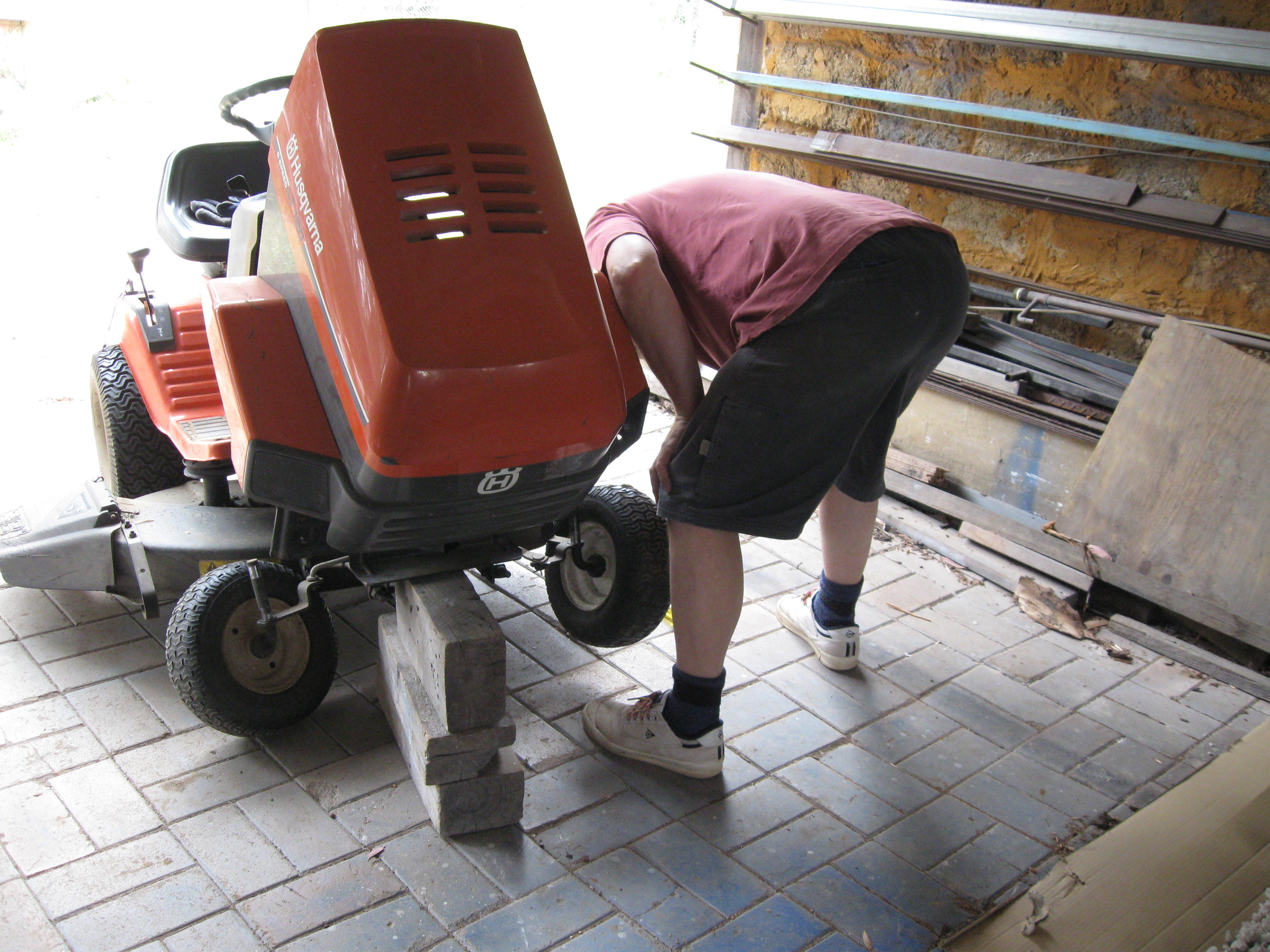
I examine the old axle assembly. It’s pretty much had it, all torn asunder with metal fatigue and stress. I can imagine what my arteries might look like after all these years? I decide that the best thing is to start again and build a new one from scratch. Not a new mower, but just a new front axle. I jack up the mower and take it to bits. Once stripped down of all it’s plastic bling, it doesn’t look too flash. Maybe I should start to wear make-up? It doesn’t appear to be such a big job. I have a small length of thick walled steam pipe and I cut a couple of panels out of 3mm steel plate on the guillo. The jobs almost done.


IMG_0389


I measure the angles, make the final cuts. I need to get the camber and rake correct, and it has to be able to swivel to allow for uneven ground. I plasma cut the necessary holes in all the right places and weld it all together. A coat of primer and it’s ready to go. As good as new — if not better.

I can’t tell you how satisfying it is to restore something vaguely complicated back to working order and forestall waste and save expense like this. I don’t like throwing anything away until it is really worn out. I think that this mower now has another decade in it yet. And it was all made out of bits of scrap, that others may have thrown out. I guess that this is not so much maintenance as rebuilding.

Because things come in threes, the kitchen stove firebox door catch finally gives up the ghost after 35 years. We bought this slow combustion stove 2nd hand in about 1977.  It was out of date when we bought it and there were no spare parts to be had then, never mind now. It has given good service when you consider that we light it almost every day of the year, at least 300 days a year. It cooks our meals, heats our hot water and keeps us and the kitchen warm on cold nights. It’s lovely to come inside on a cold evening after working outside all day, in to a warm house and snuggle up to a hot stove. The only days that we don’t light it is in the heat of summer, when we already have enough solar hot water and lighting up the stove will heat the room too much for comfort.

Now after infinitesimal turns of the screw, it has completely worn the threads off the shaft of the catch, to the point that it won’t catch anymore. If the firebox door can’t be reliably kept closed, we can’t risk burning wood in it at high temperature in a timber floored kitchen.

It’s not a big deal, but I know that I can’t buy one to replace it. We have been making our own specially shaped firebricks to replace the ones that wear out in the firebox for years now. In fact the ones that we make ourselves last much longer than the original ones. I use my good kaolin clay and hard fired high alumina grog from my recycled wadding to make them and fire them in the wood kiln. They turn out remarkably well and last forever.

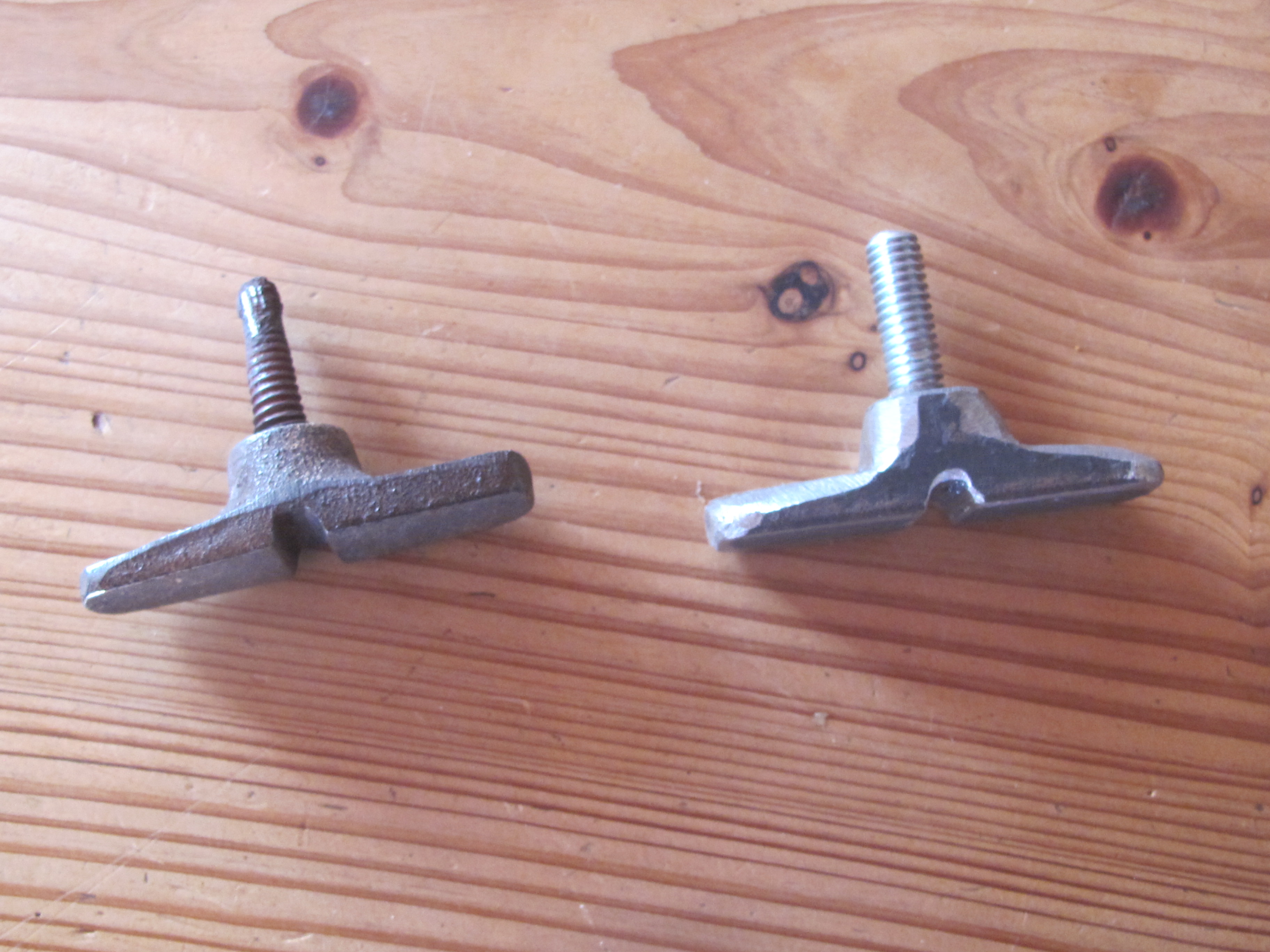
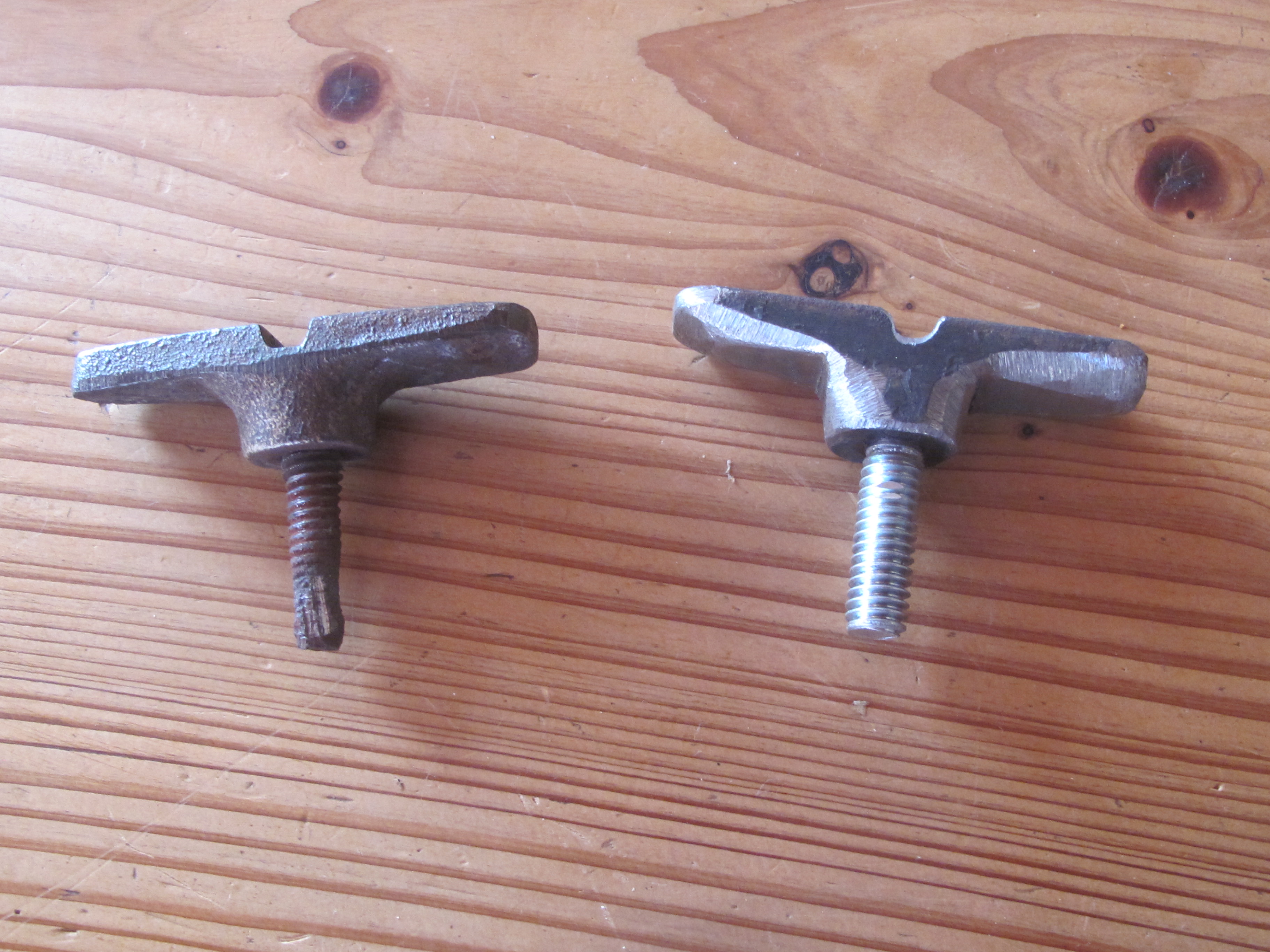
Rather than try to fix the old worn out firebox door catch, I decide to keep it as a pattern and cut a new one out of a block of steel bar. 35 years is a lot of catching and locking. They don’t make appliances like that any more. I spent an hour making the new one to replace it. Cutting out the basic shape and filing it to a nice finish, then tapping a new thread into it.

It looks good and works well. The old one was cast, this new one is fabricated.

No firebox door catch — no dinner! Necessity being the mother. I invent this new one. More waste forestalled by recycling old metal scrap.

Friends of ours recently bought a new kitchen stove like this one. It cost them somewhere around $13,000 + installation!


IMG_0639 IMG_0640


We couldn’t afford to live here if we had to pay for everything. In this case, there’s a catch to living simply.

These repairs aren’t perfect, maintenance is never finished, nothing lasts.


Best wishes from Heath Harrison and his Mother of Invention