Traveling South to Kyushu

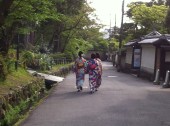
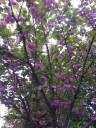
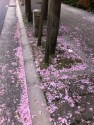
We say a temporary good-bye to Kyoto with its cherry blossoms all finishing up. Mostly on the ground. Its raked gravel gardens and Maiko make-over girls. We’ll be back, we always seem t find an excuse to return here.
IMG_5751 IMG_5752 IMG_5798 IMG_5810

We take the long train ride south to Kyushu. We leave Kyoto, and after a while the concrete high-rise scenery starts to diminish slightly and is replaced with low-rise. After a very long while we realise that the buildings are far less common and there is farm land starting to appear. It’s not that there isn’t any farmland near the bigger cities. There is a small, very small, plot of rice being farmed only 1 kilometre from Kyoto’s main central station. Amazing!

As we rumble on, we pass through farming districts and extensive fields of golden crops already for harvest with their heads golden of bearded barley ripening in the sun. I can’t imagine that harvest time for these crops is very far off.

IMG_3254 IMG_3256

We also see farmers out in the flooded fields with their mini tractors and rotary hoes, working up the inundated mud, presumably preparing the silt for the coming planting of the rice crop. Ploughing now, if you can call this ploughing, is to kill off the weeds and any competition for the young rice seedlings that will be planted soon.

When I was last here 6 months ago, they were smack in the middle of rice harvest in the autumn. We arrive in the far south in Kyushu, not too far from Kumamoto, about an hour away. Everything here is OK, different strata or geological sequence? We only had a level 2 shake up here. So the kilns are still standing and all the pots are still on their shelves.

It’s all foggy, rainy and damp when we arrive and the hills are coated in a beautiful mist.

Our first visit here is to a place near Karatsu on the North West coast. We visit an old pottery studio that has existed in this little secluded valley for a couple of hundred years. The old lady tells us that her family have always been potters here since the arrival of the Korean potters 400 years ago. The war Lord Toyotomi Hideyoshi launched 2 failed invasions of Korea in 1592 and 98. Each time he captured and brought back prisoners of war. Some of whom were potters. One in particular found and developed the first porcelain pottery in Japan in 1616. Exactly four hundred years ago this week.

She is a sweet old thing and at 83, has seen a bit of life. Her son is now the resident potter here. She tells us that there were once 300 houses in this valley, most of them making pottery and farming rice and vegetables. Now there are only 5 houses here and only one potter.

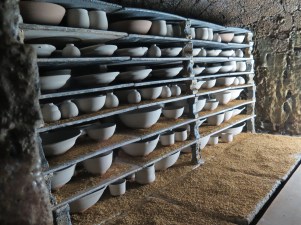
They are in the middle of packing the kiln when we arrive. It’s a well-loved old nobori-gama wood fired, 3 chambered climbing kiln.

IMG_3271 IMG_3272

They pack the pots on rice husks to stop them sticking to the kiln shelf during firing, as rice husk is composed mostly of silica, which is refractory. It also creates a shiny ‘flash’ of colour on the exposed clay at the foot of the pots.

IMG_3273 IMG_3270

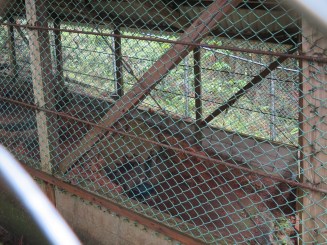
Later, we travel home to Arita via the ‘Hitakata’ ancient kiln site. This little valley once had a number of korean potter families working and farming here. But they are all gone now and only the archaeology remains. This site has been fenced off now to stop looters from stripping the site of old artefacts.

IMG_3267

IMG_3268 IMG_3265

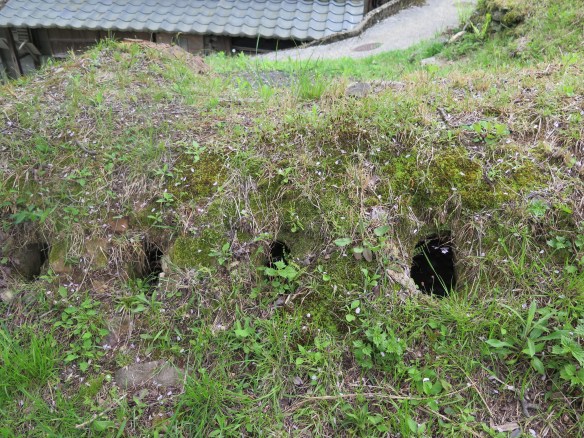
It was one of the first Korean kilns built here way back in the late 1500’s. It is set in a beautiful forested glade with a small but fast flowing stream nearby. Quite idyllic! This kiln was built without the use of fire bricks. It was constructed out of rammed earth. The local soil here doesn’t look particularly refractory, so it probably had a short life and needed to be rebuilt often.

I can’t read the Japanese on the information board, but the illustration shows 9 steps or doorways into the tunnel-like chamber. My teacher back in 1973, the Japanese potter Shiga shigeo, to whom I was apprenticed,  trained near Kyoto after the war and his teacher,  Saburo Saito had a 3 chambered climbing kiln, all made from rammed local refractory clay and home-made bricks. I was told that the fire-box needed rebuilding after every firing and the first chamber arch was likewise re-built after every 2nd or 3rd firing. This was the traditional way back them and is still used by some potters even today, if they are keen on reproducing the old effects.

Janine and I made all of our own fire bricks to build our wood fired kiln. The current kiln has had twenty firings and is still going strong. However the time will come when it needs to be pulled down and rebuilt.

Such is the way of the world.

Nothing is ever finished, nothing is perfect, and nothing lasts!

Fond regards from Steve and Janine in the shaky isle of Kyushu.

The Shosei-en Garden

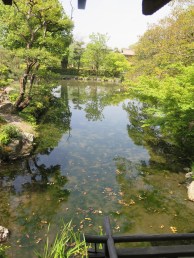
We decide to make the pilgrimage to the shosei-en Zen garden before we leave Kyoto.

This garden has a very long and chequered history. It started its life as a beautiful orange grove , called the ‘Kikoku-tei’, somewhere in the Heian era around 800 to 900 AD. Built by the son of Emperor Saga. In the 1600’s the Tokugawa shogunate ‘acquired’ the land and passed it to the Higashi Hinganji Zen temple. Perhaps to appease their conscience?

Anyway, whatever its past history, god had her own way and it was completely burnt to the ground in 1858, and then just to prove that she really meant it. She did it again to what was rebuilt 6 years later. Get the hint!

In the early years of the Meiji restoration around 1870 to 1900 Everything was rebuilt and restored to what we can visit today. A beautiful, tranquil space, right in the middle of Kyoto, just a few hundred metres from Kyoto’s busy main station.

There is a very pretty tea house on the lake – lovely !

IMG_3143

IMG_3146IMG_3147

IMG_3159


A Brief Visit to Tamba

The small village of Tamba is situated up in the hills somewhere inland between Kyoto and Osaka. It is more or less indistinct, except for the fact that it has a very long tradition of pottery making going back 800 hundred years.

The village lies along strangling secluded valley. It isn’t really close to anywhere in particular and is about an hour and a half from Kyoto by train to Aino station and then a 25 min bus trip to the village of Tachikui. Tachikui is the name of the village where the tradition of Tamba pottery technique is centered.

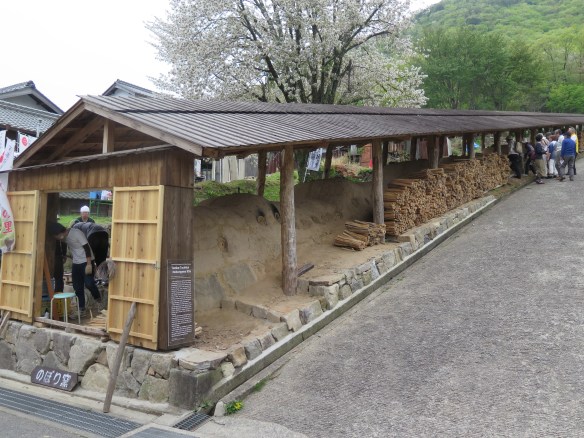
There are about 35 pottery workshops speed out along the valley. This valley doesn’t look all that different from any other Japanese farming valley, with a small river flowing along the valley, with paddy fields along either side. The small winding road hugs the bottom of the surrounding hills to maximise the area available for growing crops and vegetables in the fertile soil of the valley floor. The big difference in this valley is that there are lots of chimneys sprouting from the various sheds along the hill-side. These sheds are unique in that their roofs follow the contour of the slope of the hill to maximise the draught available for the firing of the kilns.

IMG_3105

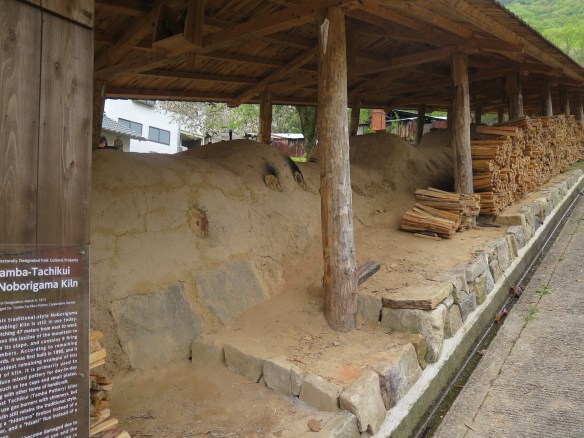
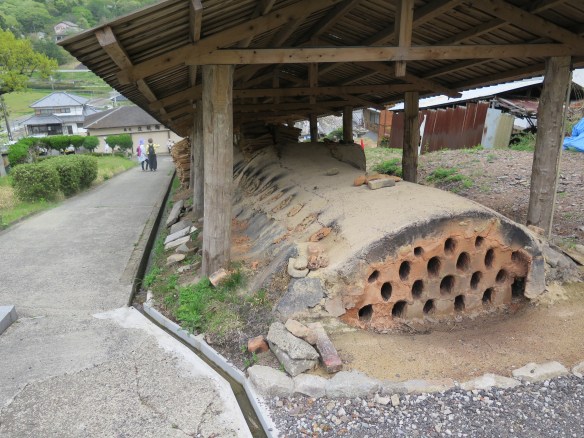
The kilns here are unique, in that they are essentially ‘Korean’ style kilns. Shaped like long tunnels sitting on the side of the hill. They are known locally as ‘snake’ kilns or ‘split bamboo’ kilns, as this is a reasonable description of their shape. They have a door way every few metres along the tunnel to allow access for the pots to be passed in during the packing of the kiln and then again during the unloading after firing. There are 9 doorways all together and the whole kiln is 47 metres long.

IMG_3109

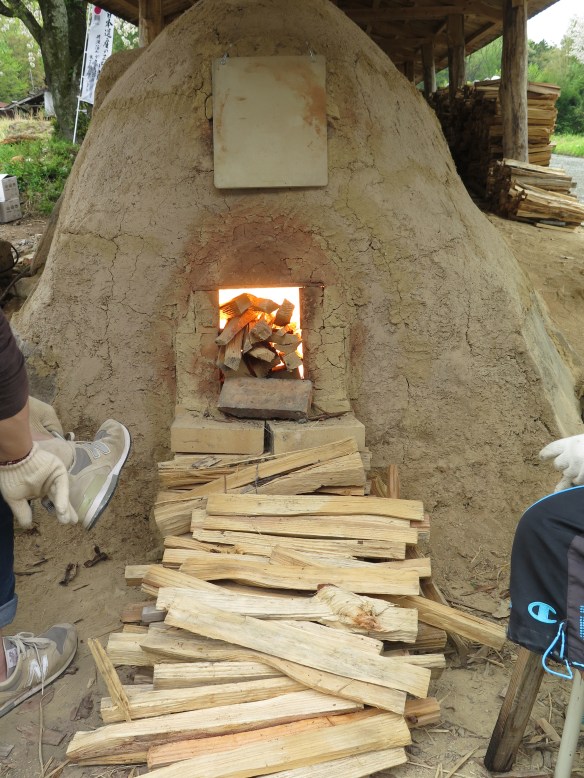
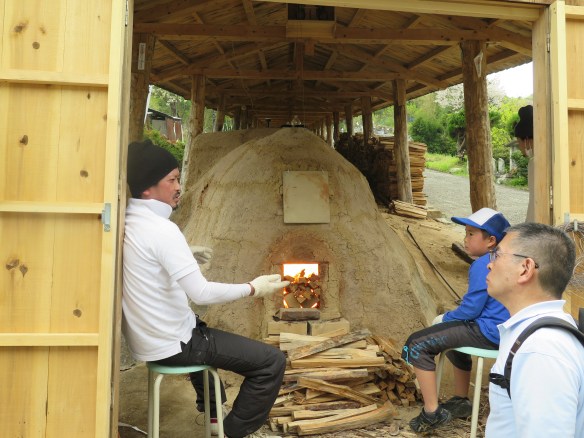
The kiln is fired with wood in the old fashioned way. After all, it is an 800 year old tradition. The fire is kindled from the fire mouth at the front of the kiln and the fire is progressively increased in intensity, with more and more wood being introduced into the front fire mouth until the full heat is achieved at the front of the long tunnel.

IMG_3110

IMG_3112

Once the top temperature is reached at the front, then wood is introduced into the small circular stoke holes situated all along the kiln, every 50 cm. or so. This takes the temperature of each subsequent section of kiln up to the top temperature required to melt the glazes in a short time and is very efficient of wood fuel. The whole process from start to finish takes just 48 hours.  12 hours of gently steaming. Then 24 hours of firing the main stoke hole at the front of the kiln and another 12 hours of side stoking.

IMG_3123 IMG_3125

IMG_3124

Because this kiln is situated on such a steep slope, there is no need for a chimney as such. The whole steeply inclined tunnel kiln chamber creates its own draught up the slope. The end of the kiln is fashioned into a kind of ceramic colander, so the flames just escape to the atmosphere from the grid of holes at the back off the kiln.

IMG_3132

IMG_3131

This is the village community kiln, has been on this site for hundreds of years. This particular construction is just a year old. The old kiln on this site threatened to fall down from lots of use over many years, so was demolished and rebuilt as a community effort less than a year ago. This is its 2nd firing. It is fired just twice a year, with many potters contributing work  to fill it, and taking turns in the firing schedule shifts.

IMG_3113

IMG_3106IMG_3137

It is a wonderful community effort and we are pleased to be here to witness it at this time. We are very lucky. Tamba is one of the 6 ancient kiln sites of Japan. It is a special place, but well past its prime just now. But still, it’s great to be here to witness this community event.

best wishes from the two ancient potters from Australia, doing their ceramic hajj.