The nights are getting slightly shorter every day. The dawn comes a little earlier each morning and its now just on light when I wake up.
It a very nice feeling to sense the return of the sun, even though it’s just a hint.
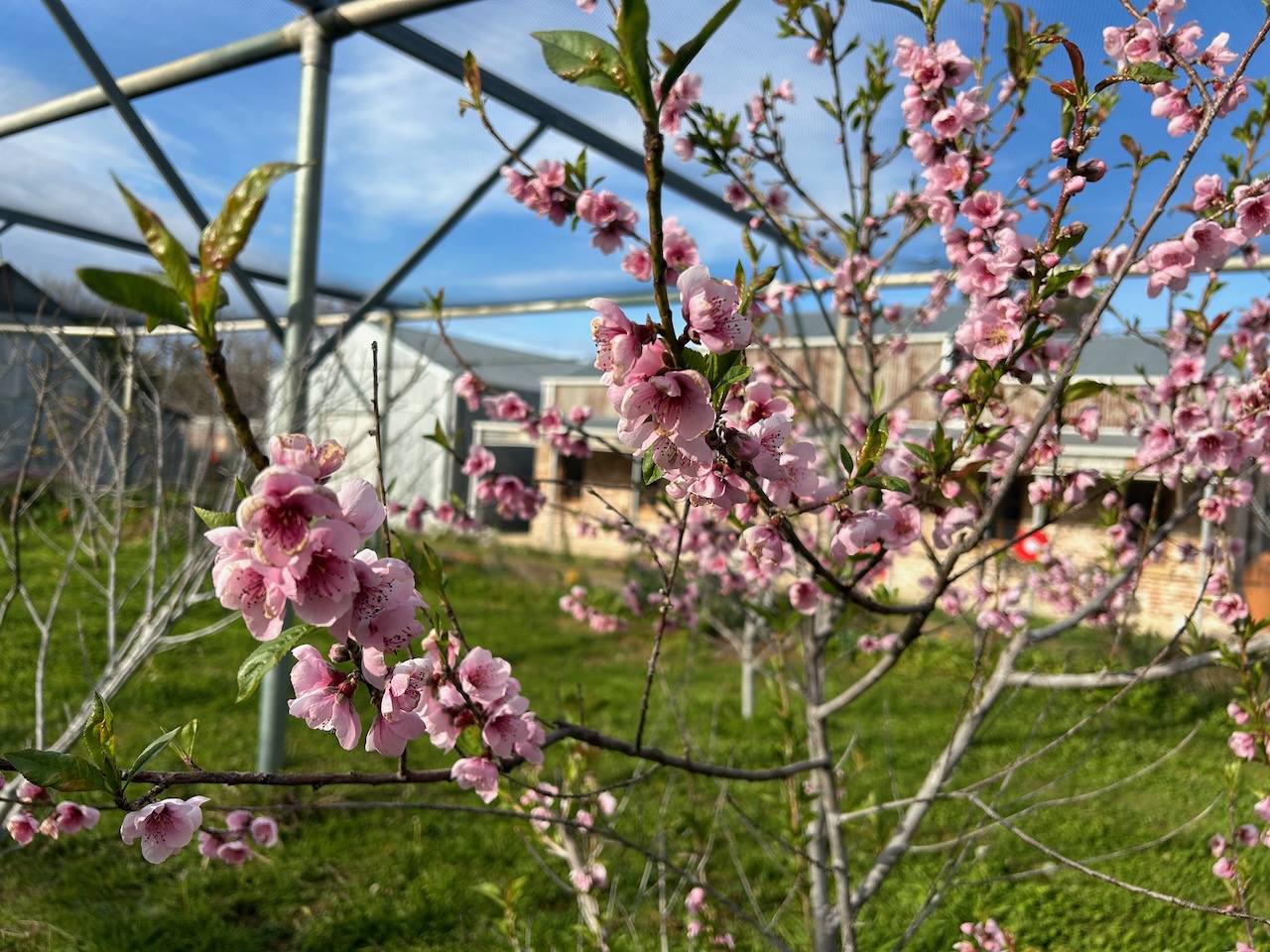
The trees in the stone fruit orchard are starting to bust into flower. This time last month there was only just the one very early peach, but now there are several trees in flower. The almonds, peaches, nectarines and the first plum tree.
We also are enjoying a very pleasant display from my floral border plantings around the pottery retaining wall.
Earlier this week, we ate the first of the new season asparagus. However, our main garden produce remains the brassicas, and will be for some time to come.
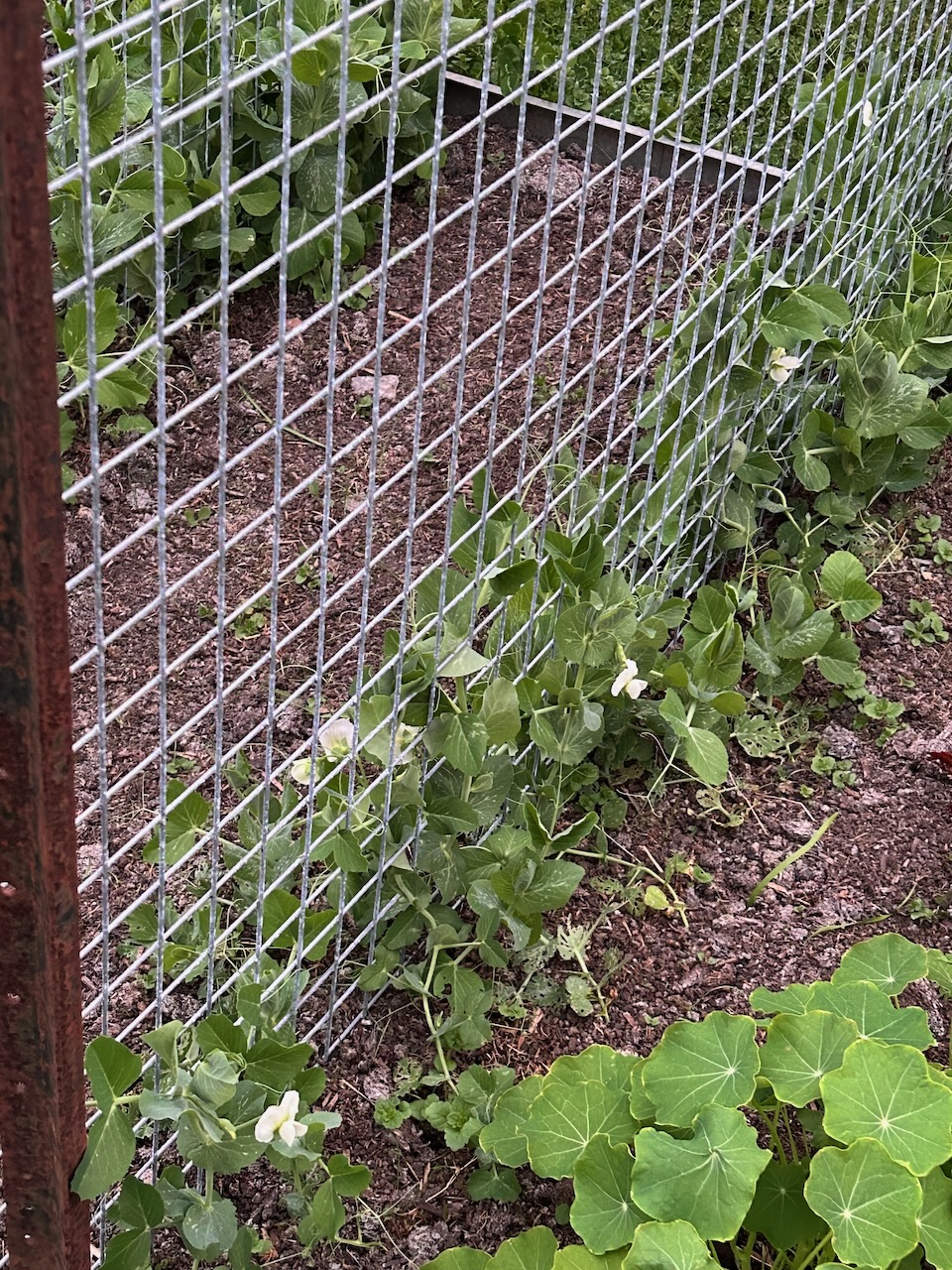
The peas have just started to climb the new twin wire trellis and have also opened their first flowers. So much to look forward to.
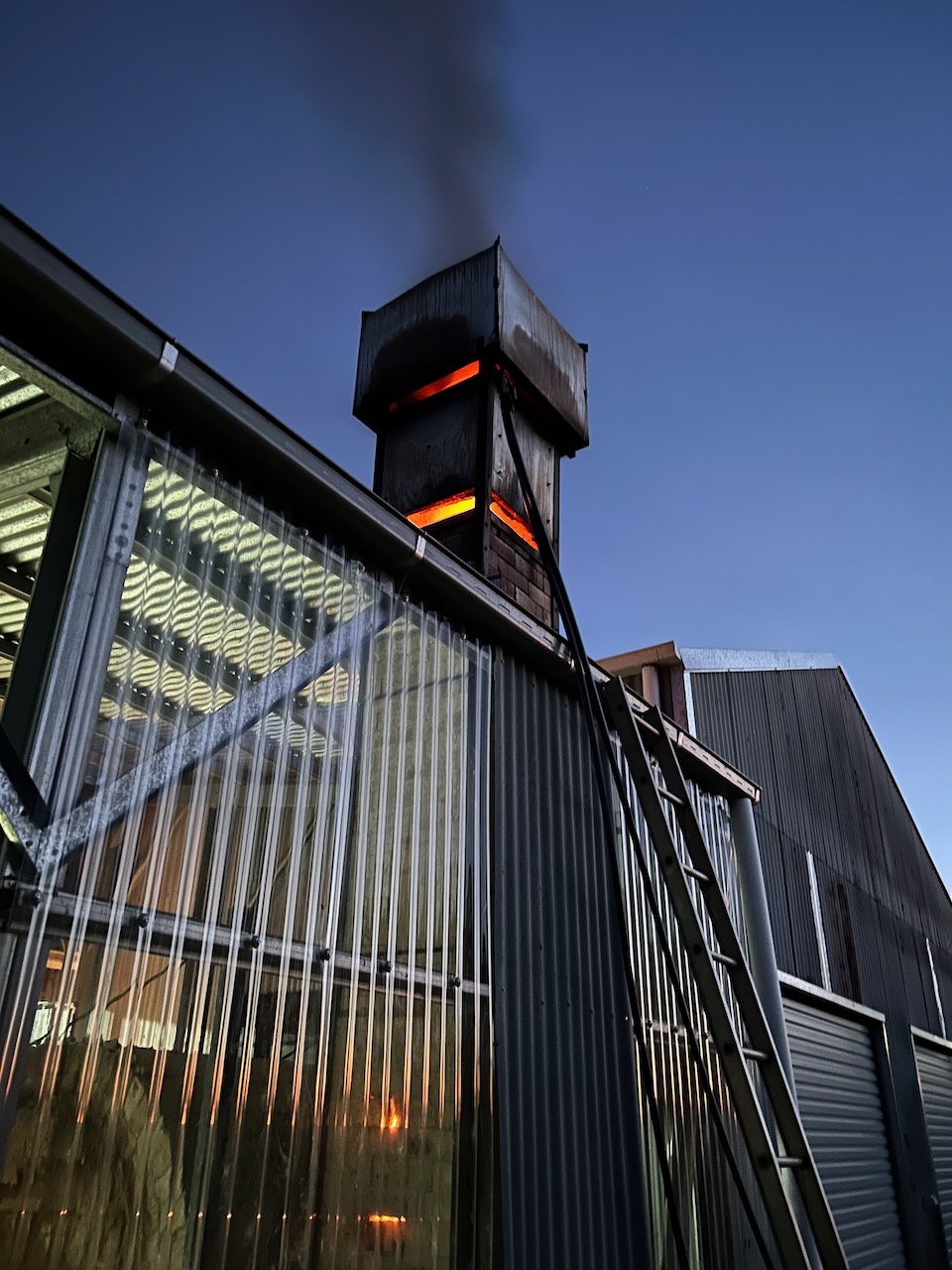
Last week we had a firing in the wood kiln with a bunch of amazing students. The weather held, and although it was crisp, it wasn’t too cold for the over night shifts.
After the unpacking, we all got stuck in and spent a couple of hours after lunch carting, stacking and splitting wood.
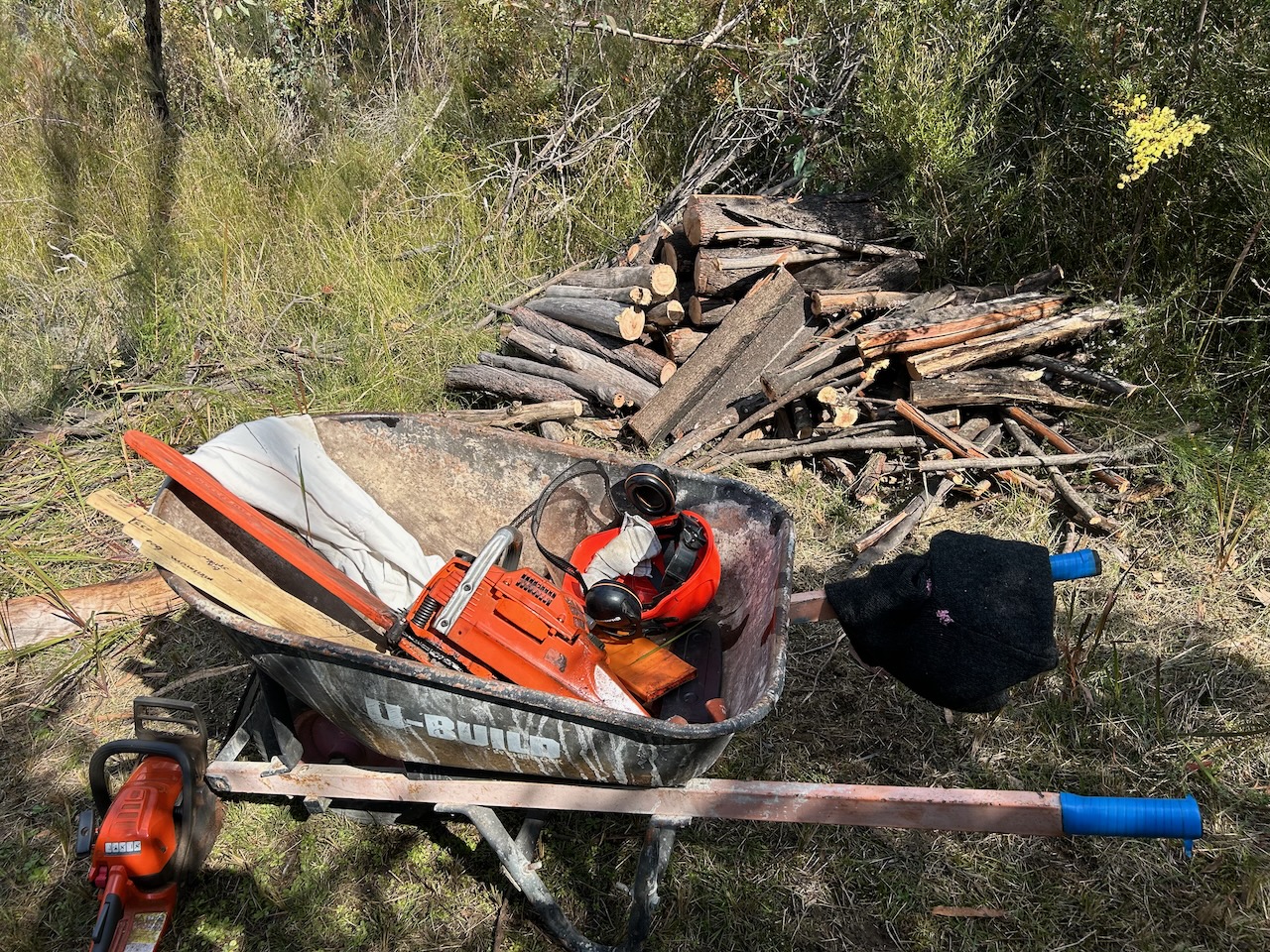
I had spent a couple of days during the cooling period, chainsawing fallen dead trees out in our forest. I had to do a bit of clearing to make a turning circle, and then snigging out the logs with chains into the clearing, to be cut up into ‘hob’ lengths for our bourry box fire box.
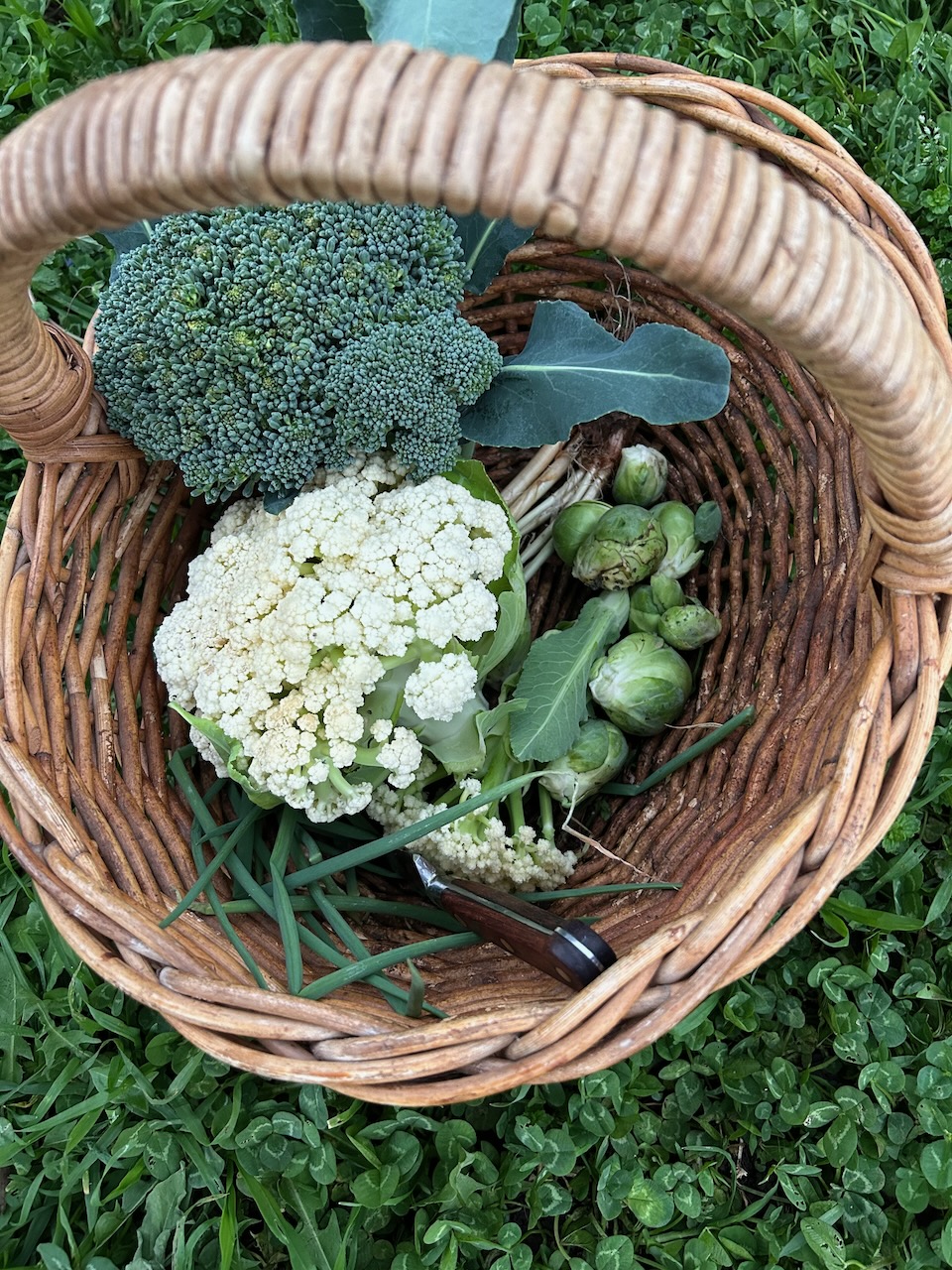
In the garden, I’m picking winter veggies, mostly brassicas and then dining on roasted vegetables.
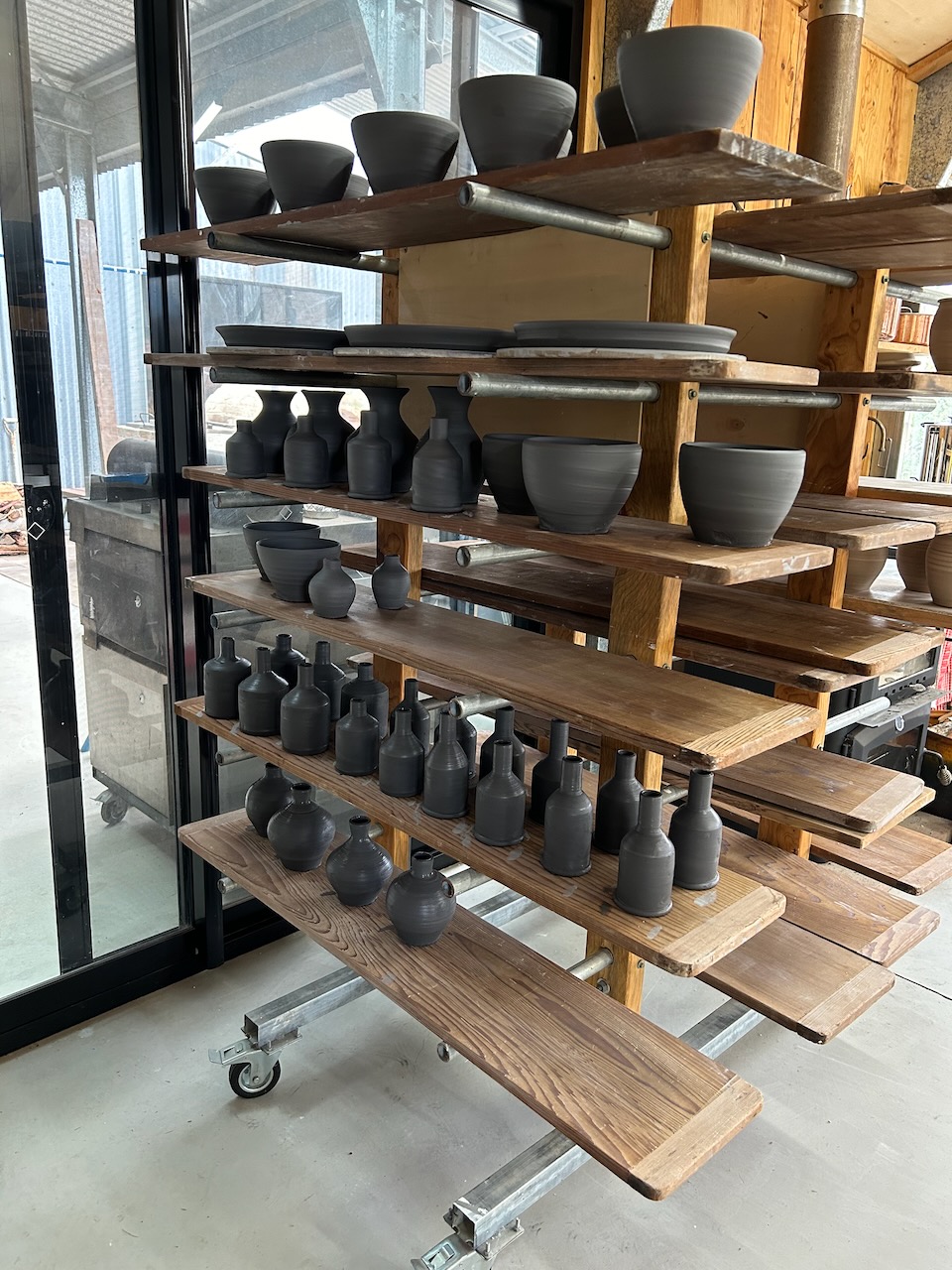
In the pottery, I have been making some small batches of experimental new clay bodies based on my local weathered basaltic gravel that I make my Balmoral Blackware from. Just small 5 kg batches. I have no idea how they will turn out, but there is only one way to find out, and that is to make some pots out of them and fire them. I’m planning to fire them in the wood kiln before I go to Korea to work next month. If I can find the time to fit it all in in time. If not, then it will be when I get back.
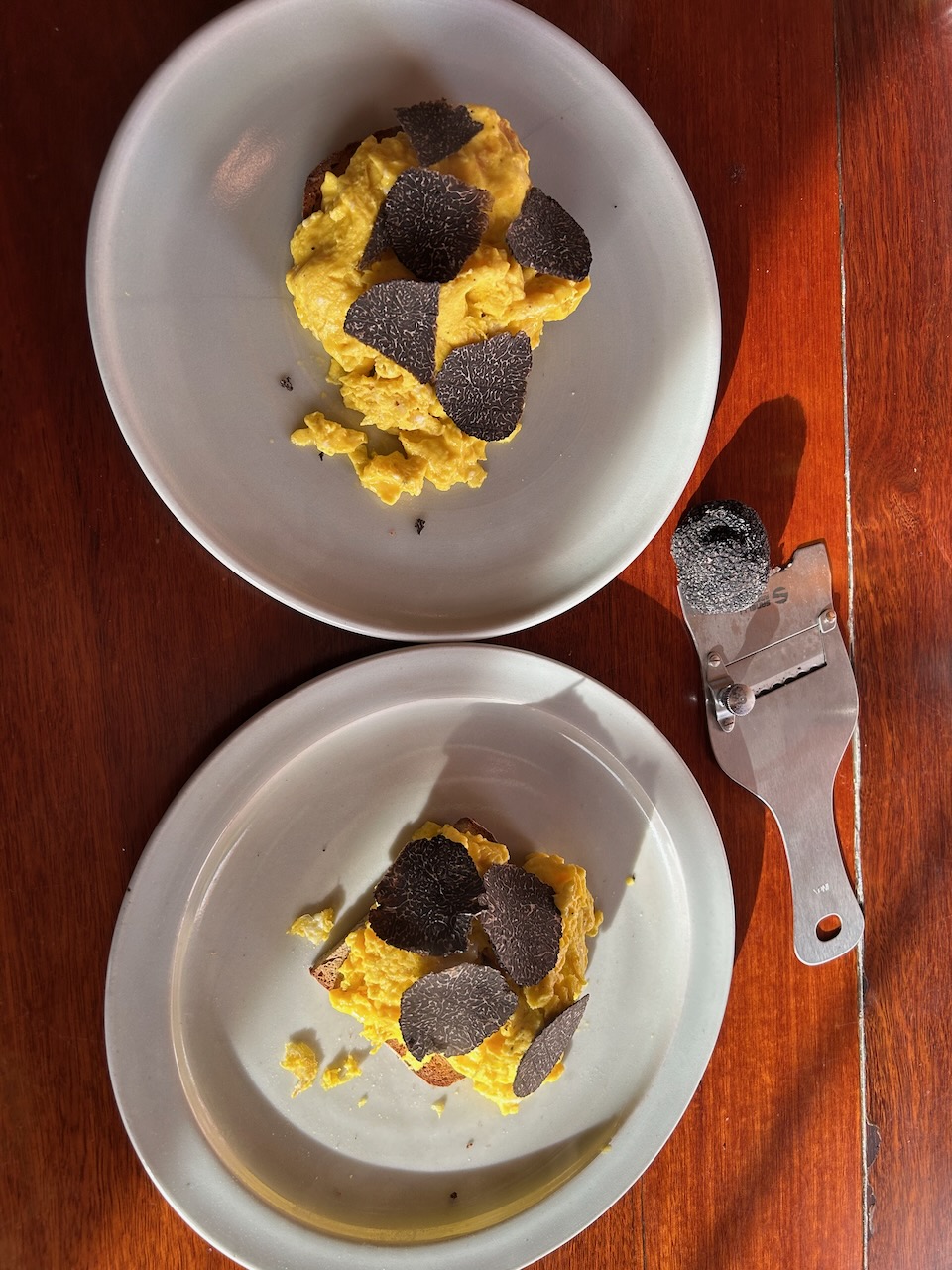
Winter brings on the truffle season, so we are enjoying French Black truffles very thinly sliced over our beautiful chickens scrambled eggs. Just another black treat in this season.
We keep the truffles in a container of rice in the fridge, so that we can the full truffle flavour in the eggs and the rice. The infused rice is used for truffle flavoured risotto for dinner.
I think that I prefer soft scrambles eggs on toast with the truffle shaved on top, but as we have two good sized truffles this year, we also try dicing and micro planning the truffle into the egg mix. I think that we get slightly more flavour in the eggs this way, but I rather like bending over my breakfast and inhaling deeply to catch the delicate fragrance while I can see the round black slices on top of the deep yellow of the eggs. It’s a feast for both the eyes and the nose.
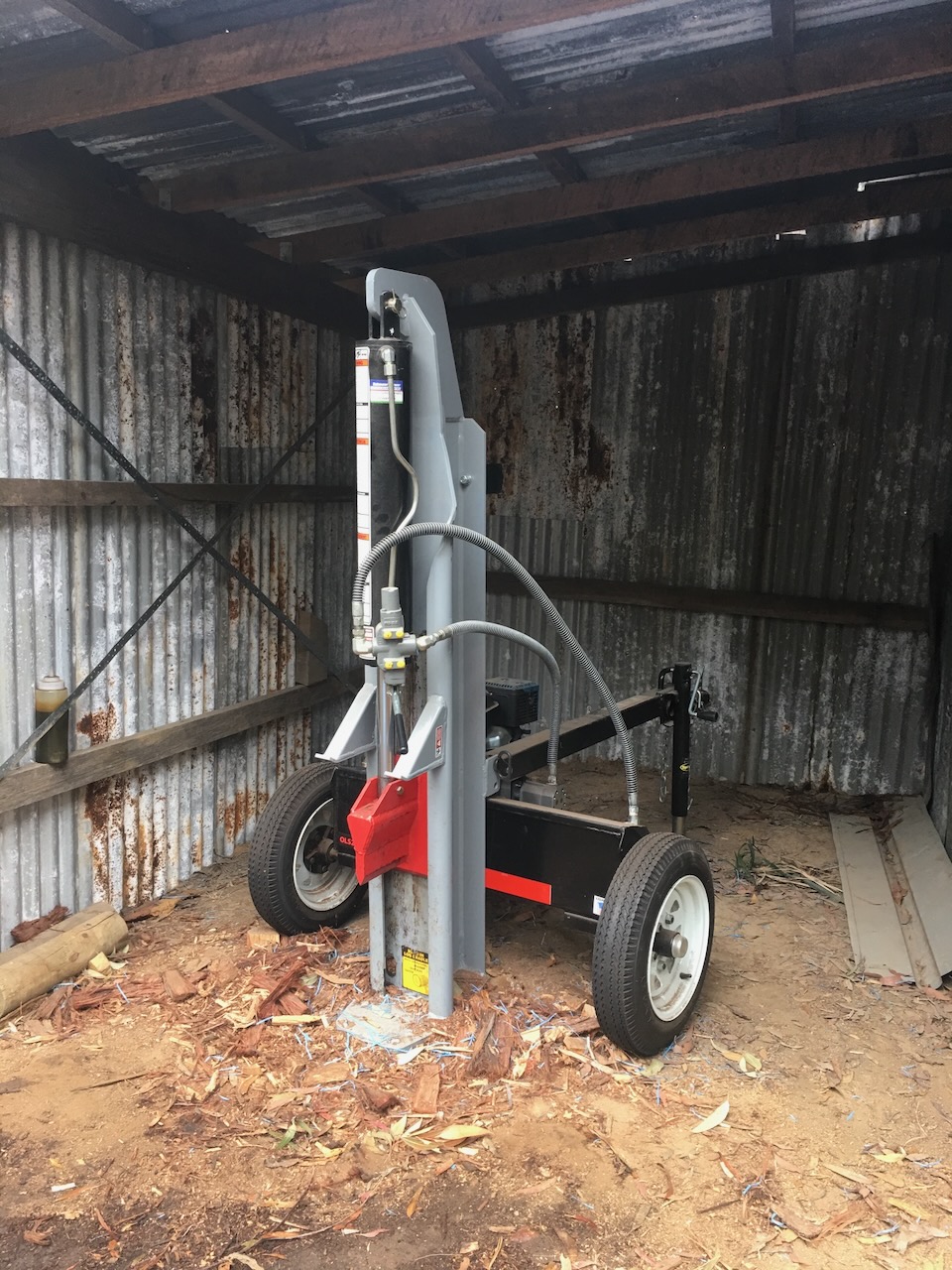
This last few of weeks, We have been teaching weekend workshops each weekend. Working in the garden and orchards in between time, but in particular, I have been re-building and restoring my formally beautiful hydraulic wood splitter. This machine was brand new and only used twice before the 2019 catastrophic bush fire. Our Lazarus wood splitter in the Phoenix Pottery Workshop. I need to get it going again, for our wood firing weekend workshop.
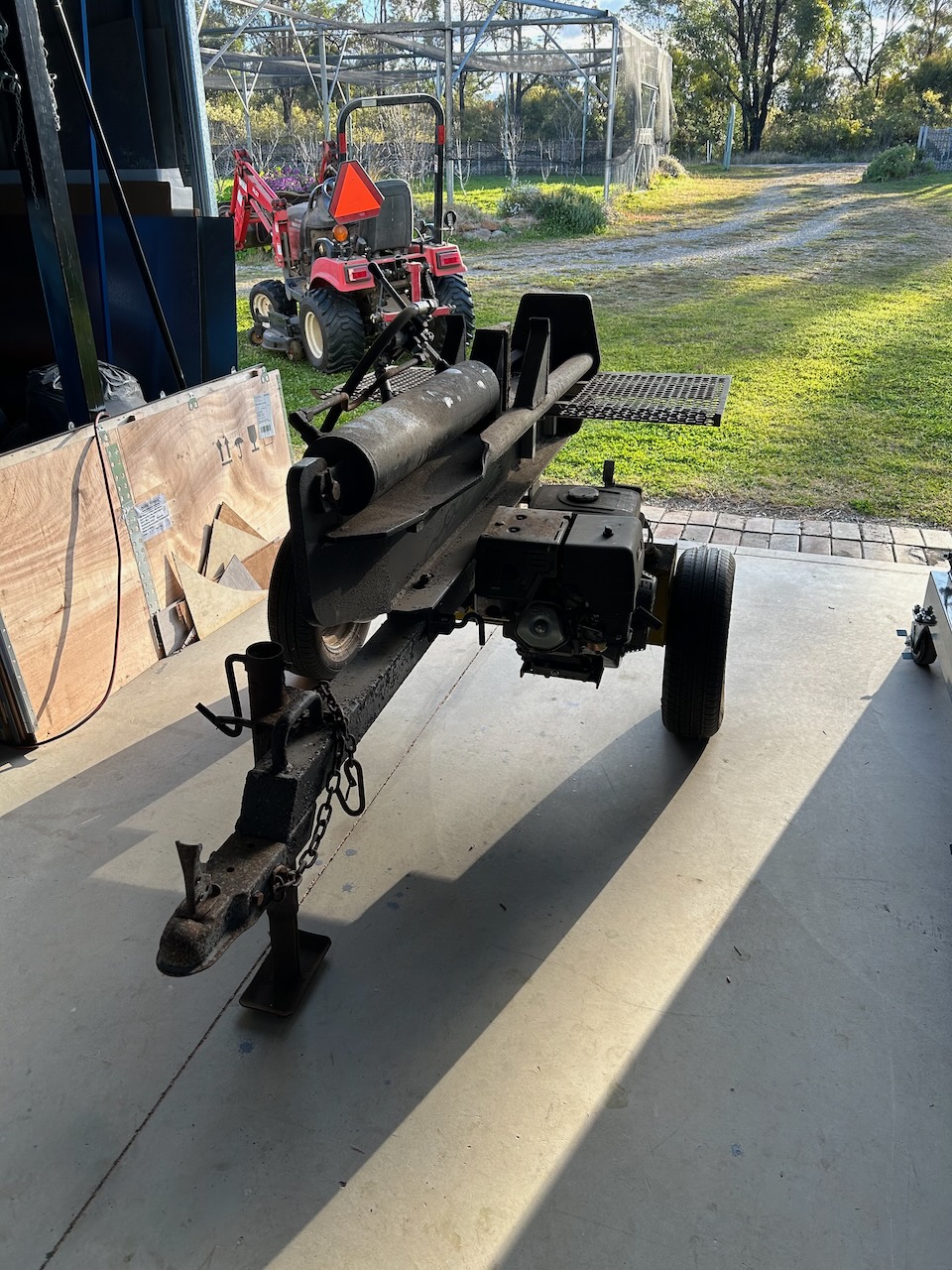
It used to look like this. All new and shiny.
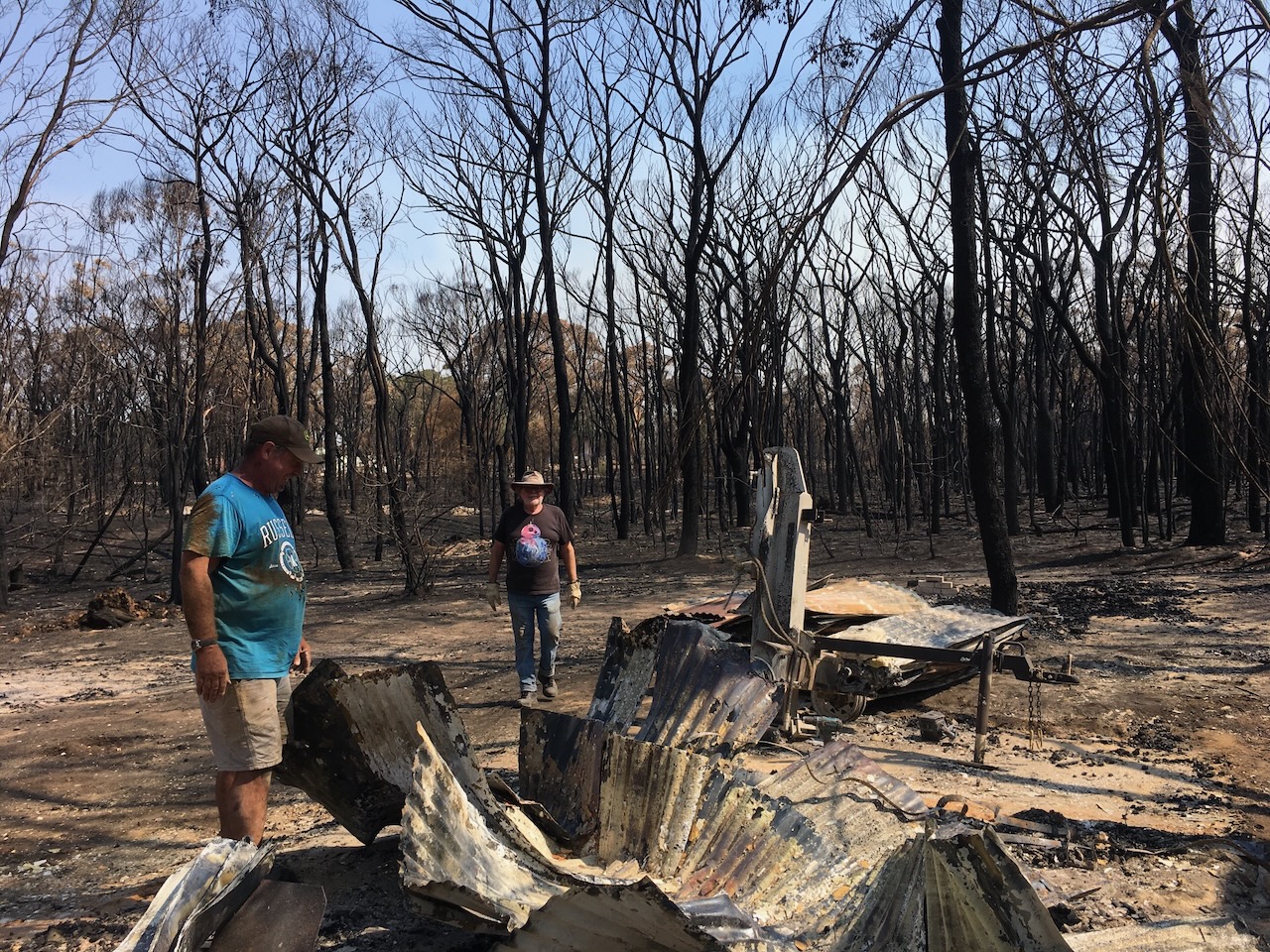
Then after the inferno it looked like this! Just the RSJ column of the splitter standing in a clearing in the burnt out forest, that used to be our kiln wood shed.
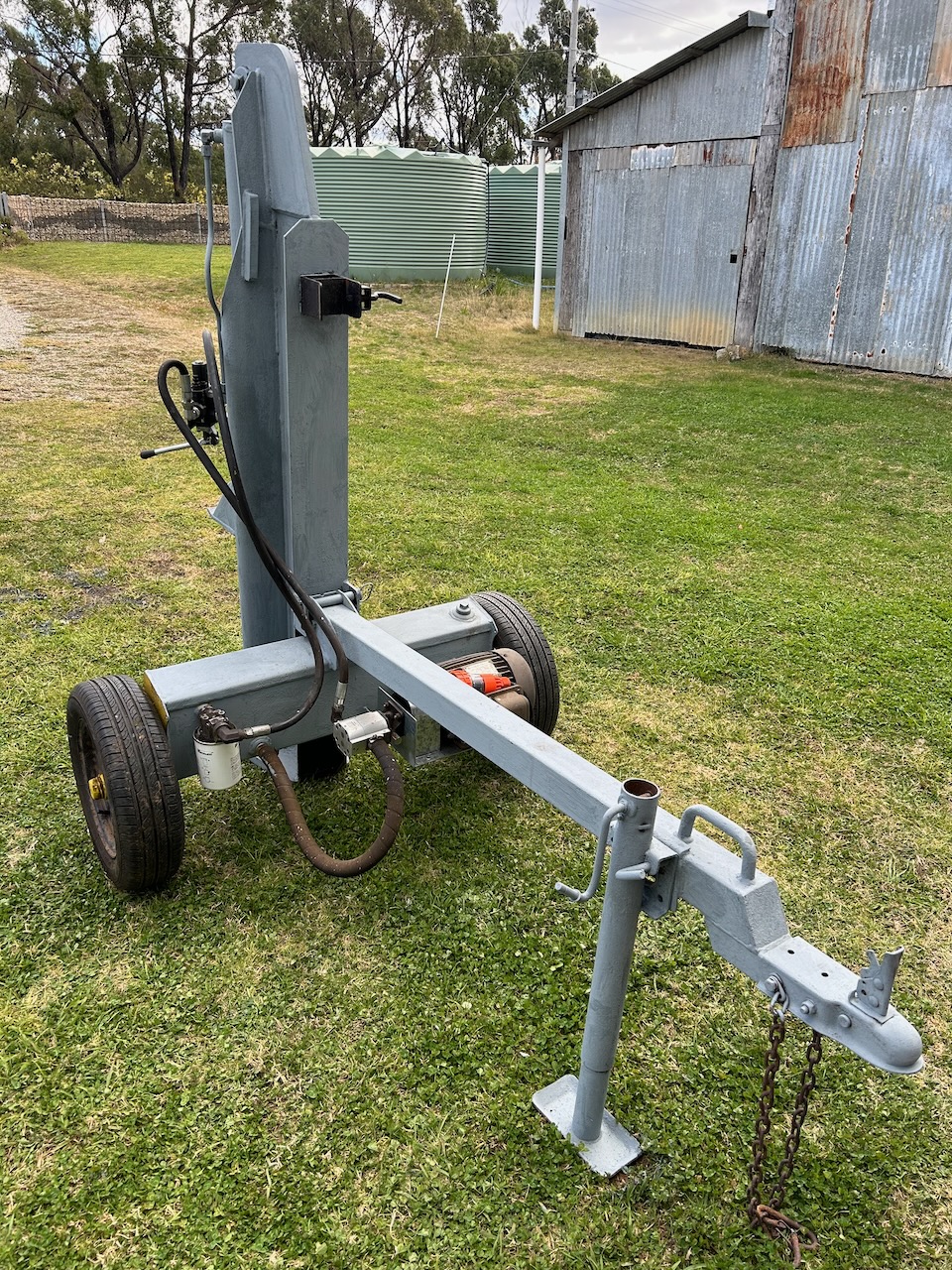
Today, with a lot of effort by my friend Ross, who rebuilt the hydraulic ram and other bits for me, it looked like this.
The 2nd hand tyres went flat every week and continually needed pumping up. I finally took them off and got inner tubes put in them.
I replaced the burnt-out hydraulic control lever. This is the gadget that makes the ram move up and down.
Then I turned up an adaptor unit on my metal lathe, made from some old aluminium irrigation pipe off cuts that I used for the new orchard netting frame. They were roughly cut to over-size with the angle grinder, then machined to exact tolerances. Finally I re-worked an old 3 HP electric motor that Ross gave me, making an improvised power adaptor/converter.
The last job was to give it a coat of zinc primer paint.
It is now functional again and running on sunshine, instead of petrol. So much better for everyone.
A damaged, but reliable, solid and still working, thing of beauty.
A self portrait! – without perhaps, so much beauty!
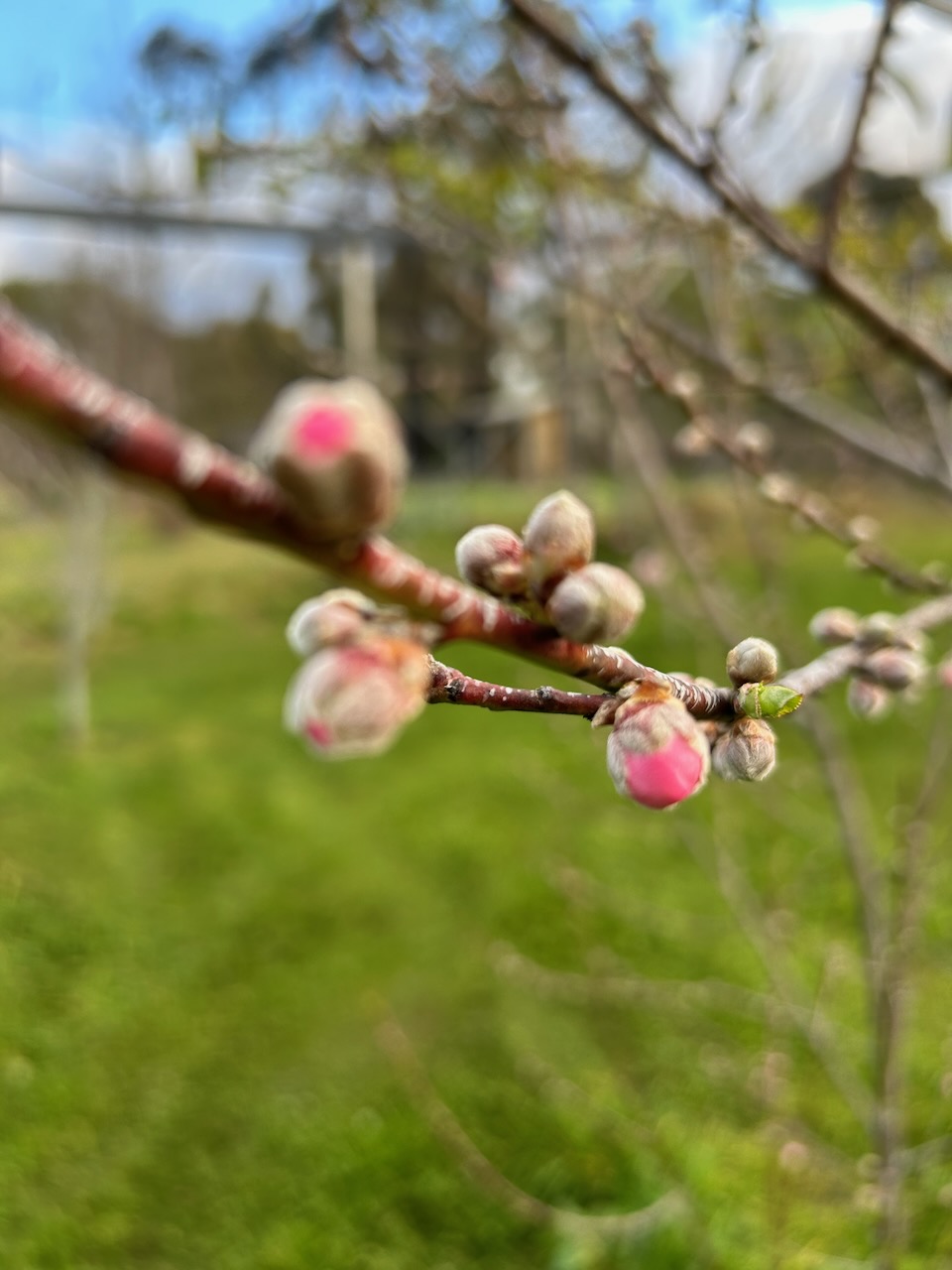
At the start of this month we had the first buds and then flowers open on the earliest peach tree. Luckily I thought to spray all the fruit trees with lime sulphur last month, as that has to be done before bud burst. I really need to get in there and finish the winter pruning. I have done all the peaches and cherry trees in the veggie garden netted area.
June for spraying lime sulphur, July for pruning, August to start spraying copper (Bordeaux) for leaf curl fungus. Winter is a busy time when nothing is happening!
There is a lot of work in being low impact, organic, nature friendly and carbon neutral. I haven’t had any spare time to do any composting around the fruit trees so far. So I will give them a hand full of chicken manure and some dolomite and wood ashes this time round. All of the chicken run scratch litter and manure mix has been going around the almonds trees so far this year. With only 4 chooks, there isn’t a lot to go round and with over 60 fruit and nut trees to manage, I buy a few bags of dynamic lifter composted chicken manure pellets, so as to give every tree a bit of a boost. They all get a good dose of wood ash in sequence throughout the winter, as we clean out the ashes from the various wood stoves and burn piles.
The wheel barrow has a garbage tin full of wood ash, a bag of composted chook pooh pellets and a bag of dolomite. I work my way about the orchard spreading the goodness around the drip line.
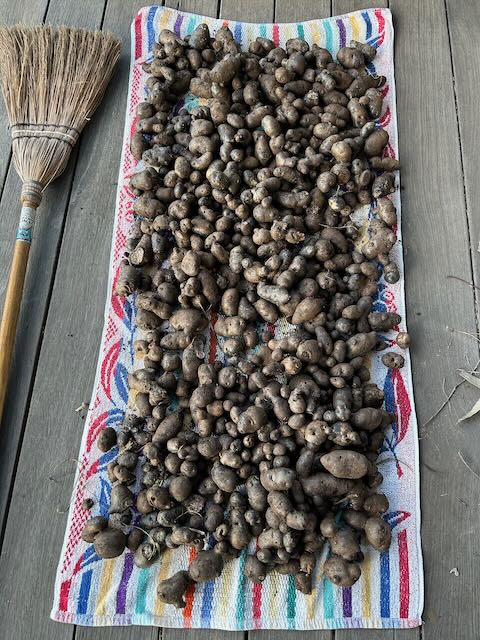
Janine harvested our Purple Congo potatoes, I caught her down gleaning the last of them from the southern end of the garden, just before I got stuck in and weeded and tilled it over, then covered it in compost to put it to bed to fallow until spring.
When we were in Germany a decade ago, we stayed with an extended family of potters who had gleaning rights with a local farmer, a concession that had been going on for generations I believe.
We spent a day helping them glean a paddock that had been harvested of its potatoes, but there were lots of undersized or slightly damaged ones that were there for the picking.
I remember seeing a Van Gogh painting of ‘The Potato Gleaners’, and there we were in Germany engaging in this very ancient practice. I really enjoyed it, fore-stalling waste. I wrote about it at the time on my blog. Gleaning is a very ancient right. It was established in France in the 1500’s and protected by the constitution. Today, I suppose that the equivalent would be dumpster diving? No need for either of us here to dumpster dive, because we have developed this positive, creative, environmentally friendly lifestyle. We grow all of our own green food, vegetables and fruit.
It’s a lot of work, but very rewarding when I get to look at what I’ve achieved after a day of work in the garden. The effort gives me a lot of pleasure, even though I have all the aches and strains from the work, but then I think of all the loads of vegetables flowing to us over the year, and there is always a bit of excess to share with our neighbours. Planting seeds is such a positive, hopeful and uplifting act of rebellion.
Broad beans, garlic and brassicas are all growing well, and planted in series to ensure a continuous supply of some sort of food throughout the seasons.
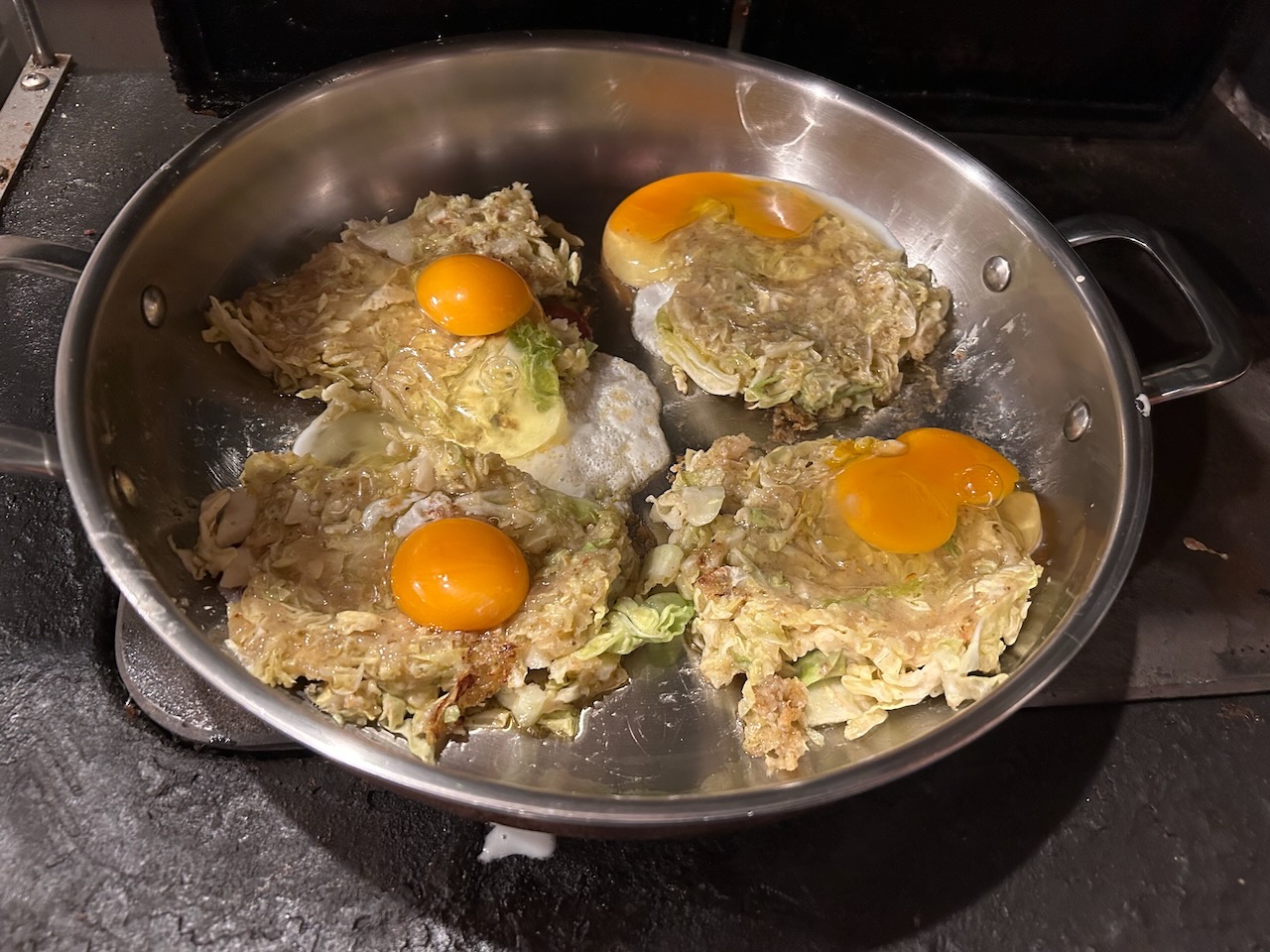
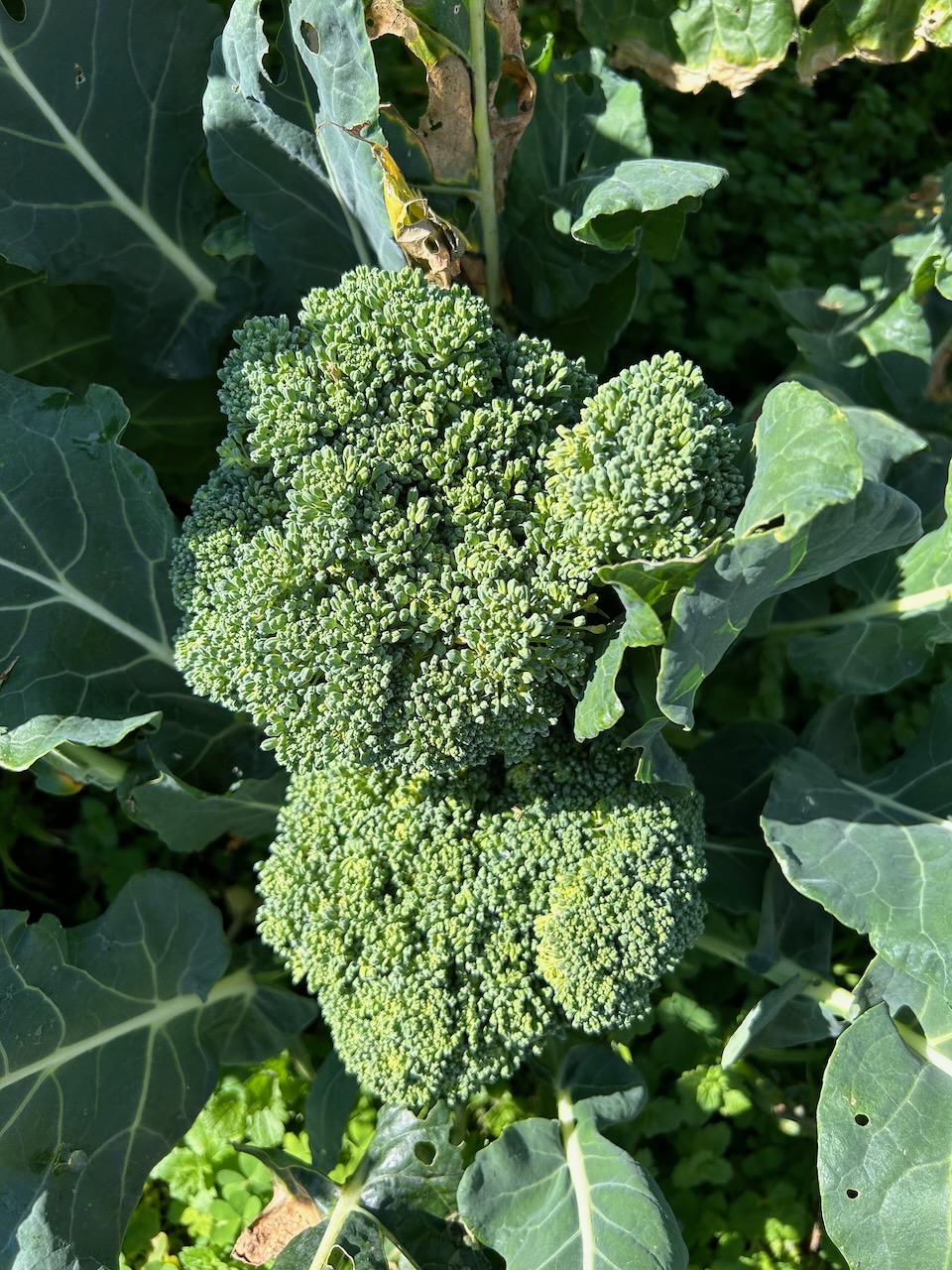
Now in mid winter, there are plenty of cabbages, cauliflowers, broccoli and brussel sprouts. One delicious option for us is to make okonomiyaki. The Japanese traditional cabbage pancake. We are not au fait with all things Japanese, but I have a keen interest in the culture and I have visited many times to study ceramics there. Okonomiyaki is a quick and easy meal that uses cabbage in a different and interesting way.
I’m told that okonomiyaki is literally translated as ‘you choose what you want’. Yaki means cooked or burnt as in pottery being yaki, or fired, and there is the character for ‘no’, which means ‘of’ stuck in the middle, so maybe ‘oko’ and ‘mi’ are to do with you and choose?
I take it to mean that I’m cooking a cabbage pancake and you can choose to add whatever you want to go in the mix. But it’s always cabbage, egg and pork!
The Koreans have a similar traditional cabbage pancake made with kinchi pickled cabbage, ‘panjun’ (sp) not too sure about the true pronunciation or the spelling there, but it tastes delicious no matter how you spell it..
Although there are minor differences throughout Japan from north to south, okonomiyaki remains pretty much the same everywhere. I’ve had it in Mashiko to the north of Tokyo and also in Arita in Kyushu in the far south. I first tasted it in Imbe in 1986, more or less smack in between. Always delicious and very recognisable.
Apparently within Japan there is hot debate between various cities such as Osaka and Kyoto, as to who makes the better and most ‘authentic’ okonomiyaki. As an outsider, I have no opinion on the matter. I love them all.
My Japanese friend has suggested to me that it should be made with grated Japanese mountain potato starch, to get the best texture, but as that isn’t readily available here, that I have been able to find. She told me that I can mix in a small % of tapioca starch to give the mix a creamy texture.
I tried Japanese kuzu powder and corn flour, but that made the pancake too sticky and glutinous. My okonomiyaki is an Australian multi-cultural work in progress. The home grown organic cabbage is really the high light, freshly picked and snappy crisp, it’s great. I’ve tried different varieties of cabbage, the best ones are the light and slightly curly types like savoy. Dense cabbages like red cabbage need to be par-boiled to soften them beforehand otherwise they are still a bit tough and chewy after the quick light cooking of the pancake.
The traditional recipe calls for a thin slice of pork and then an egg cracked over the top towards the end of cooking. I have plenty of fresh eggs, but not always fresh, thinly sliced pork. However, I can usually find some Italian style, dried, salted and lightly smoked, thin slices of pork in the deli shop. That makes a suitable substitute. No self-respecting Japanese person would recognise the mess that I end up serving, but it tastes OK, it’s fresh and it’s healthy. Ne!
It’s been an honour, joy and privilege to have had the pleasure of managing and curating these 7 acres, along with Janine for the past 48 years. I am so lucky to live and work in such a great place.
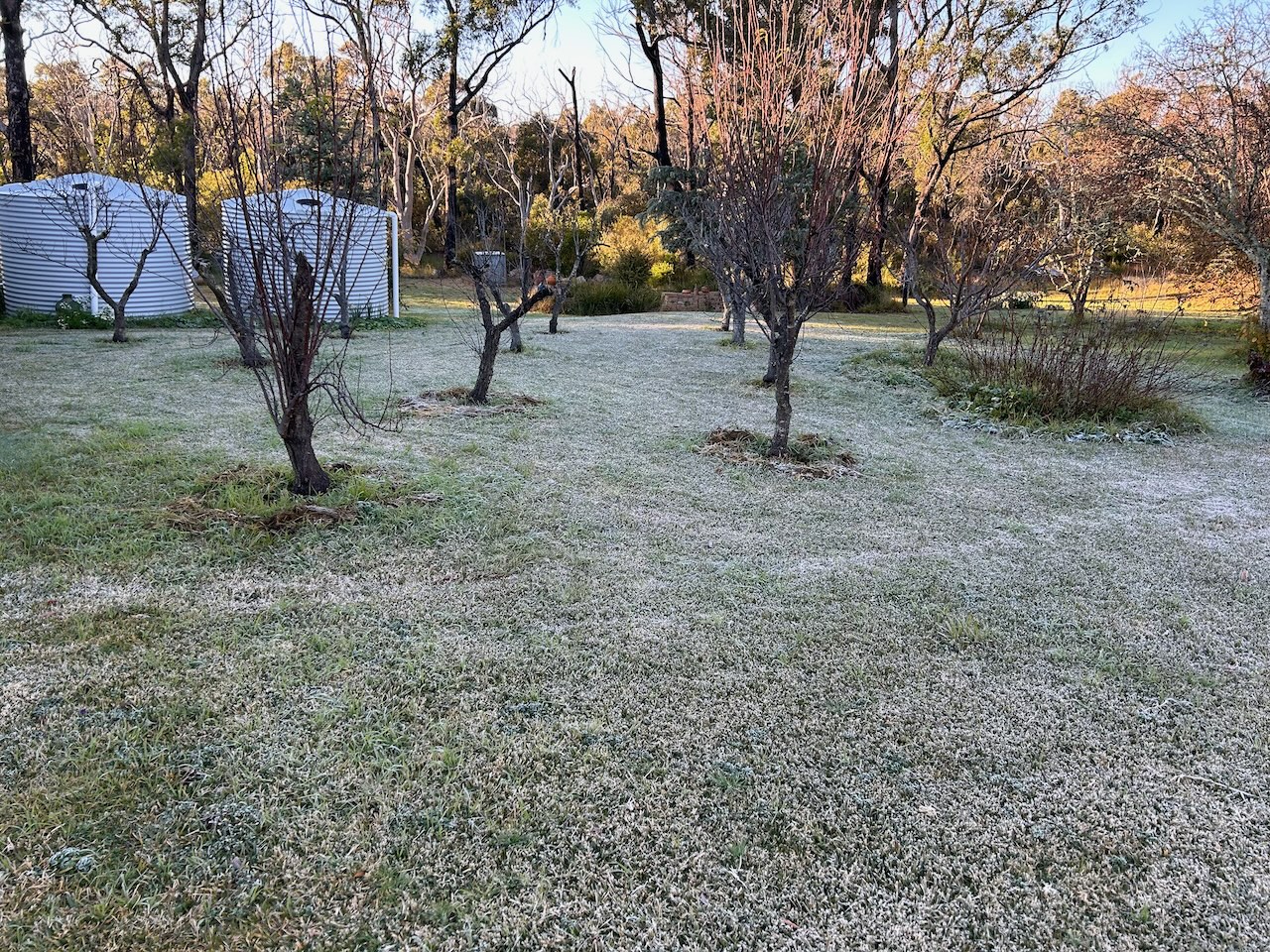
We have been having some good cleansing frosts this last week or so. White and crunchy, this is good to clean out any remnants of fruit fly in the orchard. It also helps to set the chemical clock in the stone fruit trees that need a few hours of very cold weather to make the next seasons flowers fertile. This is called their ‘low chill hours’.
Inside, it’s been a busy time, as usual here. Janine is back from her trip up north, and I have been cleaning out the loft area above the clay making and rock crusher rooms. There is a space up there that is sort of a loft, but it was never intended to be a useful space. Just a way of enclosing the noise and dust from clay making and rock crushing in the small ground floor rooms. The space above them just had ’stuff’ stored up there. Mostly left over insulation bats and silver paper sisalation. Plus half a dozen mixed sheets and off-cuts of thin bracing ply wood, that I had used for the ceilings of the throwing room and gallery.
The only access to this ‘loft’ area was, until recently, by bringing in a ladder. A while ago the idea crossed my mind that we could use it as a place where students could sleep over when they stayed to do wood firings.
In the past, before the fire, they used to pitch tents in the orchard, or stay in local bnbs. Sometimes, even sleeping in their cars.
We recently built a stair case to get up there safely. Using a lot of scrap timber, heavy duty ply, and our own home grown and milled pine boards that we had left over and stored. It turned out really well and cost next to nothing. I built it in two days with assistance of Janine’s brother John, a retired carpenter. I couldn’t have done it alone. John was the brains and I only assisted.
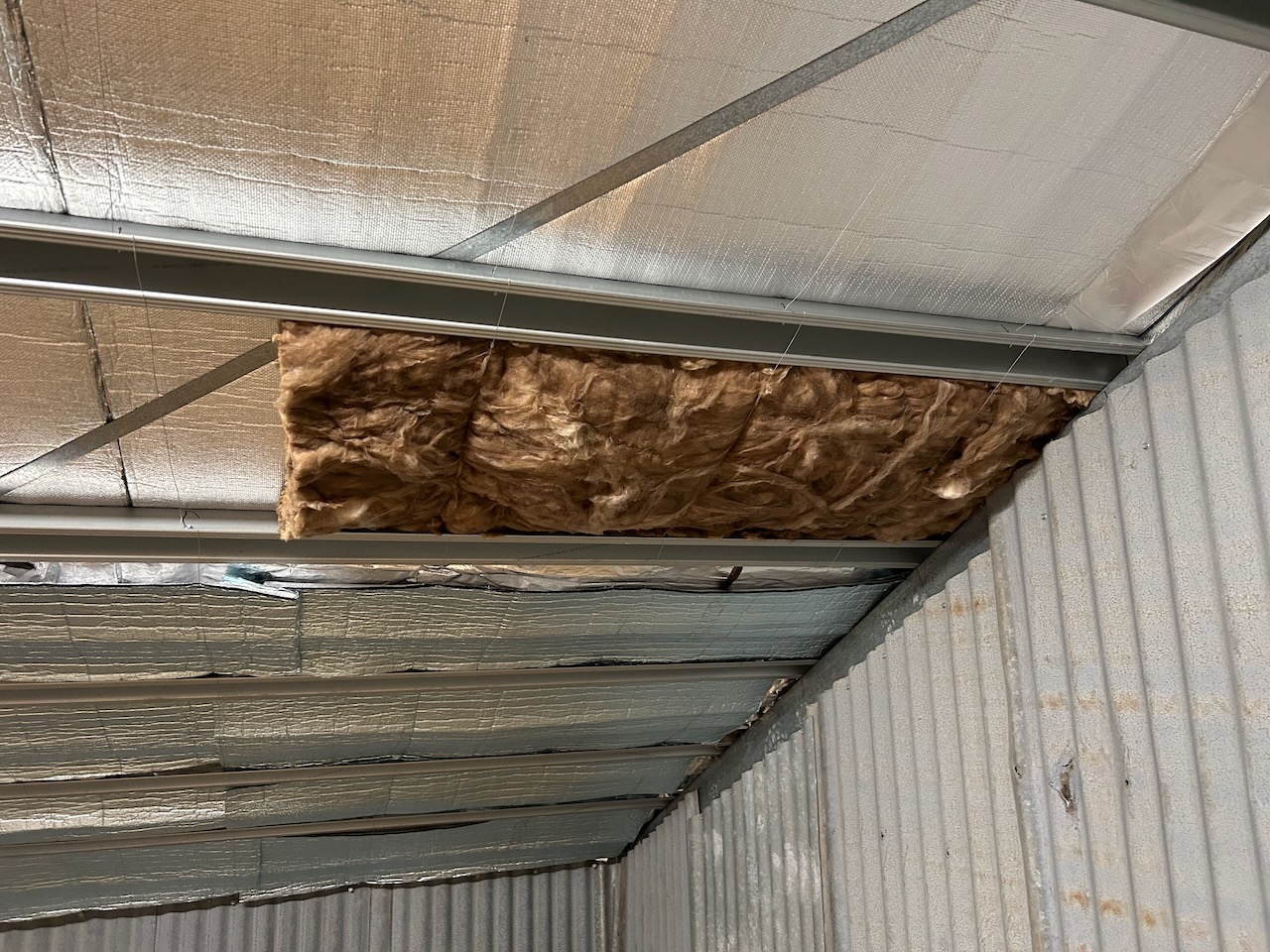
So while Janine was away I began cleaning it out and used the left over rockwool to insulate the ceiling/roof and then panel it with the ply wood. Amazingly, I didn’t have to buy anything to do the job. I was able to do it all by using what was already stacked up there! Even down to the box of ’TEK’ screws.
I started by building a safety railing/balustrade along the edge, using some off cuts of poly carbonate from the car port wall.
Stuffing the rockwool into the roof was a bit like easing a compliant orangutang into the roof cavity, all soft and fury.
I used old tomato stakes from the garden to act as the extra several pairs of hands needed to hold up the ply wood, while I got the first few roofing screws into the sheets to secure them in place.
We were gifted the tatami mats from a lovely friend who didn’t need them anymore. They work really well in our new loft space. Both as a tea room space and as a place where students can choose to sleep, if needed.
We have also installed 2 single beds up there as well, on the other side.
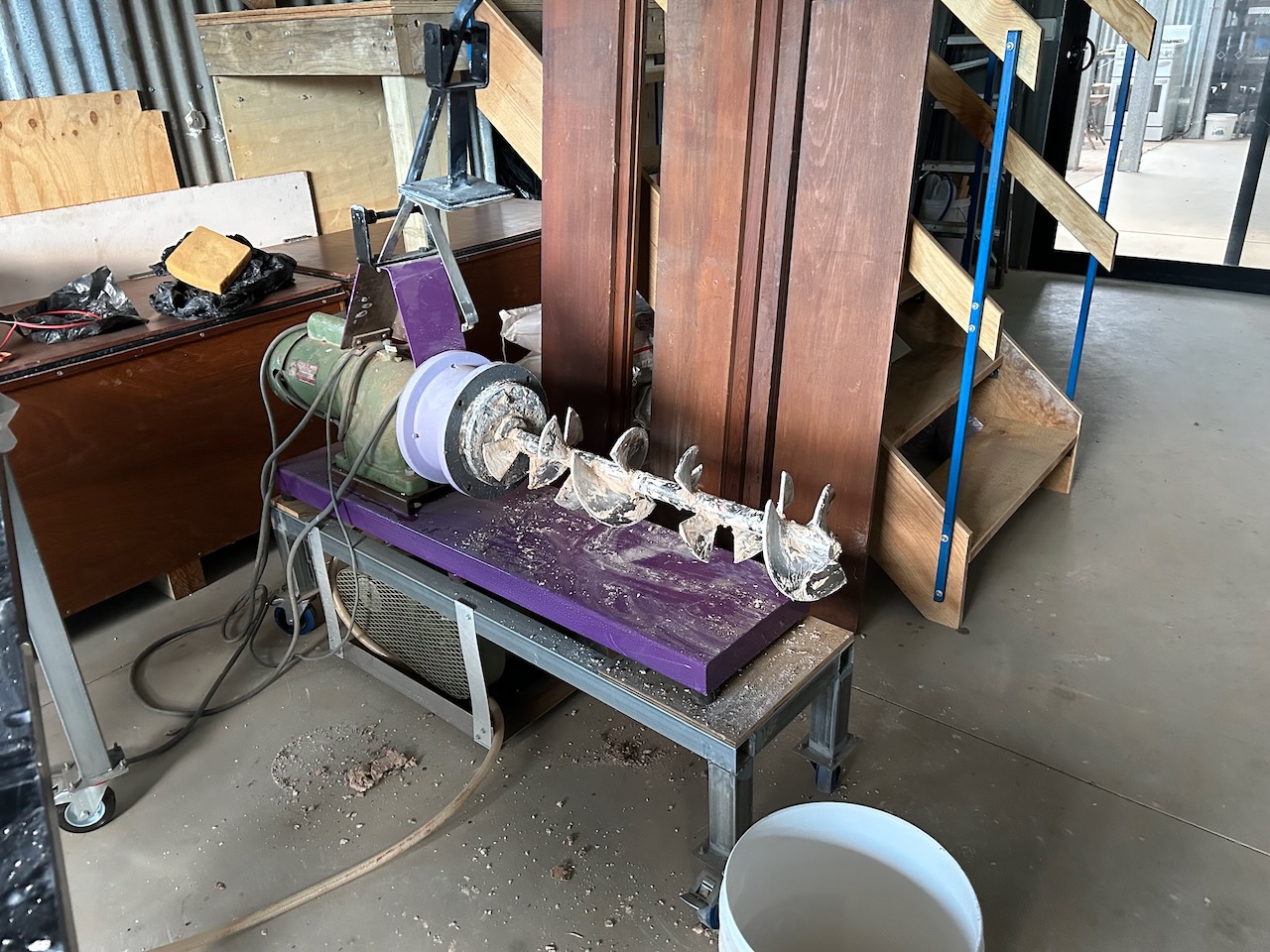
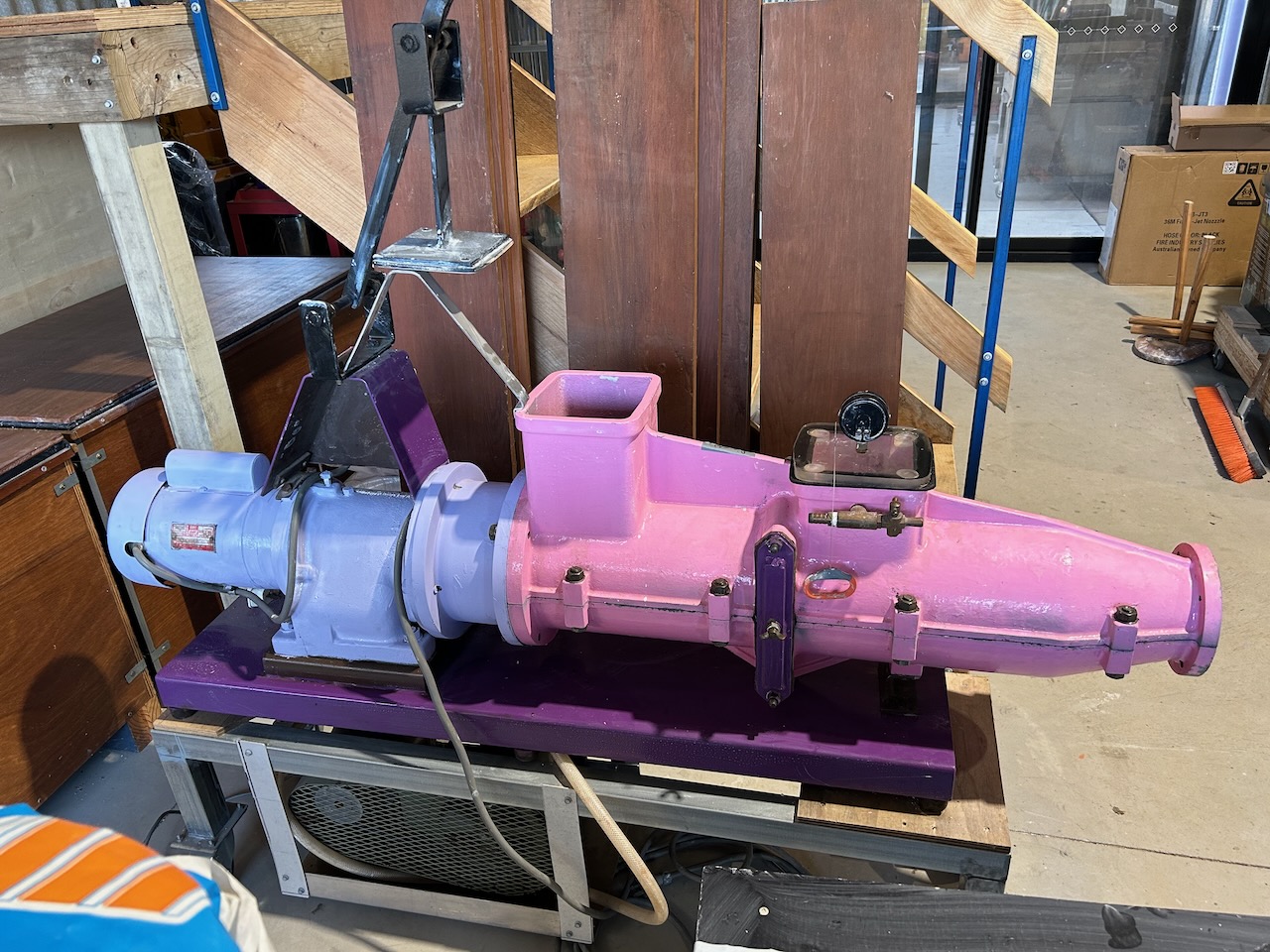
A couple of years ago, I bought an old Venco pug mill from my friend John Edye, who has retired from making now. I cleaned it of aluminium corrosion and painted the inside with metal primer. I have use it for 2 years now and this week, I pulled it down, and cleaned it out to change clay bodies, and inspect the lining.
I was so happy to see that the wire brushing and priming that I had done previously was holding very well indeed. Nothing needed doing. So I put it all back together again and made a new batch of wood firing clay body for an up-coming workshop.
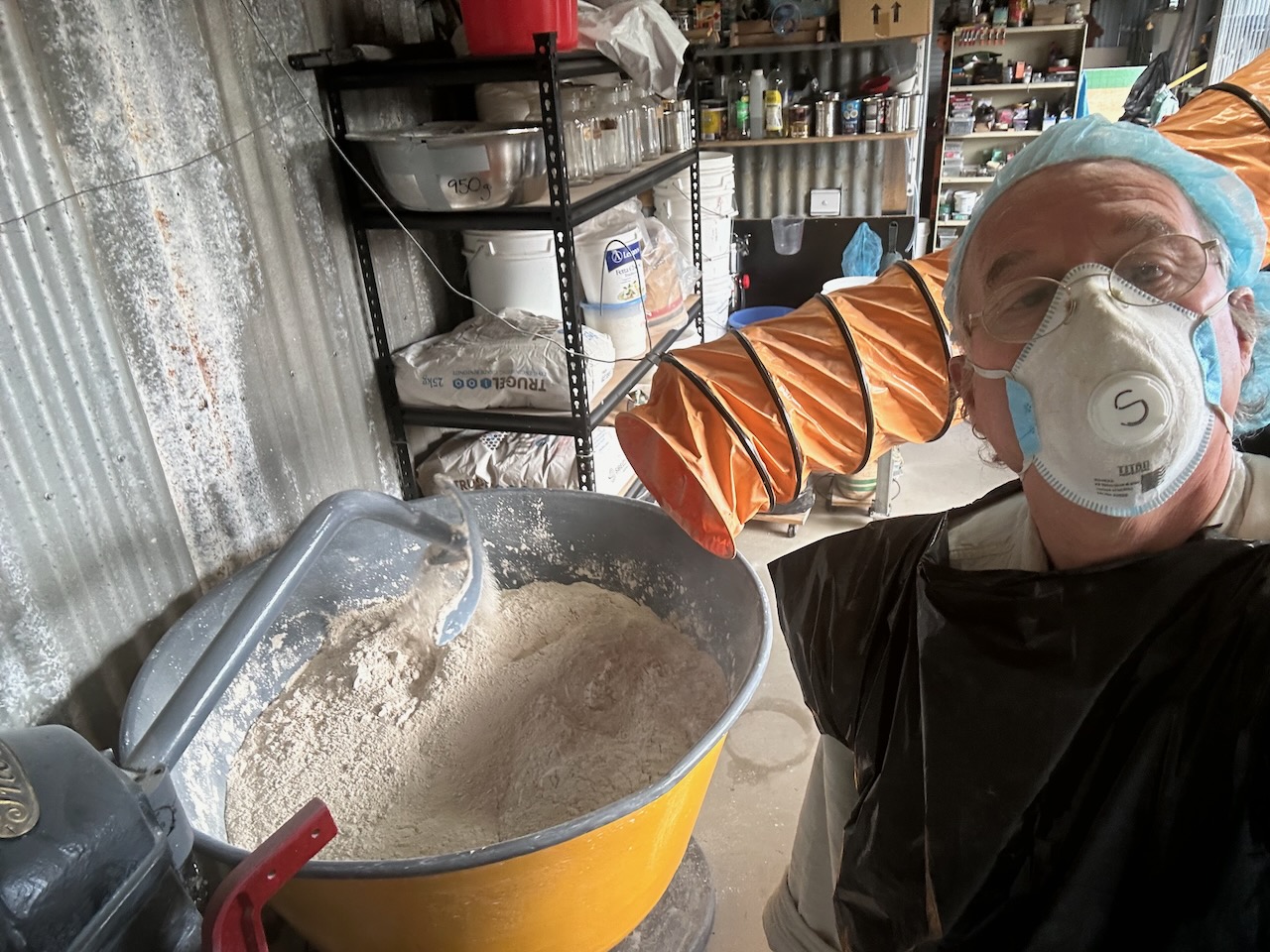
Clay making is a dusty business. I wear some OH&S clothing to minimise the dust in my hair and on my clothes. There are probably expensive versions of this stuff, but I use a garbage bag with holes cut out for my head and arms, then a theatre hair net and a standard dust mask. I have an exhaust fan with a flexible ’snorkel’ that hovers over the mixer and sucks most of the airborne dust out of the room. It works
After all the clay has been twice pugged, bagged and stored. We move all the machines out of the way and mop the floor clean, before reinstating everything as it was before and ready to go again.
The ‘Pop-Up’ Open Studio sale is over and everything in the pottery has been put back to rights again.
I can now think about when we can do the winter workshops.
This year has becoming somewhat shortened and a little bit complicated, by the pop-up, and the fact that we have been invited to work in Korea later in the year, possibly in September, or maybe October. We don’t have a set date as yet. So we can’t plan to hold any workshops much past August.
Weekend Workshops;
1/ Wood Kiln Throwing and Firing.
We are offering a combined 3 weekend workshop. 5 Days.
Throwing for wood firing, July 20/21 followed by a wood firing, Includes 15 kg of my specially formulated, home made wood firing clay.
Firing, 3rd/4th August.
Unpacking Sunday 11th August. $700. includes clay
The 2 week gap gives a couple of weeks to dry the pots, bisque and glaze them ready to return for the packing and firing weekend.
Pack the kiln. Saturday 3rd, then fire overnight into Sunday
Unpack the kiln on Sunday 11th August.
If these dates fill, we may offer another weekend later on in the year? But timing is tight until we get fixed dates for the kiln building workshop in Korea.
2/ Sericite Porcelain Workshop
We are offering a weekend of throwing and turning fine porcelain.
Throwing and turning fine white translucent sericite porcelain August 24/25th. $350 includes 15kgs of amazing white translucent sericite. Sorry FULL! It filled over night!
I have started a waiting list for the weekend of 27th/28th July for a second workshop.
I have 20 bags (15kg bags, enough to run 2 workshops) of a sensational, white firing and very translucent, single stone sericite paste body that has been in my barn since before the 2019 fire and COVID. Now with 6 years of age on it, it’s in very good condition, and throwing beautifully.
Luckily, this clay was not stored in the old pottery, otherwise it would have been burnt like all the rest of my aged sericite stash, some of it was over a decade old at the time of the fire. Lucky also that this clay was in the part of the barn that didn’t burn. Such a fluke.
We are so lucky to have some of this aged fine clay available to us to share.
3/ Introduction to glazes and glazing. Saturday 10th August. $125
A one day basic course on glazes and glazing techniques for beginners. Not too much theory, just half a day, then half a day of practical techniques. Glaze theory and chemistry can be very tiring, so I am limiting it to just half the day, followed by some practical techniques.
This is a one day workshop to keep it tight and manageable, if you are new to glazes and glazing. A good intro for a beginner.
Introducing the glaze raw materials, why we choose them, how we weight them and mix them, and then how we apply them.
4/ Introduction to clay bodies. Sunday 18th August. $125
A one day basic course on clay materials and clay body formulation for beginners. Not too much theory, just half a day, then half a day of practical clay testing techniques. Theory and chemistry can be very tiring, so I am limiting it to just half the day, followed by some practical techniques.
5/ Introduction to kilns, materials and firing schedules. Sunday 1st Sept. $125
A one day basic course on kilns, and firing for beginners. This course is all theory. So we will be breaking it up with coffee breaks and a look at at some different kinds of kilns and fuels, and their uses. We have several electric, gas and wood fired kilns here to examine and get to know.
If you are interested in any of these weekend workshops. Please email me and I’ll send you more details. <hotnsticky@ozemail.com.au>
First in best dressed. Enrolment is only secured after payment is made.
Sorry! but this is the only way that I can make sure of the numbers that is fair to everyone.
I currently have one of my bowls in a tea bowl exhibition in Seoul, South Korea.
This bowl was fired at the front of my wood fired kiln. During the firing the ash glaze ran just a little bit too much and stuck the bowl to one of its pieces of wadding. Luckily, I was able to chip it off without breaking the bowl. I repaired the damage using the ancient Japanese technique of ‘kintsugi’, using gold to repair precious pieces of ceramic.
Using pure gold to repair a damaged pot shows respect for the item. It honours the piece by giving it time and resources, and finally finishing it off with a coating of pure gold. By showing it respect, I choose to give it a greater value than it would have had, if it had come out of the kiln intact.
The pot is damaged, but it is still beautiful. It has Value, and it is Unique. It is Honoured even though it is Damaged. It’s possible that repairing a damaged thing can make it more beautiful and precious than if it hadn’t been through its ordeal.
I see these damaged and repaired objects as self portraits. I went through an ordeal and although I was damaged, and am not the same, I am still working. I’d like the think that I’m also improved by the experience, although I’m not too sure about that. My pots that I repair are certainly more beautiful, interesting and valued.
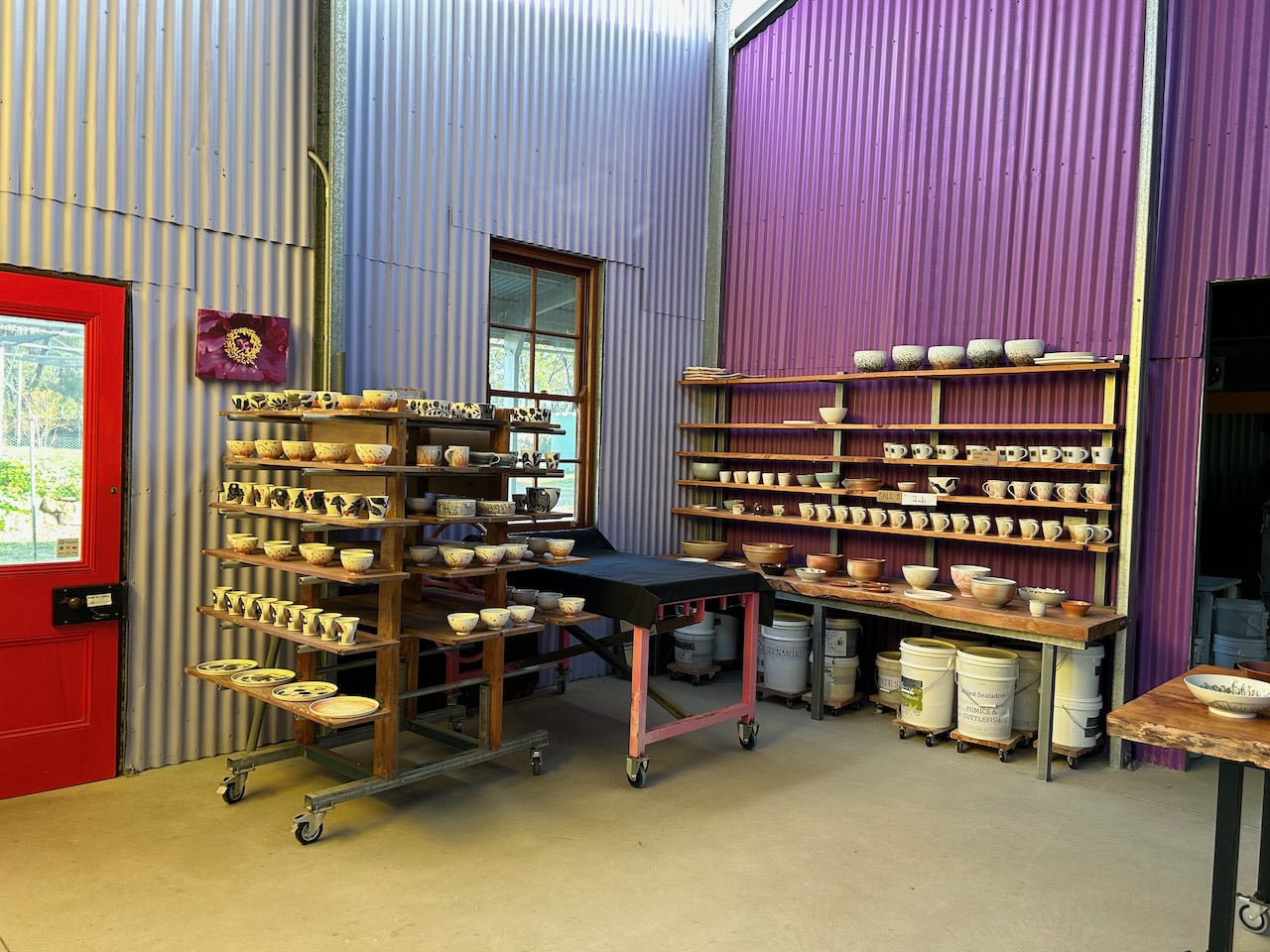
The pottery studio was all cleaned up and all the shelves were full for the recent Long Weekend Open Studio Arts Trail.
We are enjoying beautiful crisp and cold days here nowThe days are so much shorter and the nights correspondingly long. I light the fire in the lounge room almost every night. So that brings on the regular job of collecting, cutting, stacking and splitting fire wood. I use about one wheelbarrow of wood every two days. so I soon get through a pile. We are not short of wood. The catastrophic bush fire here 5 years ago killed hundreds of trees in our forest. The hard part is the dangerous job of felling them and then chain-sawing them up into suitable lengths. Fortunately, I have a good pile of sawn logs in hand and ready to split.
The overnight temperatures are getting down to 1 degree, tomorrow night is forecast to be zero oC but we are not getting regular hard frosts yet. In the 70’s when we came here, we used to get solid frosts starting in May and lasting 3 or 4 months. Those days are long gone, and with the crisis of global heating running rampant, I doubt that we shall see them again. It amazing to me that I still talk to a few die hards that seem to think that global heating is a media plot.
The disappearance of frosts here and the very early fruiting of our berry canes, up to 4 weeks earlier than they did in the 70’s are very obvious examples that we live with. The news that its the hottest year ever recorded. That record being broken year on year, the break-up of the ice sheets and the disappearance of the glaciers, yet one major party wants to withdraw from the Paris accord, presumably because they think that there are enough climate sceptic voters out there that will vote for the ‘fake news’ agenda? I wonder how bad it has to get before the penny drops?
I have done everything that I can think of, and can afford to do, to reduce my carbon footprint. It’s a huge undertaking to change your life around, but as I am a greenie, and always have been, I was brought up that way, long before the Greens were even thought of. I have been aware of the difficulty of addressing climate and environmental degradation for decades, so I started making the changes needed in my life slowly but surely over time. Replacing old worn out appliances one by one as they died. We started with a front loading washing machine that used much less water and power. I did my research and got one that didn’t need a heater, so we could use our own solar hot water. (most washing machines only have one cold water inlet hose.)
Next, in 1983 we replaced our 21 year old old VW beetle with a small 3 cylinder, 1 litre engine car. Very fuel efficient. We now have an electric car. In fact we have now replaced almost every petrol driven item in our life. Car, lawn mowers, chain saws, water pumps. The only petrol driven things that I can’t easily replace are the fire fighting pumps. They still need to be fuel driven to get the reliable independent high-power needed in an emergency. We have 17kW of Solar panels and 2 Tesla batteries. This is sufficient to run everything that we own including our 2 electric kilns and to charge the car.
It has taken 40 years to make these changes slowly, incrementally and painlessly. It would be wasteful to trash a functioning appliance with all its embedded energy while it still had life in it. If something isn’t completely worn out, it can at least be sold 2nd hand to someone who needs it, to keep it working and producing effectively until it is actually dead. One of the things that we have worn out is the hydraulic wood splitter. However, I took a chance and replaced the dead 5 HP petrol engine, after 10 years of hard work, with a single phase 3 HP electric motor – on a long extension cord. People said that it couldn’t be done. It wouldn’t have enough grunt. That was 20 years ago and that little single phase motor is still going strong, working well, and running on sunshine instead of petrol!
Where as a 4 stroke petrol engine has only one power stroke out of 4 revolutions. An electric motor has constant torque every revolution, so 3 Hp of electric motor is equal to 5 HP of petrol driven HP, or so it seems.
The garden is still feeding me with all the usual winter veggies.
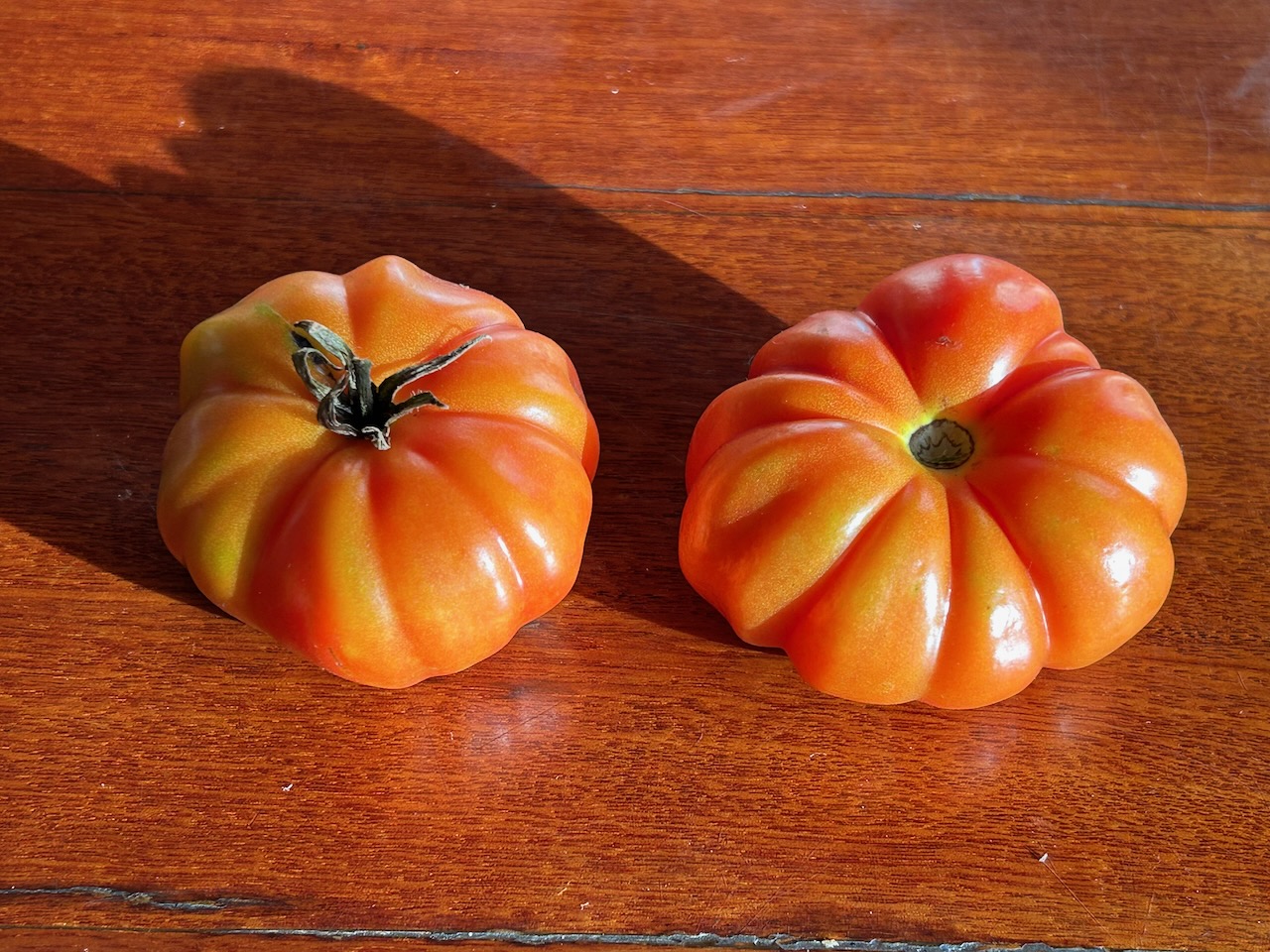
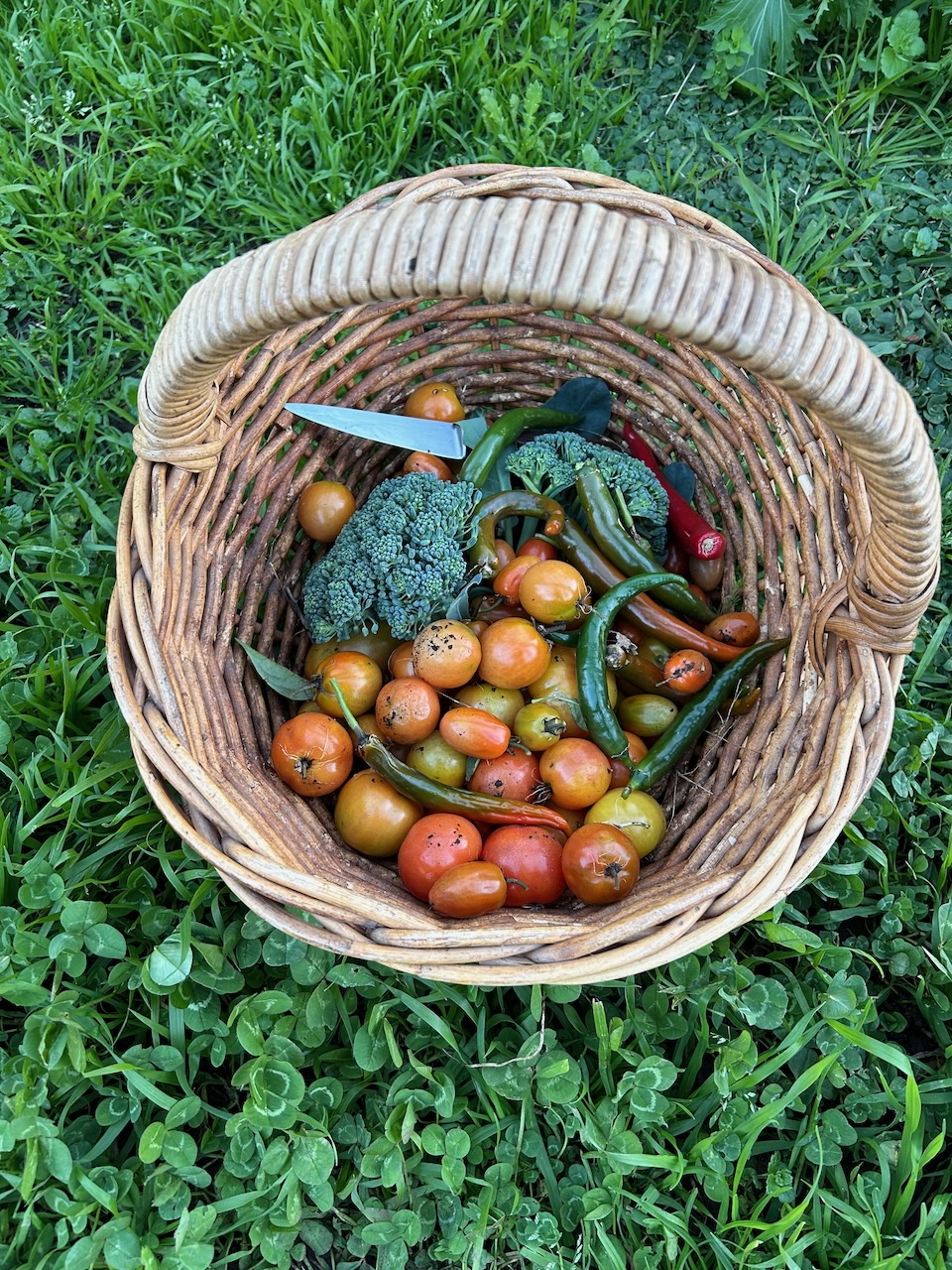
I have even just picked, what may be the last harvest of tomatoes. But I’ve learnt to expect a few more ripe red tomatoes in amongst the thicket of weeds and herbs where self sown plants do well in the cold weather, avoiding the extreme chill. I don’t always see the fruit until it turns red, but they keep turning up, just as they have done in years past. I have also picked some of the last hot chillies and dried them to be cut up into fine fragments to add a pinch of heat to winter dishes in the coming months.
These cold short days remind me that is time to do the fruit tree pruning and spraying lime sulphur to deter leaf curl and shot hole fungus. some of the earliest fruit trees are already producing fruiting buds and the earliest blue berry bushes are already in flower, while others still have leaves on and are not yet deciduous.
Blueberry flowers in mid June.
Because I decided to live this ‘real’ hands-on life – as opposed to a virtual reality version of life. I am kept busy all the time with a series of activities that all need doing, one after the other, all through the year. Life has its cycles. I see them coming around ever quicker as I age. Tempus fujit indeed.
The garlic that I planted back in March is up and doing well, but is in need of its 3rd weeding session. Garlic doesn’t tolerate competition, so if I don’t keep the weeds under control, it wont prosper. I’m very fond of garlic. I eat a lot of it, so I need to grow a lot of it to keep up. I can’t bend down to do the weeding for hours at a time, so I just do the job in small bursts, a bit at a time, every few days.
I’ve just dug over another part of the vegetable garden and planted the 3rd batch of brassicas. I have to keep popping in a few more of each type of brassica every so often to ensure a steady supply of winter greens. I read recently that brassicas have a long cultivated history, going back to the Greeks and Romans.
I grow my own food, I built my own house, I learnt to repair my own laptop, washing machine, lawn mower, and other appliances. I have always serviced my vehicles. These are gentle but radical acts of rebellion and defiance of a wasteful system that is designed to keep us all in debt and is filling the world with polluting waste dumps of superseded consumer items, filthy air, polluted water and an overheating climate. We all need to do better.
On the Long Weekend I will be opening our Gallery for the ‘Pop-Up’ Open Studio Arts Trail.
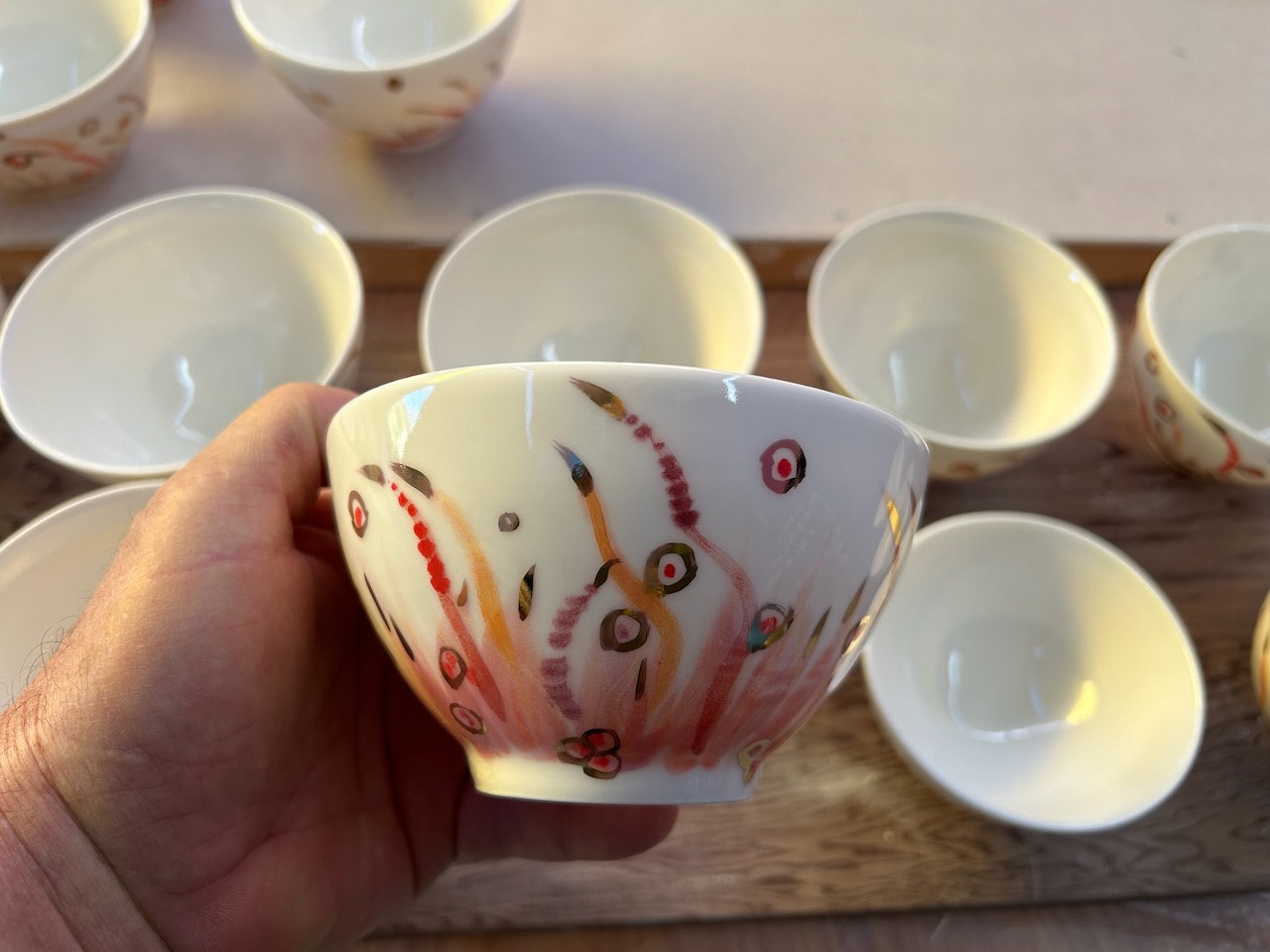
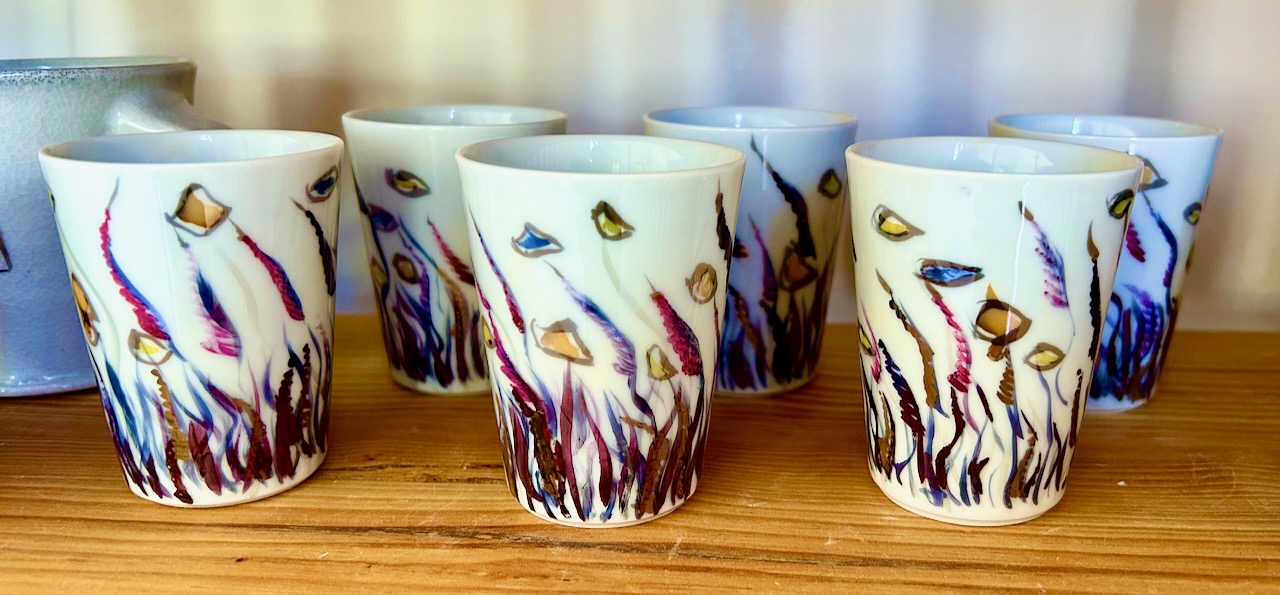
I have been hard at it making new work for this show. I have been making some very fine and thinly potted bowls decorated with the motif of “From Flames to Flowers’. This is a motif that i developed without knowing last year after undergoing some remarkable EMDR trauma therapy.
One week I was painting flames on my pots, the sorts of images that had been haunting my dreams since the fire, then the next week, after just a few sessions of EMDR, the flames had morphed into flowers. To be truthful. I had made a concerted effort to plant patches and strips of English cottage garden beds around the garden and driveway since the fire to try and make the place a bit more cheery and less blackened. I really needed cheering up, having been burnt out 3 times in 50 years.
I really like the motif, so I am still using it. It still cheers me up. It’s optimistic and positive. I have added a little bit of gold lustre to give it a bit of ‘bling’ as well. I have been using some lovely translucent sericite porcelain, so that when I hold the pots up to the light, I can see the painting on the out side of the bowl from the inside, not just the outline of the image, but even the colours of the flowers. They are pretty special to me.
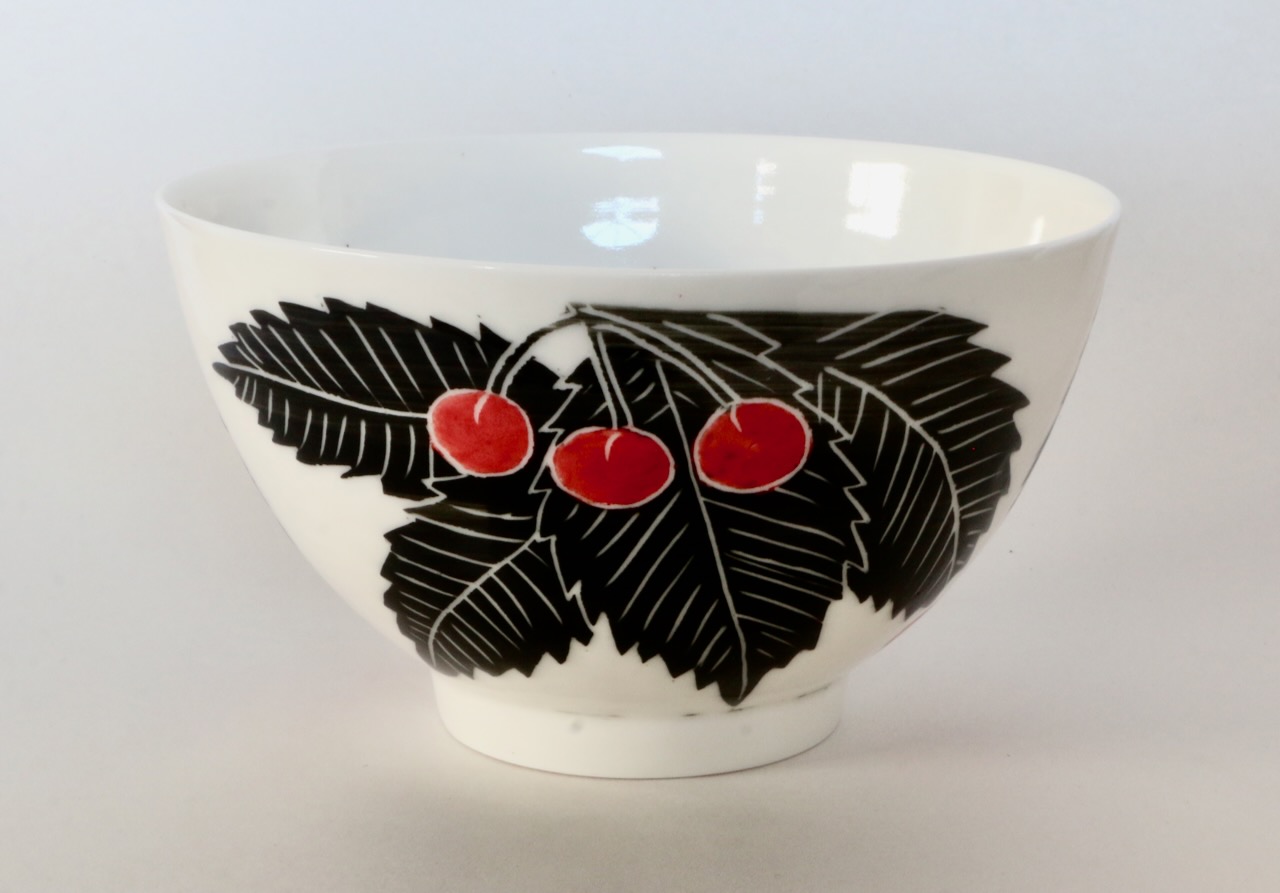
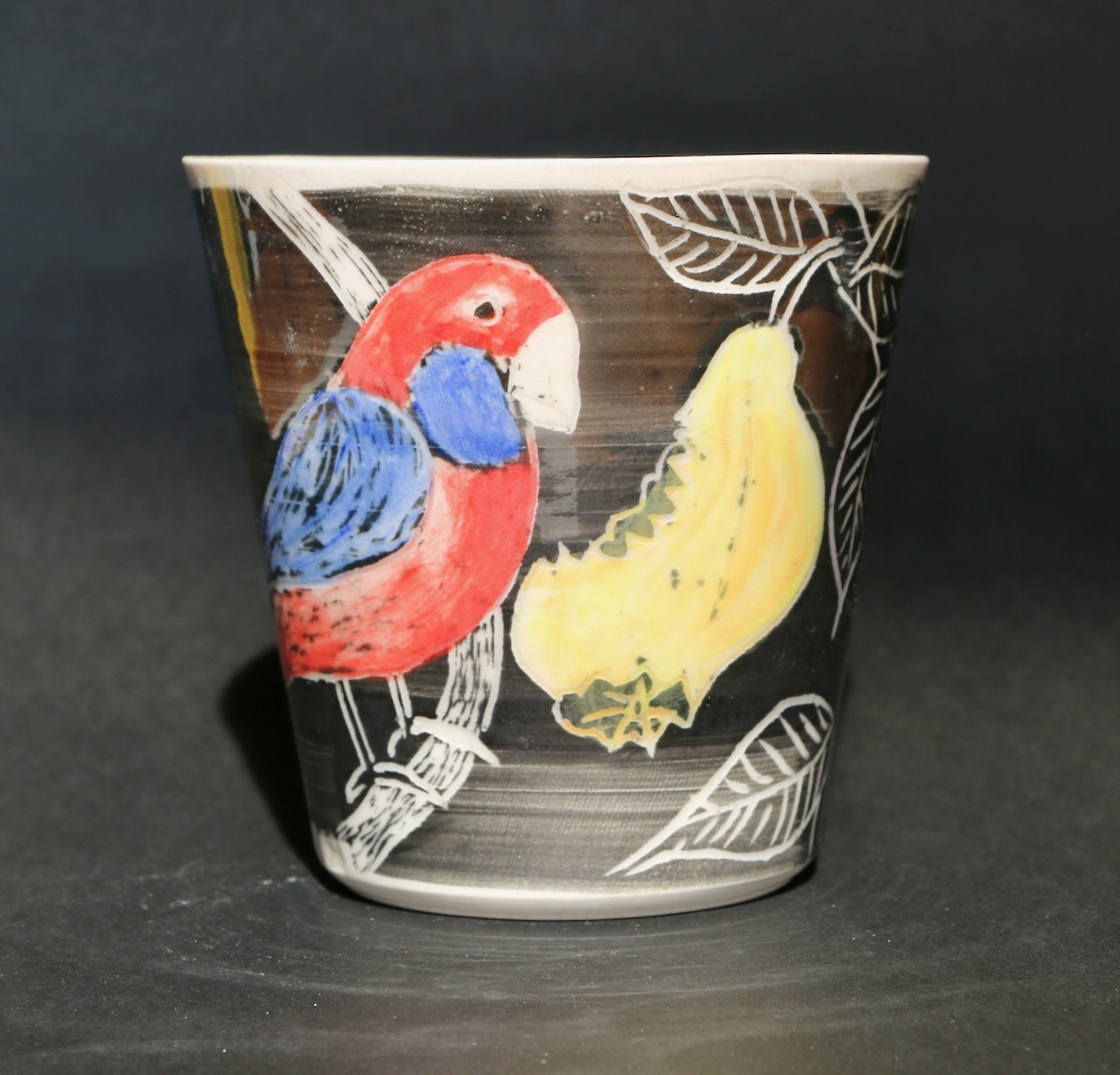
The other work that I have been doing is black and white sgraffito graphic decoration, again mostly on porcelain, but I have also made some stoneware mugs. They are still in the kiln as I type. They’ll still be warm on Saturday morning, coming straight from the kiln.
The motif for this series are the cherry trees in our Chekhov orchard, and the blue/black bowerbirds that come and steal our fruit. The Cherry Thief. The subject is as old as gardening itself. I remember that William Morris designed some wall paper back in the 1880’s called ‘the strawberry thief’. This new work of mine is totally unrelated in Character, and very different, but the subject is exactly the same.
I call the series, ‘Plant it and they will come’. And they do come.
When we came here 48 years ago. There were hardly any birds here, just a few kookaburras. As we developed the gardens and orchards, dug dams, made compost heaps and planted native shrubs, we created habitat, and they came! Suddenly we had to start thinking of how we might cover our fruit trees and vegetable beds from the marauders!
Within a few years, we had hundreds of birds living here, working the rich environment, with dams for water, open spaces to forage in, trees and shrubs for cover, and fruit to eat. We created this oasis and they occupied the territory. We planted it and they came!
I will be open from Saturday to Monday over the long weekend, from 9 to 5 each day. Please call in if you are in the area.
I have plenty of off-street parking, tea, coffee and cake, toilet facilities, and we are wheel chair friendly. There will even be a glass of wine in the afternoons.
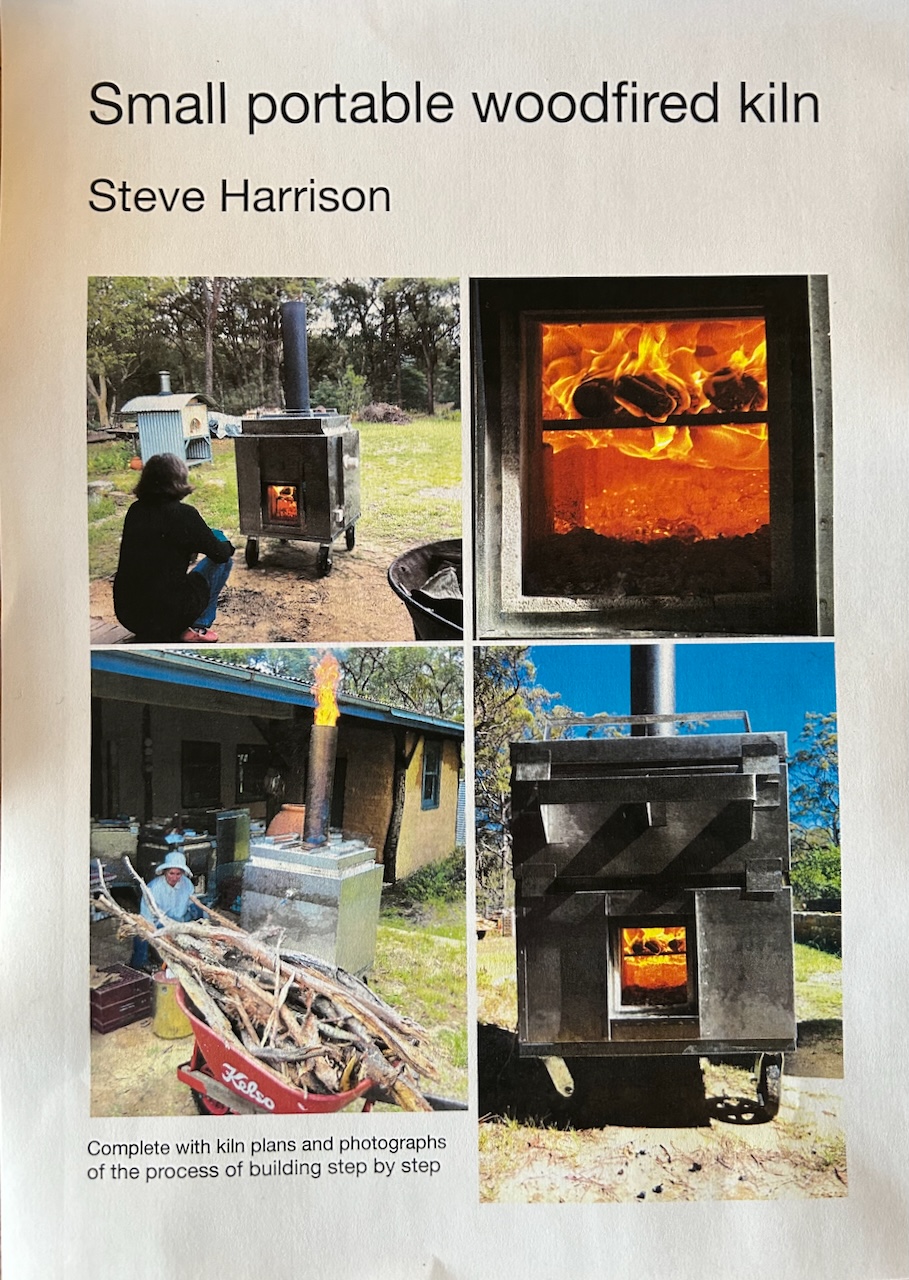
I have a new book available now on the topic of my Small Portable Woodfired Kilns.
I have been working on this book for some time. It was started before 2019.
However, I was so caught up with the clean-up and then the re-building, after the catastrophic bush fire that destroyed our place, that I was not able to get back to the book until recently.
I get at least one email every week enquiring about my blog posts on the topic of these little portable wood kilns.
They seem to have the potential to become very popular, given the number of enquiries that I get about them.
Before the fire in 2019, I used to build and sell these little beauties. I used to build 10 or 12 of them at a time, in big batches, to make it most efficient and to keep the price down.
It turned out that I had quite a bit of descriptive writing about them, mostly cobbled together from my blog posts, but, I needed to do a bit of technical drawing to draw up the details of the two final designs, including the dimensions. The plans were never properly drawn. I just kept on adapting the previous plans by hand as the ideas flowed into reality, developing kiln by kiln.
Finally, I spent some time trawling through my photo albums to extract all the step by step images that I needed to illustrate the text fully with the detail of information that a keen amateur kiln builder/hobbyist might require to understand the full process of assembly.
During the decade that I spent developing these little kilns, I started from a very basic first attempt, and slowly worked on the design, improving it and polishing it. over several years and 12 iterations. I finally ended up with two different kilns, both good, but slightly different. One smaller, and the other larger. These little gems are capable of firing to stoneware, cone 10 in just a few hours.
Our fastest firing to stoneware was 2.5 hrs, using just one wheel barrow of sticks. However, I think that the results are better at around 4 to 5 hours and 2 to 3 wheel barrows of sticks. All the details are in the book.





























 Tonight my Fingers Smell of Garlic
You must be logged in to post a comment.