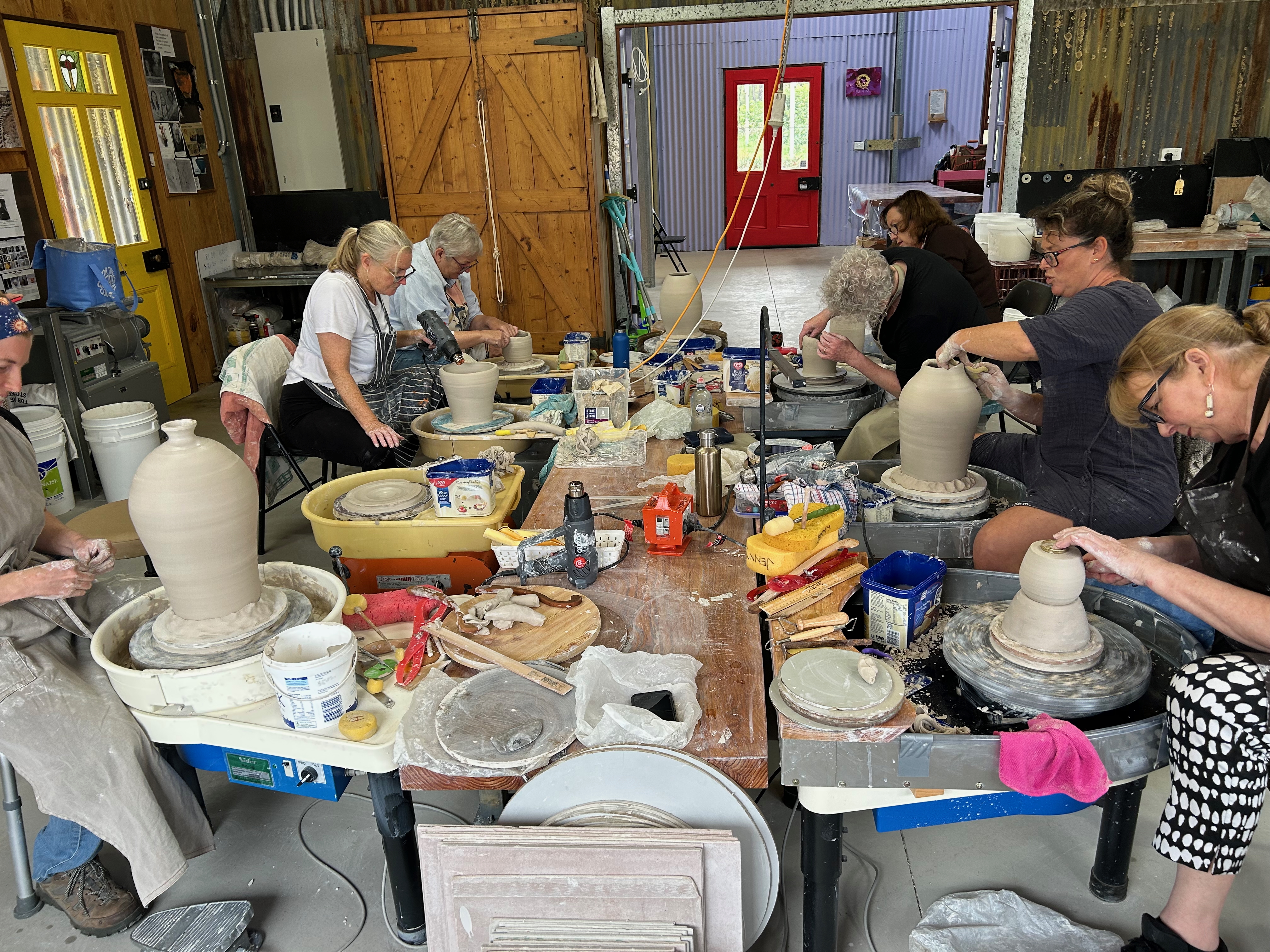
We have been very busy with our summer schools since the beginning of January. I originally advertised one Summer School to teach the making of larger forms on the potters wheel by ‘top-hatting’ and ‘coil-&-throw’ techniques. We got such a massive response to my add that we could program 4 summer schools of 3 days each, and lined them up with a few days in-between. Two in January and two more in February. We only have 8 potters wheels in our workshop, and we got over 30 replies so I had to run 4 schools and space them out.
Top-hatting is a technique of placing one thrown form on top of another to make a larger pot than you might otherwise be able to throw in one piece. It can involve the stacking of multiple forms to gain extra height. Coil and Throw technique involves throwing a substantial base for the pot and then adding a coil of clay to the top and throwing that coil up to become the wall of the pot, extending the height. This technique can be repeated several times to make a taller pot.
We got such a massive response to my add that we could program 4 summer schools of 3 days each, and lined them up with a few days in-between. 2 in January and 2 more in February. As we only have 8 potters wheels in our workshop, and we got over 30 replies, that meant staging 4 consecutive schools.
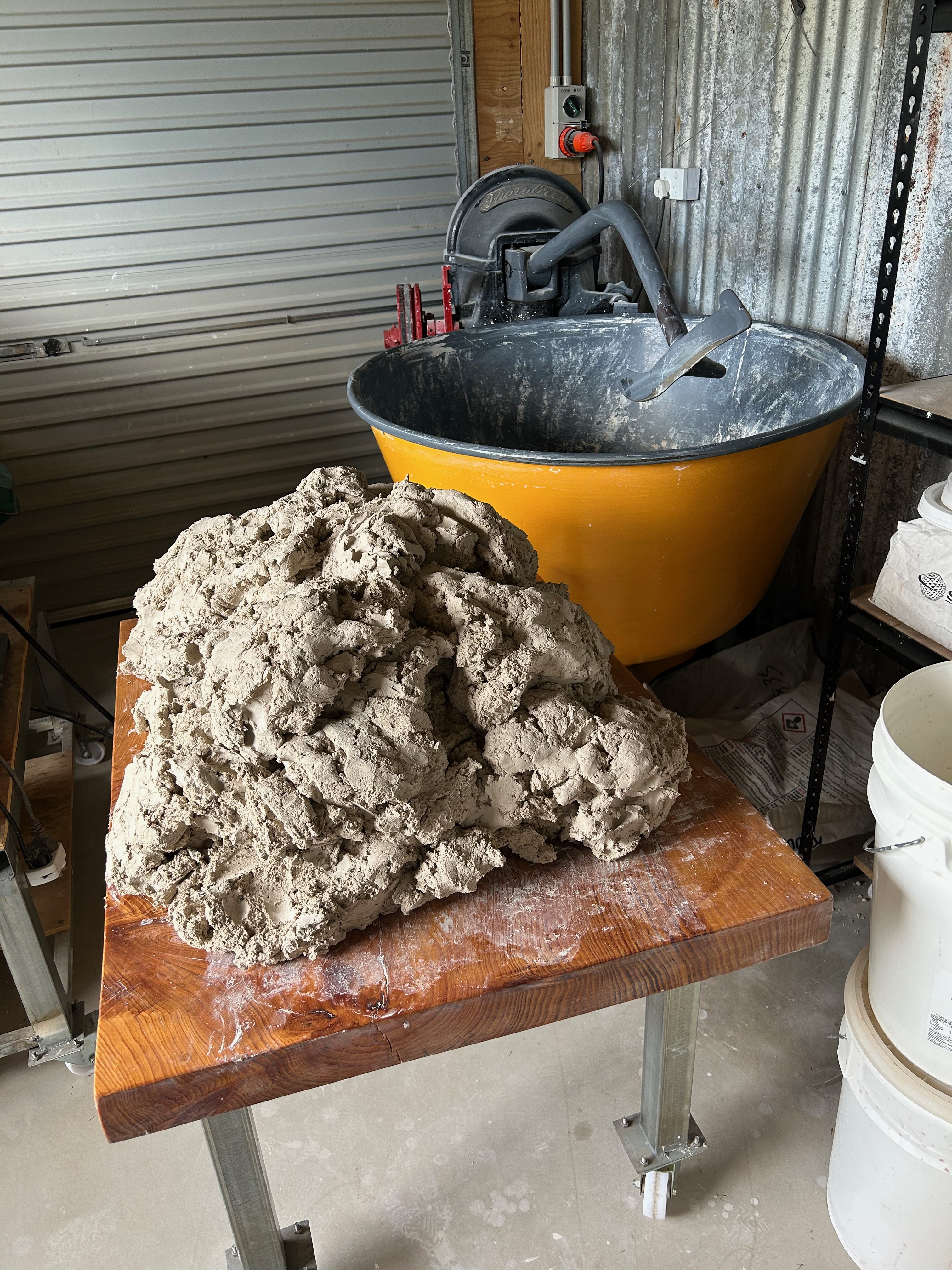
I made up some clay specially designed for big pot throwing by joining techniques, slightly softer than usual and with added ‘tooth’ and ‘grit’ for structure and good drying and firing of the larger forms. I originally made 400kgs of clay, thinking that it would be sufficient for the 4 workshops, but I was way out in my estimations. The first two workshops used up nearly all of my stash, so I was back in the clay making shed the next day to make up another 400kgs for the next two in February. I like the clay to get a little age on it to improve its work-ability, 3 months would be good, 3 years even better, but needs as needs must. One month in this case will have to be enough.
Clay develops its plasticity by the intimate mixing of water molecules in-between the infinitesimally small clay particles. The best way to achieve this is to make a ‘slip’. A very watery mixture of clay and water, to get the water into, and in-between the clay crystals, which in their purest form are flat and hexagonal shapes. It takes a very long time for the water to penetrate the ‘pack of cards’ structure of the clay particles and individually flake off the crystals one at a time to get that intimate mixing of clay and water that is required to appreciate the very best potential of any particular clay.
I don’t have that luxury of time in this instance, so I am using powdered clay material that I bought in, in 25kg paper bags. I’m using a mixture of all Australian clays from Victoria, NSW and Qld. to get a good blend of the required properties that I need. It’s getting very difficult to buy Australian raw minerals and clays these days, as the multi-national mineral companies have bought up most of the clay mines and shut them down, forcing us to buy their imported products from overseas. We are not short of clay here, but we have been locked out of access to our own resources. Welcome to the future!
I mix the various minerals together in an old recycled bakery dough mixer. I have owned this machine for over 40 years. It has gone through 2 fires and been rebuilt each time. Luckily, it is very well made, mostly of cast iron frame, but the fabricated steel sheet bowl was very badly split and warped after the last fire and needed a lot of work to re build it, and get it back into action. see my blog post from 4/6/21 “Our Old Twice Burnt Dough Mixer Proves to be a ‘Phoenix’ mixer”. I use a blend of recycled clay slip and the new powders to get the best outcome that I can from this compromise of speed, quality and efficiency.
I use a few tricks of the trade to get the best possible result out of my available materials. I use water from the dam and rain water from the old pottery shed water tank that is full of gum leaves that creates a very useful tannic acid water that is ideal for making clay. It is a transparent pale grey and has a very low pH so that when mixed with white kaolin, it attaches to the clay particles and flocculates the clay mass, which settles tightly in the bucket leaving only crystal clear water on top. It is also ‘live’ as it has all sorts of microscopic organic matter and bacteria in there, which helps age the clay. City water that is full of chlorine is pretty much sterile and kills off any live matter that may help the clay mature and become more plastic and workable.
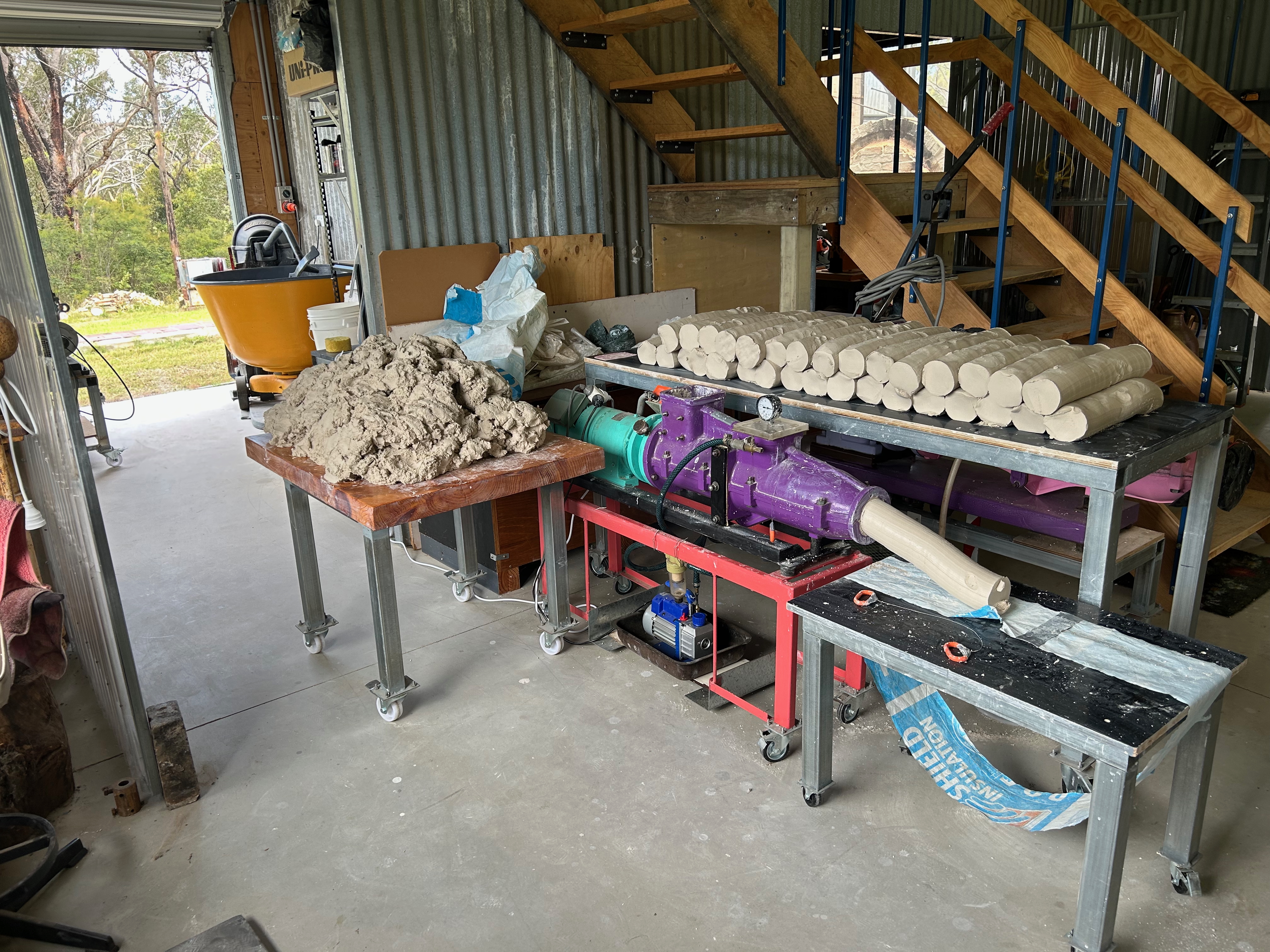
I have a ‘snorkel’ fitted to a fan in the wall that sucks all the fine dust out of the clay mixer room to keep me safe while I’m working in there, but I also wear protective gear as well. Afterwards, once the clay is all wetted, ‘plastic’ and ‘pugged’ into sausages. I cut all the ends off the stacked pugs and re-pug it all again to make sure that there is a consistent mix of all the 3 different batches of clay represented in each bag of finished clay body.
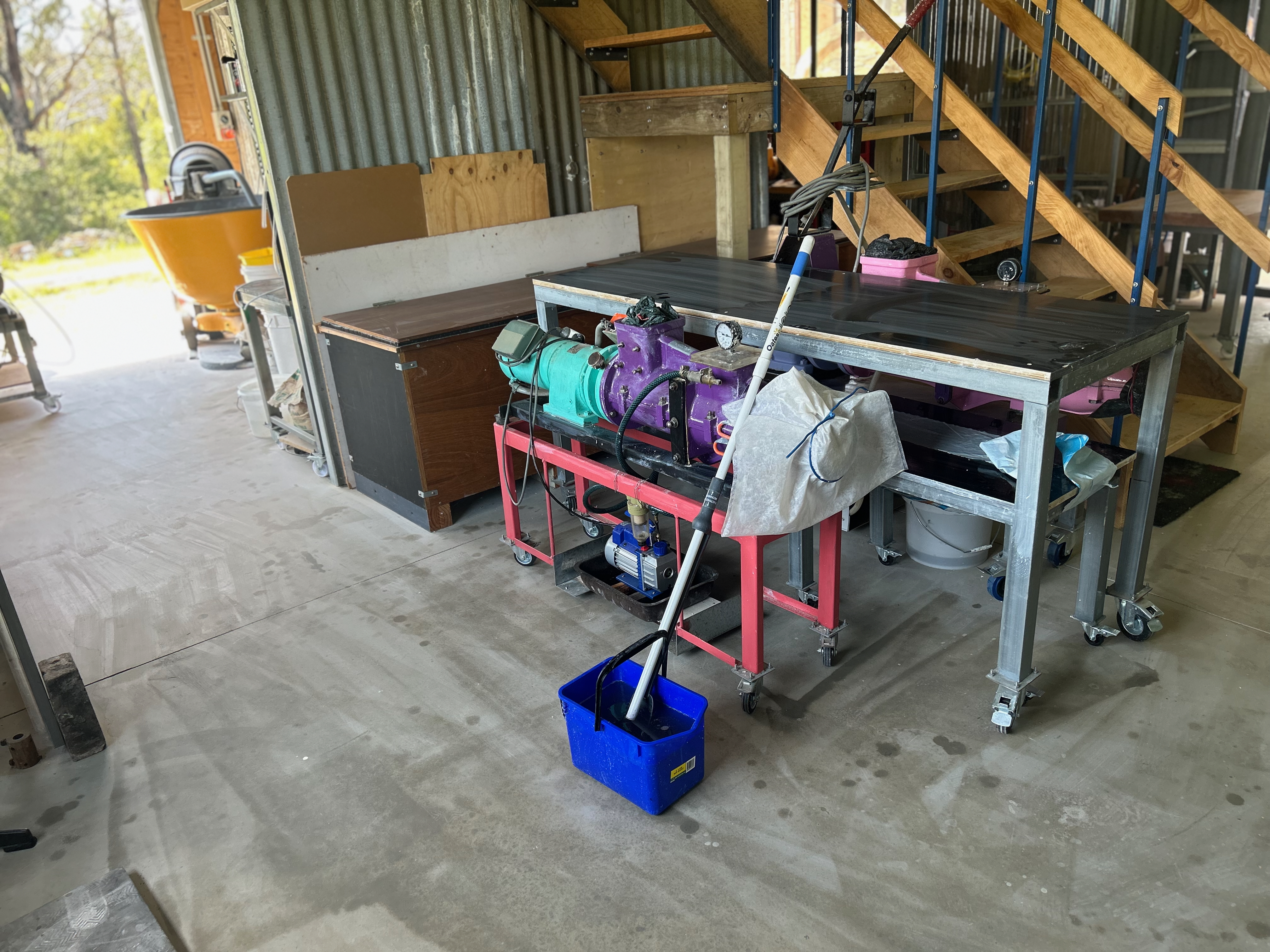
It is bagged and stacked to ‘age’ and the floor is wet mopped twice to collect all the clay dust off the floor and make the work space clean and safe again.
In the garden, we are picking the last of the blueberries, the first of the egg plants, and we are mid season for zucchinis. The tomatoes are coming on quite strong now and we have started to make our first batches of tomato passata for the summer. Every meal from now on will be some sort of variation of ratatouille in all its various forms. What else can we do when the garden is full to bursting with tomatoes, aubergines, zucchinis and basil? We try and give away as much as we can, but everyone in the village has an excess of tomatoes and zucchinis at this time of year.
Our breakfasts and deserts are mostly of fruit these days. November brings on the berries, December is the month of cherries and apricots, January for plums and peaches, February is all about apples and March for the last of the pears.
We have filled 3 summer school workshops of three days each, learning coil and throw, plus top-hatting techniques. It’s a kind of hybrid combination of of hand building on the wheel.
I have 4 more names on my waiting list, for a 4th workshop during the 2nd week of February, 7th, 8th and 9th of Feb.
If you are interested, there a still 4 places left. Please let us know if you are interested.
If we can get 8 names on the list, then we will run the 4th workshop. Then that will be it for the year as far as coil and throw technique is concerned. In March or April, we may do throwing flatware, dishes, plates and platters. Then possibly a glaze workshop concentrating locally sourced and collected stones, gravels and ashes.
We have been suffering 30 degrees in the shade, each day for the past couple of weeks now, with only occasional respite for a day or so, then back the the heat again.
The heat has brought on the stone fruit. We have now finished all the apricots, and are half way through the plums, with the peaches just beginning. We diligently went through the stone fruit orchard a few times during spring, picking off a lot of the small emerging fruit, before it got too big.
It takes a lot of weight off the small, thin branches of these young trees, but also allows the remaining fruit to grow larger. There are just two of us here, so we have all the fruit that we need for a couple of months.
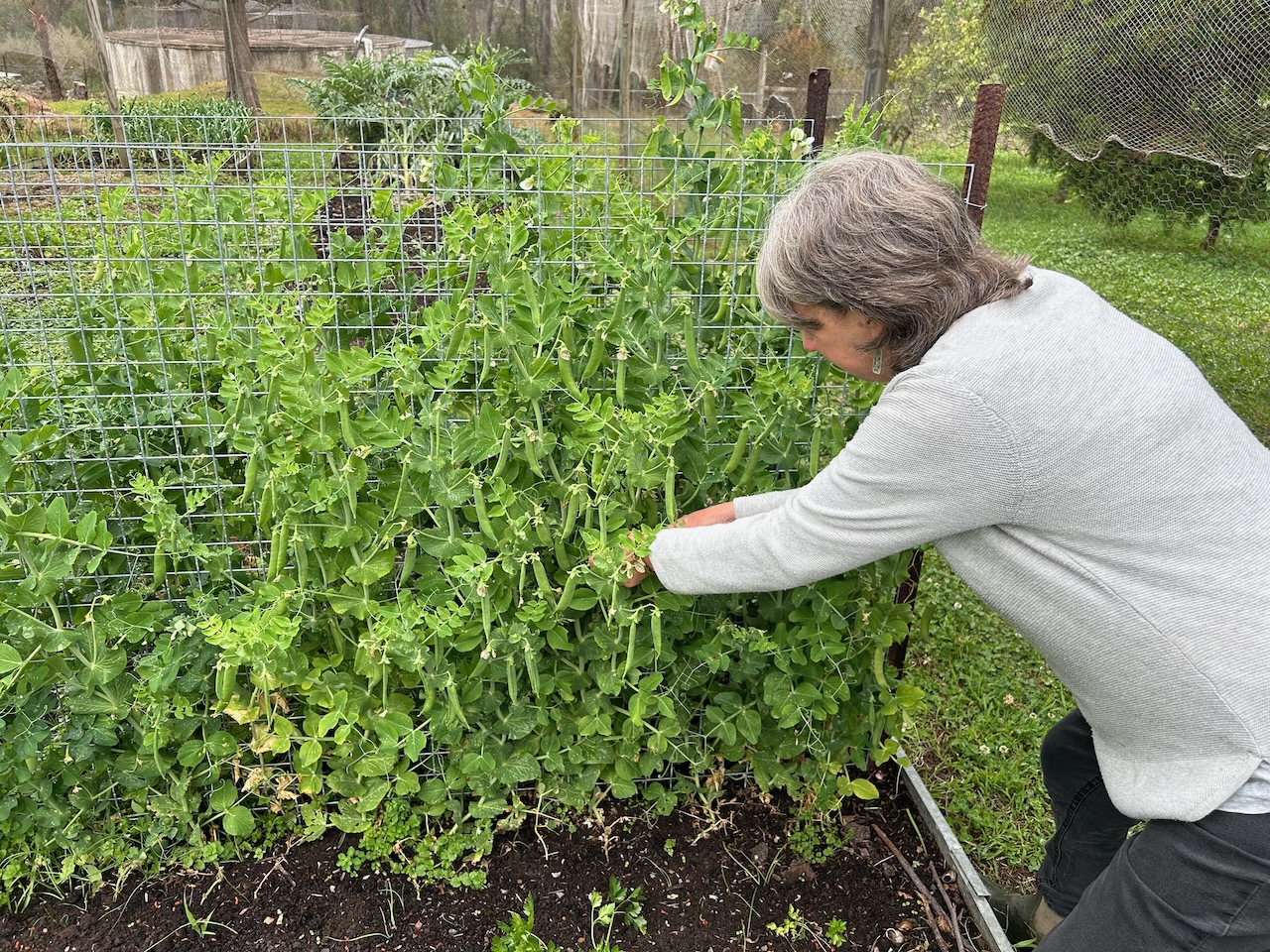
In the vegetable garden, the asparagus is almost finished its first full flush of growth, we now have just occasional spears shooting up. We collect them over a week or so in the fridge to get enough for a meal these days.
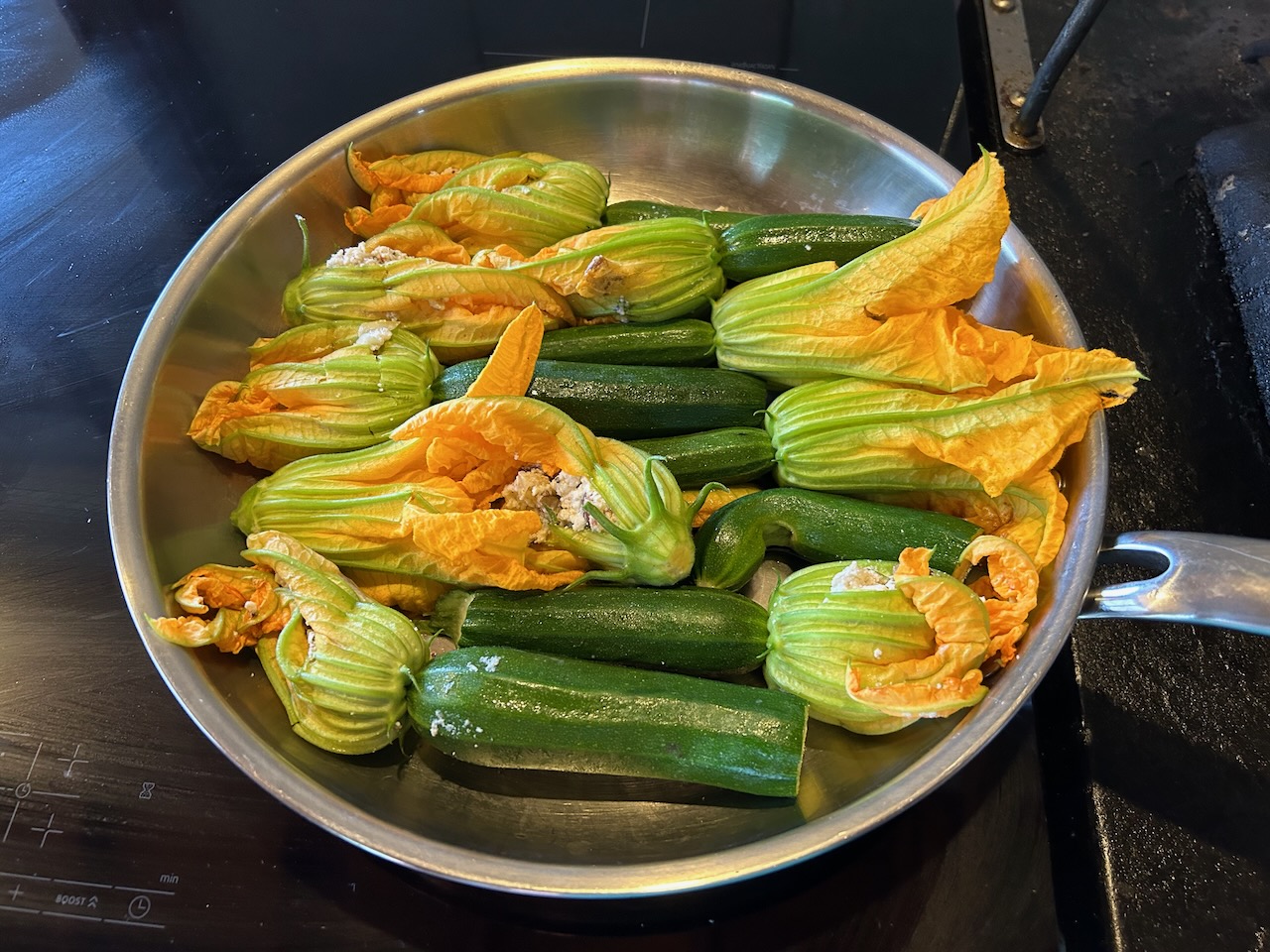
The zucchinis are in full flower now. They are the first of the summer vegetable plants to come on. I make an effort to pick the small emerging fruit as soon as it flowers. I pick the fruit with the flower still on and use them for stuffing.
I stuff them with a mixture of mostly ricotta, but with added gorgonzola, diced fetta, plus a few capers, olives and artichoke hearts. Then pan fry them for a few minutes and finish them off by steaming them with the lid on and a splash of white wine.
We are usually up very early to do the garden work, before the heat sets in, watering, weeding, harvesting etc, then breakfast. We spend the rest of the day keeping to the shade, under the verandah, or inside the pottery shed, out of the heat. This week, I’ve been making clay for the summer school workshops. Mixing, Pugging, blending, and twice pugging, bagging, and then cleaning everything up and mopping the floors spotless. Ready to go again.
Two batches = 250kgs of plastic clay. It’s a big job and takes all day, sometime it’s two half days, with a break over night to recover from the heavy lifting of the 25kg bags of raw material.
I’ve had my old dough mixer for over 45 years, and re-built it twice after fires. It came from a bakery that closed down in Western Sydney out near Parramatta. In it’s first incarnation, I ran it using a petrol engine. Then after the first fire here, I converted it to a 3HP single phase electric motor, with a loose fitted belt as a safety ’slip-clutch’. It is now properly set up with a 3 phase, 5 HP electric motor.
It’s a beautiful old thing and I’m proud that I have been able to rebuild it twice after each fire and keep it going all these years. I still have to make another couple of batches of clay, as we have been over-subscribed for our summer school, and will now be running it 3 times in a row, with a waiting list for another on the way.
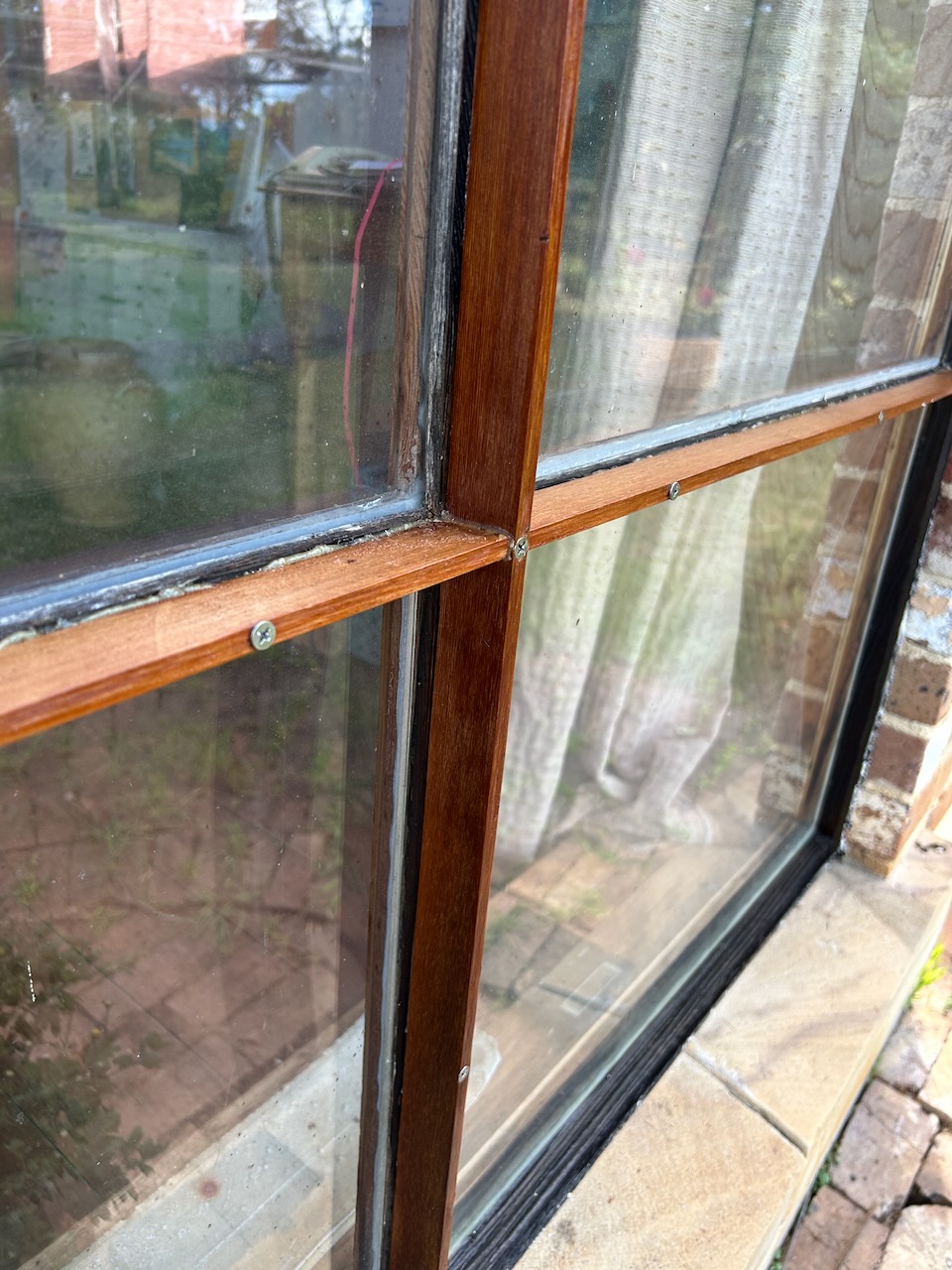
Last week I finally got around to building the stainless steel mesh fly screens for the front windows on the pottery. I bought the roll of mesh soon after building the pottery, 3 or 4 years ago. But then it rained for the next 4 years, so there was no risk of bush fire for a few years. Now I have finished a lot of the other jobs that needed to be done to finish the pottery. I have finally got my self back to the window fly-screens job. I found that I had some left over ‘merbau’ hardwood decking planks, that I have used to make all the door frames. It has some sort of fire rating and is allowed for door frames. I rip-sawed it down to thin strips and them planed them smooth to make fine battens to hold the SS mesh in place. This will stop sparks getting to the cedar windows when the next fire comes. Hopefully i will be here to start the fire pumps and run the sprinkler systems that I have installed all along the western faces of all the buildings here.
The windows needed to be thoroughly cleaned and then re-painted, to bring them up to scratch, before they would be hidden, and inaccessible behind the fly-screen. It turned out to be a three day job, working only in the mornings, as the afternoon sun beats down on the verandah in the afternoons.
I made home-made gyoza for dinner and spent the afternoons inside the workshop cleaning and restoring the old platform scales that we used to use in the old pottery for weighing heavy bags of raw materials up to 100 kgs. These platform scales were bought at the closing down sale of ‘Coty’ cosmetics in Surry Hills in 1978. They got badly burnt in each of the fires, but are made mostly of cast iron. The damage this time was pretty severe, well beyond me to do anything with then at the time. Just after the fire I had too many very important jobs to do to get us back up and running. I was also pretty run down. But now I’m better and felt ready to give them another a go. Cleaning, grinding, loosening seized parts and then oiling/greasing and re-assembling it all and painting them in traditional black and red livery. The brass work had started to melt and sag. I had to take it all off and hammer it straight again, then polish it back to its gleaming original state.
The next big job on my summer list is to replace all the glass panes in the big arch window in the kitchen of the house. I made this window by hand, 35 years ago, without knowing what I was doing, or how to do it. I learnt as I went along. I taught myself how to steam and bend wood to make the big arch top of the window frame. I ended up making the 200mm x 50mm. arch out of 4 different 12mm x 200mm. planks, all steamed and bent at the same time and then glue-lammed together to keep the tight bent shape of the arch. Steaming and bending such big pieces of wood is a two-person job. I was assisted at that time by my sister-in-law Sue, as Janine and her brother were working on some other project together.
I recently commissioned 12 new double glazed and argon filled panes made from metal coated special low’e’ glass. These will replace the old 3mm plain glass that was all I could afford back in the 80’s. I’ve been told that it would cost me in the vicinity of $20,000 to get a custom built window of these dimensions specially made today.
My aim is to try and get my old cedar window frame re-modelled, extended and strengthened to take the thicker and heavier glass before the end of summer, but there is no rush or rigid time frame, it’ll get done when it’s done. Whenever that is.
I have started by extending the old glazing bars with deeper cedar ribs, glued and screwed onto the old cedar glazing bars. That part is now completed. Luckily, I found that I had quite a few old pieces of western red cedar that I could saw down to size and then plane to do the job, so far at no cost. But I did have to buy new stainless steel screws!
When I built the original window, I used a waterproof window wood glue called ‘resorcinol’, or some word very similar to that. It was eye wateringly expensive and came in very small packets of 2 parts. One of dry crystals and the other of a liquid, to be mixed and used very quickly after mixing. It was stated to be water proof and capable of taking high stress. It has lived up to its reputation. The window is still strong. I haven’t seen it or heard of it for years, so this time around, I’ve used a 2 part epoxy boat builders wood glue. Lets hope that it last another 35 years.
In this hotter weather, we picked our first tomatoes of the season, from self-sown plants. It’s always a challenge to get a ripe tomato before Xmas. The early seedlings that I planted before leaving to work in Korea, all got burnt off in the severe frost in late September.
I’ve been baking extra loaves of bread to give away as Xmas presents. There are always too many jobs and more work than can be done in a day. I come to enjoy a little nap after lunch too, which doesn’t get anything done quickly, but is very nice and relaxing, almost necessary these hot days.
Nothing is ever finished, nothing last for ever and nothing is perfect.
Summer has arrived. and we are ready for all those lazy, hazy, long, hot, relaxing day and balmy evenings with a G&T on the lawn.
But first.
We have to deal with the fruit flies and possible bush fires, but dealing with them is interrupted by the rain.
We have had sudden down pours and thunderstorms, followed by a week of wet weather. It’s a bit like the 70’s, when we used to get sudden summer storms that only lasted an hour, but dropped an inch of rain. That’s 25mm these days! Then it would go back to being hot and humid again, but it gave us sufficient water in the dam to get through the summer with water for the garden, orchards and possibly for fire fighting.
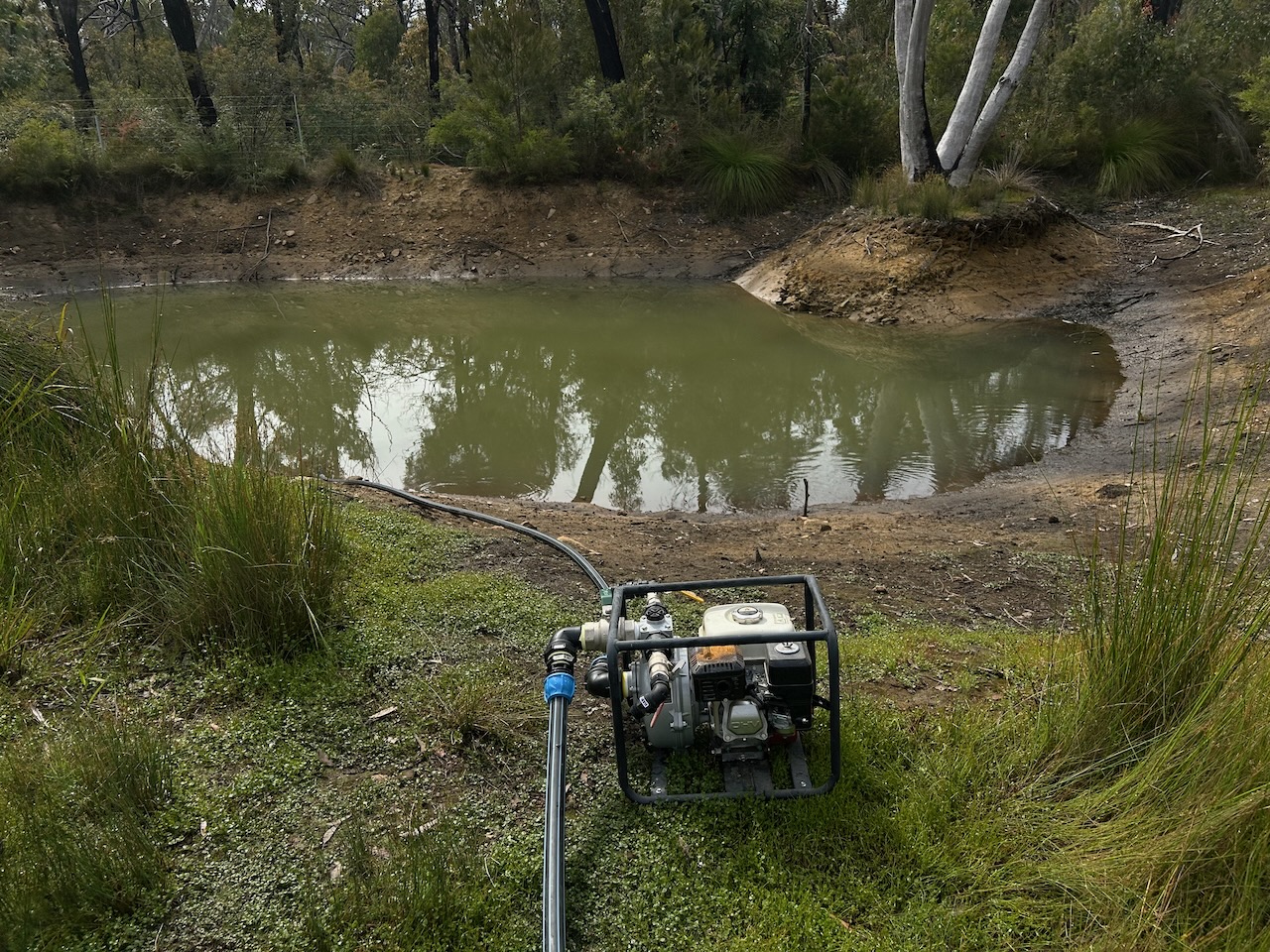
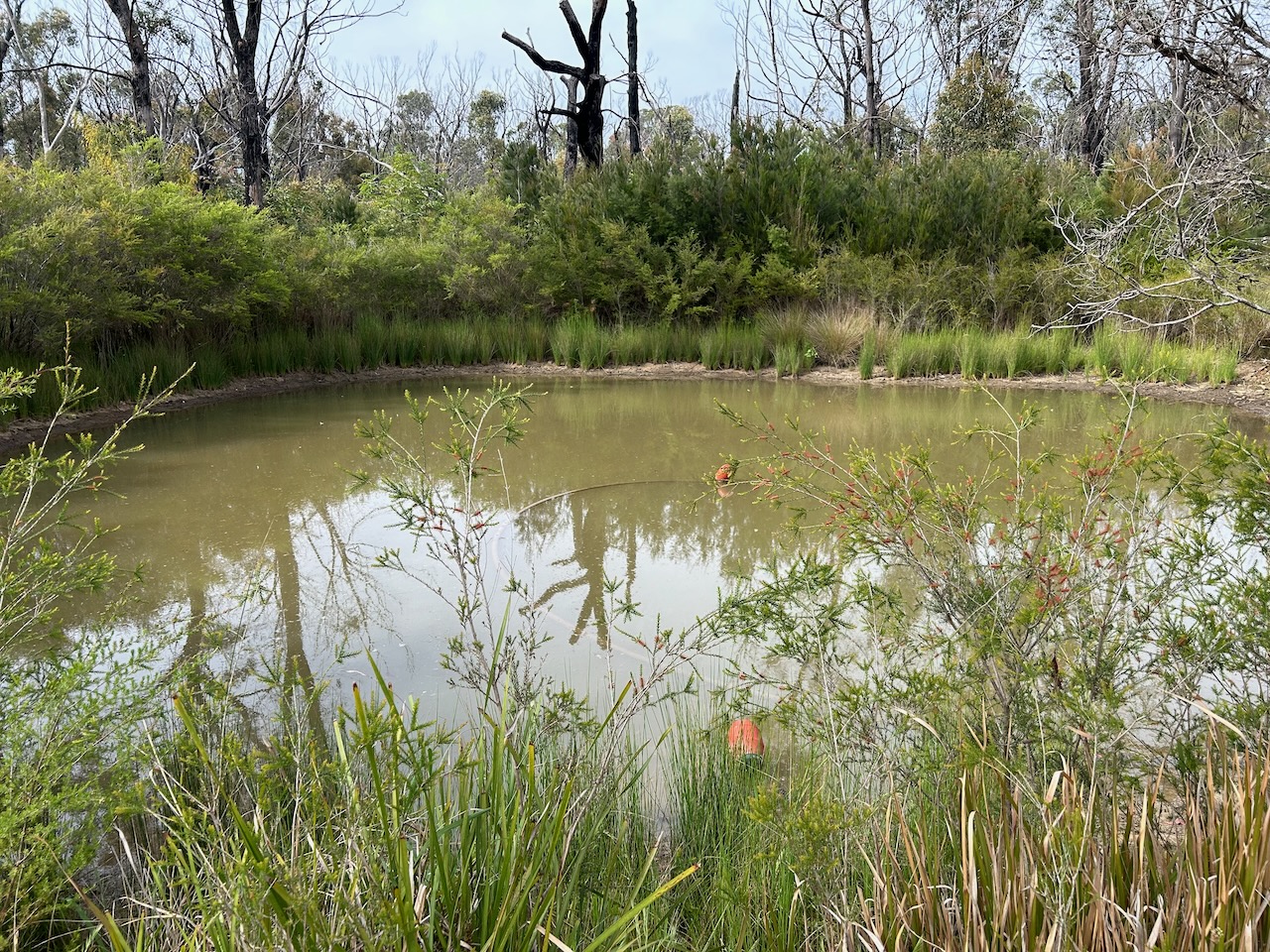
Before this last week of wet, the little top dam had dropped down to just 600mm of water in a little puddle in the centre. Not Good! As we have been pumping water out of it every day for watering the vegetable garden and one day a week in rotation on each of the orchards. Luckily, there was still water in the bottom 2 of the 4 dams that we had built in a ‘key-line’ system across our land, so as to harvest and store as much of the rain fall as possible.
I get a little bit edgy when the top dam is almost empty like this at the start of summer. We may need 50,000 litres of water in a hurry if a bush fire breaks out near us. I like to be prepared. So I have already gone around and started up and tested all the petrol fire fighting pumps to make sure that they are in good condition and working well. Particularly that they start on the first or second pull of the starter cord. There is no time to be messing around with an engine that won’t start in an emergency.
I use 1 of our 4 different petrol driven fire fighting pumps to pump the water up from the lower dam, up to the little top dam closest to the house. The pump is built in a carrying frame and is not too heavy, so I can lift it into the wheel barrow and walk it down to the dam bank, then drag the lengths of plastic piping into place. It’s all set up with the various fittings already attached to the ends of the pipe. I keep the pipes sealed at both ends with screw-on caps, so that small animals and ants don’t build nests in there during the long periods of non-usage over winter.
The little top dam is closest to the house and was the first dam that we got built back in 1976. It has the solar powered electric pump on it that we use for most of our watering and irrigation. I have kept the long lengths of 50mm dia polythene pipe that I bought after the fire to do this transfer. This is the 2nd time that I have used it.
This works well and gives us plenty of water for the next couple of months of summer. But then, before I can congratulate myself. I rains for 5 days and on one of those days, it rains hard enough for the water to flow down the street and into the culvert drain and into the dam, topping it up just a little bit more. It makes me feel more relaxed about our capacity to cope here when there is water in the dam.
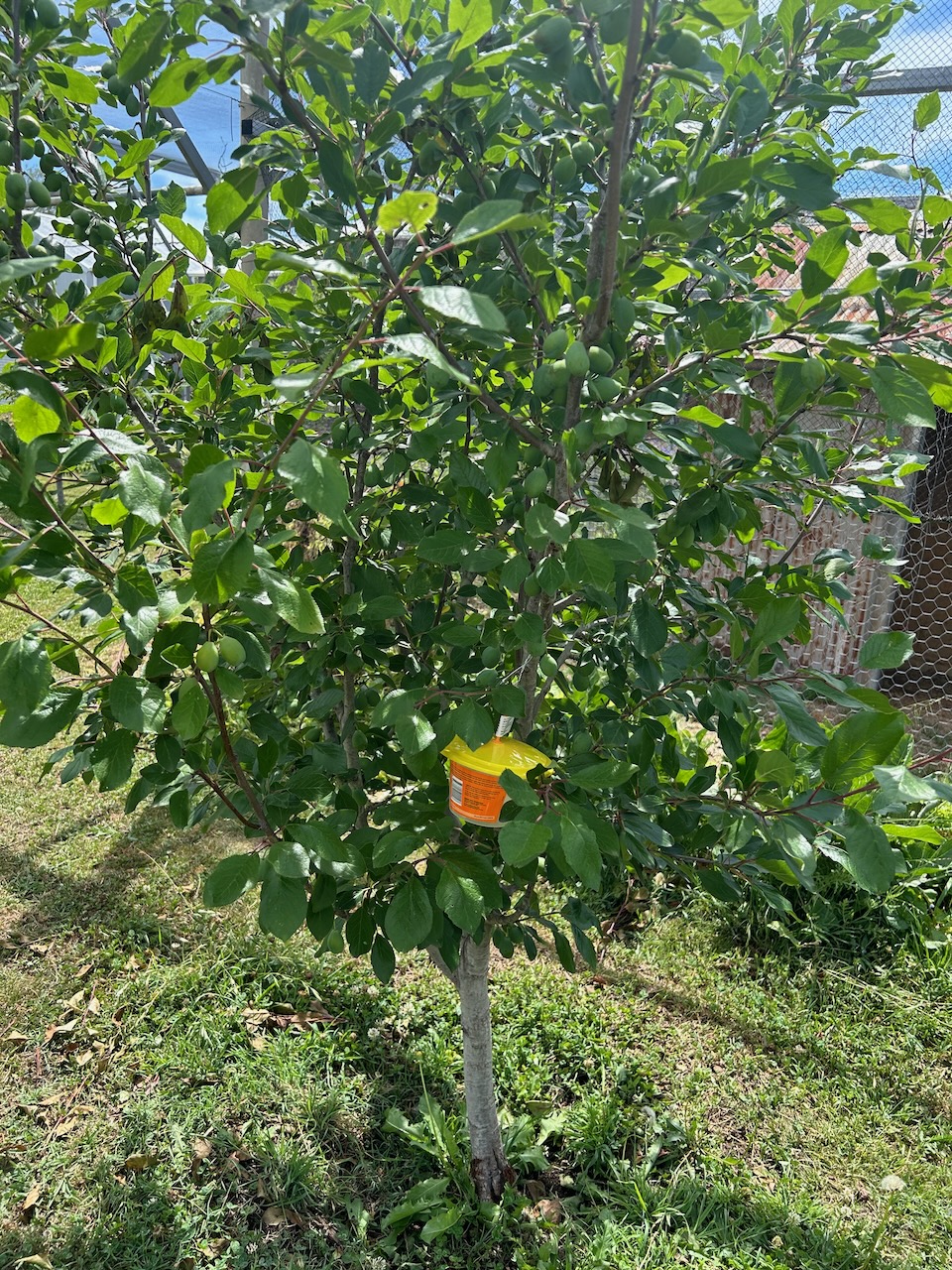
With the heat of summer comes the fruit, and with the fruit comes the fruit fly. Nearly all the the new dwarf fruit trees in the stone-fruit orchard have a crop on them this year. We have gone around and tip pruned all the trees. This summer-pruning keeps the trees in good shape as they grow and develop. We also pick off a lot of the small developing crop to reduce the load on the branches, as a really heavy crop can snap the branches due to the weight of the fruit. There are only two of use here, so we don’t want or need a heavy crop. I fill two wheel barrow loads of small fruit and prunings.
I have been spraying the trees every two weeks or so since October, – when it isn’t raining, with organic approved sprays for both fruit fly and codling moth. I missed a couple of months while I was away working in Korea, but got back to it when I returned. However, the recent rains have played havoc with my ability to spray, as these are all water based organic sprays, they simply wash off in the rain. They aren’t cheap either at $25 to $35 per packet, which yields 4 to 5 sprays.
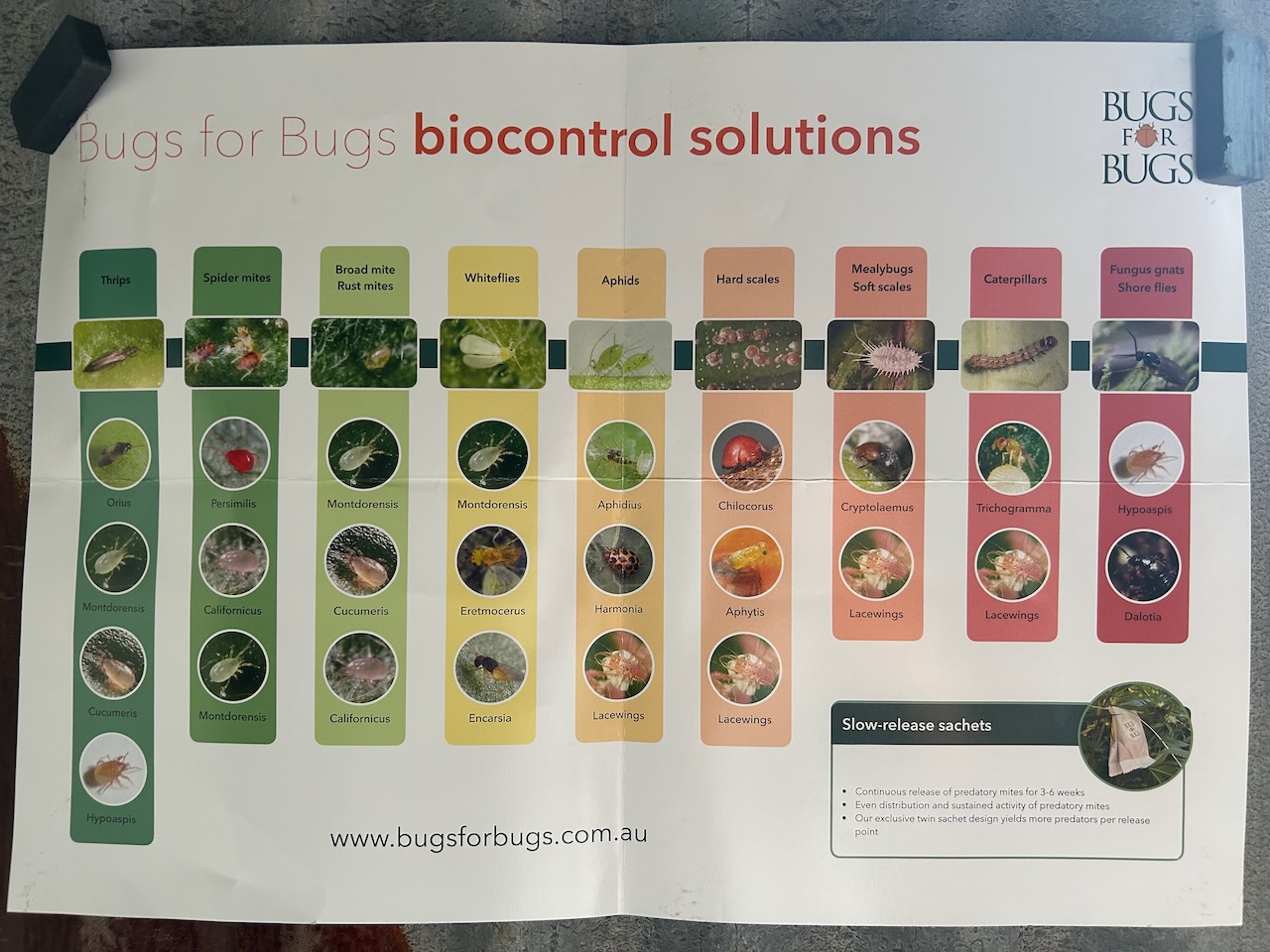
I have also infected the apples, pears and quinces with parasitic wasps eggs of ’trichogramma’ wasps. These are bred to hatch out and predate the codling moth and other caterpillars. I haven’t used them before, so have no idea how effective they are.
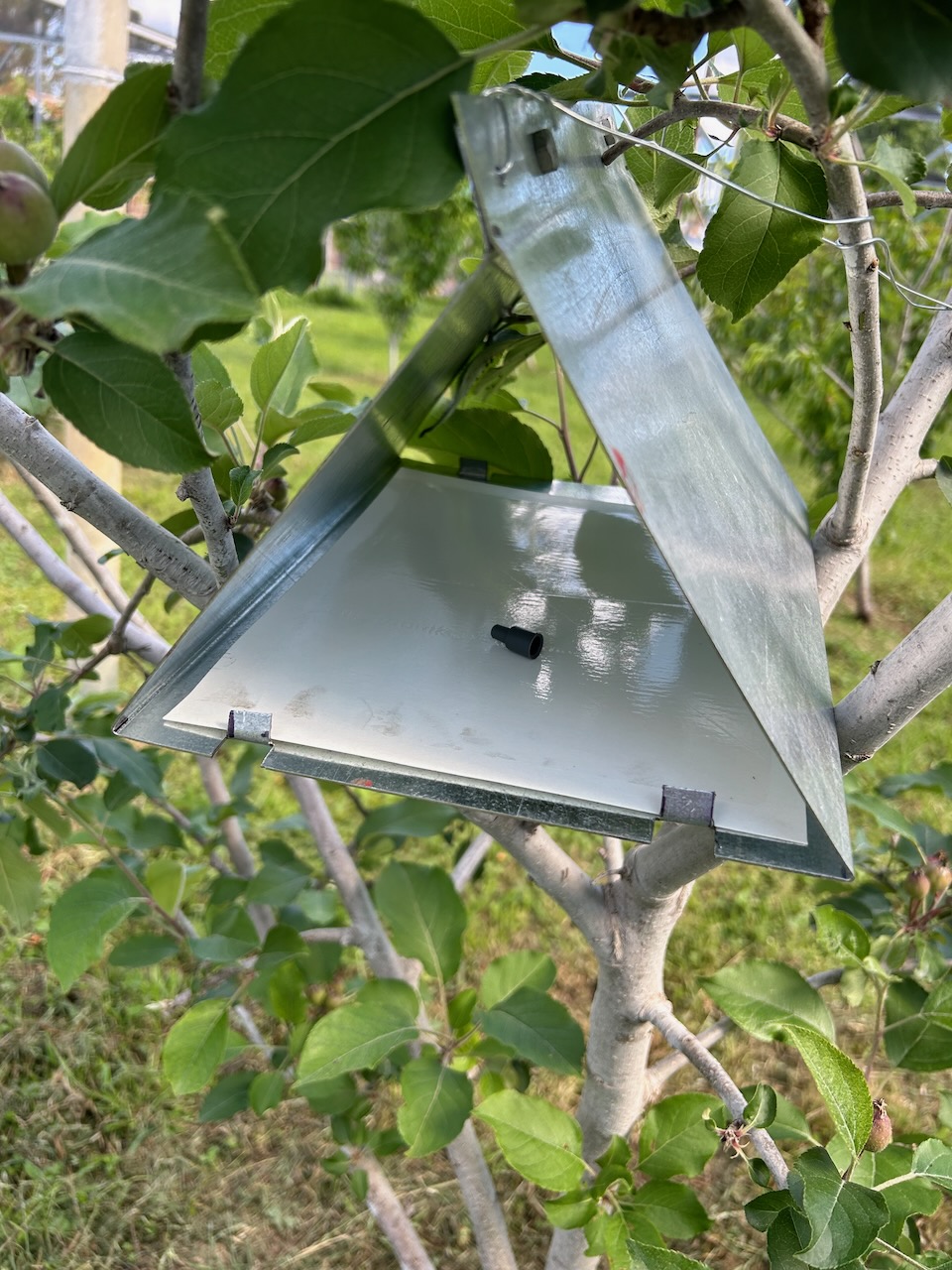
I also built a few steel triangular housings for codling moth pheromone lures. These work by attracting the codling moths with the scent and then catching them on sticky paper inside the lure. These are working. I can see half a dozen little coding moths inside the lure stuck to the sticky paper. I’ve also been tying hessian bandages around the tree trunks, but so far I’m yet to find a caterpillar in there. This definitely hasn’t worked so far. I also added a ring of sticky bandage around the trunks as well. This also hasn’t yielded any results – so far. My last approach has been to hang empty milk bottles in the trees with cut-out windows, and spreading ‘Spinosad’ fruit fly attractant jelly inside. I use it inside the milk bottles to stop it being washed off in the rain.
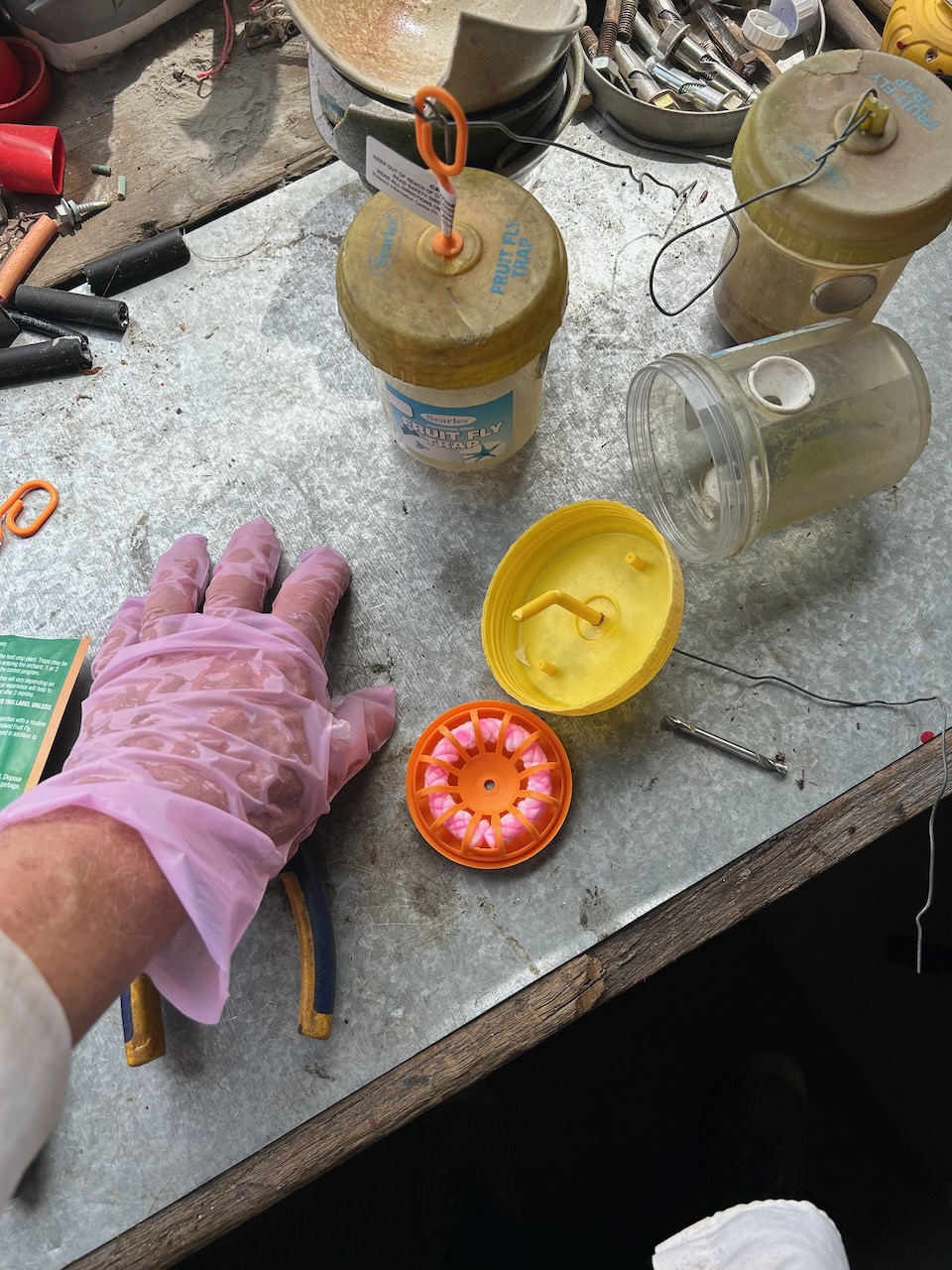
Lastly, I re-filled the old ‘DakPot’ style female fruit fly lures with new hormone baits. When I emptied the old ones at the end of winter, there were 50 or so dead fruit flys in each of them. So this does work. It doesn’t stop the female fruit flys from stinging the fruit, but it reduces the numbers of flies by eliminating a lot of the males out of the system.
We still have fruit fly problems, but I presume that it has been significantly reduced by my efforts. Well, I have to tell myself that don’t I?
Otherwise, why am I wasting my time like this with all these organic techniques, when I could so easily just spray the whole orchard with dieldrin or some other horrific poison? All the fruit for sale in the big supermarkets is sprayed with chemicals. S what are my options? Buy poisoned fruit, or try and grow clean, organic fruit? We are trying to live a pesticide free, low-key, creative, organic, carbon constrained, Post-modern peasant lifestyle. Everything costs more and takes longer and needs constant attention, but we are committed to living it.
Nothing is ever finished, nothing is perfect and nothing lasts.
The second workshop on the 11th to the 13th of January is also now FULL
I have started a new waiting list for a third workshop for sometime early in February, yet to be determined. I already have 3 names, but need 8 to run the course.
Janine, Len Smith and I will be offering a 3 day throwing workshop over the summer break. Jan 6th to 8th.
We will be teaching throwing techniques for beginners and intermediate level, aimed at making larger forms.
This is NOT a Masterclass for advanced throwers. This workshop is aimed at beginner to intermediate level.
You will need to be able to center clay on the wheel, from there on we will help you make some larger forms, demonstrating exercises to give you confidence to tackle slightly larger projects. Progressing from whatever your current level of skill is.
I will be demonstrating a series of techniques such as top hatting and coil and throw building techniques.
We will also be demonstrating construction techniques, assembling your thrown sections together to build slightly more complex or larger pieces. We will help you work at your own pace to gain confidence and increase the complexity of your forms, or the height and scale of your pots, as you choose.
The workshop runs for three days from 10 till 4pm on Monday 6th of January to Wednesday 8th of January.
Clay is provided, you will need to bring your throwing tools and lots of batts, a dozen or more. If you own an electrical heat gun, you can bring it along with your tools.
Tea and coffee are provided, please bring something to share for lunch.
Numbers are Limited, as we only have 8 wheels in the studio. First in best dressed.
Cost $375 for three days. Enrollment is confirmed after payment is made.
This weekend is the Australian Ceramics Association, Open Studios.
We will be open from 10 to 4 each day.
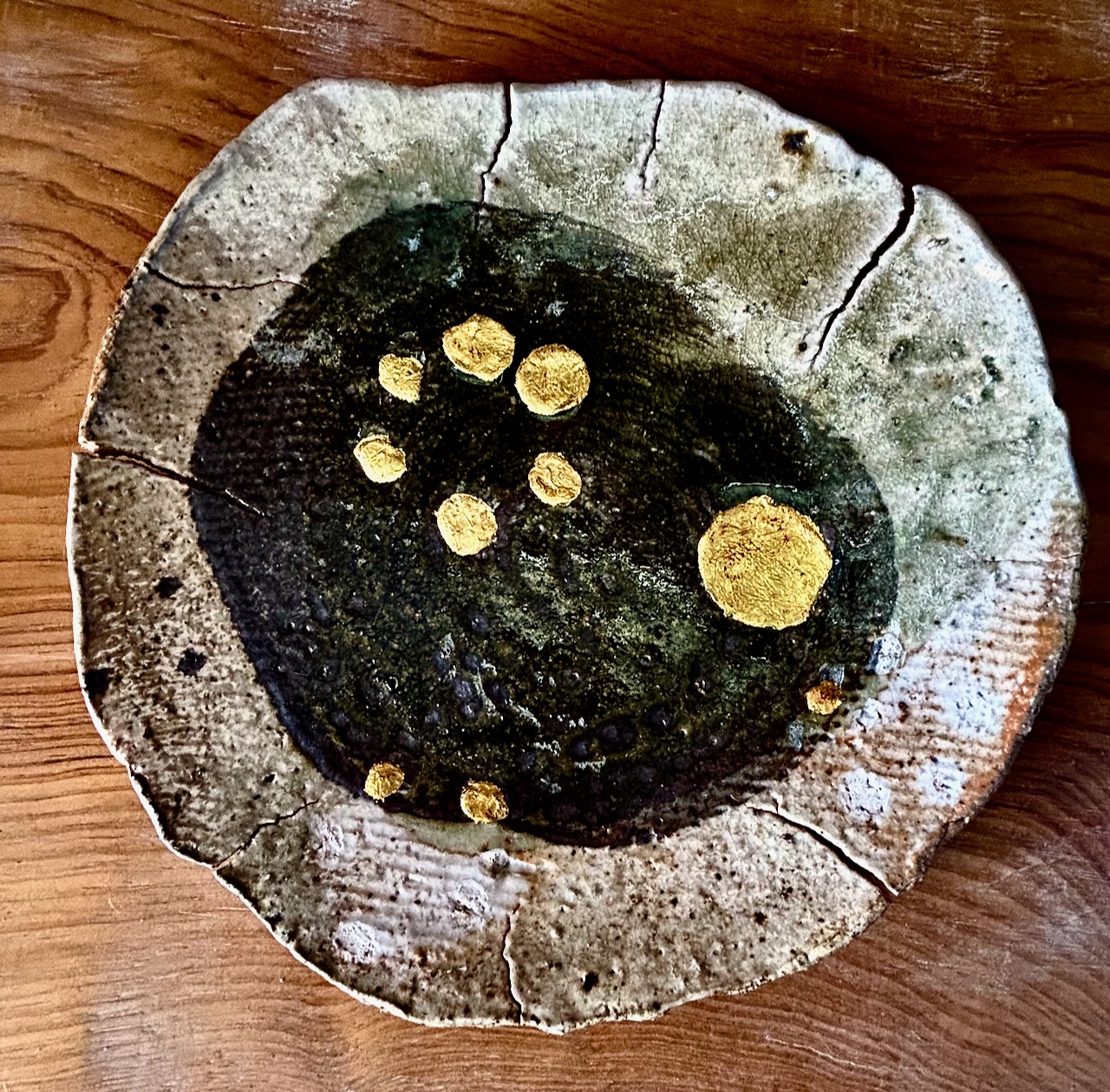
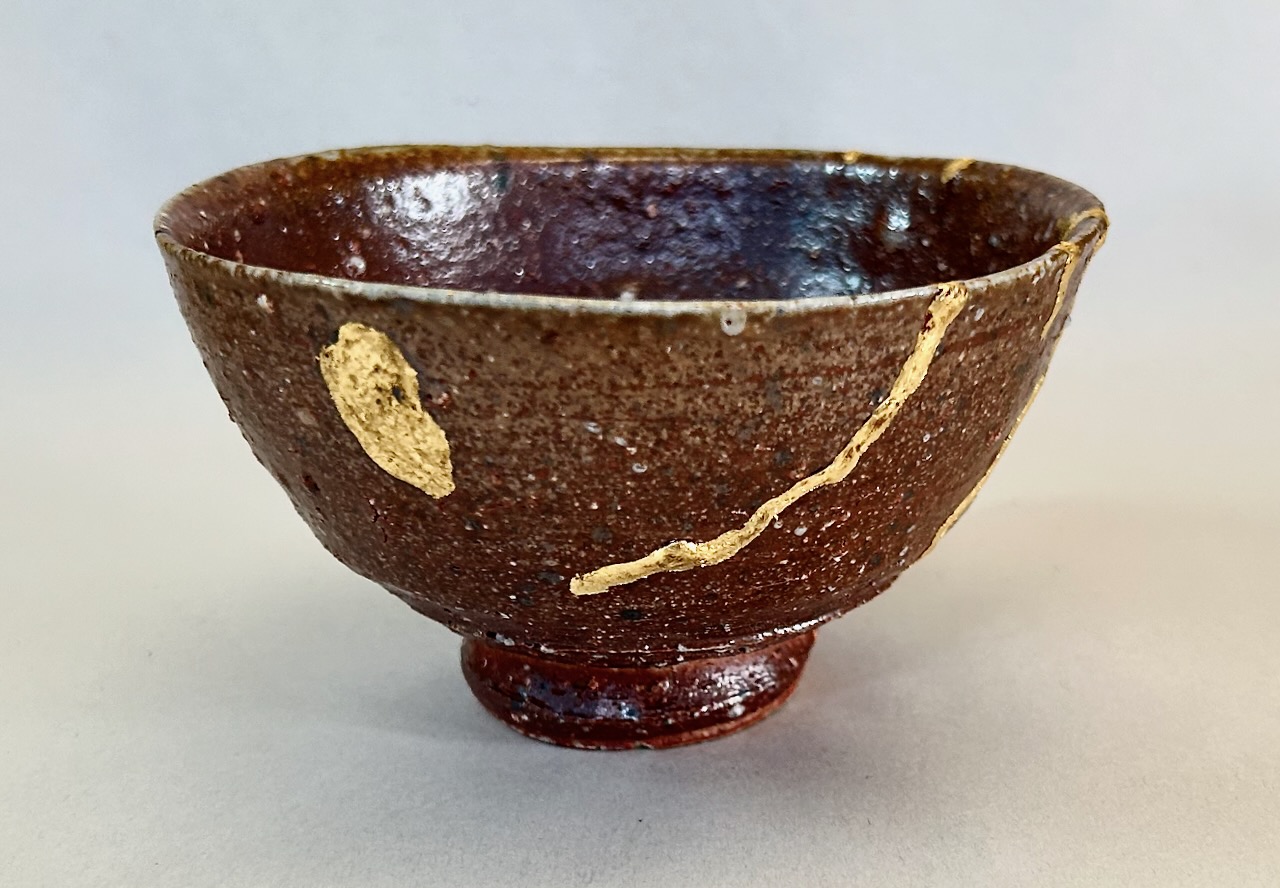
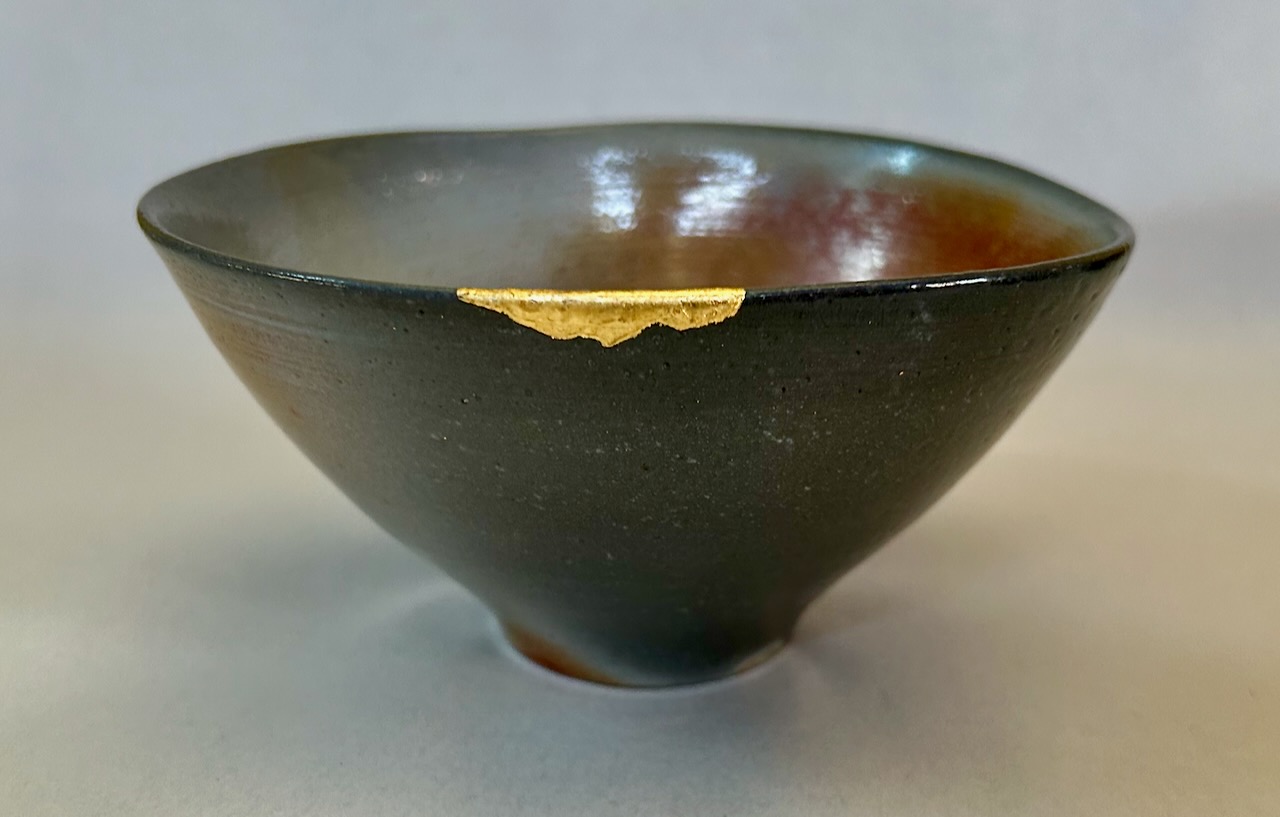
I have been continuing to work over the past few weeks. In particular, I have been doing some ‘kintsugi’ gold repair on a few of my pots with interesting cracks.
Some 23 carat gold really lifts a slightly damaged pot.
I have also found time to make the weekly loaf of rye bread, and a tray of rock cakes to share with our visitors over the weekend.
We will be open for the next two weekends in November, 16th/17th. for the Southern Highlands Arts Trail then the ACA Open Studios, Ceramics Arts Trail that is happening Nationally on the 4th weekend of the 23rd and 24th of Nov.
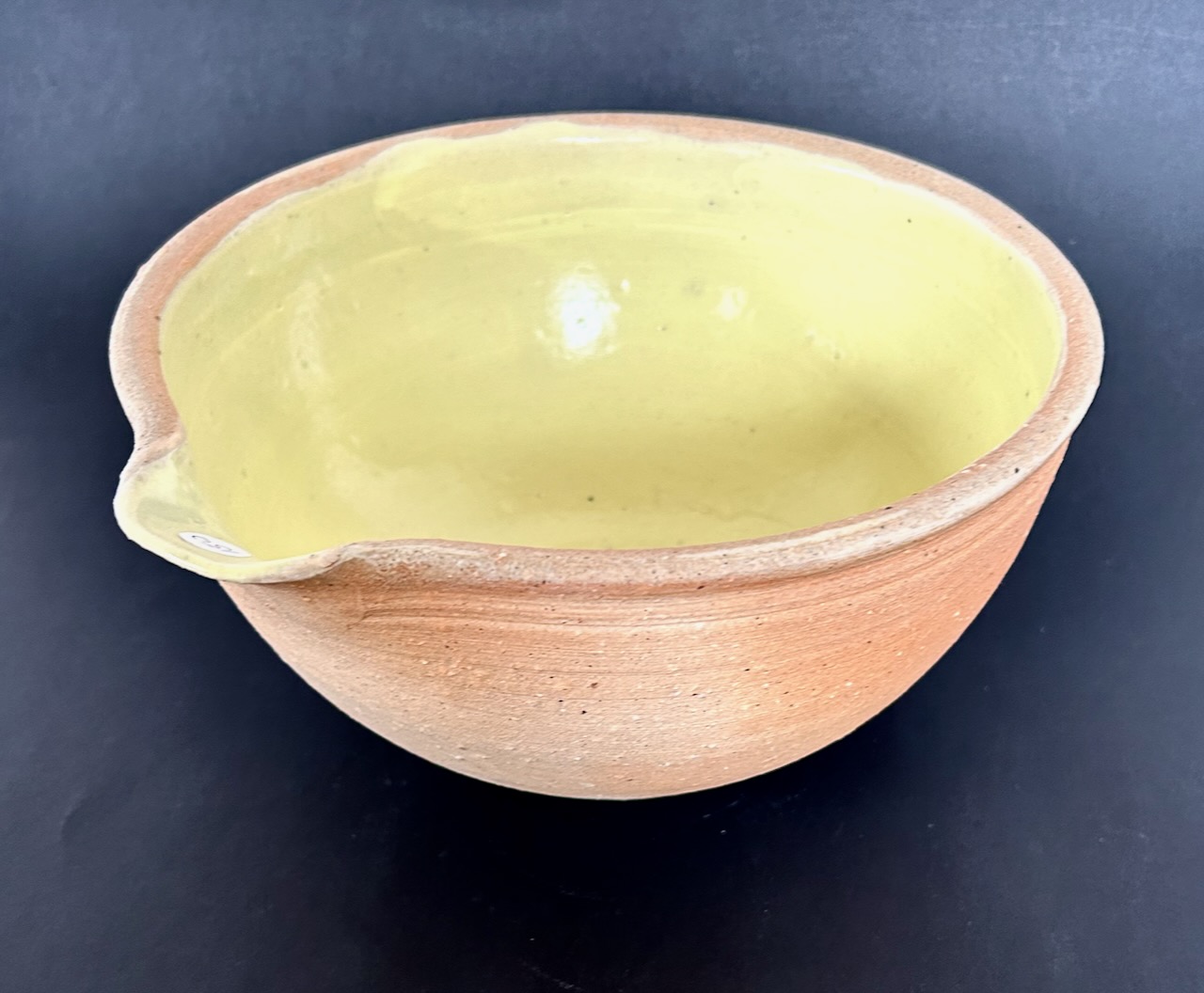
We have plenty of pots in the gallery, floral bowls, and Mixing bowls.
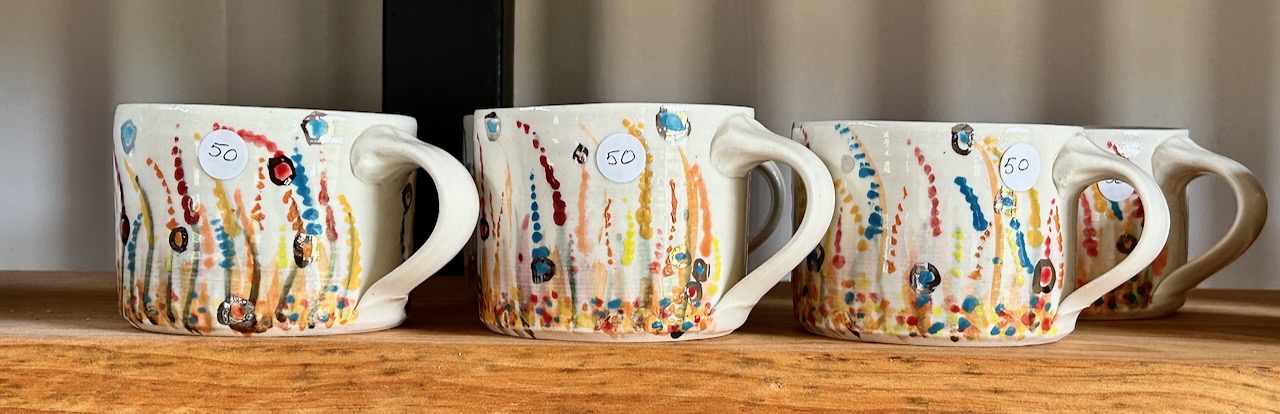
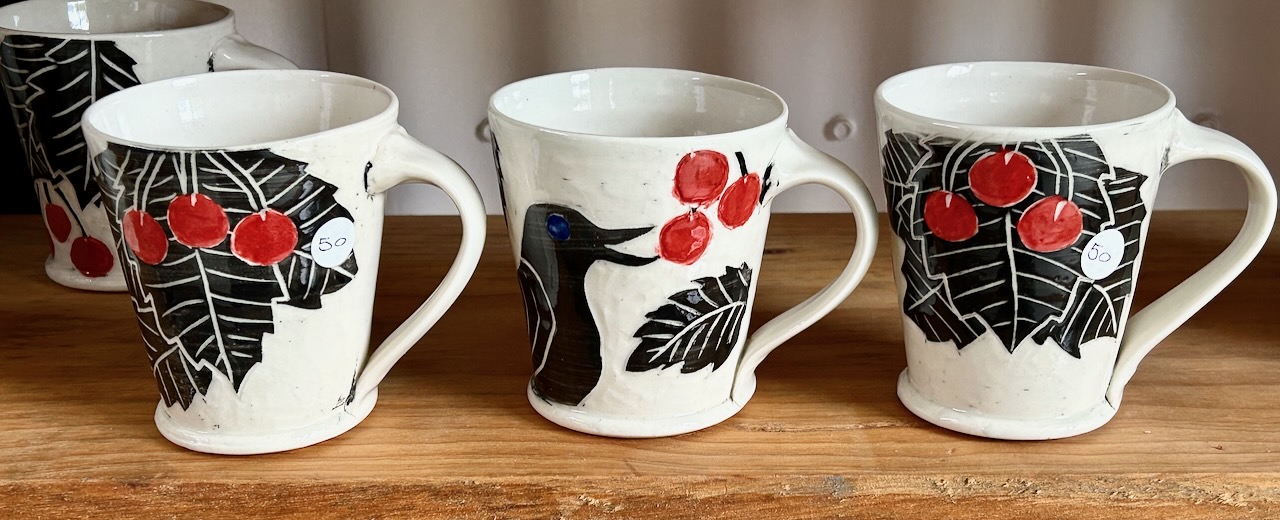
Celadon mugs, Floral mugs, Sgraffito mugs and Sgraffito plates.
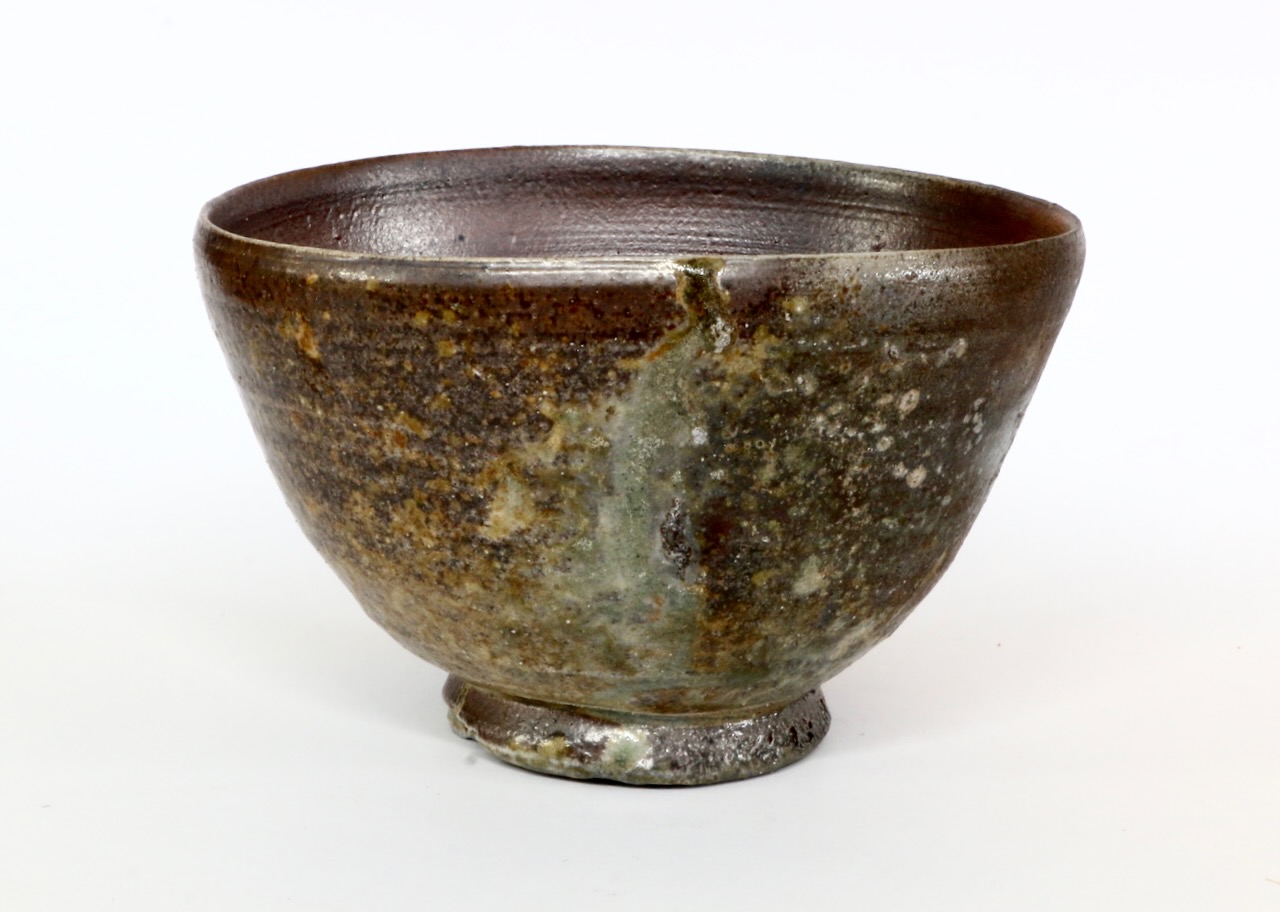
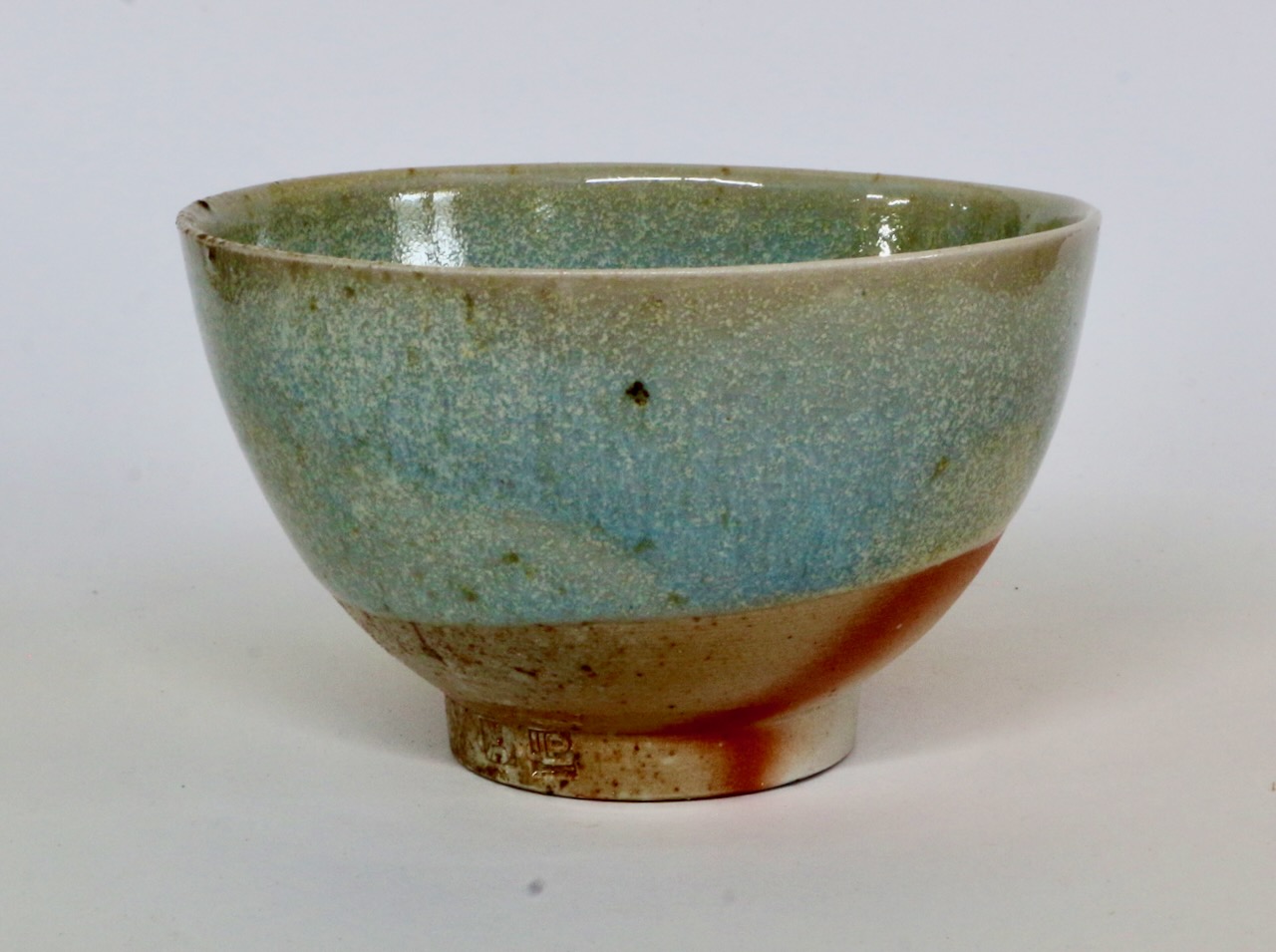
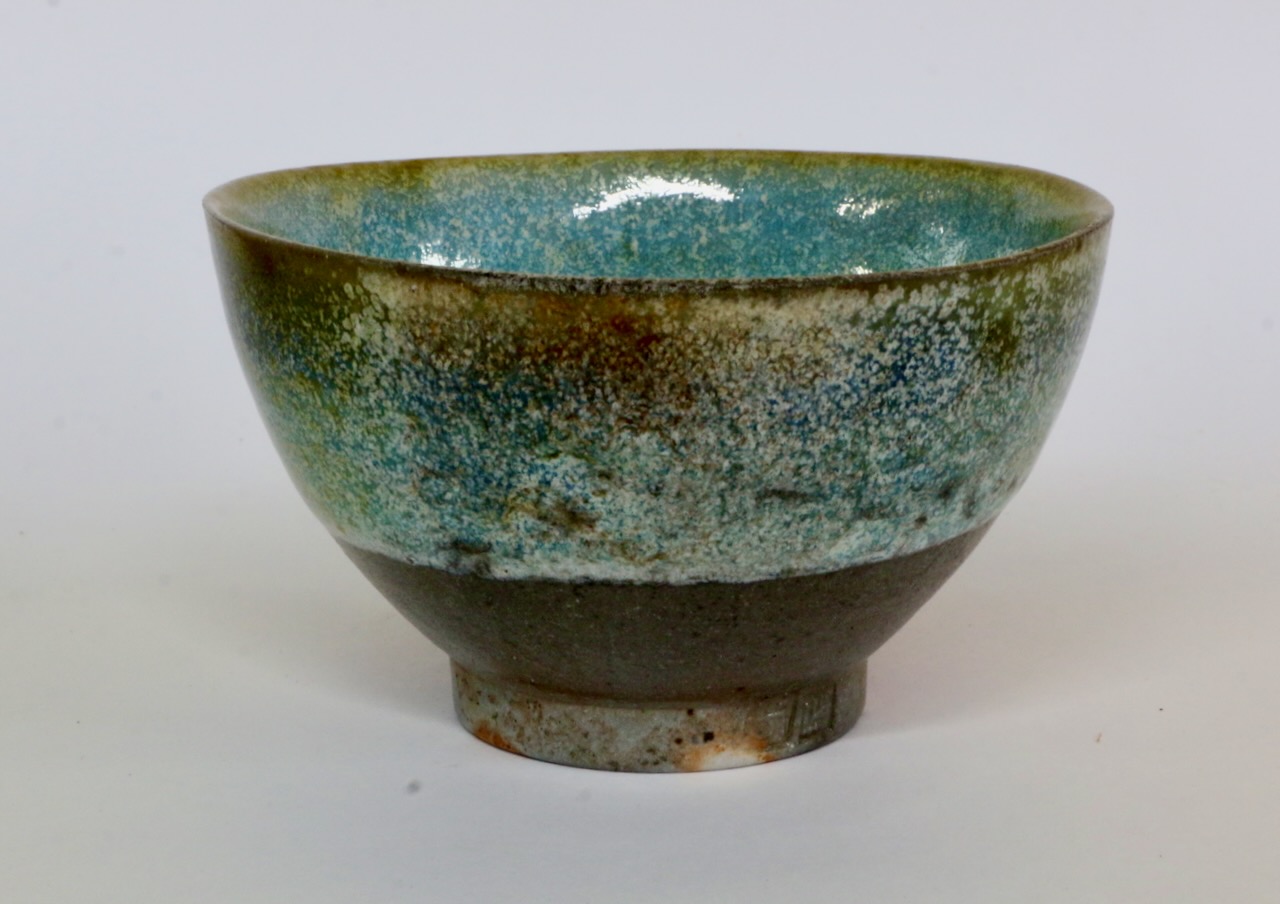
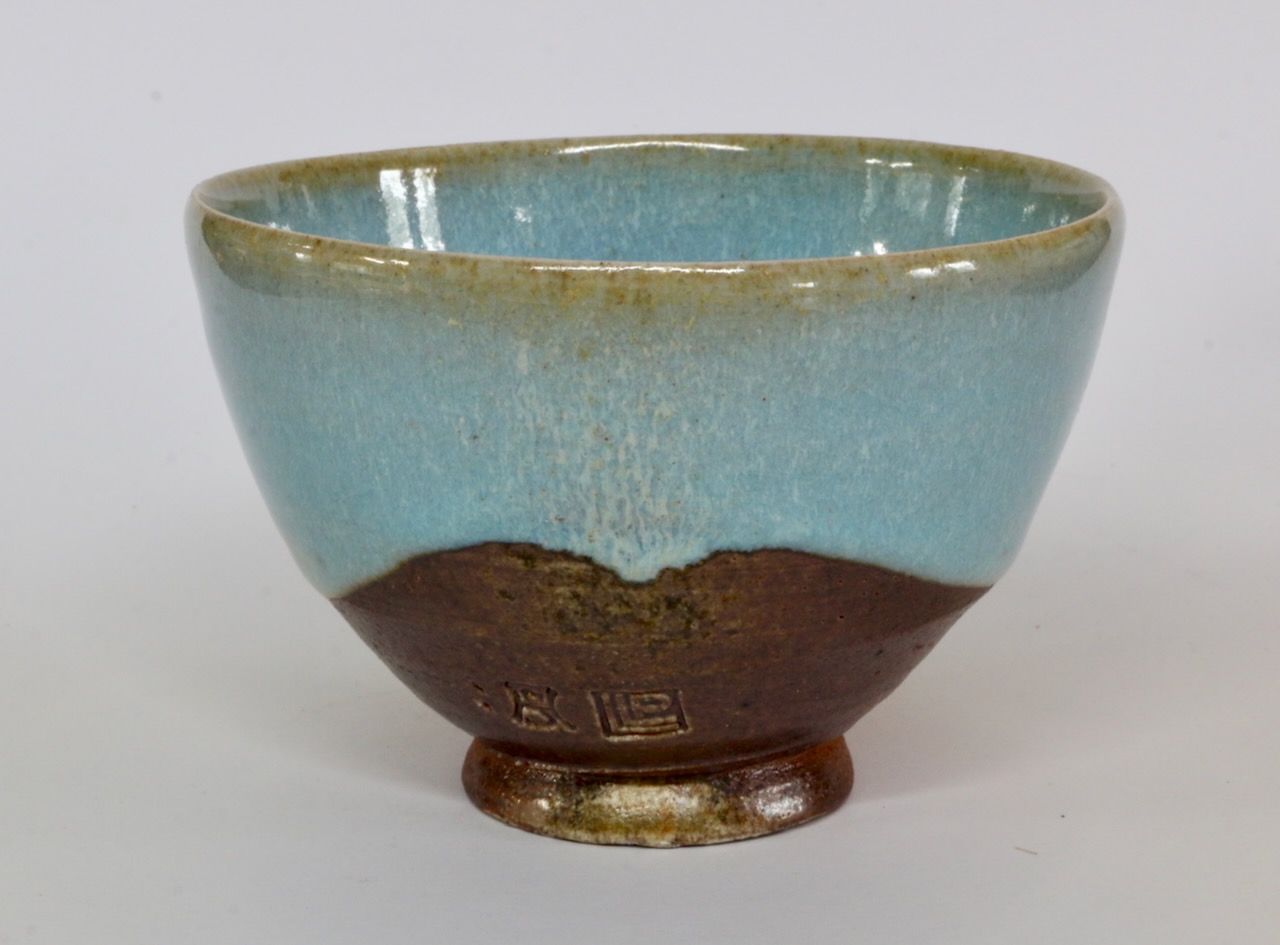
I have some unglazed, wood fired Tea bowls that I have been fettling and finishing during the week.
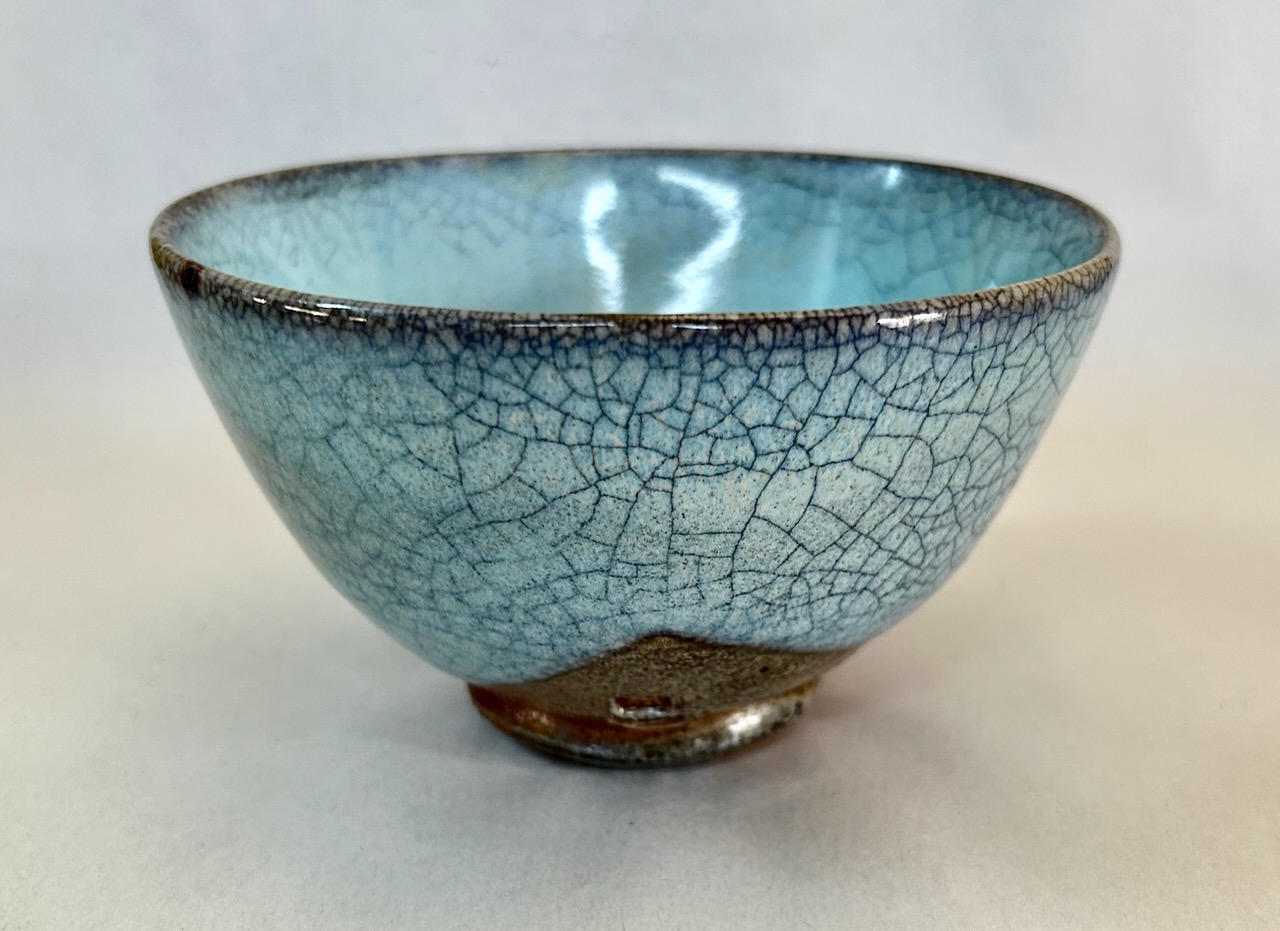
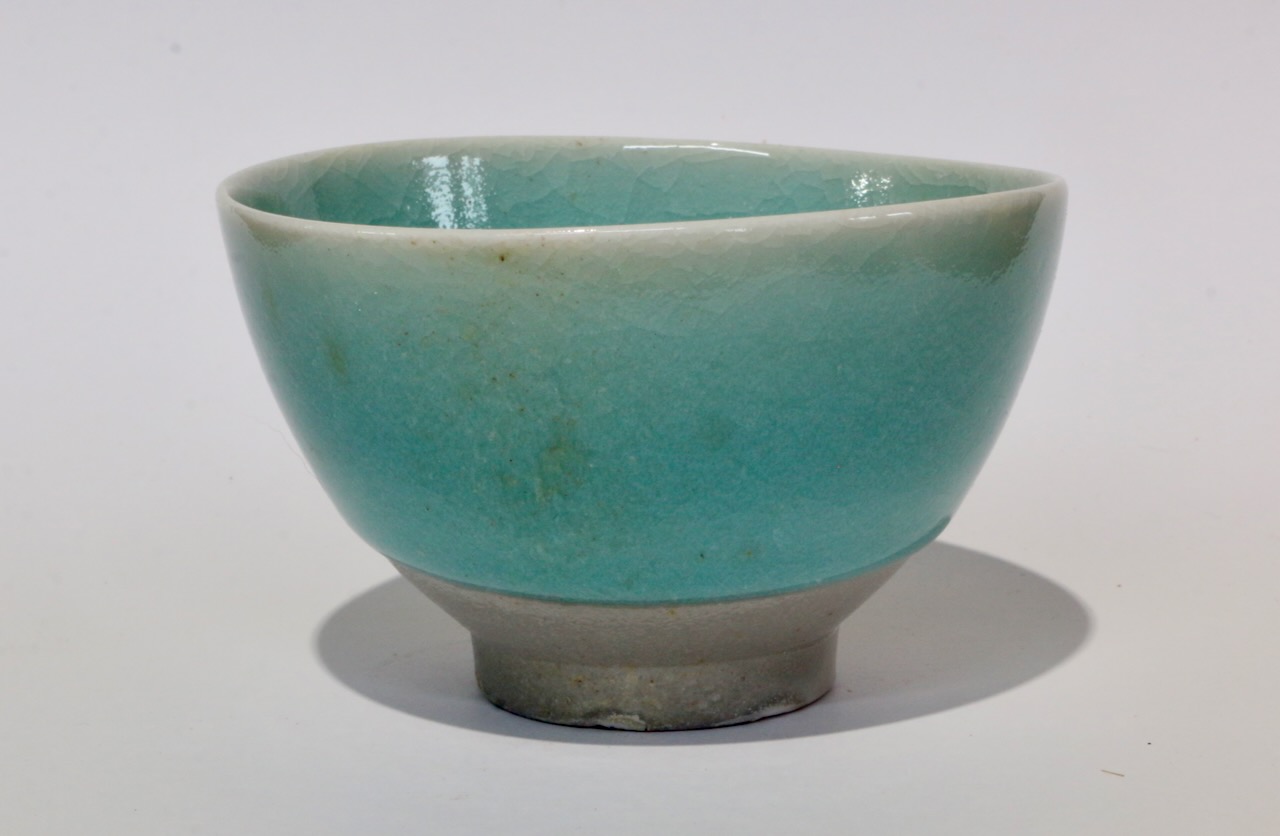
And some wood fired porcelain bowls, glazed with traditional blue celadon. This bowl has some carbon inclusion in the exposed body and is quite subtle and very beautiful in a restrained sort of way.
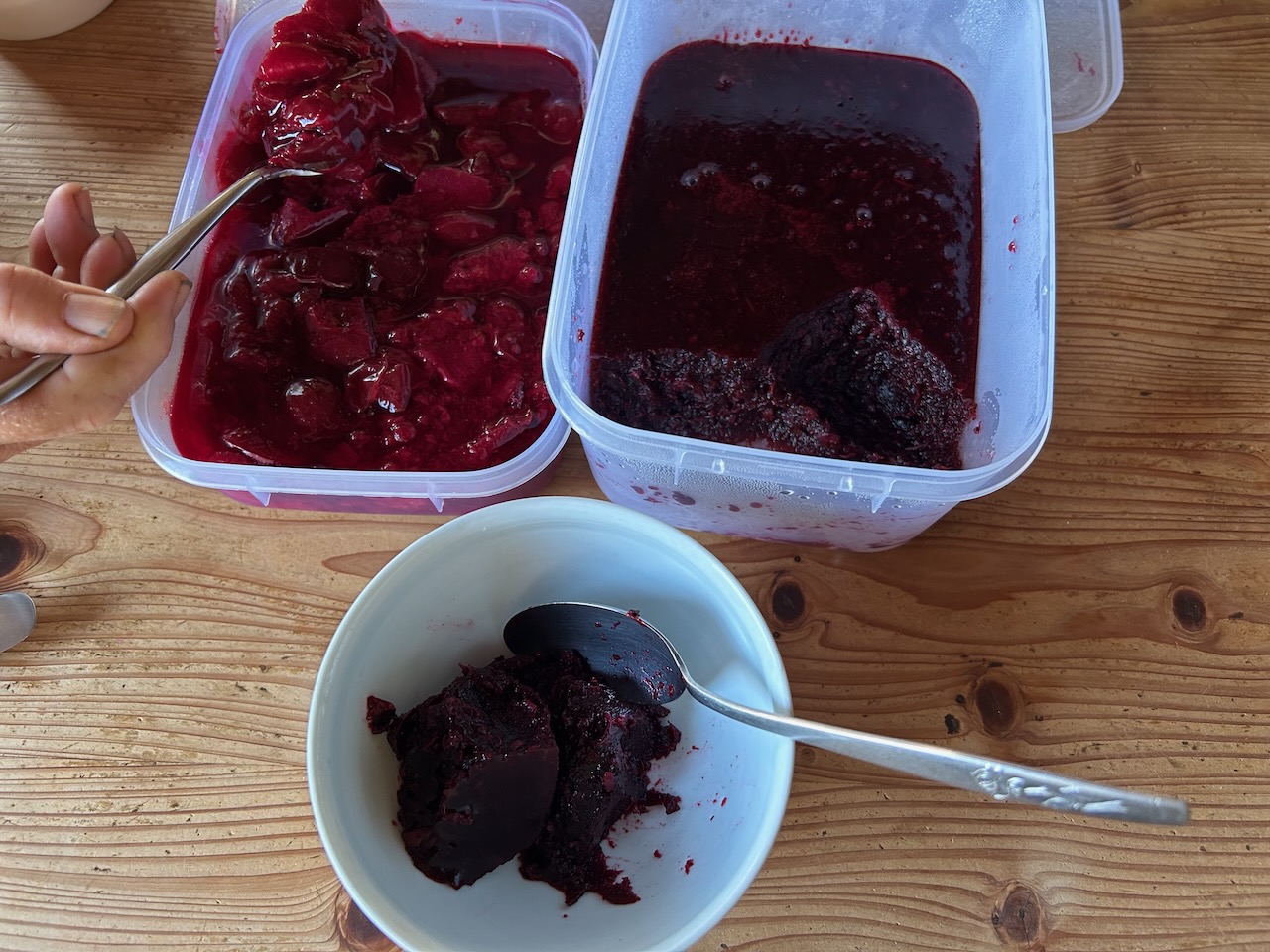
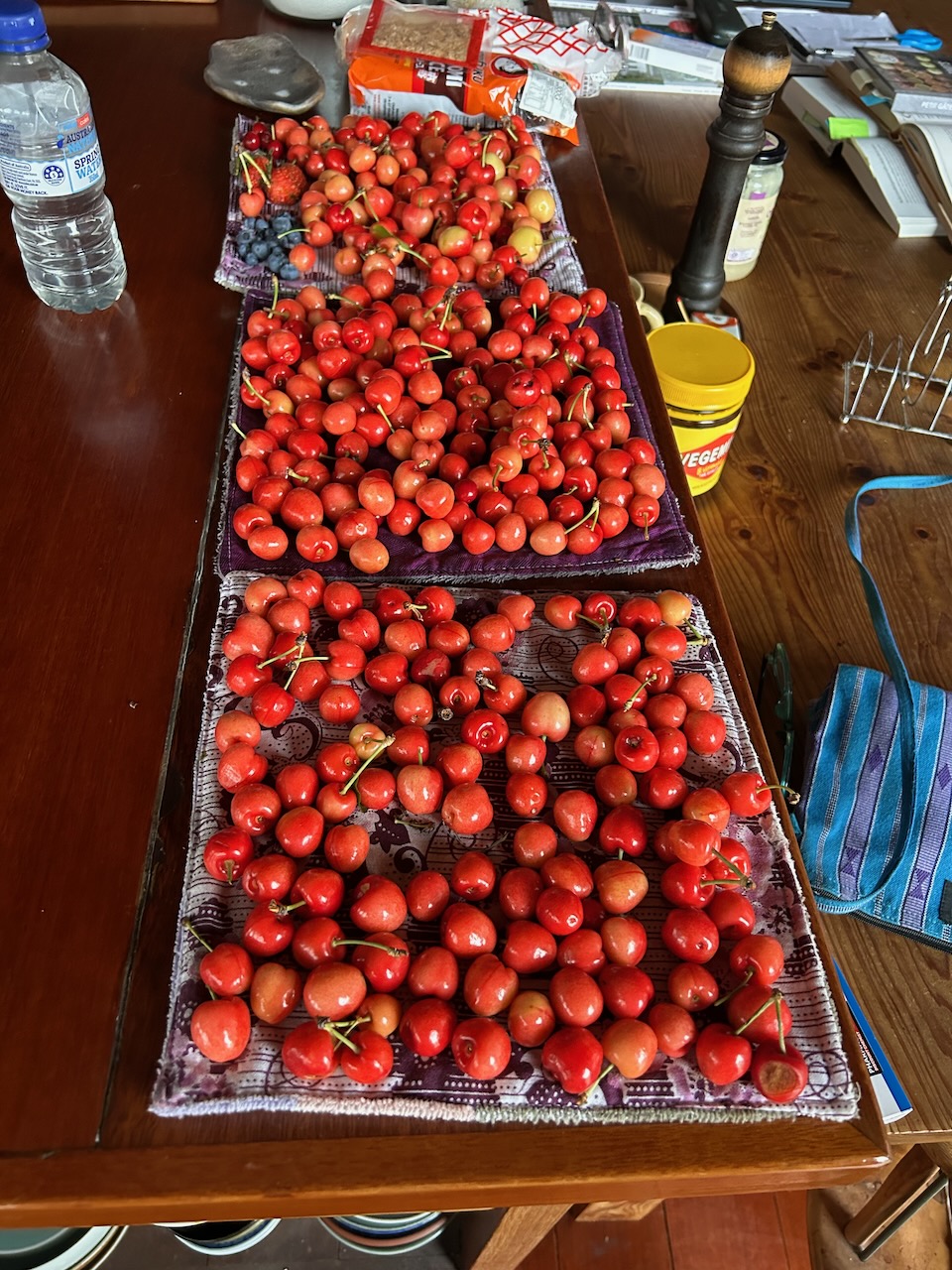
The cherry crop is in full swing just now and we are able to pick a kilo of cherries every few days. We had bowls full of cherries on offer to our visitors last weekend.
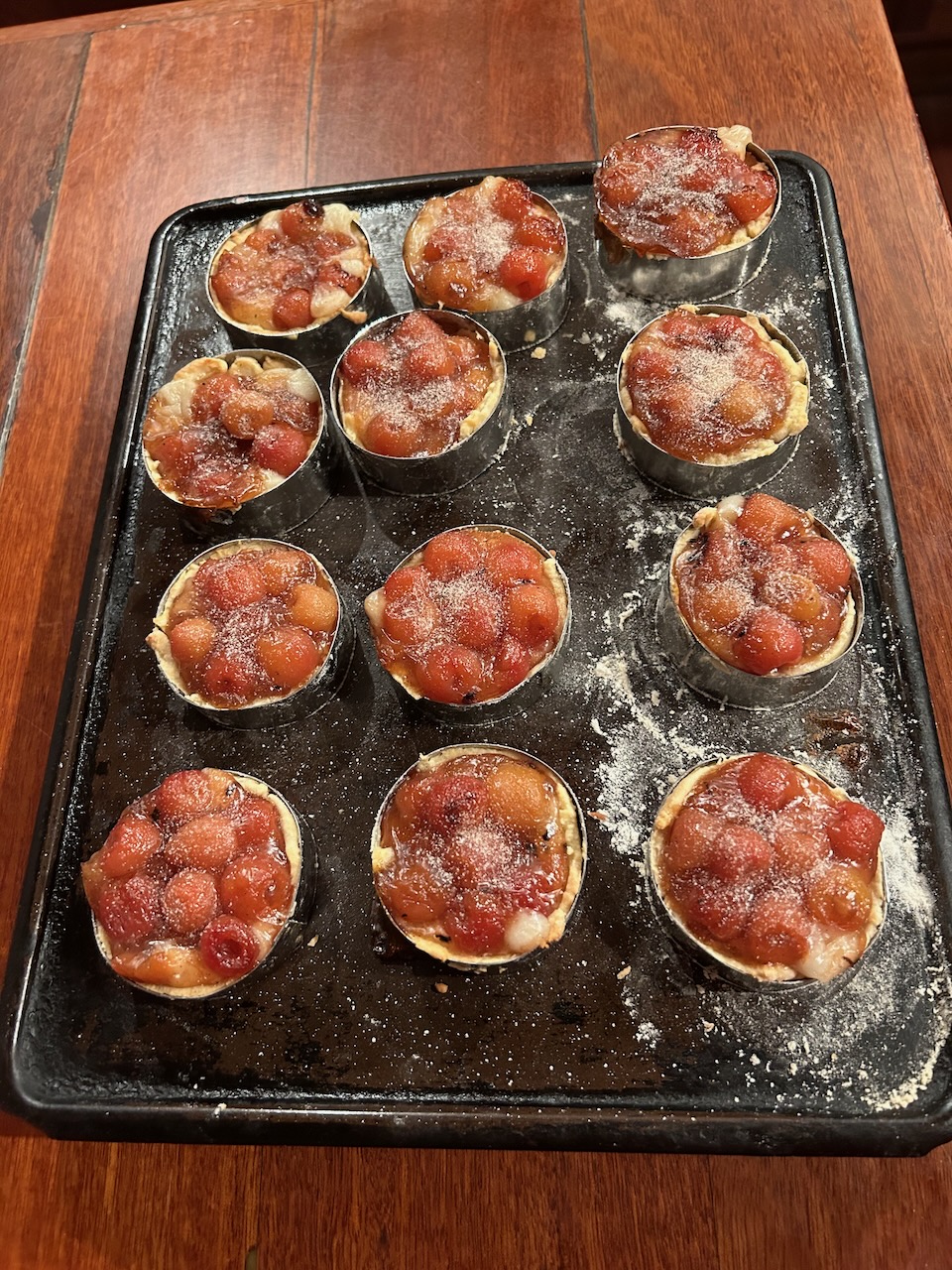
As we have eaten our fill of fresh cherries, during the week I made home made cherry pie and cherry tarts – because I can!
This is the only week of the year when we can do this. So I make an effort and do it. What else are evenings for?
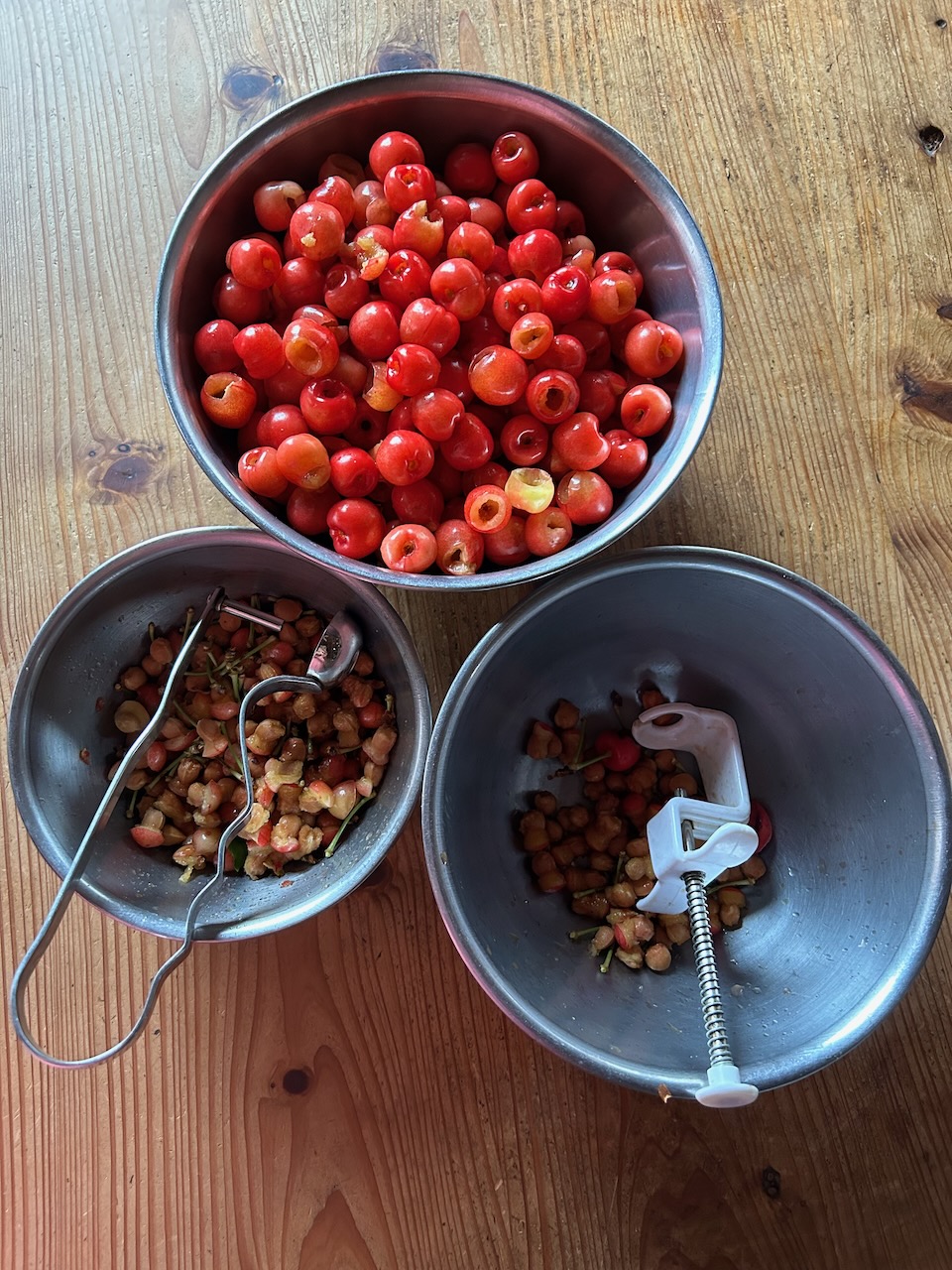
The recipe optimistically said that it takes 15mins to de-pip a kilo of cherries. It too Janine and I 30 mins. 4 times longer, but worth it. Nothing worse than biting into a delicious looking cherry tart and breaking a tooth on a rouge cherry stone.
I made the recipe with only half the sugar and it is just about right for my taste. I made an almond short crust pastry, quite a bit of fiddling around, but the end result is vaguely sweet, pleasantly soft and slightly crunchy.
I had to go to the workshop and make a dozen stainless steel tart rings. I found a little piece of stainless off-cut, sliced it up in to strips and spot welded them together into small 60 x 20 mm tart rings. Waste not, want not.
Nothing is perfect, nothing is ever finished, and nothing lasts forever.
We will be part of the Southern Highlands Arts Trail – Open Studios on the 2nd, 3rd and 4th weekends in November.
I’m back from my work in Korea and I hit the ground running. All the seeds and seedlings that I planted in late August, just before I left for Korea, were all burnt off in the severe frost event that swept through here in early September. However, all the over-wintering vegetables like peas, broad beans, asparagus and the brassicas are all thriving. So that is what we are eating at every meal these days.
Because we only eat what we grow, our diet tends to go in long stretches of similar meals, we vary the actual mix for variety but I’ll be glad when the first of the summer crops comes on. That is always zucchini, they are so fast out of the starting blocks, along with radishes.
However, I know that I’ll be glad to see the last of the ratatouille based summer meals and we can taste that first cauliflower again as the seasons come around. I think that it is a universal human failing to want what you don’t have. No matter how many cabbages I grow, I still hanker for a banana or a pine apple every now and then.
At the moment, I am just loving the smell of the tomato foliage as I brush past it when weeding. The smell of tomato leaves offers such promise of fresh salads and the long hot days of summer to come.
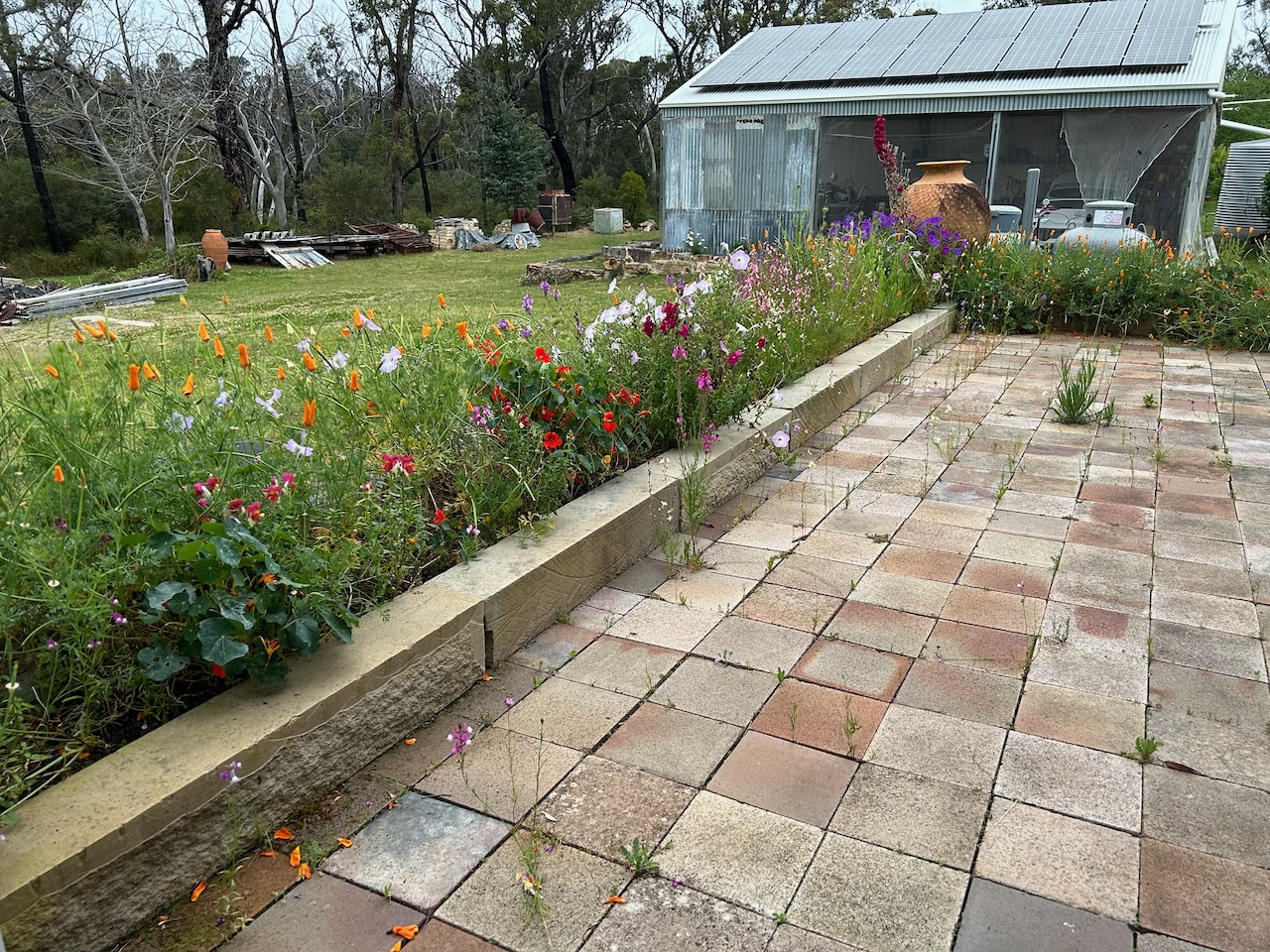
The more established spring flowers in the flower beds around the pottery were not affected by the frost, and have gone on to bloom there little buds off. Its very cheerful and uplifting to look out the studio window and see a vista of spring blooms.
After the frost. Janine went out and bought some more early seedlings to get a bit of a head start for the summer garden, and now that I’m back, I spent all of my first few days planting seeds, weeding, mulching and mowing to get the place ready for the Open Studios Arts Trail, that is being held on ther last 3 weekwnds of November. But also to guarantee our summer food supply security.
Janine transplanted some wild self-sown spinach seedlings, but they didn’t all take. I filled in the gaps inbetween with some extra seeds. The vegetable garden is looking good again with all the red poppies in flower now. The bees are going full speed ahead. Their little yellow saddle bags are full and bulgeing with pollen.
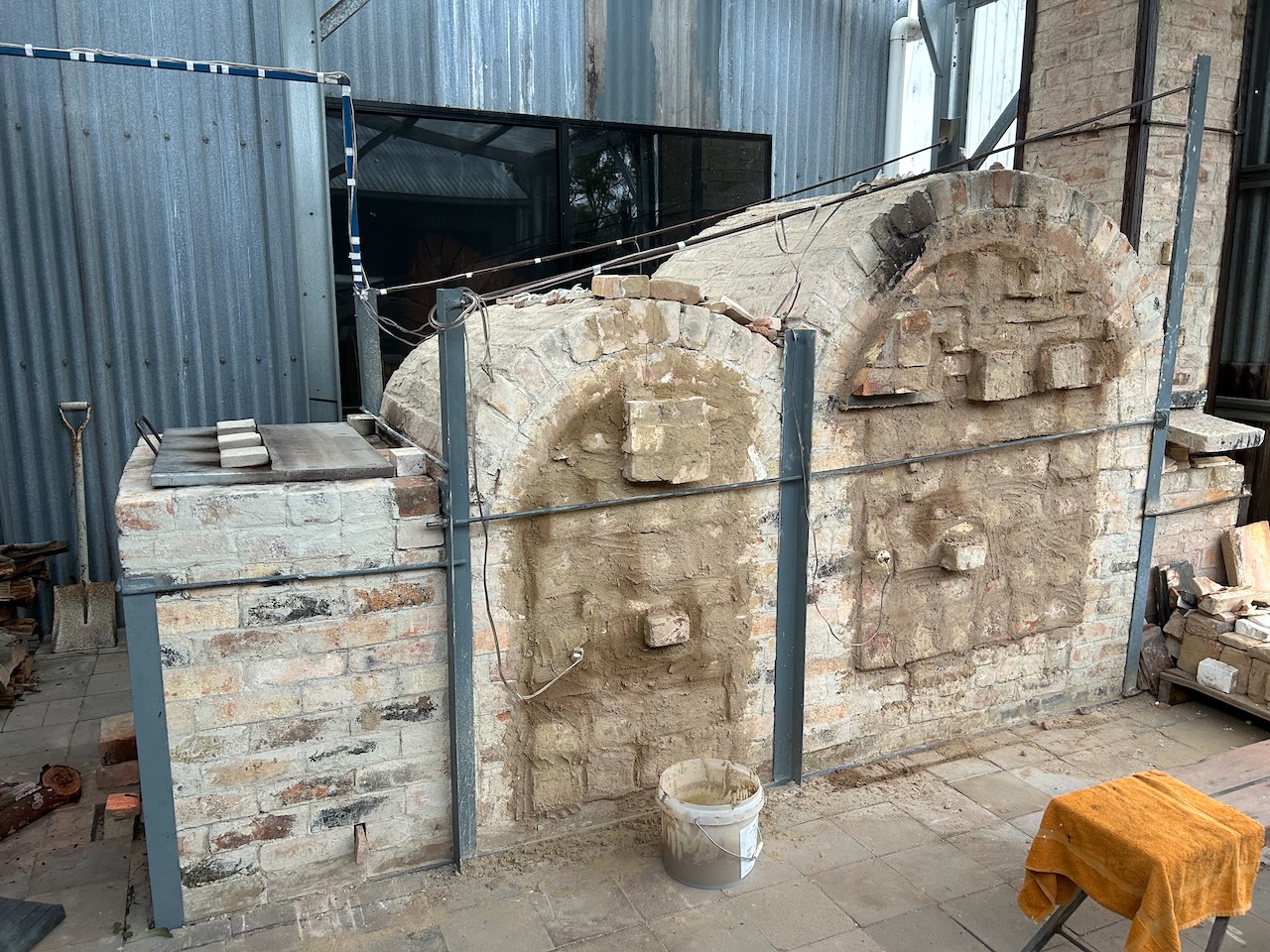
We already had a lot of pots made for the open studio sale before I left for Korea, but there was also a lot of bisque ware that I had prepared for a wood kiln firing, but I just couldn’t fit it in before I had to leave. So now that I’m back I have glazed all that work and packed the wood kiln.
13 hours to 1300. I think that I have finally found to best way to burn my pre-burnt and charred dead forest of kiln fuel timber.
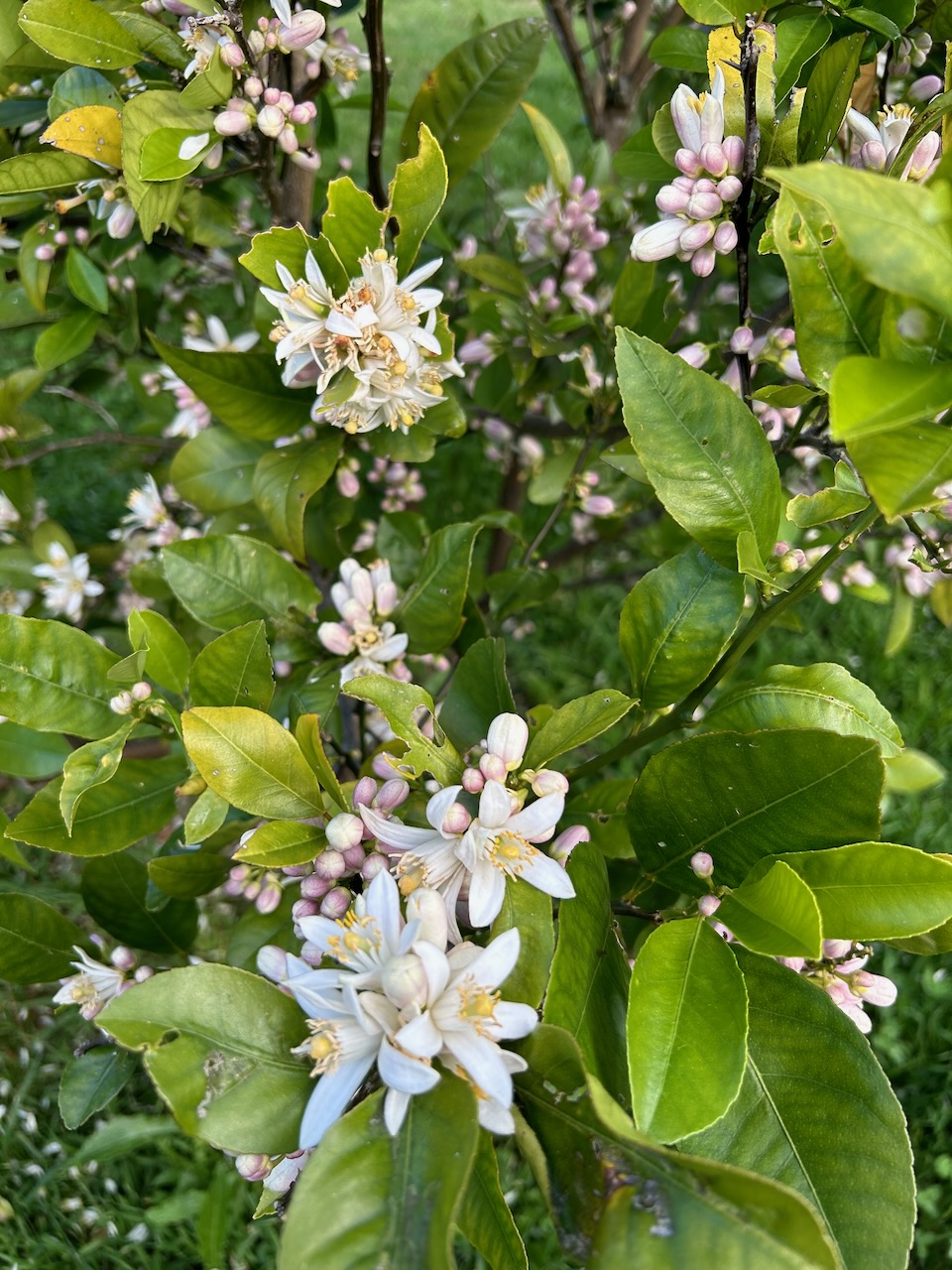
The citrus grove is in full bloom and you can smell the fragrance of the citrus flowers from the pottery, if the wind is in the right direction.
We will be open for three weekends in November, 9th/10th and 16th/17th. for the Southern Highlands Arts Trail then the ACA Open Studios, Ceramics Arts Trail that is happening Nationally on the 4th weekend of the 23rd and 24th of Nov.
Keep us in mind and call in if you can. We have some lovely work to show you.
After the successful firing of my kiln, which could have been better, but served well as a proof of concept firing. I have a couple of other jobs lined up while I’m in Korea. One of them was for an institution, but the person in charge hadn’t applied for permission to build a kiln there until last week, so no permission was forthcoming – at least not in time. I couldn’t build a kiln in an institution without permission, just in case it was refused, or so slow in coming that it would be approved for the next financial year, either way. I wouldn’t be able to get paid for any work done now. So I decided to move on to the next job.
One of the potters working on the big kiln in Bangsan Porcelain Village, named Mr Kim tells me that he has built a downdraught firebox wood kiln at this home on the east coast, but it didn’t work all that well. We have been discussing this over dinner in the evenings. I show him my plans for the Bangsan kiln and all the mathematics that I use to work out all the dimensions for the various openings, firebox, flues, throat and chimney etc. He asks me to come with him after this job here is over, he’ll drive me to his place and I can look at his kiln and make any suggestions that I can think of to help him improve it. He tells me that he’ll drive me back again afterwards as well. This is good news, as my suitcase is now approaching 30 kgs with the load of sericite stones that I have recently added to it. Catching public transport is a bit of an ordeal with such a heavy bag. I decide to go through it and jettison everything that is not essential. I get rid of 5 kgs in that effort.
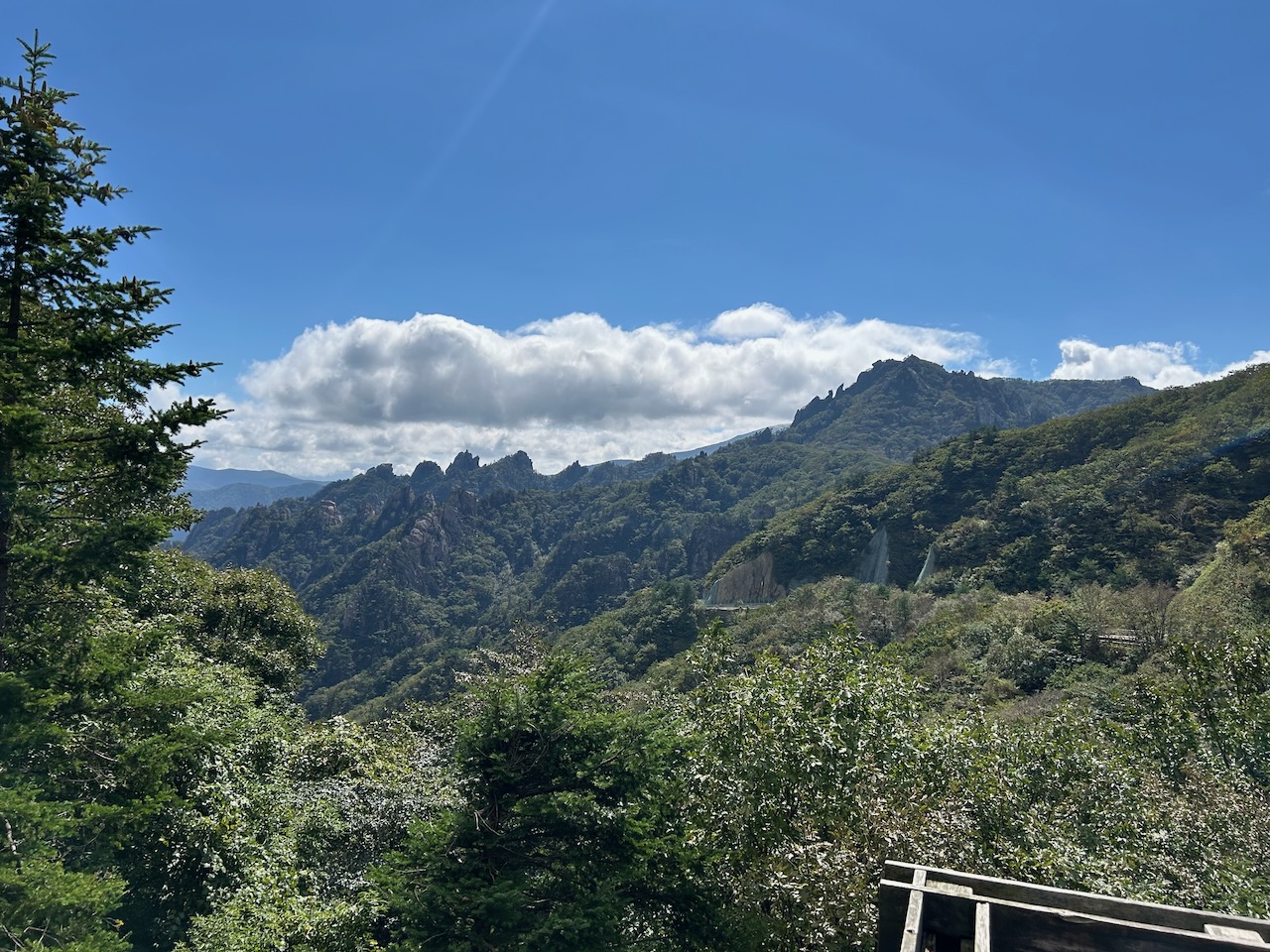
We set off to cross the country, over the mountain range that runs down this part of South Korea. We stop at a famous lookout to view back to where we have just come.
I look over the edge of the viewing deck and unsettlingly, I can see what appears to be the previous wooden deck that has collapsed into the ravine below us!
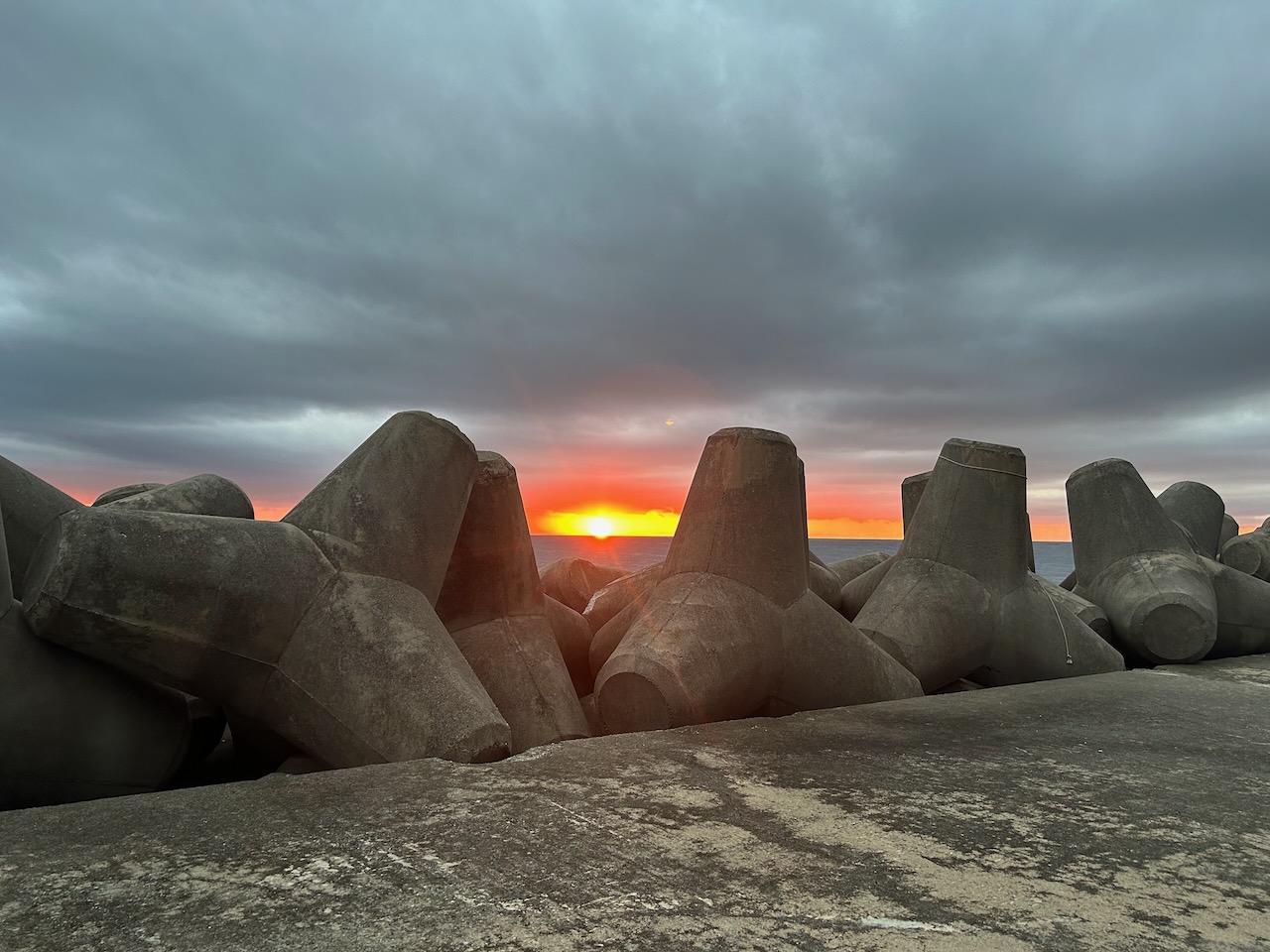
The trip is several hours to the East Coast and it turns out that Mr Kim owns a hotel and restaurant on the top of a cliff over-looking the sea. He tells me that I can stay in one of the empty rooms for the next few days while he shows me around. We dine in the restaurant run by his daughter and son-in-law and the next day at dawn we are off for a walk down to the harbour to see the sun rise.
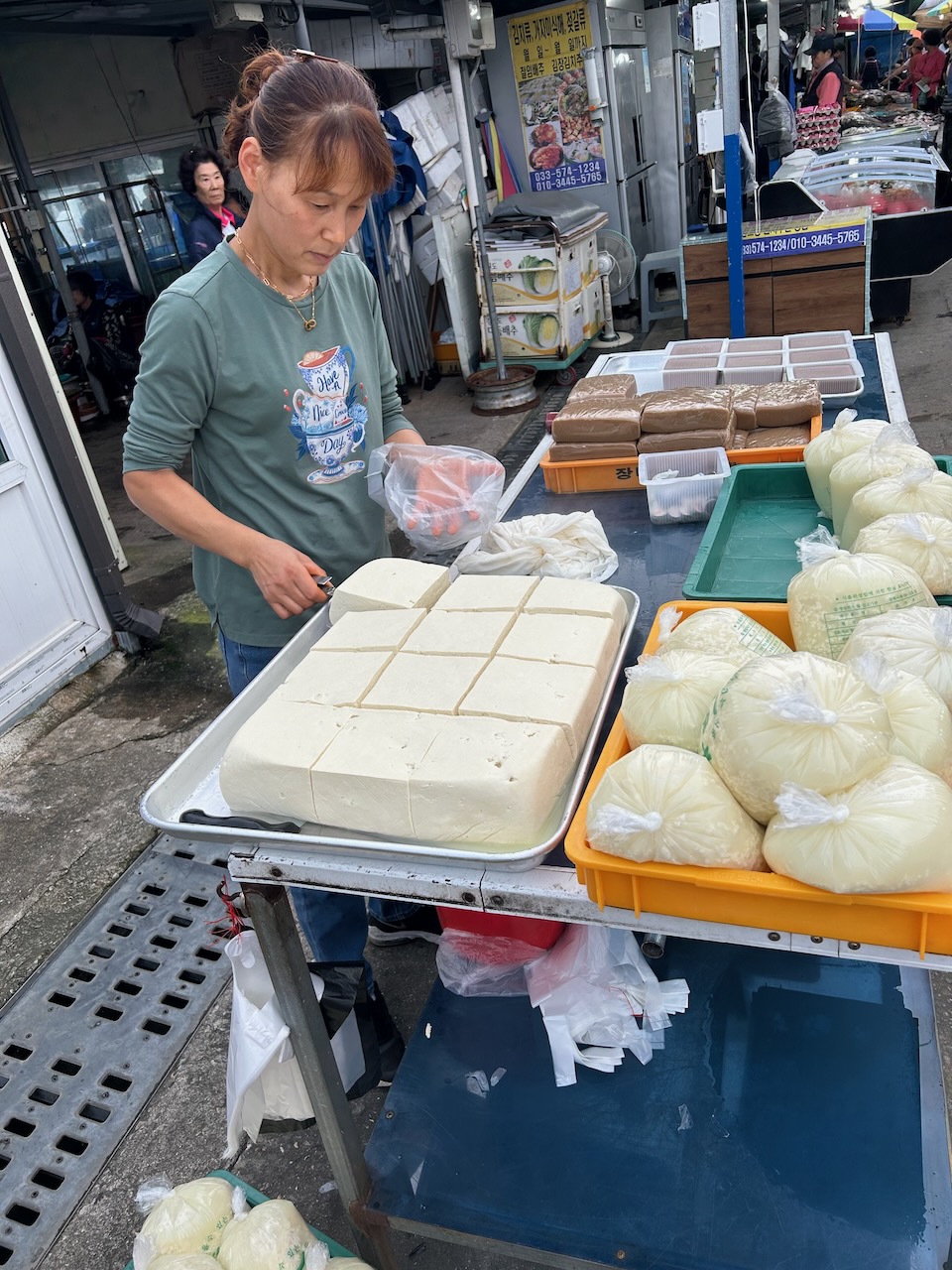
After our walk, mr Kim takes me to the local fish markets, where we buy fish, tofu, vegetables, chillies and pickles for the restaurant.
If you ever think that you might need 20 kgs of dried chillis. I know where to get it.
Mr Kim tells me that he built the hotel 20 years ago, and moved his growing family here from their first home that he built up in the mountains an hour inland from here. He studied architecture and engineering at university and set up his practice high in the mountains where they were snowed in for 3 months of the year. It is a very old subsistence farming area with a lot of ’National Trust’ Listed and preserved farm buildings that date back hundreds of years. These old farm houses were preserved because the climate is so difficult up there, no one could be bothered to pull them down and rebuild on the site. Mr Kim operated his practice during the winter lock-down through the internet. Korea has really excellent internet coverage and speeds. He and his wife raised 3 children up there. He tells me that he will take me up there to see the old place. He still owns it. He tells me to bring a jacket.
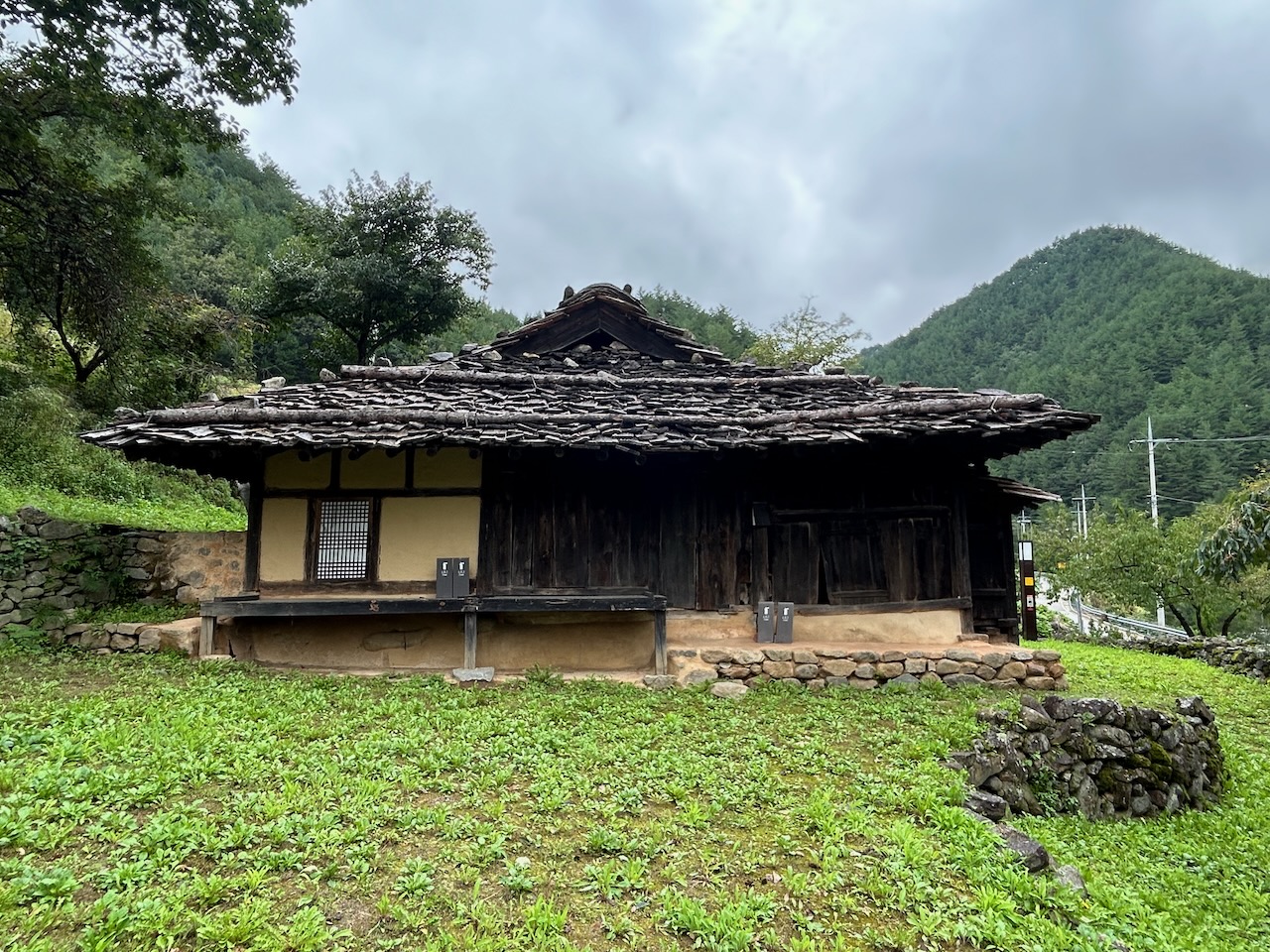
We drive up the narrow, winding, mountain roads full of mist and fog, the air is getting colder. I can feel the chill in the air deepen. I’m glad that he warned me to bring a jacket. We drive for an hour or so until we crest one of the mountain peaks and discover a clearing with a very ancient farm house on it. There are row upon row of stone buttressed retaining walls to make garden beds on the steep hilly terrain. Generations of farmers have toiled here in this soil, so high up on this mountain. I can feel the aches and pains of all this endeavour, solidly secreted in this soil, and in these terraces.
The old house is a combination of earth and timber. The roof is made of timber shingles that have been split from massive slabs of wood. It’s a beautiful old farm house.
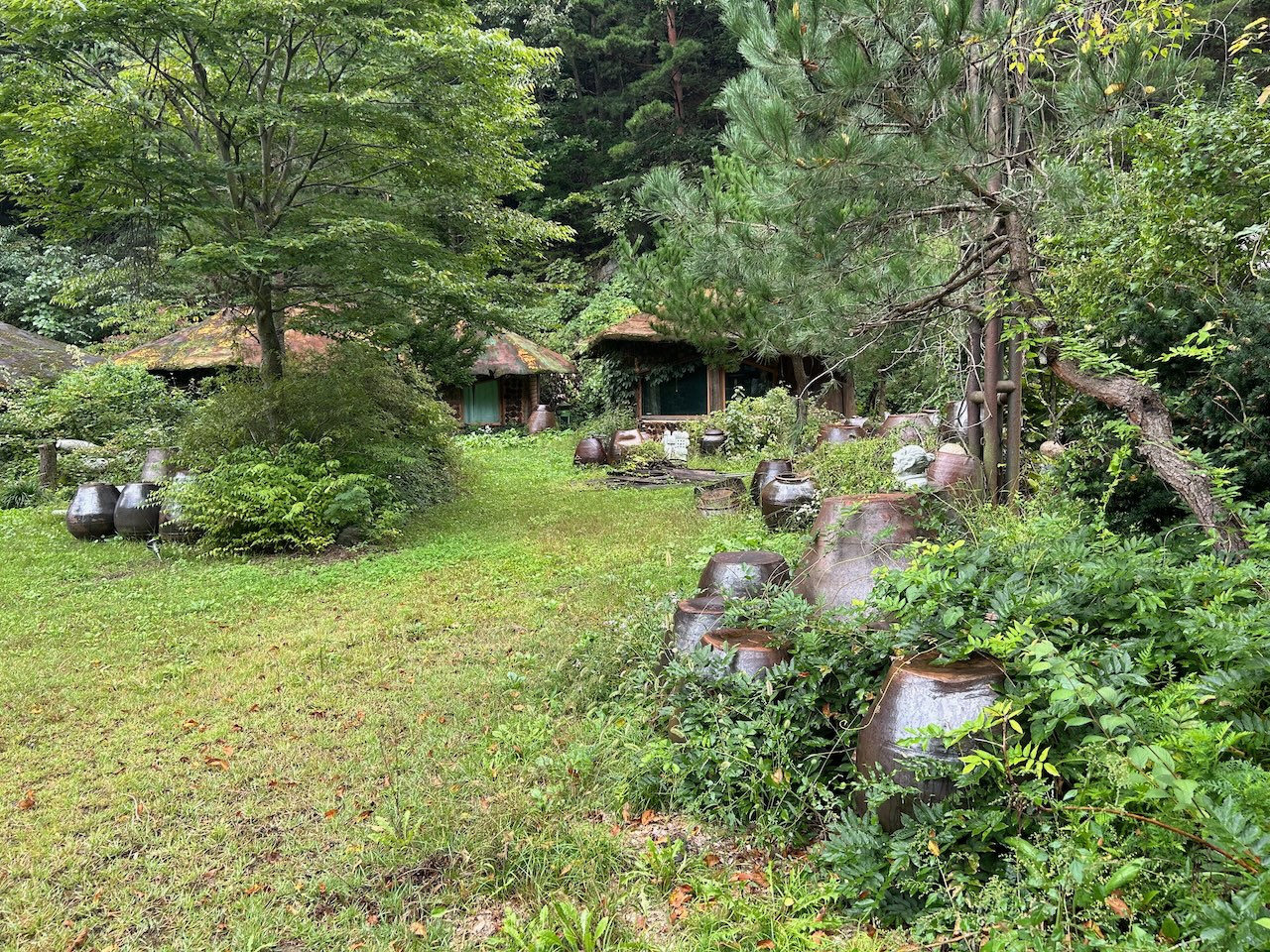
We drive on over the next hill and come to a stop in the narrow street. He hops out and ushers me across a narrow little bridge over a torrent and into a grassy clearing between a few old hexagonal pavilions. There are row upon row of old ongi jars lined up around the edges of the grassy clearing. It hasn’t been mowed for some time and everything is quite derelict looking – but very familiar.
I’m struck by an intense feeling of deja vu!
I turn to him and say the strangest thing. “I’ve been here before”. I’ve lived here! Actually, I’ve slept in that building over there and had a meal in that building there!”
It’s so unbelievable. I can’t believe it. At first, I’m not even sure if what is coming out of my mouth somewhat unintentionally is really true, but the more that I look and take it all in, the more that I’m sure. Yes. I’ve stayed here! But this place is so remote! It’s almost impossible!
Mr Kim is taken aback. His eyes are wide. He is shocked at what I’m saying, and so am I, Because it couldn’t possibly be true. Am I just joking?
Is there some sort of lost-in-translation effect happening? He doesn’t believe me. He tells me “No one comes up here. There is nothing here. Most of these farms are abandoned. How could it be?”
I’m perfectly sure of it now, as I look around and take in more of the details, it is all coming back to me. Yes! I’ve stayed here 8 years ago! Mr Kim looks puzzled, then his face lights up. “Yes, of course. I let a young potter live here 8 years ago rent free, if he rebuilt my wood fired kiln for me in lue of rent.” He was Mr Jaeyong Yi!
When I came to Korea for the first time in 2016, my translator, guide and driver. Ms Kang SangHee drove me up here from Cheongsong way down south. We were on a mission to find ancient sites where sericite porcelain was first developed. I had met Mr Jaeyong Yi down there in Cheongsong. He had invited us to stay with him in his house, in the mountains, as it was on our way to Taebaek up north to visit another sericite location. I wrote all about that adventure up here in Taebaek, back then in my first Korean blog,
’The Kim Chi Chronicles – part 3, 16/9/16 on <’tonightmyfingerssmellofgarlic.com’>
Mr Jaeyong Yi was most hospitable and looked after us very well at that time. The grounds are not as well kept anymore, now that no one lives here. But it still has a charm about it.
We walk around and laugh at the impossibility of it all and the absurdities of life.
Our next stop is to drive down the coast for another hour farther south to catch up with an old friend that we both know. HyeJin Jeon, was a PhD student in the Yanggu Porcelain Research Centre in Bangsan some 6 or 7 years ago. I bumped into her a couple of times on different trips to Korea during her studies there. We became friends and kept in touch by email over the years. She graduated with her PhD a few years ago, and has recently been appointed as the Professor of Ceramics at the Gangneung University on the East Coast. Its not that far further south from where we are.
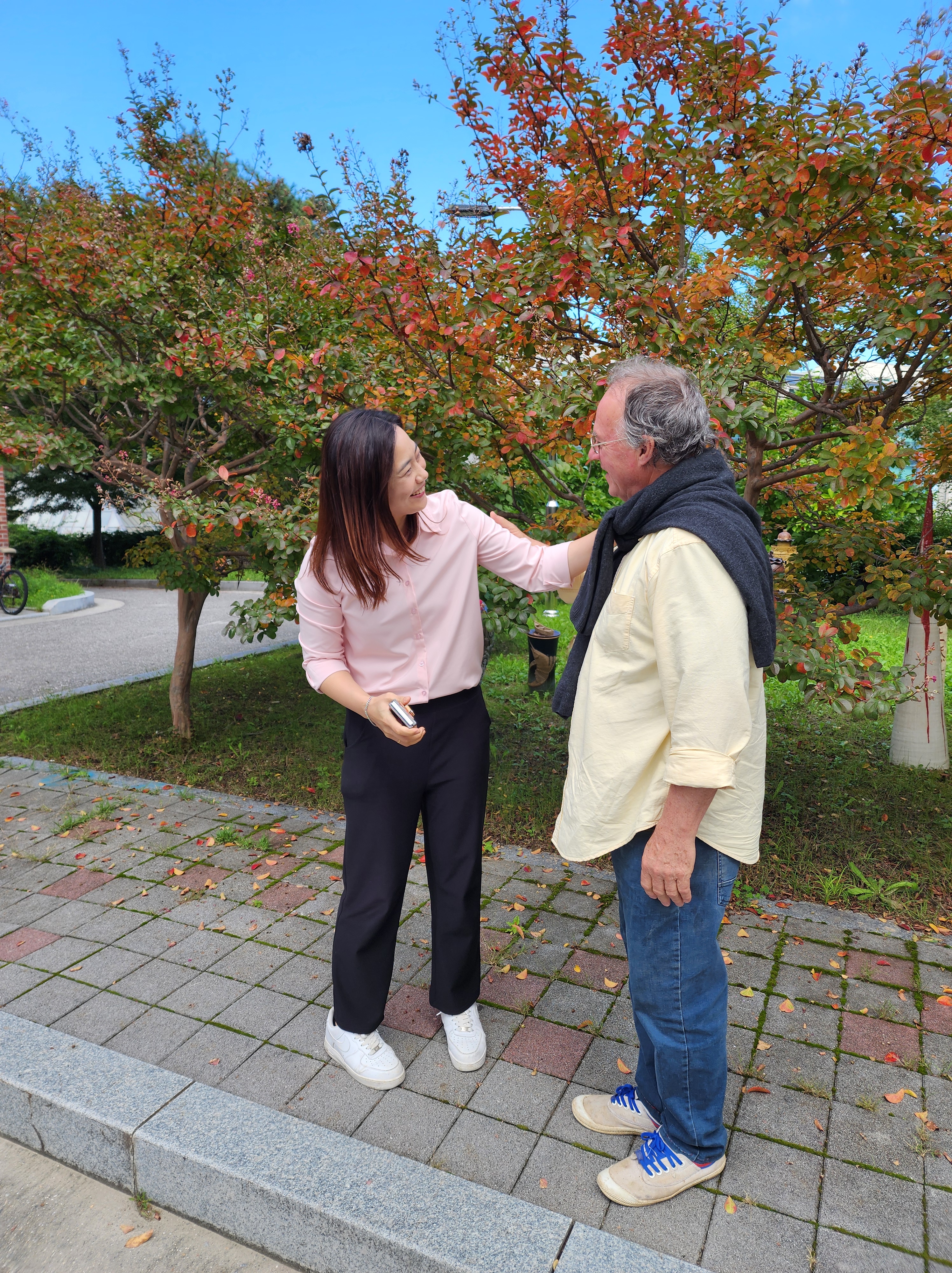
HyeJin Jeon is very pleased to see us and gives me a big hug. It’s been 6 years since I last saw her in Bangsan.
She shows us around her faculty, then the three of us spend the day going around all the Museums and ancient buildings in Gangneung city. We stay on for dinner and drive home in the dark. It was very nice to catch up after so long. I’m pleased that she is doing well.
The next day, Mr Kim shows me his kiln, I go over it, I measure all of its critical features and then spend an hour drawing up a sketch and working out the exact proportions of its openings. I come to the conclusion that the flue needs to be bigger, much bigger. Bigger by 3 times! This is the major problem. But the fire box could also be larger again by half as well. These alterations wont be easy, but are doable. I also suggest that it might be better in the long run if he starts again from scratch. I give him the plans for my kiln that I built in Bangsan as a starting point to help him get the best outcome. He looks at my page of calculations and announces. “ You are not just an artist, you are a scientist!”
Instead of driving me back up to Bangsan, after some discussion, we decide that it will be best if Mr Kim drives me to the local station, so that I can catch a train across to Yeoju and visit both Mr Lee JunBeum and my old friend, former driver, translator and guide, Kang SangHee.
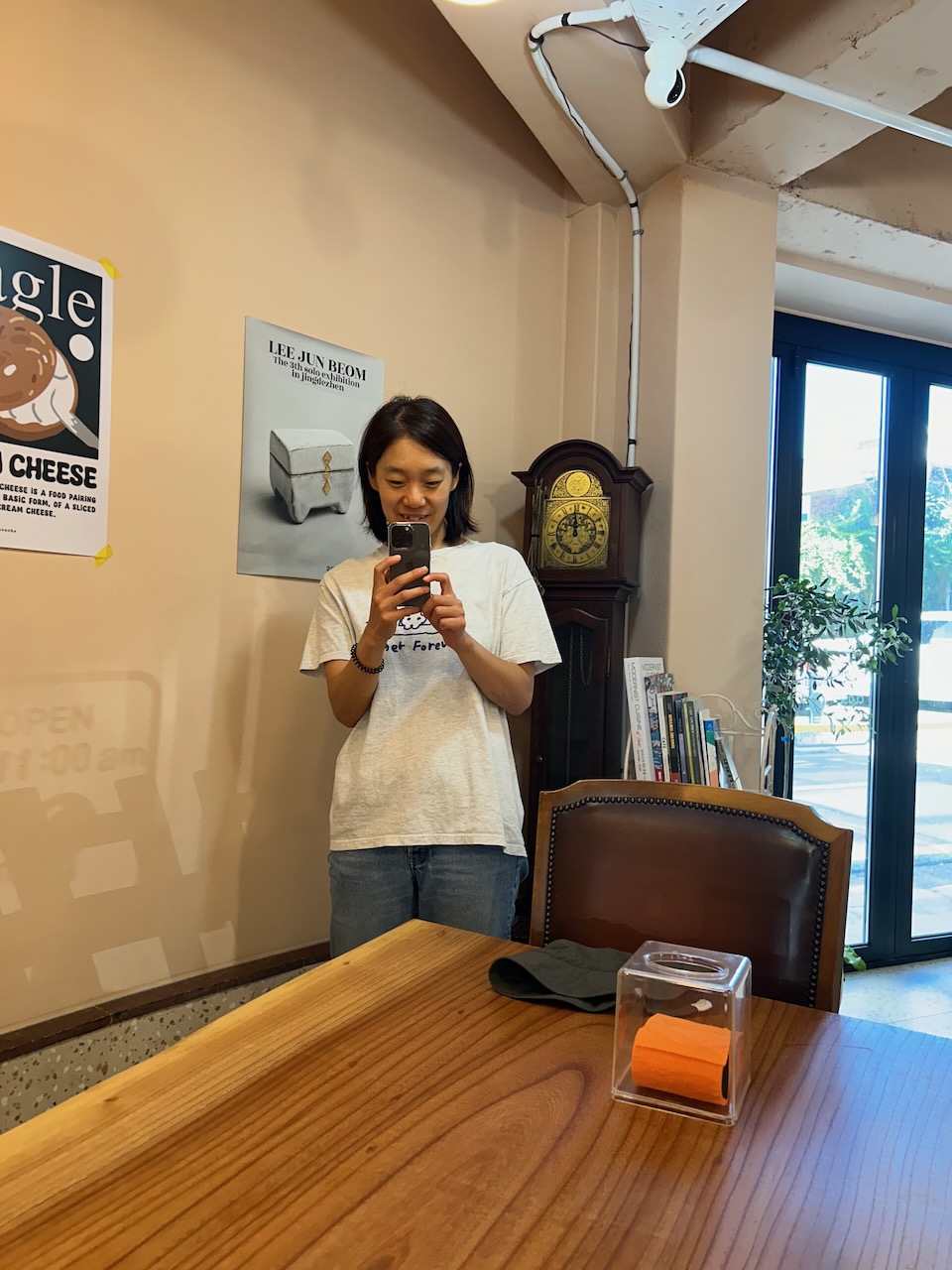
It’s good to see Ms Kang SangHee again too, I catch her taking my picture when I’m not looking, so I reciprocate.
We meet up in Mr Lee’s wife’s cafe and bakery, where Ms Kang is helping her bake the days bread.
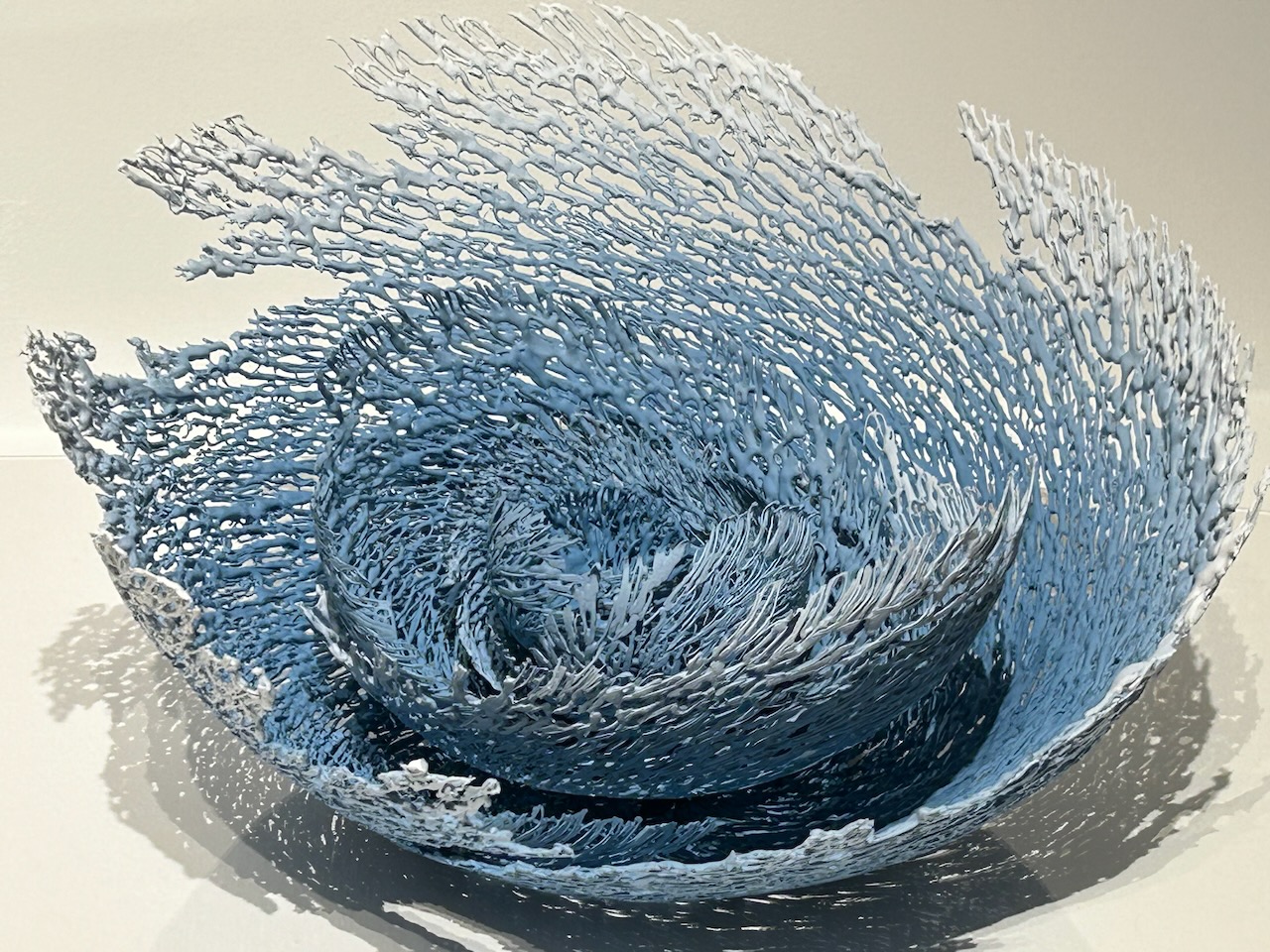
We spend the day travelling to all 3 sites of the ceramics Biennale. There are some very impressive ceramics on show. Later, I am able to help JunBeom with his new kiln. The least that I can do to show my appreciation for all his help.
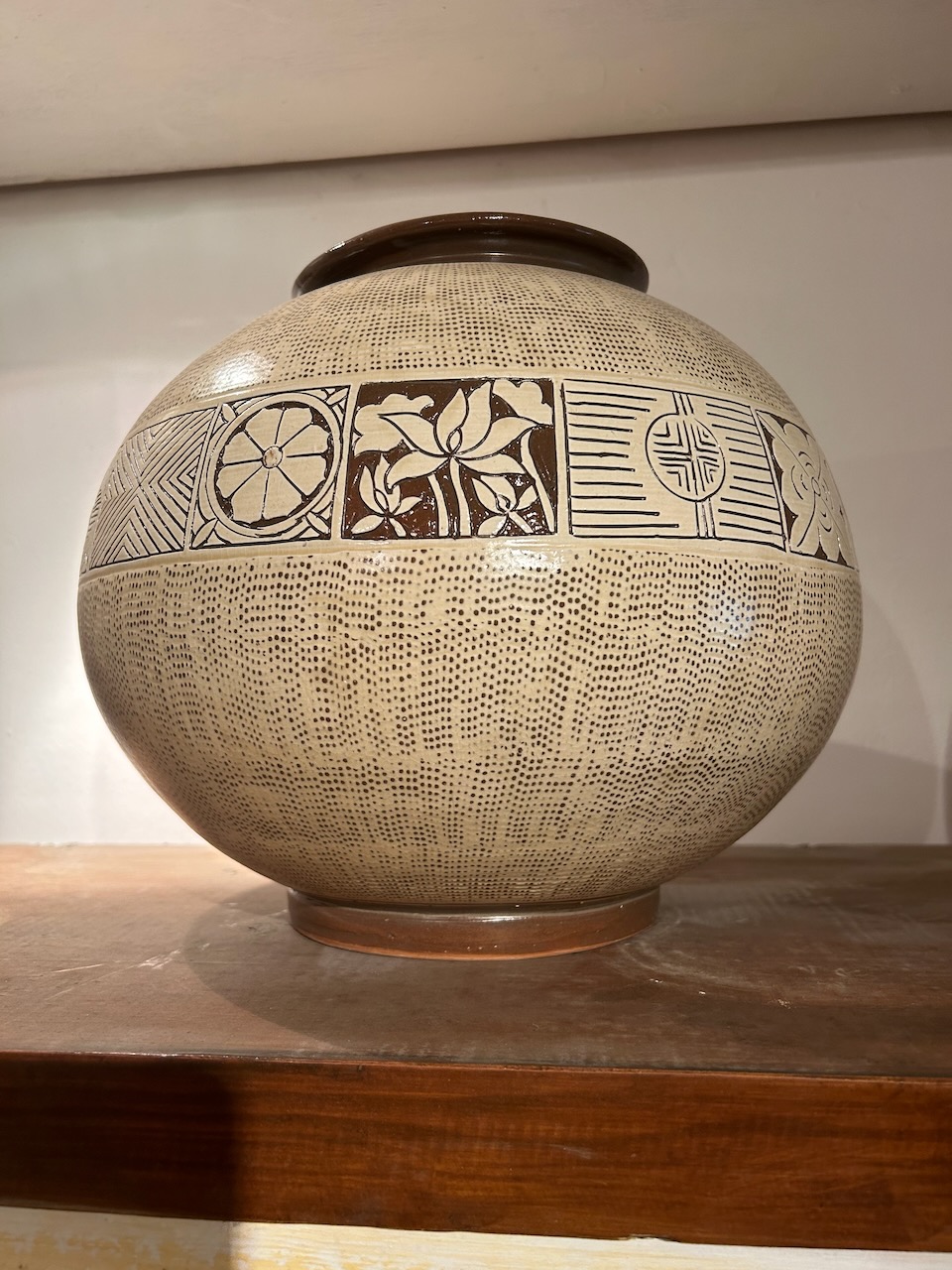
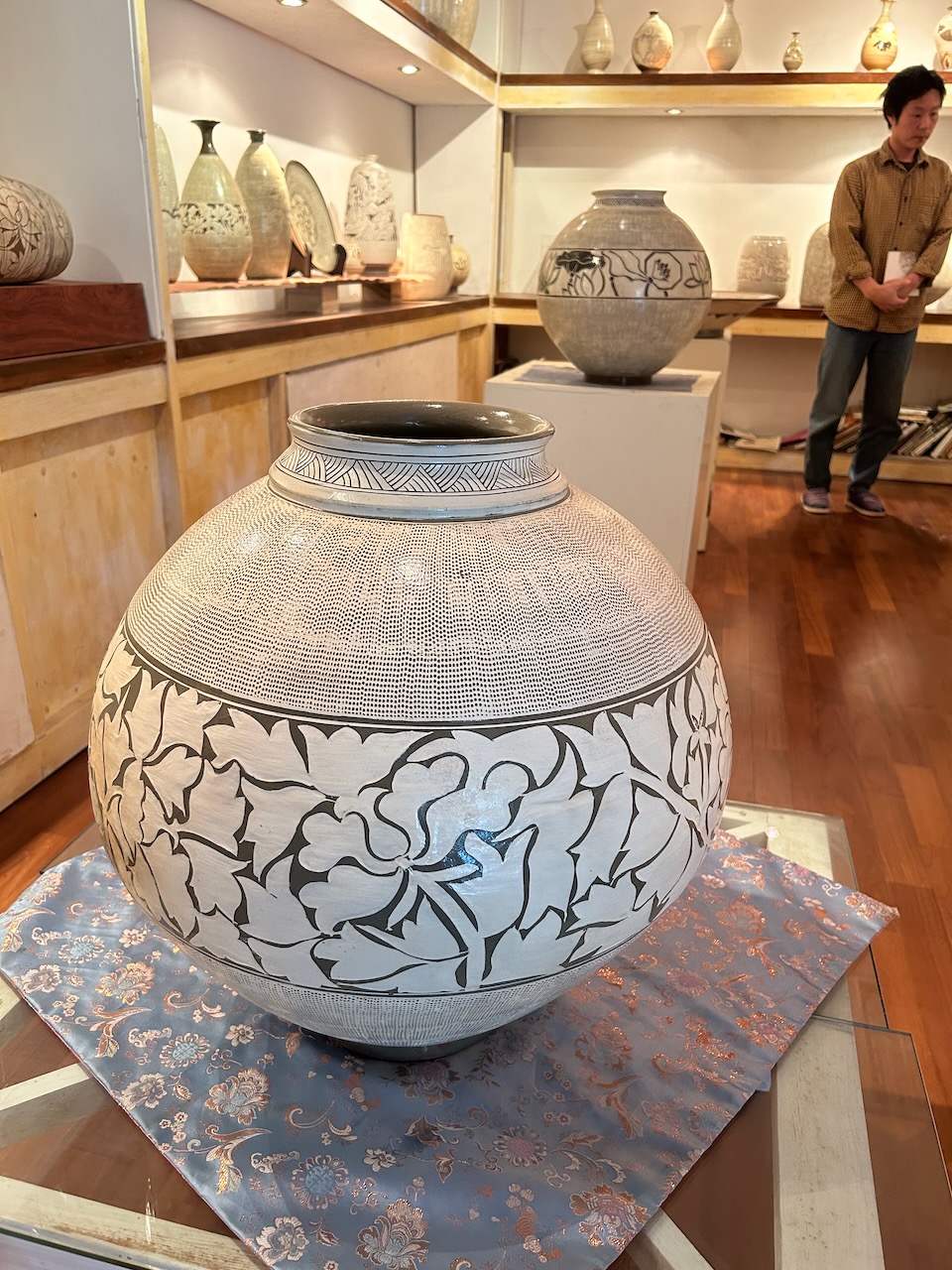
The next day JunBeom and Yoomi drive me to visit the National Treasure potter of traditional sgraffito slip decoration, called Buncheong.
His name is Park Sang Jin and they get a long chat in Korean, insight into which I get through occasional translations from Jun Beom, then we all get a guided tour of his workshop, gallery and kilns.
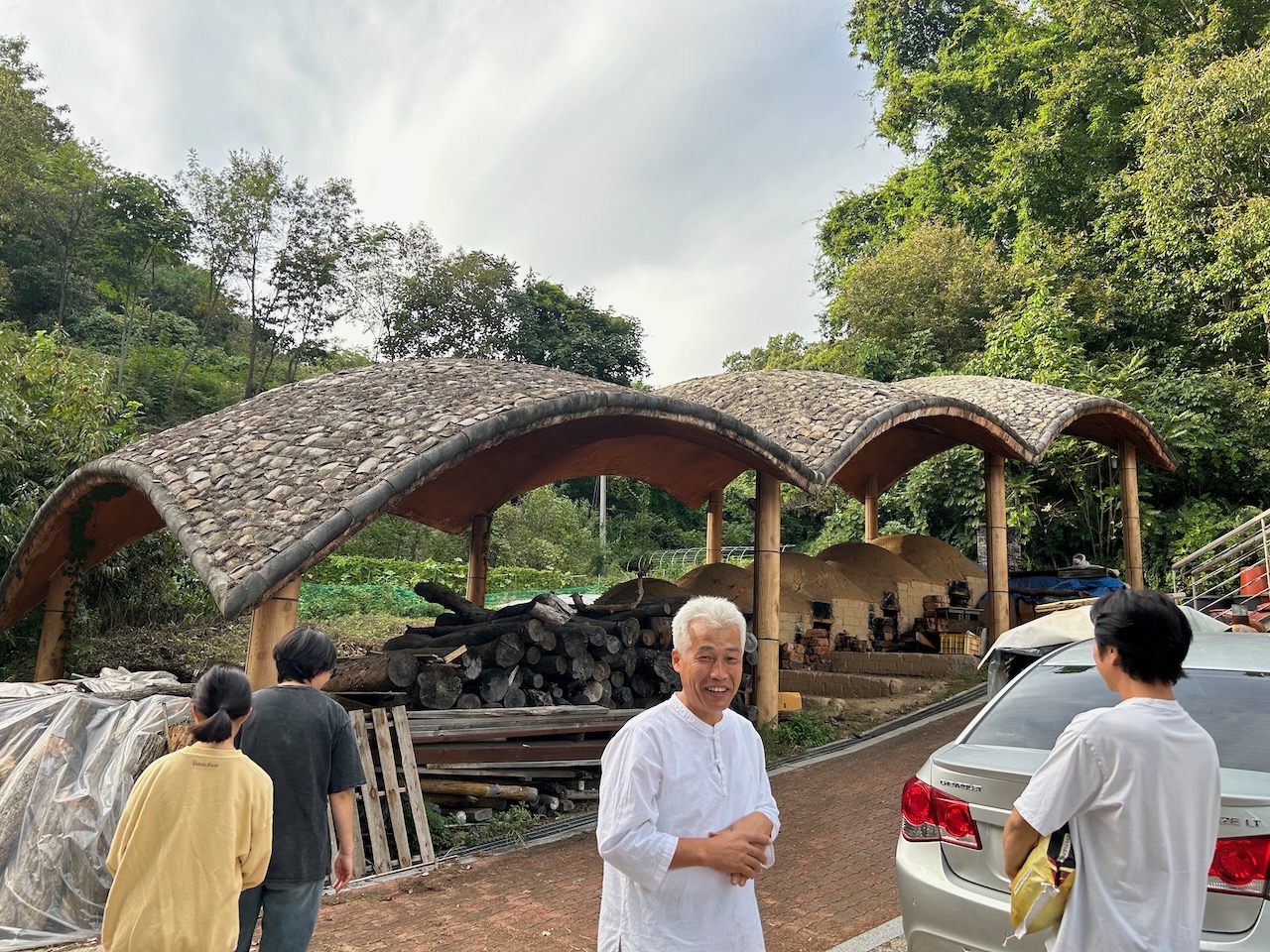
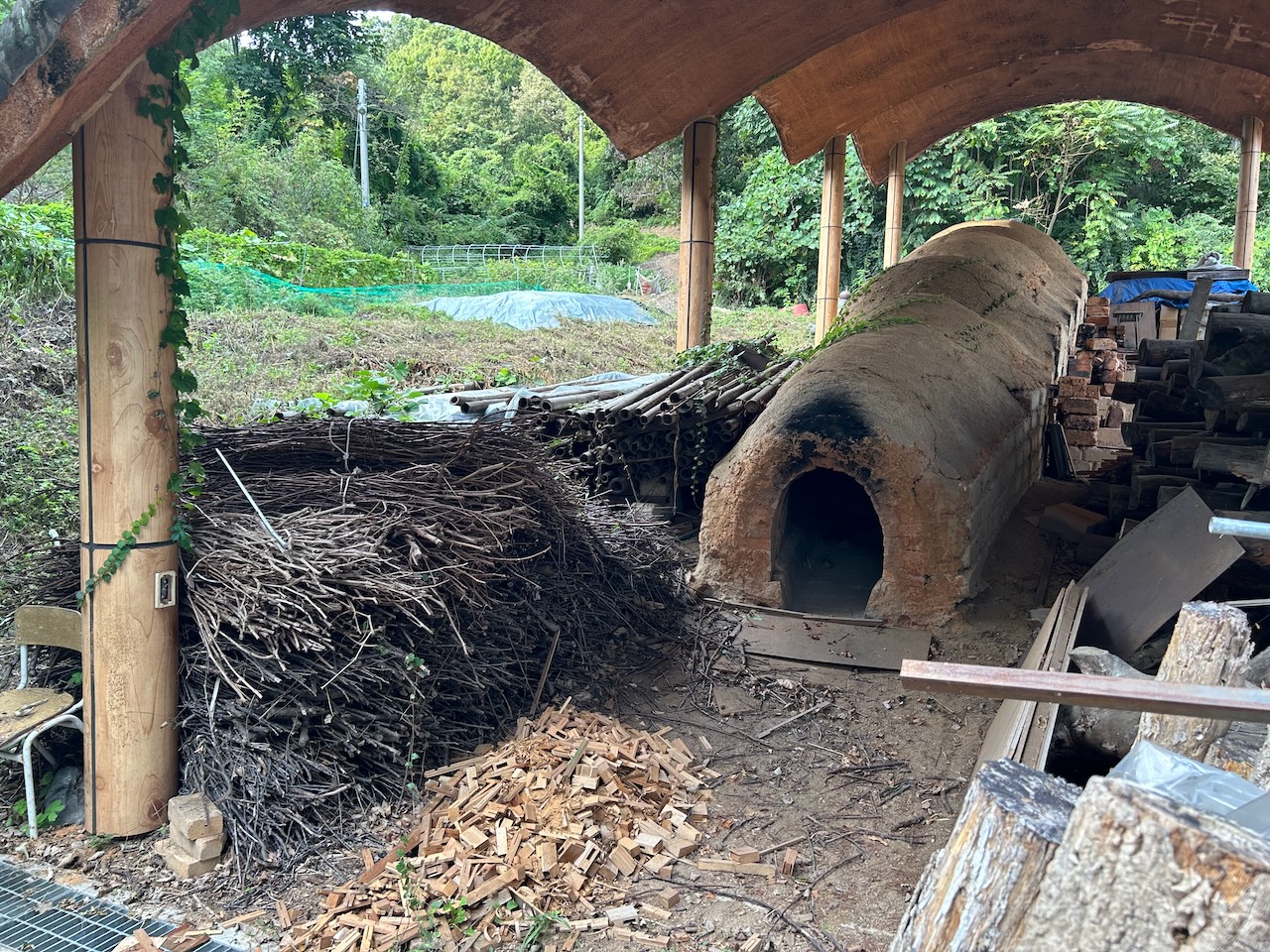
On my last day in Korea we travel south to the city of Andong to visit the other Mr Kim, Kim SangGe, we worked closely together on the Bangsan kiln and he invited me to visit him if I was ever in Andong. He has an amazing roof structure over his workshop and kiln shed. Possibly cast concrete, but with a decorative layer of old weathered and broken roof tiles applied as a kind of mosaic. It’s really beautiful. Artists are just so imaginative and creative in everything that they do. I wish that I’d thought of doing that! Mind you, I don’t have access to thousands of old weathered and broken roof tiles, nor the funds to have an undulating concrete roof cast in-situ. Not the sort of thing that I could ever own, but I’m very pleased to be able to visit.
Mr Kim Sang Ge, serves us a special tea made from dried Tibetan chrysanthemum flowers. Interesting, but not particularly flavourful or tasty. He asks if I like it, and I reply yes – just to be polite, what else can I say? He then gives me the whole packet. I thank him warmly, but I know that I can’t bring it back into Australia, so I give it to Jun Beom when we get home. It was very generous of him and I appreciate that.
Mr Kim led the kiln building team that built the 5 chamber kiln in Bangsan that Janine and I experienced firing back in April this year, see my blog entry; <Kiln Firing in KoreaPosted on 13/05/2024>
Mr Kim’s kiln is made from thousands of hand made cone shaped raw clay fire brick blocks to form the domes of each chamber, plus an equal number of rectangular blocks used for the walls.
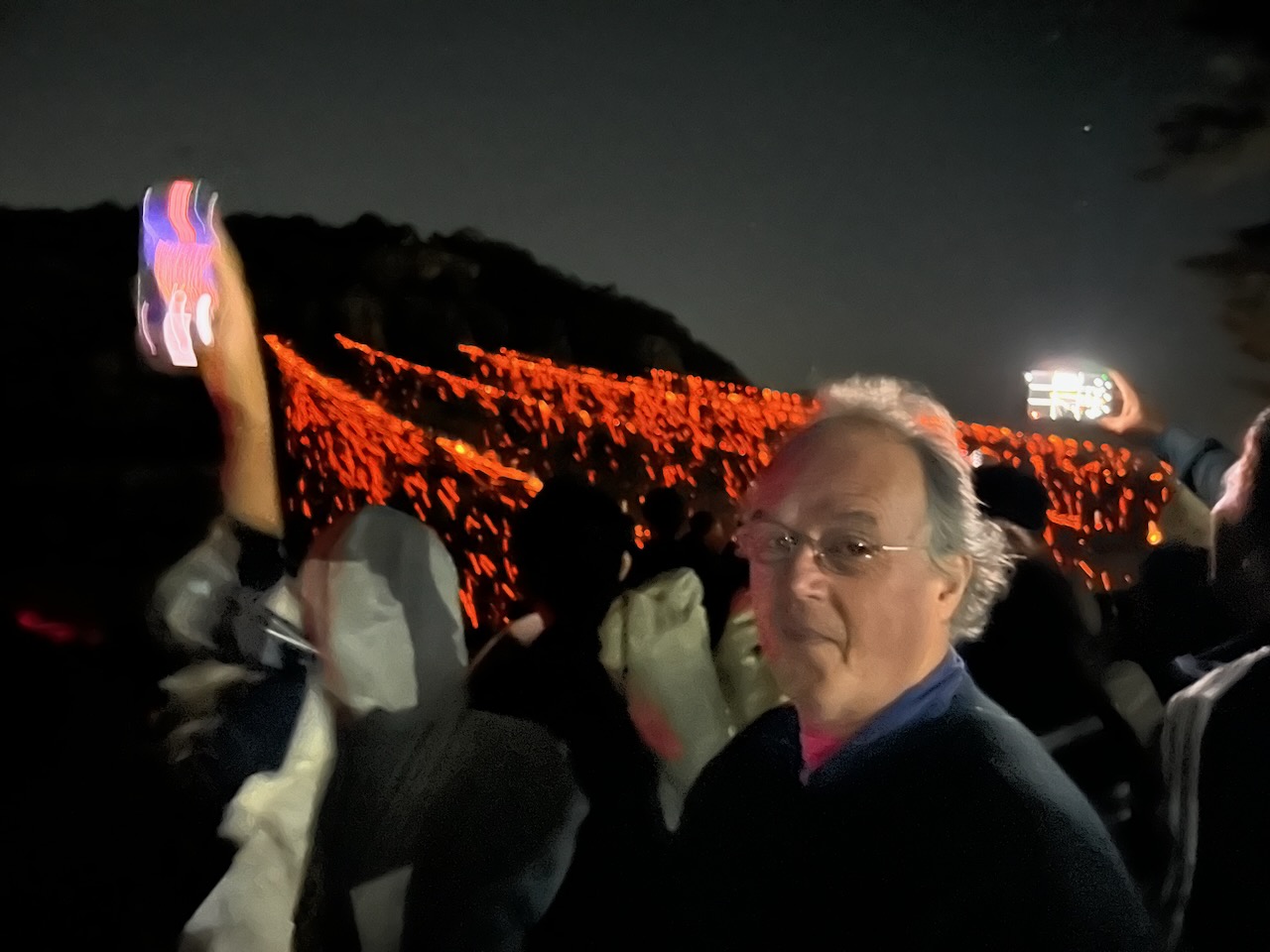
Mr Kim takes us to see the spectacular fire ceremony that takes place this time each year as part of the Traditional Harvest Festival in Andong. There is a tiny traditional Hanok Village of small, earth and timber, thatched roofed buildings, set in the bend of a river, opposite some steep cliffs. it’s an idillic spot, exceptionally beautiful. Each year at this time the ancient founders of the village are remembered by hoisting ropes up across the river, over to the cliffs and hanging burning hand made flares made from leaves and twigs. The sparks flutter down from the ropes into the river in the night sky. It’s quite dramatic. There are no modern fireworks going ‘bang’! Just the gentle cascade of sparks down from the sky.
I’ve been so lucky to have been able to witness so many wonderful things on this trip. Not my usual artist in residence stay in just one place or a simple conference presentation. One of my planned kiln jobs evaporated, but was replaced with a multitude of very different experiences. I am very grateful to all my Korean friends! Thank you!
Nothing is perfect, nothing is ever finished, and nothing last forever.






































 Tonight my Fingers Smell of Garlic
You must be logged in to post a comment.