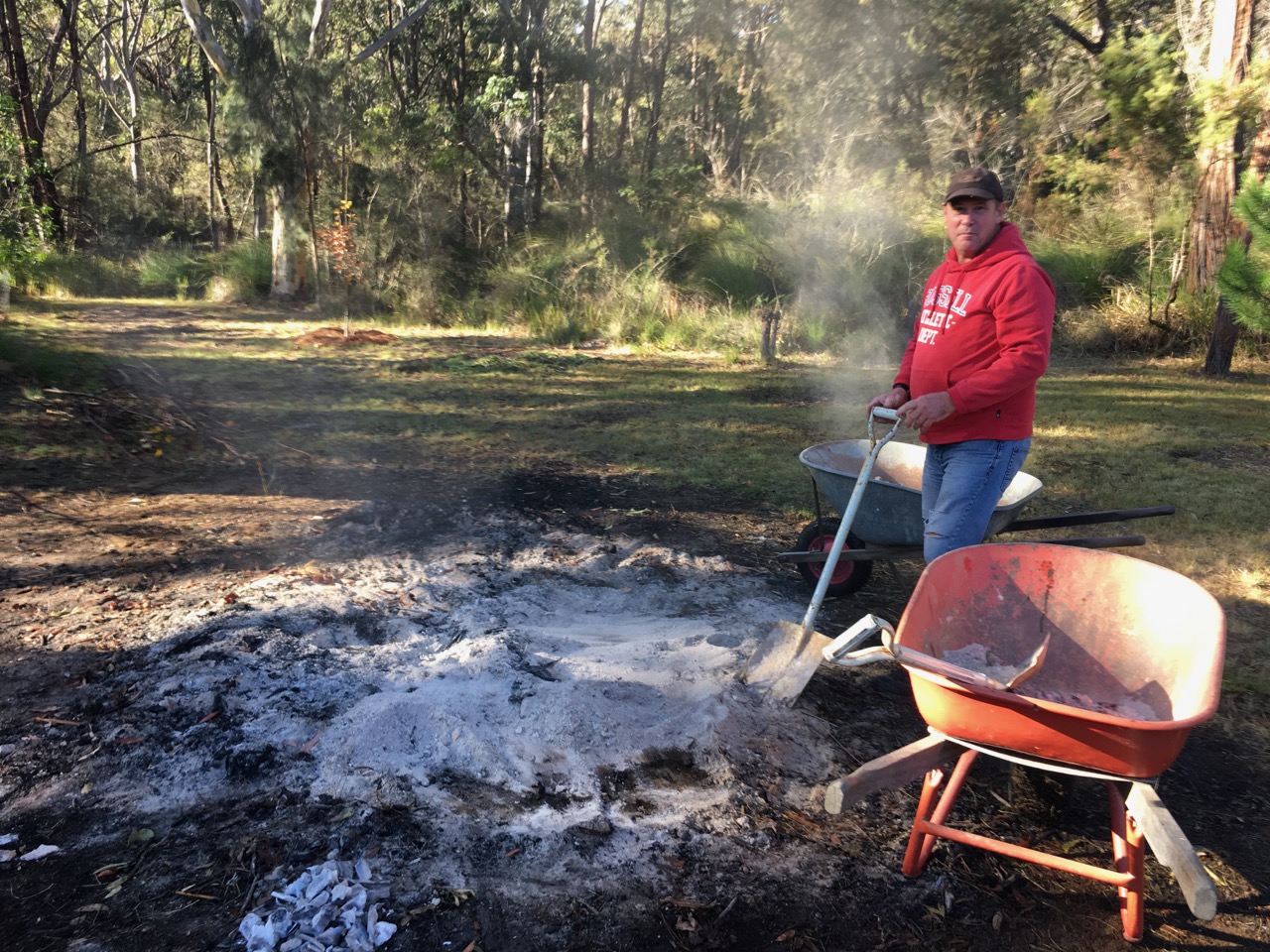
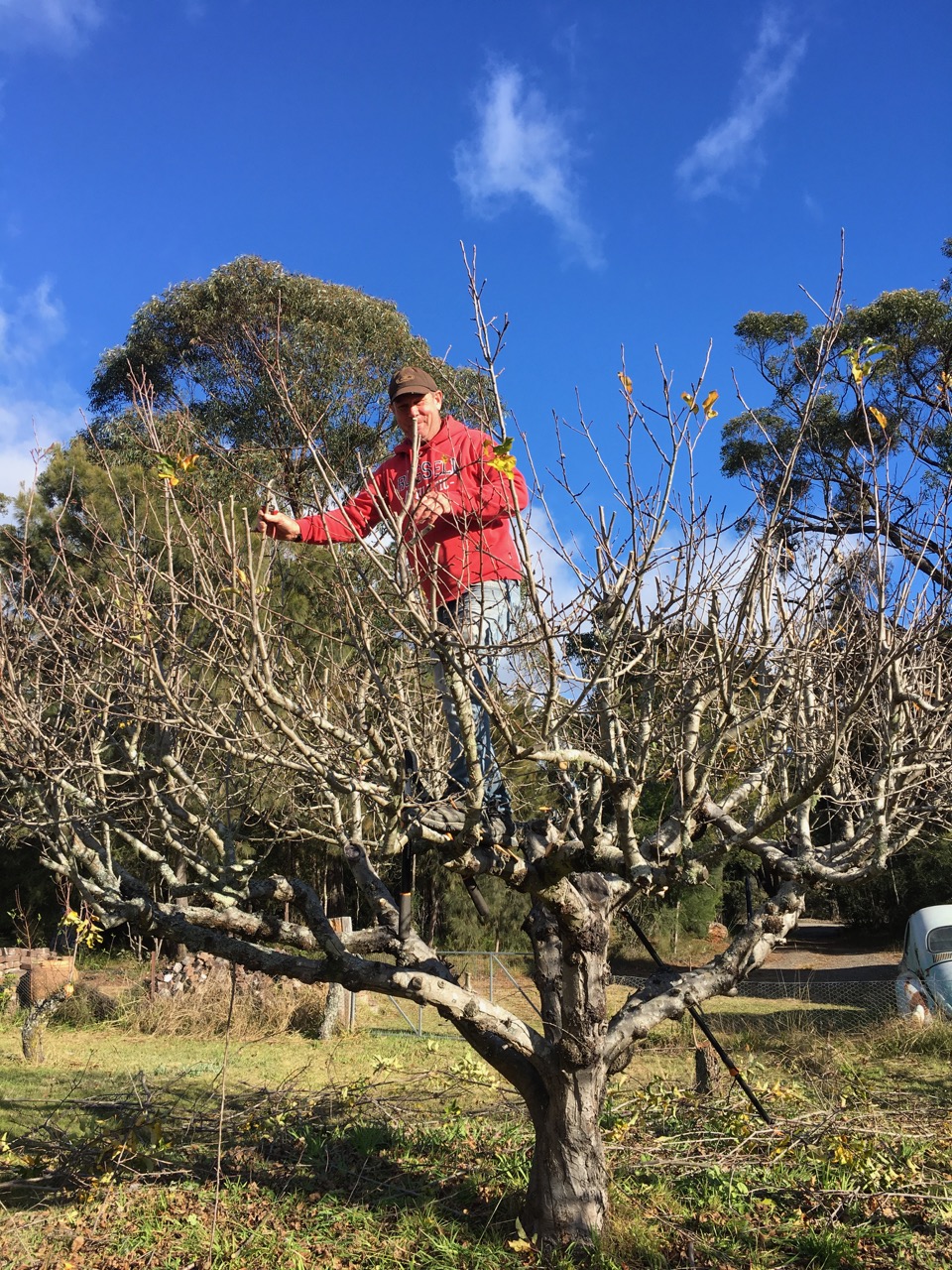
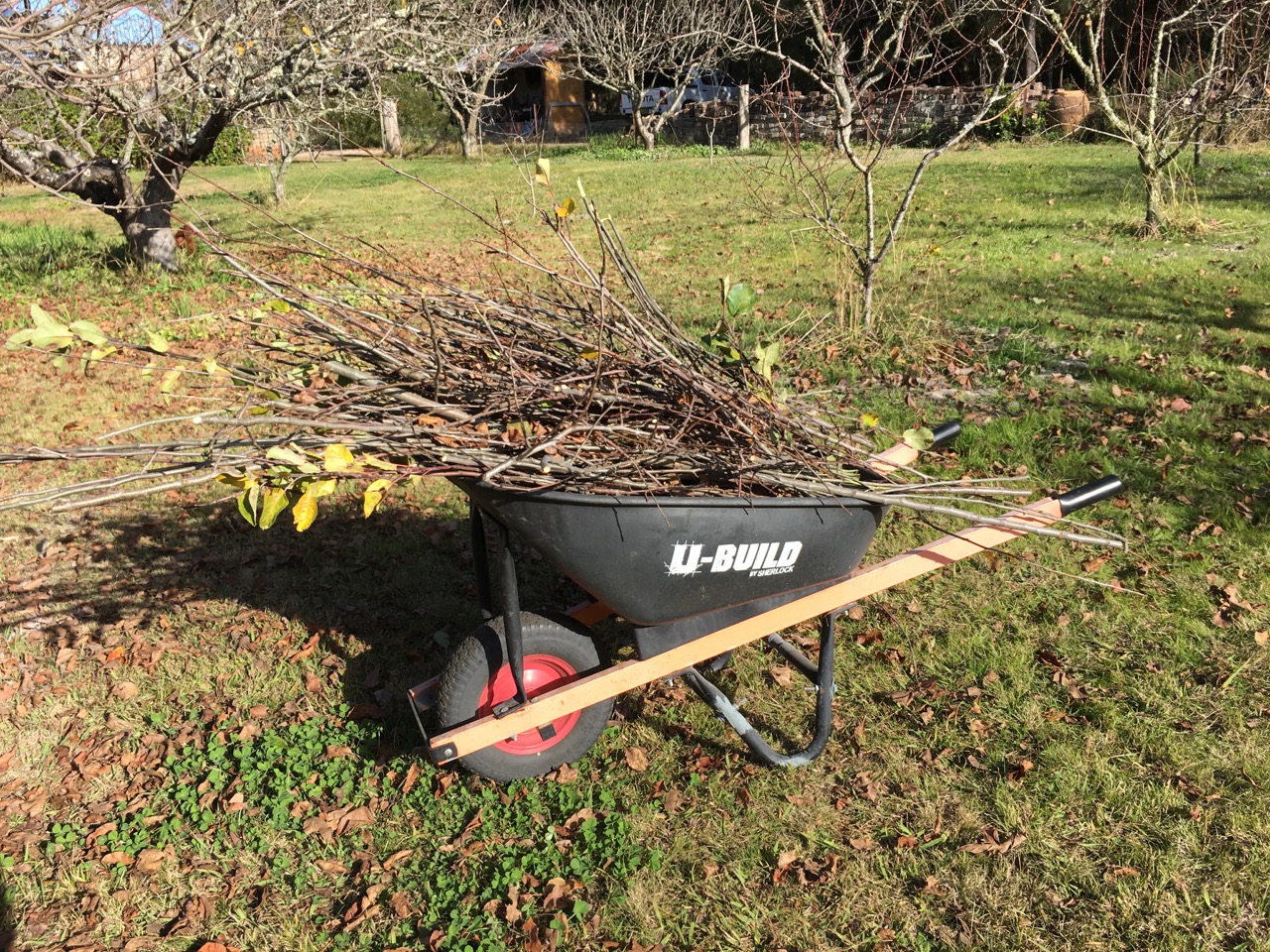
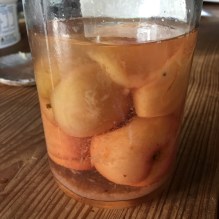
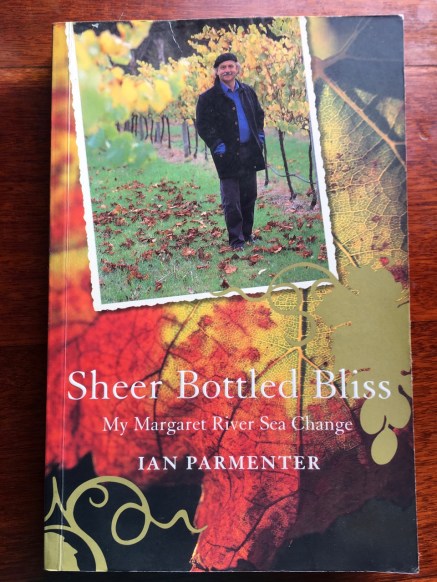
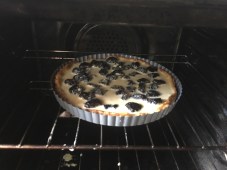
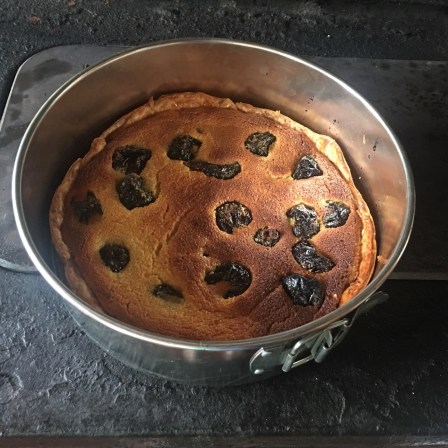
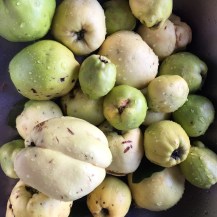
We have spent this winter weekend pruning the fruit trees in the orchards.
Category Archives: southern highlands
Winter Solstice
I’m sitting in the kitchen writing this, it’s a sunny morning and the sun is streaming in through the northern windows flooding the kitchen with bright colour and light. So bright in fact that I can’t see the screen properly. I have to move my chair, so that I’m positioned in the shadow of one of the window pillars, otherwise the light in my face makes me squint and makes typing very unpleasant. I could move to another room, but I love the sunshine on this winter solstice morning. I can look forward to the nights getting shorter and the days longer from now on. Not that it will make any difference in the short term as it always gets colder after the solstice, just as the hottest days are after the summer solstice. It’s more of a mental recognition that things are on the change that is reassuring.
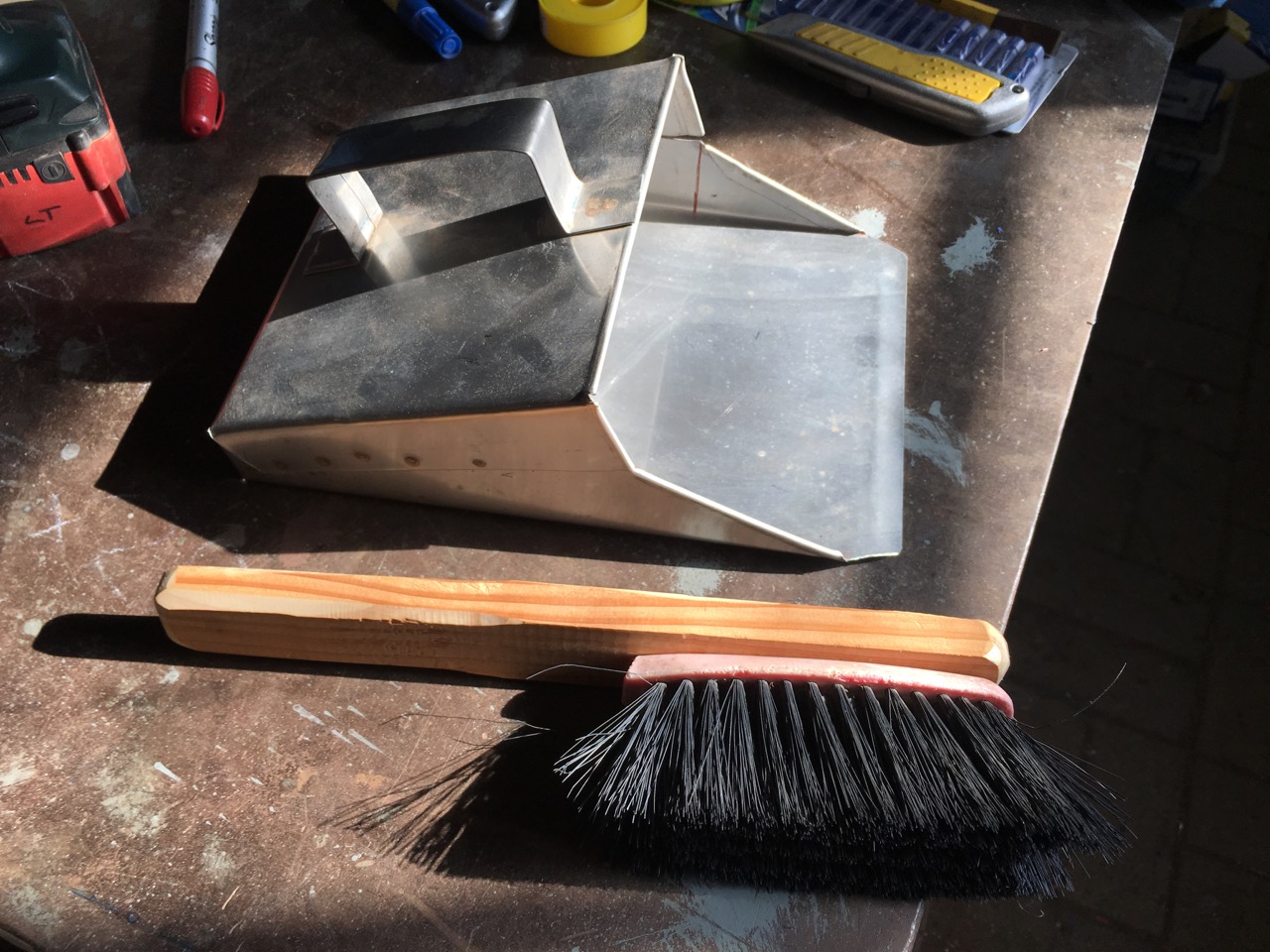
from the re-imagined, re-used and resourceful sweeper upperer.
Sunshine Came Softly Through My Spy Hole Today
This is the research paper that I presented to the recent Ceramics Triennial Conference in Hobart, Tasmania. On the ‘Sustainability’ Panel.
Steve Harrison – Sunshine Came Softly Through My Spy-hole Today.
I was raised in the 50’s in a home where the topic of ‘health foods’ and ‘natural living’ was at the forefront of conversation. I came from a loosely quaker/buddhist background with a grounding in ‘healthy’ living. As a child, I was brought up in this environment. Aristotle said “give me the child until he his 7 and I will give you the man”. I am that man. A ‘greenie’ before the greens were invented.

Since I decided to be a potter, I have always been a wood firer using a small, single chambered, bourry-box kiln. I wanted to fire my pots as cleanly as possible, in an environmentally sensitive way. In 1976 I moved to the country and bought a very old derelict school building, built in 1893, with seven acres of land and started planting a forest. By growing my own trees, these trees took their carbon out of the air, when I eventually burnt this timber to fire my kilns, it didn’t introduce any new carbon into the atmosphere. This was the best approach that I could think of to minimise my carbon footprint at that time. I’ve progressed!
We have also planted very large vegetable garden and 5 small themed orchards, with a dozen cherry trees, a dozen almonds, a dozen hazel nuts, a dozen citrus, a dozen stone fruits, a dozen apples, 5 avocados, 4 truffle oaks, 3 white figs, two berry vines and a bower bird in a pear tree!
My wood fired kiln has proven to be very fuel efficient, I have worked on the design for over 40 years and written the standard text on the subject. ‘Laid Back Wood Firing’ and it is as clean as a wood fired kiln can probably get, without using an after-burner. I tried adding afterburners to several kilns, but have since abandoned that idea as too wasteful and complex. There is no point in using a premium fuel like LP gas to burn the smoke from an inefficient wood fired kiln. I couldn’t justify it. So I stopped working on that project.
I did a lot of work on ‘flame tubes’. Fibre lined stainless steel tubes on top of the chimney that allows warm air in at the base, so that it mixes with the unburnt smokey fuel during reduction and combusts with-in the tube. All that is seen is a pale red glow at the top and bottom. The beauty of it is that it has no moving parts, and needs no external fuel source. The blue haze at the beginning of firings has always bothered me and flame tubes don’t fix that problem. That is a work in progress.
It is possible to fire in reduction at high temperature with very little smoke, but the cold blue haze at the beginning of the firing is a very difficult problem to overcome. It was only later that I came to realise that it isn’t just blue haze smoke at the beginning of the firing when we are releasing ultra-fine particles into the atmosphere from our wood kilns. Wood firing generates loads of fine particulate matter, all through the firing. Some of these are quite fine and are hazardous to inhale. They are known variously as PM 7’s to PM 2.5 particles, they are small enough to enter deep into our airways and lungs and can cause all sorts of unpleasant health effects, even cancer.
Clearly, one kiln, fired intermittently, isn’t the problem, but when it is added to the other emissions of diesel vehicles, wood heaters and industrial pollution from factories, cement works etc. It adds to and is part of the larger problem.
See the EPA web site. https://www.epa.sa.gov.au/environmental_info/air_quality/assistance_and_
advice/smoke_from_domestic_heating.
Added to this less-than-up-lifting scenario, there is the growing problem of global warming. Contrary to the statements of conservative politicians and the hard right media shock-jocks, the science IS settled and has been for a long time. The man-made global-warming deniers are simply wrong! They are either being disingenuous or choosing to be ignorant. Perhaps I could be generous and say that they are choosing different truths.
We used to be able to fire for 8 or 9 months of the year at home, but over the past 42 years, living in the Southern Highlands, our window of opportunity for wood firing has been reduced now down to 5 to 6 months, May to August. September is now getting too unreliable to book wood firing workshops. We have had to cancel workshops in the past few years due to hot, dry, windy weather and therefore total fire bans, as early as September. Total fire bans in our area used to only occur in January and February.
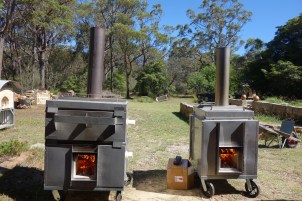
Some time ago, I decided to develop a series of small portable wood fired kilns that could be wheeled out, packed and fired in one day. Then wheeled back away again until the next firing. These portable little wood kilns are very fuel efficient and can reach stoneware temperatures in 3 to 4 hours using a wheel barrow of wood. If you are careful, they can be fired very cleanly. They are a fun solution to minimising carbon emissions and avoiding the use of gas and coal. By collecting fallen branches from around our block, we can fire with a zero carbon foot print. This is the ‘vegan’ equivalent of wood firing . No trees were hurt to fire the kiln. The trees drop the dead branches. We have to pick them up to mow the long grass. We have to mow to reduce the fire hazard in summer. So fallen branches do not introduce any new carbon and are tree friendly. That’s nice, and the kilns are quick and fun to fire. But particulates are still a problem.
So where is all this leading? I realised that I needed to find another way to fire my work cleanly and efficiently into this uncertain, carbon constrained, globally warmed, future. The climate is changing, so we must change with it. Janine and I have had solar hot water for over 30 years and Solar Photo Voltaic panels on our roof, for the past 17 years. We installed 3,000 watts of Australian made, BP Solar, Photo Voltaic panels as soon as we could afford to do so in 2006/7.
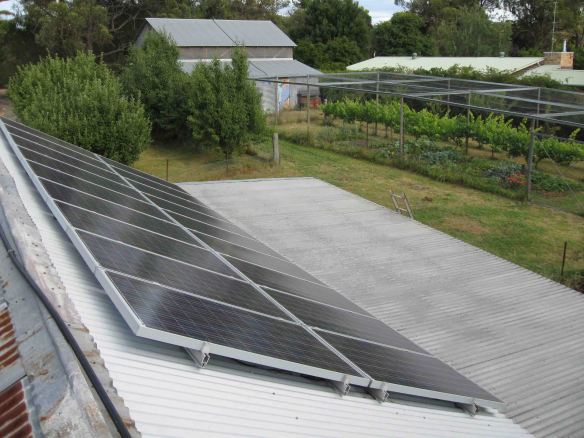
Our first solar panels, with the netted vegetable garden with small vineyard and orchard.
We have been using our electric kiln for all our bisque, earthenware and oxidised stoneware firings ever since then and have always paid the little extra for sustainable green power since it became available. So that if we needed to draw power from the grid, it was sustainably generated power that we used. In the last couple of years we have been working towards firing our work in the summer months of fire bans, using a new low-thermal-mass electric kiln that I built from a pile of spare parts, left over from my kiln building factory, after I retired. I designed and built a kiln that is fired using our solar panels and backed up by our Tesla Powerwall II battery.
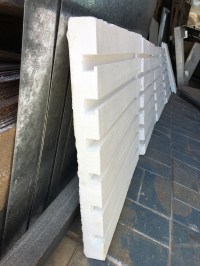
To allow us to fire in reduction, I made allowance to install 2 small pilot burners in the bottom of the kiln and built a small flue hole in the top. These burners aren’t used to fire the kiln at all. They are too small. The kiln fires to stoneware on solar power, the burners are only used to create a very small amount of flame to generate the reduction atmosphere needed to change the glaze colours. I attach the burners to the kiln and light them when the kiln reaches 1,000oC. They use about 200 to 330 grams of gas to reduce the kiln load of pots steadily over a couple of hours while the electrical elements heat the kiln load of pots. It’s the best solution that I can find at the moment to give us reliable, all year round access to reduction firings that are very, very, low carbon and as sustainable as I can make them.
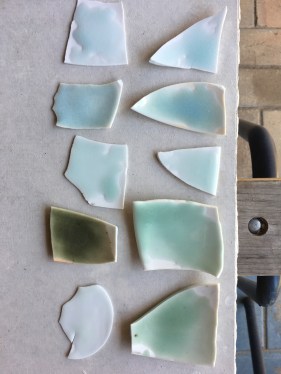
The firing can take as little as 4 to 5 hours in total and give perfectly adequate reduced results. Experience with this kiln has shown that we can achieve all the normal reduced colours with our standard local milled rock glazes. I fire the pilots on 5 kpa gas pressure, but have recently experimented with pressure so low that the regulator gauge can’t register the flow and the kiln still reduces. We usually wait to start the firing until around 9 or 10 am, as that is when the sun is up high enough to give us the energy that we need to get the kiln going. It takes about 2 to 3 hours to get to 1000oC, then I attach the pilot burners and start reduction, around noon to 1 o’clock. I reduce for about 2 to 4 hours depending on what I’m experimenting with and finish the firing between 2 and 4 pm. as the sun is going down. We fire directly off the PV panels until 1 or 2 pm, then as the sun passes its peak, and the kiln is drawing its maximum power. The Tesla battery cuts in automatically to make up the short fall to finish the firing. If the weather is cloudy we can also draw down on our credit with the power utility. As we are on a ‘net’ metering system, and are always in credit. We never actually ever pay for any power that we withdraw from the grid. However, it is important to note that we pay the extra to contract to only use green power from sustainable sources when we do with-draw.
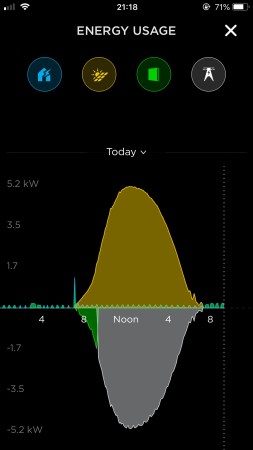
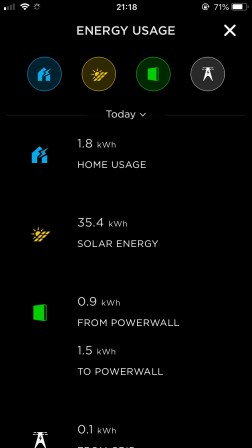
I don’t know if you have ever seen one of these graphs? It is the screen from the Tesla mobile app that tells me how much solar power I’m producing and consuming and/or selling/buying from the grid.The yellow area indicates the solar power generated. As you can see the solar energy starts off low at 7 am, then from 10.00 am it quickly rises to a peak at noon, hovers for a while, then drops away until 6 pm. and sunset.The green area is the energy required to re-charge the battery from its use since yesterdays sunset and running the house over night. This re-charging is usually complete by 9.00 or 10 am.The blue areas of tiny upward spikes is the fridge turning on and off regularly over night and all through the day. The sharp blue spike is the electric jug and toaster being used at breakfast time. On this day it was at 7.00 am. The white area below the line is the energy that we sell to the grid every day when we are not firing the kiln or charging the car. This generates a credit that we can draw down on in cloudy weather and covers our daily charges. This report tells me that I generated 35 kW/hrs of solar and used just 1.4 kW/hrs to run our home and pottery on that day. We sold 32.8 kW/hrs to the grid. It was obviously a quiet day with nothing much going on. I wasn’t welding in the kiln factory or ball milling rocks and pugging clay in the pottery.

This is what a firing looks like, We simply stop selling our excess to the grid and use it our selves. The blue block is the amount of energy used to fire the kiln. The taller blue spike on the left, is the car being charged at the same time. It is worth noting that we can do both at the same time and still recharge the battery after wards in the afternoon.
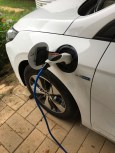

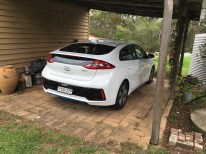
Just as an aside, we also have a solar powered electric car. A Hyundai, Ioniq, ‘plug-in’ electric car. I have written about this on my blog on a few occasions with regular up-dates to let readers know how it’s going. v< https://tonightmyfingerssmellofgarlic.com >

This is what happens when we charge our car. We simply stop selling our excess to the grid for 2.5 hrs. There is enough power to do this, even on a cloudy day, as is the case in the chart above.
We put our pots out in the sun to dry. We call it the ‘solar drier’. The solar drier makes sure that the pots are totally dry before bisque firing. We can charge the car as well in the back ground, both using sunlight at the same time! It’s amazing that there is enough sunshine to go around! The vegetable garden keeps growing and the orchard thrives! We can also walk and chew gum at the same time.

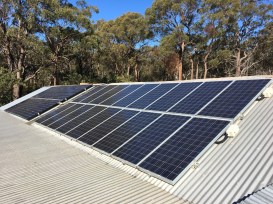
To help make this all happen, we recently bought into a community bulk purchase scheme and installed another 3,000 watts of Australian built solar PV from ‘Tindo’ in Adelaide. This allows us to run our house, fire our kiln and drive our car, all on our own sunshine. It’s a very nice feeling to be able to live, cook, work and drive, powered almost totally from our own solar power. We do all this and still have a little excess to sell to the grid. This covers our daily charges to be connected and even earns a little bit of extra cash. I haven’t paid an electricity bill for 17 years. You can see from our recent bill that we do all this and still use about half of what a single person household uses, and much less than half of what a two person household like ours uses.
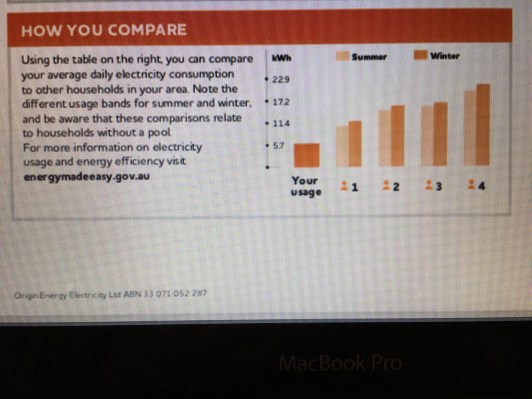
Now, I know that someone is going to ask me what is the cost benefit analysis? It’s the most common question that I get asked along with the statement, “I wouldn’t put solar power on yet. you can’t make any money out of it!”Well, my answer is, when you bought your new car. How did you make money out of that? Or, when you flew to Bali for a holiday, How did you make money out of that?
The point is that I did this because it pleased me. I get a lot of satisfaction out of it. I did it to extract myself as far as is possible out of the coal and oil economy. I didn’t do it for money. I do very few things in my life solely for the money. I’m not very interested in acquiring ‘things’. This is the equivalent of my holiday in Bali, or my ‘walking tour of the vineyards of Provence’. I’ve never been to Bali, or walked the vineyards of Provence. We each choose to spend our discretionary dollars in our own way. This is mine.
Now finally, I will add that I bought carbon credits to cover the carbon off-set of my flight here. Real off-sets in the form of planted trees. I buy a few hundred dollars worth of carbon credits each year to cover all the damaging things that I do to the environment in my life, like air travel. I think that it is worth it. I’m not proselytising for solar. You will have already made up your own mind about that. You’ve had a couple of decades to consider it. I’m just telling you what is possible, because you won’t have heard it from the the Federal Energy Minister or any one else in the government. This however, may be food for thought, if you haven’t already though about it. I will end by telling you that the future is here and this just might be what it could look like.
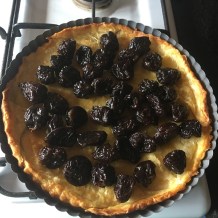
Two Flans and Marzipan, from Two Music Fans
Janine and I have just enjoyed our first house concert of the year.


it’s quite rich!


After the Hail Storm
A month ago we had a hail storm. Not too bad as hail storms go, but bad enough. There wasn’t a lot of rain with it, – a pity.
A few weeks later we had a lot of rain in an hour. Quite a storm all told. We found to our surprise that we had a number of leaks appear in our old school classroom. We had to find buckets for the drips on the carpet, the computer table and other various places around the house. Having drips of water dropping onto the carpet in what is our lounge room, really concentrates your attention.
I’m fixing a hole where the rain gets in and stops my mind from wandering!
We don’t usually have leaks like this, so I had to investigate. However, I needed to wait for it to stop raining, then to stop blowing, waiting for a day when there was no gusty wind. I once went up on the roof on a windy day and the ladder blew away, leaving me stranded up there until Janine came looking for me, replaced the ladder and let me come down. She must love me!
I finally found a day that wasn’t too windy, glarey or wet and slippery. I got up onto the top roof of the old classroom of the school. I found that the hail storm had pummelled the 130 year old corrugated galvanised iron roofing. Where there was an over-lap of the old sheets the iron had rusted to a very thin state because of the condensation in the over-lap, creating a few quite large holes.
A hundred years ago, corrugated iron roofing could only be manufactured in short lengths, as it was rotary folded across the sheets to make the corrugations. This meant that to cover a long-span, a number of shorter sheets needed to be used and this required overlapping to stop leaks. All old iron roofs suffer from this same problem of rusting out on the overlaps. We are lucky to have a roof that has survived for so long without too much trouble. We live in quite a relatively dry environment with about 500mm of rain each year.
I worked across the roof systematically siliconing every split, crack and thin rusty patch. The overlaps needed special attention. In one place I had to cut a small piece of rustic, but structurally very sound, old roofing iron into a small square. I glued this patch over the worst section, that was too big to close with just silicon alone.
The big issue turned out to be the ridge capping. This is 130 year old lead! I wanted to replace it 35 years ago, when I was much younger, able-bodied and building the extensions on to the Old School Classroom. I didn’t want any lead on my roof. Unfortunately I struck one massive problem that stopped me in my tracks. The old lead was about 600 mm wide and the old wooden roofing battons were well spaced accordingly. Modern galvanised ridge capping is only about 460mm wide. Not wide enough to reach the old battons. This meant removing all the old sheets of iron and screwing on new battons, then replacing the roofing, then screwing down the new narrow ridge capping. A massive job. Not one that I could complete easily in a day.
Being basically lazy, I decided that I had enough to do with building the new extensions onto the Old School classroom to make it into a house, so I left the old flashing up there. It was just easier to ignore it and hope for the best. The old lead capping has developed cracks and splits here and there along its length over the years. I siliconed these splits and cracks 30 years ago, and 20 years ago and then 10 years ago, Now the cracks are just too big and too long for silicon.
Now my lead flashing chickens are coming home to roost. I will need to re-roof the whole school roof eventually. I hope that I can make it last long enough, so that it isn’t my job to do. I couldn’t do it by myself now. I’d need to employ someone to help me these days.
My creative solution was to lift the old lead flashing and slide in new sections of shiny galvanised ridge capping in underneath the old lead. Then I screwed the old lead down over the new galvanised ridge capping, through into the old galvanised roofing. A cunning plan!
From a distance, no-one can tell that I did anything at all. It looks exactly as it did before I fixed it, and that’s the way I like it.
From Garden to Glass jars, Preserving our Excess
Our international guest and pottery/environmental living intern, Ms Kang from Korea, is about to leave us. We spend our time in the pottery, garden and kitchen. We put in a big day from early morning through till late night, a 14 hour day. There is a lot to get done at this time of year.
We have glazed our pots and packed the kiln previously, so while we wait for the sun to get up in the sky so that we can start the firing. I get up on the roof and wash the solar panels. We live on a dirt road which is quite dusty in dry weather. We recently had a good rain storm and collected 75mm. (3″) of rain, but then we had 150mm. (6″) of wind and dust, This means that I need to wash the PV panels so that we achieve maximum efficiency. At this time of year, the shadow from the trees doesn’t pass off the last of the panels until 10.00am.

By 10.00am the sun is up in the sky and we are generating good energy, it’s a good time to switch on the electric kiln. I wait until the PV panels are generating enough power before I start the firing. I like to start about 10-ish and finish by 5-ish, thus making the most of the sun. The kiln is very powerful and can easily fire straight through to Stoneware 1300oC in 5 hours if needed. Once the kiln gets to 1000oC, I start reduction with 2 small pilot burners running at 5 kpa. I can’t set the pressure any lower than this and expect it to be reliable. This takes the kiln through to 1300 in reduction using just 300 grams of gas. I’m still experimenting with this kiln.
If we want to fire longer, or on cloudy days when there isn’t enough direct sunlight, we have the Tesla battery to fill the gap. We can, if needed, fire the kiln and charge the car as well on the same day. On a good sunny day, we can charge both car and Kiln, fill the battery and still sell a little to the grid. On the off days when we don’t fire or drive the car, we sell everything to the grid. We sell our excess at 20 cents per kW/hr. occasionally when it is cloudy for a few days we buy back power from the grid. We chose a 100% green power contract and pay the premium price of 35 cents per kW/hr for the privilege. However, we are connected to the grid by a net meter, so we only have to pay for power if our imports exceeds our exports in any given month. It never does.
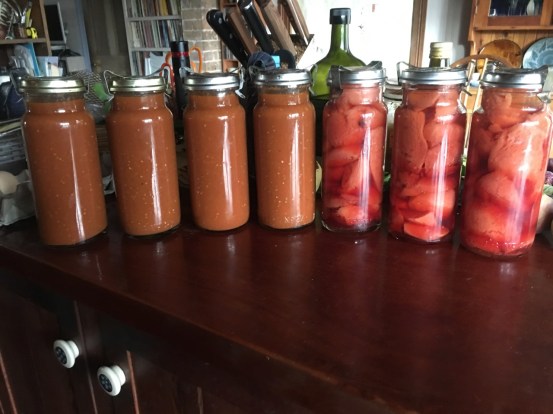
Once the kiln is on, It fires itself in semi-automatic mode. I only need to check it occasionally. Then its back into the garden to continue the harvest of more tomatoes, chilis, capsicums and aubergines. We are at peak tomatoes now, as we dealt with the last of the late-season plums last week. They are all safely vacuumed sealed in their jars, in the pantry, waiting for later in the year.

While I harvest the tomatoes et al, in the vegetable garden, the ladies, Ms’s King & Kang collect hazel nuts and quinces from the orchard. We are all soon very busy in the kitchen, by the time the heat of the day sets in. All the tomatoes need to be washed and sorted. Even though we have set fruit fly traps all around our garden and orchards, we still get some fruit fly stings in the very ripe tomatoes in this late summer season of hot and damp weather. All the tomatoes are cut open, checked for fly strike and then sorted into two separate pans. A big boiler for the good fruit and a small sauce pan for the fly struck fruit. The spoilt tomatoes are all boiled to kill the grubs and then fed to the chickens, with the remaining skins and detritus composted or fed to the worms.

While I’m cooking, Ms Kang is shelling the days pick of hazelnuts. This batch of tomato passata will be cooked with pepper corns, bay leaves and a bottle of good red wine. It looks great and tastes delightfully sweet and sharp, sort of tangy, with just a little bite and lingering heat from a few chilli peppers in the mix.
The quinces are washed, peeled sliced and then boiled with a little sugar, 300g in the big boiler + a couple of litres of water to cover them. I add a stick of cinnamon, a few cloves and two star anise. After they have softened. I transfer them to baking trays, pouring the sweet boiling liqueur over them and add a little bit of Canadian maple syrup into the mix I give them 45 mins at 180 and this reduces the liquer to a sticky gel and turns the fruit to a lovely red colour. I choose to cook them with a minimum of sugar. If I added more sugar, they would turn a deeper/richer shade of claret red. I love that colour, but don’t like the saturated sweetness.

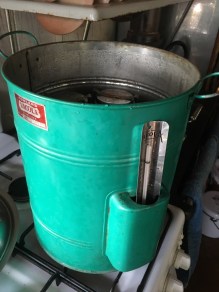
We preserve everything in our antique ‘Fowlers’ Preserving jars. We bought this old boiler and a few boxes of glass jars, 2nd hand at a garage sale over 40 years ago and they are still giving good service. We have only had to replace the rubber rings.


It still surprises me that a basket full of quince fruit can fill the sink when being washed, then fill 2 baking dishes in the cooking and finally be reduced to just 3 jars of concentrated sunlight, colour and flavour after a days work. Two baskets of tomatoes fills two boilers, then makes only 4 jars of passata once it has been reduced on the stove for an few hour.
Such is the business of summer.
Our New Intern from Korea
We have a new intern working with us this January. Our visitor is Ms. Kang from Korea. She has come here to experience our sustainable approach to life and our ceramic work.
We have been working together crushing and grinding porcelain clay body and glazes from local rocks, throwing pots, working in the vegetable garden growing our food, cooking the food that we harvest and doing a little bit of sightseeing as well. The three of us have been doing some tourist activities together, like a trip to Sydney with a ferry ride on the harbour, and a trip to the local National Park and the south coast beaches.
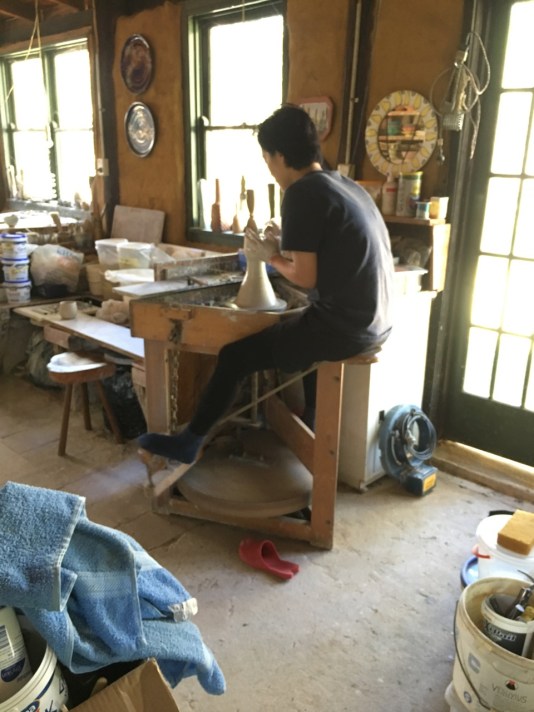
Ms. Kang has been learning to use our foot-powered ‘Leach-style’ kick wheels. We have just finished making sufficient clay work today to fill the solar powered electric kiln for a bisque firing. Last week we calcined some local white granite rocks, to make our local blue celadon/guan glaze.
Pretty-much life as usual, but with a hard-working and dedicated student-guest.


Electric Car Review – Ioniq PHEV
I’ve had the new Hyundai Ioniq PHEV Plug-in hybrid electric car for just over a week now. So I can give a better account of what it is like to drive and own. As with most modern cars, it has a heap of complex software options in the inbuilt computer which is capable of doing more things that I care to learn about in the short-term. A bit like my phone or my laptop, it can do much more than I will ever ask it too. It will take me a little more time to work through all the options and internalise them to a point that they are at my finger tips and therefore useful to me. At the current time most of it is still opaque to me, so I don’t attempt to use stuff that I don’t see any need for. Especially if it distracts me from my driving, I don’t go there.
I am not a petrol head, so I don’t know anything about cars. I’ve always bought the cheapest, fuel-efficient car that I could afford. That was nearly always a 3 cylinder, 1 litre engine car. We had a Daihatsu Charade and then a Daihatsu Sirion. We had them for about 10 years each and about 250,000 kms. Being one of the cheapest cars on the road, they came with manual everything, totally no-frills driving. I really enjoyed driving a small manual car. That is what I’m used to. So the hardest thing to get used to in this new car is not the technology or the electric propulsion, but the fact that it is an automatic! I’ve never driven an automatic car before. I still feel the need to lift my left foot to de-clutch as I approach a stop sign!
The car has 3 modes of travel. Fully electric directly off the battery, Hybrid electric where it starts off in Electric mode and sometimes switches to petrol mode if you put your foot down. and then ‘Sports’ mode, which seems to engage both motors at once. This mode is pretty zippy – I’m impressed! Changing between these modes is done electronically with the press of a button.
I have spent the first week mostly driving in ‘eco’ mode in fully electric selection, because this is why I chose this car. I have lots of solar PV on my roof and a Tesla battery at home, so I’m completely ready for fully solar electric living and travel. I have found that I can do all my local driving on the battery in eco electric mode. Recharging is done using a bog standard 10 amp 3-pin household power point and takes 4 hrs if the battery is almost fully depleted.
Because I’m not a pushy or aggressive driver, driving as I normally do and am used to doing around here, the car stays in ‘eco’ fully electric mode 99% of the time. Just occasionally when I come to a steep hill and put my foot a little harder on the accelerator, the petrol engine cuts in when I’m in Hybrid mode and I can feel the surge of extra power propel the car forward. Because the car is electric (most of the time), there is no engine noise or vibration when you pull up at the lights. The car pulls away smoothly and silently from the lights. If it is in hybrid mode the engine cuts in after a hundred meters or so, or if/when you get up to 20 kms/hr or so. This is totally seamless and the only way that I know that it has happened is the little icon on the dash that changes from electric to hybrid.
Most of the time it is just steady as she goes, totally silent, comfortably plush and comfy driving. The most noise that I hear is the tyre noise on the bitumen, I’ve become quite aware of the differences in road surface and the various noises that they each create. Visibility is very good with the mirrors. I really dislike cars that have tiny back windows. The back hatch on this car has a metal bar across it as part of the design to strengthen the huge flowing lines of the sculptured, mostly glass hatch. but visibility is still very good. I’m used to driving with the 5 point visibility habit and this design works perfectly well for me. However, I can see that I will eventually start to loose this habit, as I become more accustomed to the reversing camera and the active side mirrors.
Even though this car is the base model it has a few bells and whistles. Like side mirrors that have an alarm built-in that beeps and flashes to let you know another car is very close on that side if you put your blinker on to change lanes. It makes a humming sound that is generated when driving slowly in pedestrian zones like shopping centre car parks, so that people car hear you approaching from behind. It has adaptive cruse control, so that if you are cruising along and another car pulls into your lane in front of you, this car automatically senses that car and slows down to the same speed as the car in front, keeping several car lengths distance. The car also beeps if you cross a marked lane without indication. When reversing, it beeps if there is a car coming from either side that you can’t see, as you attempt to reverse out of your parking spot. The media player/radio also cuts the volume to half when you put the car into reverse, so that you become more aware of your outside surroundings as you reverse. All these little gadgets are very common in all new cars these days I expect, But our last car purchase was 13 years ago and it was the very basic poverty model. So this is all new to me.
The car has an automatic, 6 speed, dual clutch, gear box, so that either motor can operate independently, but also at the same time in unison, when you choose to. It is powered by an Atkinson cycle 4 cylinder, 1.6 litre petrol engine, as well as the electric motor. Although it is still a small car hatch back, it is also the biggest car that I have owned. The Atkinson Cycle motor is a very interesting design and is particularly fuel-efficient. Try searching for it on the Wiki. To get the best fuel efficiency out of the car, many of the panels are made of aluminium and the rest of the body is made from super high strength, hot pressed, high tensile steel making it lighter, yet stronger. This saving in chassis weight is taken up by the battery. In stead of using the brakes, the car uses standard regenerative braking that is basic to all hybrid cars. An idea that has been around since the 50’s. Over-all there are a lot of little efficiencies all combined together to make this an impressive piece of engineering.
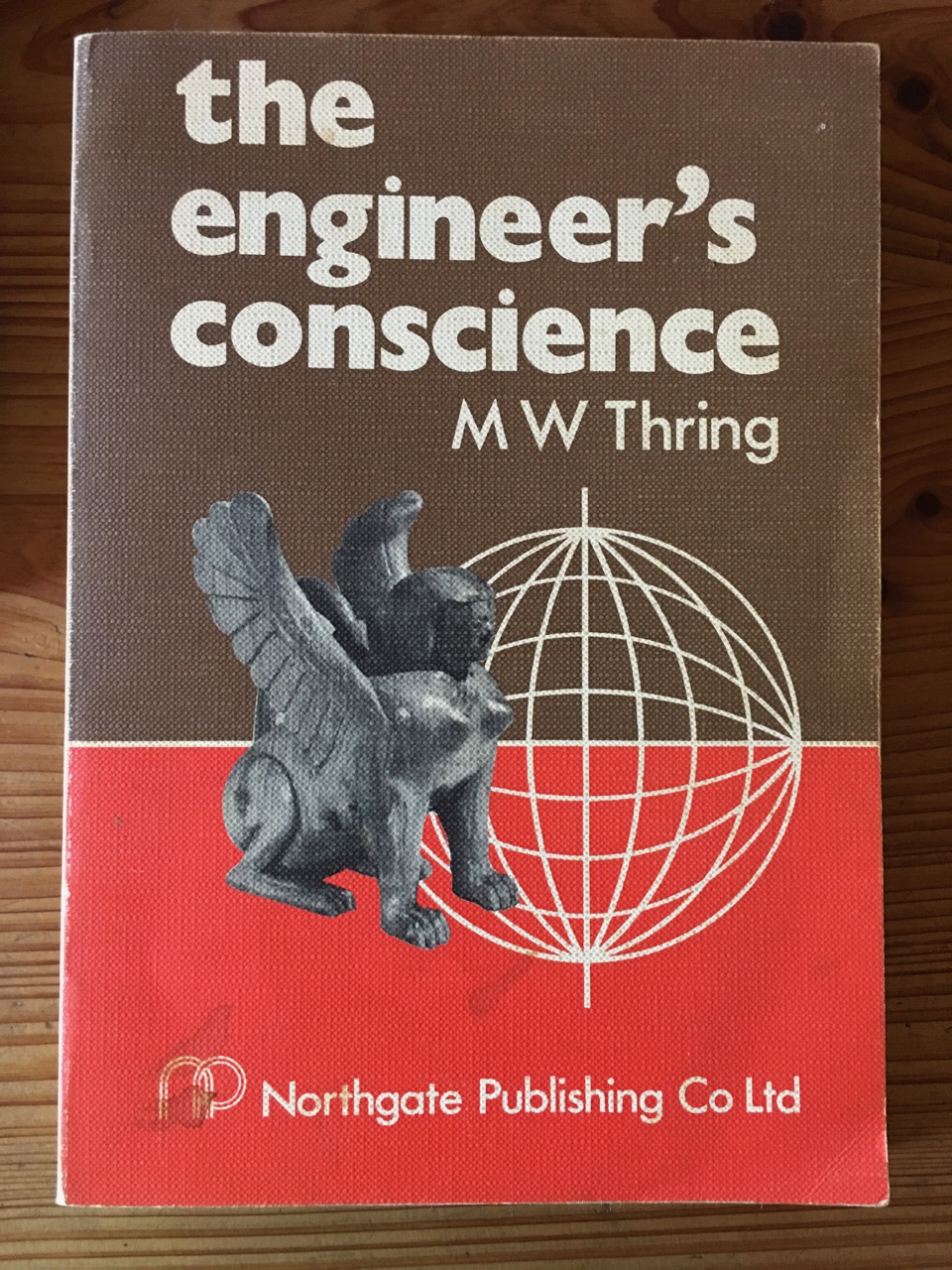
Of course, most of these ideas are not new. The Toyota Prius has been around for 20+ years, but it can’t drive on sunshine, it is strictly a petrol powered car. Many of the initial concepts of both electric and hybrid cars were introduced to me by Meredith Thring in 1980 when I read his book. Professor M W Thring pioneered many of these innovations in Yorkshire at the University of Sheffield and later at Queen Mary College, at the University of London in the post war period. See regenerative braking above. I bought the book that he wrote after he retired in 1980, called ‘The Engineers Conscience’. Interestingly, he was an Australian who moved to the UK to work, so maybe we can lay some marginal claim to the intellectual property invested in this car. I can safely claim to have been intellectually engaged in watching the long, slow development of these cars since the 80’s.

I have driven 500 km so far and the fuel tank is still completely full, the indicator hasn’t left the full mark yet. I must say that it is a very rewarding feeling to be able to drive totally on sunshine. I know that this will annoy some people, but the development of cars like this has been in the back of my mind since 1980 and has now become manifest in the availability of this car in Australia now. I have to say that it is so important to me and very rewarding to be able to drive for the rest of my life on the sunshine that I collect off my own roof.
That’s priceless.
The Glorious Weeks of High Summer
We have entered the glorious weeks of high summer, where it’s just too hot to do much physical activity in the middle of the day. Having both had skin cancers removed – fortunately at early stages, we are careful to wear long sleeves and a hat when we are out. We start early in the garden and orchards, as we want to be out of the sun before it gets too hot in the middle of the day. We work until lunch time and then stay inside until the heat has passed in the afternoon, then we get back out there and do some more.
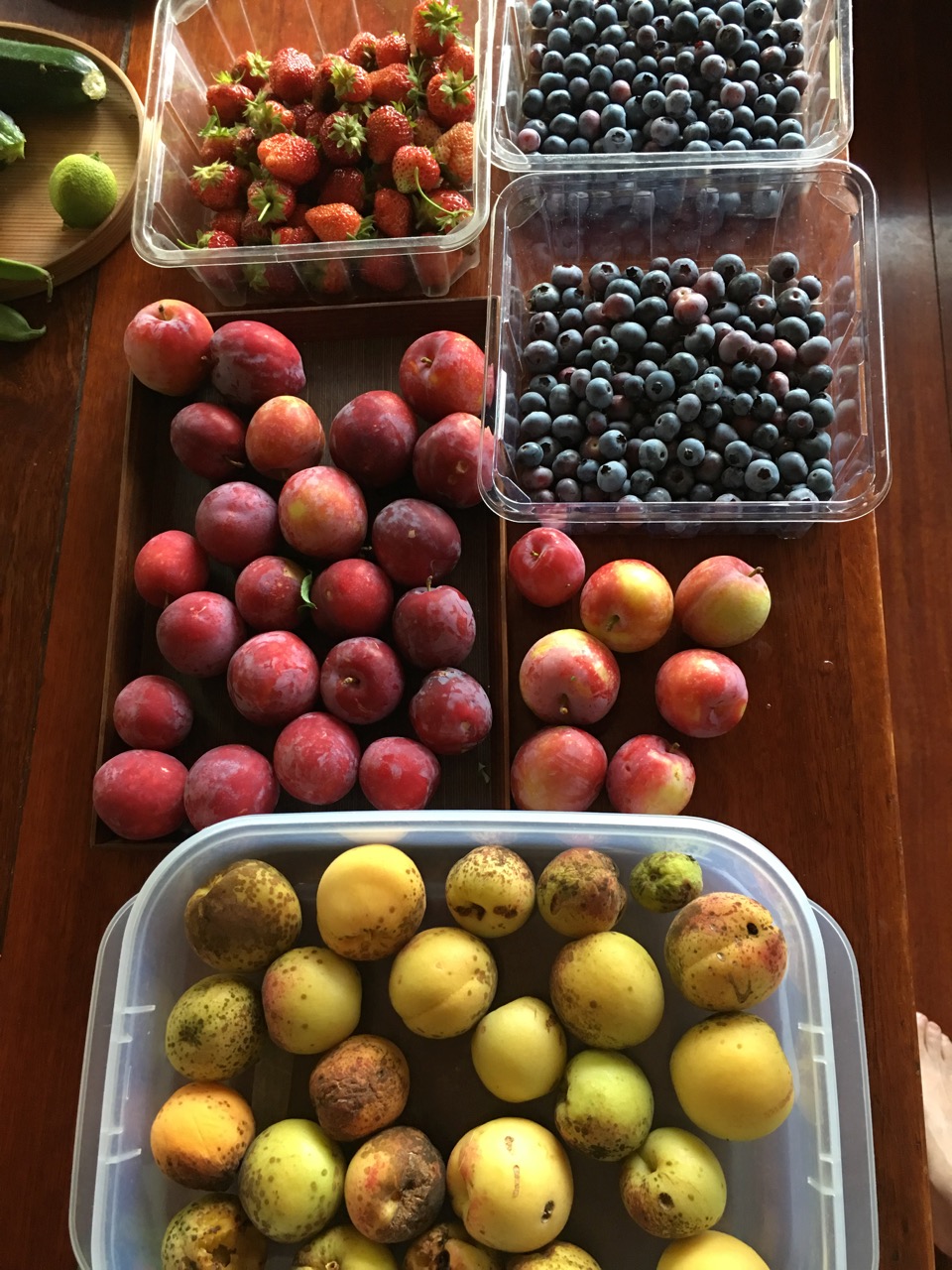
The jobs vary, but they are never-ending. There is always something to be done, often needed in a hurry. The morning starts with picking fruit. We have passed peak young berry and although we are still getting some each day, we are no longer picking kilos a day. At the peak, our biggest day was 3 kg. We will continue to get less and less, picking only every second day now, up until Xmas day, or thereabouts.
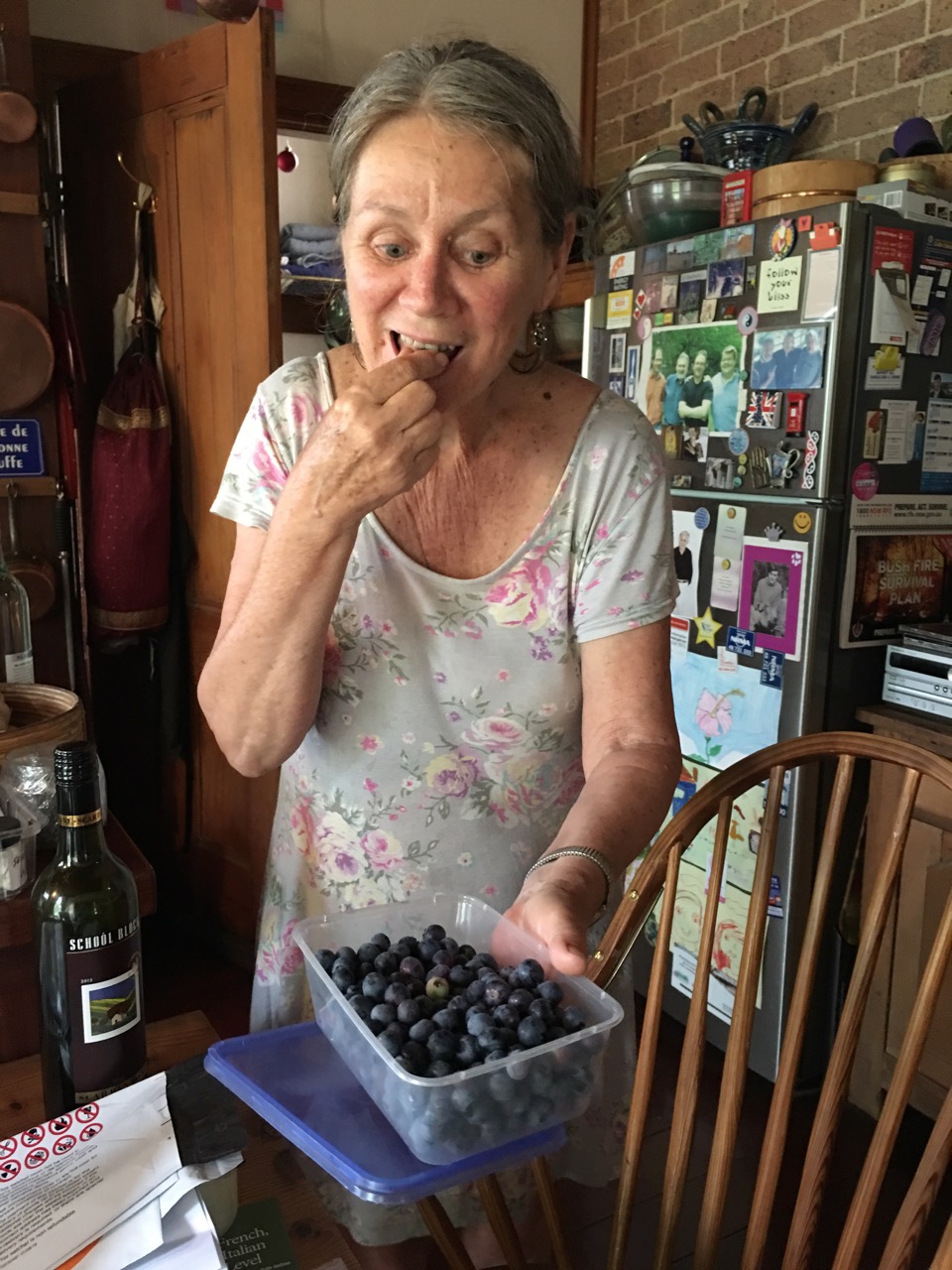
We have reached peak blueberry season today with 2 x 200mm. plastic containers of blueberries. We have about 20 plants, some doing well and others not so well. They are high maintenance and very demanding.

Blueberries won’t do well unless all their demanding criteria are met. They need to grow in a bog of fresh seeping, acid water, or at least watered every second day. They also need to grow in acid conditions, preferably a very well-drained situation. So here, where we are, up on top of this dry, stoney, drought ridden ridge, there is no natural place for them. We have tried them in the ground in a couple of places, even mulching with huge amounts of acidic leaf litter and the addition of a little sulphur powder to the soil, but they are not happy, even though we water them well, I suspect that they are not sufficiently well drained. They are growing, but not too well, hardly putting on any growth. They do flower and set fruit, but only in moderate amounts. They have only grown 700 mm. high in half a dozen years. Our second attempt, also in the ground in the vegetable garden, where we dug in copious quantities of acidic leaf litter and she-oak mulch, they did much the same, they didn’t thrive, but we do get some fruit from them.
Our best effort to date was to plant them in tubs filled only with naturally acidic leaf litter and detritus from the wood pile and from around the wood splitter, this being almost entirely made up of coarse, fibrous woody compost-like material. These 7 plants have grown 1.2 metres in one year and have flowered and set a great crop. They still need to be watered regularly, but boy are they productive. I’m still finding it hard to believe that a plant can grow so well in nothing but tree bark and saw dust! A medium that has no soil in it. It’s certainly well-drained and is naturally acidic. It seems to be just a matter of keeping up the water to them.

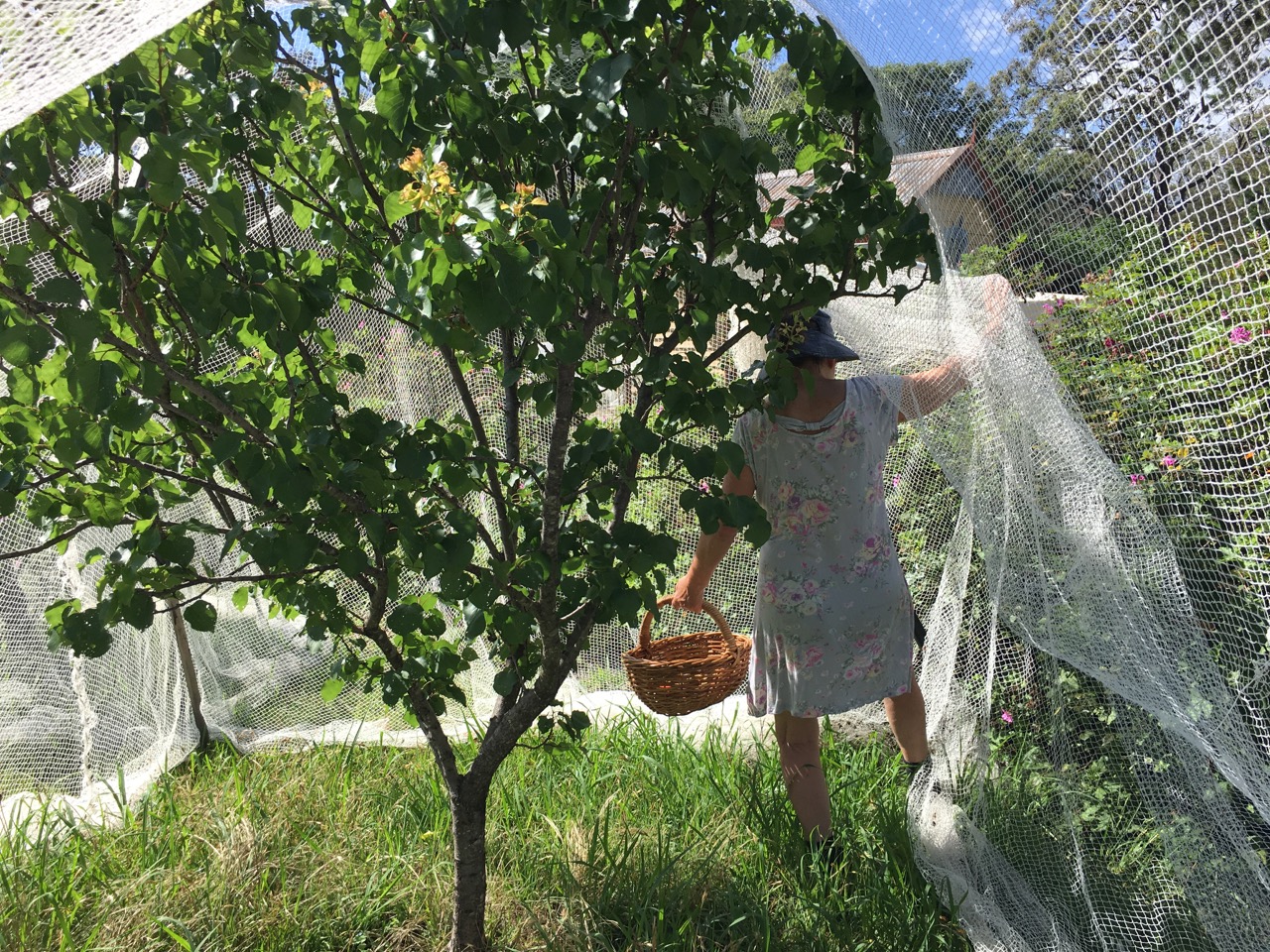
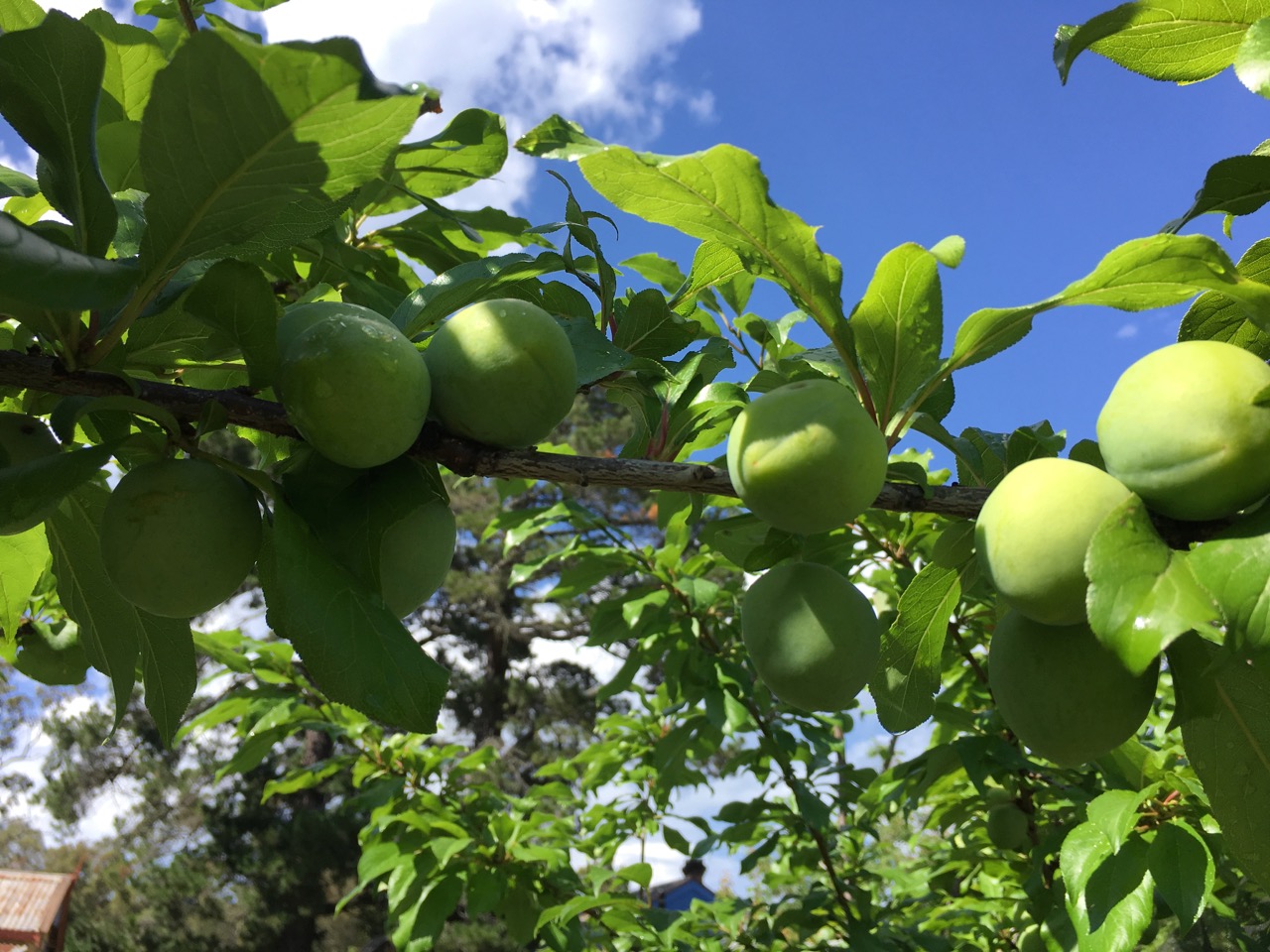
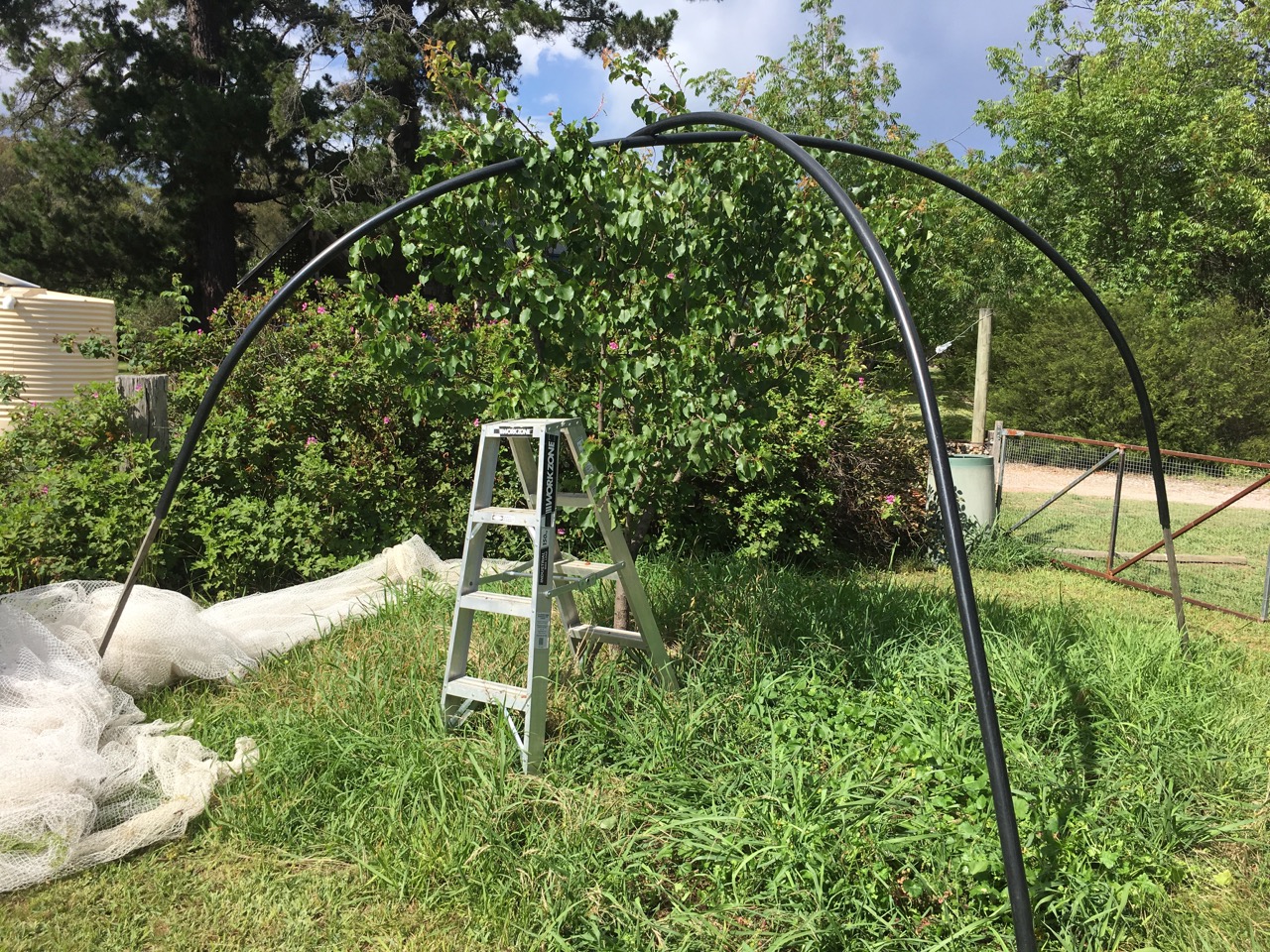
We have just started to pick the first santarosa plums along with the last of the apricots. Now that the apricots are over for us, the net is no longer needed there and we have decided to move this big net off the apricot tree this morning and along with its poly-pipe hoops and have set it up over the second plum-tree. The elephant heart plum. These plums are still green now, but will be turning red soon, and that red colour always attracts the birds. So far we have managed well with the birds this season.

Once the poly hoops are set up and the netting transferred, I drag the last of the netting over and manage to trap one luscious Janine and two chooks under the net. Now we can relax a bit. All that is left to do is to move the DAK pots and fruit fly lures across from the other tree. I try and keep at least one fruit fly lure inside every net. I spend $50 each year on fruit fly trap re-fills and a bag of dynamic lifter. Even growing your own fruit isn’t free + the hundreds of hours spent in the maintenance and watering, but this isn’t really work. It’s better described as fun and recreation, otherwise you wouldn’t do it.

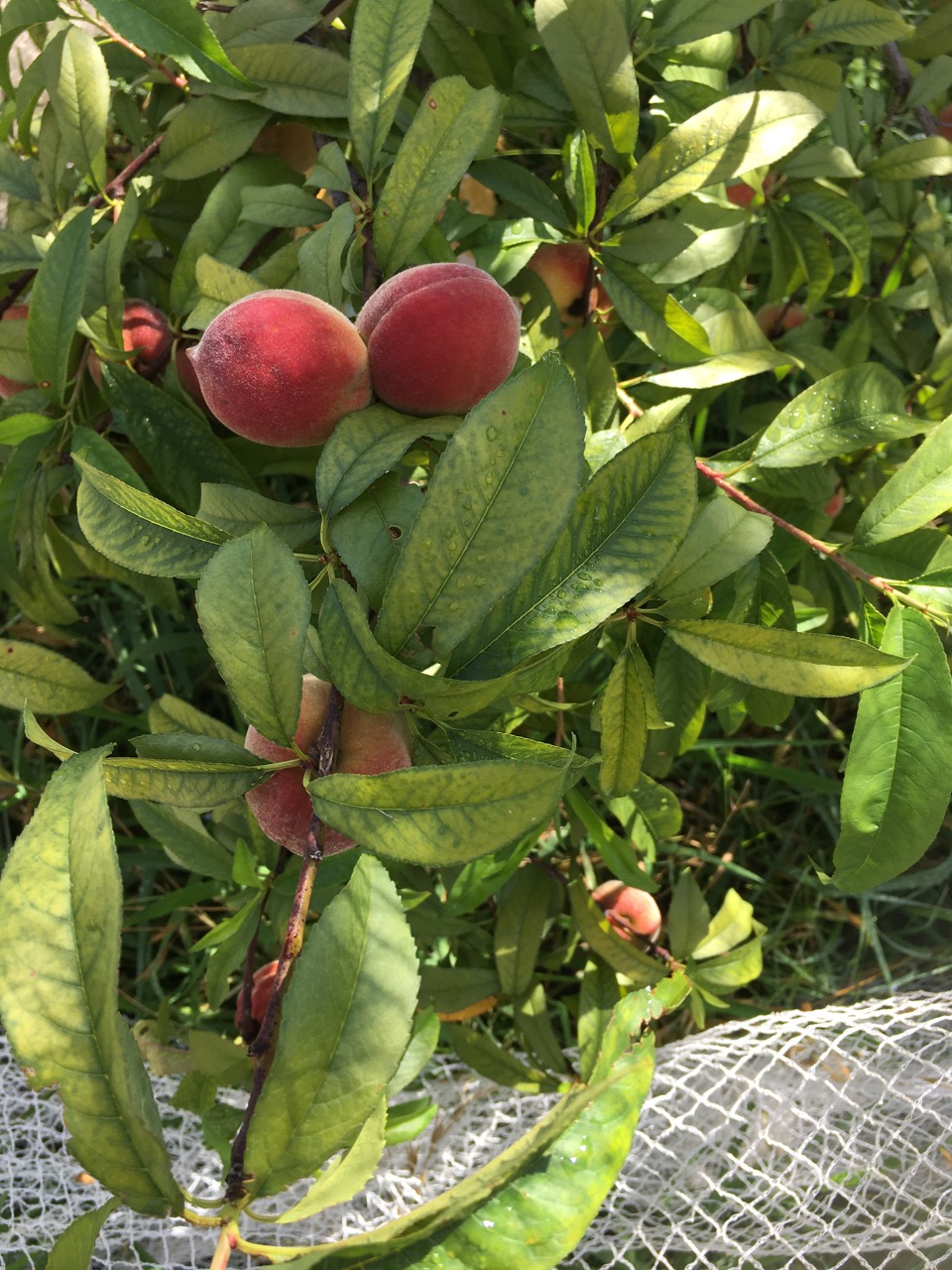
The late peaches are ripening, I suspect that it won’t be long and we will have these on the menu too. The late peaches are luscious, dense, yellow fleshed and so flavorsome. They put the super early white peaches to shame for flavour, but the early peaches are always first, so we are so glad to get them and really appreciate them for their sweetness. We don’t realise how thin the flavour is because we are so looking forward to eating them after 12 months without peaches. Now in the midst of the high summer heat and ever so long days, the solstice is just a few days away, we are getting picky. For instance, we have stopped picking and eating the mulberries, there is always so much more and better fruit at this time of year. We let the birds have most of those, we just take the easy low hanging fruit these days.

The strawberries are still continuing to produce regular pickings since spring, never too many, but just regular and steady, we have the strawberries mulched with pine needles that Janine sweeps up from under the big pine trees after every storm. We have a constant pile of it down where the truffle trees are growing. We use it for litter in the chook run and in their nesting boxes. After I rake it out of the chook rum every few weeks, along with a load of pooh all mixed in with it, it gets wheel-barrowed to the citrus grove and used for mulch around the trees in there. Nothing is wasted, everything has a use and a re-use.

Looking back at our mornings work, I can see that there is a lot of grass grown up under where the netting has been. I get out the whipper-snipper thing and see to it, then think that I should also do all the paths in the veggie garden while I’m out here and into it. Couch grass never sleeps in this hot weather. I can’t afford to let it get a hold in the garden beds. One thing leads to another. There is no end to jobs. But the sun is right up there now and its almost 12-ish and time to put the mower away and go inside for lunch and then some inside work till it cools off. It’s a good thing that the days are so long right now, otherwise we wouldn’t be able to get it all done.
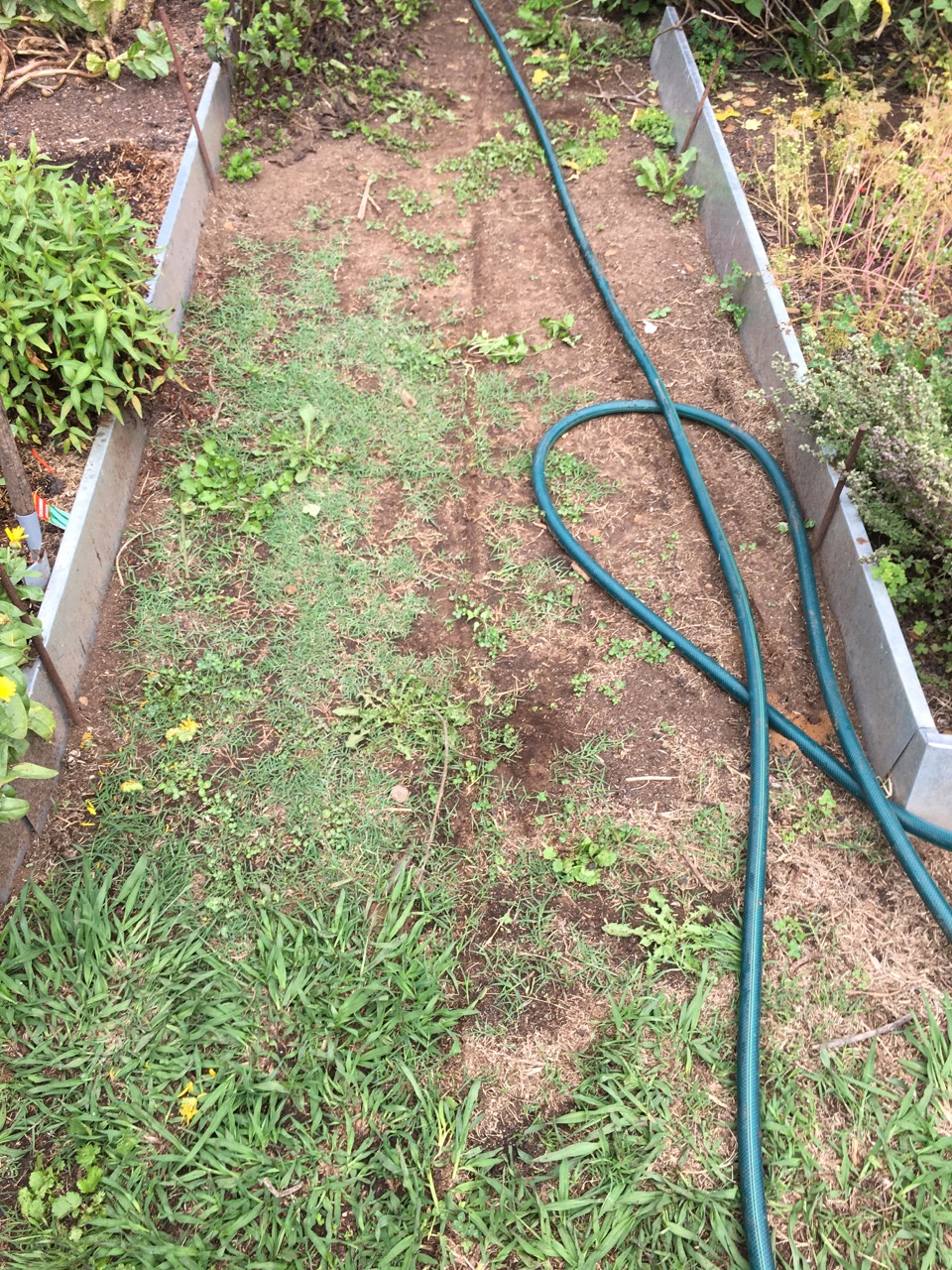
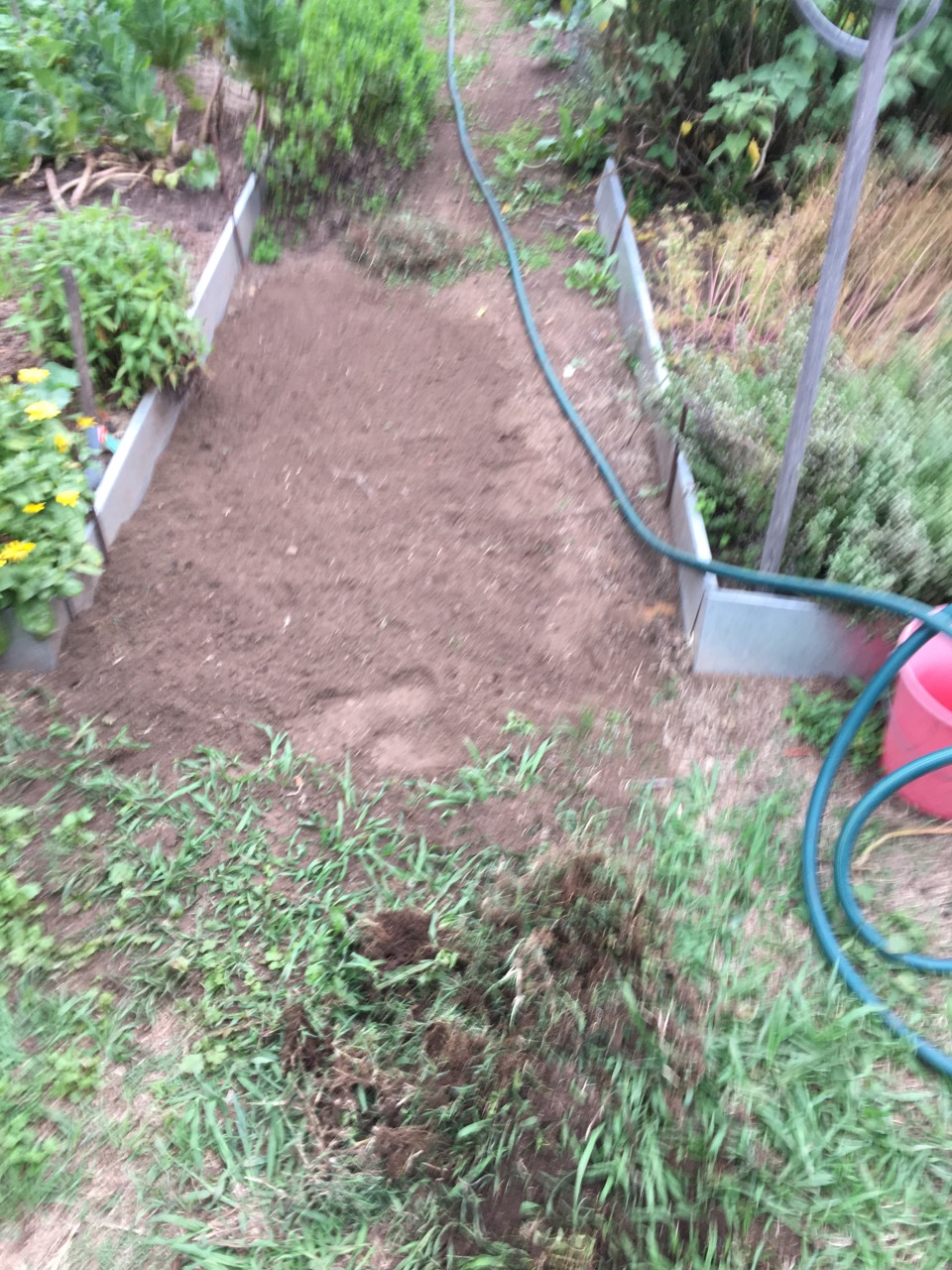
I get out there again and dig out a nasty patch of couch grass that has got a hold of part of the garden path. I set too with the mattock and dig it out roots and all. It’s hot sweaty work, but very rewarding when you look back after you’ve finished!

This is a job that won’t need doing again for another year in this spot, but there are still 3 more patches just like it at the other ends of the pathways.
I must have been wicked!
Veggies and Flowers
When we came here 43 years ago. There was next to nothing here, Only the derelict shell of the old school classroom. We had to work 7 days a week for the first few years just to pay the 23% interest rate on our money-lender mortgage on the property. It was a huge impost, an exorbitant interest rate, but they were the only people who would lend us the money.
Because of this huge level of debt, In those first few years I had to work the equivalent of 8 working days in each week. Seven full days and two nights, that equaled an extra day. I got part time work at 4 different art schools, then on Saturdays and Sundays, I flew out into western New South Wales each weekend to different towns, all over the state to build pottery kilns on-site as weekend workshops. Janine worked a couple of days and one night at Liverpool TAFE college. It was a killing work load, but we managed to pay off the first of the two mortgages early and save a load of interest.
During the school holidays, we were able to establish an orchard and a vegetable garden around the house. We were complete novices in the vegetable garden, but learnt by doing. The gardens started out as a way of growing wholesome, fresh food cheaply on site.
A few years later, I got to see a few French period films set in the south of France. “My Father’s Glory and My Mother’s Castle”, based on books by Marcel Pagnol. These films and others like it, (Jean de Florette) opened my eyes to the possibility of growing both flowers, vegetables and fruit trees, all in the same garden. Our life is much more under control now, and we are finally solvent, with more time to relax and enjoy the fruits of our labours.
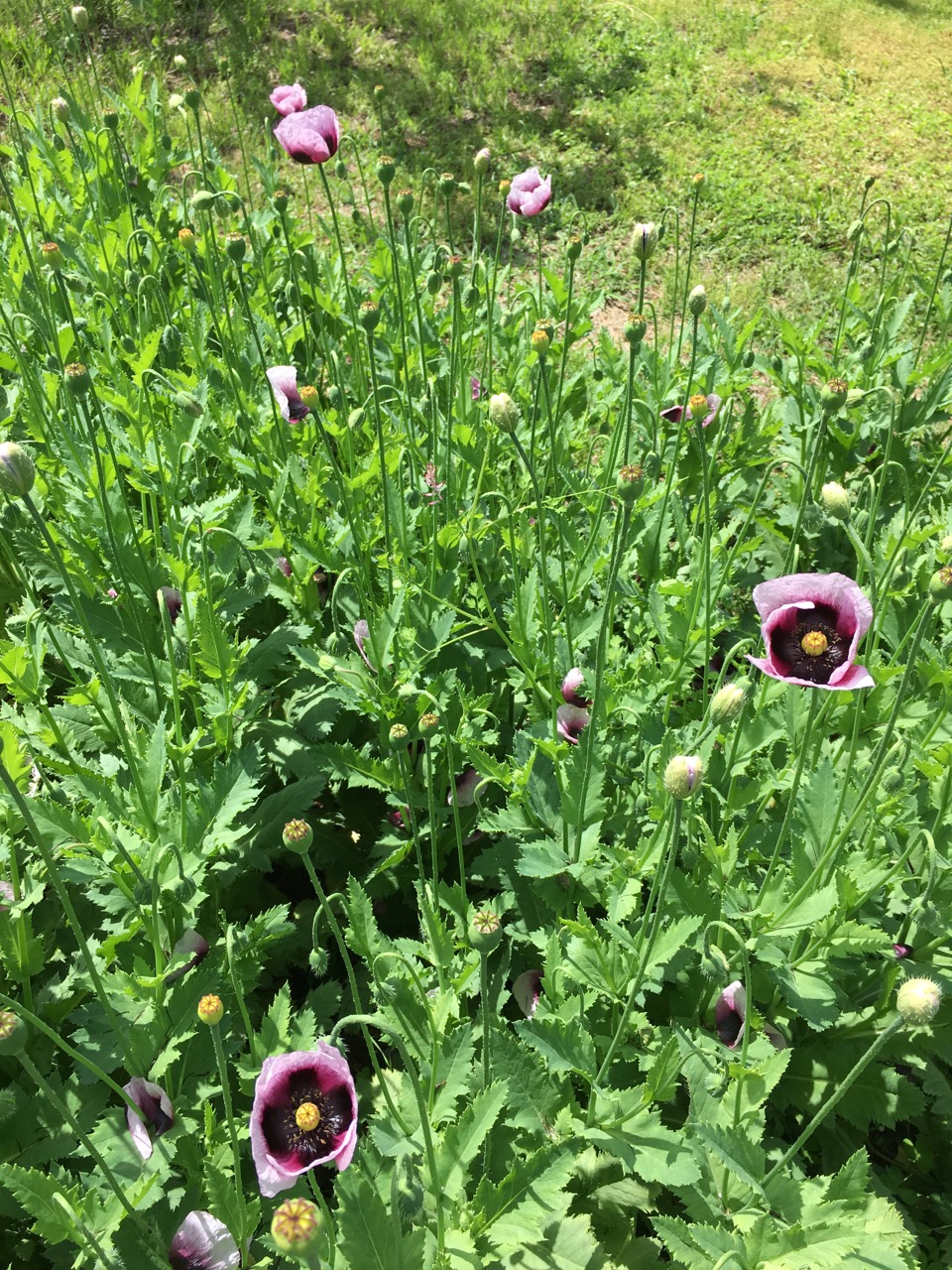
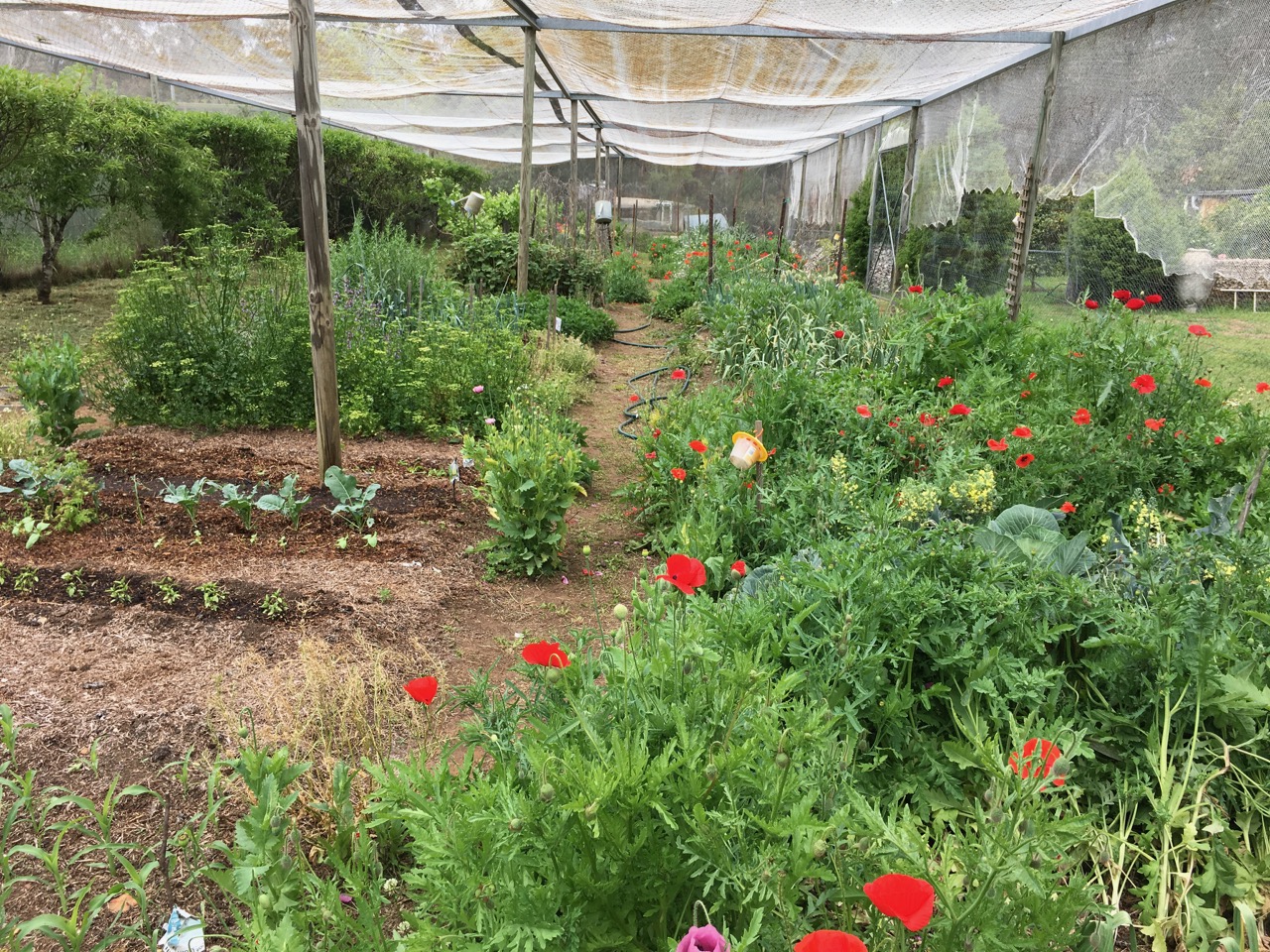
In the past few decades we have introduced a lot more flowers into the edges of the garden beds and these are now self seeding and well established year on year.


So now we grow herbs, grape vines, fruit trees and vegetables all in the same space. It is all netted over now, mostly with hail proof, fine bird netting. However, we have incorporated side panels of 35 mm hexagonal, galvanised wire mesh in the walls that allows all the little insect feeding birds easy access. We get all maner of finches, fire-tails and wrens flittering through in waves thoughout the day. They do a great job of cleaning up all the little pests and grubs, without touching the food crops. It this way we don’t have to use any insecticides.
So here we are arriving at some sort of way station on the journey that we set out on together over 40 years ago.
It’s nice, but I keep in mind that nothing is ever finished, nothing is perfect and nothing lasts.


You must be logged in to post a comment.