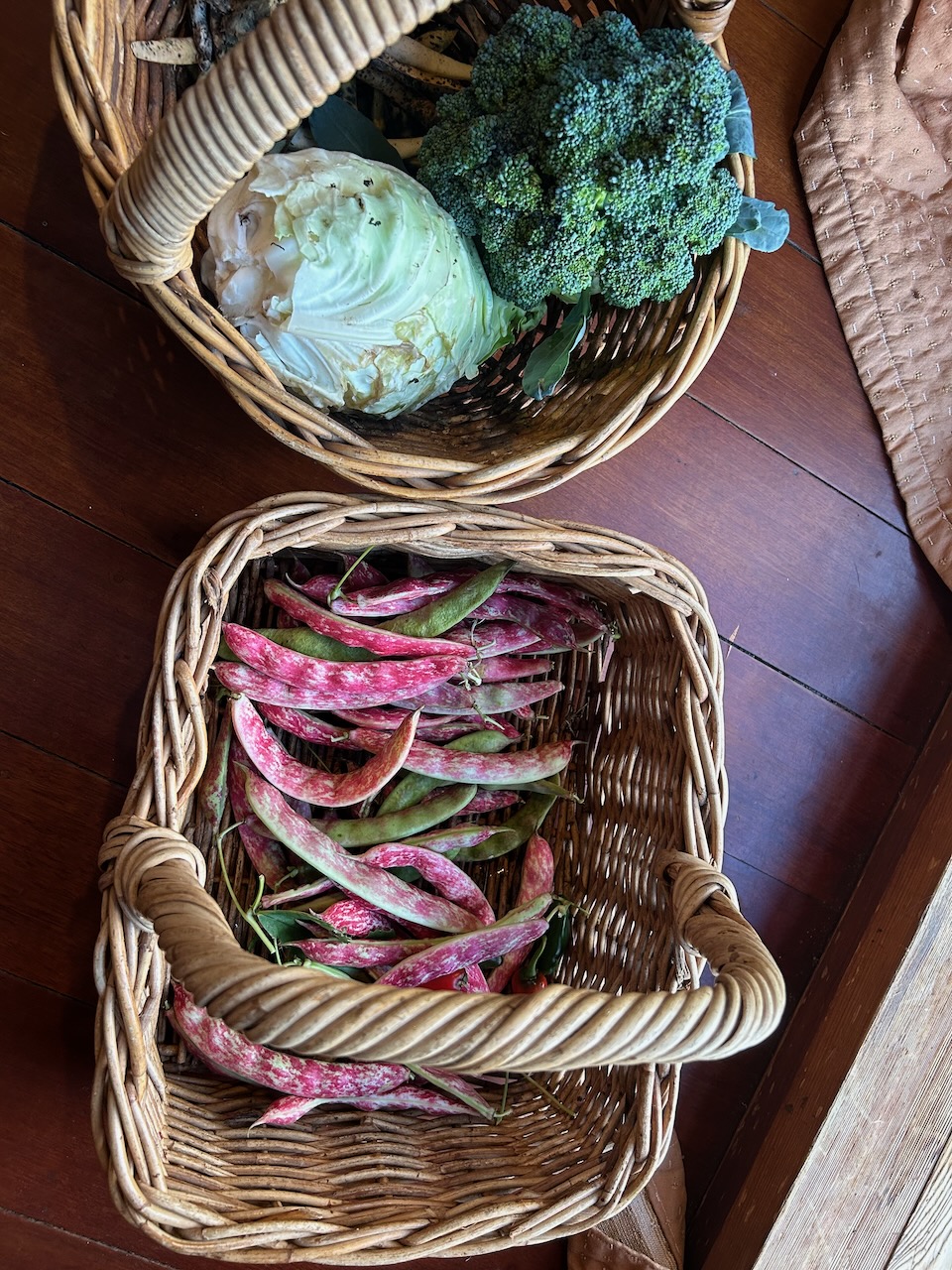
We have just harvested the first cabbage and first broccoli of the autumn. I planted a range of brassica seeds on boxing day. The first batch were all dug out by the blackbirds, so when I re-planted the 2nd sowing, some time later. I also covered the bed with bird netting to stop a repeat of the blackbirds scratching out the seeds. Blackbirds don’t want the seeds, they just like to scratch into freshly worked and composted soil looking for worms. This little hiccup set me back a few weeks, so our first cabbage is a bit late arriving.
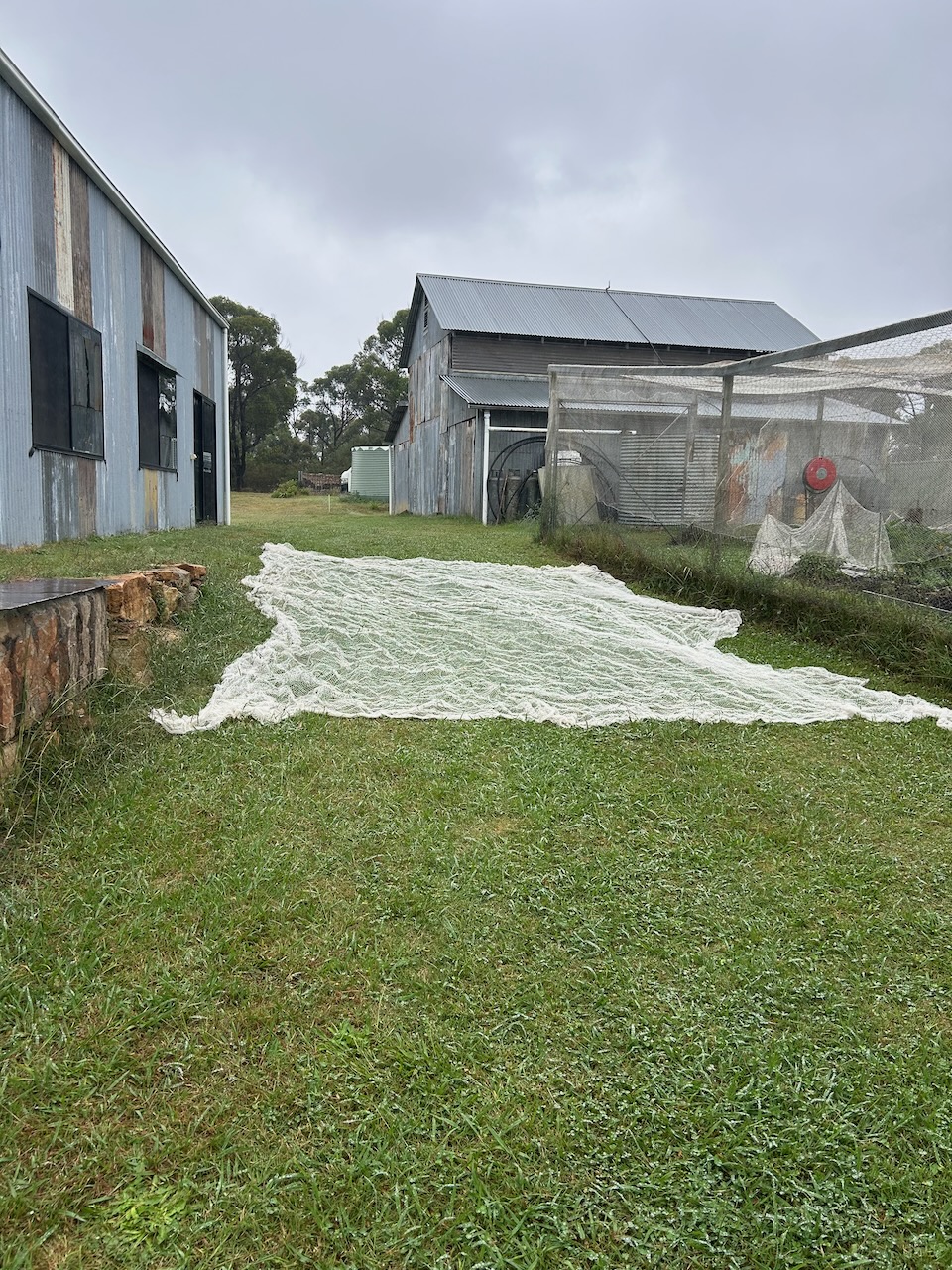
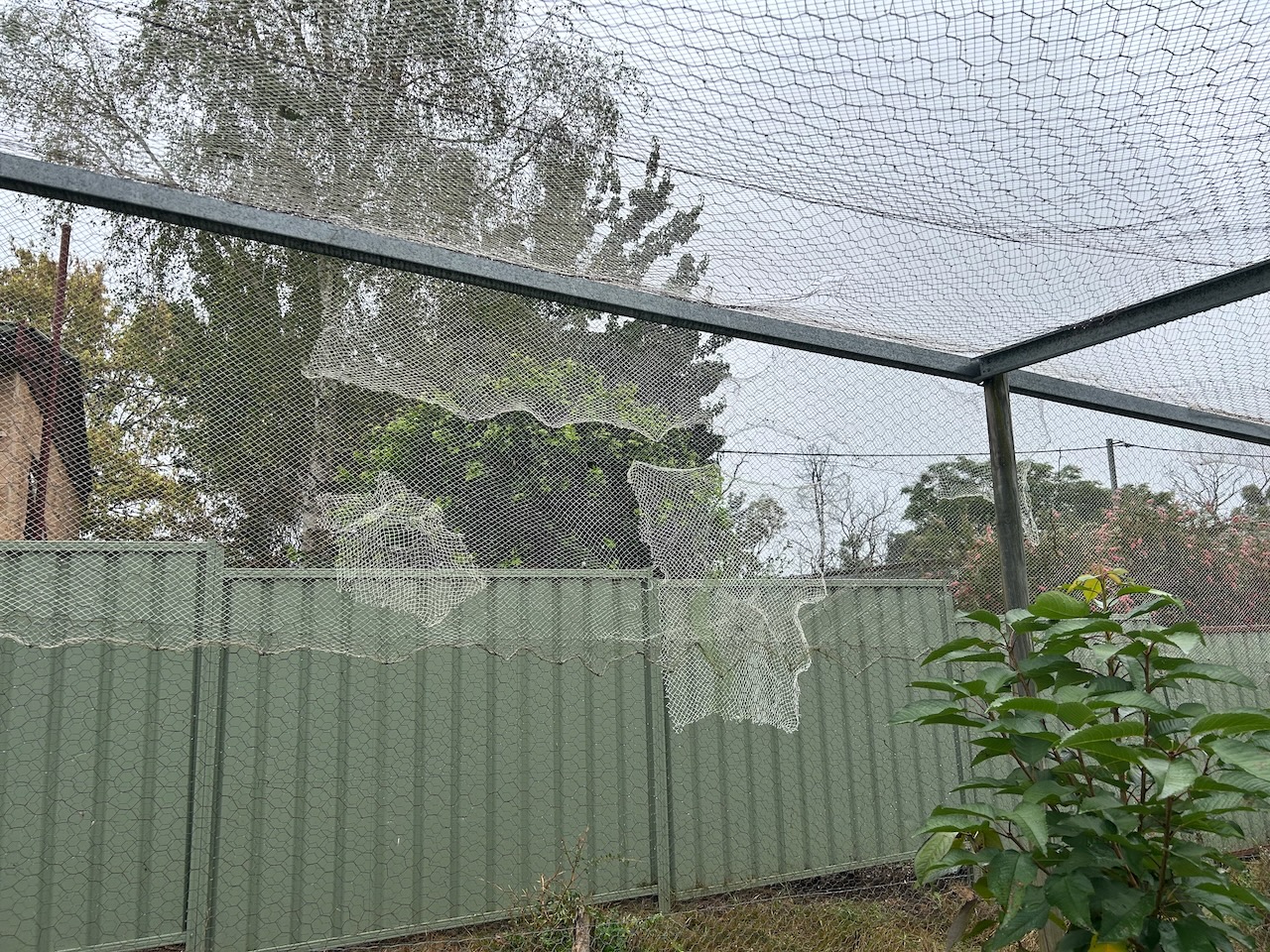
I have now repaired all the melted sections of the plastic netting over the vegetable garden. Almost total replacement at both ends that were worst hit by the fire, then applying patches to the large holes in the other walls, and finally stitching together the small 50mm to 100mm holes that are scattered all over the enclosure walls and roof. I purchased a commercial size roll of 100metres by 10 metres of netting over 30 years ago to cover the vineyard at harvest time. The netting that is over the veggie garden now is all that is left over from that time. It had a 10 years warranty against going brittle with the ultra violet light. So I’m very pleased that it has lasted so long. However, it is getting very brittle and the galvanised steel netting is all rusted through in places. So a total rebuild is in order, but I’m not too sure that I can manage that big a job these days, or if it would even be wise to attempt it at my age, having just turned 73, I shouldn’t be up and down ladders for days on end.
I made an Australian version of oka-nomiyaki pancake. Of course it is not really an okonomiyaki, as I don’t have mountain-potato starch, or almost any other authentic Japanese ingredients, but I do the best that I can with what I have. The super-fresh garden ripe cabbage makes it really fresh, crisp and delicious. The broccoli goes into a veggie stir fry along with all the other garden delights of the current season and some tofu for protein. Vegetable gardening, which mostly involves a lot of weeding, mowing and watering, suddenly becomes so worthwhile when you are harvesting such beautiful produce each afternoon, freshly picked ready for dinner. Our food has carbon metres, not miles!
I have also planted another 4 different varieties of seed garlic in the garden, just to see if any of therm are well adapted to grow here in the future.
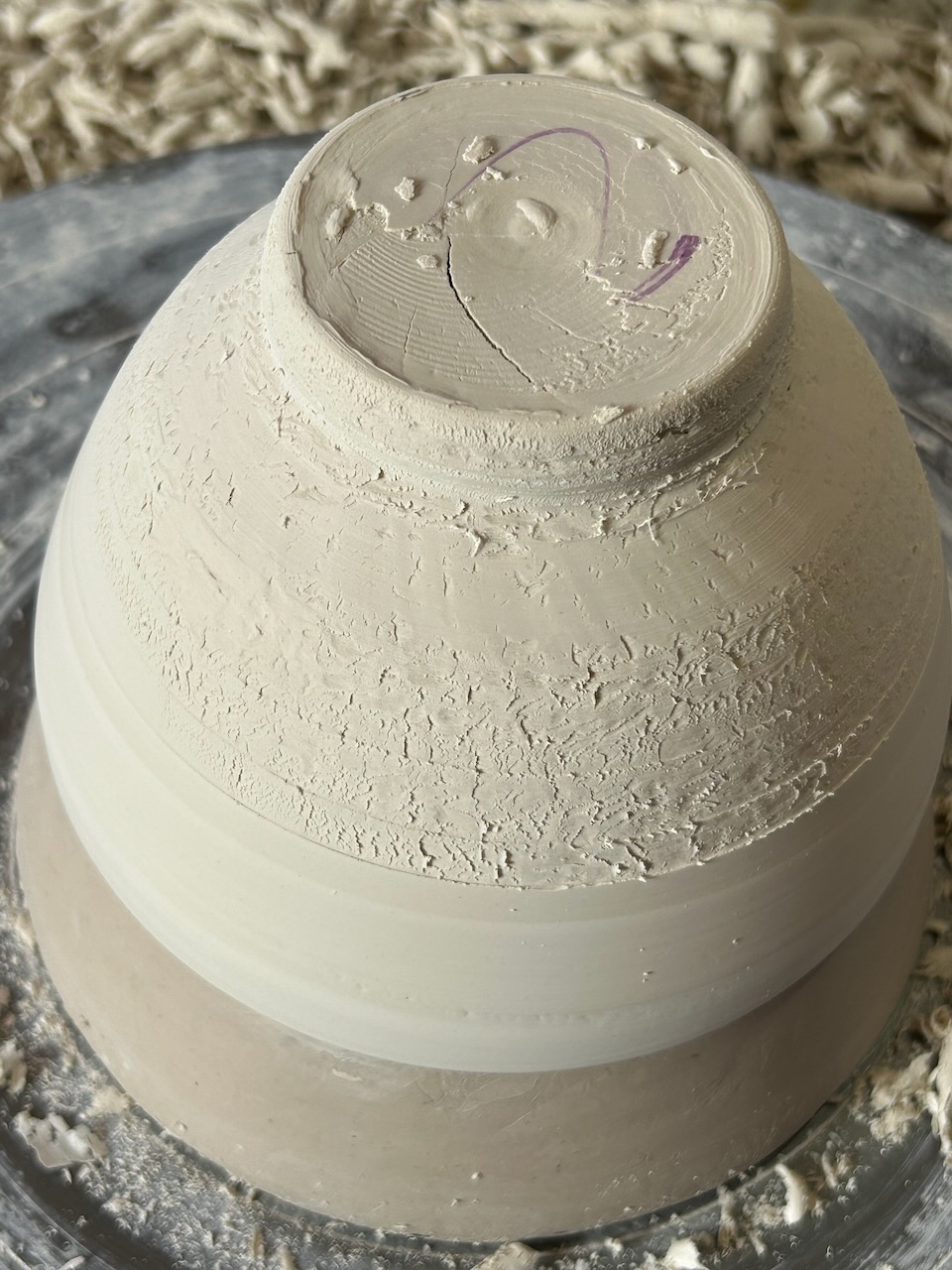
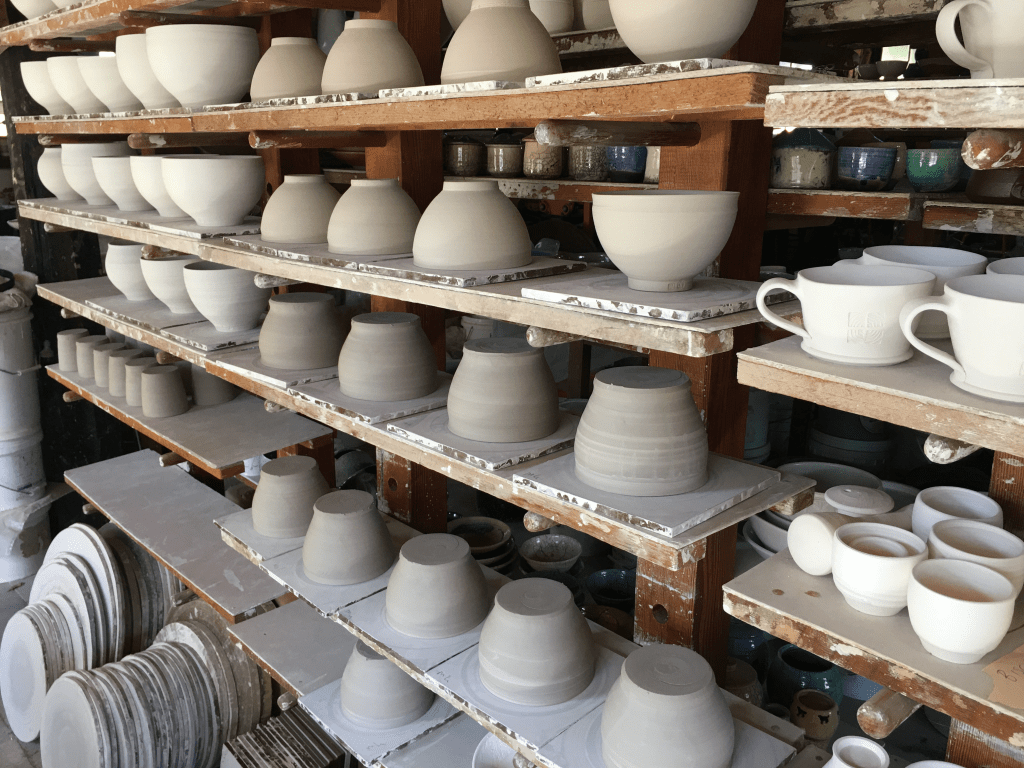
In the pottery, I have been throwing some sericite porcelain stone bodies. This stuff is so short that I have to make the wall bases thick to hold the form up. That then means a lot of turning to get the pot thinner again. This weird stuff tears and rips as the turning tool cuts into it – unless it is turned quite firm and almost dry. But then there is the dust to contend with, so I like to do it while it is still a bit damp, but then it chips a lot. It becomes a two stage process. Roughing out the mass of extra thickness, drying some more, then final turning. I get to do a lot of slaking and re-cycling of turnings.
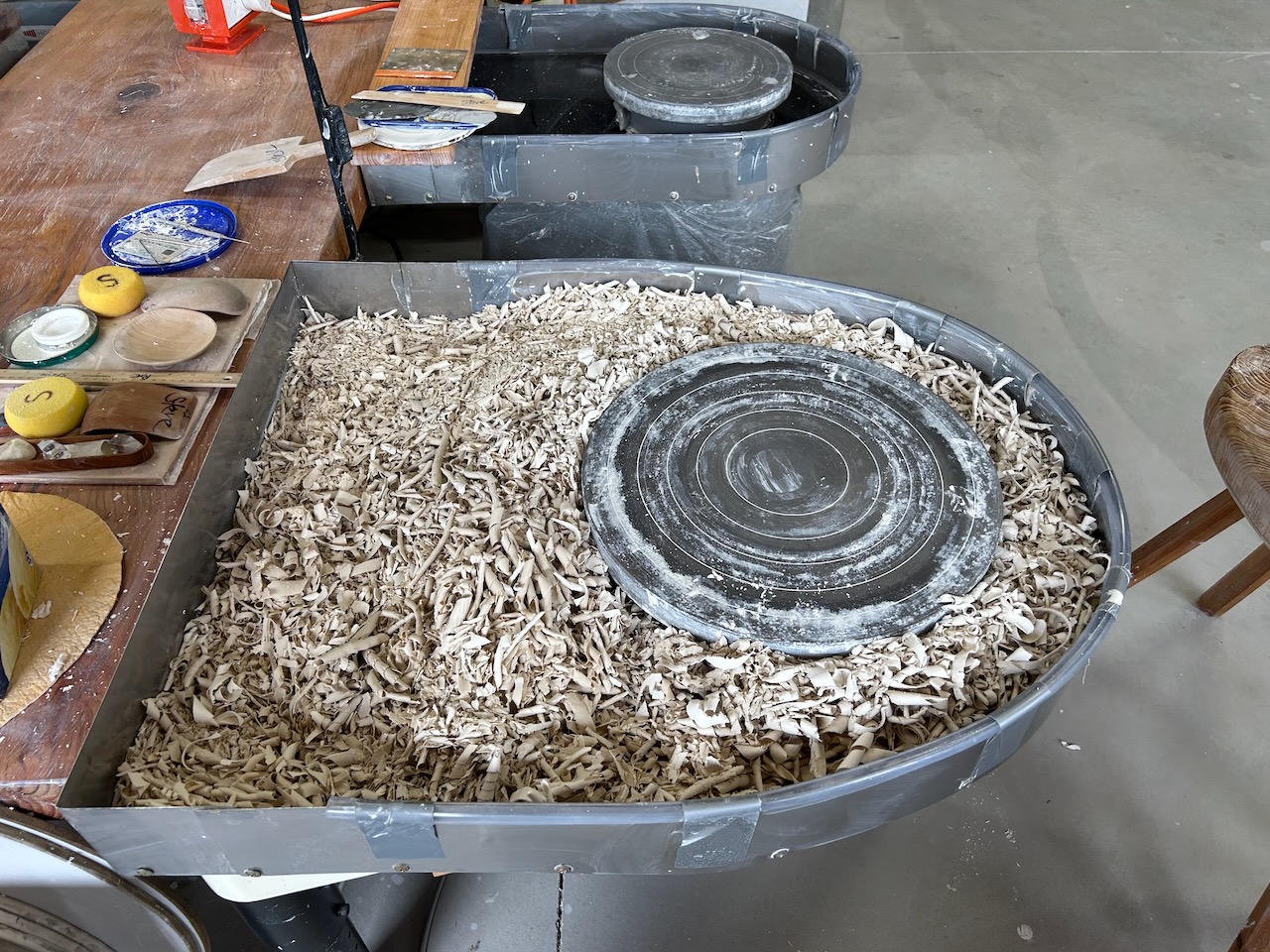
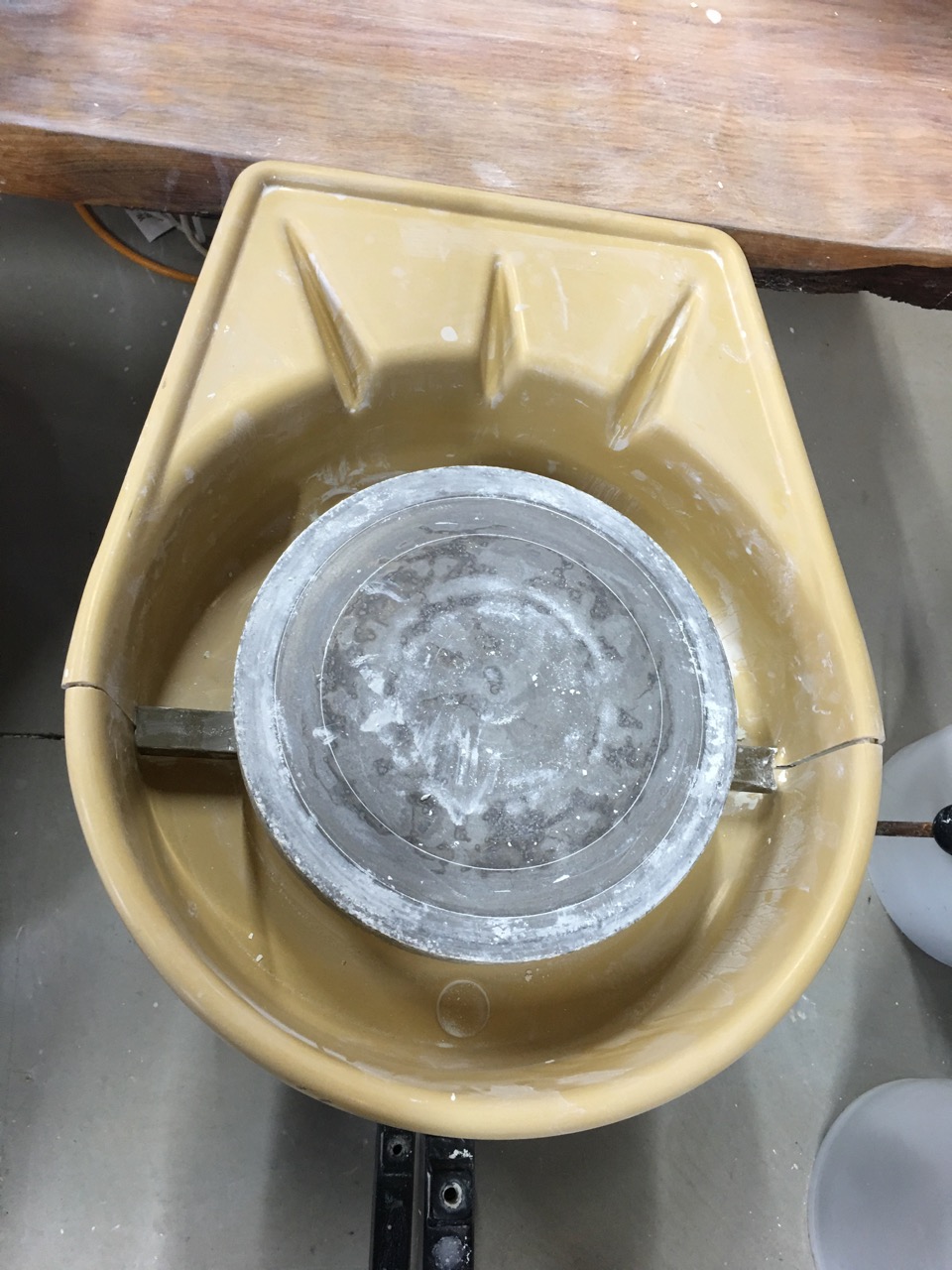
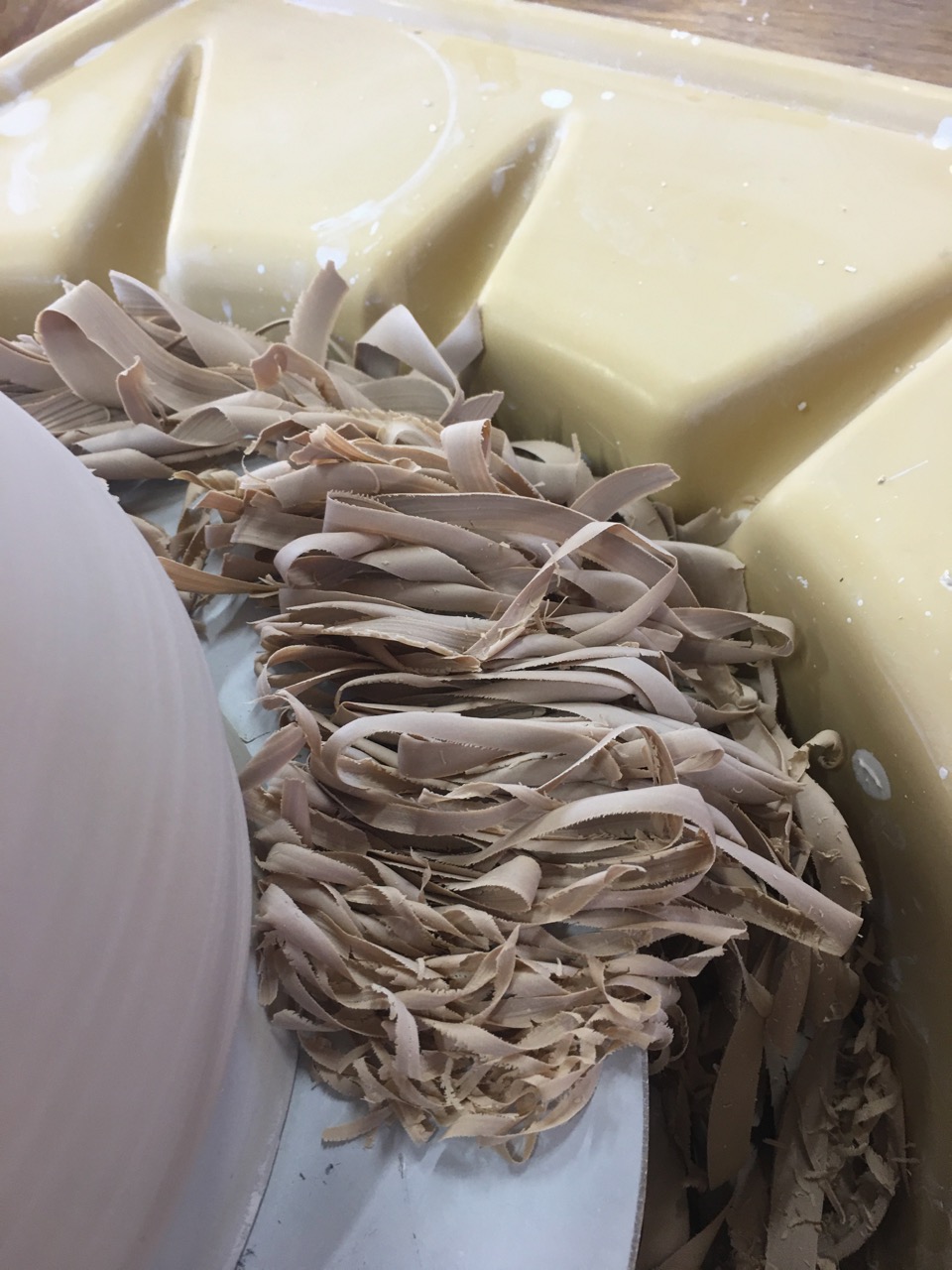
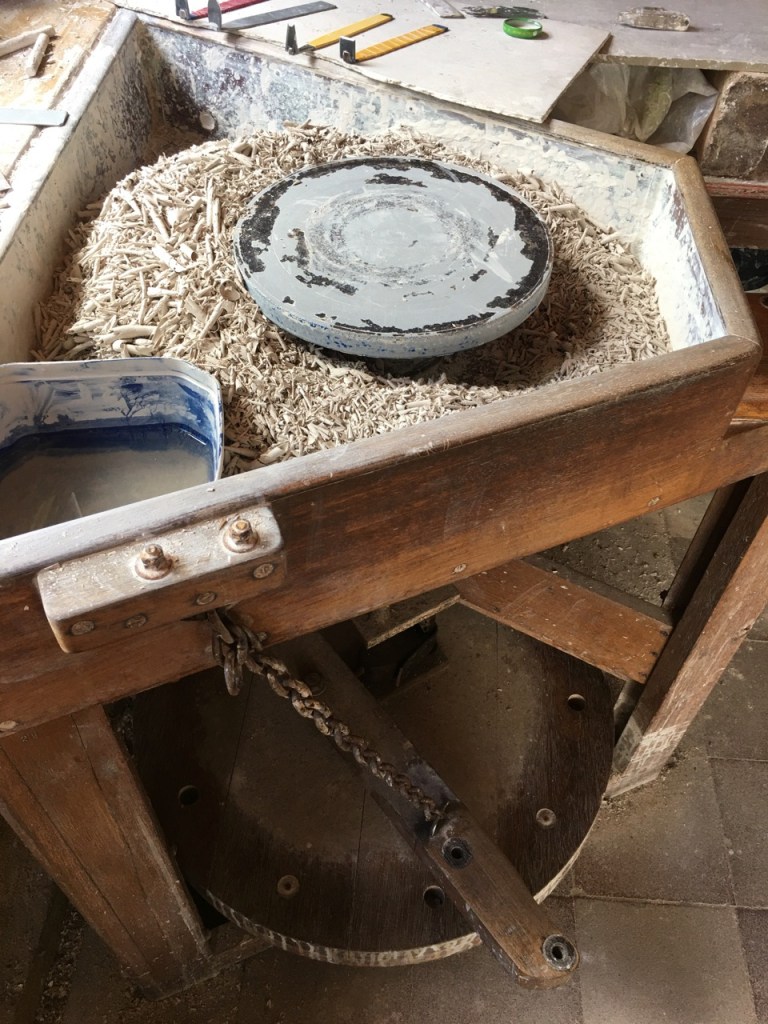
I have built an extra-large tray for my shimpo, but with this porcelain, I still fill it very quickly. This image is of the trimmings from just 15 small 150mm. bowls.
It all goes into the mixer pug and is recycled, ready for throwing again the next day, although leaving it to age a little bit and ‘recover’ would be even better, but because I use a dozen different mixtures and recipes, it is easy to loose track, with too many small packs of different clays hanging around. So I prefer to use up each batch all in one go as soon as possible.
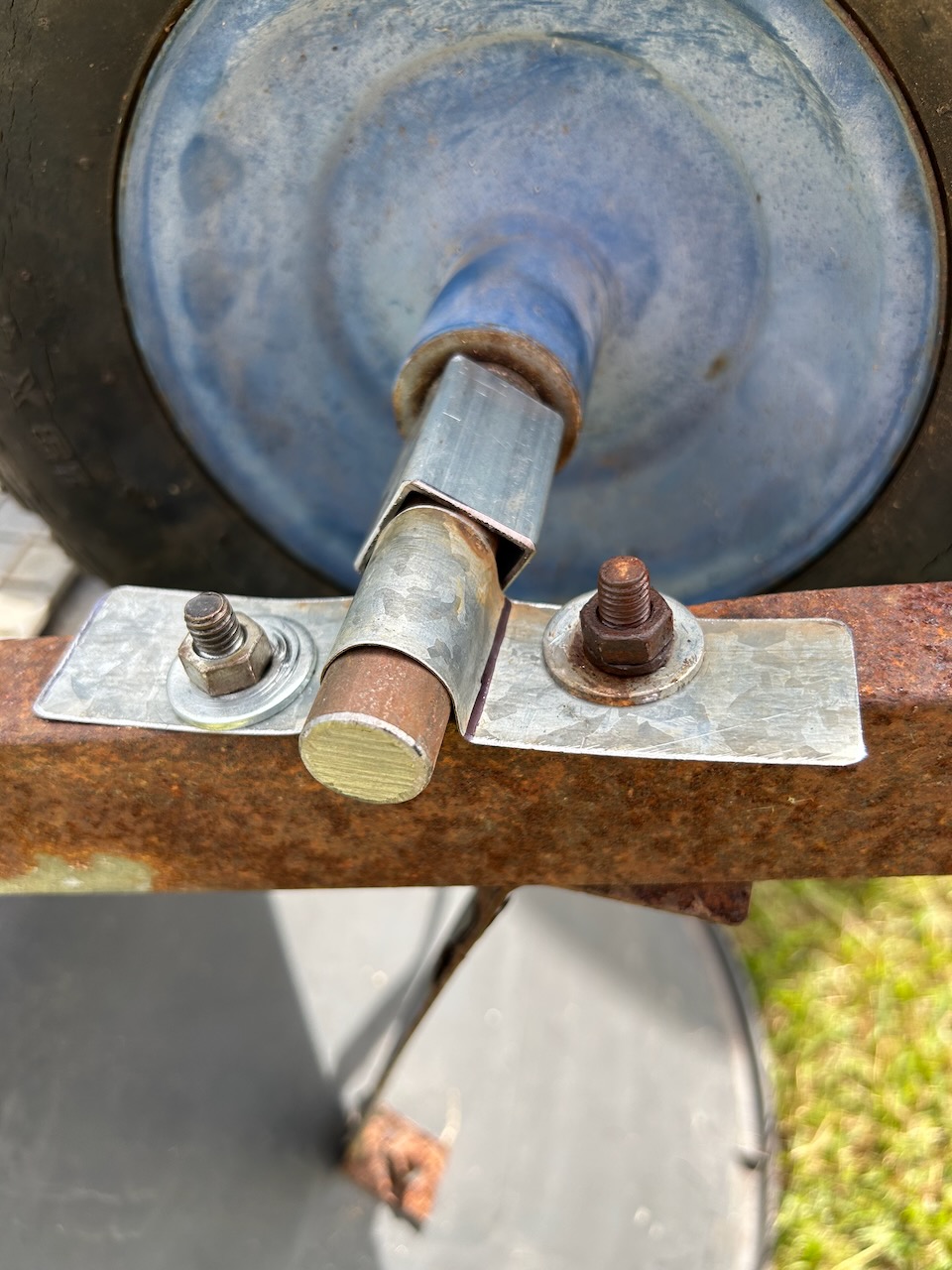
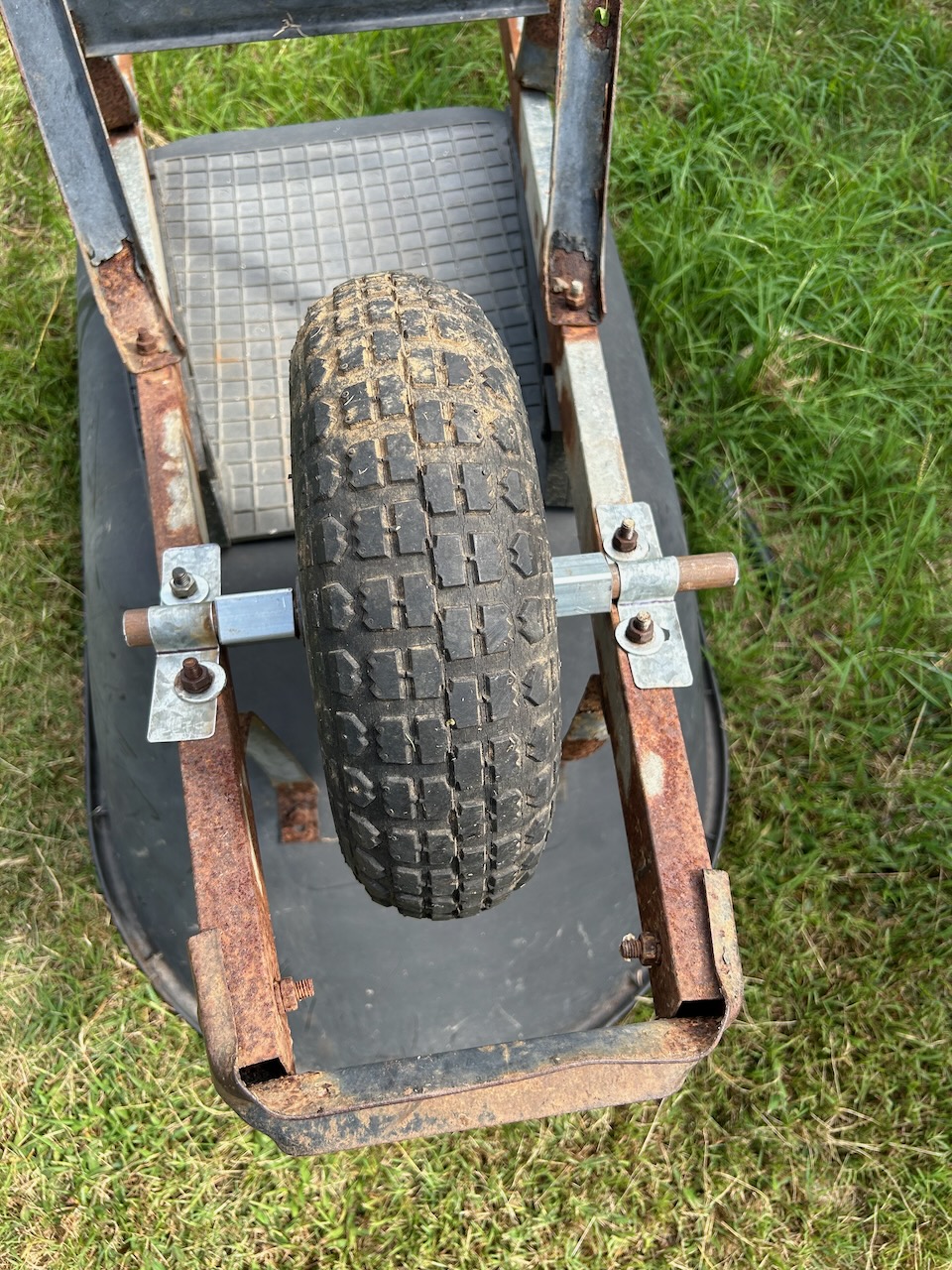
The tyre on the old wheel barrow went flat last week. I took it to the tyre place to get a patch or a new inner tube, but they told me that the tyre wasn’t worth working on and I’d need a new tyre and a new inner tube – at a cost of $78! As the old metal rim is quite rusty, I decided that I might just as well buy a whole new wheel unit from the big hardware chain for $32! But then I remembered that I had a complete wheel off a buggered trolly that I picked up off the side of the road on council clean-up day. It is 25mm smaller in dia. but still holds air pressure well, so I had to change the shaft size and make some new brackets to hold it on, out of scrap tin plate. 20 mins later we are all back in business and good to go. It’s not perfect, but it works. Recycle, reuse, repurpose!
The Japanese have a word ‘Mottainai’ – too good to waste!
A botched up job that will keep all of this useful material out of the waste stream and land fill for another decade. I actually picked this whole wheel barrow up off the side of the road in the village some years ago on Council clean-up day, when the owner decided that it was just junk, because the tyre was flat. I took it home and just pumped it up. It worked! And has been working hard here for all those years of reprieve since then – and now still continues to be useful. Waste averted, Mottainai!
Nothing is ever finished, nothing is perfect and nothing lasts.
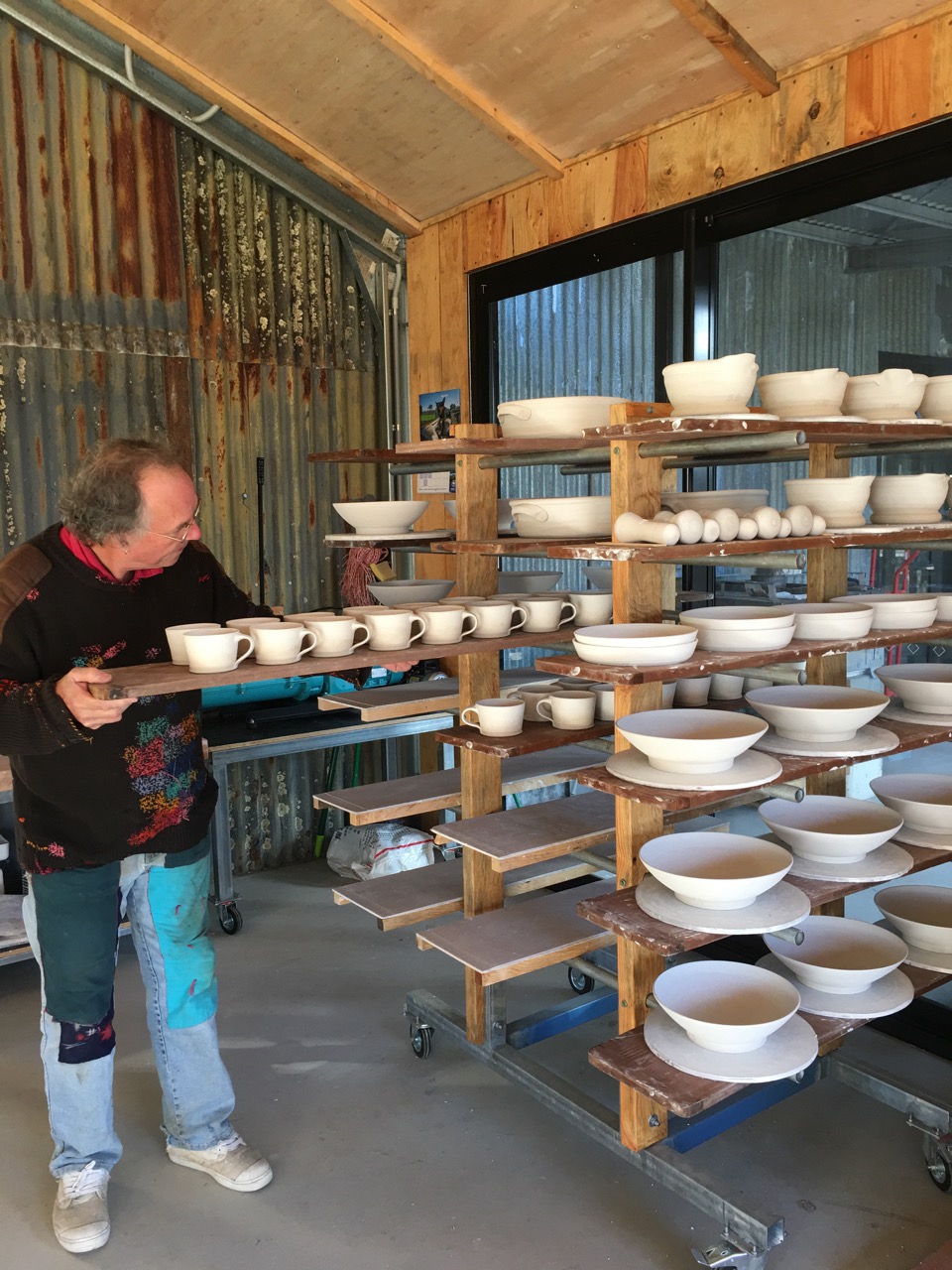
We have just completed the 2nd of our sericite porcelain workshops. They both went well and everyone seemed to get something out of it.
We advertised it as intermediate to advanced level, and everyone was suitably skilled to be able to handle the slightly more complex and difficult advanced techniques.
We were aiming to teach those advanced techniques, and everyone was keen to extend their skills.
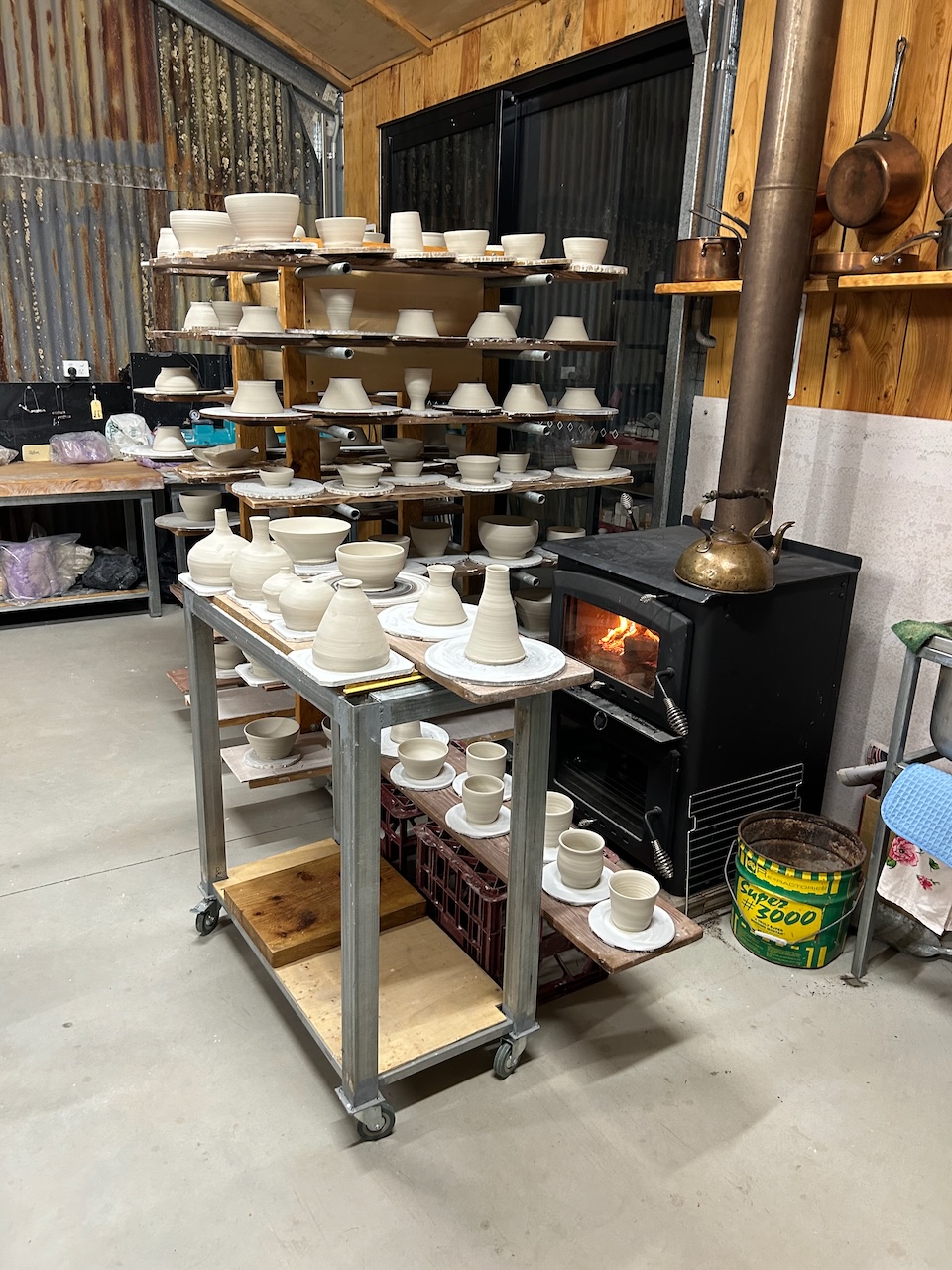
The weather has cooled down a lot recently, so we had to light the stove to get the air a bit warmer in the studio over night to speed up the drying process. At the end of the first days throwing. I lit the fire and kept it going until after 10pm with the ceiling fan running all night. With this combination of warm air and moving air , we managed to get nearly all the pots dry enough to start turning on Sunday morning.
As my contribution to our shared lunchtime meals. I cooked a couple of tarts to be shared for our lunches.
I made one savory home grown spinach and cheese tart from our garden with 3 cheeses. Ricotta, for the main filling with finely diced fetta for a little bit of texture, then some gorgonzola for a little of that tangy flavour that it imparts.
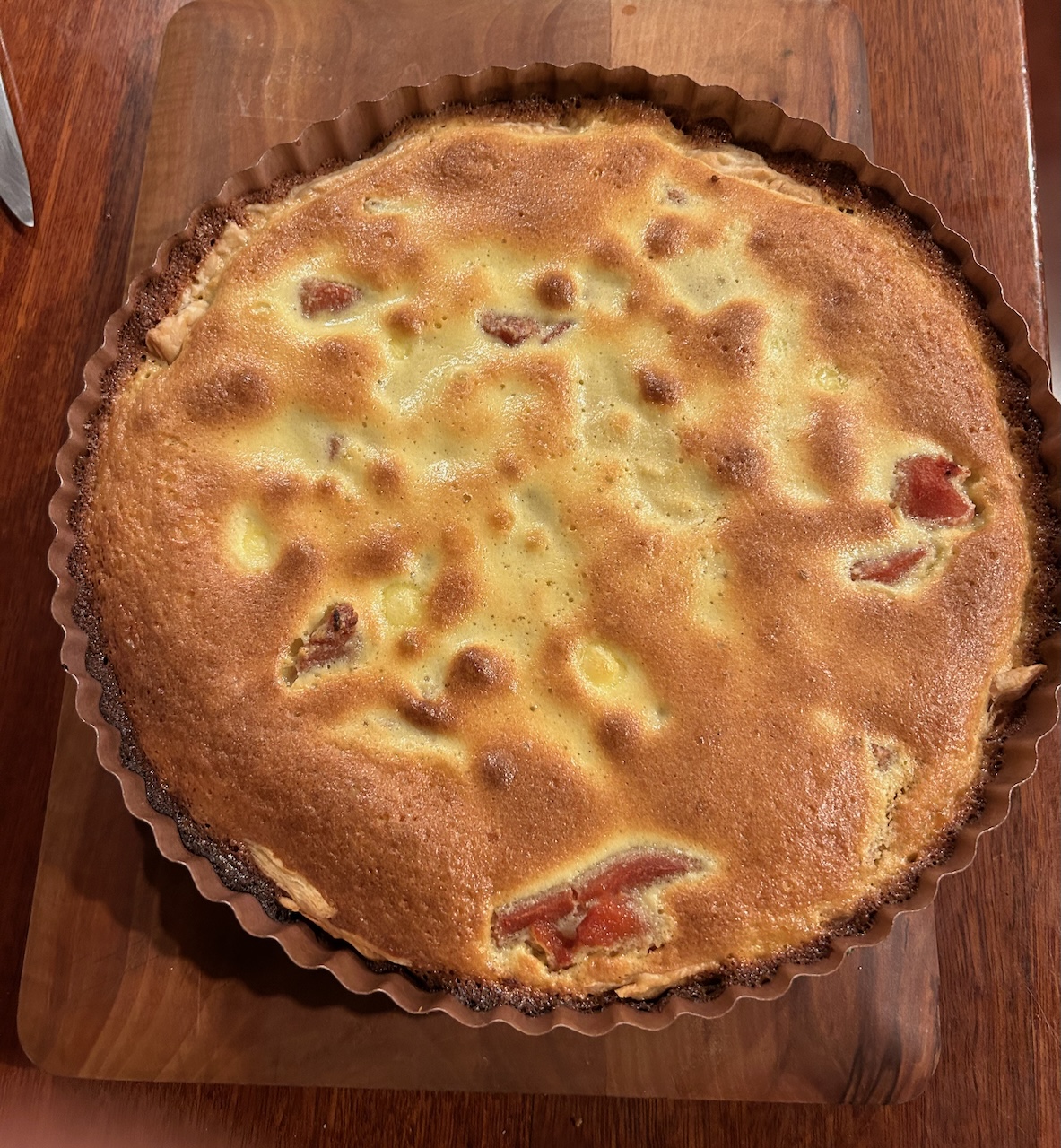
The other tart was sweet for after lunch, and made from our home grown and preserved quinces in an almond frangipane base.
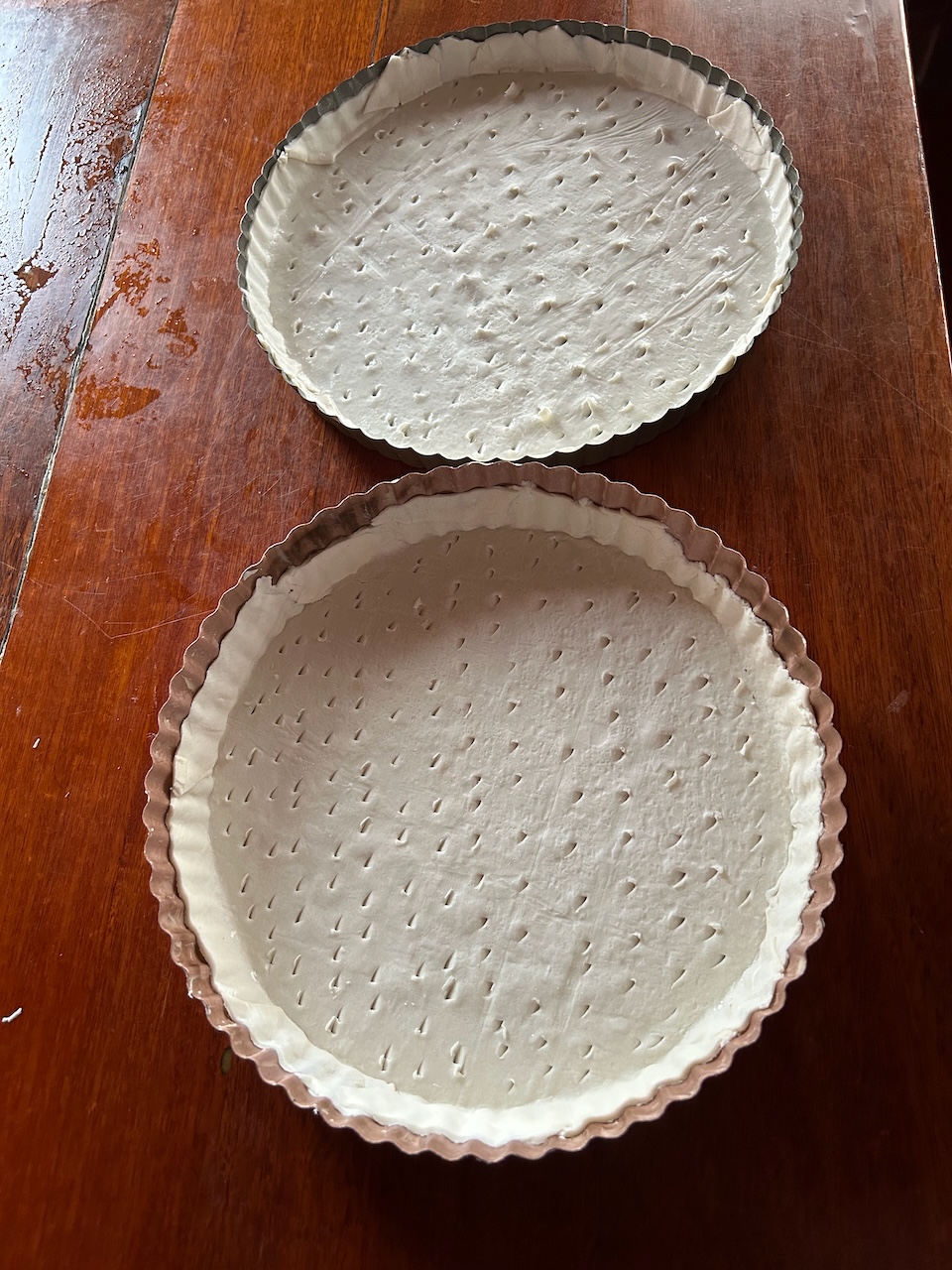
Both made in blind baked puff pastry casings. They dissapeared pretty quickly. It’s a very good feeling to be able to share our preserved summer garden goodness and excess with others.
During the week inbetween the workshops, I continued to make and fire my sgraffito porcelain pieces that I have been working on for a while.
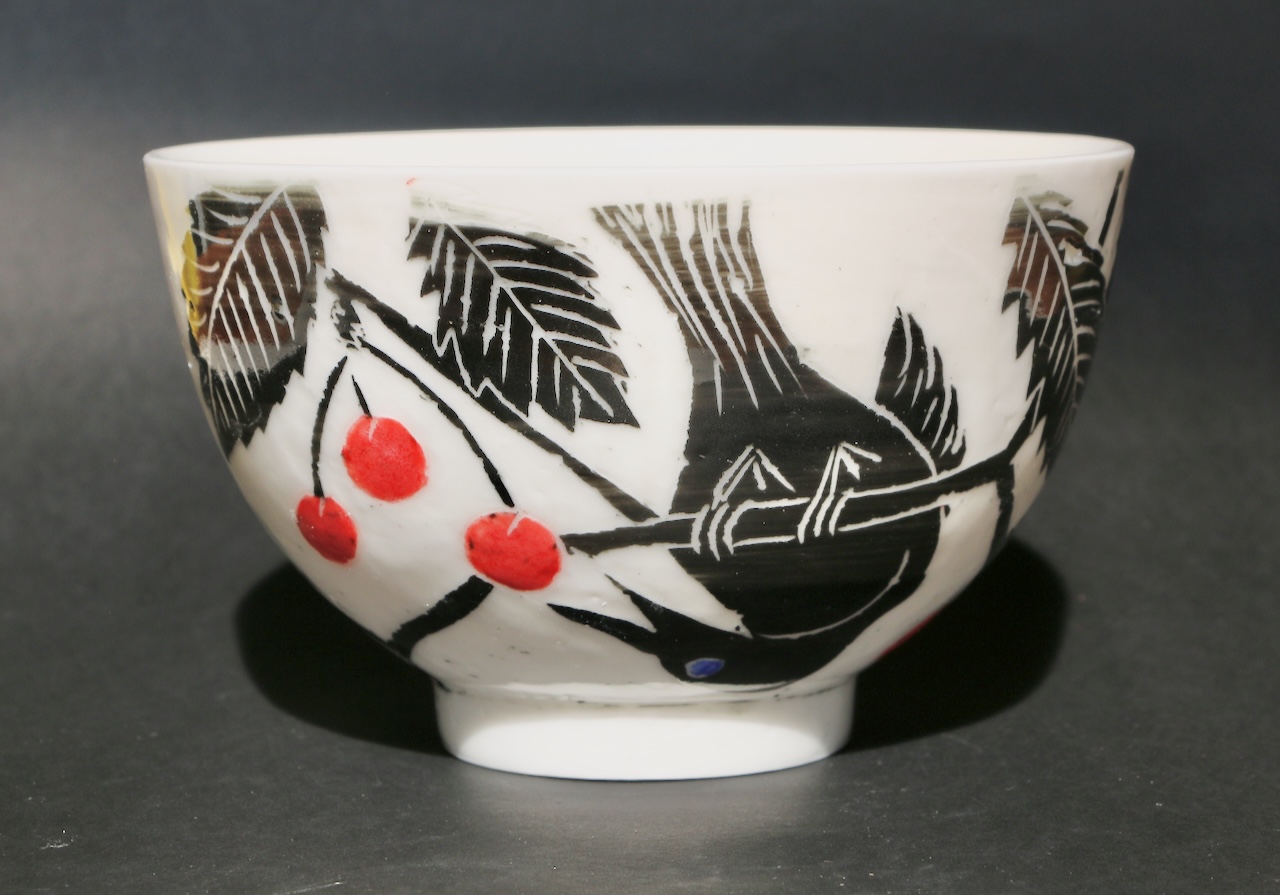
It’s good to see more of them coming out of the kiln now, all shiny and transparent with the images of the bowerbirds stealing our cherries from the Chekov orchard.
I will be taking part in the ‘Pop-Up’ Southern Highlands Arts Trail Open Studios sale on the long weekend of 8th, 9th and 10th of June. Save the date!.
Now that my work in the group show at Sturt Gallery is up and running.
I have time to do a bit of catching-up on all the jobs that I wasn’t able to get done while I was working hard to get all the pots fired for this show.
One of the first jobs is to make a new turnings and slip tray for one of our potters wheels. The turnings tray on Shimpo wheels is slightly only just above pathetic.
They are so mean and cramped that if you do any amount of turning whatsoever, you need to stop work to take the tray to pieces and empty the turnings out, then re-assemble it to keep working!
It is so pathetically small, it is completely un-professional. I’m so surprised that they haven’t managed to come up with something more appropriate after all this time.
I’ve been using shimpo electric potters wheels since 1972. I first started with an RK-2 ring-cone wheel. The model with the sharp, pointy drive cone. Later I bought a 2nd hand RK-2 ‘super’. The model with the short, blunt, rounded cone. These were the best wheels on the market at the time. I really enjoyed using them.
After the fire I was given a couple of RK-10 metallic traction drive wheels, but these were from a school, where they were not well looked after and the small plastic trays were possibly allowed to be over-filled with clay slip water that found it’s way into the top bearing, grinding them out, such that that they sound and feel very rough and noisy.
I now have an RK-3D and RK-3E whisper wheels, but the tiny, cramped, plastic trays are still an embarrassment.
In the old pottery, I installed the RK-2 and RK-2 super shimpos in wooden enclosures, so all the turnings went straight onto the floor around the wheel, as is the Japanese accepted practice. However, in this new pottery studio, all the wheels are situated in a row either side of a central bench. This isn’t so convenient for allowing the turning to spill directly onto the floor.
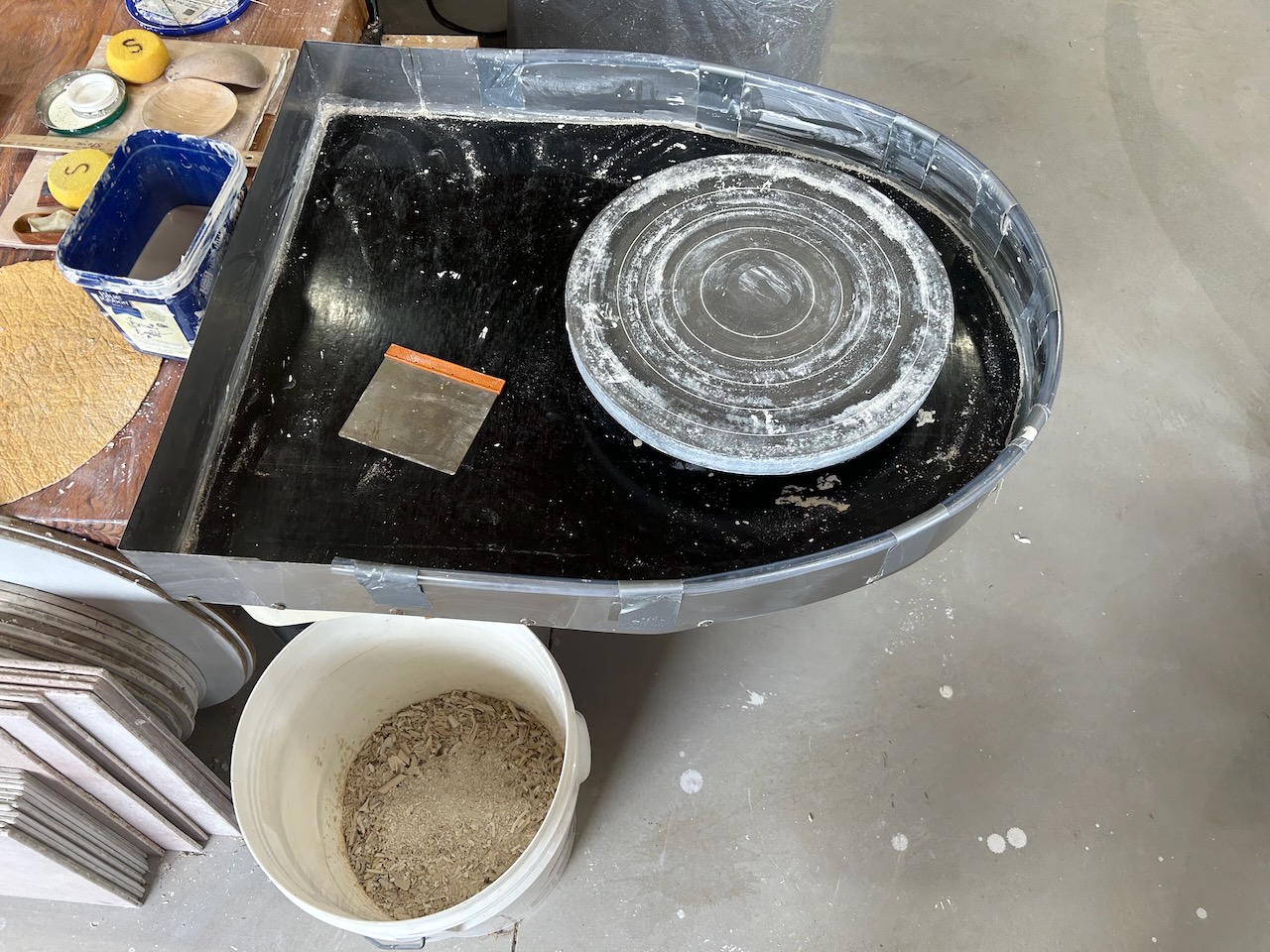
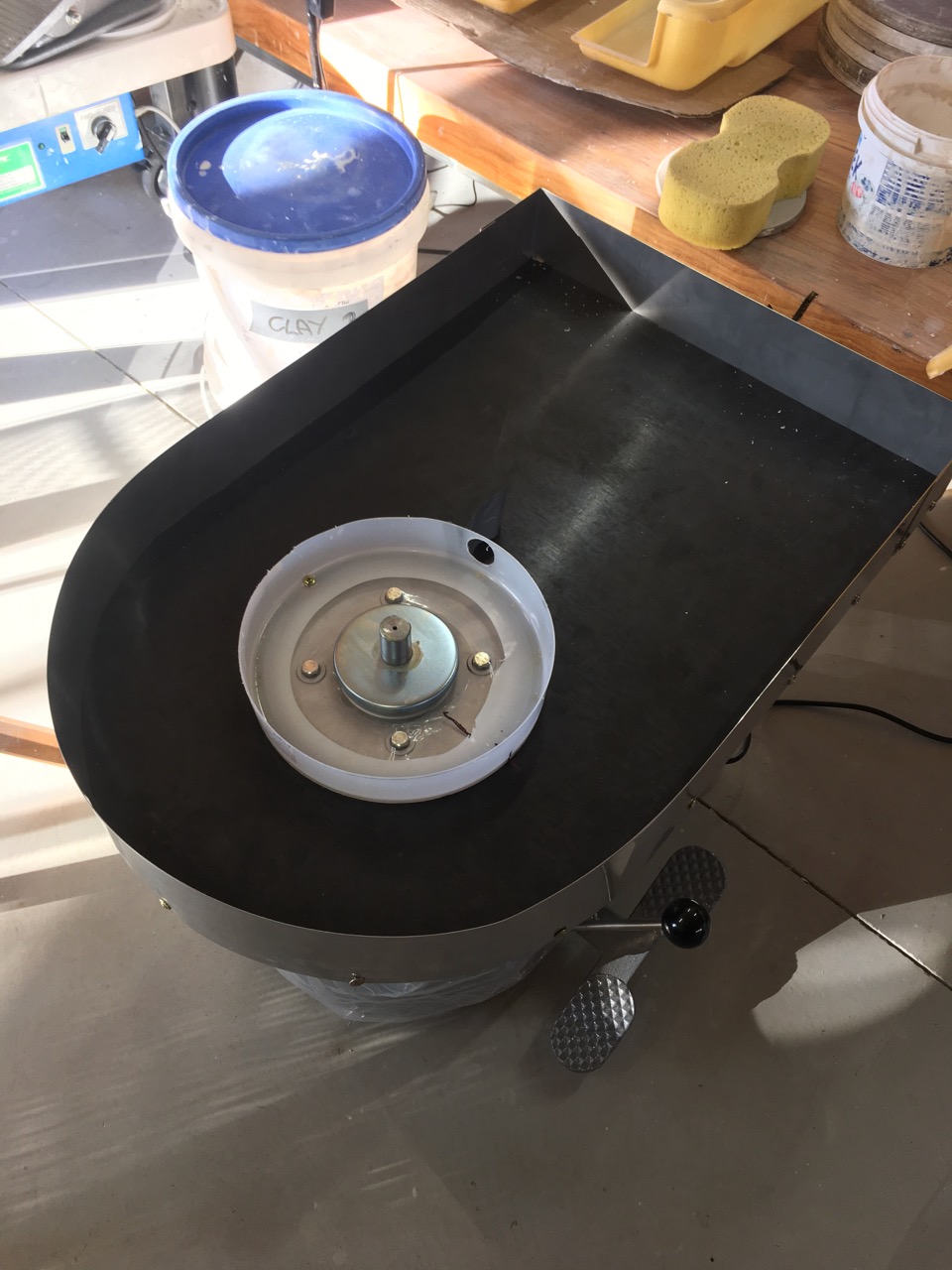
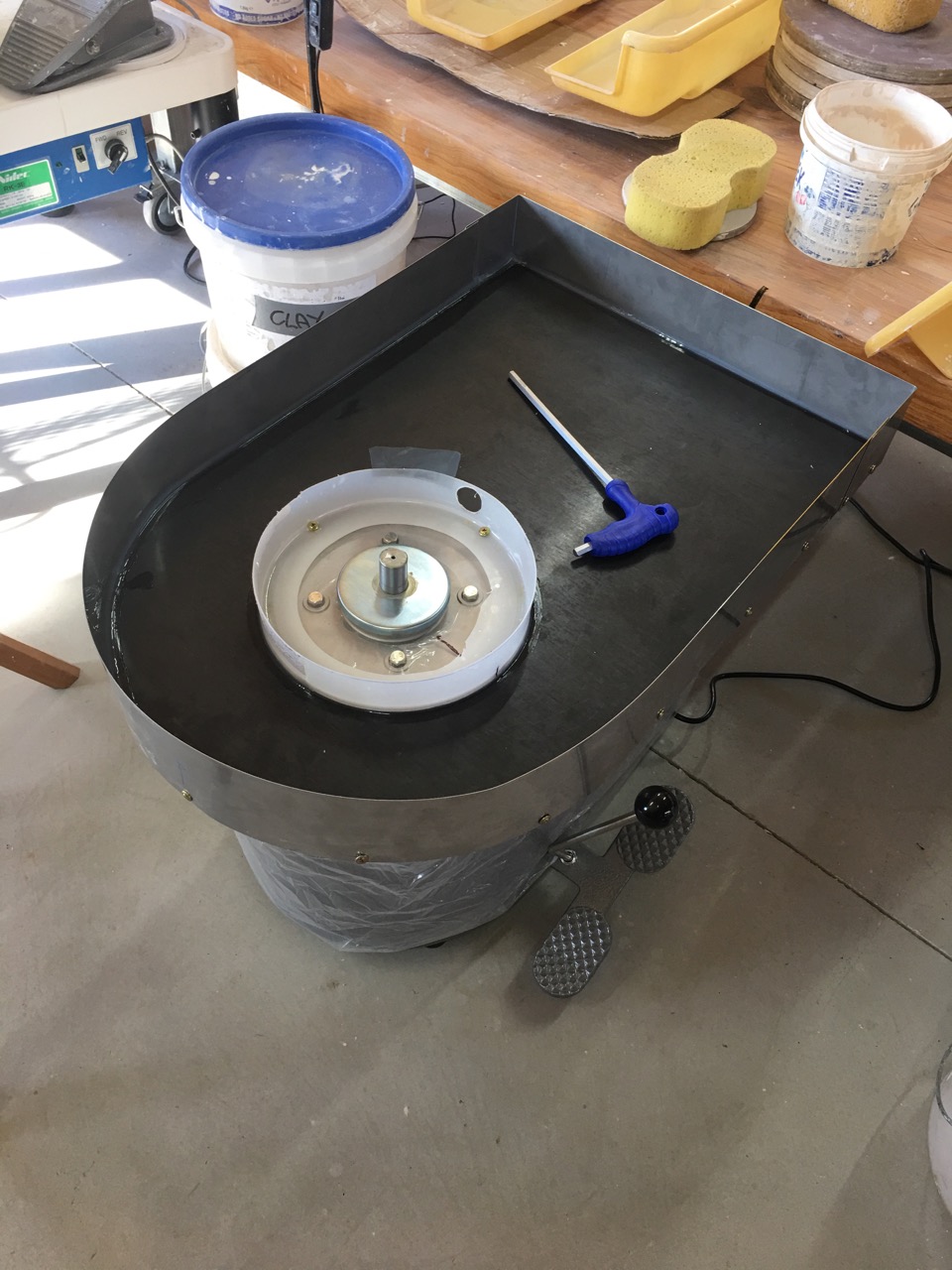
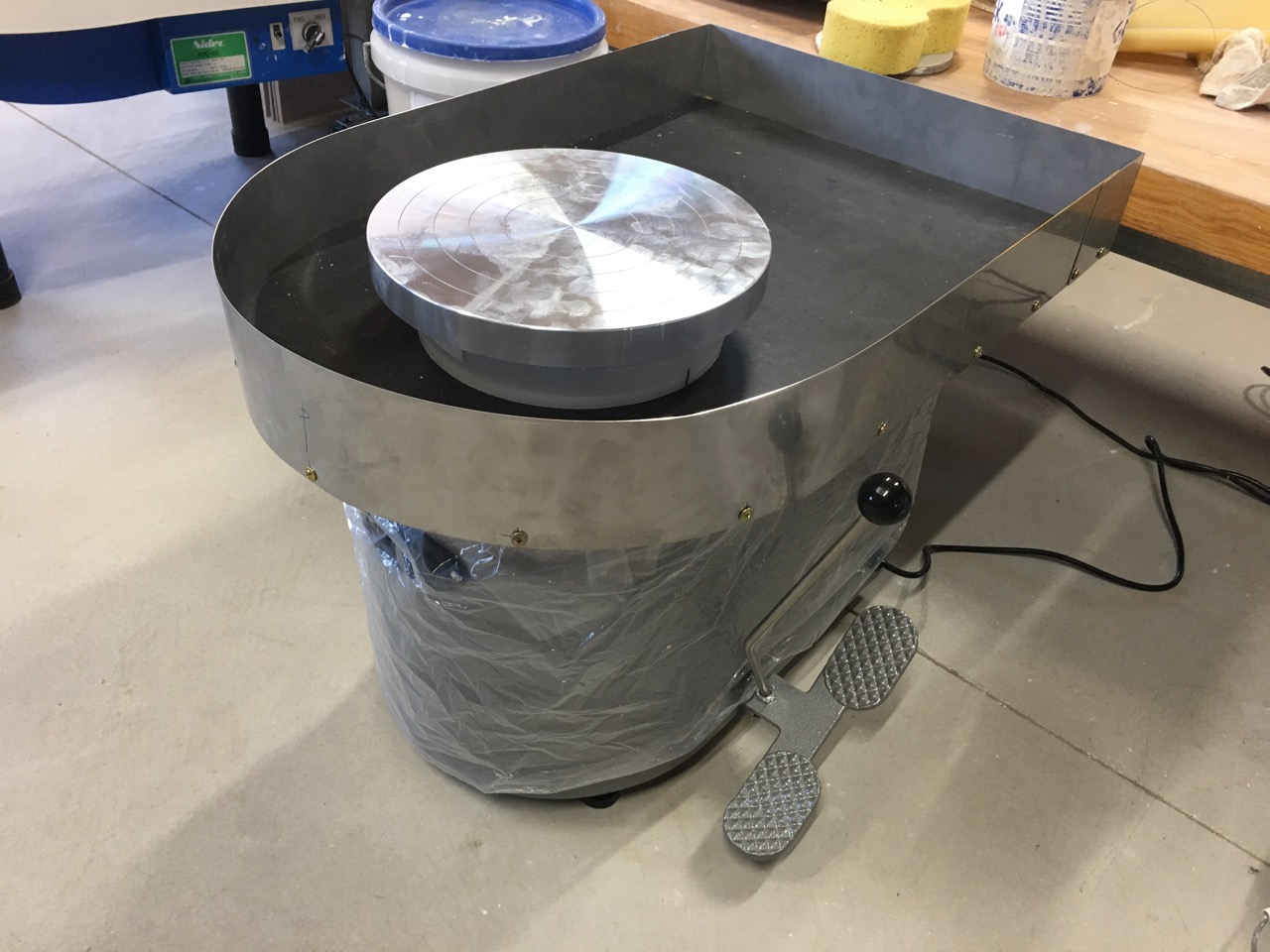
So today, my first new job was to build a large, very spacious, turnings tray for the RK-3D shimpo. It has worked out very well, or so I believe. Time will tell if it is any good. If it isn’t, I’ll take it to bits and redesign it.
This is the miserly factory supplied plastic tray on the RK-10. It desperately needs to be 3 or 4 times larger. The space between the wheel head and the tray is so small that I can’t get my fingers in there to lift out the turnings.
Trying to do it, just seems to push some of the turnings over the inner edge of the tray onto the top of the inner bearing mount cover. When this happens, I have to take the tray apart and brush out all the turnings from the metal frame and bearing cover, then re-assemble. It’s a very slow and painful process that needs to be repeated every few minutes. When I work with sericite porcelain, I need to do a lot of turning to get the shapes just right. I really need a better designed tray.
I decided to make the new tray out of water proof plywood 750mm. x 500mm. It is designed to just clip over the top of the wheel frame, using wooden cleats to jamb-fit it onto the top of the metal frame.
I cut the bottom out of a plastic bucket to make the circular wall that stops all the turnings and clay slurry ending up on the top bearing. I ‘TEK’ screwed this to the wooden base and used silicone rubber to seal all the edges and make the tray water proof.
I decided to fit it with a strip of stainless steel off-cut as a curved wall, all the way around.
This tray should be able to be cleaned out of turnings easily and quickly, without having to stop work to dis-assemble it.
There is even room at the back to get a hand broom and dust pan in there to sweep out the last of the turnings.
I’m hopeful that it will make working with sericite a whole lot easier and quicker.
Time will tell. Watch this space.
If it works well, I’ll be fitting trays like this on the other wheels.
The Winter Solstice has come and gone and the days are going to start getting longer and the nights shorter, but the coldest part of the winter is probably yet to come.
We had a crackerjack frost a few days ago, Everything so shimmering silver/white. This mornings frost was much more mild, with just a light dusting of white in the open spaces, less so under the bare branches of the cherry trees in the Chekov orchard. The winter is really just starting, so there will probably be a few more frosts yet where that came from.
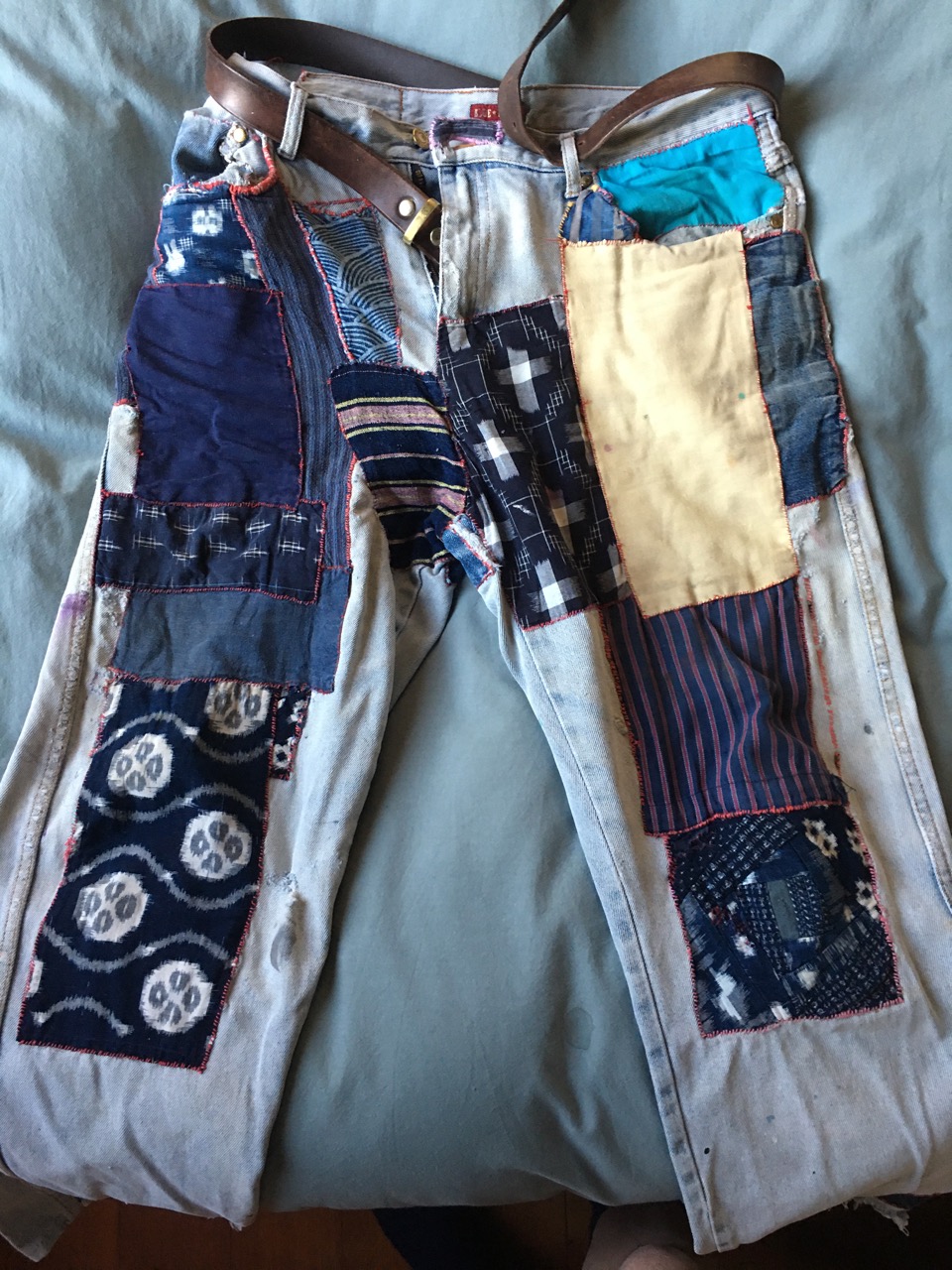
In the evenings, as there is nothing worth any attention on the idiot box. I have started to repair another pair of jeans.
These jeans are about 4 or 5 years old and the front of the thigh part has worn through. That is the most usual place for wear for me. They were the cheapest brand of jeans.
I had already replaced the pockets with some excellent, robust, pale yellow, linen cloth that should outlast the original flimsy thin cotton that wore through in just two years. Initially in the pocket where I carry my car keys, but then the other pocket as well, just after that. Then it was the edge of the pocket where the new linen lining meets the blue denim.
I reinforced that edge with some red Japanese silk, It look great when it was fist done, but it isn’t really up to it, and is already starting to wear through, so will also need to be redone in the future.
This time I added a front panel of indigo dyed cotton that I bought in the markets in Kyoto a few years back.
Every time I go to Japan, I keep my eye out for street or temple markets where I can find lengths of indigo dyed, or other interesting old fabrics. These are usually some old piece of clothing that someone has unpicked. The hems and loose threads along the edges where they were stitched together are often still visible. Much of this old cloth was woven on small looms in bolts that were only 13” or 330 mm wide. The clothes were assembled by stitching these long thin strips together, to get a wider fabric.
It is an interesting phenomena that cloth dyed in indigo does not rot easily, nor is it eaten by bugs. It seems to last for ages. It certainly makes good patches for work wear like shirts and jeans.
This pair will be good for another 5 years if I keep up the maintenance. The pair that I’m currently wearing to work in the pottery are over ten years old now and still going OK. They have patches on the thighs and knees, as well as new pockets.
My woollen jumper was new in 2004, or 2006. I can’t quite remember. It has quite a few patches of repair, where I have darned the holes where moths have eaten through it, or sparks from welding spatter, or possibly damage incurred during stoking the wood kiln have made holes in it. They all get mended in what I think is a complimentary colour to make a colour spill pattern. It’s a work in progress, It’s 16 or more years old and still very warm and wearable. I like to make things last. i never want to throw anything out until it is really worn out. Repair and reuse, before finally recycling.
I just took a selfie of my Sunday morning jeans. I never take selfies. This must be the first time I’ve put one up on this blog. I’m dressed up to receive some very good friends for Sunday lunch, so I’ve got my best pair on. I’ve been working on these jeans for many years now. I still work in them, but this morning they are straight from the wash and are lovely and clean and suitable to welcome our close friends in. I wouldn’t wear them to try and pass through customs in. But my friends know and understand me. They won’t be affronted.
Actually, I think that work like this is verging on Art. If not a work of art, then its certainly involves some aspect of creativity. I don’t just slap on ‘iron-on’ patches from a sewing shop. I mix and match the patterns and colours to suit my mood and proclivity. Well, that’s my story and I’m sticking to it.
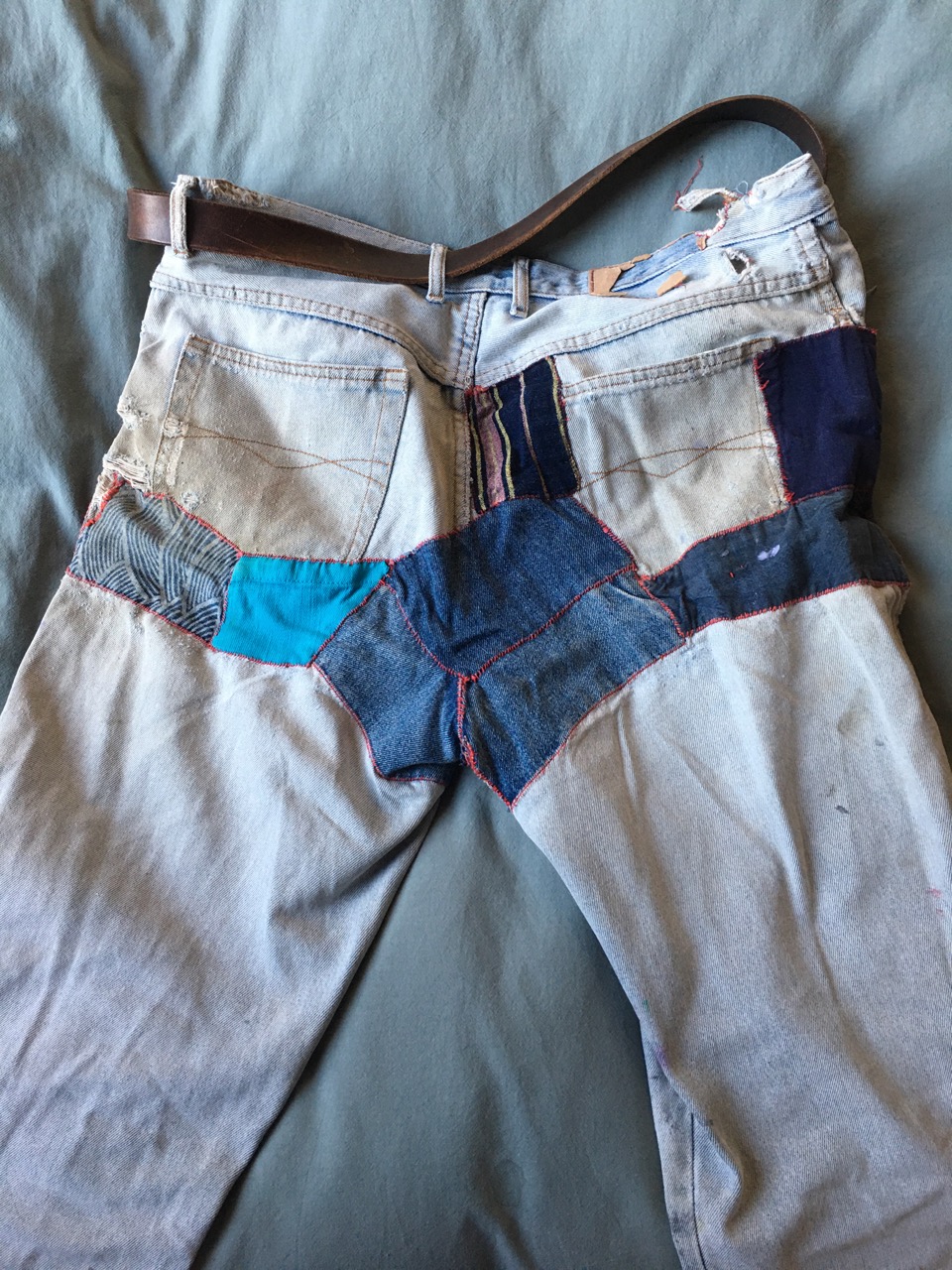
Even the arse end has some good work on it. This wear can be attributed to sitting on the wooden saddle-like seat of the ‘Leach’ treadle potters wheel. The slight swivelling/rocking motion of kicking the treadle with one lag seems to cause the butt end to wear out?
This last week we have made new batches of clay bodies to re-stock the clay boxes. I made a batch of the Mittagong halloysite porcelain from the mafia site.
This weathered stone is pretty well kaolinised, or in this case ‘Halloyositised’. This makes the stone somewhat crumbly and easily crushed, because the mica and felspars are broken down and weathered from igneous stone to clay-like substance, this causes the loss of some of the alkali fluxes. The stone can then becomes slightly clay-like and less stone-like. However, this creates a minor problem, because as the stone becomes more friable and easily crushed. It can’t be put through the jaw crusher, as the increased clay content causes the crusher to clag up and jam.
There are two options. The first is to calcine the stone in the bisque kiln and then it will become dry and brittle and easily passed through the crushers and ball mill, but this will completely eliminate the plasticity. So I only do this if I intend to make it into a glaze. If I want to make a porcelain body, I need to retain the plasticity, so the way to extract the clay fragment is to soak the sample in water and then stir it up into a liquid slip. This is called ‘blunging’. However, to make it smooth I need to pass it through a fine screen to eliminate all the unweathered stone fragments that are mostly mica, felspar and silica. In this case, I want all these minerals in the finished porcelain body to create the flux to make it melt and become translucent. This problem is solved by then ball milling the grit residue on the screen and then remixing to two together. This is a rather long and tedious job and I used to do this before I got a roller mill.
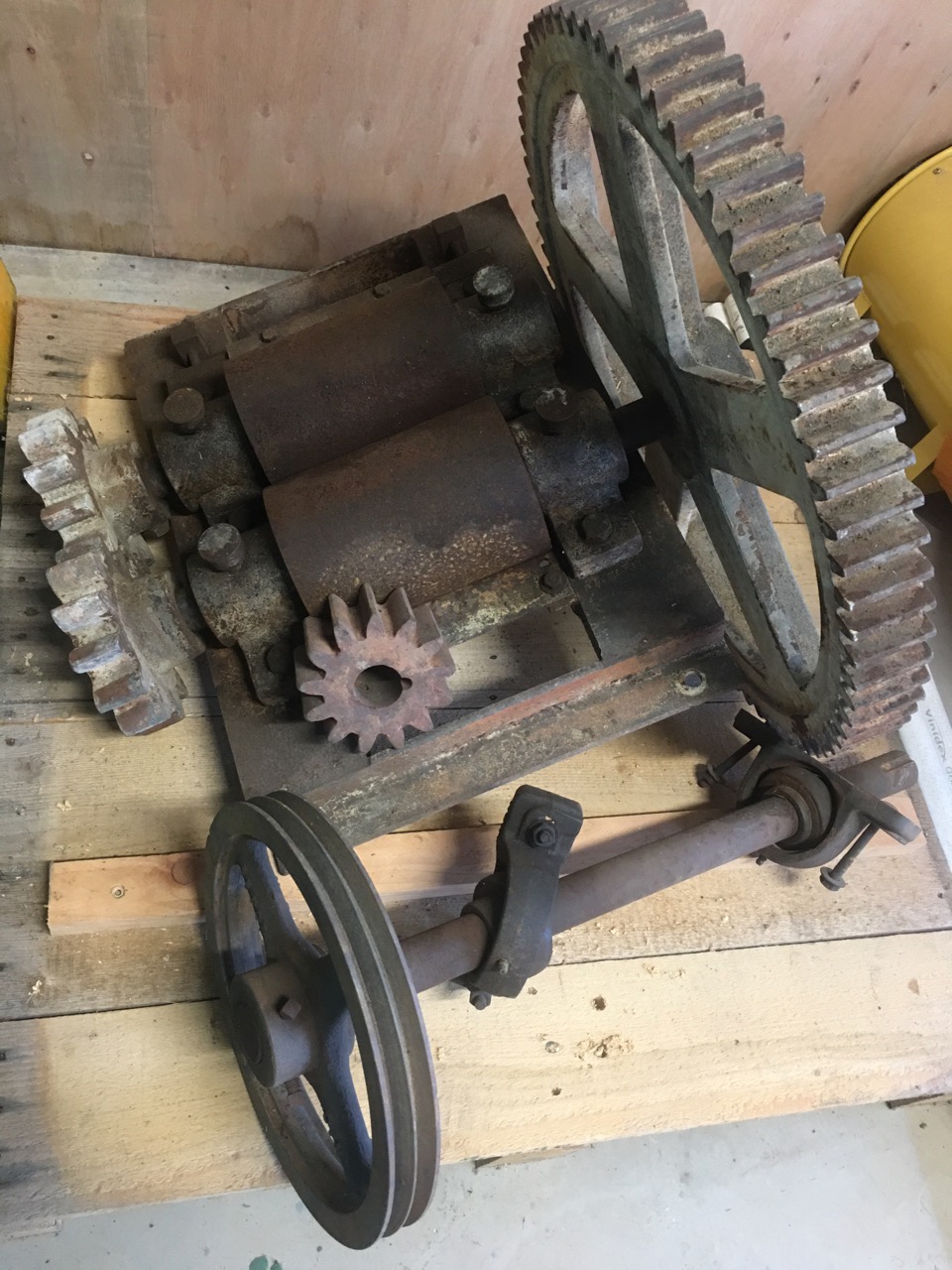
The best machine for this kind of material is a roller crusher. I actually have one of these, but it was burnt in the fire and I haven’t managed to find the time to rebuild it. It is still sitting on the crusher room floor in pieces waiting for a quiet period when I get bored 🙂 so that I can find the time to repair/rebuild it. Watch this space. Everything gets done eventually.
In the meantime, in the absence of any mechanical assistance. I decided to crush all the material by hand in the large mortar and pestle, before ball milling it all into a fine porcelain clay body. I used to do this when I was at Art School, as a mortar and pestle was the only piece of crushing equipment that I owned at that time. I still hand-crush small samples up to a few hundred grams for initial testing of field samples. It is quicker than cleaning out one of the bigger machines after use. It’s just like all those kitchen gadgets that are supposed to save so much time, but end up taking longer when you factor in the cleaning and drying, and then reassembly time before returning the gadget to the ‘stuff-that-is rarely-used’ cupboard.
Once reduced to a suitable size, it goes into one of the the mills.
After ball milling, I pass the slip through a 100# screen to remove any coarse particles that may have escaped milling. This halloysite porcelain sample has some iron contamination, so appears a little yellowish in the slip form. This slight iron staining helps create a lovely mahogany ‘flashing’ on the surface during wood firing. The Mafia halloysite is quite variable and is prone to severe warping during the early stages of firing when the halloysite tube-like clay crystals break down and re-form as fractured platelet shards. In this unstable state, the pots can warp and/or crack, so I have found it wise to blend it with some of my other porcelain clay or plastic kaolin to help stabilise the body.
In this most recently collected Mittagong halloysite sample, the site had been eroded badly in the recent rains and all the best and whitest, material had been washed away. Simply because it was the most friable and easier to dissolve in water. Because the remaining material was less weathered and darker than I wanted, I blended it with some more reliable local kaolin based porcelain.
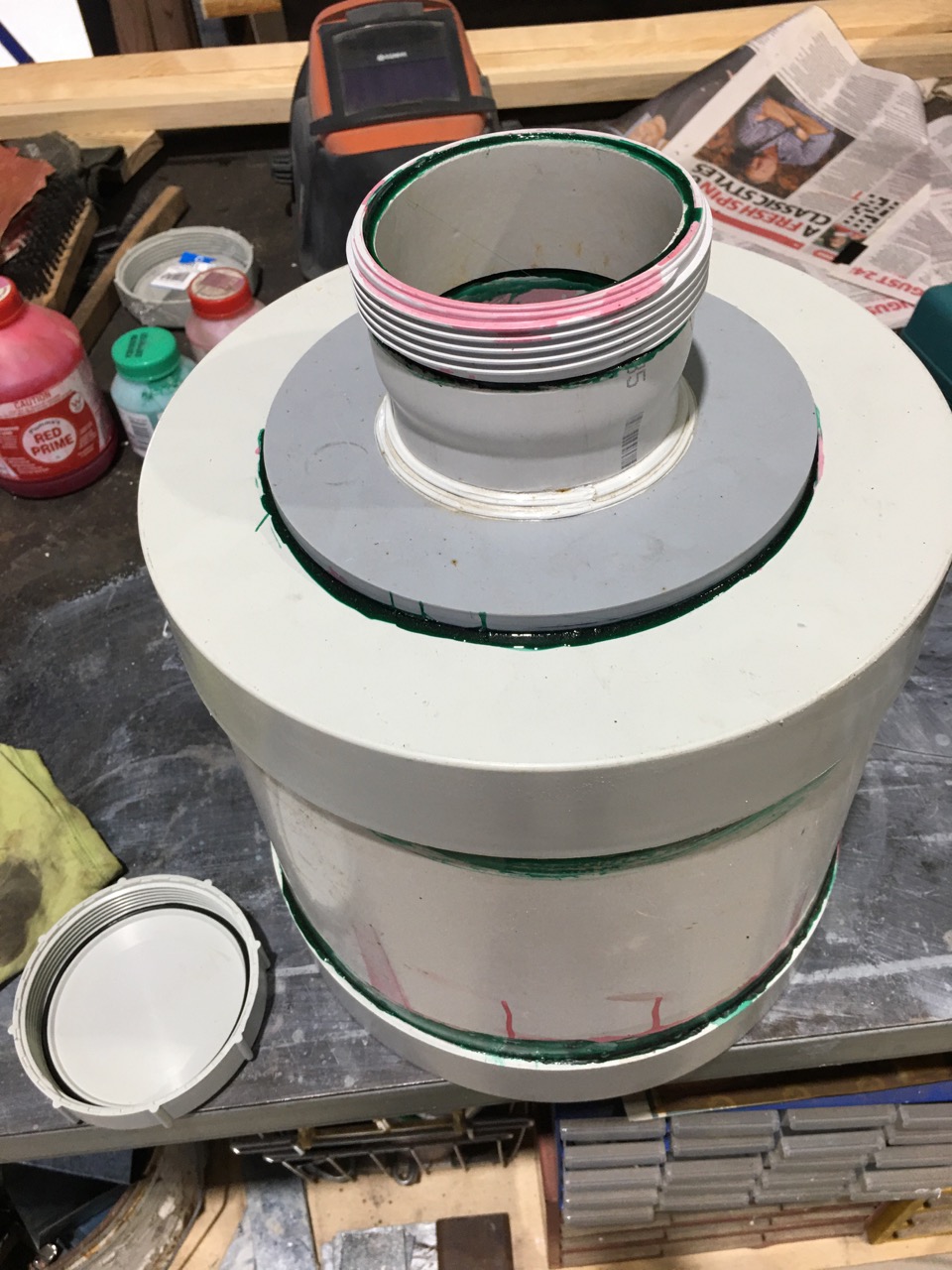
I have been finding the loading and unloading of the porcelain balls into the larger porcelain ball mill jar quite hard on my back as I age. I have had to load the balls in and out in small handfuls. It takes time and requires and lot of bending and effort. So recently, I built myself a couple of new PVC ball mill jars. These a significantly lighter, although the porcelain balls still weigh quite a bit. For these lighter PVC jars, I made a stainless steel mesh inset for the spare lid. I can easily change the lids and simply up-end the jar over a bucket and let the charge all drain out. I partially refill them with fresh water, roll them along the floor to rinse the balls clean then re drain into the bucket.
The jars are then ready for a refill and to be used again. The balls never leave the jar. So much quicker and easier.
These new PVC jars are made from cheap, standard, over-the-counter, plumbing parts. They are larger, but lighter, than the old one, and I made them so that I can fit two of them on the roller at once. So now I’m able to get more done in the same amount of time..
As I have been throwing and turning the porcelain. I have been collecting the turnings, they pile up like so much fettuccini pasta strands in the hopelessly small Shimpo wheel tray that need to be emptied every few minutes. In the old pottery, I took the plastic trays off and had the wheels in enclosures, so that all the turnings just spilt out onto the floor, but it was a big job to clean it all out and wasn’t suited to the sort of work that I now do, that involves using a large number of different, experimental, small batch, sericite and halloysite porcelain bodies.
So I persist with the tiny tray so that I can recycle each different sericite porcelain body separately to maintain its integrity.
I have been collecting and drying the turnings, then calcining them in the bisque kiln and finally ball milling them to a fine powder to make a porcelain glaze from the porcelain body.
The raw, dried turnings
The same turnings after being fired in the bisque kiln. The low temperature oxidised firing turns the calcined porcelain slightly pink.
The powdered glaze material in the ball mill after milling, ready to make porcelain glaze. 80% porcelain body and 20% lime.
A simple glaze recipe, Self reliance all the way along the line. DIY.
Nothing is perfect, nothing is ever finished and nothing lasts.
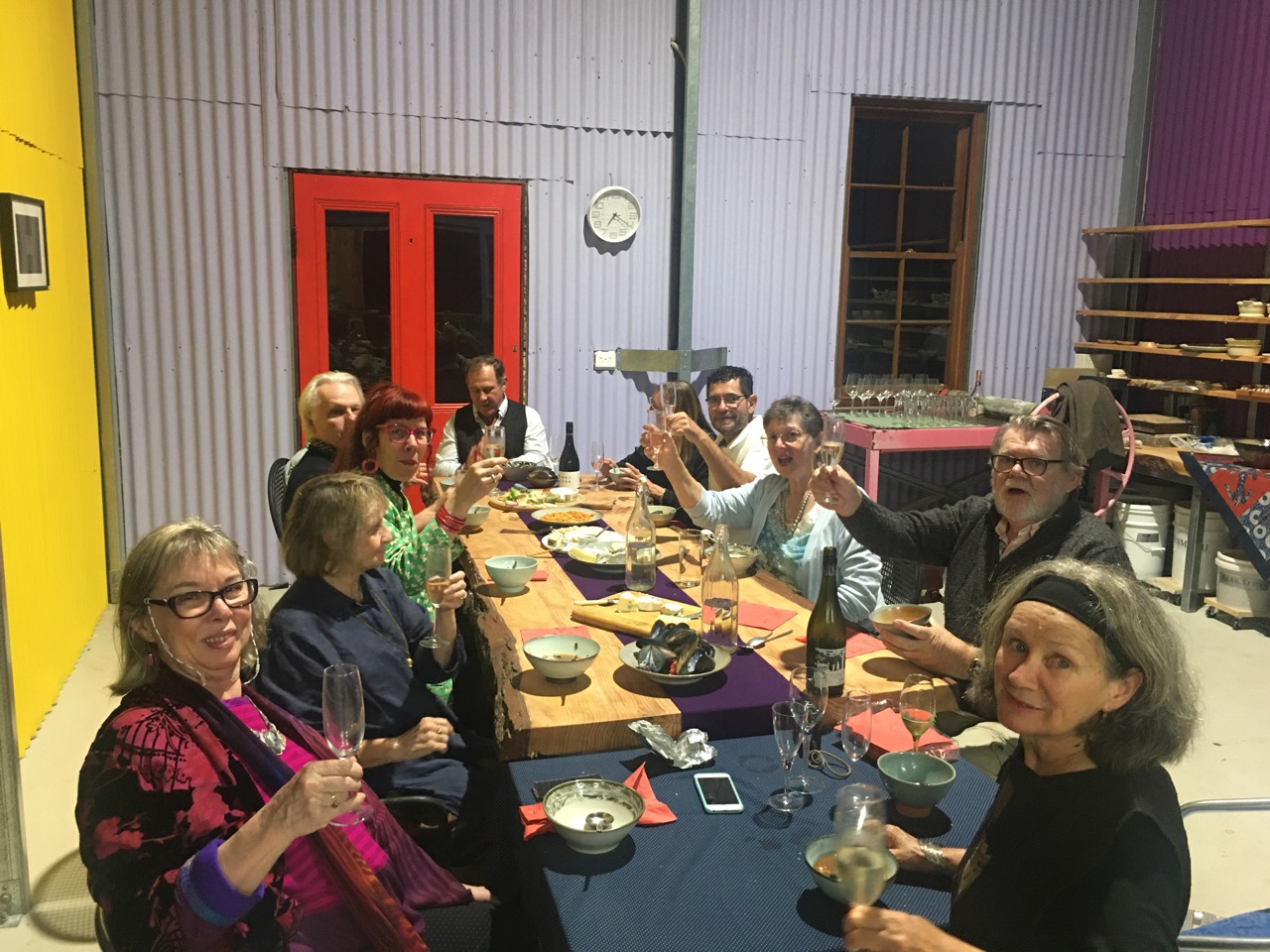
I turned 70 last week. So, on the spur of the moment, I decided to invite all the local creatives from around the village, plus Len and Warren and their partners, who have been so incredibly helpful and supportive over the past two and bit years since the fire.
I was born on the cusp of Pisces and Aries. Not that I hold any interest in, or find any significance in this sort of thing, but it gave me a handle to organise a menu focussed around fish and goat.
I made an amuse of slow braised onion jam, served on narrow flaky pastry fingers, with a single anchovy laid across the top. That was a pretty nice start. I got this recipe from Simon Hopkinson and have had a couple of goes at it. I like his gentle approach to cooking. He has written two books, ‘How to cook roast chicken’ and ‘The good cook’. I liked them both and have tried recipes from both of them at various times.
I had filleted a whole snapper the night before for our dinner, so had the fish frame to make stock with. I also bought a salmon head at the fish markets while I was buying all the seafood for the bouillabaisse. These two fish heads and frame made a great start for the stock.
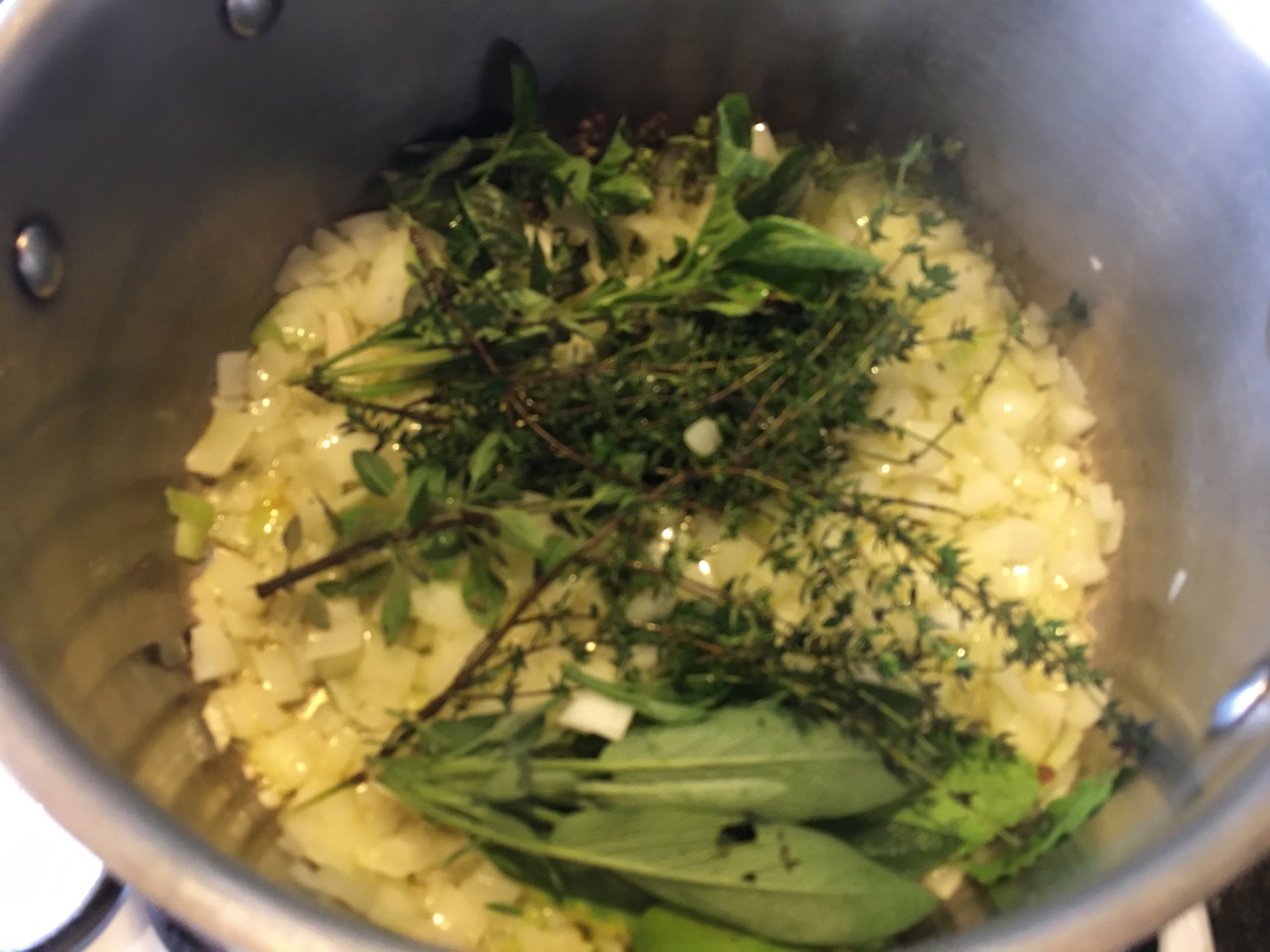
I started the stock with a bouquet garni of fresh garden herbs and onions fried in olive oil. Added the fish heads along with carrots picked freshly from the garden, some very young celery stalks, capsicums and parsley.
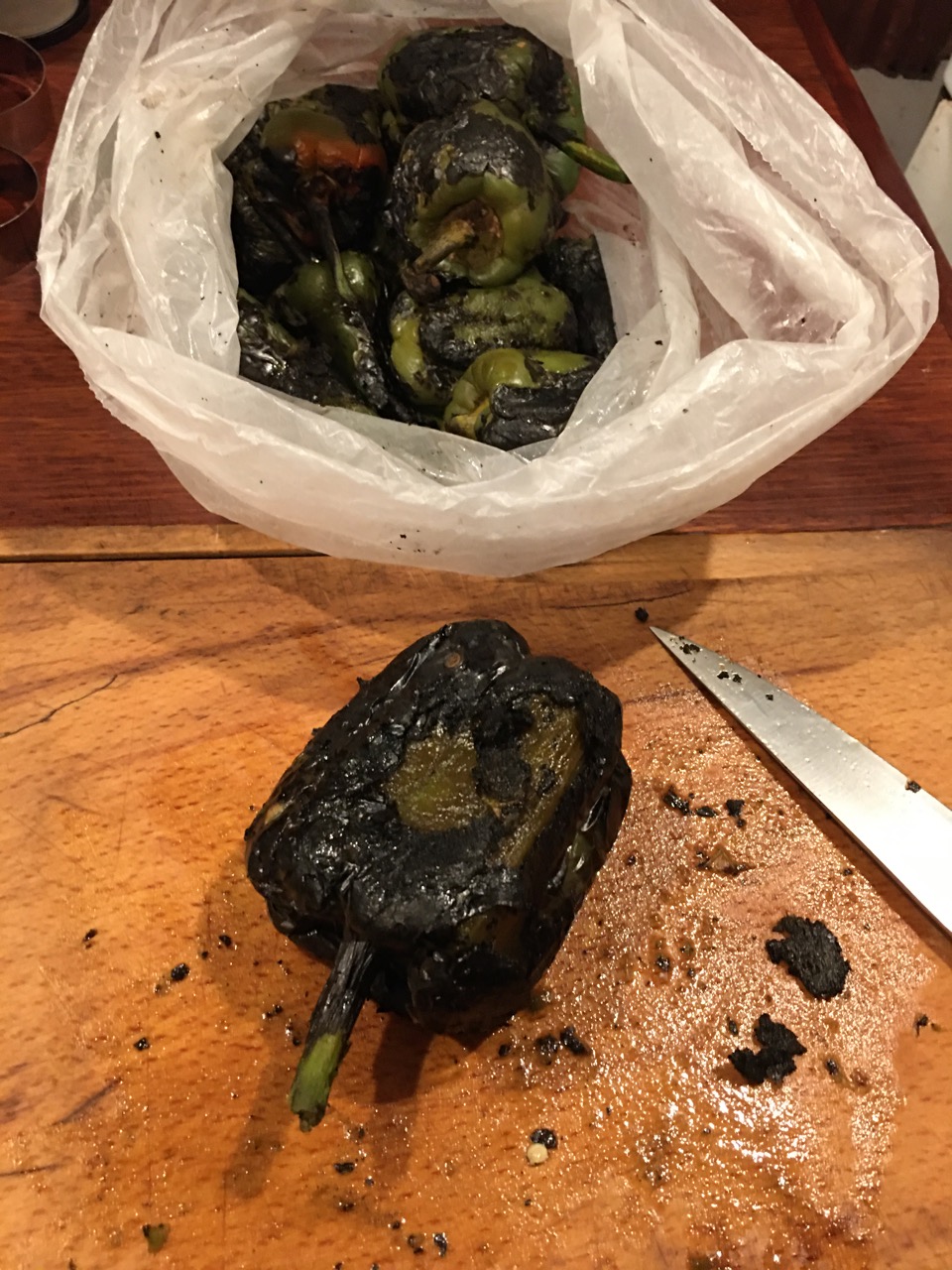
As we have a lot of capsicums at the moment, I roasted the excess over the open flame on the cook top, sweated then out in a bag for an hour and when cooled, I pickled them in a little oil and vinegar. Preserved for later.
The fish head stock was cooked out the night before and when cooled, passed through a sieve to make the clear stock for the bouillabaisse style fish soup. This was to be the first course. A bouillabaisse for the Pisces component of the meal. Just before the party. I added the diced octopus, and boiled it for half an hour to make sure that it was tender, then completed the soup with the fish fillets, prawns and mussels in that order, just before serving.
No one complained and some even returned for a second helping.
The main course was the baked, boned and butterflied leg of chevon to represent Aries. I had put it on earlier in the day for a slow roast and had it ready for the main course.
I made two versions of this course. One baked with home grown and preserved quinces in a light sugar syrup with sweet aromatic spices like star anise, cloves, and cinnamon.
The other baked with wine to stop it drying out with a rub of aromatic savoury herbs, fried onions and garlic.
The big glazing room in the pottery was converted into our dining room for the night and comfortably seated the 12 of us.
We didn’t finish till 1 am. so it must have been a good night.
The rest of the week was spent turning porcelain bowls in the pottery and continuing the work of paving along the back of the pottery.
I dug up a line of pavers that we had already laid behind the kiln chimney. I waited until all the pavers were laid, so that I would have all the levels correct and the fall just right.
I removed one single line of tiles, dug down into the gravel substrate and positioned a cheap plastic drainage gutter in the space and then cemented it in. When we have another rain event of biblical intensity, I want the water to flow away from the kiln and be easily removed instead of soaking in.
Now that I almost have a wood fired kiln built, it’s time for me to re-start the stalled research I was doing just before the Black Summer Fires interrupted my work. I have started to make the early tests for my commitment to the PowerHouse Willoughby Bequest. I have been processing some new porcelain bodies from Australian Halloysite, I ball milled them a couple of months ago to allow a bit of time for them to ‘age’. Two months is next to nothing in the broad scheme of things when it comes to single stone porcelains, but every little bit helps. I have also been working with sericite.
Both started off badly!
The halloysite cracked almost instantly as it stiffened up. It is as plastic as wet goats cheese ricotta. Actually, the cheese is much better!
It has so little plasticity that the act of cutting it through with a wire tears it apart underneath. I’ve been working with my local Mittagong halloysite/mica porcelain for almost 20 years now, and its been a difficult relationship. When I do get the pieces off the wheel successfully, I find that they have a desire to warp in the early stage of the firing. Nothing worthwhile ever comes easily. At least not to me anyway. However, I persist, because when I do get a lovely pot out of the kiln successfully, it is really uplifting and rewarding.
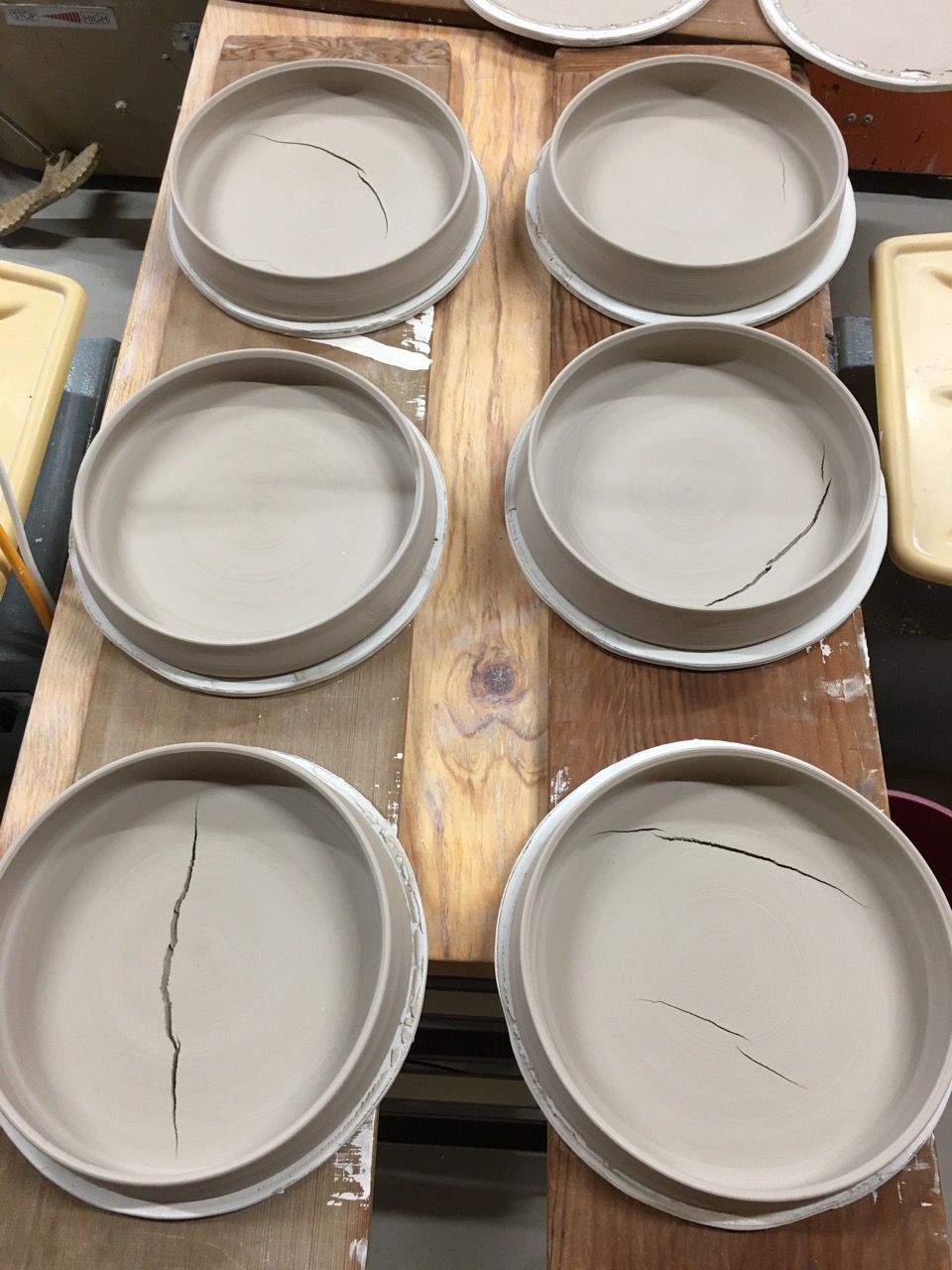
I have also started off badly with the sericite pieces. Any single stone porcelain with such a wide, flat base is going to be problematic, but 100% loss was a bit much as a starter!
I put it down to being out of practice and being distracted, with so much else on my plate. I pugged up this first batch of pots, re-worked the clay and threw it again the next day. The second batch, I cut off with a very fine wire and dried very slowly in the damp cupboard for two weeks. Cutting them off the batt again every 2 or 3 days, to allow them to separate from the base and shrink evenly without too much stress. This has worked. I am amazed how easily this strange stuff sticks itself back together again so easily. I have found that if I use a thicker twisted wire, they stay separated, but almost all of them crack against the line of the cut.
I have tried cutting straight across while the wheel is stationary, and alternatively, cutting off while the wheel is still turning. It has made no difference. They both cracked equally.
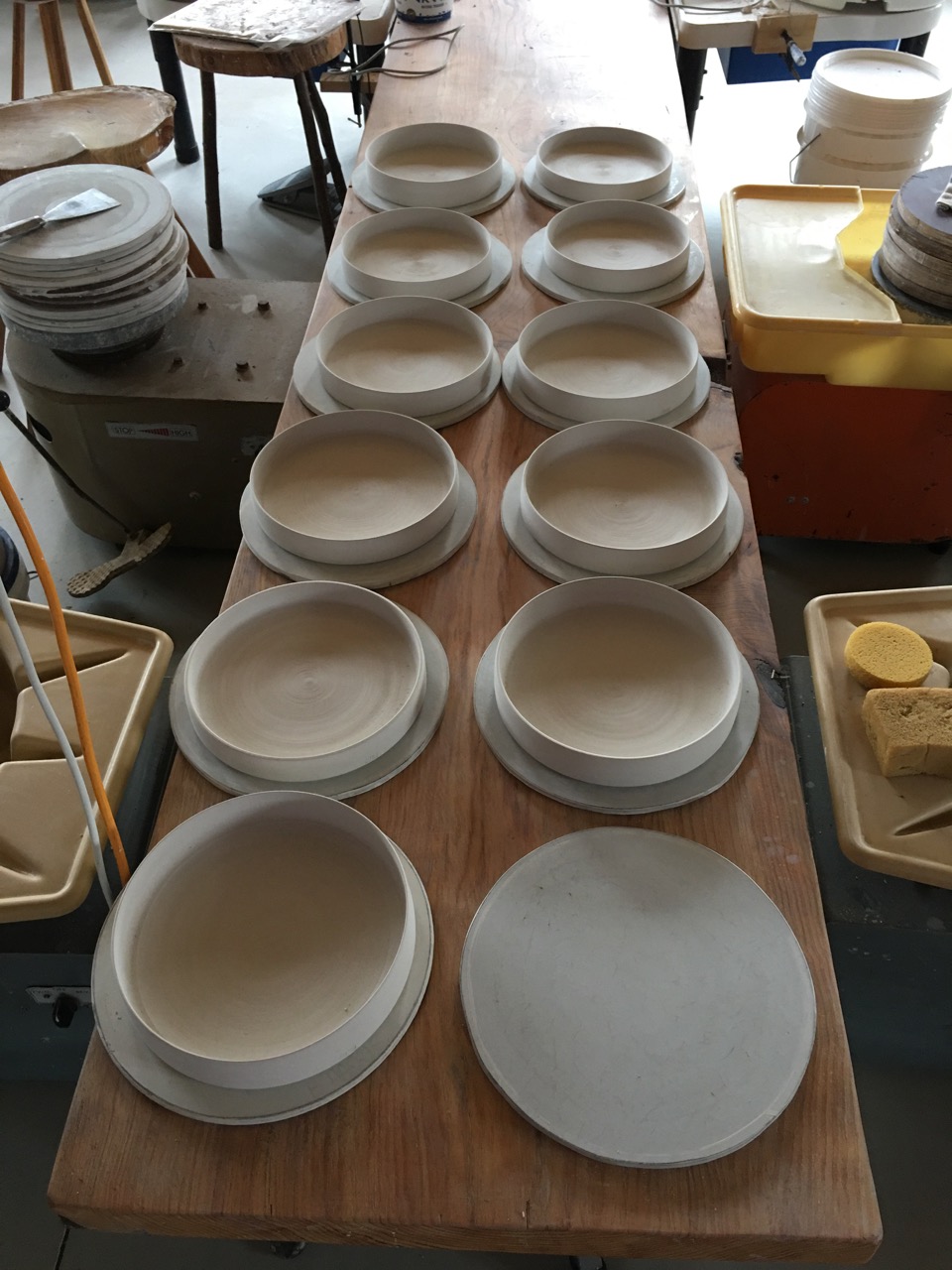
I had virtually no trouble with the smaller, narrow footed pieces. and the larger narrow footed bowls.
I’ve had some very good news to end this year. A couple of months ago the Art Gallery of NSW purchased 12 pieces of my ceramics for the collection.
They wanted a selection of my ‘5 Stones’ sericite porcelain stone bowls. A pair of bowls from each of the two Australian sites that I discovered and developed over the past 20 years, and 2 each from the other sites in Korea, China, Japan and Cornwall in the UK, where I spent time researching and collecting samples from ancient sites and quarries over that time
I’m very pleased to be in the Art Gallery of New South Wales collection. When I started out on this experiment almost 20 years ago I had no idea how it would pan out and change my life. I’ve always worked I was brought up without formal religion in a loosely buddhist/Quaker background, in a ‘green’ household, long before ‘The Greens’ were invented. Where the values of Humanism and environmental concerns were high on the agenda. The saying, atributed to Aristotle, “Give me the boy till he is seven, and I’ll give you the man”, couldn’t be truer in my case. I am that man.
So, thinking of the environmental/humanitarian consequences of my actions is in the fore-front of my mind in every activity each day. It is the way that I approach everything in my life, so using what is naturally available around me for free, has always seemed preferable to buying some sort of imported, manufactured, product from a shop. Hence my self-reliant lifestyle, from food to fuel, to shelter, all the way through to my creative aspirations.
I seem to have become an expert on hand made sericite porcelain, with a few of my books being translated into both French and Korean. It’s not that what I do is so hard to achieve, it’s more a case of it being so ‘out-there’ in a weird and exotic kind of way, such that no body else in their right mind would want to do it.
Now, as I said before, I’m so very pleased to have this important 2 decades of research and creative work in the AG NSW collection. I think that it will be an important resource for future generations who might want to know more about this holistic approach to living, thinking and making.
I have to thank several people, my agent, Sonia Legge, and particularly Glenn Barkley for proposing the development of a ceramics acquisition program for the gallery here in NSW in his Presentation on the ‘Red Clay Rambler’ podcast. Then I have to thank Vicki Grimma for donating a significant amount of money to the Gallery to fund some of the acquisitions. Lastly but not least, I have to thank Wayne Tunnicliffe at the Art Gallery of NSW for his support. There are of course others that need to be thanked, like my partner Janine King and friends and associates that gave advice and support along the way too numerous to name individually, but thank you to you also.
I don’t know the full story of how it all came to pass. I don’t move in those sorts of circles. I grow fruit and vegetables, make pots from stones and do a bit of writing. However, I’m really pleased that my work has been recognised. I didn’t set out to do something ‘special’. I just started following my inclination and my inquisitive nature led me here, to explore and research on and on, and this is where I’ve ended up.
Janine and I were invited to the Powerhouse Museum last week for a special announcement event. There was free wine and a meal, so of course we went along. 🙂 The Powerhouse Museum recently received a substantial bequest, It was announced that 3 glass artists and 3 ceramic artists have been awarded the inaugural Willoughby bequest award.These artists were chosen by the Powerhouse Museum curators to be included in the museums collection because they are or have been making a contribution to Australian artistic culture through their research and creative work. I am very lucky to be one of the 3 ceramic artists chosen. Among all the Australian potters, I can’t yet reconcile that I am one of the 3 lucky ones chosen. It was quite a shock to me I must say. I can only guess that it is because of my 20 years of consistent research and exhibitions enquiring into the nature of native sericite porcelain around the world? I have known about the award for a couple of weeks, but was unable to say anything about it until now, as there was a media embargo until the presentation awards ceremony last night. I’m humbled, surprised and elated to be chosen. The other 2 ceramic artists chosen are; Renee So, a ceramic artist born in Hong Kong, raised in Australia, and now working in London. Nicolette Johnson is a ceramic artist born in London and raised in Texas, but living in Australia now for 5 years.The 3rd ceramic artIst is me. Wow! How could this happen to me? I don’t know! I don’t have a social media presence on facebook, twitter of watsap. I don’t go to openings and don’t do any networking. So I still don’t know how they found out about me and my research. It’s a mystery to me.The other two ceramic artists are young, talented, hip and sassy women, making terrific cutting edge work, who are winning awards and being represented internationally. On the other hand, I probably represent the old fashioned approach to making pots. Fossicking, digging, processing, then ageing the mica based stones that make my work from. It’s not really done that much – if at all, anymore. I grow most of my green food in my garden and orchards. I also grow most of the wood fuel that I use to fire my wood fired kiln and the kitchen stove and home wood heater. I try and do every step in every part of these processes myself, and do it sustainably.
The selection of such varied and different artists certainly illustrates a depth of research and breadth of scope in the curator, Eva Czernis-Ryl’s decision making process. I’m very grateful and pleased to be honoured. I really hope that I can make something that lives up to this onerous responsibility of receiving my small part in this amazing bequest award. It’s such an honour!I did notice that there are 3 men and 3 women, 3 glass and 3 ceramic artists, with Adelaide, Brisbane, Wollongong, Mittagong, Canberra and London represented, spreading the selection around. Because this is called the Barry Willoughby ‘Inaugural’ Bequest Award, it hints at the possibility that there may be other awards at some time in the future…However, I got the impression that it will not be a regular event. Best wishes Steve
I was recently in China doing some research. I have written a little bit about that, intermittently, in the last month or so. While I was there, I arranged to get my hands on some new and different sericite samples. These have now just arrived here last week and I have done my first tests with them.
I now have 4 different Chinese sericites to compare.
Although it isn’t immediately obvious from the image above. If you look closely, there are 4 different colours of rock samples from top to bottom, white, cream, grey and pale buff. They all look more or less white, but they each have various tints or shades of colour to their whiteness. They all do have one big thing in common. They all throw badly, the palest ones being the least plastic and most difficult. They feel a lot like my local Mittagong porcelain stone, only better behaved.
I felt like I’d gone all the way around the world and come home again when I threw these tests. They felt so familiar.
I’m really looking forward to seeing the results fired. I had a bit of trouble with the usual shrinkage and drying cracking problems, but I did get some of them through successfully. But I lost quite a few. Still, nothing that I’m not used to, and I’m getting good at recycling the turnings and failures.
I almost filled the tray on my old wooden kick wheel with turnings after trimming just 12 small bowls. I must be removing at least half of the weight of the original material to get them thin enough to look and feel like porcelain. I aim for 2mm at the rim and 3 mm lower down, graduating 5mm at the foot. This tapered wall thickness allows the best translucency at the rim and higher up the pot, while retaining sufficient strength to hold the pot up against gravity while it sits at 1300oC in the kin to develop enough glass in the body to be come translucent.
If I’ve done it right, the whole finished, fired, ceramic mass, has the correct quantity of primary and secondary mullite crystals to glue it all together, while becoming glassy enough to allow plenty of light to pass through.
Too glassy and/or too thin and it slumps. Too thick or not fired high enough and it stands up straight, but isn’t very translucent. It’s a bit of a fine line to tread.
not too bad.
As I sit and grind away at this damp, ground-up rock dust with my tungsten carbide tools, I realise that I’m truely happy doing just this. There is a gusty wind outside, but I’m in here sitting in the sun and I don’t want for anything more at this moment. This is fun. I can’t wait to get them into the kiln.
It has all the promise of something special about to happen.
After I had such a terrible firing a couple of weeks ago. I got stuck in and remade all the work. I’ve filled the shelves and had 2 solar fired biscuit firings and I am almost ready for the third. Then I can pack the wood fired kiln again. Hopefully this time with more success.
I had slaked down all the turnings from the last work session and made half of this work from the recycled sericite bodies. I have made test batches of 5 different sericite this time round. I have 2 Chinese minerals, 1 Korean, one English and one Australian in this batch. Although strictly speaking, the local one is a complex mixture of Illite, kaolinite, quartz and felspar.
I’m always looking for something that I don’t know, so the search is a bit difficult as I’m working semi-blind. I know more or less what I want and how to achieve it. After all, I have been doing this research for the past 40 years and more. But getting what I consider excellent results is always elusive and difficult. It doesn’t help when the kiln shelves break and collapse… Still, I’m over that and all the new work is made and drying. I’m just turning the last of the throwing today.
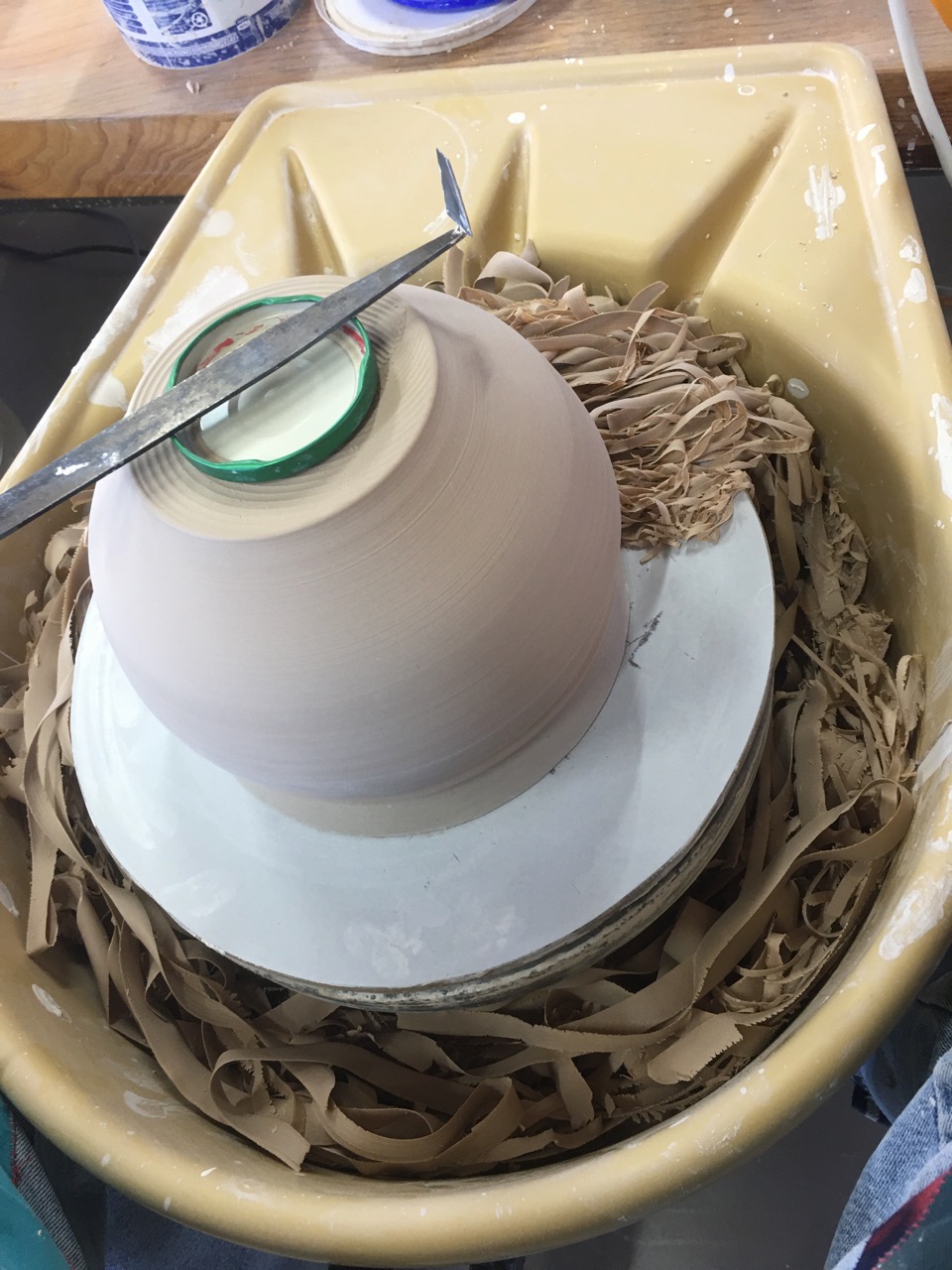
Sericite is funny stuff. It isn’t plastic like other clays, it’s quite short in most cases and has to be coaxed along to get any height in the form. I learnt to throw the inside of the form as I want it, leaving a thick wall to retain the form without it squatting. I then have to turn quite a bit of material off the outside to realise the finished form from the thick lump at the base.
Although sericite isn’t plastic, it still shrinks quite a lot and has a terrible tendency to crack in drying where it is thick. I have developed a few techniques to cope with theses peculiarities. I’ve learn’t to throw everything on batts, as lifting the pot with my fingers causes a memory distortion in the body that shows up later in drying. I’ve learn to ‘polish’ the out side of the clay after I have finished throwing, to seal any possible defects or weak spots that might start a crack during the early stages of drying and stiffening. I have also learnt to turn the bases in stages. Thinning out the clay as soon as it is stiff enough. This stuff can’t be turned like ‘normal’ clay based bodies. It has to be very firm, almost dry to get a smooth finish. If turned too early, it chips and tears, making an awful mess of the fine surface. It’s a bit like cutting soft goats cheese, it just tears.
Trimming the base of this pot almost bone dry
I’m getting better success rate these days with each variation and improvement of these techniques. It’s a little frustrating to loose so many pots, but they slake down quickly and can be stiffened in plaster tubs out side, then re-thrown within a week.
It would be better to leave the body to ‘age’ in a cool dark place for a month or two, but with so many variations of sericite porcelain bodies in constant testing and development. I’d loose track. As it is I really have to concentrate and keep very good records, marking every bag with a permanent marker, identifying every bucket of turnings in the same way and carrying this over to the slaked recycled material in the buckets and in the plaster tubs. It’s quite a paper trail of provenance, keeping track of it all. I also keep a daily diary in the workshop of what I’m throwing and what I’m throwing it out of. Every pot gets inscribed with the batch of body and later identified with oxide as to which glaze I used. I also keep log books for the glaze and the body ball mills, so that I know what I made, the date it was done, and what it was made from. I always seem to have a dozen different batches on the go at any one time and they all need their own bucket and bag storage space. It’s organised chaos.
I’m nothing if not thorough. I have to be. With over 3,000 glaze tests and hundreds of clay body tests. I need to keep track. I really want to make simple, elegant, beautiful things. But things with a particular character that I admire. Just a little bit ‘damaged’ or altered by the process of their making. Perhaps I should say ‘enhanced’ by its process and journey, plus the unique quality of its material. I like my pots to have a story embedded in their form and surface. I can pick them up years later and ‘read’ that story. I like that.
I’ve just made a few more white tenmoku bowls. They are slightly bigger, fuller and rounder, more generous in feeling, less austere. I haven’t finished turning them yet. They still need more work over the next few days, but I have high hopes for them.
Unfortunately high hopes are not enough. It’s long term, steady, pains taking, thorough and often boring, consistent research that makes progress for me.
We take the bullet train out of Shanghai for the three and a half hours trip heading South West. We arrive at Lishui station and wait for a cab. There isn’t much at the station and the crowd that we arrived with soon disperse, but are soon replaced with another hoard of people from the next train. They all swirl past us, coming through in waves every 10 mins. There are just so many bullet trains passing through here with astounding regularly. It’s hard to believe. This is a very popular service. It must be on the way to somewhere more important, because this place isn’t anywhere in particular, that I’m aware of. But with 1.4 billion people needing to get around, even if only a small fraction of them live and work around here, it is keeping this service very well patronised. 10 years ago there were very few of these super-fast trains in China. 20 years ago there were none.
These days you can get to near almost anywhere quickly using this service, but mostly on the eastern side of the country. The government has produced a miracle in building this high speed rail system so extensively and quickly. Half of it is bored through the mountains in tunnels and the other half is suspended on concrete pillars above the valleys. It’s a masterpiece of engineering and it appears to run like clockwork. We comment on how Australia takes 5 years to make a 3 km road tunnel across Sydney. While the Chinese are building 3km of high speed rail infrastructure per day here.
Here in Lishui, we are about an hours car journey from our destination, as we wait for our car to pick us up. We try the local station food. This is just OK, not what I would usually want to eat, but I’m in a foreign country, so it goes down a treat.Anyway, there is only one choice. It’s a bowl of monosodium glutamate clear soup, with some fried tofu skin, 2 very small dumplings, a couple of dreadfully, scarily, luminously, bright pink ‘sausage’. I use that descriptor very loosely, and this is brought to life with some really great, bright red, slices of HOT, I mean very hot, chilli. A few drops of oil, some pepper and a lot of salt. It’s fantastic! I love it, but I try not to think about what was in the bright pink, extruded, sausage-like objects. I’ll never know. But when in Lishui, eat like a Lishuan! It was delishuious.
Our car arrives and drives at a little bit scary high speed to get us to our hotel for the night. We settle in and have a dinner of stirred vegetables. Soya beans and onion, mushrooms, fried tofu, steamed and then stir fried green beans, something brown that I don’t recognise, either in shape or in taste, which is quite bland and finally some little, green, mild chilis. something more akin to a small capsicum. It’s all delicious. but there is a lot of it, so I pass on the steamed rice and the soup.
The next day we are off to see the local Longquan Museum of celadon history. Longquan was a centre for the production of Celadon wares for several hundred years, from about the mid 900’s, through to almost 1600 – and it still is an important producer of high quality ceramic Art wares based around celadon.
Apart from Celadon, they also have some Guan ware and something that looks suspiciously like Ru ware, but can’t be, because Ru ware was only made in the Northern Song Dynasty. We’ve been tipped off, we have some local information, about an important new archaeological site. We spend our time dutifully taking in as much as we can in the Museum. But more importantly for me, there is the recently excavated archaeological site. I want to get some understanding of the early celadon manufacturing in these surrounding valleys. I have my pet theories, the possibility of seeing this site takes preference for me over other possible things to see and do while we are here.
The site is a half hour drive out into the country side. We wind our way out into the hills away from the fertile valleys. This is all very familiar to me. Even though I have never been here before. It is the same story. I can see it all unfolding. It has the ‘look’ that I recognise. These fertile valleys were colonised for food production first and pottery came later. The potters had to make do with the hilly surrounds where food production wasn’t a premium.
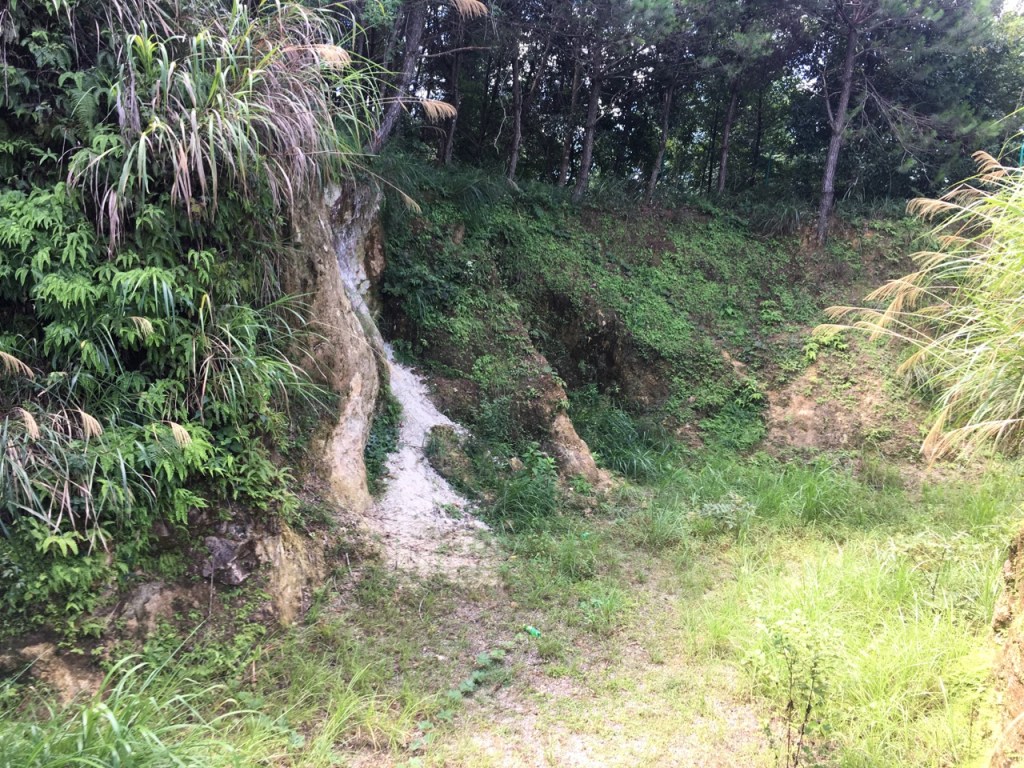
This is the same story or scene in so many other places where I have been researching in China, Japan and Korea. It also just happens that there are useful minerals to be found exposed in the wash-away edges of the streams up in the hills. This liminal country is very rich in feldspathic material I can see that from the car window. I’ve seen it all before. I call out to stop the car at one point. I say “We must be getting close now”! I can see out of my window, that we are passing a deposit of kaolinised porcelain stone. This is the local geology writ large in the road cutting. I recognise it from all the other deposits that I have studied over my lifetime of fossicking for porcelain stone and glaze rocks.
A pale vein of kaolinised feldspathic mineral, exposed in the road cutting.
If this is the local geology, of course someone would have been inquisitive enough at some point in time over the very long history of human occupation of these vallieys, to just pop a bit of that paler stuff into the existing pottery kiln where they were making earthenware and then later, stoneware, until finally they made porcelain. But it was only because the ‘stuff’ was here and available on site. No sericite and kaolin, no discovery of porcelain. It’s that simple.
The story is much the same where ever it happened in several different sites in a few different countries. If the suitable material was there, exposed near the surface, then it happened. If you are a potter, or several generations of potters. You can’t not make it!
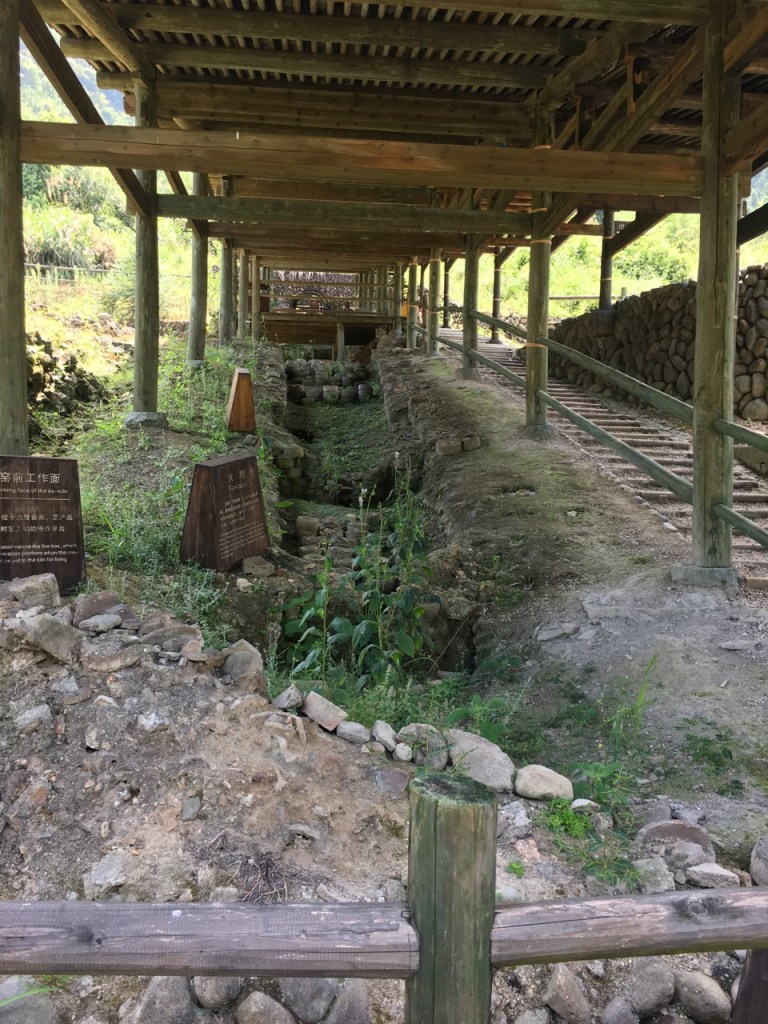
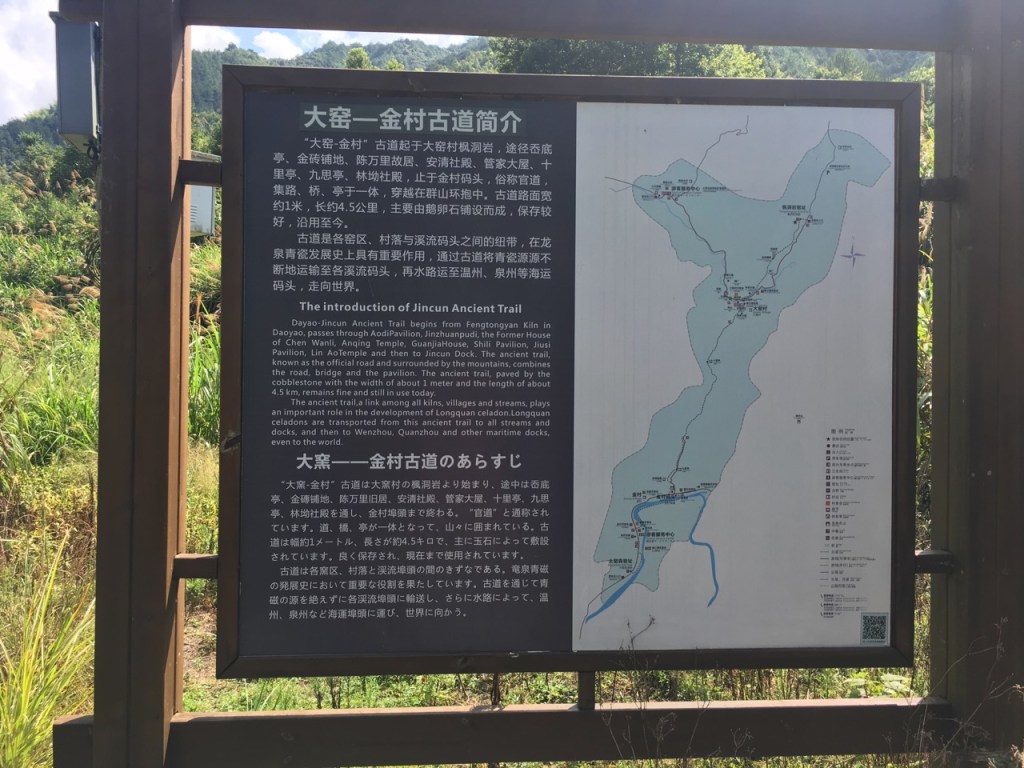
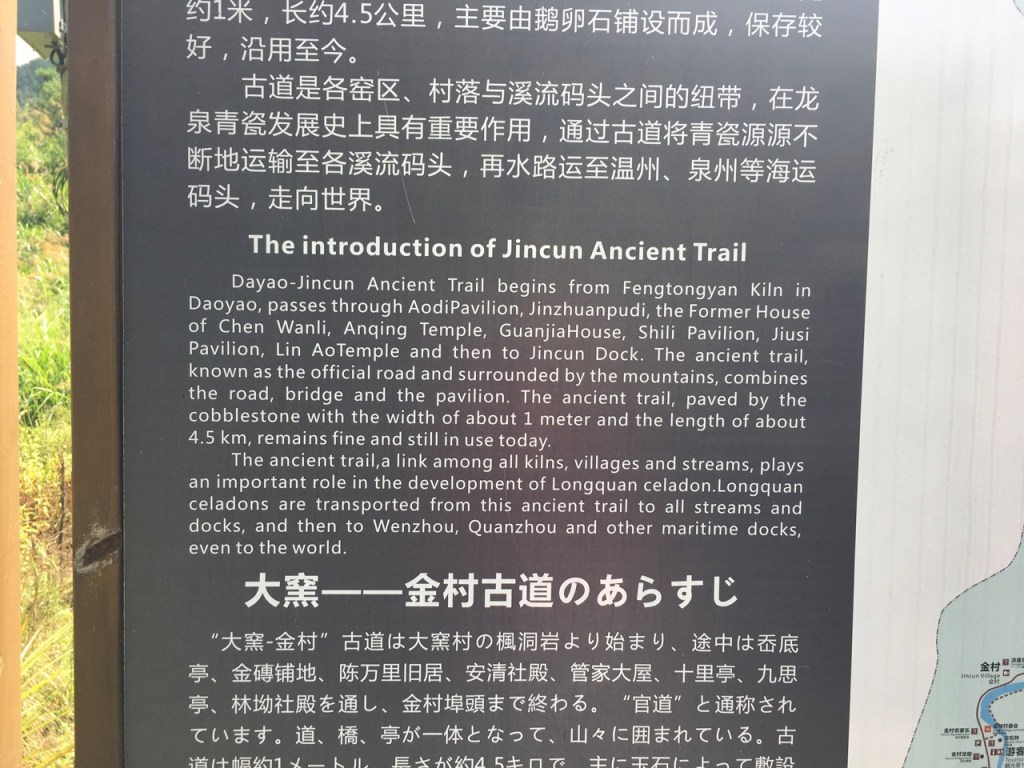
We drive on, eventually reaching the dig site. All digging has now been completed and written up. There is a sign that tells all – but it is mostly in Chinese script and I can only decipher a bit of it using my phones translation app. But this is of little or no consequence, as the signage has a small section of English translation. How very thoughtful! Anyway, I’ve been in this situation before, and I know what I’m looking for and what I’m looking at in the most general sense. I can see what I need to see. As we wander the site for an hour, even making our way down to the small runnel of a stream at the bottom of the hill. There are even a few bits of broken shards in the water, all ground and polished into rounded edges of pale green celadon and off-white/grey-olive, guan-like glazes.
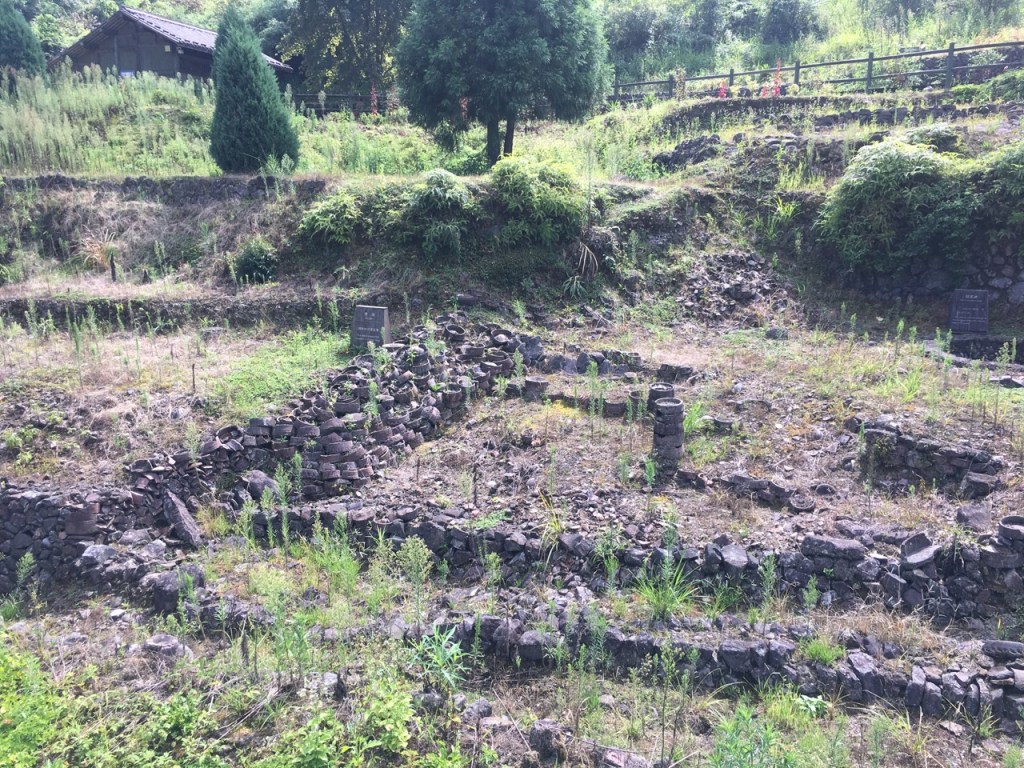
The story board tells us that along this stream was once a well-worn track along the banks that is mentioned in old documents. The finished ceramic work was carried out of this valley along here. We make our way back up to the kiln site. It’s a long tunnel kiln – or was. Only the base is left now. This site dates from 1000 to 1300. There are several layers of occupation/development on the site. The kiln has been partially excavated to reveal at least 3 layers of different kilns on the site over time. This site is called “Fengdongyan” and is 4.5 kms up stream from the small village of Daoyao. Daoyao village is where there would have been other potteries at that time. This higher and more remote pottery site was an ‘official’ government sponsored site. So it must have been important. Or so the info board tells me.
To extend my earlier proposition of the thesis that potters migrated up into suitable nearby valleys, Actually, I believe that they were pushed out by the farmers. I propose that the potters were originally farmers, who grew crops and made pots part time. Pots made from mineral rich clays from the valley floor. Something akin to red earthenware, fired in bonfires, or simple up-draught kilns made from mud, straw and shards. Over eons of time the space on the fertile valley floor became too precious for pottery making and firing. The potters who had by now become specialists, were relocated off the fertile valley floor and the now well developed paddy fields and their sophisticated watering systems.
the stepped tracing of the steep slope of the pottery site.
The potters now finding themselves on higher sloping ground, built their up-draught kilns into the sides of the slopes, becoming more like cross-draught kilns. This resulted in them achieving higher temperatures much quicker and with ease. The clays that they were close to on the slopes and valleys were better drained with certain fluxing minerals leached out. The clays became less fuseable, lower in iron and more refractory, needing the higher temperatures that were now possible, so paler stoneware bodies were evolved. etc, etc. Eventually semi cross-draught, down-draught tunnel kilns were developed because of their greater fuel efficiency and ease of achieving the higher temperatures. The rest is history!
When sites with porcelain stone were located nearby, in these valleys, it is impossible for me not too believe that someone like me, an inquisitive potter, could have resisted trying out this new white material. It needed a bit more work to get the kiln to mature it, it needed to go in the hottest spot, but it was possible, and therefore, at some point in time, it happened. The same porcelain stone body used for making the pots, could be mixed with limestone or wood ash and this now became a proto-celadon glaze that could be raw glazed, it’s that easy! It could be done, so it was done, it’s still being done! You only need 2 materials. Later, saggers were developed/employed to maximise packing and firing efficiency, but also to keep a lot of the wood ash off the beautifully refined glazes. Of course it didn’t happen over night, it took centuries. So much experimentation by generations of potters, each adding just a little refinement to the overall knowledge. That’s my thesis. I believe it. What is missing here is a clay supply. Why, this place so far up the valley?
When we were finished looking at this early Long Quan celadon site, we made our way back up the hill to the road, and on the other side of the road was a short track, that I hadn’t noticed previously, this led to an ancient mine site of very friable, crumbly weathered porcelain stone material. So this is why these potters migrated up here, 4.5 kilometres up this valley, away from the village, into this more remote spot, between 600 to 900 years ago. Now it’s obvious to me. They came here, all this way, simply because this is where the best material was to be found in its easiest, most workable form. No crushing required, just washing/blungeing, settling and stiffening. It all makes perfect sense to me. I’m dying to step off the walkway and go in and steal a little sample for analysis, but I resist the temptation. I’d put money on this stuff being a mix of sericite and silica, perhaps with a small amount of kaolinite or something similar. But I’ll never know!
In a way, I don’t need to. I already know. It’s just like every other site in a general sense. This place would fit very well into my book of ‘5 Stones’, except that I’ve already finished writing it. Every one of the 11 sites I studied in the 5 different countries, all fitted the pattern in some way, and every sample that I collected and and had analysed, with only one exception, contained sericite mica! That exception is Mittagong, where I live, where the mineralogy is similar but the mica is in the form of illite not sericite.
The mine site is quite extensive, it goes in two directions. I might imagine that they simply followed the softest, most plastic, easily dug material. I can see 300 years of potters endeavour, scratching out this hole here. It all makes so much sense to me.
I’m feeling really chuffed. This has been a really rewarding day. Even if nothing else happens on this trip. It has already been completely worthwhile for me.










































 Tonight my Fingers Smell of Garlic
You must be logged in to post a comment.