More rain and tasting cider

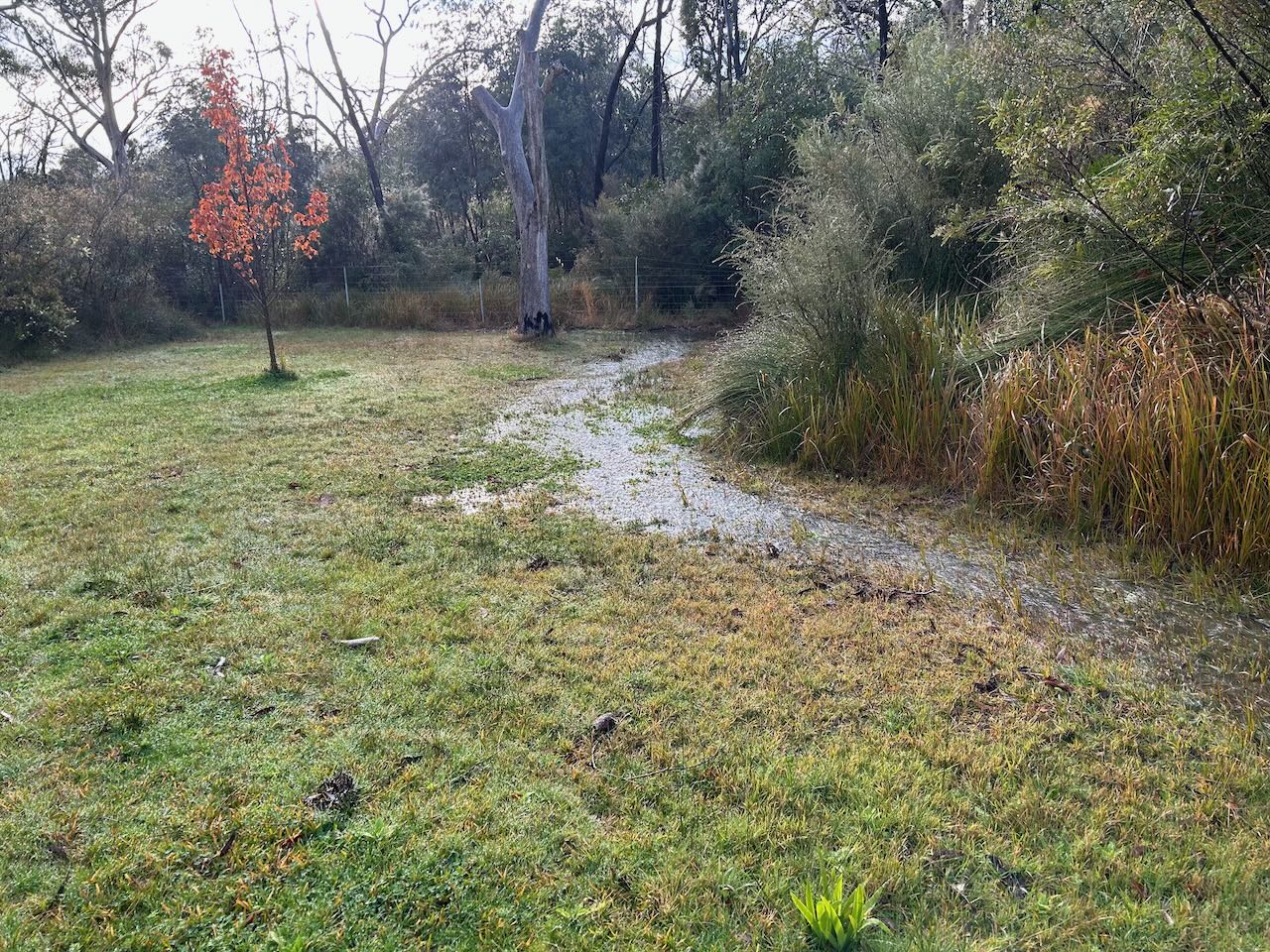
It’s been raining again quite heavily. We now have 4 different little streams flowing across our land, where the dams overflow, and the front lawn is under 25mm of water, like a slow moving shallow lake gently flowing across our kitchen vista.

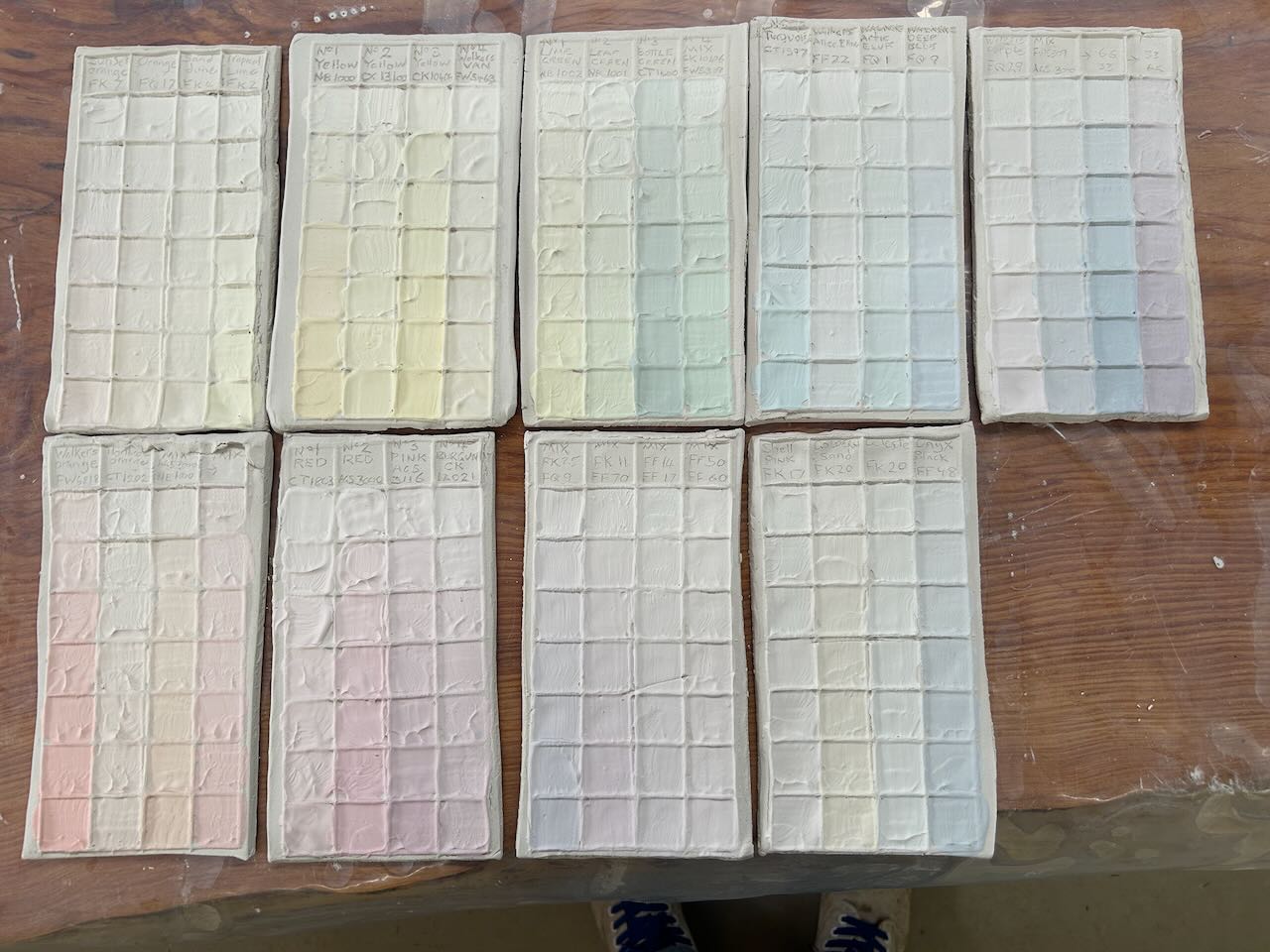
We had 65mm of rain at one point. I thought about what to do for a while and came to the conclusion that it was probably best if I decided to do all those glaze tests that I had been meaning to do for a while. I certainly didn’t want to do any outside work. So I spent a day rolling out slabs and pressing out grid-tiles from my standard plaster grid-tile mould. This ensures that all my test tiles are the same size and shape, so that I can compare them at any time with tests made years before if needed. Tragically, I lost 3,000 glaze tests in the fire, so I’m starting again.
Weighing out glaze tests can be quite boring, especially when it goes on for days. However, it keeps me gainfully employed in the warm and dry pottery studio. I put on a CD while I work. It takes more than the length of a CD to fill one test tile with the infinitesimally small gradations of ingredients in the logical progression of the recipe. Each tile is 8 x 4 squares = 32 weighings and recordings.That’s 288 tests made in this sitting. Enough!
When I was doing my PhD, I did every test in triplicate, so that I could fine them in oxidation, then reduction and also in the wood fired kiln. As each kiln gives its own variation to the test. Having done that very thorough exploration, I’m over it and these days I only make the one series of tests, and fire them  in the kiln that I think will deliver what I’m looking for.

It fills 10 pages of my glaze note book this time around. I have to keep detailed records of what I do and why I’m thinking that it might be a good idea. Sometimes, it takes so long to get the firings done at the temperature that I’m imaging will be best and in the atmosphere that I want, and in the kiln that will give me those ideal conditions, so that If I don’t write everything down in detail, then I can forget what I was thinking and why I went to all the trouble. Hopefully, it will help me to understand both the results and more about myself in a few weeks time, when they are all fired, and I can decode the results! 

Each tiles takes about one hour to complete. After two days of this, I’m pleased to do the last one – for the time being

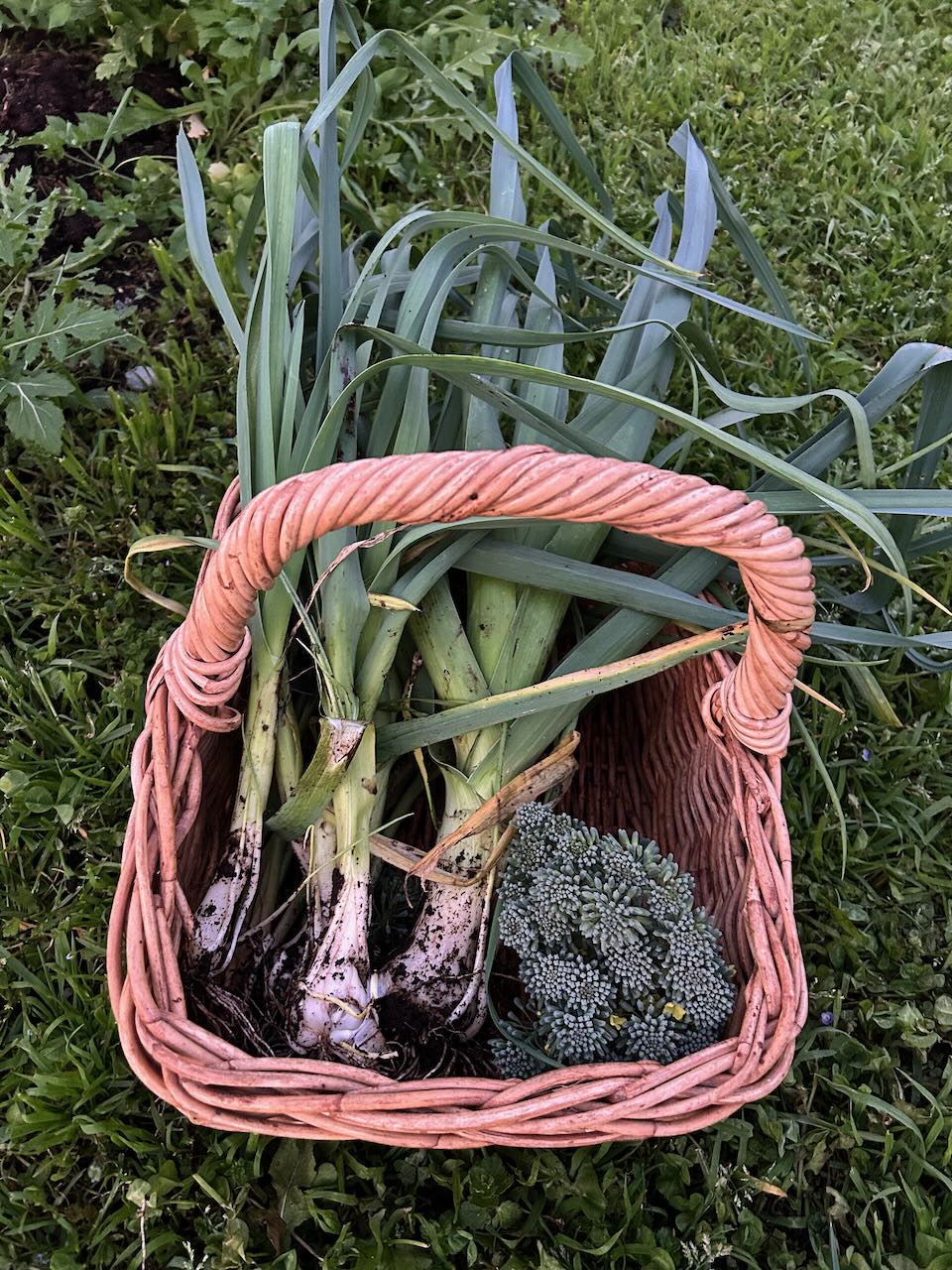
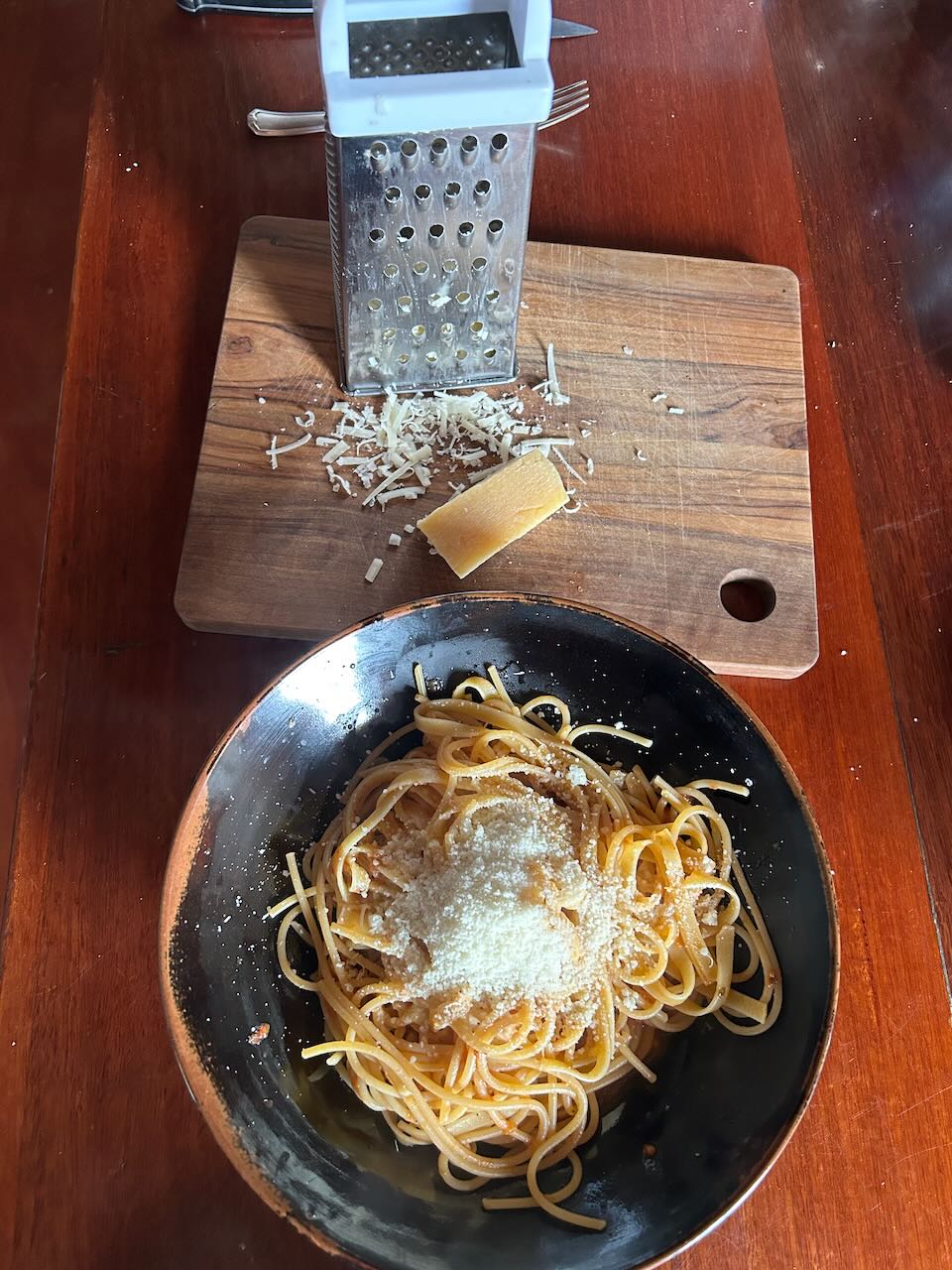
When there comes a break in the rain, I get out and pick vegetables for dinner. This time is leaks, broccoli, Brussel sprouts and carrots. I’m planning baked veggies with a mustard infused béchamel source for dinner. I make a quick and warming lunch of pasta. I tried to steal the spaghetti from the supermarket, but the female security guard saw me and I couldn’t get pasta!

🙂
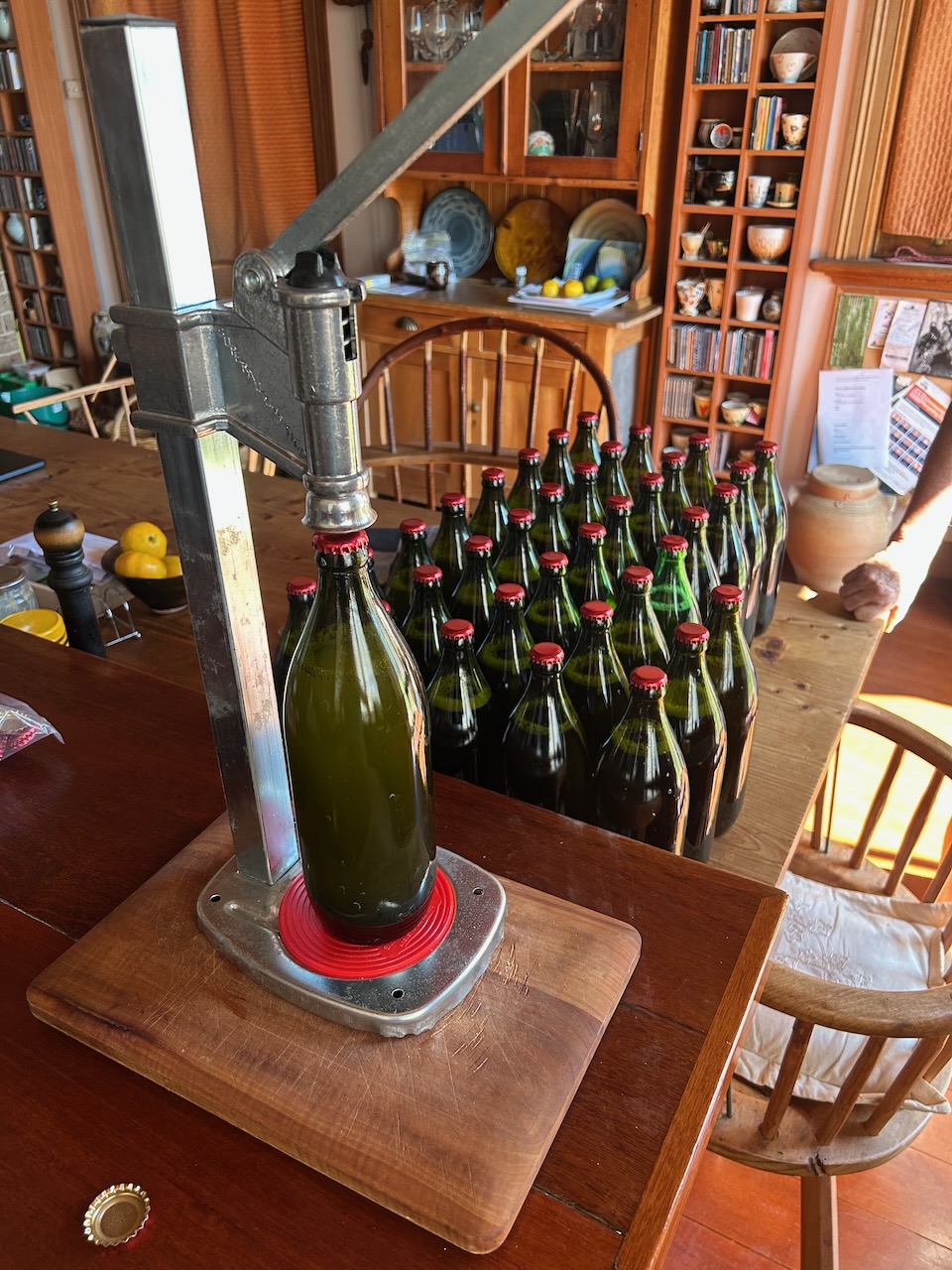
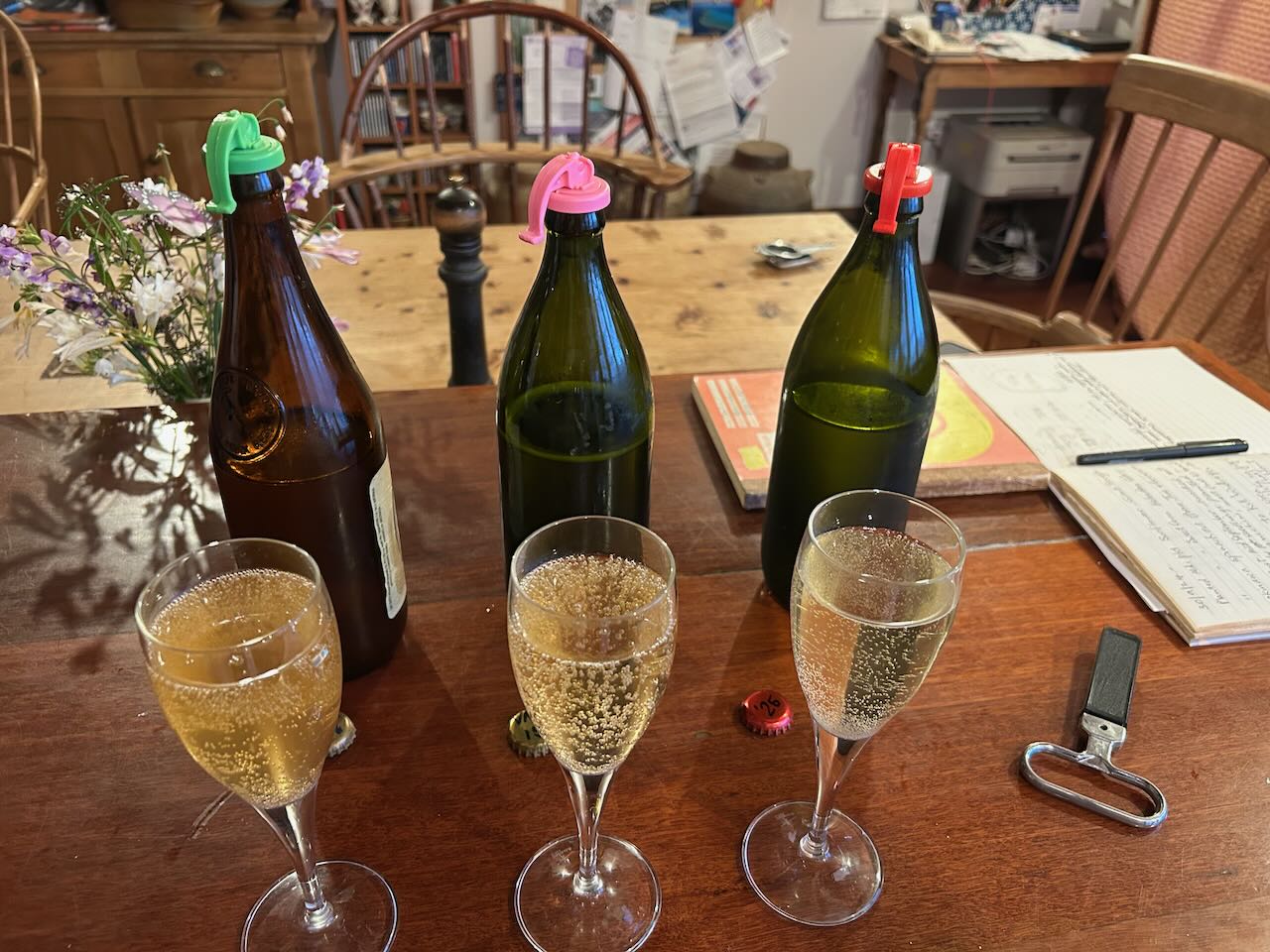
We decided to try is years cider with dinner. We made this batch of cider back on the 11th of February and bottled it on the 11th of April. So now it has had 4 months to settle down. It will be good to see how it has turned out.

See my blog post; ‘Autumns rewards,  Posted on 11/04/2025 

Janine thought that we should do a vertical tasting of the last 3 vintages. What a good idea! 

As we still have a few bottles of the 2012 vintage. This was the last vintage from the aged 40 year old apple trees in the previous orchard. From 2012 onwards there was a severe drought, so intense that we didn’t get to harvest any apples from 2012 through until the fire in 2019. So no cider was made. In 2015, our friend Val had a good crop of apples on her trees in ‘Lagan’, 2 hours drive, south of here, so she drove up a couple of washing baskets full of her apples. We were able to make a small batch of cider from those apples. We re-planted a new orchard in 2020 with different varieties of apples.

We opened 3 bottles to see and compare the difference. The older 2012 vintage was still very lively with good spritz, but a darker colour from its age, more akin to a beer in colour. It has a medium nose of sultry notes and a good firm cider flavour, just as we are used to. Completely dry on the finish. The 2015 from Val’s apples is medium in colour and flavour, and similar to above.

The 2025 is very pale with floral notes, a delicate palette and a dry finish, however, not very effervescent, because, as it is the first vintage from all the new apple trees in the new orchard, all planted since the fire, and this being the first year that we had a decent crop. I made the decision to cut the amount of sugar added at bottling, to ensure that there wasn’t too much pressure in the bottles. I don’t want to experience any exploding bottles. 

We make a completely ’natural’ cider here from our organic orchard apples. Nothing added at all except yeast. I have always used Moet and Chandon champagne yeast, as it has alway worked well for us. Back in the 70’s, you couldn’t buy cider yeast here in Australia, so i chose champagne yeast, as it is closest to what we wanted to make – a sparkling cider. These days I can buy any number of cider yeasts form the brewers supplies shop, but I stick with what works. 

I always leave the cider in the fermenter for 2 months to make sure that it has completely fermented out all the available sugars and is ‘dry’. Over the past 4 decades, I learnt to add one spoonful of white sugar to each bottle at bottling. This is the standard champagne bottling technique. This is to allow it to re-ferment, just enough to make a sparkling cider. Because these are all new trees and therefore an unknown fruit. I played it safe, and only added half a spoonful of sugar at this first bottling. So this batch has only a gentle spritz, but this is better than too much. 

After this test run, next year I’ll be brave enough to add the full amount of sugar.
I’ve never been brave enough to go with the wild ferment of naturally present yeasts that are on the skins of the fruit. When we had a small vineyard of 100 cabernet and 30 shiraz vines. I tried making one vintage of a macerated, whole bunch ferment. The wild yeast that was dominant on the skins at that time was very vigorous and resulted in a rather unpleasant distasteful wine. I didn’t like it at all and threw the whole lot out. So I lost a whole vintage. it’s nothing to do with money. It’s all about the investment of time and effort, and the expectation that there will be something interesting and delicious at the end, even if the amount is very small. For instance, we only make 30 to 36 bottle of cider each year, just enough to fill one fermenter. It’s enough.

Nothing is perfect, nothing is ever finished and nothing lasts. Good cider doesn’t.
Autumns rewards

Exactly 8 weeks ago today, Janine and I harvested all of our apples and pears. We juiced them and used ‘Moet and Chandon’ champagne yeast to ferment them all into cider.

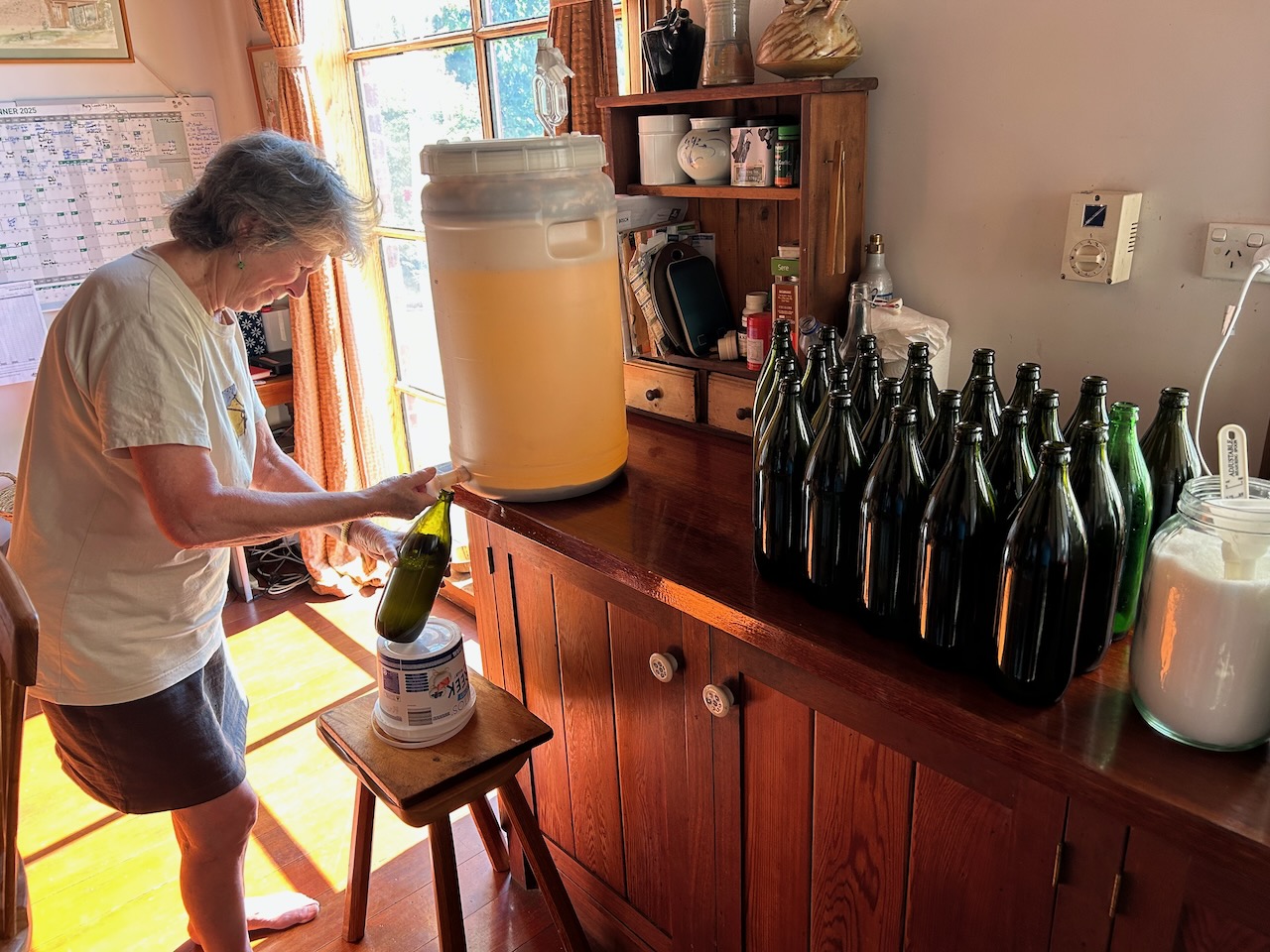
Now, 8 weeks on, the ferment has completely died down and used up all the available sugary nutrient in the juice. Now that it is completely still, it is safe to bottle it. We must make sure that it is fully fermented out, so that it wont keep on fermenting and explode the bottles.

I remember back in my childhood in the 60’s, stories of exploding ginger beer bottles that had too much sugar in them.

We have been making our own cider here for almost 50 years now, ever since we planted our first orchard and got a reasonable crop of apples. 

This is our first vintage of cider in ten years now, because the orchard was burnt out in the big bush fires of 2019, but before that, there was a ten year draught that made it very hard to keep the fruit tress alive , never mind getting a good crop off any of them.

So this is our first really good cropping year from the newly planted fruit trees in the new orchard five years on.See; It’s almost autumn, Time to make cider.Posted on 

I have just spent two days hand weeding and digging over the pottery verandah garden bed. It had gone completely feral and needed a good sorting out. All of the spring and summer flower display was mostly over and I’m hoping that all those flowers dropped a load of seeds down into the bed, so that now, given a bit of free space and sunlight, they will germinate and grow a new generation of flowers to welcome visitors along the driveway past the new pottery. I spent a long time on my hands and knees, making sure that I got the majority of the couch grass and kikuyu runners out of the soil. 

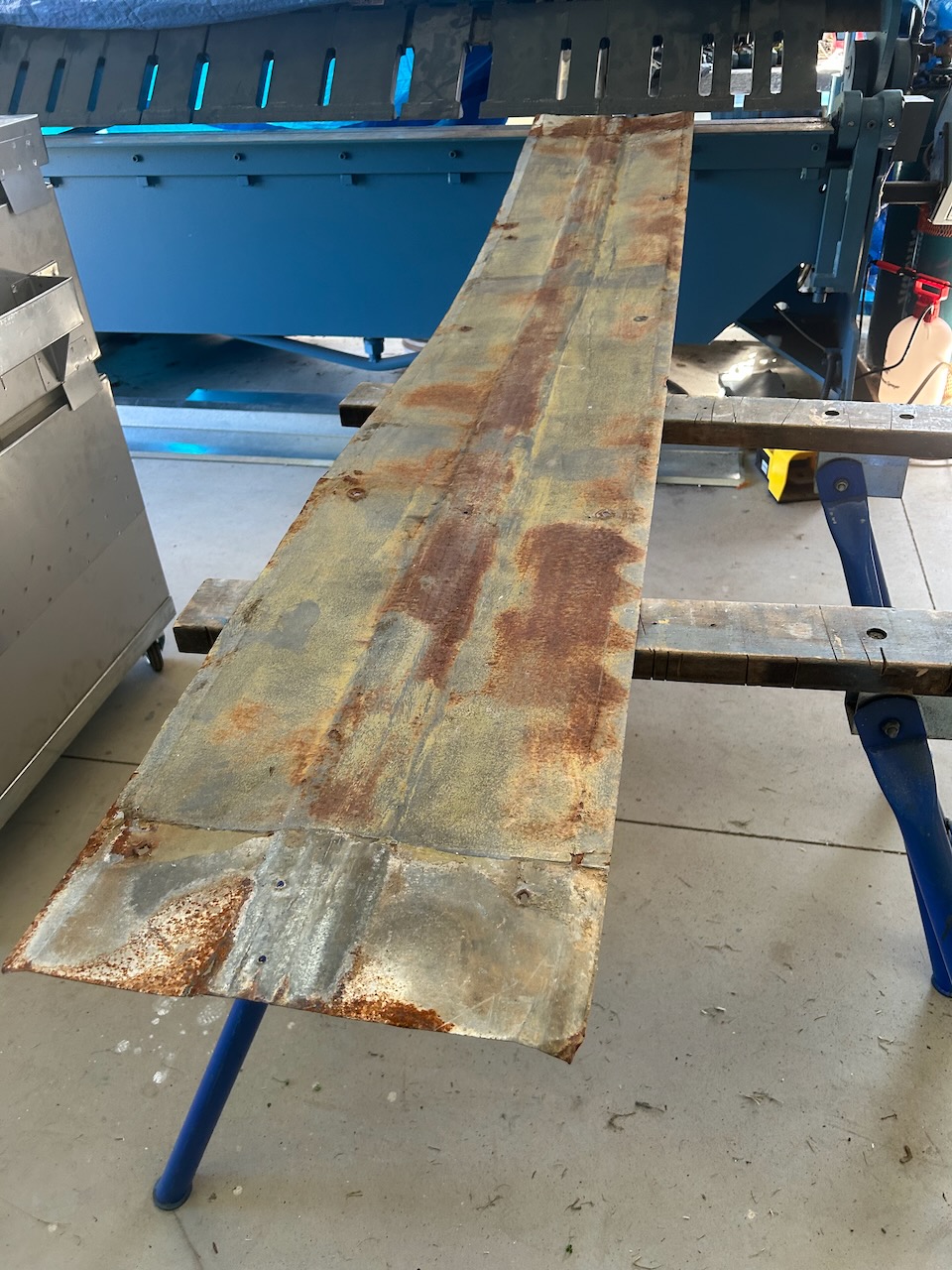
To prevent the grass runners from returning and growing back into the freshly weeded soil. I needed to make a border edging along the beds. In the vegetable garden, I made galvanised iron sheeting edging strips from off-cuts of galvanised flat plate that were left over from kiln jobs in the past. A very productive re-use of what was waste material. 

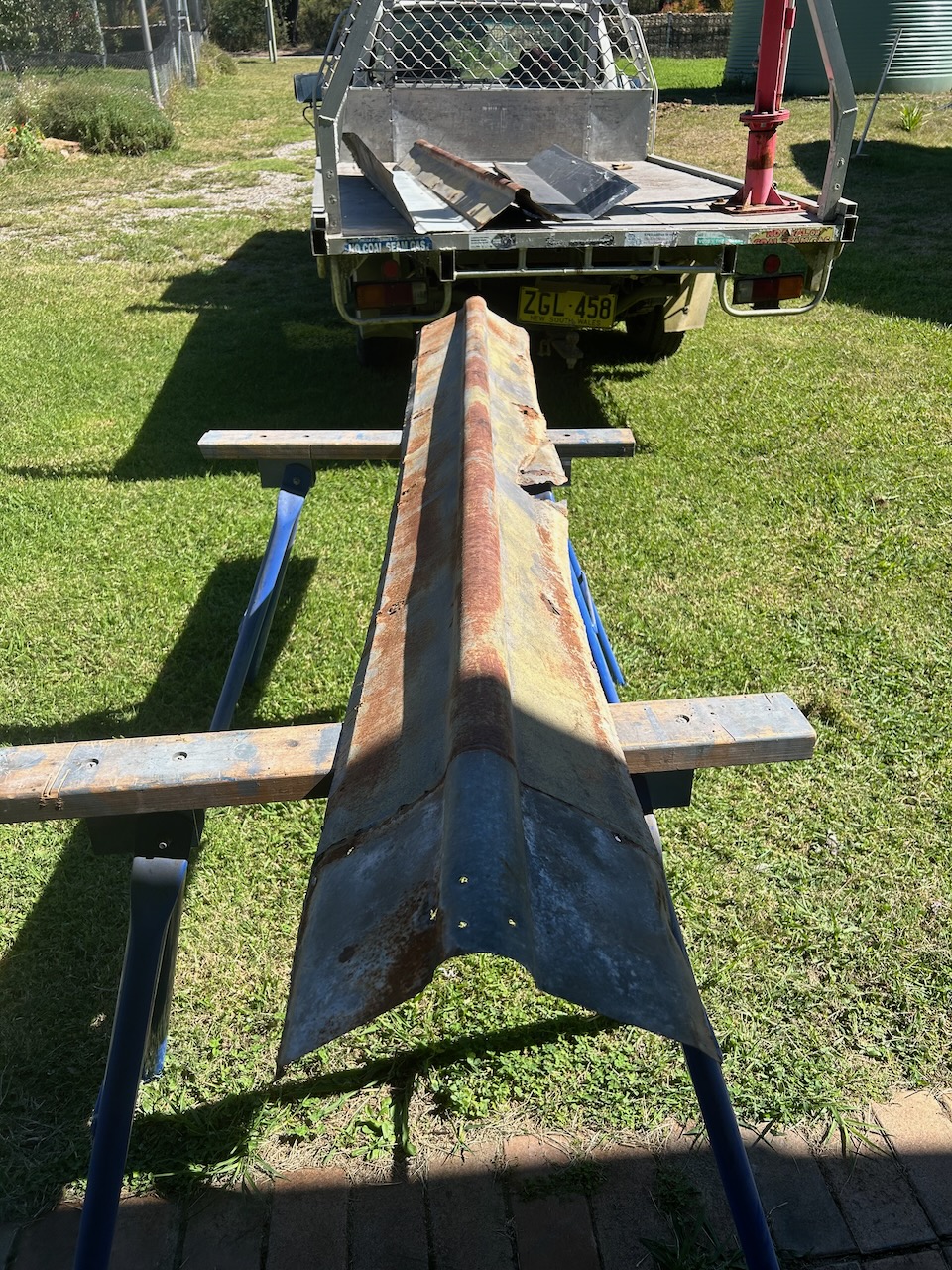
These days I don’t have off-cuts any more, but Janine reminded me that I had stacked up half a dozen lengths of old recycled roofing iron ridge capping that might be usable.

I got stuck in and flattened it all, split it in two long lengths, and then folded a strengthening right angle edge on one side so that i could bury it half way into the soil to delineate the garden bed, but most importantly to cut off access to the grass runners from growing back into the beds. I dug in a ute load of compost, watered it well in, so now will wait to see what germinates.

Re-use, re-cycle, re-purpose!

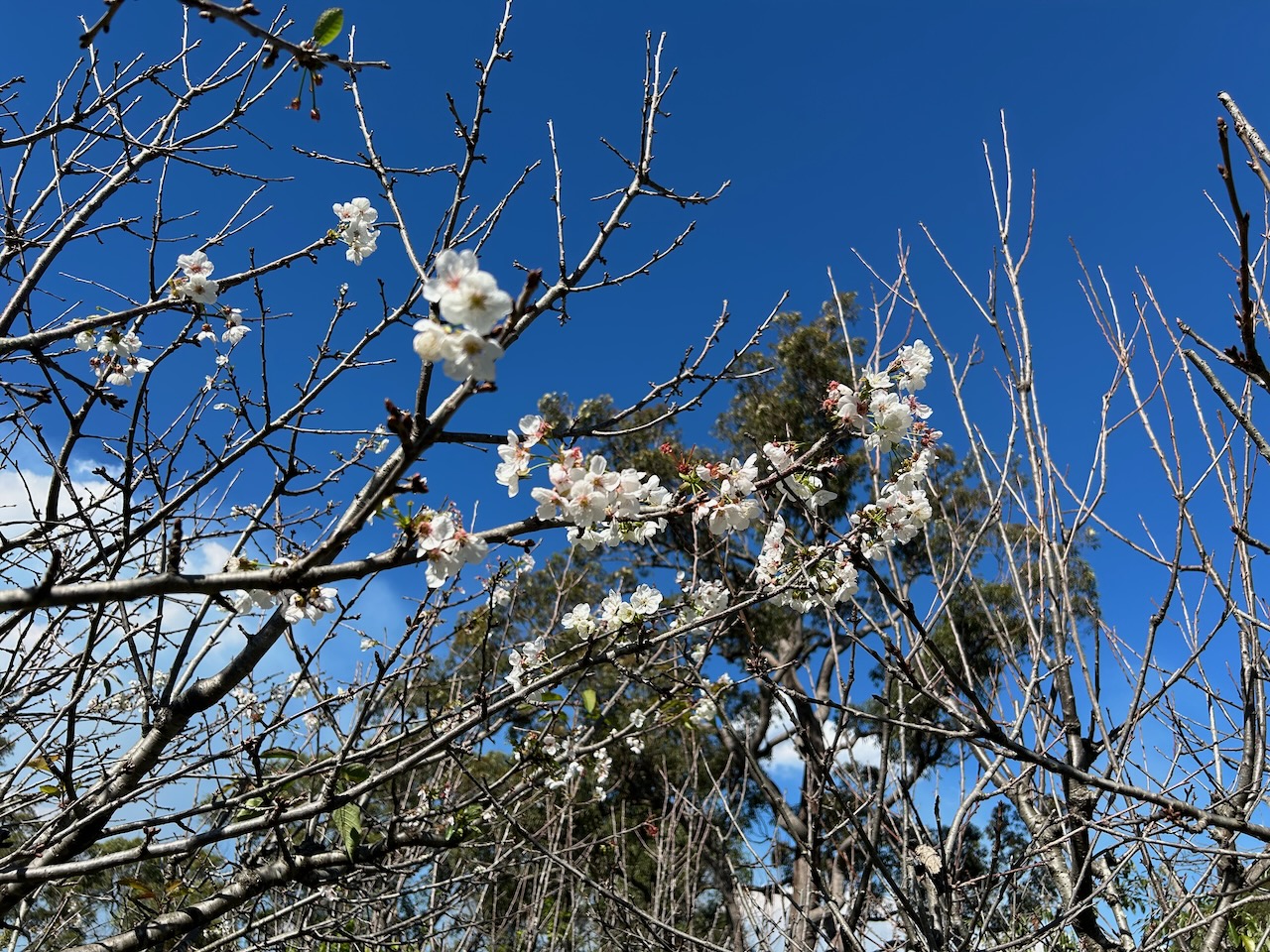
One of our cherry trees has decided to flower again in autumn. I think that it had a few cold nights, followed now with some warm weather,  and that was sufficient to reset the biological clock thinking that winter is over and time for the spring flowering. We have had this sort of thing happen in the past. Particularly with the ‘low-chill’ cultivars.

Winter hasn’t arrived yet, so I wonder if this tree will still flower as normal in 4 months time when spring does actually arrive?

In the pottery, I have retested the rock glaze tests that i started exploring a few weeks back. This time, I have made larger sized samples to see the quality of the glazes better. All 3 have potential, but still need further testing to get them ‘right’.

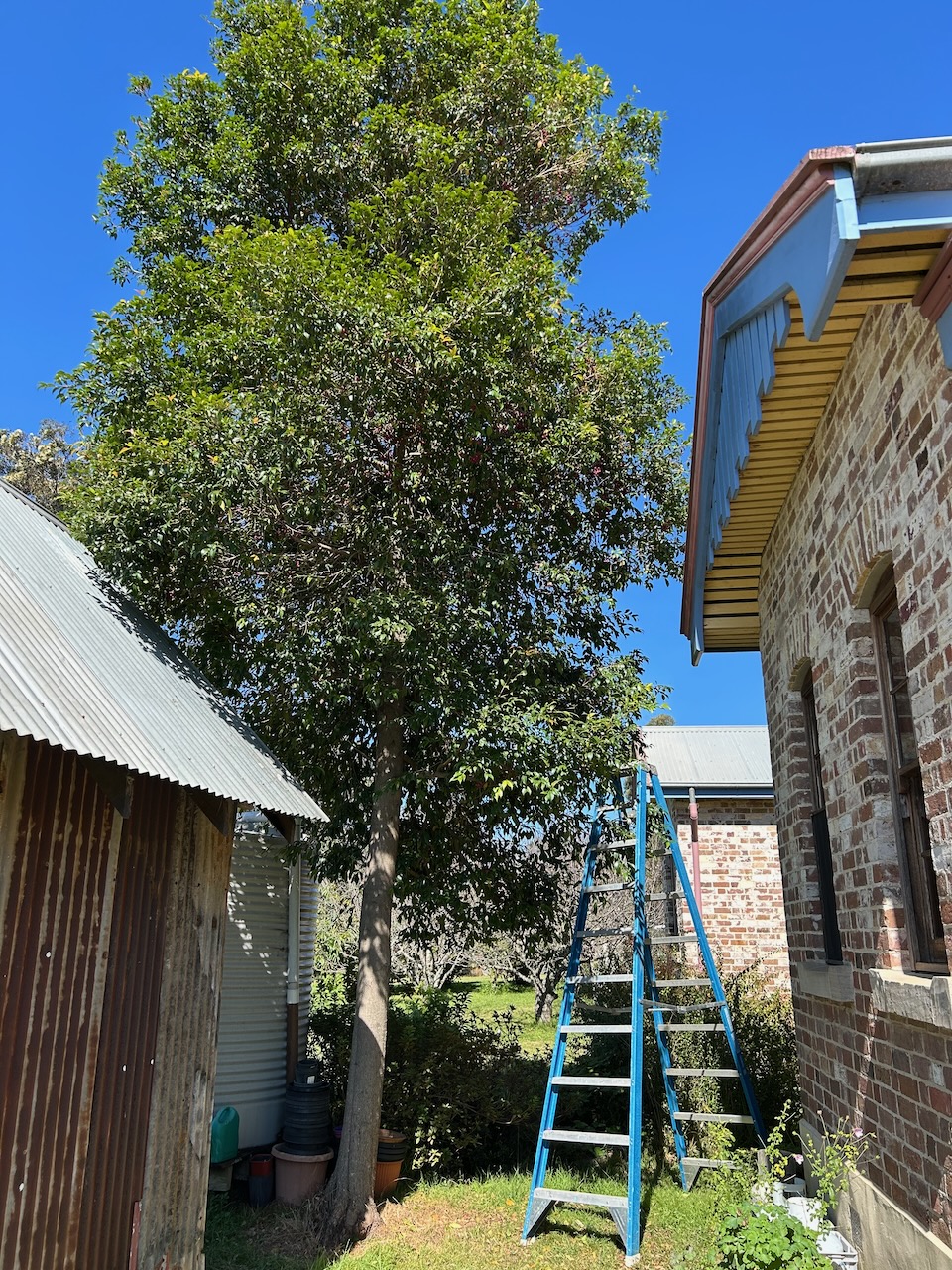
After washing and sterilising all the glass bottles for the cider bottling this morning. I had and hour to wait for the sterilising process to complete, and could hear the birds in the lillypilly tree next to the house. I asked Janine if she wanted to make some lillypilly jelly, so got out the 3 metre step ladder and climbed up into the canopy to fill a bucket with fruit. The fruit only starts 4 to 5 .metres off the ground. The tree is much taller then the house.

After we had bottled all the cider, Janine boiled up the berries and started the process of making the jelly. It takes two days. Tomorrow to sieve out the skins and stones from this batch, then re-boil it and set it up in a cheese cloth to drip out to clear jelly.

Nothing is ever finished, nothing is perfect and nothing lasts.

It’s almost autumn, Time to make cider.

Todays big job is to harvest all the remaining apples and pears, then juice them all and make a big batch of cider/perry. Then it will be back onto the tomatoes and passata.

There will be sure to be a lot of weeding needed after all this rain clears and the heat returns.

We haven’t been able to make cider for over a decade now, as there was the terrible drought culminating in the 2019 bush fires that took our pottery, yard, gardens, fences and orchard trees. We replanted a new orchard in 2020 and this is the first year that we have had sufficient fruit on the new young trees to be able to make a batch of cider. 

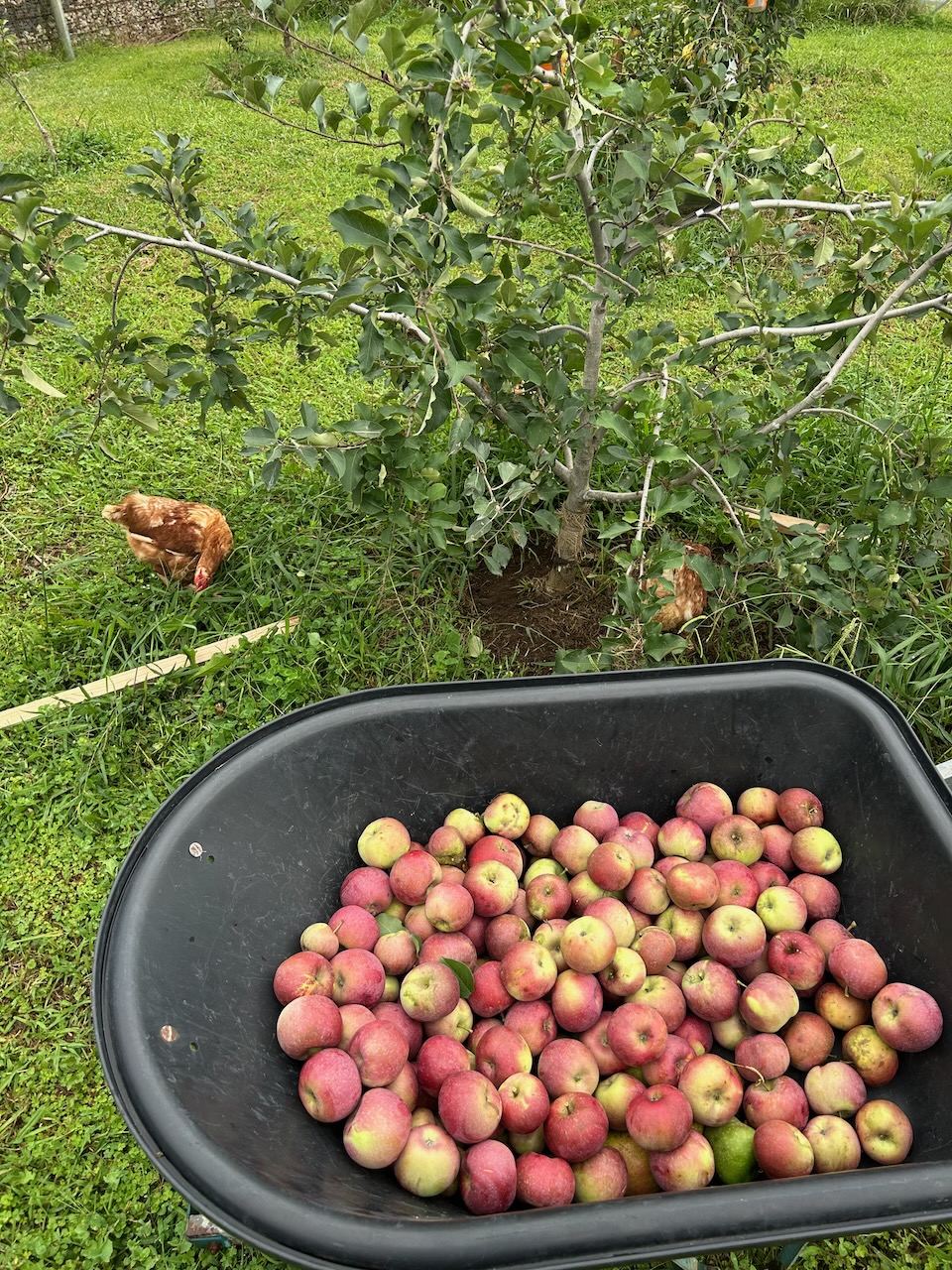
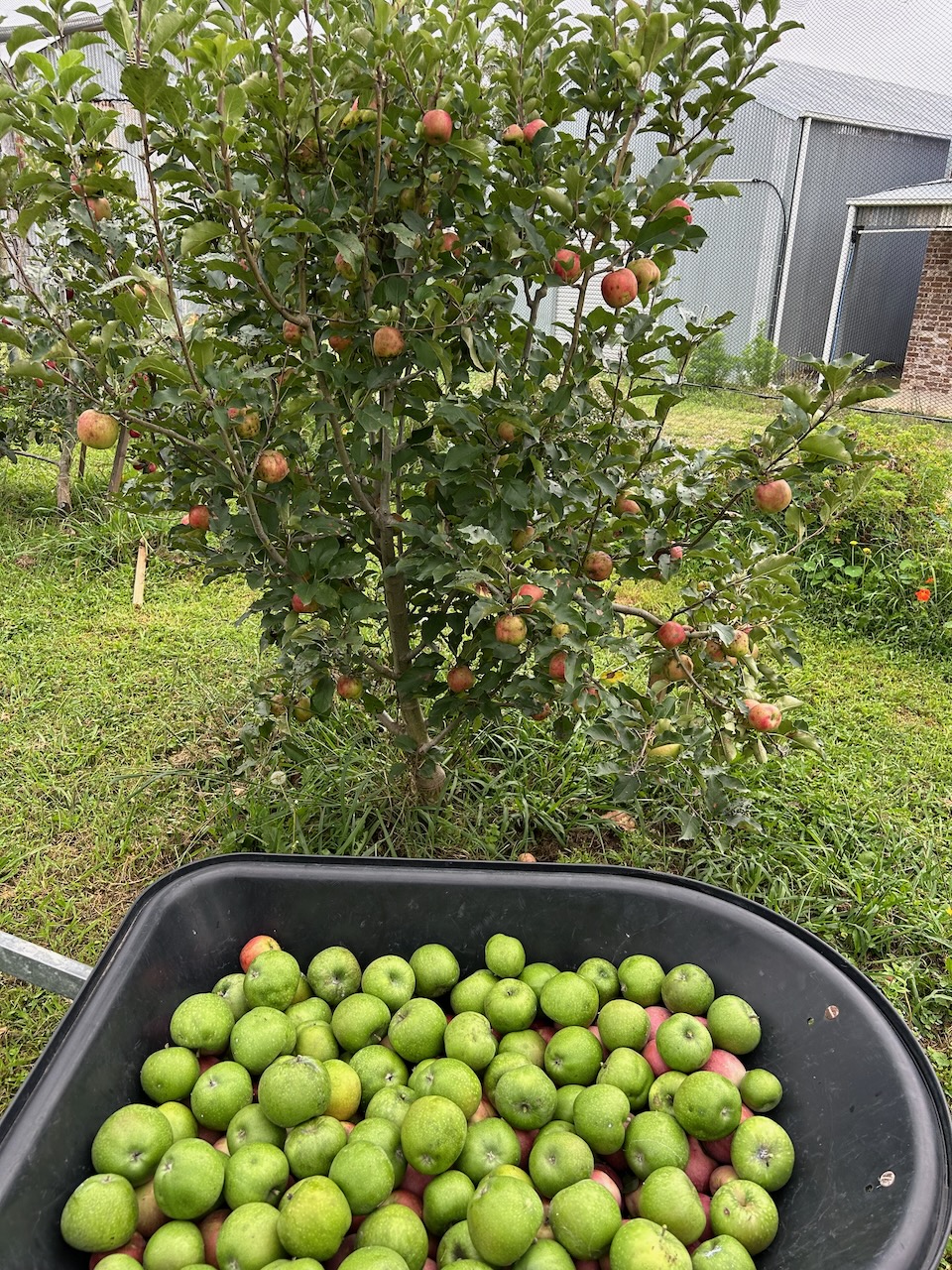
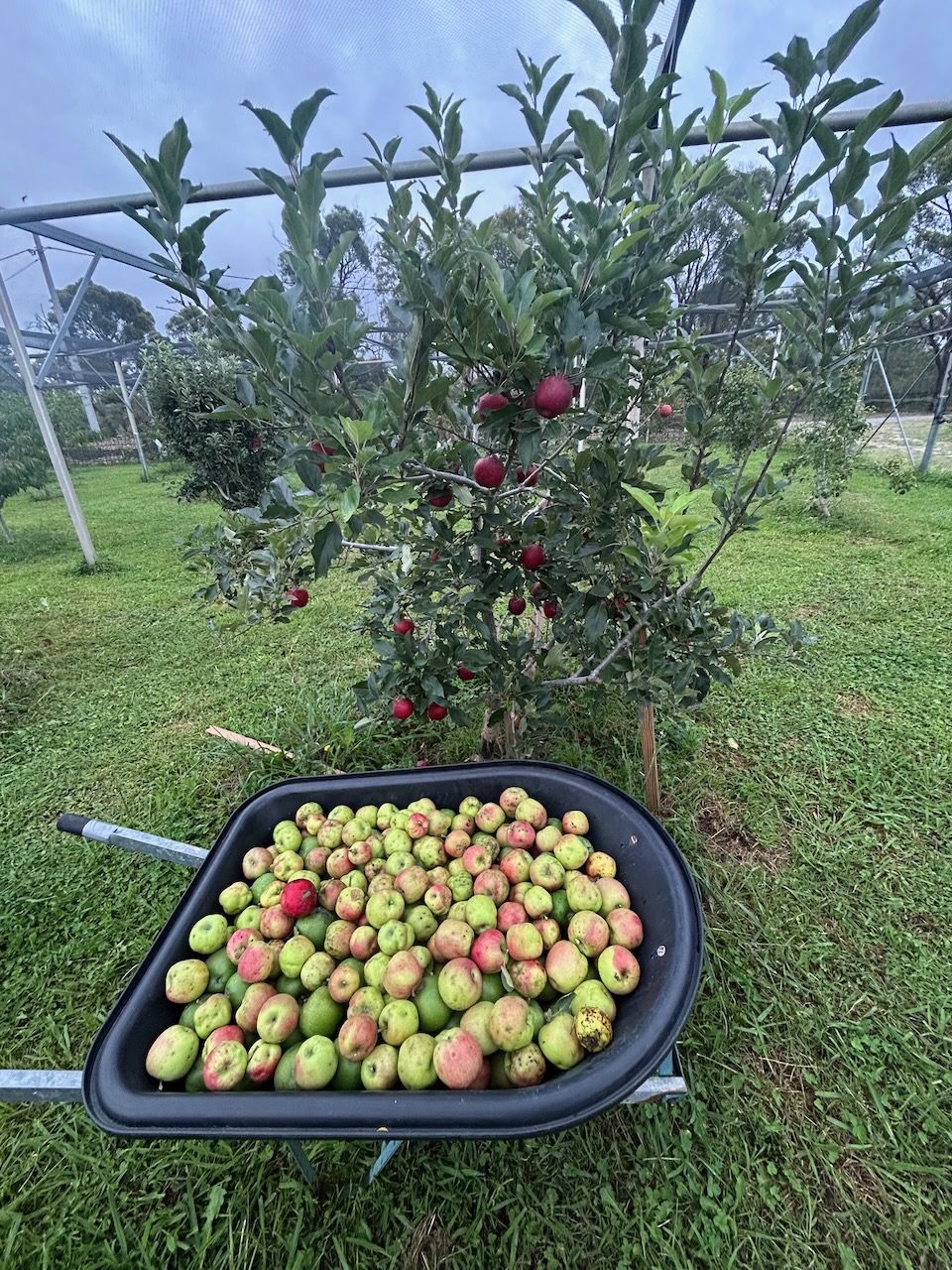
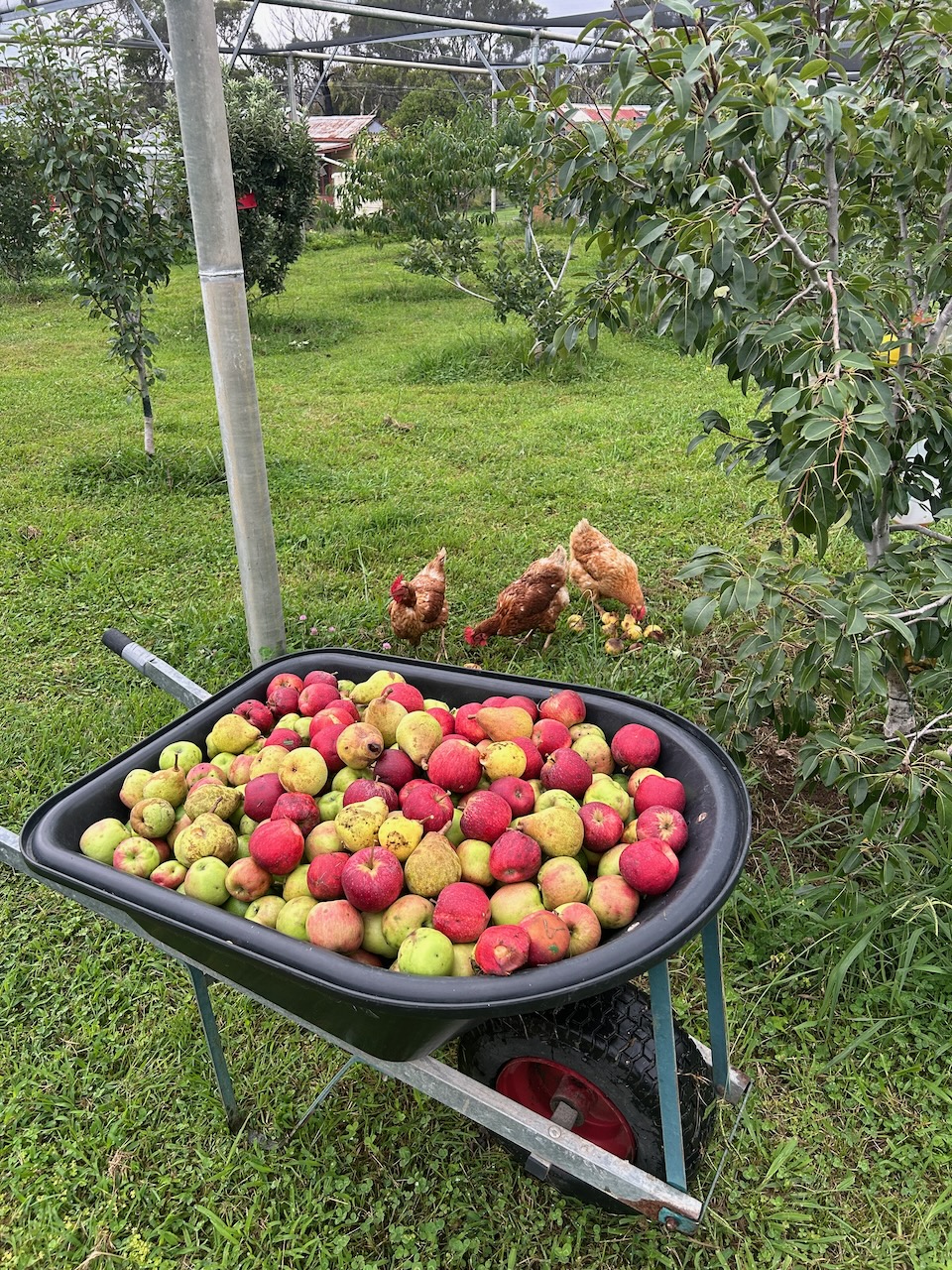
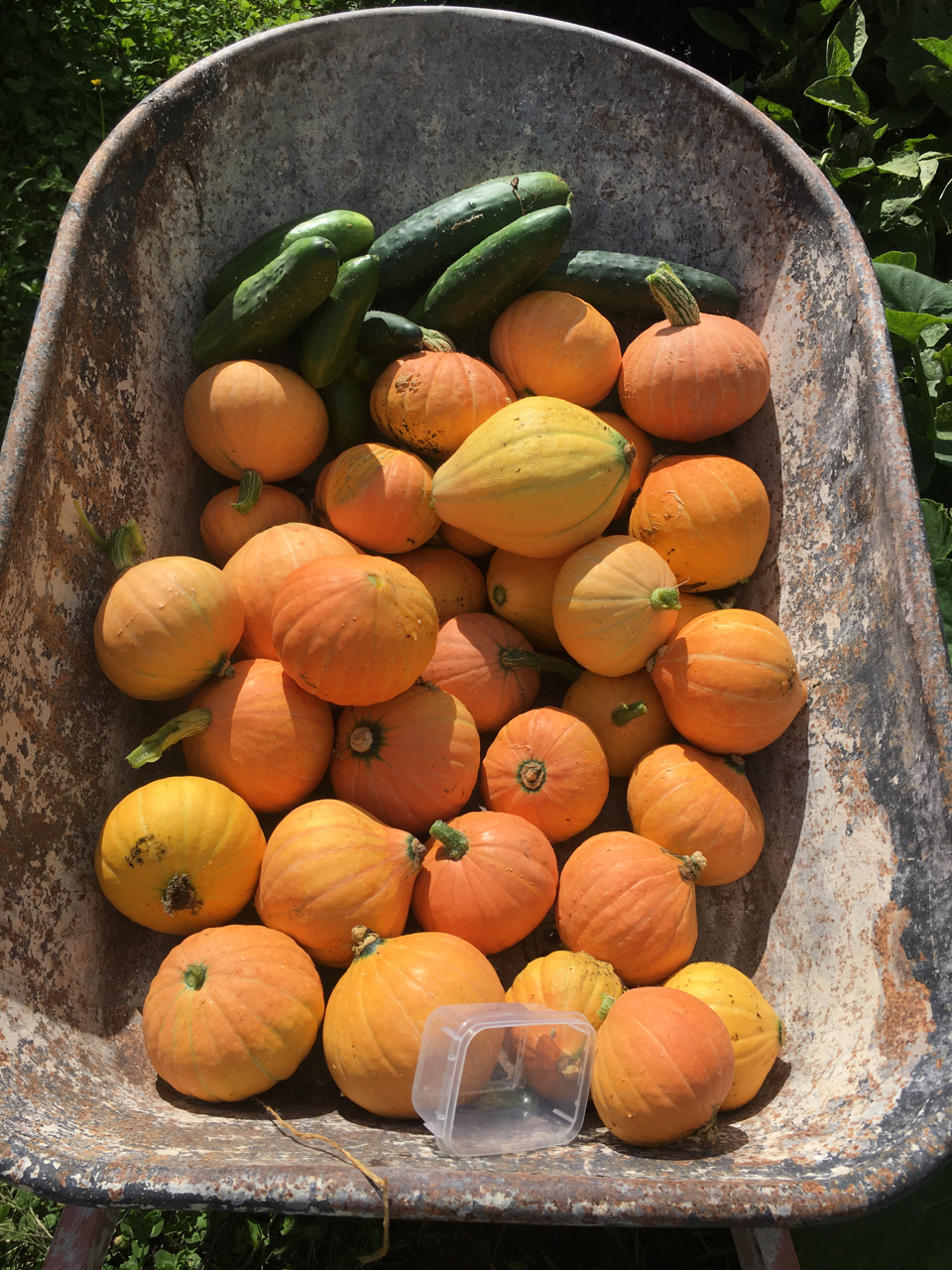
This morning, I managed to get out there into the orchard and strip the trees of all the remaining fruit and get it indoors before the rain started. I used the wheel barrow as my basket on wheels. a good measure of fruit volume. 

We are due for a whole week of rain – if the forecast can be believed. It usually rains less here than is forecast on most occasions, but it will still be a wet week by all accounts.

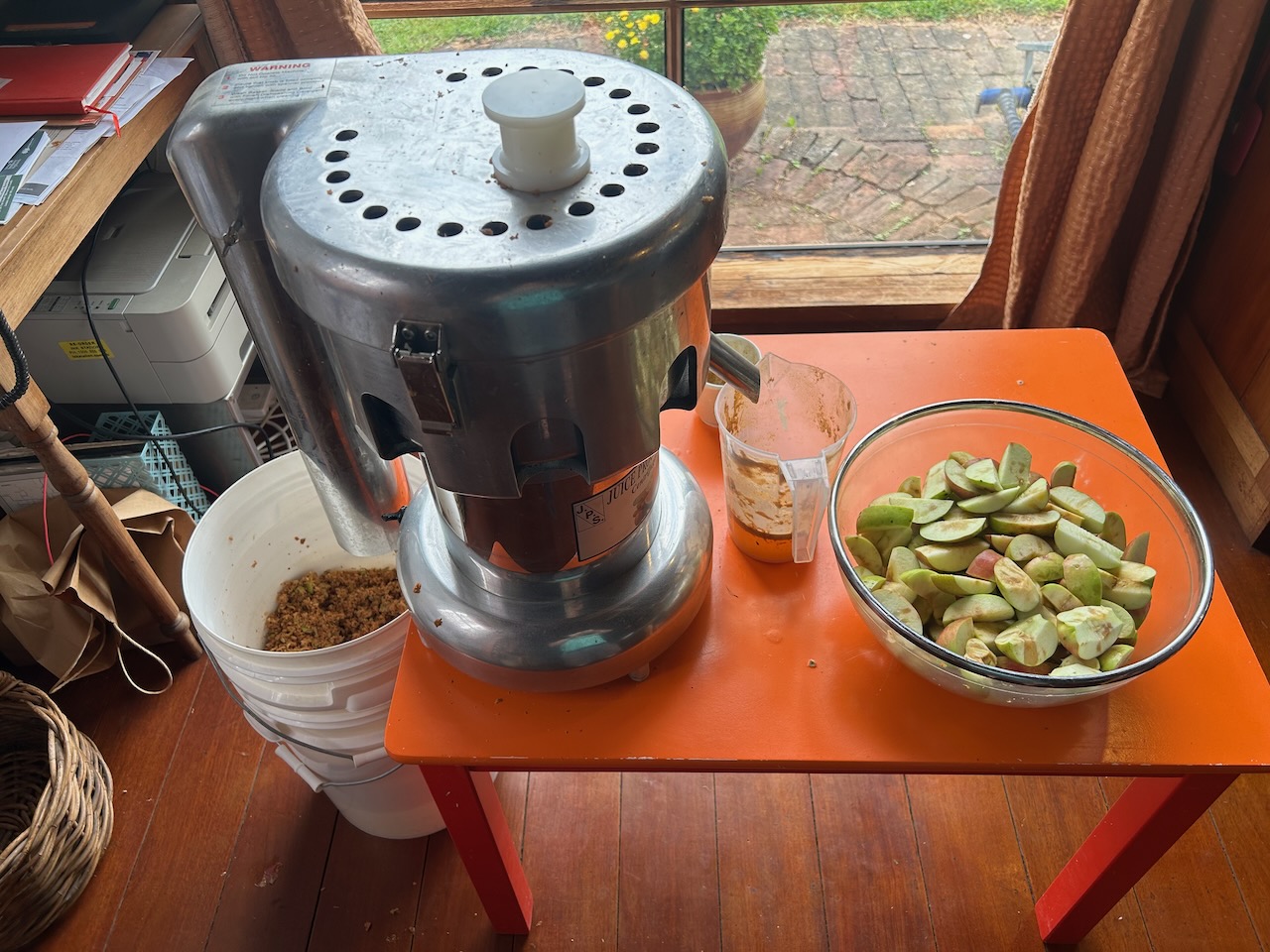
So today was excellent for inside jobs like washing and juicing apples and fermenting cider. It took us all day to process all the apples and juice them, then get the fermentation started.

We have a really big, heavy duty, industrial grade, juice extractor. The sort of machine that you need if you are going to be juicing apples for 8 hours straight. Before we bought this one many years ago, we burnt out 3 small domestic sized ones. 

While extracting the juice, we filled 30 litres of pulp into buckets for the worm farm and compost. The juice is now in the fermentor. We can leave it for a week at least now while we get on with other jobs around the garden and pottery.

We managed to slip in a small bisque firing in the solar fired electric kiln while we were making cider. That’s one very nice thing about electric kilns, they fire automatically on a pre-programmed schedule. This allows us to get on with other jobs, like making cider, recycling clay slip/slop/slurry, pugging recycled clay, doing a bit of kintsugi? Possibly even start throwing those new ‘test’ clay bodies that I have had ageing since November? 

And of course there is always weeding.

Summer jobs and cooking up some delicious fun

Those first two big-pot throwing summer schools took all of our time and effort to start the year. Since we finished them, a couple of weeks ago, we have had time ‘off’, playing catch-up in the garden and orchards. 

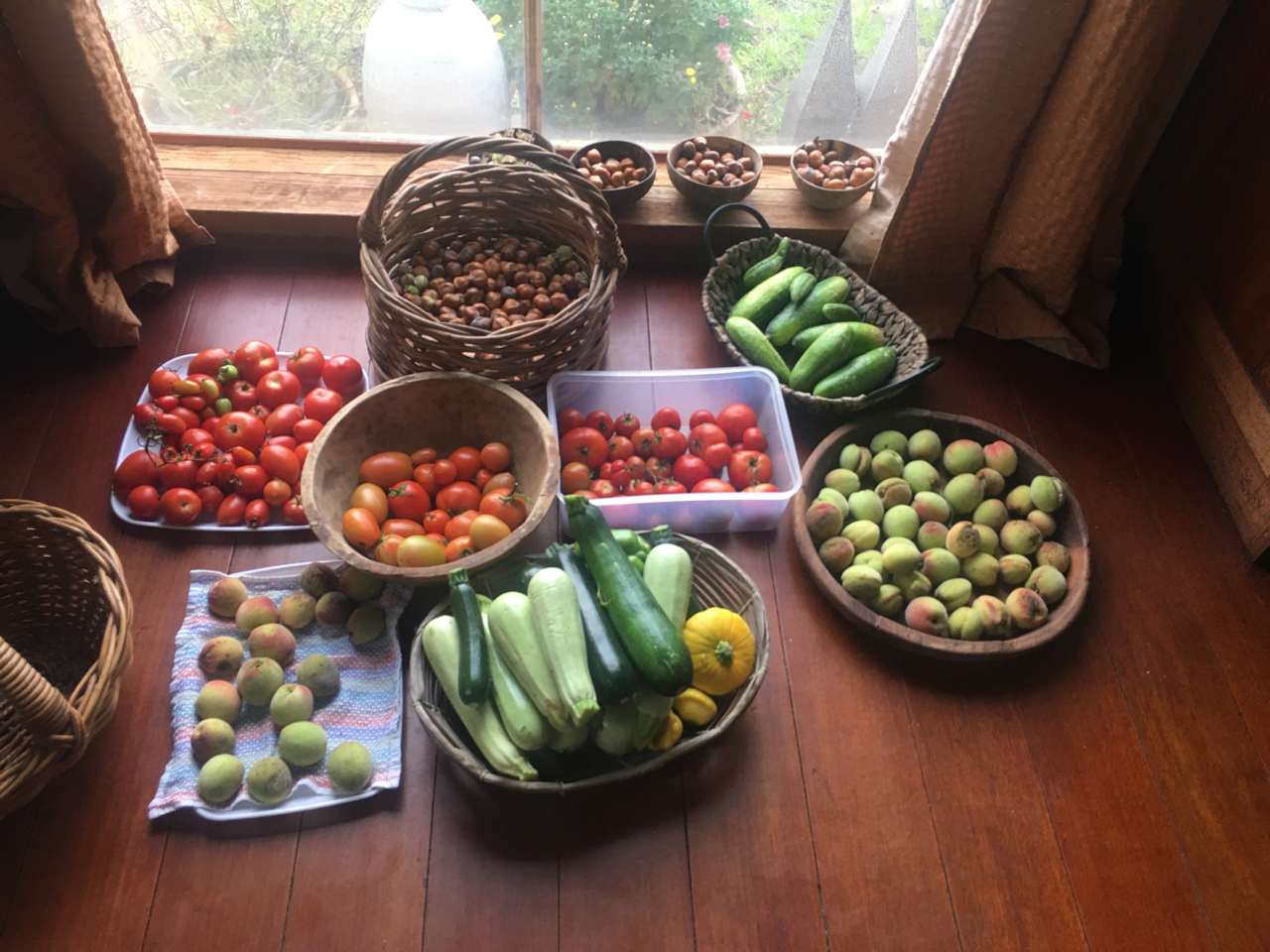
We have been mowing, watering and harvesting, for the past two weeks. We have been dealing with that harvest since then, picking fruit, bottling tomatoes, making passata, roasting pumpkin cubes, bottling pears and making pear and apple juice, then picking and drying prunes. 

Diced pumpkin cubes, roasted with olive oil, garlic, salt and pepper.

Everything comes on in earnest in January. There is a lot to deal with all at once, so we are eating very well. I really look forward to that first ripe pear. Just like I do that first ripe tomato of the season. The kitchen is a busy place every day. We spaced out the gap between the two pairs of workshops to give us time to do all this ’self-sufficiency’ work. I had also booked in a couple of other jobs that were needing to be done. So our two  weeks off, has really been ‘full-on’!

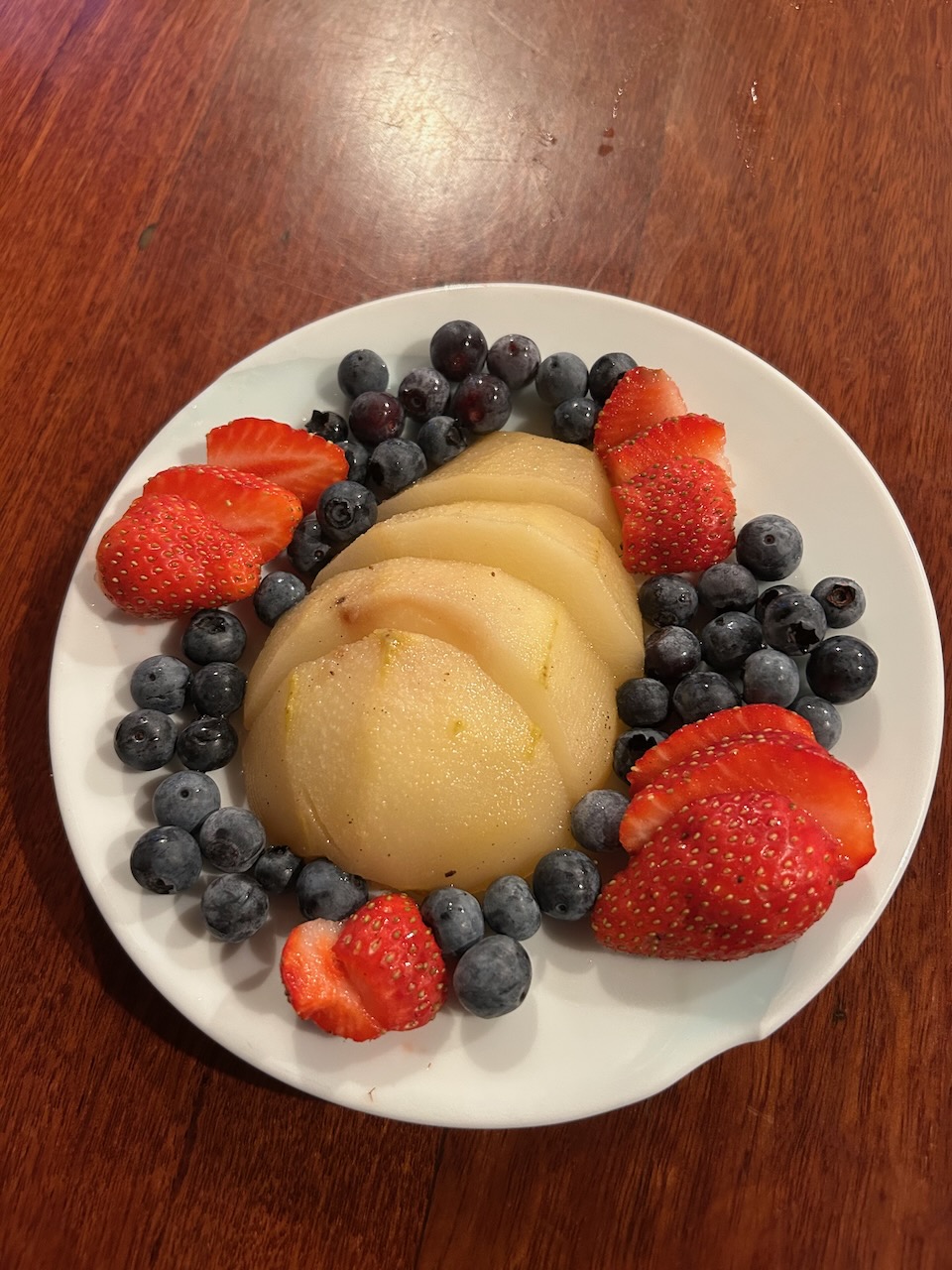
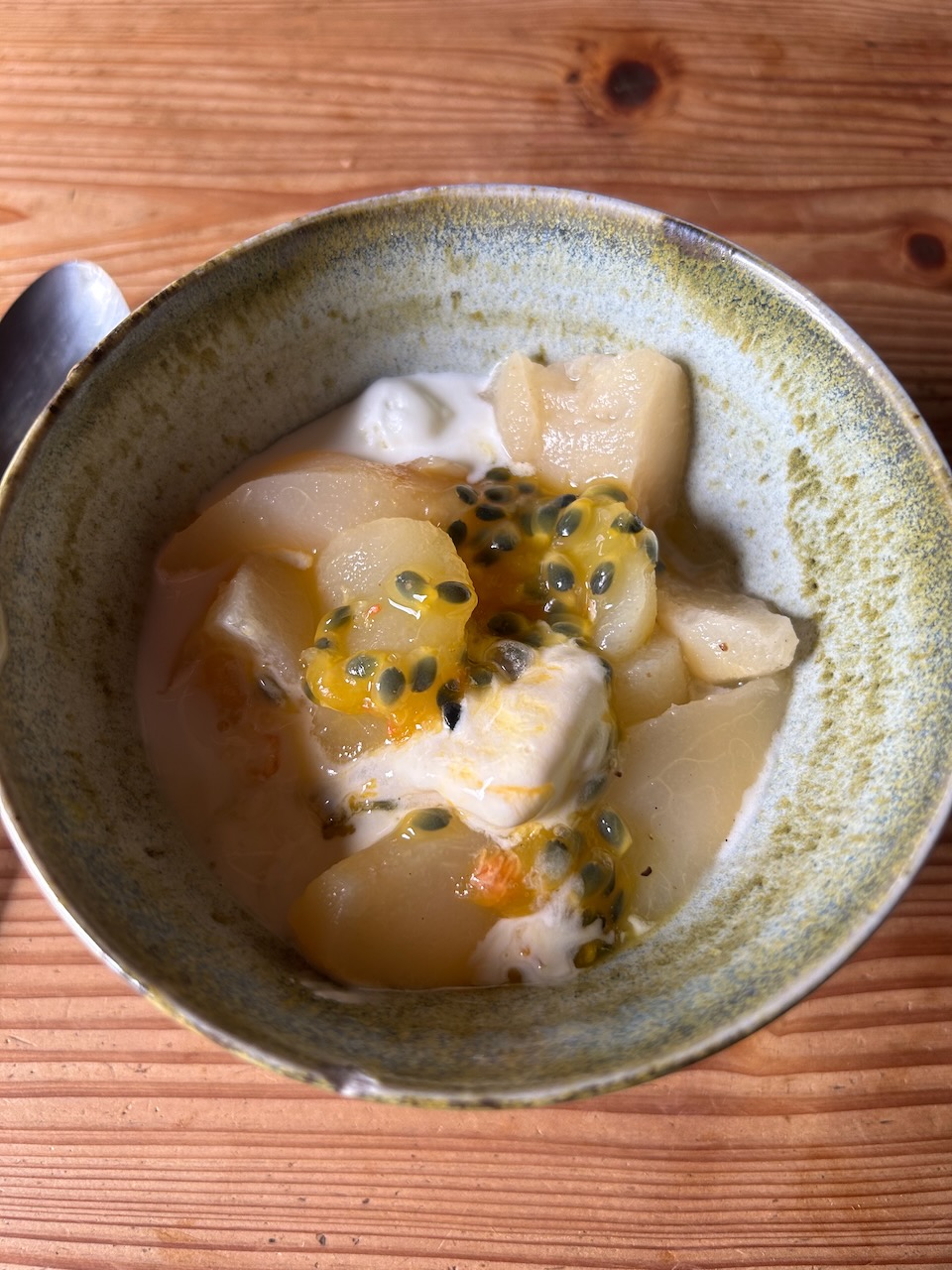
Pears poached in a little white wine, cinnamon and sugar, served with fresh picked passionfruit and a little ice cream. These are the tangible benefits of self-reliant living and gardening. 50 years in the planning, execution and nurturing. 5 minutes in the eating.

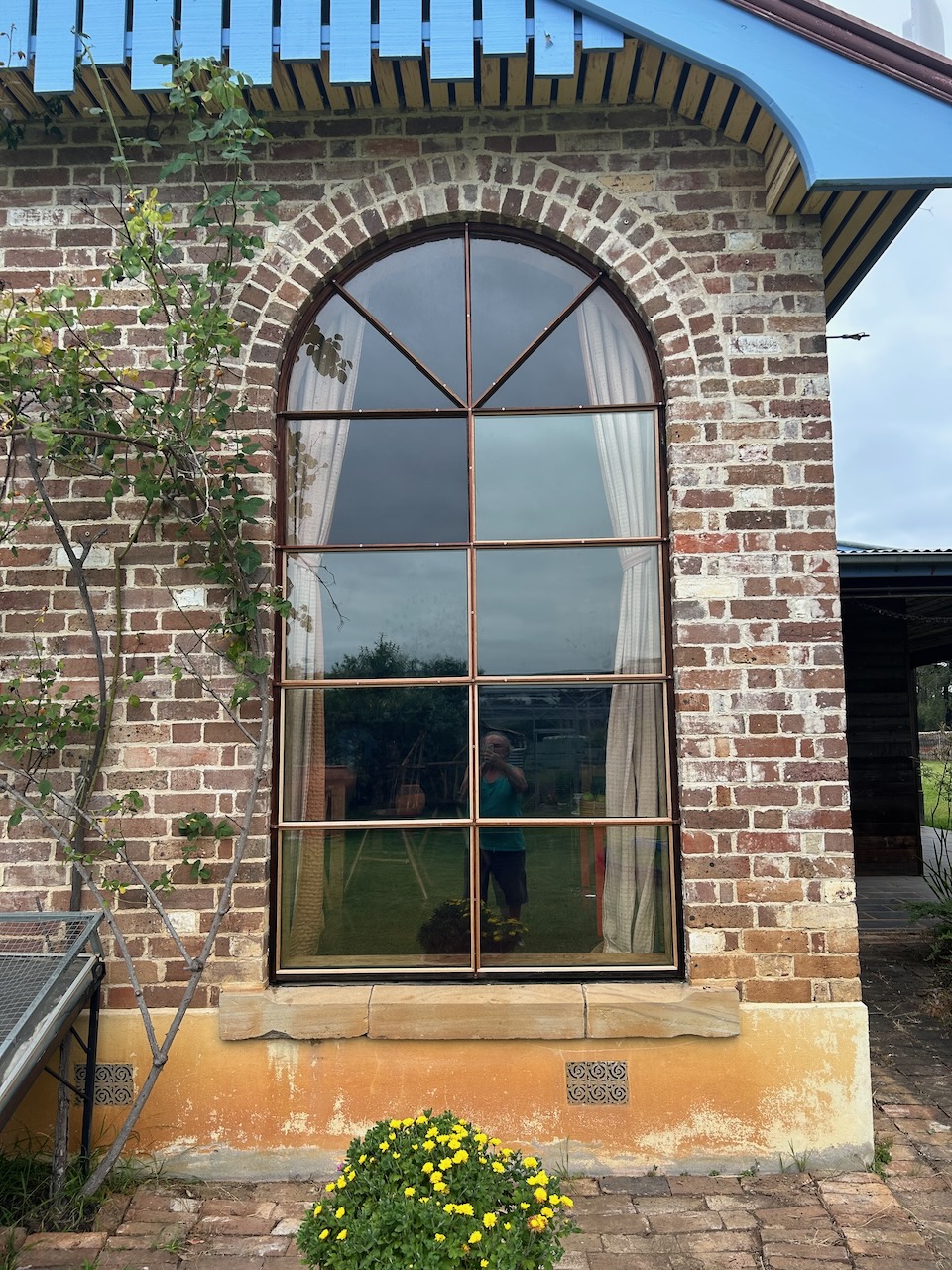
I ordered some double glazed, argon filled, metal coated, low energy, toughened, window panes to replace the 3mm. plain glass that is in our big arch window in the house. That fancy energy efficient glass arrived just before Xmas. The big window has been working well, letting light in, but keeping the rain out for almost 40 years, since I built it, and glazed it myself all those years ago. At the time, I tried to find double glazed glass for it, but to no avail. I also tried to buy special ‘stick-on’ glass coating mentioned by Amery Lovins, when he was here giving a lecture tour back then. But no one seemed to be aware of any such product here in Australia, not even ‘3M’ who I was told made it.

So we just lived with it as it was, eventually adding a huge sheet of thin perspex to the inside to create a semi-sealed air gap, but although that did work to some extent. There was room for improvement, and the unsealed gap always fogged up in wet weather, causing the wooden sill to get very wet and start to rot on the surface, so something had to be done.

Luckily, there is now a factory in town, that makes these fancy window panes. There was a one month wait while they were made to order. Back in December, I spent time rebuilding the structure of the glazing bars to make them deeper in preparation. We have managed to install 7 of the new double glazed panes so far. 5 to go. Interestingly, I have spent over $200 just on special window glazing silicon and wooden glazing beading to complete the job.

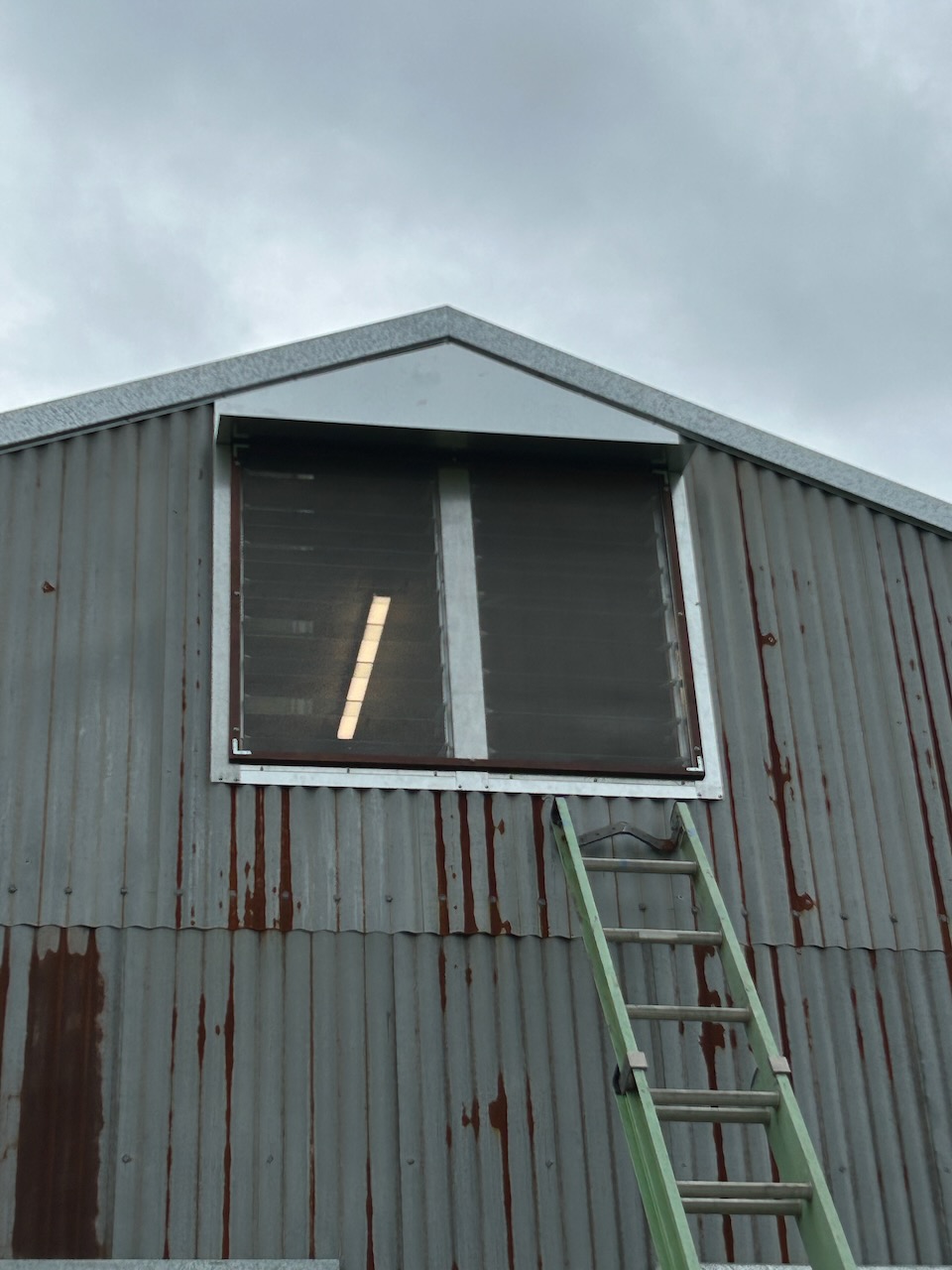
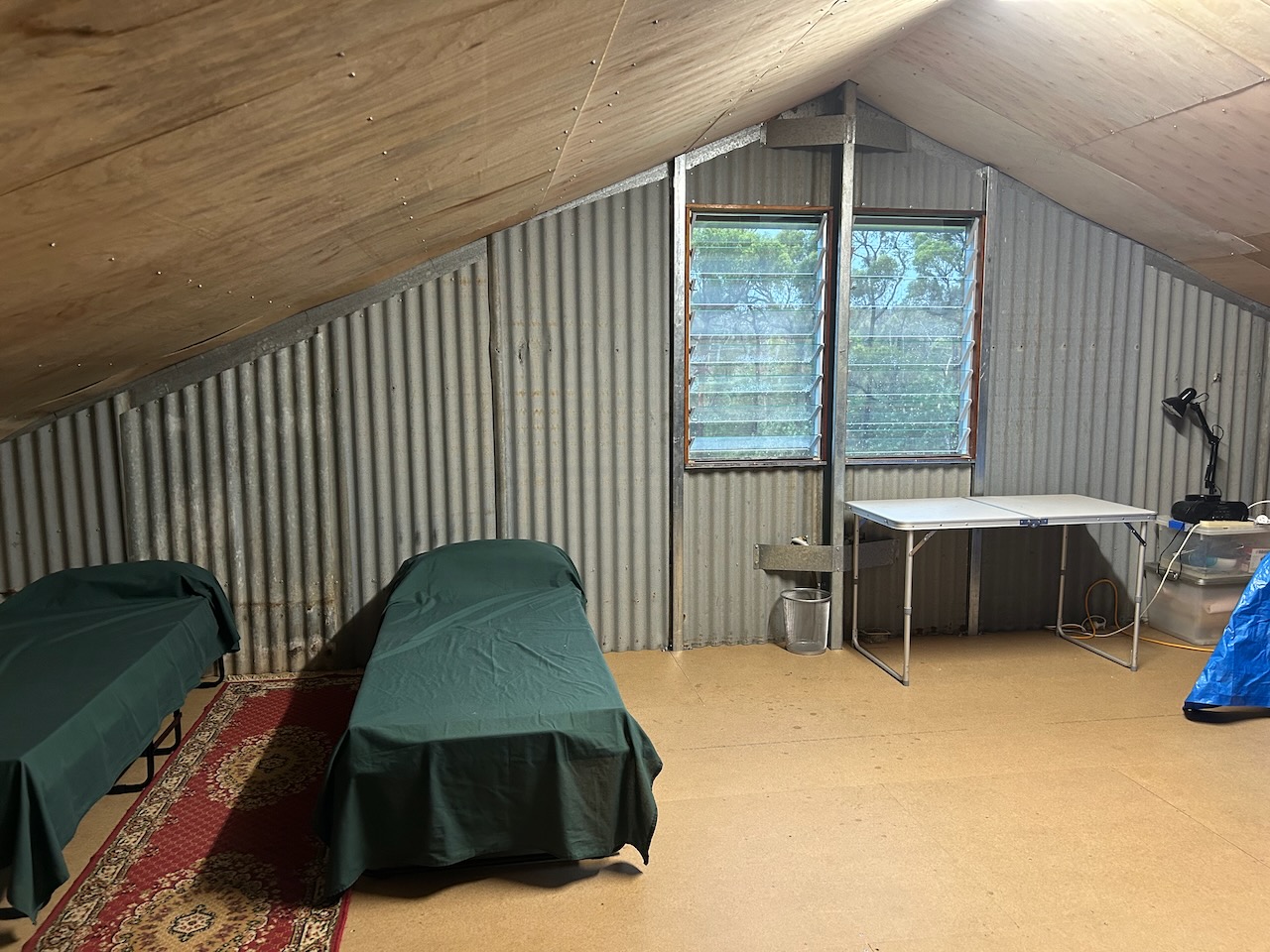
I booked a few days of help from my friend Andy, who is a local architect and environmentally conscientious builder. A rare breed! He has been very kind in offering us loads of assistance since the fire. He also offers good council and advice on environmental/building matters. I asked Andy to help me install two louvre windows up  in the big pottery shed loft. I bought some louvre mechanisms and the ground glass panes online, then I built a couple of hard wood window frames to mount them in. I also made all the custom flashings to go around them. Andy did all the outside ladder work on the day, cutting the hole in the wall and we installed them without too much trouble. It gives plenty of ventilation up there to take the heat out of the loft, but also brings in so much light and the view is good too.

We haven’t quite finished setting it up again yet, but it has been transformed into a lovely, light and airy, comfortable place now.

I have to ‘fix’ a kiln for a friend, even though I am retired, this is a special favour, then it will be back into the workshop for the next two summer schools. I’m looking forward to getting back into making pots for myself again. I have a few batches of experimental clay bodies that have been ageing for some months now. I’m keen to try them out. Especially to see how they will look in the wood fired kiln.

Baking Dishes and Mixing Bowls

I’ve been back in the pottery on the wheel on and off all last week, but also fitting in some pressing needs to complete preserving and pickling, tomatoes mostly. We must have sufficient for almost 2 years now. It’s been such a huge crop and they’re still coming.

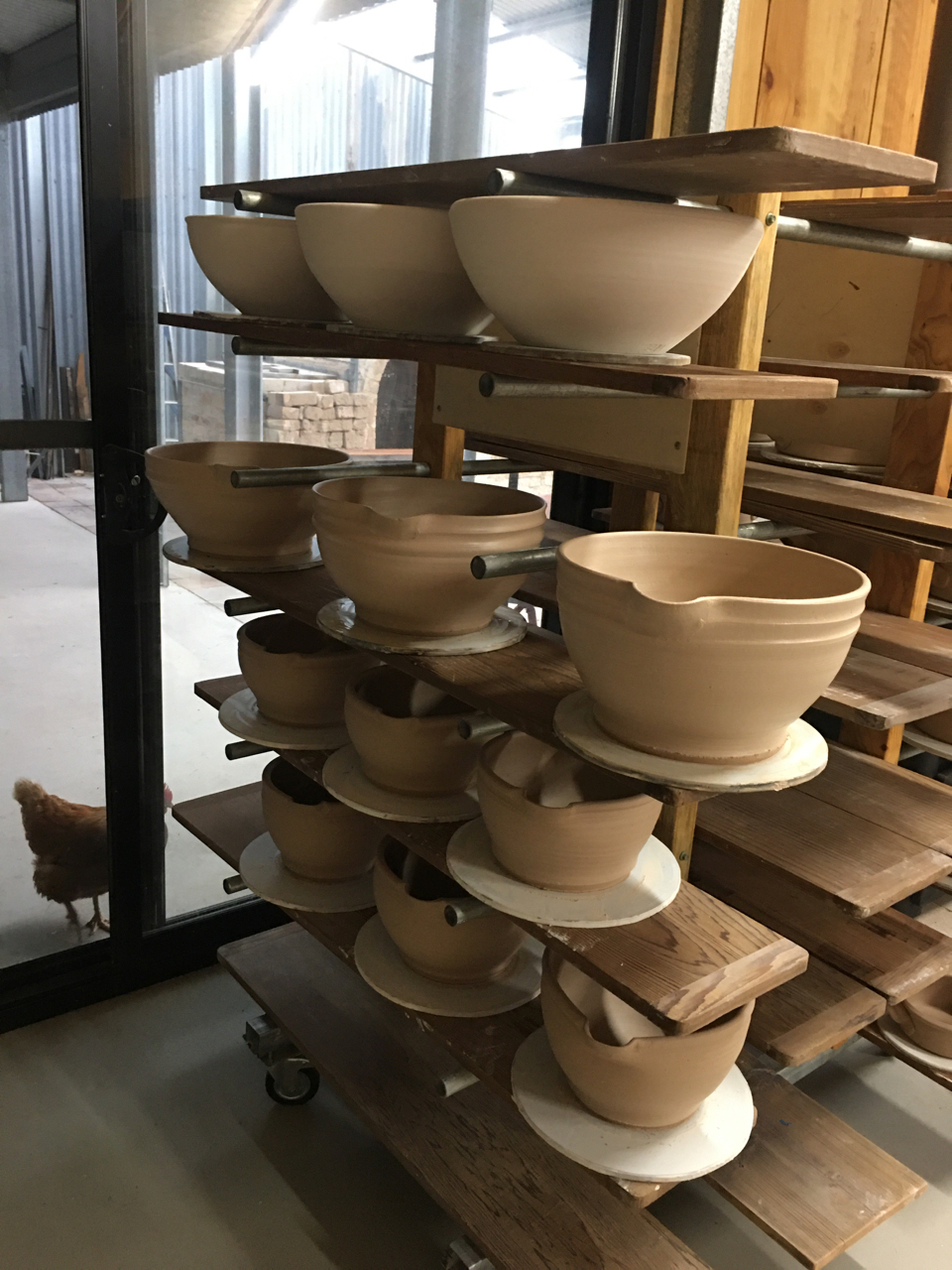
In the pottery I have been making baking dishes and Grandma style large mixing bowls with a pouring spout. They are fun to make and were very popular last year. I sold out, with only one small mixing bowl left in stock after Xmas. I make them out of my rough crushed shale clay mix. It wood fires really well and has an open texture that is really good for oven use.

I’ve made them in 3 sizes, S, M, L. This is one from last years batch, beautiful flashing on the body and glaze from the wood firing.

The old style cooks mixing bowls also all sold out. I remember fondly the one that my Mother used all her married life. It was exactly the same as the one her mother had, both brought over from England on the ‘Orient’ Line ships at different times.

I decided to make these so that I could have one for myself, but I sold them all, so maybe there will be one left from this batch? I usually end up with pots that are second grade pieces, with some tiny fault, Our kitchen is full of pots like this. That’s how we get to keep them.

On this side of the drying rack, I have also made 3 bathroom sinks for a customer who lives locally and asked specifically for a sink with one of my rock glazes on the inside and unglazed and wood fired on the out side. I couldn’t do that order till now, as it is not realistic to try to fire the wood kiln over the hot dry summer. Just too much risk of fire bans coming into force half way through the firing. That would be a disaster too awful to think about. So we just don’t attempt to fire during the hotter months.

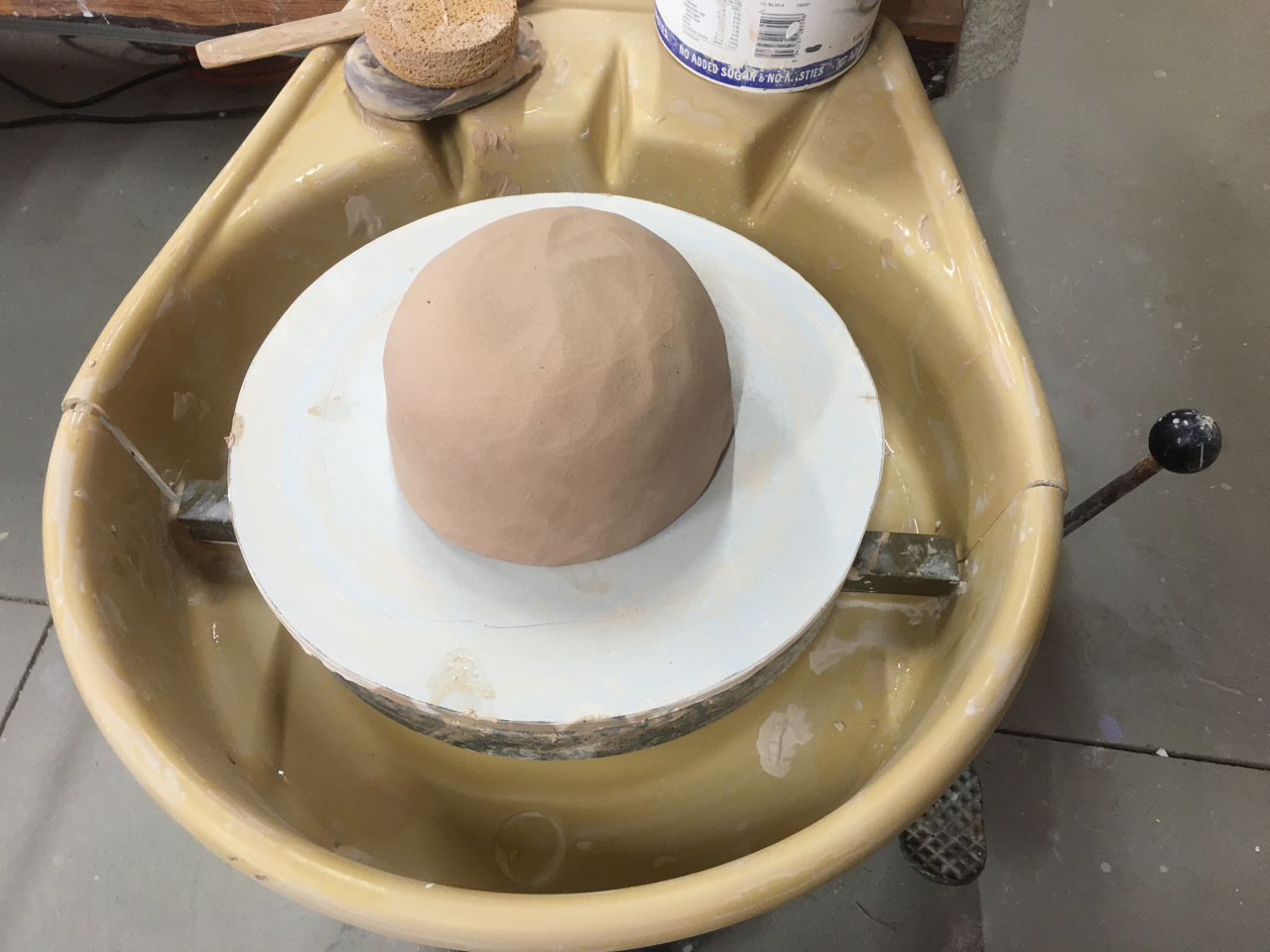
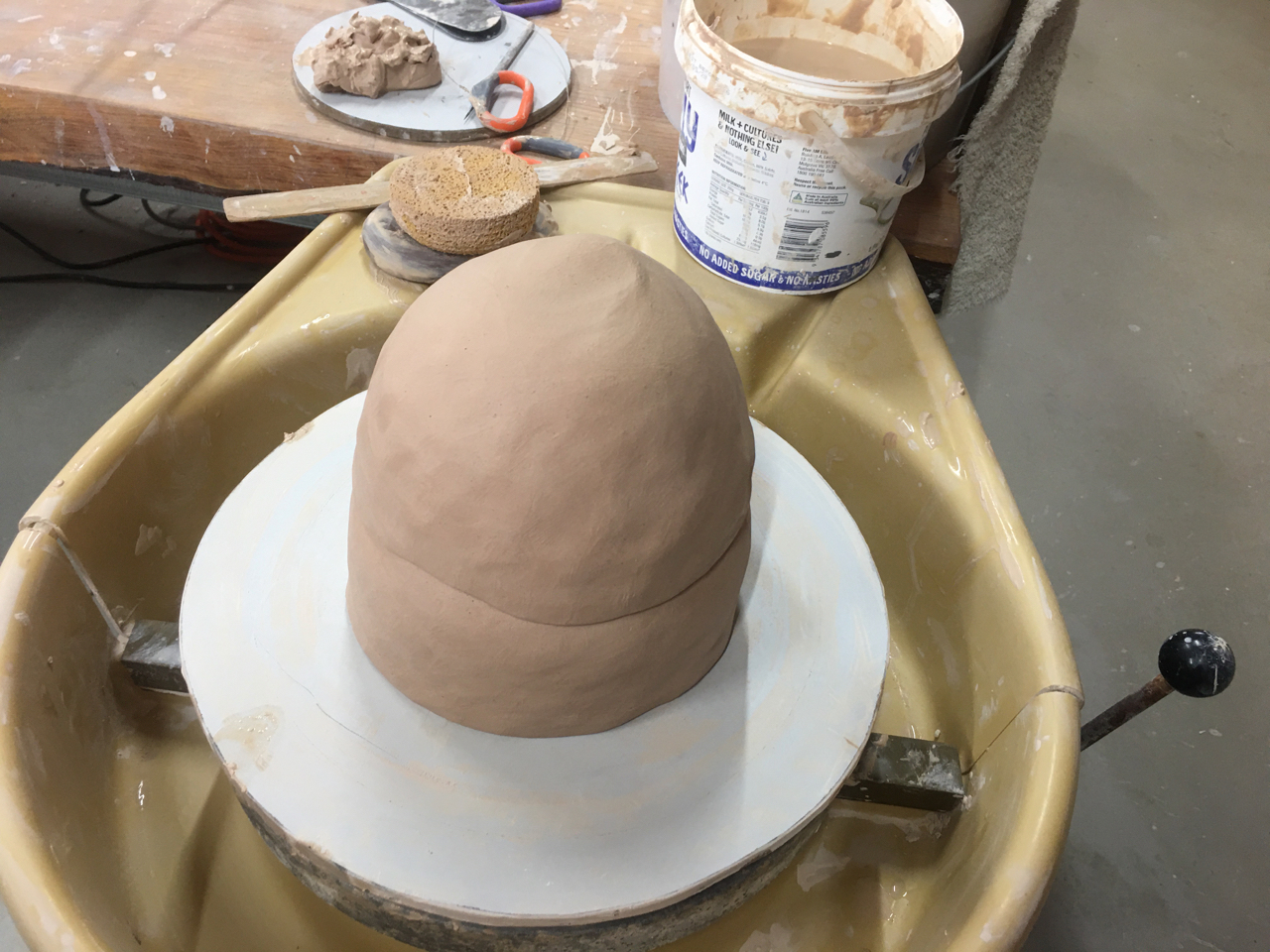
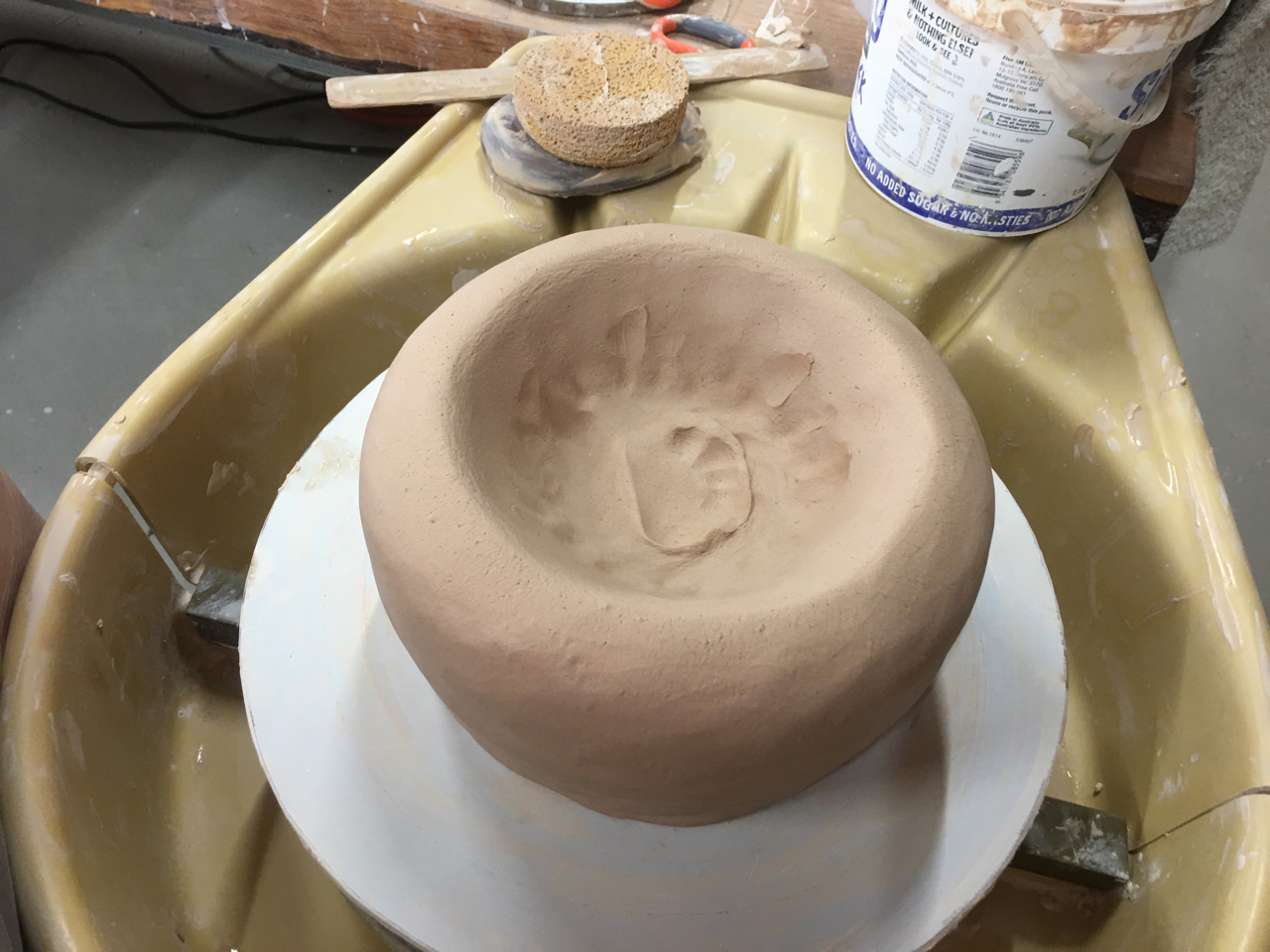
Some of the bigger mixing bowls are quite large, measuring 300mm. dia. and are made from 5 kgs of clay. My ageing wrists are not happy with wedging 5 kgs any more, so I wedge the clay up in two smaller lumps of 2.5 kg. Then join them back together on the wheel. I learnt to ‘slap’ the plastic clay into the centre of the wheel with my hands while still dry. No water involved in this centering technique.

The first 2.5kg lump is slapped into place and rounded off while I rotate the wheel head very slowly. Not using the motor at all, just a slight flick of the wrist as I lift my hands up. This turns the wheel head just 10 mm. each time , so that the next ‘slap’ will be an equal distance apart , so the clay slowly finds the centre. Once it is just about right. I add the 2nd 2.5 kg lump and start the centering all over again.

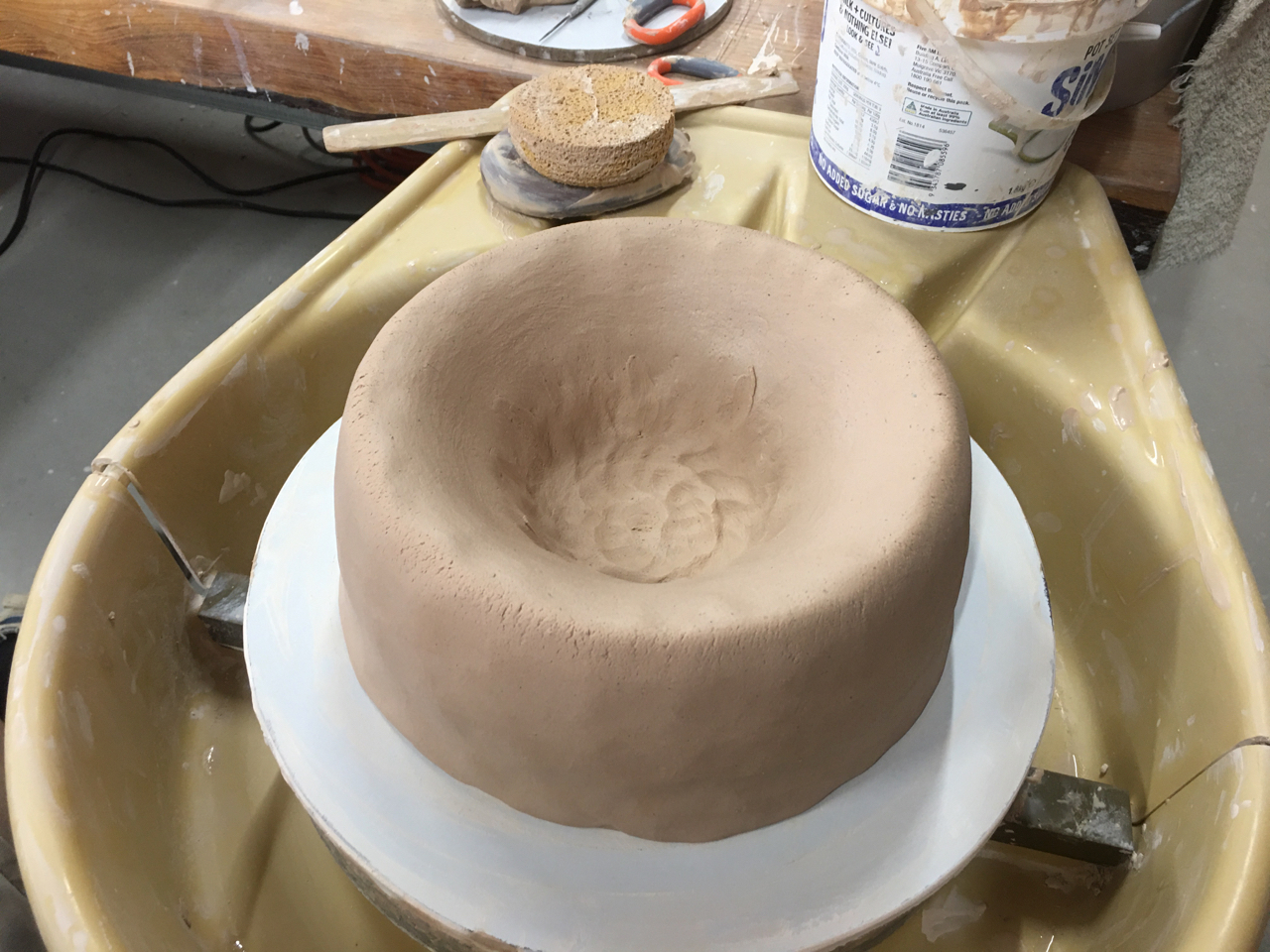
Once the whole 5 kgs are centred, then it is time to punch out the centre, slowly and gently, bit by bit. Lots of little hits while the wheel is very slowly rotated, just as with the first stage of the technique.

Once the lump is opened up evenly. I ‘slap’ the outside again with both hands evenly to get the lump back into a tight cylinder again.

The 5kgs are now centered, tightly bonded to the batt, and opened up ready to throw in a conventional way. The great beauty of a technique like this, is that half of the throwing is now complete, certainly the difficult and very stressful and high energy centering part, and the clay is still dry and ‘fresh’. With no water added up until this point, the clay hasn’t had a chance to get soggy and tired. It is also possible to stop at this point and take a little rest if you are new to the technique and need to rest your self for a minute or two. This is not advisable if you have already wet the clay and started throwing.

Once you have wet the clay to smooth out the surface and start the throwing proper, it’s best to just carry on and not stop for any reason.

Meanwhile in the kitchen, I have been dealing with the great tomato explosion. This week besides making more passata, I made a couple of batches chilli jam. My friend Ian gave me his recipe, which has a lot less sugar and a little more spice than the one I got off the internet some time ago.

2 Kilos of tomatoes boils down to just 4 small glass jars of chilli jam once it has been reduced and concentrated.

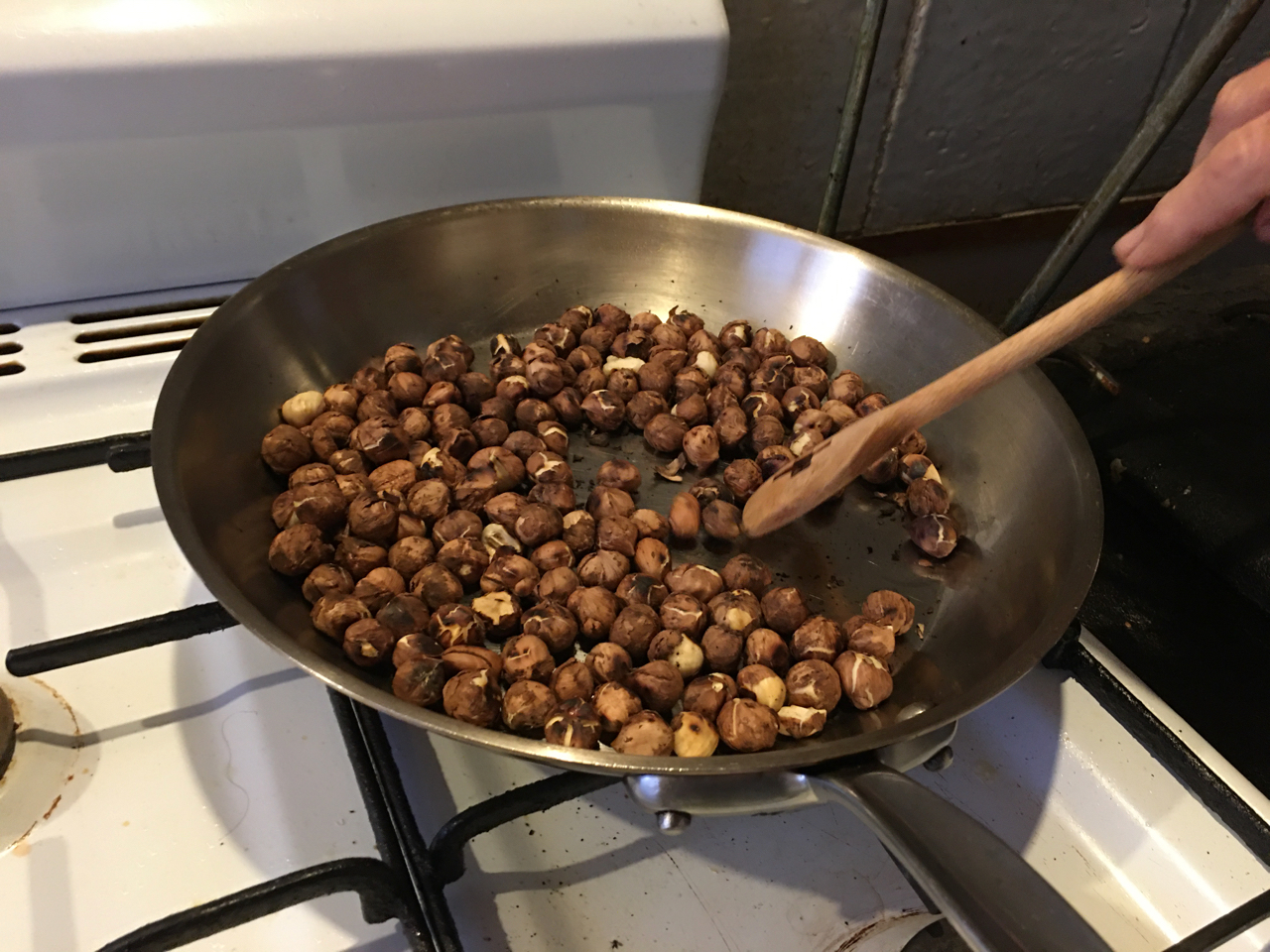
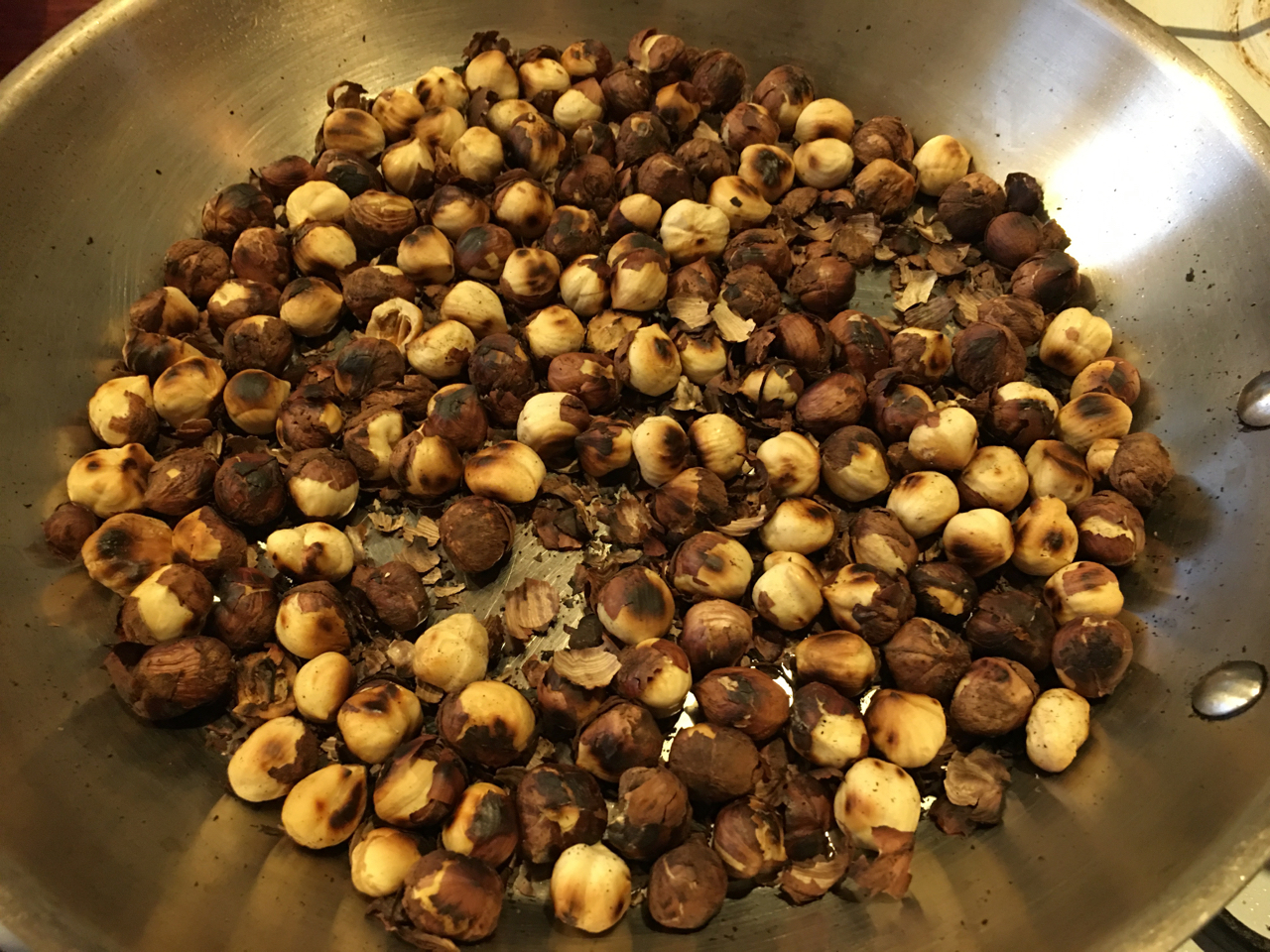
Janine has been shelling and roasting the first few basins full of our hazelnut crop. Unlike tomatoes, there is no urgency to deal with nuts. Once they are collected and inside, they are safe. We have a dozen hazel nut trees and a dozen almonds. The almonds have not recovered well from the fire and are struggling, fighting off an attack of ‘shot hole’ fungus in this damp summer weather.

On the other hand the hazels were more of less burnt to ground level, but they are a smaller and very robust plant, perhaps more suited to be used as a hedging bush. This years crop is our best yet.

Once roasted, they become really flavourful. Before that, they are pretty dull. We don’t salt them for health reasons.

Finally it’s time to cook dinner. Tonight it will be baked, stuffed, ripe, red capsicums. I used a vegetable and herb mix, so it’s a vegetarian meal tonight, as it so often is most nights.

This is a small part of our attempts to be both creative and self reliant while treading as lightly as we can in this carbon constrained world.

Nothing is perfect, nothing is ever finished, and nothing lasts.

This meal isn’t, wasn’t and didn’t.
March is peak tomato season

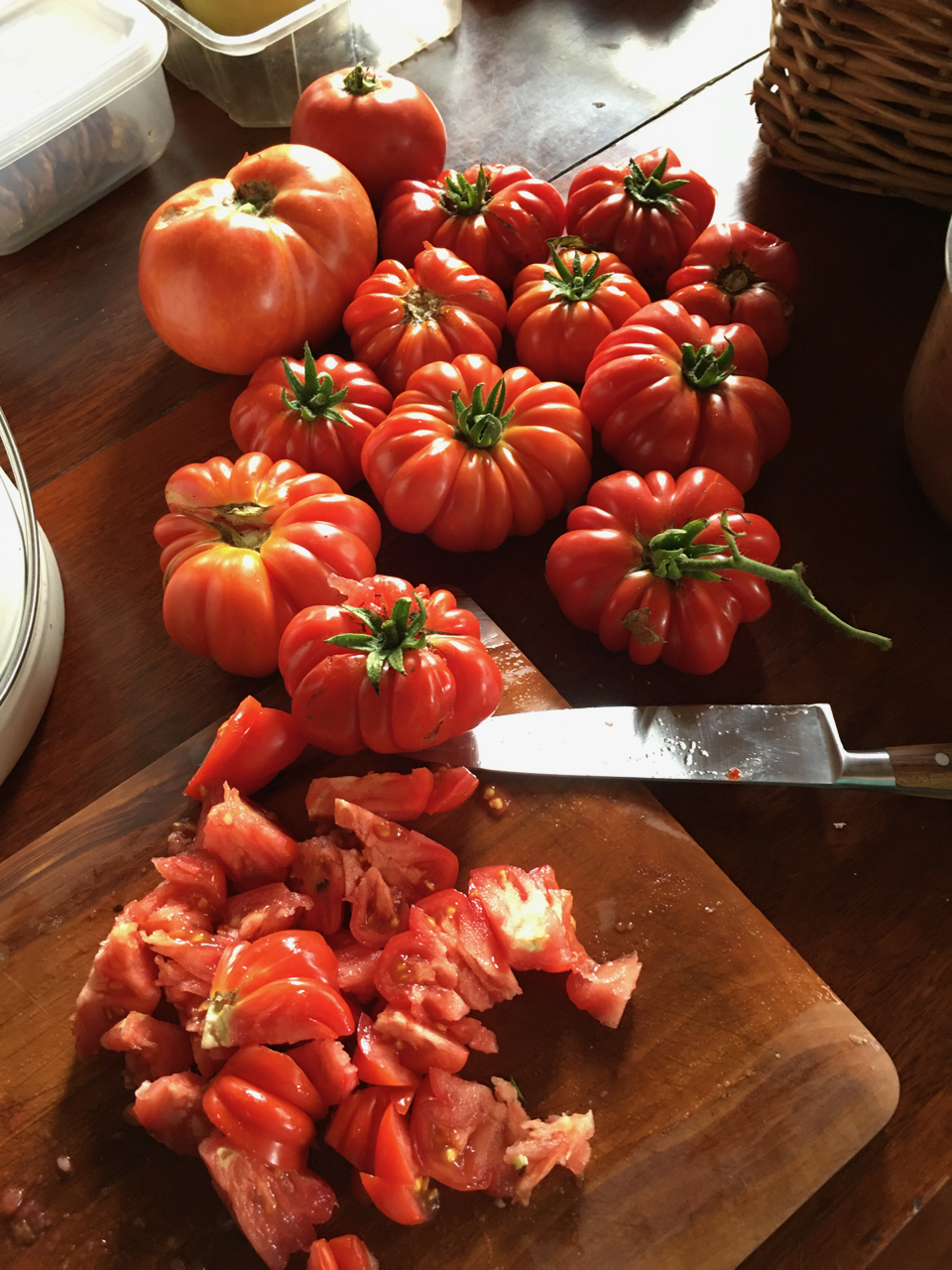
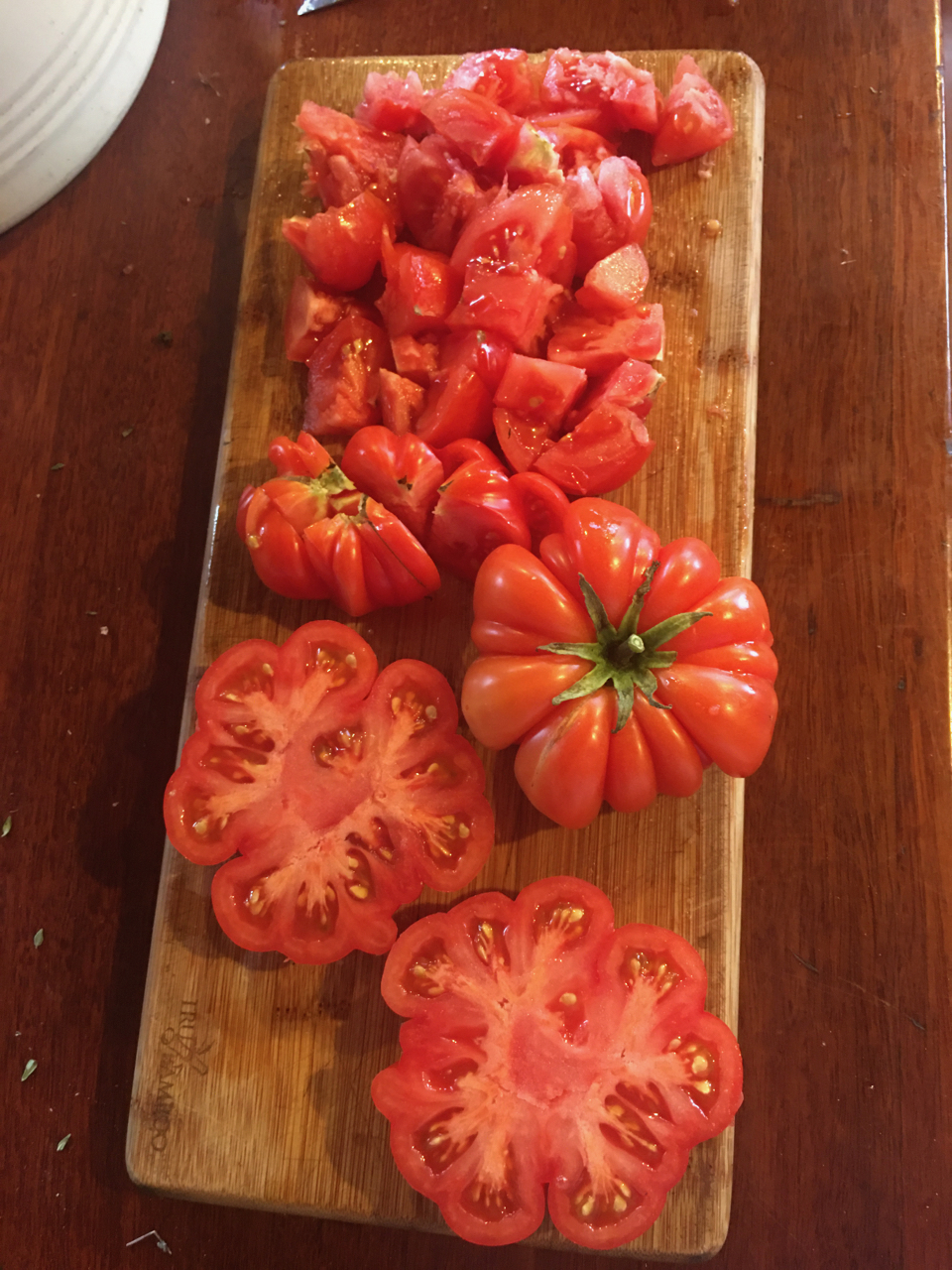
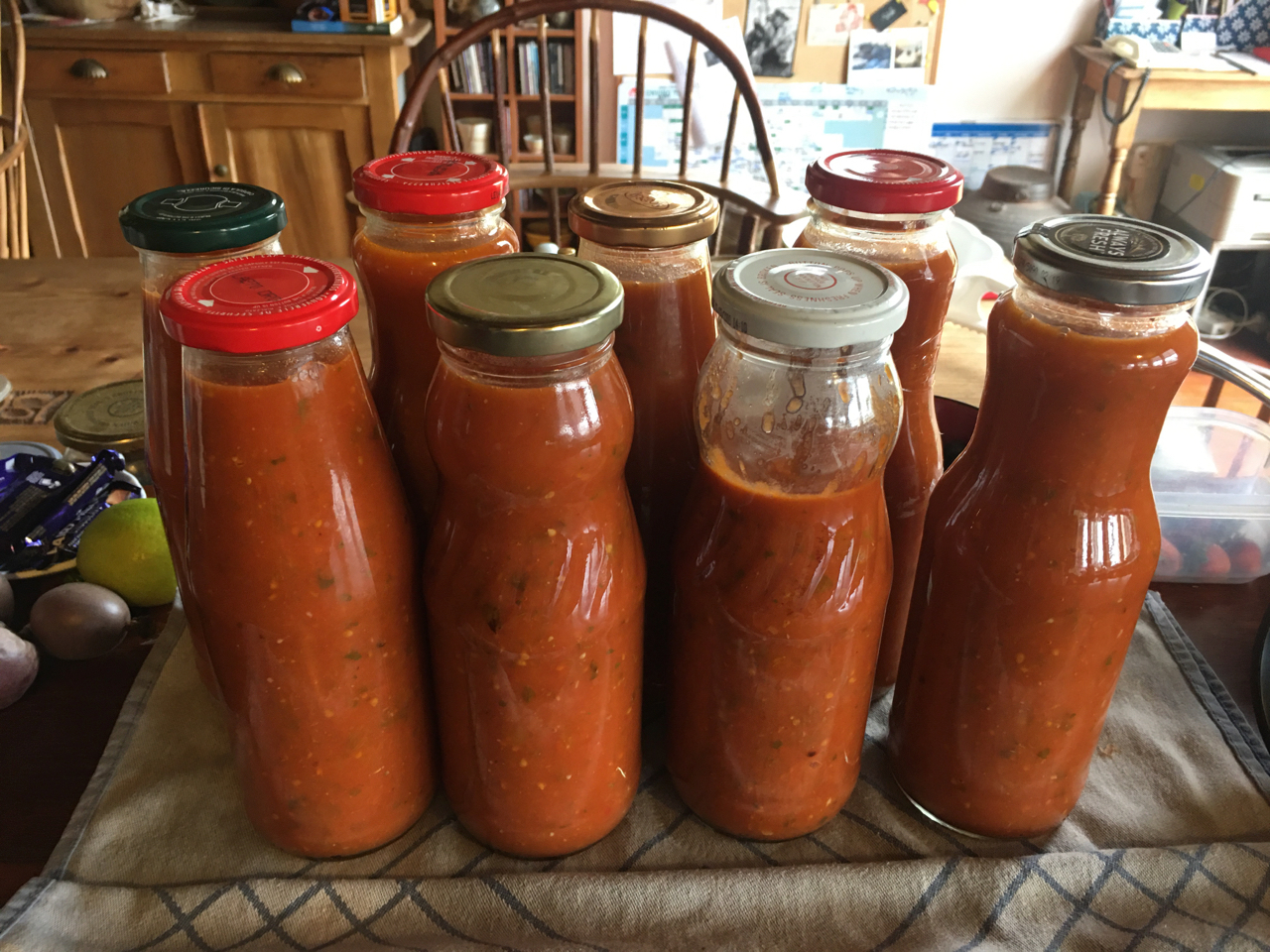
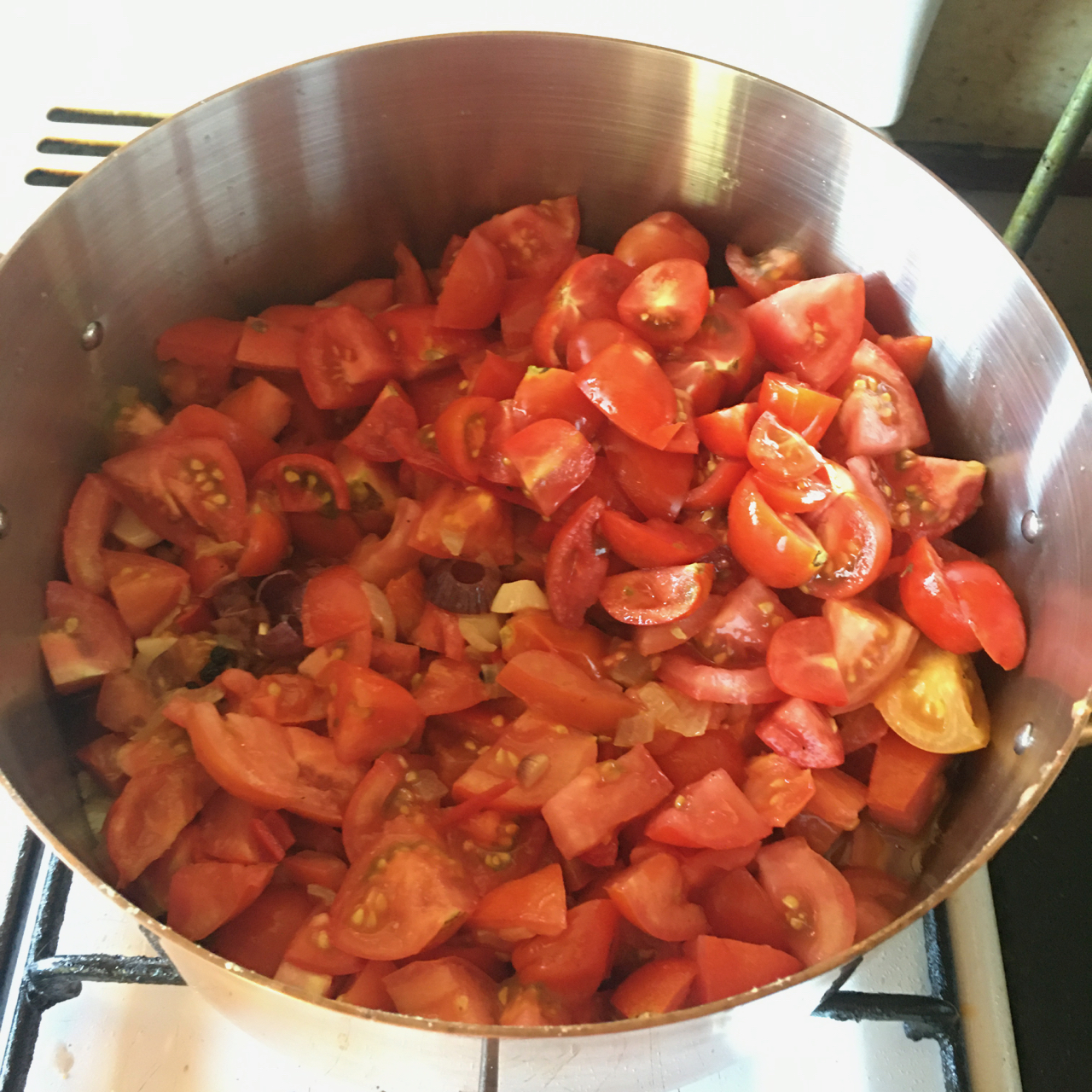
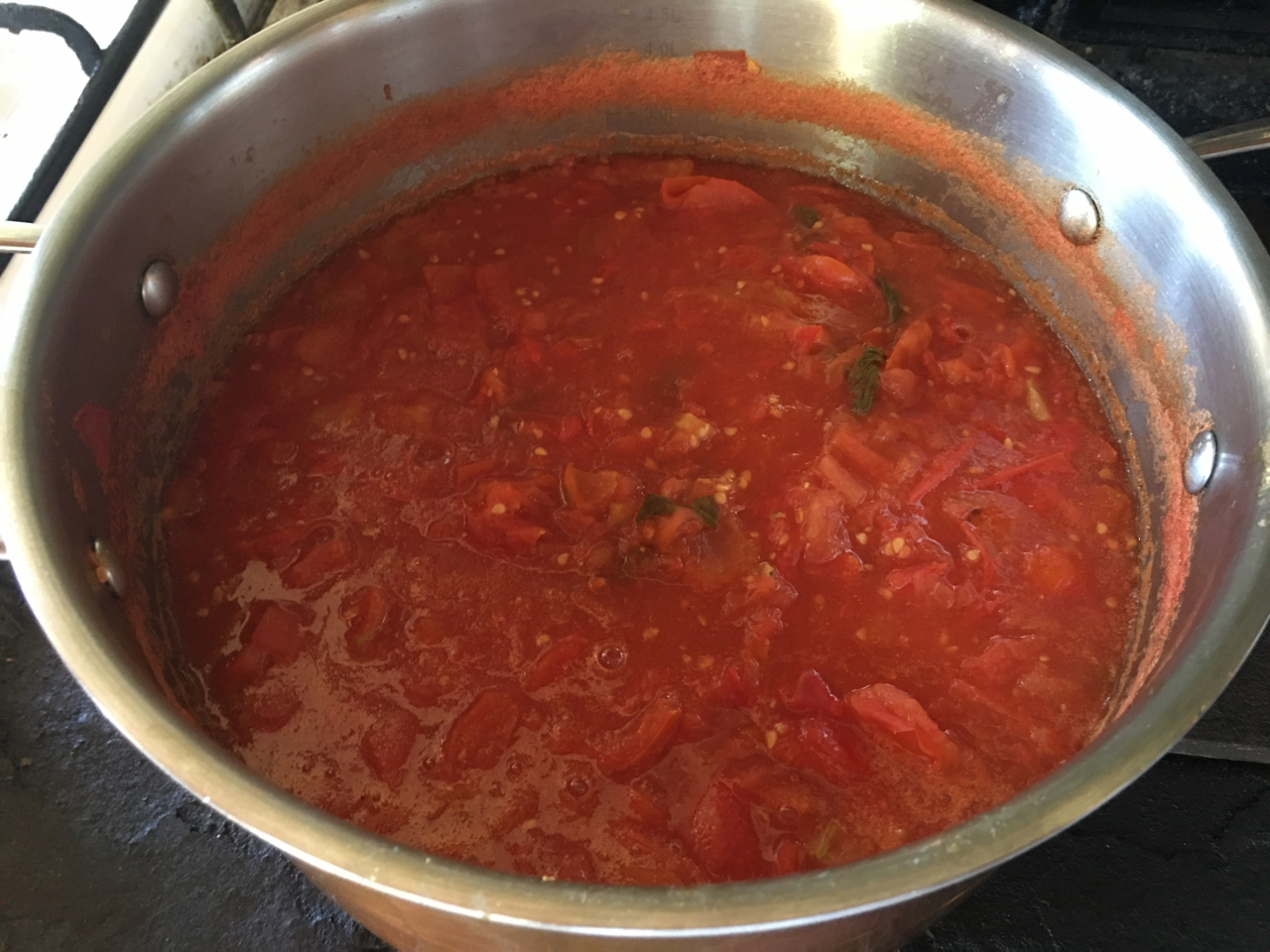
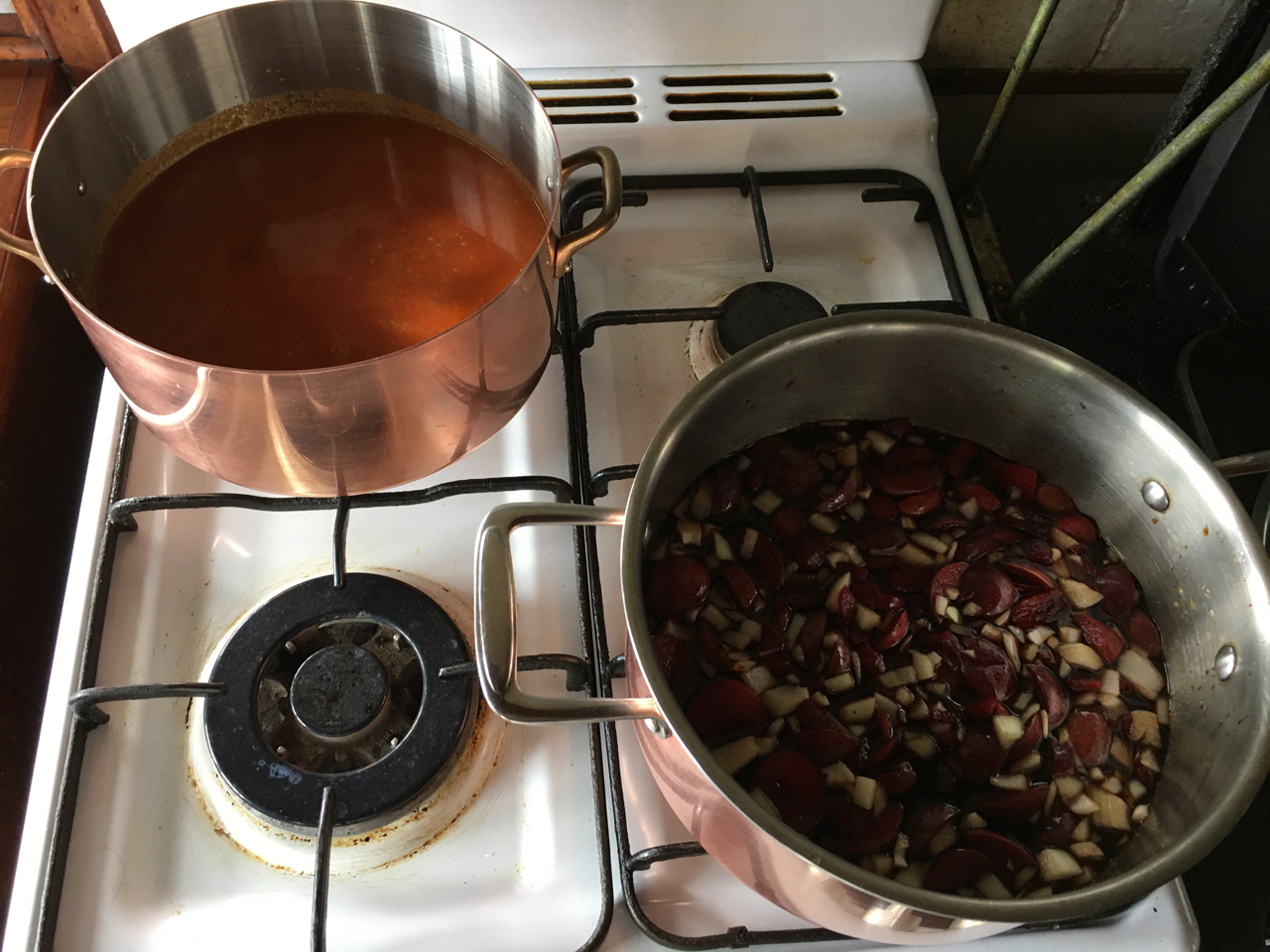
Autumn is peak tomato season. The crop starts to ramp up in February, but really hits its stride in autumn. We are picking a couple of baskets full of red, ripe tomatoes twice a week, with smaller picks in-between for lunches and salads as needed. The big pick goes straight into the large 5 litre copper boilers on the stove with herbs, onions and garlic, to be reduced down to pulp and preserved in sterilised glass jars as tomato passata for use throughout the year in all sorts of meals from pasta sauce to a lovely flavourful addition to soups and stews.

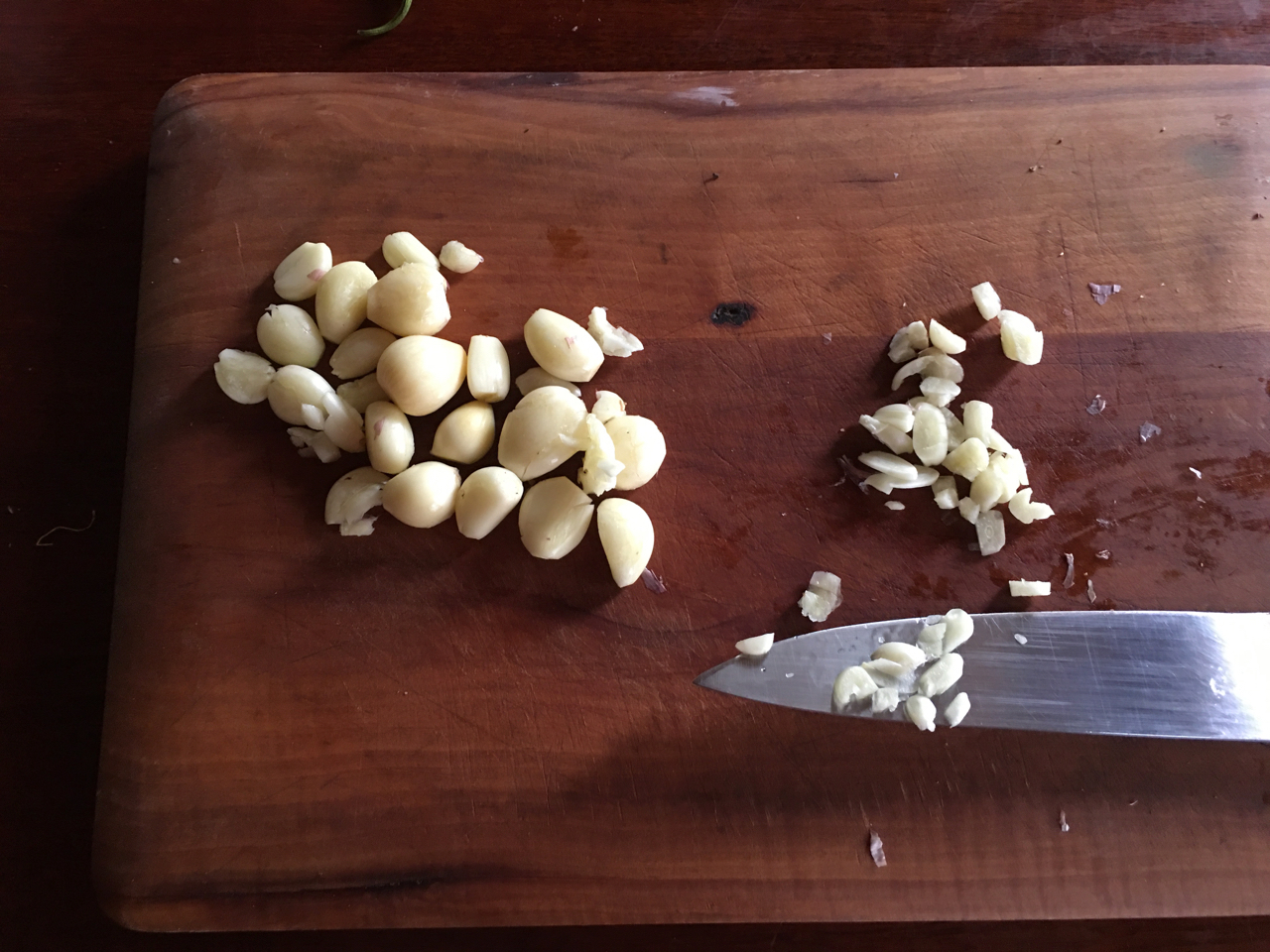
I always start with good olive oil, onions and garlic. I can’t think of anything more delicious than the smell of hot olive oil, and then the salivating addition of the onions and garlic heating and lightly browning as I toss the pan to keep it all moving so that nothing burns. It’s like foreplay. It fills the kitchen with such a wonderful aroma. When Janine comes in from the garden, she always comments how delicious the kitchen smells, and it’s true. I remember years ago when I used to work at the National Arts School in East Sydney. I would cook lunch for the students on Fridays. It was the only day that I came in as a part timer. All the full time staff took their rostered day off on Friday to get a long weekend. They all taught Throwing and hand-building, all the easy enjoyable subjects. So I got the day to teach all the difficult stuff that nobody else wanted to teach, like kiln and firing technology, glaze technology, clay body chemistry and OH&S.

I attempted to make the day more enjoyable by cooking lunch for them, otherwise, many of them wouldn’t bother to turn up at all. I had to keep to a strict budget of $1 per student or less, as no one was funding this exercise. I also noticed that some of the younger student were running perilously short of money by late in the week. So had to resort to going to the Hari Krishna’s in the evening and sit through an hour of indoctrination, so as to get a free veggie meal at the end. That was the real incentive to start cooking for them. One really good cheap brown rice and vegetable meal each week to make sure that they got some proper food with minerals and fresh vitamins. It was fresh, filling, tasty, and free. So they nearly all turned up, as did some of the staff from the library and office on occasions.

Art students don’t usually enrol in Art School to learn technical stuff. They want to express themselves creatively. My subjects weren’t that popular. They mostly turned up because they wanted to get a pass mark. But there were a few quite keen ones. One day while starting to cook lunch, we had a famous chef and restauranteur as a student at the time and he stuck his head over the upstairs rail from the room next door and yelled out how delicious the smells wafting up to his studio were. He offered the analysis that he might be detecting truffles sautéed in cultured butter with thyme and bay leaves. I said NO. Then he suggested some other exotic combination. Again, NO!

I told him that it was just olive oil and garlic so far, nothing else added – yet. He was amazed. It really is that flavoursome.So that is how I start most batches of tomato passata, once the onions are just starting to brown, I add the garlic half way through so that it doesn’t burn. I add in the basket load of tomatoes. It takes about 30 minutes to chop my way through two basketsful of soft ripe tomatoes. Once they are in and heating up, I add in the chopped capsicums, a chilli, pepper corns, loads of sweet basil, a couple of bay leaves, some thyme and or sage and or marjoram, even parsley, whatever is in abundance.
Once all the boilers are full to the brim, I let them simmer for half and hour, to make sure that everything is very soft, as the next step is to pass it all through the kitchen mouli sieve. I wait, usually until the next evening, when its all cooled down before attempting to sieve it. This removes all the herb stalks and tomato skins , etc. 
What is left is then reheated on the stove on a low heat to simmer and reduce by about 1/4 to concentrate it. Once this is ready, then I wash and sterilise the glass jars in the oven and bottle the sauce while it is still very hot. If the hot jars are immediately sealed with ‘pop’ top lids that have also been simmered for a few minutes, then the jars will self vacuum seal on cooling  and the sauce will keep for a year or more without any more energy needing to be applied to it. They never last a year. It’s too delicious.

It’s been a very good tomato crop so far this year, so we have already bottled about 30 bottles, our best ever harvest, and still a long way to go. We are already giving away our excess when people call in or if I go out visiting, I take tomatoes as presents. We will soon run out of the ’normal’ glass jars that we have collected over the years, so we will start to use half size jars.

We get about three to four 700 ml. jars of concentrated passata from each basket full of fruit, and a basket fills a 5 litre boiler with chopped fruit, so 5 litres of boiled pulp is reduced to about 2 1/2 litres of concentrate.

I always look forward to making passata, but at this stage the initial novelty of the cooking and preserving of tomatoes is starting to wear off. However, I still really enjoy it. It’s why I live here like this. To live out of our garden for most of the year. Preserving excess is essential to providing our own food for the entire year.

It’s Post Modern Peasant 101.

Clay and Soufflé

We are finally back at work in the pottery. Proper work.

There was still so much to finish off in and around the pottery. We have been trying to achieve the impossible. 

To rebuild in a few years what it took us 40 years to build up over a lifetime of potting, collecting and restoring.

There is still a lot to do, but most of all the pressingly urgent stuff is complete and in place. The extraction hood over the electric kilns was the last really necessary thing.

I am currently working part time on a flame combustor, spark arrestor and scrubber for the top of the wood kiln chimney. That will be completed in the next few months in time for the cooler weather and the first wood kiln firing of the season.

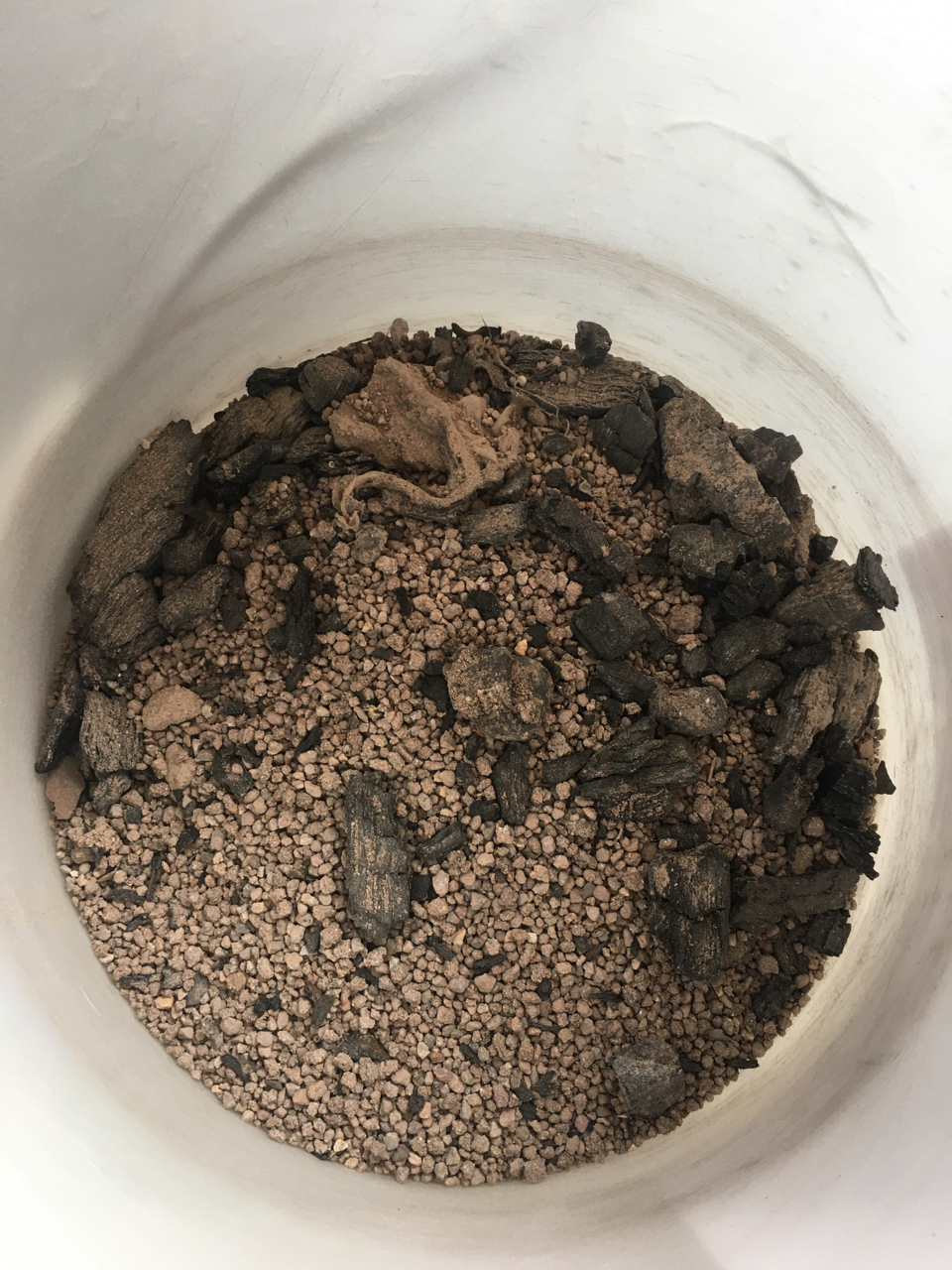
This week I made up a batch of rough stoneware body made from crushed shale. I had to spend some time crushing and sieving the shale. I have had this stuff for some time. It had come through the fire and is full of charcoal from the fire. It wasn’t too arduous, as it was only through a coarse mesh.

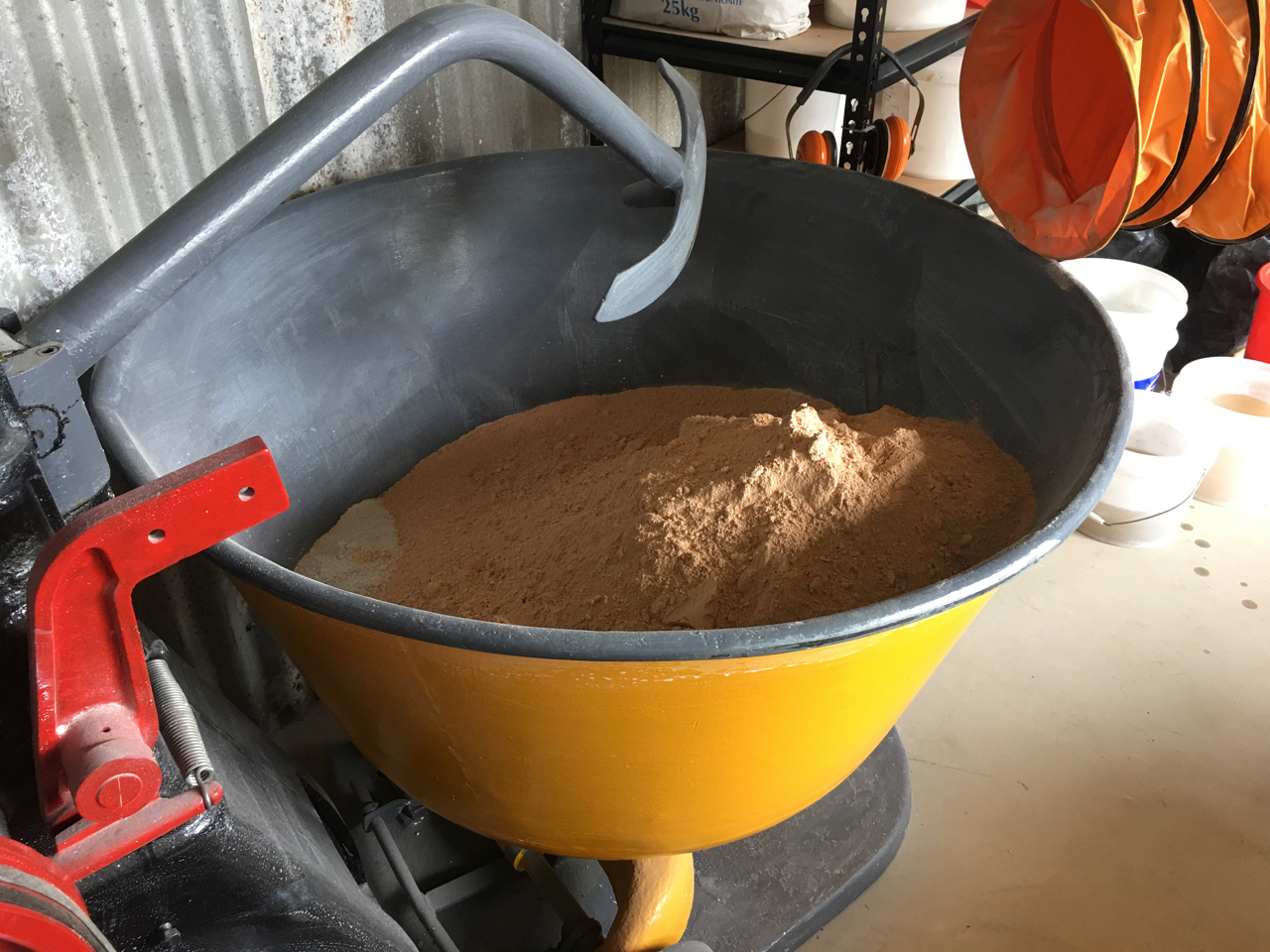
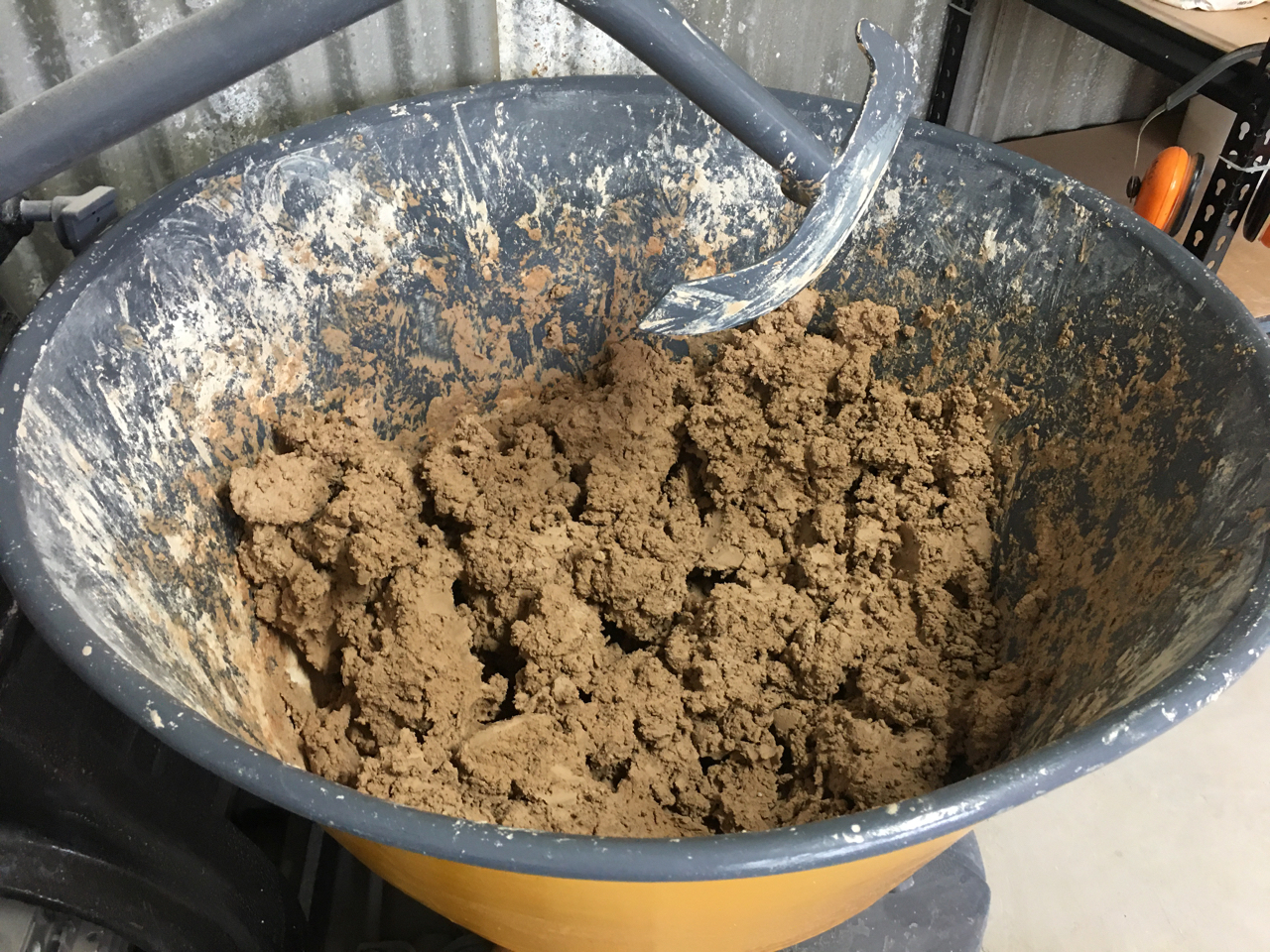
After mixing the two x 125 kg batches of body, we pugged all the clay twice. Once all through the pug and then stacked on the pug table in a pyramid stack. We then cut off all the ends of the sausages and re-pug it all another time, such that each sausage that comes out of the pug is comprised of a mix of all the previous pugs of clay. This is to ensure that there is very little variability from the first to last sausage of clay.

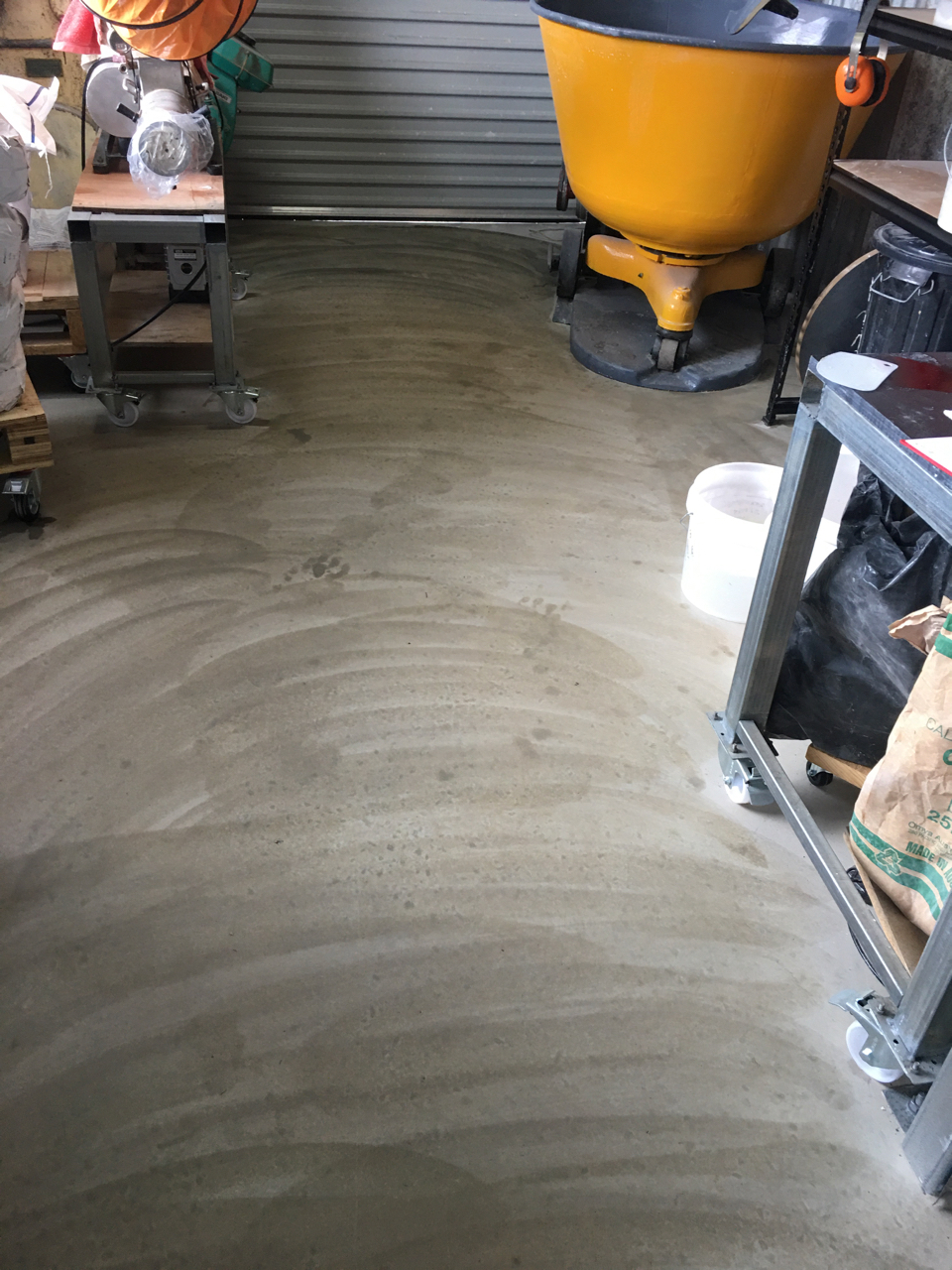
After finishing up, the pug mills and tables are all washed and wheeled out of the way and all the floors are wet scrubbed and mopped to clean off any small amount of clay that finds it way onto the floor, which it inevitably does. The floor is scrupulously clean all through. All the clay is bagged and boxed. Everything ship shape.

This is the best pottery workshop that we have ever had. Having been burnt out 3 times over our careers. I have designed and built this 4th workshop/studio with every piece of equipment on wheels to facilitate flexibility and cleanliness.

We have been picking lots of food from the garden, then cooking and preserving all the excess. We are up to our 5th batch of tomato passata.

Oven baked pumpkin is great on its own and can be used up all week in all sorts of ways from frittata to salads.

Tomatoes, basil, capsicums, chilli and pepper corns go into the passata.

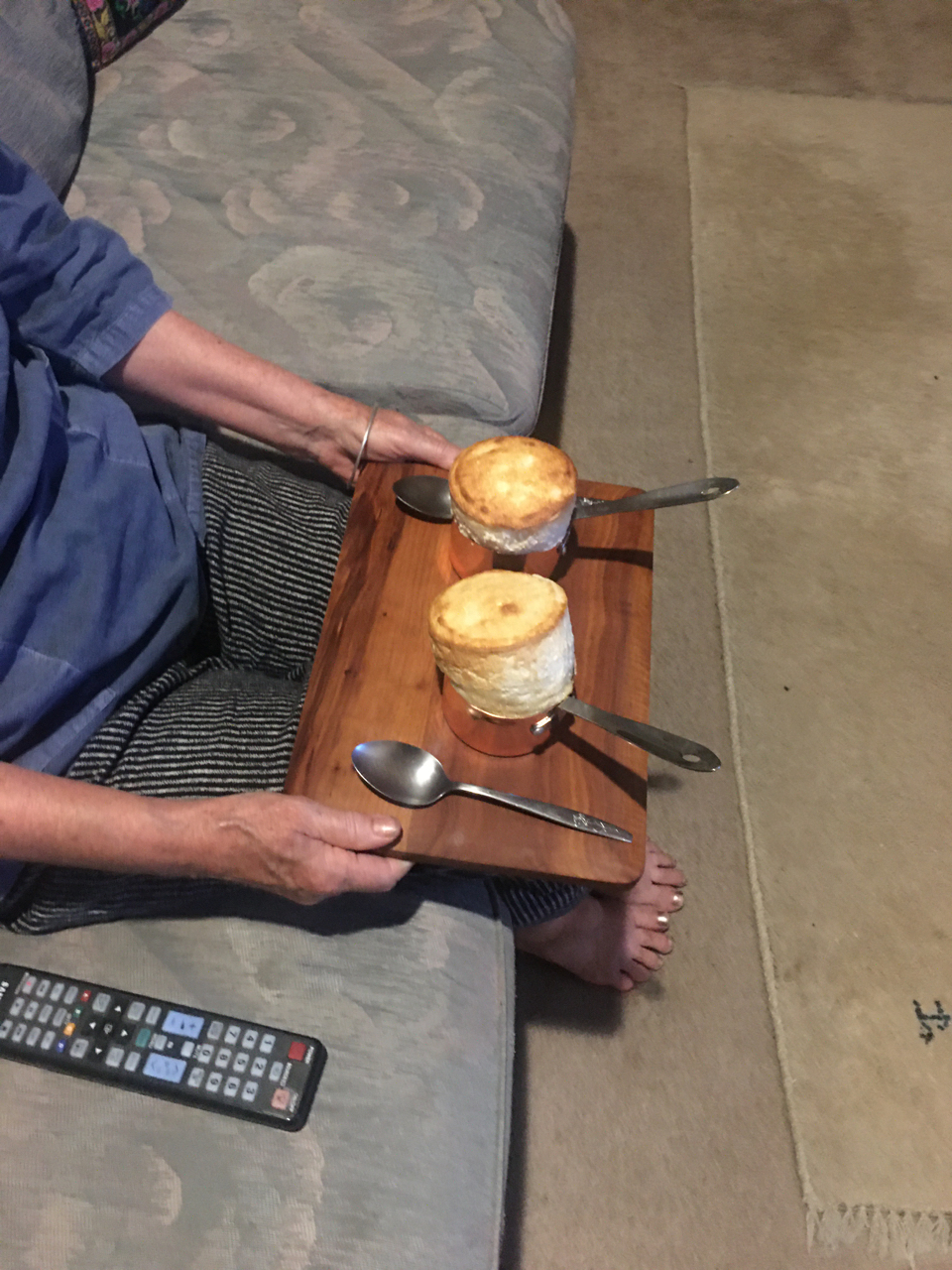
We had an over ripe banana and a few eggs, so I made us a banana soufflé for desert. It worked out really well.

All part of our attempts at self-reliance. It seems to be working out OK.

Fence Work and Garden Produce

We have spent the past week continuing to work on the new fence.

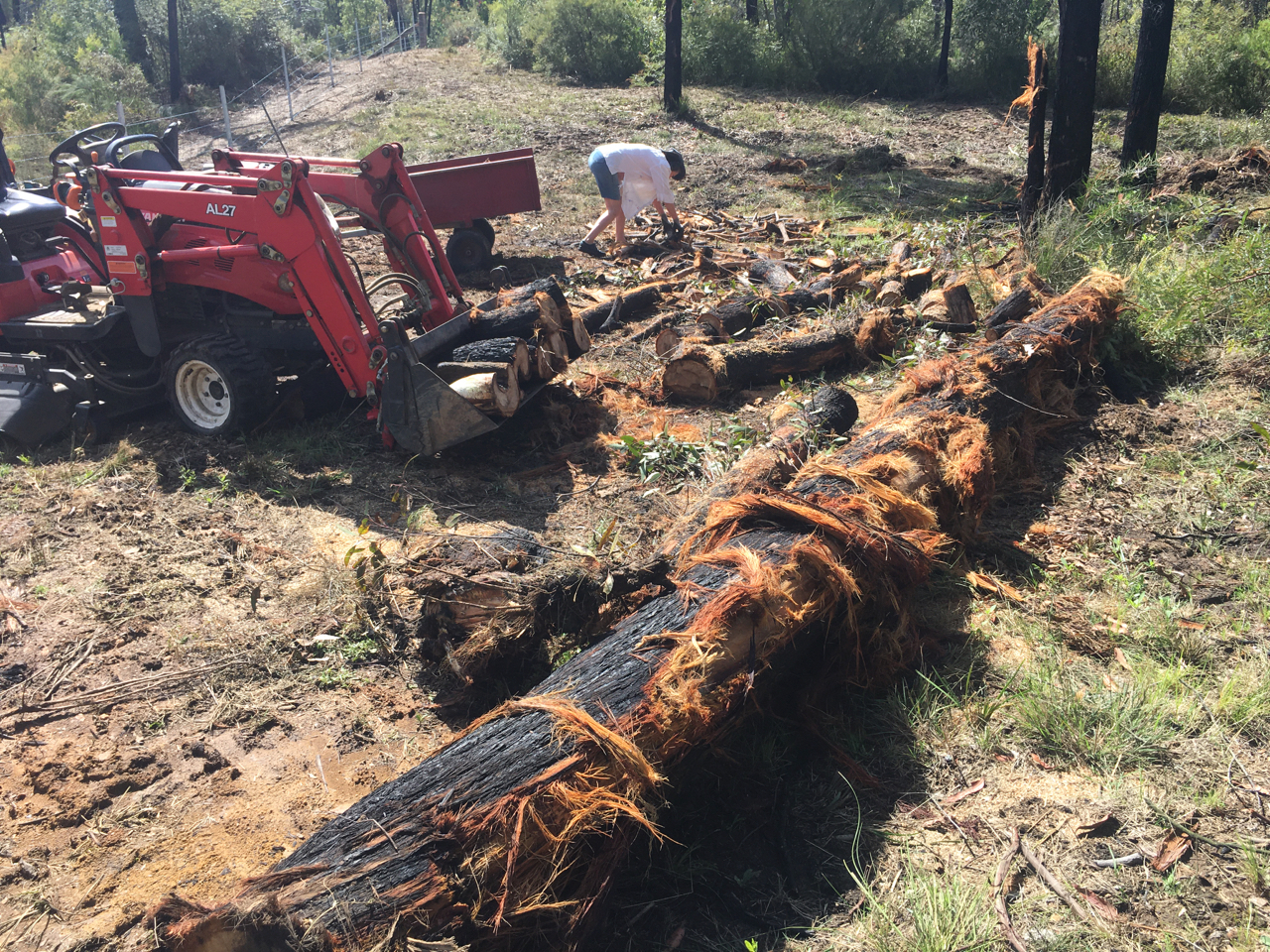
The fence is now finished the construction phase and we have been getting on with cutting up the dead trees that had to be removed to clear a straight line for the fence.

I had to have a few days off to rest my back and forearms that got a bit over worked.

I estimate that I have now cut and stacked 1200 to 1500 billets of timber. Enough for 2 years firewood, if not more. Of course some of them are only small, down to 50mm dia.

But some are up to 450mm dia. I cut up the whole tree. Nothing wasted.

All the felled trees that were within 50 metres of the house are now cleaned up, cut to stove lengths and stacked near the wood shed, ready for use in the winter.

The other trees that were felled are all still stacked along side the fence line. I may get around to getting out there, right down the back and cutting them up. 

However, experience has taught me that by the time I have used up all these stacked timber billets, All the logs laying on the ground will have been degraded by the white ants.

There are still so many standing dead trees within just a few metres of the gateway through the new fence that I will most likely be choosing to work on those trees.

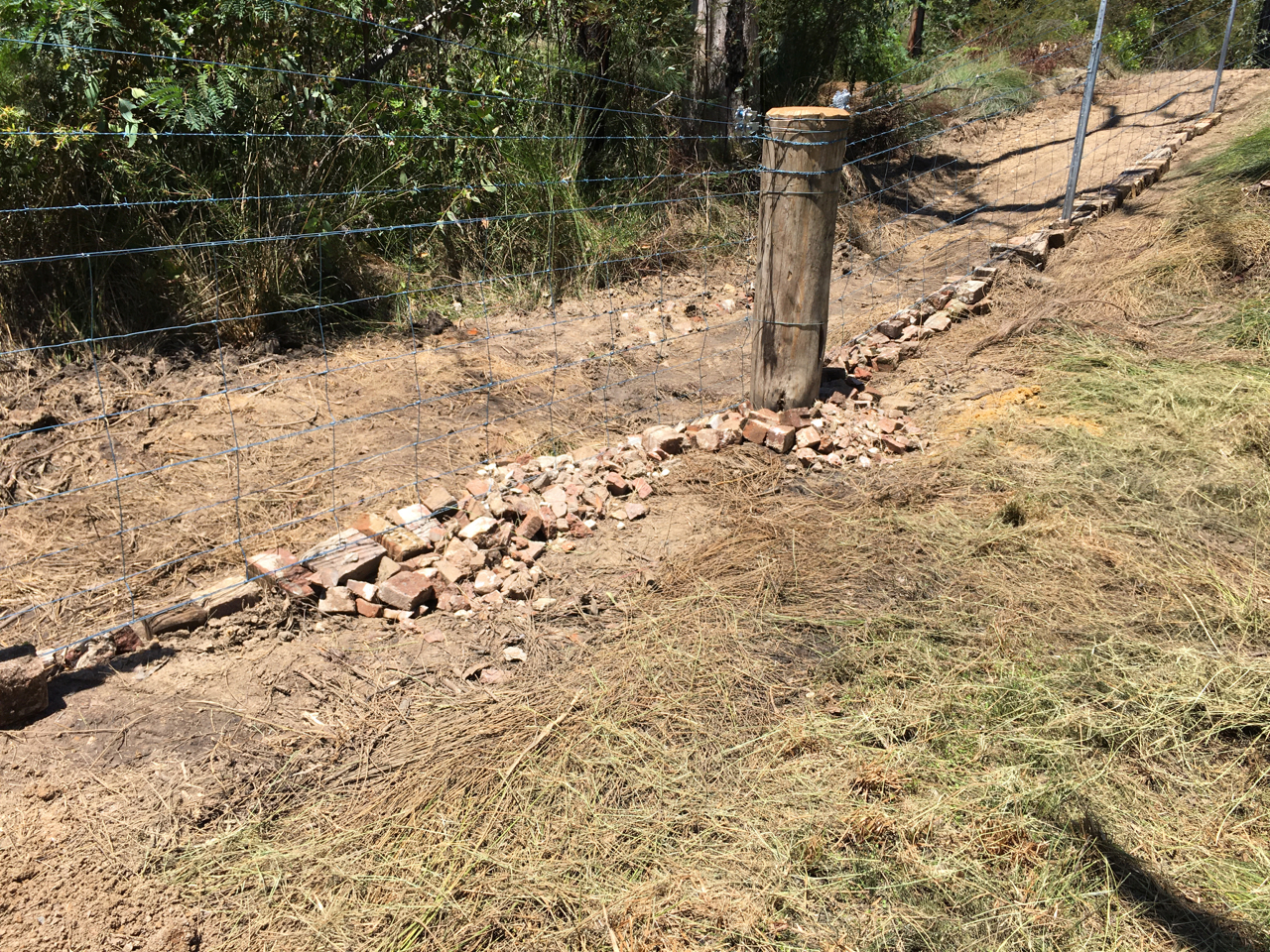
Each morning we get up early and do a few hours work wheelbarrowing broken bricks down the back to fill in the deep gaps under the fence.

This is to stop animals from shinnying underneath the fence in the lowest spots. We have almost finished this job. Maybe just one more cool morning’s work.

Once all the gaps are filled with brick bats and rubble, I start carting some left over crushed gravel from the pottery site footings, down to the fence line.

This gravel and dirt mix will cover the crushed bricks and level out the surface to make it easier in the future to keep the fence line mowed and clear of re-growth.

After lunch, it’s too hot to work outdoors in the full sun for us oldies. So we retire indoors to work on other projects in the shade.

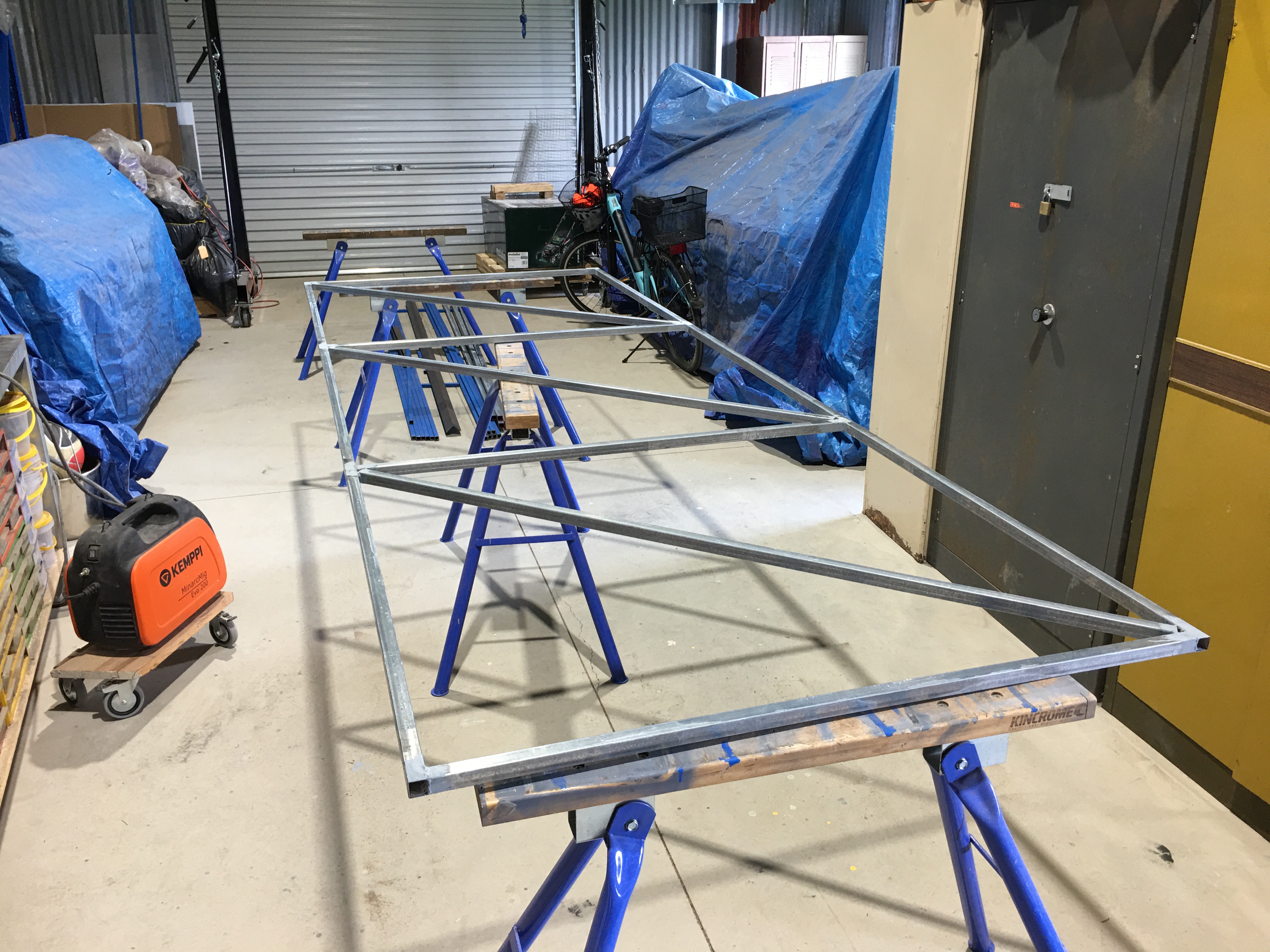
I’m currently working on welding up a set of 3 gates to complete the fence line securely. Our neighbour on the back fence line saw a full size stag in his yard the other day.

I really need to get this unscripted and unfunded crisis done and dusted as soon as I can, so that I can get back to my real work in the pottery.

In the evenings we make Tomato passata, Plum sauce and Onion jam. These all need to be made and stored away for later use to make the best of our excess produce.

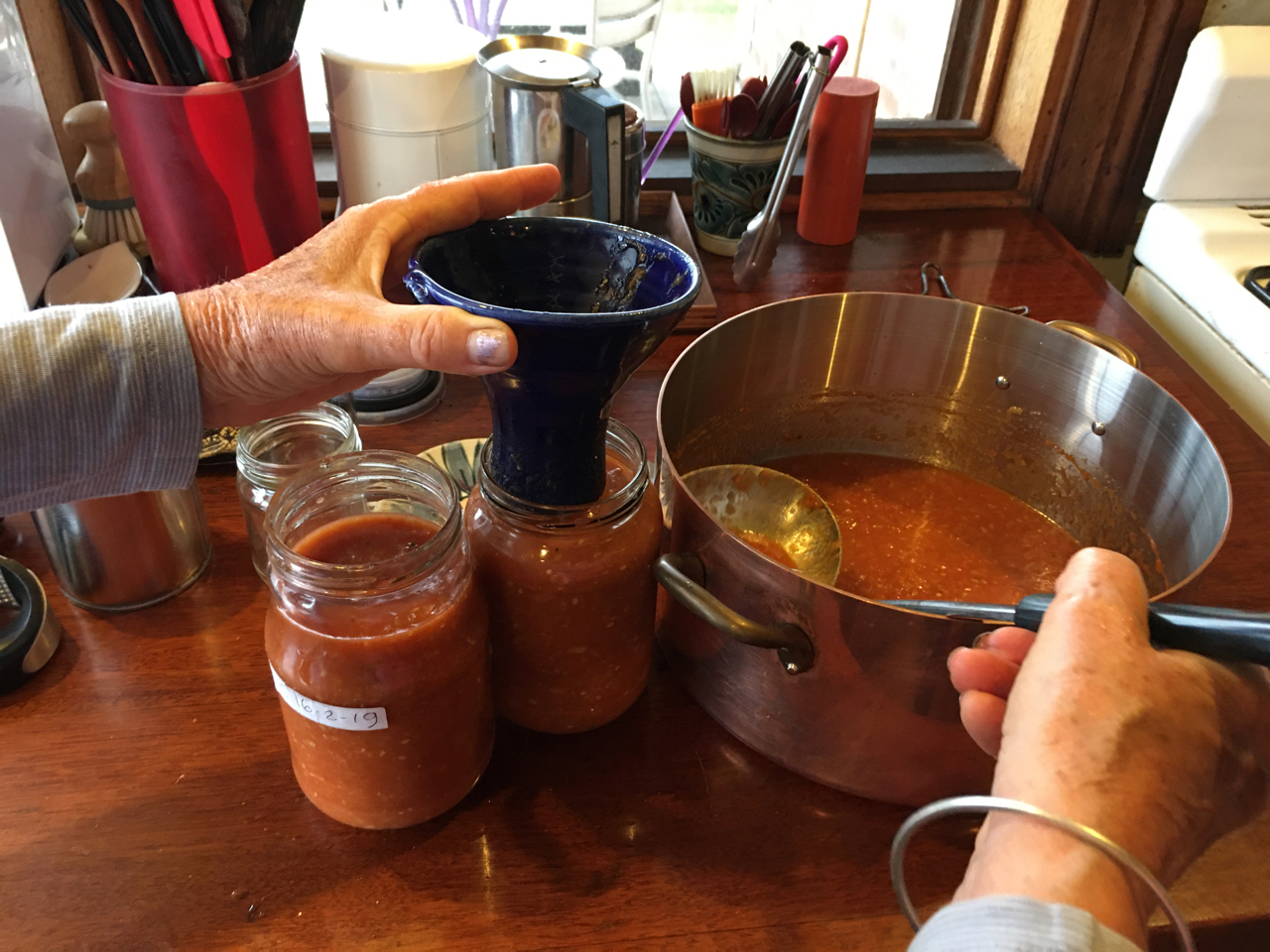
Bottling tomato passata

Plum sauce bottled and cooling.

At this time of year every meal starts to take on a certain ratatouille aspect. Tomatoes, basil, capsicum, zucchini, and squash.

Summer garden Ratatouille with steamed fish and hand picked capers in a white wine reduction.

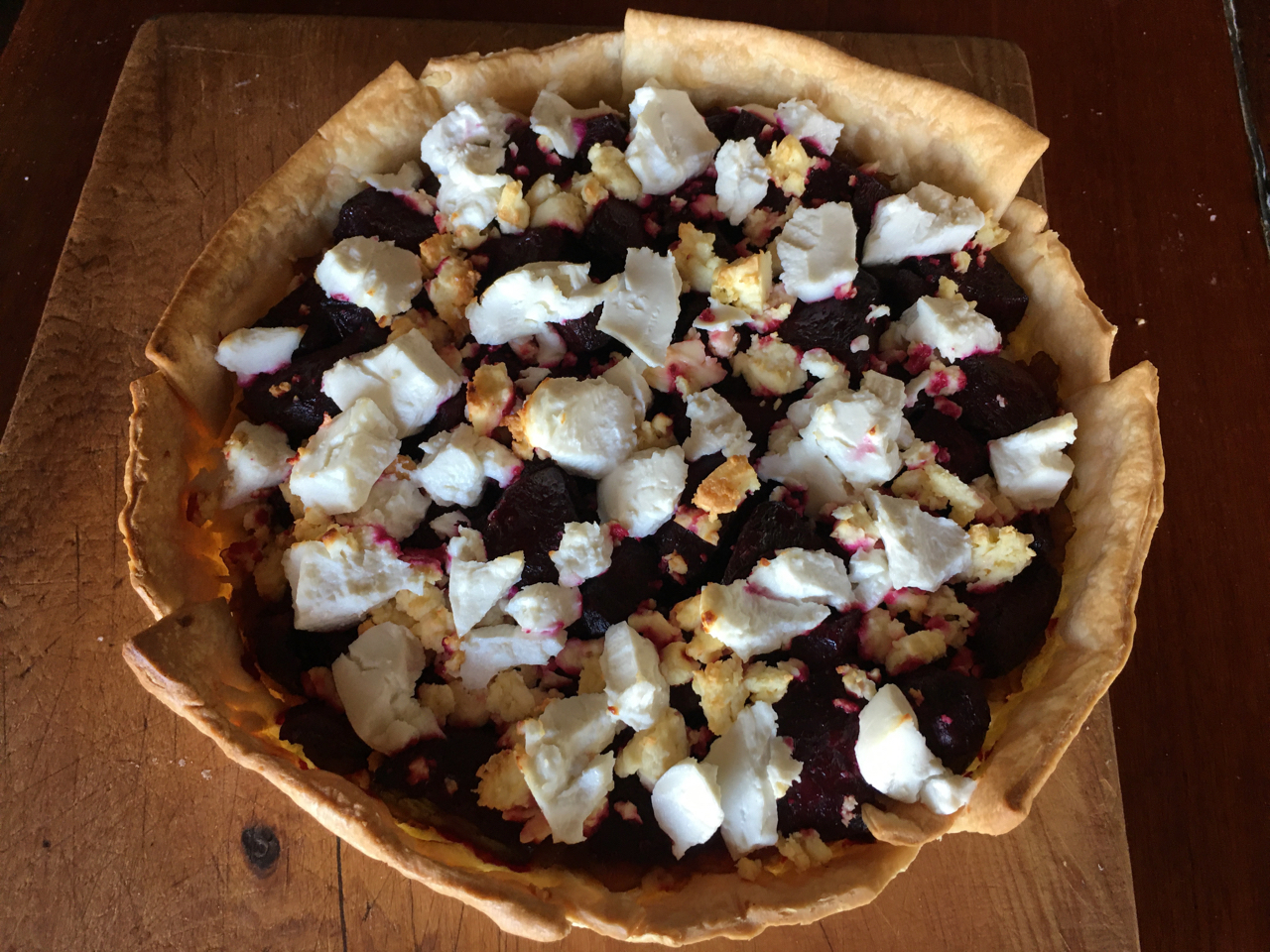
Garden beetroot, home made onion jam, and 2 cheeses tart.

Desert is freshly picked blueberries baked into a tart. We are picking 3 kgs every few days at this time of year. Some get preserved for later in the year. Some eaten fresh for breakfast, some are used in cooking like this and the rest are given away to neighbors and friends.

It’s a tough life, but we just have to work our way through it.

This years tomato crop is developing

A new tomato crop is developing. I managed to get a few early tomato plants into the ground in September. I cheated and bought a punnet of seedlings. September is long before our own naturally germinated ‘wild’, self sown tomatoes seeds emerge. I bought a punnet of seedlings from the garden centre. In the past, if I got them in the ground in early September, then we might get a ripe tomato in the week between Xmas and new year. The past decade had been unusually hot and drought ridden here up until 2019. The extra heat allowed the tomatoes to establish so early.

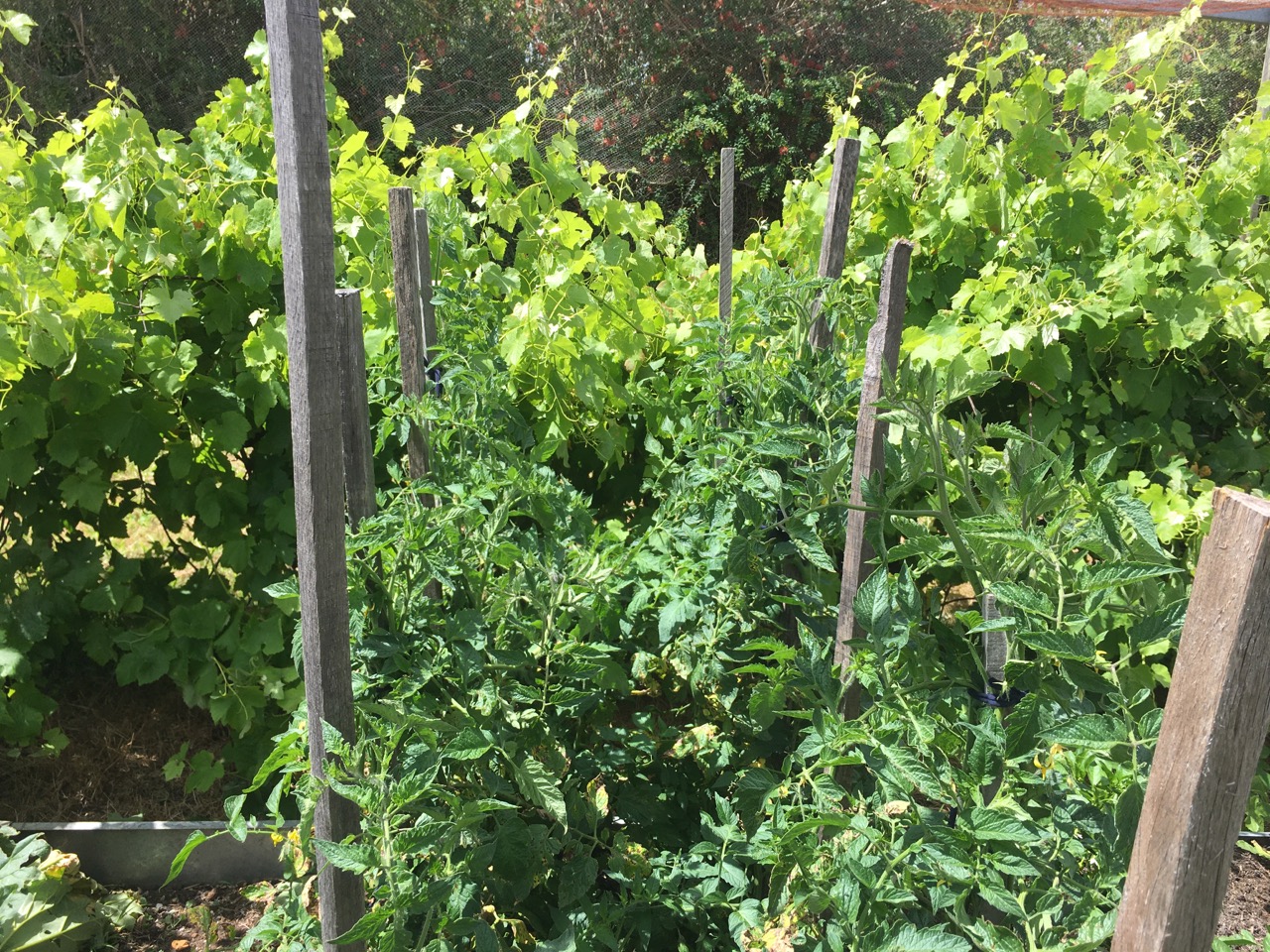
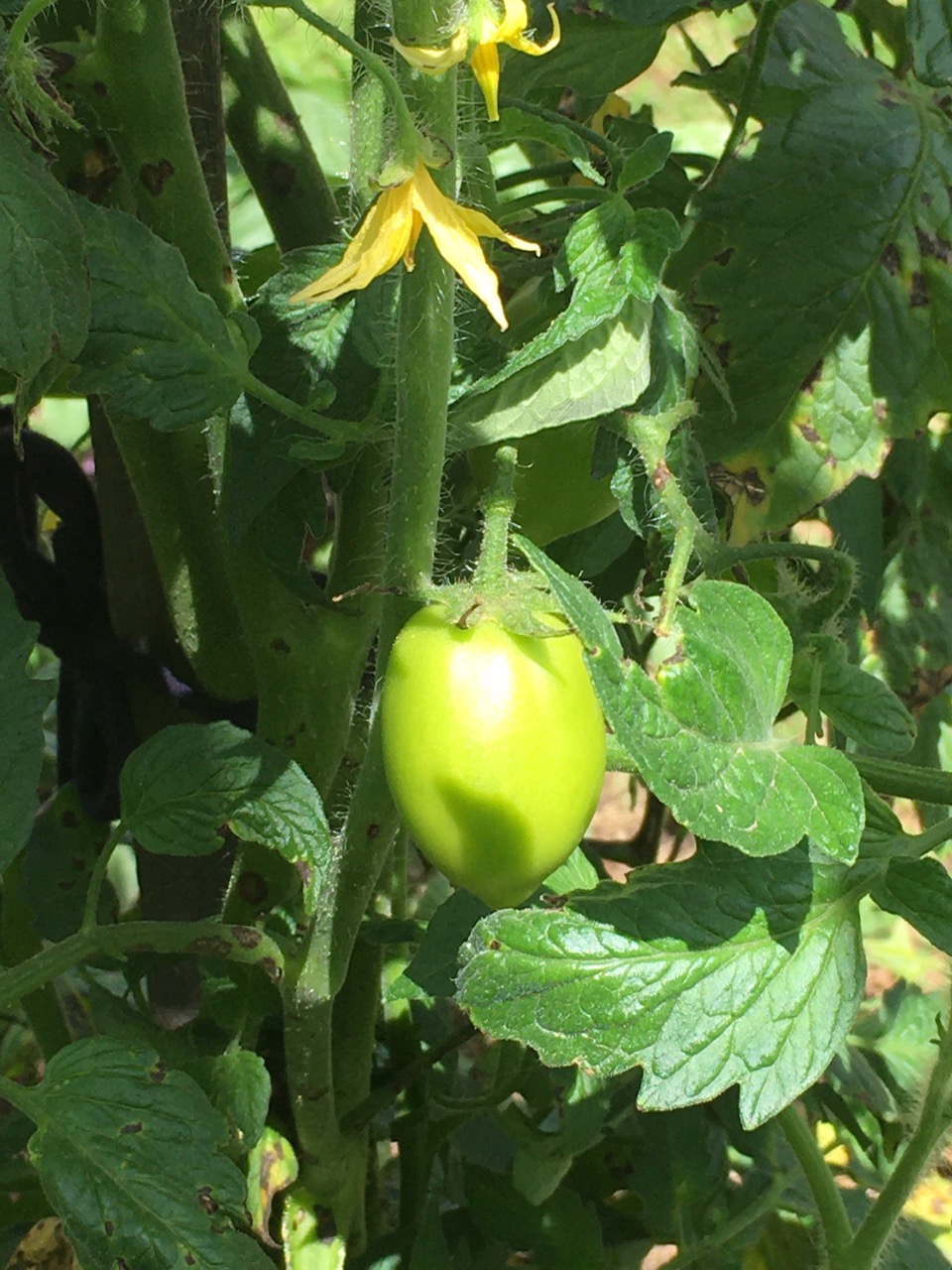
This past year however, it has been cooler and wet in comparison, so the season is delayed somewhat. We do have tomatoes climbing up the tomato stakes, the tallest being about one metre high so far. There are even a few small green tomatoes developing now. However, I doubt if there will be a ripe, red tomato for Xmas, never mind in the next 2 to 3 weeks.

I have planted 4 beds so far, around 10 plants in each bed. The earliest ones are all flowering well now, so it promises to be a good crop in the new year when the warmer weather develops. Well, I’m hoping so anyway.  I like to make all the jars of ‘passata’ that will last us all year, as well as all the tomatoes that we will consume in salads and ratatouille dishes over the summer.

Tomatoes need a warm soil temperature and longer daylight hours to thrive. Our own naturally germinating ‘wild’ tomato seeds are just now emerging in among the other beds. So the soil temperature must now be more or less OK. The ‘Diggers Club’ guide tells me that  the soil temp for tomatoes must be above 16oC, but I’ve never bothered to go out side with a temperature probe to test the soil temp to find out. Early September seems about right and the plants grow, albeit quite slowly at first. In years gone by I even started the young tomato seedlings off in late August under a sort of home made ‘cloche’ made by wrapping the industrial sized ‘glad-wrap’ that I used to have in the old kiln factory for delivering kilns, and wrapping this around the old wire mesh frames that we used to cover the garden beds before we built the bird proof enclosure. This early frost and cold night protection worked for the important first month, until the weather warmed more, or until the plants got so tall that they out-grew the height of the temporary cover.

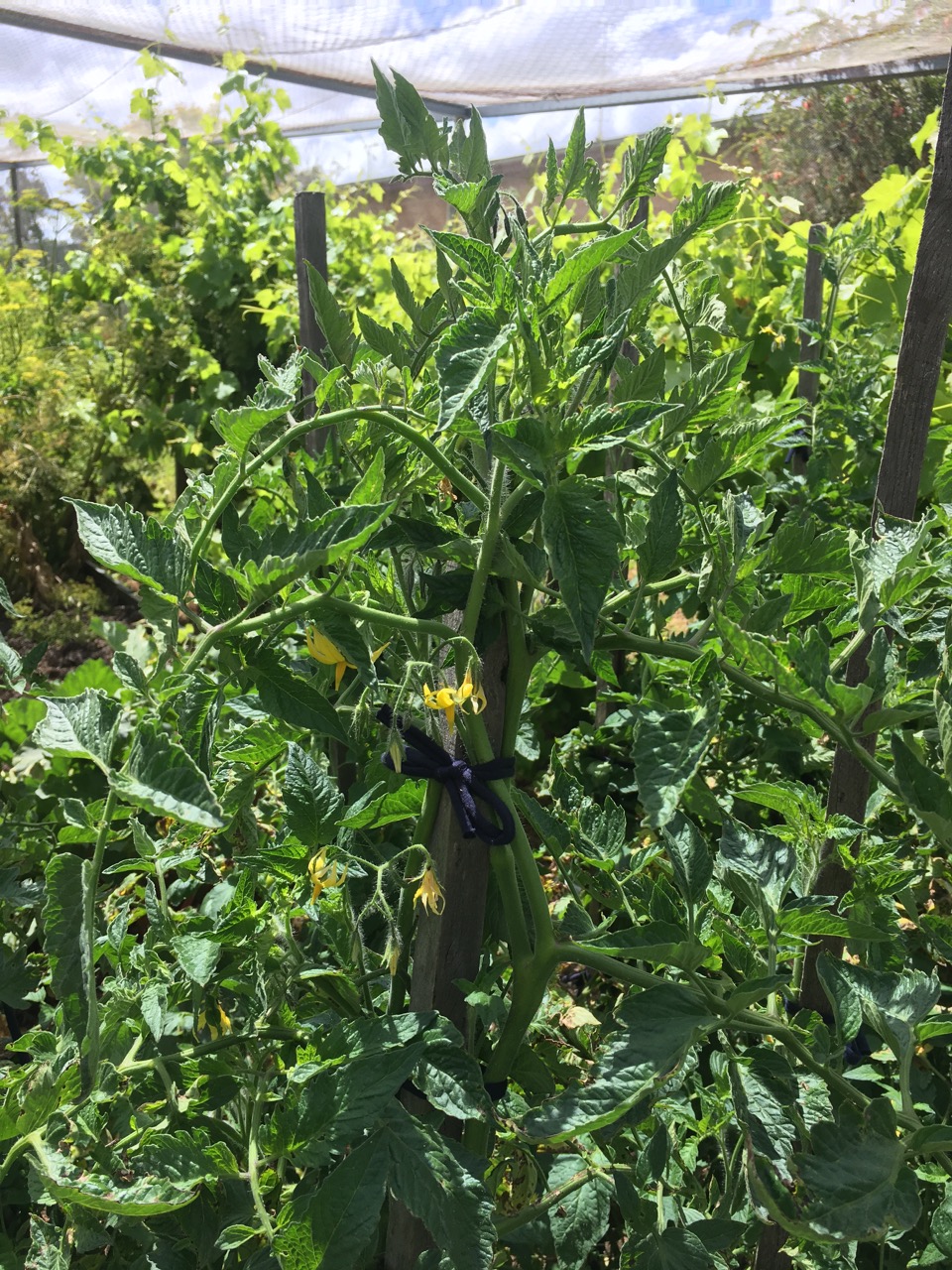
Yesterday I went into the garden after lunch to do a bit of tidying up and weeding. I ended up hammering in tomato stakes and tying up the tallest tomatoes. One thing led to another, then I suddenly realised that the chooks had put them selves into their house and were ready for bed as it was after 6 pm. The afternoon had just slipped away while I was being busy.

Tying up tomatoes is such a great job. The season is still early and there is no hope of seeing a tomato any time soon, but just touching the tomato leaves or even brushing against them gives off such an appetising smell. It makes my mouth water with anticipation. I don’t know what chemical is in the tomato leaves, but it is delicious to smell. So spending a few hours hammering in the wooden stakes and tying up the leaders with lengths of soft cloth is a wonderful experience. It promises so much. There is so much optimism tied up in each of those soft little bows.

My go-to reference about my vegetables and fruit growing info is The Oxford Book of Food Plants. It tells me that Tomatoes, ‘Lycopersicon esculentum’ are a native of the lower Andes, and are valued for their high vitamin content. It is part of the solanum family along with deadly nightshade, datura, petunias, the potato, capsicum, chilli and egg plants. In fact eating green or unripe tomatoes can make you sick. Unripe tomatoes contain a toxic alkaloid called ’tomatine’ which is an insecticide, fungicide and has anti microbial properties which are there to presumably protect it from predators, but are easily broken down by cooking, so it is OK to eat them in chutney. No one I know eats them raw when green.  However, I did see in ‘wikipedia’ that tests have been carried out and you would have to eat more than half a kilo of tomato leaves, where the tomatine is more concentrated, to get a toxic reaction, which wouldn’t be lethal. I love the smell of touching tomato leaves, but I have no inclination to eat them.

It also tells me that it needs a minimum temperature of 55 to 60oF or 12 to 15oC. This is considerably less than that stated by ‘Diggers’ and may explain why I can get away with starting them in a closh in August here. 

The Oxford also tells me that the tomato was originally called ‘pomo-d’oro’ or golden apple, presumably because the earliest varieties brought back from the Americas were a yellow variety? Quite possible? I don’t know. I did read online on a New Zealand web site that only the yellow tomato can be digested properly by humans and that all the red coloured varieties are only digestible by animals!!!  Something to do with different forms of lycopene as I remember. However, I have grown a few different yellow tomatoes and they were universally bland and lacking acid in the flavour profile, so I have avoided them ever since. Not worth the trouble to cultivate. I seem to be able to get all the lycopene that I need from the tasty red ones, but do I need any at all?

Michael Pollan, in ‘Defence of Food’ (p67), advises that red lycopene can be easily digested when cooked in olive oil. Italian cooks have always seemed to have known that. Dr Norman Swan in his book, ’So you want to live Longer’ (p 81). Lycopene reduces oxidative stress in the body from free radicals. “There’s a multi-billion dollar industry which sells this idea in a bottle. – Trouble is that they don’t work.” “you’re on much safer ground betting on what’s on your stove”. He consistently returns to the idea that tomatoes cooked in olive oil are really good for you – as part of a Mediteranian diet, low in meat and high in coloured vegetables and whole grains.

I have read elsewhere that all domesticated tomato varieties today are descended from the red-fruited wild tomato, Solanum Pimpinellifolium. Perhaps named after  the scarlet pimpernel?  One of the other early names for tomato, besides ‘love-apple’ and ‘golden-apple’ was ‘wolf peach’. Which accounts for the latinised name ‘lycopersicon’ used by Linnaeus to describe them in 1753, and still in use today. Tomatoes first appeared in Europe in around 1535 on the return of the Spanish conquistadors from Peru, It took over 150 years for the tomato to be integrated into everyday cuisine, starting in Italy,  then slowly spreading across Europe. It’s acceptance was rather slow.

John Ray, The English Botanist, son of a village blacksmith, went on to study at Cambridge, Trinity College, He became the college Steward. He travelled widely in England and Europe, and while in Italy in the 1660s he wrote. ‘The Italians cook tomatoes with marrows, peppers, salt and olive oil’. Perhaps the first ever reference to ratatouille?

Norman Swan would approve.

The Birds have eaten all the Mulberries

During the week between the two Open Studio Weekends, I ventured out to check out the mulberries. The crop wasn’t good, but there were quite a few coming on. Possibly ready to pick in a week or so once they ripened up a bit more.

After the last weekend sale, when I found some time to get to the orchard again, I realised that the birds had eaten all the mulberries. ALL THE MULBERRIES!

Recently, we have had quite a good number of wattle birds, Dollar birds, Frier birds and the constant regiment of endemic bower birds

There were just a very few immature pale hard berries left. So no mulberry tarts this year.

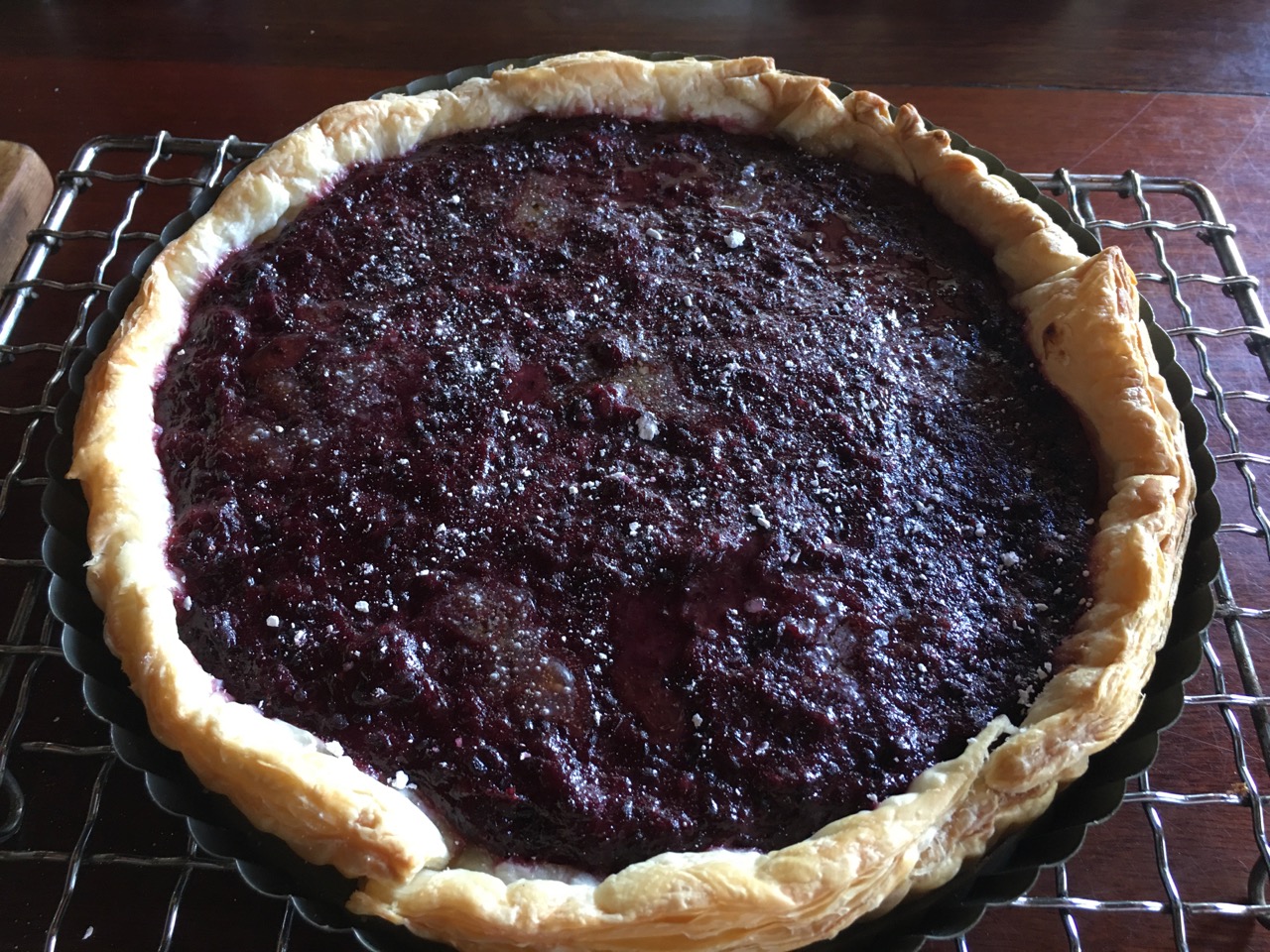
Instead, I decided to make a youngberry tart, using last years Youngberries that I preserved and bottled on the 4th of December ‘21.

It’s a lovely tart. It isn’t quite so good as when I use fresh berries, as fresh berries retain a lot more texture and structure to the substance of the tart.

This years berries aren’t ready yet, but the pantry has a few bottles of last years berries that have survived the hungry gap. Principally because we are trying to cut down on our sugar intake.

I don’t add any sugar to the preserved youngberries. They are sweet enough, and every little bit of sugar adds up. But they are wonderful, so rich, so lively with that special mix of acid and sweetness. I love them. They are so special, really unique to this time of year. I really look forward to their season. They follow the mulberries and preempt the cherries.

I couldn’t net the mulberries, the tree is too old and too big, so they are all gone, but I can net the youngberries, as they grow on canes at ground level. 

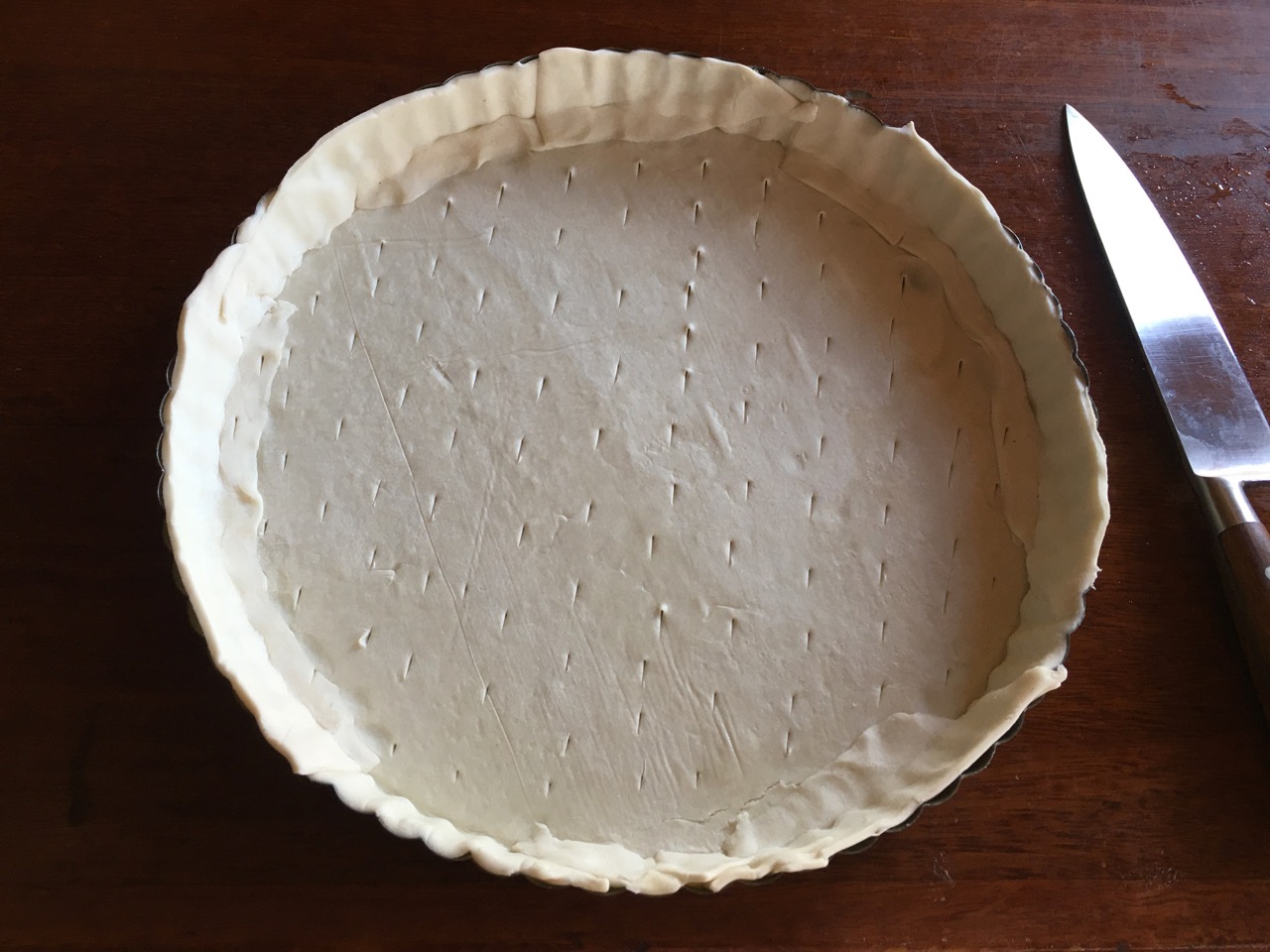
I blind-bake the pastry first to cook it through and then add the fruit, and bake it again to set the fruit.

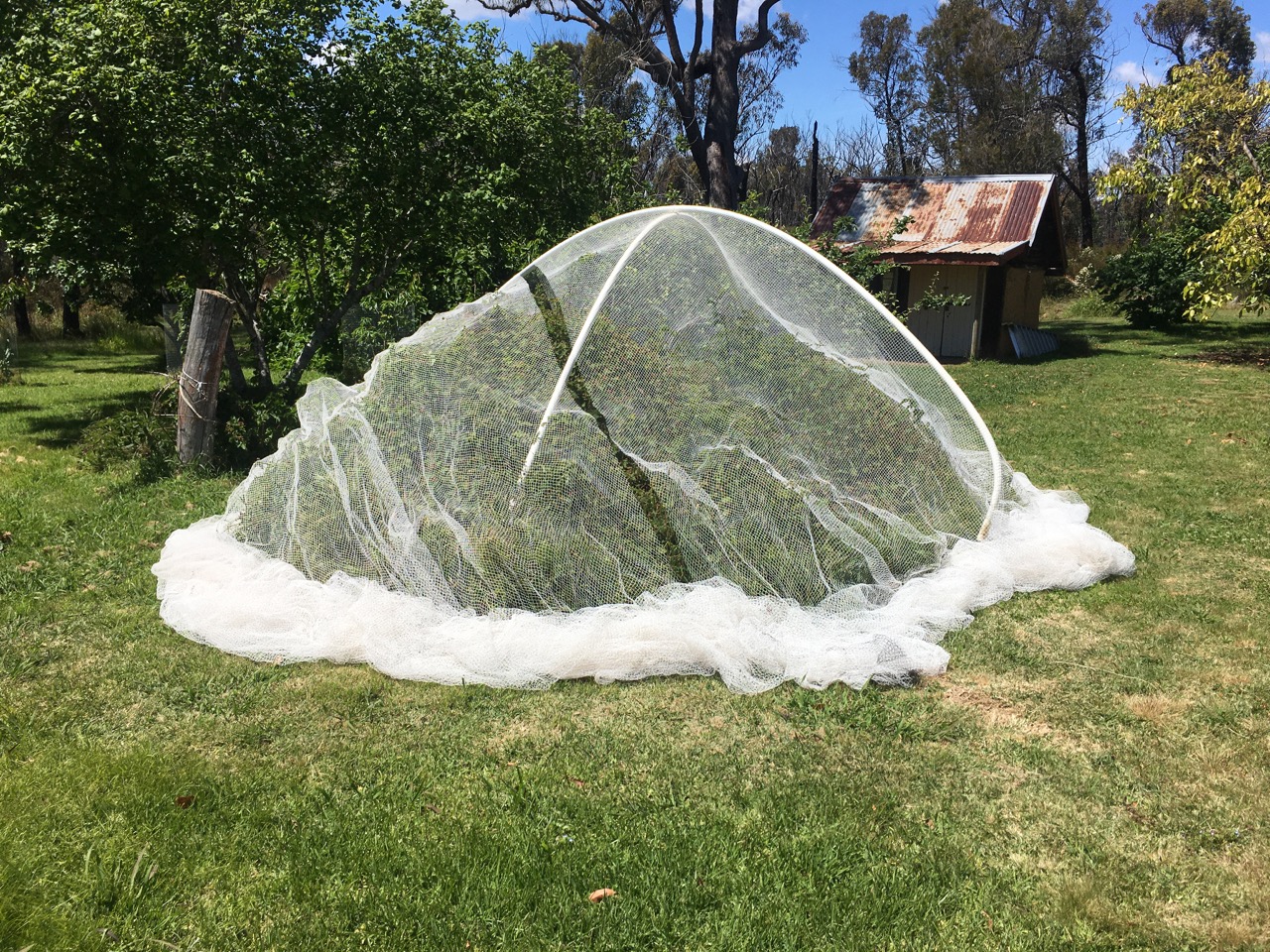
As soon as we could find the time, we were out in the garden and netted the youngberries. Safe for this season now.

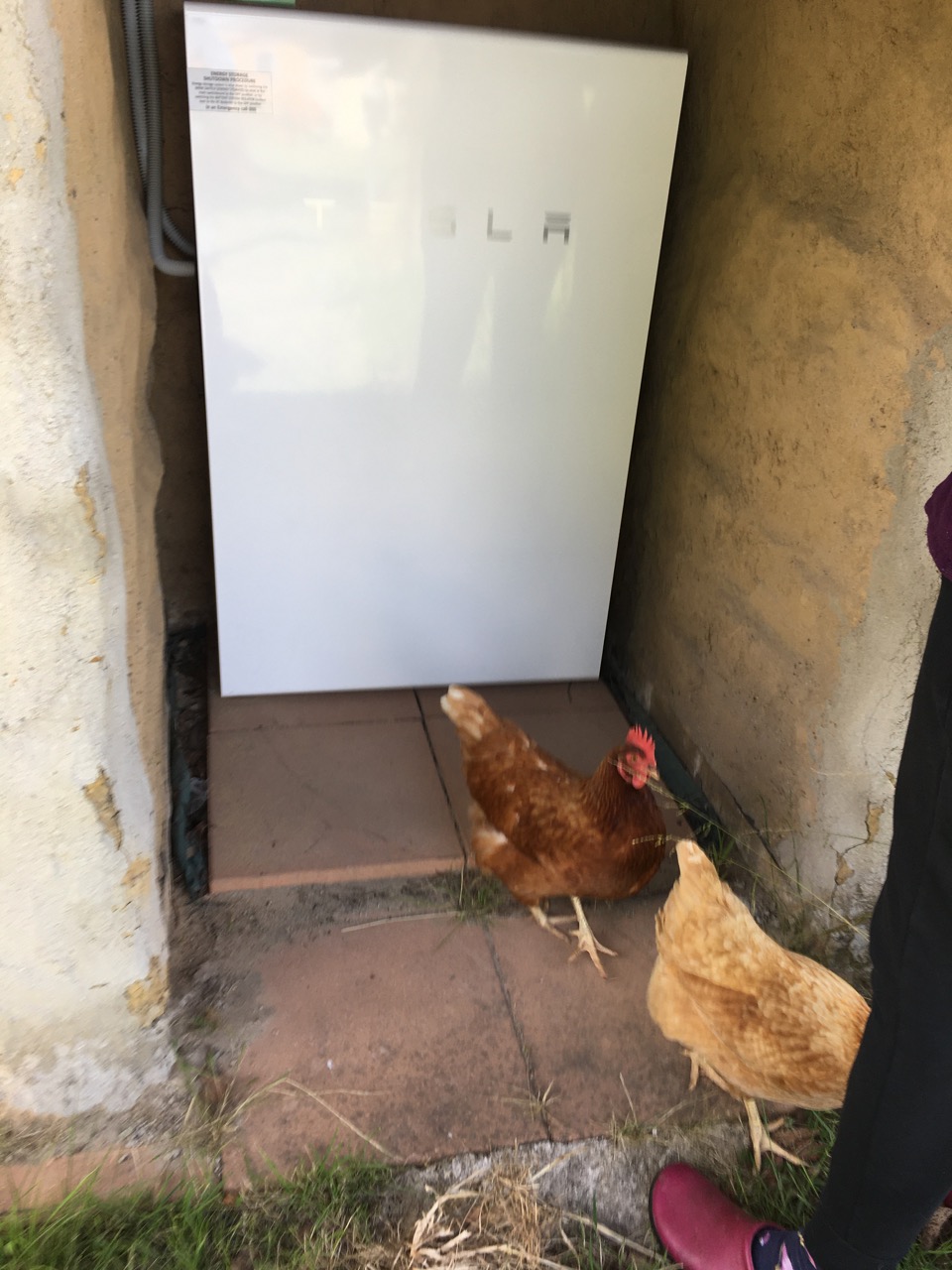
The chickens come out to see the new Tesla Battery. Perhaps they want to know what it is like to be a battery hen? They don’t appear to be very impressed. Battery hens! What’s all the fuss about?

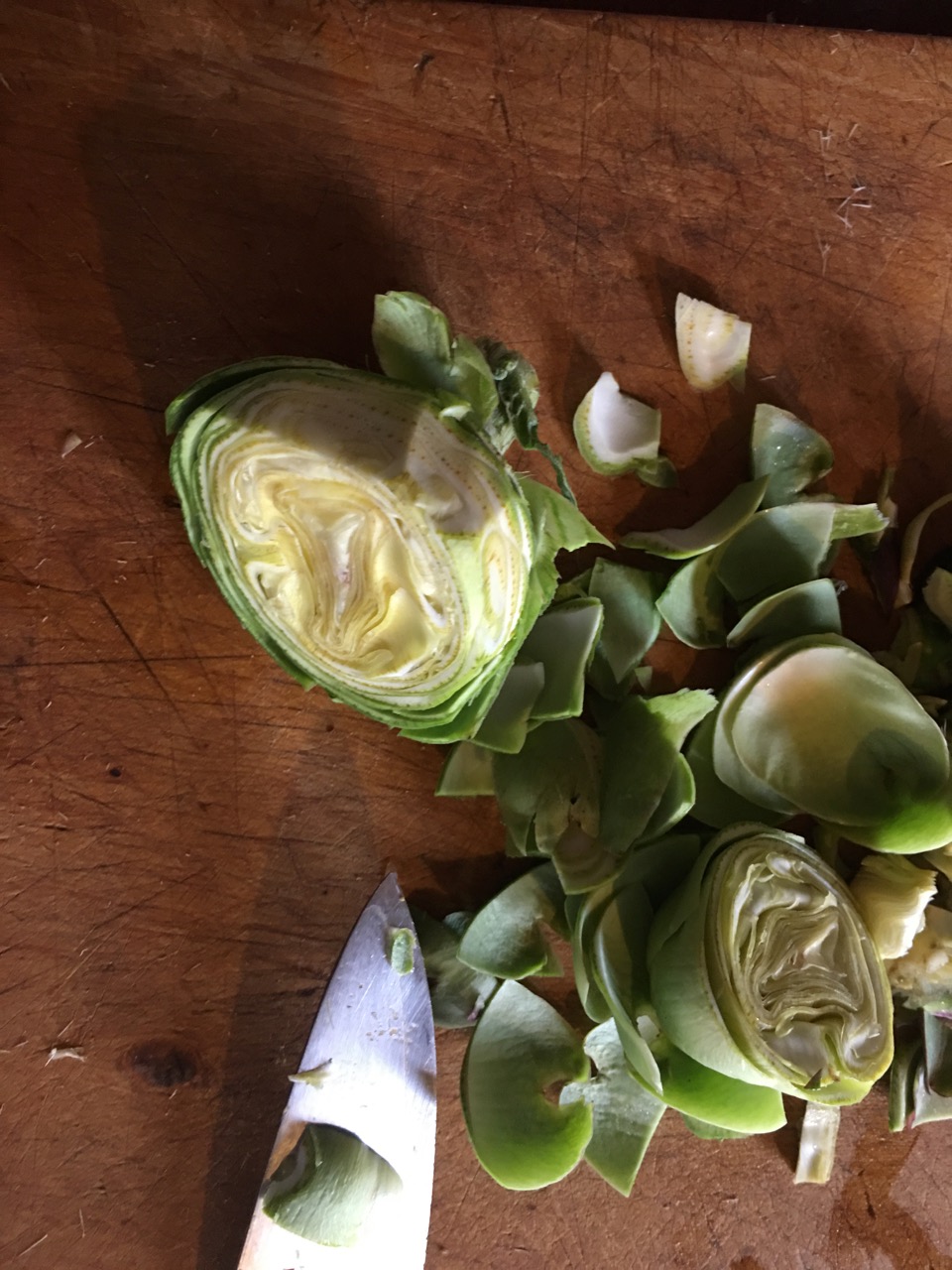
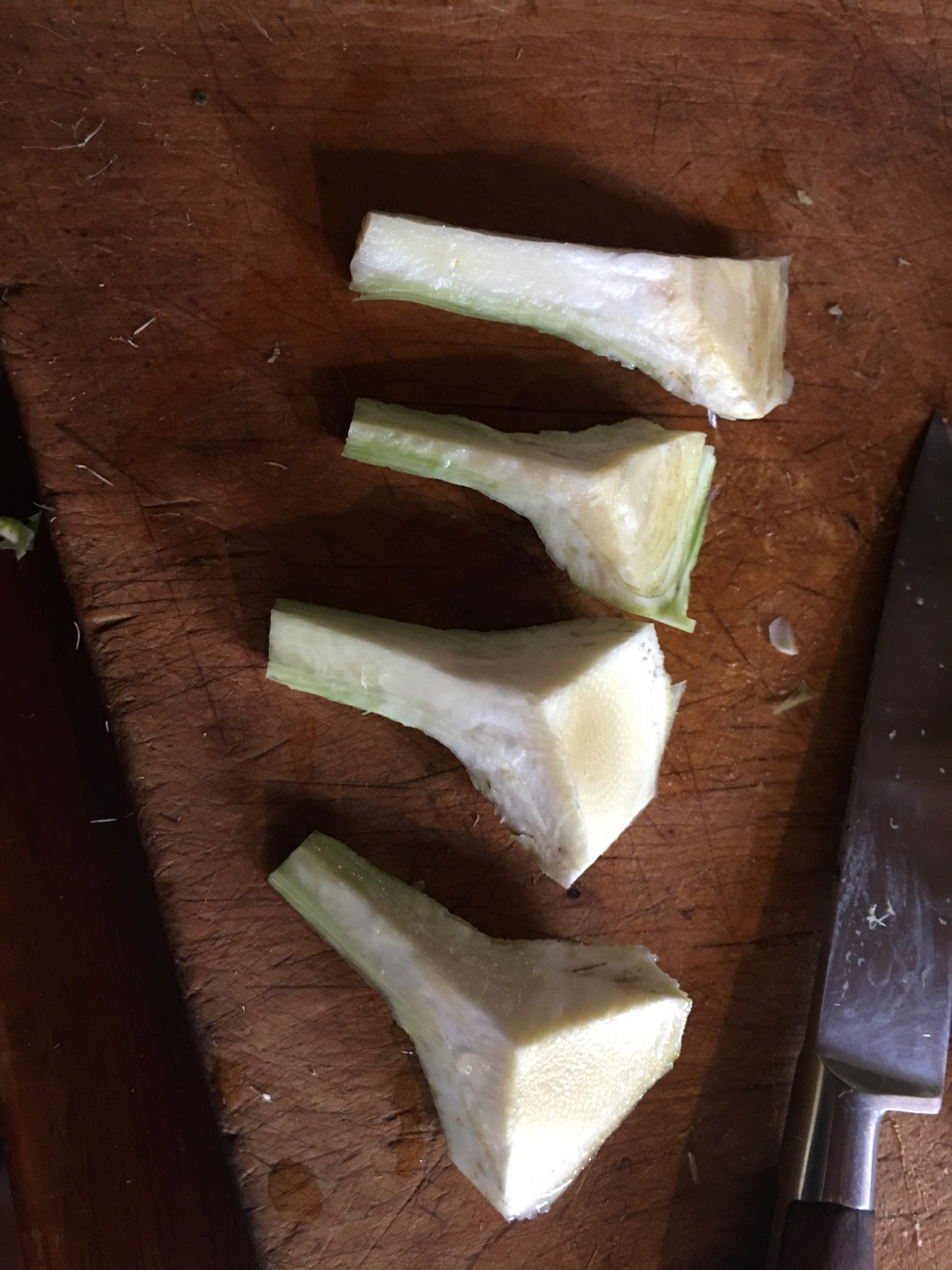
In the garden, we have picked the last globe artichokes. They are a bit past ‘best’, so need to be cut in half and have the ‘choke’ taken out.

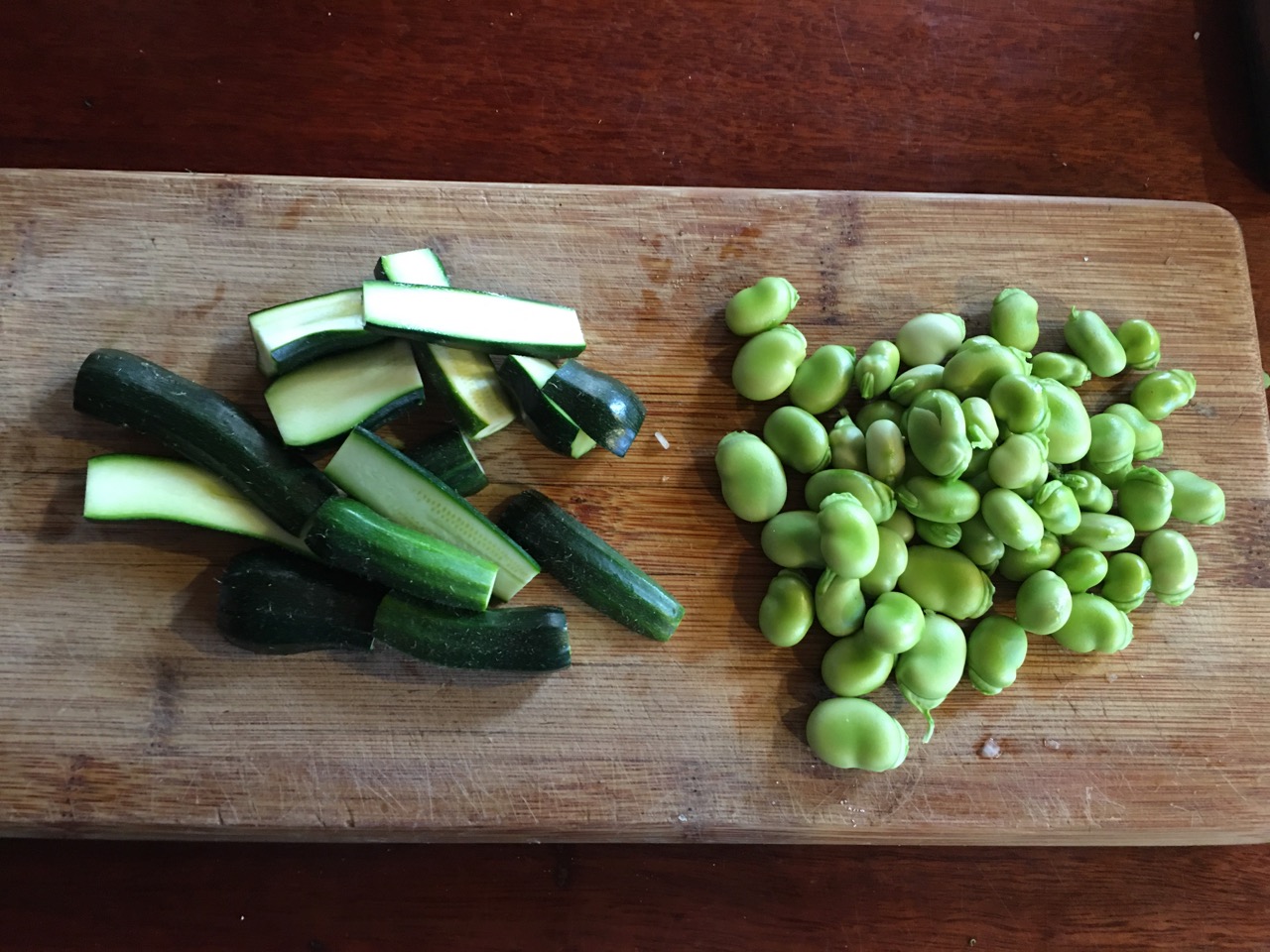
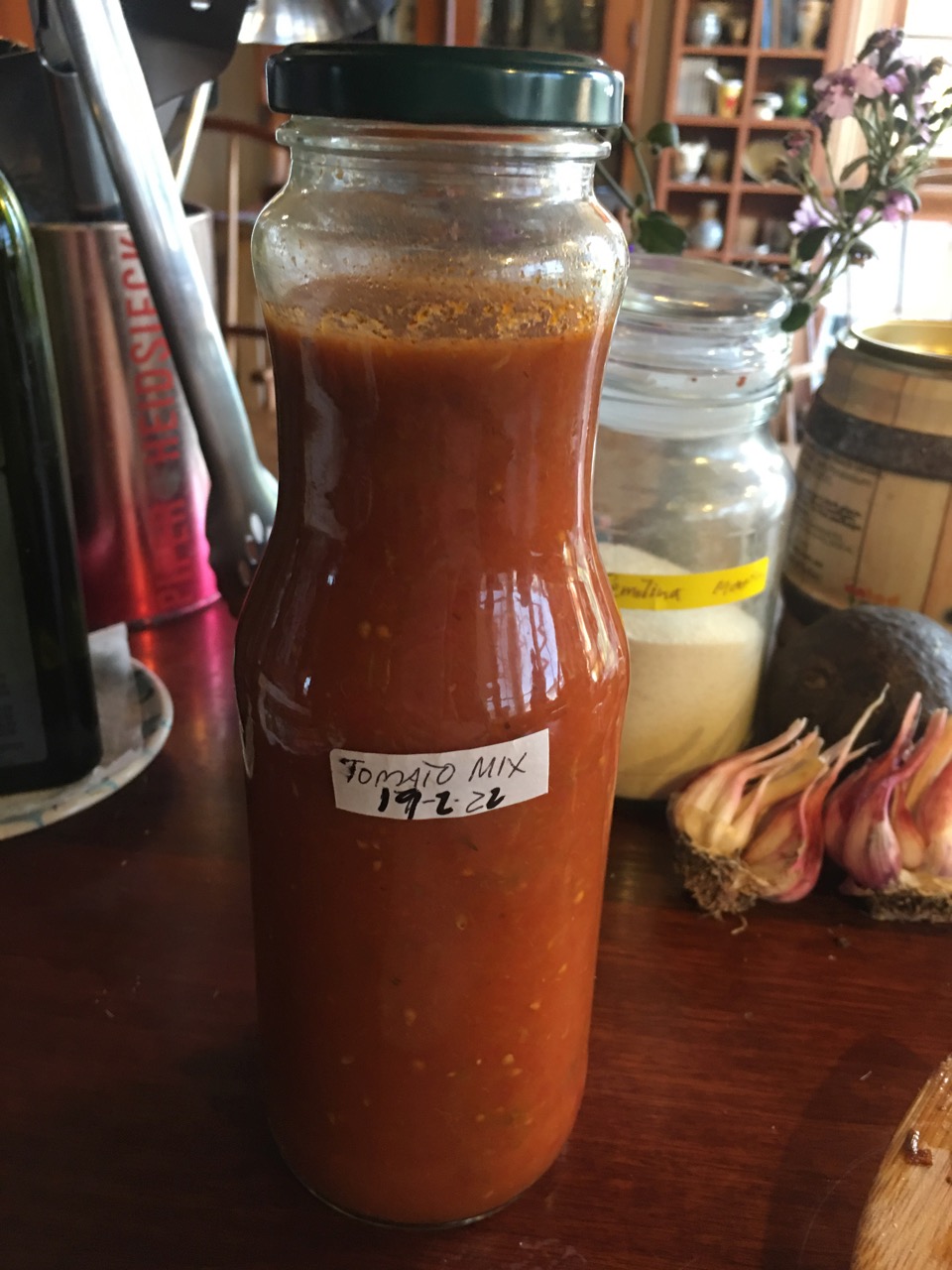
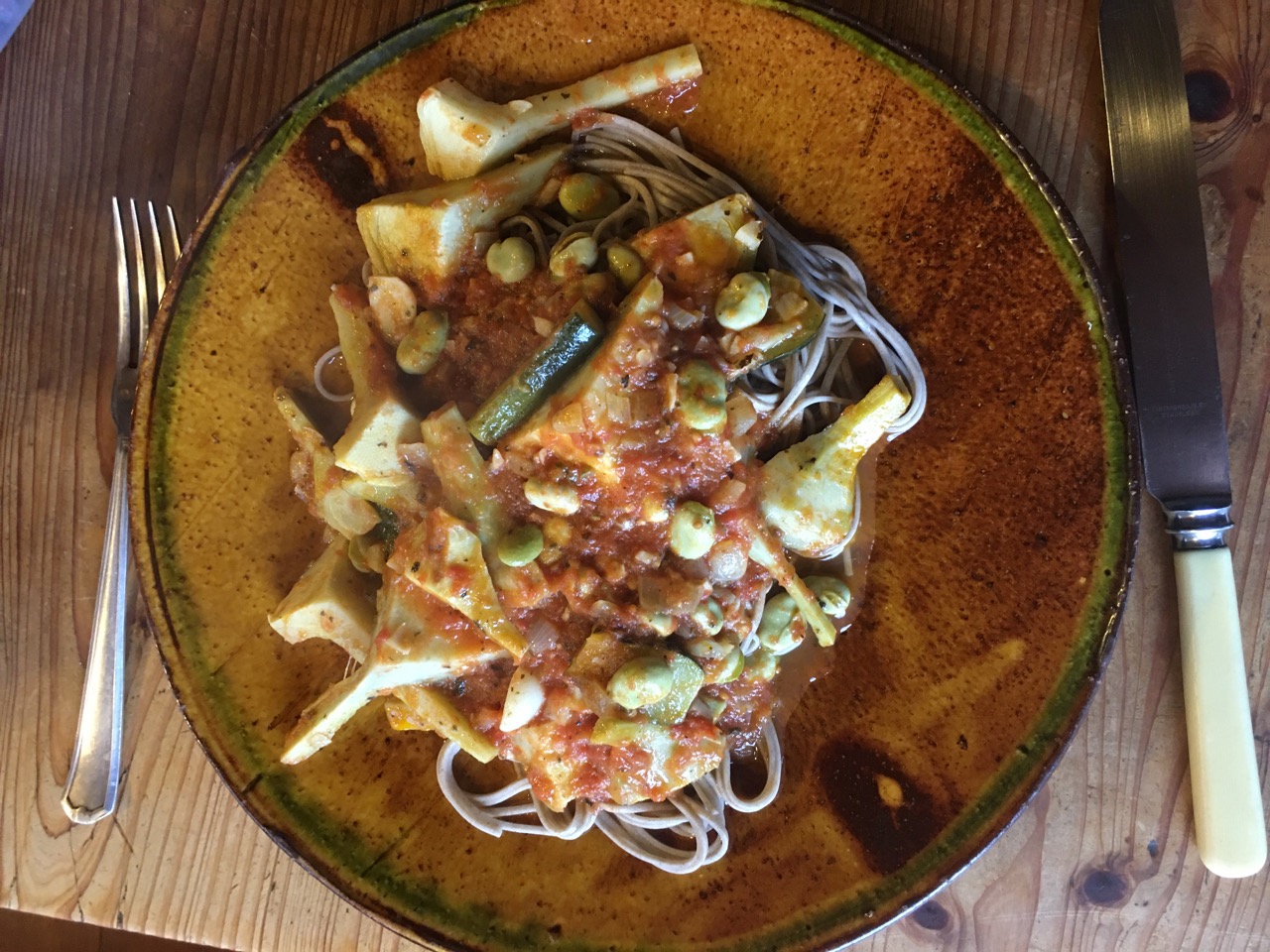
I cut them and trim them down to the essential core of flavour and drop them in lemon juice acidulated water, eventually to make a pasta sauce out of them with our home-made tomato passata sauce from last summer and some little zucchinis and broad beans from the spring garden.

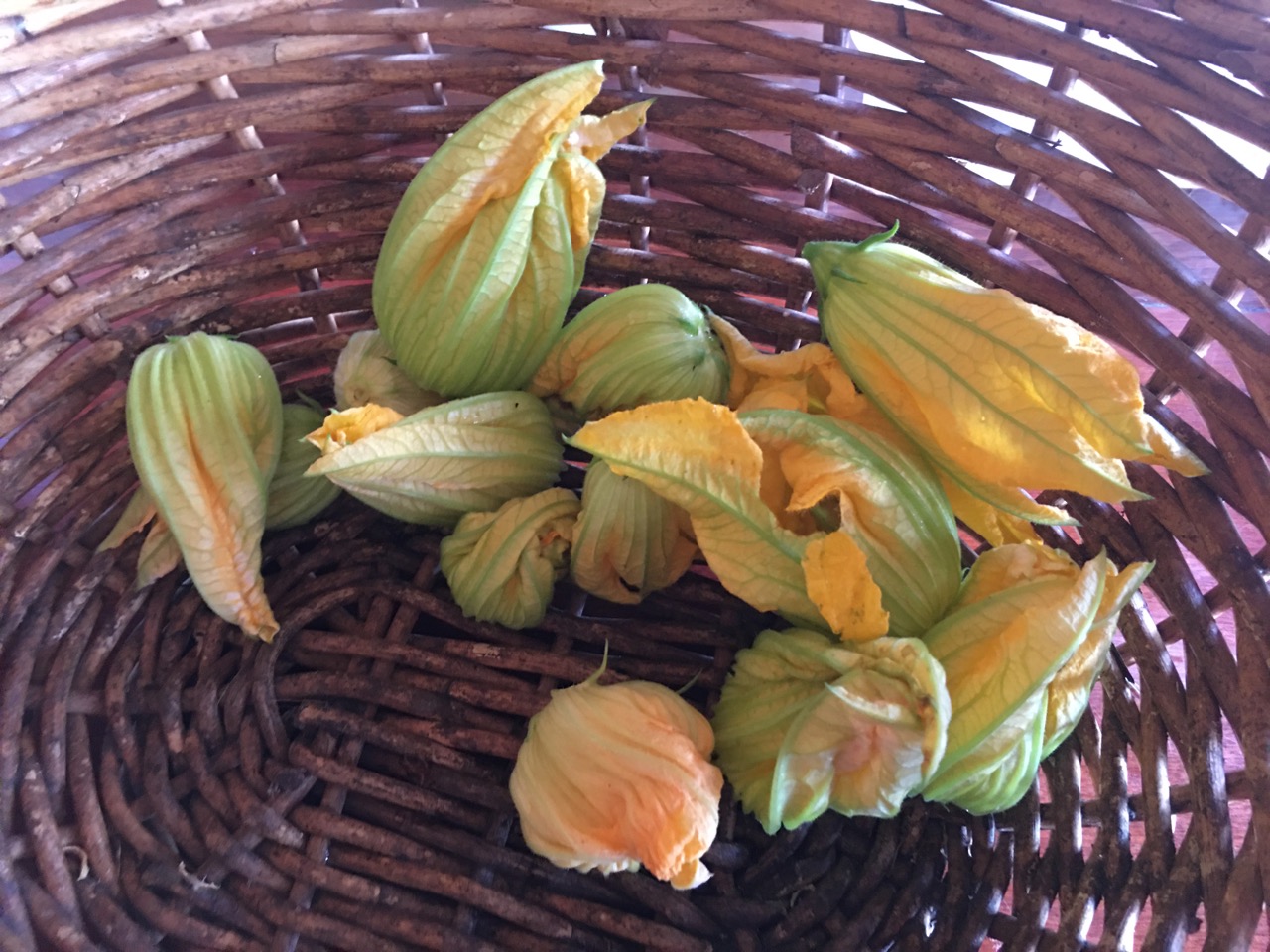
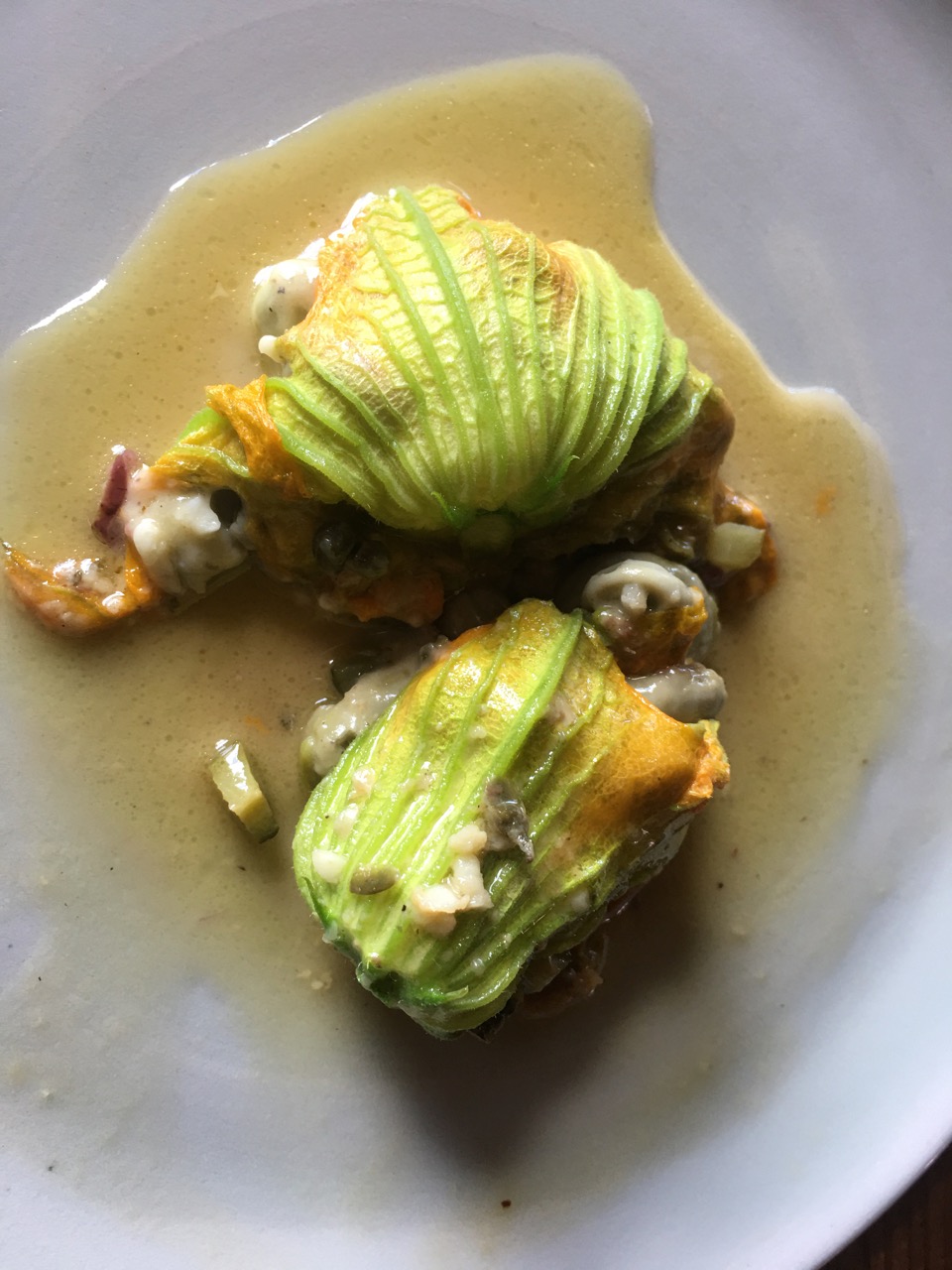
I stuff the zucchini flowers with broad beans, olives, cheese and some chopped gherkins. Not my filling of choice, but I am committed to use what we have in the garden and live with the seasons. We have a lot of broad beans at the moment, and

the last of the winters cauliflowers.

We eat the cauliflower raw with just a little bit of mayonnaise. It makes a lovely entrée.