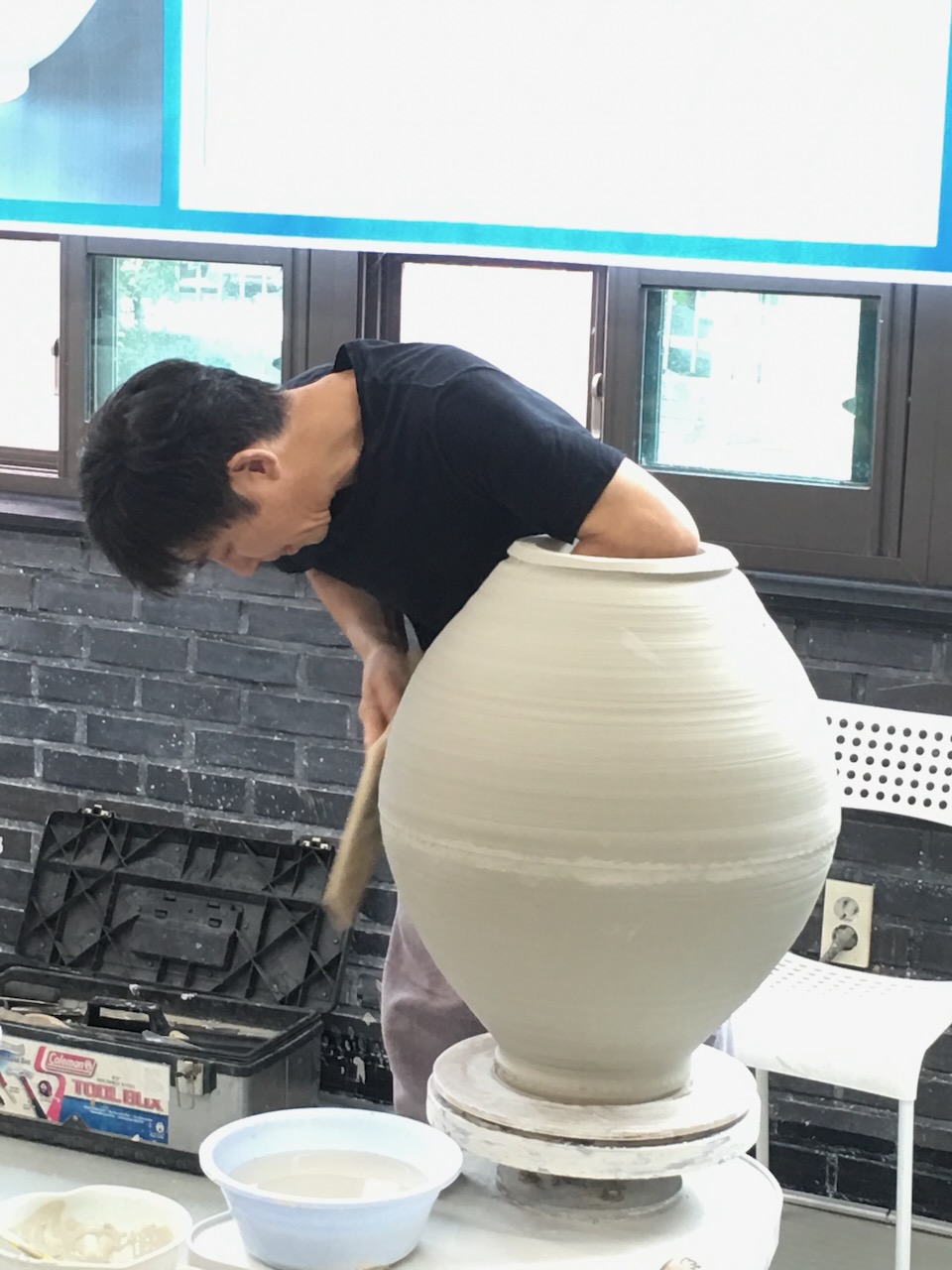
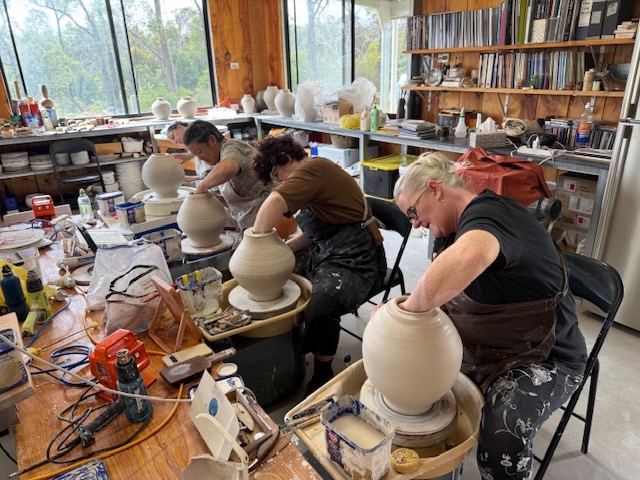
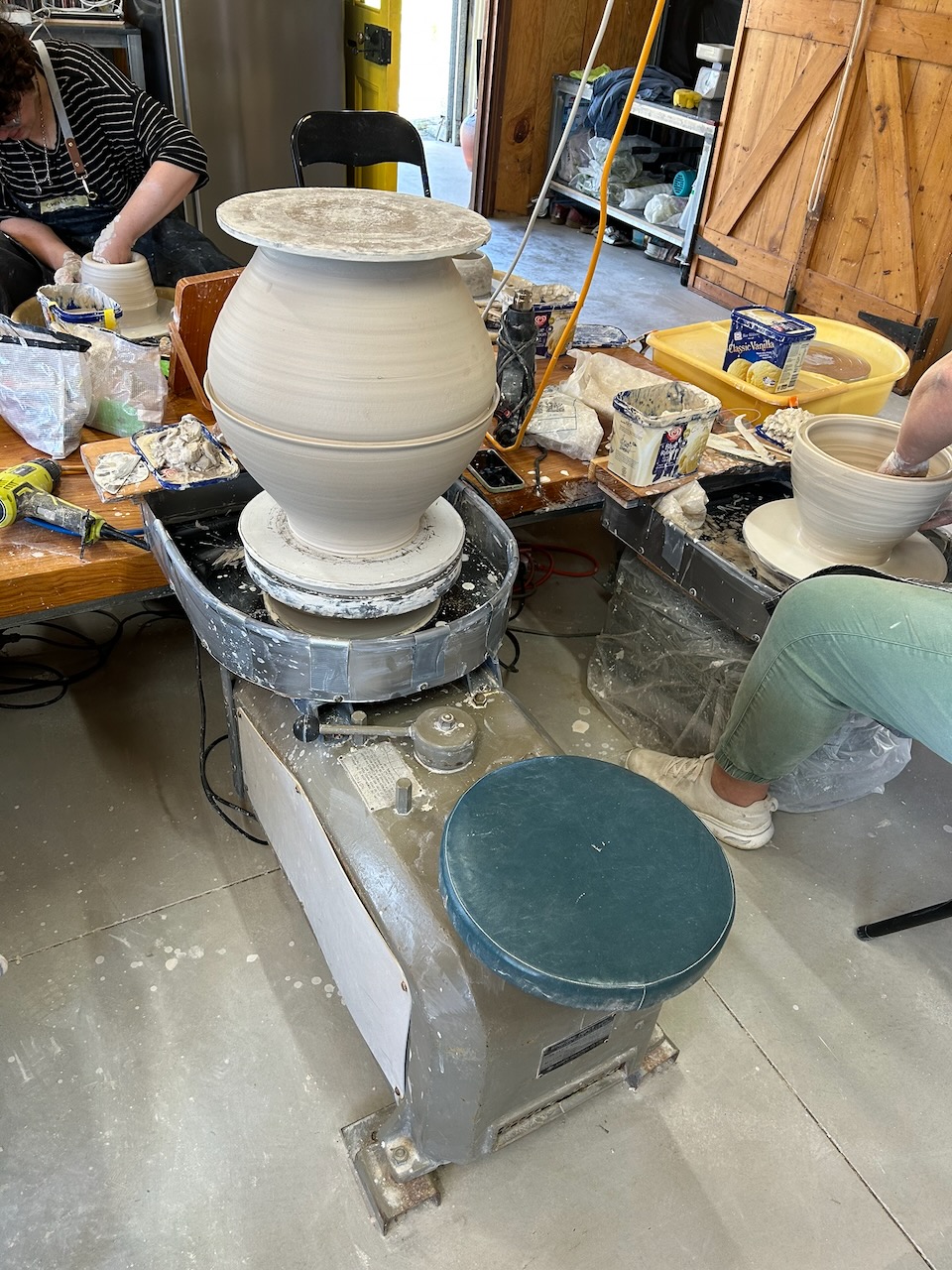
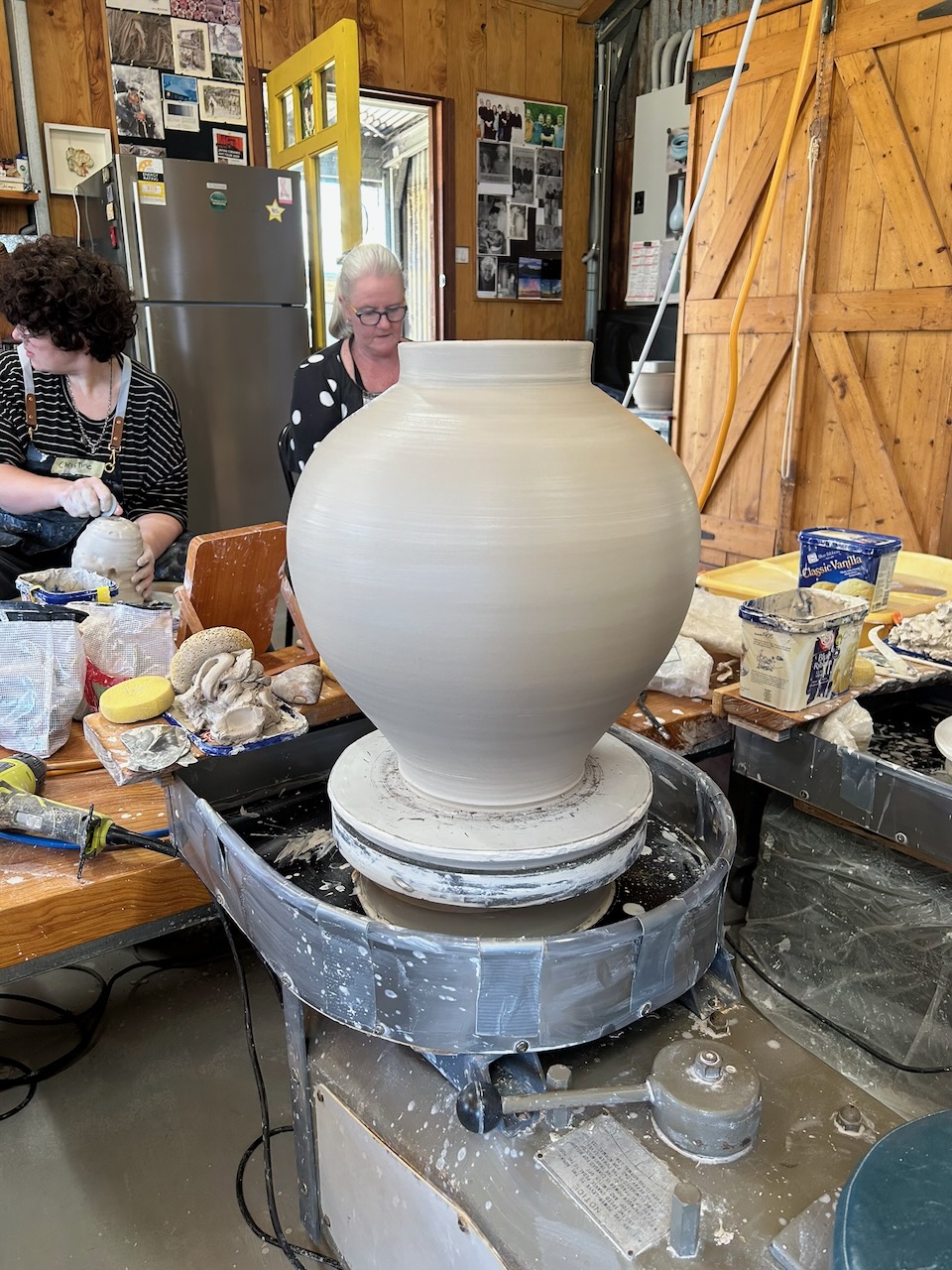
Moon Jar Summer School completed

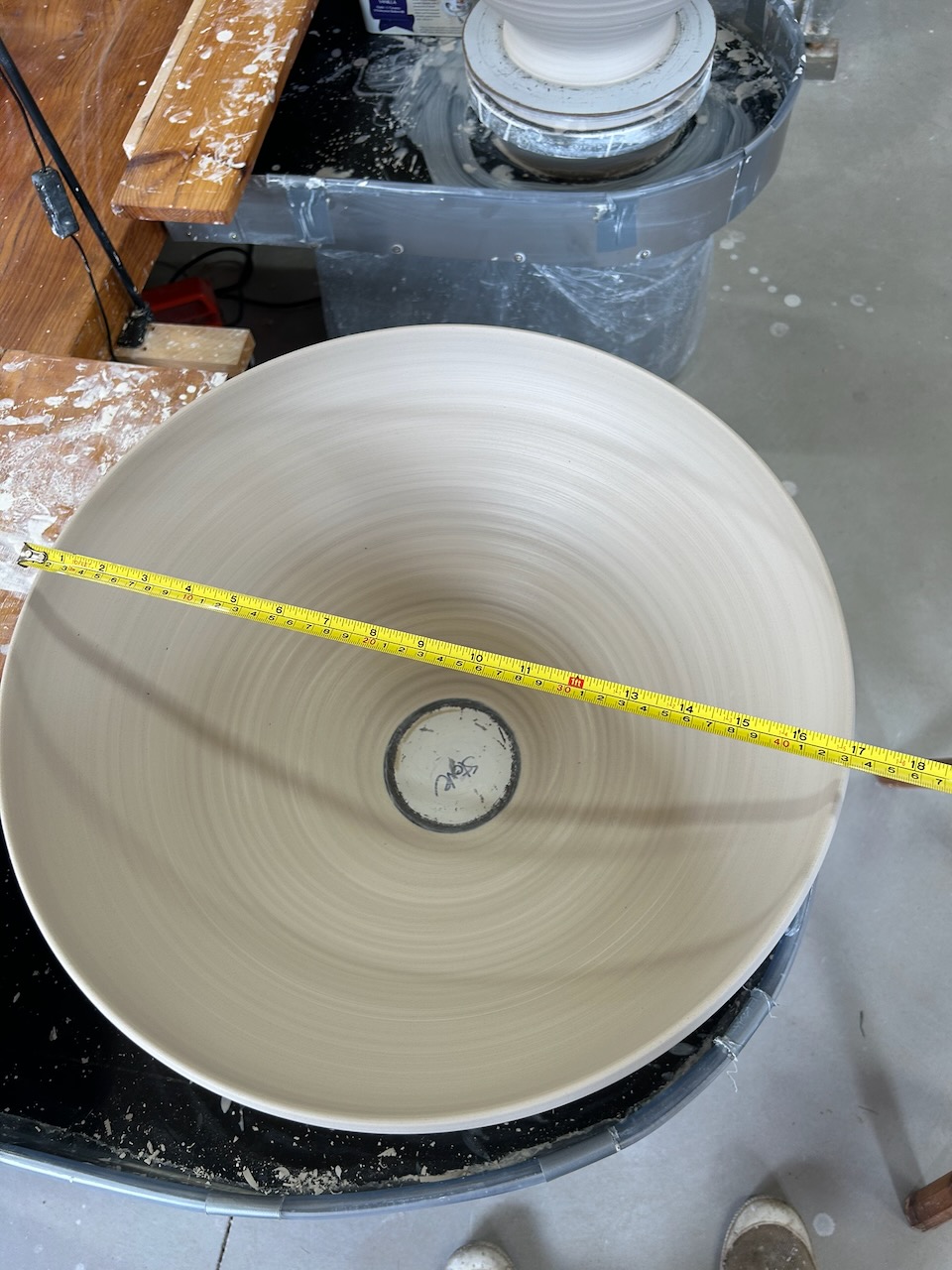
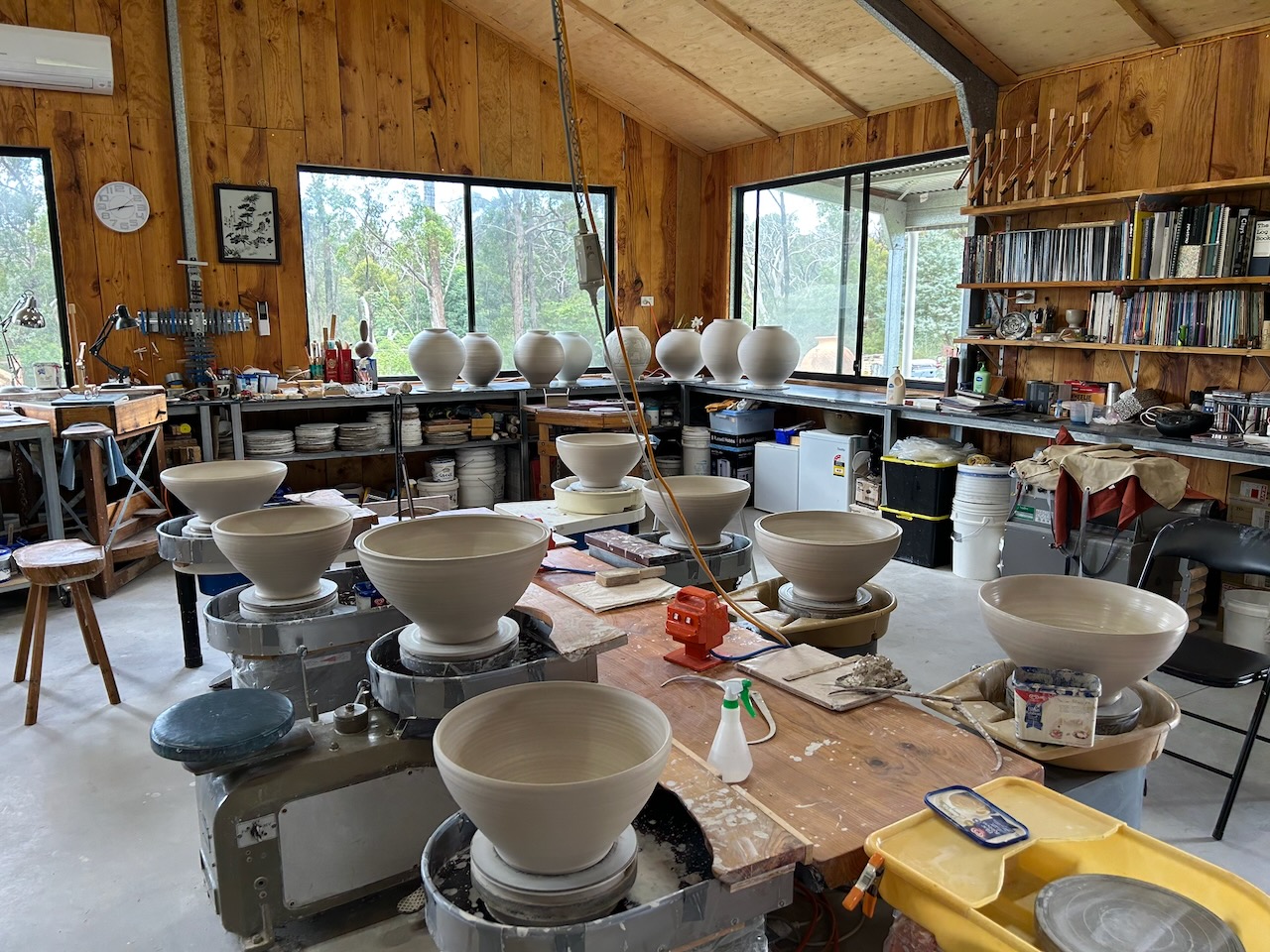
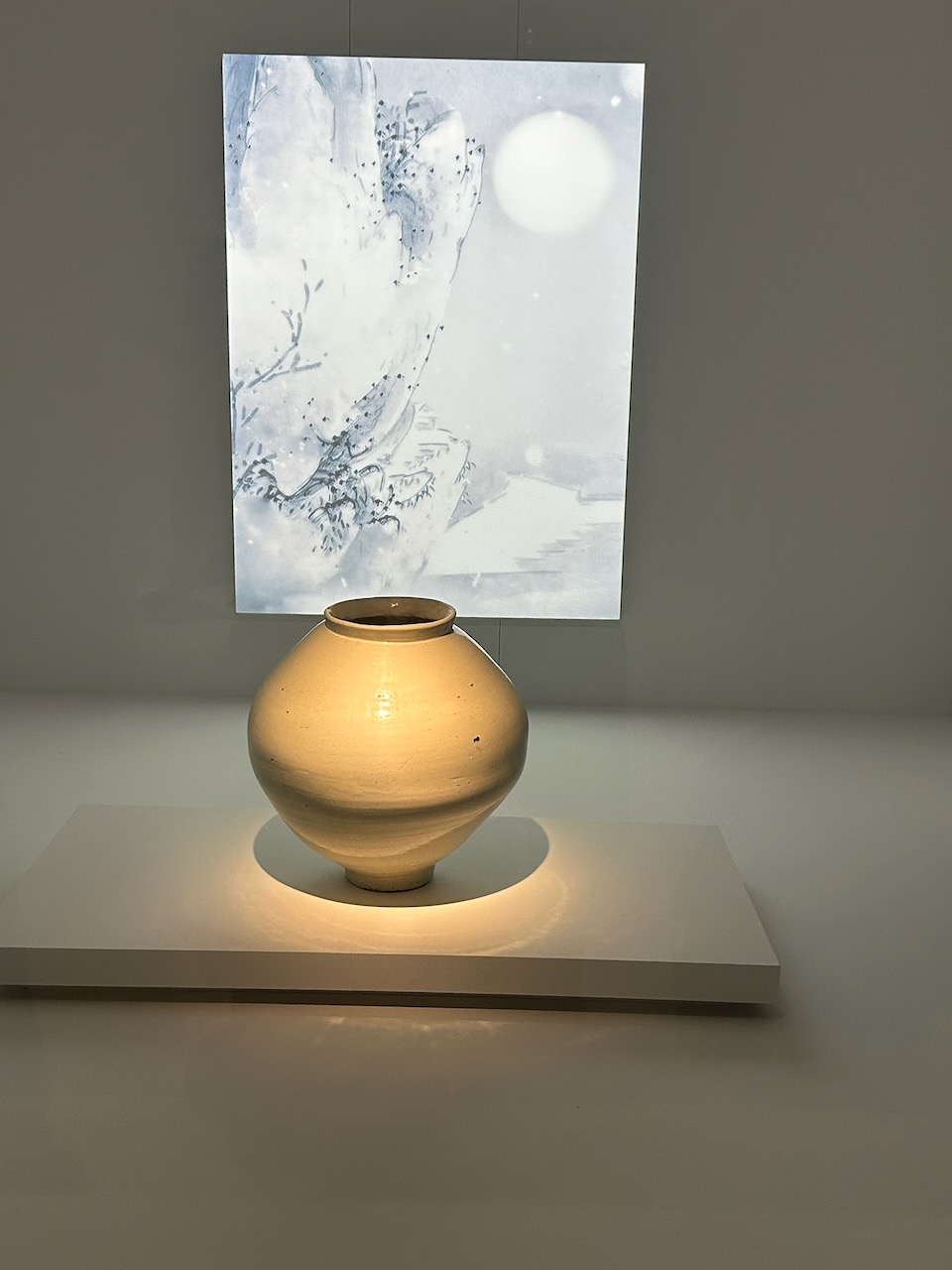
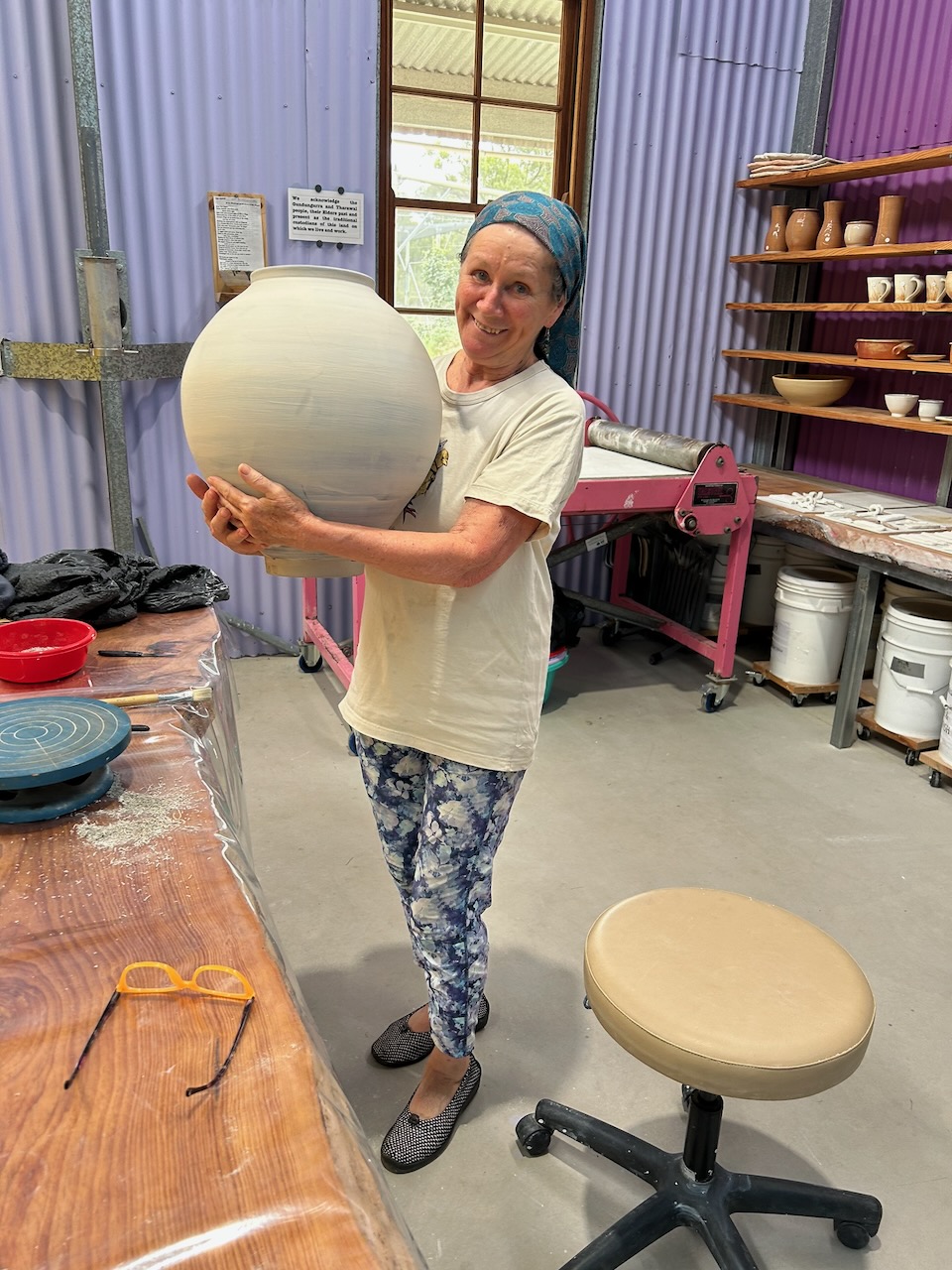
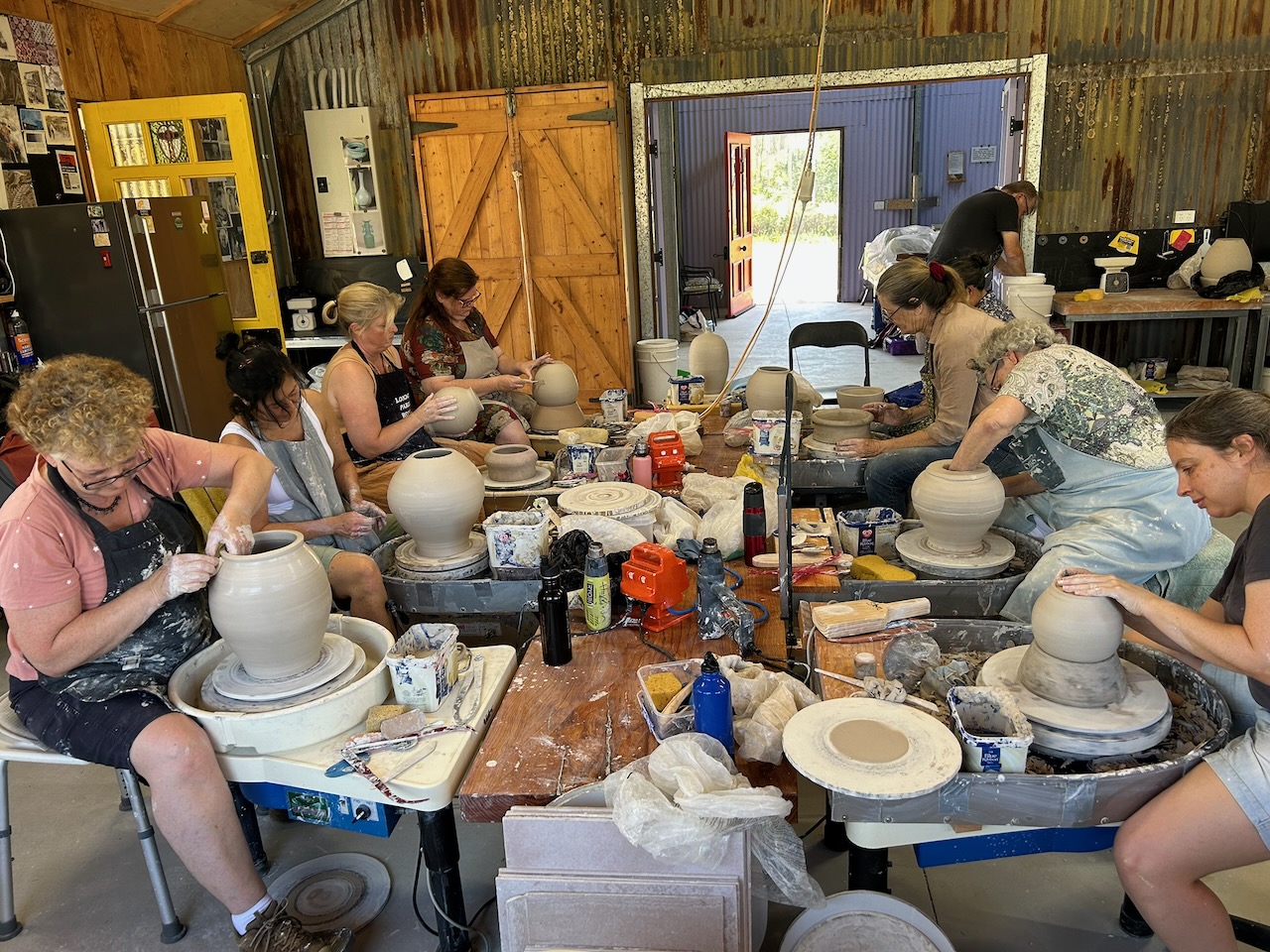
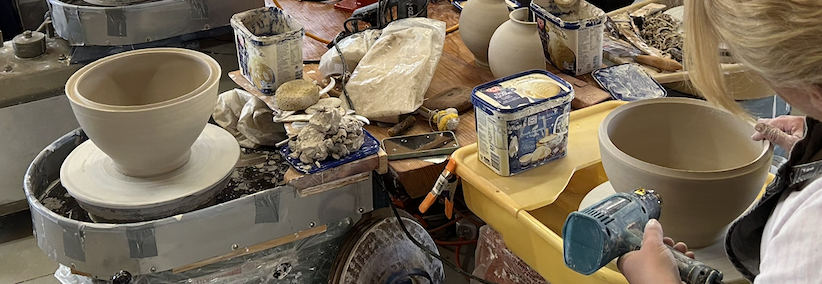
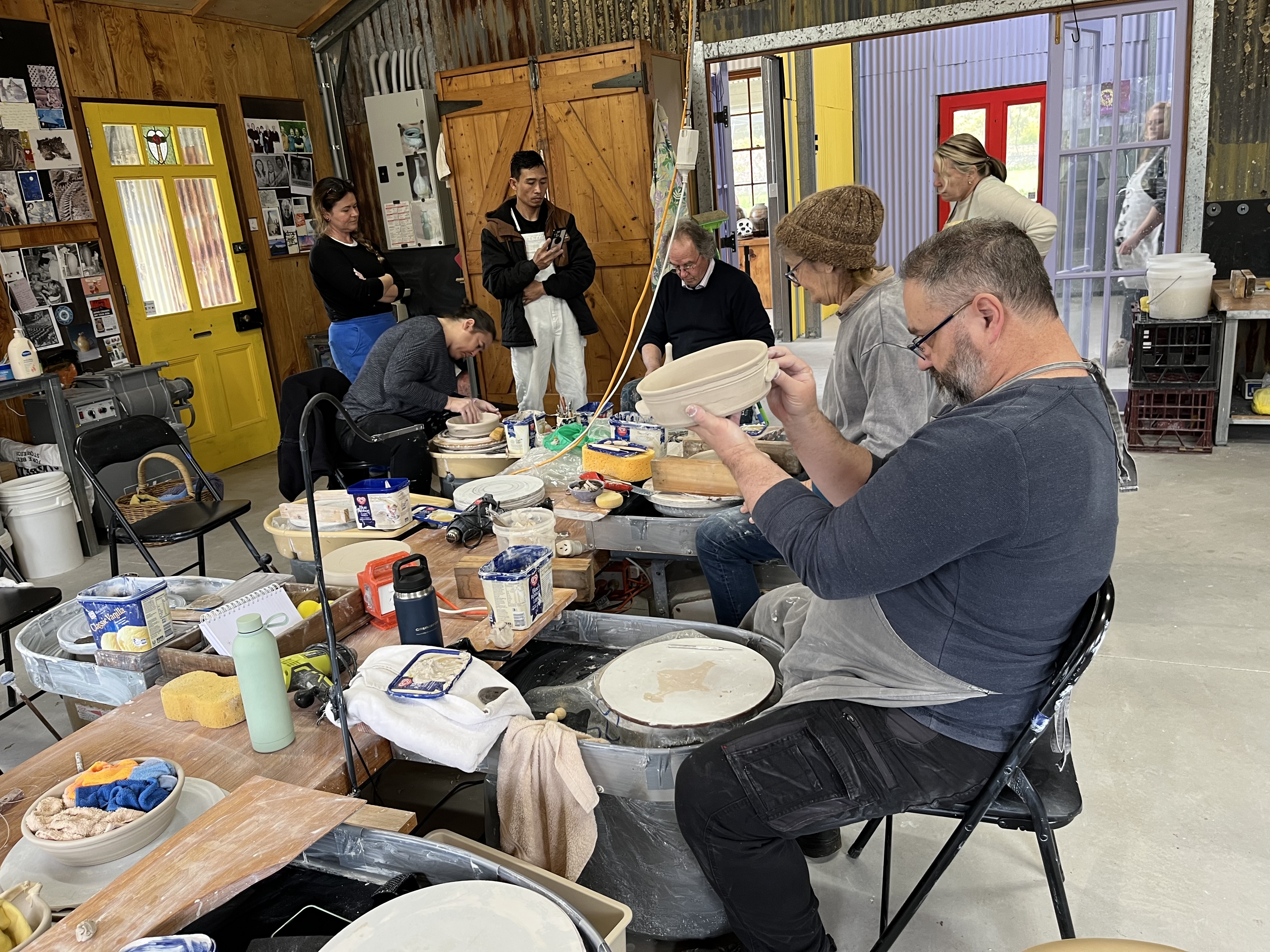
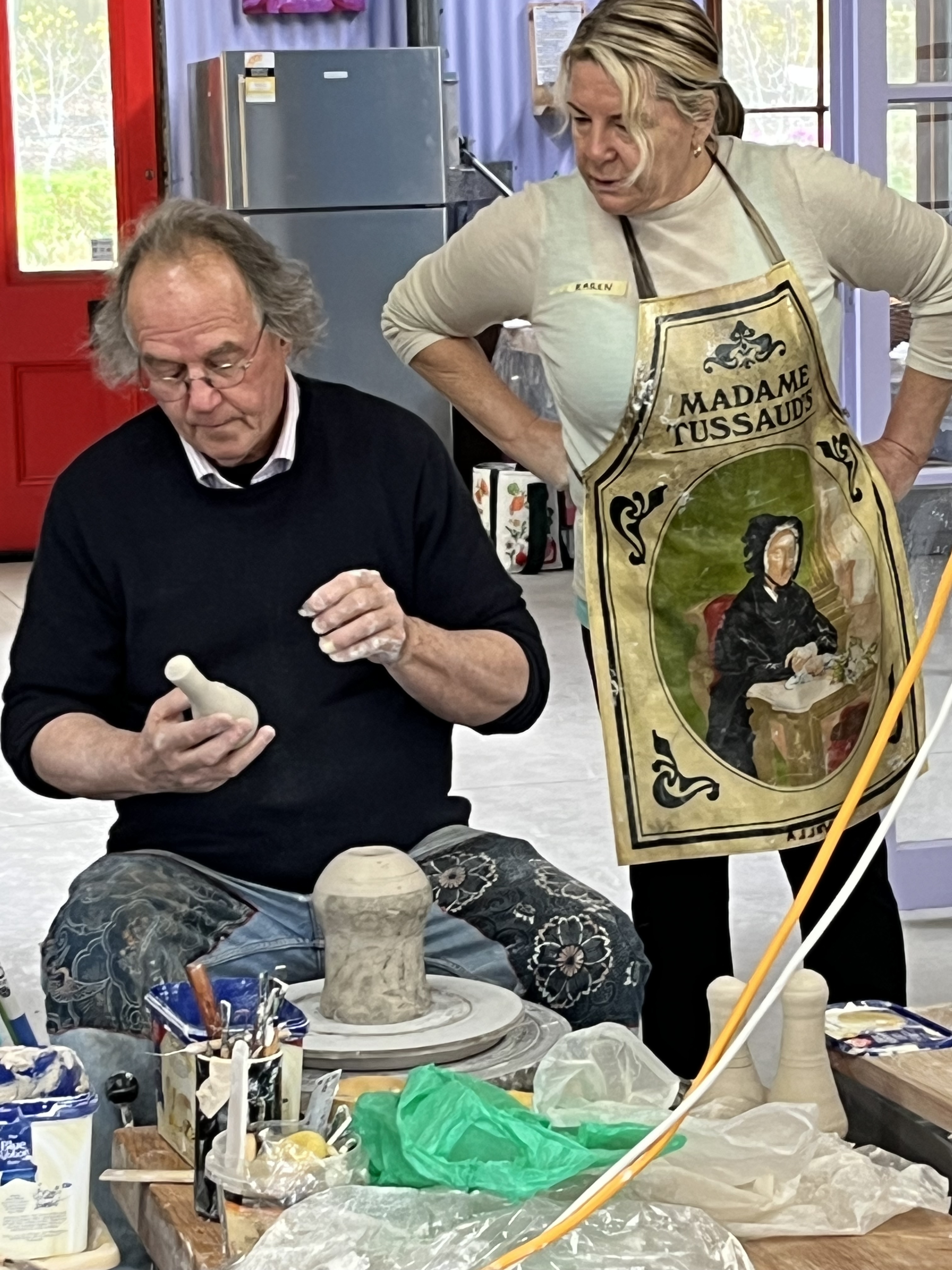
We have just completed our four day summer school, learning some of the techniques involved in the making of Korean Moon Jars. We made moon jars at the time of the full moon! Inspiration.

Moon Jars aren’t easy.

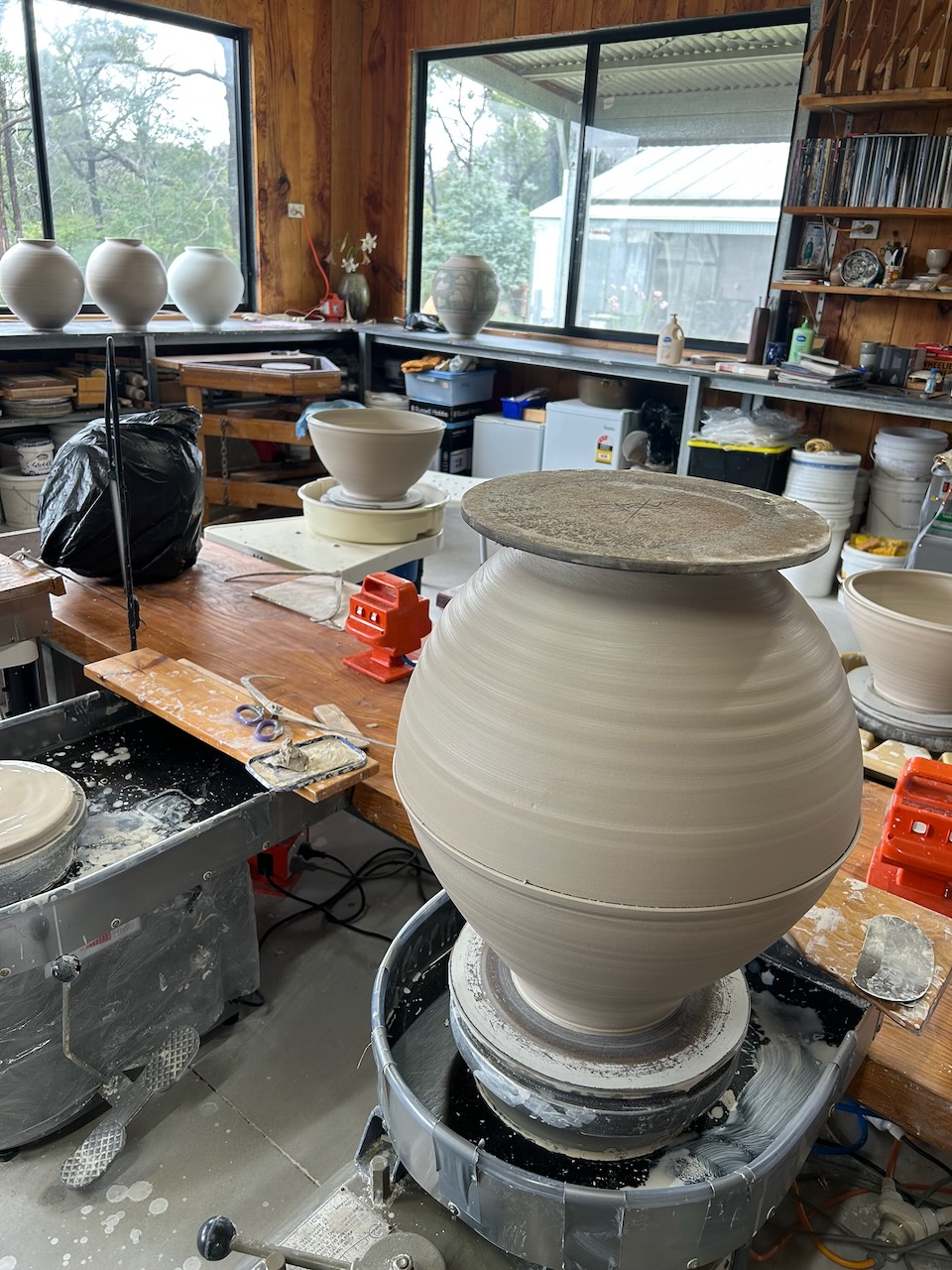
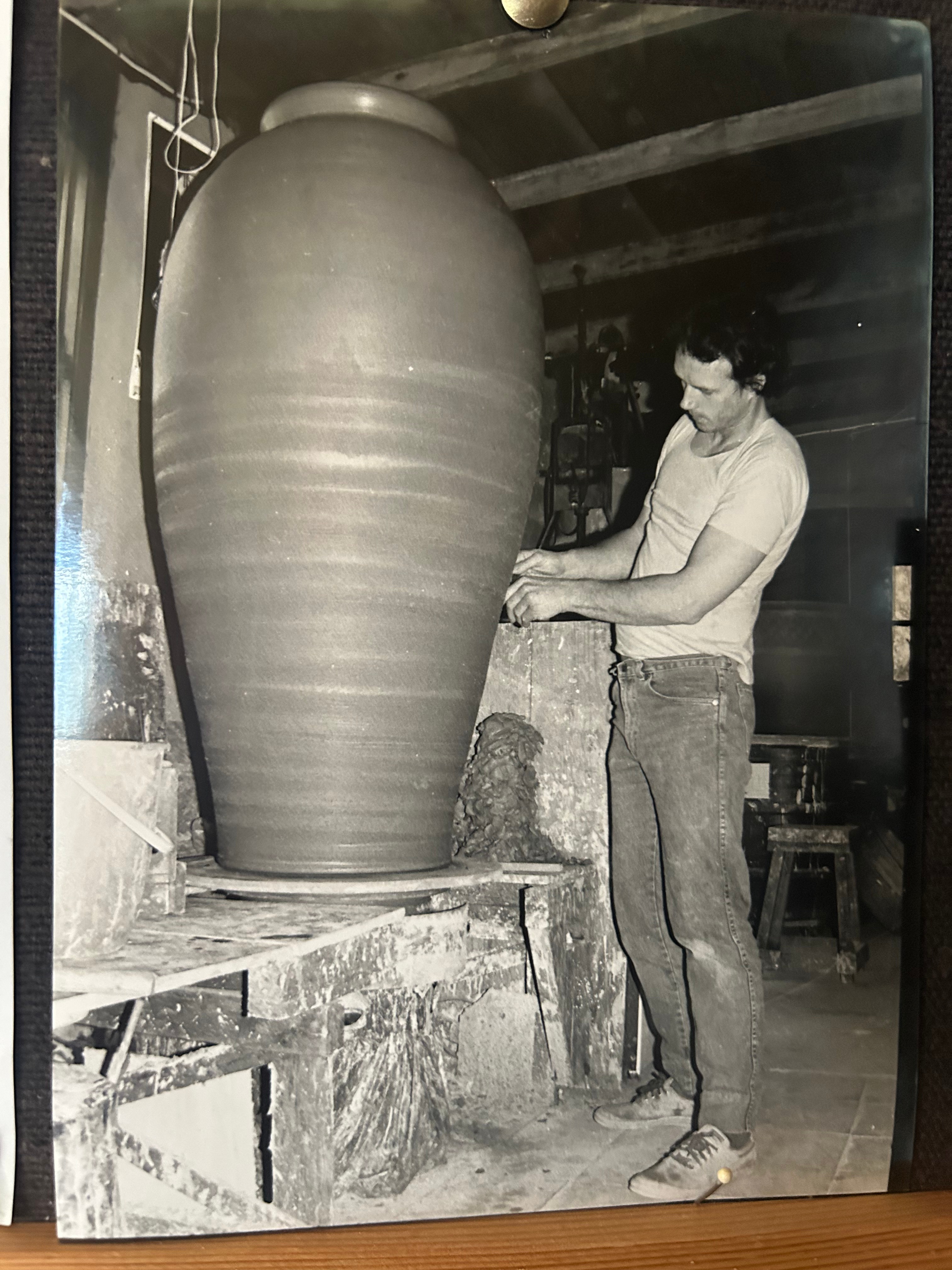
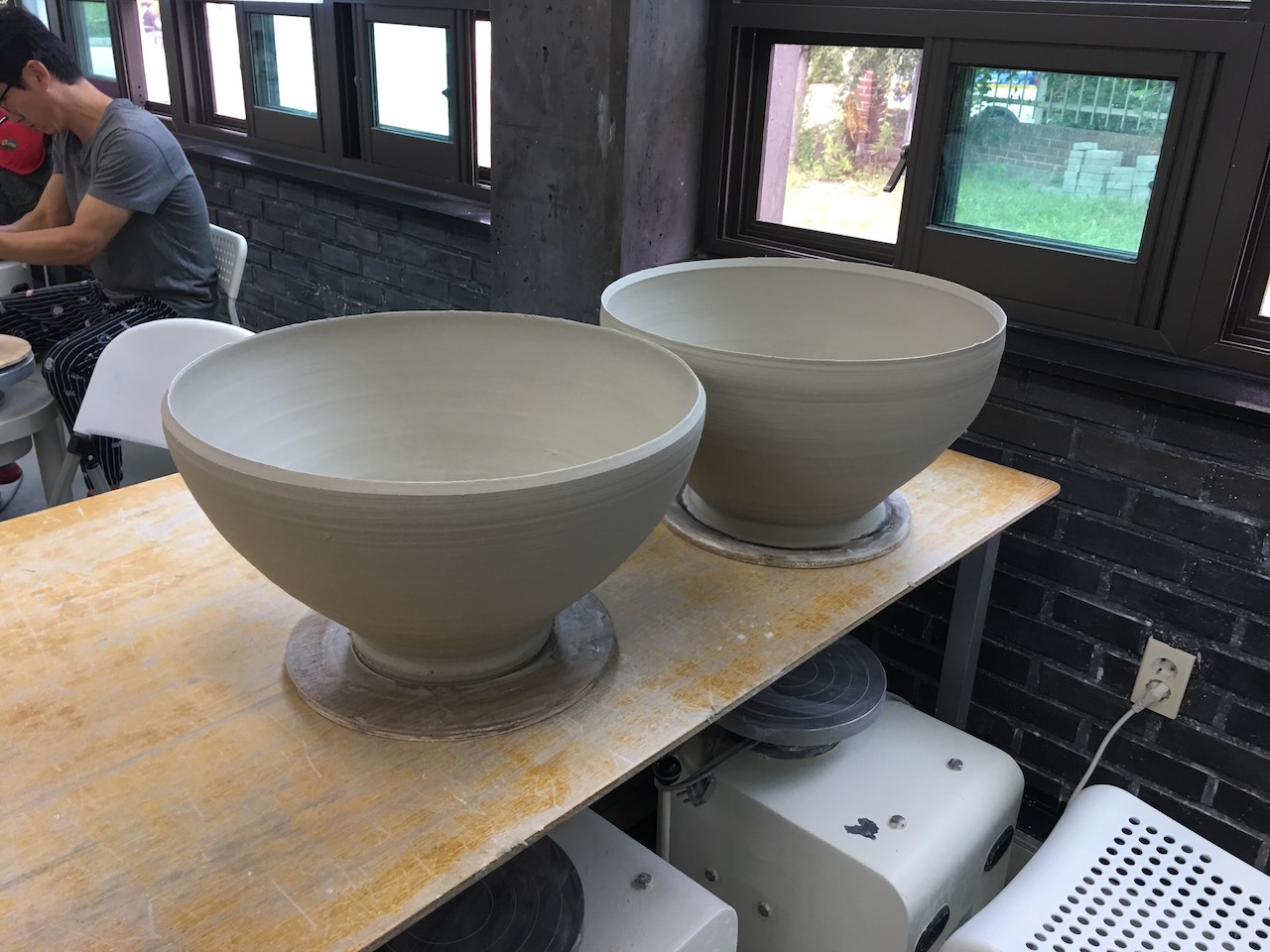
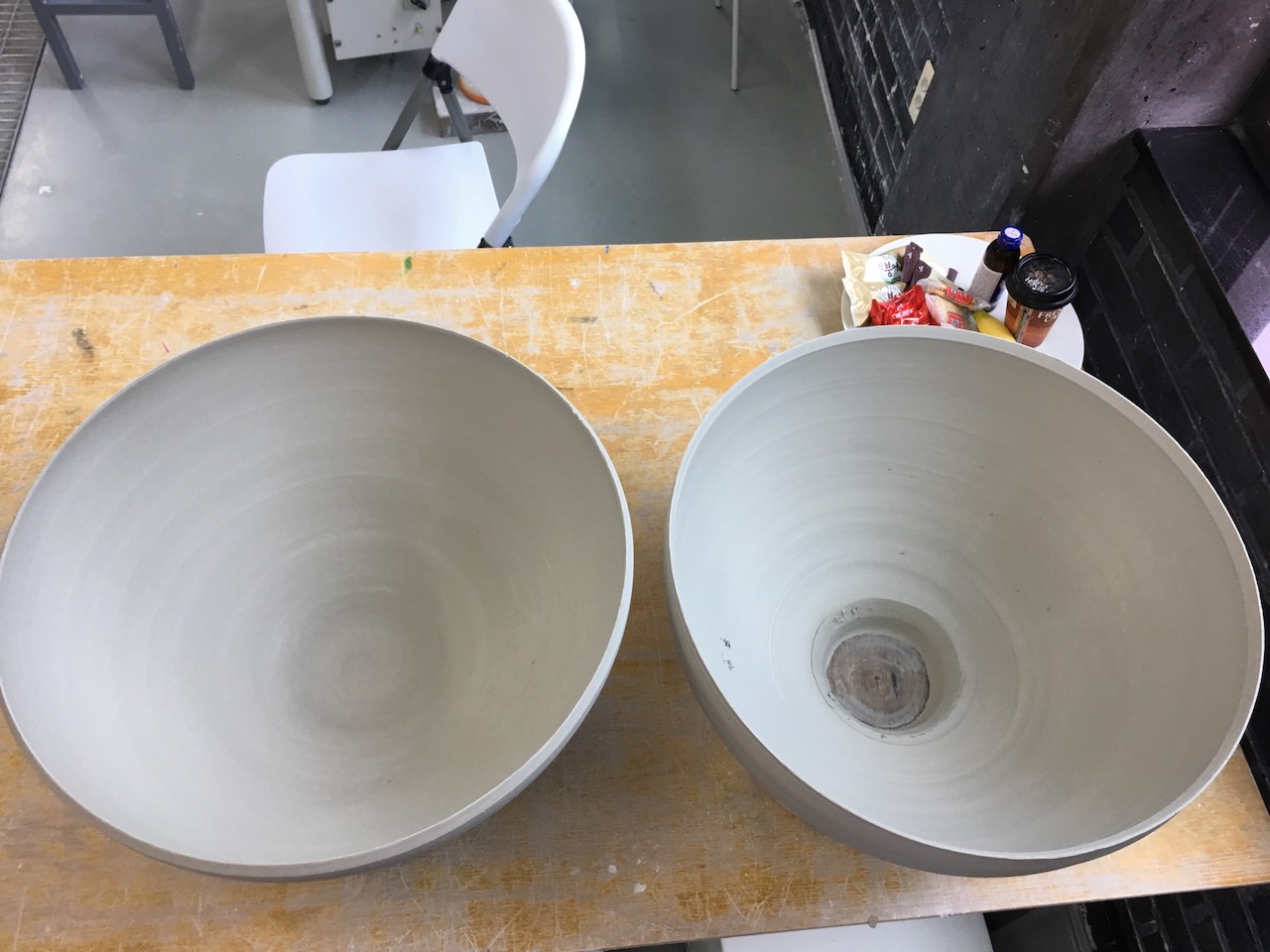
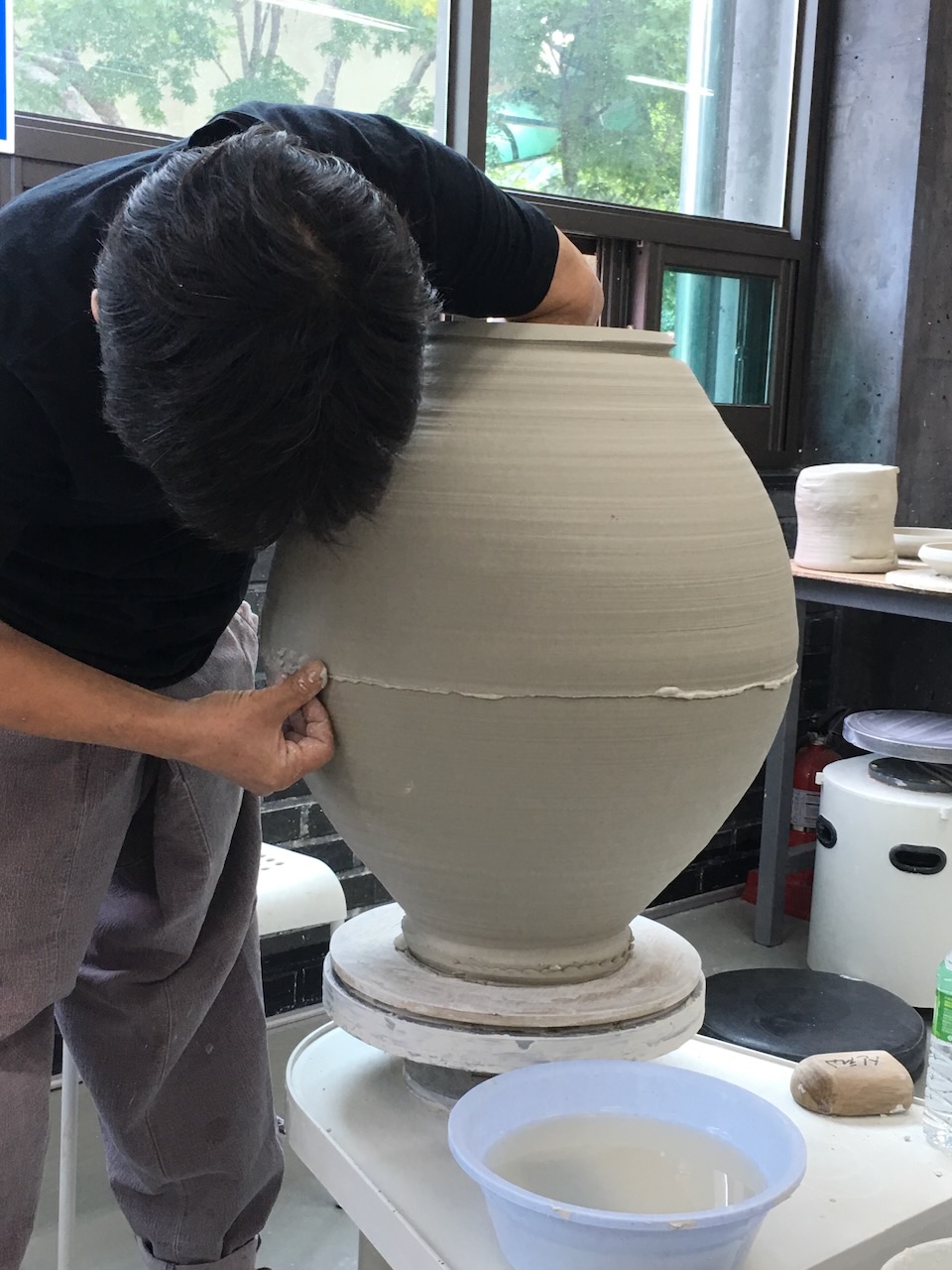
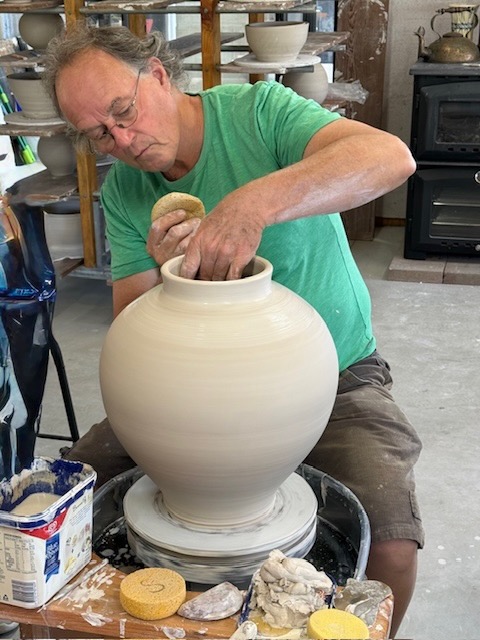
To make these big, round, full shapes, we practiced making the spherical forms in two pieces, which is the most common technique used in Korea for this difficult shape. There are a few virtuoso throwers who can make such a shape in one piece on the wheel, but very few. I’m certainly not one of them. All the workshops that I attended in Korea over the years, all made their Moon Jar forms in two pieces. Even the 14th generation, National Treasure, Moon Jar master, whose workshop I visited, had a throwing room full of thrown 1/2 pieces – bowl forms – stiffening up, ready for assembly the next day.

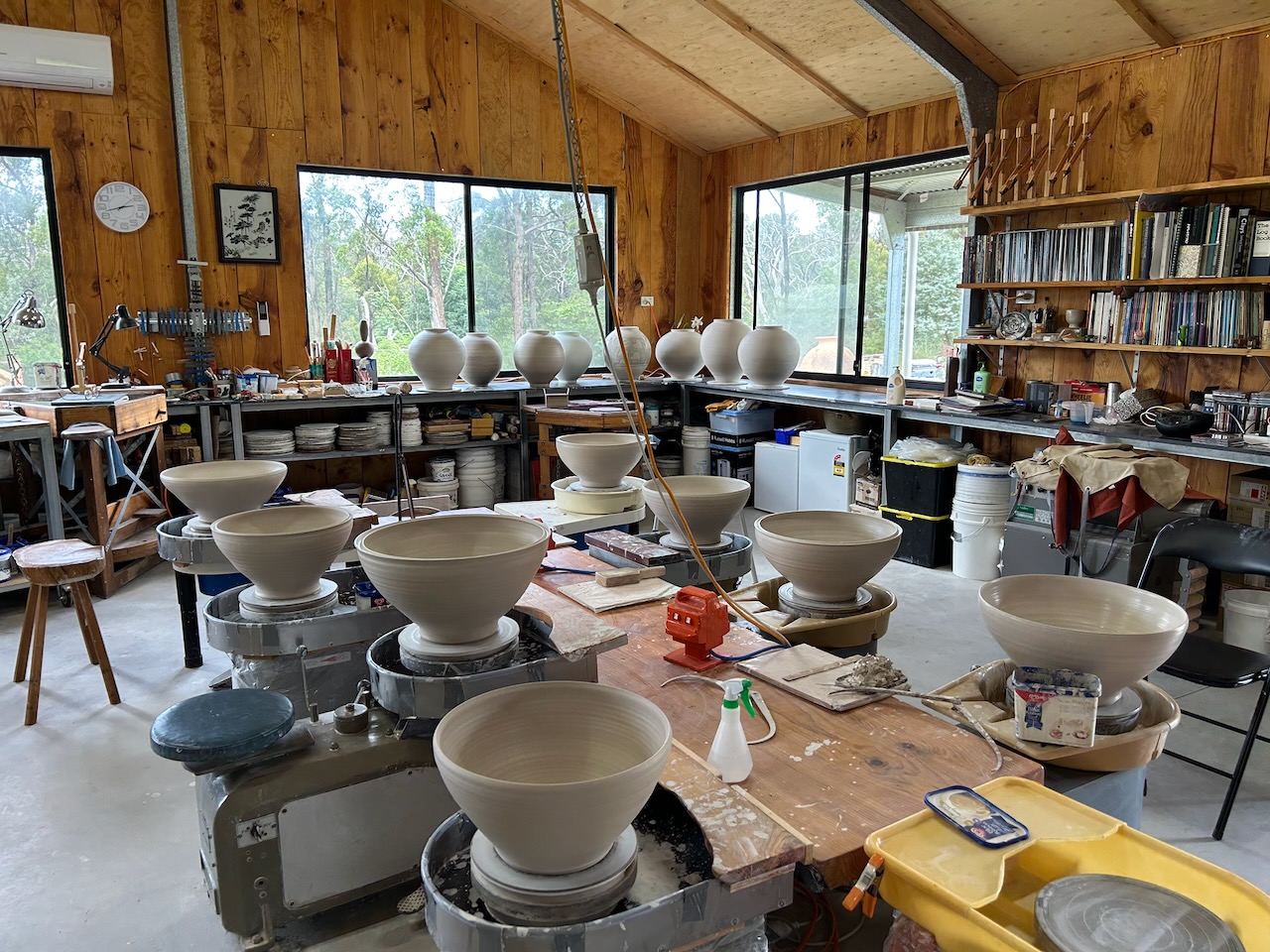
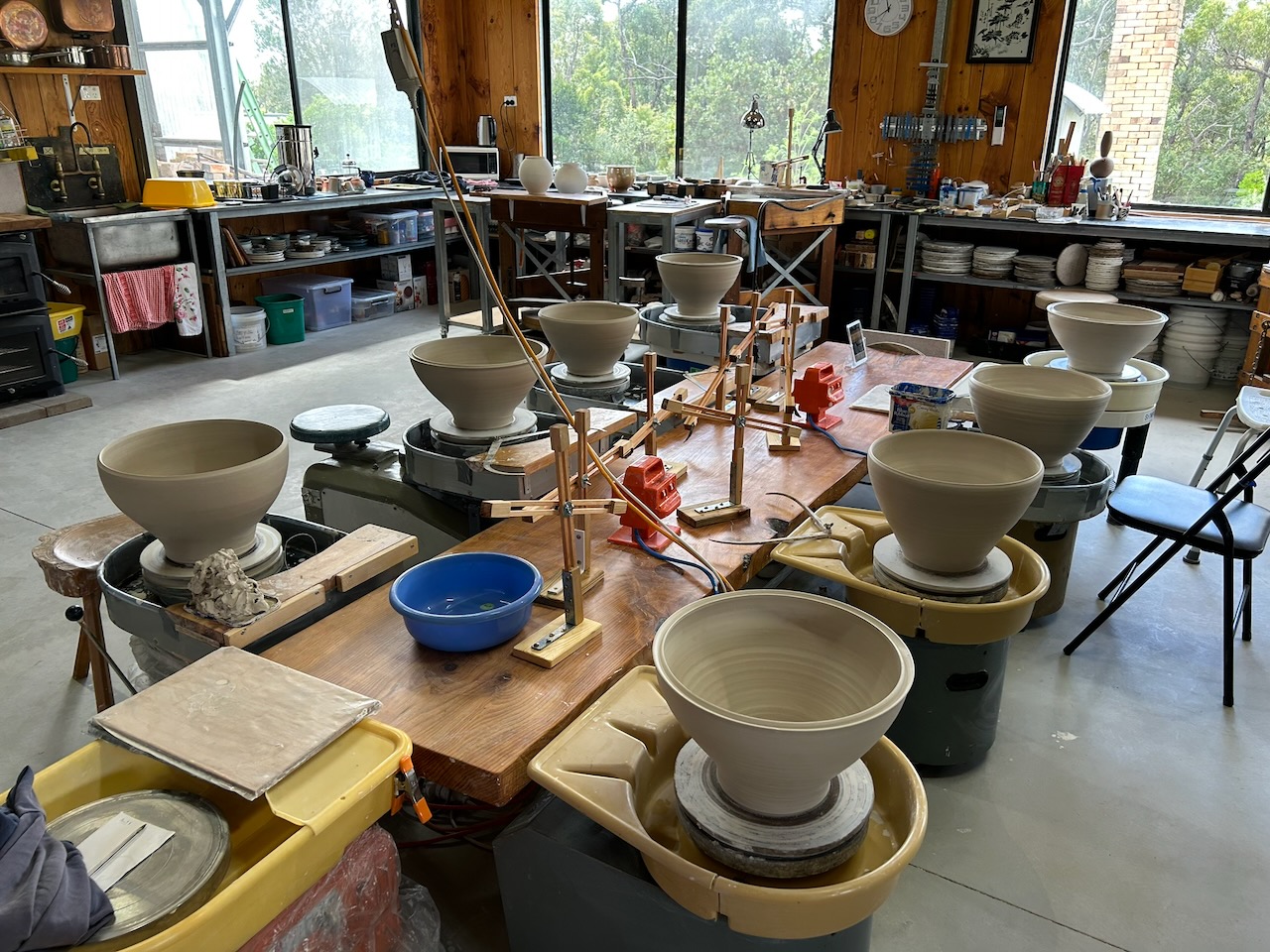
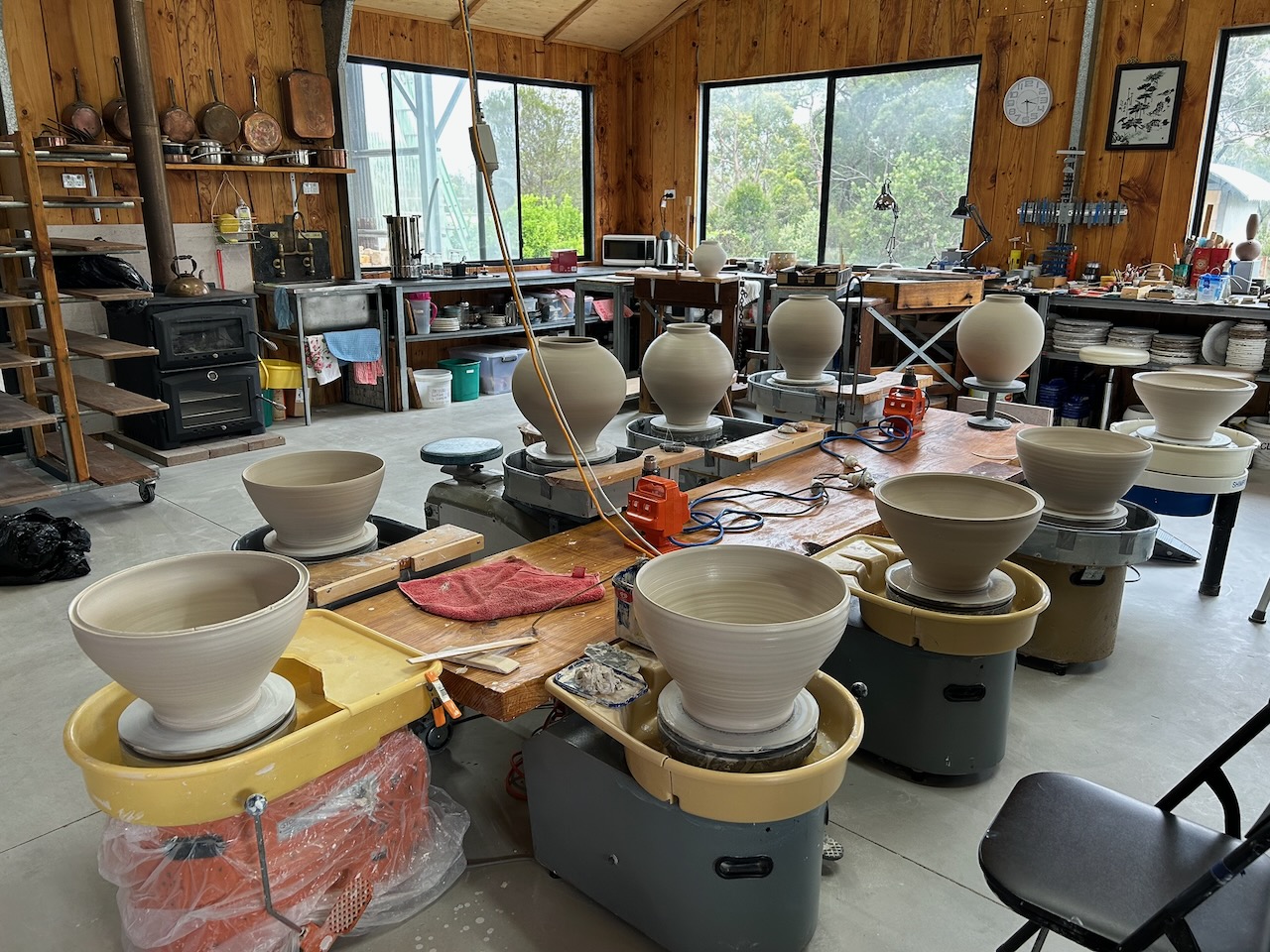
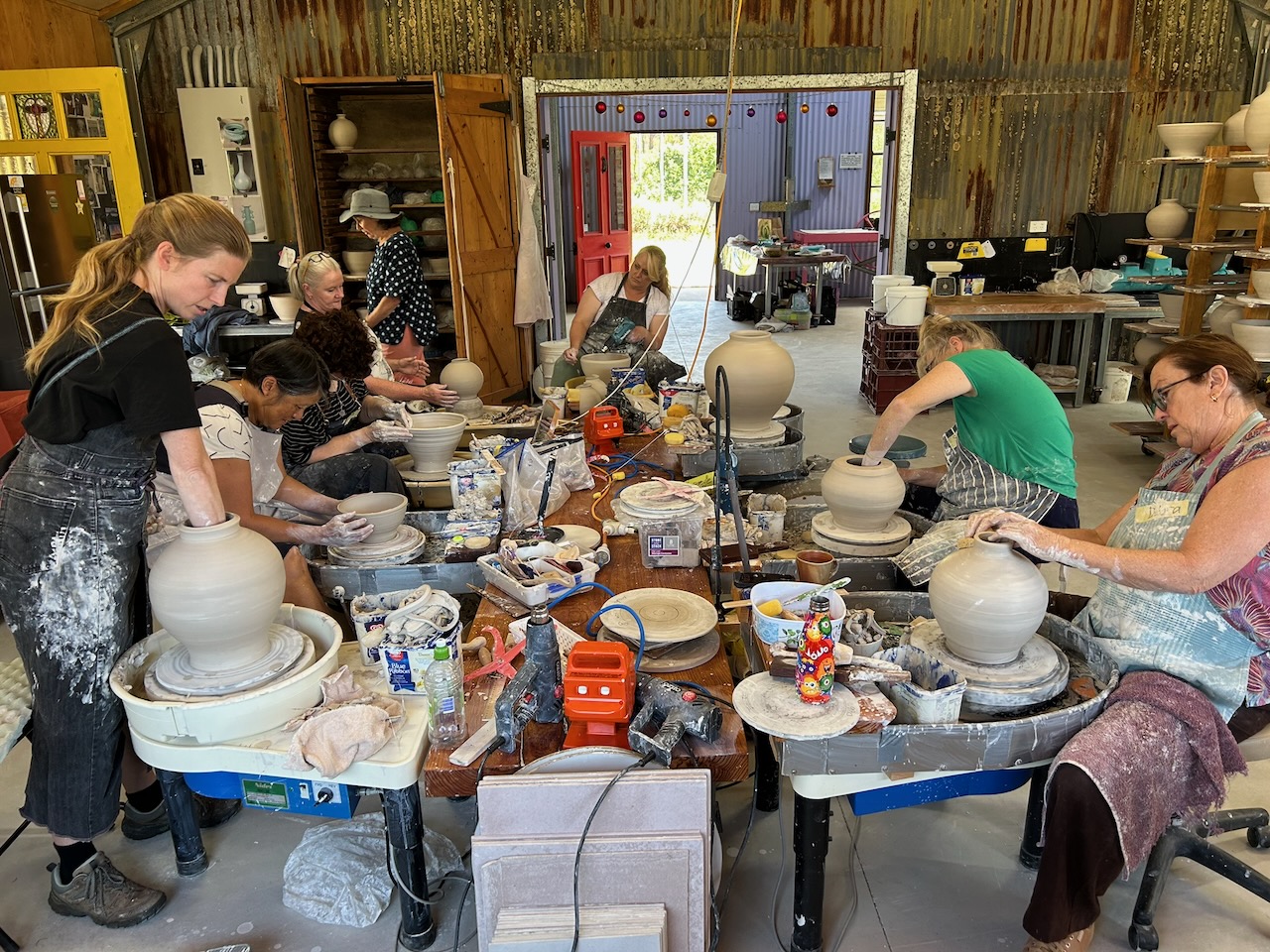
So I decided to teach this two part technique. We started with 1 kg to 1.5kg, then added another kilo each day, ending up with 4 kg. The object wasn’t to make full size Moon Jars. The purpose was to learn the technique of throwing and joining fat round forms. Repetition is very important in learning. We practised ’non-attachment’, if the pot wasn’t going well, then it is best to put the clay back through the pug mill and start another one. Some of these students came here last year to learn to make tall joined forms, so were familiar with the workshop and one of the joining techniques.

There are at least 3 common ways to construct the joint when assembling the 2 bowl-shaped halves used to make a Moon Jar. Each with its own level of difficulty. The easiest to throw and assemble is the flat top joint. We studied this in last years Summer School here, where we threw and assembled complex forms in 2, 3 or even 4 pieces. We were working fast and wet, so the flat top joint works very well. The two surfaces meld into each other perfectly. It also allows for some sloppiness in the measuring and sizing. The two pieces can be easily massaged into shape and it is a great way to learn a lot quickly. However, It works best on the more vertical forms. 

That said, it is the technique taught in Korea’s prestige ceramic university ‘Dangook’ university. I have watched the technique of the master thrower – Professor of Moon Jar making – teaching a throwing class using this technique. As long as you get everything level, concentric and perfectly aligned, it is the easiest to master. He made the two half-pots one day and assembled them the next. So that they were slightly stiffened. He used thick throwing slip slurry on the joint.

The next level of difficulty is the tongue and groove ‘V’ joint, where the rims of the two halves are thrown with a ‘V’ shaped hollow in the base section rim. The female part?, and the other half, the top section, is thrown with a ‘V’ shaped pointed top on the rim. The male part? These two complimentary sections fit together perfectly(hopefully), and marry up to make a very sturdy joint. But! Only if they are well formed and accurately measured.  The ‘top hat’ technique is used to join the two bowl forms. The base is firmly secured to the wheel head, then the other half is picked up by the batt on which it was thrown and quickly inverted and placed on the bottom half. Remember not to cut the top half bowl off its batt until it is inverted and placed on the lower half!

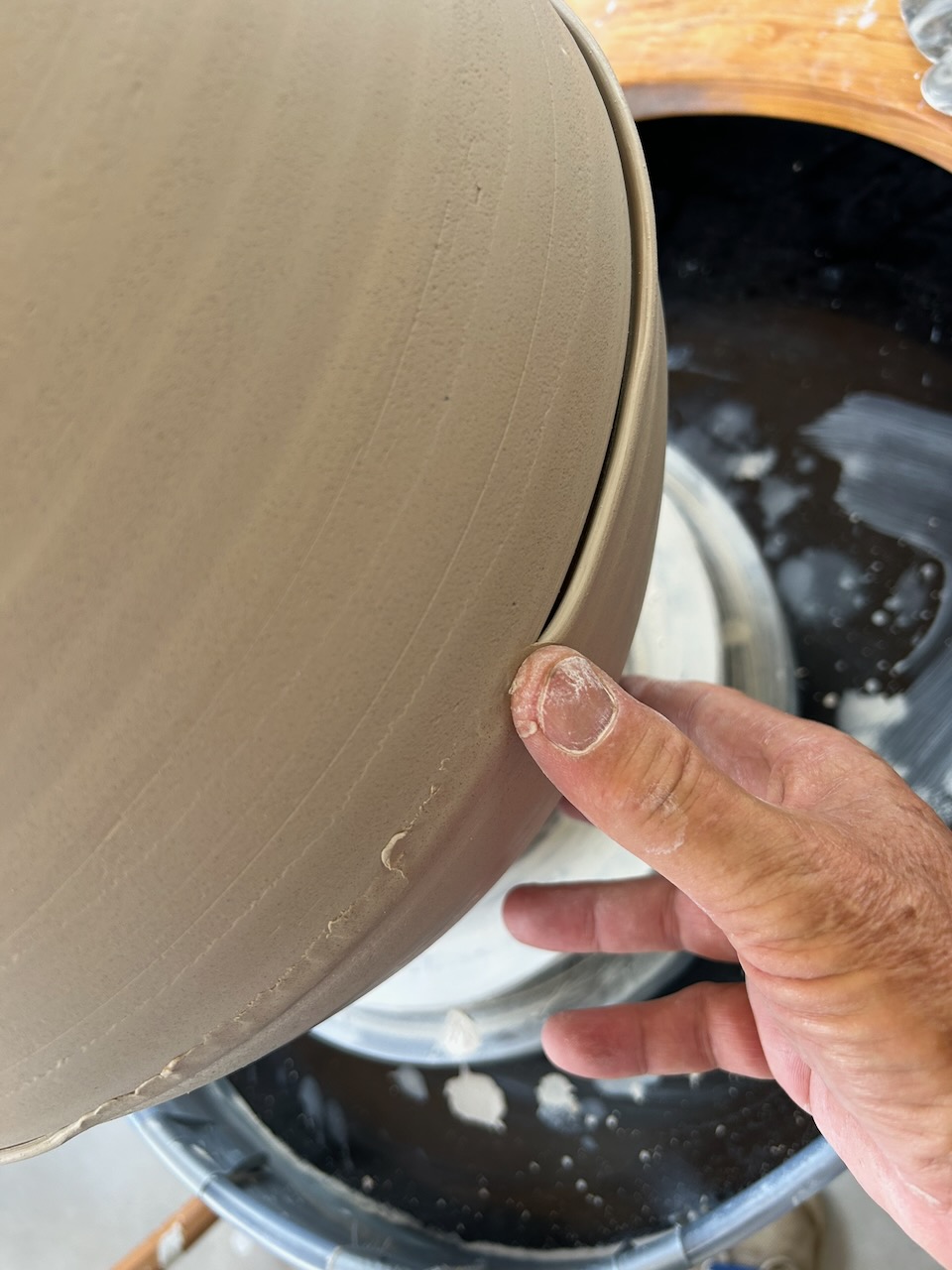
Taking the time to measure accurately is of the essence. It is also necessary to ensure that both ‘bowls’ are perfectly round. If they are thrown with a slightly oval kink in them, then a single measurement of one place on the diameter won’t be accurate. This joint requires patience and accuracy in the measuring. However, If you find that there is a slight difference in the two diameters when placing them together, as long as it is only minor – 5 to 8 mm.. You can cut off the top batt and place your hand inside the top bowl, then gently massage the ‘positive’ rim into the ’negative’ groove until it fits exactly. This will ensure a sound fit and secure joint, but may result in a slight wobble in the overall form. Probably not terminal though.

The beauty of this technique is that you can ’stiffen’ the bottom section by heating it a little. But make sure to measure it first. Then you can invert the top section straight away and continue throwing. This means that the form is still ‘fluid’ and can be reshaped slightly to make sure that you have a unified overall form. It is quite forgiving, but only up to a point. Don’t over do it, or you’ll loose the lot. Apart from being unattached to the pots that you are making, the other lesson of the week is to know when to stop.

The most difficult joining technique involves throwing the rim of each half with a 45o degree complimentary bevel on the rim of each bowl, such that they fit together perfectly. The great difficulty comes when inverting the top half and placing it onto the bottom half. Unless the pots are perfectly round, and exactly measured. They wont fit and there is no way to recover them. Also. If you miss match them slightly, there is a risk that the top half will slide down over the edge of the base. There is nothing ‘flat’ to rest on. Nothing to stop it sliding. The 45 degree surfaces slide past each other freely. Only the perfect accuracy of the fit will hold it in place. I saw this technique demonstrated by a master Moon Jar maker from Incheon, near Seoul. He also made both halves the day before and let them stiffen beforehand, then used thick slip in the joint. With the two stiffened version of this technique, both halves must be thrown to the exact shape that you require to make the full round form complete once married together. There is no possibility of ‘correcting’ the form on the wheel once assembled.

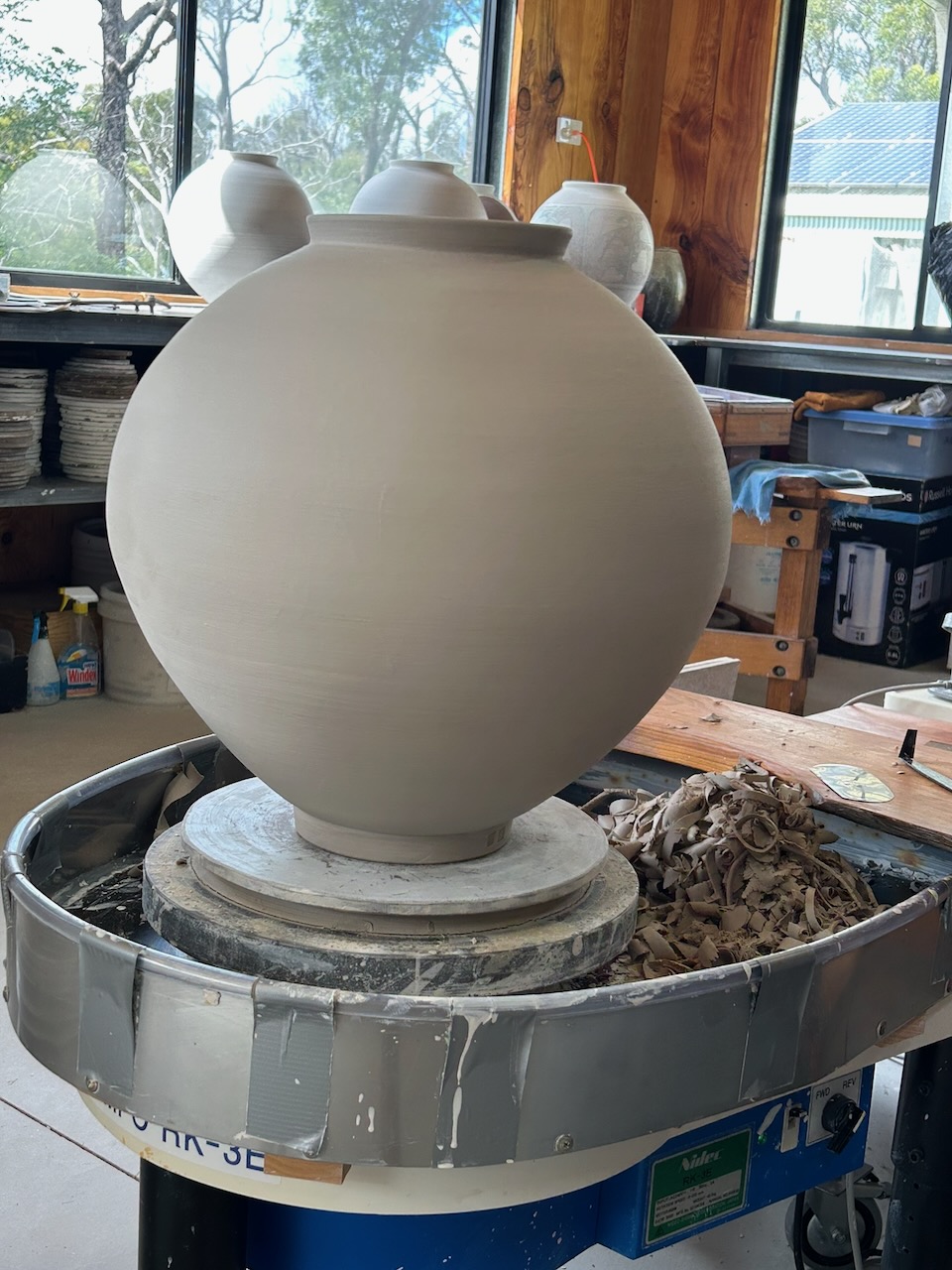
The great virtue of using 2 stiffened forms like this, is that they hold their full, round, ballon-like shape well without collapsing. So you must know exactly what you are doing right from he start. As I pointed out at the beginning of this letter, Moon Jars aren’t easy. But as you start to ‘get’ the form right, and it all starts to come together for you. They are really rewarding.

It doesn’t matter which way that you do it, as long as it sticks together and doesn’t split apart when finishing off the throwing, cracking during drying, or dunting in the firing.

The bottom half is thrown with an more vigorous and upward inflection to the curve, while the top half is a fully rounded form. It takes practice to get the balance right.

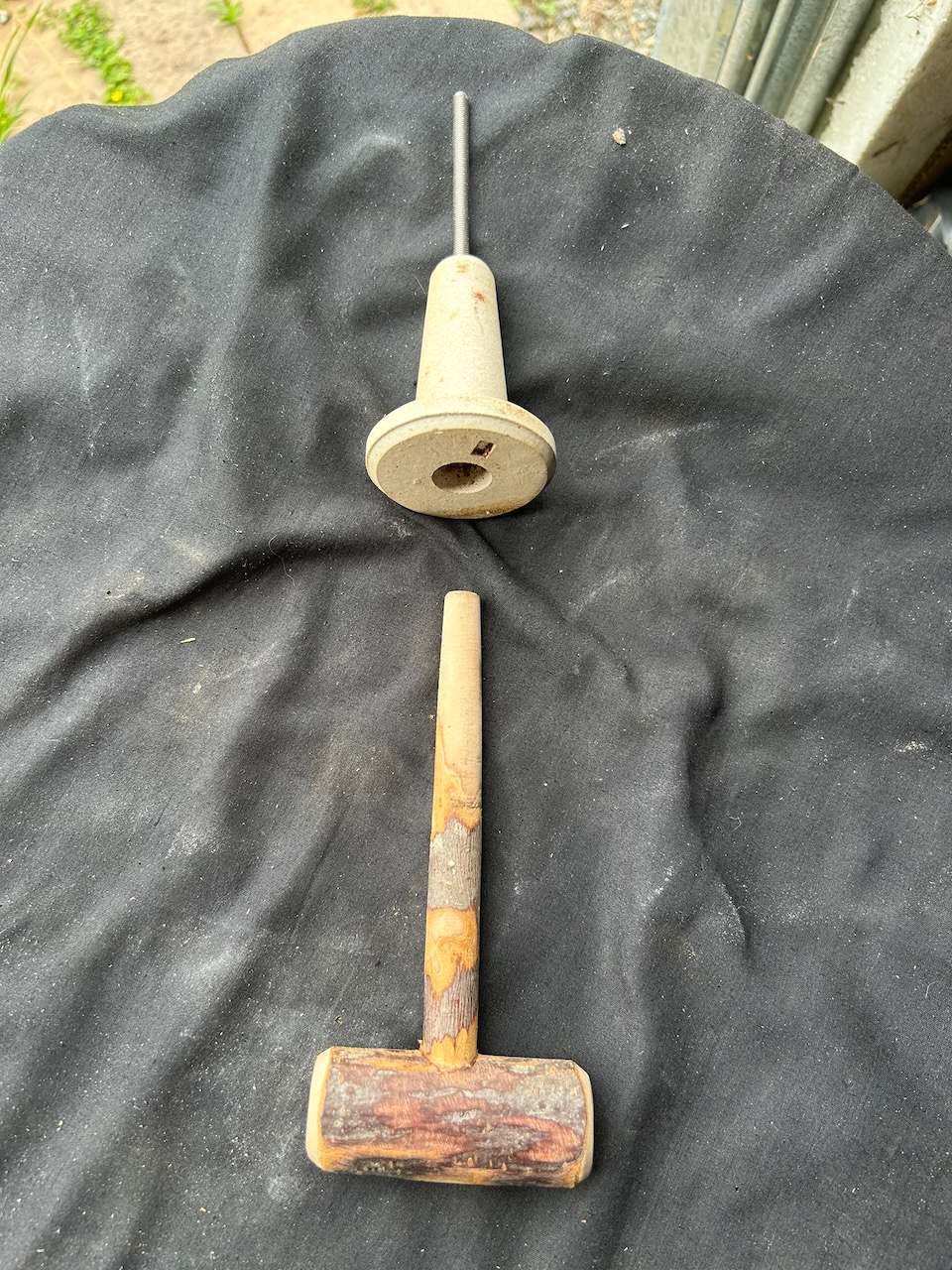
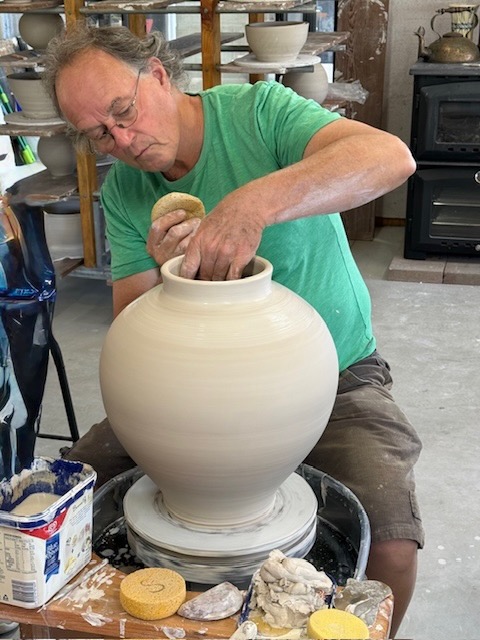
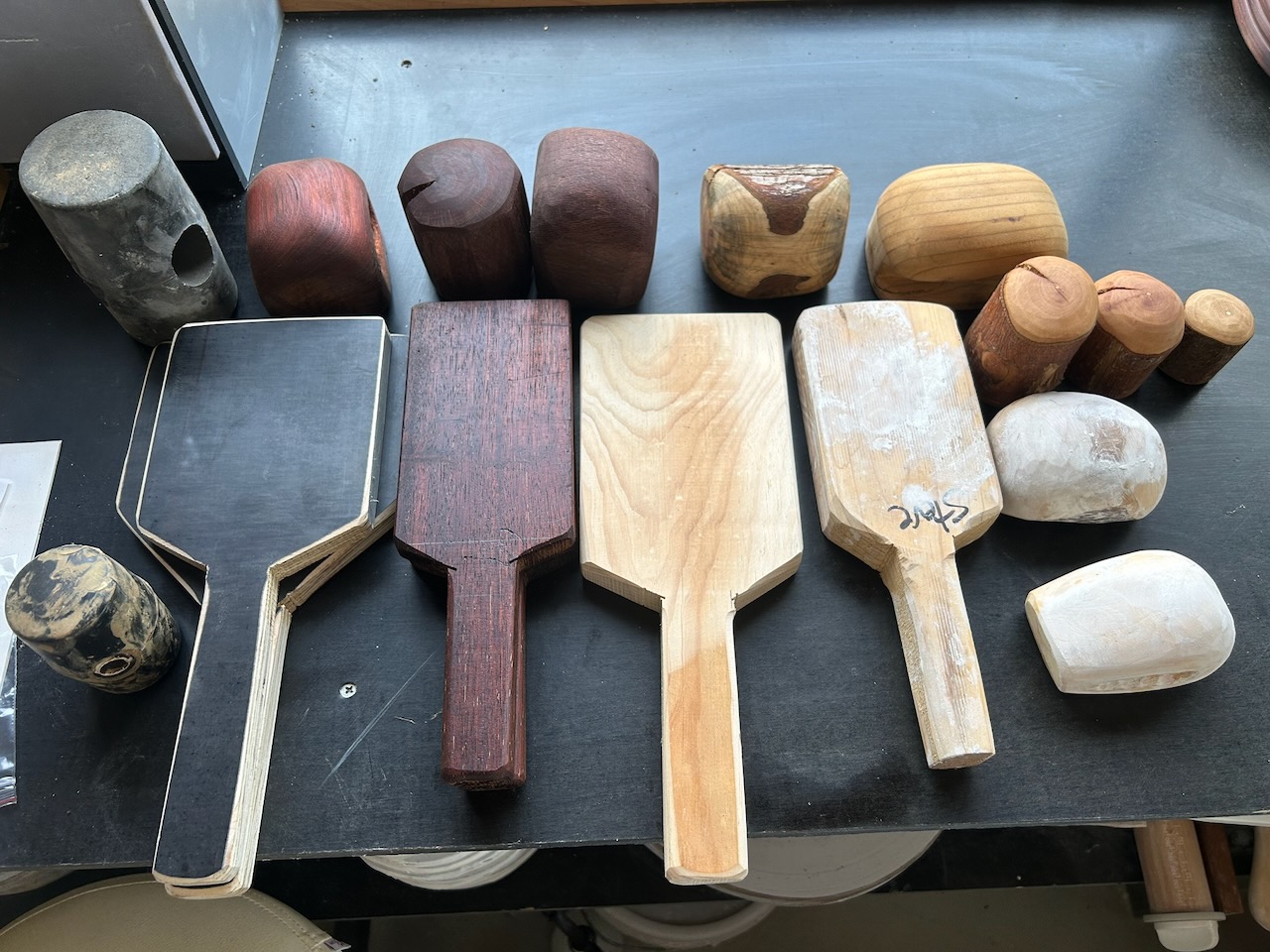
Once the pot is assembled, the foot section of the top bowl is opened up and the joint is pinched together with fingers from inside and out. If necessary, the joint can be compressed from the outside using a ‘paddle’ against a solid little round ‘anvil’ block (see previous post on tool making) on the inside to counter the pressure and compress the joint. The final action is to throw the rim up from the shoulder using the excess of clay that was in the base of the bowl.

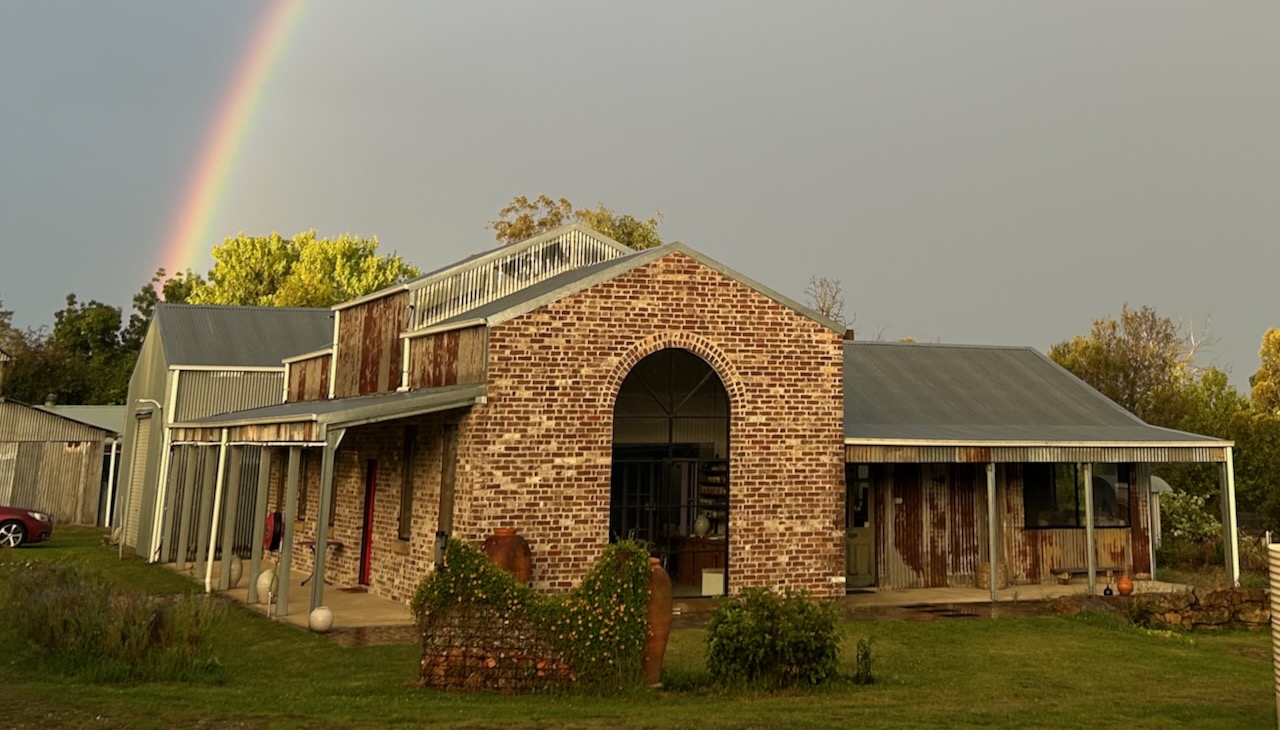
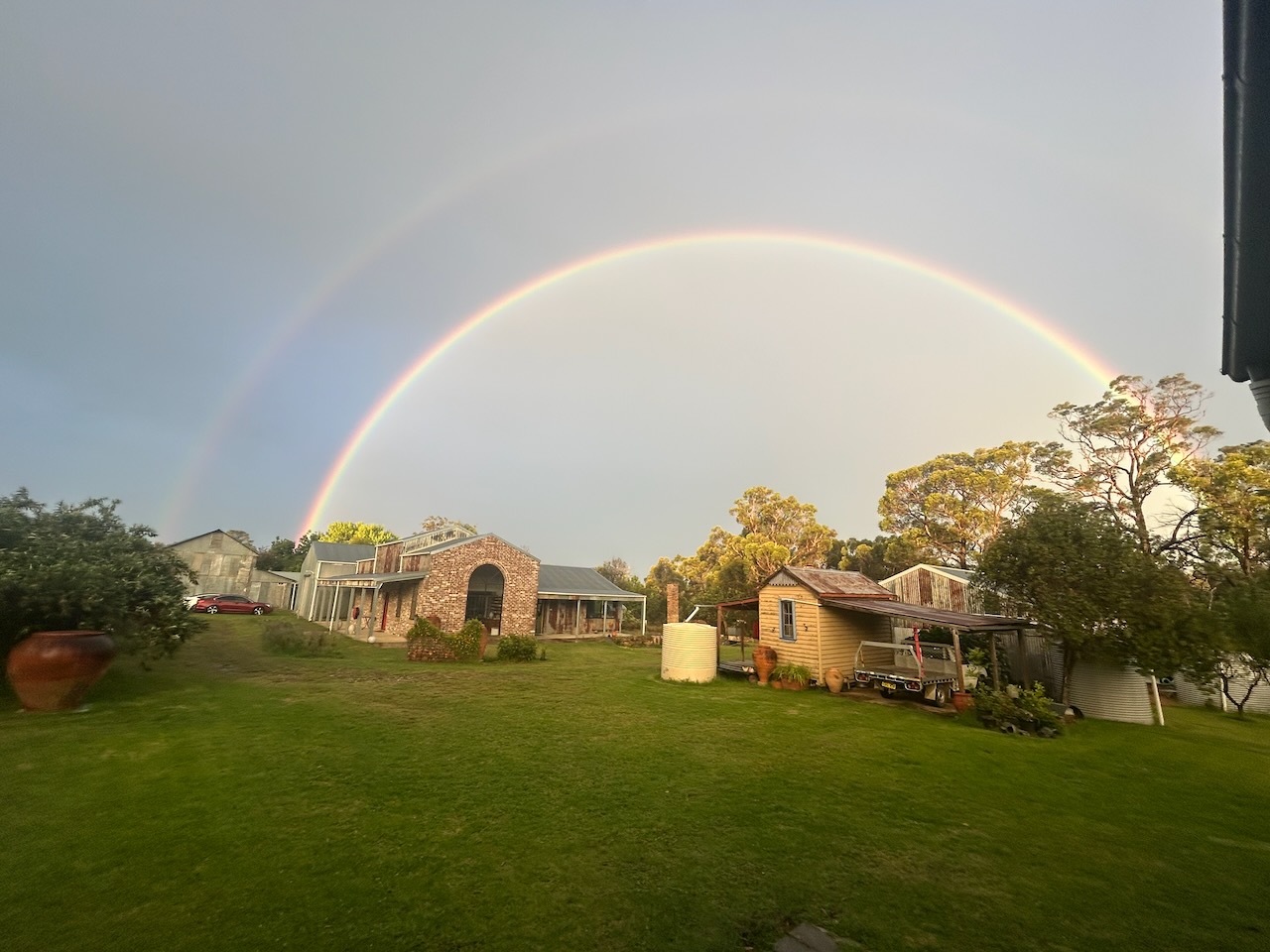
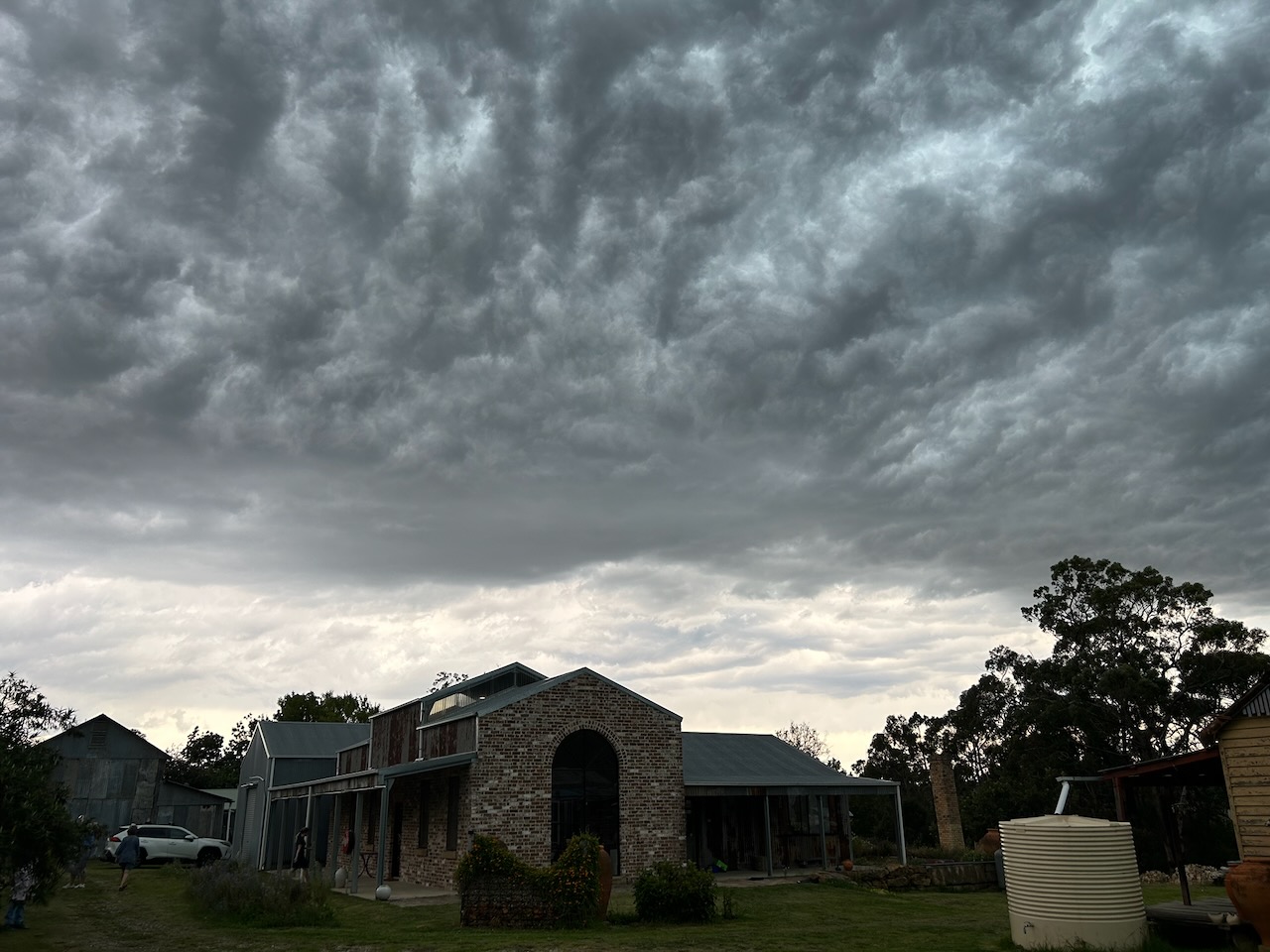
On the second day of the workshop, we had a massive storm with loads of thunder and lightning, followed by some intense rain. Then in the afternoon, we had the most beautiful double rainbow!

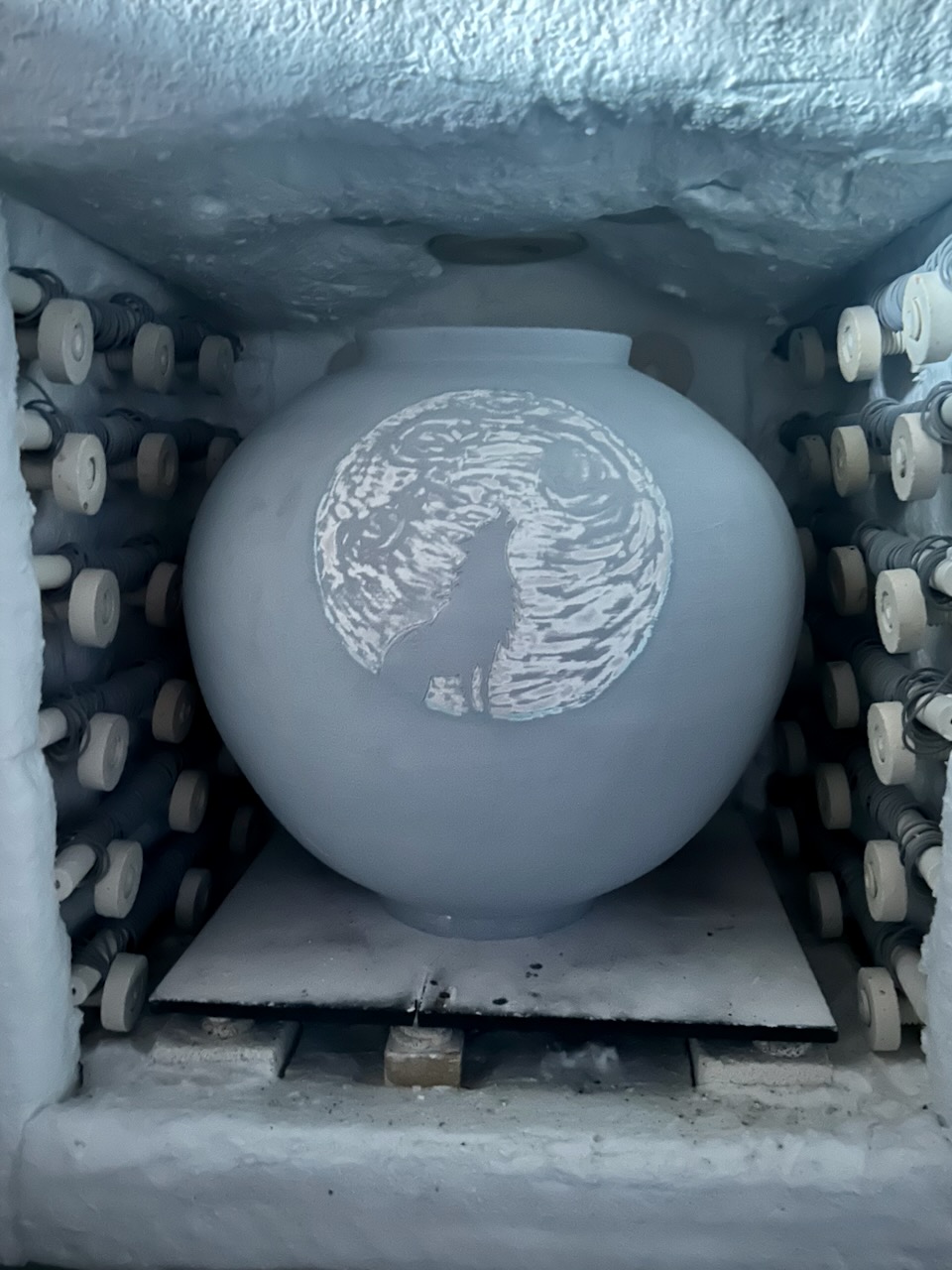
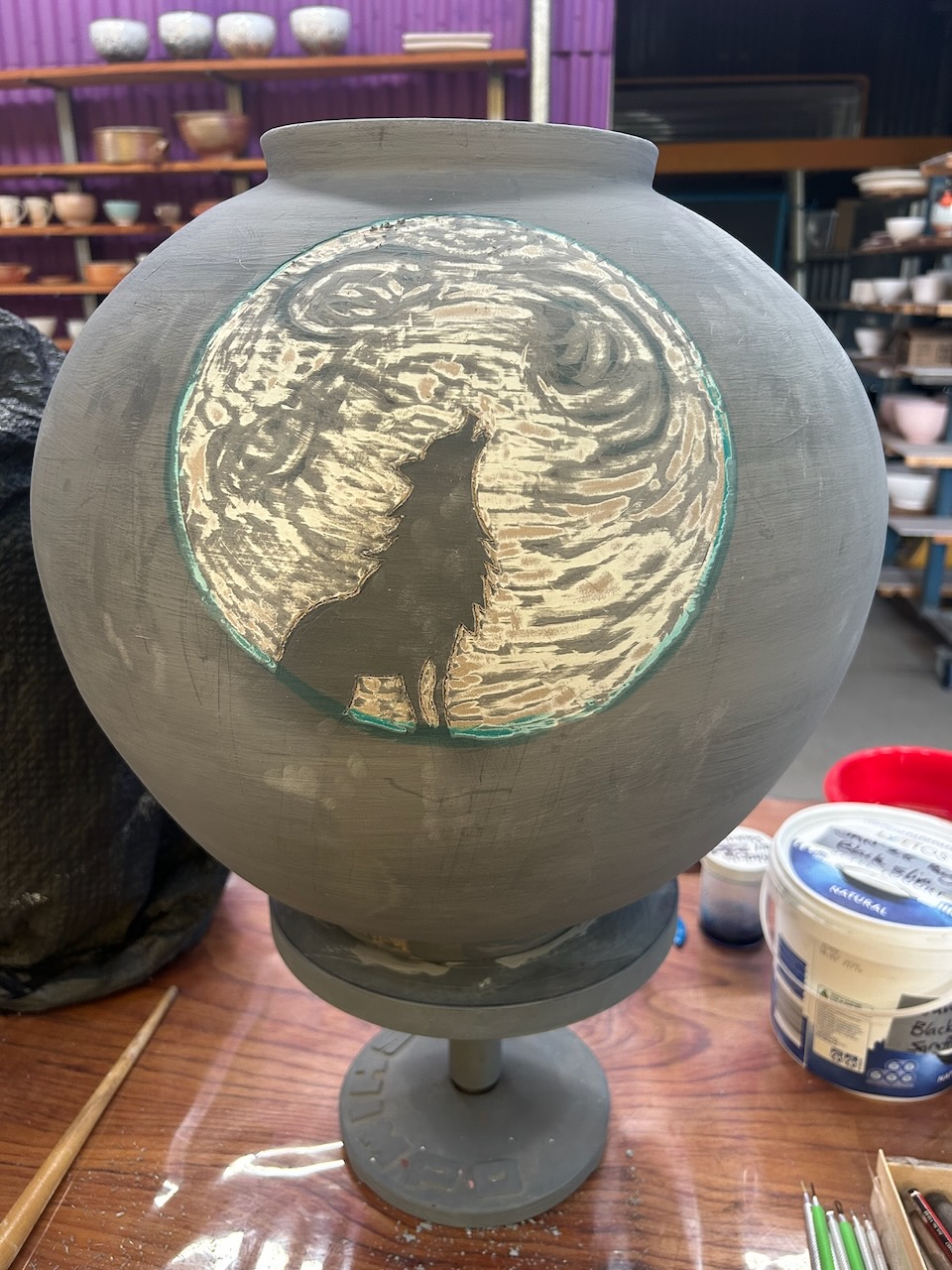
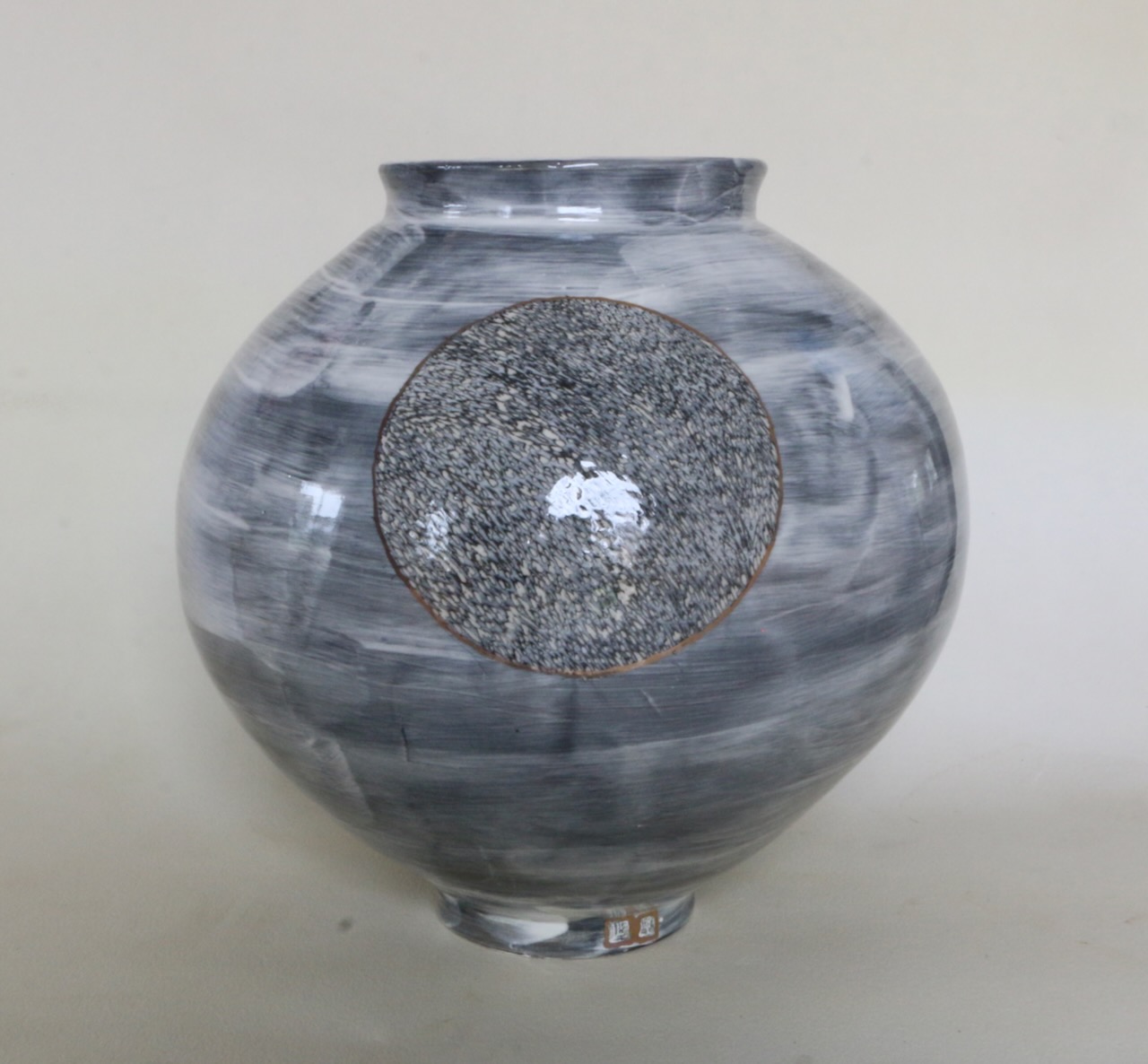
Moon Jar with full Moon

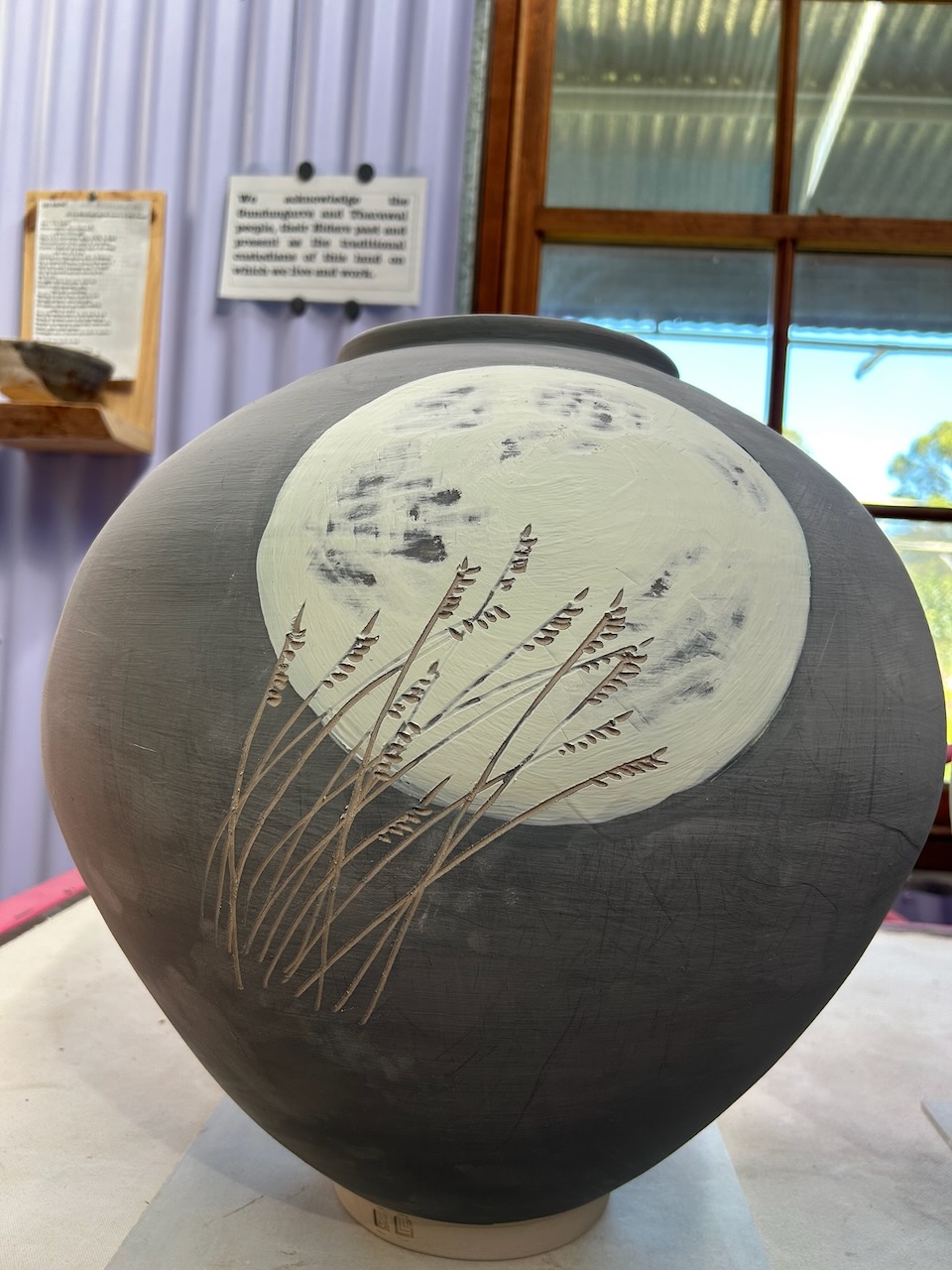
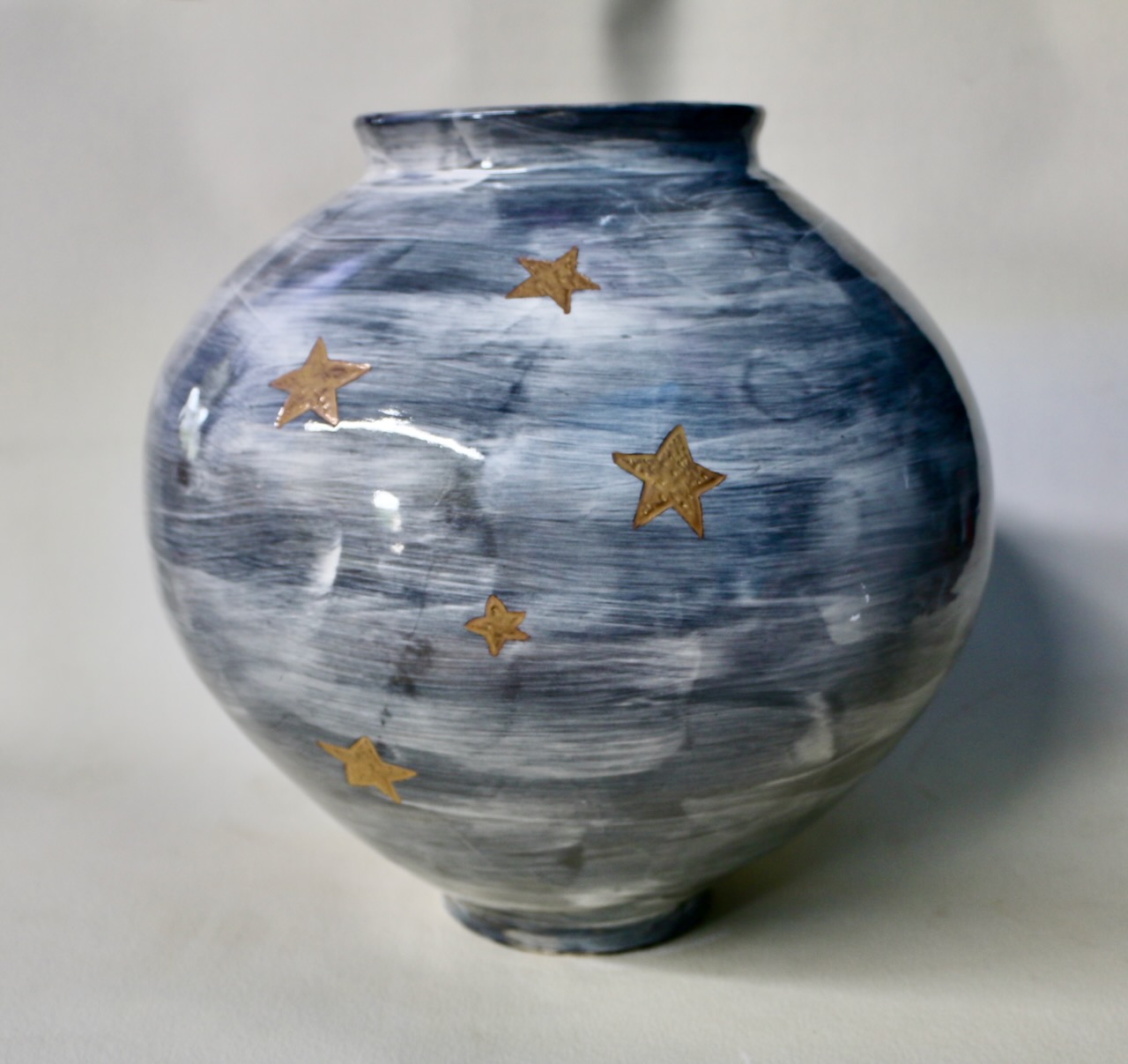
Moon Jar with Southern Cross

I will be offering another Moon Jar making workshop in the coming year, so if you are interested, drop us a line. The next workshop will be on the weekend of the last day of Jan and the first day of Feb.

Preparing for the new Year

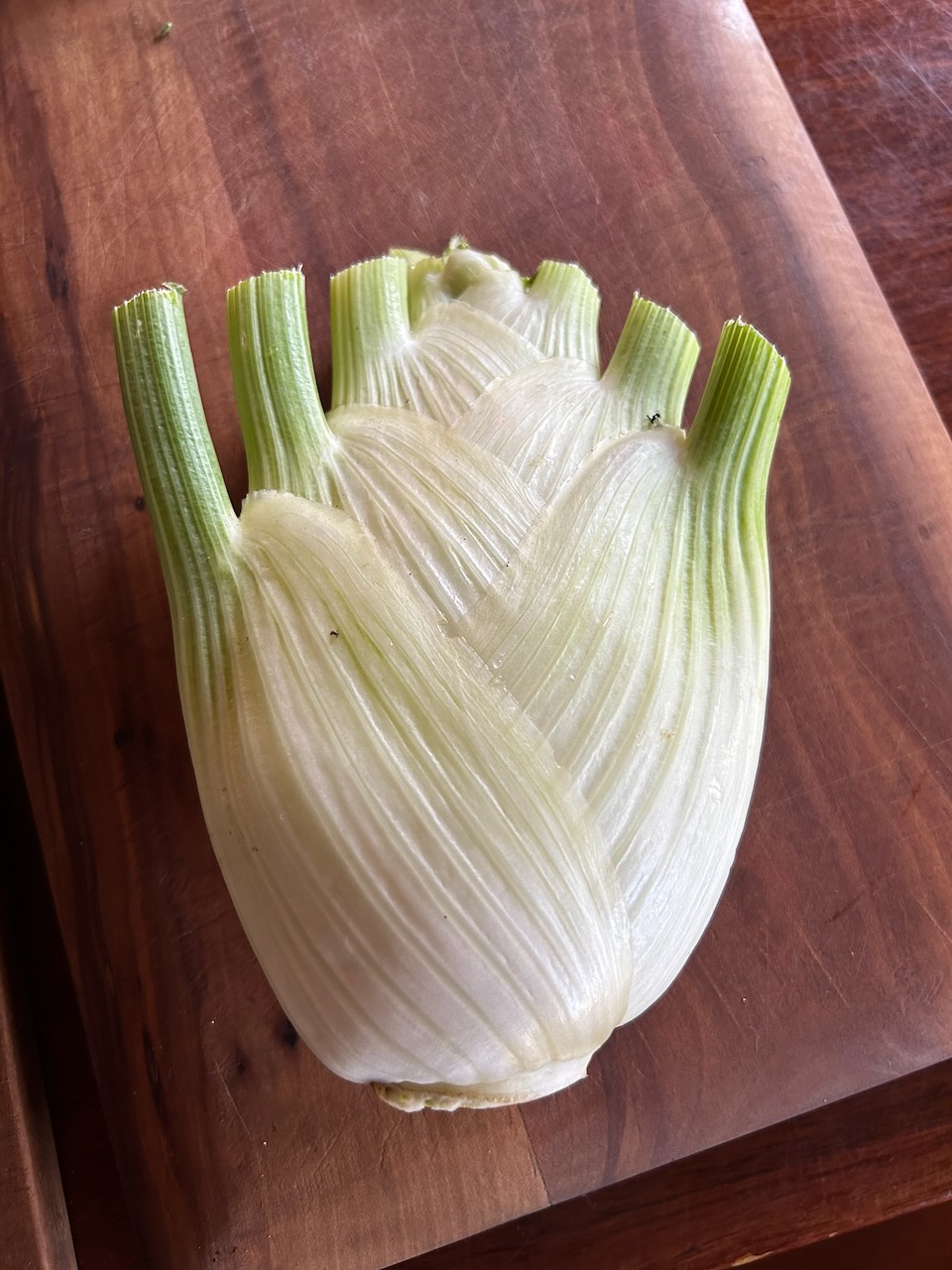
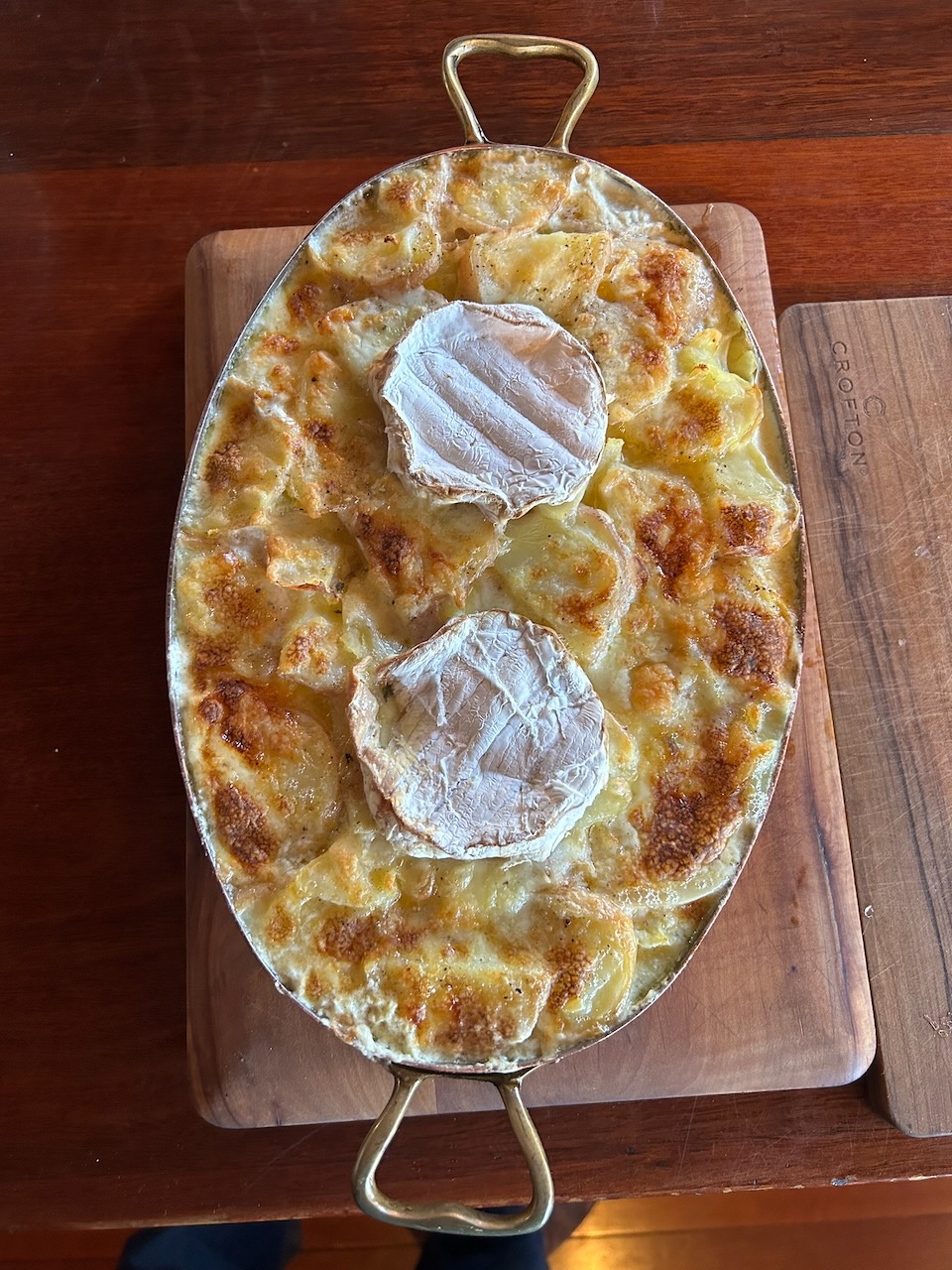
Well, Xmas is over, we survived the shopping madness by staying home and escaped the last minute rush to purchase more food than anyone could possibly consume. Janine and I stayed well out of it. We watered the garden and picked fresh vegetables made salads and tofu stir-frys. A very nice quiet time in all. I had no intension of going into town to check out the Boxing Day sales. I fact, instead, we had a lovely, small, family meal with our son and daughter-in-law, and took it very quietly. We shared a very nice bottle of wine with lunch. I cooked a somewhat rich potato dauphinois incorporating our potato and fennel, plus a tub of sour cream and garden herbs, which turned out very well.

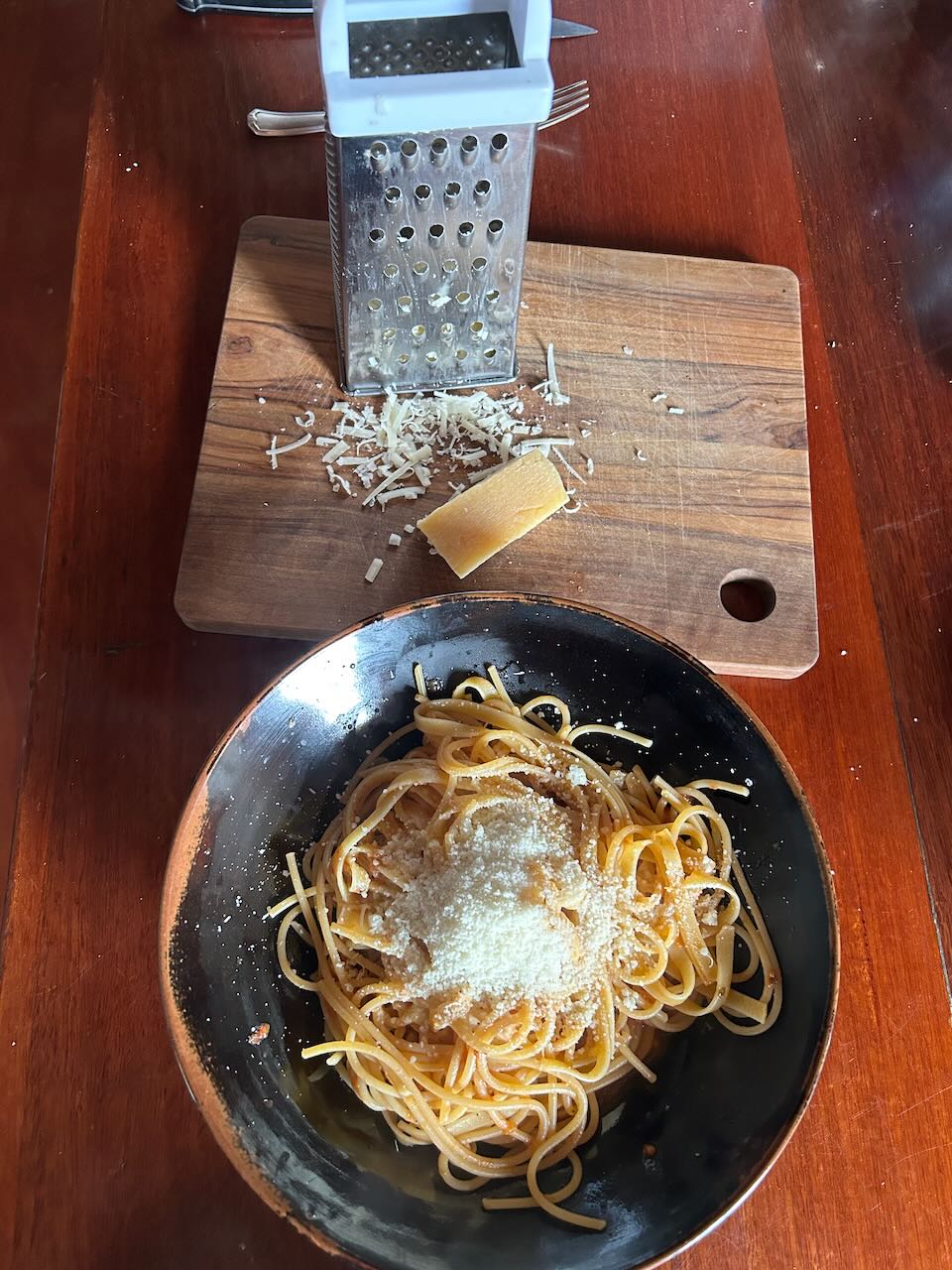
I simmered the herbs in a little bit of milk to draw out the flavours, then layered the finely sliced fennel and potatoes with sour cream and poured the strained milk over and through it all. I finished the dish with a camembert cheese placed on top to melt through the dish. As if the tub of sour cream wasn’t quite enough, and topped it off the some grated 36 month aged cheddar.  I was happy with it and no one complained.

On the subject of potatoes, we have had a visit from a new and unusual bug into the veggie garden. Some sort of elongated, grey, shield bug. They group in pairs around the tender top shoots and suck the living daylights out of the growing tips of the potato plants. I haven’t seen these little critters before, so I had to look them up. They turn out to be a South East Asian ‘sweet-potato’ bug. Also known to be found in the North of South America and the Southern parts of North America. How they got here I have no idea. I can only surmise that with global heating, they are able to colonise newly warming fresh territories? So hello and hopefully good bye!

I’m sure that the garden shop will have any number of toxic sprays for them. However, they are quite susceptible to being squashed by hand! No poisons required, it’s highly selective, and no toxic residue is left behind. This organic ‘natural’ treatment seems to be working. I have noticed quite a few lady bugs on the potato leaves at this time also. Possibly they ere eating the minuscule shied beetle eggs? That would be nice if there was a local predator that could breed up to counter the new pest? Could life be so simple?
Someone once said that every complex problem has at least a dozen simple solutions – and they are all wrong! There is nothing quite so effective, accurate and environmentally friendly as well trained fingers. Time consuming, but 100% effective.
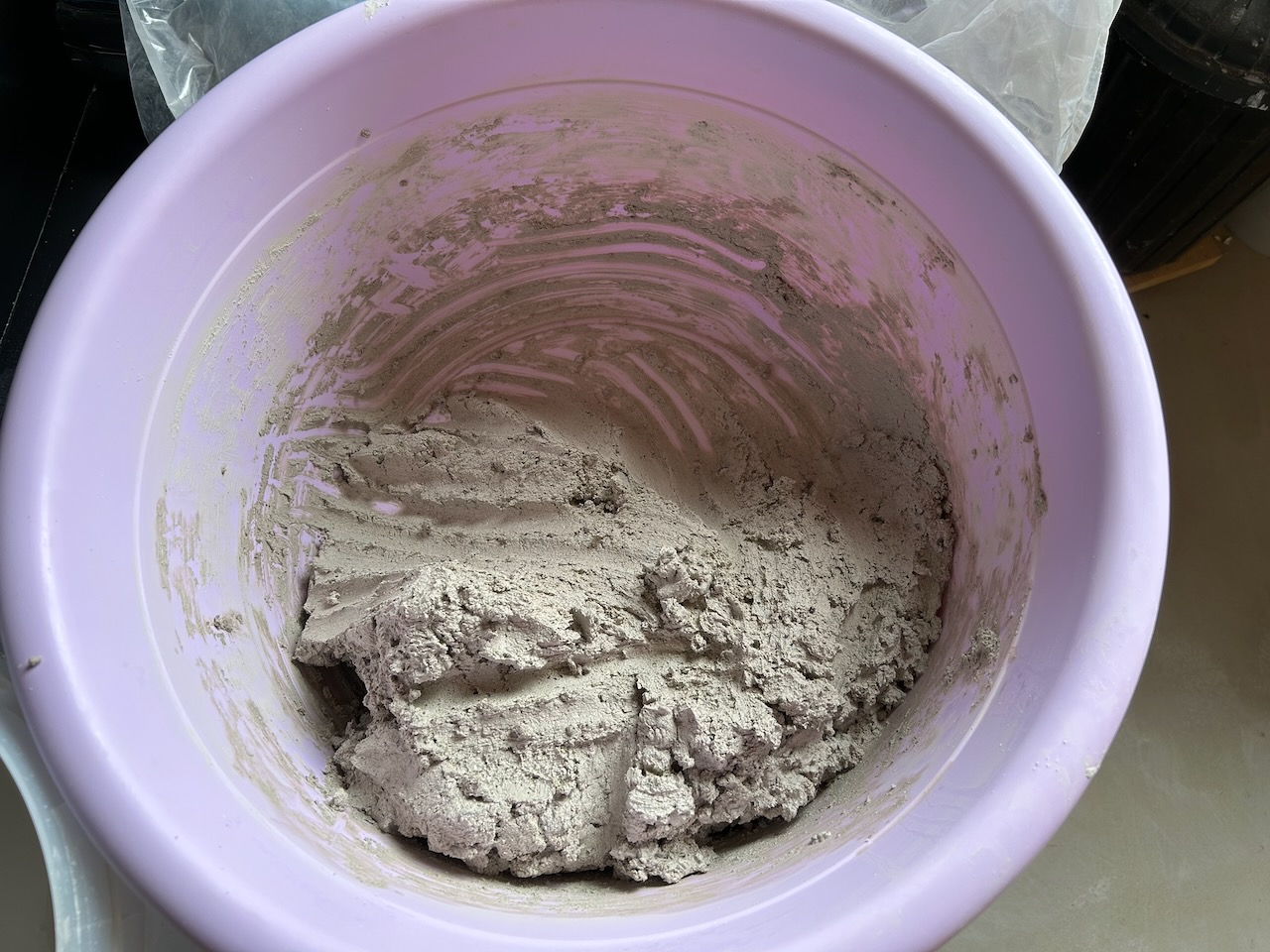
We have ended the year by making clay to prepare ourselves for the coming year.  I even sat down and threw a pot straight away to test out the plasticity of this new mix. It was beautiful! It will be even better after a couple of months in the cool, dark, clay store to age a little.

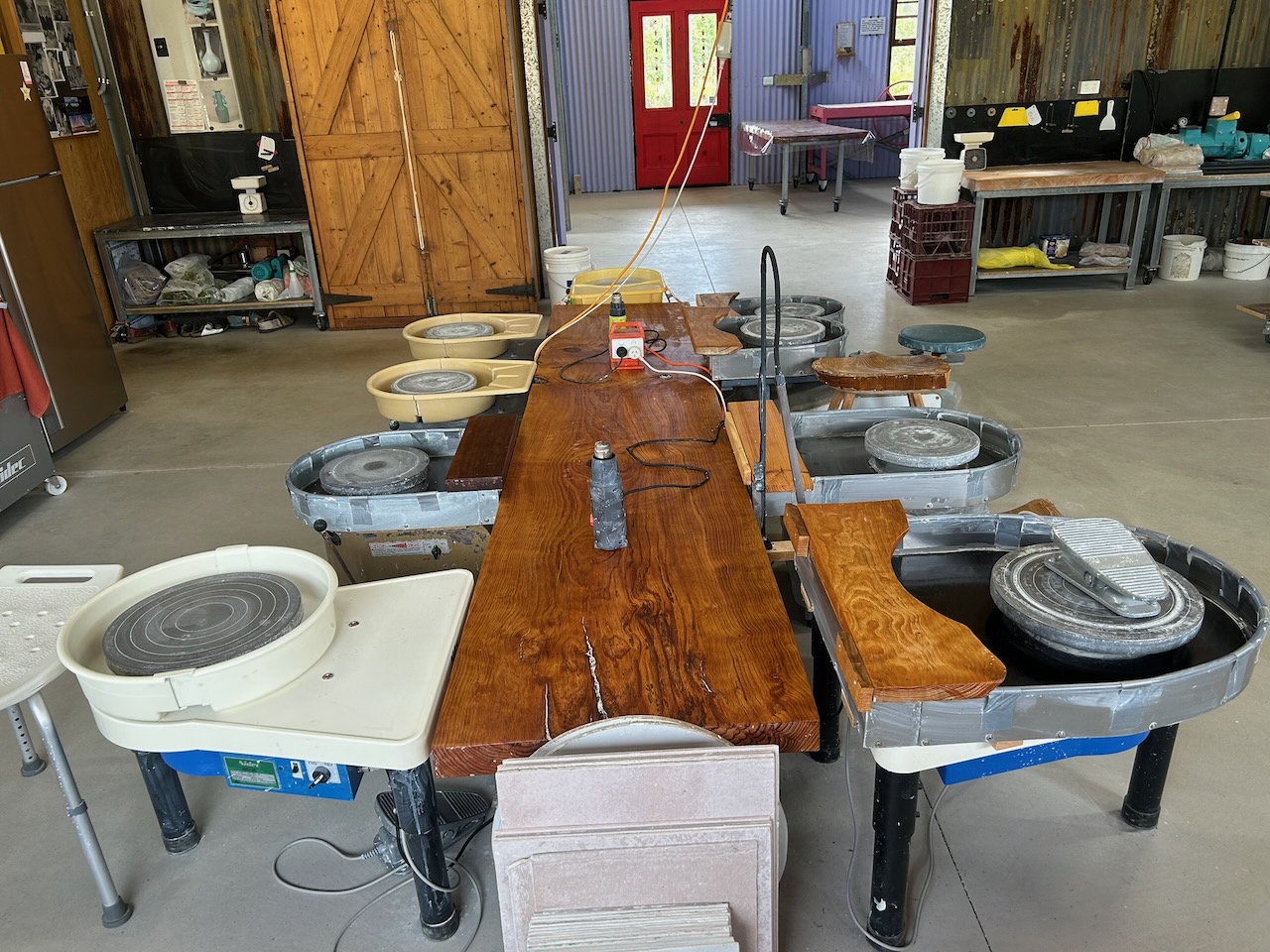
As we are hosting a 4 day summer school in the coming week, I cleaned out the pottery and transformed it back from a sales room for the Xmas sale and back into a throwing room. I took the opportunity to really clean down the benches and wheel tops, then gave them a coat of tung oil to protect the wood for another year. All this wood was milled on-site here from trees that we grew ourselves. I want to honour this timber and look after it. It’s just one small, but integral part of our 50 year history/legacy of living and thriving here.

All the timber now looks rich and glorious! While I was in wood working mode, I made a pile of paddles and wooden ‘anvils’. To be used in the coming workshop for forming and securing the joints of large pots. I made everything from off-cuts and prunings of trees in the garden and orchards, including apple, pear, cedar, juniper, pine and banksia.

Making beautiful pottery tools from timber that you have grown yourself is a very rewarding activity. I suspect that this is a special privilege available only to older potters, as you need to plan for it at least 40 years in advance! The old saying comes to mind – When is the best time to plant a tree? Answer, 20 years ago! We have earned these beautiful tools in more ways than one.

Every morning I wake up, I am gifted another 24 hours to enjoy the sunshine, fresh air, the people round me, the garden and the chance to be engaged in creative activity I really value this opportunity, and strive to make the most of it. In contrast, every morning I don’t wake to find that I am gifted $$$. A lot of people who chase money all their life, find that they have no time. In some ways, I am fantastically wealthy. I have never chased money, instead I have time. Time to be engaged in my creative life. I really value this meaningful and fully engaged life.

We recently hosted a tool making weekend, and taught other potters this evocative and rewarding skill. Beautifully hand crafted tools that you have made yourself embody extra meaning into the work that you make, if for no other reason than just from the emotional energy that you generate from the enjoyment of the activity of the handling and making. However, there could be more to it. 

In the pacific islands, there is a potent energy that they call ‘mana’. Not the christian goodies (manna) that drop from heaven, but a highly potent spiritual energy that is embodied in special objects at the time of their making, by unique and powerful individuals, or bestowed into objects by force of will by that unique, potent and powerful individual. It may be an object like a club, or spear, but also in jewellery and other personal objects. Such objects are highly prized and valued. The ‘mana’ is embodied in the object, and once they are passed on, that special energy is perceived and valued by the subsequent owners. I can understand this numinous like feeling embodied in beautifully crafted objects. Perhaps they can pass on something of the spirit of the maker? I like to think so.

Have a safe, creative, fertile, prosperous and rewarding New Year!

Nothing is ever finished, nothing is ever perfect and nothing lasts.

A Special Xmas Sale

Janine and I will be open on Sunday the 14th of December for a A Special Xmas Sale!

Sunday 14th December. 9am – 5pm.

Steve Harrison and Janine King’s Pottery Studio, 

5 Railway Pde, Balmoral Village, 2571. 

hotnsticky@ozemail.com.au.  blog; tonightmyfingerssmellofgarlic.com

Half Price, Xmas Sale.

We are 1 1/2 hour drive south of Sydney. Please join us for our 1/2 price, Xmas sale, where everything in the gallery will be sold at 50% off! One day only. Sunday 14th December.

No tricks or gimmicks. Everything will be for sale at half of the usual marked price.

This is a definite once-off event.

We pride our selves on making highly sustainable ceramics, fired using PV sunshine or our own home grown timber. All our clay bodies and glazes are home made, on-site. We also offer tours of our workshop.

Please consider calling in and doing some discount priced Xmas Shopping.

We have never done this kind of thing before. It’s all new to us. Please come and take advantage of us!

We will also have a few of our friends with us;

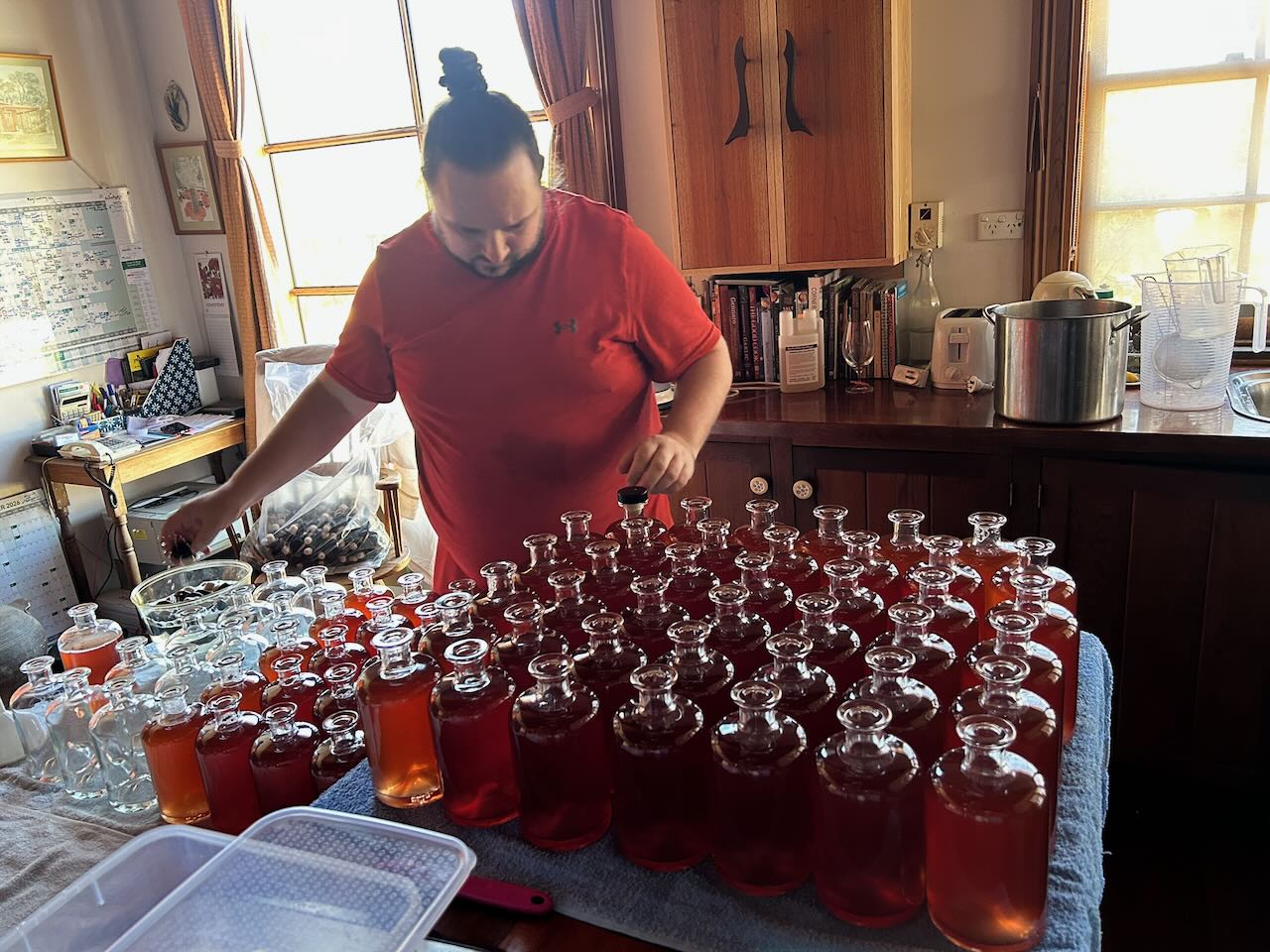
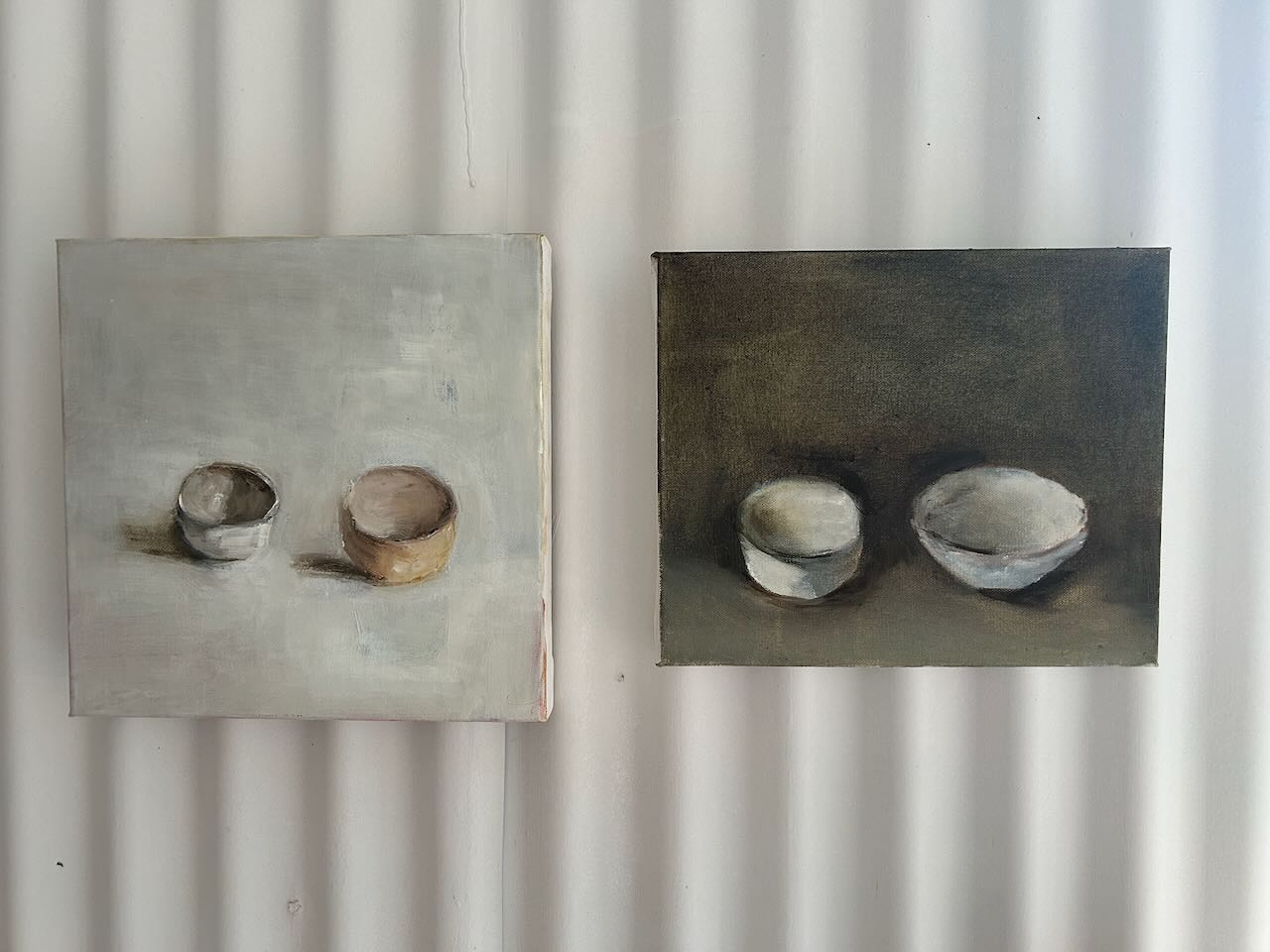
Karen, who will be displaying her hand made jewellery. Roxanne, who will be showing some of her impressionistic paintings of my pots, and our son Geordie, who will be selling his hand made fruit cordials. Made from the organically grown fruit in our orchard and other fruit from local orchards.

Tours of the gardens and orchards will be available.

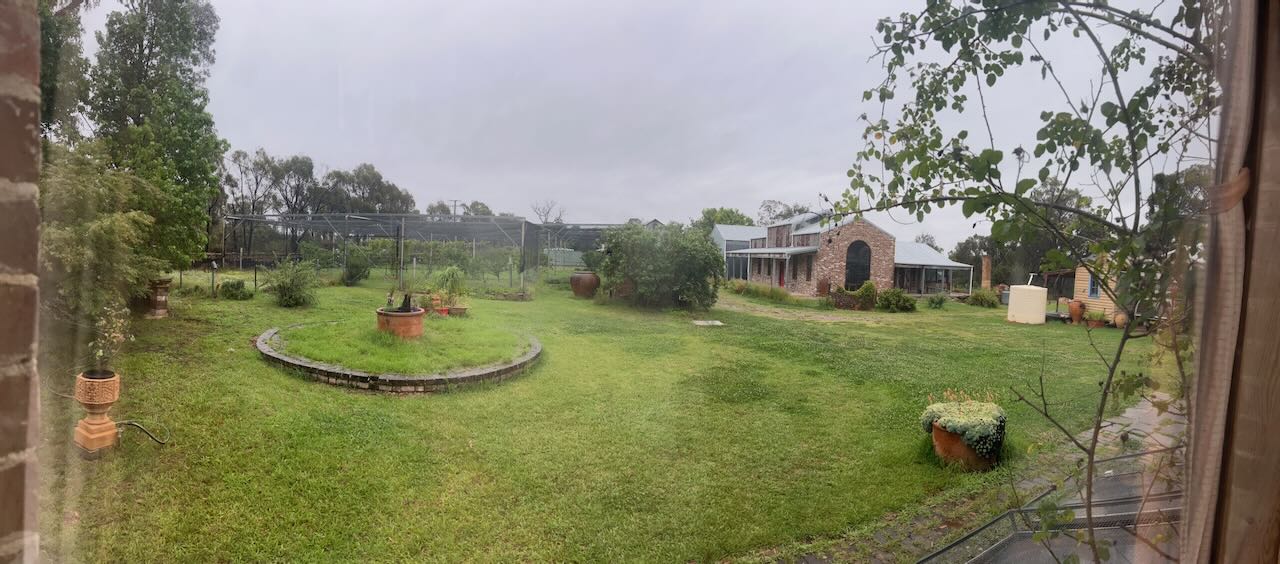
The Pottery studio and gardens.

Our son Geordie, making some of his ‘adult’ cordials.

Karen’s jewellery display.

Roxanne’s beautiful and expressionistic paintings of pots.

First Tomato of the Season

We have picked the first red tomato of the summer, well before Xmas. Always an achievement, but not so special these recent years, as with accelerating global heating, we are so much hotter and everything in the garden is ripening earlier.

When we moved here to the highlands in 1976, we couldn’t get a ripe berry off our newly planted berry canes until January. These days the berry crop is all over and gone well before Xmas.

We are harvesting peaches, apricots, the last of the late sour cherries, as well as strawberries and blueberries. We don’t make any pots over December and January, as we are full time involved in managing the fruit from the orchards and the summer flush of vegetables.

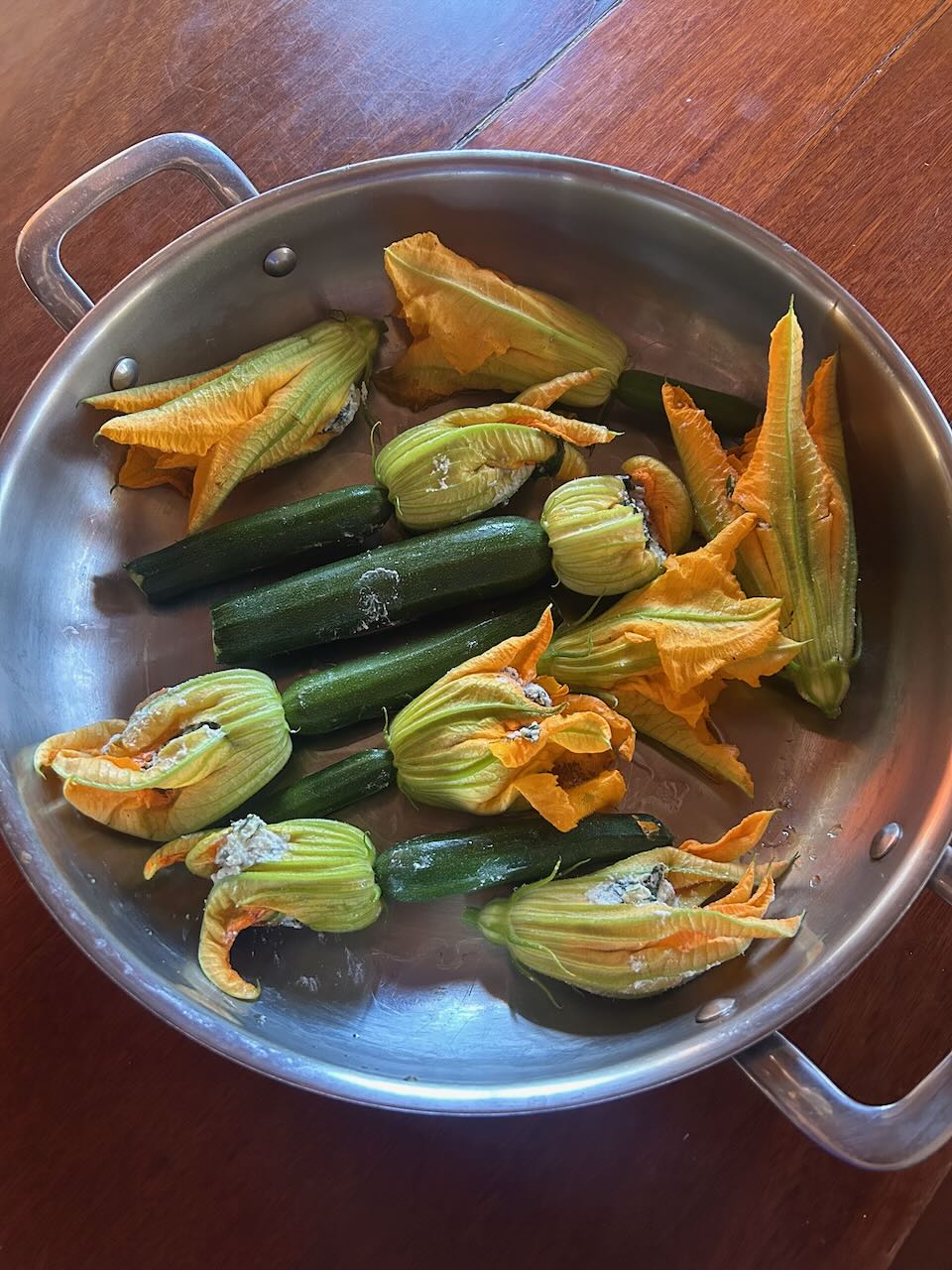
The zucchinis are going mad, so we are having a few meals of stuffed zucchini flowers. It’s a lovely summer time light meal. It achieves 2 important outcomes, by picking the flowers off the plant with the nascent fruit attached behind, it makes a colourful and delicious meal, but it also takes the fruit off so early that they don’t get a chance to explode into marrows if you just glance away for a moment or loose concentration, zucchinis fill out so very fast!  Managing zucchinis means defusing them every morning early before they expand like The Big Bang!

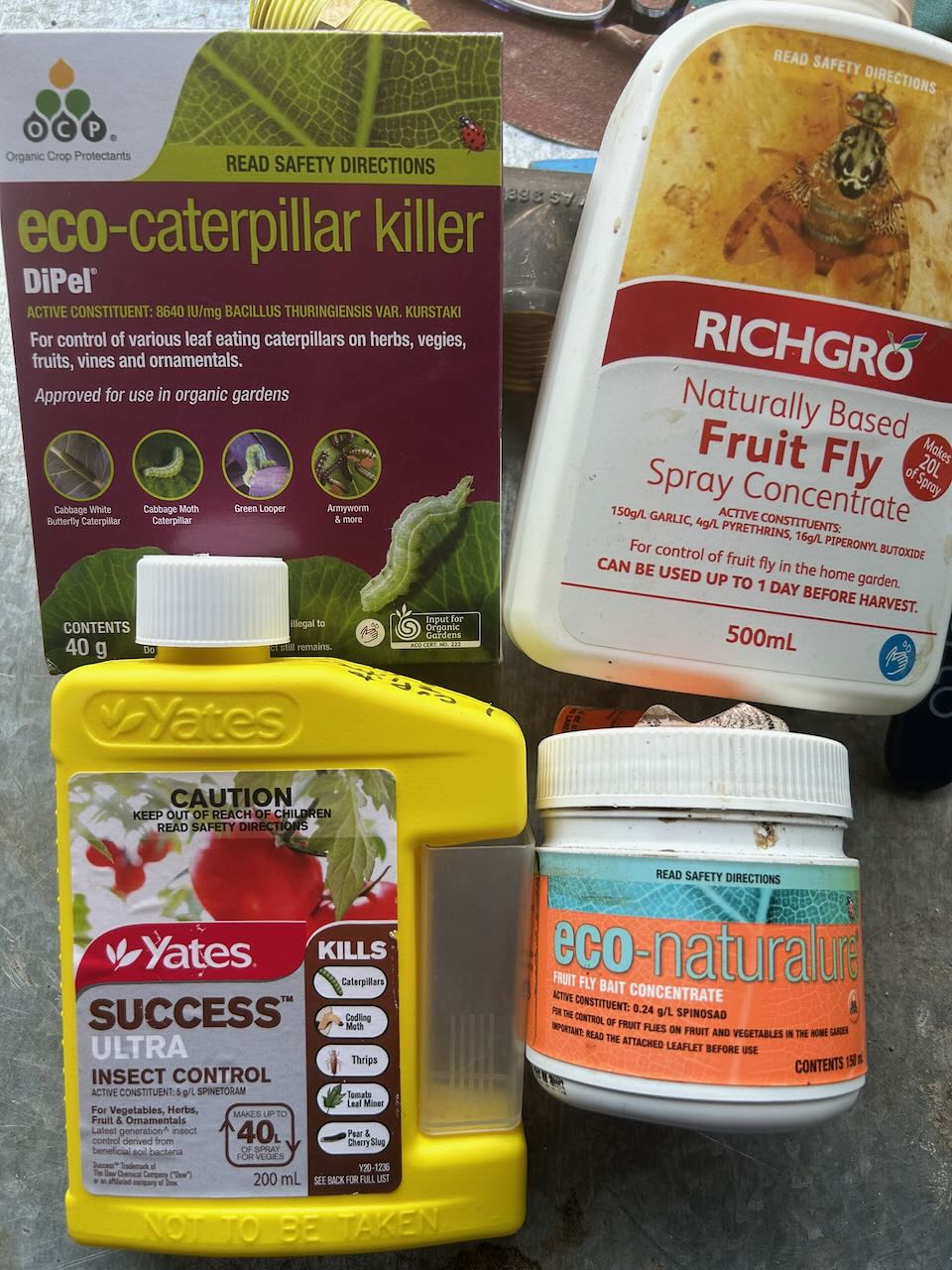
The heat also means fruit fly problems, we get in early in October/November with ‘DAK’ pots, male fruit fly lures, and protein lures for the female flys. I also spray a ‘spinetoram’ soil bacteria and dipel bacteria for the codling moths. I also place codling moth lures in half a dozen of the various trees that are susceptible to codling moth, like apples, pears and quinces. Everything we do is approved for organic gardening. Still, with all this effort, we still get fruit fly strike. It’s important to pick the fruit early and cook it to preserve it either in the freezer or in ‘Vacola’ vacuum jars, and stored for later in the year.

Last weekend I ran a couple of pottery ’tool-making’ workshops. I take small groups of 5 or 6 potters through the steps in making their own tools specific to their particular needs and preferences. There are at least a dozen specific tools that anyone could choose to make but to be realistic, a novice tool maker can only realistically achieve 3 or 4 really nice and well crafted tools in a day, so you have to chose what is most appealing and useful ti you. I don’t expect everyone to finish every tool on the day, but if all the roughing out is done and only the fine finishing is left to do. It’s best to take it home and do all that time consuming fine sanding and oiling at a later time. Best to make use of my skills and my workshop equipment to get as much done here as is realistically achievable in the time.

Making your own tools gives you 2 important outcomes, firstly the tool will be exactly what you want and need, unlike some of the rubbish that is sold in the ‘basic’ pottery tool set sold in the cheap shops. The only good item in that plastic bag is the sponge! the rest all need work. The best thing to do with badly designed tools is to cut them up or down to make them more appropriate. Don’t be afraid, just cut it, grind it, file it or whatever until it does the job that you want. If you can’t make it work for you, just put it away and make a good one from scratch. 

This is the 2nd important outcome. It gives you the skills and insight to design and make the exact tool for you for that particular job. If it doesn’t work, then you know how to re-shape it until it does work how you want. Just because you bought it – possibly at great expense – from a reputable craft shop, doesn’t mean that it will be the best shape for you. If it doesn’t work, don’t hesitate. Don’t waste time struggling with it. Take the initiative, cut it up or grind some off it, or possibly just put it in the ‘Down-To-Experience-Bucket’ and make a proper one. 

There is also a 3rd benefit. Making your own tools can be virtually free by recycling scrap material. There is a huge sense of satisfaction in sitting back and admiring a beautifully crafted tool that you made yourself from a branch off a fruit tree growing in your garden. Home grown organic tools. AND, so rewarding and satisfying. Making your own things feeds your soul. Re-use, re-purpose, re-cycle.

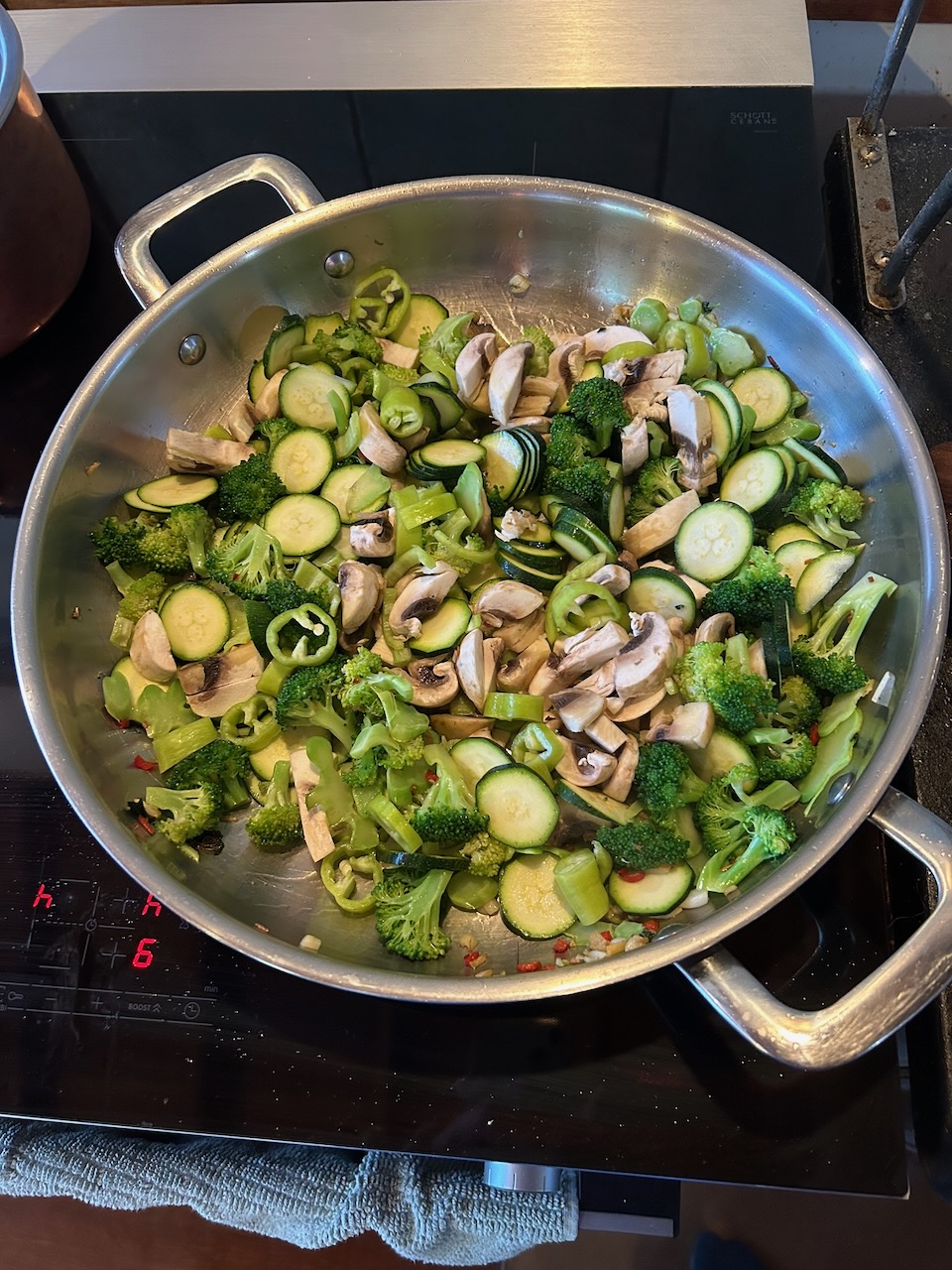
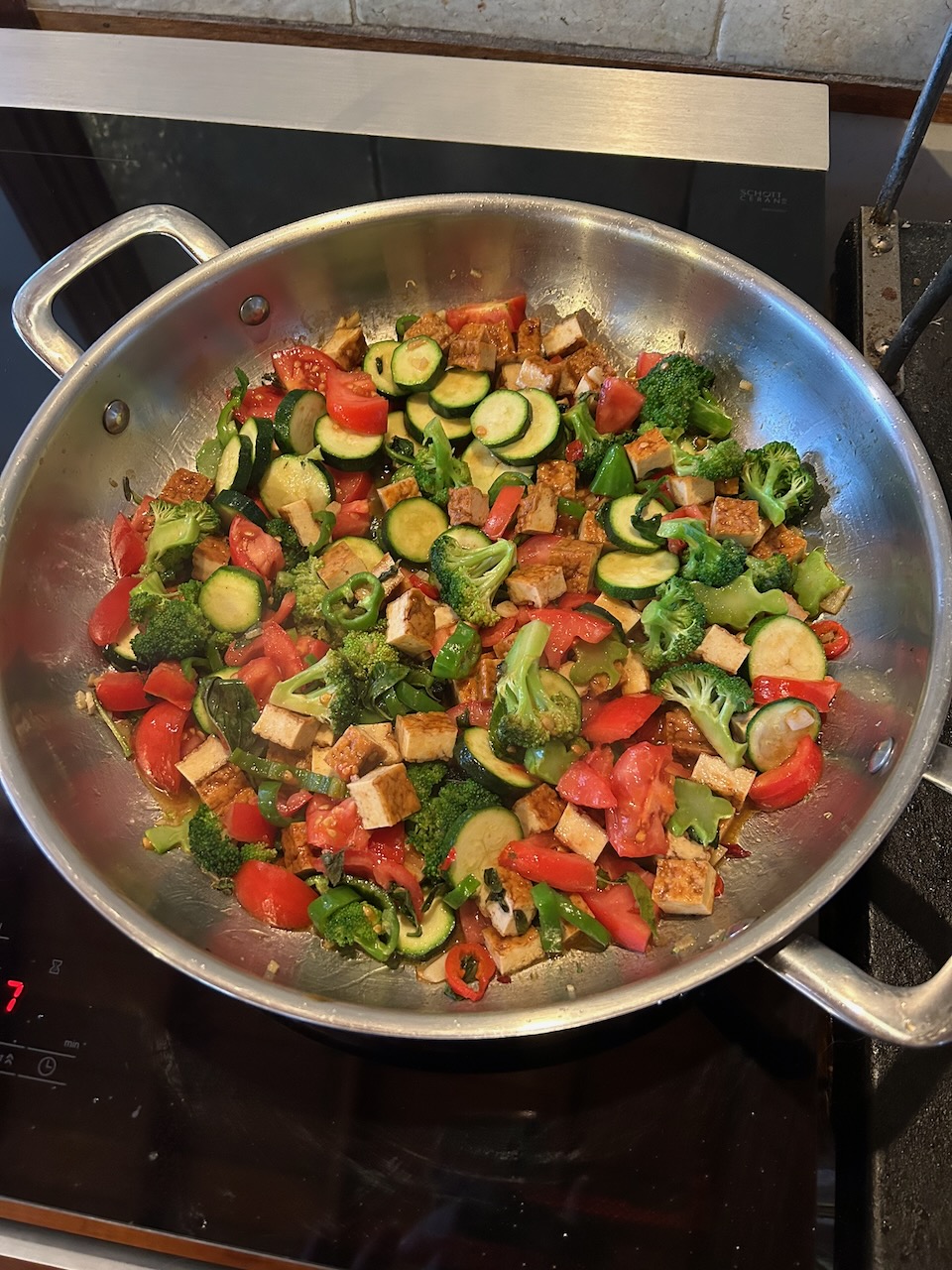
I made a stir fry of garden veggies and tofu for dinner to feed my soul and my belly.

Nothing is perfect, nothing is ever finished and nothing lasts.

More rain and tasting cider

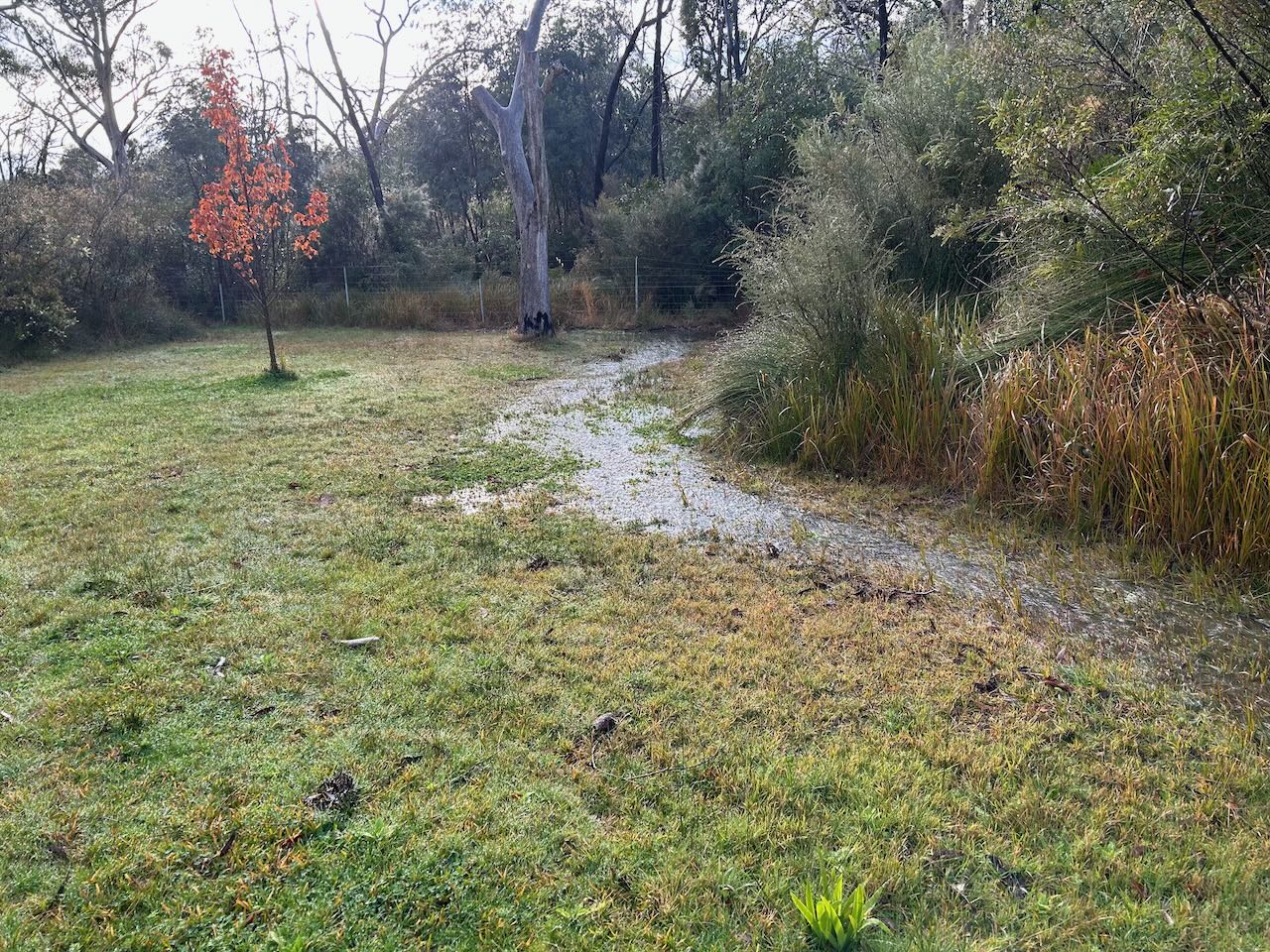
It’s been raining again quite heavily. We now have 4 different little streams flowing across our land, where the dams overflow, and the front lawn is under 25mm of water, like a slow moving shallow lake gently flowing across our kitchen vista.

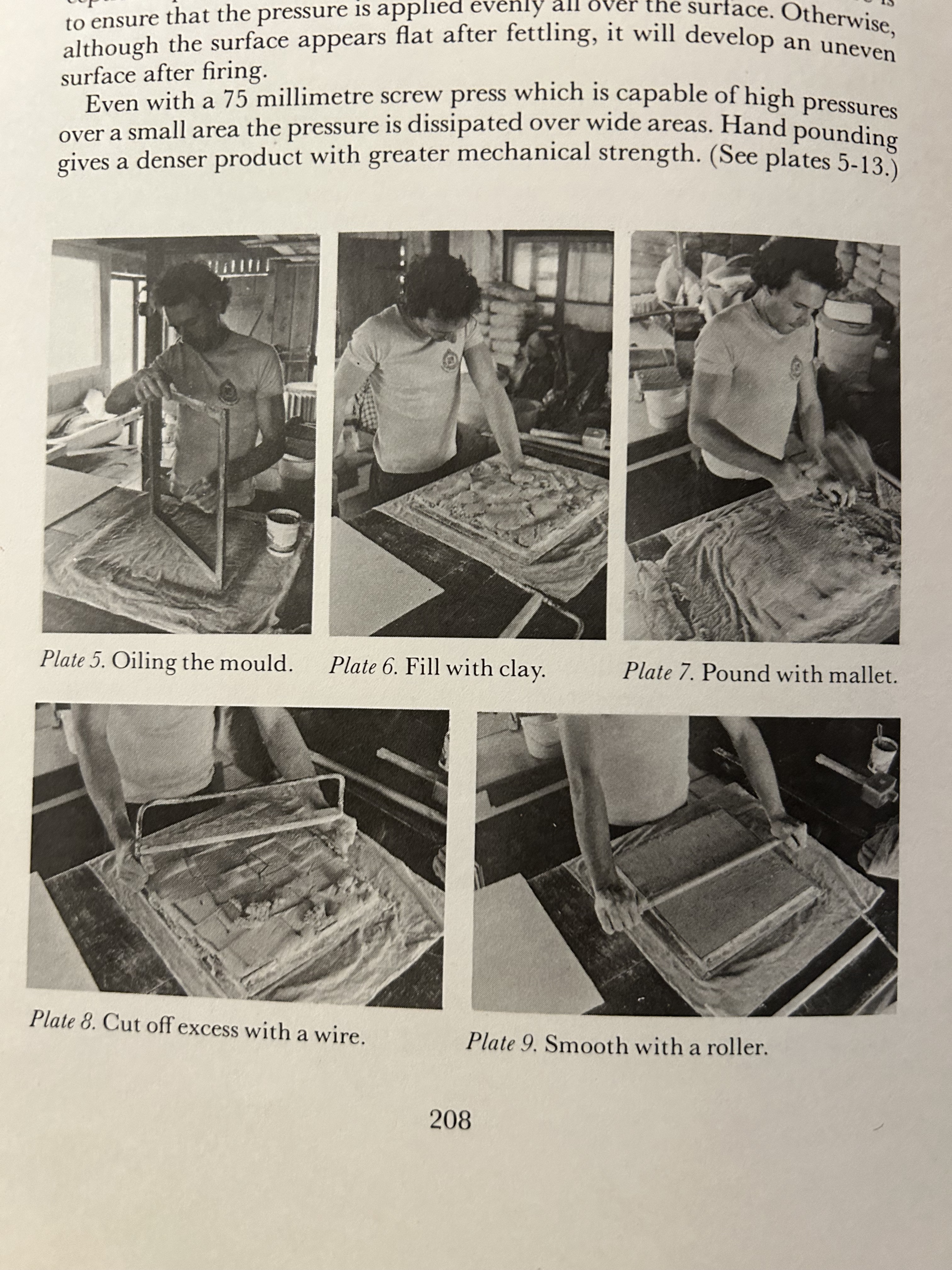
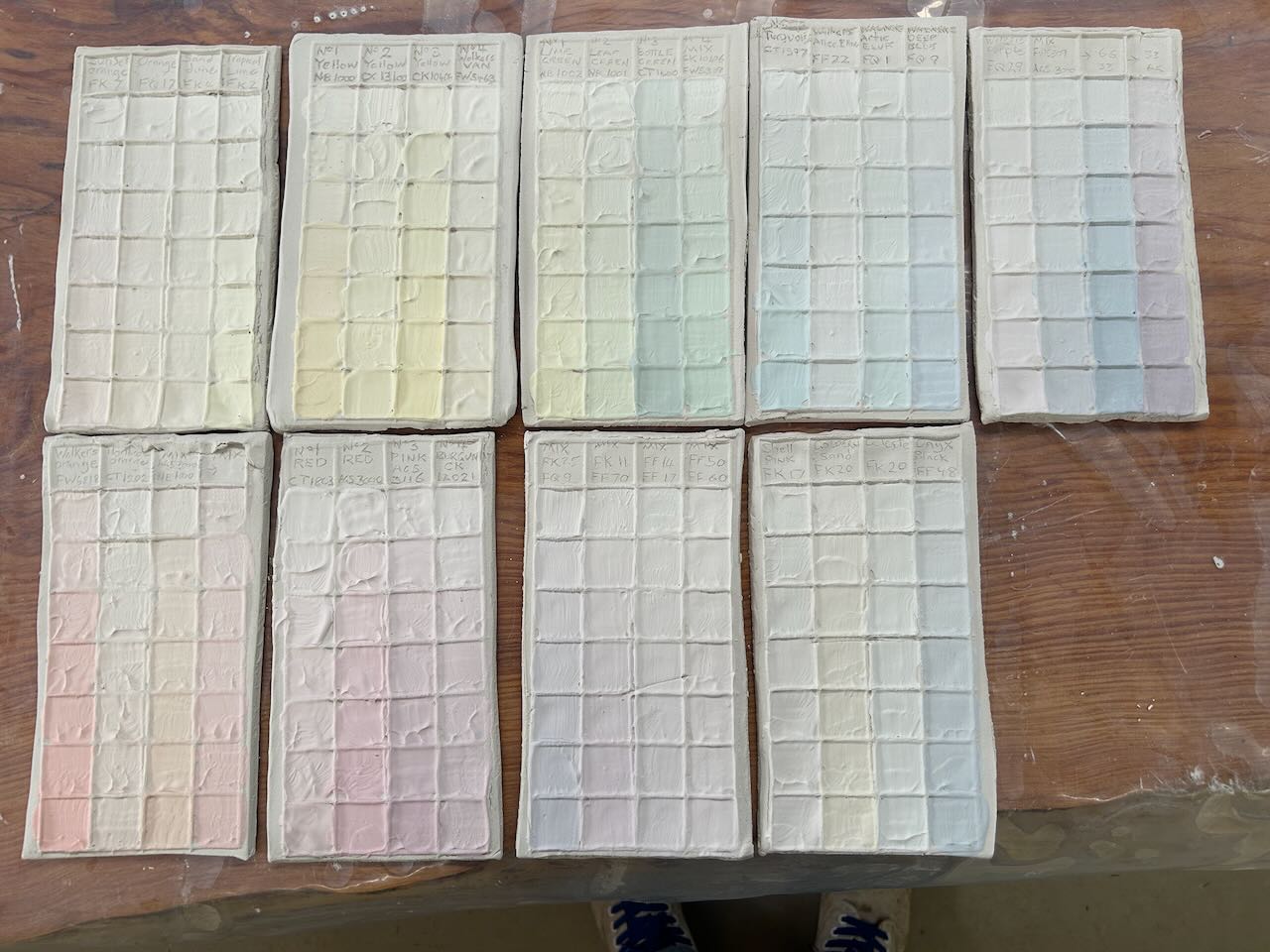
We had 65mm of rain at one point. I thought about what to do for a while and came to the conclusion that it was probably best if I decided to do all those glaze tests that I had been meaning to do for a while. I certainly didn’t want to do any outside work. So I spent a day rolling out slabs and pressing out grid-tiles from my standard plaster grid-tile mould. This ensures that all my test tiles are the same size and shape, so that I can compare them at any time with tests made years before if needed. Tragically, I lost 3,000 glaze tests in the fire, so I’m starting again.

Weighing out glaze tests can be quite boring, especially when it goes on for days. However, it keeps me gainfully employed in the warm and dry pottery studio. I put on a CD while I work. It takes more than the length of a CD to fill one test tile with the infinitesimally small gradations of ingredients in the logical progression of the recipe. Each tile is 8 x 4 squares = 32 weighings and recordings.That’s 288 tests made in this sitting. Enough!

When I was doing my PhD, I did every test in triplicate, so that I could fine them in oxidation, then reduction and also in the wood fired kiln. As each kiln gives its own variation to the test. Having done that very thorough exploration, I’m over it and these days I only make the one series of tests, and fire them  in the kiln that I think will deliver what I’m looking for.

It fills 10 pages of my glaze note book this time around. I have to keep detailed records of what I do and why I’m thinking that it might be a good idea. Sometimes, it takes so long to get the firings done at the temperature that I’m imaging will be best and in the atmosphere that I want, and in the kiln that will give me those ideal conditions, so that If I don’t write everything down in detail, then I can forget what I was thinking and why I went to all the trouble. Hopefully, it will help me to understand both the results and more about myself in a few weeks time, when they are all fired, and I can decode the results! 

Each tiles takes about one hour to complete. After two days of this, I’m pleased to do the last one – for the time being

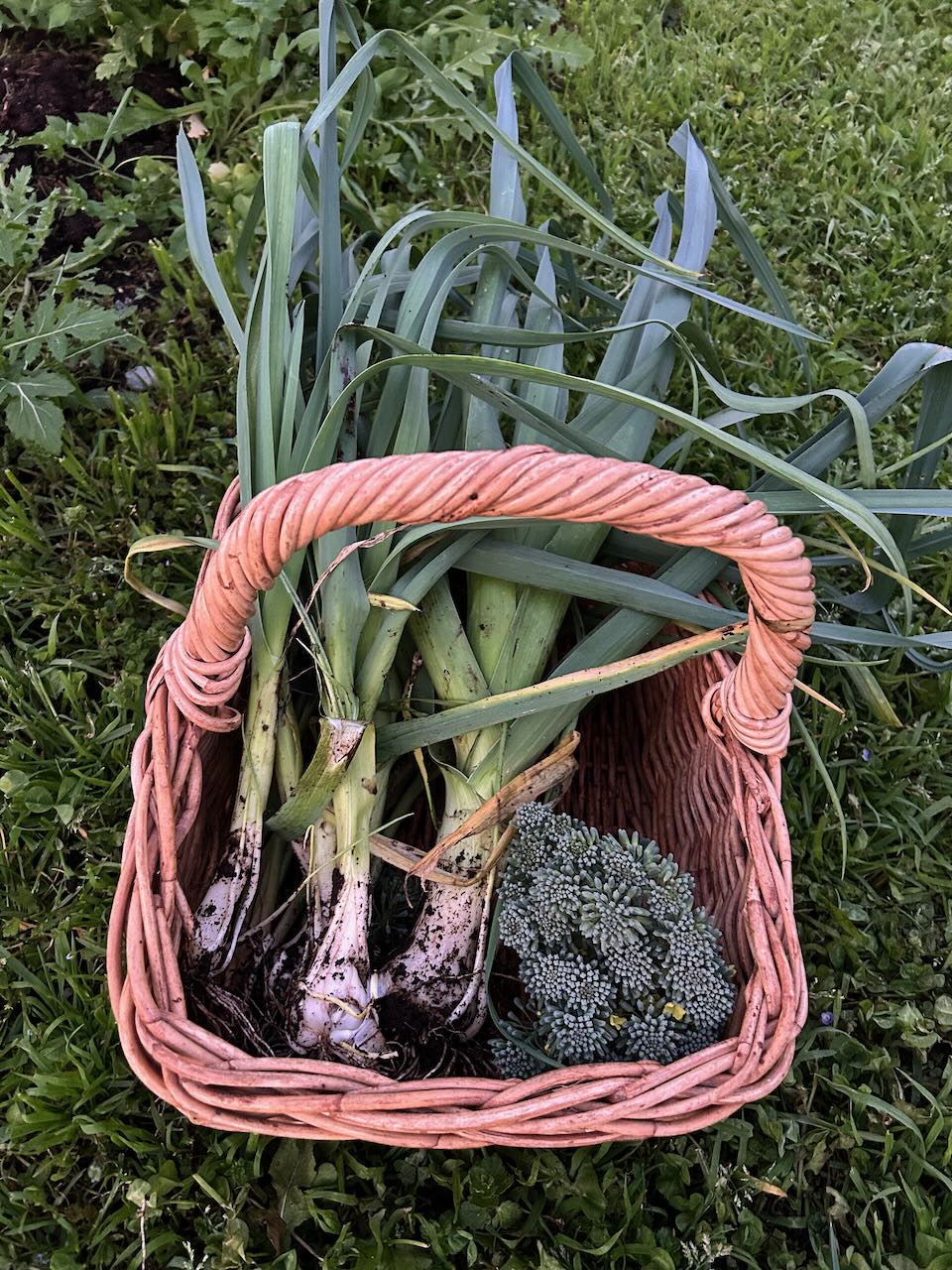
When there comes a break in the rain, I get out and pick vegetables for dinner. This time is leaks, broccoli, Brussel sprouts and carrots. I’m planning baked veggies with a mustard infused béchamel source for dinner. I make a quick and warming lunch of pasta. I tried to steal the spaghetti from the supermarket, but the female security guard saw me and I couldn’t get pasta!

🙂

We decided to try is years cider with dinner. We made this batch of cider back on the 11th of February and bottled it on the 11th of April. So now it has had 4 months to settle down. It will be good to see how it has turned out.

See my blog post; ‘Autumns rewards,  Posted on 11/04/2025 

Janine thought that we should do a vertical tasting of the last 3 vintages. What a good idea! 

As we still have a few bottles of the 2012 vintage. This was the last vintage from the aged 40 year old apple trees in the previous orchard. From 2012 onwards there was a severe drought, so intense that we didn’t get to harvest any apples from 2012 through until the fire in 2019. So no cider was made. In 2015, our friend Val had a good crop of apples on her trees in ‘Lagan’, 2 hours drive, south of here, so she drove up a couple of washing baskets full of her apples. We were able to make a small batch of cider from those apples. We re-planted a new orchard in 2020 with different varieties of apples.

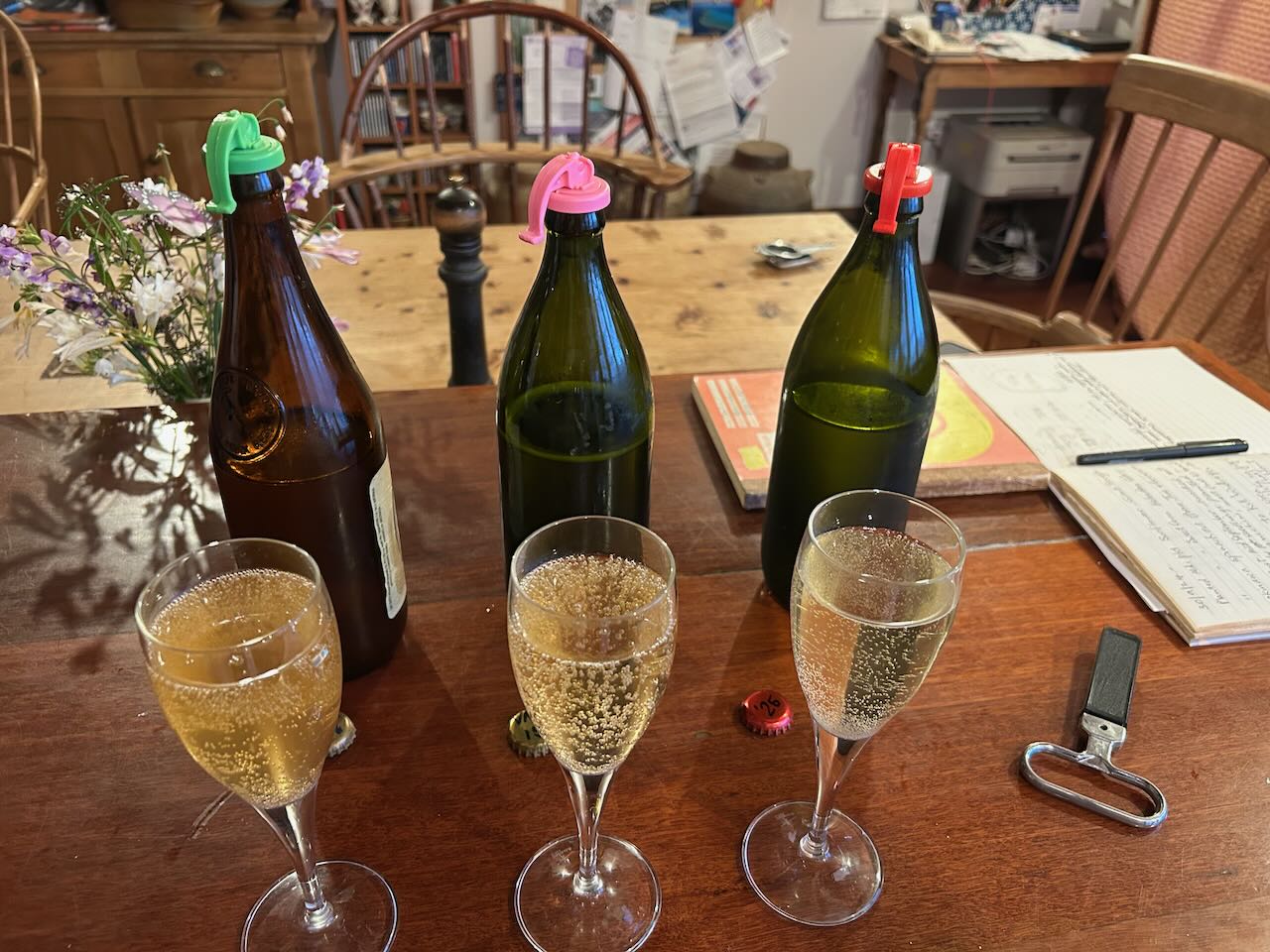
We opened 3 bottles to see and compare the difference. The older 2012 vintage was still very lively with good spritz, but a darker colour from its age, more akin to a beer in colour. It has a medium nose of sultry notes and a good firm cider flavour, just as we are used to. Completely dry on the finish. The 2015 from Val’s apples is medium in colour and flavour, and similar to above.

The 2025 is very pale with floral notes, a delicate palette and a dry finish, however, not very effervescent, because, as it is the first vintage from all the new apple trees in the new orchard, all planted since the fire, and this being the first year that we had a decent crop. I made the decision to cut the amount of sugar added at bottling, to ensure that there wasn’t too much pressure in the bottles. I don’t want to experience any exploding bottles. 

We make a completely ’natural’ cider here from our organic orchard apples. Nothing added at all except yeast. I have always used Moet and Chandon champagne yeast, as it has alway worked well for us. Back in the 70’s, you couldn’t buy cider yeast here in Australia, so i chose champagne yeast, as it is closest to what we wanted to make – a sparkling cider. These days I can buy any number of cider yeasts form the brewers supplies shop, but I stick with what works. 

I always leave the cider in the fermenter for 2 months to make sure that it has completely fermented out all the available sugars and is ‘dry’. Over the past 4 decades, I learnt to add one spoonful of white sugar to each bottle at bottling. This is the standard champagne bottling technique. This is to allow it to re-ferment, just enough to make a sparkling cider. Because these are all new trees and therefore an unknown fruit. I played it safe, and only added half a spoonful of sugar at this first bottling. So this batch has only a gentle spritz, but this is better than too much. 

After this test run, next year I’ll be brave enough to add the full amount of sugar.

I’ve never been brave enough to go with the wild ferment of naturally present yeasts that are on the skins of the fruit. When we had a small vineyard of 100 cabernet and 30 shiraz vines. I tried making one vintage of a macerated, whole bunch ferment. The wild yeast that was dominant on the skins at that time was very vigorous and resulted in a rather unpleasant distasteful wine. I didn’t like it at all and threw the whole lot out. So I lost a whole vintage. it’s nothing to do with money. It’s all about the investment of time and effort, and the expectation that there will be something interesting and delicious at the end, even if the amount is very small. For instance, we only make 30 to 36 bottle of cider each year, just enough to fill one fermenter. It’s enough.

Nothing is perfect, nothing is ever finished and nothing lasts. Good cider doesn’t.

Pug mills and working with soft clay

Warning! This post might be very boring! 

Don’t read on unless you want to learn something about clay.

Janine and I have been teaching weekend workshops these last couple of weeks, and all of the preparation that goes into that to make sure that everything runs smoothly keeps us very busy. The whole exercise takes us 5 weeks in total. However, there is still time for other fun things like the garden, chickens and cooking

Over the week in between the two weekend workshops, I re-cycled all the clay from failed and re-cycled practice pieces that had made their way into the clay room to be stiffened up in the plaster basins. I have 5 large plaster tubs sitting in the direct light of the North facing window, this keeps them dry and ready for use, most of the time. Plaster saturates quite quickly if thin slip is poured into them, but they cope very well with soft plastic slumped pots that just need stiffening up. 20 mins on each side on a dry plaster batt, is all they need and it’s well and truely ready to wedge up and use again.

At the end of the workshop, I get everyone to collect all the trimmings, turnings, scraped-off batt bases and thick slurry from their throwing water tub, and pour it all into a tall 20 litre bucket. 8 potters can fill it up pretty quickly. I let it sit and soak for a day or two, to make sure everything is equally softened, I like to get it to a thick and creamy consistency, not unlike Greek yoghurt – with some lumps.

I then transfer it all onto the plaster drying tubs. It takes 3 days to get stiff enough to lift it out and stand it up. This allows more air to circulate around the soft, barely plastic clay, so as to dry it out faster. The plaster basins then need a few days in the sun to dry out again. When we do back to back weekend workshops, the plaster does get saturated and ‘tired’! However, it always recovers with a few days of sunshine.

Once stiff enough, I put it back through the pug mill, extrude it and bag it ready for re-use. It’s easy mindless work. However, I say that in the full knowledge that it is only so if you already know exactly what you are doing and have done a lot of it before. There are so many little signs and issues that you need to know and be aware of to understand about pug mills and recycling clay. The joys and sorrows of owning a pug mill!

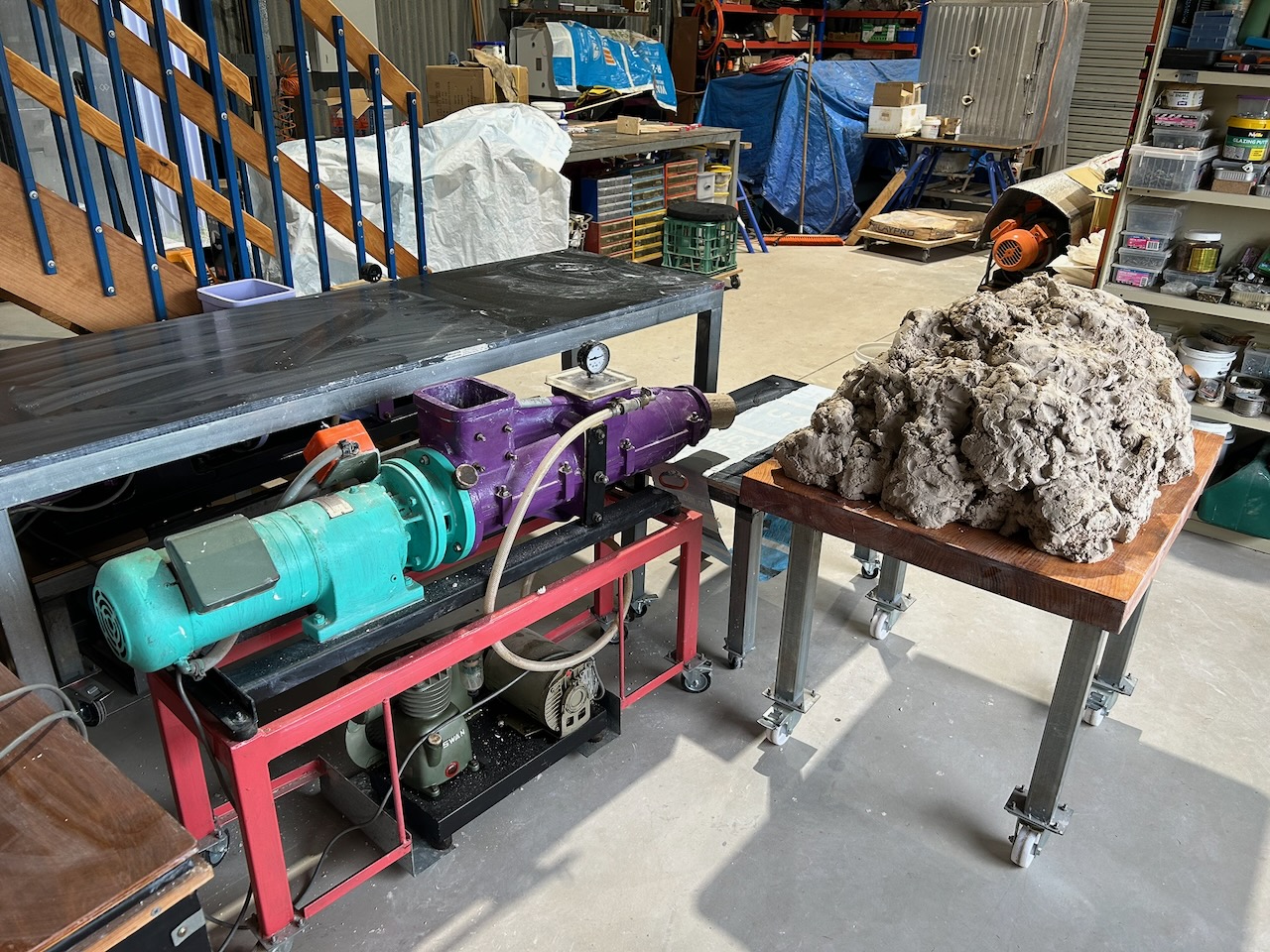
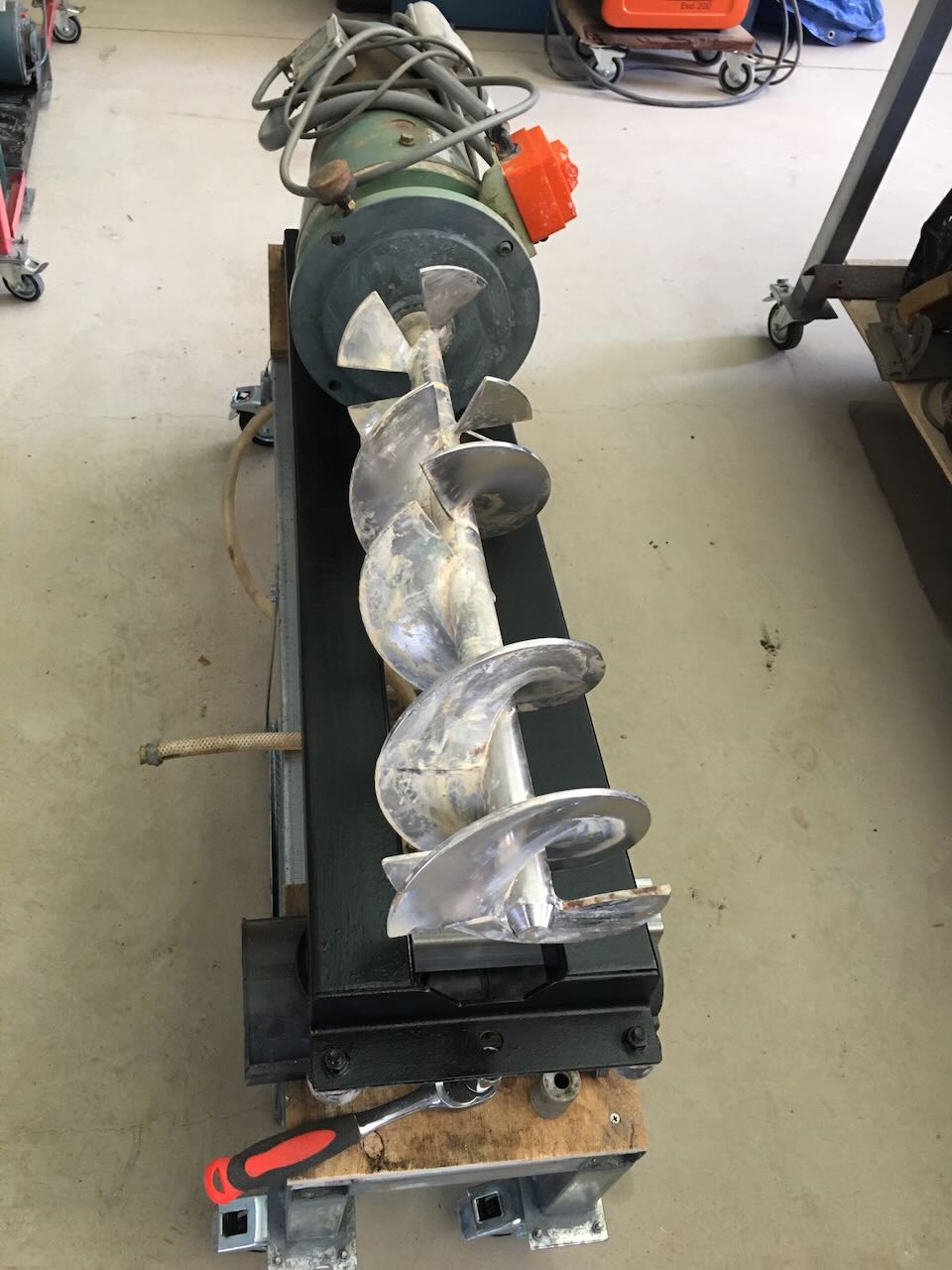
The clay can’t be either too soft or too hard, or the mechanism of the pug mill won’t work. A pug mill is in essence, a long tube with an Archimedes spiral inside. This spiral blade pushes the clay through the barrel. Some parts of the spiral at the beginning are removed to make the spiral into a series of spiralled chopping blades. This chops up the clay, mixing both hard and soft parts evenly, then the later, complete spiral section of the auger pushes and compresses the clay out the other end. Some of the better pug mills have a screen or screens half way along the barrel so that the clay is pushed through the mesh and comes out the other side as clay spaghetti. This exposes any trapped air bubbles which are then sucked out of the pug mill barrel by a vacuum pump, before the clay is recompressed and continues along the barrel.

There can’t be any little bone dry edges that have dried out too far. They are rock hard and dry and will clog up the vacuum screens. I have to constantly check when running my fingers through the thick slurry, that there are no small tools, profiles, kidney shapes, or chamois strips left behind by my students. Any of these will grind the exercise to a rapid halt. Requiring the pug mill to be stripped down, dismantled, cleaned, the offending ‘rubbish’ removed, then checked and rebuilt. It’s the best part of a full days job to to a thorough clean out. If it’s only a chamois, sometimes, I can get away with just removing the blocked vacuum screens, cleaning them only and reassembling.  This is still a good hour or so.

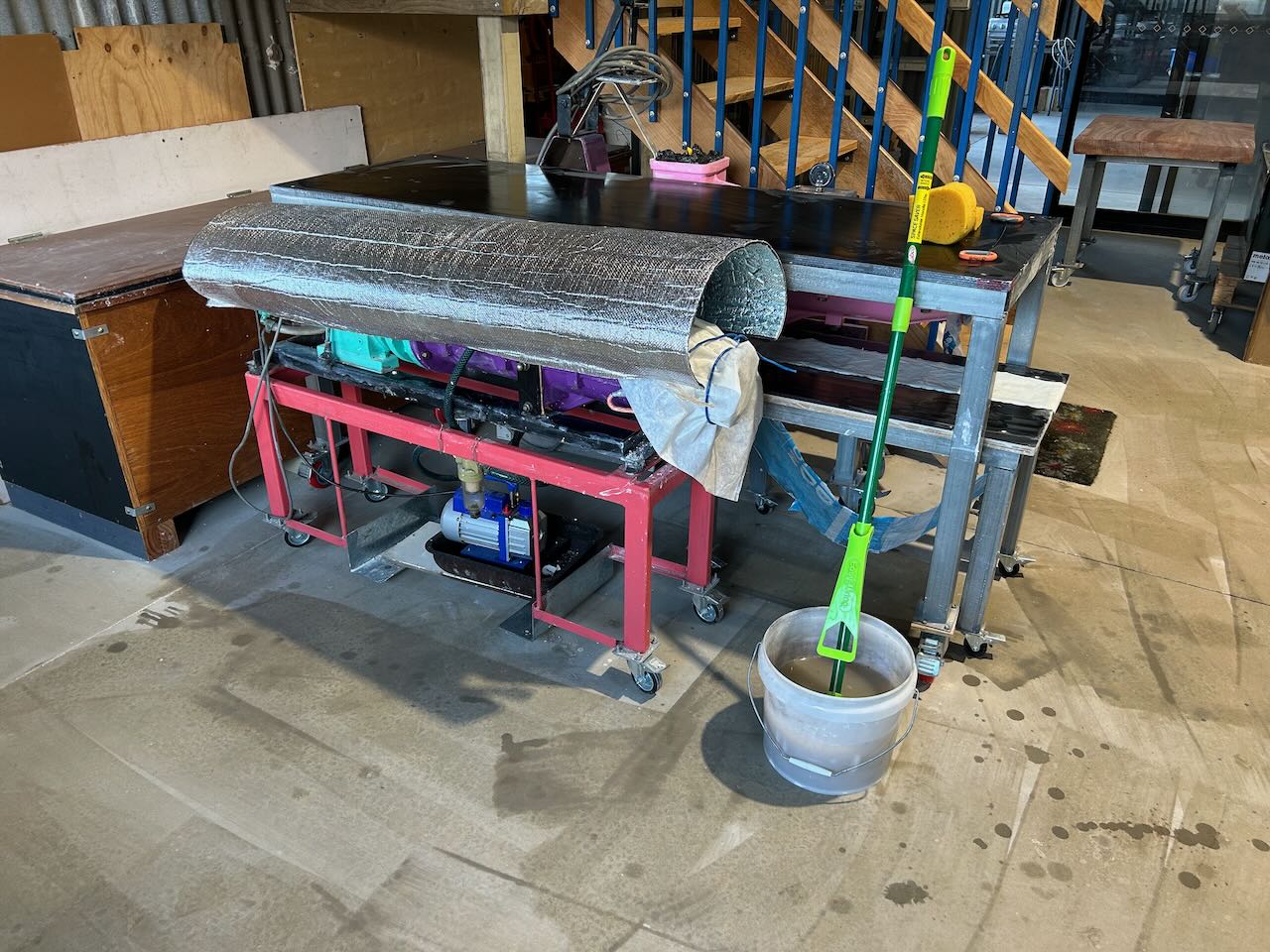
In the picture above, the orange vertical plate on the side of the blue pug mill barrel, half way along the barrel is where the vacuum screens are located and can be removed for cleaning. The white lid on top of the barrel is where the vacuum chamber sucks out the air. The vacuum pump is located in a box slung underneath the pug mill trolley, which is on castors for easy manoeuvring. 

So far, I’ve been very diligent in checking all the recycled clay pretty thoroughly, so I haven’t had any ‘accidental’ issues in the last few years. I did discover, quite early on that the new pottery shed, with its north orientated, solar passive design, does get a lot of direct sunlight in onto the clay processing area in mid winter. I’ve learn’t from hard experience that direct sunlight like this can cause the pug mill barrel to heat up and sweat moisture out of the clay on one side, which then condenses and trickles down to the bottom of the barrel. The end result is dry hard clay in one part and slurry in another. The dry, very stiff nuggets of hard clay get forced onto the fine mesh of the vacuum screens and clog it up. The rheological nature of the thin wet slurry in the other part of the barrel doesn’t have the cohesive strength to force the hard clay through. A complete strip down is required. This is a lesson that I learnt the hard way.

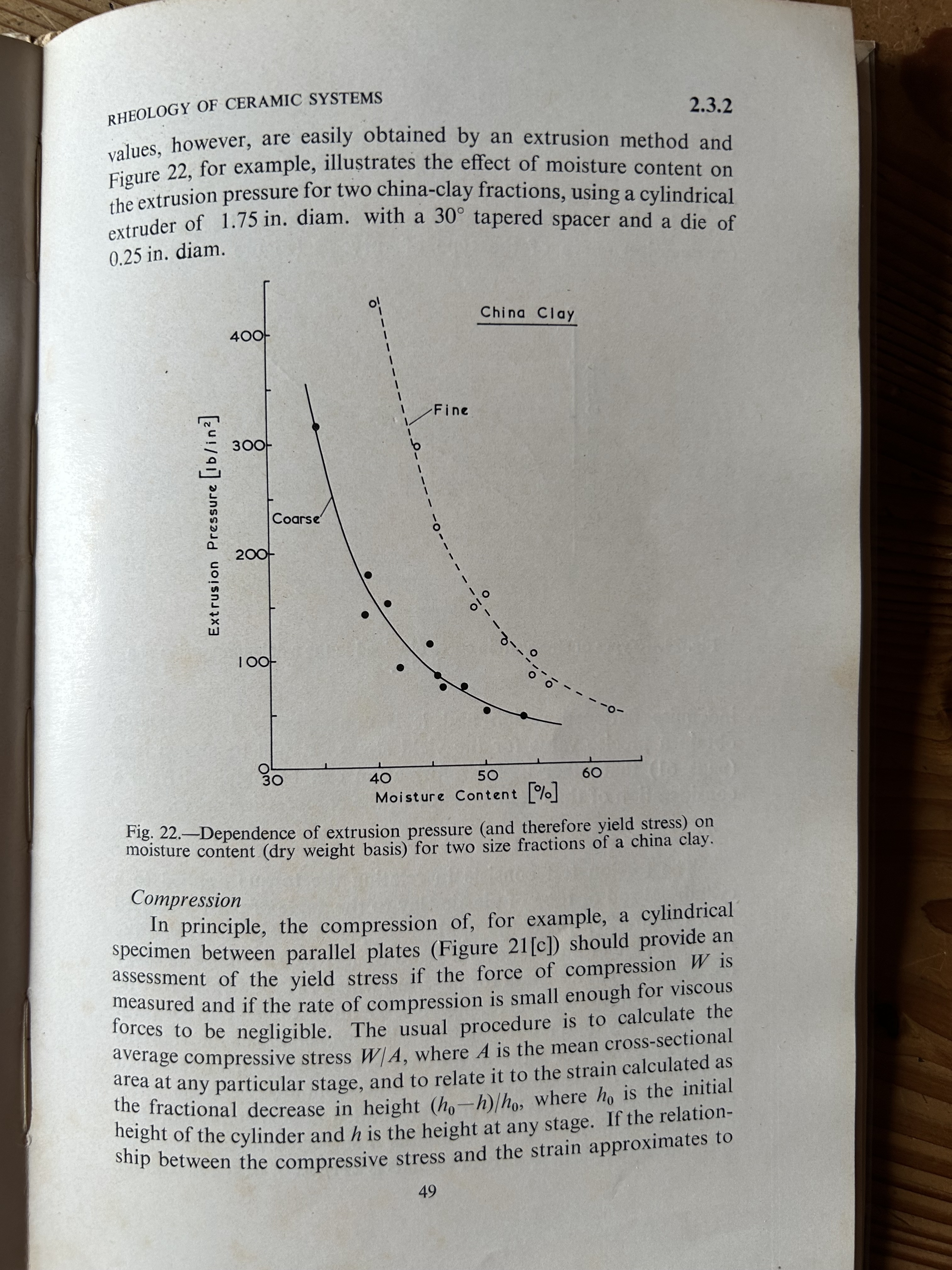
Rheology is a very interesting subject in itself. Clay can be either too soft or too hard to stick together and be ‘worked’ or shaped successfully. There are limits called ‘Atterberg’ limits that have been determined, which predict the upper and lower limits of water content in clay. If too wet, it just sloshes around and won’t hold a shape, when too dry, it is just crumbly granules. We need the ‘Goldie Locks’ range for our clays to ‘work’ successfully. For pressure extruding the range is somewhere between 17% and 60%,. That’s such a huge range. See graph. For pugging, it needs to be in a narrower range of 20% to 30%. depending on the inherent plasticity and texture of the clay body. For throwing clay on the potters wheel, it is often closer to 20 to 22%. I have found in practice over the decades that my wrists have their own personal Atterberg limit of around 25% water content or even a little bit softer rather than stiffer. 

Some people say that you should work to your strengths. I think the opposite, I work to my weakest point, and as that is my ancient wrists. I have adjusted my clay body recipes over time to include more very fine plastic particles, slightly more course non-plastics and more fine sand. This combination allows me to make softer clay mixtures that are still easy to pug and easy to throw on the wheel when very soft.  I am limited by what is still available on the market here. So many materials that we used to be able to get have been removed from the market, as the Australian companies that own clay mines were purchased by multinational players who shut them down to force us to buy their imported products.

Luckily, I was trained in the 60’s and 70’s when clay technology was still taught in Art School. I even went on to teach it myself for a few decades. So, I can develop and test my own clay body recipes. A skill soon to be completely lost, as us oldies retire and die out. I can still obtain Australian mined and milled ceramic materials from NSW, Vic and Qld, but the options are constantly diminishing. When I have been shown commercial plastic clay bodies over the years, I have always found them to be far too stiff for my wrists to feel comfortable with. Possibly because of a lifetime of damage due to hard work with my arms, wrists and hands?

So dry lumps of clay on the pug mill screens stops everything in it’s tracks, until the screens are removed and cleaned, and this can be a big job, depending on the maker and model of the pug mill. We are lucky here in Australia to have the ‘Venco’ company, who under the direction and vision of Geoff Hill, manufactured pottery equipment here since the 70’s. His version of  ‘Harry Davis’s, genius design’ of vacuum pug mill was an excellent piece of machinery. The smaller, cheaper, models require that the entire machine be diss-assembled to get to the singular screen. However, the larger, and more expensive models are designed so that the screens are accessible from the outside of the barrel and can be accessed directly for cleaning.

So now I have learnt to keep my pug mills covered with silver insulation foil when not in use, and this has solved the condensation problem. There is always something new to learn, even after 50 years!

Once pugged and bagged, It’s not the end. Good clay that has been well made needs to be nurtured a little. Clay is alive, in the sense that it contains live microbes, or should if you want it to develop the best possible plasticity. We live in the bush here in Balmoral Village. There are few Government services. There is no Town Water Supply available. So we have to collect rain water in dams and water tanks. Water stored in the ground has more bacteria live organisms than Chlorinated and sterilised city water. My clean rain water will allow the naturally present bacteria and other organisms to grow and develop in the clay. This might sound shocking, but it is just natural. Clay ‘ages’ as the organic action develops between the clay mineral particles. The water is drawn closer to the surface of the fragments and the air is slowly excluded and passed to the surface by capillary attraction. In this slow gentle way, clay develops its full plasticity. It is very noticeable after say 3 months. But a year is better! Of course, no-one in their right mind would make clay and then not use it for 3 months! Would they??? Yes muggins does. I have stored and aged porcelain bodies up to 15 years.

There is a distinct difference in the clay after a period of ageing. Clay body made with chlorinated water inhibits the natural growth and ageing, so does not develop the same plasticity.

In the old pottery, there were a lot of eucalypts growing around the building, and consequently there were a lot of gum leaves in the rain water. These made the water a little acid with their tannin. It turns out that tannic water is just about the very best additive that you can put into clay to improve its plasticity. Our gum leaf infused tannic rain water was a pale, transparent grey/brown colour. Some fancy companies that manufacture commercial Porcelain bodies, buy in, at great expense, a product called ’Totannin’, that does much the same thing. Our clay really responds to any time left wrapped in plastic bags, sometimes double bagged, for long term storage. Then stored in a cool dark place and not touched for as long as you can bear it.

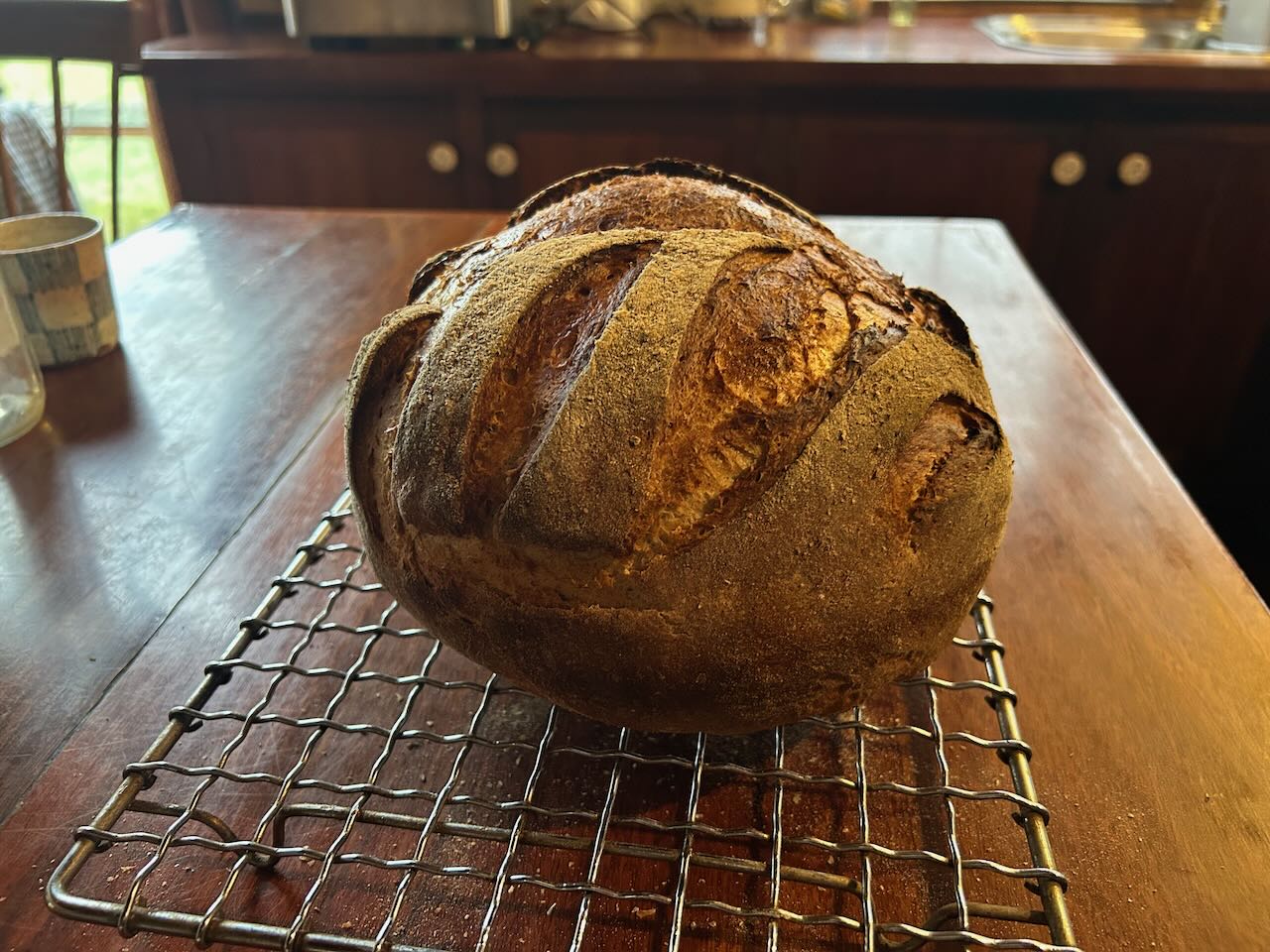
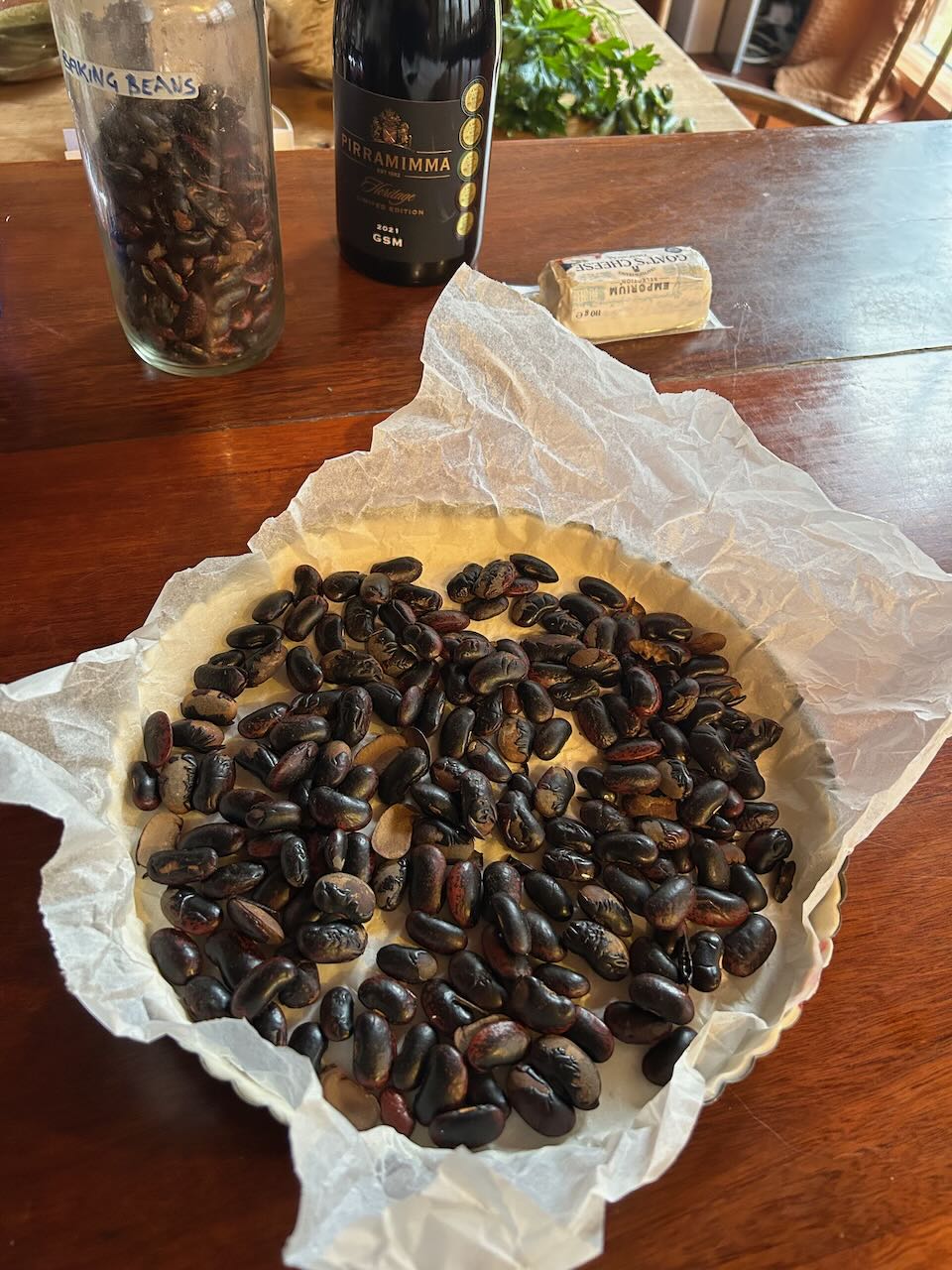
Each Friday evening, before the workshops, I bake a loaf of bread and a tart. This time, its beetroot and French goats cheese over a bed of slow cooked onion jam. This has always proved to be a very popular lunch contribution at the workshops. Every one brings something to share for lunch. There is always just a bit more than we need. Everyone eats well and the selection is broad, varied and delicious.

We spent the first day on the wheel, throwing all the forms that we will work with on the following day. I demonstrate each step in the process on each day. 

Teaching a throwing school in winter is always just a little bit of a challenge. The pots don’t want to dry out over night to stiffen up to the point where they can be turned, trimmed, manipulated and handled with ease.. I get the pots to dry faster, by stoking up the slow combustion stove to the max, and keep it going well into the night, to ensure that the pots evaporate off enough of their moisture to be workable. It’s a juggling act, but I manage to muddle through, and at the end of the weekend, everybody gets to take home their finished works.

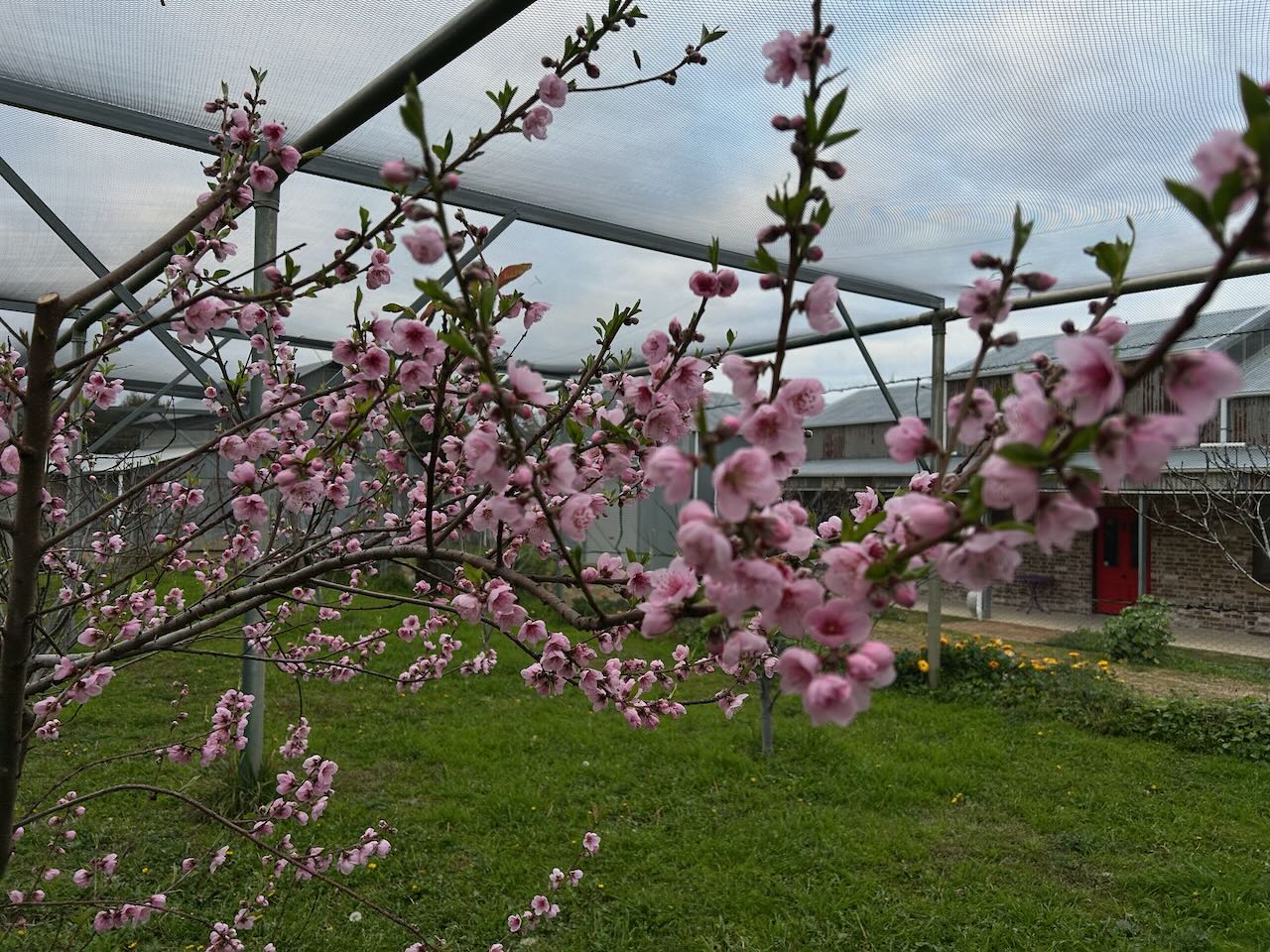
In the orchard, the early peaches and nectarines are flowering. There is only 3 more weeks to spring, and lots of plants are starting to come back to life, buds are swelling and even the lawn is starting to grown again. This last part isn’t so thrilling though, as this means a few hours of lawn mowing several times a week.

Spring blossom always offers up so much positive energy, the a promise of warmer weather and a bountiful harvest to come.

Nothing is ever finished, Nothing is ever perfect and nothing lasts.

Enjoy the moment.

Wood fired Australian Moon Jars

I fired my wood fired kiln a week or so ago. It was a very good firing. I’m quite pleased with the results. Of course there were a few 2nds, as there always are, however, on balance. I got a lot of very nice pieces out of the kiln. The clay bodies worked very well and I achieved a lovely red/orange flashing colour on the clay.

So that was very nice to see , and I look forward to developing those clay bodies into the future, as they are exactly what I like about wood fired pots, unglazed outside and fire-flashed. All the domestic pots in this firing were raw glazed. ie. glazed when they were still wet or damp from the potters wheel, and then dried out and fired without a bisque firing. A raw glazed firing starts off very slow and gentle, just like a bisque firing, because it is. Then it ends like a stoneware glaze firing. It saves a lot of energy and work in packing, and unpacking, the kiln twice.

However, only certain glazes can be adapted to work as raw glazes. The recipe needs to contain about 20% of clay or thereabouts. This is required to allow the glaze to shrink onto the pot as it itself shrinks as it dries out. Otherwise the glaze will flake off. There is a particular quality of high clay glazes. They contain a lot of alumina. This means that some glaze chemistries, that require high silica content cannot be made very easily. The are a few work-arounds like adding bentonite instead of kaolin, but there are limits to far you can take this successfully. I’m working on it.

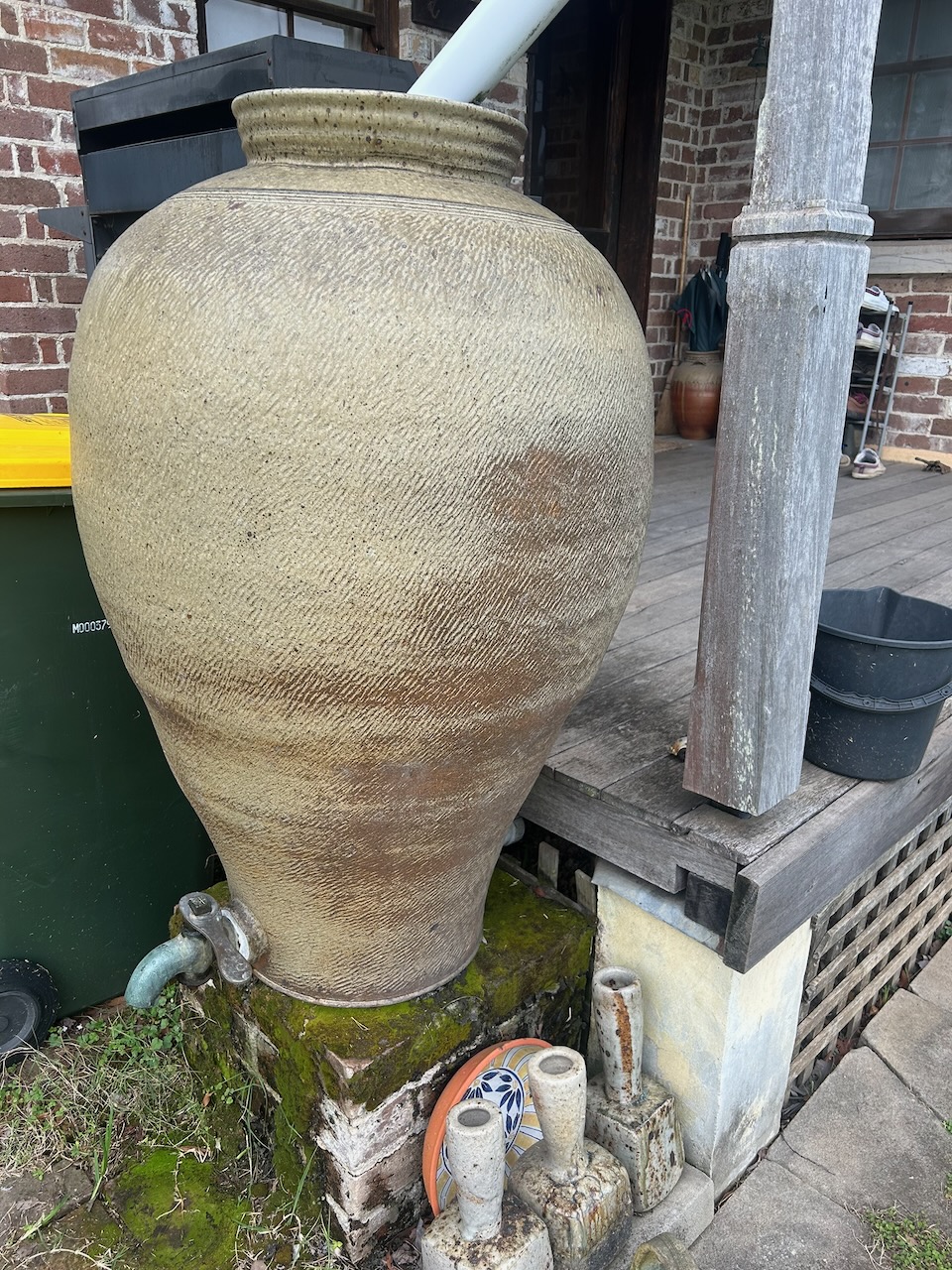
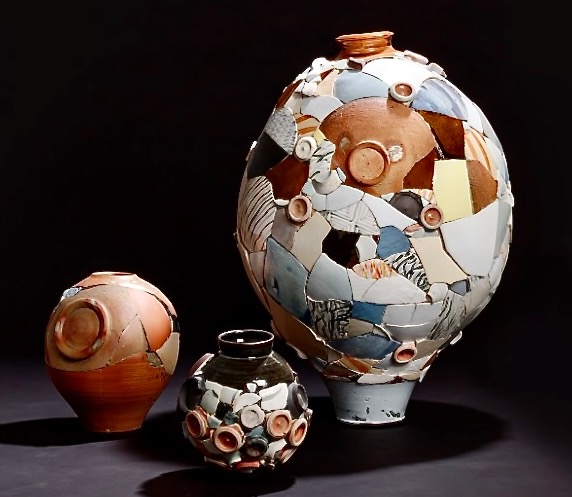
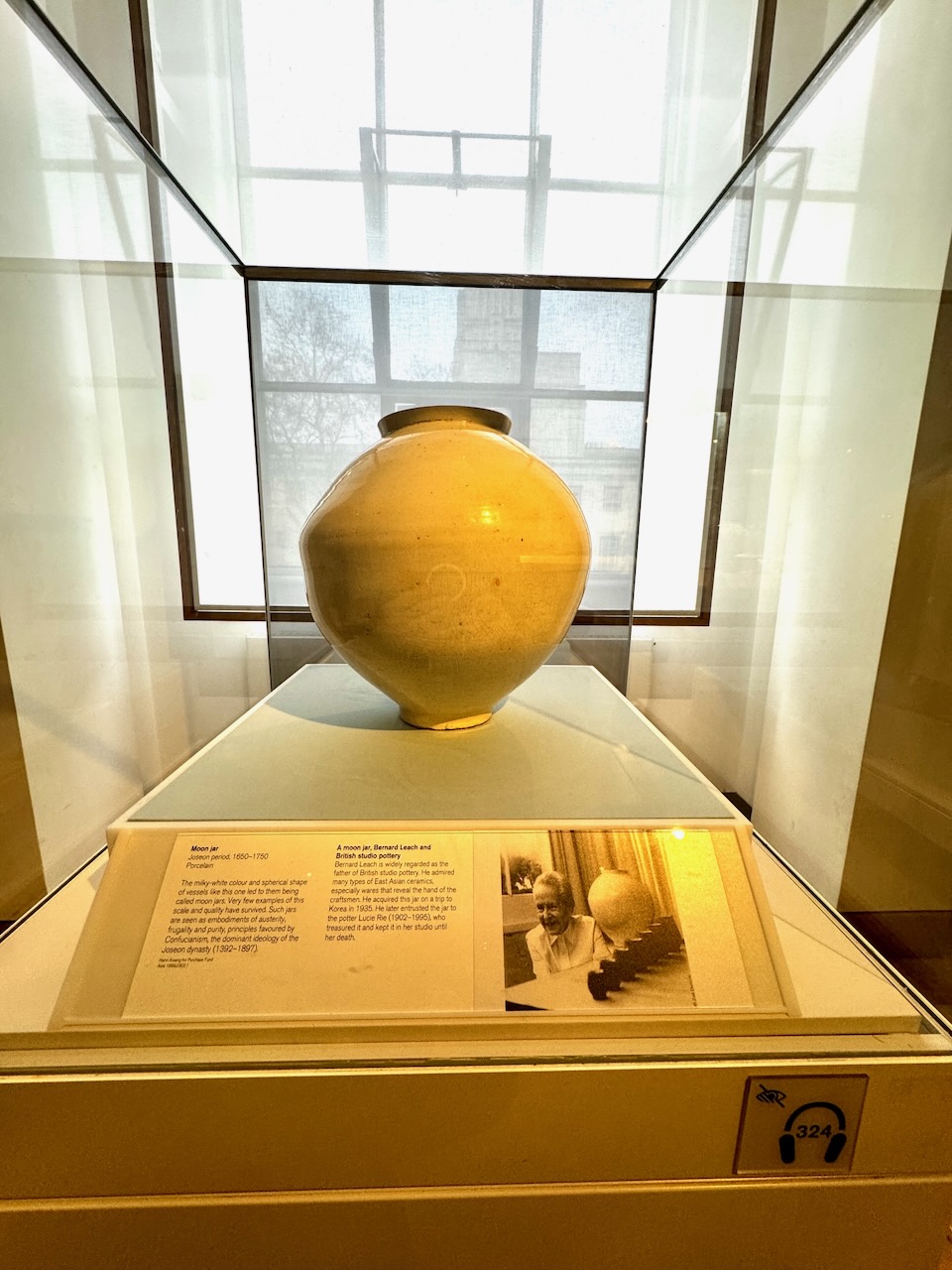
Some of the most interesting pots in the firing were my Australian versions of Korean influenced ‘Moon Jars’. The moon jar is a significant cultural object in Korea. They have been made for centuries for the Royal Family, and more recently are quite sought after in contemporary Korean middle class homes.

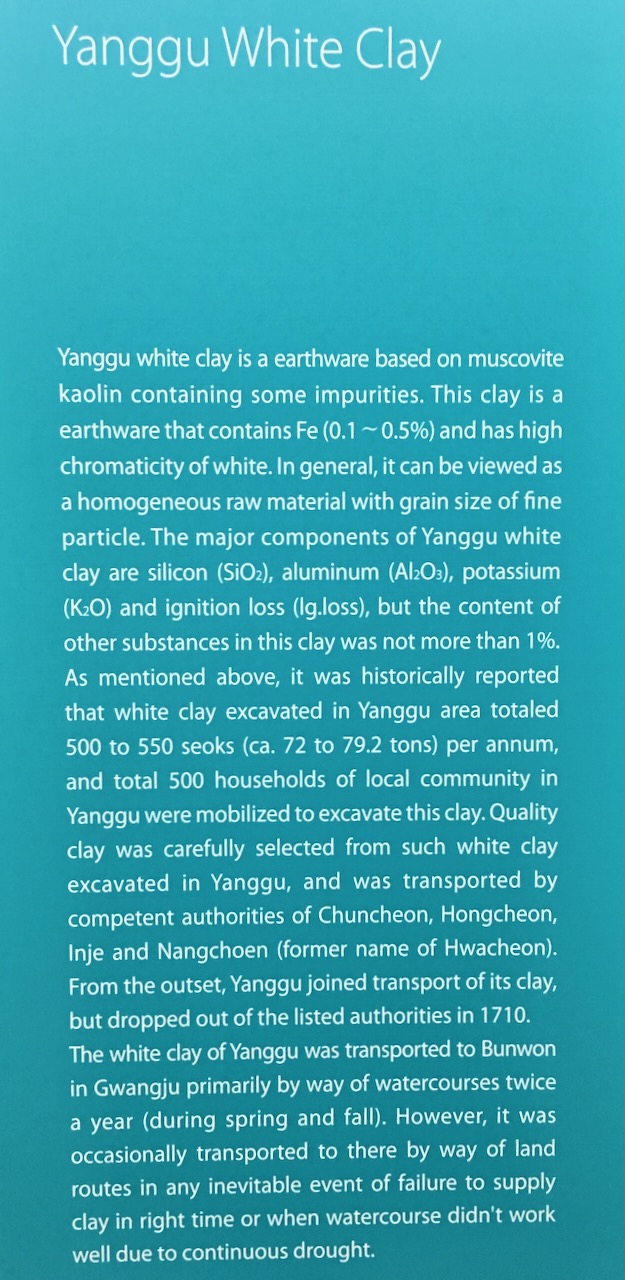
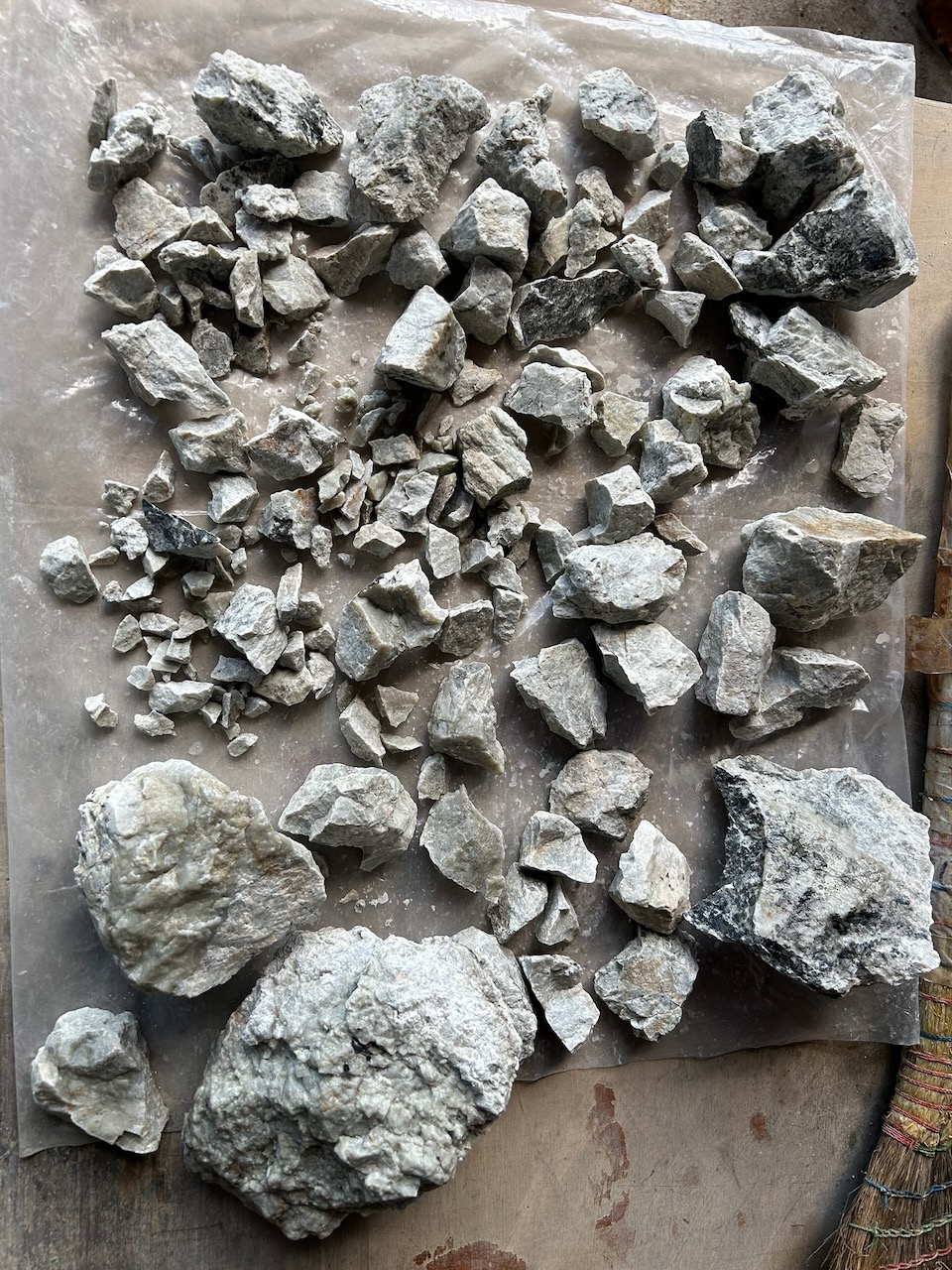
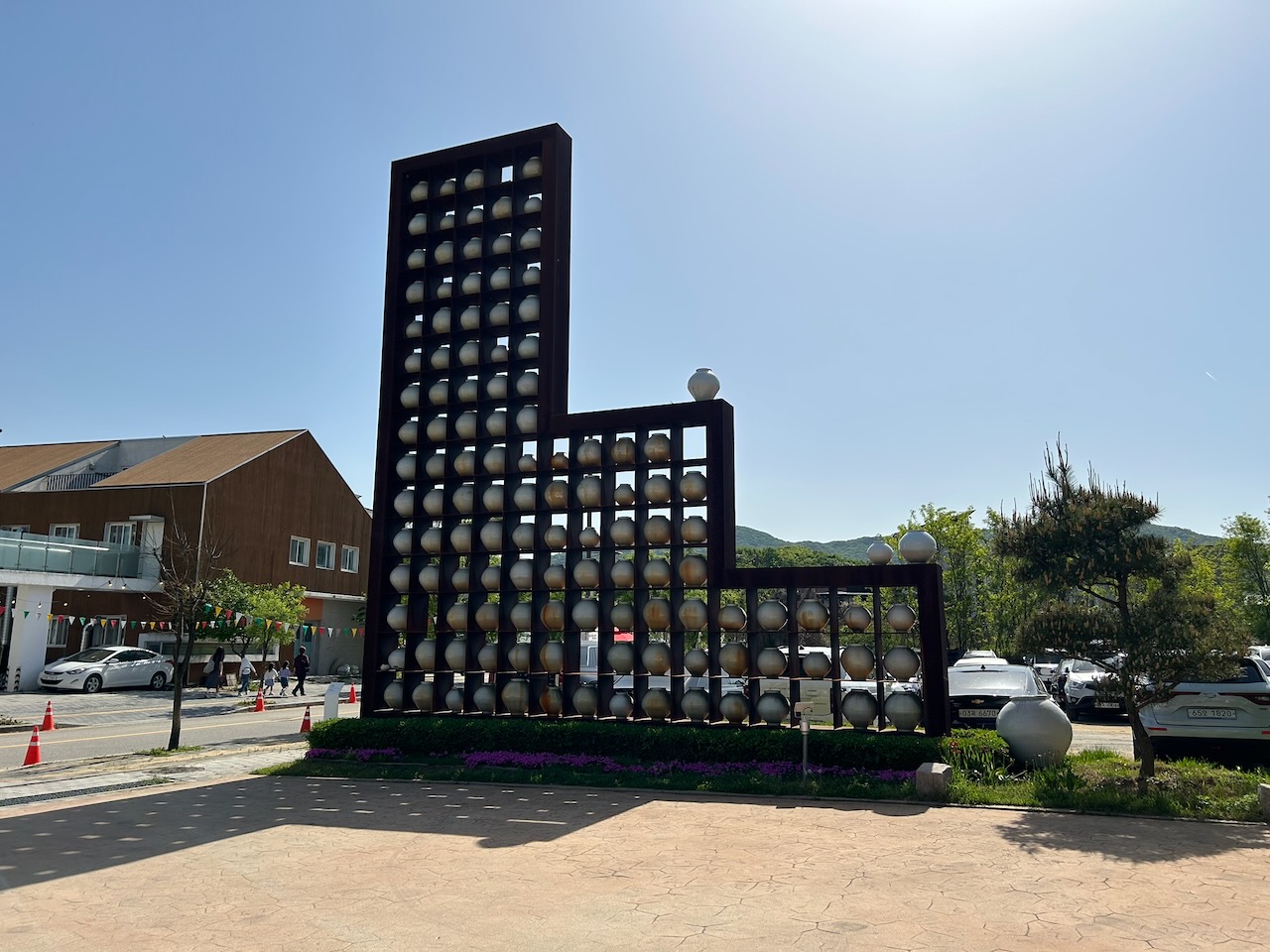
Interestingly, the porcelain clay for these ancient cultural masterpieces was mined in a very small village in the central north of what is now South Korea. This is the very same village where I have been going to study and carry out some of my research for the past decade in Korea. I’m honored to have a few of my porcelain pieces on show in the Porcelain Museum on site there. It’s such an inspiring place and the single stone, weathered sericite, porcelain clay is amazing.

Having worked there on a number of occasions now. I can’t help but be inspired by these magnificent objects. I can’t bring myself to make copies of them, it wouldn’t fitting for me, sitting here in Australia, as an Australian, appropriating their finest cultural heritage. And what’s more, probably doing it badly.

But I can’t resist the temptation to have a go at a big round jar influenced by the Korean moon jars. so I made my own Australian version. This series of homages are not made from porcelain, nor are they spherical and white – glowing like the full moon. I have made mine as a different kind of ‘moon’ jar. I threw them in white stoneware, coated them in black slip, and then again in white slip, so that I could do some sgraffito carving through the surface. A technique that I have become fond of in recent years.

During the long, high temperature, wood kiln firing, the combination of ash and the slip coatings combined to turn the surface a lovely green/grey/black/white/brown/orange, depending on where they were placed in the two different chambers for each of the firings. They bear no resemblance to the big, fat, round, glowing, white Korean porcelain full moon jars. These are definitely my own interpretation. They couldn’t possibly be confused as culturally appropriated local copies!

Full Moon jar

Moon shine vine. Decoration by Janine King.

Phases of the moon Jar

Phases of the Moon Jar II

Clouds over the moon

Phases of the moon III

Moon Flower jar

Man on the moon jar.

A very different ‘riff’ on the subject of the Moon Jar

Weekend Throwing Workshop

We have just completed another weekend workshop. This time on the topic of throwing. Moving on from rock glazes to wheel work. 

I advertised one weekend and filled the next weekend as well. We also have a waiting list for a third weekend, which, if we fill it will need to be at the end of this month on the 23rd/24th, as all other weekends are fully booked.

These images taken by Janine king

We have 12 potters wheels in the pottery now. 3 kick wheels, that no-one except Janine and I know how to use. They are quite simply the best way to make beautiful sensitive pots, in a slow gentle mindful way. But no one seems interested to learn about them. However, we have had 2 students over the past series of workshops that have had a go on them. AND, I believe enjoyed it! They made some beautiful pots on them.

We also have 9 Japanese shimpo electric wheels. Electric wheels are what everybody is used to using. When I did my apprenticeship with a Japanese potter. I had to learn to use the Japanese ‘shimpo’ style wheel. I’d never seen one before. I had to get used to sitting cross-legged on the workshop floor, with the wheel sunken below floor level. It was a difficult thing to learn as a 20 year old who wasn’t used to sitting and working cross-legged. However, I did develop an appreciation of the compact nature of the shimpo wheel design and the quality of the engineering. 

We have one from every series of the shimpo wheels that they have produced, from the 1960’s through to the 2020’s. (RK 1, 2, and 3). One of the older shimpos is a bit worse for wear and difficult to use, so that is my demonstration wheel. That leaves 8 good ones for student use. So we can enrol 8 students in each throwing workshop.

This series of workshops is based on the topic of kitchen wares, baking dishes, mixing bowls and mortars and pestles, etc.

I demonstrated making both round and rectangular baking dishes, by cutting out sections and hand-building the pot back together again in the new ‘squared-off’ shape. The simplest method is to cut a single ‘leaf’ shaped hole in the centre of the dish. I call this the ‘melanoma’ cut. As it’s the cut of choice for skin cancer surgeons when removing melanomas. This is simple, neat and easy, but it creates the greatest stress in the bottom of the dish. This method has given me the most grief with cracking during drying. But it does give you a very elegant, long narrow dish, excellent for baking a whole fish! 

A more successful method, from my experience, is to make two cuts, one on either side of the pot and push the sides in to fill the void. The ‘amphora’, or balanced cut. This creates a lot less stress in the body of the dish, and is therefore less prone to cracking and is more successful. The most successful and least stressful, is simply to squeeze to pot together between two blocks of wood, and then smooth out and flatten to rumpled base inside. All good techniques, worth practising.

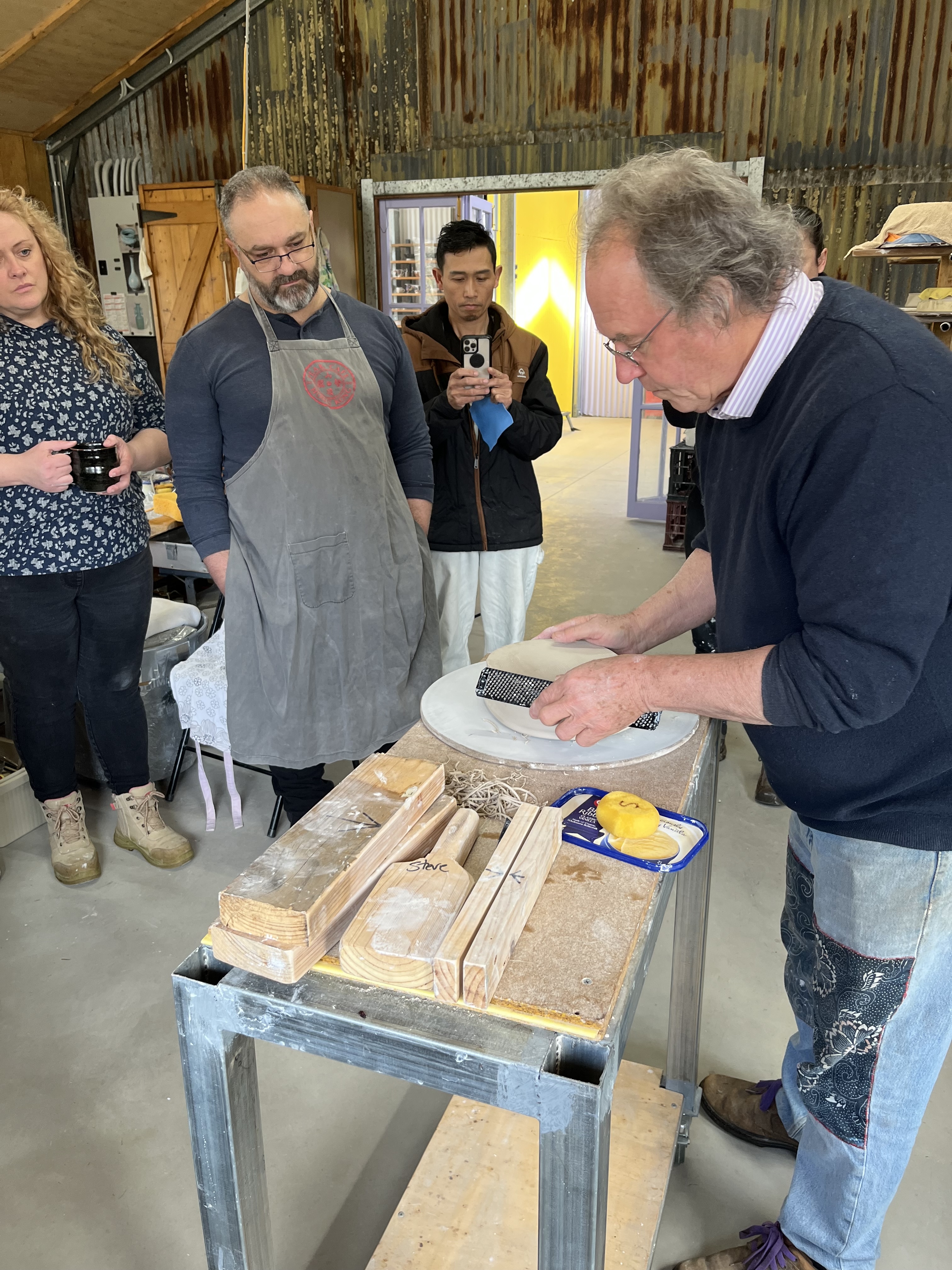
Although we start with regular round pots. They must be re-shaped into ovals while still damp and soft enough to rework. Oval and rectangular baking dishes can’t be turned in any normal way on the wheel once they are shaped, so I’ve learnt to trim the foot by hand using a ’sur-form’ blade, readily available from hardware shops. It’s careful use, followed by a light soft spongeing creates a nice, smooth, serviceable finished edge with undercut.

At the end of the day/weekend, all the shelves are groaning under the weight of over 120 kgs of freshly thrown and turned kitchen wares. There are only 3 bags of clay left on the pallet at the end of the second day. Everybody really got stuck in and made the most of the creative, learning and experimental environment. I encourage everyone to push their skill levels and not to feel too precious about any pot. Stay detached emotionally from your work. Feel free to just squash it up if it isn’t going well and make another one. A better one! It’s a much better way to learn. We all have to learn to practice detachment. It’s a learnable skill. Have many goes at the technique, until you get it right. Don’t feel precious, just squash it up and start again, practice makes perfect. And of course, it is of no cost o the student, as I’ll be the one to stiffen up all the slops and failed attempts. Stiffening the slurry of rejects and turnings on plaster batts during the week, re-pugging and re-bagging ready for another life.

I also demonstrated making mixing bowls and mortars and pestles. I like to ‘pull’ a spout into the wall of these pots. It’s very practical, but really enlivens the form and gives them great character.

Everybody is encouraged to bring something to share for lunch each day. We have quite a sumptuous feast, sitting at the big table in the re-arranged gallery room. Good wholesome food, good conversation and great atmosphere. Lunch is concluded, when our resident barista ‘Len’ makes everyone a coffee. Then it’s back to work.

I ask every one to help clean up their mess at the end of each day, and they do a pretty good job, but there is always more clayey smears all over the floor afterwards. The more you look, the more you find. So when it is all over, I give the floor a final spongy mopping over again, cleaning the water bucket regularly to get as much of the clay dust up off the floor as possible. It’s worth the extra effort, as otherwise, clay dust gets everywhere, and is very fine, so we have to take care with all of our OH&S efforts to keep a clean environment for the benefit of the next group of students – and ourselves.

The weather forecast for this last weekend was pretty poor. 35 mm of rain on Sat and 15mm. on Sunday. We got it all and more! With 63 mm in total over the 2 days. One person even got bogged when leaving on Sunday afternoon. I had to dig out the mud from behind the wheels from the hollows that they had sunk in, and shovel in coarse gravel, so as to get sufficient traction to reverse out of the boggy saturated soil, next to the driveway. An intense way to end a great weekend of learning and sharing. Thank you to everyone who came and made it special.

I appreciate being in the presence your positive creative energy.

Nothing is perfect, nothing is ever finished and nothing lasts. Enjoy the moment.

Rock Glaze Workshop

Last week I was busy making clay for the fast approaching, up-coming weekend workshops. I made half a tonne of special clay body with a bit of extra grit, adding some more ‘tooth’ to the usual reliable body that I make up for us. 

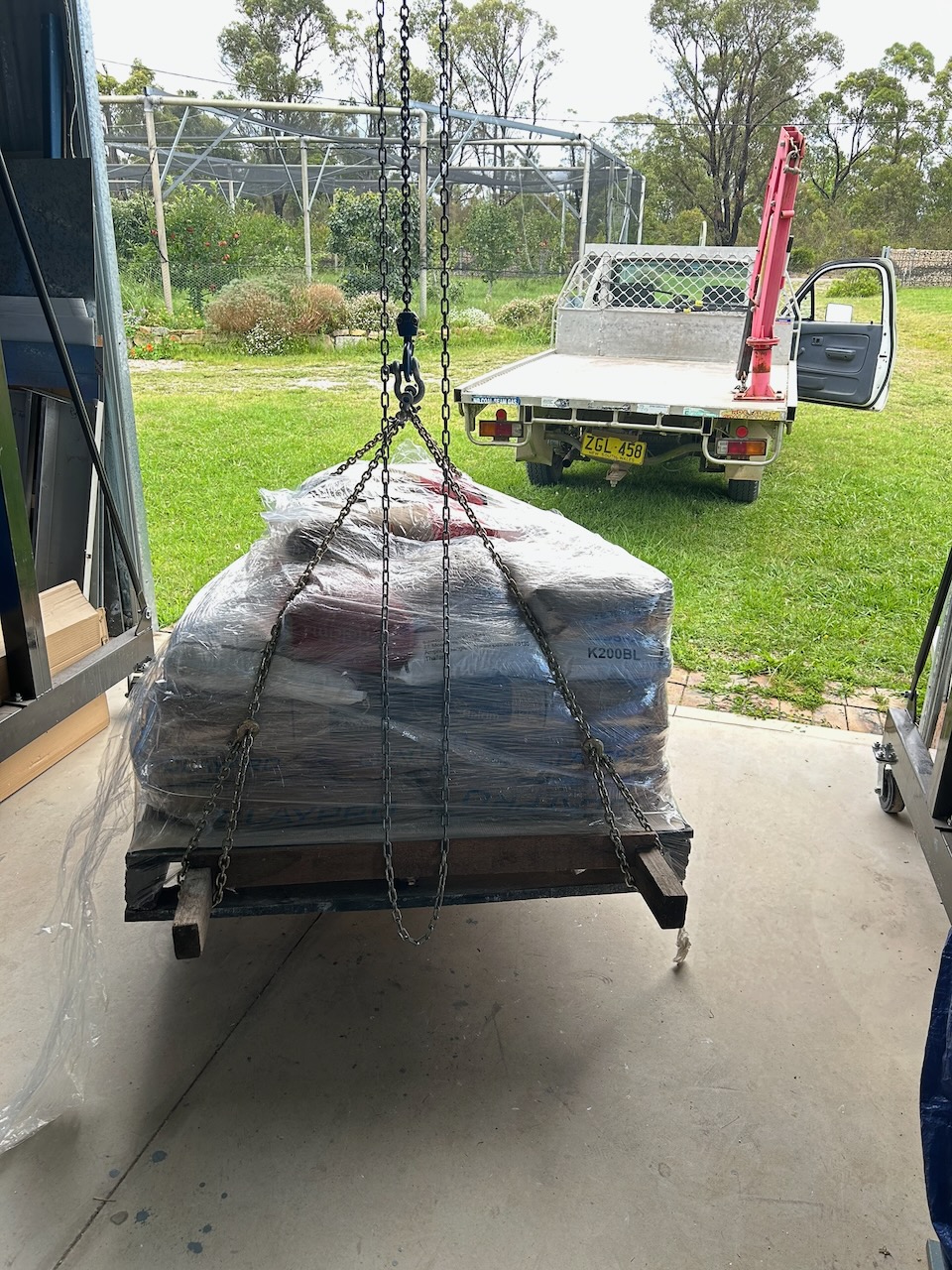
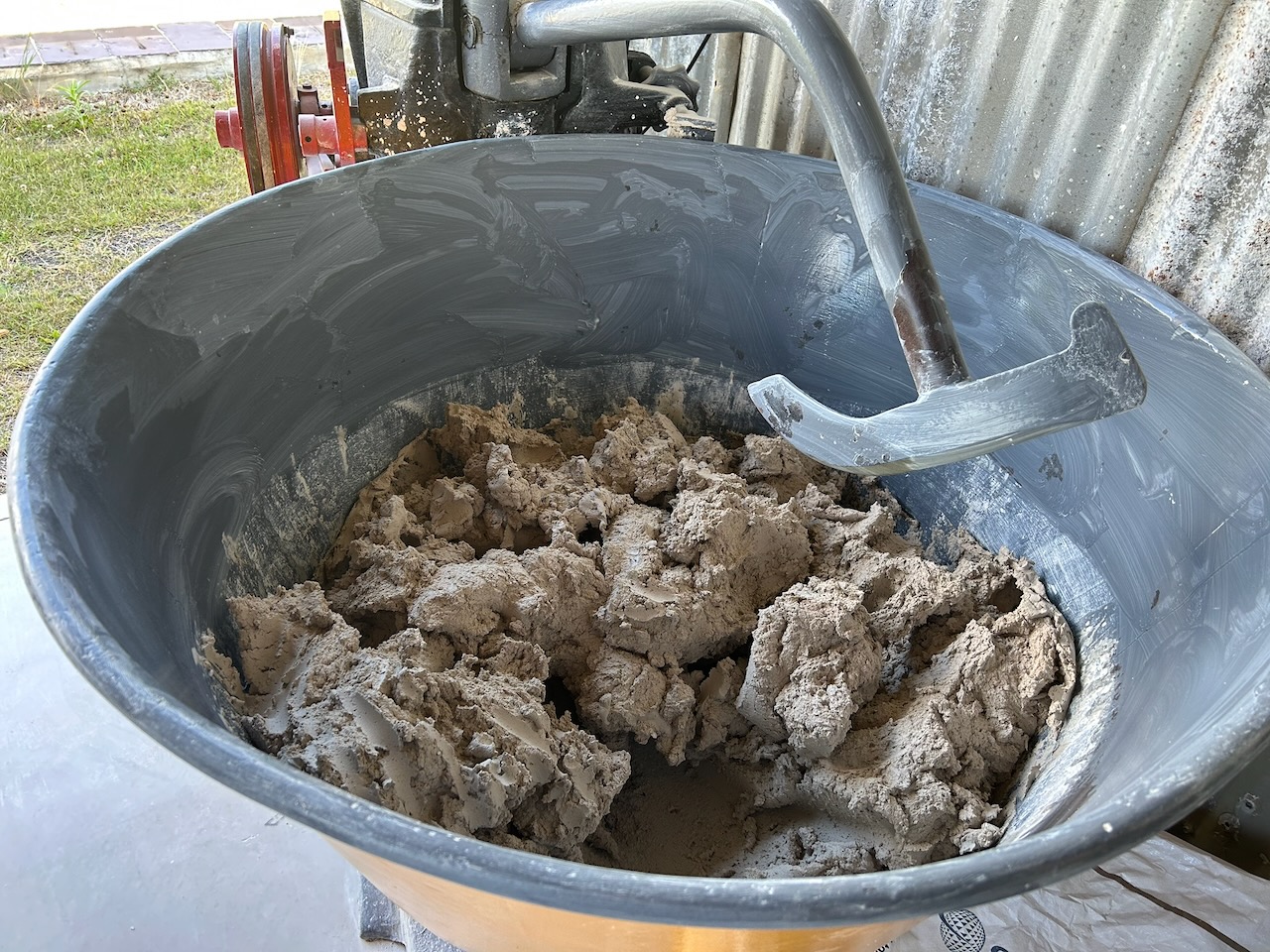
It took me two days. I can make up a quarter of a tonne of clay each day from scratch, pug it twice to ensure even mixing, then re-pugged through the Venco Vacuum pug mill and finally bagged and stacked. Along with sorting materials, weighing out, mixing, pugging and finally cleaning up, I have to have a day off in-between to catch up and to avoid over-doing it. Suddenly a week has gone by, but now it’s all done and ready for the next couple of workshops. We are pretty self reliant in the pottery here. Using our own electricity, our own rain water, using all the machinery and equipment that I have either made, re-purposed or re-built after the fire. I’m fairly proud of this minor achievement of self-sufficiency. 

This week we have been very busy with all sorts of little jobs. We ate the last of our late season tomatoes. Surely this must be the last of the late crop. I’m not expecting the last 3 green toms to ripen very well, so these half dozen little self sown gems will probably be it. And very nice too. We cant expect to see another ripe tomato here until just before Xmas if all goes well with the spring planting for next summer’s crop. This must be some sort of record for us, eating home grown red ripe tomatoes for the garden in the last week of July.

What we are getting a lot of from the garden are cauliflowers, broccoli and Brussels sprouts, all the usual winter fare. last night I harvested the first pick of parsnips for our baked veggie dinner. Cauliflowers, broccoli, Brussels sprouts, parsnips, potato, pumpkin and onion, baked in the oven and then dressed in a cheesy béchamel source. A lovely, warming, winters dinner.

This weeks loaf of rye bread was the usual beauty. All crusty and solid dense rye inside. I use 50% of wheat flour as well so as the get it to rise, as there is very little gluten in rye flour, but it has fantastic flavour. I’m using locally grown and milled organic stone ground flours from the wheat belt of NSW. All grown, harvested and milled on site on the family farm.

This week we also hosted a weekend workshop, but held mid-week, Tuesday to Thursday for a student from FNQ. I had offered a glaze workshop last year, but only got 3 replies, and only one who paid. so it was cancelled. Not enough to make it worthwhile to run it. One potter enquired as to when the next one would be offered. I told her that it wouldn’t. Then she asked how much it would cost for me to do a private one-on-one workshop. She applied for a grant, was successful and so she was here this week. A year later than originally offered.  

I spent Tuesday morning waiting for her to arrive from Queensland sieving wood ashes from the various fires, stoves, burn piles and kiln fireboxes, ready for use in our testing. I still had a little time, before she arrived, so decided to make a wooden pottery tool. At the last throwing workshop, my good friend Len Smith left behind a wooden comb that turned up in the throwing water. I really liked it and had got used to using it. It’s very comfortable in the hand and very useful. I really like it and was sad to have to give it back when Len next visited for the recent wood firing a week or so back. I decided to make one for myself, so I set to it and in half an hour I had one made. Not as good as Len’s, but I think that it is workable. and most importantly, it’s home made onsite from scrap wood. Not as good as the bought one perhaps, but individual, personal and much more meaningful. It still needs a little bit more sanding and finishing, then some vegetable oil, and it’s ready to go.

When my student arrived from the airport, we had lunch and spent the afternoon doing a geology tour of the Southern Highlands, collecting samples and talking geology, analysis and geological maps on the short drives in-between sites. Day two was spent crushing and milling our samples in the morning and then making glaze tests in the afternoon. We finished the weighing out in the late afternoon, having completed 13 test tiles, half for oxidation and half destined for reduction firing. We packed both the electric kiln and small gas kiln with our test tiles before dinner. The solar electric kiln was fired over night used the days stored sunlight energy from our battery, while we fired the small portable gas kiln during the evening into the night, a 3 hour reduction firing from 6 till 9.00PM.

Day three morning was spent unpacking the kilns, debriefing on the results, and then a theory class on glaze technology, choice of materials, Segar Formula and loads of other relevant related glaze topics. We finished on que at lunch time, in time for her return to the airport for her flight home. A fully packed, midweek-weekend, intensive crash course in geology, rock glazes and using collected ‘wild’ local materials. Ashes, gravels, arkose, clays and rocks, all alchemically metamorphosed from road side dirt into shiny glazes. 

Back home from Korea

I’m back home from my work in Korea. I managed to drop a firebrick on my foot on the 3rd day. I couldn’t wear a shoe after that, as the big toe had swollen up so much, such that I had to wear a plastic ‘flip-flop’ thong to keep working. I went to the local convenience store in the village and bought alcohol disinfectant spray for cleaning the toe, over-sized bandaids, gauze bandage and medical tape. I was amazed that such a tiny village shop had everything that I needed.  
The next day, the local government health clinic was open and my friends took me to the clinic to see the doctor. I needed them to translate for me. The doctor told me that I had kept it very clean and to try and keep it elevated, not to walk on it too much and that if it started to throb or get red. I should come back ASAP. As a precaution, he prescribed and also issued me with 2 different antibiotics, for 3 times a day, enough for 10 days. I don’t like to take any antibiotics if I don’t absolutely need to, but I certainly didn’t want to end up with medical complications while in a foreign country, so I took them.  I didn’t want to risk getting toe-main poisoning and it spreading up my leg to Knee-monia and possibly even dick-theria.The doctor offered me an X-ray, but I assured him that I could still bend the toe. I had to demonstrate that for him, so that he was satisfied. 

My friend got out his credit card to pay, but there was no charge!!!! I’m a foreigner here. I don’t pay taxes here. I should pay for such a terrific service. Korea is an amazing place!

My foot was still swollen, and I was still wearing a plastic flip-flop thong on my foot right up until I left Korea. I even had to attend the official opening of the exhibition in my formal black thong. The nail has since died and come off. I’m so lucky that I have such good friends and that it wasn’t worse.
The garden has grown such a lot while I was away, and badly needs a lot of weeding. Apparently there was a lot of rain and the temperature was quite mild. So plenty of late autumn growth. I got stuck into the weeding straight away, just an hour at a time each day. Weeding always involves such a lot of bending. I’m of an age where this is not so comfortable any more. So I space out my efforts, I didn’t want to over do it. 
The second day, I decided to wear knee pads so that I could get closer to the weeds, to minimise the bending. I also wore light gloves to save my fingers. So I am learning to change my old habits to make living here the way that I have so far, and want to continue to do into the future, a more achievable prospect. This is a really hands-on life style, doing almost everything the old fashioned way, by hand, honouring local gardening lore and organic traditions with green environmental knowhow/theories.  A permanent garden/orchard/vegetable patch, including chickens, all inter-woven and based on sustainable living principals, but with a nod to modern conveniences where necessary, like a cultivator and a mower. 
We can still pick all of our salad lunches and our nightly dinner from the garden each evening, it’s just that the flavours have changed to winter forage now. We have all the usual winter greens, broccoli, cauliflower, carrots, beetroot, cabbage, pumpkin and kohlrabi. We cook a lot of vegetable stir fry, tofu, okonomiyaki, Japanese style cabbage pan cake, baked mixed vegetables, and cauliflower au gratin etc. We have also just celebrated the start of the cold winter season with an old fashioned baked dinner. Our first red meat meal since last winter.

  Other than weeding the garden, there is also a lot of mowing, so an hour or so of that each day too. The garden work fills half the day. I’m using the electric ride-on mower for the bigger areas that have become deep in luscious growth. But I also use the electric strimmer for all the edges where the ride on can’t get to. It’s a good feeling to know that all the work is being achieved powered by sunshine these days instead of fossil fuels. Janine fills in the gaps with the electric push mower, to get in under the branches of the fruit trees and other similarly appropriate places for that mower.


We have worked hard at planning and finally becoming a fully solar electric household. We started back in 2007, when the cost of solar panels finally became affordable for us. When I was a teenager, the only solar panels were to be found on space craft and satellites. We’ve come a long way and Australia can be proud of the world famous, ground breaking research into refining solar panel technology done by Professor Green at the University of New South Wales in Sydney. We have slowly increased our solar PV over the years, until now we have 17kW of PV panels and two 15 kWh batteries. Sufficient to charge 2 electric cars, run the house and pottery workshop, Fire our electric kilns and if carefully managed, also selling the excess back to the grid. Although we try to minimise our exports, as we only get paid 5 cents per kWh. It’s better to use it all ourselves. We haven’t paid a power bill since 2007, and spend more money on petrol for things like the chain saw and fire fighting pumps than we do on our Plug-In Hybrid car.
Now that the garden and grounds are back under control, I’m also back in the pottery, making pots again, for the other half of each day, making again is fun and half of my existence. My start back on the potters wheel was delayed by a day, as the pug mill had seized up from being left for too long without use. I had to hand scrape the clay from the barrel nozzle and take out the vacuum screens to remove hardened clay from the mesh.  Quicker and easier than a complete strip down, but still time consuming. It somehow feels like a bit of a waste of time, but any other option is far worse, I’m so grateful to my friends who passed on their old pug mills to me after the fire. You know who you are. Thank You! I’m very grateful to be so lucky to own my very old, re-furbished, Venco pug mills. 

The next day I’m back on the wheel throwing perfectly de-aired and beautifully mixed plastic clay. My old wrists are too worn out to hand wedge all my clay any more. I did manage a lot of hand wedging for the first year back at work here, during lock down. I couldn’t buy a new Venco as they were out of production, and the large 100mm. model is still un-available! I don’t know where I get the energy and enthusiasm to keep on working like this into my older years, other friends and colleagues have retired, but I was determined not to let the 3rd bush fire in 50 years and loss of another pottery workshop stop me. I’m still here and still creating the things that I love. So out of desperation and necessity, I hand wedged my clay to my lasting detriment. My ageing wrists have never really recovered. Even throwing slowly on the kick wheel, causes just a little bit of a twinge, so I have to modify my hand position slightly to cope. We have a few Shimpo electric potters wheels, mostly used for our weekend workshops, that run on our solar power, but I really prefer the old ‘Leach’ treadle style kick wheel for all the smaller domestic pots.

Winter brings on the citrus crop, so we start the season by making 2 batches of marmalade, lemon, lemonade and lime marmalade and then tangelo and navel orange marmalade. The Seville oranges aren’t ready yet. They come on later in the season. They make the very best marmalade.

It’s hard to believe, but today, in winter, at the end of the first week of June, I picked a ripe red tomato. We still have self sown tomato plants flowering. We have had ripe tomatoes in June before. It all depends on the severity of the frosts. At this stage we have had a frost during the week, but because the vegetable garden is fully netted to keep out the birds, that netting seems to just take the edge off the frosts, allowing us to still harvest tomatoes so late in the season.

It’s so good to be home again! We have a quotidian flock of wild wood ducks, that have decided to take up residence on the front lawn, sometimes up to 30 or so of them. They seem to like it here. Plenty of grass to eat and 4 dams to explore. Why wouldn’t they? They were probably all born and raised here over the years. They do pooh all over the lawn, so we have to watch where we step and wipe our feet at lot. We have a shoes-off household, so no problem about the house, but a lot of pooh gets tramped into the pottery workshop when we have weekend workshops and open days.

If this is my biggest problem in life. I’m so, so lucky!

Nothing is perfect, nothing is ever finished, and nothing lasts.