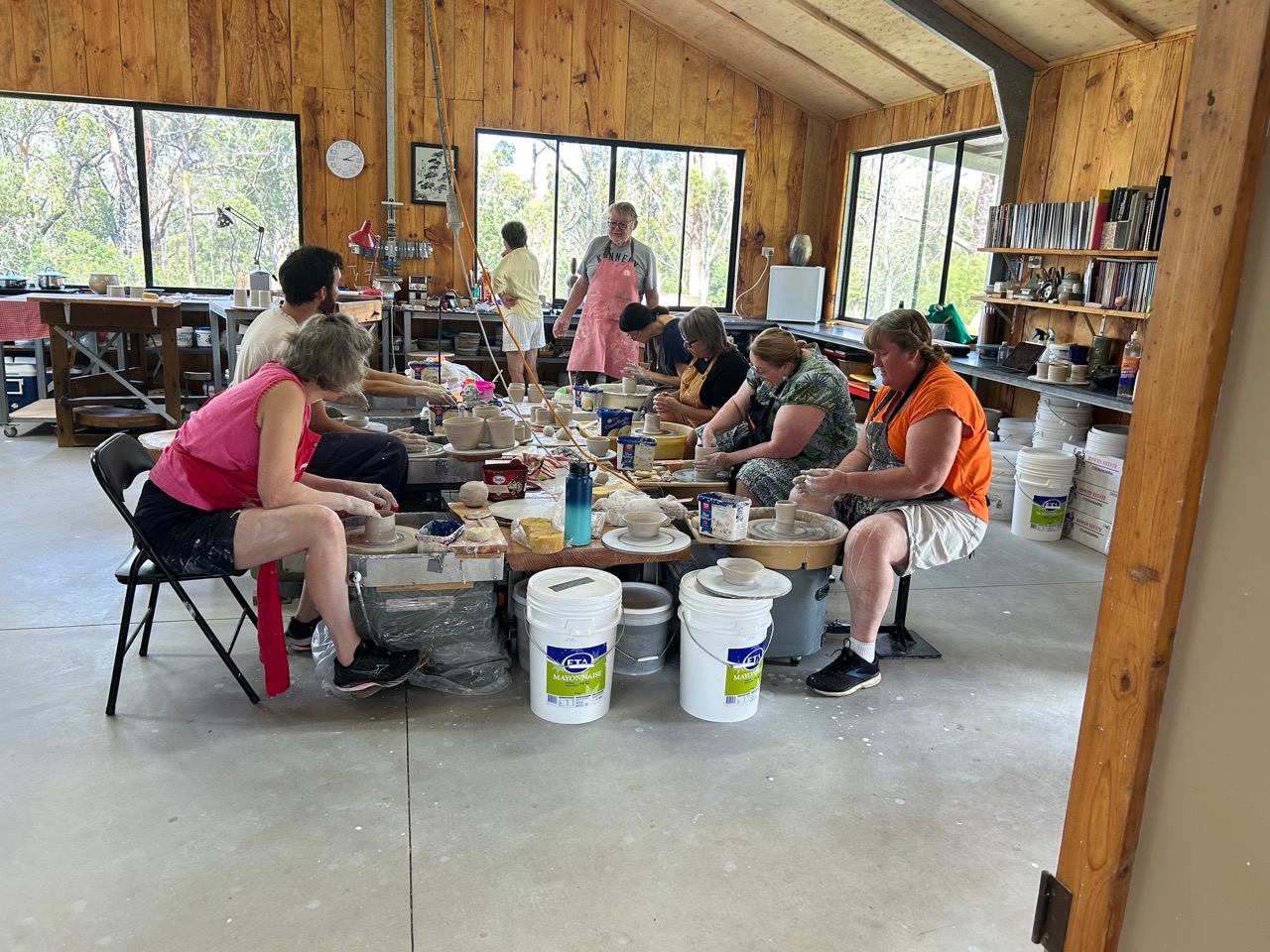
We have just completed another weekend workshop. This time a throwing class. I advertised one and filled two weekends, so we will back in the studio again with the 2nd group next weekend for the 2nd one.
Everyone seemed to enjoy them selves and got something out of it. We had Len Smith here with us for the weekend to have 3 tutors for the 8 students. Len has so much teaching experience, it’s great for the students to have a third point of view. He’s also great company.
I spent the week pugging clay and prepping the throwing room, and during the time in-between, I kept on with my sgraffito decoration, and got a solar powered, stoneware glaze firing done.
These red and black cups are experiments in a combination of Sgraffito and inlay.
Just black slip inlay on these cups.
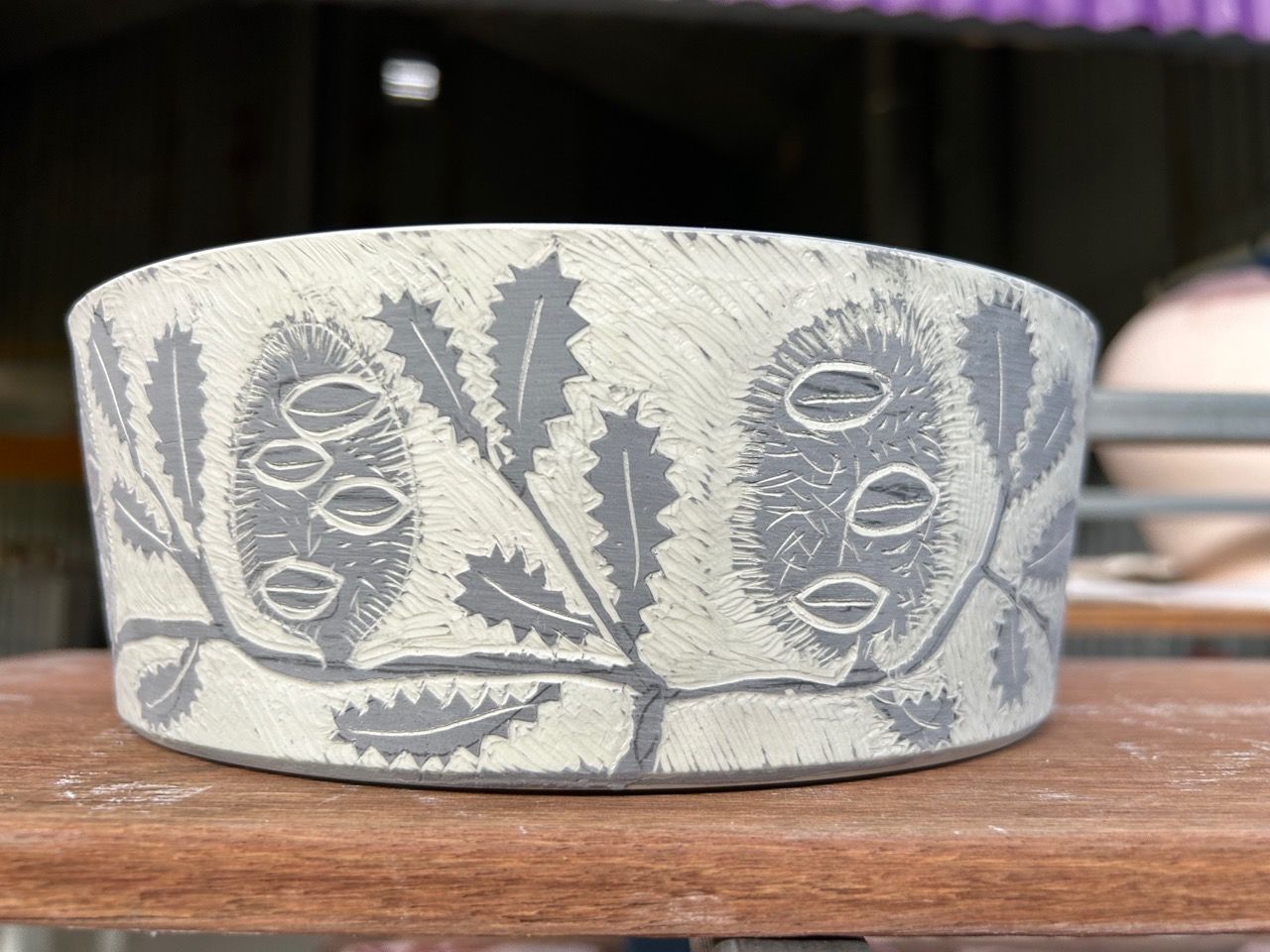
Just sgraffito on this bowl
In the evenings, I made another batch of tomato passata. I have now run out of our re-cycled ‘pop top’ jars and so I have started to use the old ‘Fowler’s’ vacuum jars with clip top lids. I made a 7 litre boiler full, and reduced it down to 5 litres, enough to fill 7 of our No.27 Fowler’s jars. I have no idea how Fowlers came up with their numbering system, but as they are so old, I suspect that it represents fluid ounces?
I Googled it and 27 imperial fluid ounces = 770 mls. So that sounds like it ought to be right.
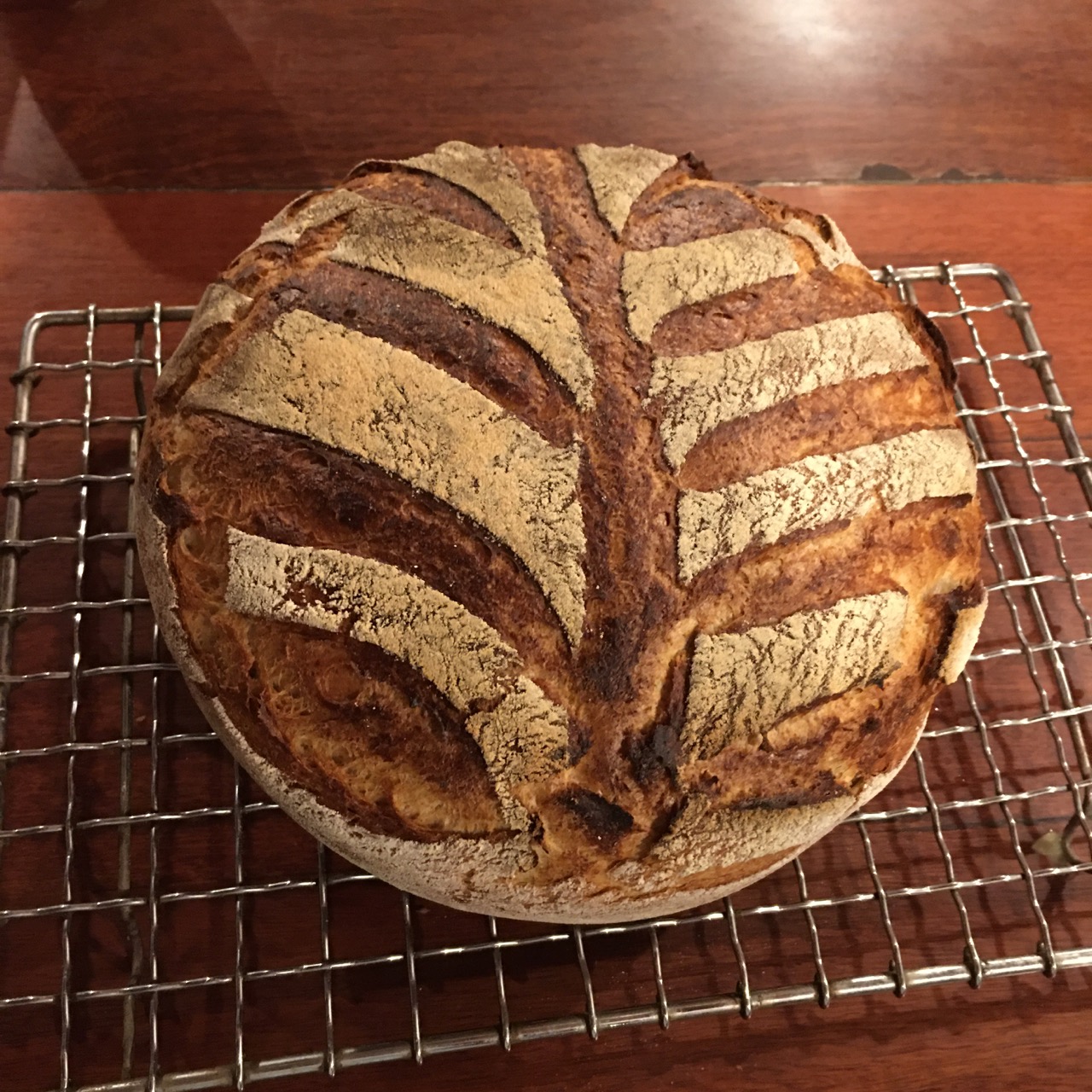
I also made this weeks loaf of rye bread.
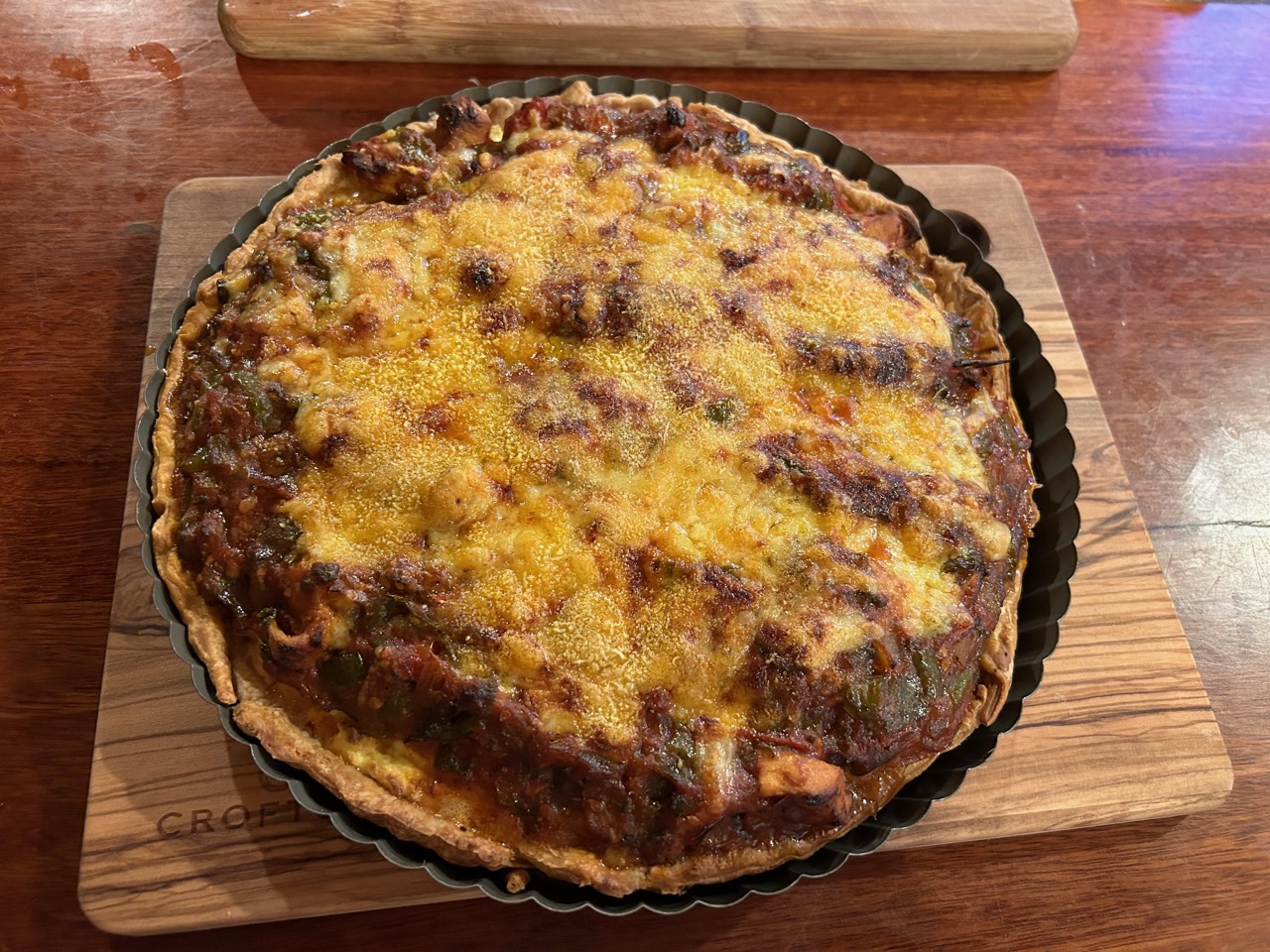
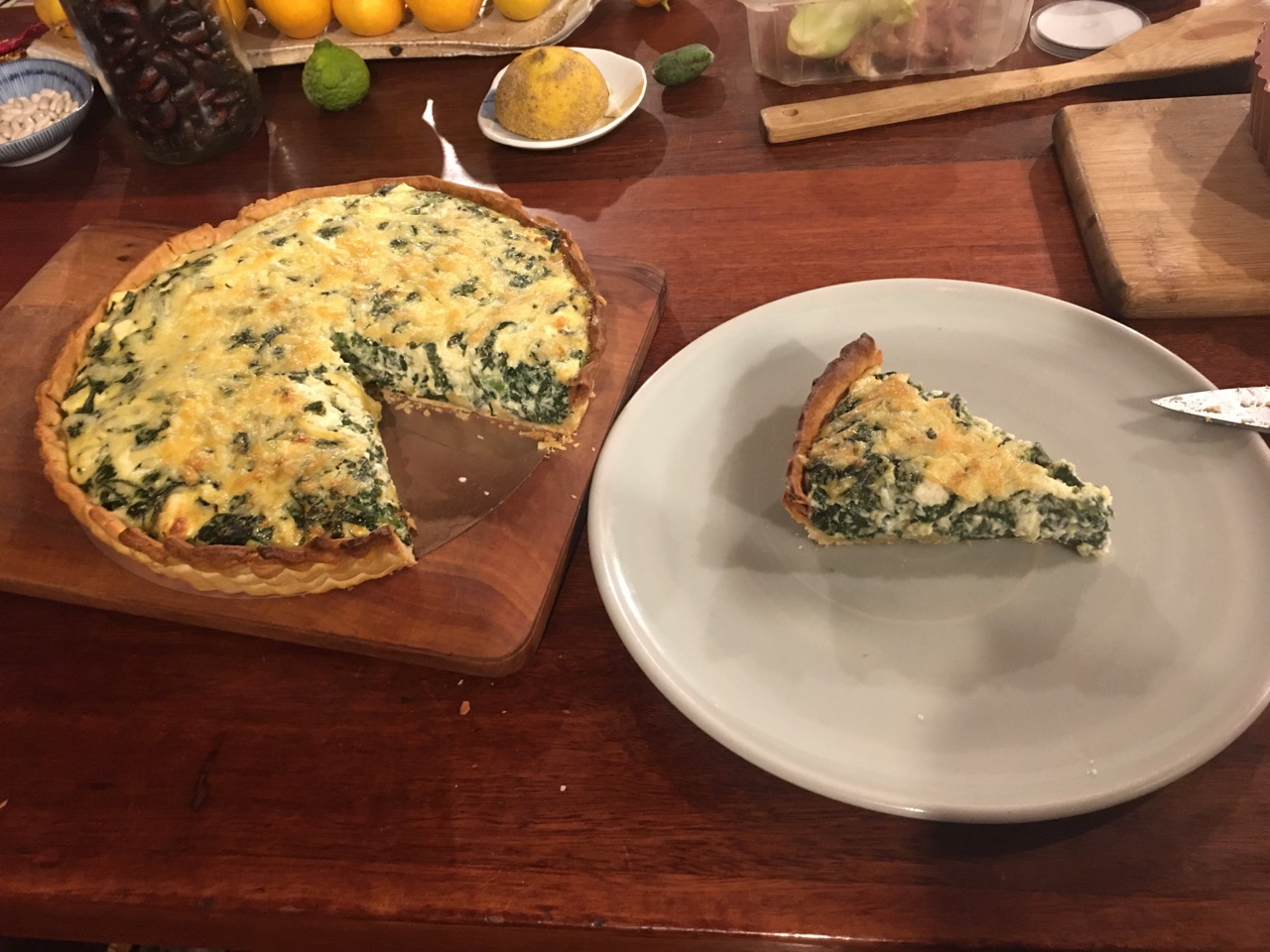
For the workshop lunch, I made a flan or tart with a baked cottage cheese base and a ratatouille topping. That didn’t last very long.
The coming week will be more of the same as we repeat it all over again.
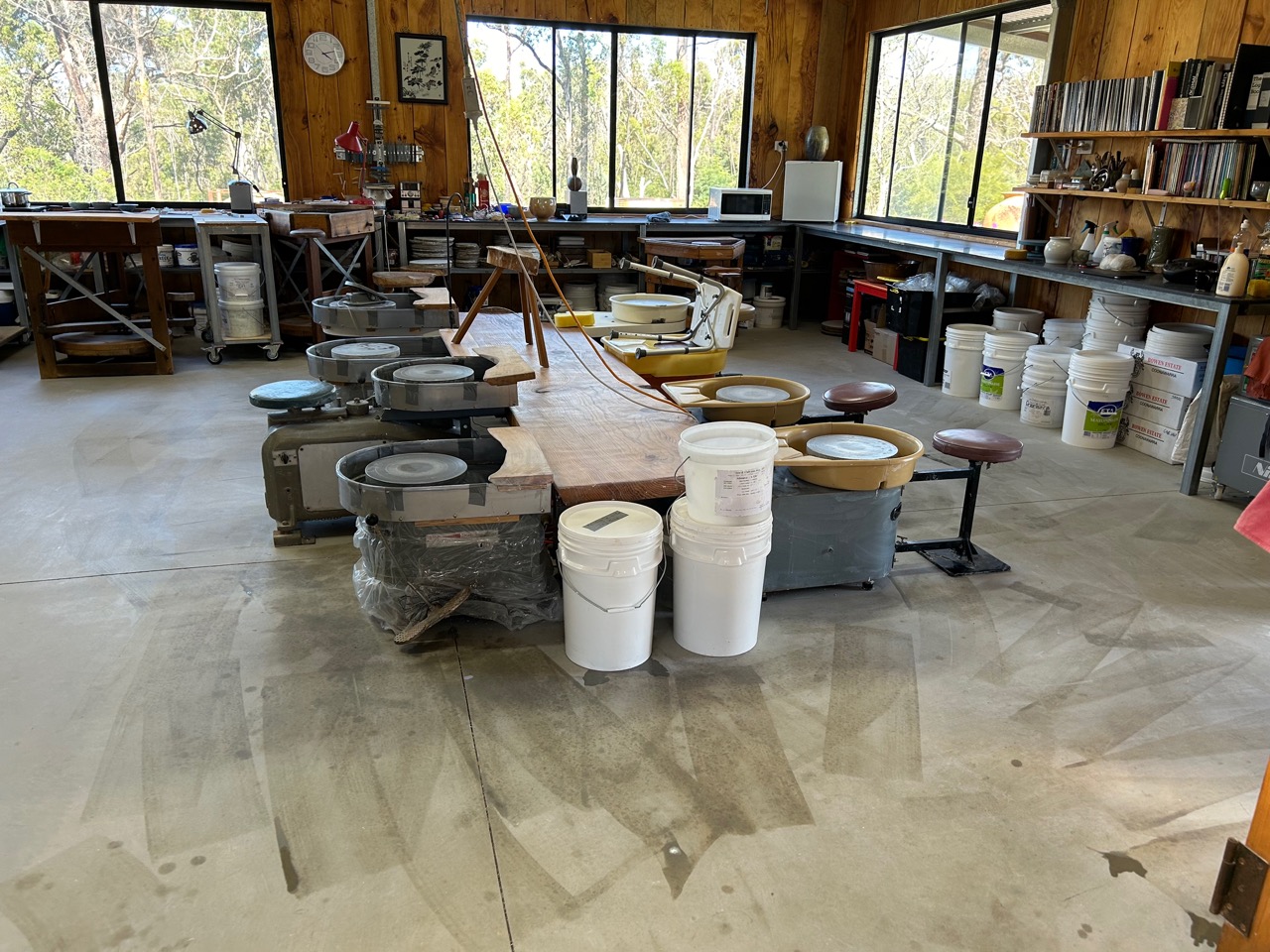
The workshop is all cleaned and mopped and ready to go.
The workshop looks beautiful tonight in the glow of the pink sunset.
It’s the end of summer, and all of the fruit is finished in the orchards, this month we have been busy with other jobs.
I have been going to build a new chicken run and chook house for a long time. The old one was very small, built in just one day straight after the fire by our good friends Cintia and Andy who came to volunteer their help at what ever was most needed. The old, very solid, and palatial chicken house was attached to the garden shed, which was part of the pottery extension. In the fire everything burnt to the ground.
Andy and Cintia knocked up the replacement house out of whatever we could find on site that wasn’t burnt. At 1.8 metres square, it wasn’t really very big, but was OK for just 2 surviving chooks.
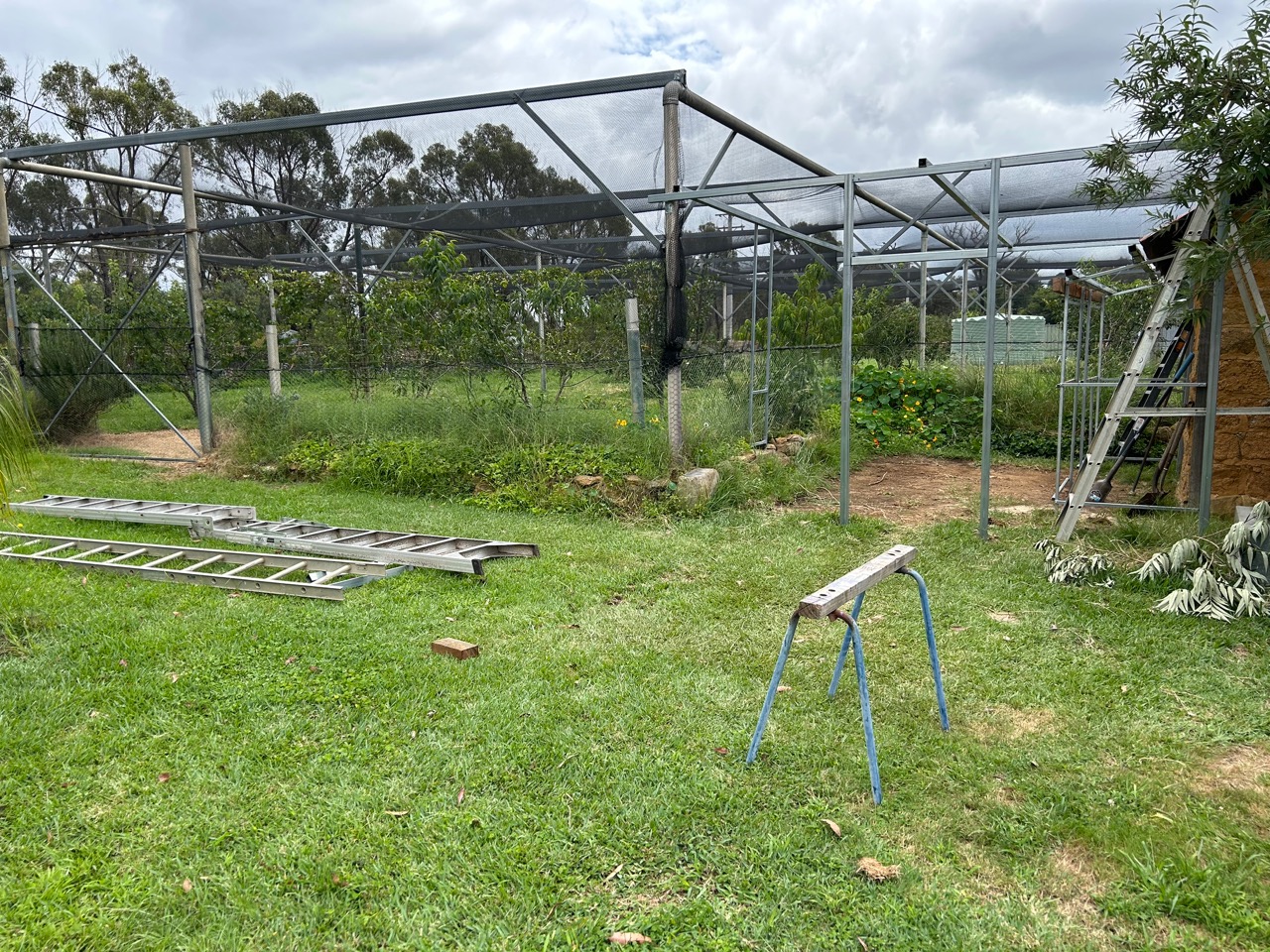
This weeks new chicken mansion is built into the gap between the new orchard and the old mud brick garden shed. It has access through a small gate into the covered orchard, where the chickens can explore and scratch all day in safety, without being swooped on, or chased by local dogs or foxes.
Janine suggested to paint it pink, so I thought to name it ‘Gallus Hilton’. Then she thought it might be better pale mauve, So it might get called ‘The Gallus Palace’.
What ever we call it, the new chook shed and run is the best one of the 4 that I have built here over the 48 years here. It’s still rusty recycled iron colour. I re-used the old corrugated roofing iron that we took off the Old School roof when Andy helped me to re-roof it last year. 130 year old roofing iron still has a lot of life left in it yet, as well as so much embedded history on this site.
It did occur to me that it is a bit strange that a man over 60 might need 4 different ladders to build a simple chook shed
This new run is 6m x 4m. So plenty big enough to be comfortable if we are away and they are locked in. It is completely fabricated out of steel, so shouldn’t burn in the next fire.
When its too hot outside in the middle of the day or raining, then I divide my time between the kitchen preserving excess garden produce, or over in the pottery.
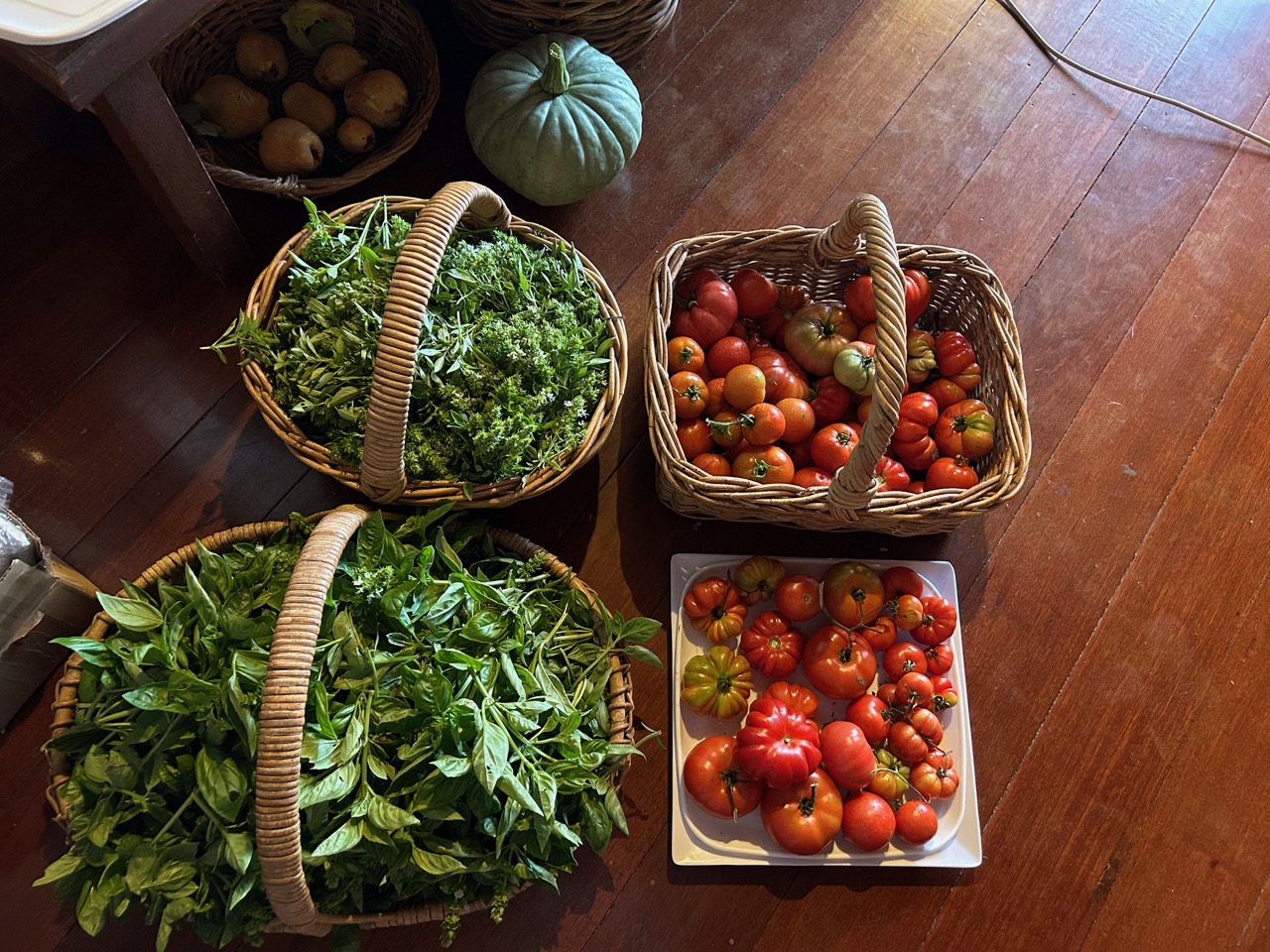
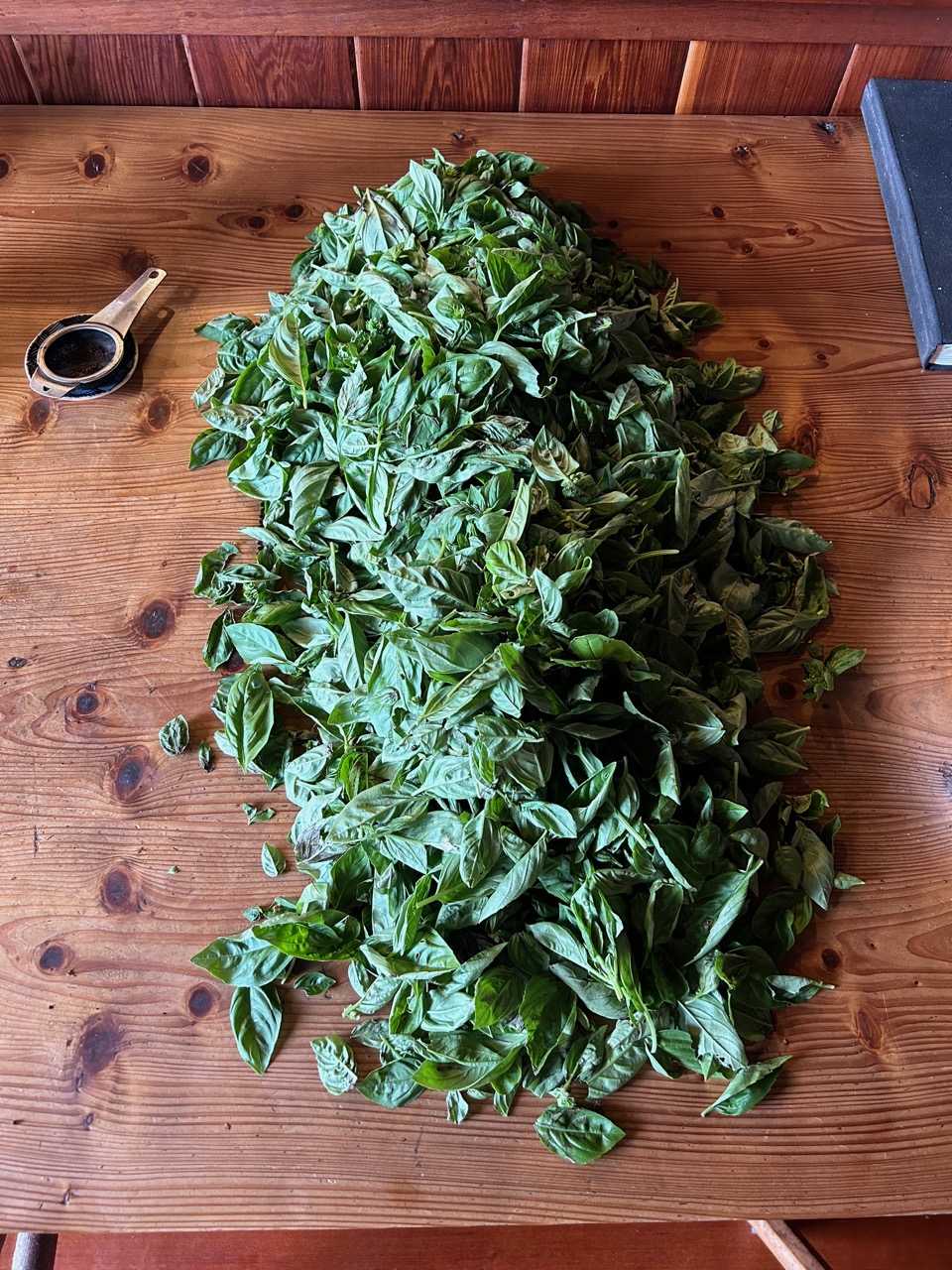
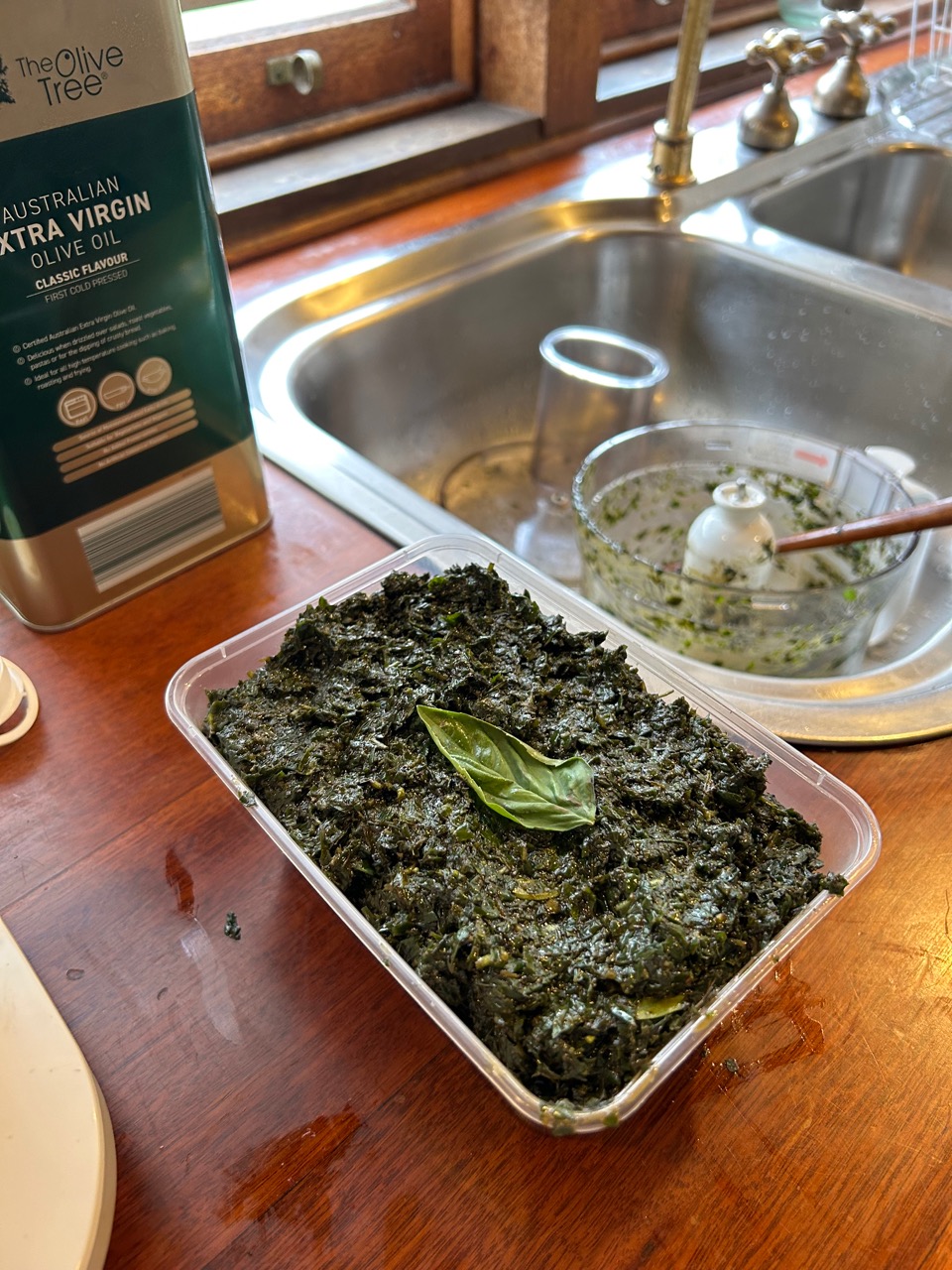
The sweet basil crop in peaking just now in the garden, so its time to make pesto.
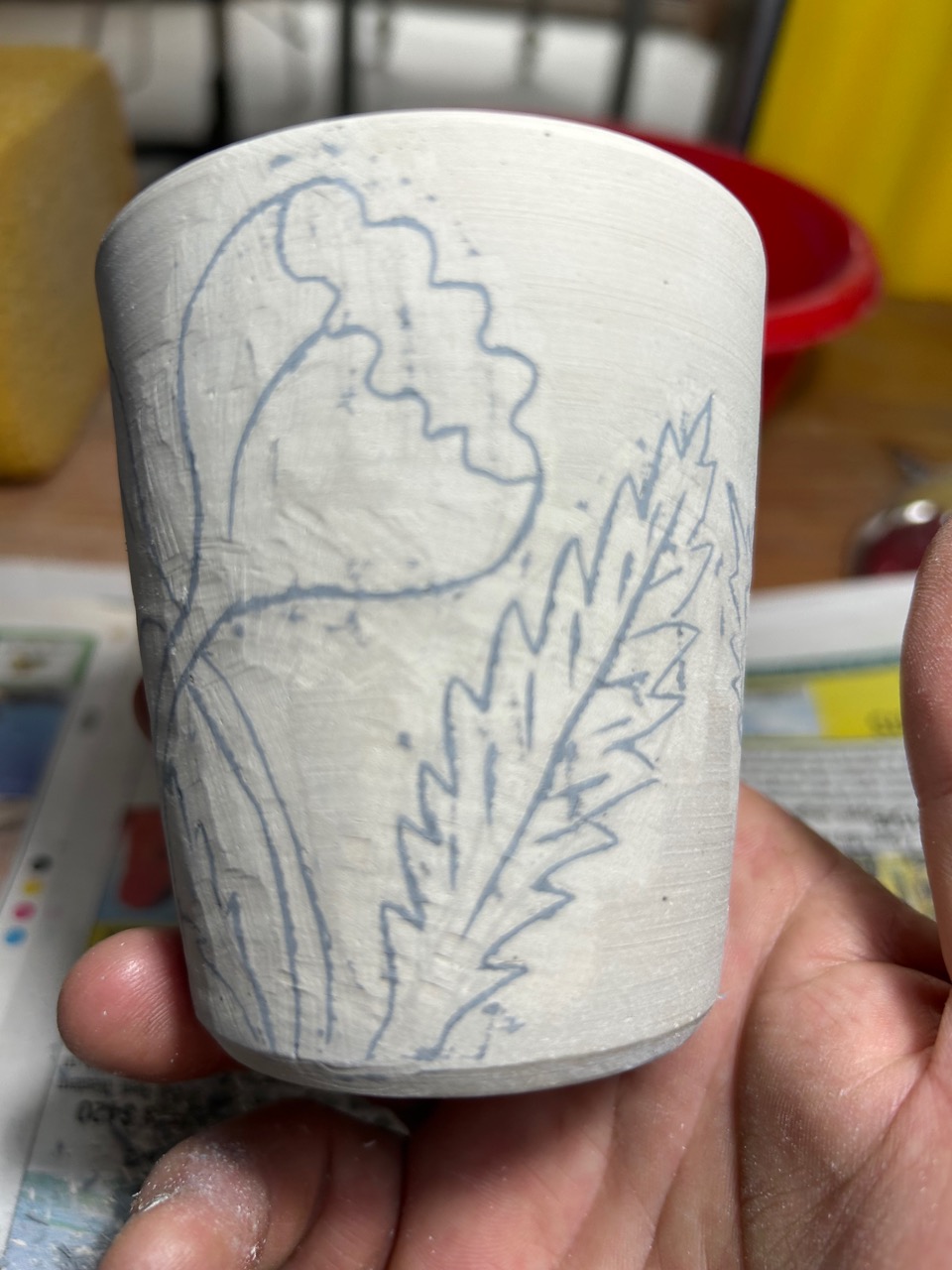
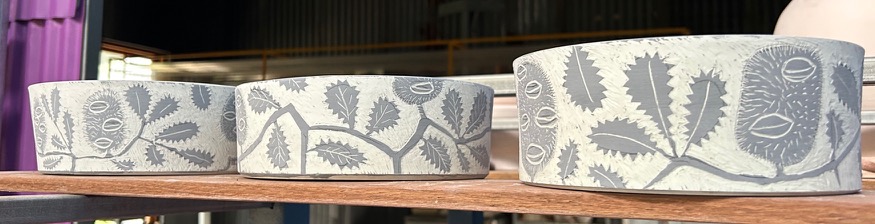
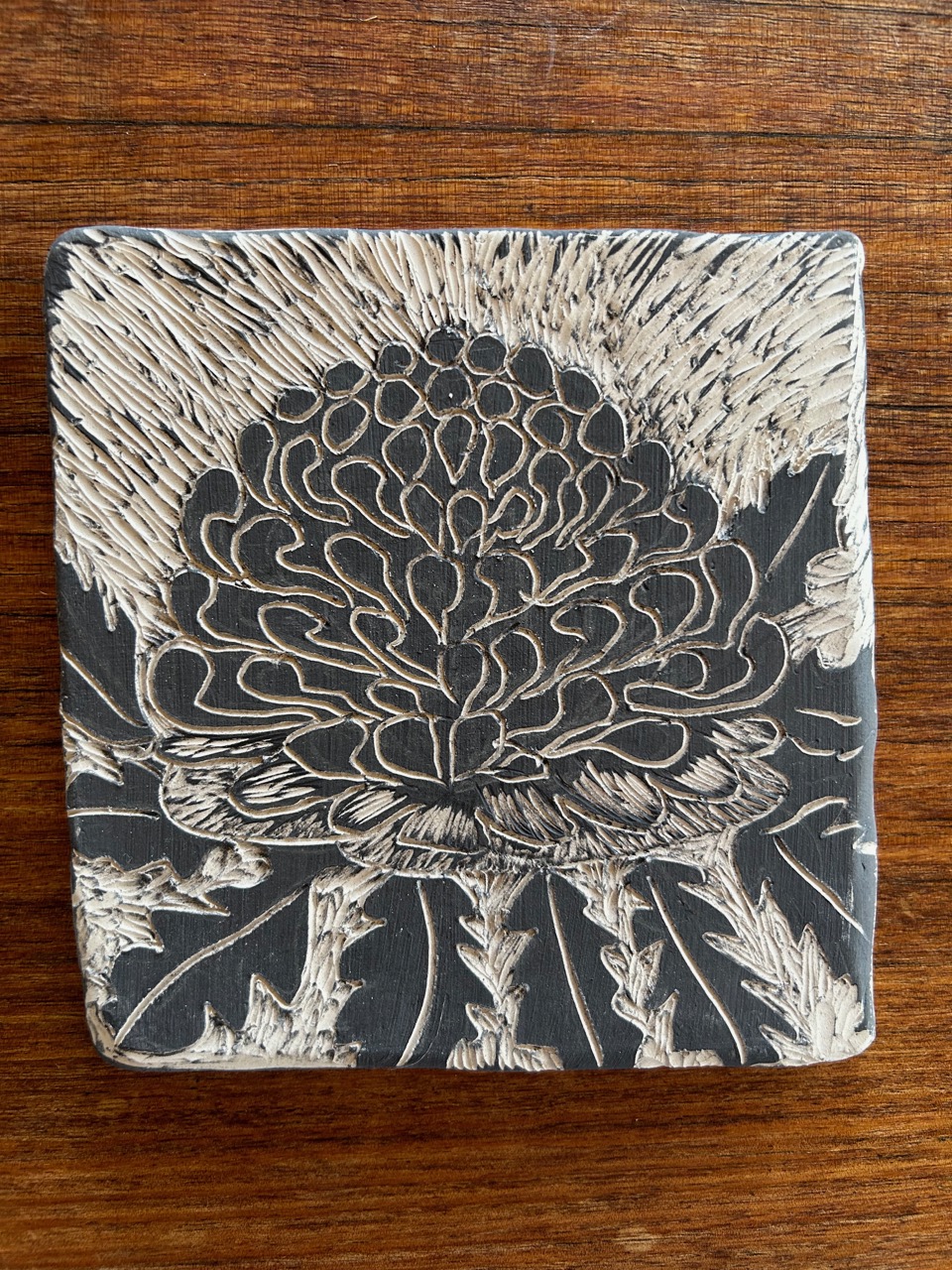
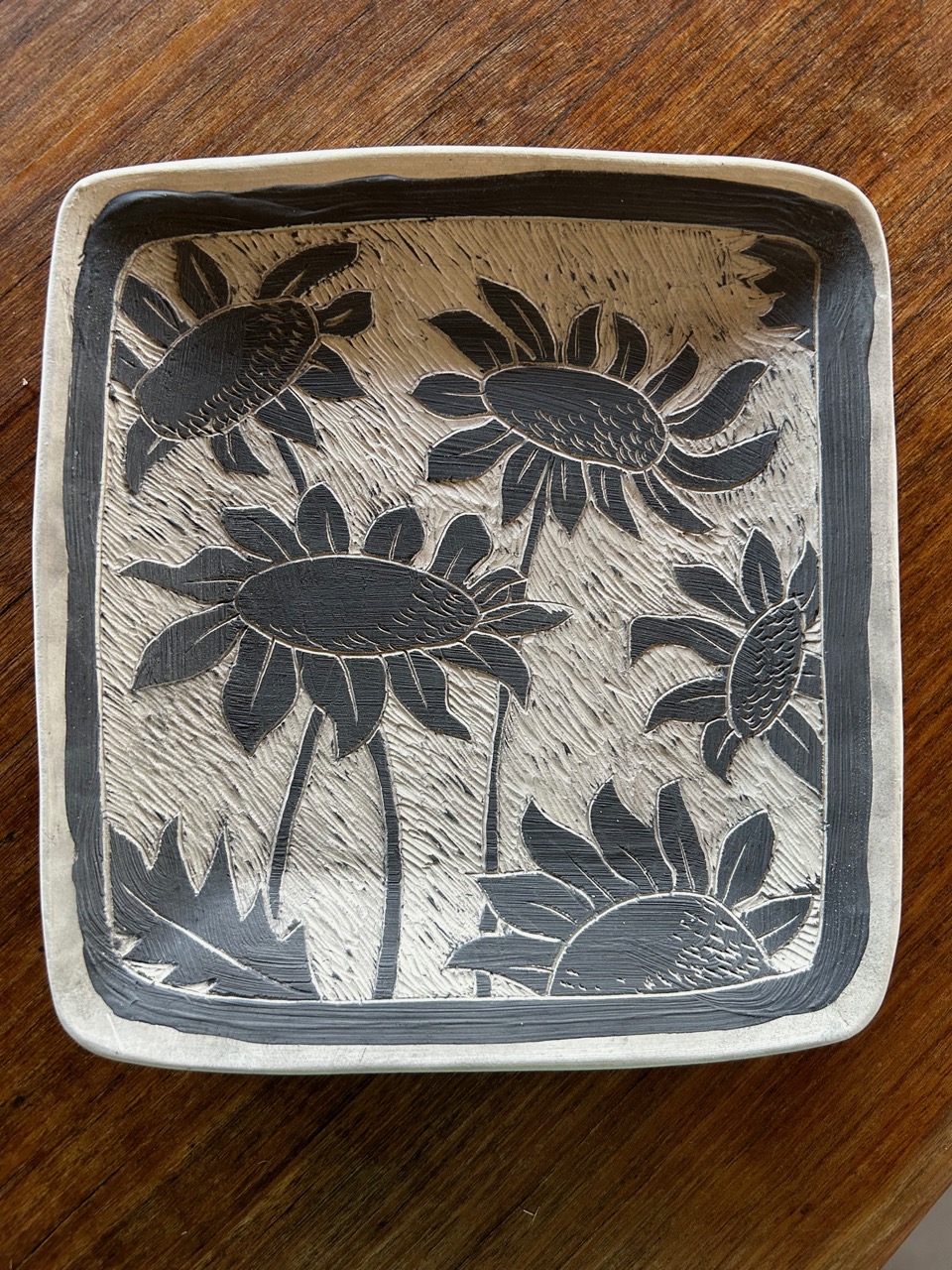
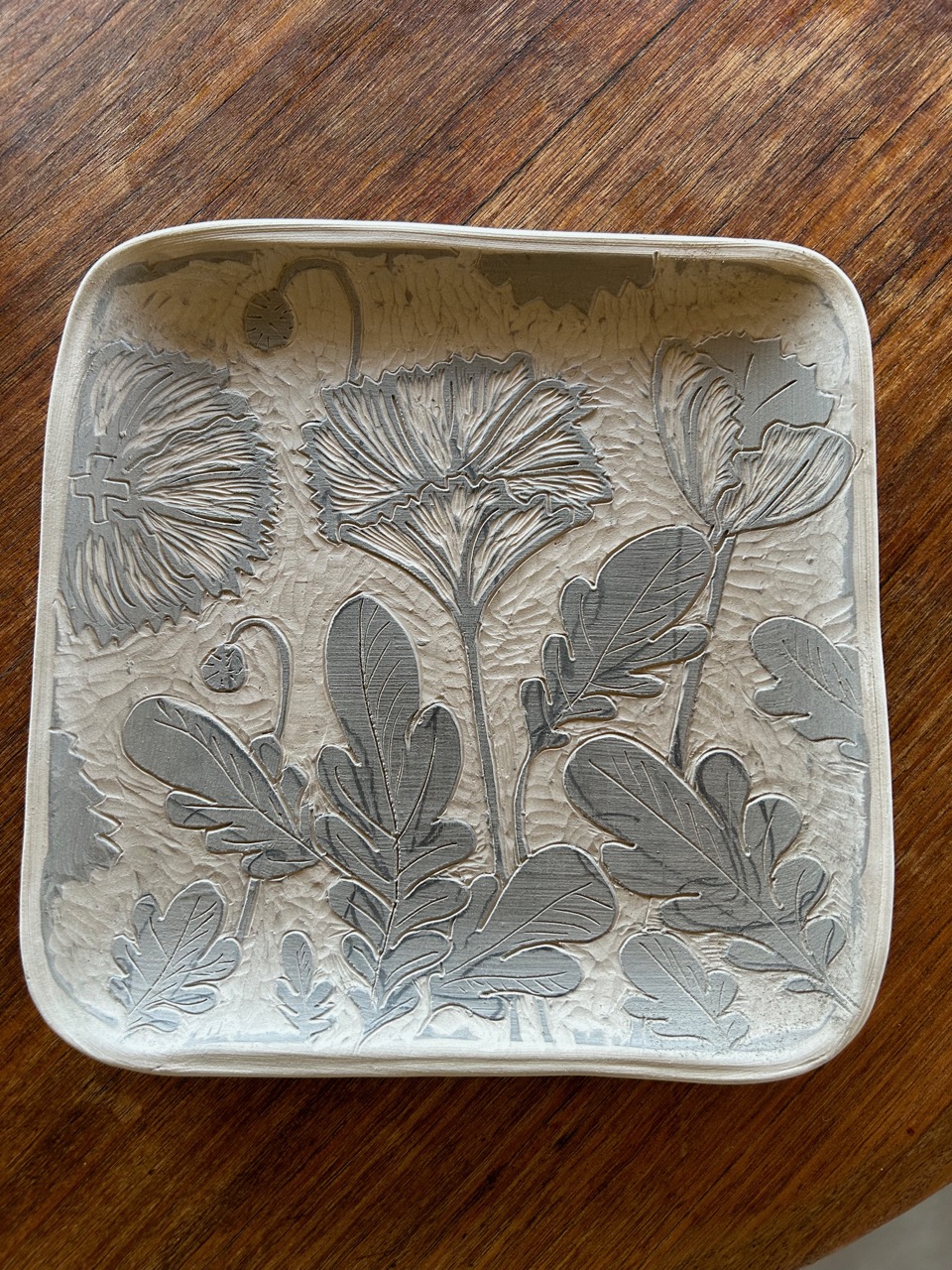
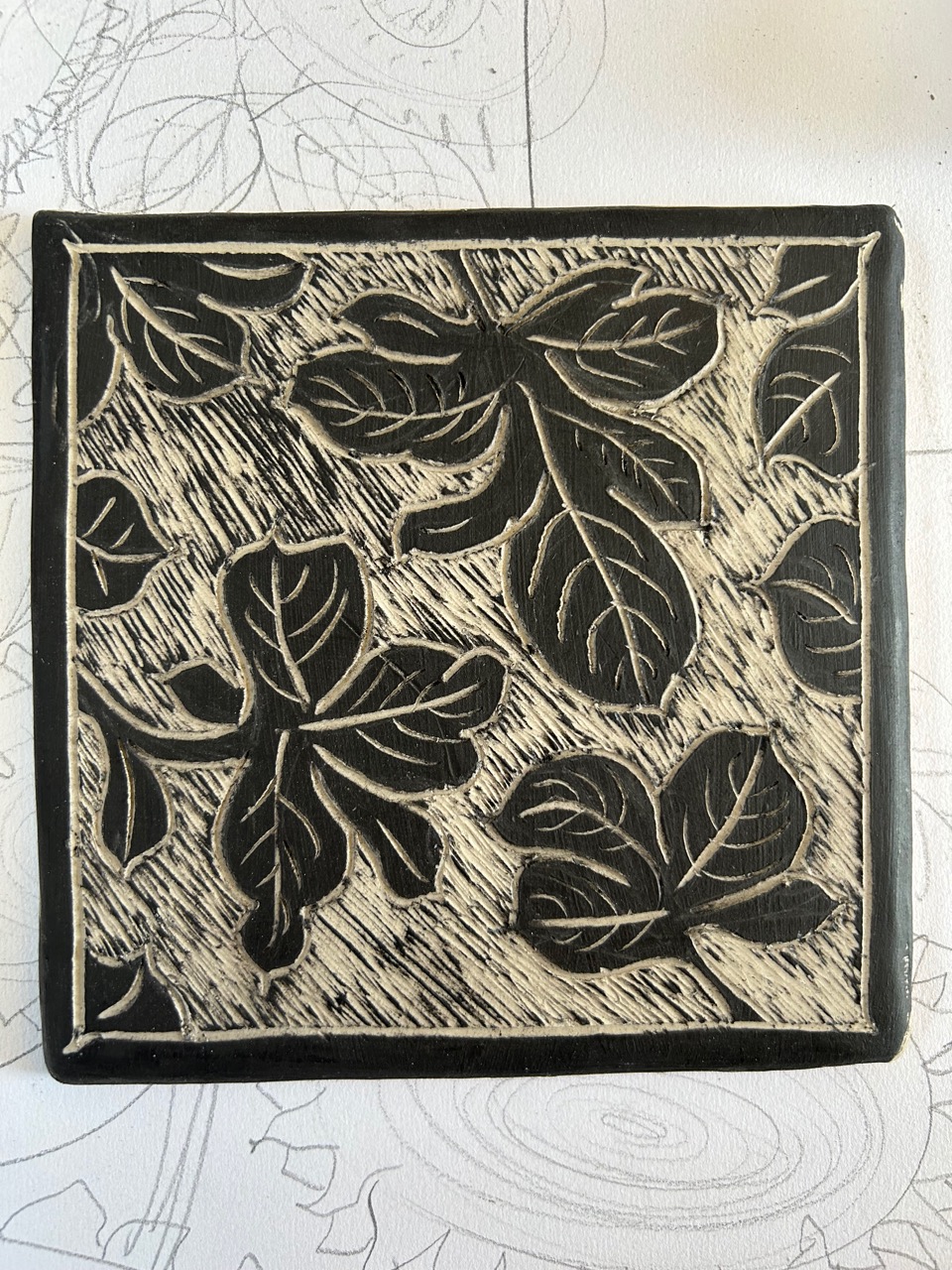
In the pottery, I’ve been extending my sgraffito on sericite work to include the negative/positive slip inlay. I tried mixing the two techniques and introducing some underglaze colour as well. I don’t know how these will turn out, as I’m packing the glaze kiln tomorrow.
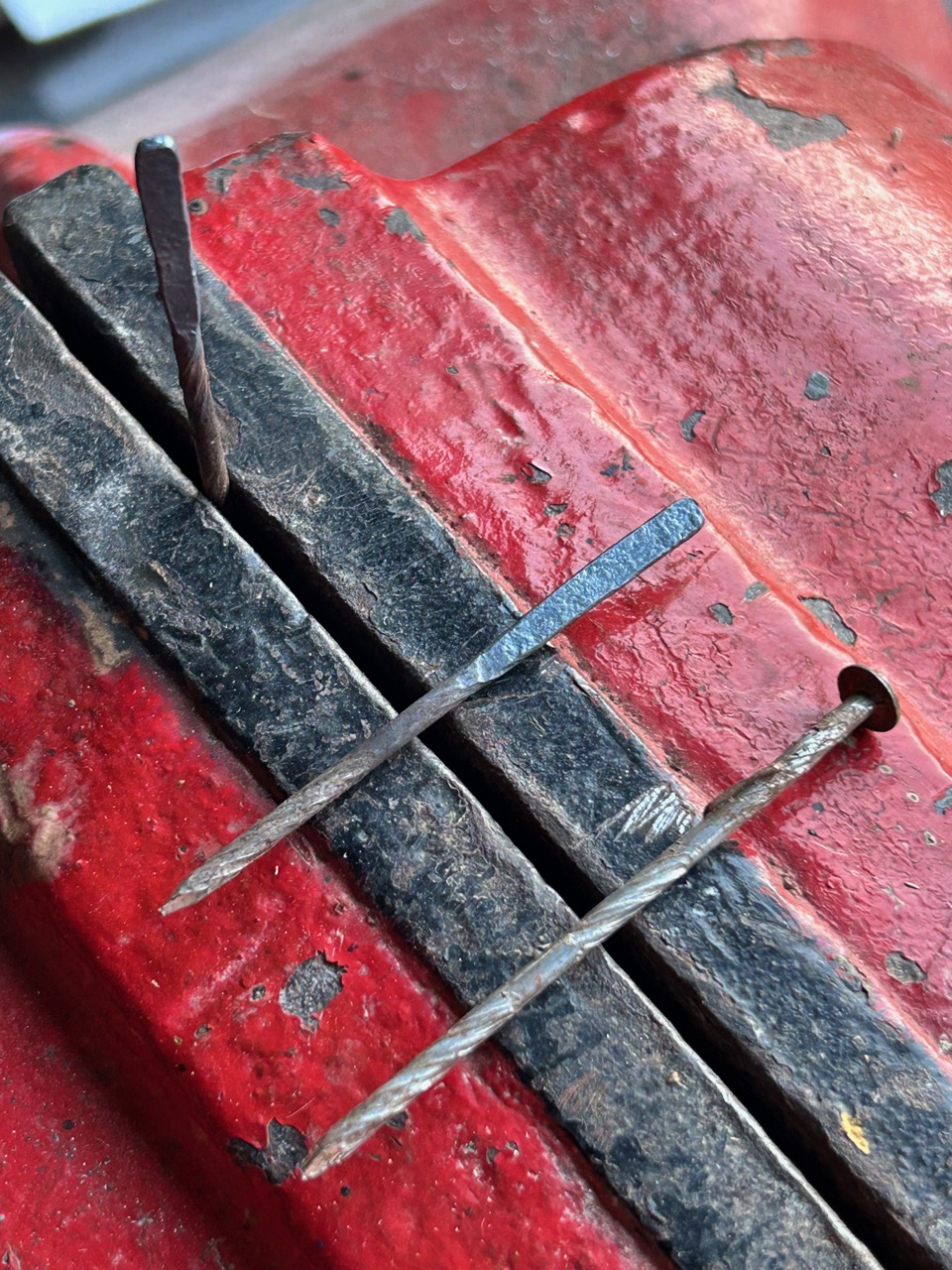
I’ve found that the sorts of sgraffito tools for sale here are somewhat limited, so I have been forging and hammering my own from rusty nails. They are rather nice, somewhat rustic and I can make them any size.
Janine has been using our current excess of passion fruit to make passion fruit and cream flummery. It’s quite easy to make, just passion fruit and cream whipped up together and then frozen. Janine takes it out of the freezer every so often and re-whips it to keep it light and fluffy while it freezes.
It goes quite well with our excess of blueberries as a desert.
Janine and I have been kept very busy dealing with all the summer produce from the garden and orchards. Nothing new there. We’ve been doing it for almost 50 years. But this last few years/summers, have been hot and wet, so everything has grown it’s head off. It’s a lot to keep up with. Especially as we age and find it harder to drum up the energy. The intention and enthusiasm is still strong, so we need to find ways of working smarter.
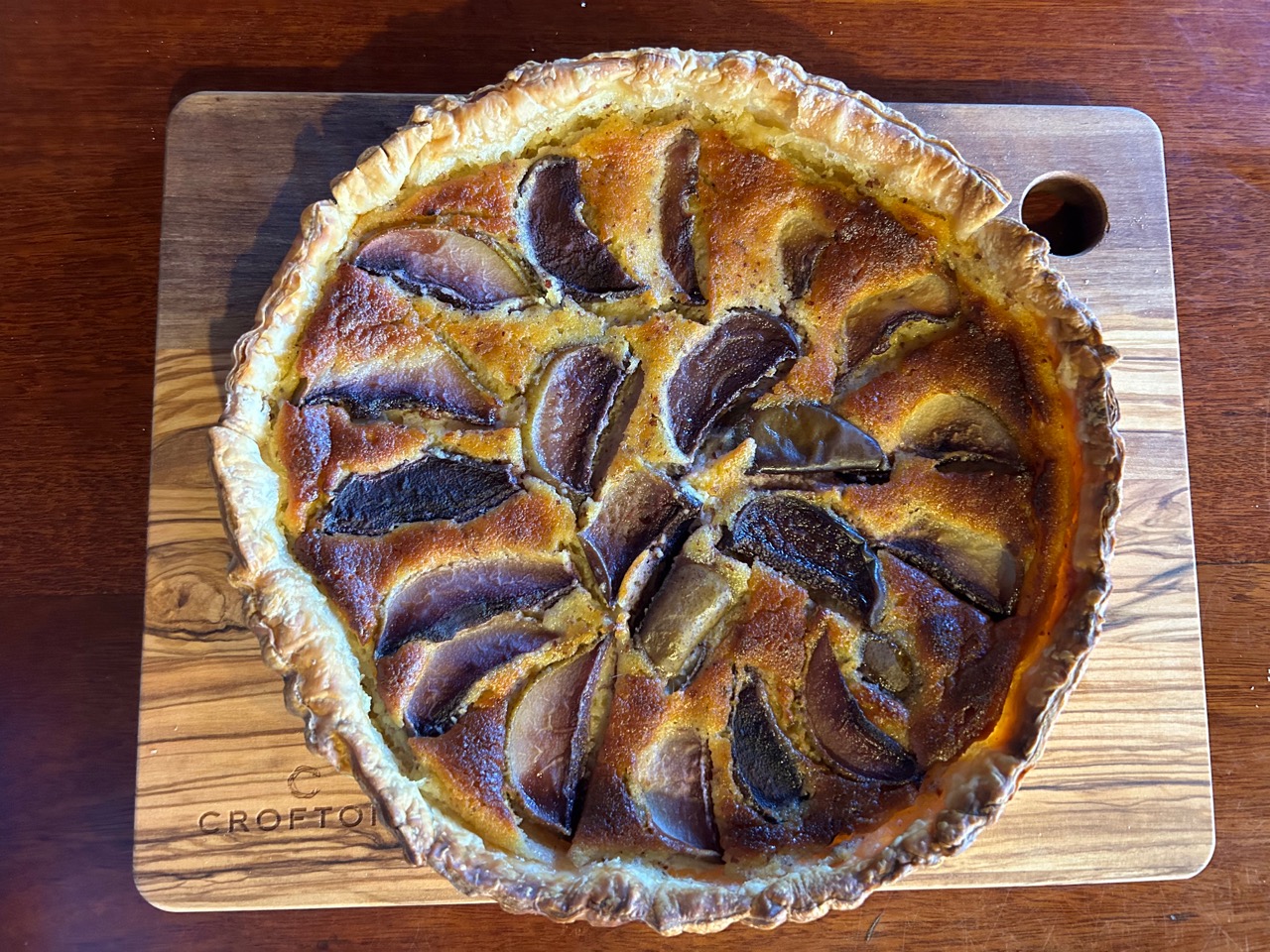
I cooked up a few early hard pears from the orchard in some red wine with a spoon full of sugar and a fragment of cinnamon bark, then laid them into an almond flan. Pretty yummy for morning tea. This is one of the best reason why we garden! So that we can eat amazing, wholesome, natural, un-sprayed fruit flans.
We had the organic gardening group here last weekend to help is with several gardening jobs around the property.
I spent a few hours picking citrus stink bugs off the citrus trees with the assistance of our friend Helen from the group We half filled a bucket with the little buggers.
A bucket half full of stink bugs in a solution of detergent and bleach.
There are 16 trees in the citrus grove, so it took a while. I also pruned off a lot of the taller branches from the bigger trees, to keep them within standing reach. I’m too old to climb ladders now – unless I really need to.
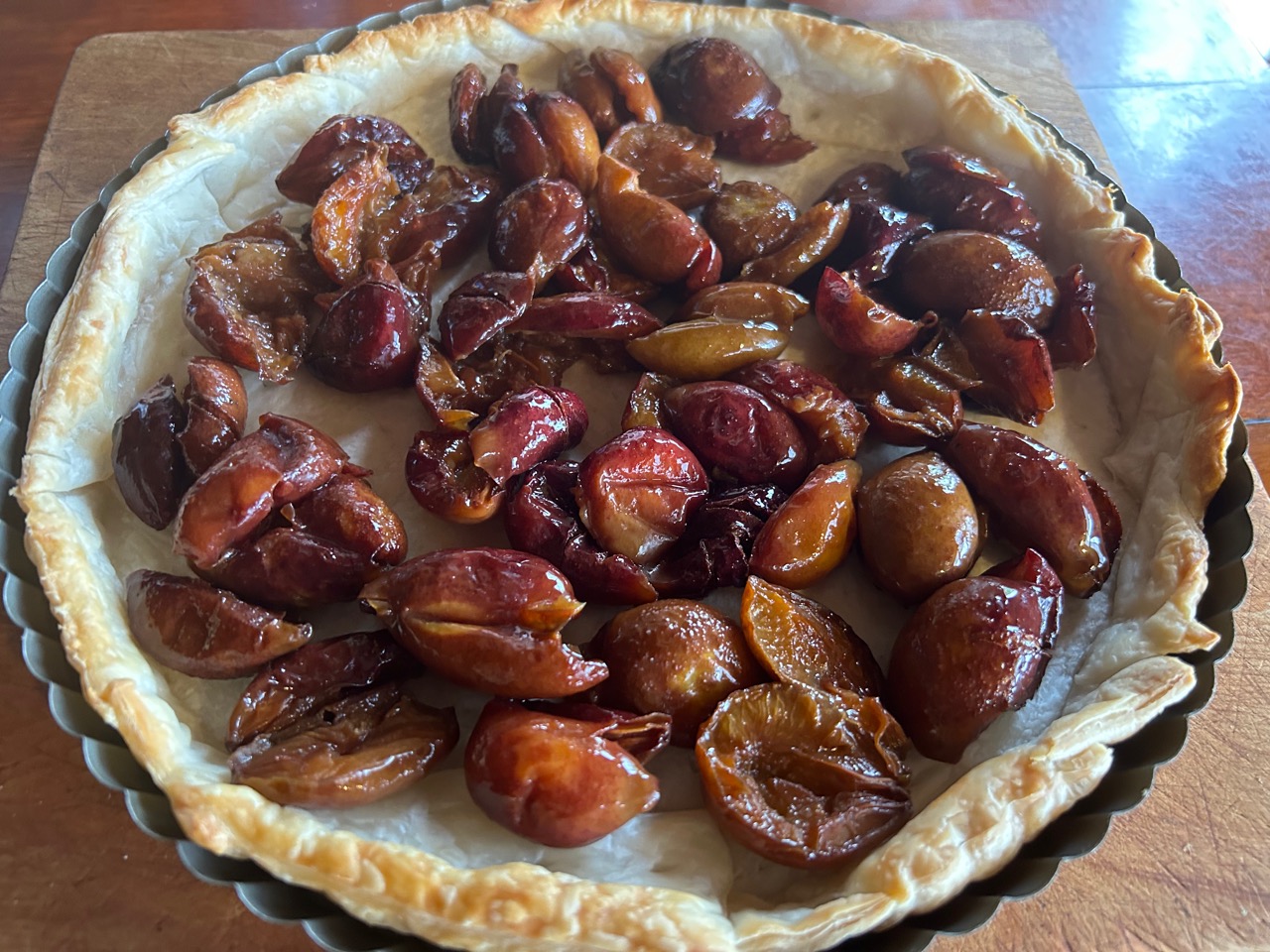
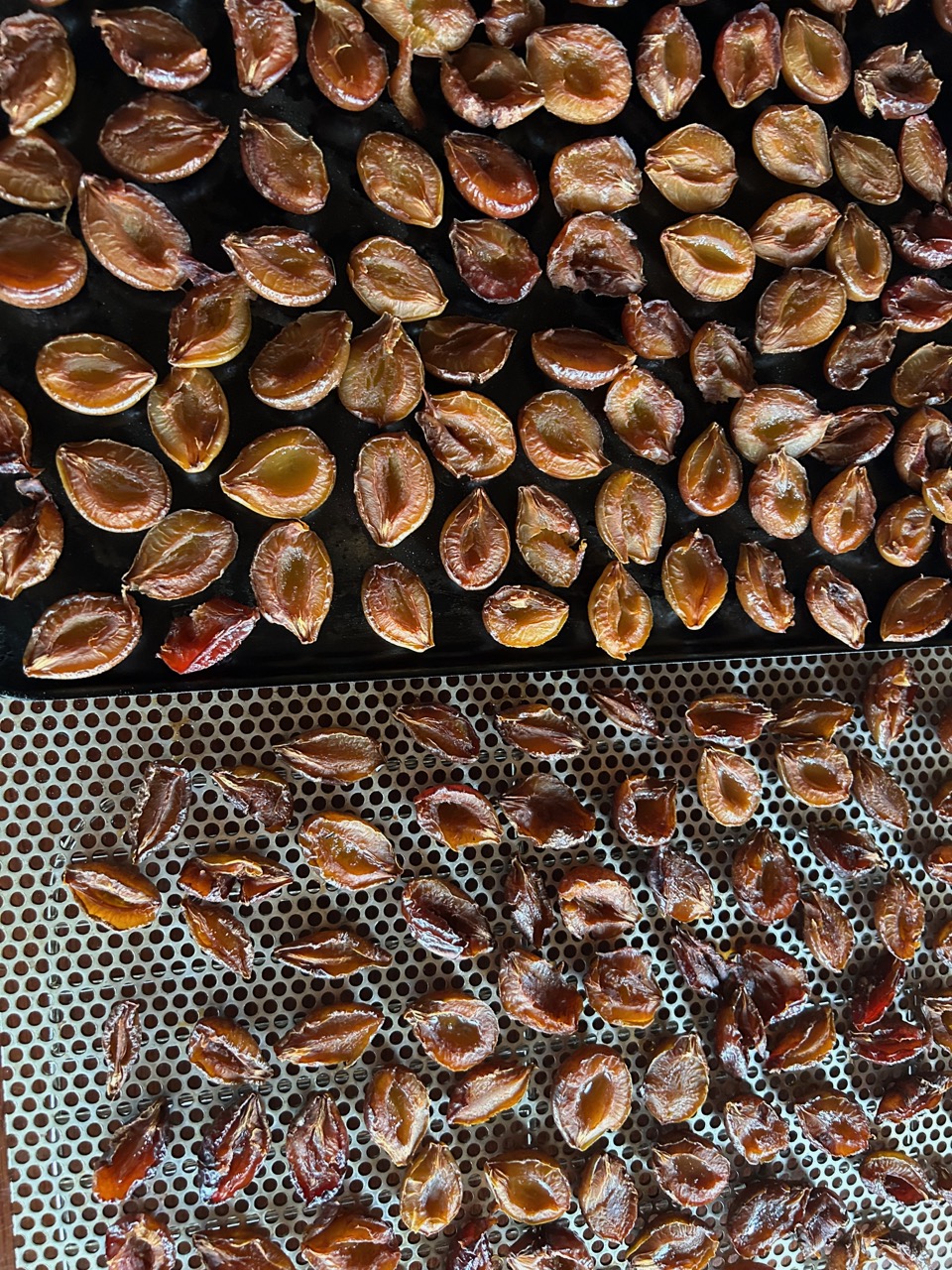
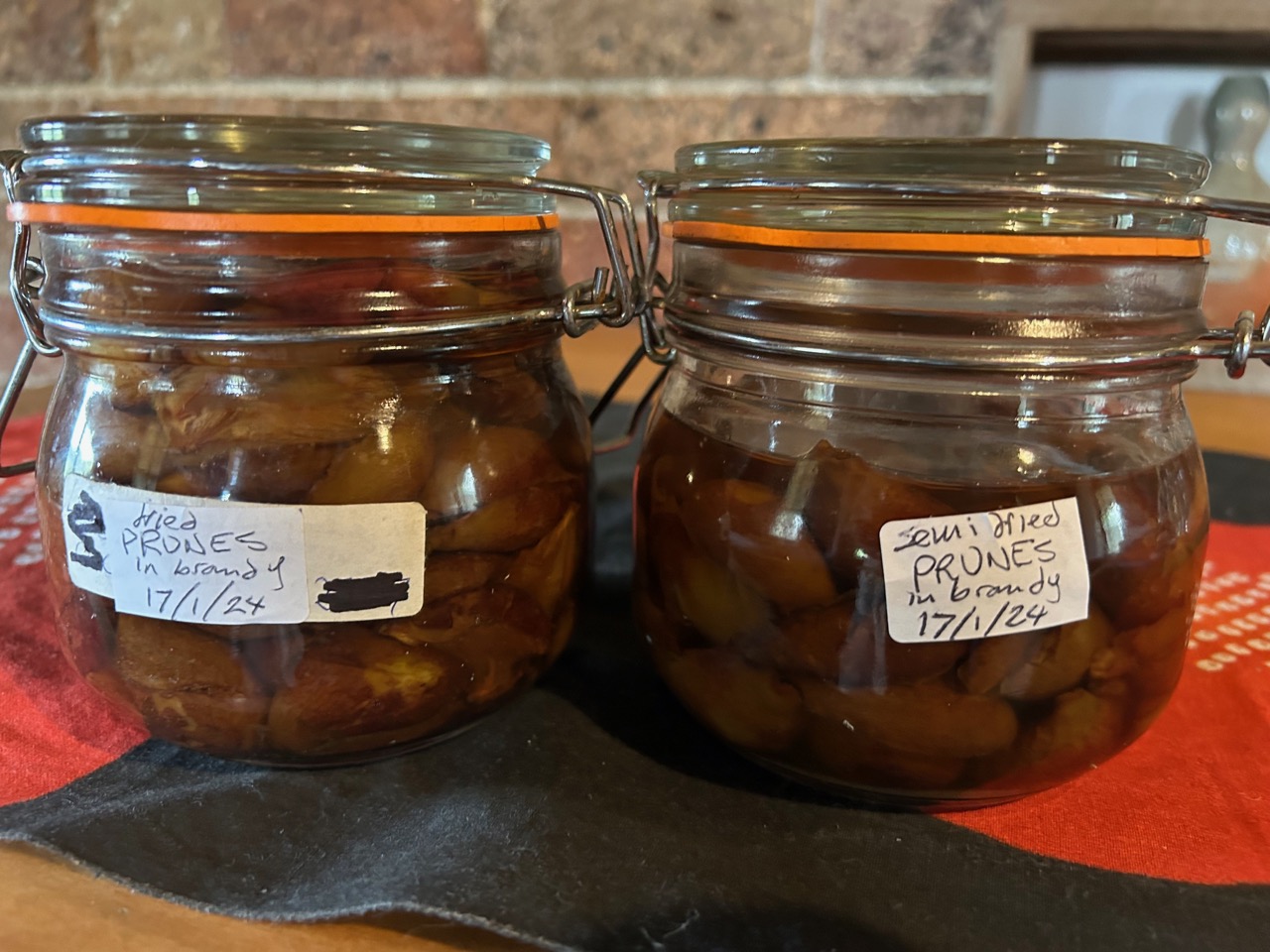
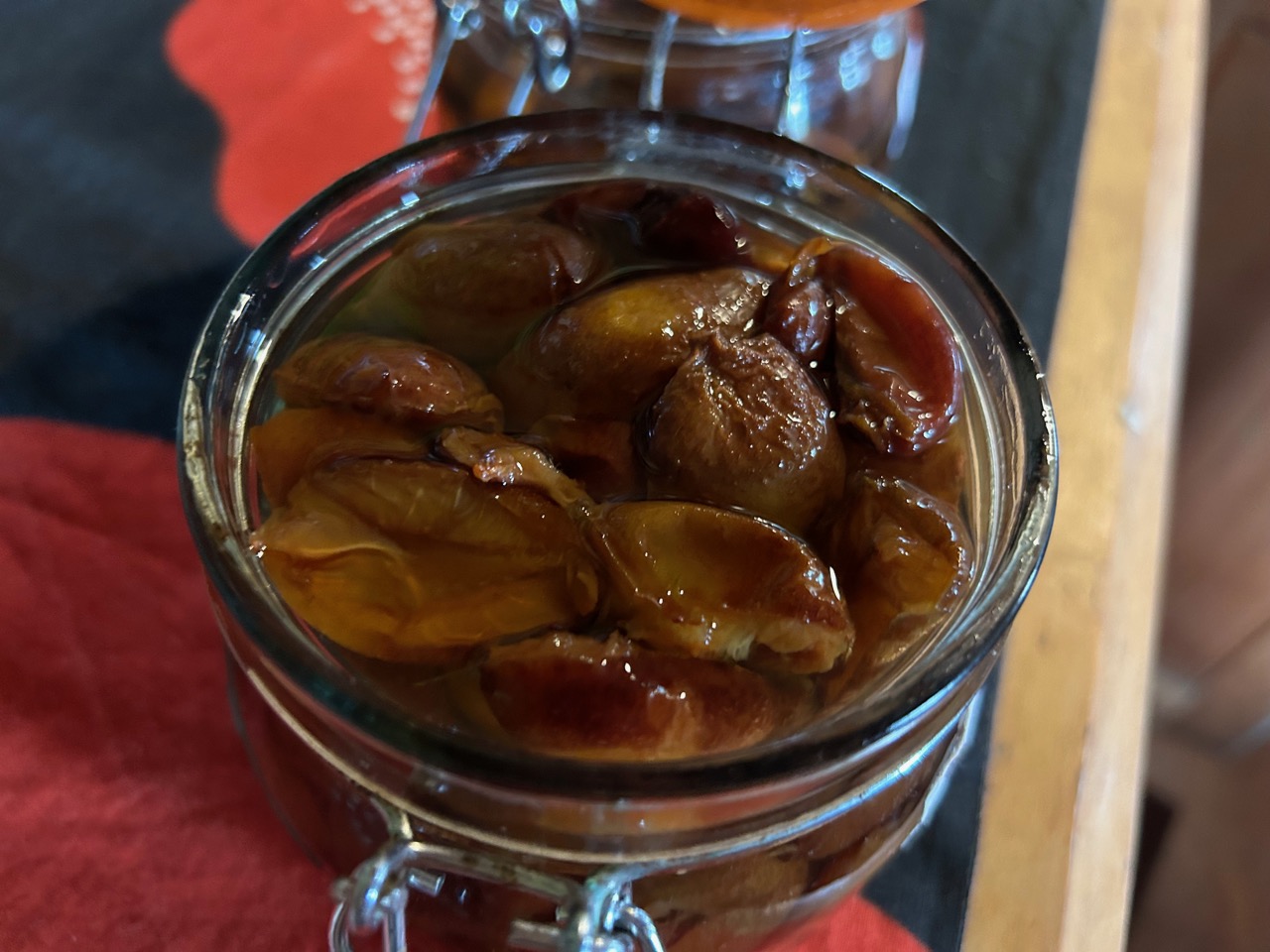
I picked all the prunes of the d’Agen tree and filled a 1/3 of a bucket. I cut them in half and semi-dried them in the oven. It took a couple of sessions. I made a cottage cheese and prune tart with some of them and bottled the rest in brandy for a similar use later in the year.
While climbing through the spiky branches of some of the citrus trees, looking for bugs and sniping off tall shoots. I managed to tear my ancient gardening straw hat and hanky combo to shreds. This hat and even older hanky (which was bright fire-engine red in its youth) was my ‘legionnaires’ head and neck shade when working outside The straw hat was 2nd hand about 7 yeas ago, so has earned its keep. I decided that it was past repair now, having seen so many summers of use, and it was 2nd hand to begin with, so I composted it!
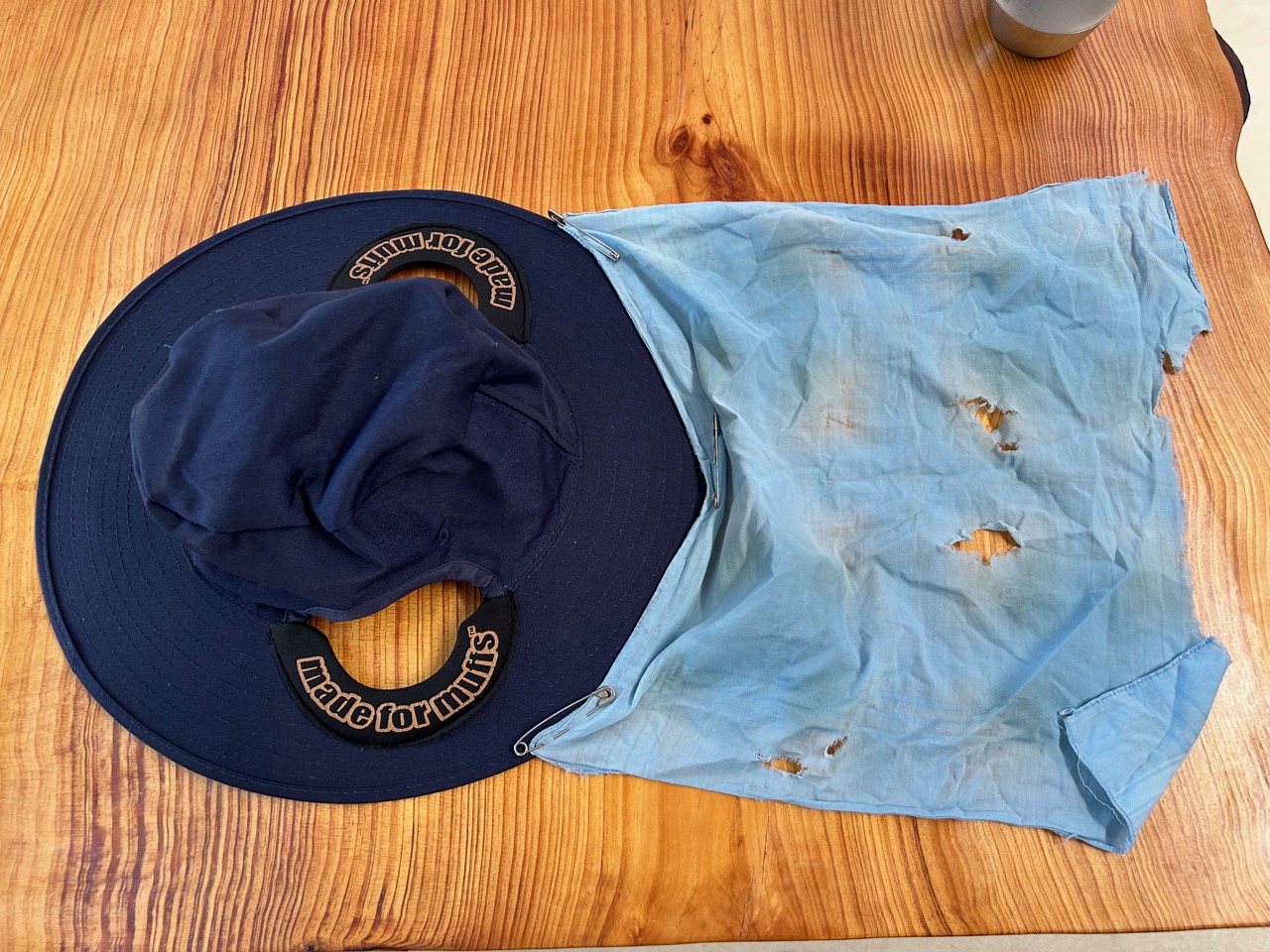
I splurged and bought a brand new ‘ear-muffler-compatible’ work hat and added another one of my very old hankies as a neck shade. I recycled our son Geordie’s old nappy safety pins off the old hat. Re-purpose, re-use, and re-cycle. In fact, something old, something new, something repurposed, something blue. A true marriage of convenience. Those nappy pins have served us well, as our son is 40 years old now! If I keep them long enough, they can work just as hard on their last job, keeping my incontinence nappies in place in another 10 or 15 years when I become senile?
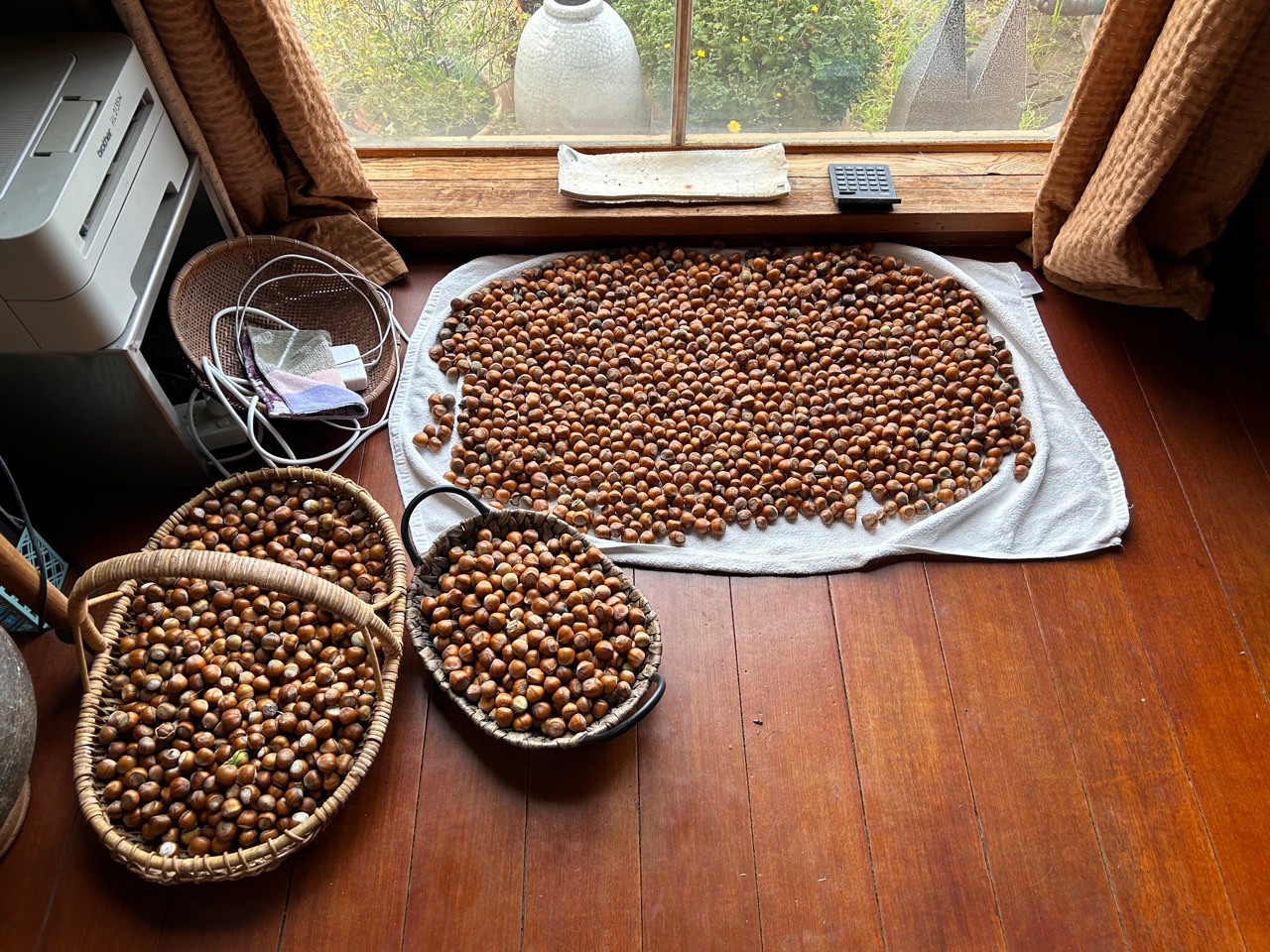
Our visiting organic gardener friends did some weeding and pruning in the veggie garden, and a few of them harvested all the fallen hazelnuts from under the trees so that we can get in there and mow the long grass. They also pruned off all the vigorous extraneous shoots from their bases. Hazels want to become dense hedges. It’s their nature. Up until the fire in 2019, we had cut them all back to just one main leading shoot and stem or trunk. But after the fire, they were burnt to ground level, so had to regrow from scratch. We were too busy rebuilding to worry about pruning the hazels. I was just glad to see them regrow. When I get the time??? – if ever, I’ll get stuck in there and cut them back to just one leader.
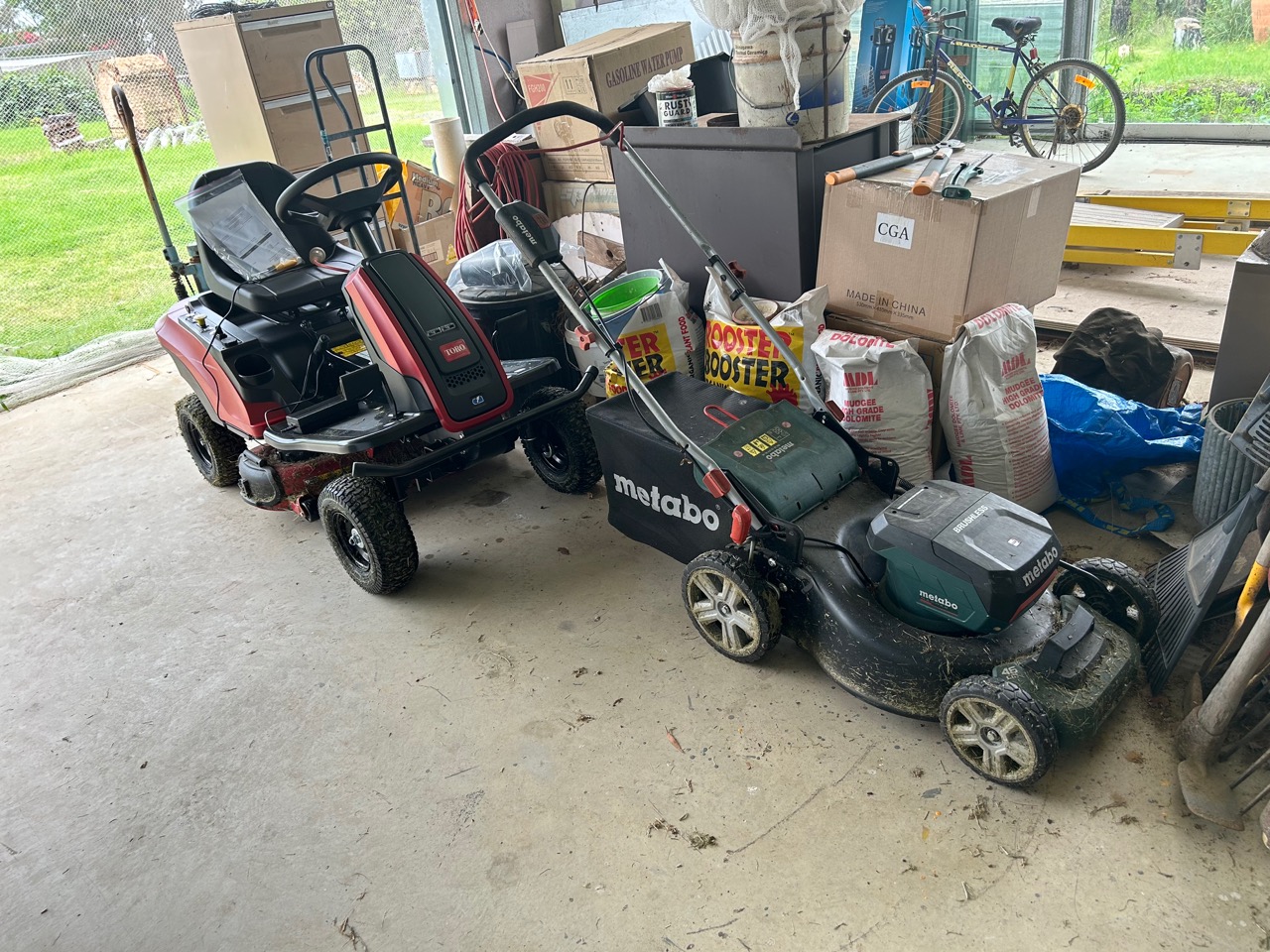
The petrol powered, ride-on mower, has broken two drive belts in two weeks. These modern belts seem to last only 8 to 9 years these days. It took several days to get them ordered in and fitted on each occasion, so the grass had grown very high and lush in its absence.
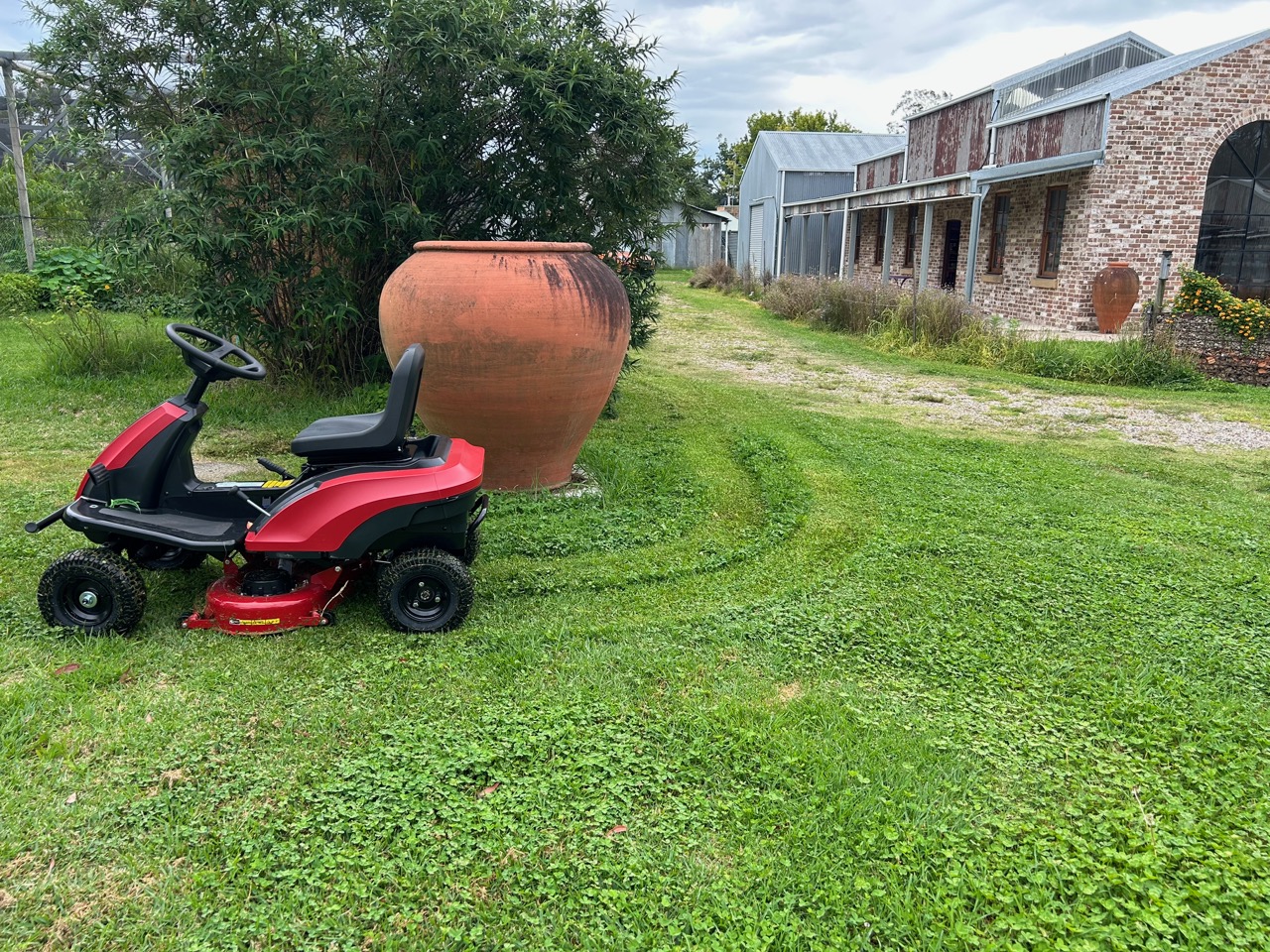
We have just completed a further step in our drive to go completely solar electric. I bought an electric ride-on mower. I have only had it for one day so far, and it did some pretty heavy mowing through dense grass. I got 1 hr, 20 mins of mowing out of the battery, ( that’s enough on a hot day) and almost completed all the ‘tame’ flat lawn around the house. I’ll report back in a month or so and give a follow-up on its performance. We now have a solar electric ride-on, push mower, strimmer, and chainsaw.
I haven’t given any up-date on our plug-in electric hybrid car recently. Nothing to report. It has just had its 5th year service, and has exceeded our expectations. It works perfectly. It does everything that we need and ask of it. We occasionally have to put some petrol in the fuel tank. About $20 to $30 every quarter, as it is a plug-in hybrid. But for the most part, we drive 90/95% of the time on our own solar roof top electricity. It was a perfect choice for us. I’m so glad that we did it when we did. This model is no longer available. They are all fully electric now and cost twice as much! Our early adoption of solar electric driving has proved to be a good decision.
We have been having 30oC days recently, so in the heat of the day, when it is too hot to be outside in the garden. I spend a few hours in the pottery, continuing with the sgraffito work that we started, inspired by Warren Hogden a couple of months ago. All the early work on tiles and square plates made at Warren and Janine’s weekend workshop, were all fired at cone 6, 1200 oC.
All the work that I have been making since then is all sericite porcelain, so I’m hoping that there will be a nice graphic interface with the light shining through the translucent porcelain body from the inside, creating a lovely glow, and vice versa.
I’m really enjoying it. It’s a lot of fun, and such a change for me.
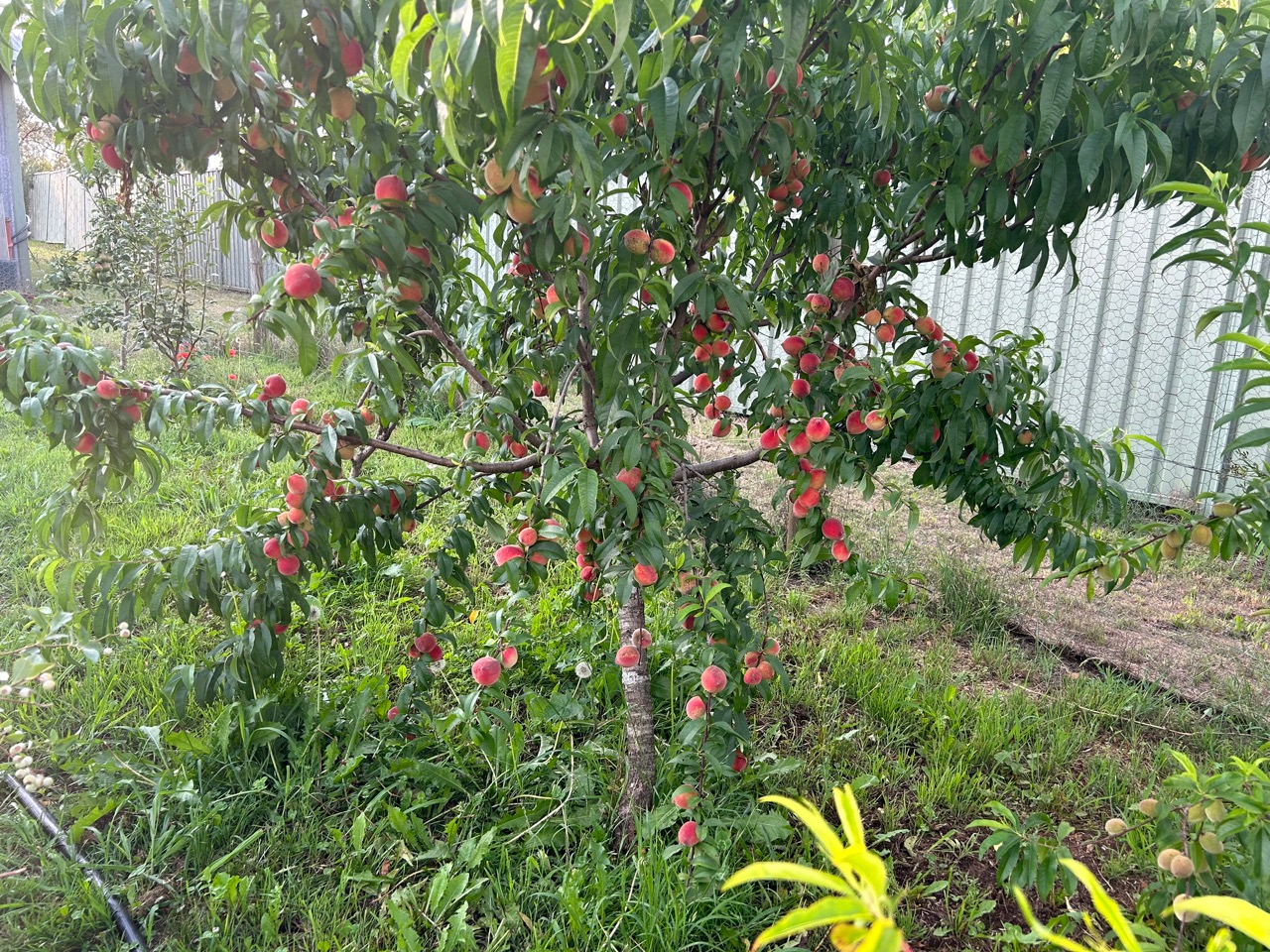
December brings on the summer and the stone fruit harvest. We have all of the newly planted, now 4 years old. stone fruit trees in the new post fire orchard coming into fruit. We chose to plant all dwarf rootstock, low chill, hot weather tolerant, varieties. They are doing really well and everyone of them has fruit on them this year. Some of them set fruit from year one, but as this isn’t good for the health of the tree, I picked all the fruit off, bar one piece, just get a taste of what was to come. Fruit trees do better if they are left to grow on for a few years and put all their energies into developing a sound, strong branch structure and deep root system. As their first 3 years were all very wet here with the la nina event coinciding with their planting, They grew very well indeed and we hardly had to water them very often.
So now we have a surfeit of peaches and nectarines, on these pretty little bundles of red and green. All the fruit needs to be eaten now or very soon, so we have fruit salad for breakfast.
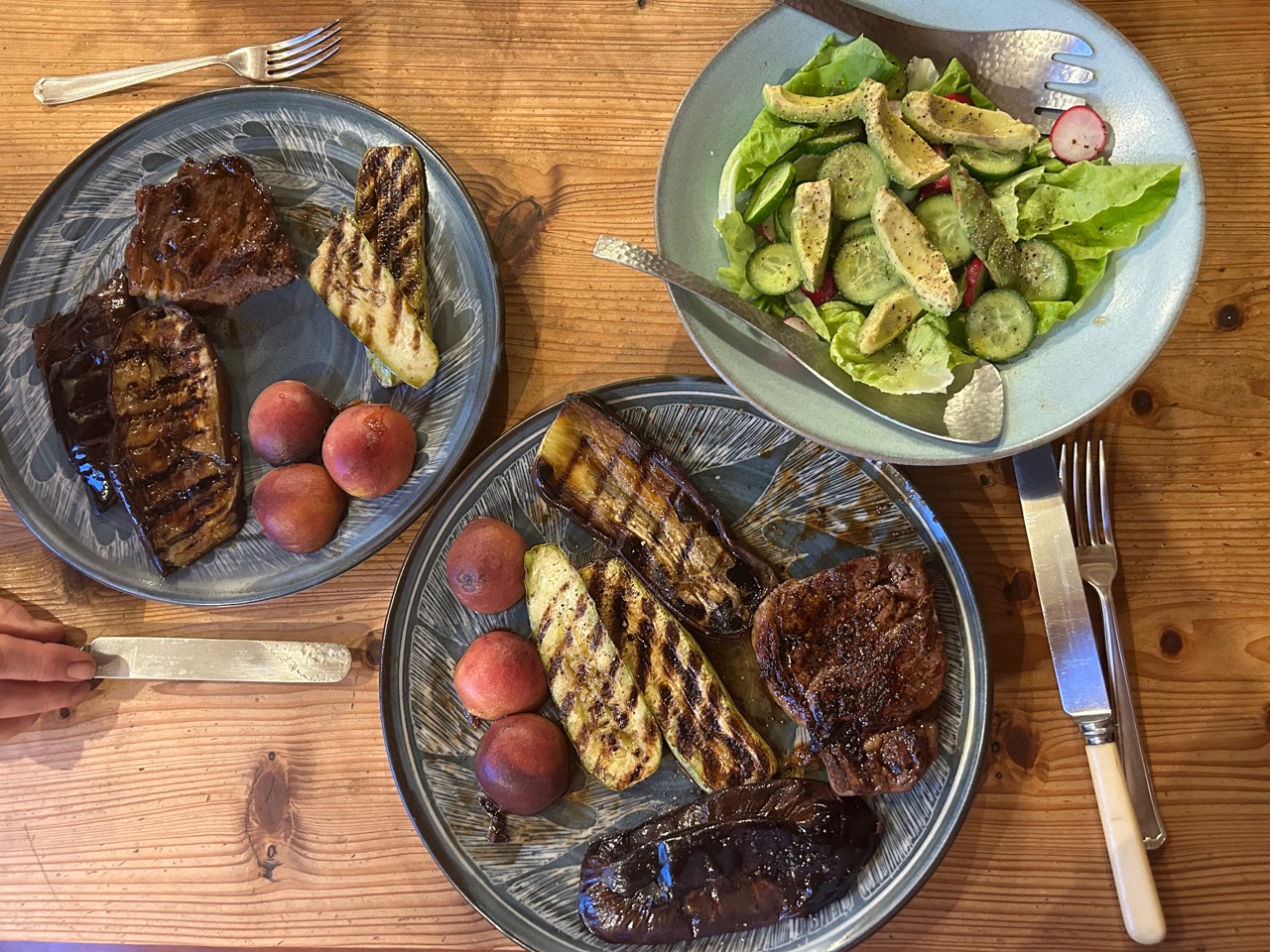
BBQ’d peaches and or nectarines with dinner, and stewed fruit for desert. There is always a pressing problem with the fruit fly. I was a bit slow in getting all the fruit fly trap and lures re-charged with refreshed baits this year, so there is a bit of fly in the fruit. We cut this out and cook it up to kill the wrigglers. The rest of the otherwise undamaged fruit is stewed for breakfast or desert.
This old fly trap has about 100 dead male fruit flies in the bottom from the early spring flourishing. I empty them out and replace the old bleached white bait with a new bright pink one. We have about 14 of these traps of various ages. I bought a few new ones each year, as the orchard grew. now I just buy refills for the bait.
You can tell their ages by the bleached out colour of their lids.
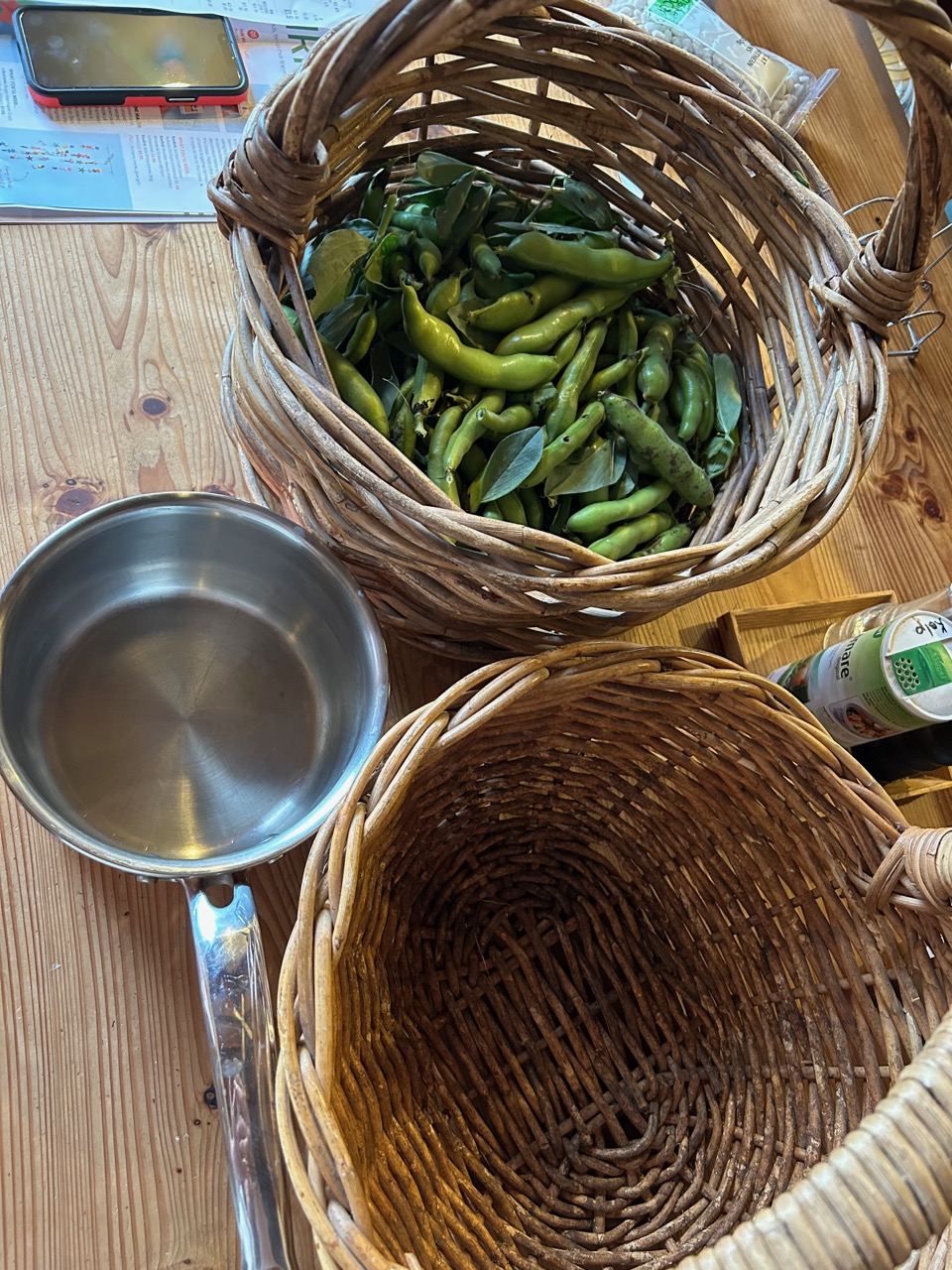
We picked the very last of the broad beans. I thought that I had picked them all last week, but I only had a boy-look. Janine went back through the crop and found another meal for us. I decided to cook that very old favourite of pork and beans. So called favourite of the cowboys on the trail in the old west. I first became aware of this combination watching old black and white western cow boy movies as a kid. I had no idea what it all meant, but it did cross my mind briefly – very briefly. Why were they eating pig when they were herding cattle?
Why weren’t they herding pigs if that is what they wanted to eat? Fortunately, my nascent and emerging tiny brain managed to accept and cope with this difficult dilemma, and moved on.
Now fast forward to my early interest in cooking and coming across the wonderful Italian recipe of chorizo, beans and tomatoes, obviously with extra chilli and garlic, it goes without saying. It’s become one of our springtime/hungry gap favourites. The beans are usually all dried from last summer, as is the bottle of reduced tomato sugo or passata. As we don’t have our own pig, just chickens. I use what we have in the fridge. At this time, we only have some bacon, so that is what I use. With the shops being a good 50 km round trip away, we don’t drive there frivolously. So bacon it is.
Home grown beans, home grown sweet basil, home grown garlic and home made passata from home grown tomatoes. WARNING! A pig was harmed in the making of this meal.
Desert is fresh picked cling stone yellow fleshed peaches soused with a dash of amoretto half an hour before. Perfection!
These days I’m up in the early mornings from 5.30 and work outside until the sun gets too hot, possibly around 9.00am. Sometimes I am out in the garden working, or more recently. I have been updating our fire fighting capacity with extra sprinklers on the walls of the pottery, barn and big work shed. I have installed the ‘spare’ fire fighting pump that I used to transfer water from dam to dam.
It is now more or less permanently in place to protect the pottery and barn with a high pressure water sprinkler system. This system used to be powered by an electric pump, I found out at my expense that electric pumps are useless in an emergency, even though I have solar power and a battery, when the fire came and burnt the pottery, it shorted out the power to the barn and only then did it catch fire.
So now everything is dual powered. We have electric pumps for hand watering the garden beds and running the roof cooling sprinkler on top of the roof. But for fighting is completely petrol driven and independent. Because you cant let petrol engines sit idle. They need to be started and run regularly. I have every thing in a dual system now, so that I can start up the fire pump when we are both want to water the garden and orchard trees at the same time. The fire pump handle that duel drain on its reserves of power with no problem, whereas the one horsepower electric pump struggles.
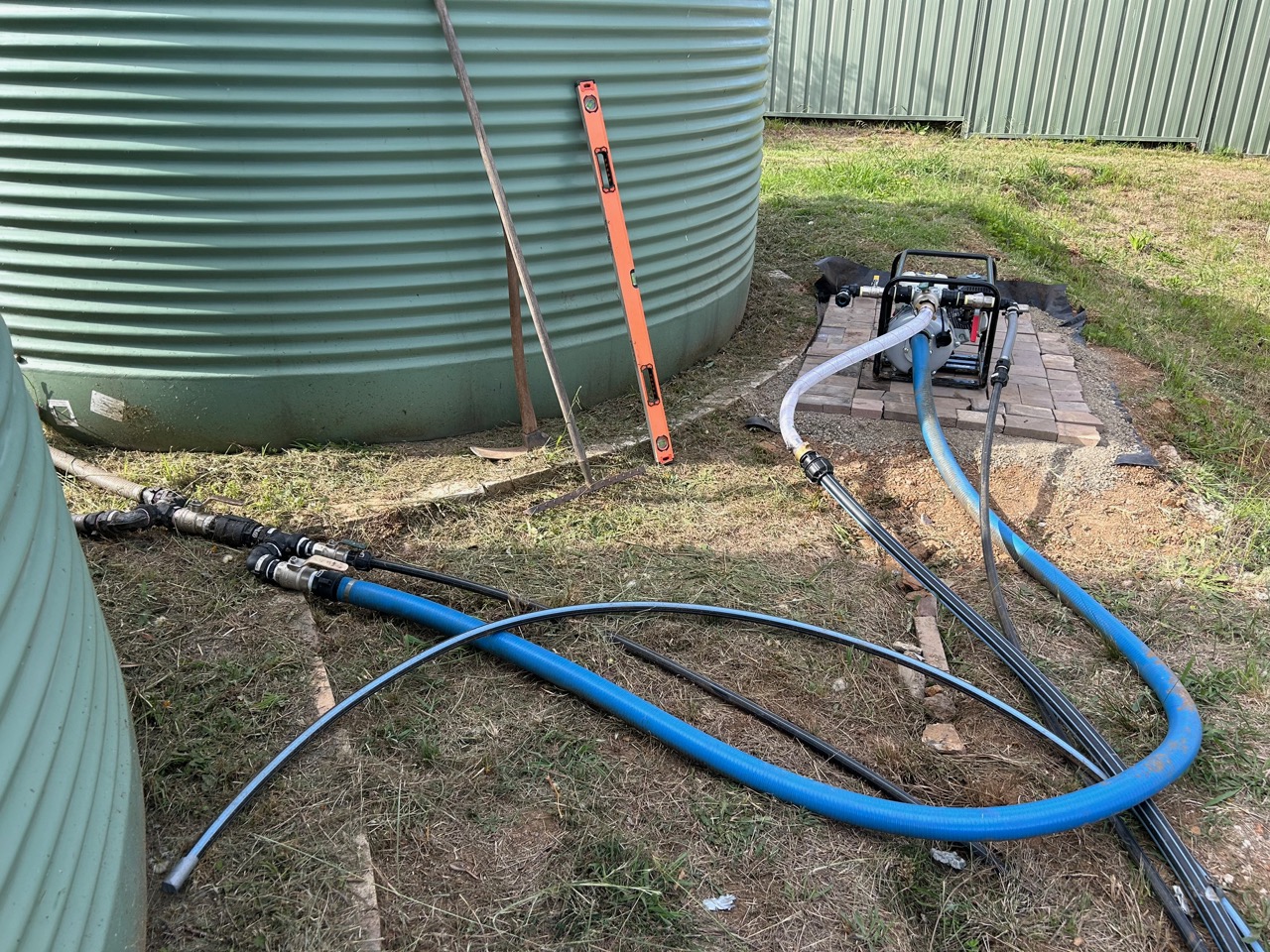
Inspired by all the talk of the Roselle spaghetti junction new motorway tunnel. I installed my own water fed spaghetti junction.
Situated directly behind, and close coupled to, the two 25,000 litre water tanks, it should be safe from fire there? Only time will tell. If you look hard at the image of the pottery shed, you will see the water misting out of the wall sprinklers along the verandah and up on the roof.
I’ve been spending the hottest part of the day inside working on the ongoing sgraffito project. I’ve finally run out of pre-slipped, press moulded dished and tiles. I’ll have to get on the wheel again soon and make more shapes to decorate.
We have been going through a very dry time recently, with the onset of the summer heat and reports confirming that we are entering another el-nino period.
All a bit glum really, but then the rains finally came. We had about 150mm. that’s about 6 inches in the old money. I had recently spent a few days pumping water from one almost empty dam up to another, slowly accumulating what was left of our water in the 4 dams, all eventually up to the one small dam near the house, where we have both a high pressure, petrol driven, fire fighting pump, and a small electric pump that is mostly used for watering the garden.
I managed to get that little dam about 1/4 to 1/3rd full. not a bad effort. That would have been just enough to see us through the first half of summer.
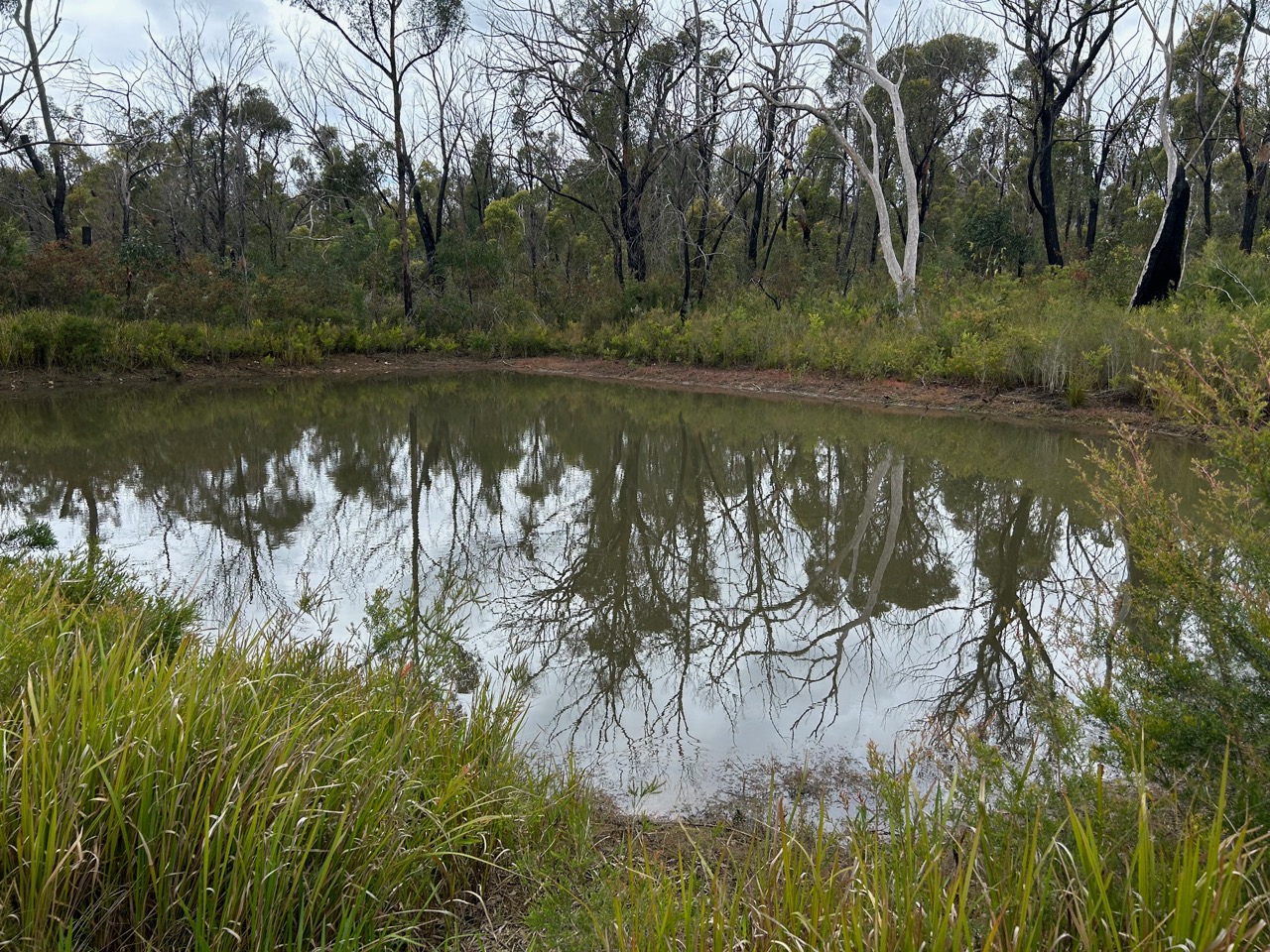
Before the rains.
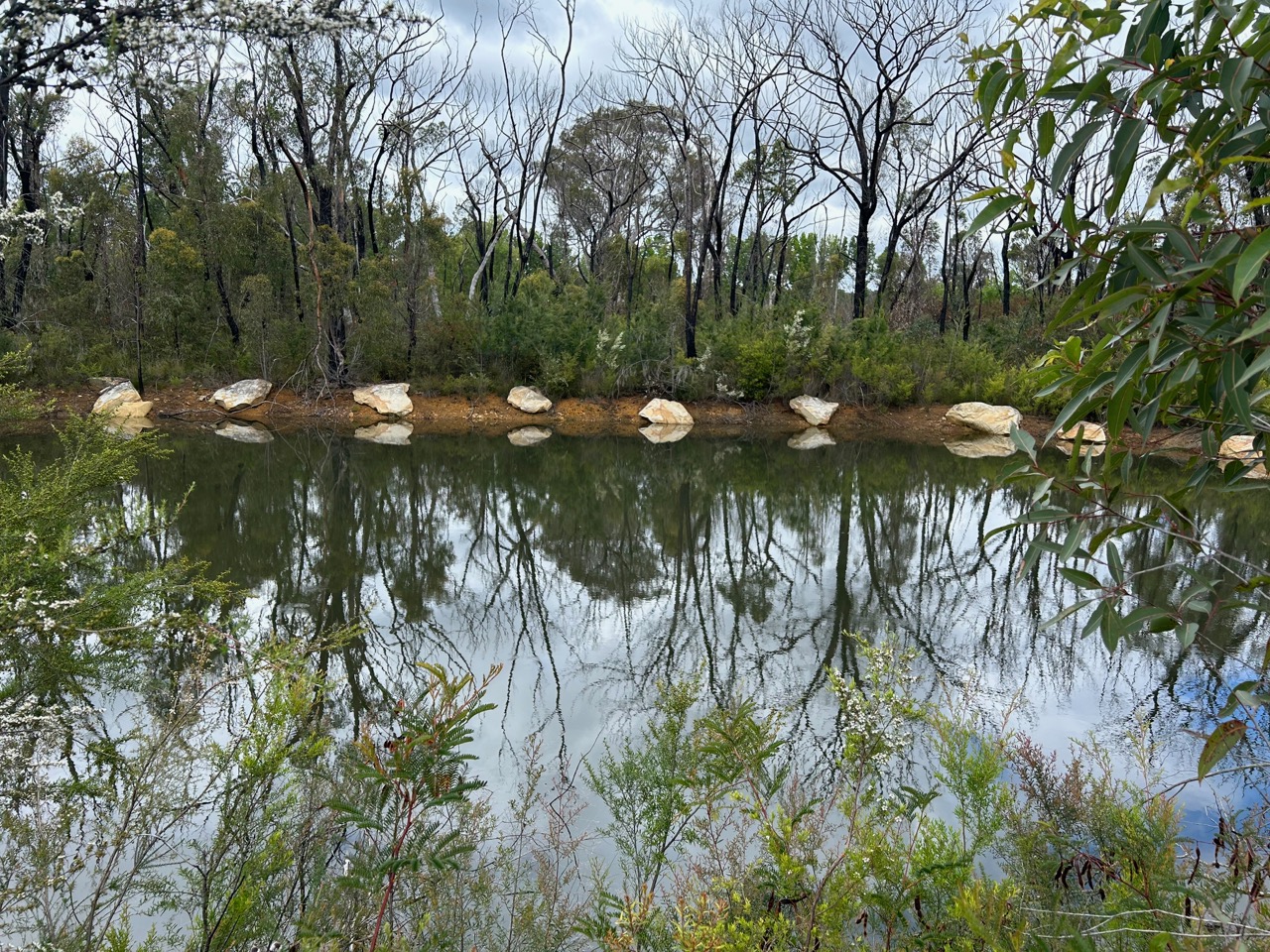
After the rain.
But now, since the down pour, we have 4 dams all about 3/4 full. The little house dam that started from 1/3rd full, over flowed down into the next dam in the series. A lot of that water I pushed up hill 2 weeks ago flowed back. A waste of a couple of gallons of petrol. I still buy petrol for the pumps, the chain saws, the mowers and diesel for the tractor. So we are not fully weaned off the dirty oil economy. I worked out recently that I spend a little bit more money on the fuel for the mowers and chain saws, than I do putting petrol in our Plug-in hybrid car, simply because we make sure that we keep the car fully charged off our solar panels, so we rarely ever need to put petrol in it. About $30 every 3 months, where as I spend about $100 twice a year filling up the fuel drums for the garden appliances.
We have recently bought a solar charged electric push mower, plus a whipper-snipper thingy, and a solar charged electric chain saw. So I expect that my visits to the petrol station will decrease accordingly. I still need diesel for the tractor and petrol for the ride on mower.
Since the weekend workshops of the last two weekends, Janine and I have spent a good part of each day during the week in the pottery consolidating our sgraffito skills and developing a few new designs, to include in our next batch of work. I would have liked to spend more time in the pottery, being creative and self absorbed. Once you start to draw and decorate the surface, the time just flashes past and it gets late so early. We have to stop to do the watering. There will be more time tomorrow to get a bit more done. There is always enough time for everything. We just have to learn to allocate out time and and as we age to allocate our limited energy.
There is so much to do around the garden and orchards. We have had to start watering by hand again since the rains stopped and the temperature has been going up – just touching on 40 degrees today. Even hotter in the west. Hand watering all the gardens and orchard trees. It takes us both over an hour to do a quick once-over, just to keep everything alive. It takes a lot longer to give specific beds a really good soak while we are at it.
We could probably buy vegetables much cheaper from one of the rip-off, price gouging supermarkets. But they wouldn’t so clean, fresh, healthy, organic and immediately delivered straight from the garden and onto the plate. There is something so very, even intensely, powerful in growing your own food. Not just the self reliance of it, but the intimate nature of the activity. It grounds me here in this place. I’m intimately here and now on this ground. This has become my little all-encompassing environment. My statement of belonging. I’ve sculptured this place into being as what is is now. It’s peaceful, abundant, pretty, and very functional as a home art space and garden.
We are just coming to the end of ‘the hungry gap’. That time of the year when most of the winter food in the garden is coming to an end, but the new spring planted summer crops haven’t started producing yet. We have been eating the last of our carrots, beetroots and cabbages, and have just picked the last of the broad beans along with the first of the new season zucchinis. Tomatoes have set on the bushes, but are still very green. It is always a challenge to get one ripe red tomato before Xmas.
maybe not this year, due to our being away and not getting that head start early on at the end of winter, or the first weeks of spring.
One very nice treat for this time of the year is the summer fruit crop. We are harvesting strawberries, blue berries, peaches, nectarines and plums. That equals fruit salad for breakfast for the next month.
I love the summer garden, but I don’t like the 40 degree days, or the potential for bush fires that are always in the realm of possibility when the wind picks up from the west.
We are having a short break from the pottery studio for a week to work around the garden, before the next few weeks of weekend workshops. It’s the last week of spring and we are only now getting the time and energy to plant out the summer garden. It will be a smaller garden this summer, as we are forecast to be heading into a long dry ‘el nino’ period. The previous one lasted some years and culminated in a severe drought with bush fires.
We spent the last summer of el nino drought watering our vegetables and garden plants from our rain water tanks, as all the dams had dried up. Luckily for us, we had invested in two huge storage tanks 20 years ago, when I was working and had the money to invest in our future water security. People mocked us, but we have never had to buy water in our life. We are attempting to be self reliant in as much as we can. Rain water and solar electricity are at the top of the list.
Last drought, we emptied one of the very large 125,000 litre water tanks and were half way through the other when the rains returned. Luckily, we didn’t have to buy water. Some people that we used to know years ago, had planted out an extravagant and sophisticated English garden told us that they were spending $300 per week back then, buying water to keep their garden alive and thriving. Three large truck loads of water were delivered and pumped into their tanks each weekend. It was the wrong kind of garden for this area, at this time. They also got a 100 metre deep bore drilled to get access to some underground water, but it dried up, and had to be evacuated, all the pumps and piping had to be hauled out with a crane and hole re-drilled down another 20 metres, to find a more permanent source of water, which then turned out to be iron bearing and needed to be oxidised and treated before it could be used on plants.
We learnt from this and decided to live a more simple and frugal existence, more in keeping with the natural environment. Every part of modern life does damage to the environment. Our aim is to keep that damage to a minimum where we can.
We have been enjoying the very early fruits from the garden as our breakfast fruit salad, Cherries, blue berries and strawberries. They are all growing under cover in the vegetable garden enclosure, safe from birds, so we get them all. Except for what the snails eat.
We had a good crop of mulberries this year and I was able to get my share despite the birds taking everything that they could. It’s the first fruit to come on out there in the orchard, so the birds are very hungry after the winter. They are also looking to feed their new babies hatching out in the spring time. This year we shared the crop. I was able to make 3 mulberry pies over the couple of weeks while the crop lasted. Being a huge tree, we have no way of netting it, so we share. The youngberries come on next and because they are a bunch of canes , and not too high we can net them to get most of the fruit. The birds are resourceful and learn how to land on the netting, pushing it down and then pecking the fruit through the net.
We also netted the apricot tree, as it has a reasonable crop of fruit coming on. Who knows how the rains will turn out? If there is no natural water from the sky, the dams won’t be enough. We have netted it just in case anyway. You never know what might happen. What we do know is, no net = no fruit. So we net.
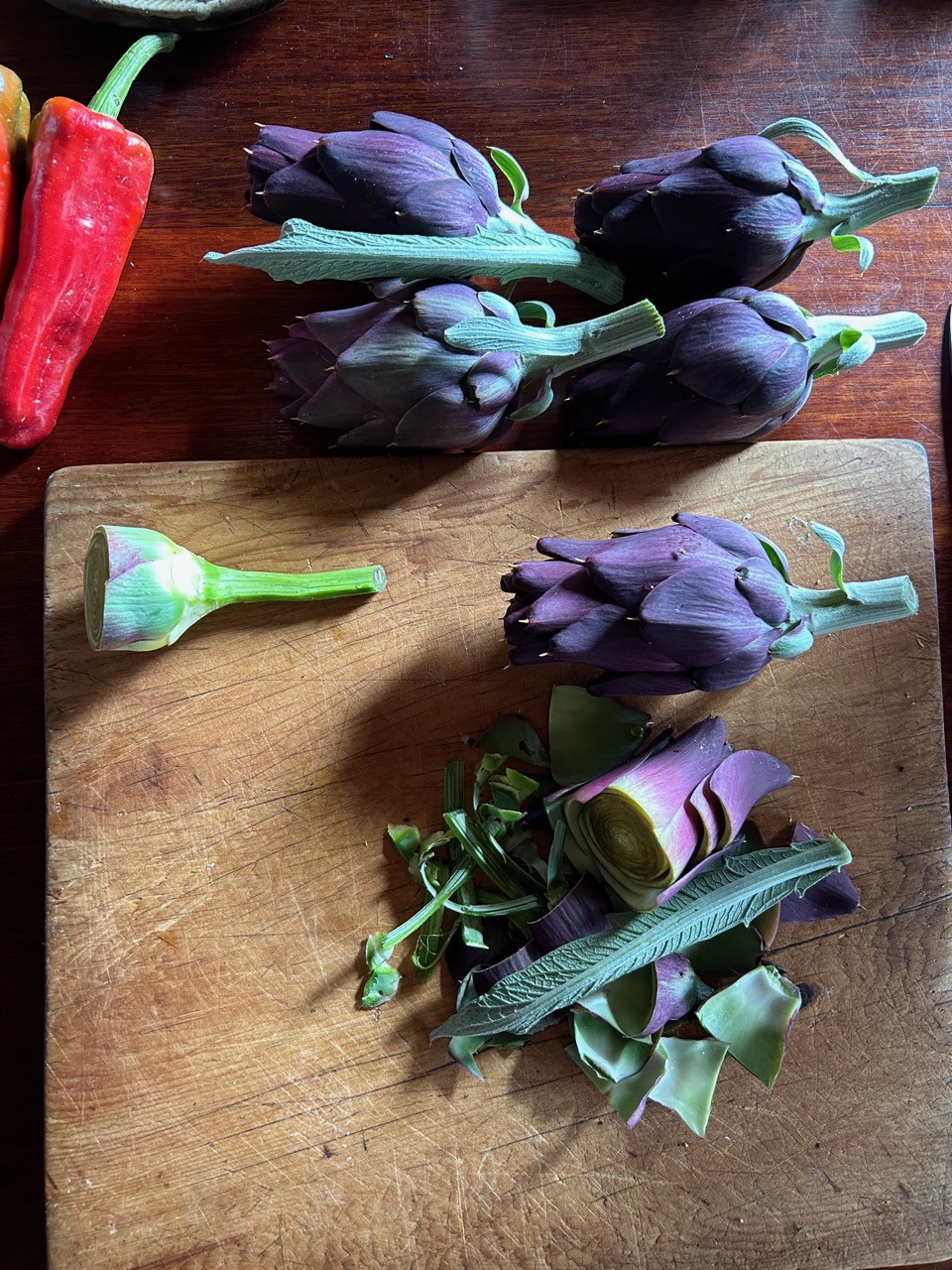
We have finished the last of the globe artichokes. The purple variety are the last to mature. They are a lovely seasonal treat. This year we have been having them on pasta for a slow lunch.
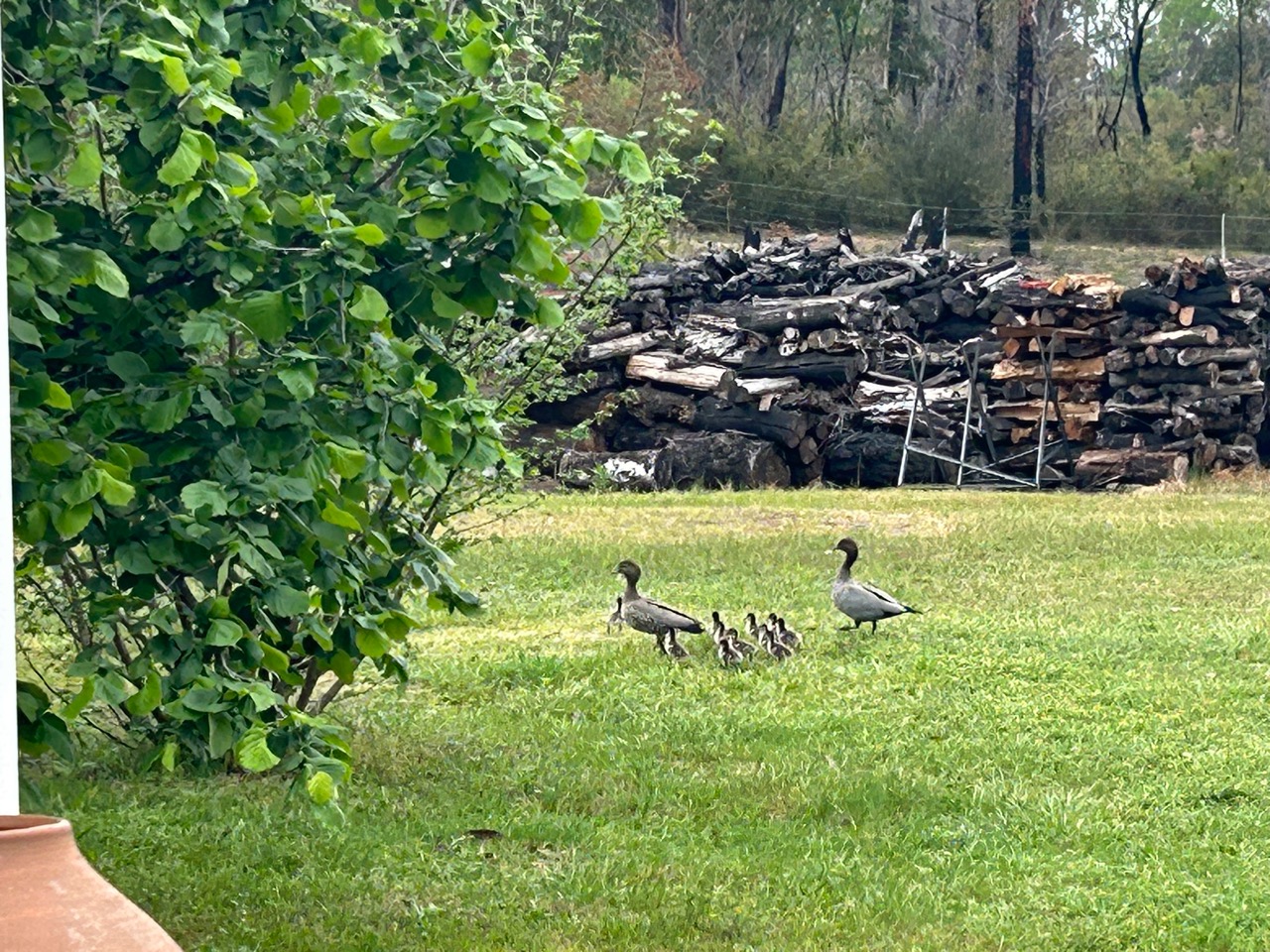
Spring also brings a return of the wood ducks. This season so far, we have had 3 hatchings. They start of with a dozen littlies and day by day the number decline. I assume that they are taken by bigger birds, although I haven’t seem one taken. They are very timid and wary by nature, so we keep out of their way while they have young. Choosing to walk the long way around if we encounter them in the garden or orchards. I think that they are probably lucky to get 2 or 3 to maturity by the end of spring. We have learnt from experience that if you don’t make eye contact, they are less likely to run or fly away. They will stay and keep a very close eye on you but not move. As soon as you turn your head to look at them, then they take off.
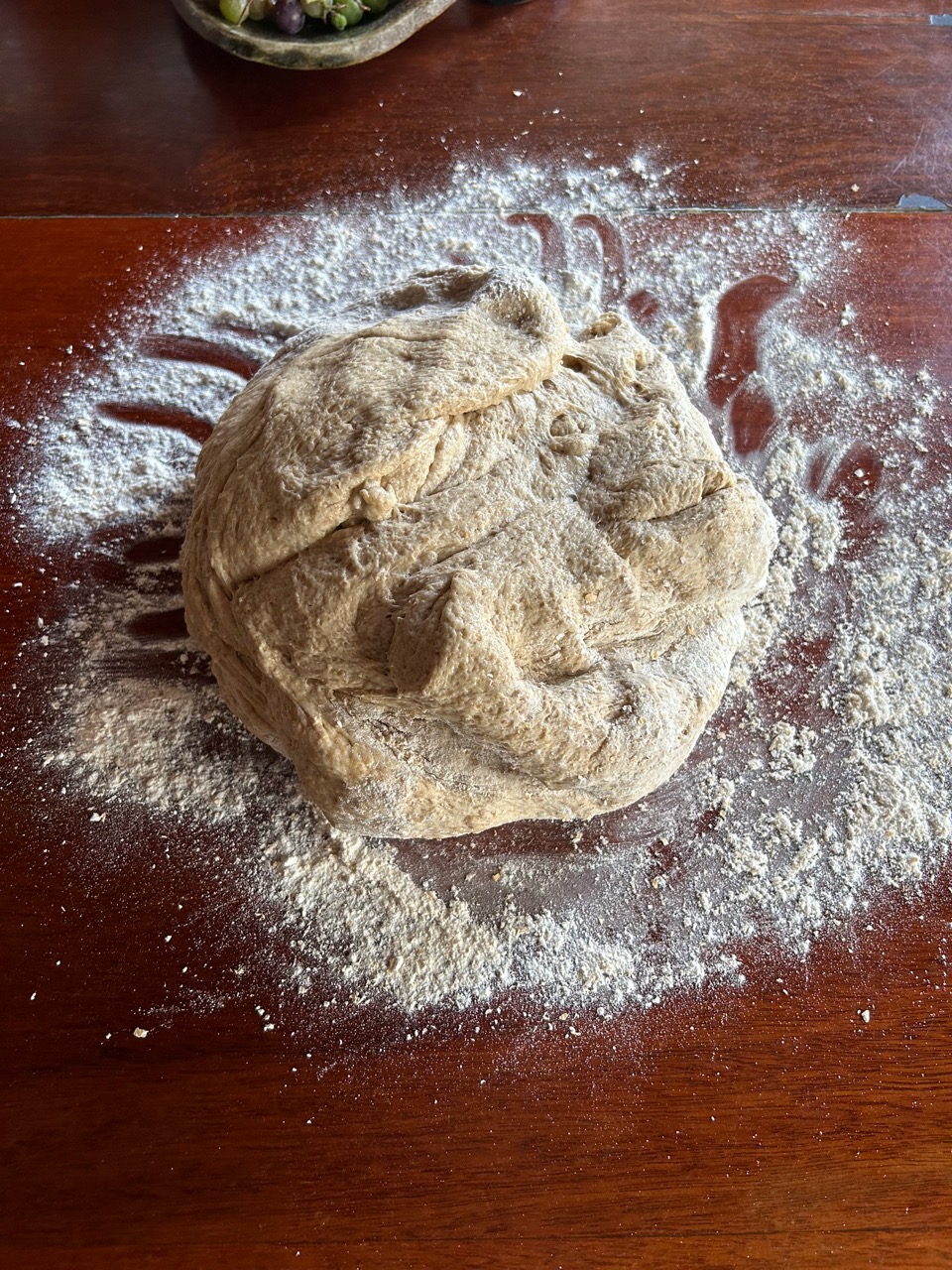
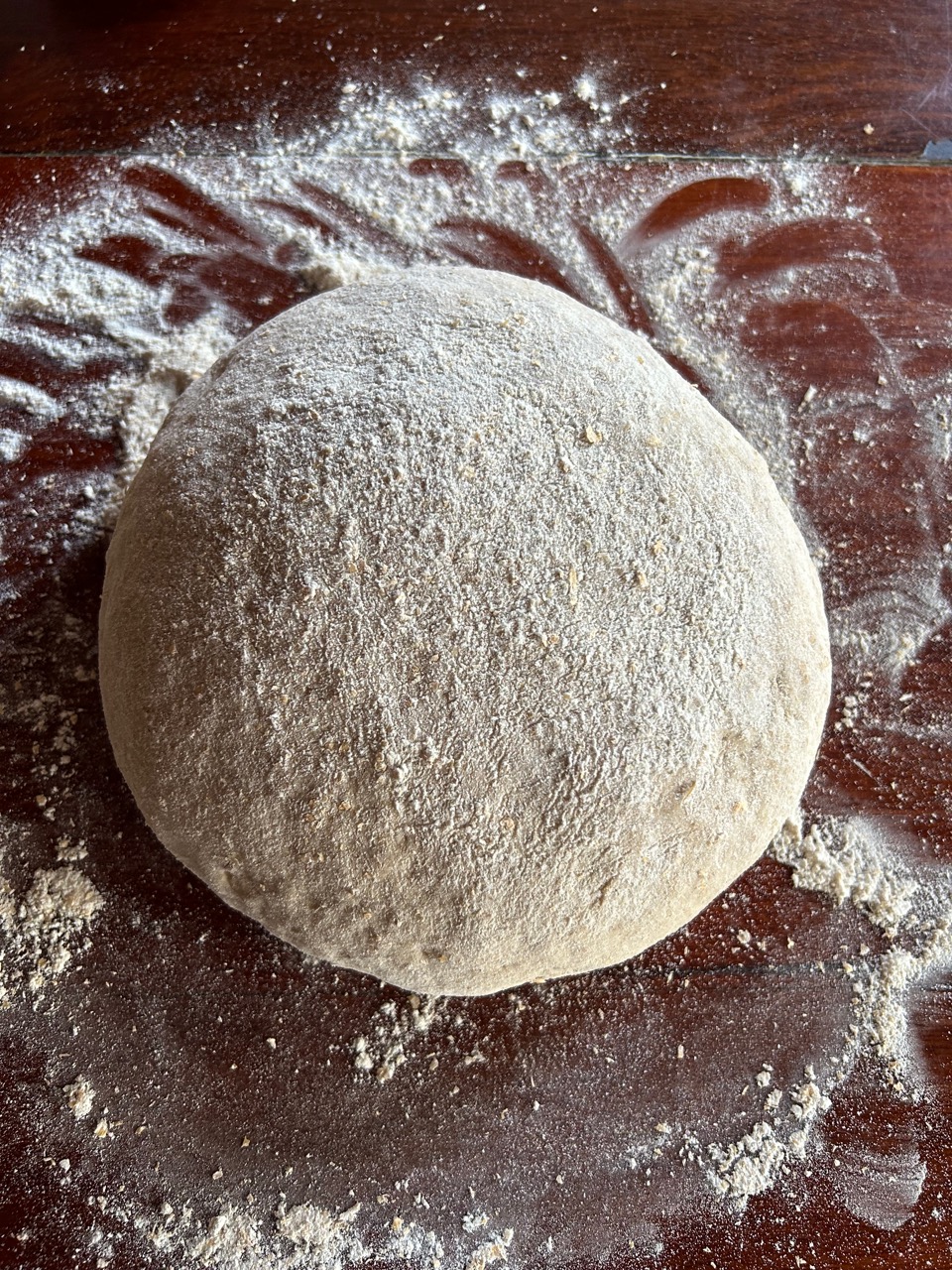
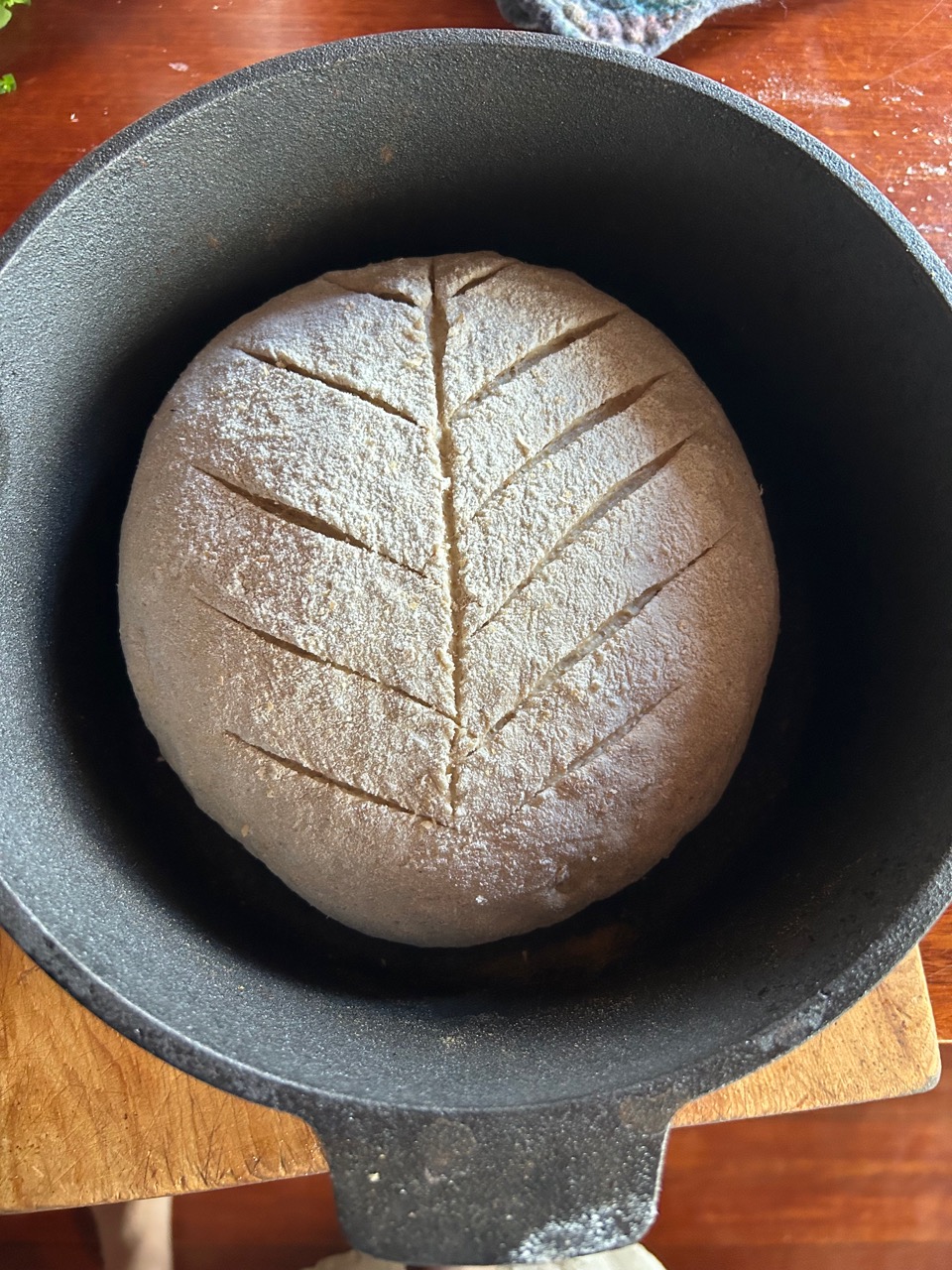
I’m still baking my bread each week. It’s a 50/50 blend of wholemeal and rye. It works out well for me, the way that I have developed it. To save time and make it an easy proposition, I sort of cheat. Sort of! But not really. I use a bread making machine to mix the dough on the ‘dough-only’ setting. It takes 1 1/2 hours to mix, prove, knock down and rise the dough. Then it switches off. I turn up and knock it down one last time and pop it in a cast iron, ‘Dutch-oven’ baking pan and bake it in the oven for 20 mins at 240oC with the lid on, then another 20 mins with the lid off. It works for me. I can be outside working while the dough is being nurtured and pampered in the machine. We are on to our 3rd bread machine. They last about 10 to 12 years before they burn out, or wear out the bearing. At one loaf a week for 10 years, that’s a 500 loaf life span.
We picked the last of the spinach. Just tiny leaves from the spinach trees, as they bolt skywards heading to seed. I made the last spinach pie for a while. I will need to plant some more. I should have them in the ground by now, but life was too busy to do it all. I have just put in the seed this weekend.
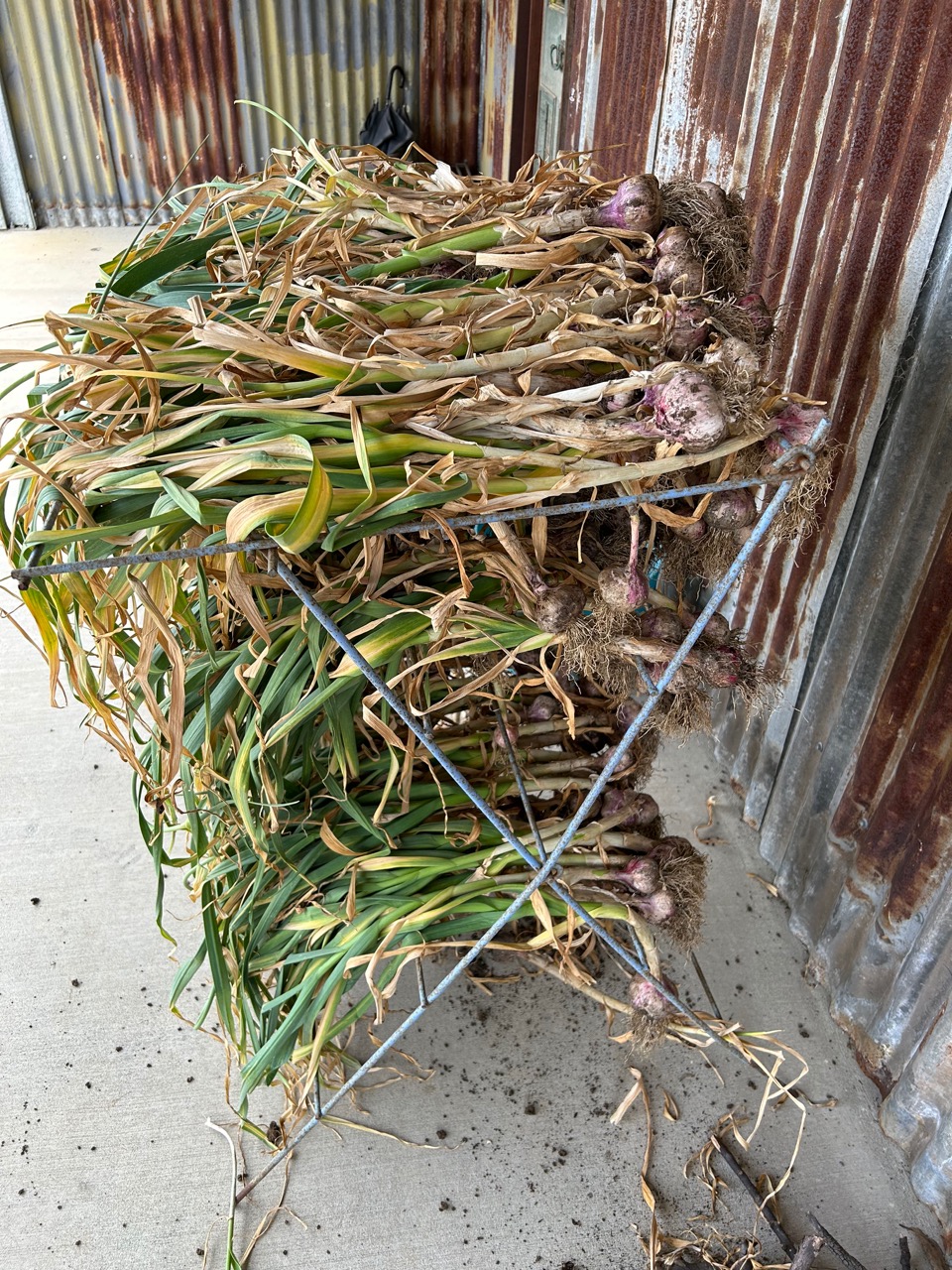
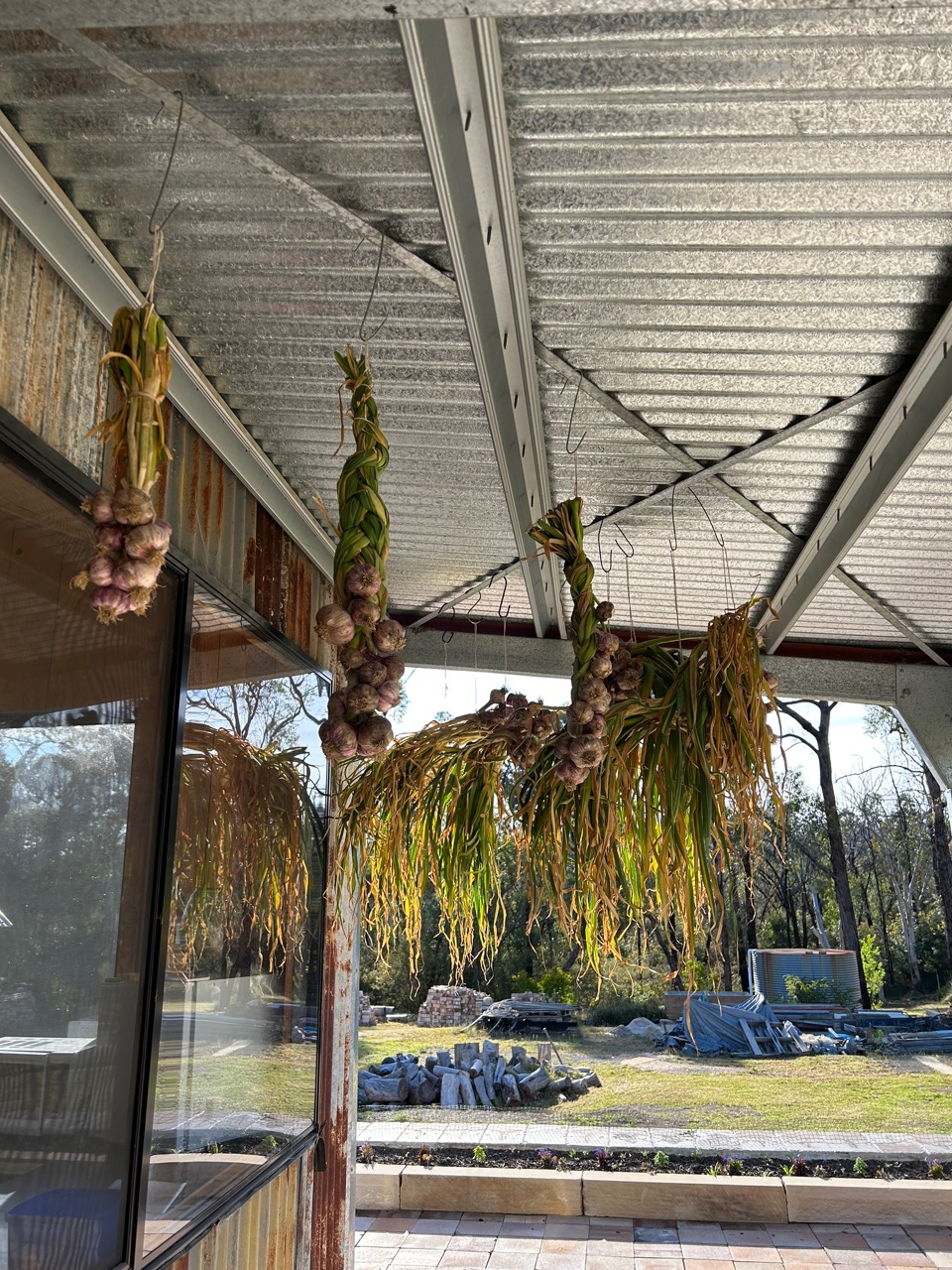
Janine has found the time to plait this years small garlic crop, just half a dozen plaits and a big bowl full of tiny knobs that are too much trouble to plait. Those small garlic knobs sit in their bowl on the kitchen work bench are used first. The biggest and best are kept for replanting in March. Its a very small crop and wont last us through the year. But can’t complain, at least we have some.
I catch myself thinking that things could be better. More or better sized garlic, more regular rain. But things are really pretty perfect for us. I have to remind myself that I’m not in Palestine or Ukraine being bombed. Be happy with what you have.
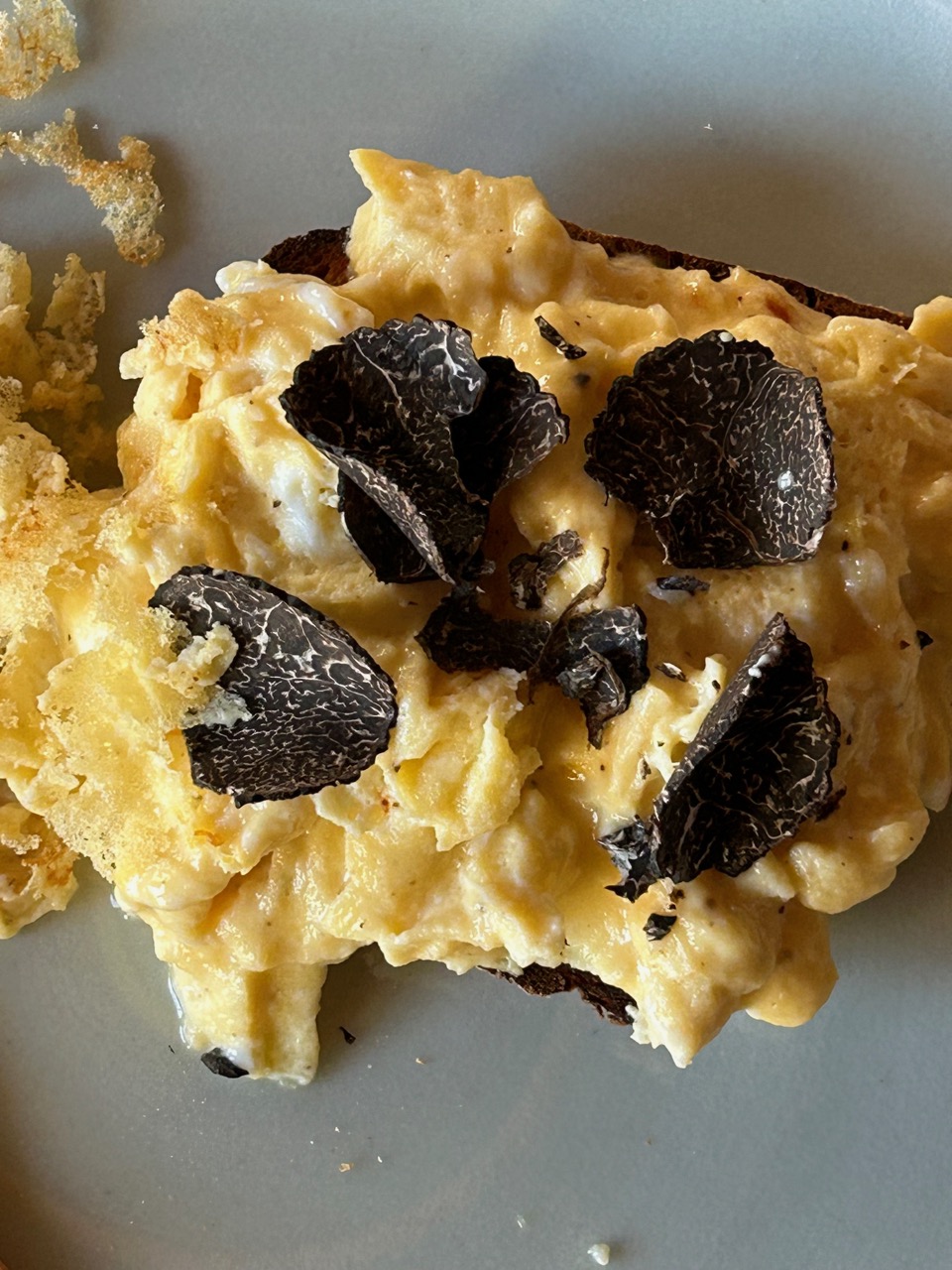
Today we finished off the last truffle of the season. It was romantic, mysterious, fragrant, exotic and delectable. It really elevates the humble scrambled egg into something special without taking anything away, just adding loads of romance and aroma. The warmth of the freshly cooked eggs releases so many aromatic oils and esters from the tiny black fungus. It fills my nostrils as I bend over doing the shaving. It’s a good thing that we only get to eat these delicious little morsels in the winter months, otherwise we may become somewhat blasé about it all. As it is, they are still a very special seasonal treat, If somewhat expensive. We can only afford to live this decadent gourmet lifestyle on our frugal budget because we have a son in the industry.
We are also probably making our last batch of marmalade too, as we have picked most of the Seville oranges now and eaten nearly all of the other citrus fruit. Although this is the beginning of spring, it is also the end of winter in another way, so it’s the end of the winter crops like citrus. We try and live with the seasons, so that’s it for the big citrus splurge in our diet.
It is one of the blessings of living in the Southern Highlands, that we have 4 distinct seasons. For instance, this morning we had another frost. This might possibly be our last really cold morning, but you never know with the climate emergency developing as it is, anything could happen.
I peel off the thin yellow layer of the skin without taking too much of the pith. I want the pith off! With my pile of curly peels, I end up with what can only be called ‘bitter and twisted’ .
Janine removes the pith and cuts up the juicy centre to add to the pan. The first pan is on for 30 mins. before we get the 2nd pan on the stove and the difference in colour is dramatic, it gets richer and deeper as it cooks. We try to use as little sugar as possible, while not making it too bitter and acidic, we also need enough sugar to make it ’set’. It takes about an hour of steady simmer to get it to thicken sufficiently. It’s worth all the effort, it tastes delicious, with just the right consistency. Seville oranges aren’t all that nice on their own. They are OK, but they really come into their own when it comes to making marmalade.
The stone fruit orchard is growing up well. This is its 3rd year and the trees are starting to look a lot more settled and established, with thicker trunks. I have been pruning them into open vase shapes where possible, but some of them have a very narrow vertical habit. They are all grafted onto ‘dwarf’ rootstocks, so they are keeping to a compact size. Most of them are now about 1.5 to 1.8 metres high, with an expected total height of 2.5 metres eventually. But I am well aware that plants can’t read their own labels! So there are bound to be variations.
We had a really great 1st Weekend workshop in the new pottery. It worked very well. The new studio is a great space to teach in. The light is good and the layout works ergonomically for 10 people, 8 students and 2 teachers. After everyone left I got stuck in and started making more pots for myself. The Open Studios, Arts Trail is coming up at the end of the year, so I need to get back to work making pots for that. I started back at it by making 30 straight sided mugs.
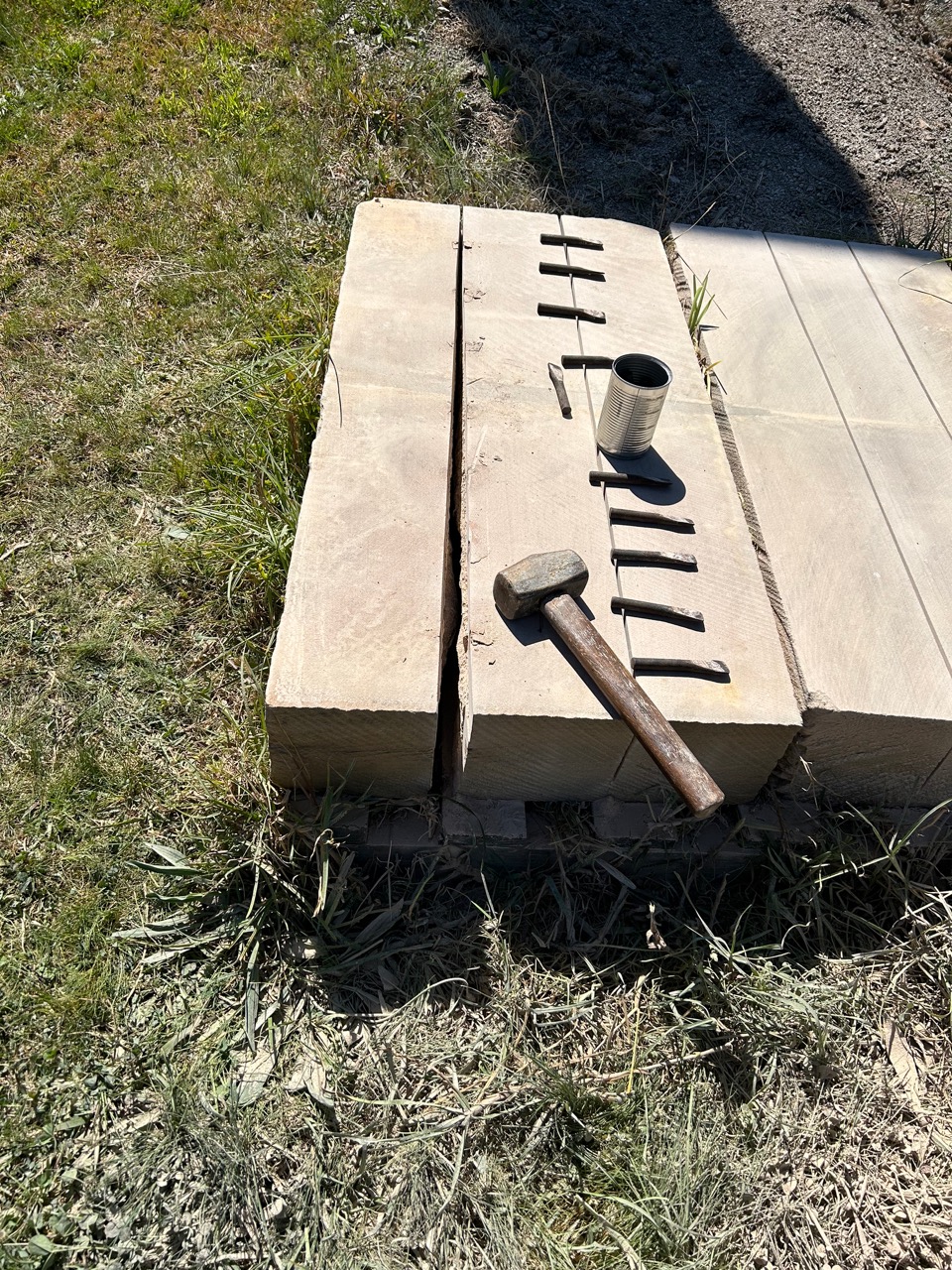
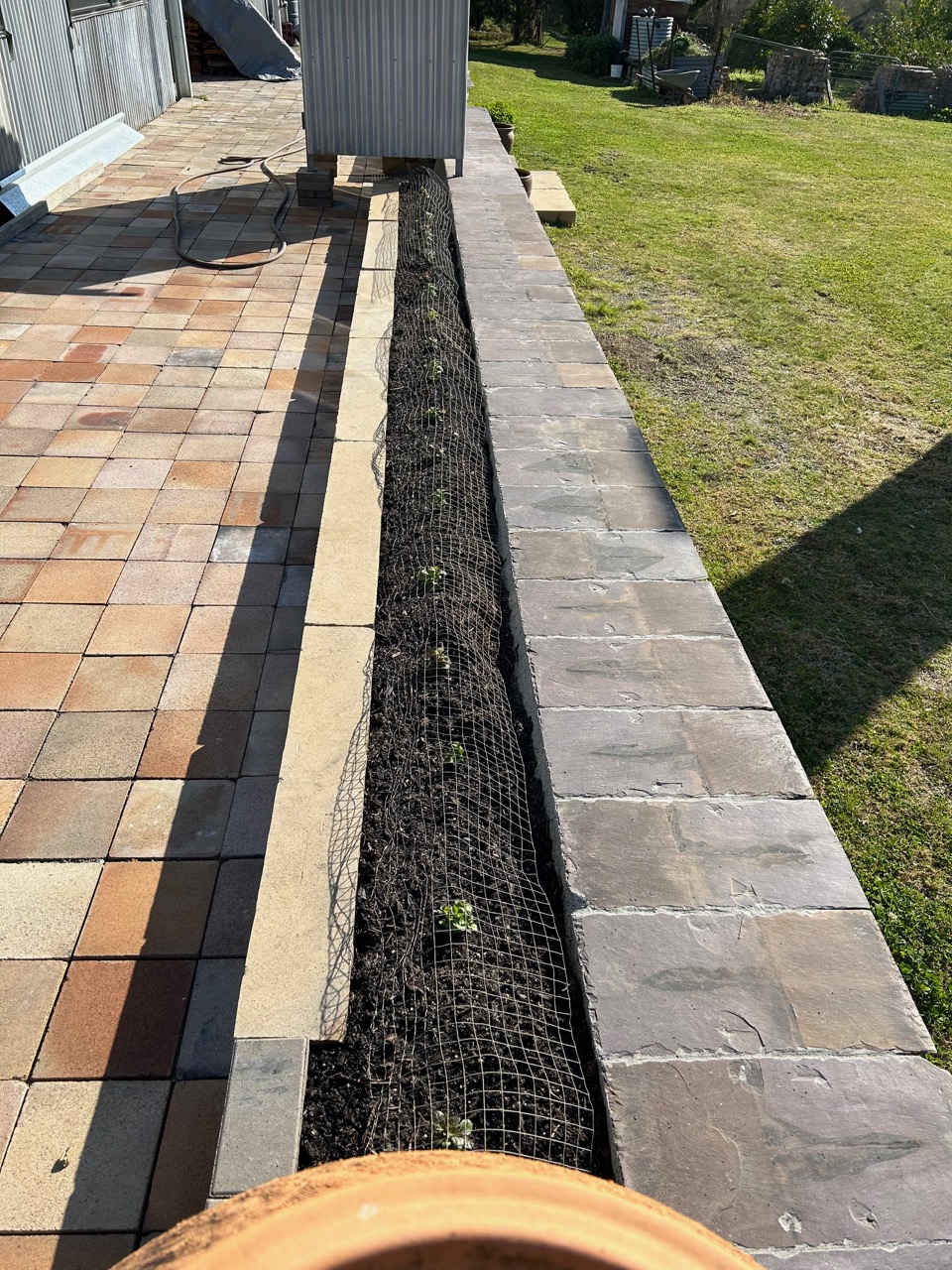
I spent a few days since the recent weekend workshop, in the afternoons, in my spare time, splitting and dressing sandstone blocks, to make some garden bed edging along the recently finished slate capping on the big sandstone retaining wall around the new pottery. It’s just another one of those jobs that has been in the offing and waiting for the ‘right’ time. I chose this ‘right’ time from what is left of my other time! Once the little wall was in place I shoveled in a load of top soil and planted seeds and a few seedlings to make the edging look a bit more settled and finished. I sprinkled in a packet of English Cottage Garden seed mix for good measure and 30 caper seeds, one every 600mm. Capers need an elevated, well drained, sun baked, dry, harsh environment to thrive. They take 2 years to establish, then persist for many more as long as they are cut back and pruned hard in the winter to stimulate good growth in the spring and summer, as flowers and fruit are produced on the new years growth. The elevated and exposed wall seemed like a pretty good place to try them out. I have read in a few books that they thrive on top of stone walls in the Med’s dry summers. I have no expectations, but if something comes of it, I’ll be pleased. If not, then I’ll chalk it down to another one of life’s enriching experiences. The stones look nice anyway, regardless of whether the plants grow or not!
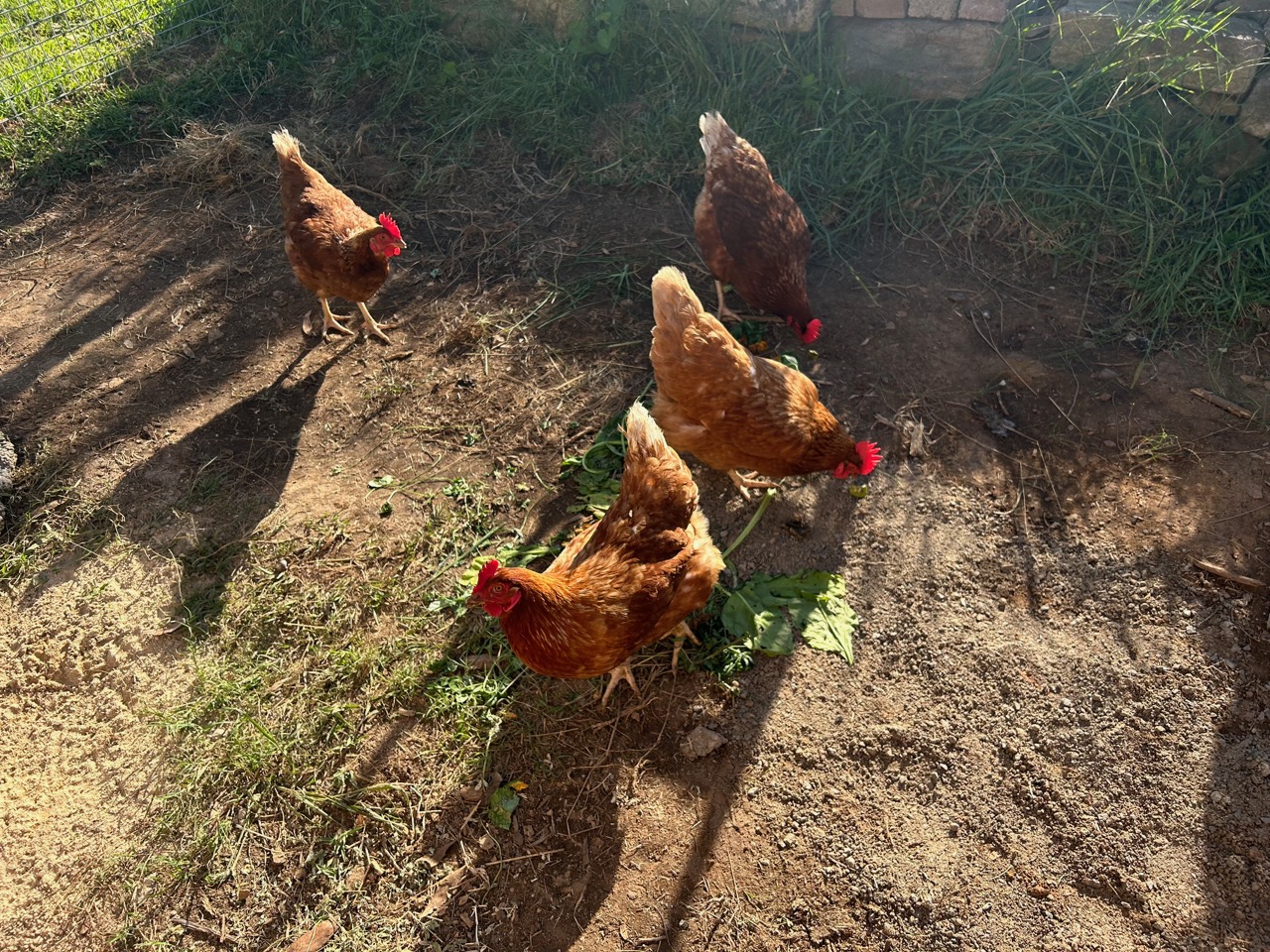
After the soil was shoveled into the new beds, Edna the chicken, who had been helping me all day, came along and decided to help me some more by scratching a lot of it out again. I had to make some impromptu wire covers to protect the small seedlings from being excavated!
I’m happy with the result. 3 days work and $50 bucks goes a long way. I’m hoping that it will look greener in time for the November Arts Trail, Open Studios event.
As the weather has been cold. We decided to have a baked dinner. This months meat meal is a very small piece of fillet steak.
Baked with a load of vegetables from the winter garden, and of course, a Yorkshire pudding in the old fashioned tradition of using all the meat juices from the baking pan. The proper way! After baking, the meat is placed in the warming oven to rest, while the baking dish is then reused to bake the ‘pudding’.
Non of those shop bought, frozen, pissy little cup cake things, masquerading as Yorkshire pudding, to be microwaved to a perfection of stogy, doughy sog.
The batter for proper Yorkshire pudding has to be made up and hour or so at least before hand. It’s the first thing that you have to do before starting to get a baked dinner ready. Even before washing and prepping the veggies, or spiking the meat with cloves of garlic. It has to be mixed and left to rest, then stirred occasionally throughout the baking time, so as to get a light and fluffy pudding with a thin crispy top.
recipe;
2 table spoons full of plain flour
1/2 a cup of milk
2 eggs
(See previous blog post 17/08/2014. ‘Don’t get to know the farm animals too well’)
Janine learnt this method from my Yorkshire mother, who learnt it from her mother etc.
She was a good student and makes a very nice Yorkshire pudding. My mother would approve.
It ends up being a huge meal, but we have been working hard, cutting and splitting fire wood all day, so it’s very tasty and easy to eat.
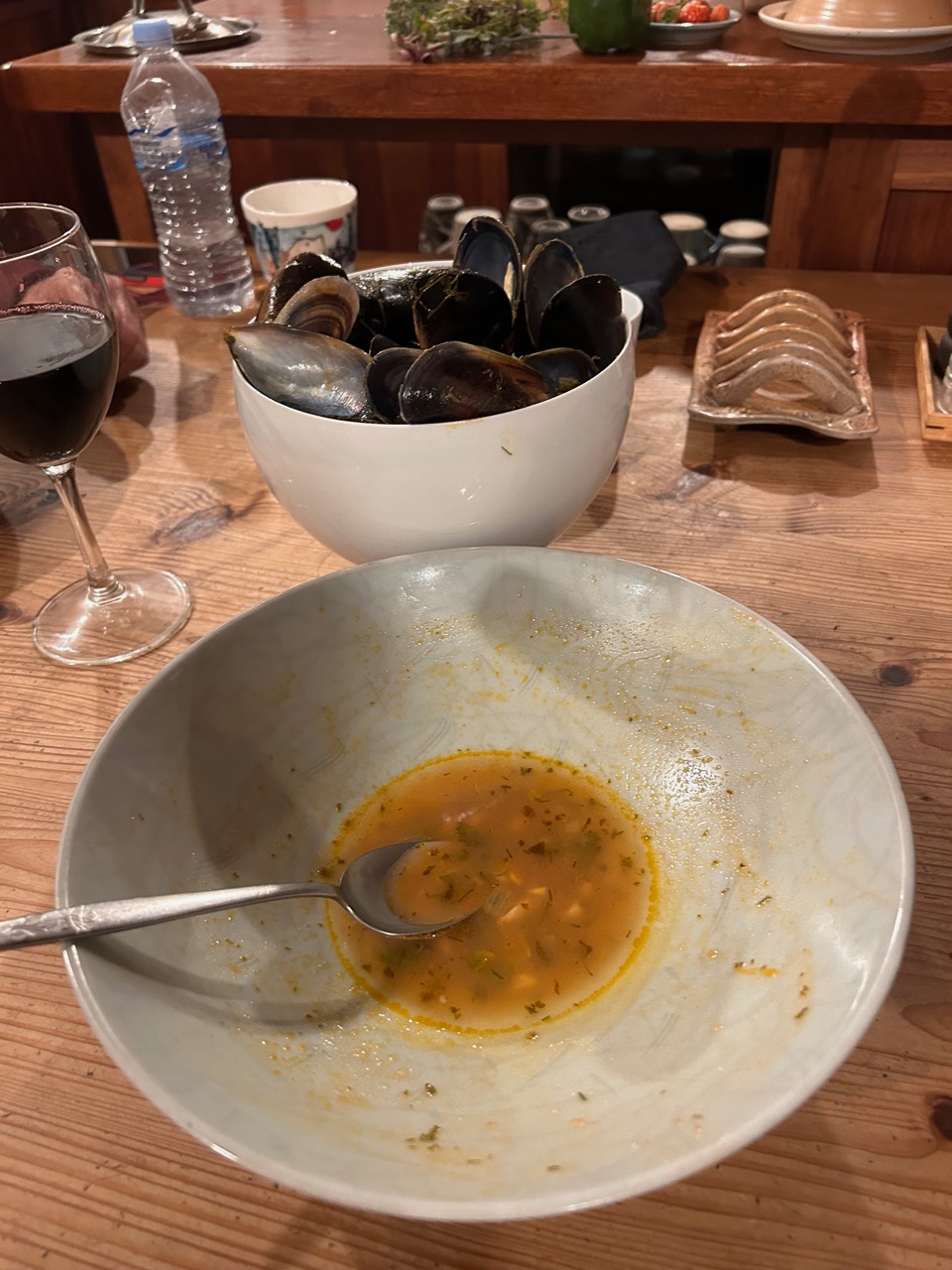
I also made a lovely mussel soup this week. I used a lot of fresh herbs from the garden, some white wine and a bottle of our preserved tomato passata from last summer.
It was very good with the mussels, and with a lot left over in the pan, made a warming lunch time soup the next day.
After eating all of the mussels, there was a little soup left in the bowl, so I was inclined to engage in the ancient French tradition of ‘faire Chabrol’.
By pouring a little of my red wine into the bowl and drinking the mixture straight from the bowl.
I’m warned that this is not a practice to engage in, in polite society. It’s strictly for peasants. Welcome to the home of the Post Modern Peasant.
It’s catching!
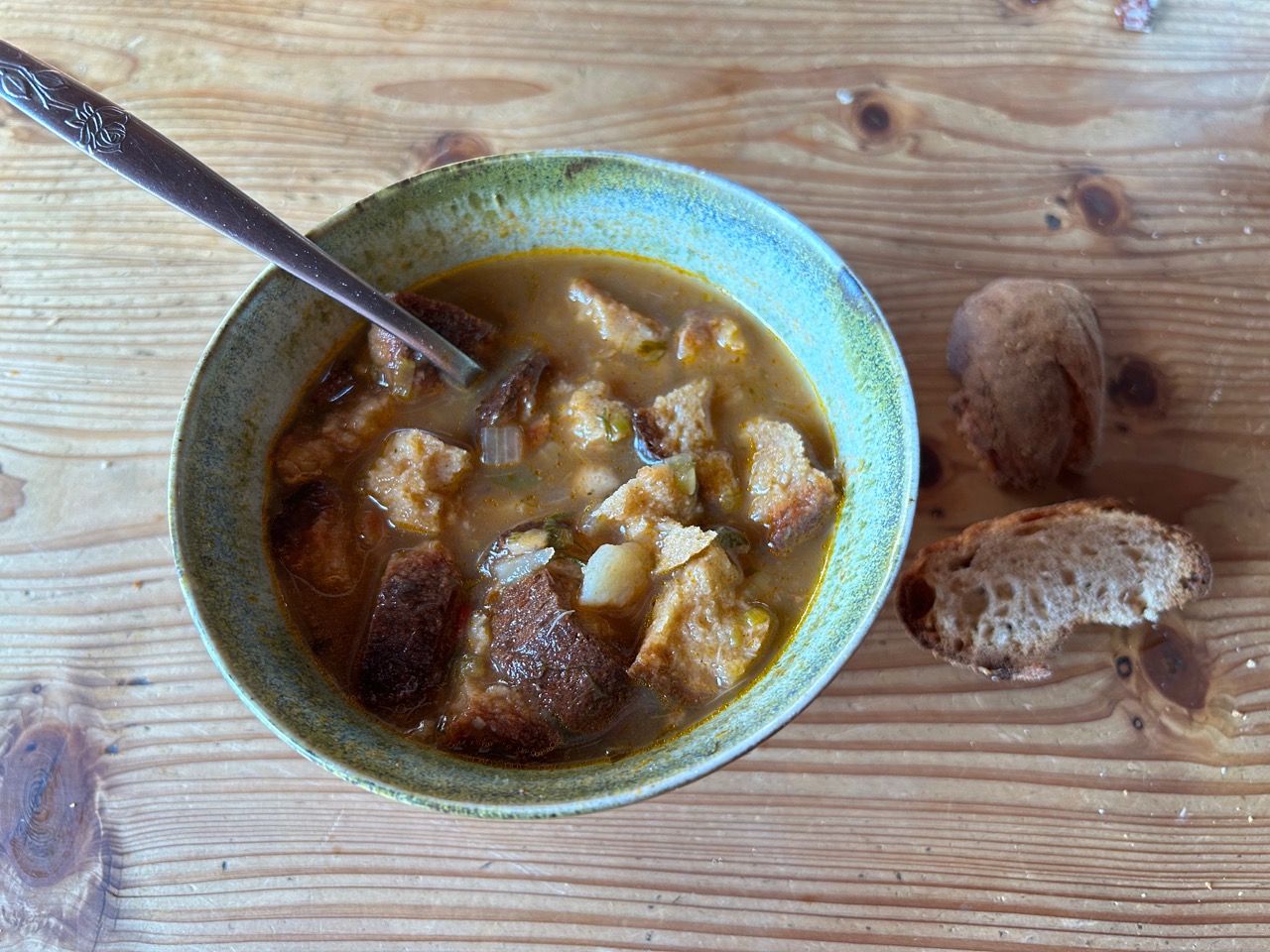
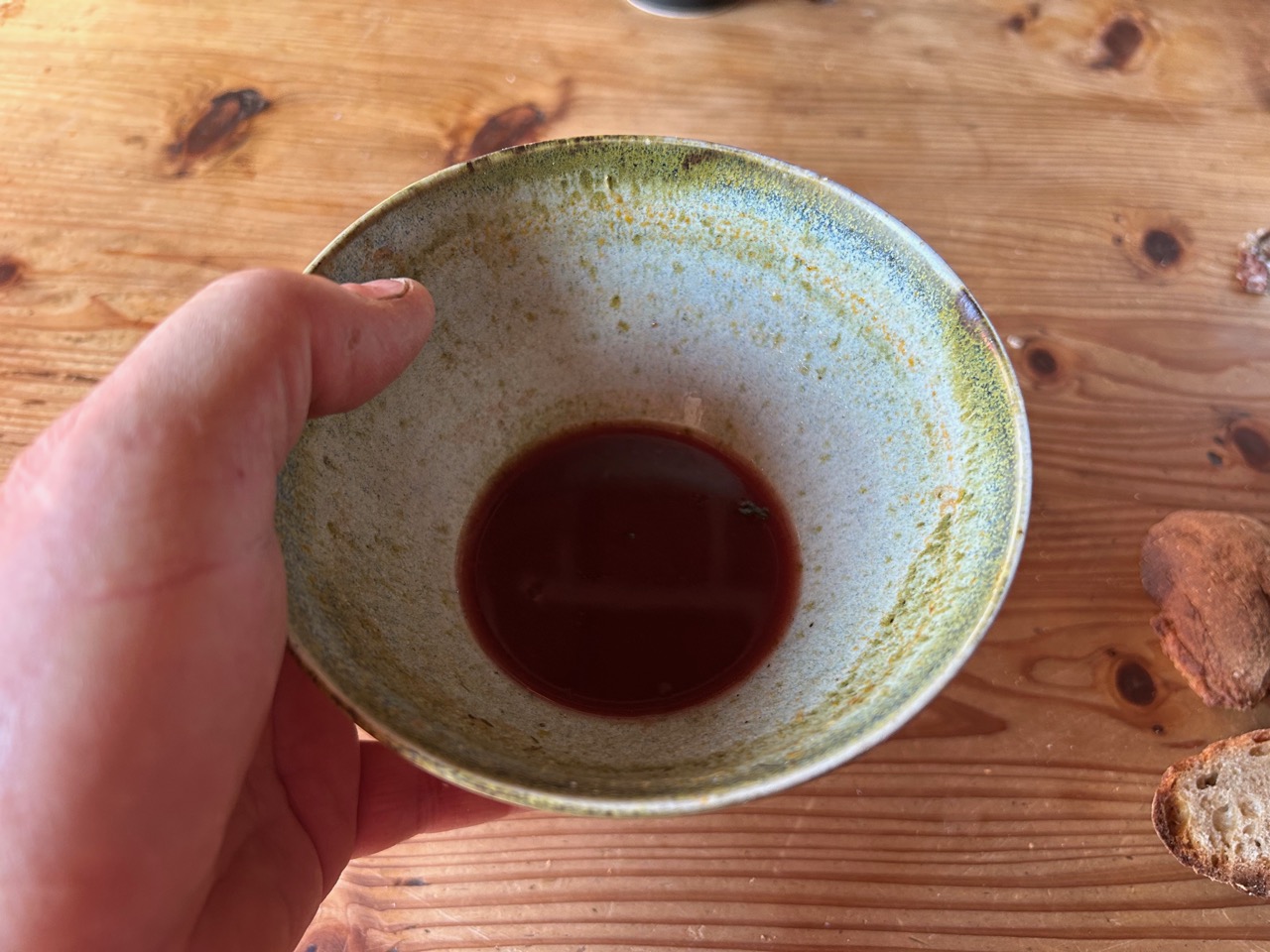
The next day at lunch, we had the same broth, sans mussels. But in another very old tradition, I added broken pieces of old bread into the soup to fill out the meal. And, in keeping with the tradition, I finished with a little red wine. Faire chabrot!
We are well and truly in the months of winter now. We had a week of crackling frosts, then they were driven away by a week of freezing winds. That didn’t help me to get out and about in the garden at all, so I stayed inside working in the studio, out of the wind.
We celebrated the winter solstice with a dinner here in the big decorating room in the pottery, at the big work bench, converted for the day into a refrectory table. We can seat a dozen pretty comfortably in there. It is such a big, almost empty space, that it doubles up very well as our entertaining area. It is huge and uncluttered, as opposed to out house, which is small and compact, and none of the rooms in the house were designed to seat 12 people for a meal. We have however, had over 30 souls in there for a house concert, crammed in cheek and jowl. But that was only for listening to music, not a sit down meal.
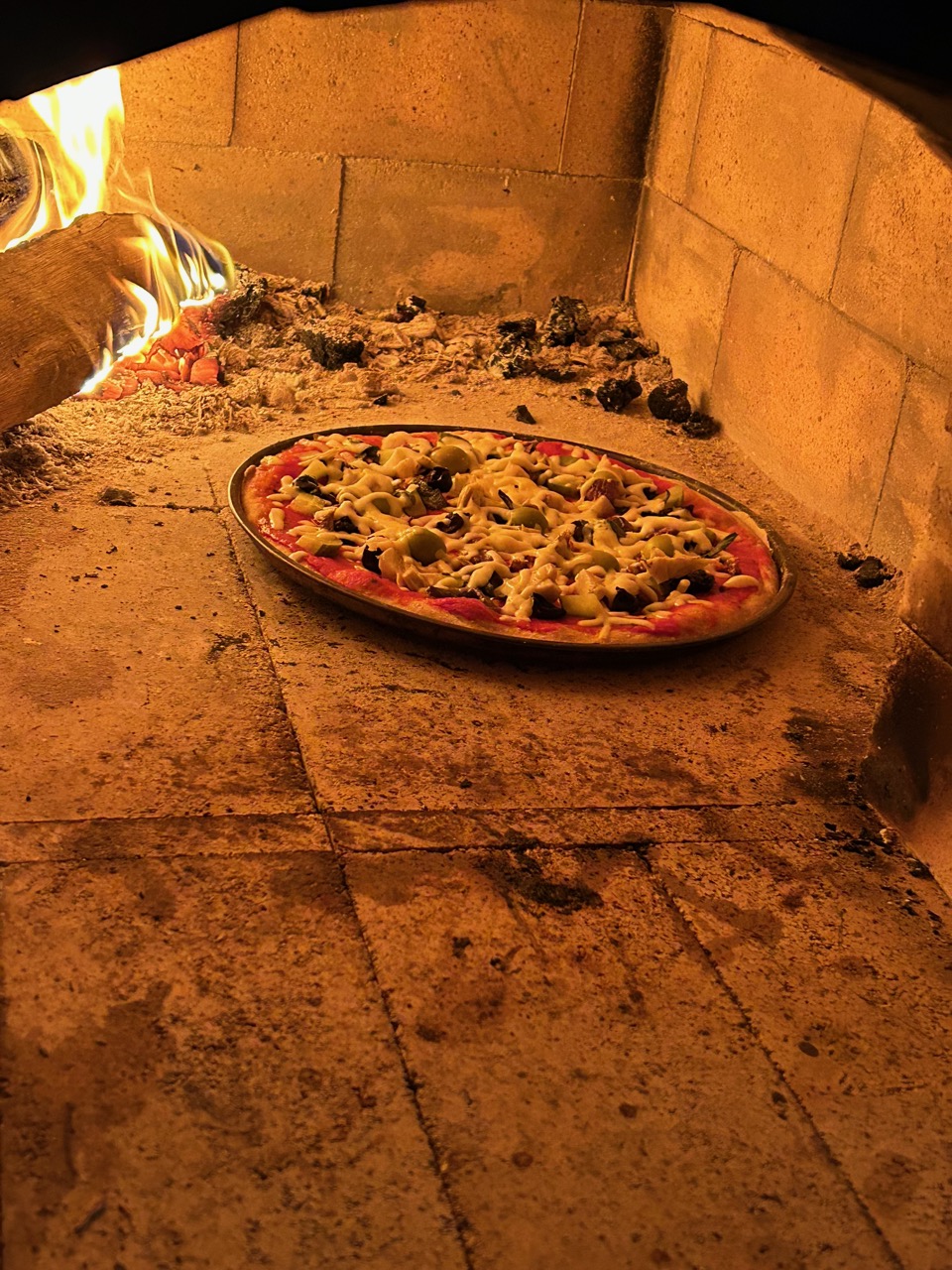
On this occasion, I cooked pizzas for everyone, as it is cold outside, it was a good time to light up the old wood fired pizza oven and crank out a few pizzas.
I try and stay clear of the usual suspects. My favorite this time was wilted spinach and oven roasted pumpkin from the garden, with a few olives. I prepared everything before hand, picking, washing and wilting the spinach before everyone arrived. I spent the morning in the kitchen prepping. The pumpkin was finely sliced, diced and roasted in the new solar electric oven, with olive oil salt and pepper and some finely diced garlic, also from the garden. These crunchy little gems melt in your mouth and smell and taste delicious.
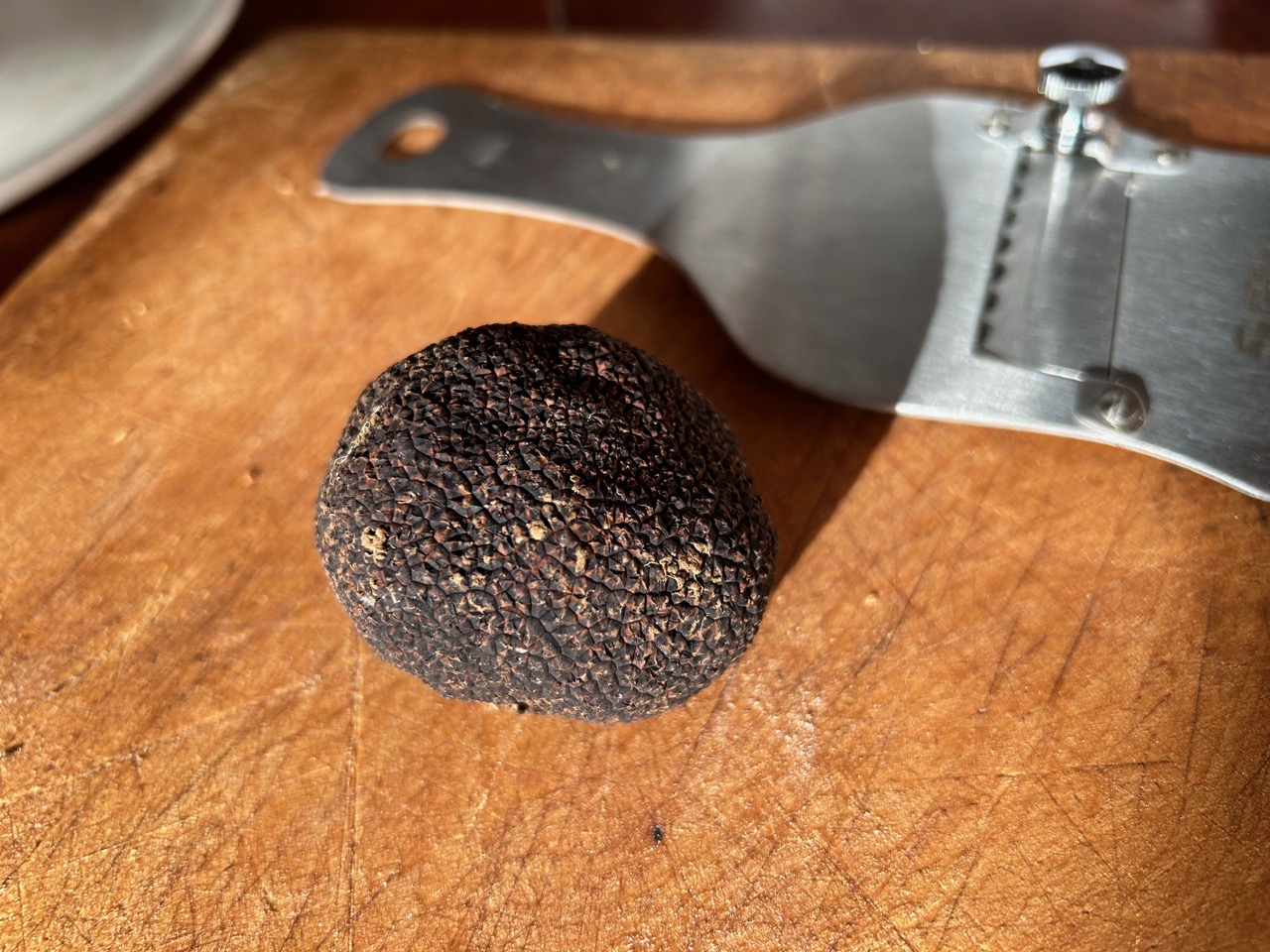
We have been enjoying the first truffle of the season for our breakfasts this last week. We buy only one truffle each winter. It’s a special indulgence. They are hard to buy around here directly from the growers, who prefer to sell in larger amounts directly to restaurants. Luckily we have a son who is a chef and has access to the trade, so we order one each season through him. We take what ever comes. I only ask for something less than $100. At $1 a gram, it can quickly add up, but usually we get something around $30 to $50 worth. However, this year, the price has gone up to $1.50 per gram, and what turned up in our order is a beauty! 50 grams. That is about 50mm dia. and the biggest that we have had the privilege to enjoy so far.
This is a 4 or 5 meal truffle!
We store the truffle in a container with the eggs for tomorrows breakfast and a cup of rice that will be the next nights risotto dinner.
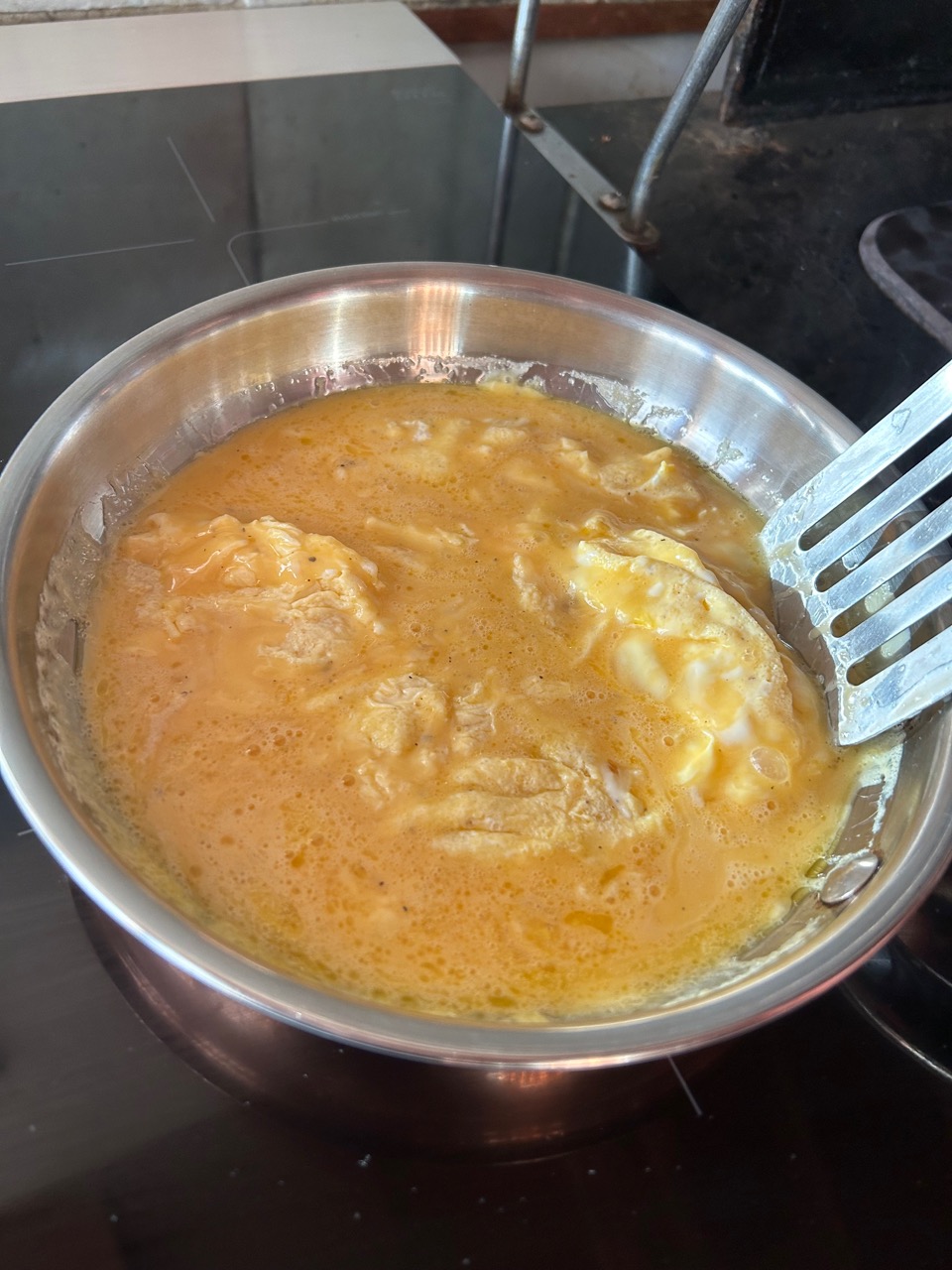
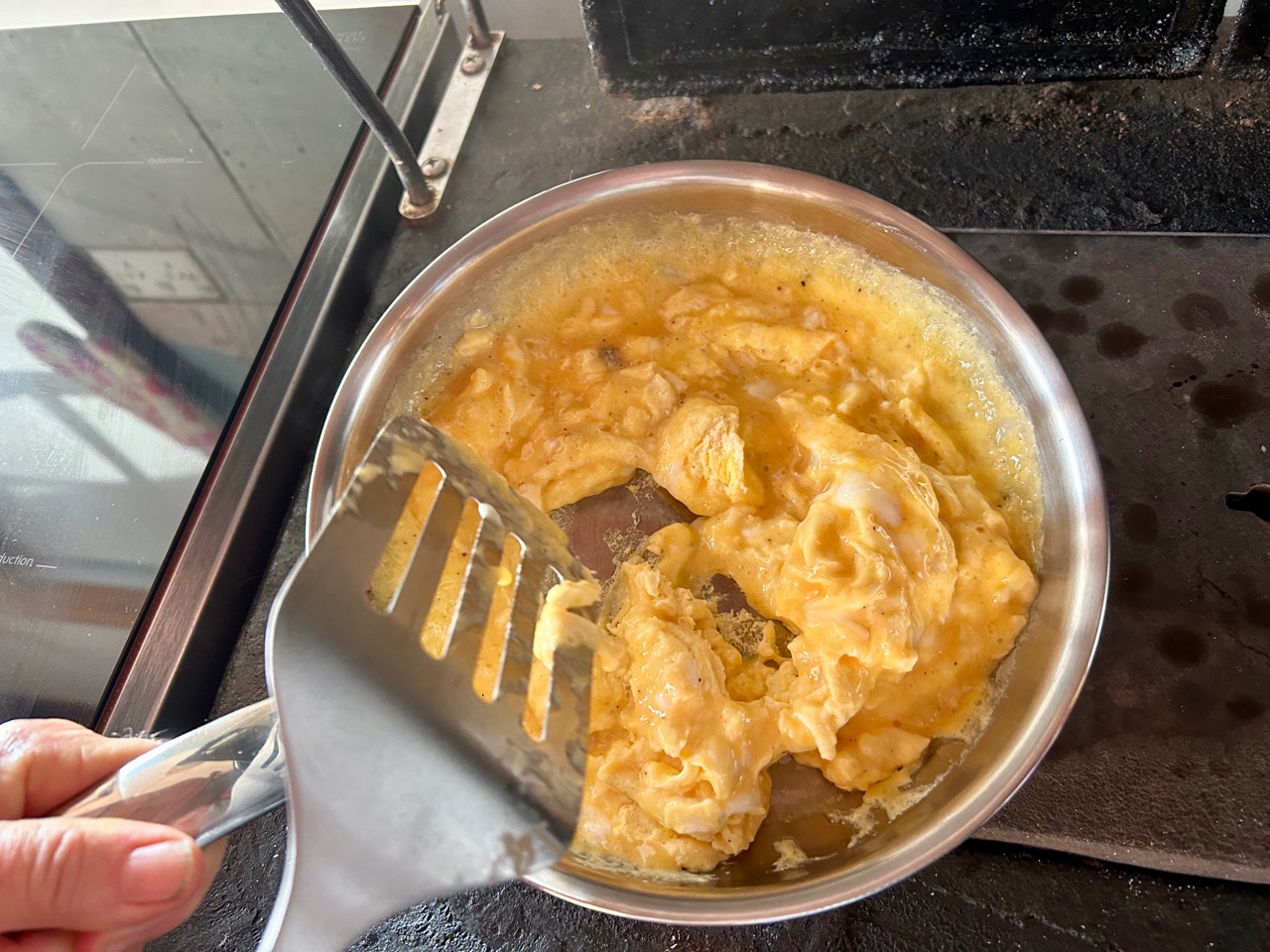
The best way to enjoy truffle in my opinion is just simply grated over very soft scrambled eggs.
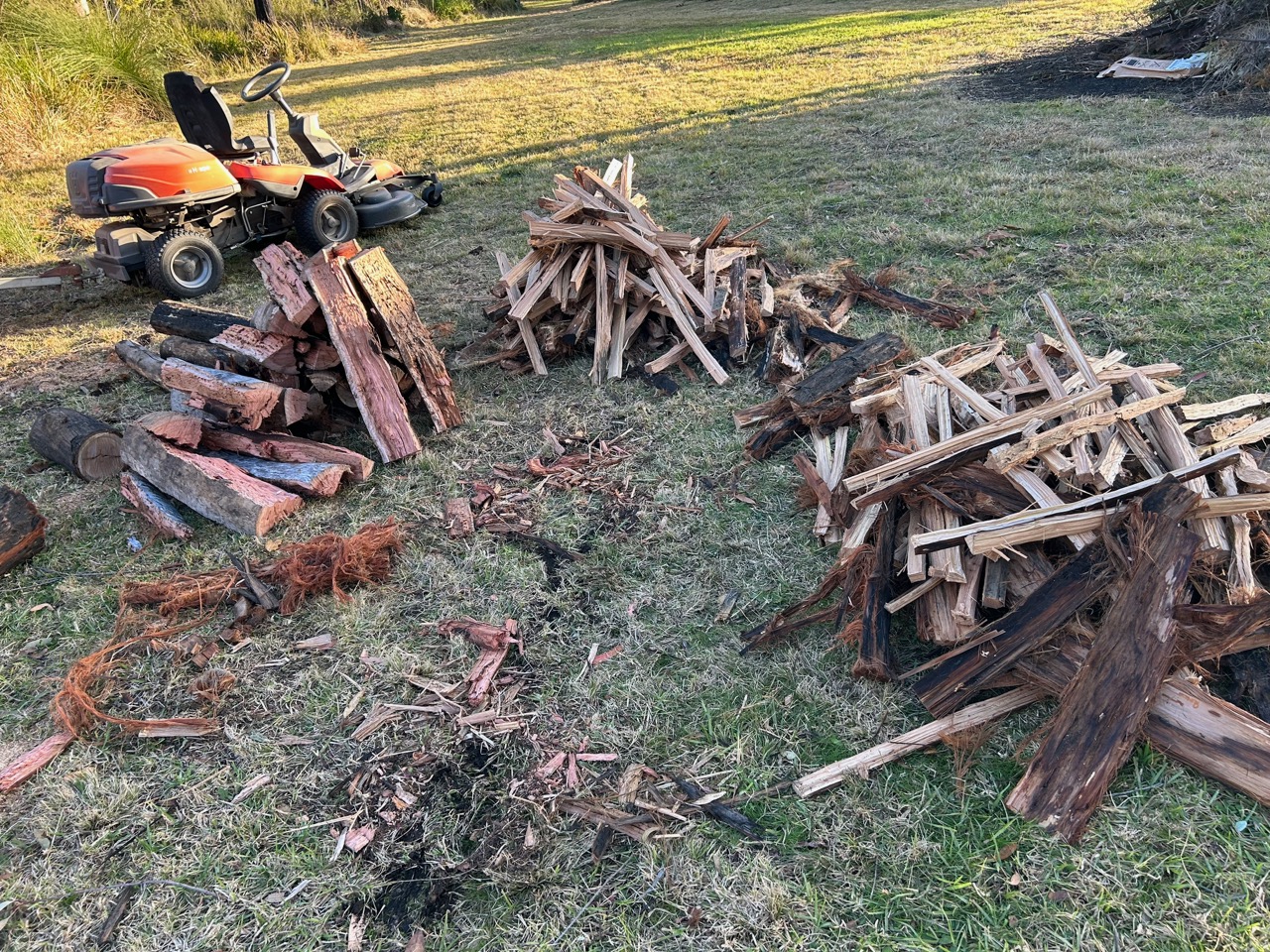
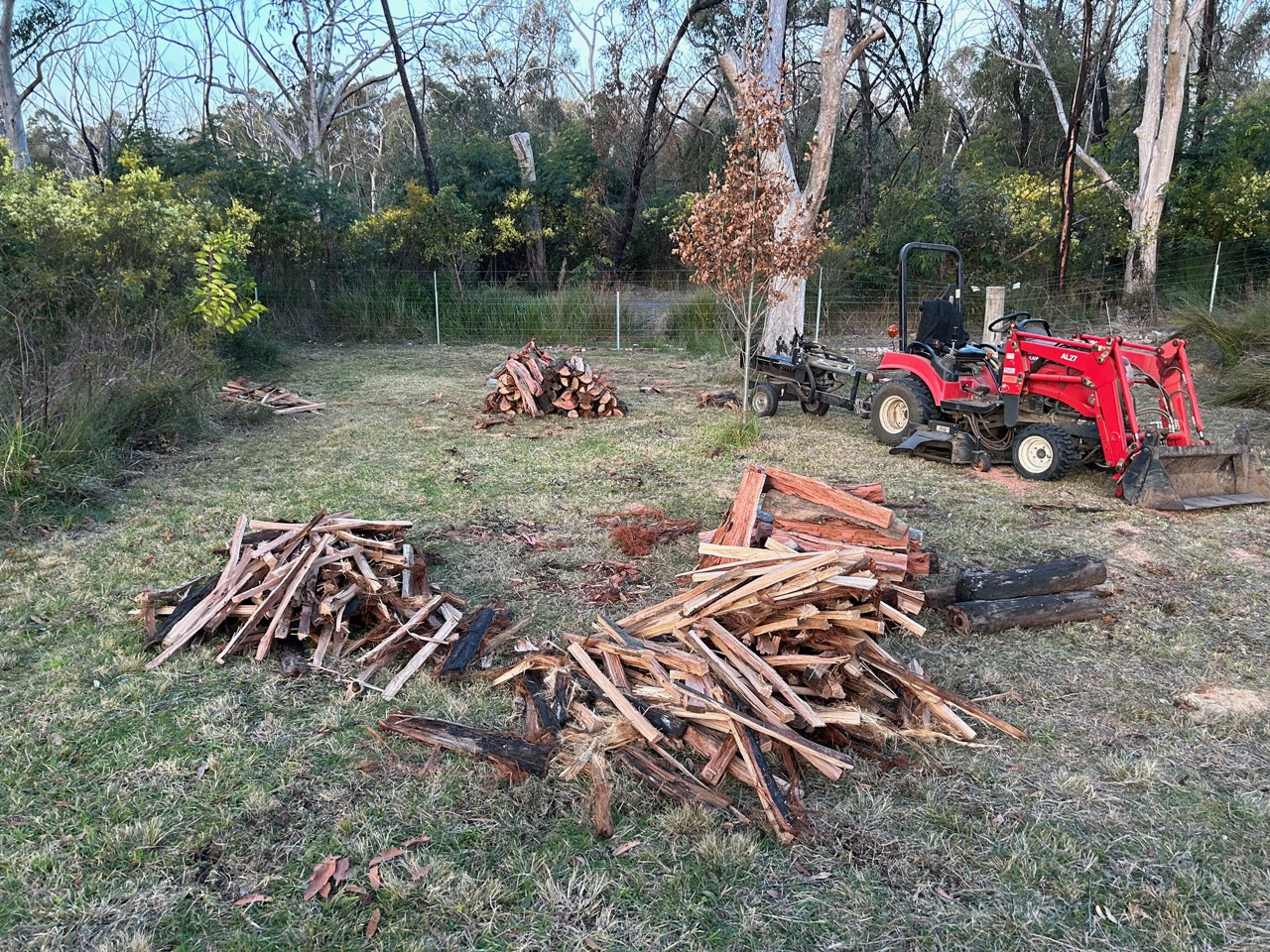
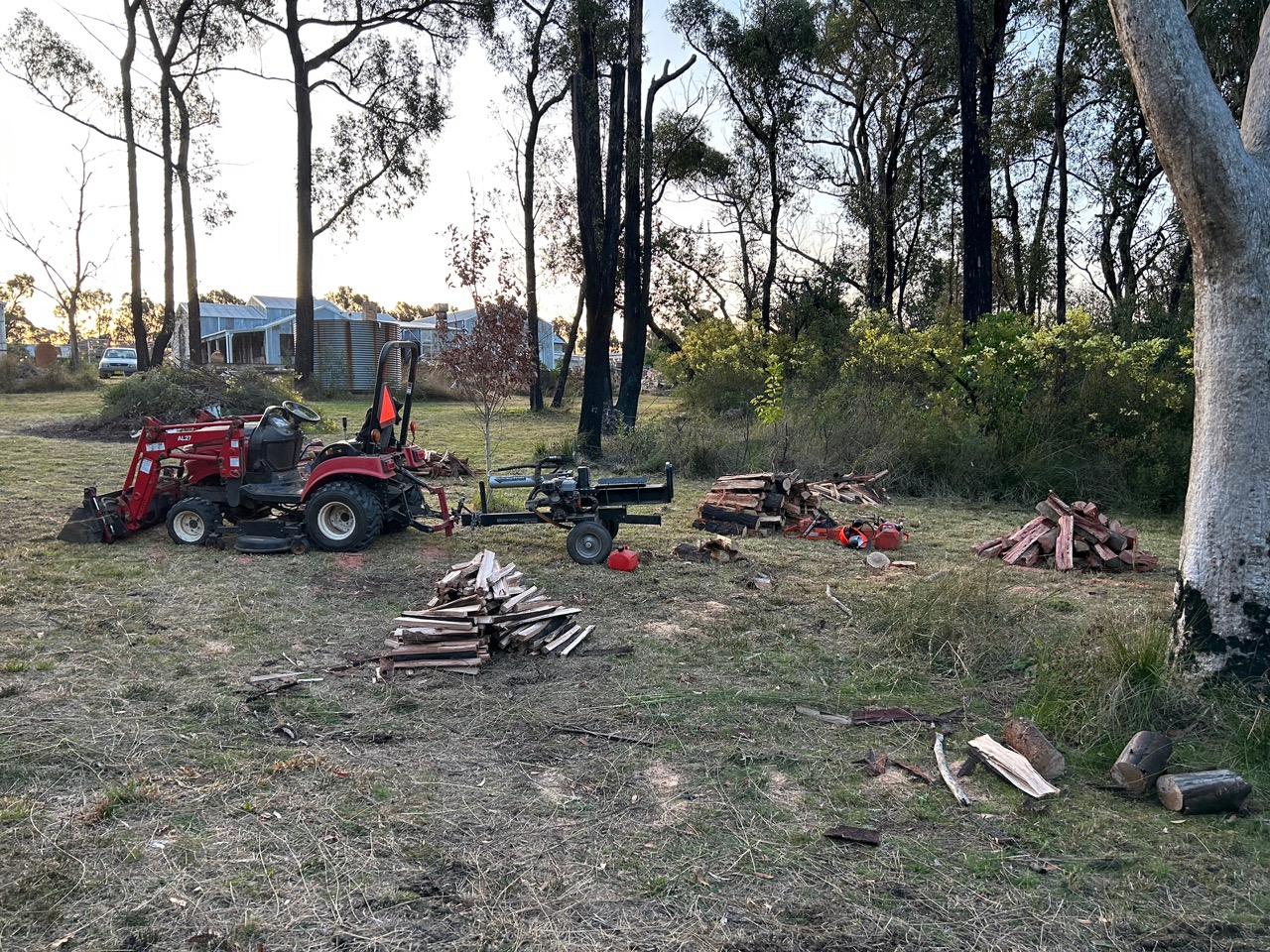
We spent the weekend cutting and splitting wood for the kiln and house. These are logs still sitting in the yard, left over from the bushfire clean-up.
Yes, We are still dealing with the aftermath of that horrible event. It’s still all around us, in the dead trees still standing, but on this occasion, we are cleaning up logs still sitting on the ground from burnt tress that were felled for safety reasons by the State Government clean Up squad that came through after the fire to ‘make-safe’ the area where people might be living and working around their houses.
Some of the logs were particularly straight grained, so were ideal for splitting very fine for the side stoking of the 2nd chamber of the new wood kiln.
Others were gnarled and knotty with many forked branches, so I cut these short for use in the house stove. You can see the new pottery up in the distance. We are clearing up further from the core area around the house now, So we are making some progress.
It was a full day and by the end of it I was conscious that I was very tired and needed to stop before I ended up hurting my self. I have damaged my hand in the splitter years ago, by working on into the gloom in the evening, just trying to get the job finished in one day.
As the shadows lengthened. I called it quits. I will finish the job another day.
What started the day as a 3 big piles of twisted logs and butt ends, ended with several small er piles of split timber kiln fuel.
49 years ago, when we started out together on this creative journey. All we had was a two metre long, ancient, two man cross-cut saw and a block buster hammer. My, how things have changed! I still have the big cross cut saw, it hangs up on the wall in the barn. I still have the block buster head too, however it has had countless wooden shafts, broken and replaced since then. My days of swinging the block buster are numbered, but it still gets some sporadic use for small jobs that are too small to be bothered getting out the tractor and hydraulic splitter. It’s a bit like kitchen gadgets that take more time to clean up than the time saved using them. I still admire and appreciate many old things and ways of being, but splitting wood with a hammer is not one of them.
In our attempt to reduce our carbon footprint to as low as possible without having to reduce ourselves to living in a cave. We want to engage with the modern world, but only to the extent that we can cope with. For instance, we have virtually no presence on social media.
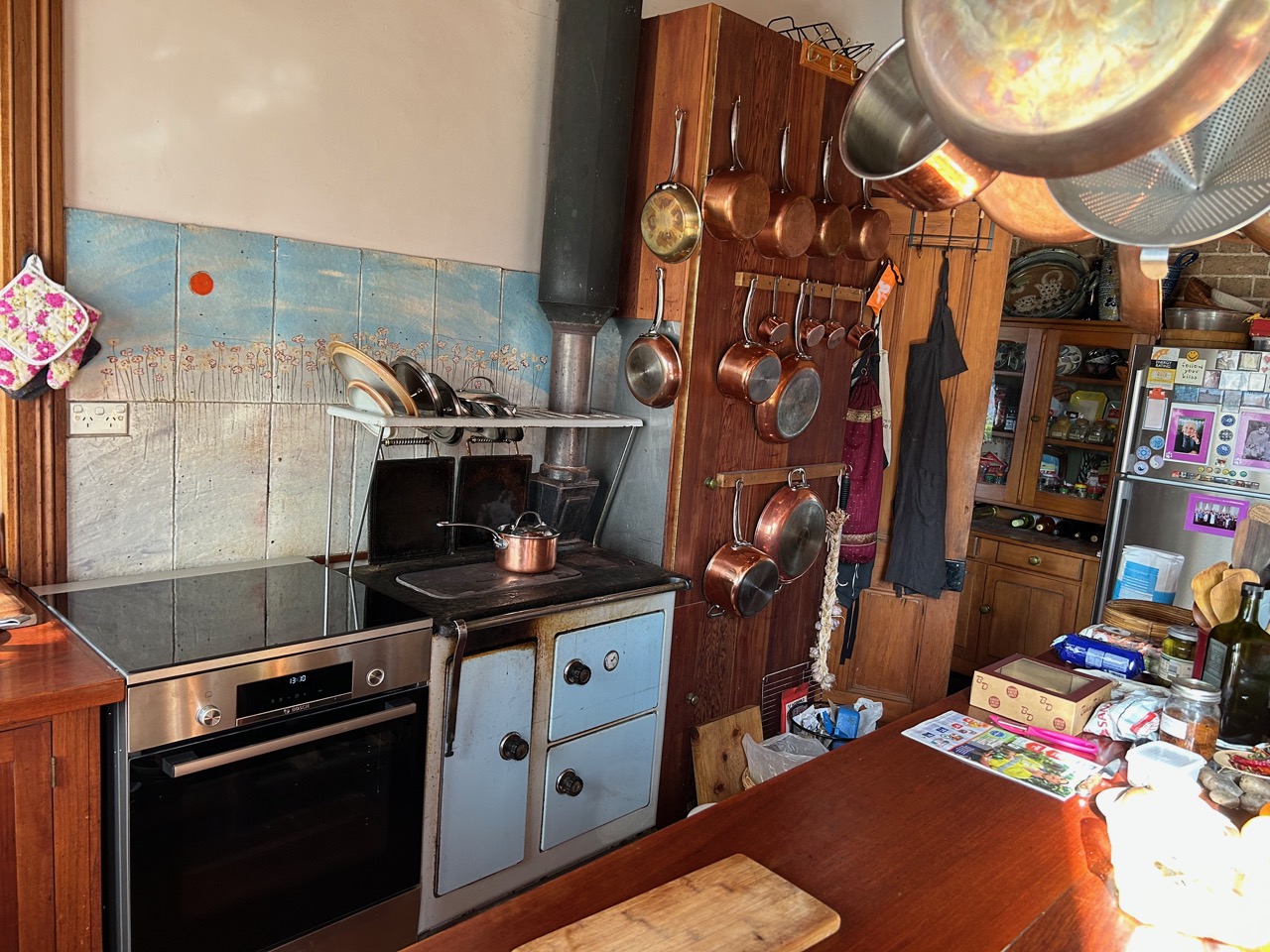
As our latest attempt to get out of the fossil fuel industry web of complex energy solutions. We have recently purchased an electric stove, so the old LP gas stove has been retired to the pottery for the odd occasion when I have to cook for a lot of people over there.
The new stove now completes our conversion to a fully PV powered solar electric home. It’s a good feeling to cook on sunshine, either fresh off the roof during the day, or stored in our battery for use at night. The pottery kilns are either solar electric or wood fired using trees from our own forest. Our car is run almost exclusively on PV sunshine, and now the house is fully electric. However, we have retained the wood fired slow combustion kitchen range, as it heats the hot water for the house in winter when there is not so much less sunshine for the solar hot water panels. It cooks all the winter meals, and warms the house to boot. In summer when the temperature is too hot to want to light the fuel stove, that’s when the electric range comes into play.
The stove has a conventional electric oven, but it has a modern induction cook top, coupled with the right induction compatible metal based copper pans it is lightning quick to heat up and cooks beautifully. There will be a bit of a learning curve for us to digest the 50 pages of instructions.
Digital cooking is a new concept for us. We end up pressing a lot of buttons with our digits to make it work.
The new stove sits very comfortably alongside the very old steampunk wood stove that we bought 2nd hand 45 years ago.
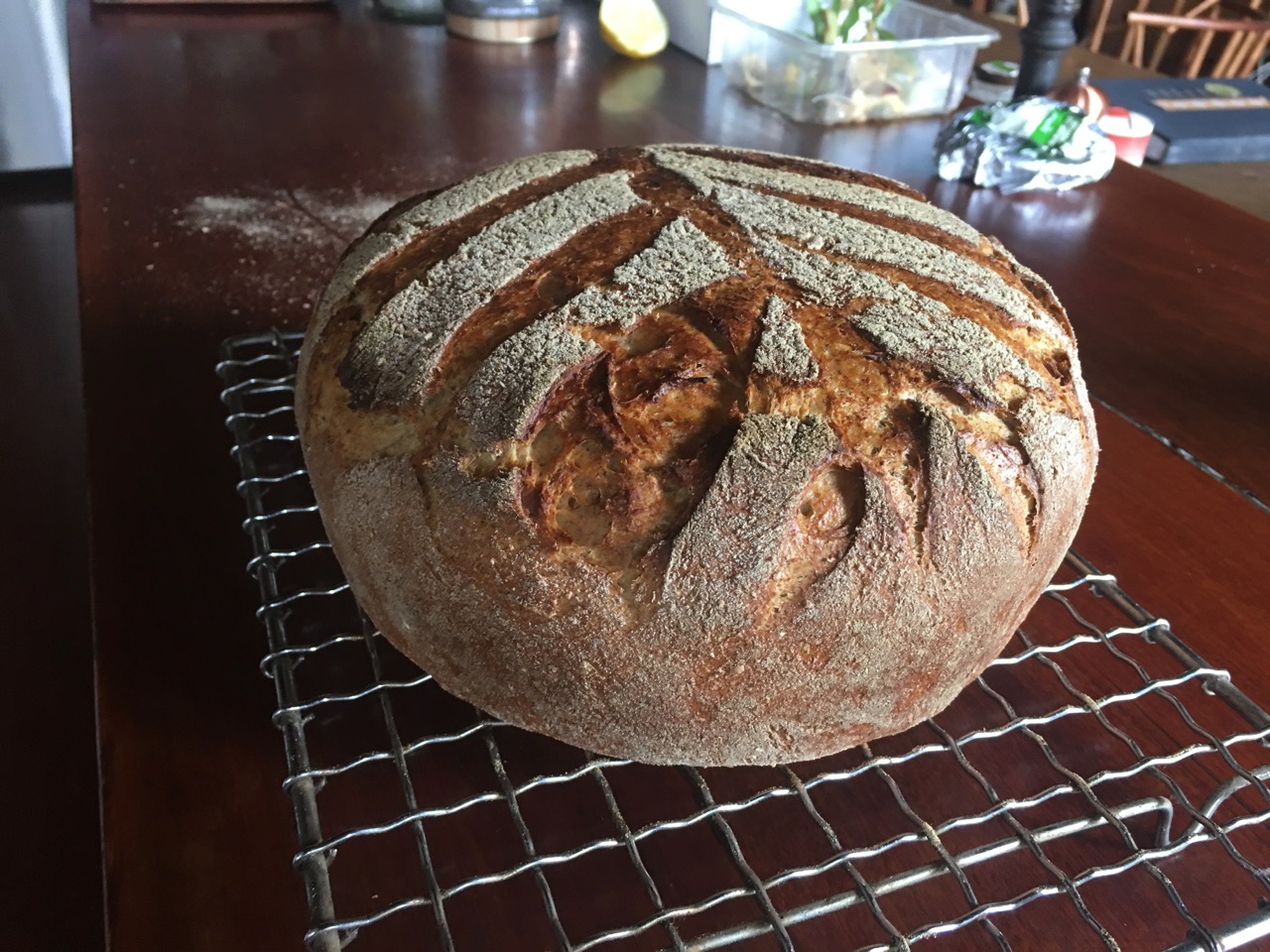
So far I’ve experimented with baking a loaf of rye bread, couldn’t tell the difference.
A pan forte cake, witch was just as delicious as it always was in the old stove, no change there, just cleaner air in the house and no fossil carbon released.
I also tried winter vegetable quiche. All good with no problems. I’m happy.































































 Tonight my Fingers Smell of Garlic
You must be logged in to post a comment.