It’s been so Hot.

It’s been so dry lately, we haven’t had significant rain for over 2 months. Just a couple of millimetres every now and then. All our fruit trees and garden vegetables are suffering. We have to water every day now, as the daytime temperatures rise significantly. The situation isn’t helped by the hot, gusty, dry winds, desiccating everything with green leaves. I have recently planted out a lot of little seedlings, so they need daily watering to keep them alive.

There are even cracks developing in the bare earth of the veggie garden, where the weeds have dried out and died. I haven’t seen cracked soil like this since the last drought ending in the catastrophic bush fires of 2019. It’s not an endearing sign.

We are OK for the moment, as there is still some water in the the dams, but they are all low, the main top dam is very low. I will have to pump water up from the lowest dam, up to the middle dam, and then from there, up into the top dam. It’s our natural summer routine of the transhumance of water!

It’s quite a rigmarole and takes a couple of days of pumping. However, although it is a lot of work and it is time consuming. I consider myself so lucky that we have the dams that we dug here 4 decades ago, so that we can continue to water our gardens. I was once told that, the harder you work, the luckier you get, or so it seems just now. Now that all the sweat, effort and aching muscles are forgotten. Maybe, It isn’t luck!

I use one of the petrol driven fire fighting pumps to do the transfer. It keeps the pump motor in good nik. I know that it is starting easily but not running reliably. That’s important to know going into such a dry start to summer. I will need to pull the carbi off tomorrow and see what’s going on. This is a job that can’t be put off. It needs to be done now. I need to know that I can activate the fire fighting system immediately and reliably when needed.

I need this pump to be 100% reliable before the summer heat comes in. motors need constant attention.

I’m reminded that nothing is ever finished, nothing is perfect and nothing lasts.

Although we are still in the last month of spring, already the grass has dried off in the paddocks and lawn around the house. I am watering the 4 new avocado trees every 2nd day, just to keep some moisture in the soil for them to get established. It must be quite a shock to their system, to go from a mollycoddled, tropical, irrigated and shade cloth covered nursery environment, to this hot, dry, windy place. 3 of the trees have dropped a few leaves in the past few days in this wind. Not a good sign, but what can we do?

If the summer looks like getting worse, and that’s very likely. I might have to cover them in shade cloth to ease the stress. Just until they settle in and start to produce some new leaves and a spurt of growth at the tips. They hate drying out, but hate getting water logged even worse, so watering every 2nd day seems to be keeping the soil just moist. The last time that I planted 4 new avocado trees, the wallabies came in and ate the tops out over night. So this time the wire mesh fencing went up around them straight away. And guess what? The wallaby left its tracks right up to the new trees last night, and the wire mesh did its job.

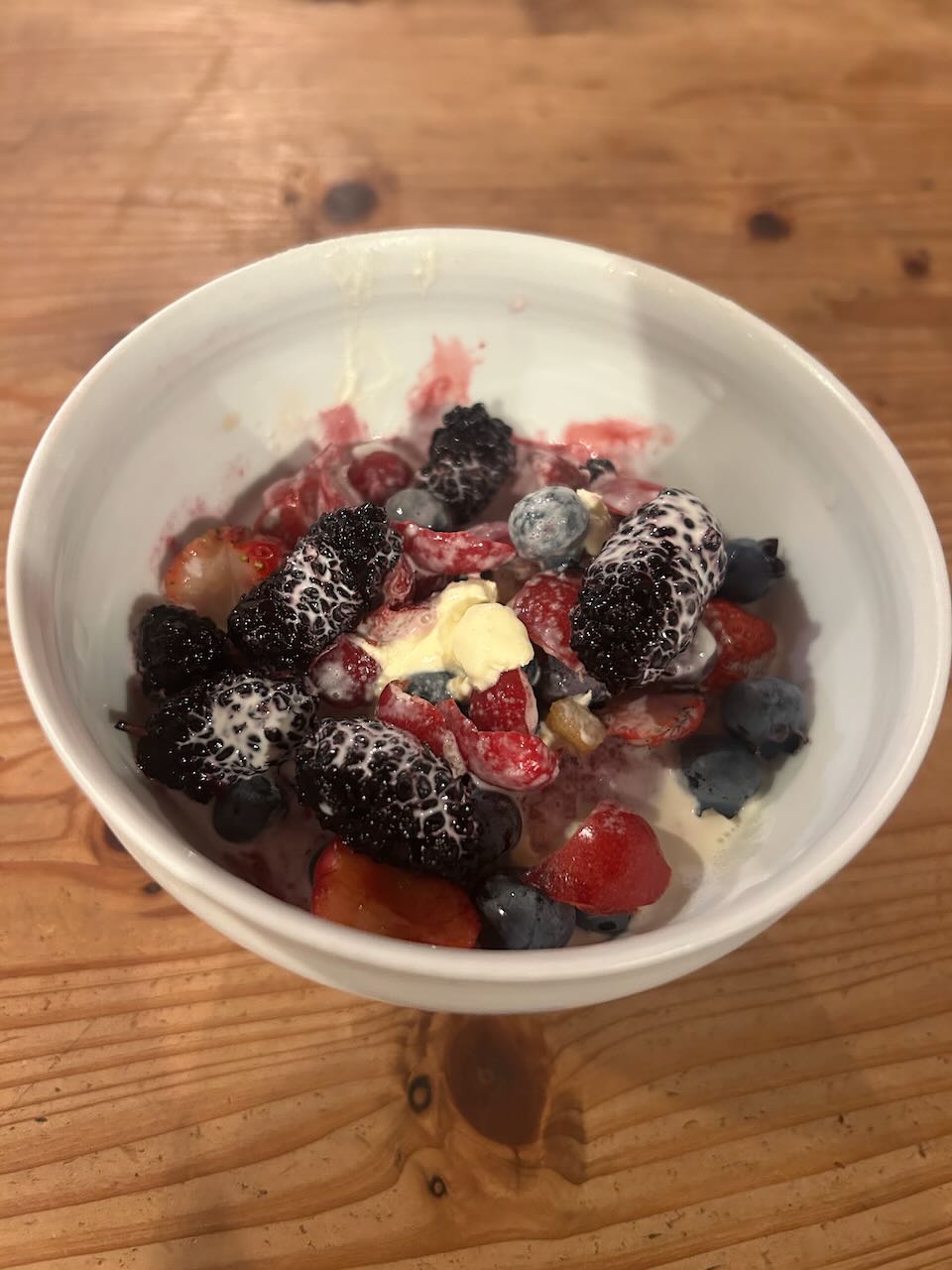
Some of the dozen new dwarf cherry trees that I planted last winter have had their first tiny crop of cherries on them. We are enjoying deserts of mixed orchard fruits of cherries, mulberries, blueberries and strawberries, dressed with a little fresh cream. That is pretty special and makes all the past mowing, weeding, pruning and watering so worthwhile.

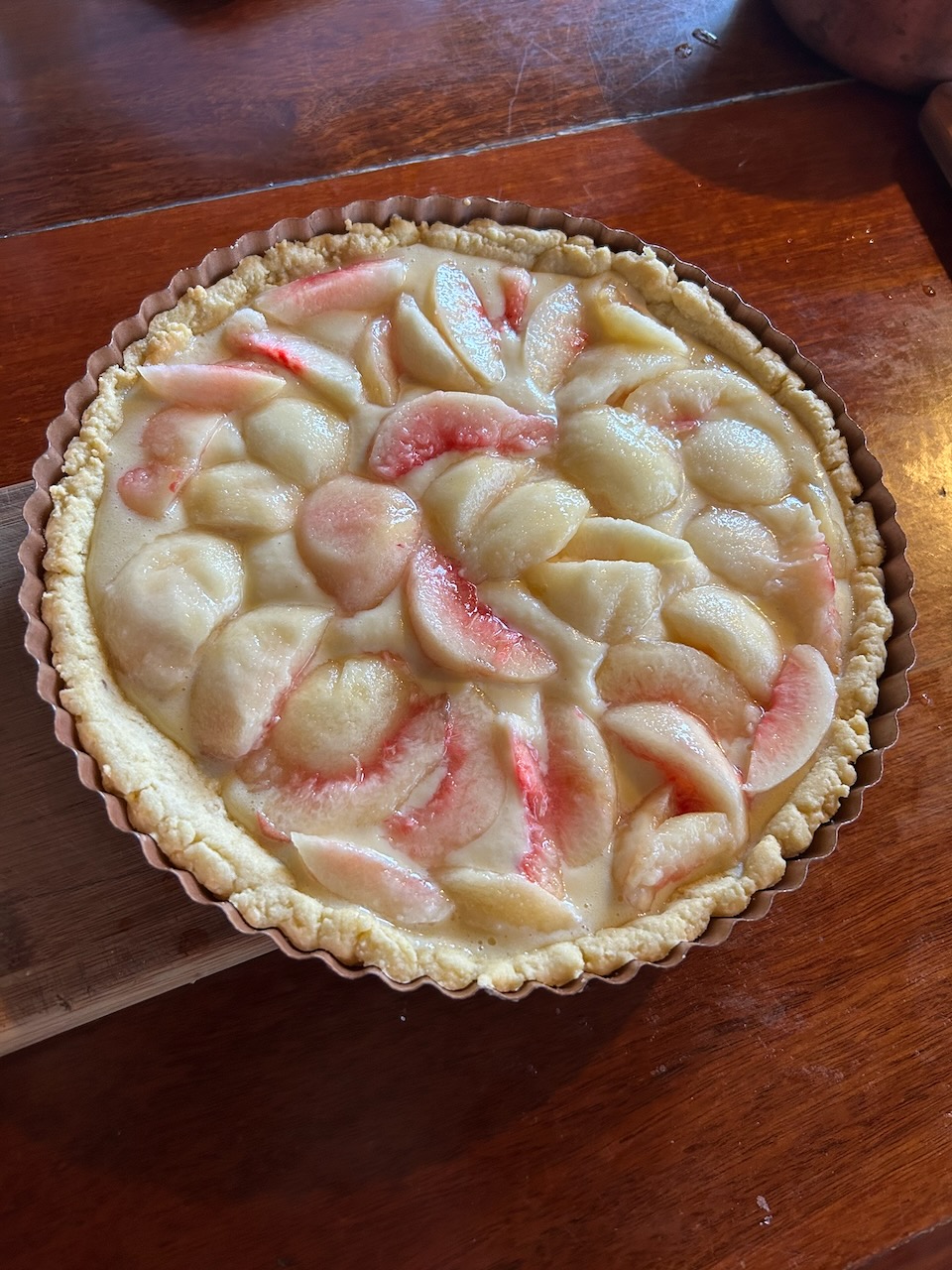
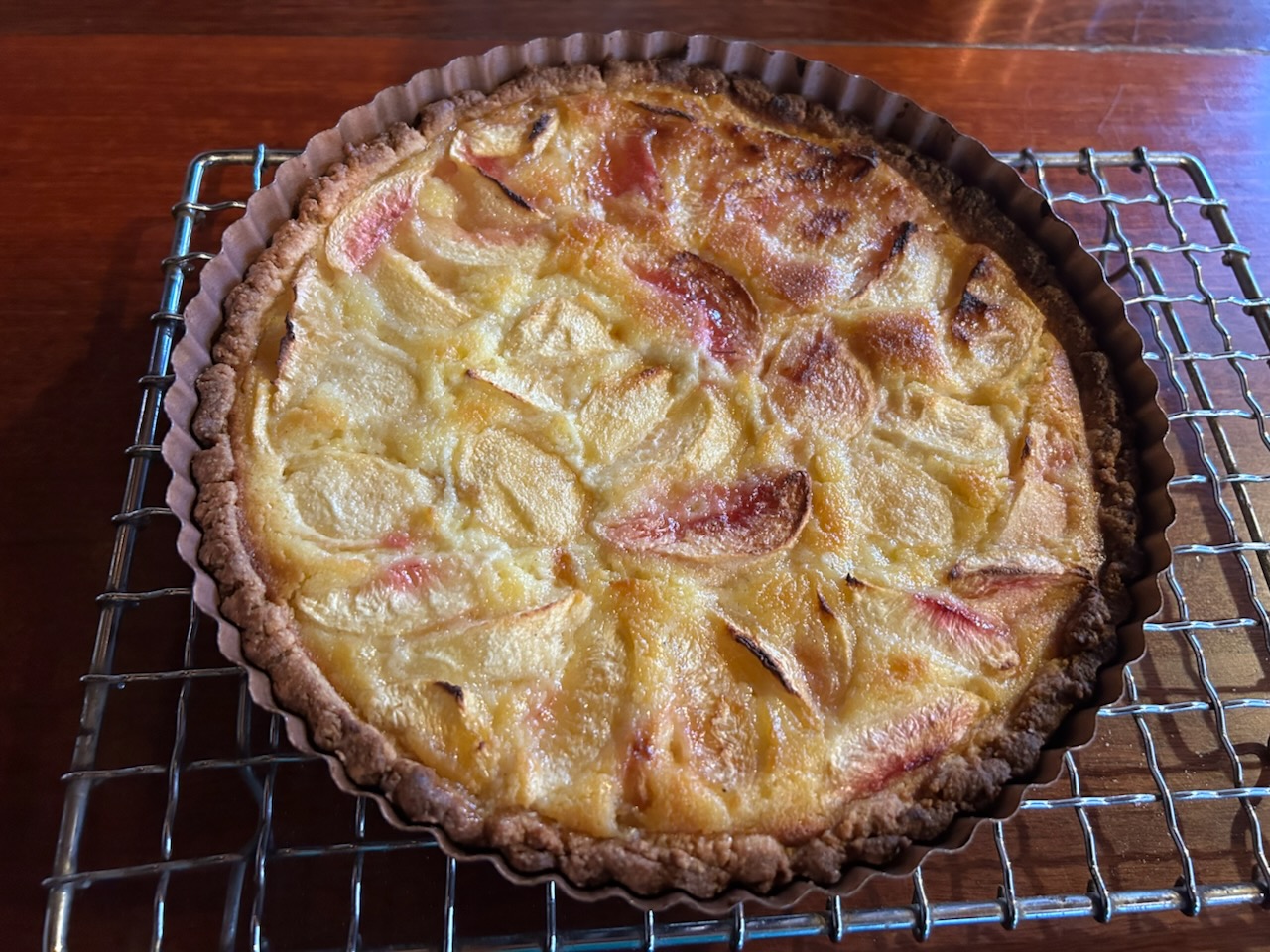
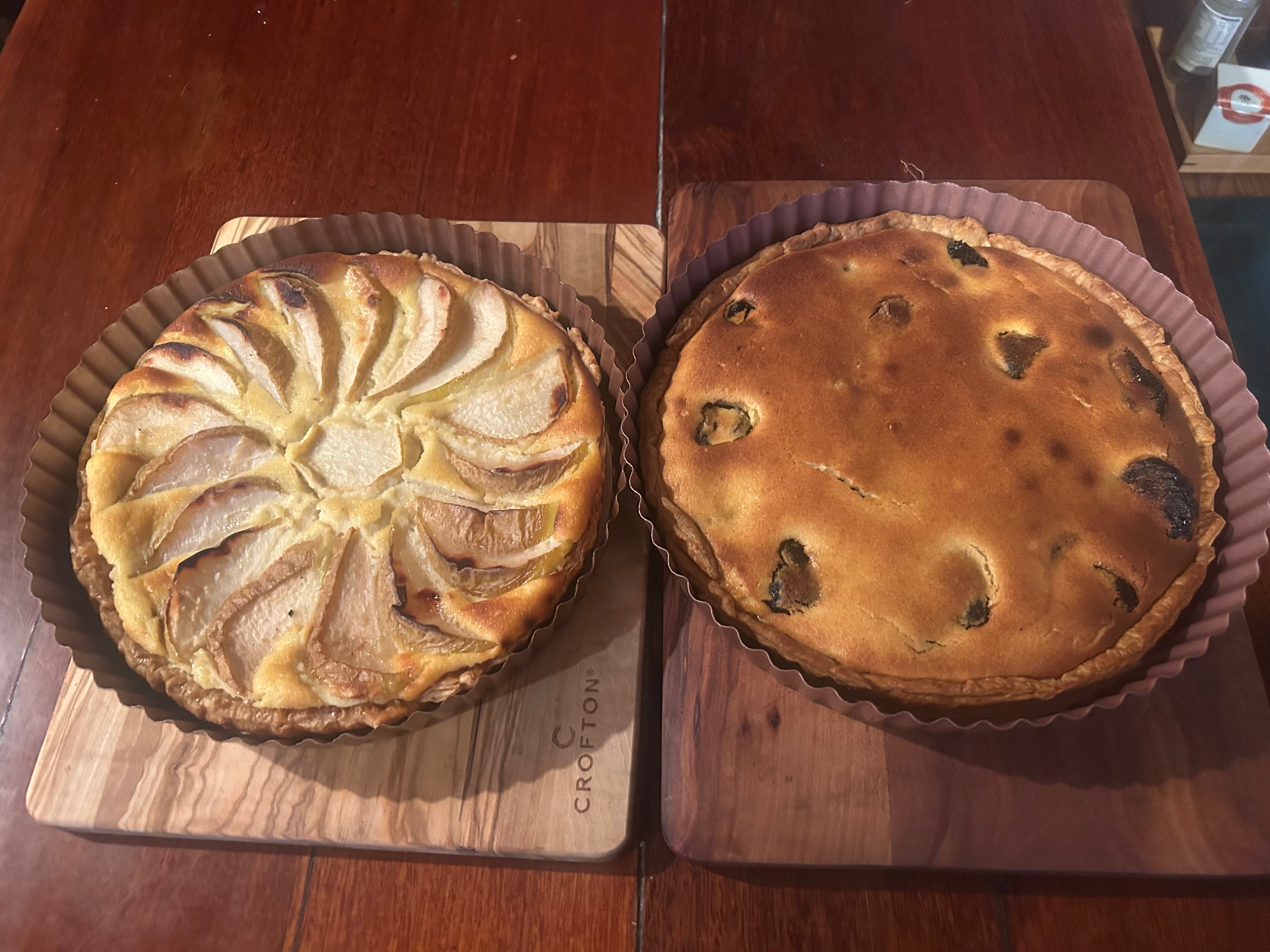
The mulberries are in full season just now, so I have been making mulberry tarts. It’s a definite once-a-year treat. As the fruiting season only lasts a couple of weeks.

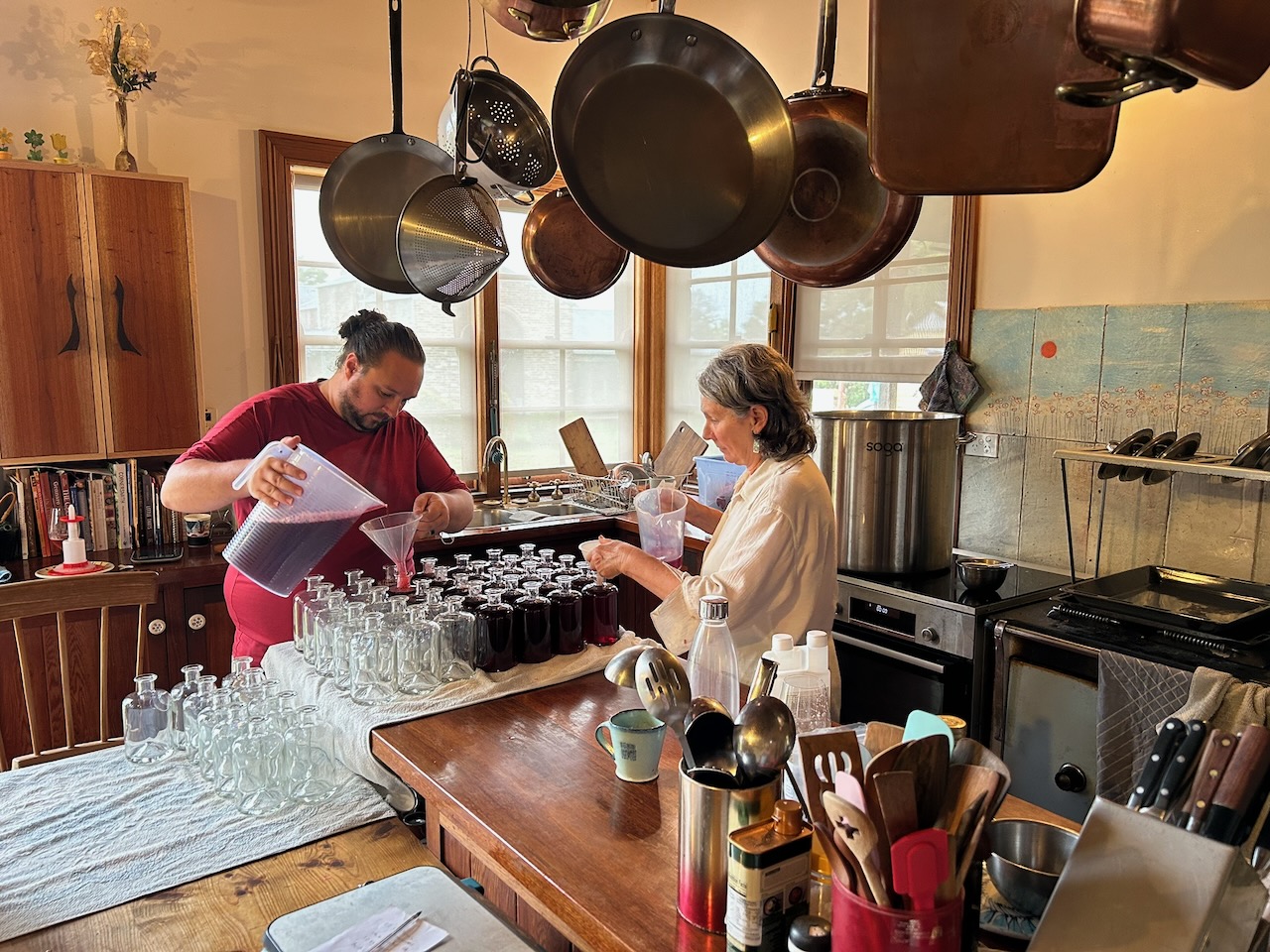
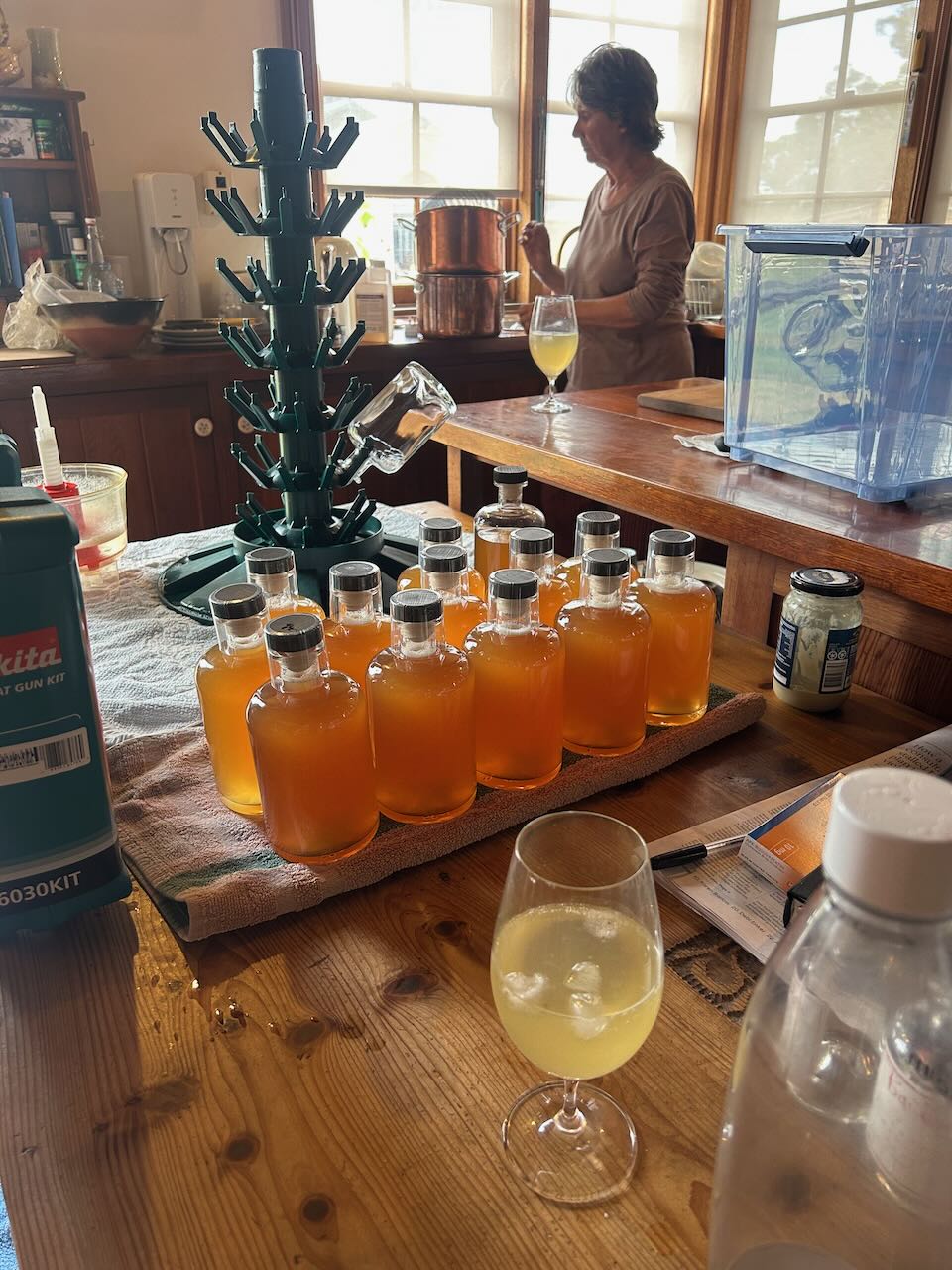
Our son Geordie has started a new business making small batch, seasonal cordials, while he waits for his liquor licence to come through. He has been a gin distiller for the past few years since the fire. He has now gone out on his own. Without the liquor licence, he can’t sell his gin as yet. But he can make and sell his special, small batch, local, seasonal cordials. A lot of the produce for this has come from our garden and orchards so far.

He has been making lemon cordial from our lemons with the sophisticated addition of lemon balm, lemon thyme and lemon grass to fill out the flavour profile. These are adult cordials. Made in small batches from our real, home grown, organic fruit. unsprayed, unwaxed, freshly picked, just minutes off the tree. No carbon miles, just carbon feet. Actually, we walked, so no carbon at all!. His fruit cordials offer solid, rich flavours, sophisticated flavours, not just some sugary flavoured coloured water.

Yesterday we made a very nice, rich, dark, mulberry/lime cordial with the addition of 3 different mint leaves, chocolate mint, spear mint and garden mint, plus kaffir lime leaves and our home grown and hand squeezed Tahitian lime juice.

One of my favourites is his strawberry and basil cordial, beautifully flavour-full and a delicately dense pink colour. The combination is surprisingly good, but we can only make this combination in the spring/summer season when we can grow enough sweet basil. These are definitely, small batch, seasonal products.

Geordie has called his company, ‘Bantam Beverages’, small batch, seasonal drinks. He was selling them here during the Arts trail – Open Studio sale. We sold out of the strawberry and basil, and only had a few bottles of the lemon mix left. We are helping make more stock now, so he will have more bottles to sell on the special, one day only, half price sale on the Sunday 14th of December.

Come along on Sunday 14th of December for a free tasting and some 1/2 price pots.

Sunday 14th December. 9am – 5pm.

Steve and Janine’s Pottery Workshop, at the old School,

5 Railway Pde, Balmoral Village, 2571. 

More rain and tasting cider

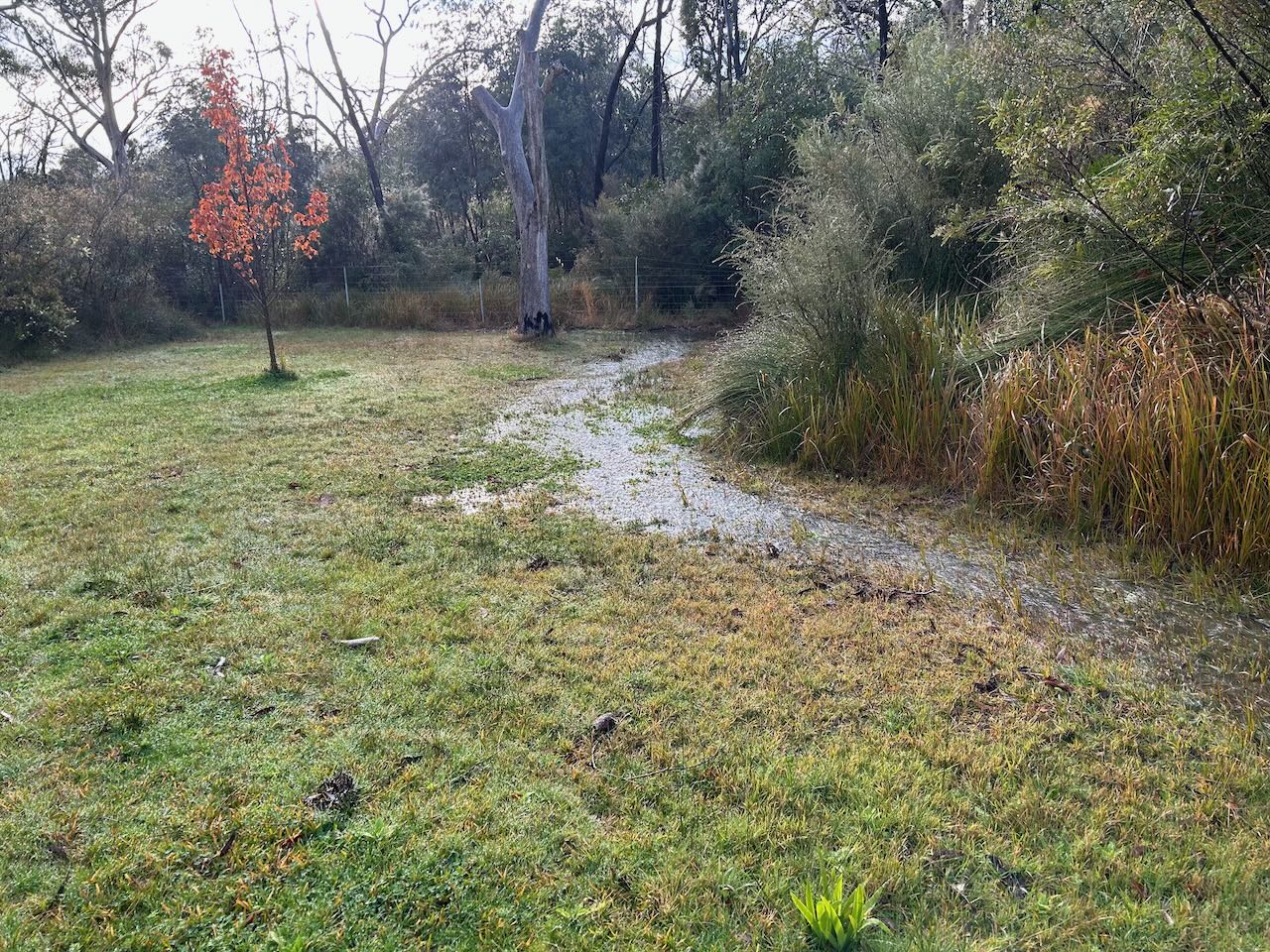
It’s been raining again quite heavily. We now have 4 different little streams flowing across our land, where the dams overflow, and the front lawn is under 25mm of water, like a slow moving shallow lake gently flowing across our kitchen vista.

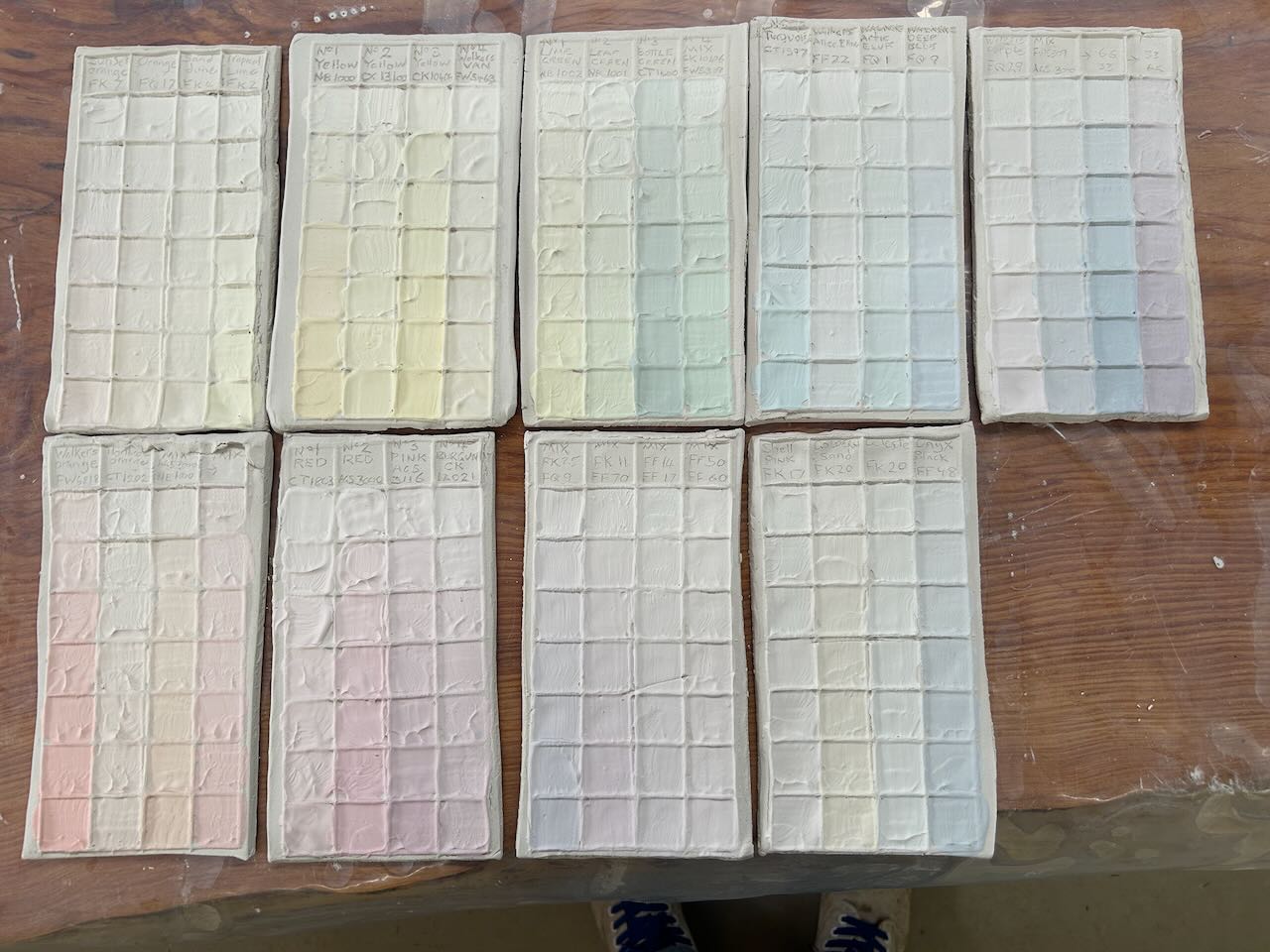
We had 65mm of rain at one point. I thought about what to do for a while and came to the conclusion that it was probably best if I decided to do all those glaze tests that I had been meaning to do for a while. I certainly didn’t want to do any outside work. So I spent a day rolling out slabs and pressing out grid-tiles from my standard plaster grid-tile mould. This ensures that all my test tiles are the same size and shape, so that I can compare them at any time with tests made years before if needed. Tragically, I lost 3,000 glaze tests in the fire, so I’m starting again.

Weighing out glaze tests can be quite boring, especially when it goes on for days. However, it keeps me gainfully employed in the warm and dry pottery studio. I put on a CD while I work. It takes more than the length of a CD to fill one test tile with the infinitesimally small gradations of ingredients in the logical progression of the recipe. Each tile is 8 x 4 squares = 32 weighings and recordings.That’s 288 tests made in this sitting. Enough!

When I was doing my PhD, I did every test in triplicate, so that I could fine them in oxidation, then reduction and also in the wood fired kiln. As each kiln gives its own variation to the test. Having done that very thorough exploration, I’m over it and these days I only make the one series of tests, and fire them  in the kiln that I think will deliver what I’m looking for.

It fills 10 pages of my glaze note book this time around. I have to keep detailed records of what I do and why I’m thinking that it might be a good idea. Sometimes, it takes so long to get the firings done at the temperature that I’m imaging will be best and in the atmosphere that I want, and in the kiln that will give me those ideal conditions, so that If I don’t write everything down in detail, then I can forget what I was thinking and why I went to all the trouble. Hopefully, it will help me to understand both the results and more about myself in a few weeks time, when they are all fired, and I can decode the results! 

Each tiles takes about one hour to complete. After two days of this, I’m pleased to do the last one – for the time being

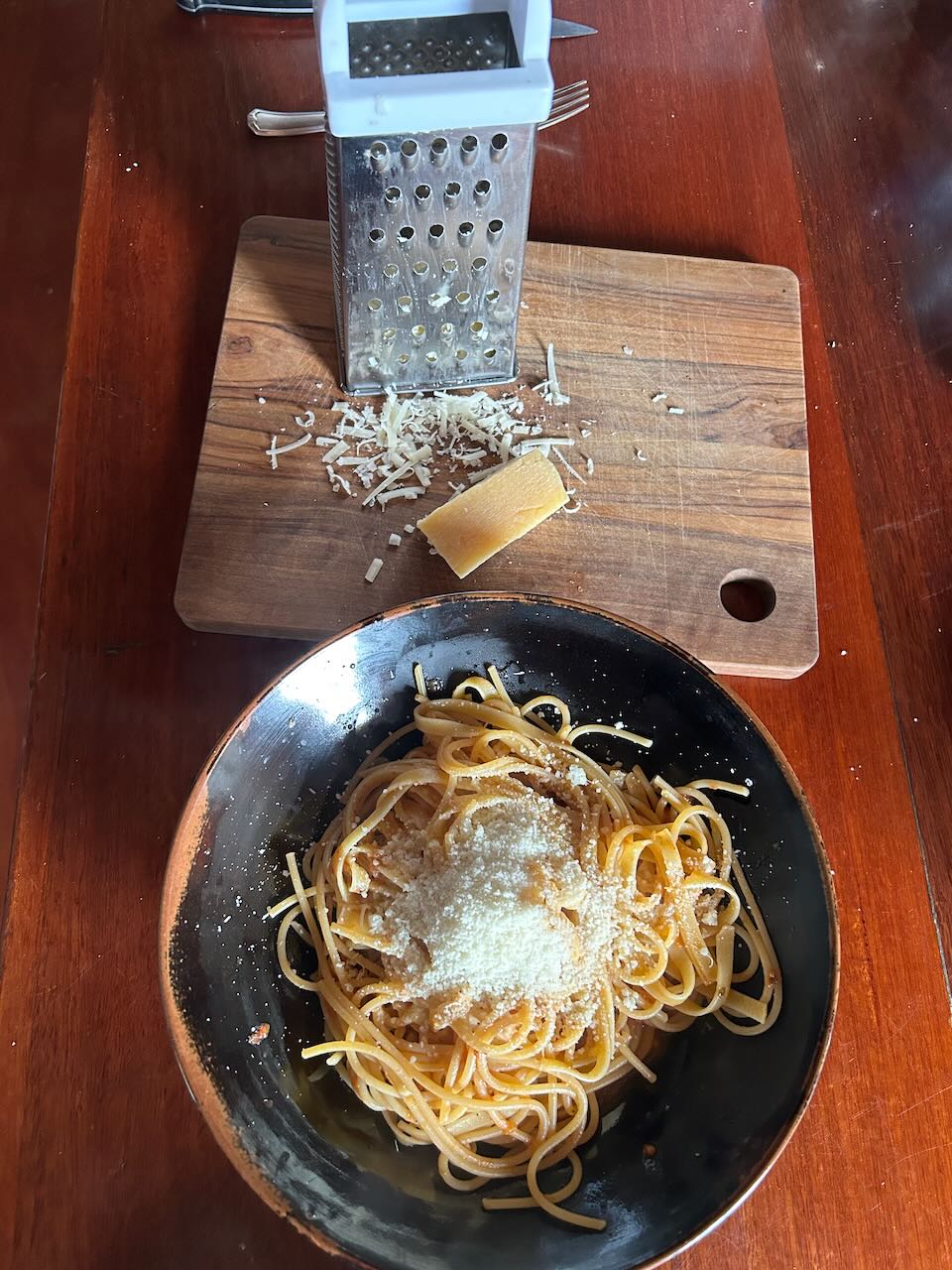
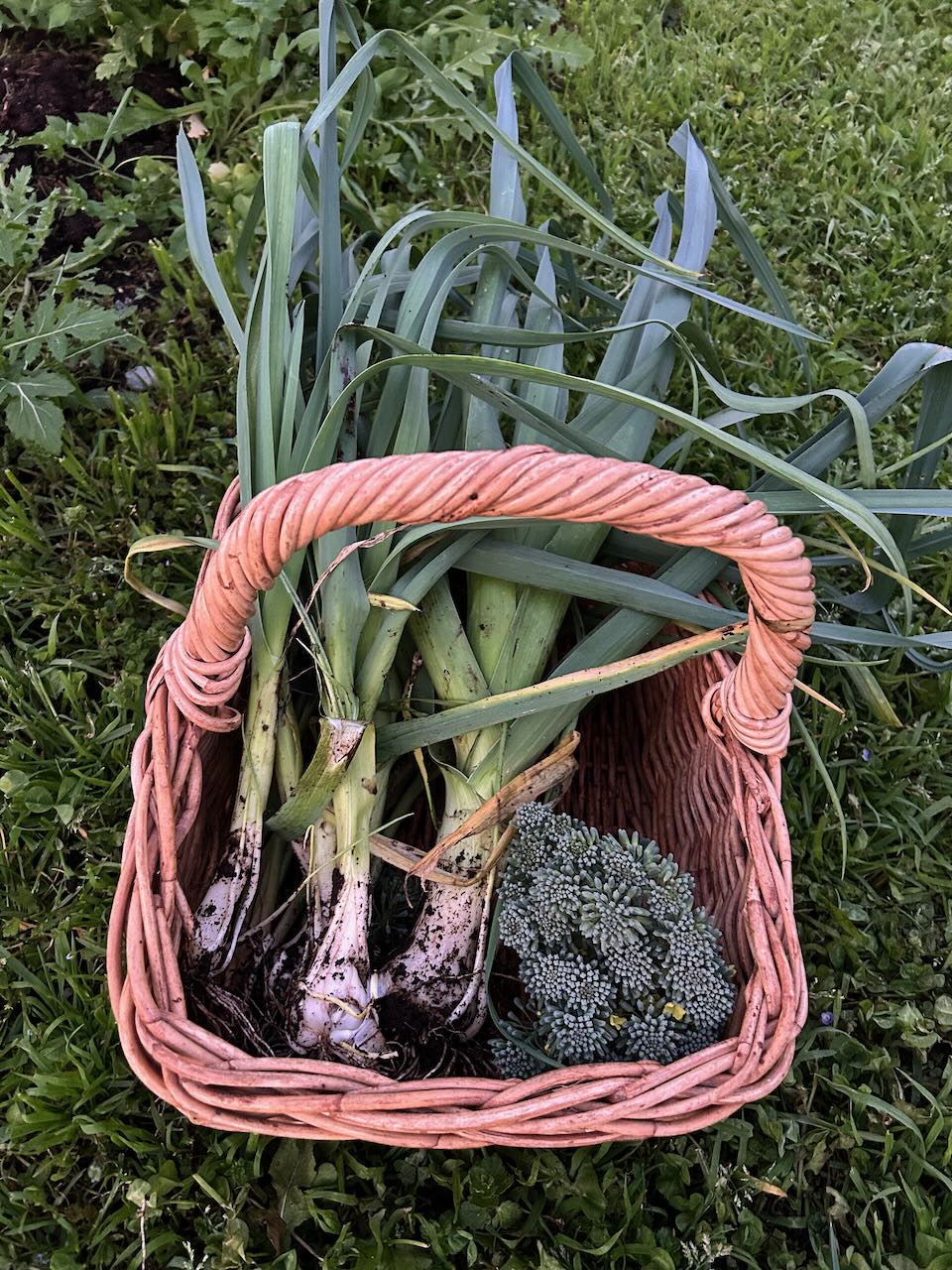
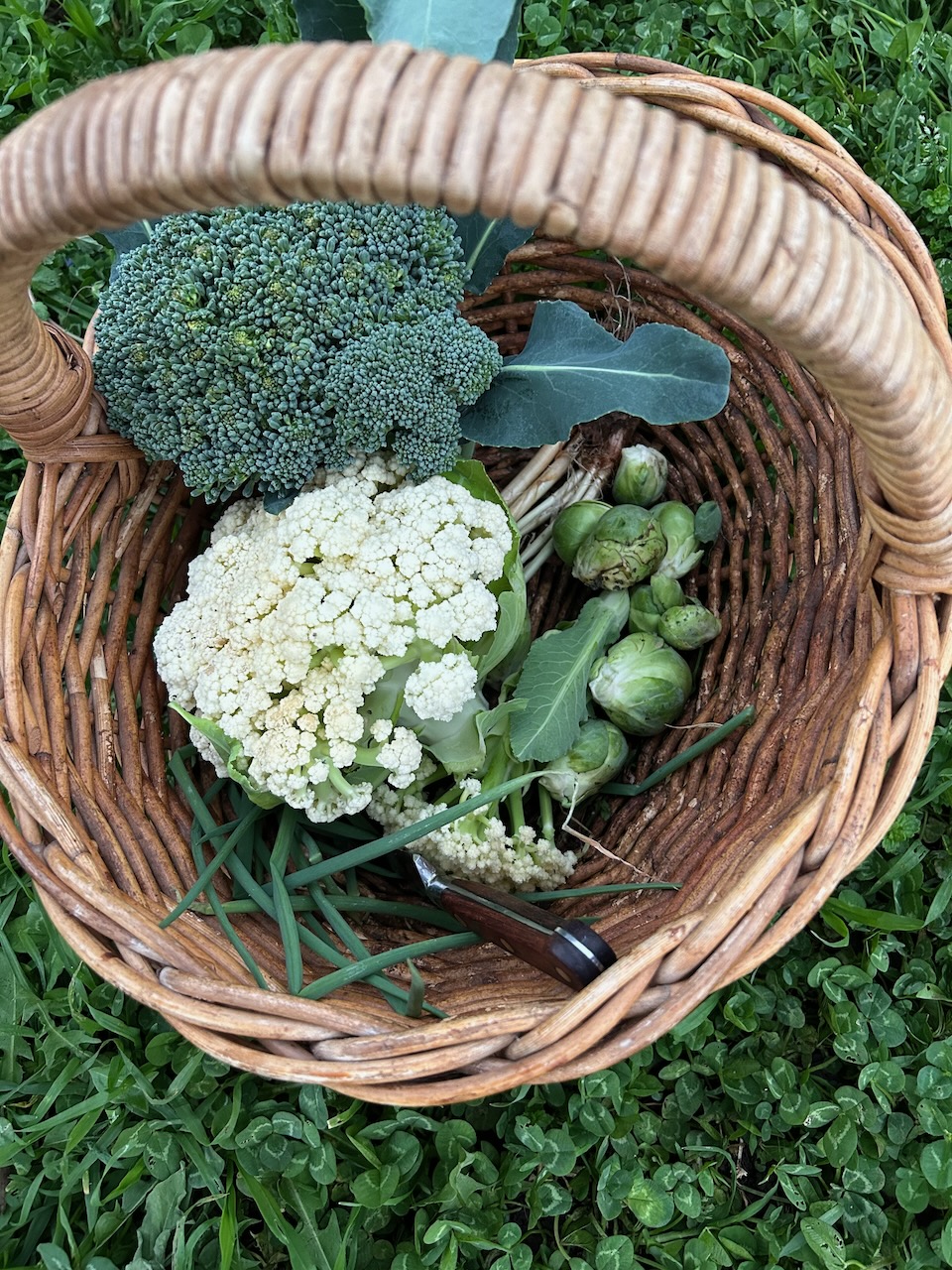
When there comes a break in the rain, I get out and pick vegetables for dinner. This time is leaks, broccoli, Brussel sprouts and carrots. I’m planning baked veggies with a mustard infused béchamel source for dinner. I make a quick and warming lunch of pasta. I tried to steal the spaghetti from the supermarket, but the female security guard saw me and I couldn’t get pasta!

🙂

We decided to try is years cider with dinner. We made this batch of cider back on the 11th of February and bottled it on the 11th of April. So now it has had 4 months to settle down. It will be good to see how it has turned out.

See my blog post; ‘Autumns rewards,  Posted on 11/04/2025 

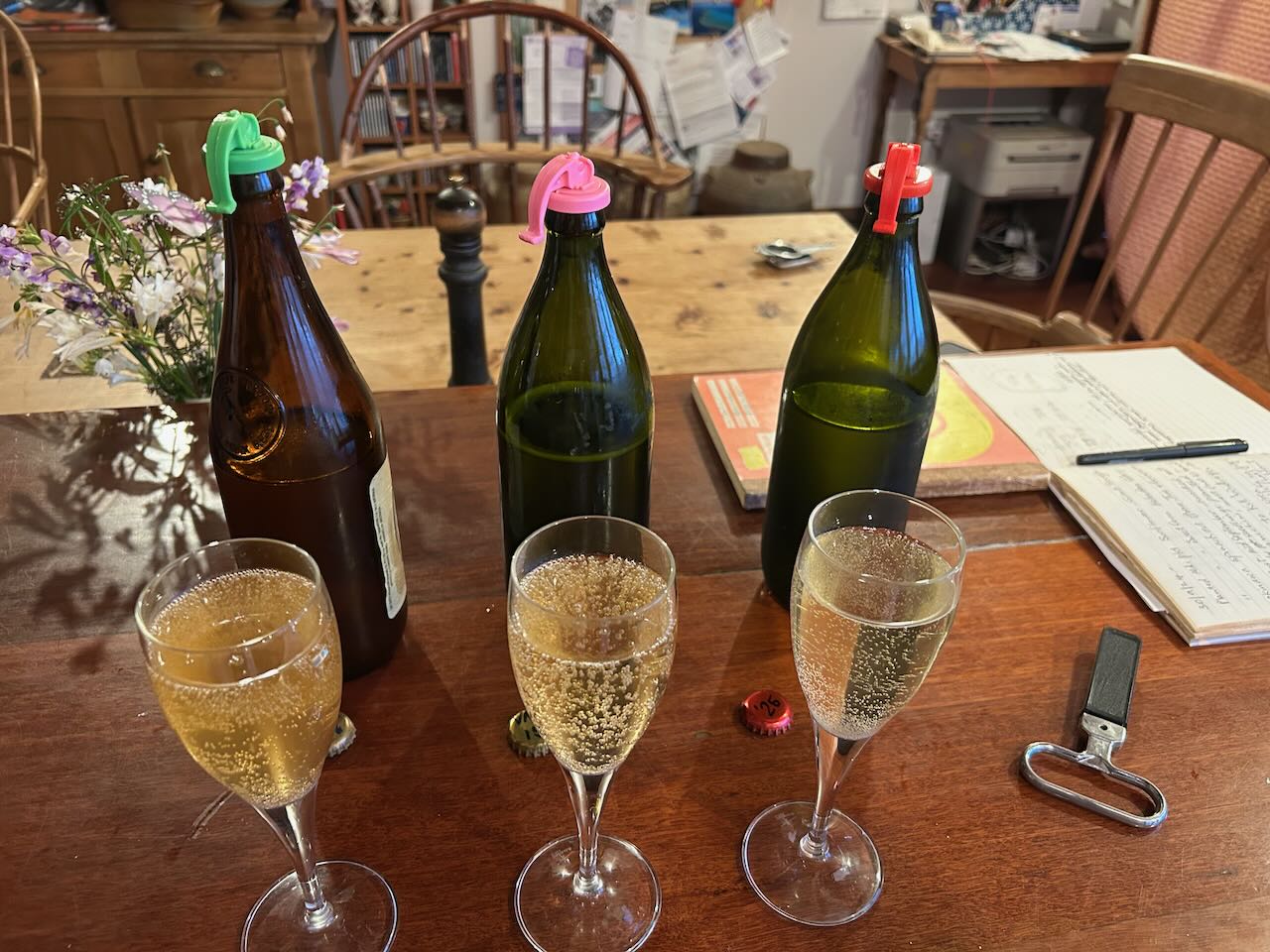
Janine thought that we should do a vertical tasting of the last 3 vintages. What a good idea! 

As we still have a few bottles of the 2012 vintage. This was the last vintage from the aged 40 year old apple trees in the previous orchard. From 2012 onwards there was a severe drought, so intense that we didn’t get to harvest any apples from 2012 through until the fire in 2019. So no cider was made. In 2015, our friend Val had a good crop of apples on her trees in ‘Lagan’, 2 hours drive, south of here, so she drove up a couple of washing baskets full of her apples. We were able to make a small batch of cider from those apples. We re-planted a new orchard in 2020 with different varieties of apples.

We opened 3 bottles to see and compare the difference. The older 2012 vintage was still very lively with good spritz, but a darker colour from its age, more akin to a beer in colour. It has a medium nose of sultry notes and a good firm cider flavour, just as we are used to. Completely dry on the finish. The 2015 from Val’s apples is medium in colour and flavour, and similar to above.

The 2025 is very pale with floral notes, a delicate palette and a dry finish, however, not very effervescent, because, as it is the first vintage from all the new apple trees in the new orchard, all planted since the fire, and this being the first year that we had a decent crop. I made the decision to cut the amount of sugar added at bottling, to ensure that there wasn’t too much pressure in the bottles. I don’t want to experience any exploding bottles. 

We make a completely ’natural’ cider here from our organic orchard apples. Nothing added at all except yeast. I have always used Moet and Chandon champagne yeast, as it has alway worked well for us. Back in the 70’s, you couldn’t buy cider yeast here in Australia, so i chose champagne yeast, as it is closest to what we wanted to make – a sparkling cider. These days I can buy any number of cider yeasts form the brewers supplies shop, but I stick with what works. 

I always leave the cider in the fermenter for 2 months to make sure that it has completely fermented out all the available sugars and is ‘dry’. Over the past 4 decades, I learnt to add one spoonful of white sugar to each bottle at bottling. This is the standard champagne bottling technique. This is to allow it to re-ferment, just enough to make a sparkling cider. Because these are all new trees and therefore an unknown fruit. I played it safe, and only added half a spoonful of sugar at this first bottling. So this batch has only a gentle spritz, but this is better than too much. 

After this test run, next year I’ll be brave enough to add the full amount of sugar.

I’ve never been brave enough to go with the wild ferment of naturally present yeasts that are on the skins of the fruit. When we had a small vineyard of 100 cabernet and 30 shiraz vines. I tried making one vintage of a macerated, whole bunch ferment. The wild yeast that was dominant on the skins at that time was very vigorous and resulted in a rather unpleasant distasteful wine. I didn’t like it at all and threw the whole lot out. So I lost a whole vintage. it’s nothing to do with money. It’s all about the investment of time and effort, and the expectation that there will be something interesting and delicious at the end, even if the amount is very small. For instance, we only make 30 to 36 bottle of cider each year, just enough to fill one fermenter. It’s enough.
Nothing is perfect, nothing is ever finished and nothing lasts. Good cider doesn’t.

Metric Marmalade

July means that it’s time to get to work in the orchards. There is pruning to do. I usually wait until most of the trees loose their leaves before pruning as a rule, but with such a range of trees in this family orchard of mixed fruits, there are some that have lost their leaves a month ago and others that are still in leaf. 

In a perfect world, I’d treat each tree as an individual and consider its best needs, one by one. 

But this is reality, and I have a lot to do everyday through the seasons. Winter is also wood kiln firing season. I want to fire my wood kiln at least once each month to get through all the pots that I’ve been making since my return from the work that I did in Korea. So the orchard pruning/spraying/fertilising is all compressed into one day, as needs must. I have my friend Andy coming tomorrow to help me do some of the last outstanding jobs to finish off the pottery shed. It needs flashing installed over the windows. Something the shed builders didn’t bother to do. Slack arses! So I’m finally getting around to it 5 years later.

I choose a day at the beginning of July and get stuck in to the orchard jobs. Every tree gets pruned for shape and strength, removing any dead wood, crossed branches and water-shoots, I also open up the centre to let light and air in and allow good ventilation. I prune to an outward pointing bud, and hope for the best. I’m not so interested in maximising the crop of fruit. In fact we have more than enough fruit set each season, as we give a lot away. 

Yesterday during pruning, I noticed that I was pruning off branches from an apple tree with full vigorous growth of leaves still on, and then followed by a peach that was so advanced in its dormancy, that it had bud swell. I really need to give the trees a good saturating spray with lime sulphur before bud burst to suppress mildew, fungus and leaf-curl on the various trees. Lime sulphur spray stinks of rotten egg gas smell, and is best kept off your skin and clothes, so I wear a face shield, hat, rain coat and gloves, just in case.

One of the apples gets white powdery mildew, a couple of the peaches get leaf curl. It’s a mixed bag. After lime sulphur spray, I go around and spread composted chicken manure for its nitrogen, dolomite powder for its mixed, subtle calcium/magnesium content, and some wood ashes for the potassium that encourages healthy fruiting. 

The chickens have the stone-fruit orchard all to them selves everyday to roam and scratch around in. Always finding something interesting to chase and squabble over. They are forever dropping their pooh and enriching the soil as they go about scratching, so a little extra lime every now and then to sweeten the soil is a good plan.

In a few weeks time, I’ll also start the first of the Bordeaux sprays, to suppress the leaf curl fungus, through into spring. Peaches and nectarines are particularly vulnerable to this fungus. Bordeaux spray (copper sulphate mixed with lime) helps to control this. Both Bordeaux and Lime sulphur are registered organic sprays.So I can feel safe using them on our food. However, I like to use the minimum amount, as copper can build up in the soil over time.

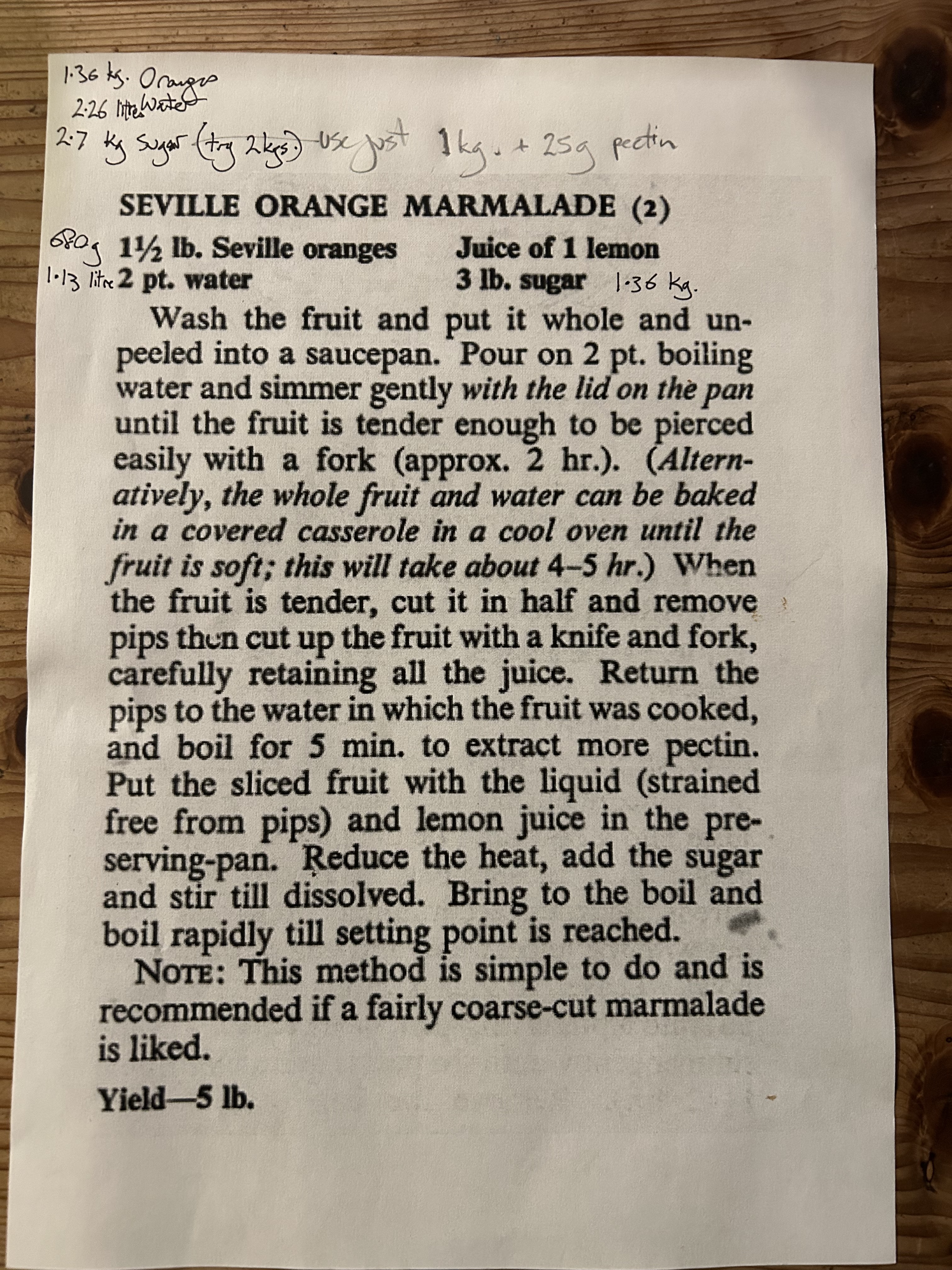
Out of the garden and into the kitchen. Winter is also peak season for citrus fruits. We have been making batches of marmalade since the season started back at the beginning of June. This week I have been trying out an old recipe that I got out of Mrs Beaton’s cook book. I have the paperback facsimile edition from the mid seventies. I was encouraged to try it out by my friend Bill who makes lovely marmalade. I occasionally post him a box of Seville oranges and he later returns a jar of his latest batch of marmalade. A good arrangement. 

This year I’m giving one of Mrs Beaton’s recipes a try. There are a few in the book. This is No.2 as recommended by Bill. I doubled the quantities, to make it worthwhile spending the time on it. However. I couldn’t bring myself to use 3 lbs (2.7kgs) of sugar. So I reduced it to 1 kg and added 25 grams of pectin to make up for the reduced sugar. After converting it to metic and doubling all the quantities, it still tastes great!

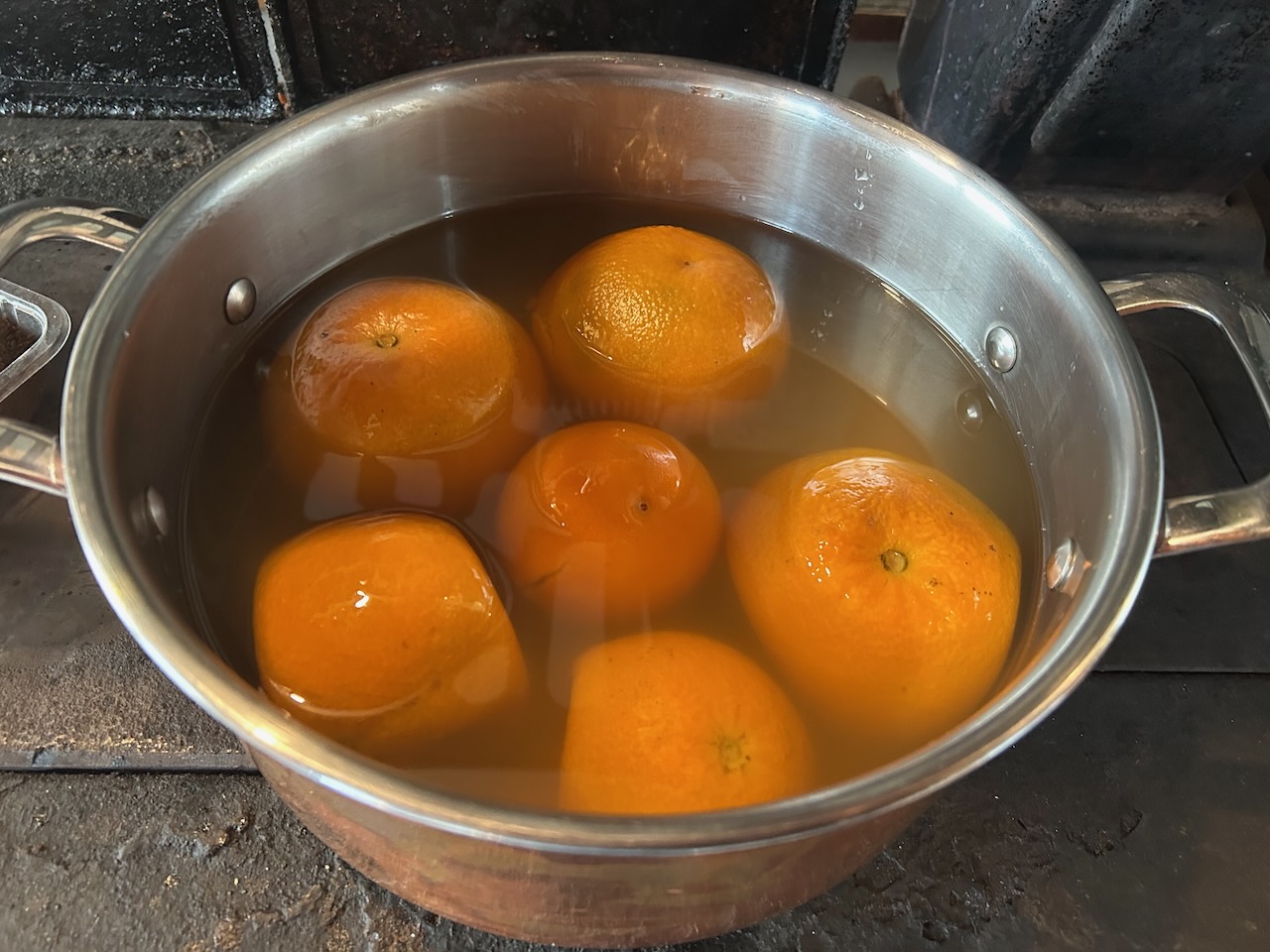
It’s a good recipe and in this slightly altered form, with much less sugar. I still find it very sweet. I’m glad that I didn’t bother trying it in the original. I wouldn’t have enjoyed eating it at all. Boiling the whole fruit for 2 hrs and letting it sit overnight to cool gives it a very old fashioned sour flavour from the peel that we don’t get by just boiling the peel and juice for a short time.

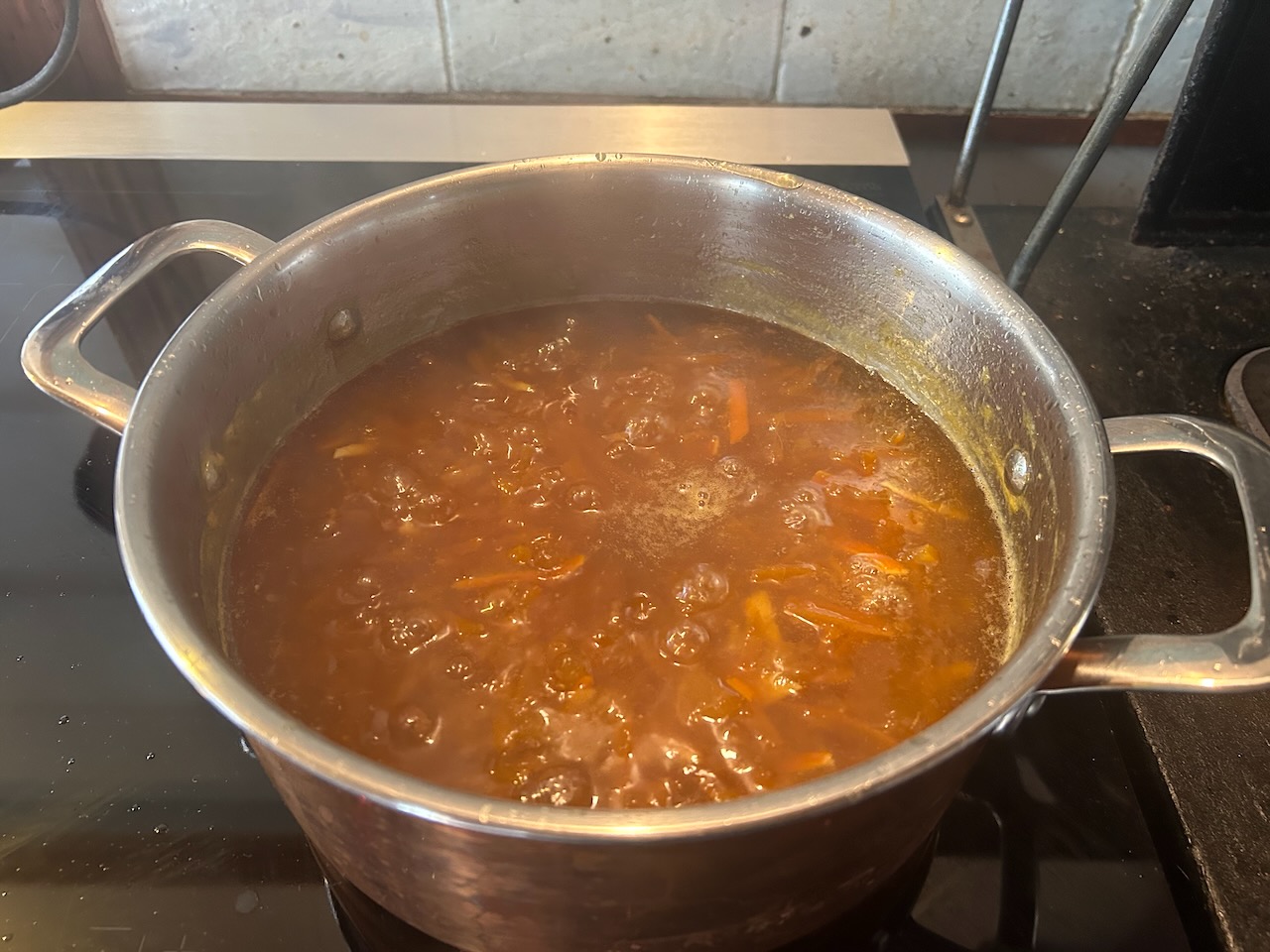
This recipe gave me 3.5 litres of marmalade = 6 medium sized jars. Worth the effort. We had visitors while I was cooking it up. They all walked into the kitchen and each remarked on how wonderful the smell was as they entered. We were able to give them a large box of mixed citrus to take with them.

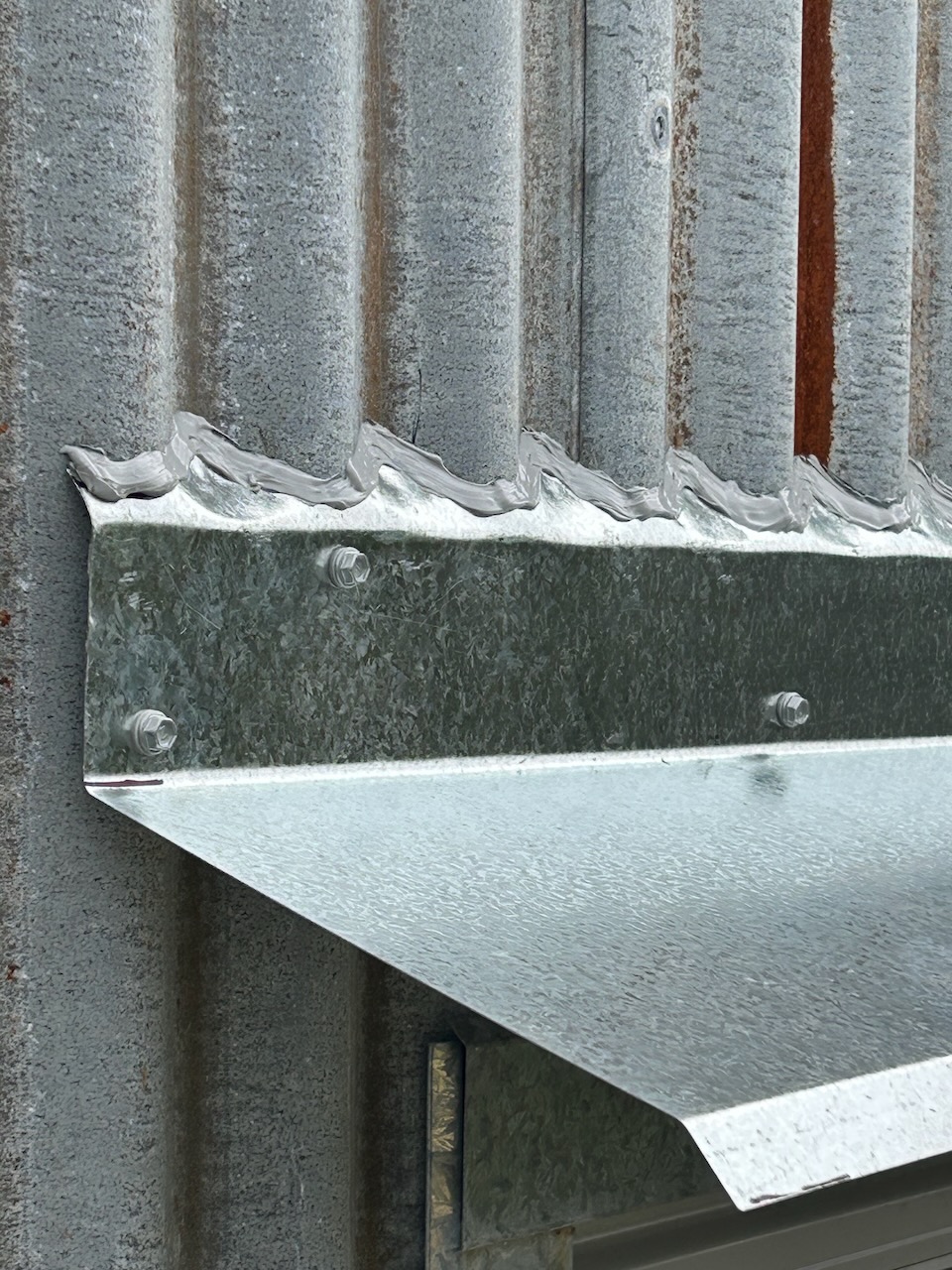
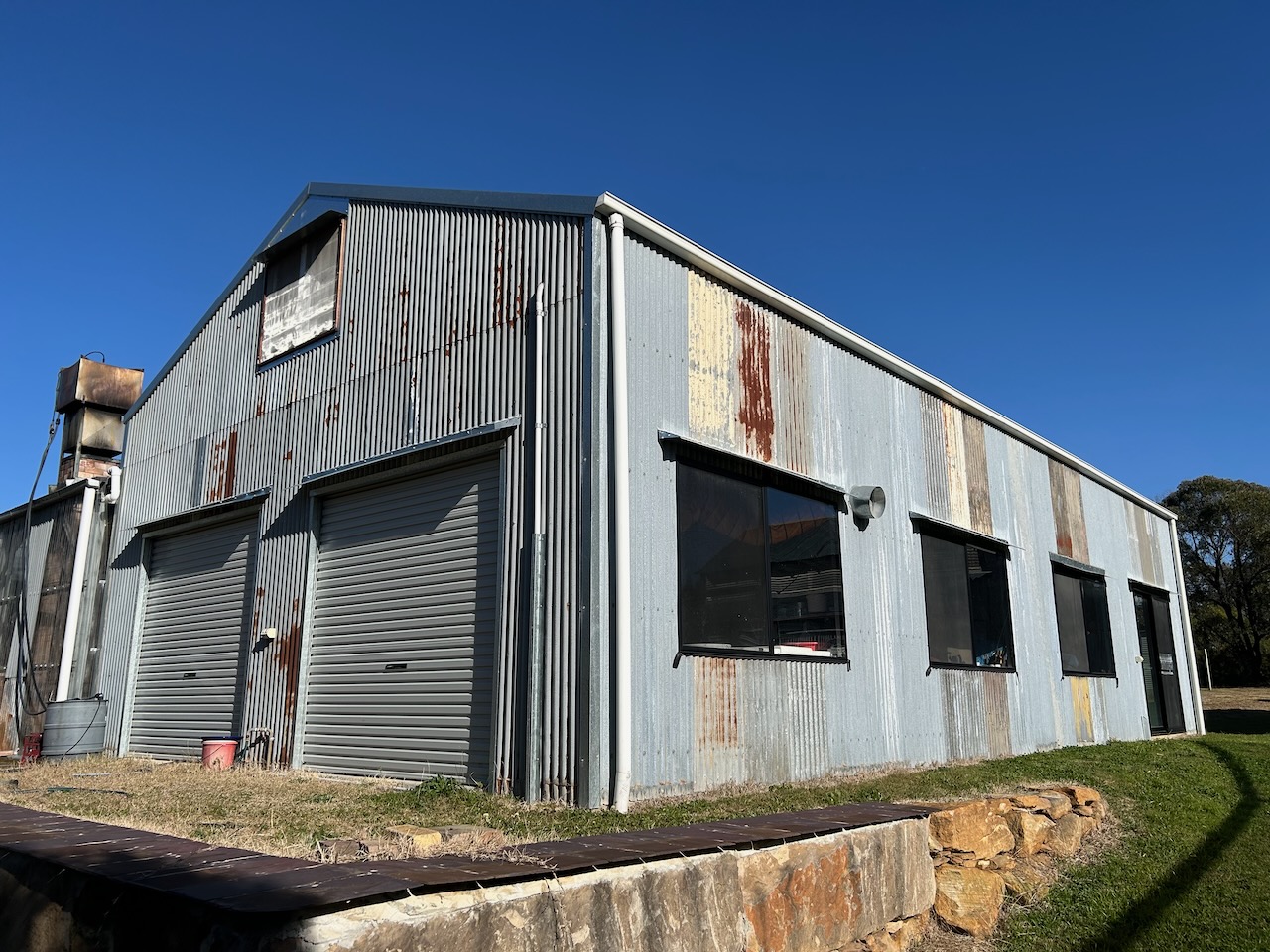
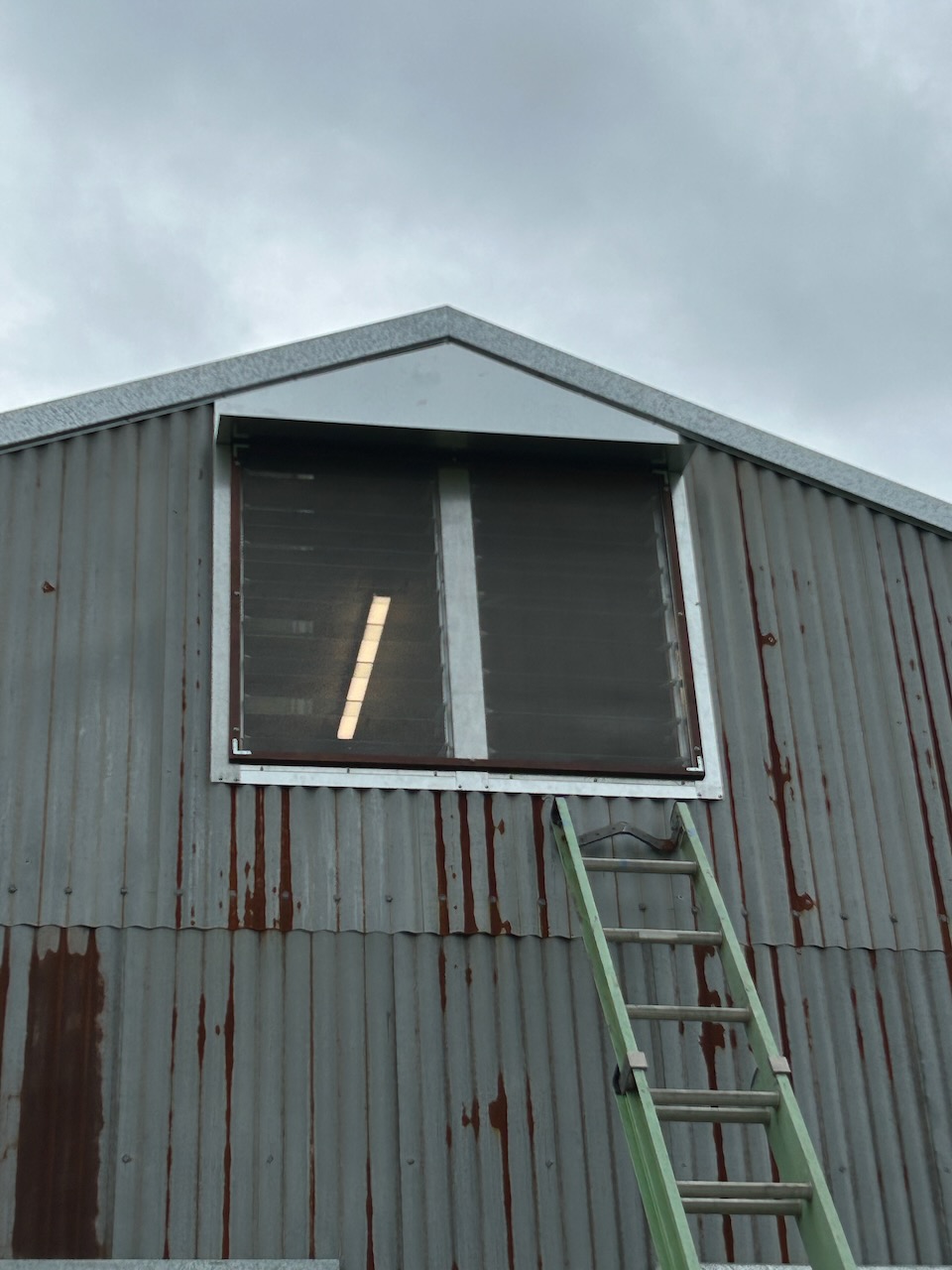
Out of the kitchen and onto more pressing practical matters, I made my own new flashing for the pottery shed windows from two sheets of  2440 x 1220 x 0.9mm sheets of galvanised steel, that I cut and folded on the guillotine and pan break, custom fitted for my windows. The lengths of flashing have to be marked and then cut out to perfectly fit into the curves of the corrugated iron sheeting on the walls. In a perfect world. The shed builders should have fitted flashing above the windows before they installed the outer wall sheeting. But they didn’t bother to do anything at all, so the window seals around the edges leaked. But not any more.

Andy and I marked out, hand cut and fitted the curves exactly to match the variations in the mixed 2nd hand gal sheets. A slow, but rewarding job. We couldn’t use a template, as almost every sheet is different across the wall. Until I collected all this mixed corrugated iron roofing fro mall around Sydney and the Highlands. I didn’t realise how many different profiles of corrugated iron there were. I just thought that it was all the same. But every company has their own individual variation of the profile.

We spend a day going around the building and fitting the new flashing above all the openings. We can’t take off all the cladding to do it properly. As it should have been done. So we add the flashing onto the wall sheeting and cut it into the profile and seal it with silicon. It’s quicker, but still takes us all day to do 5 double windows and 3 garage sized roller doors.

Bit by bit I’m getting the shed finished. It’s only taken 6 years to get this job finally complete.

All the flashings acting as mini-awnings above every opening.

Nothing is ever finished, nothing is perfect and nothing lasts.

Back home from Korea

I’m back home from my work in Korea. I managed to drop a firebrick on my foot on the 3rd day. I couldn’t wear a shoe after that, as the big toe had swollen up so much, such that I had to wear a plastic ‘flip-flop’ thong to keep working. I went to the local convenience store in the village and bought alcohol disinfectant spray for cleaning the toe, over-sized bandaids, gauze bandage and medical tape. I was amazed that such a tiny village shop had everything that I needed.  
The next day, the local government health clinic was open and my friends took me to the clinic to see the doctor. I needed them to translate for me. The doctor told me that I had kept it very clean and to try and keep it elevated, not to walk on it too much and that if it started to throb or get red. I should come back ASAP. As a precaution, he prescribed and also issued me with 2 different antibiotics, for 3 times a day, enough for 10 days. I don’t like to take any antibiotics if I don’t absolutely need to, but I certainly didn’t want to end up with medical complications while in a foreign country, so I took them.  I didn’t want to risk getting toe-main poisoning and it spreading up my leg to Knee-monia and possibly even dick-theria.The doctor offered me an X-ray, but I assured him that I could still bend the toe. I had to demonstrate that for him, so that he was satisfied. 

My friend got out his credit card to pay, but there was no charge!!!! I’m a foreigner here. I don’t pay taxes here. I should pay for such a terrific service. Korea is an amazing place!

My foot was still swollen, and I was still wearing a plastic flip-flop thong on my foot right up until I left Korea. I even had to attend the official opening of the exhibition in my formal black thong. The nail has since died and come off. I’m so lucky that I have such good friends and that it wasn’t worse.
The garden has grown such a lot while I was away, and badly needs a lot of weeding. Apparently there was a lot of rain and the temperature was quite mild. So plenty of late autumn growth. I got stuck into the weeding straight away, just an hour at a time each day. Weeding always involves such a lot of bending. I’m of an age where this is not so comfortable any more. So I space out my efforts, I didn’t want to over do it. 
The second day, I decided to wear knee pads so that I could get closer to the weeds, to minimise the bending. I also wore light gloves to save my fingers. So I am learning to change my old habits to make living here the way that I have so far, and want to continue to do into the future, a more achievable prospect. This is a really hands-on life style, doing almost everything the old fashioned way, by hand, honouring local gardening lore and organic traditions with green environmental knowhow/theories.  A permanent garden/orchard/vegetable patch, including chickens, all inter-woven and based on sustainable living principals, but with a nod to modern conveniences where necessary, like a cultivator and a mower. 
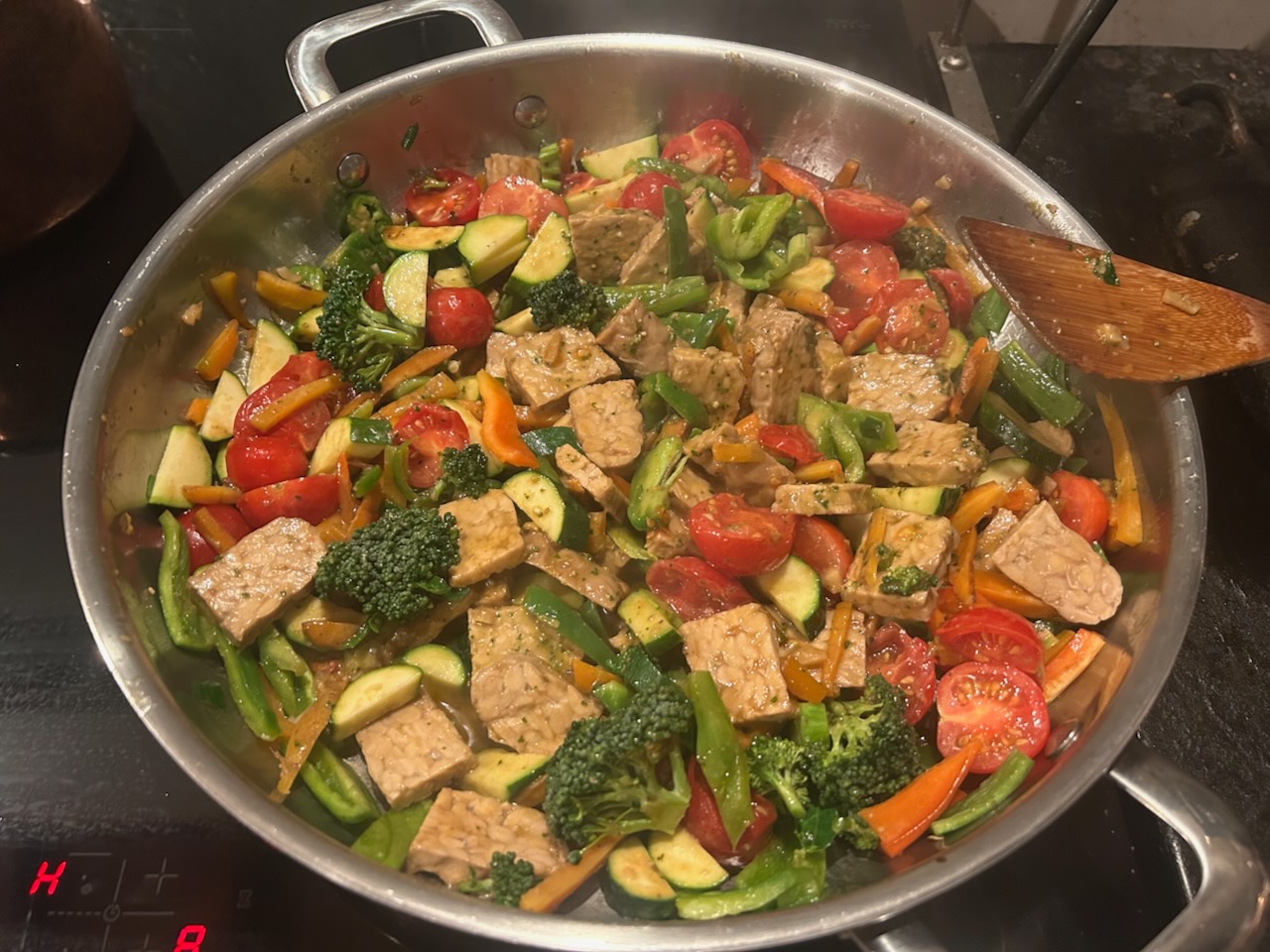
We can still pick all of our salad lunches and our nightly dinner from the garden each evening, it’s just that the flavours have changed to winter forage now. We have all the usual winter greens, broccoli, cauliflower, carrots, beetroot, cabbage, pumpkin and kohlrabi. We cook a lot of vegetable stir fry, tofu, okonomiyaki, Japanese style cabbage pan cake, baked mixed vegetables, and cauliflower au gratin etc. We have also just celebrated the start of the cold winter season with an old fashioned baked dinner. Our first red meat meal since last winter.

  Other than weeding the garden, there is also a lot of mowing, so an hour or so of that each day too. The garden work fills half the day. I’m using the electric ride-on mower for the bigger areas that have become deep in luscious growth. But I also use the electric strimmer for all the edges where the ride on can’t get to. It’s a good feeling to know that all the work is being achieved powered by sunshine these days instead of fossil fuels. Janine fills in the gaps with the electric push mower, to get in under the branches of the fruit trees and other similarly appropriate places for that mower.


We have worked hard at planning and finally becoming a fully solar electric household. We started back in 2007, when the cost of solar panels finally became affordable for us. When I was a teenager, the only solar panels were to be found on space craft and satellites. We’ve come a long way and Australia can be proud of the world famous, ground breaking research into refining solar panel technology done by Professor Green at the University of New South Wales in Sydney. We have slowly increased our solar PV over the years, until now we have 17kW of PV panels and two 15 kWh batteries. Sufficient to charge 2 electric cars, run the house and pottery workshop, Fire our electric kilns and if carefully managed, also selling the excess back to the grid. Although we try to minimise our exports, as we only get paid 5 cents per kWh. It’s better to use it all ourselves. We haven’t paid a power bill since 2007, and spend more money on petrol for things like the chain saw and fire fighting pumps than we do on our Plug-In Hybrid car.
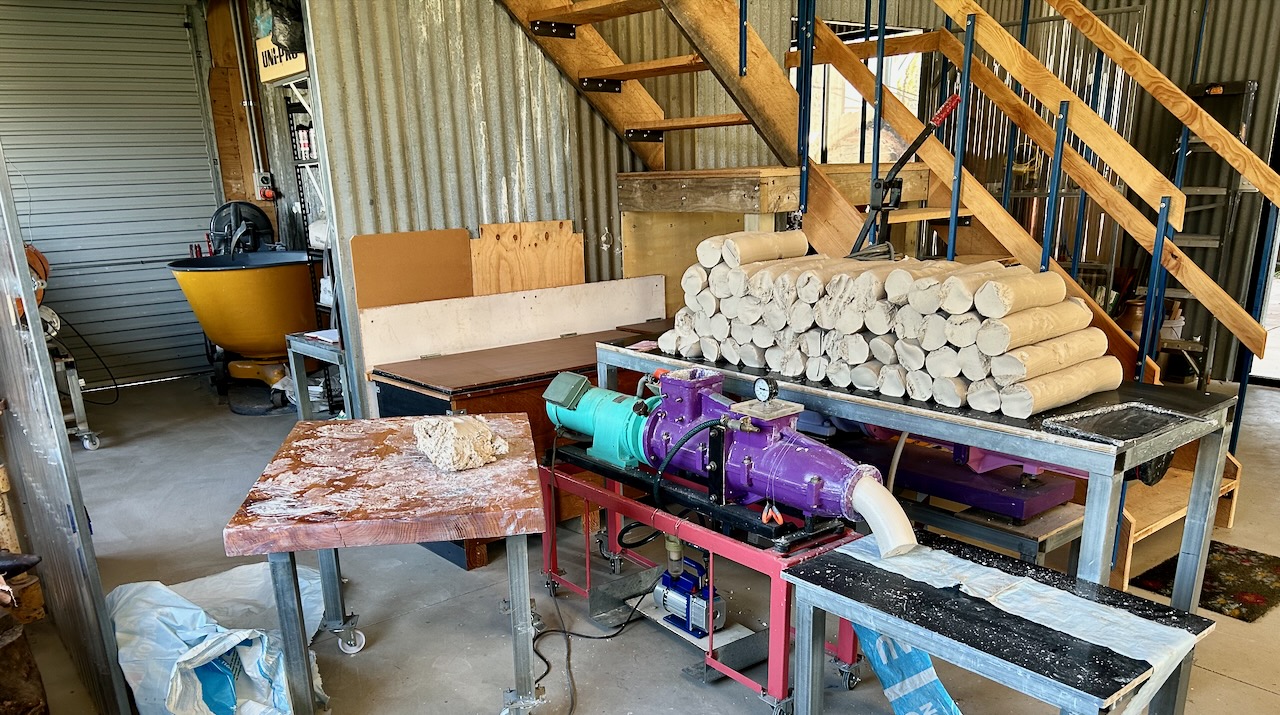
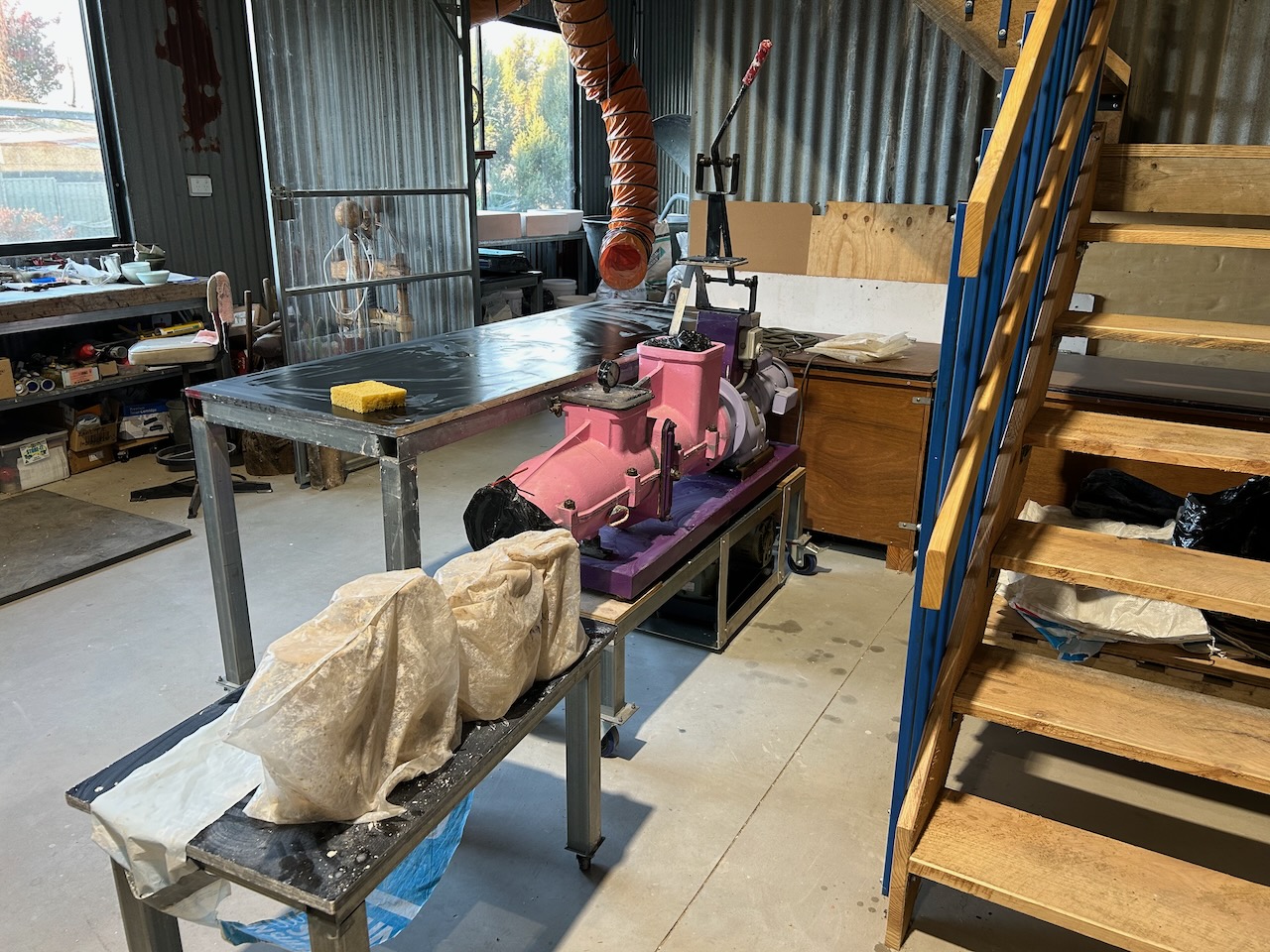
Now that the garden and grounds are back under control, I’m also back in the pottery, making pots again, for the other half of each day, making again is fun and half of my existence. My start back on the potters wheel was delayed by a day, as the pug mill had seized up from being left for too long without use. I had to hand scrape the clay from the barrel nozzle and take out the vacuum screens to remove hardened clay from the mesh.  Quicker and easier than a complete strip down, but still time consuming. It somehow feels like a bit of a waste of time, but any other option is far worse, I’m so grateful to my friends who passed on their old pug mills to me after the fire. You know who you are. Thank You! I’m very grateful to be so lucky to own my very old, re-furbished, Venco pug mills. 

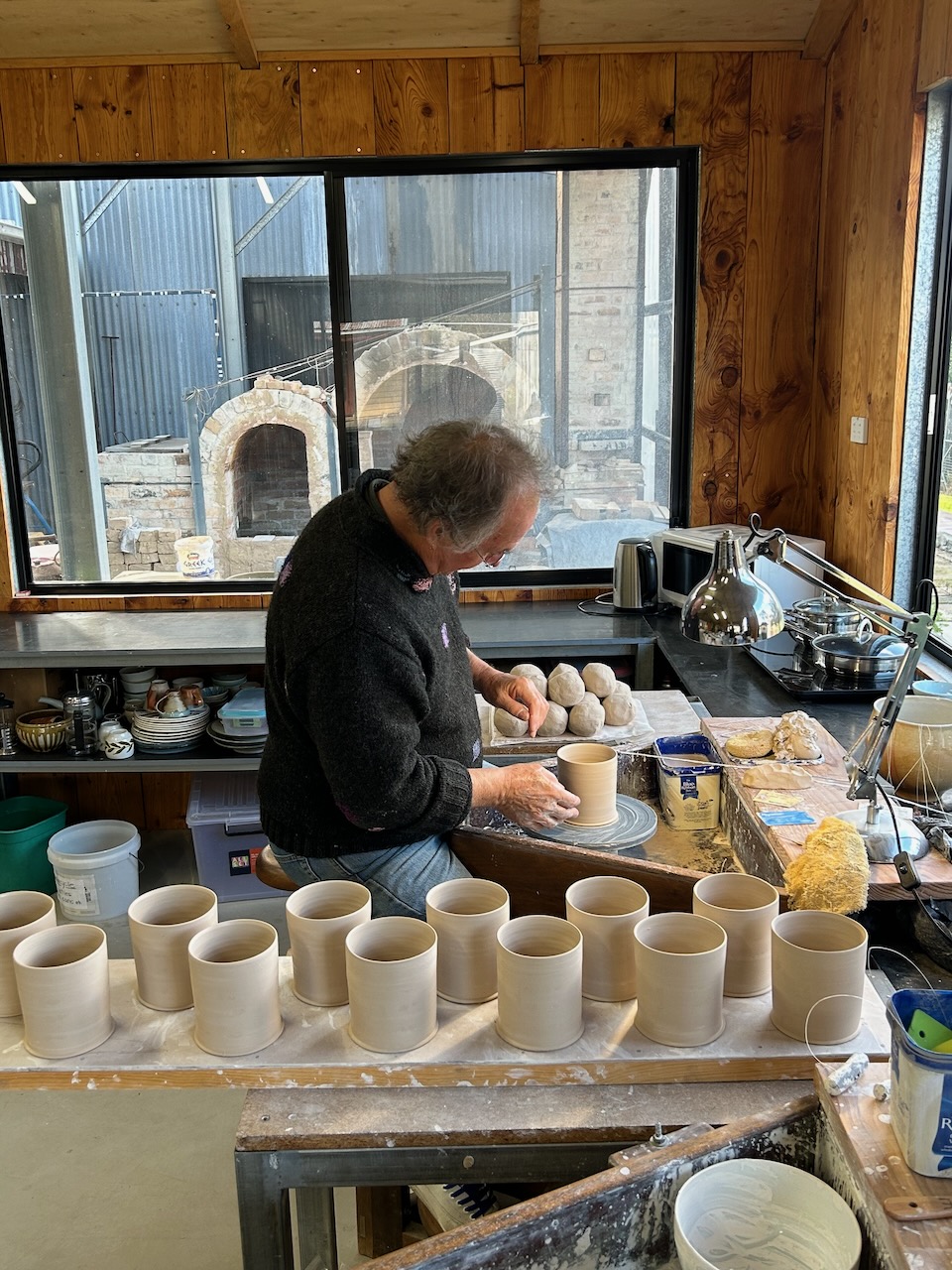
The next day I’m back on the wheel throwing perfectly de-aired and beautifully mixed plastic clay. My old wrists are too worn out to hand wedge all my clay any more. I did manage a lot of hand wedging for the first year back at work here, during lock down. I couldn’t buy a new Venco as they were out of production, and the large 100mm. model is still un-available! I don’t know where I get the energy and enthusiasm to keep on working like this into my older years, other friends and colleagues have retired, but I was determined not to let the 3rd bush fire in 50 years and loss of another pottery workshop stop me. I’m still here and still creating the things that I love. So out of desperation and necessity, I hand wedged my clay to my lasting detriment. My ageing wrists have never really recovered. Even throwing slowly on the kick wheel, causes just a little bit of a twinge, so I have to modify my hand position slightly to cope. We have a few Shimpo electric potters wheels, mostly used for our weekend workshops, that run on our solar power, but I really prefer the old ‘Leach’ treadle style kick wheel for all the smaller domestic pots.

Winter brings on the citrus crop, so we start the season by making 2 batches of marmalade, lemon, lemonade and lime marmalade and then tangelo and navel orange marmalade. The Seville oranges aren’t ready yet. They come on later in the season. They make the very best marmalade.

It’s hard to believe, but today, in winter, at the end of the first week of June, I picked a ripe red tomato. We still have self sown tomato plants flowering. We have had ripe tomatoes in June before. It all depends on the severity of the frosts. At this stage we have had a frost during the week, but because the vegetable garden is fully netted to keep out the birds, that netting seems to just take the edge off the frosts, allowing us to still harvest tomatoes so late in the season.

It’s so good to be home again! We have a quotidian flock of wild wood ducks, that have decided to take up residence on the front lawn, sometimes up to 30 or so of them. They seem to like it here. Plenty of grass to eat and 4 dams to explore. Why wouldn’t they? They were probably all born and raised here over the years. They do pooh all over the lawn, so we have to watch where we step and wipe our feet at lot. We have a shoes-off household, so no problem about the house, but a lot of pooh gets tramped into the pottery workshop when we have weekend workshops and open days.

If this is my biggest problem in life. I’m so, so lucky!

Nothing is perfect, nothing is ever finished, and nothing lasts.

Autumns rewards

Exactly 8 weeks ago today, Janine and I harvested all of our apples and pears. We juiced them and used ‘Moet and Chandon’ champagne yeast to ferment them all into cider.

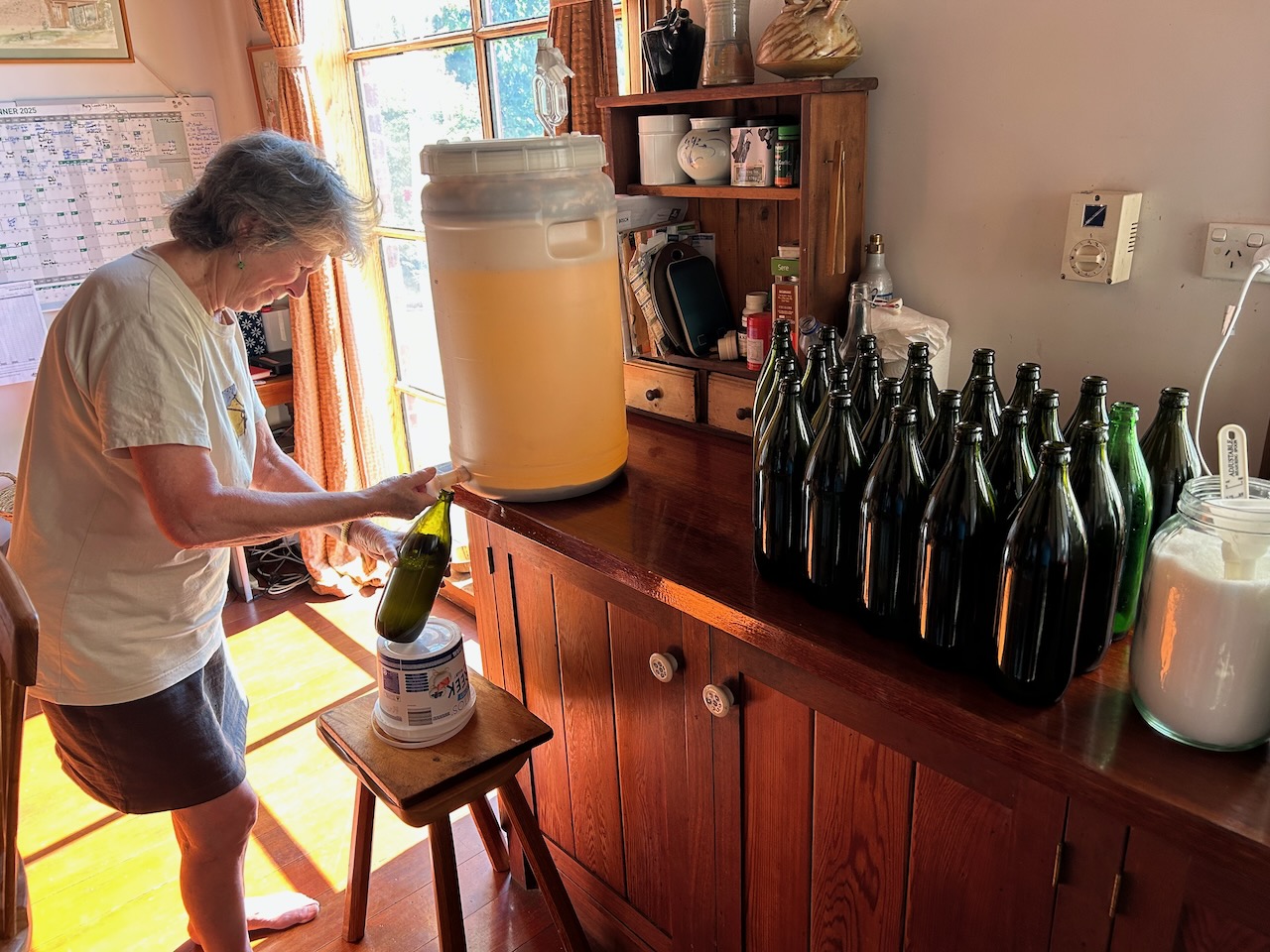
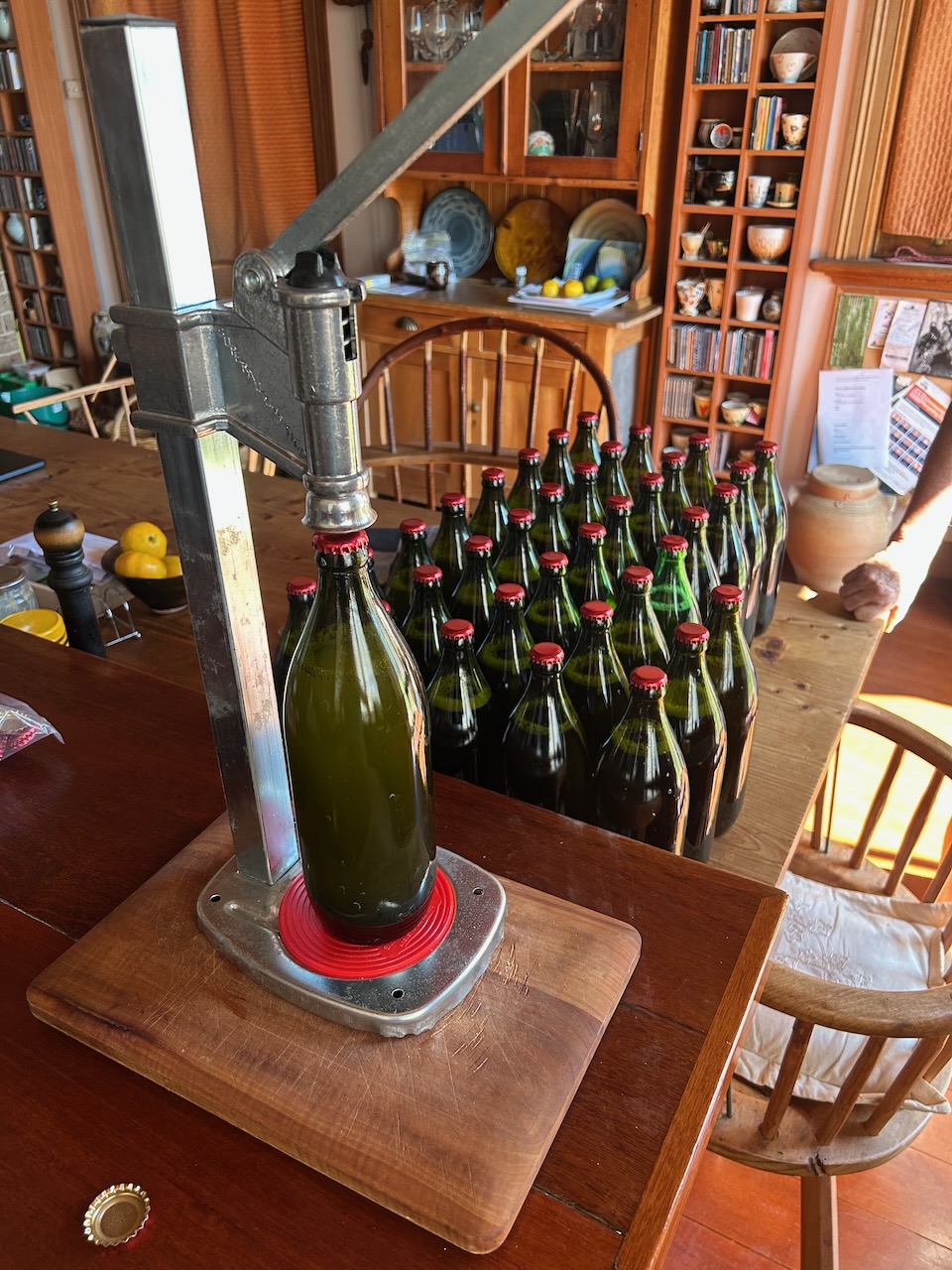
Now, 8 weeks on, the ferment has completely died down and used up all the available sugary nutrient in the juice. Now that it is completely still, it is safe to bottle it. We must make sure that it is fully fermented out, so that it wont keep on fermenting and explode the bottles.

I remember back in my childhood in the 60’s, stories of exploding ginger beer bottles that had too much sugar in them.

We have been making our own cider here for almost 50 years now, ever since we planted our first orchard and got a reasonable crop of apples. 

This is our first vintage of cider in ten years now, because the orchard was burnt out in the big bush fires of 2019, but before that, there was a ten year draught that made it very hard to keep the fruit tress alive , never mind getting a good crop off any of them.

So this is our first really good cropping year from the newly planted fruit trees in the new orchard five years on.See; It’s almost autumn, Time to make cider.Posted on 

I have just spent two days hand weeding and digging over the pottery verandah garden bed. It had gone completely feral and needed a good sorting out. All of the spring and summer flower display was mostly over and I’m hoping that all those flowers dropped a load of seeds down into the bed, so that now, given a bit of free space and sunlight, they will germinate and grow a new generation of flowers to welcome visitors along the driveway past the new pottery. I spent a long time on my hands and knees, making sure that I got the majority of the couch grass and kikuyu runners out of the soil. 

To prevent the grass runners from returning and growing back into the freshly weeded soil. I needed to make a border edging along the beds. In the vegetable garden, I made galvanised iron sheeting edging strips from off-cuts of galvanised flat plate that were left over from kiln jobs in the past. A very productive re-use of what was waste material. 
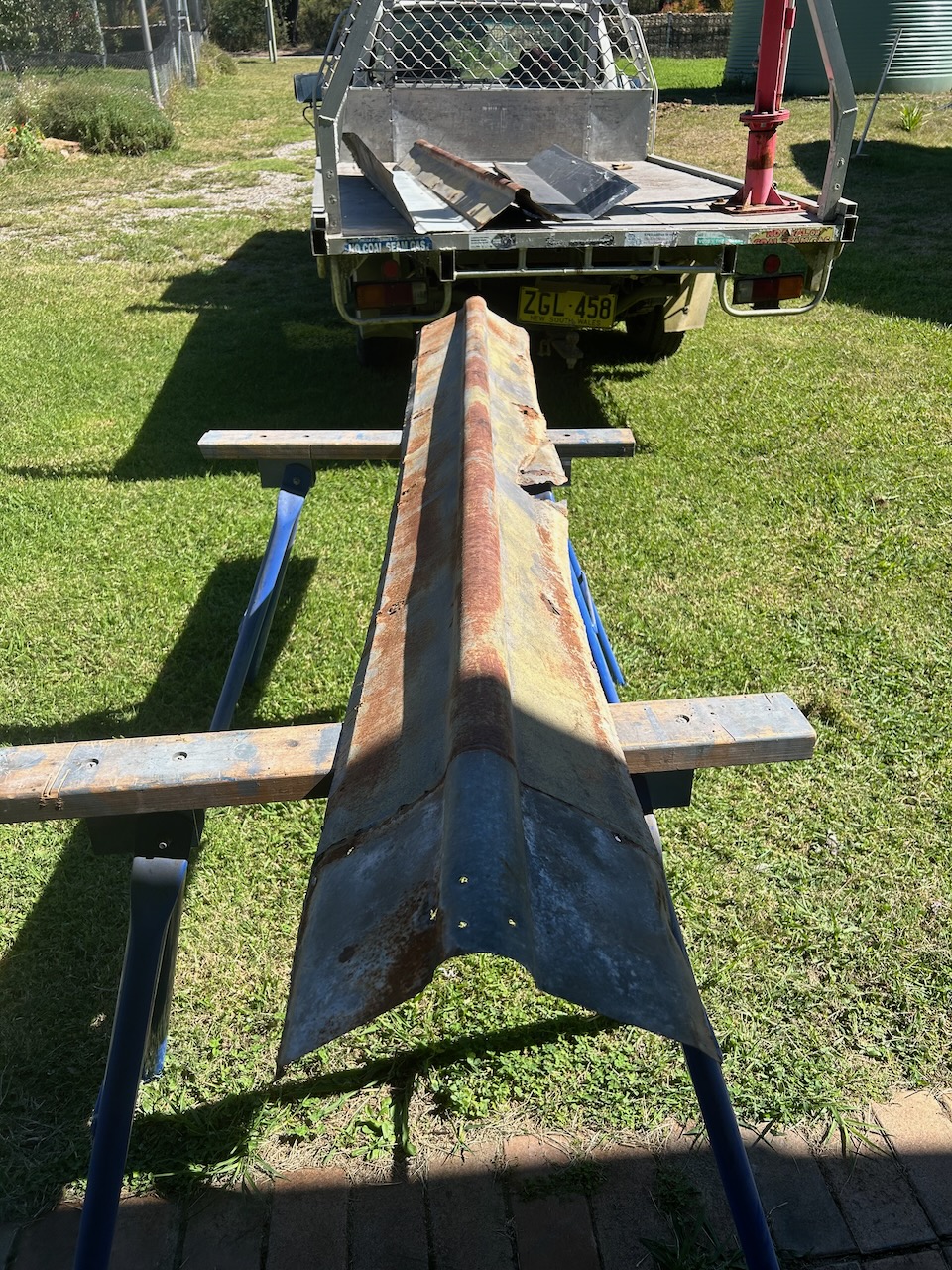
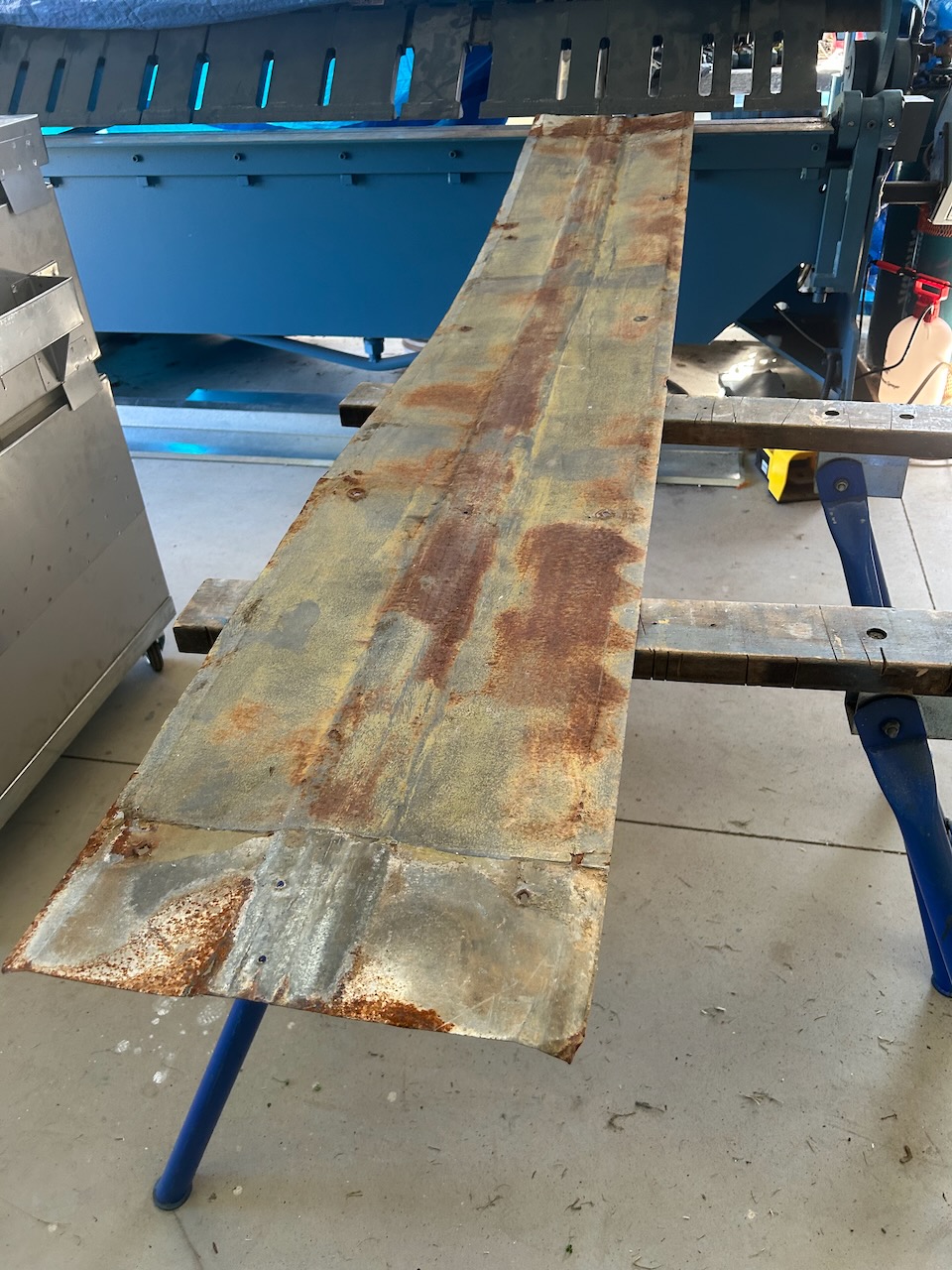
These days I don’t have off-cuts any more, but Janine reminded me that I had stacked up half a dozen lengths of old recycled roofing iron ridge capping that might be usable.

I got stuck in and flattened it all, split it in two long lengths, and then folded a strengthening right angle edge on one side so that i could bury it half way into the soil to delineate the garden bed, but most importantly to cut off access to the grass runners from growing back into the beds. I dug in a ute load of compost, watered it well in, so now will wait to see what germinates.

Re-use, re-cycle, re-purpose!

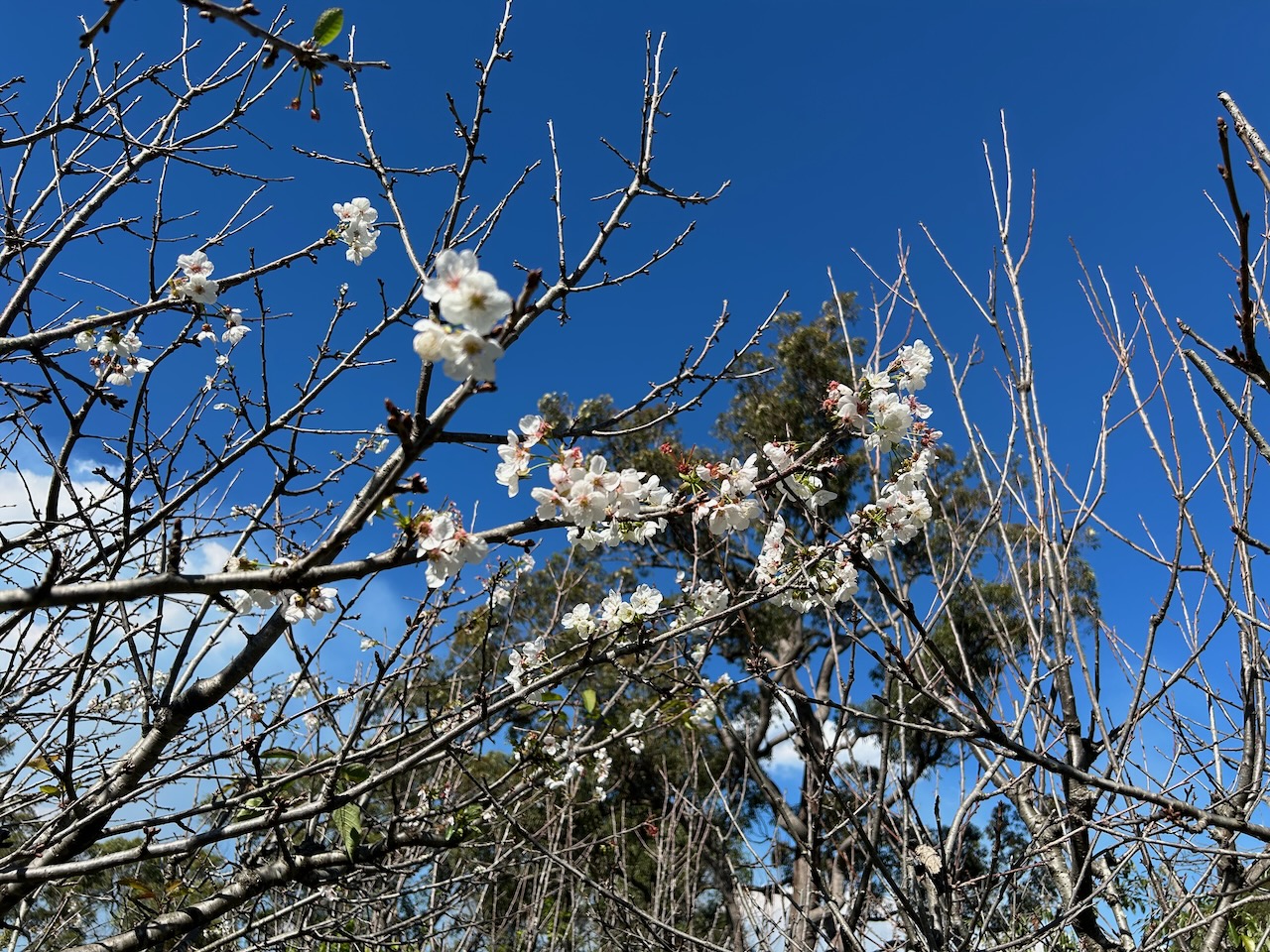
One of our cherry trees has decided to flower again in autumn. I think that it had a few cold nights, followed now with some warm weather,  and that was sufficient to reset the biological clock thinking that winter is over and time for the spring flowering. We have had this sort of thing happen in the past. Particularly with the ‘low-chill’ cultivars.

Winter hasn’t arrived yet, so I wonder if this tree will still flower as normal in 4 months time when spring does actually arrive?

In the pottery, I have retested the rock glaze tests that i started exploring a few weeks back. This time, I have made larger sized samples to see the quality of the glazes better. All 3 have potential, but still need further testing to get them ‘right’.

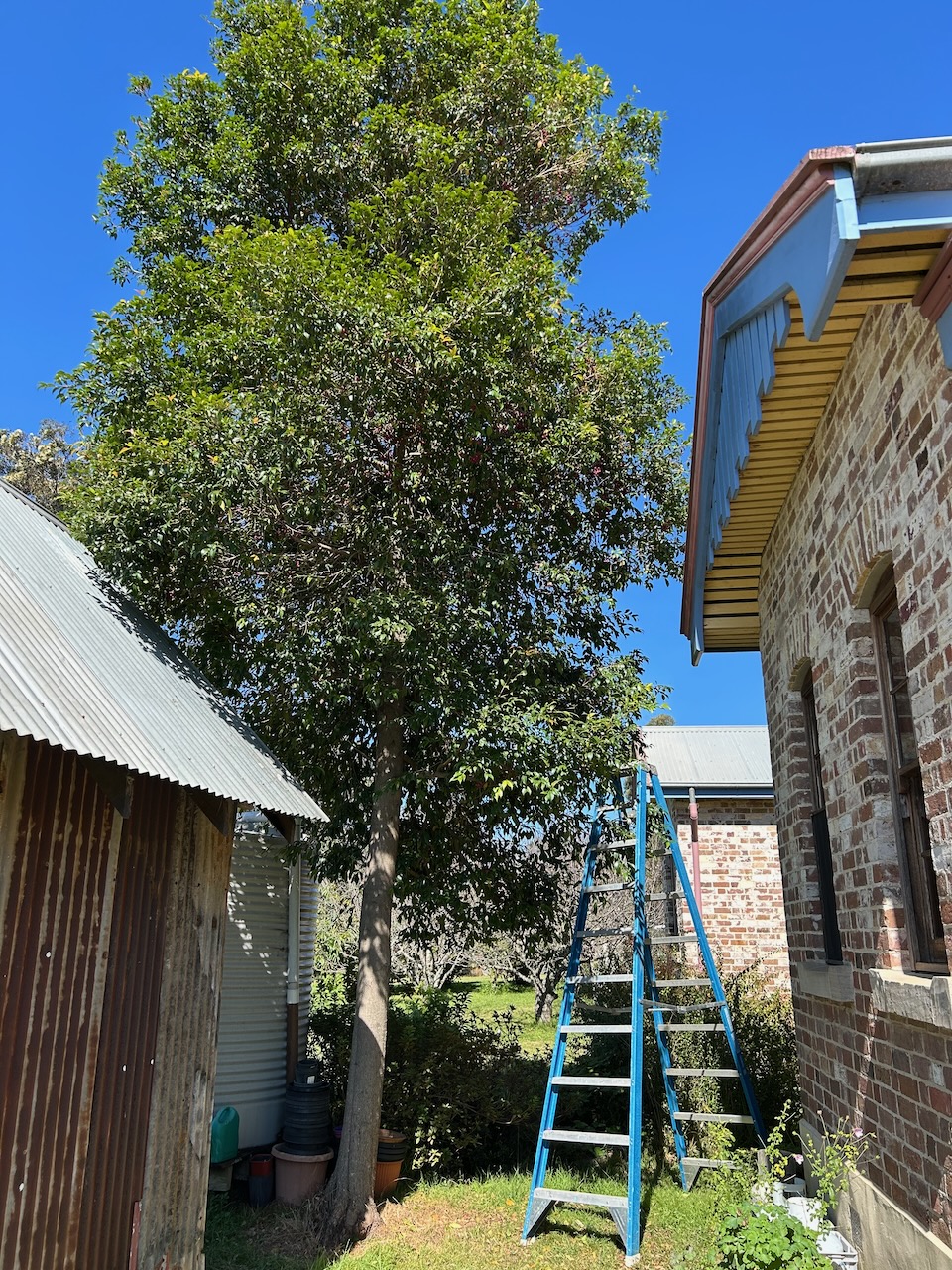
After washing and sterilising all the glass bottles for the cider bottling this morning. I had and hour to wait for the sterilising process to complete, and could hear the birds in the lillypilly tree next to the house. I asked Janine if she wanted to make some lillypilly jelly, so got out the 3 metre step ladder and climbed up into the canopy to fill a bucket with fruit. The fruit only starts 4 to 5 .metres off the ground. The tree is much taller then the house.

After we had bottled all the cider, Janine boiled up the berries and started the process of making the jelly. It takes two days. Tomorrow to sieve out the skins and stones from this batch, then re-boil it and set it up in a cheese cloth to drip out to clear jelly.

Nothing is ever finished, nothing is perfect and nothing lasts.

It’s almost autumn, Time to make cider.

Todays big job is to harvest all the remaining apples and pears, then juice them all and make a big batch of cider/perry. Then it will be back onto the tomatoes and passata.

There will be sure to be a lot of weeding needed after all this rain clears and the heat returns.

We haven’t been able to make cider for over a decade now, as there was the terrible drought culminating in the 2019 bush fires that took our pottery, yard, gardens, fences and orchard trees. We replanted a new orchard in 2020 and this is the first year that we have had sufficient fruit on the new young trees to be able to make a batch of cider. 

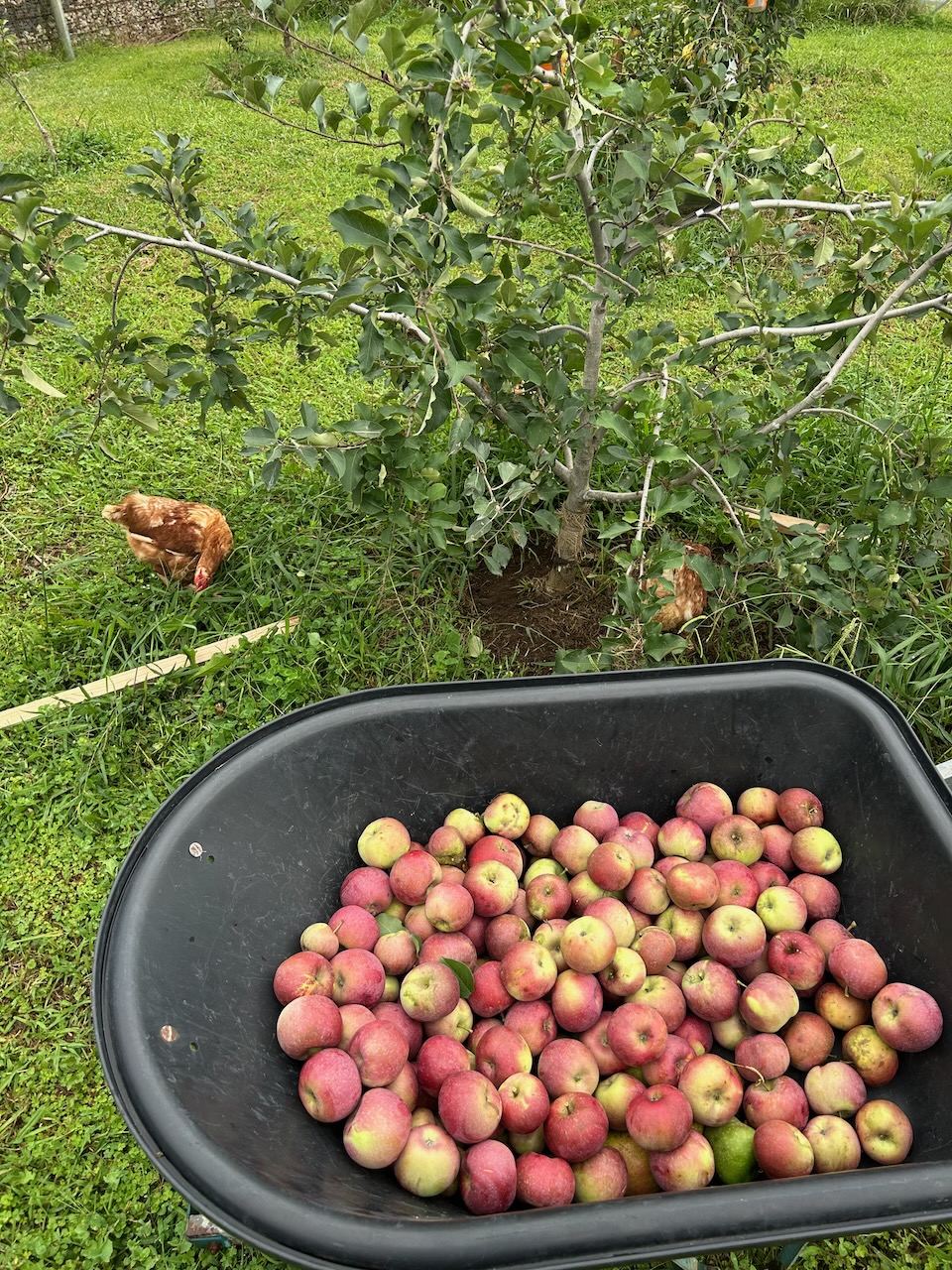
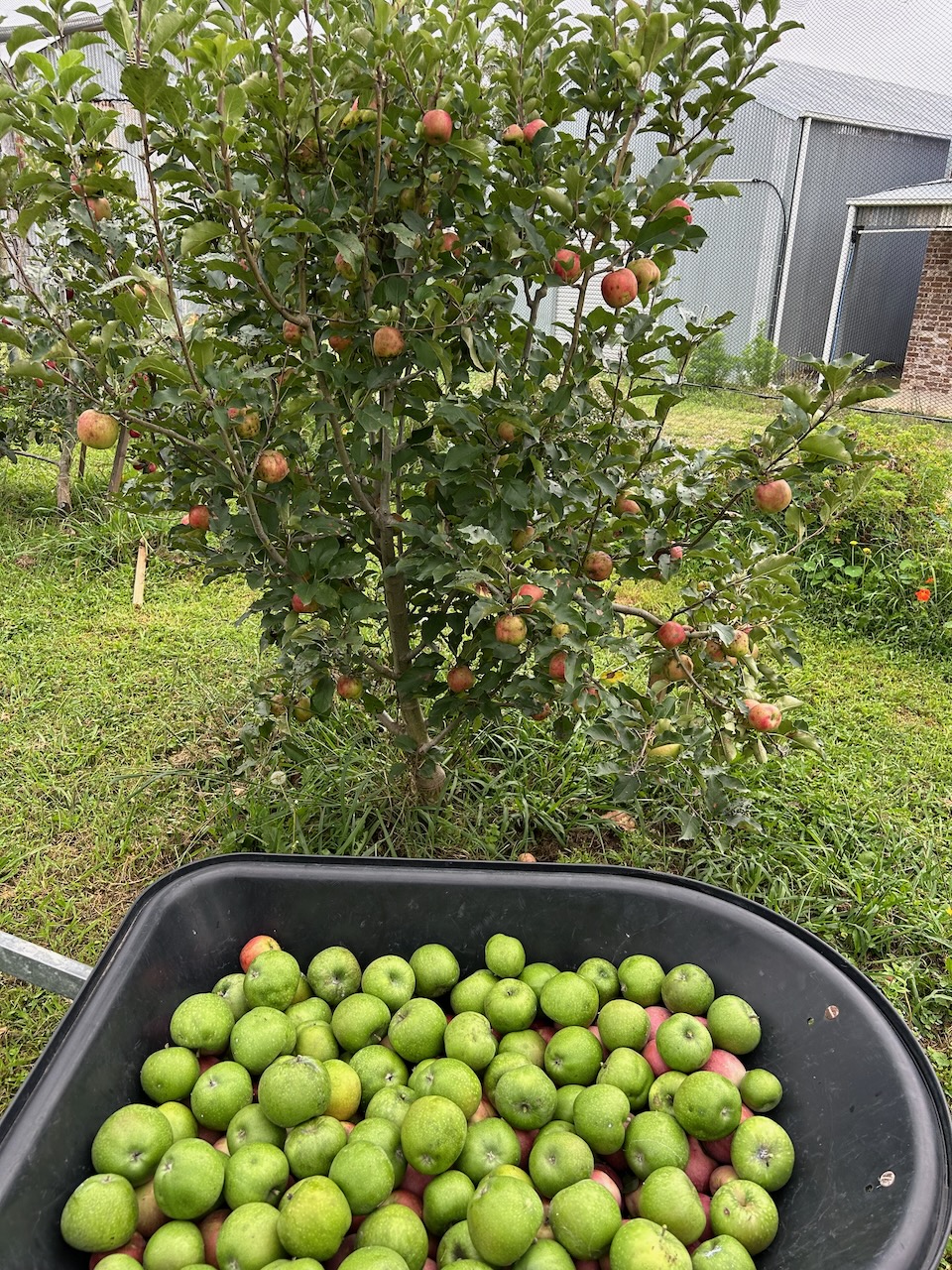
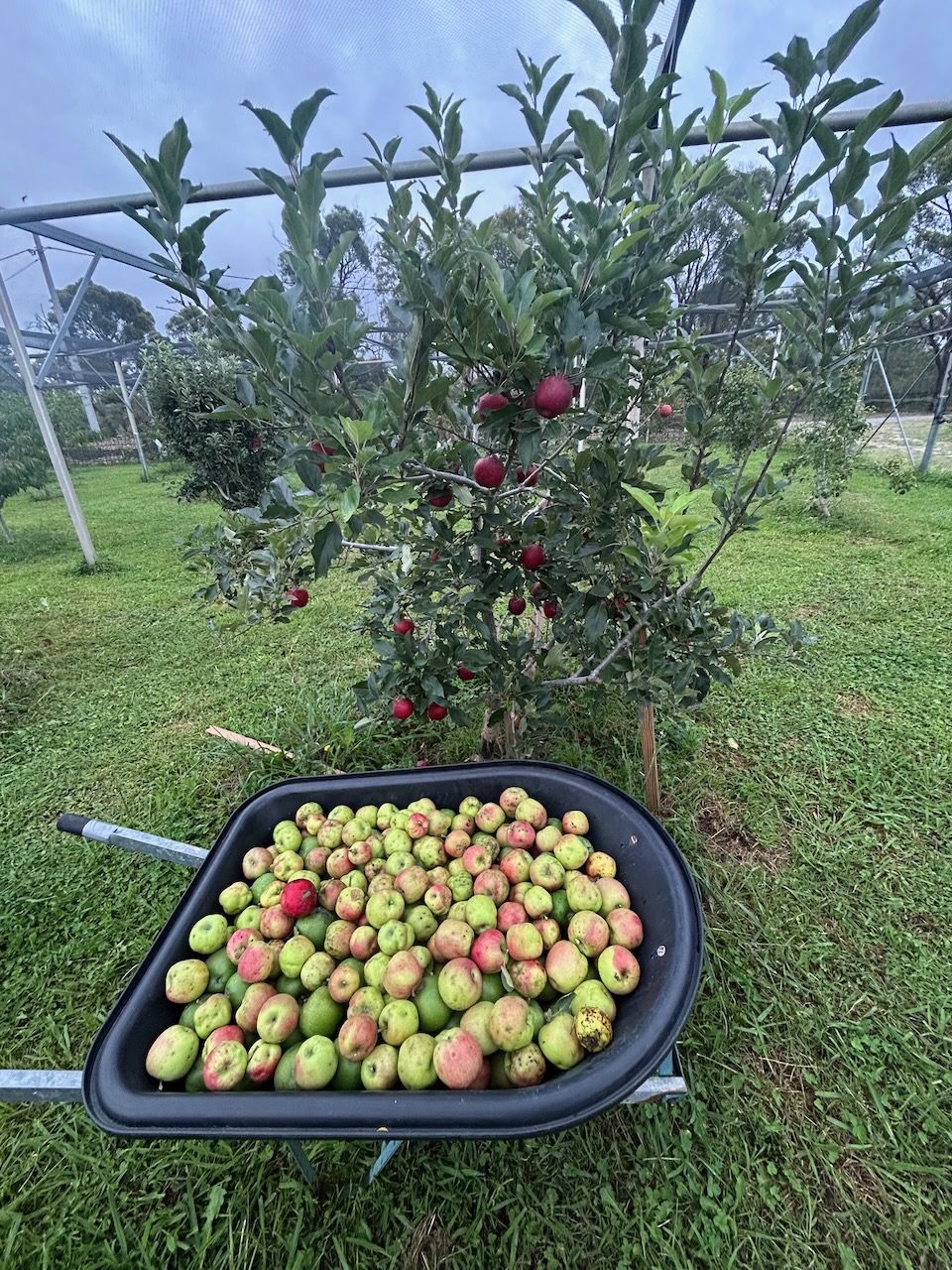
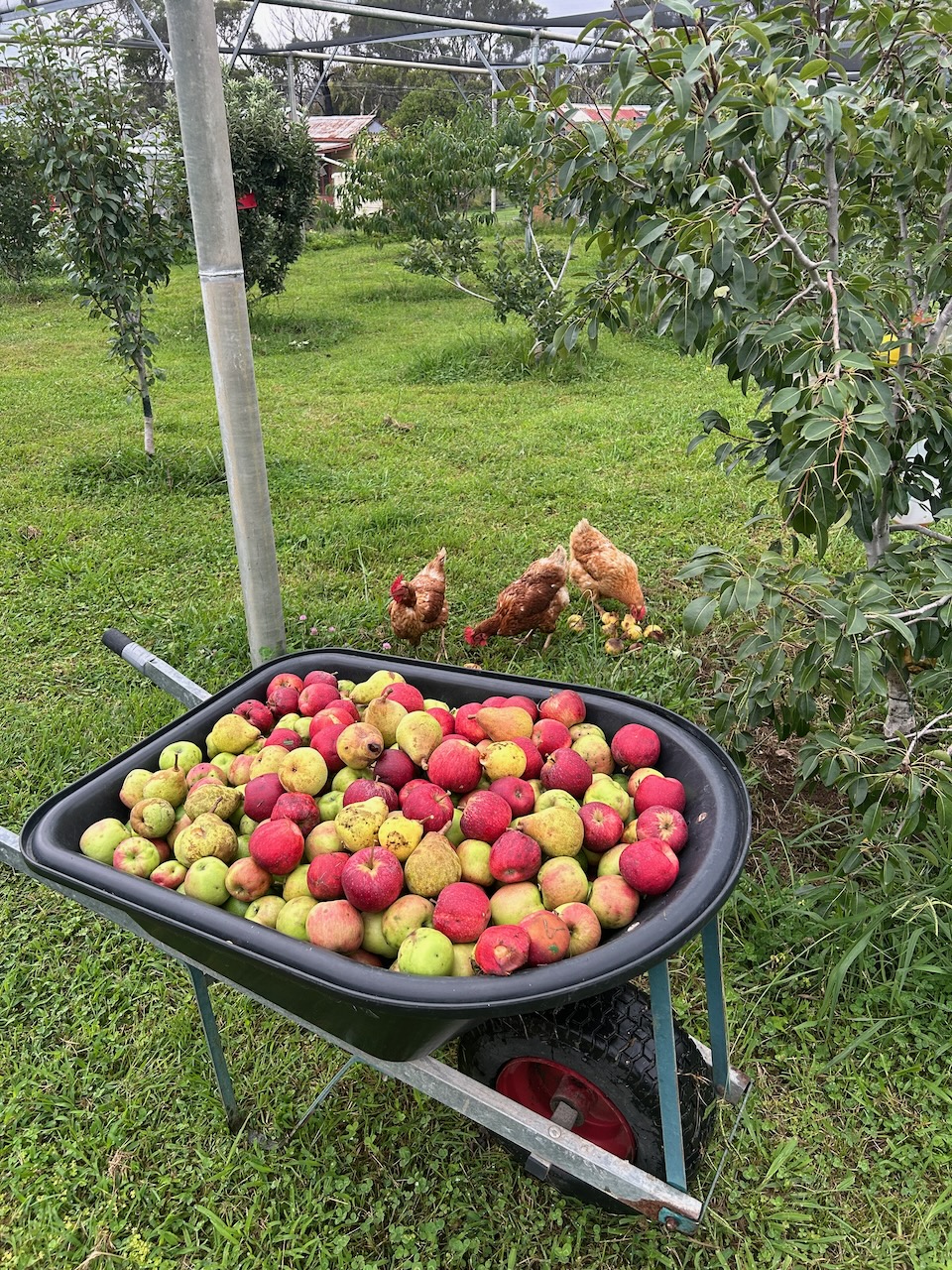
This morning, I managed to get out there into the orchard and strip the trees of all the remaining fruit and get it indoors before the rain started. I used the wheel barrow as my basket on wheels. a good measure of fruit volume. 

We are due for a whole week of rain – if the forecast can be believed. It usually rains less here than is forecast on most occasions, but it will still be a wet week by all accounts.

So today was excellent for inside jobs like washing and juicing apples and fermenting cider. It took us all day to process all the apples and juice them, then get the fermentation started.

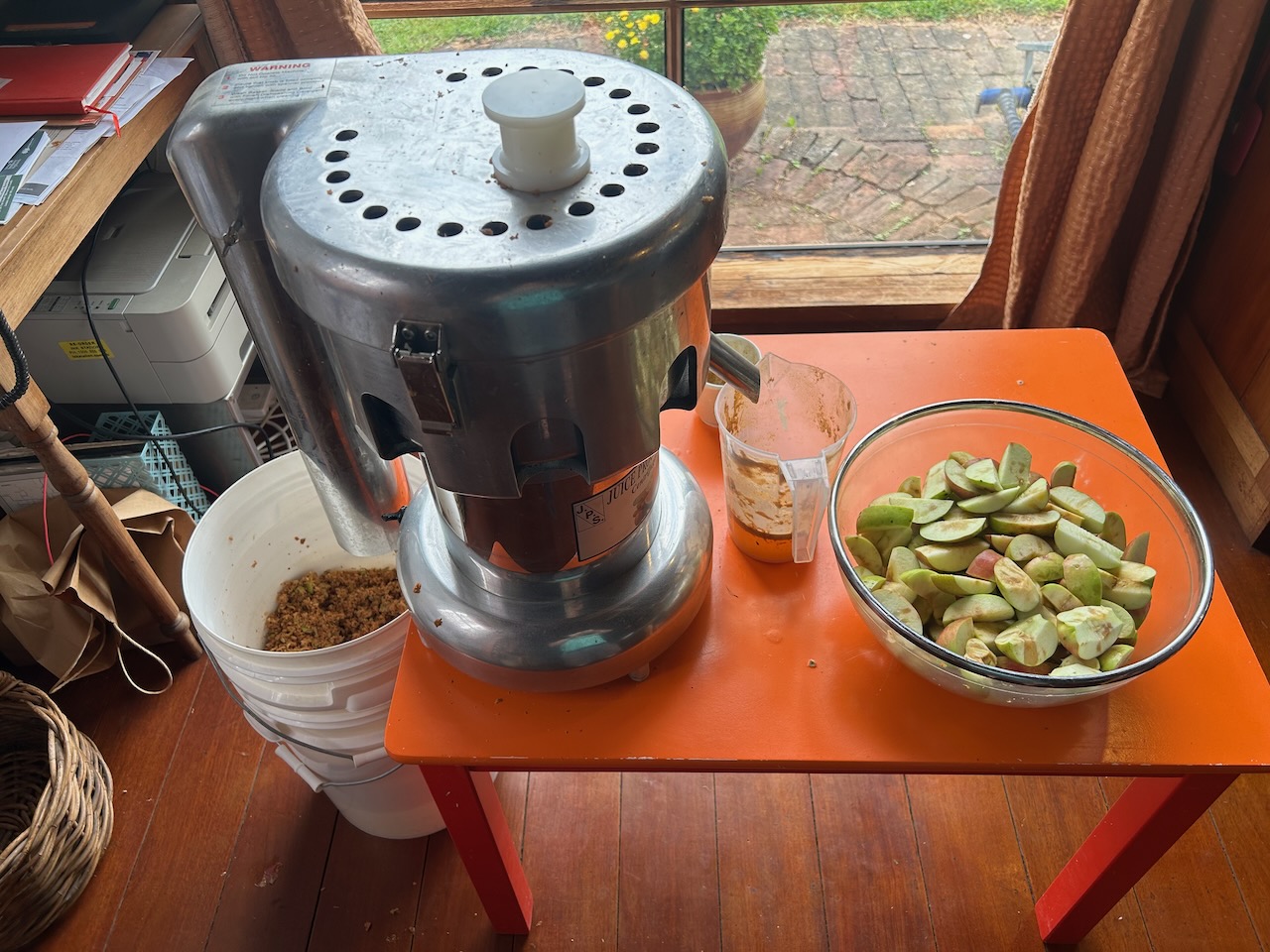
We have a really big, heavy duty, industrial grade, juice extractor. The sort of machine that you need if you are going to be juicing apples for 8 hours straight. Before we bought this one many years ago, we burnt out 3 small domestic sized ones. 

While extracting the juice, we filled 30 litres of pulp into buckets for the worm farm and compost. The juice is now in the fermentor. We can leave it for a week at least now while we get on with other jobs around the garden and pottery.

We managed to slip in a small bisque firing in the solar fired electric kiln while we were making cider. That’s one very nice thing about electric kilns, they fire automatically on a pre-programmed schedule. This allows us to get on with other jobs, like making cider, recycling clay slip/slop/slurry, pugging recycled clay, doing a bit of kintsugi? Possibly even start throwing those new ‘test’ clay bodies that I have had ageing since November? 

And of course there is always weeding.

Summer jobs and cooking up some delicious fun

Those first two big-pot throwing summer schools took all of our time and effort to start the year. Since we finished them, a couple of weeks ago, we have had time ‘off’, playing catch-up in the garden and orchards. 

We have been mowing, watering and harvesting, for the past two weeks. We have been dealing with that harvest since then, picking fruit, bottling tomatoes, making passata, roasting pumpkin cubes, bottling pears and making pear and apple juice, then picking and drying prunes. 

Diced pumpkin cubes, roasted with olive oil, garlic, salt and pepper.

Everything comes on in earnest in January. There is a lot to deal with all at once, so we are eating very well. I really look forward to that first ripe pear. Just like I do that first ripe tomato of the season. The kitchen is a busy place every day. We spaced out the gap between the two pairs of workshops to give us time to do all this ’self-sufficiency’ work. I had also booked in a couple of other jobs that were needing to be done. So our two  weeks off, has really been ‘full-on’!

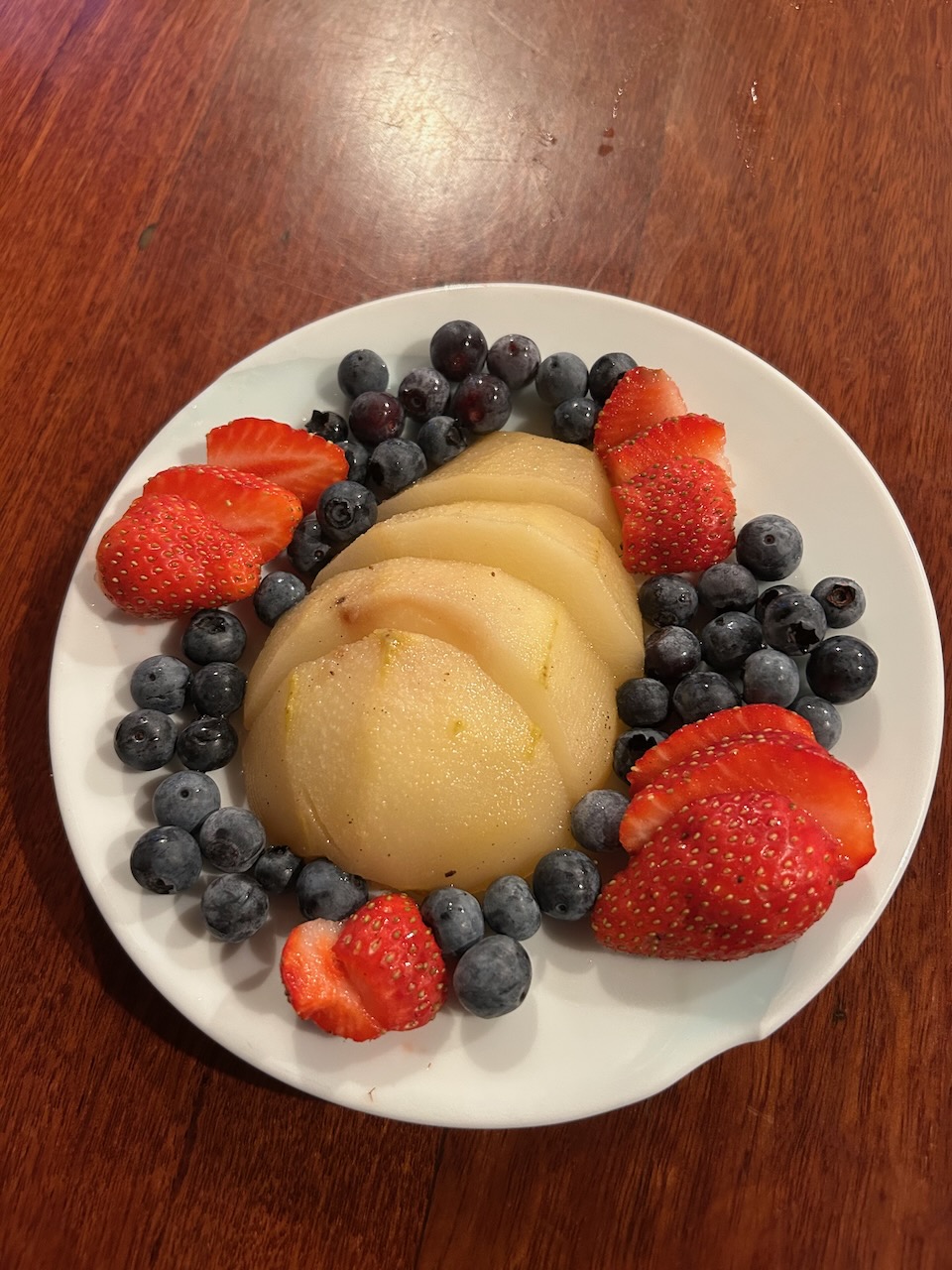
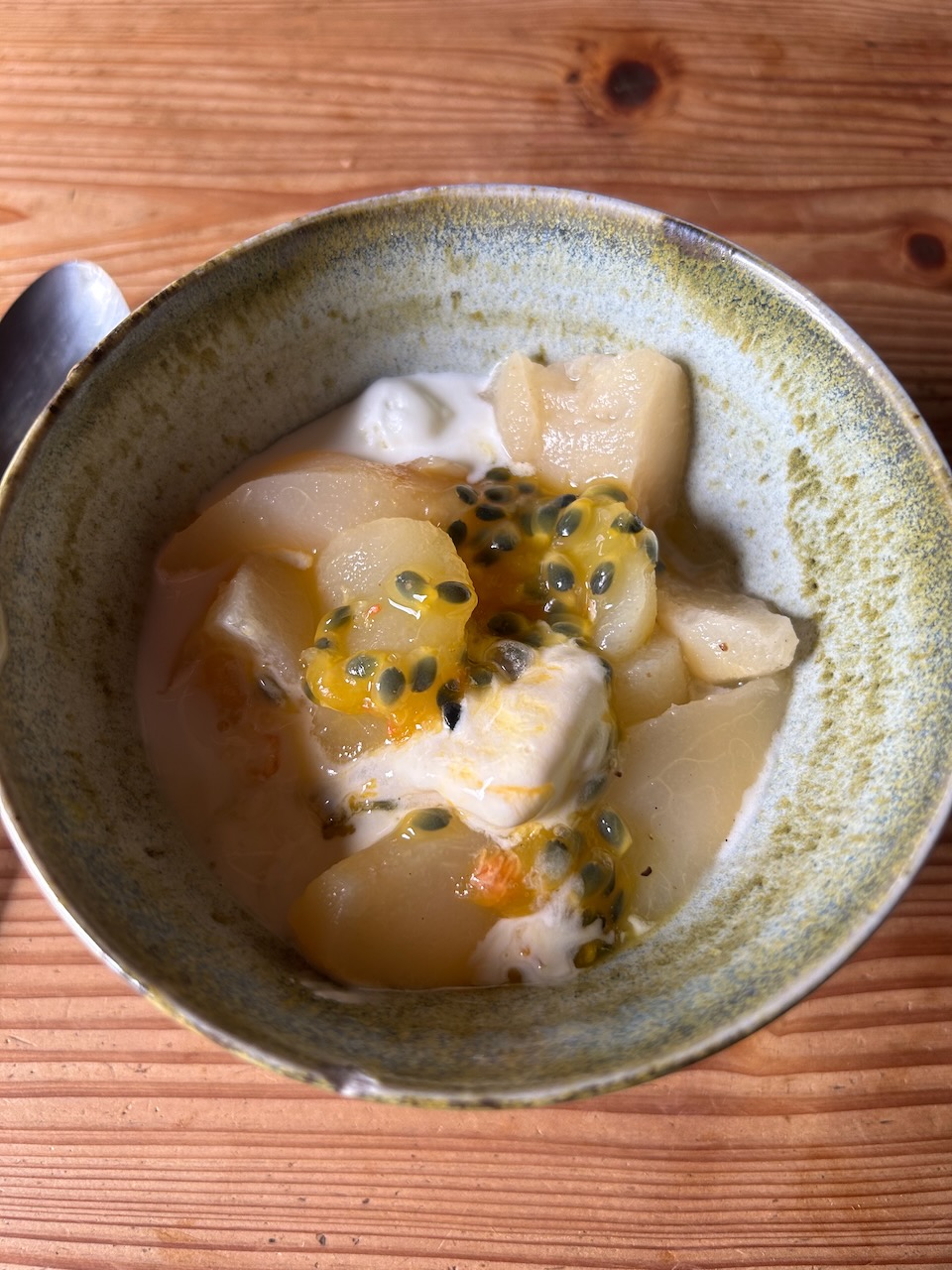
Pears poached in a little white wine, cinnamon and sugar, served with fresh picked passionfruit and a little ice cream. These are the tangible benefits of self-reliant living and gardening. 50 years in the planning, execution and nurturing. 5 minutes in the eating.

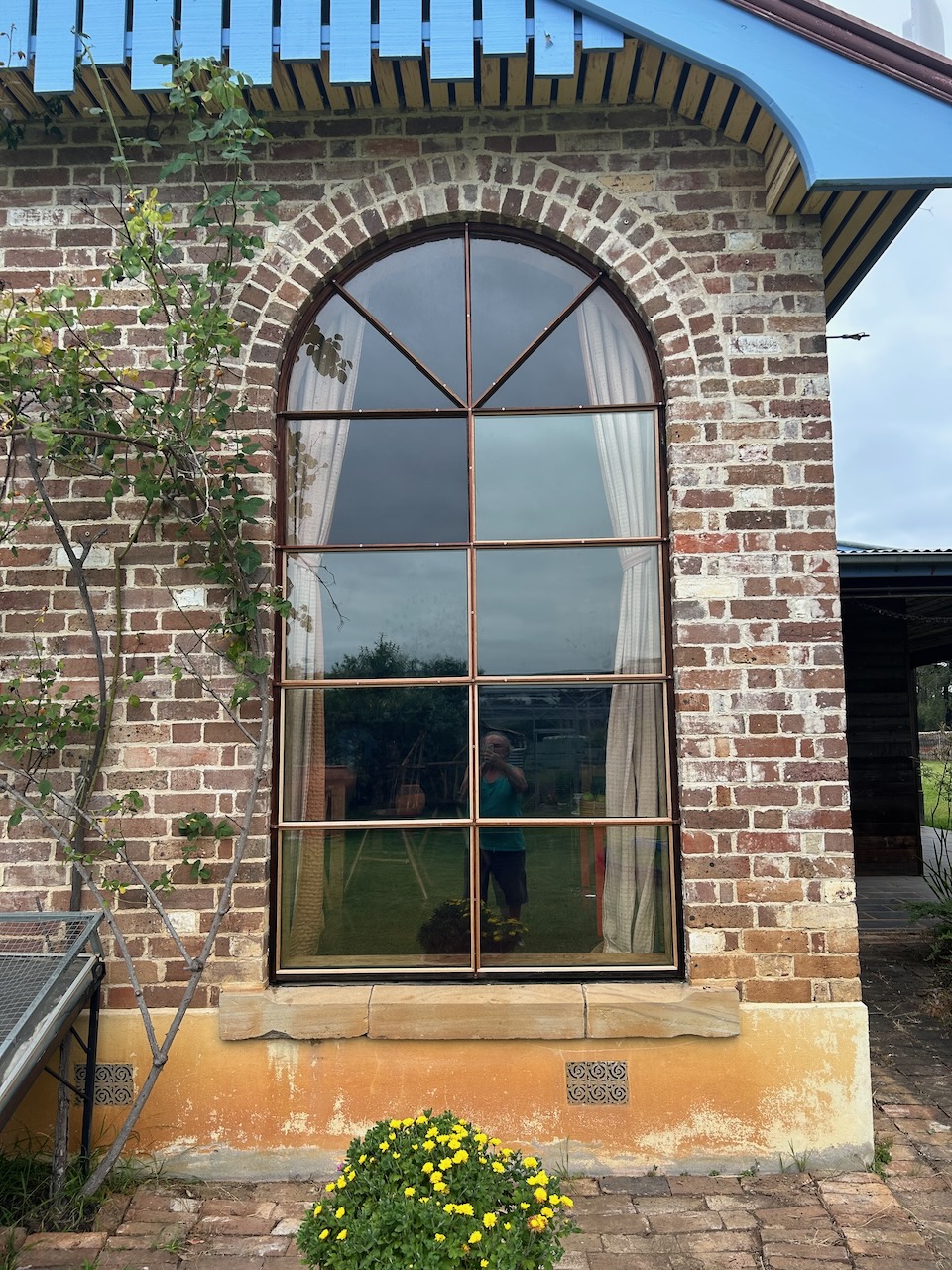
I ordered some double glazed, argon filled, metal coated, low energy, toughened, window panes to replace the 3mm. plain glass that is in our big arch window in the house. That fancy energy efficient glass arrived just before Xmas. The big window has been working well, letting light in, but keeping the rain out for almost 40 years, since I built it, and glazed it myself all those years ago. At the time, I tried to find double glazed glass for it, but to no avail. I also tried to buy special ‘stick-on’ glass coating mentioned by Amery Lovins, when he was here giving a lecture tour back then. But no one seemed to be aware of any such product here in Australia, not even ‘3M’ who I was told made it.

So we just lived with it as it was, eventually adding a huge sheet of thin perspex to the inside to create a semi-sealed air gap, but although that did work to some extent. There was room for improvement, and the unsealed gap always fogged up in wet weather, causing the wooden sill to get very wet and start to rot on the surface, so something had to be done.

Luckily, there is now a factory in town, that makes these fancy window panes. There was a one month wait while they were made to order. Back in December, I spent time rebuilding the structure of the glazing bars to make them deeper in preparation. We have managed to install 7 of the new double glazed panes so far. 5 to go. Interestingly, I have spent over $200 just on special window glazing silicon and wooden glazing beading to complete the job.

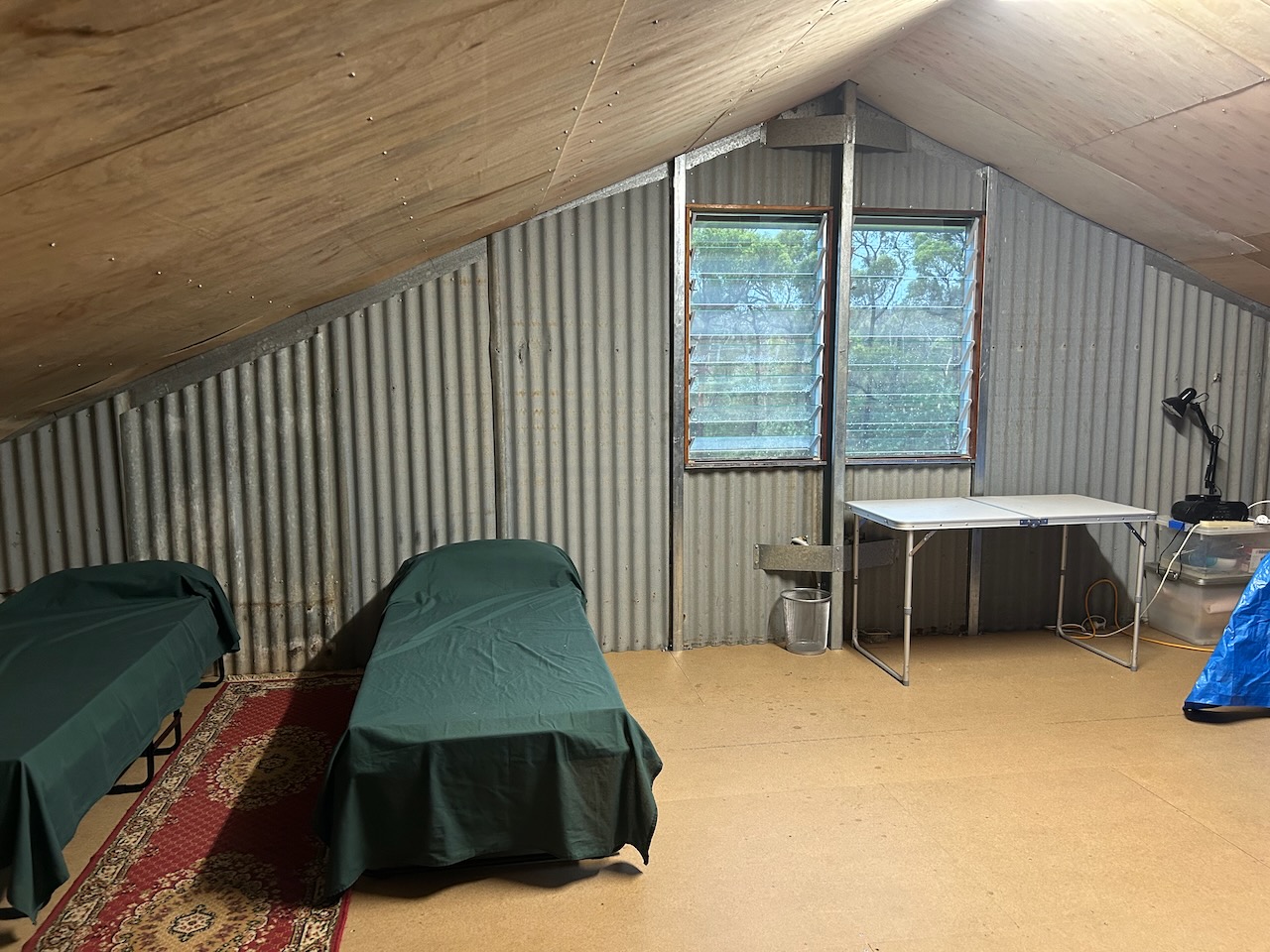
I booked a few days of help from my friend Andy, who is a local architect and environmentally conscientious builder. A rare breed! He has been very kind in offering us loads of assistance since the fire. He also offers good council and advice on environmental/building matters. I asked Andy to help me install two louvre windows up  in the big pottery shed loft. I bought some louvre mechanisms and the ground glass panes online, then I built a couple of hard wood window frames to mount them in. I also made all the custom flashings to go around them. Andy did all the outside ladder work on the day, cutting the hole in the wall and we installed them without too much trouble. It gives plenty of ventilation up there to take the heat out of the loft, but also brings in so much light and the view is good too.

We haven’t quite finished setting it up again yet, but it has been transformed into a lovely, light and airy, comfortable place now.

I have to ‘fix’ a kiln for a friend, even though I am retired, this is a special favour, then it will be back into the workshop for the next two summer schools. I’m looking forward to getting back into making pots for myself again. I have a few batches of experimental clay bodies that have been ageing for some months now. I’m keen to try them out. Especially to see how they will look in the wood fired kiln.

Blackware, Blossom, Black truffles and Brassicas

The nights are getting slightly shorter every day. The dawn comes a little earlier each morning and its now just on light when I wake up.

It a very nice feeling to sense the return of the sun, even though it’s just a hint.

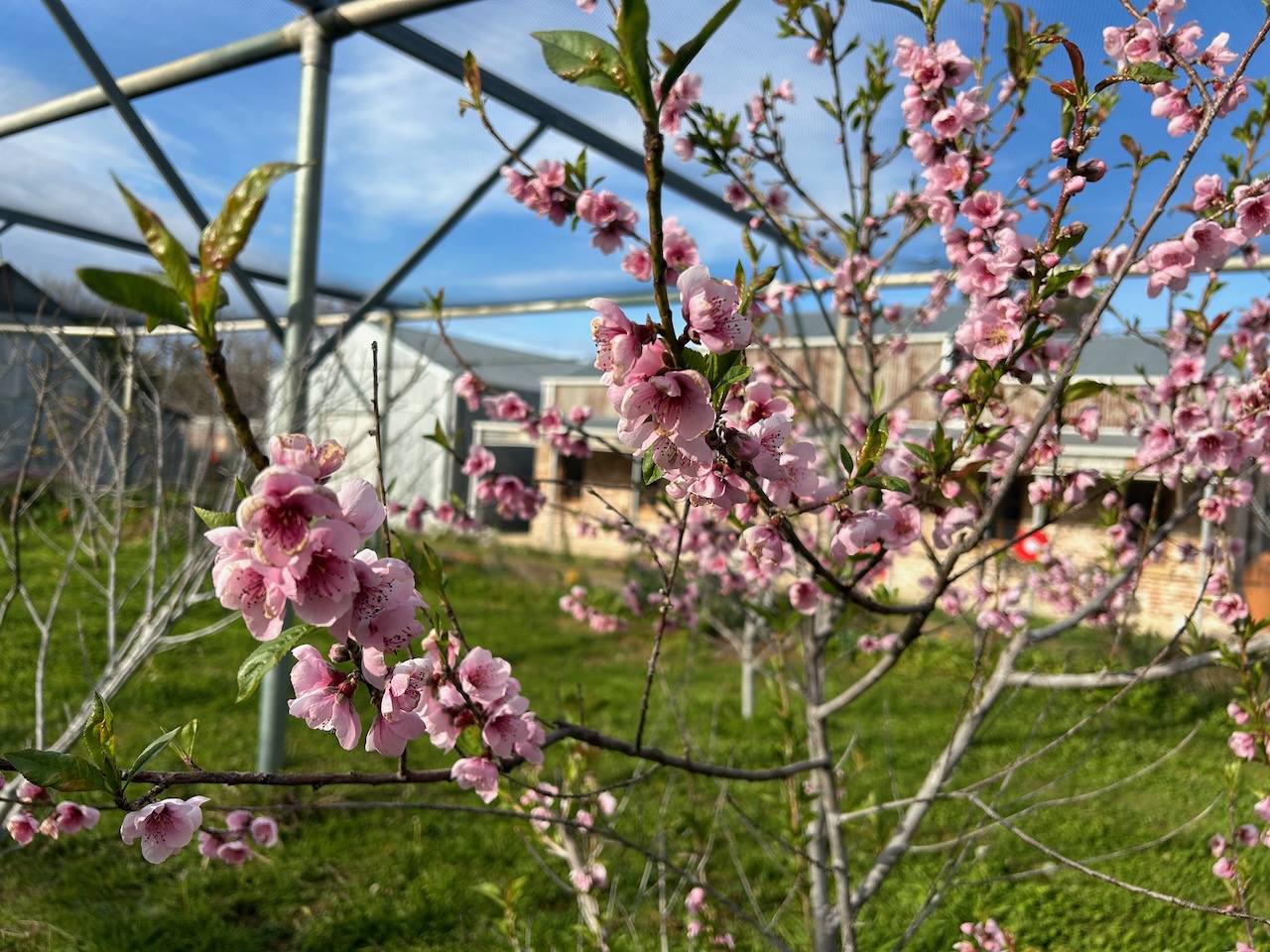
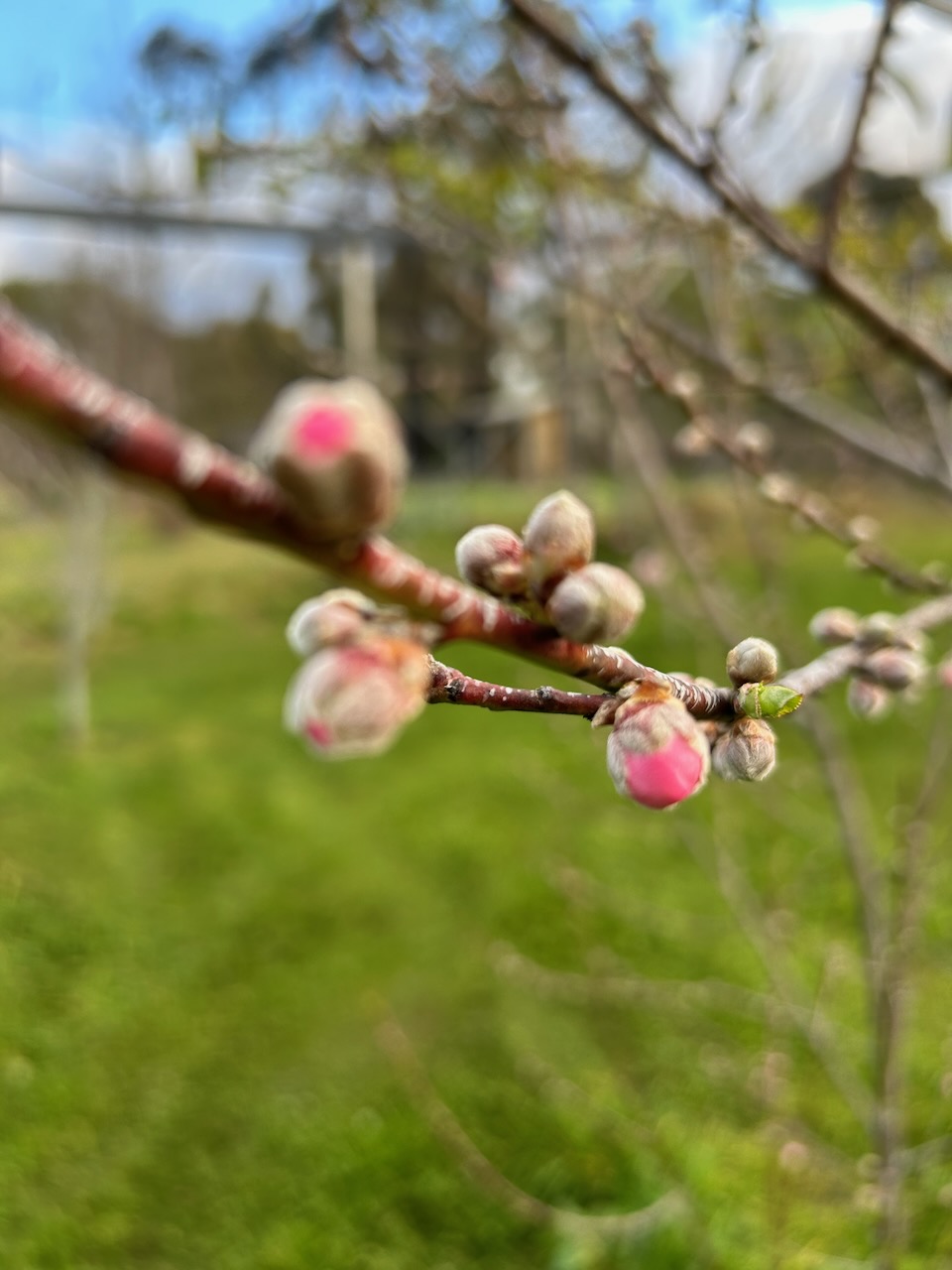
The trees in the stone fruit orchard are starting to bust into flower. This time last month there was only just the one very early peach, but now there are several trees in flower. The almonds, peaches, nectarines and the first plum tree.

We also are enjoying a very pleasant display from my floral border plantings around the pottery retaining wall. 

Earlier this week, we ate the first of the new season asparagus. However, our main garden produce remains the brassicas, and will be for some time to come.

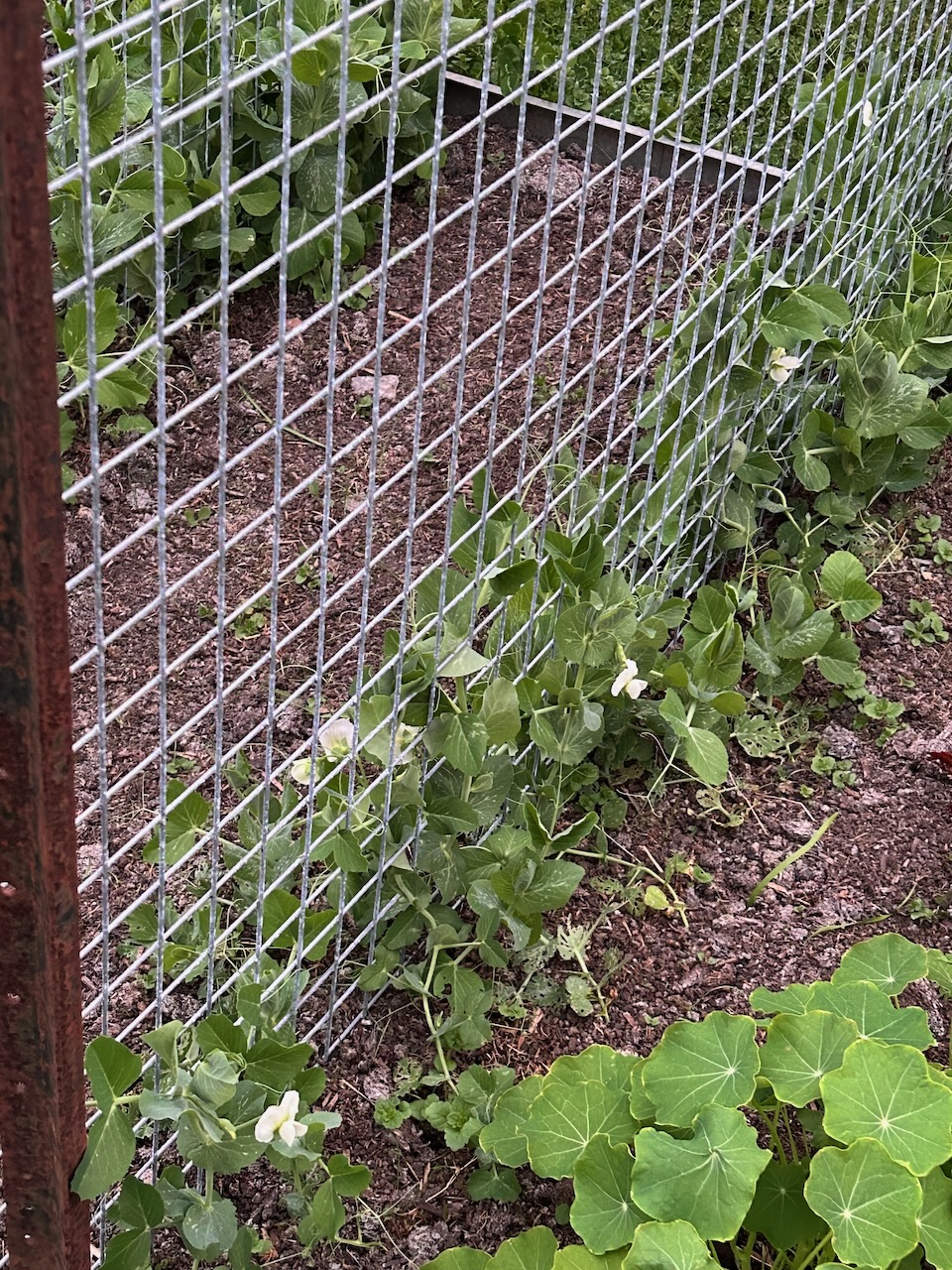
The peas have just started to climb the new twin wire trellis and have also opened their first flowers. So much to look forward to.

Last week we had a firing in the wood kiln with a bunch of amazing students. The weather held, and although it was crisp, it wasn’t too cold for the over night shifts.

After the unpacking, we all got stuck in and spent a couple of hours after lunch carting, stacking and splitting wood.

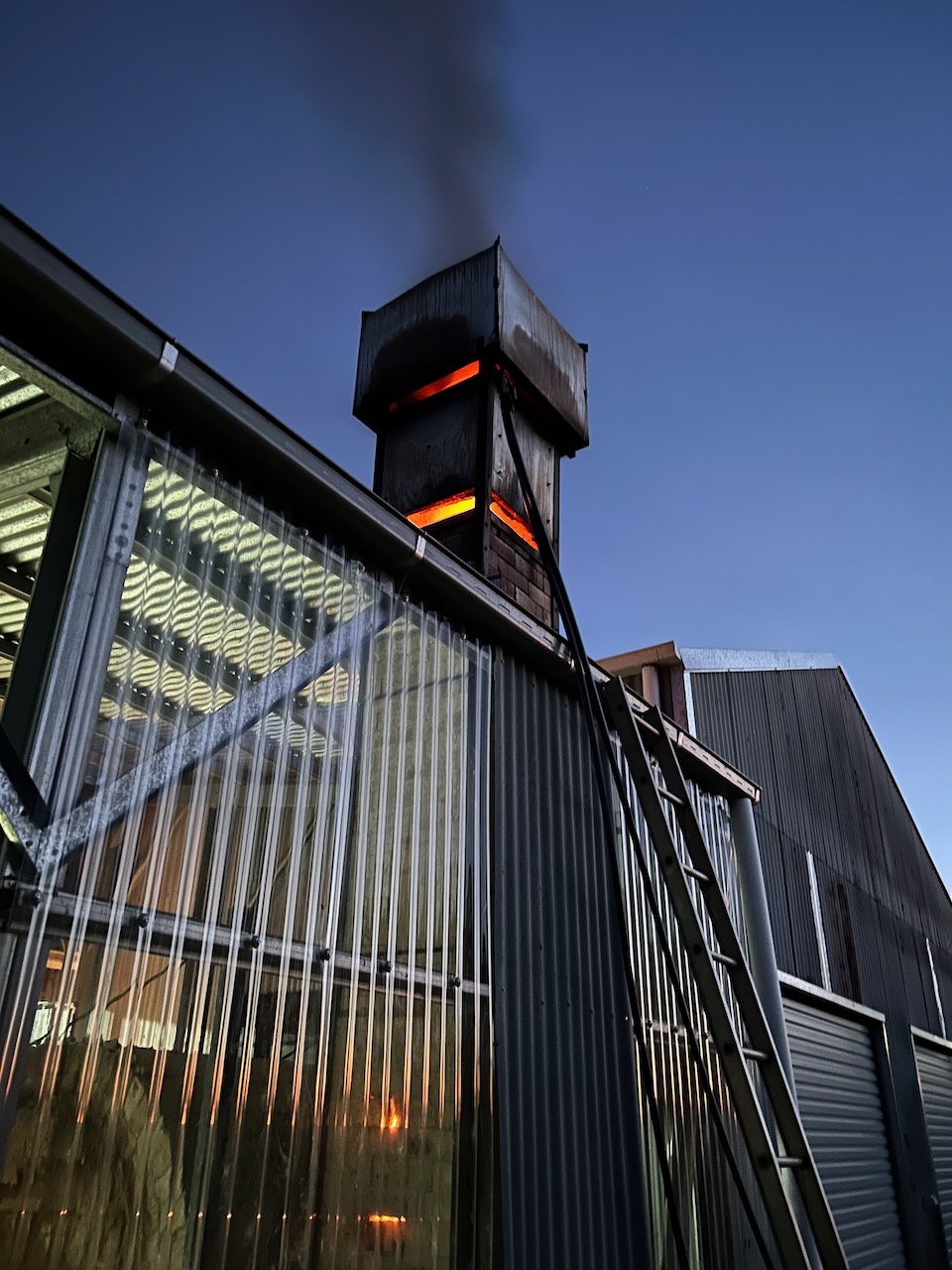
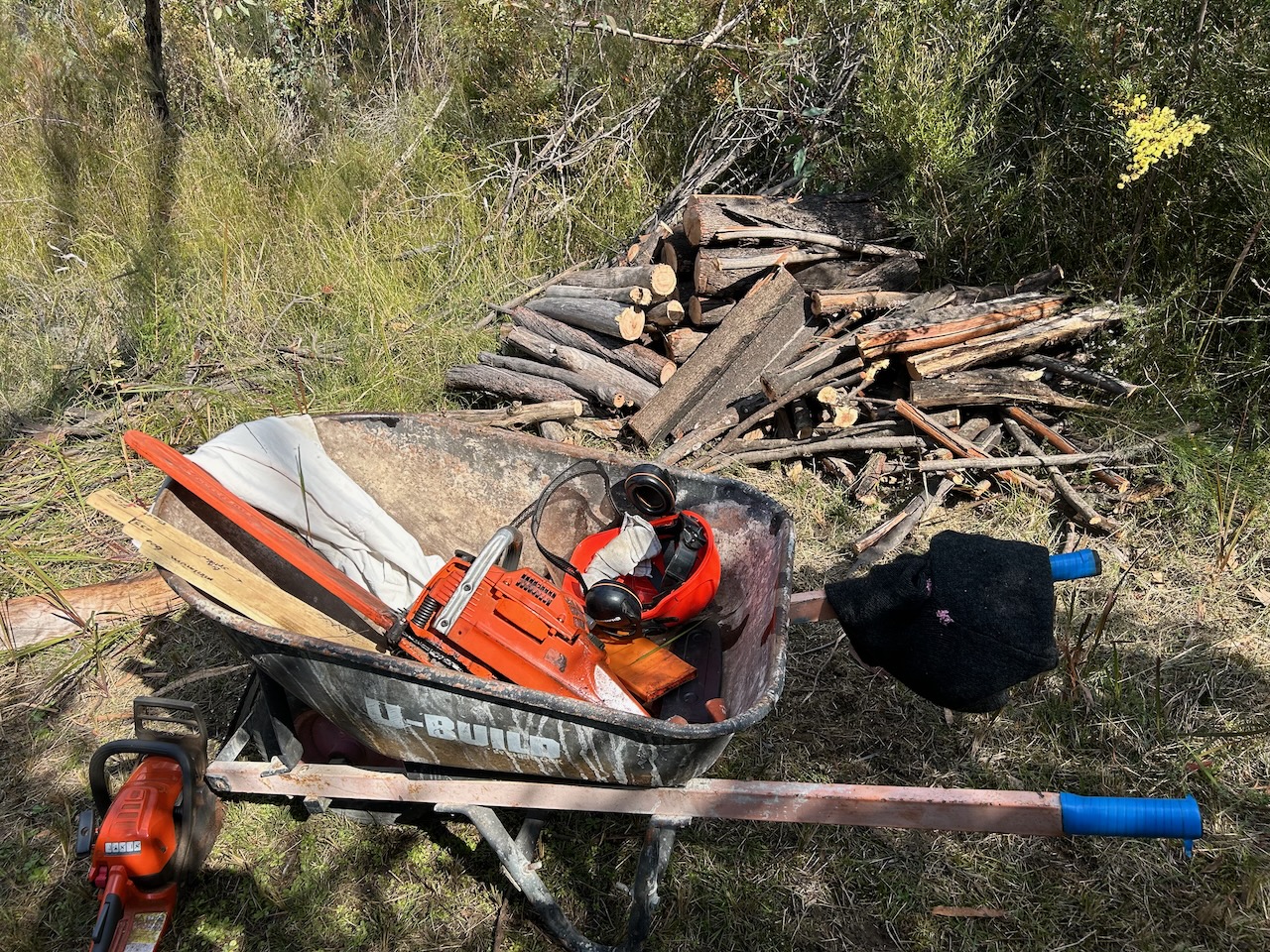
I had spent a couple of days during the cooling period, chainsawing fallen dead trees out in our forest. I had to do a bit of clearing to make a turning circle, and then snigging out the logs with chains into the clearing, to be cut up into ‘hob’ lengths for our bourry box fire box.

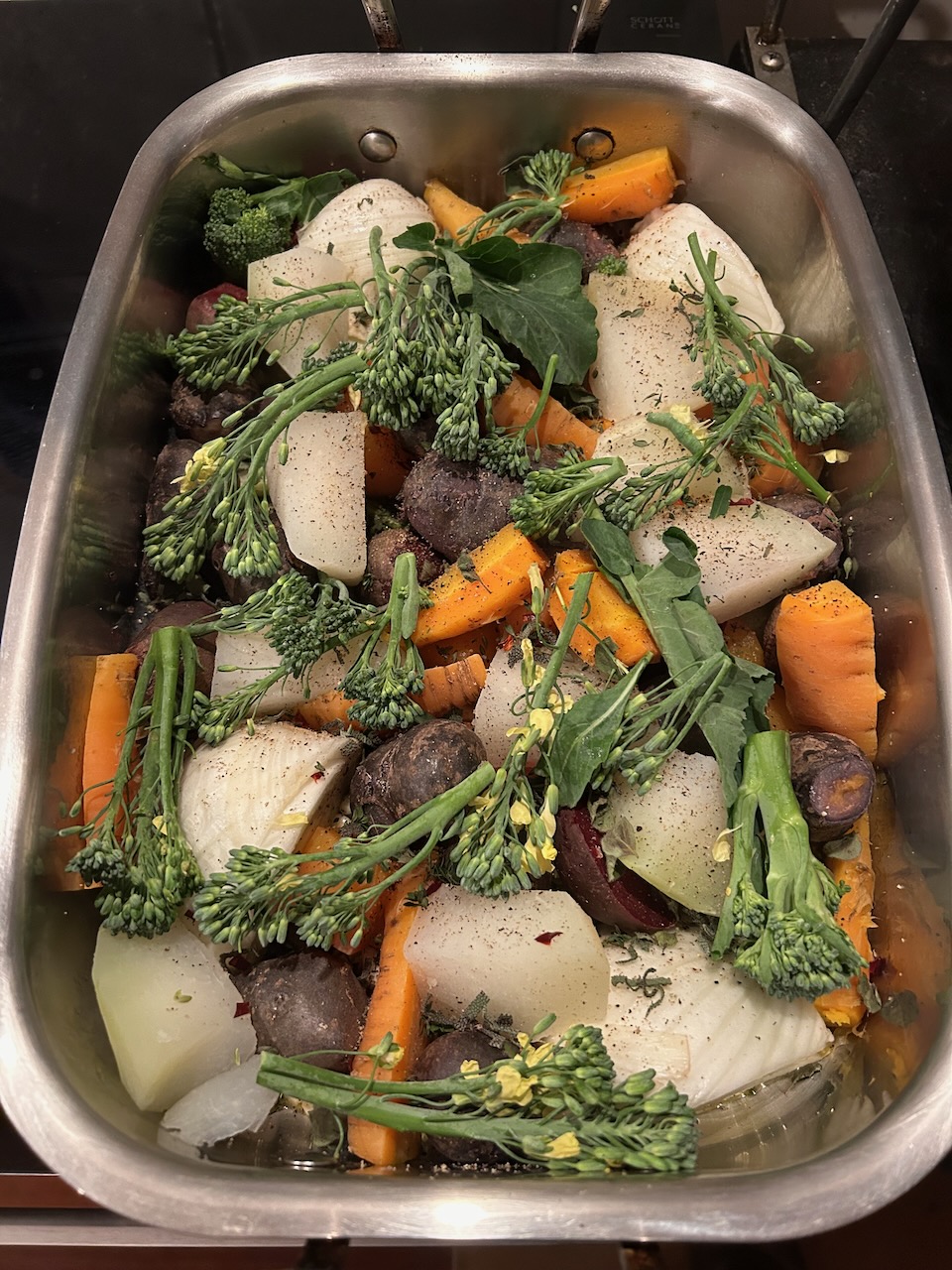
In the garden, I’m picking winter veggies, mostly brassicas and then dining on roasted vegetables.

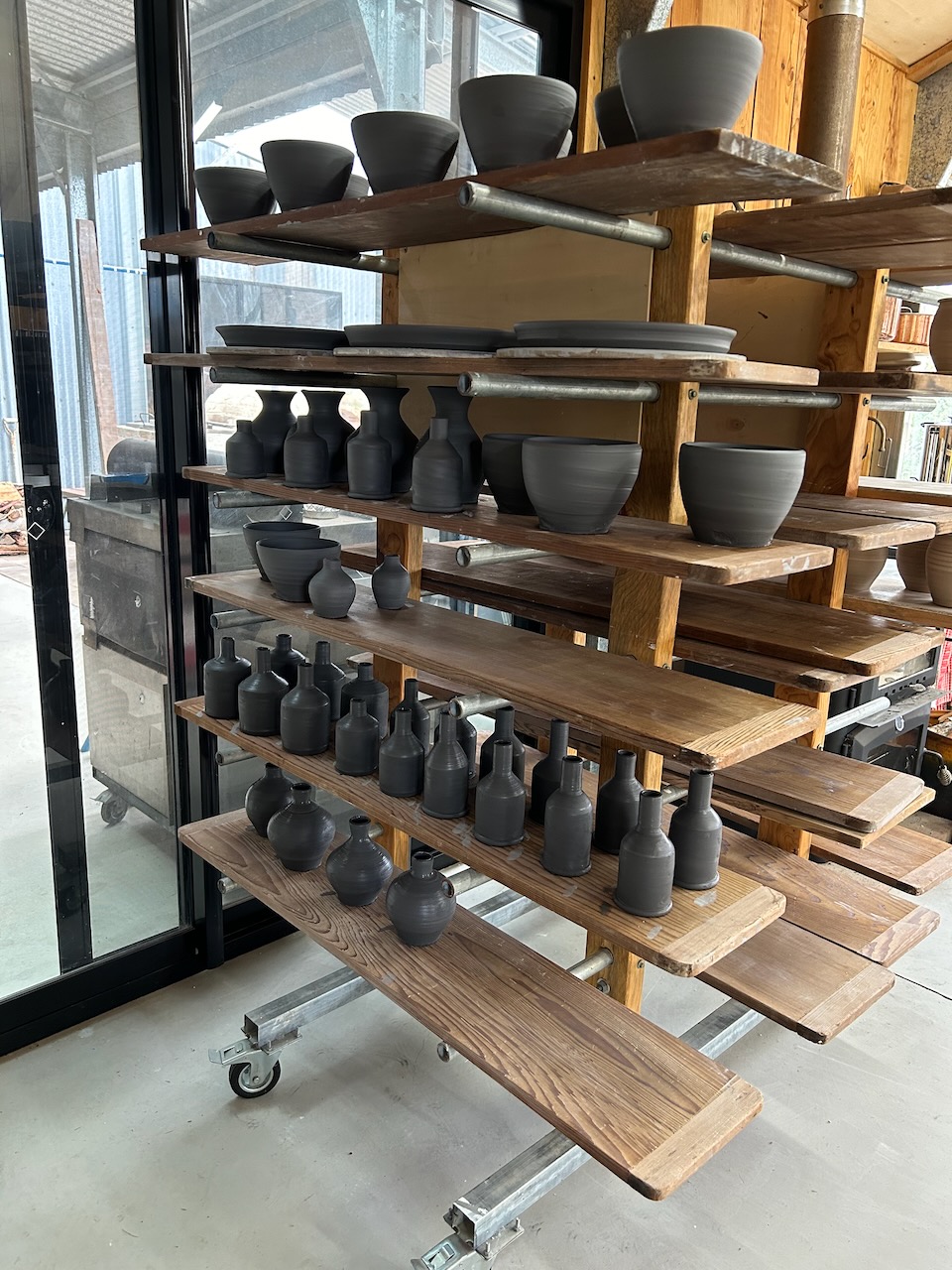
In the pottery, I have been making some small batches of experimental new clay bodies based on my local weathered basaltic gravel that I make my Balmoral Blackware from. Just small 5 kg batches. I have no idea how they will turn out, but there is only one way to find out, and that is to make some pots out of them and fire them. I’m planning to fire them in the wood kiln before I go to Korea to work next month. If I can find the time to fit it all in in time. If not, then it will be when I get back.

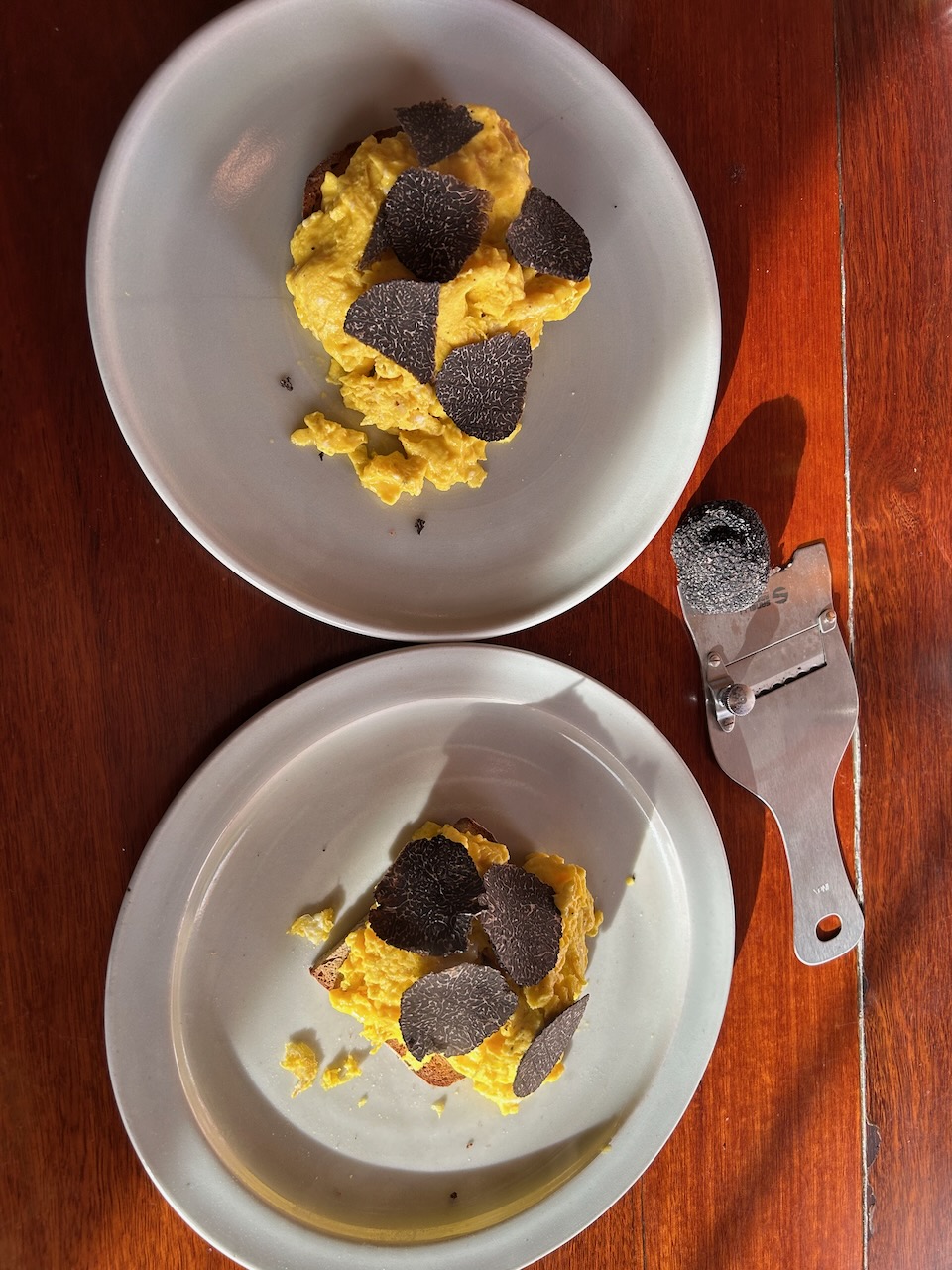
Winter brings on the truffle season, so we are enjoying French Black truffles very thinly sliced over our beautiful chickens scrambled eggs. Just another black treat in this season. 

We keep the truffles in a container of rice in the fridge, so that we can the full truffle flavour in the eggs and the rice. The infused rice is used for truffle flavoured risotto for dinner.

I think that I prefer soft scrambles eggs on toast with the truffle shaved on top, but as we have two good sized truffles this year, we also try dicing and micro planning the truffle into the egg mix. I think that we get slightly more flavour in the eggs this way, but I rather like bending over my breakfast and inhaling deeply to catch the delicate fragrance while I can see the round black slices on top of the deep yellow of the eggs. It’s a feast for both the eyes and the nose.

Roll on the seasons. Next stop is spring!

Nina the Gleaner, purple potatoes and okonomiyaki

At the start of this month we had the first buds and then flowers open on the earliest peach tree. Luckily I thought to spray all the fruit trees with lime sulphur last month, as that has to be done before bud burst. I really need to get in there and finish the winter pruning. I have done all the peaches and cherry trees in the veggie garden netted area.

June for spraying lime sulphur, July for pruning, August to start spraying copper (Bordeaux) for leaf curl fungus. Winter is a busy time when nothing is happening!  

There is a lot of work in being low impact, organic, nature friendly and carbon neutral. I haven’t had any spare time to do any composting around the fruit trees so far. So I will give them a hand full of chicken manure and some dolomite and wood ashes this time round. All of the chicken run scratch litter and manure mix has been going around the almonds trees so far this year. With only 4 chooks, there isn’t a lot to go round and with over 60 fruit and nut trees to manage, I buy a few bags of dynamic lifter composted chicken manure pellets, so as to give every tree a bit of a boost. They all get a good dose of wood ash in sequence throughout the winter, as we clean out the ashes from the various wood stoves and burn piles.

The wheel barrow has a garbage tin full of wood ash, a bag of composted chook pooh pellets and a bag of dolomite. I work my way about the orchard spreading the goodness around the drip line.

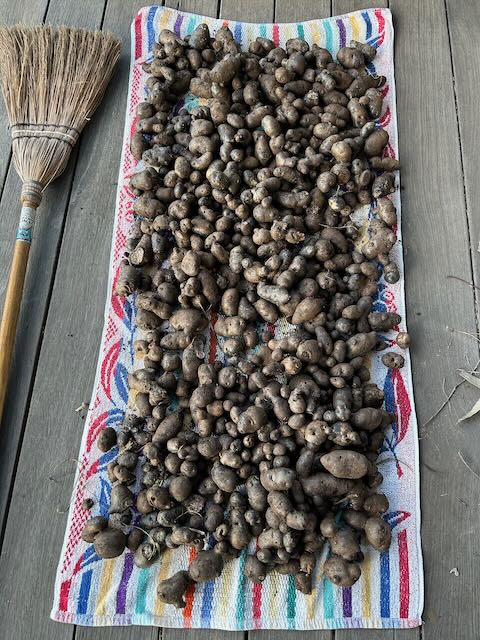
Janine harvested our Purple Congo potatoes, I caught her down gleaning the last of them from the southern end of the garden, just before I got stuck in and weeded and tilled it over, then covered it in compost to put it to bed to fallow until spring.

When we were in Germany a decade ago, we stayed with an extended family of potters who had gleaning rights with a local farmer, a concession that had been going on for generations I believe.

We spent a day helping them glean a paddock that had been harvested of its potatoes, but there were lots of undersized or slightly damaged ones that were there for the picking. 

I remember seeing a Van Gogh painting of ‘The Potato Gleaners’, and there we were in Germany engaging in this very ancient practice.  I really enjoyed it, fore-stalling waste. I wrote about it at the time on my blog. Gleaning is a very ancient right. It was established in France in the 1500’s and protected by the constitution. Today, I suppose that the equivalent would be dumpster diving? No need for either of us here to dumpster dive, because we have developed this positive, creative, environmentally friendly lifestyle. We grow all of our own green food, vegetables and fruit. 

It’s a lot of work, but very rewarding when I get to look at what I’ve achieved after a day of work in the garden. The effort gives me a lot of pleasure, even though I have all the aches and strains from the work, but then I think of all the loads of vegetables flowing to us over the year, and there is always a bit of excess to share with our neighbours. Planting seeds is such a positive, hopeful and uplifting act of rebellion. 

Broad beans, garlic and brassicas are all growing well, and planted in series to ensure a continuous supply of some sort of food throughout the seasons.

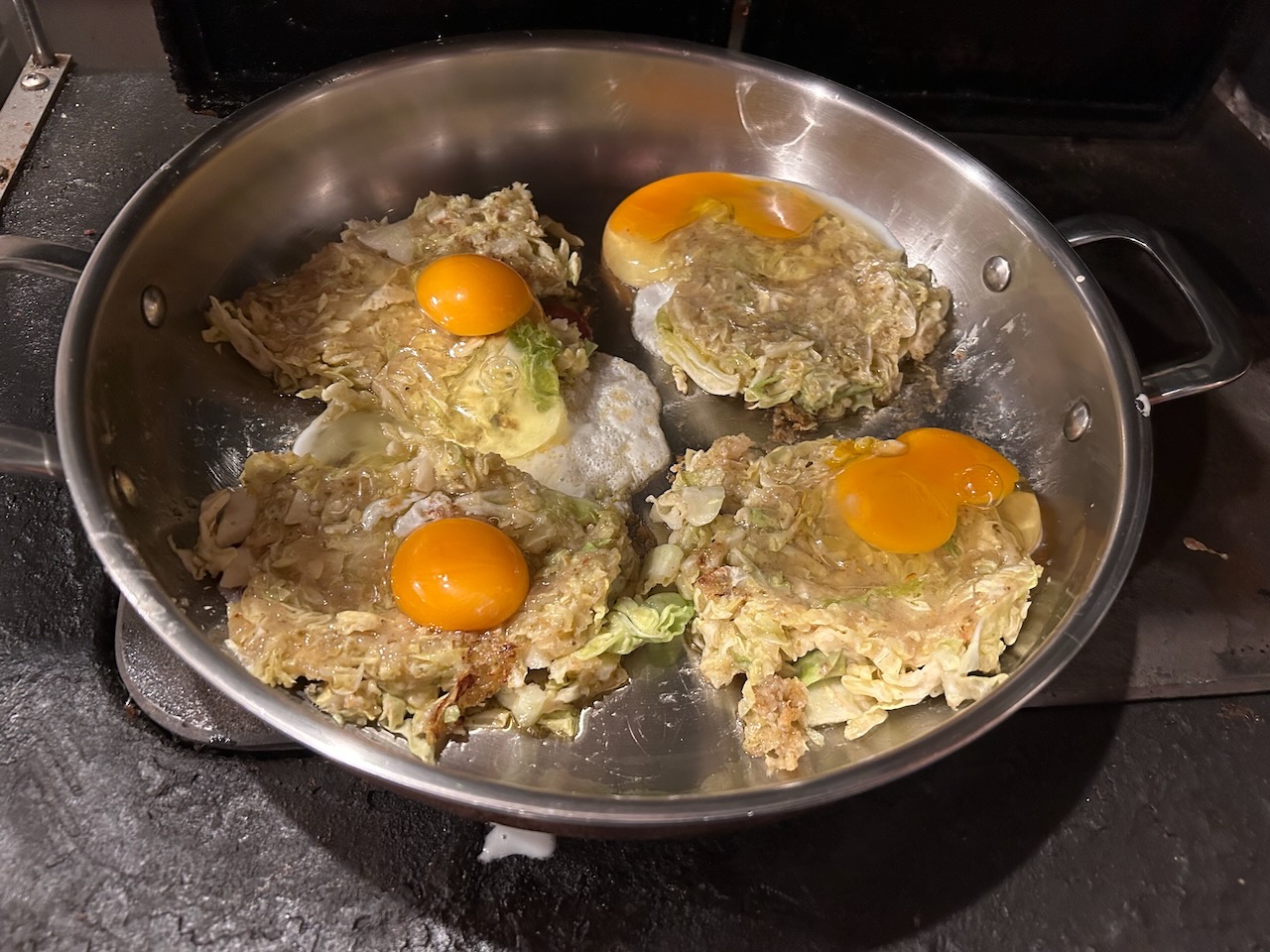
Now in mid winter, there are plenty of cabbages, cauliflowers, broccoli and brussel sprouts. One delicious option for us is to make okonomiyaki. The Japanese traditional cabbage pancake. We are not au fait with all things Japanese, but I have a keen interest in the culture and I have visited many times to study ceramics there. Okonomiyaki is a quick and easy meal that uses cabbage in a different and interesting way.

I’m told that okonomiyaki is literally translated as ‘you choose what you want’. Yaki means cooked or burnt as in pottery being yaki, or fired, and there is the character for ‘no’, which means ‘of’ stuck in the middle, so maybe ‘oko’ and ‘mi’ are to do with you and choose?

I take it to mean that I’m cooking a cabbage pancake and you can choose to add whatever you want to go in the mix. But it’s always cabbage, egg and pork!

The Koreans have a similar traditional cabbage pancake made with kinchi pickled cabbage, ‘panjun’ (sp) not too sure about the true pronunciation or the spelling there, but it tastes delicious no matter how you spell it..

Although there are minor differences throughout Japan from north to south, okonomiyaki remains pretty much the same everywhere. I’ve had it in Mashiko to the north of Tokyo and also in Arita in Kyushu in the far south. I first tasted it in Imbe in 1986, more or less smack in between. Always delicious and very recognisable. 

Apparently within Japan there is hot debate between various cities such as Osaka and Kyoto, as to who makes the better and most ‘authentic’ okonomiyaki. As an outsider, I have no opinion on the matter. I love them all.

My Japanese friend has suggested to me that it should be made with grated Japanese mountain potato starch, to get the best texture, but as that isn’t readily available here, that I have been able to find. She told me that I can mix in a small % of tapioca starch to give the mix a creamy texture. 

I tried Japanese kuzu powder and corn flour, but that made the pancake too sticky and glutinous. My okonomiyaki is an Australian multi-cultural work in progress. The home grown organic cabbage is really the high light, freshly picked and snappy crisp, it’s great. I’ve tried different varieties of cabbage, the best ones are the light and slightly curly types like savoy. Dense cabbages like red cabbage need to be par-boiled to soften them beforehand otherwise they are still a bit tough and chewy after the quick light cooking of the pancake.

The traditional recipe calls for a thin slice of pork and then an egg cracked over the top towards the end of cooking. I have plenty of fresh eggs, but not always fresh, thinly sliced pork. However, I can usually find some Italian style, dried, salted and lightly smoked, thin slices of pork in the deli shop. That makes a suitable substitute. No self-respecting Japanese person would recognise the mess that I end up serving, but it tastes OK, it’s fresh and it’s healthy. Ne!

It’s been an honour, joy and privilege to have had the pleasure of managing and curating these 7 acres, along with Janine for the past 48 years. I am so lucky to live and work in such a great place.

1st. Weekend Workshop Throwing Class completed

We have just completed another weekend workshop. This time a throwing class. I advertised one and filled two weekends, so we will back in the studio again with the 2nd group next weekend for the 2nd one.

Everyone seemed to enjoy them selves and got something out of it. We had Len Smith here with us for the weekend to have 3 tutors for the 8 students. Len has so much teaching experience, it’s great for the students to have a third point of view. He’s also great company.

I spent the week pugging clay and prepping the throwing room, and during the time in-between, I kept on with my sgraffito decoration, and got a solar powered, stoneware glaze firing done.

These red and black cups are experiments in a combination of Sgraffito and inlay.

Just black slip inlay on these cups.

Just sgraffito on this bowl

In the evenings, I made another batch of tomato passata. I have now run out of our re-cycled ‘pop top’ jars and so I have started to use the old ‘Fowler’s’ vacuum jars with clip top lids. I made a 7 litre boiler full, and reduced it down to 5 litres, enough to fill 7 of our No.27 Fowler’s jars. I have no idea how Fowlers came up with their numbering system, but as they are so old, I suspect that it represents fluid ounces? 

I Googled it and 27 imperial fluid ounces = 770 mls. So that sounds like it ought to be right.

I also made this weeks loaf of rye bread.

For the workshop lunch, I made a flan or tart with a baked cottage cheese base and a ratatouille topping. That didn’t last very long.

The coming week will be more of the same as we repeat it all over again.

The workshop is all cleaned and mopped and ready to go.

The workshop looks beautiful tonight in the glow of the pink sunset.

This image of the workshop by Janine