The Last Days of Spring

It’s the last days of spring, and I have been very busy doing all sorts of little jobs that have been waiting for me to find some ‘spare’ time. We were so flat out busy working in the pottery leading up to the open Studios weekends. Now it’s time for other things.

Although it’s still spring, it seems like summer has been with us here in Balmoral Village for the past 6 weeks and more. The lush green spring growth is long gone. It’s been hot and dry, interspersed with cold, blustery, windy days. The net effect has been to dry everything out. The paddocks and lawn around the house have browned off. The soil in the vegetable garden has dried out to the point of shrinking, and starting to crack open in the places where we are not watering the nascent, emerging seedlings, destined to become our summer food source. We keep the soil moist around the seedlings and let the other areas stay dry – until I need that spot to plant more vegetables.

We have spent years nurturing the local soil here. Improving it with multiple applications of compost and manure, interspersed with additions of lime and dolomite. Over the decades, the depth of the fertile, friable topsoil has increased to over 300 mm.possibly more in places. I never seem to hit the hard iron stone and sandy loam layer anymore. The worms take the organic matter down deep and mix it well. I just keep adding compost to the top as a fertilising mulch. 

It was a real shock and learning experience to discover how effective worms are at disseminating organic matter down through soil to amazing depths, given time and repeated applications of organic matter/compost. After the bad fires here in 2019, our orchard trees got very badly burnt, so I decided to move the orchard up closer to the street and to build the new pottery on the old orchard site. When we started to dig out the stumps of the 45 year old fruit trees, I was amazed that the rick chocolate brown top soil when down half a metre or more. When I planted those trees in 1976, the holes I dug for each tree were dug through hard yellow stoney loam. What a change in the soil profile over those years. Thank you worms.

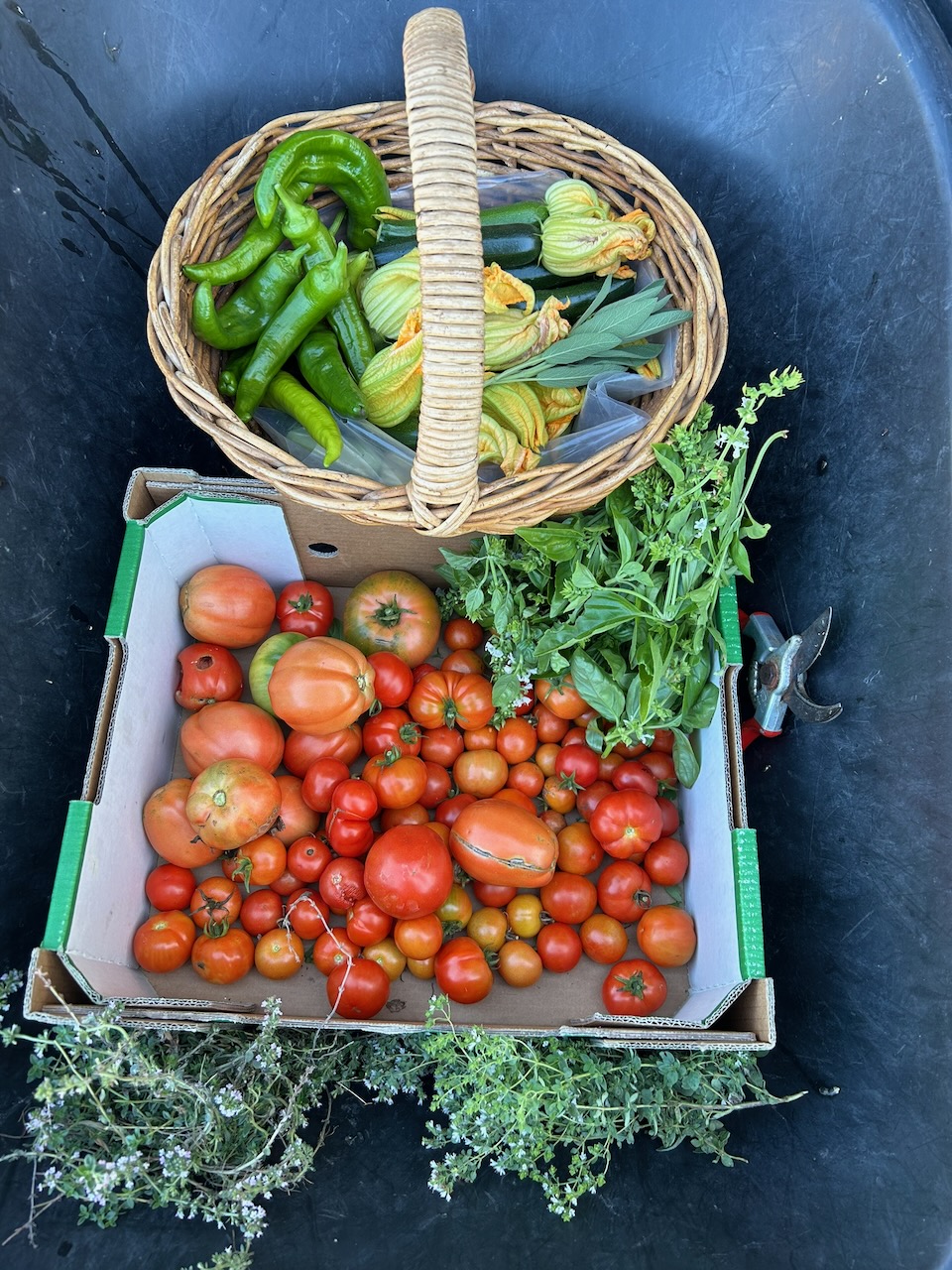
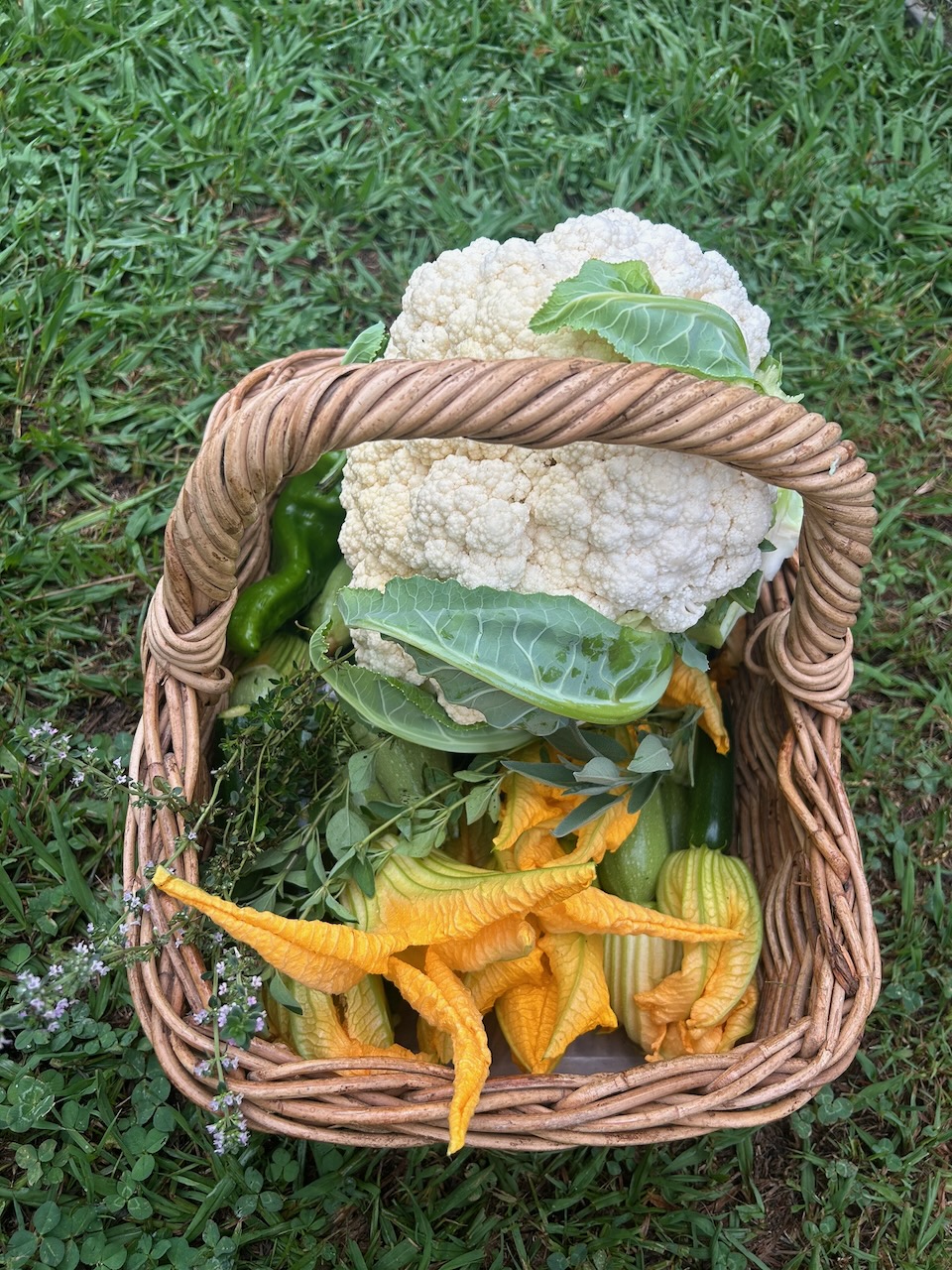
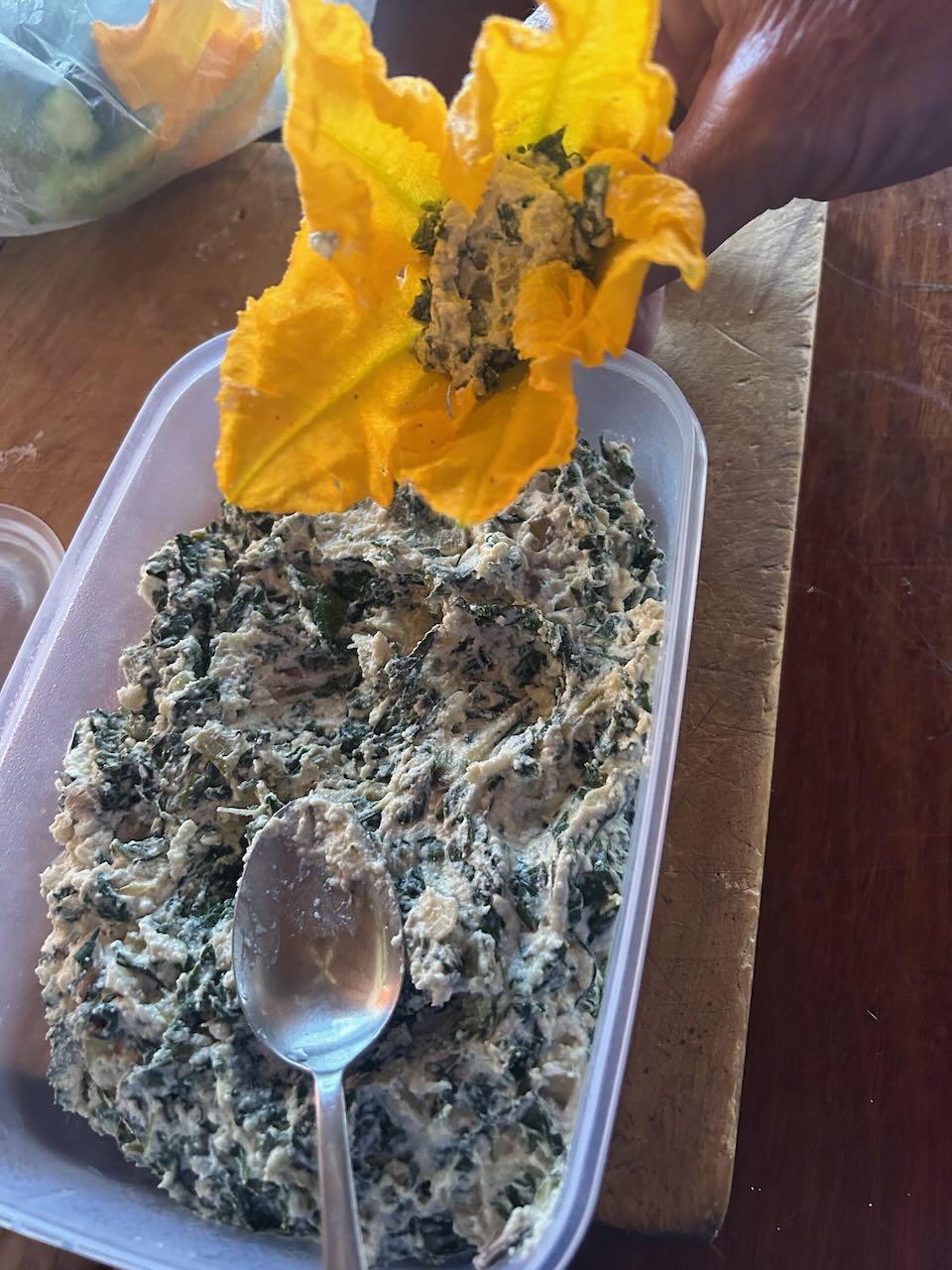
The zucchinis are starting to produce well now. They come on quite fast from seedlings to fruiting in a few weeks in this warm weather. I have been picking them small with the flower still on and stuffing the flowers with cottage cheese and herbs for a light fun dinner.

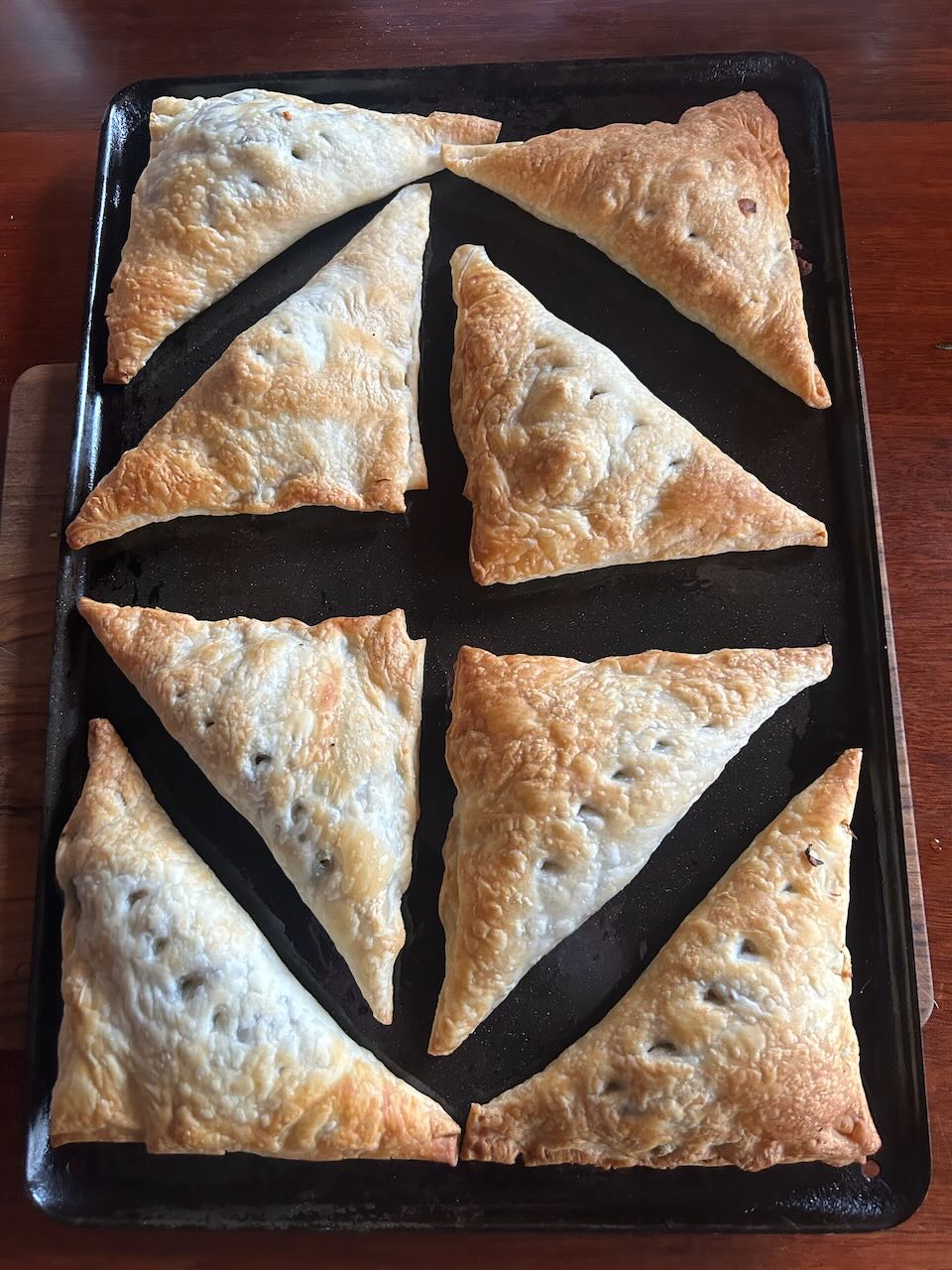
We also have plenty of silver beet/chard at the moment, although it is starting to bolt with the longer days. I have planted more seeds for a follow-on crop. I have been making spanakopita-like spinach and cheese triangles, or spanapotterka as I like to call them, or sometimes whole pies with a similar filling. It’s a great way to use up our excess of leafy greens, as they bolt away in the heat, and maximise our return from them before they are all gone. but it does need the ricotta, fetta, blue cheese and herbs mix to make it special. Plus a light touch of chilli.

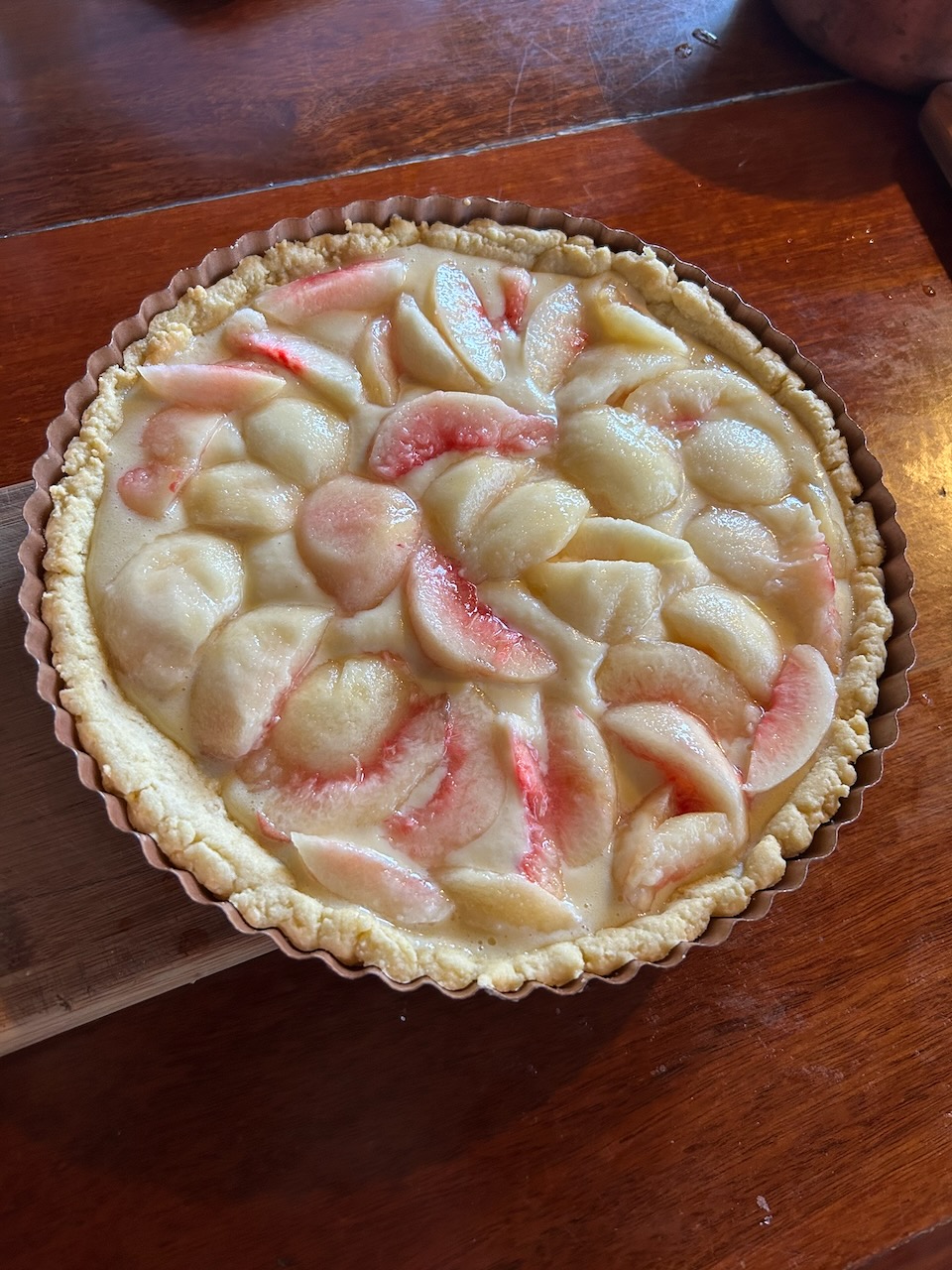
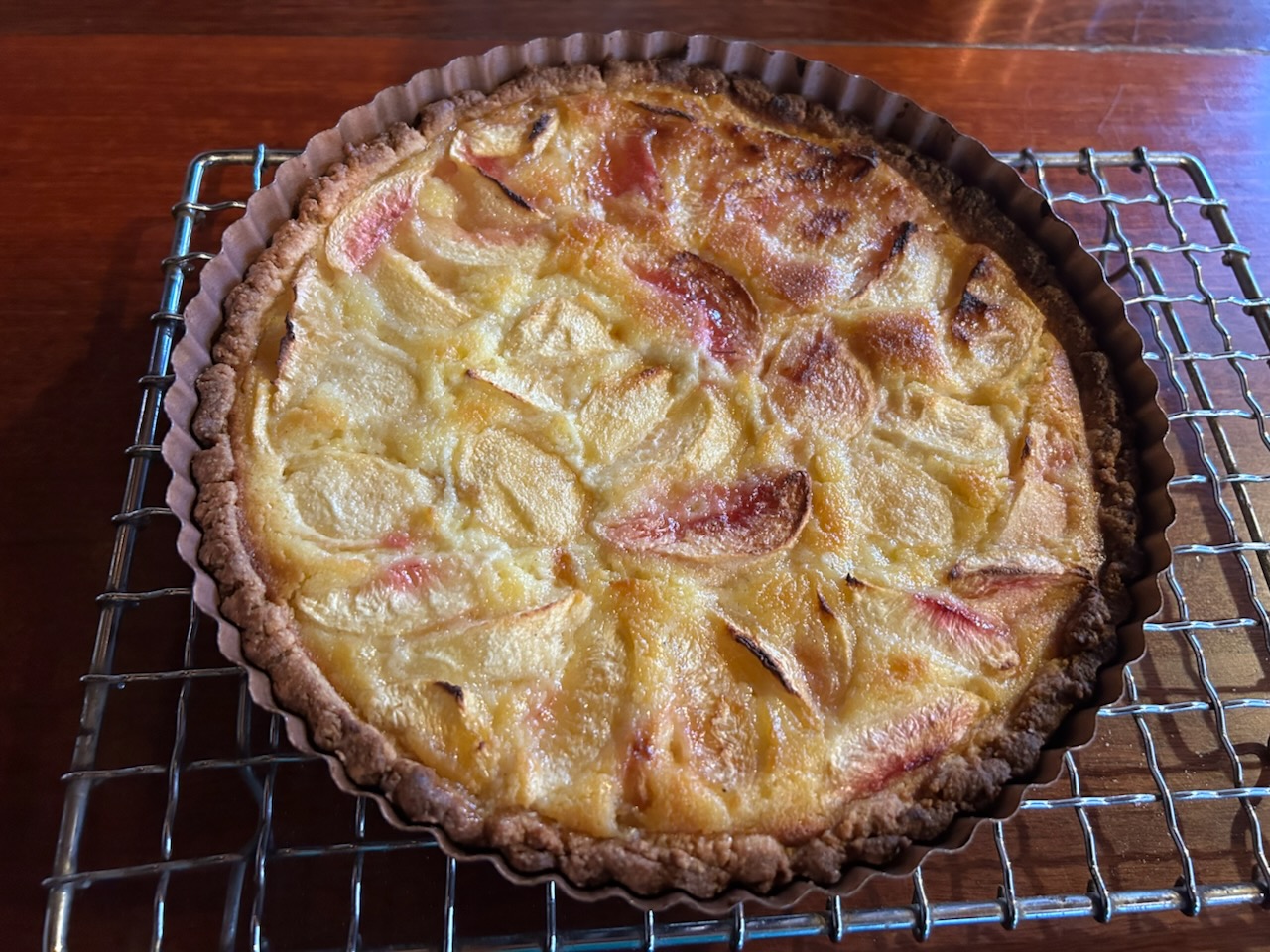
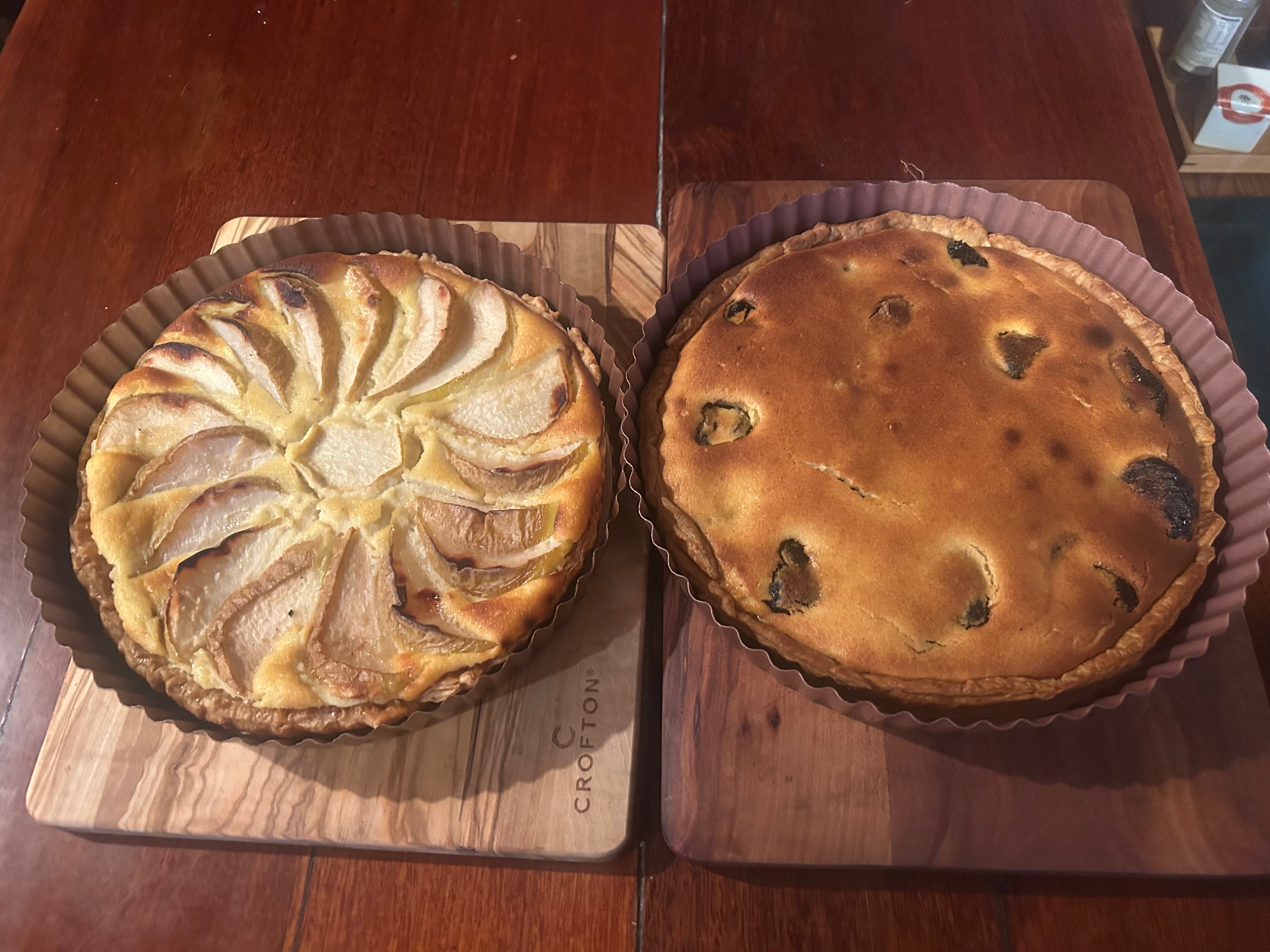
I have also been making a few fruit tarts as well. Something for a more relaxed and comforting morning tea. Since the Open Studio sales are over and the 50% off Xmas sale hasn’t happened yet. Not until the 14th of December. The pottery is all cleaned out and set up for sales, I don’t want to mess it all up making more pots just now, as we still have plenty of stock. So I have time in the garden and kitchen catch up and do a lot of things that I like to do, but haven’t had the time to fit in, until now. 

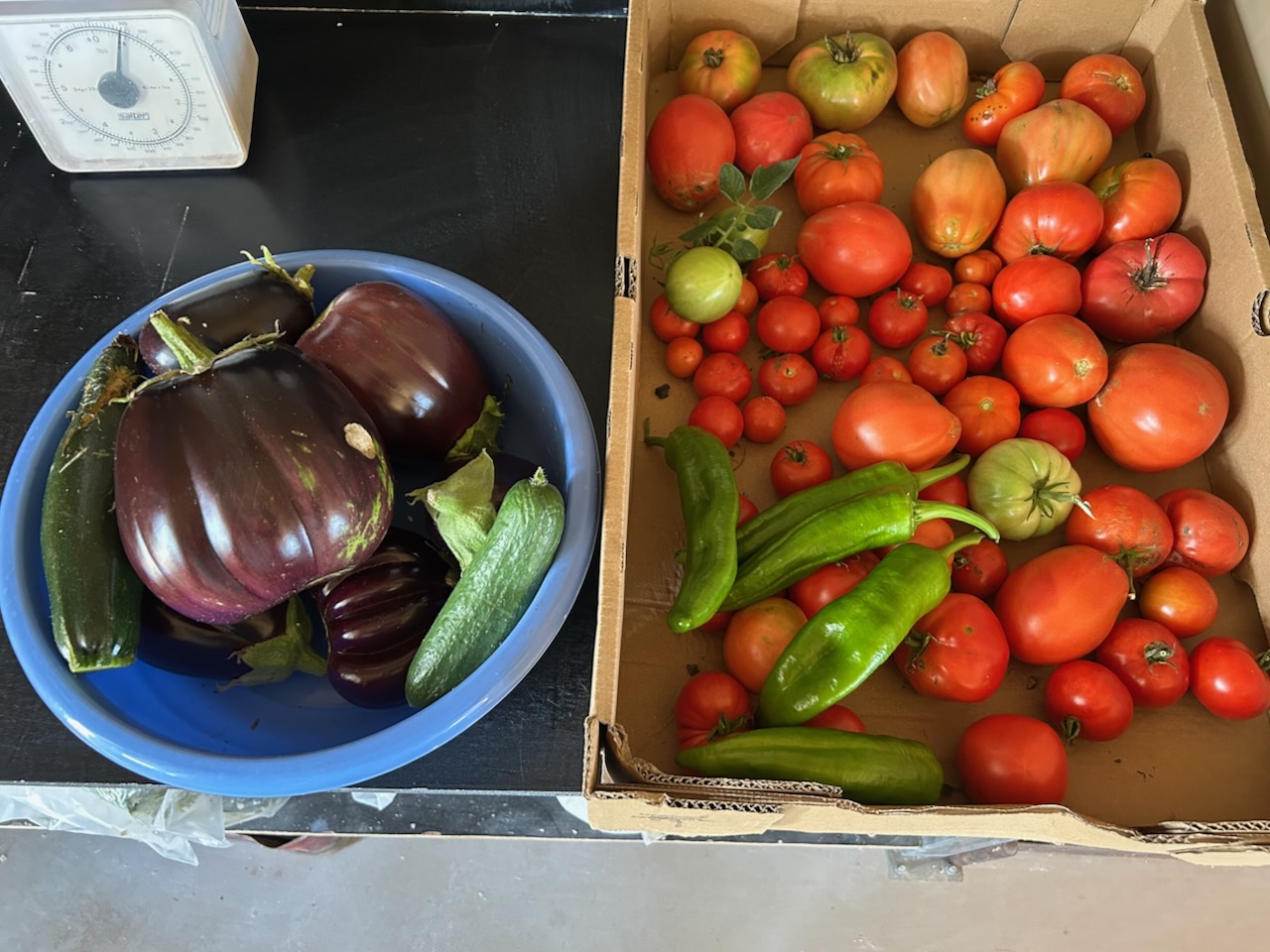
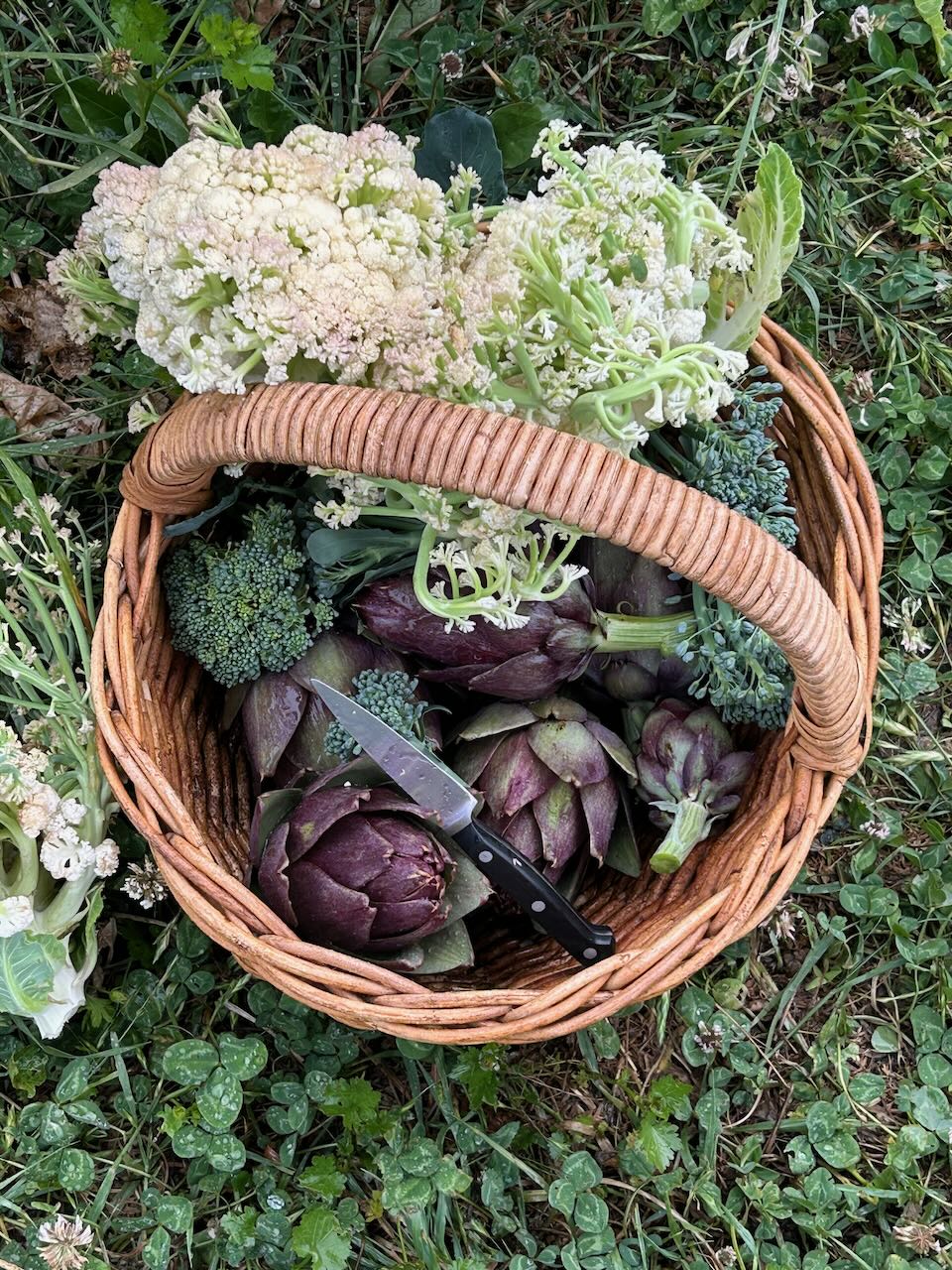
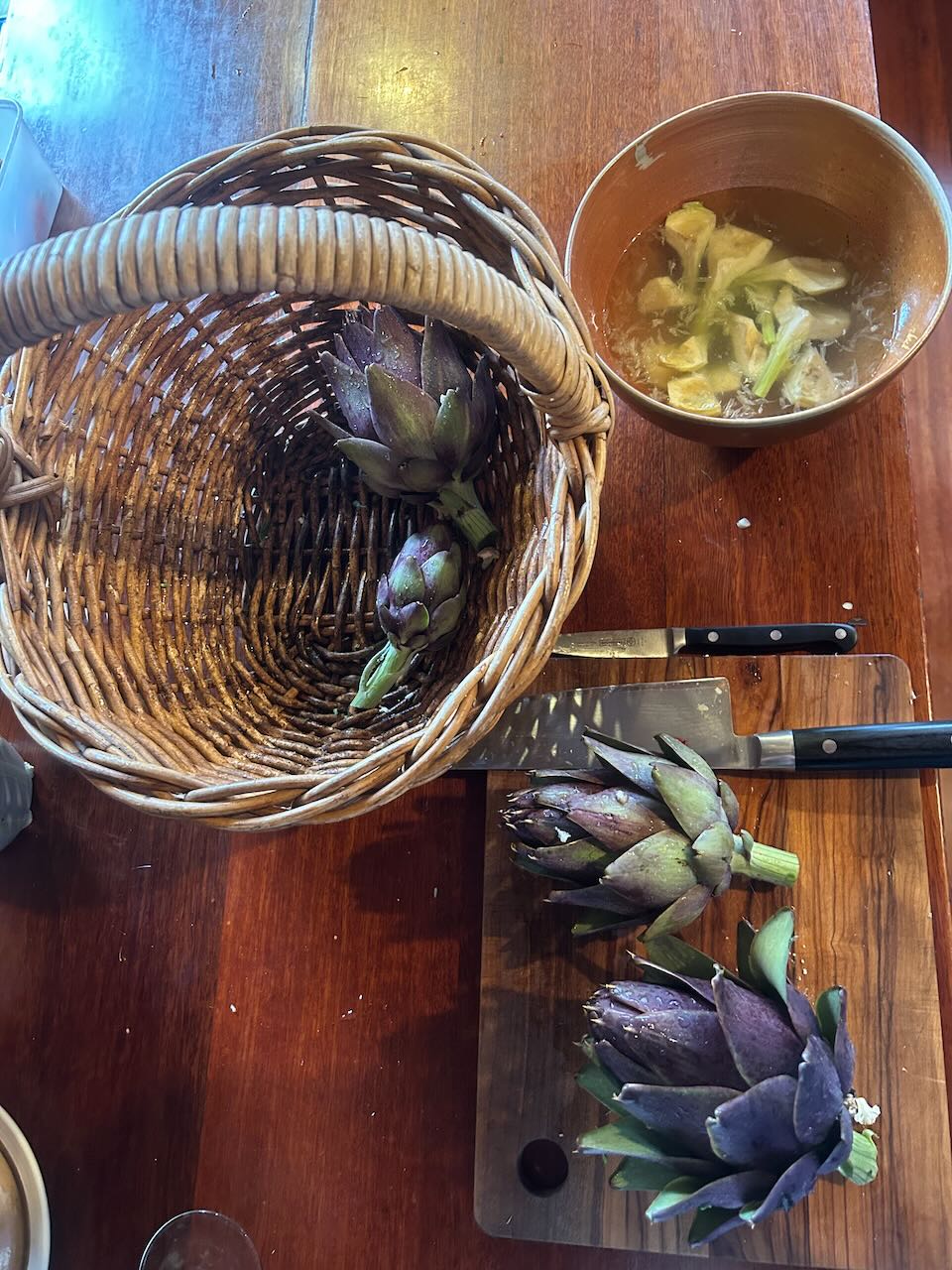
We have picked the last of the artichokes and cauliflowers. I made a vegetable pasta with the artichoke hearts and as the cauliflower was so far gone. I mashed it up and used it as vegetable filling to bulk out the sauce with last summer’s tomato passata.

This week we picked the last of the cherries and the first of the apricots.

I like working in the garden, especially in the warmth of the season, before it gets too hot. Everything responds so well and so fast at this time of year. There is always some fragrance in the air and birdsong on the wind, often fighting over the last of the high fruit in the mulberry tree or some other treasured and favoured food source. They squabble and chatter and squark and carry on, endless entertainment.

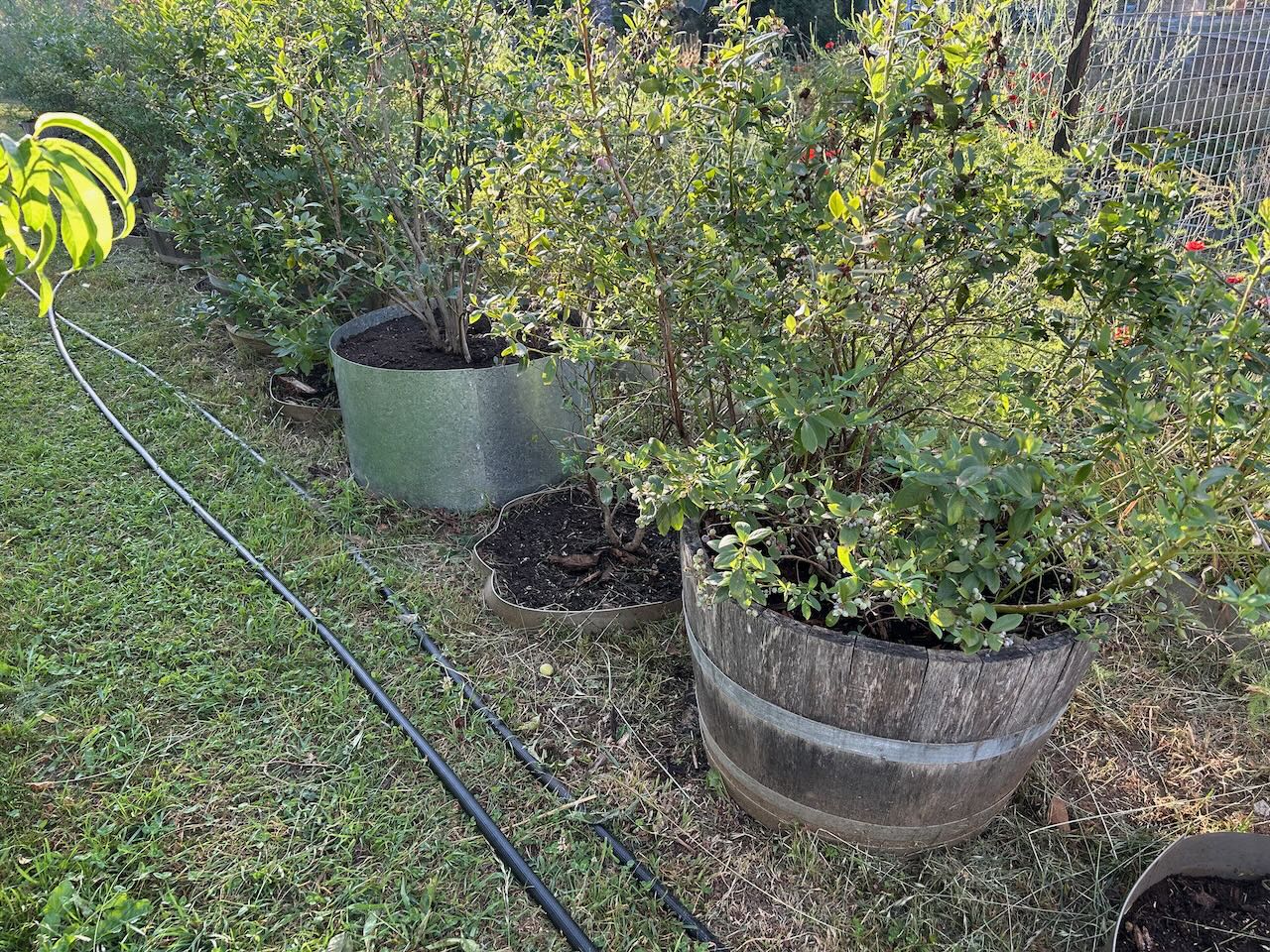
While in the garden, I noticed that one of the ancient wooden barrels that I bought 3rd, or even 4th hand, some 30 years ago, have finally rotted away to the point of collapsing. The staves have rotted away from the inside with the constant wetting and drying as we water the blueberries that we are growing in them.

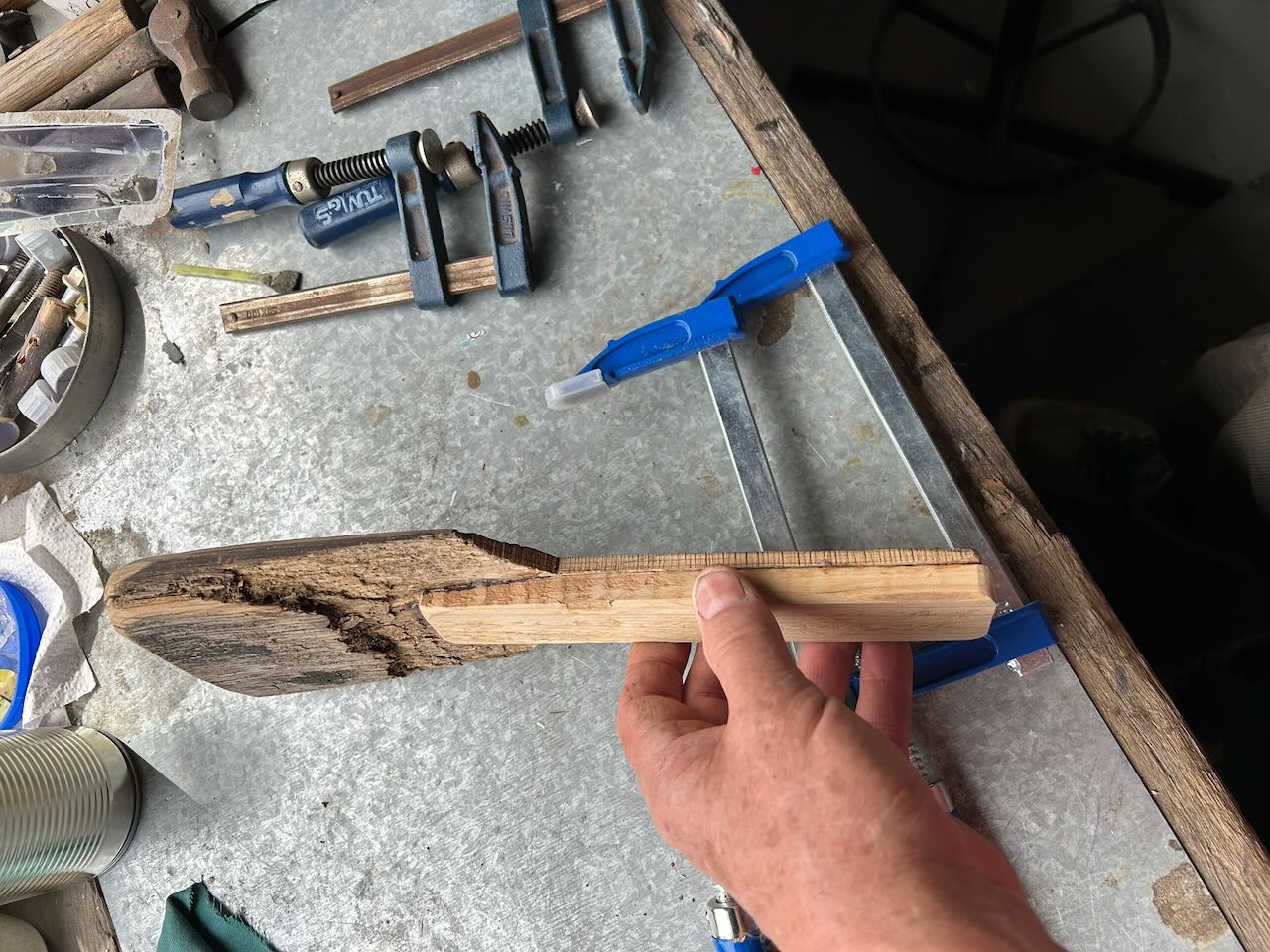
I hate to see waste, so I made one of the rotted staves into a textured pottery tool. A paddle for creating texture while changing the shape of a larger pot. I’m teaching a weekend workshop of tool making next weekend, so this can be one of the projects. i have lots of these old textured staves now. I had to shape and add and new wooden baton, to reinforced and strengthen the handle. A rewarding project that avoids waste and recycles some old timber into something useful and precious. I love the natural, organic texture of the old weathered wood.

Once that was done I set to and cut, folded and rolled a new galvanised steel sheet ring to slide over the old soil base to keep the bush alive. I slipped the ring up and over the bush, down around the soil base. I made the new ring to be just 50mm larger in diameter to make the job easy. It fitted perfectly! I filled the small gap around the edge with some light soil and compost mix, eventually watering it all in to settle it down. It cost me about $30 to make this new steel pot, and it was quick and easy, as I didn’t need to move the plant and all its soil. A new 1/2 wine barrel would cost a couple of hundred dollars these days. So out of our budget range. $30 seems cheap to me for a 750mm dia garden pot, 400 mm high.

This new steel pot isn’t as beautiful, rustic and weathered as the old wooden barrels. The wood has a certain ‘natural’ beauty that I love, but I ask myself. “Are they 6 times better?” Possibly? But then I think of trying to lift the 100kgs of soil and root ball up and into a new wooden pot. I couldn’t do it anymore. So I’m playing it safe. I’m happy with the new pot.

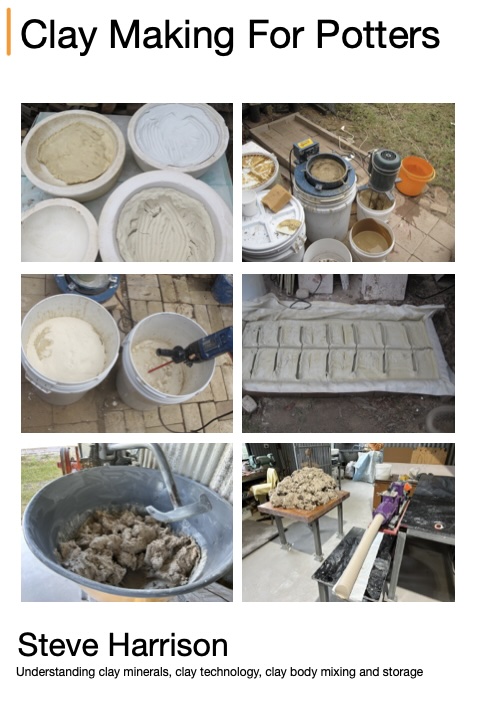
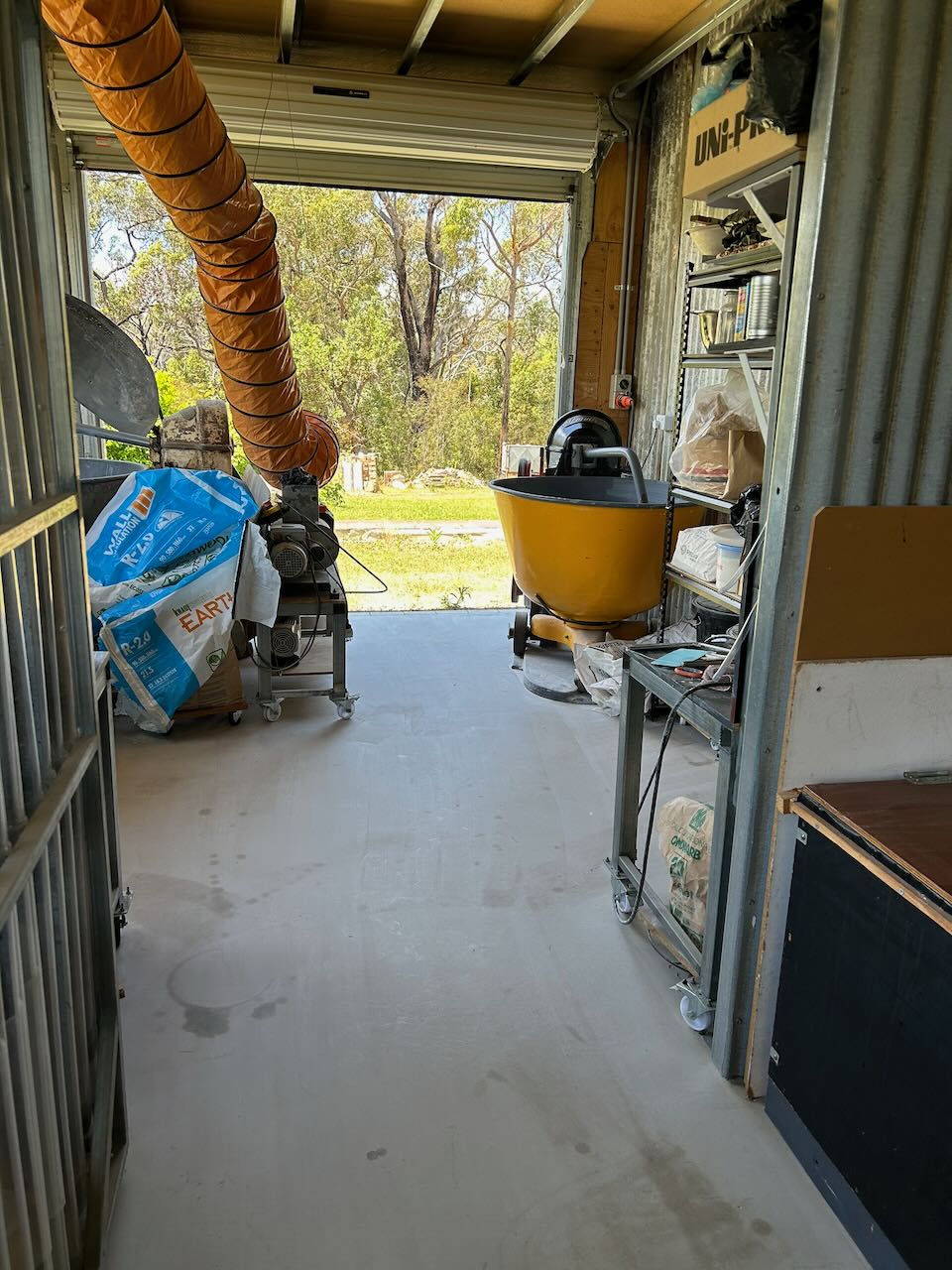
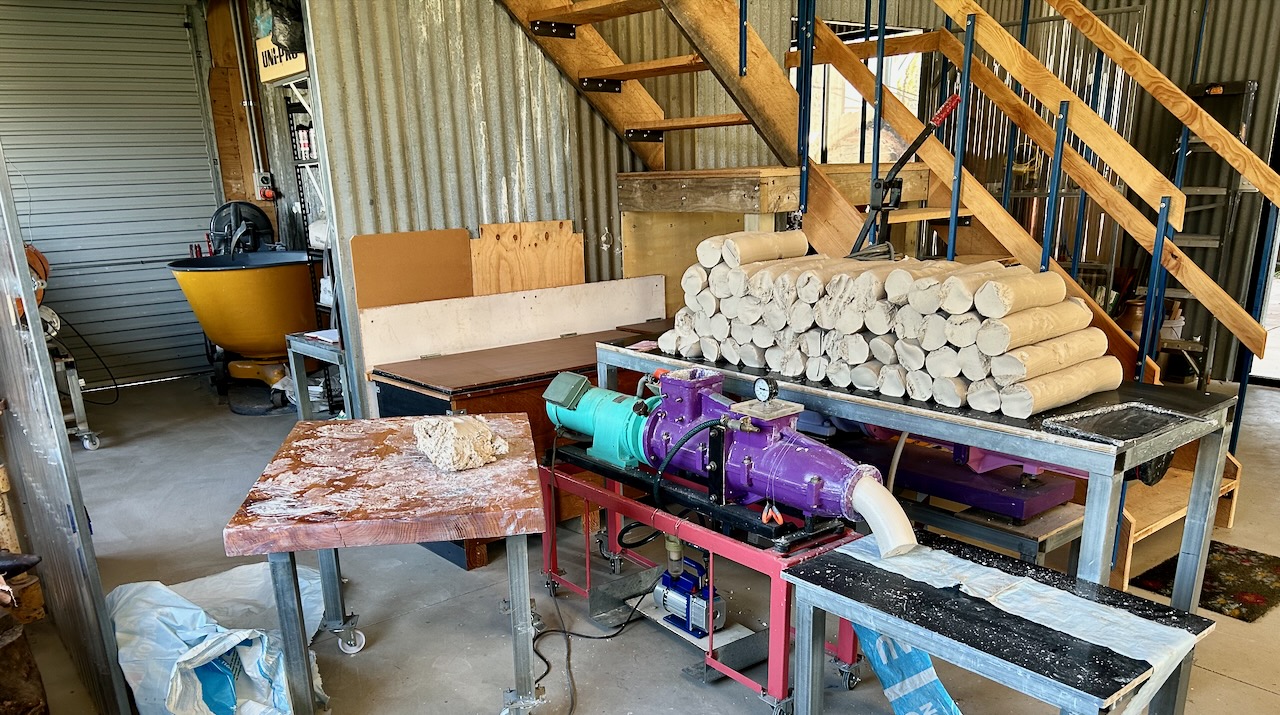
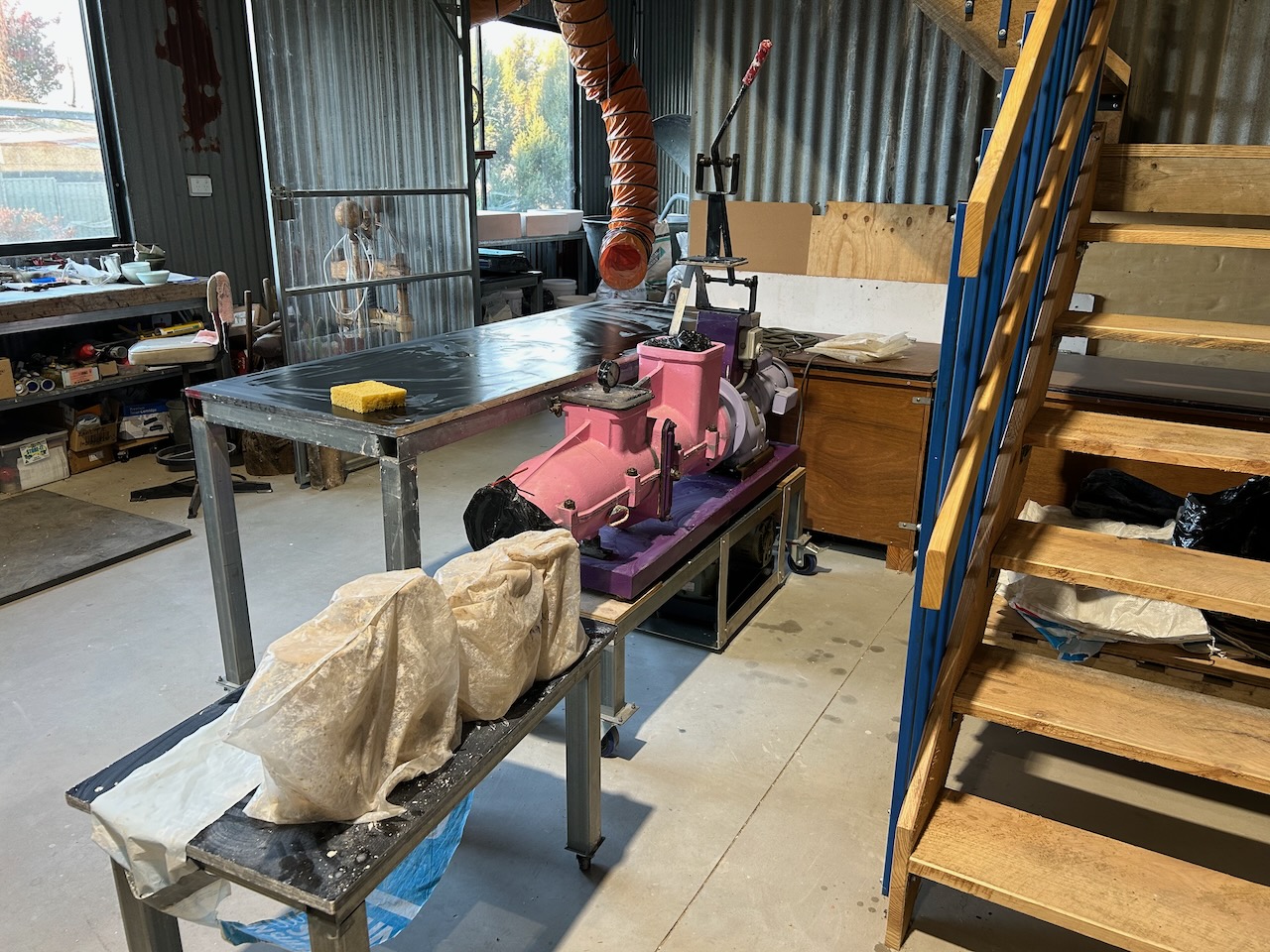
Of course work in the pottery is never completely over. We have a summer school and other throwing weekend workshops booked in for the new year, so It’s time to make more clay body to get it all laid down and ageing, ready for when it’s needed in the new year. Our pottery workshop is laid out in such a way that the creative side is quite seperate from the more dusty, noisey, messy side of the business where we crush and grind all our glaze materials and make our clay bodies.

Janine and I have processed over a tonne of clay this year through our equipment. Each batch that we make is unique. As we do everything ourselves, we can make each batch of clay slightly different in order to closely match the type of projects that we are planning to make. This latest batch is slightly coarser in texture to facilitate making larger forms. The added grit helps the clay to stand up better in larger forms. We also make fine stoneware as well as porcelain.

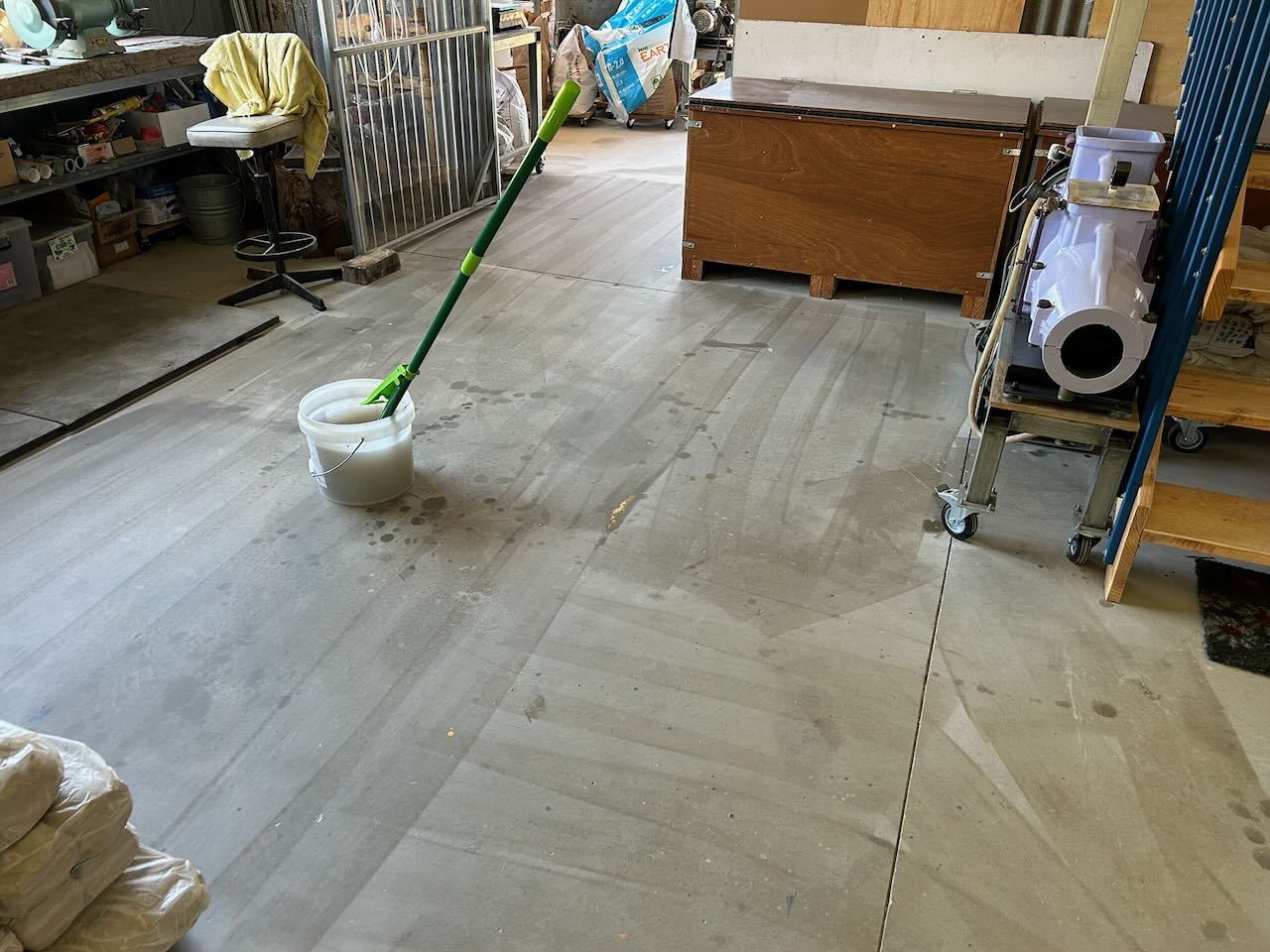
After all the clay is processed, pugged twice and then bagged and put to bed, everything is scrubbed down and the floor is mopped. 

I like to keep the workshop as dust free as is possible. After a change of water and a 2nd mopping, the big roller doors at each end of the workshop are opened up and the breeze flows through and drys the floor. 

We are good now for the next 3 months. We are very lucky to have such good equipment that allows us to make large amounts of clay like this in a couple of days. All this gear is very old and has had a difficult history. But I manage to keep it all going, maintaining it as best as I can, cobbling together disparate parts and spares from here and there and making up special bits where they aren’t available any more. Its a challenge, and rewarding when it all works.

Nothing is even finished, nothing is ever perfect,  and nothing lasts.

It’s been so Hot.

It’s been so dry lately, we haven’t had significant rain for over 2 months. Just a couple of millimetres every now and then. All our fruit trees and garden vegetables are suffering. We have to water every day now, as the daytime temperatures rise significantly. The situation isn’t helped by the hot, gusty, dry winds, desiccating everything with green leaves. I have recently planted out a lot of little seedlings, so they need daily watering to keep them alive.

There are even cracks developing in the bare earth of the veggie garden, where the weeds have dried out and died. I haven’t seen cracked soil like this since the last drought ending in the catastrophic bush fires of 2019. It’s not an endearing sign.

We are OK for the moment, as there is still some water in the the dams, but they are all low, the main top dam is very low. I will have to pump water up from the lowest dam, up to the middle dam, and then from there, up into the top dam. It’s our natural summer routine of the transhumance of water!

It’s quite a rigmarole and takes a couple of days of pumping. However, although it is a lot of work and it is time consuming. I consider myself so lucky that we have the dams that we dug here 4 decades ago, so that we can continue to water our gardens. I was once told that, the harder you work, the luckier you get, or so it seems just now. Now that all the sweat, effort and aching muscles are forgotten. Maybe, It isn’t luck!

I use one of the petrol driven fire fighting pumps to do the transfer. It keeps the pump motor in good nik. I know that it is starting easily but not running reliably. That’s important to know going into such a dry start to summer. I will need to pull the carbi off tomorrow and see what’s going on. This is a job that can’t be put off. It needs to be done now. I need to know that I can activate the fire fighting system immediately and reliably when needed.

I need this pump to be 100% reliable before the summer heat comes in. motors need constant attention.

I’m reminded that nothing is ever finished, nothing is perfect and nothing lasts.

Although we are still in the last month of spring, already the grass has dried off in the paddocks and lawn around the house. I am watering the 4 new avocado trees every 2nd day, just to keep some moisture in the soil for them to get established. It must be quite a shock to their system, to go from a mollycoddled, tropical, irrigated and shade cloth covered nursery environment, to this hot, dry, windy place. 3 of the trees have dropped a few leaves in the past few days in this wind. Not a good sign, but what can we do?

If the summer looks like getting worse, and that’s very likely. I might have to cover them in shade cloth to ease the stress. Just until they settle in and start to produce some new leaves and a spurt of growth at the tips. They hate drying out, but hate getting water logged even worse, so watering every 2nd day seems to be keeping the soil just moist. The last time that I planted 4 new avocado trees, the wallabies came in and ate the tops out over night. So this time the wire mesh fencing went up around them straight away. And guess what? The wallaby left its tracks right up to the new trees last night, and the wire mesh did its job.

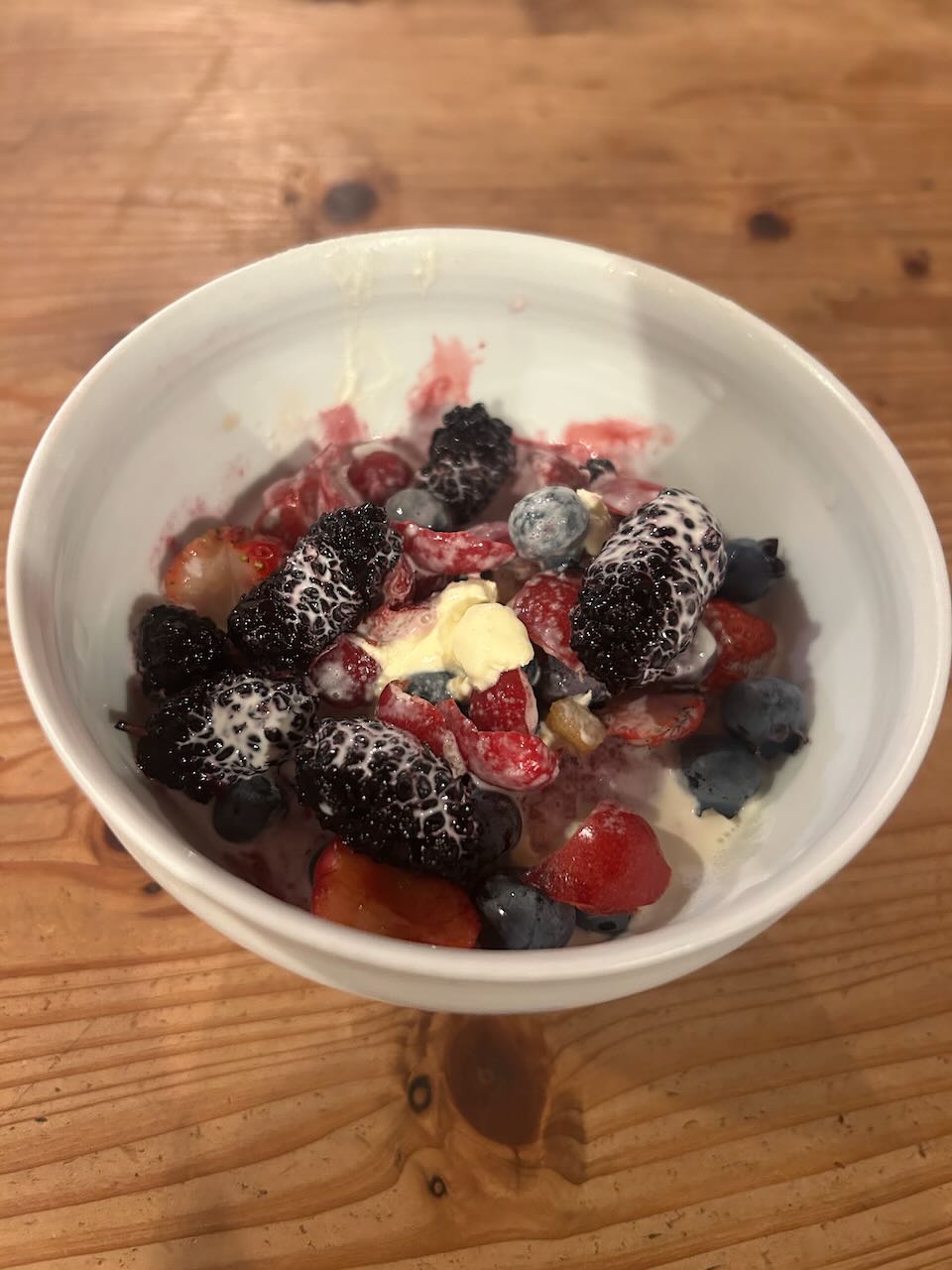
Some of the dozen new dwarf cherry trees that I planted last winter have had their first tiny crop of cherries on them. We are enjoying deserts of mixed orchard fruits of cherries, mulberries, blueberries and strawberries, dressed with a little fresh cream. That is pretty special and makes all the past mowing, weeding, pruning and watering so worthwhile.

The mulberries are in full season just now, so I have been making mulberry tarts. It’s a definite once-a-year treat. As the fruiting season only lasts a couple of weeks.

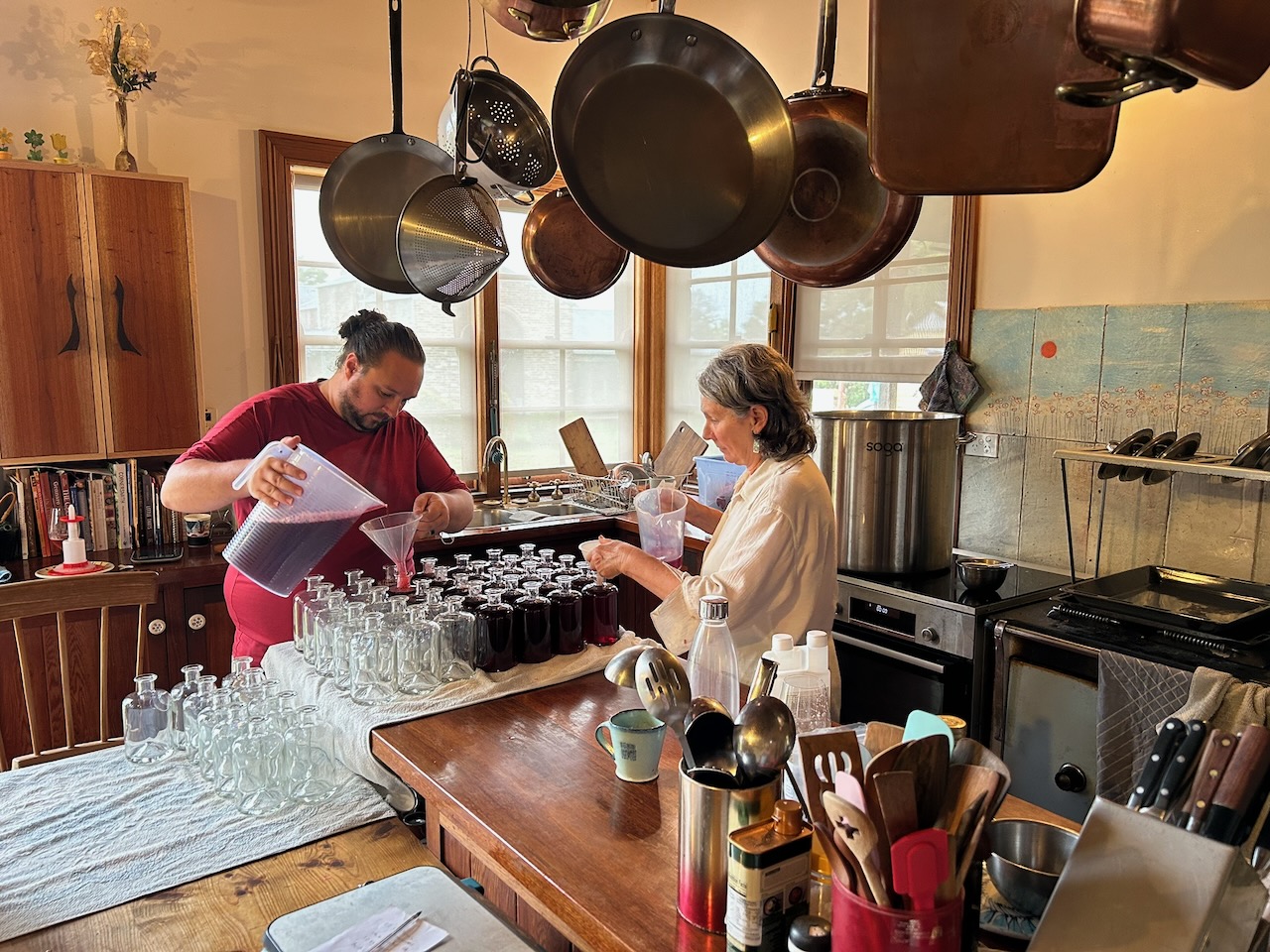
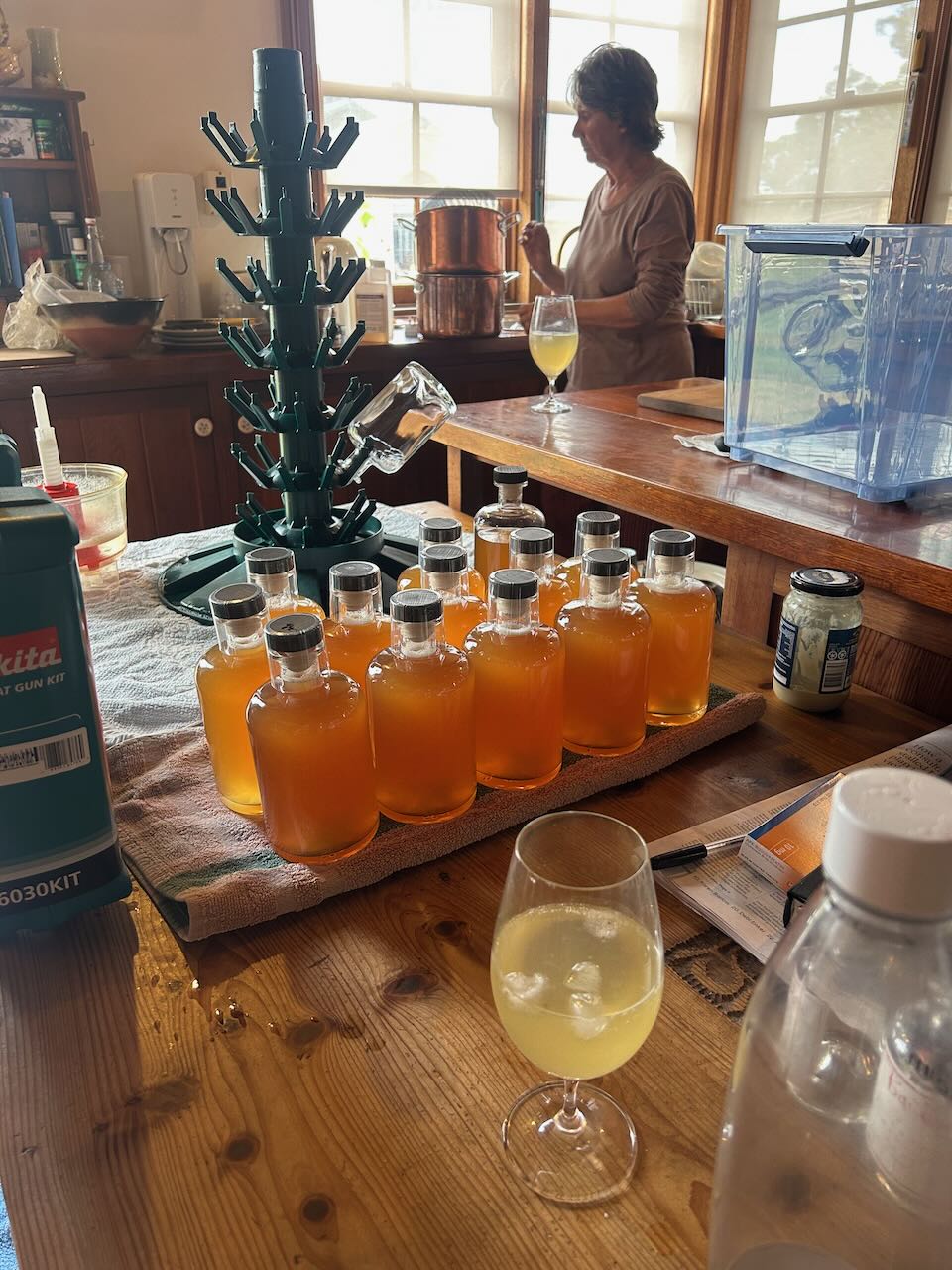
Our son Geordie has started a new business making small batch, seasonal cordials, while he waits for his liquor licence to come through. He has been a gin distiller for the past few years since the fire. He has now gone out on his own. Without the liquor licence, he can’t sell his gin as yet. But he can make and sell his special, small batch, local, seasonal cordials. A lot of the produce for this has come from our garden and orchards so far.

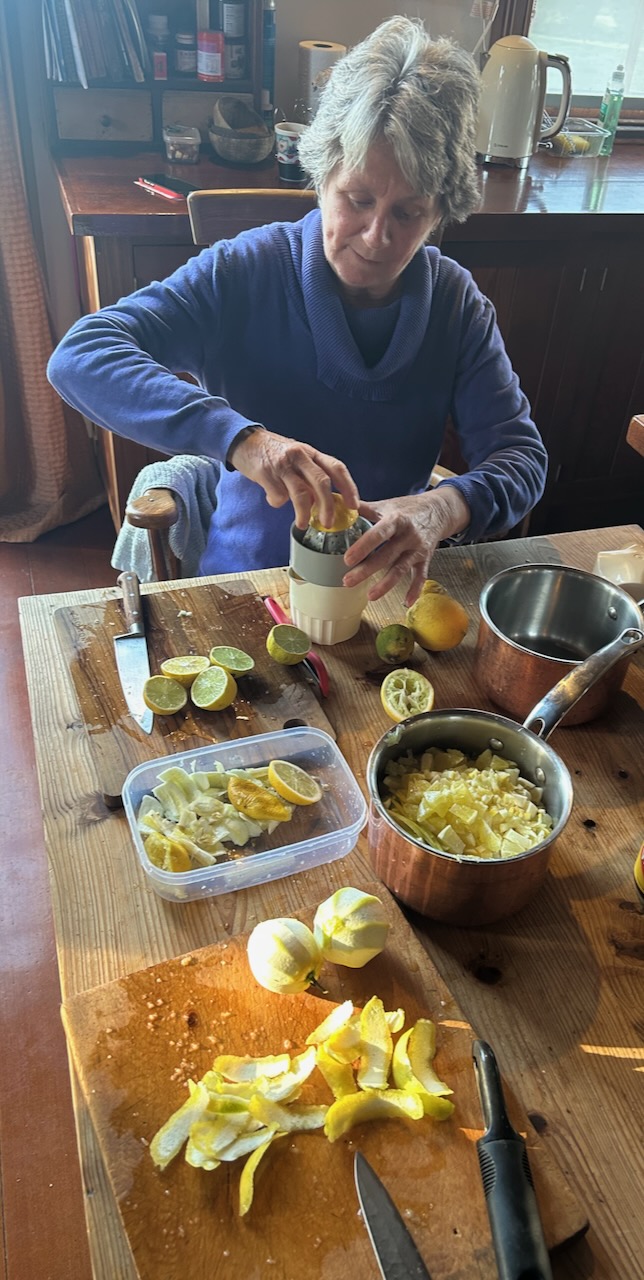
He has been making lemon cordial from our lemons with the sophisticated addition of lemon balm, lemon thyme and lemon grass to fill out the flavour profile. These are adult cordials. Made in small batches from our real, home grown, organic fruit. unsprayed, unwaxed, freshly picked, just minutes off the tree. No carbon miles, just carbon feet. Actually, we walked, so no carbon at all!. His fruit cordials offer solid, rich flavours, sophisticated flavours, not just some sugary flavoured coloured water.

Yesterday we made a very nice, rich, dark, mulberry/lime cordial with the addition of 3 different mint leaves, chocolate mint, spear mint and garden mint, plus kaffir lime leaves and our home grown and hand squeezed Tahitian lime juice.

One of my favourites is his strawberry and basil cordial, beautifully flavour-full and a delicately dense pink colour. The combination is surprisingly good, but we can only make this combination in the spring/summer season when we can grow enough sweet basil. These are definitely, small batch, seasonal products.

Geordie has called his company, ‘Bantam Beverages’, small batch, seasonal drinks. He was selling them here during the Arts trail – Open Studio sale. We sold out of the strawberry and basil, and only had a few bottles of the lemon mix left. We are helping make more stock now, so he will have more bottles to sell on the special, one day only, half price sale on the Sunday 14th of December.

Come along on Sunday 14th of December for a free tasting and some 1/2 price pots.

Sunday 14th December. 9am – 5pm.

Steve and Janine’s Pottery Workshop, at the old School,

5 Railway Pde, Balmoral Village, 2571. 

In the Eye of the Storm

We are making use of that quiet time between weekend studio sales.Last week, we had the first of the Open Studio weekends for the Arts Trail. It went well.

We had a slow start on Saturday, and then it went completely quiet in the afternoon. Janine made use of the quiet time, to go into Mittagong and visit 3 other studios that she was keen to see. She said it was also a bit quiet in town as well. Balmoral Village is a long way out of town, a 20 minute drive, so we expect to see less people here than they get in town. In Mittagong or Bowral, there is a wide range of choice, all within 3 to 5 mins.

On the other hand, Sunday was moderately busy for us, and it kept up all day, so that was good. Never run off our feet, but just one car followed another, so we constantly had a couple of people in the gallery all day. To the extent that we had to stagger our lunches to be on-hand to serve customers. We were lucky to have our friend Karen with us to help out, so Janine and I could spend time with our visitors to answer questions and explain the aesthetic choices that we had made in creating the variety of work on show.

As there were not too many visitors last weekend. The Gallery is still full up with pots waiting for new owners to take them home.

So this week we have been in the quiet time between the two busy weekends. In The Eye of the Storm. We made use of this special ‘time-off’ rest period, to do a bit of gardening. We weeded and dug-over the old annual flower garden area that I created and fenced off after the fire, so as to keep the chickens, wallabies, rabbits and wombat out of the garden. No fence, No flowers! In the years since the fire, I have created other annual flower beds on both sides of the pottery and also along the driveway, so that the older, fenced-off garden slipped out of use for floral display. Janine has now claimed it as her new herb garden, so hence all the digging.

After using the cultivator to dig over the new herb patch for Janine. I then had 2 days building a dry stone retaining wall and back filling it with 10 tonnes of topsoil/compost mix to create a deep terrace for a new avocado bed. We have had an avocado tree for over 45 years. It’s very well established, but only ever has a few fruit on it. This is because avocados, although self fertile, are only marginally so. In fact, there are two Groups of avocados, known as ’Type A’ and ‘Type B’. You need one of each to get the extra fertilisation for good ‘fruit-set’.

Some years before the fire, in about 2015, I planted 2 more  ‘Type A’ and 2 x ’Type B’ grafted trees. After a few years, they started to mature and flower. That year we had a massive crop of hundreds of fruit on our old tree. Success!  I don’t know what variety our old tree is, so it was necessary to plant at least one of each A & B to ensure good fertility. I chose to plant 2 different varieties of each group. 

Shortly after that massive crop. The catastrophic bush fires swept through here and incinerated every thing in its path. All the little new avocado trees were vaporised to below ground level. The old tree was very badly burnt and lost all its smaller branches. I thought that it had died. However, when the rains came, it very slowly put out some new shoots and started to regrow. It’s only half the size that it was, but at least it is still alive.

Having seen that extra trees of either ‘Type A’ or ’Type B’, solved the fertility problem. I decided, after everything had settled down again, post clean-up and rebuilding, that I would replant more young avocados trees. Again I chose 2 x ‘Type A’ and 2 x ’Type B’ grafted trees. Sadly, in the years post fire, we had torrential rains for months on end, the ground was so soggy. I spent quite some time digging extra drains to help clear all the water away. Unfortunately, avocados are very susceptible to root rot, ‘phytophthora’ soil fungus. All the new avocados drowned and died! I decided after that to give up on growing avocados. As each grafted tree cost between $50 and $80, I have spent around $500 of these trees over my lifetime here. I could buy a lot of smashed avocado sandwiches for that!

However, I am an eternal optimist, so recently, I decided to give it one last go. I have bought 4 more trees, but this time grafted onto dwarfing rootstock ‘Velvick’, which is also mildly resistant to phytophthora.

This explains the new elevated, well drained, garden bed and stone retaining wall. This new terraced area is 4m x 10m and 500 to 600 mm deep. Filled with a rich mixture of sandy top soil and organic compost mix. 10 tonnes in all. It was quite an effort and I’m feeling my age today. As Leonard Cohen once said. “I ache in the places that I use to play”.

This will definitely be my last go at avocados. It should provide a well drained, rich soil for the new trees to grow in. Well elevated above the natural soil level, I’m hoping that this might be the solution.

They are right in front of the water tanks, so no problem with irrigation.

All that I have to concern myself with now is the winter frosts! But that’s a while off yet.

With a restful break like this. I need to get back to work to recover!

More rain and tasting cider

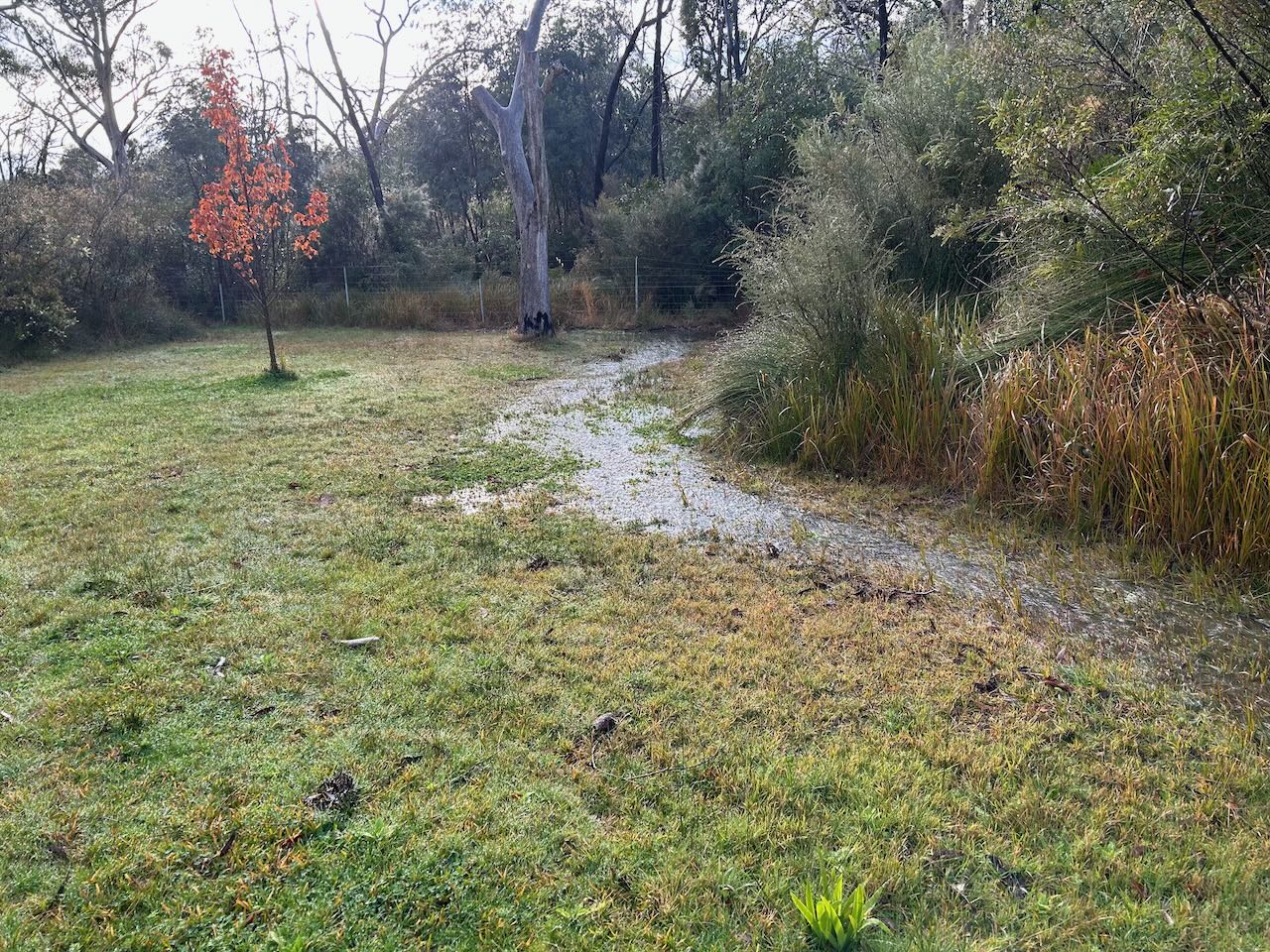
It’s been raining again quite heavily. We now have 4 different little streams flowing across our land, where the dams overflow, and the front lawn is under 25mm of water, like a slow moving shallow lake gently flowing across our kitchen vista.

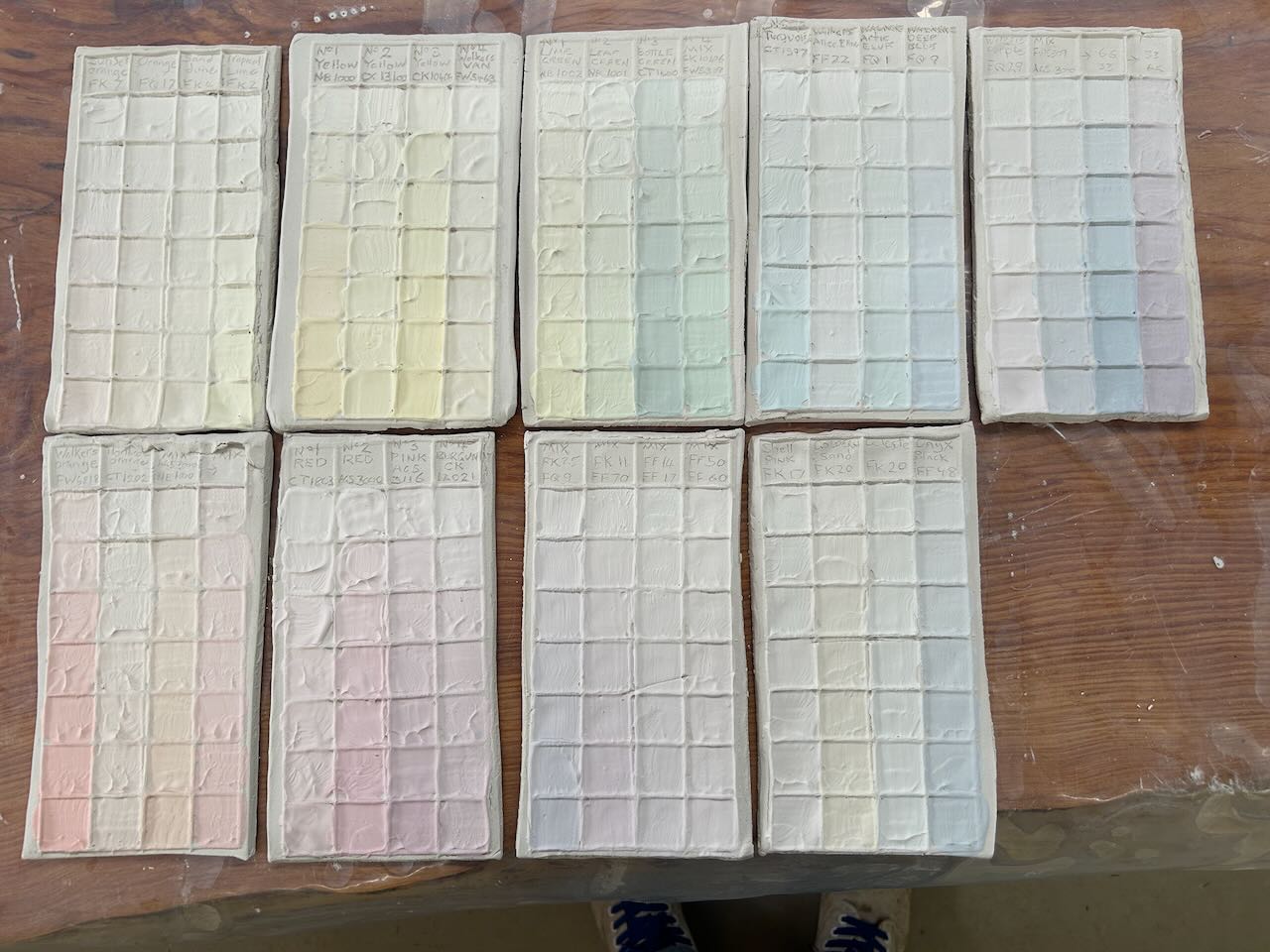
We had 65mm of rain at one point. I thought about what to do for a while and came to the conclusion that it was probably best if I decided to do all those glaze tests that I had been meaning to do for a while. I certainly didn’t want to do any outside work. So I spent a day rolling out slabs and pressing out grid-tiles from my standard plaster grid-tile mould. This ensures that all my test tiles are the same size and shape, so that I can compare them at any time with tests made years before if needed. Tragically, I lost 3,000 glaze tests in the fire, so I’m starting again.

Weighing out glaze tests can be quite boring, especially when it goes on for days. However, it keeps me gainfully employed in the warm and dry pottery studio. I put on a CD while I work. It takes more than the length of a CD to fill one test tile with the infinitesimally small gradations of ingredients in the logical progression of the recipe. Each tile is 8 x 4 squares = 32 weighings and recordings.That’s 288 tests made in this sitting. Enough!

When I was doing my PhD, I did every test in triplicate, so that I could fine them in oxidation, then reduction and also in the wood fired kiln. As each kiln gives its own variation to the test. Having done that very thorough exploration, I’m over it and these days I only make the one series of tests, and fire them  in the kiln that I think will deliver what I’m looking for.

It fills 10 pages of my glaze note book this time around. I have to keep detailed records of what I do and why I’m thinking that it might be a good idea. Sometimes, it takes so long to get the firings done at the temperature that I’m imaging will be best and in the atmosphere that I want, and in the kiln that will give me those ideal conditions, so that If I don’t write everything down in detail, then I can forget what I was thinking and why I went to all the trouble. Hopefully, it will help me to understand both the results and more about myself in a few weeks time, when they are all fired, and I can decode the results! 

Each tiles takes about one hour to complete. After two days of this, I’m pleased to do the last one – for the time being

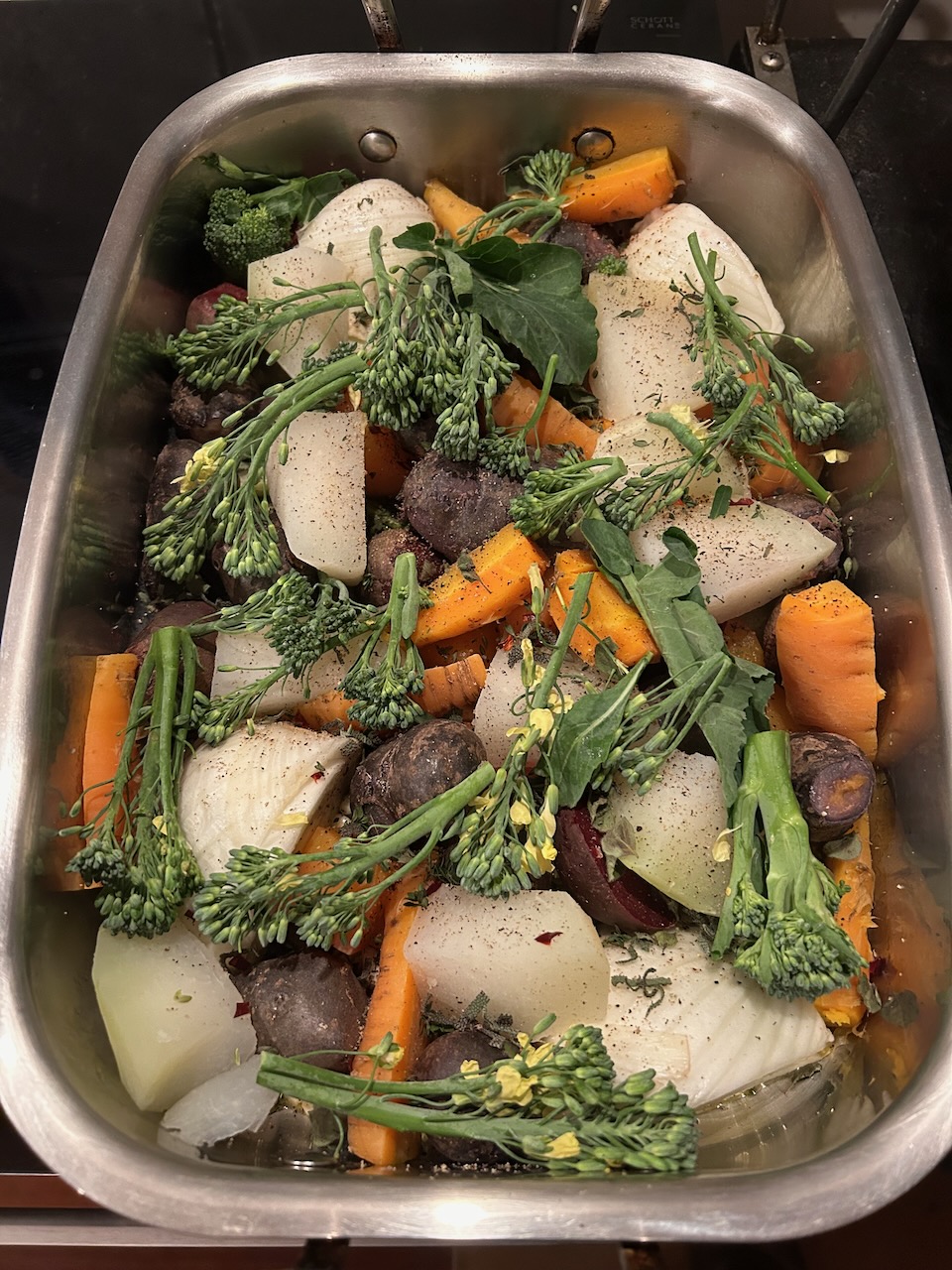
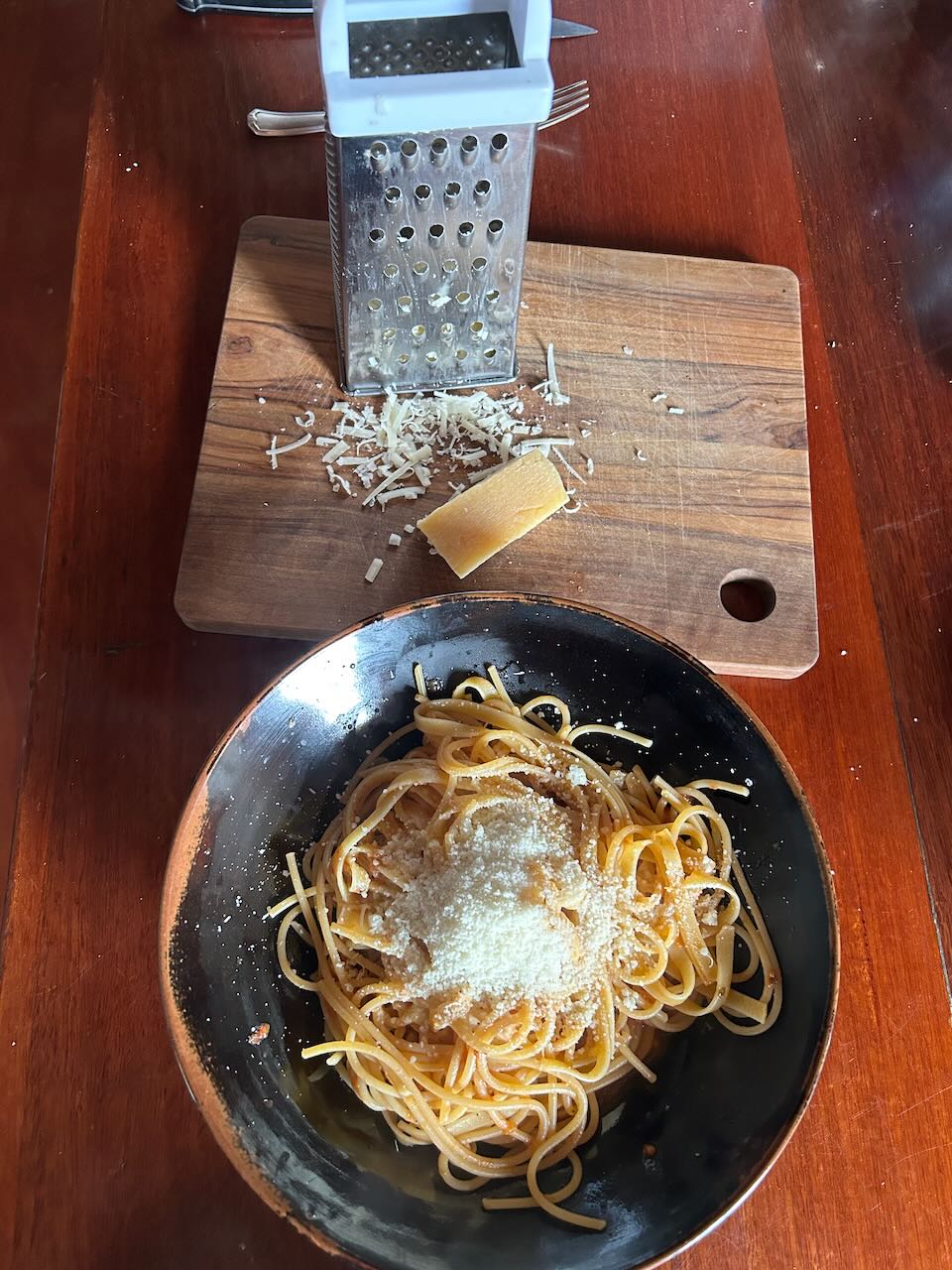
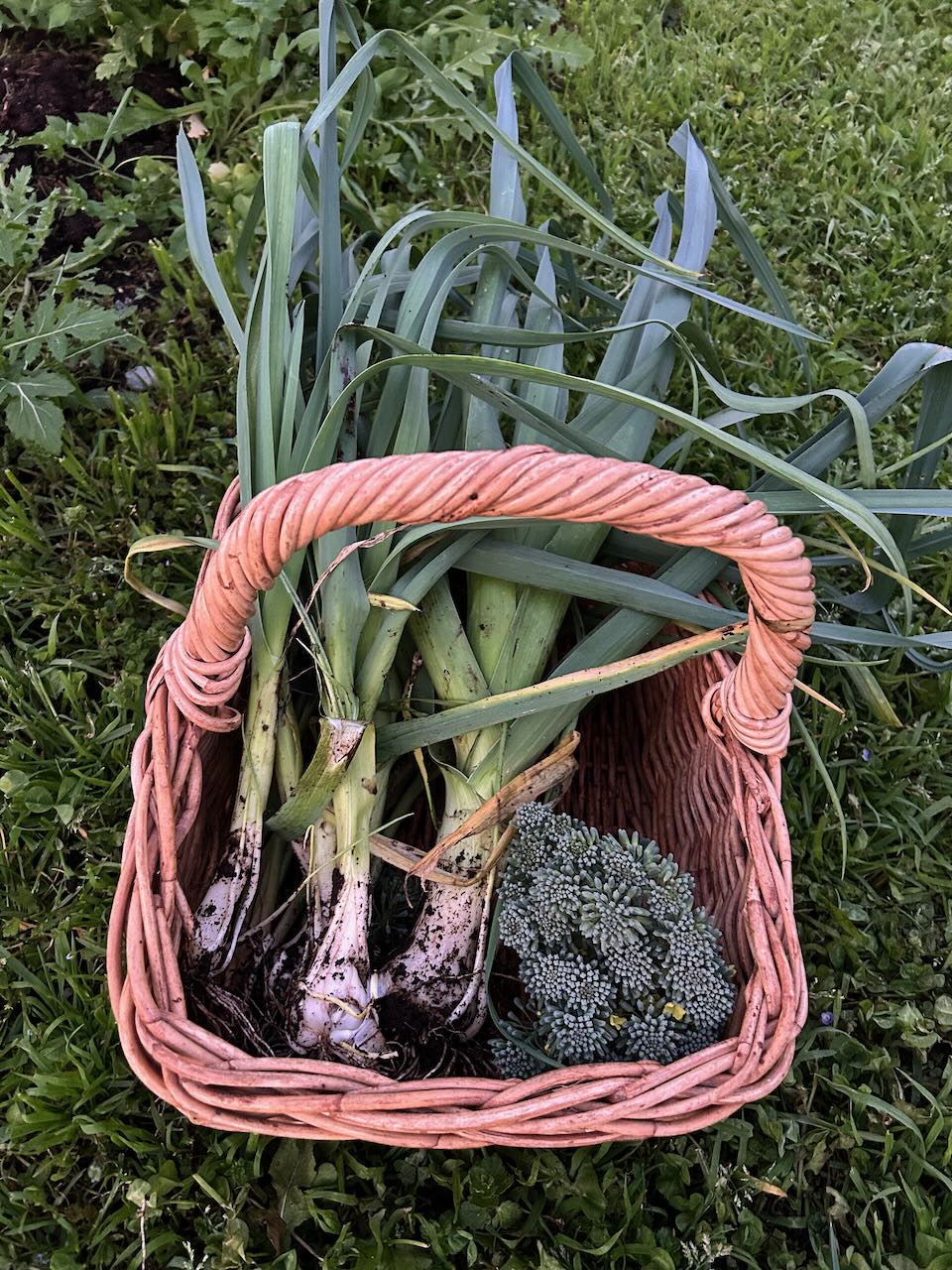
When there comes a break in the rain, I get out and pick vegetables for dinner. This time is leaks, broccoli, Brussel sprouts and carrots. I’m planning baked veggies with a mustard infused béchamel source for dinner. I make a quick and warming lunch of pasta. I tried to steal the spaghetti from the supermarket, but the female security guard saw me and I couldn’t get pasta!

🙂

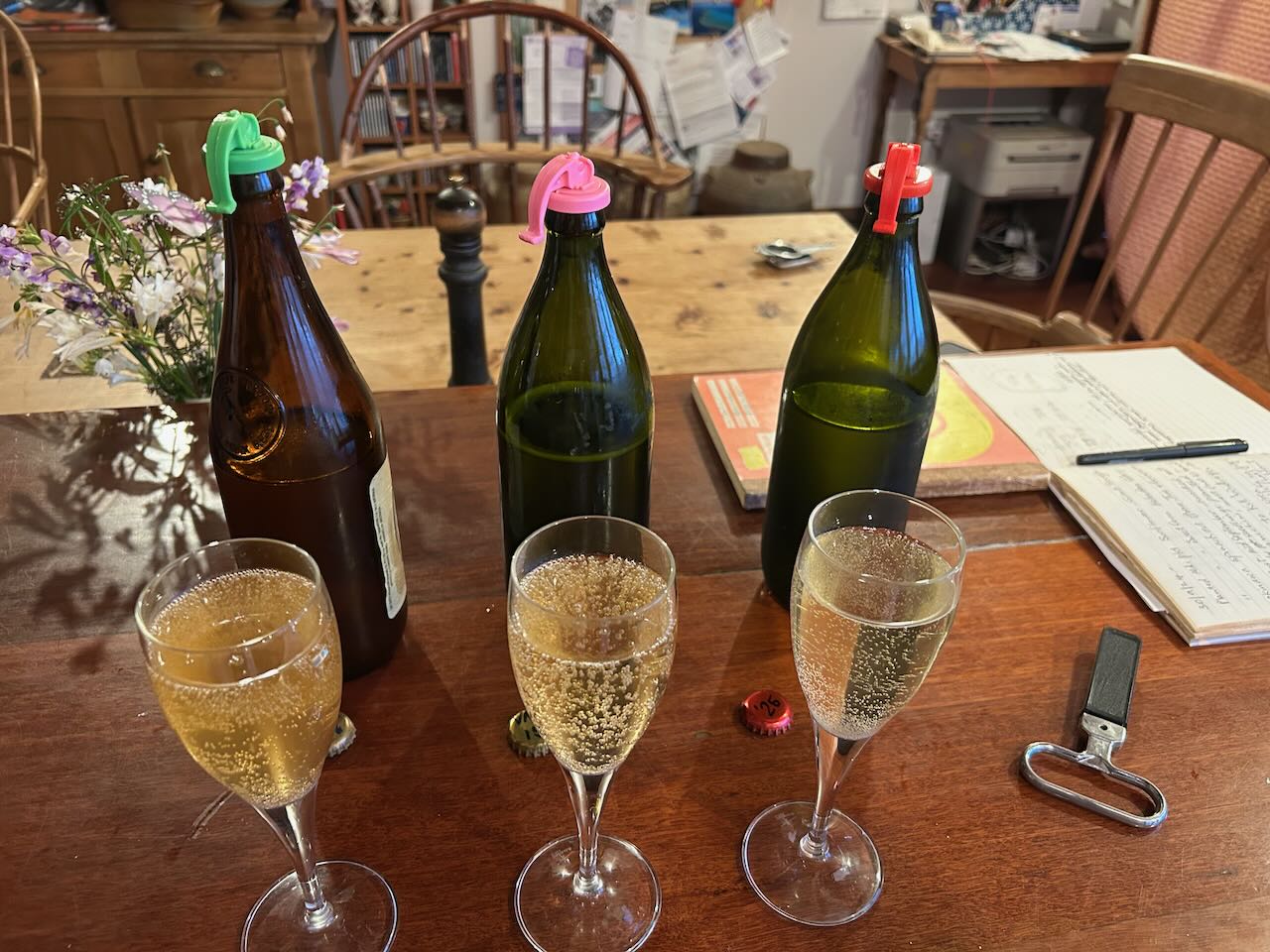
We decided to try is years cider with dinner. We made this batch of cider back on the 11th of February and bottled it on the 11th of April. So now it has had 4 months to settle down. It will be good to see how it has turned out.

See my blog post; ‘Autumns rewards,  Posted on 11/04/2025 

Janine thought that we should do a vertical tasting of the last 3 vintages. What a good idea! 

As we still have a few bottles of the 2012 vintage. This was the last vintage from the aged 40 year old apple trees in the previous orchard. From 2012 onwards there was a severe drought, so intense that we didn’t get to harvest any apples from 2012 through until the fire in 2019. So no cider was made. In 2015, our friend Val had a good crop of apples on her trees in ‘Lagan’, 2 hours drive, south of here, so she drove up a couple of washing baskets full of her apples. We were able to make a small batch of cider from those apples. We re-planted a new orchard in 2020 with different varieties of apples.

We opened 3 bottles to see and compare the difference. The older 2012 vintage was still very lively with good spritz, but a darker colour from its age, more akin to a beer in colour. It has a medium nose of sultry notes and a good firm cider flavour, just as we are used to. Completely dry on the finish. The 2015 from Val’s apples is medium in colour and flavour, and similar to above.

The 2025 is very pale with floral notes, a delicate palette and a dry finish, however, not very effervescent, because, as it is the first vintage from all the new apple trees in the new orchard, all planted since the fire, and this being the first year that we had a decent crop. I made the decision to cut the amount of sugar added at bottling, to ensure that there wasn’t too much pressure in the bottles. I don’t want to experience any exploding bottles. 

We make a completely ’natural’ cider here from our organic orchard apples. Nothing added at all except yeast. I have always used Moet and Chandon champagne yeast, as it has alway worked well for us. Back in the 70’s, you couldn’t buy cider yeast here in Australia, so i chose champagne yeast, as it is closest to what we wanted to make – a sparkling cider. These days I can buy any number of cider yeasts form the brewers supplies shop, but I stick with what works. 

I always leave the cider in the fermenter for 2 months to make sure that it has completely fermented out all the available sugars and is ‘dry’. Over the past 4 decades, I learnt to add one spoonful of white sugar to each bottle at bottling. This is the standard champagne bottling technique. This is to allow it to re-ferment, just enough to make a sparkling cider. Because these are all new trees and therefore an unknown fruit. I played it safe, and only added half a spoonful of sugar at this first bottling. So this batch has only a gentle spritz, but this is better than too much. 

After this test run, next year I’ll be brave enough to add the full amount of sugar.

I’ve never been brave enough to go with the wild ferment of naturally present yeasts that are on the skins of the fruit. When we had a small vineyard of 100 cabernet and 30 shiraz vines. I tried making one vintage of a macerated, whole bunch ferment. The wild yeast that was dominant on the skins at that time was very vigorous and resulted in a rather unpleasant distasteful wine. I didn’t like it at all and threw the whole lot out. So I lost a whole vintage. it’s nothing to do with money. It’s all about the investment of time and effort, and the expectation that there will be something interesting and delicious at the end, even if the amount is very small. For instance, we only make 30 to 36 bottle of cider each year, just enough to fill one fermenter. It’s enough.
Nothing is perfect, nothing is ever finished and nothing lasts. Good cider doesn’t.
A sense that Spring isn’t far off

As I gaze out from the kitchen window across to the newly mown orchard with the chickens wandering about scratching and pecking, I can’t help but be overcome, albeit very briefly, with a warm glowing sense of achievement and happiness. What a beautiful sight. It’s a sunny day and everything is looking good. 
It’s still sometimes hard to believe that all this is ours. I’ve somehow forgotten the 5 years of stress, anxiety, blood, stitches and pain. I’m very pleased that it is all over – more or less!  There is the beautiful new pottery shed in all its fire resistant glory, with its sandstock brick facade, re-cycled iron cladding, and fire-fighting spray system on the wall facing West, all newly risen from the ashes like a Phoenix, (yet again) and in the distance, the repaired and partially re-built functional barn. It has all come together now. We are almost finished with the rebuilding work. There will always be more to do, but the list all fits on one page now. In recent memory, it was so long that I didn’t even want to think about it. I was just plodding along day by day, completely focussed, dealing with the most pressing emergency repair/replace/removal jobs.

Isn’t it amazing how a little bit of balmy weather and some flowers can lift your spirits. This past weekend was glorious. We have just come out from 2 weeks of wet and drizzly weather with intermittent torrential down pours. Which filled all the dams, and we are warned of another week of rain coming in the forecasts. Winter is coming to an end and I can sense it in the colour of the grass brightening, greening and starting to regrow. Hence the recent mowing of the orchards. I spent the weekend in the vegetable garden, which was looking somewhat neglected and dowdy. But the sudden appearance of bright sunshine and warm weather made me want to get out there and get stuck into some serious weeding, strimming and composting. Lunch was a bowl of nourishingly warm miso soup and a bowl of silken tofu, served with diced ginger root, garlic, green onion and dressed with a little soy sauce.

I managed to fill 5 or 7  wheelbarrow loads of pulled weeds on Saturday, such a lot of bending and time spent down on my knees trowling, forking and winkling out the more stubborn woody weeds. Although I ached afterwards from the effort, it was so rewarding that I was straight back into it again on Sunday. After mulching the freshly weeded beds, I planted out seeds and some seedlings. Lettuce, rocket, beetroot, fennel, chard, spinach and celery. All things that are cold tolerant and wont mind if the coming cold spell reaches down to zero overnight. The seeds will still germinate in the coming warm weather. 

I won’t be planting out tomatoes for another few weeks, maybe this time next month? and even then I may have to cover them with some clear plastic as a sort of temporary closh for the first few weeks. I do this each spring as a way of getting an early tomato before Xmas. Last year I did the planting and then left for my work in Korea. So I wasn’t home to cover them when the cold snap came and frosted them off. Janine, who had stayed home, dutifully went out to the nursery/garden centre and bought some more punnets to get things going again.

Tomato seeds can be planted into punnets or trays, in a warm sheltered spot in late June or July, or even now, so that they are big enough to replant in mid to late September. Speaking of tomatoes reminds me to mention that although I had written about picking the last of the tomatoes last month. I showed a picture of 3 green tomatoes and a few red ones, well, the red ones tasted great and those 3 green ones did eventually ripen in the kitchen and we cooked them up with our morning eggs for breakfast last week. BUT, Amazingly, while weeding, I found a stray, self-sown, tomato plant that had survived under a dense cover of fennel. So we now have the last ripe tomato picked in Mid August. That has to be a record for us!

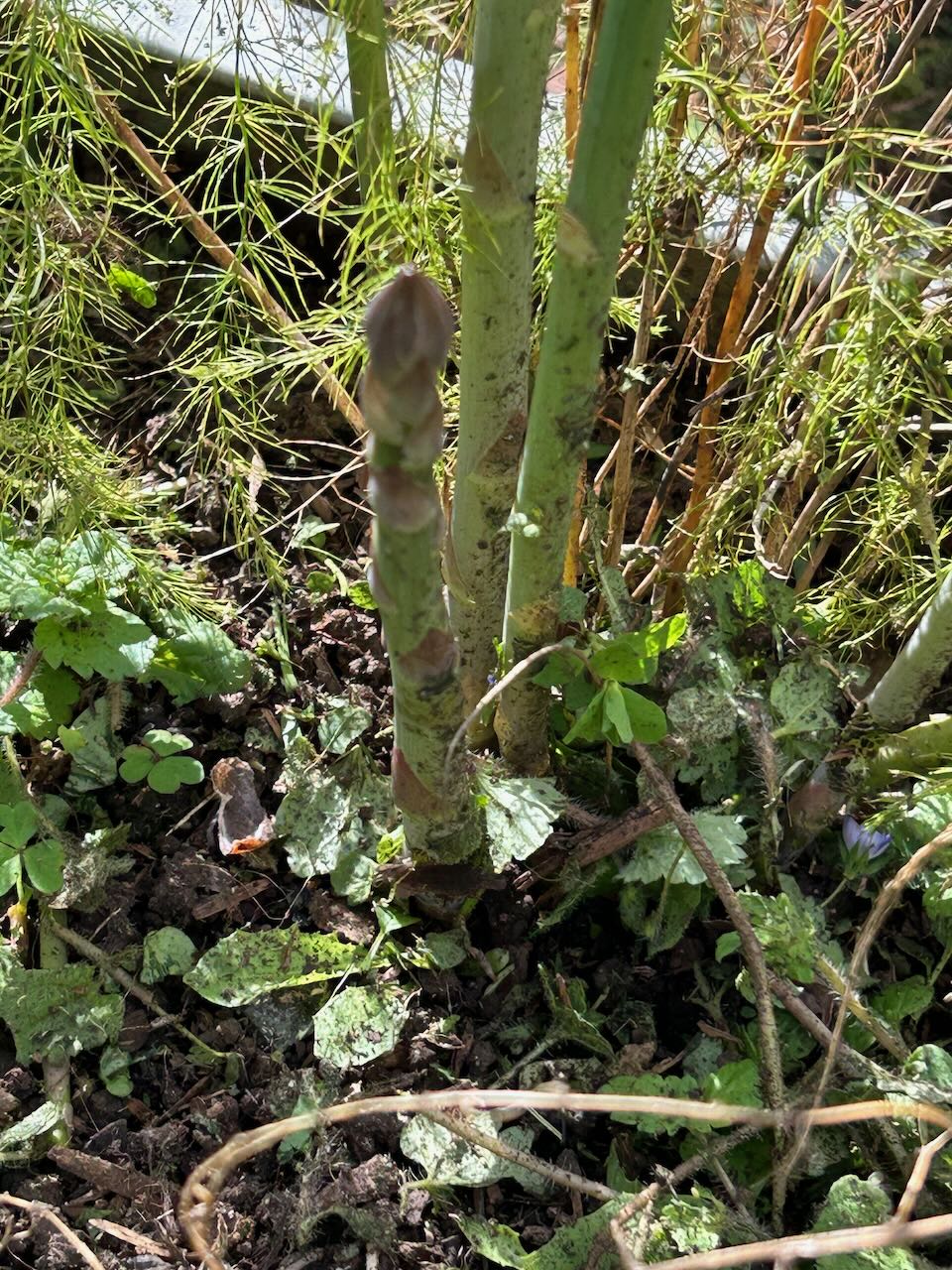
The first asparagus spears have started to appear, so our cooked breakfasts will start to take on more variety. We also have a few bright red Flanders poppies starting to flower. There are a multitude of wild, self-sown, poppy plants all through the garden beds. I planted them once, way back in the 70’s, because I like them so much. They are so bright and cheerful. I’m not so keen on the big blousy doubles. I just love the intensity of the single red.

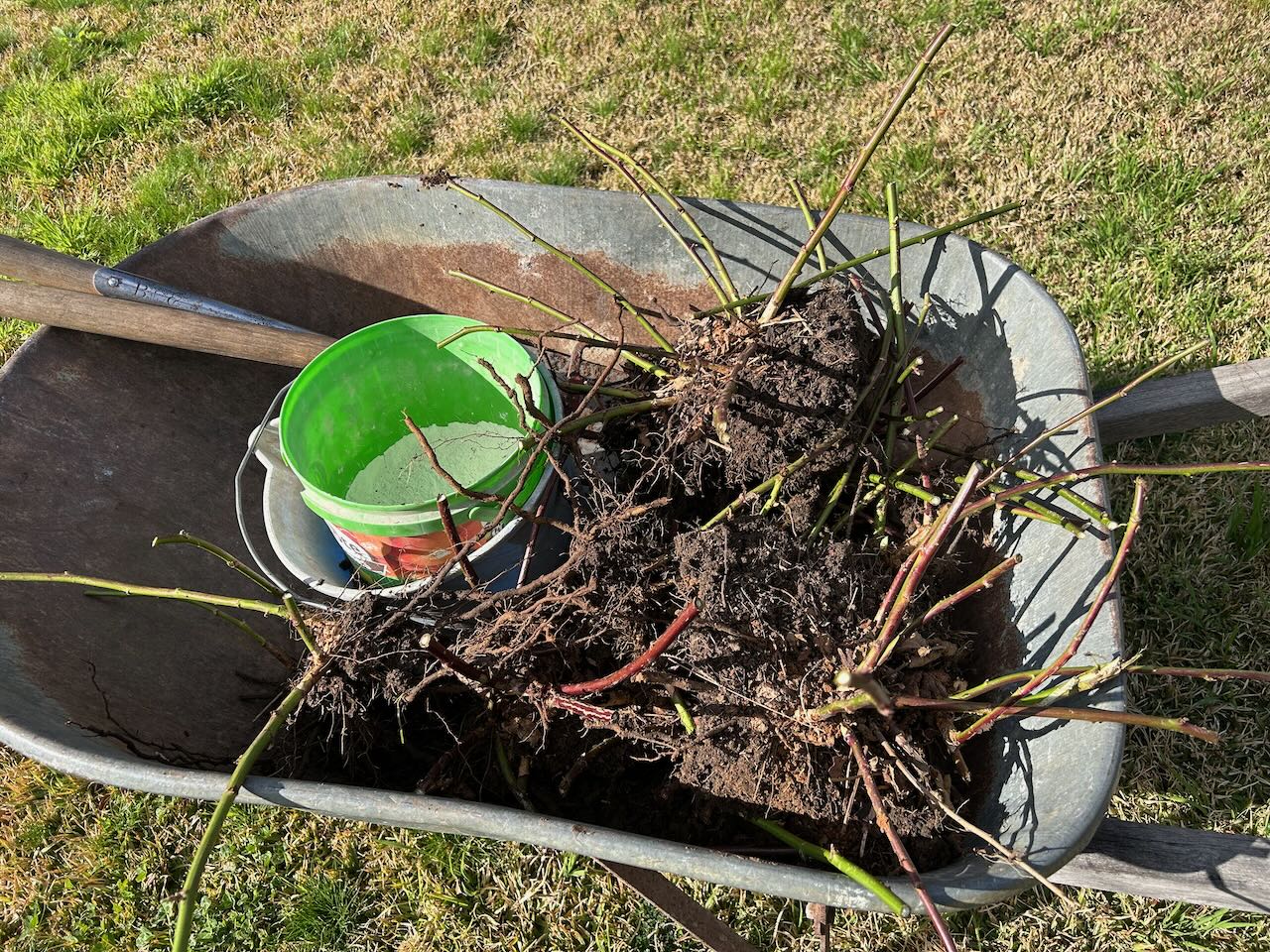
Janine has decided that she doesn’t want the youngberry canes growing where they are anymore. They’ve been there since the 70’s, and have gone a bit feral in recent years. So I have started the process of digging them out and transplanting them over into the vegetable garden, where they will be under permanent netting. Where they are now requires us to build a plastic polypipe hoop structures over them each summer and drape netting over that to keep the birds out. It should be easier to maintain them in there. There was also an issue of rogue seeds falling and germinating in among the cane patch, some of these germinated and grew up into spiky/prickly versions of their former selves. So a total clean out is in order. I’m being very careful to only select the ‘bald’ canes for transplanting. I have chosen to place them right at the end of the bed for easy access and continuing maintenance. I will create a second cane patch at the end of the parallel bed when I get the time. Maybe next week? During the cold days I will be spending more time indoors in the pottery preparing for the next wood firing.

Today the weather has turned cold. The wind has a bitter finger-chilling edge to it.  Suddenly, I have no further interest in getting out there and finishing off the weeding. There is still so much to do out there, but I’m very content with what I got done over that glorious weekend of still, warm sunshine. Promise of the warmer weather to come. Roll on spring.

Metric Marmalade

July means that it’s time to get to work in the orchards. There is pruning to do. I usually wait until most of the trees loose their leaves before pruning as a rule, but with such a range of trees in this family orchard of mixed fruits, there are some that have lost their leaves a month ago and others that are still in leaf. 

In a perfect world, I’d treat each tree as an individual and consider its best needs, one by one. 

But this is reality, and I have a lot to do everyday through the seasons. Winter is also wood kiln firing season. I want to fire my wood kiln at least once each month to get through all the pots that I’ve been making since my return from the work that I did in Korea. So the orchard pruning/spraying/fertilising is all compressed into one day, as needs must. I have my friend Andy coming tomorrow to help me do some of the last outstanding jobs to finish off the pottery shed. It needs flashing installed over the windows. Something the shed builders didn’t bother to do. Slack arses! So I’m finally getting around to it 5 years later.

I choose a day at the beginning of July and get stuck in to the orchard jobs. Every tree gets pruned for shape and strength, removing any dead wood, crossed branches and water-shoots, I also open up the centre to let light and air in and allow good ventilation. I prune to an outward pointing bud, and hope for the best. I’m not so interested in maximising the crop of fruit. In fact we have more than enough fruit set each season, as we give a lot away. 

Yesterday during pruning, I noticed that I was pruning off branches from an apple tree with full vigorous growth of leaves still on, and then followed by a peach that was so advanced in its dormancy, that it had bud swell. I really need to give the trees a good saturating spray with lime sulphur before bud burst to suppress mildew, fungus and leaf-curl on the various trees. Lime sulphur spray stinks of rotten egg gas smell, and is best kept off your skin and clothes, so I wear a face shield, hat, rain coat and gloves, just in case.

One of the apples gets white powdery mildew, a couple of the peaches get leaf curl. It’s a mixed bag. After lime sulphur spray, I go around and spread composted chicken manure for its nitrogen, dolomite powder for its mixed, subtle calcium/magnesium content, and some wood ashes for the potassium that encourages healthy fruiting. 

The chickens have the stone-fruit orchard all to them selves everyday to roam and scratch around in. Always finding something interesting to chase and squabble over. They are forever dropping their pooh and enriching the soil as they go about scratching, so a little extra lime every now and then to sweeten the soil is a good plan.

In a few weeks time, I’ll also start the first of the Bordeaux sprays, to suppress the leaf curl fungus, through into spring. Peaches and nectarines are particularly vulnerable to this fungus. Bordeaux spray (copper sulphate mixed with lime) helps to control this. Both Bordeaux and Lime sulphur are registered organic sprays.So I can feel safe using them on our food. However, I like to use the minimum amount, as copper can build up in the soil over time.

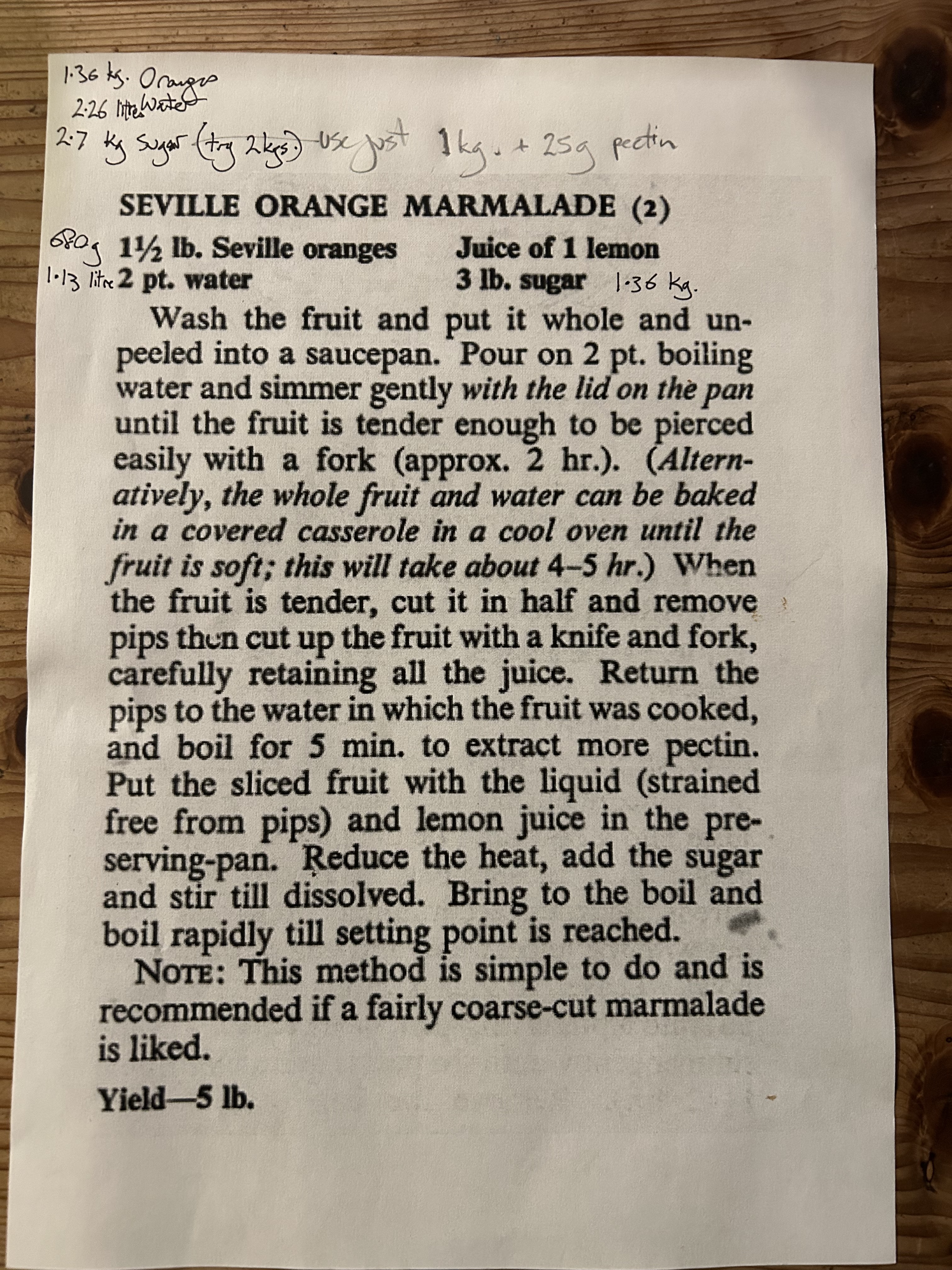
Out of the garden and into the kitchen. Winter is also peak season for citrus fruits. We have been making batches of marmalade since the season started back at the beginning of June. This week I have been trying out an old recipe that I got out of Mrs Beaton’s cook book. I have the paperback facsimile edition from the mid seventies. I was encouraged to try it out by my friend Bill who makes lovely marmalade. I occasionally post him a box of Seville oranges and he later returns a jar of his latest batch of marmalade. A good arrangement. 

This year I’m giving one of Mrs Beaton’s recipes a try. There are a few in the book. This is No.2 as recommended by Bill. I doubled the quantities, to make it worthwhile spending the time on it. However. I couldn’t bring myself to use 3 lbs (2.7kgs) of sugar. So I reduced it to 1 kg and added 25 grams of pectin to make up for the reduced sugar. After converting it to metic and doubling all the quantities, it still tastes great!

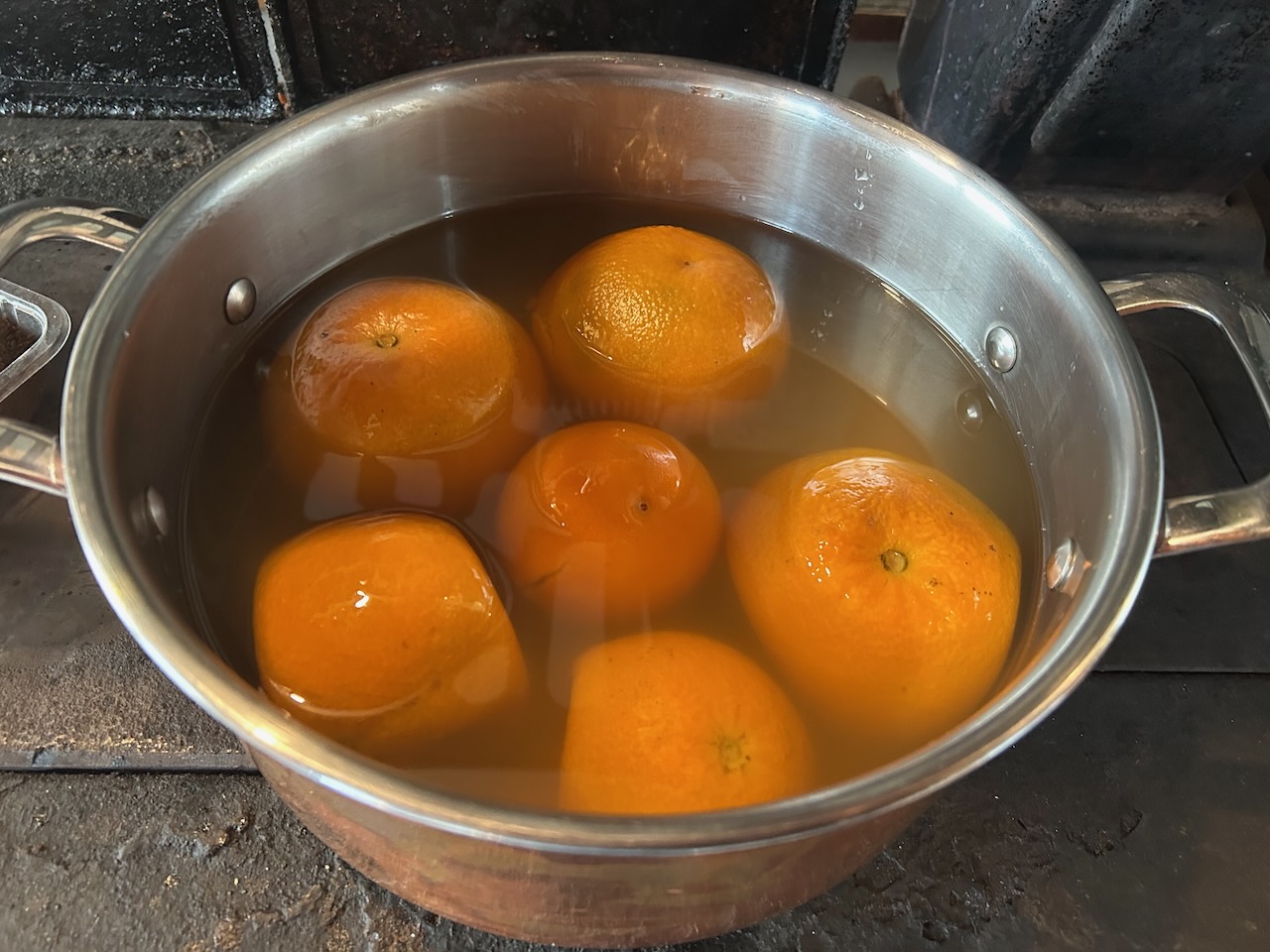
It’s a good recipe and in this slightly altered form, with much less sugar. I still find it very sweet. I’m glad that I didn’t bother trying it in the original. I wouldn’t have enjoyed eating it at all. Boiling the whole fruit for 2 hrs and letting it sit overnight to cool gives it a very old fashioned sour flavour from the peel that we don’t get by just boiling the peel and juice for a short time.

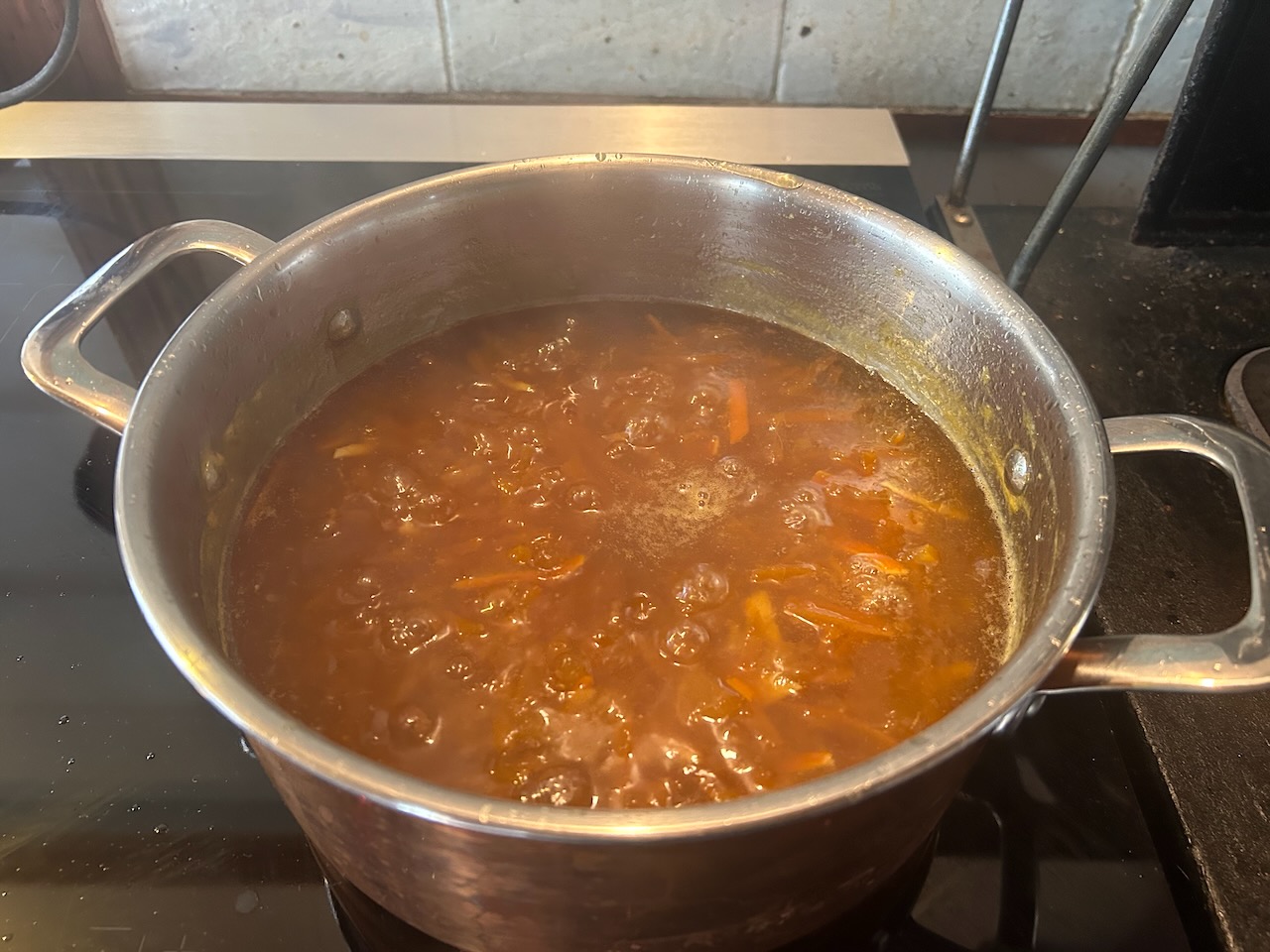
This recipe gave me 3.5 litres of marmalade = 6 medium sized jars. Worth the effort. We had visitors while I was cooking it up. They all walked into the kitchen and each remarked on how wonderful the smell was as they entered. We were able to give them a large box of mixed citrus to take with them.

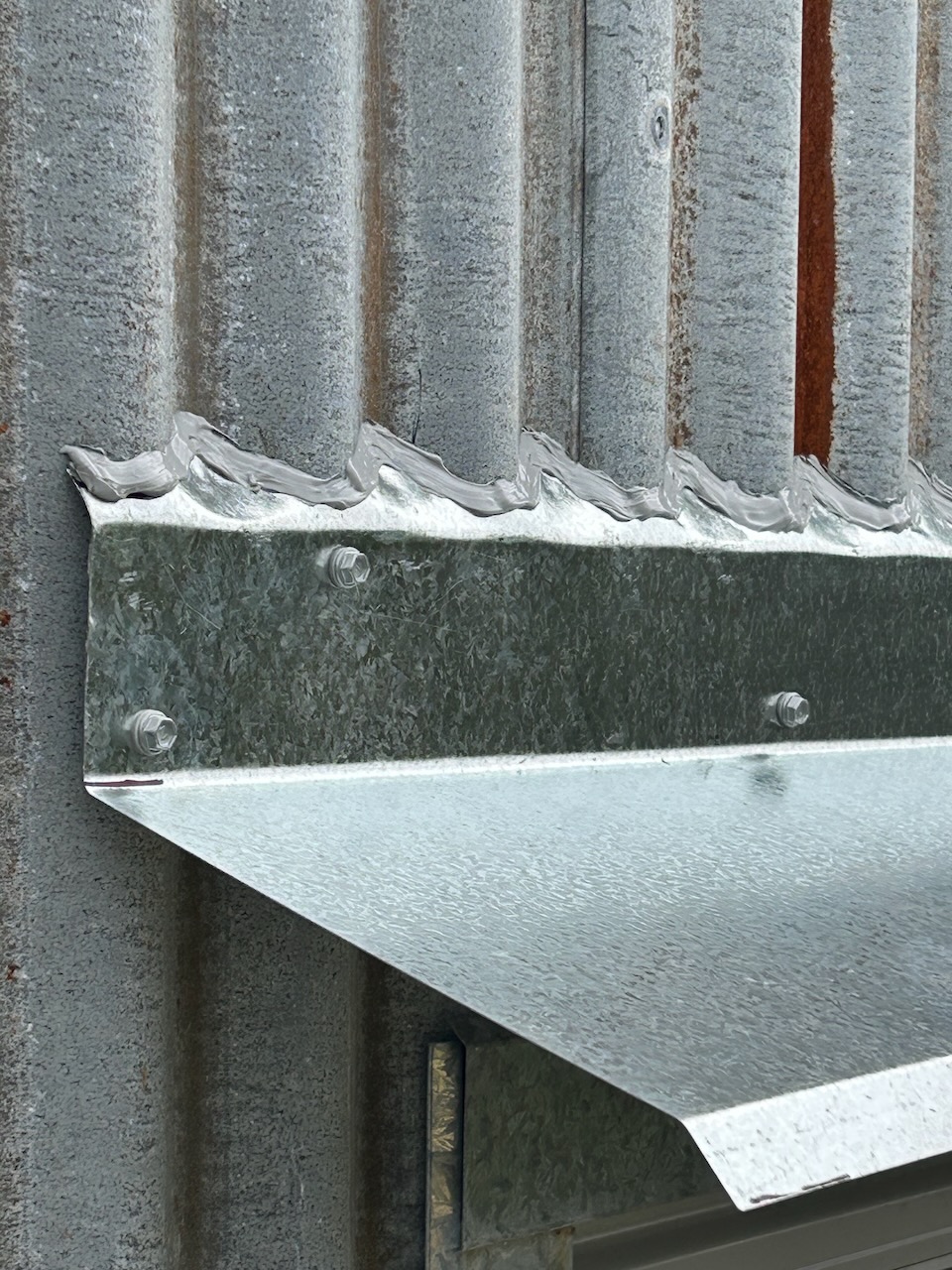
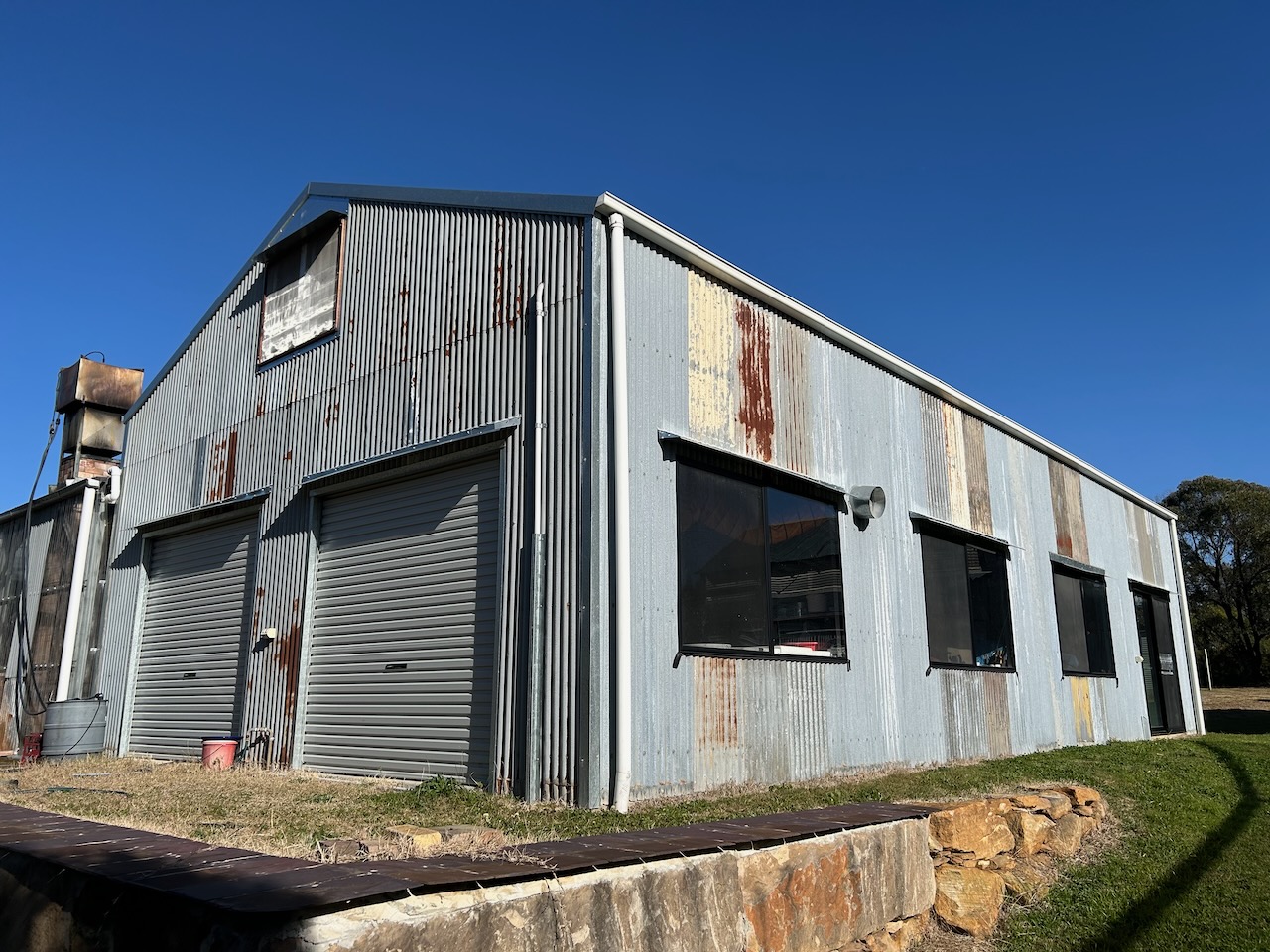
Out of the kitchen and onto more pressing practical matters, I made my own new flashing for the pottery shed windows from two sheets of  2440 x 1220 x 0.9mm sheets of galvanised steel, that I cut and folded on the guillotine and pan break, custom fitted for my windows. The lengths of flashing have to be marked and then cut out to perfectly fit into the curves of the corrugated iron sheeting on the walls. In a perfect world. The shed builders should have fitted flashing above the windows before they installed the outer wall sheeting. But they didn’t bother to do anything at all, so the window seals around the edges leaked. But not any more.

Andy and I marked out, hand cut and fitted the curves exactly to match the variations in the mixed 2nd hand gal sheets. A slow, but rewarding job. We couldn’t use a template, as almost every sheet is different across the wall. Until I collected all this mixed corrugated iron roofing fro mall around Sydney and the Highlands. I didn’t realise how many different profiles of corrugated iron there were. I just thought that it was all the same. But every company has their own individual variation of the profile.

We spend a day going around the building and fitting the new flashing above all the openings. We can’t take off all the cladding to do it properly. As it should have been done. So we add the flashing onto the wall sheeting and cut it into the profile and seal it with silicon. It’s quicker, but still takes us all day to do 5 double windows and 3 garage sized roller doors.

Bit by bit I’m getting the shed finished. It’s only taken 6 years to get this job finally complete.

All the flashings acting as mini-awnings above every opening.

Nothing is ever finished, nothing is perfect and nothing lasts.

Back home from Korea

I’m back home from my work in Korea. I managed to drop a firebrick on my foot on the 3rd day. I couldn’t wear a shoe after that, as the big toe had swollen up so much, such that I had to wear a plastic ‘flip-flop’ thong to keep working. I went to the local convenience store in the village and bought alcohol disinfectant spray for cleaning the toe, over-sized bandaids, gauze bandage and medical tape. I was amazed that such a tiny village shop had everything that I needed.  
The next day, the local government health clinic was open and my friends took me to the clinic to see the doctor. I needed them to translate for me. The doctor told me that I had kept it very clean and to try and keep it elevated, not to walk on it too much and that if it started to throb or get red. I should come back ASAP. As a precaution, he prescribed and also issued me with 2 different antibiotics, for 3 times a day, enough for 10 days. I don’t like to take any antibiotics if I don’t absolutely need to, but I certainly didn’t want to end up with medical complications while in a foreign country, so I took them.  I didn’t want to risk getting toe-main poisoning and it spreading up my leg to Knee-monia and possibly even dick-theria.The doctor offered me an X-ray, but I assured him that I could still bend the toe. I had to demonstrate that for him, so that he was satisfied. 

My friend got out his credit card to pay, but there was no charge!!!! I’m a foreigner here. I don’t pay taxes here. I should pay for such a terrific service. Korea is an amazing place!

My foot was still swollen, and I was still wearing a plastic flip-flop thong on my foot right up until I left Korea. I even had to attend the official opening of the exhibition in my formal black thong. The nail has since died and come off. I’m so lucky that I have such good friends and that it wasn’t worse.
The garden has grown such a lot while I was away, and badly needs a lot of weeding. Apparently there was a lot of rain and the temperature was quite mild. So plenty of late autumn growth. I got stuck into the weeding straight away, just an hour at a time each day. Weeding always involves such a lot of bending. I’m of an age where this is not so comfortable any more. So I space out my efforts, I didn’t want to over do it. 
The second day, I decided to wear knee pads so that I could get closer to the weeds, to minimise the bending. I also wore light gloves to save my fingers. So I am learning to change my old habits to make living here the way that I have so far, and want to continue to do into the future, a more achievable prospect. This is a really hands-on life style, doing almost everything the old fashioned way, by hand, honouring local gardening lore and organic traditions with green environmental knowhow/theories.  A permanent garden/orchard/vegetable patch, including chickens, all inter-woven and based on sustainable living principals, but with a nod to modern conveniences where necessary, like a cultivator and a mower. 
We can still pick all of our salad lunches and our nightly dinner from the garden each evening, it’s just that the flavours have changed to winter forage now. We have all the usual winter greens, broccoli, cauliflower, carrots, beetroot, cabbage, pumpkin and kohlrabi. We cook a lot of vegetable stir fry, tofu, okonomiyaki, Japanese style cabbage pan cake, baked mixed vegetables, and cauliflower au gratin etc. We have also just celebrated the start of the cold winter season with an old fashioned baked dinner. Our first red meat meal since last winter.

  Other than weeding the garden, there is also a lot of mowing, so an hour or so of that each day too. The garden work fills half the day. I’m using the electric ride-on mower for the bigger areas that have become deep in luscious growth. But I also use the electric strimmer for all the edges where the ride on can’t get to. It’s a good feeling to know that all the work is being achieved powered by sunshine these days instead of fossil fuels. Janine fills in the gaps with the electric push mower, to get in under the branches of the fruit trees and other similarly appropriate places for that mower.


We have worked hard at planning and finally becoming a fully solar electric household. We started back in 2007, when the cost of solar panels finally became affordable for us. When I was a teenager, the only solar panels were to be found on space craft and satellites. We’ve come a long way and Australia can be proud of the world famous, ground breaking research into refining solar panel technology done by Professor Green at the University of New South Wales in Sydney. We have slowly increased our solar PV over the years, until now we have 17kW of PV panels and two 15 kWh batteries. Sufficient to charge 2 electric cars, run the house and pottery workshop, Fire our electric kilns and if carefully managed, also selling the excess back to the grid. Although we try to minimise our exports, as we only get paid 5 cents per kWh. It’s better to use it all ourselves. We haven’t paid a power bill since 2007, and spend more money on petrol for things like the chain saw and fire fighting pumps than we do on our Plug-In Hybrid car.
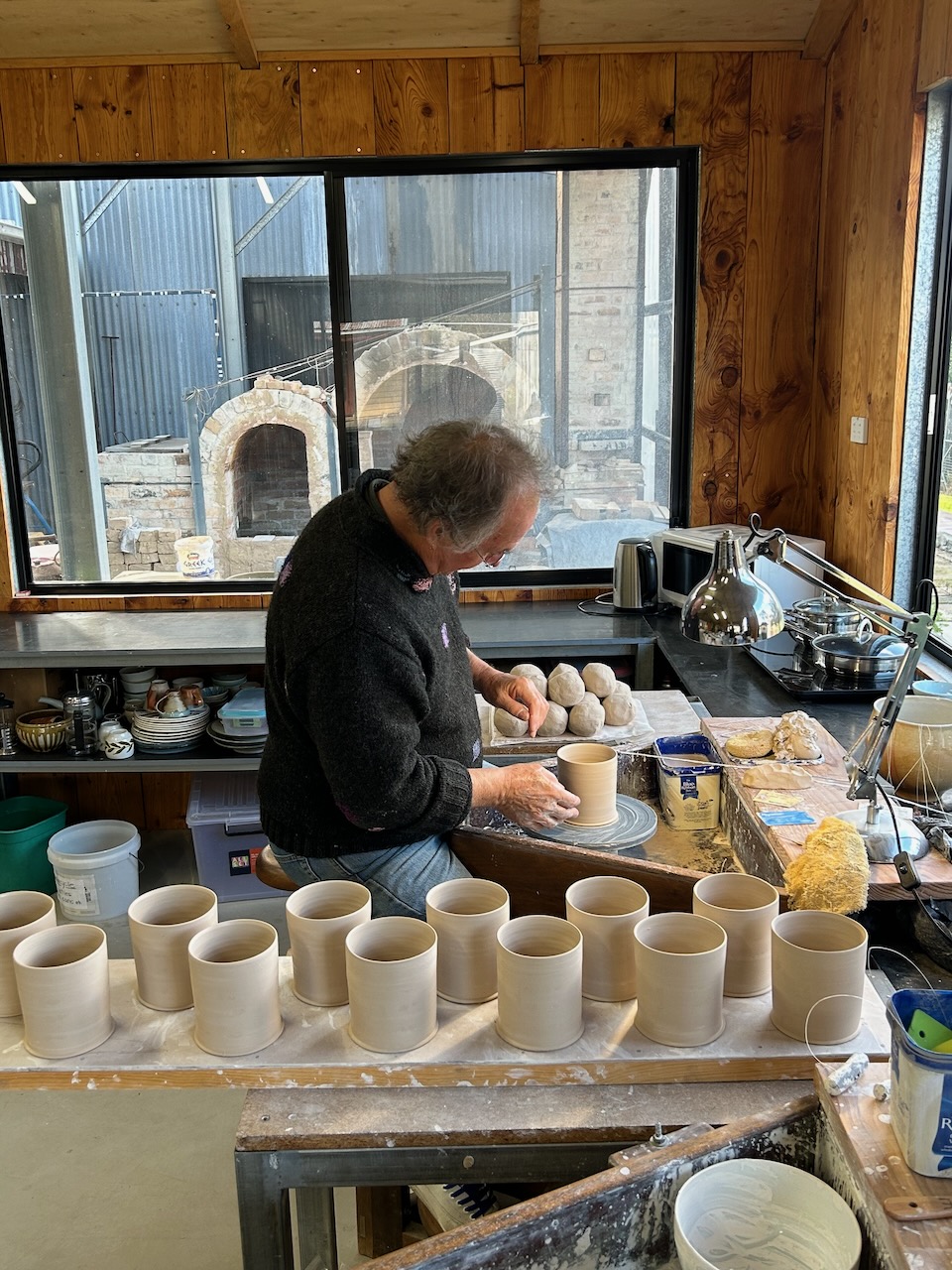
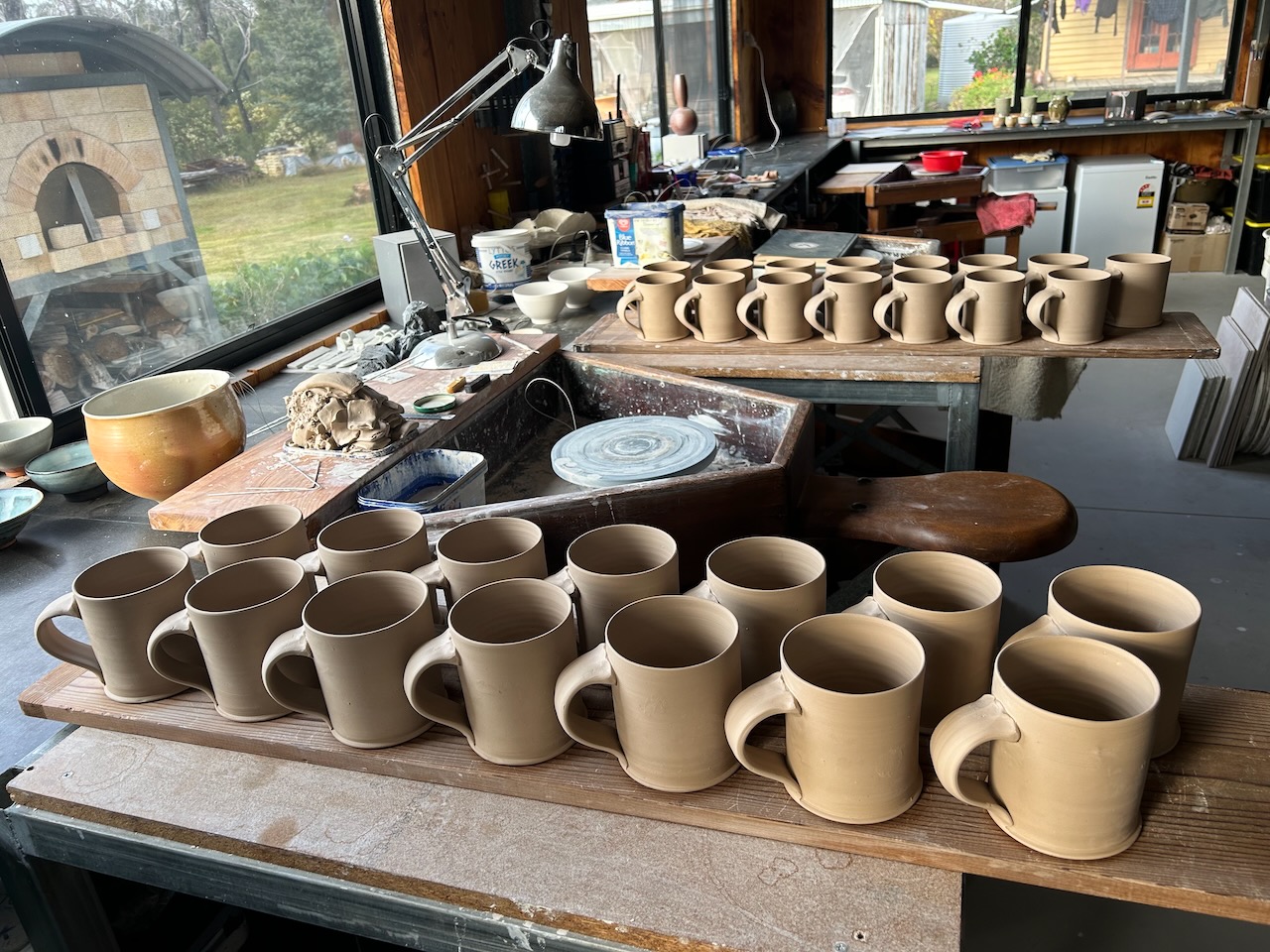
Now that the garden and grounds are back under control, I’m also back in the pottery, making pots again, for the other half of each day, making again is fun and half of my existence. My start back on the potters wheel was delayed by a day, as the pug mill had seized up from being left for too long without use. I had to hand scrape the clay from the barrel nozzle and take out the vacuum screens to remove hardened clay from the mesh.  Quicker and easier than a complete strip down, but still time consuming. It somehow feels like a bit of a waste of time, but any other option is far worse, I’m so grateful to my friends who passed on their old pug mills to me after the fire. You know who you are. Thank You! I’m very grateful to be so lucky to own my very old, re-furbished, Venco pug mills. 

The next day I’m back on the wheel throwing perfectly de-aired and beautifully mixed plastic clay. My old wrists are too worn out to hand wedge all my clay any more. I did manage a lot of hand wedging for the first year back at work here, during lock down. I couldn’t buy a new Venco as they were out of production, and the large 100mm. model is still un-available! I don’t know where I get the energy and enthusiasm to keep on working like this into my older years, other friends and colleagues have retired, but I was determined not to let the 3rd bush fire in 50 years and loss of another pottery workshop stop me. I’m still here and still creating the things that I love. So out of desperation and necessity, I hand wedged my clay to my lasting detriment. My ageing wrists have never really recovered. Even throwing slowly on the kick wheel, causes just a little bit of a twinge, so I have to modify my hand position slightly to cope. We have a few Shimpo electric potters wheels, mostly used for our weekend workshops, that run on our solar power, but I really prefer the old ‘Leach’ treadle style kick wheel for all the smaller domestic pots.

Winter brings on the citrus crop, so we start the season by making 2 batches of marmalade, lemon, lemonade and lime marmalade and then tangelo and navel orange marmalade. The Seville oranges aren’t ready yet. They come on later in the season. They make the very best marmalade.

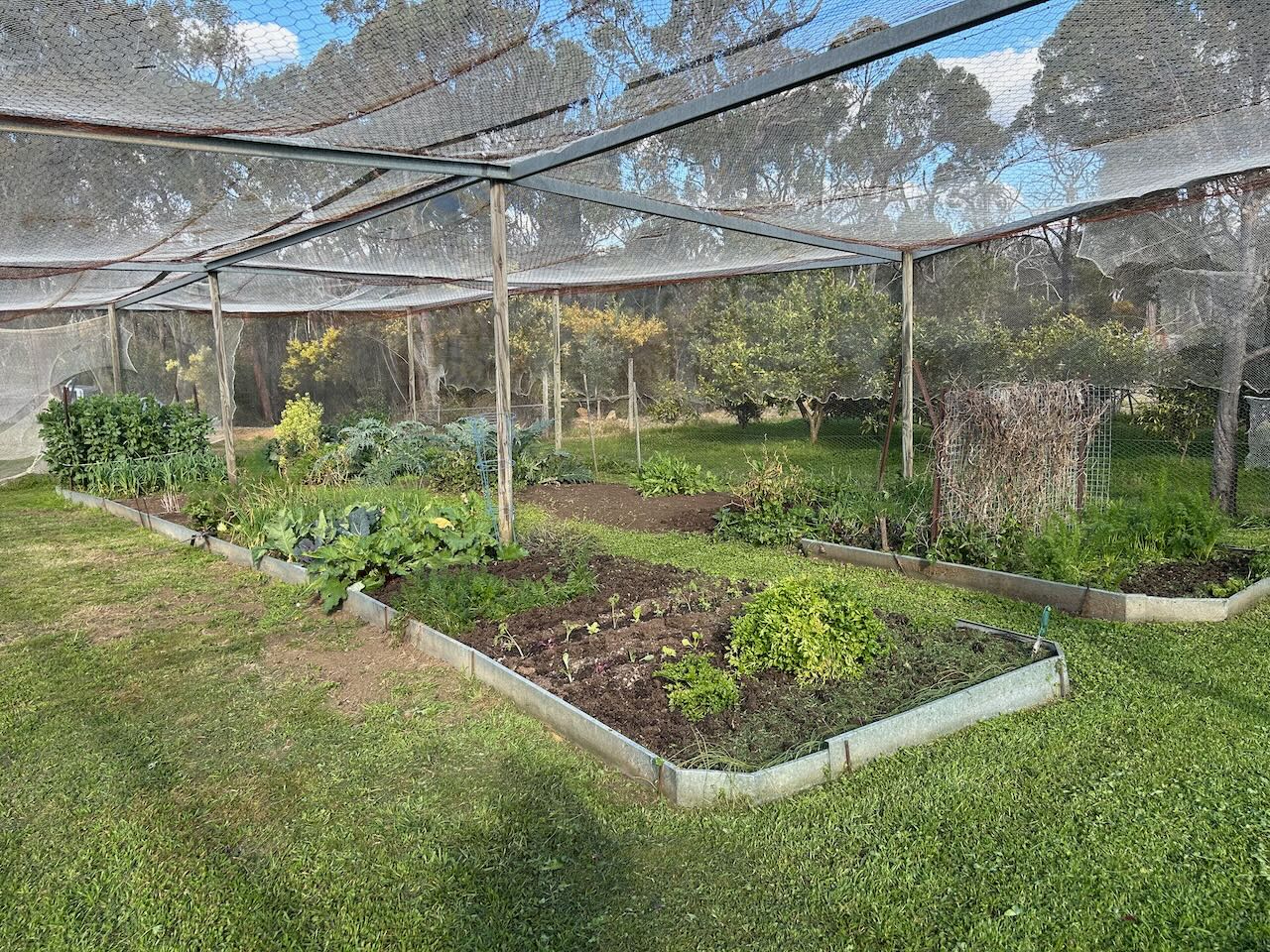
It’s hard to believe, but today, in winter, at the end of the first week of June, I picked a ripe red tomato. We still have self sown tomato plants flowering. We have had ripe tomatoes in June before. It all depends on the severity of the frosts. At this stage we have had a frost during the week, but because the vegetable garden is fully netted to keep out the birds, that netting seems to just take the edge off the frosts, allowing us to still harvest tomatoes so late in the season.

It’s so good to be home again! We have a quotidian flock of wild wood ducks, that have decided to take up residence on the front lawn, sometimes up to 30 or so of them. They seem to like it here. Plenty of grass to eat and 4 dams to explore. Why wouldn’t they? They were probably all born and raised here over the years. They do pooh all over the lawn, so we have to watch where we step and wipe our feet at lot. We have a shoes-off household, so no problem about the house, but a lot of pooh gets tramped into the pottery workshop when we have weekend workshops and open days.

If this is my biggest problem in life. I’m so, so lucky!

Nothing is perfect, nothing is ever finished, and nothing lasts.

Autumns rewards

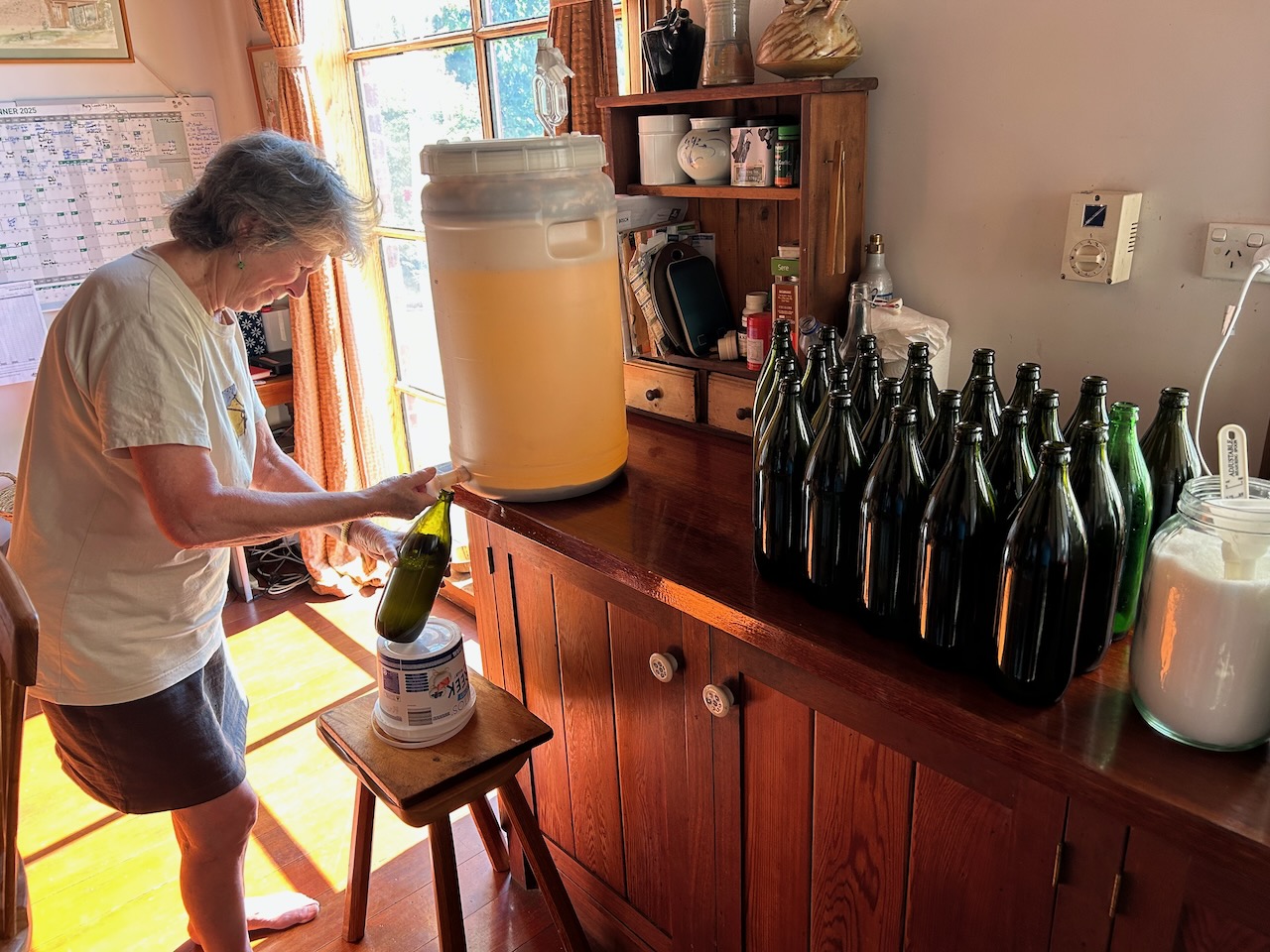
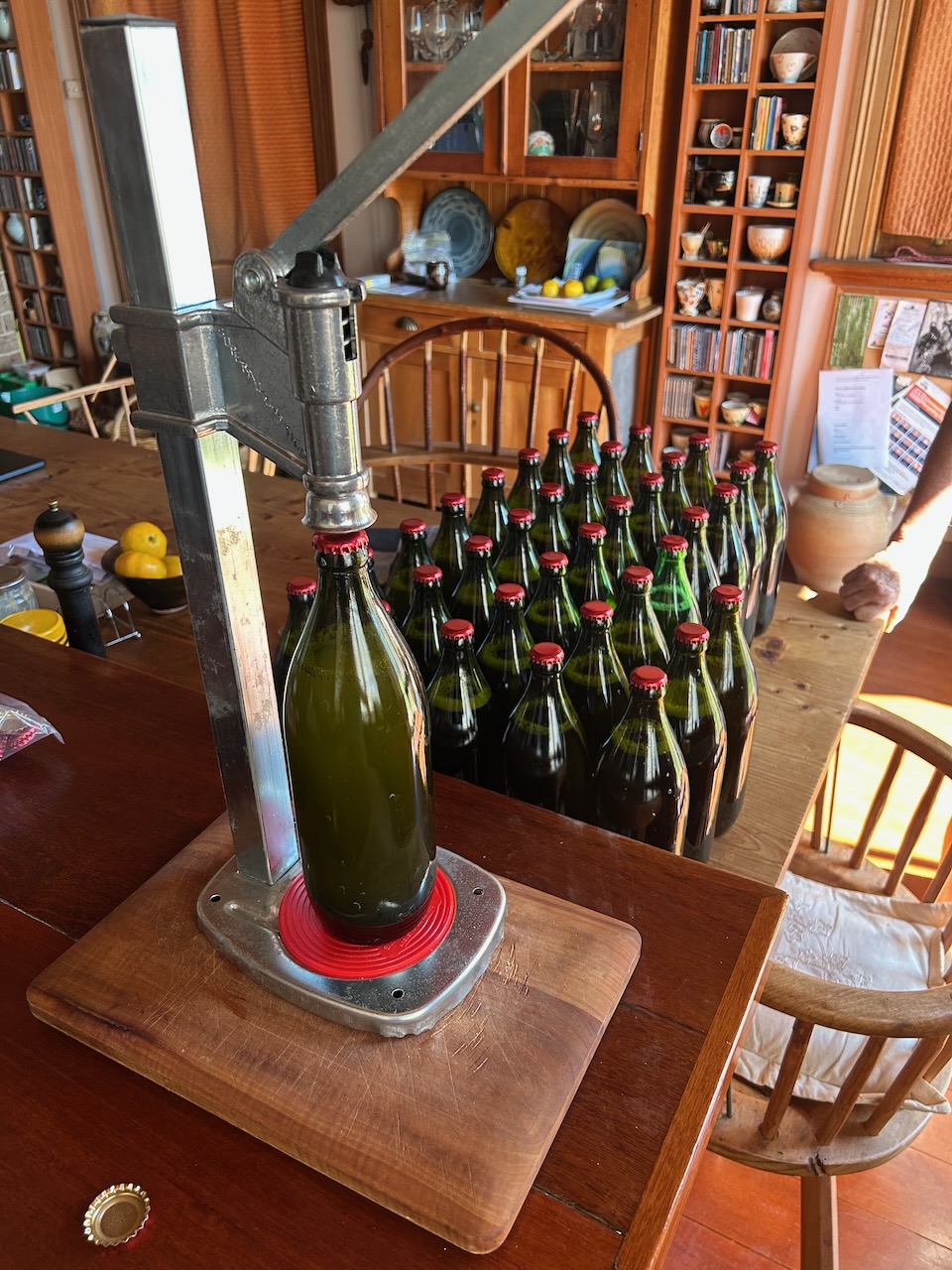
Exactly 8 weeks ago today, Janine and I harvested all of our apples and pears. We juiced them and used ‘Moet and Chandon’ champagne yeast to ferment them all into cider.

Now, 8 weeks on, the ferment has completely died down and used up all the available sugary nutrient in the juice. Now that it is completely still, it is safe to bottle it. We must make sure that it is fully fermented out, so that it wont keep on fermenting and explode the bottles.

I remember back in my childhood in the 60’s, stories of exploding ginger beer bottles that had too much sugar in them.

We have been making our own cider here for almost 50 years now, ever since we planted our first orchard and got a reasonable crop of apples. 

This is our first vintage of cider in ten years now, because the orchard was burnt out in the big bush fires of 2019, but before that, there was a ten year draught that made it very hard to keep the fruit tress alive , never mind getting a good crop off any of them.

So this is our first really good cropping year from the newly planted fruit trees in the new orchard five years on.See; It’s almost autumn, Time to make cider.Posted on 

I have just spent two days hand weeding and digging over the pottery verandah garden bed. It had gone completely feral and needed a good sorting out. All of the spring and summer flower display was mostly over and I’m hoping that all those flowers dropped a load of seeds down into the bed, so that now, given a bit of free space and sunlight, they will germinate and grow a new generation of flowers to welcome visitors along the driveway past the new pottery. I spent a long time on my hands and knees, making sure that I got the majority of the couch grass and kikuyu runners out of the soil. 
To prevent the grass runners from returning and growing back into the freshly weeded soil. I needed to make a border edging along the beds. In the vegetable garden, I made galvanised iron sheeting edging strips from off-cuts of galvanised flat plate that were left over from kiln jobs in the past. A very productive re-use of what was waste material. 
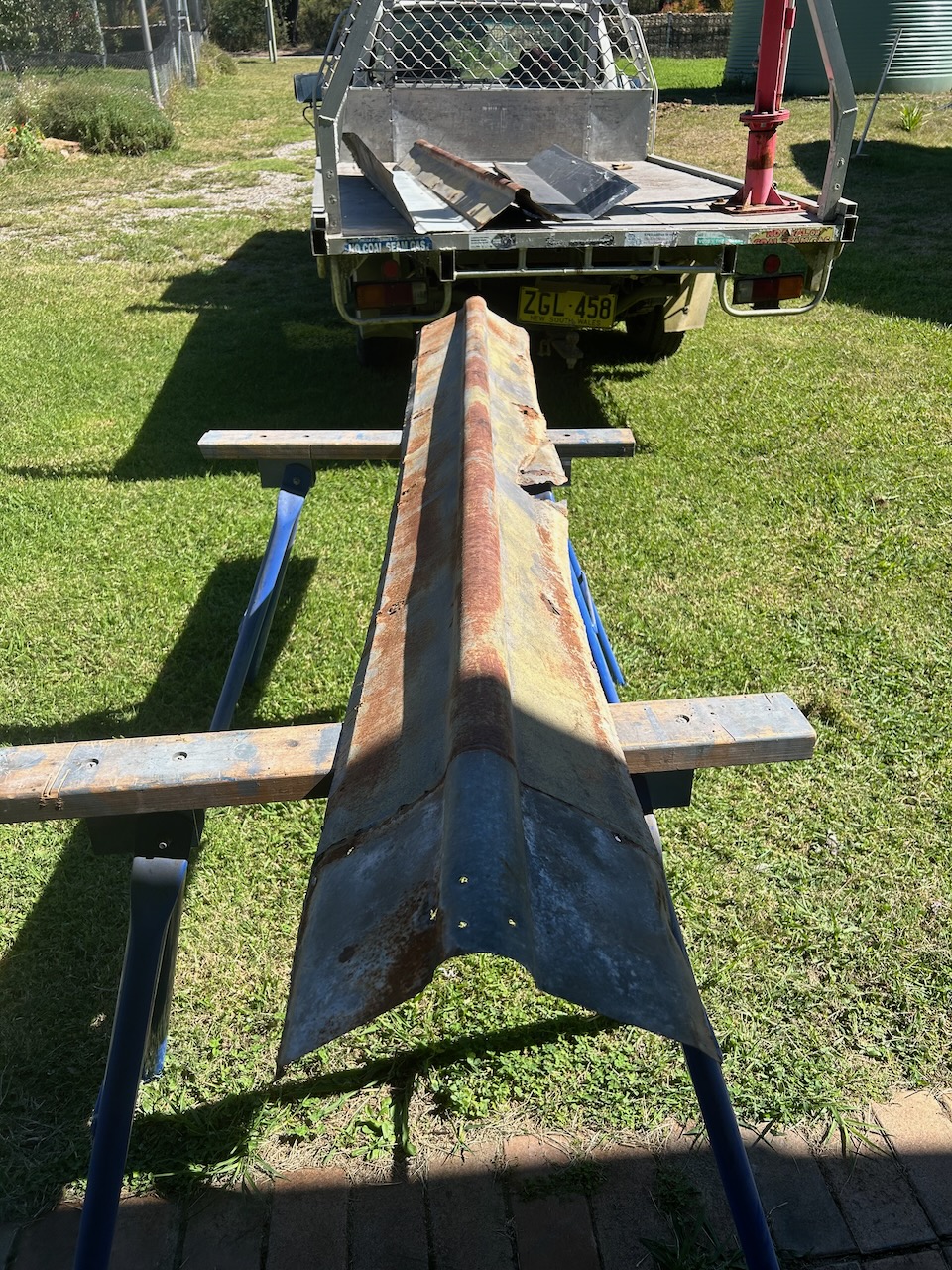
These days I don’t have off-cuts any more, but Janine reminded me that I had stacked up half a dozen lengths of old recycled roofing iron ridge capping that might be usable.

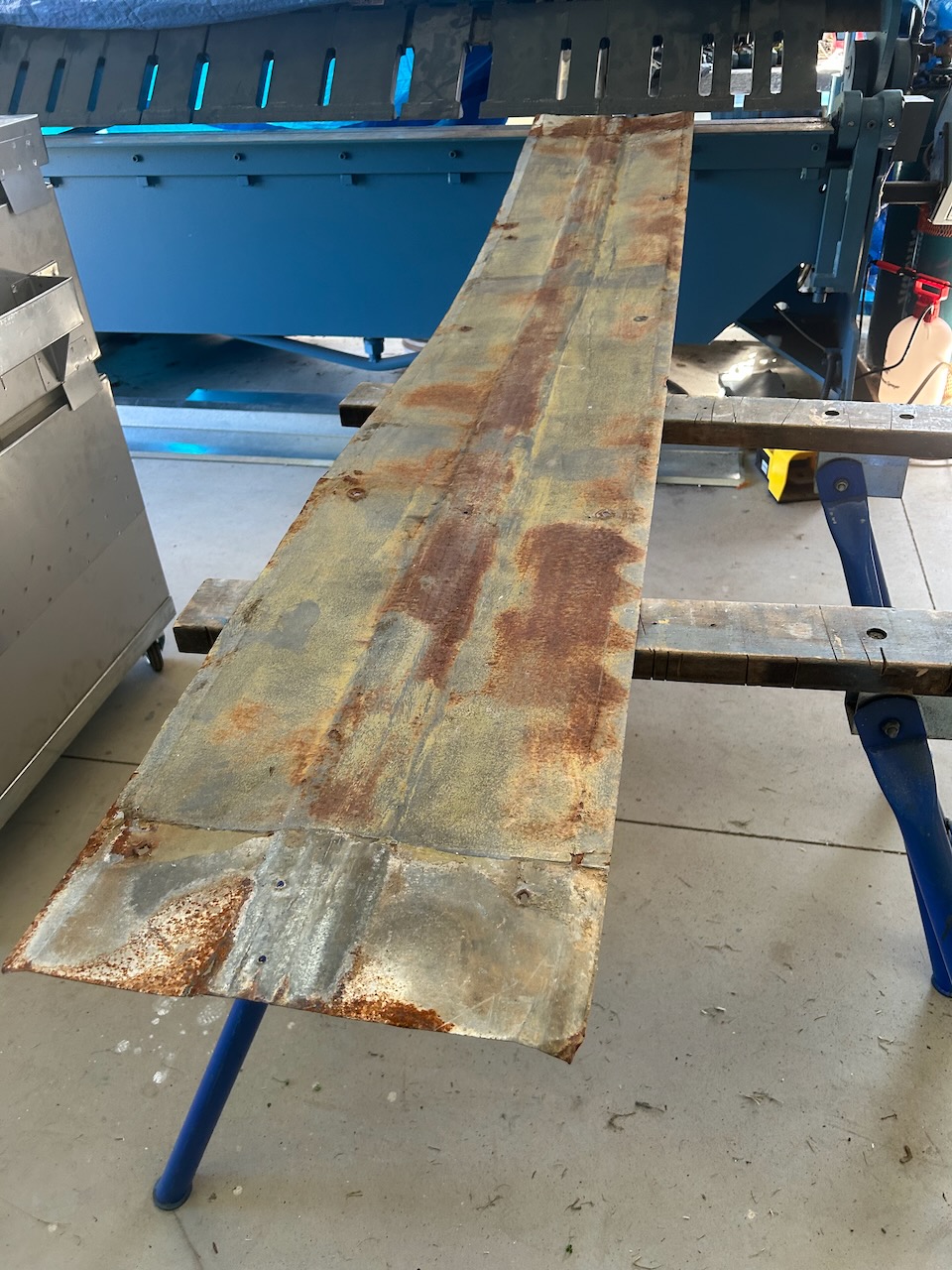
I got stuck in and flattened it all, split it in two long lengths, and then folded a strengthening right angle edge on one side so that i could bury it half way into the soil to delineate the garden bed, but most importantly to cut off access to the grass runners from growing back into the beds. I dug in a ute load of compost, watered it well in, so now will wait to see what germinates.

Re-use, re-cycle, re-purpose!

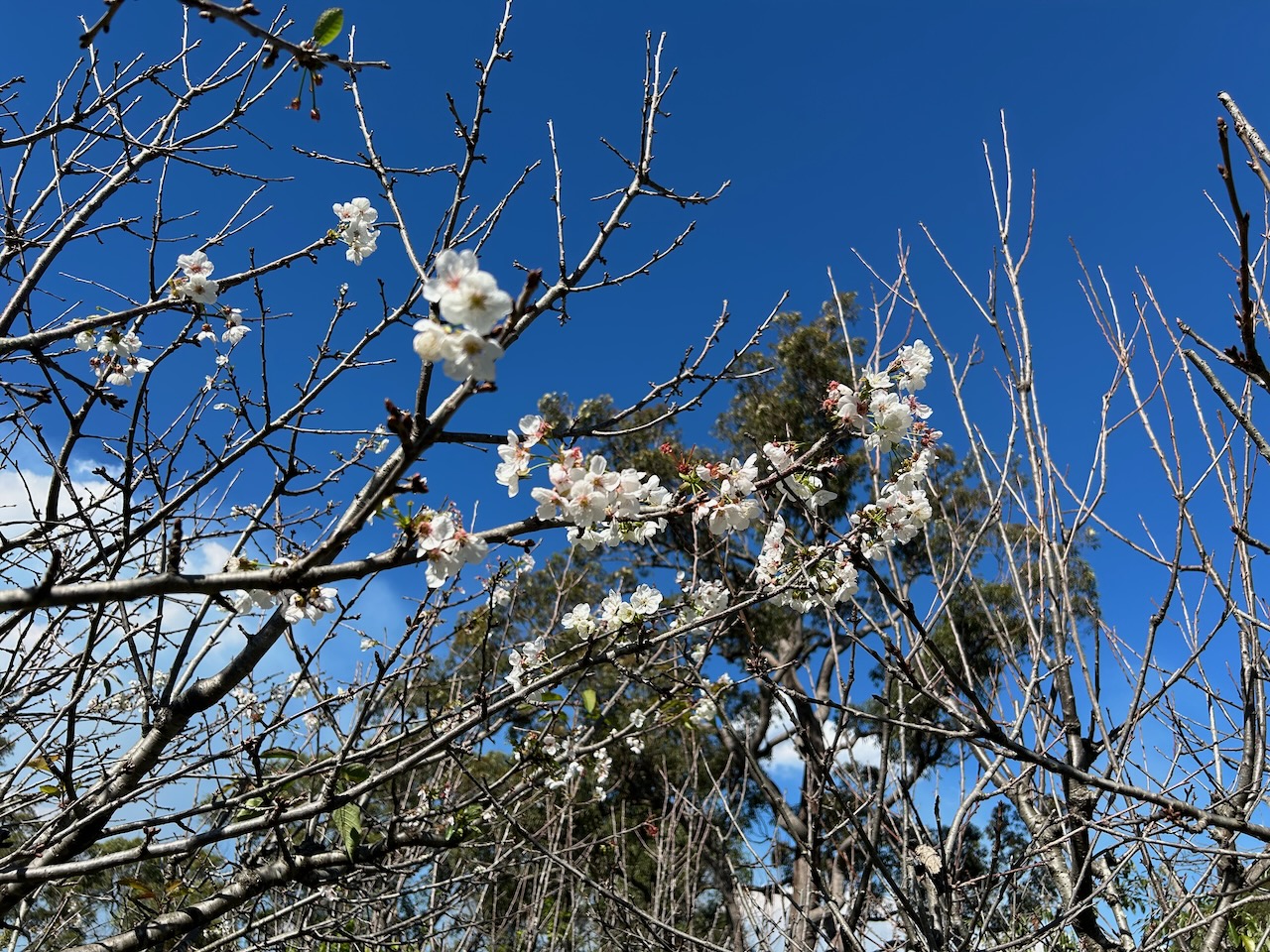
One of our cherry trees has decided to flower again in autumn. I think that it had a few cold nights, followed now with some warm weather,  and that was sufficient to reset the biological clock thinking that winter is over and time for the spring flowering. We have had this sort of thing happen in the past. Particularly with the ‘low-chill’ cultivars.

Winter hasn’t arrived yet, so I wonder if this tree will still flower as normal in 4 months time when spring does actually arrive?

In the pottery, I have retested the rock glaze tests that i started exploring a few weeks back. This time, I have made larger sized samples to see the quality of the glazes better. All 3 have potential, but still need further testing to get them ‘right’.

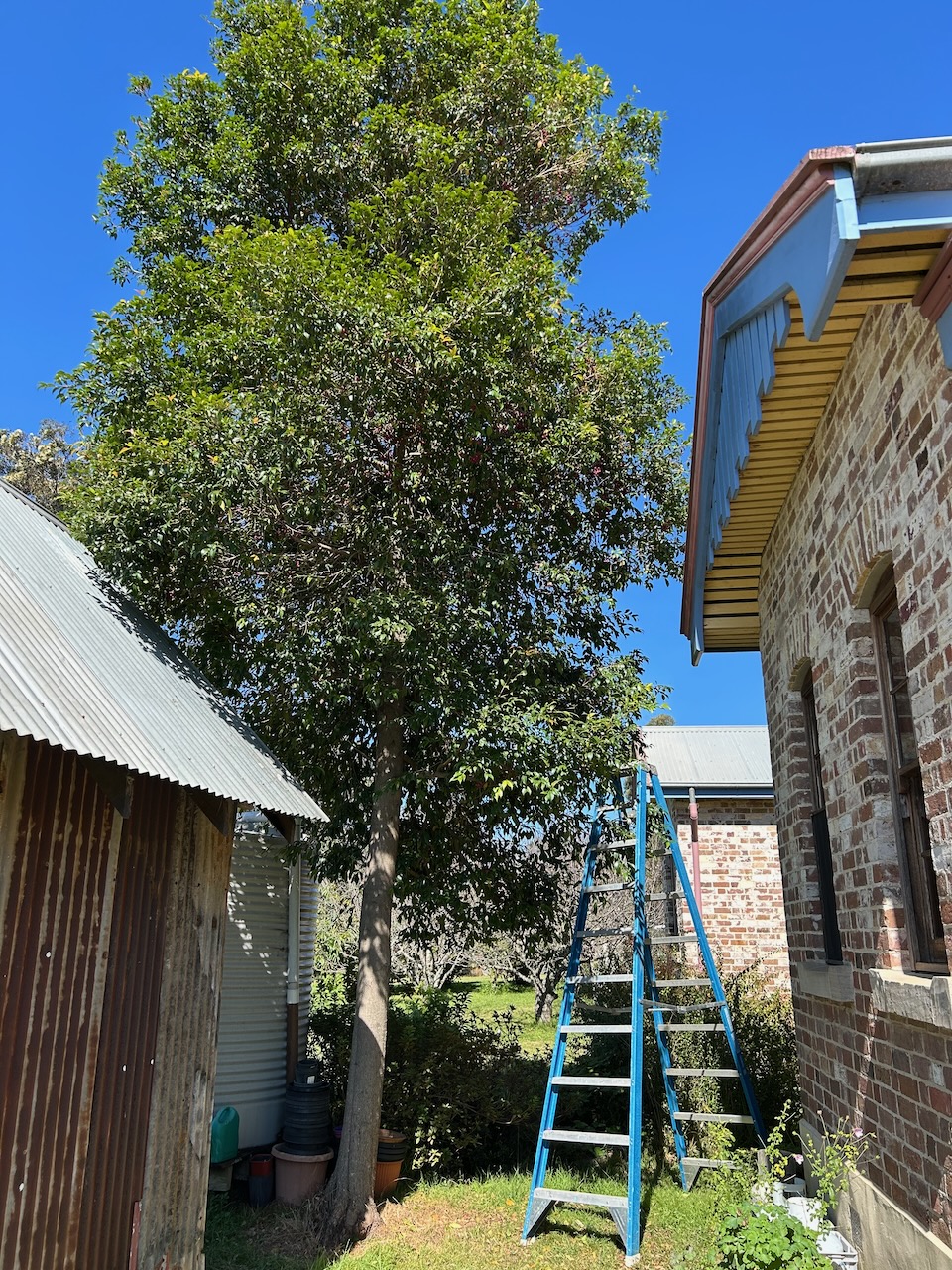
After washing and sterilising all the glass bottles for the cider bottling this morning. I had and hour to wait for the sterilising process to complete, and could hear the birds in the lillypilly tree next to the house. I asked Janine if she wanted to make some lillypilly jelly, so got out the 3 metre step ladder and climbed up into the canopy to fill a bucket with fruit. The fruit only starts 4 to 5 .metres off the ground. The tree is much taller then the house.

After we had bottled all the cider, Janine boiled up the berries and started the process of making the jelly. It takes two days. Tomorrow to sieve out the skins and stones from this batch, then re-boil it and set it up in a cheese cloth to drip out to clear jelly.

Nothing is ever finished, nothing is perfect and nothing lasts.

First cabbage of the cool season.

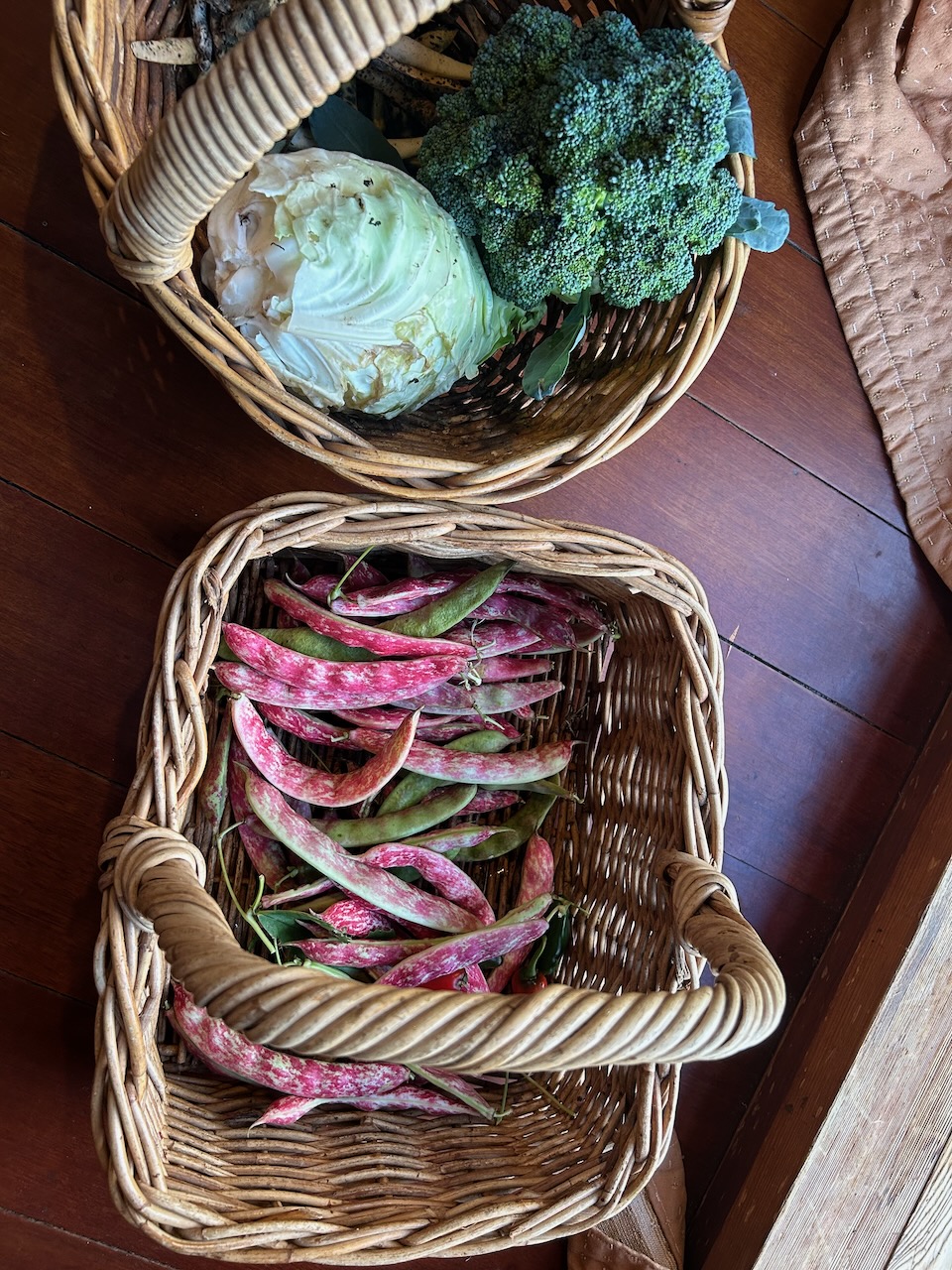
We have just harvested the first cabbage and first broccoli of the autumn. I planted a range of brassica seeds on boxing day. The first batch were all dug out by the blackbirds, so when I re-planted the 2nd sowing, some time later. I also covered the bed with bird netting to stop a repeat of the blackbirds scratching out the seeds. Blackbirds don’t want the seeds, they just like to scratch into freshly worked and composted soil looking for worms. This little hiccup set me back a few weeks, so our first cabbage is a bit late arriving.

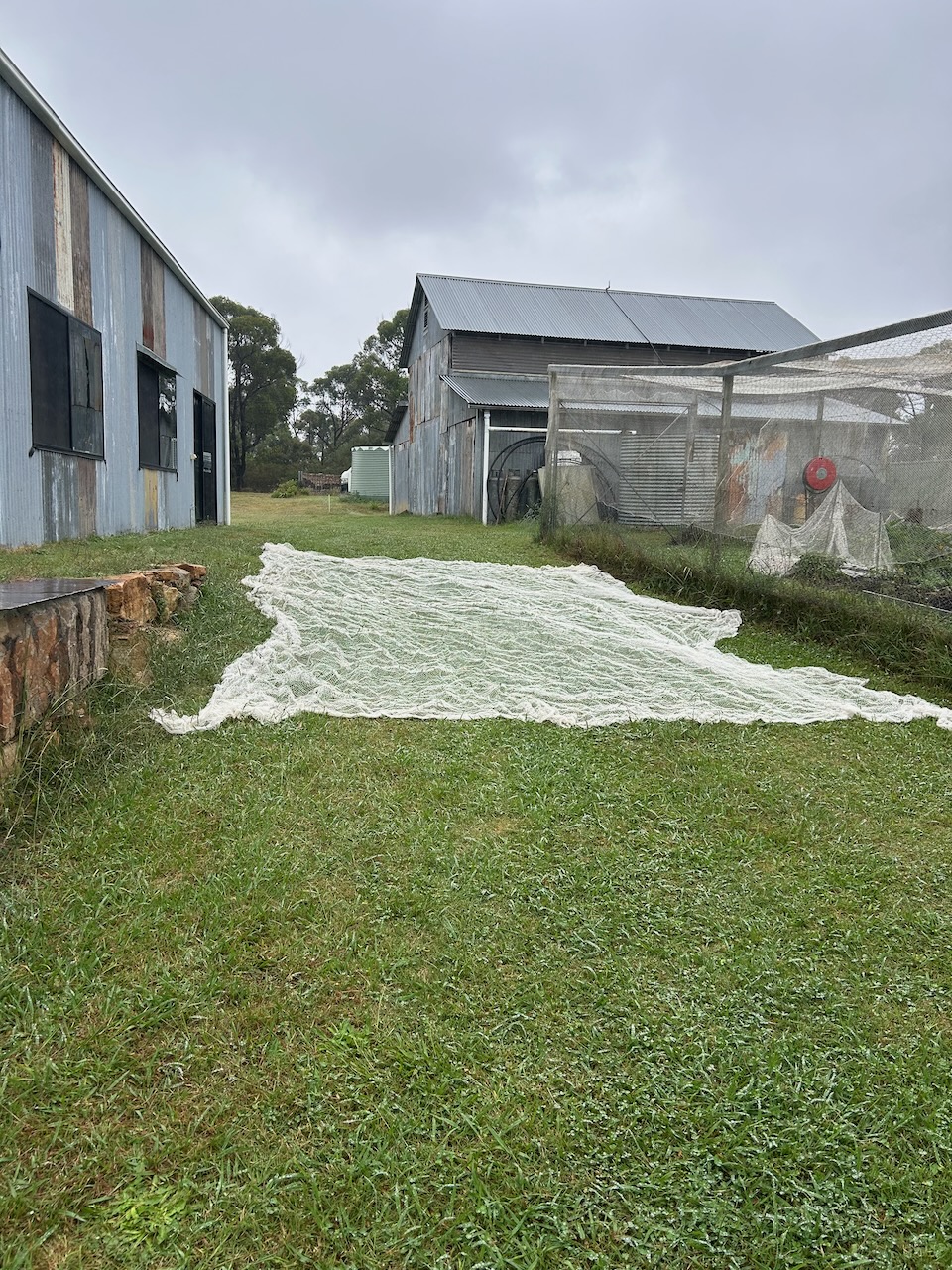
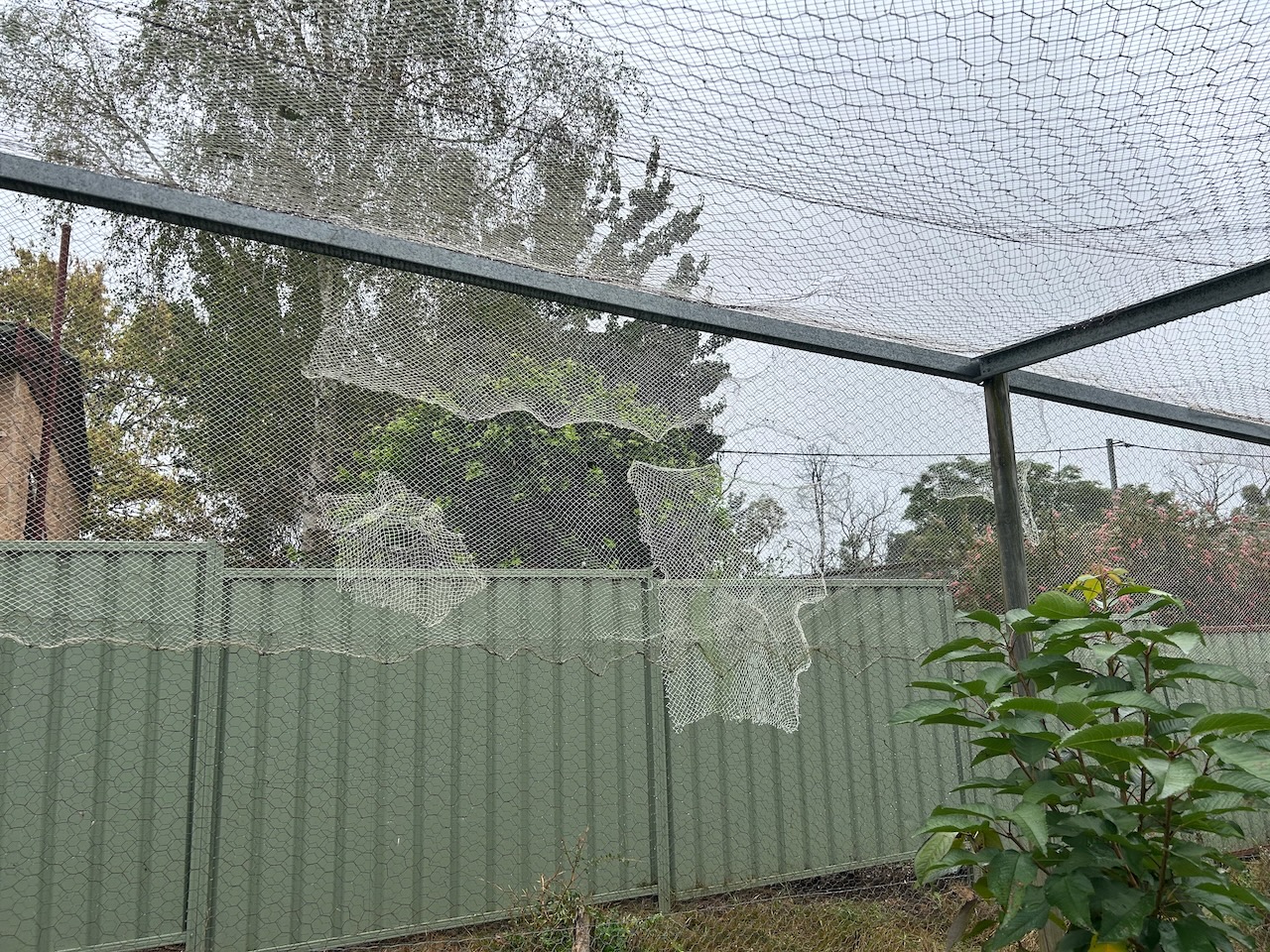
I have now repaired all the melted sections of the plastic netting over the vegetable garden. Almost total replacement at both ends that were worst hit by the fire, then applying patches to the large holes in the other walls, and finally stitching together the small 50mm to 100mm holes that are scattered all over the enclosure walls and roof. I purchased a commercial size roll of 100metres by 10 metres of netting over 30 years ago to cover the vineyard at harvest time. The netting that is over the veggie garden now is all that is left over from that time. It had a 10 years warranty against going brittle with the ultra violet light. So I’m very pleased that it has lasted so long. However, it is getting very brittle and the galvanised steel netting is all rusted through in places. So a total rebuild is in order, but I’m not too sure that I can manage that big a job these days, or if it would even be wise to attempt it at my age, having just turned 73, I shouldn’t be up and down ladders for days on end.

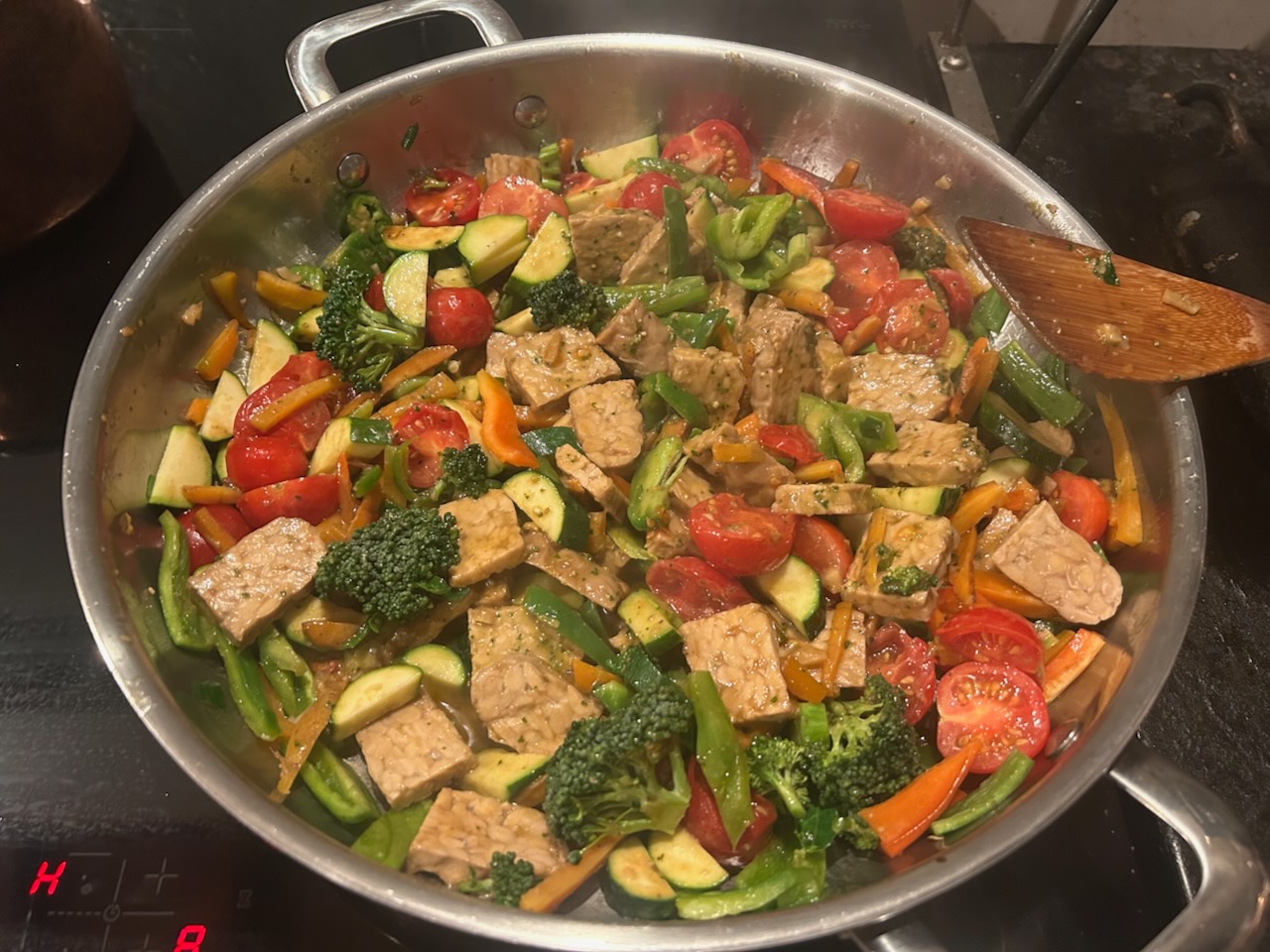
I made an Australian version of oka-nomiyaki pancake. Of course it is not really an okonomiyaki, as I don’t have mountain-potato starch, or almost any other authentic Japanese ingredients, but I do the best that I can with what I have. The super-fresh garden ripe cabbage makes it really fresh, crisp and delicious. The broccoli goes into a veggie stir fry along with all the other garden delights of the current season and some tofu for protein. Vegetable gardening, which mostly involves a lot of weeding, mowing and watering, suddenly becomes so worthwhile when you are harvesting such beautiful produce each afternoon, freshly picked ready for dinner. Our food has carbon metres, not miles!

I have also planted another 4 different varieties of seed garlic in the garden, just to see if any of therm are well adapted to grow here in the future.

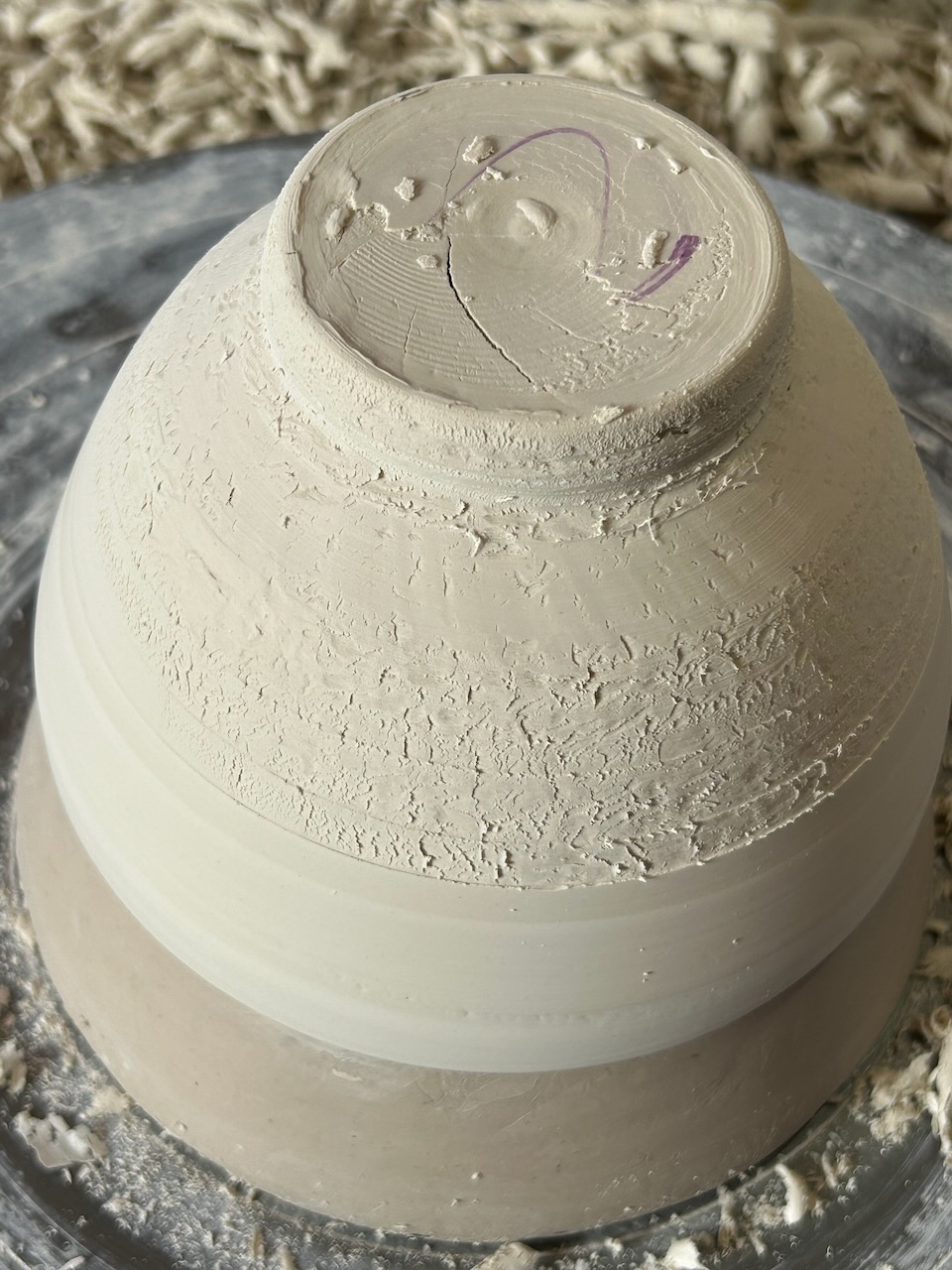
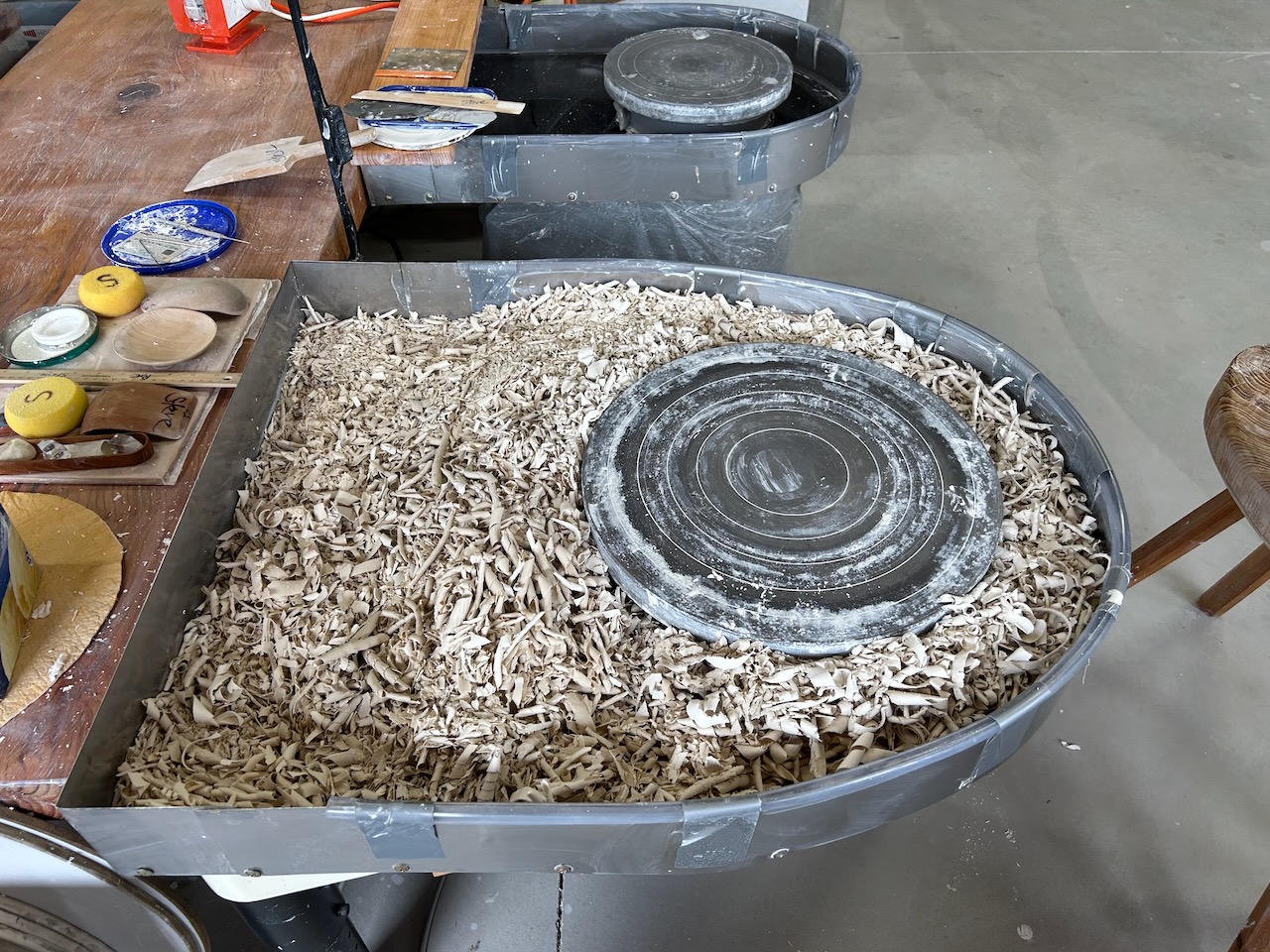
In the pottery, I have been throwing some sericite porcelain stone bodies. This stuff is so short that I have to make the wall bases thick to hold the form up. That then means a lot of turning to get the pot thinner again. This weird stuff tears and rips as the turning tool cuts into it – unless it is turned quite firm and almost dry. But then there is the dust to contend with, so I like to do it while it is still a bit damp, but then it chips a lot. It becomes a two stage process. Roughing out the mass of extra thickness, drying some more, then final turning. I get to do a lot of slaking and re-cycling of turnings.

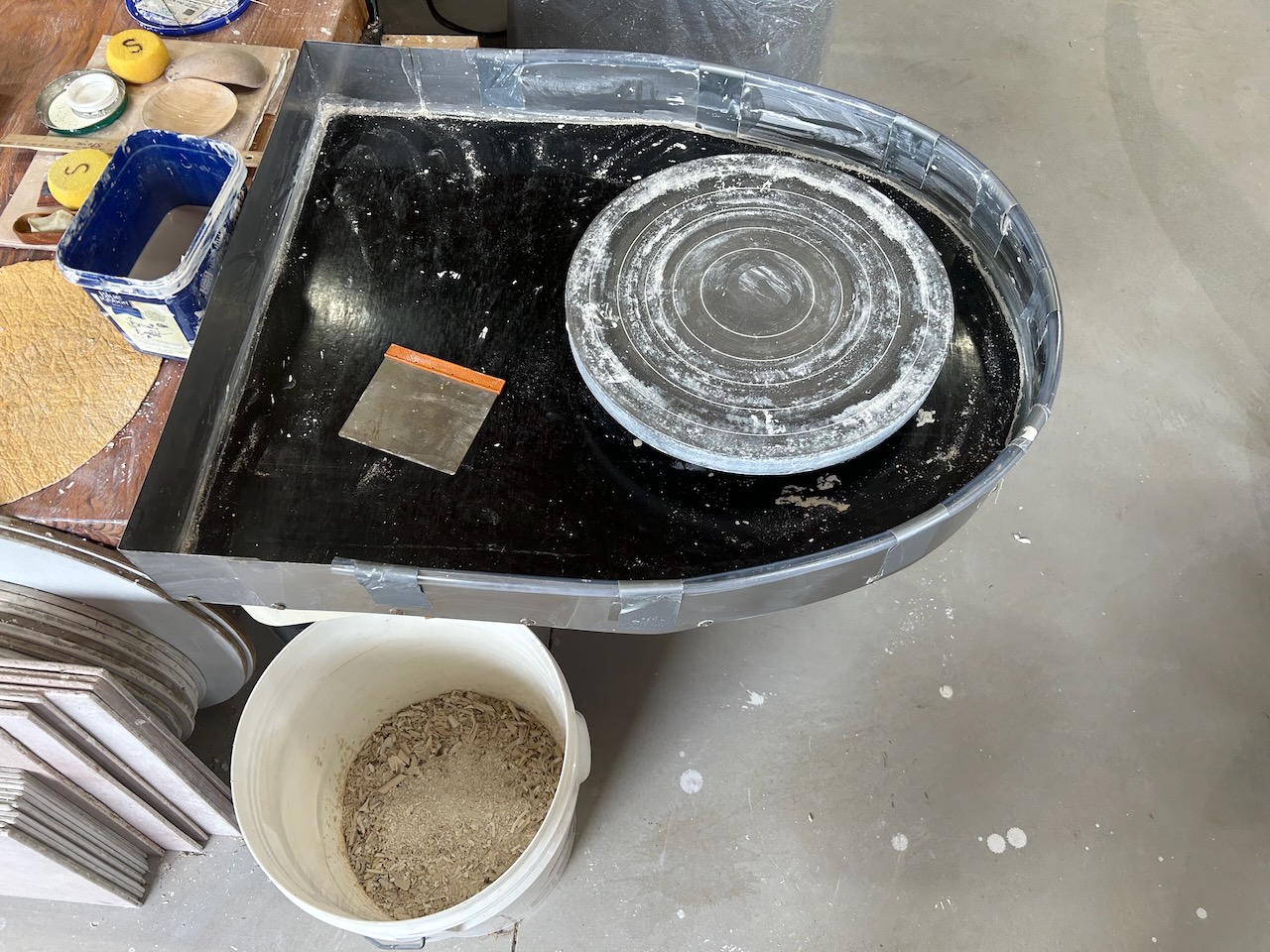
I have built an extra-large tray for my shimpo, but with this porcelain, I still fill it very quickly. This image is of the trimmings from just 15 small 150mm. bowls.

It all goes into the mixer pug and is recycled, ready for throwing again the next day, although leaving it to age a little bit and ‘recover’ would be even better, but because I use a dozen different mixtures and recipes, it is easy to loose track, with too many small packs of different clays hanging around. So I prefer to use up each batch all in one go as soon as possible.

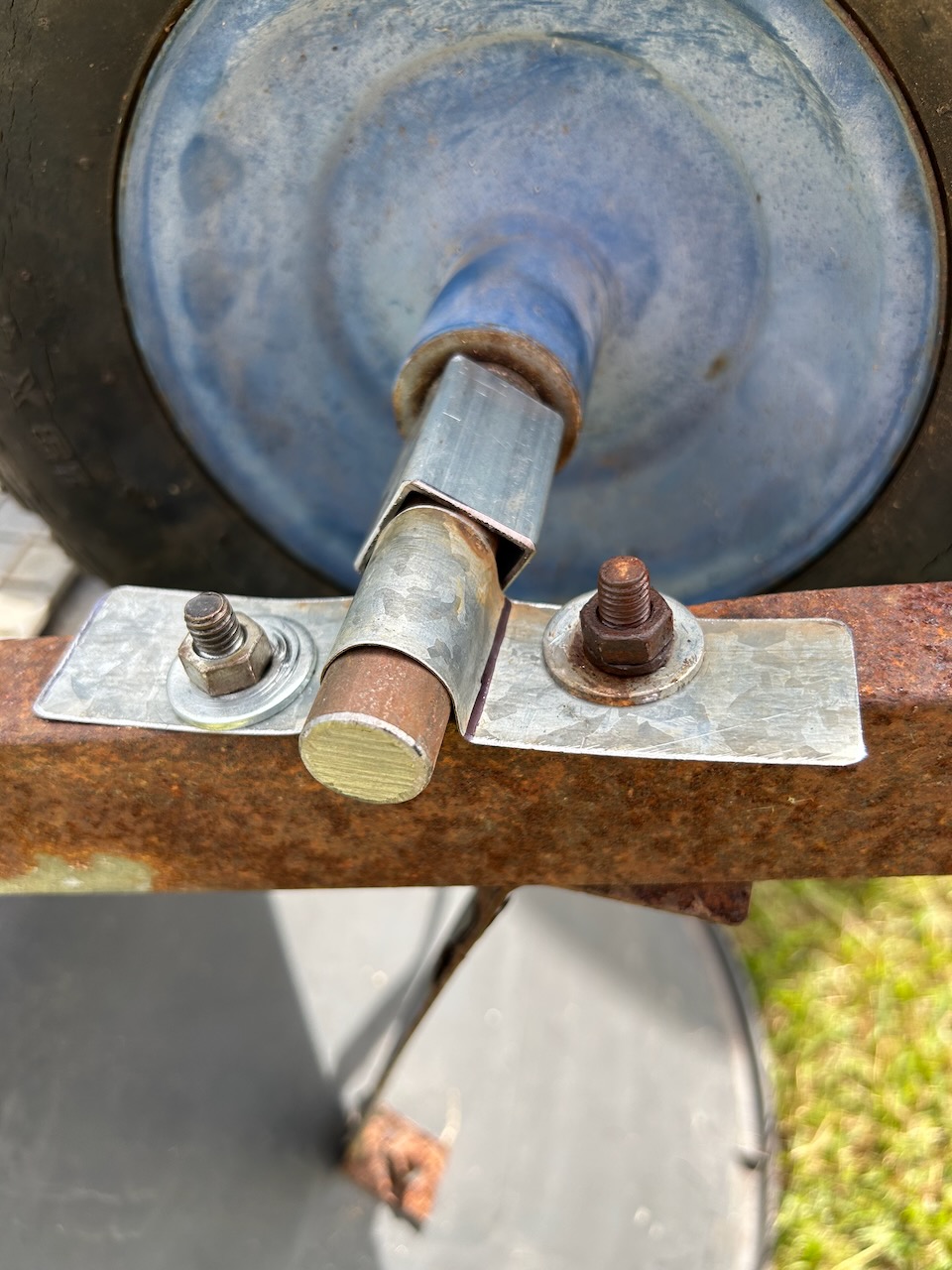
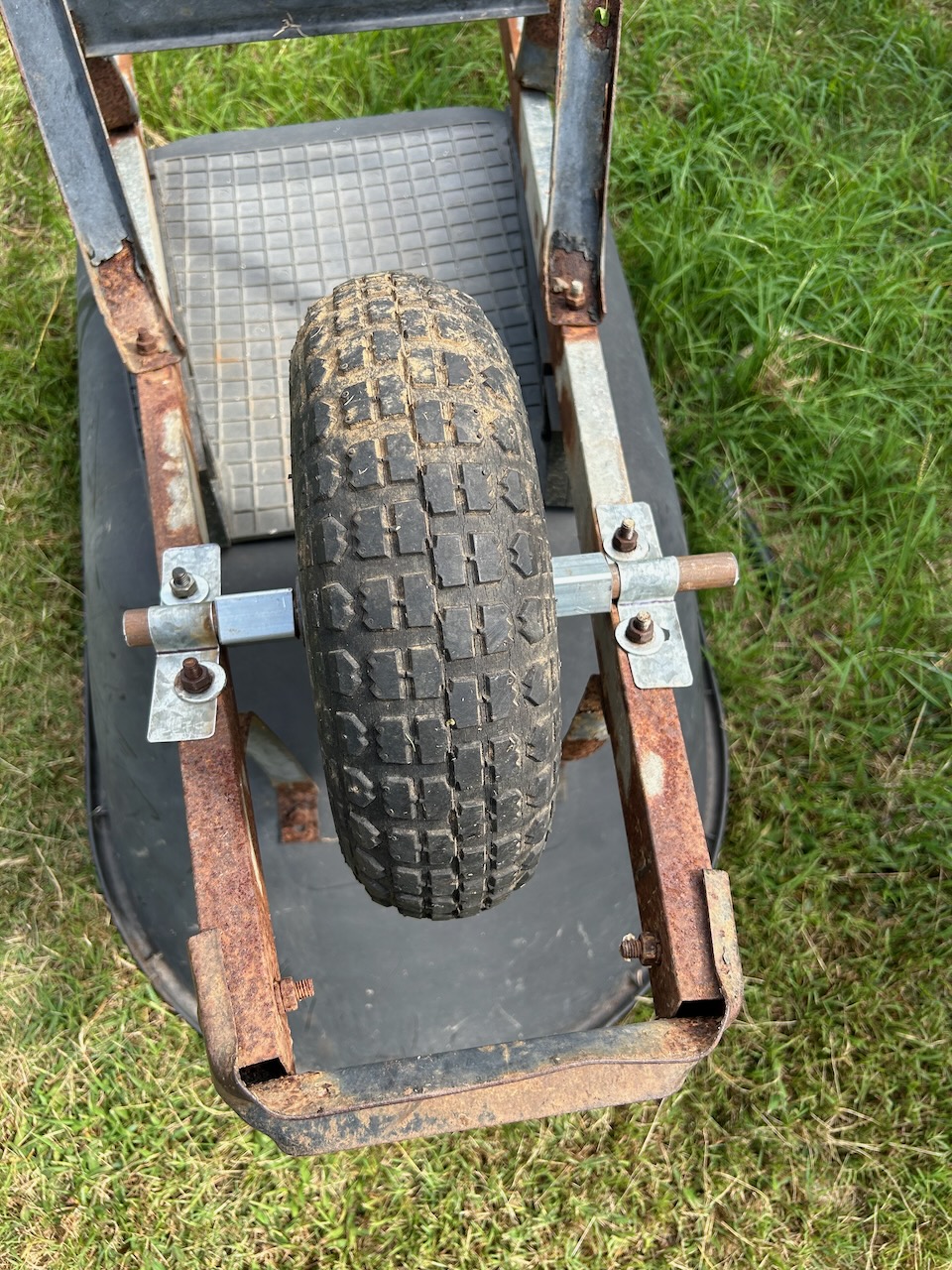
The tyre on the old wheel barrow went flat last week. I took it to the tyre place to get a patch or a new inner tube, but they told me that the tyre wasn’t worth working on and I’d need a new tyre and a new inner tube – at a cost of $78! As the old metal rim is quite rusty, I decided that I might just as well buy a whole new wheel unit from the big hardware chain for $32! But then I remembered that I had a complete wheel off a buggered trolly that I picked up off the side of the road on council clean-up day. It is 25mm smaller in dia. but still holds air pressure well, so I had to change the shaft size and make some new brackets to hold it on, out of scrap tin plate. 20 mins later we are all back in business and good to go. It’s not perfect, but it works. Recycle, reuse, repurpose!

The Japanese have a word ‘Mottainai’ – too good to waste!

A botched up job that will keep all of this useful material out of the waste stream and land fill for another decade. I actually picked this whole wheel barrow up off the side of the road in the village some years ago on Council clean-up day, when the owner decided that it was just junk, because the tyre was flat. I took it home and just pumped it up. It worked! And has been working hard here for all those years of reprieve since then – and now still continues to be useful. Waste averted, Mottainai!

Nothing is ever finished, nothing is perfect and nothing lasts.

Autumn is here

It’s March and autumn is supposed to be here, but it has been delayed by Global Heating! We are having some of the hottest recorded days for this time of year. We are used to the long ‘Indian Summer’ season transition, but this is the heat that we used to expect in the middle of summer.

The cherry trees have lost all their leaves. They are the first to bud-up in the spring and the first to drop their leaves in Autumn.

March is the month to plant garlic. The small cloves that we missed picking 6 months ago have shot up in the places where we left them invisibly underground. Their tender, slim, green aromatic shoots are a very good sign that it’s time for garlic to grow again. They have decided!  I planted 5 rows of our own, best-of-crop, home-grown garlic, the largest knobs from last year. 

I planted about 15 cloves to a row, that’s about 70 plants, if they all do well. I left a gap, for a place to stand while weeding the crop as will be necessary several times over the next 6 months. 

Then I planted 4 rows of commercially grown varieties of seed garlic. This year I’m growing ‘Rojo de Castro’ ‘Dynamite’ and ‘Spanish Roja’. Just to see if they will do well or even better than what we already have.

I left another walking gap for weeding and watering, then another 3 more rows of other bought seed garlic varieties. ‘Dunganski’, and ‘Festival’. Our very good friend Anne, organised a bulk purchase for a few of us in the ‘seed-savers’ group. I’m always interested in trying something new. Thank you Anne!

I always plant the best of last years harvest, whatever variety(ies) that is, very often a mix of what grows best here over the decades. All self selected, simply by growing well with large easy to peel large cloves. These new varieties all have a red, or pinkish hue, simply because I like the look of them when hung up in the kitchen drying and waiting to be used.

Whatever does well and grows best will be added to our localised crop for the following season. Life goes on. All the same as before, but with small changes and additions and hopefully improvements.

In the pottery I have been collecting, crushing and ball milling a few new local rocks for testing as glaze material.

As soon as the heat subsides, I’ll be firing the small portable wood fired kiln, filled with test bodies and glazes, to prepare for the firing of the big wood kiln over the winter months.

After the ‘big-pot’ throwing Summer Schools that we held here over January and February. I had about 80 kgs of the special course grained/textured clay left over. So I decided, rather than store it away somewhere, I would be better off to use it up making a few big jars for myself. I have always liked the traditional Korean ‘Moon Jars’, so I decided to have a go at making a few Korean inspired big round jars. They are NOT Moon jars, but my interpretation of the big, round, pale glazed form.

Janine decorated some of them for me using her carved/sgraffito through slip technique.

I have continued planting brassicas since Xmas day, when I planted the first seeds. I have planted 8 to 10 plants of mixed types each month to ensure a continuing crop of cauliflowers, broccoli, cabbage, Brussel sprouts and kohlrabi through out the autumn/winter.

I noticed today that the first broccoli head is forming on one of the first plantings.

I have to grow them under protective netting for the first few weeks to a month, to stop the black birds and bowerbirds from digging them out and eating the tops off them. The vegetable garden was completely covered in a mix of galvanised and plastic netting. But in the catastrophic bush fires of 2019 the heat of the fire melted the plastic netting on the west and east faces. All the birds were burnt in that fire, so there was no immediate need to repair the netting. EVERYTHING else was so much more important, like rebuilding. 

Now the birds are recovering and breeding up in numbers, coming back into our area. They have figured out that they can squeeze in through the gaps in the melted areas. So I have booked a friend to come and help me next week to get up on our tall step ladders and re-cover the burnt out sections with new netting. A big job that in the past I would have thought nothing of doing by myself with the occasional helping hand from Janine in the difficult areas, pushing up from underneath with a broom to get an even cover. Luckily, a very nice couple donated a huge amount of plastic bird netting from their farm, when they took down their orchard cover and moved into a smaller holding. We are very happy to use this re-cycled netting, both galvanised and plastic. Nothing wasted. Recycle, re-use, re-purpose.I may be old and stupid, but still just smart enough to know that I don’t want to do this job all by myself anymore. It’s just one of those endless series of jobs that we have to tackle everyday to keep on living here in this self-reliant, low-carbon, organic, minimal consumerist muddle.

Nothing is ever finished, nothing is perfect and nothing lasts!