In the Eye of the Storm

We are making use of that quiet time between weekend studio sales.Last week, we had the first of the Open Studio weekends for the Arts Trail. It went well.

We had a slow start on Saturday, and then it went completely quiet in the afternoon. Janine made use of the quiet time, to go into Mittagong and visit 3 other studios that she was keen to see. She said it was also a bit quiet in town as well. Balmoral Village is a long way out of town, a 20 minute drive, so we expect to see less people here than they get in town. In Mittagong or Bowral, there is a wide range of choice, all within 3 to 5 mins.

On the other hand, Sunday was moderately busy for us, and it kept up all day, so that was good. Never run off our feet, but just one car followed another, so we constantly had a couple of people in the gallery all day. To the extent that we had to stagger our lunches to be on-hand to serve customers. We were lucky to have our friend Karen with us to help out, so Janine and I could spend time with our visitors to answer questions and explain the aesthetic choices that we had made in creating the variety of work on show.

As there were not too many visitors last weekend. The Gallery is still full up with pots waiting for new owners to take them home.

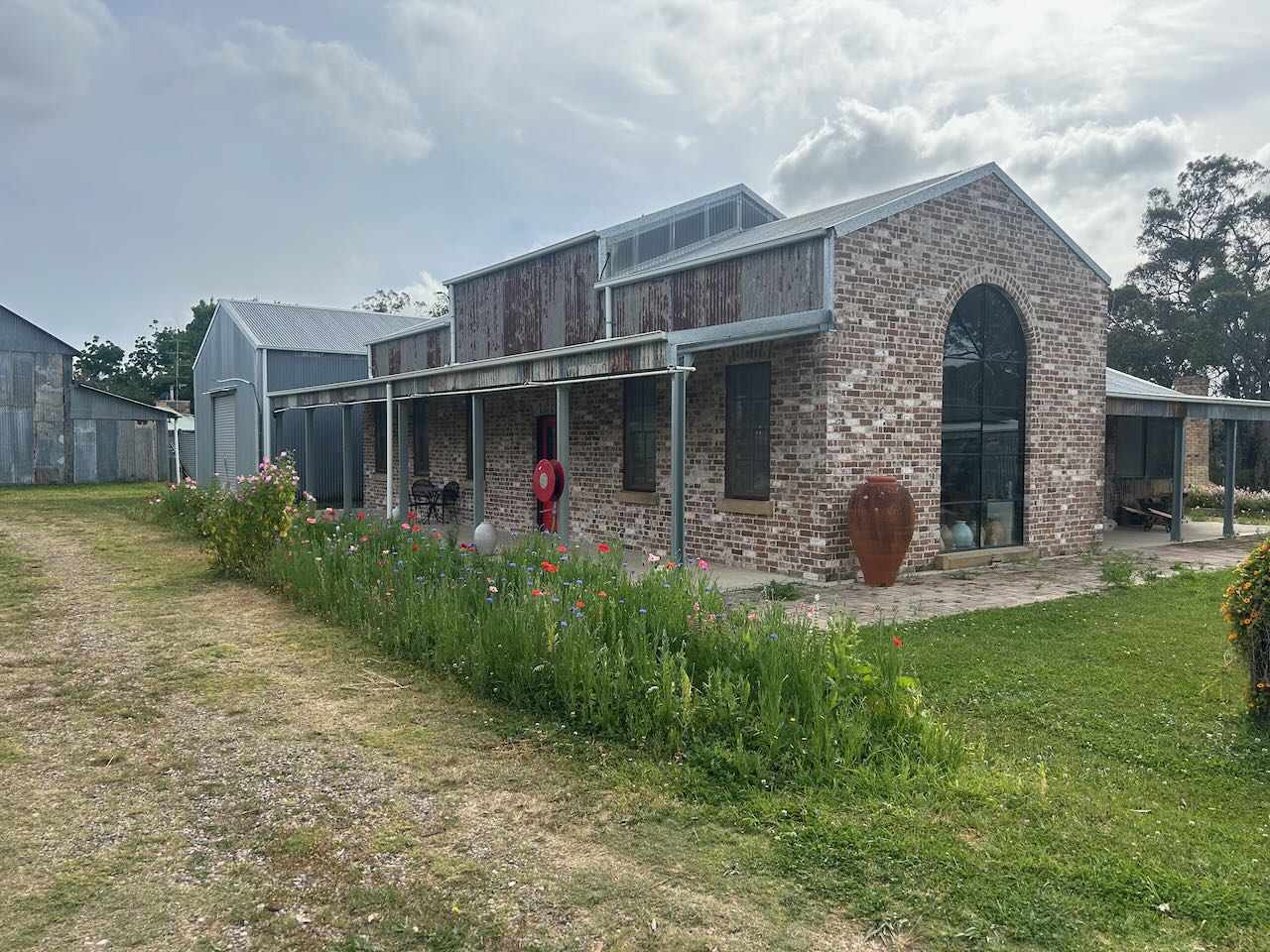
So this week we have been in the quiet time between the two busy weekends. In The Eye of the Storm. We made use of this special ‘time-off’ rest period, to do a bit of gardening. We weeded and dug-over the old annual flower garden area that I created and fenced off after the fire, so as to keep the chickens, wallabies, rabbits and wombat out of the garden. No fence, No flowers! In the years since the fire, I have created other annual flower beds on both sides of the pottery and also along the driveway, so that the older, fenced-off garden slipped out of use for floral display. Janine has now claimed it as her new herb garden, so hence all the digging.

After using the cultivator to dig over the new herb patch for Janine. I then had 2 days building a dry stone retaining wall and back filling it with 10 tonnes of topsoil/compost mix to create a deep terrace for a new avocado bed. We have had an avocado tree for over 45 years. It’s very well established, but only ever has a few fruit on it. This is because avocados, although self fertile, are only marginally so. In fact, there are two Groups of avocados, known as ’Type A’ and ‘Type B’. You need one of each to get the extra fertilisation for good ‘fruit-set’.

Some years before the fire, in about 2015, I planted 2 more  ‘Type A’ and 2 x ’Type B’ grafted trees. After a few years, they started to mature and flower. That year we had a massive crop of hundreds of fruit on our old tree. Success!  I don’t know what variety our old tree is, so it was necessary to plant at least one of each A & B to ensure good fertility. I chose to plant 2 different varieties of each group. 

Shortly after that massive crop. The catastrophic bush fires swept through here and incinerated every thing in its path. All the little new avocado trees were vaporised to below ground level. The old tree was very badly burnt and lost all its smaller branches. I thought that it had died. However, when the rains came, it very slowly put out some new shoots and started to regrow. It’s only half the size that it was, but at least it is still alive.

Having seen that extra trees of either ‘Type A’ or ’Type B’, solved the fertility problem. I decided, after everything had settled down again, post clean-up and rebuilding, that I would replant more young avocados trees. Again I chose 2 x ‘Type A’ and 2 x ’Type B’ grafted trees. Sadly, in the years post fire, we had torrential rains for months on end, the ground was so soggy. I spent quite some time digging extra drains to help clear all the water away. Unfortunately, avocados are very susceptible to root rot, ‘phytophthora’ soil fungus. All the new avocados drowned and died! I decided after that to give up on growing avocados. As each grafted tree cost between $50 and $80, I have spent around $500 of these trees over my lifetime here. I could buy a lot of smashed avocado sandwiches for that!

However, I am an eternal optimist, so recently, I decided to give it one last go. I have bought 4 more trees, but this time grafted onto dwarfing rootstock ‘Velvick’, which is also mildly resistant to phytophthora.

This explains the new elevated, well drained, garden bed and stone retaining wall. This new terraced area is 4m x 10m and 500 to 600 mm deep. Filled with a rich mixture of sandy top soil and organic compost mix. 10 tonnes in all. It was quite an effort and I’m feeling my age today. As Leonard Cohen once said. “I ache in the places that I use to play”.

This will definitely be my last go at avocados. It should provide a well drained, rich soil for the new trees to grow in. Well elevated above the natural soil level, I’m hoping that this might be the solution.

They are right in front of the water tanks, so no problem with irrigation.

All that I have to concern myself with now is the winter frosts! But that’s a while off yet.

With a restful break like this. I need to get back to work to recover!
New pots for the Open Studio, Arts Trail

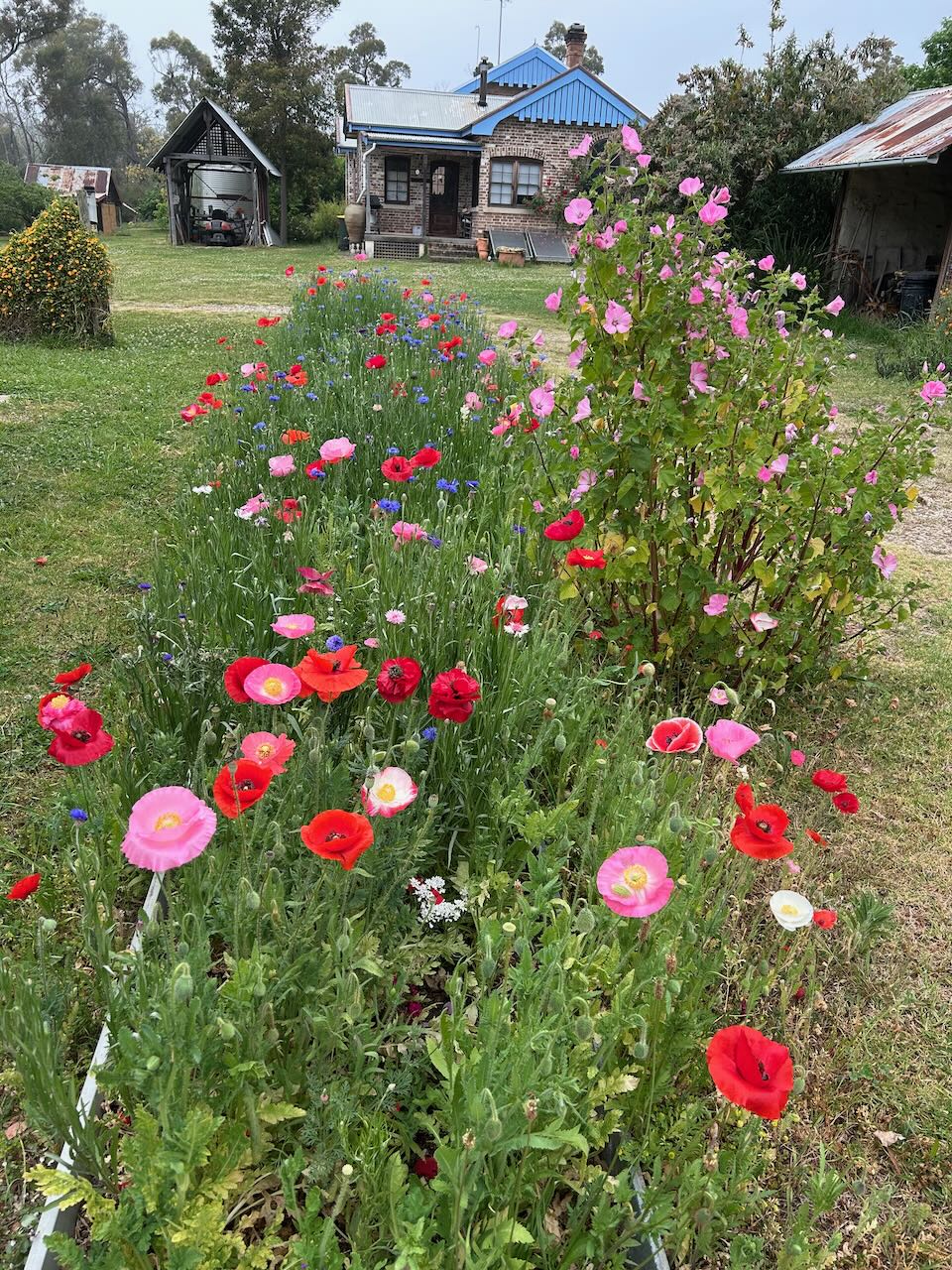
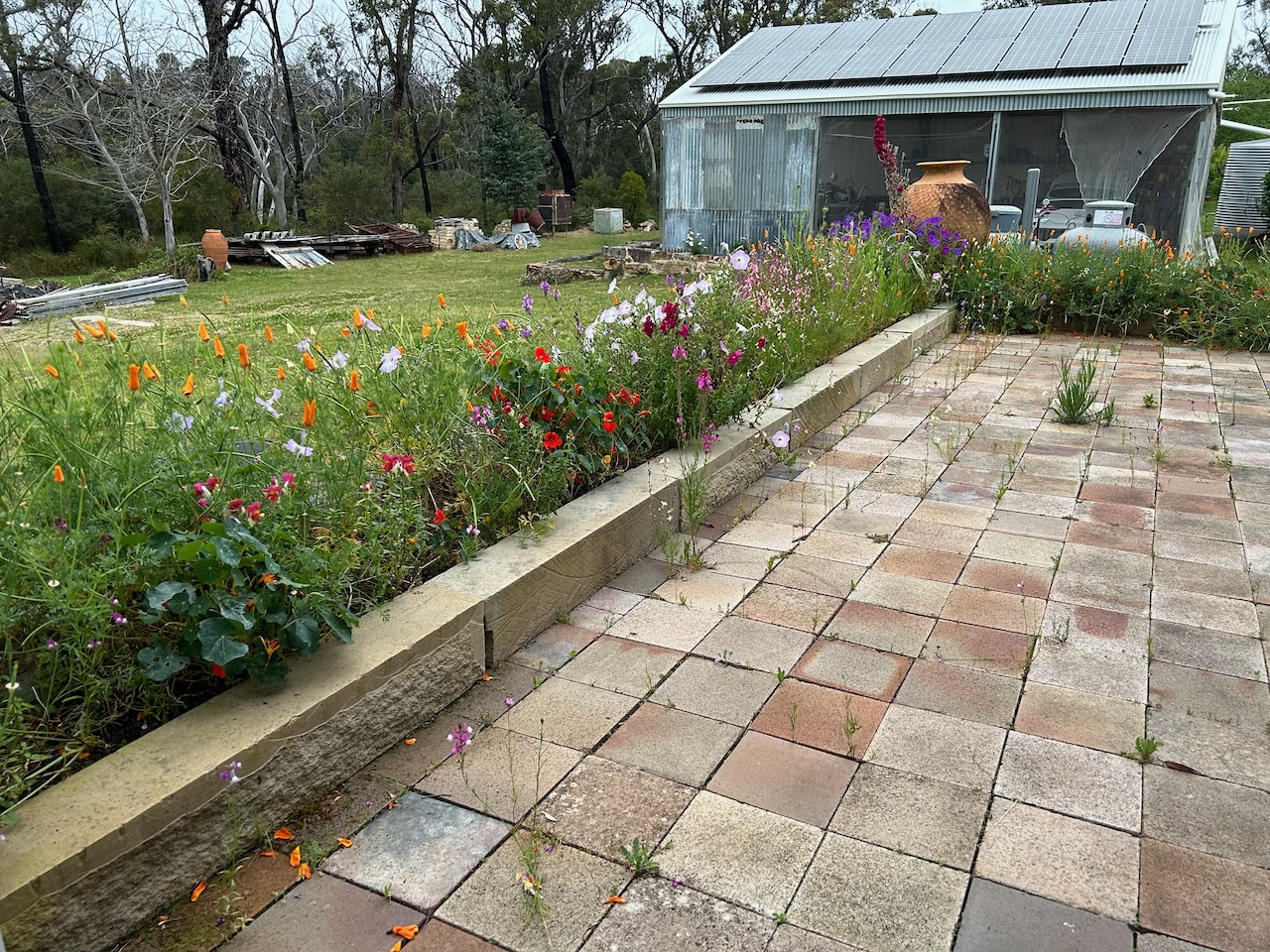
The pottery and its garden are looking great just now and for the next few weeks. All the spring flowers are coming out, just in time for the Open Studio weekends.

We are firing both electric kilns every day for the past week. We are getting all of the final glaze firings done. Working like a well oiled machine. We have been so lucky, that the sun has been shining bright every day – until today. It’s overcast with just a few spots of drizzly rain now and then. Just enough to stop me wanting to go out and do some gardening. I have two more firings on. One stoneware and one gold lustre firing. It’s all coming together.

We have managed to do all our firings on sunshine up until this afternoon, when it had turned quite overcast. Not only have we managed to glaze everything with our own electricity, but I have been careful to manage it so that I have kept both electric cars fully charged, at the same time and still been able to sell just a little of our occasional excess back to the grid to cover our daily access charges. It’s important to me to live a green, low carbon, passive, low energy, non polluting, life of minimal consumption, and we are doing it. We are managing it pretty well. But this afternoon, I will be withdrawing some expensive ‘green’ sustainable energy from the grid, for the last 3 hours of these current firings.

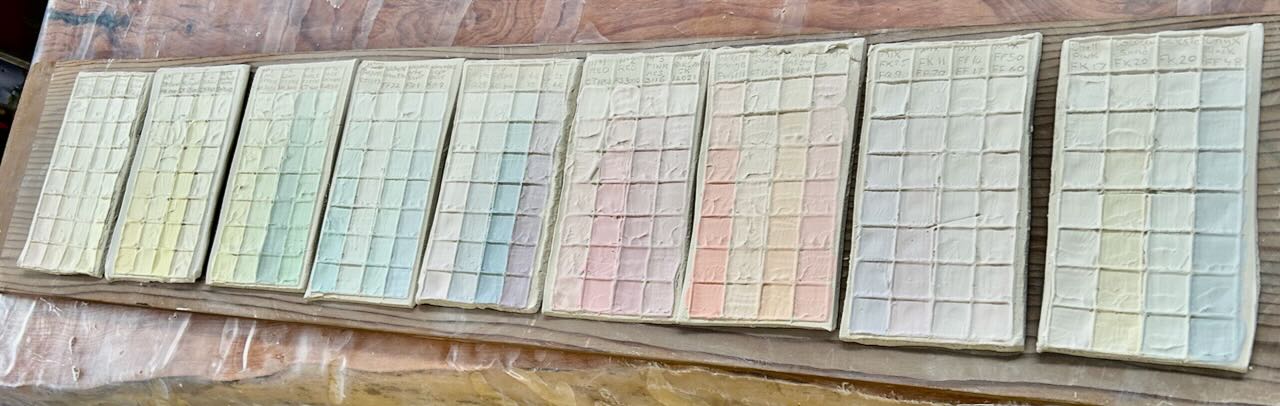
I have been experimenting with some new coloured pastel slips that I developed before we went to WA for the conference. See my previous post;  More rain and tasting cider, Posted on 

I weighed out almost 300 different pastel tones of stoneware slips. 

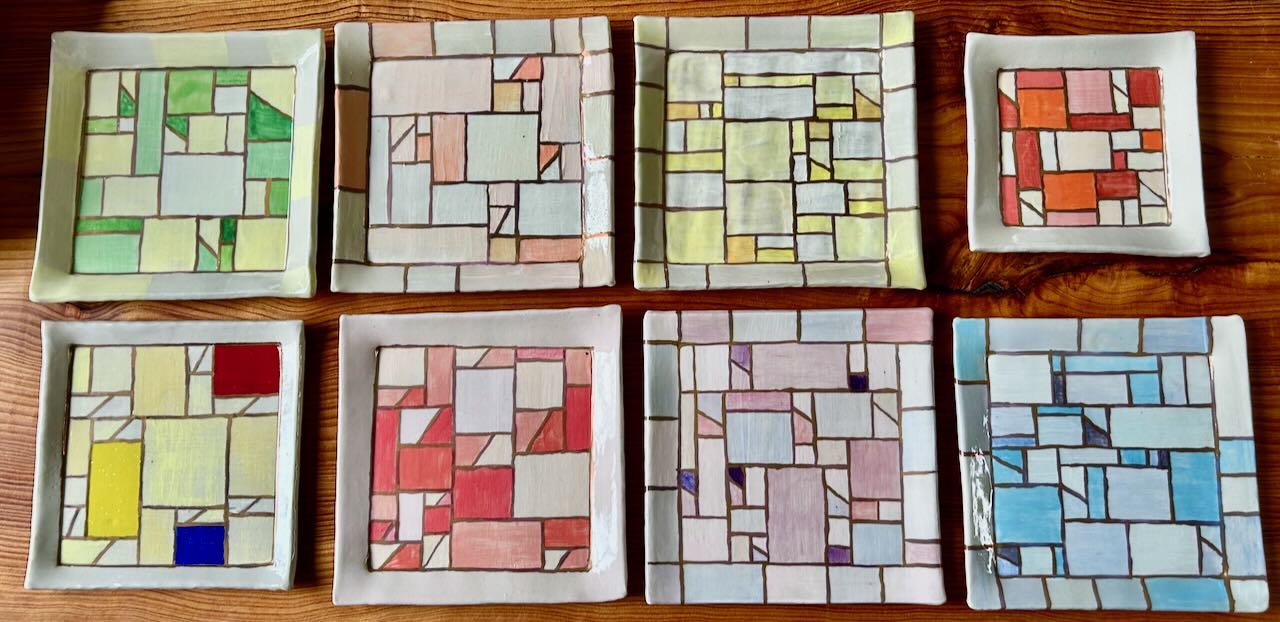
Using these colours, I tried making some new square plates, with a Korean inspired ‘Bojagi’ traditional fabric design. I’m very pleased with them, for a first attempt. I quite like the one were I ‘channel’ Piet Mondrian. Mondrianic bojagi!

I have also been making some more Korean inspired ‘Moon Jars’, but with an Australian twist. No photos yet, that are still in the kilns.

Please call in to see us on the next two weekends 1st/2nd and the 8th/9th of November. We will have tea or coffee and even cake for the first in and best fed.

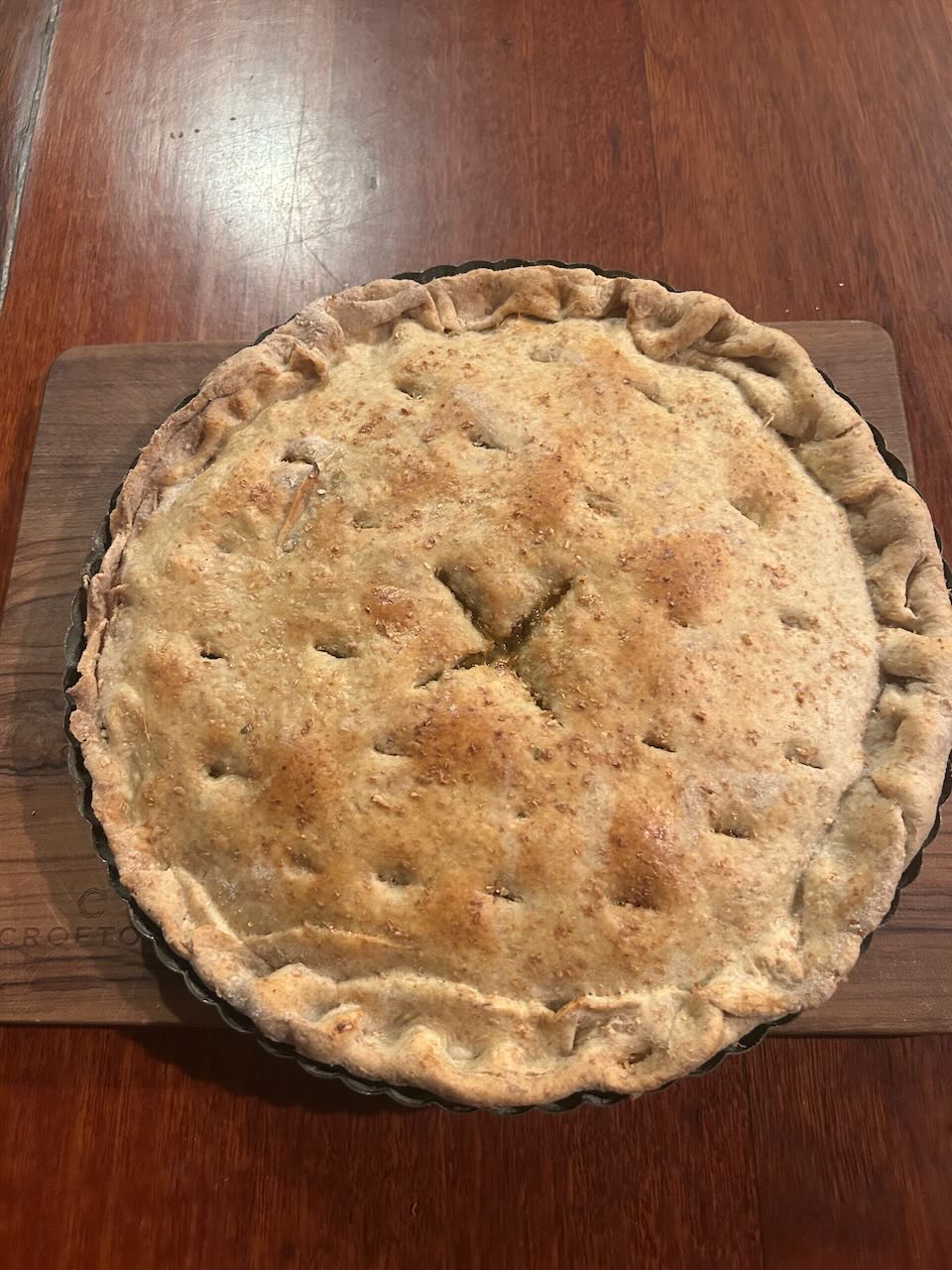
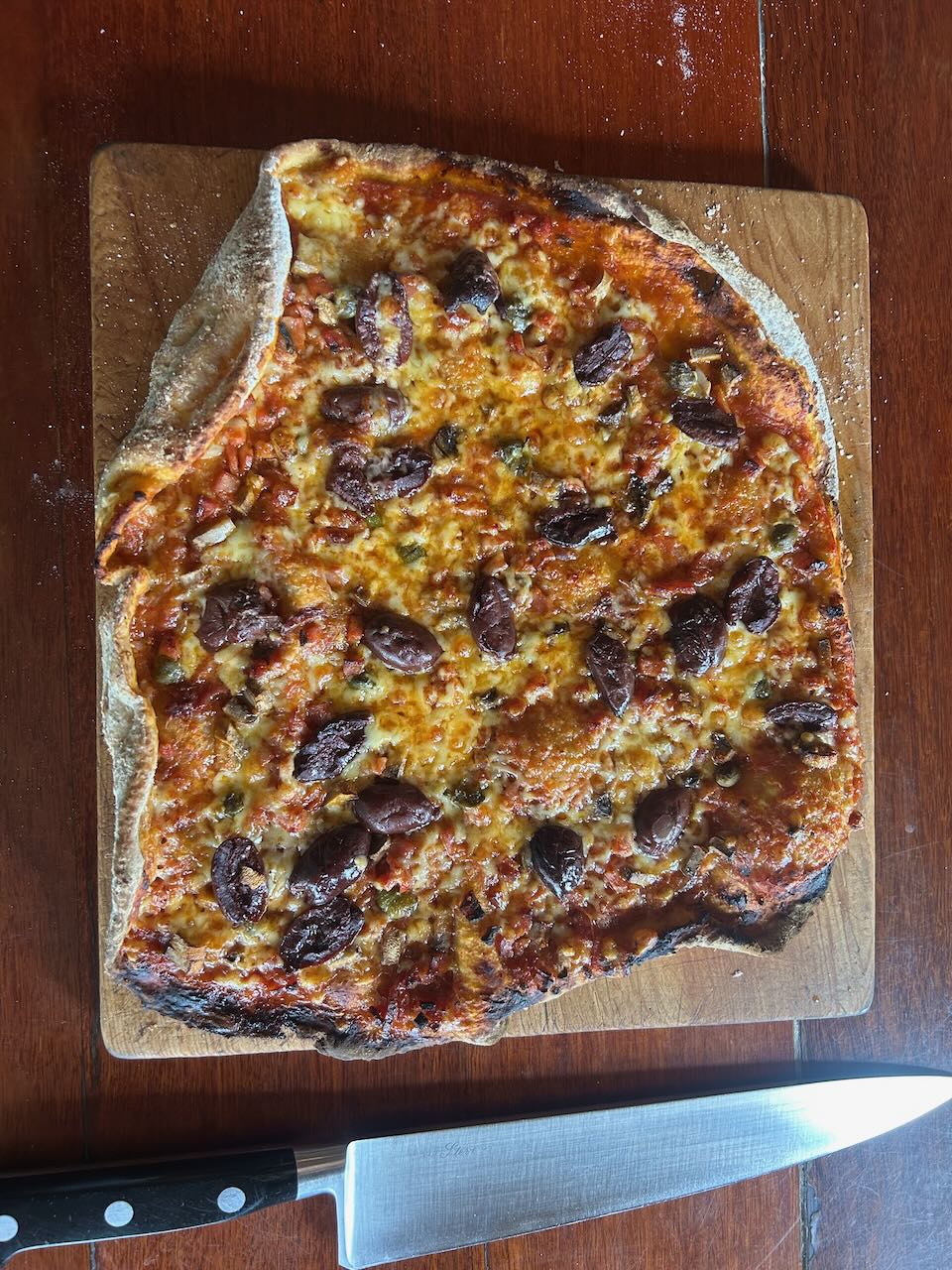
In the kitchen, I’ve been harvesting lots of leaks, and making chicken and leak pie. I’ve got quite quick at knocking up small batches of wholemeal pastry for pie crusts and pizza bases.

We may be very busy in the pottery, but there is always time to raid the garden for food for dinner and to cook up something wholesome and delicious for dinner.

Open Studio Weekends 2025

We are in the final preparation for the Southern Highlands Open Studios Arts Trail. We will be open on the first two weekends of November. We will also be part of the Australian Ceramics Assn Open Studios event at the same time.

We are doing the last few firings now and spending a bit of time fettling and polishing all the glazed pots. This last week I have been cleaning and grinding the pots form my last Wood kiln firing. From now on it will be too hot, dry and therefore dangerous to fire the wood fired kiln until next autumn. All of our firings from now on will only be in the electric kiln fired using our 100% self generated solar energy, mostly from our PV panels but with a little bit of back up from our lithium batteries. In this way we can fire on a combination of todays sunshine and some of yesterdays stored sunshine as well. 

When the battery is full and we are not firing the kilns. I charge up the electric cars. No point in selling it to the grid for next to nothing if I can use it in some way myself. Once both the cars are charged, I charge up the ride on mower and the power tools etc.

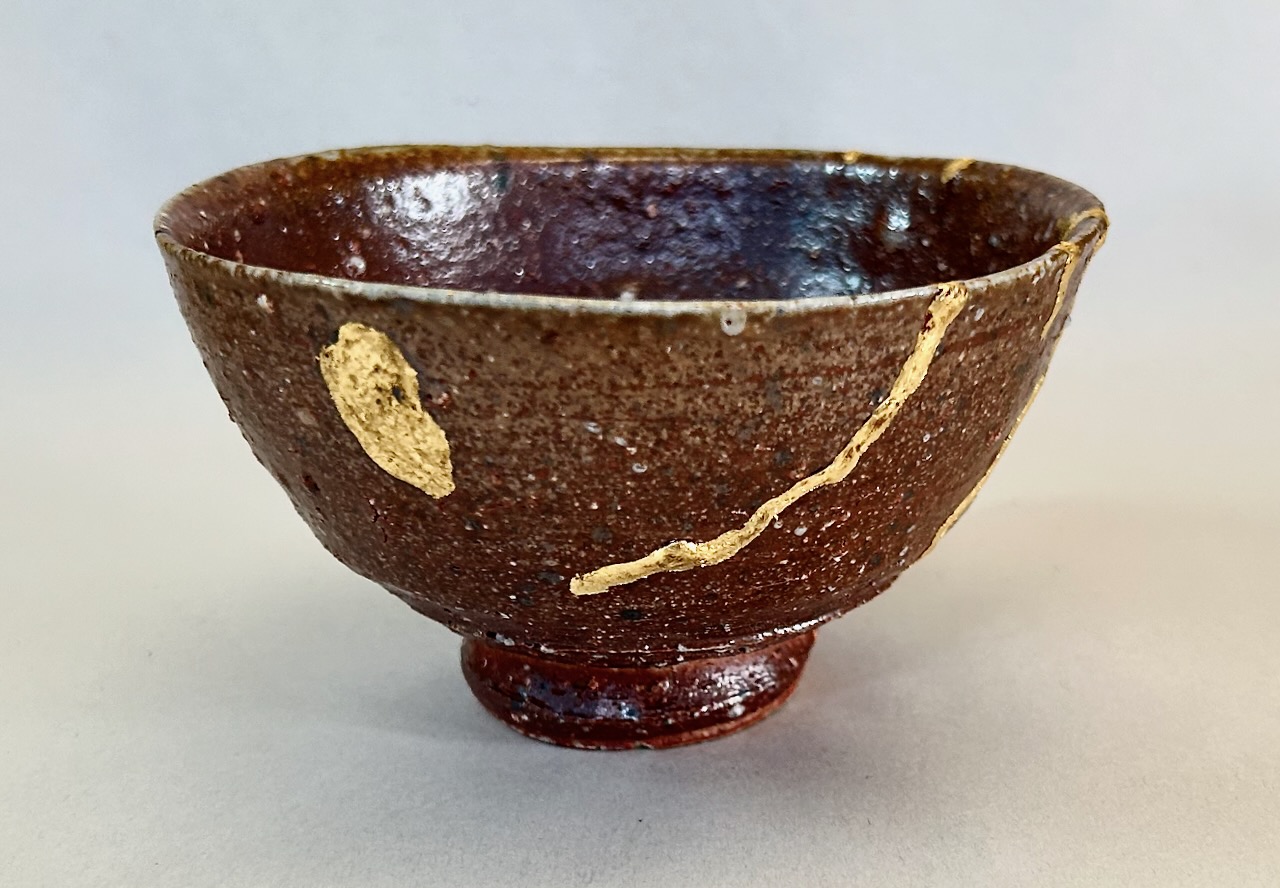
This week I have been doing a bit of ‘kintsugi’ repair on a few wood fired pots that got a little damage in the kiln, a couple of them ‘kissed’ in the firing. One was knocked over by a stray log during stoking, and another got so much wood ash deposit on the fire face that it ran down and stuck it to its wadding. All the usual little mishaps that befall pots in the ‘Zone of Death’. That part of the setting at the very front of the wood fired kiln chamber where the most beautiful pots are created, but are also most vulnerable to damage. I am capable of make some very spectacular shards!

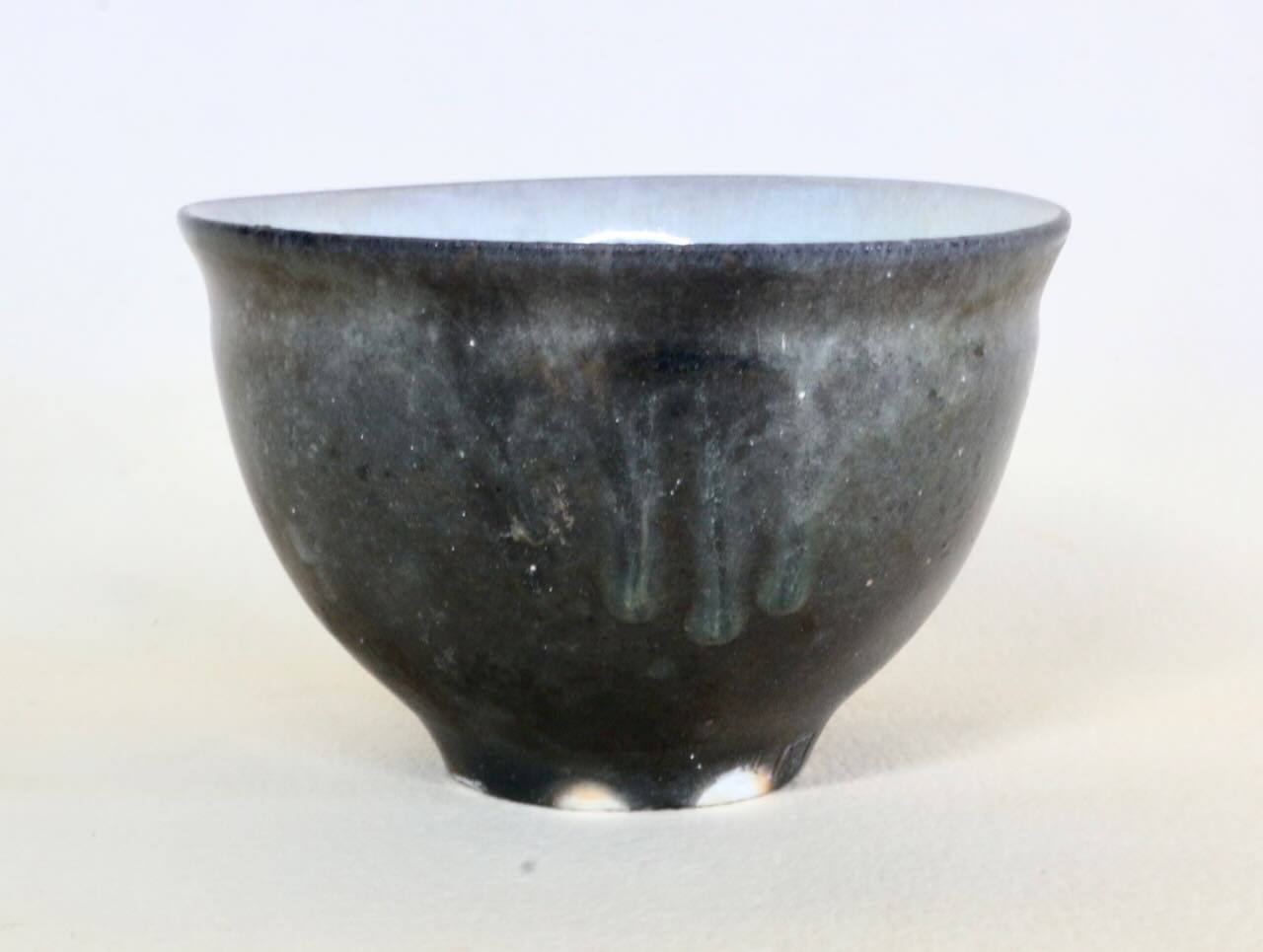
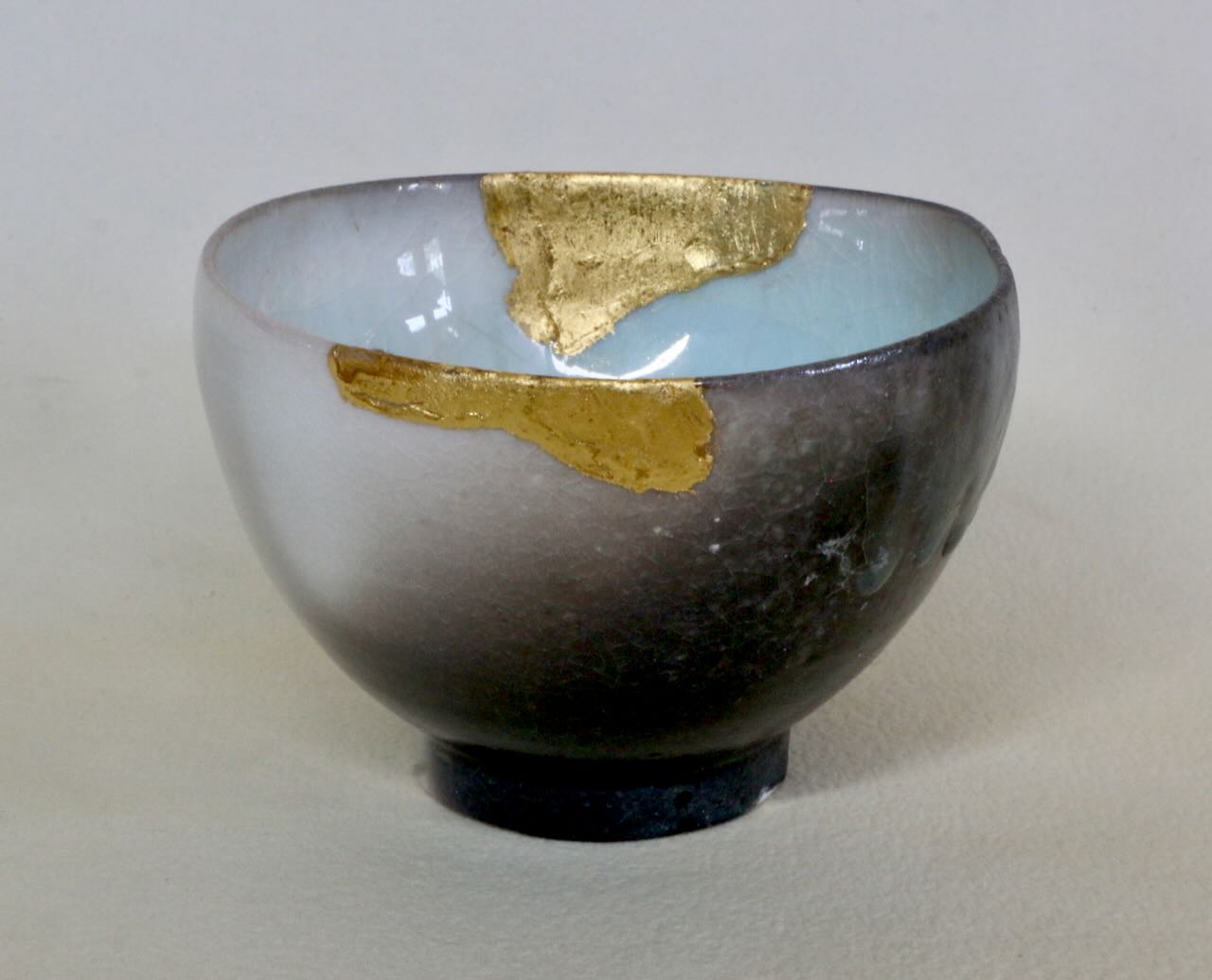
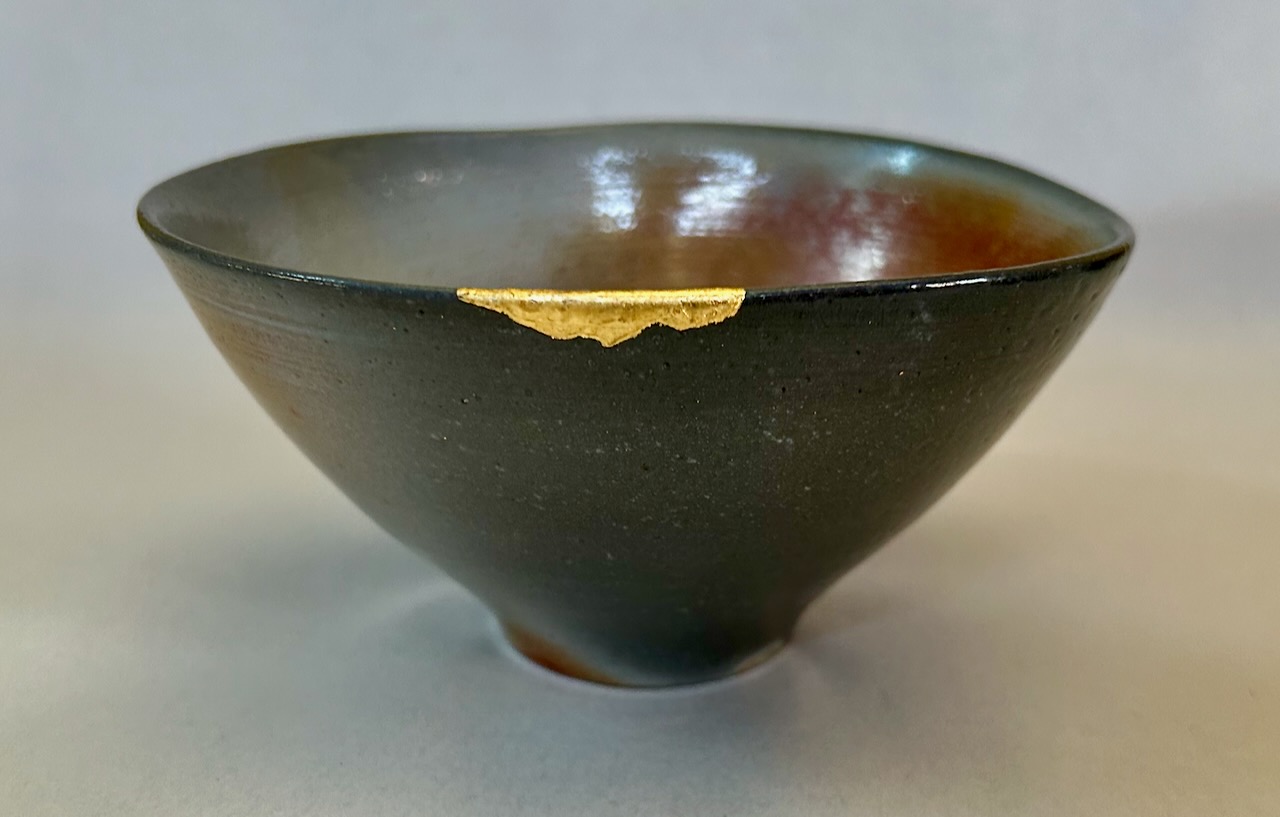
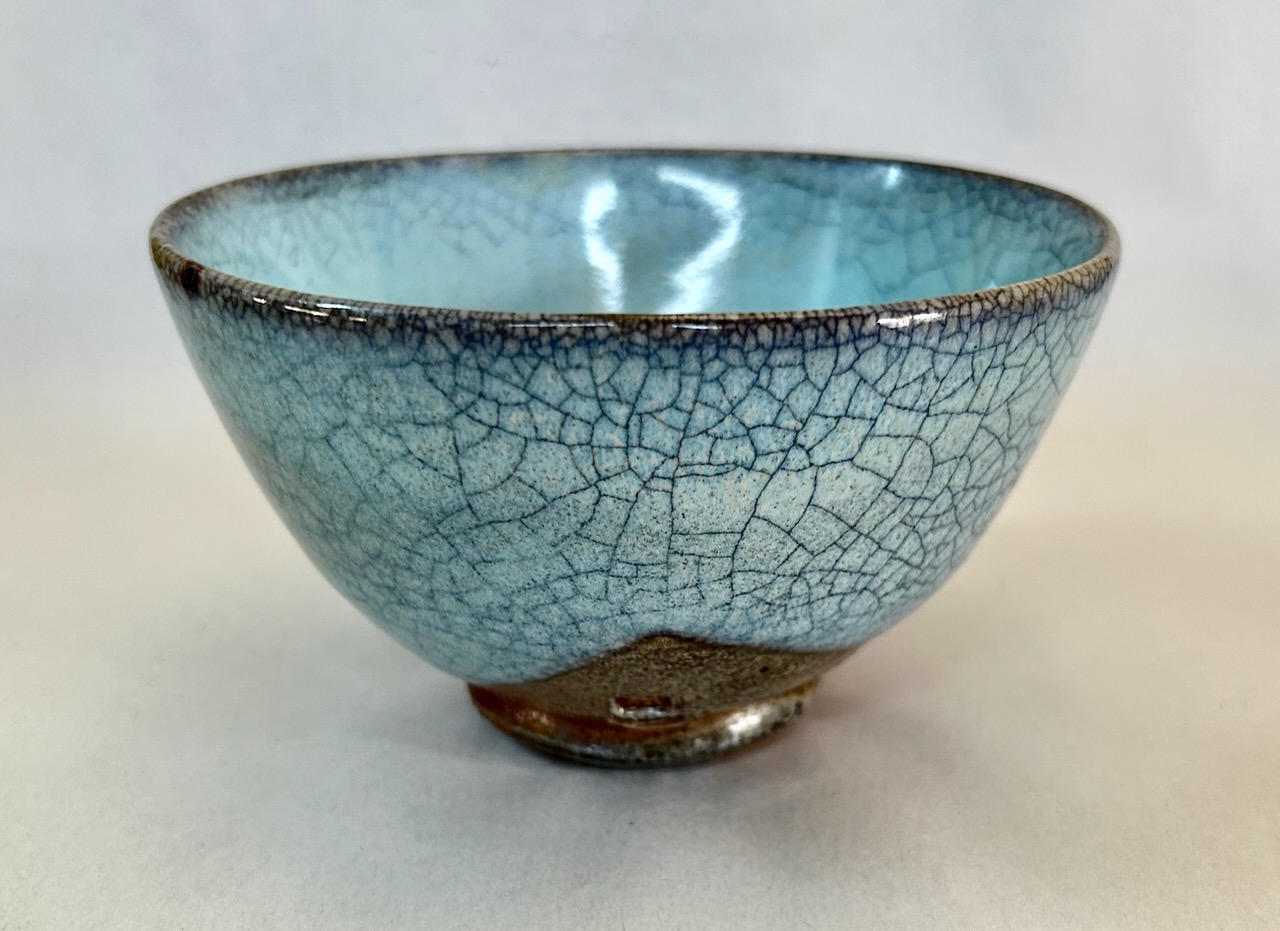
I love it when the translucent white porcelain gets so heavily reduced that it turns black with carbon inclusion. This contrasts so well with the delicate pale, but intense blue of the limpid blue celadon. Alas, fine thin porcelain doesn’t enjoy the intense conditions in the front of the kiln and often dunts (cracks). I’m most happy when I can get a good piece out of the firing whole and in good condition. However, such pots are rare.

In the piece above. It looks as if you can see my finger prints where I have dipped a glaze, but in fact, these white marks are the fine white porcelain body showing through where the little balls of wadding were placed around the foot to keep it up off the kiln shelf during firing. The naturally deposit ash glaze on the front of the pot had started run, but luckily, it hasn’t glued the bowl to the shelf. Really good porcelain pots are a rarity from this part of the kiln.

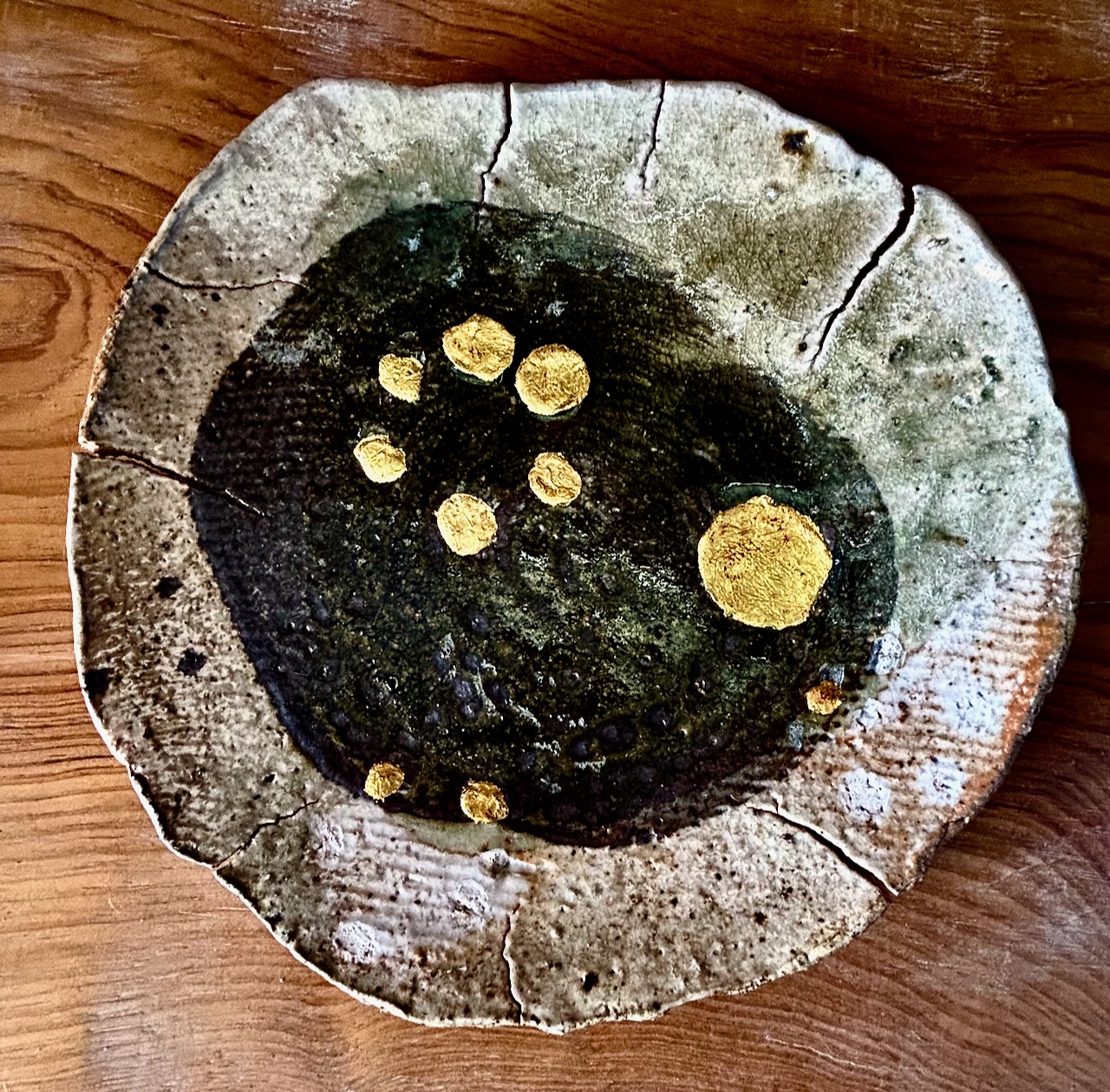
‘Kintsugi’ gold leaf repair is a way of restoring a beautiful, but slightly damaged pot back to full radiance. I think that if a good pot is damaged in the fire that made it so lovely in the first instance, then it’s worth giving it a bit of love and TLC to make it even more beautiful.  I lavish a lot of effort, skill and time into retrieving them from the scrap bench and repairing these sensitive and beautiful items, bringing them back to life. Some times gluing a broken or chipped piece back together, and at other times actually rebuilding a bit of the surface that is missing. In this way I bring them back to life and give them an honourable new existence. They are even more precious then, than they were if they had come from the kiln undamaged. I am recognising their potential beauty and honouring it. In this slow, patient application of time and effort they become more special to me.

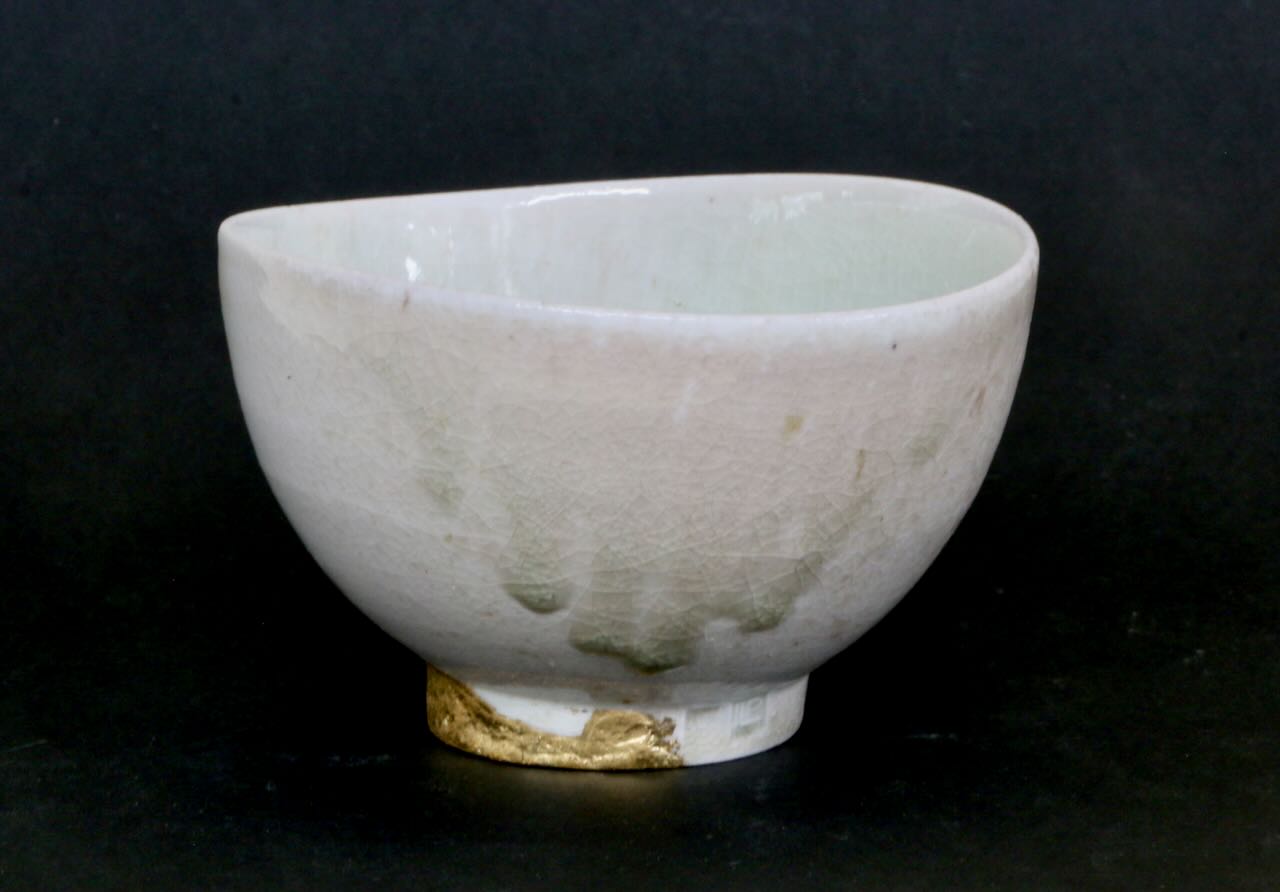
These porcelain bowls are absolutely white, but one of them have such a high degree of carbon fused into their surface during the reduction cycle, that it appears to be black. But when you look inside the bowl, it is glazed with a delicate blue celadon. I love this dramatic contrast of black and pale blue! The white bowl above has so much ash glaze built up on the fire face of the bowl that the ash began to run down and glue the bowl to the kiln shelf, running down over the wadding and making a fluid pool of ash glaze on the shelf. Tragically, I broke part of the foot off trying to extricate it from the glassy mess. I built up the missing part of the foot, back to its original form with the kintsugi technique and finishing it with 24 karat gold. All three of these bowls above, are very translucent. 

Besides the translucent, white porcelain which I have reduced to matt black with carbon inclusion. (my way of permanently removing carbon from the atmosphere. Permanent carbon sequestration!) Besides these delicate porcelain bowls, I have also been firing some more robust stoneware bodies that I have made. These bodies have a much better survival rate in the ‘Zone of Death’, but still get the occasional chips or ‘kiss’ marking that need some delicate attention.

Each of these ‘rougher’ pieces has their own particular charm and character. I like them all equally.

I hope to see you at some time over the first two weekends in November. You can check them out for yourself.

My New Korea 3

My project to introduce clean, low emissions, wood fired kiln technology to Korea has gone pretty well. The third firing that I did using local hard wood was excellent. In fact, better than I had hoped for. I was actually surprised how well it went. I’m a cautious person, So I was a bit surprised, I wasn’t going to dare to change anything, just stick to my technique and decisions. It worked! So that was good!

I’m always prepared for things to go wrong when trying new things. Very few things in life ever turn out perfectly, and this last firing came close, but the was no cigar! The bottom back shelf was still a little bit under-fired. However, no-one complained!

The day after the kiln was unpacked, I went down to the kiln shed early the next morning, before work, and took out the bag wall. I eliminated one complete layer off the top, and removed one full brick from the cross-section. I re-arranged the smaller number of fire bricks with bigger gaps between them, so as to allow more flame to pass straight across the bottom of the chamber and allow more heat to the bottom back shelf.

Over the three firings that I did here, I got better results each time, as I tuned the kiln settings and chose better wood, more appropriate to fire cleanly in this design of kiln.

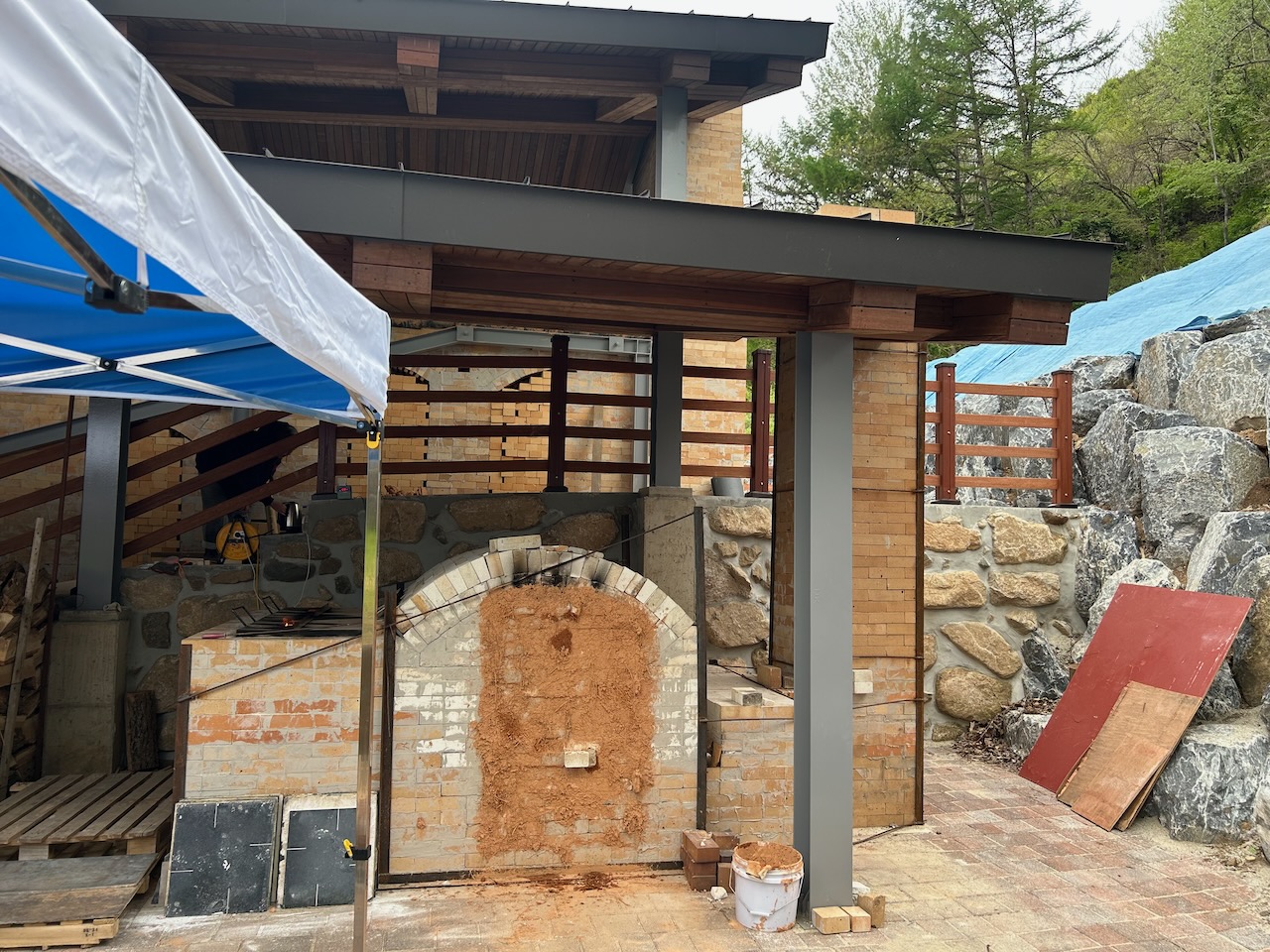
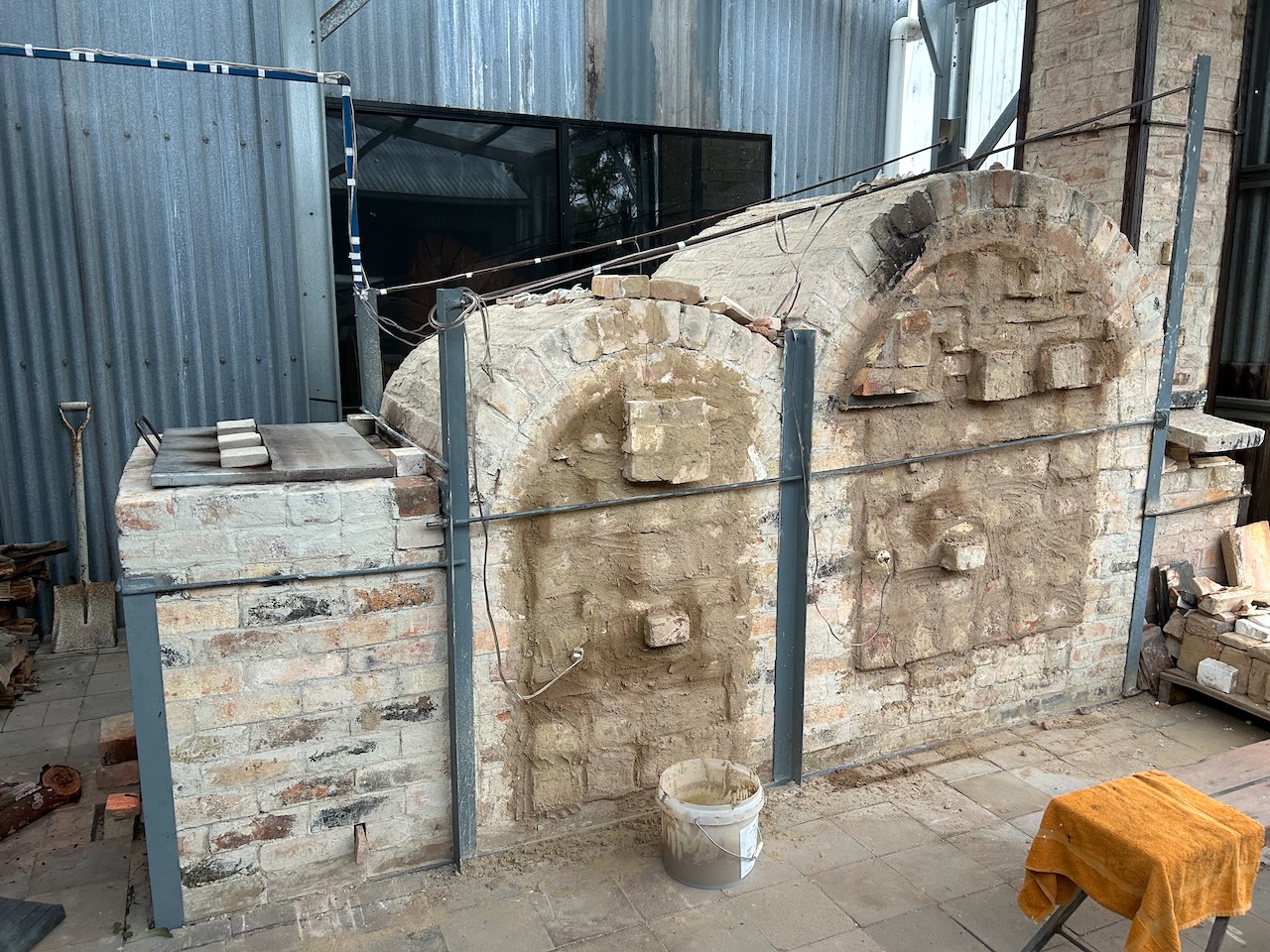
Below is an image of my kiln firing to stoneware in reduction near top temperature. There is no smoke coming from the top of the chimney.

My chimney isn’t particularly tall, but it is wide. Short and thick, does the trick! Or so I’m told!

I calculated the height and cross-section of the chimney based on theory. The total volume of the hot gasses enclosed in the chimney volume, as opposed to the same volume of cold air on the outside. Chimneys work because the cold air outside is forced in at the firebox by air pressure, and this pushes the lighter hot air up and out of the top of the chimney. It’s all about volume, not just height.

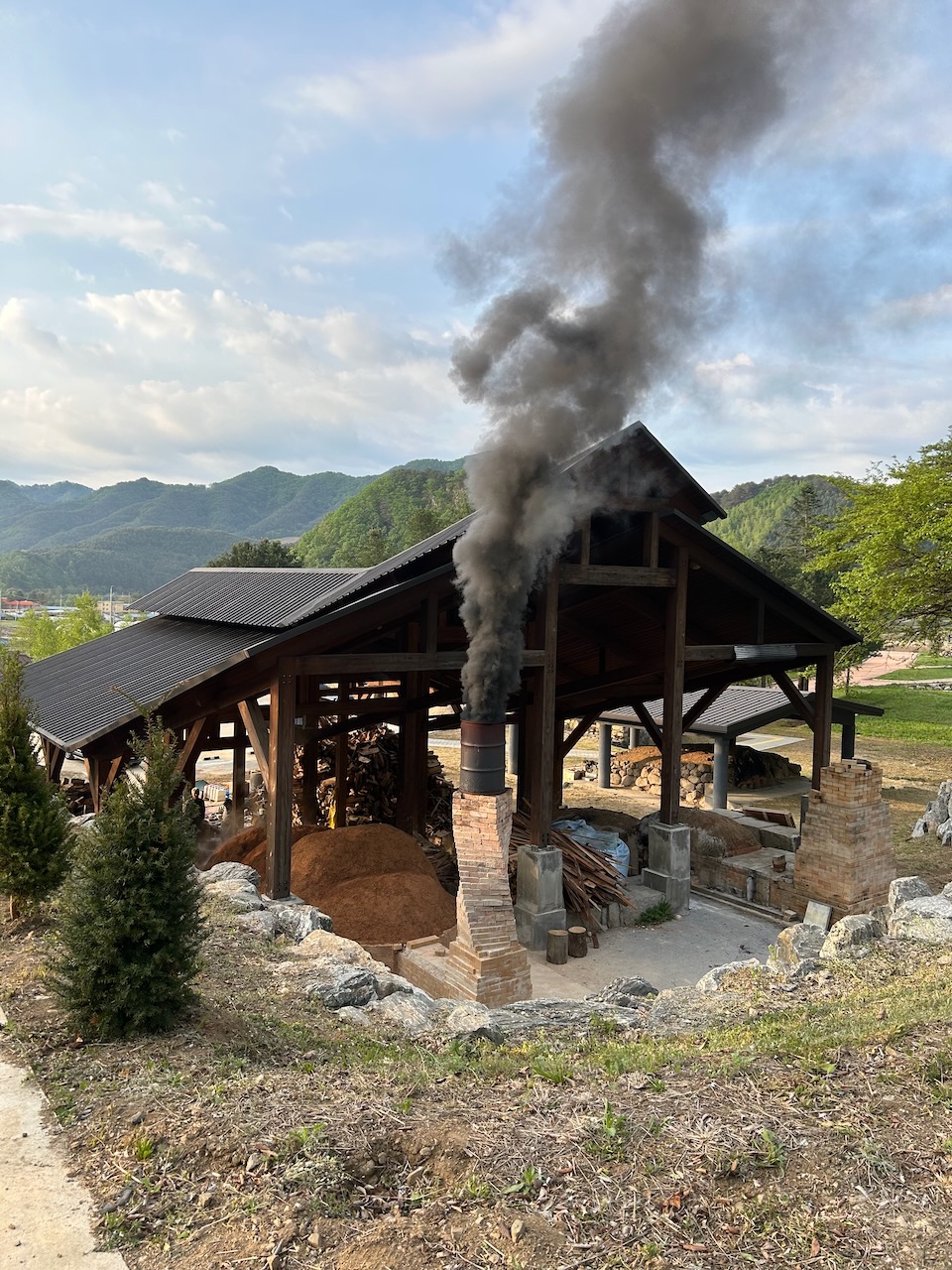
Below is the traditional kiln next to mine being fired the traditional way. Koreans are used to making loads of smoke. It just seems so natural to them. They were quietly amazed that I could fire with so little smoke and still reduce. One of the traditional kiln firing team, A National Treasure potter from his own local region, went straight home and built a copy of my kiln for himself. So I consider that a success!

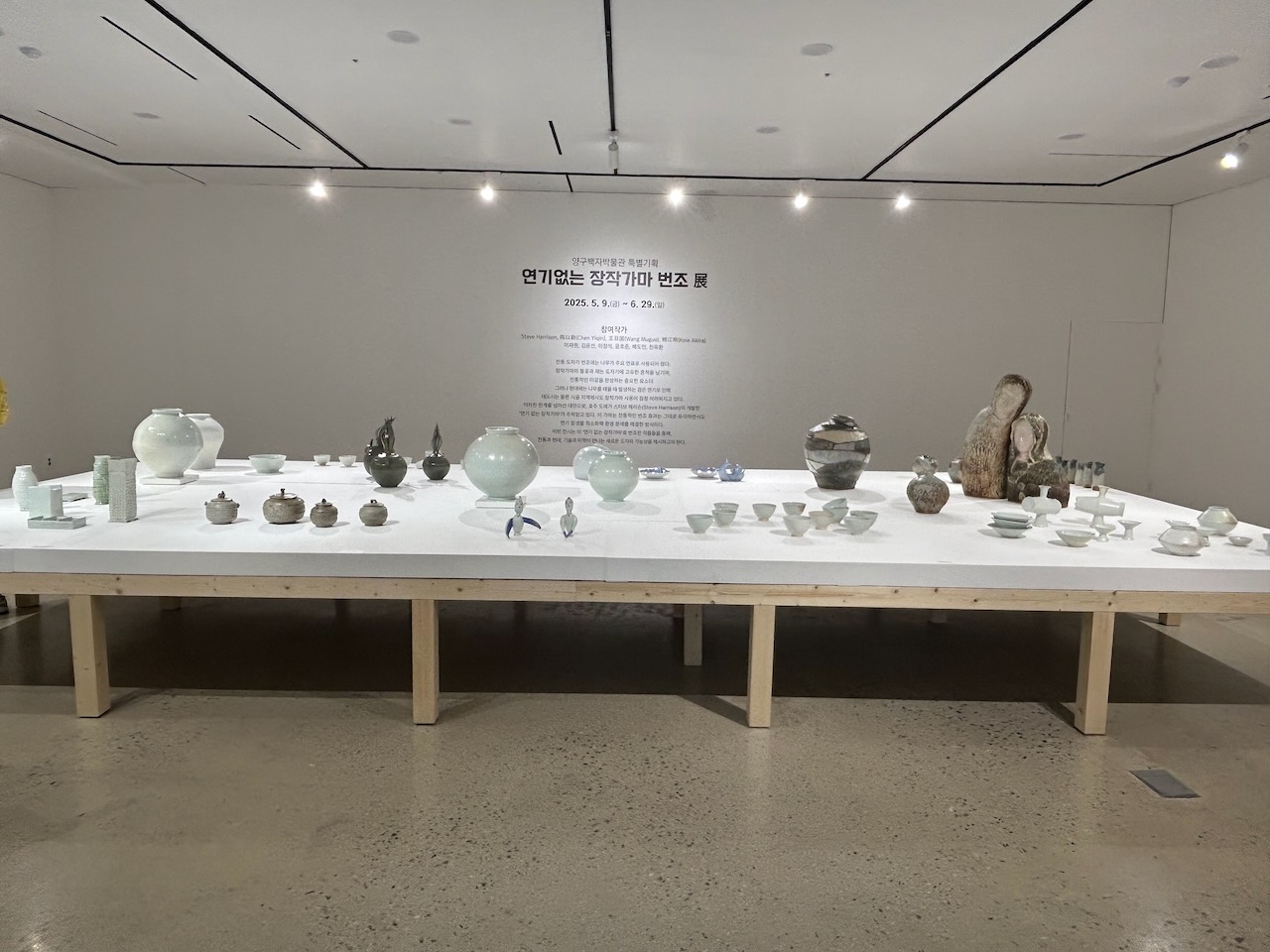
So my introduction of new ideas, with appropriately successful results, was well received. My host, Mr Jung, had organised the local TV station to make a documentary film about my visit, the firings and the subsequent exhibition of the fired works. Several international potters from France, Japan and China were invited to make work for me to fire, as well as a few local potters. After the kiln was unpacked and the work fettled, it was put on show in the Porcelain Museum. The exhibition is on until late June in the Porcelain Museum. The Museum Director released a short promotional video of the firing in time for the exhibition opening, which he posted up on-line and got over 4,000 hits the first day. So he is very happy.

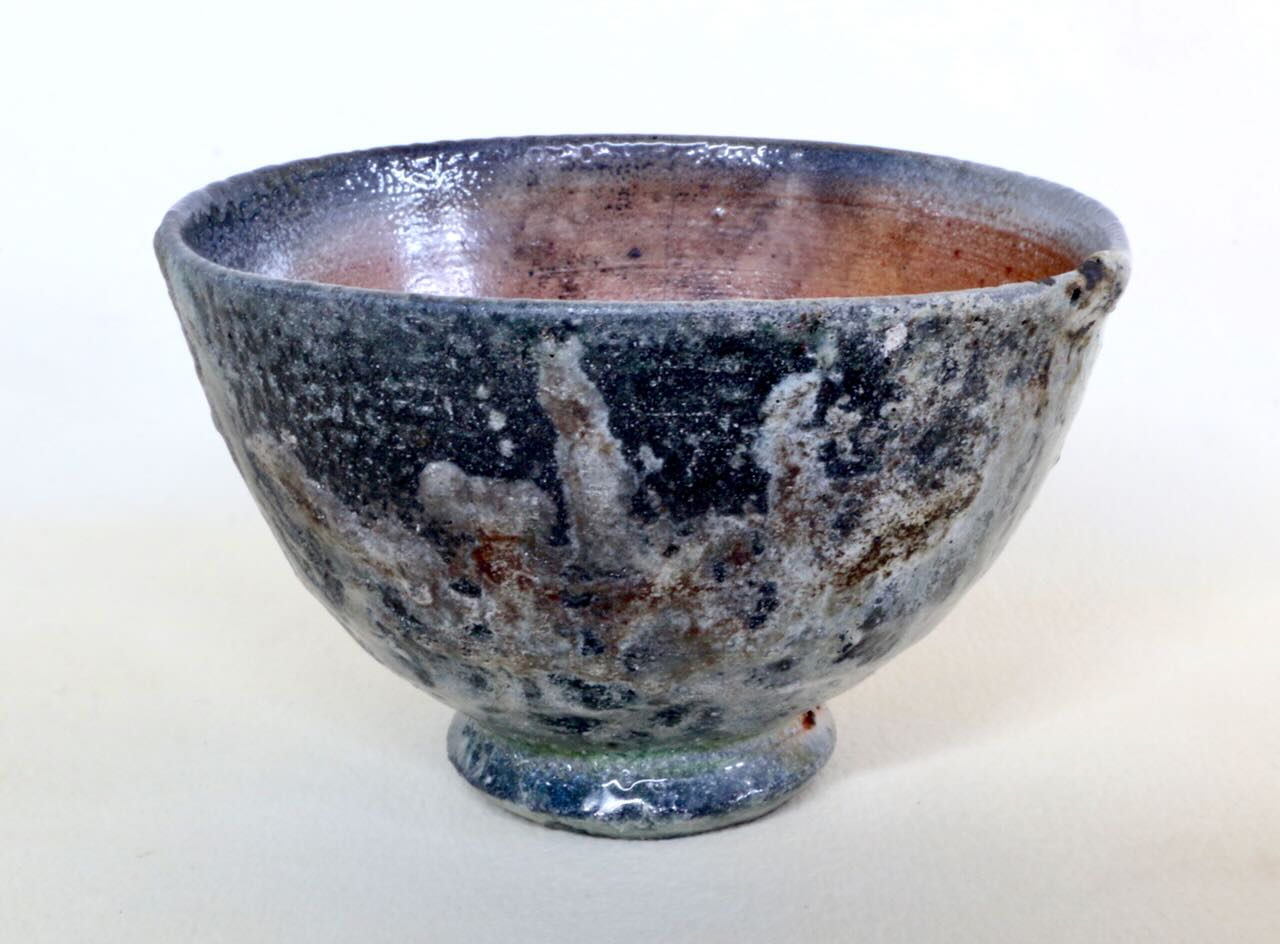
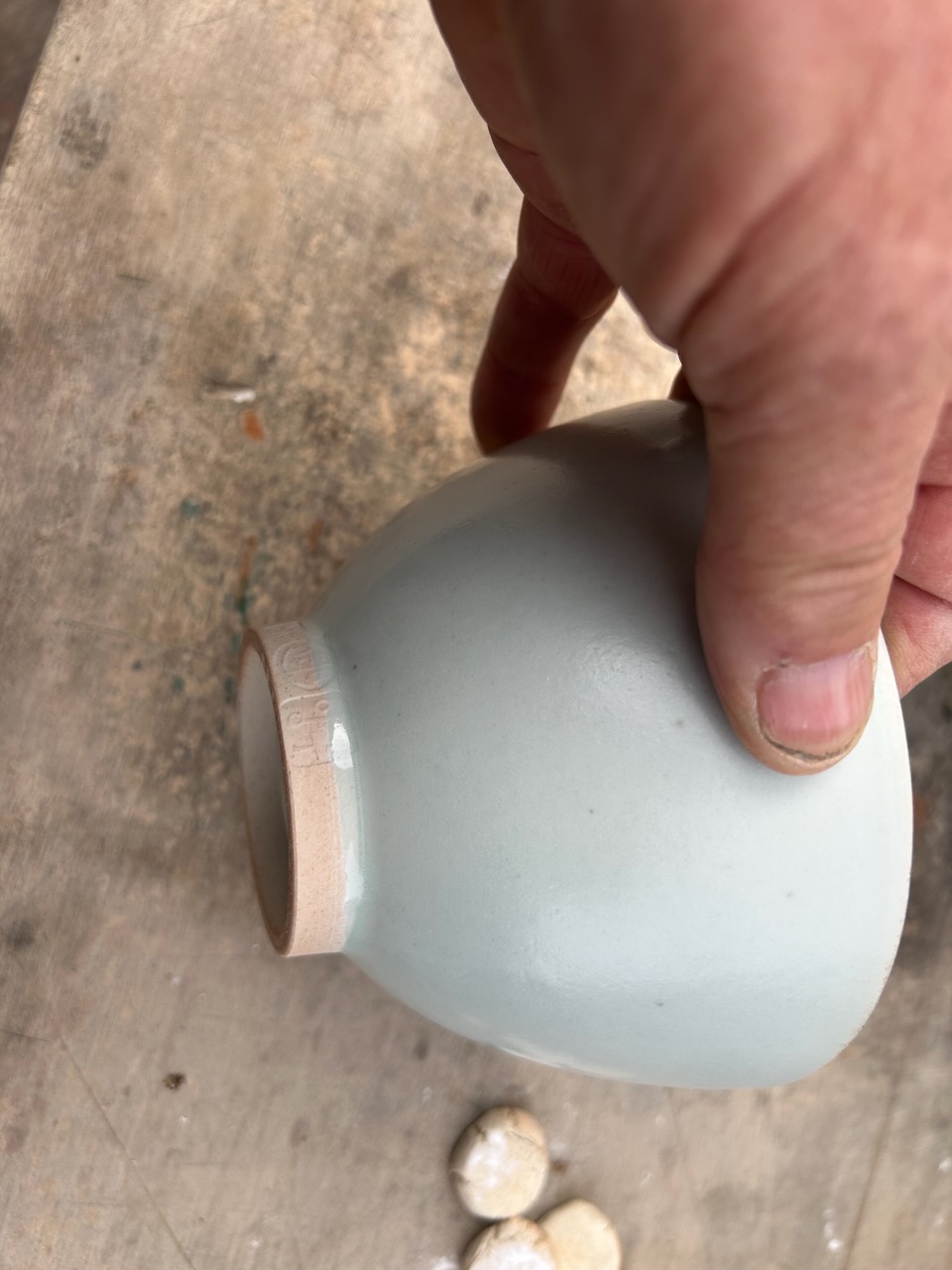
One of my bowls from the firing, with the Korean location name stamp and my name in Korean

The Staff of the Museum took me out to dinner after the event. They are all such a pleasant bunch of people, I really enjoy their company, They are great people. As I don’t have more than a simplistic grasp of ‘Airport’ Korean. All our conversations are carried out using translation software on our phones. The local Korean app is called ‘Papago”.

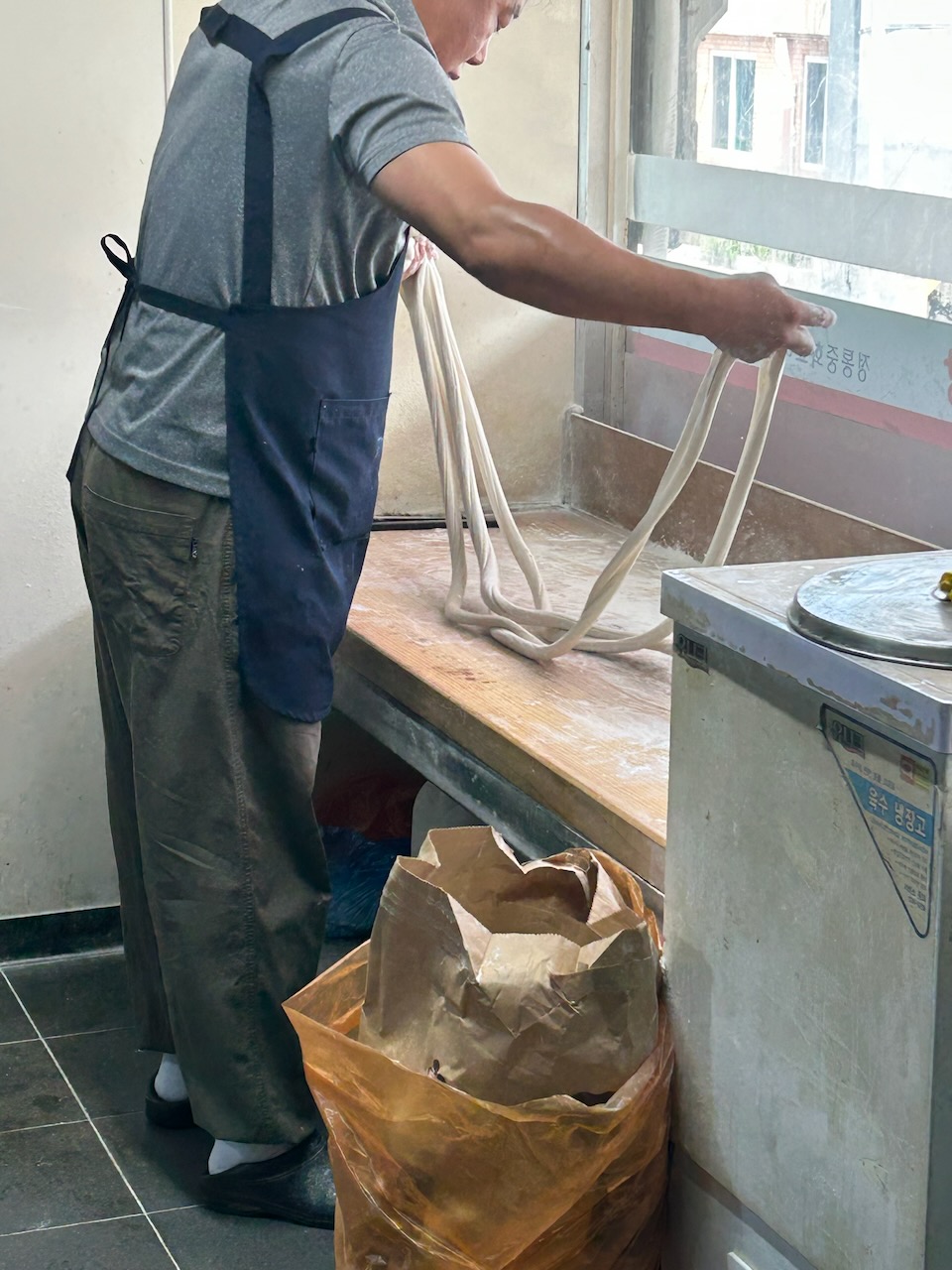
We went to a local restaurant where the chef makes his own hand made noodles. It’s worth going there just to watch him work. It’s an entertainment in itself!

Before I left, I made my usual pilgrimage up the mountain to the historic site where porcelain stone can be picked up off the ground. I collect a bag full each visit, (10kg) take it back to my room and wash it thoroughly, scrub it well, to get any dirt off the stones, then soak it in chlorine bleach over night to make sure that they are sterile, before bringing them home. It only needs to be put through the rock crusher, then the ball mill with enough water to make a slip, and then stiffened back up to a plastic state before throwing it on the wheel. 

Throwing stones! Powdered porcelain stone mixed with water, nothing else!

There is nothing quite like sericite. It’s such a unique material.

After finishing my work at the Porcelain Museum, I travelled up to the northern suburbs of Seoul, to meet up with my friend Sang Hee. She took me to her mothers farm, where we spent the morning weeding some of the rows of vegetables.

And a salient reminder that you never step over a fence line here! Even though you are in the suburbs. Not everywhere has been thoroughly de-mined and checked to make it 100% safe.

My last day was spent in Seoul, getting ready to fly out the next day. I went into the tourist area and got a couple of new name stamps made, as I lost all my older name and workshop stamps in the big fire.

Another very rewarding trip in every way. I’m so lucky to be able to do this work!

Nothing is ever finished, nothing is ever perfect and nothing lasts!

ACA Open Studio Weekend

This weekend is the Australian Ceramics Association, Open Studios.

We will be open from 10 to 4 each day. 

I have been continuing to work over the past few weeks. In particular, I have been doing some ‘kintsugi’ gold repair on a few of my pots with interesting cracks. 

Some 23 carat gold really lifts a slightly damaged pot.

I have also found time to make the weekly loaf of rye bread, and a tray of rock cakes to share with our visitors over the weekend.

Arts Trail – Open Studio 2024

We will be part of the Southern Highlands Arts Trail – Open Studios on the 2nd, 3rd and 4th weekends in November.

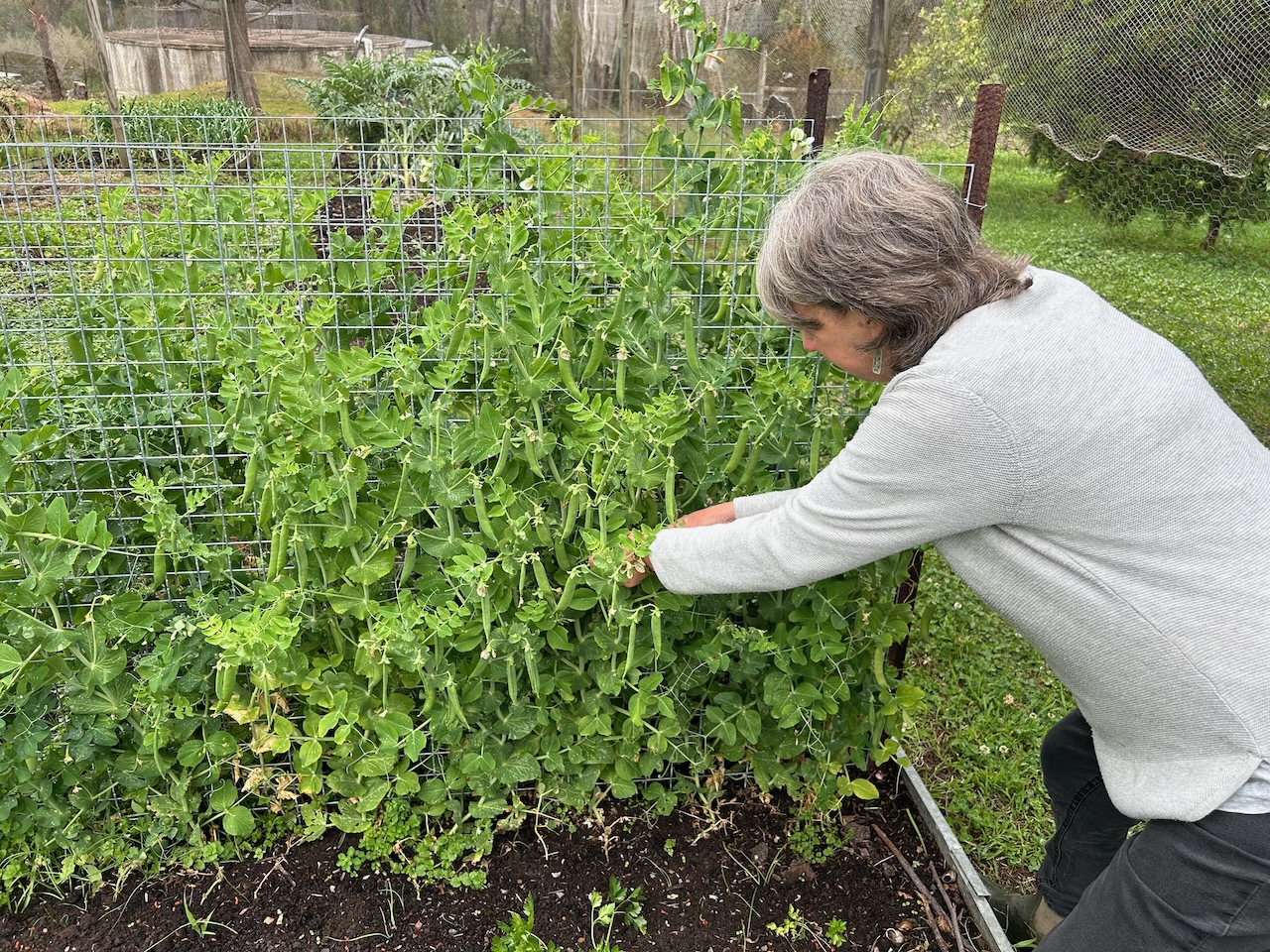
I’m back from my work in Korea and I hit the ground running. All the seeds and seedlings that I planted in late August, just before I left for Korea, were all burnt off in the severe frost event that swept through here in early September. However, all the over-wintering vegetables like peas, broad beans, asparagus and the brassicas are all thriving. So that is what we are eating at every meal these days. 


Because we only eat what we grow, our diet tends to go in long stretches of similar meals, we vary the actual mix for variety but I’ll be glad when the first of the summer crops comes on. That is always zucchini, they are so fast out of the starting blocks, along with radishes. 

However, I know that I’ll be glad to see the last of the ratatouille based summer meals and we can taste that first cauliflower again as the seasons come around. I think that it is a universal human failing to want what you don’t have. No matter how many cabbages I grow, I still hanker for a banana or a pine apple every now and then.

At the moment, I am just loving the smell of the tomato foliage as I brush past it when weeding. The smell of tomato leaves offers such promise of fresh salads and the long hot days of summer to come. 

The more established spring flowers in the flower beds around the pottery were not affected by the frost, and have gone on to bloom there little buds off. Its very cheerful and uplifting to look out the studio window and see a vista of spring blooms.

After the frost. Janine went out and bought some more early seedlings to get a bit of a head start for the summer garden, and now that I’m back, I spent all of my first few days planting seeds, weeding, mulching and mowing to get the place ready for the Open Studios Arts Trail, that is being held on ther last 3 weekwnds of November. But also to guarantee our summer food supply security.IMG_0869.jpegIMG_0871.jpegIMG_0872.jpeg

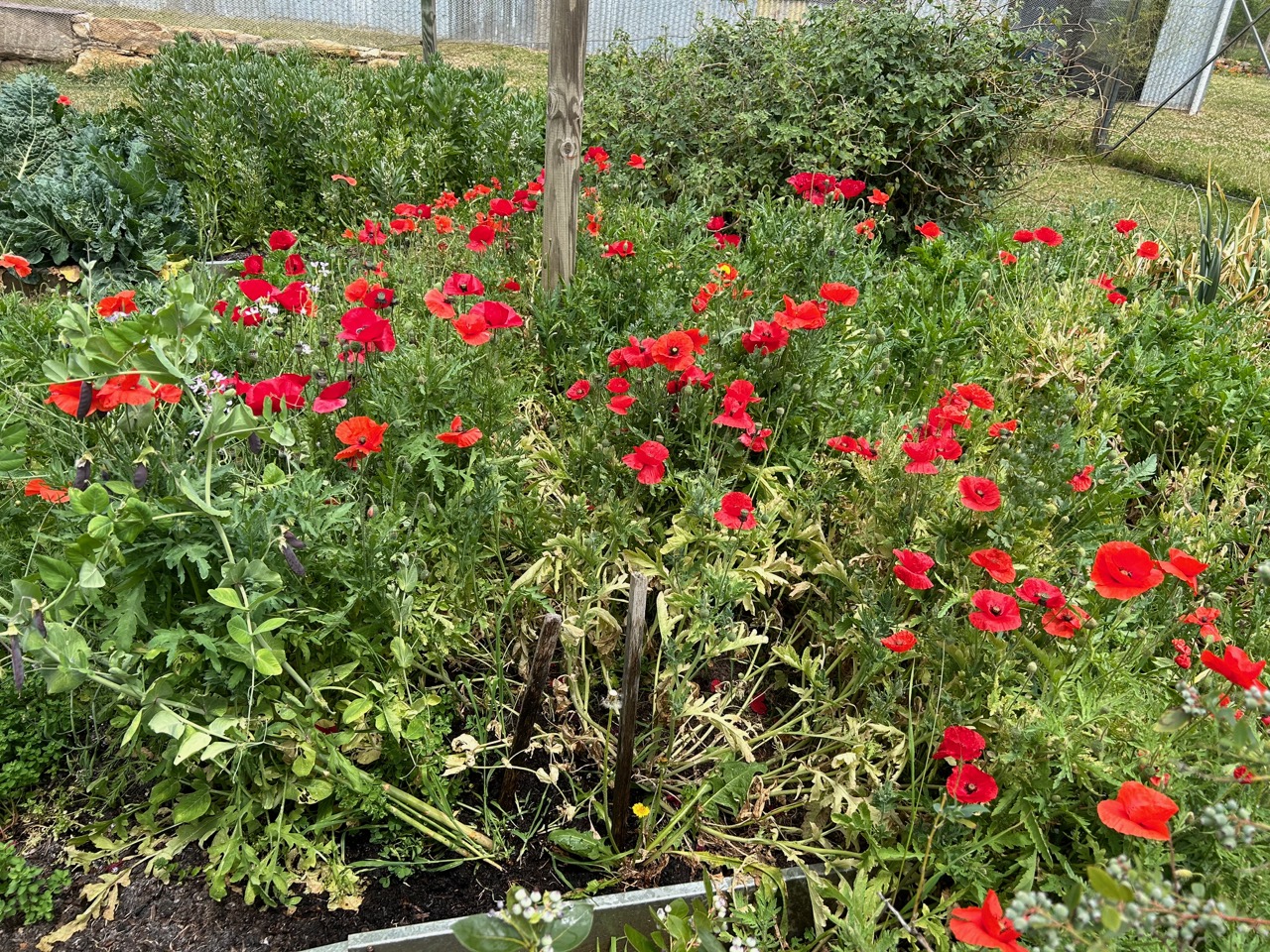
Janine transplanted some wild self-sown spinach seedlings, but they didn’t all take. I filled in the gaps inbetween with some extra seeds. The vegetable garden is looking good again with all the red poppies in flower now. The bees are going full speed ahead. Their little yellow saddle bags are full and bulgeing with pollen.

We already had a lot of pots made for the open studio sale before I left for Korea, but there was also a lot of bisque ware that I had prepared for a wood kiln firing, but I just couldn’t fit it in before I had to leave. So now that I’m back I have glazed all that work and packed the wood kiln.

13 hours to 1300. I think that I have finally found to best way to burn my pre-burnt and charred dead forest of kiln fuel timber.

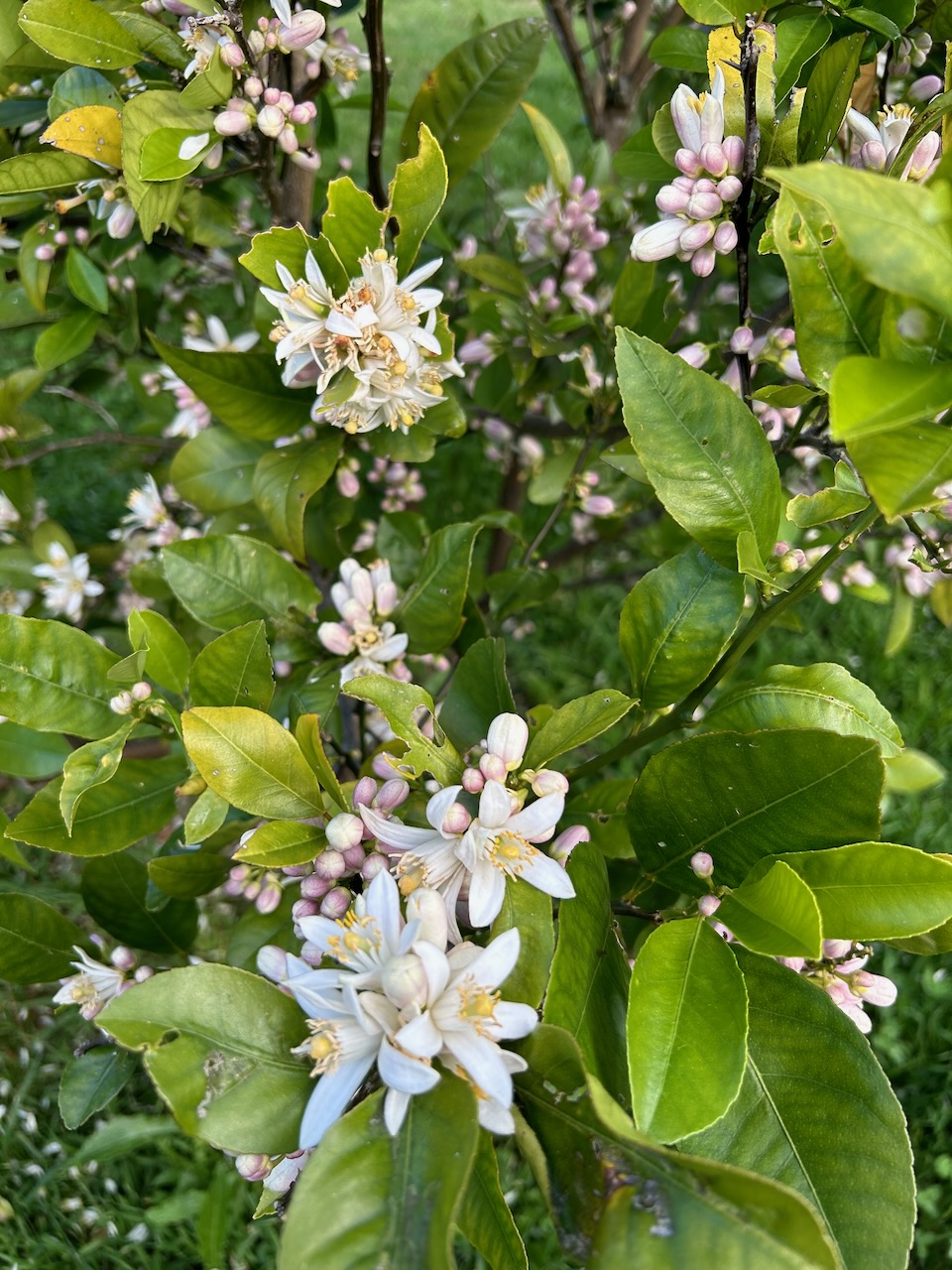
The citrus grove is in full bloom and you can smell the fragrance of the citrus flowers from the pottery, if the wind is in the right direction. 

We will be open for three weekends in November, 9th/10th and 16th/17th. for the Southern Highlands Arts Trail then the ACA Open Studios, Ceramics Arts Trail that is happening Nationally on the 4th weekend of the 23rd and 24th of Nov. 

Keep us in mind and call in if you can. We have some lovely work to show you.

Tea bowl exhibition in Seoul, Korea

I currently have one of my bowls in a tea bowl exhibition in Seoul, South Korea.

This bowl was fired at the front of my wood fired kiln. During the firing the ash glaze ran just a little bit too much and stuck the bowl to one of its pieces of wadding. Luckily, I was able to chip it off without breaking the bowl. I repaired the damage using the ancient Japanese technique of ‘kintsugi’, using gold to repair precious pieces of ceramic.

Using pure gold to repair a damaged pot shows respect for the item. It honours the piece by giving it time and resources, and finally finishing it off with a coating of pure gold. By showing it respect, I choose to give it a greater value than it would have had, if it had come out of the kiln intact.

The pot is damaged, but it is still beautiful. It has Value, and it is Unique. It is Honoured even though it is Damaged. It’s possible that repairing a damaged thing can make it more beautiful and precious than if it hadn’t been through its ordeal.

I see these damaged and repaired objects as self portraits. I went through an ordeal and although I was damaged, and am not the same, I am still working. I’d like the think that I’m also improved by the experience, although I’m not too sure about that. My pots that I repair are certainly more beautiful, interesting and valued.

Open Studio Sale this weekend

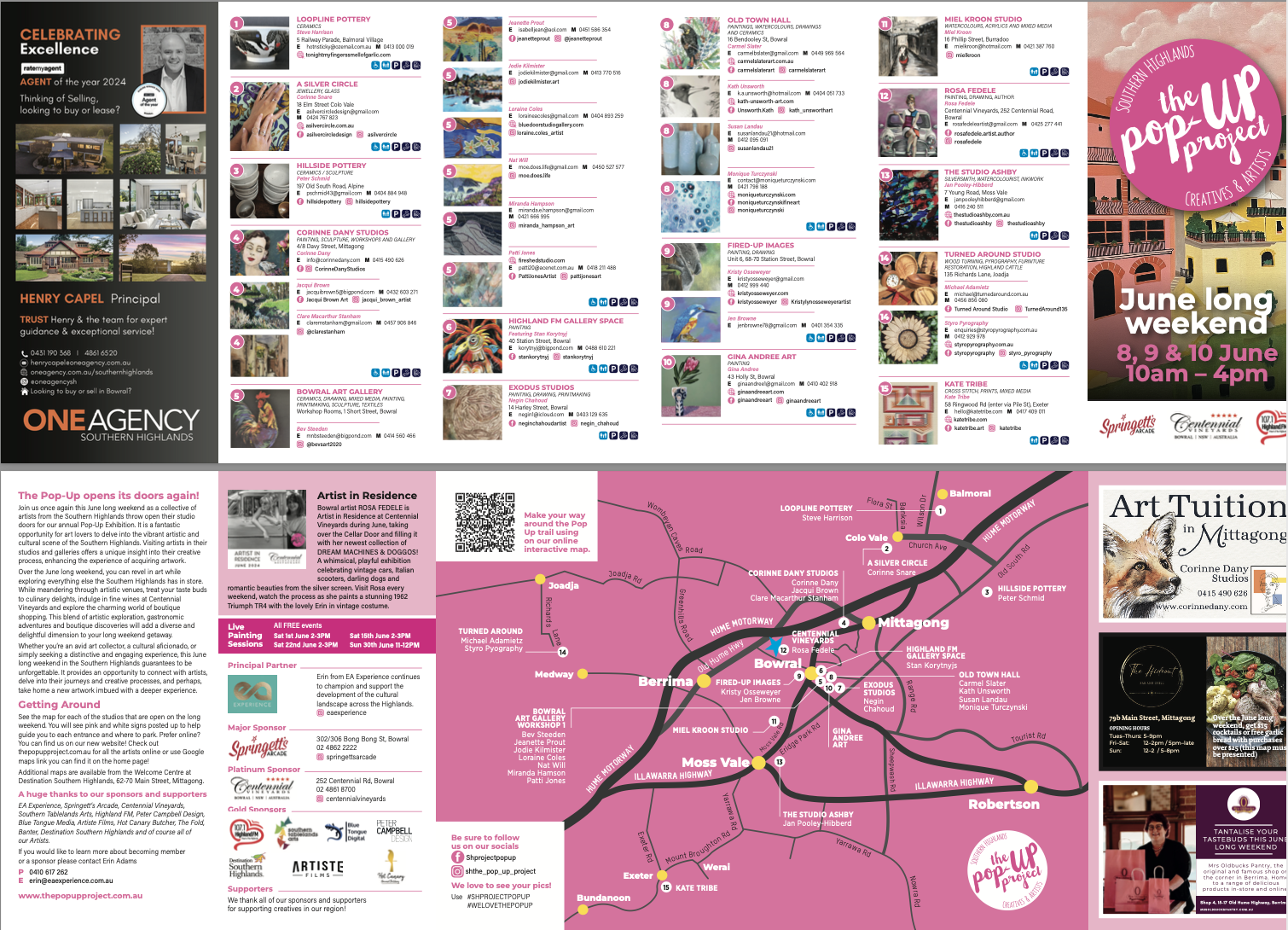
On the Long Weekend I will be opening our Gallery for the ‘Pop-Up’ Open Studio Arts Trail.

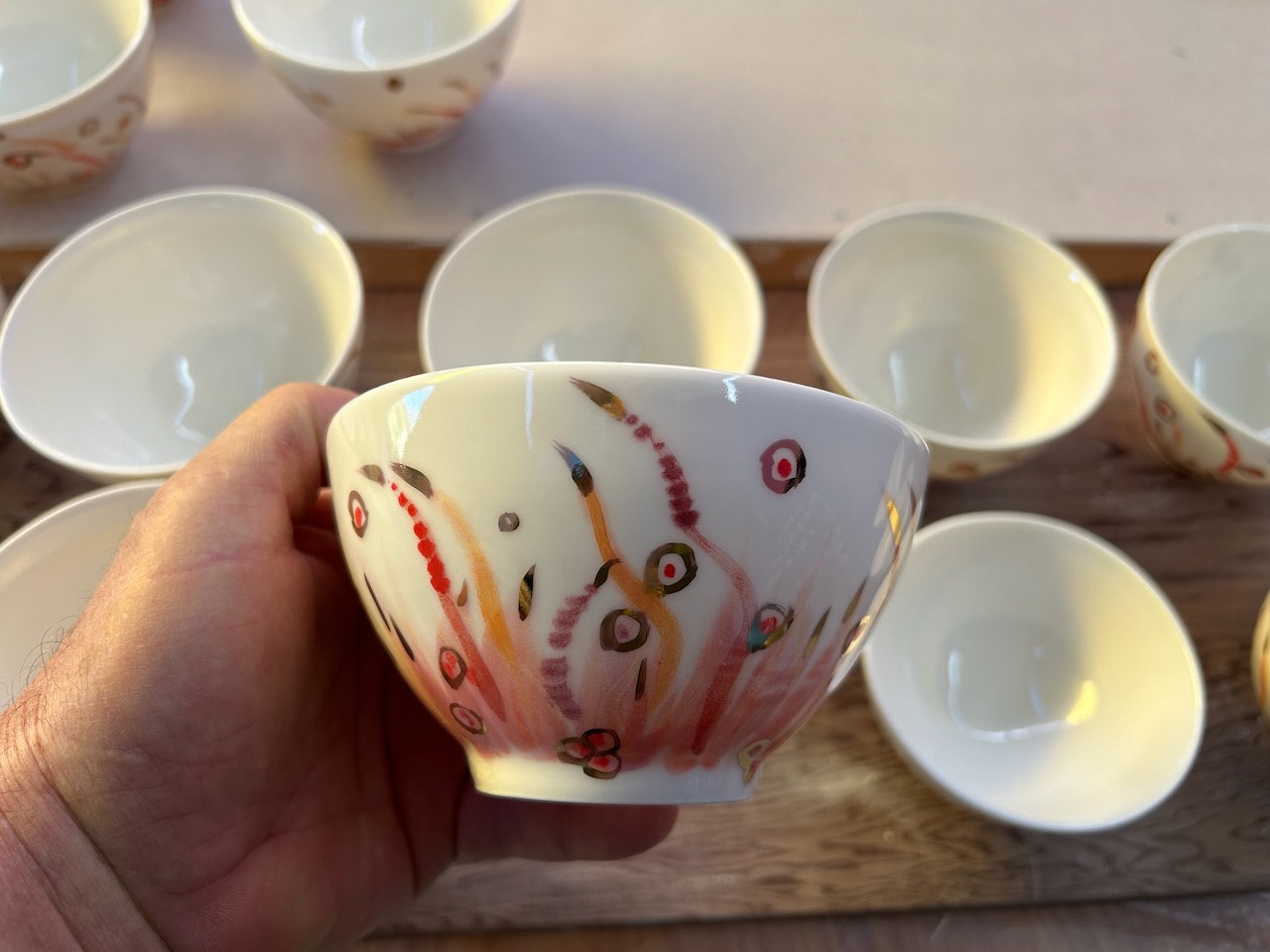
I have been hard at it making new work for this show. I have been making some very fine and thinly potted bowls decorated with the motif of “From Flames to Flowers’. This is a motif that i developed without knowing last year after undergoing some remarkable EMDR trauma therapy. 

One week I was painting flames on my pots, the sorts of images that had been haunting my dreams since the fire, then the next week, after just a few sessions of EMDR, the flames had morphed into flowers. To be truthful. I had made a concerted effort to plant patches and strips of English cottage garden beds around the garden and driveway since the fire to try and make the place a bit more cheery and less blackened. I really needed cheering up, having been burnt out 3 times in 50 years.

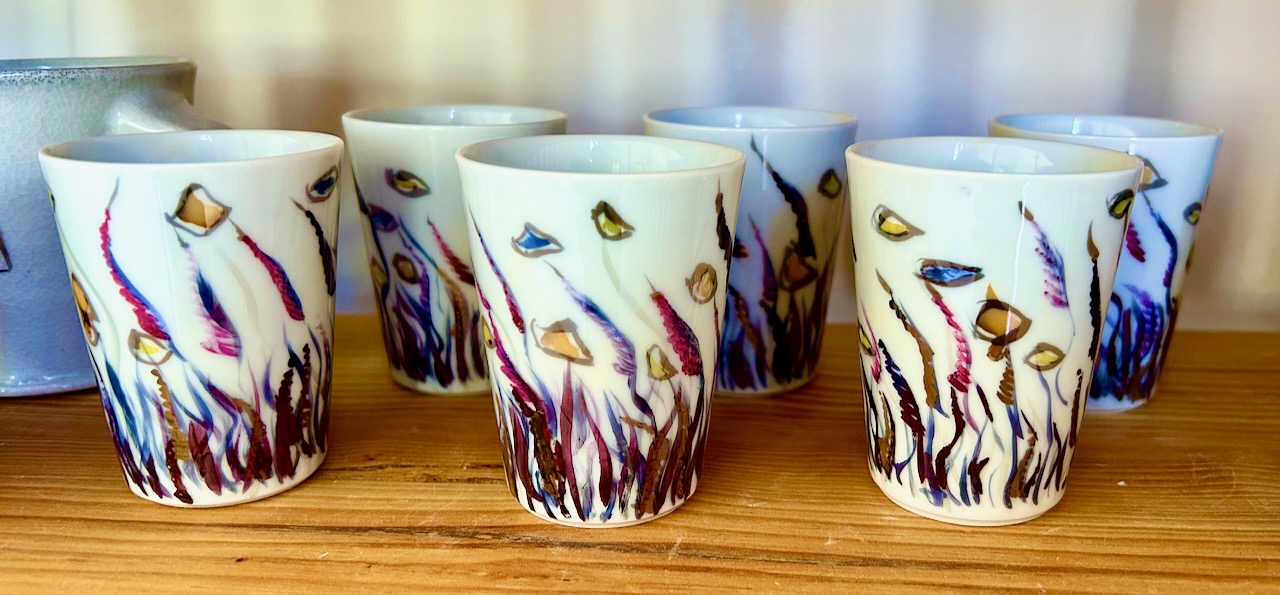
I really like the motif, so I am still using it. It still cheers me up. It’s optimistic and positive. I have added a little bit of gold lustre to give it a bit of ‘bling’ as well.  I have been using some lovely translucent sericite porcelain, so that when I hold the pots up to the light, I can see the painting on the out side of the bowl from the inside, not just the outline of the image, but even the colours of the flowers. They are pretty special to me.

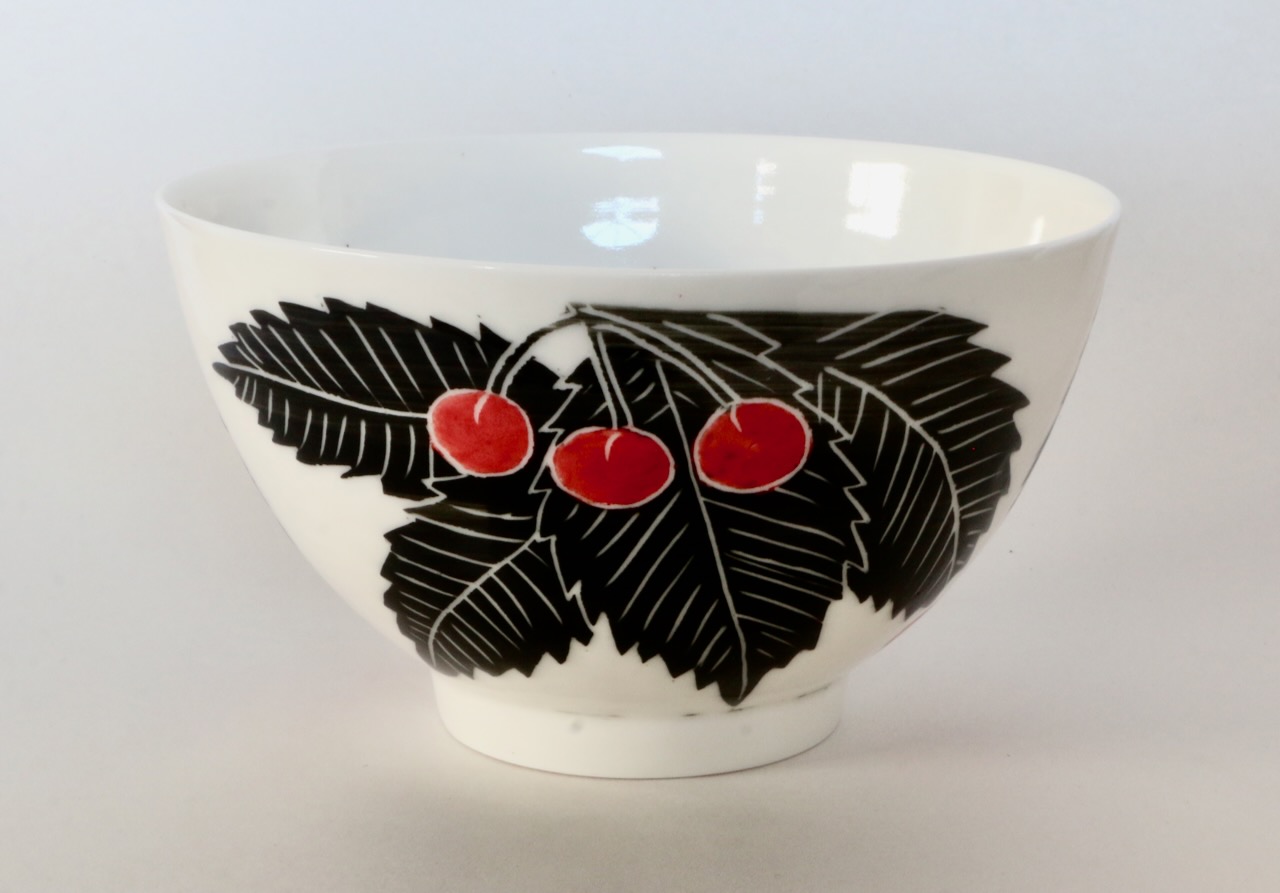
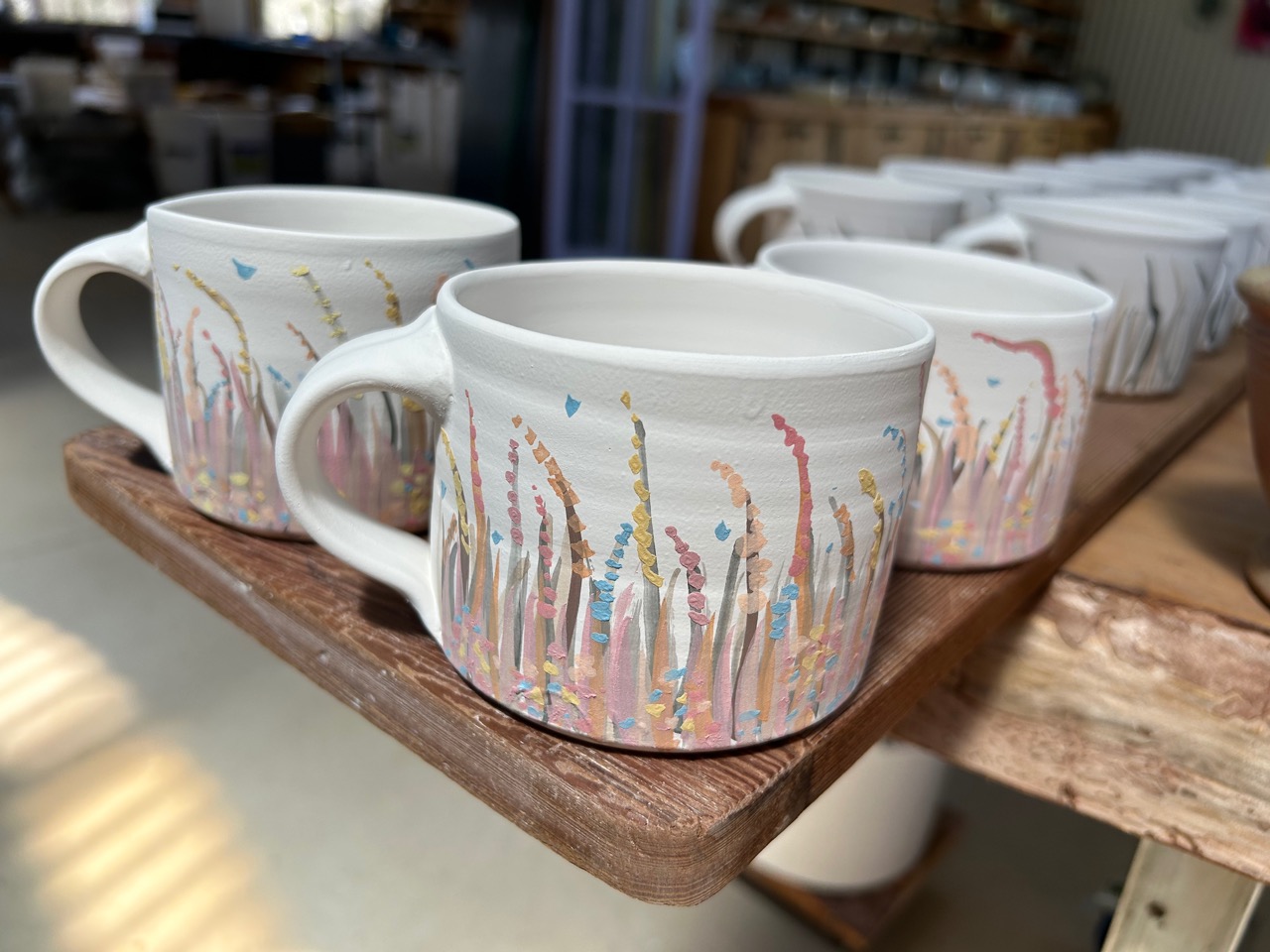
The other work that I have been doing is black and white sgraffito graphic decoration, again mostly on porcelain, but I have also made some stoneware mugs. They are still in the kiln as I type. They’ll still be warm on Saturday morning, coming straight from the kiln.

The motif for this series are the cherry trees in our Chekhov orchard, and the blue/black bowerbirds that come and steal our fruit. The Cherry Thief. The subject is as old as gardening itself. I remember that William Morris designed some wall paper back in the 1880’s called ‘the strawberry thief’. This new work of mine is totally unrelated in Character, and very different, but the subject is exactly the same.

I call the series, ‘Plant it and they will come’. And they do come.

When we came here 48 years ago. There were hardly any birds here, just a few kookaburras. As we developed the gardens and orchards, dug dams, made compost heaps and planted native shrubs, we created habitat, and they came!  Suddenly we had to start thinking of how we might cover our fruit trees and vegetable beds from the marauders! 

Within a few years, we had hundreds of birds living here, working the rich environment, with dams for water, open spaces to forage in, trees and shrubs for cover, and fruit to eat. We created this oasis and they occupied the territory. We planted it and they came!

I will be open from Saturday to Monday over the long weekend, from 9 to 5 each day. Please call in if you are in the area.

I have plenty of off-street parking, tea, coffee and cake, toilet facilities, and we are wheel chair friendly. There will even be a glass of wine in the afternoons.

November Open Studio Sale on soon

November is fast approaching. We will be opening our workshop for the first two weekends in November for the Arts Trail – Open Studios event here in the Southern Highlands. We have been getting ready for this open Studio sale since the end of the last Open Studio sale in July.

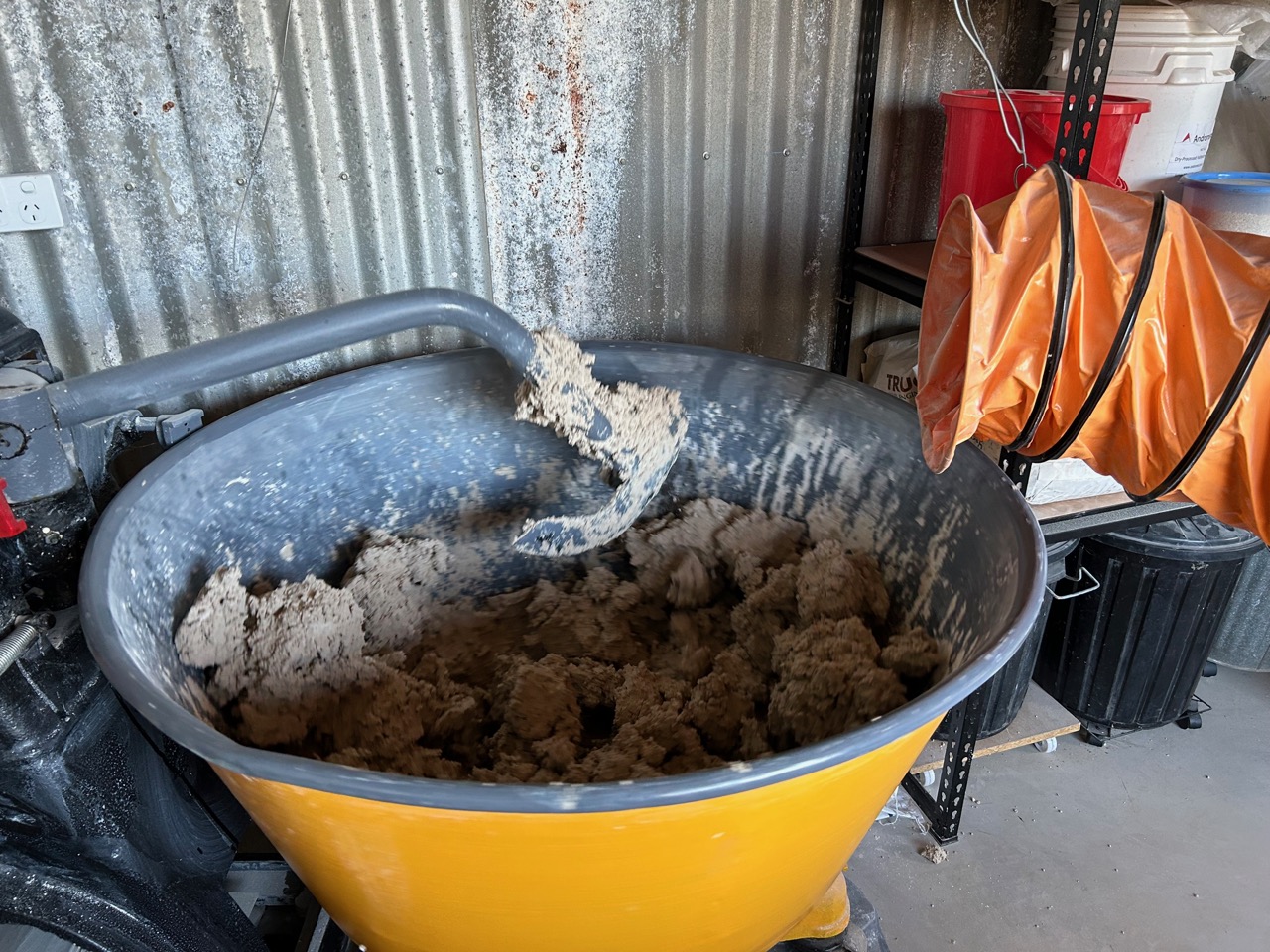
Straight after the last sale, we had our 1st throwing workshop weekend in the pottery and then got stuck in straight away making new batches of clay, so as to make the new work for this show. I wrote about it here on the blog in August. < Pugging ClayPosted on   >

We spent September throwing, turning that new clay into pots. We had to be strict with our selves, as there is always so much to do here throughout the year dealing with seasonal events like pruning and making marmalade, before we left, but we got the pots made. We knew that we would be away for a lot of October doing a geological survey of potters materials in New Caledonia, so all the work needed to be made and bisqued before we left. 

As soon as we returned we were solidly back at work in the pottery glazing and decorating those pots. Again on a tight schedule, as I was asked to give the 10th. Ian Currie Memorial Lecture to the Ceramic Arts Queensland ceramic group. I gave the first lecture in the series a decade ago, and they asked me back to give another lecture, this time with a theme of sustainability, but also to give a weekend workshop on making glazes from local raw materials. We had decided to drive up and back, so as to call in and visit all our relatives along the way. Folks that we hadn’t seen since before the fire, COVID and the lockdown, so we had to allow a couple of weeks for the trip. 

We have planned the 2nd half of this year pretty well. So now we are back home again and doing the last few glaze and gold lustre firings ready for next weekends sale.

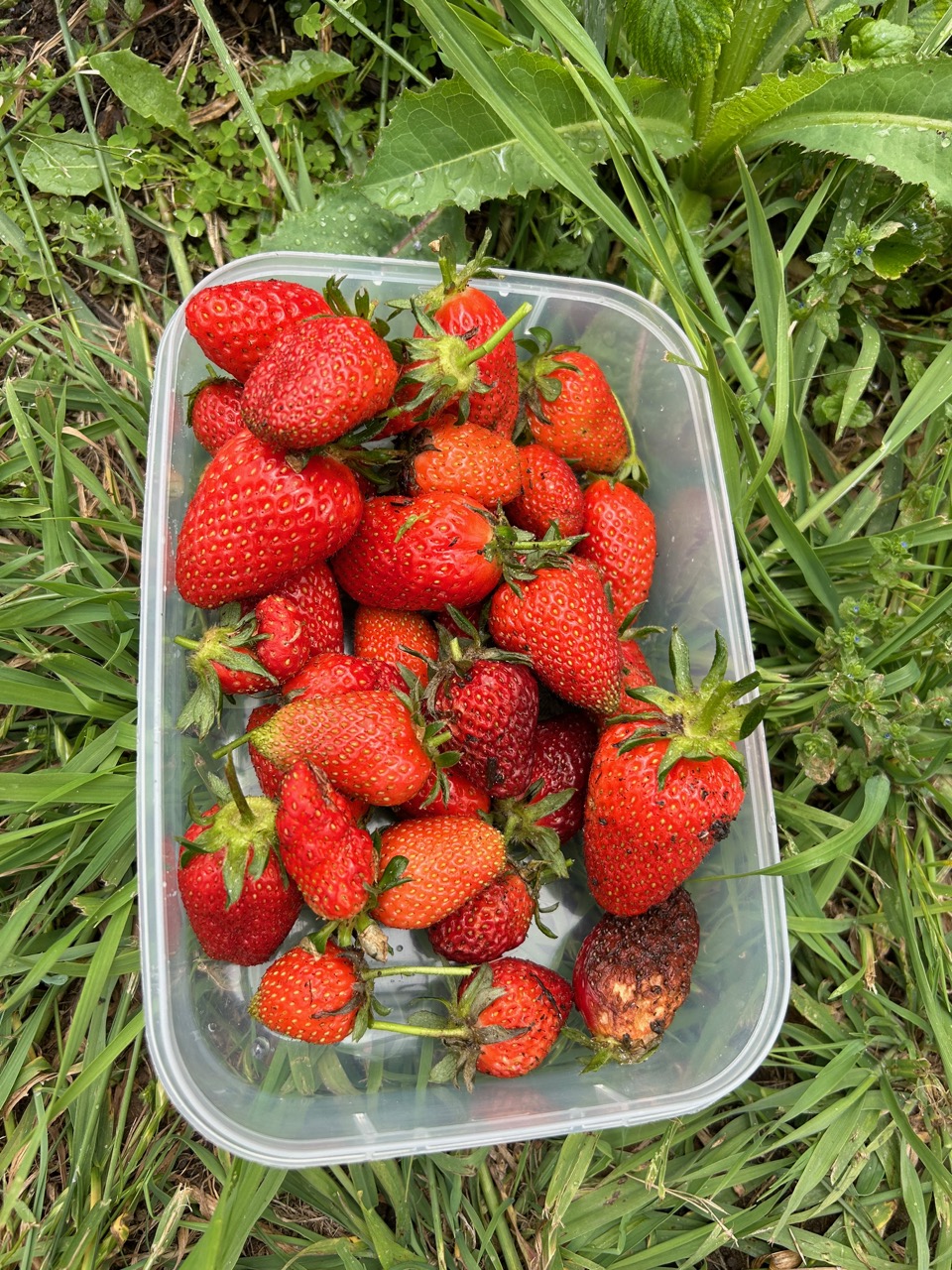
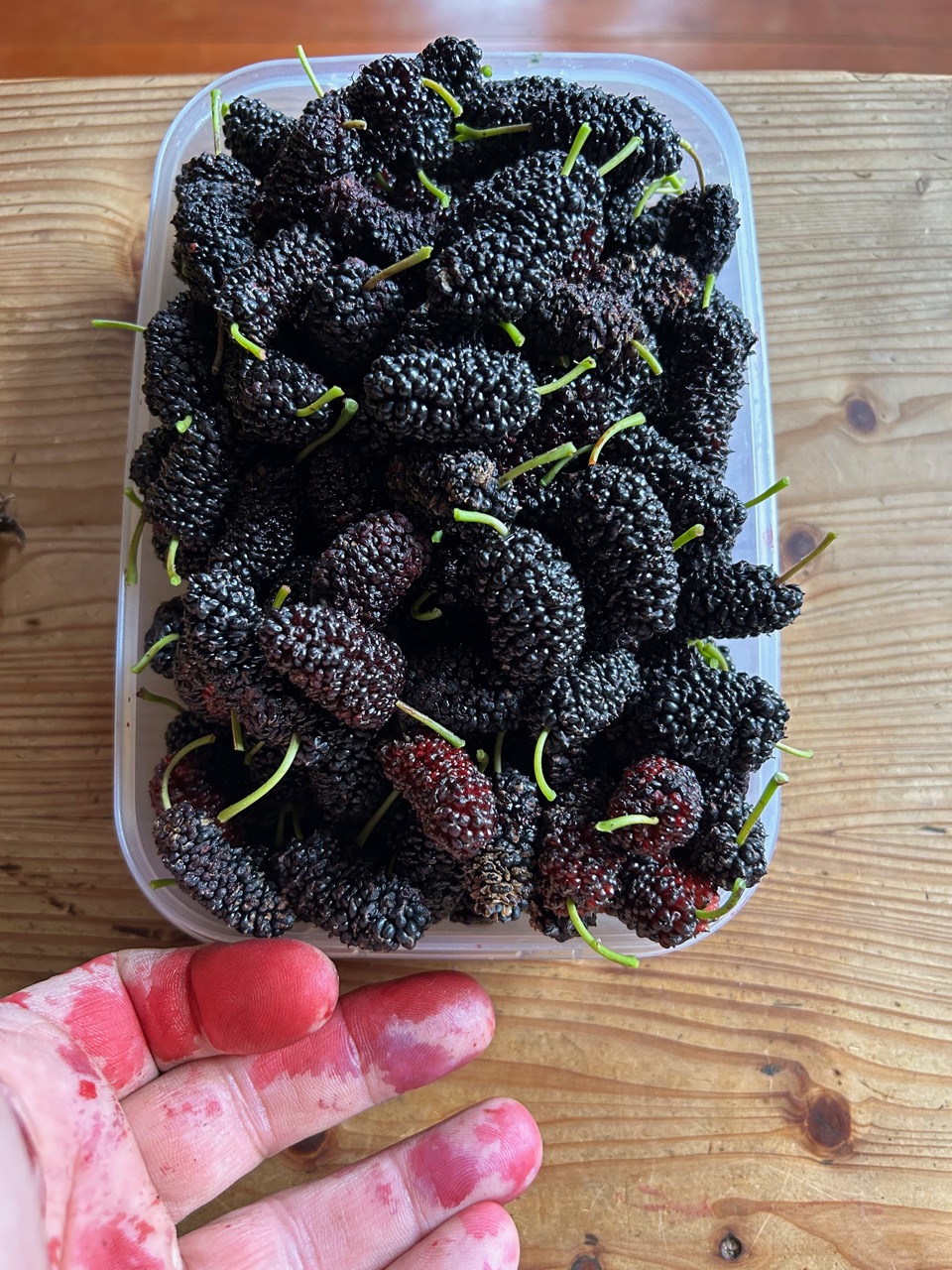
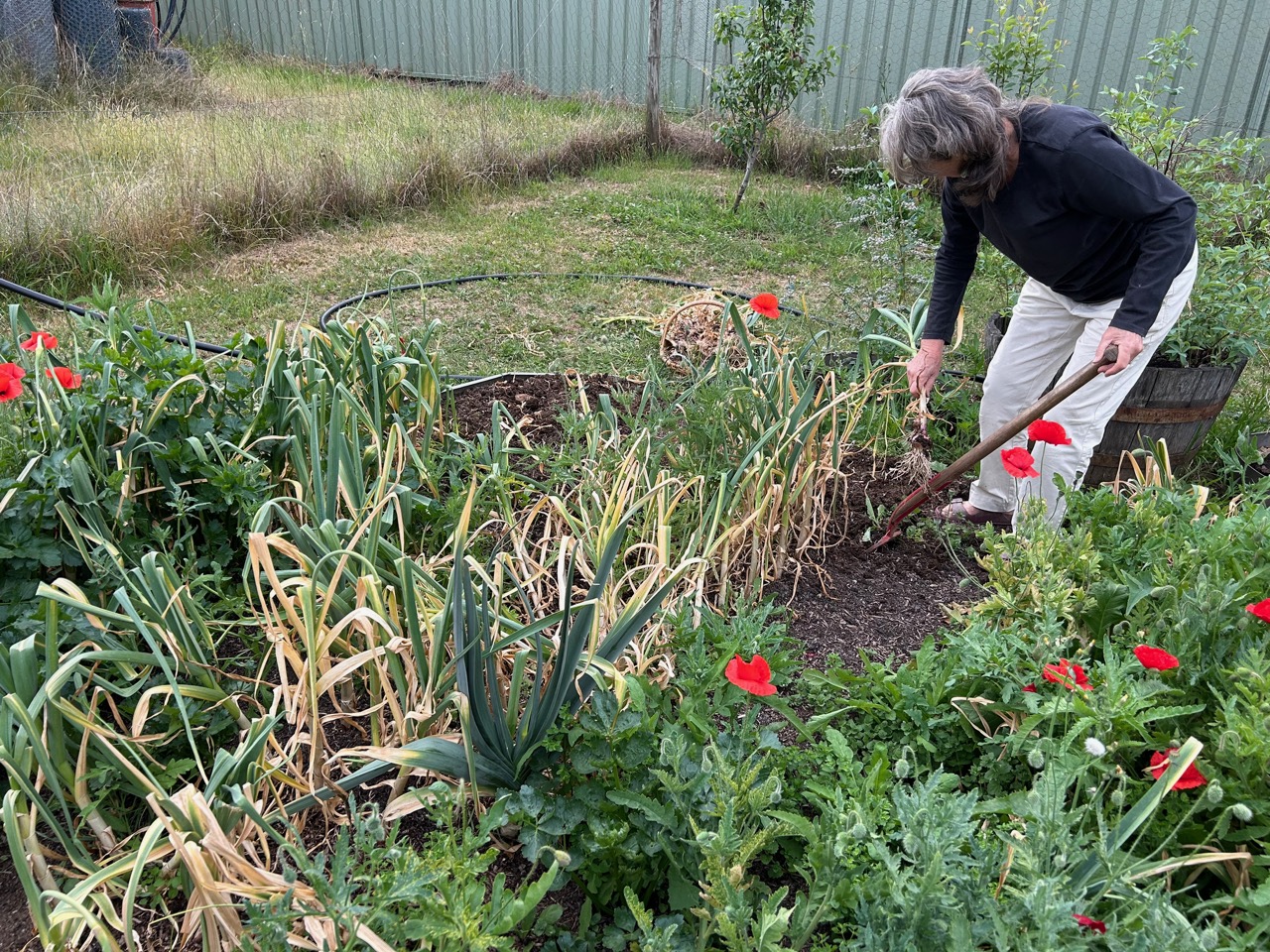
We came home to find a wealth of lovely things that had matured while we were away. The flower garden is still in bloom, the strawberries, cherries, mulberries are ripe and ready to pick. We got out of the car, unloaded the boot, put the washing on, then started watering the garden, picking fruit and lifting the garlic. No time to waste. Everything needs to be done now, so we have to schedule our time and energy appropriately.


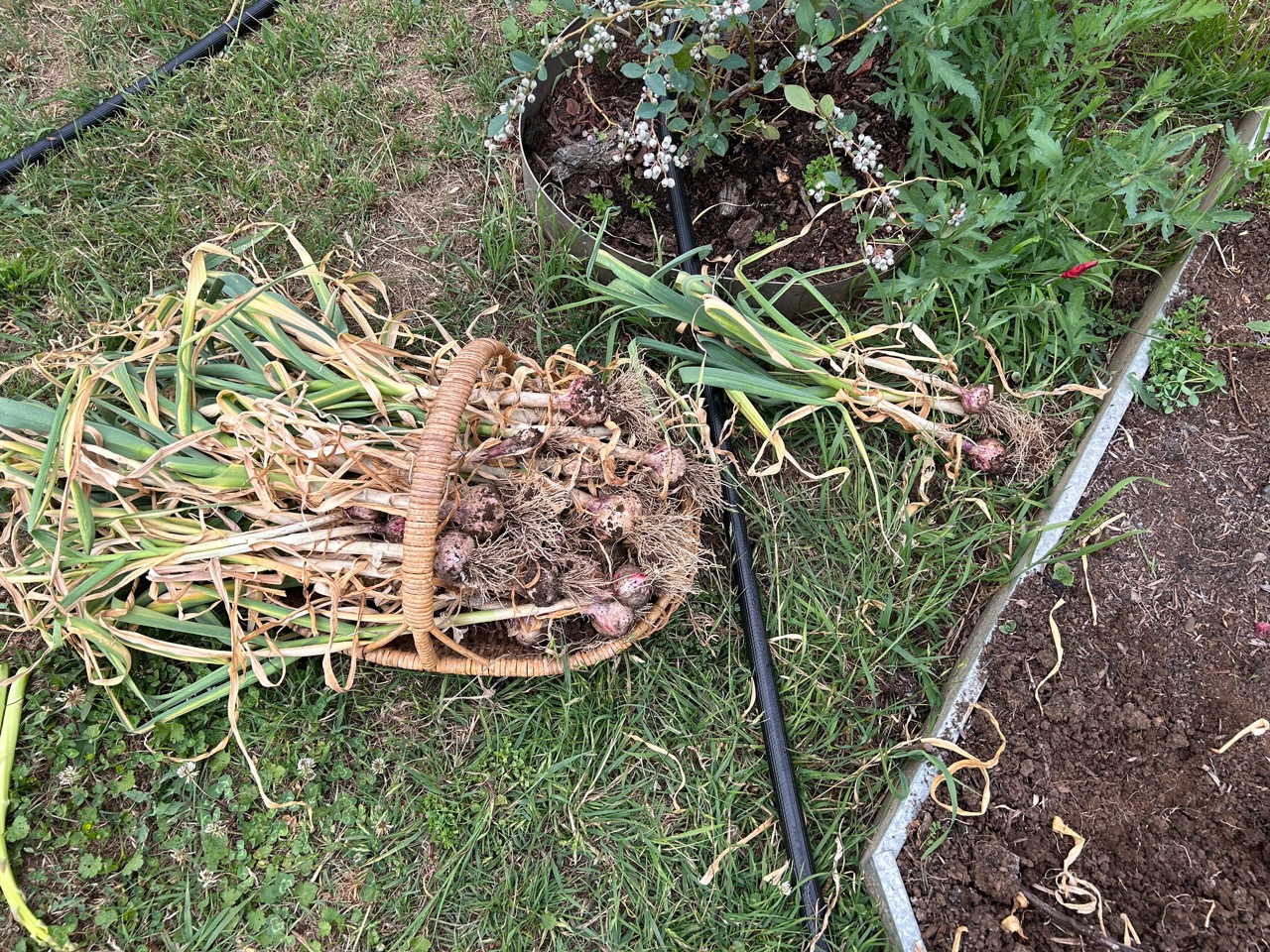
  The garlic is ready to lift.

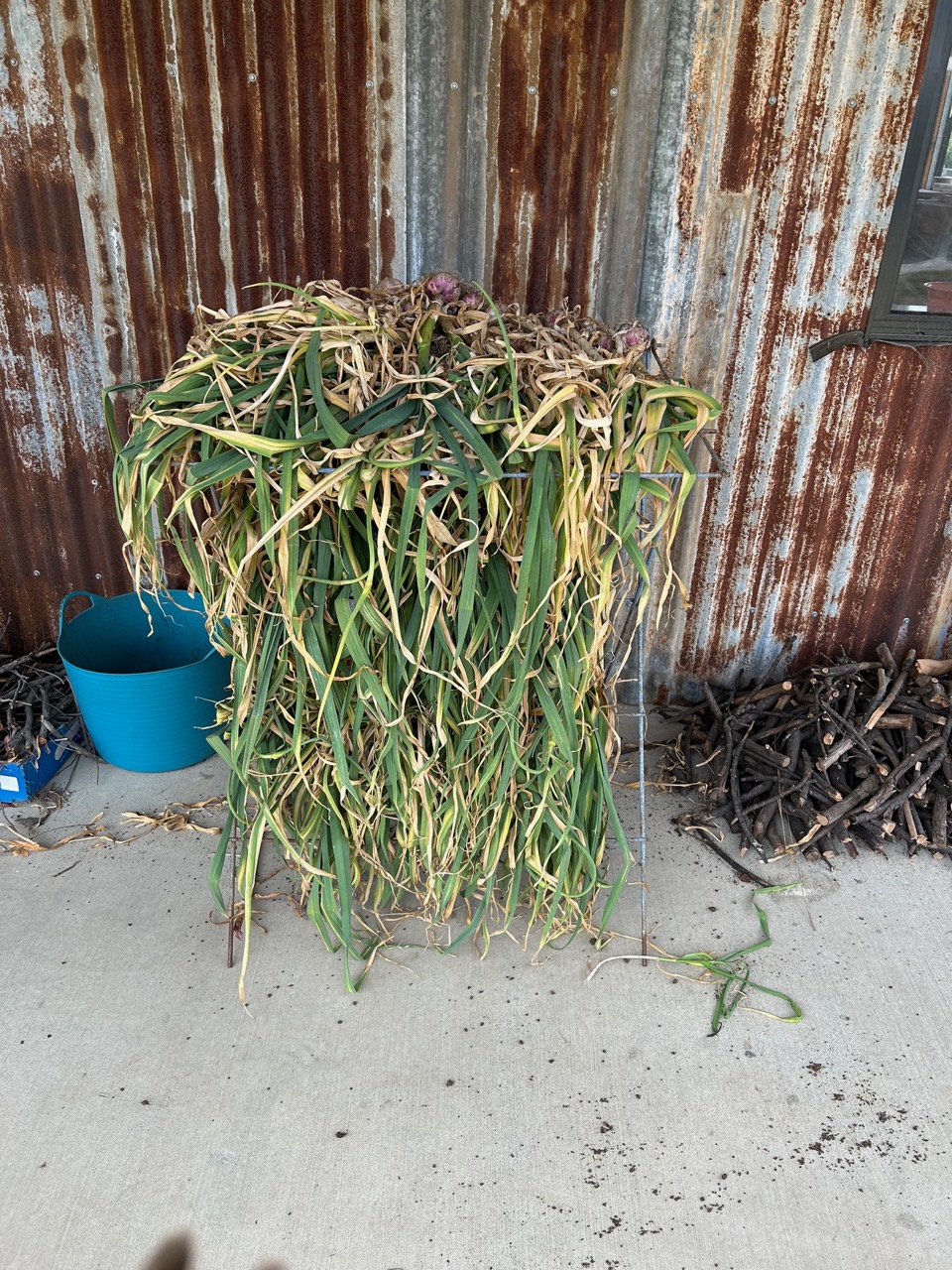
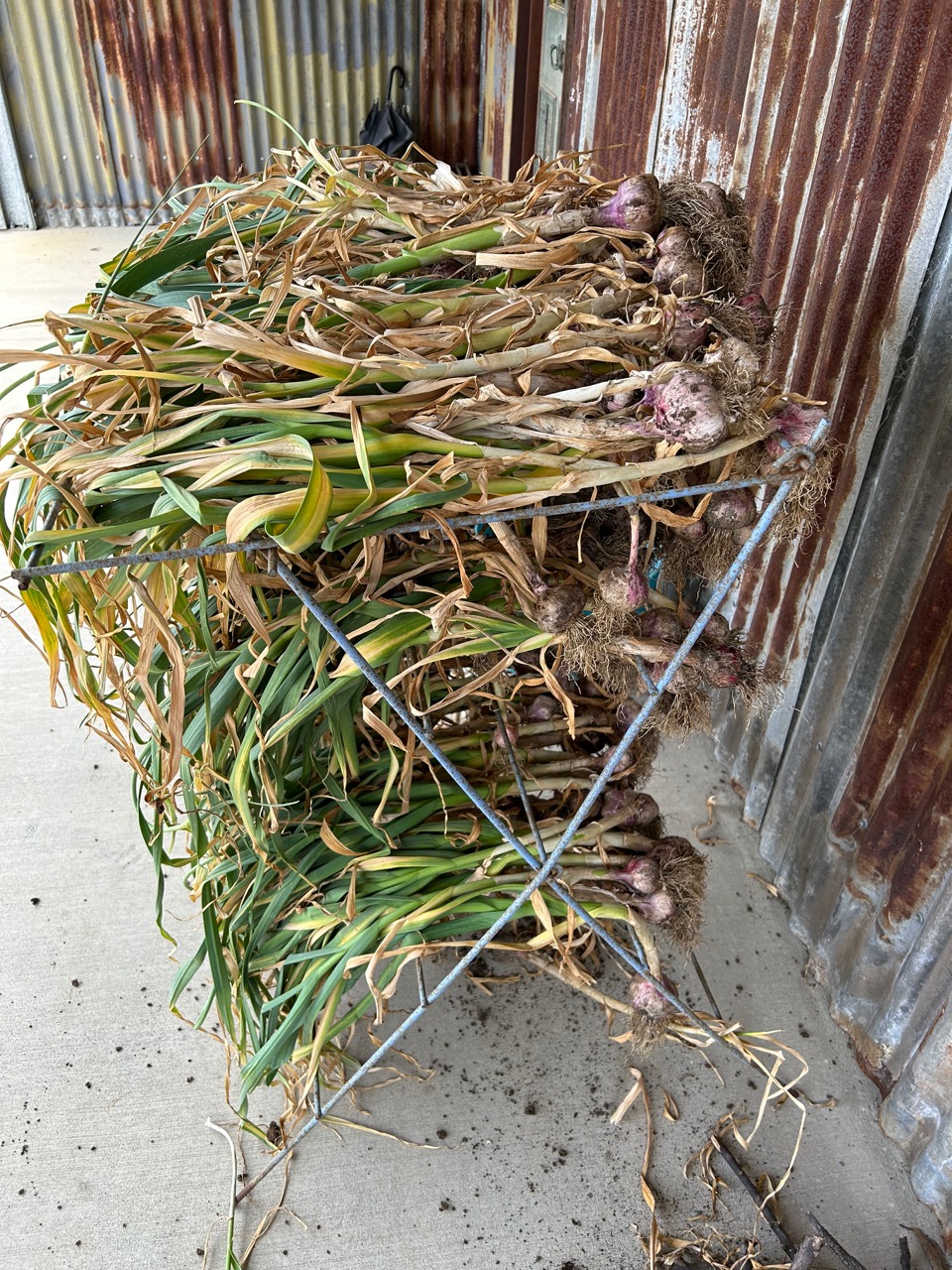
We lay it out on a metal rack to dry for a week or two before platting and hanging ready for use.

We have about 150 mature knobs this year. A small harvest compared to previous years. We have lifted up to 300 knobs in a good year, but I’m not complaining, any garlic is good garlic when it’s home grown.

By the time we take out the best 20 knobs for replanting, there will only be enough to last half a year.

3 Things that I learnt today

The first thing that I learnt was actually last night.

I tried roasting Brussel Sprouts in with the roast instead of steaming them first and then sautéing them in olive oil with a little garlic, salt and pepper.

They were sensational roasted. Soft and creamy inside, but a little bit crispy and crunchy-charred outside. So fantastic! It made my day! Maybe I need to get out more?

As winter is a time for roast dinners, I’ll be doing this again.. This months experience of roast beef was a very petite 250 gram roast. After cooking and cut in half we had just over 100 g each. Just the right amount to insure that we have some red meat, just in case it is good for us. But not too much just in case it isn’t!

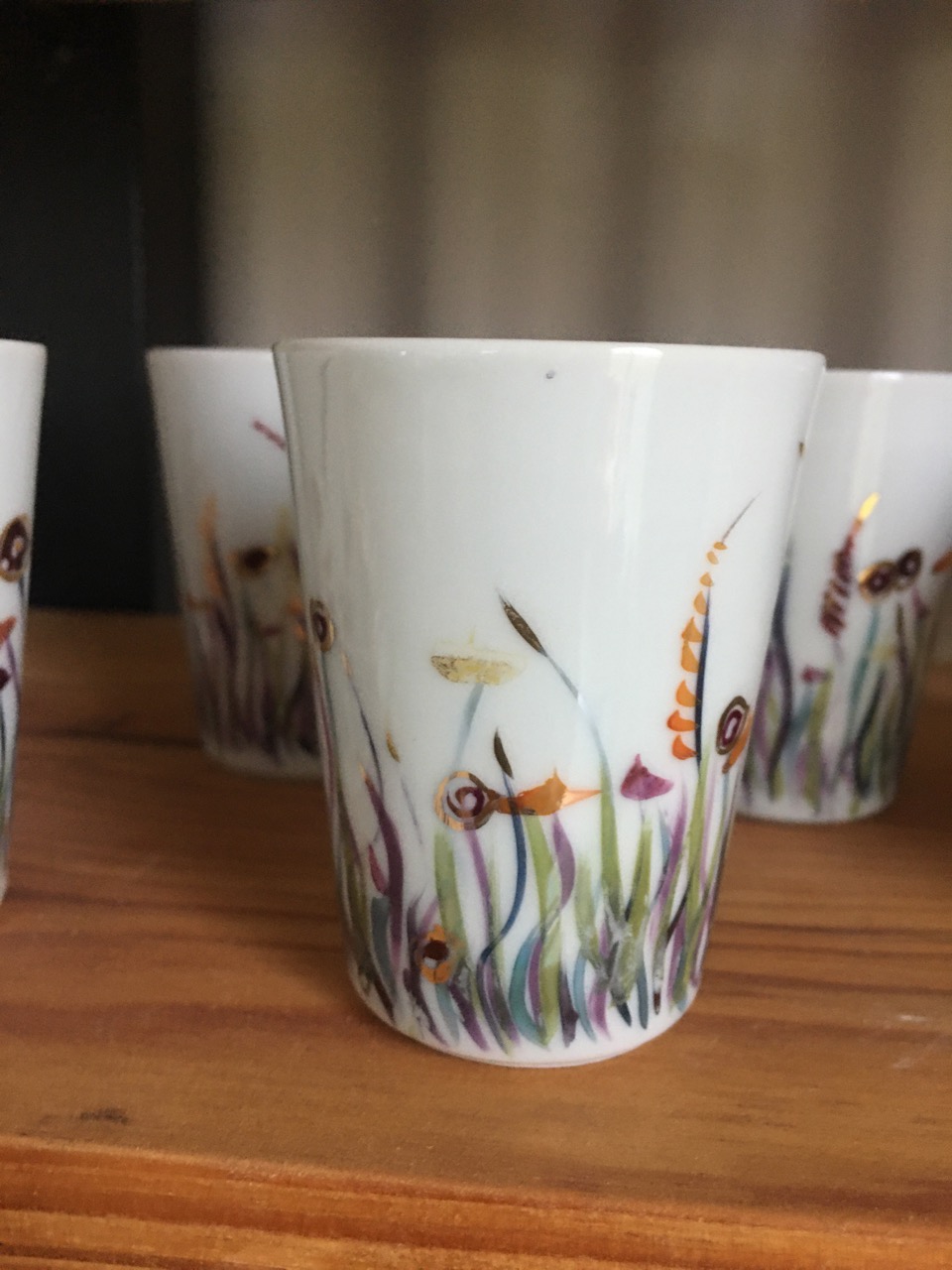
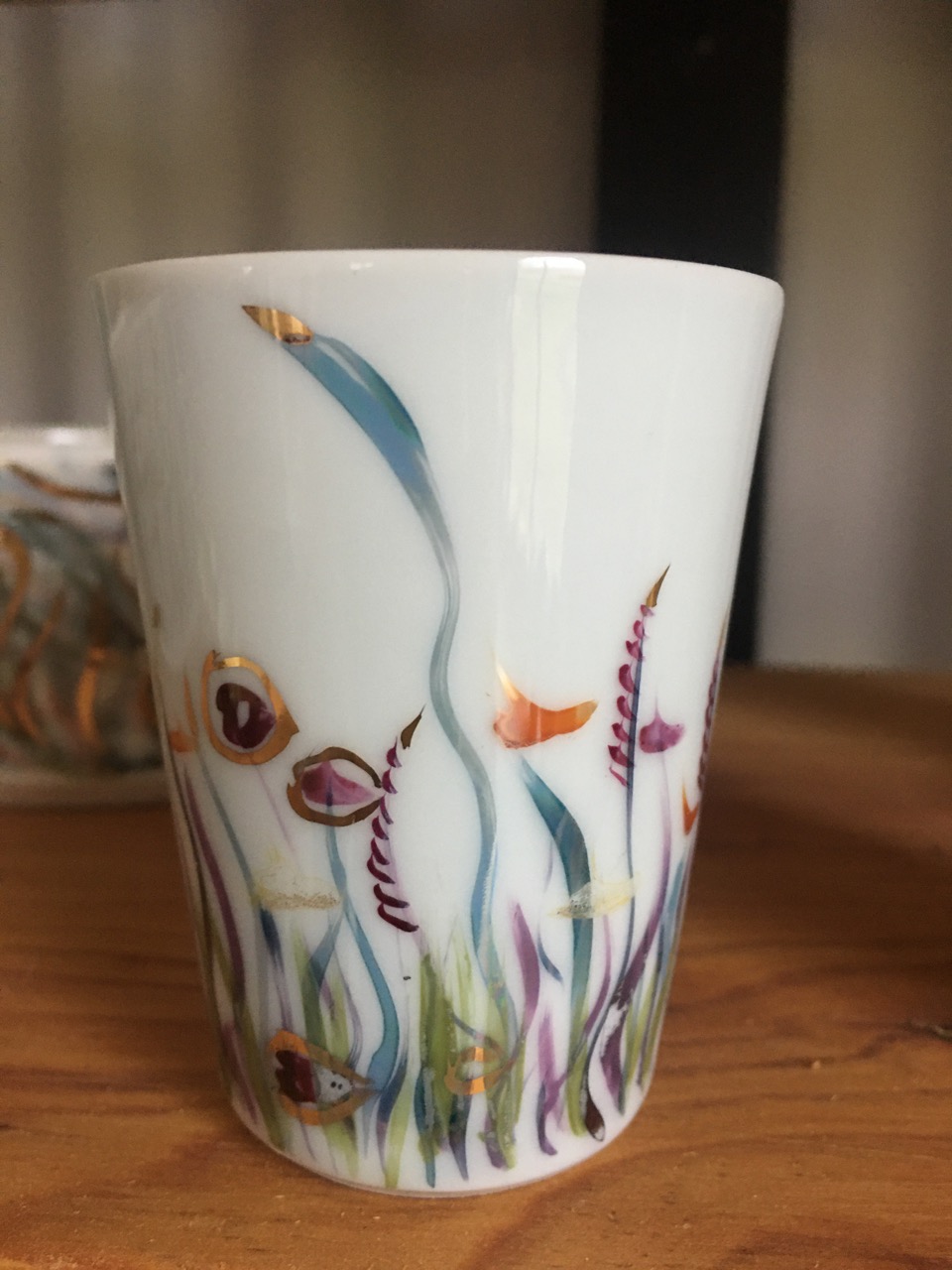
The other thing is that I am really enjoying learning to decorate with colours and lustres.

I feel Like I’m a first year pottery student channeling Janna Ferris. Only without her talent, insight, skills and years of experience.

But I have to start somewhere. This is very ‘somewhere’ for me at this stage in my life.

I’m very happy with these tiny ‘shot’ glasses. 50mm dia x 75mm high.

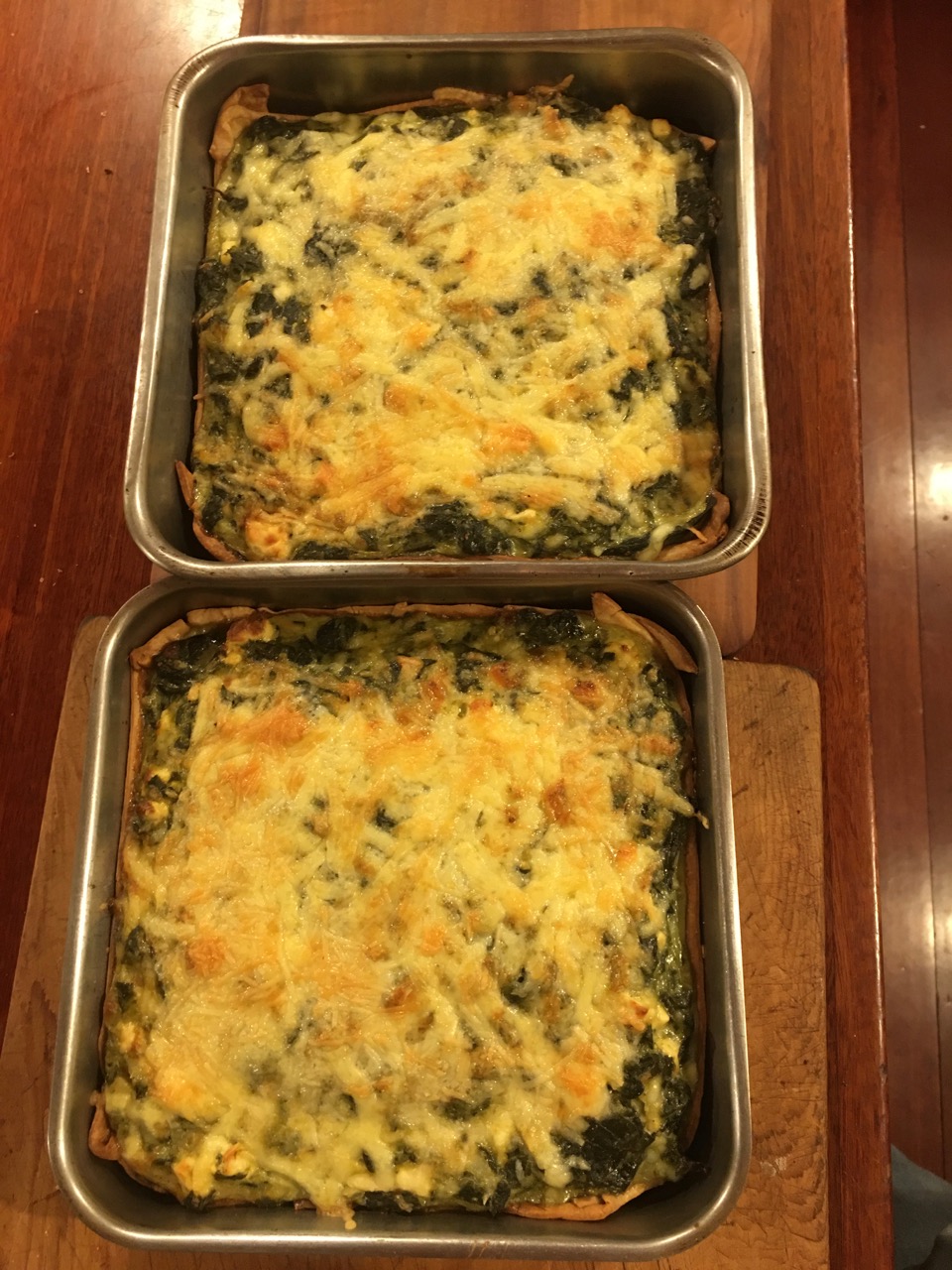
The last thing is that native worrigal greens (native spinach) makes a wonderful spinach and 3 cheeses pie.

I already knew that but just thought that I’d throw it in.

They are so good I made 2. 

We will need some handy, ready-made lunches for the weekend Open Studio Arts Trail sale days.

So really, there was just one new thing that I learnt today. But it was so good, that it felt like three!