In our attempt to reduce our carbon footprint to as low as possible without having to reduce ourselves to living in a cave. We want to engage with the modern world, but only to the extent that we can cope with. For instance, we have virtually no presence on social media.
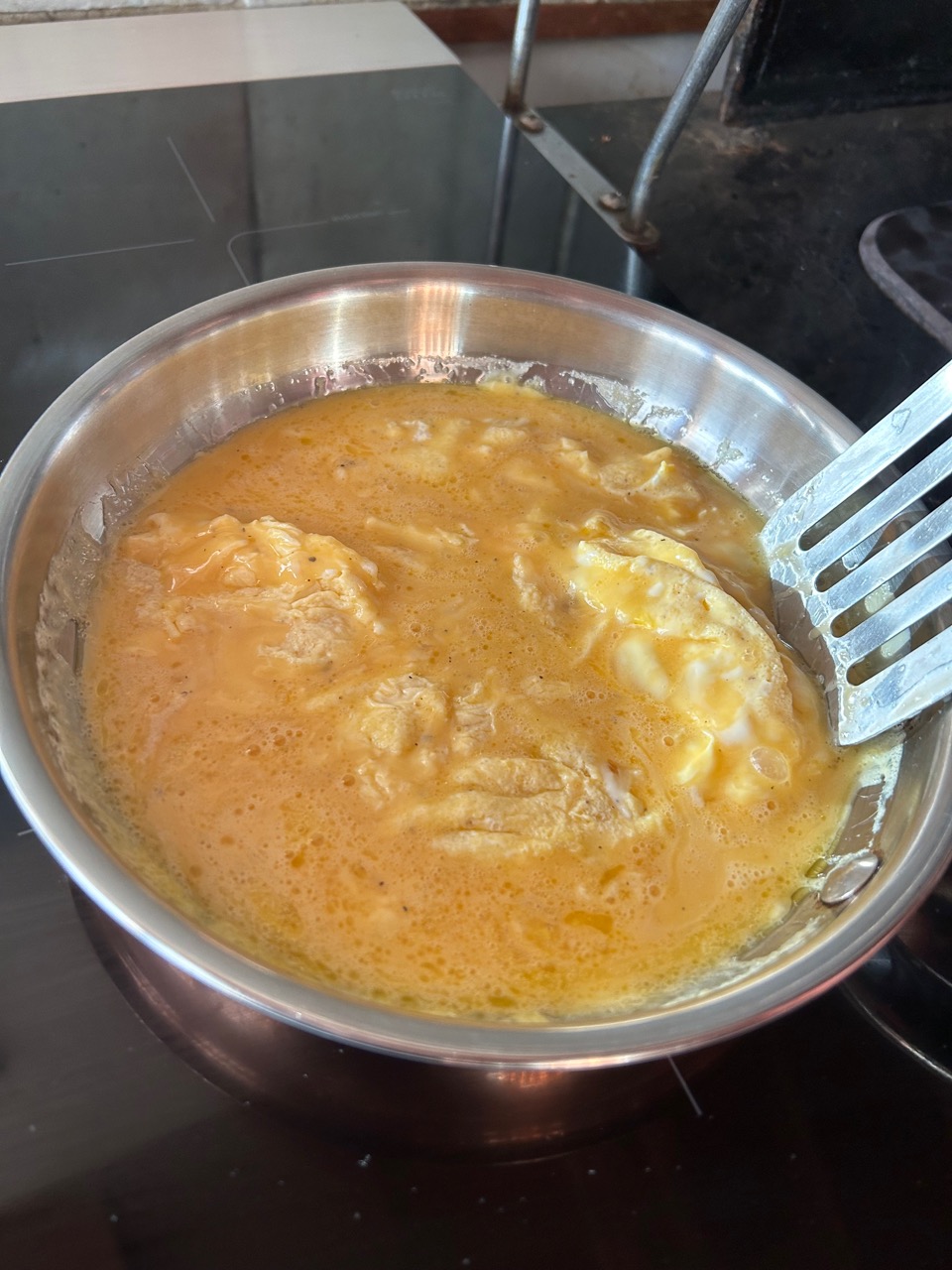
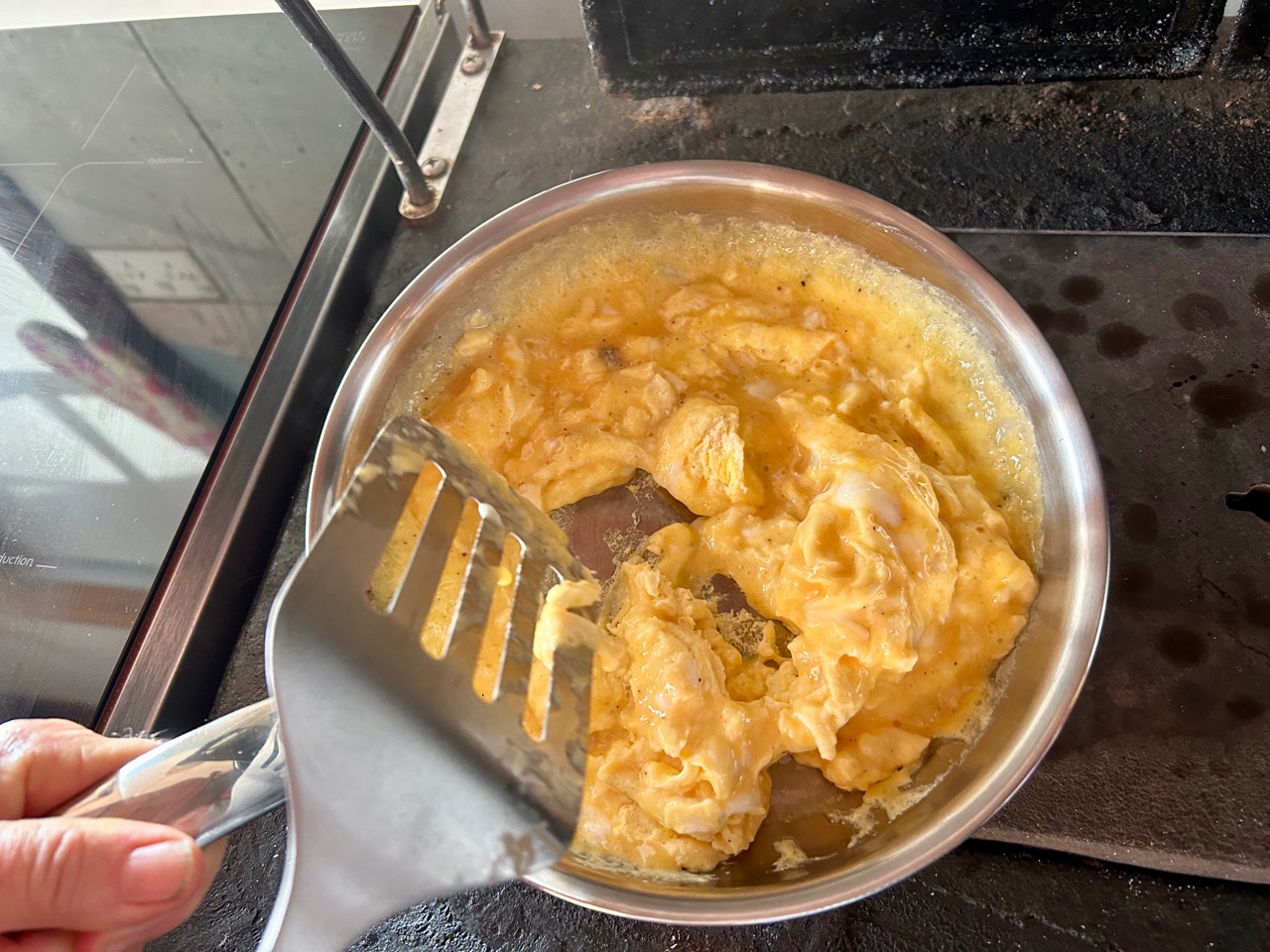
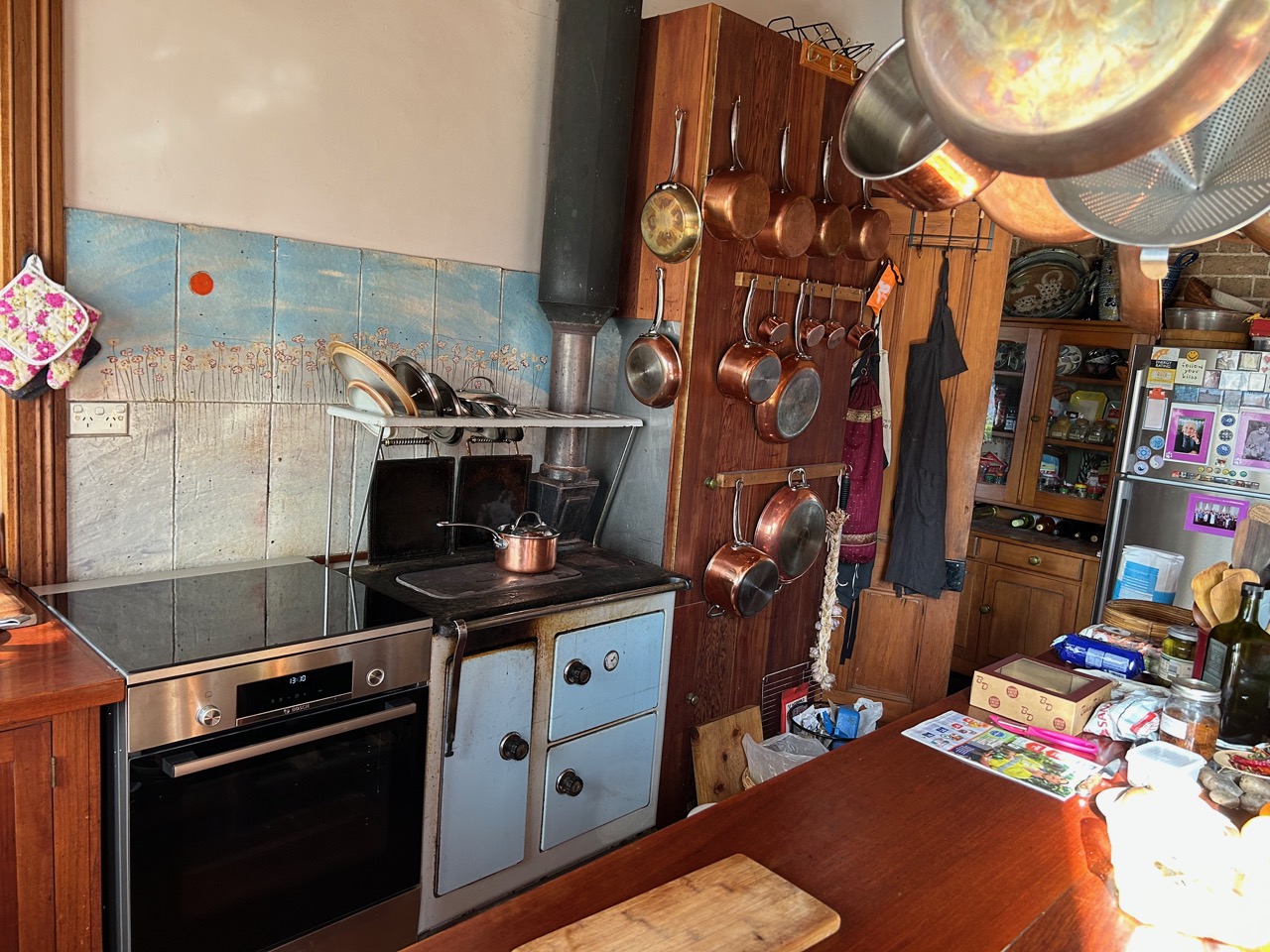
As our latest attempt to get out of the fossil fuel industry web of complex energy solutions. We have recently purchased an electric stove, so the old LP gas stove has been retired to the pottery for the odd occasion when I have to cook for a lot of people over there.
The new stove now completes our conversion to a fully PV powered solar electric home. It’s a good feeling to cook on sunshine, either fresh off the roof during the day, or stored in our battery for use at night. The pottery kilns are either solar electric or wood fired using trees from our own forest. Our car is run almost exclusively on PV sunshine, and now the house is fully electric. However, we have retained the wood fired slow combustion kitchen range, as it heats the hot water for the house in winter when there is not so much less sunshine for the solar hot water panels. It cooks all the winter meals, and warms the house to boot. In summer when the temperature is too hot to want to light the fuel stove, that’s when the electric range comes into play.
The stove has a conventional electric oven, but it has a modern induction cook top, coupled with the right induction compatible metal based copper pans it is lightning quick to heat up and cooks beautifully. There will be a bit of a learning curve for us to digest the 50 pages of instructions.
Digital cooking is a new concept for us. We end up pressing a lot of buttons with our digits to make it work.
The new stove sits very comfortably alongside the very old steampunk wood stove that we bought 2nd hand 45 years ago.
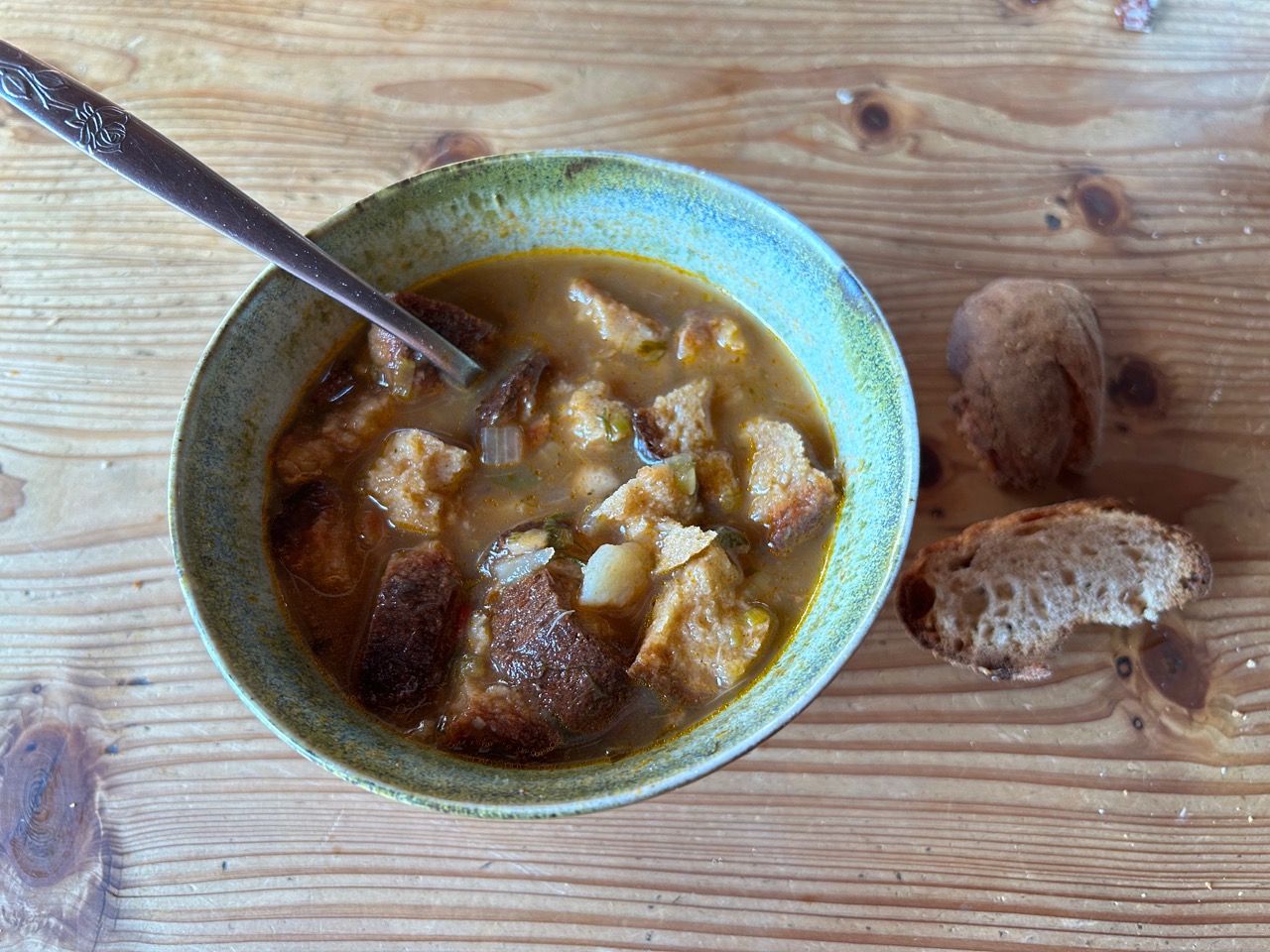
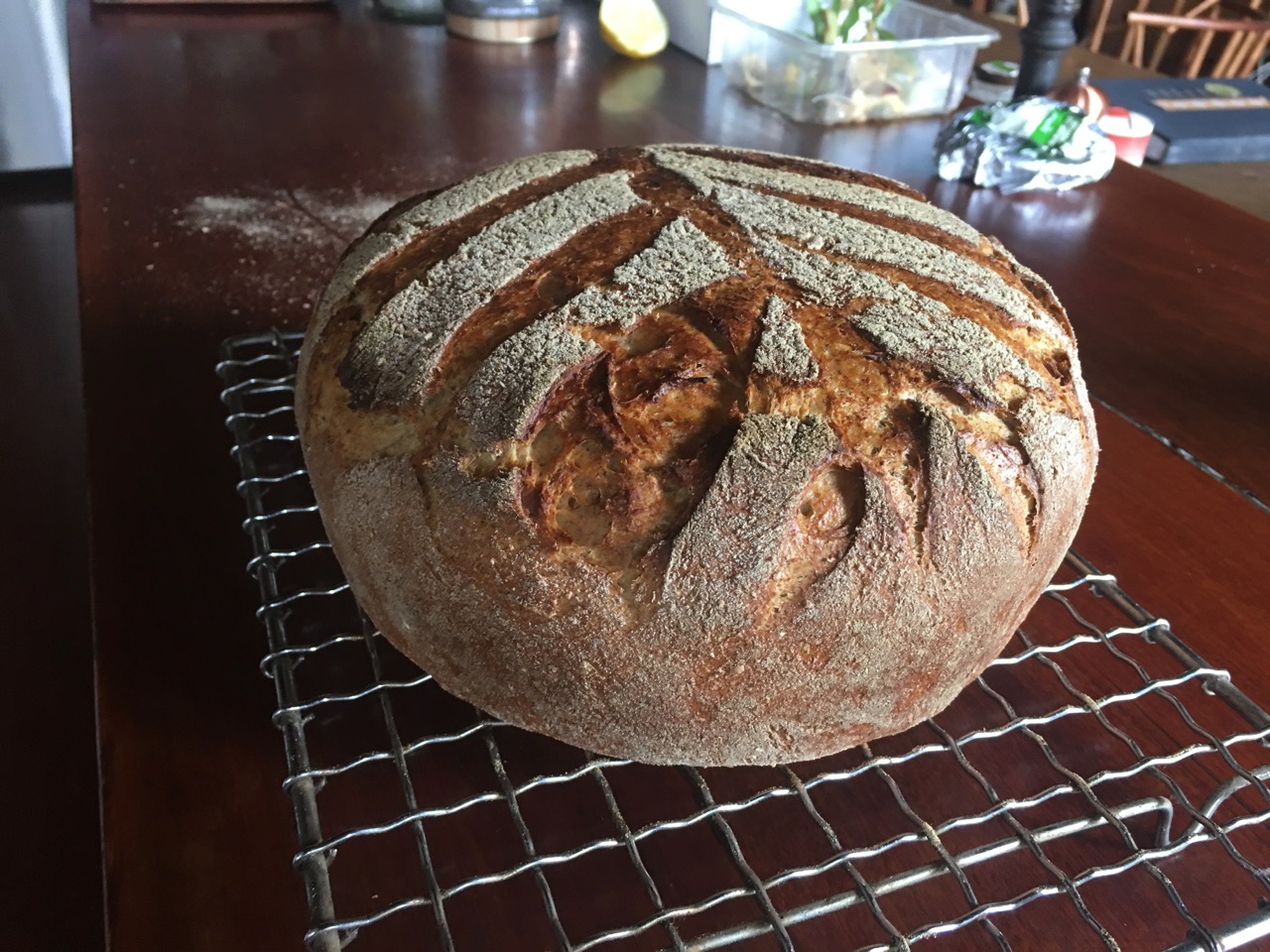
So far I’ve experimented with baking a loaf of rye bread, couldn’t tell the difference.
A pan forte cake, witch was just as delicious as it always was in the old stove, no change there, just cleaner air in the house and no fossil carbon released.
I also tried winter vegetable quiche. All good with no problems. I’m happy.
The first thing that I learnt was actually last night.
I tried roasting Brussel Sprouts in with the roast instead of steaming them first and then sautéing them in olive oil with a little garlic, salt and pepper.
They were sensational roasted. Soft and creamy inside, but a little bit crispy and crunchy-charred outside. So fantastic! It made my day! Maybe I need to get out more?
As winter is a time for roast dinners, I’ll be doing this again.. This months experience of roast beef was a very petite 250 gram roast. After cooking and cut in half we had just over 100 g each. Just the right amount to insure that we have some red meat, just in case it is good for us. But not too much just in case it isn’t!
The other thing is that I am really enjoying learning to decorate with colours and lustres.
I feel Like I’m a first year pottery student channeling Janna Ferris. Only without her talent, insight, skills and years of experience.
But I have to start somewhere. This is very ‘somewhere’ for me at this stage in my life.
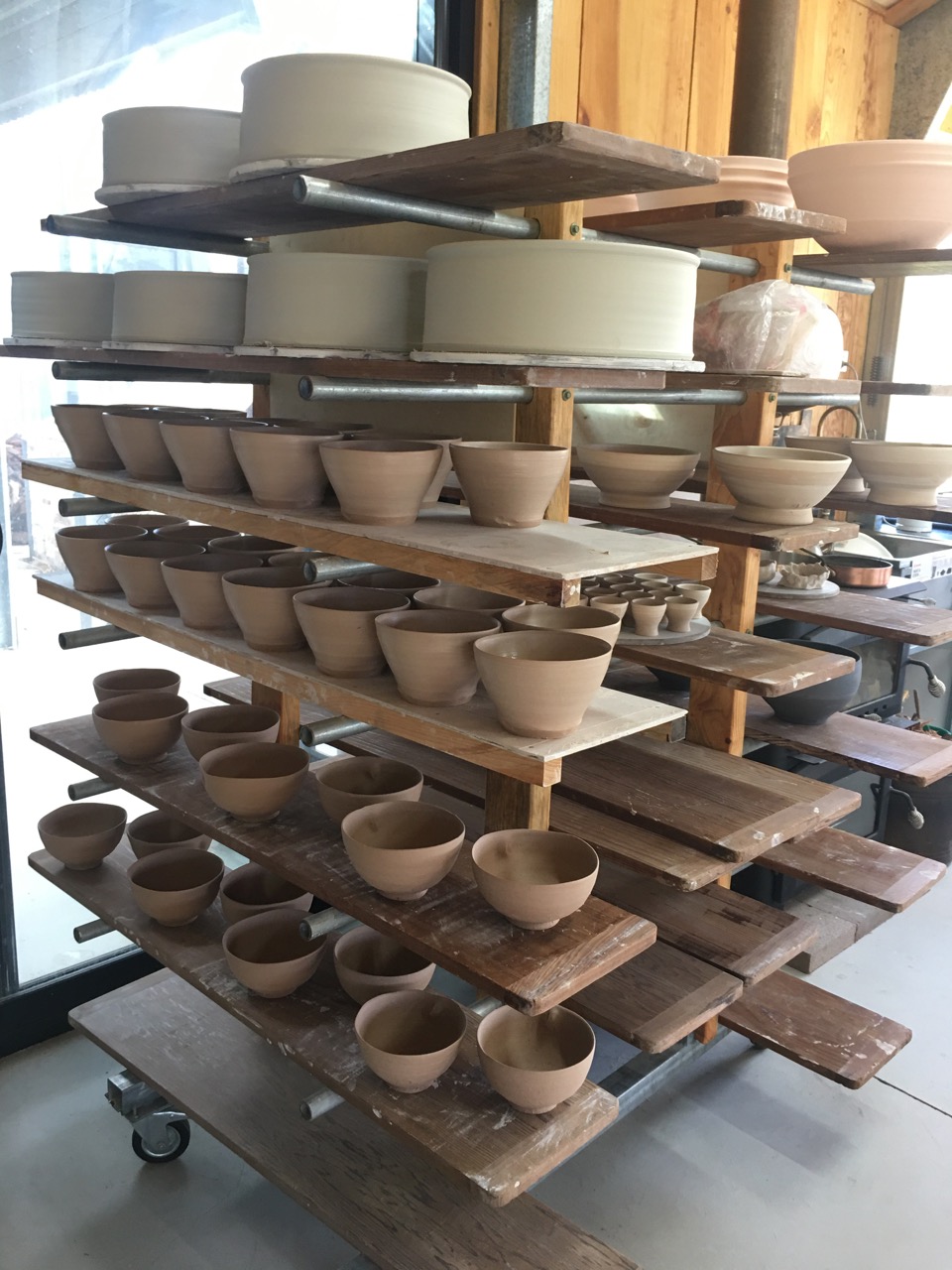
I’m very happy with these tiny ‘shot’ glasses. 50mm dia x 75mm high.
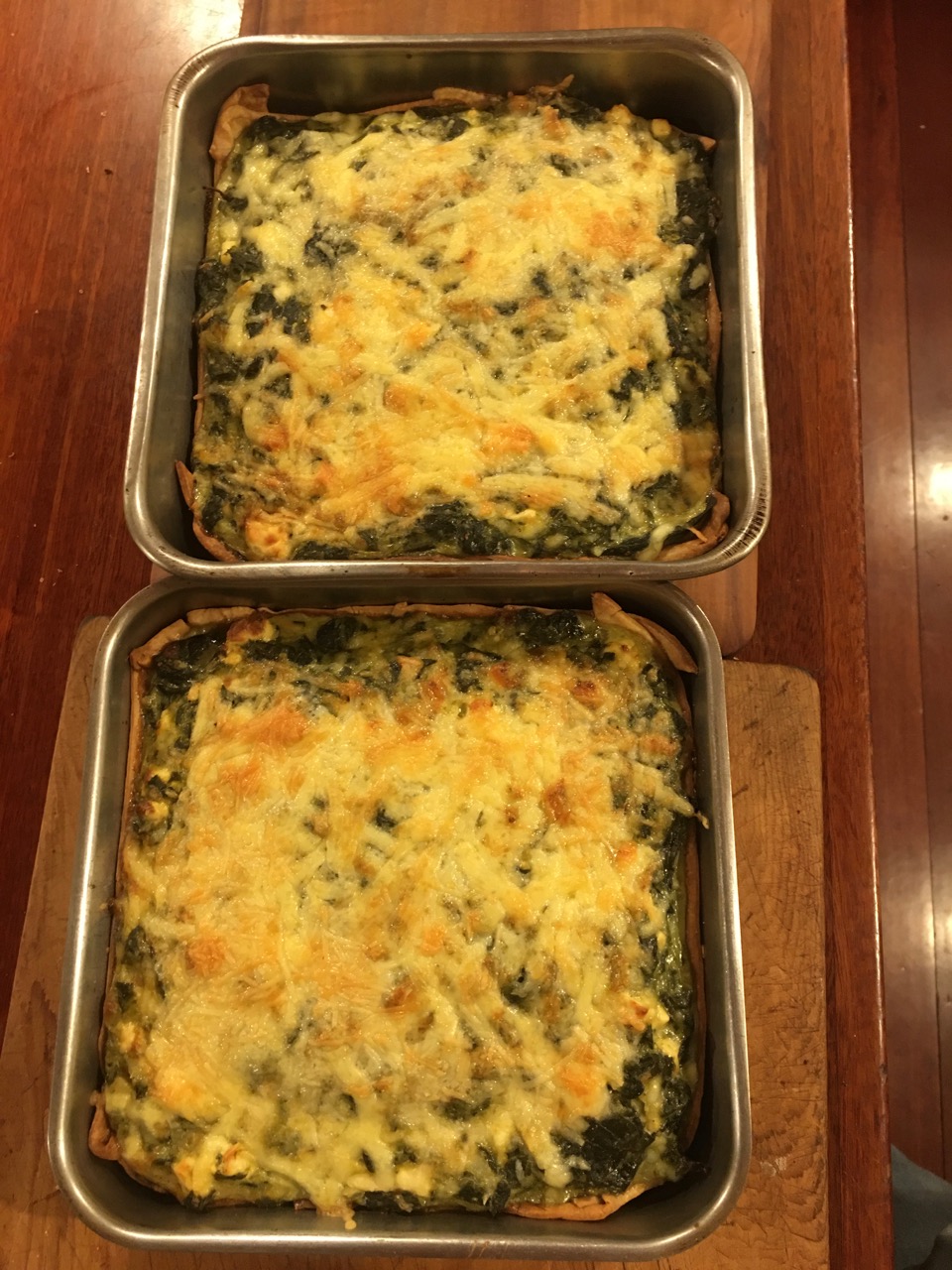
The last thing is that native worrigal greens (native spinach) makes a wonderful spinach and 3 cheeses pie.
I already knew that but just thought that I’d throw it in.
They are so good I made 2.
We will need some handy, ready-made lunches for the weekend Open Studio Arts Trail sale days.
So really, there was just one new thing that I learnt today. But it was so good, that it felt like three!
This week we have been hard at it everywhere, in the garden, in the pottery In the kitchen.
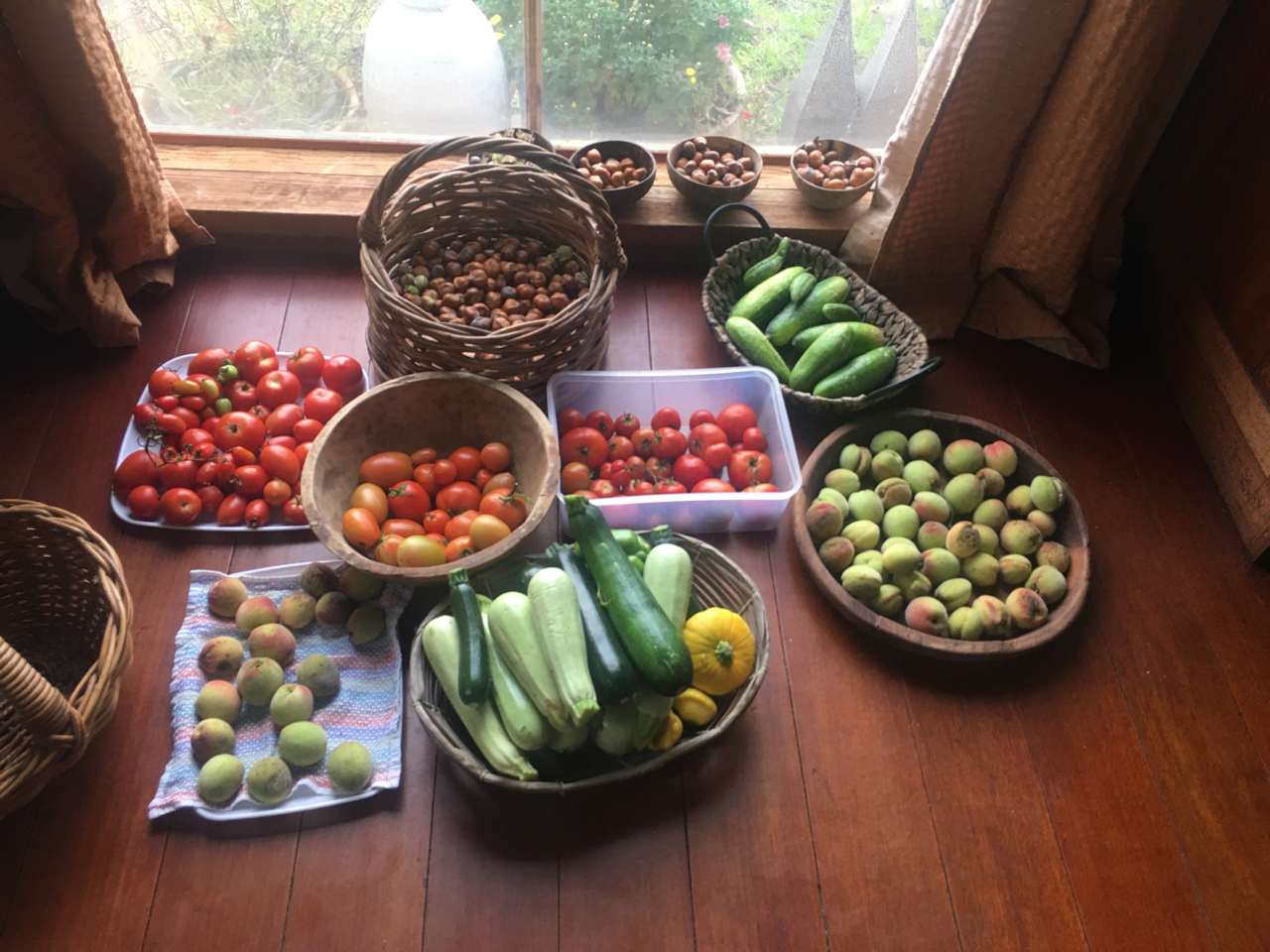
We thought that we had harvested the last couple of wheel barrows of tomatoes, but then we looked again and there were more.
Janine made two seperate 1 gallon boilers of passata, which I put through the mouli sieve and then reduced down to 1 gallon, or 4 1/2 litres of fine liquid, which Janine then reduced down further on the wood stove each night progressing a bit at a time until we had just 2.5 litres of dense concentrate, down from 11 litres of initial pulp. It takes a couple of nights to get through it all. It’s better than trying to find the non-existant intellectual shows on the idiot box.
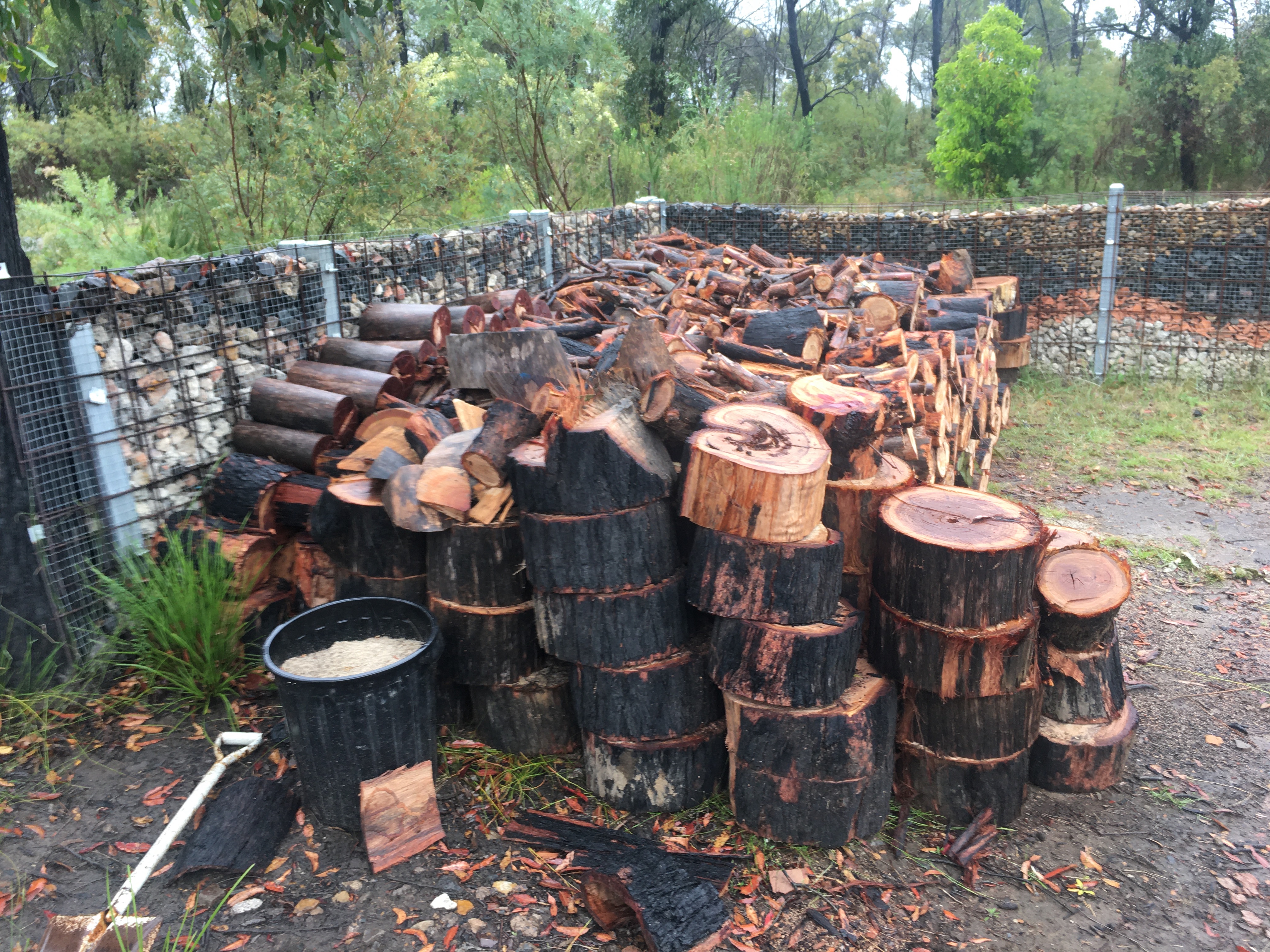
While the wood stove is hot after dinner is cooked, it’s a shame not to use up all that potential heat embedded in the stove. It not just cooks the dinner, it warms the house and heats the hot water tank. So to get an extra bit of benefit from it is very frugal and efficient. F@#k the gas companies and energy retailers, gouging excess profits from the misery of war and bad forward planning. We are very lucky here to have been through a terrible fire that has left us with thousands of dead trees in our forest that I couldn’t have ever brought myself to cut down in their prime. But now that they are dead from the bush fire they need to be cleaned up to make the place safe again. Fuel for the rest of our lives. As I said, very lucky. You have to look on the bright side.
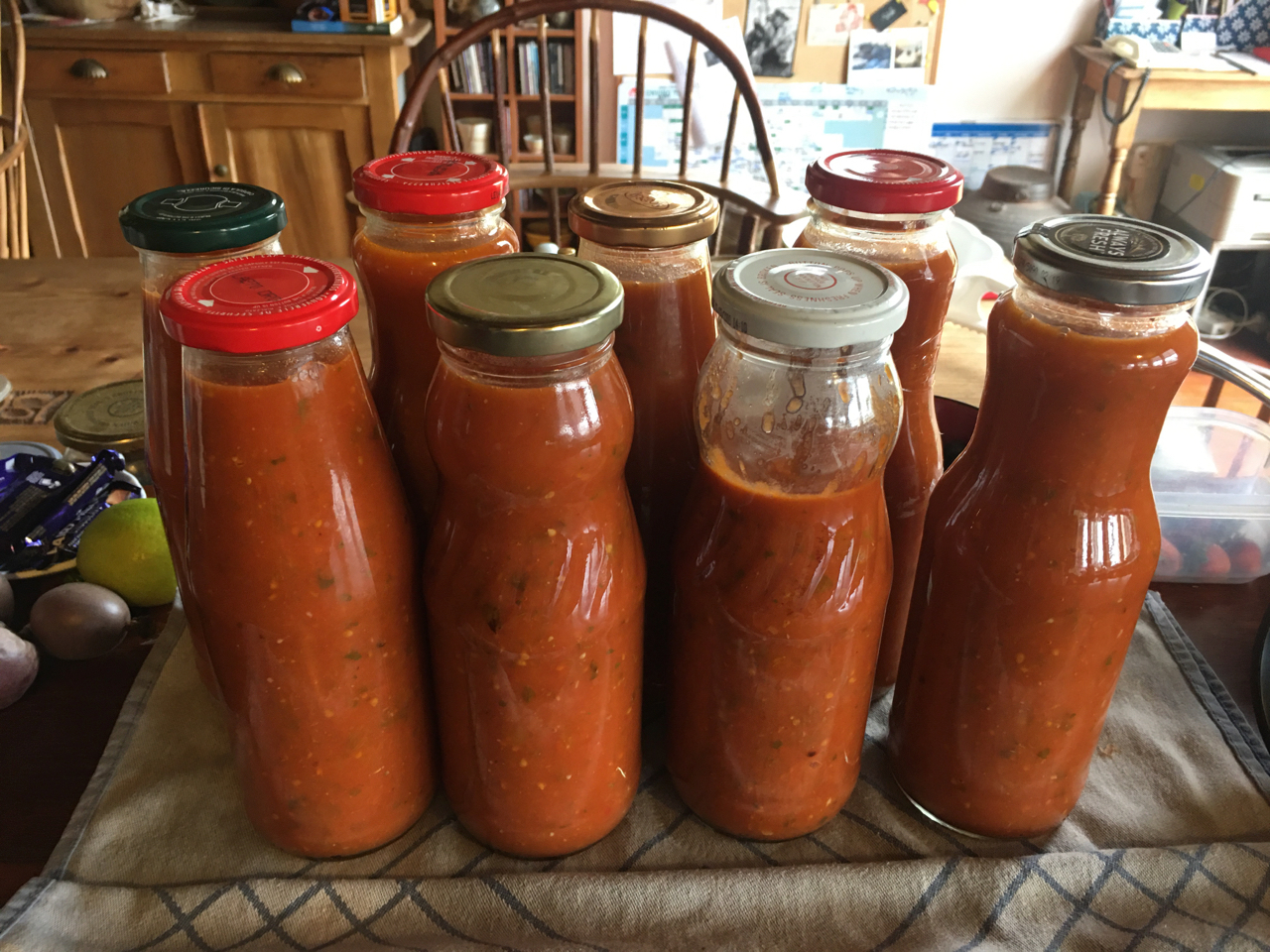
We were a bit shocked when Janine had to re-arrange the pantry cupboard to fit these recent jars in. We discovered that we now have 79 jars of passata. We could easily go into business selling this stuff. It’s not as if we are not eating our fare share of tomato and egg for breakfast, tomato salad for lunch, tomatoes in ratatouille for dinner, as well as giving away tomatoes to everyone who calls in and visits
But still they come ripening, even now in this cooler weather. However, they must come to an end soon, as the night time temperature is dropping rapidly down to 3oC this week. Soon there will be frosts again and that should put an end to it.
I was so looking forward to the start of tomato season back in November/December. I could just brush the young leaves and smell the tomato fragrance that promised so much. Now I don’t want to touch the leaves so much any more. I’ve had my fill. This is the reality of living with the seasons. The promise, then the first taste — so good, then the glut, and now enough.
I’m sure that we will appreciate the bottled tomatoes over winter in all manner of cooked dishes, to add and extend flavour to almost anything. Passata is a useful and flexible as chicken stock. We have some of that in the freezer too.
We have already picked another few baskets full of prime ripe red produce to make the next batch. Anyone want any tomatoes?
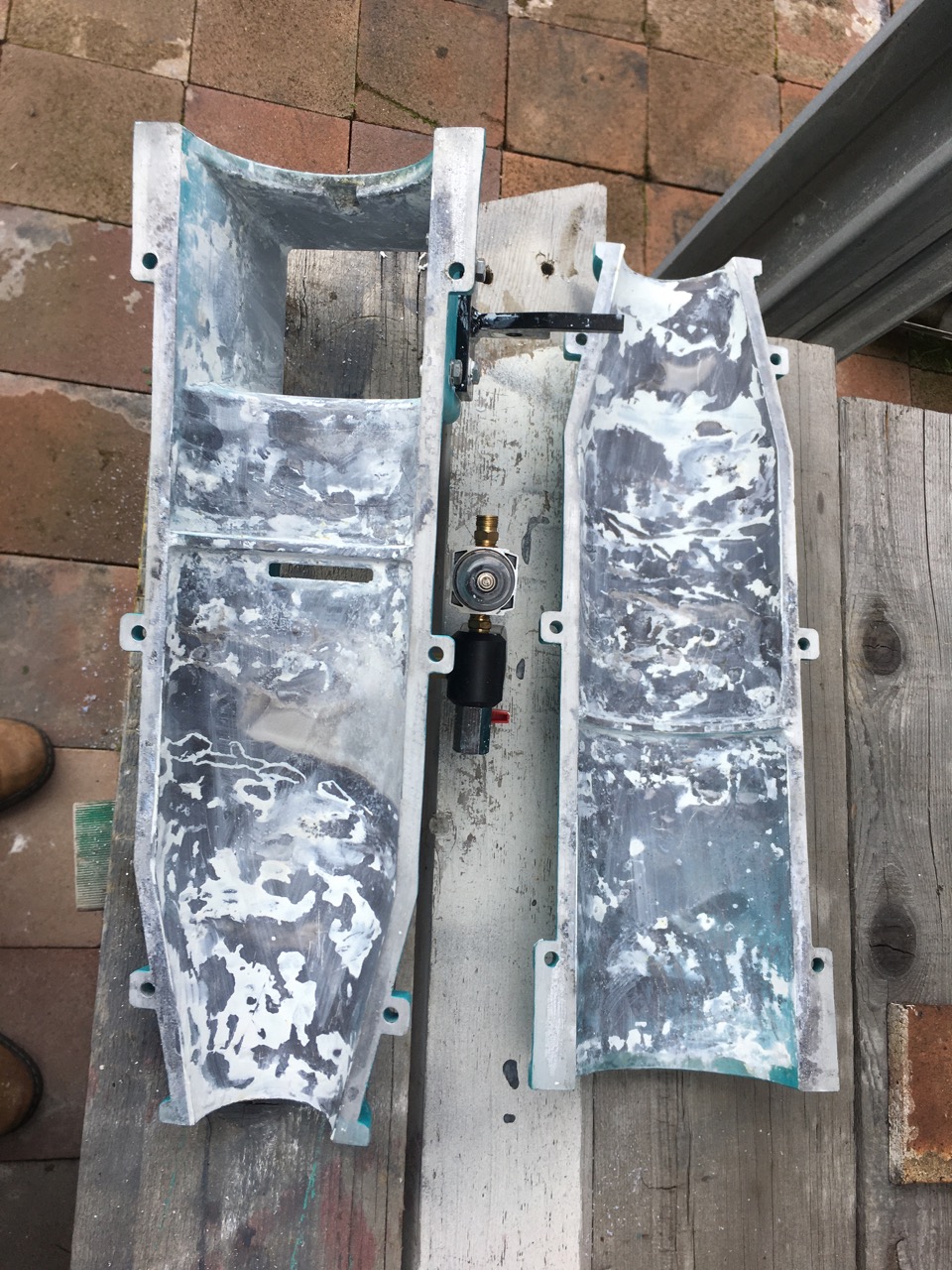
In the pottery, I cleaned out the small Venco pugmill that I use for porcelain. It was starting to allow a few small bits of dryish crumbs through the screens and into the extruded pugs. It has been a year since I last cleaned it out. Unless you use it every day or at least every week. Bits dry out inside the barrel and eventually cause trouble. I hadn’t pugged any porcelain since last year. So now is the time to deal with it. Starting out fresh for the coming work load through till Xmas.
I have found that it is easiest as a two day job. Strip it down last thing in the afternoon, Scrape off all the easily accessible plastic clay. Leave it over night to dry out, then scrape off all the dry clay, and finally sponge it until it is all clean, then reassemble, first thing in the new day.
I have been throwing some gritty clay, making some rough textured bowls for the wood firing.
I have also been making some porcelain dishes for the wood kiln as well.
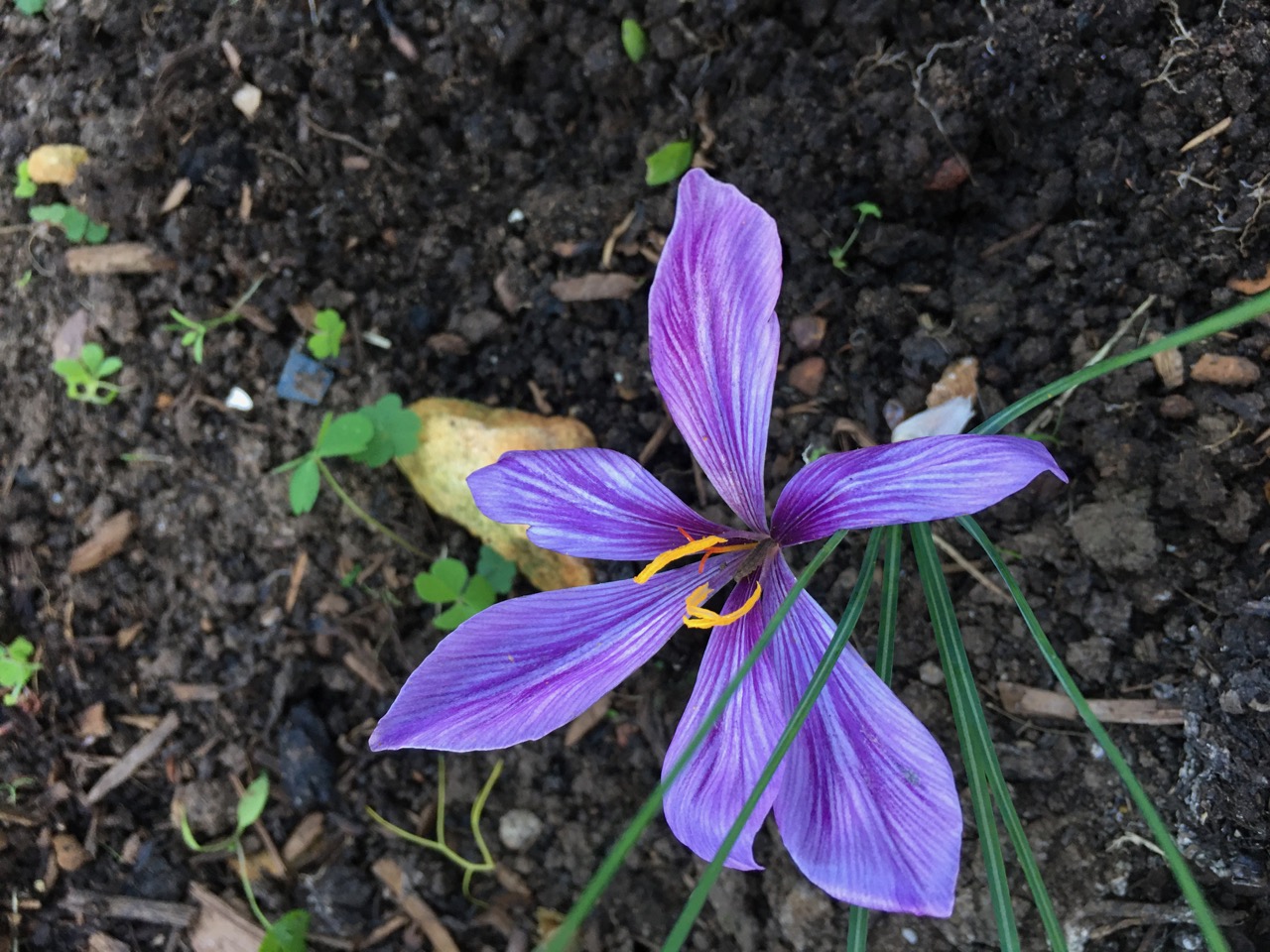
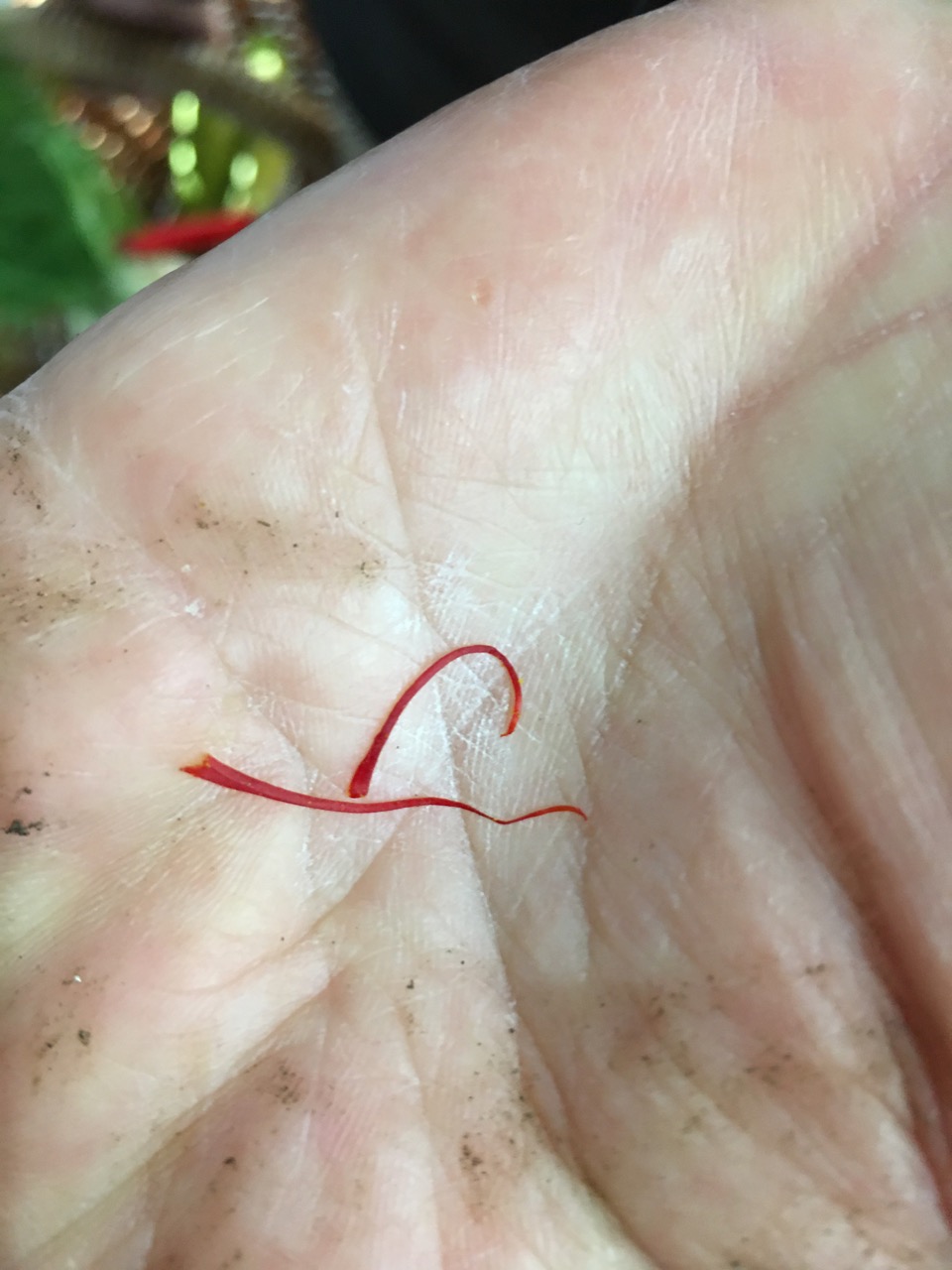
Back in the vegetable garden we found a great surprise! Our first crocus flower. Janine picked out our first two saffron stamens. We ate one each, just to see if we could taste the fine flavour. We couldn’t. But we did get just a little hint of orange colour on our tongues. Hopefully there will be more to follow, as we have 20 crocus bulbs in the garden. We might double our harvest each year? We might eventually even get enough to be able to taste it.
I made a bush tucker pie for dinner from our massive crop of wild warrigal greens – native spinach. It turned out really well. Cooked with 3 cheeses and one egg to bind it. Not a tomato in sight!
I’ve been back in the pottery on the wheel on and off all last week, but also fitting in some pressing needs to complete preserving and pickling, tomatoes mostly. We must have sufficient for almost 2 years now. It’s been such a huge crop and they’re still coming.
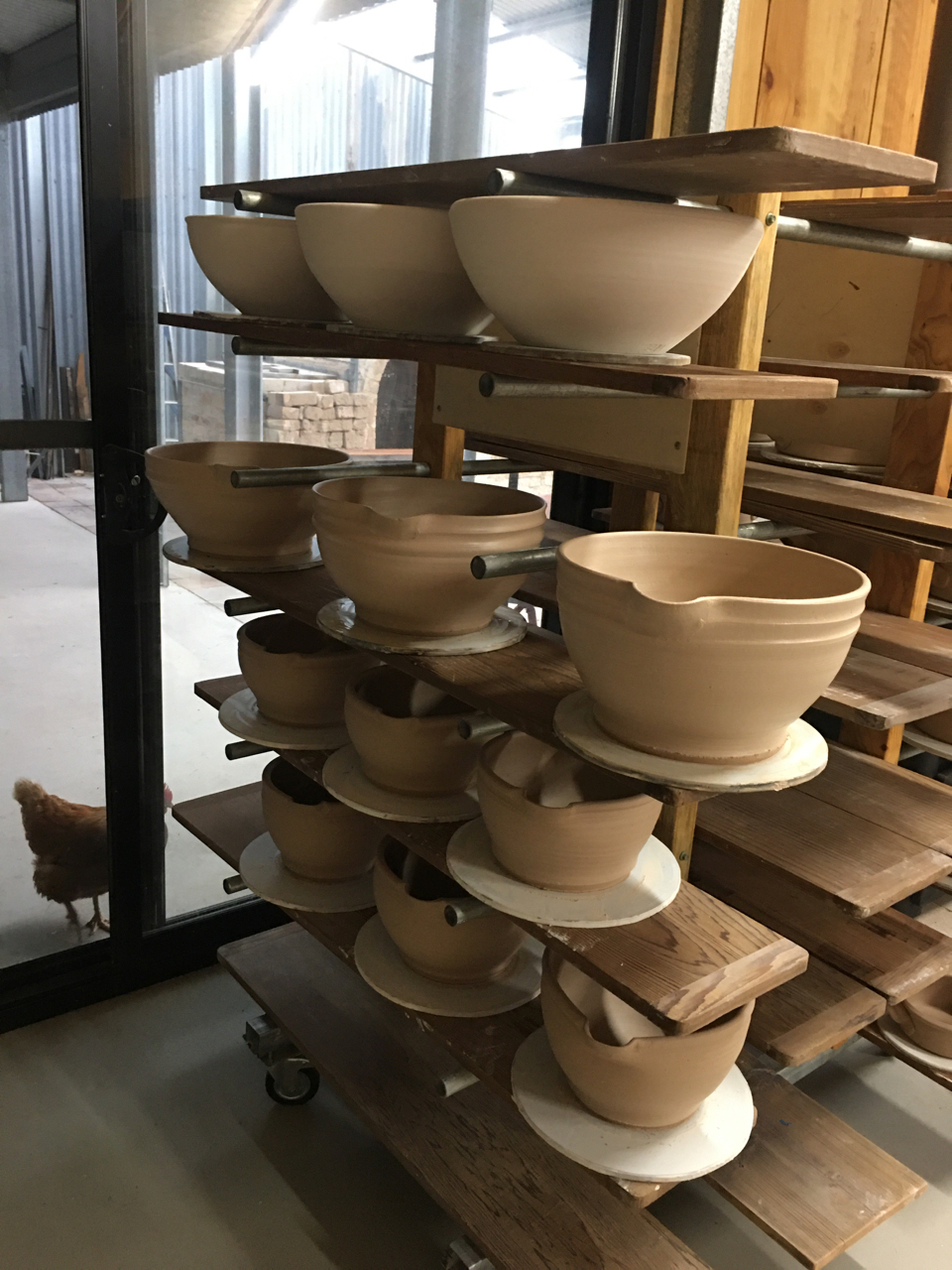
In the pottery I have been making baking dishes and Grandma style large mixing bowls with a pouring spout. They are fun to make and were very popular last year. I sold out, with only one small mixing bowl left in stock after Xmas. I make them out of my rough crushed shale clay mix. It wood fires really well and has an open texture that is really good for oven use.
I’ve made them in 3 sizes, S, M, L. This is one from last years batch, beautiful flashing on the body and glaze from the wood firing.
The old style cooks mixing bowls also all sold out. I remember fondly the one that my Mother used all her married life. It was exactly the same as the one her mother had, both brought over from England on the ‘Orient’ Line ships at different times.
I decided to make these so that I could have one for myself, but I sold them all, so maybe there will be one left from this batch? I usually end up with pots that are second grade pieces, with some tiny fault, Our kitchen is full of pots like this. That’s how we get to keep them.
On this side of the drying rack, I have also made 3 bathroom sinks for a customer who lives locally and asked specifically for a sink with one of my rock glazes on the inside and unglazed and wood fired on the out side. I couldn’t do that order till now, as it is not realistic to try to fire the wood kiln over the hot dry summer. Just too much risk of fire bans coming into force half way through the firing. That would be a disaster too awful to think about. So we just don’t attempt to fire during the hotter months.
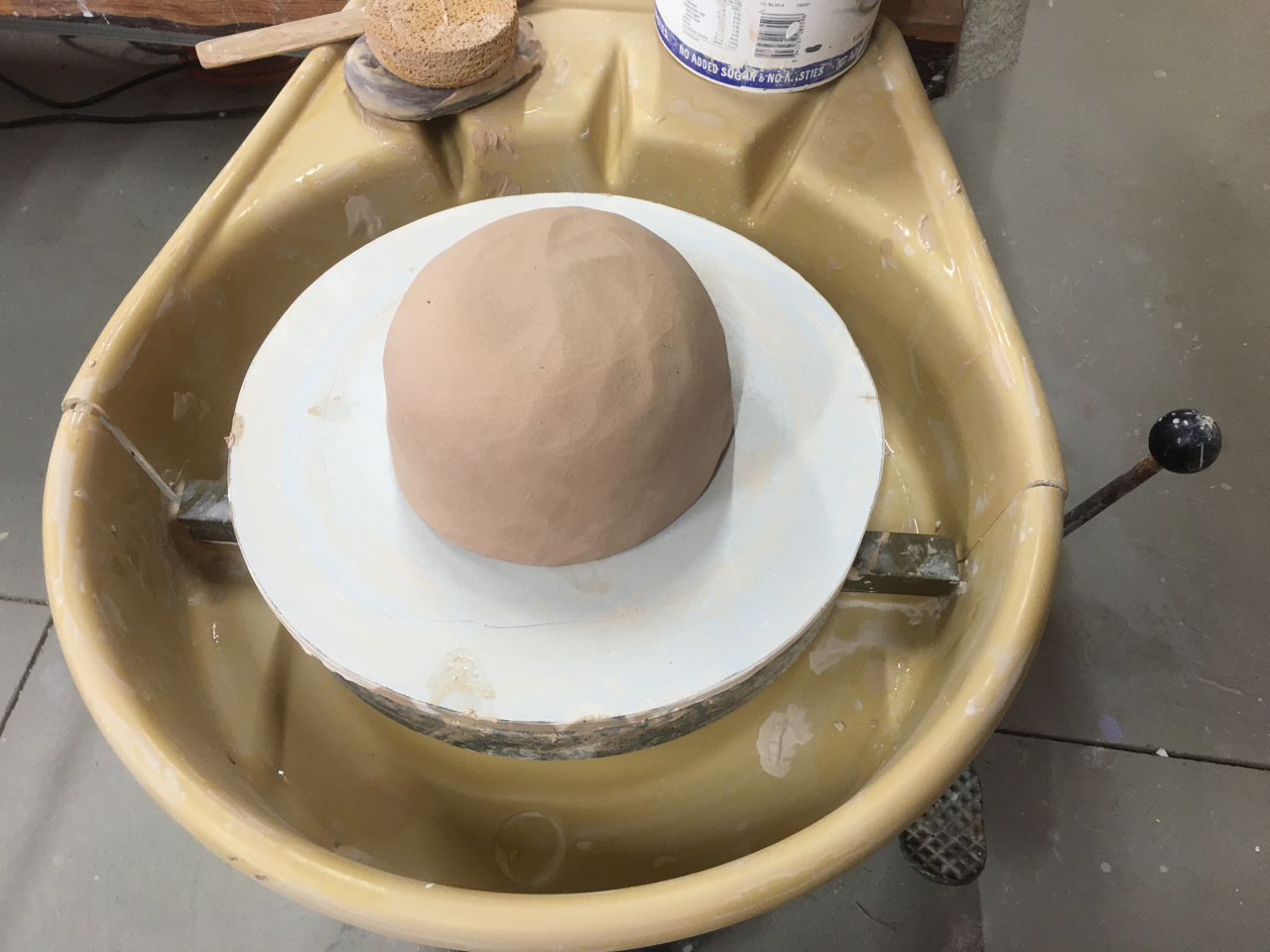
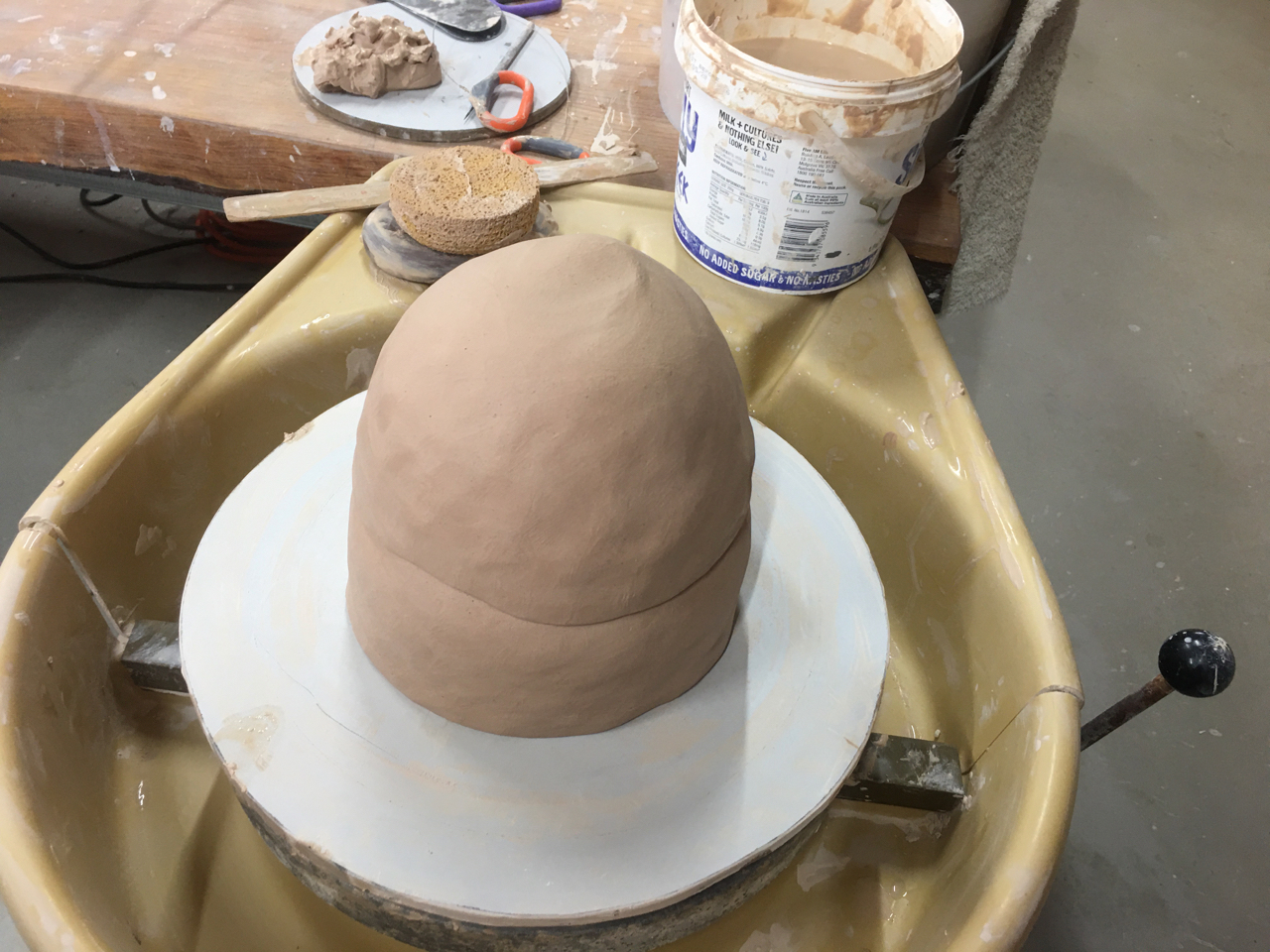
Some of the bigger mixing bowls are quite large, measuring 300mm. dia. and are made from 5 kgs of clay. My ageing wrists are not happy with wedging 5 kgs any more, so I wedge the clay up in two smaller lumps of 2.5 kg. Then join them back together on the wheel. I learnt to ‘slap’ the plastic clay into the centre of the wheel with my hands while still dry. No water involved in this centering technique.
The first 2.5kg lump is slapped into place and rounded off while I rotate the wheel head very slowly. Not using the motor at all, just a slight flick of the wrist as I lift my hands up. This turns the wheel head just 10 mm. each time , so that the next ‘slap’ will be an equal distance apart , so the clay slowly finds the centre. Once it is just about right. I add the 2nd 2.5 kg lump and start the centering all over again.
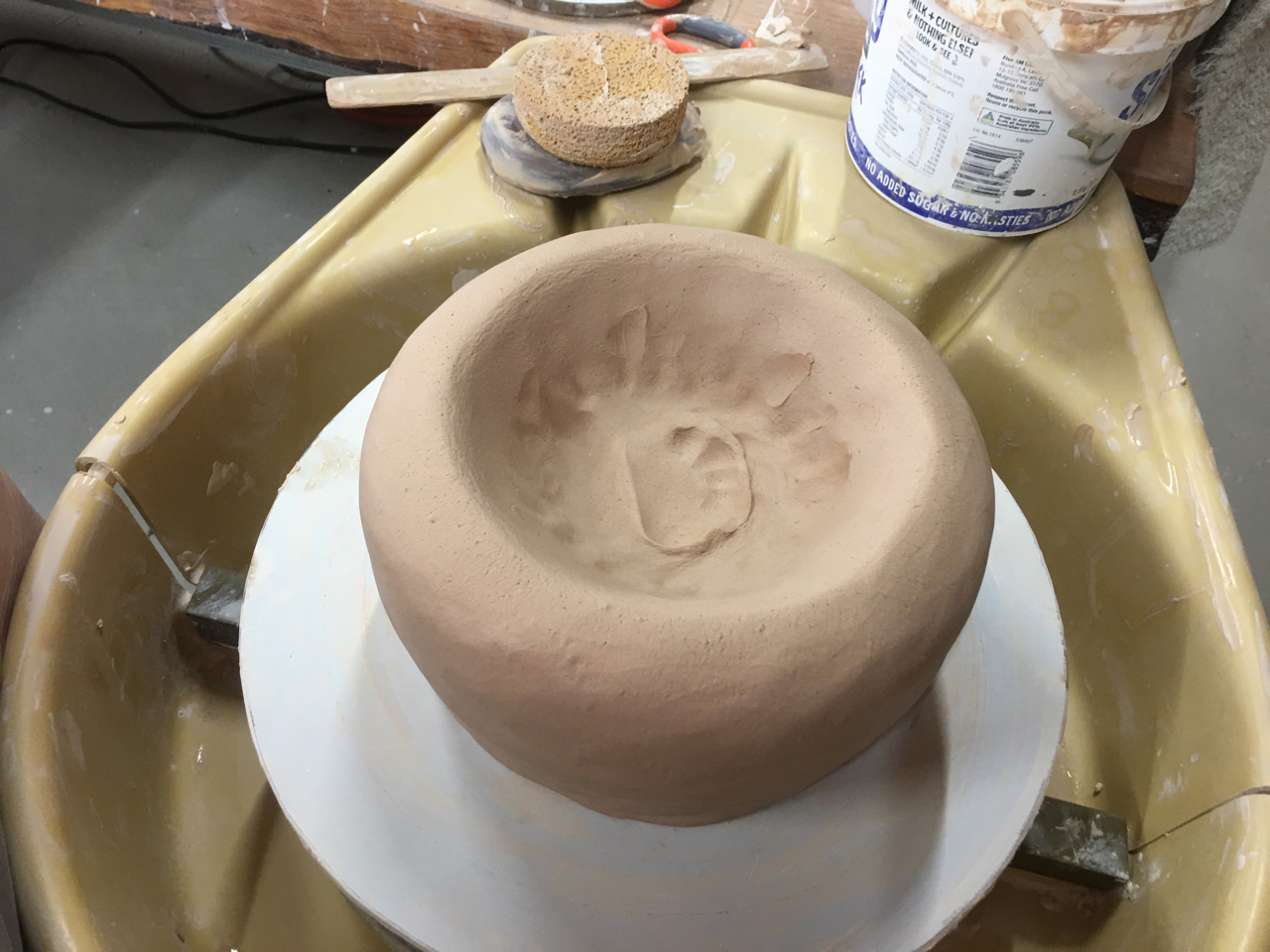
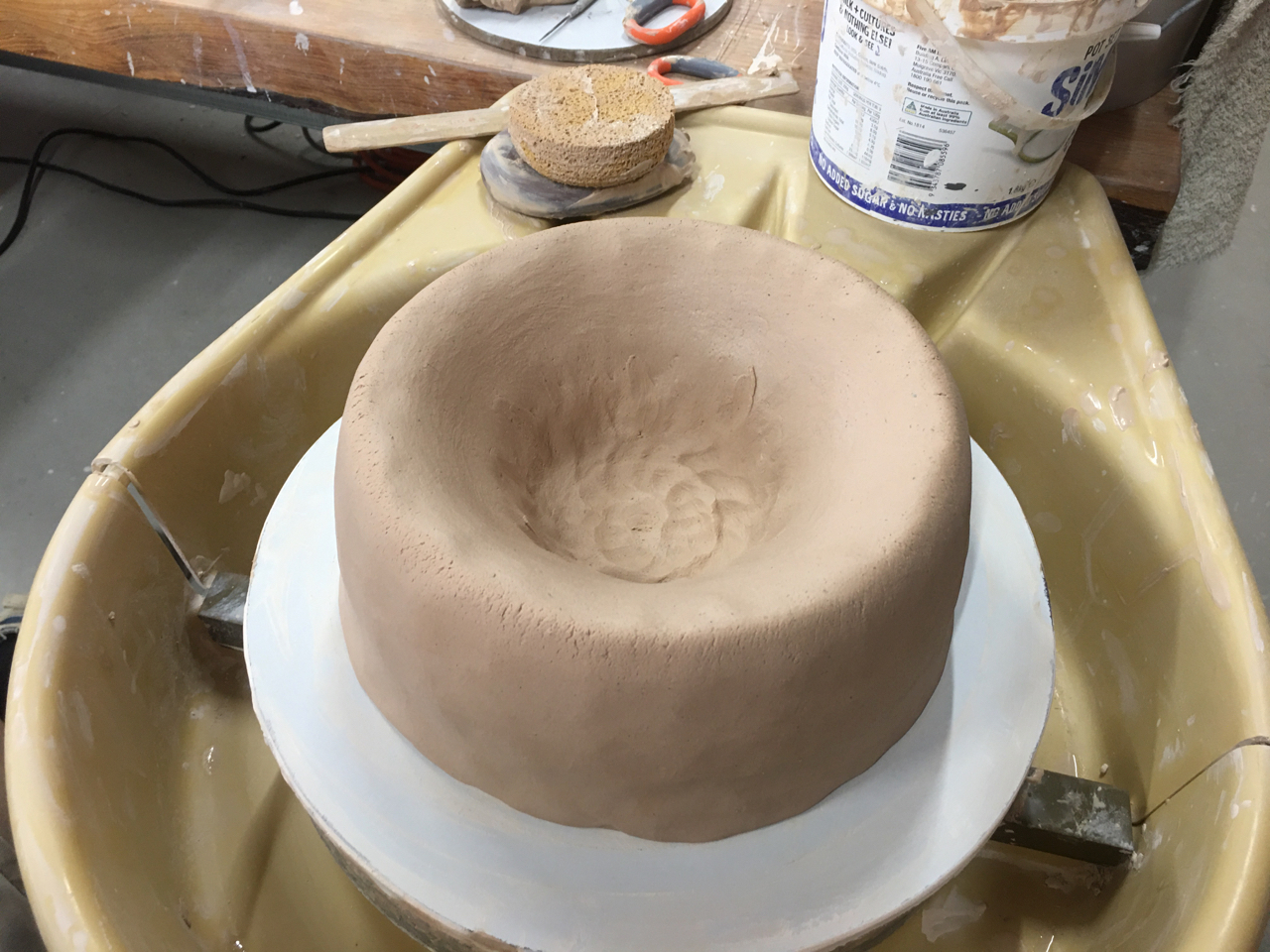
Once the whole 5 kgs are centred, then it is time to punch out the centre, slowly and gently, bit by bit. Lots of little hits while the wheel is very slowly rotated, just as with the first stage of the technique.
Once the lump is opened up evenly. I ‘slap’ the outside again with both hands evenly to get the lump back into a tight cylinder again.
The 5kgs are now centered, tightly bonded to the batt, and opened up ready to throw in a conventional way. The great beauty of a technique like this, is that half of the throwing is now complete, certainly the difficult and very stressful and high energy centering part, and the clay is still dry and ‘fresh’. With no water added up until this point, the clay hasn’t had a chance to get soggy and tired. It is also possible to stop at this point and take a little rest if you are new to the technique and need to rest your self for a minute or two. This is not advisable if you have already wet the clay and started throwing.
Once you have wet the clay to smooth out the surface and start the throwing proper, it’s best to just carry on and not stop for any reason.
Meanwhile in the kitchen, I have been dealing with the great tomato explosion. This week besides making more passata, I made a couple of batches chilli jam. My friend Ian gave me his recipe, which has a lot less sugar and a little more spice than the one I got off the internet some time ago.
2 Kilos of tomatoes boils down to just 4 small glass jars of chilli jam once it has been reduced and concentrated.
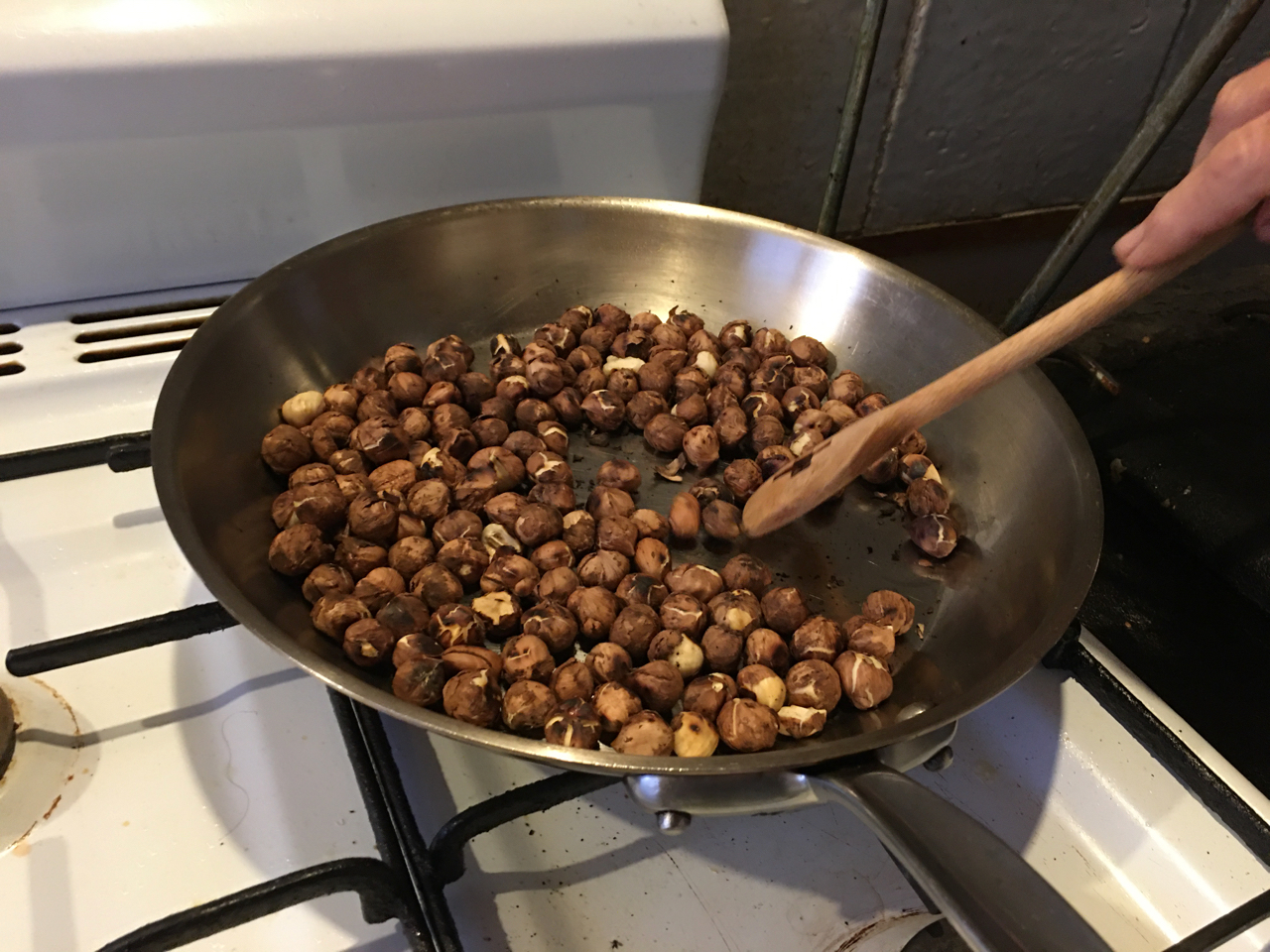
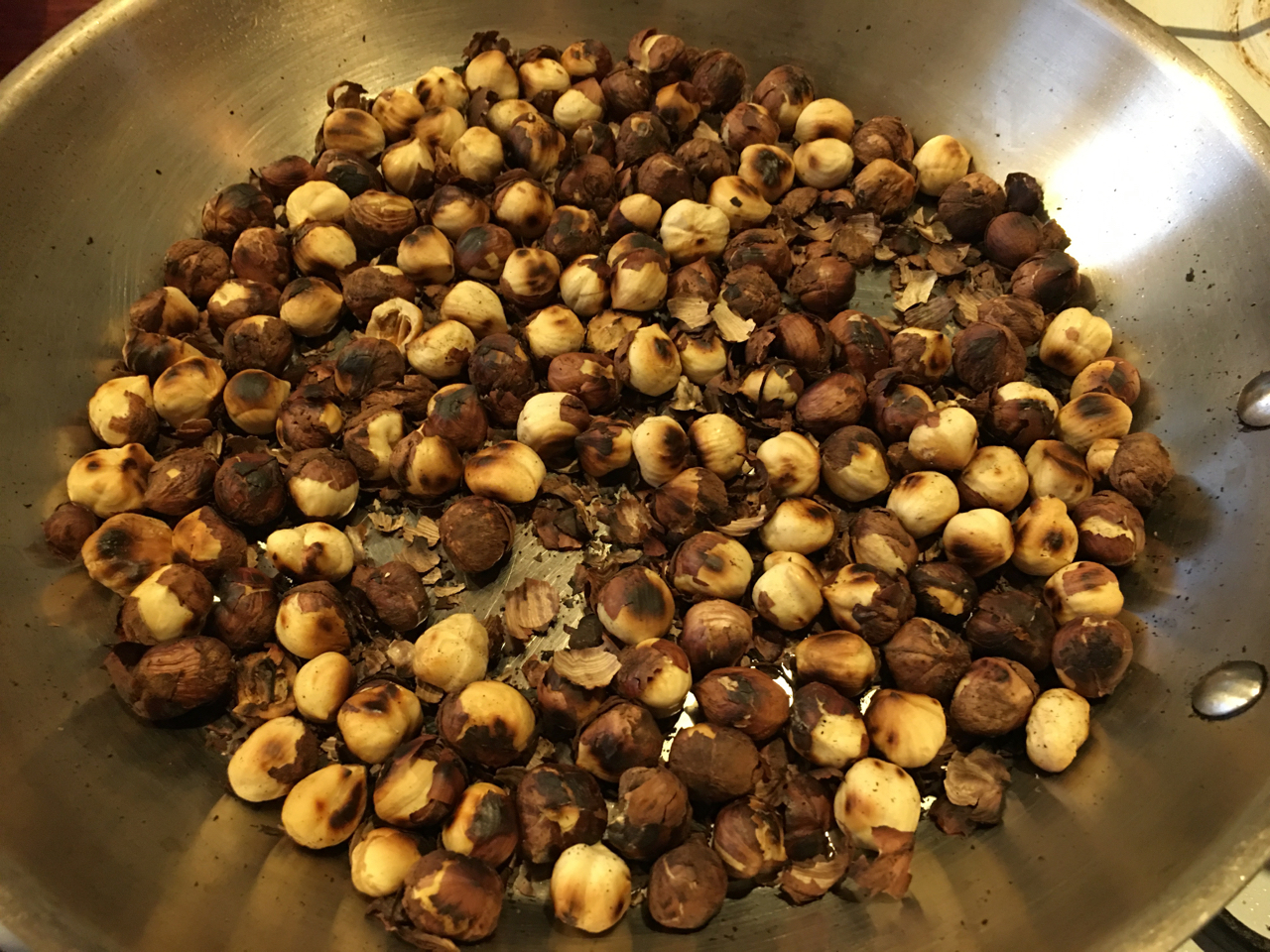
Janine has been shelling and roasting the first few basins full of our hazelnut crop. Unlike tomatoes, there is no urgency to deal with nuts. Once they are collected and inside, they are safe. We have a dozen hazel nut trees and a dozen almonds. The almonds have not recovered well from the fire and are struggling, fighting off an attack of ‘shot hole’ fungus in this damp summer weather.
On the other hand the hazels were more of less burnt to ground level, but they are a smaller and very robust plant, perhaps more suited to be used as a hedging bush. This years crop is our best yet.
Once roasted, they become really flavourful. Before that, they are pretty dull. We don’t salt them for health reasons.
Finally it’s time to cook dinner. Tonight it will be baked, stuffed, ripe, red capsicums. I used a vegetable and herb mix, so it’s a vegetarian meal tonight, as it so often is most nights.
This is a small part of our attempts to be both creative and self reliant while treading as lightly as we can in this carbon constrained world.
Nothing is perfect, nothing is ever finished, and nothing lasts.
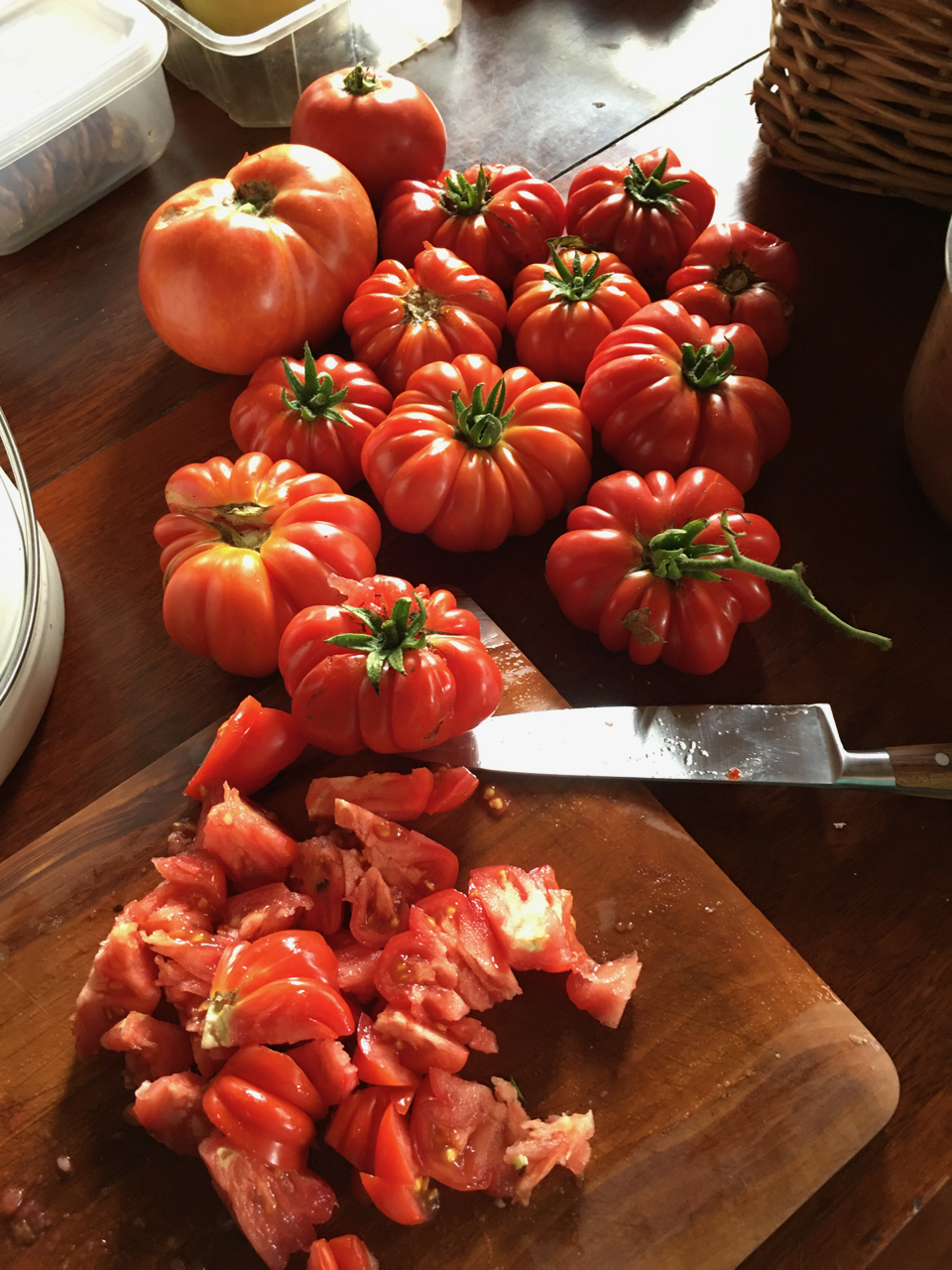
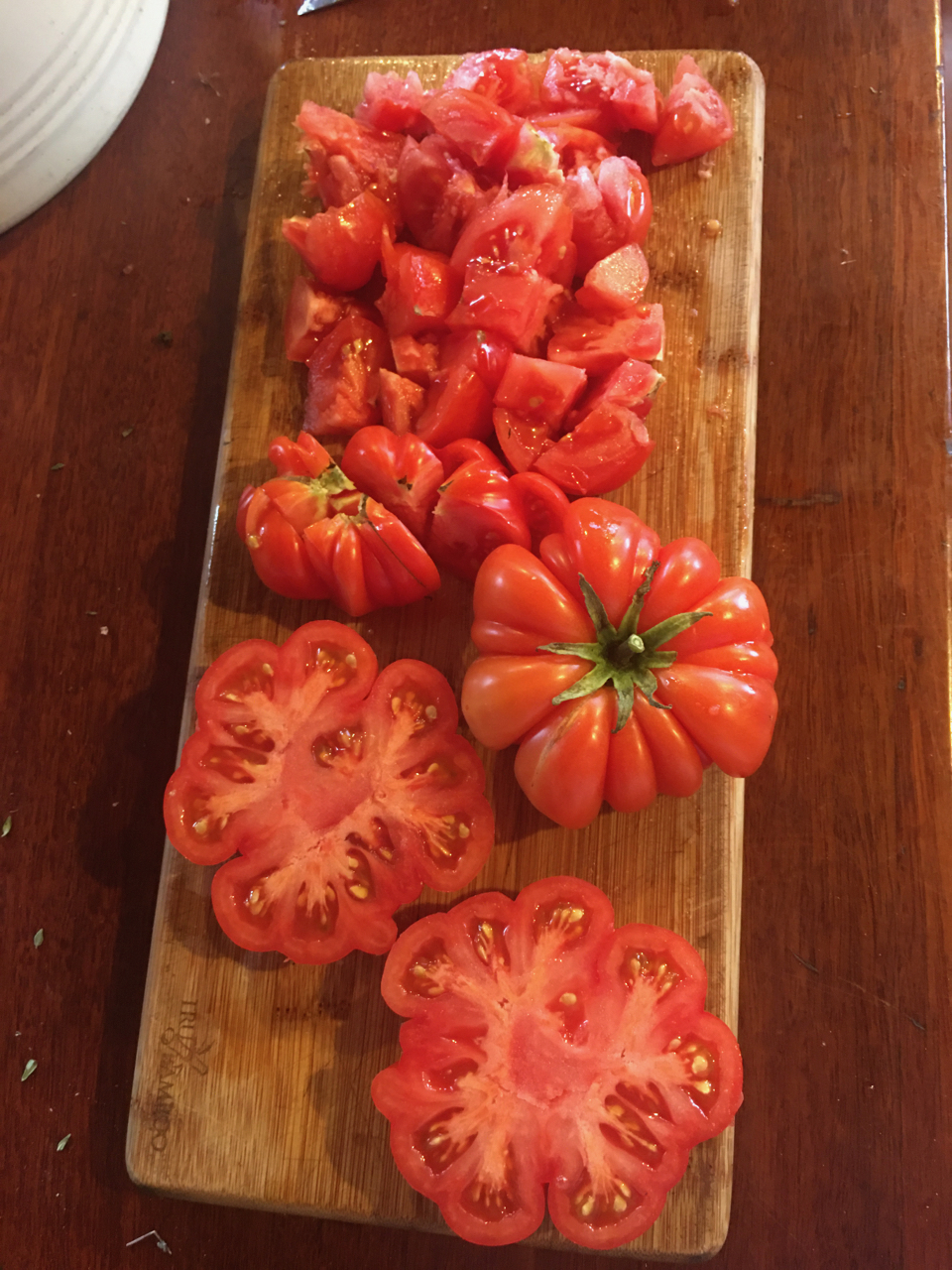
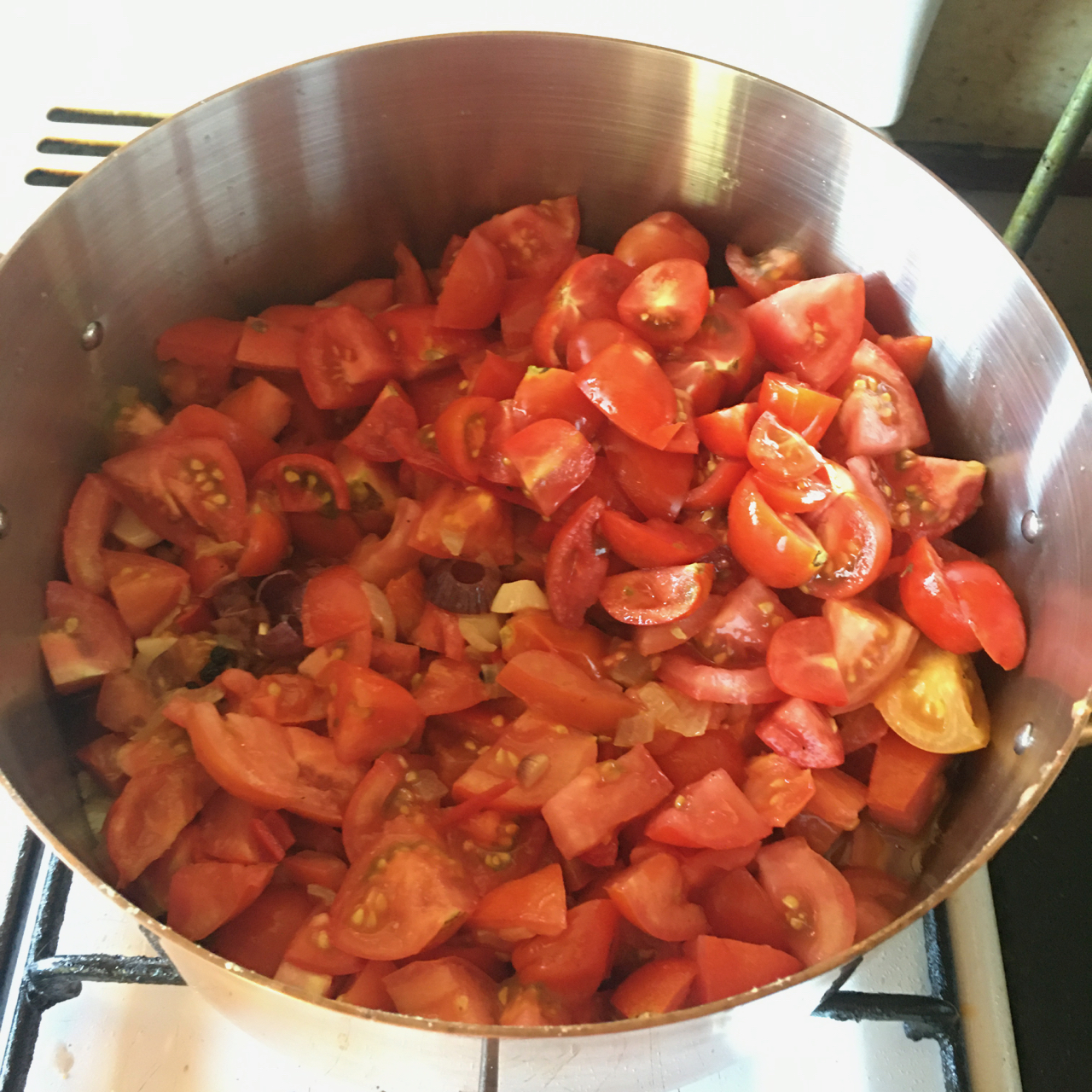
Autumn is peak tomato season. The crop starts to ramp up in February, but really hits its stride in autumn. We are picking a couple of baskets full of red, ripe tomatoes twice a week, with smaller picks in-between for lunches and salads as needed. The big pick goes straight into the large 5 litre copper boilers on the stove with herbs, onions and garlic, to be reduced down to pulp and preserved in sterilised glass jars as tomato passata for use throughout the year in all sorts of meals from pasta sauce to a lovely flavourful addition to soups and stews.
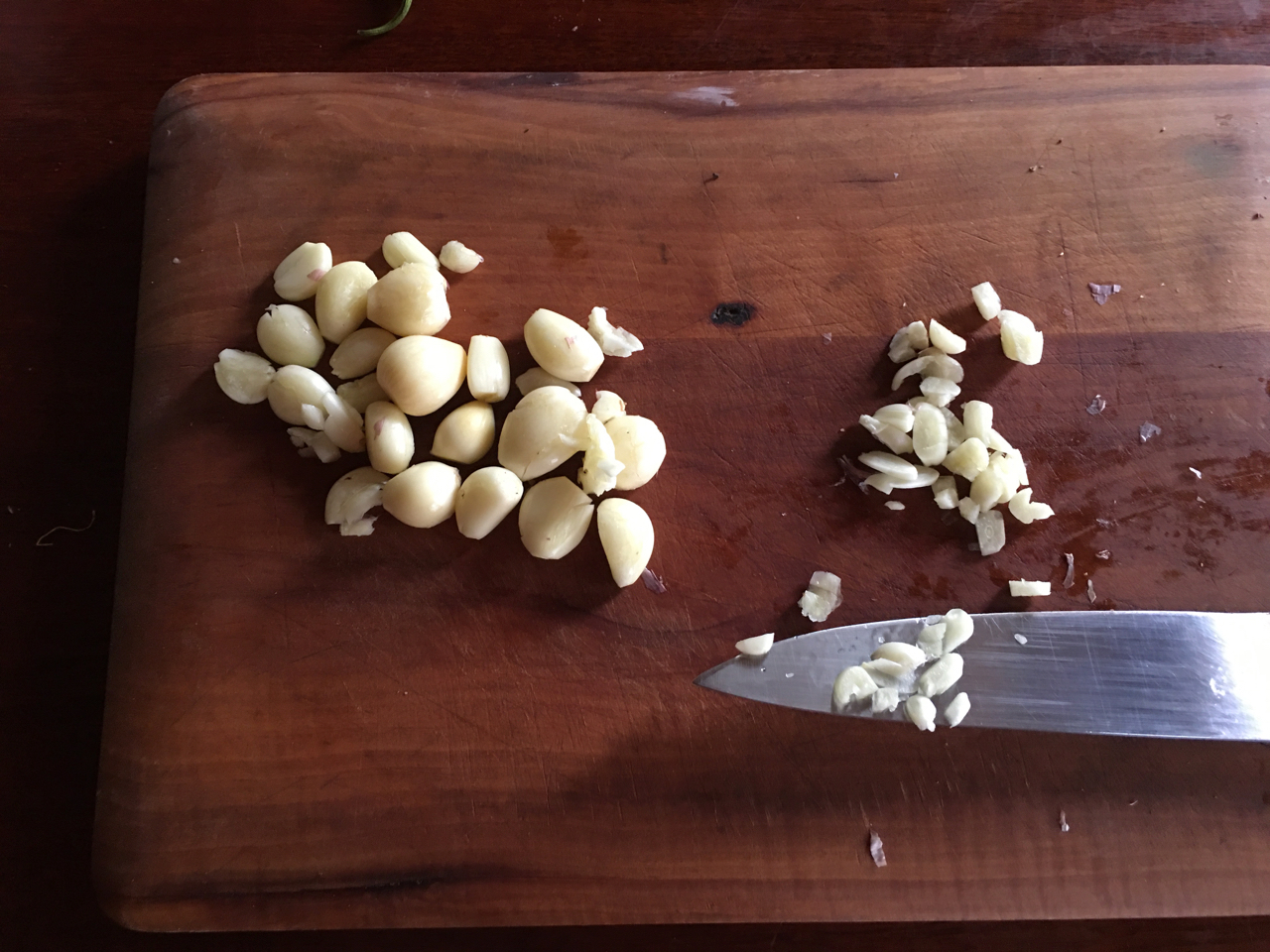
I always start with good olive oil, onions and garlic. I can’t think of anything more delicious than the smell of hot olive oil, and then the salivating addition of the onions and garlic heating and lightly browning as I toss the pan to keep it all moving so that nothing burns. It’s like foreplay. It fills the kitchen with such a wonderful aroma. When Janine comes in from the garden, she always comments how delicious the kitchen smells, and it’s true. I remember years ago when I used to work at the National Arts School in East Sydney. I would cook lunch for the students on Fridays. It was the only day that I came in as a part timer. All the full time staff took their rostered day off on Friday to get a long weekend. They all taught Throwing and hand-building, all the easy enjoyable subjects. So I got the day to teach all the difficult stuff that nobody else wanted to teach, like kiln and firing technology, glaze technology, clay body chemistry and OH&S.
I attempted to make the day more enjoyable by cooking lunch for them, otherwise, many of them wouldn’t bother to turn up at all. I had to keep to a strict budget of $1 per student or less, as no one was funding this exercise. I also noticed that some of the younger student were running perilously short of money by late in the week. So had to resort to going to the Hari Krishna’s in the evening and sit through an hour of indoctrination, so as to get a free veggie meal at the end. That was the real incentive to start cooking for them. One really good cheap brown rice and vegetable meal each week to make sure that they got some proper food with minerals and fresh vitamins. It was fresh, filling, tasty, and free. So they nearly all turned up, as did some of the staff from the library and office on occasions.
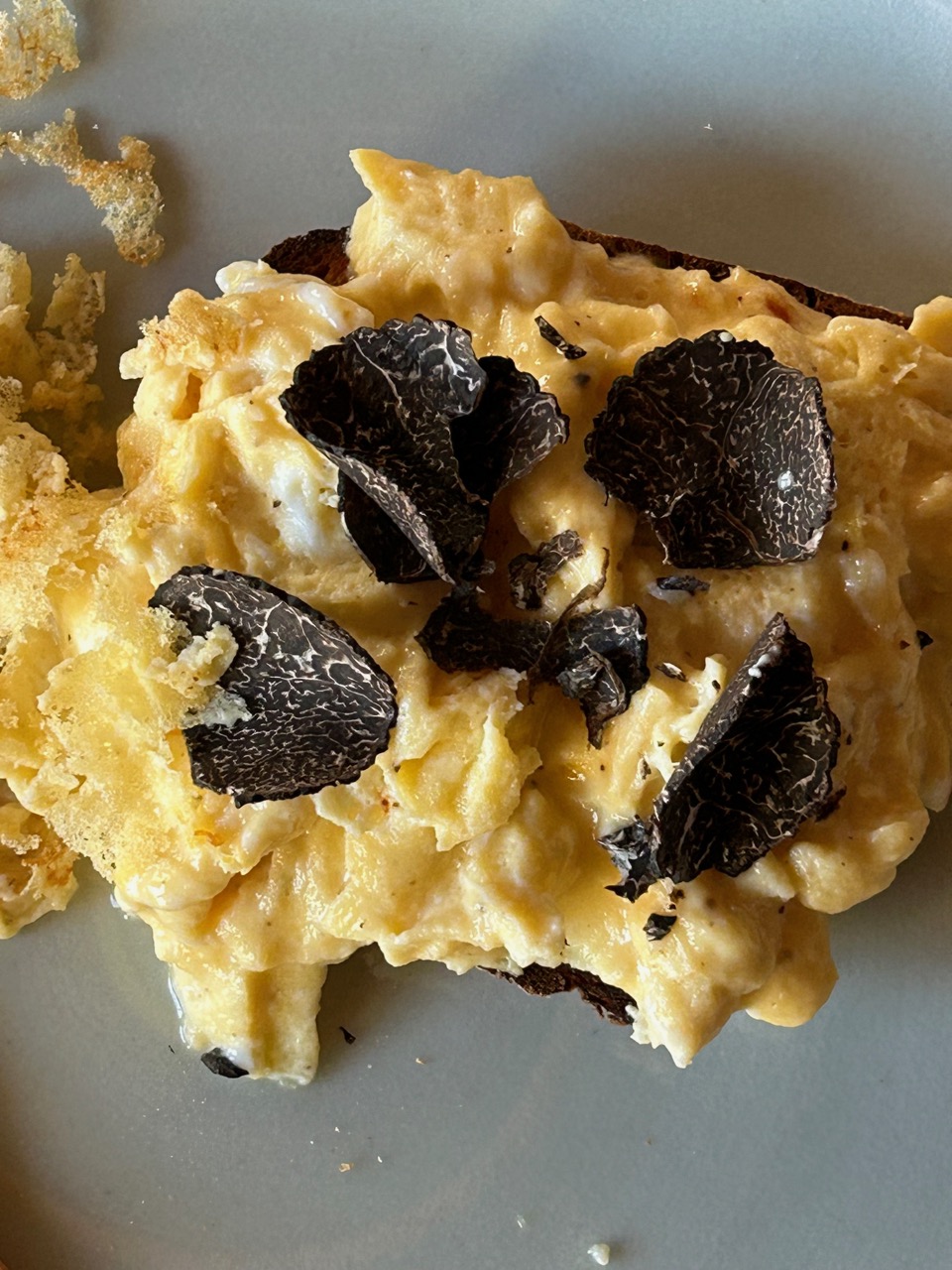
Art students don’t usually enrol in Art School to learn technical stuff. They want to express themselves creatively. My subjects weren’t that popular. They mostly turned up because they wanted to get a pass mark. But there were a few quite keen ones. One day while starting to cook lunch, we had a famous chef and restauranteur as a student at the time and he stuck his head over the upstairs rail from the room next door and yelled out how delicious the smells wafting up to his studio were. He offered the analysis that he might be detecting truffles sautéed in cultured butter with thyme and bay leaves. I said NO. Then he suggested some other exotic combination. Again, NO!
I told him that it was just olive oil and garlic so far, nothing else added – yet. He was amazed. It really is that flavoursome.So that is how I start most batches of tomato passata, once the onions are just starting to brown, I add the garlic half way through so that it doesn’t burn. I add in the basket load of tomatoes. It takes about 30 minutes to chop my way through two basketsful of soft ripe tomatoes. Once they are in and heating up, I add in the chopped capsicums, a chilli, pepper corns, loads of sweet basil, a couple of bay leaves, some thyme and or sage and or marjoram, even parsley, whatever is in abundance.
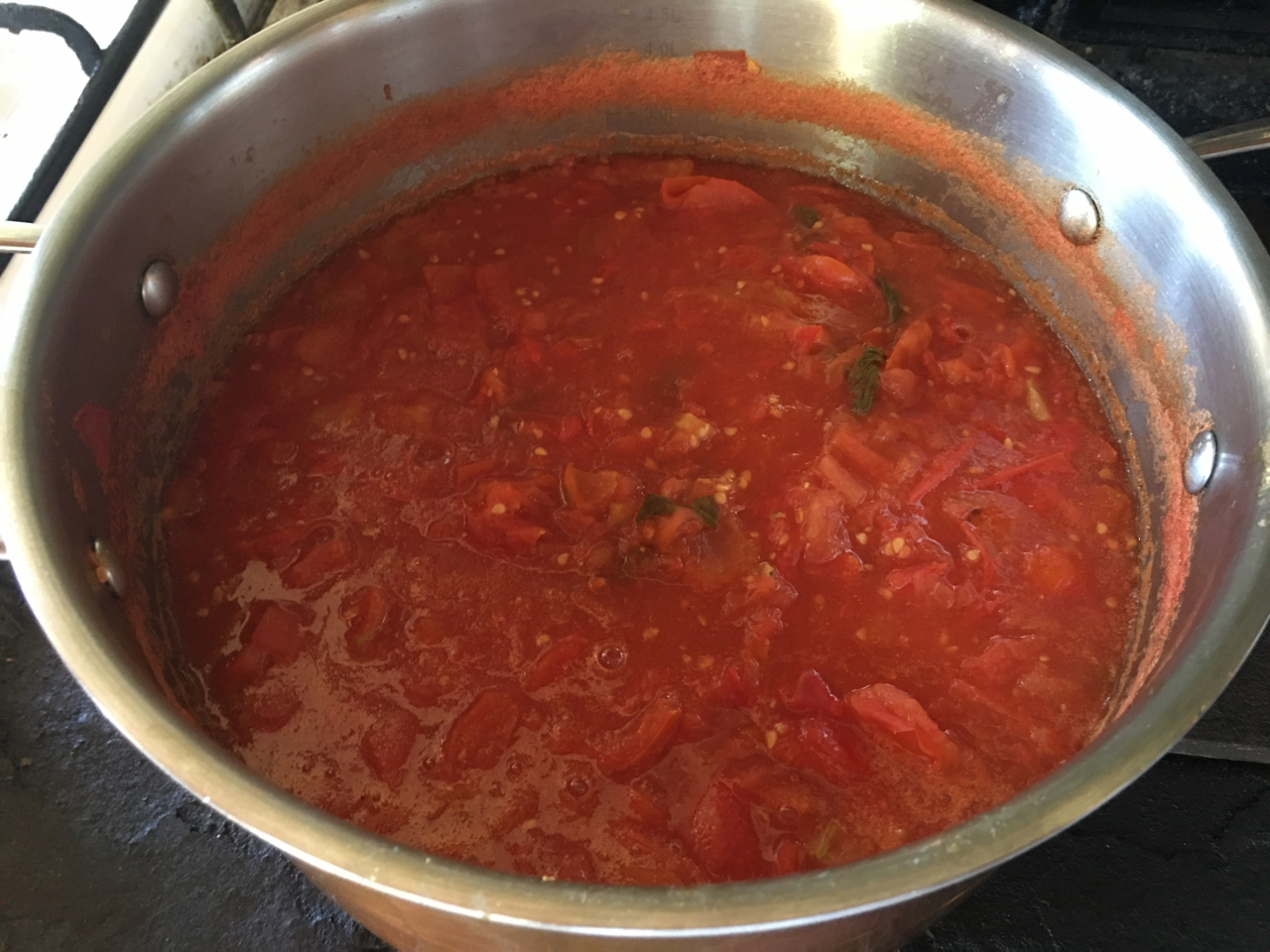
Once all the boilers are full to the brim, I let them simmer for half and hour, to make sure that everything is very soft, as the next step is to pass it all through the kitchen mouli sieve. I wait, usually until the next evening, when its all cooled down before attempting to sieve it. This removes all the herb stalks and tomato skins , etc.
What is left is then reheated on the stove on a low heat to simmer and reduce by about 1/4 to concentrate it. Once this is ready, then I wash and sterilise the glass jars in the oven and bottle the sauce while it is still very hot. If the hot jars are immediately sealed with ‘pop’ top lids that have also been simmered for a few minutes, then the jars will self vacuum seal on cooling and the sauce will keep for a year or more without any more energy needing to be applied to it. They never last a year. It’s too delicious.
It’s been a very good tomato crop so far this year, so we have already bottled about 30 bottles, our best ever harvest, and still a long way to go. We are already giving away our excess when people call in or if I go out visiting, I take tomatoes as presents. We will soon run out of the ’normal’ glass jars that we have collected over the years, so we will start to use half size jars.
We get about three to four 700 ml. jars of concentrated passata from each basket full of fruit, and a basket fills a 5 litre boiler with chopped fruit, so 5 litres of boiled pulp is reduced to about 2 1/2 litres of concentrate.
I always look forward to making passata, but at this stage the initial novelty of the cooking and preserving of tomatoes is starting to wear off. However, I still really enjoy it. It’s why I live here like this. To live out of our garden for most of the year. Preserving excess is essential to providing our own food for the entire year.
We are finally back at work in the pottery. Proper work.
There was still so much to finish off in and around the pottery. We have been trying to achieve the impossible.
To rebuild in a few years what it took us 40 years to build up over a lifetime of potting, collecting and restoring.
There is still a lot to do, but most of all the pressingly urgent stuff is complete and in place. The extraction hood over the electric kilns was the last really necessary thing.
I am currently working part time on a flame combustor, spark arrestor and scrubber for the top of the wood kiln chimney. That will be completed in the next few months in time for the cooler weather and the first wood kiln firing of the season.
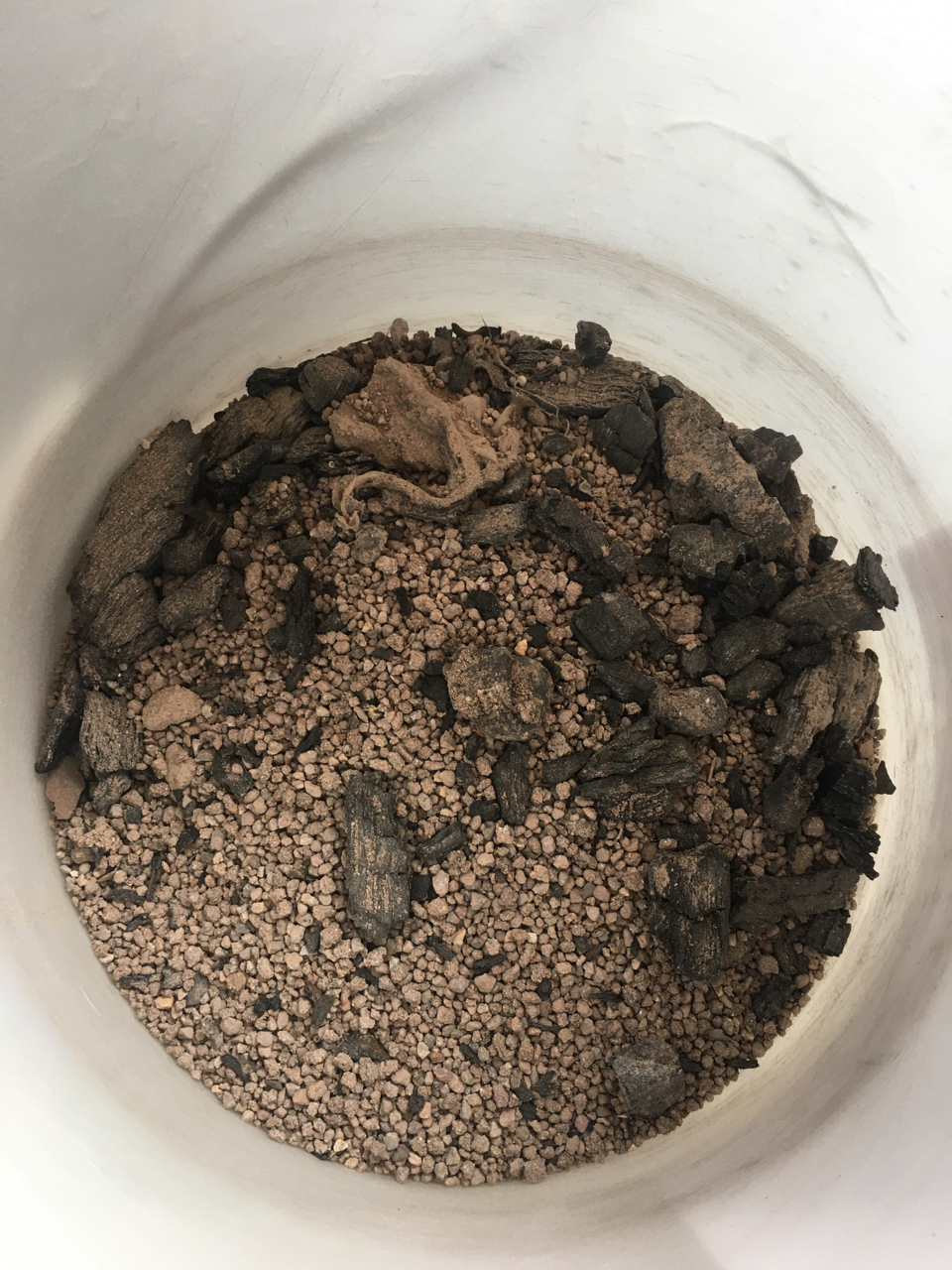
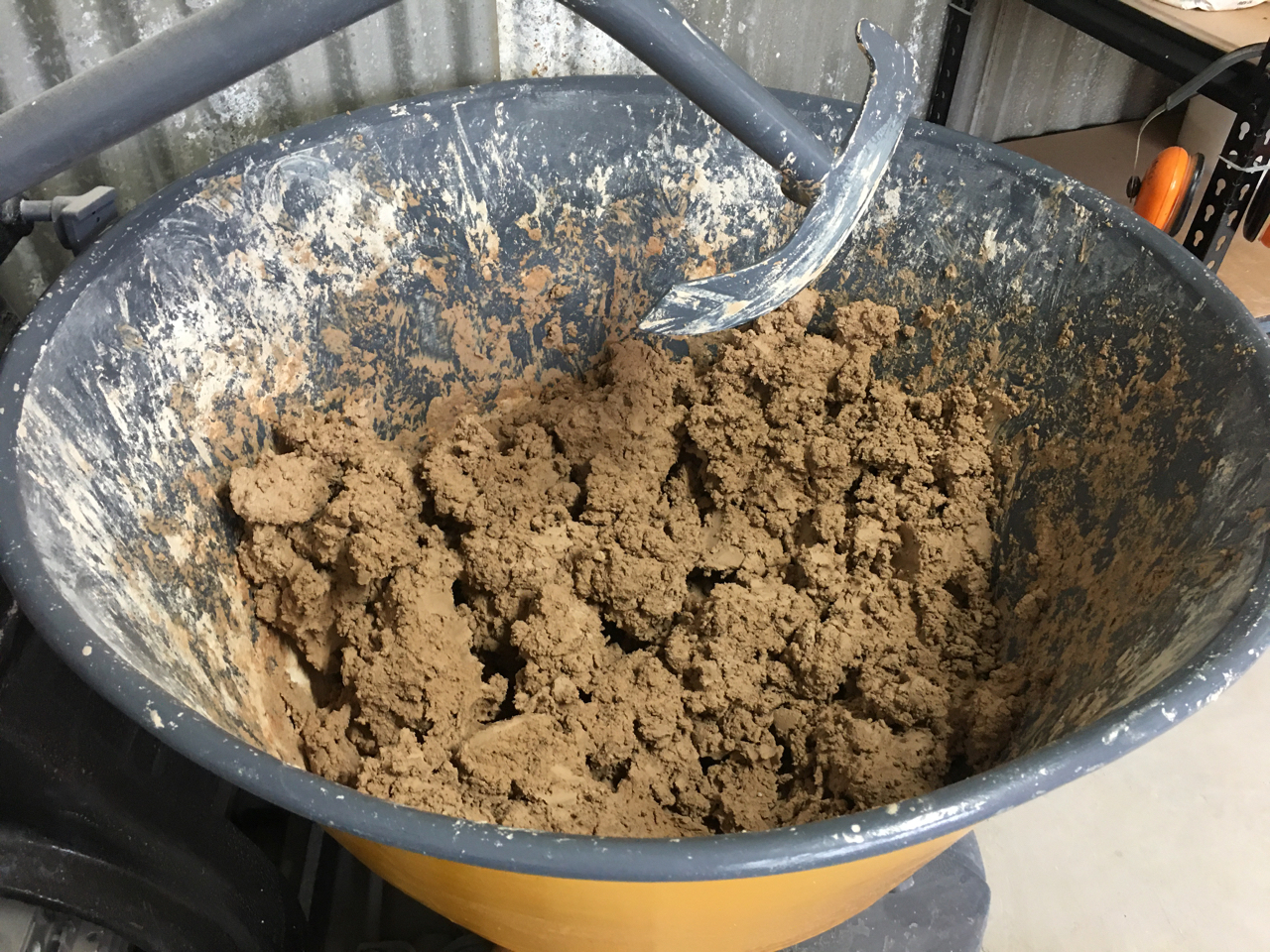
This week I made up a batch of rough stoneware body made from crushed shale. I had to spend some time crushing and sieving the shale. I have had this stuff for some time. It had come through the fire and is full of charcoal from the fire. It wasn’t too arduous, as it was only through a coarse mesh.
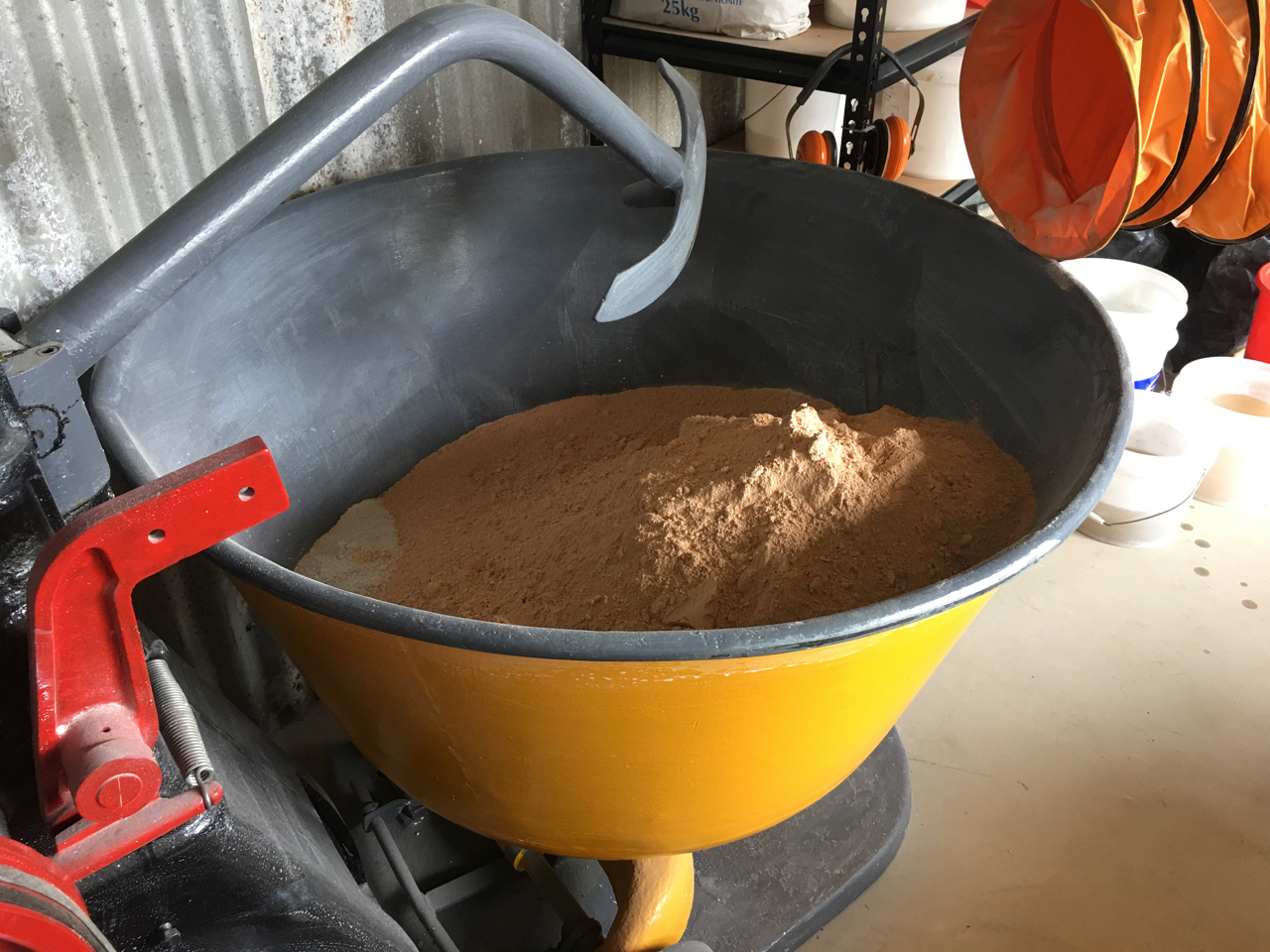
After mixing the two x 125 kg batches of body, we pugged all the clay twice. Once all through the pug and then stacked on the pug table in a pyramid stack. We then cut off all the ends of the sausages and re-pug it all another time, such that each sausage that comes out of the pug is comprised of a mix of all the previous pugs of clay. This is to ensure that there is very little variability from the first to last sausage of clay.
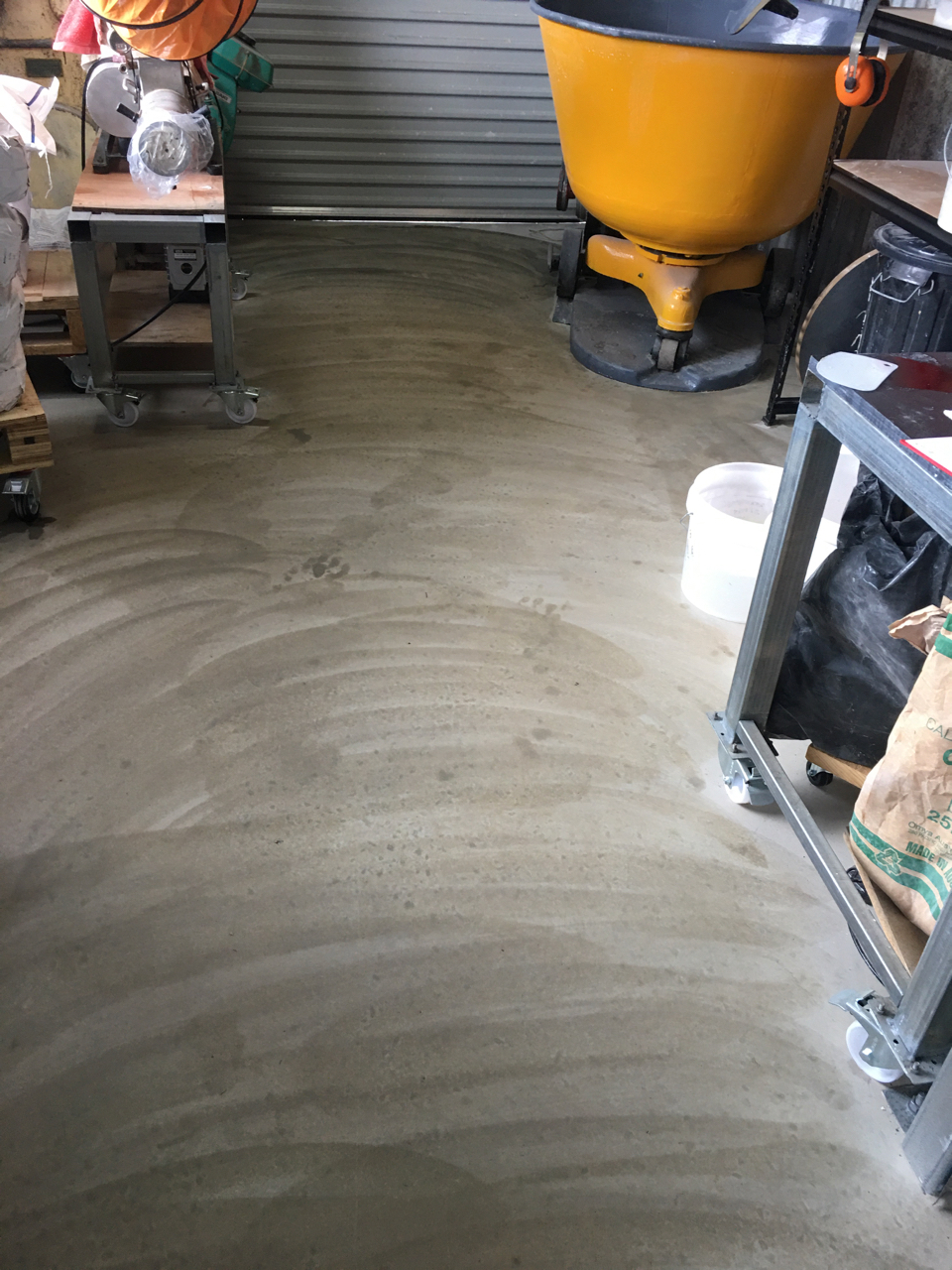
After finishing up, the pug mills and tables are all washed and wheeled out of the way and all the floors are wet scrubbed and mopped to clean off any small amount of clay that finds it way onto the floor, which it inevitably does. The floor is scrupulously clean all through. All the clay is bagged and boxed. Everything ship shape.
This is the best pottery workshop that we have ever had. Having been burnt out 3 times over our careers. I have designed and built this 4th workshop/studio with every piece of equipment on wheels to facilitate flexibility and cleanliness.
We have been picking lots of food from the garden, then cooking and preserving all the excess. We are up to our 5th batch of tomato passata.
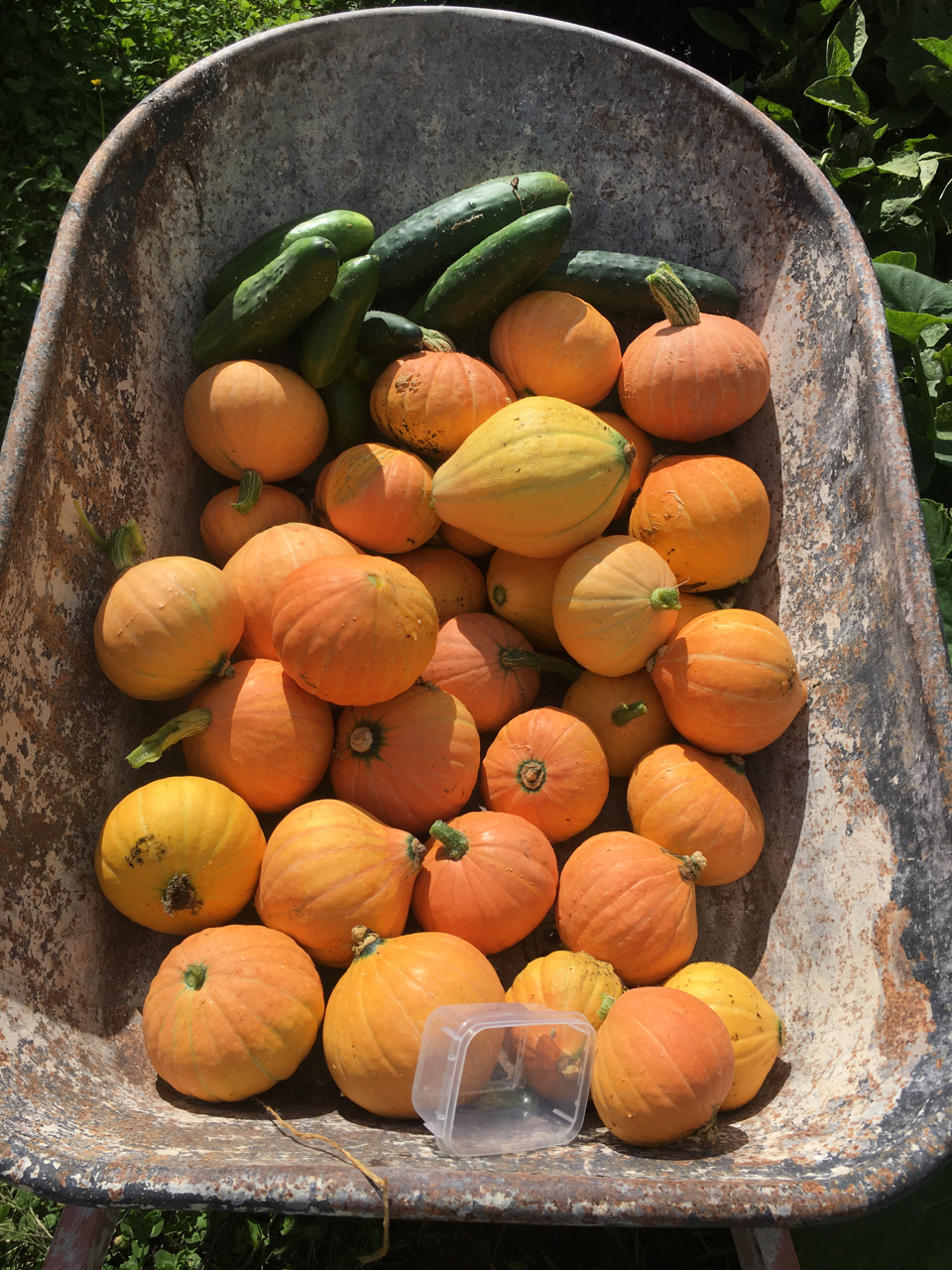
Oven baked pumpkin is great on its own and can be used up all week in all sorts of ways from frittata to salads.
Tomatoes, basil, capsicums, chilli and pepper corns go into the passata.
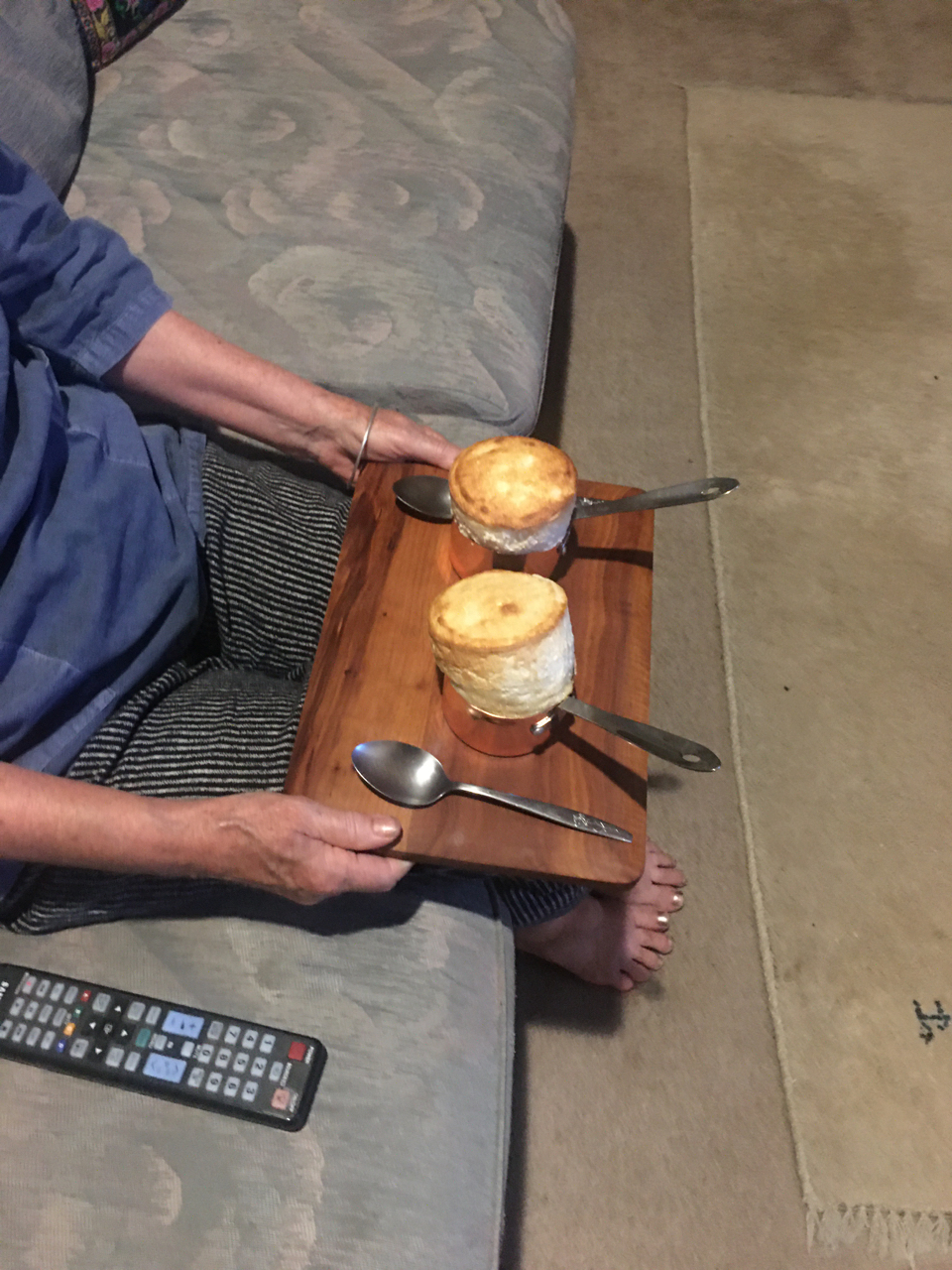
We had an over ripe banana and a few eggs, so I made us a banana soufflé for desert. It worked out really well.
All part of our attempts at self-reliance. It seems to be working out OK.
A month or so ago, Our neighbour saw two deer crossing our road and entering our land.
We have never fenced our land. I rather liked the concept that all the local wild life could come in and graze on our grass and drink at the dam quite freely.
After-all, the wallabies, kangaroos and wombats were all here before us.
However, feral deer are another matter. They have been breeding up in extreme numbers out in the Buragorang Valley National Park for years, so now they have reached Balmoral Village.
We live in a small hamlet or village, on a very old road and disused railway line that is situated between two National Parks.
Whether the deer got here from either the East or the West side parks, doesn’t matter. The big problem is that they are here now.
We have been so lucky to have had 46 years of living here without this problem, but now we have to deal with it.
Luckily for us, There is this guy I know who does fencing all summer and sells firewood all winter. His family have lived and worked here since 1906. AND, he’s a really nice guy to boot.
I had been talking to him about getting some help with a fence along the back lane, as some kids had been coming in and yahooing about down the back there.
We have already put a fire-proof steel and stone ‘gabion’ fence along our front boundary as a kind of heat shield for the ground fire in the next big bush fire event, whenever that comes.
We asked our neighbours on the South side if they wanted a fence 30 years ago. They didn’t. So no fence was ever built. We got on really well together as neighbours, so didn’t need one.
Those neighbours were burnt out in the last big fire, and wont be rebuilding or returning to live here.
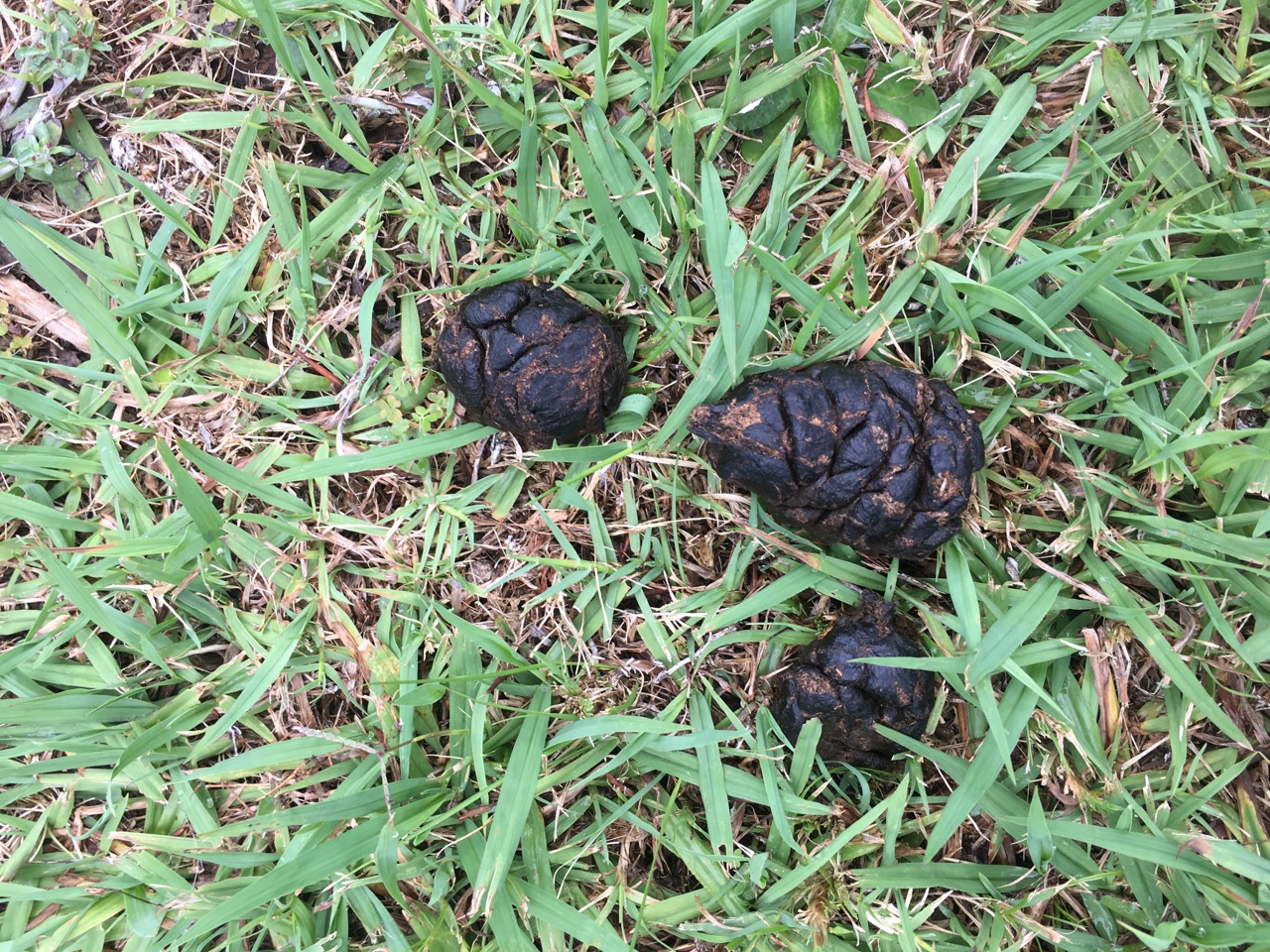
So now we have deer in the back orchard eating our fruit trees. They particularly like cherry tree leaves. They leave their turds on the grass around the trees as they nibble, and their hoof prints in the soft muddy soil around the edge of the dam where we were clearing out the dead trees and undergrowth from the water yesterday.
Mother turds,
and Baby turds, so there are at least two of them eating our trees.
Monday the 16th of January, is the first day back at work for most tradies and small businesses around here. So Phil turned up with his two sons to get a bit of a start on our fance.
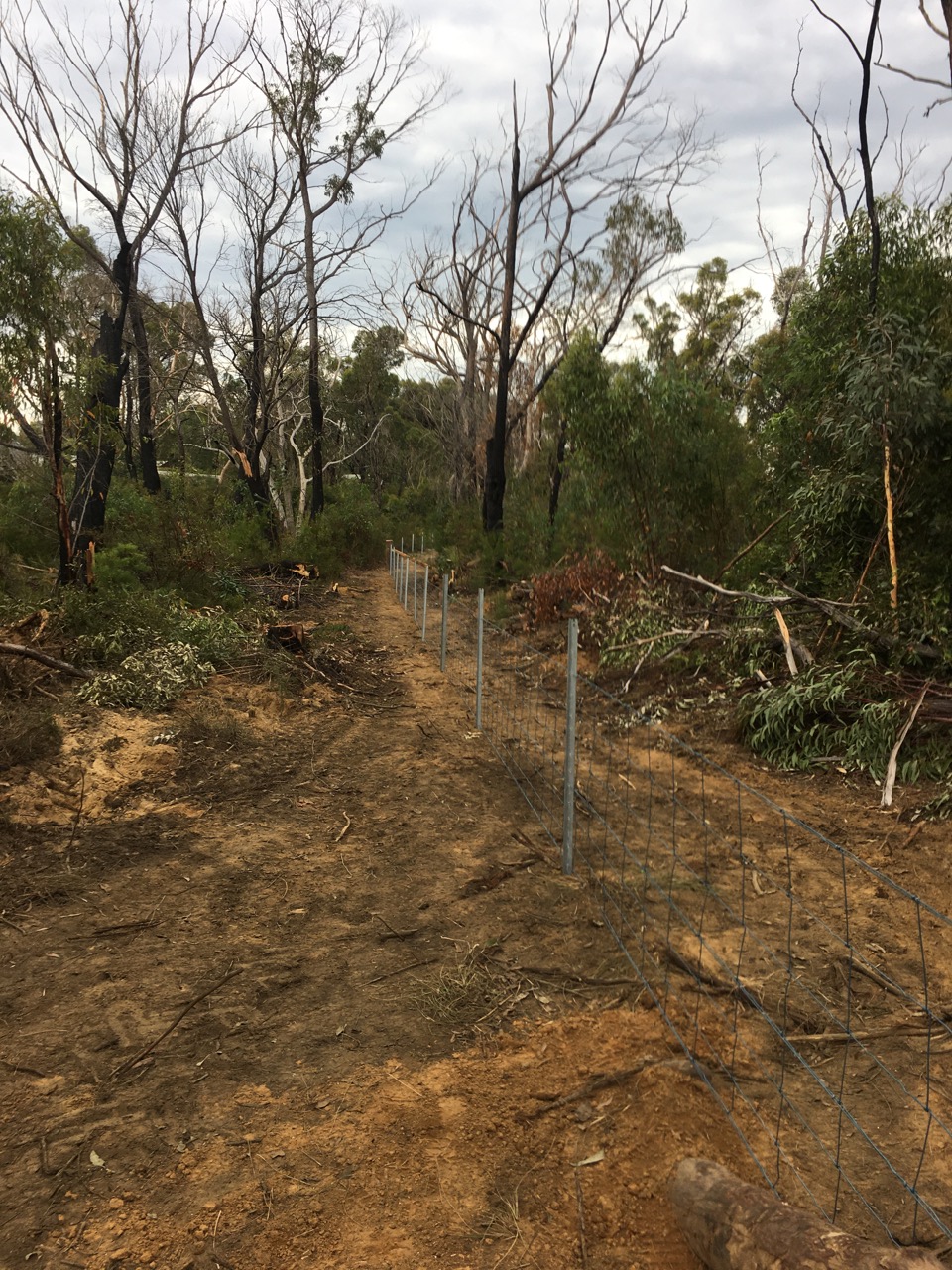
A lot has changed since I spoke to him in late October last year. The fence now needs to be twice as long, to seal off the property, and twice as high with the arrival of the feral deer, as they can jump very high. We originally discussed a wire mesh fence 1200 mm. high with 3 strands of barbed wire on top. This is apparently the basic, standard rural fence these days around here. I wouldn’t know. I’ve lived here for 46 years and never spoken to a fencer before. I have done all my own internal fences around the gardens and orchards over the years, cut my own fence posts, crow-barred and shovelled my own holes. Rammed my own posts solid in the ground. But now I am a bit too old for all that hard work these days, as the fence will end up having to be 250 metres long to keep the deer out. I’m learning to relax and to compromise my standards by letting someone else do some of the hard yakka this time. Basically, I trust Phil to do a thorough job.
The new deer fence will now be 1800mm high, at a greater extra expense and a very dear fence it will be.
We cleared a track through the bush that had never been cleared before. I tried to keep as many trees a possible, allowing the fence to wander a bit to find the line of least destruction of the bigger trees. The first thing that Phil said after walking the fence line, was that some more trees will have to go. It needs to be straight, otherwise you’ll be up for the added expense of extra strainer posts and stays.
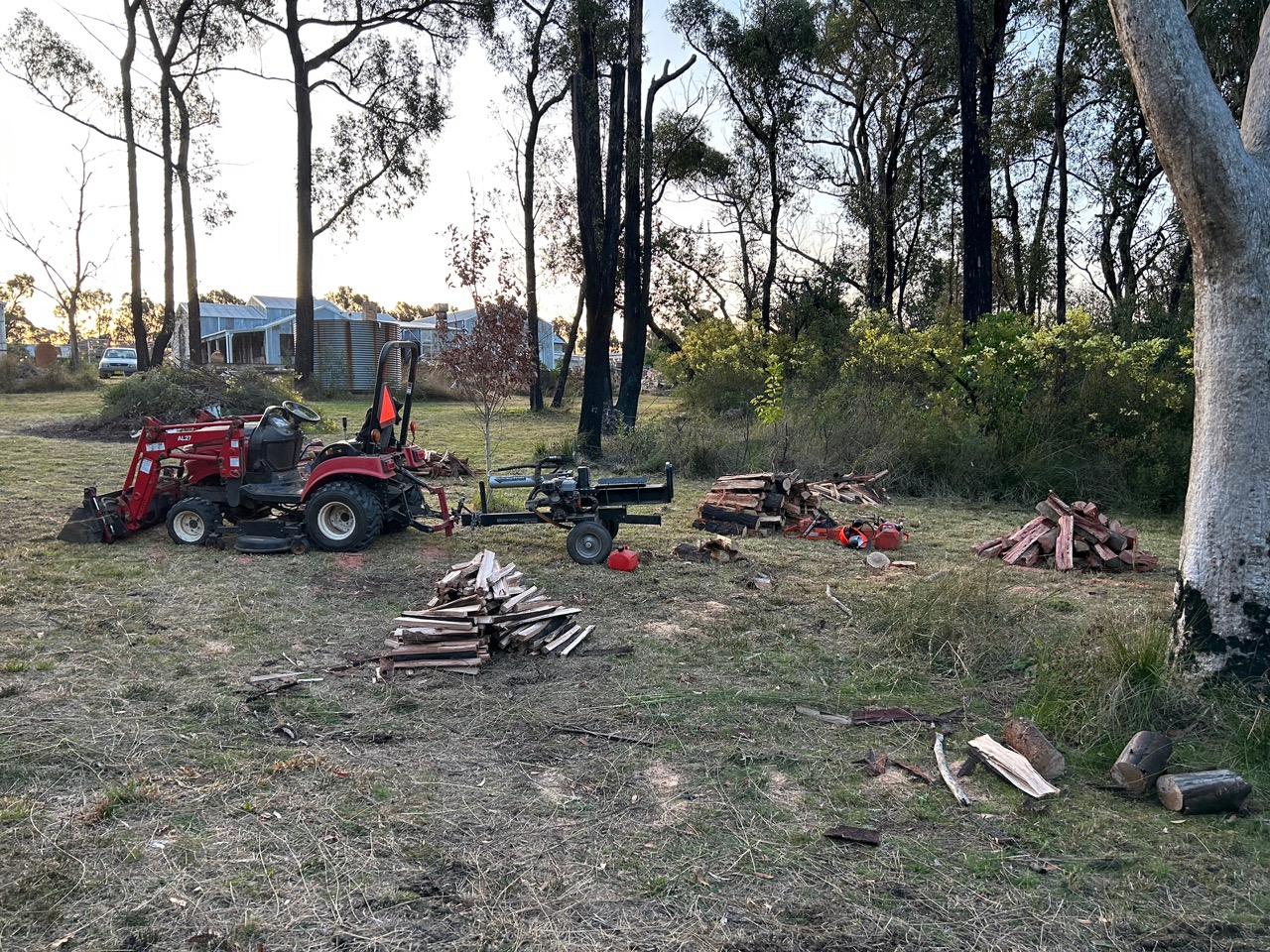
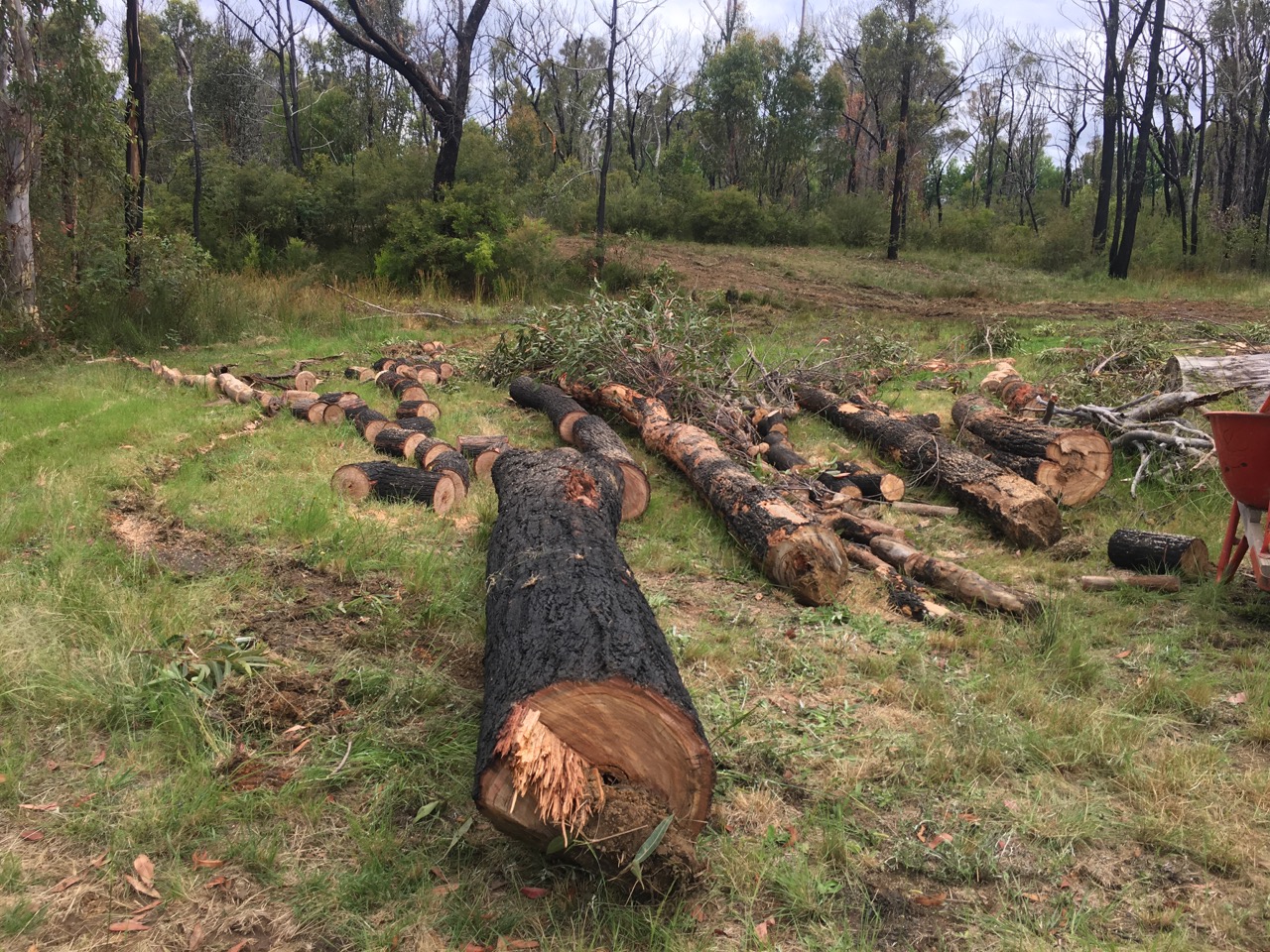
All the trees in question are already dead. Standing blackened, leafless and burnt dead. Victims of the catastrophic bush fire that raged through here 3 years ago. I have no idea why I wanted to ’save’ them. Just habit I guess? So out they come and the line of the fence is straightened. They drag the trunks out of the way and into the clearing where we stack our fire wood. A place well away from the house. I spend a day chain-sawing. I stop regularly to refuel, re-oil and sharpen each of the three chainsaws. Large, medium and small. I spend all day at it, but can’t keep up with the delivery rate that the fences are dragging the dead wood out.
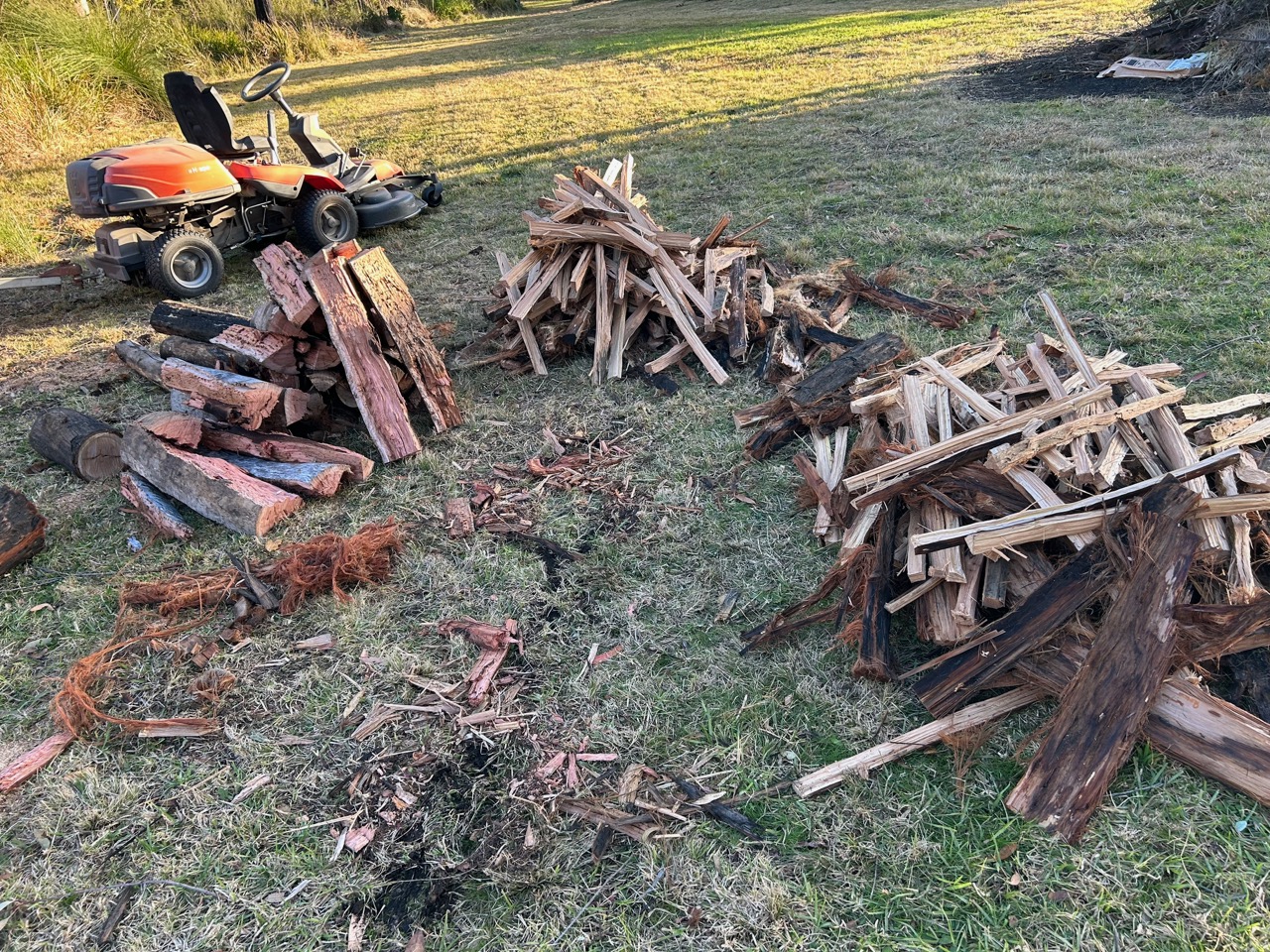
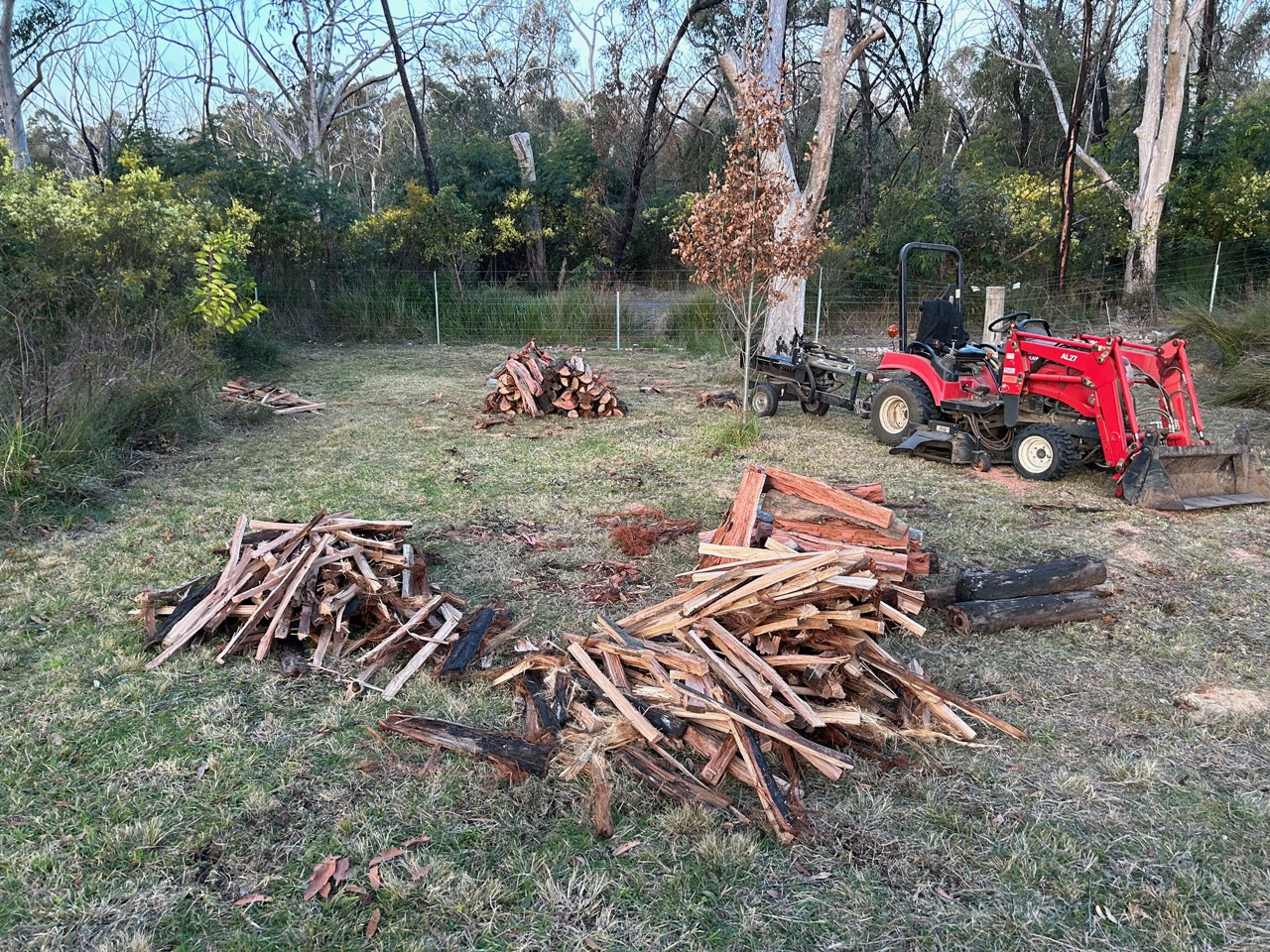
I cut them up into usable sizes for the pottery oven/heater, the kitchen stove and the lounge room heater. The trees with the largest diameter butts are cut into just 150 mm. long slabs. This is to make them lighter, and easier to lift and stack them, and eventually move them to the hydraulic splitter. Large diameter hardwood logs can be very heavy. The skinny logs and tapered top branches, anything less than 150 mm. dia. are cut to the longer lengths, as their weight doesn’t matter at that size. All the intermediates are cut to 300 mm long. It all works out quite well, but the site looks like a bomb site with timber and branches everywhere.
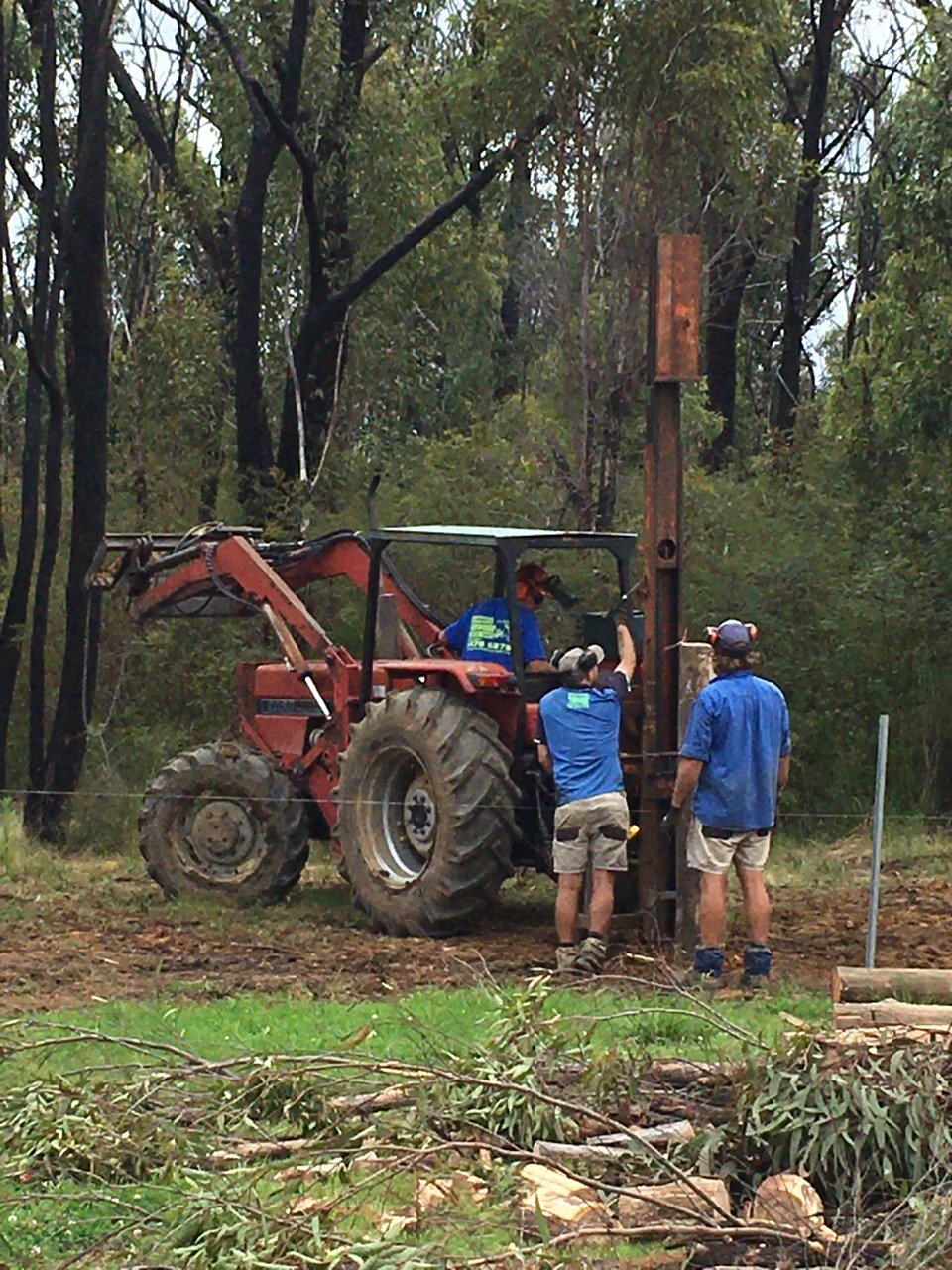
Phil and the boys have already got most of the iron bark timber posts in the ground by the end of day one. Phil acknowledges that I have worked all day on the saws cutting up the 14 trees that he has dragged out this morning. There a still more to come. He asks if I ever want a job, he’ll give me one as a fencer. He tells me that he has watched me work and says that I work harder than most of the young fellas half my age that he has employed!
They have an antique tractor, fitted with an antique post hole drill and fence post rammer. They drive the iron bark posts 900 mm. into the ground. The gear may be a bit old, but they work fast and efficiently.
Tuesday, the fencers don’t turn up. They have told me already that they need to finish off another job from last year that was waiting for some more parts to be delivered. They are keen to get it finished and get paid. I was pretty tired and achey after working on the chainsaws all day yesterday. So in the morning I weeded some of the garden beds in the veggie garden, then picked just over 3 kgs of blue berries. I sharpen and service the saws from yesterday, then after lunch, I’m back into it, collecting up all the short cut billets of wood and taking them around to the new firewood stack. Once I’ve cleared away all the cut wood from yesterday, I start the cutting again. I want to get at least one side of the site cleared of tree trunks, branches and twigs ready for tomorrows task of doing it all over again, cutting, carting, stacking and splitting.
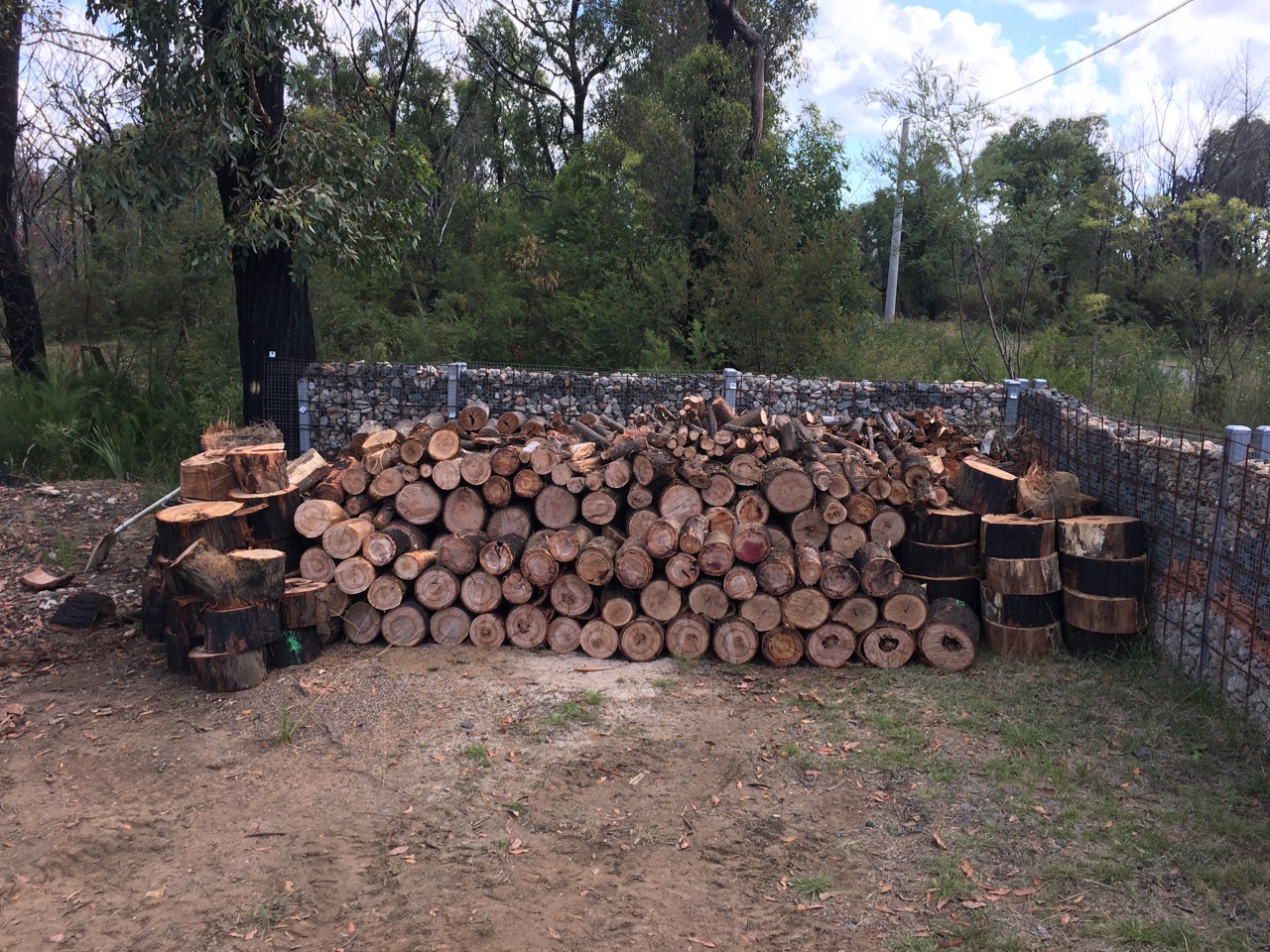
The wood is stacked more or less 20 billets wide x 6 or 7 billets high x 7 stacks deep.
We have several tonnes, possibly 10 tonnes, of wood cut and stacked, with just 4 more trees to work on tomorrow. I’m trying to get all the logs and timber detritus out of the way of the fencers, so that they can work efficiently and un-interrupted tomorrow. I also get a lot of satisfaction in seeing it all cleared away and neatly stacked.
I’m assuming that the fencers would normally like to take all these trees away with them each day and sell the wood as fire wood over the coming winter? However, we have a need for it, so I’ve kept it for our own winter needs.
We celebrate with an eye fillet mini roast, just for the two of us. Janine makes a traditional Yorkshire pudding with the left over meat juices in the little roasting pan.
It’s one of the best that she has ever made. It’s a beauty!
Their big old tractor almost gets bogged in the low spot where the dam over-flow water seeps down to the back lane. It was almost dry enough to drive over, but we had 30 mm. of rain overnight and on their last pass over the soggy bit, they sank in.
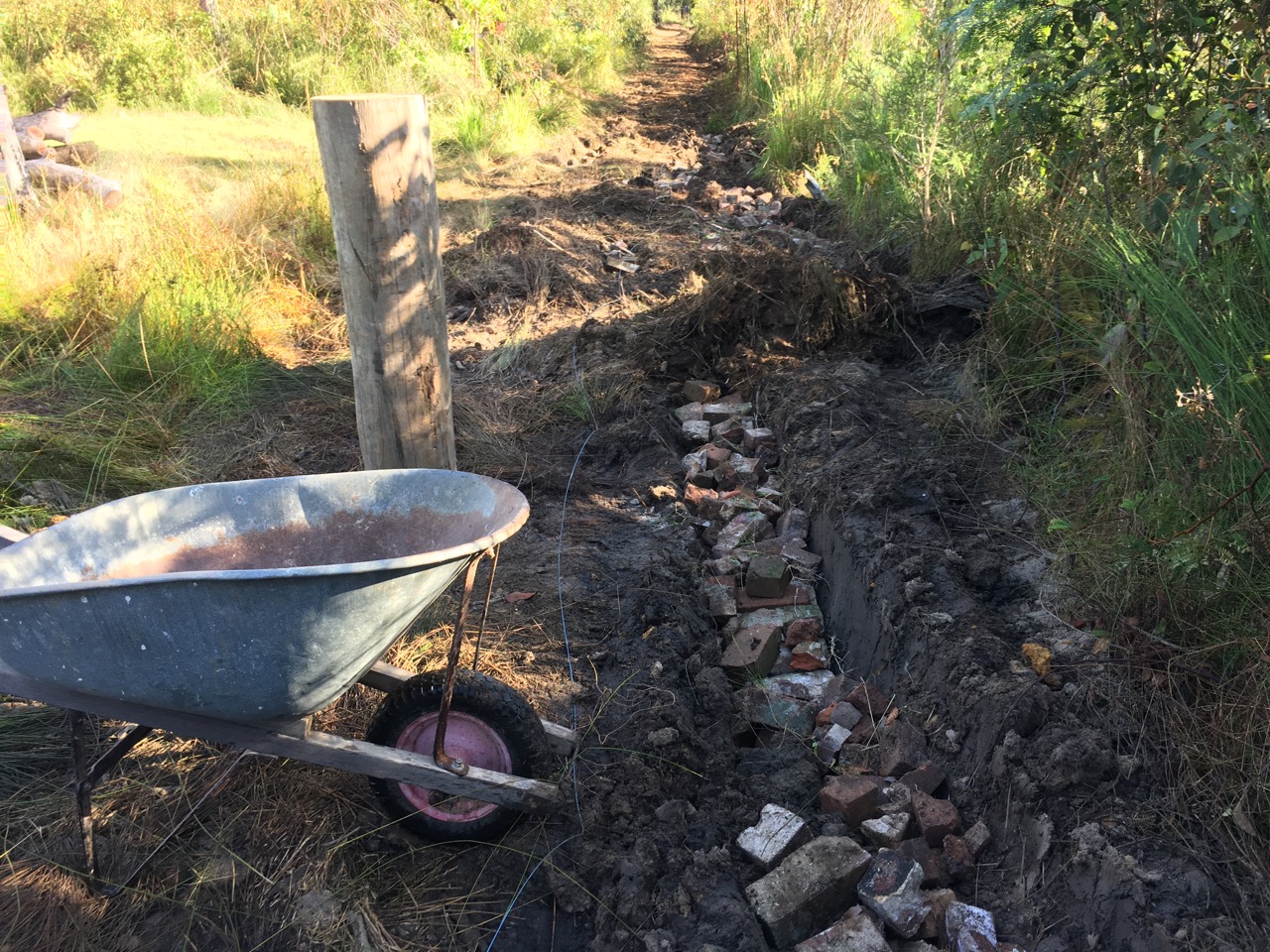
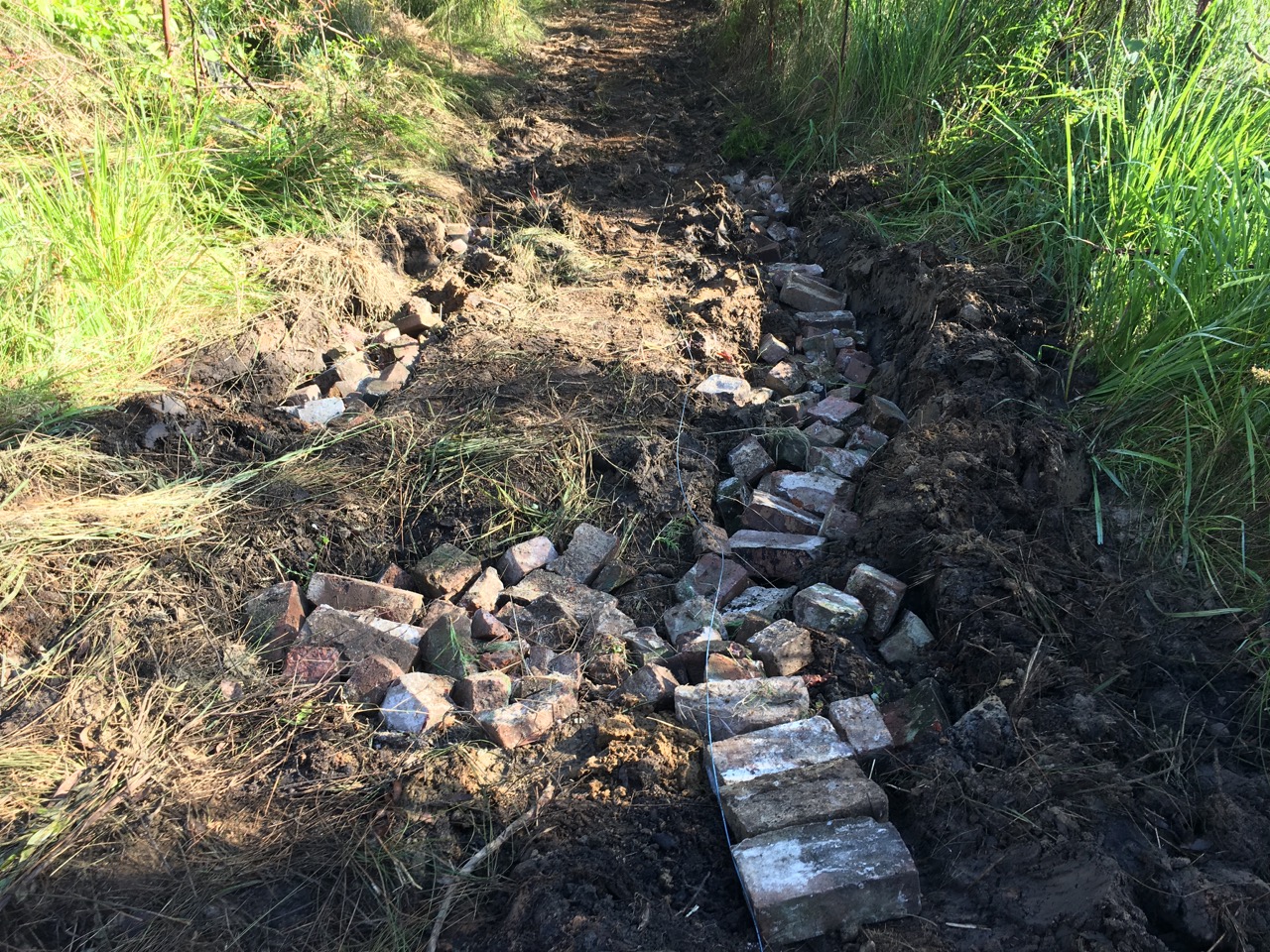
Wednesday morning we spent a few hours loading barrows with broken bricks , left over from the brickwork on the facade of the new pottery building. I knew that all those broken bricks would come in handy one day. I fill the deep muddy tyre gouged trenches with the brickbats and stomp them down into the mud. This may not be enough, but I’ve filled the deep trenches, so we’ll see how the tractor goes over this lot before I barrow another 20 loads down there. I’ll try and finish off with all the smaller pieces and mortar sand and gravel when this is all over.
Enough for now.
The first layer of mesh is tied onto the strained high tensile wire. There will be another 600 mm. of barbed wire on post extensions that fit on top of the steel posts to make the fence more Deer resistant. The extensions are not often called for, so are not in stock and will have to be ordered in.
A very Dear fence indeed.
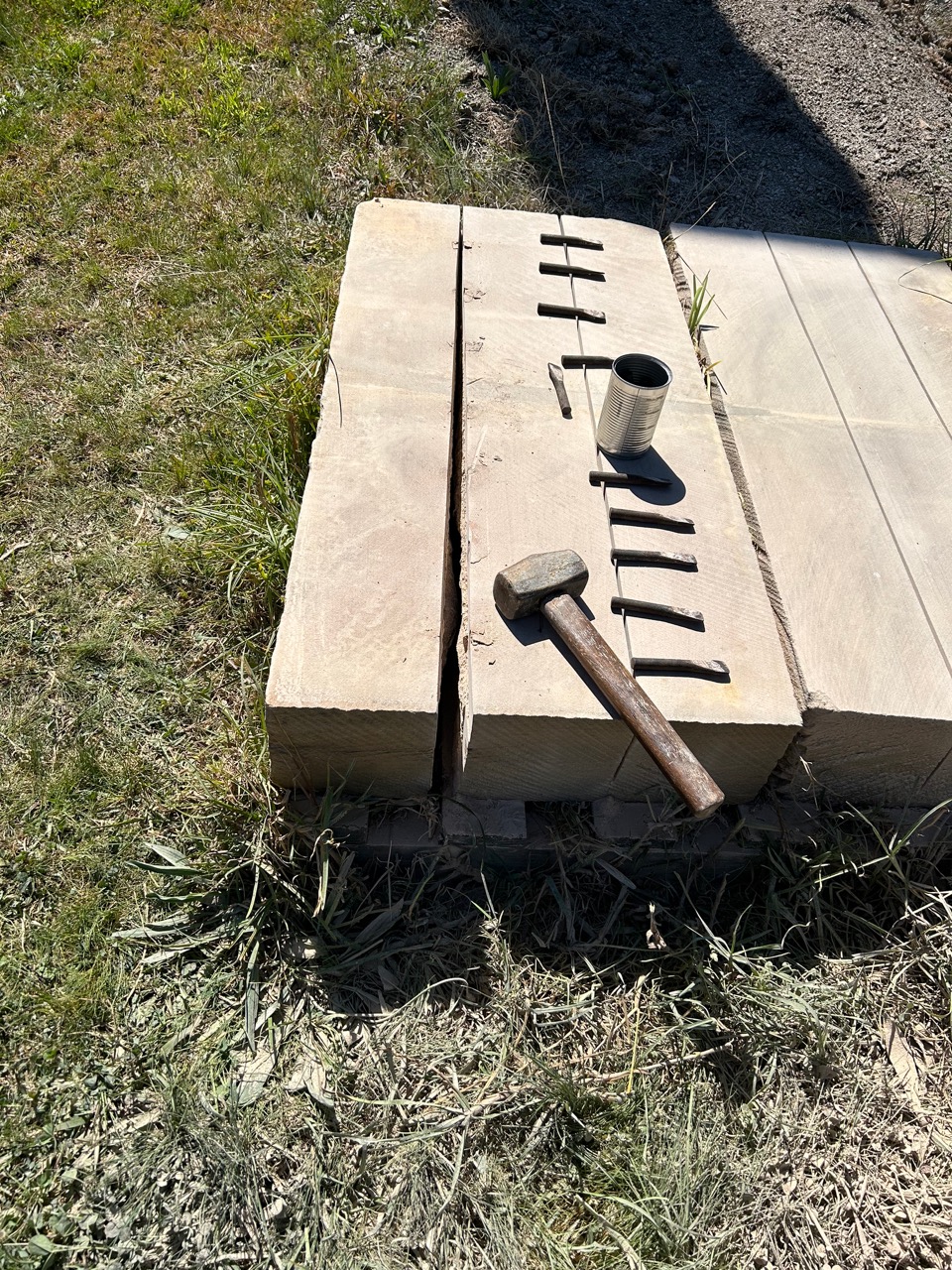
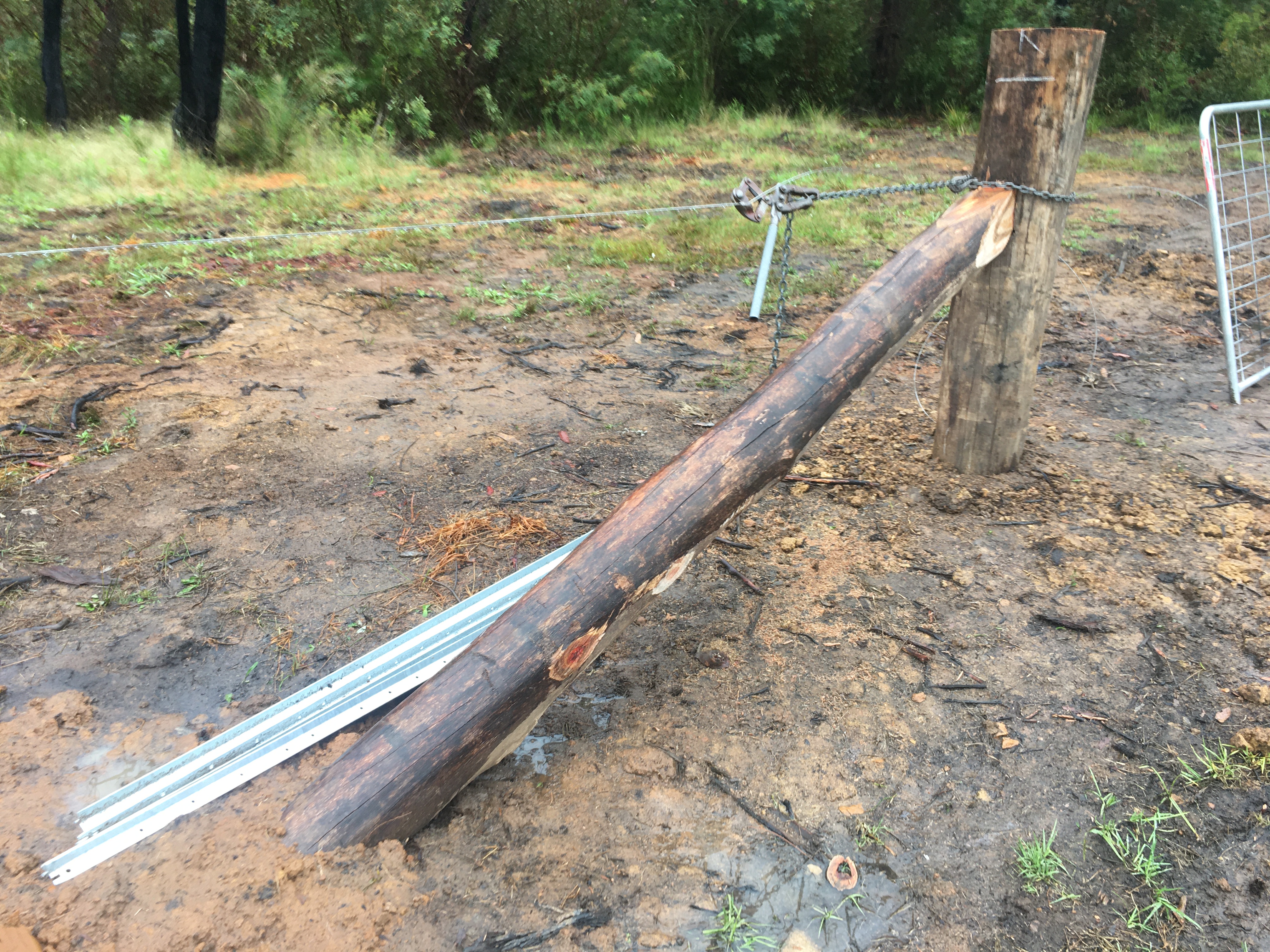
Phil and his sons have done a very nice job of staying the strainer posts with a mortice and tenon joint in the iron bark posts and a huge flat stone embedded into the soil to buttress the other end of the stay. A very impressive and thorough job.
Thursday morning sees more rain, so I’m putting off doing the last of the wood carting and stacking till later in the day, when the weather is forecast to clear. I’ll spend the morning writing. While Janine is sorting the hazel nuts.
I wasn’t planning on spending my first week back at work after the summer break on chainsawing and wood stacking. I imagined that I was going to be making new batches of clay bodies for the coming year. That will be next week now. The fencers can fit me in just now, between other jobs, so that is what we will be doing. We are lucky to get them.
John Lennon said that life is what happens to you while you are busy making other plans. So true.
Life goes on. As my friend Anne says; “How we spend our days, is how we spend our lives”.
In my case, that appears to be lurching form one crisis to another.
Nothing is ever finished, nothing is perfect and nothing lasts.
It’s Sunday, the day of rest. So I’m taking my rest in the vegetable garden doing a little bit of weeding and planting out some seedlings that I bought yesterday.
I usually prefer to grow nearly everything from seed, often from our own self saved seeds, but when we came home from our little break away down the coast, I found that the lettuce seeds that I had planted a few weeks before had mostly all dried up and shriveled in my absence from lack of water and too many hot dry days.
I gave in and bought a punnet of seedlings. I don’t like to buy seedlings unless there is a very good reason. In this case it is because we will run out of lettuces for our salads in a month or so if we don’t have a follow-on crop coming along. So I planted out the seedlings and sprinkled out a few more seeds alongside to come up in the same bed and take over the spaces as the seedling crop is harvested as sunlight and space allows the the new seeds to flourish in the same spot.
I often do a mixed planting of lettuce and radishes for the same reason, as radishes are such a quick crop, they mature and are removed as the growing lettuces need more space and light.
I also spent an hour plucking out small emerging grass seeds from the leek bed, the carrot bed and the beetroot bed. All these three beds were planted out at the same time about a month or so ago. But the grass seeds germinate so quickly and grow so much faster that if I don’t get down on my hands and knees this weekend and pluck the little buggers out now, with my finger tips, they will out grow and crowd out the vegetables. Pulling them out later, when they are bigger, isn’t an option, pulling them when they are larger and more established with a larger root system will disturb the soil and lift out the tiny, fragile vegetables seedlings in-between them. It’s a job that just has to be done NOW. So it’s done, early on, before the sun gets too hot. I also whipper-snippered the edges and mowed the centre of all the paths. I feel proud of my effort when it’s all done. It’s looking good and loved, well cared for and productive. A great way to begin summer.
We spent a bit of time before lunch picking blue berries and young berries. We will have the blue berries with our yoghurt for breakfast and I make a agreeable fruit tart with the youngberries.
We now have our breakfast berries picked and in the fridge, our dinner of zucchinis and squash picked, and now desert is taken care of. Time for a little afternoon nap.
There are still loads of weeds germinating in the paths in-between the rows of veggies, but they can be dealt with using a hoe at a later date. That’s a job for another day.
Tiny basil seeds just germinating.
Small parsley seeds germinating and just showing their first leaves. Sown in-between a few purchased early seedlings.
We have new plantings of Sweet basil seeds, coriander seeds and curly parsley on their way. They all need to be precisely finger tip weeded to allow them to thrive. Just a bit of TLC goes a long way. We all need it to thrive. Even me.
This time last year I wrote ‘Give Peas a Chance’. This spring it’s all about broad beans.
Peas and beans are the same family of plants, legumiosae.
Broad beans are also called Fava beans and have a long history of cultivation. My ‘Oxford book of food plants’ tells me that it is one of the most ancient of all cultivated vegetables, and traces have been found among Iron age relics. Fava beans have been found in Egyptian tombs, so we have been eating them for a long time.
Ezekiel mentions them in the Old Testament (Ezekiel 4:9) as Pythagoras (570BC) does also, he hated them. Pliny the Elder also talks about them saying that they are as good for the soil as manure. One of the earliest realisations of nitrogen fixing properties of legumes? He recommended ploughing them back in as a green manure crop.
Eating raw fava beans can be highly toxic to some individuals – even fatal! About 30 million people world wide suffer from a disease called Favism. They suffer a specific genetic trait where they are deficient in a gene that produces an enzyme called D6PD. Just inhaling the pollen without actually eating the raw beans, cause the rupturing of red blood cells. However cooking them neutralises the G6PD enzyme and other toxins that are present in the raw beans.
Thousands of years of careful plant selection by farmers have reduced the levels of the more harmful toxins, so todays crops are less toxic. I love eating them raw out in the garden as I work, just as I can’t resist shelling a few peas while im walking past them.
Apparently, there is a genetic recessive disorder known as ‘Glucose-6-Phosphate Dehydronase Deficiency’ that causes favism, and it is the result of an evolutionary development in some humans for resistance to some types of malaria. Which may be why it is most commonly prevalent in people from countries where this disease is endemic?
Maybe Pythagorus suffered from this disorder, such was his distaste for them. There is an account of Pythagoras being pursued by his enemies, who were out to kill him. He had the chance to run through a crop of broad beans to escape, but instead decided to turn and face his attackers and was slain. Bad bean!
Maybe his attackers were the first fauvists? 🙂
I love to eat them raw straight from the pod with a glass of chilled dry white wine while I prepare dinner. The season is so short that I can’t help getting stuck in and enjoying every last little bit of them while they last. This year I planted two types, ‘Windsor short pod’ and ‘Early long pod’. The flavour doesn’t vary much. I try and plant at least two different varieties of vegetables each season just in case one of them isn’t suited the vagaries and challenges of the climate.Who can tell if we are about to get huge deluges of rain or a hotter, dryer spring 4 months in advance? Right at the moment I’ve planted out 6 different varieties of tomatoes for the same reason. Some will do better than others. I’m just maximising my chances of getting some sort of crop in return for all my efforts.
Tonight we had tiny 3rd pick shoots of broccoli, sauteed in a little olive oil with ginger and garlic, served with a dash of fish sauce and lemon juice, along with pan fried flat head fish fillets dusted in a little semolina to crisp up the skin. But the star of the meal for me were the broad beans quickly stir fried just until they were warmed through, but not really cooked. If the skin starts to break open, then they are over cooked. I dress them with a pinch of our dried, powdered chilli. A tbsn full of last seasons dried sweet basil and a grind of black pepper. This is my absolute favourite way to eat them – after raw in the garden or course. I used to cook them in butter, but with my advancing years and rising cholesterol levels, these days I use EV olive oil.
Fish and two veg, quick and simple, couldn’t be better.
Because there has been absolutely nothing worth watching on the idiot box for the past week. It was like ground hog day. So I have spent the evenings cooking.I have been using our vegetable excess to make a batch of mustard pickles. I make pickles like this almost every year to use up our excess and preserve it for later.
To preserve the vegetable mix, I first need to make up a pickling vinegar using 1 litre of cider vinegar with 13g of sliced of ginger, 13g of salt, the tip of a tsp of cayenne popper, 3 tspns of whole cloves, 3 tsps of pickling spices, 13g of whole pepper corns, and 1 tsp of mustard seeds. I also add 1/3 cup of sugar.
I boil this for 15 minutes to bring out and meld all of the flavours, then sieve out the spices and keep on ‘mijoteur’, at a very low simmer.
While this is boiling, make up a paste of turmeric powder, mustard powder, etc.
I use half a cup of flour, 2 tsp of powdered mustard, I tablespoon of turmeric powder, tip of a tsp of cayenne pepper, 1 tsp of mustard seed and 1 tsp of curry powder.
I add in some of the pickling vinegar slowly while stirring, bit by bit, until I can work up a smooth paste. Then I mix them both together and bring the mix to the boil for a few minutes.
Drop in the vegetables and stir well to cover them all in spiced vinegar. Keep at a low simmer for 5 mins to amalgamate the flavour into the vegetable pieces and until it thickens.
Spoon into sterile glass jars, and seal. Over the next 10 to 15 minutes, you will hear the metal lids ‘pop’ as the mix cools down and vacuum seals the jars.
Great with cold meats, strong cheddar cheese or just as a side pickle.
You can start to eat it straight away. I do. But it will also keep for a couple of years if you have sterilised the jars properly.
However mine never gets a chance to wait that long. It’s pretty yummy.
You must be logged in to post a comment.