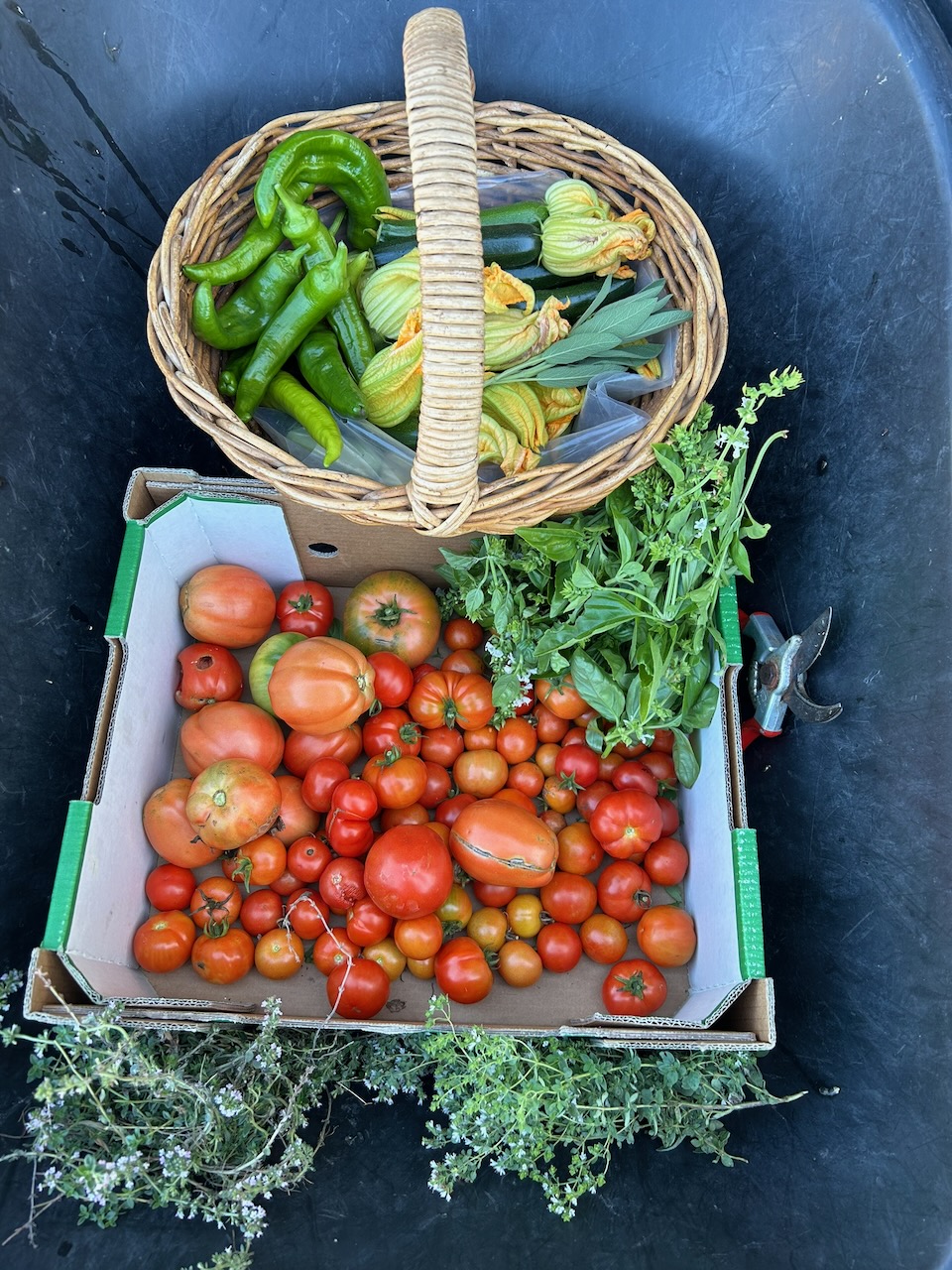
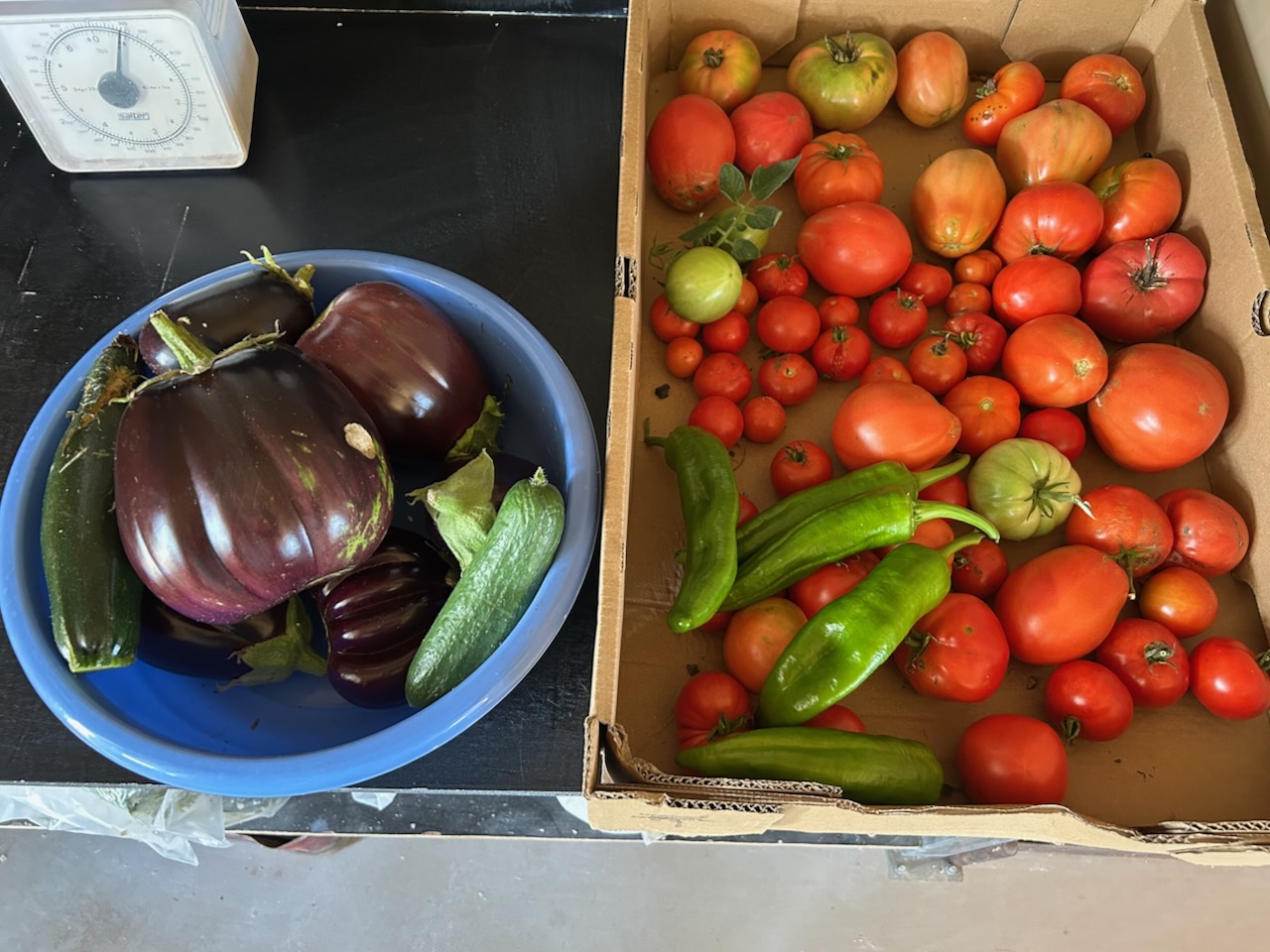
We have picked the first red tomato of the summer, well before Xmas. Always an achievement, but not so special these recent years, as with accelerating global heating, we are so much hotter and everything in the garden is ripening earlier.
When we moved here to the highlands in 1976, we couldn’t get a ripe berry off our newly planted berry canes until January. These days the berry crop is all over and gone well before Xmas.
We are harvesting peaches, apricots, the last of the late sour cherries, as well as strawberries and blueberries. We don’t make any pots over December and January, as we are full time involved in managing the fruit from the orchards and the summer flush of vegetables.
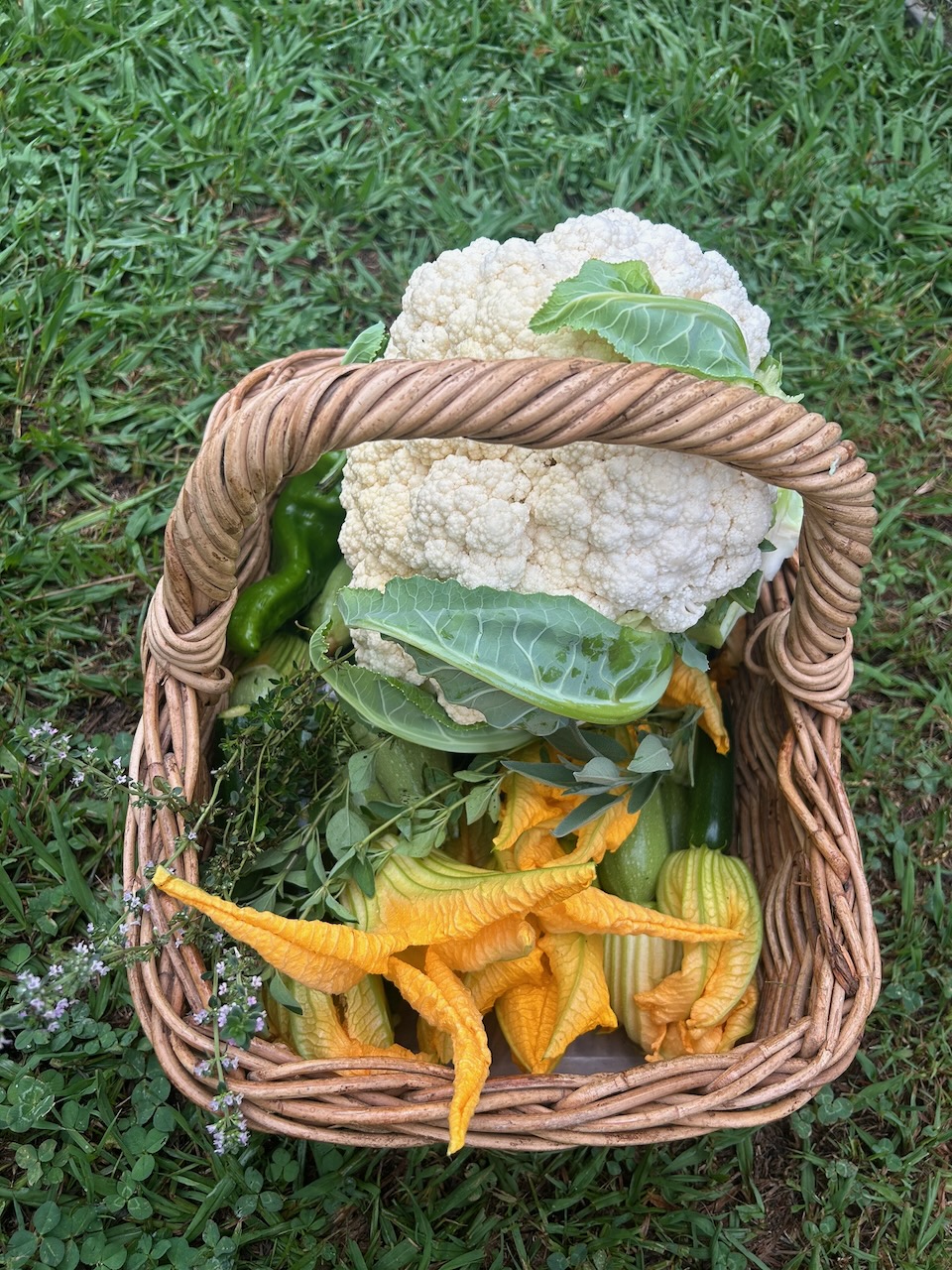
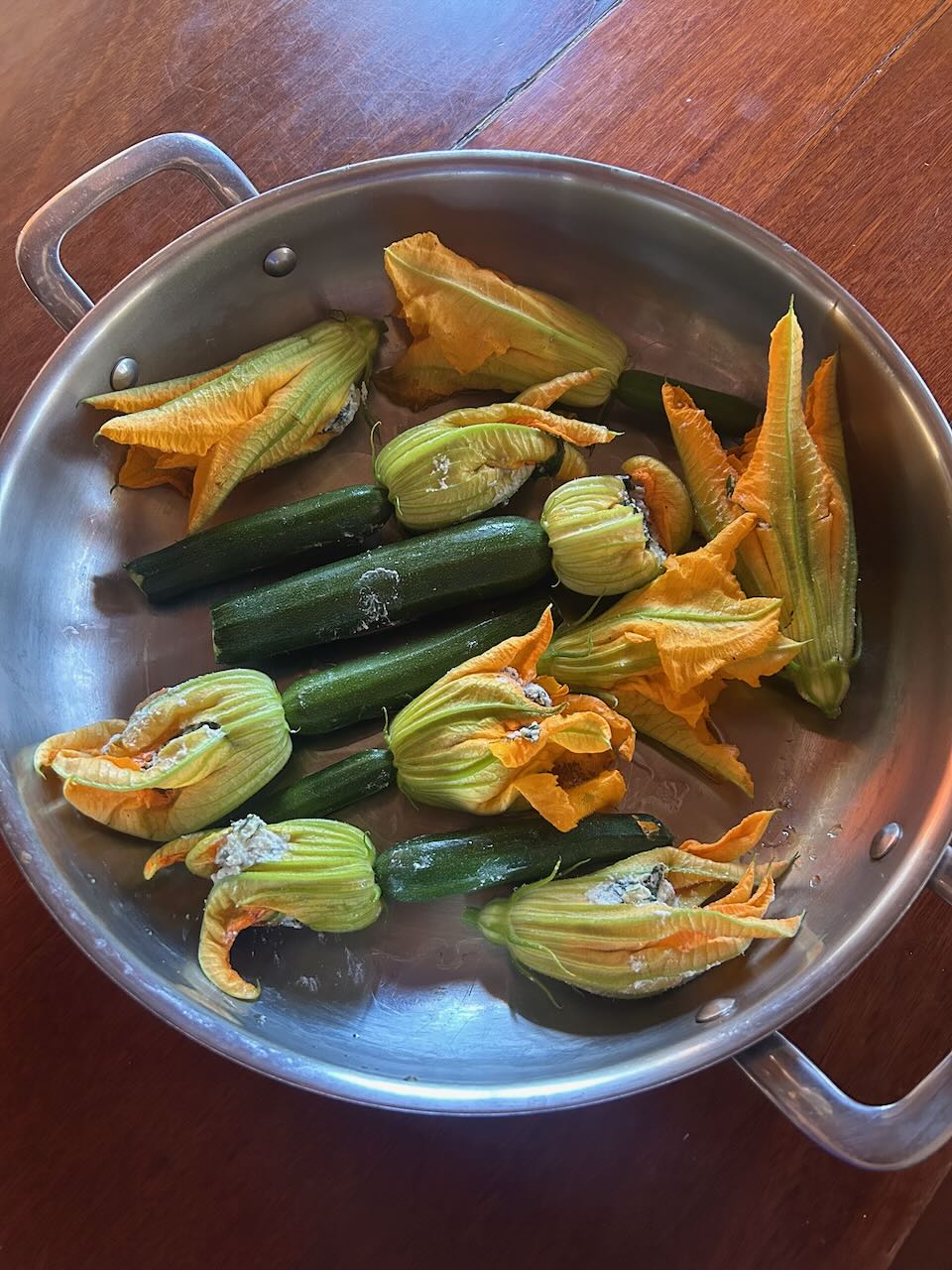
The zucchinis are going mad, so we are having a few meals of stuffed zucchini flowers. It’s a lovely summer time light meal. It achieves 2 important outcomes, by picking the flowers off the plant with the nascent fruit attached behind, it makes a colourful and delicious meal, but it also takes the fruit off so early that they don’t get a chance to explode into marrows if you just glance away for a moment or loose concentration, zucchinis fill out so very fast! Managing zucchinis means defusing them every morning early before they expand like The Big Bang!
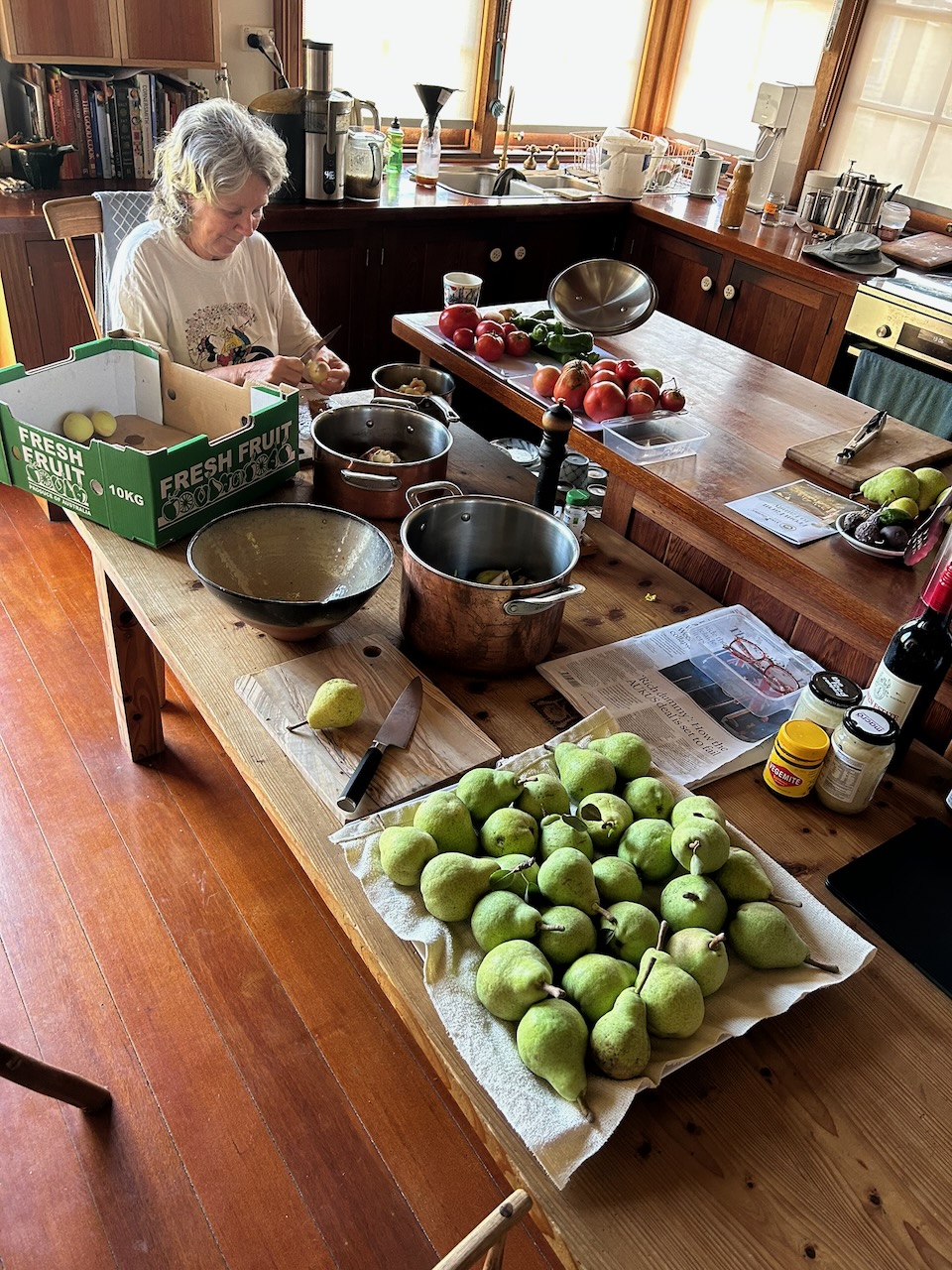
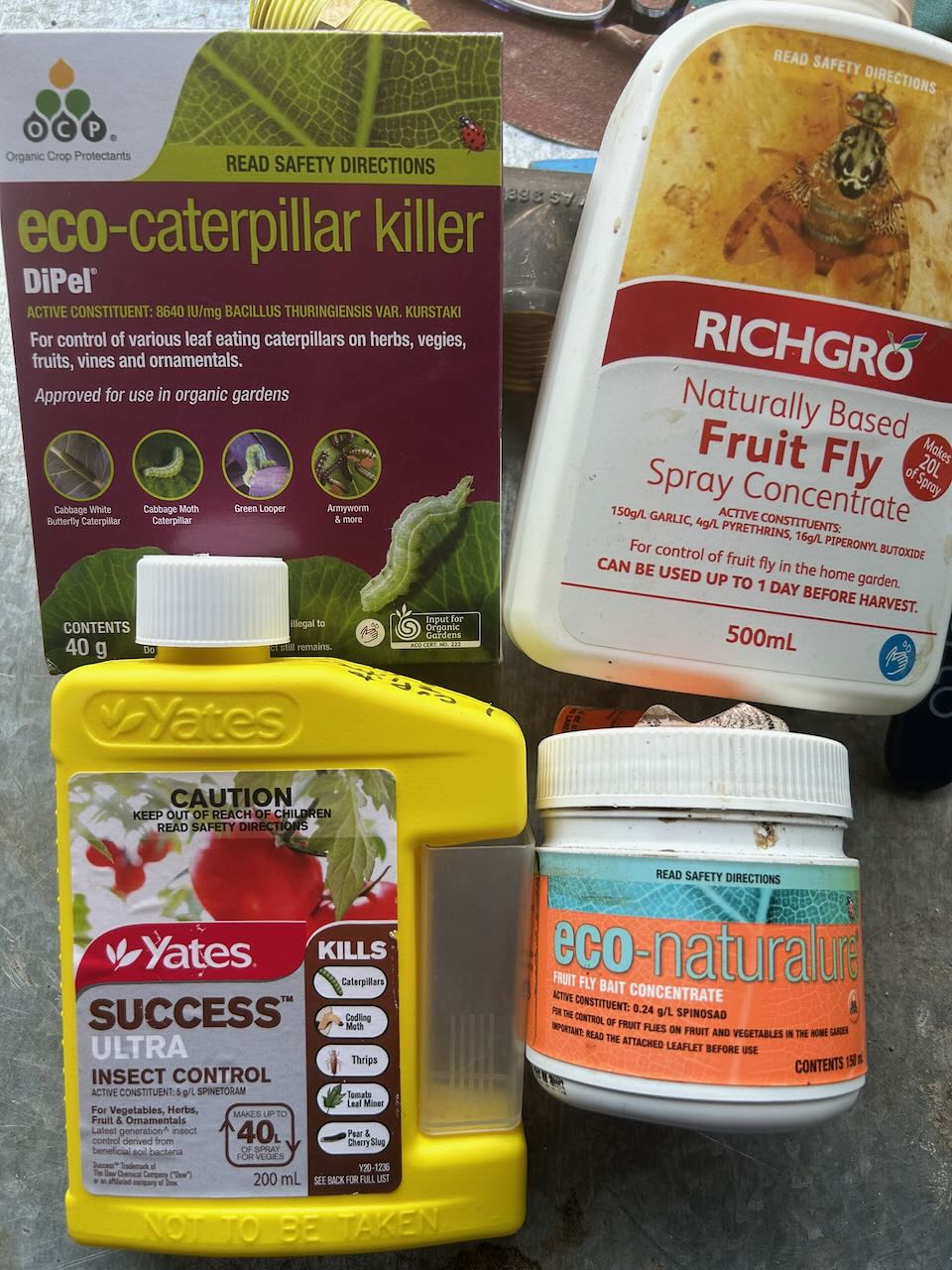
The heat also means fruit fly problems, we get in early in October/November with ‘DAK’ pots, male fruit fly lures, and protein lures for the female flys. I also spray a ‘spinetoram’ soil bacteria and dipel bacteria for the codling moths. I also place codling moth lures in half a dozen of the various trees that are susceptible to codling moth, like apples, pears and quinces. Everything we do is approved for organic gardening. Still, with all this effort, we still get fruit fly strike. It’s important to pick the fruit early and cook it to preserve it either in the freezer or in ‘Vacola’ vacuum jars, and stored for later in the year.
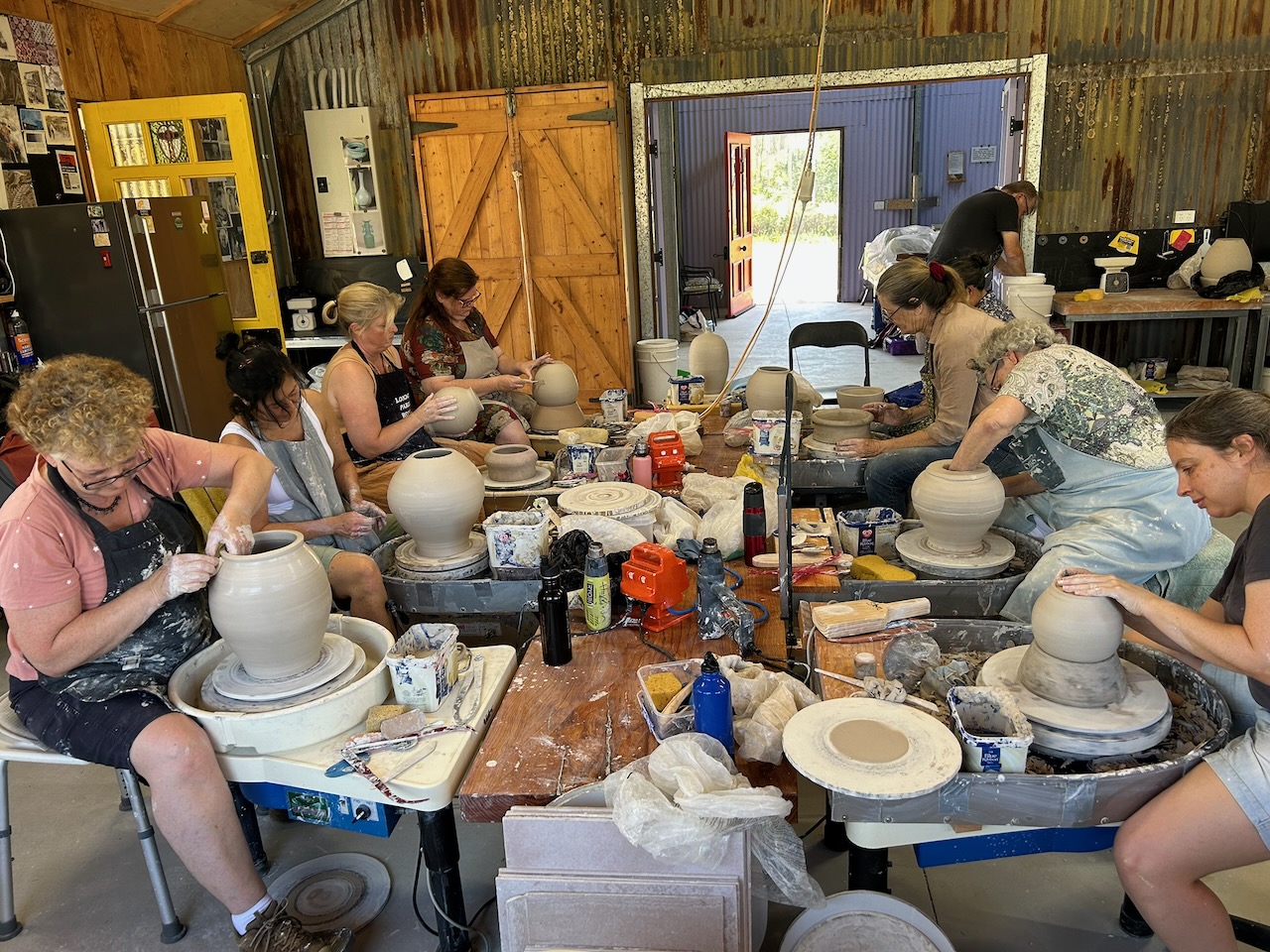
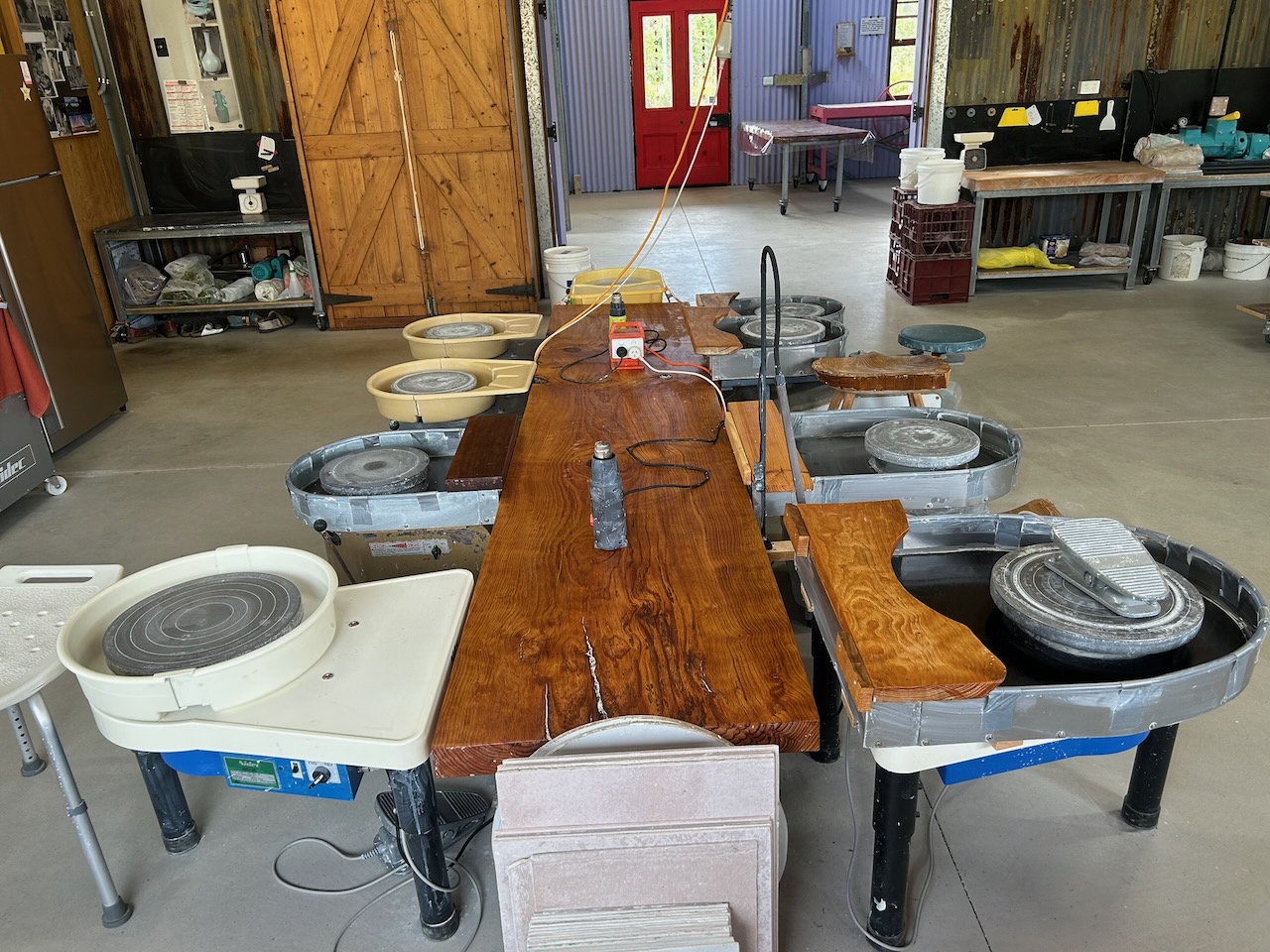
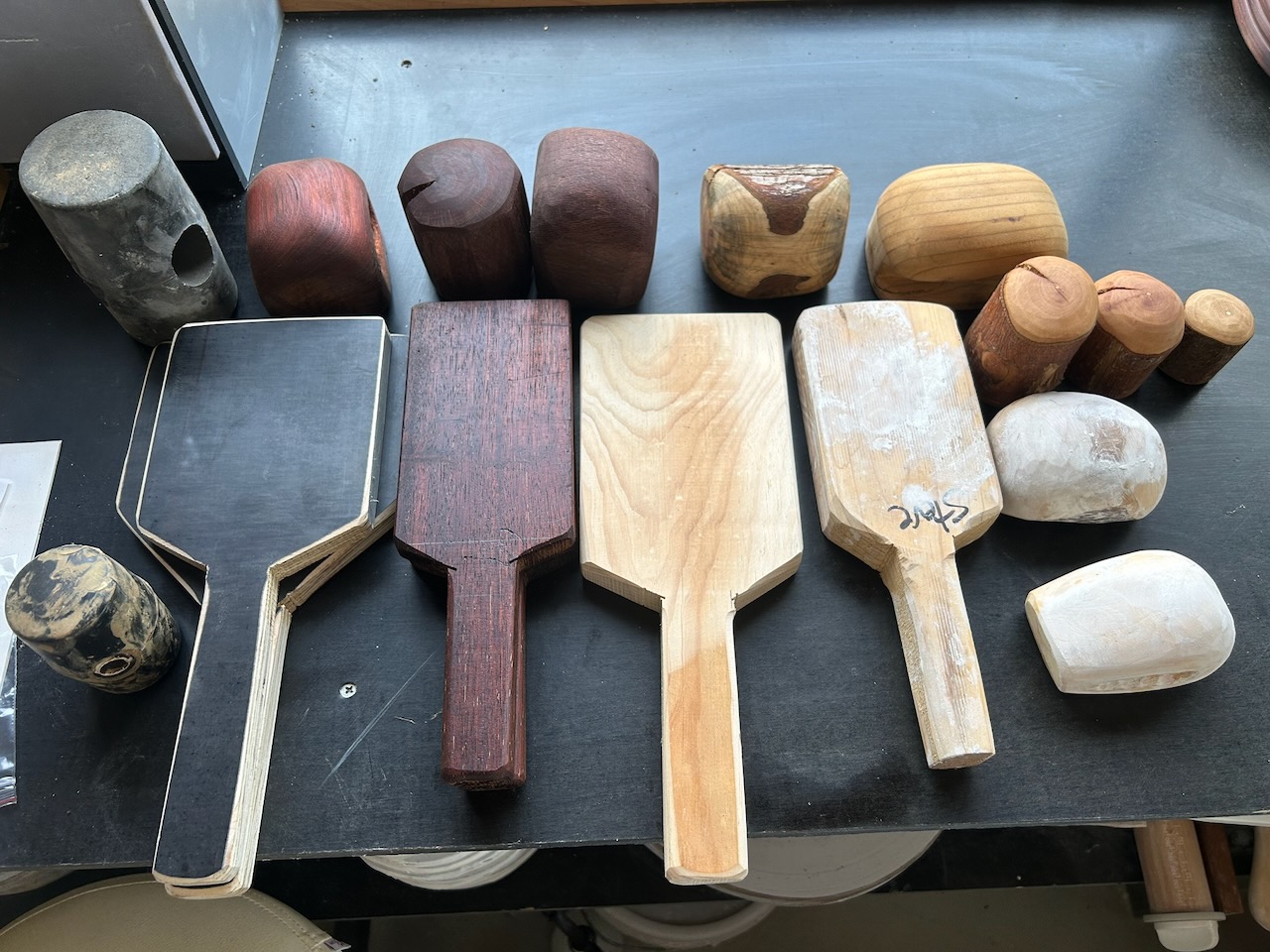
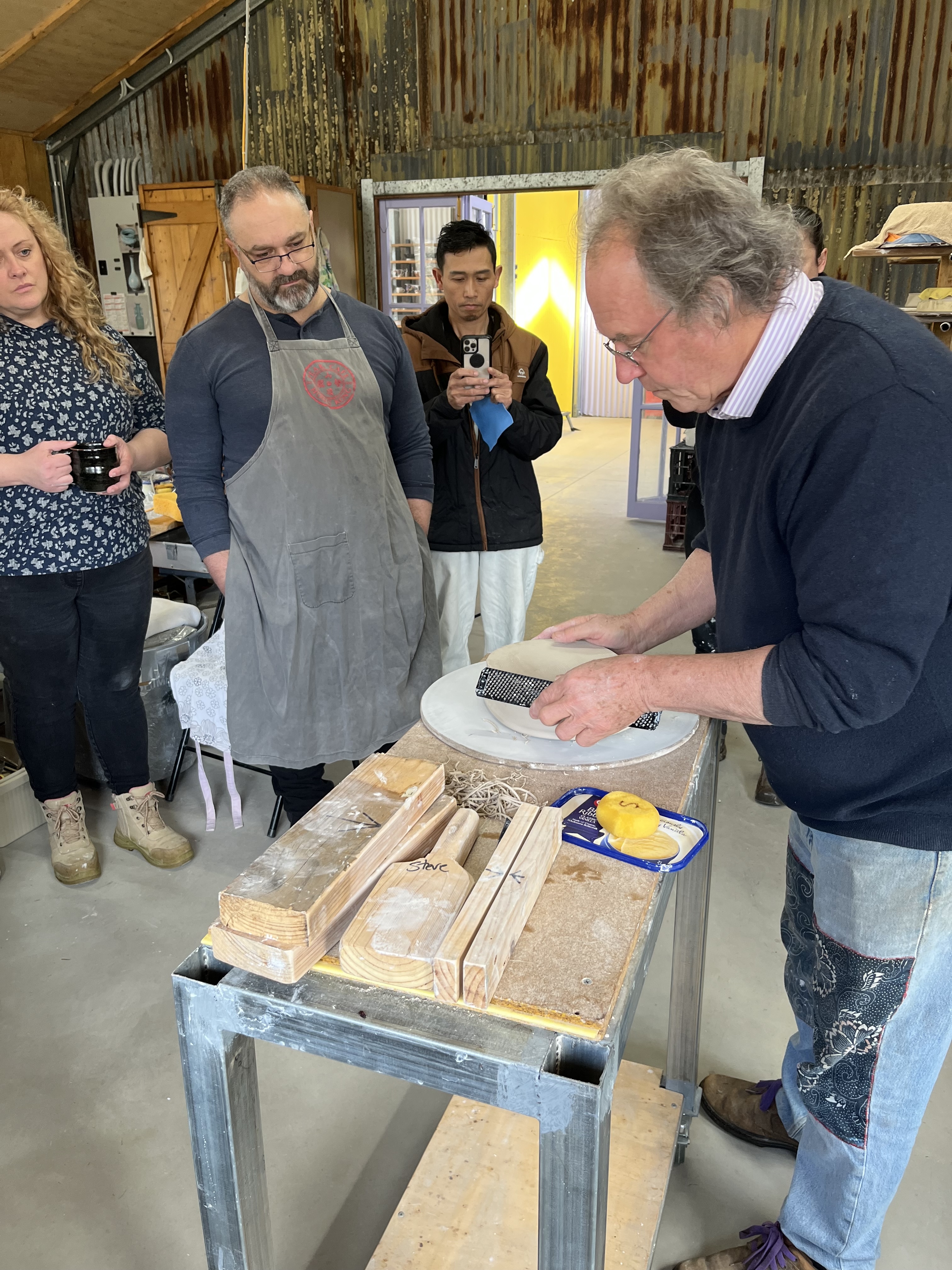
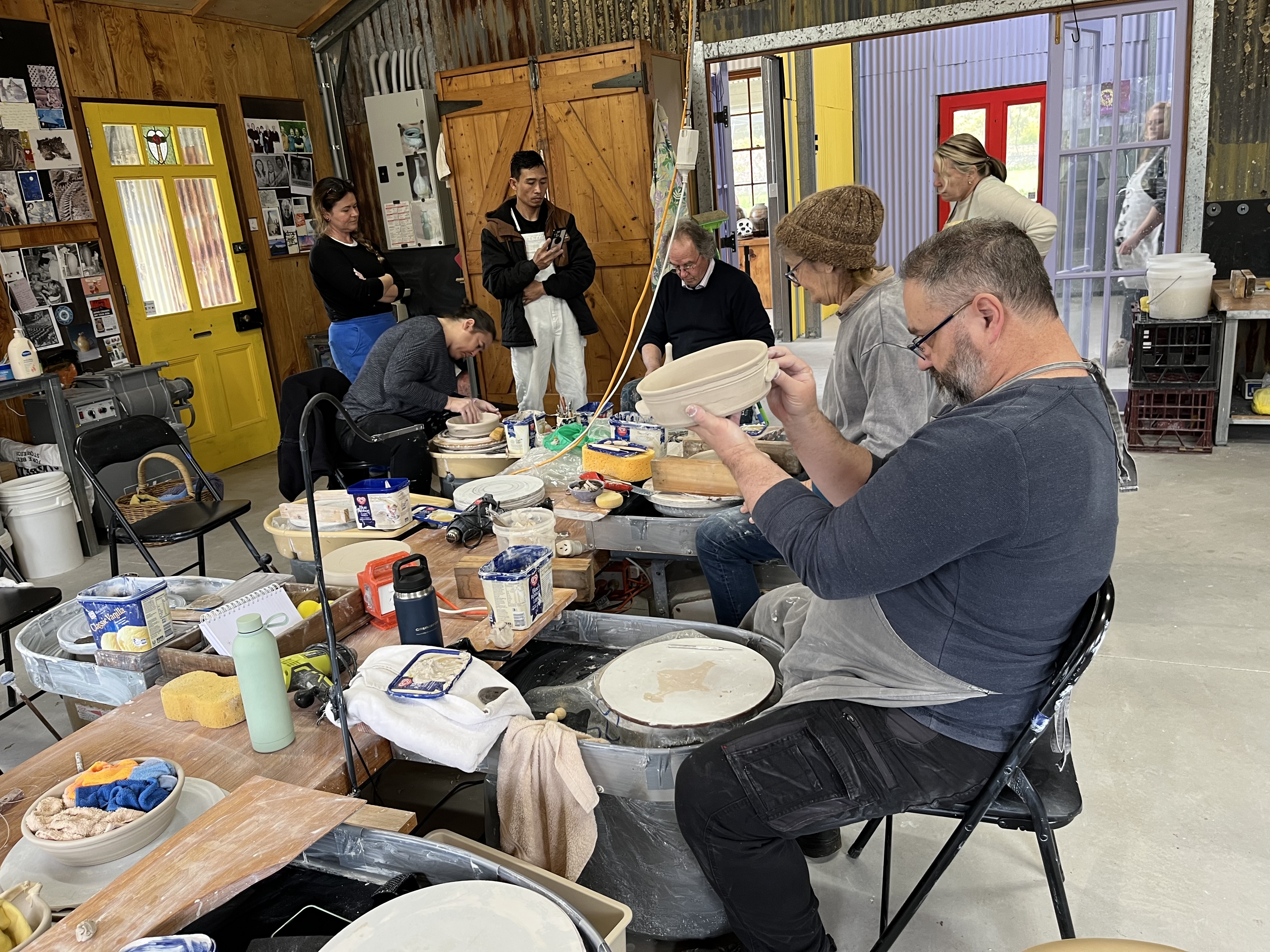
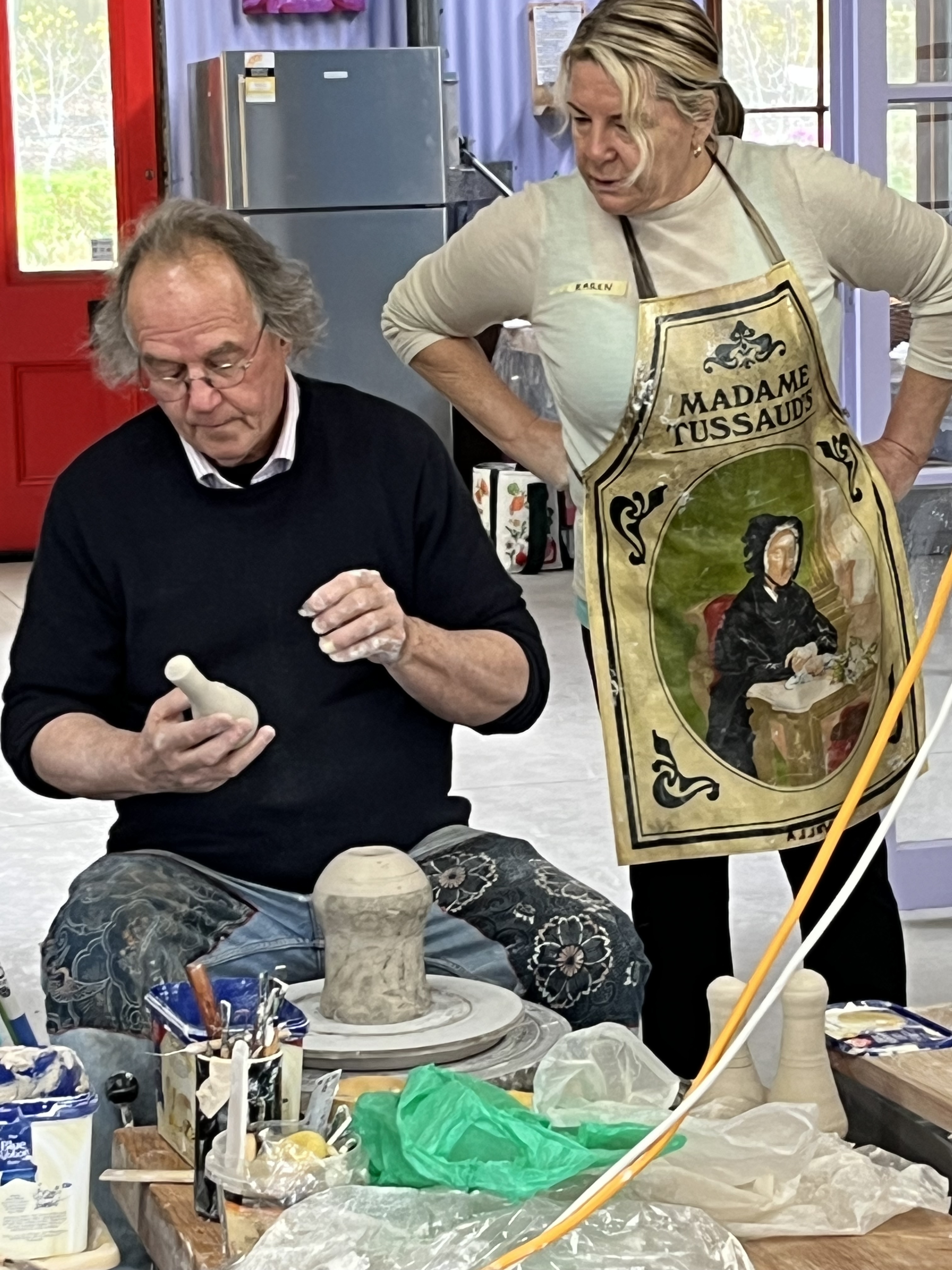
Last weekend I ran a couple of pottery ’tool-making’ workshops. I take small groups of 5 or 6 potters through the steps in making their own tools specific to their particular needs and preferences. There are at least a dozen specific tools that anyone could choose to make but to be realistic, a novice tool maker can only realistically achieve 3 or 4 really nice and well crafted tools in a day, so you have to chose what is most appealing and useful ti you. I don’t expect everyone to finish every tool on the day, but if all the roughing out is done and only the fine finishing is left to do. It’s best to take it home and do all that time consuming fine sanding and oiling at a later time. Best to make use of my skills and my workshop equipment to get as much done here as is realistically achievable in the time.
Making your own tools gives you 2 important outcomes, firstly the tool will be exactly what you want and need, unlike some of the rubbish that is sold in the ‘basic’ pottery tool set sold in the cheap shops. The only good item in that plastic bag is the sponge! the rest all need work. The best thing to do with badly designed tools is to cut them up or down to make them more appropriate. Don’t be afraid, just cut it, grind it, file it or whatever until it does the job that you want. If you can’t make it work for you, just put it away and make a good one from scratch.
This is the 2nd important outcome. It gives you the skills and insight to design and make the exact tool for you for that particular job. If it doesn’t work, then you know how to re-shape it until it does work how you want. Just because you bought it – possibly at great expense – from a reputable craft shop, doesn’t mean that it will be the best shape for you. If it doesn’t work, don’t hesitate. Don’t waste time struggling with it. Take the initiative, cut it up or grind some off it, or possibly just put it in the ‘Down-To-Experience-Bucket’ and make a proper one.
There is also a 3rd benefit. Making your own tools can be virtually free by recycling scrap material. There is a huge sense of satisfaction in sitting back and admiring a beautifully crafted tool that you made yourself from a branch off a fruit tree growing in your garden. Home grown organic tools. AND, so rewarding and satisfying. Making your own things feeds your soul. Re-use, re-purpose, re-cycle.
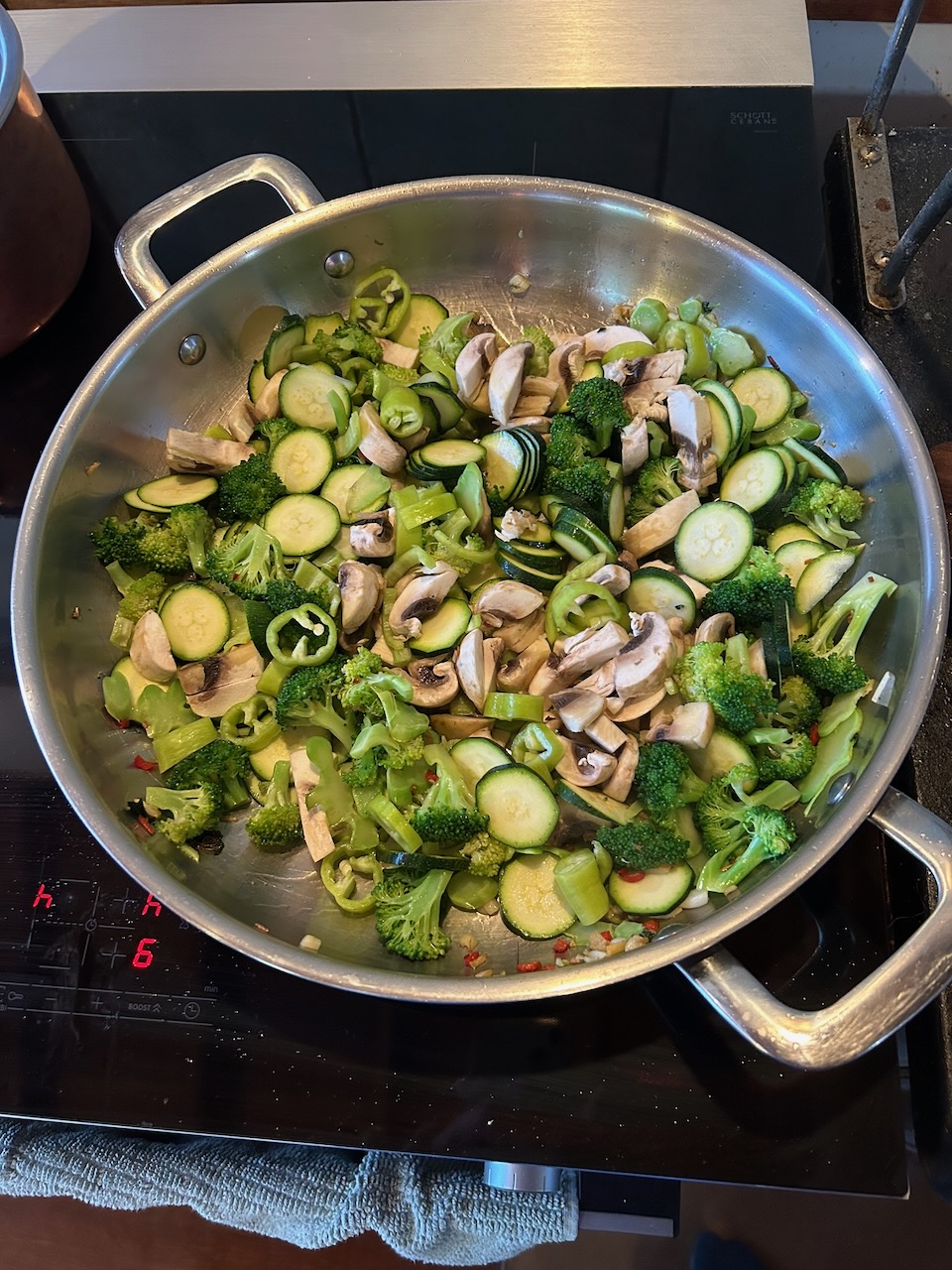
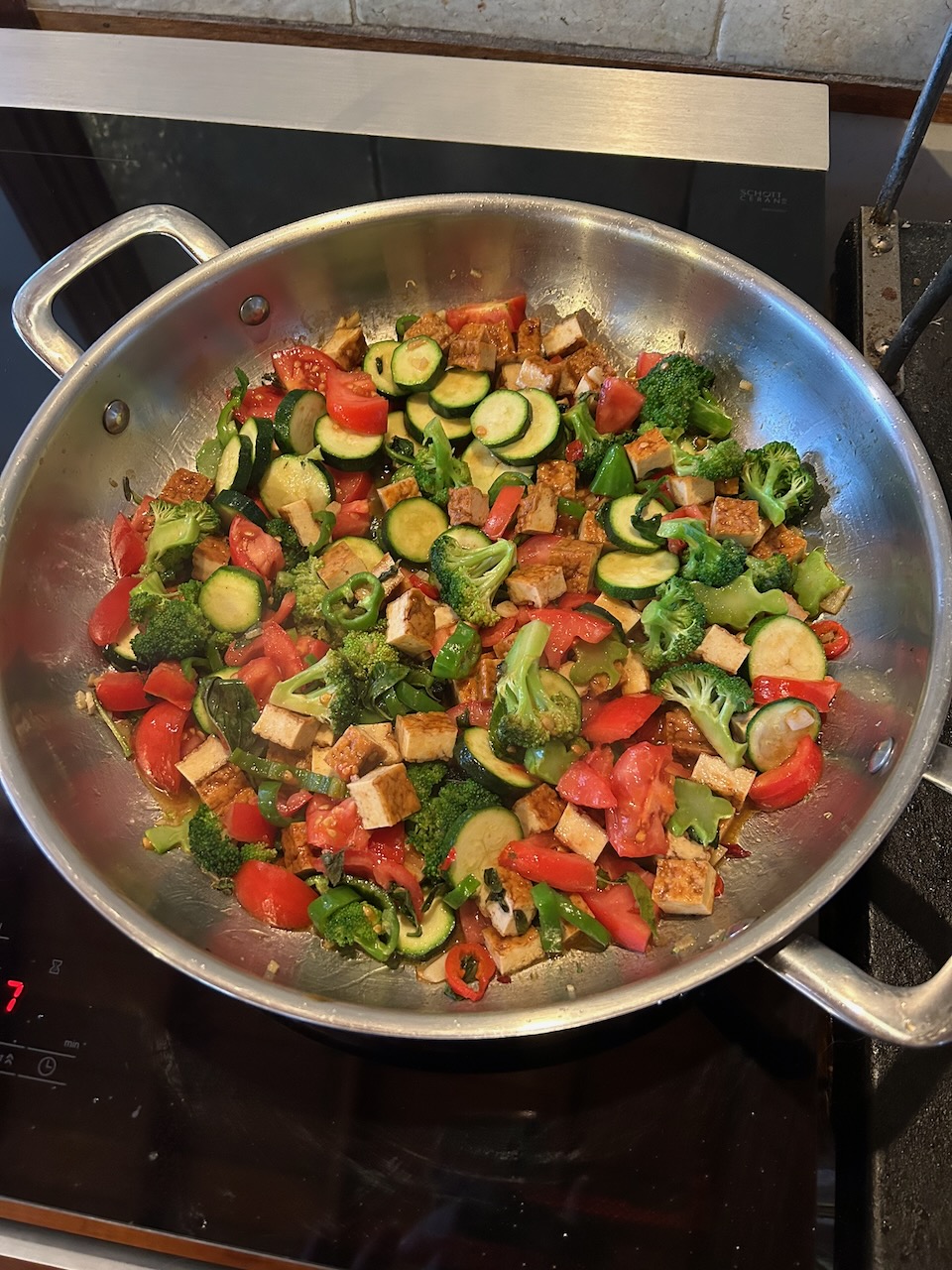
I made a stir fry of garden veggies and tofu for dinner to feed my soul and my belly.
Nothing is perfect, nothing is ever finished and nothing lasts.
It’s the last days of spring, and I have been very busy doing all sorts of little jobs that have been waiting for me to find some ‘spare’ time. We were so flat out busy working in the pottery leading up to the open Studios weekends. Now it’s time for other things.
Although it’s still spring, it seems like summer has been with us here in Balmoral Village for the past 6 weeks and more. The lush green spring growth is long gone. It’s been hot and dry, interspersed with cold, blustery, windy days. The net effect has been to dry everything out. The paddocks and lawn around the house have browned off. The soil in the vegetable garden has dried out to the point of shrinking, and starting to crack open in the places where we are not watering the nascent, emerging seedlings, destined to become our summer food source. We keep the soil moist around the seedlings and let the other areas stay dry – until I need that spot to plant more vegetables.
We have spent years nurturing the local soil here. Improving it with multiple applications of compost and manure, interspersed with additions of lime and dolomite. Over the decades, the depth of the fertile, friable topsoil has increased to over 300 mm.possibly more in places. I never seem to hit the hard iron stone and sandy loam layer anymore. The worms take the organic matter down deep and mix it well. I just keep adding compost to the top as a fertilising mulch.
It was a real shock and learning experience to discover how effective worms are at disseminating organic matter down through soil to amazing depths, given time and repeated applications of organic matter/compost. After the bad fires here in 2019, our orchard trees got very badly burnt, so I decided to move the orchard up closer to the street and to build the new pottery on the old orchard site. When we started to dig out the stumps of the 45 year old fruit trees, I was amazed that the rick chocolate brown top soil when down half a metre or more. When I planted those trees in 1976, the holes I dug for each tree were dug through hard yellow stoney loam. What a change in the soil profile over those years. Thank you worms.
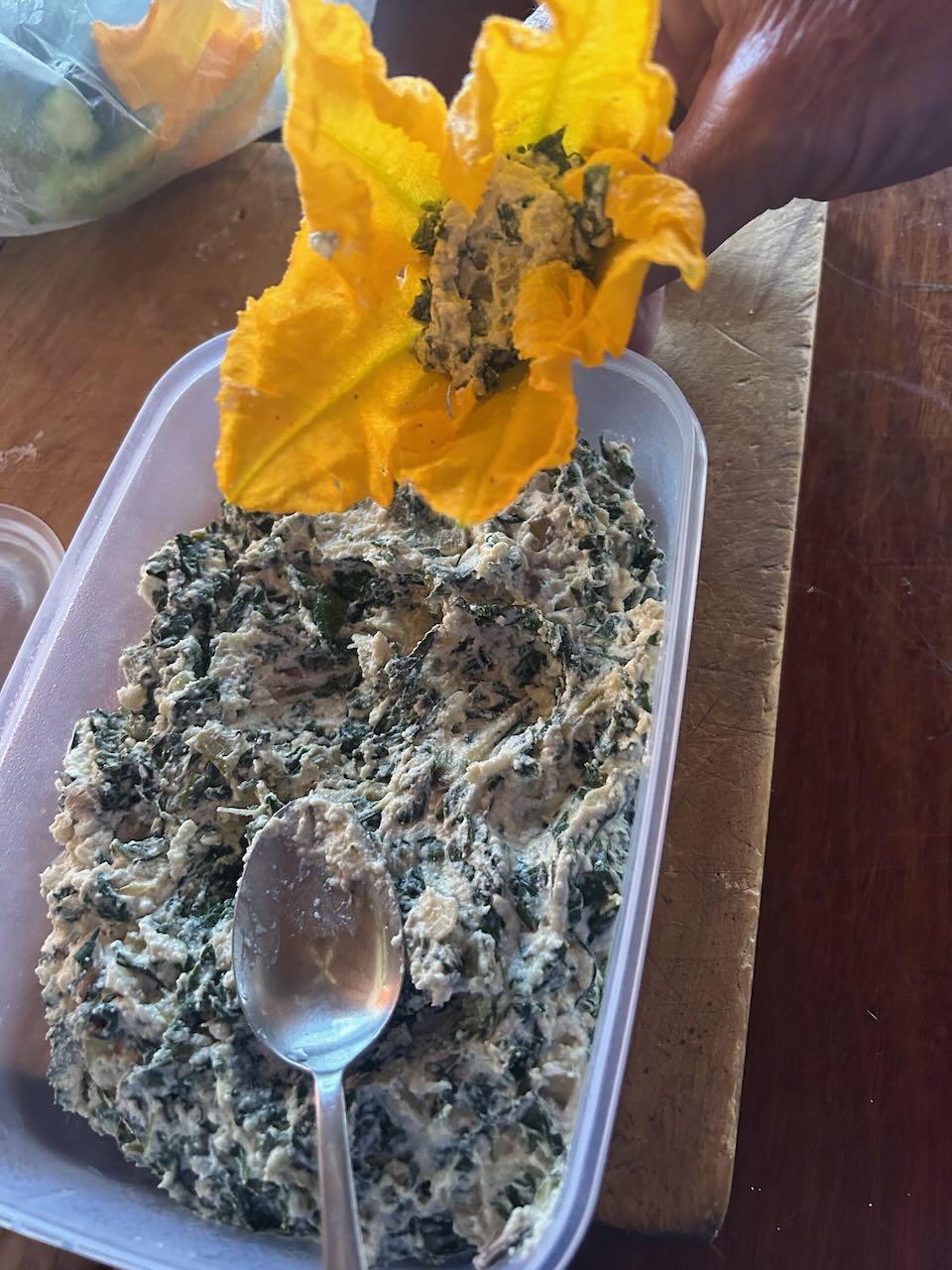
The zucchinis are starting to produce well now. They come on quite fast from seedlings to fruiting in a few weeks in this warm weather. I have been picking them small with the flower still on and stuffing the flowers with cottage cheese and herbs for a light fun dinner.
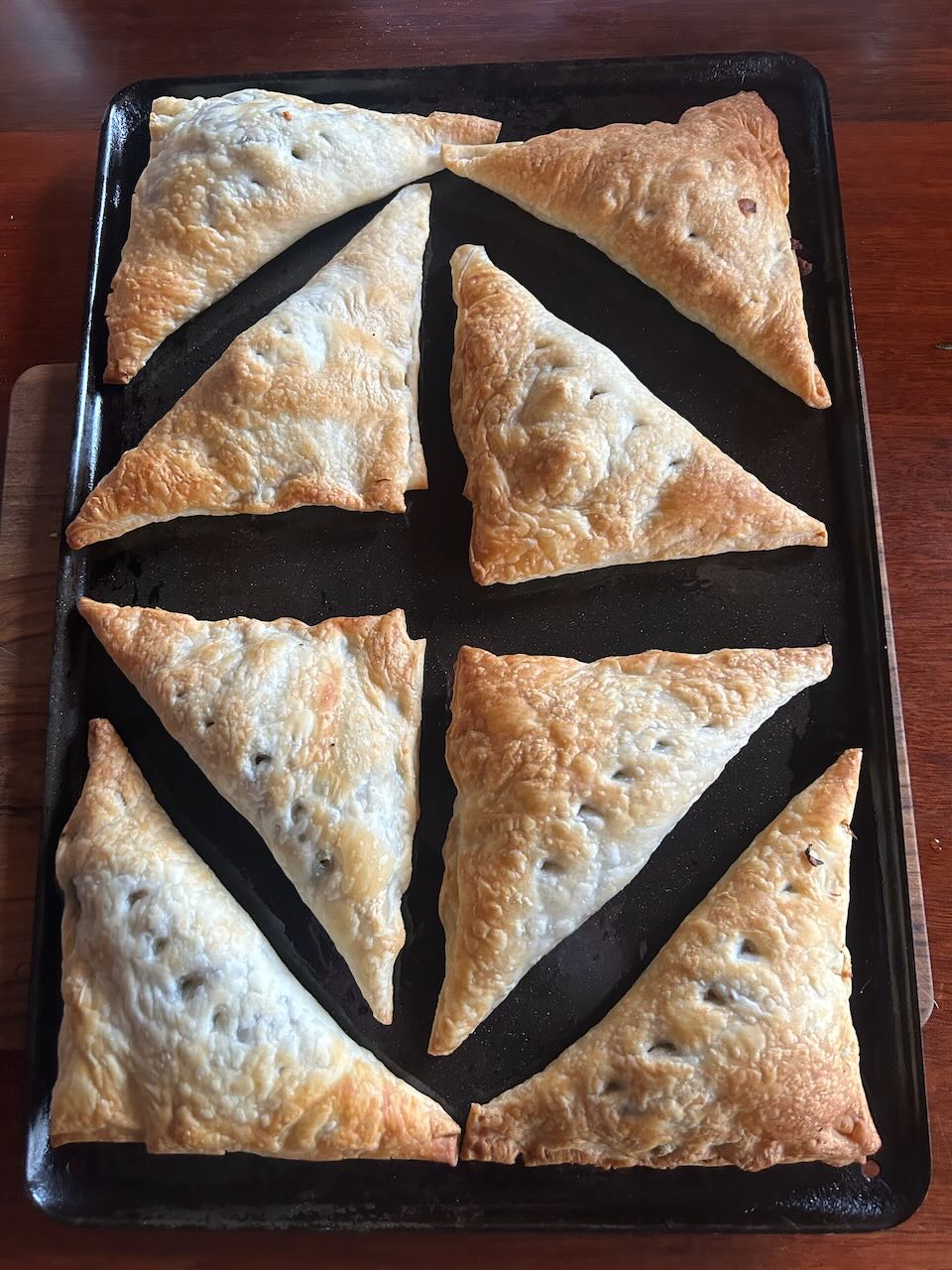
We also have plenty of silver beet/chard at the moment, although it is starting to bolt with the longer days. I have planted more seeds for a follow-on crop. I have been making spanakopita-like spinach and cheese triangles, or spanapotterka as I like to call them, or sometimes whole pies with a similar filling. It’s a great way to use up our excess of leafy greens, as they bolt away in the heat, and maximise our return from them before they are all gone. but it does need the ricotta, fetta, blue cheese and herbs mix to make it special. Plus a light touch of chilli.
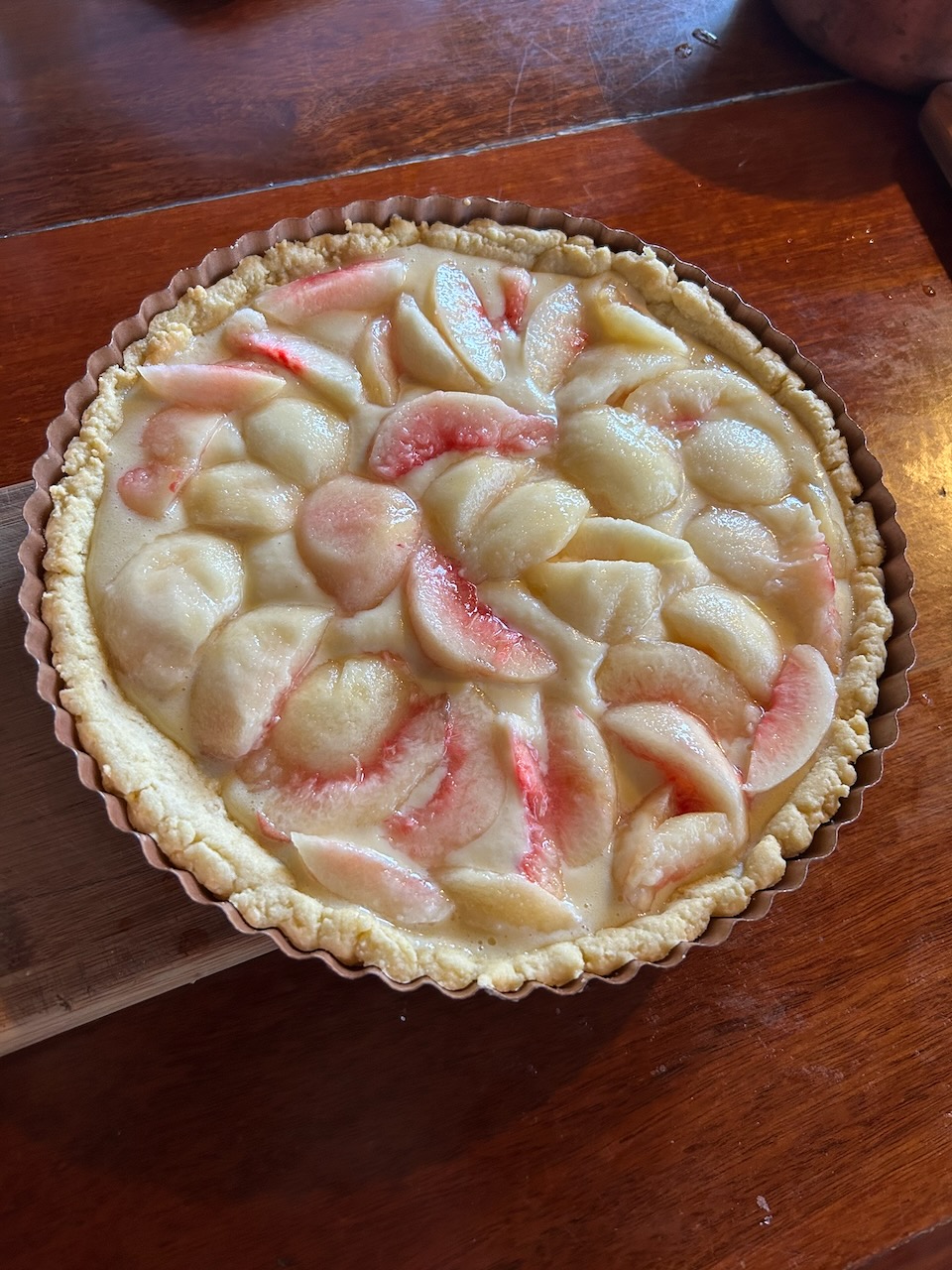
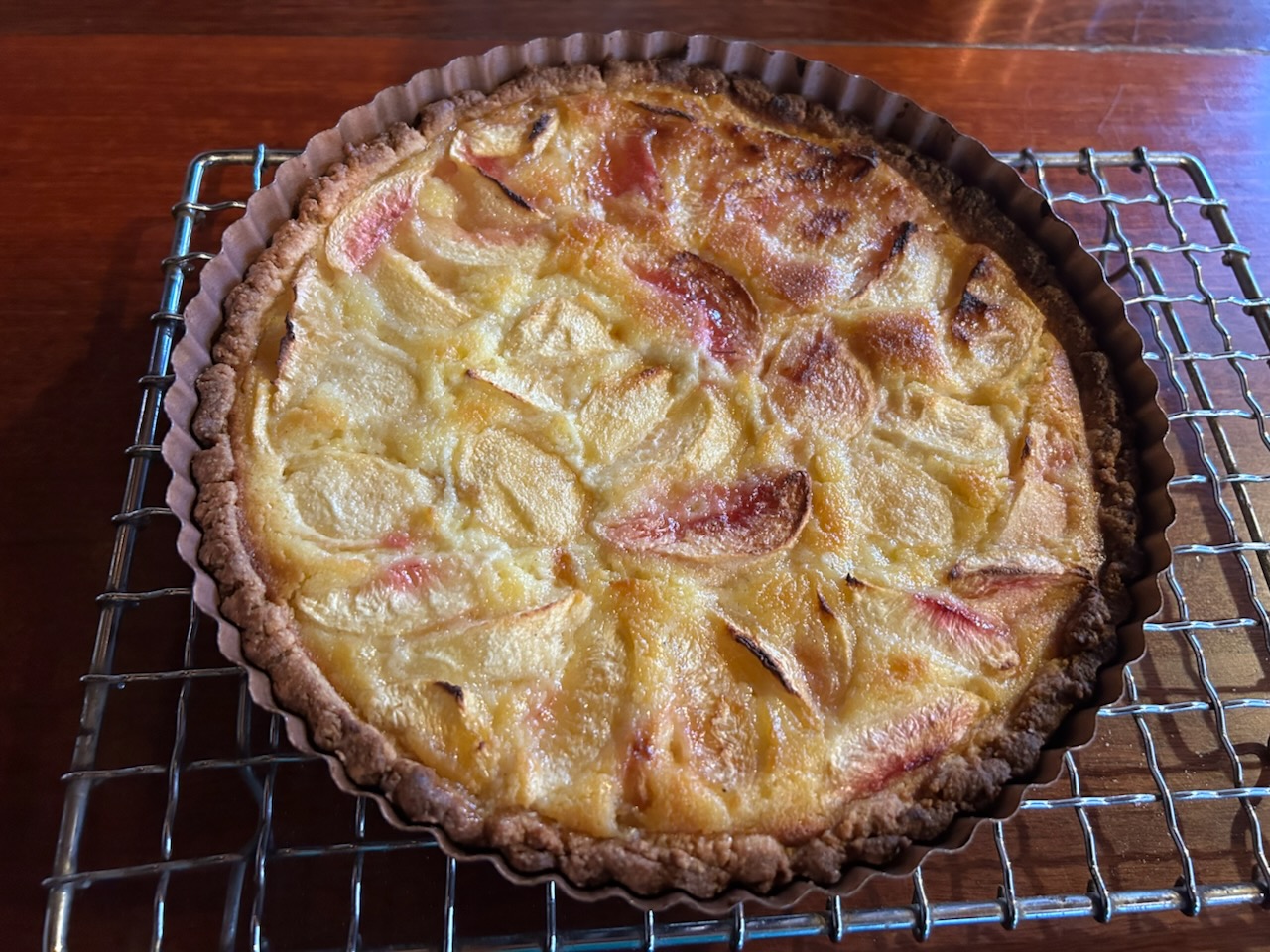
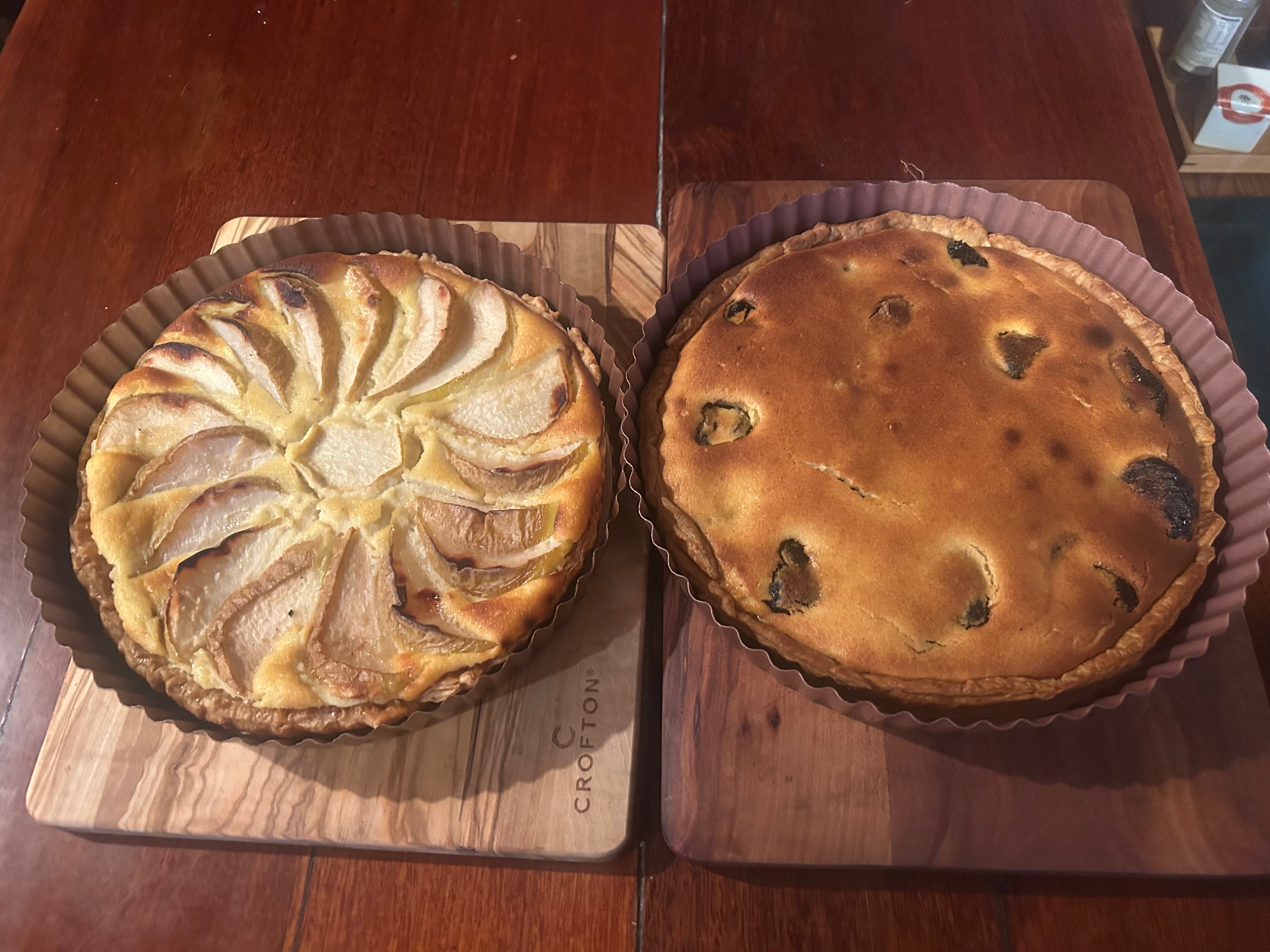
I have also been making a few fruit tarts as well. Something for a more relaxed and comforting morning tea. Since the Open Studio sales are over and the 50% off Xmas sale hasn’t happened yet. Not until the 14th of December. The pottery is all cleaned out and set up for sales, I don’t want to mess it all up making more pots just now, as we still have plenty of stock. So I have time in the garden and kitchen catch up and do a lot of things that I like to do, but haven’t had the time to fit in, until now.
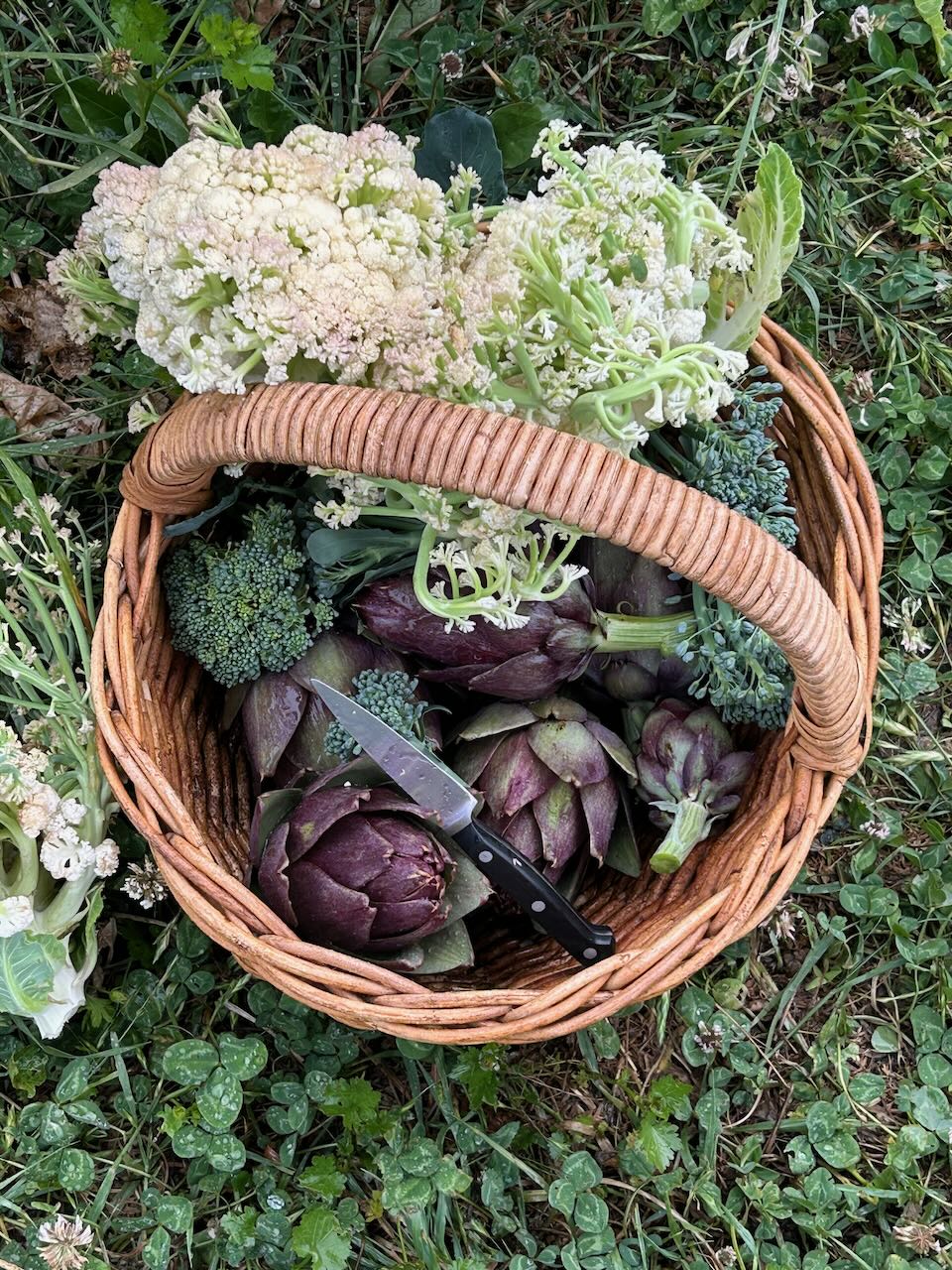
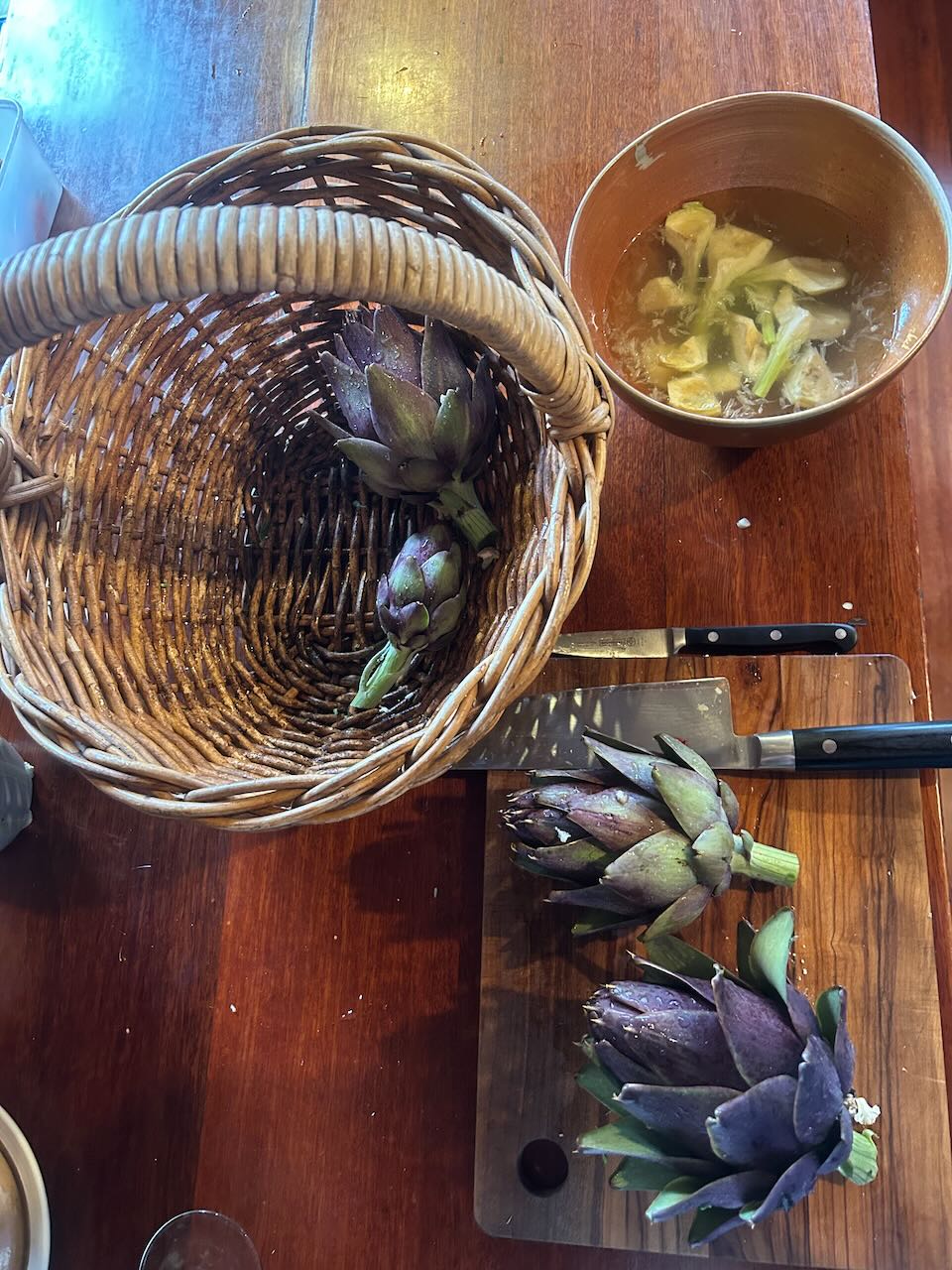
We have picked the last of the artichokes and cauliflowers. I made a vegetable pasta with the artichoke hearts and as the cauliflower was so far gone. I mashed it up and used it as vegetable filling to bulk out the sauce with last summer’s tomato passata.
This week we picked the last of the cherries and the first of the apricots.
I like working in the garden, especially in the warmth of the season, before it gets too hot. Everything responds so well and so fast at this time of year. There is always some fragrance in the air and birdsong on the wind, often fighting over the last of the high fruit in the mulberry tree or some other treasured and favoured food source. They squabble and chatter and squark and carry on, endless entertainment.
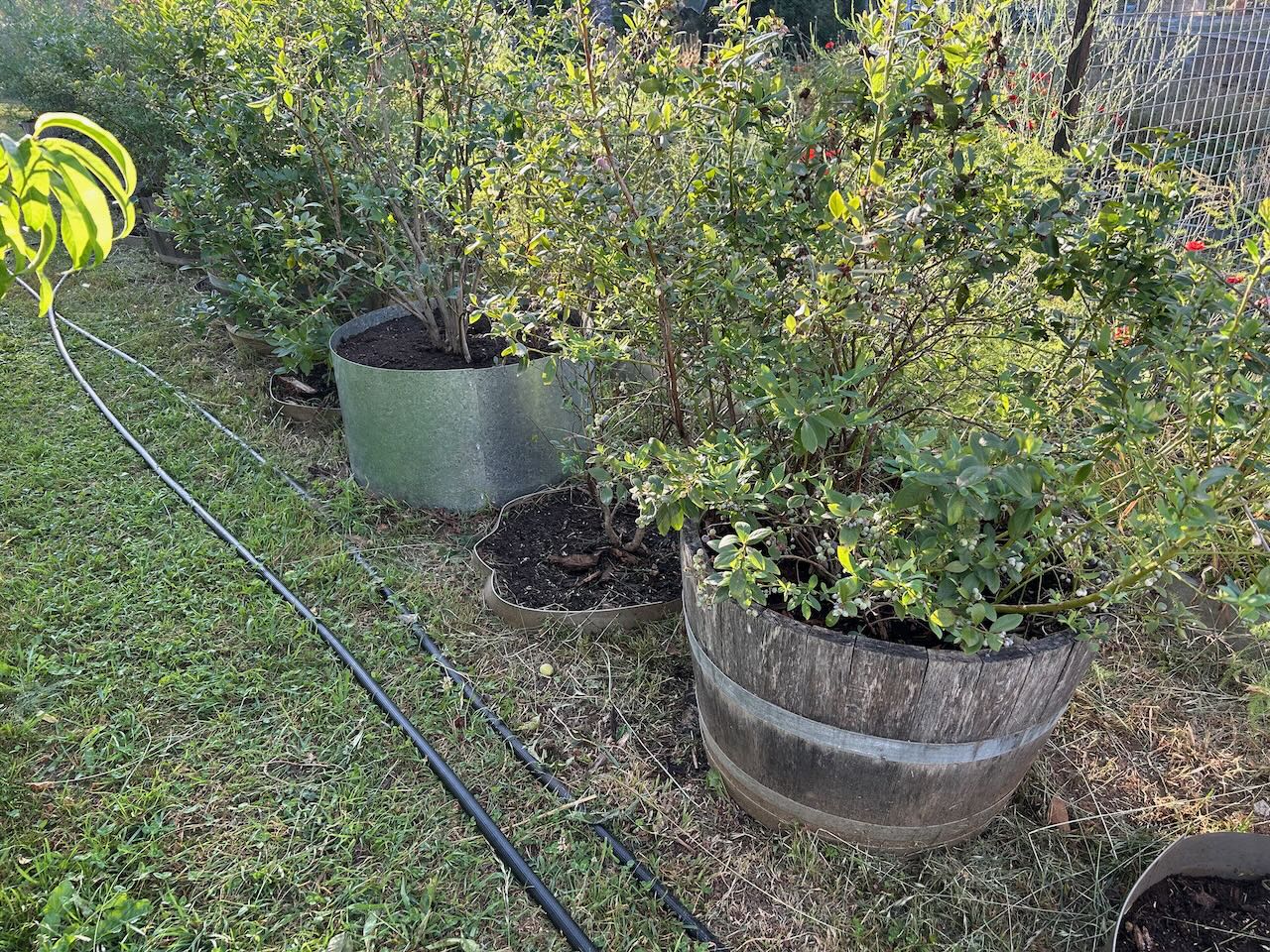
While in the garden, I noticed that one of the ancient wooden barrels that I bought 3rd, or even 4th hand, some 30 years ago, have finally rotted away to the point of collapsing. The staves have rotted away from the inside with the constant wetting and drying as we water the blueberries that we are growing in them.
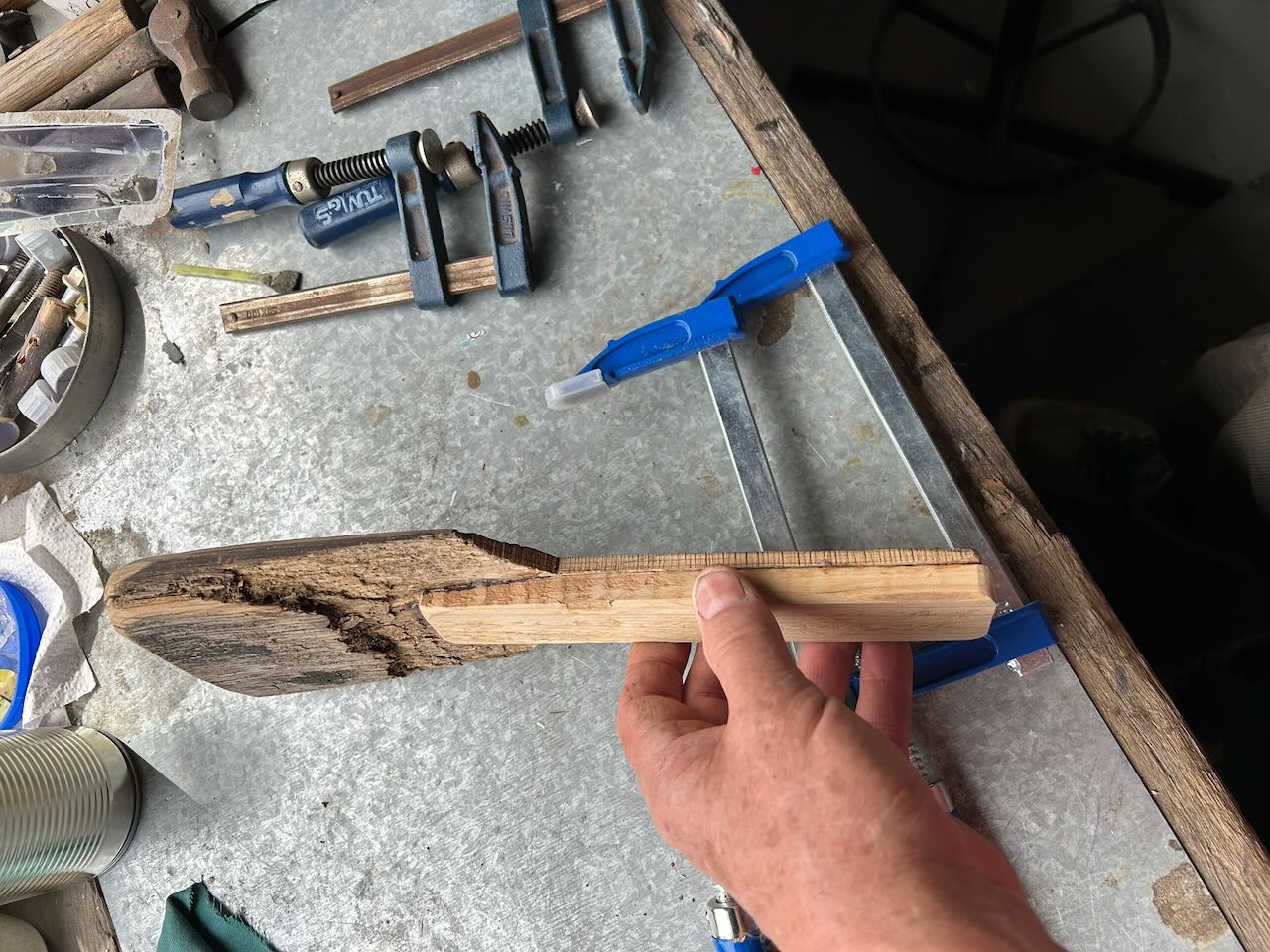
I hate to see waste, so I made one of the rotted staves into a textured pottery tool. A paddle for creating texture while changing the shape of a larger pot. I’m teaching a weekend workshop of tool making next weekend, so this can be one of the projects. i have lots of these old textured staves now. I had to shape and add and new wooden baton, to reinforced and strengthen the handle. A rewarding project that avoids waste and recycles some old timber into something useful and precious. I love the natural, organic texture of the old weathered wood.
Once that was done I set to and cut, folded and rolled a new galvanised steel sheet ring to slide over the old soil base to keep the bush alive. I slipped the ring up and over the bush, down around the soil base. I made the new ring to be just 50mm larger in diameter to make the job easy. It fitted perfectly! I filled the small gap around the edge with some light soil and compost mix, eventually watering it all in to settle it down. It cost me about $30 to make this new steel pot, and it was quick and easy, as I didn’t need to move the plant and all its soil. A new 1/2 wine barrel would cost a couple of hundred dollars these days. So out of our budget range. $30 seems cheap to me for a 750mm dia garden pot, 400 mm high.
This new steel pot isn’t as beautiful, rustic and weathered as the old wooden barrels. The wood has a certain ‘natural’ beauty that I love, but I ask myself. “Are they 6 times better?” Possibly? But then I think of trying to lift the 100kgs of soil and root ball up and into a new wooden pot. I couldn’t do it anymore. So I’m playing it safe. I’m happy with the new pot.
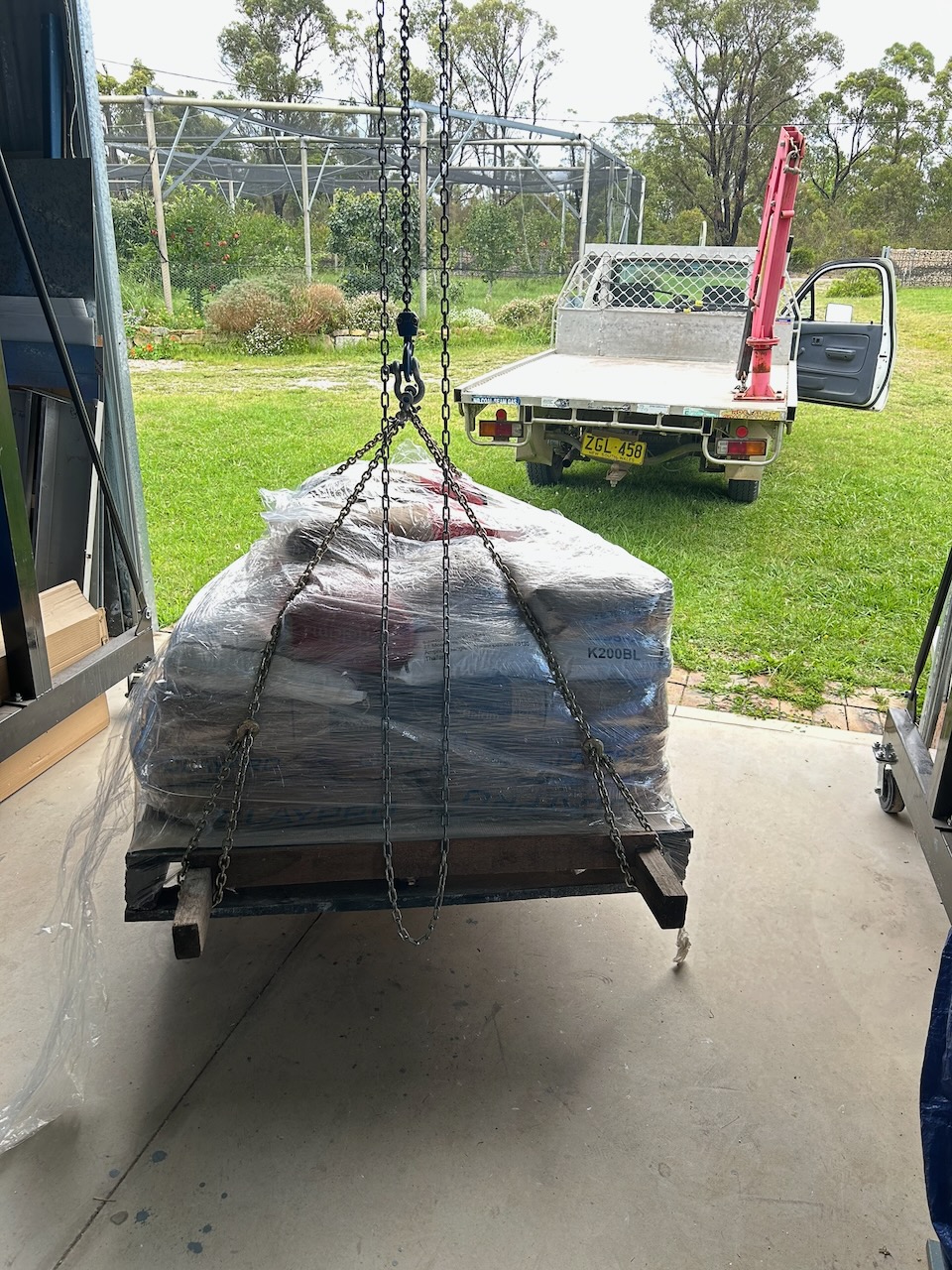
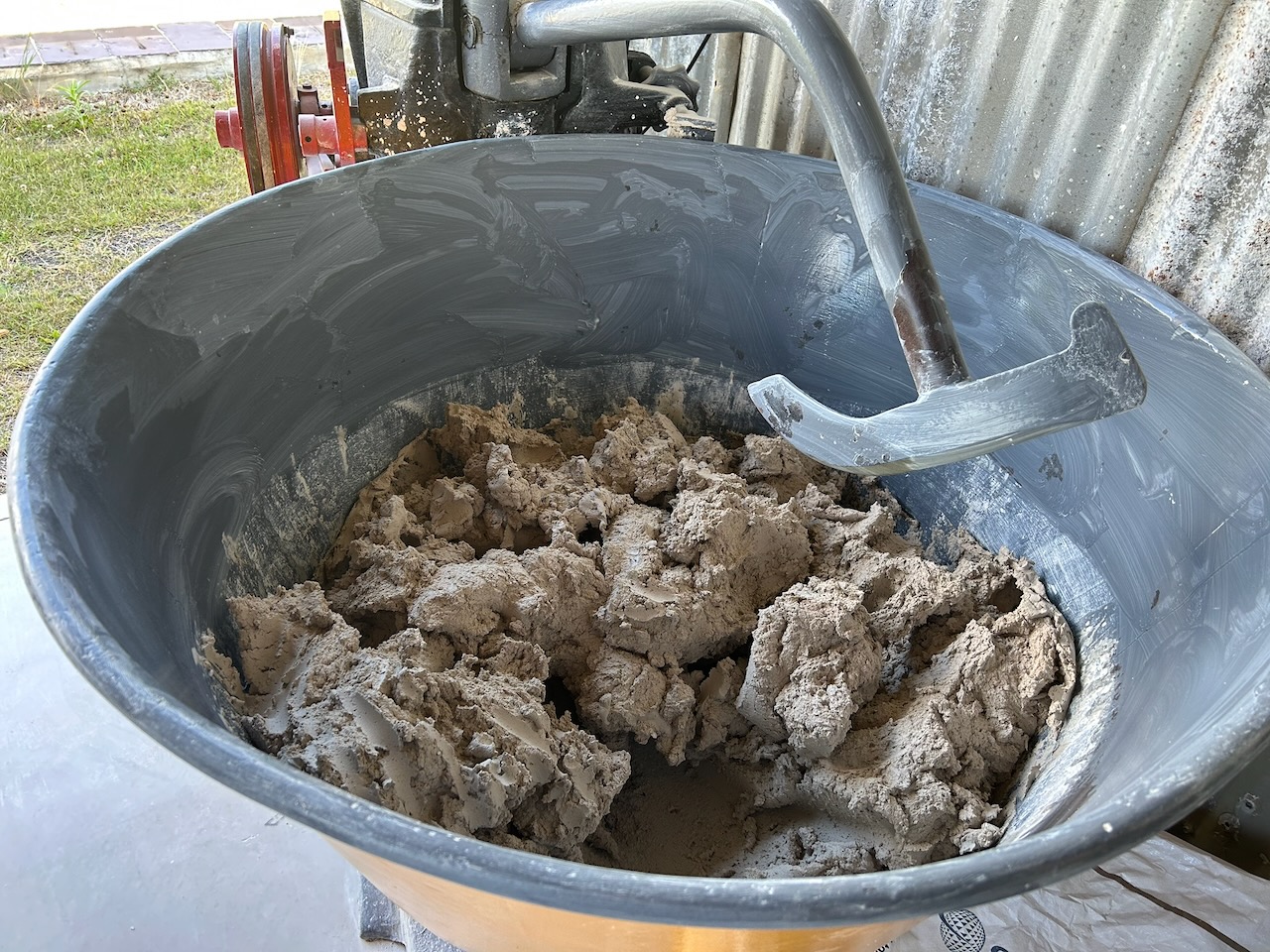
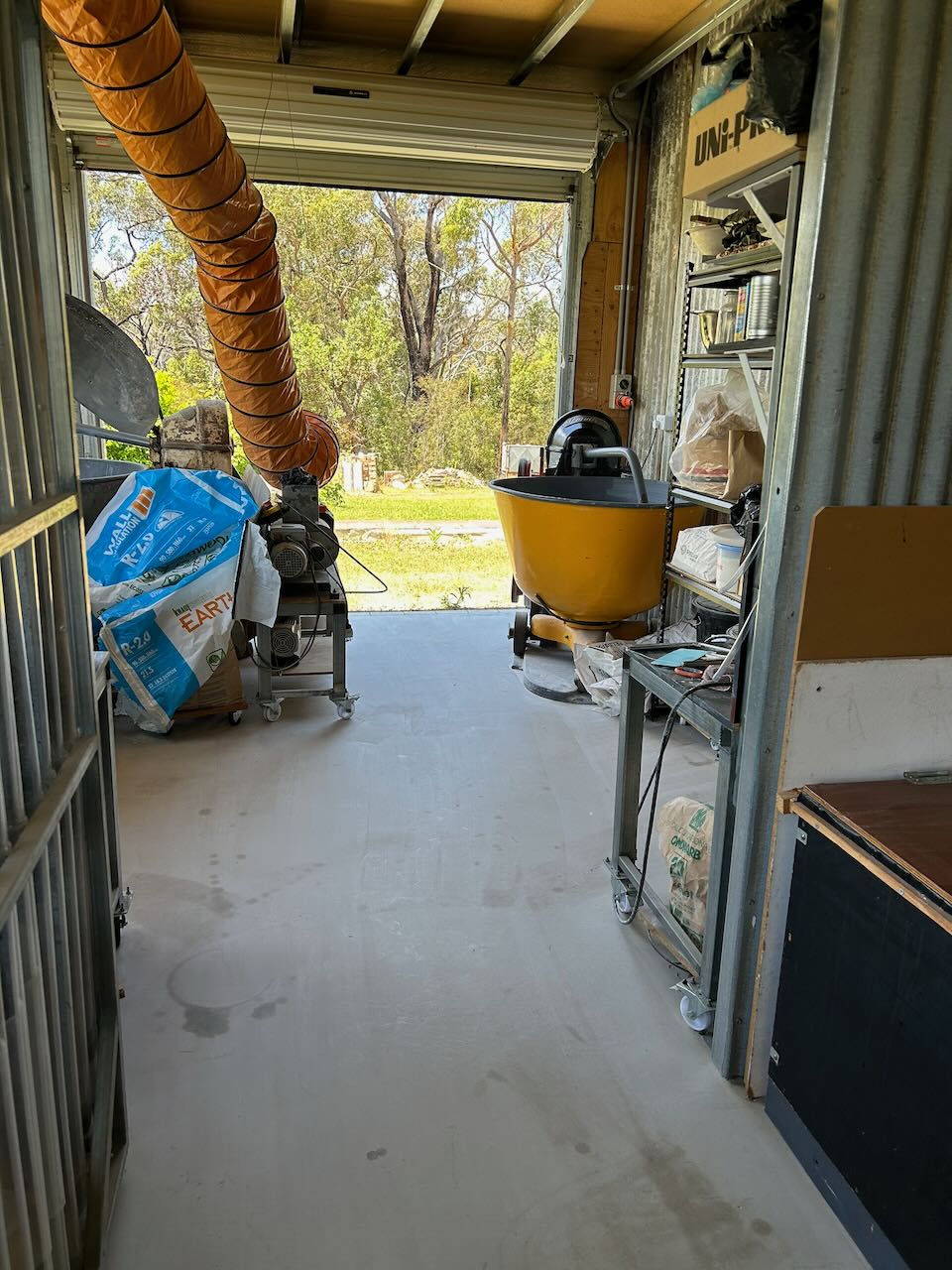
Of course work in the pottery is never completely over. We have a summer school and other throwing weekend workshops booked in for the new year, so It’s time to make more clay body to get it all laid down and ageing, ready for when it’s needed in the new year. Our pottery workshop is laid out in such a way that the creative side is quite seperate from the more dusty, noisey, messy side of the business where we crush and grind all our glaze materials and make our clay bodies.
Janine and I have processed over a tonne of clay this year through our equipment. Each batch that we make is unique. As we do everything ourselves, we can make each batch of clay slightly different in order to closely match the type of projects that we are planning to make. This latest batch is slightly coarser in texture to facilitate making larger forms. The added grit helps the clay to stand up better in larger forms. We also make fine stoneware as well as porcelain.
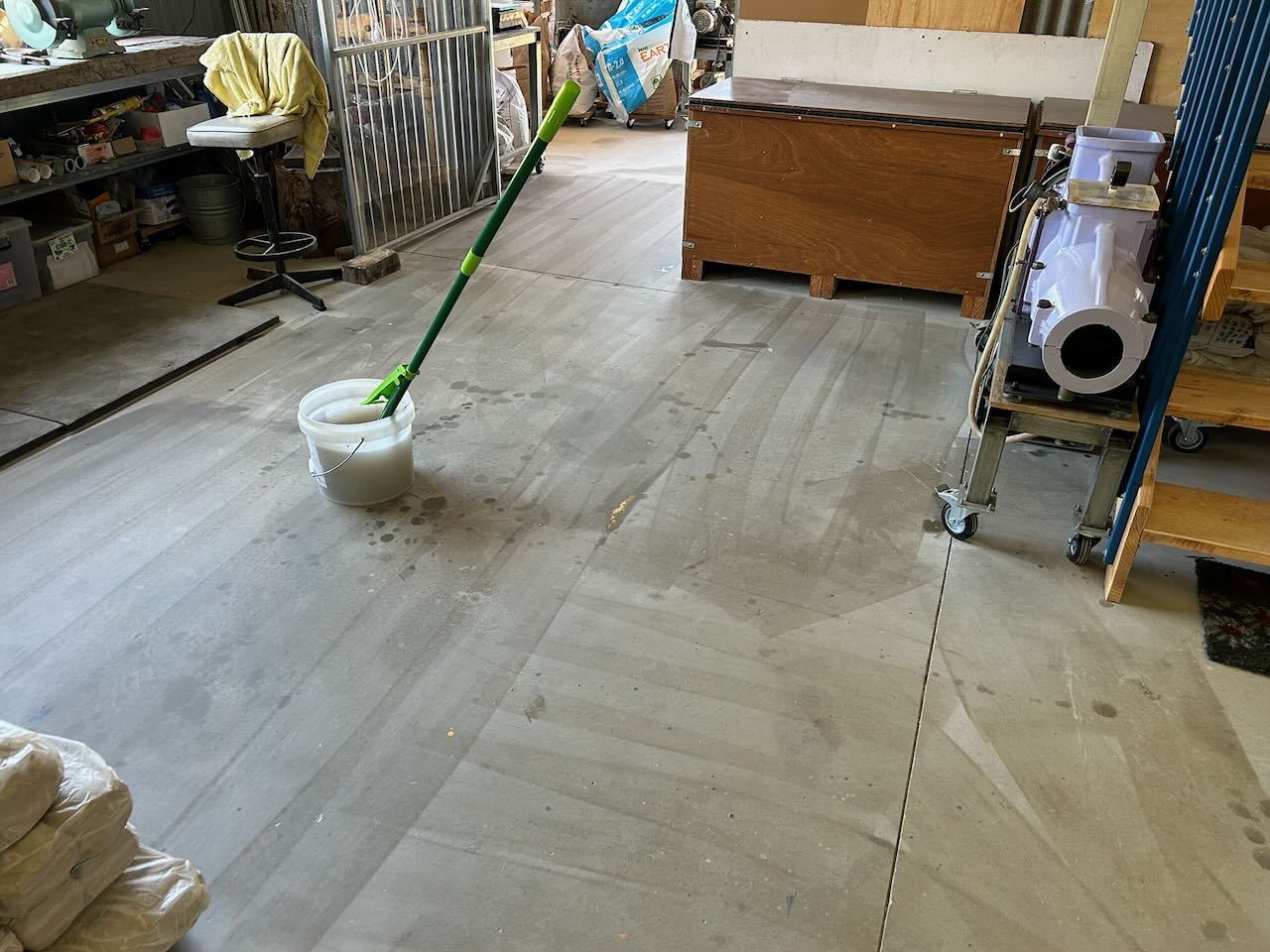
After all the clay is processed, pugged twice and then bagged and put to bed, everything is scrubbed down and the floor is mopped.
I like to keep the workshop as dust free as is possible. After a change of water and a 2nd mopping, the big roller doors at each end of the workshop are opened up and the breeze flows through and drys the floor.
We are good now for the next 3 months. We are very lucky to have such good equipment that allows us to make large amounts of clay like this in a couple of days. All this gear is very old and has had a difficult history. But I manage to keep it all going, maintaining it as best as I can, cobbling together disparate parts and spares from here and there and making up special bits where they aren’t available any more. Its a challenge, and rewarding when it all works.
Nothing is even finished, nothing is ever perfect, and nothing lasts.
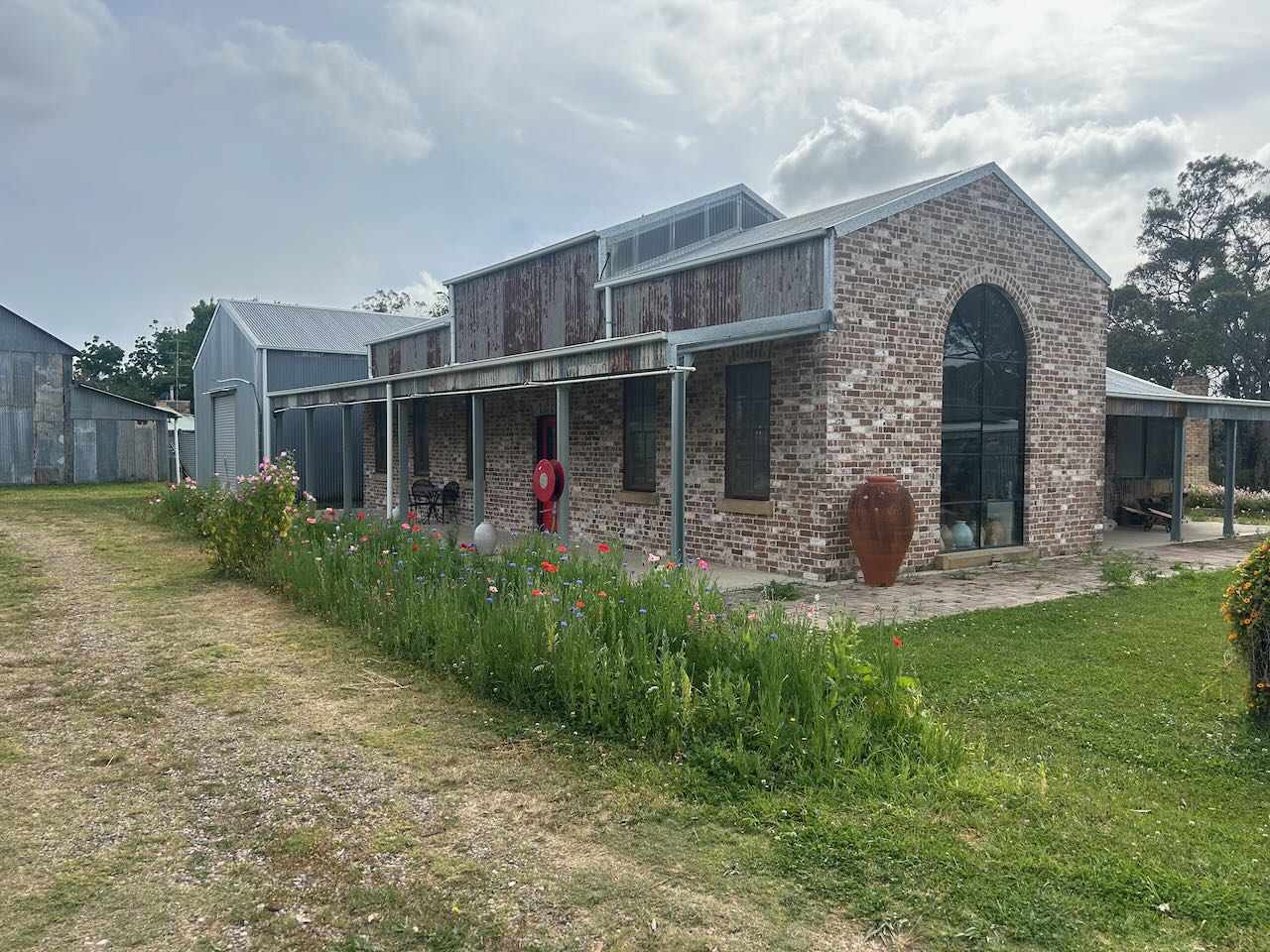
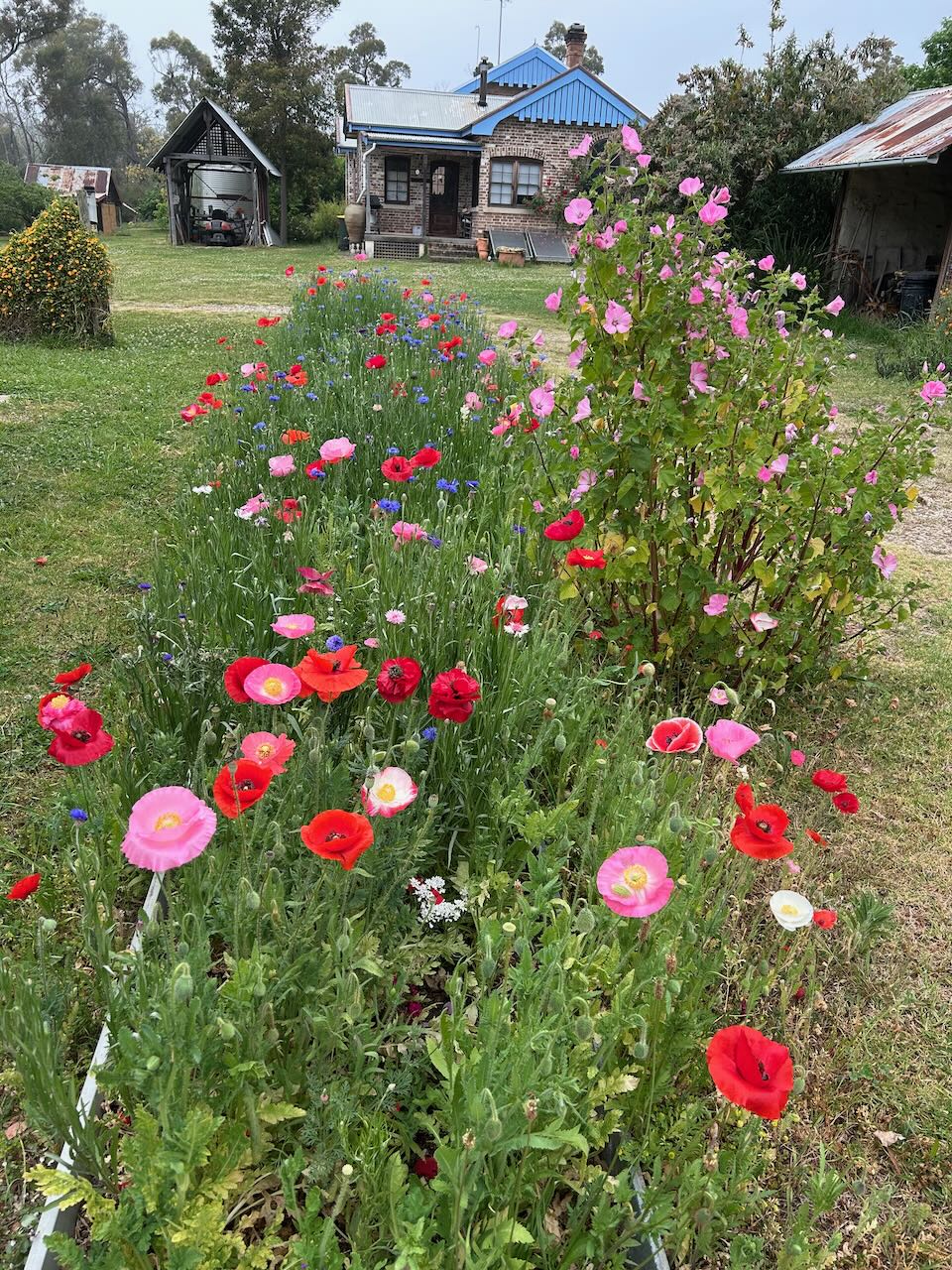
The pottery and its garden are looking great just now and for the next few weeks. All the spring flowers are coming out, just in time for the Open Studio weekends.
We are firing both electric kilns every day for the past week. We are getting all of the final glaze firings done. Working like a well oiled machine. We have been so lucky, that the sun has been shining bright every day – until today. It’s overcast with just a few spots of drizzly rain now and then. Just enough to stop me wanting to go out and do some gardening. I have two more firings on. One stoneware and one gold lustre firing. It’s all coming together.
We have managed to do all our firings on sunshine up until this afternoon, when it had turned quite overcast. Not only have we managed to glaze everything with our own electricity, but I have been careful to manage it so that I have kept both electric cars fully charged, at the same time and still been able to sell just a little of our occasional excess back to the grid to cover our daily access charges. It’s important to me to live a green, low carbon, passive, low energy, non polluting, life of minimal consumption, and we are doing it. We are managing it pretty well. But this afternoon, I will be withdrawing some expensive ‘green’ sustainable energy from the grid, for the last 3 hours of these current firings.
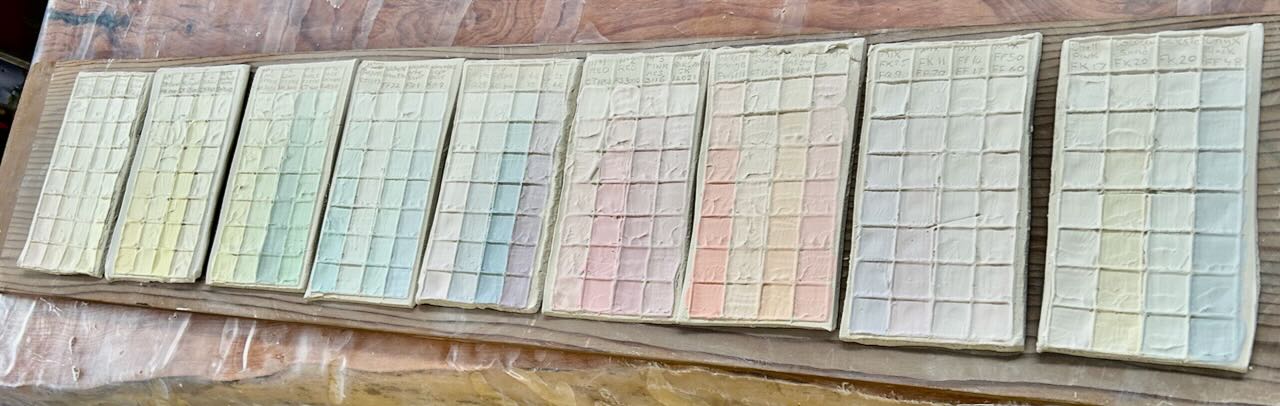
I have been experimenting with some new coloured pastel slips that I developed before we went to WA for the conference. See my previous post; More rain and tasting cider, Posted on
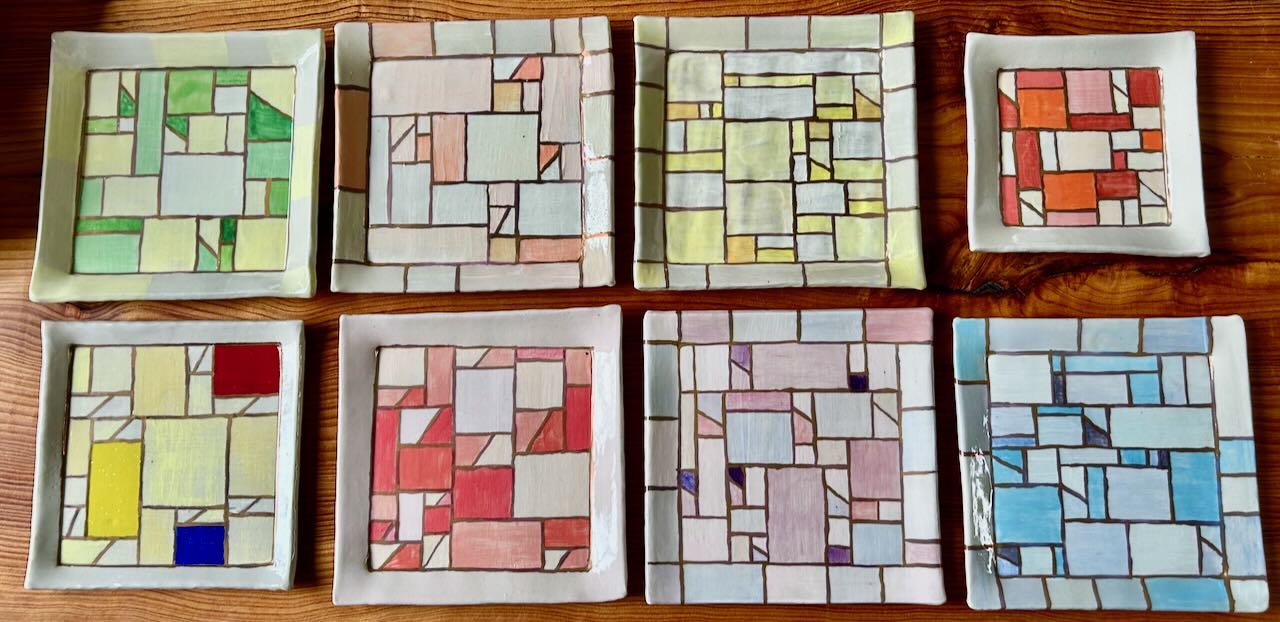
I weighed out almost 300 different pastel tones of stoneware slips.
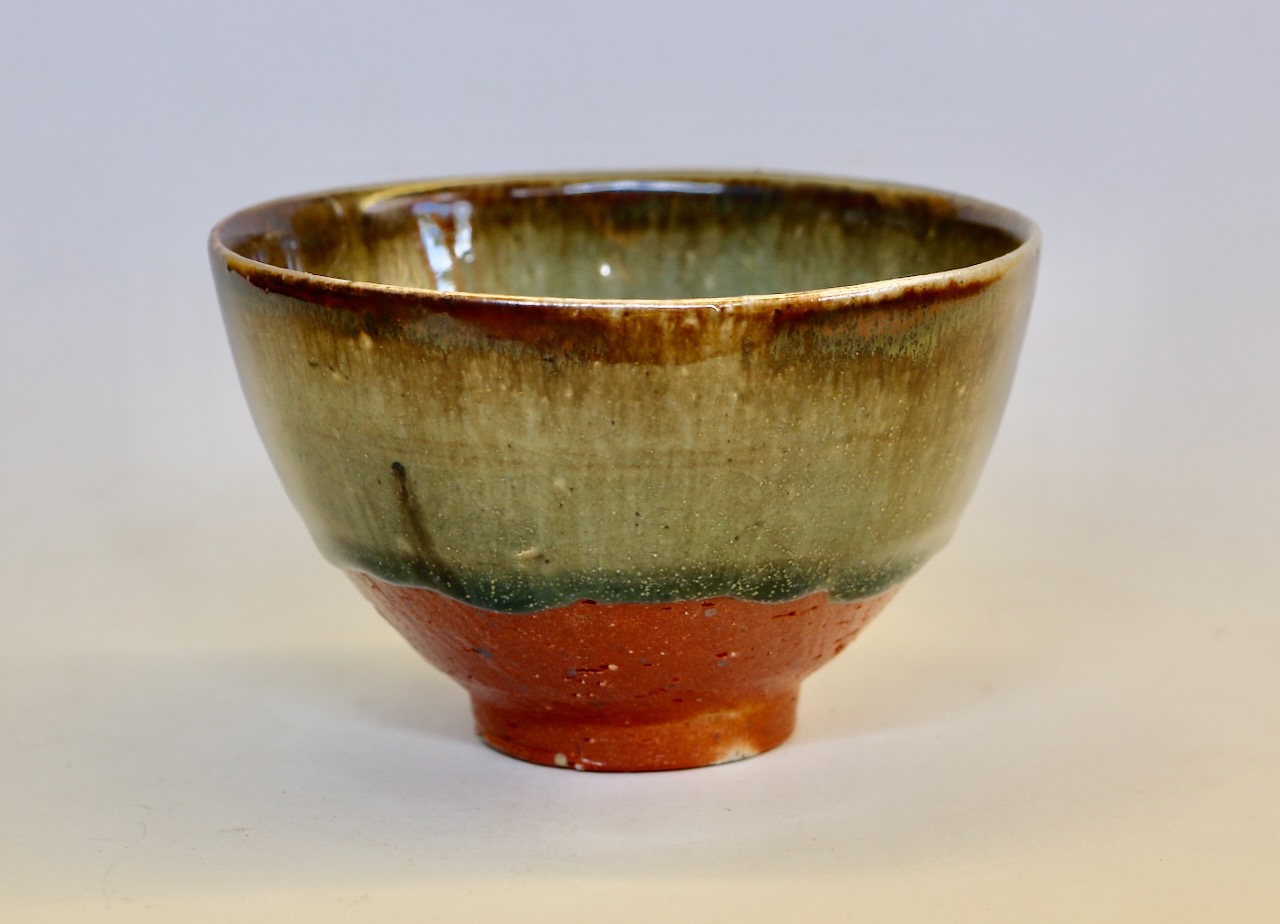
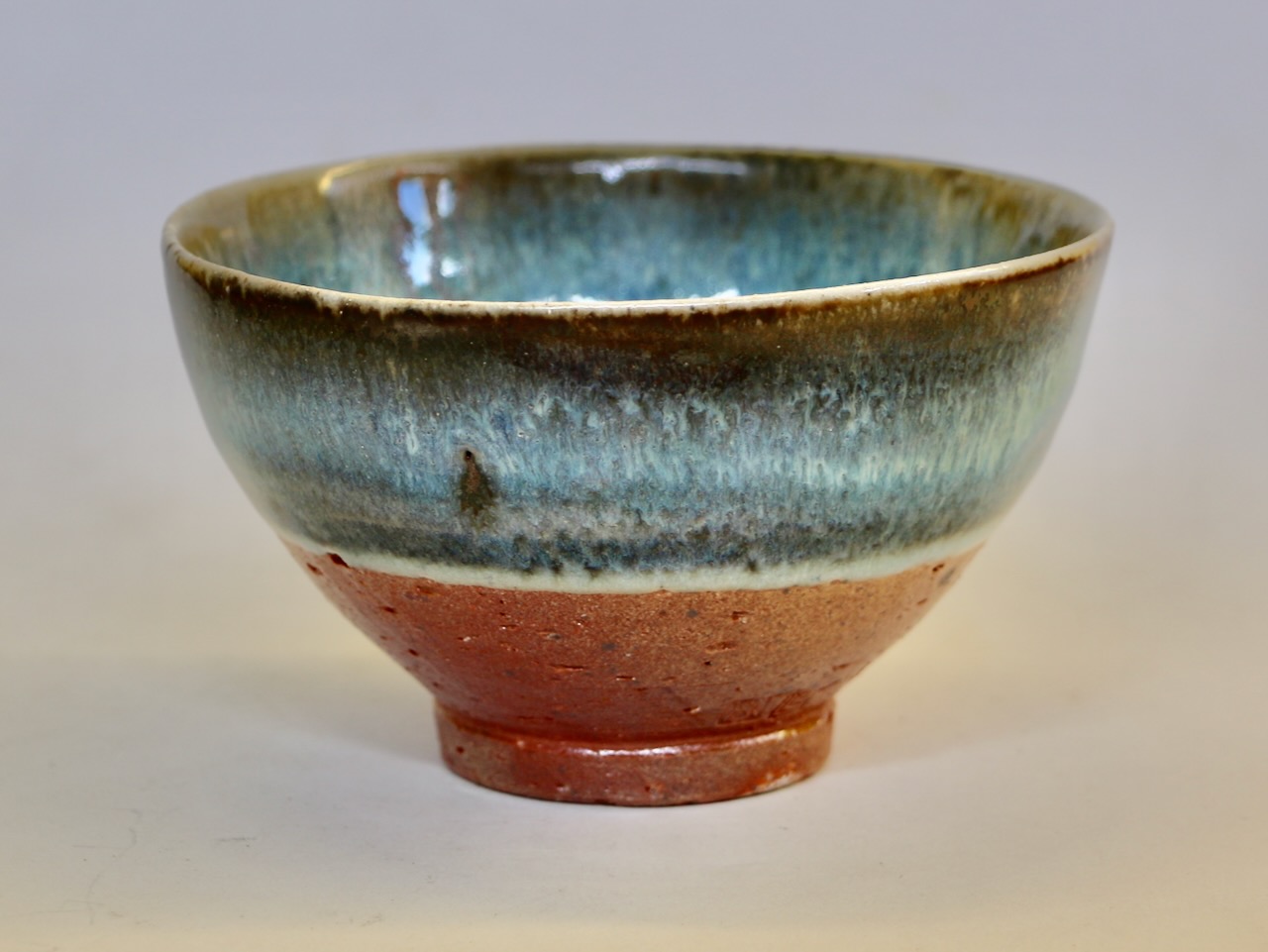
Using these colours, I tried making some new square plates, with a Korean inspired ‘Bojagi’ traditional fabric design. I’m very pleased with them, for a first attempt. I quite like the one were I ‘channel’ Piet Mondrian. Mondrianic bojagi!
I have also been making some more Korean inspired ‘Moon Jars’, but with an Australian twist. No photos yet, that are still in the kilns.
Please call in to see us on the next two weekends 1st/2nd and the 8th/9th of November. We will have tea or coffee and even cake for the first in and best fed.
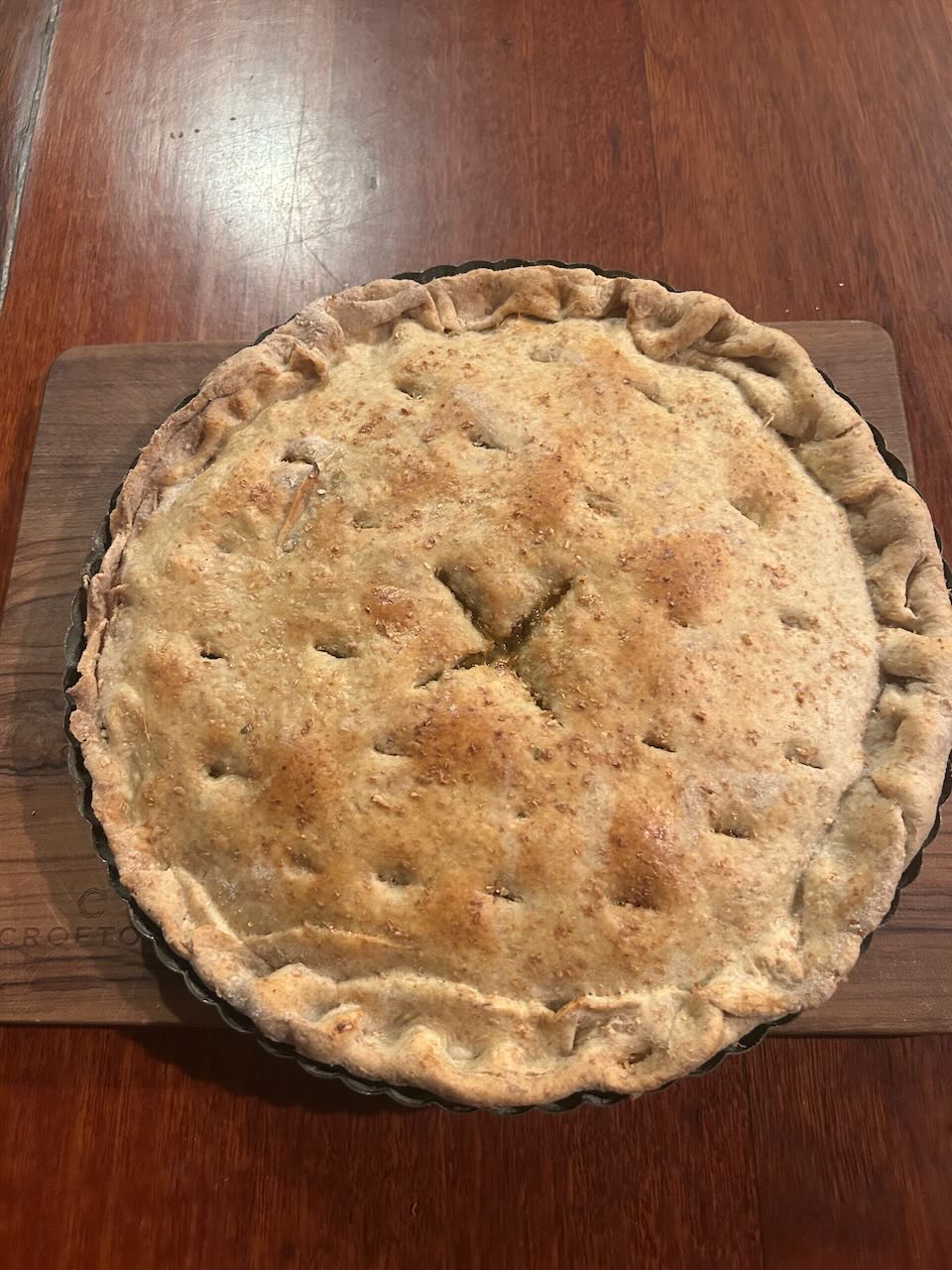
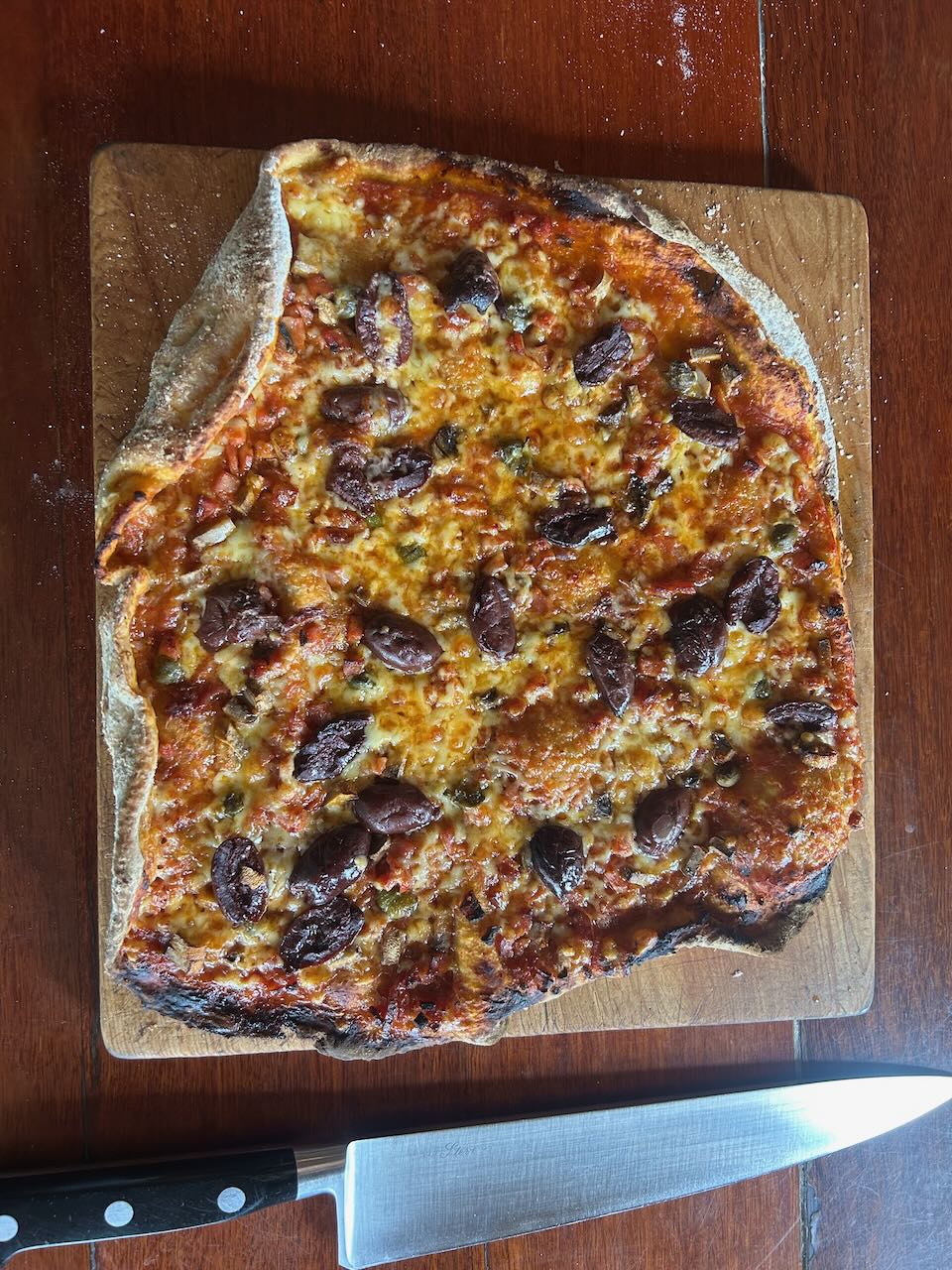
In the kitchen, I’ve been harvesting lots of leaks, and making chicken and leak pie. I’ve got quite quick at knocking up small batches of wholemeal pastry for pie crusts and pizza bases.
We may be very busy in the pottery, but there is always time to raid the garden for food for dinner and to cook up something wholesome and delicious for dinner.
The Southern Highlands Arts Trail for 2025 kicks off in just 3 weeks. We will be open on the first two weekends in November 1st & 2nd, then the 8th & 9th of November.
We will be open all days from 10 til 4pm, but are happy to open on any day during the 2 week period if you let us know that you are coming. We live here. We’ll be here every day working in the pottery or gardens.
We are recently returned from Western Australia, where we were taking part in the Australian Ceramics Triennial. I was there to present a paper on how to reduce carbon pollution from our (potters) kiln chimneys. I’ve spent a couple of years researching, building and testing a scrubber for the top of my kiln chimney, to minimise the release of PM2.5 carbon particles, that are a result of the combustion of carbon fuels.
We decided that if we were to travel so far for this event, then apart from purchasing carbon credit off-sets for the flights, we should make the most of our time away and go down to Margaret River and have a look around, and possibly taste some wines. So we did.
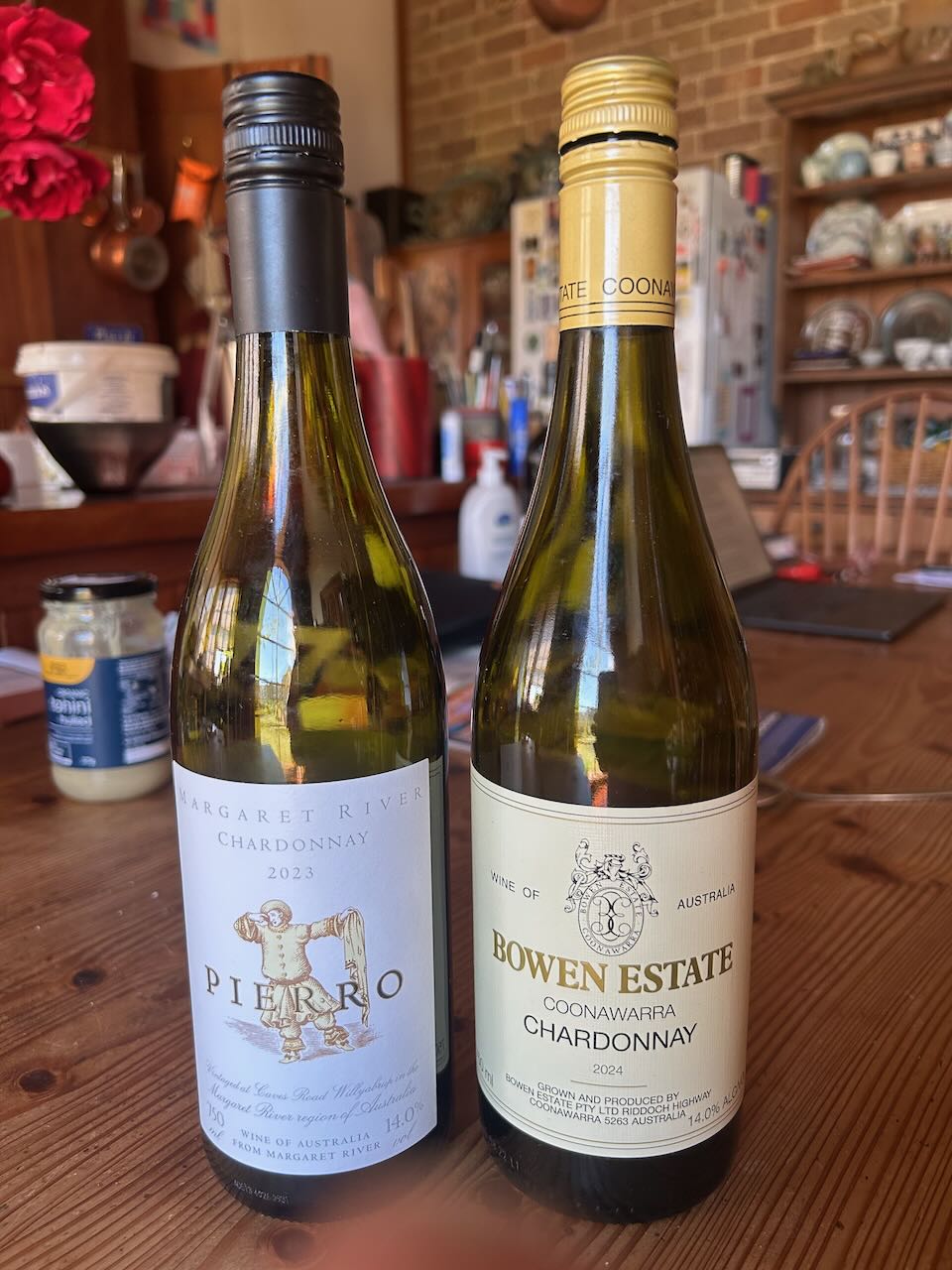
I discovered the best chardonnay that I have ever tasted in my life. The Chardonnay from ‘Pierro’ vineyard in Margret River. Really deep, dry, rich, fragrant, and lasting flavour. Only a slight hint of sweetness. Highly recommended for a tasting if you are ever down there. $117 per bottle, but even $5 just to taste it! A once in a life time experience.
I’m perfectly ready to accept that there are better chardonnays out there. I see them for sale in posh catalogues, costing even more, but I’ll never know, as I never buy wines anywhere near $100 per bottle – til now. I really enjoyed it. But that was it. Never again. As I said. A once in a lifetime experience. So glad that I called in. I’d never heard of them previously. A small producer, unirrigated, crop-thinned, hand picked, wild yeast, a year in small French oak sitting on lees. Perfect!
My favourite chardonnay up until now, and will continue to be, into the future, is Bowen Estate Chardonnay from the Coonawarra. Beautifully dry, well balanced, classic chardonnay fragrance, lingering finish, and a lot more approachable and affordable at $25. But still kept only for special meals and occasions.
While there we watched the sun set over the ocean in the West. Saw lots of wild flowers and visited two excellent museums. It was a full trip.
At the conference, we saw and heard a lot of presentations and demonstrations. A few duds, some really excellent. Something for everyone and every taste and interest. In fact, so much going on that it was impossible to see and hear everything, as there was always too much to choose from and some programming conflicts of my choices, meant that I missed a few things while watching others. Not a bad thing.
I really enjoyed watching, Ruth Ju-Shih Li, intermittently, over 3 days, create an amazing porcelain hand built sculpture as a performance and then dissolve it back into sludge with water.
I had to think long and hard before I decided to commit the crime of flying to the other side of Australia. Such a lot of carbon debt! I did however choose to buy carbon off-set credits to make some gesture towards minimising the damage. I support ‘Green Fleet’ for this purpose. I’m not advocating or recommending this organisation. This is not an advert. I don’t do that. But if you are unfamiliar with the concept of purchasing carbon credits to off-set some of your personal global warming damage. Maybe you could do an internet search and see what is involved.
In the end I did decide to go to Fremantle, as I was offered the chance to speak about my research on minimising the PM 2.5 carbon particulates from kiln chimneys. Something no one else is prosecuting at the current time. It doesn’t appear on anybody’s radar currently, but there is a mass of information to be found if you look. Most of it quite disturbing. In some ways, presenting this lecture is in itself an act of promoting carbon minimisation. I also offered to present a second paper to the conference on the use of solar power with battery back-up as a low carbon means of firing ceramics, but it was politely declined. No real interest within the committee it seems.
Oh Boy! I read in the news today… (Thank you John Lennon.) About the current average cost to each household in Australia for their energy bill. It currently stands at $5,800 pa. Janine and I have made an effort to minimise our energy bills. Particularly our carbon related energy consumption. We run a low energy household, and have had solar power installed since 2007. We haven’t paid an electricity bill since then. Since the big fire in 2019, everything that we had to replace was carefully considered and was always electric. So now we only spend $400 a year to put petrol in our plug-in hybrid car, and $150 a year to buy petrol for the mower, chainsaws and fire fighting pumps. Thats just 10% of the national average. I’m proud of that.
In Fremantle, we stayed with someone who told me that when his two daughters were still at home, he was paying $350 per day for electricity! there was a swimming pool involved I understand.
When we put solar on our roof, we essentially paid our lifetime electricity bills all at once in advance. We didn’t choose to do it to save money. We were very concerned about the future with global heating and the next few generations. As it turned out, we have saved a small fortune, going on current national average power bills..
I recently saw in a supermarket advertising magazine/brochure, that you can now buy a 10 kW battery and 6.5 kW of Solar PV for $7,000. Or even better, 20kw battery with 6.5kw of PV for $8500.
That is so incredibly cheap!
Caution! if something is too good to be true…..
But certainly worth looking into. Please exercise due diligence.
I am not recommending this product. I have no allegiance to this supermarket and I am not in receipt of any payment or commission for mentioning it. I don’t do that. I just think that it might be worth a very severe, and deep investigation, because it just might be OK.
Don’t waste your money. Ask around, search out reviews and customer experiences. get yourself informed. I’m a bit sceptical about the price. However, it just might be a good deal?
Back home our garden is flourishing, as our lovely neighbour Tina has been watering things on the hot and dry windy days. So many plants have burst into flower in our absence, as they were just buds when we left.
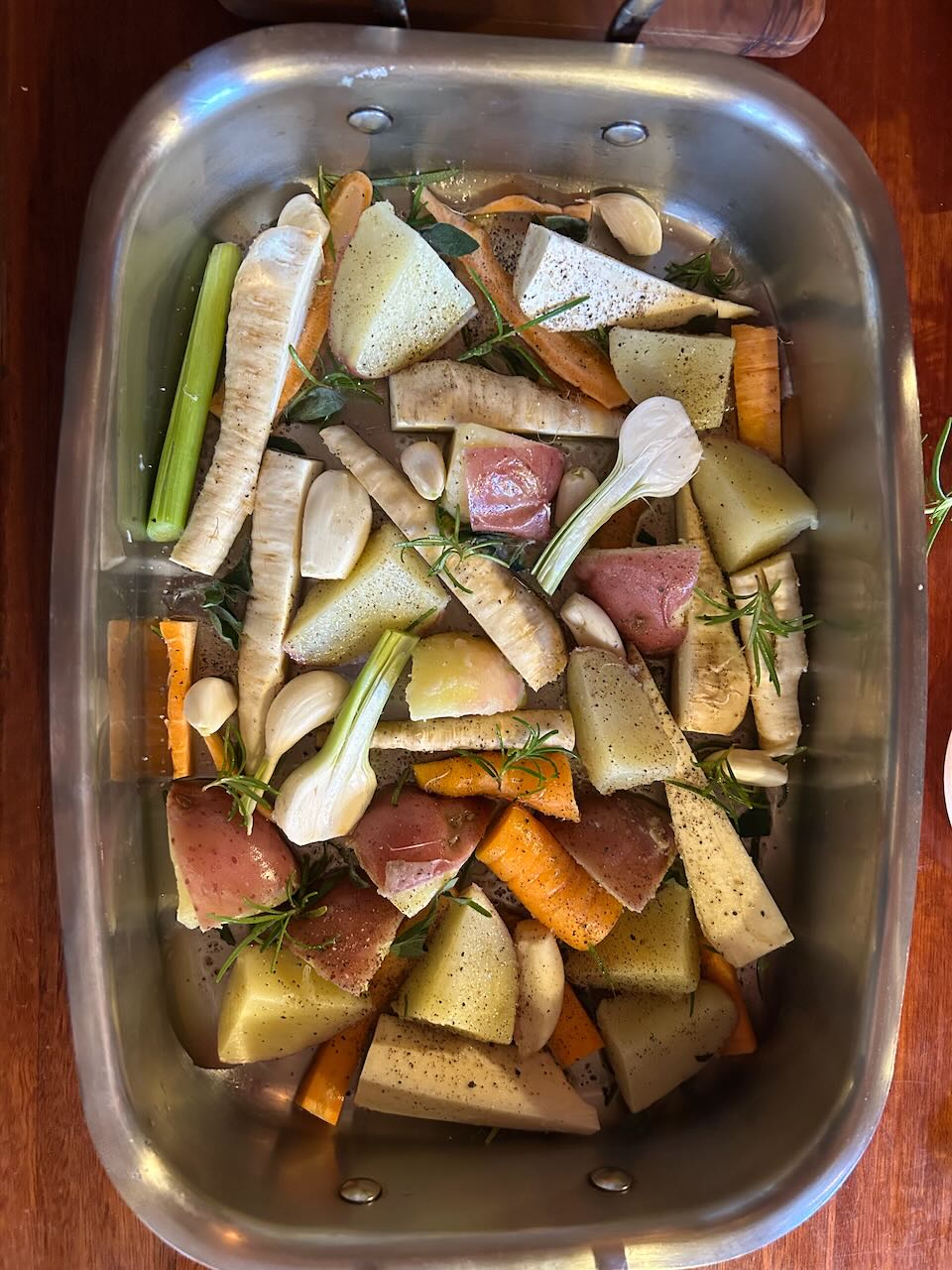
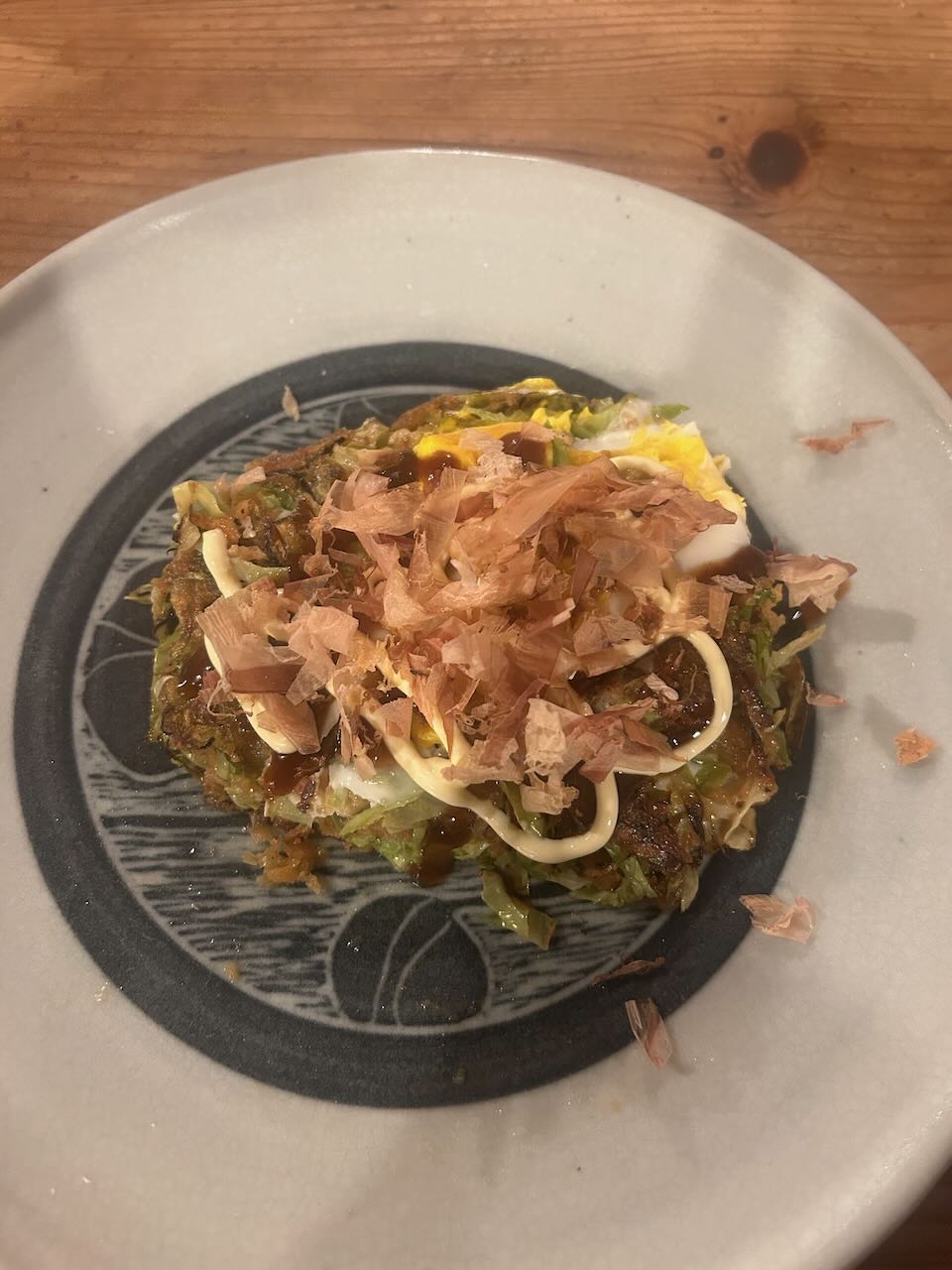
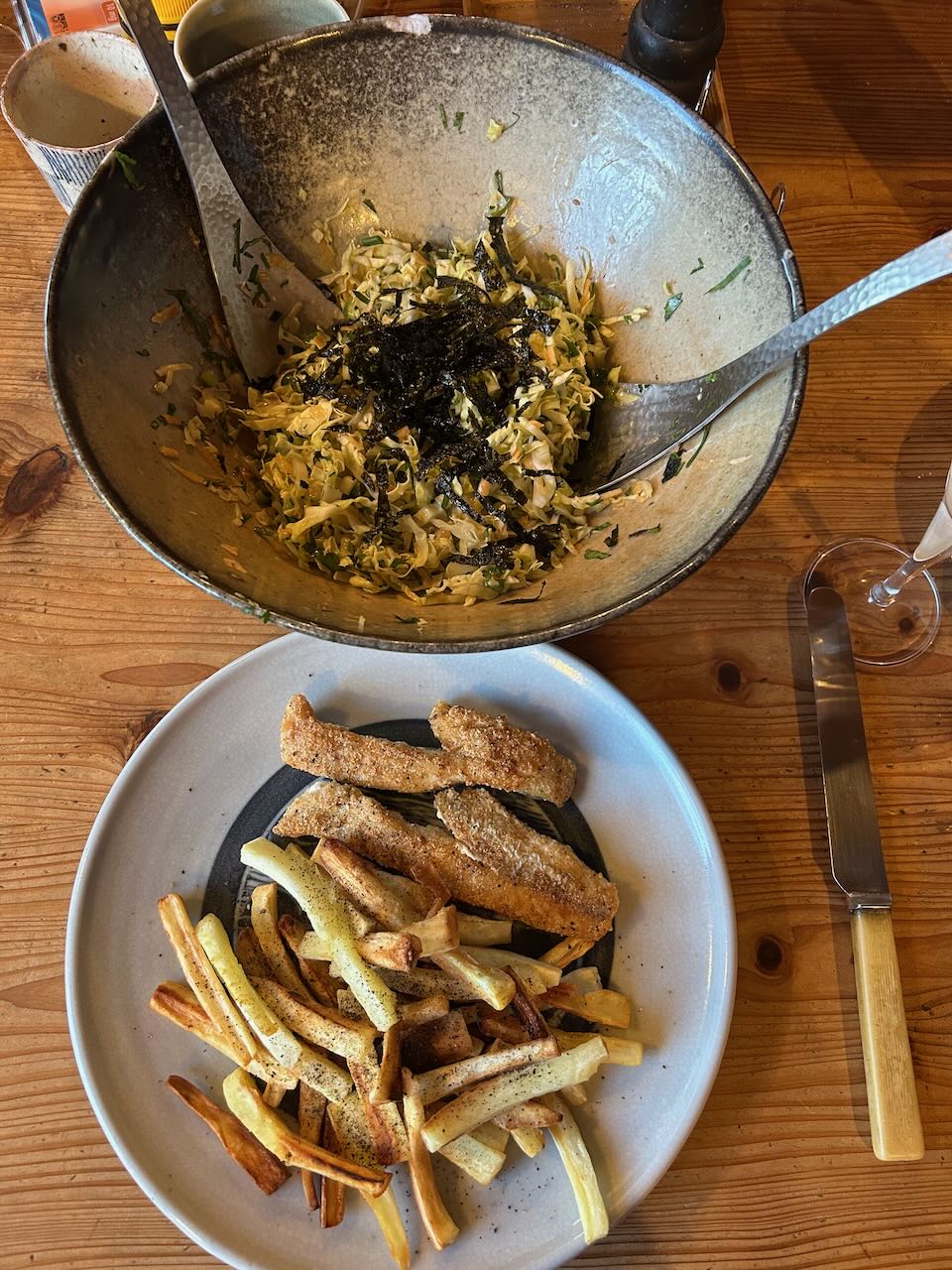
The veggie garden is still very productive. Fish and parsnip chips with a Japanese inspired cabbage salad. Oka-nomiyaki, an Australian version of Japanese cabbage pancake. Baked mixed vegetables etc.
Don’t read on unless you want to learn something about clay.
Janine and I have been teaching weekend workshops these last couple of weeks, and all of the preparation that goes into that to make sure that everything runs smoothly keeps us very busy. The whole exercise takes us 5 weeks in total. However, there is still time for other fun things like the garden, chickens and cooking
Over the week in between the two weekend workshops, I re-cycled all the clay from failed and re-cycled practice pieces that had made their way into the clay room to be stiffened up in the plaster basins. I have 5 large plaster tubs sitting in the direct light of the North facing window, this keeps them dry and ready for use, most of the time. Plaster saturates quite quickly if thin slip is poured into them, but they cope very well with soft plastic slumped pots that just need stiffening up. 20 mins on each side on a dry plaster batt, is all they need and it’s well and truely ready to wedge up and use again.
At the end of the workshop, I get everyone to collect all the trimmings, turnings, scraped-off batt bases and thick slurry from their throwing water tub, and pour it all into a tall 20 litre bucket. 8 potters can fill it up pretty quickly. I let it sit and soak for a day or two, to make sure everything is equally softened, I like to get it to a thick and creamy consistency, not unlike Greek yoghurt – with some lumps.
I then transfer it all onto the plaster drying tubs. It takes 3 days to get stiff enough to lift it out and stand it up. This allows more air to circulate around the soft, barely plastic clay, so as to dry it out faster. The plaster basins then need a few days in the sun to dry out again. When we do back to back weekend workshops, the plaster does get saturated and ‘tired’! However, it always recovers with a few days of sunshine.
Once stiff enough, I put it back through the pug mill, extrude it and bag it ready for re-use. It’s easy mindless work. However, I say that in the full knowledge that it is only so if you already know exactly what you are doing and have done a lot of it before. There are so many little signs and issues that you need to know and be aware of to understand about pug mills and recycling clay. The joys and sorrows of owning a pug mill!
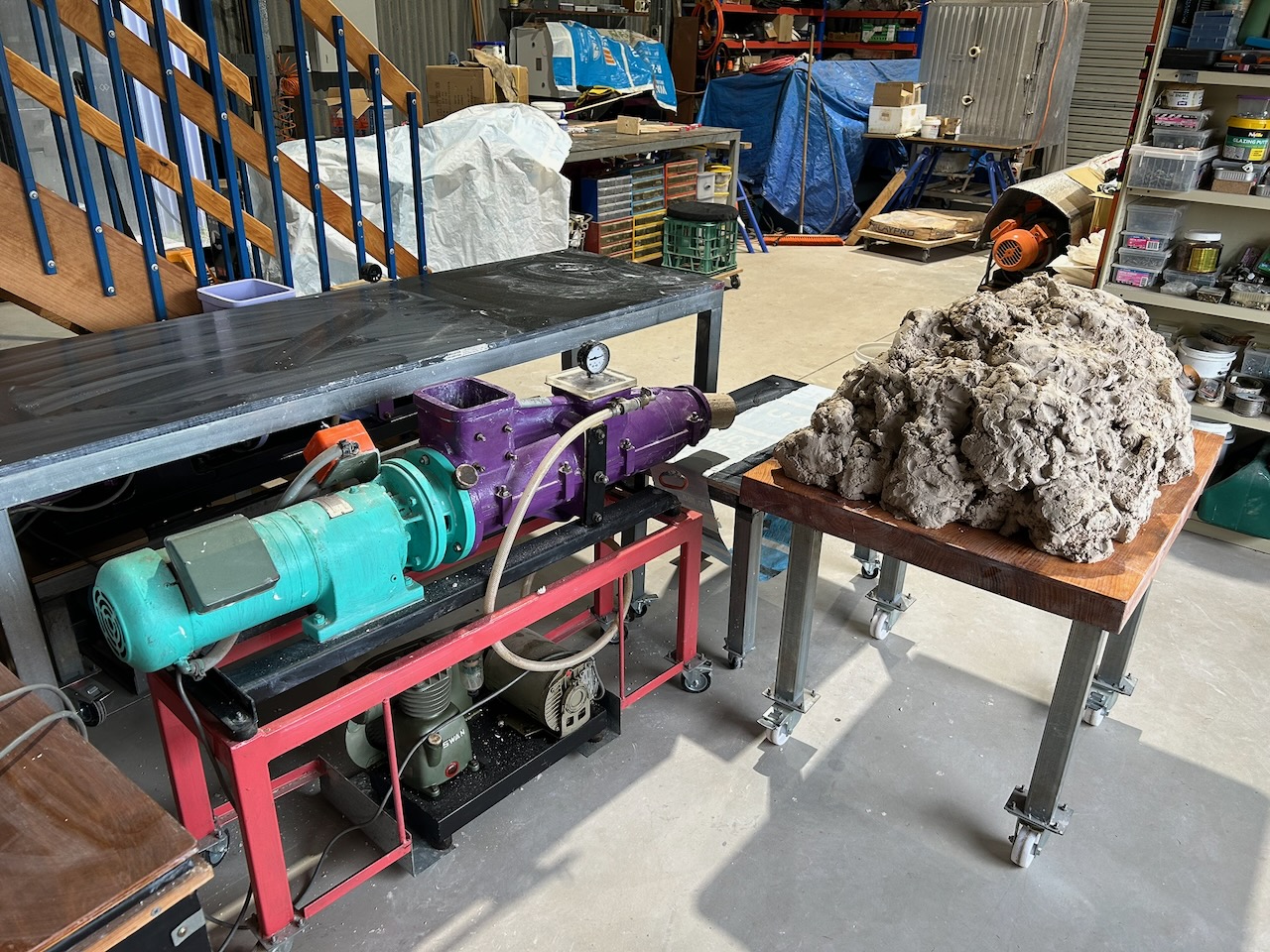
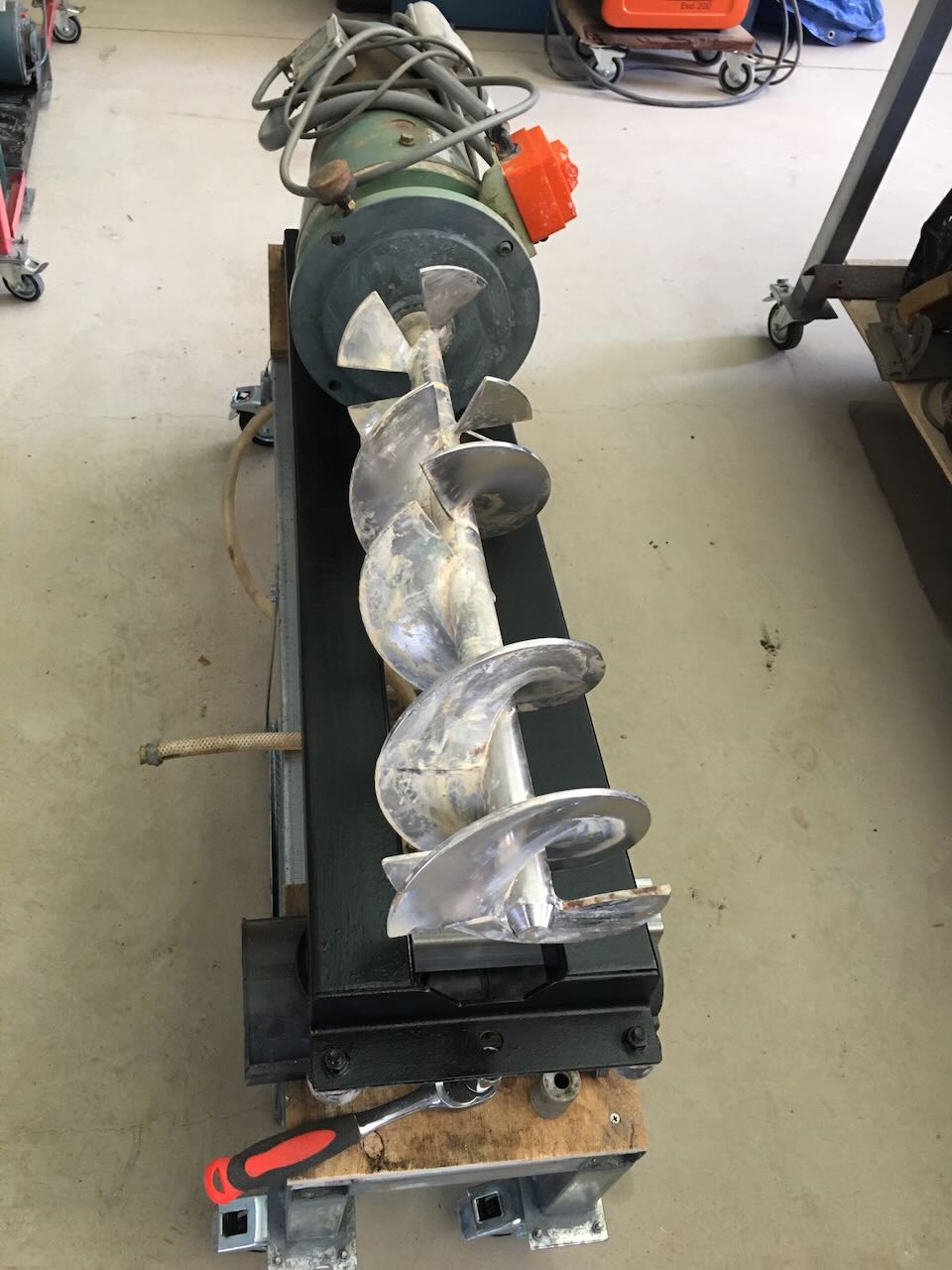
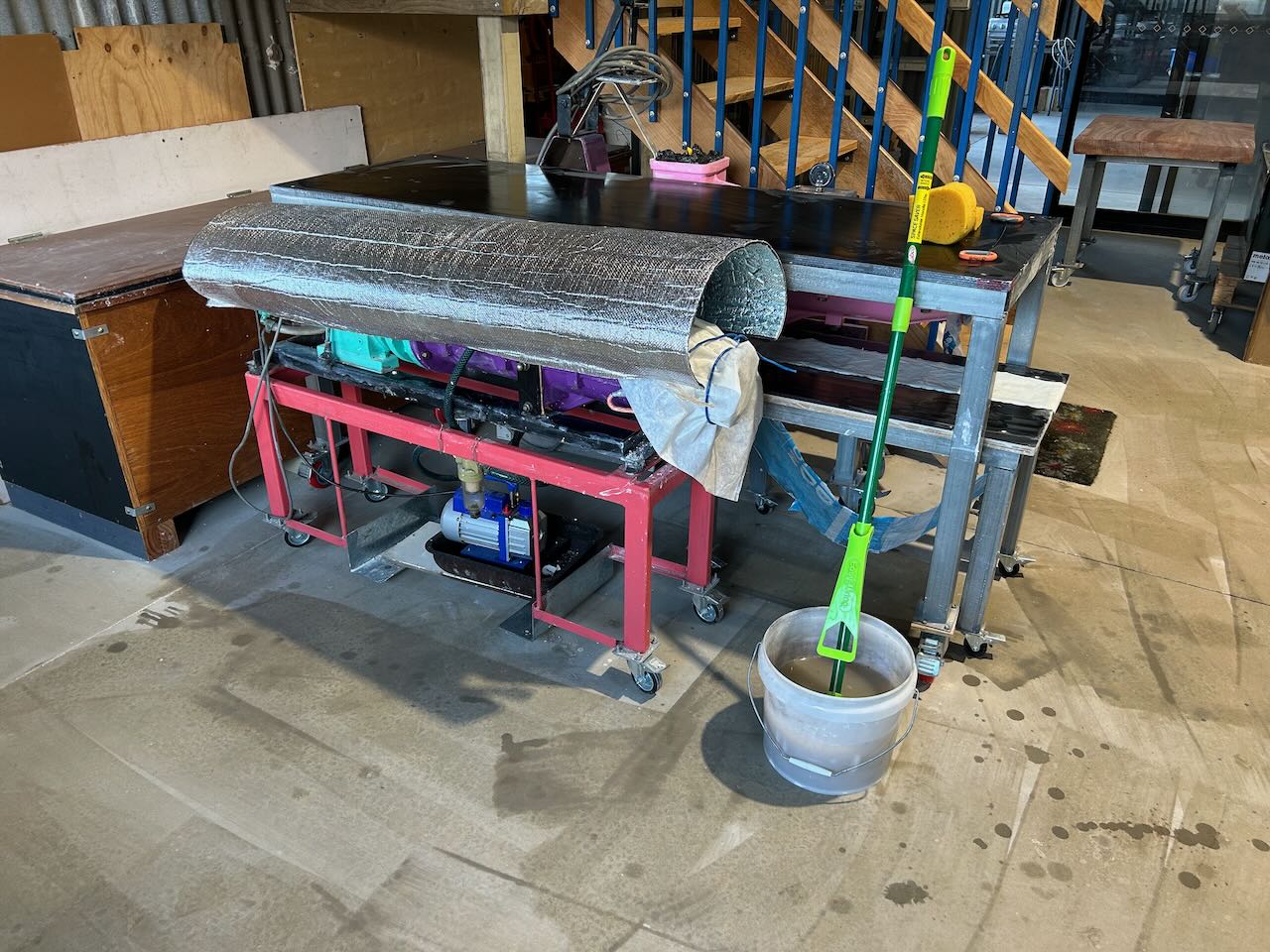
The clay can’t be either too soft or too hard, or the mechanism of the pug mill won’t work. A pug mill is in essence, a long tube with an Archimedes spiral inside. This spiral blade pushes the clay through the barrel. Some parts of the spiral at the beginning are removed to make the spiral into a series of spiralled chopping blades. This chops up the clay, mixing both hard and soft parts evenly, then the later, complete spiral section of the auger pushes and compresses the clay out the other end. Some of the better pug mills have a screen or screens half way along the barrel so that the clay is pushed through the mesh and comes out the other side as clay spaghetti. This exposes any trapped air bubbles which are then sucked out of the pug mill barrel by a vacuum pump, before the clay is recompressed and continues along the barrel.
There can’t be any little bone dry edges that have dried out too far. They are rock hard and dry and will clog up the vacuum screens. I have to constantly check when running my fingers through the thick slurry, that there are no small tools, profiles, kidney shapes, or chamois strips left behind by my students. Any of these will grind the exercise to a rapid halt. Requiring the pug mill to be stripped down, dismantled, cleaned, the offending ‘rubbish’ removed, then checked and rebuilt. It’s the best part of a full days job to to a thorough clean out. If it’s only a chamois, sometimes, I can get away with just removing the blocked vacuum screens, cleaning them only and reassembling. This is still a good hour or so.
In the picture above, the orange vertical plate on the side of the blue pug mill barrel, half way along the barrel is where the vacuum screens are located and can be removed for cleaning. The white lid on top of the barrel is where the vacuum chamber sucks out the air. The vacuum pump is located in a box slung underneath the pug mill trolley, which is on castors for easy manoeuvring.
So far, I’ve been very diligent in checking all the recycled clay pretty thoroughly, so I haven’t had any ‘accidental’ issues in the last few years. I did discover, quite early on that the new pottery shed, with its north orientated, solar passive design, does get a lot of direct sunlight in onto the clay processing area in mid winter. I’ve learn’t from hard experience that direct sunlight like this can cause the pug mill barrel to heat up and sweat moisture out of the clay on one side, which then condenses and trickles down to the bottom of the barrel. The end result is dry hard clay in one part and slurry in another. The dry, very stiff nuggets of hard clay get forced onto the fine mesh of the vacuum screens and clog it up. The rheological nature of the thin wet slurry in the other part of the barrel doesn’t have the cohesive strength to force the hard clay through. A complete strip down is required. This is a lesson that I learnt the hard way.
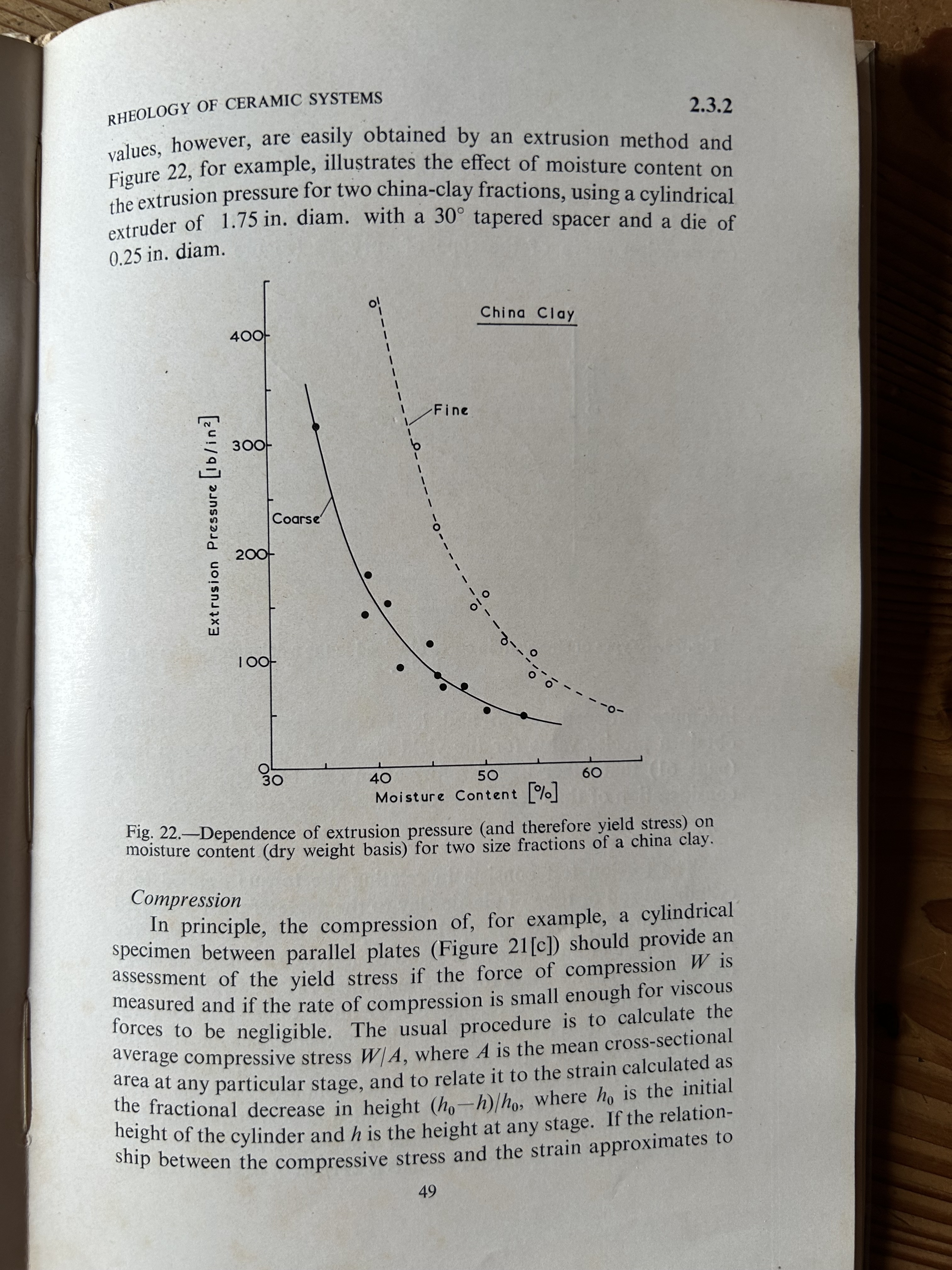
Rheology is a very interesting subject in itself. Clay can be either too soft or too hard to stick together and be ‘worked’ or shaped successfully. There are limits called ‘Atterberg’ limits that have been determined, which predict the upper and lower limits of water content in clay. If too wet, it just sloshes around and won’t hold a shape, when too dry, it is just crumbly granules. We need the ‘Goldie Locks’ range for our clays to ‘work’ successfully. For pressure extruding the range is somewhere between 17% and 60%,. That’s such a huge range. See graph. For pugging, it needs to be in a narrower range of 20% to 30%. depending on the inherent plasticity and texture of the clay body. For throwing clay on the potters wheel, it is often closer to 20 to 22%. I have found in practice over the decades that my wrists have their own personal Atterberg limit of around 25% water content or even a little bit softer rather than stiffer.
Some people say that you should work to your strengths. I think the opposite, I work to my weakest point, and as that is my ancient wrists. I have adjusted my clay body recipes over time to include more very fine plastic particles, slightly more course non-plastics and more fine sand. This combination allows me to make softer clay mixtures that are still easy to pug and easy to throw on the wheel when very soft. I am limited by what is still available on the market here. So many materials that we used to be able to get have been removed from the market, as the Australian companies that own clay mines were purchased by multinational players who shut them down to force us to buy their imported products.
Luckily, I was trained in the 60’s and 70’s when clay technology was still taught in Art School. I even went on to teach it myself for a few decades. So, I can develop and test my own clay body recipes. A skill soon to be completely lost, as us oldies retire and die out. I can still obtain Australian mined and milled ceramic materials from NSW, Vic and Qld, but the options are constantly diminishing. When I have been shown commercial plastic clay bodies over the years, I have always found them to be far too stiff for my wrists to feel comfortable with. Possibly because of a lifetime of damage due to hard work with my arms, wrists and hands?
So dry lumps of clay on the pug mill screens stops everything in it’s tracks, until the screens are removed and cleaned, and this can be a big job, depending on the maker and model of the pug mill. We are lucky here in Australia to have the ‘Venco’ company, who under the direction and vision of Geoff Hill, manufactured pottery equipment here since the 70’s. His version of ‘Harry Davis’s, genius design’ of vacuum pug mill was an excellent piece of machinery. The smaller, cheaper, models require that the entire machine be diss-assembled to get to the singular screen. However, the larger, and more expensive models are designed so that the screens are accessible from the outside of the barrel and can be accessed directly for cleaning.
So now I have learnt to keep my pug mills covered with silver insulation foil when not in use, and this has solved the condensation problem. There is always something new to learn, even after 50 years!
Once pugged and bagged, It’s not the end. Good clay that has been well made needs to be nurtured a little. Clay is alive, in the sense that it contains live microbes, or should if you want it to develop the best possible plasticity. We live in the bush here in Balmoral Village. There are few Government services. There is no Town Water Supply available. So we have to collect rain water in dams and water tanks. Water stored in the ground has more bacteria live organisms than Chlorinated and sterilised city water. My clean rain water will allow the naturally present bacteria and other organisms to grow and develop in the clay. This might sound shocking, but it is just natural. Clay ‘ages’ as the organic action develops between the clay mineral particles. The water is drawn closer to the surface of the fragments and the air is slowly excluded and passed to the surface by capillary attraction. In this slow gentle way, clay develops its full plasticity. It is very noticeable after say 3 months. But a year is better! Of course, no-one in their right mind would make clay and then not use it for 3 months! Would they??? Yes muggins does. I have stored and aged porcelain bodies up to 15 years.
There is a distinct difference in the clay after a period of ageing. Clay body made with chlorinated water inhibits the natural growth and ageing, so does not develop the same plasticity.
In the old pottery, there were a lot of eucalypts growing around the building, and consequently there were a lot of gum leaves in the rain water. These made the water a little acid with their tannin. It turns out that tannic water is just about the very best additive that you can put into clay to improve its plasticity. Our gum leaf infused tannic rain water was a pale, transparent grey/brown colour. Some fancy companies that manufacture commercial Porcelain bodies, buy in, at great expense, a product called ’Totannin’, that does much the same thing. Our clay really responds to any time left wrapped in plastic bags, sometimes double bagged, for long term storage. Then stored in a cool dark place and not touched for as long as you can bear it.
Each Friday evening, before the workshops, I bake a loaf of bread and a tart. This time, its beetroot and French goats cheese over a bed of slow cooked onion jam. This has always proved to be a very popular lunch contribution at the workshops. Every one brings something to share for lunch. There is always just a bit more than we need. Everyone eats well and the selection is broad, varied and delicious.
We spent the first day on the wheel, throwing all the forms that we will work with on the following day. I demonstrate each step in the process on each day.
Teaching a throwing school in winter is always just a little bit of a challenge. The pots don’t want to dry out over night to stiffen up to the point where they can be turned, trimmed, manipulated and handled with ease.. I get the pots to dry faster, by stoking up the slow combustion stove to the max, and keep it going well into the night, to ensure that the pots evaporate off enough of their moisture to be workable. It’s a juggling act, but I manage to muddle through, and at the end of the weekend, everybody gets to take home their finished works.
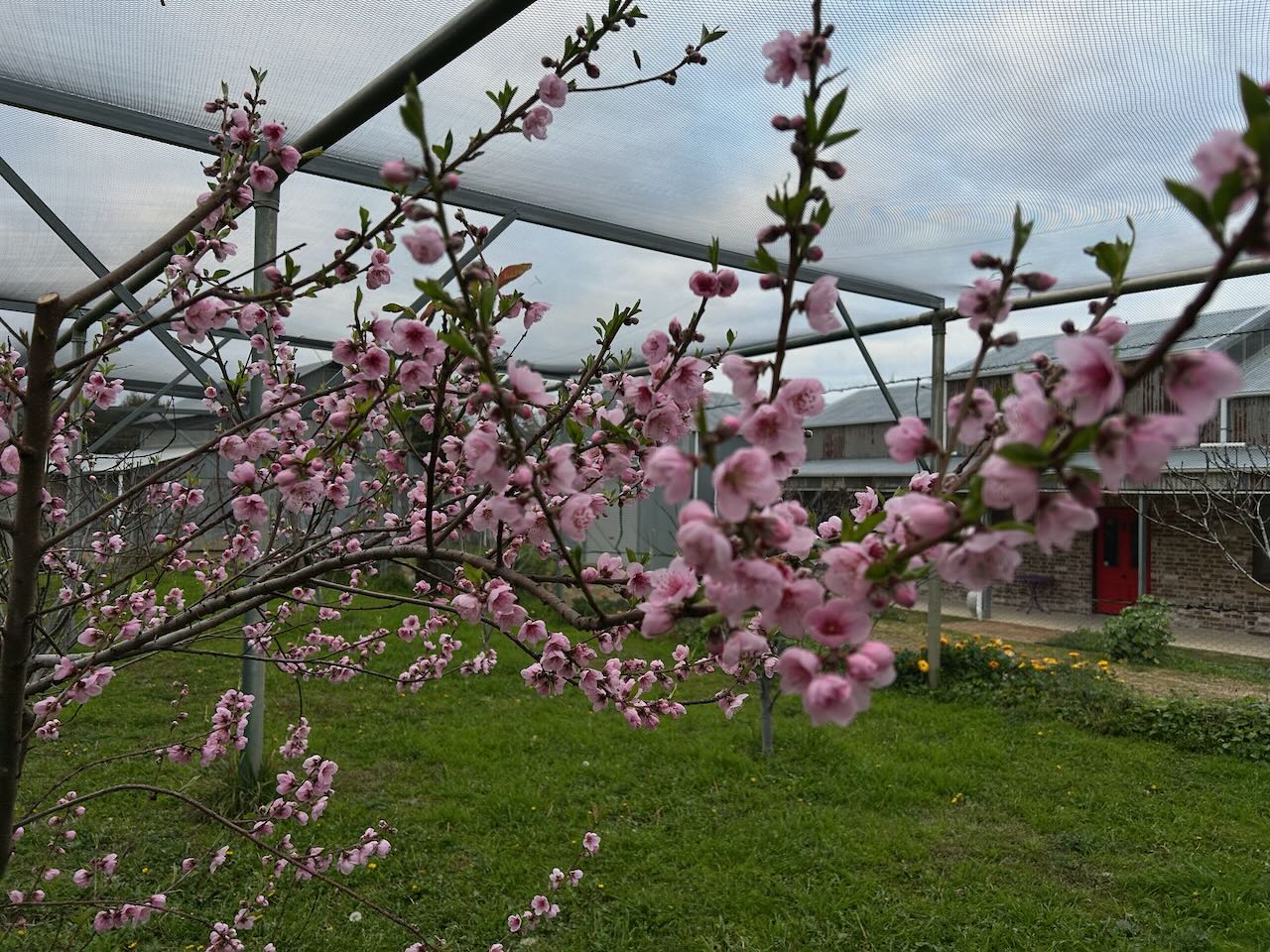
In the orchard, the early peaches and nectarines are flowering. There is only 3 more weeks to spring, and lots of plants are starting to come back to life, buds are swelling and even the lawn is starting to grown again. This last part isn’t so thrilling though, as this means a few hours of lawn mowing several times a week.
Spring blossom always offers up so much positive energy, the a promise of warmer weather and a bountiful harvest to come.
Nothing is ever finished, Nothing is ever perfect and nothing lasts.
July means that it’s time to get to work in the orchards. There is pruning to do. I usually wait until most of the trees loose their leaves before pruning as a rule, but with such a range of trees in this family orchard of mixed fruits, there are some that have lost their leaves a month ago and others that are still in leaf.
In a perfect world, I’d treat each tree as an individual and consider its best needs, one by one.
But this is reality, and I have a lot to do everyday through the seasons. Winter is also wood kiln firing season. I want to fire my wood kiln at least once each month to get through all the pots that I’ve been making since my return from the work that I did in Korea. So the orchard pruning/spraying/fertilising is all compressed into one day, as needs must. I have my friend Andy coming tomorrow to help me do some of the last outstanding jobs to finish off the pottery shed. It needs flashing installed over the windows. Something the shed builders didn’t bother to do. Slack arses! So I’m finally getting around to it 5 years later.
I choose a day at the beginning of July and get stuck in to the orchard jobs. Every tree gets pruned for shape and strength, removing any dead wood, crossed branches and water-shoots, I also open up the centre to let light and air in and allow good ventilation. I prune to an outward pointing bud, and hope for the best. I’m not so interested in maximising the crop of fruit. In fact we have more than enough fruit set each season, as we give a lot away.
Yesterday during pruning, I noticed that I was pruning off branches from an apple tree with full vigorous growth of leaves still on, and then followed by a peach that was so advanced in its dormancy, that it had bud swell. I really need to give the trees a good saturating spray with lime sulphur before bud burst to suppress mildew, fungus and leaf-curl on the various trees. Lime sulphur spray stinks of rotten egg gas smell, and is best kept off your skin and clothes, so I wear a face shield, hat, rain coat and gloves, just in case.
One of the apples gets white powdery mildew, a couple of the peaches get leaf curl. It’s a mixed bag. After lime sulphur spray, I go around and spread composted chicken manure for its nitrogen, dolomite powder for its mixed, subtle calcium/magnesium content, and some wood ashes for the potassium that encourages healthy fruiting.
The chickens have the stone-fruit orchard all to them selves everyday to roam and scratch around in. Always finding something interesting to chase and squabble over. They are forever dropping their pooh and enriching the soil as they go about scratching, so a little extra lime every now and then to sweeten the soil is a good plan.
In a few weeks time, I’ll also start the first of the Bordeaux sprays, to suppress the leaf curl fungus, through into spring. Peaches and nectarines are particularly vulnerable to this fungus. Bordeaux spray (copper sulphate mixed with lime) helps to control this. Both Bordeaux and Lime sulphur are registered organic sprays.So I can feel safe using them on our food. However, I like to use the minimum amount, as copper can build up in the soil over time.
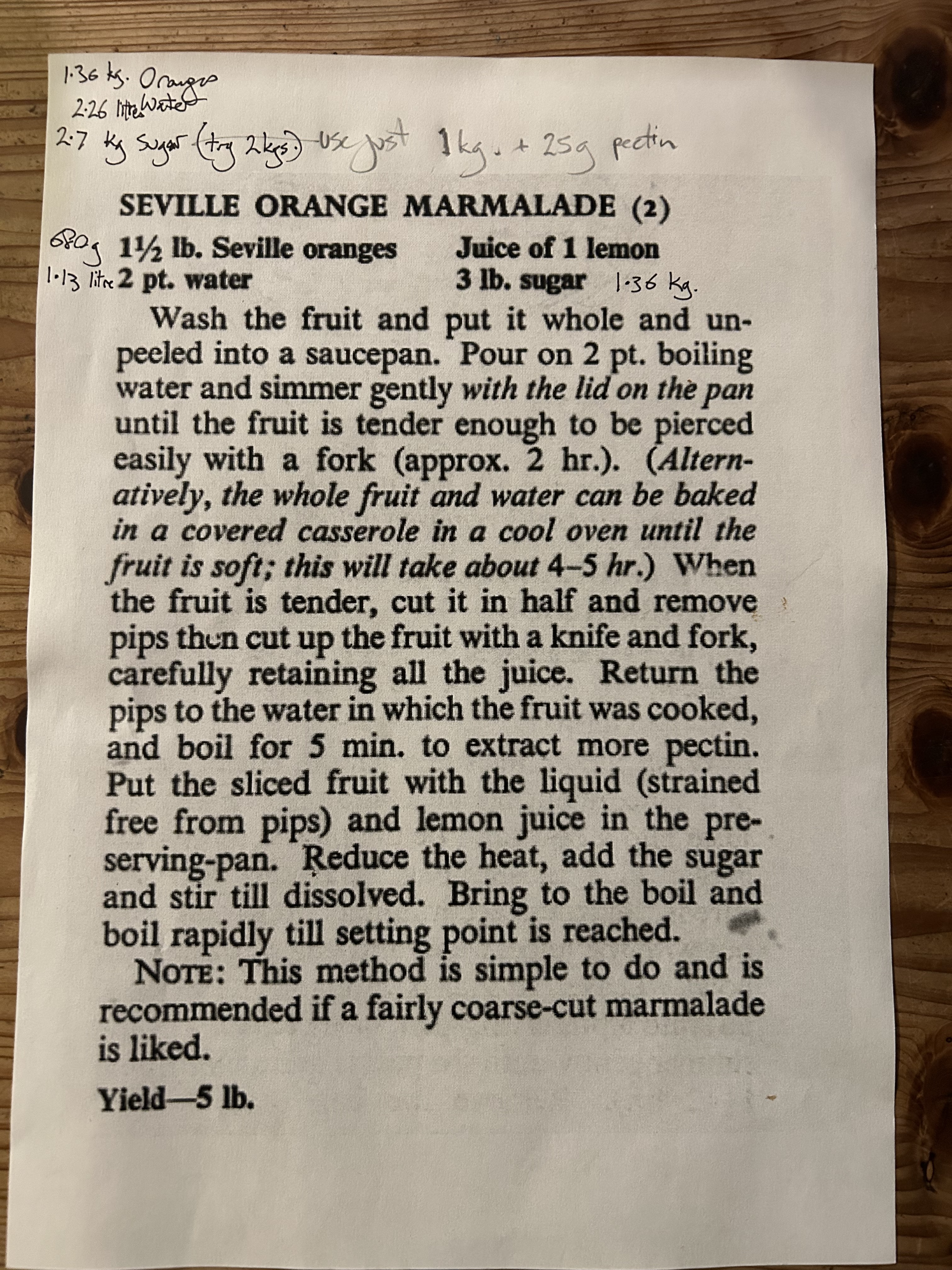
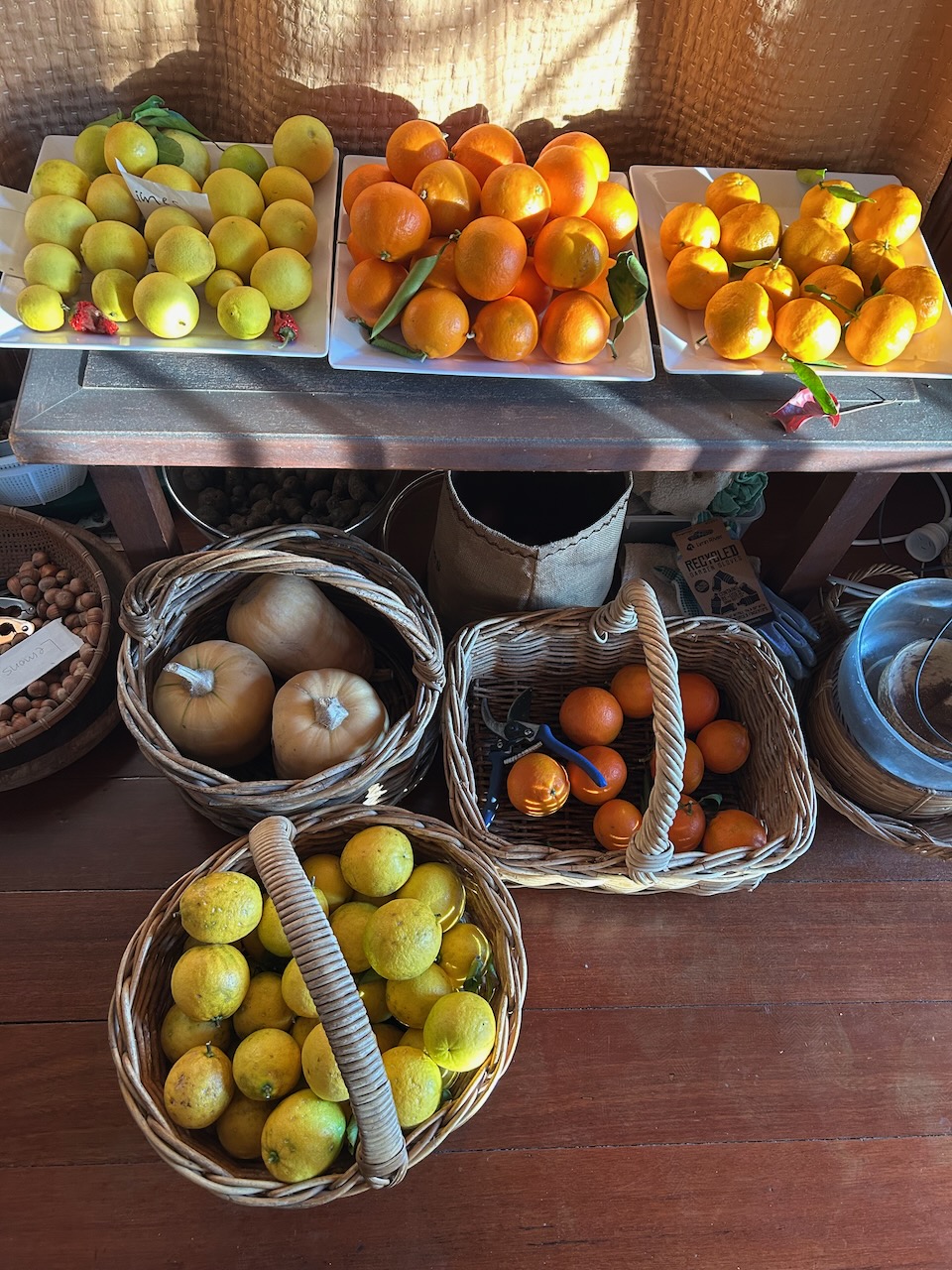
Out of the garden and into the kitchen. Winter is also peak season for citrus fruits. We have been making batches of marmalade since the season started back at the beginning of June. This week I have been trying out an old recipe that I got out of Mrs Beaton’s cook book. I have the paperback facsimile edition from the mid seventies. I was encouraged to try it out by my friend Bill who makes lovely marmalade. I occasionally post him a box of Seville oranges and he later returns a jar of his latest batch of marmalade. A good arrangement.
This year I’m giving one of Mrs Beaton’s recipes a try. There are a few in the book. This is No.2 as recommended by Bill. I doubled the quantities, to make it worthwhile spending the time on it. However. I couldn’t bring myself to use 3 lbs (2.7kgs) of sugar. So I reduced it to 1 kg and added 25 grams of pectin to make up for the reduced sugar. After converting it to metic and doubling all the quantities, it still tastes great!
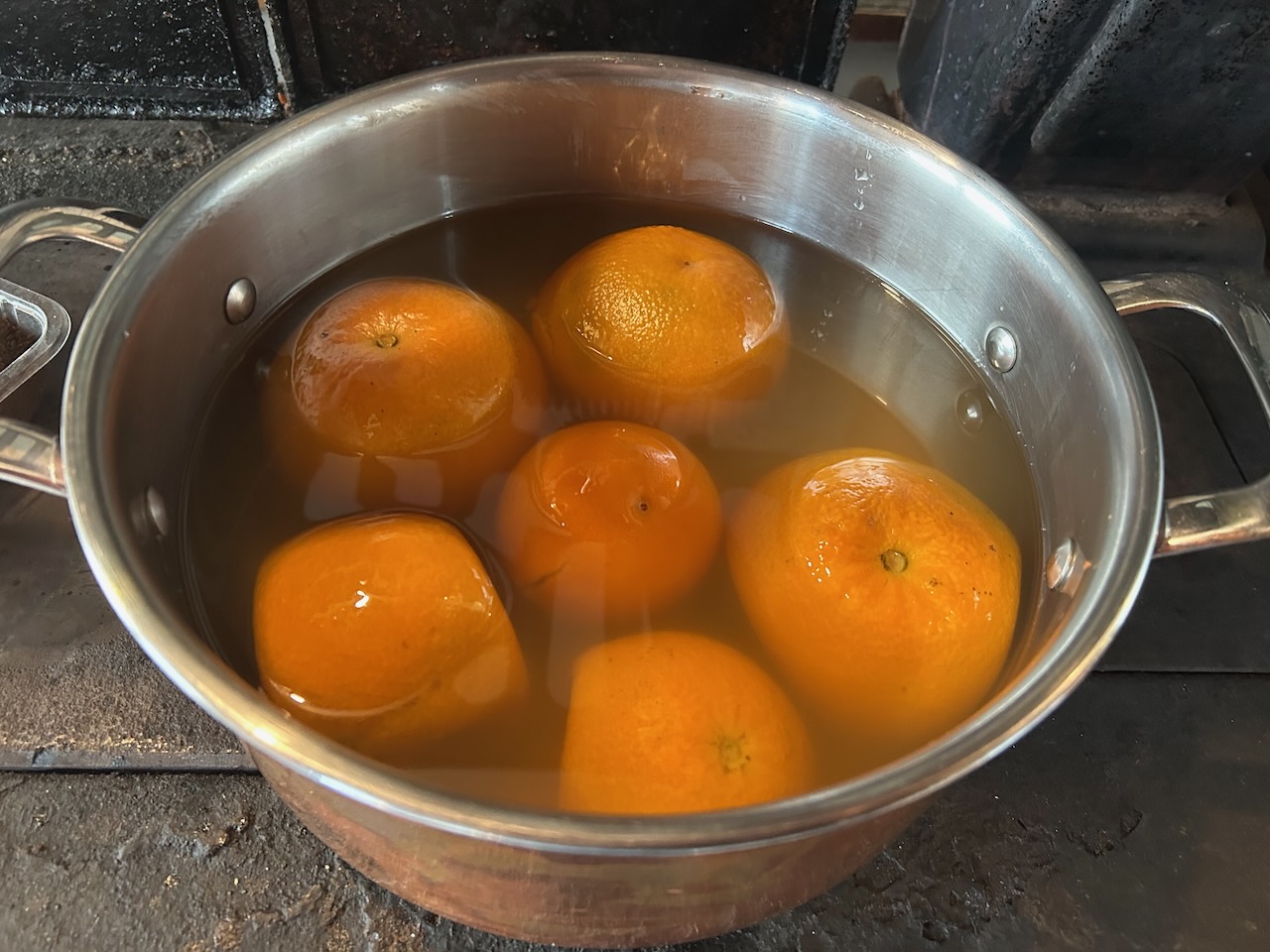
It’s a good recipe and in this slightly altered form, with much less sugar. I still find it very sweet. I’m glad that I didn’t bother trying it in the original. I wouldn’t have enjoyed eating it at all. Boiling the whole fruit for 2 hrs and letting it sit overnight to cool gives it a very old fashioned sour flavour from the peel that we don’t get by just boiling the peel and juice for a short time.
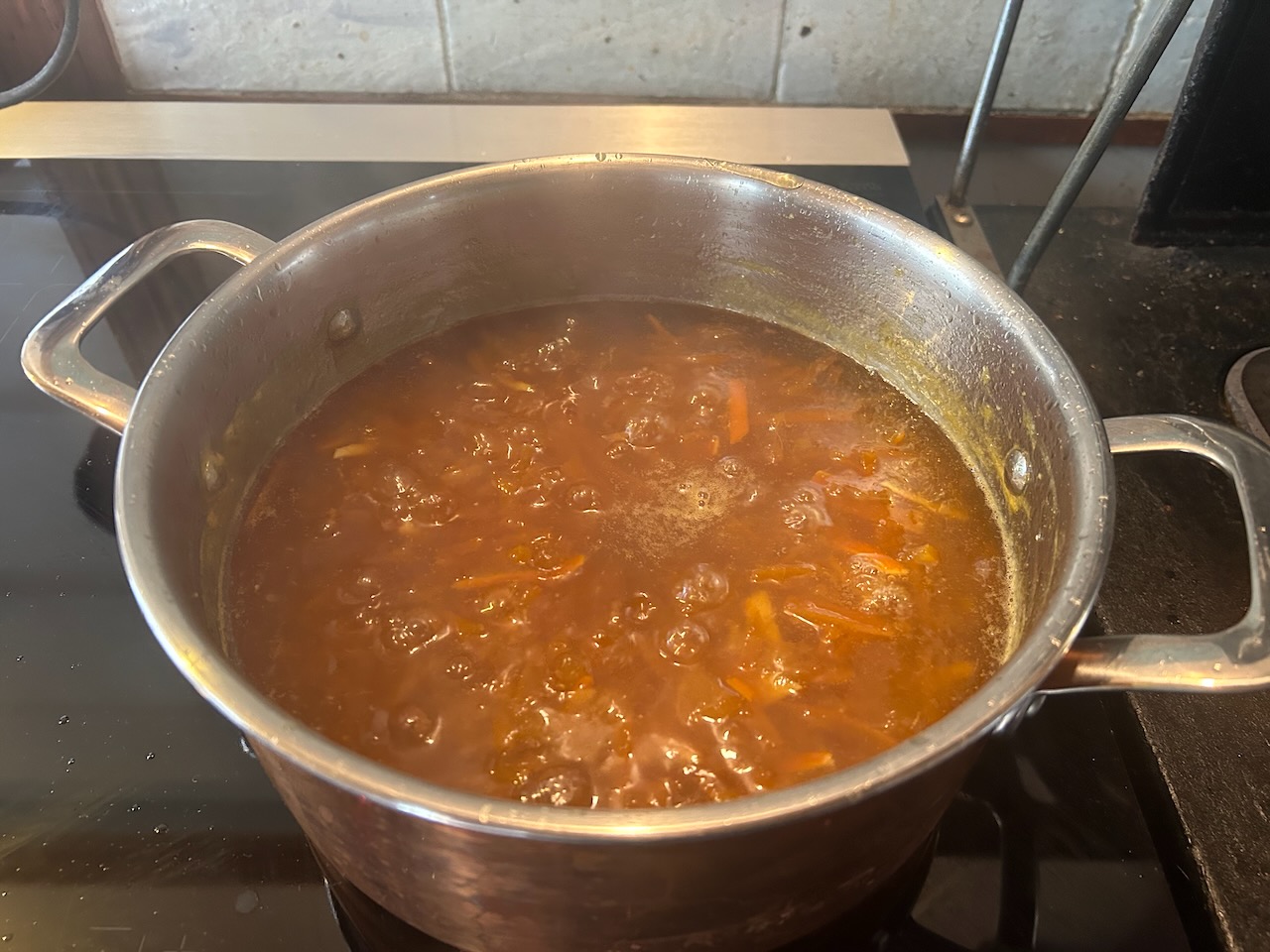
This recipe gave me 3.5 litres of marmalade = 6 medium sized jars. Worth the effort. We had visitors while I was cooking it up. They all walked into the kitchen and each remarked on how wonderful the smell was as they entered. We were able to give them a large box of mixed citrus to take with them.
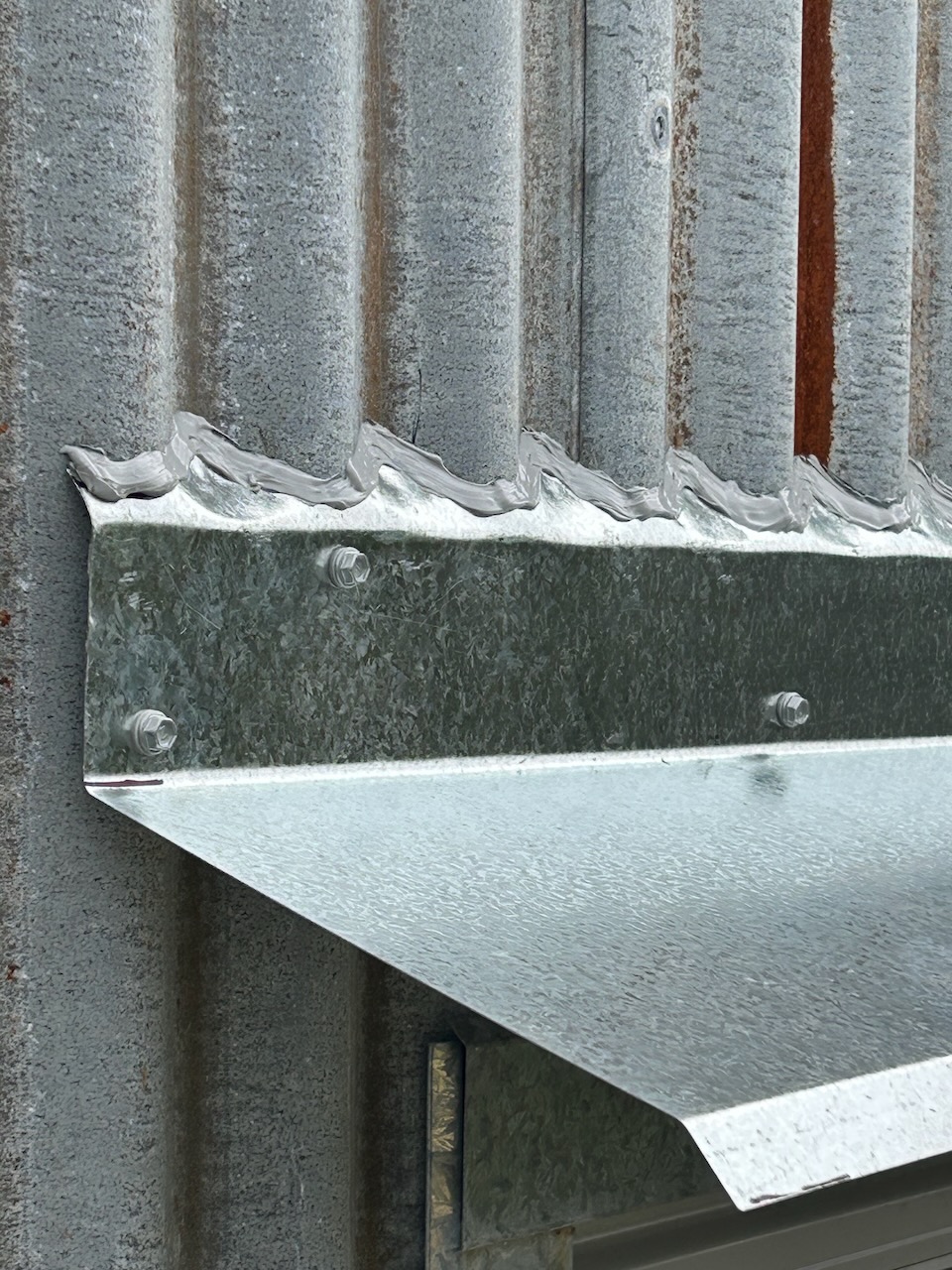
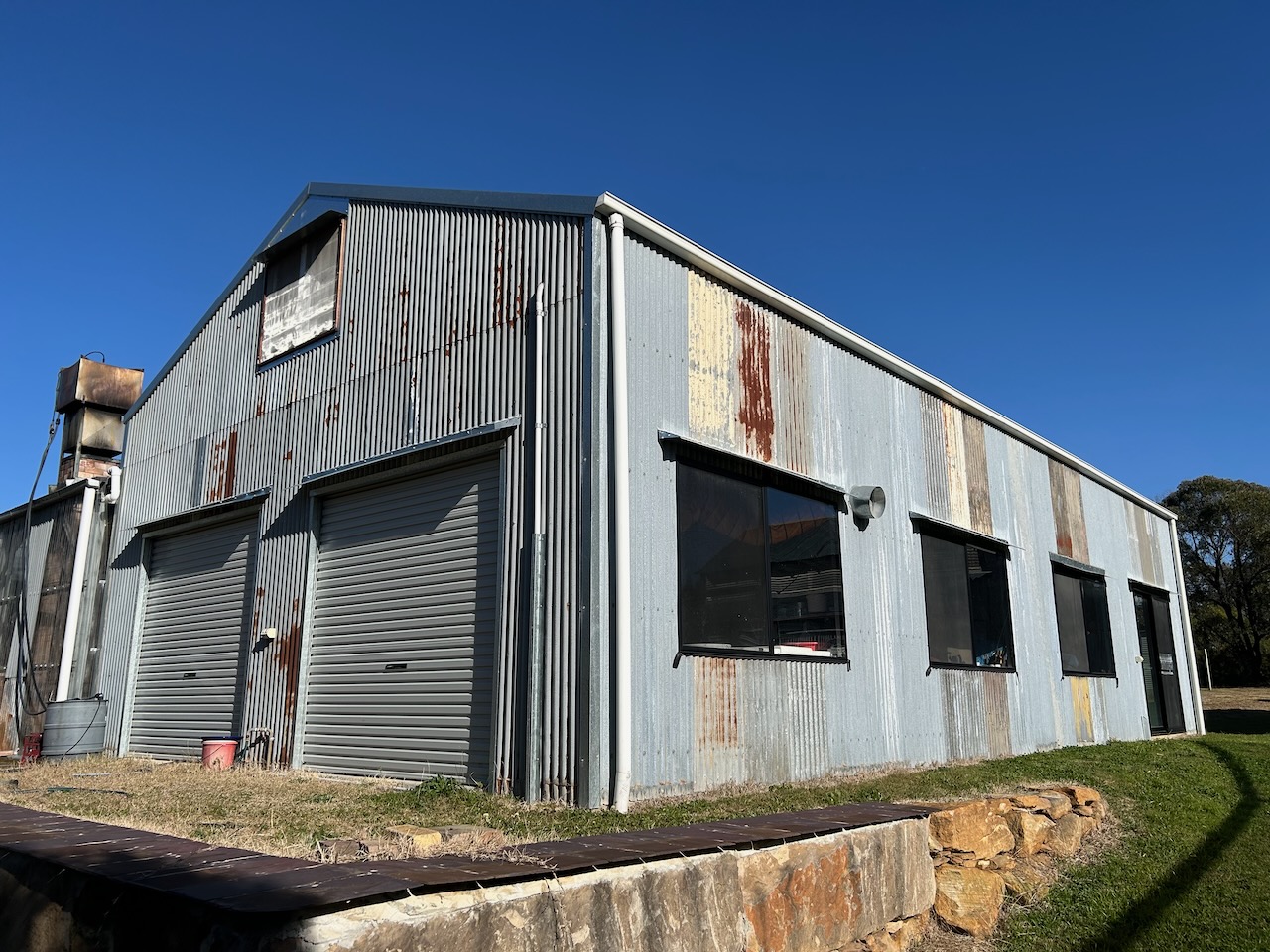
Out of the kitchen and onto more pressing practical matters, I made my own new flashing for the pottery shed windows from two sheets of 2440 x 1220 x 0.9mm sheets of galvanised steel, that I cut and folded on the guillotine and pan break, custom fitted for my windows. The lengths of flashing have to be marked and then cut out to perfectly fit into the curves of the corrugated iron sheeting on the walls. In a perfect world. The shed builders should have fitted flashing above the windows before they installed the outer wall sheeting. But they didn’t bother to do anything at all, so the window seals around the edges leaked. But not any more.
Andy and I marked out, hand cut and fitted the curves exactly to match the variations in the mixed 2nd hand gal sheets. A slow, but rewarding job. We couldn’t use a template, as almost every sheet is different across the wall. Until I collected all this mixed corrugated iron roofing fro mall around Sydney and the Highlands. I didn’t realise how many different profiles of corrugated iron there were. I just thought that it was all the same. But every company has their own individual variation of the profile.
We spend a day going around the building and fitting the new flashing above all the openings. We can’t take off all the cladding to do it properly. As it should have been done. So we add the flashing onto the wall sheeting and cut it into the profile and seal it with silicon. It’s quicker, but still takes us all day to do 5 double windows and 3 garage sized roller doors.
Bit by bit I’m getting the shed finished. It’s only taken 6 years to get this job finally complete.
All the flashings acting as mini-awnings above every opening.
Nothing is ever finished, nothing is perfect and nothing lasts.
The winter is well and truely here now. We have passed the solstice. We are getting cracking frosts that turn the paddocks silver/white. Janine harvested the last of the almost red, struggling, self sown, tomatoes just in time before the first of the really heavy frosts reduced the plants to crisp brown stalks. The shrivelled plants and their remaining unripened green tomatoes will be composted – eventually, when the weather warms up a little. The mid-winter garden looks a little bit forlorn, but it is still feeding us really well.
We are continuing to pick the citrus fruits. The later crop of Seville oranges are just starting now, so some serious marmalade making will be taking place in the evenings from now on.
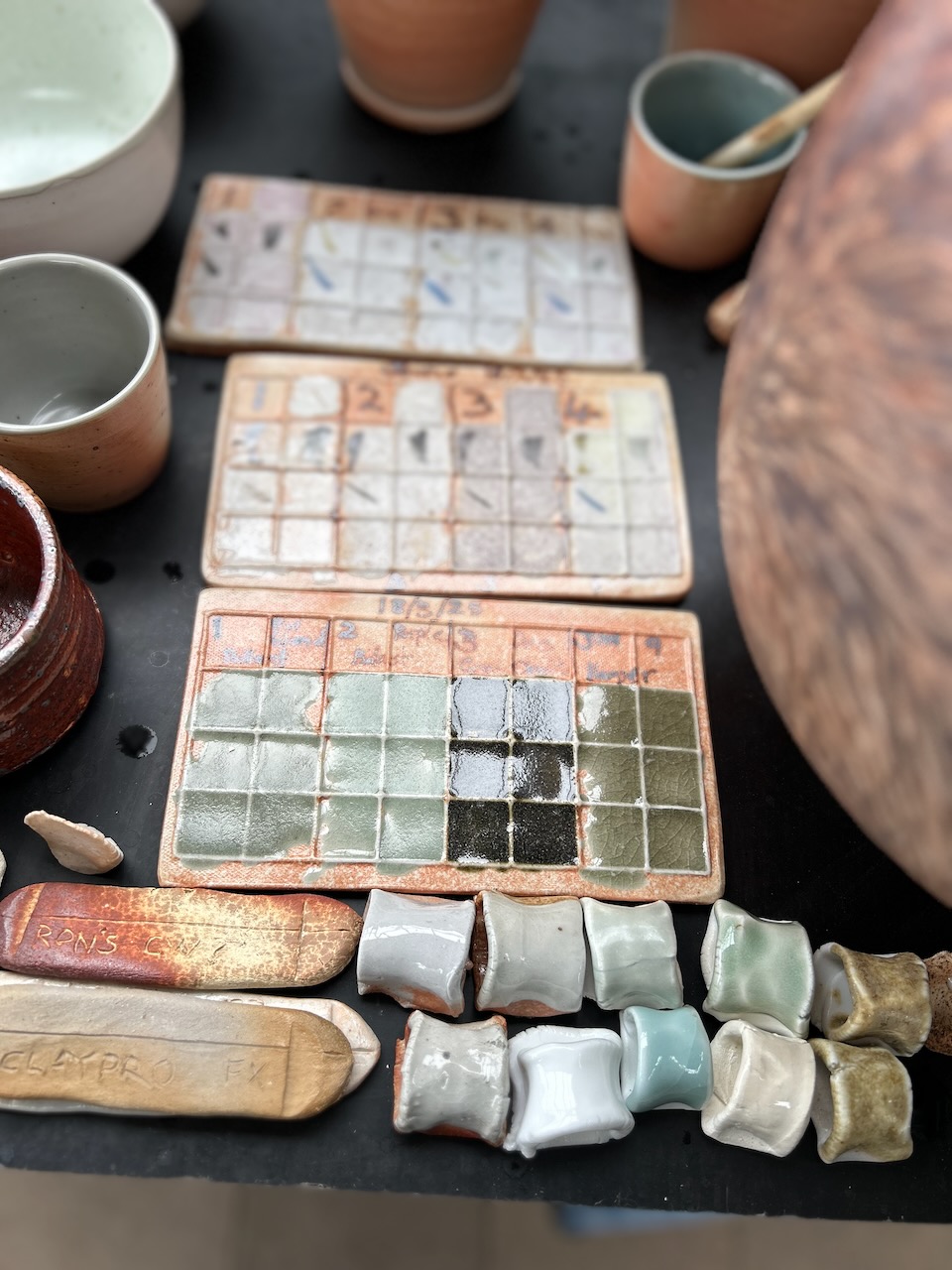
I’ve done the first wood kiln firing since returning from my work in Korea. It worked perfectly, and the results were good, although I’m always hoping for something a little bit better, however, I’m happy with the best pots and there is always a string of new test bodies and glazes developing from my local rocks. The samples are encouraging.
I start the firing in the very early morning, so early that there is no noise at all. At 3.30am it is pitch black and really quiet. No traffic noises from the main road. Every body is in bed. It’s a great time to start that tiny little kindling fire, nurture it and watch it slowly grow and develop into something with a life of its own. The little kindling fire is quite an intense time, you can’t walk away for any reason. You have to turn up prepared to sit and pay attention. I don’t leave to make some breakfast and a cup of tea until I start to stoke the bigger blocks of hard wood. Then there is some time to boil the kettle and make some toast.
By morning, I’ve progressed to the hobs and my firing friends have turned up, so Janine makes us all a proper hot breakfast, cooked on the pottery wood stove. A special treat of our own chickens eggs and some nitrate-free bacon, followed by coffee, our own marmalade on my home made rye bread toast.
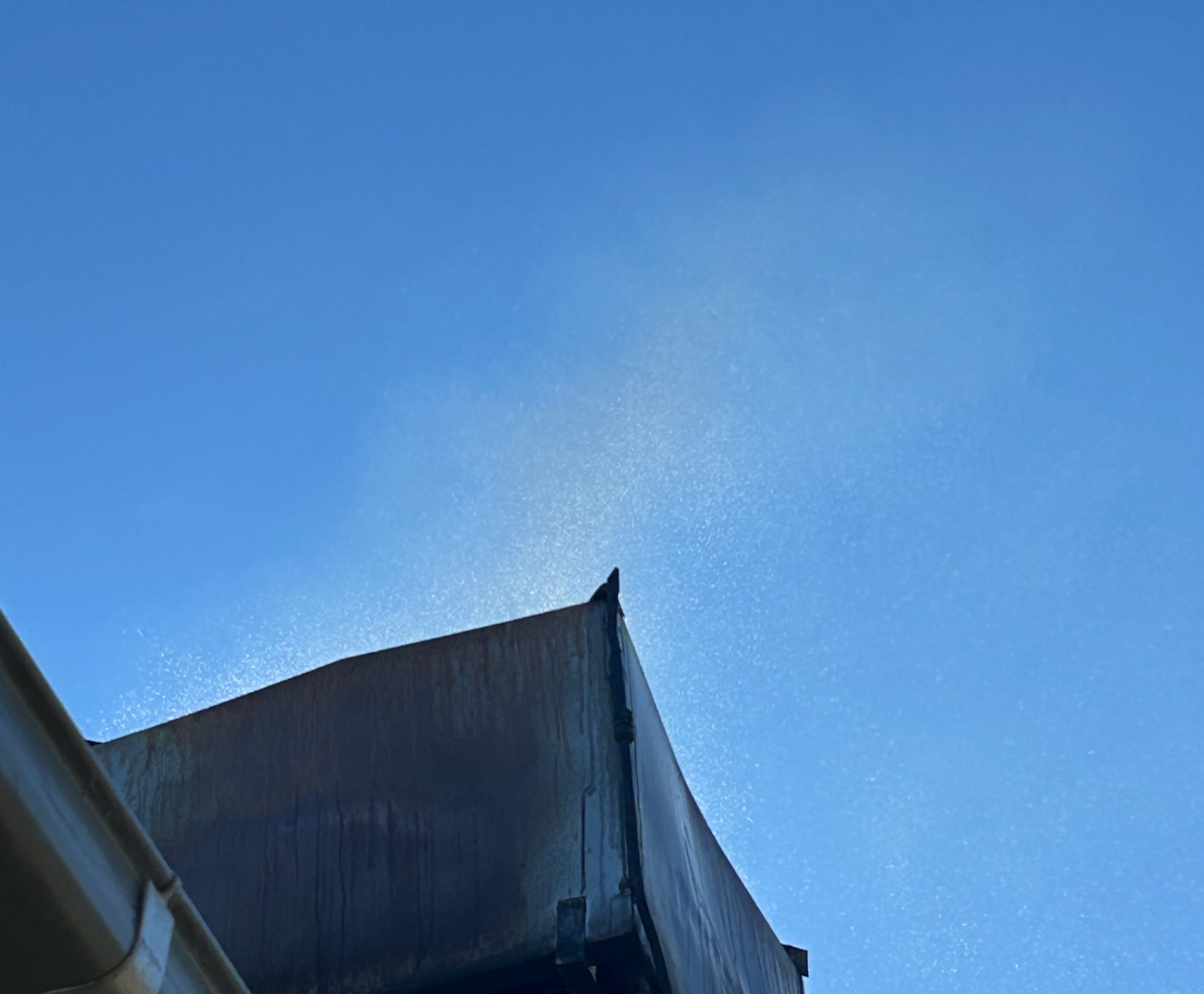
I have put a second water spray in my chimney top scrubber and the coarser droplets can be seen wafting out from the top of the scrubber, illuminated in the morning light. They fall like light rain bringing down PM2.5 carbon particles with them. The rest are collected inside the scrubber gutter and drained down into the soil in the back garden.
After unpacking the kiln, the first thing is the house-keeping, cleaning out the firebox and chamber floor, washing the bricks and kiln shelves with alumina, then finally fettling the work. I can see that the sgraffito work is quite different in the wood kiln. The ash and higher temperatures completely change the look of the work compared to the similar pieces fired with solar electricity in the electric kiln.
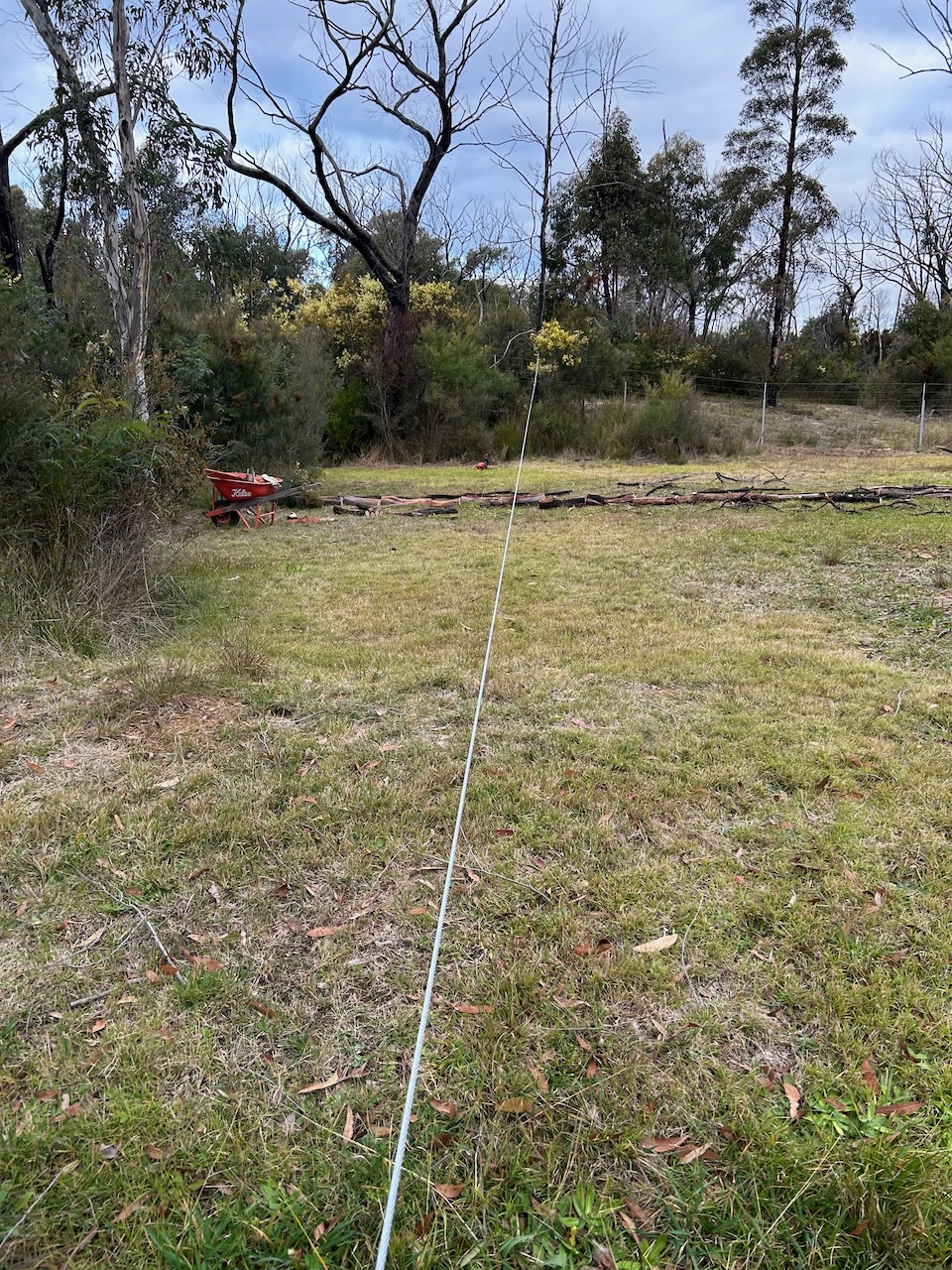
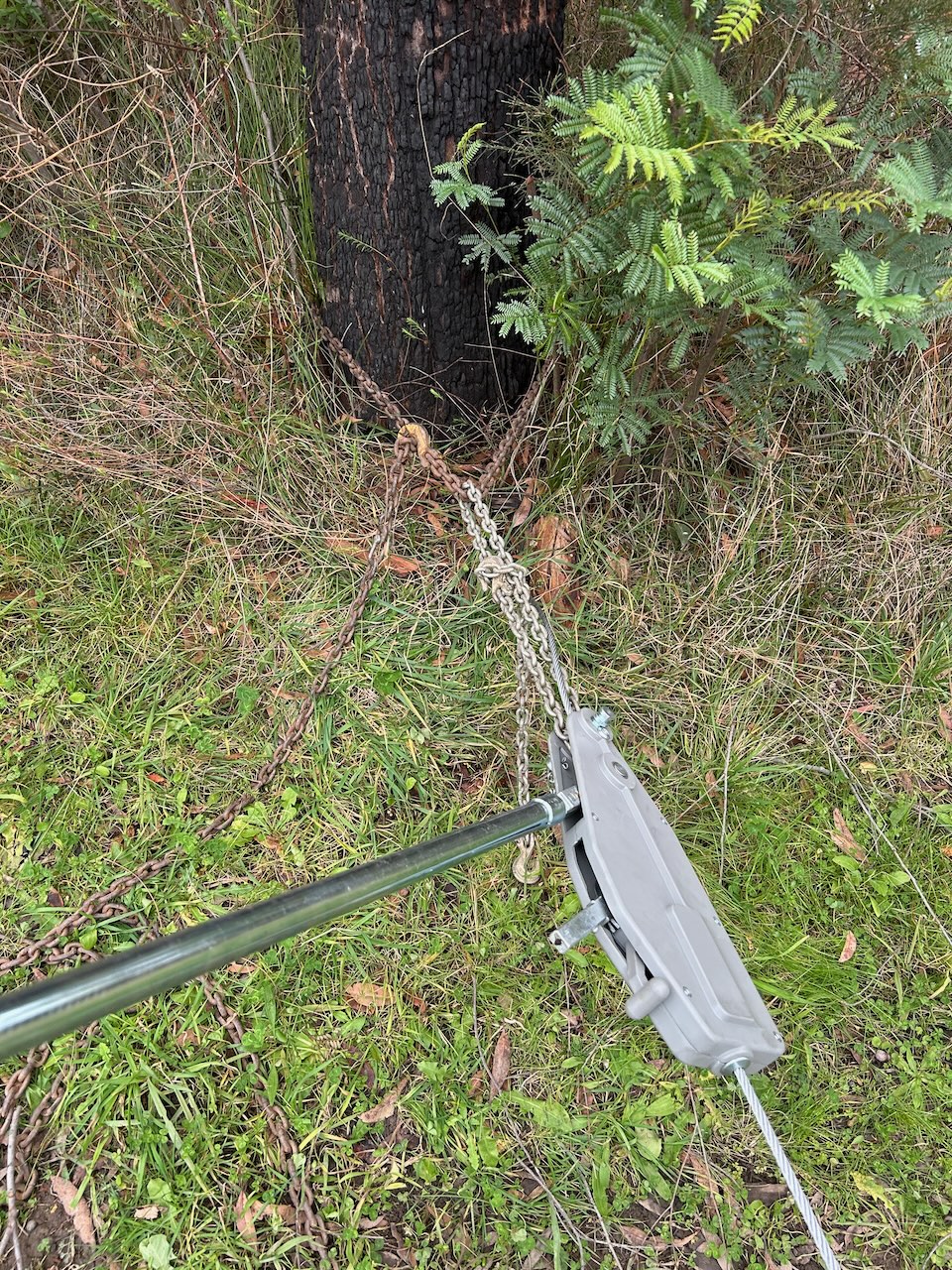
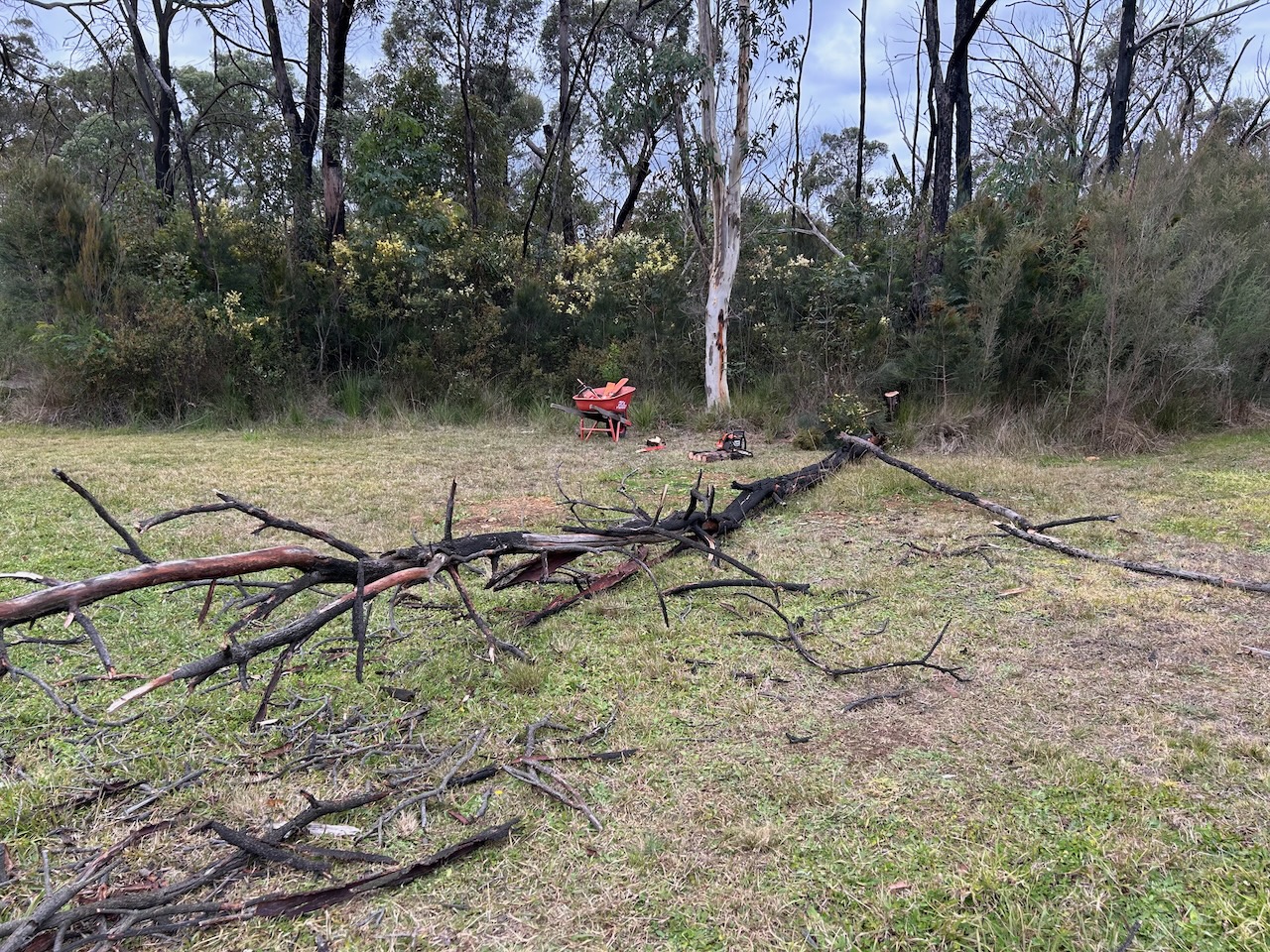
As heavy rain is forecast for the next week, I wanted to get a load of kiln fuel, in and under cover, ready for the next firing. I spent a few days winching over and cutting down some of our standing dead trees in the far paddock. They were killed in the 2019 catastrophic bush fires that cleaned us out. There is a lot of re-growth now and the understory is coming back up. I’m not sure about these long-dead, burnt trees. Just how stable they are, or if they are partially rotten inside. Dead wood like this can be unpredictable – therefore dangerous. So I’m taking no chances. I wrap a load-chain around the trunk up as far as I can reach, or if they are very tall, I use a ladder to get the connection point up as high as I can. Felling trees is dangerous, so to make it safer, I climb ladders – which is equally dangerous after you turn 50? or 60? or 70? Climbing ladders to make it safer seems a bit of a contradiction, but who said life was straightforward and easy.
Once the chain is (un)safely connected. I remove the ladder and pay out the chain over to where I have a steel wire winch connected to a substantial tree trunk. I cut out a wedge from the chosen tree in the direction that I expect it to fall, then go to the winch and apply a bit of tension, quite a bit, until I see the tree bend over slightly in the desired direction. Lastly, I put a cut in the back of the trunk, stand aside and watch as it falls over to where it is being pulled by the directional cutting and the pull of the winch.
I has worked perfectly every time so far, except once. When the tree was so rotten inside that the weight of a large side branch took it across in an unexpected direction to one side. As I’m standing well back and a little to one side as it goes. I feel that I’m relatively safe. I have been so far, even when the tree goes off sideways in it’s own way.
With smaller saplings, I just attach the wire rope/load chain to the tractor and pull them over.
The wood is all cut, split and stacked ready for the next firing. My hardwood seems to be getting harder as I get softer? It’s a big effort these days to restock the kiln hob wood pile.
After it’s all done. I’m blessed with a perfect red sunset. Some shepherd somewhere will be delighted.
We have just harvested the first cabbage and first broccoli of the autumn. I planted a range of brassica seeds on boxing day. The first batch were all dug out by the blackbirds, so when I re-planted the 2nd sowing, some time later. I also covered the bed with bird netting to stop a repeat of the blackbirds scratching out the seeds. Blackbirds don’t want the seeds, they just like to scratch into freshly worked and composted soil looking for worms. This little hiccup set me back a few weeks, so our first cabbage is a bit late arriving.
I have now repaired all the melted sections of the plastic netting over the vegetable garden. Almost total replacement at both ends that were worst hit by the fire, then applying patches to the large holes in the other walls, and finally stitching together the small 50mm to 100mm holes that are scattered all over the enclosure walls and roof. I purchased a commercial size roll of 100metres by 10 metres of netting over 30 years ago to cover the vineyard at harvest time. The netting that is over the veggie garden now is all that is left over from that time. It had a 10 years warranty against going brittle with the ultra violet light. So I’m very pleased that it has lasted so long. However, it is getting very brittle and the galvanised steel netting is all rusted through in places. So a total rebuild is in order, but I’m not too sure that I can manage that big a job these days, or if it would even be wise to attempt it at my age, having just turned 73, I shouldn’t be up and down ladders for days on end.
I made an Australian version of oka-nomiyaki pancake. Of course it is not really an okonomiyaki, as I don’t have mountain-potato starch, or almost any other authentic Japanese ingredients, but I do the best that I can with what I have. The super-fresh garden ripe cabbage makes it really fresh, crisp and delicious. The broccoli goes into a veggie stir fry along with all the other garden delights of the current season and some tofu for protein. Vegetable gardening, which mostly involves a lot of weeding, mowing and watering, suddenly becomes so worthwhile when you are harvesting such beautiful produce each afternoon, freshly picked ready for dinner. Our food has carbon metres, not miles!
I have also planted another 4 different varieties of seed garlic in the garden, just to see if any of therm are well adapted to grow here in the future.
In the pottery, I have been throwing some sericite porcelain stone bodies. This stuff is so short that I have to make the wall bases thick to hold the form up. That then means a lot of turning to get the pot thinner again. This weird stuff tears and rips as the turning tool cuts into it – unless it is turned quite firm and almost dry. But then there is the dust to contend with, so I like to do it while it is still a bit damp, but then it chips a lot. It becomes a two stage process. Roughing out the mass of extra thickness, drying some more, then final turning. I get to do a lot of slaking and re-cycling of turnings.
I have built an extra-large tray for my shimpo, but with this porcelain, I still fill it very quickly. This image is of the trimmings from just 15 small 150mm. bowls.
It all goes into the mixer pug and is recycled, ready for throwing again the next day, although leaving it to age a little bit and ‘recover’ would be even better, but because I use a dozen different mixtures and recipes, it is easy to loose track, with too many small packs of different clays hanging around. So I prefer to use up each batch all in one go as soon as possible.
The tyre on the old wheel barrow went flat last week. I took it to the tyre place to get a patch or a new inner tube, but they told me that the tyre wasn’t worth working on and I’d need a new tyre and a new inner tube – at a cost of $78! As the old metal rim is quite rusty, I decided that I might just as well buy a whole new wheel unit from the big hardware chain for $32! But then I remembered that I had a complete wheel off a buggered trolly that I picked up off the side of the road on council clean-up day. It is 25mm smaller in dia. but still holds air pressure well, so I had to change the shaft size and make some new brackets to hold it on, out of scrap tin plate. 20 mins later we are all back in business and good to go. It’s not perfect, but it works. Recycle, reuse, repurpose!
The Japanese have a word ‘Mottainai’ – too good to waste!
A botched up job that will keep all of this useful material out of the waste stream and land fill for another decade. I actually picked this whole wheel barrow up off the side of the road in the village some years ago on Council clean-up day, when the owner decided that it was just junk, because the tyre was flat. I took it home and just pumped it up. It worked! And has been working hard here for all those years of reprieve since then – and now still continues to be useful. Waste averted, Mottainai!
Nothing is ever finished, nothing is perfect and nothing lasts.
We have just completed the 3rd of our Jan/Feb summer school series. Just 1 to go, starting on Friday.
We have had 3 great classes with a bunch of wonderfully talented and enthusiastic students – as they all-ways are every time. It’s such a privilege to be able to work like this, passing on what we have learnt over our lifetime, to enthusiastic potters, keen to learn the techniques that we have accumulated during our careers, and to sample a bit of what we do here. Between us, Janine, Leonard and I have notched up a total of about 150 years of ceramic practice and experience.
The last of the wild poppies are in their final fling of exuberant and cheerful rich red colour. These ones have come up, self sown, wild, in the cracks in the paving around the pottery.
Even though everything is more of less completed around the pottery, it still takes us a day to set the studio up for a workshop, prep all the clay, clean the batts and pot boards etc, then do some cooking to share for our joint lunches. Afterwards, there is a day to recycle the abandoned pots, crushed and soaked in the left over throwing slip, and wash everything down. The next day, I transferred all the re-cycled clay slip/slop/slurry from the 20 litre buckets into the plaster batts in the clay room to stiffen-up for re-pugging.
I have 5 big plaster tubs/batts on a shelf in front of the huge north-facing window in the clay room, they get baking hot in the sun and are almost always very dry and receptive to stiffen up our recycled clay slip/slop/slurry.
However, 30 litres of fairly thin slurry does set them back a bit in the drying stakes.
Today I dug out all the very soft plastic mass, in its slightly stiffened, but still very wet plastic state and piled it up in lumps on the pugging table to air dry. Once the plaster is saturated, it keeps the clay damp, so best to get it out and get it air drying. This has proved tot be the fastest way to deal with so much slurry. I also need the plaster tubs dry again for Friday’s next onslaught of failed experiments from the last 3-day summer school.
Everything will be in order by the time the next class starts tomorrow.
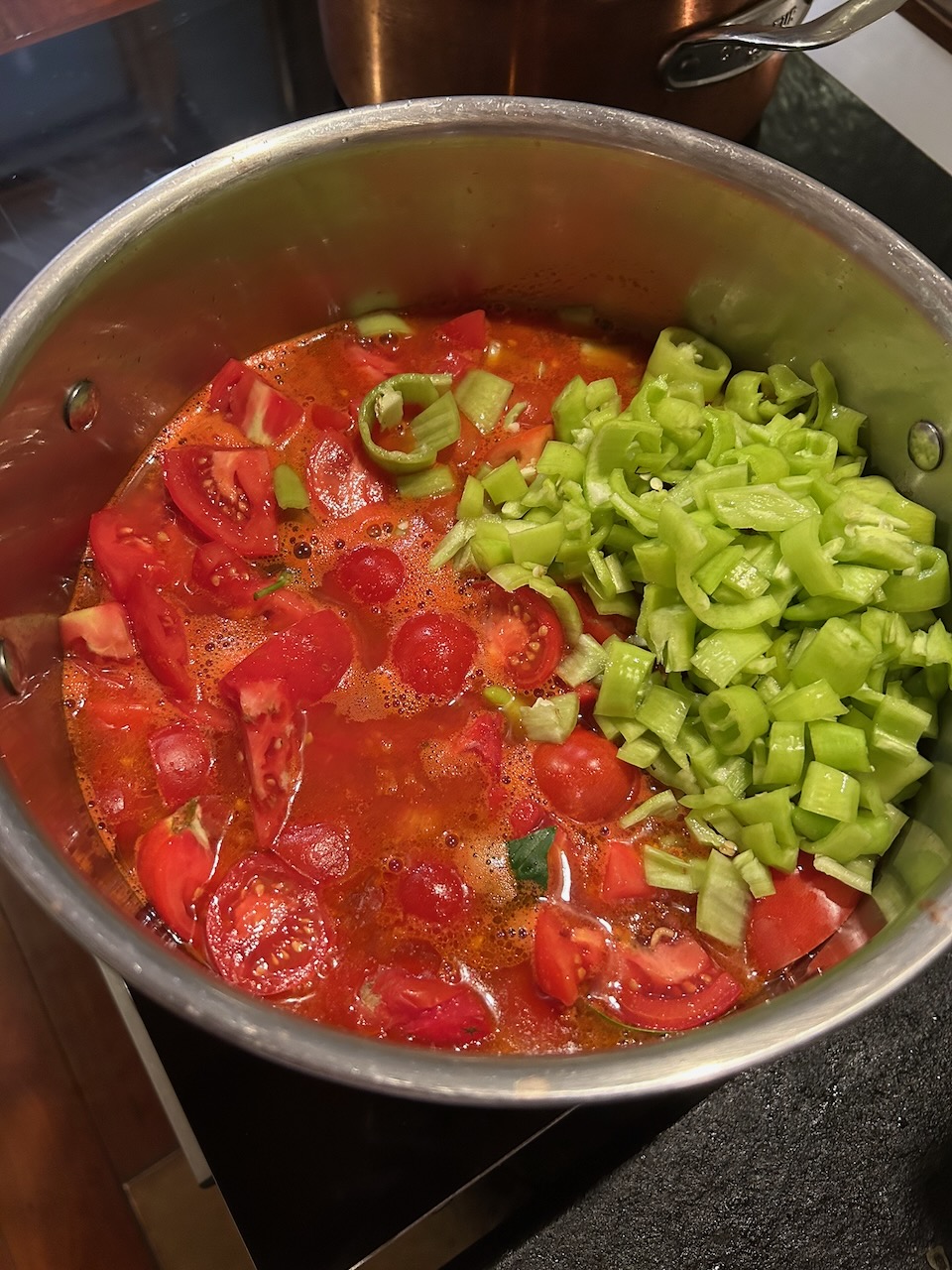
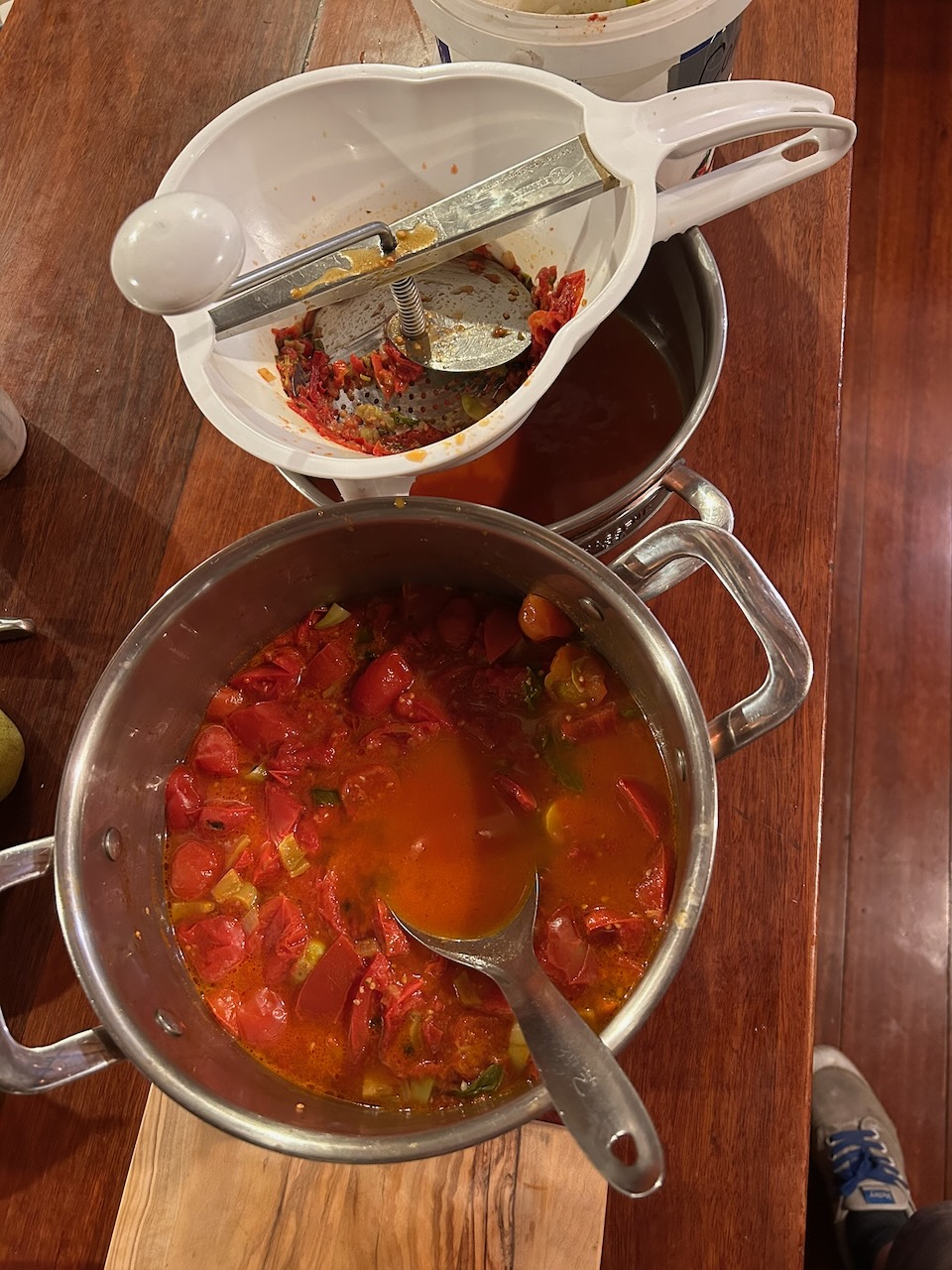
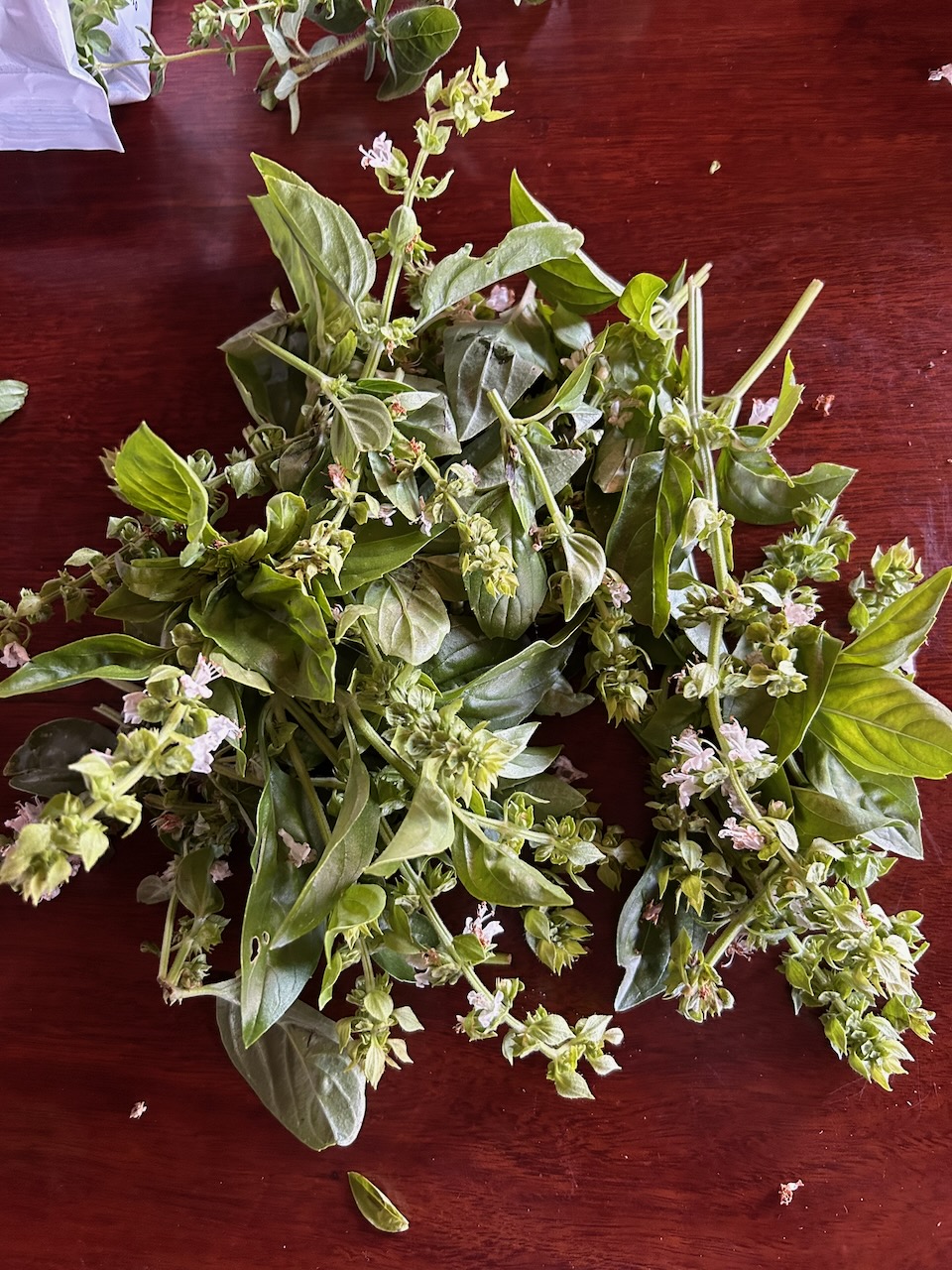
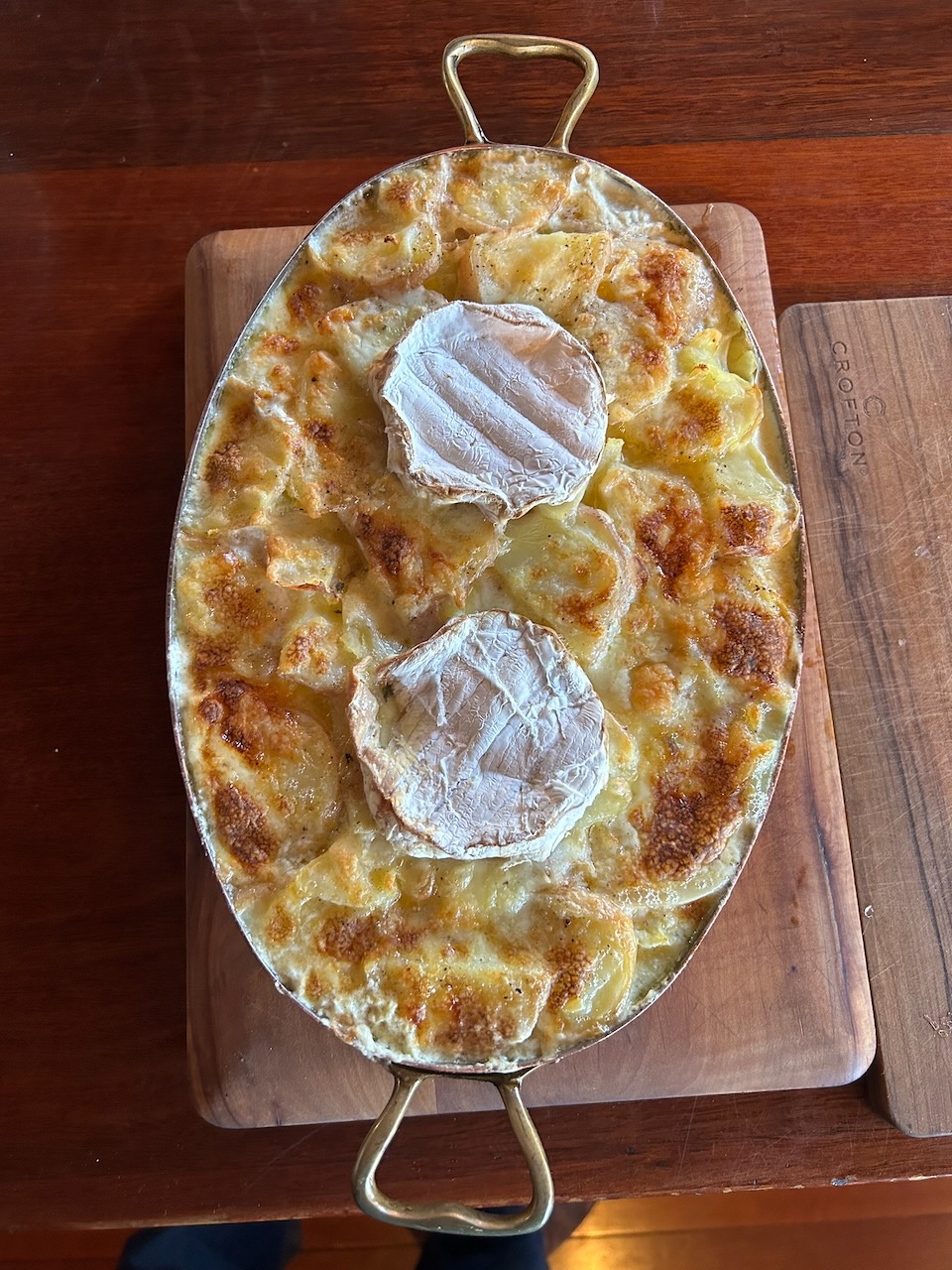
After the cleaning I baked another loaf of bread and cooked a potato dauphinoise for dinner finishing it off with a whole camembert sliced on top. The garden is revelling in all this warm weather and occasional storms. The self-sown tomatoes are small but prolific. I found the time in the evenings to make my first batch of tomato, garlic, capsicum and basil passata. 10 litres of sliced tomatoes boiled down in their own juice and then reduced by half to concentrate the flavour.
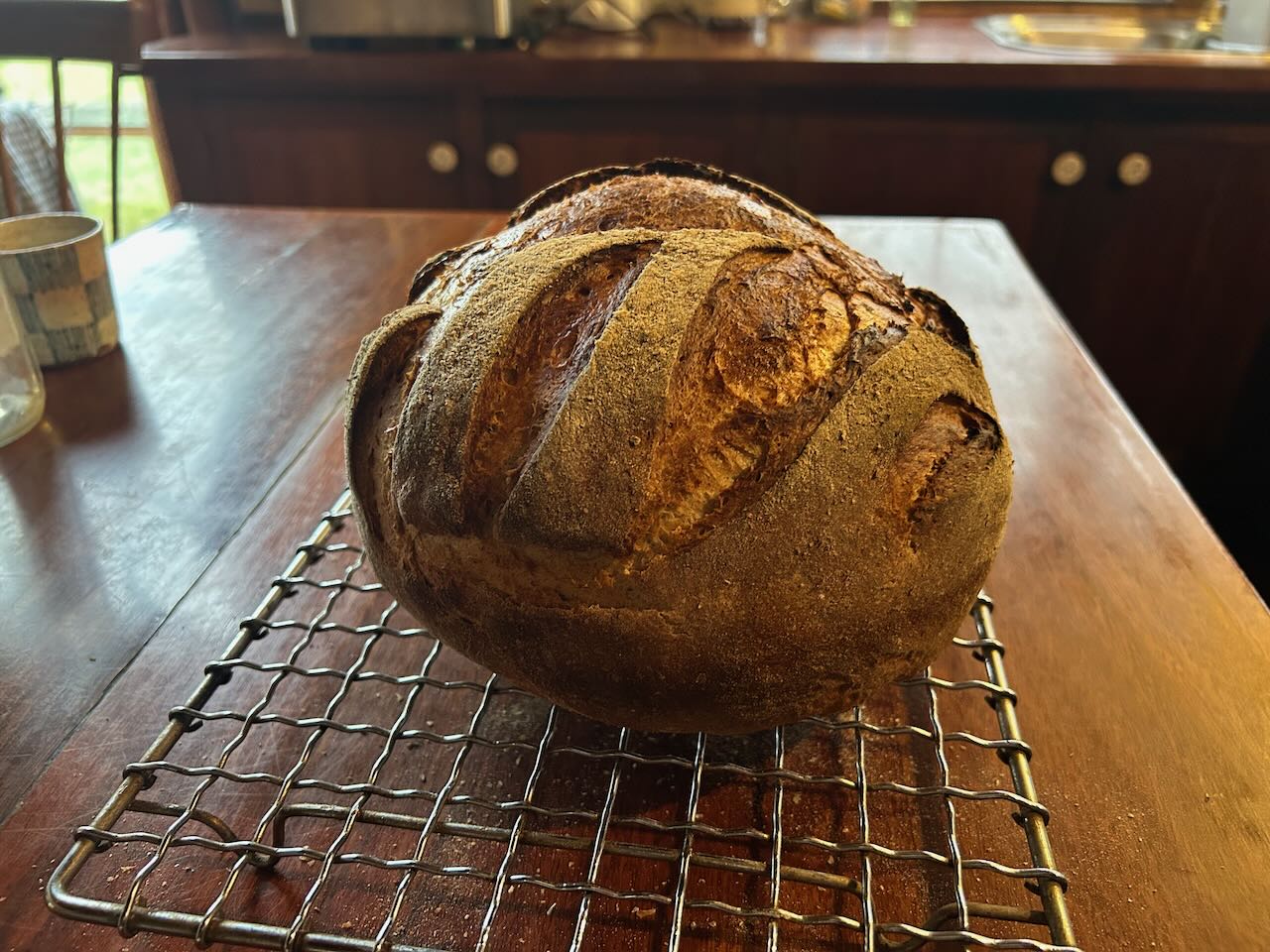
The bread turned out well – as usual. I’ve got it nailed now. Success every time. but I’m still trying variations, and different brands of flour. I’ve ended up with a 50/50 blend of wheat and organic stone ground rye flours.
There are so many vegetables coming from the garden in summer, we give a lot away, and do a lot of preserving. We also eat as much as we can.
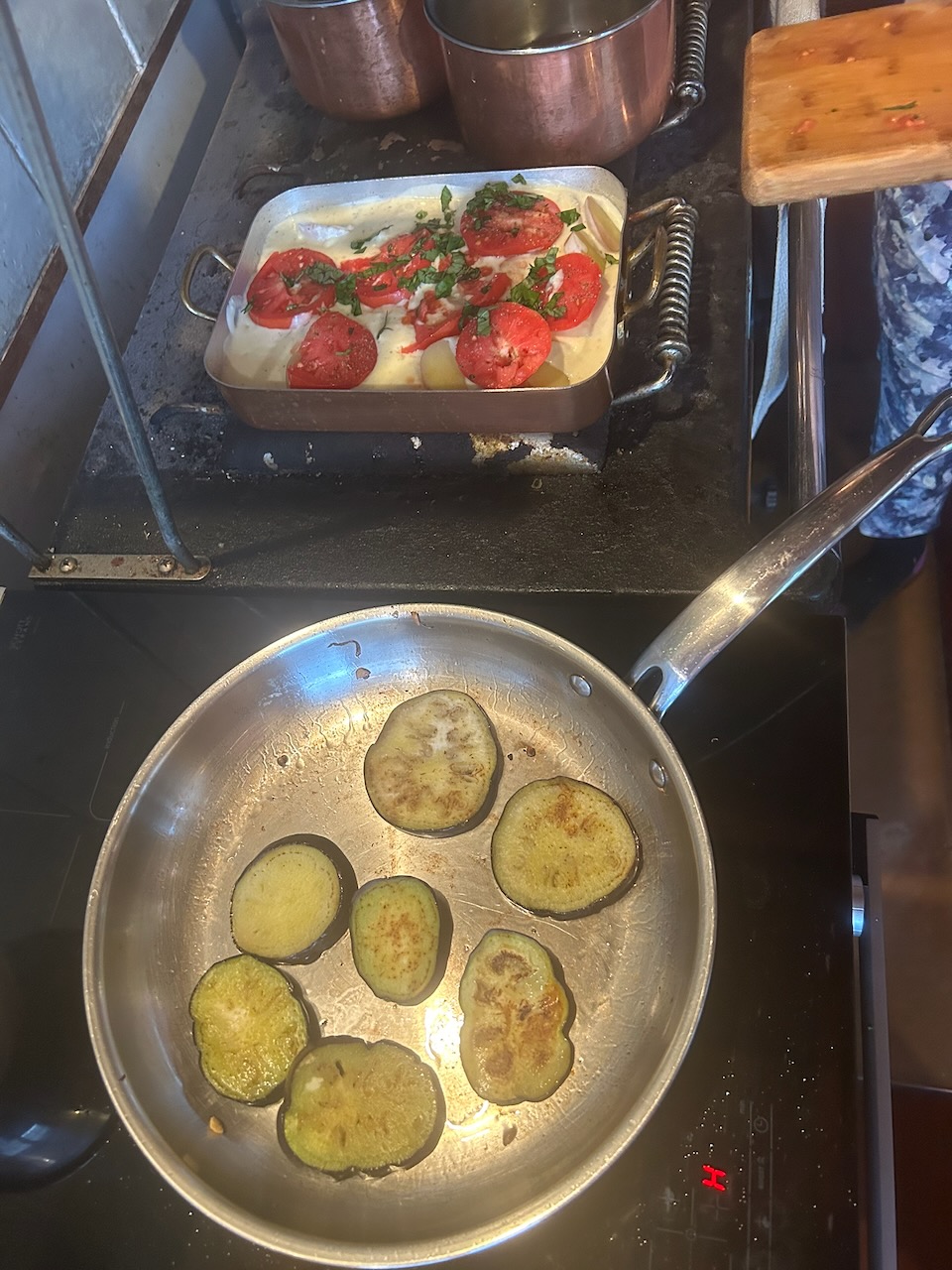
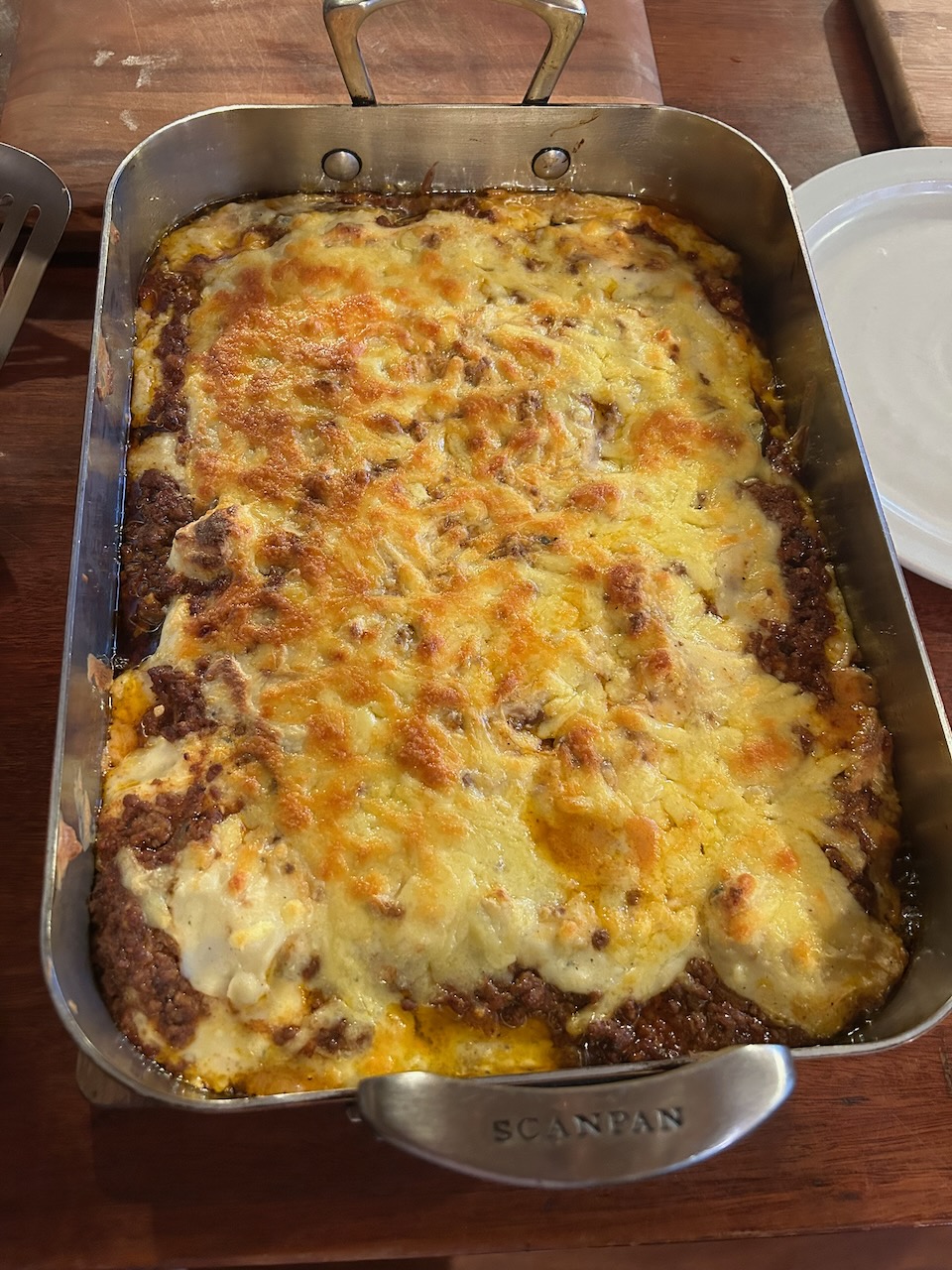
Nina and I worked together to make a sort of Greek inspired moussaka dish. I did the tomato/meat sauce and Nina did the béchamel topping. Working together made it so much quicker. Everything from the garden, egg plants, zucchinis, garlic and last years passata.
It was so nice on a cool rainy evening, we’ll be doing it again.
We are continuing to cube and roast pumpkin with olive oil, garlic and a sprinkle of salt. Everything is working, we are well, although quite tired from the intensity of the work load with the workshops, added to the summer harvest work, which can’t be put off or delayed. After next weekend’s workshop, I might try and make some cider from the apple and pear crop that is peaking at the moment.
Is there a pot of gold at the end of the rainbow, in the new pottery? Hit by the end of the amazing double rainbow. I rushed down there to check it out. I went to the decorating cupboard where I keep all the pure gold leaf for use in kintsugi. But no pot of gold!
I could swear that I had a full fresh book of gold leaf in there, but NO! all gone.
I think that we got the wrong end of the rainbow. It sucked up all my gold and dropped it over the rainbow, somewhere else. Possibly in Kansas?
Those first two big-pot throwing summer schools took all of our time and effort to start the year. Since we finished them, a couple of weeks ago, we have had time ‘off’, playing catch-up in the garden and orchards.
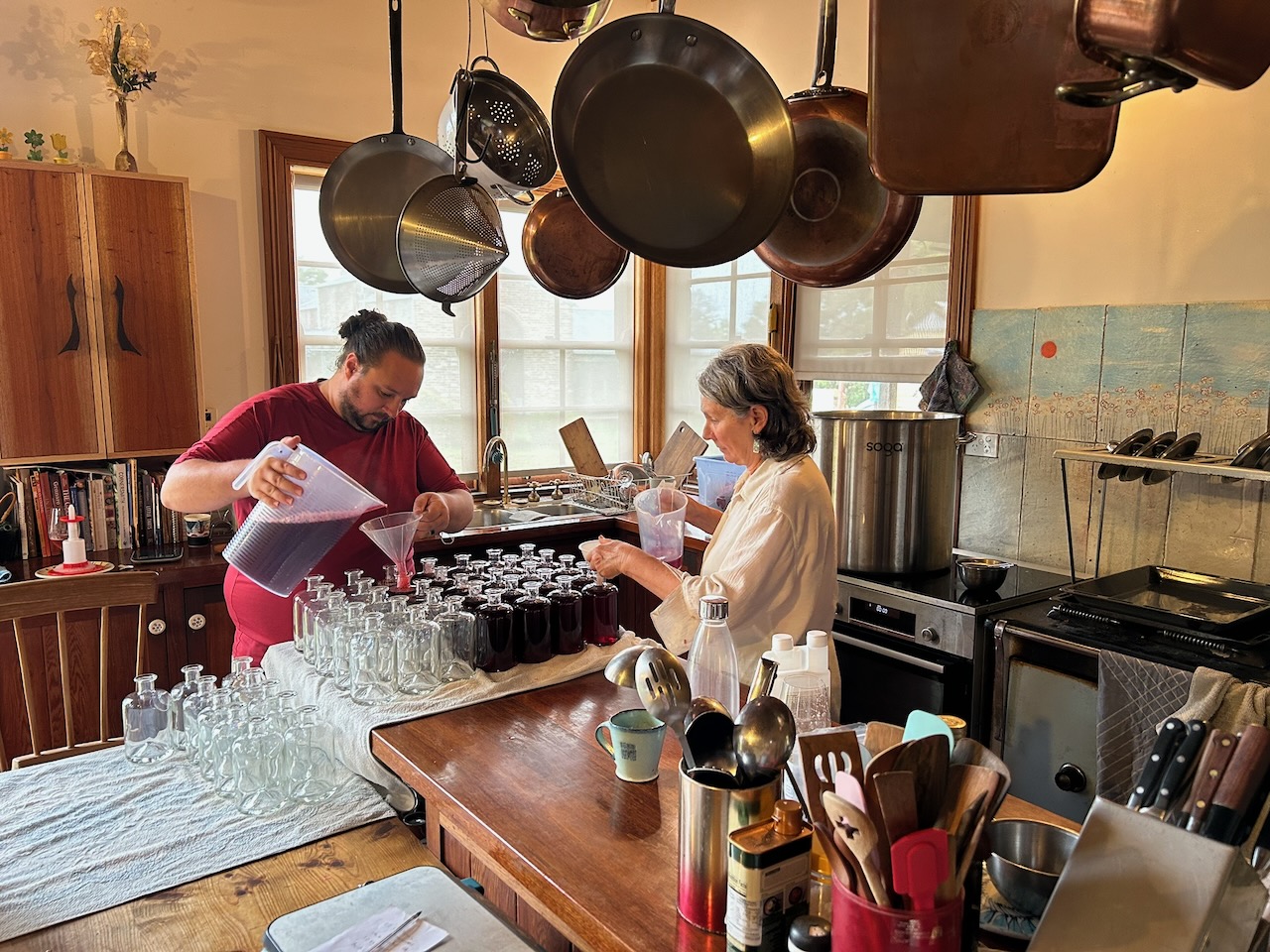
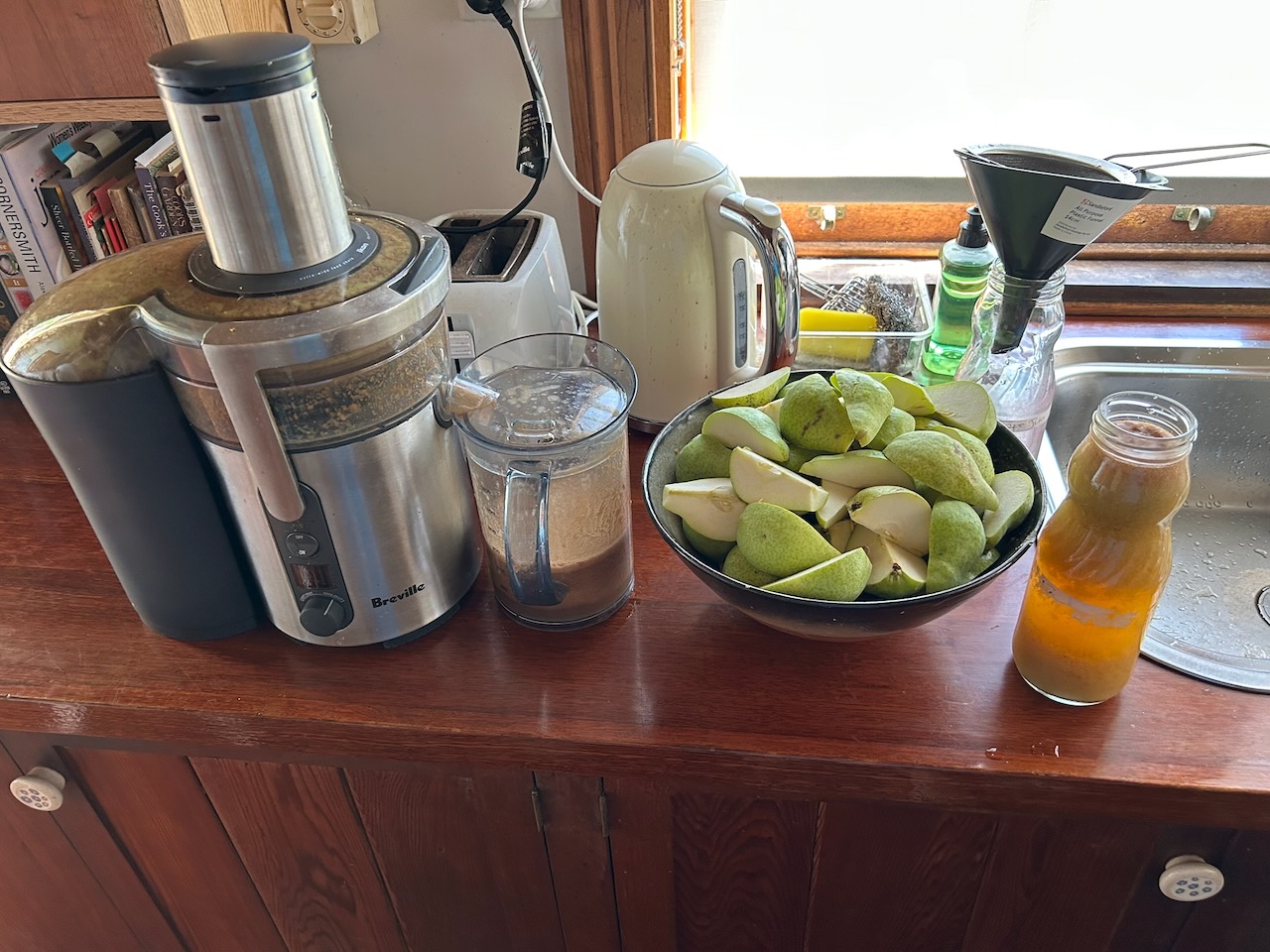
We have been mowing, watering and harvesting, for the past two weeks. We have been dealing with that harvest since then, picking fruit, bottling tomatoes, making passata, roasting pumpkin cubes, bottling pears and making pear and apple juice, then picking and drying prunes.
Diced pumpkin cubes, roasted with olive oil, garlic, salt and pepper.
Everything comes on in earnest in January. There is a lot to deal with all at once, so we are eating very well. I really look forward to that first ripe pear. Just like I do that first ripe tomato of the season. The kitchen is a busy place every day. We spaced out the gap between the two pairs of workshops to give us time to do all this ’self-sufficiency’ work. I had also booked in a couple of other jobs that were needing to be done. So our two weeks off, has really been ‘full-on’!
Pears poached in a little white wine, cinnamon and sugar, served with fresh picked passionfruit and a little ice cream. These are the tangible benefits of self-reliant living and gardening. 50 years in the planning, execution and nurturing. 5 minutes in the eating.
I ordered some double glazed, argon filled, metal coated, low energy, toughened, window panes to replace the 3mm. plain glass that is in our big arch window in the house. That fancy energy efficient glass arrived just before Xmas. The big window has been working well, letting light in, but keeping the rain out for almost 40 years, since I built it, and glazed it myself all those years ago. At the time, I tried to find double glazed glass for it, but to no avail. I also tried to buy special ‘stick-on’ glass coating mentioned by Amery Lovins, when he was here giving a lecture tour back then. But no one seemed to be aware of any such product here in Australia, not even ‘3M’ who I was told made it.
So we just lived with it as it was, eventually adding a huge sheet of thin perspex to the inside to create a semi-sealed air gap, but although that did work to some extent. There was room for improvement, and the unsealed gap always fogged up in wet weather, causing the wooden sill to get very wet and start to rot on the surface, so something had to be done.
Luckily, there is now a factory in town, that makes these fancy window panes. There was a one month wait while they were made to order. Back in December, I spent time rebuilding the structure of the glazing bars to make them deeper in preparation. We have managed to install 7 of the new double glazed panes so far. 5 to go. Interestingly, I have spent over $200 just on special window glazing silicon and wooden glazing beading to complete the job.
I booked a few days of help from my friend Andy, who is a local architect and environmentally conscientious builder. A rare breed! He has been very kind in offering us loads of assistance since the fire. He also offers good council and advice on environmental/building matters. I asked Andy to help me install two louvre windows up in the big pottery shed loft. I bought some louvre mechanisms and the ground glass panes online, then I built a couple of hard wood window frames to mount them in. I also made all the custom flashings to go around them. Andy did all the outside ladder work on the day, cutting the hole in the wall and we installed them without too much trouble. It gives plenty of ventilation up there to take the heat out of the loft, but also brings in so much light and the view is good too.
We haven’t quite finished setting it up again yet, but it has been transformed into a lovely, light and airy, comfortable place now.
I have to ‘fix’ a kiln for a friend, even though I am retired, this is a special favour, then it will be back into the workshop for the next two summer schools. I’m looking forward to getting back into making pots for myself again. I have a few batches of experimental clay bodies that have been ageing for some months now. I’m keen to try them out. Especially to see how they will look in the wood fired kiln.
You must be logged in to post a comment.