Thinking Differently, Solar Power and Clay Making

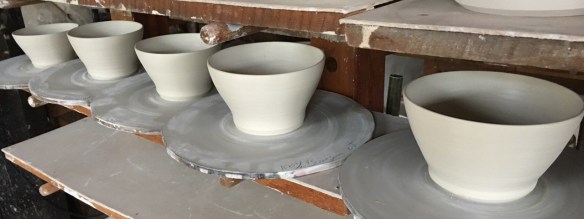
I usually spend a bit of time making clay over the summer when the humidity is low and the air temperature is high. It’s a good time for drying out the clay slip after it has been ball milled.

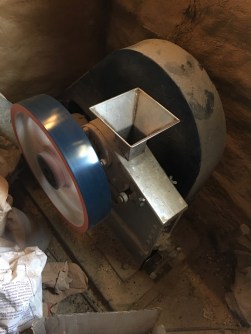
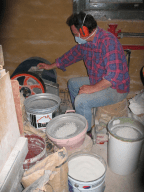
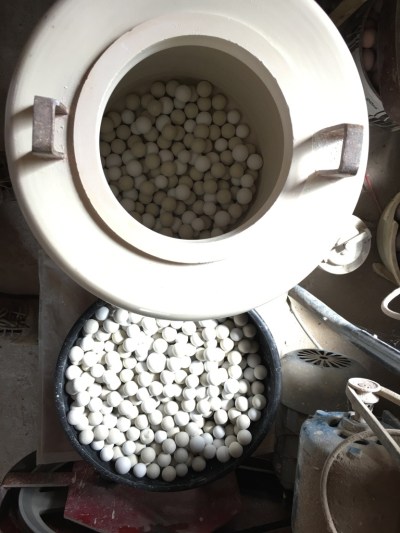
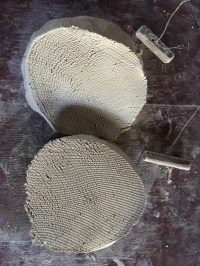
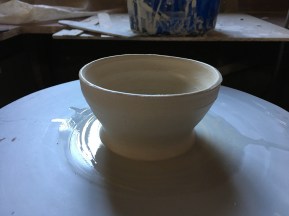
All my so-called ‘clay’, is actually ground up igneous stones. I crush the very hard ‘granitic’ rocks in the big jaw crusher first to reduce them down to 12mm. gravel size, then through the small jaw crusher to get it down to sand size and finally it goes into the big ball mill for a few hours to reduce it to a very fine slip with water and 3% of Australian white bentonite. It is the only ingredient that I buy in for this home-made, locally sourced, native porcelain body.

IMG_0942 IMG_0939 IMG_0941

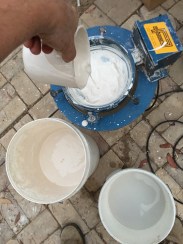
After ball milling, I test the pH and adjust it if necessary, it usually needs to be reduced a little, as the ball milling breaks down the structure of some of the felspars and micas in the stone. This releases tiny amounts of alkali into solution in the slip. The effect of this is to constrain the plasticity of the porcelain and inhibit the ageing plasticisation. Once adjusted to the correct level, the slip is stirred and then put through a fine sieve to remove any oversized particles and any foreign matter that has crept in during unloading. Thick slip is very slow to pass through a very fine mesh, so I resort to using a sieve vibrating machine to shake the sieve while the slip pours through. It’s quite amazing just how fast this process becomes with a little vibrational energy to keep the larger particles moving and not sitting and blocking up the fine mesh. ‘Vibro energy’ a really great focussed use for very small amount of electrical power.

Without the rock crushers and ball mills, I couldn’t make this local ‘native’ porcelain. In the past I always used to feel a bit guilty about using electrically powered machinery, as I was brought up in a family where ‘green issues’ were openly discussed, long before the ‘greens’ were invented as a political movement and ‘green’ came into the environmental lexicon. I’m not too sure what my parents actually called their lifestyle back then. Possibly ‘environmentally conscious’? Anyway, I’m happy to be called a ‘Greeny’ now and all that early environmental awareness has stuck with me. Give me the boy till he is 7! Now I am getting used to thinking differently about electricity as we are slowly becoming a fully electrified solar-powered household.

Electricity was always made with coal here in Australia and most of it still is. You have to specifically request to be put on a green power contract, and then pay a premium tariff for the pleasure of not using coal. 25 years ago, you couldn’t buy green power. Everything was coal, coal, coal, so I decided to make an effort to use the absolute minimal amount of electricity and we were very successful. We learnt to run a very lean electrical household. We have a very modest ‘LED’ screen television. A very efficient fridge that runs on 1 kW per day and a front loader washing machine, also very efficient. All in all we average an electricity usage of around 3.5 kWh per day. Very modest. We have chosen not to buy home theatre,  a dish washer or air con.  We have had solar hot water for the past 30 years, Solar electricity for the past decade and a Tesla battery since the start of the year. To the best of my knowledge, we have completely removed ourselves from the coal economy now.

When we did buy power from the utility, up until last year, it was always a battle to buy ‘clean’ green energy. They just hadn’t thought about it and weren’t prepared for the transition. It was a dinosaur industry. People like us wanted to buy clean energy, but they hadn’t put any plans in place to create any. It was all about business as usual. As the requests grew louder, some clean energy was slowly introduced, such that you could buy just 10% of your electricity as so-called ‘green power’, but it turned out that it was only hydro power from the Snowy Mountains Scheme. This was electricity that was always being generated since the 50’s and sold into the grid as part of the usual mix. But then the bean counters and ‘The Men in Suits’ got involved and thought why don’t we sell Steve Harrison the electricity that he is already buying, but sell it to him at twice the price. If he is silly enough to pay for it!  I wasn’t, so I didn’t.

We waited a long time, until the first wind farm was built just South of here. Then there was an offer that you could buy 20% of your power bill as wind energy, so we did, and continued to increase the percentage every year or so as more clean energy was built and made available. I remember that we were early adopters and had to go on a waiting list to get a higher percentage of clean energy. However, the energy company kept sending us supposedly attractive offers to change back to a cheaper dirty black power contract. This just reinforced to me that the market for green power was stronger than that for coal power. Apparently they had too much coal power and couldn’t get rid of it all.

Then there was government intervention to support the coal industry and then privatisation that was supposed to make every thing more efficient and cheaper. And what happened? The price went up about 200% here. A complete failure of market forces and competition.

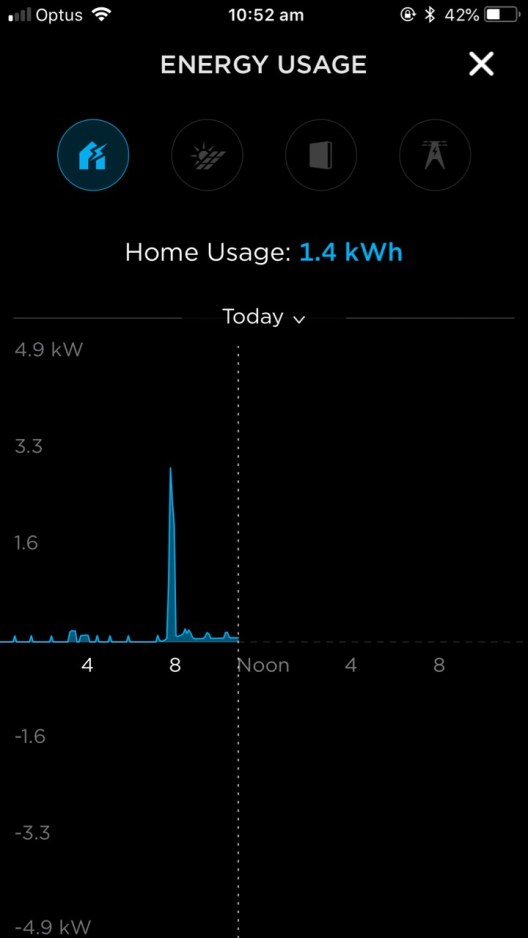
Today I check in on our power usage on my phone app. I see that we are making about 5kW of solar power, not too bad, seeing that we are just a month off the winter solstice. We are only using a few hundred watts intermittently, that’s the fridge compressor switching on and off. There is a spike at 8am. That’s the toaster and electric jug for breakfast. It’s probably hard to live any kind of normal life and use significantly less power then this on a regular basis.

IMG_0964

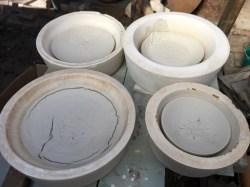
Back to my clay tests and I pour them out onto the drying bed to stiffen up. Again I’m using solar and wind energy in this very passive way now to remove the excess water from the slip and reduce it to a plastic state. The sun shines for free every day. The wind blows most days, slowly the water is evaporated from the slip and it becomes stiffer and plastic. It’s gentle, it’s energy neutral and it’s free!

IMG_0287

Nice.

I’m very lucky to be able to live this rewarding, creative life in carbon constrained times. We are preparing ourselves for a creative, energy passive future, but it’s funny that trying to live a simple life gets quite complicated at times.

My New Book – 5 Stones

IMG_7383205 pages, 125,000 words, full colour, soft cover. Written, collated, printed and bound on the kitchen table. A very limited edition hand made book.
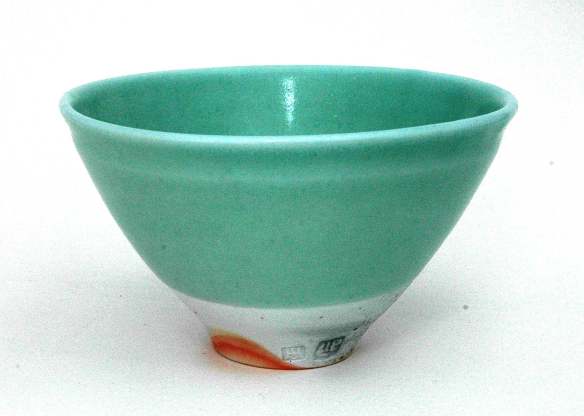
I have spent the last few weeks and months editing and formatting my new book. This will be my 6th book and 7th if I include my contribution to Handbook for Australian Potters.

This new Book is titled 5 Stones, and details my recent research into single stone porcelain. The book will be launched by Grace Cochrane at the opening of my show at Watters Gallery on Wednesday 16th of August from 6 to 8 pm. I have a selection of single stone porcelain from all 11 sites on show in the exhibition.

15 years ago, I discovered a white porcelain stone near where I live. It made me think about where else porcelain has been discovered and when. Over the past 15 years, I have travelled to each of the places in the world where porcelain was originally discovered/invented independently from first principles and found that they all had something in common, and that thing was a stone called ‘sericite’. It turns out that originally, porcelain wasn’t made from the white clay at all. Kaolin wasn’t involved. All the original porcelains were made from a special type of stone called mica.
My travels led me to China, Korea, Japan, Cornwall, France and Germany. I even developed communications with academics in California, Alaska and London. Then finally back to Mittagong in Australia. Near to where I started.  I have made my porcelain pieces out of these weird and interesting materials in remote villages, artist studios, back rooms, workshops, even factories. Where-ever I could track down and find amenable people using this ancient technique who were open to collaboration. 
At each site that I visited I made works out of the local porcelain stone, but I also used the opportunity to collect samples of their stone and posted these rocks back to Australia where I could process them myself and make local, contemporary versions of these ancient porcelains. I collected native porcelain stone material from 11 sites around the world and have made what I think are beautiful pots from them, both on-site, where that was still possible and back at home in my own workshop. 
This exhibition shows results of my firings and 15 years of research into these single-stone native porcelains. To coincide with this show I have written a travel journal documenting my travels. My book, titled ‘5 Stones’ will be launched at the opening by Grace Cochrane. The book stands alone in its own right as a travellers tale, as it has its own characters and arc of narrative, but also helps to illuminate the story behind the actual works on display in the show.
I have works in the show that were fired on-site in clean conditions to give very white and translucent pieces and I also have the same materials fired at home in my wood fired kiln with very different results.
4 of the 11 examples are made from porcelain that is no longer available, as 2 of the sites are lost forever and another two have complications.
I consider my self very lucky to have been able to get my hands on all of these ancient and very special porcelain materials. This will be the first and only time that all these porcelain ‘clays’ have ever been shown together in the one place.
DSC_0002_00004
Unglazed and flashed wood fired Arita porcelain
DSC_0003_01_00005
Wood fired and celadon glazed Japanese porcelain, fired in my kiln in Balamoral.
DSC_0022
Korean porcelain made onsite in Korea
DSC_0006_01_00007
Woodfired Japanese porcelain
DSC_0005_01_00006
My woodfired local Joadja porcelain, showing some carbon inclusion on rim and base.
DSC02831
Korean porcelain stone body, woodfired in my studio.
IMG_7238
Amakusa porcelain from Japan, made in Arita.
DSC_0025_01_00009
My local Joadja Aplite porcelain, wood fired with a lot of ember and ash contact. The intense carbon inclusion reduces the translucency.
DSC_0029_01_00010
My local Joadja Aplite porcelain, wood fired with ember and ash contact.

Welcome home

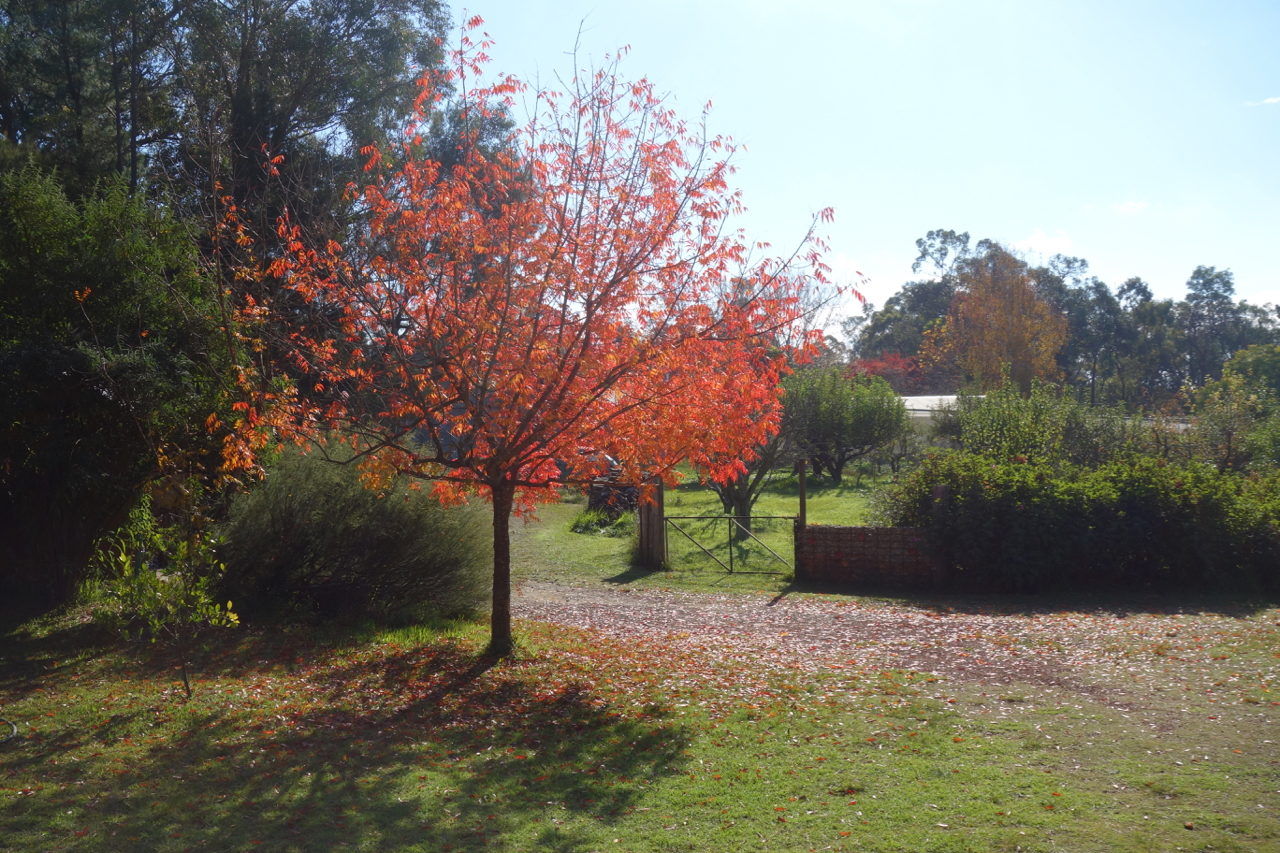
We arrive back home at the end of Autumn. The pistachio tree has turned red in our absence and the liquid ambers are loosing their leaves. We head straight to the chook house to see how the girls have been faring without us. Perfectly well it appears. They have changed their allegiance to Annabelle Slugette, because she has been living here, working in the pottery and feeding them treats for the past few weeks. Hens live for food! I know that it is only cupboard love, but I do feel a little bit abandoned. I’ll need to find them a few snails or other special treats to win their hearts ( and stomachs) back.
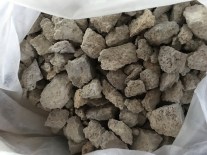
 

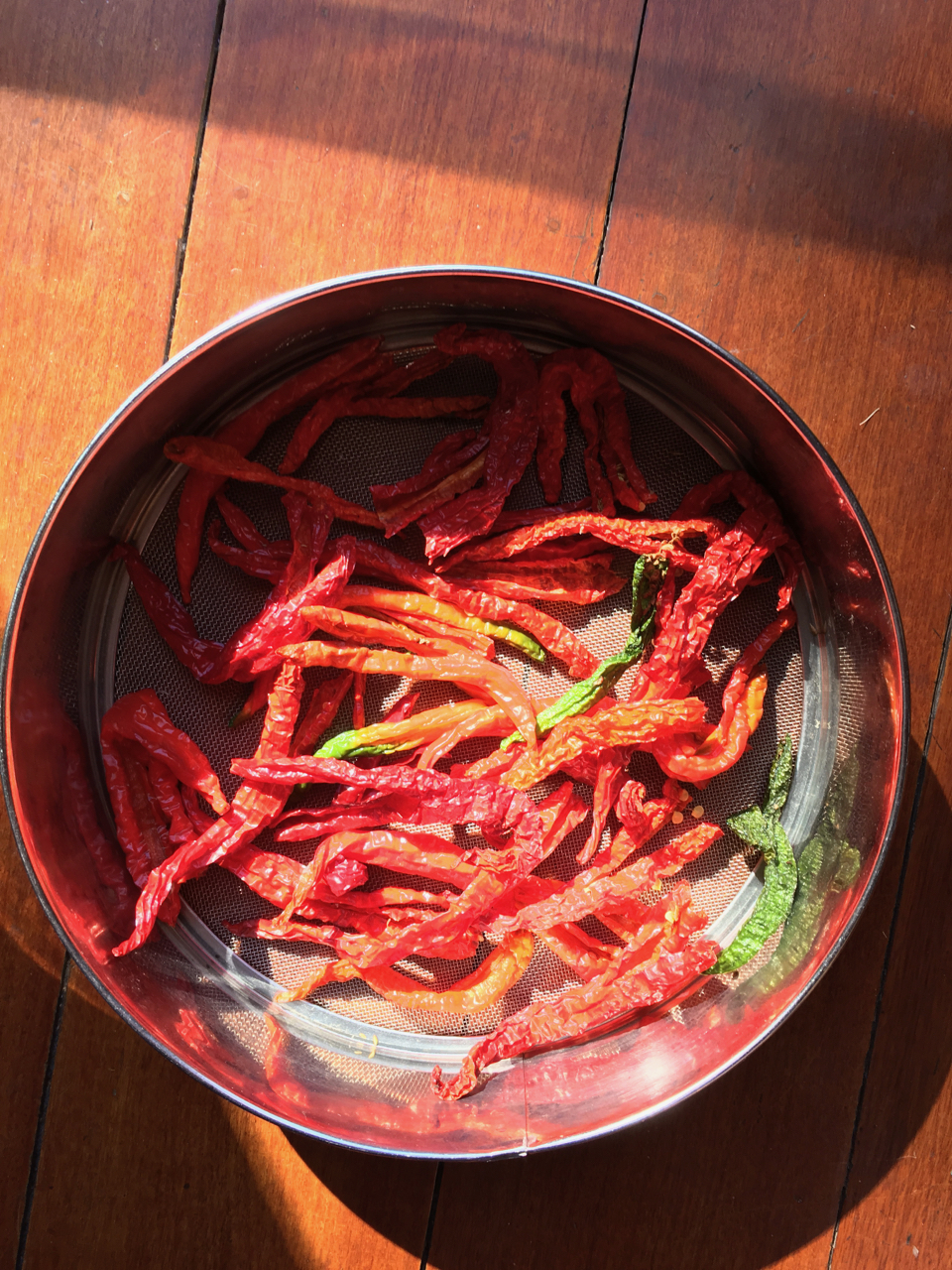
We head to the garden to see what there is for dinner. We find our selves in that special period of the year when there are just a few summer vegetables hanging on, while the winter crops are just starting, so we pick the last zucchini and the first cauliflower. There are only a couple of weeks when you can eat this combination of garden produce. The chillis have ripened a lot more while we have been away, so we pick some and dry them.
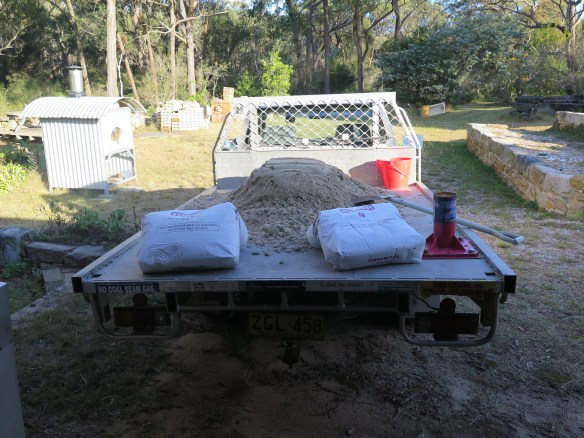
 

The next day I’m back at work in the pottery. I have  to slake down all my turnings that have dried out while I’ve been away. Clay slakes down so much faster when it is bone dry. I have lots of small batches to deal with. I have been working on my collected samples of porcelain stones from all around the world and I have to keep all the turnings from each batch of pots made from each special rock completely separate and well-marked, so that I don’t get mixed up or confused about which is which. I have 10 buckets marked with masking tape and felt fen, so as to keep it all under control.

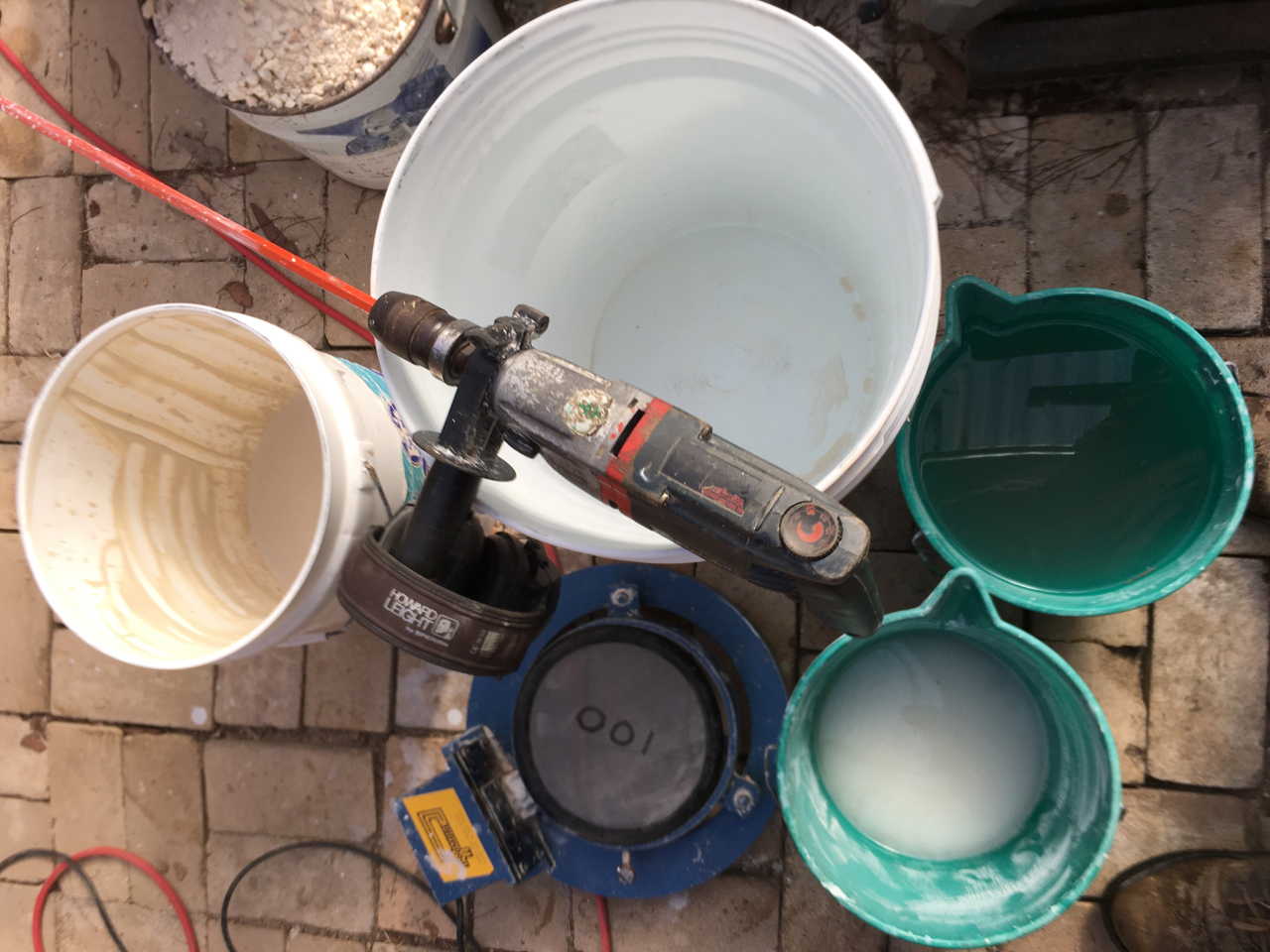
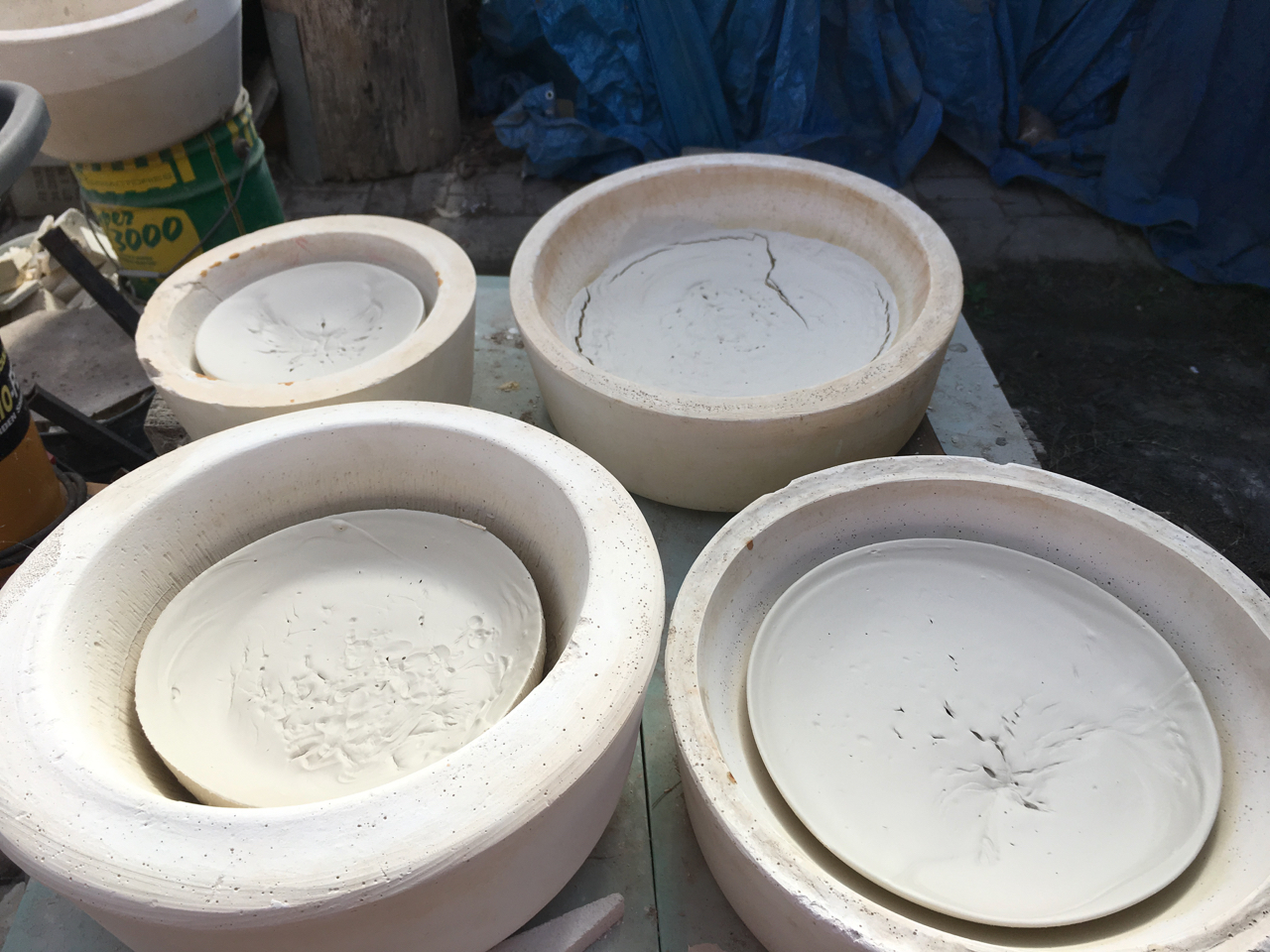
I start with the first 5 batches. I slake, blunge and sieve them all through a 100# mesh screen, then flocculate them and decant the excess water, it takes a while to get its all done. Eventually, they make it out onto the plaster drying tubs that I use for small batches of re-cycling like this..


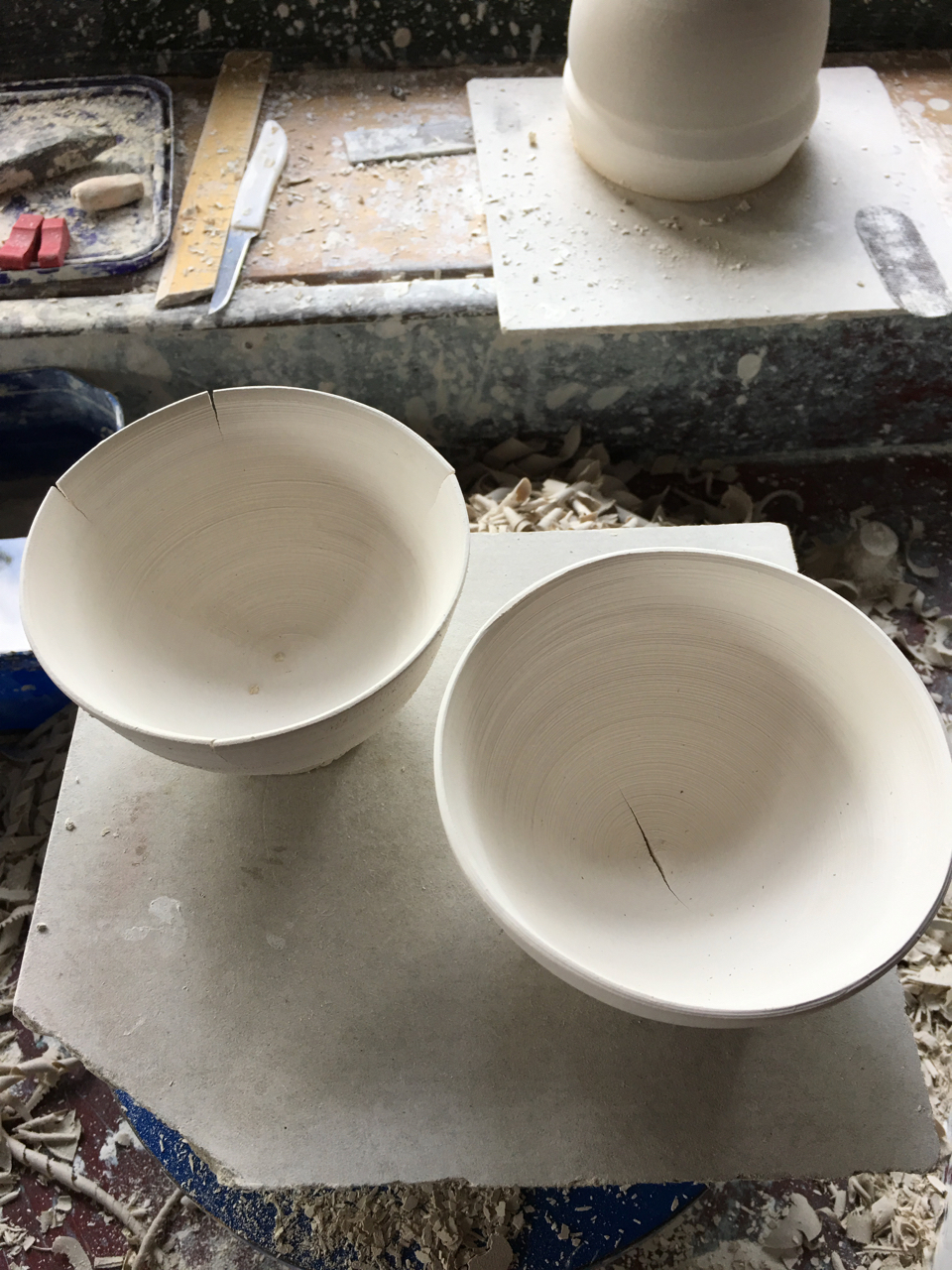
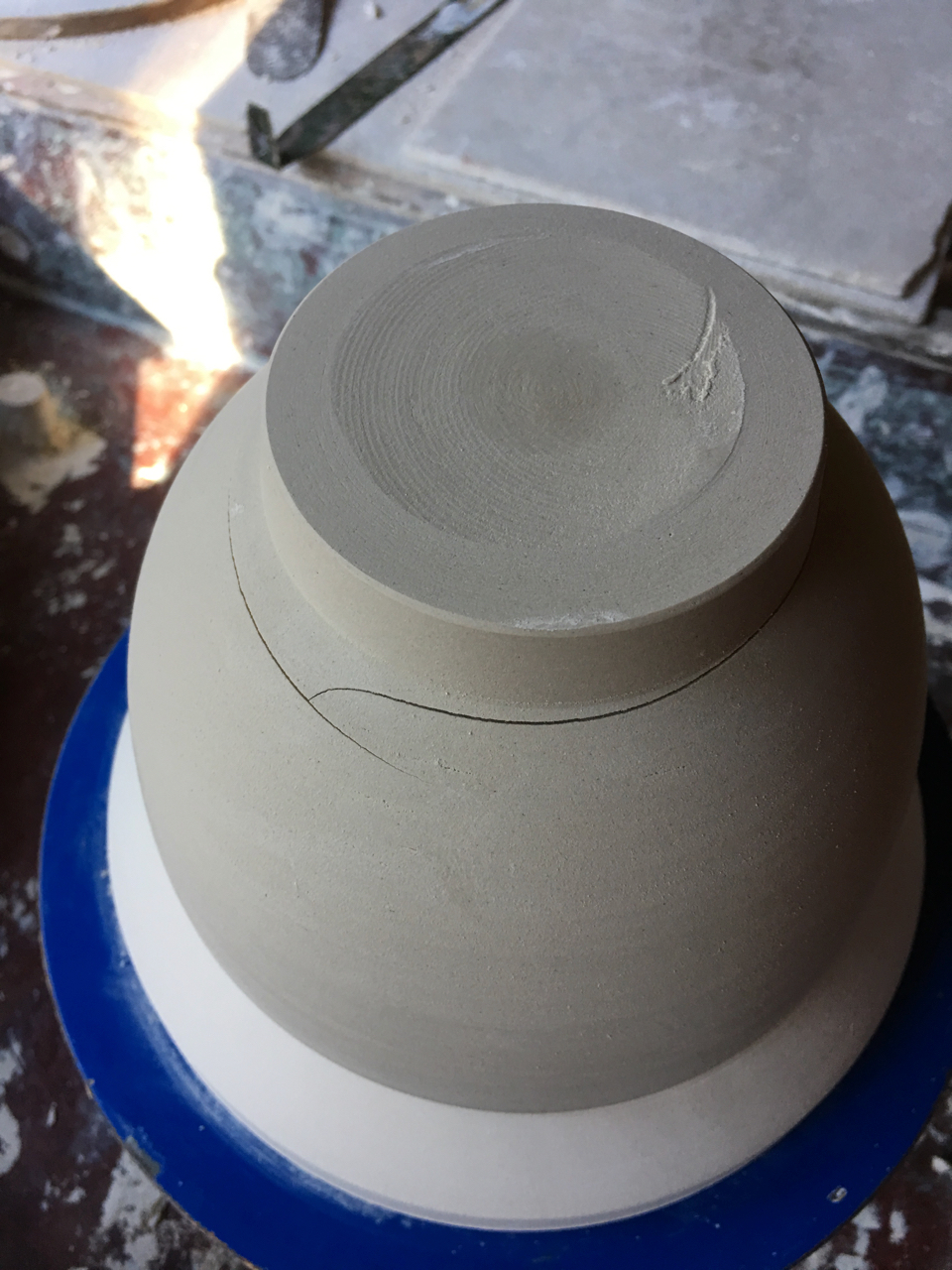
I’m not just dealing only with turnings here. Many of my pots don’t even get to the turning stage. These ultra-fine, ground stone bodies, with virtually no real ‘clay’ content, based solely on mica and quartz, with just a little illitic material. Consequently, they have no dry strength. They sometimes just split as soon as they are placed on the chuck, some don’t even get to the chuck, as they split during drying. Other decide to part company with themselves after the first turning at the ‘roughing out’ stage.


Some others tear themselves apart after the second trimming. Only a few make it to the final turning and bisque kiln. The only good thing about pots cracking during drying, is that at least I can re-work the material and have another go at making something that might survive to the kiln. What happens in the glaze kiln is another matter. I’ll find that out for these samples soon enough!


Between a Rock and a Hard Paste

We have been sweltering here in 40 oC heat for a couple of weeks now. We were very fortunate to be blessed with 3 days of rain in the middle. It saved a lot of our plants from just shrivelling up. Fortunately, we don’t have any bush fires near here this time. However, I did start up the fire fighting water pump and sprayed water through the sprinkler system that I have installed on all the building here, in this case, on the pottery tin roof. I used it on the worst couple of days, to cool it down a little. It is good to run the pump every now and again to keep it in good working condition and cycle the fuel through the carburettor to make sure that it doesn’t ‘gum’ up.

I’ve been making use of the hot weather to crush and grind my collected porcelain stones. They have to be put through the big jaw crusher first, then the small crusher, then sieved to remove any over sized pieces and these are put back through the crusher again. Once it’s all of a suitable size, it goes into the ball mill to be ground down to a very fine paste.

pastedgraphic-4 pastedgraphic-3

unadjustednonraw_thumb_2b3a

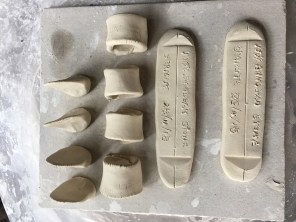
Once it’s out of the mill. I let it settle and flocculate for a few days and then remove any excess water from the top and it goes into a plaster basin to dry out until it is firm – sort of plastic. Except that it never really gets to be fully plastic. This is because it is just ground up rock dust and not clay. It does have a very small percentage of clay in the stone due to weathering of the minerals, but it is not a lot. It really takes years for this stuff to become workable in any normal sense of the word as potters might understand it.

If I were making bulk clay for stock, I’d be using the big ball mill and pour out the slip onto the drying bed on filter cloth. Once firm, I’d lay it down for several years in a cool dark place, but I don’t have that luxury on this occasion. I have posted these stones back from overseas on my recent trip. there are only just a few kilos of each sample, so the batches are quite small. Just enough to make a few pots out of each. I’d like to have more mineral to work with, but it costs about $100 to post a few kilos of stones back from places like Cornwall, Korea, China and Japan. So I have to work within my budget, as many countries have abandoned sea mail postage and the only option is now air mail. On one occasion, I was offered a cheaper option of ‘slow’ air mail. It made me wonder how the plane stayed up in the air if it was flying slowly?

img_4656 img_4657

As these bodies are not aged, they respond to being worked something like ‘halva’! it just snaps if you bend it. It has to be coaxed along very slowly and gently, sort of seduced into changing shape.  I can’t even cut it in any normal way with a wire, it just tears! I can’t throw anything large out of this stuff, but I don’t need to. I only need a few excellent fired examples of the stuff to include in my exhibition at Watters Gallery in August, called ‘5 Stones’. This will be an exhibition of single-porcelain from all around the world, from the five places where single-stone porcelain was independently discovered and developed.

img_4662 img_4664
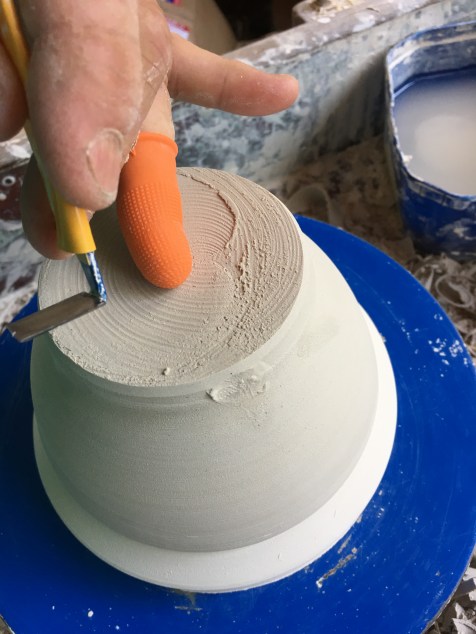
When it comes time to trim the shapes into some sort of elegant form. The paste just tears and chips, instead of turning off in fine strips. The pot has to be very firm and almost bone dry to turn to a fine finish. However, I do need to remove some of the bulk of the weight from the base to get it to dry without cracking, so some leather hard trimming is necessary, and what a mess it looks to begin with! But it does clean up OK when it is dryer. I do struggle with some of these rock-paste porcelain bodies. I’d be a much better potter if I could spend all my time working with this stuff, but I have to do other things, like building kilns, to make a living. No complaints! I have a wonderfully creative, independent life. I’m very lucky. But I do suffer from the feeling that I could always do better. Nothing is ever finished, nothing is perfect and nothing lasts! This is reality.
img_4660 img_4658
img_4661 img_4659
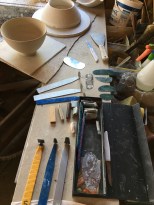
These dry rock dust bodies are so aggressive and abrasive, they make normal turning tools go blunt after just one pots is turned. I have to use tungsten carbide tipped tools to withstand the grinding effect on the cutting edge. The ‘clay’ is really just rock dust paste, so it is very abrasive to my fingers too! I have had to start wearing rubber finger stalls to protect my finger tips. Otherwise the ‘clay’ grinds off the skin from my fingers and they wear through and start to bleed.
img_4670
I’ve spent the past 15 years researching these places and going there, making contact with individuals and working in-situ, where that is still possible and also posting home the raw stones to be processed here in my workshop then fired in my kiln. This will produce a very different look and feel from the work made on-site.
I have written a book about my travels and porcelain experiences during this research. I have 90,000 words written, with just two more chapters left to write. It will be around 150/160 pages, in full colour, soft cover. I hope to have it for sale for under $50
It will be launched at the opening of my show at Watters Gallery in August.

Of Passata and Porcelain

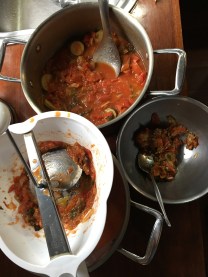
The summertime heat brings on the tomatoes, zucchini, chillis, aubergines and sweet basil. They love this hot weather, as long as they get the water that they need. This means I have to start making passata sauce. We are now harvesting more than we can eat each day. This is just the start. At the moment we have to harvest the tomatoes each day in the small numbers that are ripening. It has taken a week to build up sufficient quantity to fill the boiler. This is the first batch of passata. Soon it will build up to 2 batches a week. I will continue to make this sort of tomato sauce right through the summer and into the autumn.

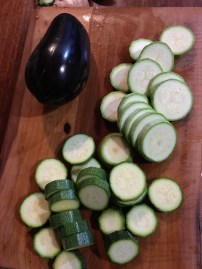
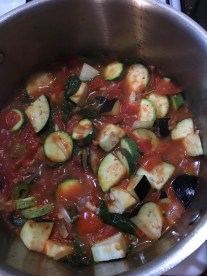
Tonight I’m making a small batch to start with for our dinner, so I’m including a lot of zucchinis and aubergines as well. This will be a sort of variation on the ratatouille theme. All these vegetables grow together, they ripen together and they taste so good together.

img_4528 img_4529 img_4533img_4534 img_4535

I bring it all to the boil and simmer it for a few minutes, just enough to soften the zucchinis and egg plant chunks, then scoop out a bowl full each for dinner. It’s summer on a plate!

After dinner, I add in all of the other chopped tomatoes and cook it down into a sauce. After it cools I put it all through the mouli sieve to remove all the seeds and skins, then reheat and seal in pre-heated jars to keep for the winter.

img_4531 img_4538 img_4539

The other thing that I like to do in this summer heat is to make porcelain from my collected stones. They are so hard that I need to put them through the rock crusher first thing to reduce them down to grit, then I can sieve the grit and re-process the larger pieces to get it all to pass through a 3 mm screen, then into the ball mill to be reduced to ultra fine grade.

 From this I can make glazes and/or more throwing body, as required.

img_4444


The simple pleasure of a dull job

It’s that time of year again. I need to make some more wadding for packing the kilns. Making wadding isn’t fun. It isn’t even interesting really. If truth be told, it’s a rather dull job. It just has to be done. So, to make it as bearable as possible, I make it up in a monster size batch, so that the pain is all in one go and then there is the relief of knowing that it won’t need to be done again for another year.

Wadding is used to seperate the pots from the kiln shelves and the kiln props from the kiln shelves. It has to be refractory and remain crumbly and friable after being fired to stoneware temperatures, so that it can be removed easily, even allowing for the deposition of the fluxing effect of wood ash during the firing.

I make it up in big batches of 120 to 150 kilos. Every wood-firer has their own ‘secret’ recipe. I don’t have any secrets. They’re all up here on this blog. Some potters use various mixtures of silica and clay, but I don’t want to use fine silica dust anywhere if  I can help it, because of the risks of silicosis. Others use alumina powder and clay, which is very refractory, but expensive and in my opinion it is overkill. There is too much of an embedded energy debt tied up in aluminium and alumina processing. It takes massive quantities of electricity to extract aluminium from bauxite, most of which comes from burning coal, so it is rather unethical to use alumina powder, unless it is absolutely necessary. We use a small amount in shelf wash, but it amounts to just a kilo a year. I can live with that.  The other thing that I really dislike about alumina in wadding is that unless you are particularly careful, you end up putting stark white finger prints on the pots that are being packed after handling the wadding. You really have to wash your hands after every time you touch the stuff.

IMG_3862

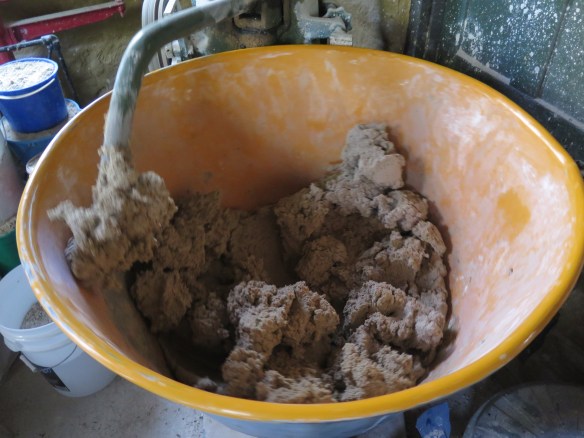
I have decided to make this batch of wadding out of ‘fat’ sand. Fat sand is also called ‘bush sand’,  ‘brickies sand’ or ‘bush loam’. It’s a coarse quartz sand with a fair amount of clay in it. It also contains some limonite or hydrated iron oxide, so it looks a bit yellowish. I mix this with some powdered kaolin. This is a great use for powdered kaolin. I don’t use a lot of it, but is is very useful for this purpose. I mix it in the ratio of one 25kg bag of kaolin to 4.5 buckets of damp washed sand and one bucket of water. When I can get clean saw dust I also add two buckets of saw dust, but this is getting harder to find these days. The last time I visited the local timber yard, they had been cutting some synthetic wood products that were a rich canary yellow. This stuff looked like it was loaded with resin glue. I thought that it might be particularly toxic if it were burnt in the kiln as wadding. So I didn’t collect any.  So, this batch of wadding is just going to be sand and clay.

IMG_3867

Adding saw dust is great for wadding that use on new pots that are once fired, as it can leave an interesting charcoal grey to black shadow mark. It doesn’t work on bisque, only once fired work.

When it is freshly made wadding like this is rather short or non-plastic, being so sandy, but after ageing for a few months it develops quite good plasticity and after a year or so, the last few bags are plastic enough to throw with. Not that you would want to, but I think that it might be possible. I’m down to my last bag of the old batch now and it is very easily worked into coils and small balls. This new batch will have a month or two before I need to use it.

IMG_3870

I make it up in a couple of batches in the dough mixer and then bag it up into 15 kg packs and store it away.

Security is a years supply of wadding.  Now, when I look down on my stash of wadding I get the simple pleasure of knowing that I won’t have to do this job again for another 12 months. It’s a nice feeling!

fond regards from the well wadded potter.


A Trip to the Mountain

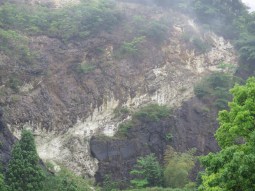
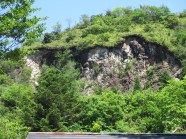
We are taken on an excursion to the mountains. It’s a foggy moist kind of day with intermittent rain showers. On the way we pass a really obvious white pegmatite dyke in the side of one of the hills near the road. I’m keen to stop and look, but it appears to be on private land and there is no easy access to it. We drive into a trucking company’s yard to get a closer look, but it is still a bit too far away and it is raining. I don’t fancy bush bashing in my good ‘going out’ clothes. So we let it pass for today. I may try to come back here if there is time on a fine day.

IMG_3436 IMG_3440

IMG_3430 IMG_3431

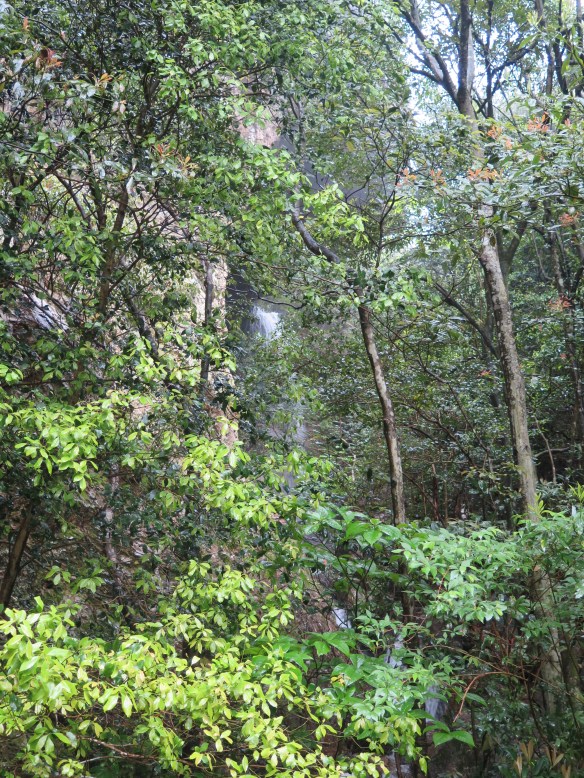
We press on over the mountain top, past a very pretty water fall. Yesterdays rain has brought it to life today. It wasn’t flowing like this the last time that I was here.

IMG_3444

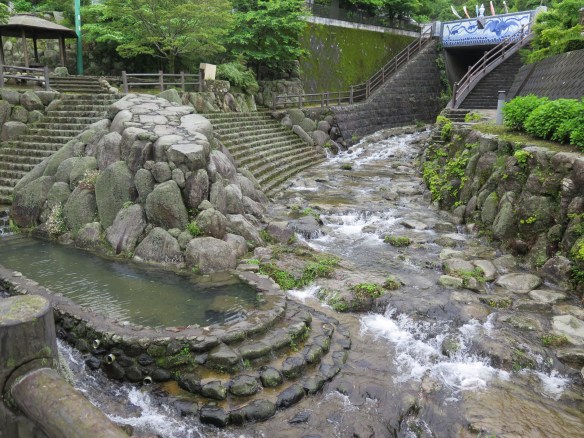
We go to Okawachiyama for a 2nd visit. I don’t mind, I’ve been here before, but Janine hasn’t. It’s a pretty place and there is always more to see. You can’t see everything on one visit. There are still lots of lanes and little walkways to explore. This remote valley once housed the Nabeshima Clans’ potters. They were held here in captivity to create the finest, whitest, polychrome enamelled porcelain. They managed to find the whitest of materials and restrict their use for the shogunate only. The creamy white clay glaze combination that they created is still a wonder to this day. It’s purity and translucency is just remarkable. I went on a geology tour of the local porcelain stone sites last week with Kanaiwa san. We visited many places around this district, but we couldn’t find the lost kaolin mine of the Nabeshimas. Kanaiwa san has made a life long study of the ‘nigoshide’ white effect. He has managed to make a modern synthesised version using 3 of the local varieties of porcelain stones. I don’t know his technique, but his knowledge of froth flotation technique that be came obvious to me during one of our early conversations, leads me to believe that there might be some fertile ground there for experimentation. I have certainly found it an essential way to remove iron from otherwise ‘dirty’ rock samples back home in Australia.

IMG_3457

On our walk up the steep Okawachiyama Valley road, we call in to see one of the last ladies that  can do the seamless cobalt background brushwork. It is a very difficult technique and is now almost lost. These days this kind of background is either sprayed on, or transfer printed. Of those who still hand paint the ‘gosu’ cobalt blue background. and there are only a few of  these left as well, the technique used these days is to gently squeeze the ‘fude’, pronounced ‘foo-day’, brush to control the flow of the gosu pigment and loop the brush tip back and forth, producing a layered, slightly overlapping, background pattern. The Nabeshima technique used here is to hold the brush by the handle, not the hair, so no squeezing is used, They tilt the brush, up and down, to control the flow of the pigment. It is a truly astonishing technique.

IMG_3473

IMG_3488

IMG_3490

Tracking the Elusive Wild Felspar

Porcelain stone occurs in many of the hills around here in Arita, where the local white granite has weathered down into a softer white to off-white, mixture of kaolin, silica, felspar and specifically sericite. Sericite is a white, plastic mica. This means that it is throwable on the potters wheel as well as vitrifying to a translucent glassy matrix when fired. A very rare and specific combination of qualities.

Today I ventured up into the hills to look for some felspar/porcelain stone deposits that I’m told are all around here. Most were closed because they were worked out of the most precious ultra white material. The deposits around here were very small and used by the potters in the immediate locality. Each little district had its own small mine. This used to give the different villages a slightly different quality to their work. However, ultimately, none of them could compete with the large-scale and very high quality sericite that is being mined at Amukusa, just a couple of hours from here. Economies of scale and the quality of the product, along with increased specialisation of the work force made every one concentrate on producing saleable product and abandon self-reliance.

We can drive up the mountain to the scenic lookout and then park the car and go on foot. This is the ‘Black Hair Mountain’ and I’m told that it is a very spooky place. It’s a dark, wet and cloudy day and the Mountain is shrouded in mist. I’m not spooked, because I don’t believe in ROUS ‘Rodents of Unusual Size’ ‘Fire Swamps’ and ‘ Lightning Quicksand’. The Princess and I press on, the track is very wet and slippery after last weeks constant rain. In dry weather we could have gone a bit farther by car, but not today. So we walk. The little track wanders around the contour of the hill and would have been quite manageable at the time when it was in use and repaired to handle constant traffic of the ore down hill. We head off up the hill on a stone staircase to get to the top. It takes some time before we realise that we are on the wrong track. We go back and try again.

IMG_3541

This time with more luck. We find a diagrammatic map along the way that shows us the location of the old mine, but not in much detail. Up the hill, over the bridge across the river. Through the ‘Fire Swamp’ and the valley of ‘Lightning  Quicksand’. We keep going until we reach the water fall and then it shouldn’t be too far, according to the map, and then there ought to be another bridge to cross back to the other side of the river. Through Dead Mans Gulch. Then up along The Valley of No Return,  up the sacred mountain to the water falls and then a righthand fork should lead you straight to it. We do and it does – more or less.

Except that I lost my nerve when we didn’t find any sign of a mine after such a long trek. The road became very narrow and washed out after some very heavy rain. There were trees across the track. The sound of crunching twigs under foot coming from the forest around us and an owl hooted, while a black raven swooped overhead. It was quite obvious that nobody had come this way for a long time. This was indeed the path less trodden!

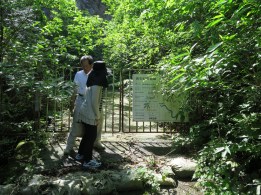
We retraced our steps and consulted the map. This time I photographed it. It seemed that we were almost there when we turned back. We tried again and this time found that the turn off to the old mine was just another 100 metres up and around the side of the mountain. What we found was a rusty steel mesh gate with large red warning signs all over it. I can’t read Japanese, so what I read into it, was that this is the place that you are looking for. ‘Keep going, it’s just a little way on from here”. Almost there!

Of course it could also have said. “This is the old dangerous mine site. No Entry! or  “proceed with caution!” Or maybe it said that the bridge is closed because if you tread on it, it will collapse!

IMG_3550 IMG_3551

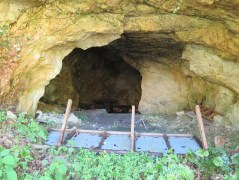
So we did. It meant swinging out over the stream to get around the gate. Then onward and upward. We knew that we had reached the correct place when we found the boarded up mine shaft entrance.

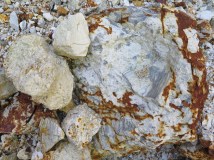
There was plenty of spalls all around on the ground outside. So no need to go in. The material looks just the same all over the world. Similar colour and texture, similar fracture angles, but the hardness varies due to the amount of weathering and decomposition of the felspars down into kaolin.

IMG_3548 IMG_3554

The softer the stone, the greater the degree of weathering and the more refractory it will be with an increased kaolin content. so it will be more plastic, but less fusible at high temperature. The harder it is, the more fusible it will be and the more vitreous at high temps, but the less plastic to work with. Somewhere half way between is a good compromise, or a blend of two different stones will achieve the same result.

This stone is quite hard to break and is probably quite high in felspar, sericite and quartz. It feels to me to be a useful glaze stone. We walk back down the mountain, happy trekkers with a pocketful of samples. I learn the next day that the reason that this site was closed, was because there was a mine collapse 30 years ago and a number of miners were killed there. Very sad, but not spooky.

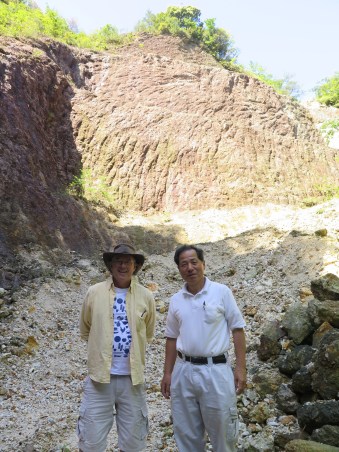
News travels fast. The next day, Mr. Akio Kanaiwa san. A retired geologist and lecturer in ceramic chemistry from the Ceramic University here, specialising in porcelain stone, calls in to see me. Miyuri san, the local cultural guide here in Arita has met him and mentioned me and my special interests to him. We get along very well and in just a few minutes we manage, even with so little language, to exchange our views and knowledge about porcelain stones. We both can read chemical analysis, X-ray micrographs, SEM data files and ceramic Seger formulas. He shows me some of his research that he has brought along. As he flips through his files. All in Japanese. I can read them out to him. He realises that I know exactly what he is trying to tell me in chemical terms. The only  thing that I can’t do is understand his excited Japanese Arita dialect. It turns out that I am the only person that he has met that has his own Denver cell for froth floatation separation and purification of ceramic minerals. The only difference in our techniques is that he uses pine oil and I use kerosene. Amazing!

We arrange to go on a geology excursion the very next day with Tsuru Miyuri san as our translator. It turns out to be a very full day, as Akio Kanaiwa san has a quite a few sites that he plans to take me to. I am thrilled. We both really enjoy our time together with Miyuri san. She is amazing, such good value. She is so knowledgeable about ceramics in Arita and her English is excellent, so she is so good to have along on a trip like this. We go to site after site. He really knows his stuff. Through Miyuri, we exchange ideas and analysis data.

At one point we all have to stop and laugh, as Kanaiwa san and I find ourselves agreeing on the importance of secondary mullet crystals in the development of strength, translucency and slump resistance in porcelain bodies. Miyuri san, who is quite faithfully translating our conversation, back and forth, is stunned and mystified by what she is having to say, as she doesn’t understand a word of the technology involved. When Miyuri doesn’t know the word or a suitable work-around sentence to convey the meaning, Kanaiwa san and I revert to writing the chemical symbol or formula. It’s a wonderful, positive, cultural exchange.

IMG_3555 IMG_3557

Miyuri san explains to Kanaiwa san how I collect most of my materials where I live in Australia and my amazement at how similar they all are to these minerals that we are looking at there. The only difference is that these minerals are mostly much cleaner and lower in iron. Only one of the sites is still being used, an open-cut quarry where an interesting felspar/quartz stone is being mined for use in electrical insulators and industrial tiles. It is called ‘The Dragon Gate’ mine. There is a lot of iron present here, but it is in bands and veins, so could be sorted out or extracted.

IMG_3561  IMG_3566

IMG_3563

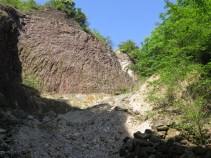
Our last visit in the afternoon was to a glaze stone mine in Takeo. The ‘3 splits’ mine. This name causes a lot of muffed laughter. Apparently it is not really the true name of the mine. It is named after the combination of hills and valleys that look like the gap between someone legs. This is a name that can’t be said by a lady. A more literal translation might be ‘fork’, as in ‘a fork in the road’, but more likely ‘crutch’, as in the gap between a persons legs? I don’t end up knowing what it is called. Perhaps it’s 3 cracks? Because if you go up the crack it ends in a tunnel?

No one will say it in English. So I’m calling it the 3 splits mine.

Kanaiwa san says that I look like Indiana Jones or Harrison Ford in my hat. I reply that I can’t afford a whip, but my name is Harrison.

IMG_3585 IMG_3586

There had been several attempts at mining here over the last few hundred years. Some open-cut and others in deep shafts and drives. All closed now. Again, the shaft is barred by a wire fence that declares that this is the correct place alright. The fence seems to have fallen over at one of the mine shafts, so I can’t read the sign that might say ‘don’t enter’. So there is nothing to stop me. – Except the fact that it is all flooded inside.

IMG_3588 IMG_3589 IMG_3592

IMG_3593

The water is a pretty translucent  pale blue. Just like blue celadon over porcelain!

I explain that this is the most dangerous site that we have visited yet. Not because of the risk of mine collapse, scrambling through flooded water or drowning, but because of the crumbly asbestos fence!

Vintage Porcelain Clay and Other Simple Pleasures

Everyone seems to be obsessed with money these days, as if it solves everything. I heard on the news last night that the 3 richest Australians have more money than the bottom 10% of the nation. Pretty shocking! It’s a shame that there isn’t a way of making life a little bit more even and equitable for the disadvantaged. The Lovely and I have done very well for ourselves, being able to have built a simple, largely non-aquisitive, organic lifestyle here, without ever having had a ‘real’ job. We’ve managed to ‘get away with it’ for all this time, living an engaged, creative, self-employed, part-time amalgam of a life. Without credit card debt or interest payments, doing almost everything ourselves. Living within our self-determined means. We’ve never been on the dole and never asked for handouts. Money may be essential in the modern world, but we don’t let it ruin our lives.
 
I think that money is a like a tool. You pick it up when you need it to do a job, and it’s so much easier if the have the right tools at hand. Then you put it down when the job is finished and don’t think about it again, only taking care to make sure that it is well looked after while not in use. Having tools that you don’t use is a useless waste, better that someone else who needs the tool should have it and get good use of it. That is how I believe that it should be for money too.
 
I think that a lot of people have too much ’stuff’ that they don’t appreciate or really need. Probably bought on hire purchase or credit card debt. We’ve made a point of avoiding that as much as possible.
When I’m fasting, I really appreciate a glass of water. It tastes delicious, I’m so happy to be able to drink it. Such a simple pleasure – and so rewarding. When I get to eat that first small simple meal after the fast. It’s really appreciated. I’m so grateful to be able to eat some small simple thing. A salad, a piece of fruit, some steamed vegetables. They are so wonderful, because of my self imposed state of self denial. Everything is relative. In the 5 days between my fasts, when I’m well fed. That same glass of water isn’t very interesting. A glass of wine seems to be so much more appealing with a nice meal from the garden!
 
Fasting isn’t just about food. The controlled, personally-imposed state of self-denial is a state of mind that applies to money and posessions, just as much as it does to food. When  we began to live without a lot of money to pursue our artistic dreams, it was a kind of self-sacrifice. To get the time to make art, we had to forgo paid work. After we had survived like this for long enough, We started to realise that we just didn’t need so much of it. Not buying, renting, or serviceing the loan repayments on ’stuff’ saved us loads of money, to the point that we just didn’t need to go to work every day any more. This is how we have found the time to make pots – but we still needed money. It all changed when we bought our house.
 
It’s pretty clear that you can’t save up enough money to buy a house outright, so we borrowed money for that, just like everyone else, but not since then. We built nearly all of our house and workshop ourselves, over time, paying for parts and materials as we needed them. I did nearly all the trades, except the electricals. Making everything ourselves. It saved us a fortune. We built the house for the cost of the materials, about $25,000 and the workshop for $4,500.
We have managed to live most of our lives without debt. We keep our cars for 10 to 15 years. We save up and buy them when it’s needed. I do all the serviceing and maintenance myself, and by doing all the repairs and maintenance around the house and property, we end up not spending very much money at all. It’s a badge of honor to keep the 40 year old kitchen stove repaired and working, as well as the 25 year old lawn mower, the 22 year old washing machine and the 15 year old truck. I’m not so nieve to think that everybody should life their life this way. I’m not recommending it. It’s suited us and we have been very successful living this rich rewarding life.
 
I think that money is certainly very useful stuff, but the cost of earning it is very high. I have to give up all the things that I really prefer to do to stop and earn money. So, once the basic minimum and a slight little extra for security against the the unexpected is earned and achieved, then it’s time to stop earning money and take time off to do something much more interesting and rewarding. In our case that something is gardening and making pots. Gardening doesn’t earn us any money, but it saves us from spending some. Pots don’t earn very much money, but the returns on investment are exponential, if measured in satisfaction and enjoyment. We don’t have much in the way of superannuation, but I have spent the last 25 years, laying aside special batches of clay whenever I could. This is one peculiar type of super. However, It would be worth a lot more if it were red wine and not clay!
At 64 I realise that I will not be able to lay down clay for anther 25 years, as I have done in the past. I can’t see myself still being here when I’m 90!  I spent the afternoon working up and then throwing some of my oldest porcelain body, made back in 1990. The kneeding of the rather hard paste was a lot of effort. It needed wetting down a little and then re-working, that really mucked up my wrists for the rest of the day.
 
I have other batches of my milled stone pastes that date back 10 years and more. I get them out every now and then and try some of it out all over again. Just to see how they are improving. Slowly whittling away at the original dozen kilos, that I first stored away in these plastic packs. These non-plastic pastes are so much better with a few years of age under their belt. It’s amazing how a little time can cause such a great change in the rheology of these finely ground mineral coctails, and time is cheap anyway. It cost me nothing to leave it there – especially when I was younger!
 
Now that I’m not in a position to take advantage of the cheap option of time any more. I’m making use of some of the banked age that I have been accumulating in my clay store over the 40 years of our time here. This is now the time to make withdrawals from my clay bank. I have been slowly working away on a special project for the past decade and it’s starting to come together now. I’m feeling pretty good about it. Perhaps in another year or two, it will result in a nice show of special work?
 
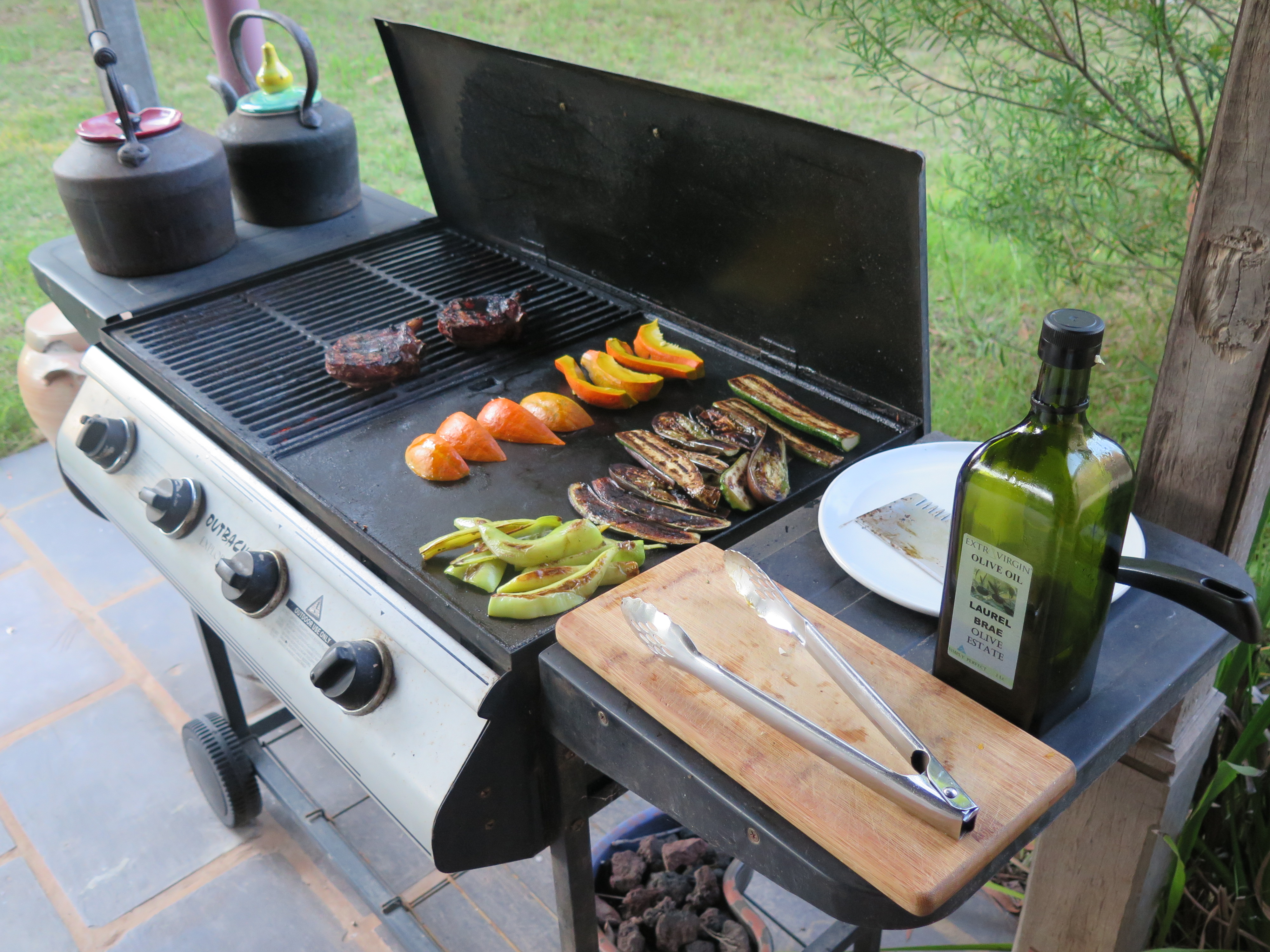
We decide that it would be nice to have this months red meat meal tonight, so I BBQ a couple of choice eye fillet pieces with the bone on, along with slices of zucchini, aubergine, capsicum and trimmed orange pumpkin slices with the skin on. We have been growing these marvelous little orange gems all summer. They have been so prolific that we have taken the majority of them to our son’s restaurant as we can’t deal with them all by ourselves. There are just so many of them, we are harvesting 3 or 4 of them a week. These things are so tasty and delicious when BBQ’d. 
IMG_2253IMG_2262
 
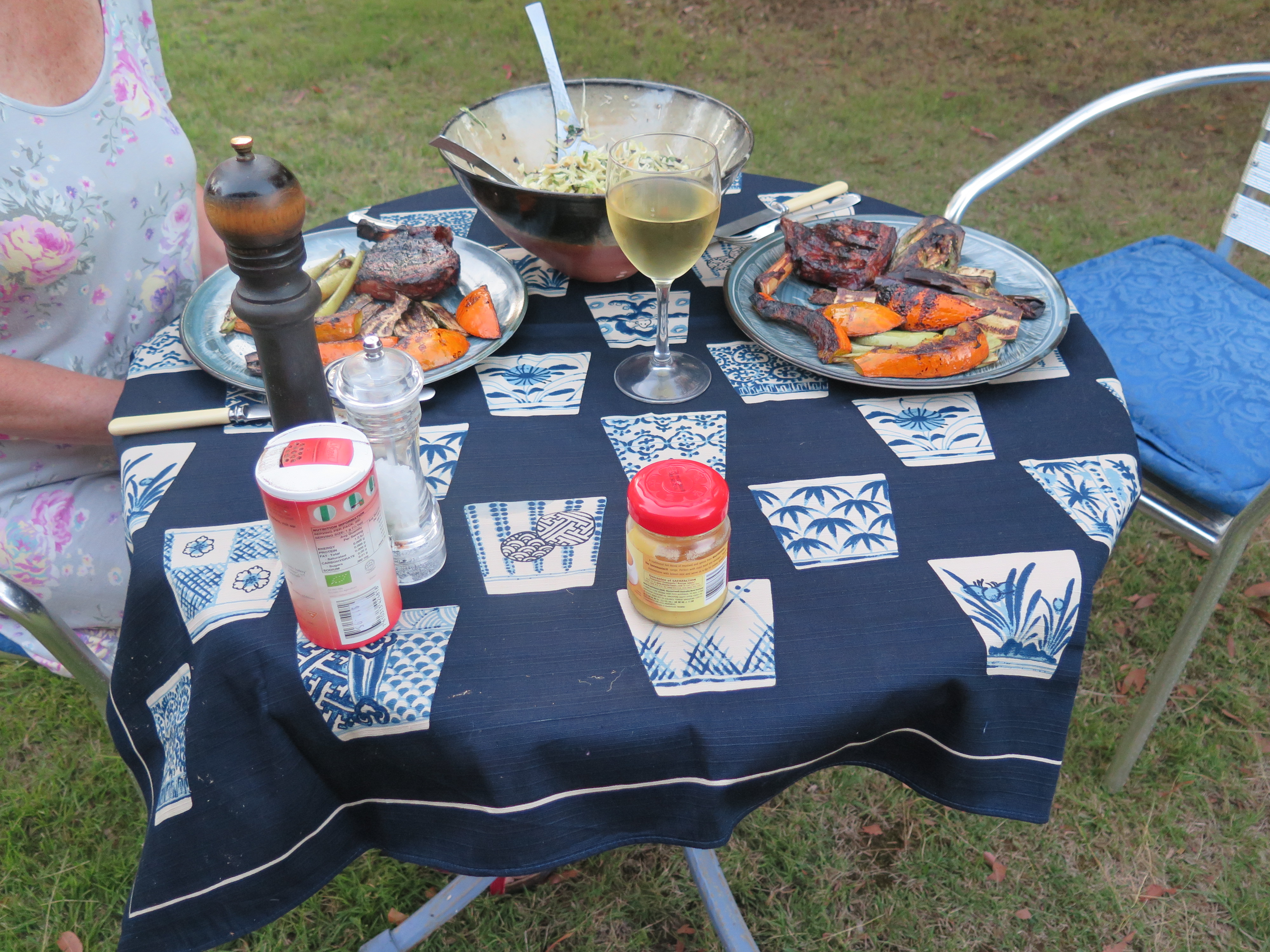
It’s a lovely evening, our visitors have left and we rejoice in the tranquillity of the sunset and our time together as the air cools and settles. We move the table out from under the verandah and on to the lawn, where it is cooler. I do the BBQing while The Lovely finely slices one of our cabbages to make a sort of coleslaw salad, except that it develops as she goes along, adding chillis and shiso leaves and an Asian inspired dressing, using vinegar, soy sauce and sesame oil. Suddenly its all changed and becomes something else, quite exciting and interesting. No mayonaise in sight!
It’s delicious and so appropriate, crunchy, salty, sharpe and very slightly oily. It matches well with the bbq’d meat and veggies
 
I love being able to eat the dividends of our investment in our garden in this way. In so many ways it’s better than what money can buy. It’s all organic and super-fresh. We couldn’t afford to eat like this if we were buying it or going to restarants and eat out.
Small simple pleasures.
Best wishes
from the simple but industrious, cash restricted, but life-quality rich, Steve and Janine

8 New Clay Tests

I have been using the warm weather. In-between rain storms. To dry out some of my new batches of single-stone porcelain clay test batches. The 50 litre batch of 12 month aged porcelain slip is now almost stiff enough. It should have been ready to lift off the drying bed a couple of days ago, but with this last series of rain storms, the atmosphere has been very humid lately, so we have slow drying weather. The mornings start with a heavy mist that doesn’t burn off until later in the morning when the sun get up.

I have used the plaster tubs to dry out some small batches and I now have 7 different new clays to test and throw. They are all just about the same on the wheel, not a great deal of difference. I have dug out a bag of special ‘vintage’ porcelain from my clay store. I don’t have a date on the bag, but reference to my clay-making diary tells me that it was made in 199o! This is the oldest clay in my cellar at 26 years of age. It has stiffened a bit too much to be throwable now, so I have to dampen it down a little. I’m amazed how well it throws. The reason that I put it away in the first place was because it was so short that it was unusable. Now after 25 years of ageing, it throws like a normal porcelain. It does have a slightly peculiar ‘grainy’ texture though. A little bit odd for such a finely milled clay. Some sort of bio-chemical change has taken place in the intervening years of ageing.

IMG_2085

I remember co-responding with Harry Davis back in the 80’s. He asked me if I had any experience with clays that went grainy after long periods of ageing. He had left clay in his clay store while he went away for 10 years and worked up in Izcuchaka in the Peruvian Andes on his and May’s private aid project. When he returned, all his clay had changed texture and become grainy. I hadn’t experienced anything like it at that time. I wasn’t old enough to have clay laid down for ten years at that time! Now I am, and I suspect that it is some sort of aggregation of the microscopic clay particles into larger flocs over extremely long periods of time. This happens in slip if left in a slightly acid condition. So, perhaps it’s possible in the plastic state as well?

Of these 7 different bodies, there are 7 different colours, from iron stained yellow, through to almost white. Of the bodies that I have made from my ‘bai tunze’ single-stone porcelain stone. There are variations in colour due to the fact that there are veins of iron running through the rock. I crush the stones through the large, primary jaw crusher  and then spend some time sorting and separating the iron-stained pieces from the white material, these are them processed separately to give yellow, cream and grey clay body mixes.

The iron stained bodies respond well to the wood firing by flashing to a mahogany red colour, where the paler coloured mixes flash in the wood kiln to a pale pink to crimson colour. All the milled stone body mixes grow a series of organic algae and/or fungus come moulds of some sort or another. The clear plastic bags that I store them in turn green and/or buff/brown where daylight can get to them. A little bit off-putting, but it seems to increase workability/plasticity rather than decrease it over longer periods of time. I’m not saying that the presence of algal growth increases plasticity, but the time spent ageing the clay increases the plasticity and the algal growth is a natural sign of this extended time taken.

IMG_2084

Because I don’t add anything to my milled local porcelain stone bodies, except a small amount of bentonite and the slightly acidic tanninised tank water. The whole thing is alive with all sorts of organic material from both the natural stone and the water. It’s a living thing! It doesn’t happen straight away, but over time stuff grows in there where-ever the conditions are right.

Commercial clay doesn’t do this. I recently opened a bag of commercially prepared paper clay to find that it smelled of ‘dettol’ antiseptic fluid. Nothing is going to grow in that! I’m an organic gardener and I am trying to live a simple, creative, organic life. If green algal mould is the result in the bags of clay, so be it. At least I know that it is alive, and not dead and even possibly toxic.

One of the batches of my ball milled baitunze, batch JV15db, was milled for a little longer than usual to get it extra fine. However, I seem to have milled it a bit too long this time, 16 hrs. I suspect that this was too long, because when I threw my first bowl out of it, it shrank and cracked in the base where it was thickest. This has happened once before. I will have to blend it with a coarse milled batch now to reduce the shrinkage a little.

For dinner we try yet another variation of ratatouille with todays pick of  French beans, we par-boil them, so that they are still crisp and then add them into the mix of ingredients from the garden. I partially BarBQ the egg plants and zucchinis while grilling some long yellow capsicums. Janine reduces a boiler full of very ripe tomatoes, onion, garlic, olive oil and basil. We finish it off in the flat flan-pan, then pop it under the grill and melt some grated cheese topping to a golden yellow/brown crispy finish.
This is what we have, so this is what we eat.
Best wishes from the algal greenie and his all greenie gal
Steve