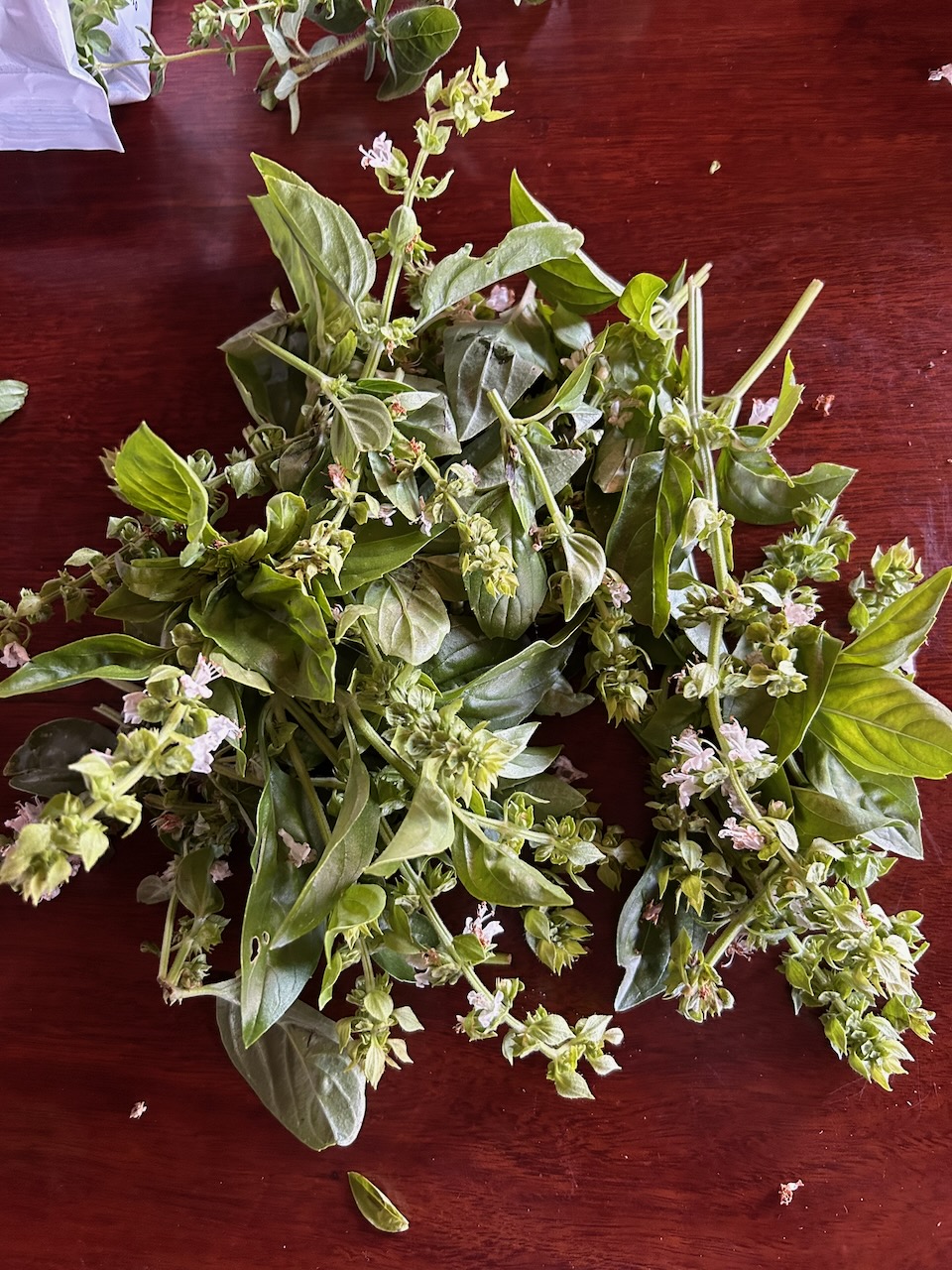
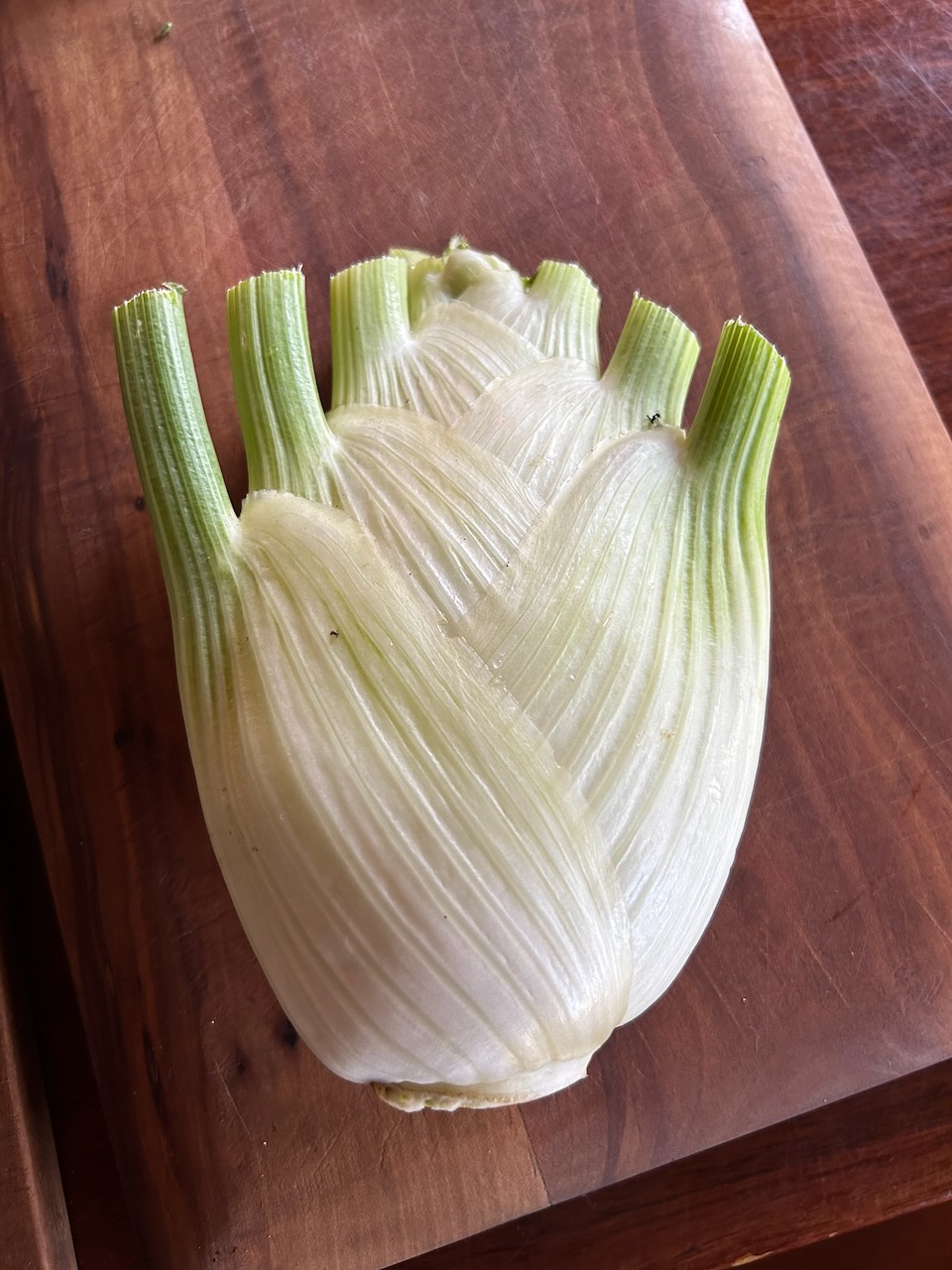
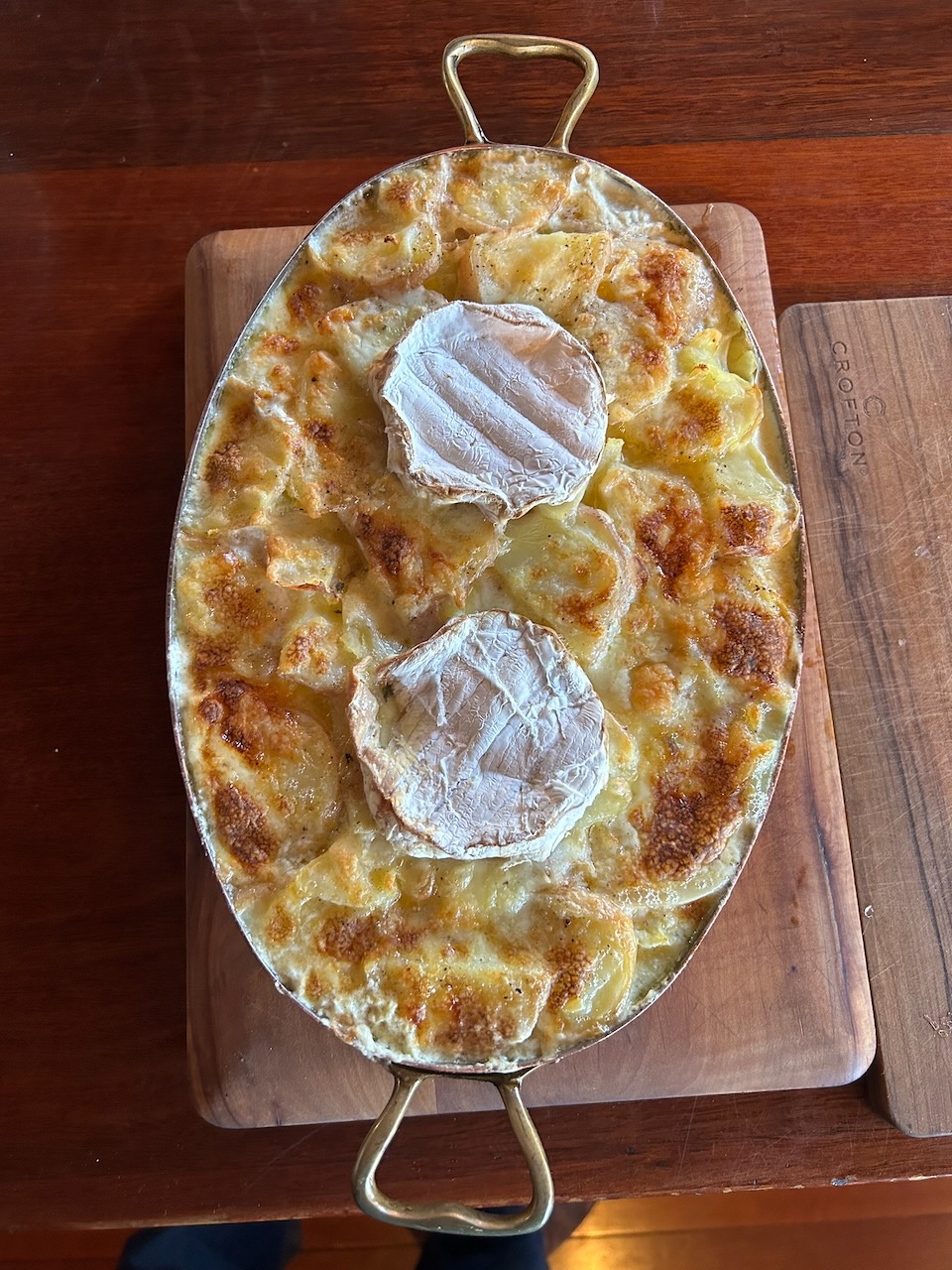
Well, Xmas is over, we survived the shopping madness by staying home and escaped the last minute rush to purchase more food than anyone could possibly consume. Janine and I stayed well out of it. We watered the garden and picked fresh vegetables made salads and tofu stir-frys. A very nice quiet time in all. I had no intension of going into town to check out the Boxing Day sales. I fact, instead, we had a lovely, small, family meal with our son and daughter-in-law, and took it very quietly. We shared a very nice bottle of wine with lunch. I cooked a somewhat rich potato dauphinois incorporating our potato and fennel, plus a tub of sour cream and garden herbs, which turned out very well.
I simmered the herbs in a little bit of milk to draw out the flavours, then layered the finely sliced fennel and potatoes with sour cream and poured the strained milk over and through it all. I finished the dish with a camembert cheese placed on top to melt through the dish. As if the tub of sour cream wasn’t quite enough, and topped it off the some grated 36 month aged cheddar. I was happy with it and no one complained.
On the subject of potatoes, we have had a visit from a new and unusual bug into the veggie garden. Some sort of elongated, grey, shield bug. They group in pairs around the tender top shoots and suck the living daylights out of the growing tips of the potato plants. I haven’t seen these little critters before, so I had to look them up. They turn out to be a South East Asian ‘sweet-potato’ bug. Also known to be found in the North of South America and the Southern parts of North America. How they got here I have no idea. I can only surmise that with global heating, they are able to colonise newly warming fresh territories? So hello and hopefully good bye!
I’m sure that the garden shop will have any number of toxic sprays for them. However, they are quite susceptible to being squashed by hand! No poisons required, it’s highly selective, and no toxic residue is left behind. This organic ‘natural’ treatment seems to be working. I have noticed quite a few lady bugs on the potato leaves at this time also. Possibly they ere eating the minuscule shied beetle eggs? That would be nice if there was a local predator that could breed up to counter the new pest? Could life be so simple?
Someone once said that every complex problem has at least a dozen simple solutions – and they are all wrong! There is nothing quite so effective, accurate and environmentally friendly as well trained fingers. Time consuming, but 100% effective.
We have ended the year by making clay to prepare ourselves for the coming year. I even sat down and threw a pot straight away to test out the plasticity of this new mix. It was beautiful! It will be even better after a couple of months in the cool, dark, clay store to age a little.
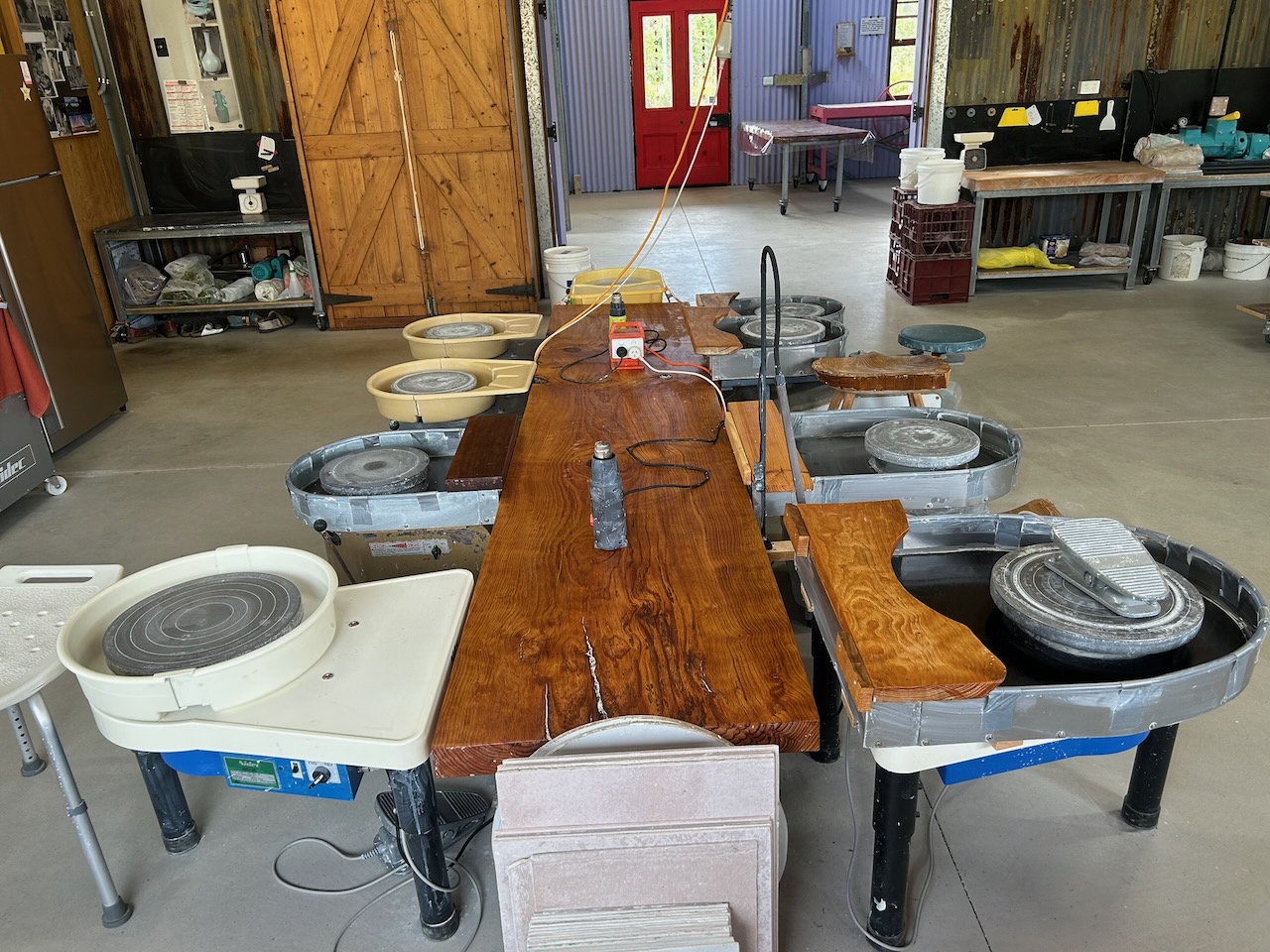
As we are hosting a 4 day summer school in the coming week, I cleaned out the pottery and transformed it back from a sales room for the Xmas sale and back into a throwing room. I took the opportunity to really clean down the benches and wheel tops, then gave them a coat of tung oil to protect the wood for another year. All this wood was milled on-site here from trees that we grew ourselves. I want to honour this timber and look after it. It’s just one small, but integral part of our 50 year history/legacy of living and thriving here.
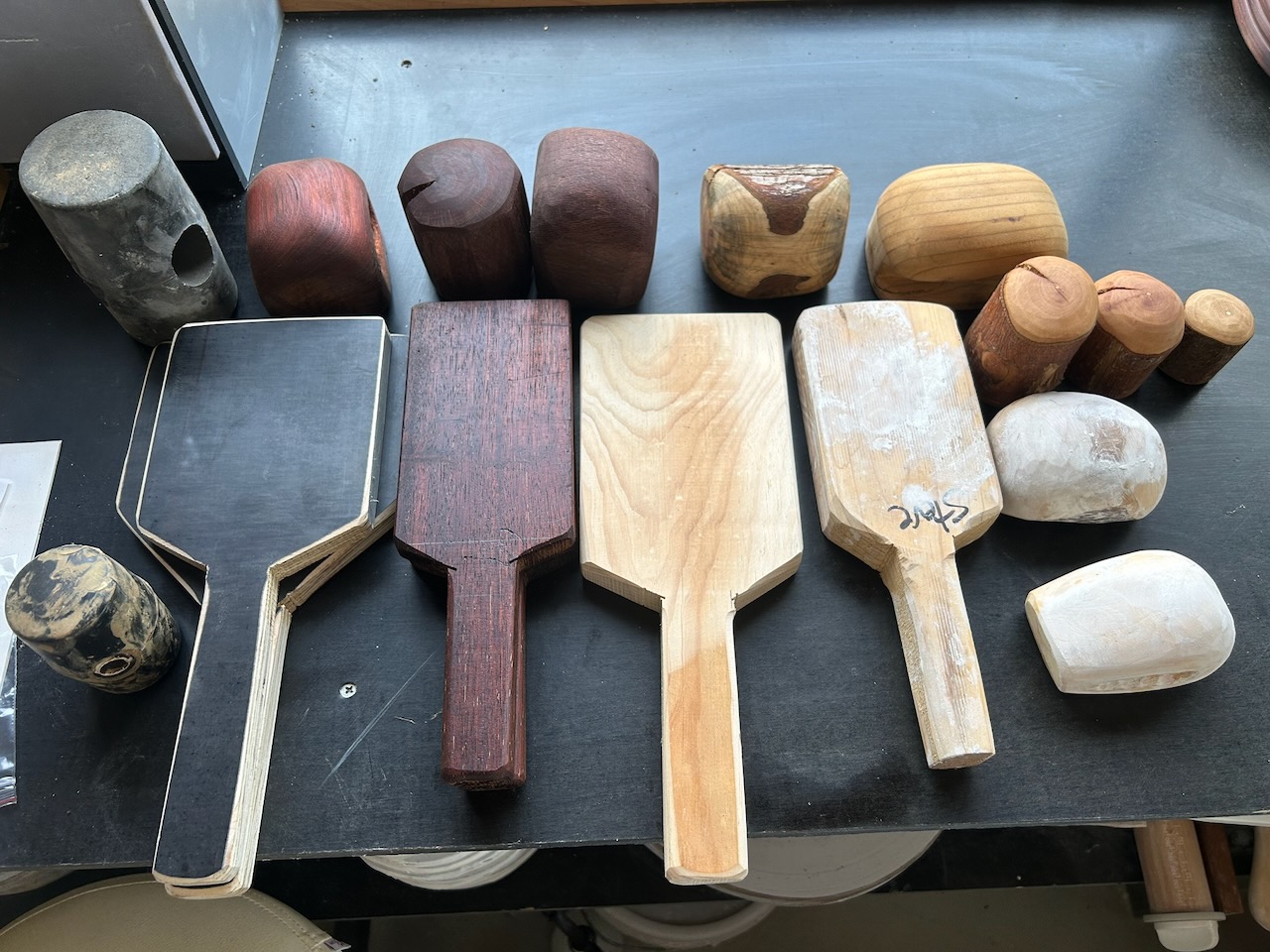
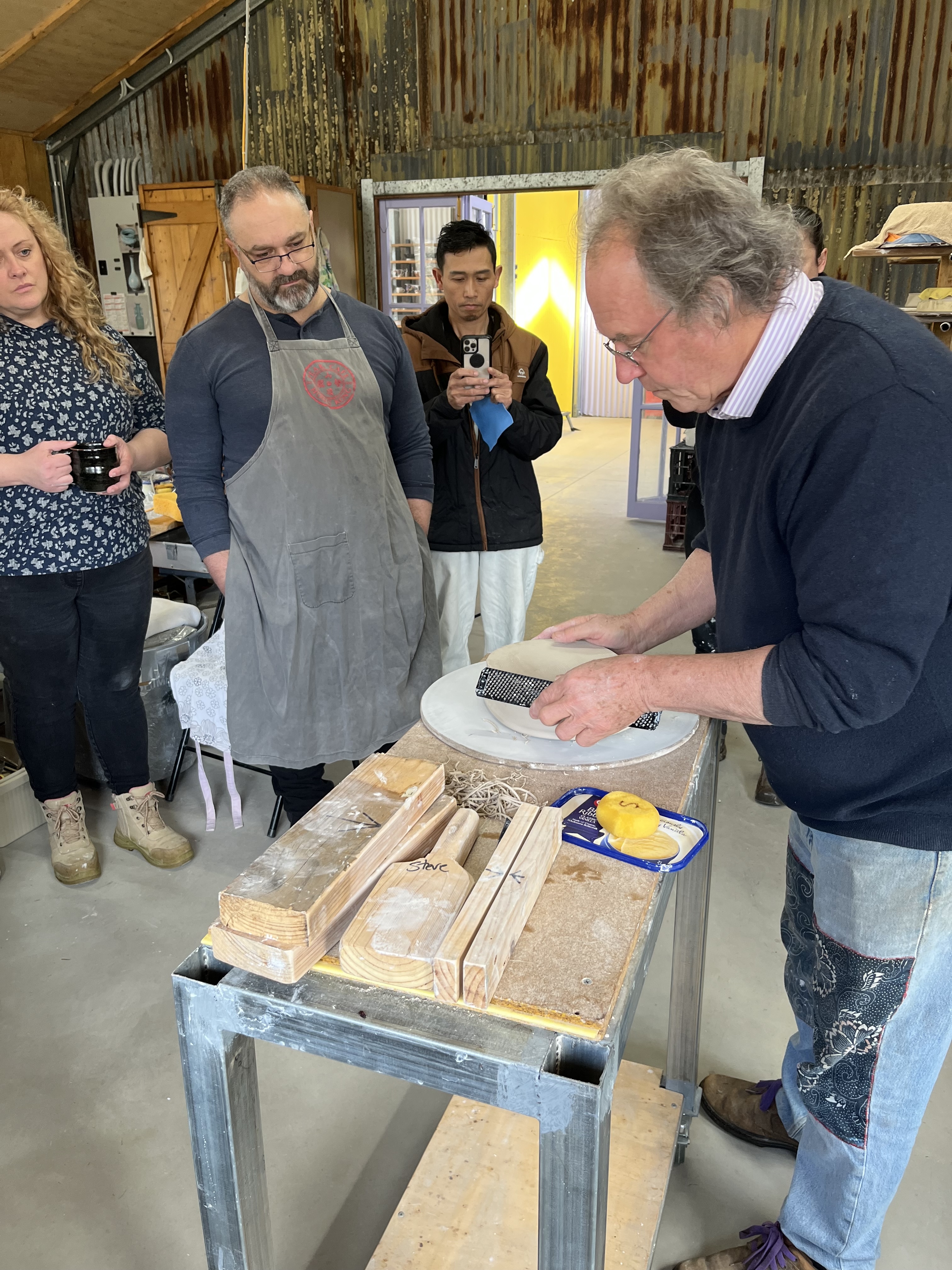
All the timber now looks rich and glorious! While I was in wood working mode, I made a pile of paddles and wooden ‘anvils’. To be used in the coming workshop for forming and securing the joints of large pots. I made everything from off-cuts and prunings of trees in the garden and orchards, including apple, pear, cedar, juniper, pine and banksia.
Making beautiful pottery tools from timber that you have grown yourself is a very rewarding activity. I suspect that this is a special privilege available only to older potters, as you need to plan for it at least 40 years in advance! The old saying comes to mind – When is the best time to plant a tree? Answer, 20 years ago! We have earned these beautiful tools in more ways than one.
Every morning I wake up, I am gifted another 24 hours to enjoy the sunshine, fresh air, the people round me, the garden and the chance to be engaged in creative activity I really value this opportunity, and strive to make the most of it. In contrast, every morning I don’t wake to find that I am gifted $$$. A lot of people who chase money all their life, find that they have no time. In some ways, I am fantastically wealthy. I have never chased money, instead I have time. Time to be engaged in my creative life. I really value this meaningful and fully engaged life.
We recently hosted a tool making weekend, and taught other potters this evocative and rewarding skill. Beautifully hand crafted tools that you have made yourself embody extra meaning into the work that you make, if for no other reason than just from the emotional energy that you generate from the enjoyment of the activity of the handling and making. However, there could be more to it.
In the pacific islands, there is a potent energy that they call ‘mana’. Not the christian goodies (manna) that drop from heaven, but a highly potent spiritual energy that is embodied in special objects at the time of their making, by unique and powerful individuals, or bestowed into objects by force of will by that unique, potent and powerful individual. It may be an object like a club, or spear, but also in jewellery and other personal objects. Such objects are highly prized and valued. The ‘mana’ is embodied in the object, and once they are passed on, that special energy is perceived and valued by the subsequent owners. I can understand this numinous like feeling embodied in beautifully crafted objects. Perhaps they can pass on something of the spirit of the maker? I like to think so.
Have a safe, creative, fertile, prosperous and rewarding New Year!
Nothing is ever finished, nothing is ever perfect and nothing lasts.
It’s the last days of spring, and I have been very busy doing all sorts of little jobs that have been waiting for me to find some ‘spare’ time. We were so flat out busy working in the pottery leading up to the open Studios weekends. Now it’s time for other things.
Although it’s still spring, it seems like summer has been with us here in Balmoral Village for the past 6 weeks and more. The lush green spring growth is long gone. It’s been hot and dry, interspersed with cold, blustery, windy days. The net effect has been to dry everything out. The paddocks and lawn around the house have browned off. The soil in the vegetable garden has dried out to the point of shrinking, and starting to crack open in the places where we are not watering the nascent, emerging seedlings, destined to become our summer food source. We keep the soil moist around the seedlings and let the other areas stay dry – until I need that spot to plant more vegetables.
We have spent years nurturing the local soil here. Improving it with multiple applications of compost and manure, interspersed with additions of lime and dolomite. Over the decades, the depth of the fertile, friable topsoil has increased to over 300 mm.possibly more in places. I never seem to hit the hard iron stone and sandy loam layer anymore. The worms take the organic matter down deep and mix it well. I just keep adding compost to the top as a fertilising mulch.
It was a real shock and learning experience to discover how effective worms are at disseminating organic matter down through soil to amazing depths, given time and repeated applications of organic matter/compost. After the bad fires here in 2019, our orchard trees got very badly burnt, so I decided to move the orchard up closer to the street and to build the new pottery on the old orchard site. When we started to dig out the stumps of the 45 year old fruit trees, I was amazed that the rick chocolate brown top soil when down half a metre or more. When I planted those trees in 1976, the holes I dug for each tree were dug through hard yellow stoney loam. What a change in the soil profile over those years. Thank you worms.
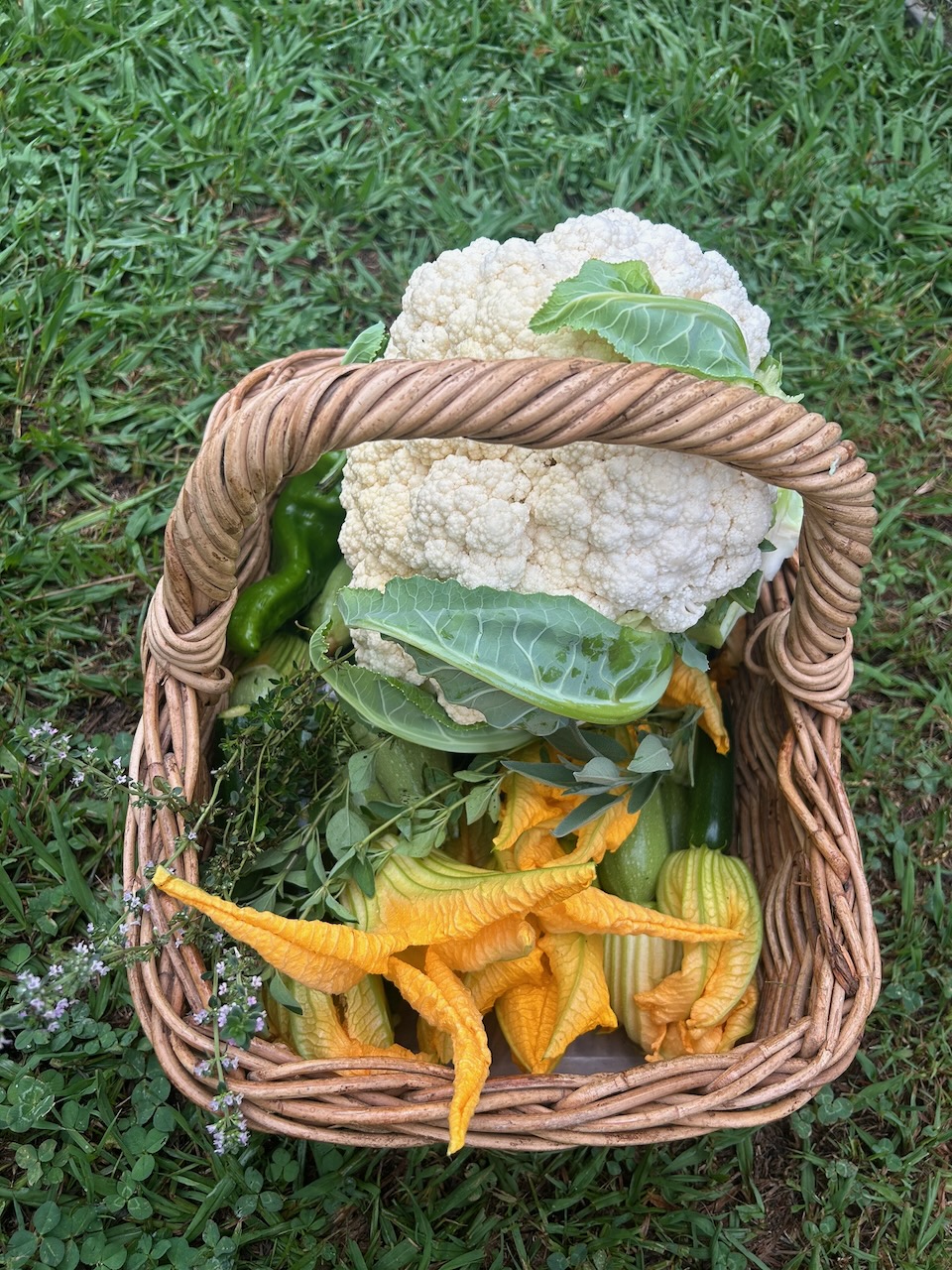
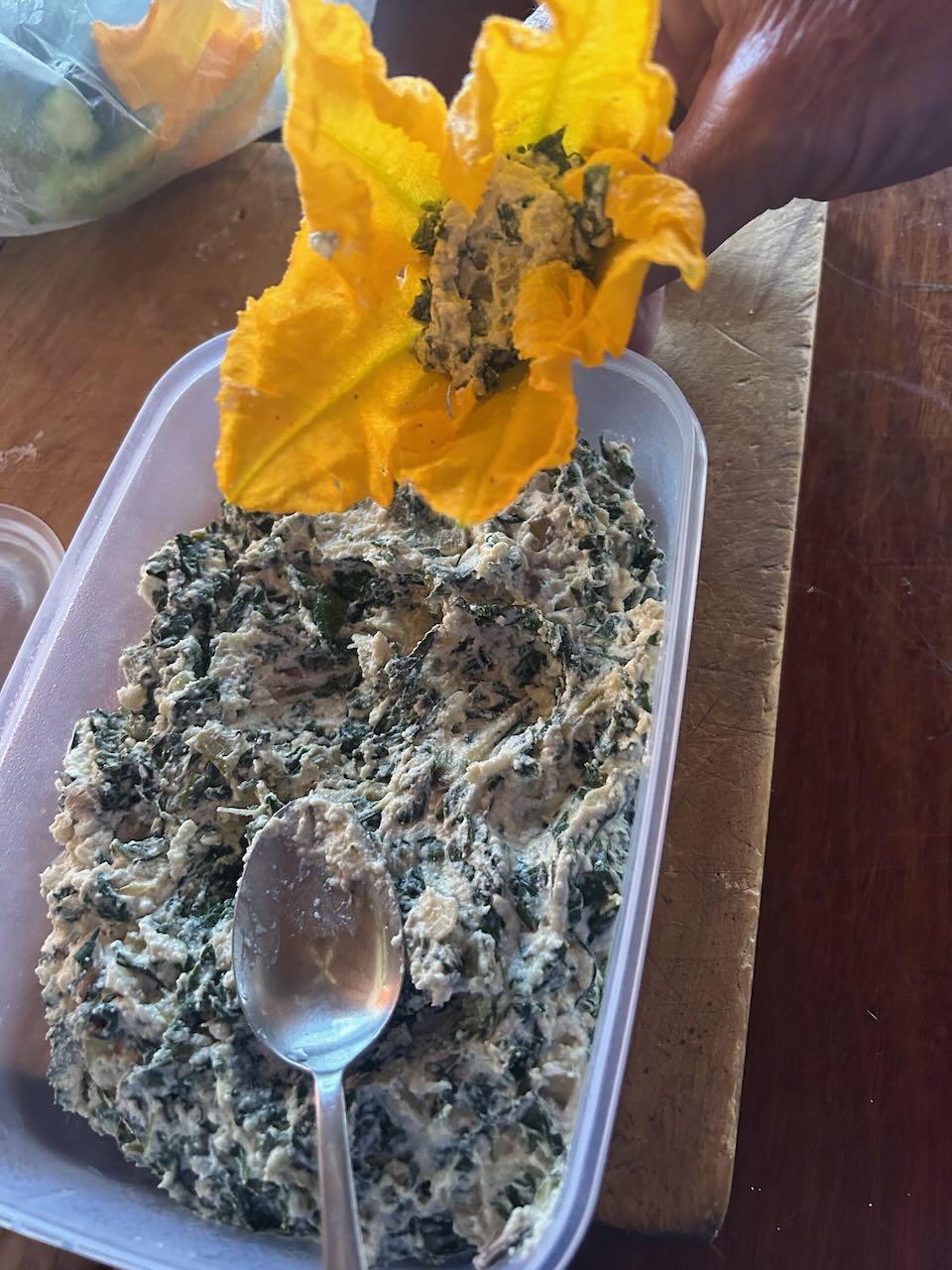
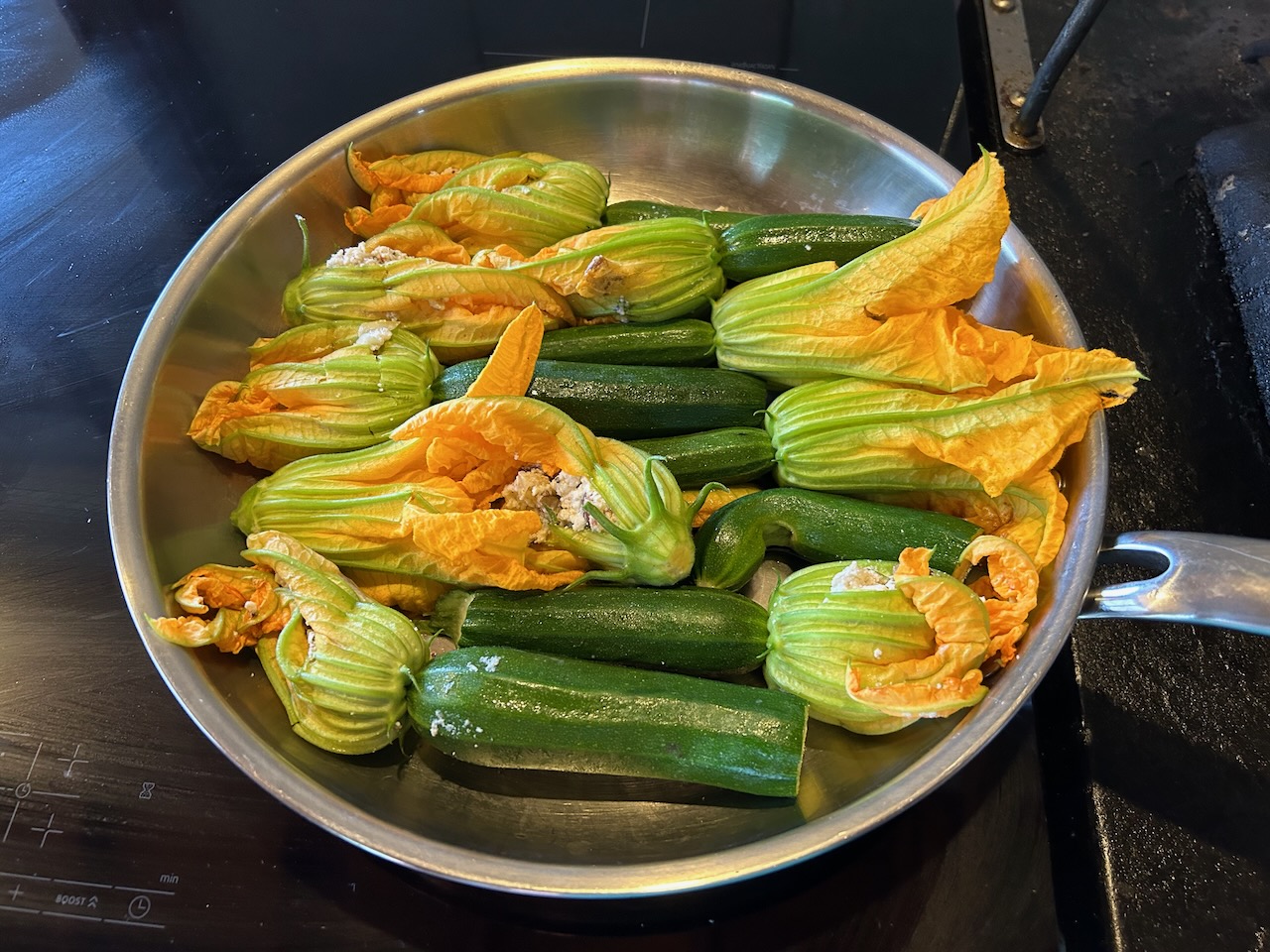
The zucchinis are starting to produce well now. They come on quite fast from seedlings to fruiting in a few weeks in this warm weather. I have been picking them small with the flower still on and stuffing the flowers with cottage cheese and herbs for a light fun dinner.
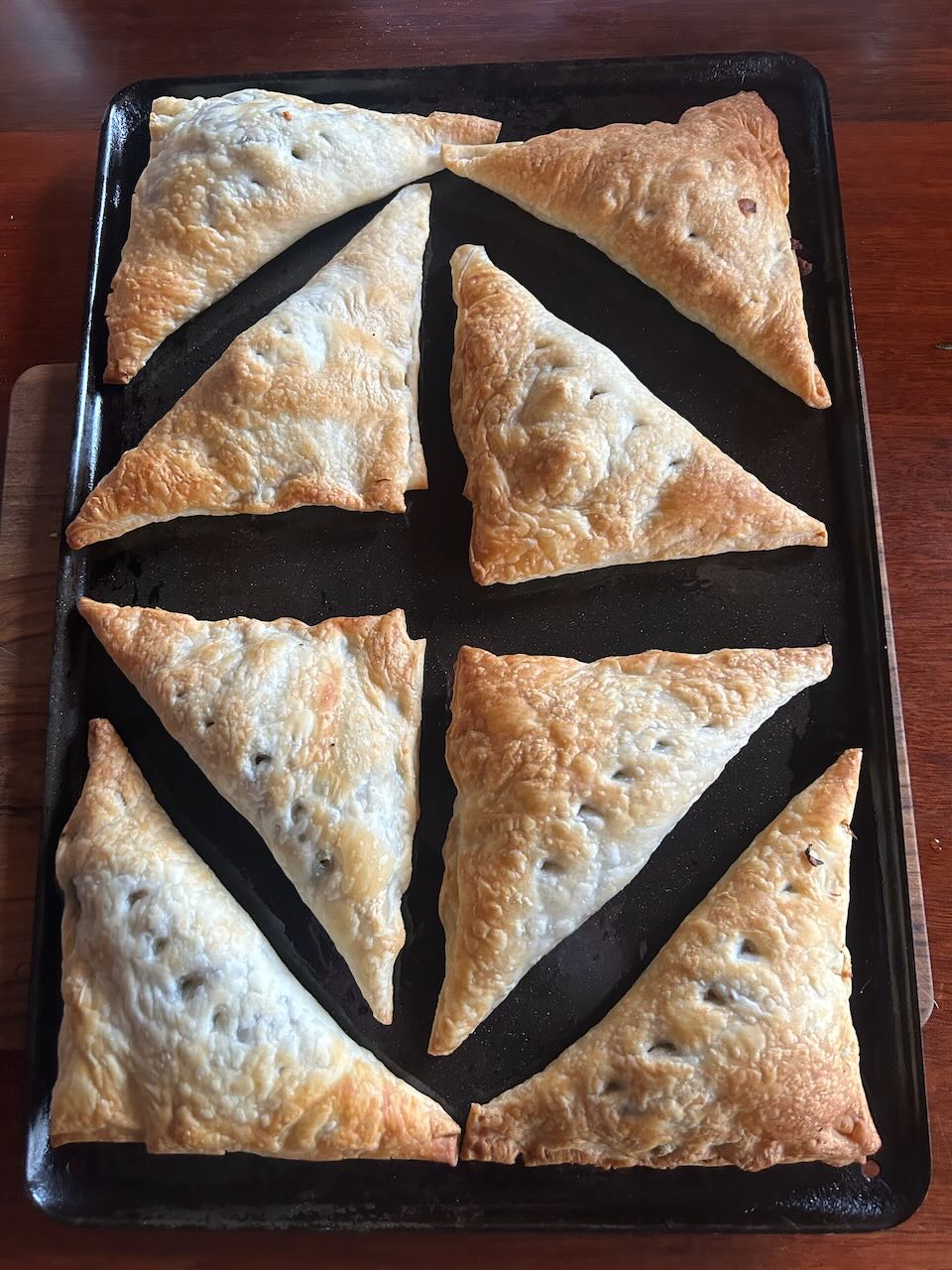
We also have plenty of silver beet/chard at the moment, although it is starting to bolt with the longer days. I have planted more seeds for a follow-on crop. I have been making spanakopita-like spinach and cheese triangles, or spanapotterka as I like to call them, or sometimes whole pies with a similar filling. It’s a great way to use up our excess of leafy greens, as they bolt away in the heat, and maximise our return from them before they are all gone. but it does need the ricotta, fetta, blue cheese and herbs mix to make it special. Plus a light touch of chilli.
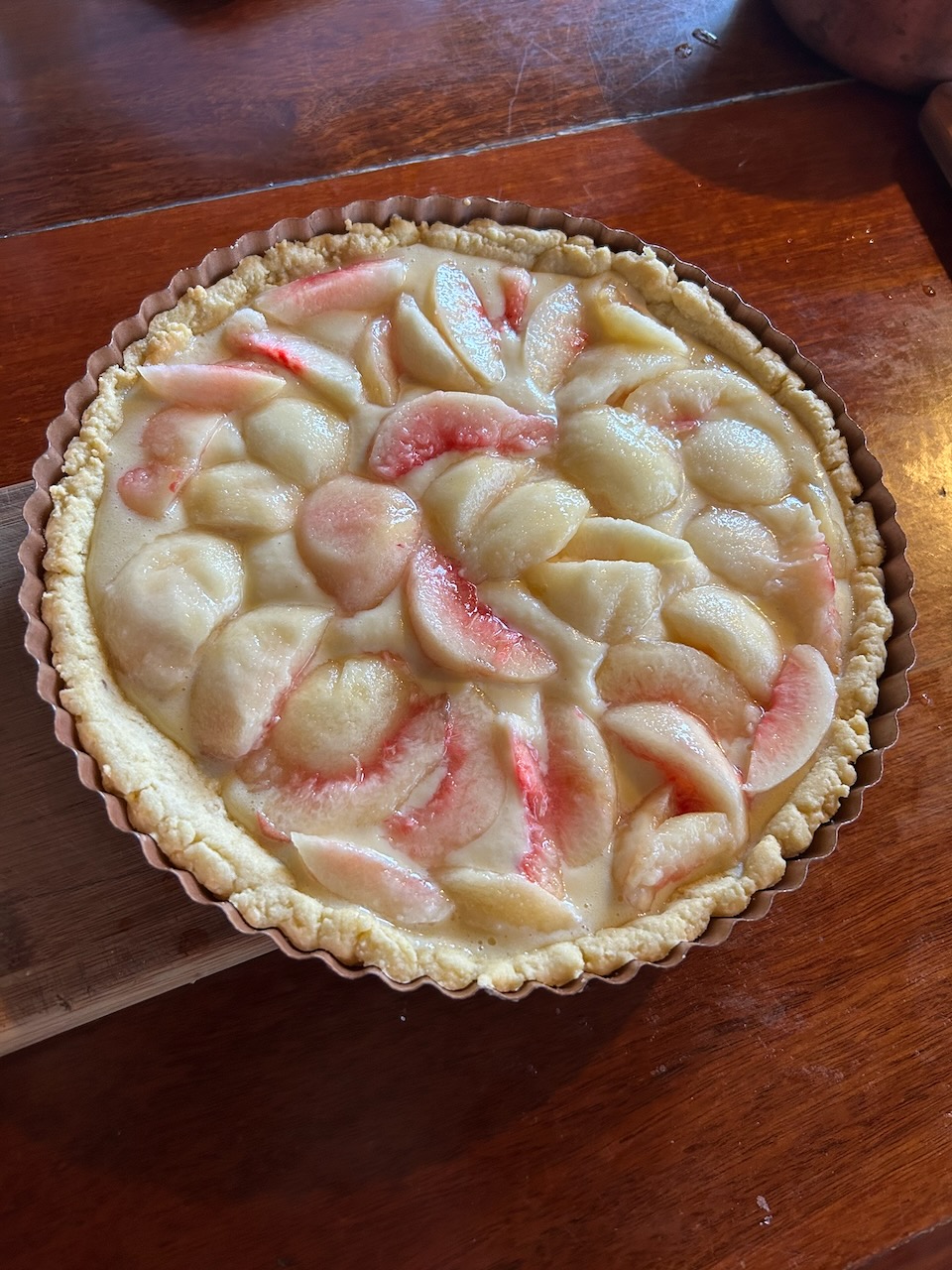
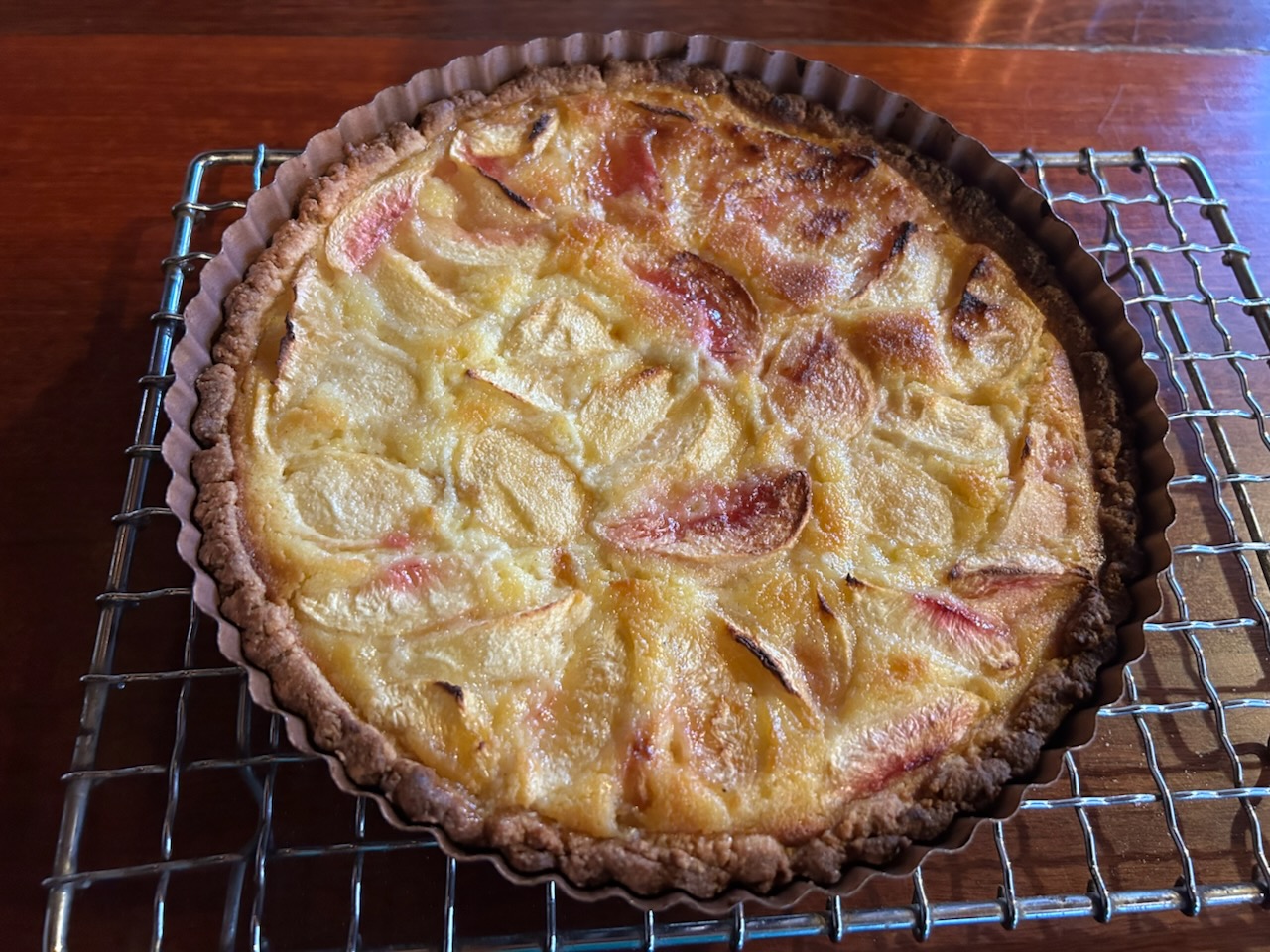
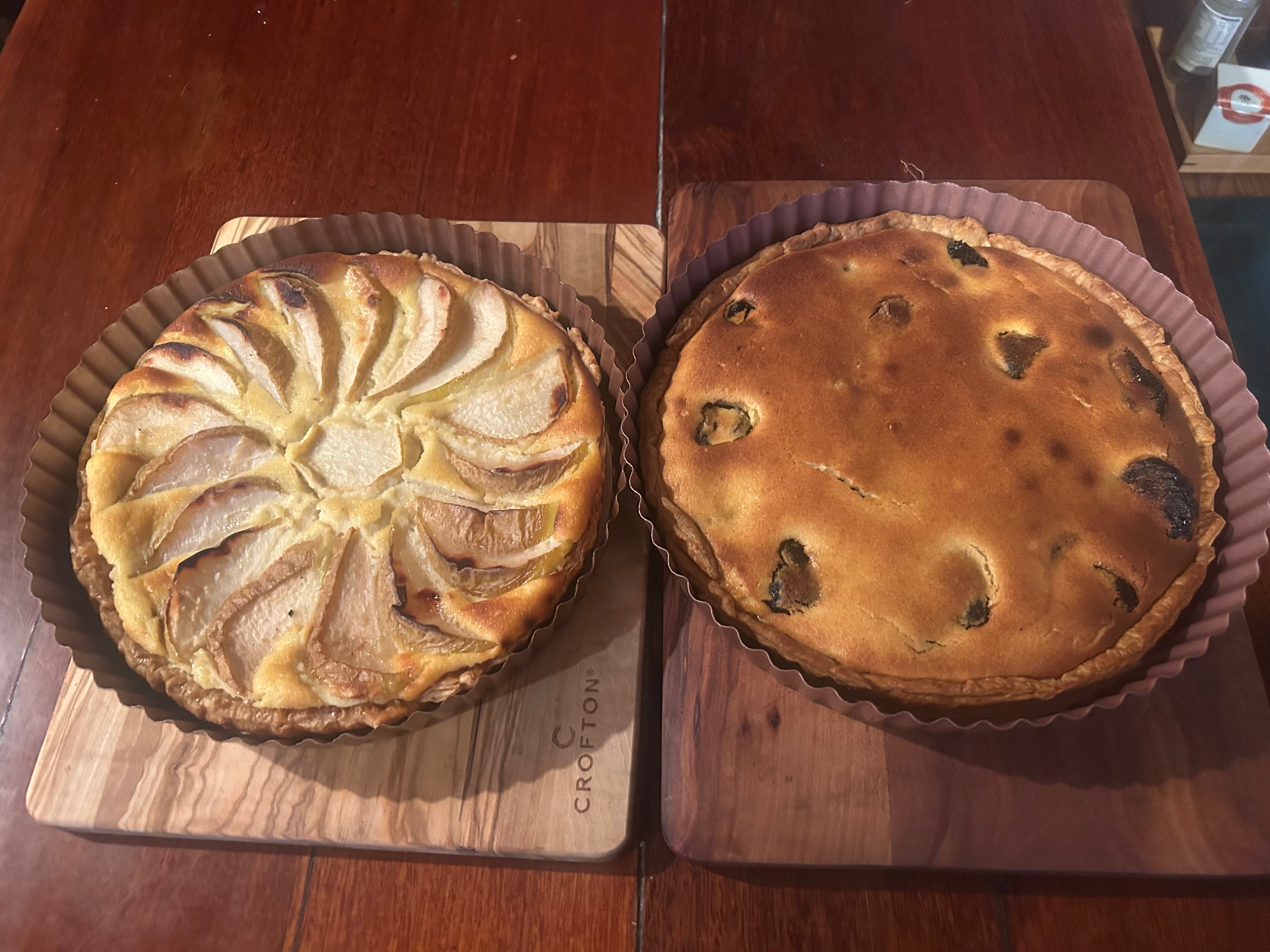
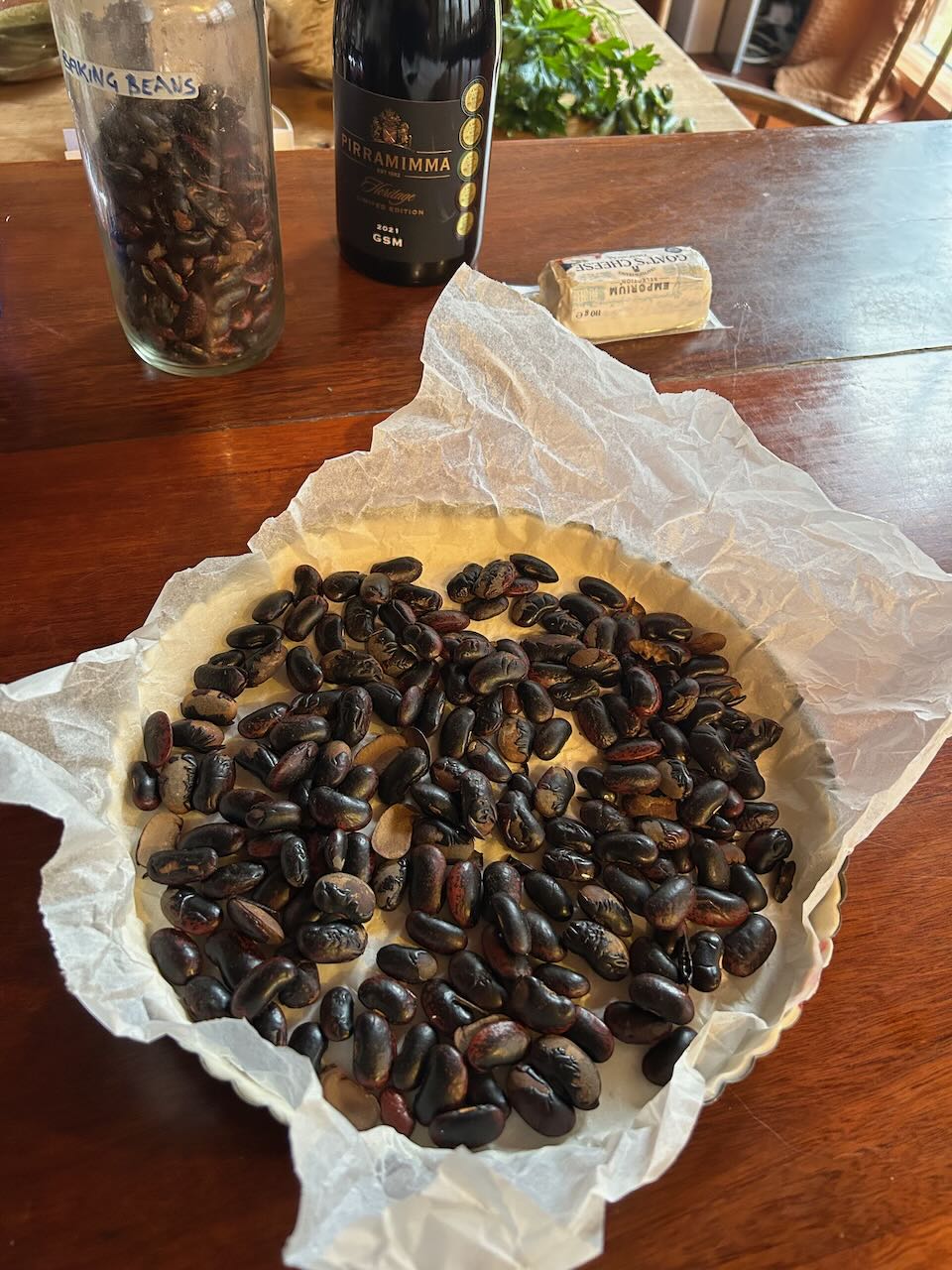
I have also been making a few fruit tarts as well. Something for a more relaxed and comforting morning tea. Since the Open Studio sales are over and the 50% off Xmas sale hasn’t happened yet. Not until the 14th of December. The pottery is all cleaned out and set up for sales, I don’t want to mess it all up making more pots just now, as we still have plenty of stock. So I have time in the garden and kitchen catch up and do a lot of things that I like to do, but haven’t had the time to fit in, until now.
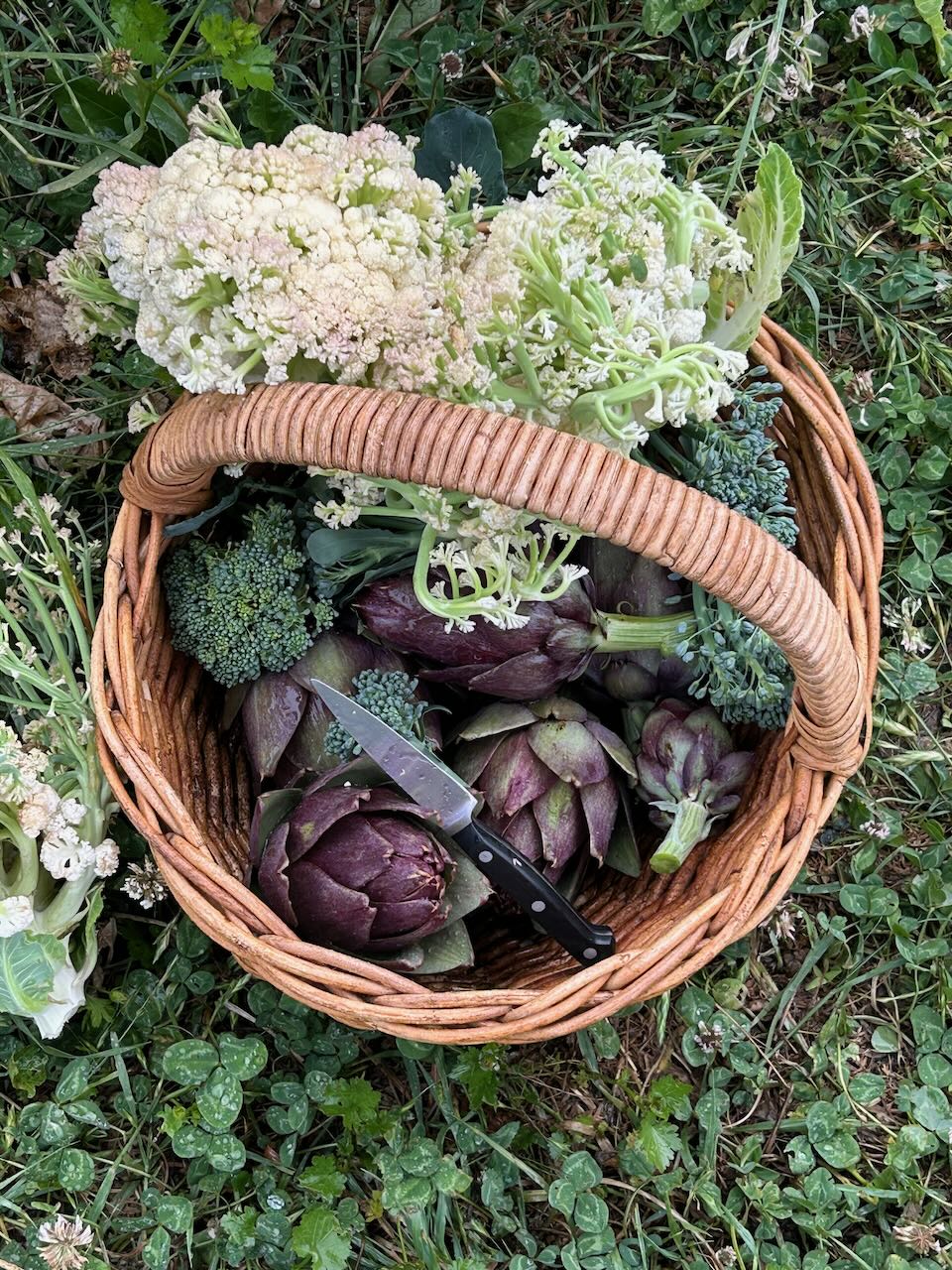
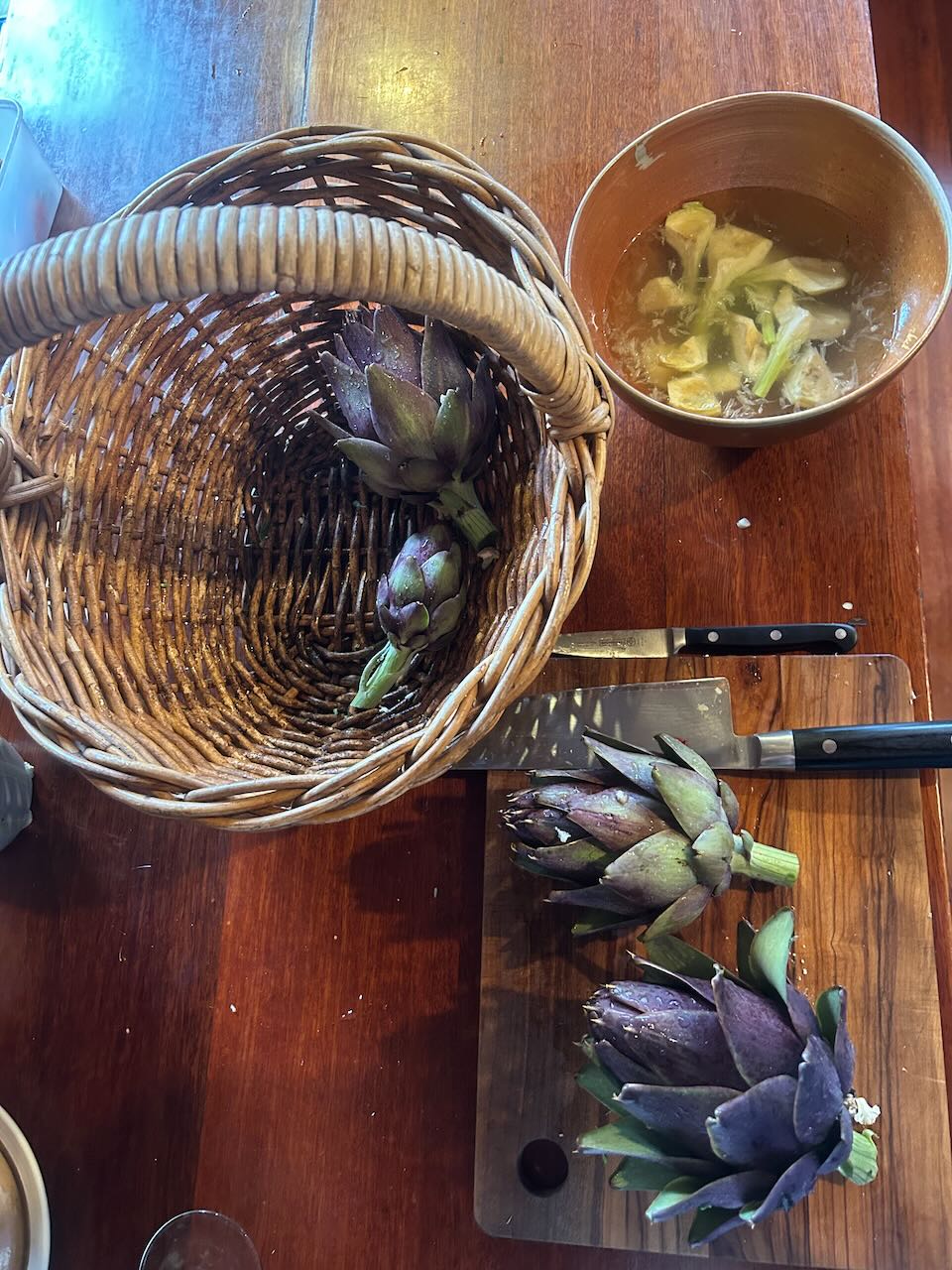
We have picked the last of the artichokes and cauliflowers. I made a vegetable pasta with the artichoke hearts and as the cauliflower was so far gone. I mashed it up and used it as vegetable filling to bulk out the sauce with last summer’s tomato passata.
This week we picked the last of the cherries and the first of the apricots.
I like working in the garden, especially in the warmth of the season, before it gets too hot. Everything responds so well and so fast at this time of year. There is always some fragrance in the air and birdsong on the wind, often fighting over the last of the high fruit in the mulberry tree or some other treasured and favoured food source. They squabble and chatter and squark and carry on, endless entertainment.
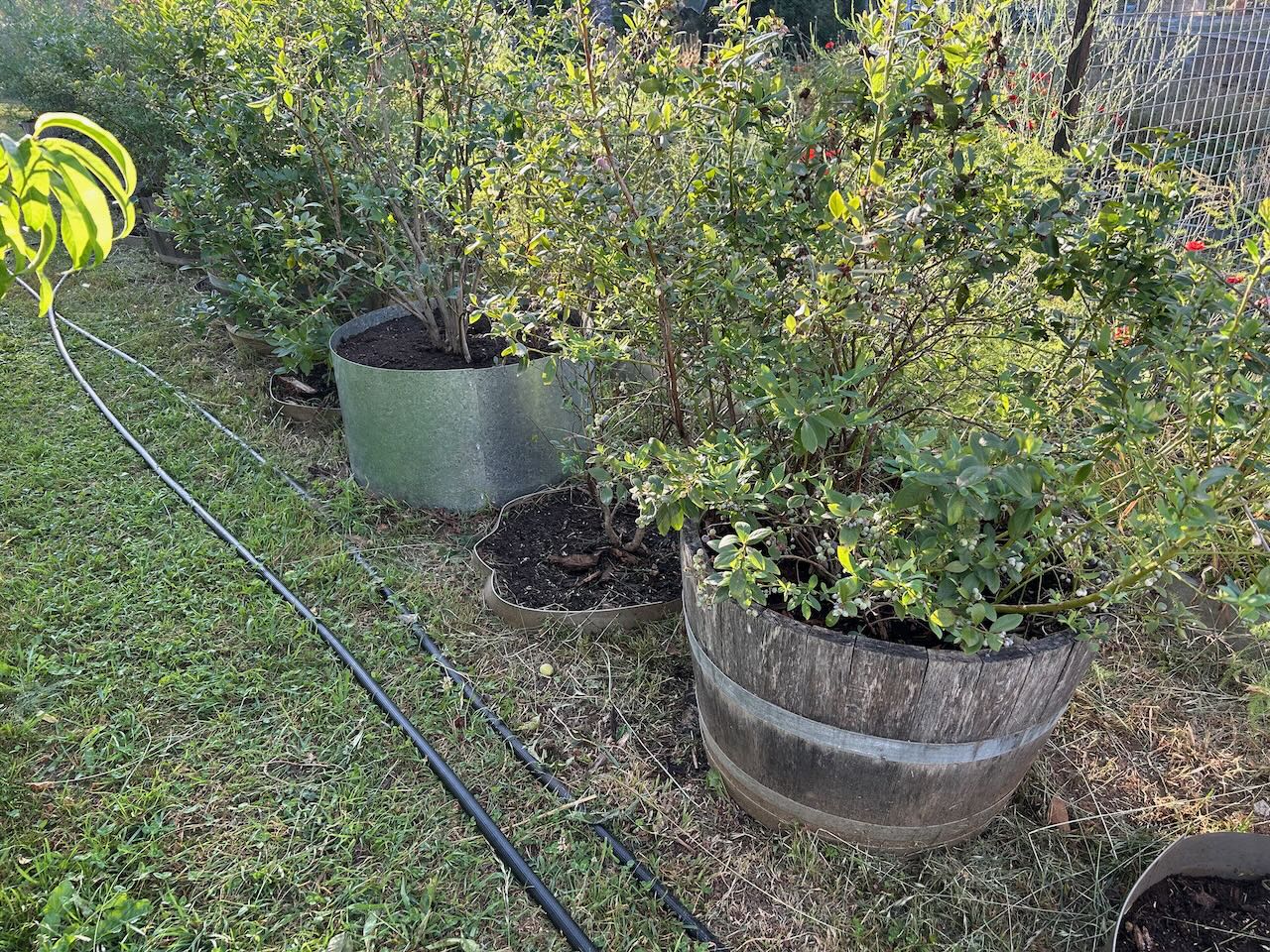
While in the garden, I noticed that one of the ancient wooden barrels that I bought 3rd, or even 4th hand, some 30 years ago, have finally rotted away to the point of collapsing. The staves have rotted away from the inside with the constant wetting and drying as we water the blueberries that we are growing in them.
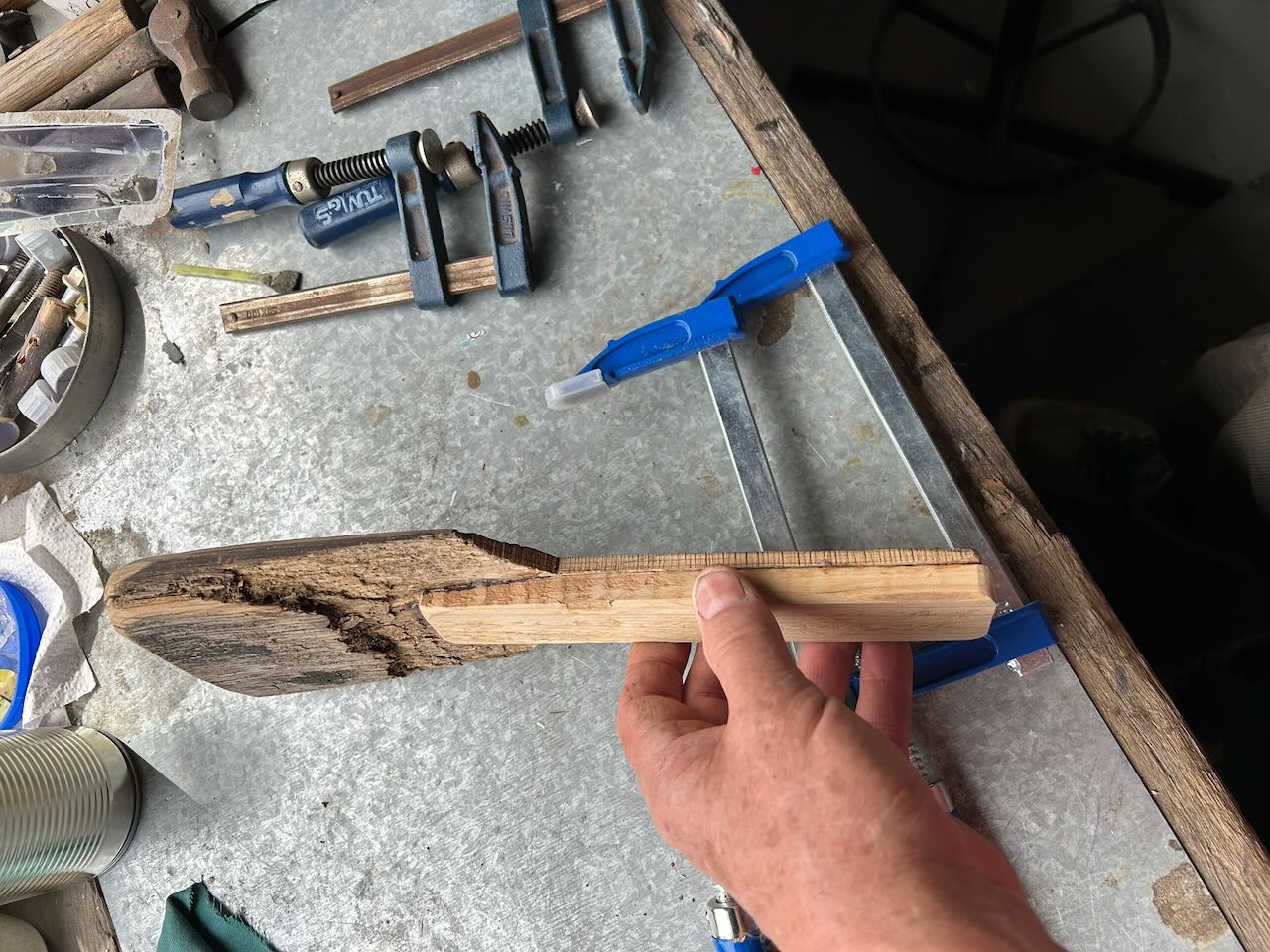
I hate to see waste, so I made one of the rotted staves into a textured pottery tool. A paddle for creating texture while changing the shape of a larger pot. I’m teaching a weekend workshop of tool making next weekend, so this can be one of the projects. i have lots of these old textured staves now. I had to shape and add and new wooden baton, to reinforced and strengthen the handle. A rewarding project that avoids waste and recycles some old timber into something useful and precious. I love the natural, organic texture of the old weathered wood.
Once that was done I set to and cut, folded and rolled a new galvanised steel sheet ring to slide over the old soil base to keep the bush alive. I slipped the ring up and over the bush, down around the soil base. I made the new ring to be just 50mm larger in diameter to make the job easy. It fitted perfectly! I filled the small gap around the edge with some light soil and compost mix, eventually watering it all in to settle it down. It cost me about $30 to make this new steel pot, and it was quick and easy, as I didn’t need to move the plant and all its soil. A new 1/2 wine barrel would cost a couple of hundred dollars these days. So out of our budget range. $30 seems cheap to me for a 750mm dia garden pot, 400 mm high.
This new steel pot isn’t as beautiful, rustic and weathered as the old wooden barrels. The wood has a certain ‘natural’ beauty that I love, but I ask myself. “Are they 6 times better?” Possibly? But then I think of trying to lift the 100kgs of soil and root ball up and into a new wooden pot. I couldn’t do it anymore. So I’m playing it safe. I’m happy with the new pot.
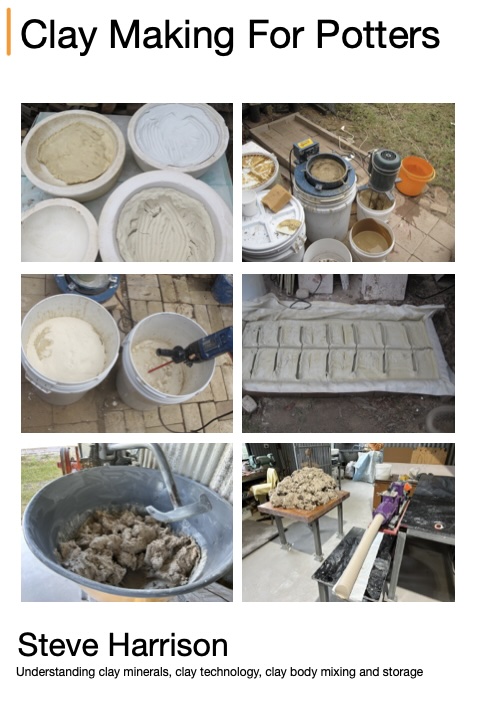
Of course work in the pottery is never completely over. We have a summer school and other throwing weekend workshops booked in for the new year, so It’s time to make more clay body to get it all laid down and ageing, ready for when it’s needed in the new year. Our pottery workshop is laid out in such a way that the creative side is quite seperate from the more dusty, noisey, messy side of the business where we crush and grind all our glaze materials and make our clay bodies.
Janine and I have processed over a tonne of clay this year through our equipment. Each batch that we make is unique. As we do everything ourselves, we can make each batch of clay slightly different in order to closely match the type of projects that we are planning to make. This latest batch is slightly coarser in texture to facilitate making larger forms. The added grit helps the clay to stand up better in larger forms. We also make fine stoneware as well as porcelain.
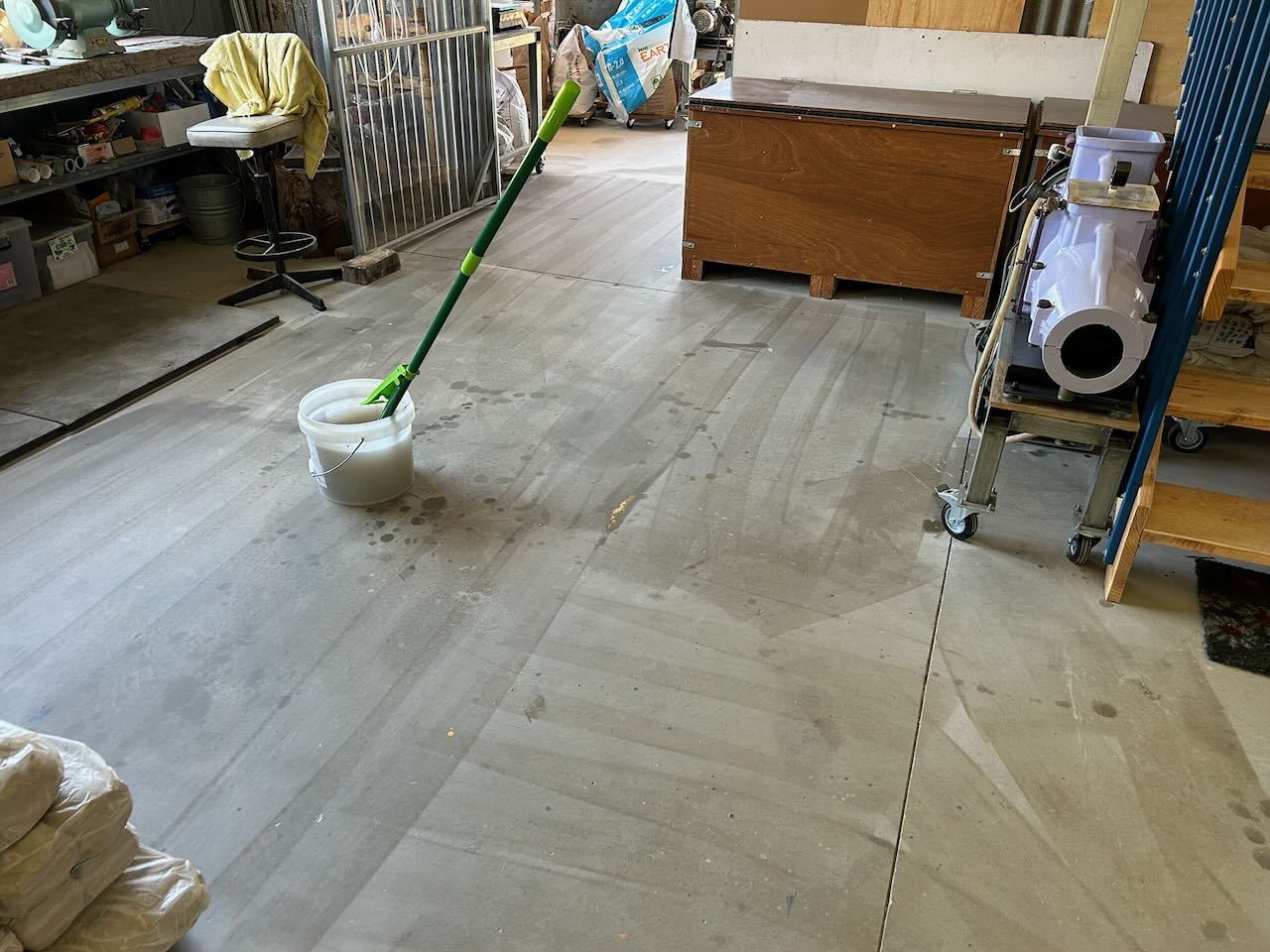
After all the clay is processed, pugged twice and then bagged and put to bed, everything is scrubbed down and the floor is mopped.
I like to keep the workshop as dust free as is possible. After a change of water and a 2nd mopping, the big roller doors at each end of the workshop are opened up and the breeze flows through and drys the floor.
We are good now for the next 3 months. We are very lucky to have such good equipment that allows us to make large amounts of clay like this in a couple of days. All this gear is very old and has had a difficult history. But I manage to keep it all going, maintaining it as best as I can, cobbling together disparate parts and spares from here and there and making up special bits where they aren’t available any more. Its a challenge, and rewarding when it all works.
Nothing is even finished, nothing is ever perfect, and nothing lasts.
Don’t read on unless you want to learn something about clay.
Janine and I have been teaching weekend workshops these last couple of weeks, and all of the preparation that goes into that to make sure that everything runs smoothly keeps us very busy. The whole exercise takes us 5 weeks in total. However, there is still time for other fun things like the garden, chickens and cooking
Over the week in between the two weekend workshops, I re-cycled all the clay from failed and re-cycled practice pieces that had made their way into the clay room to be stiffened up in the plaster basins. I have 5 large plaster tubs sitting in the direct light of the North facing window, this keeps them dry and ready for use, most of the time. Plaster saturates quite quickly if thin slip is poured into them, but they cope very well with soft plastic slumped pots that just need stiffening up. 20 mins on each side on a dry plaster batt, is all they need and it’s well and truely ready to wedge up and use again.
At the end of the workshop, I get everyone to collect all the trimmings, turnings, scraped-off batt bases and thick slurry from their throwing water tub, and pour it all into a tall 20 litre bucket. 8 potters can fill it up pretty quickly. I let it sit and soak for a day or two, to make sure everything is equally softened, I like to get it to a thick and creamy consistency, not unlike Greek yoghurt – with some lumps.
I then transfer it all onto the plaster drying tubs. It takes 3 days to get stiff enough to lift it out and stand it up. This allows more air to circulate around the soft, barely plastic clay, so as to dry it out faster. The plaster basins then need a few days in the sun to dry out again. When we do back to back weekend workshops, the plaster does get saturated and ‘tired’! However, it always recovers with a few days of sunshine.
Once stiff enough, I put it back through the pug mill, extrude it and bag it ready for re-use. It’s easy mindless work. However, I say that in the full knowledge that it is only so if you already know exactly what you are doing and have done a lot of it before. There are so many little signs and issues that you need to know and be aware of to understand about pug mills and recycling clay. The joys and sorrows of owning a pug mill!
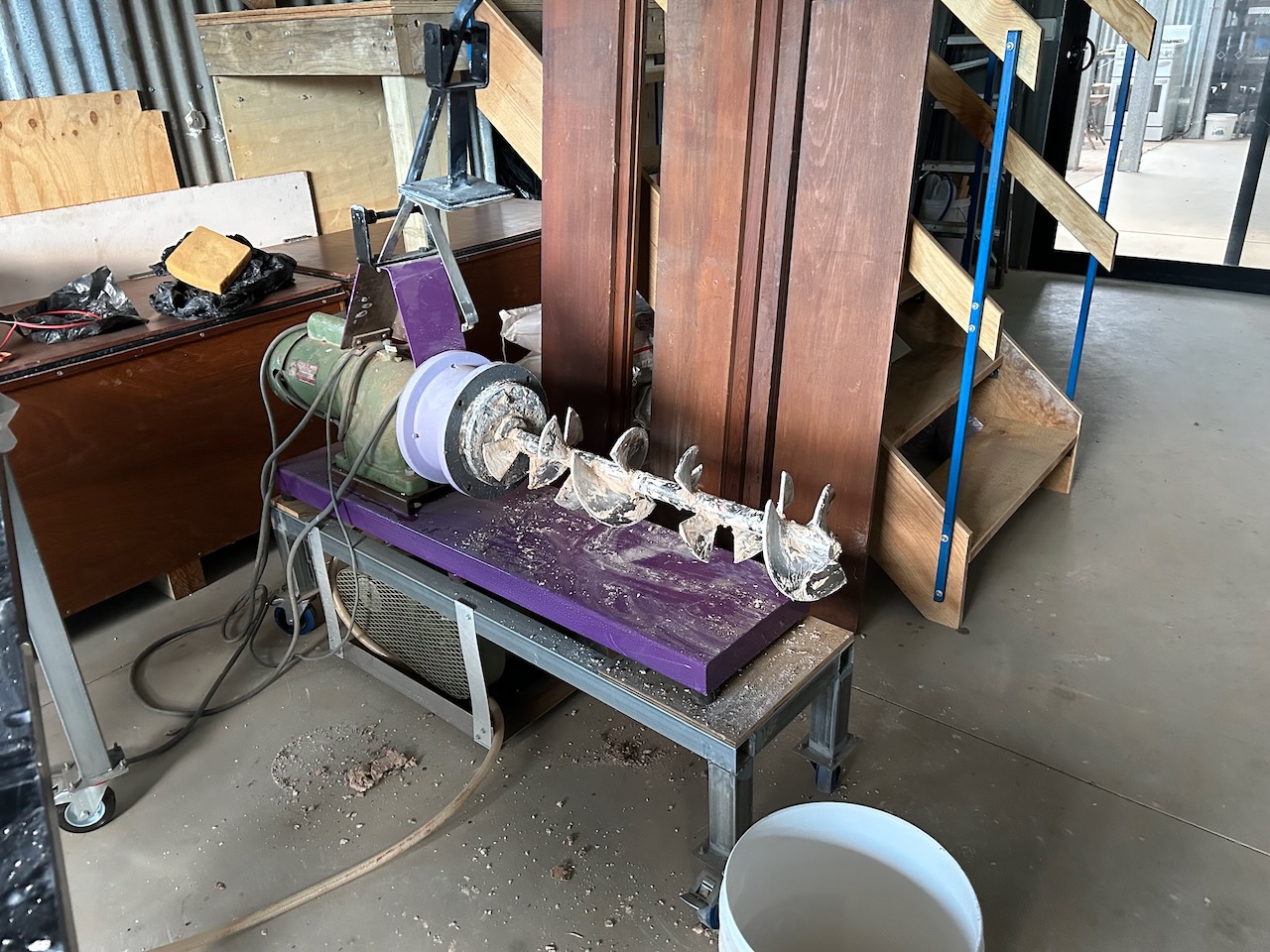
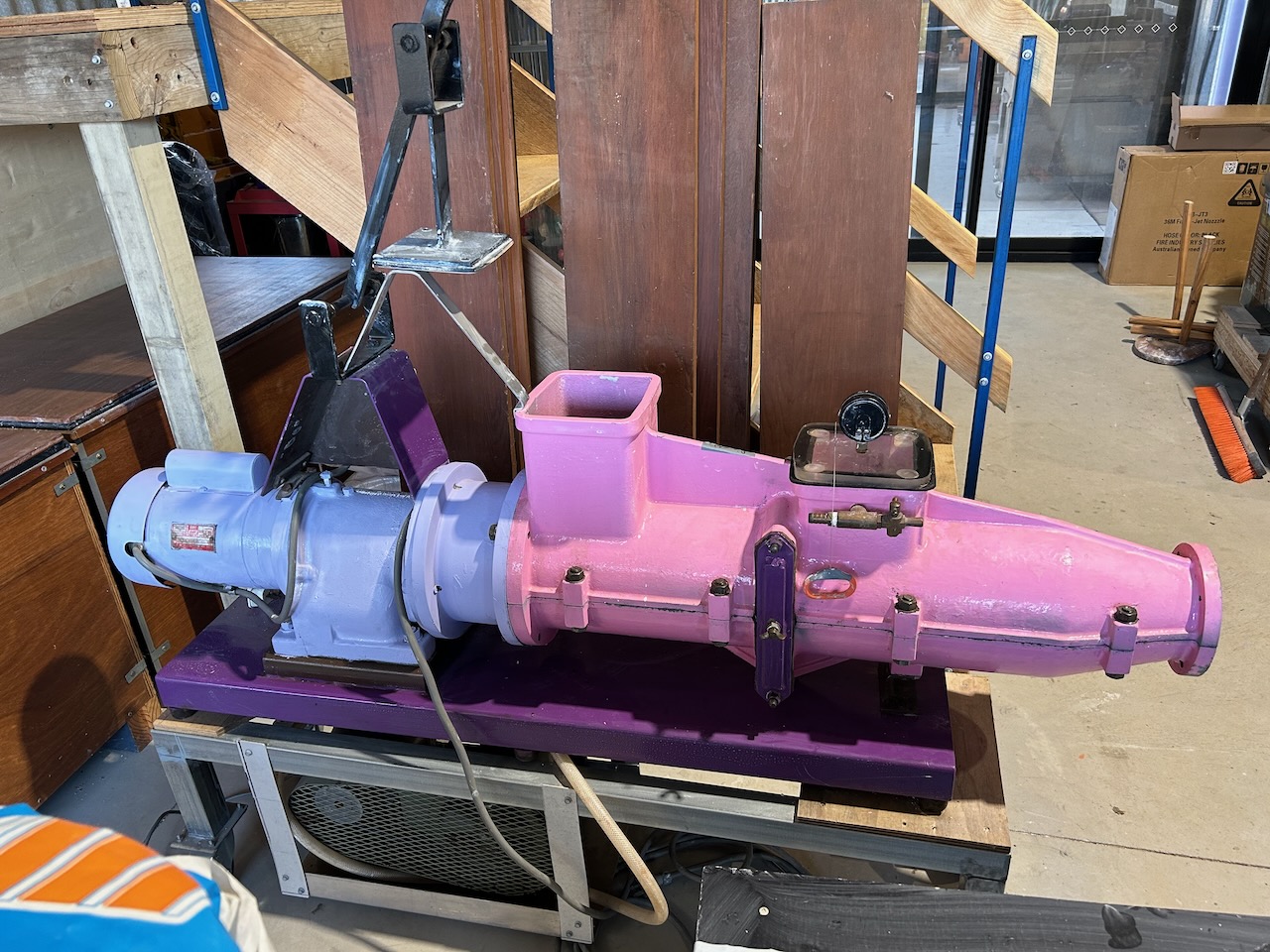
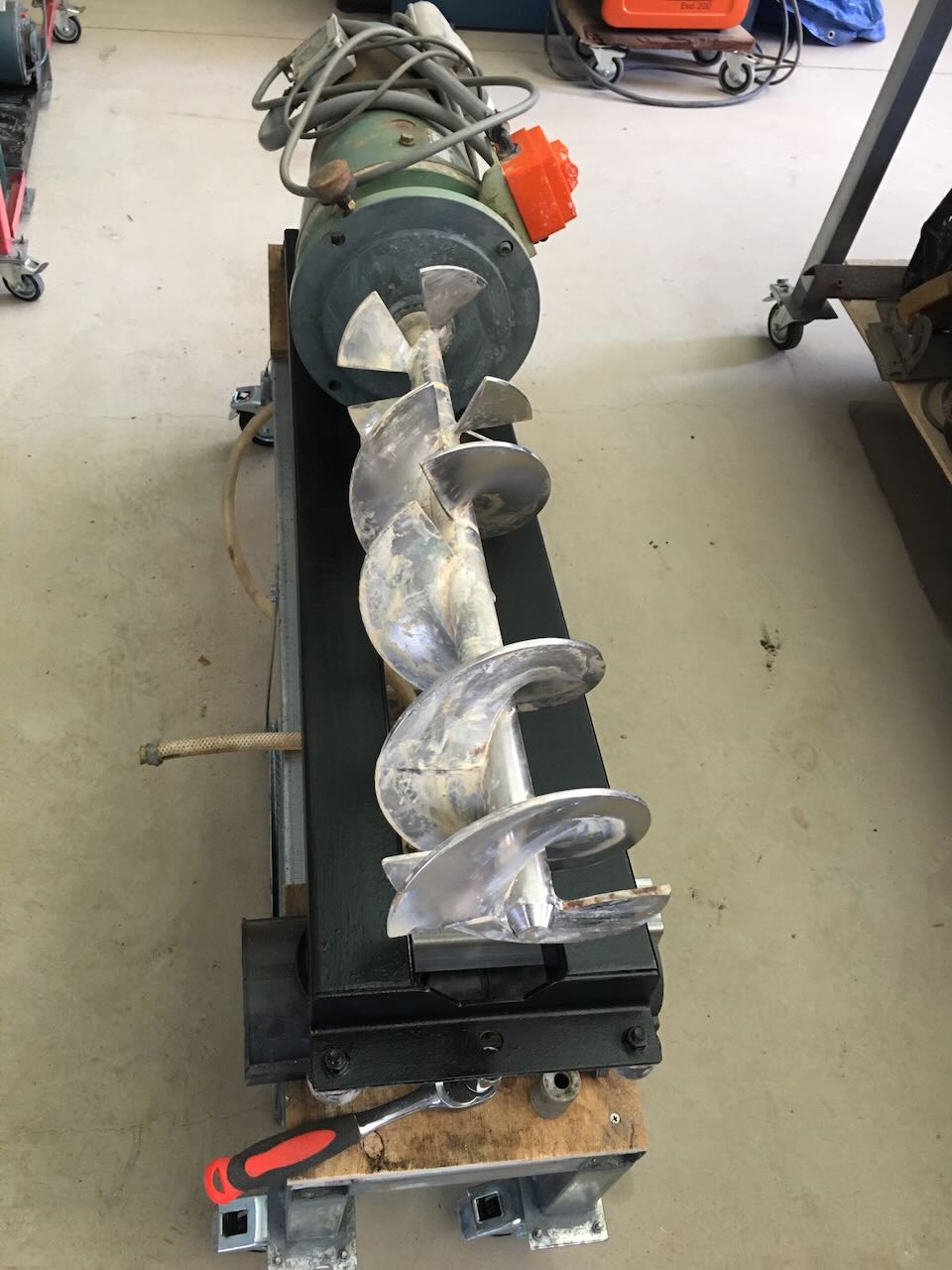
The clay can’t be either too soft or too hard, or the mechanism of the pug mill won’t work. A pug mill is in essence, a long tube with an Archimedes spiral inside. This spiral blade pushes the clay through the barrel. Some parts of the spiral at the beginning are removed to make the spiral into a series of spiralled chopping blades. This chops up the clay, mixing both hard and soft parts evenly, then the later, complete spiral section of the auger pushes and compresses the clay out the other end. Some of the better pug mills have a screen or screens half way along the barrel so that the clay is pushed through the mesh and comes out the other side as clay spaghetti. This exposes any trapped air bubbles which are then sucked out of the pug mill barrel by a vacuum pump, before the clay is recompressed and continues along the barrel.
There can’t be any little bone dry edges that have dried out too far. They are rock hard and dry and will clog up the vacuum screens. I have to constantly check when running my fingers through the thick slurry, that there are no small tools, profiles, kidney shapes, or chamois strips left behind by my students. Any of these will grind the exercise to a rapid halt. Requiring the pug mill to be stripped down, dismantled, cleaned, the offending ‘rubbish’ removed, then checked and rebuilt. It’s the best part of a full days job to to a thorough clean out. If it’s only a chamois, sometimes, I can get away with just removing the blocked vacuum screens, cleaning them only and reassembling. This is still a good hour or so.
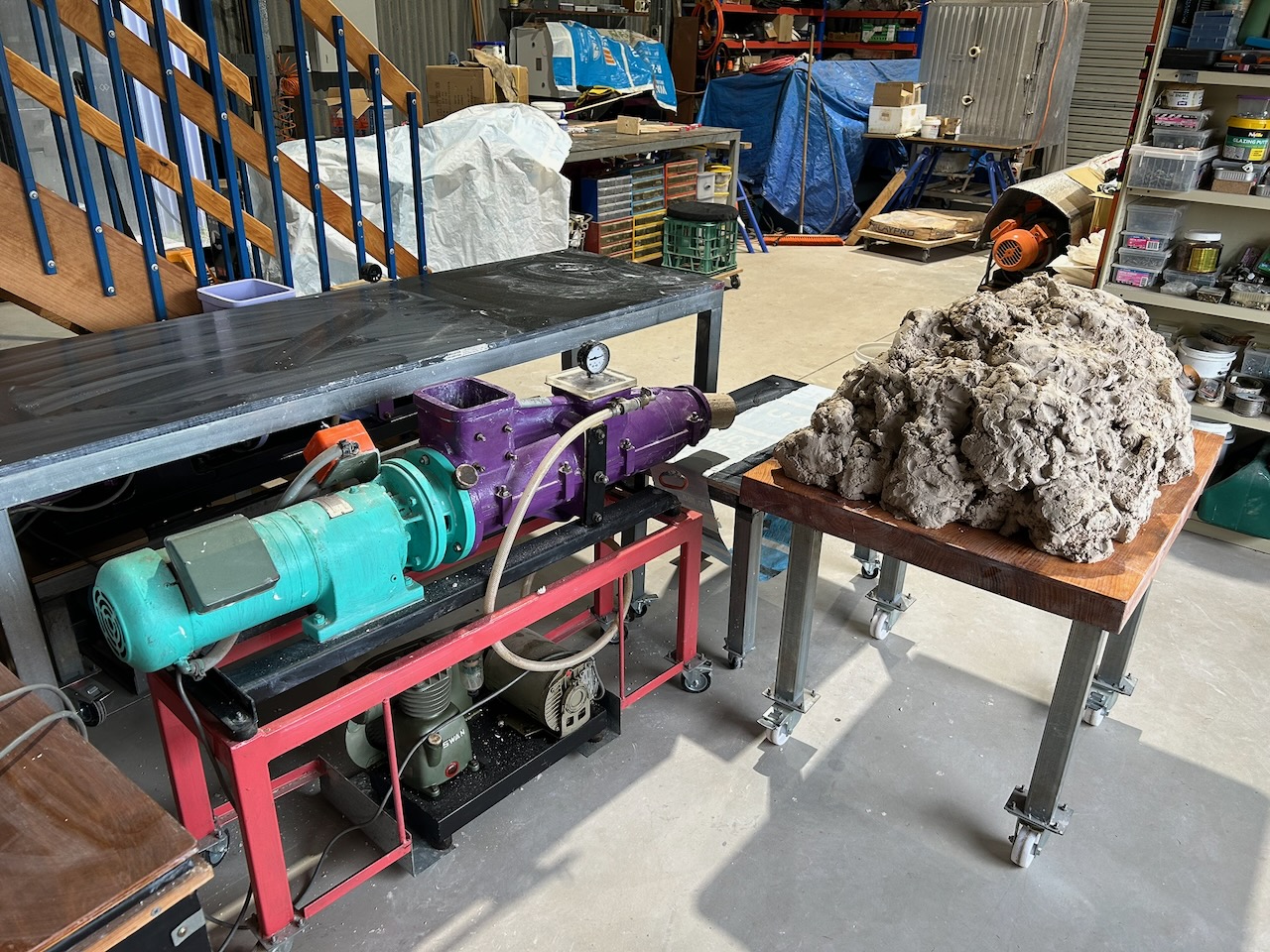
In the picture above, the orange vertical plate on the side of the blue pug mill barrel, half way along the barrel is where the vacuum screens are located and can be removed for cleaning. The white lid on top of the barrel is where the vacuum chamber sucks out the air. The vacuum pump is located in a box slung underneath the pug mill trolley, which is on castors for easy manoeuvring.
So far, I’ve been very diligent in checking all the recycled clay pretty thoroughly, so I haven’t had any ‘accidental’ issues in the last few years. I did discover, quite early on that the new pottery shed, with its north orientated, solar passive design, does get a lot of direct sunlight in onto the clay processing area in mid winter. I’ve learn’t from hard experience that direct sunlight like this can cause the pug mill barrel to heat up and sweat moisture out of the clay on one side, which then condenses and trickles down to the bottom of the barrel. The end result is dry hard clay in one part and slurry in another. The dry, very stiff nuggets of hard clay get forced onto the fine mesh of the vacuum screens and clog it up. The rheological nature of the thin wet slurry in the other part of the barrel doesn’t have the cohesive strength to force the hard clay through. A complete strip down is required. This is a lesson that I learnt the hard way.
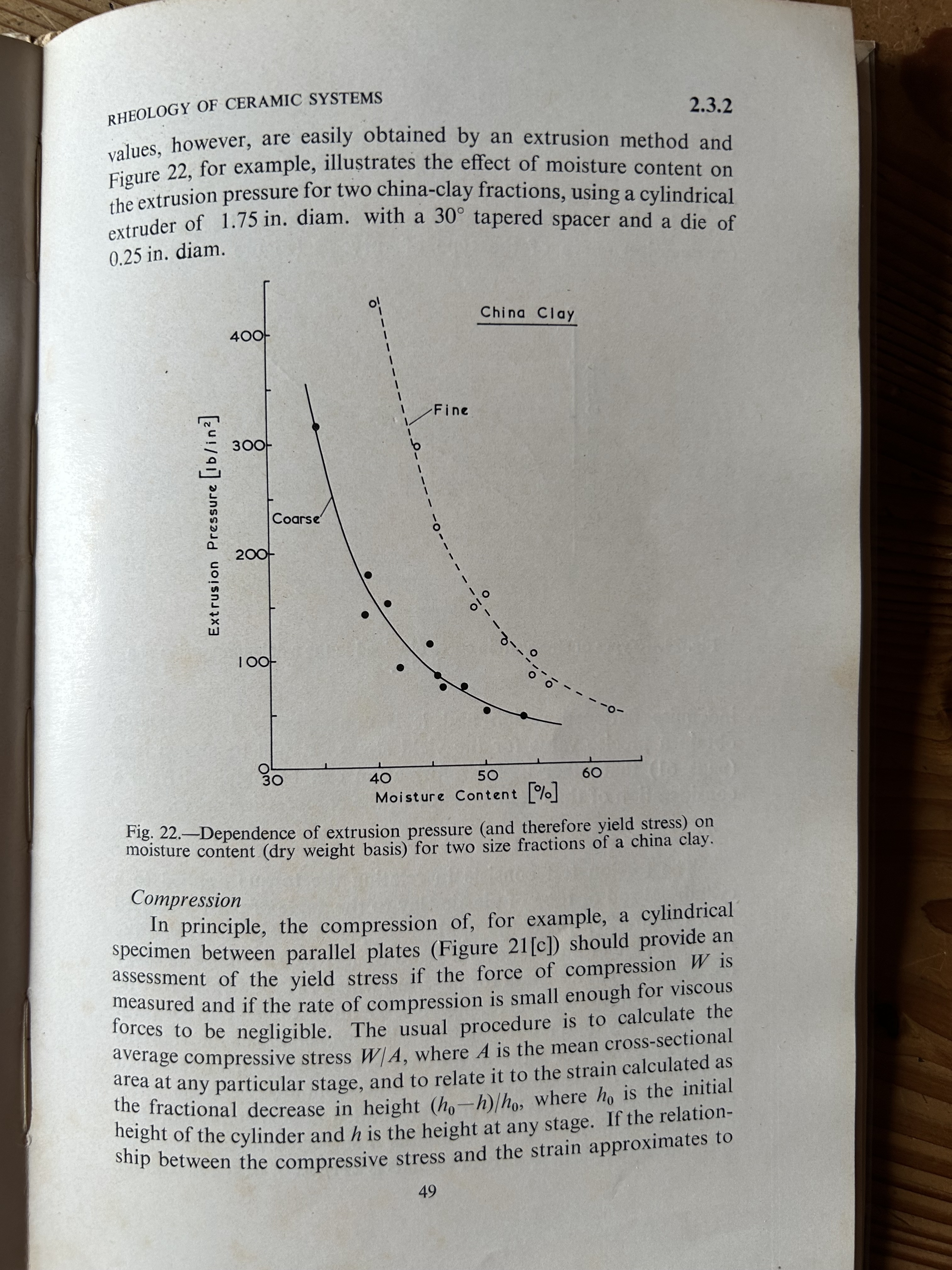
Rheology is a very interesting subject in itself. Clay can be either too soft or too hard to stick together and be ‘worked’ or shaped successfully. There are limits called ‘Atterberg’ limits that have been determined, which predict the upper and lower limits of water content in clay. If too wet, it just sloshes around and won’t hold a shape, when too dry, it is just crumbly granules. We need the ‘Goldie Locks’ range for our clays to ‘work’ successfully. For pressure extruding the range is somewhere between 17% and 60%,. That’s such a huge range. See graph. For pugging, it needs to be in a narrower range of 20% to 30%. depending on the inherent plasticity and texture of the clay body. For throwing clay on the potters wheel, it is often closer to 20 to 22%. I have found in practice over the decades that my wrists have their own personal Atterberg limit of around 25% water content or even a little bit softer rather than stiffer.
Some people say that you should work to your strengths. I think the opposite, I work to my weakest point, and as that is my ancient wrists. I have adjusted my clay body recipes over time to include more very fine plastic particles, slightly more course non-plastics and more fine sand. This combination allows me to make softer clay mixtures that are still easy to pug and easy to throw on the wheel when very soft. I am limited by what is still available on the market here. So many materials that we used to be able to get have been removed from the market, as the Australian companies that own clay mines were purchased by multinational players who shut them down to force us to buy their imported products.
Luckily, I was trained in the 60’s and 70’s when clay technology was still taught in Art School. I even went on to teach it myself for a few decades. So, I can develop and test my own clay body recipes. A skill soon to be completely lost, as us oldies retire and die out. I can still obtain Australian mined and milled ceramic materials from NSW, Vic and Qld, but the options are constantly diminishing. When I have been shown commercial plastic clay bodies over the years, I have always found them to be far too stiff for my wrists to feel comfortable with. Possibly because of a lifetime of damage due to hard work with my arms, wrists and hands?
So dry lumps of clay on the pug mill screens stops everything in it’s tracks, until the screens are removed and cleaned, and this can be a big job, depending on the maker and model of the pug mill. We are lucky here in Australia to have the ‘Venco’ company, who under the direction and vision of Geoff Hill, manufactured pottery equipment here since the 70’s. His version of ‘Harry Davis’s, genius design’ of vacuum pug mill was an excellent piece of machinery. The smaller, cheaper, models require that the entire machine be diss-assembled to get to the singular screen. However, the larger, and more expensive models are designed so that the screens are accessible from the outside of the barrel and can be accessed directly for cleaning.
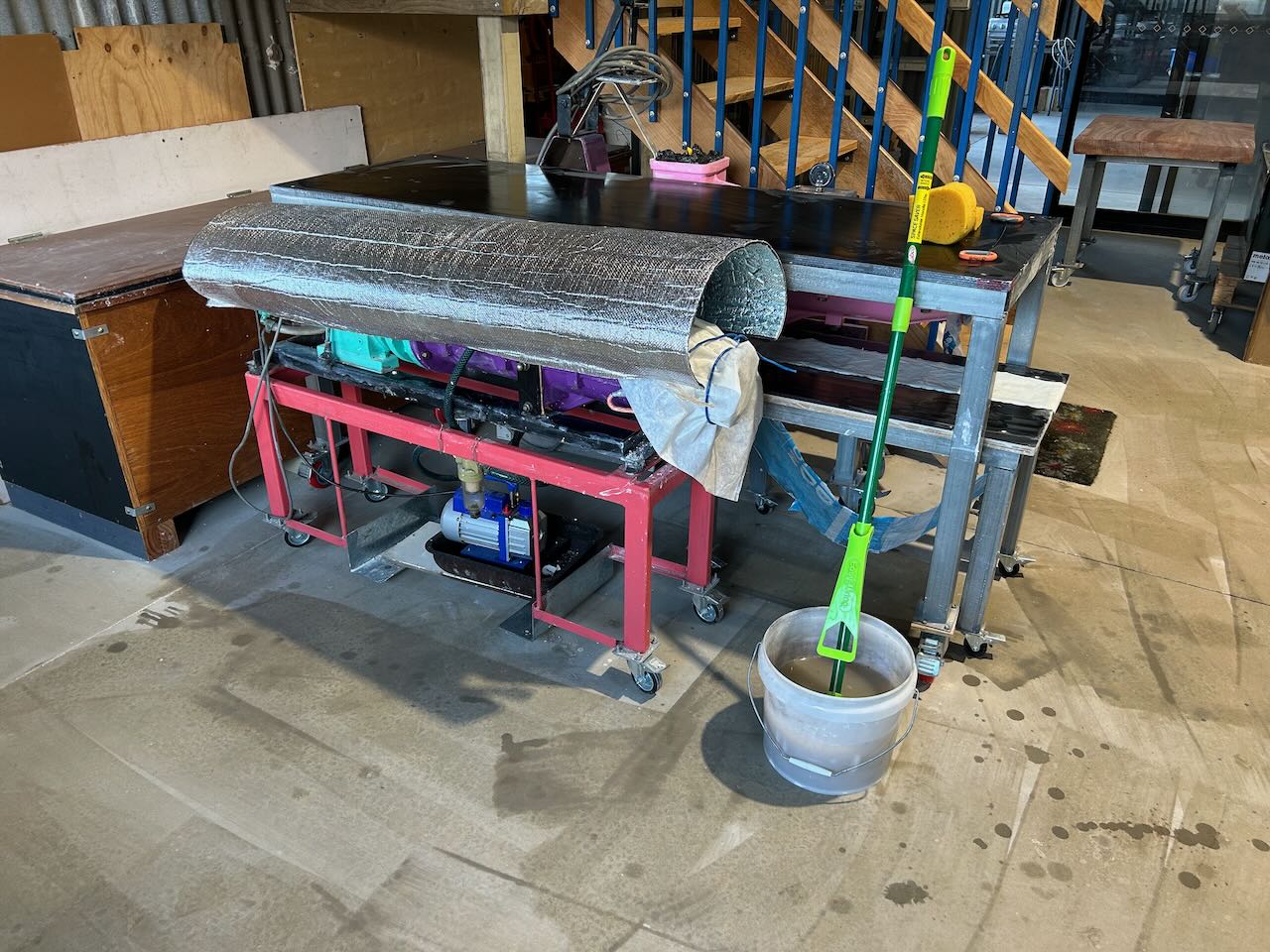
So now I have learnt to keep my pug mills covered with silver insulation foil when not in use, and this has solved the condensation problem. There is always something new to learn, even after 50 years!
Once pugged and bagged, It’s not the end. Good clay that has been well made needs to be nurtured a little. Clay is alive, in the sense that it contains live microbes, or should if you want it to develop the best possible plasticity. We live in the bush here in Balmoral Village. There are few Government services. There is no Town Water Supply available. So we have to collect rain water in dams and water tanks. Water stored in the ground has more bacteria live organisms than Chlorinated and sterilised city water. My clean rain water will allow the naturally present bacteria and other organisms to grow and develop in the clay. This might sound shocking, but it is just natural. Clay ‘ages’ as the organic action develops between the clay mineral particles. The water is drawn closer to the surface of the fragments and the air is slowly excluded and passed to the surface by capillary attraction. In this slow gentle way, clay develops its full plasticity. It is very noticeable after say 3 months. But a year is better! Of course, no-one in their right mind would make clay and then not use it for 3 months! Would they??? Yes muggins does. I have stored and aged porcelain bodies up to 15 years.
There is a distinct difference in the clay after a period of ageing. Clay body made with chlorinated water inhibits the natural growth and ageing, so does not develop the same plasticity.
In the old pottery, there were a lot of eucalypts growing around the building, and consequently there were a lot of gum leaves in the rain water. These made the water a little acid with their tannin. It turns out that tannic water is just about the very best additive that you can put into clay to improve its plasticity. Our gum leaf infused tannic rain water was a pale, transparent grey/brown colour. Some fancy companies that manufacture commercial Porcelain bodies, buy in, at great expense, a product called ’Totannin’, that does much the same thing. Our clay really responds to any time left wrapped in plastic bags, sometimes double bagged, for long term storage. Then stored in a cool dark place and not touched for as long as you can bear it.
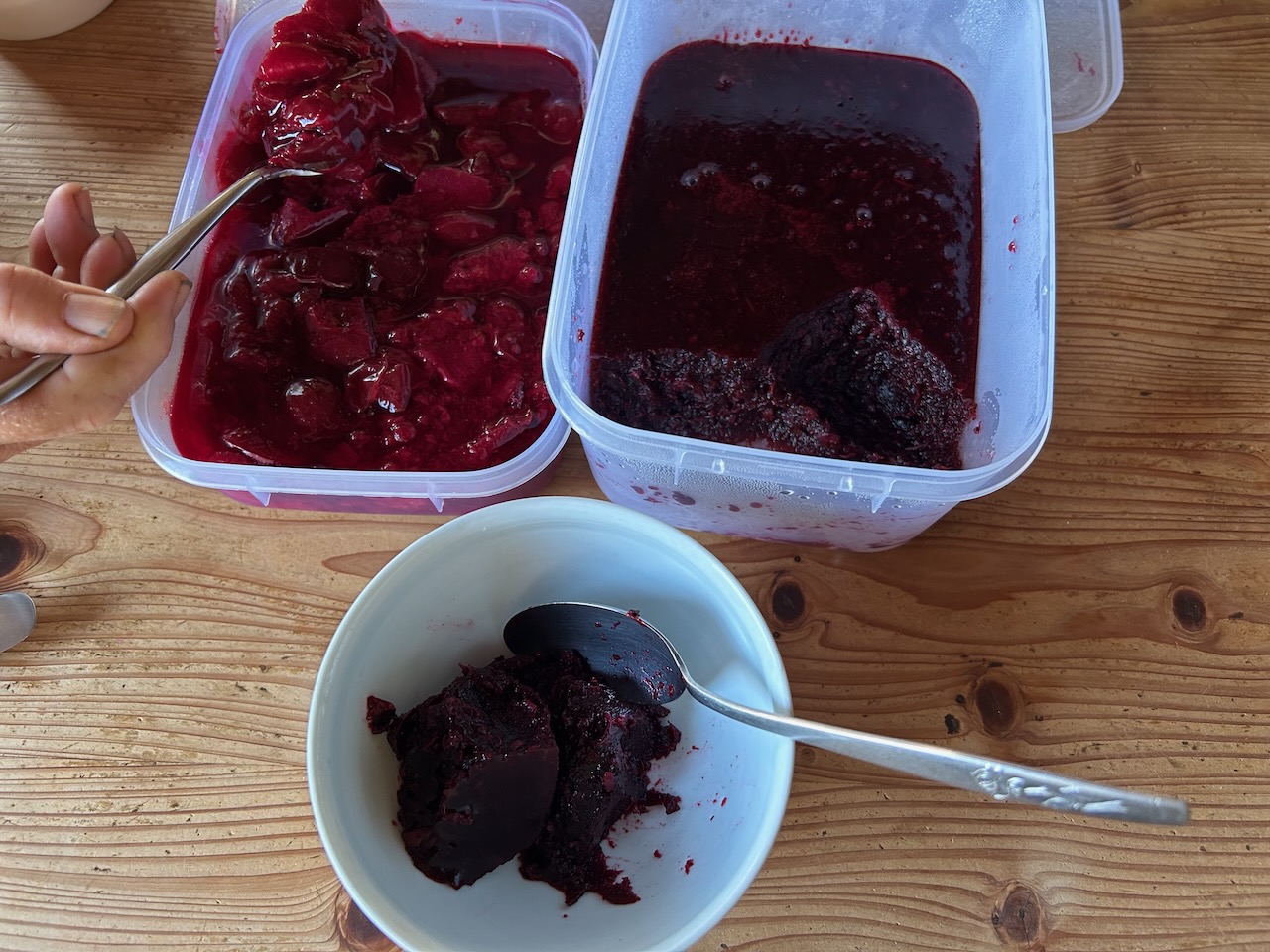
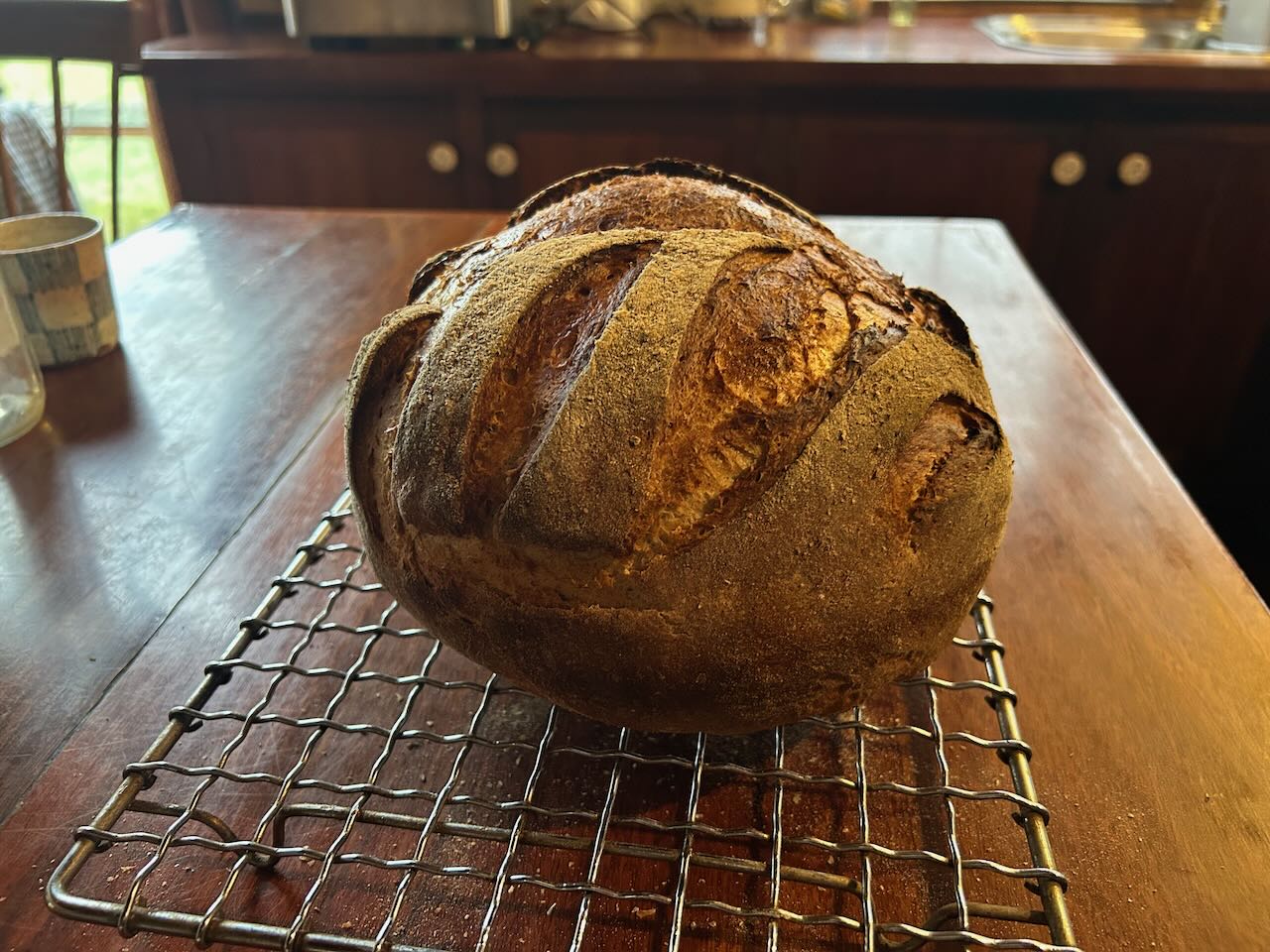
Each Friday evening, before the workshops, I bake a loaf of bread and a tart. This time, its beetroot and French goats cheese over a bed of slow cooked onion jam. This has always proved to be a very popular lunch contribution at the workshops. Every one brings something to share for lunch. There is always just a bit more than we need. Everyone eats well and the selection is broad, varied and delicious.
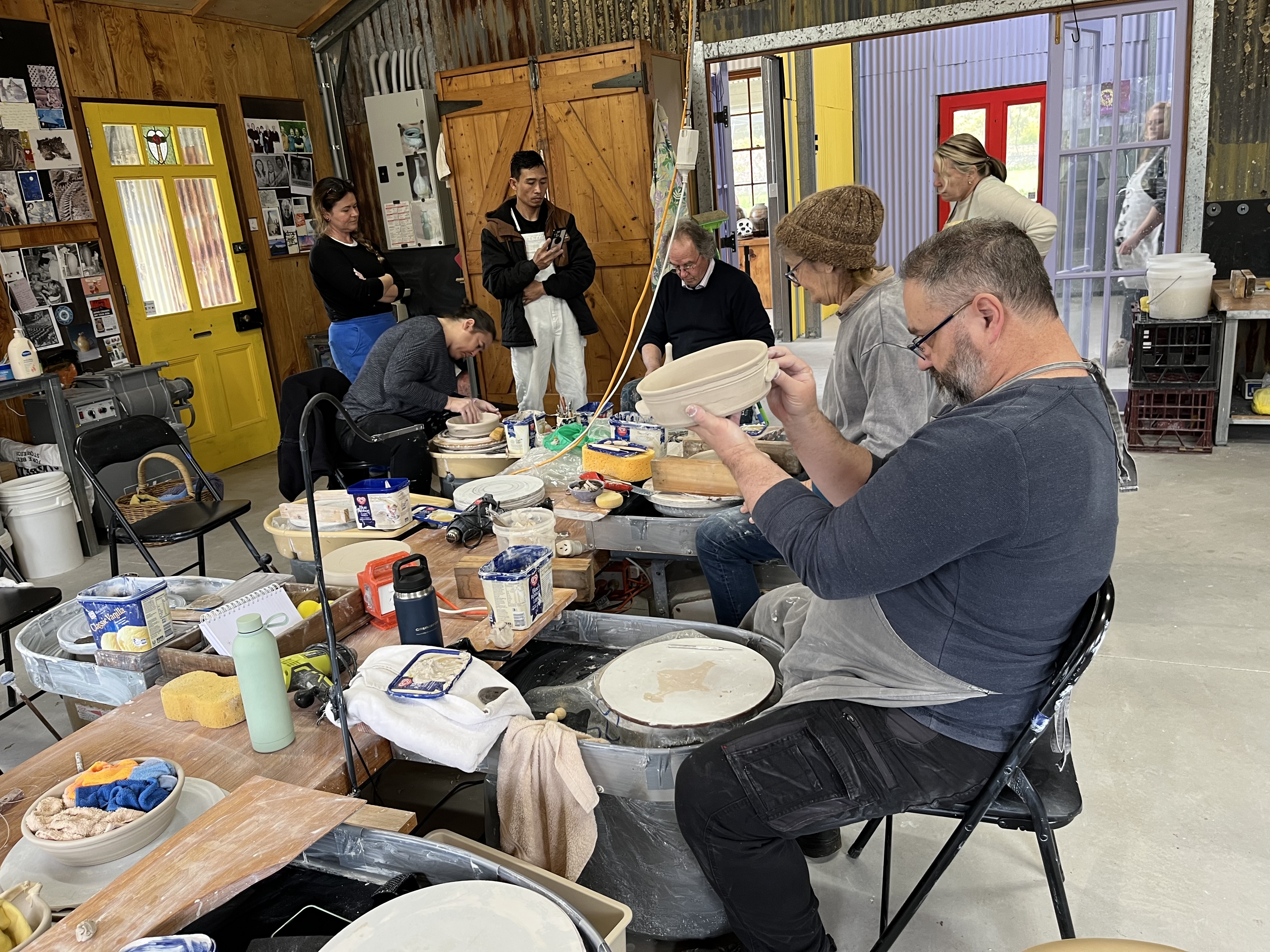
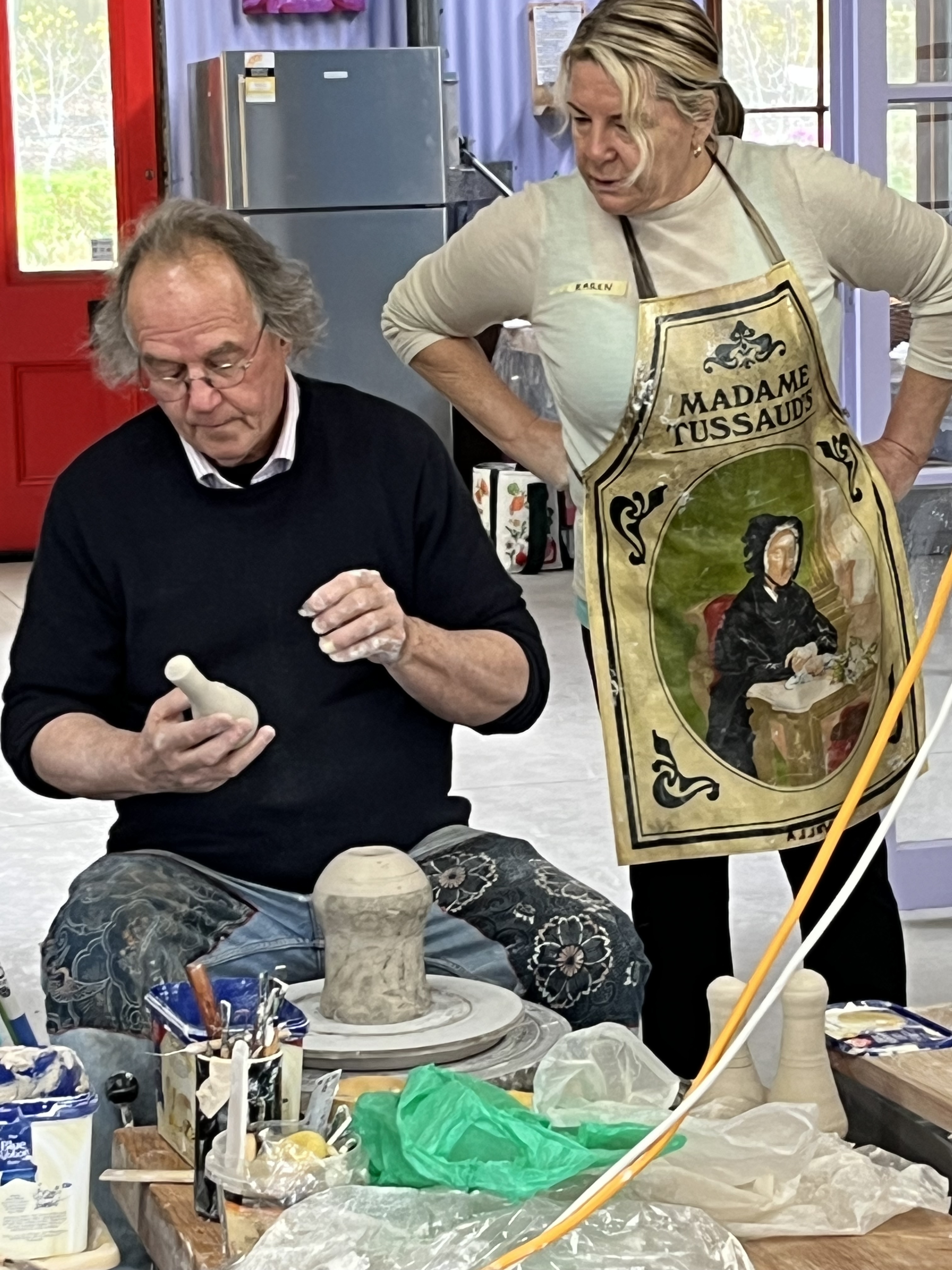
We spent the first day on the wheel, throwing all the forms that we will work with on the following day. I demonstrate each step in the process on each day.
Teaching a throwing school in winter is always just a little bit of a challenge. The pots don’t want to dry out over night to stiffen up to the point where they can be turned, trimmed, manipulated and handled with ease.. I get the pots to dry faster, by stoking up the slow combustion stove to the max, and keep it going well into the night, to ensure that the pots evaporate off enough of their moisture to be workable. It’s a juggling act, but I manage to muddle through, and at the end of the weekend, everybody gets to take home their finished works.
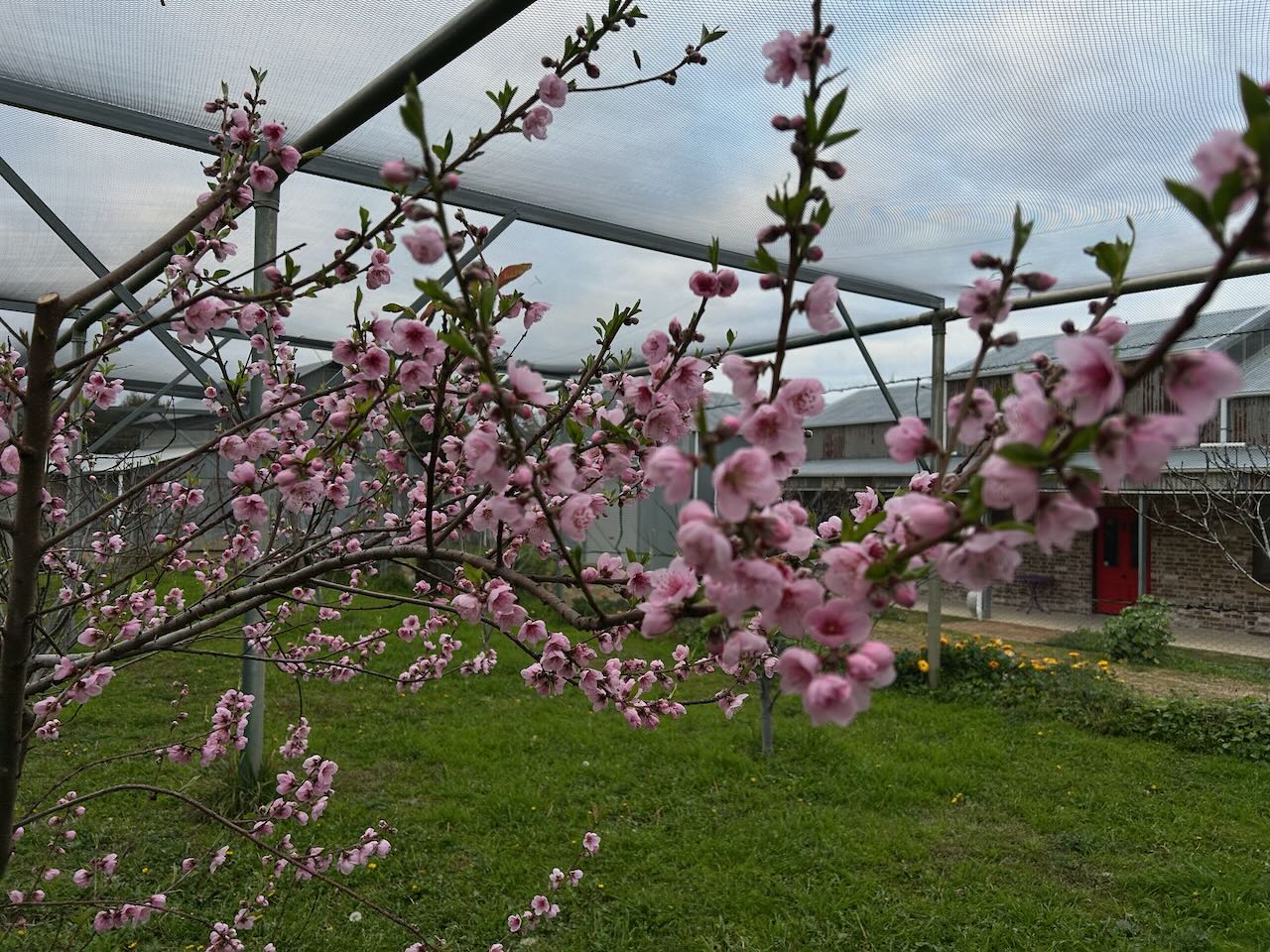
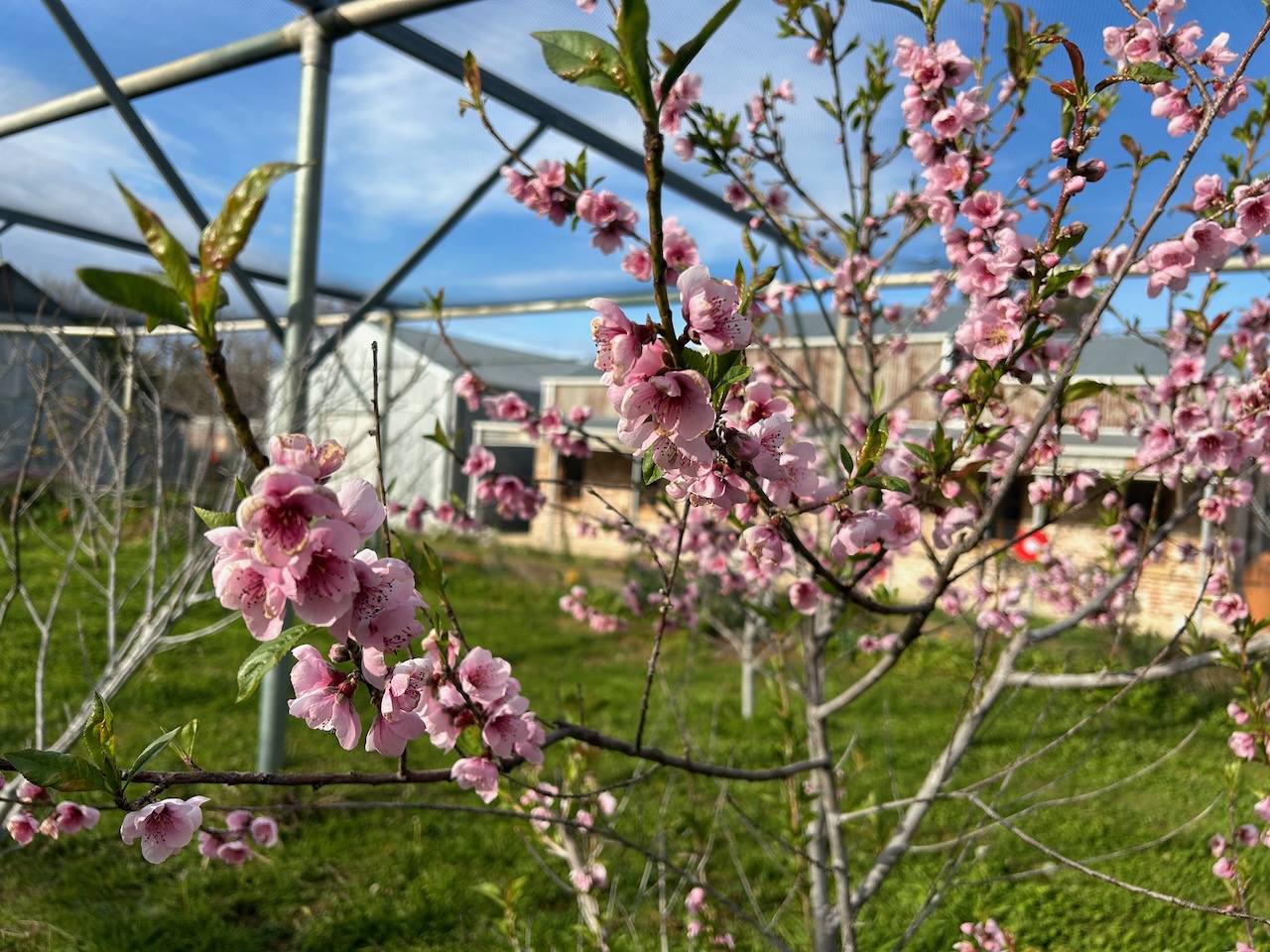
In the orchard, the early peaches and nectarines are flowering. There is only 3 more weeks to spring, and lots of plants are starting to come back to life, buds are swelling and even the lawn is starting to grown again. This last part isn’t so thrilling though, as this means a few hours of lawn mowing several times a week.
Spring blossom always offers up so much positive energy, the a promise of warmer weather and a bountiful harvest to come.
Nothing is ever finished, Nothing is ever perfect and nothing lasts.
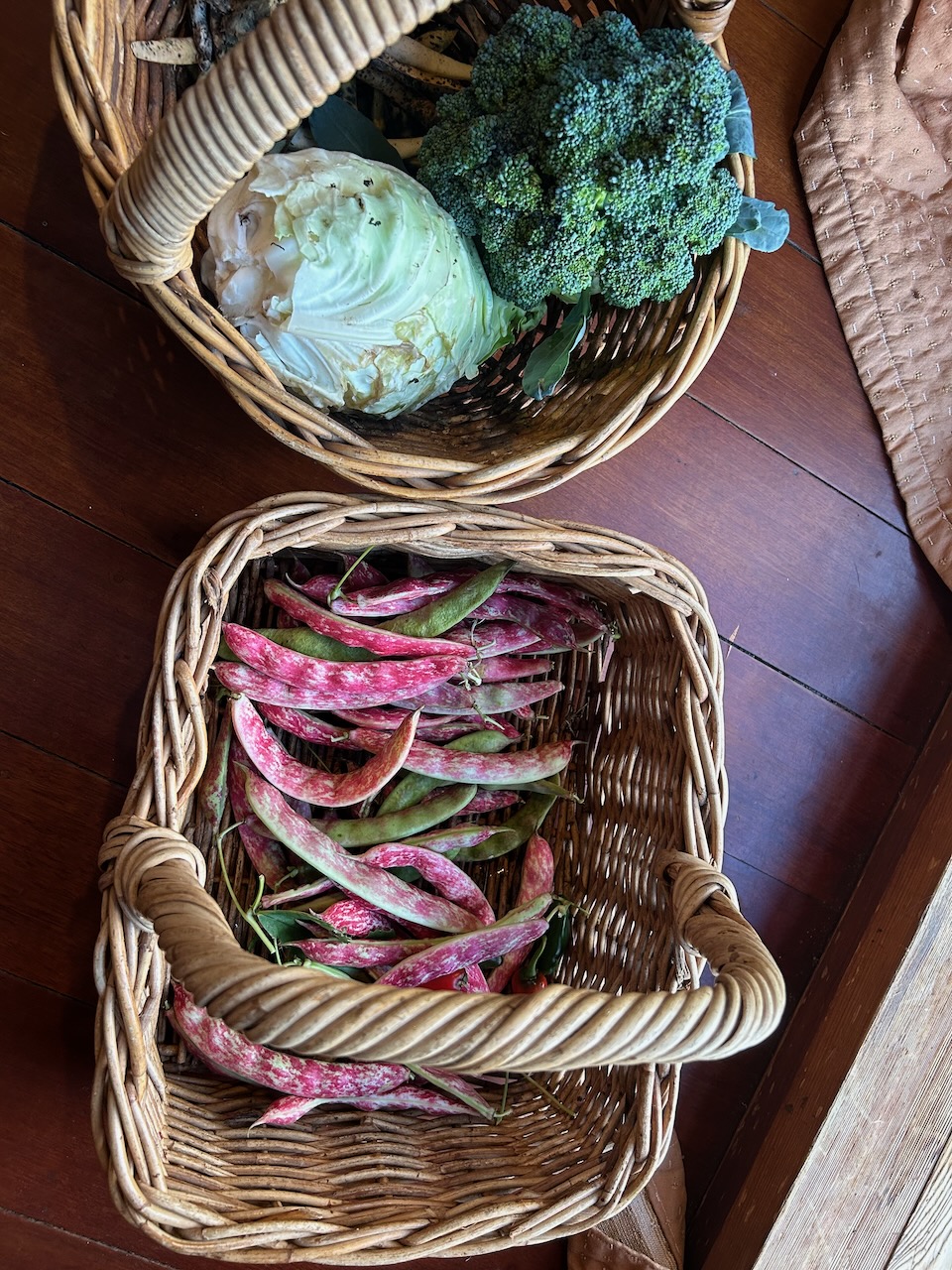
We have just harvested the first cabbage and first broccoli of the autumn. I planted a range of brassica seeds on boxing day. The first batch were all dug out by the blackbirds, so when I re-planted the 2nd sowing, some time later. I also covered the bed with bird netting to stop a repeat of the blackbirds scratching out the seeds. Blackbirds don’t want the seeds, they just like to scratch into freshly worked and composted soil looking for worms. This little hiccup set me back a few weeks, so our first cabbage is a bit late arriving.
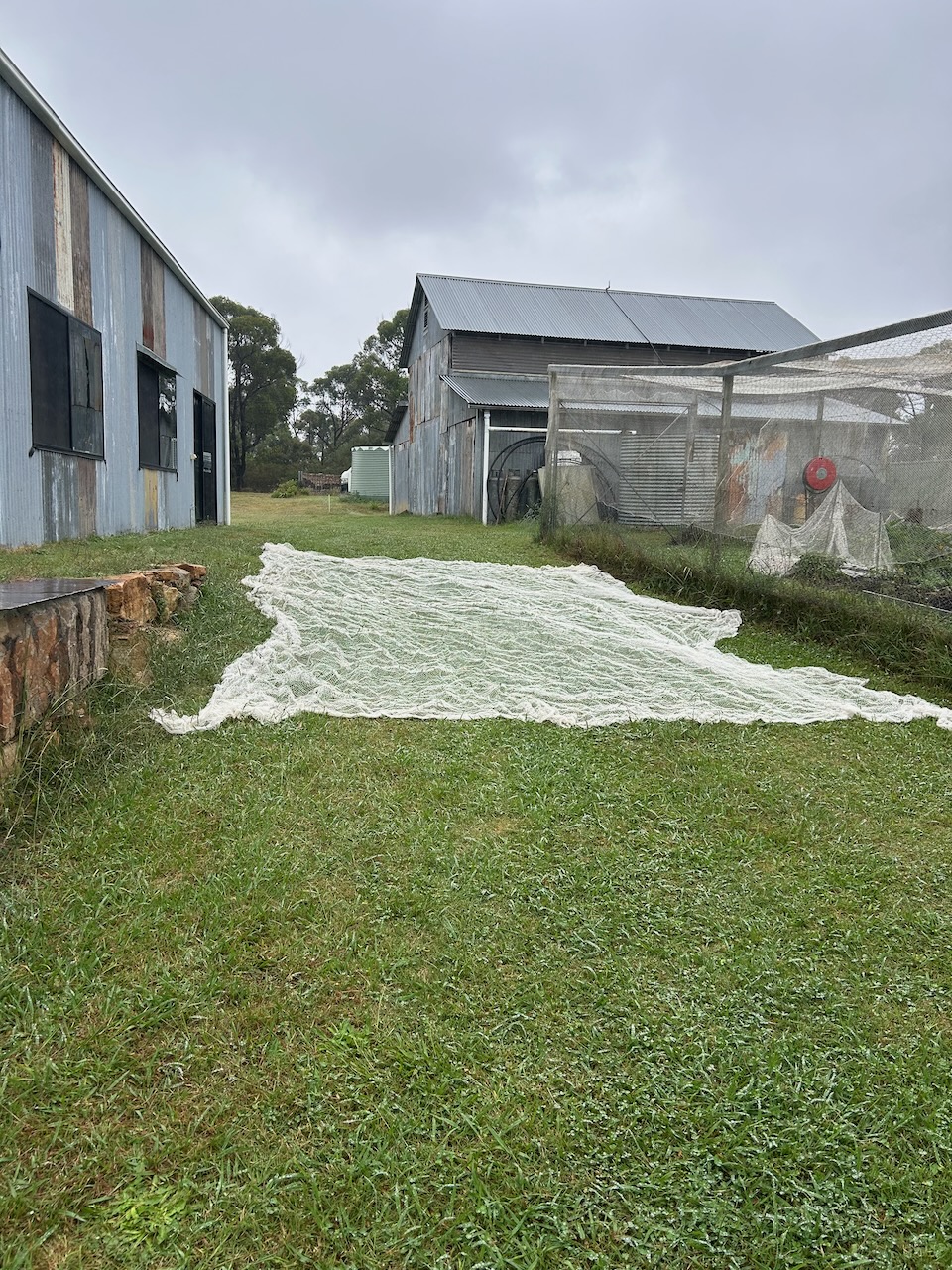
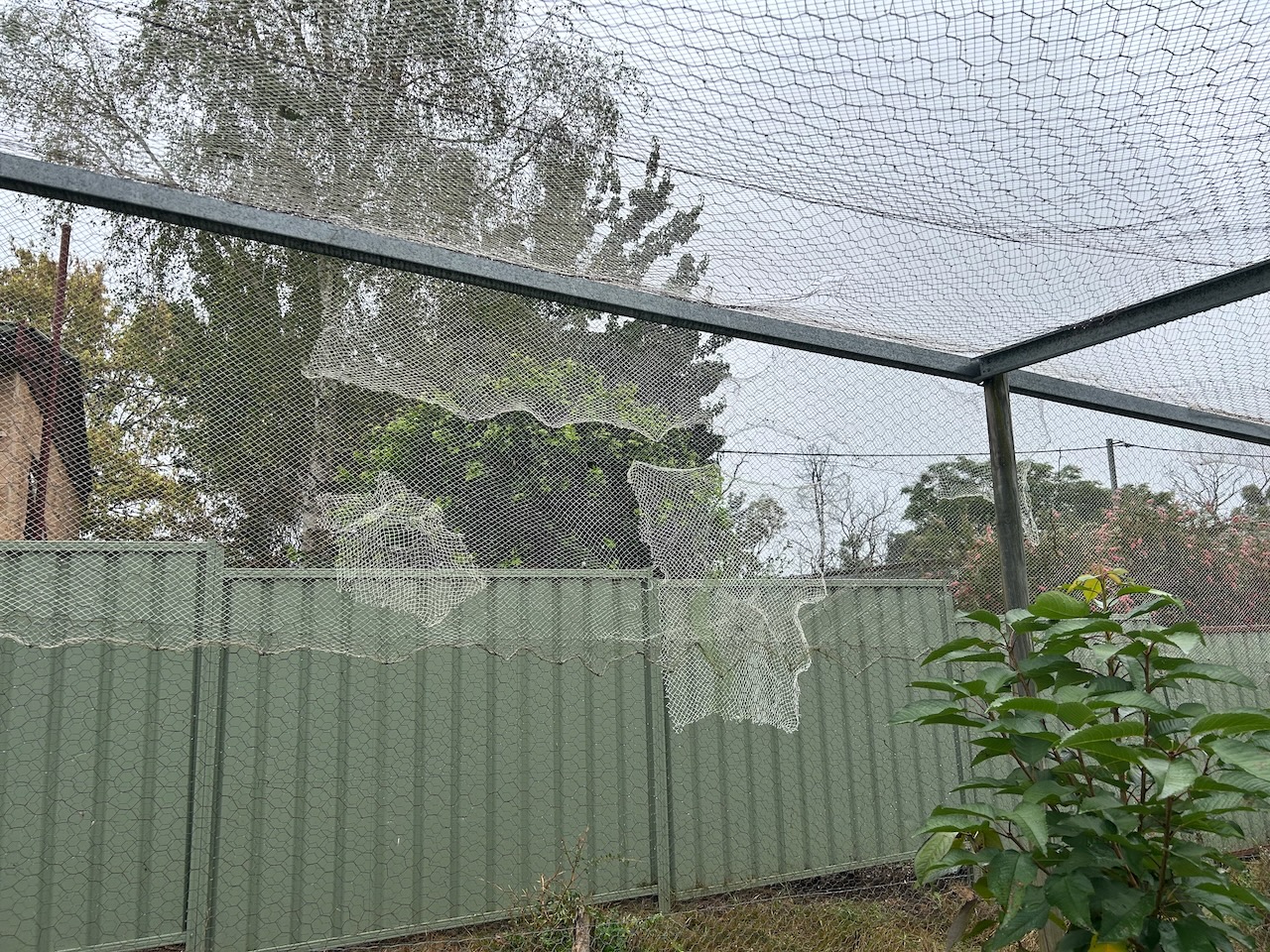
I have now repaired all the melted sections of the plastic netting over the vegetable garden. Almost total replacement at both ends that were worst hit by the fire, then applying patches to the large holes in the other walls, and finally stitching together the small 50mm to 100mm holes that are scattered all over the enclosure walls and roof. I purchased a commercial size roll of 100metres by 10 metres of netting over 30 years ago to cover the vineyard at harvest time. The netting that is over the veggie garden now is all that is left over from that time. It had a 10 years warranty against going brittle with the ultra violet light. So I’m very pleased that it has lasted so long. However, it is getting very brittle and the galvanised steel netting is all rusted through in places. So a total rebuild is in order, but I’m not too sure that I can manage that big a job these days, or if it would even be wise to attempt it at my age, having just turned 73, I shouldn’t be up and down ladders for days on end.
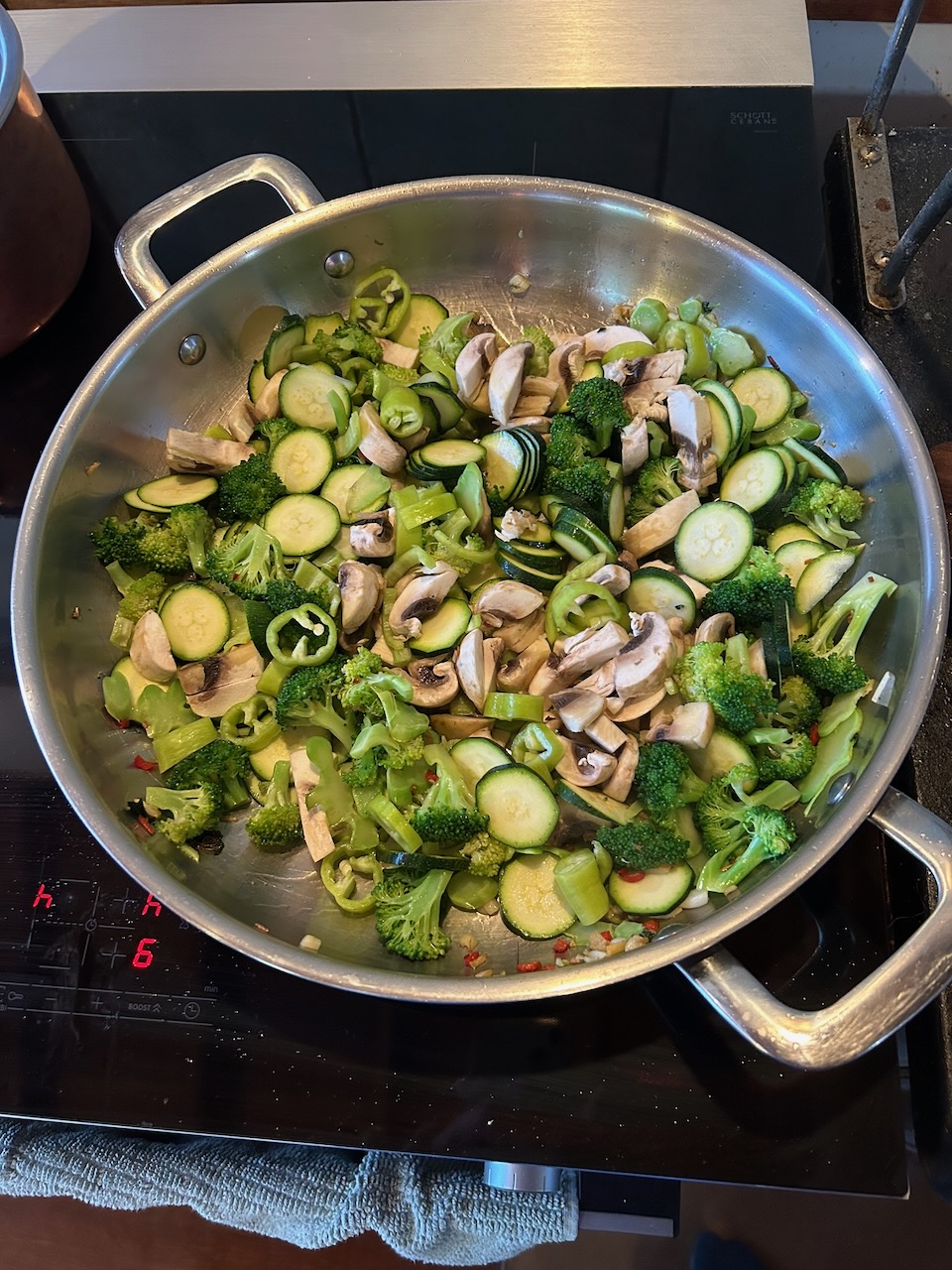
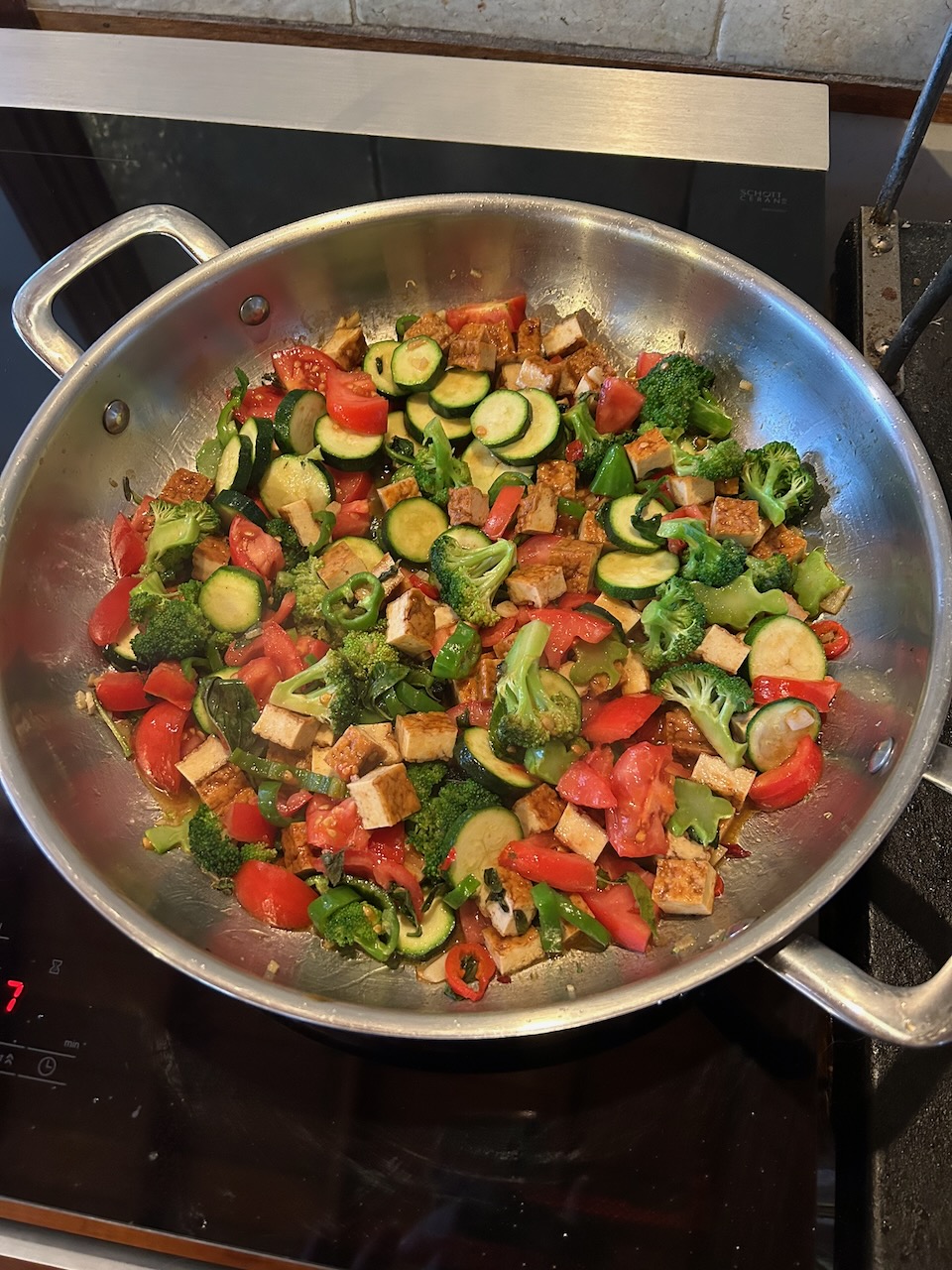
I made an Australian version of oka-nomiyaki pancake. Of course it is not really an okonomiyaki, as I don’t have mountain-potato starch, or almost any other authentic Japanese ingredients, but I do the best that I can with what I have. The super-fresh garden ripe cabbage makes it really fresh, crisp and delicious. The broccoli goes into a veggie stir fry along with all the other garden delights of the current season and some tofu for protein. Vegetable gardening, which mostly involves a lot of weeding, mowing and watering, suddenly becomes so worthwhile when you are harvesting such beautiful produce each afternoon, freshly picked ready for dinner. Our food has carbon metres, not miles!
I have also planted another 4 different varieties of seed garlic in the garden, just to see if any of therm are well adapted to grow here in the future.
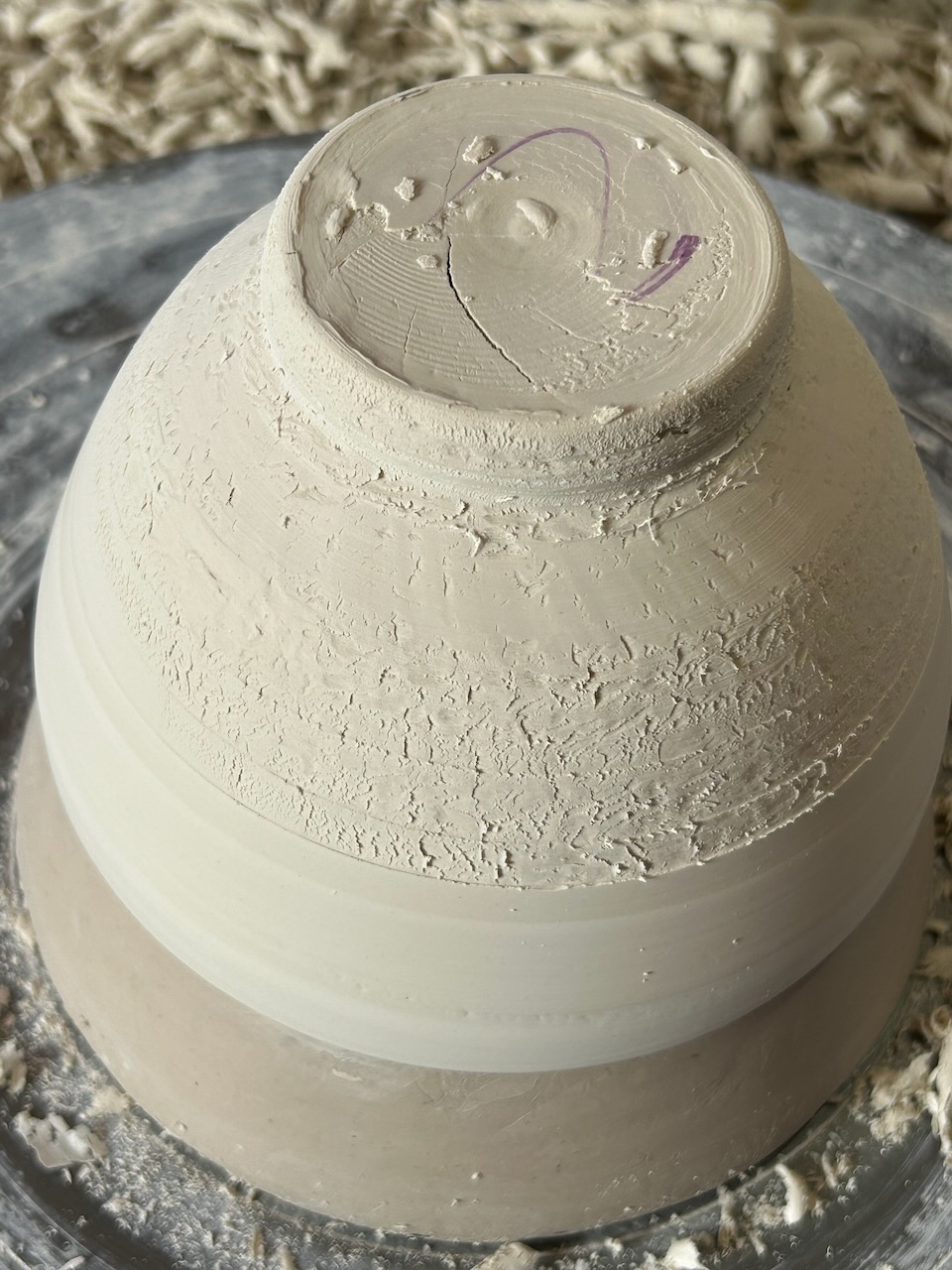
In the pottery, I have been throwing some sericite porcelain stone bodies. This stuff is so short that I have to make the wall bases thick to hold the form up. That then means a lot of turning to get the pot thinner again. This weird stuff tears and rips as the turning tool cuts into it – unless it is turned quite firm and almost dry. But then there is the dust to contend with, so I like to do it while it is still a bit damp, but then it chips a lot. It becomes a two stage process. Roughing out the mass of extra thickness, drying some more, then final turning. I get to do a lot of slaking and re-cycling of turnings.
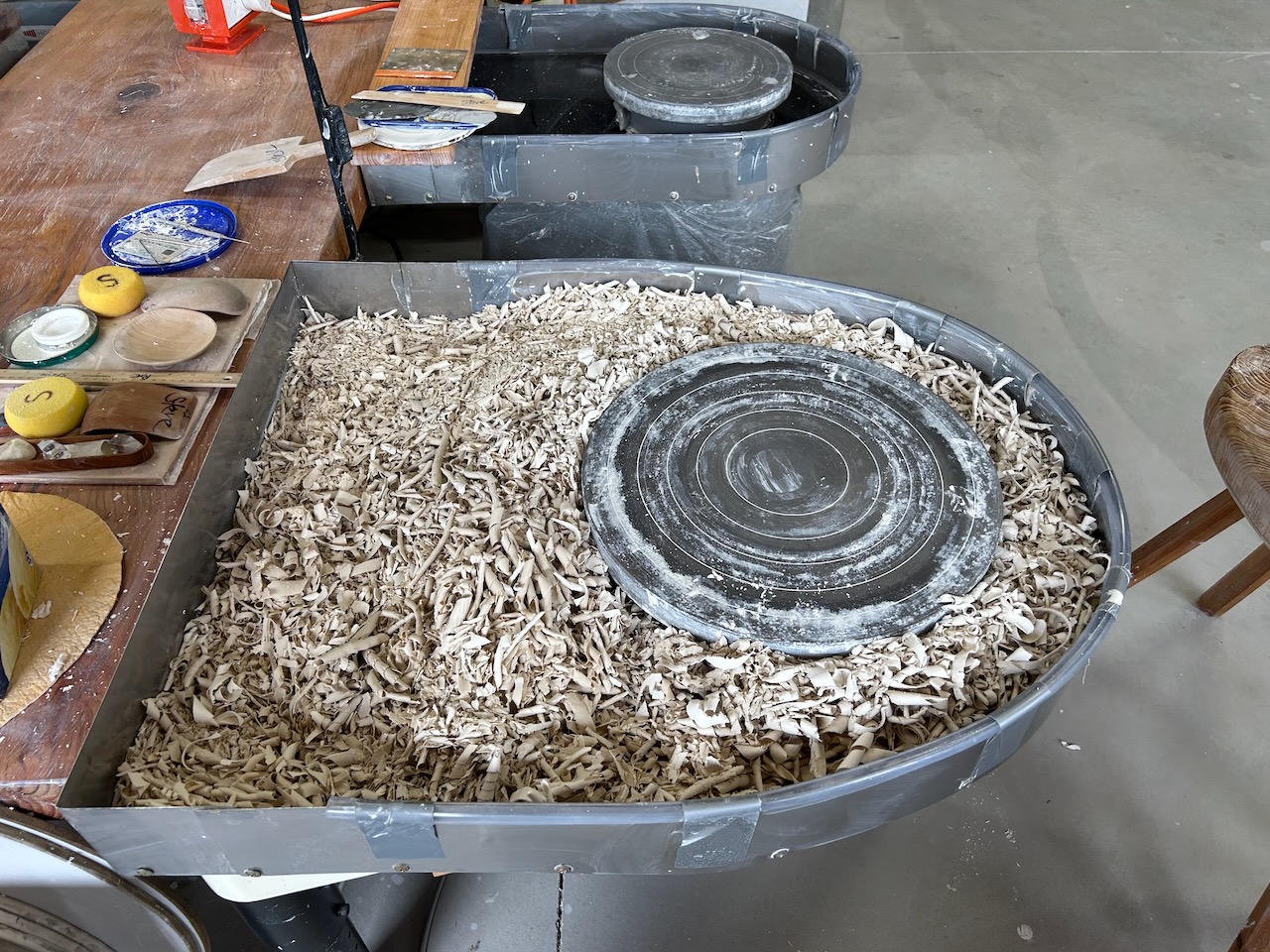
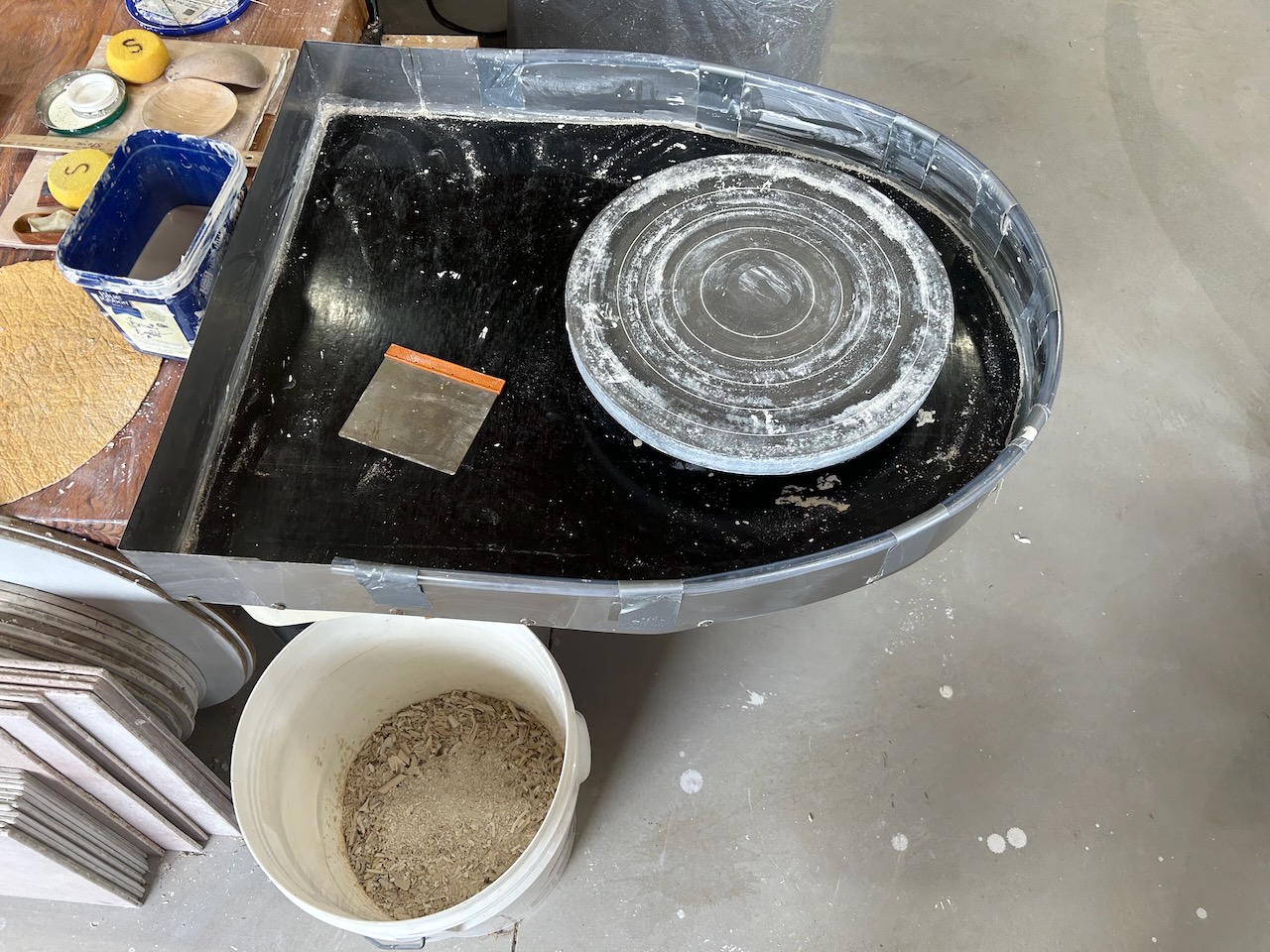
I have built an extra-large tray for my shimpo, but with this porcelain, I still fill it very quickly. This image is of the trimmings from just 15 small 150mm. bowls.
It all goes into the mixer pug and is recycled, ready for throwing again the next day, although leaving it to age a little bit and ‘recover’ would be even better, but because I use a dozen different mixtures and recipes, it is easy to loose track, with too many small packs of different clays hanging around. So I prefer to use up each batch all in one go as soon as possible.
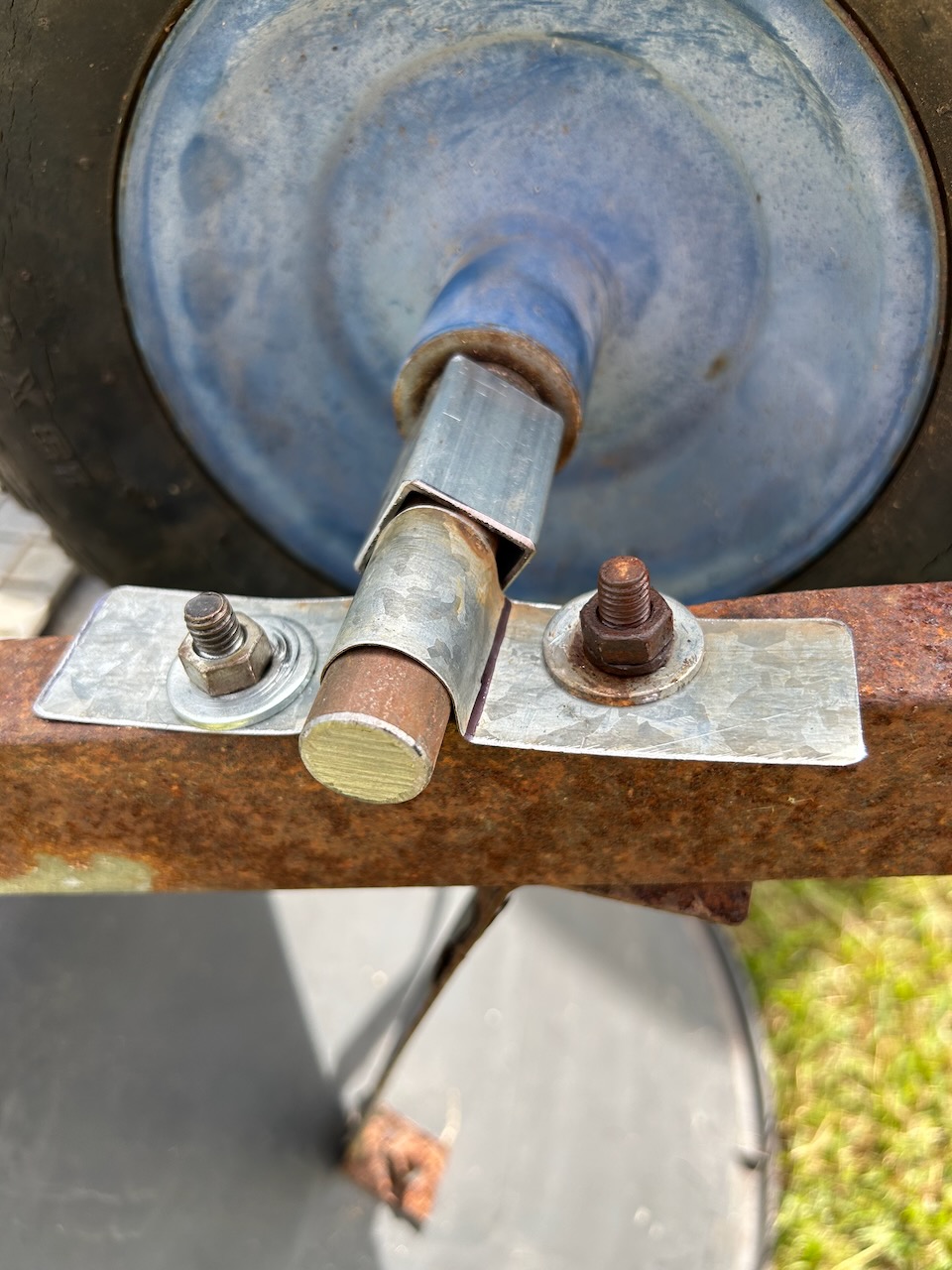
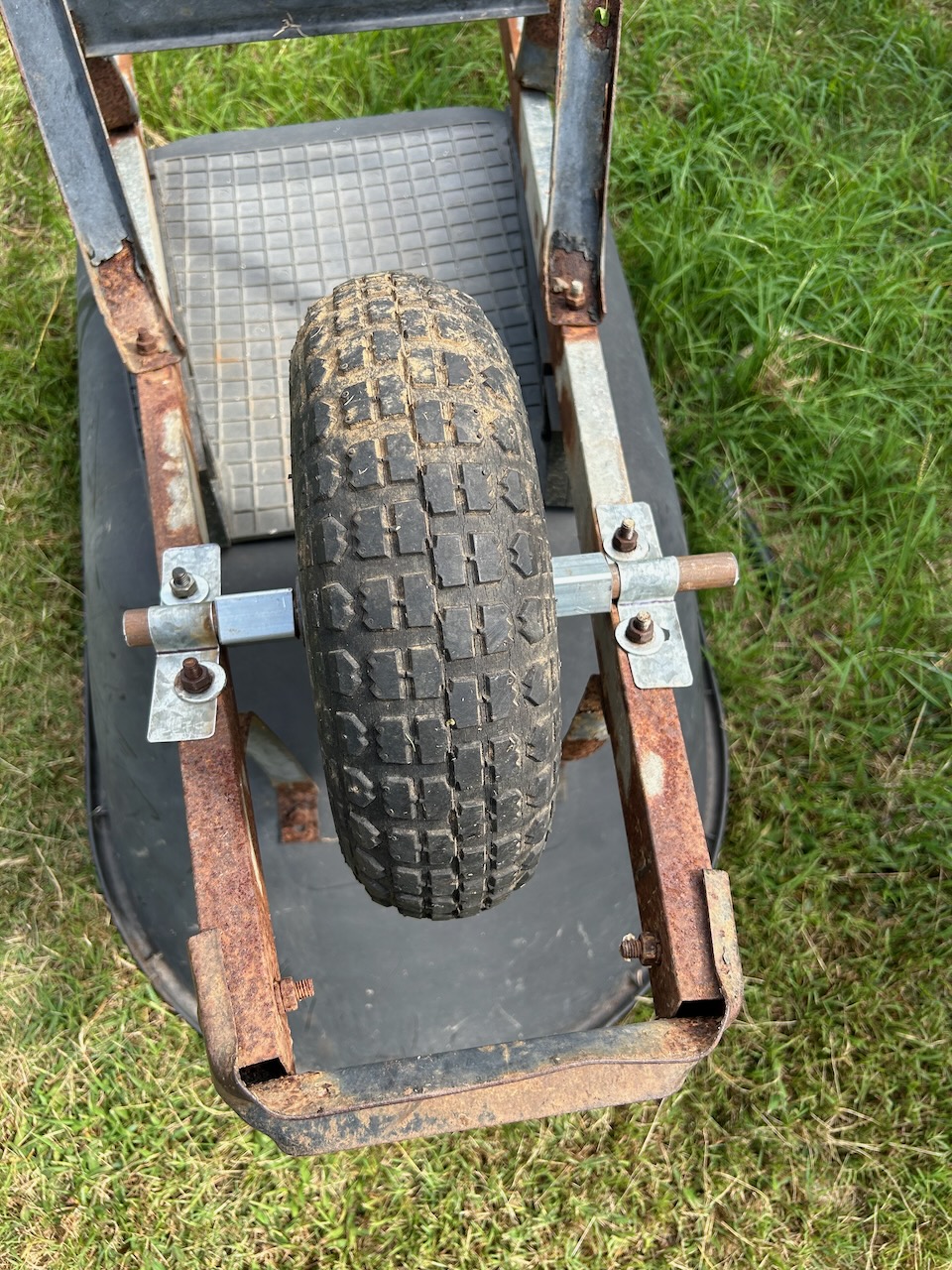
The tyre on the old wheel barrow went flat last week. I took it to the tyre place to get a patch or a new inner tube, but they told me that the tyre wasn’t worth working on and I’d need a new tyre and a new inner tube – at a cost of $78! As the old metal rim is quite rusty, I decided that I might just as well buy a whole new wheel unit from the big hardware chain for $32! But then I remembered that I had a complete wheel off a buggered trolly that I picked up off the side of the road on council clean-up day. It is 25mm smaller in dia. but still holds air pressure well, so I had to change the shaft size and make some new brackets to hold it on, out of scrap tin plate. 20 mins later we are all back in business and good to go. It’s not perfect, but it works. Recycle, reuse, repurpose!
The Japanese have a word ‘Mottainai’ – too good to waste!
A botched up job that will keep all of this useful material out of the waste stream and land fill for another decade. I actually picked this whole wheel barrow up off the side of the road in the village some years ago on Council clean-up day, when the owner decided that it was just junk, because the tyre was flat. I took it home and just pumped it up. It worked! And has been working hard here for all those years of reprieve since then – and now still continues to be useful. Waste averted, Mottainai!
Nothing is ever finished, nothing is perfect and nothing lasts.
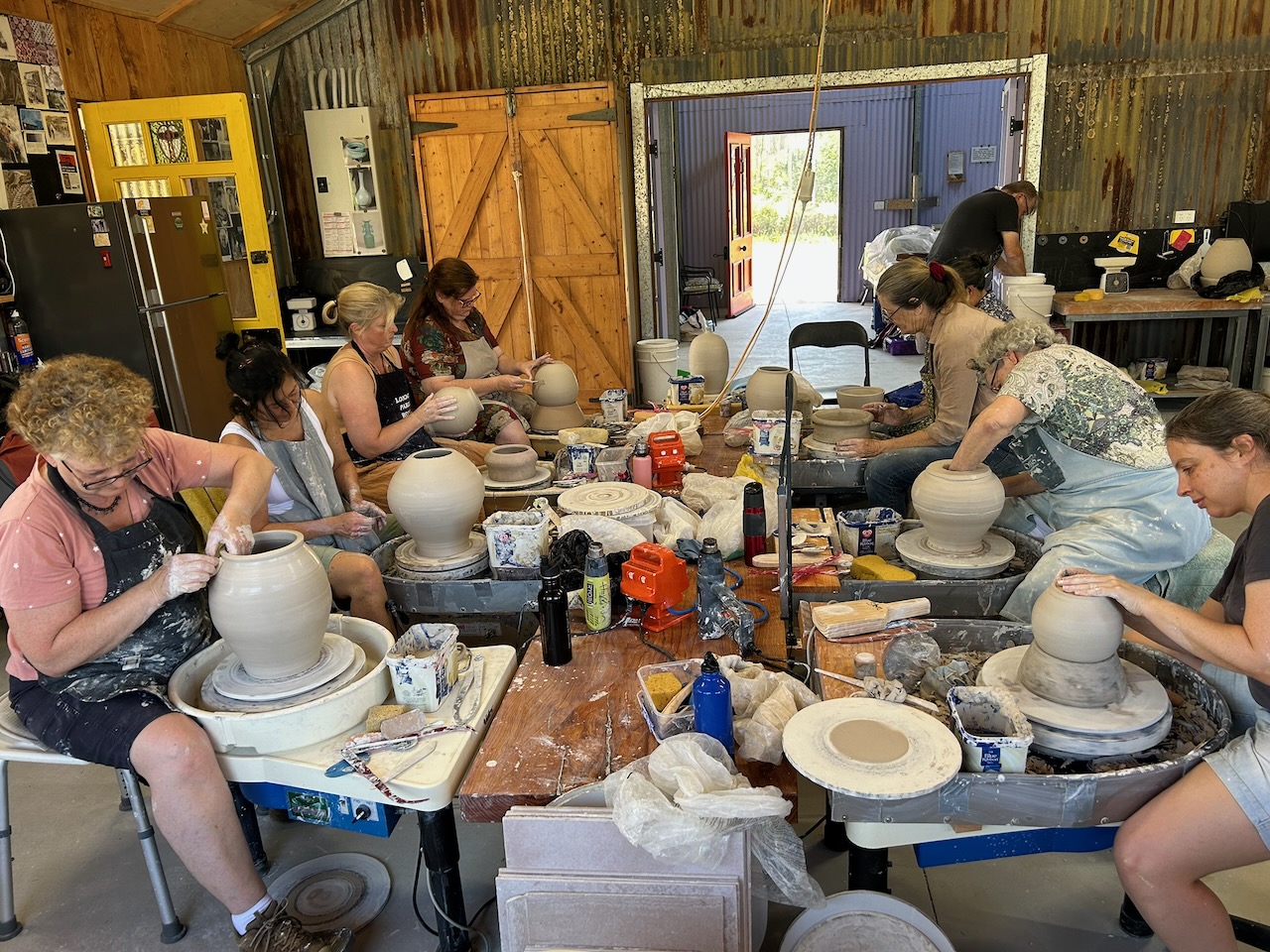
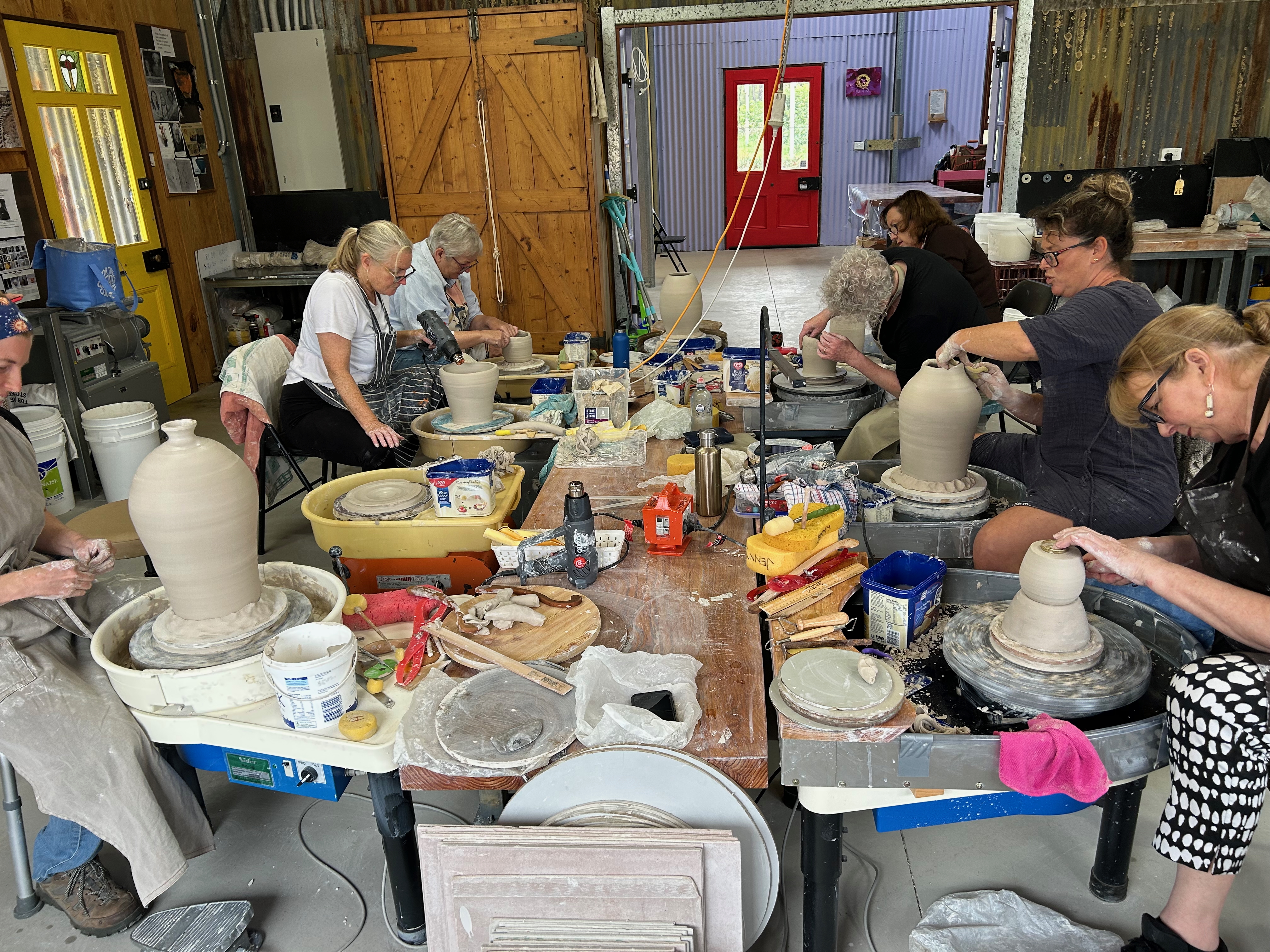
We have been very busy with our summer schools since the beginning of January. I originally advertised one Summer School to teach the making of larger forms on the potters wheel by ‘top-hatting’ and ‘coil-&-throw’ techniques. We got such a massive response to my add that we could program 4 summer schools of 3 days each, and lined them up with a few days in-between. Two in January and two more in February. We only have 8 potters wheels in our workshop, and we got over 30 replies so I had to run 4 schools and space them out.
Top-hatting is a technique of placing one thrown form on top of another to make a larger pot than you might otherwise be able to throw in one piece. It can involve the stacking of multiple forms to gain extra height. Coil and Throw technique involves throwing a substantial base for the pot and then adding a coil of clay to the top and throwing that coil up to become the wall of the pot, extending the height. This technique can be repeated several times to make a taller pot.
We got such a massive response to my add that we could program 4 summer schools of 3 days each, and lined them up with a few days in-between. 2 in January and 2 more in February. As we only have 8 potters wheels in our workshop, and we got over 30 replies, that meant staging 4 consecutive schools.
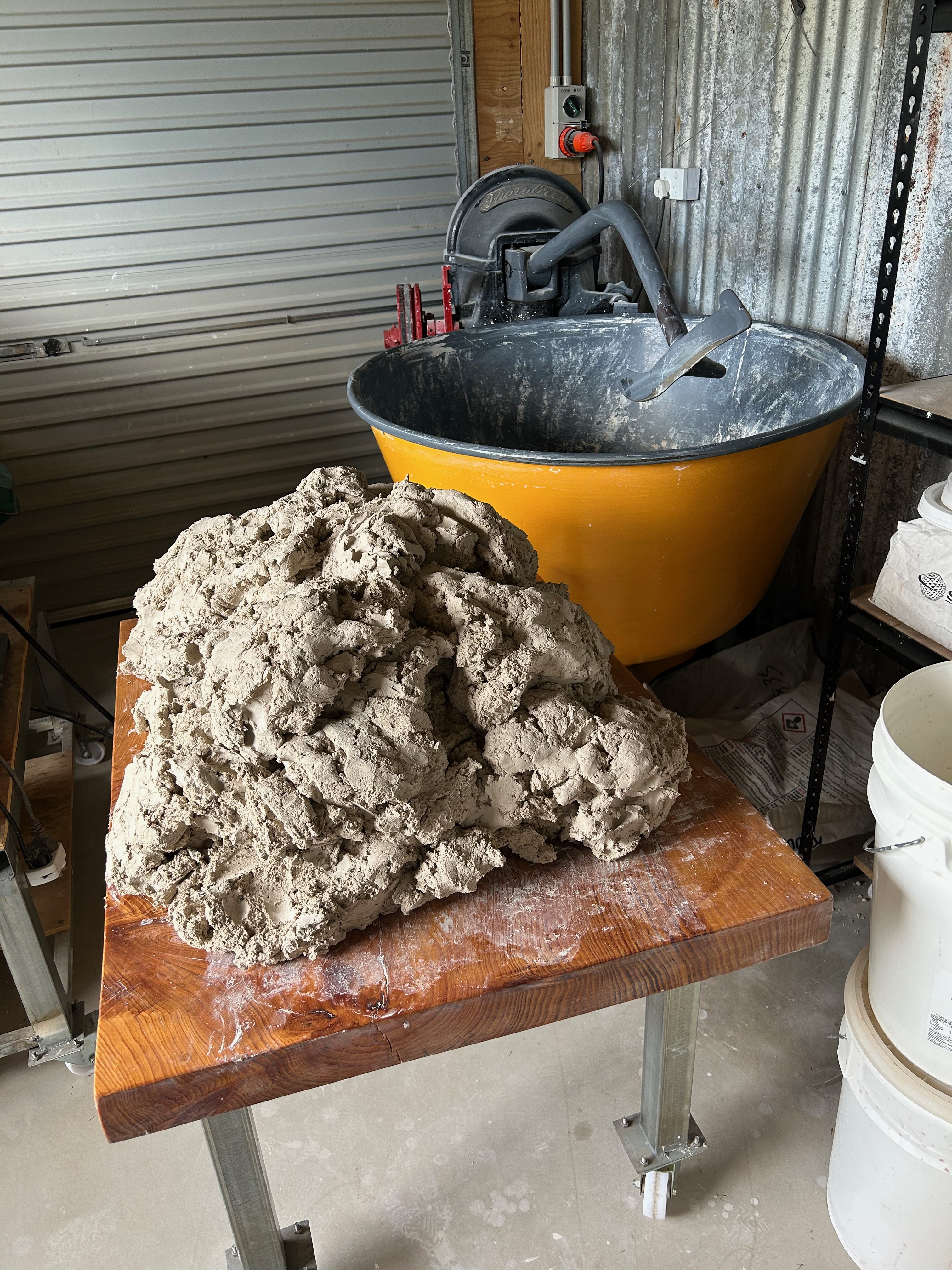
I made up some clay specially designed for big pot throwing by joining techniques, slightly softer than usual and with added ‘tooth’ and ‘grit’ for structure and good drying and firing of the larger forms. I originally made 400kgs of clay, thinking that it would be sufficient for the 4 workshops, but I was way out in my estimations. The first two workshops used up nearly all of my stash, so I was back in the clay making shed the next day to make up another 400kgs for the next two in February. I like the clay to get a little age on it to improve its work-ability, 3 months would be good, 3 years even better, but needs as needs must. One month in this case will have to be enough.
Clay develops its plasticity by the intimate mixing of water molecules in-between the infinitesimally small clay particles. The best way to achieve this is to make a ‘slip’. A very watery mixture of clay and water, to get the water into, and in-between the clay crystals, which in their purest form are flat and hexagonal shapes. It takes a very long time for the water to penetrate the ‘pack of cards’ structure of the clay particles and individually flake off the crystals one at a time to get that intimate mixing of clay and water that is required to appreciate the very best potential of any particular clay.
I don’t have that luxury of time in this instance, so I am using powdered clay material that I bought in, in 25kg paper bags. I’m using a mixture of all Australian clays from Victoria, NSW and Qld. to get a good blend of the required properties that I need. It’s getting very difficult to buy Australian raw minerals and clays these days, as the multi-national mineral companies have bought up most of the clay mines and shut them down, forcing us to buy their imported products from overseas. We are not short of clay here, but we have been locked out of access to our own resources. Welcome to the future!
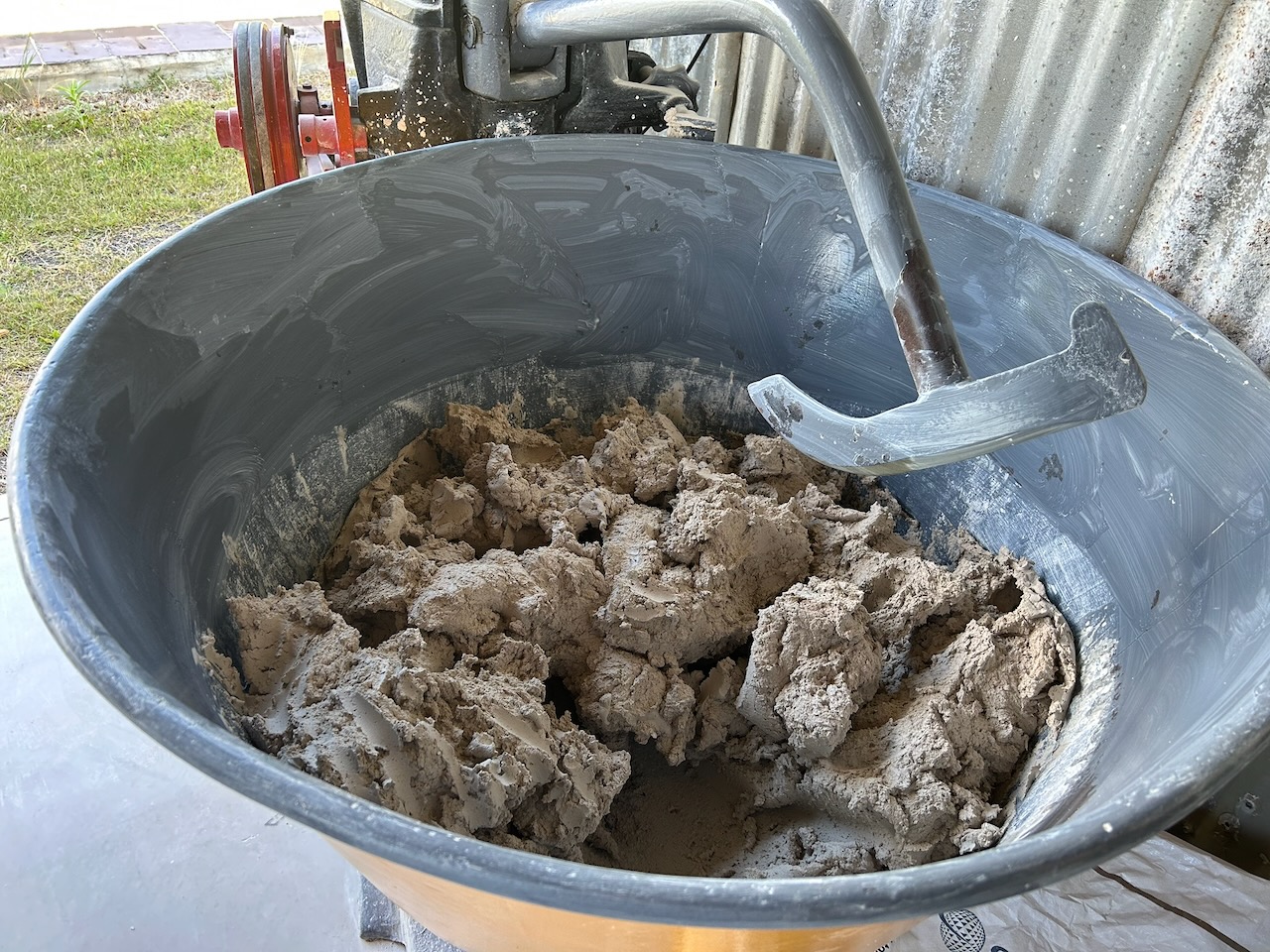
I mix the various minerals together in an old recycled bakery dough mixer. I have owned this machine for over 40 years. It has gone through 2 fires and been rebuilt each time. Luckily, it is very well made, mostly of cast iron frame, but the fabricated steel sheet bowl was very badly split and warped after the last fire and needed a lot of work to re build it, and get it back into action. see my blog post from 4/6/21 “Our Old Twice Burnt Dough Mixer Proves to be a ‘Phoenix’ mixer”. I use a blend of recycled clay slip and the new powders to get the best outcome that I can from this compromise of speed, quality and efficiency.
I use a few tricks of the trade to get the best possible result out of my available materials. I use water from the dam and rain water from the old pottery shed water tank that is full of gum leaves that creates a very useful tannic acid water that is ideal for making clay. It is a transparent pale grey and has a very low pH so that when mixed with white kaolin, it attaches to the clay particles and flocculates the clay mass, which settles tightly in the bucket leaving only crystal clear water on top. It is also ‘live’ as it has all sorts of microscopic organic matter and bacteria in there, which helps age the clay. City water that is full of chlorine is pretty much sterile and kills off any live matter that may help the clay mature and become more plastic and workable.
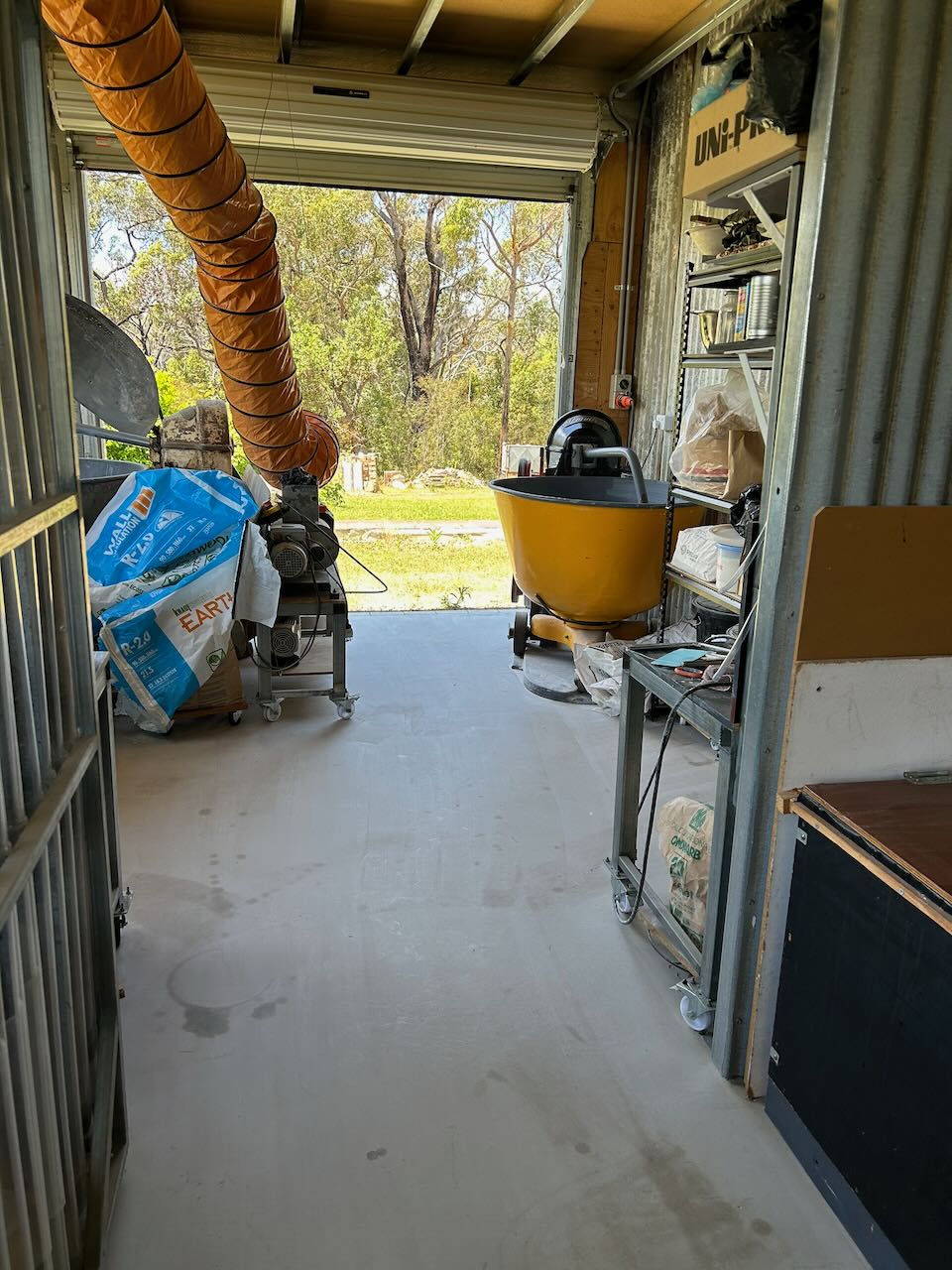
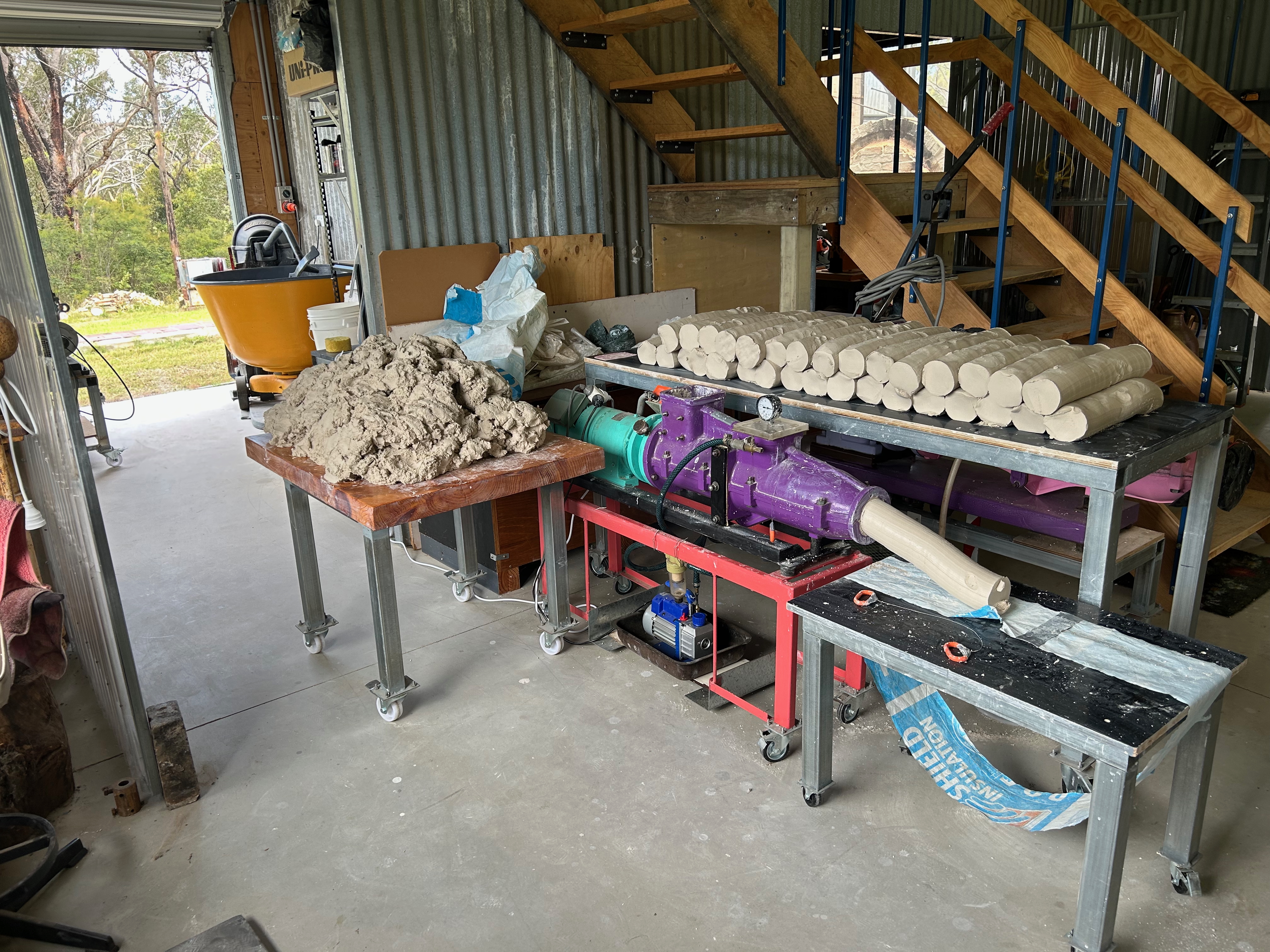
I have a ‘snorkel’ fitted to a fan in the wall that sucks all the fine dust out of the clay mixer room to keep me safe while I’m working in there, but I also wear protective gear as well. Afterwards, once the clay is all wetted, ‘plastic’ and ‘pugged’ into sausages. I cut all the ends off the stacked pugs and re-pug it all again to make sure that there is a consistent mix of all the 3 different batches of clay represented in each bag of finished clay body.
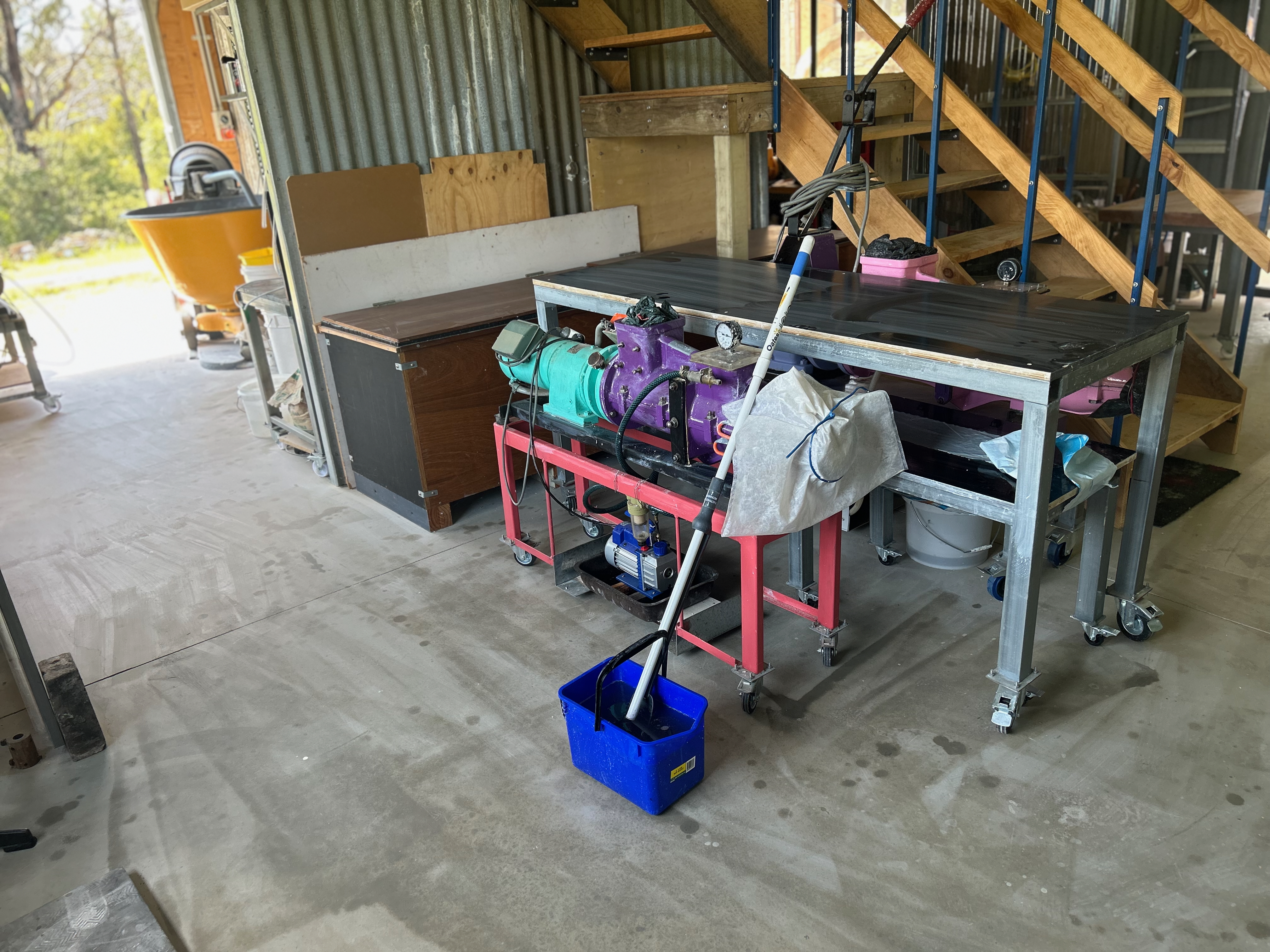
It is bagged and stacked to ‘age’ and the floor is wet mopped twice to collect all the clay dust off the floor and make the work space clean and safe again.
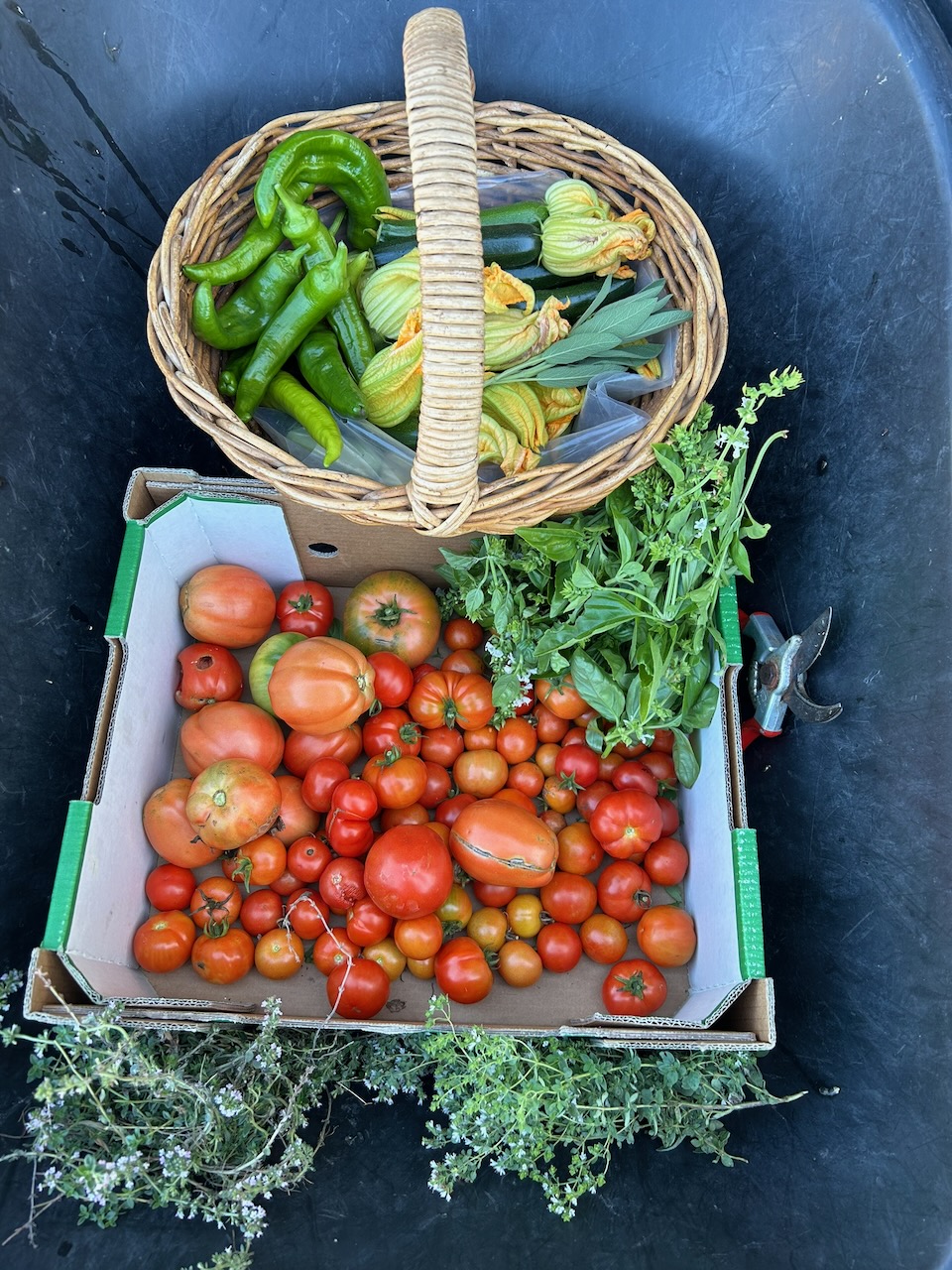
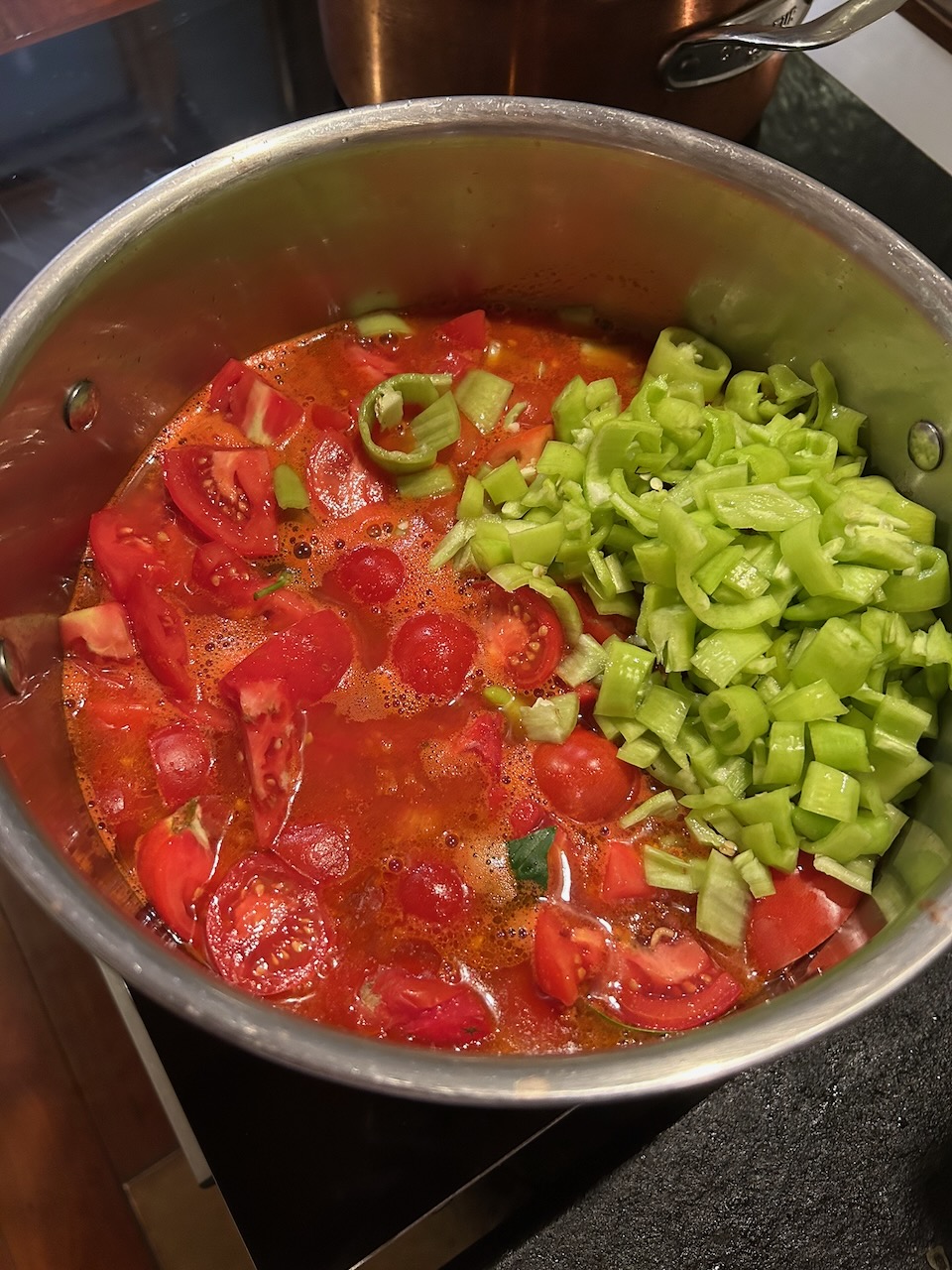
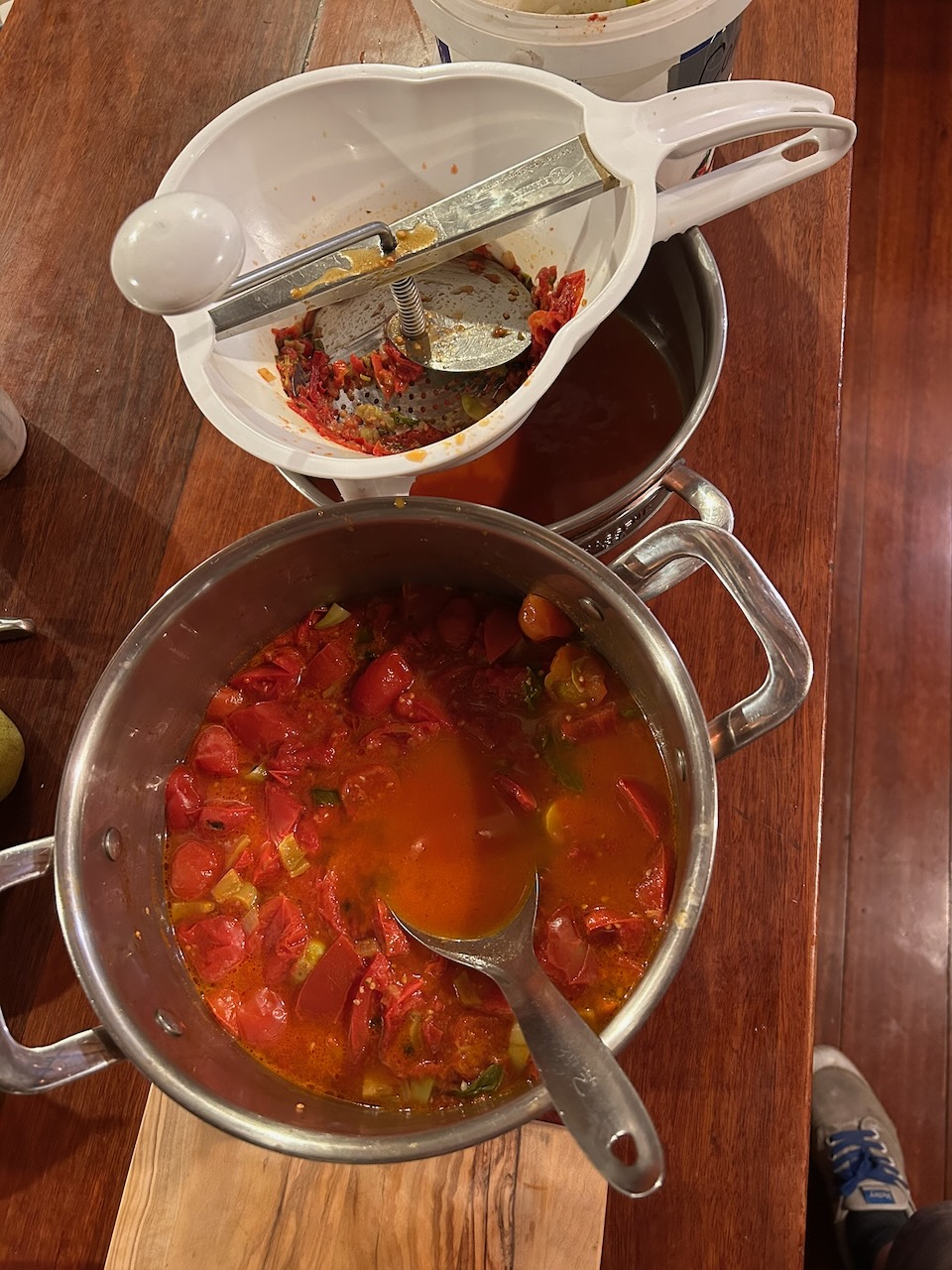
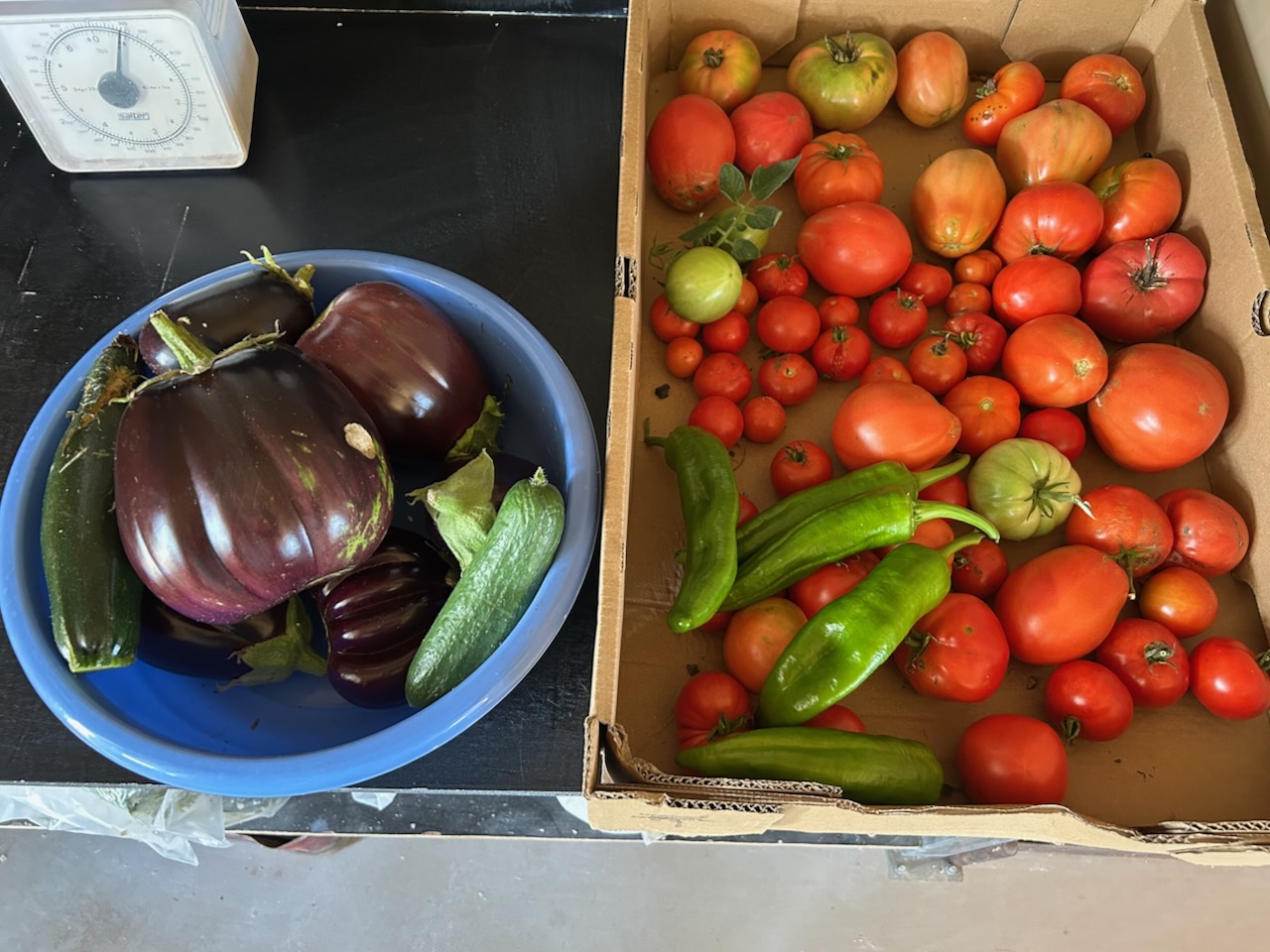
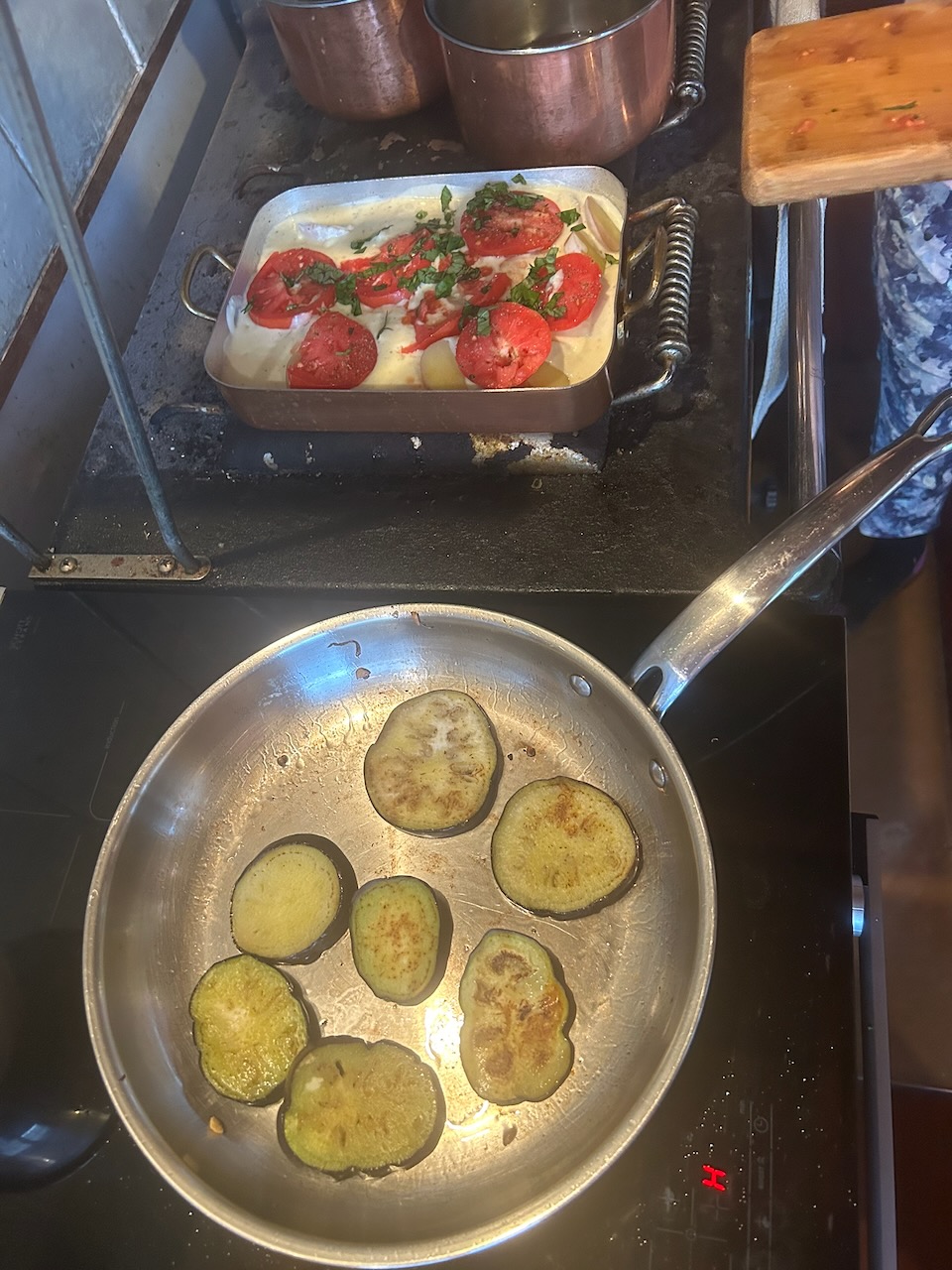
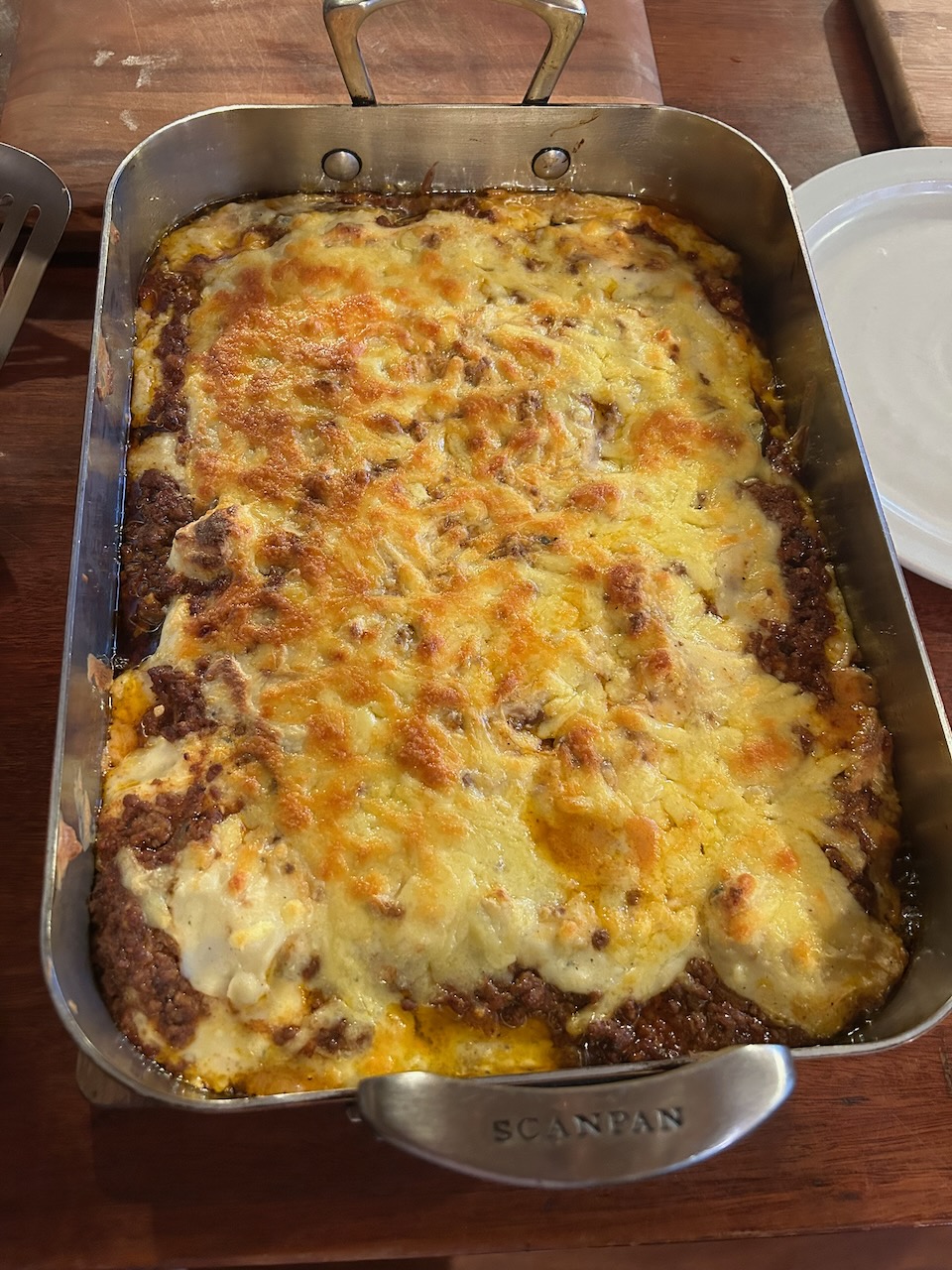
In the garden, we are picking the last of the blueberries, the first of the egg plants, and we are mid season for zucchinis. The tomatoes are coming on quite strong now and we have started to make our first batches of tomato passata for the summer. Every meal from now on will be some sort of variation of ratatouille in all its various forms. What else can we do when the garden is full to bursting with tomatoes, aubergines, zucchinis and basil? We try and give away as much as we can, but everyone in the village has an excess of tomatoes and zucchinis at this time of year.
Our breakfasts and deserts are mostly of fruit these days. November brings on the berries, December is the month of cherries and apricots, January for plums and peaches, February is all about apples and March for the last of the pears.
We have been suffering 30 degrees in the shade, each day for the past couple of weeks now, with only occasional respite for a day or so, then back the the heat again.
The heat has brought on the stone fruit. We have now finished all the apricots, and are half way through the plums, with the peaches just beginning. We diligently went through the stone fruit orchard a few times during spring, picking off a lot of the small emerging fruit, before it got too big.
It takes a lot of weight off the small, thin branches of these young trees, but also allows the remaining fruit to grow larger. There are just two of us here, so we have all the fruit that we need for a couple of months.
In the vegetable garden, the asparagus is almost finished its first full flush of growth, we now have just occasional spears shooting up. We collect them over a week or so in the fridge to get enough for a meal these days.
The zucchinis are in full flower now. They are the first of the summer vegetable plants to come on. I make an effort to pick the small emerging fruit as soon as it flowers. I pick the fruit with the flower still on and use them for stuffing.
I stuff them with a mixture of mostly ricotta, but with added gorgonzola, diced fetta, plus a few capers, olives and artichoke hearts. Then pan fry them for a few minutes and finish them off by steaming them with the lid on and a splash of white wine.
We are usually up very early to do the garden work, before the heat sets in, watering, weeding, harvesting etc, then breakfast. We spend the rest of the day keeping to the shade, under the verandah, or inside the pottery shed, out of the heat. This week, I’ve been making clay for the summer school workshops. Mixing, Pugging, blending, and twice pugging, bagging, and then cleaning everything up and mopping the floors spotless. Ready to go again.
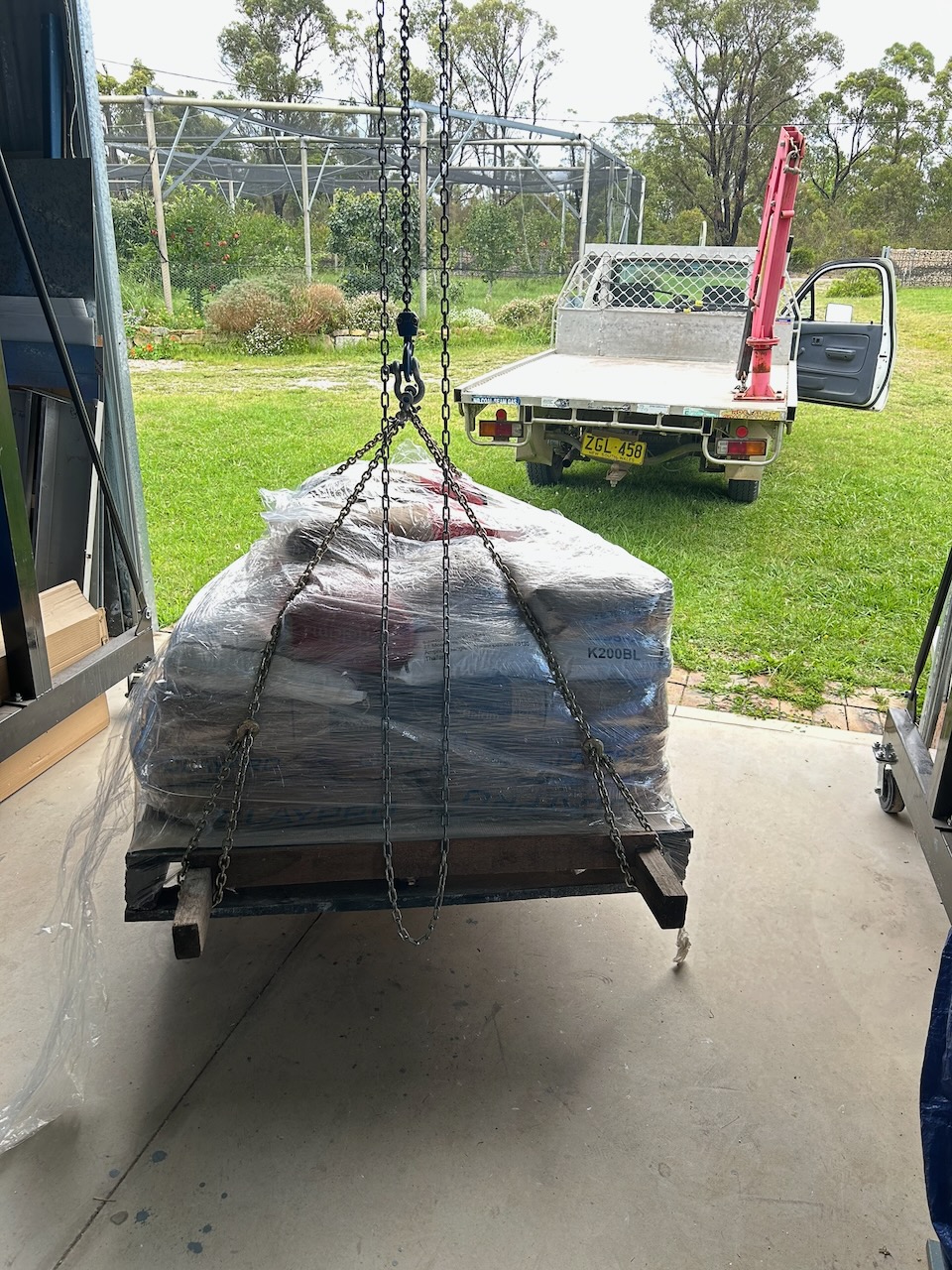
Two batches = 250kgs of plastic clay. It’s a big job and takes all day, sometime it’s two half days, with a break over night to recover from the heavy lifting of the 25kg bags of raw material.
I’ve had my old dough mixer for over 45 years, and re-built it twice after fires. It came from a bakery that closed down in Western Sydney out near Parramatta. In it’s first incarnation, I ran it using a petrol engine. Then after the first fire here, I converted it to a 3HP single phase electric motor, with a loose fitted belt as a safety ’slip-clutch’. It is now properly set up with a 3 phase, 5 HP electric motor.
It’s a beautiful old thing and I’m proud that I have been able to rebuild it twice after each fire and keep it going all these years. I still have to make another couple of batches of clay, as we have been over-subscribed for our summer school, and will now be running it 3 times in a row, with a waiting list for another on the way.
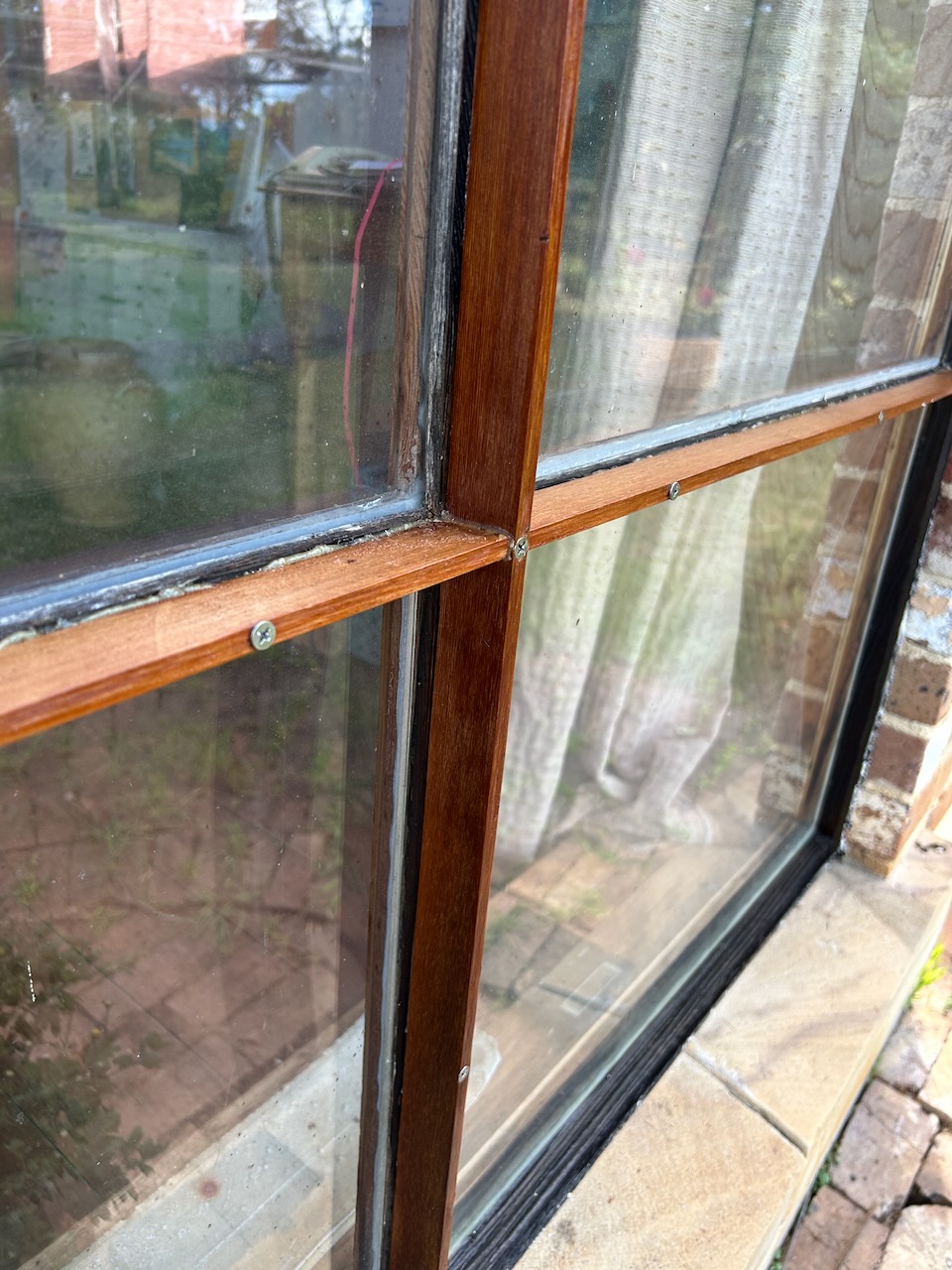
Last week I finally got around to building the stainless steel mesh fly screens for the front windows on the pottery. I bought the roll of mesh soon after building the pottery, 3 or 4 years ago. But then it rained for the next 4 years, so there was no risk of bush fire for a few years. Now I have finished a lot of the other jobs that needed to be done to finish the pottery. I have finally got my self back to the window fly-screens job. I found that I had some left over ‘merbau’ hardwood decking planks, that I have used to make all the door frames. It has some sort of fire rating and is allowed for door frames. I rip-sawed it down to thin strips and them planed them smooth to make fine battens to hold the SS mesh in place. This will stop sparks getting to the cedar windows when the next fire comes. Hopefully i will be here to start the fire pumps and run the sprinkler systems that I have installed all along the western faces of all the buildings here.
The windows needed to be thoroughly cleaned and then re-painted, to bring them up to scratch, before they would be hidden, and inaccessible behind the fly-screen. It turned out to be a three day job, working only in the mornings, as the afternoon sun beats down on the verandah in the afternoons.
I made home-made gyoza for dinner and spent the afternoons inside the workshop cleaning and restoring the old platform scales that we used to use in the old pottery for weighing heavy bags of raw materials up to 100 kgs. These platform scales were bought at the closing down sale of ‘Coty’ cosmetics in Surry Hills in 1978. They got badly burnt in each of the fires, but are made mostly of cast iron. The damage this time was pretty severe, well beyond me to do anything with then at the time. Just after the fire I had too many very important jobs to do to get us back up and running. I was also pretty run down. But now I’m better and felt ready to give them another a go. Cleaning, grinding, loosening seized parts and then oiling/greasing and re-assembling it all and painting them in traditional black and red livery. The brass work had started to melt and sag. I had to take it all off and hammer it straight again, then polish it back to its gleaming original state.
The next big job on my summer list is to replace all the glass panes in the big arch window in the kitchen of the house. I made this window by hand, 35 years ago, without knowing what I was doing, or how to do it. I learnt as I went along. I taught myself how to steam and bend wood to make the big arch top of the window frame. I ended up making the 200mm x 50mm. arch out of 4 different 12mm x 200mm. planks, all steamed and bent at the same time and then glue-lammed together to keep the tight bent shape of the arch. Steaming and bending such big pieces of wood is a two-person job. I was assisted at that time by my sister-in-law Sue, as Janine and her brother were working on some other project together.
I recently commissioned 12 new double glazed and argon filled panes made from metal coated special low’e’ glass. These will replace the old 3mm plain glass that was all I could afford back in the 80’s. I’ve been told that it would cost me in the vicinity of $20,000 to get a custom built window of these dimensions specially made today.
My aim is to try and get my old cedar window frame re-modelled, extended and strengthened to take the thicker and heavier glass before the end of summer, but there is no rush or rigid time frame, it’ll get done when it’s done. Whenever that is.
I have started by extending the old glazing bars with deeper cedar ribs, glued and screwed onto the old cedar glazing bars. That part is now completed. Luckily, I found that I had quite a few old pieces of western red cedar that I could saw down to size and then plane to do the job, so far at no cost. But I did have to buy new stainless steel screws!
When I built the original window, I used a waterproof window wood glue called ‘resorcinol’, or some word very similar to that. It was eye wateringly expensive and came in very small packets of 2 parts. One of dry crystals and the other of a liquid, to be mixed and used very quickly after mixing. It was stated to be water proof and capable of taking high stress. It has lived up to its reputation. The window is still strong. I haven’t seen it or heard of it for years, so this time around, I’ve used a 2 part epoxy boat builders wood glue. Lets hope that it last another 35 years.
In this hotter weather, we picked our first tomatoes of the season, from self-sown plants. It’s always a challenge to get a ripe tomato before Xmas. The early seedlings that I planted before leaving to work in Korea, all got burnt off in the severe frost in late September.
I’ve been baking extra loaves of bread to give away as Xmas presents. There are always too many jobs and more work than can be done in a day. I come to enjoy a little nap after lunch too, which doesn’t get anything done quickly, but is very nice and relaxing, almost necessary these hot days.
Nothing is ever finished, nothing last for ever and nothing is perfect.
The nights are getting slightly shorter every day. The dawn comes a little earlier each morning and its now just on light when I wake up.
It a very nice feeling to sense the return of the sun, even though it’s just a hint.
The trees in the stone fruit orchard are starting to bust into flower. This time last month there was only just the one very early peach, but now there are several trees in flower. The almonds, peaches, nectarines and the first plum tree.
We also are enjoying a very pleasant display from my floral border plantings around the pottery retaining wall.
Earlier this week, we ate the first of the new season asparagus. However, our main garden produce remains the brassicas, and will be for some time to come.
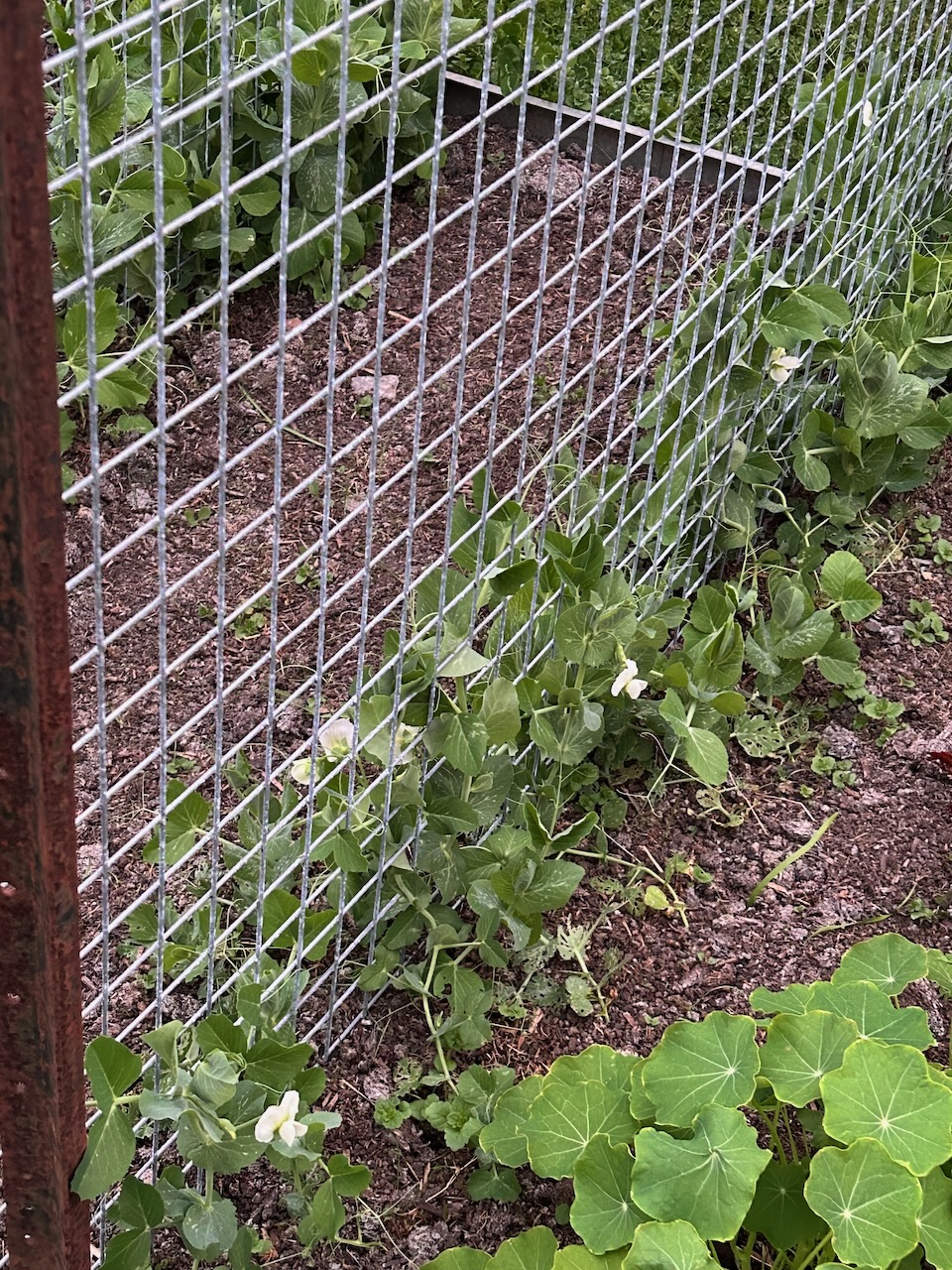
The peas have just started to climb the new twin wire trellis and have also opened their first flowers. So much to look forward to.
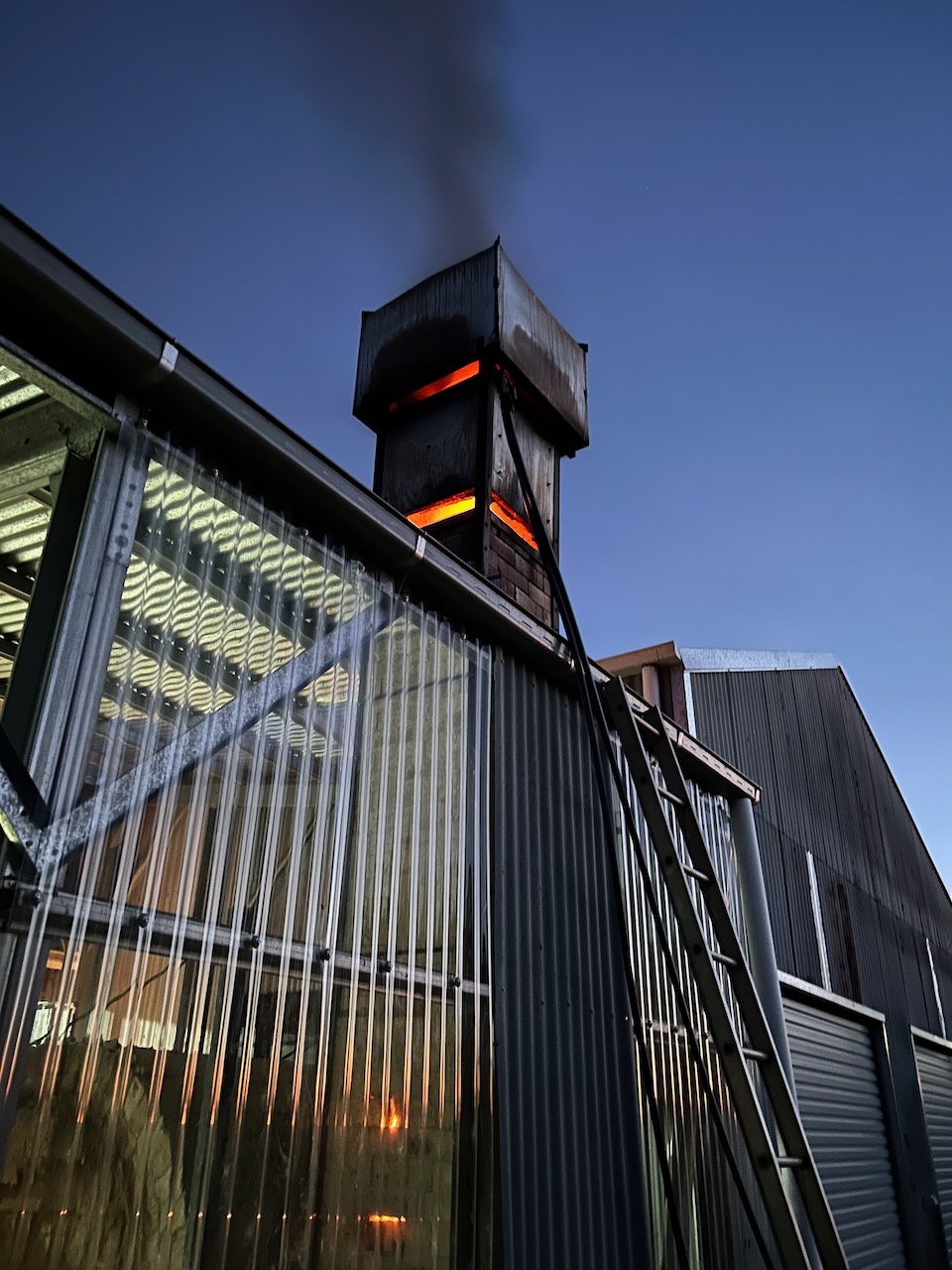
Last week we had a firing in the wood kiln with a bunch of amazing students. The weather held, and although it was crisp, it wasn’t too cold for the over night shifts.
After the unpacking, we all got stuck in and spent a couple of hours after lunch carting, stacking and splitting wood.
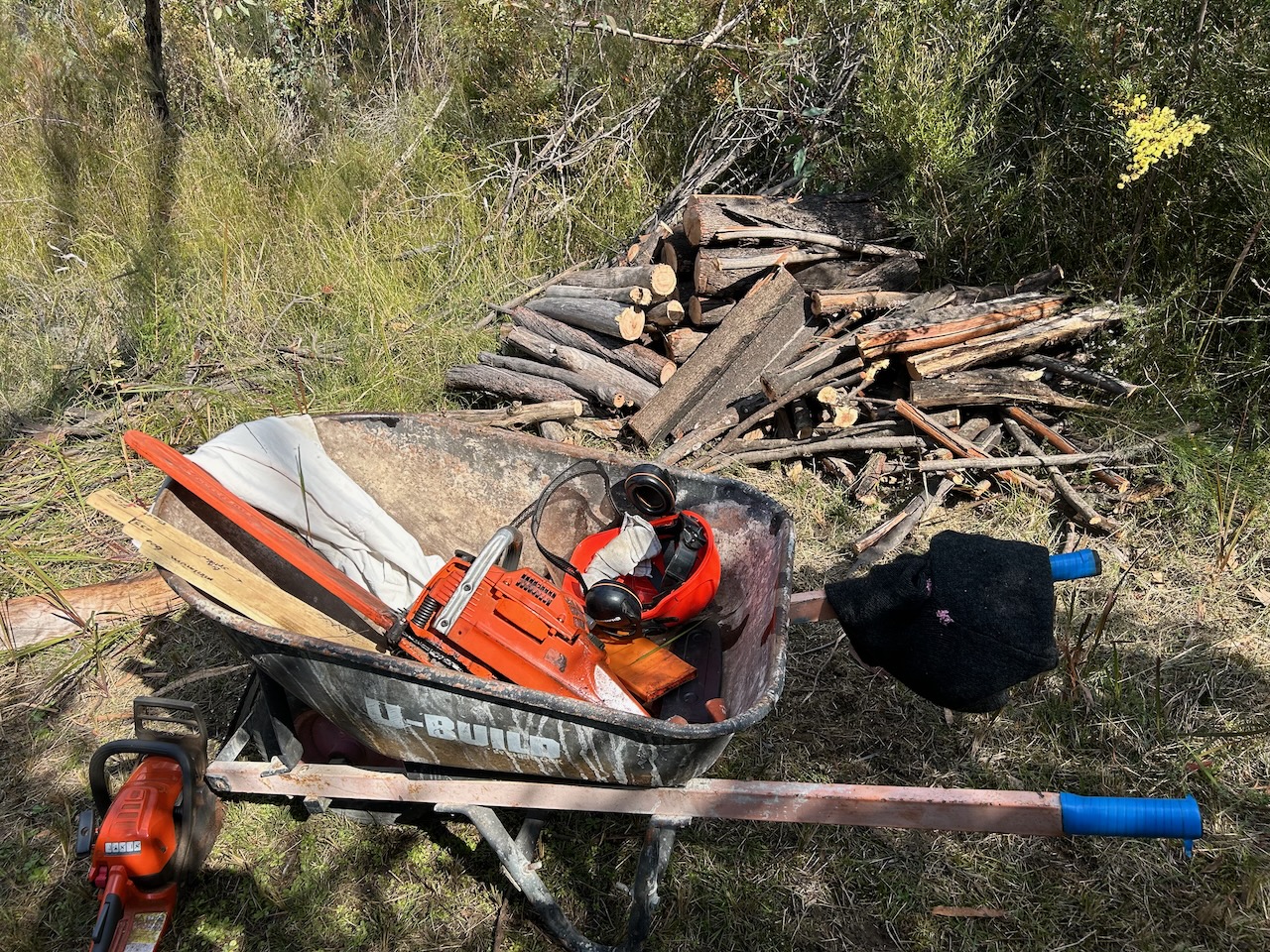
I had spent a couple of days during the cooling period, chainsawing fallen dead trees out in our forest. I had to do a bit of clearing to make a turning circle, and then snigging out the logs with chains into the clearing, to be cut up into ‘hob’ lengths for our bourry box fire box.
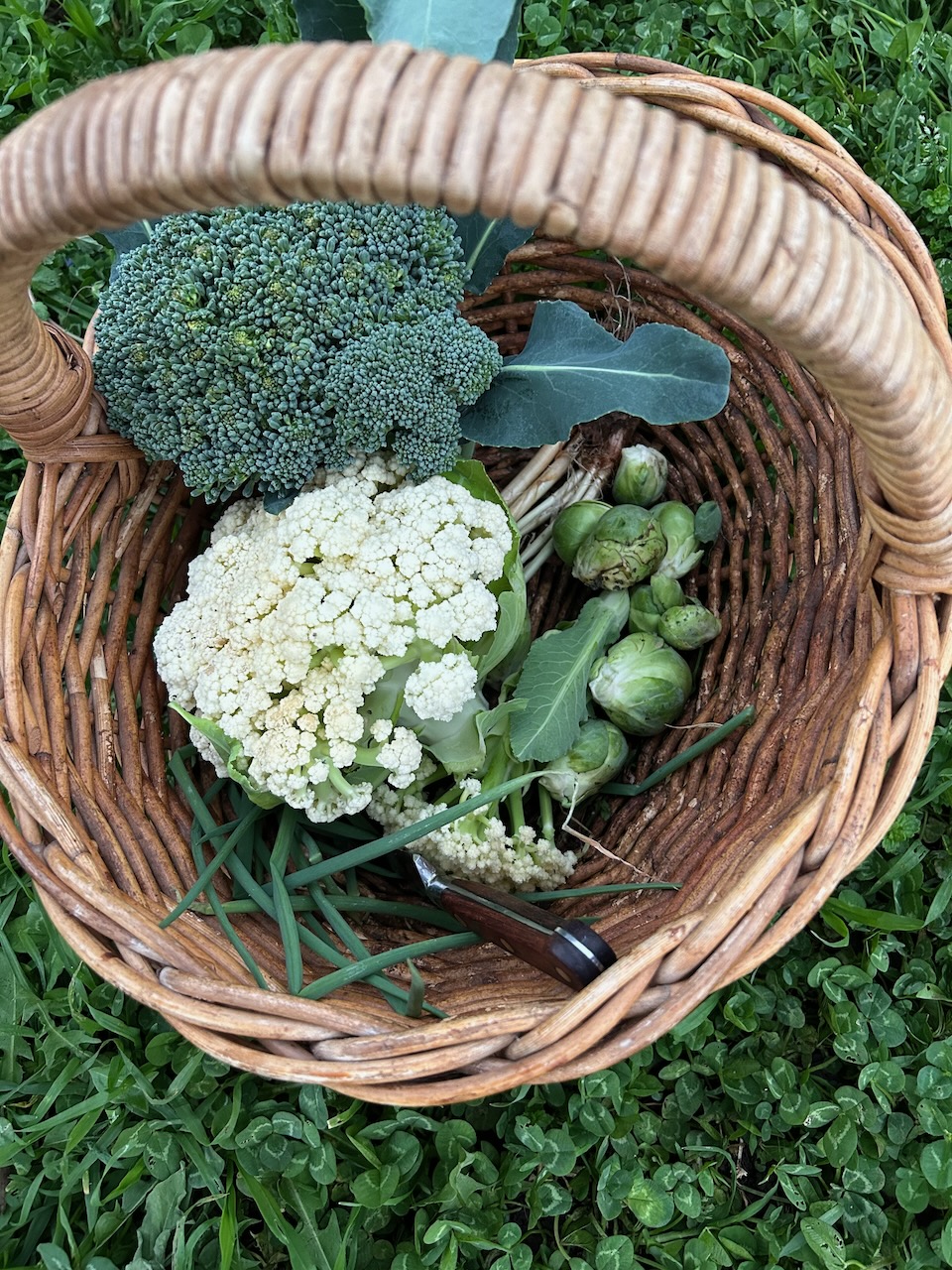
In the garden, I’m picking winter veggies, mostly brassicas and then dining on roasted vegetables.
In the pottery, I have been making some small batches of experimental new clay bodies based on my local weathered basaltic gravel that I make my Balmoral Blackware from. Just small 5 kg batches. I have no idea how they will turn out, but there is only one way to find out, and that is to make some pots out of them and fire them. I’m planning to fire them in the wood kiln before I go to Korea to work next month. If I can find the time to fit it all in in time. If not, then it will be when I get back.
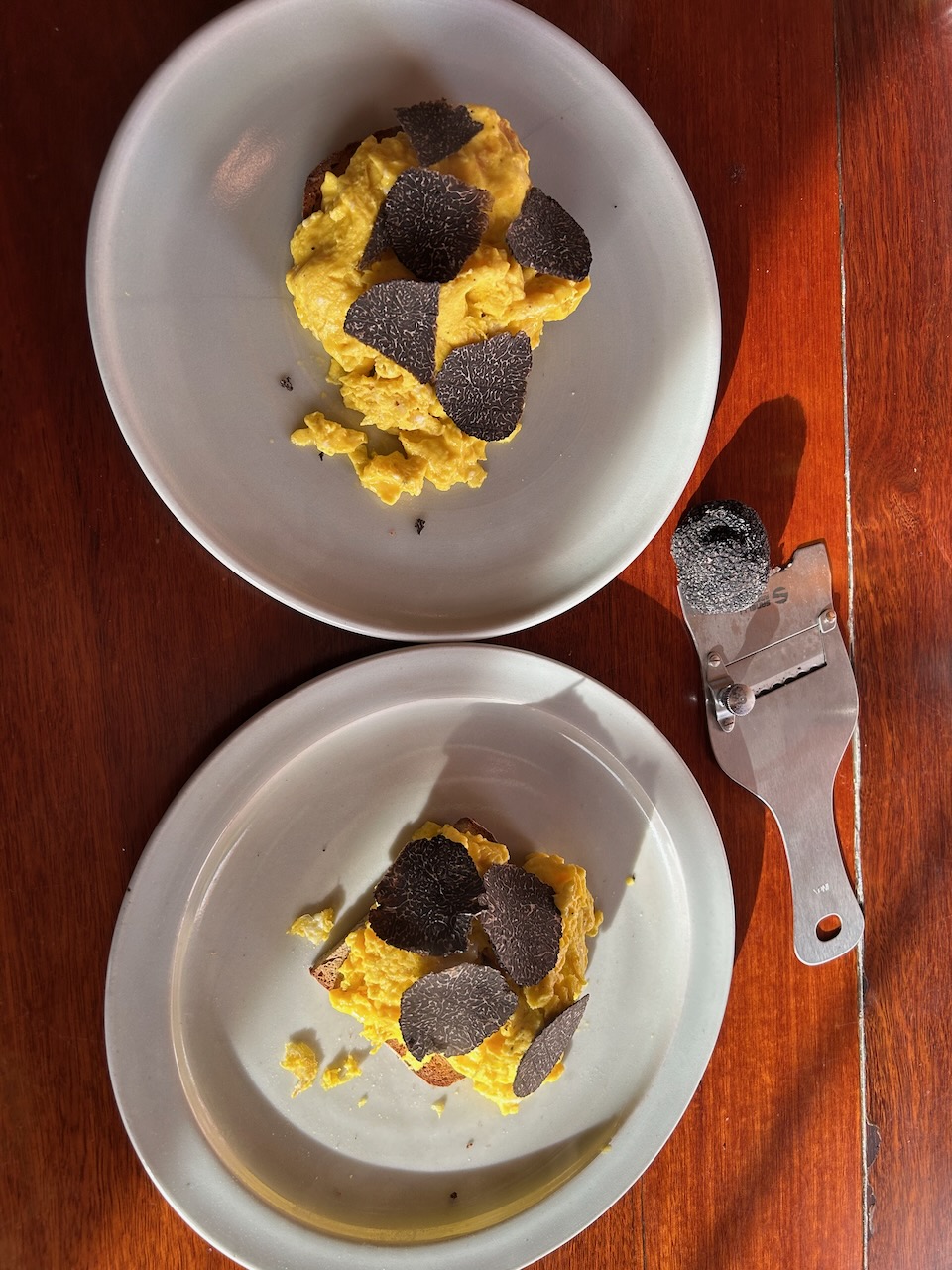
Winter brings on the truffle season, so we are enjoying French Black truffles very thinly sliced over our beautiful chickens scrambled eggs. Just another black treat in this season.
We keep the truffles in a container of rice in the fridge, so that we can the full truffle flavour in the eggs and the rice. The infused rice is used for truffle flavoured risotto for dinner.
I think that I prefer soft scrambles eggs on toast with the truffle shaved on top, but as we have two good sized truffles this year, we also try dicing and micro planning the truffle into the egg mix. I think that we get slightly more flavour in the eggs this way, but I rather like bending over my breakfast and inhaling deeply to catch the delicate fragrance while I can see the round black slices on top of the deep yellow of the eggs. It’s a feast for both the eyes and the nose.
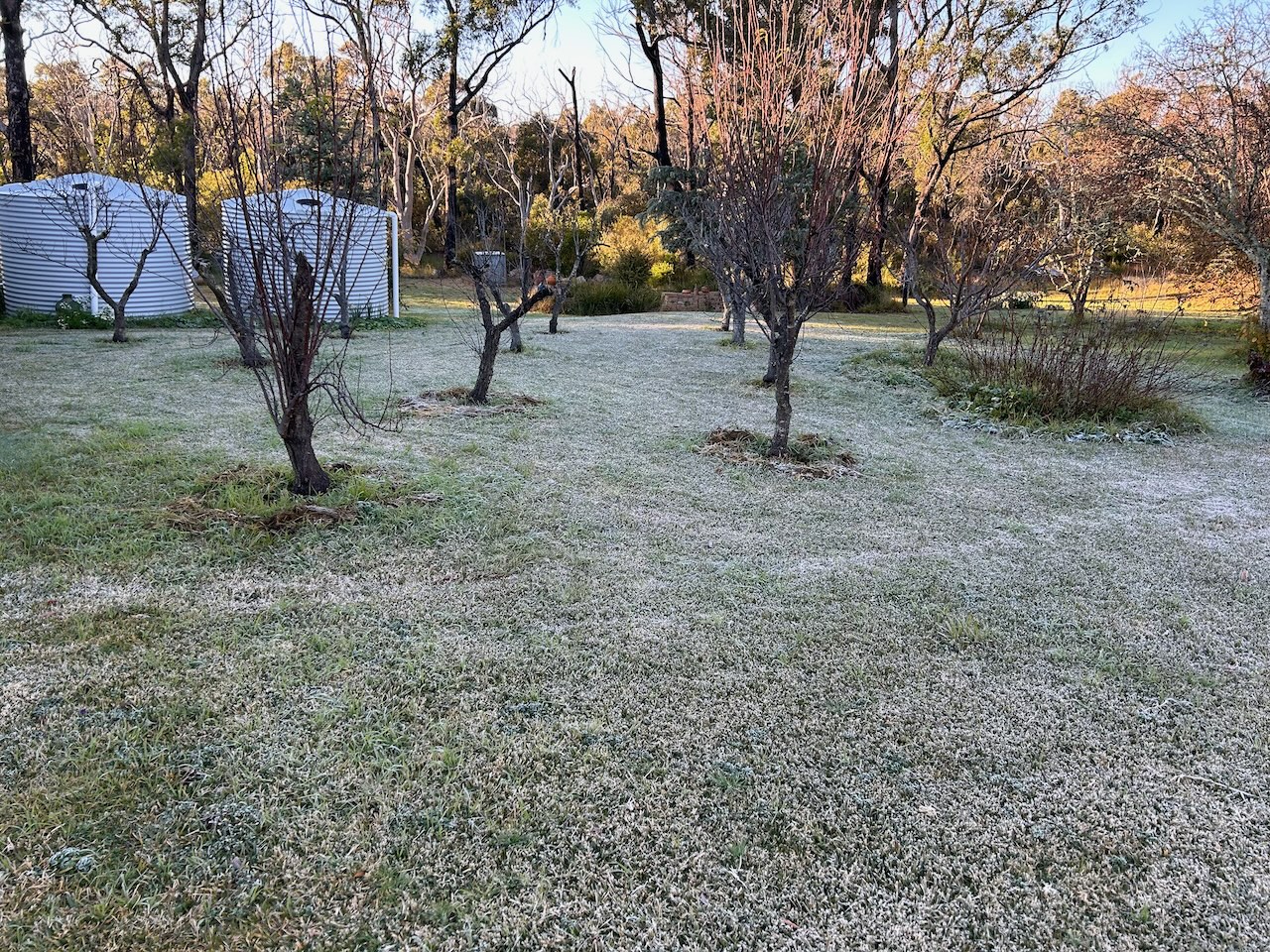
We have been having some good cleansing frosts this last week or so. White and crunchy, this is good to clean out any remnants of fruit fly in the orchard. It also helps to set the chemical clock in the stone fruit trees that need a few hours of very cold weather to make the next seasons flowers fertile. This is called their ‘low chill hours’.
Inside, it’s been a busy time, as usual here. Janine is back from her trip up north, and I have been cleaning out the loft area above the clay making and rock crusher rooms. There is a space up there that is sort of a loft, but it was never intended to be a useful space. Just a way of enclosing the noise and dust from clay making and rock crushing in the small ground floor rooms. The space above them just had ’stuff’ stored up there. Mostly left over insulation bats and silver paper sisalation. Plus half a dozen mixed sheets and off-cuts of thin bracing ply wood, that I had used for the ceilings of the throwing room and gallery.
The only access to this ‘loft’ area was, until recently, by bringing in a ladder. A while ago the idea crossed my mind that we could use it as a place where students could sleep over when they stayed to do wood firings.
In the past, before the fire, they used to pitch tents in the orchard, or stay in local bnbs. Sometimes, even sleeping in their cars.
We recently built a stair case to get up there safely. Using a lot of scrap timber, heavy duty ply, and our own home grown and milled pine boards that we had left over and stored. It turned out really well and cost next to nothing. I built it in two days with assistance of Janine’s brother John, a retired carpenter. I couldn’t have done it alone. John was the brains and I only assisted.
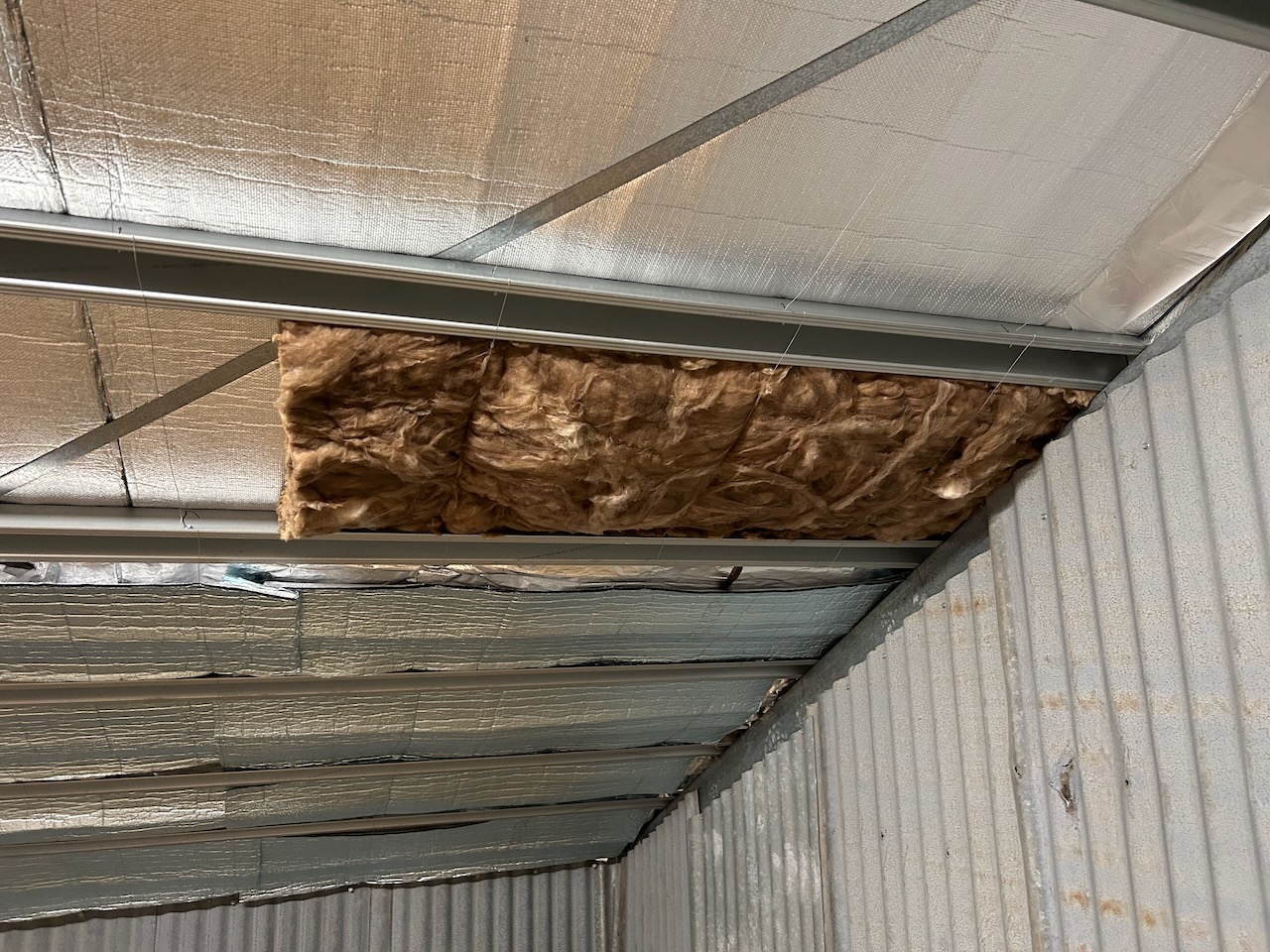
So while Janine was away I began cleaning it out and used the left over rockwool to insulate the ceiling/roof and then panel it with the ply wood. Amazingly, I didn’t have to buy anything to do the job. I was able to do it all by using what was already stacked up there! Even down to the box of ’TEK’ screws.
I started by building a safety railing/balustrade along the edge, using some off cuts of poly carbonate from the car port wall.
Stuffing the rockwool into the roof was a bit like easing a compliant orangutang into the roof cavity, all soft and fury.
I used old tomato stakes from the garden to act as the extra several pairs of hands needed to hold up the ply wood, while I got the first few roofing screws into the sheets to secure them in place.
We were gifted the tatami mats from a lovely friend who didn’t need them anymore. They work really well in our new loft space. Both as a tea room space and as a place where students can choose to sleep, if needed.
We have also installed 2 single beds up there as well, on the other side.
A couple of years ago, I bought an old Venco pug mill from my friend John Edye, who has retired from making now. I cleaned it of aluminium corrosion and painted the inside with metal primer. I have use it for 2 years now and this week, I pulled it down, and cleaned it out to change clay bodies, and inspect the lining.
I was so happy to see that the wire brushing and priming that I had done previously was holding very well indeed. Nothing needed doing. So I put it all back together again and made a new batch of wood firing clay body for an up-coming workshop.
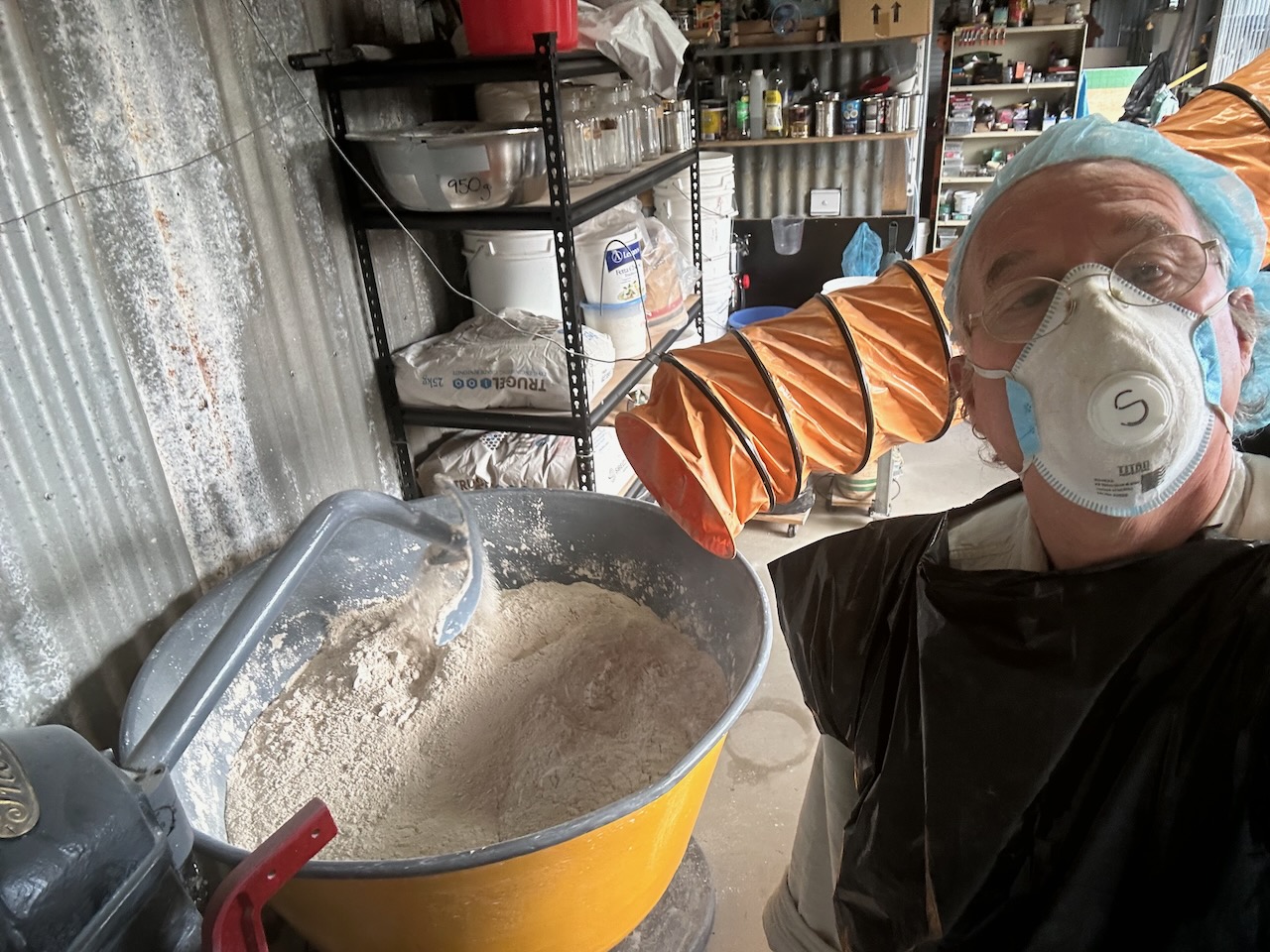
Clay making is a dusty business. I wear some OH&S clothing to minimise the dust in my hair and on my clothes. There are probably expensive versions of this stuff, but I use a garbage bag with holes cut out for my head and arms, then a theatre hair net and a standard dust mask. I have an exhaust fan with a flexible ’snorkel’ that hovers over the mixer and sucks most of the airborne dust out of the room. It works
After all the clay has been twice pugged, bagged and stored. We move all the machines out of the way and mop the floor clean, before reinstating everything as it was before and ready to go again.
Just like everybody else on the east coast of Australia just now, we have had a lot of rain.
Luckily, we only had 165mm. Some places had double that. But ours came all in a short sharp deluge over night. It fell onto saturated soil.
So the water flowed freely across the ground and down the slope into our dams.
The dams soon filled and overflowed. We now have 3 new streams flowing across our land. They will not be permanent. All this water will soon drain away, but we will not be able to drive a vehicle, or even a ride on mower down there for a very long time.
Because we can’t work out side at the moment. I have been prepping for the up-coming sericite porcelain weekend workshop.
I stripped down the stainless steel twin auger pug mill and cleaned out the previous porcelain body mix. The Venco twin auger pug is very quiet and very fast at processing clay. I really like using it, but I don’t like having to clean it out! It is one of the slowest pugs to take to bits and clean out.
Twin auger design pugs are very good at mixing/puging. The sericite that I am working with now is 8 years old and although it was well wrapped, it had stiffened a little bit over time. An excellent feature of the twin auger design is that you can just dribble in extra water in with the stiff clay to soften it up. Normal single auger pugs that I have don’t handle this very well. I’ve tried it. The clay/water mix just slides around and no mixing takes place. However this is not the case with the twin auger design. One other very important feature of this pug mill is that it is entirely fabricated out of Stainless steel, so very suitable for use with porcelain bodies.
I spent half a day getting it working and puging the 1/4 of a tonne of porcelain, ready for the workshop next weekend.
I bought this pug mill 2nd hand after the fire. It came from a deceased estate. I was dying to own one of these stainless steel twin auger pug mills, and was lucky enough to find someone was dying, to sell it to me.
November is fast approaching. We will be opening our workshop for the first two weekends in November for the Arts Trail – Open Studios event here in the Southern Highlands. We have been getting ready for this open Studio sale since the end of the last Open Studio sale in July.
Straight after the last sale, we had our 1st throwing workshop weekend in the pottery and then got stuck in straight away making new batches of clay, so as to make the new work for this show. I wrote about it here on the blog in August. < Pugging ClayPosted on >
We spent September throwing, turning that new clay into pots. We had to be strict with our selves, as there is always so much to do here throughout the year dealing with seasonal events like pruning and making marmalade, before we left, but we got the pots made. We knew that we would be away for a lot of October doing a geological survey of potters materials in New Caledonia, so all the work needed to be made and bisqued before we left.
As soon as we returned we were solidly back at work in the pottery glazing and decorating those pots. Again on a tight schedule, as I was asked to give the 10th. Ian Currie Memorial Lecture to the Ceramic Arts Queensland ceramic group. I gave the first lecture in the series a decade ago, and they asked me back to give another lecture, this time with a theme of sustainability, but also to give a weekend workshop on making glazes from local raw materials. We had decided to drive up and back, so as to call in and visit all our relatives along the way. Folks that we hadn’t seen since before the fire, COVID and the lockdown, so we had to allow a couple of weeks for the trip.
We have planned the 2nd half of this year pretty well. So now we are back home again and doing the last few glaze and gold lustre firings ready for next weekends sale.
We came home to find a wealth of lovely things that had matured while we were away. The flower garden is still in bloom, the strawberries, cherries, mulberries are ripe and ready to pick. We got out of the car, unloaded the boot, put the washing on, then started watering the garden, picking fruit and lifting the garlic. No time to waste. Everything needs to be done now, so we have to schedule our time and energy appropriately.
The garlic is ready to lift.
We lay it out on a metal rack to dry for a week or two before platting and hanging ready for use.
We have about 150 mature knobs this year. A small harvest compared to previous years. We have lifted up to 300 knobs in a good year, but I’m not complaining, any garlic is good garlic when it’s home grown.
By the time we take out the best 20 knobs for replanting, there will only be enough to last half a year.
You must be logged in to post a comment.