Not being religious, I don’t wish people a Merry Christmas, most often I like to wish people a quiet, peaceful, none-commercial, family-oriented summer solstice holiday break – if you can get one!
Not everyone can get a day off on the 25th of December. Our son worked as a chef for 20 years. He was always at work cooking everybody else’s festive lunch and dinner, for them to have a time off with their family. So for those twenty-odd years, we never had a Christmas Day lunch together as a family. We always made up for it, by having a big family lunch the next day after the restaurant had closed for the long week between Xmas and New Year. However, there was one big benefit, There was always some food left over in the kitchen that wouldn’t keep for the 10 day shut down over the new year break, so someone had to eat it. After he had spent so much time cooking it all. It made an easy Boxing Day lunch of luxurious leftovers. Over the years, we had prawns, oysters and even lobster added to our garden oriented veggie meal.
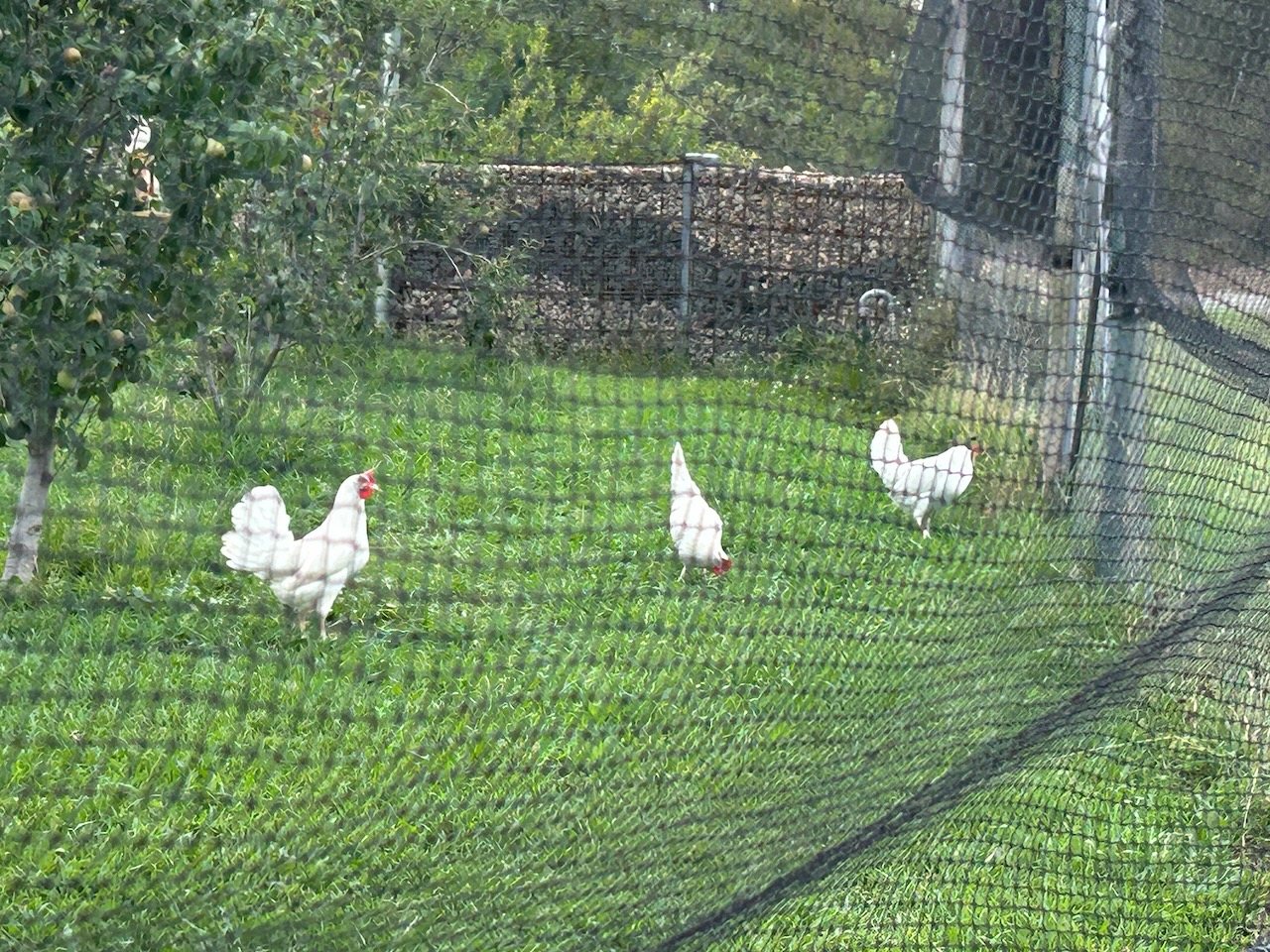
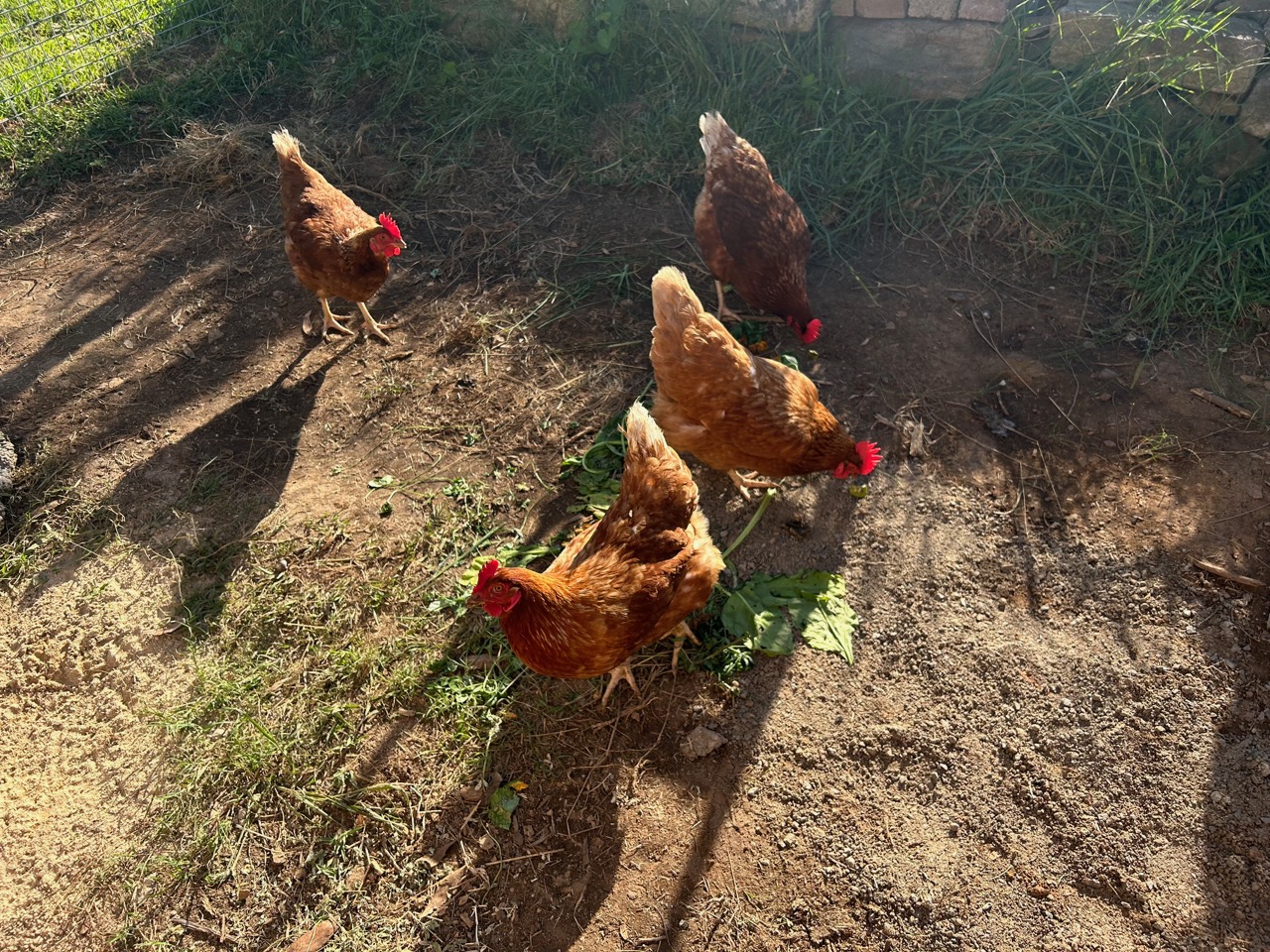
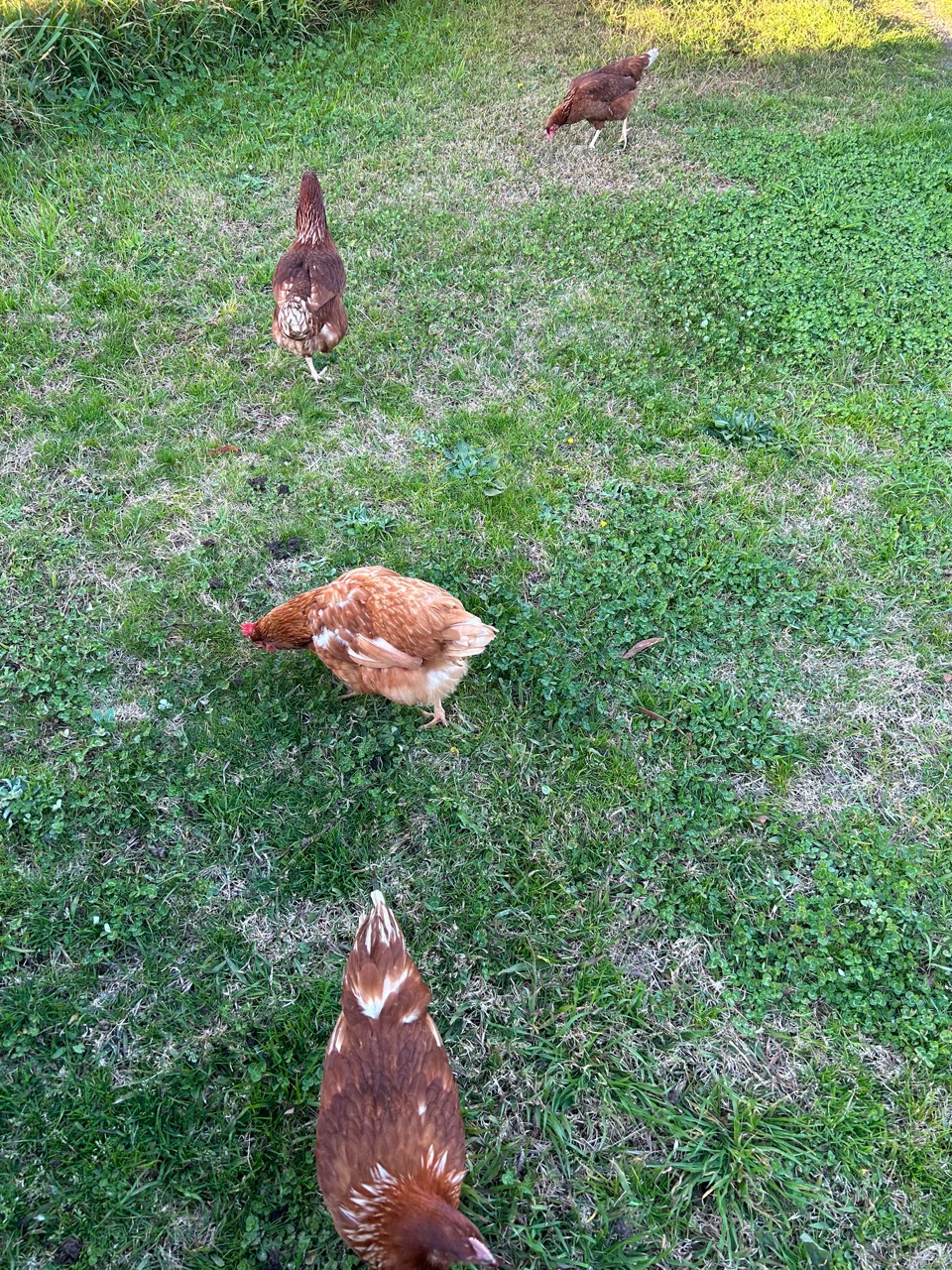
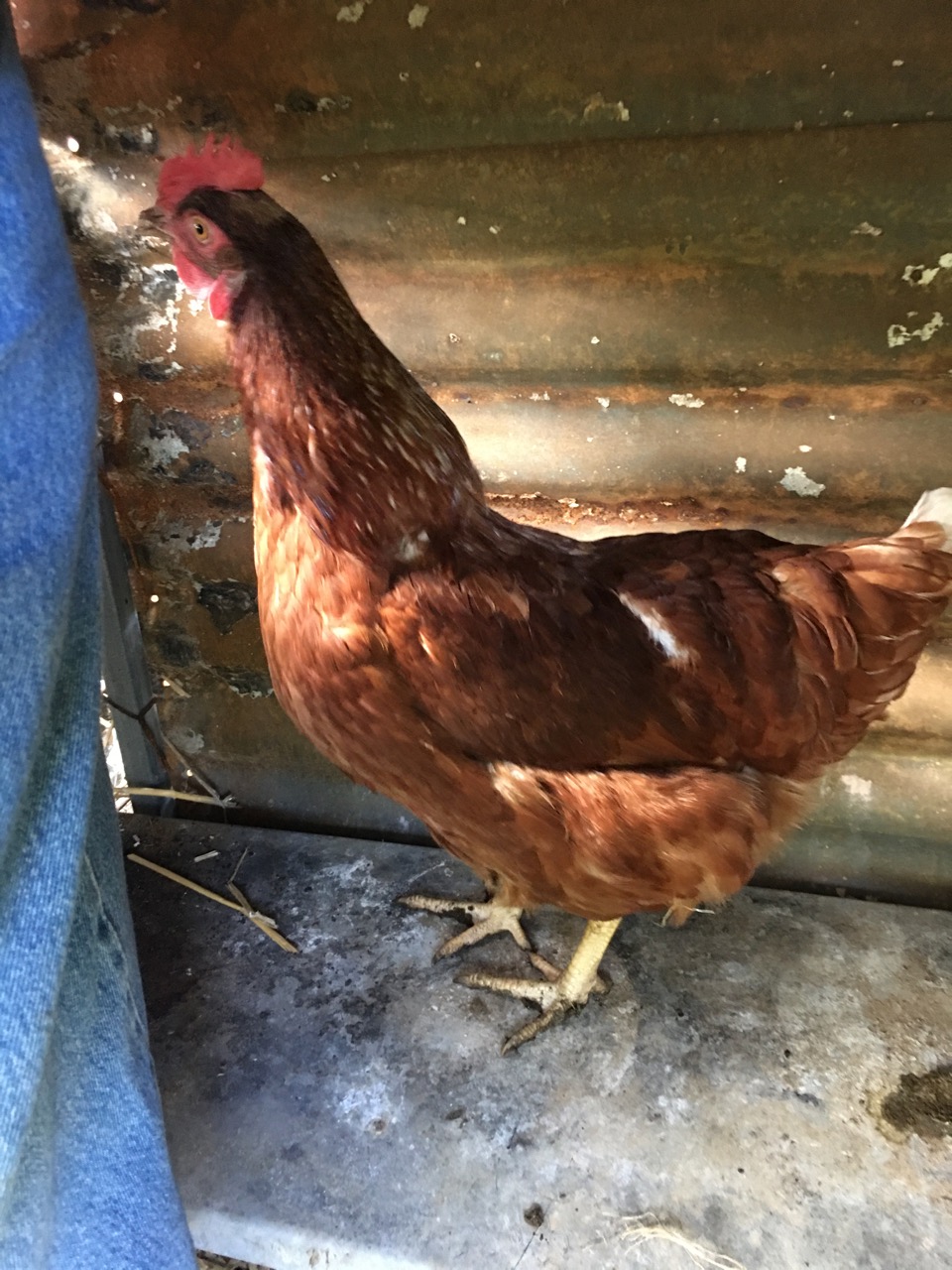
This year, our son purchased some new chickens for his wife for Xmas. So as to have them as a surprise for her on the day, he collected them during the week and brought them here to our house to keep in our chicken run with our girls until the big day. These chickens are bred for commercial use in big egg farms. By buying them for domestic use, we are rescuing them from a terrible life of confined servitude. Three of the new chickens are white like leghorns, and the other 3 are dark brown. The 3 white hens were the first to take the lead and suss out the run. One is quite talkative, clucking all the time. I call her ‘clucks’, One other is very ‘cluey’ and quickly discovered the water and feed bowls, then the first to venture out into the big orchard to scratch around. The third clung closely to her white sisters, forming a ‘clan’. Completely undaunted by their new surroundings, they took the lead in exploring this new situation. They have it all over the other hens – White Supremicists! I have named them the ‘clue’, ‘clucks’, ‘clan’!
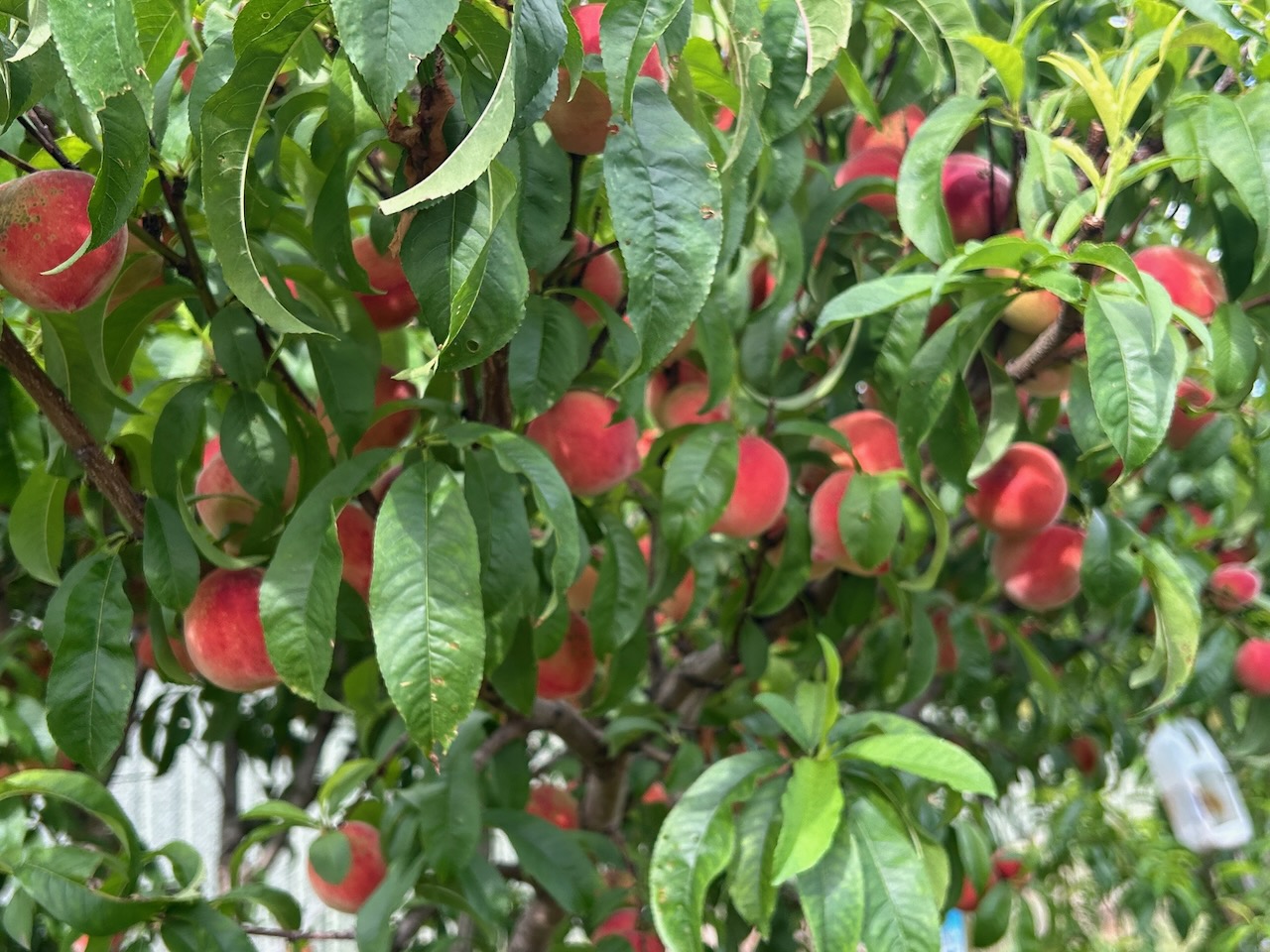
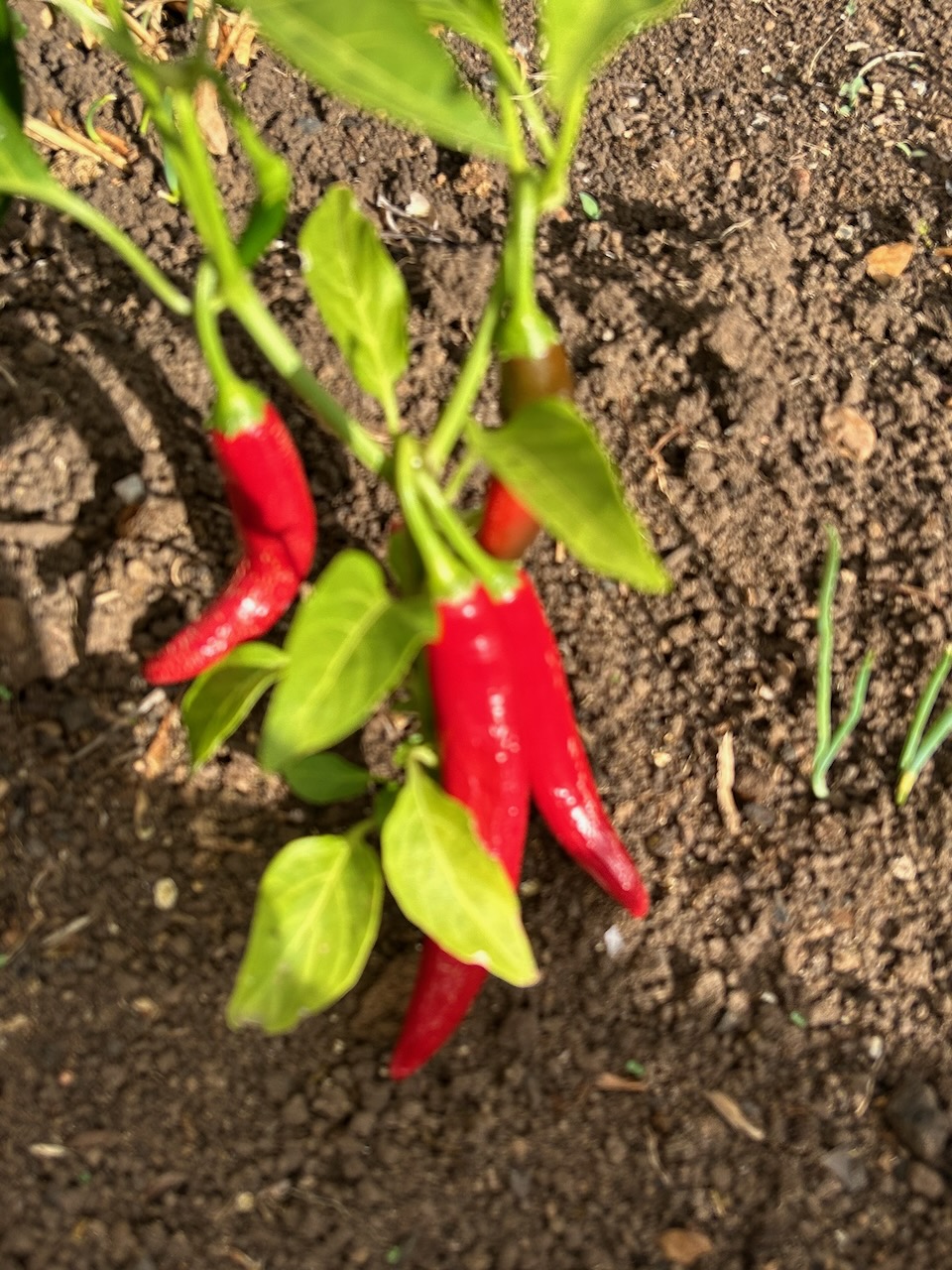
It’s traditional at this time of year to send out cards with red and green images redolent of Northern Hemisphere holly. So I am adding a few red and green, organic, home grown, local images. Have a quiet, peaceful, none-commercial, family-oriented, summer solstice holiday break! Keep safe.
It’s the end of summer, and all of the fruit is finished in the orchards, this month we have been busy with other jobs.
I have been going to build a new chicken run and chook house for a long time. The old one was very small, built in just one day straight after the fire by our good friends Cintia and Andy who came to volunteer their help at what ever was most needed. The old, very solid, and palatial chicken house was attached to the garden shed, which was part of the pottery extension. In the fire everything burnt to the ground.
Andy and Cintia knocked up the replacement house out of whatever we could find on site that wasn’t burnt. At 1.8 metres square, it wasn’t really very big, but was OK for just 2 surviving chooks.
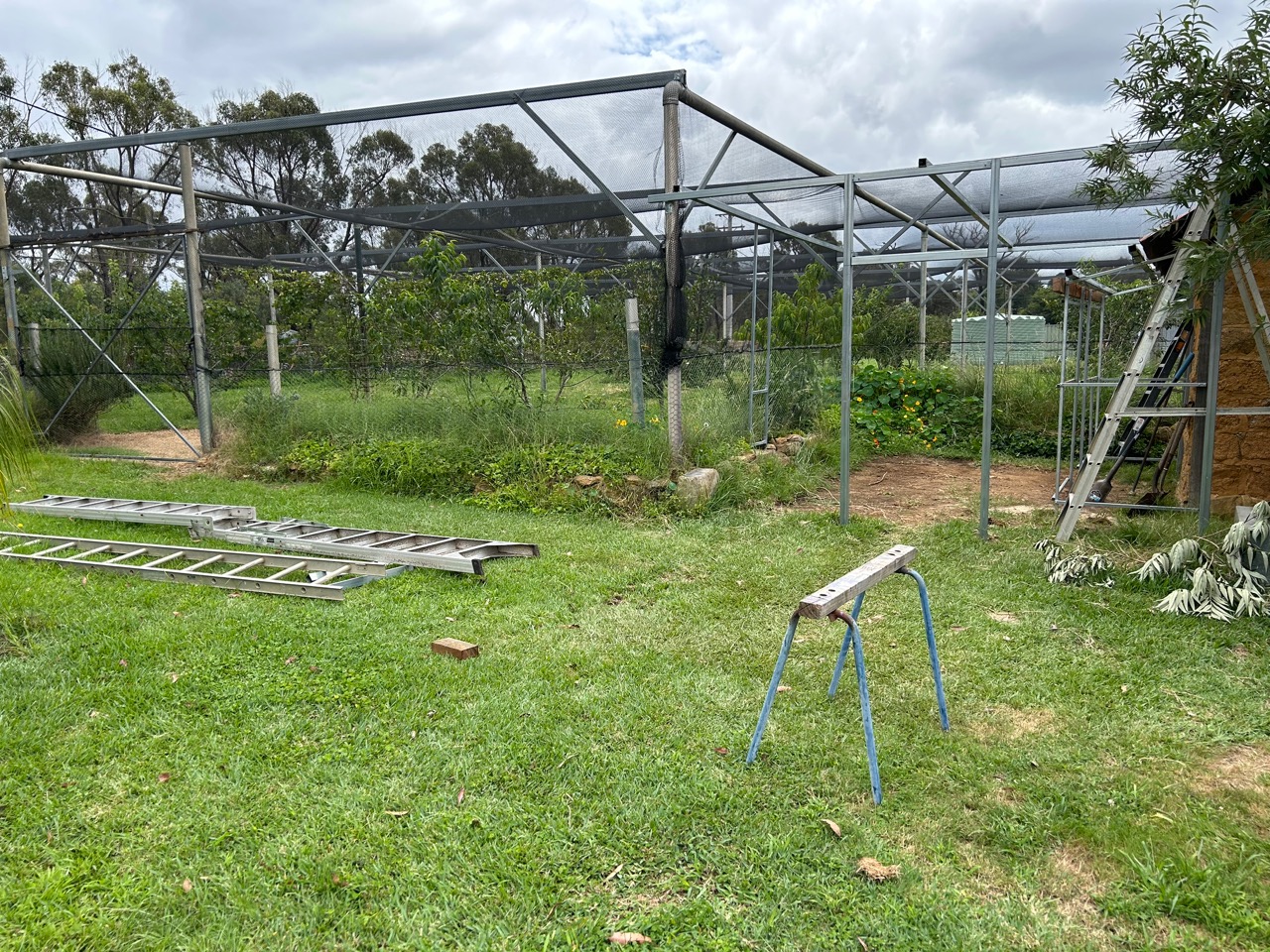
This weeks new chicken mansion is built into the gap between the new orchard and the old mud brick garden shed. It has access through a small gate into the covered orchard, where the chickens can explore and scratch all day in safety, without being swooped on, or chased by local dogs or foxes.
Janine suggested to paint it pink, so I thought to name it ‘Gallus Hilton’. Then she thought it might be better pale mauve, So it might get called ‘The Gallus Palace’.
What ever we call it, the new chook shed and run is the best one of the 4 that I have built here over the 48 years here. It’s still rusty recycled iron colour. I re-used the old corrugated roofing iron that we took off the Old School roof when Andy helped me to re-roof it last year. 130 year old roofing iron still has a lot of life left in it yet, as well as so much embedded history on this site.
It did occur to me that it is a bit strange that a man over 60 might need 4 different ladders to build a simple chook shed
This new run is 6m x 4m. So plenty big enough to be comfortable if we are away and they are locked in. It is completely fabricated out of steel, so shouldn’t burn in the next fire.
When its too hot outside in the middle of the day or raining, then I divide my time between the kitchen preserving excess garden produce, or over in the pottery.
The sweet basil crop in peaking just now in the garden, so its time to make pesto.
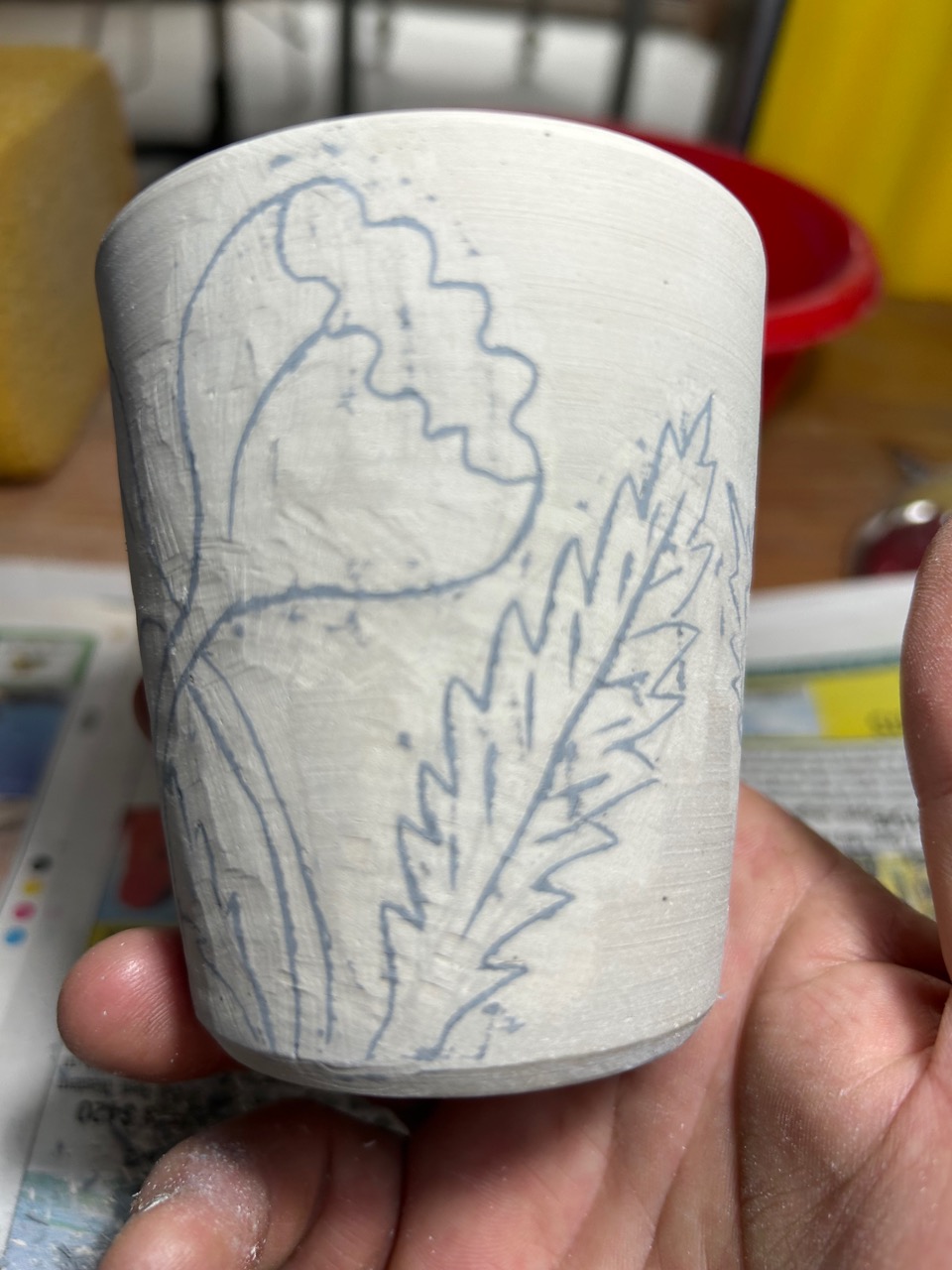
In the pottery, I’ve been extending my sgraffito on sericite work to include the negative/positive slip inlay. I tried mixing the two techniques and introducing some underglaze colour as well. I don’t know how these will turn out, as I’m packing the glaze kiln tomorrow.
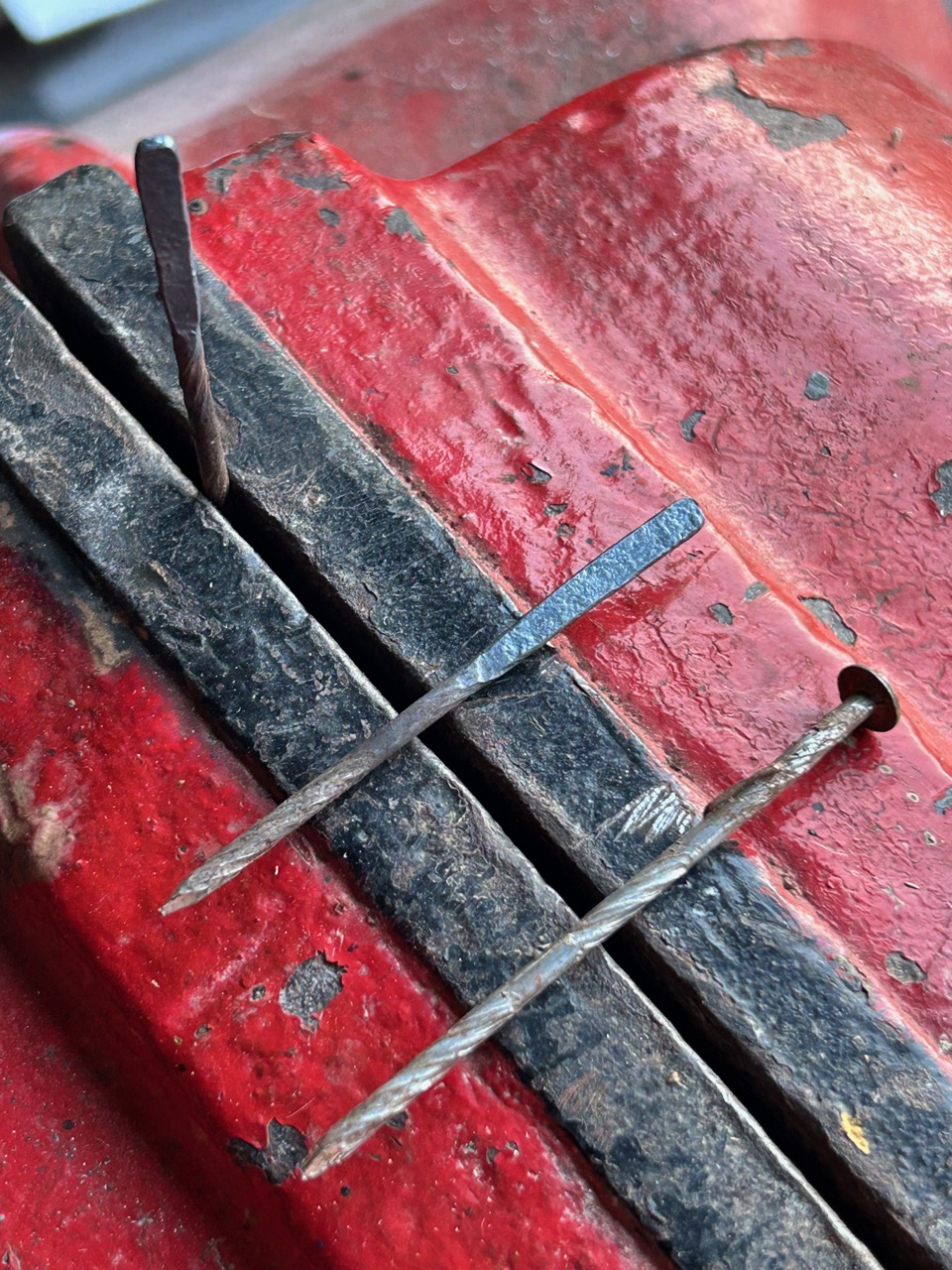
I’ve found that the sorts of sgraffito tools for sale here are somewhat limited, so I have been forging and hammering my own from rusty nails. They are rather nice, somewhat rustic and I can make them any size.
Janine has been using our current excess of passion fruit to make passion fruit and cream flummery. It’s quite easy to make, just passion fruit and cream whipped up together and then frozen. Janine takes it out of the freezer every so often and re-whips it to keep it light and fluffy while it freezes.
It goes quite well with our excess of blueberries as a desert.
We have had our new chickens for 5 days now, so this afternoon I let them out for a little wander around the garden for an hour before bed time.
They had no hesitation in running straight out onto the lawn and practised running very fast and flapping their wings. First in one direction and then back again.
I’m thinking that it is the first time in their life that they have been outside, with unlimited space to run and flap about.
They stayed close to their house all the time. They only had a passing interest in watching me load compost into a wheel barrow and wheel it into the garden to mulch fruit trees.
At 4.30, they put them selves to bed.
Each day, I’ll let them wander a little bit further and for a little bit longer.
Since the fire we haven’t had any cherries from the burnt out Chekov orchard. I think that most of the tiny, tender fruiting spurs on the cherry trees got roasted in the fire. They don’t regenerate, it seems. The trees can grow new fruiting spurs on mature 2nd year wood, but they haven’t so far. So I only pruned them very lightly last year and not at all this winter. That should produce the possibility of 2nd year mature wood for new spurs next year?
But all the new wood is right up very high reaching for the sky. These are old trees now so the new shoots start up at 3 metres+ and go straight up. That means ladder work to pick the fruit. Not good. It’ll all go to the birds I suspect?
Just in case, I ordered 7 new, dry rooted, cherry trees for this winter. They are all grafted onto dwarf rootstocks and also bred for low chill warmer climate conditions. Perfect for me to maintain into my older age without needing ladder work. All transplanting of deciduous trees is always done in the winter months while they are dormant.
I mowed, then weeded and dug over a suitable strip along the back fence of the netted veggie garden. This reduces the area under cultivation, making the garden smaller and better suited to my diminishing capacity to maintain the larger space of intensively cultivated plots.
We should start to have some more cherries in a couple of years from now.
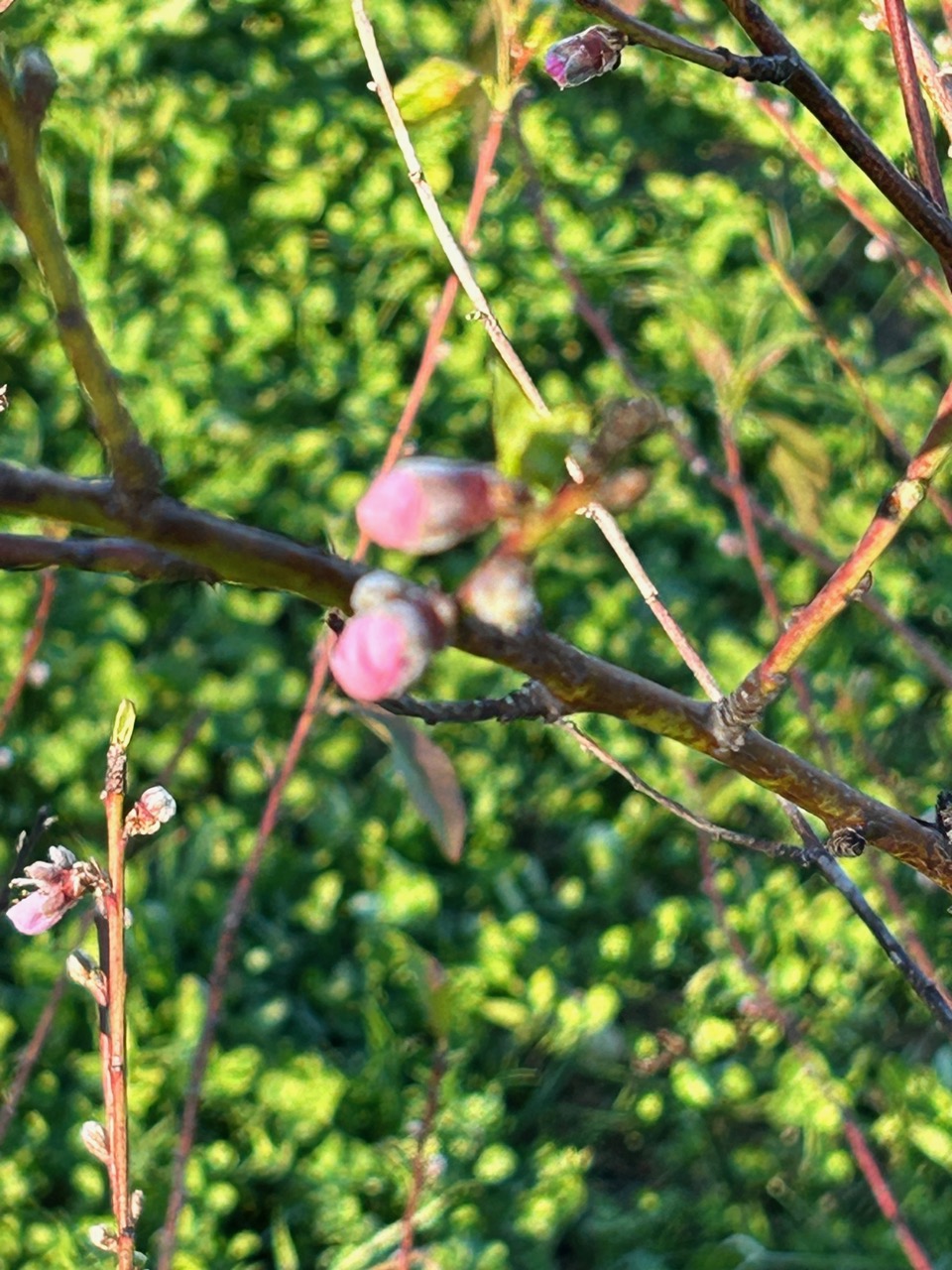
I noticed that the first early peach has started bud burst in the stone fruit orchard. So I dropped everything and got stuck into the pruning. I should have done it at the end of June, but time slipped by. In the past it took both me and Warren 2 days to prune the old established 40 year old fruit trees in the previous orchard. This time, with all the new dwarf trees. I got it all done in one 3 hour session on my own. That’s so much better.
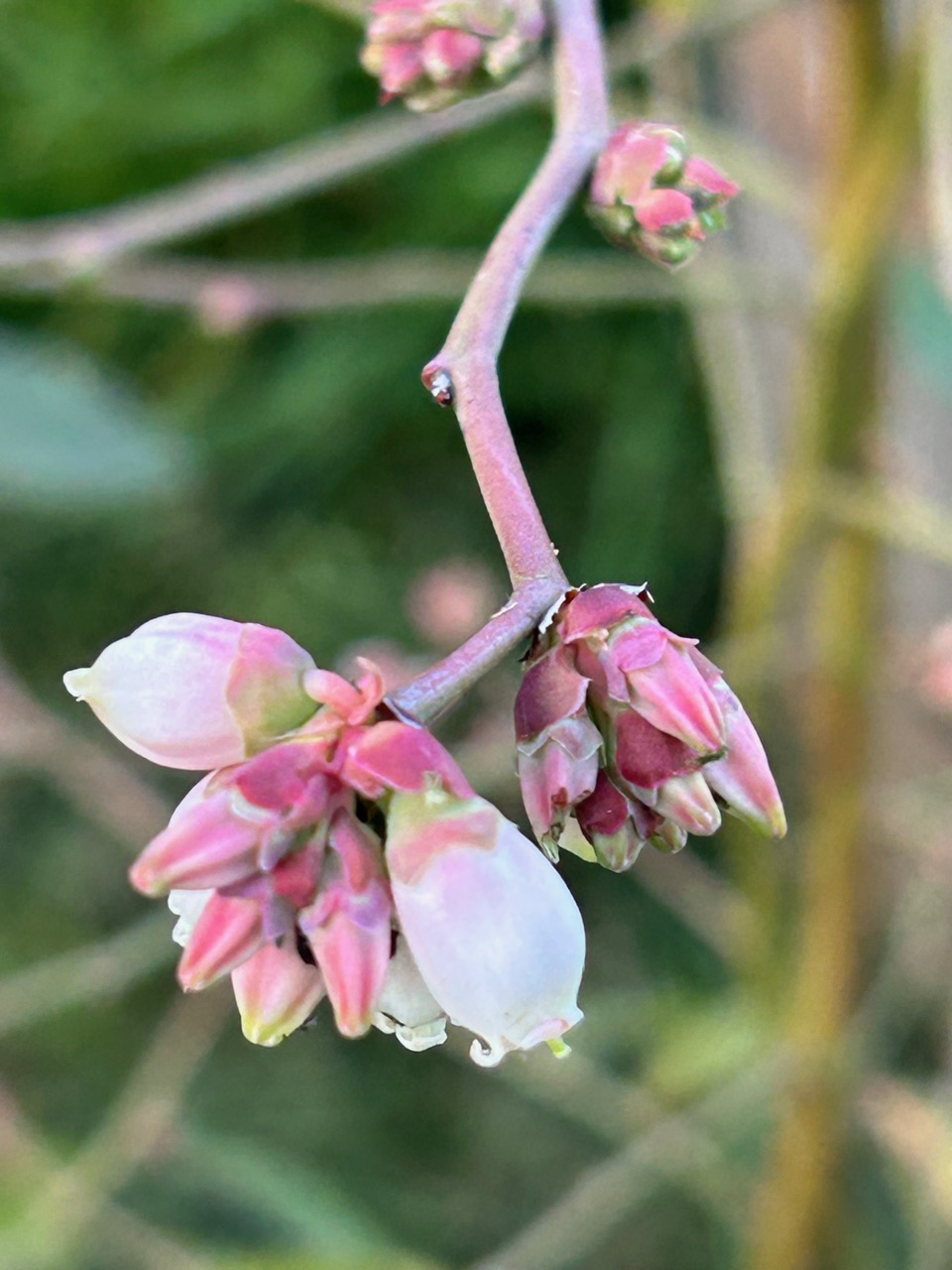
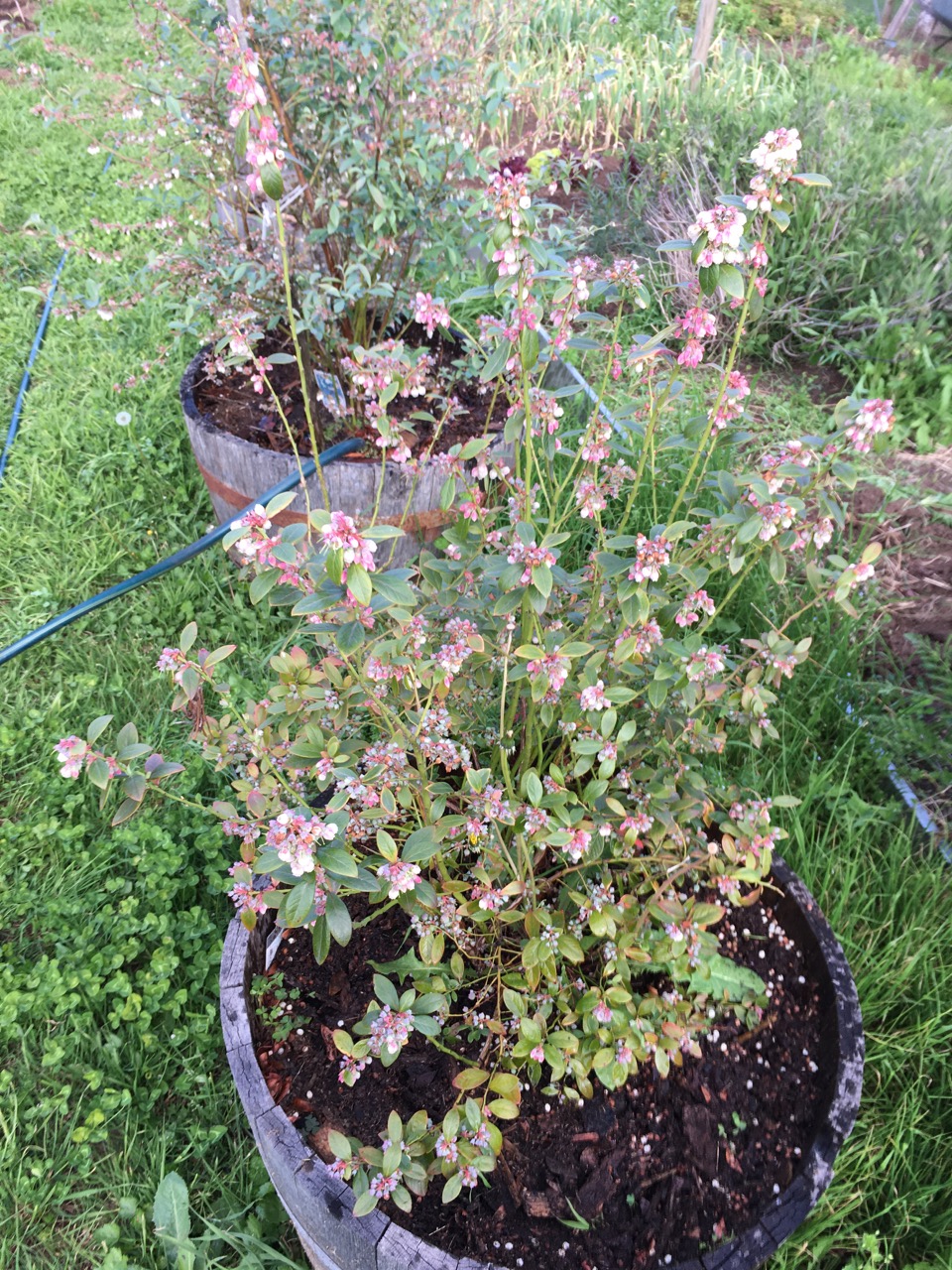
The first of the early blueberry bushes has also broken into flower. It’s almost as if its spring already and we are only half way through winter.
While I was at it, I made a full weekend of it and also pruned the almond grove. It has not flourished since the fire and I had to prune a lot of dead wood from the trees. I’m not too sure if they will survive? They don’t look very vigorous. We have had quite a number of very big eucalypt trees die this past year. They survived the fire and shot out new branches and were looking OK, but 3 years on, they just turned up their toes and are now dead. They’ll need to be felled at some stage to make the garden safe, otherwise they will start to drop branches.
I was doing a bit of a clean up, mowing and weeding in the veggie patch, while prepping for the new cherry trees, suddenly a glint of red, I discovered yet one more self seeded stray tomato bush. So this must be one of the latest harvests of ripe, free range tomatoes that I have ever done! The seasons seem to be coming around faster and faster, or am I just getting older?
While I was doing all this tidying up I also took the time to pick a red lettice, some red radiccio, chicory and the last of the endive. This mixed with a green onion and some chervil. I made a lovely little bitter salad for lunch.
Our old singular surviving chicken, Edna, has been quite lonely recently, since the death of her sister chook, Gladis. She is getting quite old now for an Isa Brown chicken, she is about 4 years old and has been laying less eggs month by month this year. About one or two per week, which is normal for this breed at 4. If we had a rooster, she’d be a great grand chicken!
Recently she has gone off the lay entirely as she goes through the moult. She is putting so much energy into growing new feathers, that it takes all the protein that she can muster. Hence, no spare protein, no eggs. We have been feeding her extra tit-bits of meat in her diet to help her along, increasing the protein in her diet. She just sits in the corner of the courtyard all day. She has lost her inquisitiveness and desire to get out and scratch and forage. She looks a bit lonely and sad. But I could be overlaying that reading onto her. She’s probably perfectly happy? Who would know?
This shortage of eggs coming from the hen house has led me to enquire about another source of eggs. We have got a couple of dozen now and then from our neighbour Paul, who has more than he can eat just now. I have also investigated buying eggs from the various stores and supermarkets around town. But buying commercial eggs is fraught with difficulties. The big commercial producers who control the market have recently bribed the government in some way or other to change the law regarding the food labeling laws on eggs.
It seems that now with this change, the definition of ‘Free Range’ chickens is meaningless, with so many birds to the hectare (when allowed out). It looks like a concentration camp for chickens and not much better than being caged. Caged birds can be stocked at a rate up to 20 chicken to the sq. m. According to ‘Choice’ magazine.
I could never buy any caged eggs, in my mind it’s akin to torture. Even ‘Barn raised’ chickens at 4 chickens per square metre. That’s 50cm x 50cm of space per chicken. No free space at all. No way to be able to move around freely. They have debased terms like ‘Free-Range’ and ‘barn raised’, it sounds like it might be a nice environment. It’s not.
Having grown up with chicken in the back yard when I was a kid, they were always locked up at night to keep out dogs and foxes, but then let out every day to free range around the back yard all day. They would put themselves to bed at dusk. The big wire-netted yard allowed them to move around freely, but safely, until they were let out. We seemed to always have about a dozen or so. We shared the common back yard with my grand parents, who lived behind us in another street.
My grandfather managed the chickens for my Mom. He obtained fertilised eggs when we had a broody chook, as we didn’t have a rooster. It was his job to sort out the young roosters and dispatch them as needed, as half of the eggs would hatch out as males. I learnt from him the basics of chicken management, although I never saw him kill them. He kept that away from us.
So when Janine and I came to live here, it just seemed the most natural thing to build a chicken coop and get a few chooks. We’ve had them in our yard for most of our life. We got our first chickens from our neighbour John Meredith. He kept Old English Game Fowl. We learnt a lot from him, It was the first time that I had lived with a rooster. We were far enough from any neighbours, that it was legal to keep a rooster. The rooster was always so protective of his girls.
One evening we were ready to go out at dusk and tried to close the chicken coop door, but the rooster was stubbornly refusing to go inside, standing just a little bit away from the door and making a bit of a racket. We couldn’t coax him in. When suddenly one lone chook came running across the yard from some distance away, where she had lost track of time and didn’t realise that it was dusk. Once she was safely inside, he went in and we could close the door. He knew all his girls weren’t in yet, there was still one missing, so would not let us lock her out. I don’t think that chickens can count. I know that some birds can, but not up to 12. so he must have recognised her absence by look or personality?
In the mid ’80’s, we had the amazing Sally Seymour come and stay with us for some time. She taught us so much country ‘Lore’. A better, cleaner way to dispatch a chook, and she also taught us dry plucking, so much neater and cleaner. So many little tips and tricks, we owe her so much. You can check out Sally and John Seymours books at Sally’s web site in Wales. <https://www.pantryfields.com/sally-seymour>
So, with Edna off the lay, I went looking for an ethical egg, or dozen. The best bet was from our neighbour paul. But after that it was to the shops. I started looking closely at egg boxes, reading the fine print. People can buy a dozen caged eggs for $4.50 per dozen, although I couldn’t. I love my chickens. I’d hate to think of them locked into a tiny wire cage box for 2 years then slaughtered, having never been able to run around in the grass or take a dust bath. it’s cruel.
Next comes the ‘Barn laid’ eggs from chickens crammed into industrial sheds. Read this as locked in a big tin shed, under artificial lights, 20 hours of light per day, with 30,000 other hens with hardly enough room to turn around. This is just as unacceptable to me.
Then there comes the BIG lie. The huge commercial/political con job called ‘free range’. These days it seems any crammed unpleasant space filled with chickens seems to be legally marketed as free range. I looked at a lot of egg boxes in the supermarket to see how many chickens they had per hectare.
Are ‘free range’ chickens really allowed to range around freely. Some ‘free range’ egg producers claim 25,000 hens to the hectare is free range. Some boxes also add the caveat of “when allowed out”, (see the Choice article above) so again, they spend their lives in crammed spaces. These aren’t really free range at all. This is just marketing double-speak and advertising mumbo-jumbo to try and trick you into thinking that the chickens are living a natural life. They are not. This is just linguistic promiscuity.
Real free range is where chickens are allowed to roam free on pasture all day. To scratch for bugs and worms, to dig holes and take dust baths. They should have enough space to form little clusters or flocks and move independently around the paddock at their will.
I started to look closely at the boxes of eggs available in the supermarket, grocery store and green grocers. I read all the blurb on the labels. I found various cartons of eggs in different shops around town, that seemed to fit my version of free range requirements.
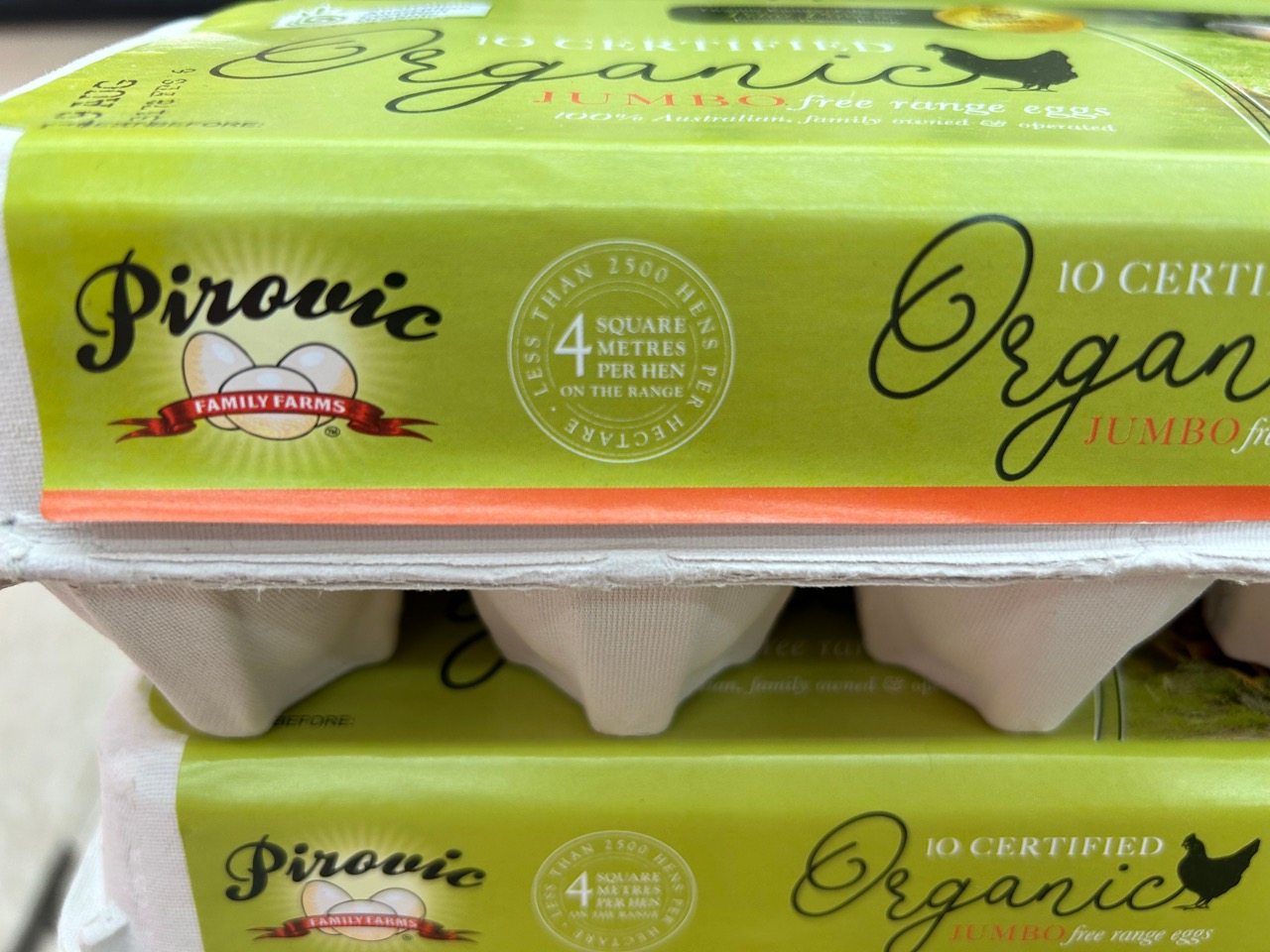
This box claims to hold less than 2500 birds per hectare, which seems quite OK. But could be better.
Farmer Rod’s brand claimed 1250 hens per hectare and are labelled ‘pasture raised’. Great, that sounds good. I’d like to check it out a bit more and make sure that it is all it claims to be.,
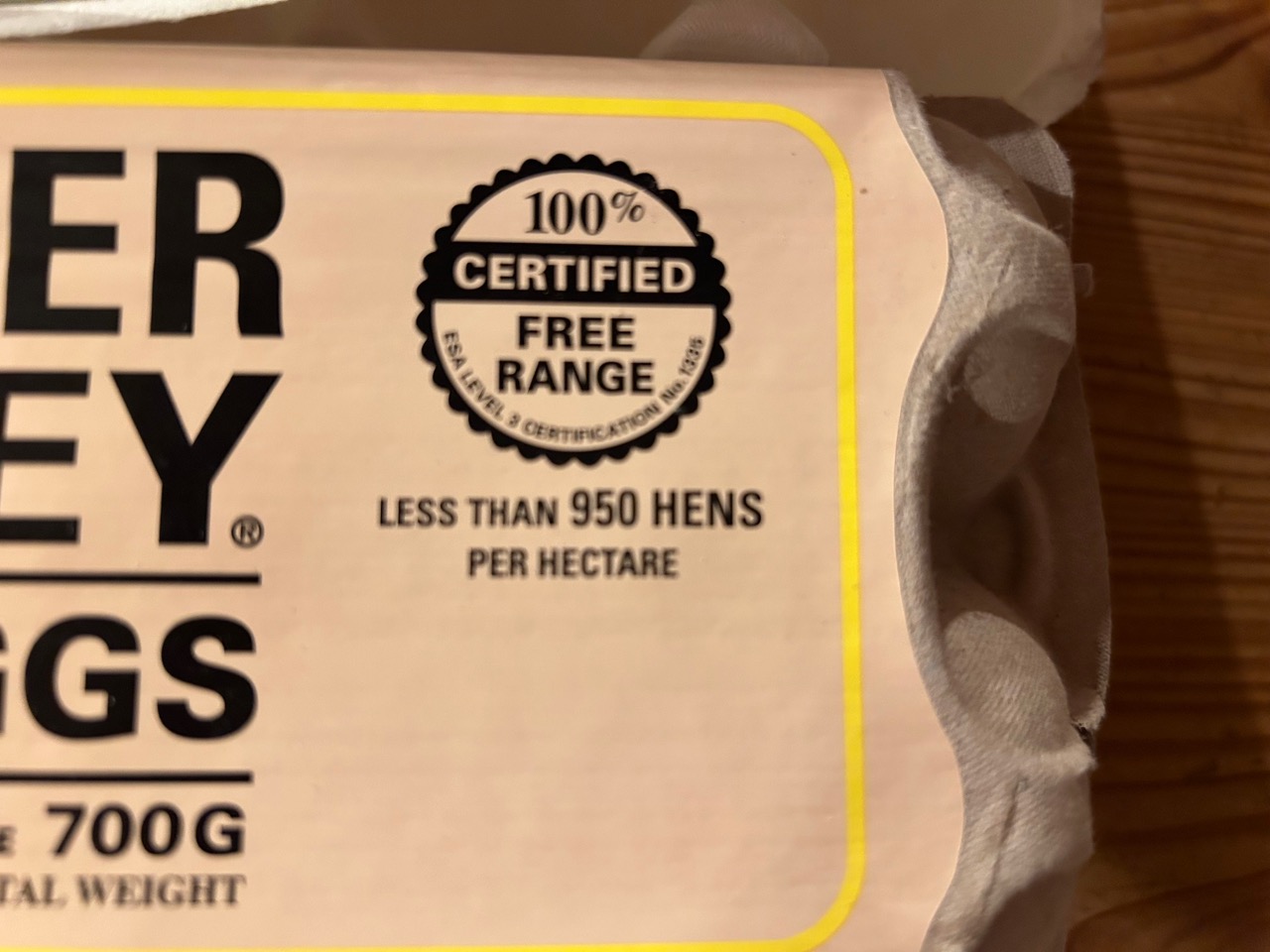
but then I saw, Hunter Valley eggs.
Free Range hens stocked at 950 chooks per hectare. That’s even better. but is it true? I have no idea. I really hope so. The web site says a lot about being certified and hens raised to industry standards. Oops! that’s a bad sign! ‘Industry standards’ are very low and they are always lobbying for higher numbers and lower standards. Call me callous and cynical, but I don’t trust big business, their ‘Industry Standards’, along with industry ‘self-regulation’. It has proved over and over again to be worthless posturing.
I moved along to the next best box. Its packaging claims 750 chickens per hectare.
I googled the company and found out that it is an olive growing company. They run their chickens in amongst the rows of olive trees in big mobile trailers. Or so they say. It all looks credible, but I notice that on the label, it also states “when outdoors”! Oops, why would they not be out doors if they are free range? The images on their web site didn’t show any big sheds, just mobile trailer laying boxes! I refer you to the ‘Choice’ magazine article again. It could well mean that they never get to go outside at all according to Choice. Moving along.
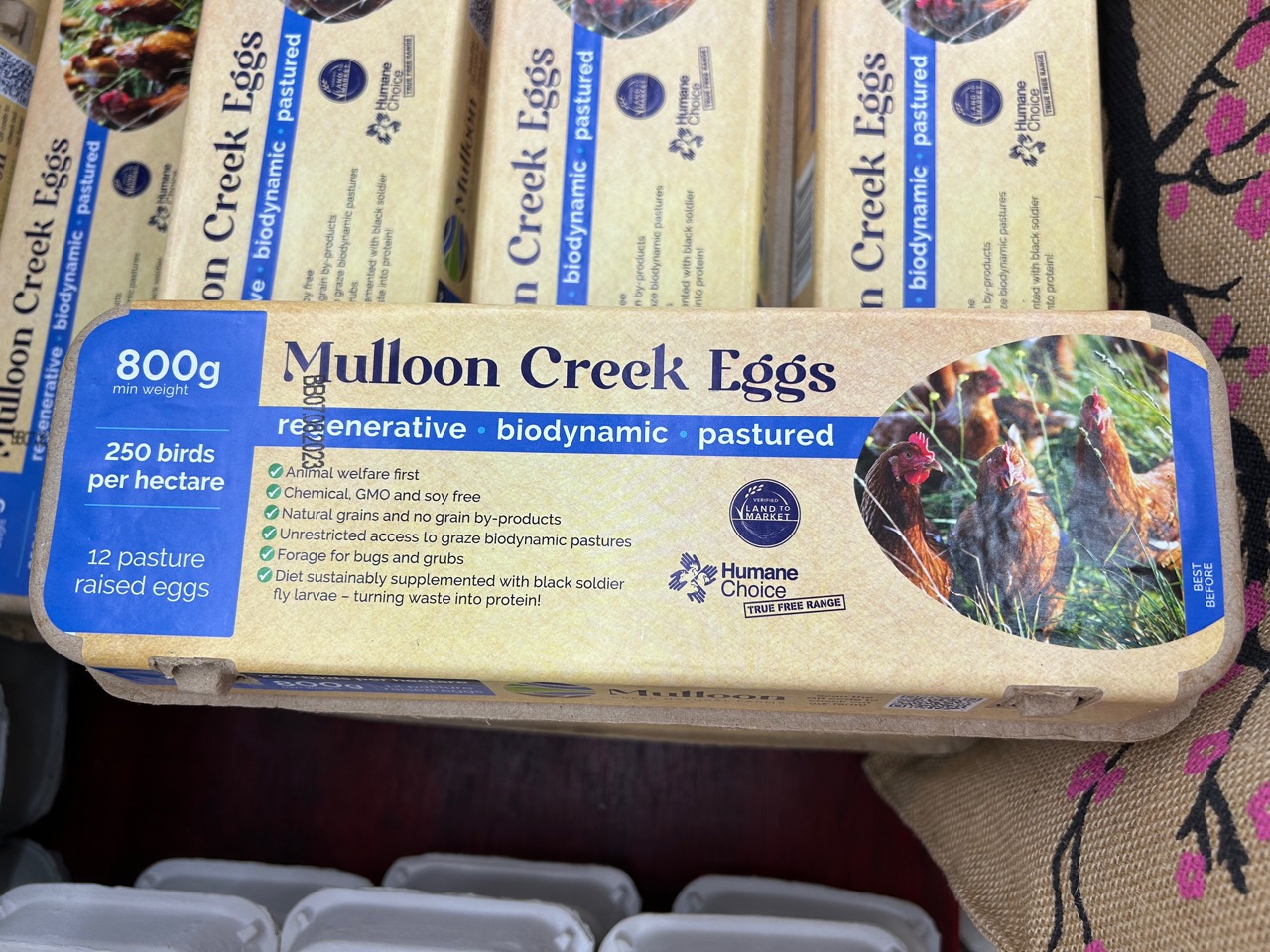
Mulloon Creek eggs look to be very good. Their labeling ticked all my boxes. I was going to buy these eggs. But then I saw Kangaroo Valley eggs. Check out their web site, it is very impressive. It looks to be completely ethical. Or have I just been conned by sophisticated marketing and advertising goobaldygook!
The best that I could find was a local farm run by a husband and wife couple who appear to be both teachers. So it appears that they leave the chickens out to roam throughout the day while they are at work teaching, but they have 3 ‘maremma’ guard dogs in with the flock. They also employ casual staff to help guard the hens. it all sounds pretty reasonable and they are local to me.
They claim just 40 chooks per hectare, and from the images on the web site, it looks like that. No big sheds in sight in the aerial photographs.
So this was my choice. I didn’t worry about value for money comparisons. I am prepared to pay a proper price for a properly raised happy chicken. The most expensive eggs were the olive farm organic eggs at over $1 each. However, the local Kangaroo Valley eggs were higher mid range price. A good find. and will be our fall back position when we don’t have sufficient eggs from our own girls, but they are in limited supply, so the Mulloon Creek will be my next best choice.
We usually keep between 2 and 4 chickens here on our 2 hectares. That’s a stocking rate of 1 to 2 chooks per hectare! I think that because chickens are birds, they prefer to flock together, so a few more wouldn’t be a bad thing, even a good thing, but we just don’t need more than 2 eggs a day each, so we need to keep our flock small.
At the moment we only have our singular, lonely chicken, named Edna, but I have just bought 3 more ‘point-of-lay’ pullets. That should keep us in eggs for another 3 years or so. There will be a difficult week here while Edna turns nasty and beats up all the young pullets to establish the pecking order. We keep them all in the house all day to sort it out and to get the new girls used to where they now live, sleep, feed and drink. Once habitualised to this new norm, we will let them out all day confident that they will return to the chook house at night to be locked in and kept safe from the foxes.
I don’t like to see chickens fight and peck each other. I really feel for the littlest one who cops it from all the others, but it’s not up to me. It’s chickens own way of sorting things out and best to let them get on with it and don’t try and interfere. But i can’t hang around down there with them too much, it distresses me. So I keep away, just turning up to give them feed and clean water morning and evening.
Once we start to let them out, we will have to start training them to come when they are called and recognise their name. This is done with careful, slow and persistent food bribery. Giving them little tit-bits when they come. Once one of them get the idea in her head that it is worth her while coming. All the others start to realise that she is getting fed, so competition cuts in. They can’t stand to miss out, so they all start to come when called- just in case there is a food reward at the end. it works!
Last weekend we fired the new wood kiln for the first time. Not the best firing that I have ever had, but OK for a first firing. There is always a bit of a learning curve getting to know how a new kiln works. Becoming familiar with its particular traits and ‘personality’. We are also using pre-burnt wood from the bush fire. Burning in the kiln, what was recovered from the trees in our front garden. It’s strange and burns quite differently from the trees that we are used to burning from our forest that were unburnt.
This image taken by Warren Hogden
We fired for 14 hours through the day, and into the night. A very comfortable time frame and just about standard for the sort of firings that I have developed over the decades in this style of kiln.
There were a few losses. Two of my large 450mm dia. porcelian platters dunted on cooling. There is always a possibility of this with very large flat ware, and especially so with glassy, dense porcelain bodies.
Despite these couple of losses. I managed to get a few more nice pots out for the show at Sturt Gallery next weekend.
Inside and out shots of this deep dish. I have been using 5 tones of home made cobalt pigments and washes
I used the iron rich soil from the side of the road off the top of Mt Gibralter near here in one mix. This moderates to inky blueness of the cobalt.
I also made another batch of smalt-like pigment with local iron rich ochre with metalic flakes of iron oxide that I scraped off some of my burnt machinery that I was recovering for re-use. The mild steel parts that got burnt in the fire and then left in the rain for a year before I could find the time to get back to them, had rusted badly.
I flaked off the worst of the rust and collected it in a container for use as pigment. It’s a nice idea to re-use some of my old ruined equipment and incorporate it into my new work creatively. I think that this flakey iron oxide is probably mostly FeO and some Fe3O4, with very little Fe2O3.
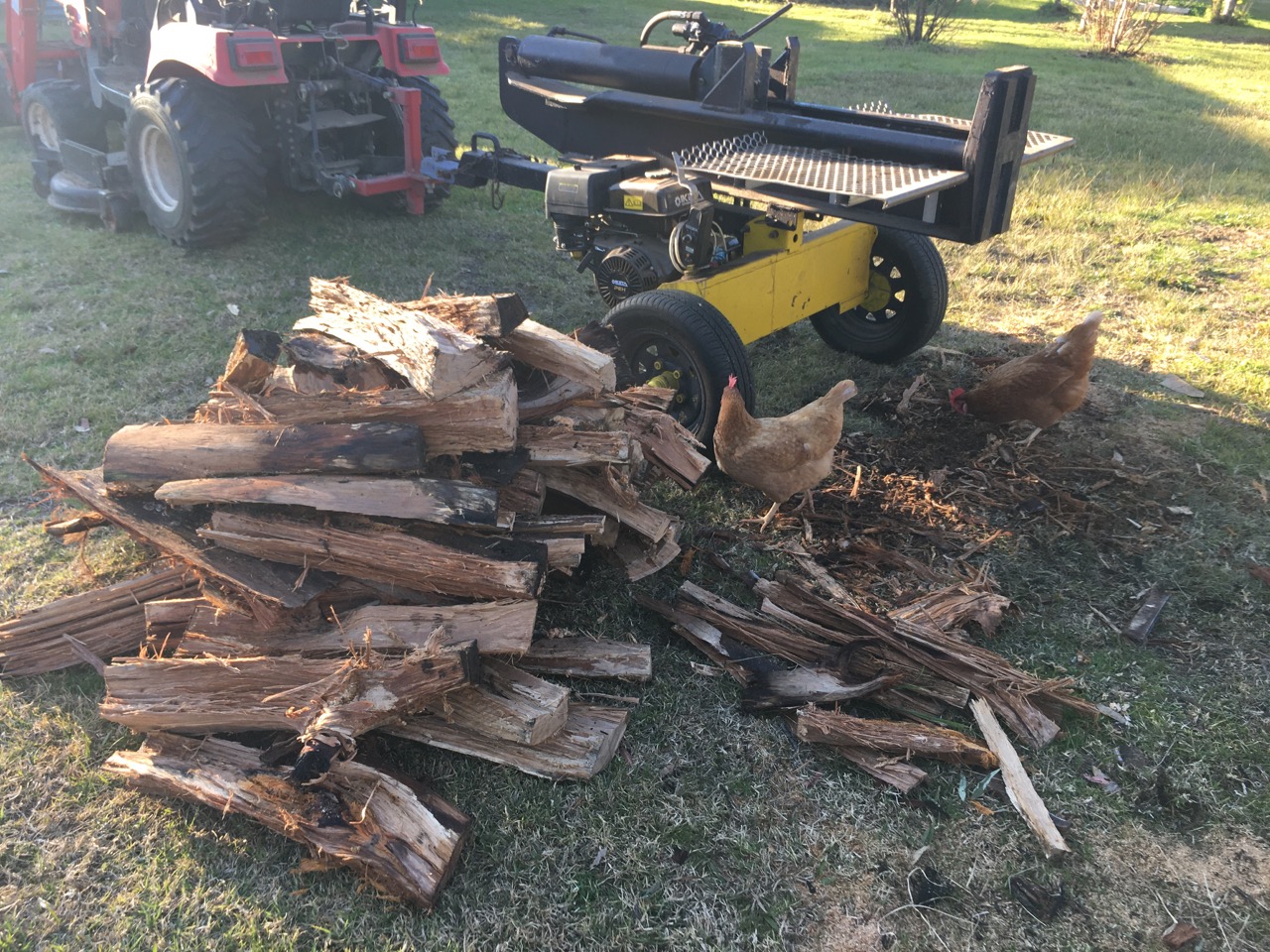
Since the firing, I have been out splitting more wood for the next wood firing, helped by the chickens of course. They even followed me into the workshop where I had 2 girls in a man shed!
With the news last week that the State Premier, Gladys Berejiklian, had resigned under a cloud of corruption allegations and had been called to appear before ICAC, there was some very disturbing cackling noises coming from the chook house. Our two chickens, given to us after the fire by out 2 very thoughtful friends Warren and Trudie, were making a bit of a fuss. These two lovely chooks arrived here from Balmain as tree change chook refugees. We had to wean them off their previous diet of smashed avo on chia sourdough rye and sipping chardonnay! They arrived with names already given, assigned to them by their previous owner. They are Edna and Gladys. We decided to call Gladys Berechickenlian, it seemed funny at the time. Now all of a sudden it isn’t appropriate any more! and Gladys is a bit upset.
So we have re-named her as Gladys ICACkle !
With the longer days and warmer weather creeping in in fits and starts, in-between cooler days and bouts of rain, everything is growing very well.All the seeds that I planted a month ago are now up and starting to grow.
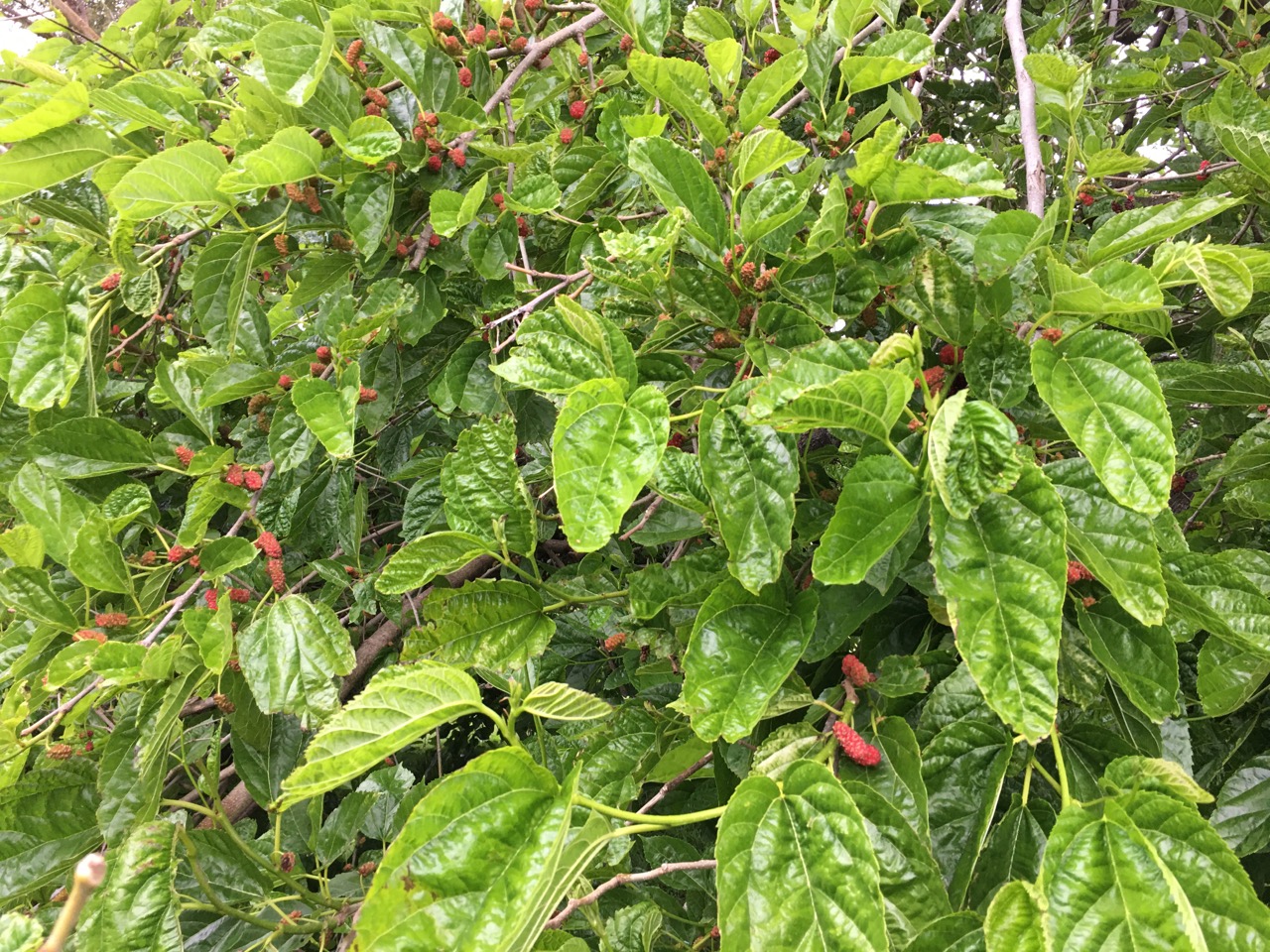
The mulberry tree has set a good crop and the berries are starting to turn red. We will be eating them in about another two weeks.
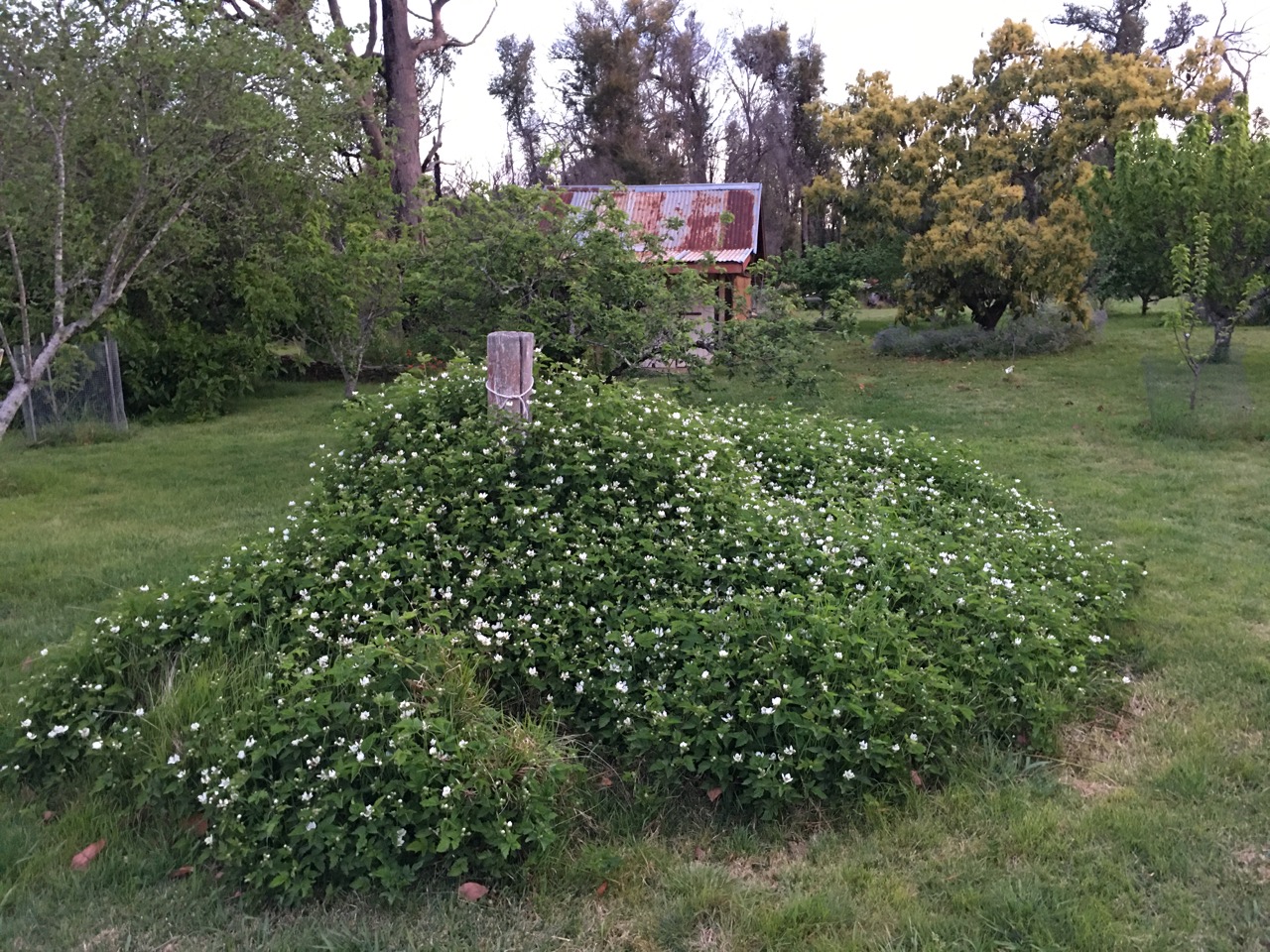
The young berries are in full flower as well and the blueberry crop is just about ripe. We have already eaten our first few blueberries.
The avocado tree seen behind the youngberries is in full bloom, so much so that it has turned from green to yellow with all the flowers obscuring the leaves.Hopefully, there will be a good crop of avocados in the autumn/winter. This tree was badly burnt in the fire and lost all its leaves, completely scorched off. Many of the small branches were killed by the heat. It still has a lot of dead wood that I need to prune off, but it is a long way down on my jobs list. There will be no ‘hungry gap’ this spring. The hungry gap is a time in the year, when long ago, there was a gap in the food production from peasants gardens at the end of winter, when the winter vegetables were mostly consumed, and the spring planting was done, but no eatable food was ready to harvest until the beginning of summer.
We harvested the last of our 3rd or 4th pick of little broccolini shoots last week, and managed to pick the first of the new season large round broccoli heads this week. Excellent timing on my part. And although I’m flat out busy building the pottery and starting to make the first of our new work, testing clay bodies and glazes. I’m proud to say that I have still managed to get into the garden every now and then to do some weeding, watering and planting. Janine goes to the garden every evening to pick what is available and ready for dinner. We have no money, but we eat well and healthily, because we don’t buy most of our food. We grow it.
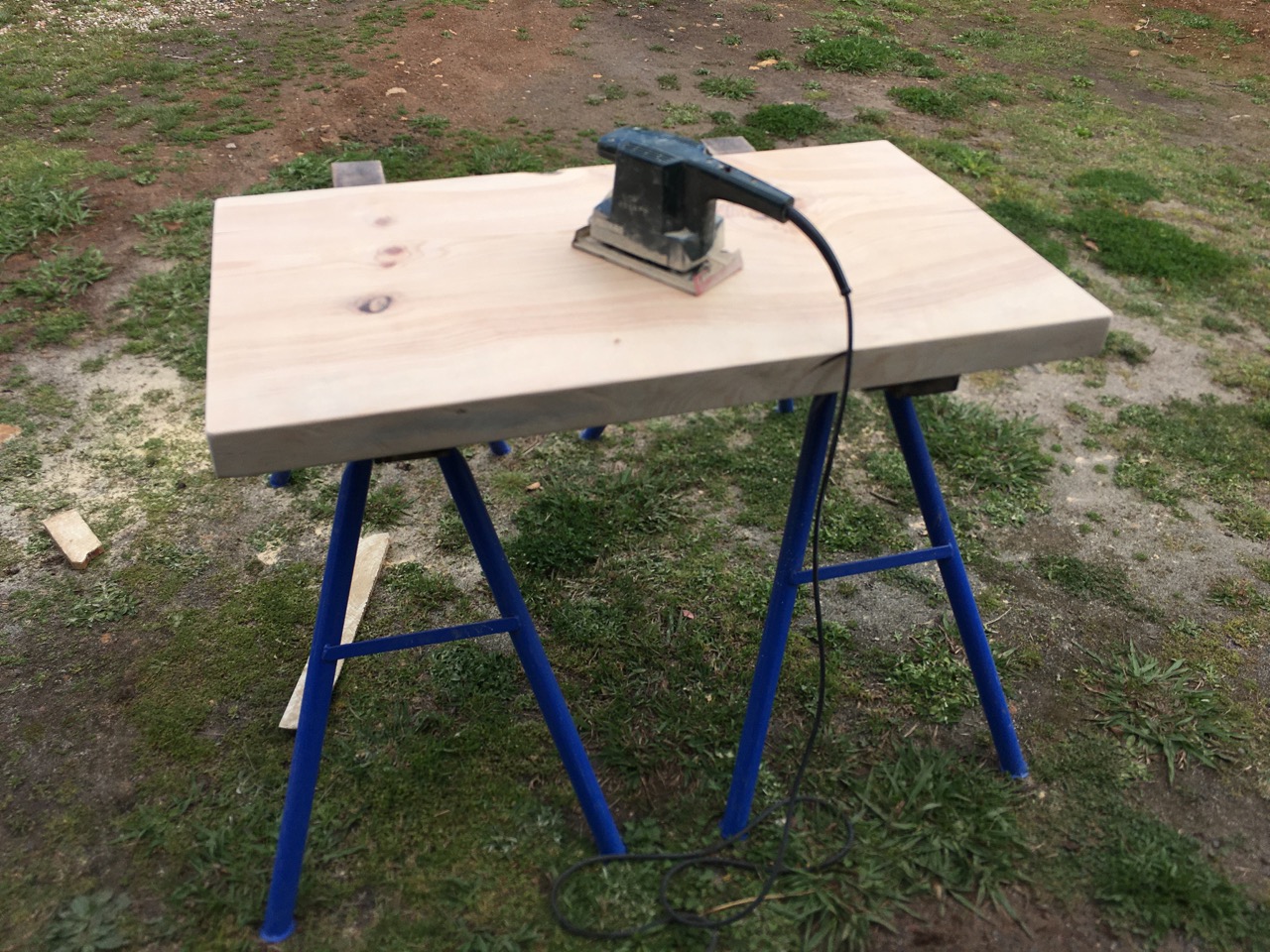
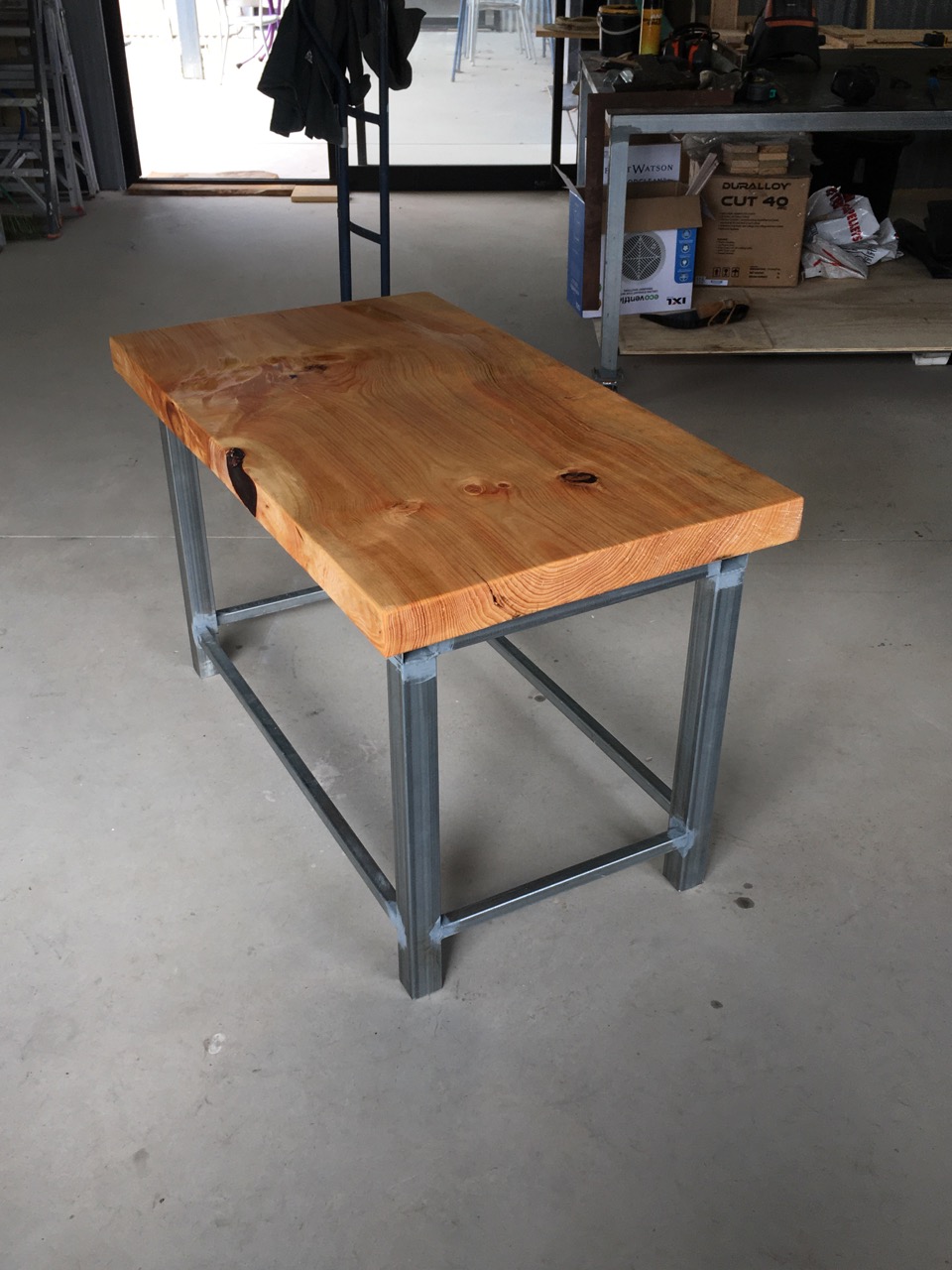
Our biggest expense each week is protein, ie, fish from the fish truck that comes up from the south coast on Thursdays and Fridays. We go to town and do all our food shopping on one of these days to coincide with the fish truck. We also make up a list of things that we need to get from the other shops like hardware, iron mongers, and plumbers supplies. As I’m building a lot of this building myself and doing 100% of the fitting out, I always have a list of steel, bolts and screws etc. that I need to make all the tables, benches, shelves, racks, stools etc. etc. This last week, I made a dedicated wedging bench to sit against the wall in the pottery. I used one of the massive slabs of pine that we milled a year ago from our own burnt pine trees that we felled. Waste not, want not. This is beautiful timber. I’m really pleased to be able to make my bench form such lovely stuff.
Our new ‘Tree Change’ Chickens Gladys and Edna have landed.
We have been given a couple of young pullets. This was a nice surprise for us, as I was missing Hillary’s presence in and around the garden these last few weeks. She always kept me company whenever I was working outside – which was often. We had intended to get another coupe of chooks in the fullness of time. I had gone in and cleaned out the chicken house pretty thoroughly, then limed the soil to sweeten it. I took the laying box out into the sun and cleaned it pretty well and left it to bake in the sun to help clean it of any mould or fungus etc. I locked the house up and left it to sit. I thought that that would be it for some time. As we are flat out busy, The thought of getting new chickens was quite low on my agenda.
Last week, our very good friends Warren and Trudie asked us if we were interested in some more chickens, as one of Warrens clients had two to give away. They were living in a small hutch in a carport in Balmain. A small, densely populated, inner city suburb. I gather that their life was largely spent on concrete. We said yes, the time was right for us and they arrived here serendipitously on the weekend. We put them in their new house and they seemed to settle in straight away. They didn’t even explore their new surroundings. The first thing that they did was scratch at the earth floor, start to excavate a small hole, scratch out a few worms, which they ate with gusto, eat some soil and then take a dust bath, laying on their side and flicking dirt all over themselves and each other.They knew they were chooks and this is what chooks are programmed to do.
We brought them snails from the vegetable garden, which they fought over and snaffled down without hesitation. We also brought them a load of chickweed, lettuce leaves, spinach and cabbage leaves, which they torn to bits and downed feverishly. They weren’t very interested in the dried feed ‘layer Pellets’ and scratch mix of grains that we had in there for them. They seem to be very happy with the dirt. I hope so.
We will have to wean them off their inner city Balmain diet of sipping Chardonnay and eating smashed avocado on organic sour dough rye. From now on it’s going to be snails, worms and free range weeds and grasses and whatever else they can find for themselves. The move doesn’t seem to have bothered them one bit. They have both laid an egg a day, without interruption since they arrived. Going from a small inner city flat to 7 acres of garden, orchards and grassland bordered by bush will give them plenty of scope to live out a more ‘natural’ chooks life.
I’ve shown my self to be very shallow and fickle. These chooks have completely taken my mind off missing Hillary and I am now quite happy with the ‘transference’ of emotion. Welcome to your change of trees Gladys and Edna! Happy scratching.
Janine delivers snails fresh from the veggie patch.Gladys and Edna explore the laying boxesCottage garden flowers in the stone fruit orchard.


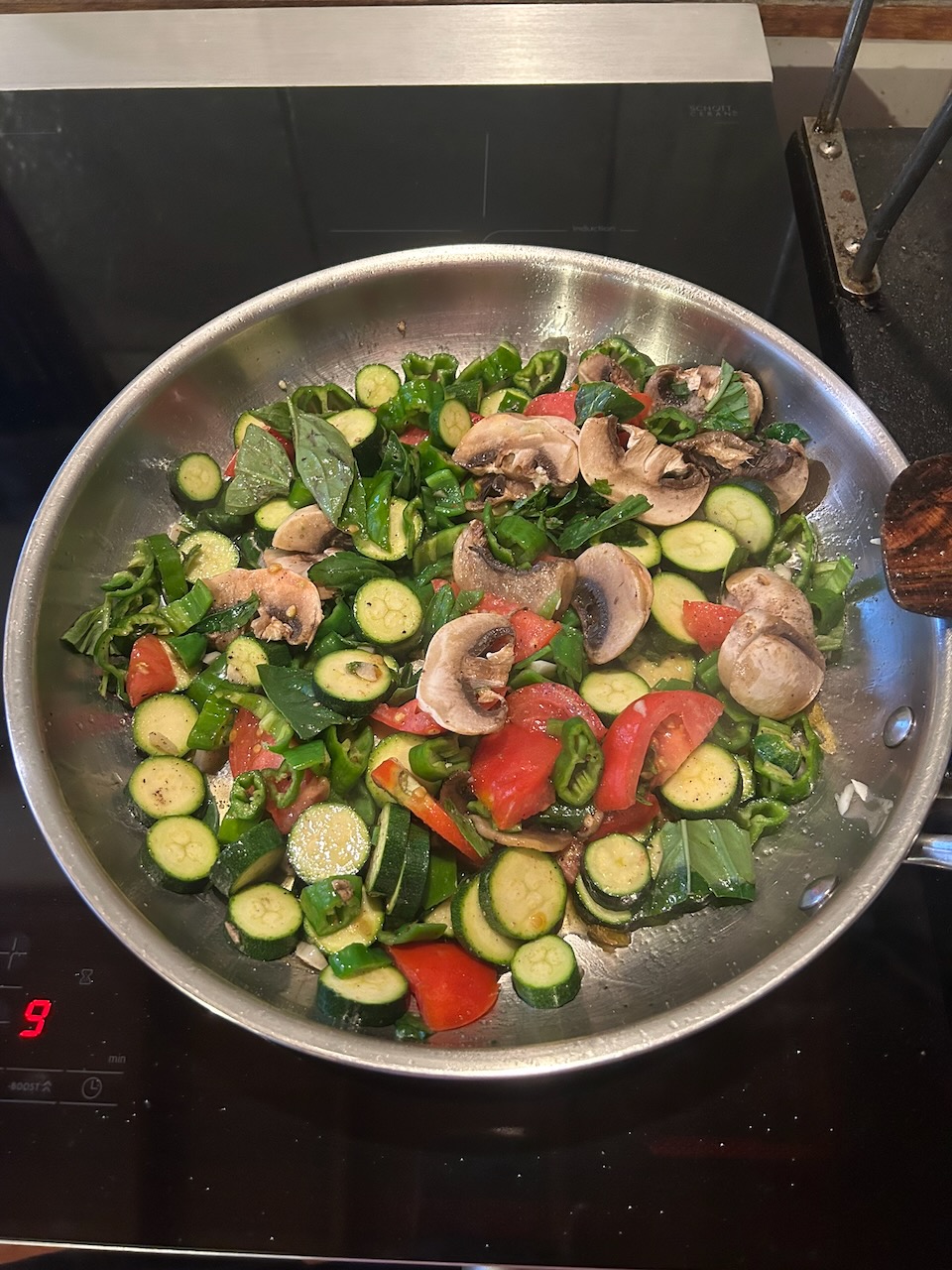


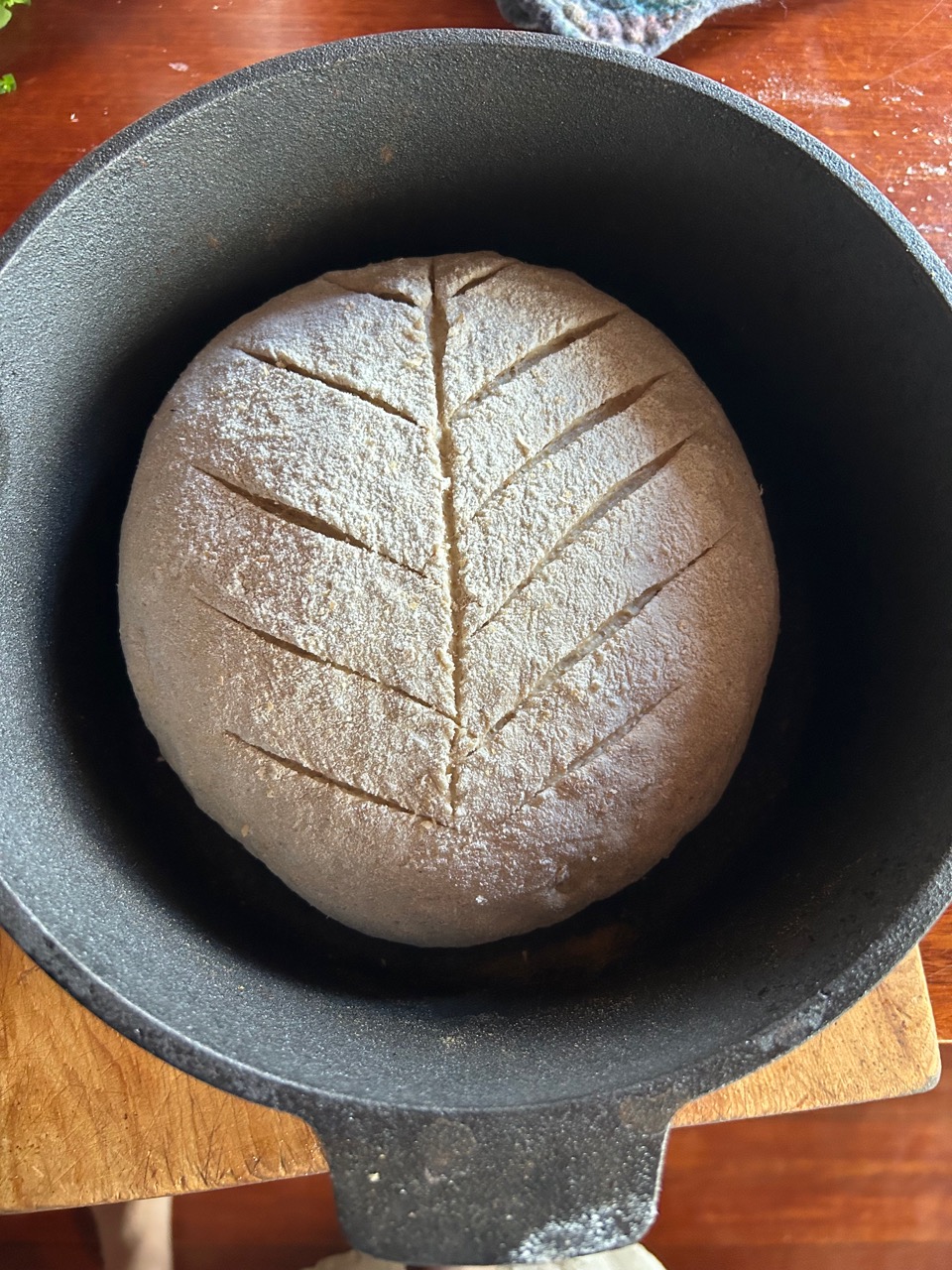


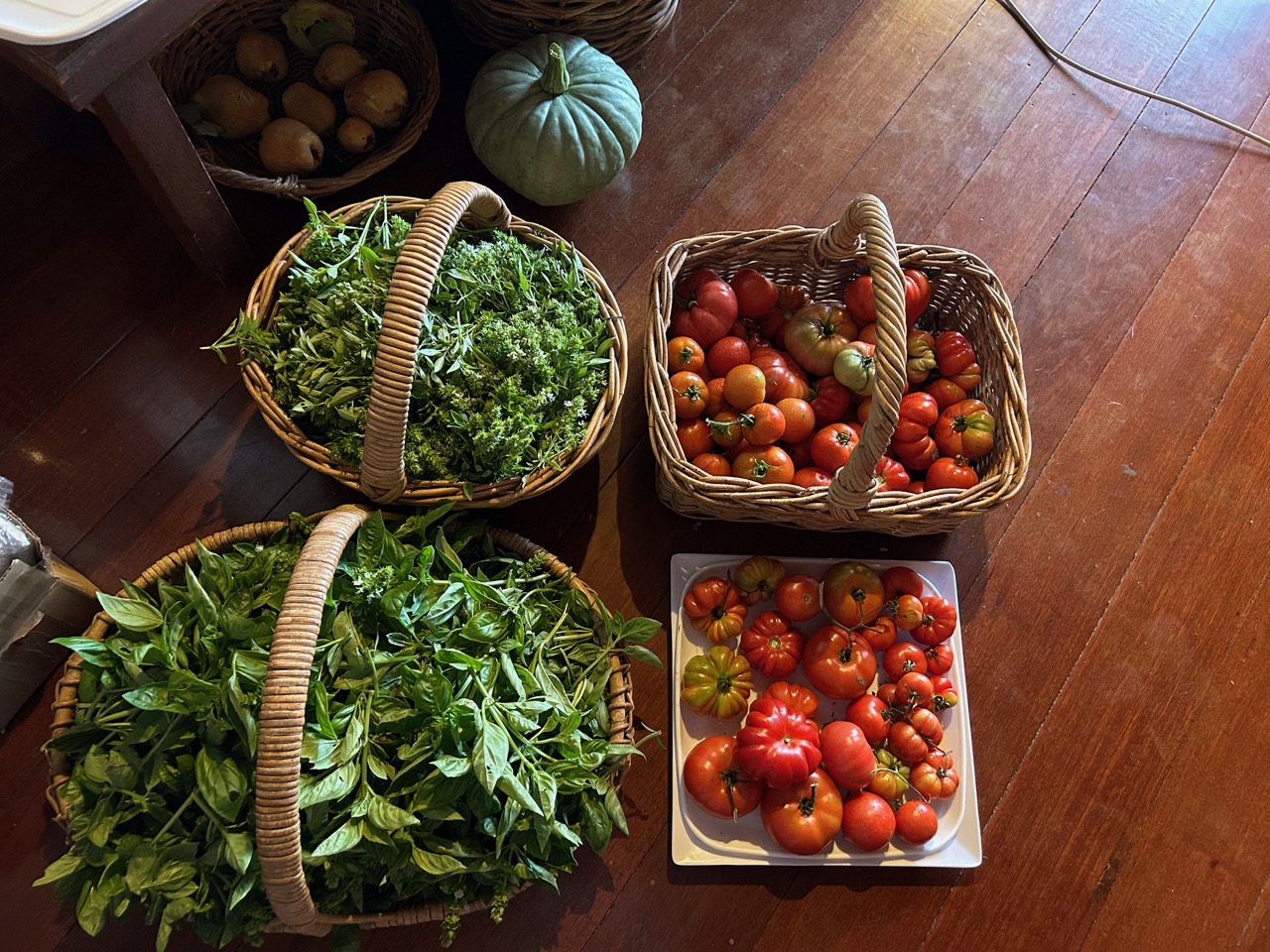
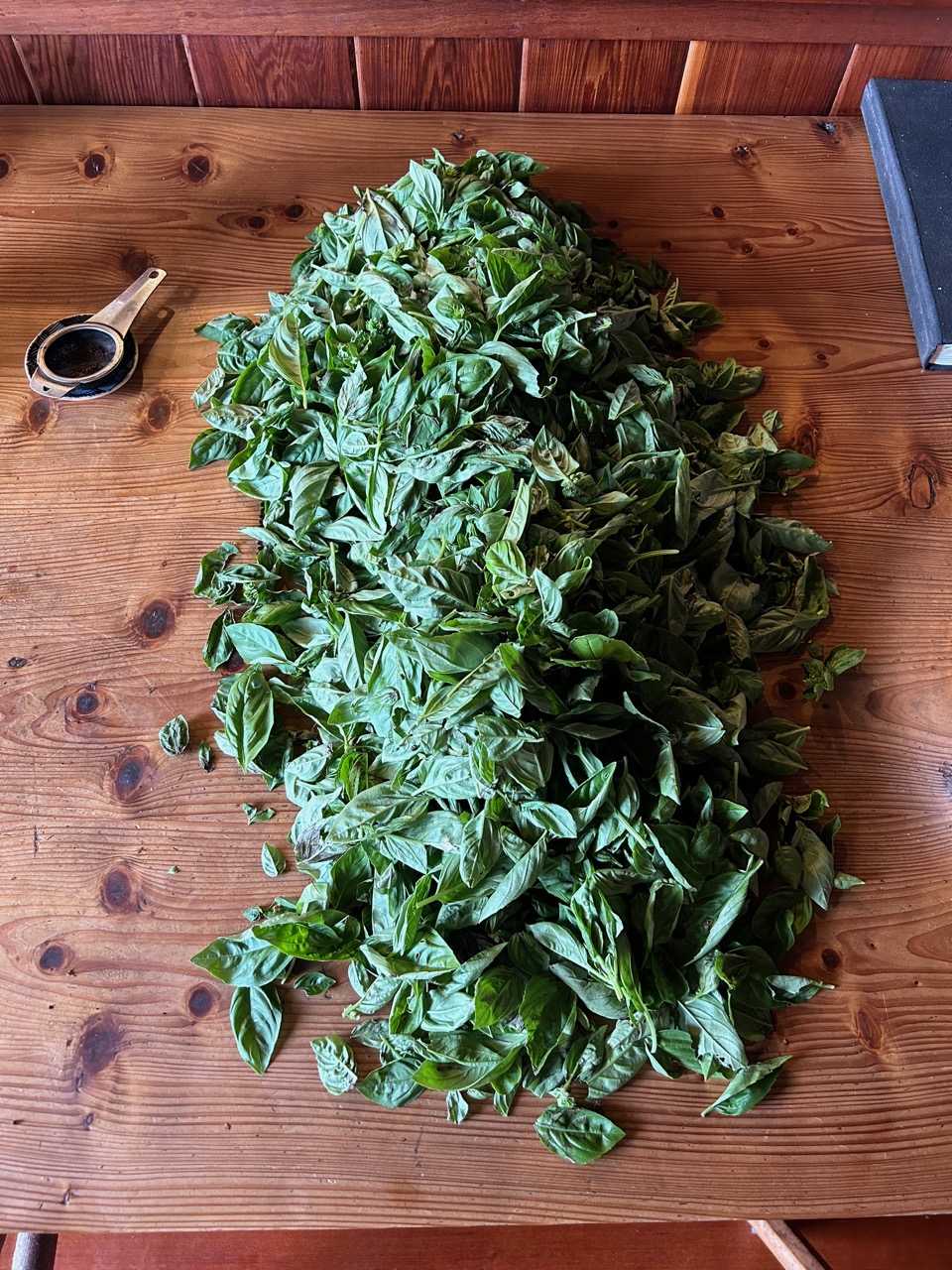
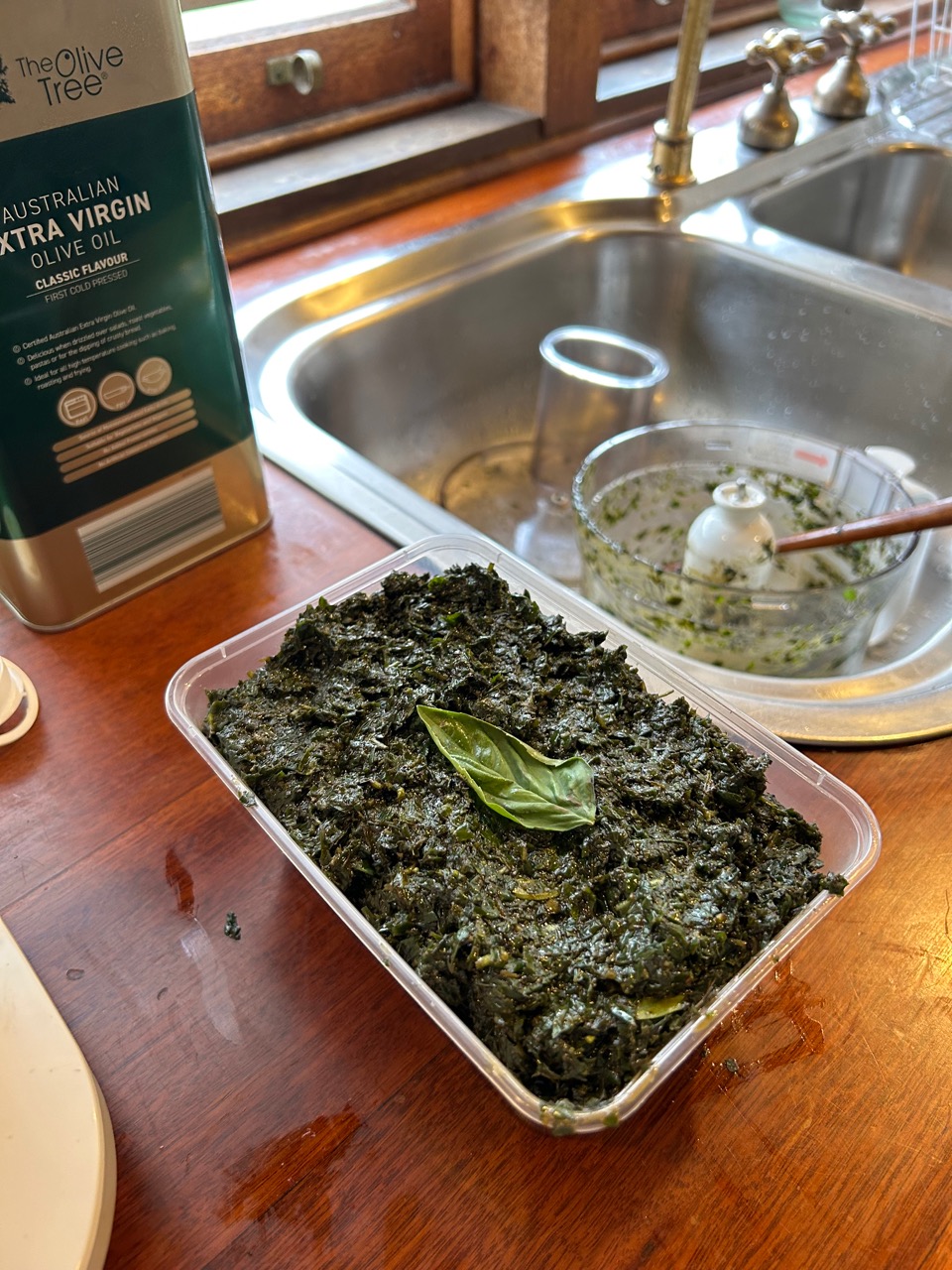






















 Tonight my Fingers Smell of Garlic
You must be logged in to post a comment.