Tomatoes, AI & 15 minutes of fame?

I just planted out the first few tomatoes seedlings. It’s still a little bit early, but I like to get an early start. It doesn’t always work out well, but worth a try, to get a ripe red tomatoes before Xmas. Last year, my early plantings all ended up shrivelled by a late frost. Such is life! It doesn’t stop me trying. A sure fire way to know that it’s the right time is when I see the wild, self-sown seeds start to pop up. But that will be another month yet.

I’ve just finished reading two books on AI. I thought that I should get myself informed in some small way, as it is coming fast and we are told will be part of almost everything that we do in no time at all. When I was working in Korea back in April/May, everyone in my circle was using it in some way. Most on their phones as recreation, others having to take courses as part of their workplace training. Some as a requirement of their studies. It was everywhere in my environment, daily experiences and exchanges with my cohort. I’m not that interested in using it. I even have ’siri’ switched off. But sure enough, I will probably be forced to engage with it at some time, – probably sooner than I imagine. I’m not a Luddite, but I’m not rushing in either. It will come soon enough, or so I’m told. I can’t see it helping me to pack the kiln, or weed the vegetables!

Richard Susskind has spent his entire life working on AI. From his Doctorate on AI at Oxford in 1980 right up until the present time, it has been his complete lifes focus. He expresses some caution, but overall, I got the impression that he is pretty ‘gung-ho’ about its potential and trajectory. As someone who has been completely immersed in its development, he feels that any shortcomings can and will be managed and overcome to make it the servant of humanity.

Harari on the other hand, as a scholar of the history of information technology. He also received his PhD from Oxford. He is quite sceptical and is very cautious about what might happen. He is not involved in any AI development. He simply looks at what has happened in the past with the development and implementation of past information technologies.

His book takes us on a long journey from the stone-age through the Bible, the witch hunts to Stalinism and on to modern popularism, and how every new technology has been coopted for individual gain, power and profit.

After reading Susskind I was a little better informed, but still perplexed. After reading Harari, I’m not exactly scared, but certainly concerned. I am at least better informed. I didn’t sit down and read them cover to cover. I read them chapter by chapter, one or two each evening. I’d rather be outside gardening if the weather is nice, or inside potting when it’s not, as these are the things that bring me the greatest pleasure. The luxury of reading is an after-dinner activity, where it has to compete with sowing patches on my worn out clothes, or watching the idiot box, on the rare occasion when there is something worth watching. So it’s taken me a month to read them both, and over that time, my attention has fallen on various articles in the news, concerning AI.

Yesterday, I read that Australian tech billionaire, Scott Farquhar wants unfettered access to all copyright material free of charge to train AI Large Language Models. He claims that AI will deliver $115 billion in productivity gains. If it does, which I’m sceptical about. That money certainly wont be going to any person whose creative copyright was stolen to train them. It will be completely swallowed by the tech billionaires, who will progress to Gazillionaires and we’ll all be charged to access our own material and any supposed benefit that might accrue.

I also read that $1.5 billion is being invested every day in AI development. Those investors are going to want their money back with interest. AI access is going to be very expensive and will be embedded in everything that we do and purchase.

I recently read an interview with Demis Hassabis. Sir Demis is a British artificial intelligence researcher and entrepreneur. He is the chief executive officer and co-founder of Google DeepMind and a UK Government AI Adviser. He, as an AI developer is totally sucked in by the hype that he is creating. Of course, he is making a motza out of it too – no surprises there. He is claiming that it will be ten times more productive than the industrial revolution and 10 time faster, plus, everyone will be getting rich and having time off etc etc. Isn’t it amazing how these very clever blokes. and let there be no doubt about it, they are ever so bright. How can they be so stupid with a capitol S! Hassabis and Farquhar are talking like simpletons (with a capitol S). None of their claims are likely to come to fruition in the way that they state. I’m not very clever, but I can smell bull s**t a mile off. Many people will be worse off when they loose their jobs.

There is already sufficient wealth in the world for everyone to be well fed, comfortable, safe and with access to effective health care, but as Harari points out, corruption, nepotism and greed mean that 70% of the available wealth is all tied up in pointless and excessive accumulation of useless assets like super yachts, personal jumbos, spare mansions in multiple countries etc. etc. Non-productive, excessive consumption, for no good reason – other than excessive greed and stupidity. (with a capitol S)

Hassabis claims, “we should be in a world of what I sometimes call radical abundance. He paints a picture of medical advances, room-temperature superconductors, nuclear fusion, advances in materials, mathematics. It should lead to incredible productivity and therefore prosperity for society. We should be in an amazing world of abundance for maybe the first time in human history.”

He uses the word ‘should’ a lot. But it won’t turn out like he is suggesting! No good will come of this over-hyping of AI. There will still be a four year waiting list for an operation in NSW, There will still be genocide in Gaza and senseless slaughter in Ukraine. They should know better! They should be talking about all the unemployment that is going to come along with it. How will this prosper society?

I heartily recommend Yuval Noah Harari’s book “Nexus”.

On a brighter note;

In Korea, they have these giant TV screens on the side of major roads used for advertising, just like we have static bill boards here.

I got these images sent to me from 2 different friends a few days apart. I can see that it is me on a giant TV screen on the side of the freeway in Korea. I can’t read it, but I know the image. Its from the TV documentary made about my work in Korea during my recent trip there. I’m assuming that it is an add for the doco? 

It’s all about my work researching low emissions technology in wood kiln firings, and introducing it to potters, research institutions and universities, to try and clean up the atmosphere, and make the world a better place. Potters aren’t responsible for very much of the atmospheric pollution in the world on a per capita percentage basis,  cleaner cars and industrial processes will make a much bigger impact, but every little bit helps. Potters must play their part. I’m doing my bit – without AI.

The main reason for potters and ceramic institutions being interested in my work, is because there is a substantial local blow-back when people see a kiln chimney belching out black smoke. So they quite rightly ask, why are they still allowed to be so filthy and polluting? Change is coming, albeit slowly. A World-Wide the ban on diesel engined vehicles starts to come in, in some countries in 2035, and by most by 2050. 

Once coal burning power stations are all closed down, and these broad, society wide changes are introduced. I predict that it will be impossible for a potter to belch out black smoke and get away with it. There will be legislation to severely limit carbon particulate emissions. Potters need to be engaging with this issue now, so that when the time comes, we can show that we can, if not eliminate, then at least severely limit any PM 2.5’s emitted from our chimneys. 

It’s going to be a big challenge, and might not prove to be even possible, but the sooner we start, the sooner we will get to a good workable and hopefully affordable solution. We have about 10 years.

I’m working on it.
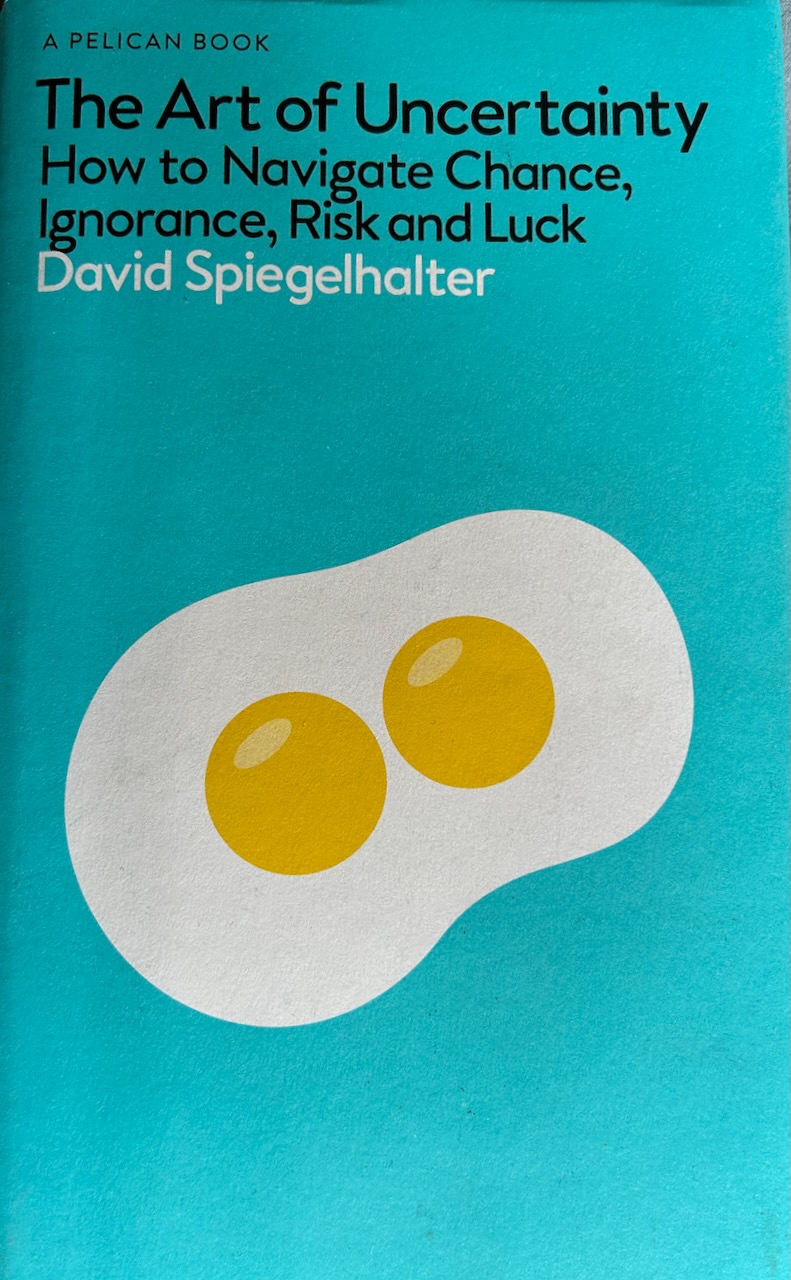
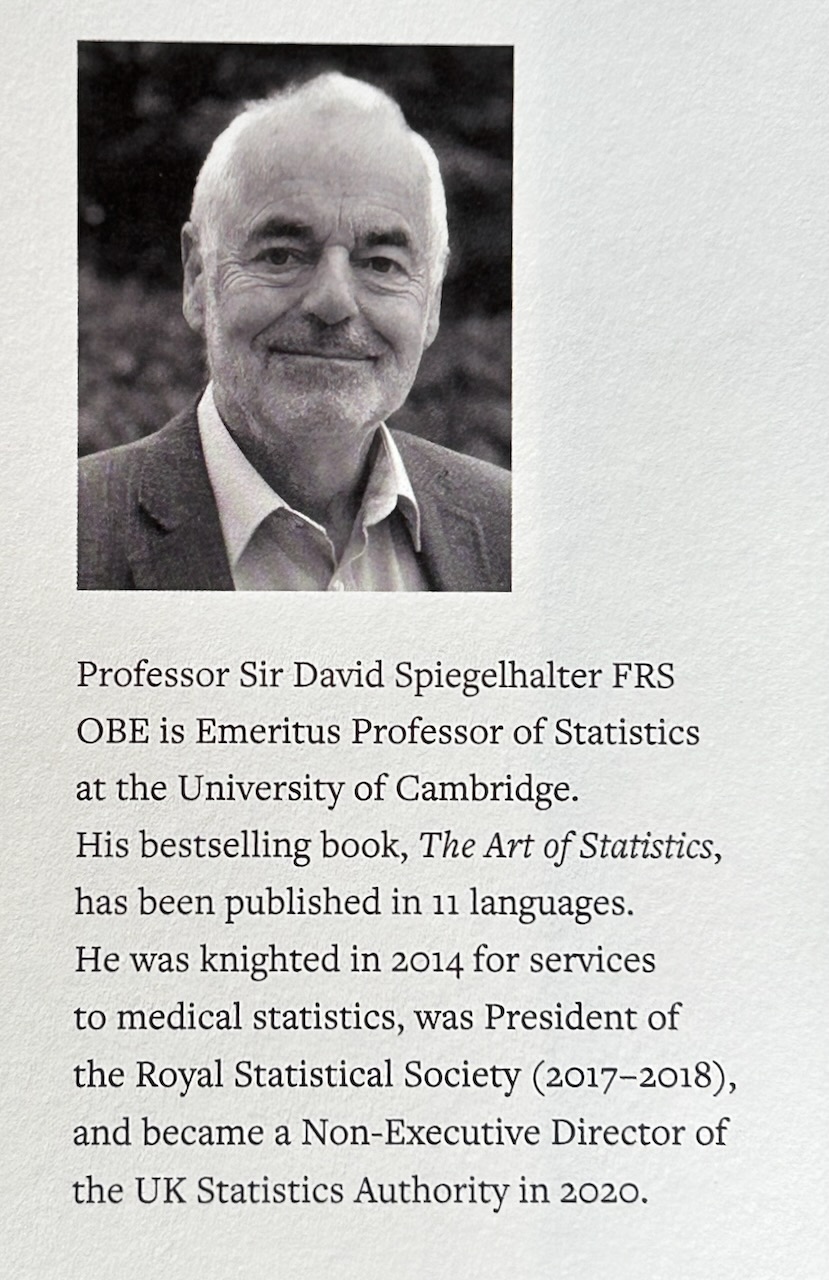
The Art of Uncertainty

I’m reading a book at the moment, all about probability! It’s a really interesting read. I’m enjoying it and even though its a very thick book, about 2” or 50mm thick. I’m racing through it, but I’m not sure that I’ll finish it. A week ago I would have said with certainty that I would have finished it quickly, but having read most of it now, I’m rather reluctant to make such a bold claim. I’m uncertain. The first thing I learnt from reading this book was that probability probably doesn’t exist!

‘The Art of Uncertainty’ is written by Sir David Spieglehalter FRS OBE, Emeritus Professor of Statistics at Cambridge University. Someone to take seriously indeed. The sub-title of the book is ‘How to Navigate Chance, Ignorance Risk and Luck’. I was lucky enough to navigate across it by chance and took the risk to disabuse my self of some of my ignorance.

I’ve never been a person blessed with a sense of certainty, I’m probably more of the perplexed personality type – if there is such a one? So I have really enjoyed reading Prof Spieglehalter’s explanation of chance, ignorance risk and luck. There is so much to it. After explaining each topic, he gives an example from real life, then reduces every example to a mathematical model basis, which is also really fascinating. I’ve never been that interested in maths, but Prof Spieglehalter explains it so well, I could follow most of it. 

“Why probability probably doesn’t exist (but it is useful to act like it does)

Life is uncertain. None of us know what is going to happen. We know little of what has happened in the past, or is happening now outside our immediate experience. Uncertainty has been called the ‘conscious awareness of ignorance — be it of the weather tomorrow, the next Premier League champions, the climate in 2100 or the identity of our ancient ancestors.

In daily life, we generally express uncertainty in words, saying an event “could”, “might” or “is likely to” happen (or have happened). But uncertain words can be treacherous.

Attempts to put numbers on chance and uncertainty take us into the mathematical realm of probability, which today is used confidently in any number of fields. Open any science journal, for example, and you’ll find papers liberally sprinkled with P values, confidence intervals and possibly Bayesian posterior distributions, all of which are dependent on probability.

And yet, any numerical probability, I will argue — whether in a scientific paper, as part of weather forecasts, predicting the outcome of a sports competition or quantifying a health risk — is not an objective property of the world, but a construction based on personal or collective judgements and (often doubtful) assumptions. Furthermore, in most circumstances, it is not even estimating some underlying ‘true’ quantity. Probability, indeed, can only rarely be said to ‘exist’ at all.  All of statistics and much of science depends on probability — an astonishing achievement, considering no one’s really sure what it is.”

Life is uncertain. All models are wrong, but some are more useful than others!

As probability probably doesn’t exist. I’m probably not too sure what the last chapter will tell me. If I finish the book!

We probably really don’t know much at all. Get used to it.

Nothing is ever finished, nothing is perfect and nothing last forever.

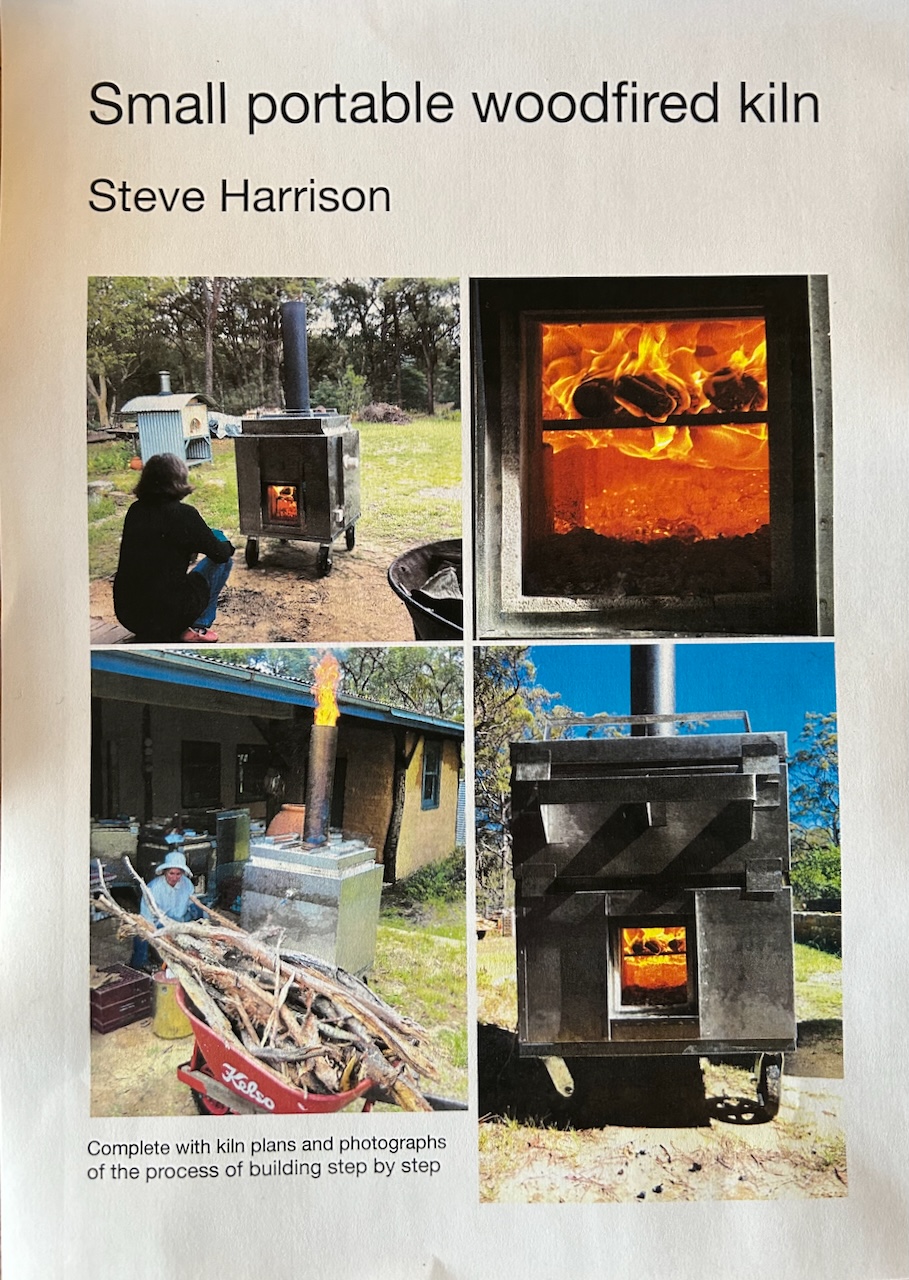
Small Portable Woodfired Kilns

I have a new book available now on the topic of my Small Portable Woodfired Kilns. 

I have been working on this book for some time. It was started before 2019. 

However, I was so caught up with the clean-up and then the re-building, after the catastrophic bush fire that destroyed our place, that I was not able to get back to the book until recently.

I get at least one email every week enquiring about my blog posts on the topic of these little portable wood kilns.

They seem to have the potential to become very popular, given the number of enquiries that I get about them.

Before the fire in 2019, I used to build and sell these little beauties. I used to build 10 or 12 of them at a time, in big batches, to make it most efficient and to keep the price down.

It turned out that I had quite a bit of descriptive writing about them, mostly cobbled together from my blog posts, but, I needed to do a bit of technical drawing to draw up the details of the two final designs, including the dimensions. The plans were never properly drawn. I just kept on adapting the previous plans by hand as the ideas flowed into reality, developing kiln by kiln.

Finally, I spent some time trawling through my photo albums to extract all the step by step images that I needed to illustrate the text fully with the detail of information that a keen amateur kiln builder/hobbyist might require to understand the full process of assembly.

During the decade that I spent developing these little kilns, I started from a very basic first attempt, and slowly worked on the design, improving it and polishing it. over  several years and 12 iterations. I finally ended up with two different kilns, both good, but slightly different. One smaller, and the other larger. These little gems are capable of firing to stoneware, cone 10 in just a few hours. 

Our fastest firing to stoneware was 2.5 hrs, using just one wheel barrow of sticks. However, I think that the results are better at around 4 to 5 hours and 2 to 3 wheel barrows of sticks. All the details are in the book.

The price is $50 plus pack and post

Pee, Pooh, and the Phosphorous Fertilizer Crisis

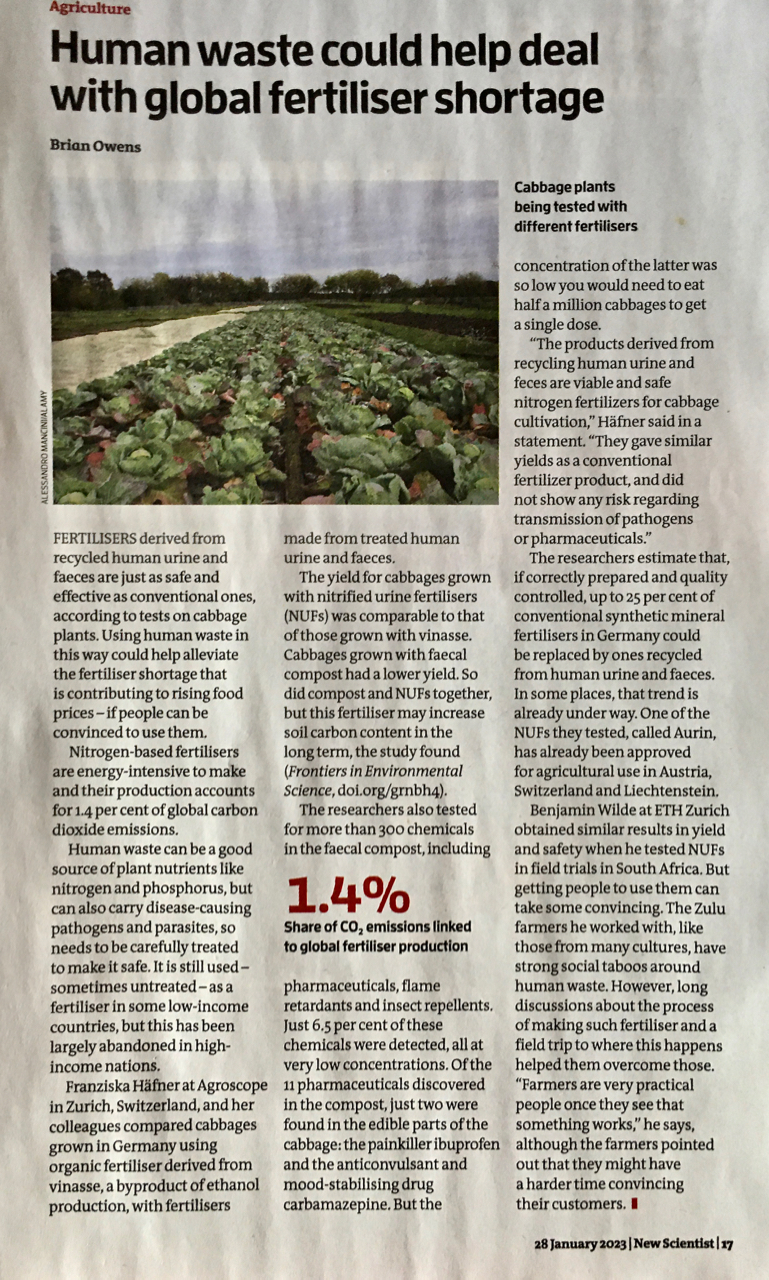
I have been reading an interesting article in a recent edition of the ‘New Scientist’ magazine. 28/2/23, P17. No. 3423.

Some genius has come up with an astonishingly new idea to solve the worlds fertiliser shortage crisis.

You can use human and animal faeces as fertiliser!!!  Who’d have thought!  Amazing!

And it’s safe.

It is apparently being used in some 3rd world countries at this very moment.  🙂

Just in case you hadn’t realised. We (Australians) pump all our precious phosphorous and nitrogen out to sea. No one ever thought that we would ever run out of anything.

After-all, it’s only shit isn’t it.  Well, It seems that we have, or are, running out of lots of things. The days of plenty are coming to an end, or have ended. We have to take account.

Now ’super’ (super phosphate) is in short supply and crop yields are dropping. International shipping is in dis-array. So many shortages, and we are still pumping all of our own good fertiliser out to sea. It’s going to take years to turn it all around.

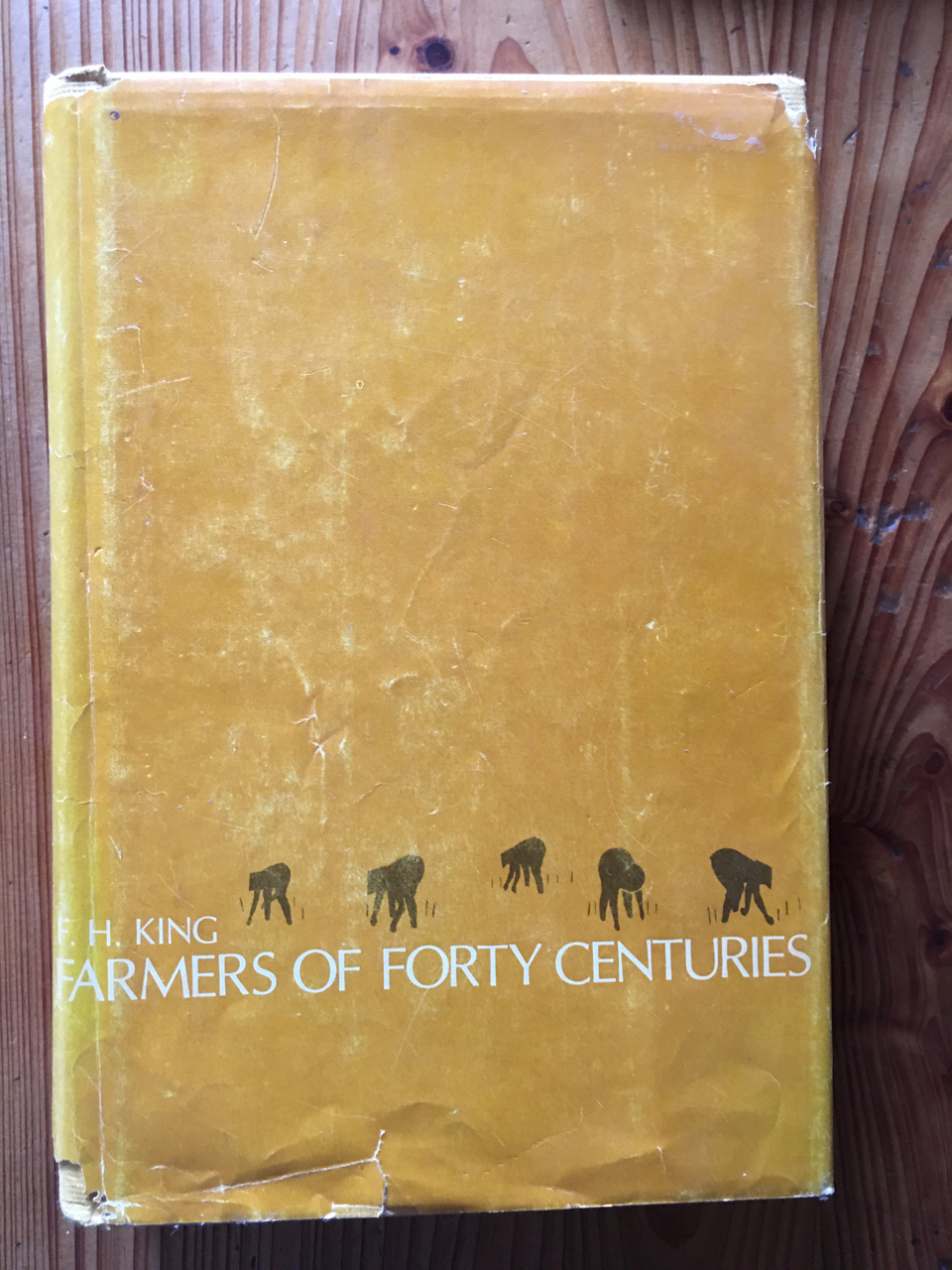
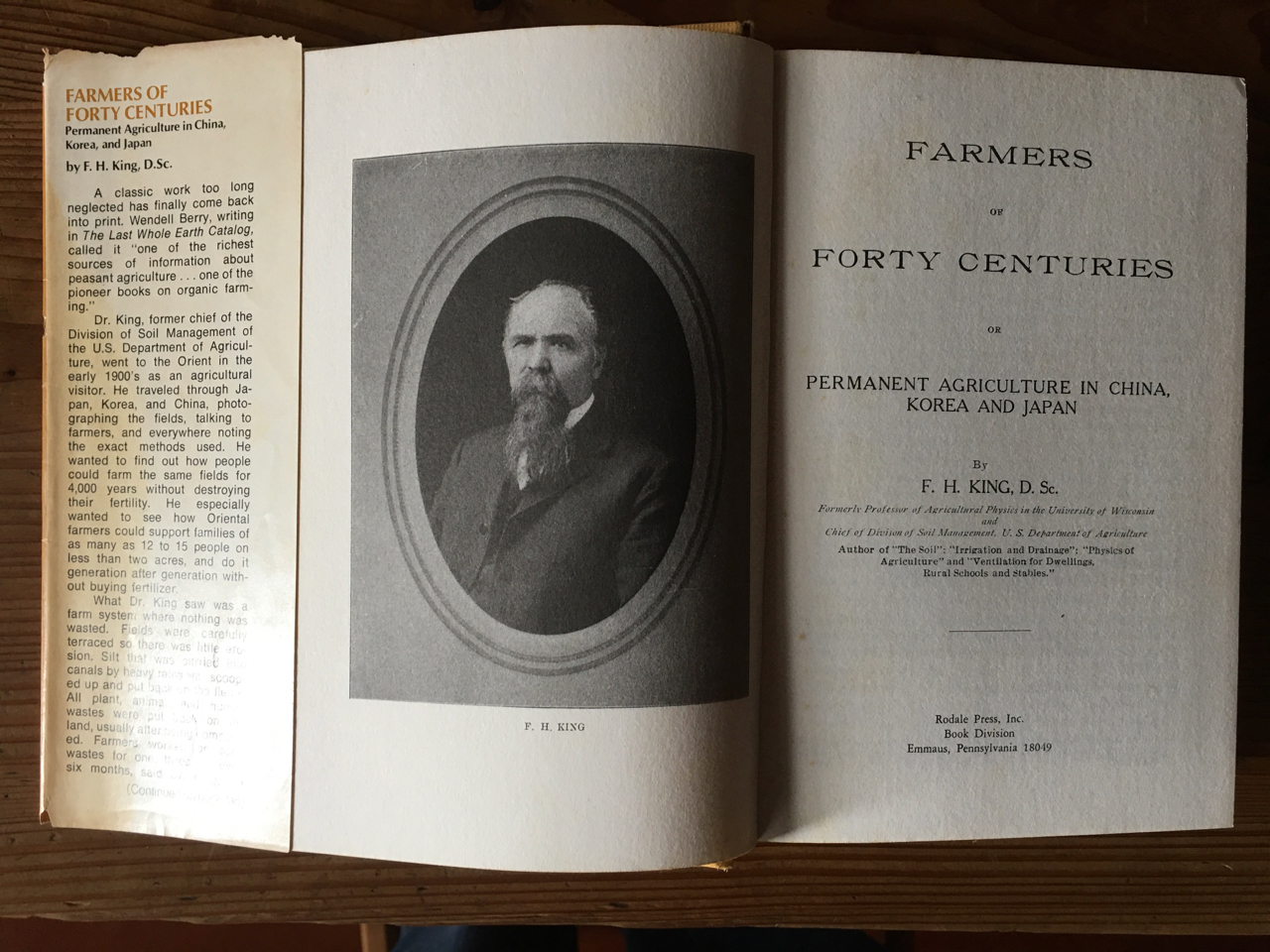
A few years ago, I posted on my blog a brief review of a book called ‘Farmers of 40 Centuries’

This book is basically a review of Asian farmers use of manure and compost to keep their soils fertile for over 4,000 years of continuous agriculture.

There are no new ideas. 

It was first published in 1911. I read the facsimile re-print in the mid seventies. 

Janine and I have been using composted manures, mostly chicken manure, in our gardens and orchards for 40 years without any ill effects, that’s just 1% of the history in the above book, but we do what we can.

We pump our septic tank over flow into trenches in, around and under our fruit trees in our orchards, instead of just allowing it to seep into the lawn area.

There is a lot of good nitrogen and phosphorus in that effluent, we don’t want to see it go to waste.

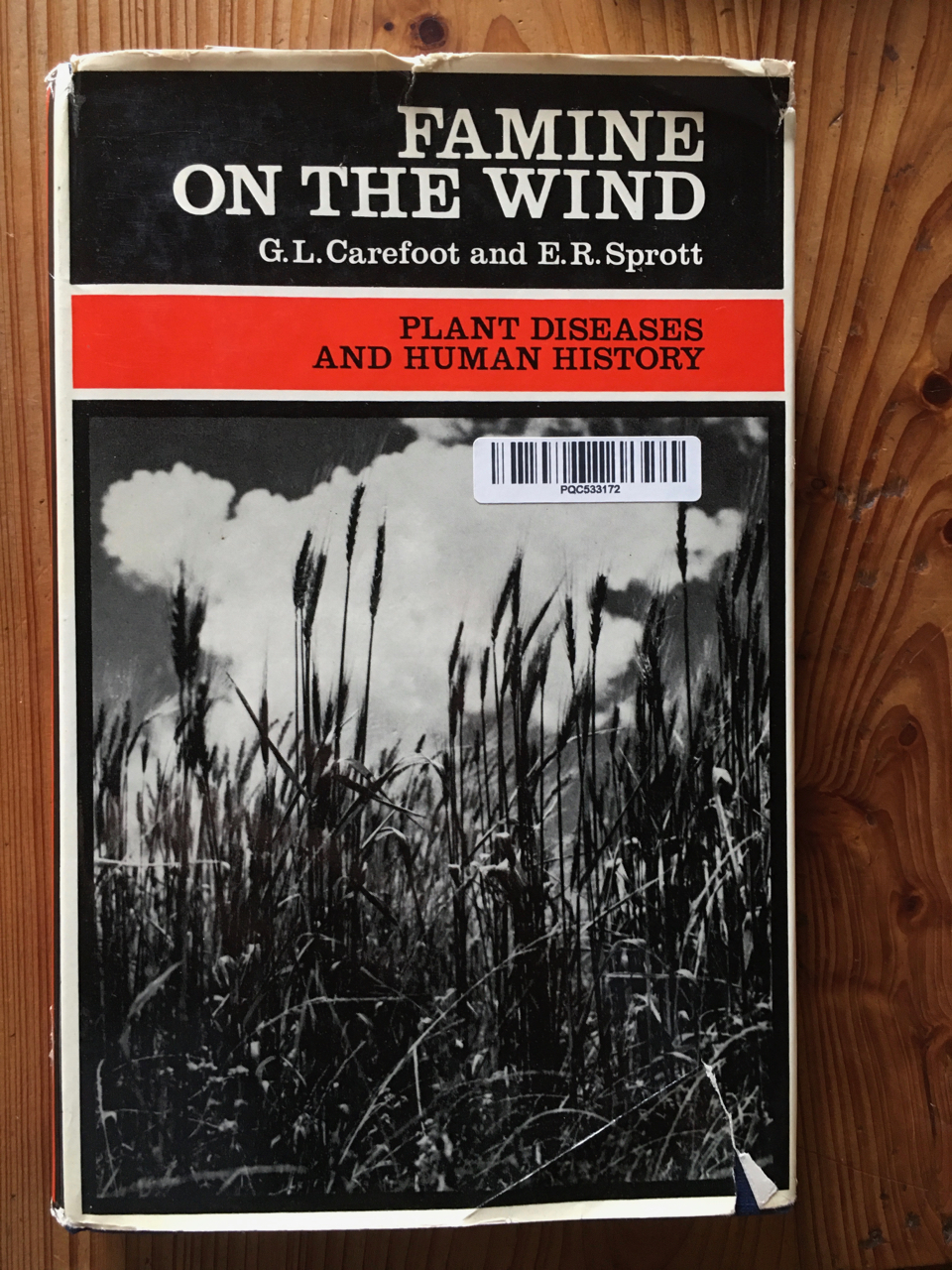
I have also been re-reading ‘Famine on the Wind’, another book that I first read in the ’70’s. a history of agriculture and plant diseases, and ‘The Seed Detective’. A history of seed collecting and seed merchants. He looks back as far as Pliny the Elder for info on plants, seeds and the development of our most common vegetables. Both really interesting reads.

I don’t know where I find the time to read, but it is usually in those few minutes before going to sleep.

Reading About Peasant Gardening and Cooking

I’ve been reading a few books on French cooking. Not, cordon bleu, or bistonomy, but old peasant recipes for home-grown, self-reliant peasants cooking of the South West of France in the Perigord and Gascon regions.

I’m interested in how people manage their vegetable gardens to keep a steady flow of food coming all through the year. How they preserve their excess and particularly, just how inventive they were at creating wonderful and delicious recipes from some quite un-promising ingrediants.

I was introduced to organic back-yard vegetable gardening by my grandfather and mother. But didn’t take sufficient interest in the details of it all at the time, as I was quite young, and kicking a ball around the yard was more fun.

When Janine and I moved into our first own rental property in 1975. One of the first things that I did was to dig up the back yard, start to plant veggies and build a compost heap. It seemed so natural to me. It was just what you did if you wanted to live cheaply and frugally. Planting vegetables went hand in hand with building the first little kiln, both equally important.

A year or so later, after we were burnt out in the first of 3 bush fires that we have lost potteries to, we bought the Old School building here in Balmoral Village, we started a vegetable garden as soon as we got the key, even before we had the title deeds. Long before we moved in. We would come down on weekends and plant and then water the seedlings, so that there would be food for us when we arrived permanently.

We were lucky to meet and become very close to a couple of the local residents, John Meredith the writer, musician and folklorist, and Dot and Roger Brown, who were the village’s longest residents. Dot’s mother was still alive then, she lived till she was 103 years old. Both of these older residents had extensive vegetable gardens and small household mixed orchards. They were a great inspiration to us and were so supportive in each passing on either chickens or ducks in breeding trios to get us up and running. We set up a pottery throwing room in the front room of the 2 room school classroom. We also cleared the land, fenced off the area for the stone fruit orchard, all in the first few months and had 30 fruit trees planted that first winter.

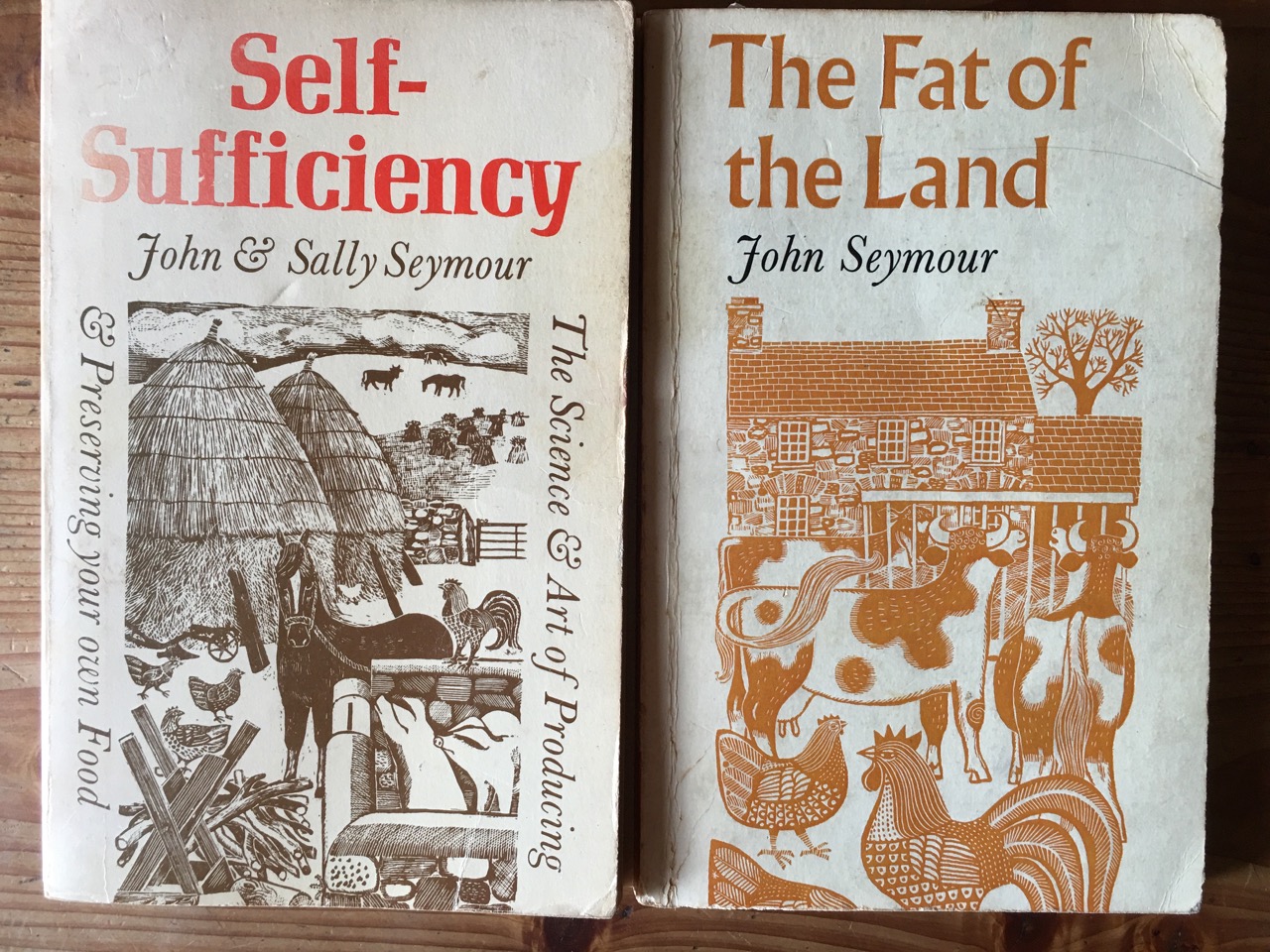
A few years later Sally Seymour came to visit us from Wales. She and her husband John Seymour wrote books about their life of living off the land in a small scale, self-sufficient way. She was so knowledgeable about everything that we needed to know. She was also a potter. Sally returned a couple of years later and lived here with Janine for a few months, while I was away in Japan studying.

We had already bought and read both of their earlier books before we met Sally. Sally is still alive and living in Wales with her daughter and son-in-law. You can check out how they still live and work creatively and sustainably at their web site. <https://www.pantryfields.com/sally-seymour>

‘The Fat of the Land’ is still in print and available from their website.

I enjoyed reading about Kate Hill’s life and travels on a barge boat in Gascony. I didn’t learn very much that I hadn’t already read elsewhere, or already learnt to cook myself, but it was a good read. 

I picked up this book for $2 in a 2nd hand book shop, an interesting read by an American food writer about his one year sabbatical spent in Gascony learning to cook.

Peter Graham was a professional writer who lived in France for 40 years. He died recently. He was ‘The Guardian’ newspaper’s food and restaurant critic for 20 years. The book is a list of recipes linked by anecdotes, and has less story line to support it, more in the vein of Patience Gray’s ‘Honey from a weed’. However, I actually preferred the book ‘Extra Virgin’ by Annie Hawes, which is all amusing story and no recipes, but she has humorous descriptions of the local wives preparing food and cooking. All described in a very lighthearted manner.

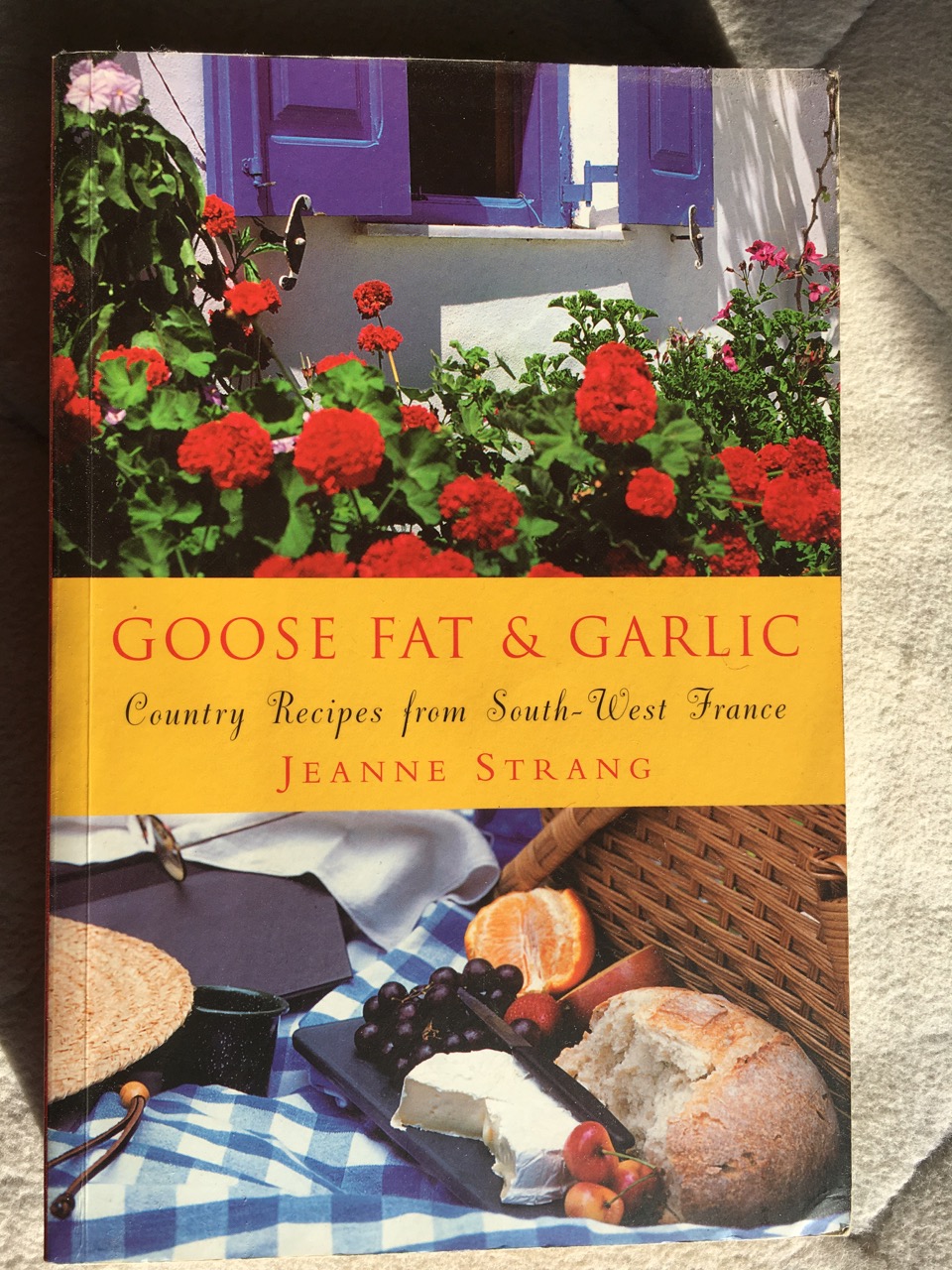
Jeanne Strang’s book was interesting mix of personal story line and recipe book. I learnt a few things that I have incorporated in to my cooking. On and Off.

None of these books are your typical recipe books. None of them have full page glossy photos of luscious food. You’ll need Jamie Oliver or the English food porn lady for those. These are all black and white, text based books, printed on cheap, pulp, paper by people who love cooking, and living in France. They have all lived and worked in Gascony and collected their anecdotes and recipes over extended periods of time living the life in amongst the locals.

Having digested all that these other books had to offer, I tempered my appetite for goose fat and foie gras, by reading Norman Swan’s latest on how to live a healthy life for longer. 

Basically his recommendation is not to eat all those fatty, rich, calorie loaded foods, instead he recommends to intensionally starve yourself – albeit with moderation. He recommends following the ‘Mediterranean diet’, based on pulses, vegetables, a little lean meat or fish and to avoid preservatives, salt and smoked or saltpetre treated meats. He also says to put in at least one hour of vigorous exercise each day. YES, one hour vigorously, each day! To stimulate metabolism and burn off calories to keep your weight down. 

I think that I might probably be OK, even better off,  to just eat those French cooking books listed above. Paper is fat free, high in ruffage and low in calories, just right. 

Normal would approve.