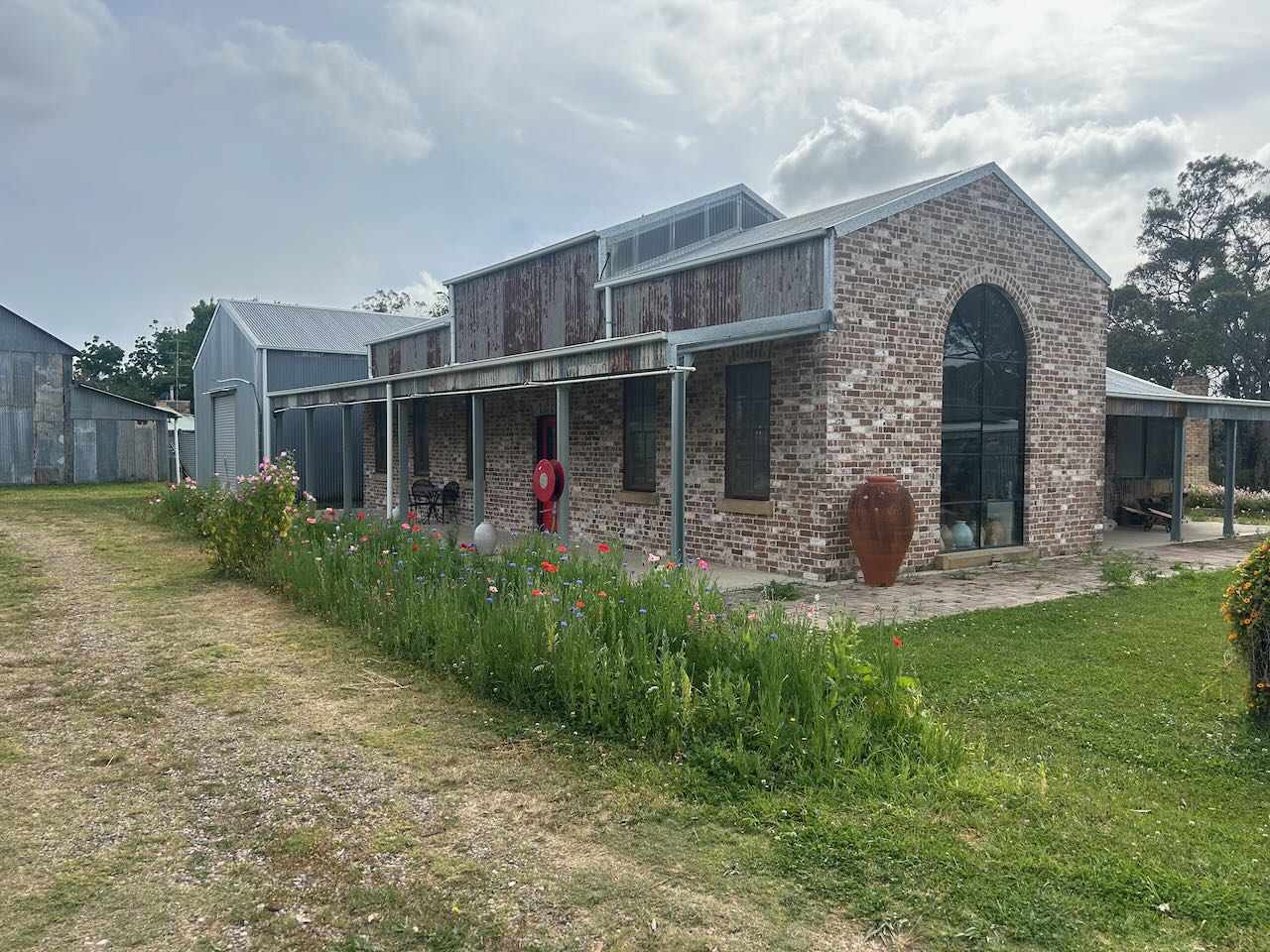
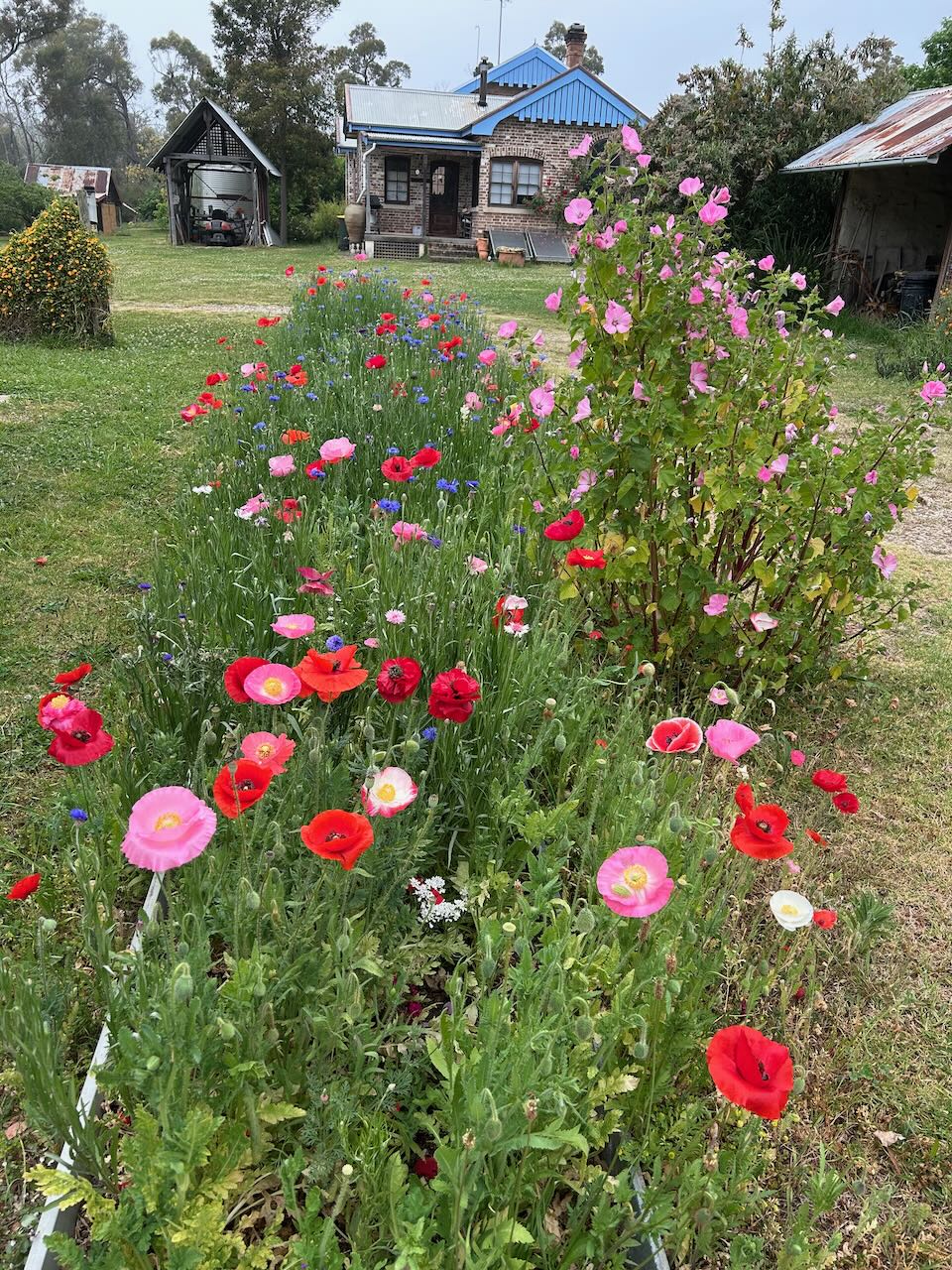
The pottery and its garden are looking great just now and for the next few weeks. All the spring flowers are coming out, just in time for the Open Studio weekends.
We are firing both electric kilns every day for the past week. We are getting all of the final glaze firings done. Working like a well oiled machine. We have been so lucky, that the sun has been shining bright every day – until today. It’s overcast with just a few spots of drizzly rain now and then. Just enough to stop me wanting to go out and do some gardening. I have two more firings on. One stoneware and one gold lustre firing. It’s all coming together.
We have managed to do all our firings on sunshine up until this afternoon, when it had turned quite overcast. Not only have we managed to glaze everything with our own electricity, but I have been careful to manage it so that I have kept both electric cars fully charged, at the same time and still been able to sell just a little of our occasional excess back to the grid to cover our daily access charges. It’s important to me to live a green, low carbon, passive, low energy, non polluting, life of minimal consumption, and we are doing it. We are managing it pretty well. But this afternoon, I will be withdrawing some expensive ‘green’ sustainable energy from the grid, for the last 3 hours of these current firings.
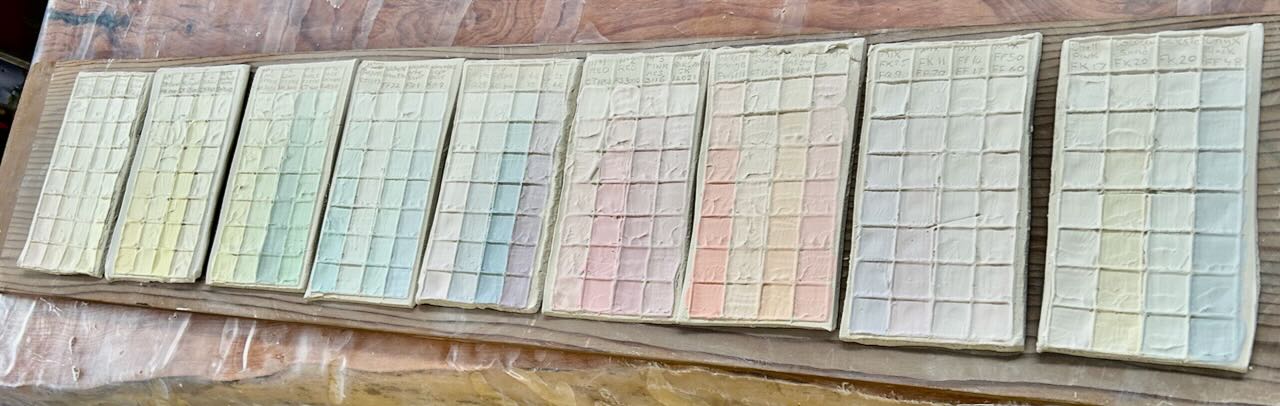
I have been experimenting with some new coloured pastel slips that I developed before we went to WA for the conference. See my previous post; More rain and tasting cider, Posted on
I weighed out almost 300 different pastel tones of stoneware slips.
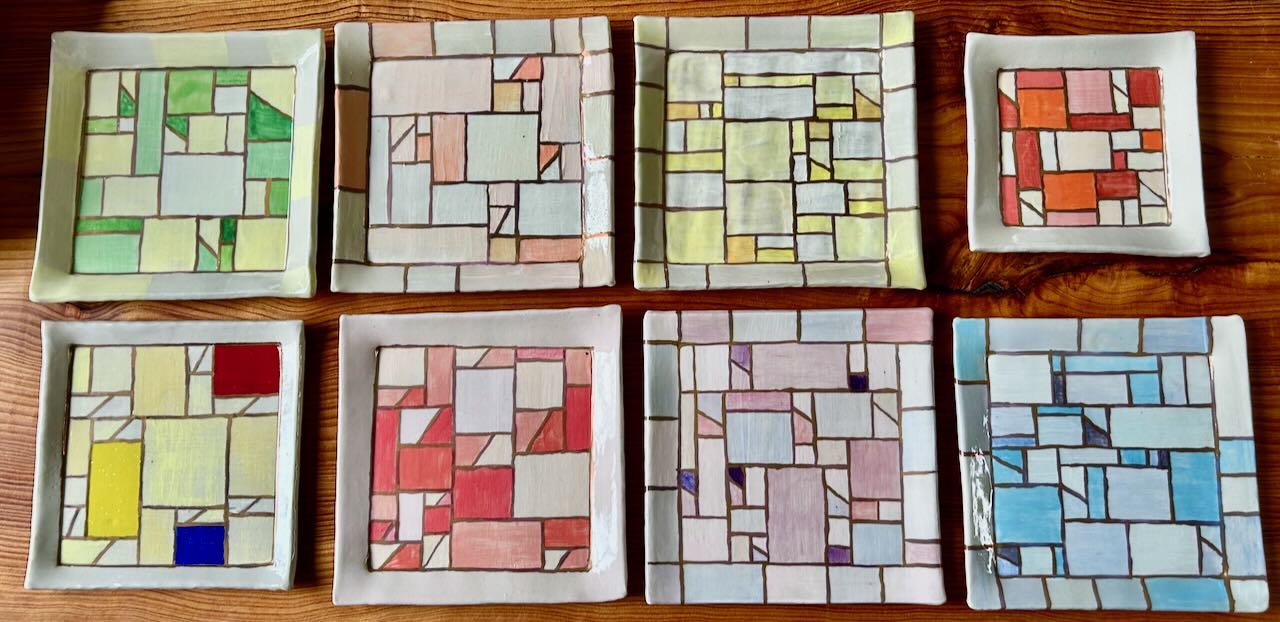
Using these colours, I tried making some new square plates, with a Korean inspired ‘Bojagi’ traditional fabric design. I’m very pleased with them, for a first attempt. I quite like the one were I ‘channel’ Piet Mondrian. Mondrianic bojagi!
I have also been making some more Korean inspired ‘Moon Jars’, but with an Australian twist. No photos yet, that are still in the kilns.
Please call in to see us on the next two weekends 1st/2nd and the 8th/9th of November. We will have tea or coffee and even cake for the first in and best fed.
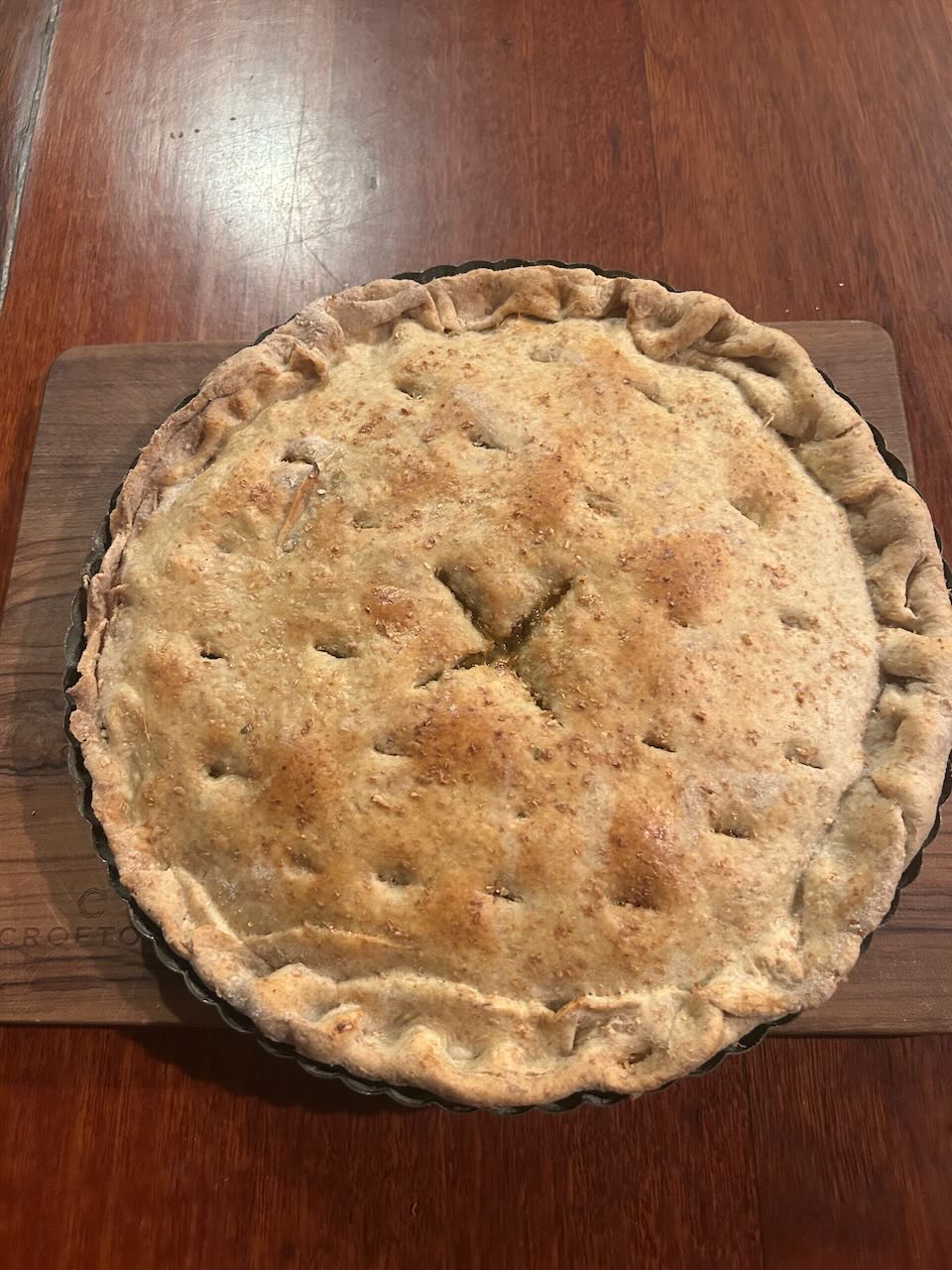
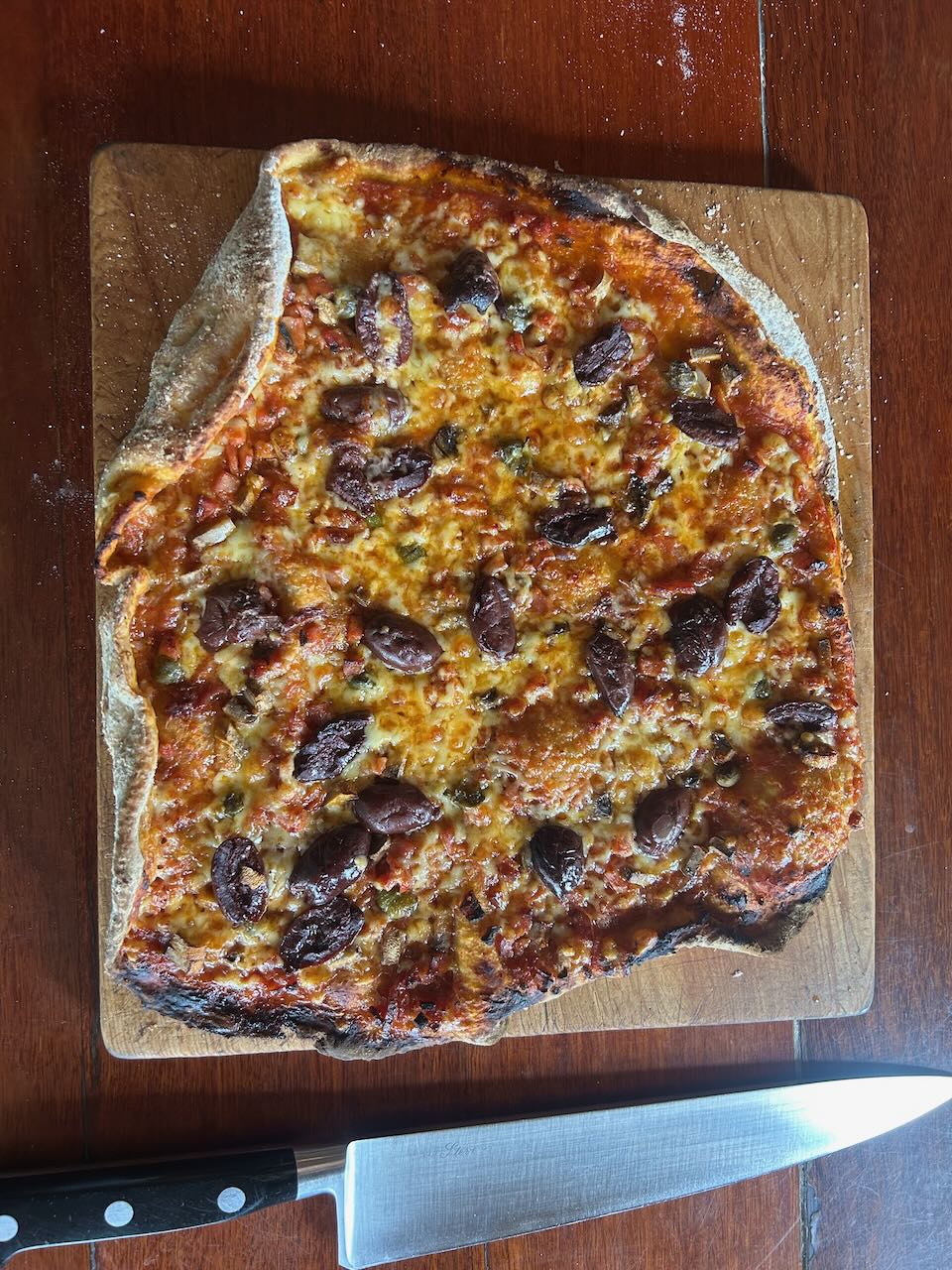
In the kitchen, I’ve been harvesting lots of leaks, and making chicken and leak pie. I’ve got quite quick at knocking up small batches of wholemeal pastry for pie crusts and pizza bases.
We may be very busy in the pottery, but there is always time to raid the garden for food for dinner and to cook up something wholesome and delicious for dinner.
We are in the final preparation for the Southern Highlands Open Studios Arts Trail. We will be open on the first two weekends of November. We will also be part of the Australian Ceramics Assn Open Studios event at the same time.
We are doing the last few firings now and spending a bit of time fettling and polishing all the glazed pots. This last week I have been cleaning and grinding the pots form my last Wood kiln firing. From now on it will be too hot, dry and therefore dangerous to fire the wood fired kiln until next autumn. All of our firings from now on will only be in the electric kiln fired using our 100% self generated solar energy, mostly from our PV panels but with a little bit of back up from our lithium batteries. In this way we can fire on a combination of todays sunshine and some of yesterdays stored sunshine as well.
When the battery is full and we are not firing the kilns. I charge up the electric cars. No point in selling it to the grid for next to nothing if I can use it in some way myself. Once both the cars are charged, I charge up the ride on mower and the power tools etc.
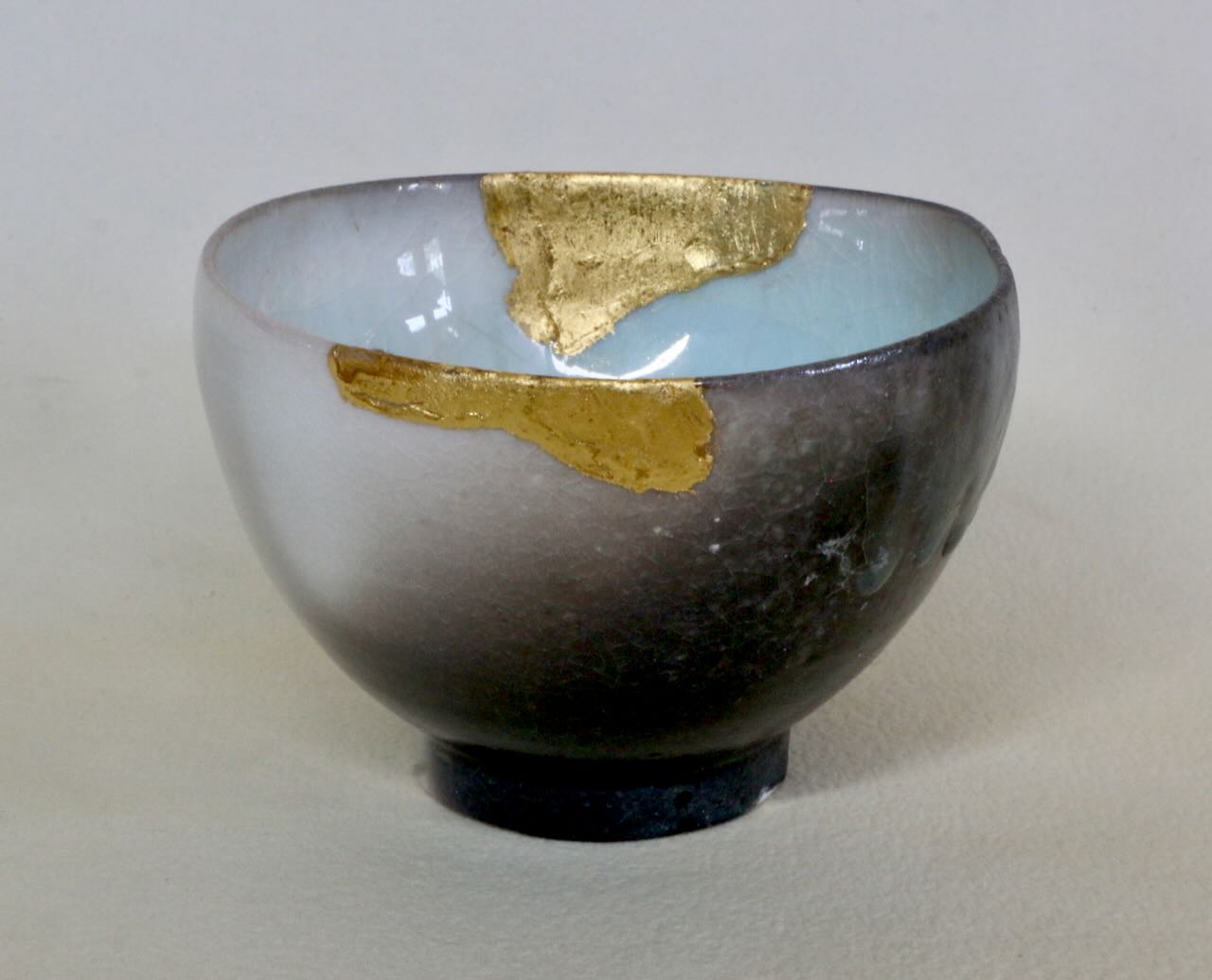
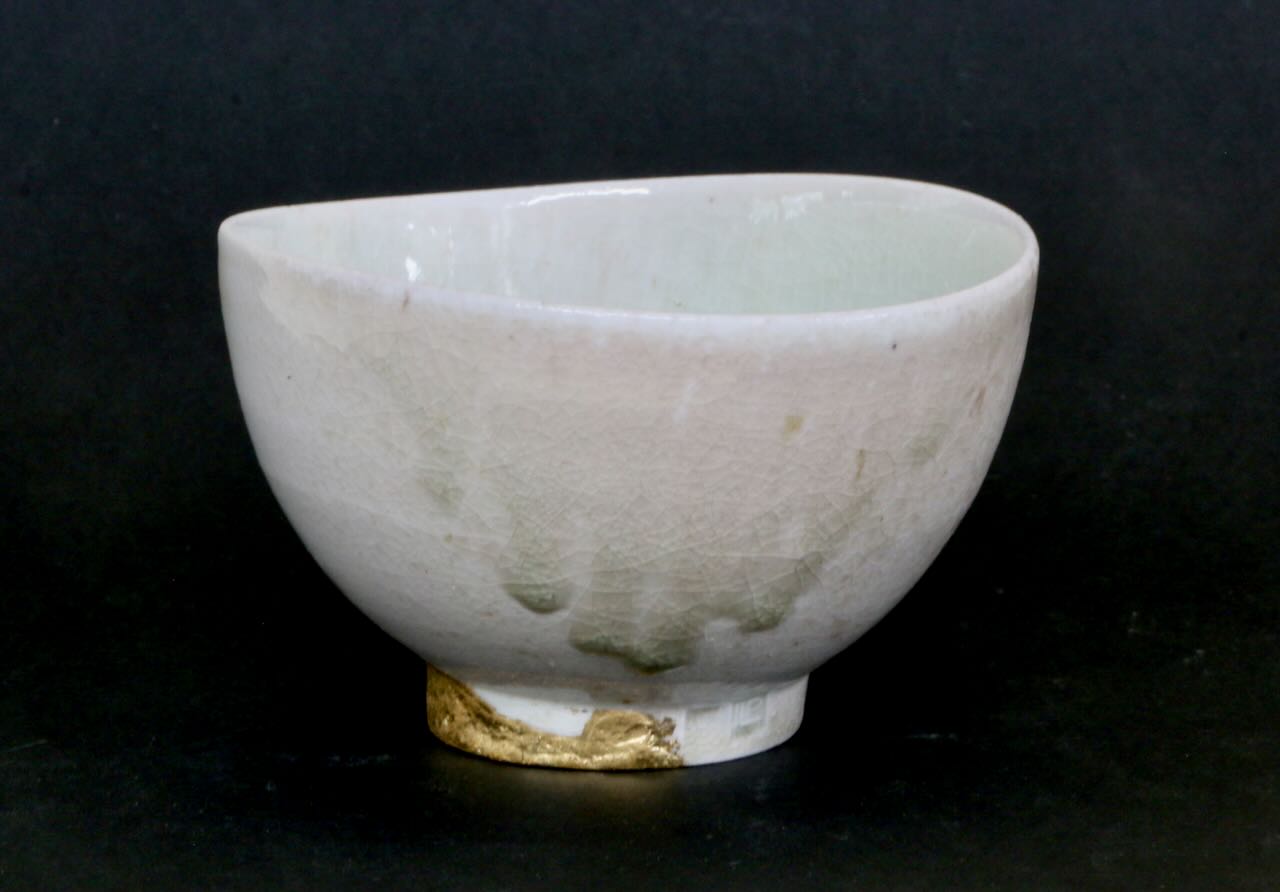
This week I have been doing a bit of ‘kintsugi’ repair on a few wood fired pots that got a little damage in the kiln, a couple of them ‘kissed’ in the firing. One was knocked over by a stray log during stoking, and another got so much wood ash deposit on the fire face that it ran down and stuck it to its wadding. All the usual little mishaps that befall pots in the ‘Zone of Death’. That part of the setting at the very front of the wood fired kiln chamber where the most beautiful pots are created, but are also most vulnerable to damage. I am capable of make some very spectacular shards!
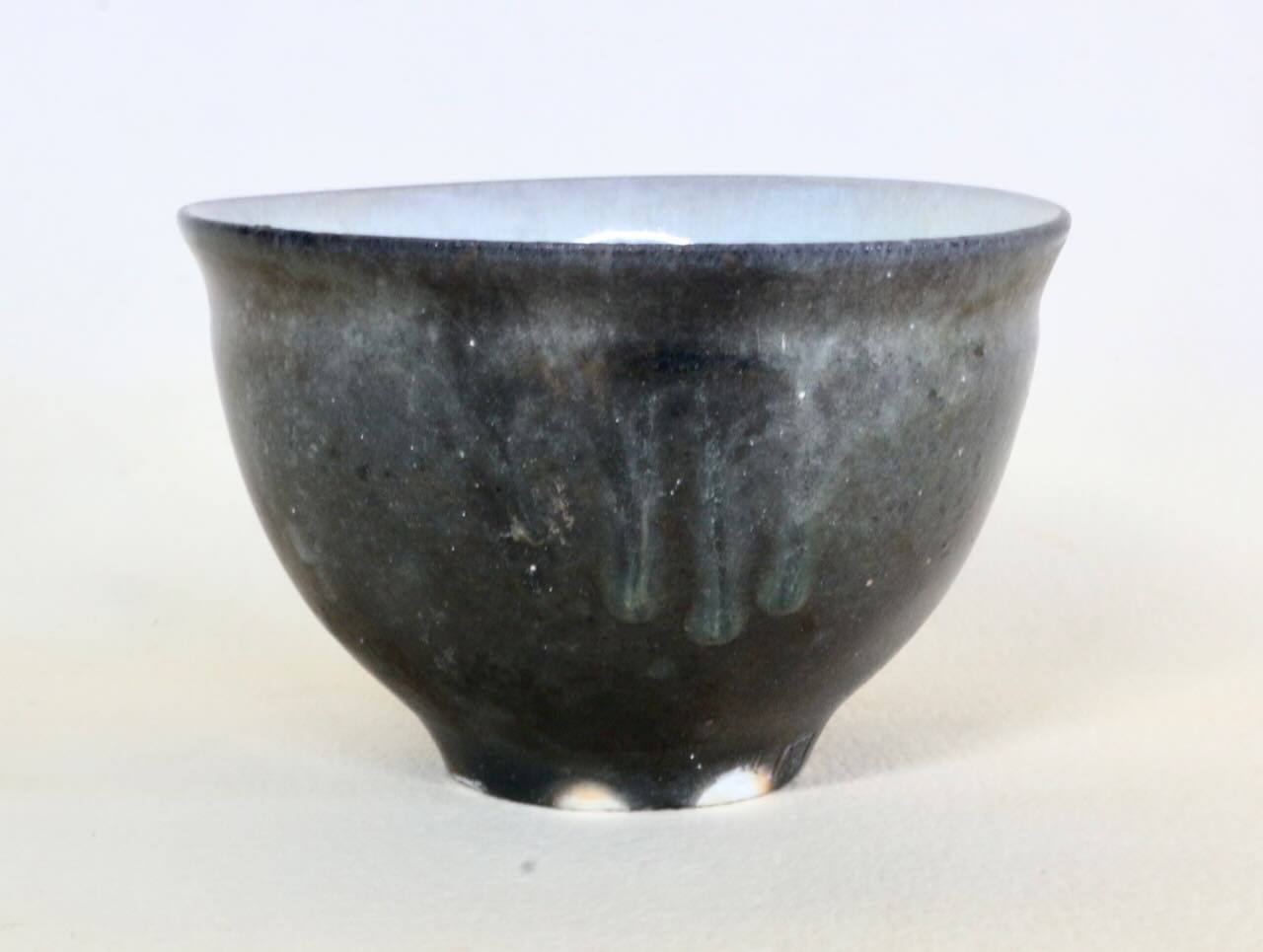
I love it when the translucent white porcelain gets so heavily reduced that it turns black with carbon inclusion. This contrasts so well with the delicate pale, but intense blue of the limpid blue celadon. Alas, fine thin porcelain doesn’t enjoy the intense conditions in the front of the kiln and often dunts (cracks). I’m most happy when I can get a good piece out of the firing whole and in good condition. However, such pots are rare.
In the piece above. It looks as if you can see my finger prints where I have dipped a glaze, but in fact, these white marks are the fine white porcelain body showing through where the little balls of wadding were placed around the foot to keep it up off the kiln shelf during firing. The naturally deposit ash glaze on the front of the pot had started run, but luckily, it hasn’t glued the bowl to the shelf. Really good porcelain pots are a rarity from this part of the kiln.
‘Kintsugi’ gold leaf repair is a way of restoring a beautiful, but slightly damaged pot back to full radiance. I think that if a good pot is damaged in the fire that made it so lovely in the first instance, then it’s worth giving it a bit of love and TLC to make it even more beautiful. I lavish a lot of effort, skill and time into retrieving them from the scrap bench and repairing these sensitive and beautiful items, bringing them back to life. Some times gluing a broken or chipped piece back together, and at other times actually rebuilding a bit of the surface that is missing. In this way I bring them back to life and give them an honourable new existence. They are even more precious then, than they were if they had come from the kiln undamaged. I am recognising their potential beauty and honouring it. In this slow, patient application of time and effort they become more special to me.
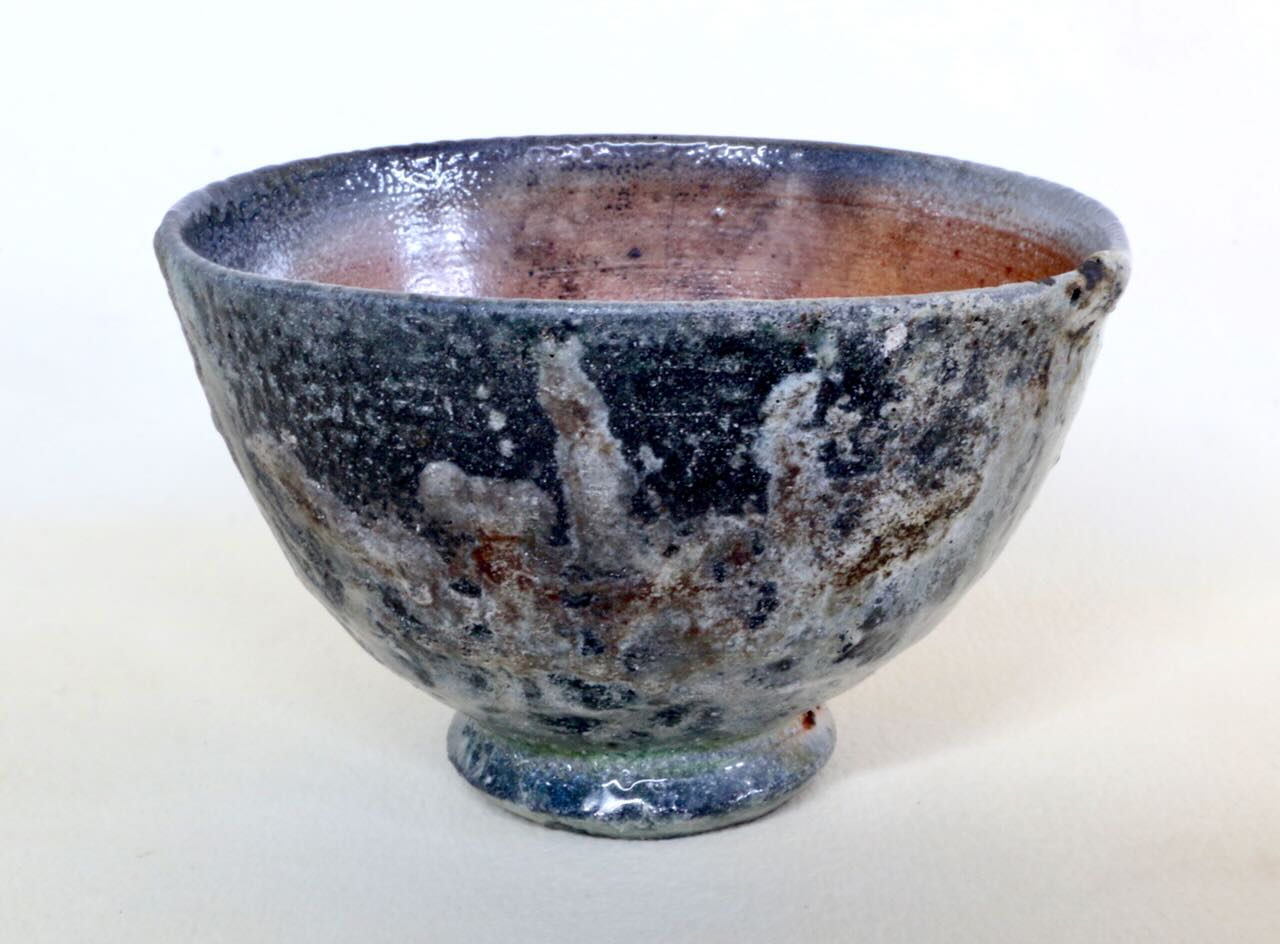
These porcelain bowls are absolutely white, but one of them have such a high degree of carbon fused into their surface during the reduction cycle, that it appears to be black. But when you look inside the bowl, it is glazed with a delicate blue celadon. I love this dramatic contrast of black and pale blue! The white bowl above has so much ash glaze built up on the fire face of the bowl that the ash began to run down and glue the bowl to the kiln shelf, running down over the wadding and making a fluid pool of ash glaze on the shelf. Tragically, I broke part of the foot off trying to extricate it from the glassy mess. I built up the missing part of the foot, back to its original form with the kintsugi technique and finishing it with 24 karat gold. All three of these bowls above, are very translucent.
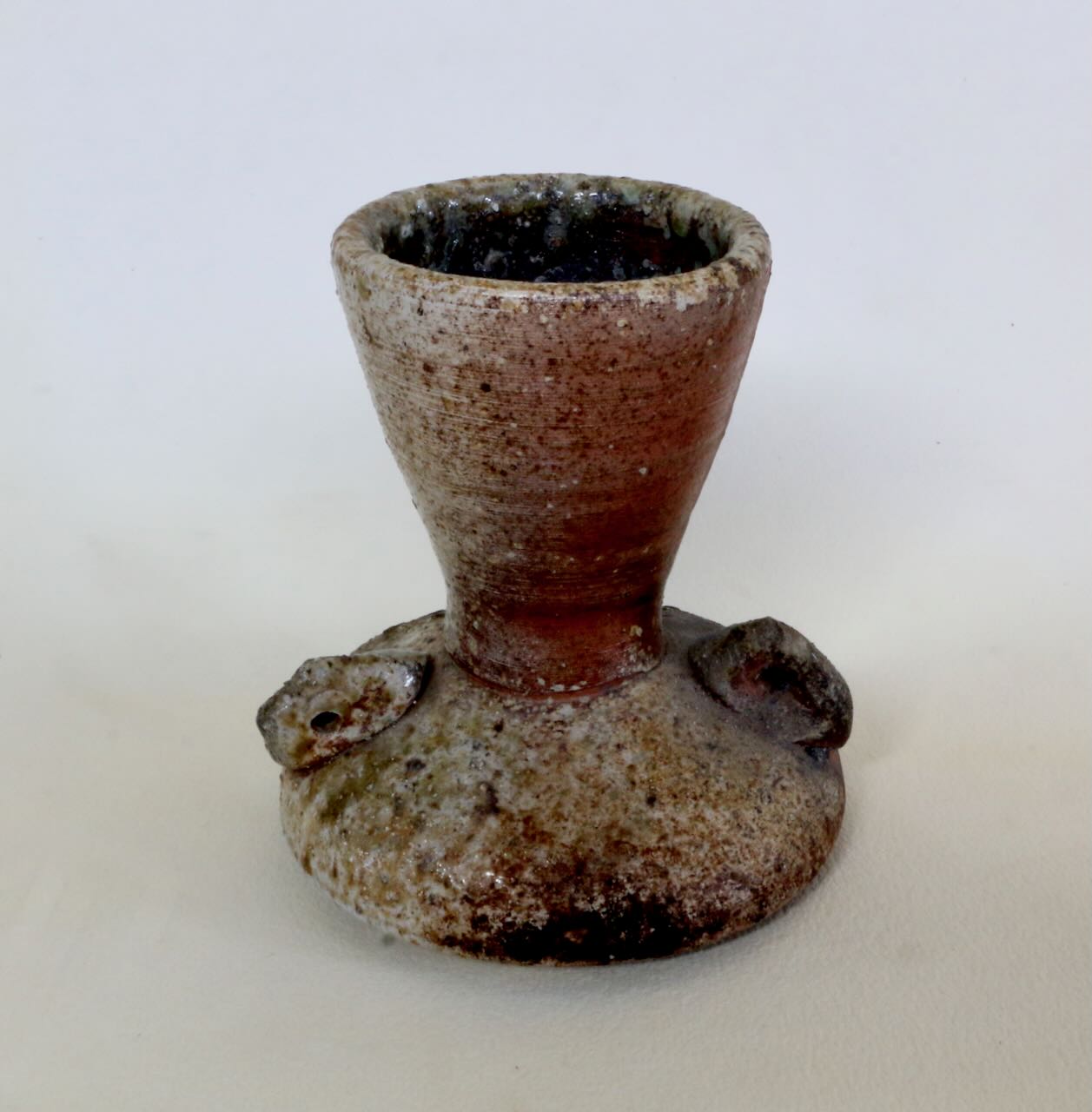
Besides the translucent, white porcelain which I have reduced to matt black with carbon inclusion. (my way of permanently removing carbon from the atmosphere. Permanent carbon sequestration!) Besides these delicate porcelain bowls, I have also been firing some more robust stoneware bodies that I have made. These bodies have a much better survival rate in the ‘Zone of Death’, but still get the occasional chips or ‘kiss’ marking that need some delicate attention.
Each of these ‘rougher’ pieces has their own particular charm and character. I like them all equally.
I hope to see you at some time over the first two weekends in November. You can check them out for yourself.
The Southern Highlands Arts Trail for 2025 kicks off in just 3 weeks. We will be open on the first two weekends in November 1st & 2nd, then the 8th & 9th of November.
We will be open all days from 10 til 4pm, but are happy to open on any day during the 2 week period if you let us know that you are coming. We live here. We’ll be here every day working in the pottery or gardens.
We are recently returned from Western Australia, where we were taking part in the Australian Ceramics Triennial. I was there to present a paper on how to reduce carbon pollution from our (potters) kiln chimneys. I’ve spent a couple of years researching, building and testing a scrubber for the top of my kiln chimney, to minimise the release of PM2.5 carbon particles, that are a result of the combustion of carbon fuels.
We decided that if we were to travel so far for this event, then apart from purchasing carbon credit off-sets for the flights, we should make the most of our time away and go down to Margaret River and have a look around, and possibly taste some wines. So we did.
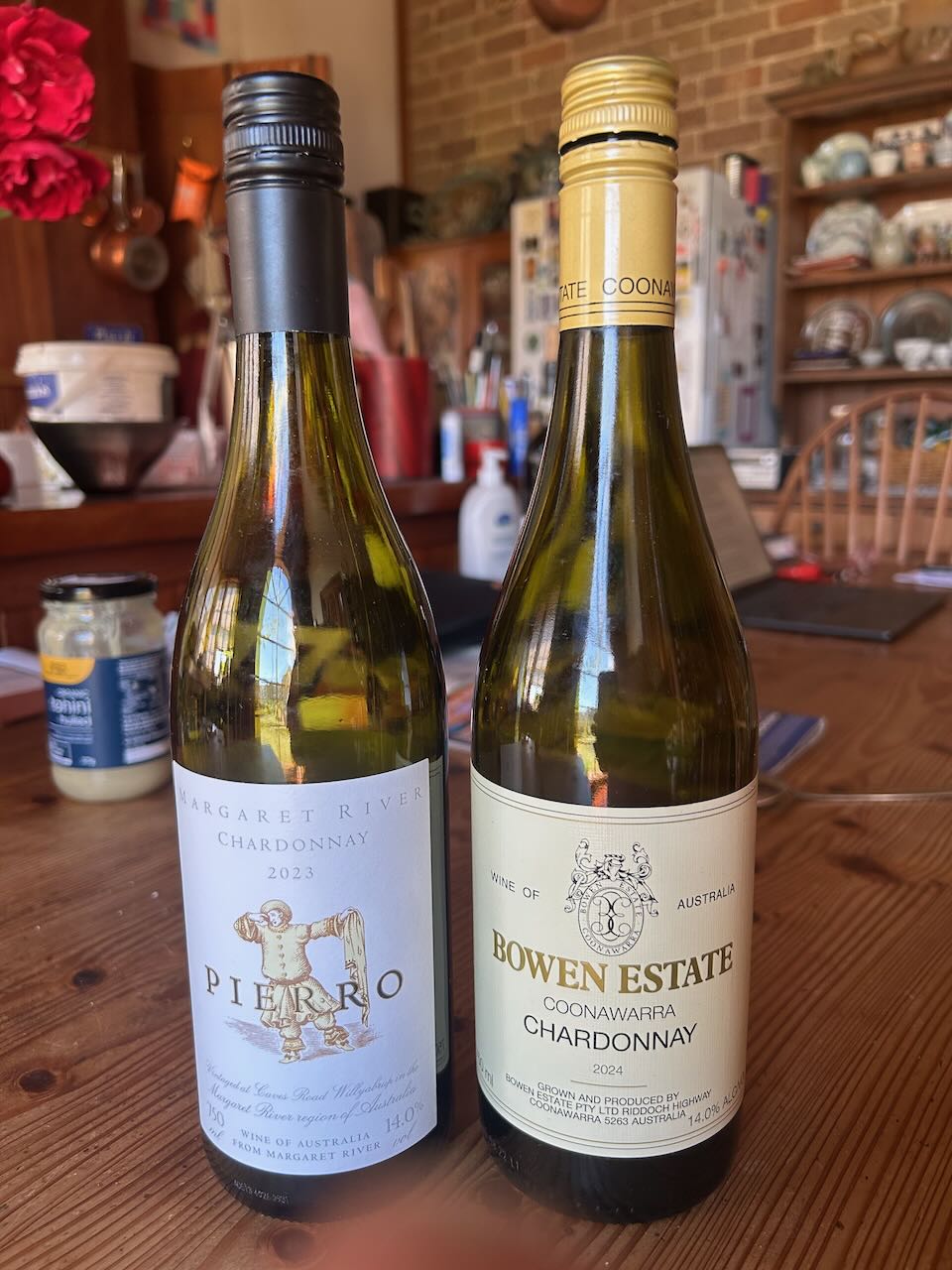
I discovered the best chardonnay that I have ever tasted in my life. The Chardonnay from ‘Pierro’ vineyard in Margret River. Really deep, dry, rich, fragrant, and lasting flavour. Only a slight hint of sweetness. Highly recommended for a tasting if you are ever down there. $117 per bottle, but even $5 just to taste it! A once in a life time experience.
I’m perfectly ready to accept that there are better chardonnays out there. I see them for sale in posh catalogues, costing even more, but I’ll never know, as I never buy wines anywhere near $100 per bottle – til now. I really enjoyed it. But that was it. Never again. As I said. A once in a lifetime experience. So glad that I called in. I’d never heard of them previously. A small producer, unirrigated, crop-thinned, hand picked, wild yeast, a year in small French oak sitting on lees. Perfect!
My favourite chardonnay up until now, and will continue to be, into the future, is Bowen Estate Chardonnay from the Coonawarra. Beautifully dry, well balanced, classic chardonnay fragrance, lingering finish, and a lot more approachable and affordable at $25. But still kept only for special meals and occasions.
While there we watched the sun set over the ocean in the West. Saw lots of wild flowers and visited two excellent museums. It was a full trip.
At the conference, we saw and heard a lot of presentations and demonstrations. A few duds, some really excellent. Something for everyone and every taste and interest. In fact, so much going on that it was impossible to see and hear everything, as there was always too much to choose from and some programming conflicts of my choices, meant that I missed a few things while watching others. Not a bad thing.
I really enjoyed watching, Ruth Ju-Shih Li, intermittently, over 3 days, create an amazing porcelain hand built sculpture as a performance and then dissolve it back into sludge with water.
I had to think long and hard before I decided to commit the crime of flying to the other side of Australia. Such a lot of carbon debt! I did however choose to buy carbon off-set credits to make some gesture towards minimising the damage. I support ‘Green Fleet’ for this purpose. I’m not advocating or recommending this organisation. This is not an advert. I don’t do that. But if you are unfamiliar with the concept of purchasing carbon credits to off-set some of your personal global warming damage. Maybe you could do an internet search and see what is involved.
In the end I did decide to go to Fremantle, as I was offered the chance to speak about my research on minimising the PM 2.5 carbon particulates from kiln chimneys. Something no one else is prosecuting at the current time. It doesn’t appear on anybody’s radar currently, but there is a mass of information to be found if you look. Most of it quite disturbing. In some ways, presenting this lecture is in itself an act of promoting carbon minimisation. I also offered to present a second paper to the conference on the use of solar power with battery back-up as a low carbon means of firing ceramics, but it was politely declined. No real interest within the committee it seems.
Oh Boy! I read in the news today… (Thank you John Lennon.) About the current average cost to each household in Australia for their energy bill. It currently stands at $5,800 pa. Janine and I have made an effort to minimise our energy bills. Particularly our carbon related energy consumption. We run a low energy household, and have had solar power installed since 2007. We haven’t paid an electricity bill since then. Since the big fire in 2019, everything that we had to replace was carefully considered and was always electric. So now we only spend $400 a year to put petrol in our plug-in hybrid car, and $150 a year to buy petrol for the mower, chainsaws and fire fighting pumps. Thats just 10% of the national average. I’m proud of that.
In Fremantle, we stayed with someone who told me that when his two daughters were still at home, he was paying $350 per day for electricity! there was a swimming pool involved I understand.
When we put solar on our roof, we essentially paid our lifetime electricity bills all at once in advance. We didn’t choose to do it to save money. We were very concerned about the future with global heating and the next few generations. As it turned out, we have saved a small fortune, going on current national average power bills..
I recently saw in a supermarket advertising magazine/brochure, that you can now buy a 10 kW battery and 6.5 kW of Solar PV for $7,000. Or even better, 20kw battery with 6.5kw of PV for $8500.
That is so incredibly cheap!
Caution! if something is too good to be true…..
But certainly worth looking into. Please exercise due diligence.
I am not recommending this product. I have no allegiance to this supermarket and I am not in receipt of any payment or commission for mentioning it. I don’t do that. I just think that it might be worth a very severe, and deep investigation, because it just might be OK.
Don’t waste your money. Ask around, search out reviews and customer experiences. get yourself informed. I’m a bit sceptical about the price. However, it just might be a good deal?
Back home our garden is flourishing, as our lovely neighbour Tina has been watering things on the hot and dry windy days. So many plants have burst into flower in our absence, as they were just buds when we left.
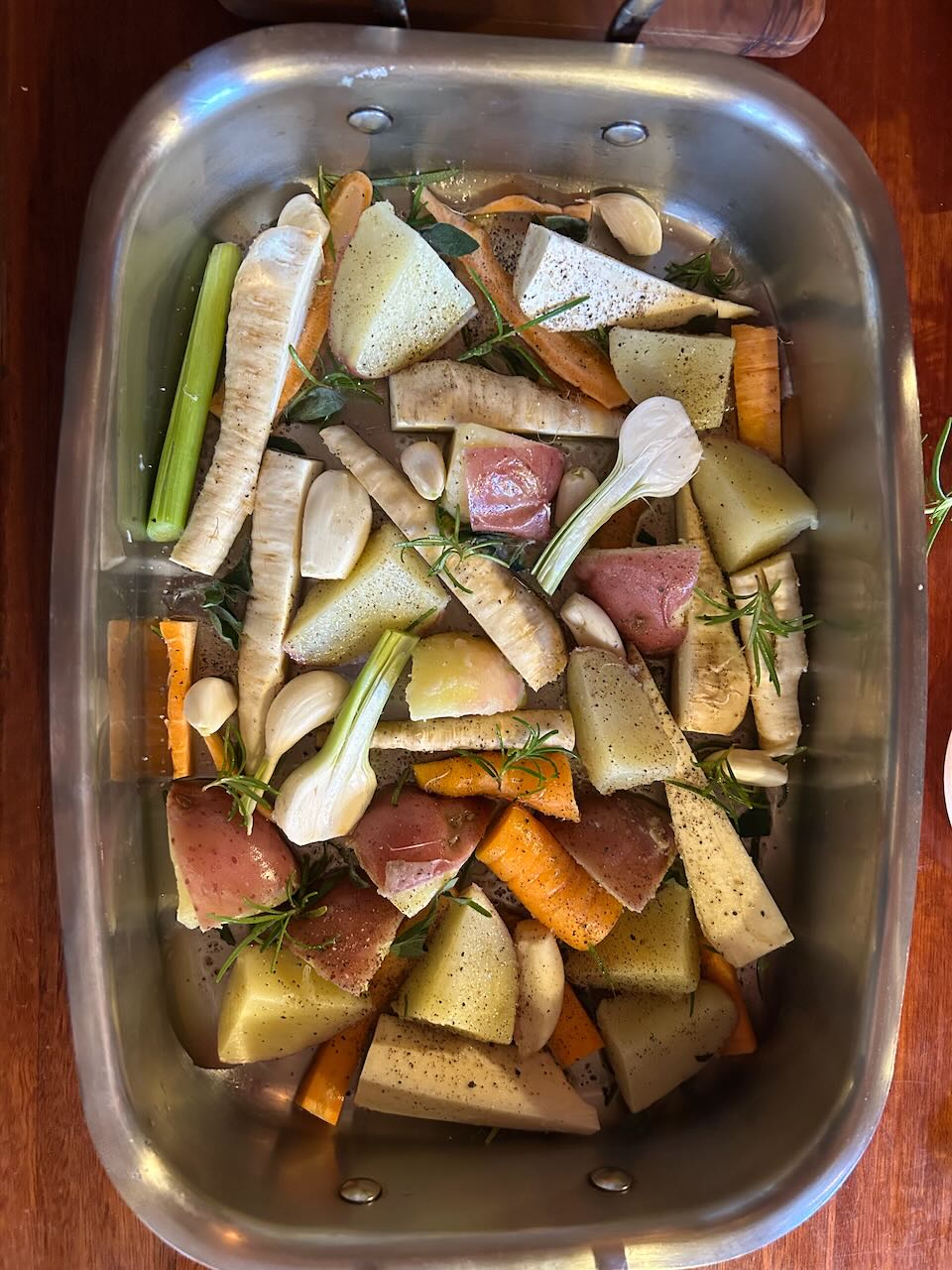
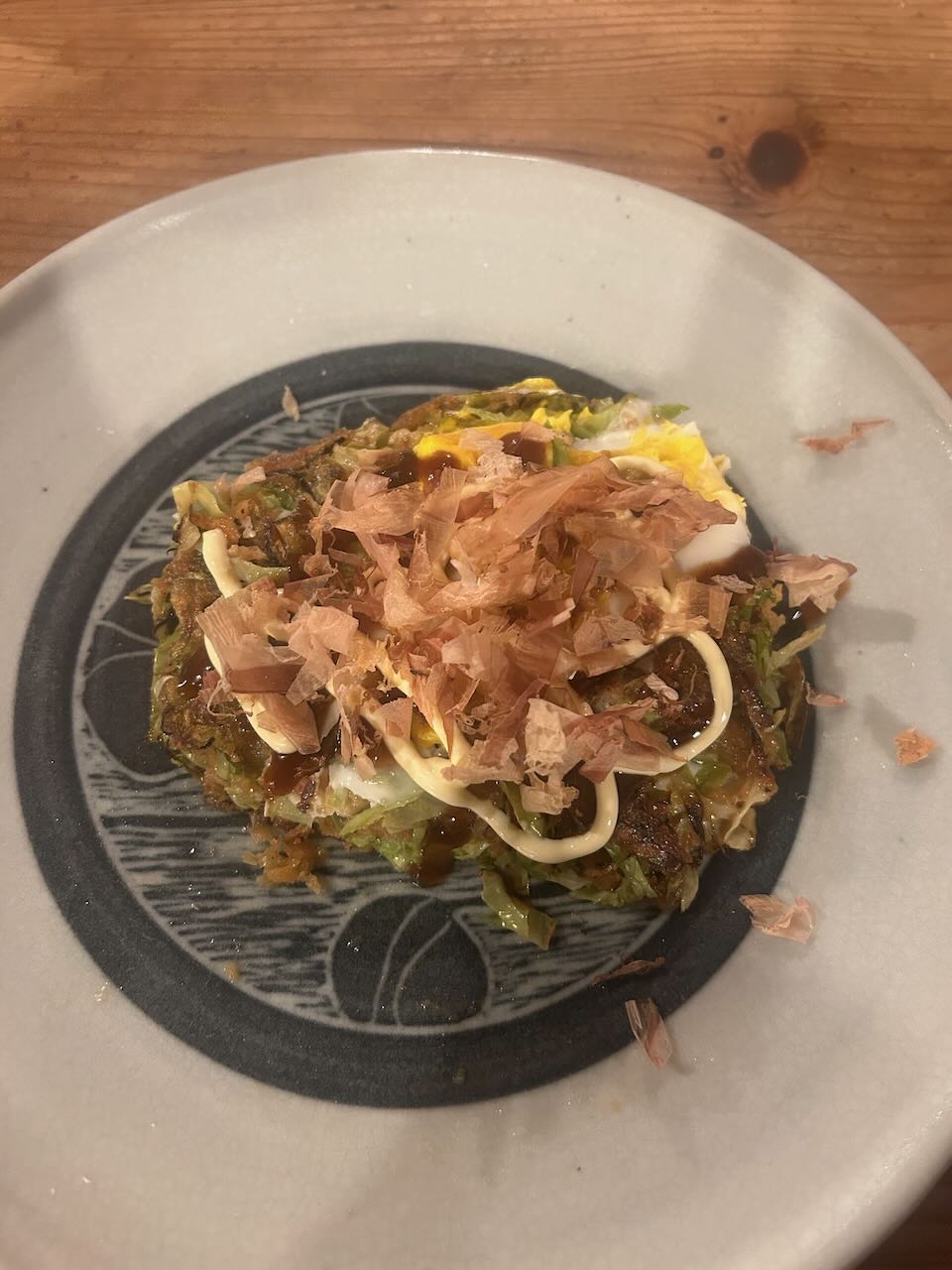
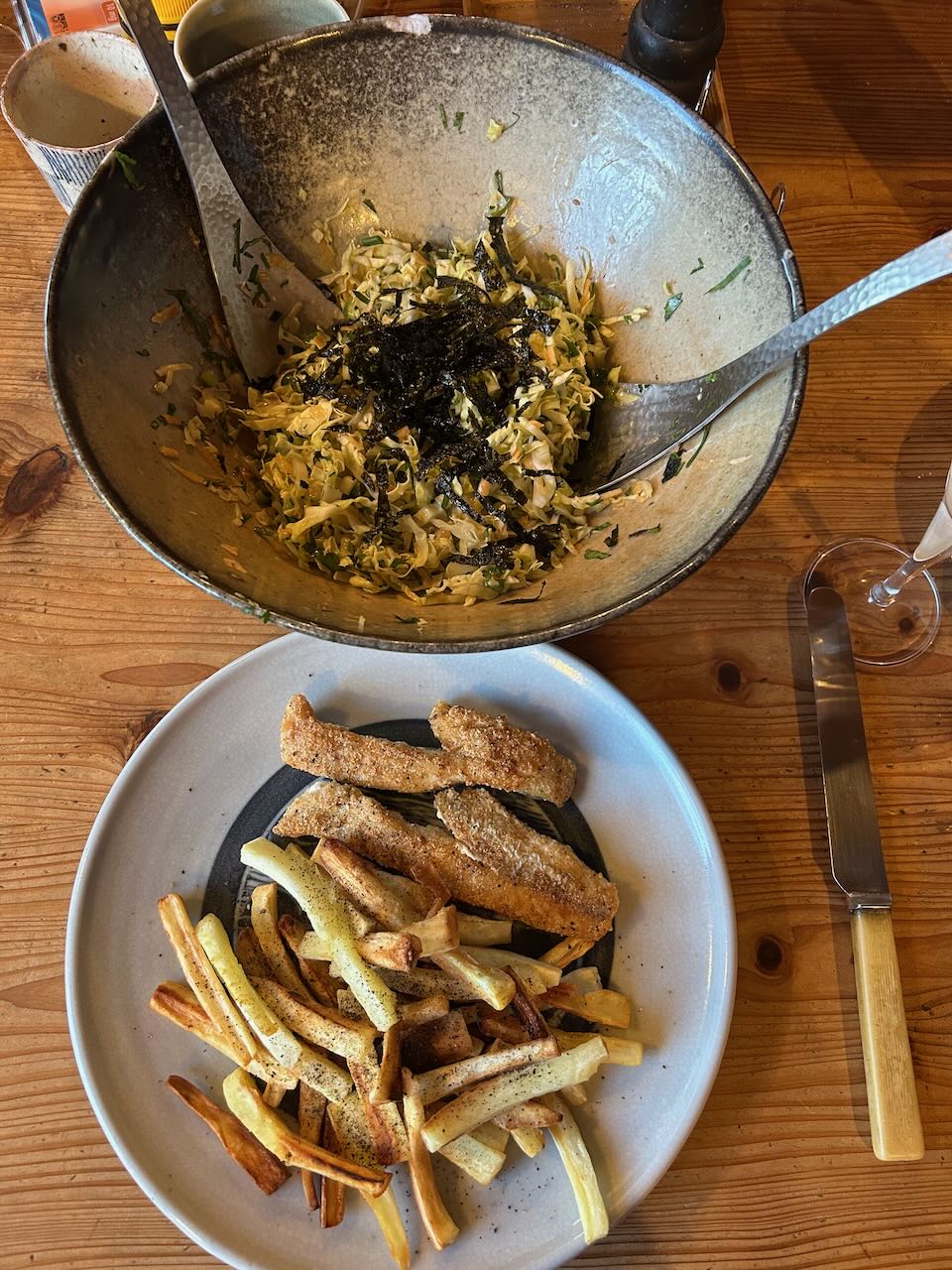
The veggie garden is still very productive. Fish and parsnip chips with a Japanese inspired cabbage salad. Oka-nomiyaki, an Australian version of Japanese cabbage pancake. Baked mixed vegetables etc.











 Tonight my Fingers Smell of Garlic
You must be logged in to post a comment.