Numbers are beautiful – apparently!

Apparently numbers are beautiful, and can be fun!We had a visit from one of my very earliest students, who I hadn’t seen since graduation almost 50 years ago.

She had trained in maths at uni, but ended up teaching maths at school. This didn’t seem to be sufficiently rewarding to her, so she came into the Art School to train as a potter, teaching maths part-time to support herself during this 2nd lifestyle choice of vocation as a mature age student.

We had an interesting catch-up and she explained to me that numbers have a personality and are beautiful. She told me that she could look at a number and know a lot about it from its ‘character’, or something akin to its ‘personality’?

Numbers are like people, you can learn a lot about them just by the way that they look. 

I’m not a maths person myself. However during our conversation, I started to understand a little bit more about the look of numbers and learnt that I do have some little bit of insight into numbers. When I was at school, we had to learn maths by rote. I never felt the desire to enquire further. So unlike my experience of learning about ceramics, which I couldn’t stop thinking about, pondering, romancing etc. in my spare moments.

These days, I usually only use numbers to defend myself. ie. to add up the bill and check it for accuracy. But I sometimes use my limited maths to understand the chemistry of clays and glazes, ie. Brongniarts formula, Segar formula, and electric kiln wiring calculus to build heating element systems. They are not ‘fun’  jobs, this is strictly work. So some of that rote learning does get regurgitated and applied to real-life practical questions. I’m pleased that I am able to put my mind to it successfully. So numbers are useful, but I don’t romance them.

However, I was amazed to find that although I know next to nothing about maths and have little interest in it, I do know something about the look of numbers. When I say, the look of numbers, what I’m referring to is the insight that you gain through familiarity, like the look of words. I may not know how to spell some words, but when I write them down, I can tell that they look either wrong or right. So I recognise that I do know more than I realise.

Here are some of the numbers that first came to mind, and that I realised that I knew the look of pretty well;

0, (zero) having read the book ’The nothing that is!’. I learnt that as a species we learnt to count to to describe and tally  the things that we owned. Goats, for example. If I only own one goat, then I pretty well always know where it is. but if I was and early human learning to convert from hunter gathering to residual farming and herding, then I would need to be able to know exactly how many goats I had, where they were, and if one was missing, so counting became a useful and necessary asset. 

It’s not a long stretch of the imagination to think about the farmer who owned no goats, didn’t need to count, so it took a very long time for the concept of ‘0’ zero to come into existence. No one really ever needed to specifically count the fact that they didn’t have anything. Who would believe that someone could write an interesting book about nothing!

Well, Robert Kaplan, that’s who! “The nothing that is- a natural History of Zero”.

3, my favourite number. Because there is something odd about it.

21, how old my truck is

61, the route that Bob Dylan metaphorically revisited.

66, the highway that black Americans used to escape, persecution, rape and lynchings, and sang about in the early blues.

666, the number of the beast! 

667, the neighbour of the beast!

2000, the cost of registering, green slipping, insuring, and putting 2 new tyres on my old truck to get it through rego inspection today. I own it outright, but this is the cost of renting it back from the institutions that allow me to drive it on the roads.

31428 Pi

13579 primes

12358 fibonacci

Just a few that come to mind quickly.

That was fun!
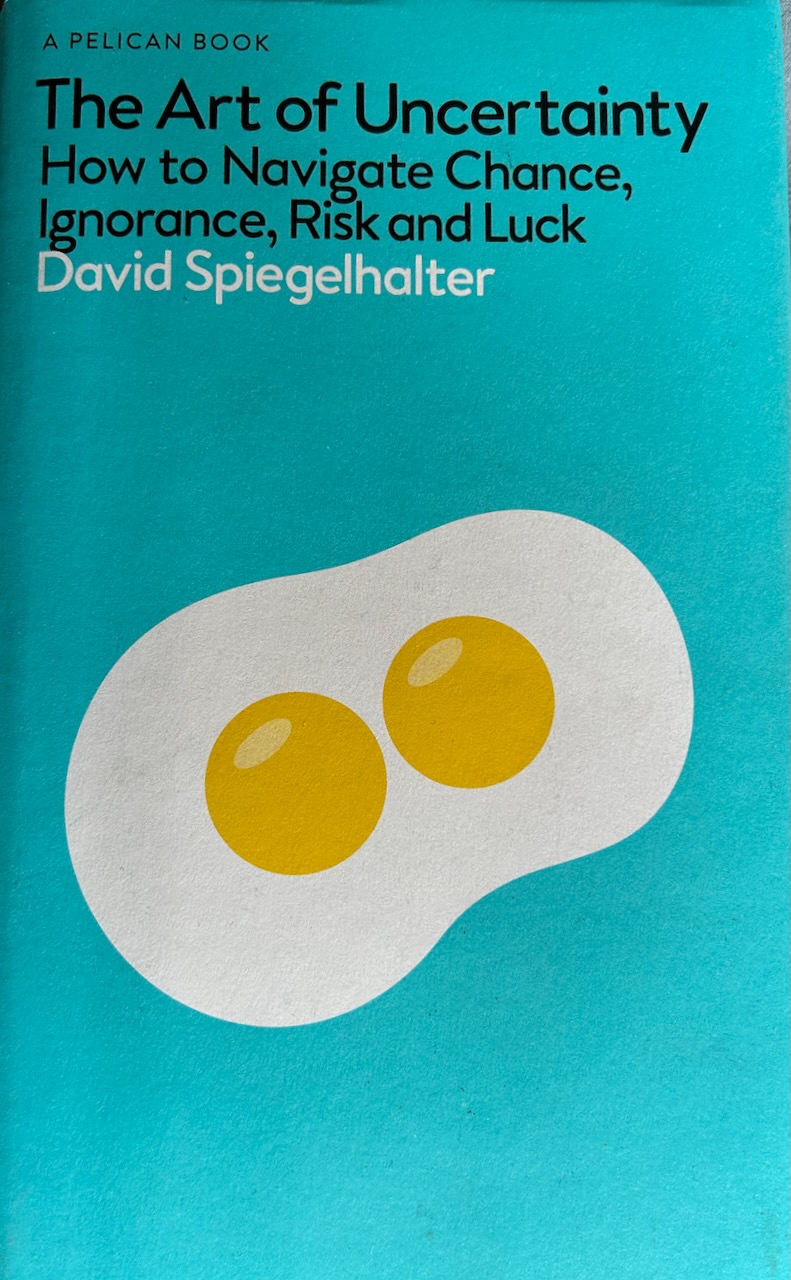
The Art of Uncertainty

I’m reading a book at the moment, all about probability! It’s a really interesting read. I’m enjoying it and even though its a very thick book, about 2” or 50mm thick. I’m racing through it, but I’m not sure that I’ll finish it. A week ago I would have said with certainty that I would have finished it quickly, but having read most of it now, I’m rather reluctant to make such a bold claim. I’m uncertain. The first thing I learnt from reading this book was that probability probably doesn’t exist!

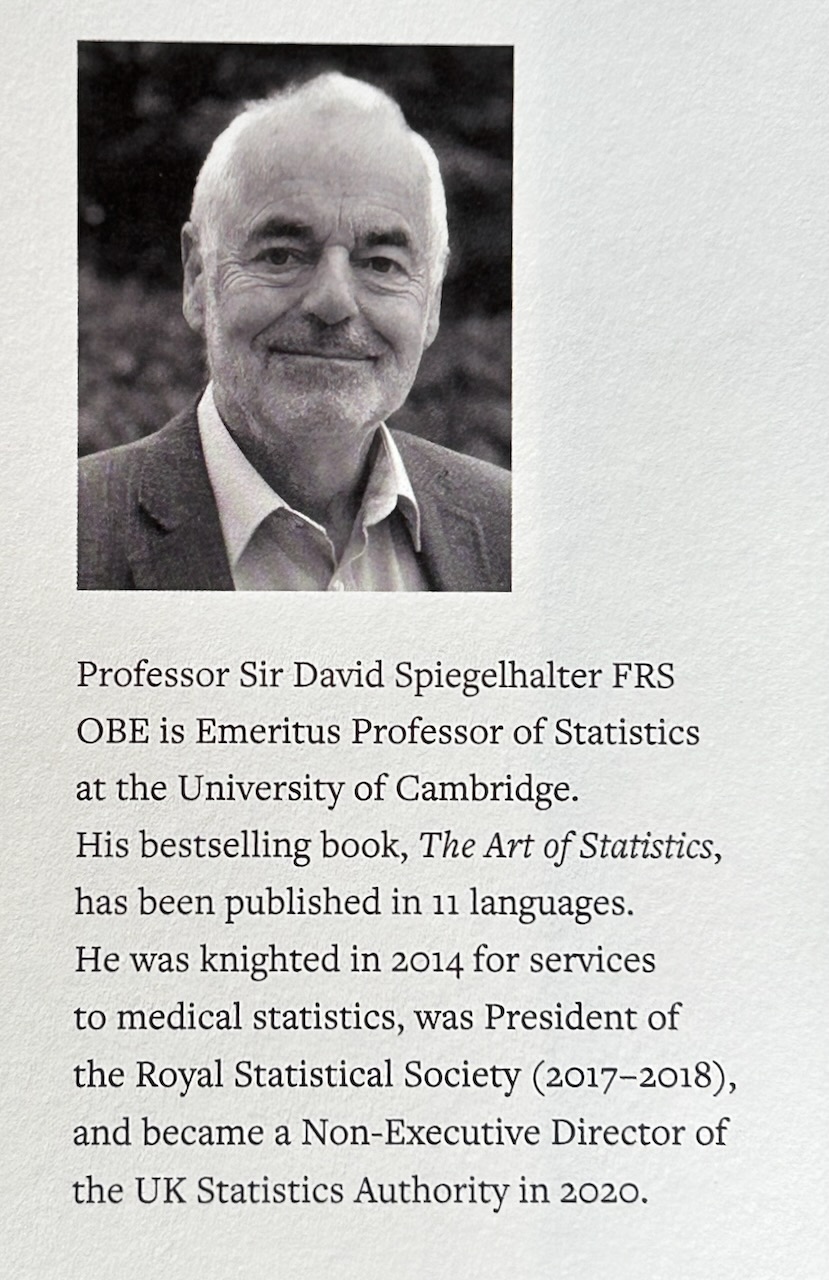
‘The Art of Uncertainty’ is written by Sir David Spieglehalter FRS OBE, Emeritus Professor of Statistics at Cambridge University. Someone to take seriously indeed. The sub-title of the book is ‘How to Navigate Chance, Ignorance Risk and Luck’. I was lucky enough to navigate across it by chance and took the risk to disabuse my self of some of my ignorance.

I’ve never been a person blessed with a sense of certainty, I’m probably more of the perplexed personality type – if there is such a one? So I have really enjoyed reading Prof Spieglehalter’s explanation of chance, ignorance risk and luck. There is so much to it. After explaining each topic, he gives an example from real life, then reduces every example to a mathematical model basis, which is also really fascinating. I’ve never been that interested in maths, but Prof Spieglehalter explains it so well, I could follow most of it. 

“Why probability probably doesn’t exist (but it is useful to act like it does)

Life is uncertain. None of us know what is going to happen. We know little of what has happened in the past, or is happening now outside our immediate experience. Uncertainty has been called the ‘conscious awareness of ignorance — be it of the weather tomorrow, the next Premier League champions, the climate in 2100 or the identity of our ancient ancestors.

In daily life, we generally express uncertainty in words, saying an event “could”, “might” or “is likely to” happen (or have happened). But uncertain words can be treacherous.

Attempts to put numbers on chance and uncertainty take us into the mathematical realm of probability, which today is used confidently in any number of fields. Open any science journal, for example, and you’ll find papers liberally sprinkled with P values, confidence intervals and possibly Bayesian posterior distributions, all of which are dependent on probability.

And yet, any numerical probability, I will argue — whether in a scientific paper, as part of weather forecasts, predicting the outcome of a sports competition or quantifying a health risk — is not an objective property of the world, but a construction based on personal or collective judgements and (often doubtful) assumptions. Furthermore, in most circumstances, it is not even estimating some underlying ‘true’ quantity. Probability, indeed, can only rarely be said to ‘exist’ at all.  All of statistics and much of science depends on probability — an astonishing achievement, considering no one’s really sure what it is.”

Life is uncertain. All models are wrong, but some are more useful than others!

As probability probably doesn’t exist. I’m probably not too sure what the last chapter will tell me. If I finish the book!

We probably really don’t know much at all. Get used to it.

Nothing is ever finished, nothing is perfect and nothing last forever.

Autumns rewards

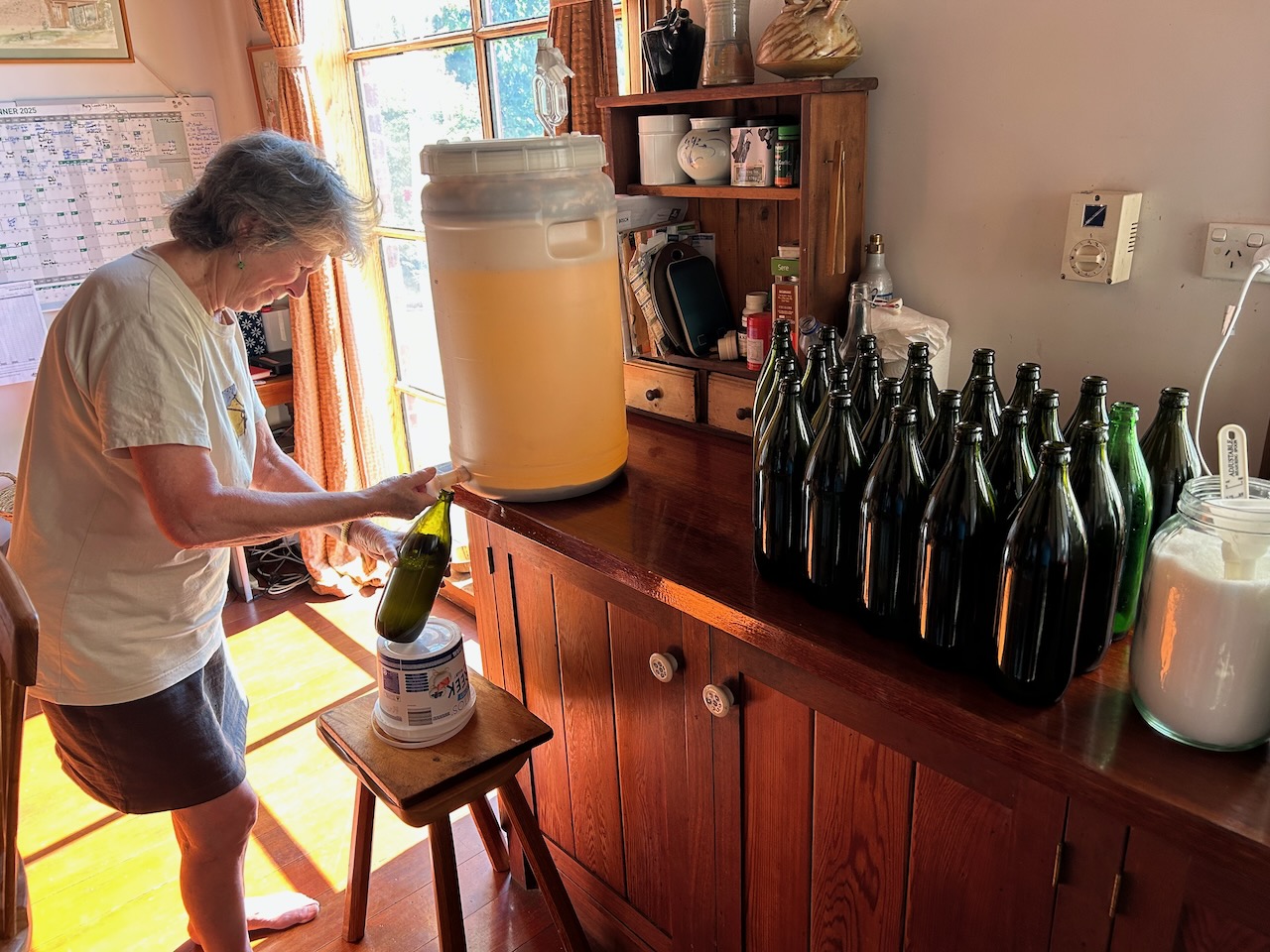
Exactly 8 weeks ago today, Janine and I harvested all of our apples and pears. We juiced them and used ‘Moet and Chandon’ champagne yeast to ferment them all into cider.

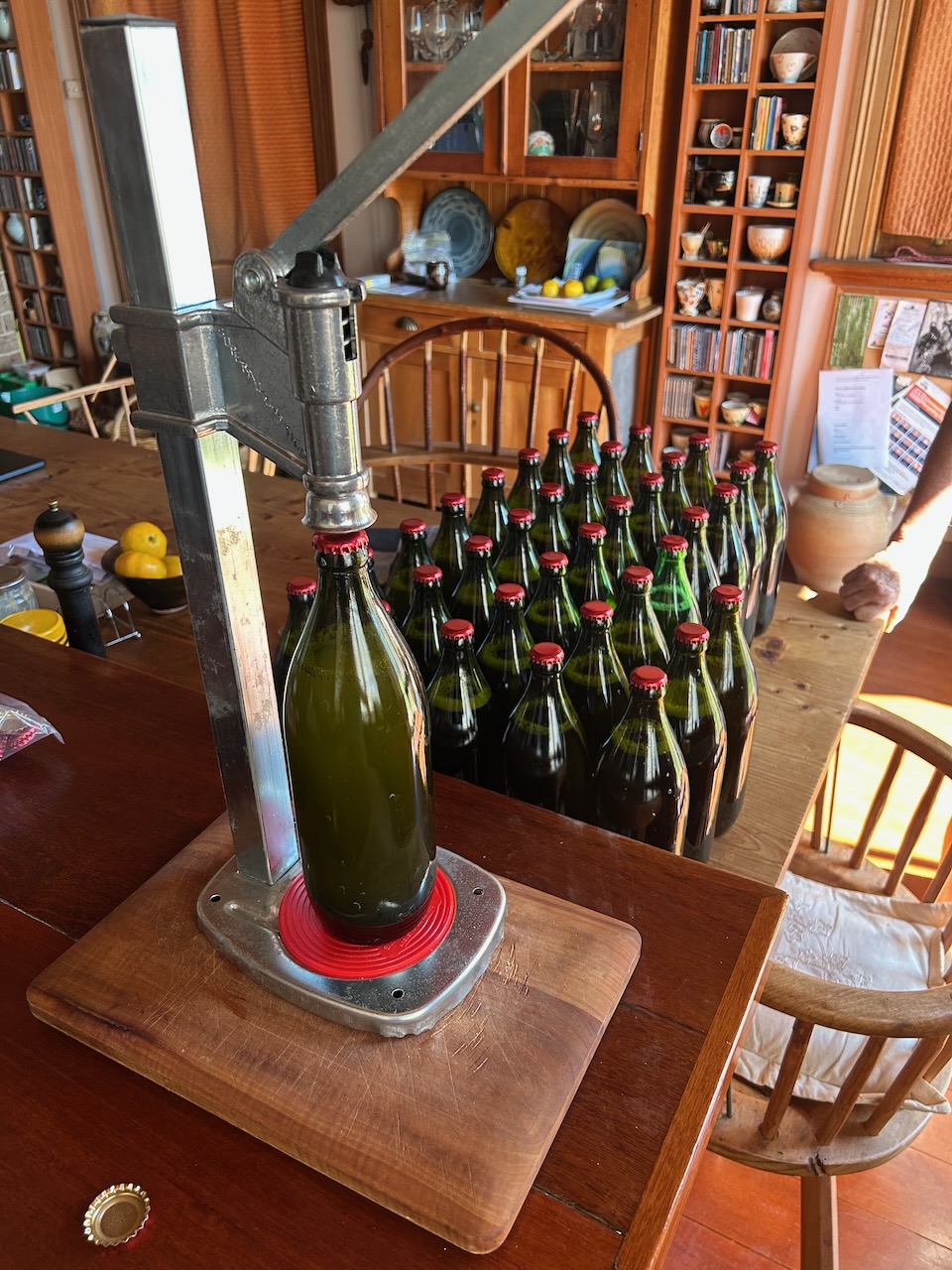
Now, 8 weeks on, the ferment has completely died down and used up all the available sugary nutrient in the juice. Now that it is completely still, it is safe to bottle it. We must make sure that it is fully fermented out, so that it wont keep on fermenting and explode the bottles.

I remember back in my childhood in the 60’s, stories of exploding ginger beer bottles that had too much sugar in them.

We have been making our own cider here for almost 50 years now, ever since we planted our first orchard and got a reasonable crop of apples. 

This is our first vintage of cider in ten years now, because the orchard was burnt out in the big bush fires of 2019, but before that, there was a ten year draught that made it very hard to keep the fruit tress alive , never mind getting a good crop off any of them.

So this is our first really good cropping year from the newly planted fruit trees in the new orchard five years on.See; It’s almost autumn, Time to make cider.Posted on 

I have just spent two days hand weeding and digging over the pottery verandah garden bed. It had gone completely feral and needed a good sorting out. All of the spring and summer flower display was mostly over and I’m hoping that all those flowers dropped a load of seeds down into the bed, so that now, given a bit of free space and sunlight, they will germinate and grow a new generation of flowers to welcome visitors along the driveway past the new pottery. I spent a long time on my hands and knees, making sure that I got the majority of the couch grass and kikuyu runners out of the soil. 

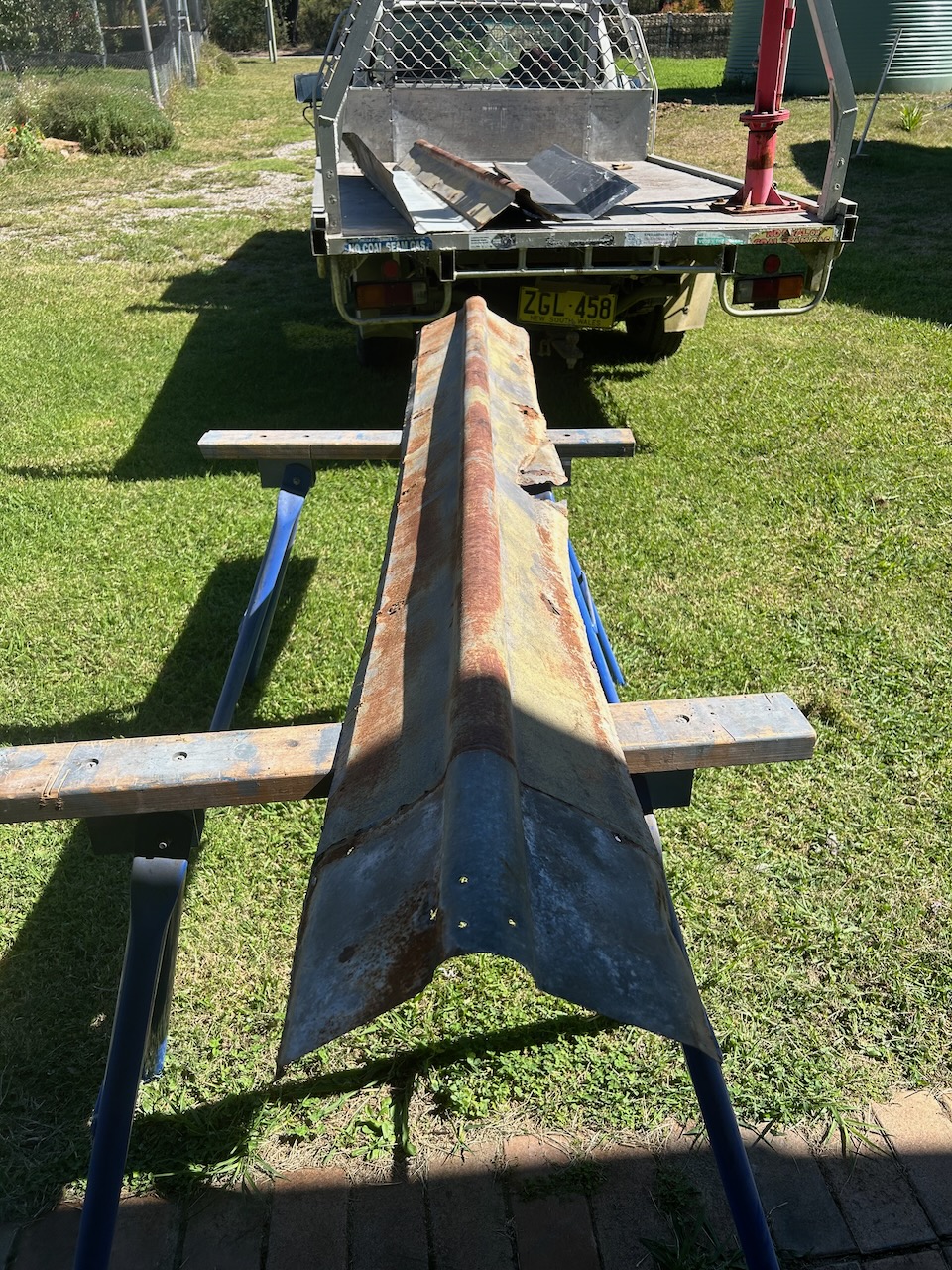
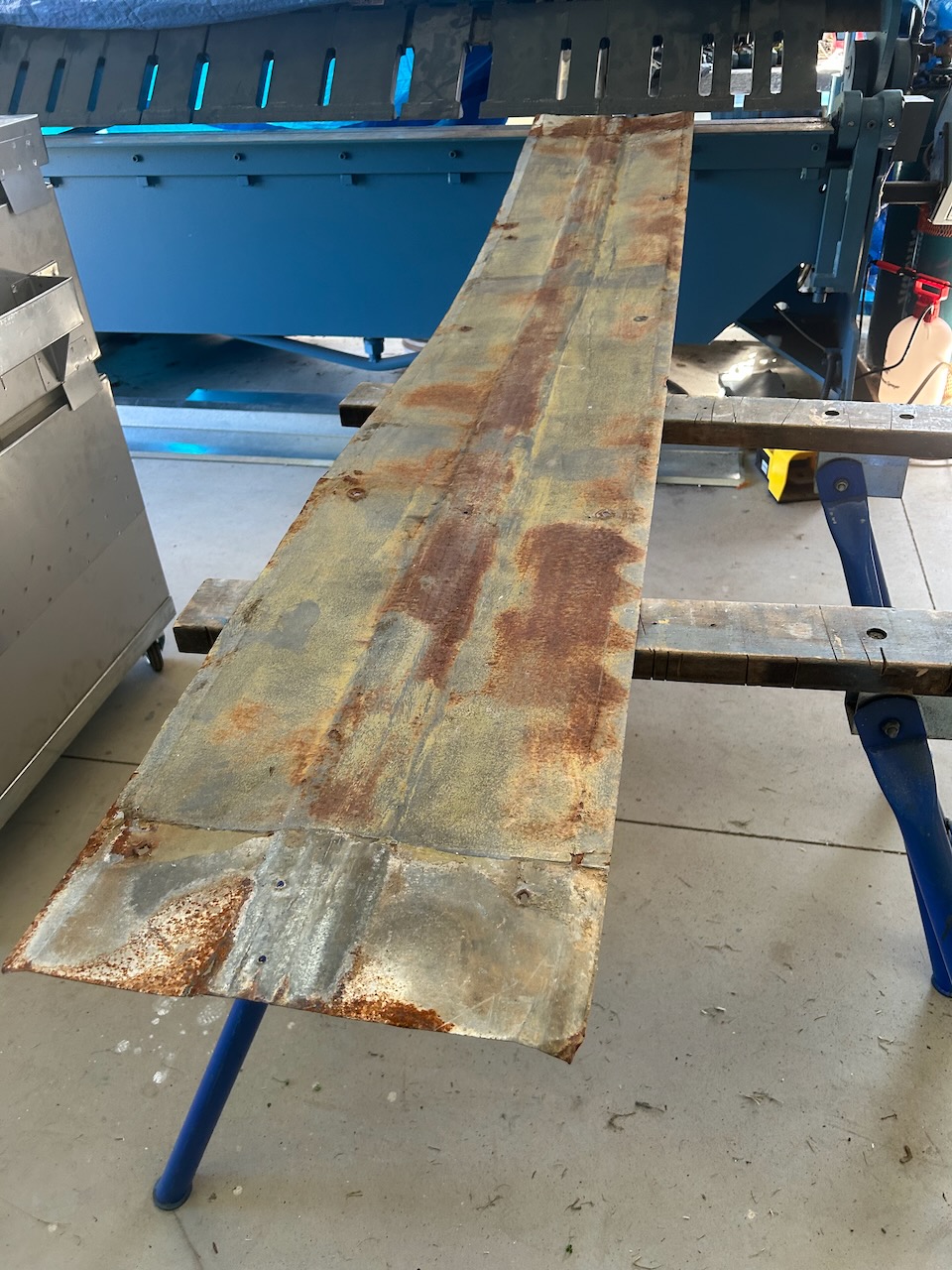
To prevent the grass runners from returning and growing back into the freshly weeded soil. I needed to make a border edging along the beds. In the vegetable garden, I made galvanised iron sheeting edging strips from off-cuts of galvanised flat plate that were left over from kiln jobs in the past. A very productive re-use of what was waste material. 

These days I don’t have off-cuts any more, but Janine reminded me that I had stacked up half a dozen lengths of old recycled roofing iron ridge capping that might be usable.

I got stuck in and flattened it all, split it in two long lengths, and then folded a strengthening right angle edge on one side so that i could bury it half way into the soil to delineate the garden bed, but most importantly to cut off access to the grass runners from growing back into the beds. I dug in a ute load of compost, watered it well in, so now will wait to see what germinates.

Re-use, re-cycle, re-purpose!

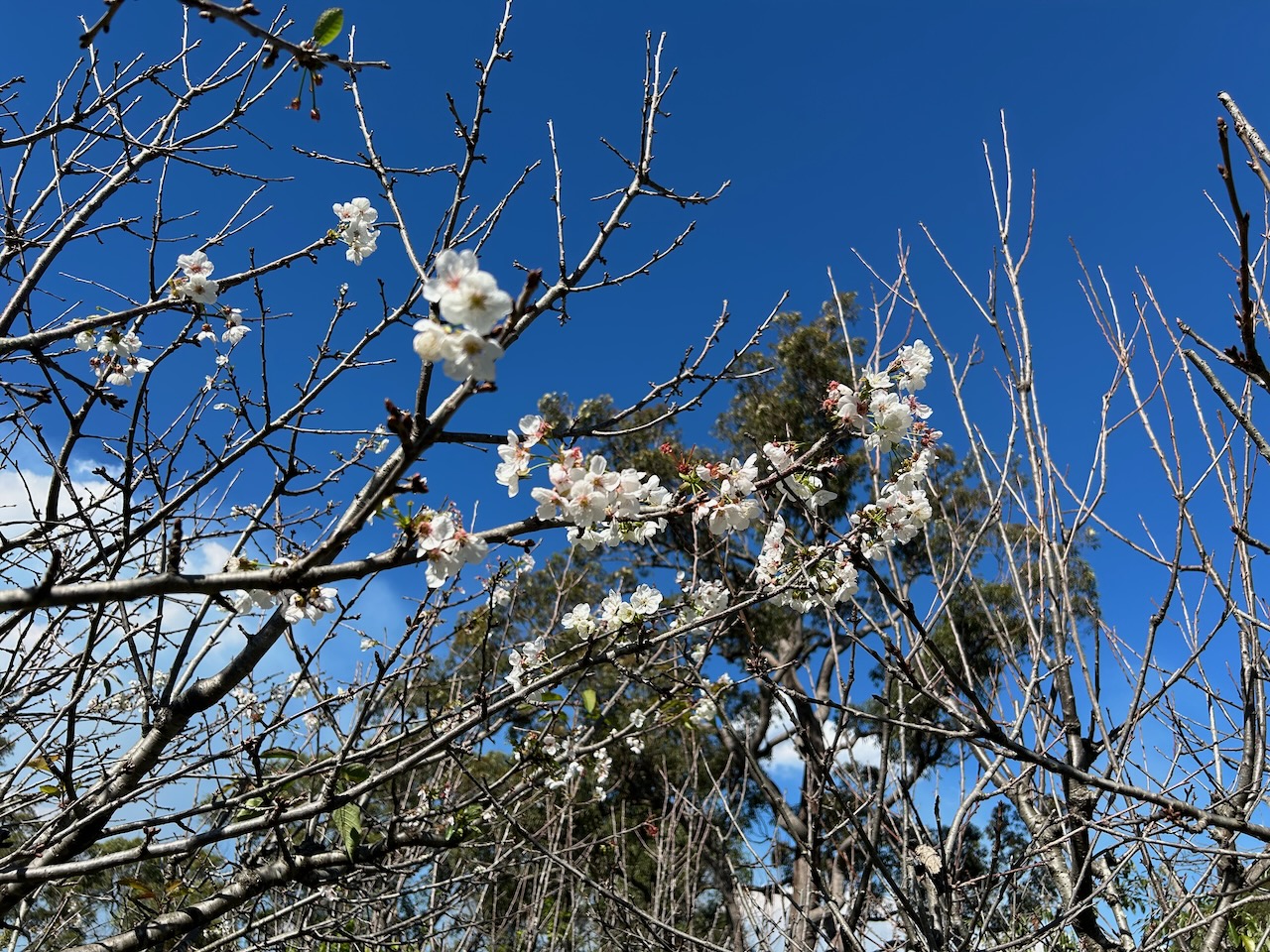
One of our cherry trees has decided to flower again in autumn. I think that it had a few cold nights, followed now with some warm weather,  and that was sufficient to reset the biological clock thinking that winter is over and time for the spring flowering. We have had this sort of thing happen in the past. Particularly with the ‘low-chill’ cultivars.

Winter hasn’t arrived yet, so I wonder if this tree will still flower as normal in 4 months time when spring does actually arrive?

In the pottery, I have retested the rock glaze tests that i started exploring a few weeks back. This time, I have made larger sized samples to see the quality of the glazes better. All 3 have potential, but still need further testing to get them ‘right’.

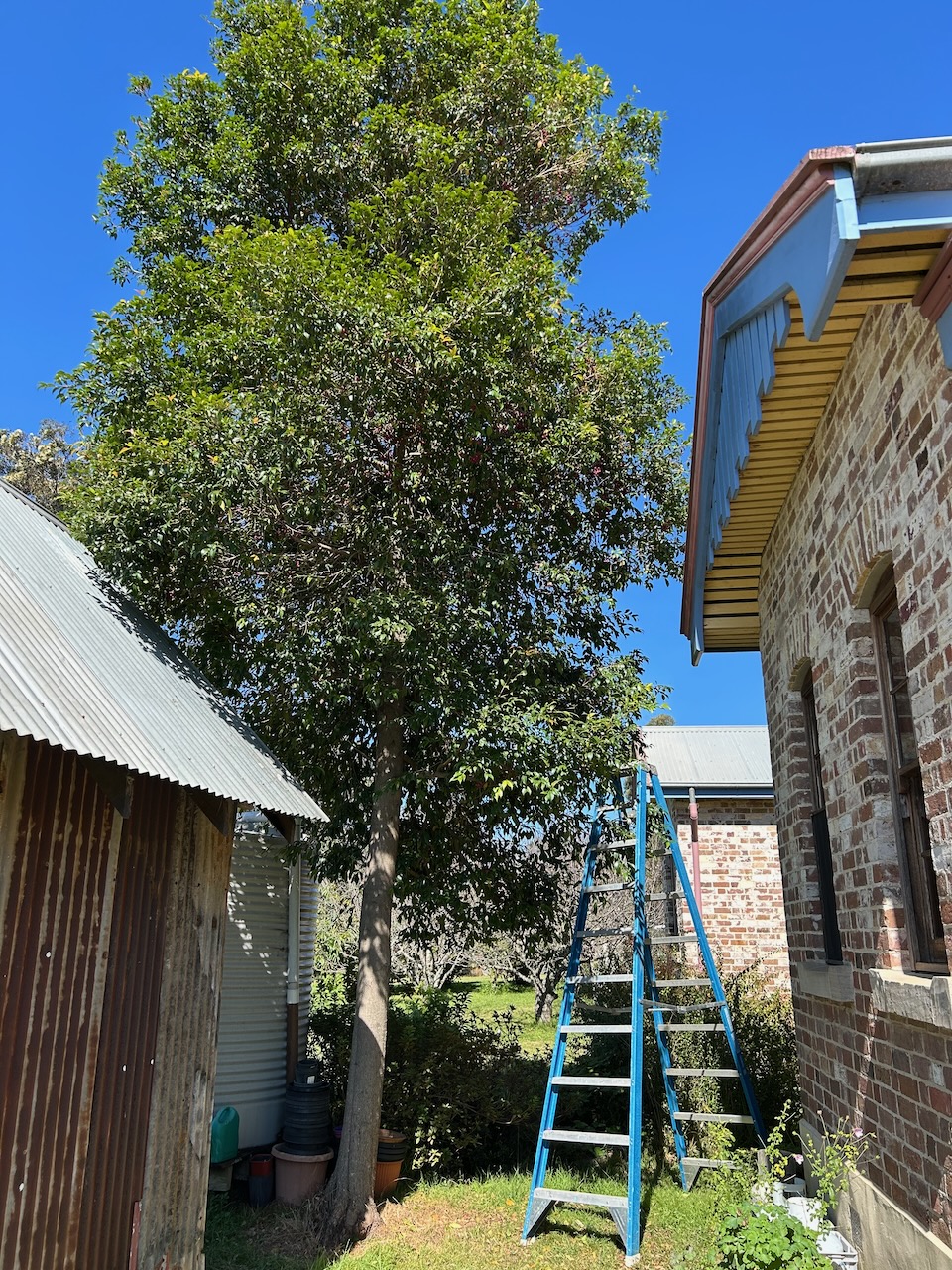
After washing and sterilising all the glass bottles for the cider bottling this morning. I had and hour to wait for the sterilising process to complete, and could hear the birds in the lillypilly tree next to the house. I asked Janine if she wanted to make some lillypilly jelly, so got out the 3 metre step ladder and climbed up into the canopy to fill a bucket with fruit. The fruit only starts 4 to 5 .metres off the ground. The tree is much taller then the house.

After we had bottled all the cider, Janine boiled up the berries and started the process of making the jelly. It takes two days. Tomorrow to sieve out the skins and stones from this batch, then re-boil it and set it up in a cheese cloth to drip out to clear jelly.

Nothing is ever finished, nothing is perfect and nothing lasts.