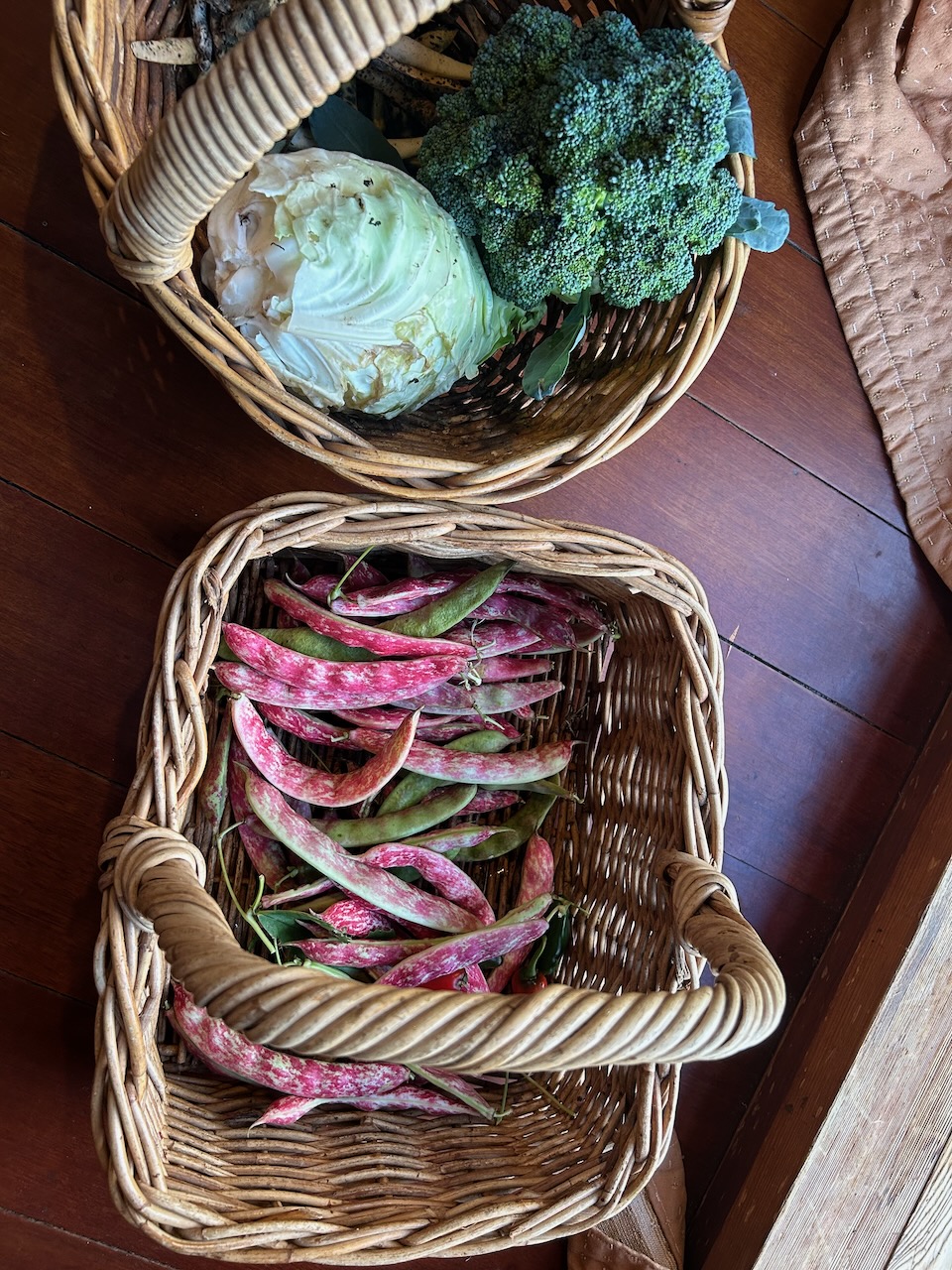
First cabbage of the cool season.

We have just harvested the first cabbage and first broccoli of the autumn. I planted a range of brassica seeds on boxing day. The first batch were all dug out by the blackbirds, so when I re-planted the 2nd sowing, some time later. I also covered the bed with bird netting to stop a repeat of the blackbirds scratching out the seeds. Blackbirds don’t want the seeds, they just like to scratch into freshly worked and composted soil looking for worms. This little hiccup set me back a few weeks, so our first cabbage is a bit late arriving.

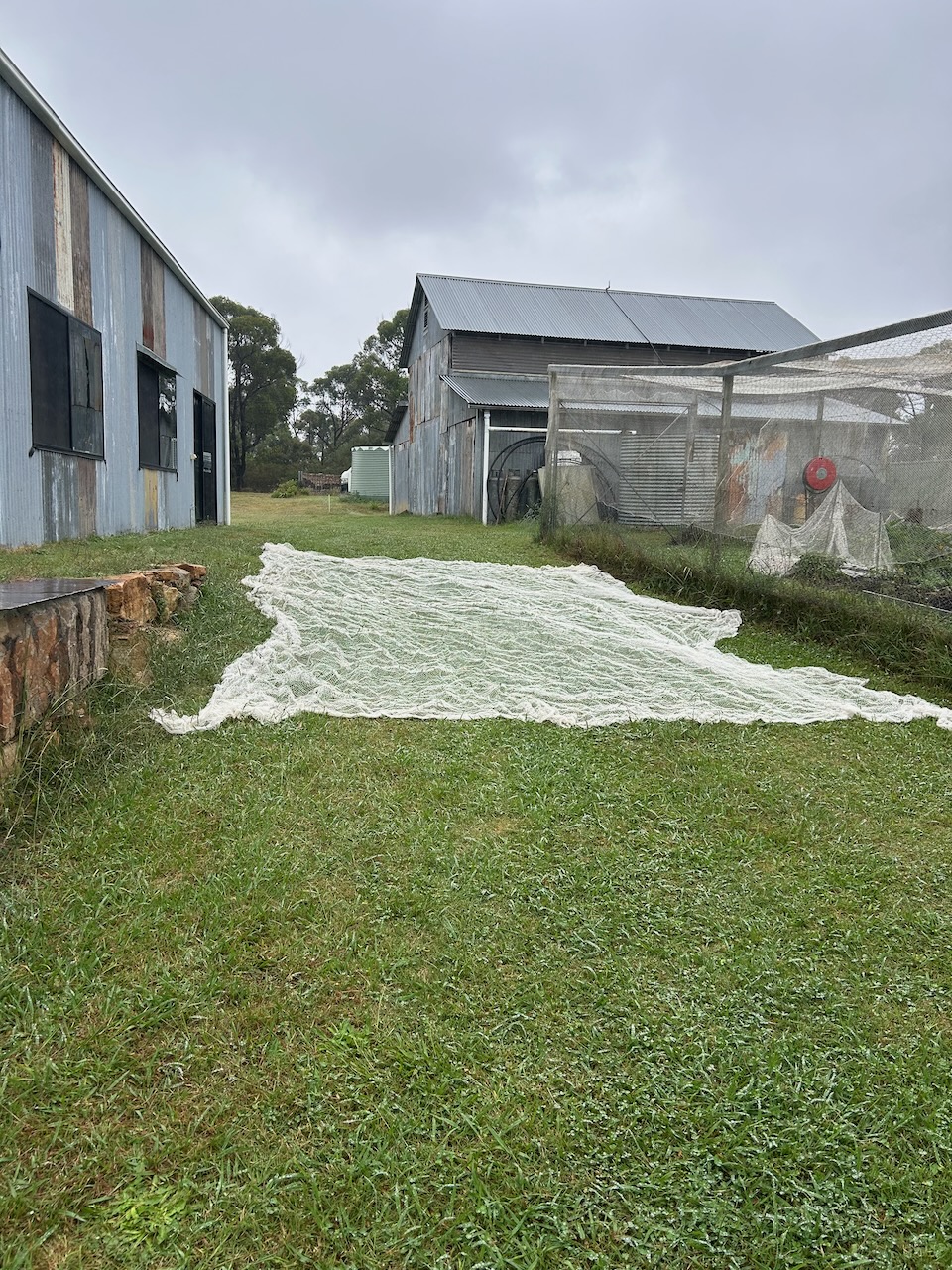
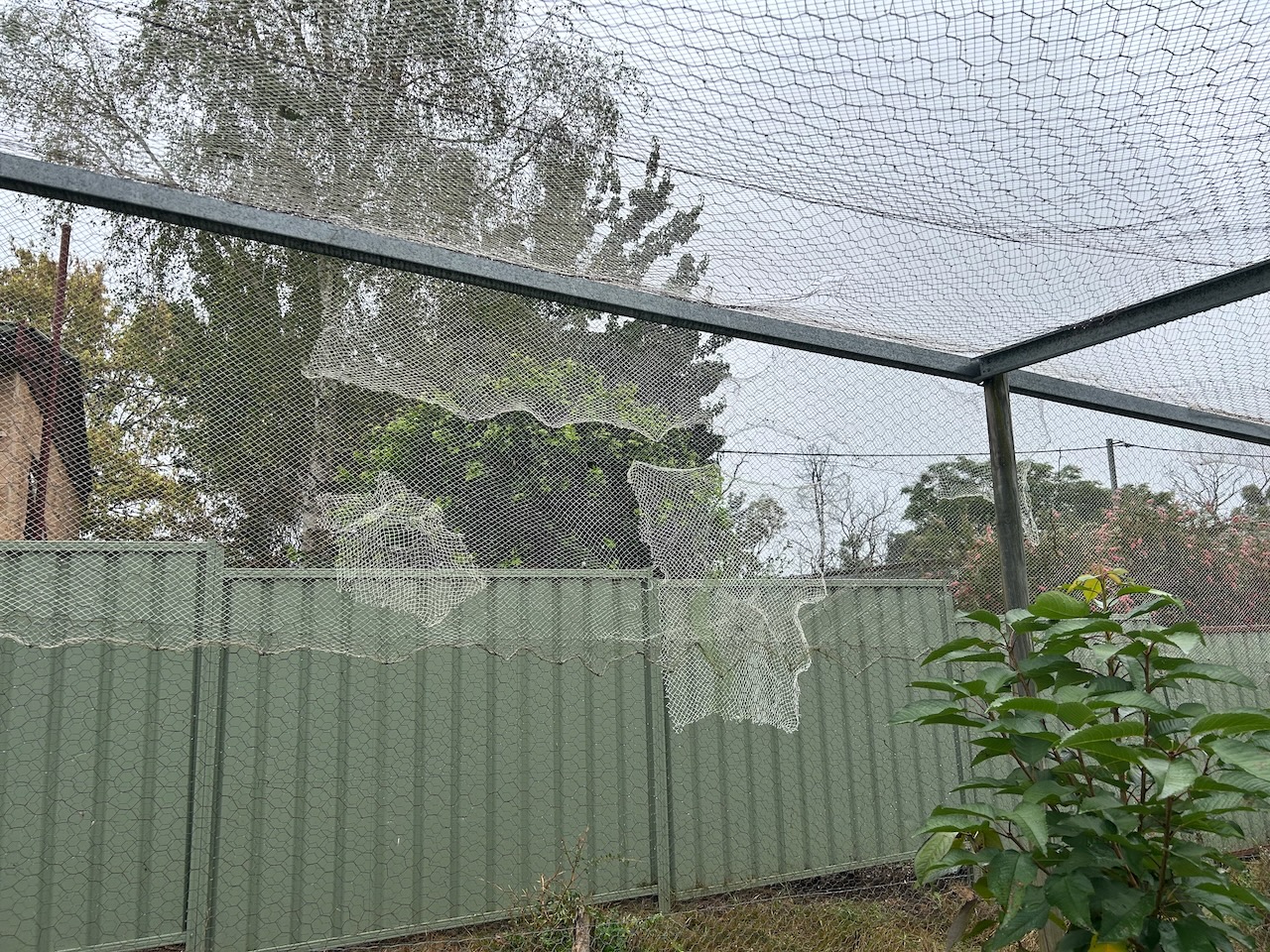
I have now repaired all the melted sections of the plastic netting over the vegetable garden. Almost total replacement at both ends that were worst hit by the fire, then applying patches to the large holes in the other walls, and finally stitching together the small 50mm to 100mm holes that are scattered all over the enclosure walls and roof. I purchased a commercial size roll of 100metres by 10 metres of netting over 30 years ago to cover the vineyard at harvest time. The netting that is over the veggie garden now is all that is left over from that time. It had a 10 years warranty against going brittle with the ultra violet light. So I’m very pleased that it has lasted so long. However, it is getting very brittle and the galvanised steel netting is all rusted through in places. So a total rebuild is in order, but I’m not too sure that I can manage that big a job these days, or if it would even be wise to attempt it at my age, having just turned 73, I shouldn’t be up and down ladders for days on end.
I made an Australian version of oka-nomiyaki pancake. Of course it is not really an okonomiyaki, as I don’t have mountain-potato starch, or almost any other authentic Japanese ingredients, but I do the best that I can with what I have. The super-fresh garden ripe cabbage makes it really fresh, crisp and delicious. The broccoli goes into a veggie stir fry along with all the other garden delights of the current season and some tofu for protein. Vegetable gardening, which mostly involves a lot of weeding, mowing and watering, suddenly becomes so worthwhile when you are harvesting such beautiful produce each afternoon, freshly picked ready for dinner. Our food has carbon metres, not miles!

I have also planted another 4 different varieties of seed garlic in the garden, just to see if any of therm are well adapted to grow here in the future.

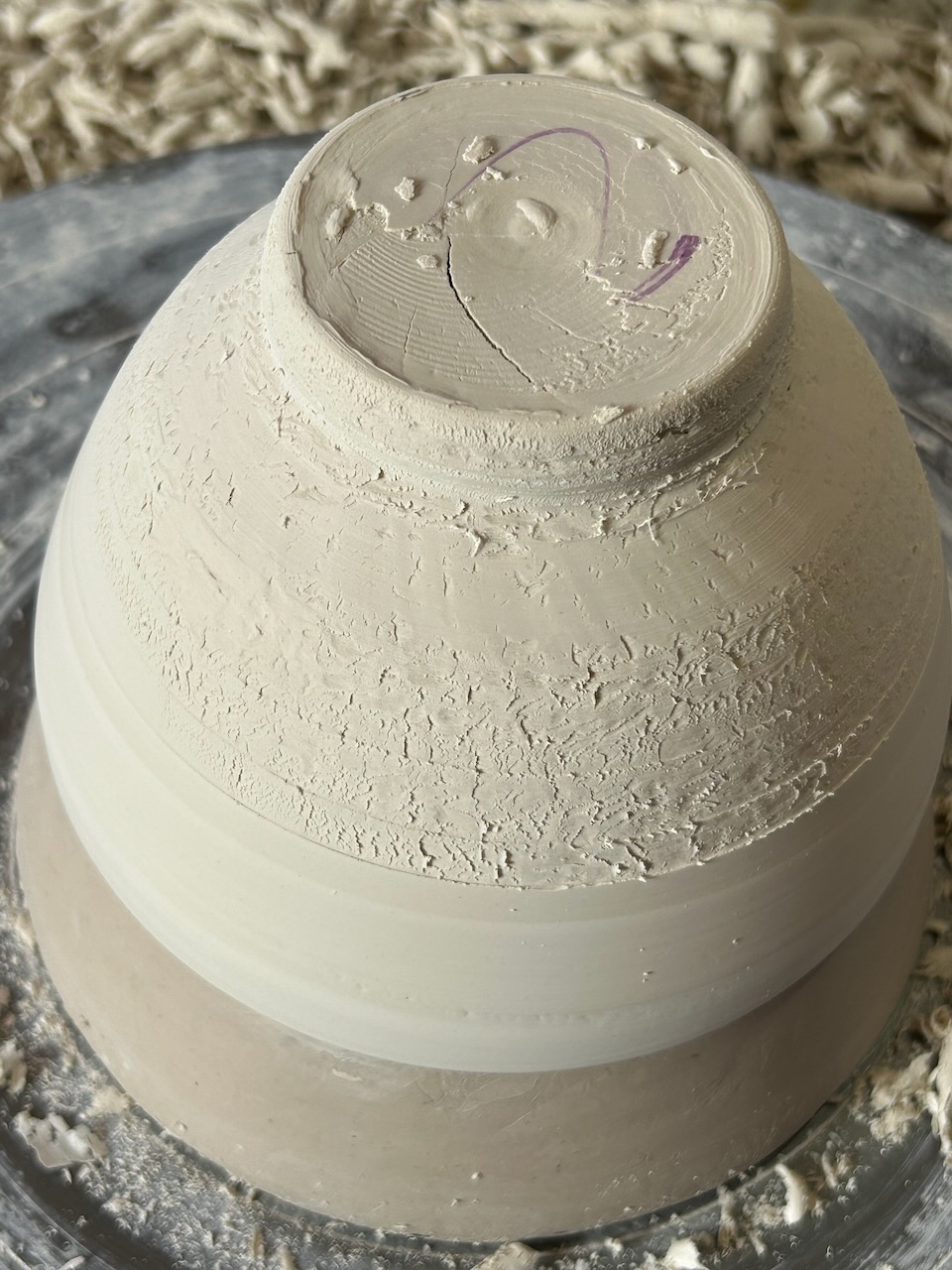
In the pottery, I have been throwing some sericite porcelain stone bodies. This stuff is so short that I have to make the wall bases thick to hold the form up. That then means a lot of turning to get the pot thinner again. This weird stuff tears and rips as the turning tool cuts into it – unless it is turned quite firm and almost dry. But then there is the dust to contend with, so I like to do it while it is still a bit damp, but then it chips a lot. It becomes a two stage process. Roughing out the mass of extra thickness, drying some more, then final turning. I get to do a lot of slaking and re-cycling of turnings.
I have built an extra-large tray for my shimpo, but with this porcelain, I still fill it very quickly. This image is of the trimmings from just 15 small 150mm. bowls.
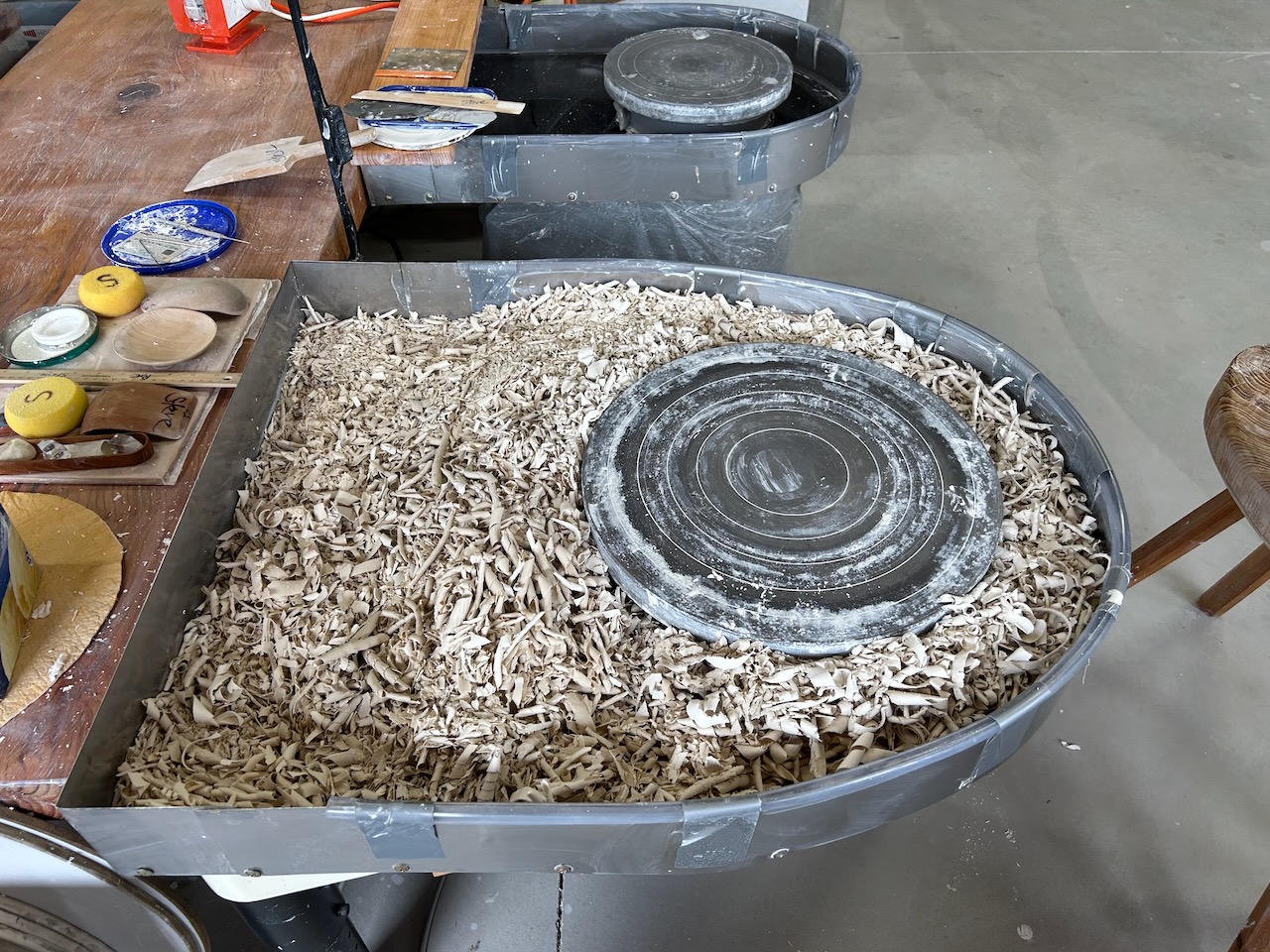
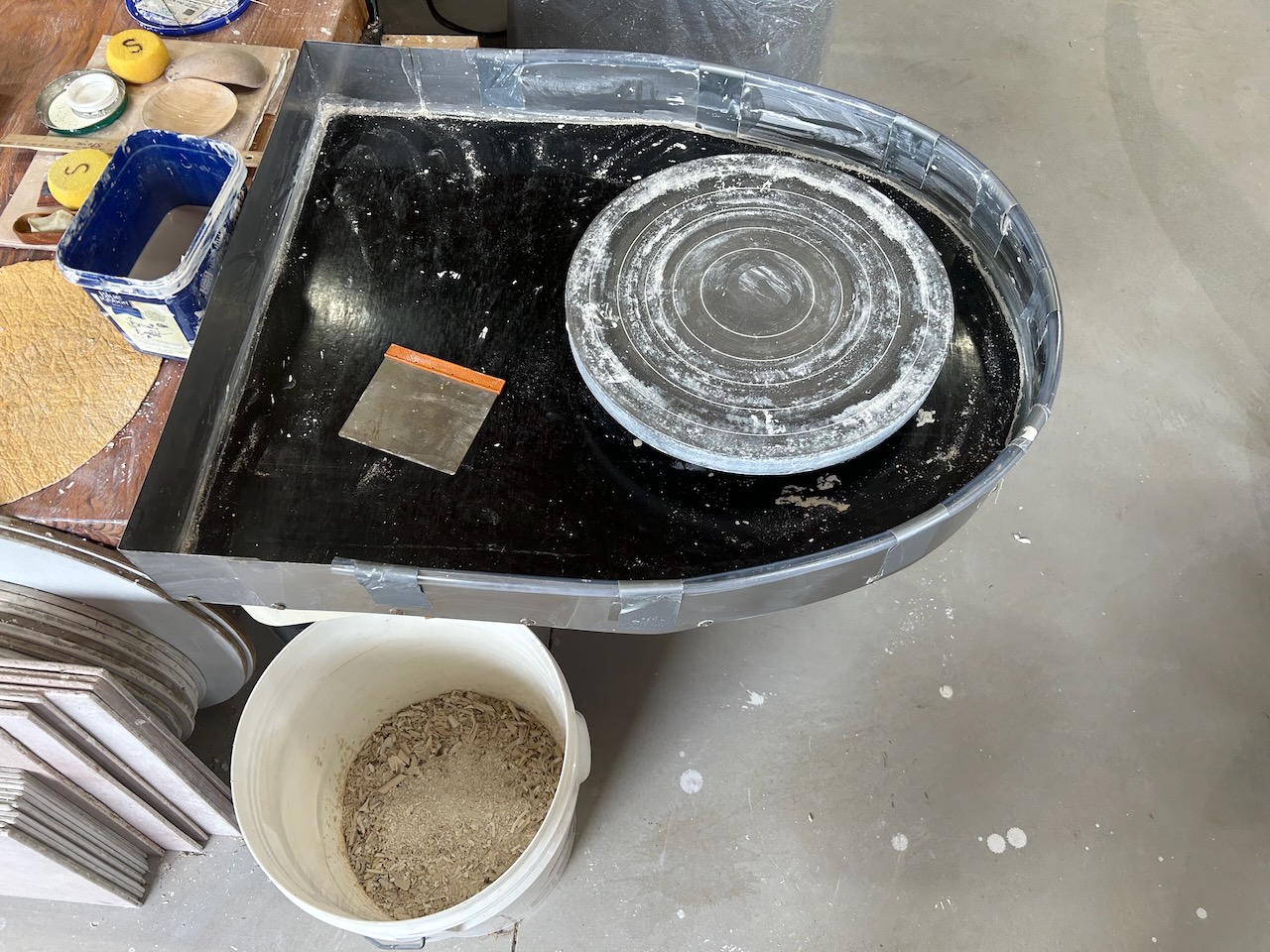
It all goes into the mixer pug and is recycled, ready for throwing again the next day, although leaving it to age a little bit and ‘recover’ would be even better, but because I use a dozen different mixtures and recipes, it is easy to loose track, with too many small packs of different clays hanging around. So I prefer to use up each batch all in one go as soon as possible.

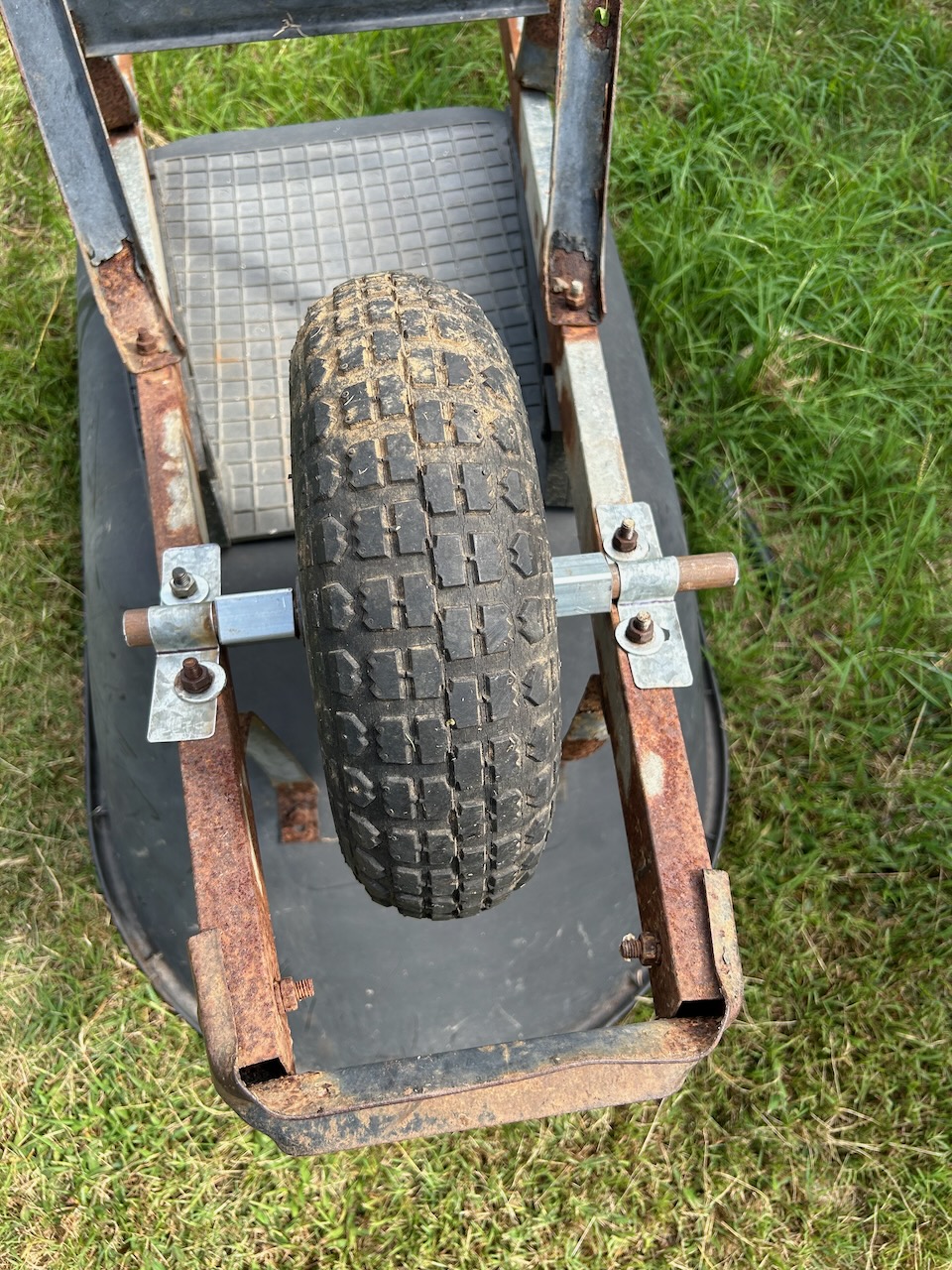
The tyre on the old wheel barrow went flat last week. I took it to the tyre place to get a patch or a new inner tube, but they told me that the tyre wasn’t worth working on and I’d need a new tyre and a new inner tube – at a cost of $78! As the old metal rim is quite rusty, I decided that I might just as well buy a whole new wheel unit from the big hardware chain for $32! But then I remembered that I had a complete wheel off a buggered trolly that I picked up off the side of the road on council clean-up day. It is 25mm smaller in dia. but still holds air pressure well, so I had to change the shaft size and make some new brackets to hold it on, out of scrap tin plate. 20 mins later we are all back in business and good to go. It’s not perfect, but it works. Recycle, reuse, repurpose!

The Japanese have a word ‘Mottainai’ – too good to waste!
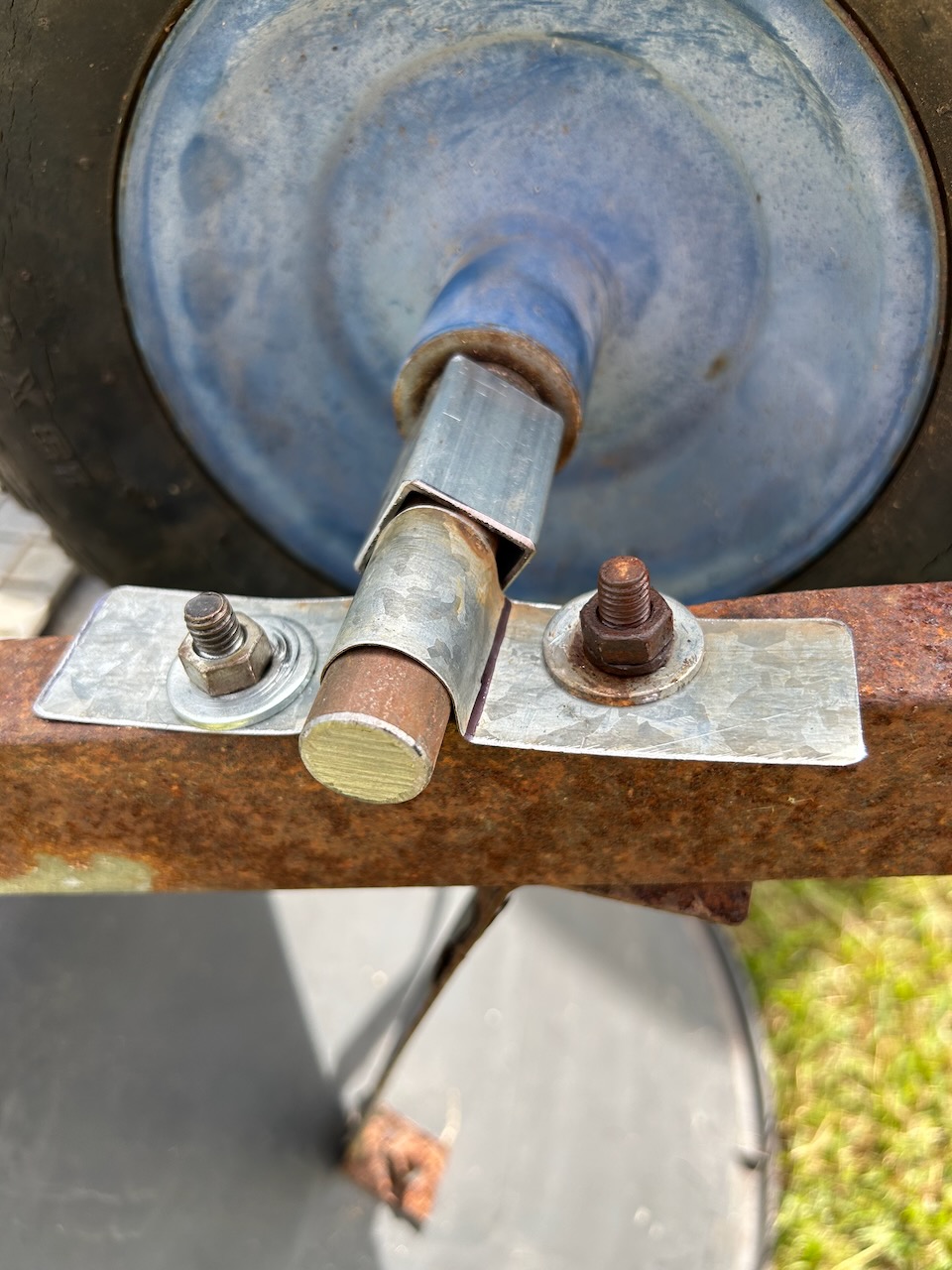
A botched up job that will keep all of this useful material out of the waste stream and land fill for another decade. I actually picked this whole wheel barrow up off the side of the road in the village some years ago on Council clean-up day, when the owner decided that it was just junk, because the tyre was flat. I took it home and just pumped it up. It worked! And has been working hard here for all those years of reprieve since then – and now still continues to be useful. Waste averted, Mottainai!

Nothing is ever finished, nothing is perfect and nothing lasts.
First firing of new portable wood fired kiln design

I’ve just completed the first firing in the new version of the small portable  wood fired kiln that I have built for a friend.

This kiln is a little bit different from the ones that I used to build for a living before the fire.

In this case, I’m building it as a favour for an old friend. To repay an old debt. No money is changing hands.

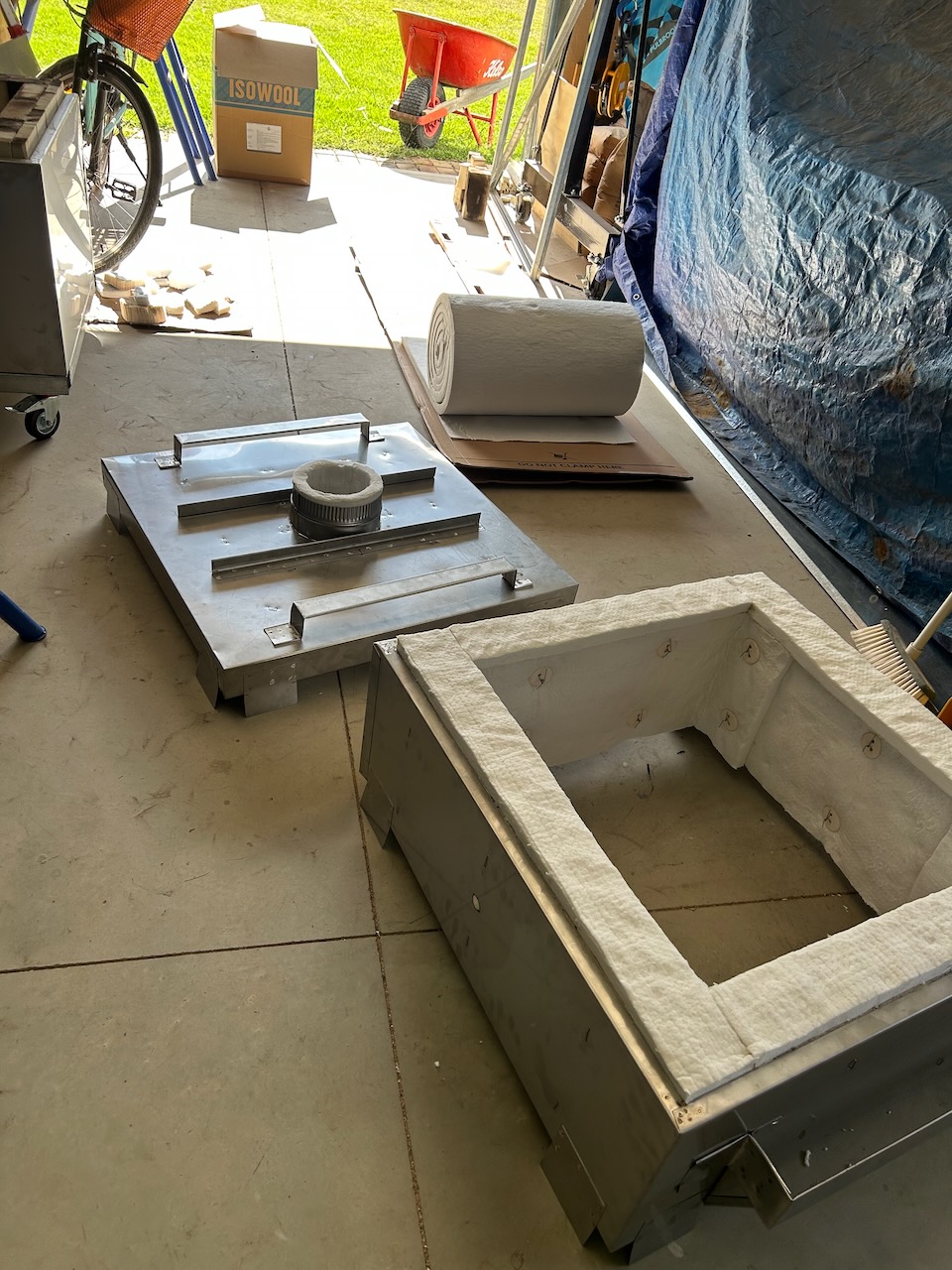
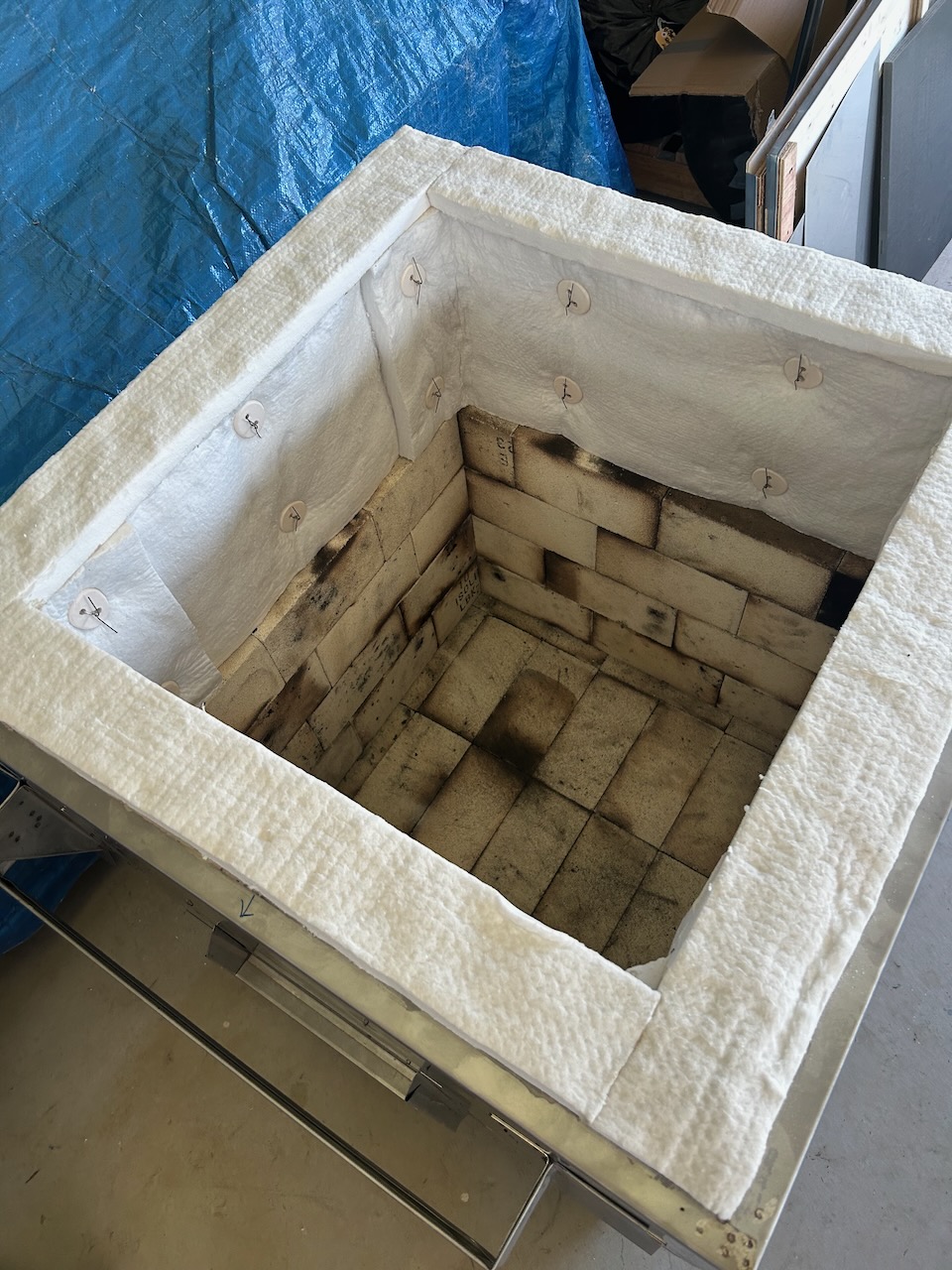
I’m also using up a lot of old refractory bricks and fibre that I had in stock before the fire, and which subsequently got burnt, but were largely unaffected by the fire, as they are ‘refractory’ after all. They are scorched black in places and impregnated with a lot of soot and carbon, where the cardboard packaging burnt off.

I’m confident that they will be fine. This first test firing will burn off all the carbon and return them to pristine white, albeit with a little bit of flashing and wood ash decoration.

The purpose of the test firing is to make sure that the kiln will get to stoneware temperature easily, just like all the others that I used to build. In this current kiln, I have made changes that allowed me to use up a lot of the left over materials, this makes the kiln just a little bit different in dimensions, so testing is required. 

I sharpened my designers pencil and had a good long think about how I could use up what I had to the best advantage, and still have much the same outcome. As the old saying goes. There is more than one way to skin a cat. Who’d want to skin a cat anyway! weird! Anyway, this kiln looks pretty much the same as all the others, superficially at least, but all the critical dimensions are kept in the same relationship, so it ought to work OK.

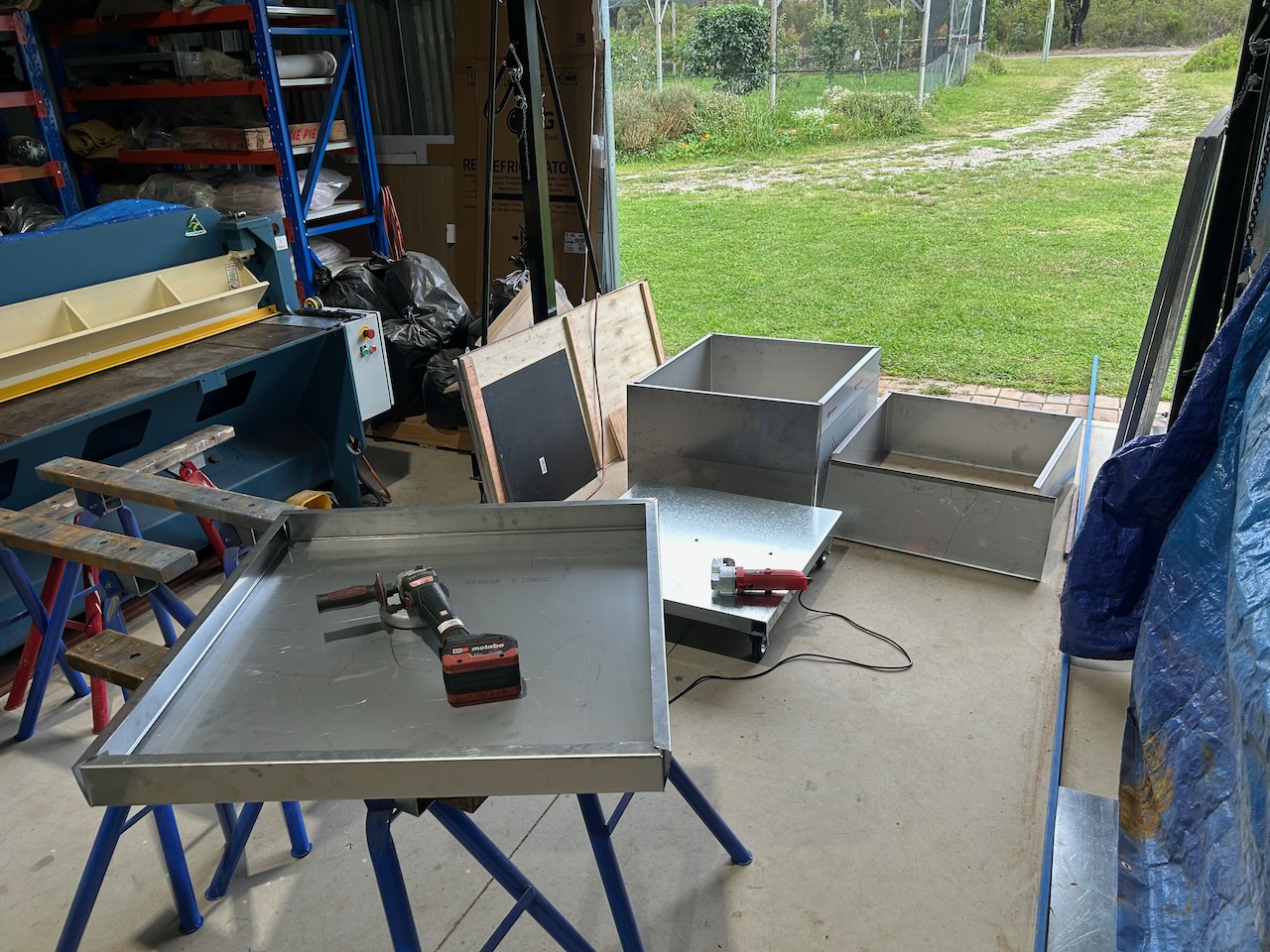
I started by redesigning how I cut the frame out from the standard 2440 x 1220 mm sheets of Stainless steel. I thought it through and started from the out side measurements of the sheets and worked back inwards. In this way, I was able to use every last millimetre of the material, with minimal leftover off-cuts. I am still using the same 450 x 450 size kiln shelf as the setting and the height is still more or less 450 mm high in the setting. Only I can see where the changes are, and I’ve done a work-around so that it doesn’t matter or affect the outcome too much. Or, at least that is what I thought, hence the need for a test firing. I’m actually a little bit pleased with myself, if I do say so myself.

I hate wasting precious material like stainless steel. Of course, I always managed to use up all the off-cuts from the previous kilns in subtle ways, right down to making throwing tools out of the smallest little pieces. So no more stainless steel throwing tools for sale or give-aways anymore.

This cunning use of everything made me re-design the handles, reinforcing angle brackets and support lugs etc that I have on the kiln. They don’t look so different, but still do their job effectively.

All the bricks look a bit ‘dirty’ but are brand new. These are the equivalent of RI 23 insulating refractories. Good for firing to stoneware in fast firings. They are not very suitable for long, high temperature firings, as they would shrink a bit. but not so in this fast firing kiln.

I made some more ceramic buttons to keep the fibre in place. I also made a new stainless steel grate from old burnt stainless steel rod that was in the pottery when it burnt down. It looks a bit rusty, but it would look very black and rusty after the first firing anyway.

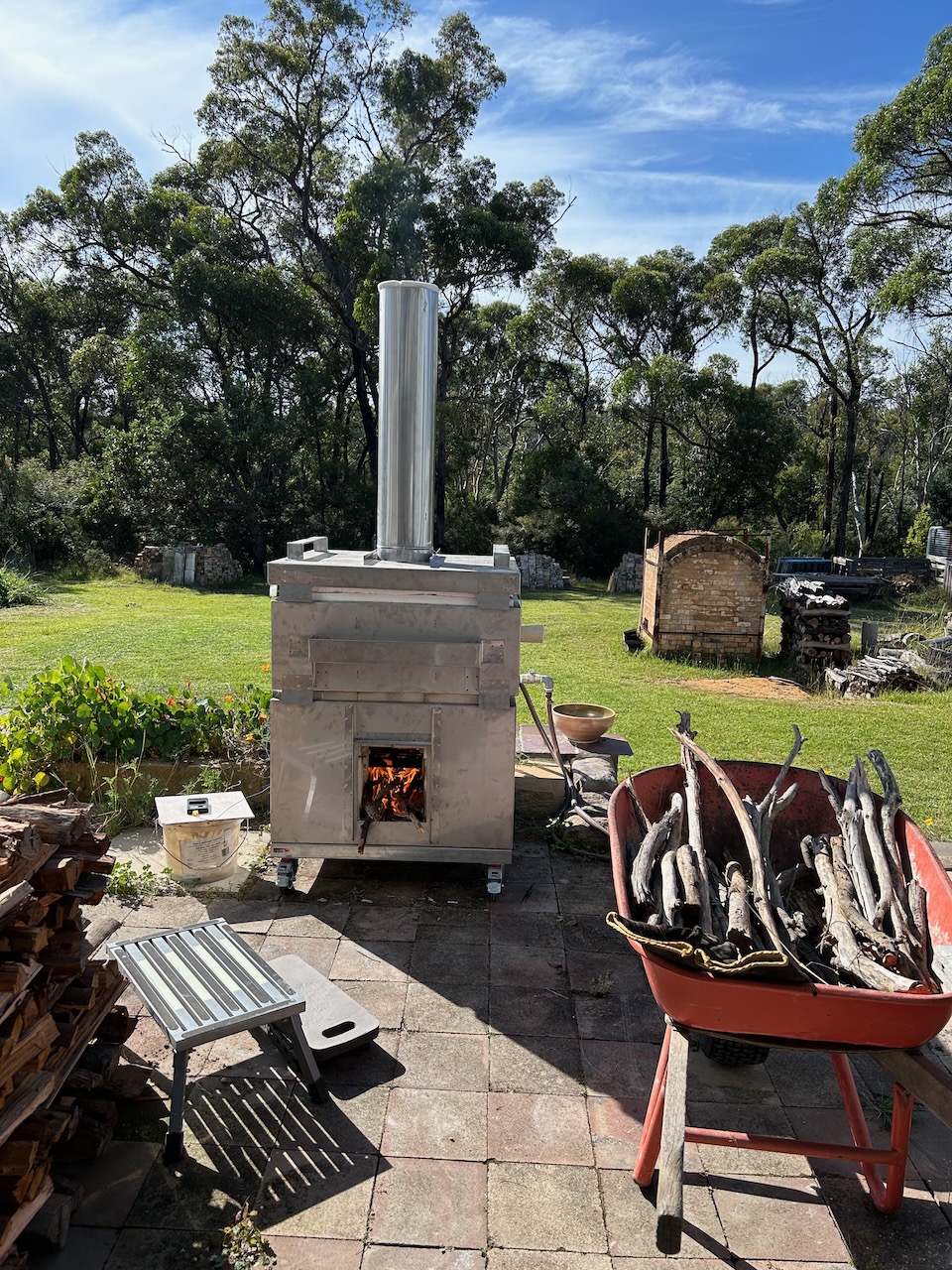
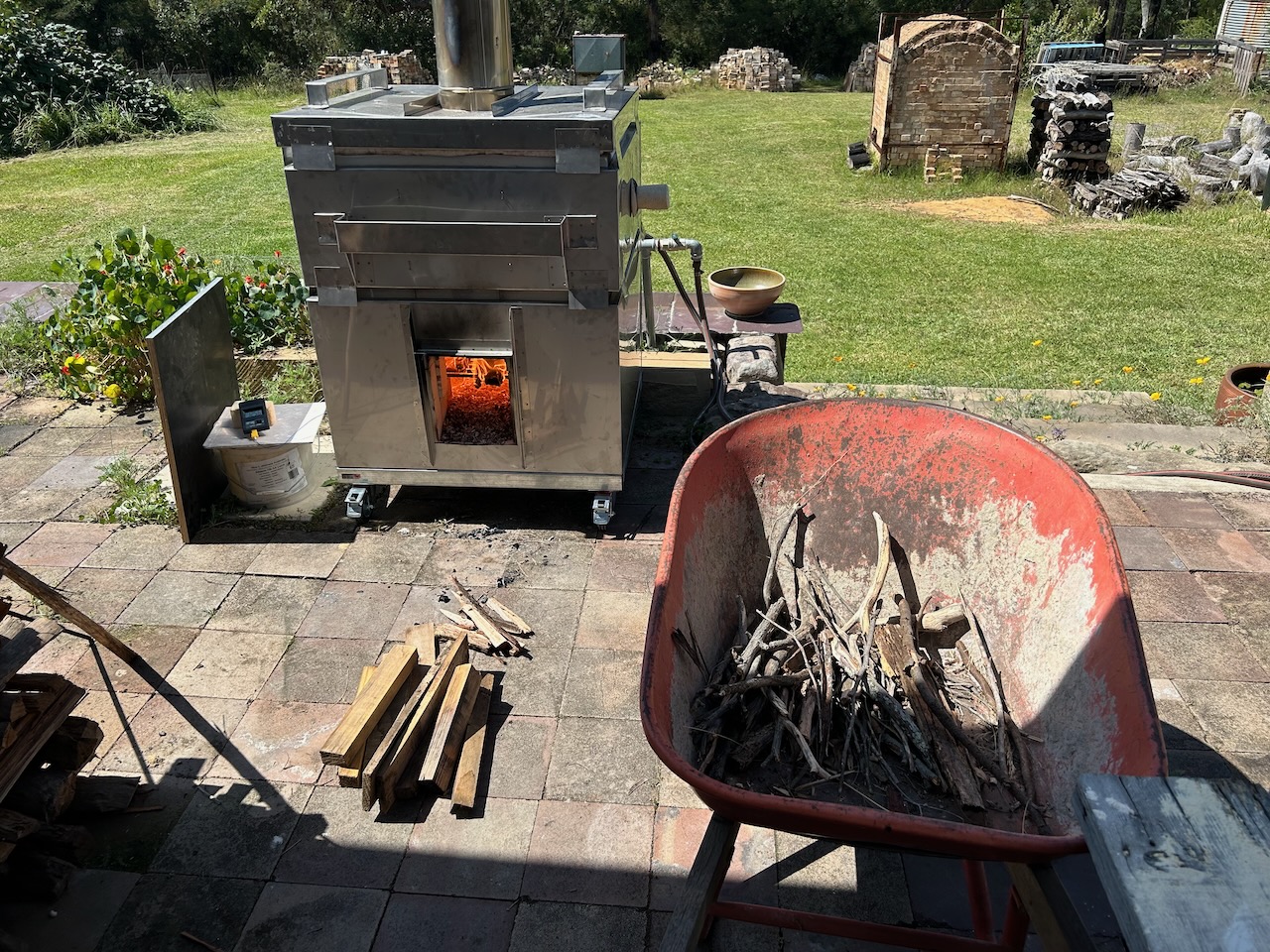
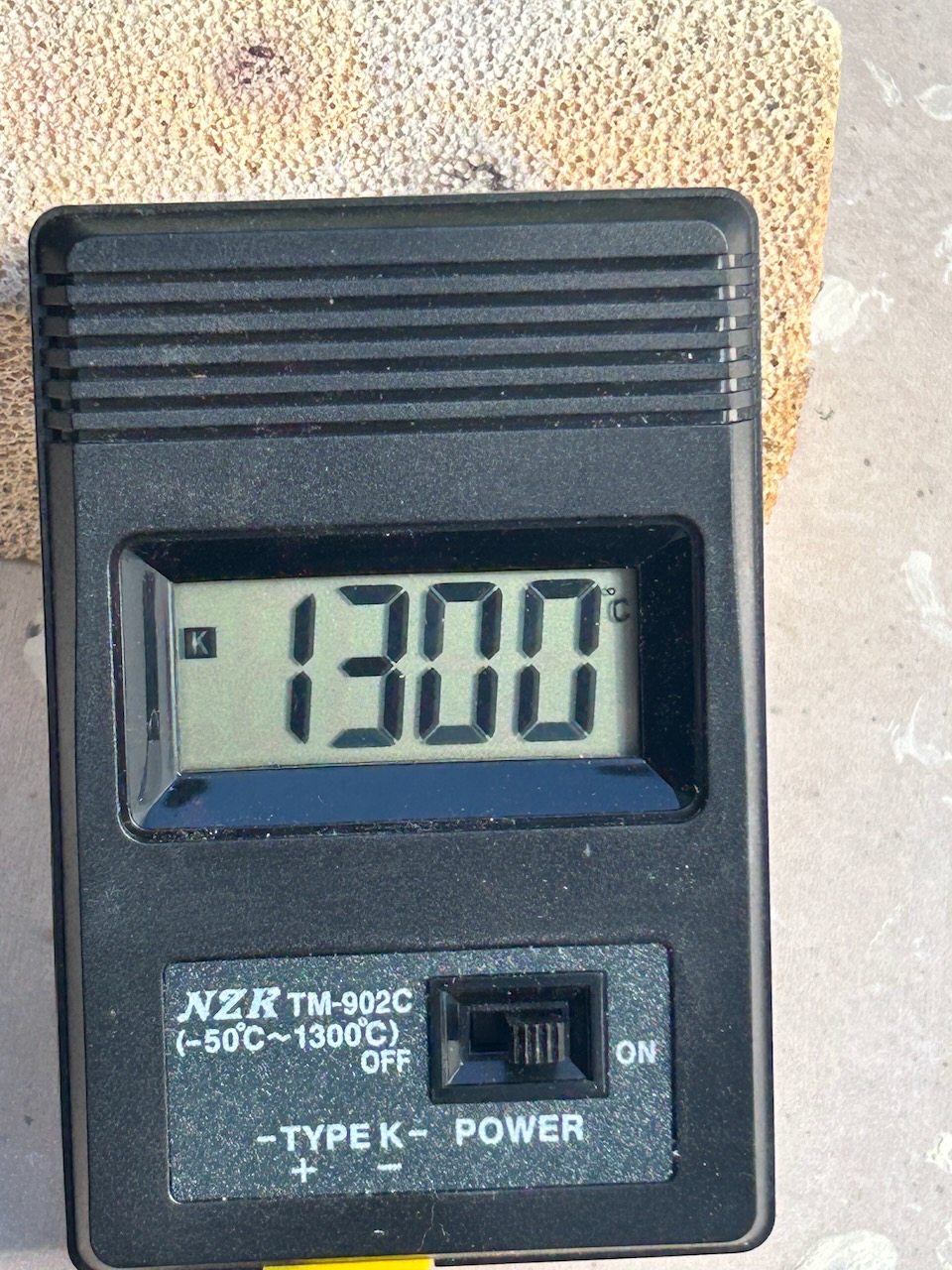
The test firing went very well. I got it up to 1300 in just over 3 hours and 15 mins. I used 2 wheel barrow loads of wood to get it up to temperature.

Just a few skerricks of wood left at the end of the firing. A lucky guess !

A nice resolution for an example of necessity being the mother of invention. This new design variation will be my new standard design.

If I ever make another one!

Good thing that I don’t have many friends 🙂

Nothing is ever finished, nothing is perfect and nothing lasts.

Autumn is here

It’s March and autumn is supposed to be here, but it has been delayed by Global Heating! We are having some of the hottest recorded days for this time of year. We are used to the long ‘Indian Summer’ season transition, but this is the heat that we used to expect in the middle of summer.

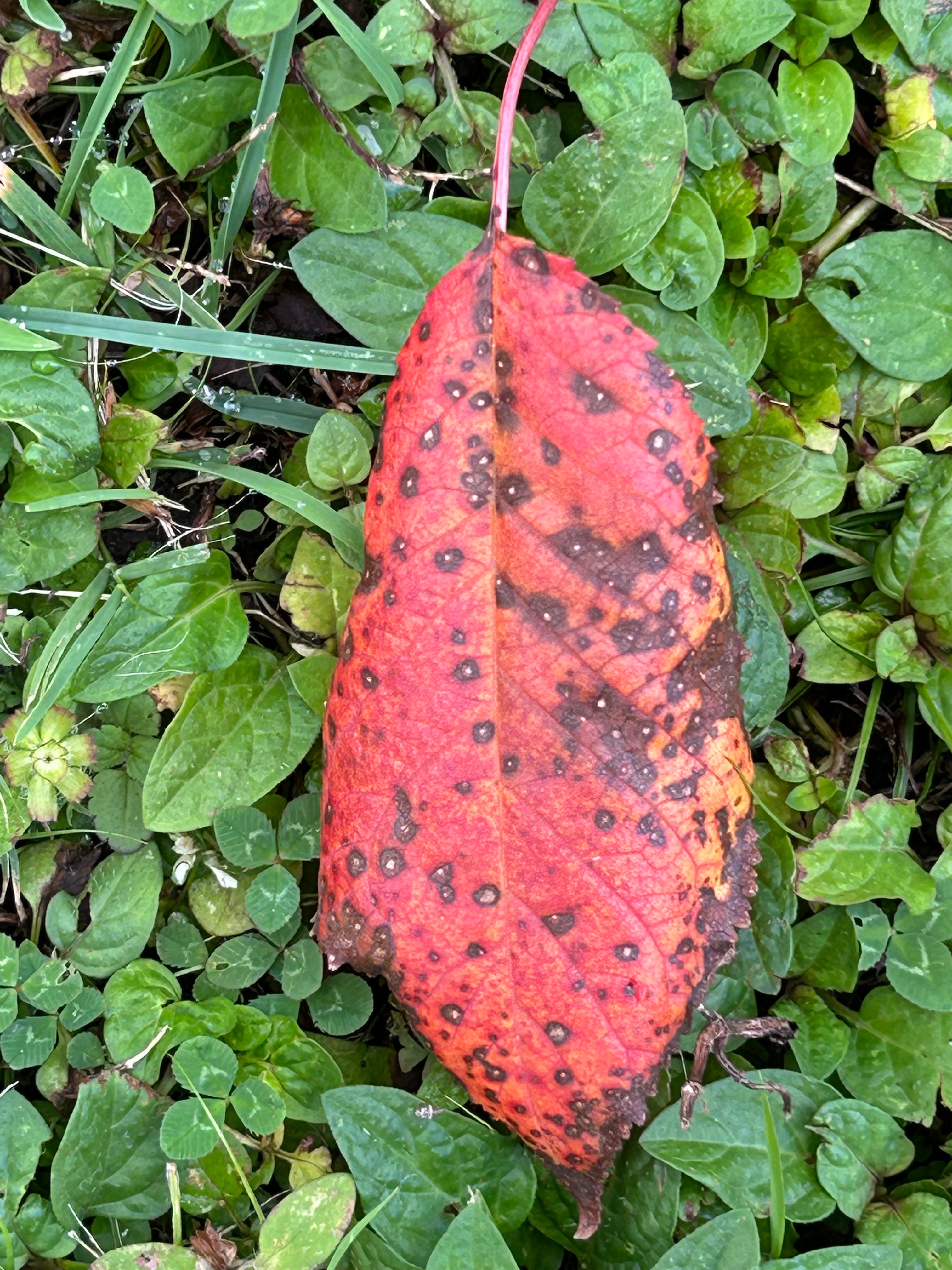
The cherry trees have lost all their leaves. They are the first to bud-up in the spring and the first to drop their leaves in Autumn.

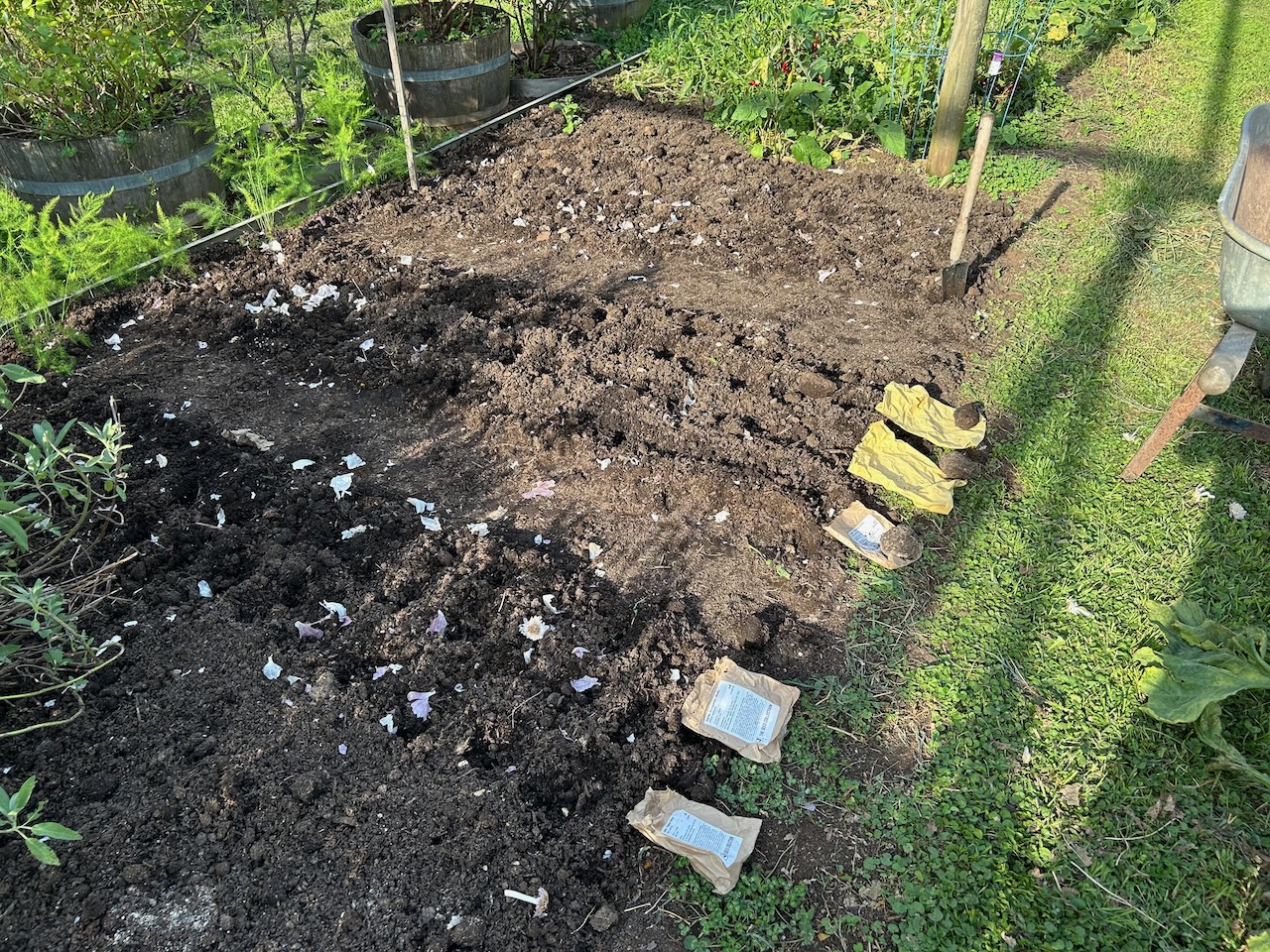
March is the month to plant garlic. The small cloves that we missed picking 6 months ago have shot up in the places where we left them invisibly underground. Their tender, slim, green aromatic shoots are a very good sign that it’s time for garlic to grow again. They have decided!  I planted 5 rows of our own, best-of-crop, home-grown garlic, the largest knobs from last year. 

I planted about 15 cloves to a row, that’s about 70 plants, if they all do well. I left a gap, for a place to stand while weeding the crop as will be necessary several times over the next 6 months. 

Then I planted 4 rows of commercially grown varieties of seed garlic. This year I’m growing ‘Rojo de Castro’ ‘Dynamite’ and ‘Spanish Roja’. Just to see if they will do well or even better than what we already have.

I left another walking gap for weeding and watering, then another 3 more rows of other bought seed garlic varieties. ‘Dunganski’, and ‘Festival’. Our very good friend Anne, organised a bulk purchase for a few of us in the ‘seed-savers’ group. I’m always interested in trying something new. Thank you Anne!

I always plant the best of last years harvest, whatever variety(ies) that is, very often a mix of what grows best here over the decades. All self selected, simply by growing well with large easy to peel large cloves. These new varieties all have a red, or pinkish hue, simply because I like the look of them when hung up in the kitchen drying and waiting to be used.

Whatever does well and grows best will be added to our localised crop for the following season. Life goes on. All the same as before, but with small changes and additions and hopefully improvements.

In the pottery I have been collecting, crushing and ball milling a few new local rocks for testing as glaze material.

As soon as the heat subsides, I’ll be firing the small portable wood fired kiln, filled with test bodies and glazes, to prepare for the firing of the big wood kiln over the winter months.

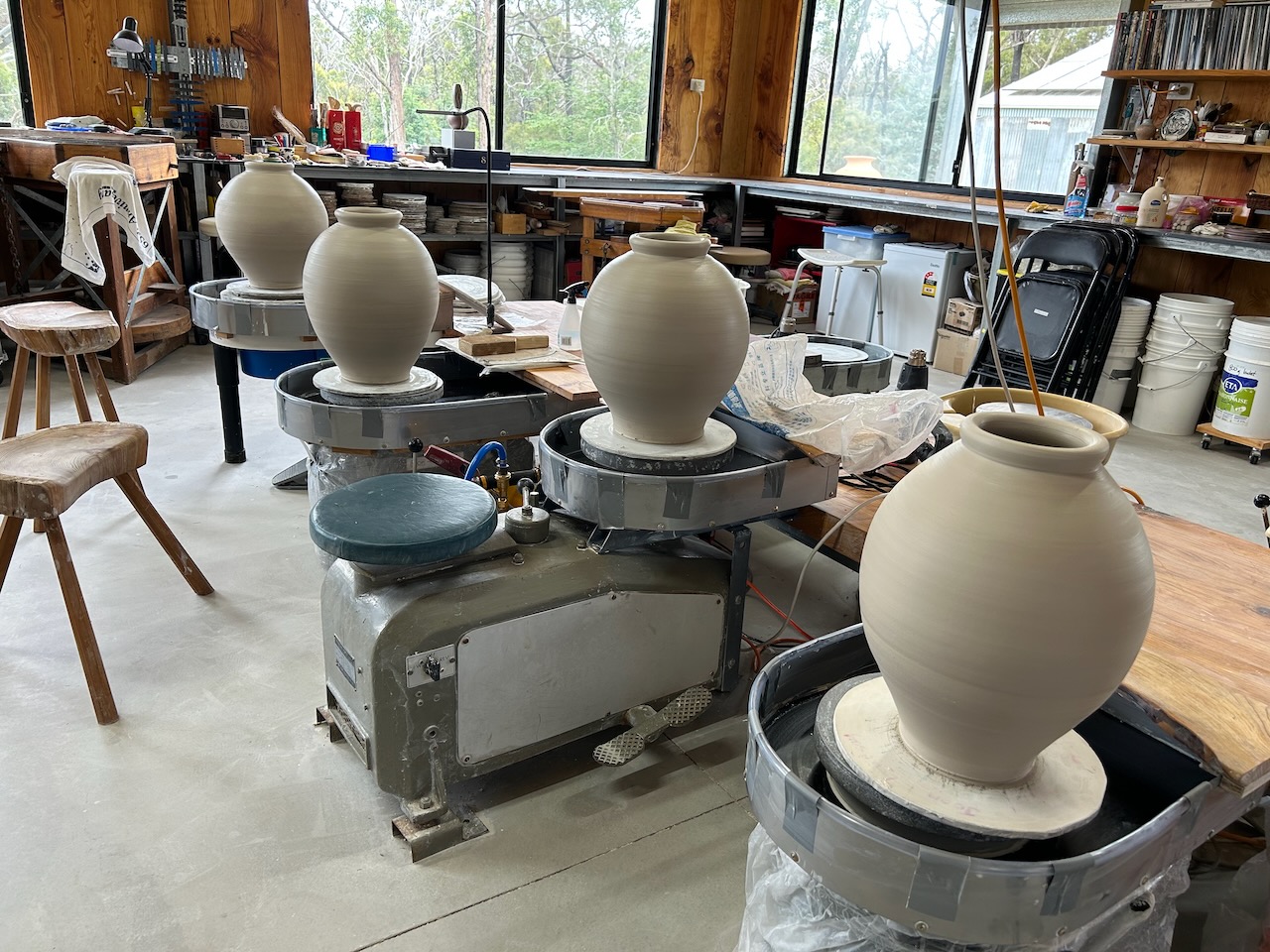
After the ‘big-pot’ throwing Summer Schools that we held here over January and February. I had about 80 kgs of the special course grained/textured clay left over. So I decided, rather than store it away somewhere, I would be better off to use it up making a few big jars for myself. I have always liked the traditional Korean ‘Moon Jars’, so I decided to have a go at making a few Korean inspired big round jars. They are NOT Moon jars, but my interpretation of the big, round, pale glazed form.

Janine decorated some of them for me using her carved/sgraffito through slip technique.

I have continued planting brassicas since Xmas day, when I planted the first seeds. I have planted 8 to 10 plants of mixed types each month to ensure a continuing crop of cauliflowers, broccoli, cabbage, Brussel sprouts and kohlrabi through out the autumn/winter.

I noticed today that the first broccoli head is forming on one of the first plantings.

I have to grow them under protective netting for the first few weeks to a month, to stop the black birds and bowerbirds from digging them out and eating the tops off them. The vegetable garden was completely covered in a mix of galvanised and plastic netting. But in the catastrophic bush fires of 2019 the heat of the fire melted the plastic netting on the west and east faces. All the birds were burnt in that fire, so there was no immediate need to repair the netting. EVERYTHING else was so much more important, like rebuilding. 

Now the birds are recovering and breeding up in numbers, coming back into our area. They have figured out that they can squeeze in through the gaps in the melted areas. So I have booked a friend to come and help me next week to get up on our tall step ladders and re-cover the burnt out sections with new netting. A big job that in the past I would have thought nothing of doing by myself with the occasional helping hand from Janine in the difficult areas, pushing up from underneath with a broom to get an even cover. Luckily, a very nice couple donated a huge amount of plastic bird netting from their farm, when they took down their orchard cover and moved into a smaller holding. We are very happy to use this re-cycled netting, both galvanised and plastic. Nothing wasted. Recycle, re-use, re-purpose.I may be old and stupid, but still just smart enough to know that I don’t want to do this job all by myself anymore. It’s just one of those endless series of jobs that we have to tackle everyday to keep on living here in this self-reliant, low-carbon, organic, minimal consumerist muddle.

Nothing is ever finished, nothing is perfect and nothing lasts!