Electric Car – 6 year review

We have had our Hyundai ‘Ioniq’, plug-in electric hybrid car for 6 years now and it has all been a good experience, even better actually, A great experience!

This car has exceeded our expectations. We have settled into a routine with it now. We can drive anywhere locally on the battery, doing our local shopping and social visits very comfortably. If we need to go further afield, no problem, the petrol engine will bring us home. 

We always charge at home from our solar PV panels. We have never been to a charging station. We have taken it on longer trips up the Queensland twice and down to Canberra several times. For these trips, we rely on the petrol engine. However, these trips are seldom done and are the exception.

For those interested in facts and figures. My log book tells me that by January 2025, we had traveled 64,000kms and spent a total of $1,860 on fuel. That’s about 34 kms to the dollar, or if petrol is $1.80 per litre, then we are getting about 61 kms to the litre. NOT 6 but 61! Most of that fuel was purchased on those long trips.

We are in the habit of putting $20 to $30 dollars worth of fuel in the car about 4 times a year. When we first purchased it. I filled the tank on the way home, as per normal practice with a new car. Big mistake! It took us almost a year to use up that fuel. It was sitting there going stale in the tank for most of the time. Stale fuel can be a big problem, so we have not done that since, unless we are planning a long trip.

When fully fueled up with a full battery and a full tank. The fuel/trip computer tells me that we can go 1,150 kms!

The Ioniq, is a medium sized car, but is the biggest car that we have ever owned. It’s vast and comfortable compared to the little 3 cylinder Japanese 900 CC Daihatsu, Charade and Sirion, cars that we have had previously. These were very fuel efficient, very tiny, very nippy and could find a tiny parking space anywhere. I like the driving feel of the small cars, but I love driving the Hyundai. It’s so smooth, quiet and comfortable.

We have had no issues with it. Although, maybe just one, when rats are some part of the electrical wiring system. It cost us $600 to find the fault and get it repaired. Not too bad in the scheme of things, as the mechanic told us that several cars that he had looked at and quoted on recently were written off because of the cost of repair from rats eating the wiring loom. We were lucky!

Since then, I have begun opening the bonnet as soon as we get home, and fitting a bright LED light in the engine compartment, fitted with a 24 hour timer, so that is switches on at dusk and off at dawn, all automatically. That makes the engine compartment an unpleasant place to be for a rat. It also allows engine heat to dissipate readily, making it even less hospitable.

I love my plug-in electric car, so much so, that in December I bought a new fully electric Fiat 500e ‘bambino’. That classic little Italian car from the movies. First produced post-war, in the 50’s, and has been in production right through until today. In various models. This brand new electric version is incredibly cute. It can go 300kms on a full charge, which is enough to drive to Sydney and back. 

I installed a new 3 phase, 40 amp, charger for it, It just plugs into the already existing 3 phase power socket on the wall in the carport. So I can charge it at home on sunshine. It takes from 3 to 4 hours from empty to fully charge. We can do this overnight from our home ‘powerwall’ batteries, using yesterdays sunshine, or during the day directly from the sun. However, I usually top it up any time there is plenty of sun that we are not getting very much money for when we sell to the grid.

The Fiat only seats 2 realistically, although it has a back seat and 4 seat belts, the back seat is only for child sized passengers. I’ve put the back seats down to double the boot space. So now it’s a two door, two seater hatch. 

Its incredibly powerful. The torque is amazing, and can pin you back in your seat. But this is normal for all electric cars. They have loads of torque!  It’s the classic small, nippy car that I have always loved to drive, but now I drive on sunshine!

So now, after a couple of months of ownership, I can say that it is fantastic, and does everything that we need to do. However, if I had to do a thousand kilometre drive to Melbourne or Queensland for some reason, I’d take the Hyundai for the long haul comfort and leg room.

We are very pleased to be a fully solar powered household. We can run the House, Pottery, Kilns and 2 cars on our solar. I even got a $350 cheque from the electricity company last week, for all our unused excess. This will reduce in Winter, but so far, we have never paid an electricity bill since 2006/7, when we installed the first solar PV panels.

Even when the fire burnt down our pottery in 2019. With our first PV installation gone, we were without solar for 3 quarters of billing periods. However, we had such a good unclaimed credit on our bill at the time, that we were able to go that whole time just using up our credit. We had new solar panels installed before the end of the year, and we were back on deck before the credit ran out. 

Just lucky I guess.
Willoughby Bequest Commission

Back in 2019, just before the fire destroyed my life. I was commissioned by the PowerHouse Museum in Sydney to create new ceramic work for their collection.

A patron named Mr Willoughby, left his estate to the PowerHouse Museum with instructions that It be used to commission new ceramic and glass works of art for their collection. I was lucky enough to be one of the 6 artists selected to make those works.

I received the commission just before the fire. so I rang the Museum and a offered to return the commission, as I knew that it would take my a long time to re-build my workshop and life, before I could even consider making special new work.

I was a mess after the trauma of fighting the fire, loosing the battle, and running for my life, with my hair on fire, to climb into my kiln and hide in there while the inferno passed over me. That kiln saved my life, but left me shattered. I had no time to de-breif, I started the clean-up operation straight away the next day, and it has never stopped to this day. We are still finishing off the new buildings to make them long term sustainable.

I suffered a lot of Post Traumatic Shock (PTSD) that lasted 4 years, until I could get the correct psychiatric help – EMDR – trauma therapy. I decided to make some new pieces for the Museum collection, that responded to my situation, some 3 years late!

This is downloaded from my artists statement on the Museum’s web site;

Full Artist Statement ‘Self Portrait’ by Steve Harrison

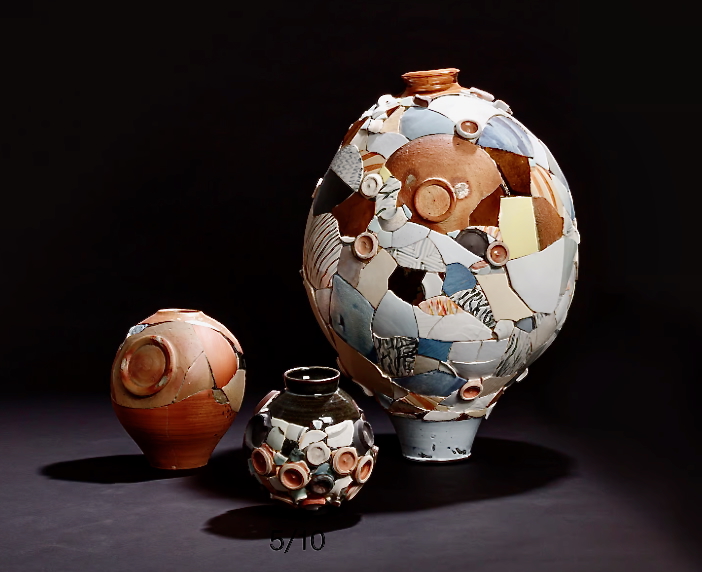
‘I’ve finally completed the commission for the Powerhouse Collection. I was chosen as 1 of the 6 artists to make new work for the collection, as part of the ‘Willoughby Commission’, way back in 2019, just a few weeks before my workshop and studio were destroyed in the 2019 catastrophic bush fires. It has taken me over 3 years to get back on my feet with a functioning creative workspace. I have spent the last 12 months since then assembling this new work. My original thought was to make beautiful porcelain bowls that encapsulated my love of a quiet, gentle and sustainable approach to life and making. But all that was dashed in the fires, when all my lifetime collection of ceramic materials, kilns and buildings were destroyed in just one day. I stayed to defend and save my house but suffered considerable trauma in the process. I have created this new work for the collection to reflect the chaos and destruction that I endured. I decided to work with the many hundreds of shattered pieces of broken pottery that littered the site after the fire. A few pieces were broken but had the potential to be repaired using the ancient Japanese technique of kintsugi – gold repair. These few small bowls, although damaged, had the potential to be recovered with patient attention to detail. Kintsugi expresses a desire to ‘honour’ a damaged, but still lovely object by giving it time to be rebuilt, and eventually to possibly become even more beautiful than before, because of the time and effort spent on it. I spent some months, part-time, cleaning, repairing and re-constructing missing parts of these bowls to make them ‘complete’ again. They are whole again, although different from before. Damaged and altered, changed from what they were, but in some ways ‘enhanced’ and given a lot of love and care, they are somehow more beautiful, but in a completely different way. They became symbols of my journey to recovery. This work of slow repair and enhancement gave me to idea to create new pieces that didn’t previously exist but created from the mixed shards sieved from the ashes of the ruins. Completely new work, but made from a composite of all my old work. It’s been a very slow and tedious job of work, assembling a thousand small, burnt, broken and shattered shards all back together in a new combination to make ‘compendium’ pieces of my life’s work. Each shard needs to be held in place until the glue sets, so only a few shards can be added each day. I’m calling them ‘abstracts’, not because they have any relationship to modern painting, but because an ‘abstract’ is the first part of an academic thesis, which summarises the contents of the entire paper. In this case, these newly constructed vessels comprise many small shards of my work made at different times over my career, mostly sifted from the ashes of the old pottery after the fire, but also containing a few new post fire pieces as well. In this sense they are a summary of my life’s work, presented in a new form. An auto biography, or a ‘self-portrait’ in ceramics perhaps? They contain a small part of every phase of my career from my earliest days here, through to the present. Just as I have rebuilt my shattered and damaged self through a lot of trauma therapy since the fire, I am mostly better, but still carry a bit of lingering damage with me. I’m repaired and reconstructed, but different.

Screenshot

‘Self Portrait 1’ by Steve Harrison

OBJECT NO. 2024/78/1

Harrison has lived and worked in Balmoral Village near Mittagong, in the Southern Highlands, New South Wales, for almost 5 decades, pursuing a simple life of self-sufficiency and commitment to his local community. His interest in single-stone hard paste porcelain led to extensive travels and research of porcelain clays and processes in Japan, China, Korea and Britian, building bonds of fellowship with the international potter community. He has intensely explored the regional geology of Mittagong and Joadja Valley, focussing on sericite, and mica-based stones, to create his own clays, glazes and then bowls and jars fired with locally sourced wood or solar-powered electricity. While the forms of the simple vessels he has made over the years have changed, they have all been testaments to his life-long quest for the essence of porcelain clay and delight in the ‘subdued beauty’ of natural materials. Harrison’s vessels have seen many exhibitions at galleries such as the Kim Bonython, Legge and Watters galleries in Sydney and his works are in major Australian galleries and museums. Harrison has often augmented his works of clay with words crafted to express the relationships between the pieces, his life, the history of ceramic art, the state of the world and its fragile environment. ‘Self Portrait 1’ and ‘Self Portrait 2’ were commissioned just before the most severe bush fires of 2019 destroyed his pottery in December that year. A particularly ferocious fire almost claimed Harrison’s life, as it climbed over a thin skin of a makeshift kiln-like shelter assembled a day earlier, a last minute ‘plan B’. These works are entirely unique in Harrison’s creative output, in their concept, circumstances of production and the large scale of ‘Self Portrait 1’. Assembled from surviving fragments and shards of diverse vessels he made during his life as a potter, in Harrison’s own words, they are an ‘abstract’ or ‘compendium’ of his life’s work: ‘This work was commissioned just a few weeks before my workshop and studio were destroyed in the 2019 catastrophic bush fires. It has taken me over 3 years to get back on my feet with a functioning creative workspace. I have spent the last 12 months assembling this new work. My original thought was to make beautiful porcelain bowls that encapsulated my love of a quiet, gentle, and sustainable approach to life and making. But all that was dashed in the fires, when all my lifetime collection of ceramic materials, kilns and buildings were destroyed in just one day. I stayed to defend and saved my house but suffered considerable trauma in the process. I have created this new work to reflect the chaos and destruction that I endured. I worked with the many hundreds of shattered pieces of broken pottery that littered the site after the fire…to make ‘compendium’ pieces of my life’s work… an auto biography, or a ‘self-portrait’ in ceramics…Just as I have rebuilt my shattered and damaged self through a lot of trauma therapy since the fire, I am mostly better, but still carry a bit of lingering damage with me. I’m repaired and reconstructed, but different.’ [1] Born of a natural disaster that has changed Harrison’s life irrevocably, the three jars and five bowls in the two complementary installations are extraordinary assertions of the truth Harrison saw in Bernard Leach’s belief that pottery and its traditions are a part of our cross-cultural inheritance, an expression of the hidden potential in our clays and rocks, and an essential avenue to a unity of life and beauty. Within this context, ‘Self Portrait 1’ and ‘Self Portrait 2’ offer the story of Steve Harrison’s remarkable life positioned between a self-professed idyl of a ‘modern peasant’ and destruction, between beauty and ugliness; together they stand as a powerful poem written in clay about his, and our, place in the world, and ultimately, his hymn to survival.

[1] Email correspondence with curator, 2023

Eva Czernis-Ryl, Curator, 2024

It’s almost autumn, Time to make cider.

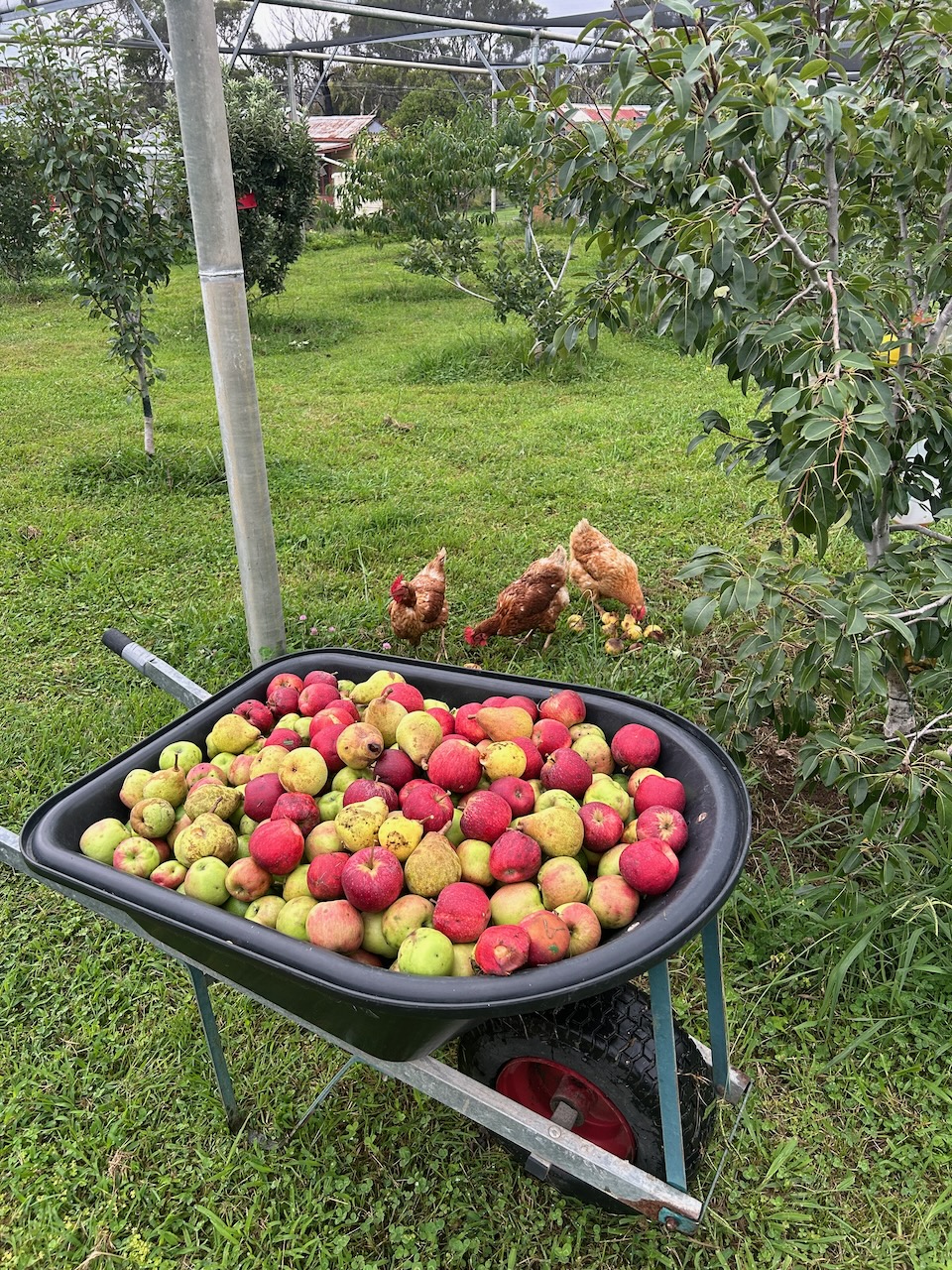
Todays big job is to harvest all the remaining apples and pears, then juice them all and make a big batch of cider/perry. Then it will be back onto the tomatoes and passata.

There will be sure to be a lot of weeding needed after all this rain clears and the heat returns.

We haven’t been able to make cider for over a decade now, as there was the terrible drought culminating in the 2019 bush fires that took our pottery, yard, gardens, fences and orchard trees. We replanted a new orchard in 2020 and this is the first year that we have had sufficient fruit on the new young trees to be able to make a batch of cider. 

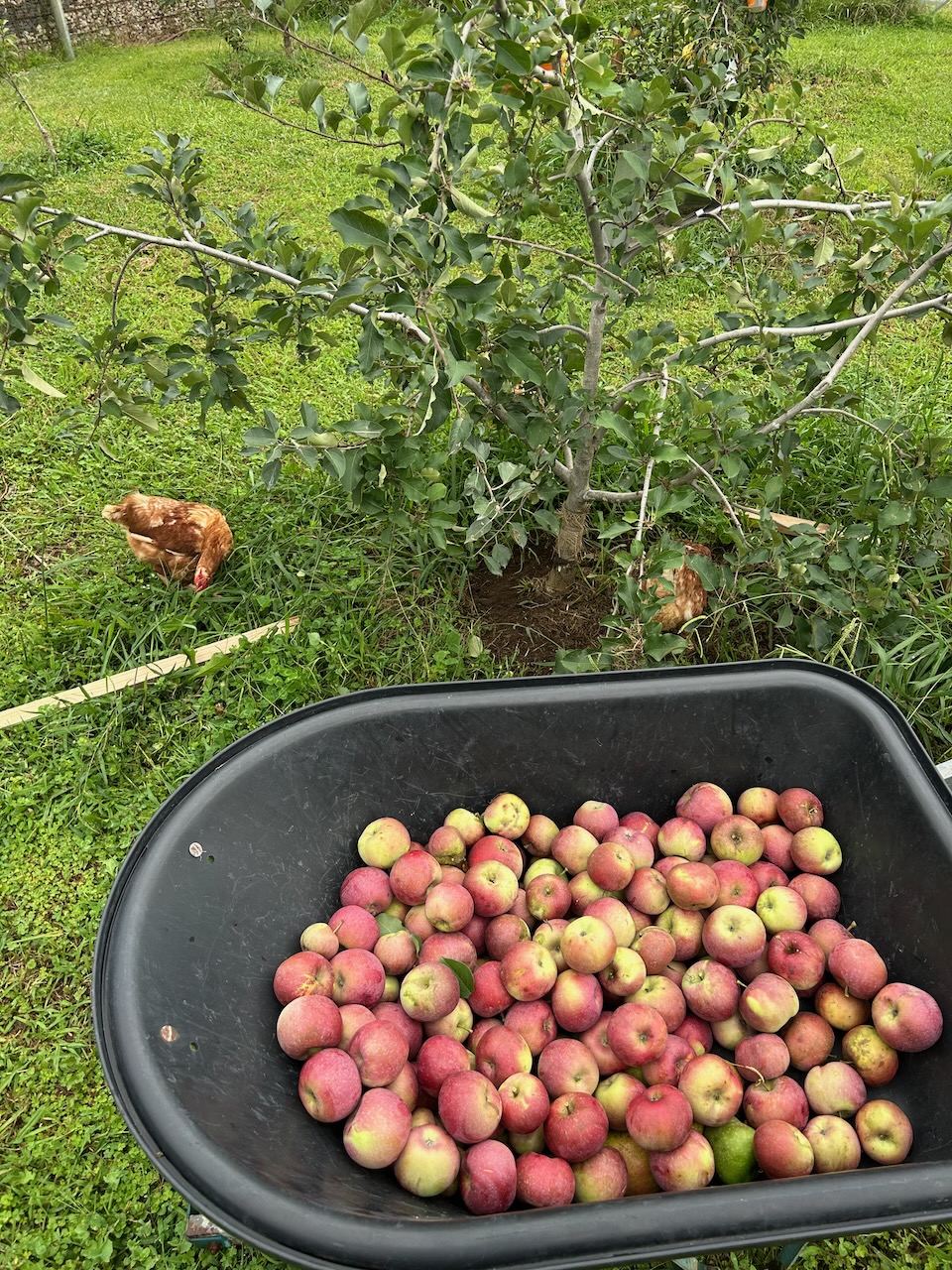
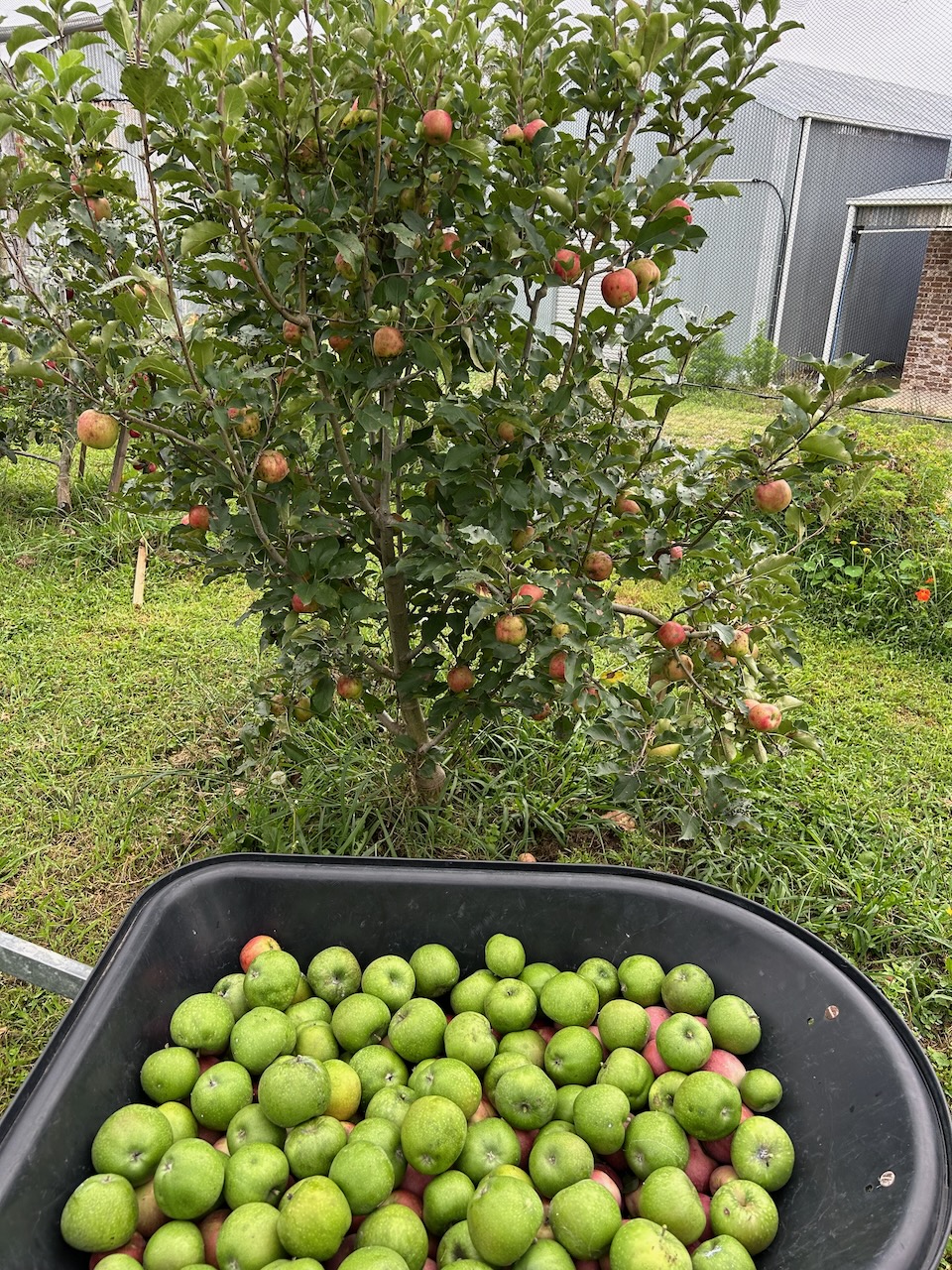
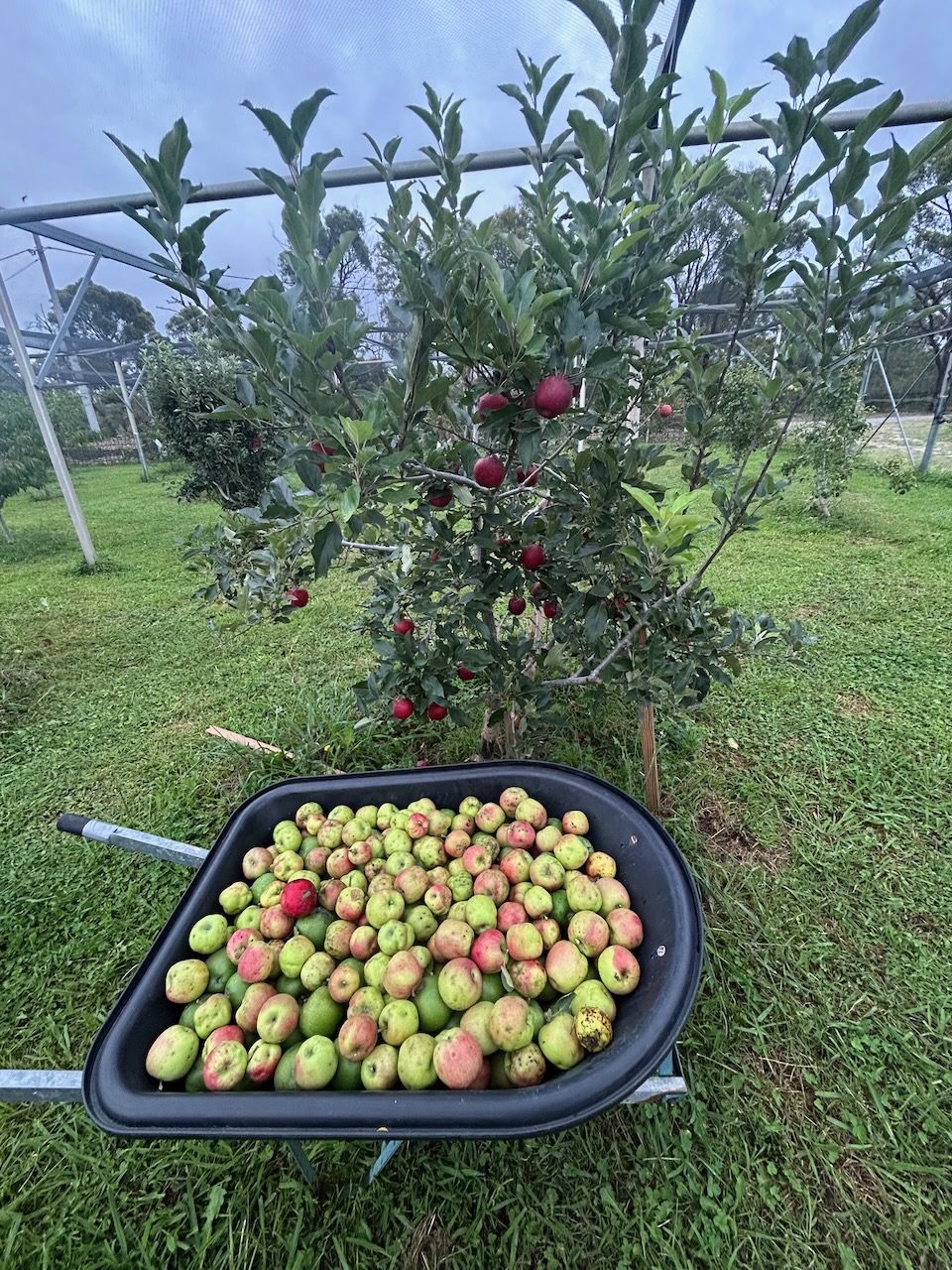
This morning, I managed to get out there into the orchard and strip the trees of all the remaining fruit and get it indoors before the rain started. I used the wheel barrow as my basket on wheels. a good measure of fruit volume. 

We are due for a whole week of rain – if the forecast can be believed. It usually rains less here than is forecast on most occasions, but it will still be a wet week by all accounts.

So today was excellent for inside jobs like washing and juicing apples and fermenting cider. It took us all day to process all the apples and juice them, then get the fermentation started.

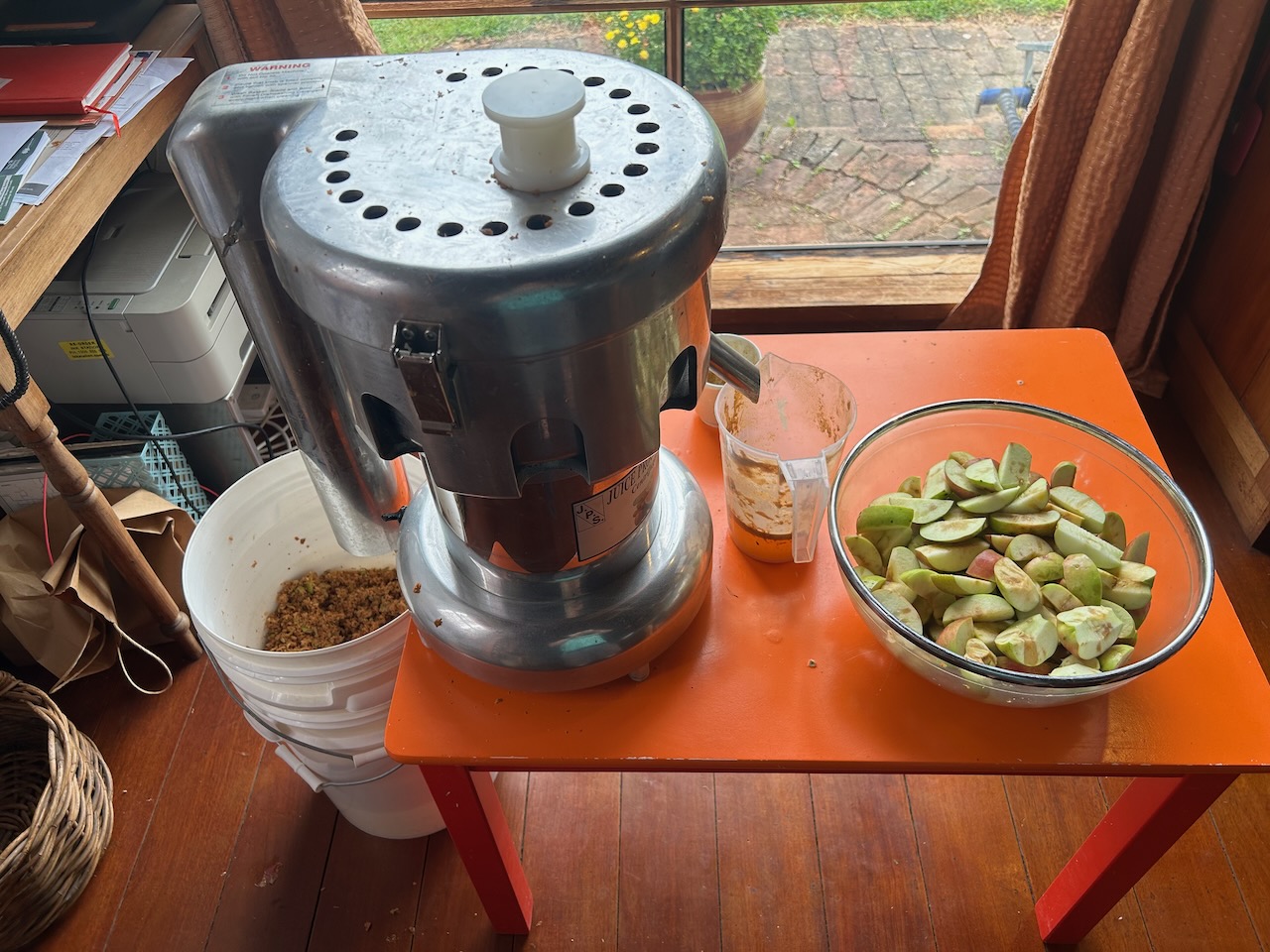
We have a really big, heavy duty, industrial grade, juice extractor. The sort of machine that you need if you are going to be juicing apples for 8 hours straight. Before we bought this one many years ago, we burnt out 3 small domestic sized ones. 

While extracting the juice, we filled 30 litres of pulp into buckets for the worm farm and compost. The juice is now in the fermentor. We can leave it for a week at least now while we get on with other jobs around the garden and pottery.

We managed to slip in a small bisque firing in the solar fired electric kiln while we were making cider. That’s one very nice thing about electric kilns, they fire automatically on a pre-programmed schedule. This allows us to get on with other jobs, like making cider, recycling clay slip/slop/slurry, pugging recycled clay, doing a bit of kintsugi? Possibly even start throwing those new ‘test’ clay bodies that I have had ageing since November? 

And of course there is always weeding.

3rd Summer School completed, Feb 2025

We have just completed the 3rd of our Jan/Feb summer school series. Just 1 to go, starting on Friday.

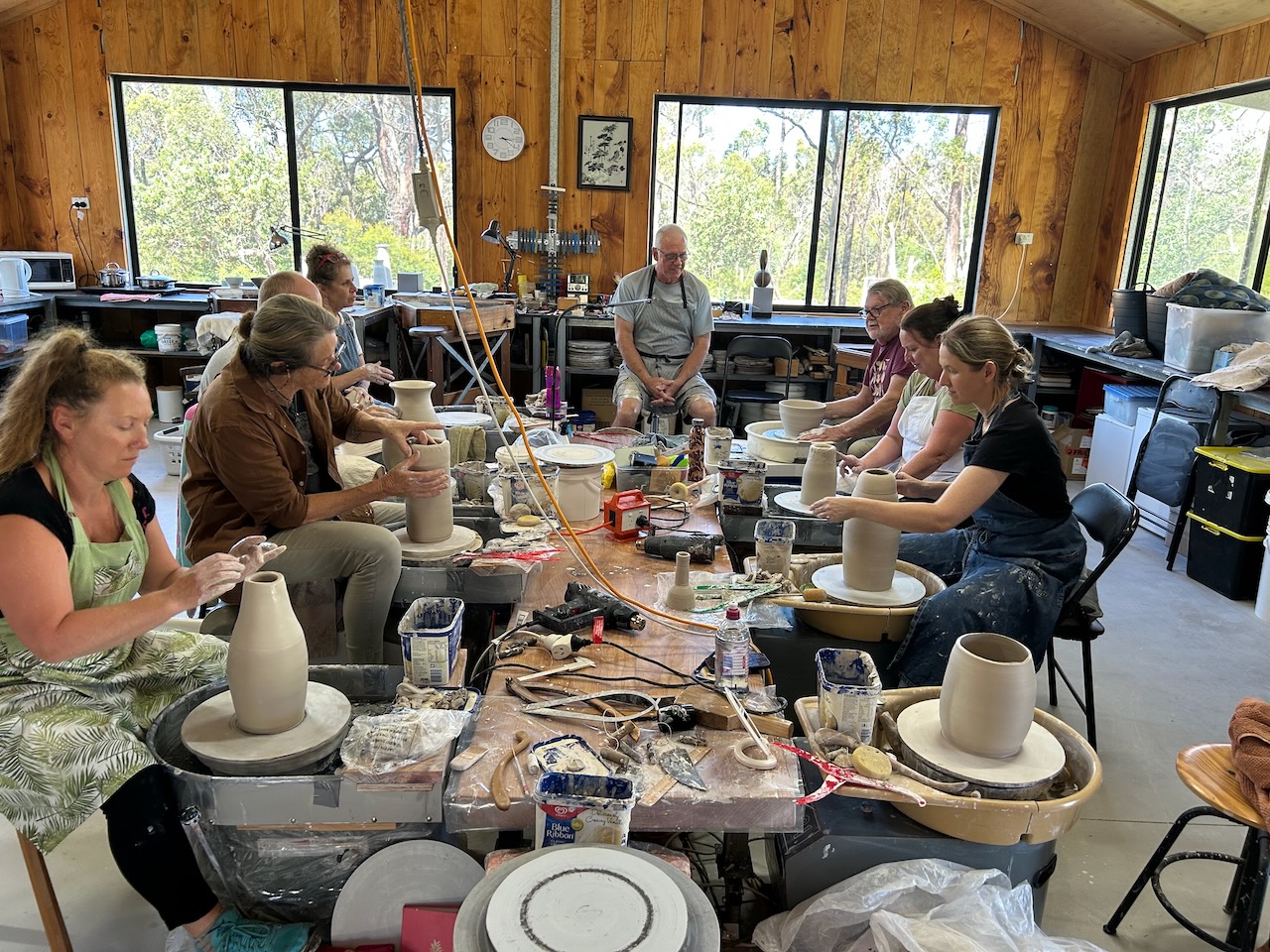
We have had 3 great classes with a bunch of wonderfully talented and enthusiastic students – as they all-ways are every time. It’s such a privilege to be able to work like this, passing on what we have learnt over our lifetime, to enthusiastic potters, keen to learn the techniques that we have accumulated during our careers, and to sample a bit of what we do here. Between us, Janine, Leonard and I have notched up a total of about 150 years of ceramic practice and experience.

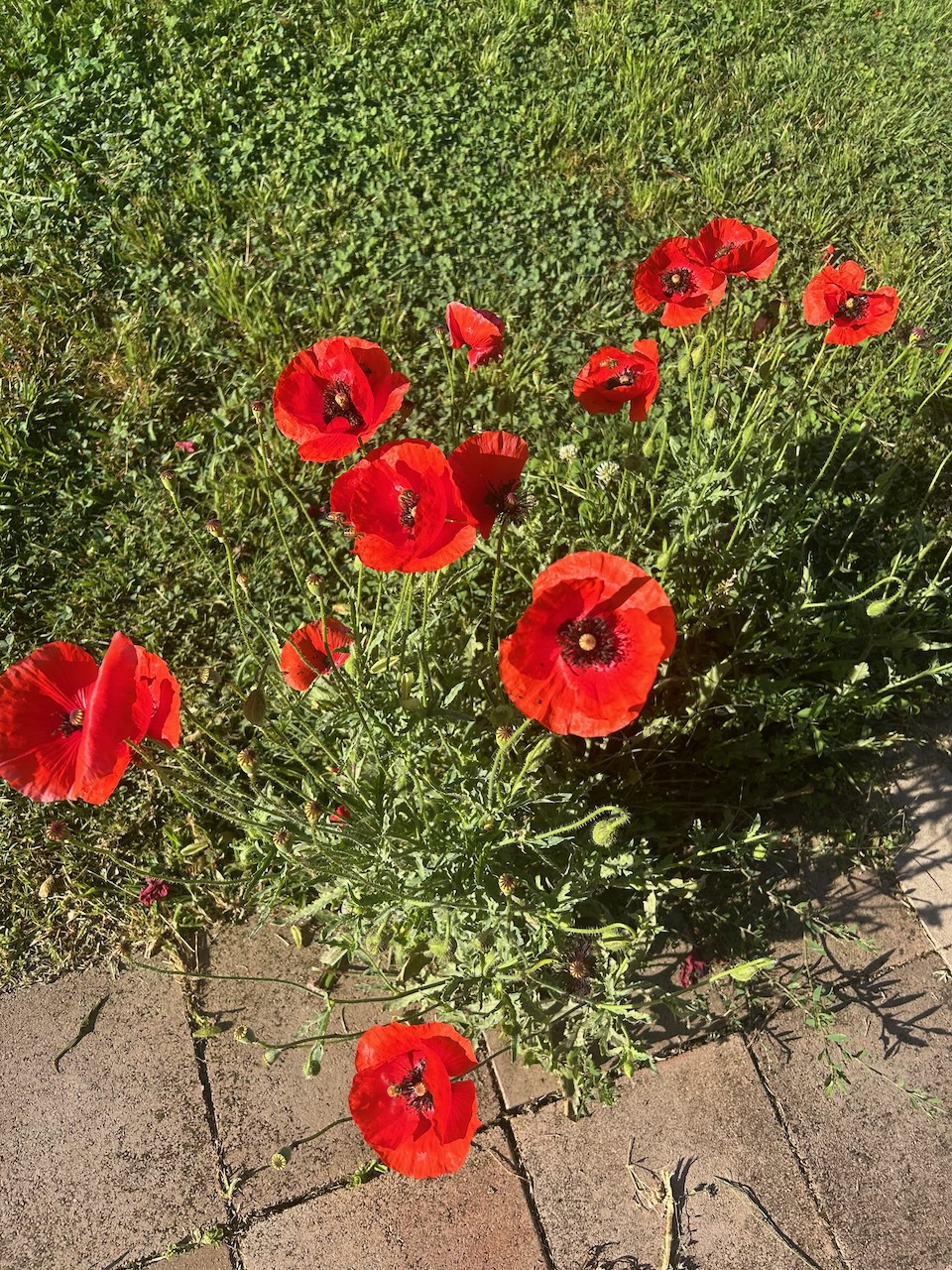
The last of the wild poppies are in their final fling of exuberant and cheerful rich red colour. These ones have come up, self sown, wild, in the cracks in the paving around the pottery.

Even though everything is more of less completed around the pottery, it still takes us a day to set the studio up for a workshop, prep all the clay, clean the batts and pot boards etc, then do some cooking to share for our joint lunches. Afterwards, there is a day to recycle the abandoned pots, crushed and soaked in the left over throwing slip, and wash everything down. The next day, I transferred all the re-cycled clay slip/slop/slurry from the 20 litre buckets into the plaster batts in the clay room to stiffen-up for re-pugging. 

I have 5 big plaster tubs/batts on a shelf in front of the huge north-facing window in the clay room, they get baking hot in the sun and are almost always very dry and receptive to stiffen up our recycled clay slip/slop/slurry. 

However, 30 litres of fairly thin slurry does set them back a bit in the drying stakes.

Today I dug out all the very soft plastic mass, in its slightly stiffened, but still very wet plastic state and piled it up in lumps on the pugging table to air dry. Once the plaster is saturated, it keeps the clay damp, so best to get it out and get it air drying. This has proved tot be the fastest way to deal with so much slurry. I also need the plaster tubs dry again for Friday’s next onslaught of failed experiments from the last 3-day summer school.

Everything will be in order by the time the next class starts tomorrow.

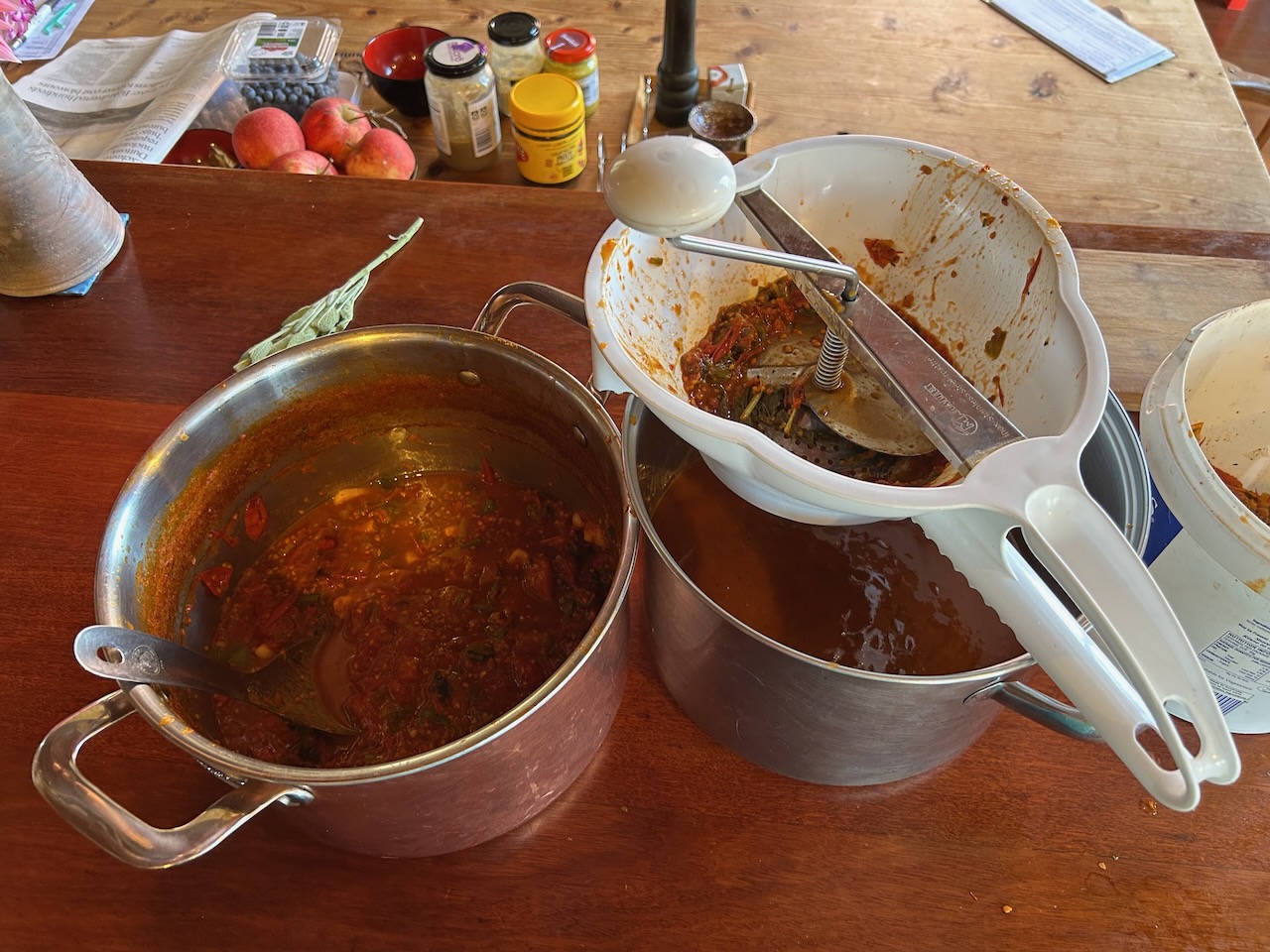
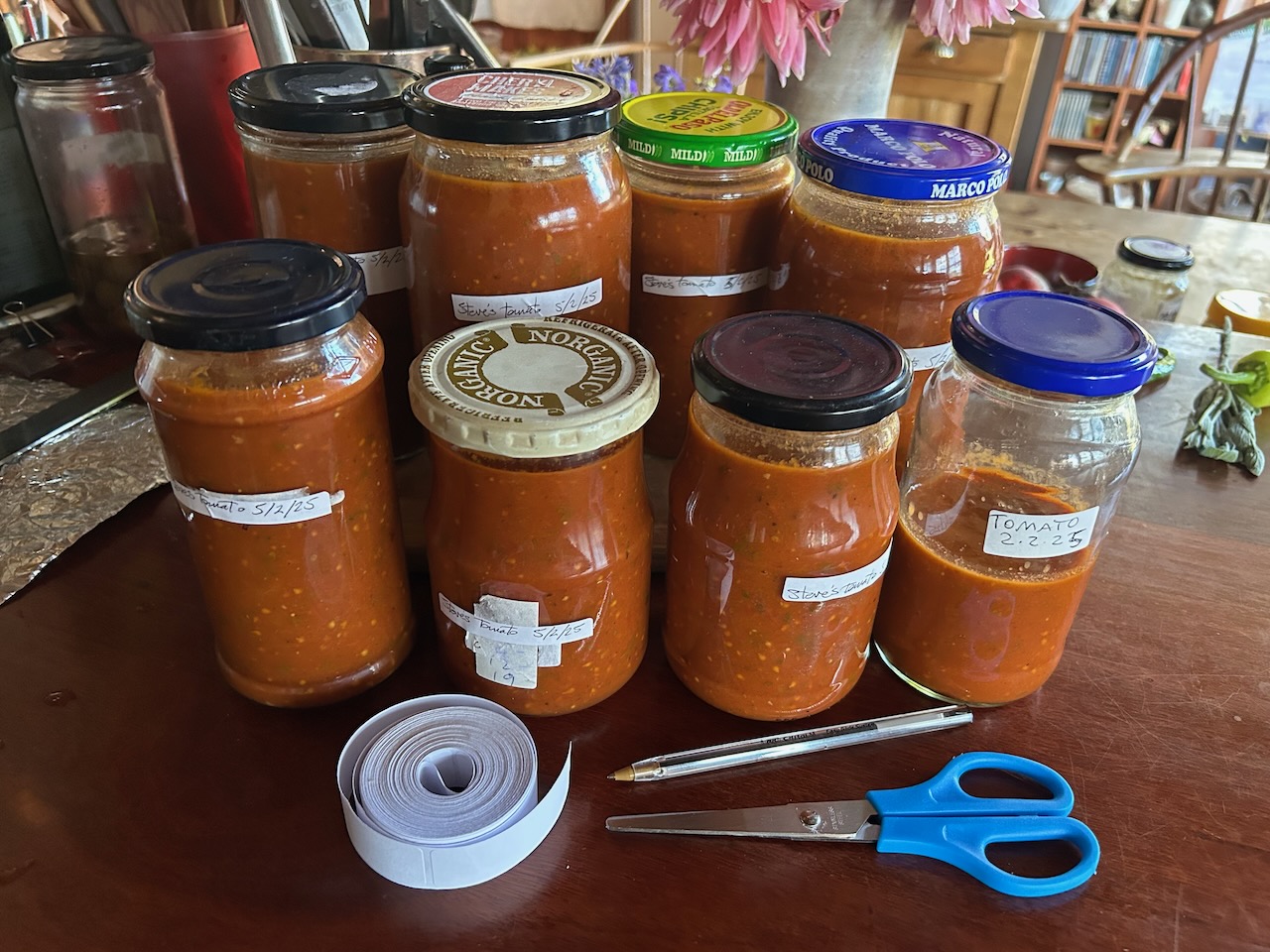
After the cleaning I baked another loaf of bread and cooked a potato dauphinoise for dinner finishing it off with a whole camembert sliced on top. The garden is revelling in all this warm weather and occasional storms. The self-sown tomatoes are small but prolific. I found the time in the evenings to make my first batch of tomato, garlic, capsicum and basil passata. 10 litres of sliced tomatoes boiled down in their own juice and then reduced by half to concentrate the flavour.

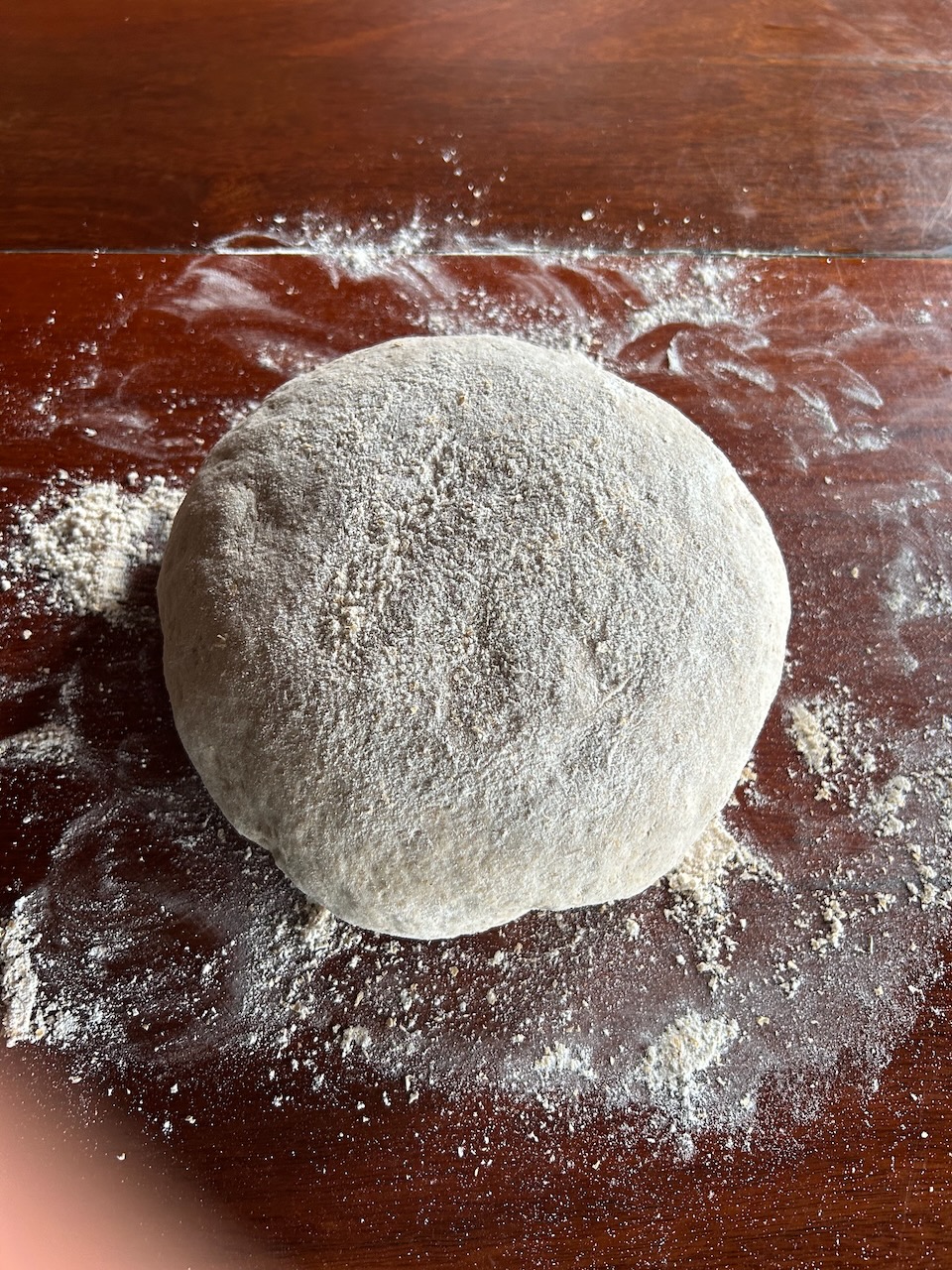
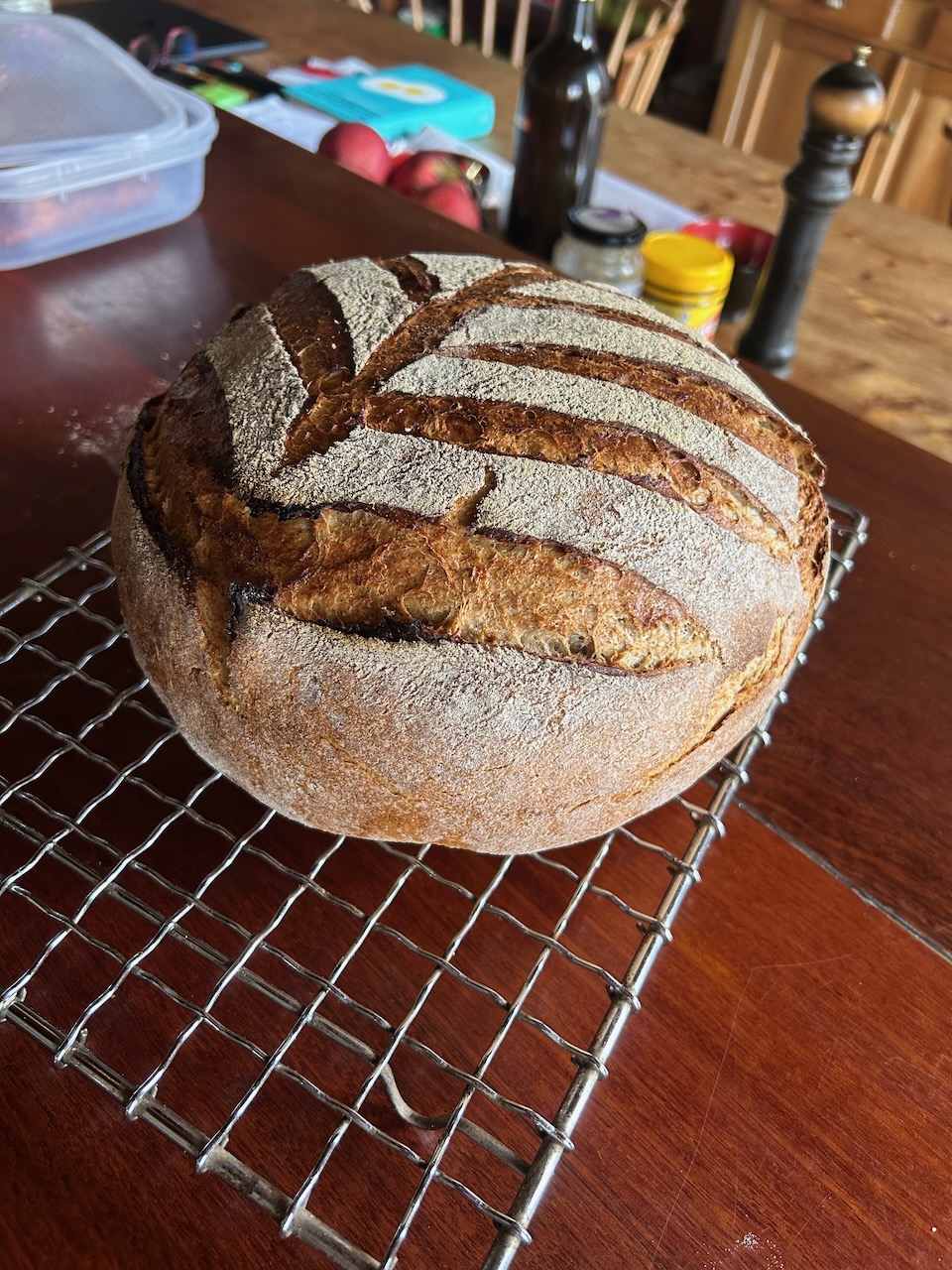
The bread turned out well – as usual. I’ve got it nailed now. Success every time. but I’m still trying variations, and different brands of flour. I’ve ended up with a 50/50 blend of wheat and organic stone ground rye flours.

There are so many vegetables coming from the garden in summer, we give a lot away, and do a lot of preserving. We also eat as much as we can. 

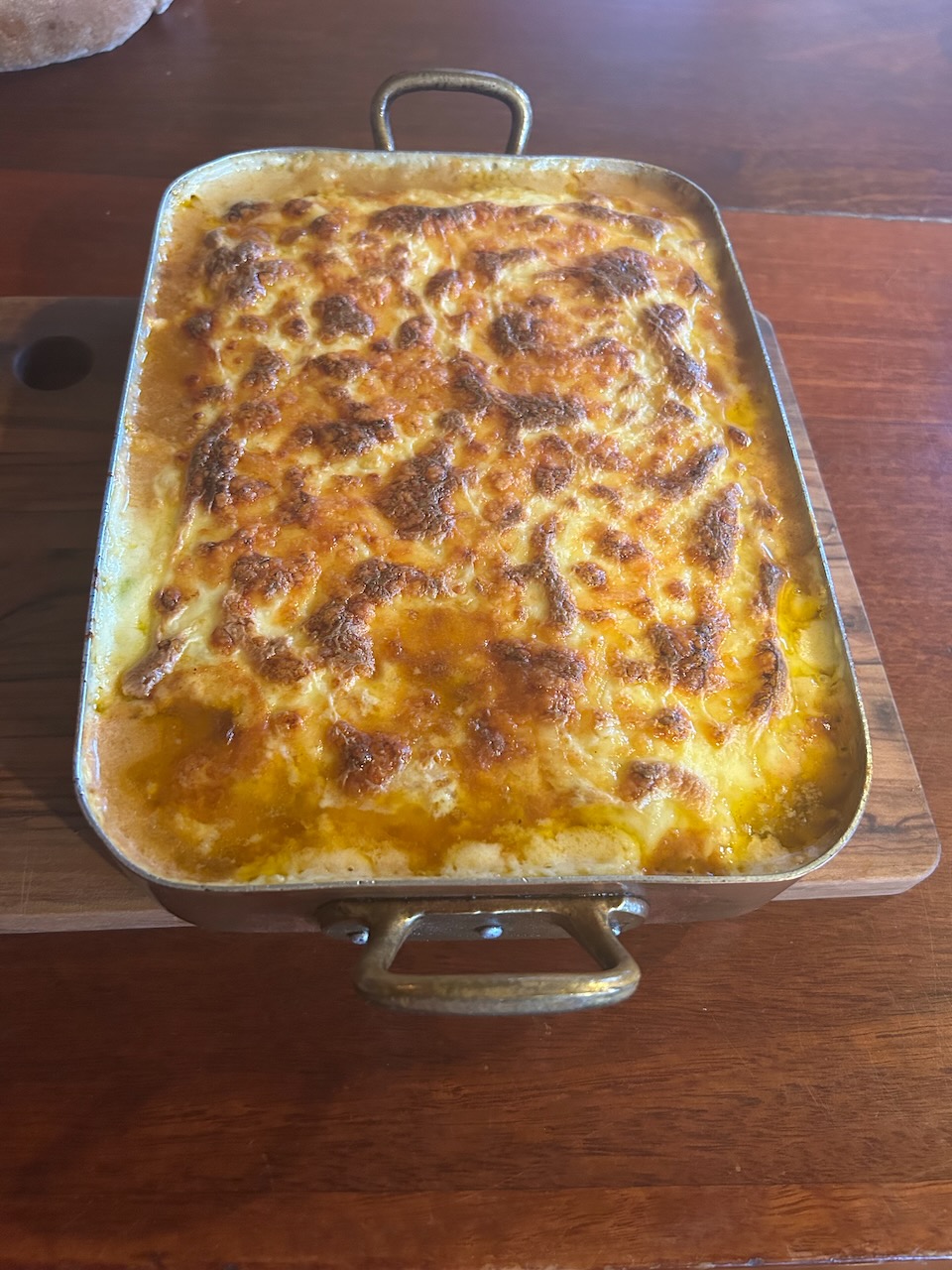
Nina and I worked together to make a sort of Greek inspired moussaka dish. I did the tomato/meat sauce and Nina did the béchamel topping. Working together made it so much quicker. Everything from the garden, egg plants, zucchinis, garlic and last years passata.

It was so nice on a cool rainy evening, we’ll be doing it again.

We are continuing to cube and roast pumpkin with olive oil, garlic and a sprinkle of salt. Everything is working, we are well, although quite tired from the intensity of the work load with the workshops, added to the summer harvest work, which can’t be put off or delayed. After next weekend’s workshop, I might try and make some cider from the apple and pear crop that is peaking at the moment.

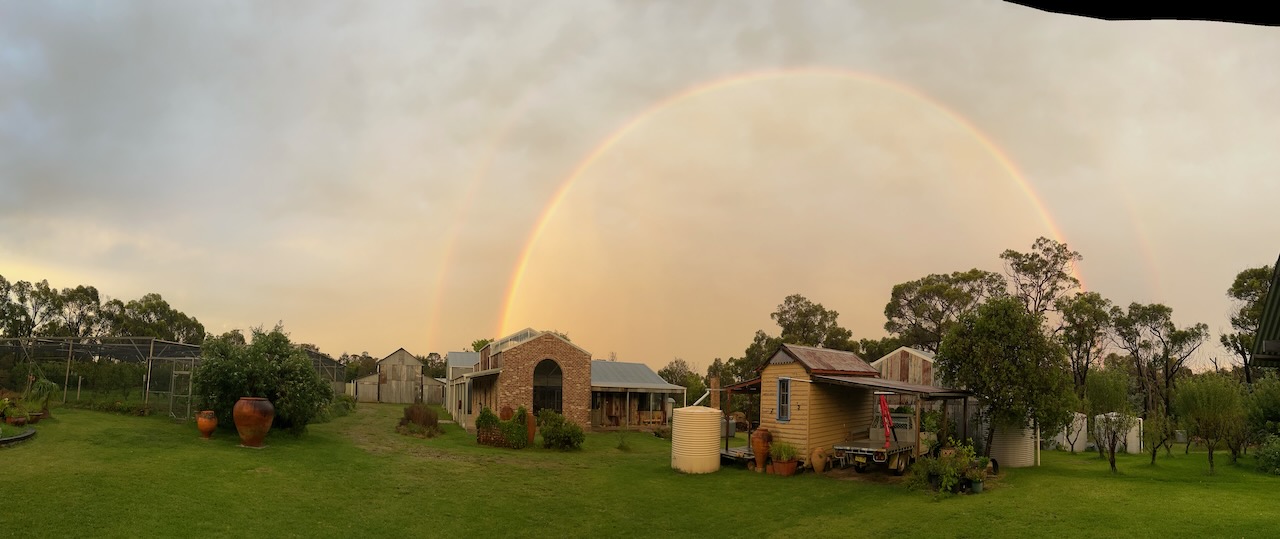
Is there a pot of gold at the end of the rainbow, in the new pottery? Hit by the end of the amazing double rainbow. I rushed down there to check it out. I went to the decorating cupboard where I keep all the pure gold leaf for use in kintsugi. But no pot of gold!

I could swear that I had a full fresh book of gold leaf in there, but NO! all gone.

I think that we got the wrong end of the rainbow. It sucked up all my gold and dropped it over the rainbow, somewhere else. Possibly in Kansas?

Bummer!