We have filled 3 summer school workshops of three days each, learning coil and throw, plus top-hatting techniques. It’s a kind of hybrid combination of of hand building on the wheel.
I have 4 more names on my waiting list, for a 4th workshop during the 2nd week of February, 7th, 8th and 9th of Feb.
If you are interested, there a still 4 places left. Please let us know if you are interested.
If we can get 8 names on the list, then we will run the 4th workshop. Then that will be it for the year as far as coil and throw technique is concerned. In March or April, we may do throwing flatware, dishes, plates and platters. Then possibly a glaze workshop concentrating locally sourced and collected stones, gravels and ashes.
We have been suffering 30 degrees in the shade, each day for the past couple of weeks now, with only occasional respite for a day or so, then back the the heat again.
The heat has brought on the stone fruit. We have now finished all the apricots, and are half way through the plums, with the peaches just beginning. We diligently went through the stone fruit orchard a few times during spring, picking off a lot of the small emerging fruit, before it got too big.
It takes a lot of weight off the small, thin branches of these young trees, but also allows the remaining fruit to grow larger. There are just two of us here, so we have all the fruit that we need for a couple of months.
In the vegetable garden, the asparagus is almost finished its first full flush of growth, we now have just occasional spears shooting up. We collect them over a week or so in the fridge to get enough for a meal these days.
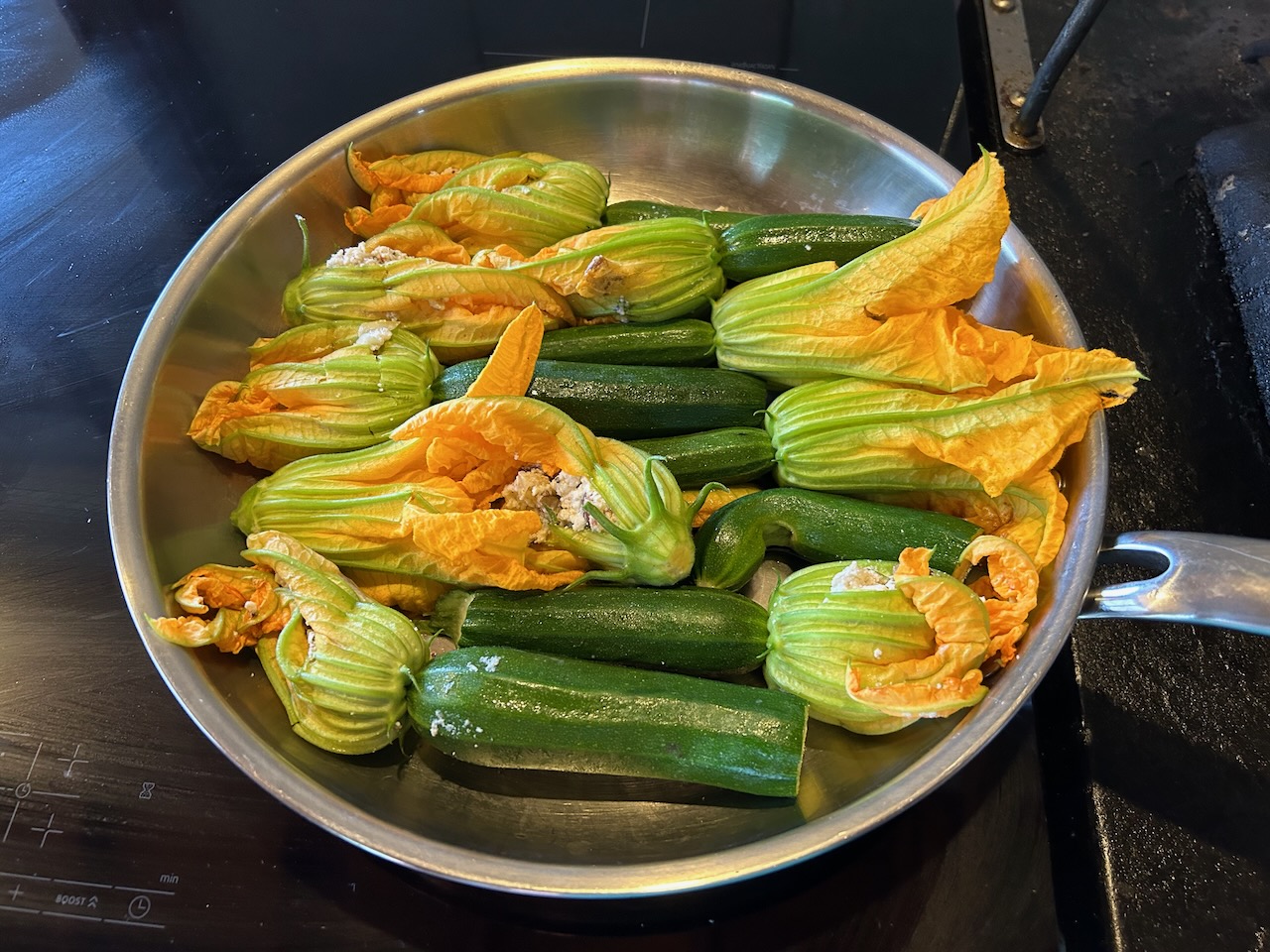
The zucchinis are in full flower now. They are the first of the summer vegetable plants to come on. I make an effort to pick the small emerging fruit as soon as it flowers. I pick the fruit with the flower still on and use them for stuffing.
I stuff them with a mixture of mostly ricotta, but with added gorgonzola, diced fetta, plus a few capers, olives and artichoke hearts. Then pan fry them for a few minutes and finish them off by steaming them with the lid on and a splash of white wine.
We are usually up very early to do the garden work, before the heat sets in, watering, weeding, harvesting etc, then breakfast. We spend the rest of the day keeping to the shade, under the verandah, or inside the pottery shed, out of the heat. This week, I’ve been making clay for the summer school workshops. Mixing, Pugging, blending, and twice pugging, bagging, and then cleaning everything up and mopping the floors spotless. Ready to go again.
Two batches = 250kgs of plastic clay. It’s a big job and takes all day, sometime it’s two half days, with a break over night to recover from the heavy lifting of the 25kg bags of raw material.
I’ve had my old dough mixer for over 45 years, and re-built it twice after fires. It came from a bakery that closed down in Western Sydney out near Parramatta. In it’s first incarnation, I ran it using a petrol engine. Then after the first fire here, I converted it to a 3HP single phase electric motor, with a loose fitted belt as a safety ’slip-clutch’. It is now properly set up with a 3 phase, 5 HP electric motor.
It’s a beautiful old thing and I’m proud that I have been able to rebuild it twice after each fire and keep it going all these years. I still have to make another couple of batches of clay, as we have been over-subscribed for our summer school, and will now be running it 3 times in a row, with a waiting list for another on the way.
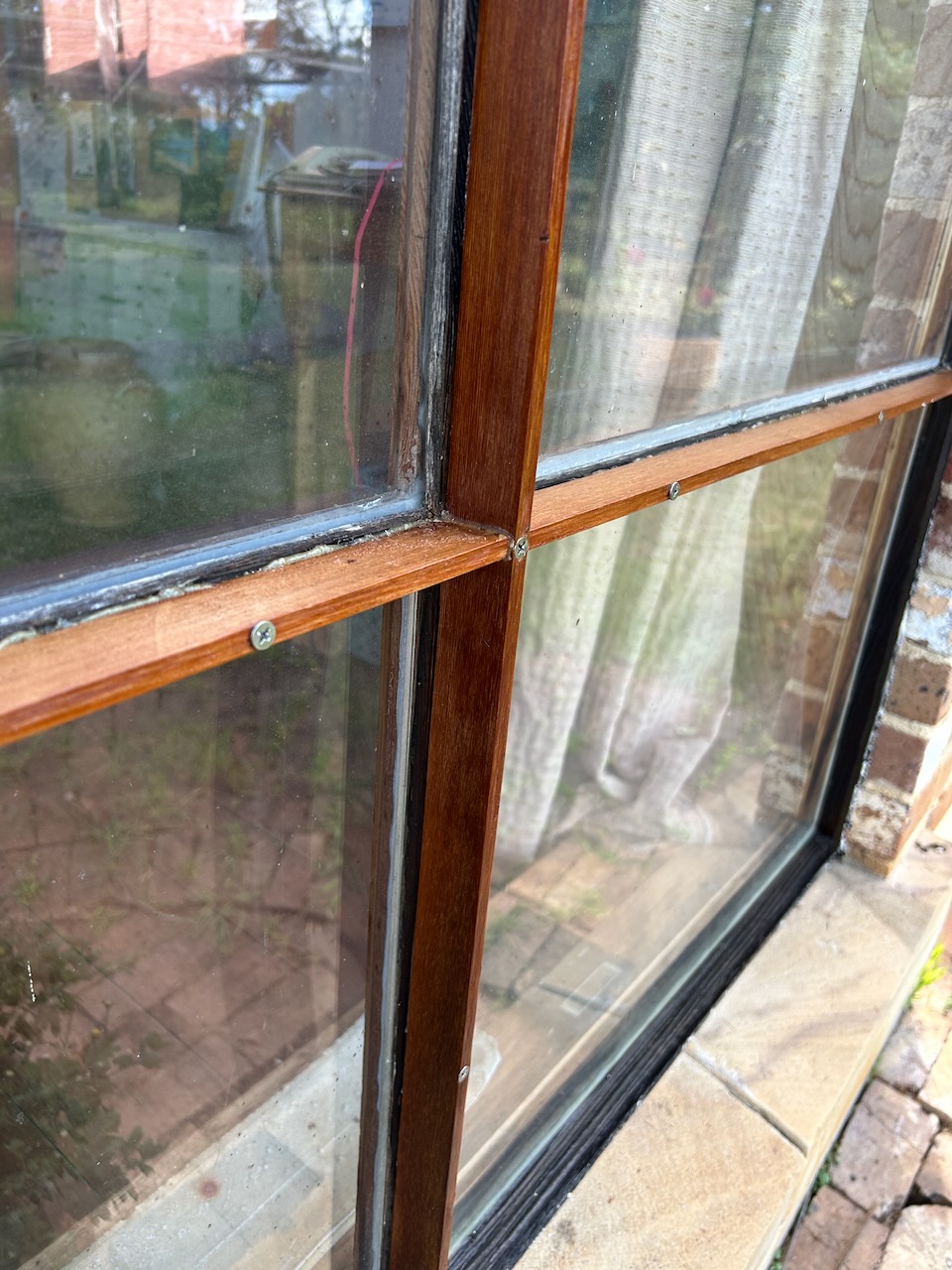
Last week I finally got around to building the stainless steel mesh fly screens for the front windows on the pottery. I bought the roll of mesh soon after building the pottery, 3 or 4 years ago. But then it rained for the next 4 years, so there was no risk of bush fire for a few years. Now I have finished a lot of the other jobs that needed to be done to finish the pottery. I have finally got my self back to the window fly-screens job. I found that I had some left over ‘merbau’ hardwood decking planks, that I have used to make all the door frames. It has some sort of fire rating and is allowed for door frames. I rip-sawed it down to thin strips and them planed them smooth to make fine battens to hold the SS mesh in place. This will stop sparks getting to the cedar windows when the next fire comes. Hopefully i will be here to start the fire pumps and run the sprinkler systems that I have installed all along the western faces of all the buildings here.
The windows needed to be thoroughly cleaned and then re-painted, to bring them up to scratch, before they would be hidden, and inaccessible behind the fly-screen. It turned out to be a three day job, working only in the mornings, as the afternoon sun beats down on the verandah in the afternoons.
I made home-made gyoza for dinner and spent the afternoons inside the workshop cleaning and restoring the old platform scales that we used to use in the old pottery for weighing heavy bags of raw materials up to 100 kgs. These platform scales were bought at the closing down sale of ‘Coty’ cosmetics in Surry Hills in 1978. They got badly burnt in each of the fires, but are made mostly of cast iron. The damage this time was pretty severe, well beyond me to do anything with then at the time. Just after the fire I had too many very important jobs to do to get us back up and running. I was also pretty run down. But now I’m better and felt ready to give them another a go. Cleaning, grinding, loosening seized parts and then oiling/greasing and re-assembling it all and painting them in traditional black and red livery. The brass work had started to melt and sag. I had to take it all off and hammer it straight again, then polish it back to its gleaming original state.
The next big job on my summer list is to replace all the glass panes in the big arch window in the kitchen of the house. I made this window by hand, 35 years ago, without knowing what I was doing, or how to do it. I learnt as I went along. I taught myself how to steam and bend wood to make the big arch top of the window frame. I ended up making the 200mm x 50mm. arch out of 4 different 12mm x 200mm. planks, all steamed and bent at the same time and then glue-lammed together to keep the tight bent shape of the arch. Steaming and bending such big pieces of wood is a two-person job. I was assisted at that time by my sister-in-law Sue, as Janine and her brother were working on some other project together.
I recently commissioned 12 new double glazed and argon filled panes made from metal coated special low’e’ glass. These will replace the old 3mm plain glass that was all I could afford back in the 80’s. I’ve been told that it would cost me in the vicinity of $20,000 to get a custom built window of these dimensions specially made today.
My aim is to try and get my old cedar window frame re-modelled, extended and strengthened to take the thicker and heavier glass before the end of summer, but there is no rush or rigid time frame, it’ll get done when it’s done. Whenever that is.
I have started by extending the old glazing bars with deeper cedar ribs, glued and screwed onto the old cedar glazing bars. That part is now completed. Luckily, I found that I had quite a few old pieces of western red cedar that I could saw down to size and then plane to do the job, so far at no cost. But I did have to buy new stainless steel screws!
When I built the original window, I used a waterproof window wood glue called ‘resorcinol’, or some word very similar to that. It was eye wateringly expensive and came in very small packets of 2 parts. One of dry crystals and the other of a liquid, to be mixed and used very quickly after mixing. It was stated to be water proof and capable of taking high stress. It has lived up to its reputation. The window is still strong. I haven’t seen it or heard of it for years, so this time around, I’ve used a 2 part epoxy boat builders wood glue. Lets hope that it last another 35 years.
In this hotter weather, we picked our first tomatoes of the season, from self-sown plants. It’s always a challenge to get a ripe tomato before Xmas. The early seedlings that I planted before leaving to work in Korea, all got burnt off in the severe frost in late September.
I’ve been baking extra loaves of bread to give away as Xmas presents. There are always too many jobs and more work than can be done in a day. I come to enjoy a little nap after lunch too, which doesn’t get anything done quickly, but is very nice and relaxing, almost necessary these hot days.
Nothing is ever finished, nothing last for ever and nothing is perfect.
Summer has arrived. and we are ready for all those lazy, hazy, long, hot, relaxing day and balmy evenings with a G&T on the lawn.
But first.
We have to deal with the fruit flies and possible bush fires, but dealing with them is interrupted by the rain.
We have had sudden down pours and thunderstorms, followed by a week of wet weather. It’s a bit like the 70’s, when we used to get sudden summer storms that only lasted an hour, but dropped an inch of rain. That’s 25mm these days! Then it would go back to being hot and humid again, but it gave us sufficient water in the dam to get through the summer with water for the garden, orchards and possibly for fire fighting.
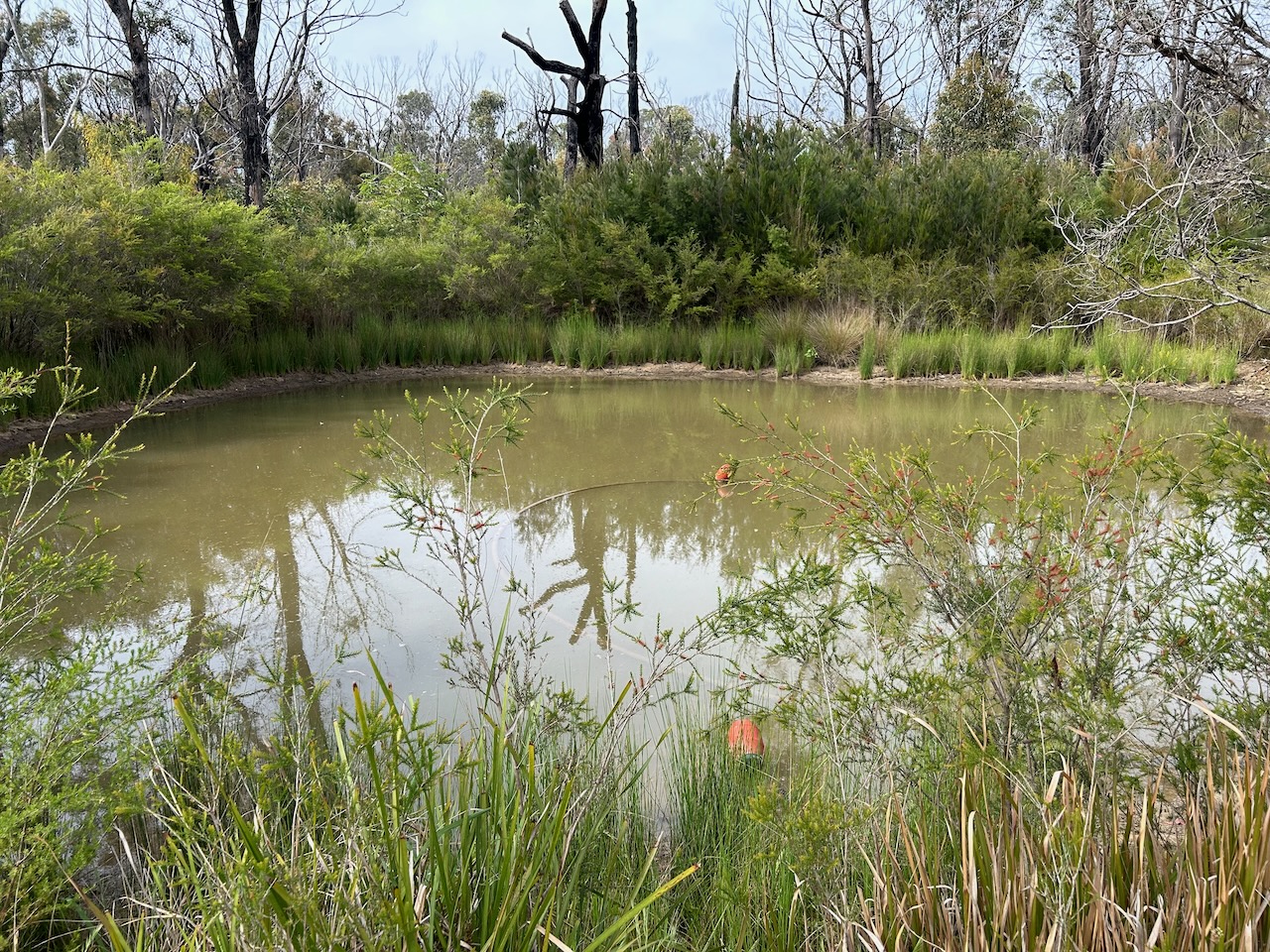
Before this last week of wet, the little top dam had dropped down to just 600mm of water in a little puddle in the centre. Not Good! As we have been pumping water out of it every day for watering the vegetable garden and one day a week in rotation on each of the orchards. Luckily, there was still water in the bottom 2 of the 4 dams that we had built in a ‘key-line’ system across our land, so as to harvest and store as much of the rain fall as possible.
I get a little bit edgy when the top dam is almost empty like this at the start of summer. We may need 50,000 litres of water in a hurry if a bush fire breaks out near us. I like to be prepared. So I have already gone around and started up and tested all the petrol fire fighting pumps to make sure that they are in good condition and working well. Particularly that they start on the first or second pull of the starter cord. There is no time to be messing around with an engine that won’t start in an emergency.
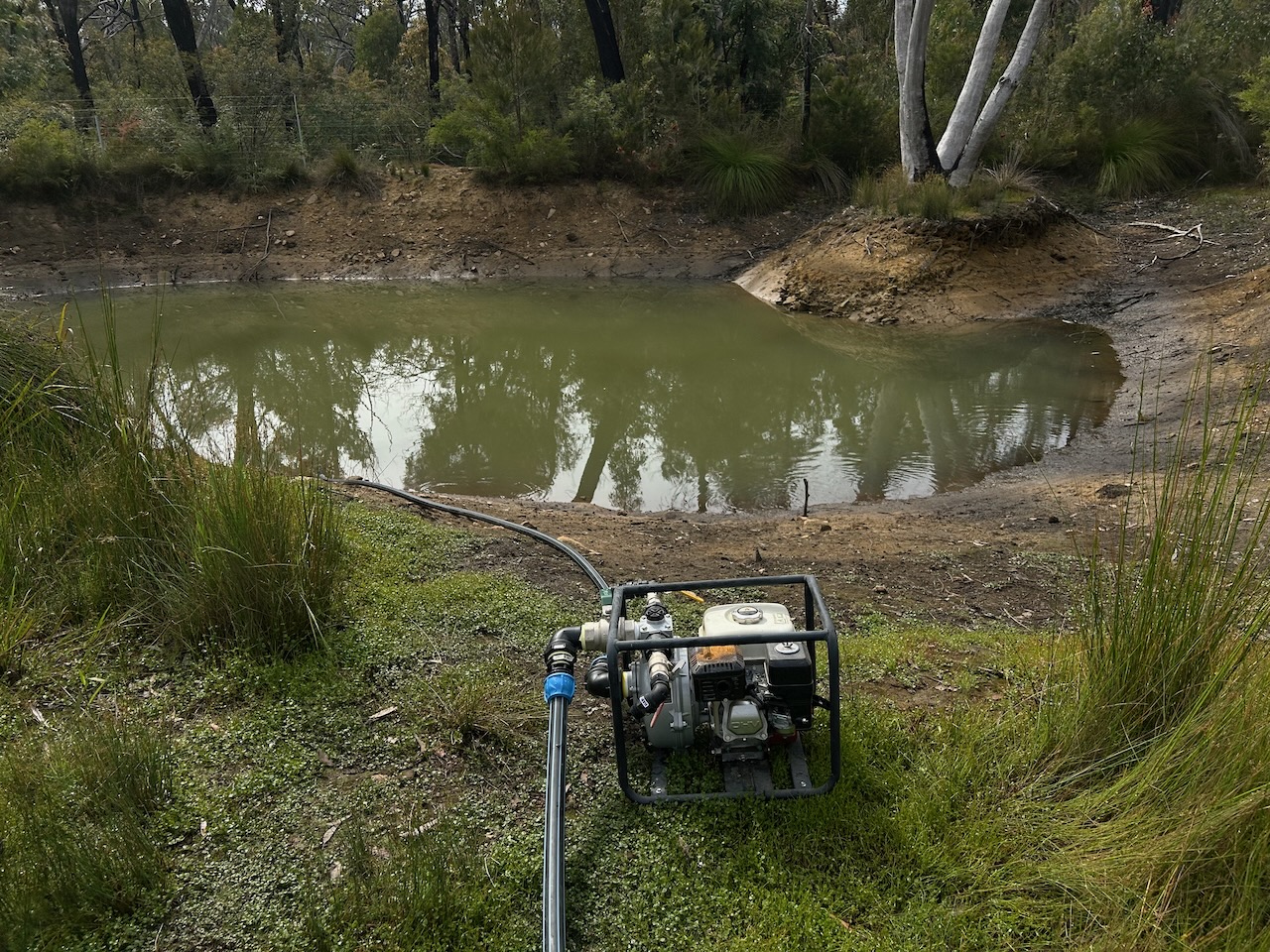
I use 1 of our 4 different petrol driven fire fighting pumps to pump the water up from the lower dam, up to the little top dam closest to the house. The pump is built in a carrying frame and is not too heavy, so I can lift it into the wheel barrow and walk it down to the dam bank, then drag the lengths of plastic piping into place. It’s all set up with the various fittings already attached to the ends of the pipe. I keep the pipes sealed at both ends with screw-on caps, so that small animals and ants don’t build nests in there during the long periods of non-usage over winter.
The little top dam is closest to the house and was the first dam that we got built back in 1976. It has the solar powered electric pump on it that we use for most of our watering and irrigation. I have kept the long lengths of 50mm dia polythene pipe that I bought after the fire to do this transfer. This is the 2nd time that I have used it.
This works well and gives us plenty of water for the next couple of months of summer. But then, before I can congratulate myself. I rains for 5 days and on one of those days, it rains hard enough for the water to flow down the street and into the culvert drain and into the dam, topping it up just a little bit more. It makes me feel more relaxed about our capacity to cope here when there is water in the dam.
With the heat of summer comes the fruit, and with the fruit comes the fruit fly. Nearly all the the new dwarf fruit trees in the stone-fruit orchard have a crop on them this year. We have gone around and tip pruned all the trees. This summer-pruning keeps the trees in good shape as they grow and develop. We also pick off a lot of the small developing crop to reduce the load on the branches, as a really heavy crop can snap the branches due to the weight of the fruit. There are only two of use here, so we don’t want or need a heavy crop. I fill two wheel barrow loads of small fruit and prunings.
I have been spraying the trees every two weeks or so since October, – when it isn’t raining, with organic approved sprays for both fruit fly and codling moth. I missed a couple of months while I was away working in Korea, but got back to it when I returned. However, the recent rains have played havoc with my ability to spray, as these are all water based organic sprays, they simply wash off in the rain. They aren’t cheap either at $25 to $35 per packet, which yields 4 to 5 sprays.
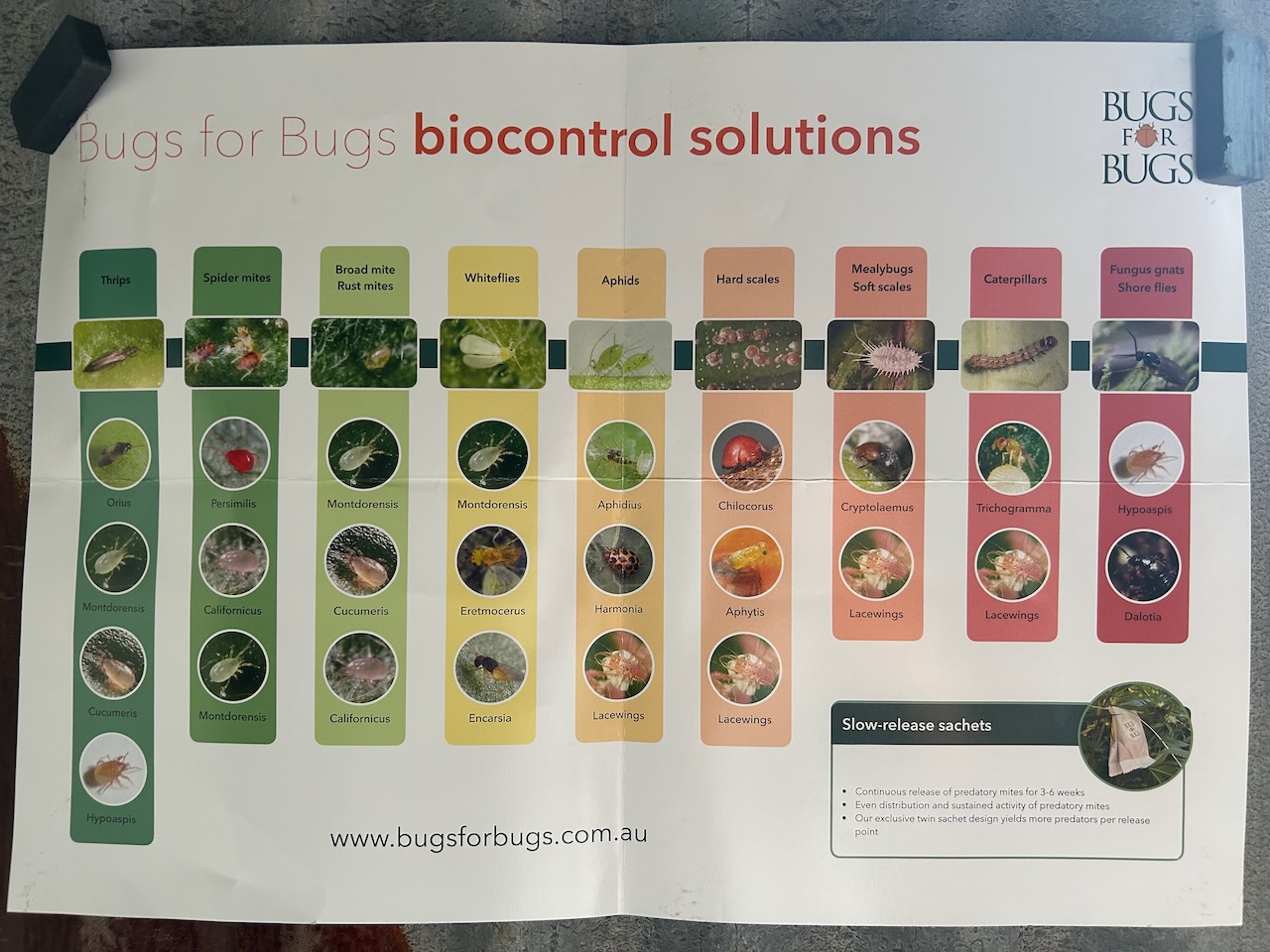
I have also infected the apples, pears and quinces with parasitic wasps eggs of ’trichogramma’ wasps. These are bred to hatch out and predate the codling moth and other caterpillars. I haven’t used them before, so have no idea how effective they are.
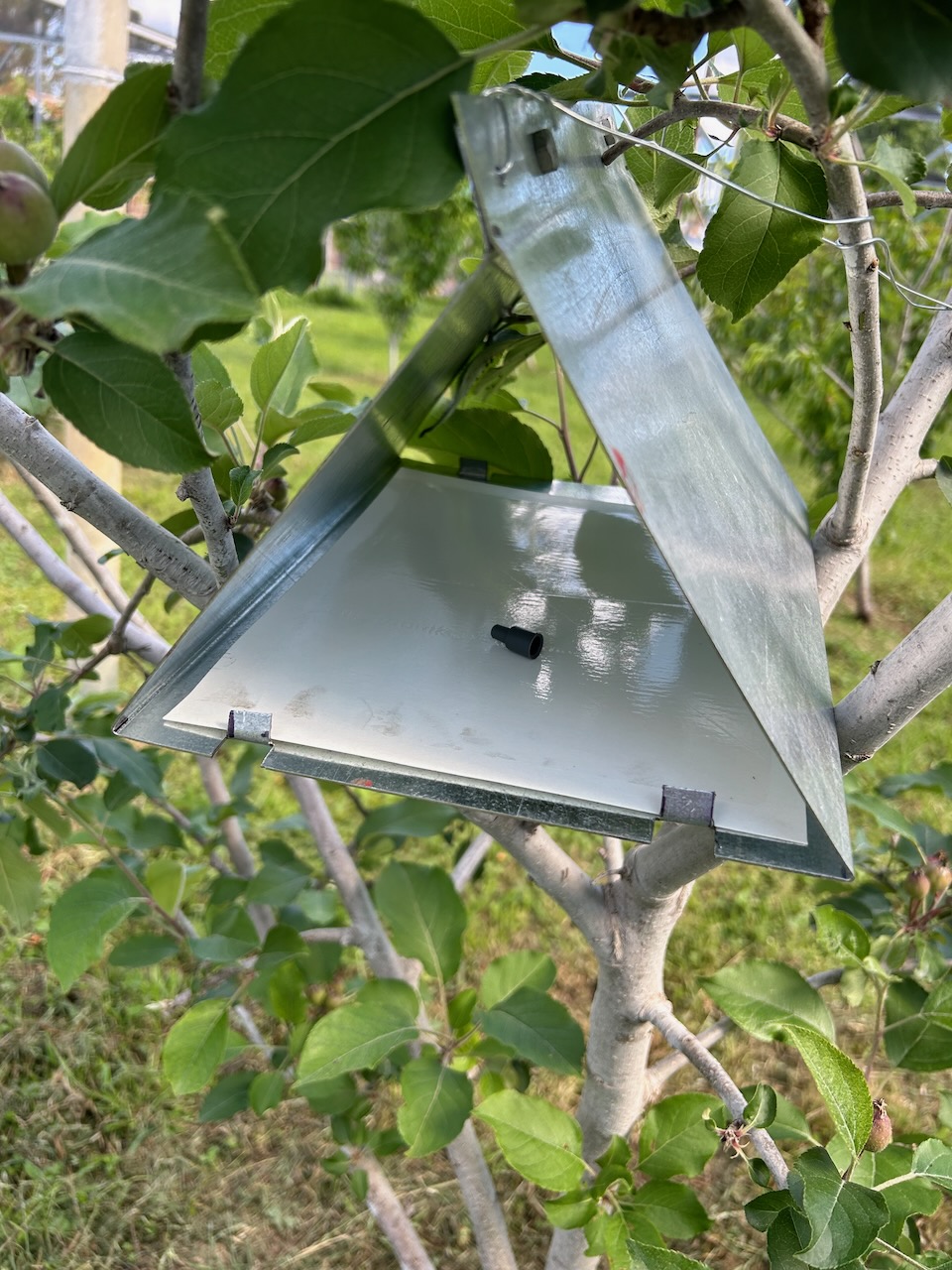
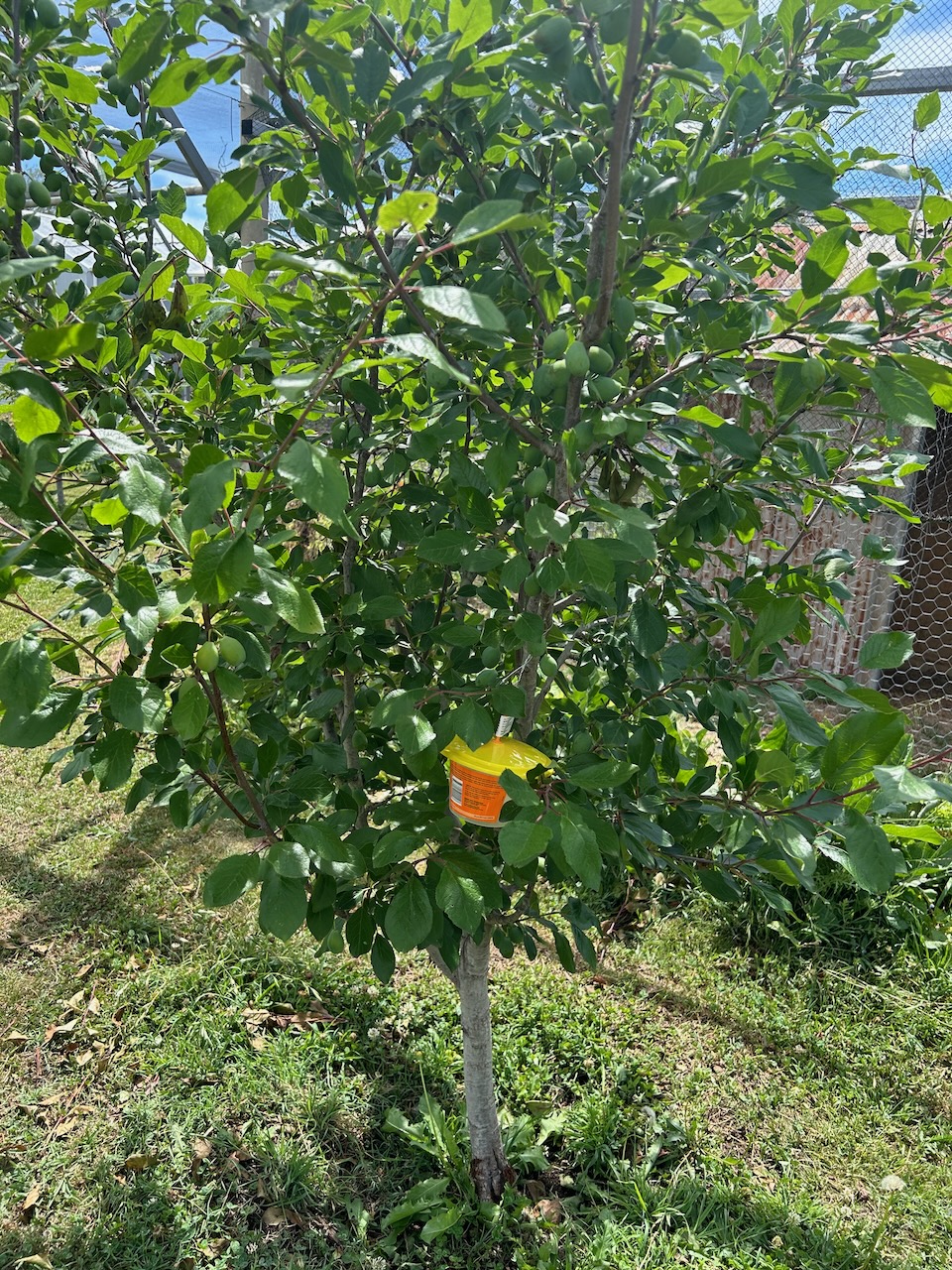
I also built a few steel triangular housings for codling moth pheromone lures. These work by attracting the codling moths with the scent and then catching them on sticky paper inside the lure. These are working. I can see half a dozen little coding moths inside the lure stuck to the sticky paper. I’ve also been tying hessian bandages around the tree trunks, but so far I’m yet to find a caterpillar in there. This definitely hasn’t worked so far. I also added a ring of sticky bandage around the trunks as well. This also hasn’t yielded any results – so far. My last approach has been to hang empty milk bottles in the trees with cut-out windows, and spreading ‘Spinosad’ fruit fly attractant jelly inside. I use it inside the milk bottles to stop it being washed off in the rain.
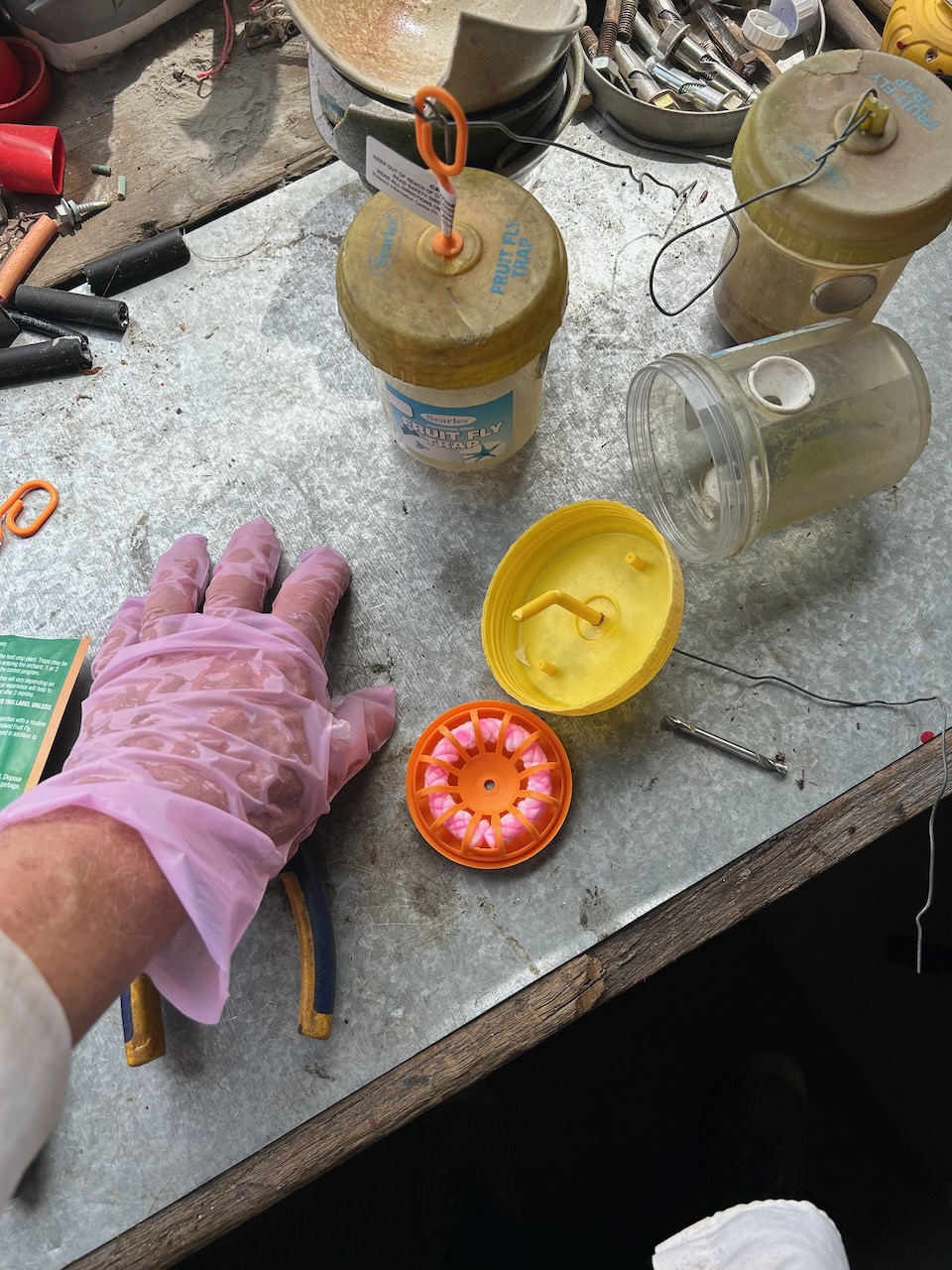
Lastly, I re-filled the old ‘DakPot’ style female fruit fly lures with new hormone baits. When I emptied the old ones at the end of winter, there were 50 or so dead fruit flys in each of them. So this does work. It doesn’t stop the female fruit flys from stinging the fruit, but it reduces the numbers of flies by eliminating a lot of the males out of the system.
We still have fruit fly problems, but I presume that it has been significantly reduced by my efforts. Well, I have to tell myself that don’t I?
Otherwise, why am I wasting my time like this with all these organic techniques, when I could so easily just spray the whole orchard with dieldrin or some other horrific poison? All the fruit for sale in the big supermarkets is sprayed with chemicals. S what are my options? Buy poisoned fruit, or try and grow clean, organic fruit? We are trying to live a pesticide free, low-key, creative, organic, carbon constrained, Post-modern peasant lifestyle. Everything costs more and takes longer and needs constant attention, but we are committed to living it.
Nothing is ever finished, nothing is perfect and nothing lasts.








 Tonight my Fingers Smell of Garlic
You must be logged in to post a comment.