It’s the end of summer, and all of the fruit is finished in the orchards, this month we have been busy with other jobs.
I have been going to build a new chicken run and chook house for a long time. The old one was very small, built in just one day straight after the fire by our good friends Cintia and Andy who came to volunteer their help at what ever was most needed. The old, very solid, and palatial chicken house was attached to the garden shed, which was part of the pottery extension. In the fire everything burnt to the ground.
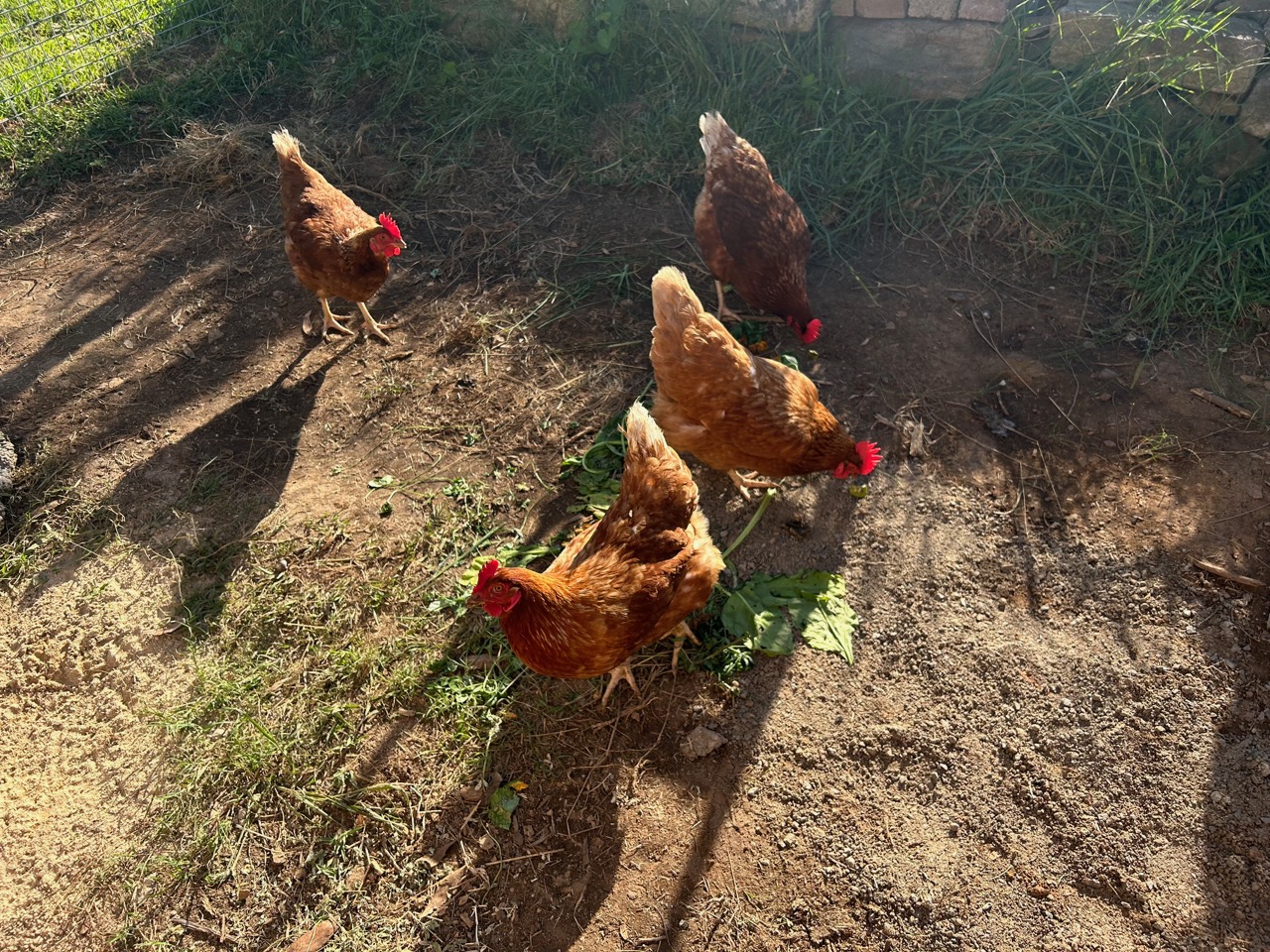
Andy and Cintia knocked up the replacement house out of whatever we could find on site that wasn’t burnt. At 1.8 metres square, it wasn’t really very big, but was OK for just 2 surviving chooks.
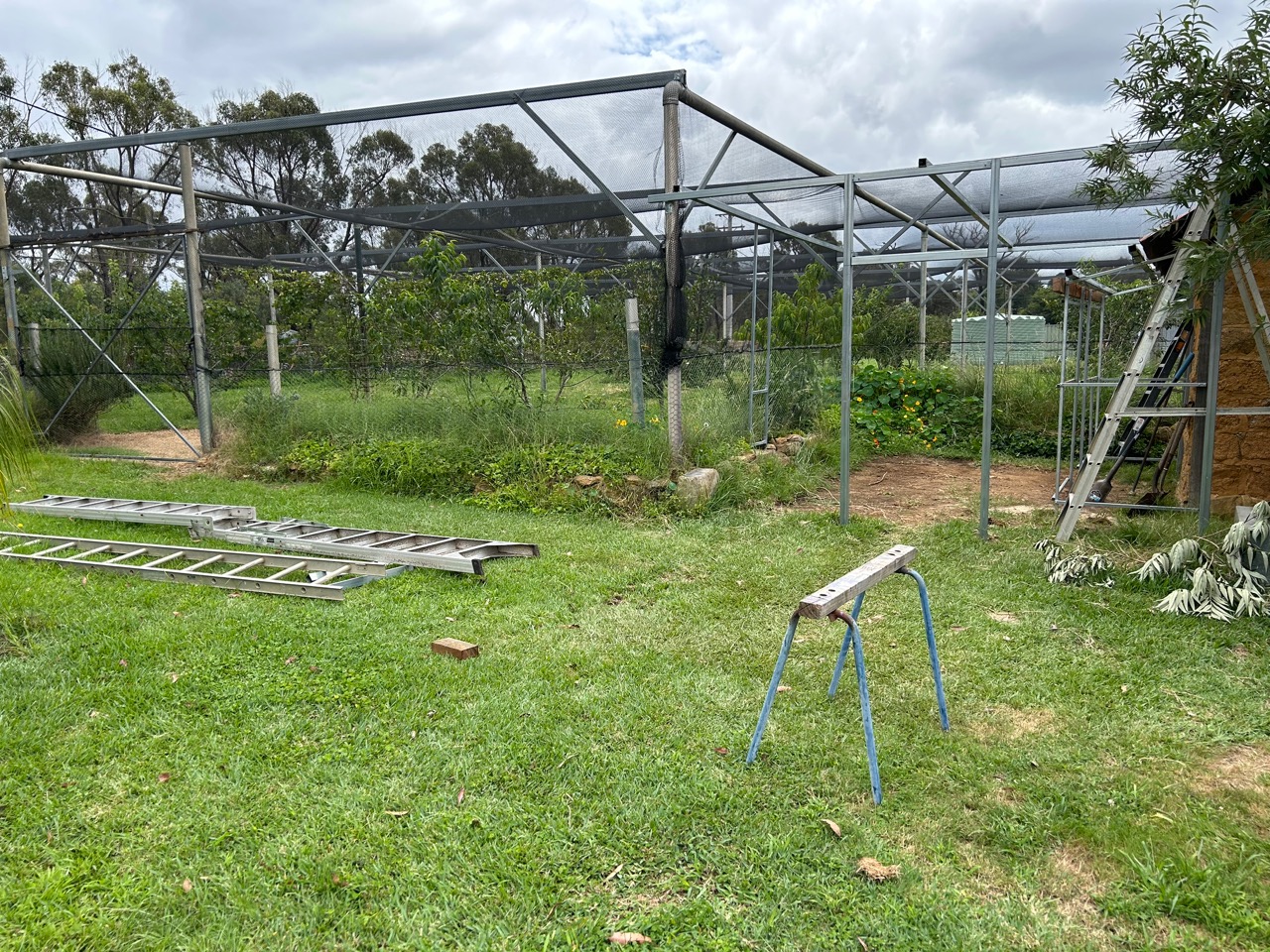
This weeks new chicken mansion is built into the gap between the new orchard and the old mud brick garden shed. It has access through a small gate into the covered orchard, where the chickens can explore and scratch all day in safety, without being swooped on, or chased by local dogs or foxes.
Janine suggested to paint it pink, so I thought to name it ‘Gallus Hilton’. Then she thought it might be better pale mauve, So it might get called ‘The Gallus Palace’.
What ever we call it, the new chook shed and run is the best one of the 4 that I have built here over the 48 years here. It’s still rusty recycled iron colour. I re-used the old corrugated roofing iron that we took off the Old School roof when Andy helped me to re-roof it last year. 130 year old roofing iron still has a lot of life left in it yet, as well as so much embedded history on this site.
It did occur to me that it is a bit strange that a man over 60 might need 4 different ladders to build a simple chook shed
This new run is 6m x 4m. So plenty big enough to be comfortable if we are away and they are locked in. It is completely fabricated out of steel, so shouldn’t burn in the next fire.
When its too hot outside in the middle of the day or raining, then I divide my time between the kitchen preserving excess garden produce, or over in the pottery.
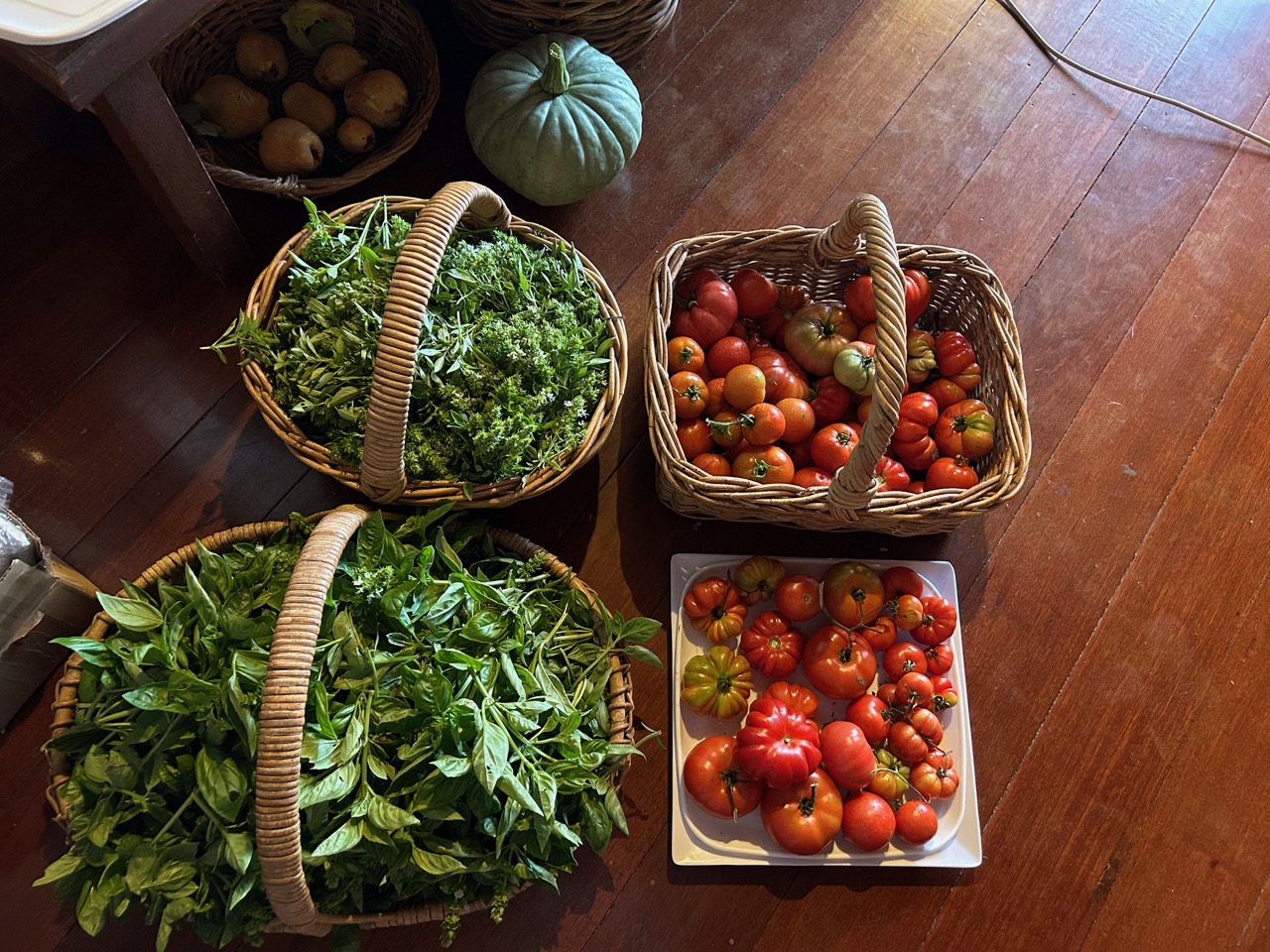
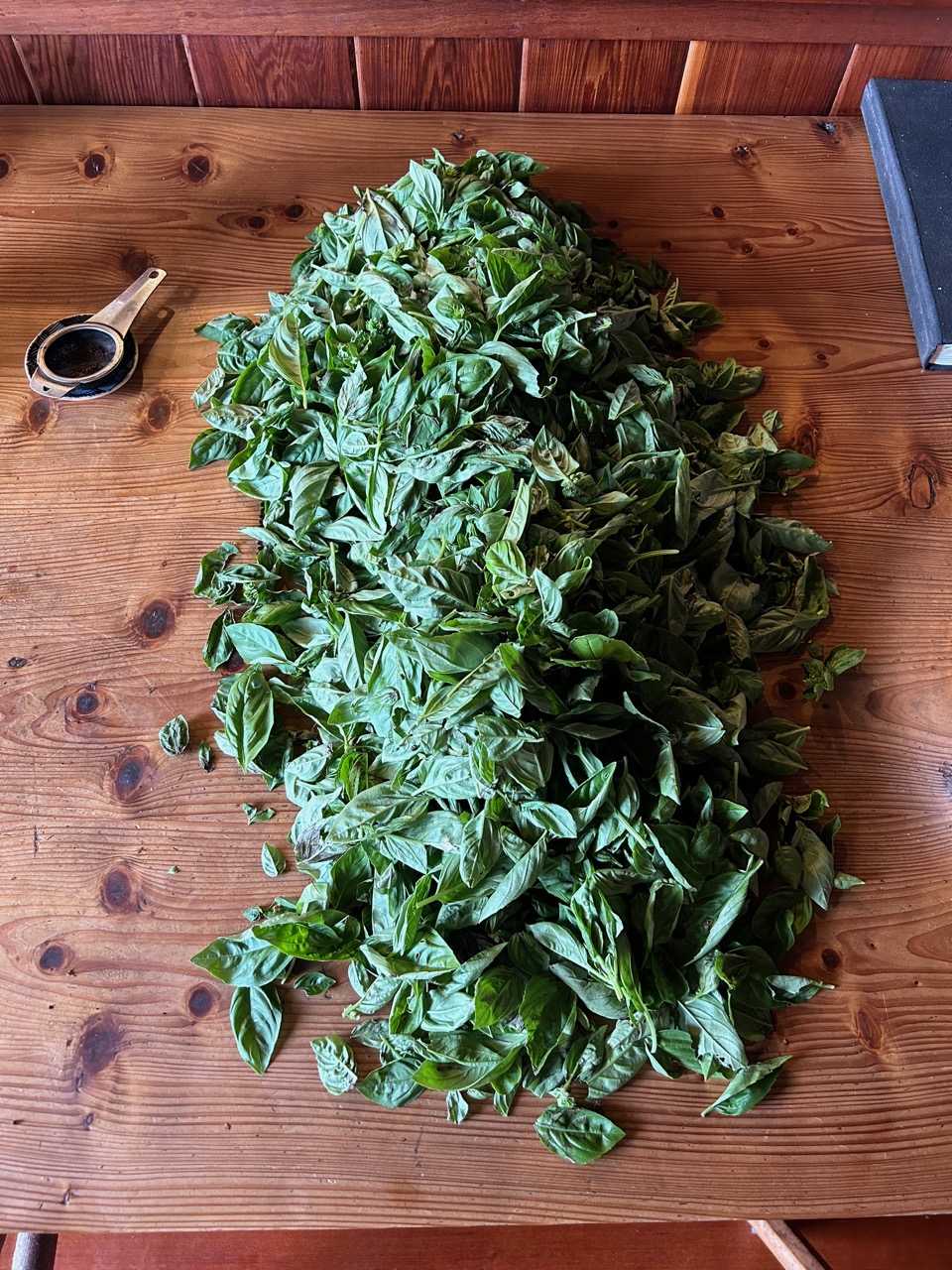
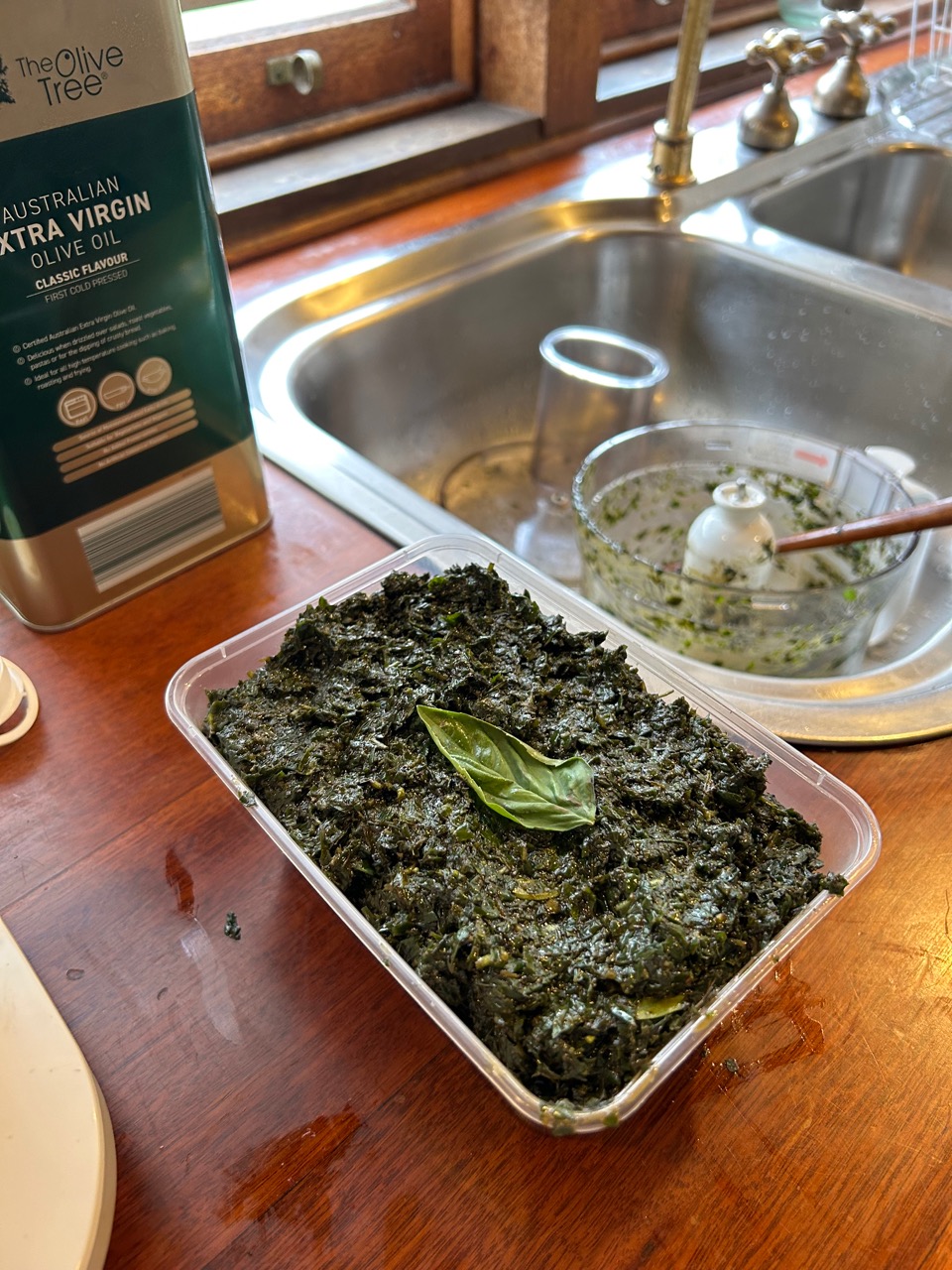
The sweet basil crop in peaking just now in the garden, so its time to make pesto.
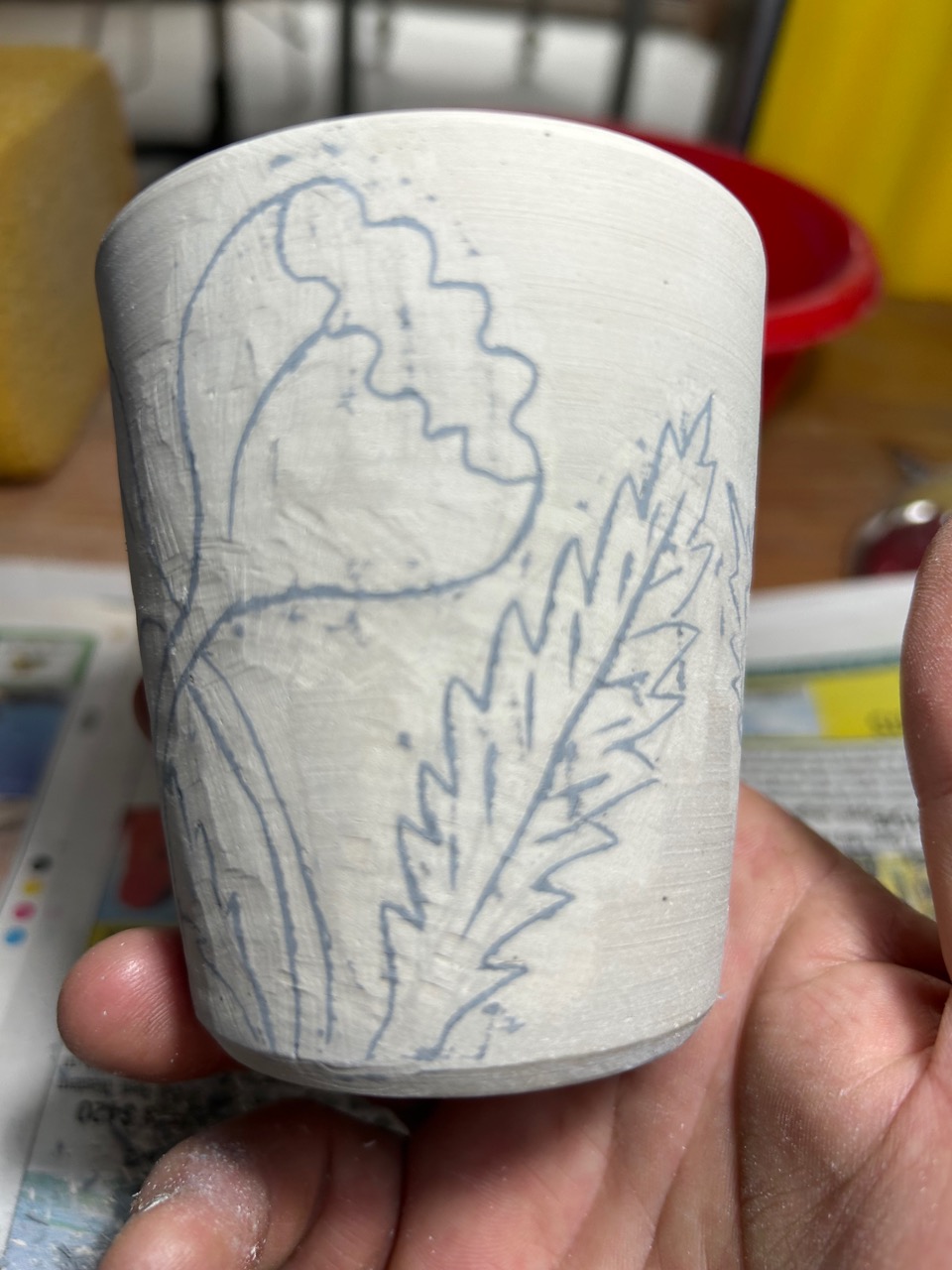
In the pottery, I’ve been extending my sgraffito on sericite work to include the negative/positive slip inlay. I tried mixing the two techniques and introducing some underglaze colour as well. I don’t know how these will turn out, as I’m packing the glaze kiln tomorrow.
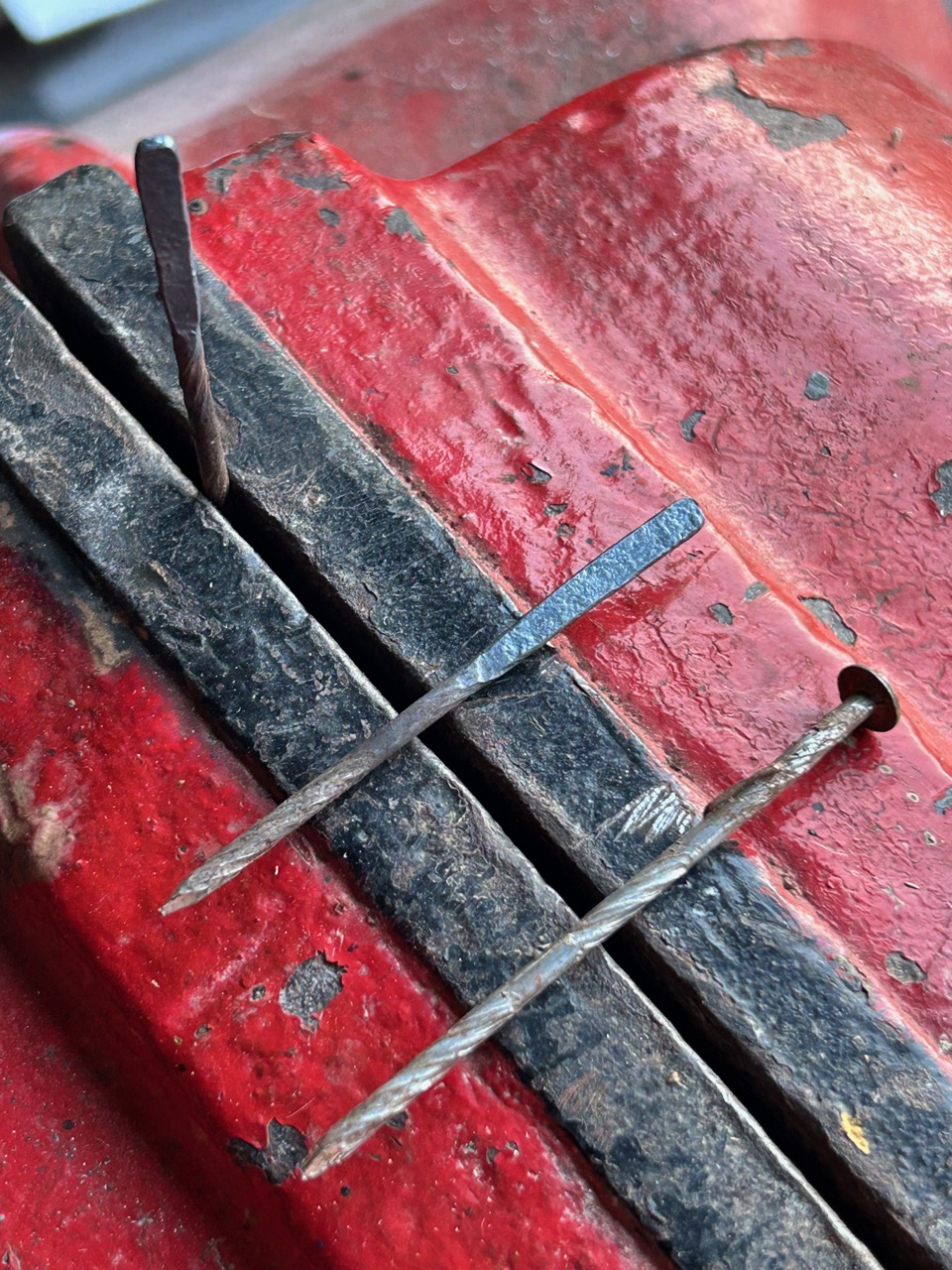
I’ve found that the sorts of sgraffito tools for sale here are somewhat limited, so I have been forging and hammering my own from rusty nails. They are rather nice, somewhat rustic and I can make them any size.
Janine has been using our current excess of passion fruit to make passion fruit and cream flummery. It’s quite easy to make, just passion fruit and cream whipped up together and then frozen. Janine takes it out of the freezer every so often and re-whips it to keep it light and fluffy while it freezes.
It goes quite well with our excess of blueberries as a desert.
A recent article in ‘Nature’ magazine indicates that we may already have passed 1.5 degrees of warming in around 2012. Using a unique sponge that grows in the sheltered waters of the Caribbean. Researchers have calibrated its growth over the past 300 years. Using the analysis of isotopes of calcium and strontium that the coral-like sponge lays down at slightly different sea temperatures. The article suggests that we have been underestimating the actual degree of global warming by half a degree, and that we are actually approaching close to 2oC in warming.
Apparently there is/was a really serious lack of iodine in the soils of Switzerland, which over centuries had caused severe goitre in the population. The Swiss used to have the highest level of Cretinism in the world because of this missing trace element in their soils. Most of the country was scraped clean of its top soil during the great ice age. The only part of the country that didn’t suffer this debilitating disorder was in the low lying areas, where the soils hadn’t been so depleted.
All sorts of explanations were put forward.
“landscape, elevation, atmospheric electricity, snow melt, sunlight (too much and too little), ‘miasma’, bad beer, stagnant air, incest and ‘moral failure’. They collected information on the minutiae of life in affected areas, then cross-referenced their reports, following the contemporary medical wisdom which held that all diseases had multiple causes. Did groundwater interact with sunlight to produce goitre? Might a certain combination of air pressure and elevation create a cretin? In 1876, a list of the most promising theories was published; it featured forty different hypotheses.”
All wrong. It wasn’t until 1915, that a local doctor proposed that it was caused by a lack of iodine, and was shouted down. However, Eventually another doctor in an isolated area did a few unauthorised experiments in his remote local area, adding very small amounts of iodine to salt and distributing it in his local area, and miraculously, the goitres disappeared and no more cretin children were born. It seems amazing that it was just 109 years ago that this breakthrough occurred.
There is a very sad film made in 1933 by Luis Bunuel, called ‘Land without bread’ about a very remote area, high in the basque country of Spain. In part, it mentions the terrible effects of goitre, where the same problem as afflicted the Swiss also occurred. Isolation and subsistence farming being the principal reasons.
Australia has very ancient soils that are largely depleted of iodine, goitre was a problem here for some people in the early days of development here, Those who were living away from the coast, and didn’t eat fish. During the last century iodine deficiency almost disappeared here because during the time of glass bottle milk deliveries, all the bottles were recycled and sterilised using iodine, so infinitesimal amounts of iodine were left as a residue in the bottle after cleaning and refilling. This was just the right amount to keep us all in good shape.
When glass bottles were phased out in the mid 70’s in favour of single use plastic, Thyroidism and goitre were reported to be on the increase again. So in the decades since, doctors have been recommending that industry, and people in their homes, use iodised salt to correct the deficiency. It has worked.
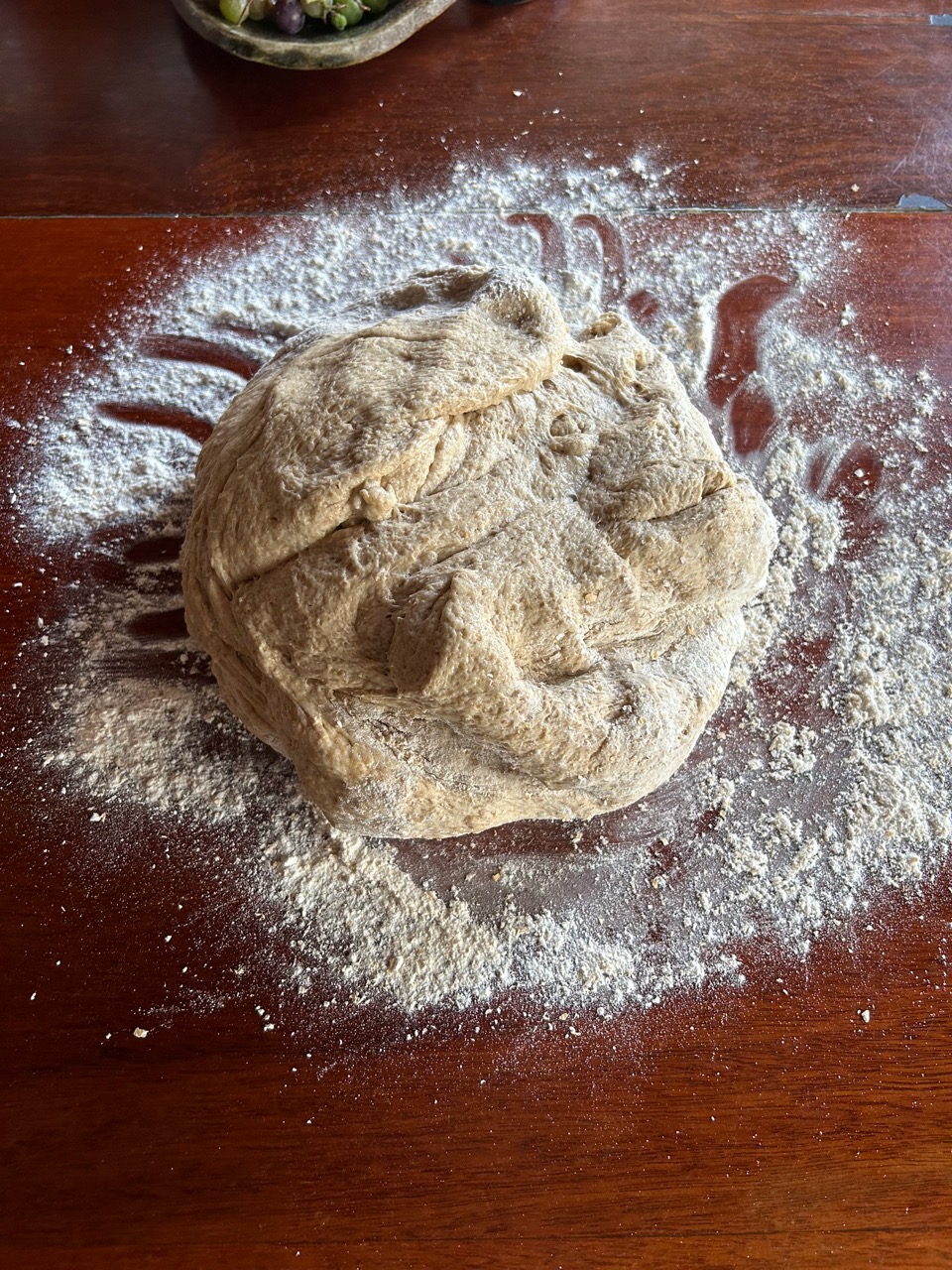
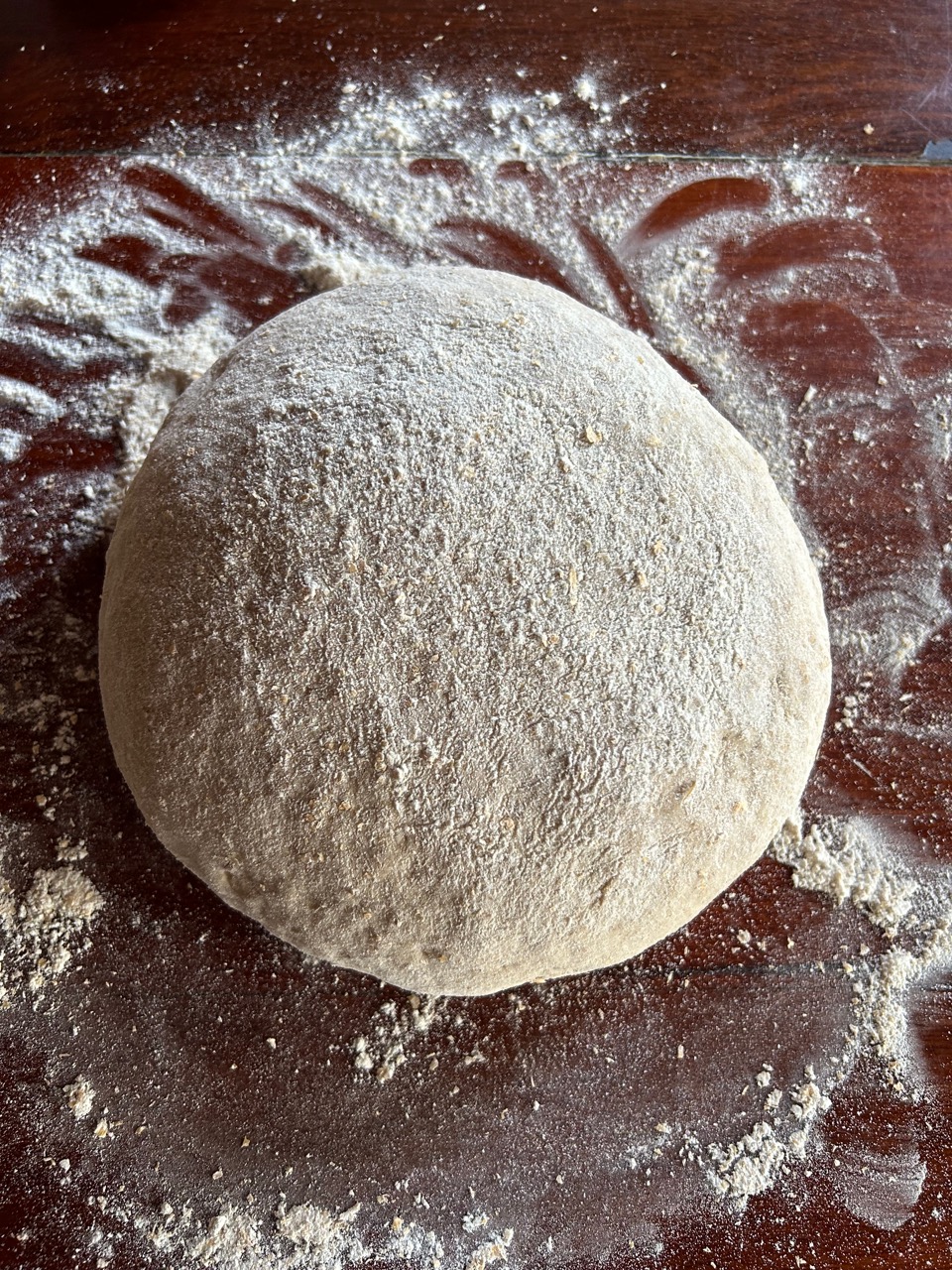
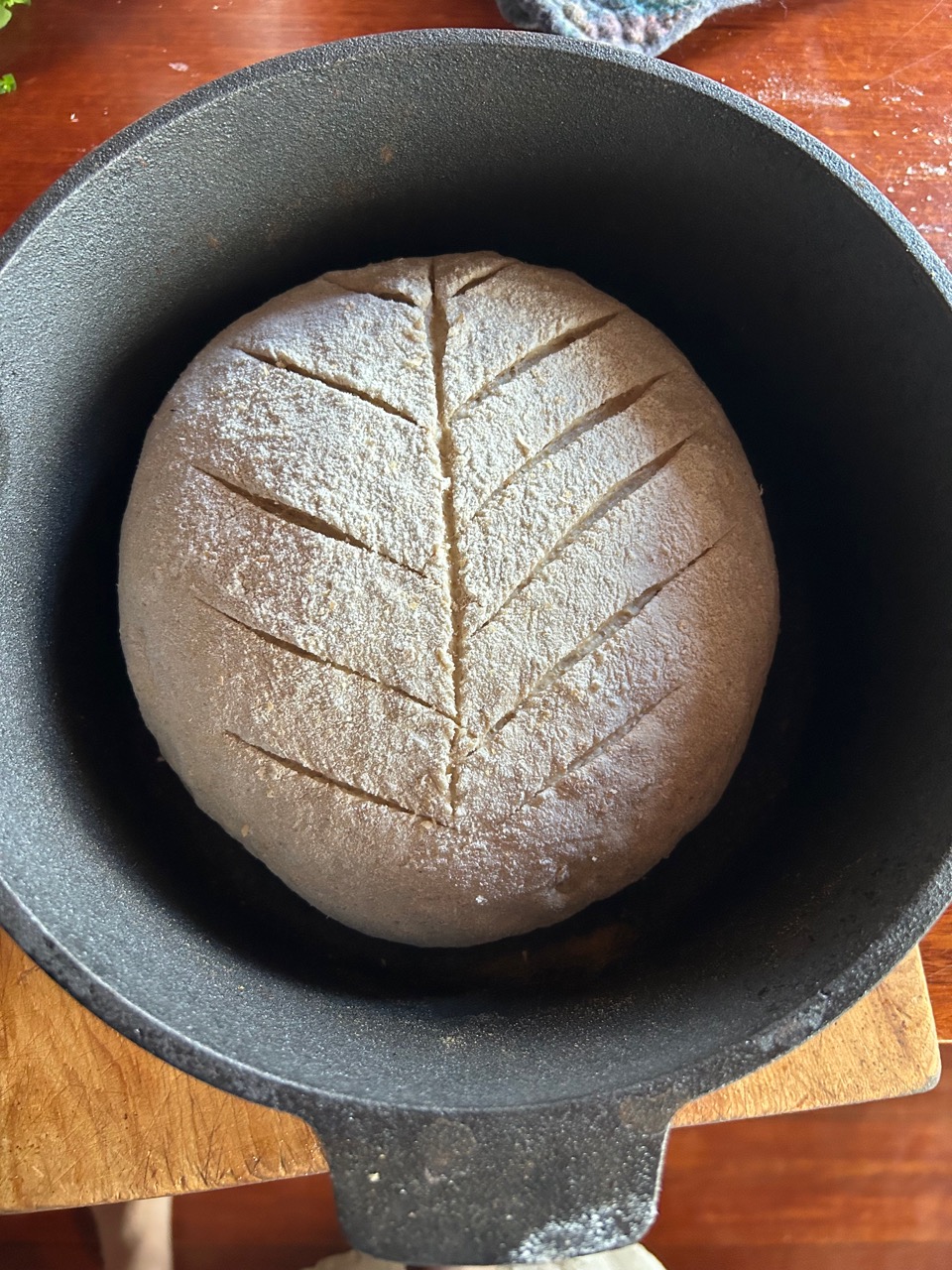
I don’t buy commercial bread, I bake my own – sans salt, nor do I buy any mass produced/baked food items, or ready-made/junk food, so my embedded salt intake is low. I buy iodised salt. However, because I don’t use much table salt with my meals and I don’t usually cook with it. I have to make sure that I do get that very small trace of iodine in my diet. Fish is our main source of protein, so that helps, but I also buy kelp powder to use at the table. This seems to keep my blood pressure is on the low side. At my last test it was 101 over 62, which is on the lower side of normal, and I have just enough iodine. It seems to work.
Life is a big experiment and there are no certainties, except death and taxes. Our income is so low that we don’t have to pay high taxes, but that still leaves death as a possibility?
Nothing is ever finished, nothing is perfect and nothing lasts forever.
We have been dealing with all the fruit and nuts that are maturing in the orchards during January. The peaches and plums are now finished. One particular peach tree has fruit that is SO fragrant that after we picked them and set the basket down in the kitchen overnight, in the morning the house was filled with the most exotic floral fragrance. This was a very beautiful experience. So simple, yet so rewarding. Sometimes it’s the most mundane and unexpressed events that leave an indelible impression.
These newly planted fruit trees in the new orchard are now 4 years old and are all recently developed fruiting cultivars, grafted onto dwarf root stocks, so they will not grow more than 2.5 metres tall. They are also all warm weather adapted, needing less ‘chill’ hours than the old varieties. Some of our older fruit tress planted over 40 years ago, had stopped setting fruit in most years, as with the increase in average temperatures due to global heating. We don’t get frosts like we used to, so they didn’t get the required number of ‘chill’ hours over winter, making the flowers infertile.
They are all growing well and are producing more fruit than we need. Previously, in the old orchard, all the trees were out in the open and too tall to net, so the birds ate most of the fruit. This new orchard is now fully netted, so we don’t share any of the fruit with the birds. Added to this, these new cultivars have been bred to carry very heavy crops. I will need to go through the orchard and thin out the crop in the early stages next season, to keep it down to a manageable level for just the two of us.
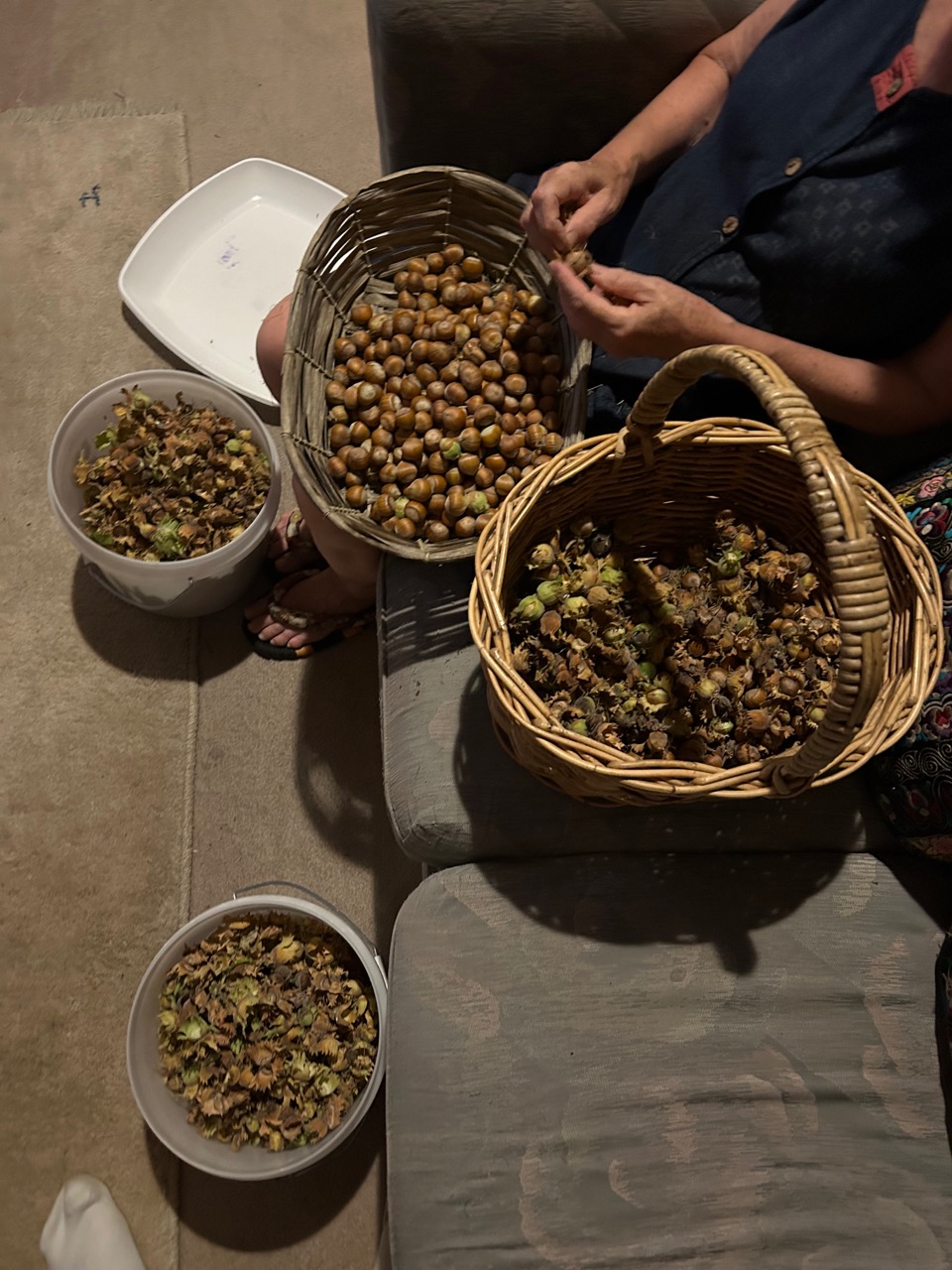
We are spending some time in the evenings, if there is anything on the idiot box, half-watching and shelling the hazel nuts. Some of the shell casing fragments end up on the floor. Janine warns me as I walk past her in bare feet, to watch out, as there are some nut cases on the floor. I reply, Yes. I’m one of them!
At this time of year, I’m certainly a nutter, so I tend to concentrate on the shelling rather than the on-screen rubbish. As the trees mature year by year, some were burnt to the ground by the fire, the hazelnut crop gets bigger. It will take a dozen evenings to get all the shelling done. So far we have de-skirted all the nuts, then put the shell out to dry for a week or so. Now we are starting on the shelling. A couple of evenings of shelling reduces a wicker basket full of nuts to one bowl of kernels. These then need to be roasted in the oven to bring out the true hazelnut flavour that we all know. After roasting, the result is about 700 grams of nuts ready to eat. Quite a bit of effort for such a small amount of nuts. We could buy them for a few dollars! But that is not the point. We don’t live and work like this for money. This is just a small part of our experiment in living a self reliant life of minimal consumption in a carbon constrained and over-heating world.
Of course, it’s not all effort, there is the reward of these amazing, home grown, unsprayed, non-toxic, scrumptious nuts. They will keep for months like this, but don’t usually get the chance, as they are too delicious.
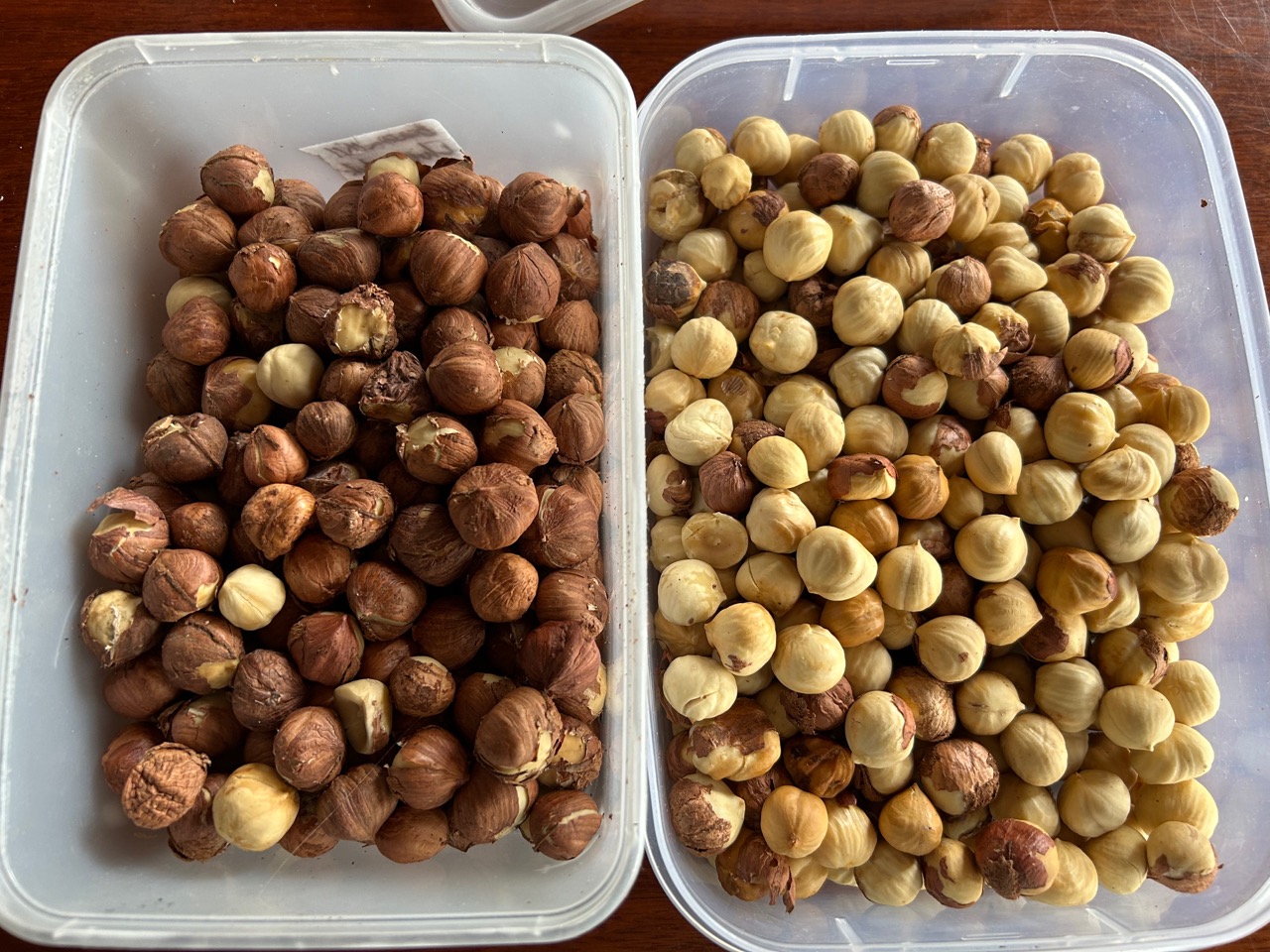
The hazels on the left are roasted and ready to eat, but haven’t had their ‘paper’ shell coating removed as yet. On the right side are the roasted ‘cleaned’ nuts.
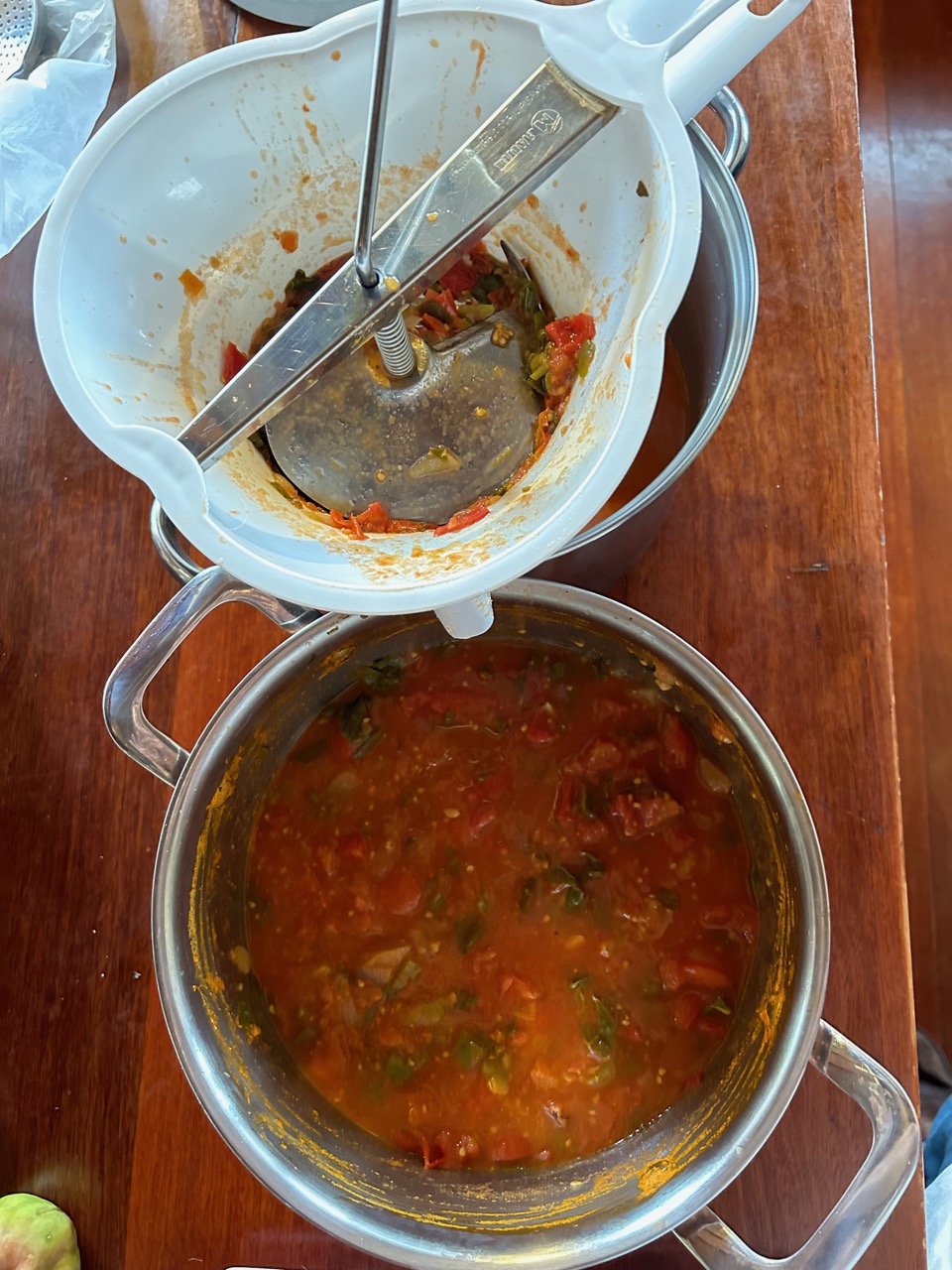
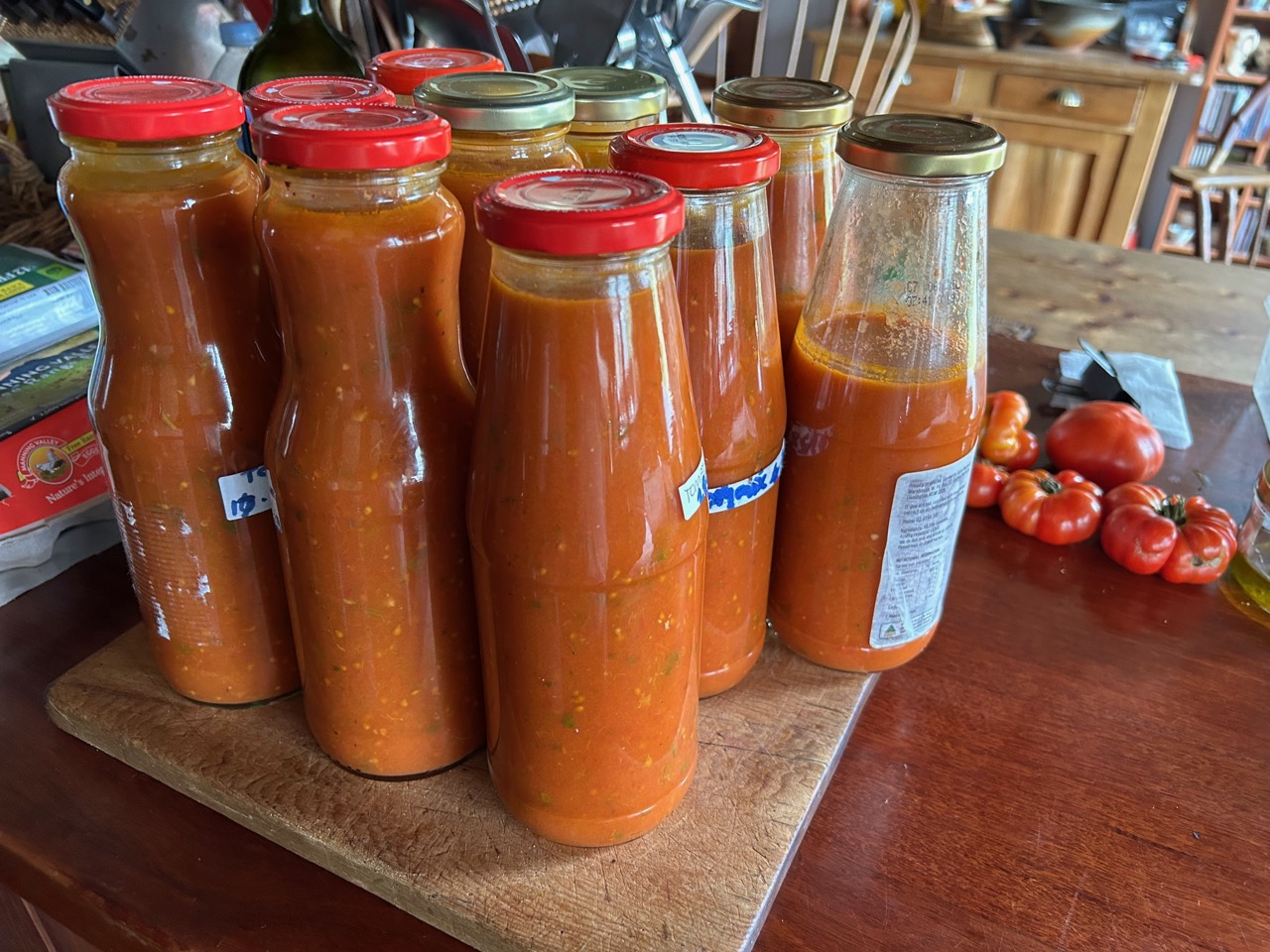
The vegetable garden has started to produce baskets filled with tomatoes every few days. I have just made the first batch of passata from the first three baskets full of tomatoes, 8 litres after sieving through the moulli to get all the skins and a lot of the seeds out. This made 10 bottles in this round, but there will be a lot more to come if this weather keeps up with the warm and wet conditions?
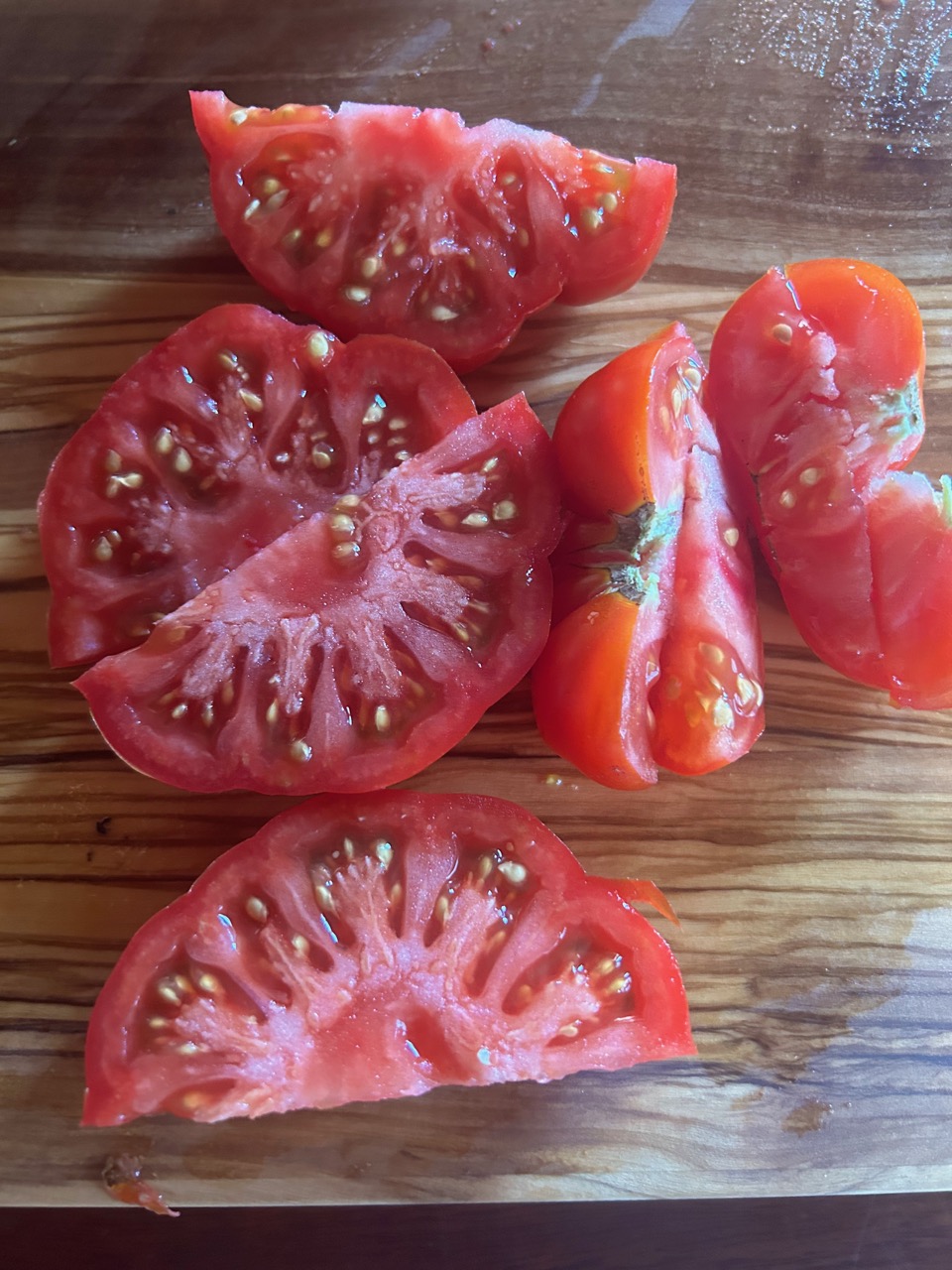
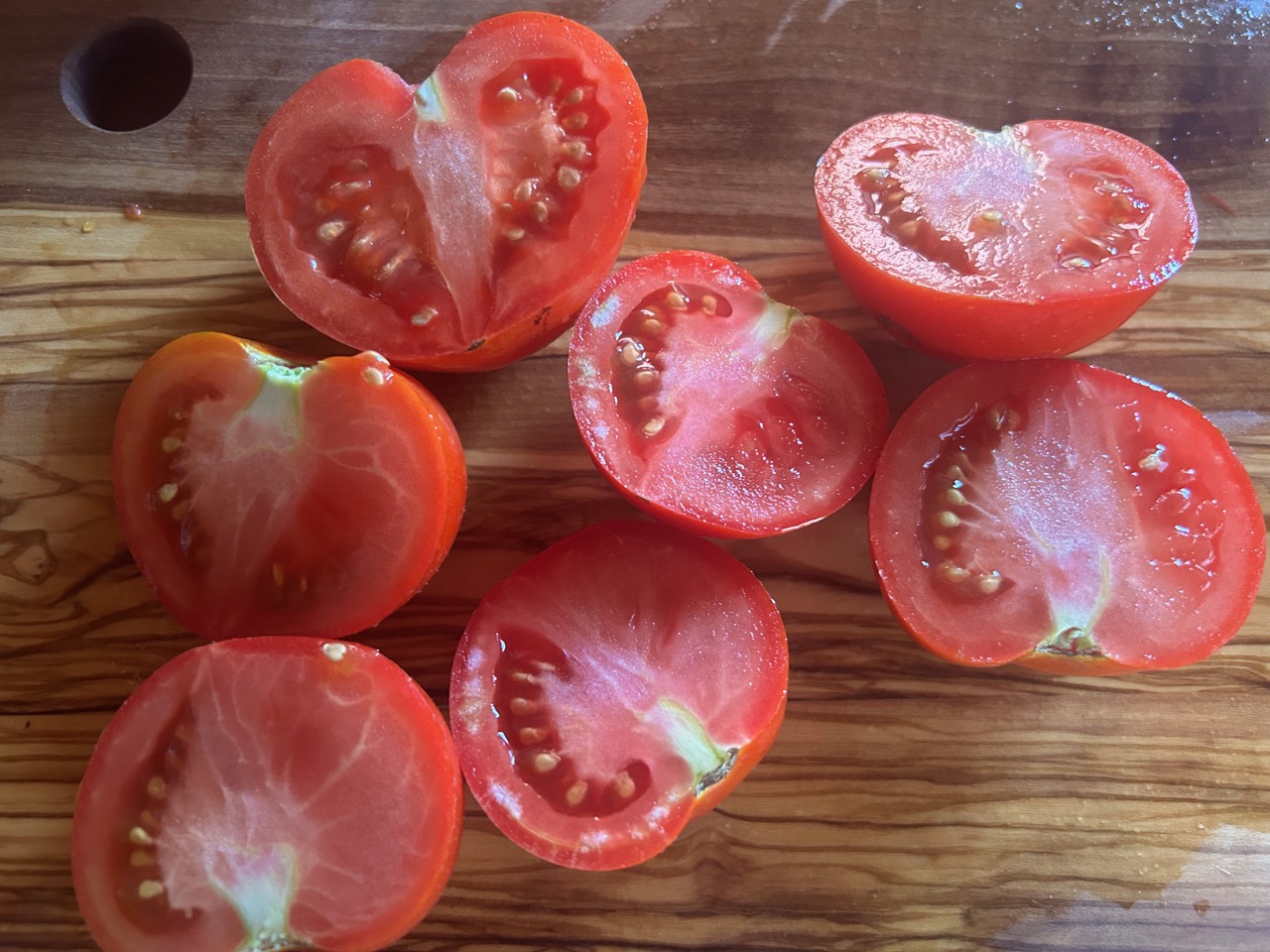
I usually grow a few old fashioned varieties of tomatoes. They are solid, firm, fruits with few internal spaces more flesh and less juice. Having a mix of varieties helps to insure that something will do well, even if others don’t. Also, wild germinated plants come up when they are ready and the soil temperature and moisture levels are right.
I also grow a few Grosse Lisse plants and some little gourmet salad varieties that come back up from self-sown seed each season. There are always plenty of them coming up everywhere, so if they are growing in the wrong place. I just weed them out, but if I can work around them, then they get to stay and be productive.
Rouge de Marmande
Mortgage Lifter
Beefsteak
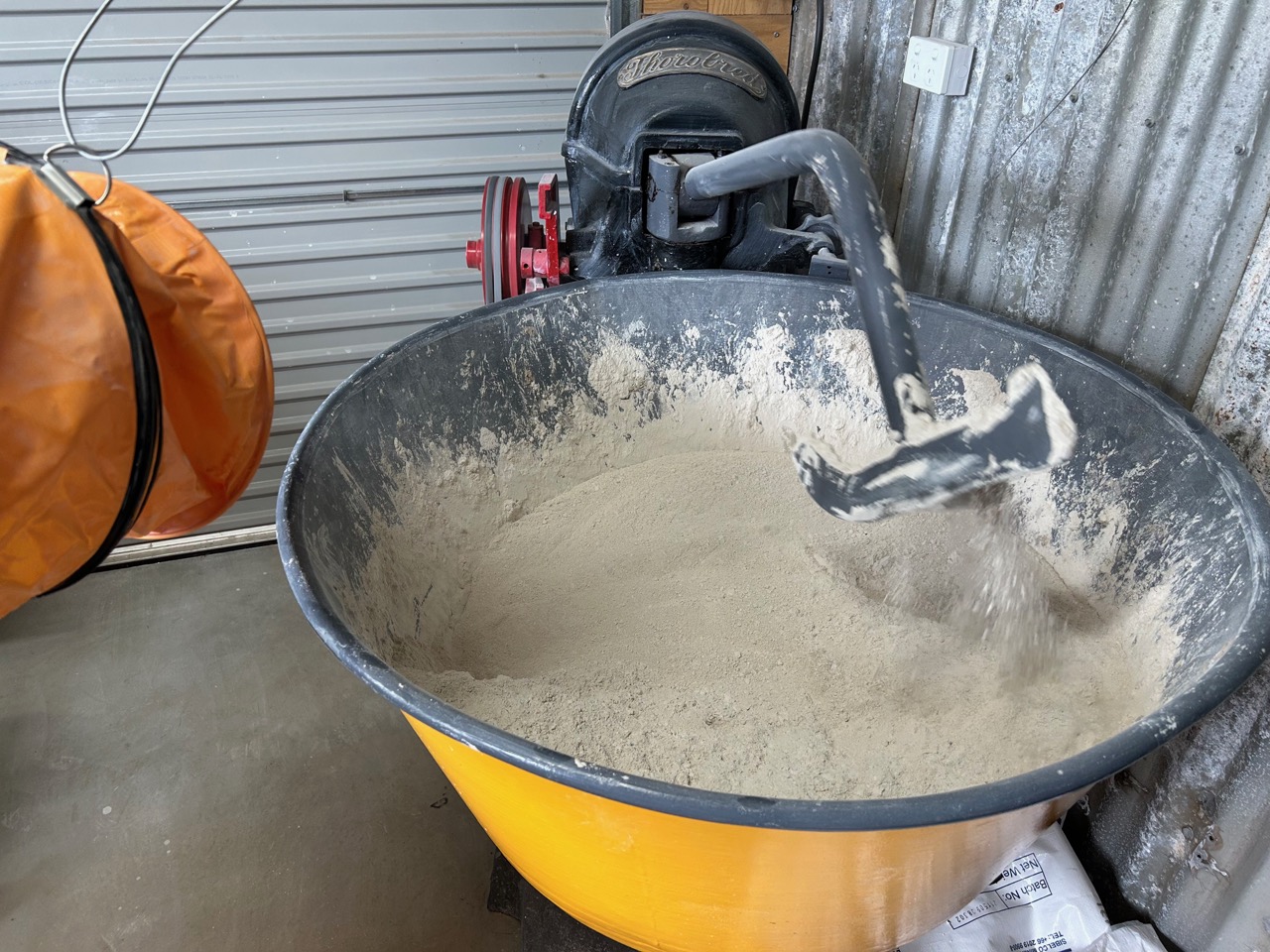
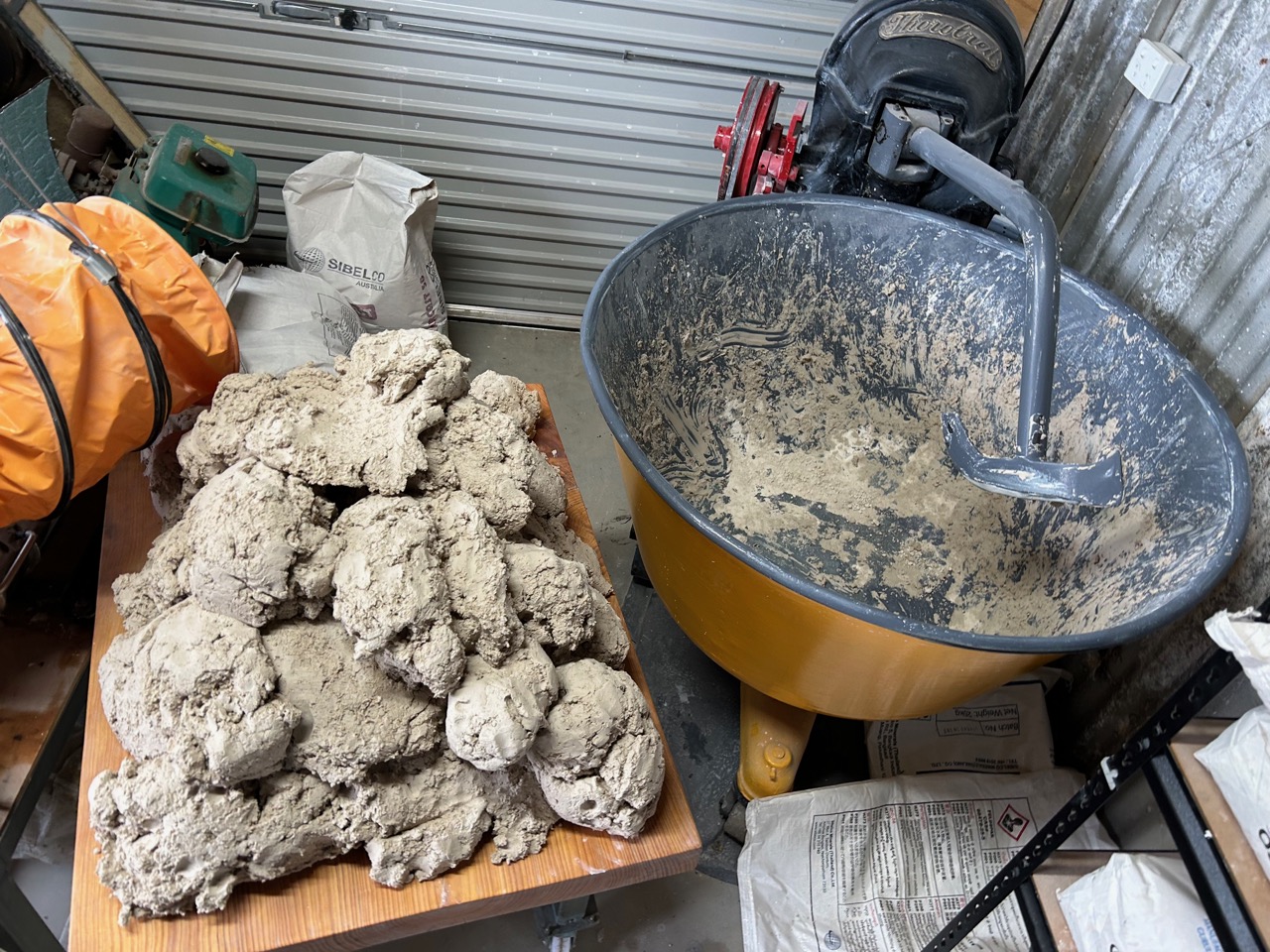
In between all of this, we’ve been back in the pottery during the hottest part of the day. We had a special sgraffito workshop for all the local artists, who usually meet in the Village Hall every Monday for an Art Class, so last week they all came here instead and decorated a tile that Janine and Ingrida, the leader of the group, had made a few days before. Later in the week, I spent a couple of days making new batches of clay for the upcoming throwing workshops in March.
The clay is all pugged once through the purple vacuum (3 1/2”. 87mm.) pug that we keep for white stoneware clay. This pug was gifted to us from a close friend who hadn’t used it for some years. It came with a name ‘Pugsly’, so we’ve keep the name. The 3 1/2” or 87mm dia. pugmill is so much slower than the larger 4” or 100mm. pugmills. It still surprises me how much difference 12mm. in dia. can make. When we use the smaller ‘Pugsly’ purple pug, it takes me 2 days to do all the pugging instead of just one day.
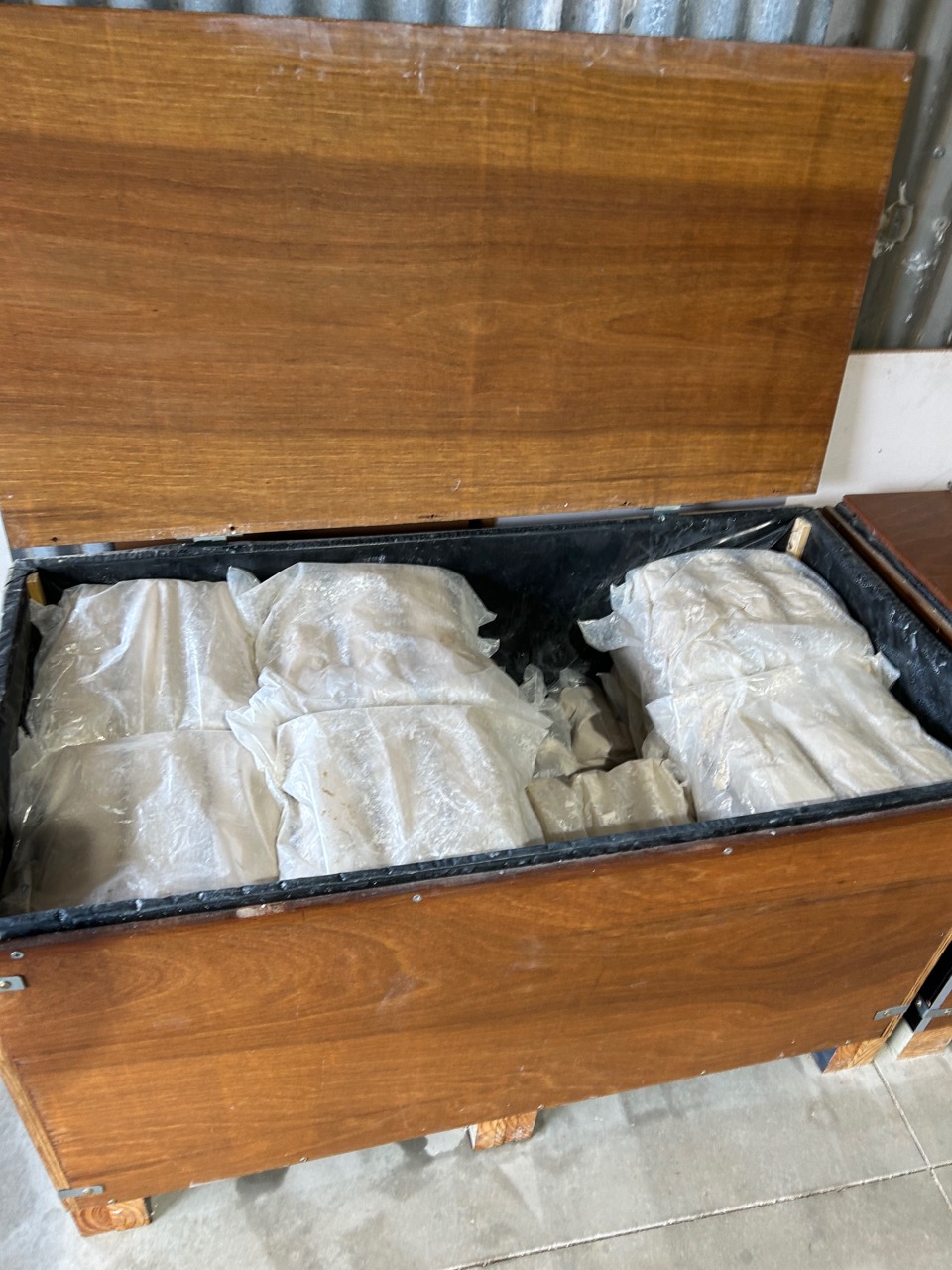
I wrap all the clay in plastic overnight, then the next day, I cut a small slice off the ends of all the pug sausages, and process all those small sliver ends together to make a new extruded pug of clay that is a mix of all the previous pugs from different batches. I repeat this procedure of slicing off all the ends and mixing and re-pugging, until all the clay is processed. This is my way of ensuring that all the clay that I finally pug and bag is pretty much homogeneous. The finished clay is bagged and stored in a plastic lined clay box to keep it cool and dark while it ages and sours.
When full, the clay box holds about 400 kgs of clay. I make new batches of clay when the box is half full. In this way, there is always some older, aged, clay ready to use.
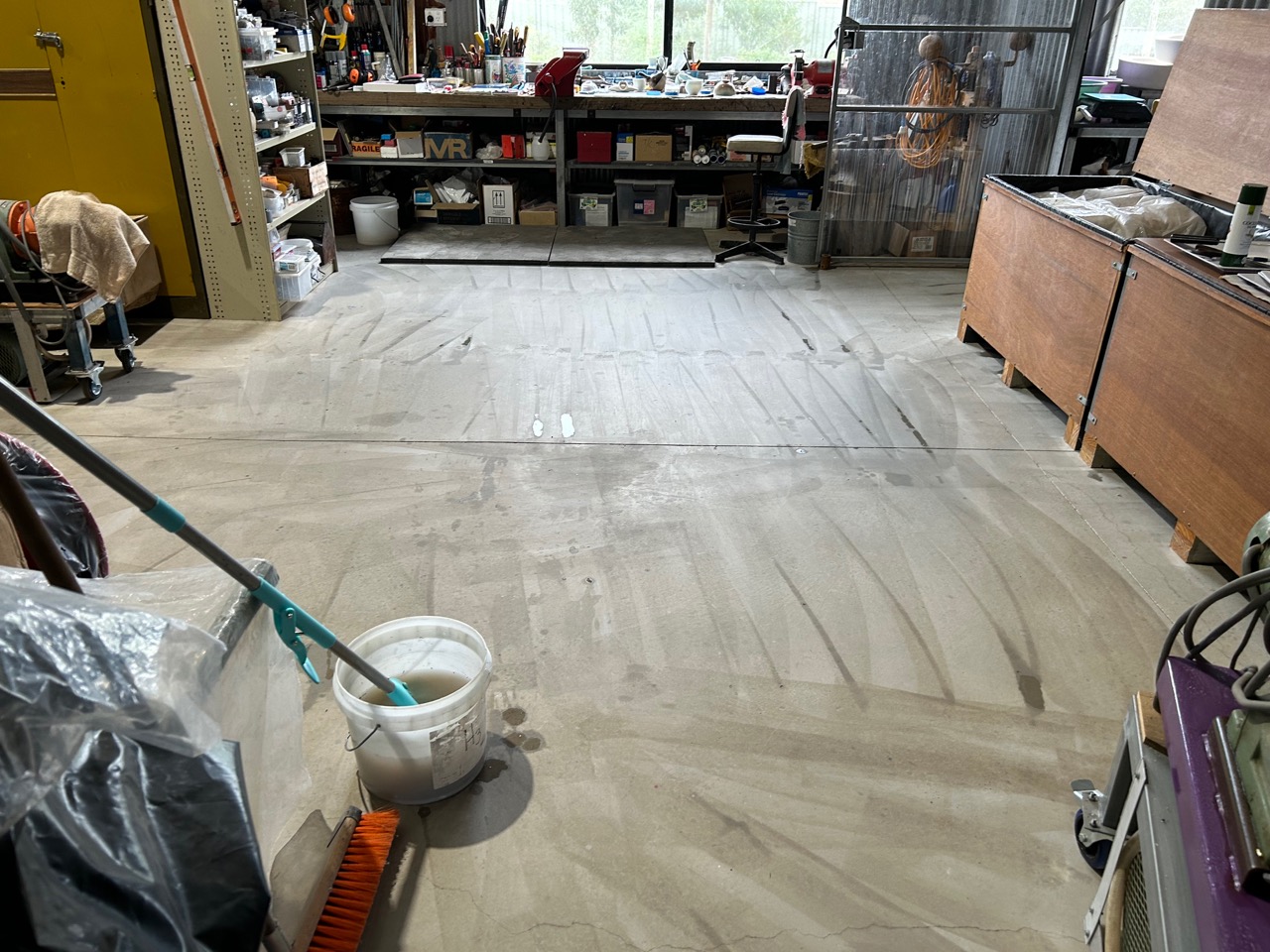
After I finish pugging, I wheel all the machinery out of the way, and mop the floor until it is clean and free of clay dust. Then I wheel all the machines back into place ready for the next time.
It’s a bit of a chore to clean-up and mop the floor at the end of a long day, but it has to be done to keep the workshop hygienic and workable.















 Tonight my Fingers Smell of Garlic
You must be logged in to post a comment.