
I have spent the last two days firing my kiln here in the Porcelain Residency. 30 hours of my life that was hopefully well spent? Starting at 4:00 am on Tuesday and finishing at 9:00 am on the following day – Wednesday.
I put a bit of time and effort preparing, splitting and stacking wood, so that everything would go as smoothly as possible. But, as always, the best laid plans…
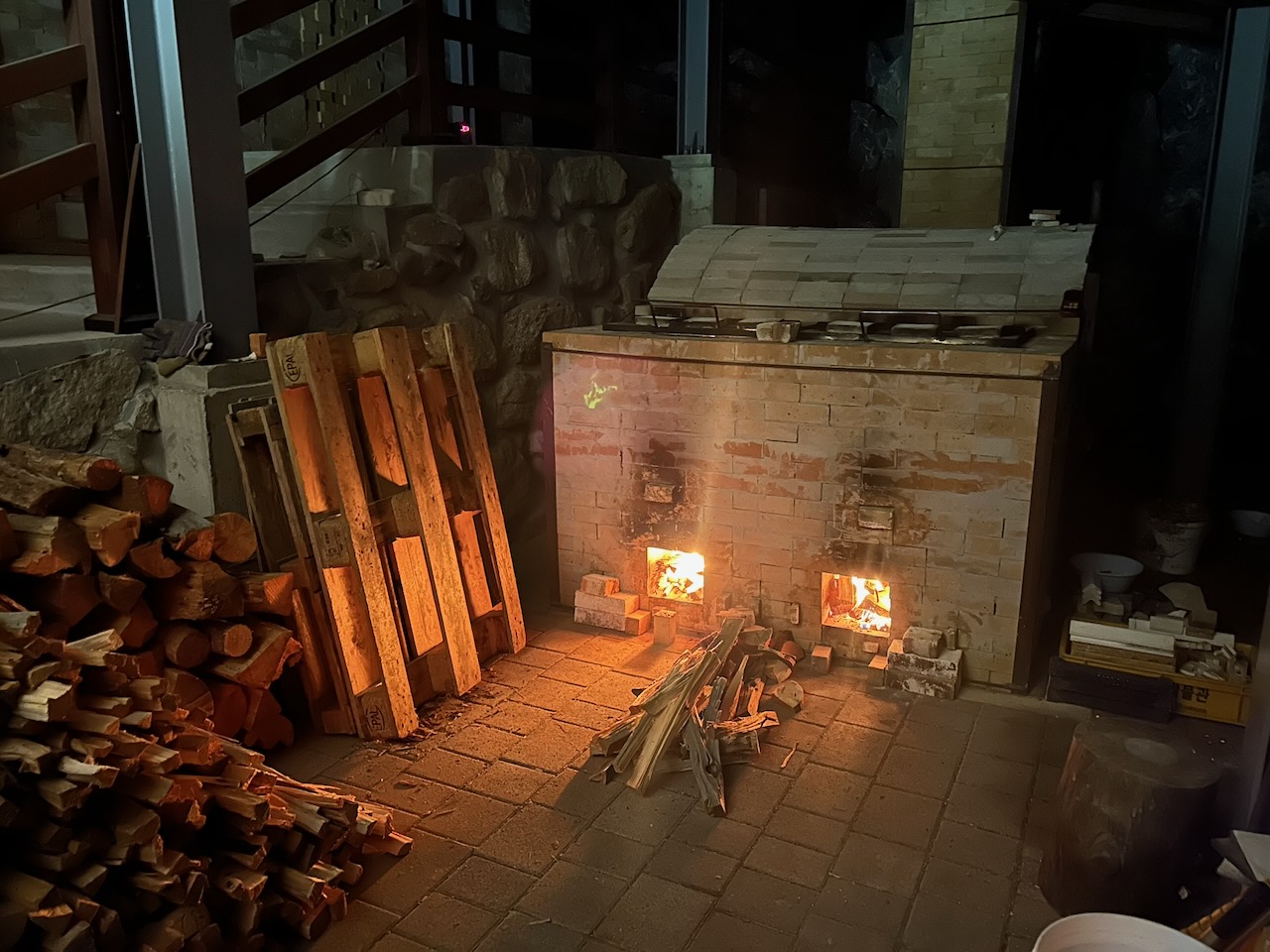
One of the things that I have no control over is the weather. It rained heavily for a lot of the time. The monsoon has arrived! ‘Uji’ in Korean. Luckily, the kiln shed is well built and water proof, as far as it goes, but it’s an open, well ventilated shed. The kiln is situated on the edge of the building and the heavy rain can blow in sideways. There has been some discussion of adding a verandah to this side of the building. It will probably happen in due course, but I dare say that I won’t see it in my lifetime. It will have to be presented into next year’s forward estimates, be considered by the city governors. Proceed through the various stages of process, eventually approved for quotes to be sent out in 2028, then contractors selected, contracts developed and then reconsidered, re-drafted, re-estimated, re-quoted, new contractors selected. Approval granted for fiscal year 2030!
Delays, holdups, bankruptcies, heritage listing investigations, archaeological contingencies. All this just for an awning!
You may laugh. But I was first asked to come here and build this little kiln 8 years ago. Later, I was even sent progress shots of the foundations being dug. But the catastrophic bush fires in 2019, then covid in ’20/’21, and various other events intervened and the kiln was eventually built in 2024. Such is life.
Anyway. I’m here now, in the here and now! Good thing that I began this project in 2016!
Like climbing ladders, it’s the sort of thing that it is not recommended that old, fat, balding, grey haired guys over 60 should be doing. They should know better and get it out of their system in their mid-life-crisis years! However, at 74 I’m still climbing ladders as well as building wood kilns in foreign climes and doing 30 hour wood firings, well past my use-by date. What went wrong?
I have a friend, who I admire enormously, who has only recently given up doing 100 hour wood firings in his mid 70’s, but he did have helpers!
Janine and I usually fire more or less alone, with Janine’s assistance coming and going through the day. We have developed a firing schedule where I start the kiln off at 4:00 am and Janine comes down with some toast and coffee at 8 or 9. We fire through the day and into the evening, through into the night. I have found that I can do a 15 to 18 hour firing this way without missing a nights sleep. Working from early till late, and going to bed on the same day as I woke up, so that I don’t feel ‘wreaked’ the next day. With luck, I can see myself being able to continue potting and wood firing in this way for a long time.
Because these 14 to 18 hr firings are relatively short, compared to what some other well known potters do, there isn’t the kind of ash buildup with the glossy, runny ash glaze, that some people attribute to wood fired pots. So I have developed a range of clay bodies and glazes that look their best in these shorter, and more manageable wood firings. Ideally suited to domestic wares, with colour variation and flashing on the surface. Interestingly, even some of the pots from my friends 100 hour firings, the ones at the very back of the kiln, come out with surfaces not too dissimilar to my 15 hour pots. Only a very well educated eye can tell. Having said all that, the pots at the front of the setting in my short firings do get a lot of ash on them, but that space in the kiln is relatively small in my kiln, so there are not too many of them in my repertoire.

This is a pot from the front of the setting that was in my last firing here of just 14 hrs. This is as much ash as I need to see and deal with in the cleaning of the foot and rim.
I tried 30 and 50 hour firings in my youth, but decided that the returns aesthetically for my kind of domestic pots weren’t worth the bodily wear and tear on me – even then! So this firing is a major effort for me. I can only do it here in this kiln with assistance from some of the other residents. I really need someone to keep me awake through the night. I was fortunate to have a two helpers to look after the kiln for a couple of hours between midnight and 2:00 am. Hours 20 to 22, so that I could have a nap to get me through the night. Thank you!
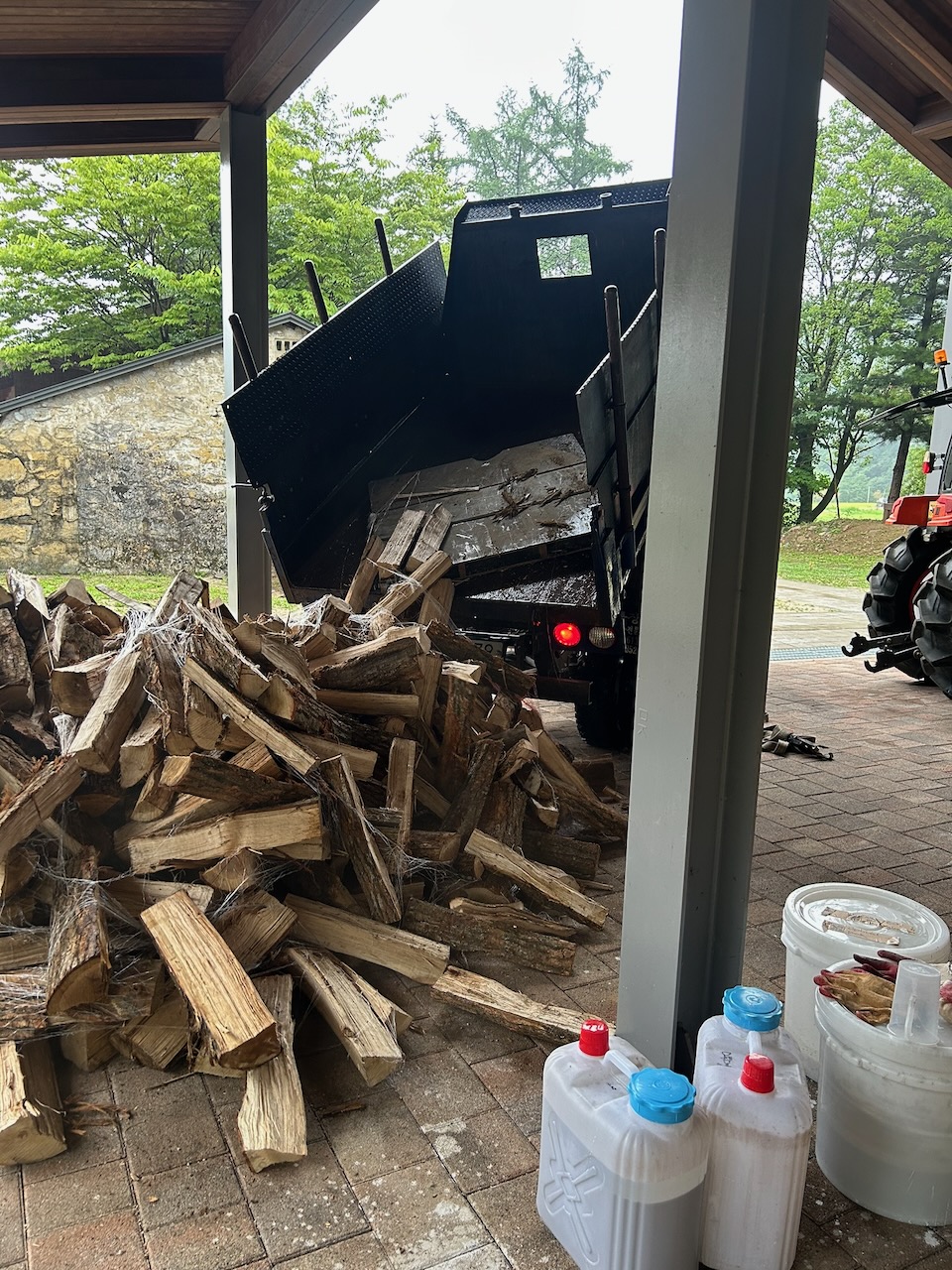
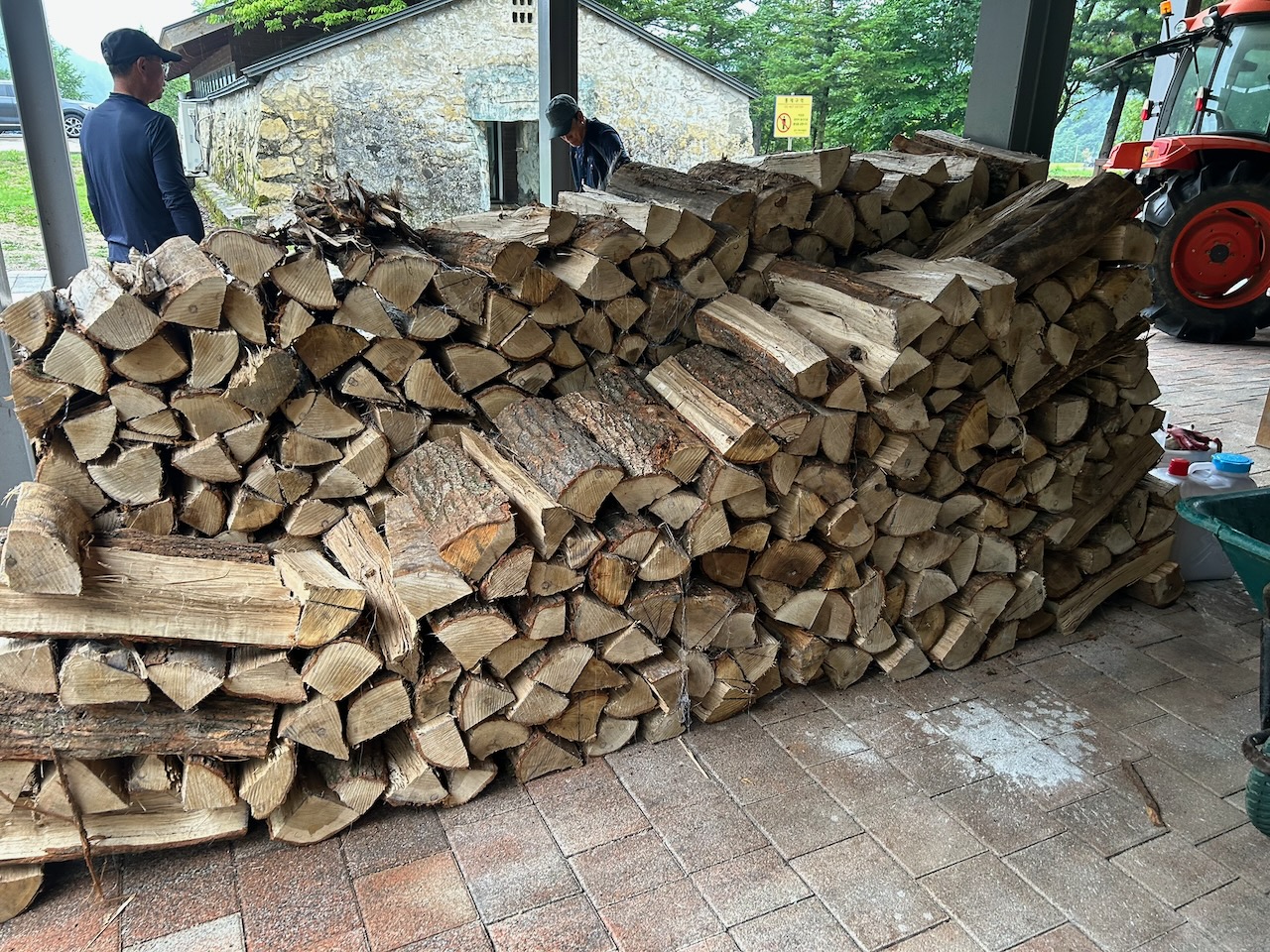
Luckily, the truck load of oak wood turned up just in time. One arrived the day before and another during the firing. It is very fresh! to the point of still have birds sitting on its branches 🙂
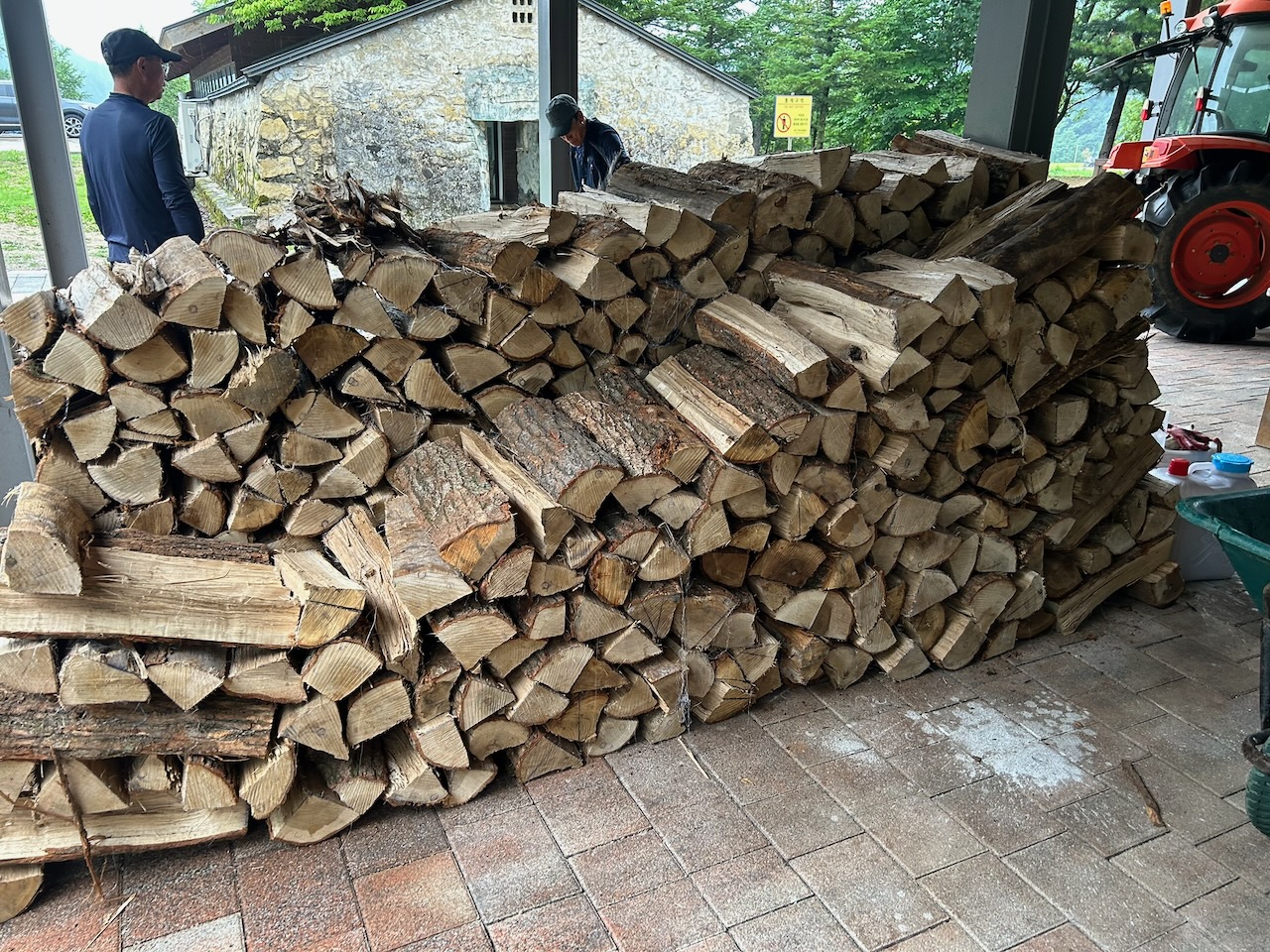
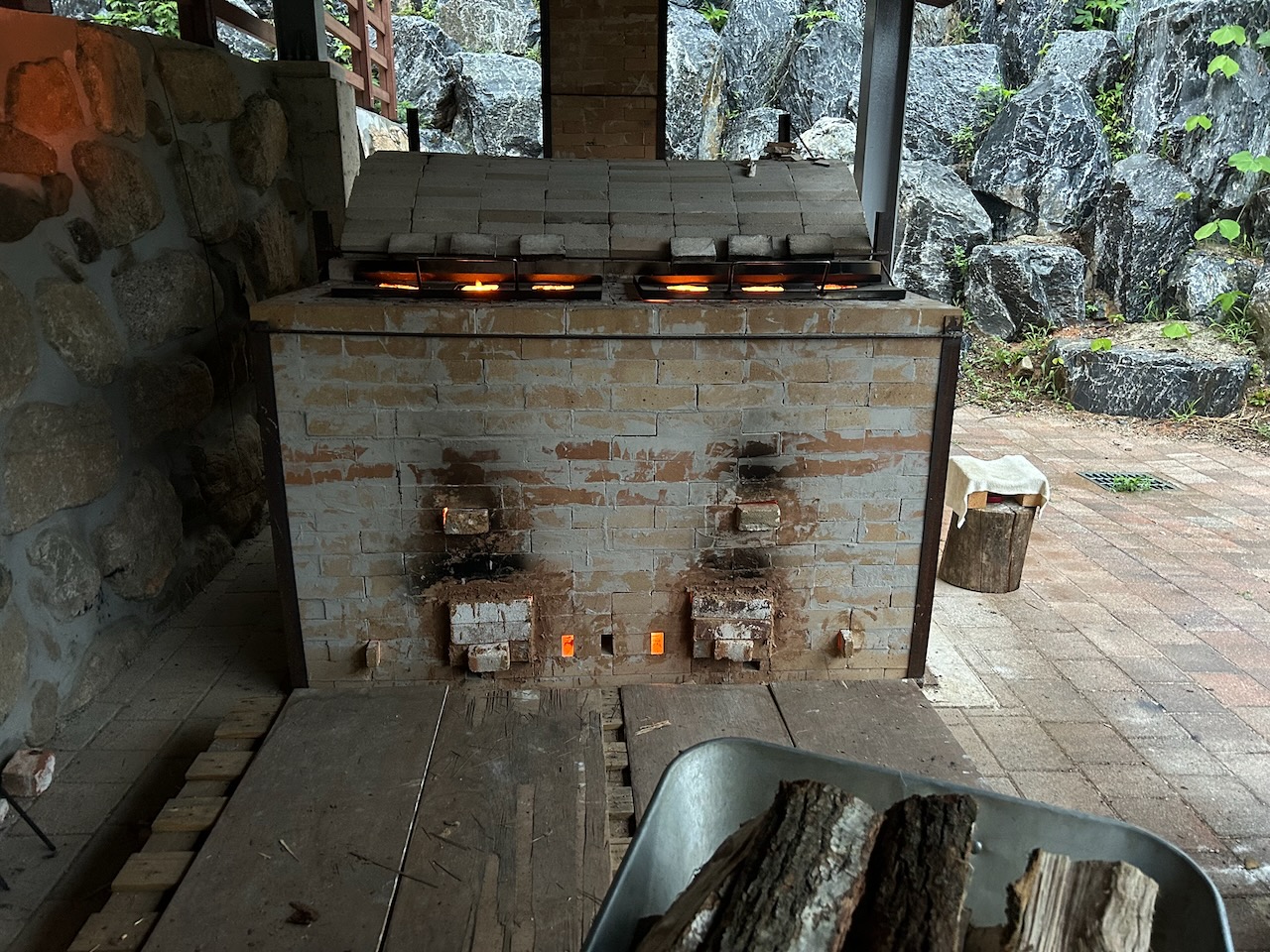
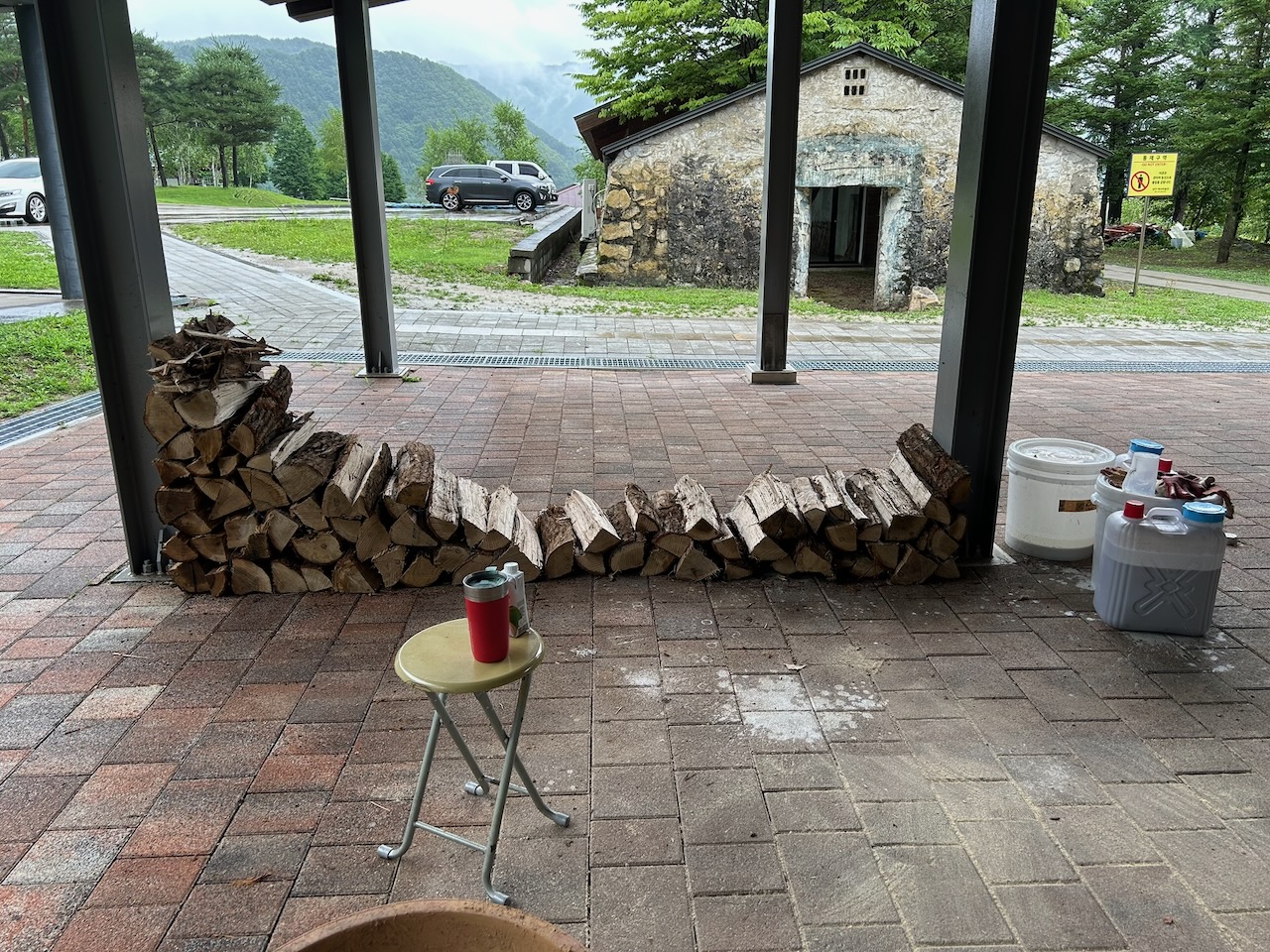
I say luckily, because we ended up using about 2/3 of it. Along with some well seasoned old pine. Blending about 1 to 4 pine to oak. When I tried burning just the oak, it was too slow to burn well. It needed the very flammable pine to keep it burning fiercely. After 1150oC, wet wood isn’t a problem, in fact it is even better for reduced firings.
The chemistry is too complex to deal with here, but in essence, Water dissociates to a hydrogen ion and an OH radical. These both eventually reform, back to water, along the way having cleaned up the atmosphere a little. The energy required to crack the water is such that the fire needs to be above 1100 degrees Centigrade to get a positive return. The chemical action still takes place below this temperature, down to about 800 C, but there is a negative energy return.
Using water vapour to create an energy rich and highly desirable hydrogen gas from carbon monoxide is called the water-gas shift. It takes energy to do the shift, but the return is equal to or greater than the input. from 134 btu per cu. ft. of gas to 156 btu per cu. ft. of gas produced under ideal conditions. Enough! I don’t want to loose readers by boring you with too much reality. One person I spoke to was amazed. Having been told that wood needed to be seasoned and very well dried for up to 5 years before burning in a kiln. And that is true for some wood in some kilns, but it is clearly not universal.
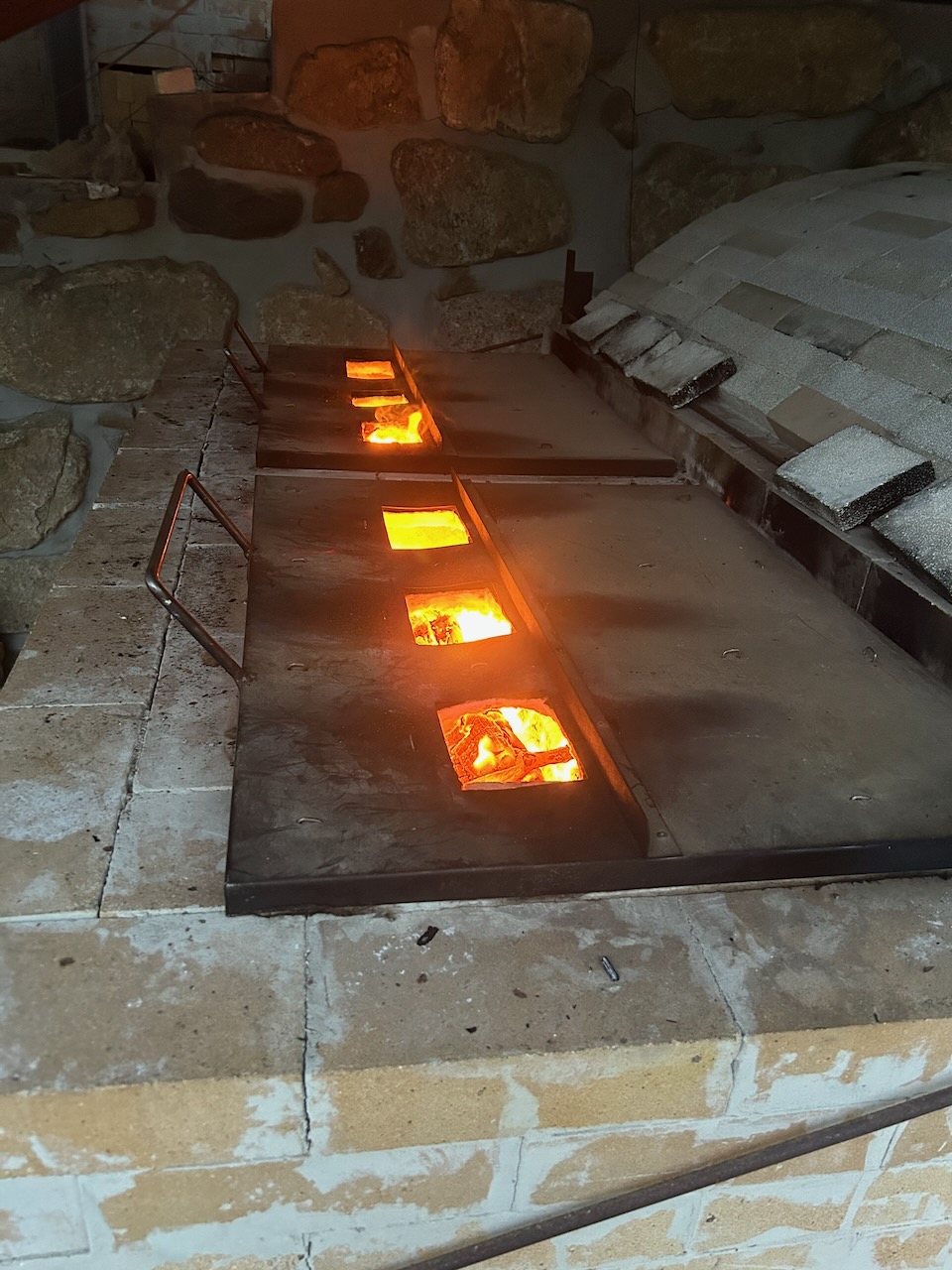
So this truck load of wood was very freshly felled and full of sap, This made it slow to combust until we got it up to 1000oC. Which we did by using a bit of dry pine mixed in. No problem, because I had sorted, split and stacked enough dry pine – just in case – a couple of days before. I was very pleased that the air temperature dropped down with the rain over night and made the conditions more comfortable, although it was quite humid, it was also quite cool. As we only need to stoke the kiln every half hour. There is a lot of sitting around doing very little. I’ve heard it described as ‘Laid Back Wood Firing! in French as ‘Le gran feu au bois sans effort’. and Korean as ‘ Pyeon-anhan jangjagbul piugi’ – relaxed wood firing!
I spent the ‘dull’ time teaching my helpers some chemistry and physics – in disguise of course! I made it invisible and more palatable by dressing it up as anecdotes about growing a forest and my choice of fuel, stoking, identifying atmosphere, pitfalls of temperature measurement and glaze colour development. I don’t think that they noticed. Notes were taken, kiln logs recorded, references ‘googled’, images examined and techniques demonstrated. The time passed quicker and I stayed awake. Everyone wins.
The kiln at full fire in reduction. No one can tell! I’m very pleased about that. Silent and clean.
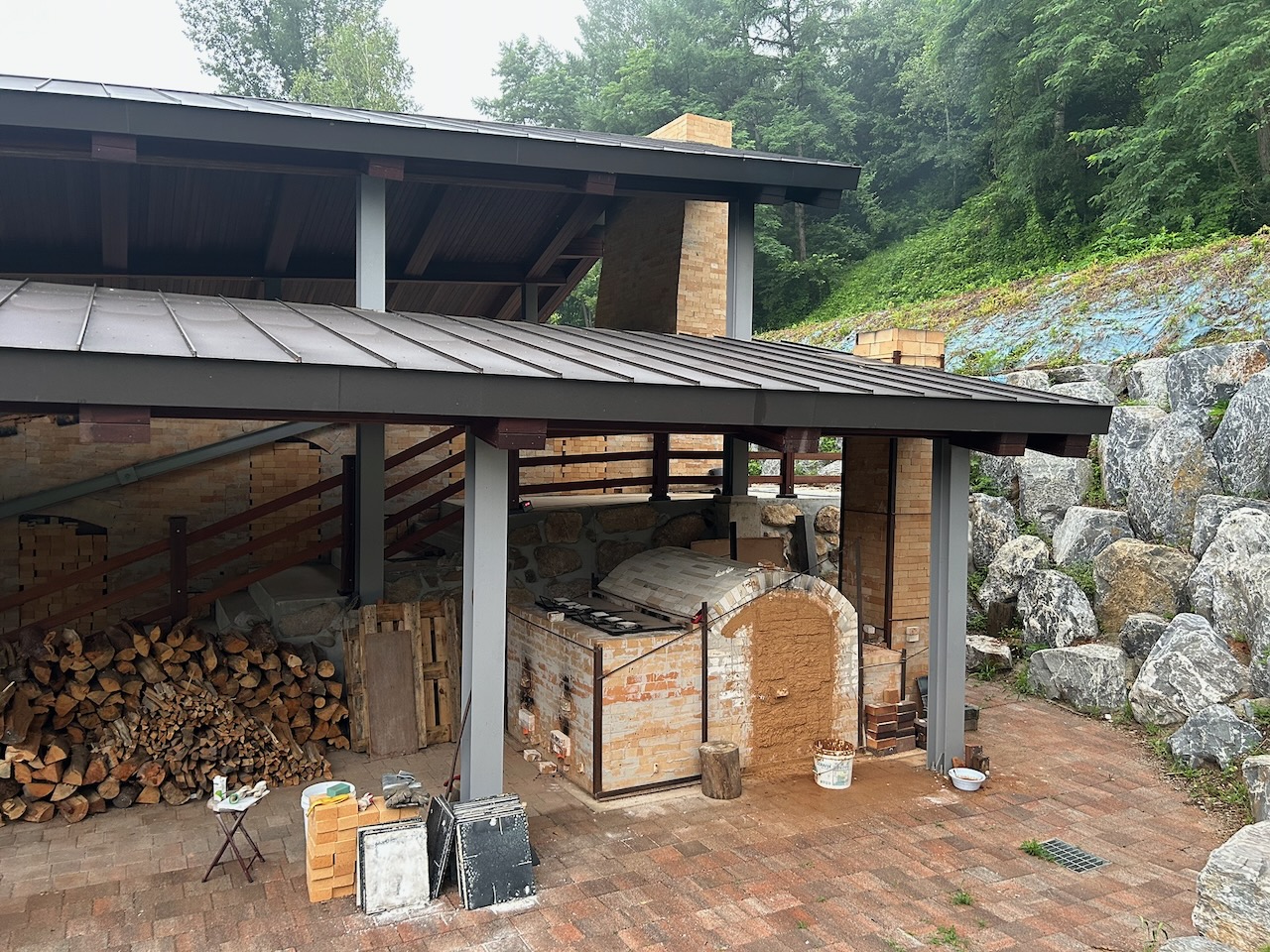
We fired through the night with the rain until 10 am. Then amazingly, it cleared up for us, just in time to get back down to the residence for a well earned shower and some desperately needed sleep.


You must be logged in to post a comment.