
I am desperately trying to keep away from the kiln while it is cooling. I have recently been asked to give a lecture about my life’s work in ceramics to the students at Seoul University. The professor is interested in my unusual DIY, organic, self-reliant, ecological approach to ceramics. Apparently, it’s the road less travelled here, and I can see why. Having spoken to all of the recent and current residents here, plus staff members, it’s almost impossible to conceive of what Janine and I do. Almost everyone lives in high rise apartments. There is no ‘spare’ space to put a potters wheel or a hand-building table, never mind a pug mill or re-cycling bucket and plaster tub for drying. As for a kiln! ?
So I’m not too sure what I can offer these students, other than an exotic glimpse into an almost impossible to conceive foreign world. Will it be useful to them? Showing them something that they can probably never achieve? Maybe they wouldn’t even want to live like this? Perhaps I can inspire them to live as sustainably as possible, within their societal limits? I’ve been told that I’m a phenomenological ecologist. Wow! I can’t even spell that, never mind be it. It sounds difficult!
Apparently I’m someone who explores the meaning and significance of my lived experience without trying to explain it?
I looked it up, and am no more the wiser. I read that Martin Heidegger proposed that truths are contextually situated and dependent on the historical, cultural and social context in which they emerge. That seems fair enough to me. Why not? The only other thing I know about Martin Heidegger is that he was a boozy beggar who could think you under the table! That is according to Bruce from the University of Woolloomooloo (who was also in charge of the sheep dip). The Philosophers Song in Monty Python! if you have lived on another planet, and don’t know it. Try googling it. It’s very funny.
Am I a phenomenological ecologist, or ecological phenomenologist? And there was me thinking that I was just living an honest life with good intent, and minimal disruption to the natural rhythms of nature, using home grown and hand collected materials from my local environment, to make my creative living as gently as possible. I call it being a Potter and Post Modern Peasant!
I have in the past, described myself and what I’m interested in, as being a gardener, potter, artist, a conservationist, practicing minimal consumption. ie making everything that I can by myself using home grown, or found materials and recycled stuff. I try to live like this, quietly, and without being a nuisance or being obsessively annoying.
For instance;
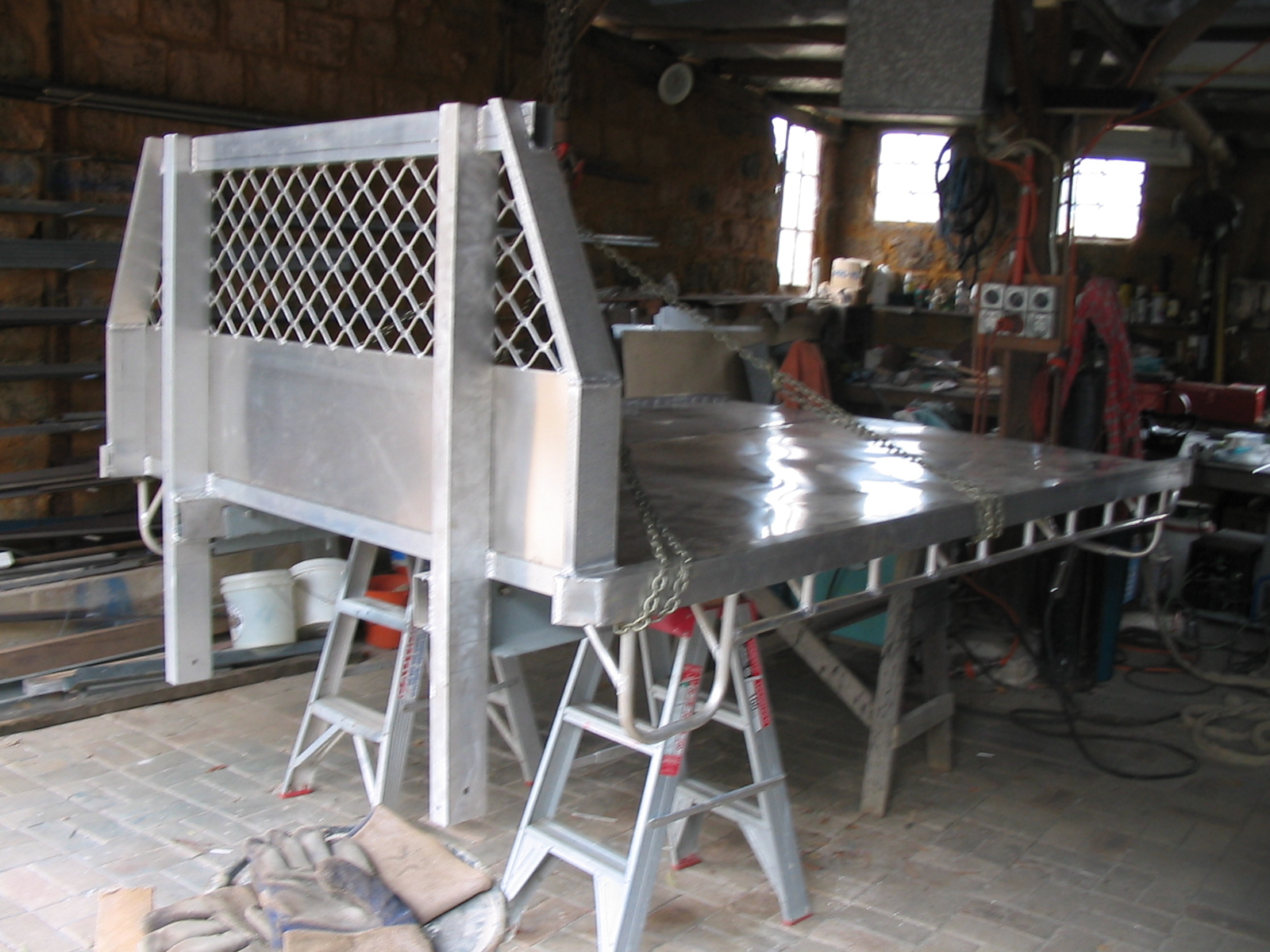
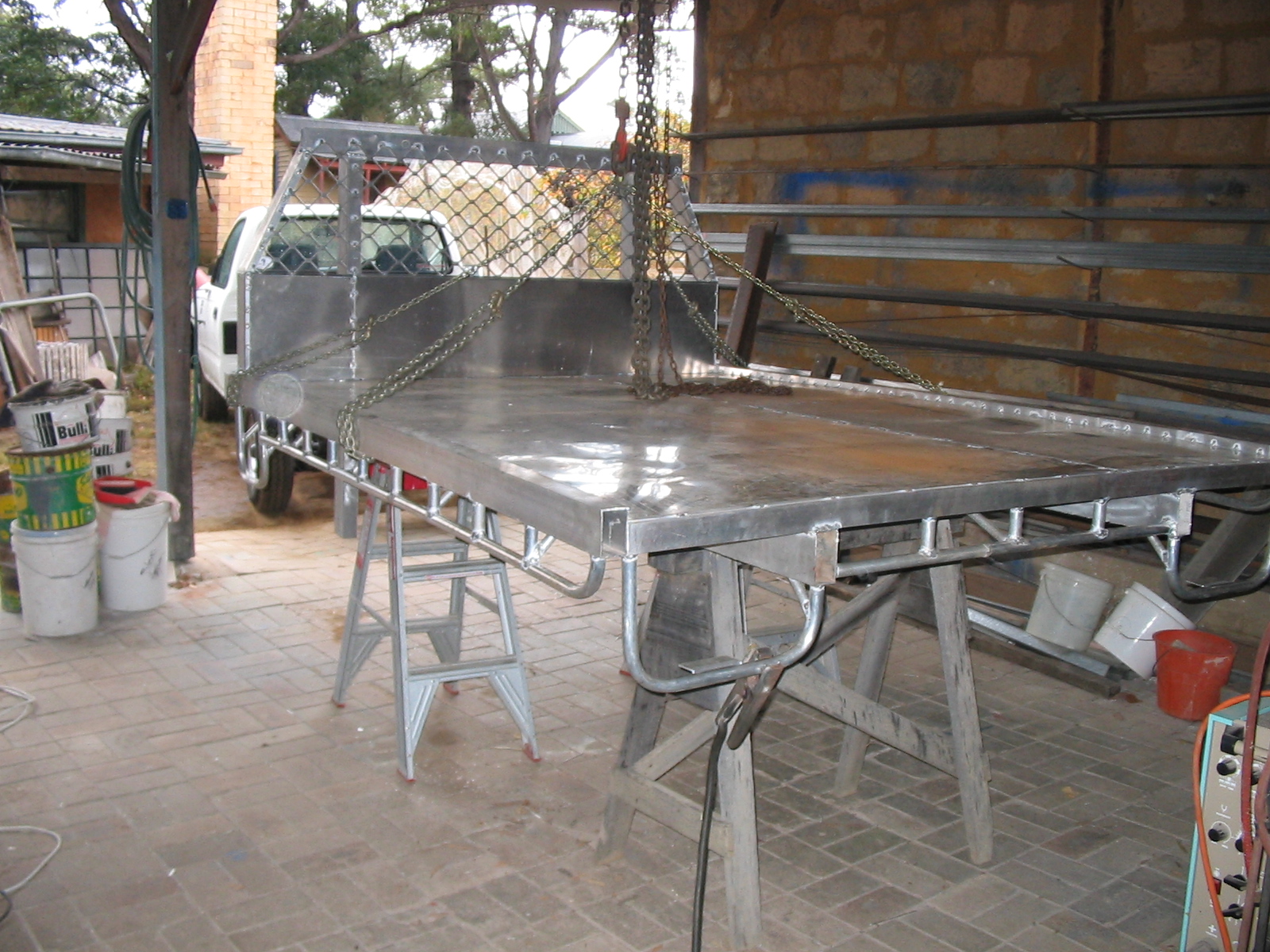
I built my own truck body, by myself, from recycled aluminium. It’s isn’t maybe the best truck body, but it is very strong and has proven durable over the past 22 years of use, and still going strong. I made it almost entirely from re-cycled aluminium off-cuts, that I had collected and stored for such a possibility. I think that it is an almost invisible triumph of creative re-cycling. No one thinks of a truck body as being sexy or even interesting, let alone being environmentally friendly. It all depends on its historical, cultural and social context. However, it exists and only Janine and I know its meaning and history. When I die, it will probably go to the wreckers, unsung!
I re-built our new pottery studio after the fire using steel rather than wood. A strange choice you might think for a conservationist? But as the last 3 workshops have burnt down in fires, which is a total waste of the world’s resources. I decided that steel, although energy intensive and polluting in its creation, will be longer lasting in the long run than wood and is also endlessly recyclable. In an effort to minimise my carbon foot print with this steel studio, I only used new steel in the frame, to comply with council and engineering regulations, and used all recycled steel roofing sheets to clad and line the building, taking a year to collect and sort all the steel. The excess that I had over after the building was completed, I gave to my friend Andy, so that he could build his wife’s studio, and so it goes around. All good outcomes. There is also an added benefit of using recycled iron. It can have a very beautiful patina of age about it. Something that the Japanese Zen Buddhists have words for, but which doesn’t translate easily into English. Words like ‘wabi sabi’. ‘The beauty of imperfection’. or ‘the nostalgia of age’.
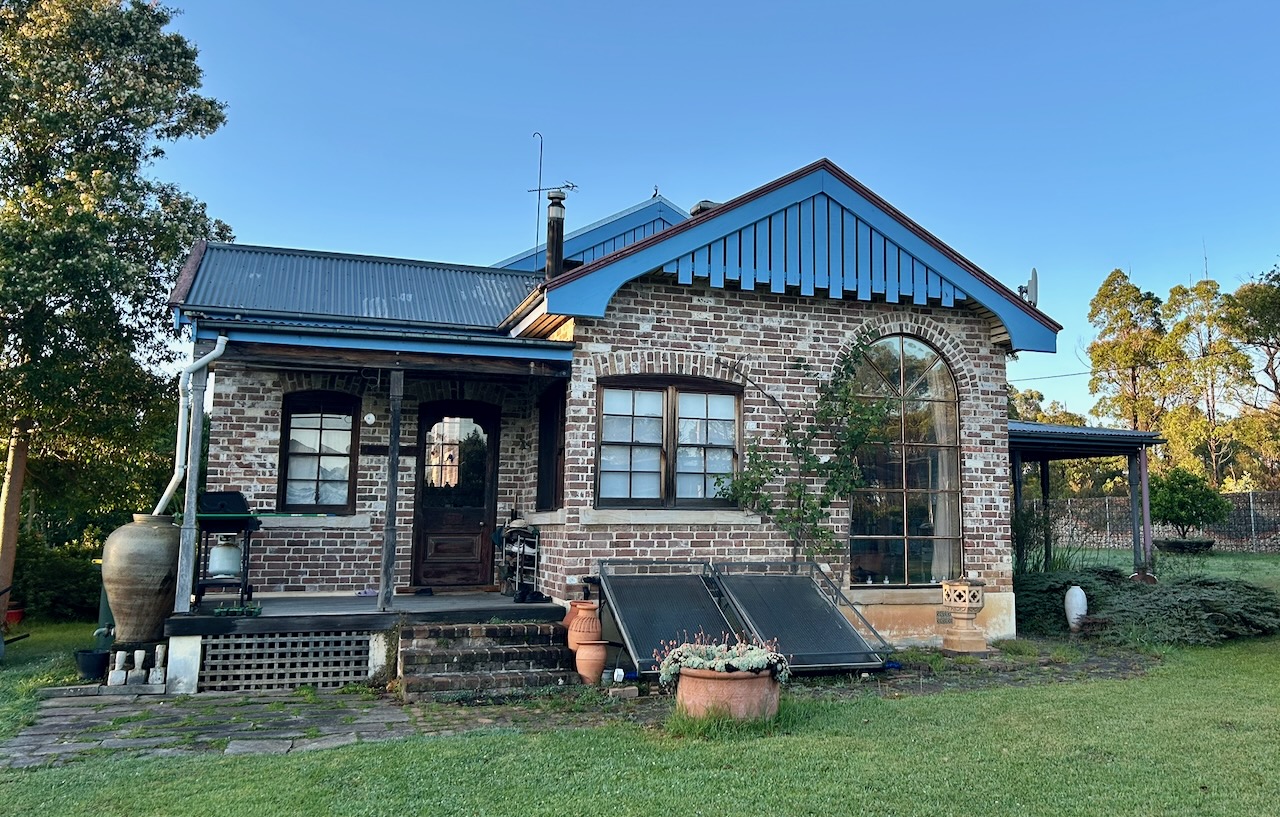
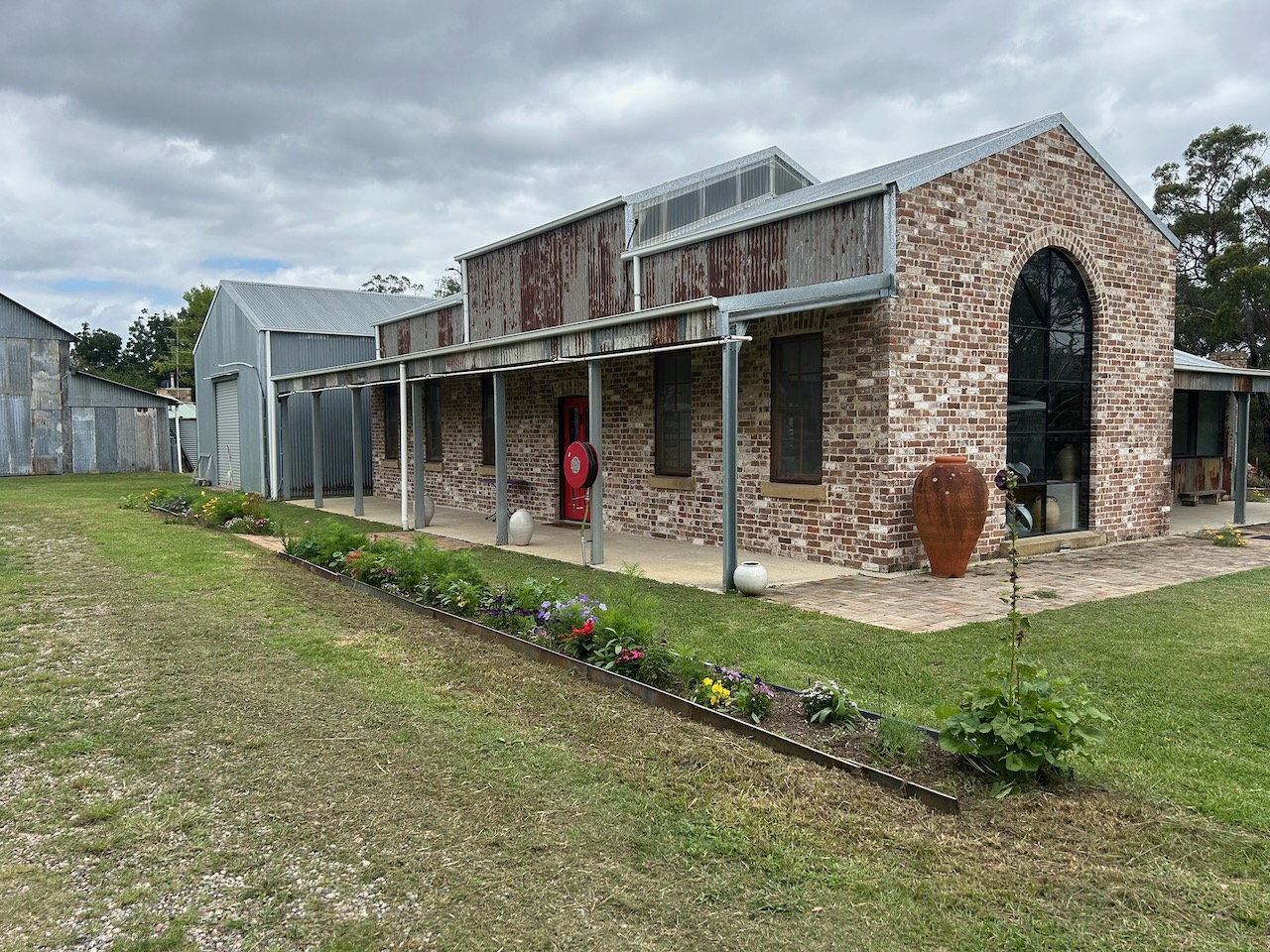
We also used the recycled bricks that we collected from demolishing the old Mittagong railway station, built in the 1880’s from hand made, local, sandstock bricks. We built our house from these and the left over bricks from that project were used to clad the West facing facade of the new pottery to make it even more fire resistant. It also had the effect of uniting the two buildings, the house and the pottery, aesthetically. That and the use of the big arched window in the facing facades.
I have made all my own kitchen chairs and tables from home grown trees from our land, and lined the new pottery studio room with timber boards that we grew and milled, on site. After seasoning for a year, Janine and I planed and sanded them smooth before making the lining boards and also all the cupboards and shelving in the gallery. These trees were burnt in the fire and would have been destroyed, if we hadn’t intervened and saved them for a new life as furniture and lining. It was an expensive exercise, but cheaper than buying plantation wood, which is environmentally destructive. So win win.


We spent some time, making and seasoning our own red hardwood floor boards for the house, as well as the windows, french doors. Also the ceramic tiles for the kitchen, laundry and bathroom, as well as all the roofing trusses. It took a few years, but cost very little and allowed us to have a mortgage free home at the end that was not just sustainably built, but aesthetically unique and very beautiful.
One distinctive feature of our house is the big arch window in the kitchen. It would have cost an arm and a leg to have it custom made in the local window factory, but I made it myself over a few months for the cost of the wood and glass, still expensive to me, at the time, or so it seemed, until I met the window factory forewoman, who came to the pottery to buy some pots and enquired where the window was made. She was surprised that it was home made, and told me that it would have cost many thousands of dollars if she had made it. However, she hastily added that she wouldn’t have made such a good job of it, as to cut costs in the factory, she would have taken the fast track and routed the arch curve out of straight pieces of wood. Whereas I had steamed and bent each piece of the arch before glue-lamming it all together. The true craftsmanship way. That window is still working well after 40 years, and has recently just been given an up-grade when we installed double-glazed panes into the frame.
So in the end, a house like this would cost in the millions of dollars, but we did it on money saved from our part time job wages. ie, next to nothing, but with hundreds of hours of labour. I think that the house is the biggest artwork that we have created?
Phenomenological ecologist, or ecological phenomenologist? I don’t know! I’m far too busy being me and making a frugal living in a small, quiet, unimportant life, creating things that I think are both beautiful and meaningful, as well as growing my own food and creatively recycling. What more is there?
Thinking about how I will present myself and what I do over a 2 hour lecture at Seoul University has kept me busy. I’m thinking powerpoint with some add-libbed descriptions of my process? Even then, writing about all this stuff that I don’t really understand, that is to say that I haven’t planned my life, it has just happened in this way, but that is because of the very deliberate choices that I made at each turn and with each opportunity. Flexibly directing my life along this creative road less travelled.
Anyway, It has successfully kept me away from the cooling kiln for another day. I did go up to the site, to cart and stack some dry pine from the wood store to the kiln site for the next firing. I made use of a break in the rain for a couple of hours, I’m glad that I did, as it is hammering down again now, and I needed the exercise.
So now, although I’m no wiser. Still just me. I am not at the kiln scratching at the door bricks to get an early peek. Tomorrow is make or brake day. Will there be any work worth showing? I’m hoping for poetry – as long as it isn’t doggerel!
Please not doggerel. I’m hoping for something more akin to haiku. Deeply meaningful whilst also being elegant and restrained.
However, elegance and restraint are contextually situated and dependent on the historical, cultural and social context in which they emerge from the kiln?


You must be logged in to post a comment.