
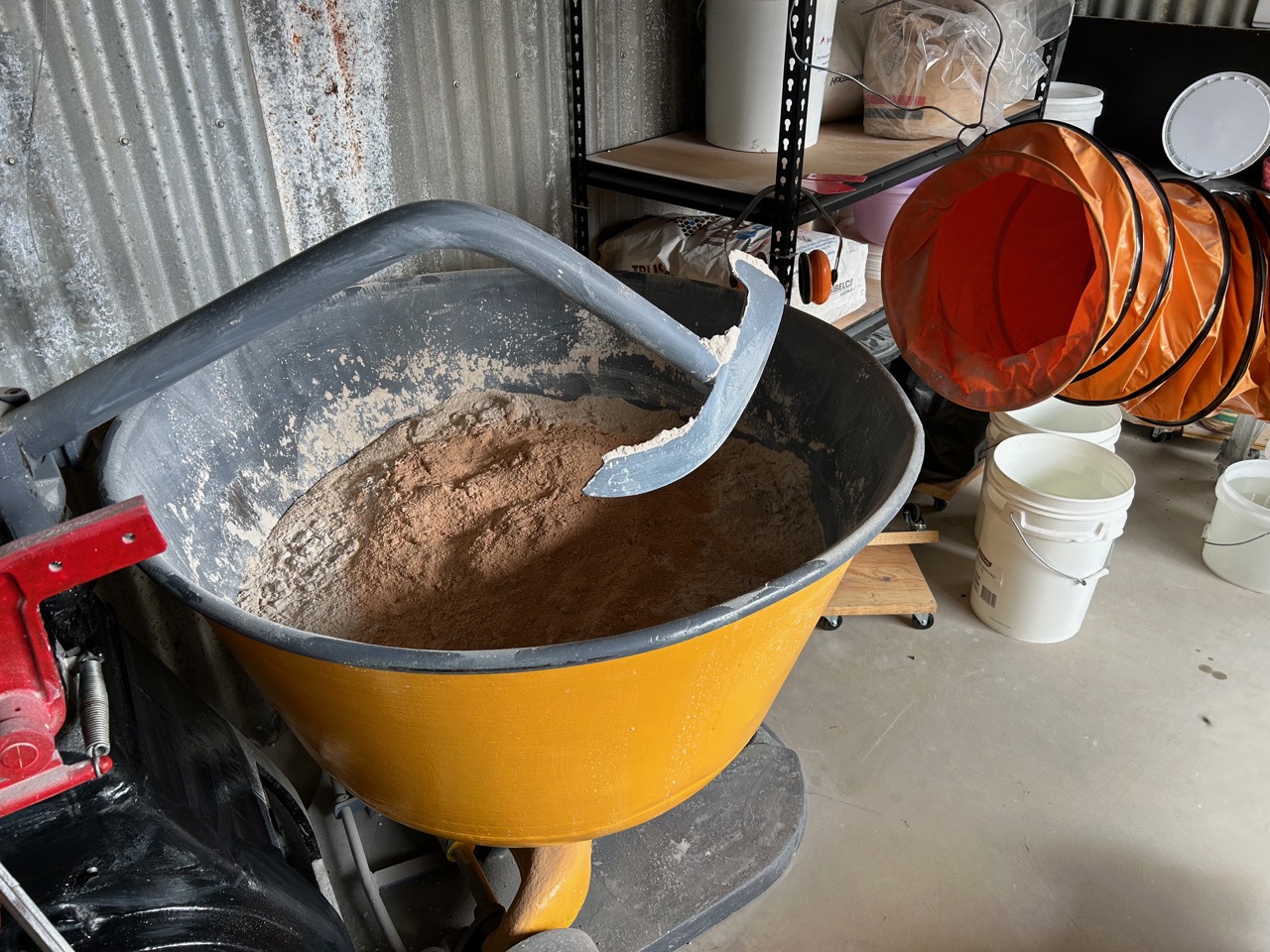
We’ve been busy in the clay making shed loading up the dough mixer with more clay mixtures for the coming throwing weekend workshops booked for the 26th and 27th of this month. This time I made up a single batch each of vitreous white stoneware/porcelaneous body and a batch of coarse, wood firing, stoneware body using local rough crushed shale with both pale and brown kaolin powders.

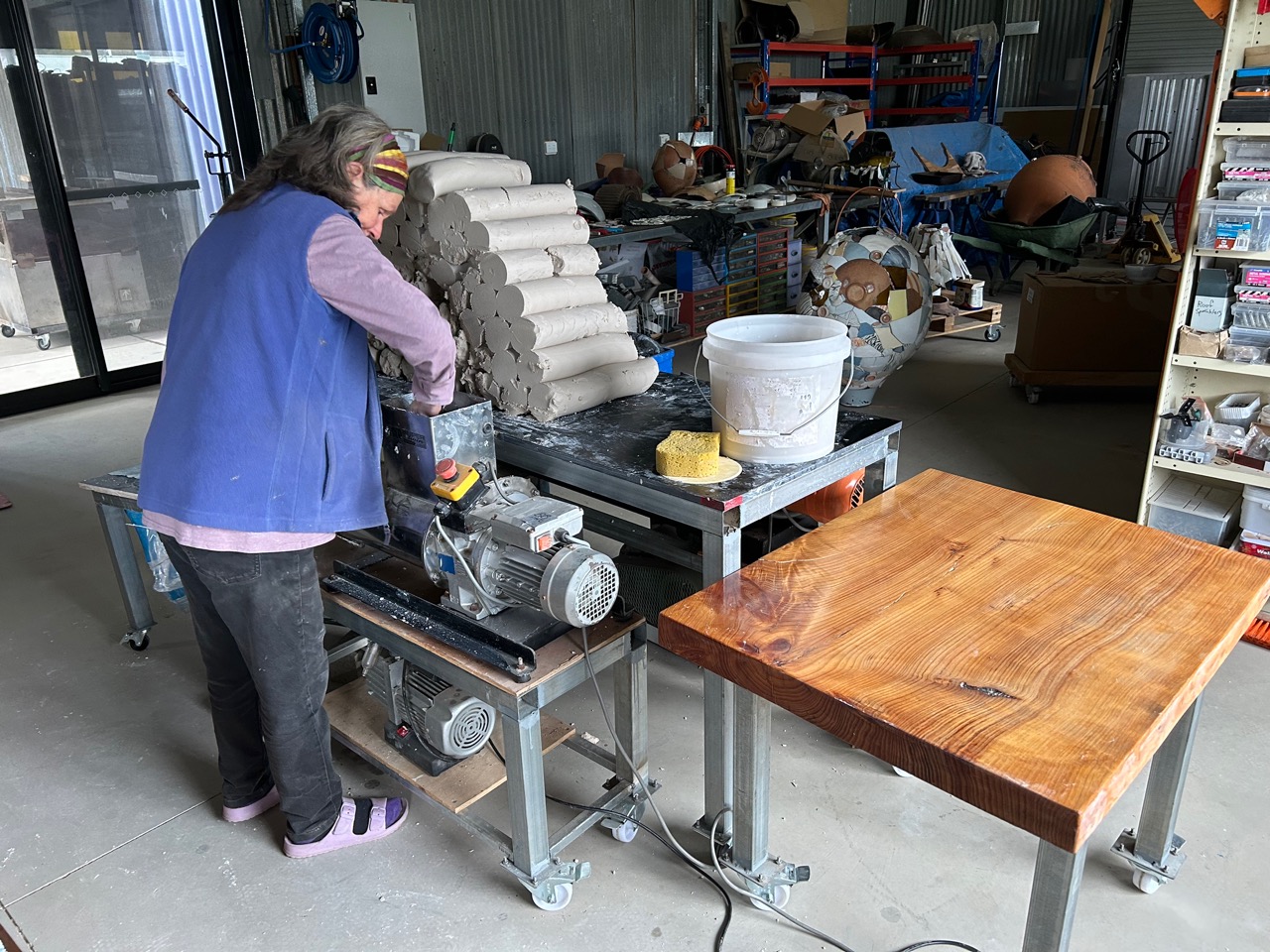

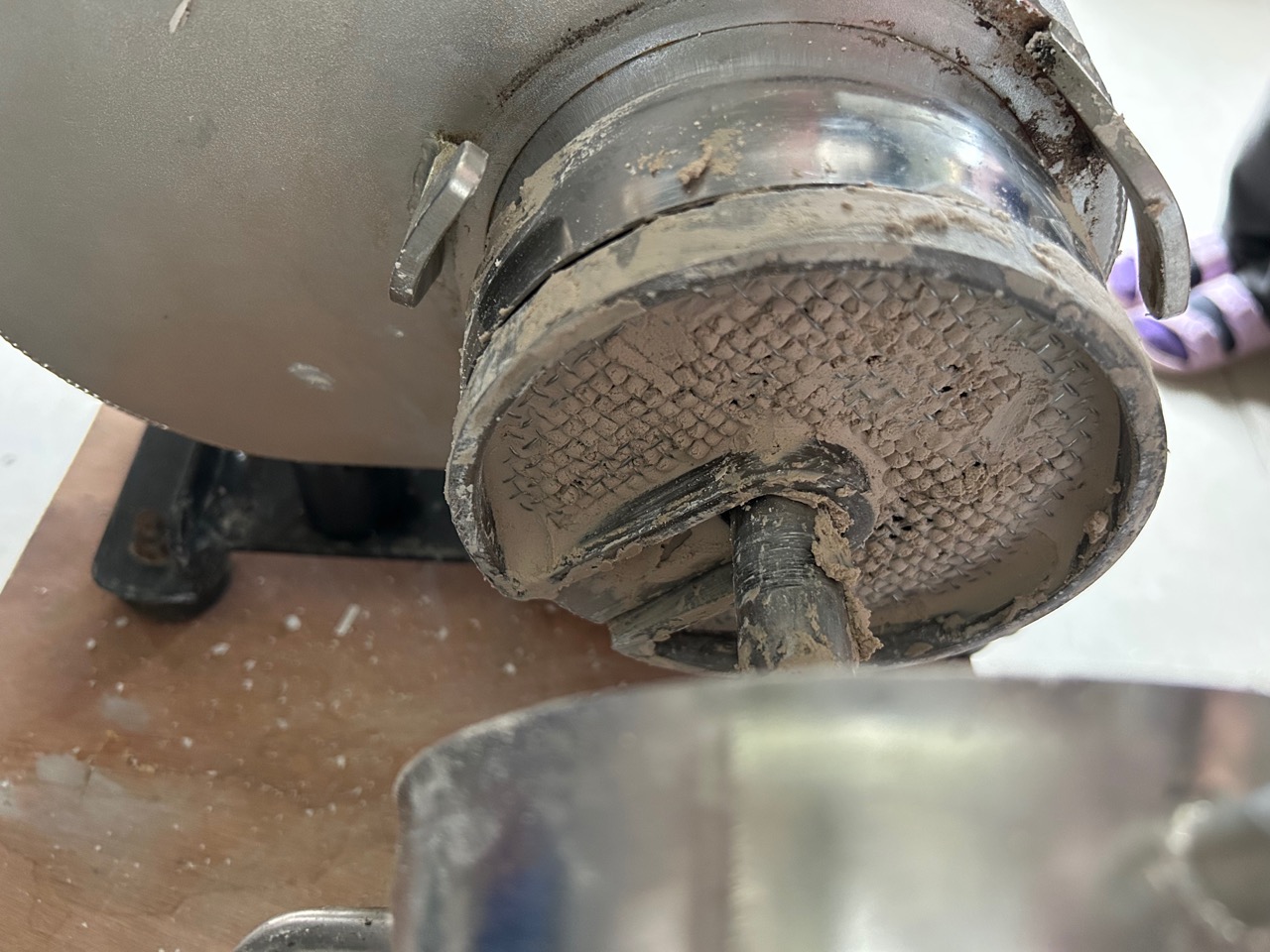
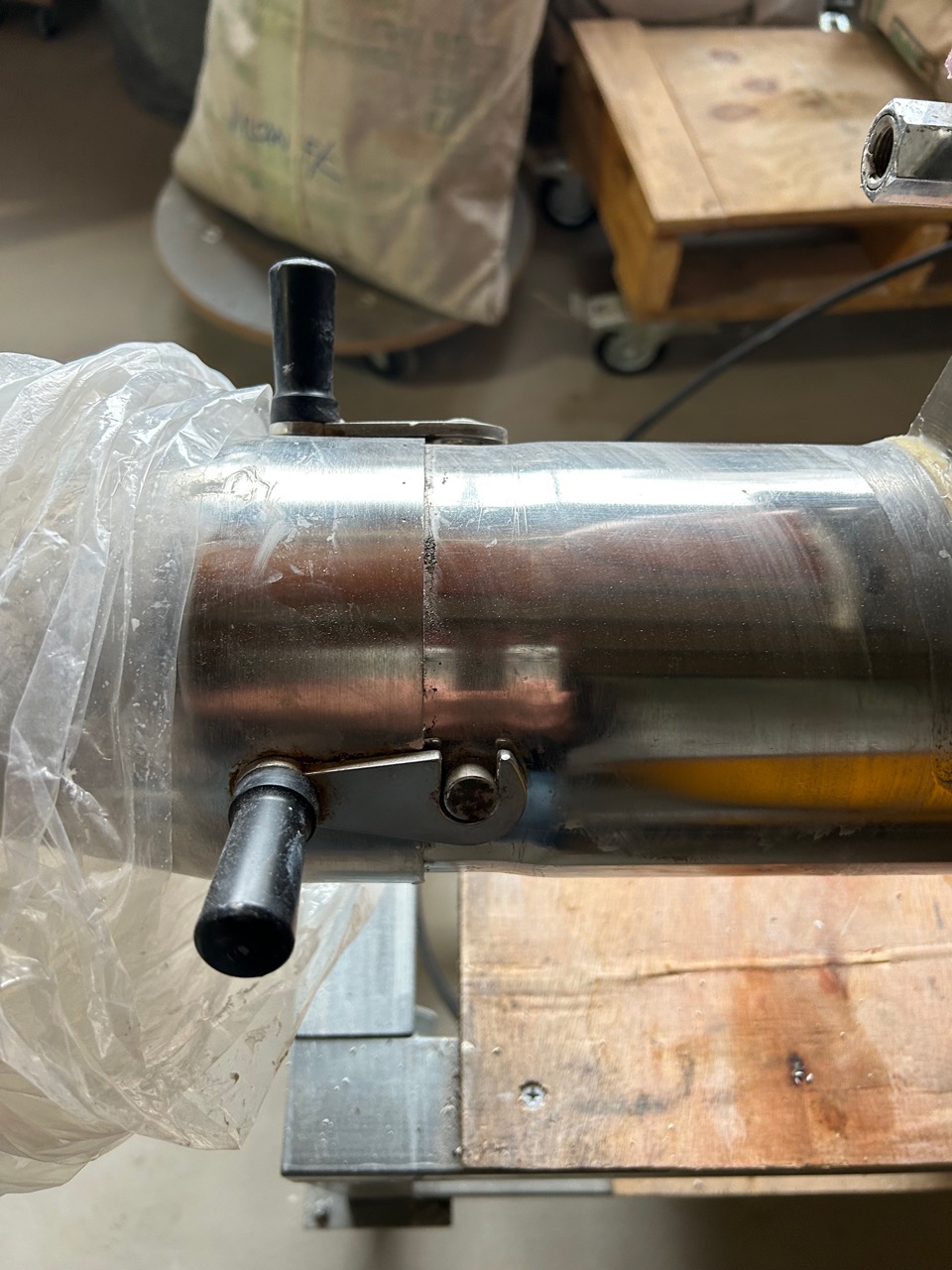

We use the stainless steel twin auger Venco pug mill that I bought 2nd hand. It’s only small with a 3”, or 75mm dia, extrusion, but it is so quick, very quiet and self feeding.
We started by recycling all the slaked and stiffened turnings from the last batch that had been sitting in the clay box ageing and waiting for the next pugging session.
Over the few months since I used it last, the clay had dried out a little in places in the barrel. Which was a little bit strange, as I had the pug mill pretty well sealed at both ends, but some of the clay dried out enough to be too firm to pass through the vacuum screen. It jammed in the screen mesh and slowed down the pugging significantly, so I had to pull the pug to bits and clean the screen. No problem! The beautiful feature of this pug mill, is that it only takes 60 seconds to rotate and un-clip the barrel, then lift it off to get to the screen. It’s so quick and easy with no bolts or spanners required. I scraped the screen clean and replaced it in 2 mins and back in business. Amazing!
The next batch of coarse textured wood firing clay was put through the dough mixer and the Venco 4” or 100 mm. dia. vacuum pug mill. This pug mill is fitted with coarse mesh vacuum screens, specifically for making clay bodies like this.
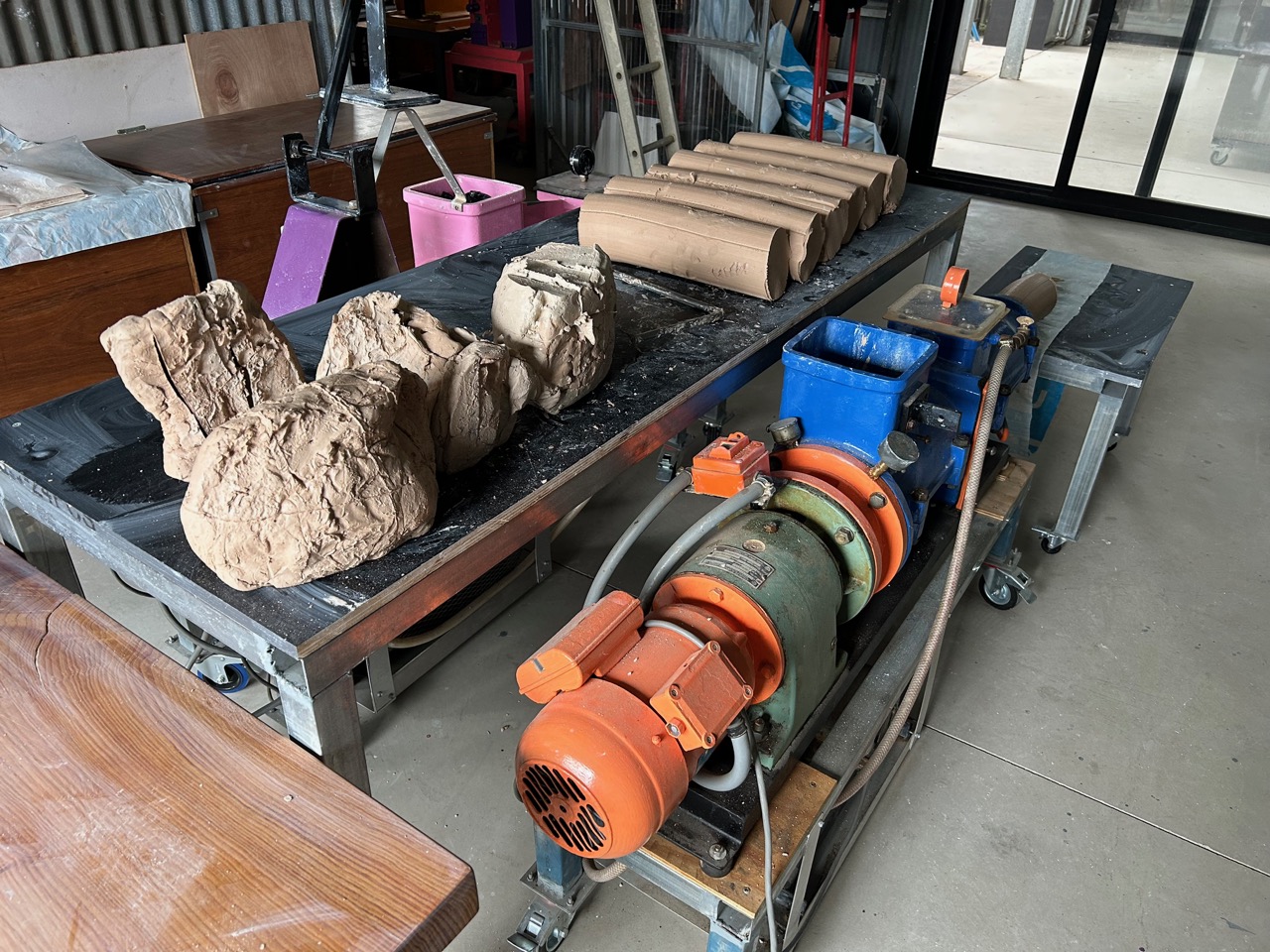
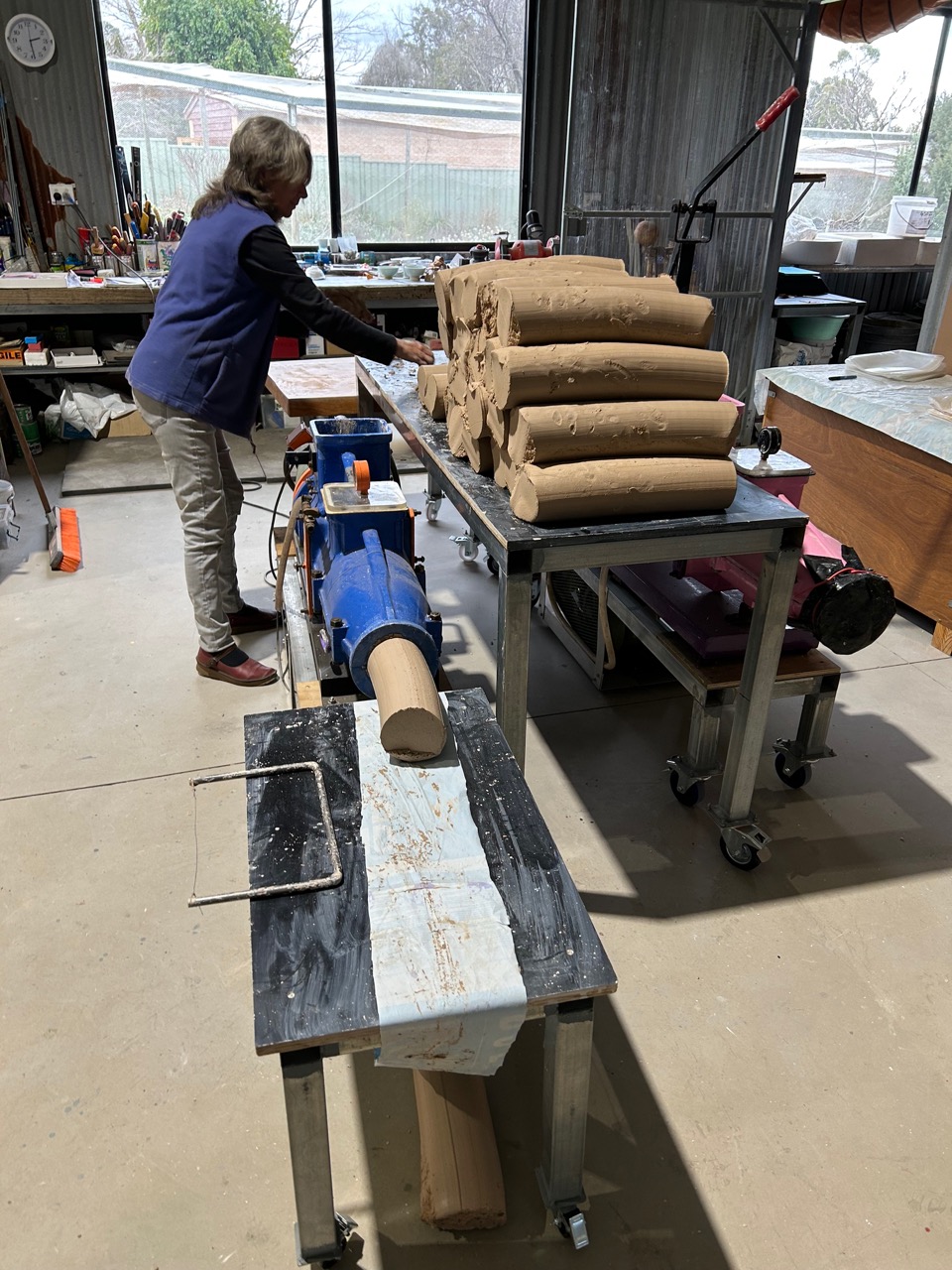
We start off by pugging all the recycled turnings from the last throwing session. These have been wet processed, bagged and then stored in the clay boxes waiting for the next pugging session with this mill. By having different pug mills for each different clay body. It saves so much time in not having to clean out the pug mill before changing clays. The recycled turnings also benefit by the time spent ageing in the clay box, increasing in plasticity over time. The new batch of clay is loaded onto the mobile clay table and wheeled out of the isolated and dust extracted mixer room, then wheeled out to the pug mill area. Janine can then start to pug the clay in a clean, dust free environment, while I return to the clay mixer room and start another batch.
The recycled clay and the new batch are then pugged together to get a good mix. But most importantly, all the pugged clay is stacked in a long stack on the pug mill bench and when full, all the ends of every pug of clay are all cut off and mixed together, and fed back through the pug mill, so that there is a little bit of every part of the new batch and all the turnings all aggregated in the new sausage of clay as it comes from the pug. This thrice pugged and well blended clay is then bagged and back into the clay store ready for use. This double processing and blending eliminates any variation between the first and last pugs of clay from that mix.
It doesn’t eliminate any mistakes in the weighing out or the dough mixing, but it minimizes the possibilities. Life is what it is.
Nothing is perfect, nothing is ever finished and nothing lasts for ever.



All the machines are built on trollies or castors, so that once all the clay is bagged and stored away, I can then wheel all the machinery out of the way and mop the floor clean of any spilt fragments of clay, dropped while pugging. The whole area is opened up to a through breeze, and thoroughly wet cleaned and mopped, then allowed to dry, before the machinery is wheeled back into place.
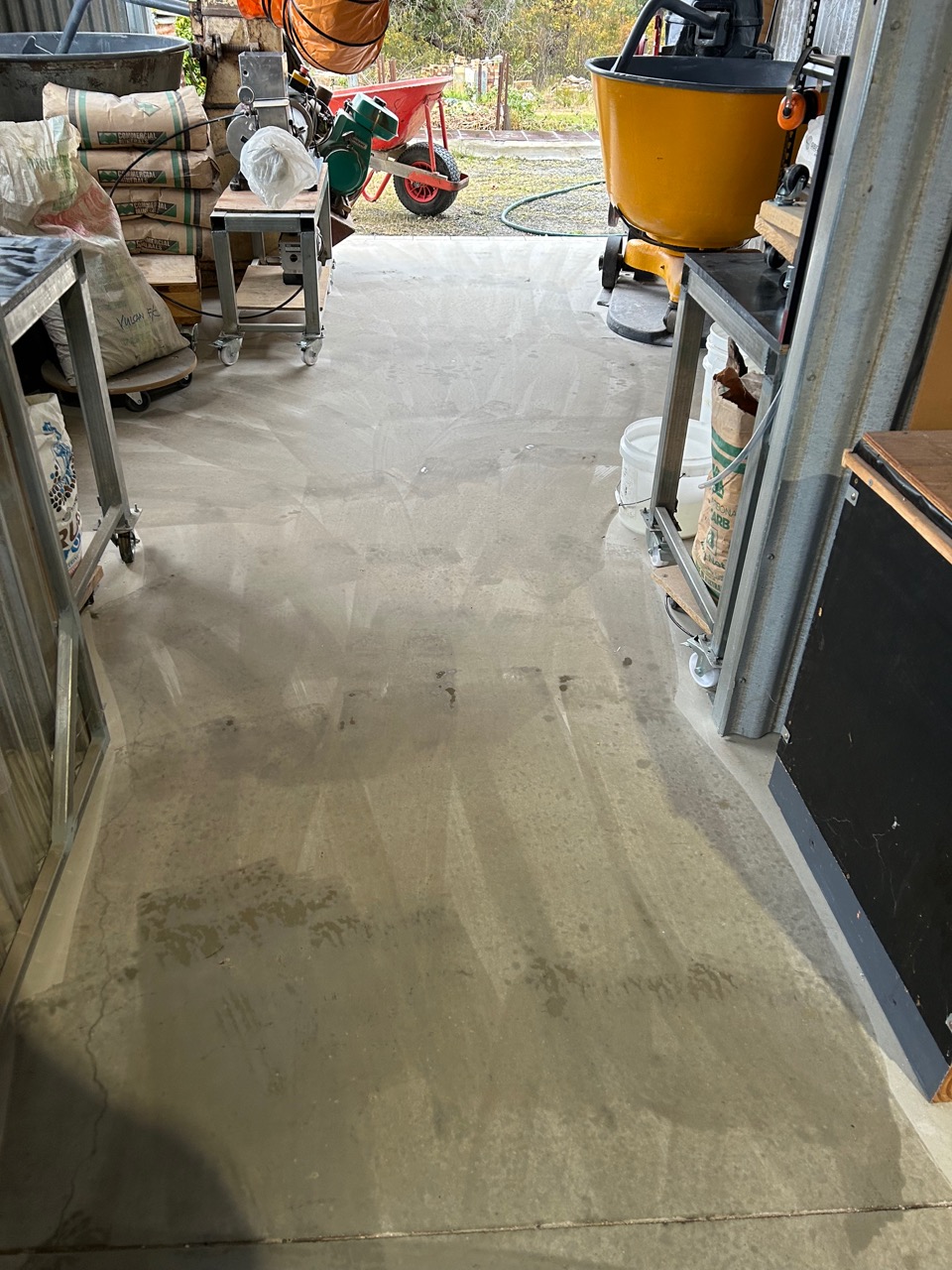
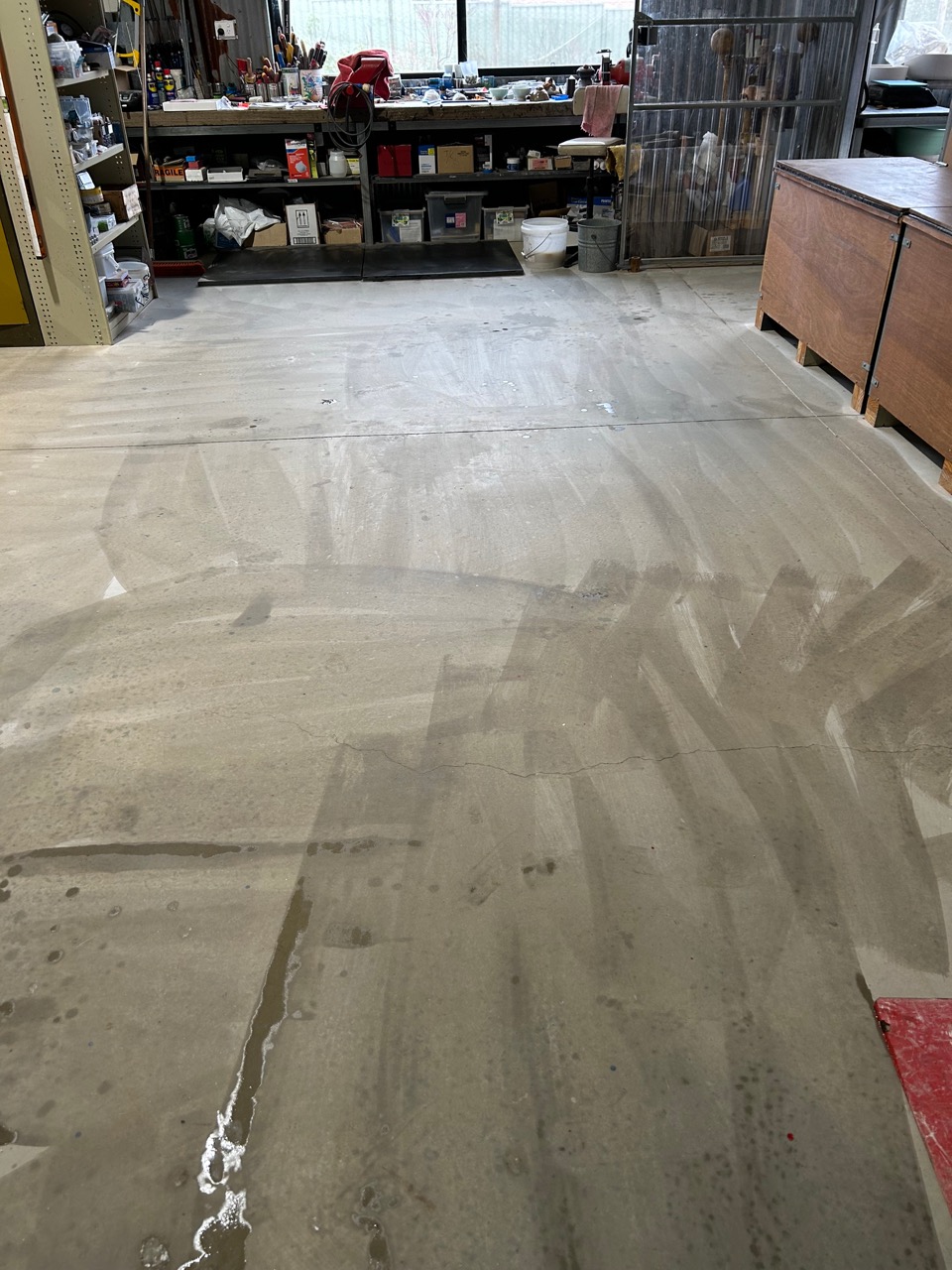
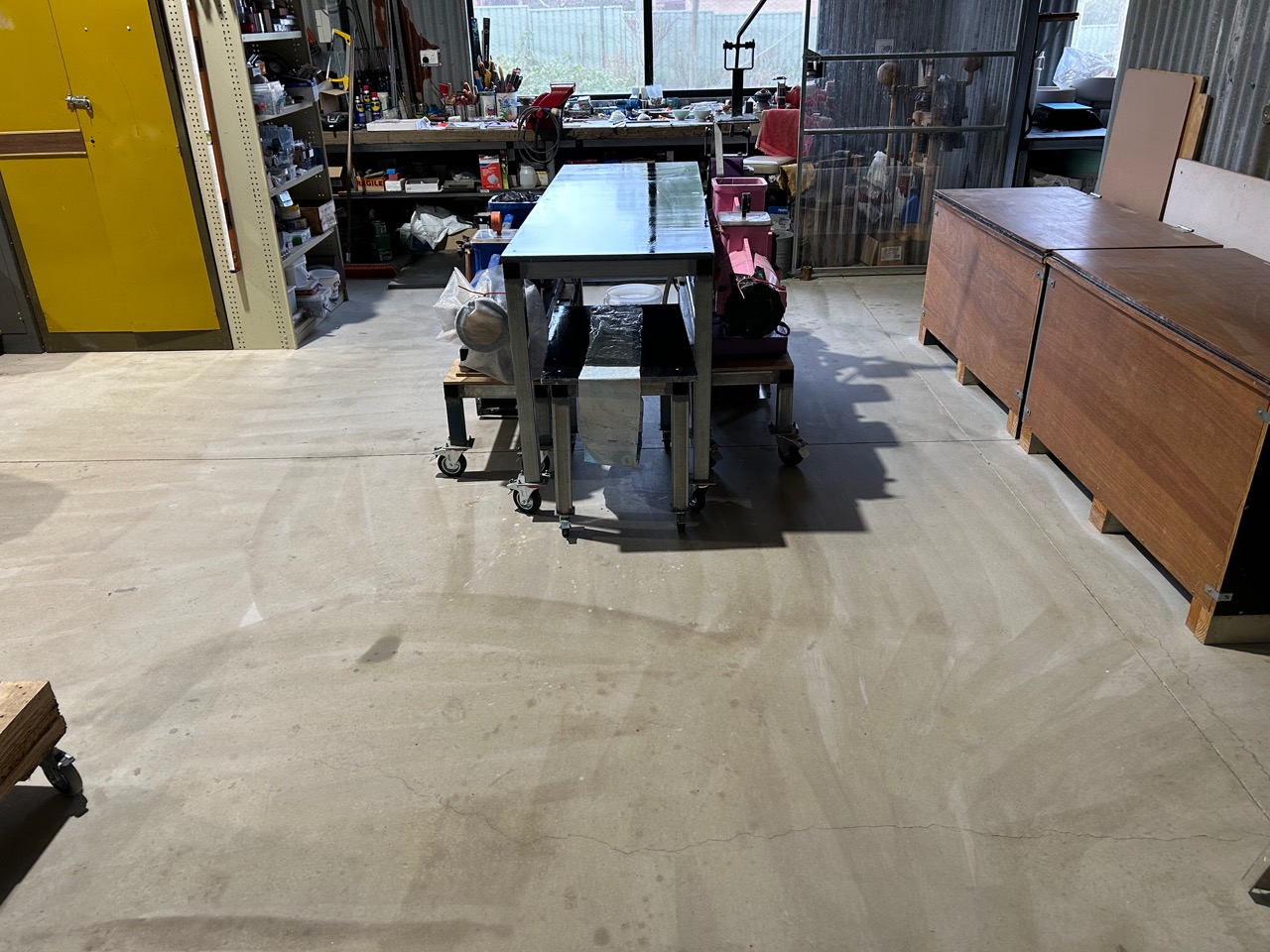
It’s not perfect, nothing is, but it is very good and the best that I can do at the moment using the machines that I could get my hands on 2nd hand at the time, and others donated from friends. You know who you are! I thank you from the bottom of my heart for your support and thoughtful kindness!
 Tonight my Fingers Smell of Garlic
You must be logged in to post a comment.