
We have just completed another weekend workshop. This time on the topic of throwing. Moving on from rock glazes to wheel work.
I advertised one weekend and filled the next weekend as well. We also have a waiting list for a third weekend, which, if we fill it will need to be at the end of this month on the 23rd/24th, as all other weekends are fully booked.
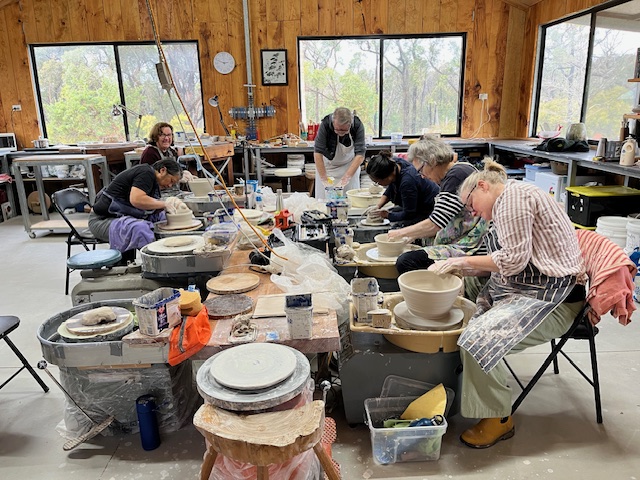
These images taken by Janine king
We have 12 potters wheels in the pottery now. 3 kick wheels, that no-one except Janine and I know how to use. They are quite simply the best way to make beautiful sensitive pots, in a slow gentle mindful way. But no one seems interested to learn about them. However, we have had 2 students over the past series of workshops that have had a go on them. AND, I believe enjoyed it! They made some beautiful pots on them.
We also have 9 Japanese shimpo electric wheels. Electric wheels are what everybody is used to using. When I did my apprenticeship with a Japanese potter. I had to learn to use the Japanese ‘shimpo’ style wheel. I’d never seen one before. I had to get used to sitting cross-legged on the workshop floor, with the wheel sunken below floor level. It was a difficult thing to learn as a 20 year old who wasn’t used to sitting and working cross-legged. However, I did develop an appreciation of the compact nature of the shimpo wheel design and the quality of the engineering.
We have one from every series of the shimpo wheels that they have produced, from the 1960’s through to the 2020’s. (RK 1, 2, and 3). One of the older shimpos is a bit worse for wear and difficult to use, so that is my demonstration wheel. That leaves 8 good ones for student use. So we can enrol 8 students in each throwing workshop.
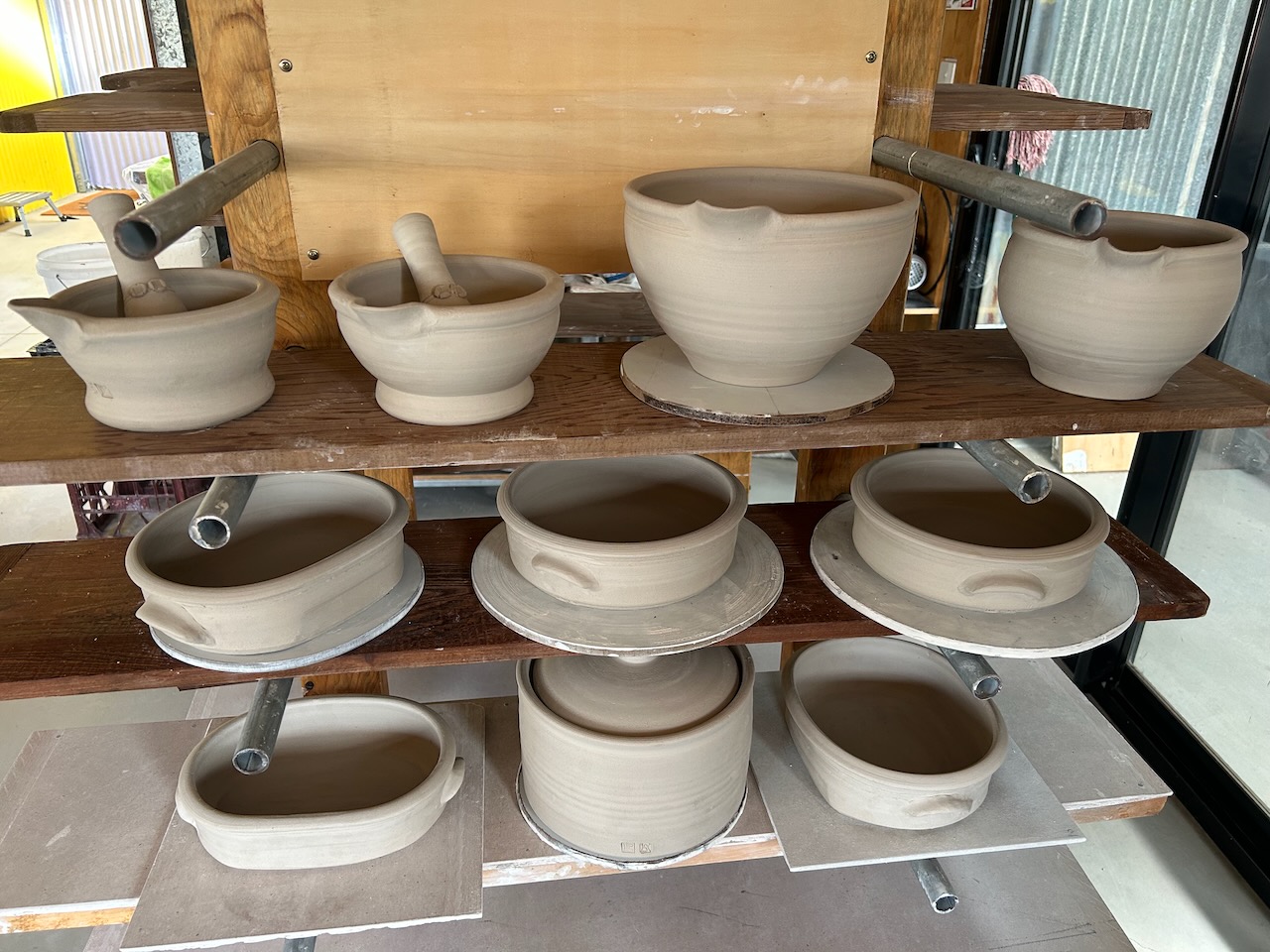
This series of workshops is based on the topic of kitchen wares, baking dishes, mixing bowls and mortars and pestles, etc.
I demonstrated making both round and rectangular baking dishes, by cutting out sections and hand-building the pot back together again in the new ‘squared-off’ shape. The simplest method is to cut a single ‘leaf’ shaped hole in the centre of the dish. I call this the ‘melanoma’ cut. As it’s the cut of choice for skin cancer surgeons when removing melanomas. This is simple, neat and easy, but it creates the greatest stress in the bottom of the dish. This method has given me the most grief with cracking during drying. But it does give you a very elegant, long narrow dish, excellent for baking a whole fish!
A more successful method, from my experience, is to make two cuts, one on either side of the pot and push the sides in to fill the void. The ‘amphora’, or balanced cut. This creates a lot less stress in the body of the dish, and is therefore less prone to cracking and is more successful. The most successful and least stressful, is simply to squeeze to pot together between two blocks of wood, and then smooth out and flatten to rumpled base inside. All good techniques, worth practising.
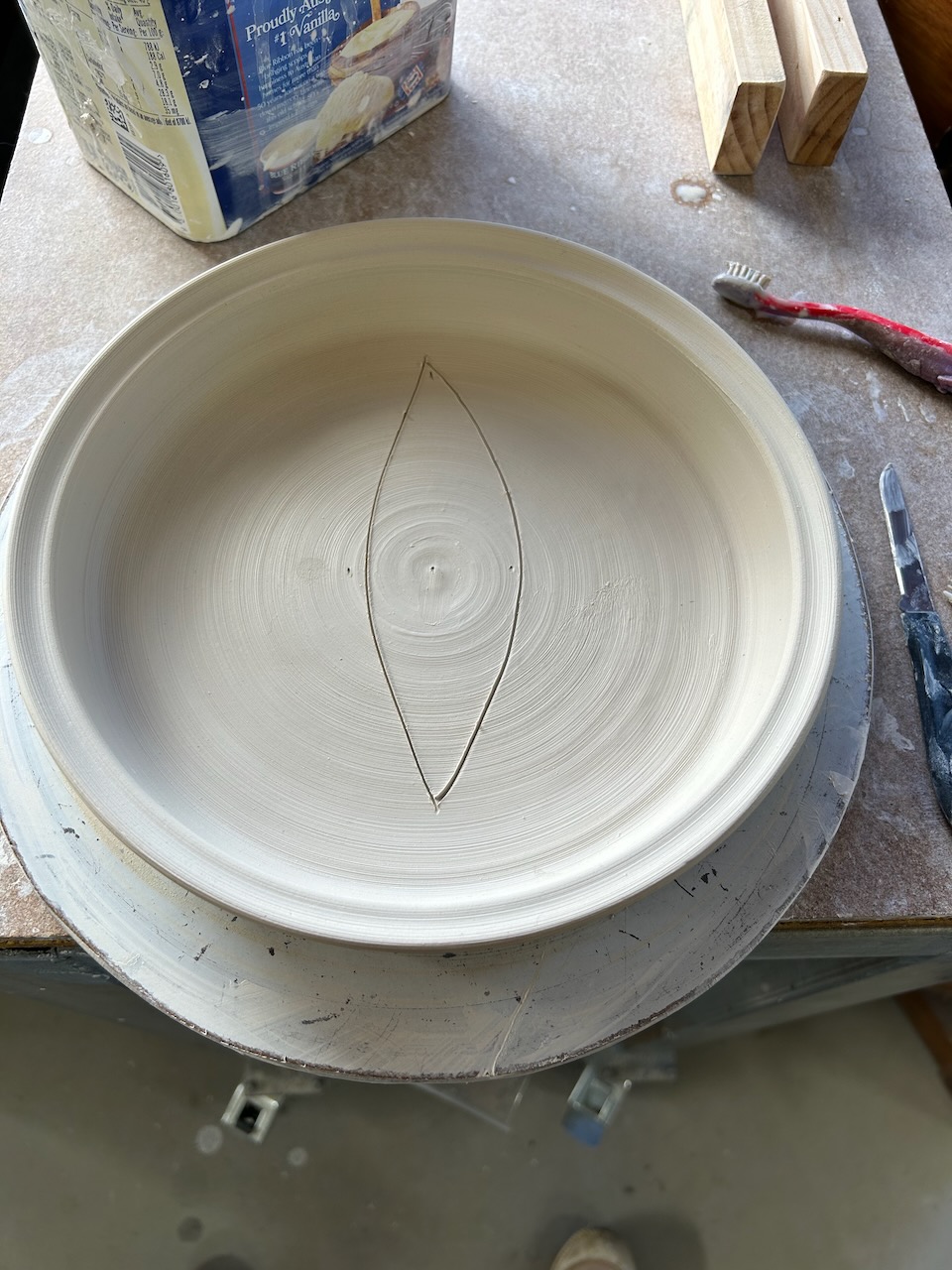
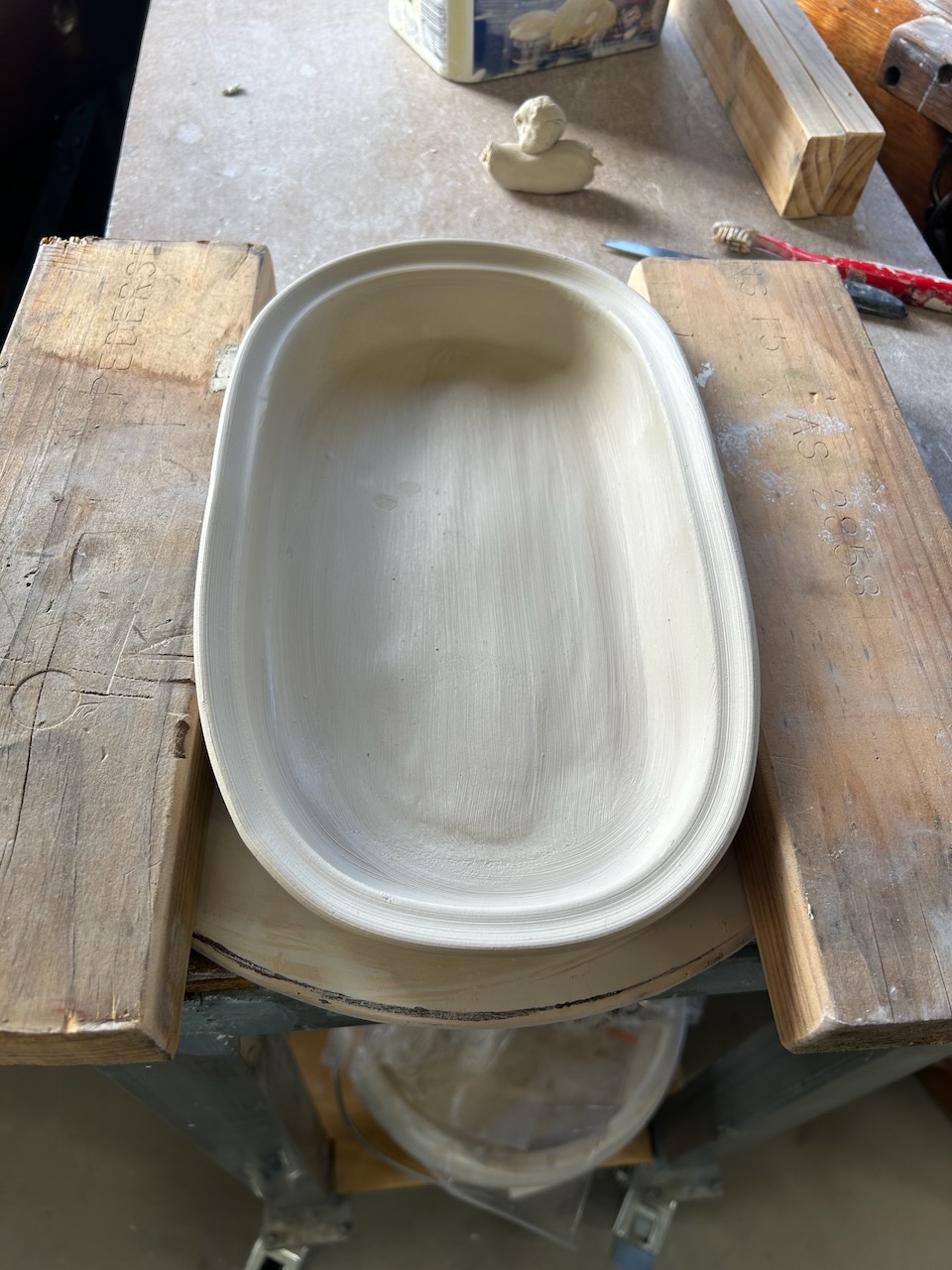


Although we start with regular round pots. They must be re-shaped into ovals while still damp and soft enough to rework. Oval and rectangular baking dishes can’t be turned in any normal way on the wheel once they are shaped, so I’ve learnt to trim the foot by hand using a ’sur-form’ blade, readily available from hardware shops. It’s careful use, followed by a light soft spongeing creates a nice, smooth, serviceable finished edge with undercut.

At the end of the day/weekend, all the shelves are groaning under the weight of over 120 kgs of freshly thrown and turned kitchen wares. There are only 3 bags of clay left on the pallet at the end of the second day. Everybody really got stuck in and made the most of the creative, learning and experimental environment. I encourage everyone to push their skill levels and not to feel too precious about any pot. Stay detached emotionally from your work. Feel free to just squash it up if it isn’t going well and make another one. A better one! It’s a much better way to learn. We all have to learn to practice detachment. It’s a learnable skill. Have many goes at the technique, until you get it right. Don’t feel precious, just squash it up and start again, practice makes perfect. And of course, it is of no cost o the student, as I’ll be the one to stiffen up all the slops and failed attempts. Stiffening the slurry of rejects and turnings on plaster batts during the week, re-pugging and re-bagging ready for another life.
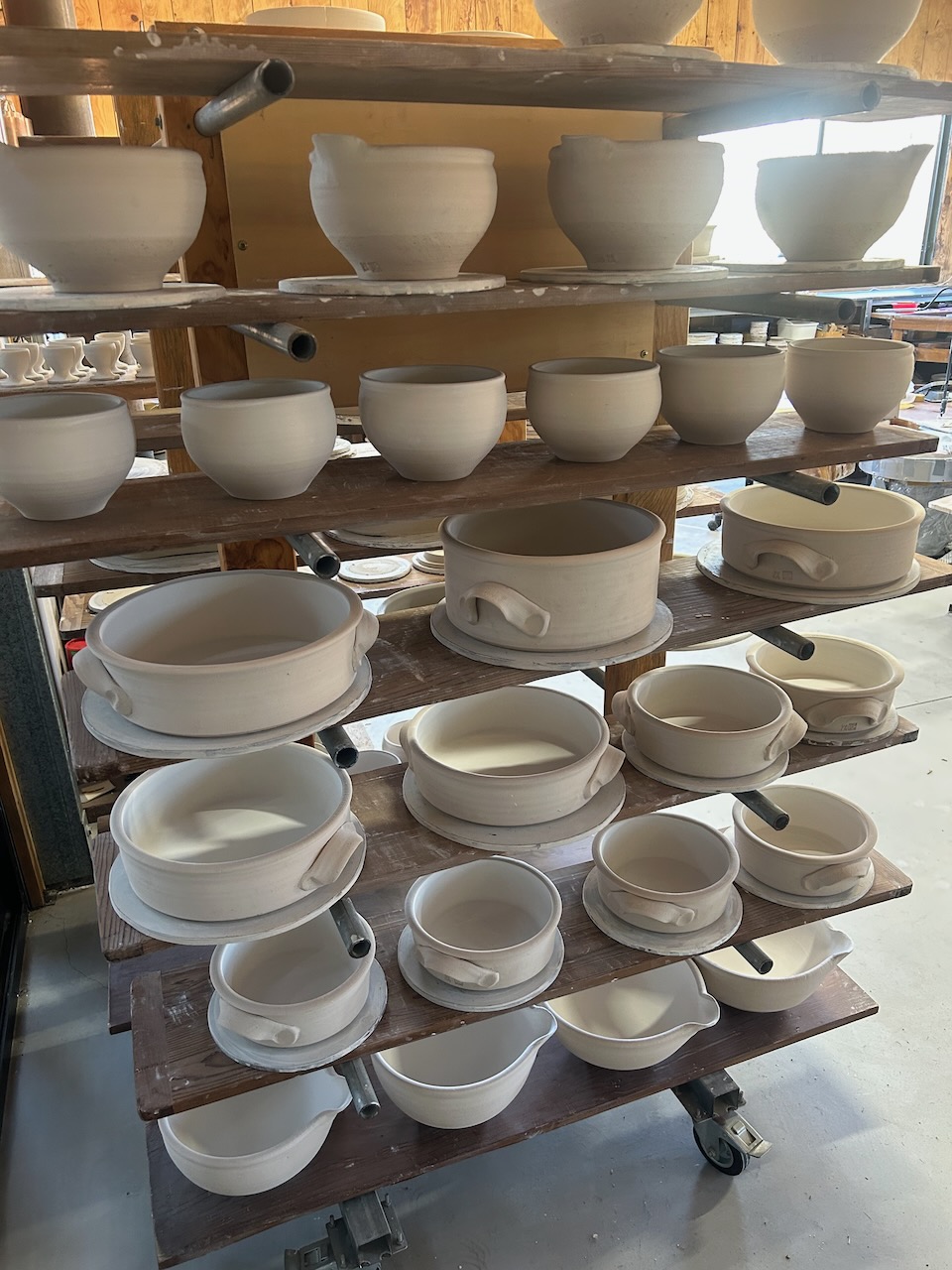
I also demonstrated making mixing bowls and mortars and pestles. I like to ‘pull’ a spout into the wall of these pots. It’s very practical, but really enlivens the form and gives them great character.
Everybody is encouraged to bring something to share for lunch each day. We have quite a sumptuous feast, sitting at the big table in the re-arranged gallery room. Good wholesome food, good conversation and great atmosphere. Lunch is concluded, when our resident barista ‘Len’ makes everyone a coffee. Then it’s back to work.

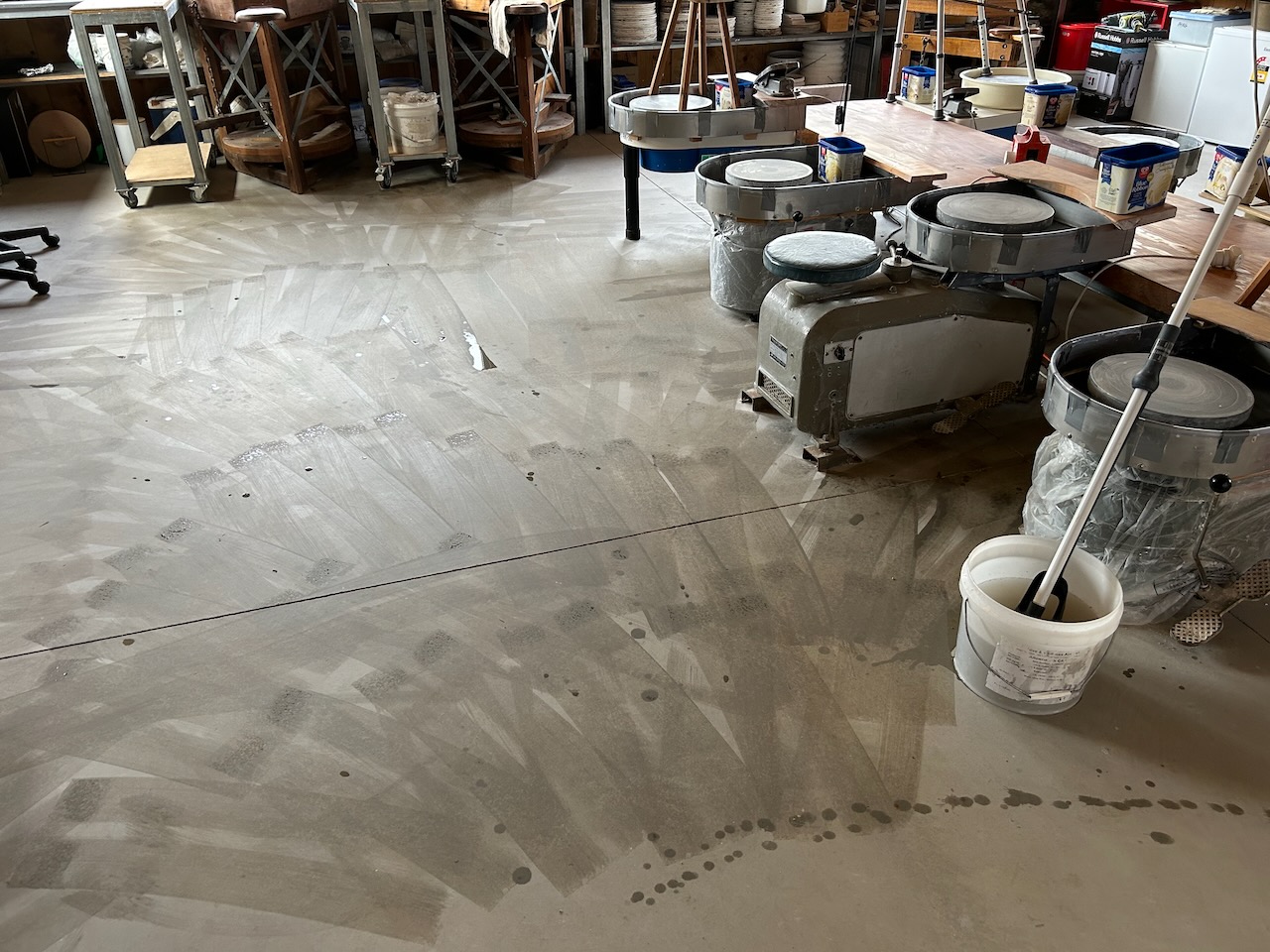
I ask every one to help clean up their mess at the end of each day, and they do a pretty good job, but there is always more clayey smears all over the floor afterwards. The more you look, the more you find. So when it is all over, I give the floor a final spongy mopping over again, cleaning the water bucket regularly to get as much of the clay dust up off the floor as possible. It’s worth the extra effort, as otherwise, clay dust gets everywhere, and is very fine, so we have to take care with all of our OH&S efforts to keep a clean environment for the benefit of the next group of students – and ourselves.
The weather forecast for this last weekend was pretty poor. 35 mm of rain on Sat and 15mm. on Sunday. We got it all and more! With 63 mm in total over the 2 days. One person even got bogged when leaving on Sunday afternoon. I had to dig out the mud from behind the wheels from the hollows that they had sunk in, and shovel in coarse gravel, so as to get sufficient traction to reverse out of the boggy saturated soil, next to the driveway. An intense way to end a great weekend of learning and sharing. Thank you to everyone who came and made it special.
I appreciate being in the presence your positive creative energy.
Nothing is perfect, nothing is ever finished and nothing lasts. Enjoy the moment.
 Tonight my Fingers Smell of Garlic
You must be logged in to post a comment.