
Summer has arrived. and we are ready for all those lazy, hazy, long, hot, relaxing day and balmy evenings with a G&T on the lawn.
But first.
We have to deal with the fruit flies and possible bush fires, but dealing with them is interrupted by the rain.
We have had sudden down pours and thunderstorms, followed by a week of wet weather. It’s a bit like the 70’s, when we used to get sudden summer storms that only lasted an hour, but dropped an inch of rain. That’s 25mm these days! Then it would go back to being hot and humid again, but it gave us sufficient water in the dam to get through the summer with water for the garden, orchards and possibly for fire fighting.
Before this last week of wet, the little top dam had dropped down to just 600mm of water in a little puddle in the centre. Not Good! As we have been pumping water out of it every day for watering the vegetable garden and one day a week in rotation on each of the orchards. Luckily, there was still water in the bottom 2 of the 4 dams that we had built in a ‘key-line’ system across our land, so as to harvest and store as much of the rain fall as possible.
I get a little bit edgy when the top dam is almost empty like this at the start of summer. We may need 50,000 litres of water in a hurry if a bush fire breaks out near us. I like to be prepared. So I have already gone around and started up and tested all the petrol fire fighting pumps to make sure that they are in good condition and working well. Particularly that they start on the first or second pull of the starter cord. There is no time to be messing around with an engine that won’t start in an emergency.
I use 1 of our 4 different petrol driven fire fighting pumps to pump the water up from the lower dam, up to the little top dam closest to the house. The pump is built in a carrying frame and is not too heavy, so I can lift it into the wheel barrow and walk it down to the dam bank, then drag the lengths of plastic piping into place. It’s all set up with the various fittings already attached to the ends of the pipe. I keep the pipes sealed at both ends with screw-on caps, so that small animals and ants don’t build nests in there during the long periods of non-usage over winter.
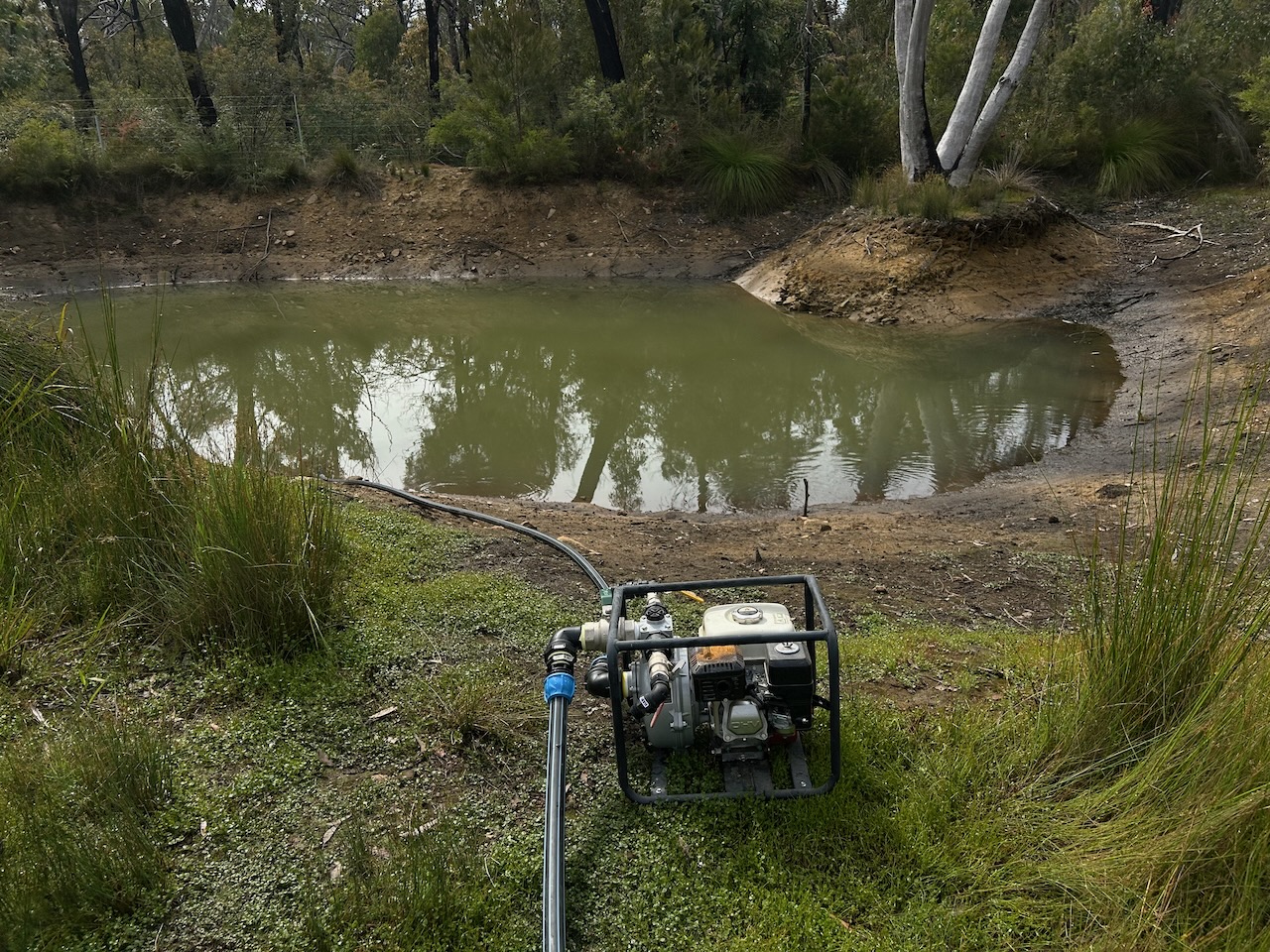
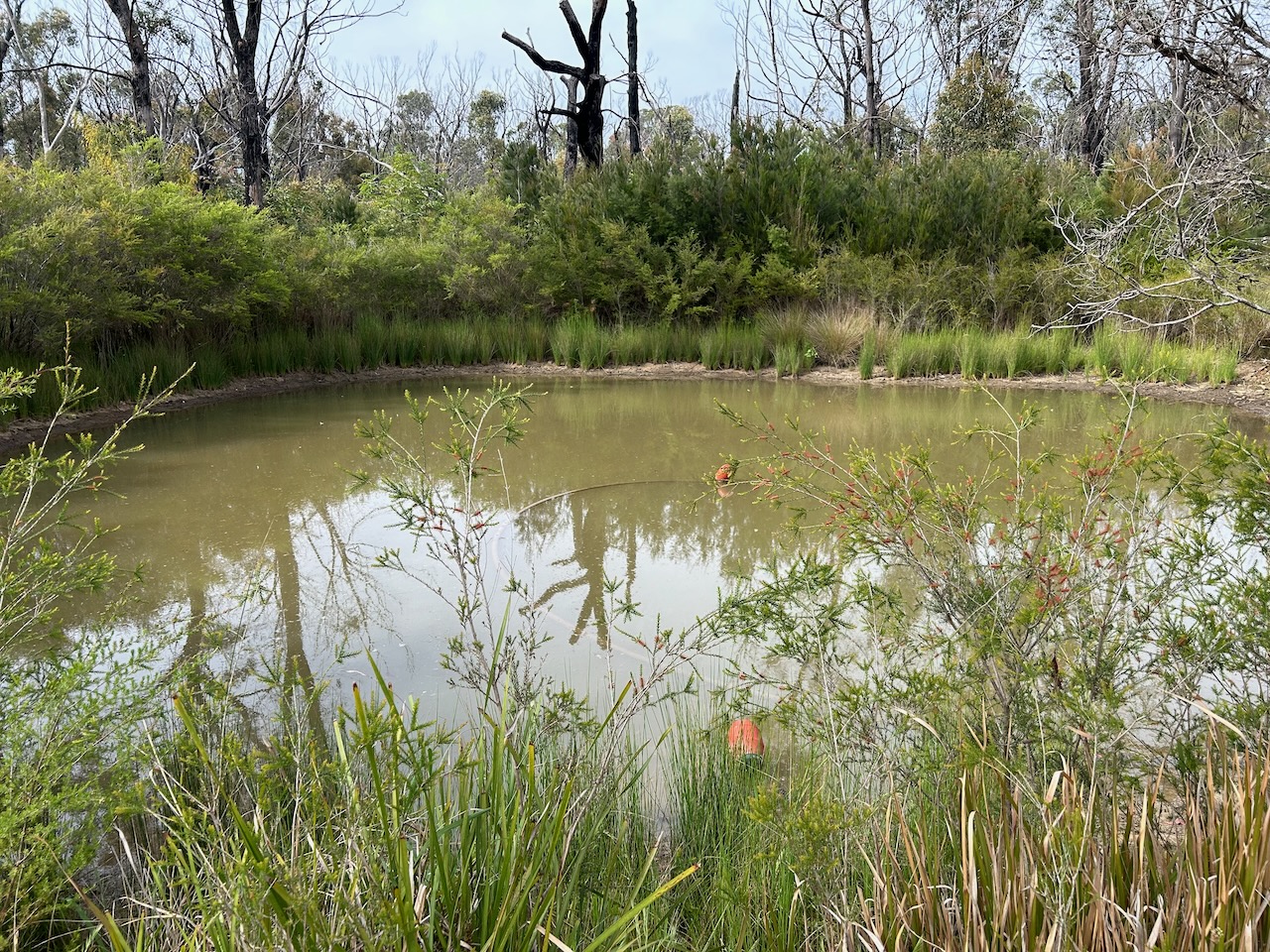
The little top dam is closest to the house and was the first dam that we got built back in 1976. It has the solar powered electric pump on it that we use for most of our watering and irrigation. I have kept the long lengths of 50mm dia polythene pipe that I bought after the fire to do this transfer. This is the 2nd time that I have used it.
This works well and gives us plenty of water for the next couple of months of summer. But then, before I can congratulate myself. I rains for 5 days and on one of those days, it rains hard enough for the water to flow down the street and into the culvert drain and into the dam, topping it up just a little bit more. It makes me feel more relaxed about our capacity to cope here when there is water in the dam.
With the heat of summer comes the fruit, and with the fruit comes the fruit fly. Nearly all the the new dwarf fruit trees in the stone-fruit orchard have a crop on them this year. We have gone around and tip pruned all the trees. This summer-pruning keeps the trees in good shape as they grow and develop. We also pick off a lot of the small developing crop to reduce the load on the branches, as a really heavy crop can snap the branches due to the weight of the fruit. There are only two of use here, so we don’t want or need a heavy crop. I fill two wheel barrow loads of small fruit and prunings.


I have been spraying the trees every two weeks or so since October, – when it isn’t raining, with organic approved sprays for both fruit fly and codling moth. I missed a couple of months while I was away working in Korea, but got back to it when I returned. However, the recent rains have played havoc with my ability to spray, as these are all water based organic sprays, they simply wash off in the rain. They aren’t cheap either at $25 to $35 per packet, which yields 4 to 5 sprays.
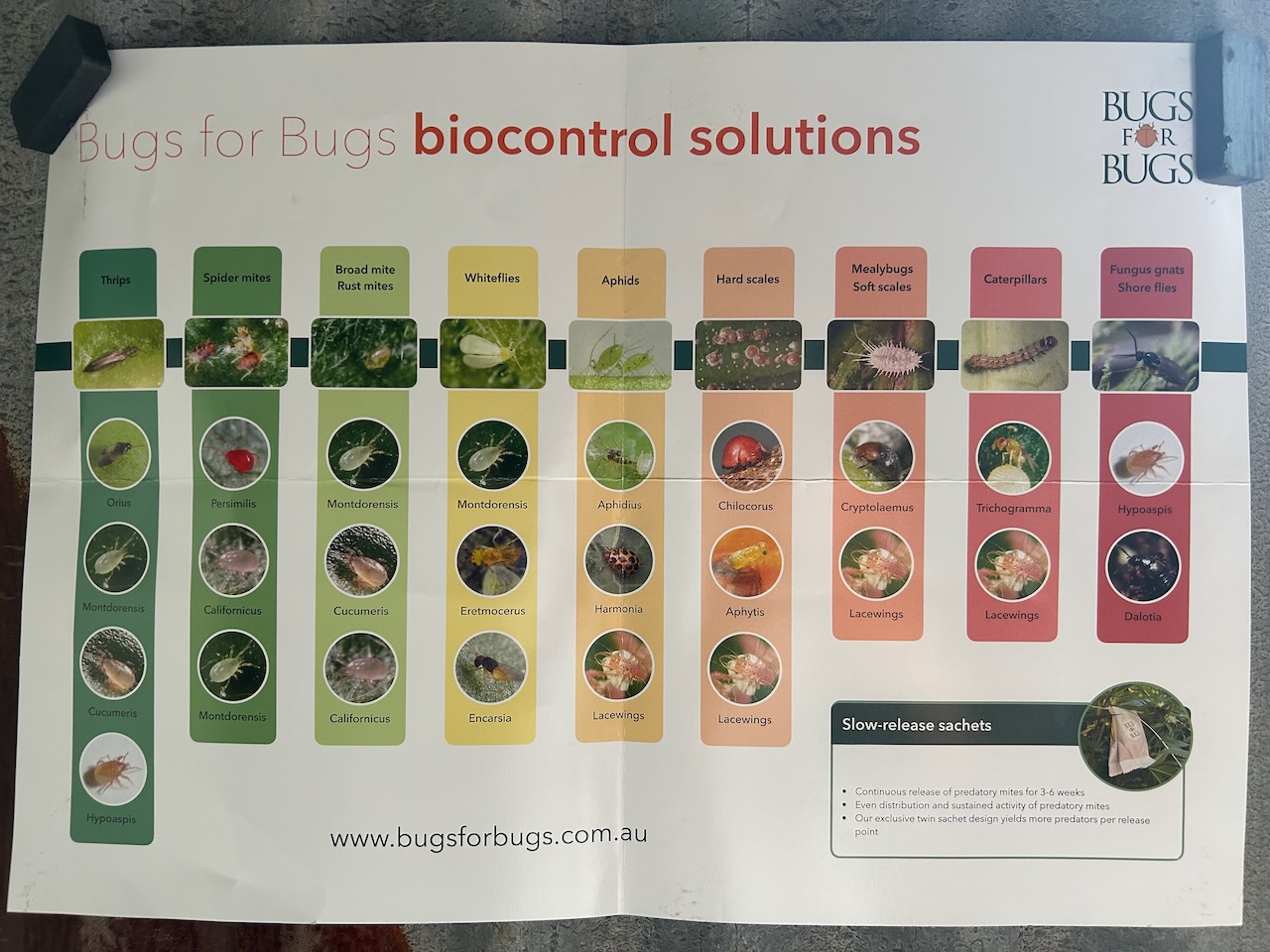
I have also infected the apples, pears and quinces with parasitic wasps eggs of ’trichogramma’ wasps. These are bred to hatch out and predate the codling moth and other caterpillars. I haven’t used them before, so have no idea how effective they are.
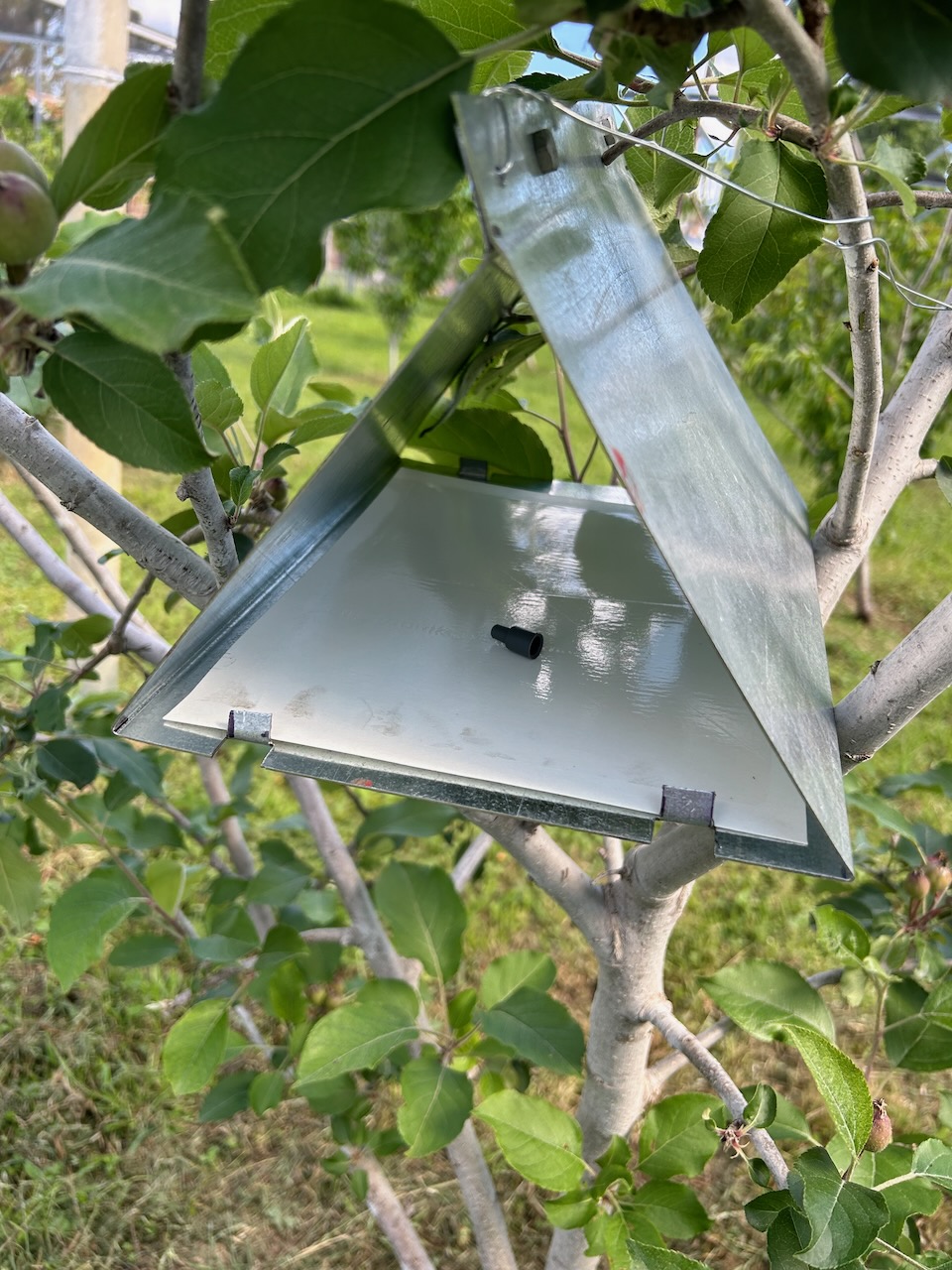
I also built a few steel triangular housings for codling moth pheromone lures. These work by attracting the codling moths with the scent and then catching them on sticky paper inside the lure. These are working. I can see half a dozen little coding moths inside the lure stuck to the sticky paper. I’ve also been tying hessian bandages around the tree trunks, but so far I’m yet to find a caterpillar in there. This definitely hasn’t worked so far. I also added a ring of sticky bandage around the trunks as well. This also hasn’t yielded any results – so far. My last approach has been to hang empty milk bottles in the trees with cut-out windows, and spreading ‘Spinosad’ fruit fly attractant jelly inside. I use it inside the milk bottles to stop it being washed off in the rain.

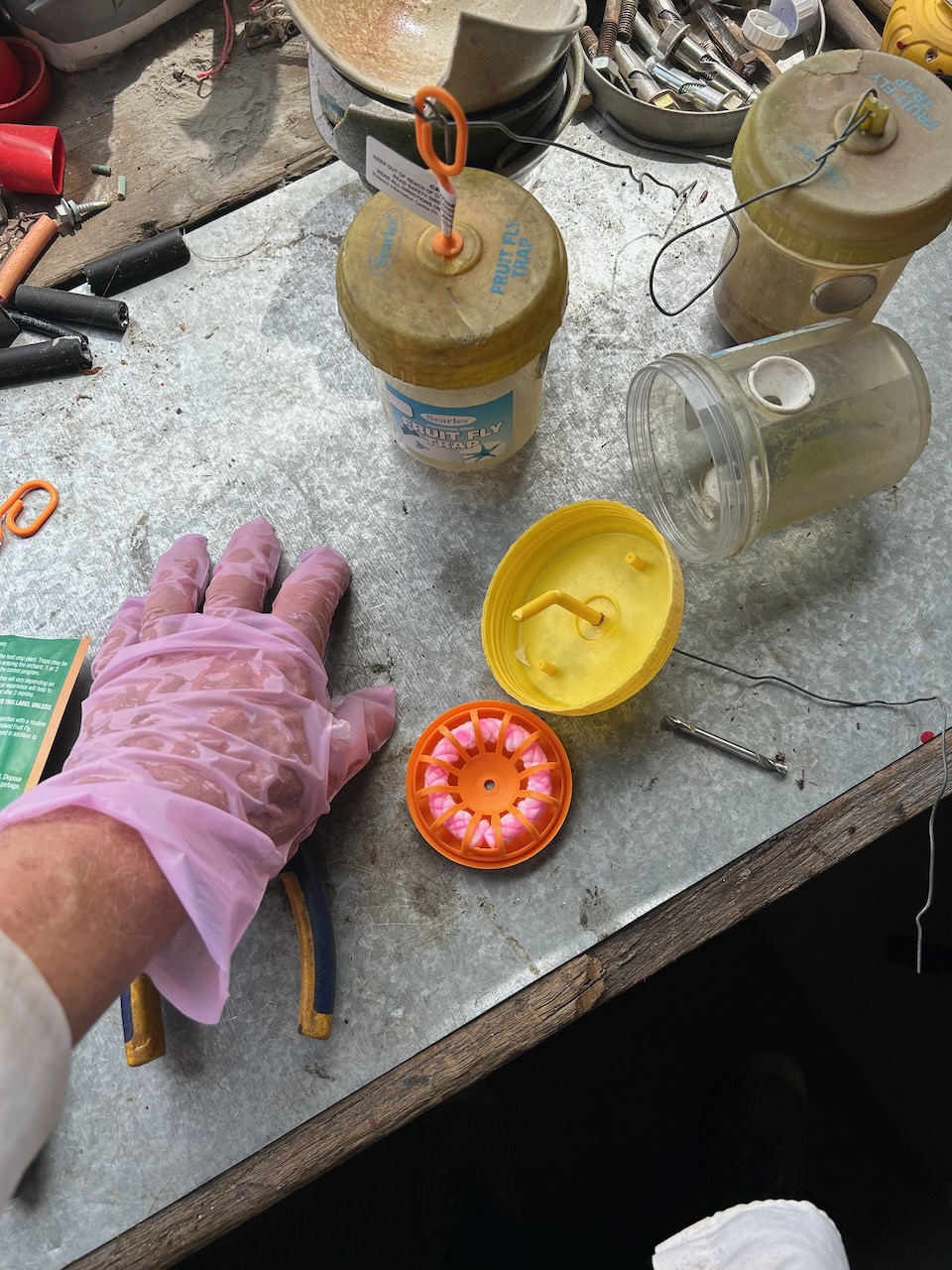
Lastly, I re-filled the old ‘DakPot’ style female fruit fly lures with new hormone baits. When I emptied the old ones at the end of winter, there were 50 or so dead fruit flys in each of them. So this does work. It doesn’t stop the female fruit flys from stinging the fruit, but it reduces the numbers of flies by eliminating a lot of the males out of the system.
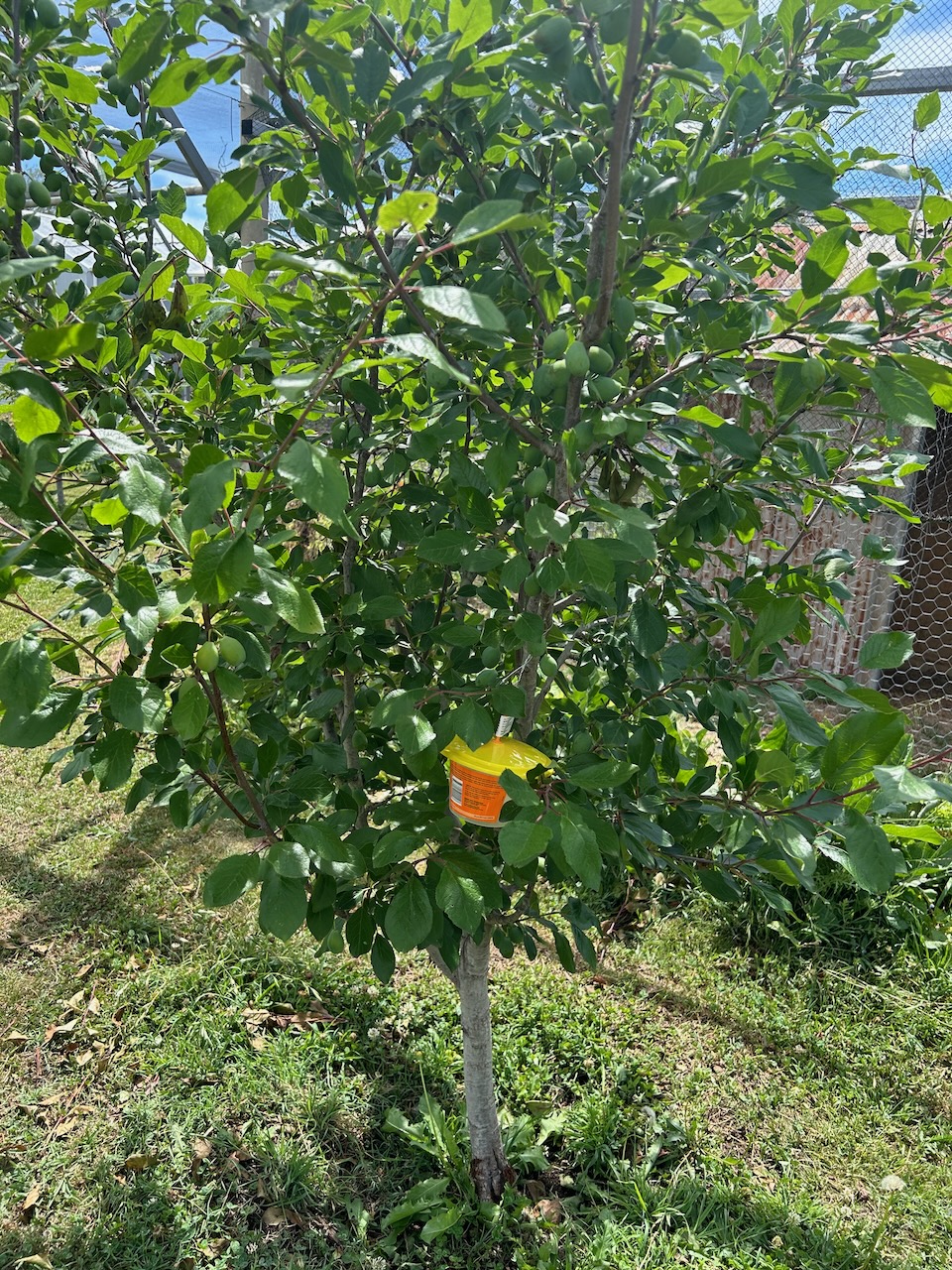
We still have fruit fly problems, but I presume that it has been significantly reduced by my efforts. Well, I have to tell myself that don’t I?
Otherwise, why am I wasting my time like this with all these organic techniques, when I could so easily just spray the whole orchard with dieldrin or some other horrific poison? All the fruit for sale in the big supermarkets is sprayed with chemicals. S what are my options? Buy poisoned fruit, or try and grow clean, organic fruit? We are trying to live a pesticide free, low-key, creative, organic, carbon constrained, Post-modern peasant lifestyle. Everything costs more and takes longer and needs constant attention, but we are committed to living it.
Nothing is ever finished, nothing is perfect and nothing lasts.
 Tonight my Fingers Smell of Garlic
You must be logged in to post a comment.