
My project to introduce clean, low emissions, wood fired kiln technology to Korea has gone pretty well. The third firing that I did using local hard wood was excellent. In fact, better than I had hoped for. I was actually surprised how well it went. I’m a cautious person, So I was a bit surprised, I wasn’t going to dare to change anything, just stick to my technique and decisions. It worked! So that was good!
I’m always prepared for things to go wrong when trying new things. Very few things in life ever turn out perfectly, and this last firing came close, but the was no cigar! The bottom back shelf was still a little bit under-fired. However, no-one complained!
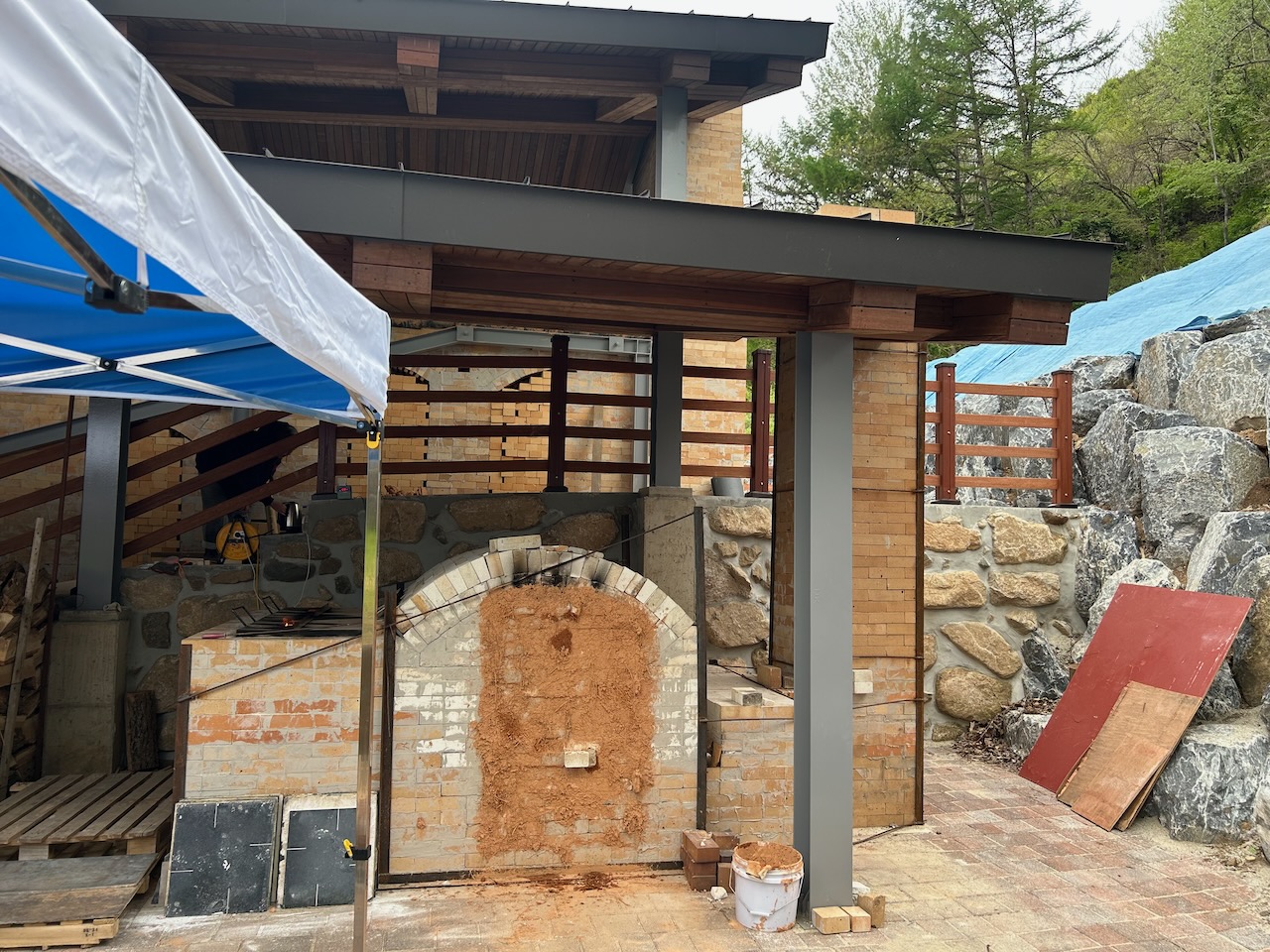
The day after the kiln was unpacked, I went down to the kiln shed early the next morning, before work, and took out the bag wall. I eliminated one complete layer off the top, and removed one full brick from the cross-section. I re-arranged the smaller number of fire bricks with bigger gaps between them, so as to allow more flame to pass straight across the bottom of the chamber and allow more heat to the bottom back shelf.
Over the three firings that I did here, I got better results each time, as I tuned the kiln settings and chose better wood, more appropriate to fire cleanly in this design of kiln.
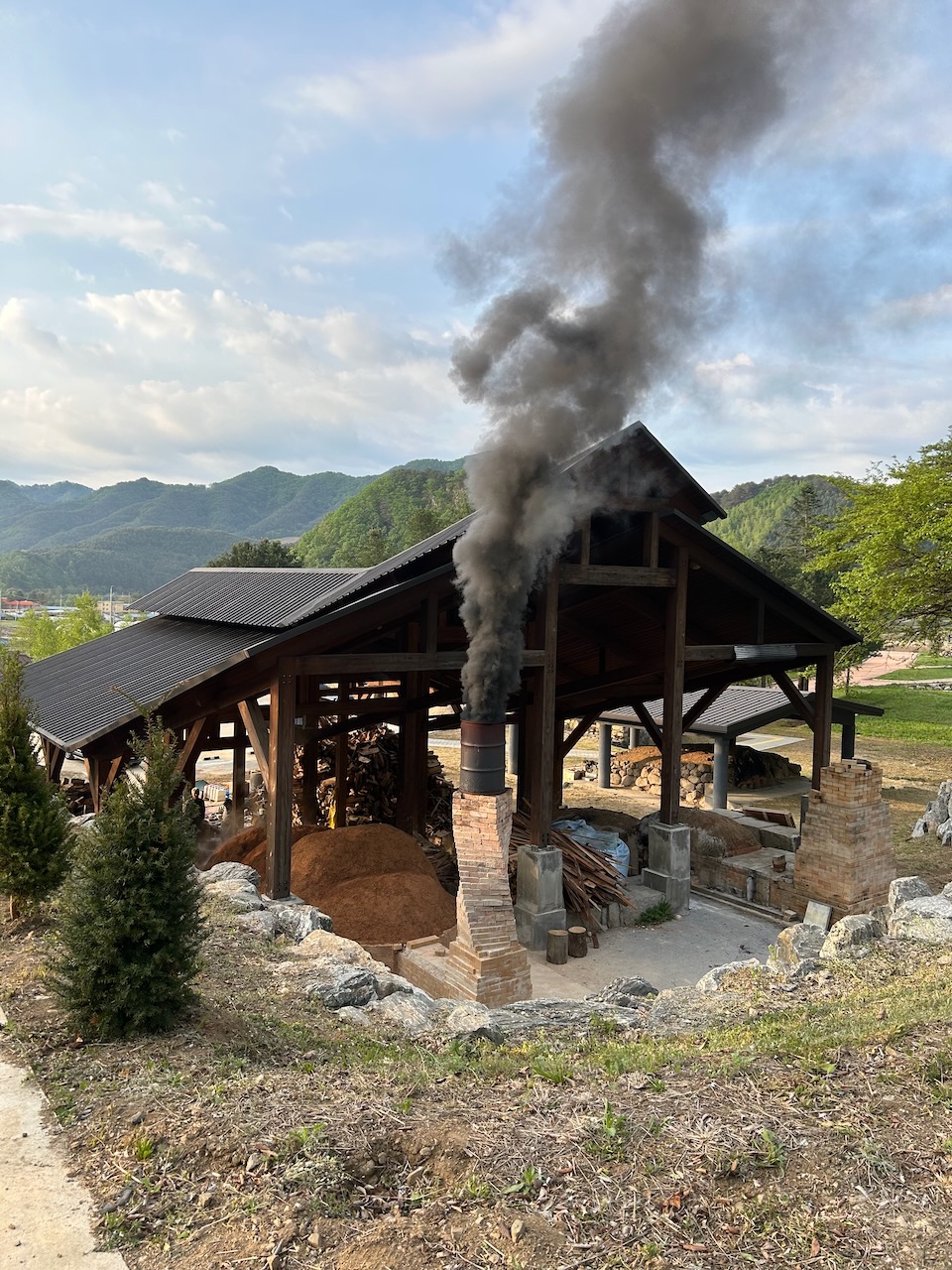
Below is an image of my kiln firing to stoneware in reduction near top temperature. There is no smoke coming from the top of the chimney.

My chimney isn’t particularly tall, but it is wide. Short and thick, does the trick! Or so I’m told!
I calculated the height and cross-section of the chimney based on theory. The total volume of the hot gasses enclosed in the chimney volume, as opposed to the same volume of cold air on the outside. Chimneys work because the cold air outside is forced in at the firebox by air pressure, and this pushes the lighter hot air up and out of the top of the chimney. It’s all about volume, not just height.
Below is the traditional kiln next to mine being fired the traditional way. Koreans are used to making loads of smoke. It just seems so natural to them. They were quietly amazed that I could fire with so little smoke and still reduce. One of the traditional kiln firing team, A National Treasure potter from his own local region, went straight home and built a copy of my kiln for himself. So I consider that a success!
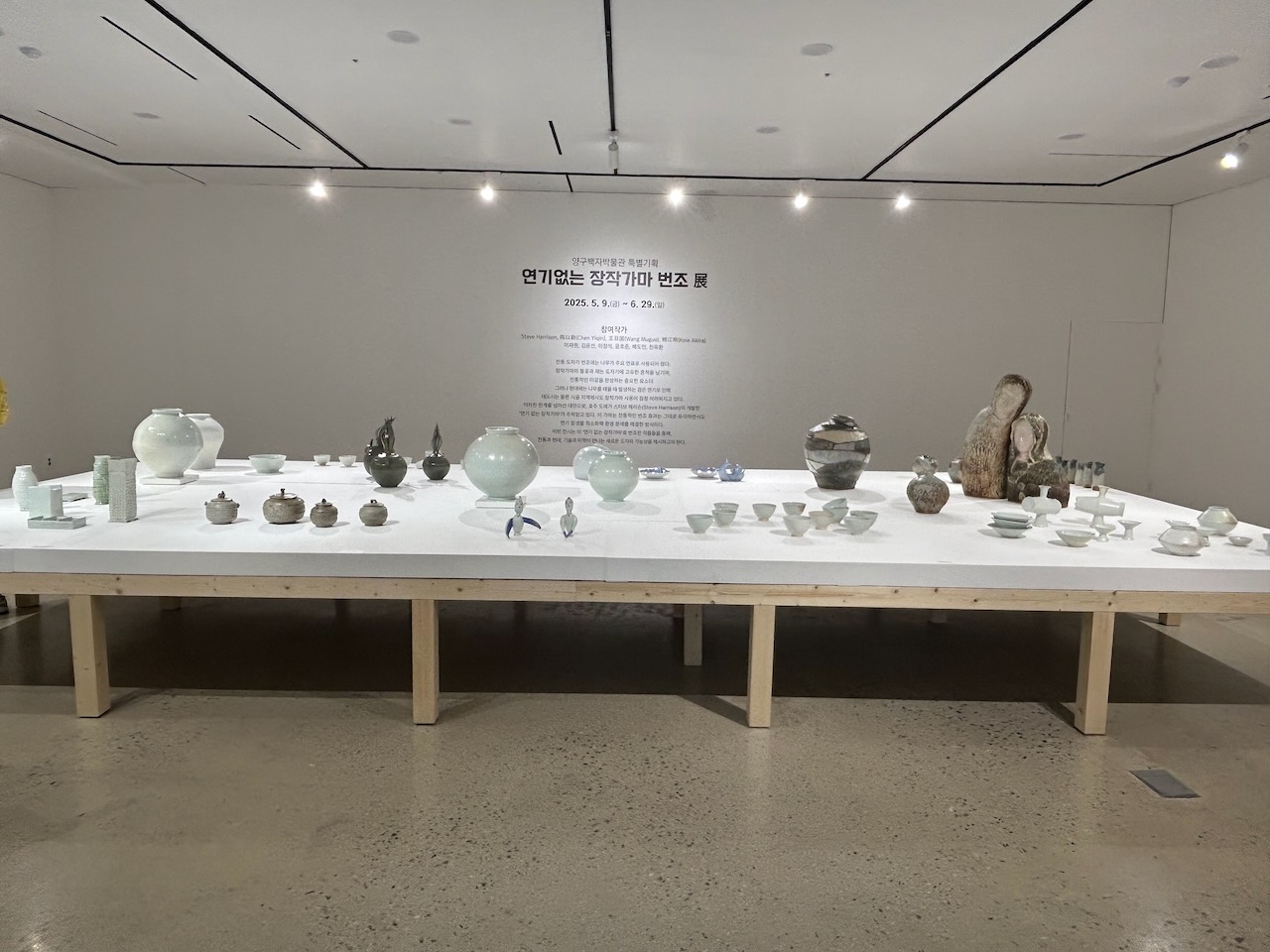
So my introduction of new ideas, with appropriately successful results, was well received. My host, Mr Jung, had organised the local TV station to make a documentary film about my visit, the firings and the subsequent exhibition of the fired works. Several international potters from France, Japan and China were invited to make work for me to fire, as well as a few local potters. After the kiln was unpacked and the work fettled, it was put on show in the Porcelain Museum. The exhibition is on until late June in the Porcelain Museum. The Museum Director released a short promotional video of the firing in time for the exhibition opening, which he posted up on-line and got over 4,000 hits the first day. So he is very happy.

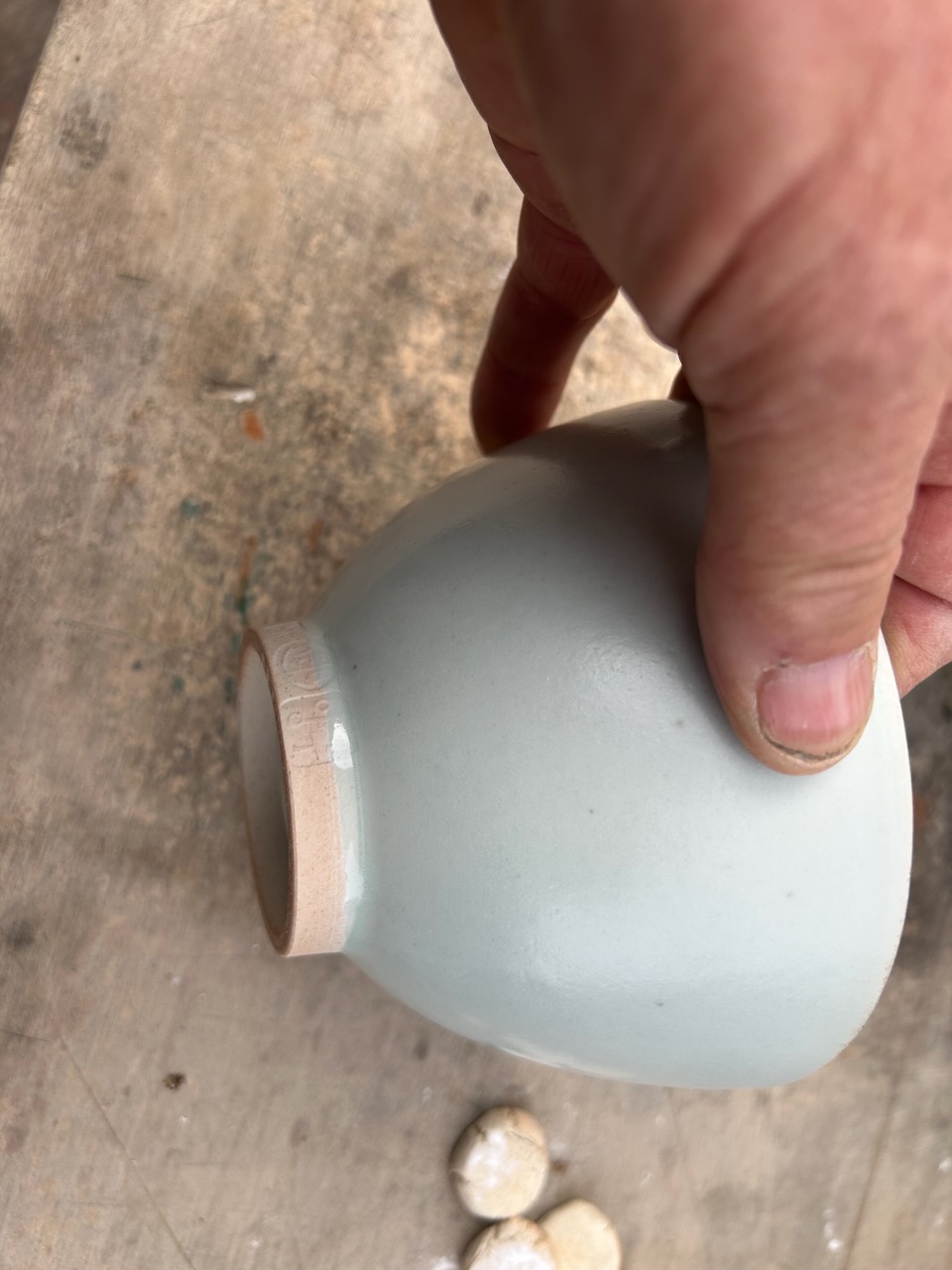
One of my bowls from the firing, with the Korean location name stamp and my name in Korean
The Staff of the Museum took me out to dinner after the event. They are all such a pleasant bunch of people, I really enjoy their company, They are great people. As I don’t have more than a simplistic grasp of ‘Airport’ Korean. All our conversations are carried out using translation software on our phones. The local Korean app is called ‘Papago”.
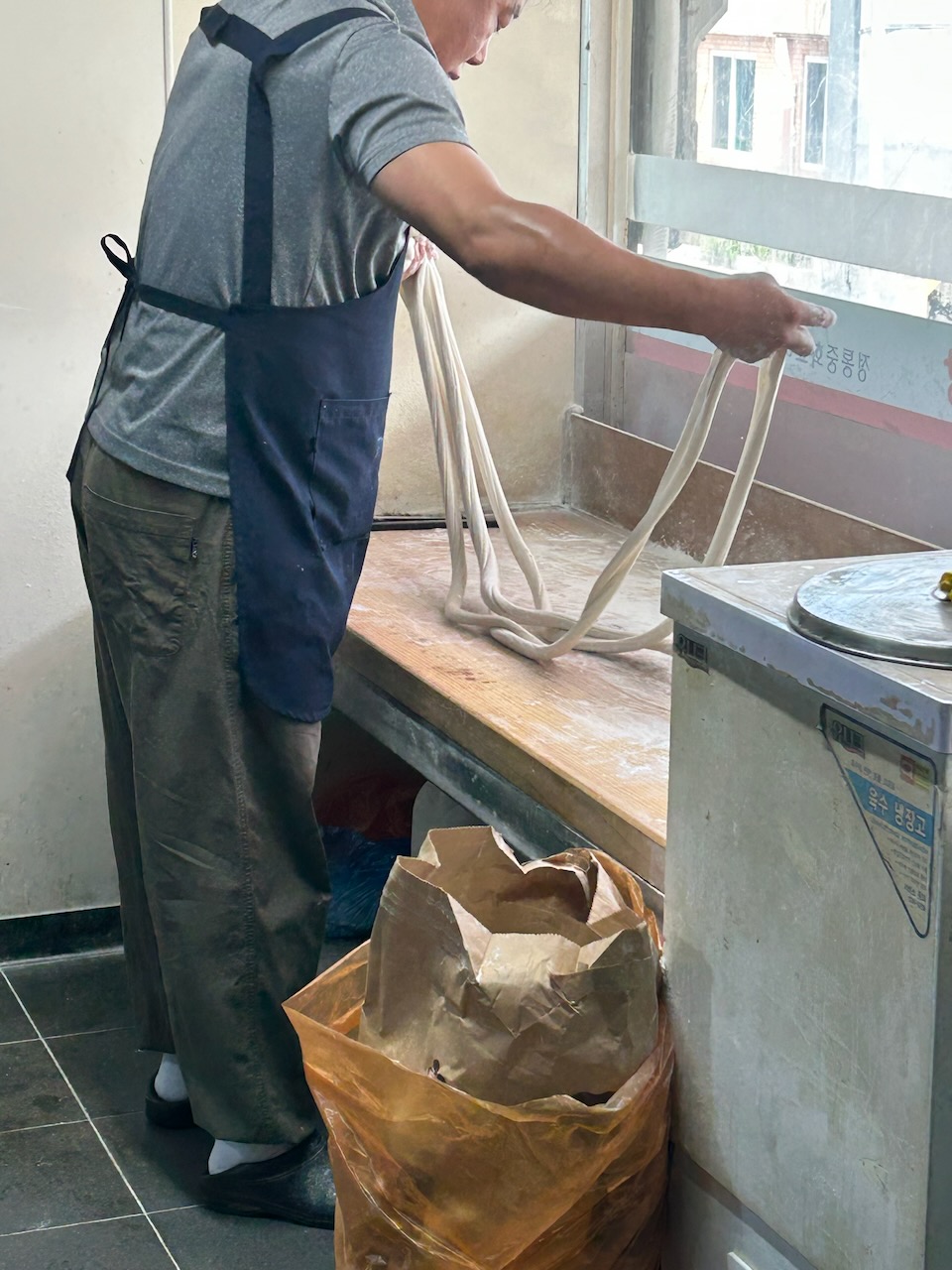
We went to a local restaurant where the chef makes his own hand made noodles. It’s worth going there just to watch him work. It’s an entertainment in itself!

Before I left, I made my usual pilgrimage up the mountain to the historic site where porcelain stone can be picked up off the ground. I collect a bag full each visit, (10kg) take it back to my room and wash it thoroughly, scrub it well, to get any dirt off the stones, then soak it in chlorine bleach over night to make sure that they are sterile, before bringing them home. It only needs to be put through the rock crusher, then the ball mill with enough water to make a slip, and then stiffened back up to a plastic state before throwing it on the wheel.
Throwing stones! Powdered porcelain stone mixed with water, nothing else!
There is nothing quite like sericite. It’s such a unique material.

After finishing my work at the Porcelain Museum, I travelled up to the northern suburbs of Seoul, to meet up with my friend Sang Hee. She took me to her mothers farm, where we spent the morning weeding some of the rows of vegetables.


And a salient reminder that you never step over a fence line here! Even though you are in the suburbs. Not everywhere has been thoroughly de-mined and checked to make it 100% safe.
My last day was spent in Seoul, getting ready to fly out the next day. I went into the tourist area and got a couple of new name stamps made, as I lost all my older name and workshop stamps in the big fire.
Another very rewarding trip in every way. I’m so lucky to be able to do this work!
Nothing is ever finished, nothing is ever perfect and nothing lasts!
 Tonight my Fingers Smell of Garlic
You must be logged in to post a comment.